Before Our Departure
Preparing for this trip started 9 months before our departure in June. For those planning a similar itinerary, it’s important to book accommodations well in advance, especially in the Okavango and Savuti campsites—otherwise, you might not find any availability.
Introduction
After visiting Zambia three years ago and Namibia and western Botswana a year and a half ago, this year we chose Zimbabwe (Hwange NP) and the northern half of Botswana.
Our flight from Paris was to Victoria Falls with Ethiopian Airlines, with a layover in Addis Ababa. We rented a 4x4 from Bushlore in Kasane, complete with two rooftop tents since there are four of us on this adventure. Bushlore picked us up from our guesthouse to collect our 4x4 and, most importantly, gave us a rundown of the vehicle and its equipment. Pay close attention to what they tell you—it could be crucial if something goes wrong, as it did for us during the trip.
Our Itinerary
We arrived on June 12th at noon. At Victoria Falls Airport, we got our double-entry visa right away—I’d already pre-booked it online on the site https://www.evisa.gov.zw/.
Since our vehicle was in Botswana, we had to cross the border from Victoria Falls into Botswana for the first time.
The next morning, Bushlore picked us up from our guesthouse to collect our 4x4. After completing the formalities, we headed toward Zimbabwe and the town of Victoria Falls.
We woke up early the next morning to be at Victoria Falls at sunrise. The scenery was stunning, but since it was the start of the dry season, the Zambezi was still high, so the falls had a strong flow. This made it hard to fully appreciate their beauty.
In the early afternoon, we left for Hwange NP, where we stayed for 4 days. Two days at Gwango campsite near Dete, followed by two days at Robins Camp. We expected to see more animals at Robins, but that wasn’t the case. In Hwange, we didn’t spot any predators, but we did see plenty of mammals (buffalo, elephants, giraffes, zebras, and antelopes).
After a few days in Zimbabwe, we crossed back into Botswana at Pandamatenga. We stopped at Nata Lodge for a good night’s rest—driving on the dirt roads is exhausting.
We left Nata and headed toward Nxai Pan. The road was sandy but manageable. We made a small detour to admire some beautiful baobabs at "Baines Baobabs." Then we continued to our campsite, Nxai Pan South Camp. Keep in mind that many campsites in Botswana aren’t fenced (except for the shower/toilet areas), so animals can roam freely within the camp. Take precautions, especially after dark.
After our stop in Nxai Pan, we headed to Maun. We decided to break our journey in Maun before heading to Moremi and the Okavango Delta for three reasons: first, we needed to stock up on supplies and fuel for the next 5 days; second, our fridge had broken (luckily, Bushlore has a branch in Maun); and third, the drive from Nxai to our camp in Xakanaxa in the delta would’ve taken too long. I always avoid driving after dark.
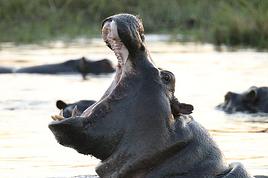
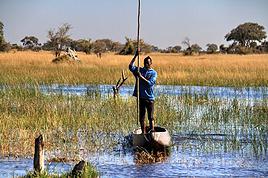
We arrived at our Xakanaxa camp on June 21st in the early afternoon. Not wanting to waste time, we booked a boat ride on the Okavango Delta, leaving at 4:00 PM for a 2-hour sunset cruise. For those interested, to the right of the Xakanaxa X1 site, there’s a sign for boat rides. The organizer is very professional and offers prices that are nothing like those of the lodges.
It was a beautiful ride through the delta with a stunning sunset. Being on a boat is much more relaxing than driving on the dirt roads. That didn’t stop us from doing self-drive safaris the next morning and late afternoon, though.
Then came the time to leave the delta and head toward Savuti, a much drier region. And that’s when the toughest part of our trip began. First, we decided to go up via Khwai. The rainy season was over, but the area was still marshy. We had to cross a few small water patches, testing the depth to make sure we could get through. Luckily, a sign on the road pointed us toward a drier route. We reached Khwai without any issues, but then we made a major mistake. Instead of taking the main track toward Mababe Gate to reach Savuti Camp, we took a straight path north and then a right turn to get to our camp. Bad call—we got stuck in the sand, with one rear wheel buried halfway and a front wheel off the ground. We were genuinely scared we wouldn’t get out, especially since we were on a deserted track, 20 kilometers from our destination, with night falling in two hours. This is where paying attention to the vehicle instructions really paid off—we had to use the jack to get out of the mess. The result: we arrived at Savuti campsite just before dark (Distance: 146.3 km, Duration: 9 hours, 56 minutes, and 3 seconds, Average speed: 14.7 km/h, tracked with Osmand). At reception, the staff couldn’t understand how we’d gotten there—we hadn’t passed through any of Savuti’s reserve entry gates.
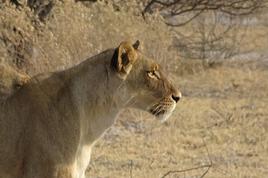
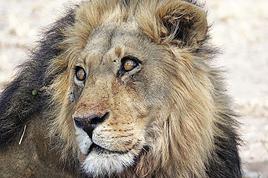
The next morning, no one felt like driving, so we did a game drive with a guide. I don’t know if it was some kind of reward, but the outing was amazing. We saw three lions and, best of all, a pack of African wild dogs that we had time to admire and photograph. The next day, we did a short self-drive and found one of the lions from the day before drinking at a waterhole. That was the end of our Savuti adventure.
Now we’re heading to Kasane. We returned our vehicle and settled in for our last two nights there. The next morning, since we no longer had a car, we decided to do one last early-morning game drive in Chobe NP. It turned out great—we followed two brother lions and saw plenty of other mammals. The only downside of Chobe is the number of tourists, which was a change from the other parks we’d visited. That said, we’re tourists too, so...
In the evening, we took one last boat ride on the Chobe River to end on a high note with a beautiful sunset.
After a good night’s sleep and plenty of wonderful memories, landscapes, animals, and emotions, it was time to leave. We left early in the morning with the same taxi company as before to cross the border into Zimbabwe one last time and head to the airport, where we took off to return to France.
813 similar discussions in English
Hi everyone,
Our trip to Morocco will be from November 3 to 17, in the High Atlas.
Basically, our route would be:
Marrakech - Aït Benhaddou
Skoura - Tinghir - Merzouga
Merzouga via the N12 to Zagora
Zagora - Draa Valley - Marrakech
It seems to be the low season, so I’d love to travel without having to book accommodations in advance. In other countries, pre-booking has restricted us and kept us from visiting unplanned sites. Freedom is important to us, but I’d also like to avoid arriving somewhere and finding nothing available. What do you recommend? Book ahead or not? Your advice is always helpful, and thanks to anyone who can shed some light on this for me. Roberto
It seems to be the low season, so I’d love to travel without having to book accommodations in advance. In other countries, pre-booking has restricted us and kept us from visiting unplanned sites. Freedom is important to us, but I’d also like to avoid arriving somewhere and finding nothing available. What do you recommend? Book ahead or not? Your advice is always helpful, and thanks to anyone who can shed some light on this for me. Roberto
My partner and I traveled from Sunday, July 5, 2026, to Wednesday, July 22, 2026.
We spent a long time debating whether to rent a car or use public transportation. In the end, after reading so many posts about travelers getting scammed by police or rental companies—even those recommended by blogs and reviews—we decided to stick with public transport. It worked out really well. Sure, we had a little less freedom to go where we wanted, but it was way less stressful for us.
Sunday, July 5:
Arrived at Cancun Airport. Withdrew cash from the ATM in the terminal just before exiting. The ADO bus counter (they pronounce it "A-Jee-O") is right behind you when you're facing the ATM. Bus to downtown Cancun cost 145 pesos per person. Stayed at "Rose 5," booked on Booking. The studio was super clean and perfect for one night. The owner’s instructions for accessing the place were very precise, with photos included. Check-in was self-service with a code. The ADO bus terminal isn’t far, and there are shops and restaurants nearby. We really appreciated that the AC was already on when we arrived. By the way, I’d recommend always booking places with AC—it’s *really* hot in Mexico.
Monday, July 6:
Bought a SIM card with data from a TELCEL store. My partner, who’s on Free Mobile, was able to use her regular plan. Just so you know, I found the network pretty unstable. As soon as we left the cities, neither of us—me with TELCEL or her with Free—had any signal. Another thing to watch out for: roaming charges. I had to turn my SIM back on for less than 30 seconds to get a bank SMS code, and my phone apparently connected to the internet—resulting in an 8-euro roaming fee. Left on an ADO bus to Chiquila for 278 pesos per person. During our trip, ADO buses were always on time, comfortable, and clean. The AC is *cranked* though, so bring something to cover up with—it gets cold. Some routes were fully booked even in the low season, so try to reserve 1 or 2 days in advance either via the app (when it works) or at the counter. When we arrived at the ADO terminal in Chiquila, the ferry company counters were right next to it. Ferries leave every 30 minutes, alternating between companies, so no need to book ahead. Just take whichever one is leaving next (330 pesos per person). When we got to Holbox (pronounced "Hol-bosh"), we’d booked a place via Booking called "Casa de Nana." It was a huge studio with a fridge, cooking plate, and utensils. The best part? The *location*. It was 100 meters from the beach and 200 meters from a Chedraui supermarket. They provided bath towels and beach towels, and the AC worked perfectly. There’s a key box so you can leave your keys inside when you go out. The only downside was that no one was there to let us in when we arrived, so we had to wait a while. The Wi-Fi was good, which was lucky because during our 4-day stay in Holbox, the phone network *never* worked. According to locals, that’s pretty common in Holbox, along with water outages. Luckily, I’d had the good idea to download an offline map, which helped us find our way back to the place more easily. You can walk there from the dock.
The restaurant next to our place (La Barracuda) was great if you like seafood—I’d recommend their octopus dishes.
Tuesday, July 7:
We did a kayak tour in Holbox’s mangroves at 6 AM. We were looking for a sunrise kayak tour with a French-speaking guide. That’s exactly what we got with "Kayaking Holbox," where Diego, the owner, speaks English and French. He was joined by Gustavo, another guide. We’d booked for a group tour, but we were the only ones. Diego still went ahead with it instead of canceling due to lack of participants, so we got a private tour at the group rate—really professional of him. They showed us this amazing ecosystem for over 3 hours. We saw all kinds of birds: pink flamingos, pelicans, egrets, frigatebirds... rays, a horseshoe crab, and a little crocodile that was *so* well hidden. Diego and Gustavo have a real eye for spotting animals—I could’ve passed by the crocodile 100 times and never seen it, it blended in so well. Their explanations about the flora and fauna were super interesting. We also got a little break where we tasted mangoes and bananas that taste *nothing* like the ones in France. A real treat—those little Mexican yellow mangoes! I’d definitely recommend Diego and his agency for a French-language kayak tour (1000 pesos per person). In the evening, we walked to Punta Coco to see the bioluminescence. No need for a guided tour—if you really don’t want to walk, you can take a taxi. At Punta Coco, you have to pass the beach bar/restaurant and then go left into a kind of inlet that forms a lagoon. You have to wiggle your feet or move your hands in the water to create movement, which makes the light appear. Just don’t expect the kind of photos you’ve seen online—they’re all edited! It’s fun to see, but you won’t be dazzled by the light...
Wednesday, July 8:
Whale shark tour with "My Holbox Tours." Why recommend this agency over others for swimming with whale sharks? Simply because Valérie surrounds herself with top professionals to make your experience unforgettable. We were with Captain Fernando, who does everything to position the boat perfectly and make your swim easier. In the water, we were with Humberto, who also goes above and beyond to make sure you have an incredible time. He doesn’t just "supervise" like some guides from other companies who leave you on your own. No, Humberto reads the whale shark’s trajectory and guides you—all you have to do is follow him. He really puts in the effort, even holding your hand to guide you through this quick but intense encounter. Humberto also films the moment and will offer to show you the videos and sell them to you. His footage is really high quality. Fernando and Humberto also prepared food for us. Special mention for their guacamole! Valérie is there to make sure everything goes smoothly on the boat and to answer your questions in French, English, or Spanish about these animals. If you choose My Holbox Tours, you can be sure you’ll get a top-notch experience. About the tour itself: before you go, you should know that the sharks can be *really* far away. The day we went, it took 3.5 hours by boat to reach them. The boats are small, and let me tell you—on the way there, when we weren’t going with the waves, it was *rough*. Out of 9 passengers, 4 got seasick. But once you’re face-to-face with the shark, you forget all about that. Even if swimming with a whale shark isn’t exactly a walk in the park—they swim pretty fast, so you need some endurance to keep up. You’ll usually get 2 turns. Our first swim lasted a little over 4 minutes, and the second about 2 minutes because the shark was moving fast and we were still tired from the first swim. It might seem short, but when you’re swimming, it feels *long*. Either way, it’s an experience you *have* to do—but choose your company wisely. On the way back, there’s a stop at Cabo Catoche. Honestly, the snorkeling is pretty disappointing if you’ve done it elsewhere in the world. But the lunch stop at Cabo Catoche is really nice for relaxing (white sand and hammocks).
Thursday, July 9:
Short morning walk to Punta Mosquito at 6 AM. Really nice. Ferry to Chiquila (330 pesos per person) + ADO bus to Valladolid (300 pesos per person).
In Valladolid, we booked "Casa Lucia" via Booking. The hotel is gorgeous, with a colonial style, and very close to the ADO bus terminal and downtown. It’s super quiet and clean. There’s a shared kitchen you can use with a fridge, microwave, and water dispenser, plus a big table by the pool and a nice indoor terrace. Breakfast was simple but included. The only small downsides were the tiny room and bathroom, no mirror in the room, and a noisy fan.
Friday, July 10:
Not far from the ADO bus terminal is the colectivo station for Chichen Itza. They offer a round-trip to Chichen Itza with an option to stop at Ik Kil cenote on the way back and then drop you off in Valladolid for 370 pesos per person (Ik Kil entrance included). For the Chichen Itza visit, we’d booked a tour with a guide often mentioned in groups—his name is Juan Pat. He’s a Maya who lives near the site and speaks excellent French. He reserves spots in advance for you and queues up to be the first on-site. It cost 500 pesos per person + entrance fees. His tour lasts 2 hours and focuses mainly on the main pyramid and the ball court. He’s passionate and fascinating, even if some of his claims, as a Maya, might be a little biased. I think it’s *really* important to have a guide—otherwise, you’ll miss so much. You can contact Juan Pat on WhatsApp at +52 985 121 2381. Afterward, we went to Ik Kil cenote (showers and life jackets mandatory, lockers available). It’s *very* crowded, but still really beautiful with its lush vegetation.
Saturday, July 11:
Since we didn’t have a car but still wanted to visit other cenotes that seemed hard to reach by public transport, we decided to book a taxi for the day. We agreed on 1200 pesos to take us to 3 different cenotes and wait for us at each one. (To find taxis, just look where they park near the ADO bus station.) He picked us up at Zaci cenote, which we’d walked to. We got there at opening time and were the first ones there—had the place to ourselves for a while! 150 pesos per person. A pretty cenote in the city center with lush vegetation. It’s a bit like Ik Kil but without the deep cylindrical effect.
Cenote Xcanahaltun: the most beautiful cenote we visited. Entry 250 pesos per person. It’s a closed cenote with a hole that lets light in—a cave-like setting. You can kayak inside. There are little fish at the edge that nibble dead skin off your feet. Since it’s closed, the water is *freezing*!
Cenote Palomitas: entry 250 pesos per person. Another stunning closed cenote, even more enclosed than Xcanahaltun. The hole in the ceiling is smaller, so it was pretty dark when we arrived—kind of an eerie vibe. But when the staff turned on the lights, it looked like a "Gothic cathedral" full of bright stalactites.
Cenote Sac Aua: entry 290 pesos per person. The ticket includes a guided cave tour (tip-based). This cenote is really unique with its central island and way less crowded than Suytun. Just so you know, the water is *really* cold in cenotes. In these three, in July, we had the place to ourselves for a while and never saw more than 2 families at once—so peaceful!
Sunday, July 12:
ADO bus to Bacalar (536 pesos per person). In Bacalar, we stayed via Airbnb with a host named Luli, who offers several rooms with shared bathroom and kitchen.
The room is nicely decorated in a pleasant setting. It’s ideally located near the lagoon and downtown. The shared kitchen is handy. The mosquito net over the bed is useful because there are *a lot* of mosquitoes in Bacalar. Luli provides a water jug, which is really nice. The only big downside is the lack of water pressure in the shower—we had to rinse off by filling a bucket. Also, there’s no real door separating the room from the bathroom. We never met Luli in person, but she was very responsive via messages. The terrace in the middle of the vegetation is lovely. From the ADO terminal to the place, we took a taxi for 40 pesos. Since this driver was honest about the price (we’d checked beforehand), we decided to use him every time we needed a taxi in Bacalar. Here’s his WhatsApp: +52 983 184 3585.
Monday, July 13:
We did a boat tour on the lagoon with "Bacalar Francophone Activities." Since we were just the two of us, it cost 3500 pesos. If we’d managed to be 4 people, it would’ve been 1000 pesos per person. We had a private 4-hour tour on the lagoon with Steeve and his very comfortable boat. He’s from Quebec, so his French is perfect. During those 4 hours, Steeve showed us the lagoon’s iconic spots *and* places other boats don’t go. He told us about the lagoon’s history and gave great tips on where to go and where to eat. As a little bonus, he gave us a video taken with his drone during our swimming break.
Tuesday, July 14:
We went to Los Rapidos by taxi (400 pesos round trip) and entry was 225 pesos per person. It’s *very* touristy but really beautiful. You can eat there (expensive), relax, and go down the "rapids" as many times as you want. It’s worth it if you spend a few hours there. You can’t bring in food or drinks—you leave them at the entrance and pick them up on the way out.
Wednesday, July 15:
On Wednesdays, navigation is banned on Bacalar Lagoon, so we’d planned another excursion. Visit to Calakmul from Bacalar with ABCtours (WhatsApp +52 983 319 8359). This agency organized a trip from Bacalar to Calakmul with a French-speaking guide. Communication beforehand via WhatsApp was smooth. Mr. Checo, the driver, and Fernando, the guide (who spoke great French), picked us up on the day. Mr. Checo drove very carefully on the long road and always made sure we were comfortable. Fernando is passionate about flora and fauna—he’s a biologist with a degree in ornithology, so he knows *everything* about animals. The slightest sound or song, and he knows what it is. He’s got an eye for spotting them, from the biggest to the smallest. During the trip, we stopped at km 27 for a short forest walk, then went to see the two main pyramids on the site. On the way back, we stopped at the bat cave for the magical spectacle of millions of bats flying out at dusk. In the end, we saw or glimpsed (some briefly) spider monkeys, howler monkeys, a toucan, 2 tapirs, turkeys, 2 deer, and lots of birds. If, like us, you’re more into flora and fauna than archaeology, I’d *highly* recommend this agency and tour with Fernando. It’s not cheap, but the road between Bacalar and the site is *long* (3.5 hours). Price: 3900 pesos per person for 2 (3500 for 3, 3200 for 4).
Thursday, July 16:
ADO bus to Playa del Carmen (614 pesos per person). In Playa del Carmen, we stayed in an Airbnb. The building is on the town hall square, next to the casino. The best thing about this place is the *location*—super close to Fifth Avenue (La Quinta). The kitchen is pretty basic, but the fridge works well. There are supermarkets nearby. The rooftop pool is really nice. The two big downsides, though, are the soundproofing (you can *hear* the neighbor’s alarm and all the events on the square) and the *total* lack of water pressure in the shower. We had to fill a trash can with water to pour over ourselves. When we told the owner, he said it wasn’t normal and someone would come fix it, but we never heard back. Based on previous reviews, this seems to be a known issue that never gets resolved. Playa del Carmen is *very* touristy on Fifth Avenue, but in a fun, musical vibe—we never felt unsafe. There are *tons* of little souvenir shops for tourists on this street. There’s a beautiful monumental sculpture on the beach (the two figures meeting in the air), next to which you can see the Voladores show (men climbing a pole, tying themselves with ropes, and descending headfirst while "flying" around the pole). The show is tip-based and happens several times a day. In our opinion, Calle 38 is prettier than Fifth Avenue—it’s lush, green, and quieter, with the sea at the end. Great for an early evening stroll. We had really good meals at great prices at "El Tio Noy" tacos, just a few meters from Fifth Avenue in a side street. For souvenirs, we’d recommend going to Walmart instead of Fifth Avenue—you’ll find skulls, tequila, mezcal, keychains, mugs, glasses... at good, fixed prices.
Friday, July 17:
We did the excursion to Isla Contoy. Isla Contoy is an uninhabited, highly protected island. Only 200 people are allowed to land per day on a rotating basis, so only a few companies have permission to dock there. Most agencies subcontract the day to a third-party company. We booked through VRM (Viviendo Riviera Maya), but it was Ocean Tours Mexico that handled the tour. Contoy is a little paradise. We were accompanied by multilingual guides, including French speakers, throughout the day. Steffy gave us info about the island during a short walk on the marked trails, and Leño Tlatemoa kept the mood up on the boat rides with music and dancing. Isla Contoy is *truly* stunning, and the lunch was delicious: grilled fish and chicken, guacamole and tortilla chips, rice, fruit, drinks (everything is brought and taken back by the guides). The snorkeling part was pretty disappointing if you’ve done it in Cozumel, though. The stop at Isla Mujeres isn’t very interesting either—it’s too short to explore, and the island is *extremely* touristy. Still, the excursion was very well organized, and we had a great day (2970 pesos per person).
Saturday, July 18:
We wanted to go snorkeling in Cozumel but thought the prices from French-speaking agencies were too high. Plus, for snorkeling, we figured we didn’t *need* a French-speaking guide. So we found a much cheaper solution by taking the ferry from Playa del Carmen ourselves and choosing an agency in Playa. The round-trip ferry cost 663.50 pesos per person. Then we took a taxi to the snorkeling boat (100 pesos). The agency we chose is called Mystic Snorkel—they don’t have a physical office. The tour cost 1400 pesos per person. It was a small boat, but that day we were the only ones, so we got a private tour at the group rate. We stopped at 4 different sites, all very different and beautiful. We saw all kinds of fish, corals, a nurse shark, and turtles. El Cielo, with its huge starfish, is *exceptional*. If you’re going snorkeling in the Yucatan Peninsula, this is *the* tour to do—the other sites are pretty "poor" in comparison.
Sunday, July 19:
Morning dive with Triton Diving. I chose the Cozumel dive option. Great experience. Booking via WhatsApp was easy. On the day of the dive, Selene, who speaks French, was our guide. She’s *very* attentive to the group’s safety. The briefings are clear and precise. In Cozumel, we did 2 very different sites: the first was a drift dive with lots of life—beautiful corals and fish. The second was a wreck, the C53, a 56-meter boat you can enter. Not much marine life, but a beautiful wreck intentionally sunk for divers—still in great condition. An unforgettable moment. Selene even took videos during the dive, which the club sends you for free afterward. I’d *highly* recommend this club.
Just so you know, in Playa del Carmen, the beaches were full of sargassum during our stay, despite barriers and daily cleanup. Locals told us the problem is getting worse and the sargassum is arriving earlier in the season. Tourism has taken a *big* hit this summer, and they’re wondering if tourism can even survive the sargassum season anymore. A lot of tourists are heading to the islands—Isla Mujeres and Cozumel—to enjoy the beaches, as the west side of those islands is sargassum-free.
Monday, July 20:
Colectivo to Puerto Morelos. First, a colectivo toward Cancun that drops you off between Puerto Morelos town and Puerto Morelos beach (40 pesos per person), then another from that junction to the beach (10 pesos per person). In Puerto Morelos, we’d booked a room via Airbnb at "Piedra del Caribe." *Best* place we stayed in Mexico. It’s an aparthotel. Our room was ready before check-in, so they let us in early. The place matched the description—spacious, with a comfortable king-size bed. The shower had *great* pressure, which isn’t a given in Mexico. The staff was super friendly and welcoming. They let us use the pool, restrooms, and rooftop shower after check-out while we waited for our ride to Cancun Airport. They even kept our luggage. I *highly* recommend this place. In Puerto Morelos, there was *way* less sargassum than in Playa del Carmen—it was actually swimmable. We did the snorkeling tour with the fishermen’s cooperative for 450 pesos per person for 2 hours. The reef is close to the beach (you’re not allowed to swim there), so the boat ride is short. It’s not as pretty as Cozumel, but it’s nice and affordable. On Puerto Morelos’s page, you can also access a small, not-very-well-preserved reef. There’s also a cenote in the sea where fresh water mixes with saltwater—the water is murky there. We had a great dinner and excellent cocktails at "La Choza del Puerto."
Tuesday, July 21:
Wandered around Puerto Morelos (check out the church and read everything—it’s entertaining!), relaxed by the hotel pool, and left for Cancun Airport by taxi (400 pesos) booked via InDrive to head back to France.
Our highlights: - Holbox - The whale shark tour - The cenotes - The local flora and fauna (so present!) - Isla Contoy - Cabo Catoche (except for the snorkeling)
What we liked least: - The bioluminescence (barely visible despite good conditions) - The food—we found it not very diverse in taquerias - The constant tipping - The lack of water pressure in showers (fixed, wall-mounted, no hose or showerhead)
Don’t hesitate to ask if you have any questions while it’s still fresh in our minds.
Hi there,
We're thinking of driving Route 66 from Chicago to LA in fall 2027 or spring 2028 for about a month.
From what I've found, it doesn't exist everywhere anymore, but that's okay! We're happy to take detours along the way. We're open to visiting less touristy or even completely off-the-beaten-path spots.
Are there any websites dedicated to this road trip?
I'd love any tips and advice for this journey—accommodations, vehicle rental, the pros and cons.
Thanks in advance!
My first trip to Morocco dates back to the early 90s.
Four more followed...
I’d never gone further north than Casablanca, Volubilis, or Fez—it was time to fix that!
So I planned a route that would fill in the gaps while revisiting a few places.
This route is pretty classic—if you’re looking for something original, you might want to skip it!
The starting point of the trip: the city of Rabat.
The stops?
Azrou, Fez, Al Hoceïma, Akchour, Tetouan, Tangier, Asilah, and finally Rabat.
Mostly an urban trip, then.
Too much?
We’ll see at the end of the travel journal!

Four more followed...
I’d never gone further north than Casablanca, Volubilis, or Fez—it was time to fix that!
So I planned a route that would fill in the gaps while revisiting a few places.
This route is pretty classic—if you’re looking for something original, you might want to skip it!
The starting point of the trip: the city of Rabat.
The stops?
Azrou, Fez, Al Hoceïma, Akchour, Tetouan, Tangier, Asilah, and finally Rabat.
Mostly an urban trip, then.
Too much?
We’ll see at the end of the travel journal!
I had to leave Thailand as my 60-day visa was coming to an end, and this time I opted for a 14-day visit to Japan. I’d already spent 3 days in Tokyo a few years ago on a business trip, which left me with a great impression. Y, my Thai partner, had never been there. That’s why we chose a fairly classic itinerary, including a few castles and Kyoto among other things.
Before diving into the details of our trip, I’d like to recap the expenses we incurred. This will be useful for some of you, and it’ll help us prepare for our next trip to Japan.
I’ve categorized our expenses into 5 groups: - Hotels: 1150 € (breakfast included) - Transportation: 278 € (trains, buses) - Big expenses: 487 € (souvenirs and a few necessary items) - Excursions: 116 € (museum visits, temples, castles) - Daily expenses: 1125 € (meals, small purchases) Total = 3194 €, or 228 € per day on average. I’m excluding flights, as those depend on everyone’s arrangements (departure location, travel dates, etc.).
Jpeg below: apologies for “hotel” without a circumflex—my software isn’t French!

For hotels, we always chose decent but not luxurious places, well-located to let us walk to and from transportation hubs. We systematically avoided taxis, which are notoriously expensive in Japan. We’ve also gotten into the habit over several trips of traveling with minimal luggage: one duffel bag each (7-8 kg) plus the small carry-on allowed on planes (2-3 kg). This lets us travel with three sets of clothes (what we’re wearing plus two changes). We add a checked bag for the return trip to accommodate the things we buy along the way.
‘Transportation’ and ‘Big expenses’: I’ll give more details in the day-by-day account.
We didn’t do any extravagant excursions, like safaris or sports activities.
Meals and food make up the bulk of our daily expenses. We often ate at izakayas, which offer great value—between 2000 and 6000 yen for two (about 11-12 to 33-34 € for two, usually around 20-25 €). We didn’t hold back, but we also didn’t go to high-end restaurants.
More to come while I gather my photos: General Remarks.
Before diving into the details of our trip, I’d like to recap the expenses we incurred. This will be useful for some of you, and it’ll help us prepare for our next trip to Japan.
I’ve categorized our expenses into 5 groups: - Hotels: 1150 € (breakfast included) - Transportation: 278 € (trains, buses) - Big expenses: 487 € (souvenirs and a few necessary items) - Excursions: 116 € (museum visits, temples, castles) - Daily expenses: 1125 € (meals, small purchases) Total = 3194 €, or 228 € per day on average. I’m excluding flights, as those depend on everyone’s arrangements (departure location, travel dates, etc.).
Jpeg below: apologies for “hotel” without a circumflex—my software isn’t French!
For hotels, we always chose decent but not luxurious places, well-located to let us walk to and from transportation hubs. We systematically avoided taxis, which are notoriously expensive in Japan. We’ve also gotten into the habit over several trips of traveling with minimal luggage: one duffel bag each (7-8 kg) plus the small carry-on allowed on planes (2-3 kg). This lets us travel with three sets of clothes (what we’re wearing plus two changes). We add a checked bag for the return trip to accommodate the things we buy along the way.
‘Transportation’ and ‘Big expenses’: I’ll give more details in the day-by-day account.
We didn’t do any extravagant excursions, like safaris or sports activities.
Meals and food make up the bulk of our daily expenses. We often ate at izakayas, which offer great value—between 2000 and 6000 yen for two (about 11-12 to 33-34 € for two, usually around 20-25 €). We didn’t hold back, but we also didn’t go to high-end restaurants.
More to come while I gather my photos: General Remarks.
 When it comes to the Caribbean island of Saint-Martin, it's customary to praise its coastline and dreamy beaches—and they certainly deserve it.
But in this story, I’d like to highlight other memories, aspects, and impressions for a slightly different change of scenery.
Enjoy the read—some text and, above all, lots of photos.
« Byenveni sou zile Sen Maten! » (Welcome to the island of Saint-Martin)
-- -- Full and luminous To avoid seeming too conventional at the start of this alternative take on Saint-Martin... here’s not a stunning sunrise over the sea but rather a moonrise—a less "typical" choice. And when you get to witness it, it’s a truly unique moment of contemplation. However, three conditions are essential for this spectacle: a full moon phase, a cloud-free horizon, and—most importantly—a moonrise at twilight. That early evening, all the conditions aligned—lucky us! Just above the sea, a strange glow gradually appeared. A huge moon was about to shine against a deep blue night sky.

What’s more, its light sparkled on the water’s surface—gorgeous! But so fleeting. We’re on the east coast of the island, by the wide stretch of light sand at Baie Orientale, Saint-Martin’s own. Now, just because I wanted to start with something a little different doesn’t mean we should overlook the bright sunrises you can see on this bay. They’re far more common than a beautiful full moonrise, but they also require two things: being an early riser and a clear horizon without misty clouds. Views to soak in without restraint...


Other memories of beautiful lights and lovely colors—a morning when the sun had a brief meet-up with the rain, creating a stunning rainbow.

And let’s talk about the moon again... On a clear night, a "blood moon," the result of a lunar eclipse that had turned our familiar satellite red.

-- --
A butterfly with golden wings! In the tropics, swarms of butterflies flutter everywhere, from flower to flower. They sip the sweet nectar from stamens and blooming corollas with delight.

Here, a monarch, one of the great migratory butterflies, taking its time to enjoy the pollen of this Ixora coccinea—or Japanese hydrangea, but let’s stick to Saint-Martin.

This one is an *Agraulis vanillae*, to be precise—and thanks to the internet for the ID. Photographing them isn’t always easy; these fearless butterflies often fly off before you can get a good focus, challenging both the framing eye and the autofocus! But on the island, I noticed some butterflies were much easier to shoot—those decorating a few murals. ;)


One of the graffiti artists behind several Saint-Martin murals has made it his signature. The talented Jimmy Sheik slips a little butterfly into each of his works, even if it’s not the main subject. It’s a nod to his home island, Guadeloupe, whose territory—with Basse-Terre and Grande-Terre—looks uncannily like a giant butterfly. In the photo above, a great initiative: turning this beach bungalow, abandoned after Hurricane Irma’s (2017) devastation, into a mural canvas—it’s a real success. Well done, artist!
To be continued >>>>>>
Hello everyone!
Just a little backstory—my username comes from the year I took my first cruise.
Sixteen years and nine cruises later, I’m currently on my 10th, this time in the Yacht Club interior.
I’m taking you along with me!
Left Marseille on Wednesday, October 21st. After train troubles (issues on the Paris-Marseille line), then getting lost at La Joliette—years ago, I’d taken the metro and the port bus, thinking I had to go left once near the port, but no, the little gate is on the right after the shopping center.
Wait, she took the metro and bus to the Yacht Club? Yep! After waiting 15 minutes for the shuttle, once the bus dropped us off, it was a 15-20 minute walk to the ship. Finally, we made it to the boarding dock. Headed toward the little Yacht Club flag, where a nice young woman checked our IDs and gave us luggage tags. She walked us through security (we got to skip the line). After that, we went to the Yacht Club lounge, where two butlers were waiting. They offered us drinks, and a third person arrived to check passports and handle registration. Then, they gave us a form to pick a complimentary bottle—I didn’t do it right away. I felt a little rushed by everyone. I’ll explain more later in my story. Today, we’re in Barcelona. A few photos to come in the meantime.
Completed the trek in 6 days from October 23 to October 28, 2026, fully self-sufficient (pack around 18 kg at the start), starting from Phalyagaon and ending in Marpha. Approximately 90 km and 5,000 m of elevation gain.
For transportation, take a bus from Pokhara to Beni (400 NRP), then a bus or shared jeep from Beni to Phaliyagaon (700 NRP by bus or 1,000 NRP by jeep after negotiating...). Allow a full day for the journey.
Homestay in Phaliyagaon at the village entrance and before the suspension bridge to reach Mauri. Most agencies start from Mauri, but it's hard to find public transport...
The trail currently extends to Boghan because of a massive hydroelectric project under construction, which is altering the valley. Phaliyagaon to Boghan is 27 km with quite a bit of elevation gain, but doable in one long day for an experienced hiker.
From Boghan, the real trail begins under forest cover up to the Sallagari lodge, then the high mountain starts. Camping is possible at Italien Campsite, but it's a real factory. If you've got the energy, you can continue to Swiss Campsite in about 2 hours, but with a steep climb. Plan for water.
Above the Swiss camp, the glacial moraine and then the snow cover begin. Base camp at 4,600 m before crossing the French Pass, often crowded but plenty of space (on the snow!). Freezing temperatures at night. I was lucky with little wind, which isn’t always the case!
The ascent of the French Pass is fairly steady, with a trail easy to follow in the snow unless there’s been recent snowfall! Beautiful views of Dhaulagiri...
Polar temperatures and freezing nights in the Hidden Valley with violent winds that make it even colder. Impossible to heat water in the morning because it was frozen and the wind was too strong. This wind continued during the entire ascent of the Dhampus Pass, then the long traverse of a plateau descending but still around 5,000 m (8 to 10 km), always in the snow, before finally starting the final descent to Marpha.
Last night recommended at Alu Bari at 3,800 m rather than Yak Karka, with a stunning view of the Annapurna range if the weather is clear, of course! From Alu Bari, an easy trail leads to Marpha, 1,000 m lower and about 5 km away...
Note that at the various camps, you can get hot water from the agency cooks if you ask politely, of course! It’s a great help, especially since the available water is usually freezing and takes a long time to heat with just a stove...
The trek doesn’t present any technical difficulties if you’re well-acclimatized and in good physical condition to handle high-mountain conditions. Perfect weather is imperative, which was the case for me.
The trek is doable without agencies or mandatory guides; only the ACAP permit is required for the Dhampus Pass (3,000 NRP), but no one ever asked me for it. Issued in 10 minutes in Pokhara.
An interesting trek, far from the crowds of the Annapurnas or Everest Base Camp.
A few days ago, I came across a chart showing a number of cities around the world ranked by cost and quality of life. The source is the Numbeo database, based in Serbia, dated August 2026. There will undoubtedly be a thousand possible questions and criticisms. The main objection is methodological. Anyone with an internet connection can rate a city, so the sample is neither random nor representative, and its size varies enormously from one city to another. Numbeo describes the ranking as reflecting the perceptions and experiences of its contributors rather than measured results.
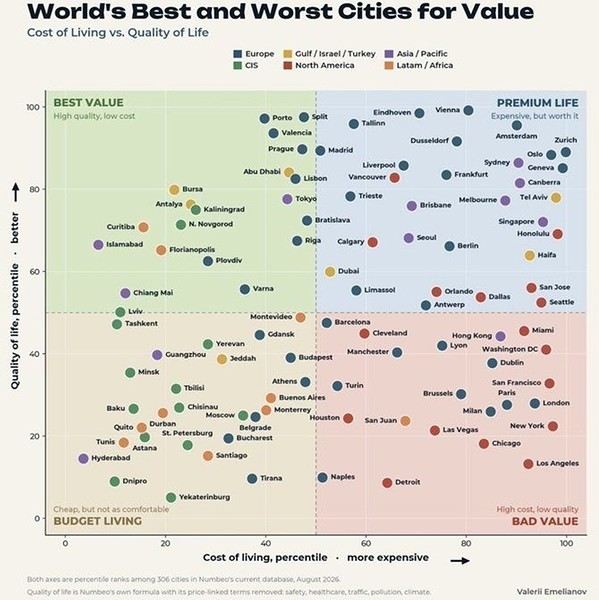
Is this an appropriate topic for VF? I think so. When traveling abroad, you notice huge differences in lifestyle and naturally ask yourself: is it better here than there, or than at home? The question arises differently depending on the type of trip—short or medium-term tourism, or medium to long-term residence.
And we’re back to the methodology problem. Since anyone can submit ratings to the database, how do we know whether the ranking of a city like Novgorod, Quito, or Islamabad (chosen at random) comes from travelers, foreign residents, or only people who are native to the place and have never left their hometown?
The cost of living in the database is indexed based on restaurant prices, transportation, services, housing (rented or purchased), and income. Fair enough. For quality of life, they mention safety, medical services, traffic, pollution, and climate. I would have liked to see social quality of life (interpersonal relationships, nightlife, shows, restaurants, etc.) as well as the possibility of pleasant and interesting excursions included.
That said, I don’t think it’s completely meaningless. In any case, it can serve as a starting point for those interested in the topic. So, I’m posting the original chart here, along with two versions with my personal annotations. A few comments:
- In principle and in my opinion, there should be a simple cost-quality relationship, which I represent with a diagonal sector running from the bottom-left quadrant to the top-right quadrant—that is, from cheap but low-quality cities to expensive cities offering a higher quality of life. It’s no surprise to find several Australian cities at one extreme of this sector, for example. Take Melbourne: sure, it’s a very pleasant city to live in, but living or visiting there is very expensive.
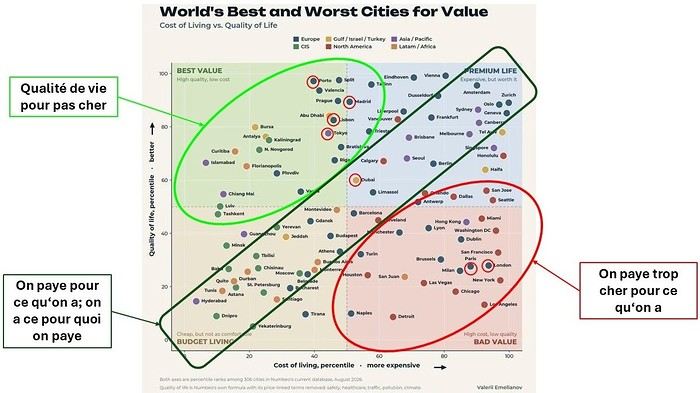
- The bottom-right and top-left quadrants: these are the cities that don’t fit this expected relationship:
o Bottom-right quadrant: expensive cities with mediocre quality of life. London and Paris are here, along with several U.S. cities. No surprise there. The worst is Los Angeles, closely followed by London, Paris, New York, Chicago, Milan... I don’t think that’s a huge revelation. o Top-left quadrant: relatively affordable cities with a good quality of life. We find cities in Brazil (Curitiba, Florianópolis), Turkey (Antalya), Spain, and Portugal. I’m intrigued by the presence of Russian cities and Islamabad—again, who are the people rating these cities?
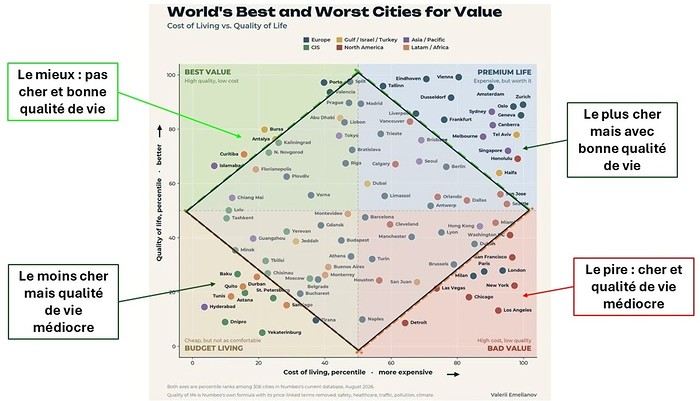
I was drawn to this chart after returning from a trip to Japan. I know some travelers don’t think much of Tokyo, but I had a good impression of it. So, I’m inclined to agree with ranking Tokyo right near Lisbon in the best quadrant. I’m even wondering if it wouldn’t be a good idea to move there for a few months. Other cities in Japan could be worth considering...
What do you think?
Is this an appropriate topic for VF? I think so. When traveling abroad, you notice huge differences in lifestyle and naturally ask yourself: is it better here than there, or than at home? The question arises differently depending on the type of trip—short or medium-term tourism, or medium to long-term residence.
And we’re back to the methodology problem. Since anyone can submit ratings to the database, how do we know whether the ranking of a city like Novgorod, Quito, or Islamabad (chosen at random) comes from travelers, foreign residents, or only people who are native to the place and have never left their hometown?
The cost of living in the database is indexed based on restaurant prices, transportation, services, housing (rented or purchased), and income. Fair enough. For quality of life, they mention safety, medical services, traffic, pollution, and climate. I would have liked to see social quality of life (interpersonal relationships, nightlife, shows, restaurants, etc.) as well as the possibility of pleasant and interesting excursions included.
That said, I don’t think it’s completely meaningless. In any case, it can serve as a starting point for those interested in the topic. So, I’m posting the original chart here, along with two versions with my personal annotations. A few comments:
- In principle and in my opinion, there should be a simple cost-quality relationship, which I represent with a diagonal sector running from the bottom-left quadrant to the top-right quadrant—that is, from cheap but low-quality cities to expensive cities offering a higher quality of life. It’s no surprise to find several Australian cities at one extreme of this sector, for example. Take Melbourne: sure, it’s a very pleasant city to live in, but living or visiting there is very expensive.
- The bottom-right and top-left quadrants: these are the cities that don’t fit this expected relationship:
o Bottom-right quadrant: expensive cities with mediocre quality of life. London and Paris are here, along with several U.S. cities. No surprise there. The worst is Los Angeles, closely followed by London, Paris, New York, Chicago, Milan... I don’t think that’s a huge revelation. o Top-left quadrant: relatively affordable cities with a good quality of life. We find cities in Brazil (Curitiba, Florianópolis), Turkey (Antalya), Spain, and Portugal. I’m intrigued by the presence of Russian cities and Islamabad—again, who are the people rating these cities?
I was drawn to this chart after returning from a trip to Japan. I know some travelers don’t think much of Tokyo, but I had a good impression of it. So, I’m inclined to agree with ranking Tokyo right near Lisbon in the best quadrant. I’m even wondering if it wouldn’t be a good idea to move there for a few months. Other cities in Japan could be worth considering...
What do you think?
October 9 - Day 1
There’s an old Chinese proverb I particularly like: "Dú wán juán shù, búrú xing wán li lú." In slightly more familiar terms, it means you always learn more by traveling ten thousand miles than by reading ten thousand books. And I’m the perfect guy for this because, first, I don’t have time to read ten thousand books about our new destination... And second, the proverb is literally made in our new adventure playground: China!
China... or should I say, "Paradox-land"! A country we see everywhere—on the news or on the "Made in China" labels of half the objects around us—but one we actually know very little about. A country hurtling toward the future while still casually chatting with its rich past. A country that, through our Western lens, seems uniform and just filled with Chinese people who all look alike, yet reveals an incredible cultural, natural, demographic, and culinary diversity as soon as you dig a little deeper. A country with a reputation for being logistically tricky for solo travelers, yet where you can book public toilets on your smartphone. In short, a delightful mess of disorienting contradictions—and, of course, a destination that was bound to charm our wandering soles for a while.
That "while" will be two weeks... And the "we," since I wanted the best in the world to join me, will be Flo and me in this backpacking duo stamped with wanderlust! Just the two of us for two weeks to explore a tiny part of this continent-sized country, trying to understand how old wooden stilt houses coexist in the middle of futuristic skyscrapers glowing with lights, tasting all the weird and wonderful things that come our way, and—incidentally—covering the famous ten thousand kilometers from our proverb.
Well... we’ll probably cover a little less than that, but enough to let us write our own travel journal instead of reading others’... Because you know us—between living our lives watching others live theirs by reading ten thousand books, or writing our own by truly roaming the world, we’ve long since chosen our side! And you, who’s reading this—team book or team live?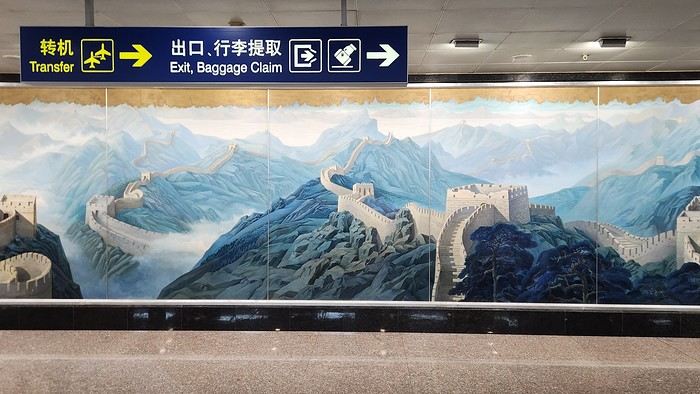
There’s an old Chinese proverb I particularly like: "Dú wán juán shù, búrú xing wán li lú." In slightly more familiar terms, it means you always learn more by traveling ten thousand miles than by reading ten thousand books. And I’m the perfect guy for this because, first, I don’t have time to read ten thousand books about our new destination... And second, the proverb is literally made in our new adventure playground: China!
China... or should I say, "Paradox-land"! A country we see everywhere—on the news or on the "Made in China" labels of half the objects around us—but one we actually know very little about. A country hurtling toward the future while still casually chatting with its rich past. A country that, through our Western lens, seems uniform and just filled with Chinese people who all look alike, yet reveals an incredible cultural, natural, demographic, and culinary diversity as soon as you dig a little deeper. A country with a reputation for being logistically tricky for solo travelers, yet where you can book public toilets on your smartphone. In short, a delightful mess of disorienting contradictions—and, of course, a destination that was bound to charm our wandering soles for a while.
That "while" will be two weeks... And the "we," since I wanted the best in the world to join me, will be Flo and me in this backpacking duo stamped with wanderlust! Just the two of us for two weeks to explore a tiny part of this continent-sized country, trying to understand how old wooden stilt houses coexist in the middle of futuristic skyscrapers glowing with lights, tasting all the weird and wonderful things that come our way, and—incidentally—covering the famous ten thousand kilometers from our proverb.
Well... we’ll probably cover a little less than that, but enough to let us write our own travel journal instead of reading others’... Because you know us—between living our lives watching others live theirs by reading ten thousand books, or writing our own by truly roaming the world, we’ve long since chosen our side! And you, who’s reading this—team book or team live?
I did these two treks in Himachal Pradesh in September 2026. The Pin Parvati trek absolutely must be done before mid-September to have favorable weather conditions, while the Bara Banghal trek can be done until the end of September. In both cases, the weather window is limited because these treks are only feasible between the post-monsoon period (early September) and the more or less early arrival of the first snowfalls (mid-October or even earlier). I chose to do these two treks back-to-back with just a few days in between, taking a welcome break in the village of Kasol, which is really pleasant with its German bakeries on every corner, set in the stunning Parvati Valley—much better than the unremarkable village of Barsheni. From Kasol, there are plenty of bus connections to the Kullu Valley, but they’re long due to the narrow, winding, and sometimes badly damaged roads. From Kullu, Manali is very close and easy to reach.
After a pretty disastrous weather-wise trip to Gran Canaria, we’re hoping this time the sun will shine in Puglia.
It’s not a sure thing, though—the weather’s been awful all over Europe in early May.
For those who’d like to (re)read the story without the digressions, it’s here.
Saturday, May 16: This time we’re flying out of Charleroi (Brussels South): the ticket prices, flight times, and proximity all worked for us. The airport (Ryanair) was recently renovated... but it’s still not very well organized. There are hardly any seats in the boarding areas, and... the restrooms cost money!!! The flight goes smoothly, though, and we land in Bari a little late.
We quickly pick up our rental car, a very local-looking Pandina (even more so than the Fiat 500 in this region), and hit the Italian roads... and their unique driving quirks (like the fact that the countless road signs along the streets and in towns are purely decorative 😏, and that Italian cars don’t have turn signals 😮... except for rental cars).
About an hour later, we arrive at our first accommodation, right in the middle of the countryside near Monopoli. The owner isn’t there, but they’ve left us a ton of info via messages and even turned on the space heater, which is a nice touch. We explore the property:

And the next morning before breakfast, its immediate surroundings:


Sunday, May 17: After our "seaside" experience in Gran Canaria last weekend (packed with people and locals), we decide to start inland. After a hearty breakfast,

we head toward Alberobello, a super touristy village famous for its trulli—those stone houses with conical roofs. We easily find a free parking spot on a street near the Aia Piccola district, where some trulli are still lived in year-round.


We almost immediately come across the Trullo Sovrano (the only two-story one), which you can visit (but we skip it—it’s opening time, and there’s already a line).

From there, we head down toward the Basilica of Cosma e Damiano... but we don’t go in because there’s a mass.

Now we’re on the main Piazza del Popolo, which connects the two districts of Alberobello: Rione Aia Piccola and Rione Monti, the more touristy one.
For those who’d like to (re)read the story without the digressions, it’s here.
Saturday, May 16: This time we’re flying out of Charleroi (Brussels South): the ticket prices, flight times, and proximity all worked for us. The airport (Ryanair) was recently renovated... but it’s still not very well organized. There are hardly any seats in the boarding areas, and... the restrooms cost money!!! The flight goes smoothly, though, and we land in Bari a little late.
We quickly pick up our rental car, a very local-looking Pandina (even more so than the Fiat 500 in this region), and hit the Italian roads... and their unique driving quirks (like the fact that the countless road signs along the streets and in towns are purely decorative 😏, and that Italian cars don’t have turn signals 😮... except for rental cars).
About an hour later, we arrive at our first accommodation, right in the middle of the countryside near Monopoli. The owner isn’t there, but they’ve left us a ton of info via messages and even turned on the space heater, which is a nice touch. We explore the property:
And the next morning before breakfast, its immediate surroundings:
Sunday, May 17: After our "seaside" experience in Gran Canaria last weekend (packed with people and locals), we decide to start inland. After a hearty breakfast,
we head toward Alberobello, a super touristy village famous for its trulli—those stone houses with conical roofs. We easily find a free parking spot on a street near the Aia Piccola district, where some trulli are still lived in year-round.
We almost immediately come across the Trullo Sovrano (the only two-story one), which you can visit (but we skip it—it’s opening time, and there’s already a line).
From there, we head down toward the Basilica of Cosma e Damiano... but we don’t go in because there’s a mass.
Now we’re on the main Piazza del Popolo, which connects the two districts of Alberobello: Rione Aia Piccola and Rione Monti, the more touristy one.
Returning to Curaçao is a bit like reopening a book whose pages still smell of sun and salt.
As soon as the plane descends toward the island, the familiar colors reappear: the dazzling turquoise of the sea, the pastel facades of Willemstad, and that unique light that seems to soften everything.
For this second trip, we no longer arrive as hesitant explorers, but as confirmed lovers of this warm island.
We already know that the warm wind will welcome us as soon as we step out of the airport, that the beaches will once again offer their infinite shades of blue, and that each day will have that unhurried pace that makes you forget the rest of the world.
Yet, despite this sense of déjà vu, Curaçao always manages to surprise. A new cove to discover, a different sunset, a smile shared with a local...
The island has that rare talent for reinventing itself without ever betraying what makes it so endearing.
This second trip isn’t a repetition, then, but a reunion: a chance to rediscover Curaçao with more attentive, more connected, and perhaps even more amazed eyes.
I invite you to keep reading this travel journal and watch the videos that will help you learn a little more about the island’s different attractions.
Just click on the video image to start watching.
To go to a specific post, here are the appropriate links:
Exploring Willemstad’s colorful neighborhoods The Most Beautiful Beaches in Curaçao Hike at Boka Sint Michiel | Flamingos & panoramic views Climbing Christoffel Mountain Den Dunki & Flamingos of Jan Thiel Must-see spots in Curaçao Snorkeling at Playa Kenepa Chiki: Turquoise Water & Tropical Fish Snorkeling at Porto Mari: One of Curaçao’s Best Spots Snorkeling at Mambo Beach, the Perfect Spot Snorkeling at Daaibooi Beach, a diverse marine world
Autumn 2025 marks my 11th trip to Japan. I’ve neglected the south for too long, so like last year, it’s my main destination again.
We’ll revisit some familiar spots, but of course, we’ll also try plenty of new things. This trip feels a bit strange—no more of that initial magic, but on the other hand, we’ve really explored some off-the-beaten-path and private locations. The variety of regions, landscapes, and vehicles I’ve photographed is pretty remarkable. In search of vintage trains and threatened lines, I think my future trips will follow the same vibe.
After the 2017 and 2024 travel journals, it’s time to dive into Japan’s lesser-known side—all by public transport, of course. Day 1, arrival in Tokyo
The timing won’t be like other years since we arrive at Narita in the mid-afternoon after a layover in Hong Kong.
The only real mission for this afternoon is picking up tickets for the next day. And already, the first travel stress: I’ll have to rewrite the entire day because the Revaty Kinu 109 to Kinugawaonsen is fully booked, just like all the morning trains. So instead of a relaxed start exploring Ueno, I’m back to scrutinizing schedules. I manage to snag something last-minute after struggling for hours. Then, I wait for a message from Seiichi to meet up for dinner. Meeting friends on the first day and staying up late with jet lag—like I said, this trip isn’t like the others.
A great evening at a place I love.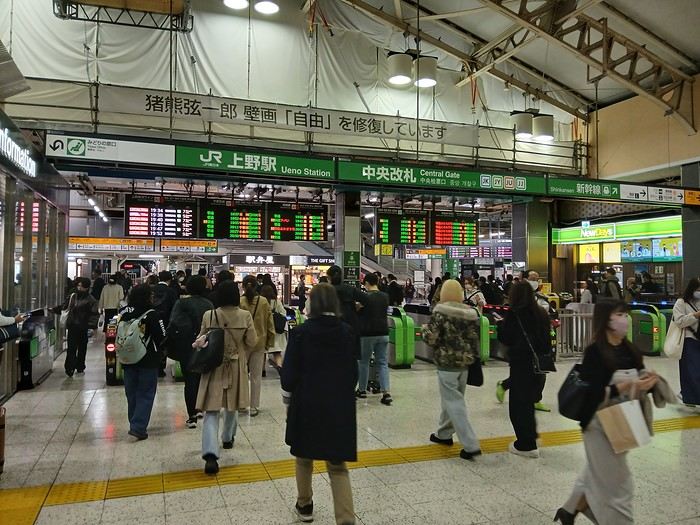
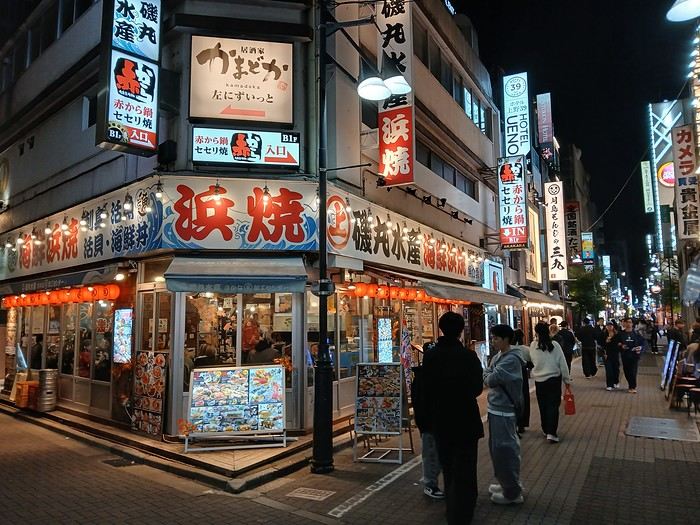
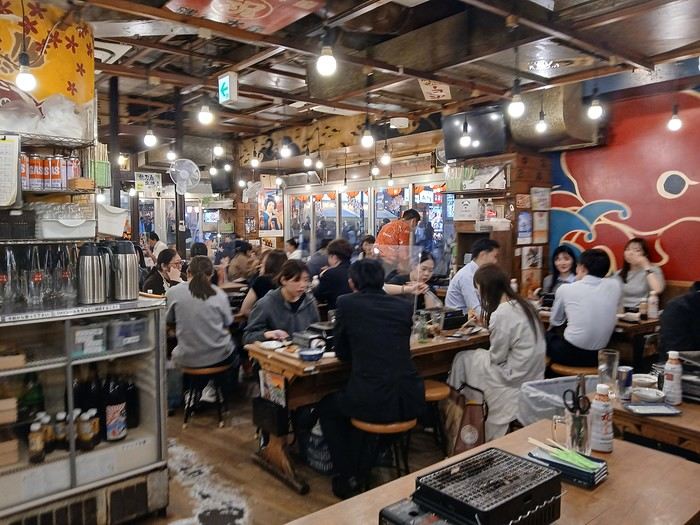
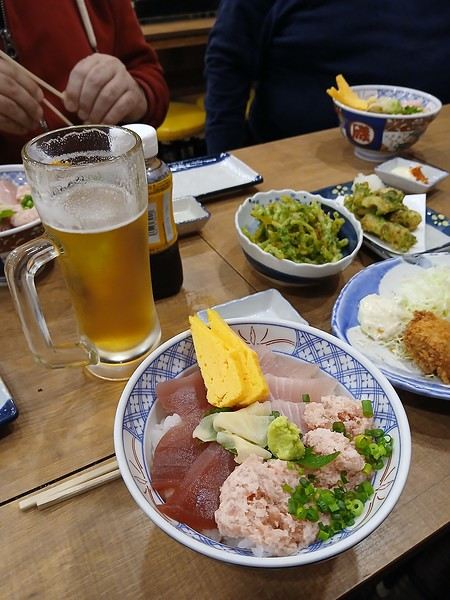
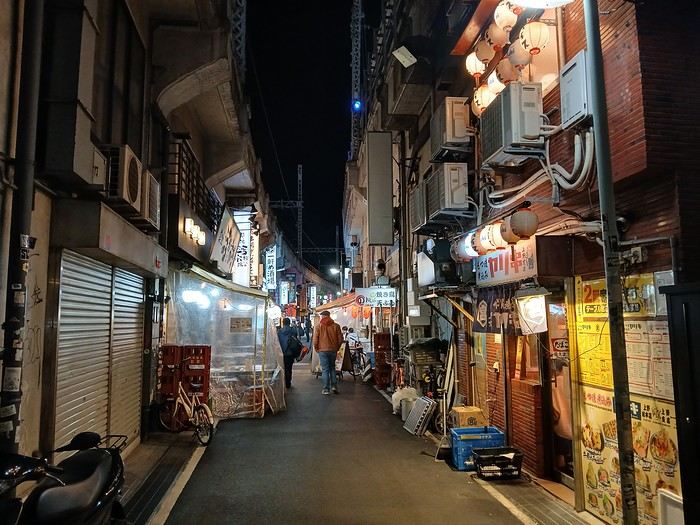
We’ll revisit some familiar spots, but of course, we’ll also try plenty of new things. This trip feels a bit strange—no more of that initial magic, but on the other hand, we’ve really explored some off-the-beaten-path and private locations. The variety of regions, landscapes, and vehicles I’ve photographed is pretty remarkable. In search of vintage trains and threatened lines, I think my future trips will follow the same vibe.
After the 2017 and 2024 travel journals, it’s time to dive into Japan’s lesser-known side—all by public transport, of course. Day 1, arrival in Tokyo
The timing won’t be like other years since we arrive at Narita in the mid-afternoon after a layover in Hong Kong.
The only real mission for this afternoon is picking up tickets for the next day. And already, the first travel stress: I’ll have to rewrite the entire day because the Revaty Kinu 109 to Kinugawaonsen is fully booked, just like all the morning trains. So instead of a relaxed start exploring Ueno, I’m back to scrutinizing schedules. I manage to snag something last-minute after struggling for hours. Then, I wait for a message from Seiichi to meet up for dinner. Meeting friends on the first day and staying up late with jet lag—like I said, this trip isn’t like the others.
A great evening at a place I love.
Hello,
We got back from Tanzania a month ago, on March 5th. I’ve started this trip report at the link the moderator asked me to use:
https://voyageforum.com/forum/decouverte-ruaha-nyerere-ex-selous-en-fevrier-mars-2026-d11466010/
You’ll find a video of our trip on my YouTube channel there.
Now I’ll tell you about our 10-night trip in Tanzania, with 8 nights spent in two parks we didn’t know. Tanzania isn’t new to us—it was even our first African safari destination back in 2012. https://www.youtube.com/@lolodetoul54 Since then, we’ve visited several East and Southern African countries: Kenya, South Africa, Namibia, Botswana, some of them multiple times. We usually travel in September during the dry season. We tried March 2024 for nine nights in the Okavango and loved it, except everything was dry, which wasn’t normal for the rainy season.
So for this second March trip during the wet season, we really got what we asked for… rain. But before that, we had to fight just to get to Tanzania.
Saturday, February 21, 2026:
It’s D-Day—the departure. What a hassle to organize flights to and within Tanzania! I’ll tell you all about it in another post: https://voyageforum.com/forum/toutes-compagnies-aeriennes-tanzaniennes-interdites-d10758360/ On top of that, Rwandair canceled our outbound flight a month before departure. They offered to reschedule us 3-4 days later—ridiculous for a 10-night trip we’d already booked. We had to cancel our tickets and buy new ones with Kenya Airways. We’re still waiting for our refund from Rwandair!!!!!!! So on Saturday, February 1st, our bags were packed. We headed to the Lorraine TGV station, about 30 km from home.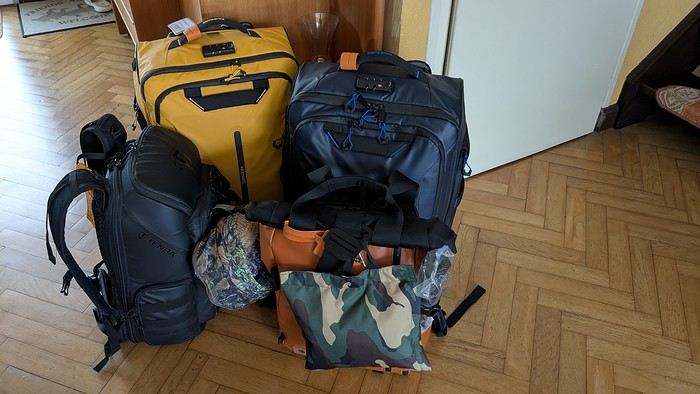 Direct train to Roissy—just 1h15. Quick and efficient.
All that was left was to wait for our overnight flight. We took off on time, just before 11 PM. Smooth flight, nothing unusual. Arrived in Nairobi around 9 AM. A few hours’ wait, then a flight to Dar es Salaam, landing at our first destination around 12:45 PM.
Our local contact, Anne from Asanterra agency, picked us up at the airport. It was hot and humid—it was raining.
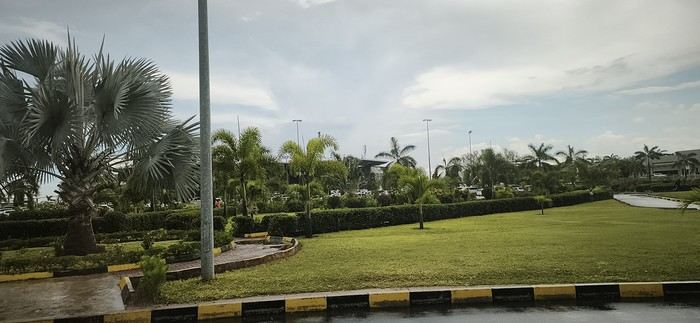
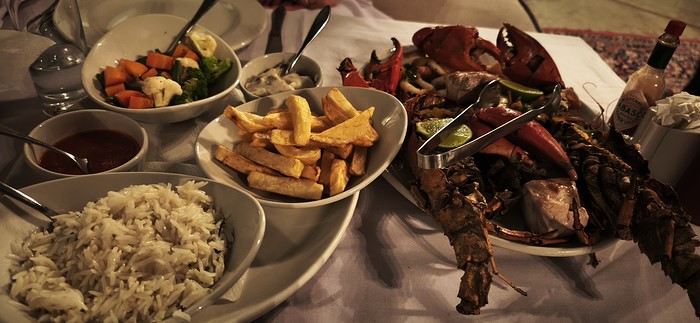
Our first night was at the Alexander Hotel. That evening, we treated ourselves to fish and shellfish at the hotel restaurant:
Sunday, February 22, 2026:
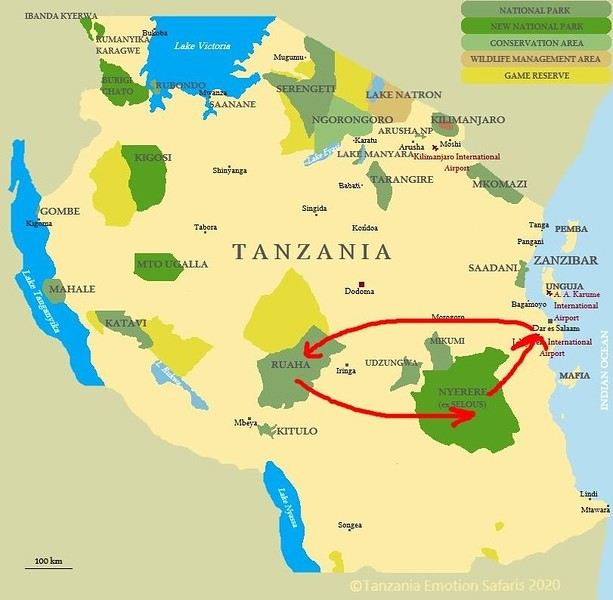
A driver picked us up at dawn to take us to the domestic airport so we could finally head to our first destination: Ruaha National Park. We flew with Auric.air for a 2-hour flight with two stops (Nyerere and Zkima airstrips).
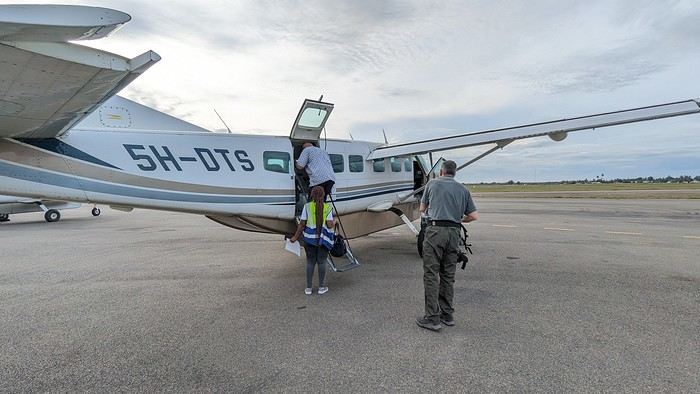
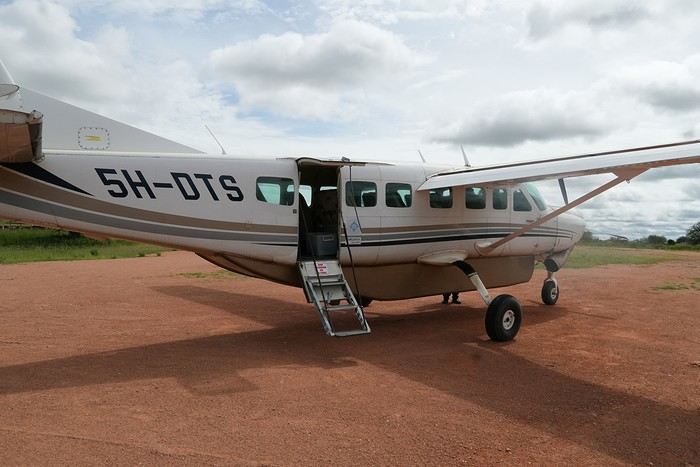
I’m always amazed at how easily these Cessnas take off and land on dirt runways—especially when they’re wet:
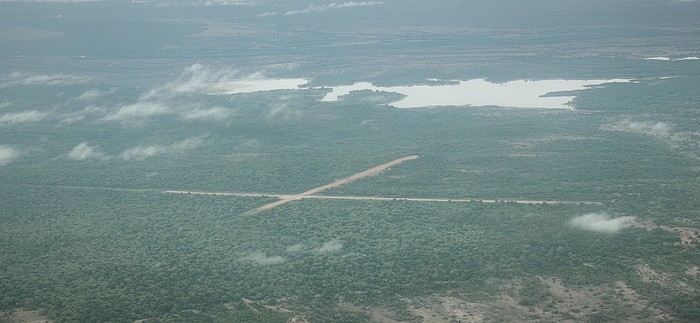
Aerial view of Zkima airstrip, where we’d landed just minutes earlier:
Flyover of Iringa, a "big" city in the country near Ruaha National Park:
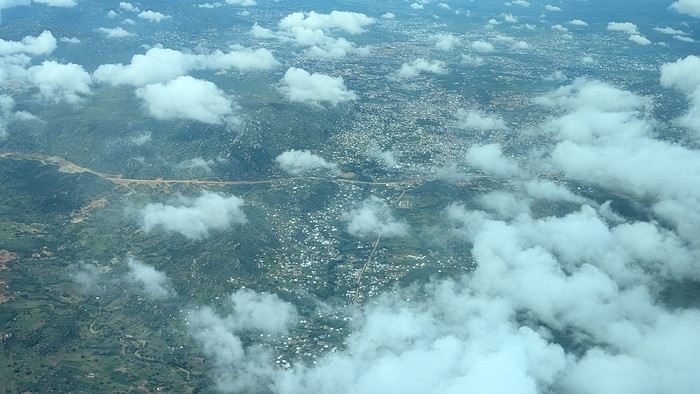
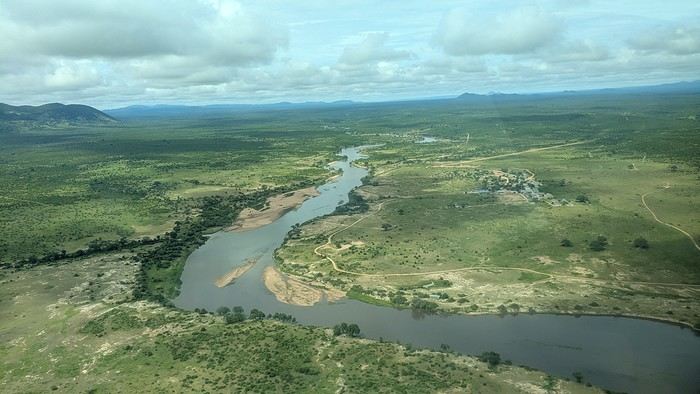
We’re getting close. The plane descends and flies over the Ruaha River, which gave the park its name:
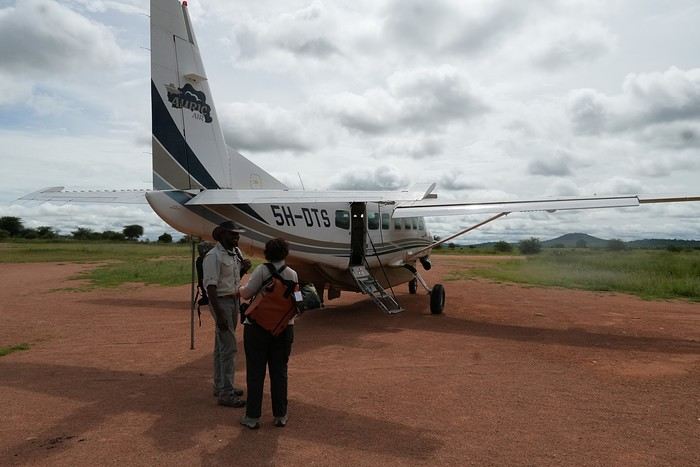
We land for the third and final time that day, reaching our destination: Msembe airstrip, the gateway to Ruaha.
We got back from Tanzania a month ago, on March 5th. I’ve started this trip report at the link the moderator asked me to use:
https://voyageforum.com/forum/decouverte-ruaha-nyerere-ex-selous-en-fevrier-mars-2026-d11466010/
You’ll find a video of our trip on my YouTube channel there.
Now I’ll tell you about our 10-night trip in Tanzania, with 8 nights spent in two parks we didn’t know. Tanzania isn’t new to us—it was even our first African safari destination back in 2012. https://www.youtube.com/@lolodetoul54 Since then, we’ve visited several East and Southern African countries: Kenya, South Africa, Namibia, Botswana, some of them multiple times. We usually travel in September during the dry season. We tried March 2024 for nine nights in the Okavango and loved it, except everything was dry, which wasn’t normal for the rainy season.
So for this second March trip during the wet season, we really got what we asked for… rain. But before that, we had to fight just to get to Tanzania.
Saturday, February 21, 2026:
It’s D-Day—the departure. What a hassle to organize flights to and within Tanzania! I’ll tell you all about it in another post: https://voyageforum.com/forum/toutes-compagnies-aeriennes-tanzaniennes-interdites-d10758360/ On top of that, Rwandair canceled our outbound flight a month before departure. They offered to reschedule us 3-4 days later—ridiculous for a 10-night trip we’d already booked. We had to cancel our tickets and buy new ones with Kenya Airways. We’re still waiting for our refund from Rwandair!!!!!!! So on Saturday, February 1st, our bags were packed. We headed to the Lorraine TGV station, about 30 km from home.
Direct train to Roissy—just 1h15. Quick and efficient.
All that was left was to wait for our overnight flight. We took off on time, just before 11 PM. Smooth flight, nothing unusual. Arrived in Nairobi around 9 AM. A few hours’ wait, then a flight to Dar es Salaam, landing at our first destination around 12:45 PM.
Our local contact, Anne from Asanterra agency, picked us up at the airport. It was hot and humid—it was raining.Our first night was at the Alexander Hotel. That evening, we treated ourselves to fish and shellfish at the hotel restaurant:
Sunday, February 22, 2026:
A driver picked us up at dawn to take us to the domestic airport so we could finally head to our first destination: Ruaha National Park. We flew with Auric.air for a 2-hour flight with two stops (Nyerere and Zkima airstrips).
I’m always amazed at how easily these Cessnas take off and land on dirt runways—especially when they’re wet:
Aerial view of Zkima airstrip, where we’d landed just minutes earlier:
Flyover of Iringa, a "big" city in the country near Ruaha National Park:
We’re getting close. The plane descends and flies over the Ruaha River, which gave the park its name:
We land for the third and final time that day, reaching our destination: Msembe airstrip, the gateway to Ruaha.
Foreword
This text has been proofread many times.
Sorry if some points in this A to Z have already been covered on this forum.
Text and drawings by the author.
Peru is still a very vast country, with so much to see, and obviously this text can't list all the attractions of the country.
*Abiseo (River) A national park that's very hard to access and doesn’t seem open to visitors. Includes the Gran Pajaten site (see below). Personally, it really sparks my imagination (not visited personally)
*Aguas Calientes the town next to Machu Picchu, more precisely below the archaeological site. As far as I know, you can only get there by train. Reminds me of the market where stalls line both sides of the tracks near Bangkok. I love it
*Altiplano: somewhere the "heart" of the Andes. I was able to trek across it on foot, starting from Caracollo in Bolivia, and of course, it’s vast plains to explore. This is where people live in a very rural way. Andean populations are quite austere compared to those in the lowlands or on the coast. You really have to appreciate the harshness of life to live there. Life is anything but superficial. I set a compass heading and found myself walking west toward the expanse of water near a place called La Joya. For pitching the tent, the nights were still chilly
*Canyon del Colca One of the deepest canyons in the world. Personally, I hiked down and back up on foot. The toughest stretch I’ve ever covered in my life.
*Ceviche More or less the national dish. A marinade of fish, shellfish, and lime. But you can find it in some restaurants in Europe, France, and certainly in Belgium or Switzerland. In the small restaurants of Pisco, you can eat excellent ceviche
*Cerro Sechín: Mostly bas-reliefs. A site little known to travelers in the Casma province. The first vestiges of a pre-Inca civilization with iconography similar to that of Chavín (not visited personally)
*Chan Chan A large city of the Chimú civilization and relatively vast to visit. You can see adobe walls with bas-reliefs. Visit from Trujillo, take a colectivo. Plan for the whole day
*Charango: a small guitar widely used in Andean music
*Chauchilla A necropolis near Nazca where you can see mummies exposed on the ground. YouTubers can do paranormal experiments there. And for anyone wondering about the fate of the soul and body after death, here’s the answer: the body remains after death. You can imagine your own flesh and body exposed to the winds of the Pampa and before eternity... (not visited personally)
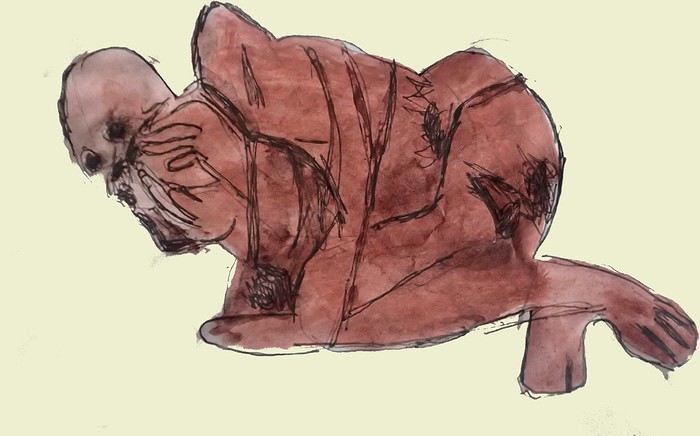
*Chavín de Huántar (Lanzón) The site’s appeal lies in its mountainous surroundings, the Lanzón stela, and the sculpted heads on the façades. What few people know is that the Chavín civilization began its expansion centuries before the Incas. Unfortunately, you can’t get too close to see the Lanzón—the day I was there, it was protected by grilles. To get there: minibus from Huaraz or trek from Olleros. Then cross a high pass (over 5,000m). If you do it solo on foot, be careful—the path isn’t obvious from Olleros
*Chullpa: funerary tower, notably at Sillustani in the Lake Titicaca region
*Chimú: pre-Inca civilization whose center was Chan Chan.
*Chola/Cholitas (Bolivia): typical clothing style of women from the Andean plateaus
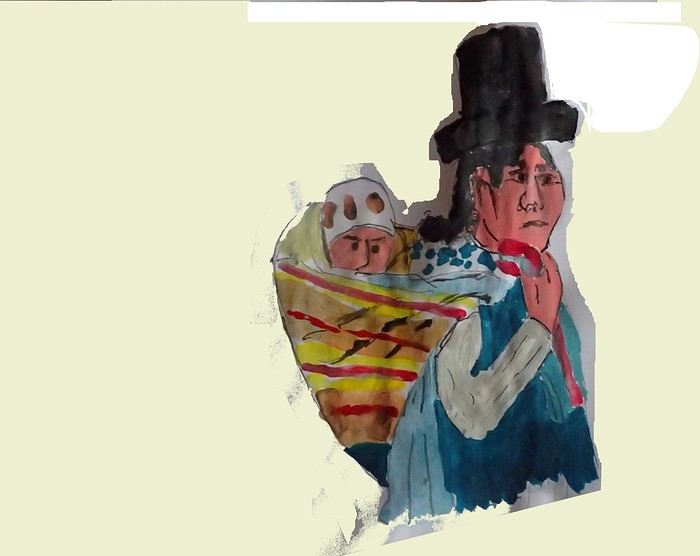
*Chompa: pronounce it *Chompaaa!* A common term for a wool sweater with vicuña patterns, often knitted from alpaca wool. If you dress like this, it’s a bit kitschy around the edges
*Cuy That one isn’t a guinea pig like in Guyana but an actual guinea pig. During a trip to Peru, I was hiking near a village north of Quillabamba (the terminus of the train line that passes through Aguas Calientes), and I was invited to stay in a house. The family raised a few of these pets. Apparently, the locals eat them. Since I’m not much of a meat-eater, it doesn’t really tempt me. How about you?
*Pacific Coast or how to talk about a place you haven’t visited? Except for the coast near Pisco and San Andrés, I haven’t visited any coastal cities. But that doesn’t mean these places lack interest or poetry. For fans of clichéd images, pelicans, seabirds, and fishing boats appear by the sea.
*Gran Pajaten: also closed to the public. Features anthropomorphic bas-reliefs. (not visited personally)
*Huaca. Visit the Huaca del Sol and Huaca de la Luna, especially near Trujillo. However, you can skip them—Chan Chan is still more interesting. Don’t forget to spend time visiting Chan Chan
*Huacachina A small oasis in the desert near Ica. Yes, we’re talking about an oasis because for those who’ve never traveled to Peru, the coastal strip along the Pacific is almost entirely desert, from north to south. Peru is territorially made up of three different regions: the desert coast, the Altiplano stretching north to south with mountain ranges (the Cordilleras), and the Amazon basin to the east. (not visited personally)
*Inca Kola It’s neither Coca-Cola nor Pepsi but a unique cola with a slightly orange color. Tastes like bubble gum
*Intiwatana: a carved rock shaped like a parallelepiped. Is it a sundial?
*Ballestas Islands: a highlight in Peru, though very touristy. You can only get there by boat from the port of San Andrés, a few kilometers from Pisco. It’s a surreal place to me—actually islets with cavities where sea lions and fur seals live. Since it’s a protected area, you’re not allowed to disembark. Guano is harvested there, which can be used as fertilizer.
*Kuelap: a fortress built by the Chachapoyas people. Rarely visited by travelers. (not visited personally)
*Larco Museum: an iconic museum in Lima with a large collection of pieces from archaeological and pre-Columbian sites. From what I remember, it has many pieces from the Moche civilization. As for the Moche statuettes, the prudish might look away. Probably a veneration of the god Priapus without knowing it.
*Nazca Lines Discovered by German archaeologist Maria Reiche, they stretch for kilometers. The designs in the desert around Nazca depict animals and cabalistic signs. The question I ask myself is why the creators of these lines represented a monkey and a hummingbird—species endemic to the tropical forest, not the desert plains around Nazca.
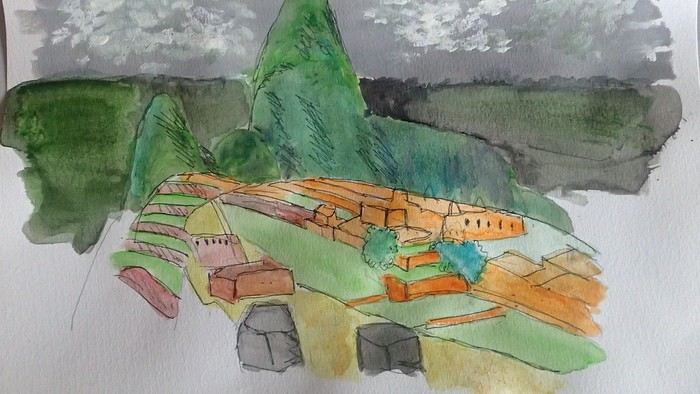
*Machu Picchu: means "old mountain" in Quechua. There’s also Wayna Picchu. The ruins of the site emerge from a sort of small plateau above Aguas Calientes. When the mist rises above the site and the bend of the Urubamba River, it’s truly magical... Also the starting point of the Inca Trail.
*Coca tea A decoction/infusion of the coca plant, meant to ease altitude sickness or *soroche*
*Chullo A rough translation would be a Peruvian wool hat.
*Moche: a civilization established in the Moche Valley, hence the term *Mochica*. What characterizes this civilization are the distinctive clay pieces representing faces and erotic statuettes
*Papa a la Huancaína A local potato dish
*Pisac: a typical market near Cusco
*Pisco Sour: perhaps the Peruvian equivalent of the *caipirinha* you drink in Brazil.
*Puya Raimondii A Bromeliaceae that still looks like a cactus, endemic to the Altiplano
*Quechua The language spoken by the indigenous people of the high plateaus (as well as Aymara in Bolivia)
*Quipu A knotted string used for counting. Widely used by the Inca administration.
*Sacsayhuamán (Q’enqo, Inca Bath) From Cusco’s Plaza de Armas, take the streets that climb above the city. Sacsayhuamán is called a fortress and is made up of large stone blocks. You wonder how the Incas could cut such huge blocks to assemble them—just like some streets in Cusco. The Q’enqo block is enigmatic; no one really knows what it represents.
*Savia Andina An Andean folk group.
*Tambo (=> Ollantaytambo) The Inca emperor (Atahualpa, Manco Capac) had the mission of controlling a vast empire. An empire that was still very extensive. Hence the importance of these *tambos* or relay stations. Napoleon created the civil code; the Incas invented the *tambos* and *quipus*.
*Tawantinsuyu: the Inca Empire
*Tinku: a warrior dance practiced mainly in Bolivia
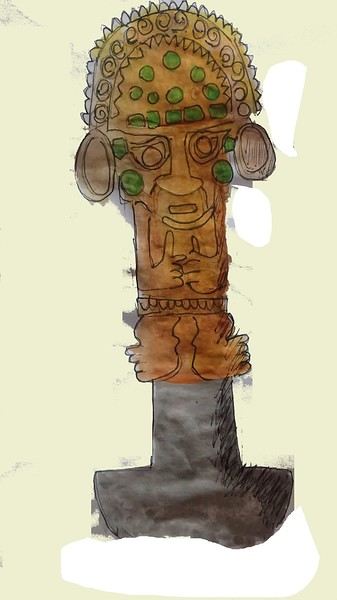
*Golden Tumi: a sacrificial weapon. Often featured in Peru travel guides. See illustration
*Terra X: a documentary series from the German TV channel that aired on Arte. Some episodes focused on pre-Inca and Inca Peru. I must have some old recording tapes. In memory of Gottfried Kirchner as a source of inspiration.
*Uros: I checked—it actually refers to the people who live on these floating islands. Even if it’s touristy, it’s a must-visit because it’s incredible how people can live on islets made from nothing. Take the boat from Puno
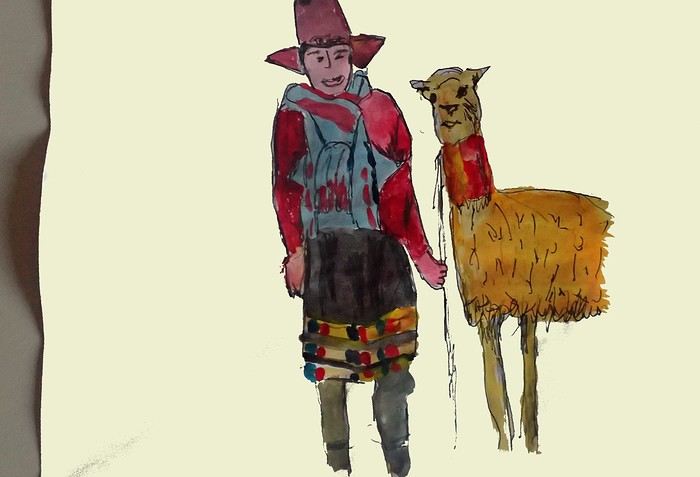
*Vicuña, llama, guanaco: camelids characteristic of the Altiplano
*Wayna Picchu The young Picchu mountain. In the first minutes of *Aguirre, the Wrath of God*, you see Klaus Kinski—well, Aguirre—making his way along the Inca Trail. Werner Herzog must have broken his back filming those sequences.
*Zampoña: pan flute
Peru is still a very vast country, with so much to see, and obviously this text can't list all the attractions of the country.
*Abiseo (River) A national park that's very hard to access and doesn’t seem open to visitors. Includes the Gran Pajaten site (see below). Personally, it really sparks my imagination (not visited personally)
*Aguas Calientes the town next to Machu Picchu, more precisely below the archaeological site. As far as I know, you can only get there by train. Reminds me of the market where stalls line both sides of the tracks near Bangkok. I love it
*Altiplano: somewhere the "heart" of the Andes. I was able to trek across it on foot, starting from Caracollo in Bolivia, and of course, it’s vast plains to explore. This is where people live in a very rural way. Andean populations are quite austere compared to those in the lowlands or on the coast. You really have to appreciate the harshness of life to live there. Life is anything but superficial. I set a compass heading and found myself walking west toward the expanse of water near a place called La Joya. For pitching the tent, the nights were still chilly
*Canyon del Colca One of the deepest canyons in the world. Personally, I hiked down and back up on foot. The toughest stretch I’ve ever covered in my life.
*Ceviche More or less the national dish. A marinade of fish, shellfish, and lime. But you can find it in some restaurants in Europe, France, and certainly in Belgium or Switzerland. In the small restaurants of Pisco, you can eat excellent ceviche
*Cerro Sechín: Mostly bas-reliefs. A site little known to travelers in the Casma province. The first vestiges of a pre-Inca civilization with iconography similar to that of Chavín (not visited personally)
*Chan Chan A large city of the Chimú civilization and relatively vast to visit. You can see adobe walls with bas-reliefs. Visit from Trujillo, take a colectivo. Plan for the whole day
*Charango: a small guitar widely used in Andean music
*Chauchilla A necropolis near Nazca where you can see mummies exposed on the ground. YouTubers can do paranormal experiments there. And for anyone wondering about the fate of the soul and body after death, here’s the answer: the body remains after death. You can imagine your own flesh and body exposed to the winds of the Pampa and before eternity... (not visited personally)
*Chavín de Huántar (Lanzón) The site’s appeal lies in its mountainous surroundings, the Lanzón stela, and the sculpted heads on the façades. What few people know is that the Chavín civilization began its expansion centuries before the Incas. Unfortunately, you can’t get too close to see the Lanzón—the day I was there, it was protected by grilles. To get there: minibus from Huaraz or trek from Olleros. Then cross a high pass (over 5,000m). If you do it solo on foot, be careful—the path isn’t obvious from Olleros
*Chullpa: funerary tower, notably at Sillustani in the Lake Titicaca region
*Chimú: pre-Inca civilization whose center was Chan Chan.
*Chola/Cholitas (Bolivia): typical clothing style of women from the Andean plateaus
*Chompa: pronounce it *Chompaaa!* A common term for a wool sweater with vicuña patterns, often knitted from alpaca wool. If you dress like this, it’s a bit kitschy around the edges
*Cuy That one isn’t a guinea pig like in Guyana but an actual guinea pig. During a trip to Peru, I was hiking near a village north of Quillabamba (the terminus of the train line that passes through Aguas Calientes), and I was invited to stay in a house. The family raised a few of these pets. Apparently, the locals eat them. Since I’m not much of a meat-eater, it doesn’t really tempt me. How about you?
*Pacific Coast or how to talk about a place you haven’t visited? Except for the coast near Pisco and San Andrés, I haven’t visited any coastal cities. But that doesn’t mean these places lack interest or poetry. For fans of clichéd images, pelicans, seabirds, and fishing boats appear by the sea.
*Gran Pajaten: also closed to the public. Features anthropomorphic bas-reliefs. (not visited personally)
*Huaca. Visit the Huaca del Sol and Huaca de la Luna, especially near Trujillo. However, you can skip them—Chan Chan is still more interesting. Don’t forget to spend time visiting Chan Chan
*Huacachina A small oasis in the desert near Ica. Yes, we’re talking about an oasis because for those who’ve never traveled to Peru, the coastal strip along the Pacific is almost entirely desert, from north to south. Peru is territorially made up of three different regions: the desert coast, the Altiplano stretching north to south with mountain ranges (the Cordilleras), and the Amazon basin to the east. (not visited personally)
*Inca Kola It’s neither Coca-Cola nor Pepsi but a unique cola with a slightly orange color. Tastes like bubble gum
*Intiwatana: a carved rock shaped like a parallelepiped. Is it a sundial?
*Ballestas Islands: a highlight in Peru, though very touristy. You can only get there by boat from the port of San Andrés, a few kilometers from Pisco. It’s a surreal place to me—actually islets with cavities where sea lions and fur seals live. Since it’s a protected area, you’re not allowed to disembark. Guano is harvested there, which can be used as fertilizer.
*Kuelap: a fortress built by the Chachapoyas people. Rarely visited by travelers. (not visited personally)
*Larco Museum: an iconic museum in Lima with a large collection of pieces from archaeological and pre-Columbian sites. From what I remember, it has many pieces from the Moche civilization. As for the Moche statuettes, the prudish might look away. Probably a veneration of the god Priapus without knowing it.
*Nazca Lines Discovered by German archaeologist Maria Reiche, they stretch for kilometers. The designs in the desert around Nazca depict animals and cabalistic signs. The question I ask myself is why the creators of these lines represented a monkey and a hummingbird—species endemic to the tropical forest, not the desert plains around Nazca.
*Machu Picchu: means "old mountain" in Quechua. There’s also Wayna Picchu. The ruins of the site emerge from a sort of small plateau above Aguas Calientes. When the mist rises above the site and the bend of the Urubamba River, it’s truly magical... Also the starting point of the Inca Trail.
*Coca tea A decoction/infusion of the coca plant, meant to ease altitude sickness or *soroche*
*Chullo A rough translation would be a Peruvian wool hat.
*Moche: a civilization established in the Moche Valley, hence the term *Mochica*. What characterizes this civilization are the distinctive clay pieces representing faces and erotic statuettes
*Papa a la Huancaína A local potato dish
*Pisac: a typical market near Cusco
*Pisco Sour: perhaps the Peruvian equivalent of the *caipirinha* you drink in Brazil.
*Puya Raimondii A Bromeliaceae that still looks like a cactus, endemic to the Altiplano
*Quechua The language spoken by the indigenous people of the high plateaus (as well as Aymara in Bolivia)
*Quipu A knotted string used for counting. Widely used by the Inca administration.
*Sacsayhuamán (Q’enqo, Inca Bath) From Cusco’s Plaza de Armas, take the streets that climb above the city. Sacsayhuamán is called a fortress and is made up of large stone blocks. You wonder how the Incas could cut such huge blocks to assemble them—just like some streets in Cusco. The Q’enqo block is enigmatic; no one really knows what it represents.
*Savia Andina An Andean folk group.
*Tambo (=> Ollantaytambo) The Inca emperor (Atahualpa, Manco Capac) had the mission of controlling a vast empire. An empire that was still very extensive. Hence the importance of these *tambos* or relay stations. Napoleon created the civil code; the Incas invented the *tambos* and *quipus*.
*Tawantinsuyu: the Inca Empire
*Tinku: a warrior dance practiced mainly in Bolivia
*Golden Tumi: a sacrificial weapon. Often featured in Peru travel guides. See illustration
*Terra X: a documentary series from the German TV channel that aired on Arte. Some episodes focused on pre-Inca and Inca Peru. I must have some old recording tapes. In memory of Gottfried Kirchner as a source of inspiration.
*Uros: I checked—it actually refers to the people who live on these floating islands. Even if it’s touristy, it’s a must-visit because it’s incredible how people can live on islets made from nothing. Take the boat from Puno
*Vicuña, llama, guanaco: camelids characteristic of the Altiplano
*Wayna Picchu The young Picchu mountain. In the first minutes of *Aguirre, the Wrath of God*, you see Klaus Kinski—well, Aguirre—making his way along the Inca Trail. Werner Herzog must have broken his back filming those sequences.
*Zampoña: pan flute
Day 1 – December 6
Our decision is our decision. And it’s firm and final. Next winter, our plane will spread its great wings toward the island of Ceylon! "Wait a minute... Ceylon... Ceylon... that name rings a bell, but I can’t quite place it on the globe Grandma gave me for Christmas! Ceylon... Oh right, I’ve got it: Ceylon is the name of my tea!" Exactly. But the name on your pretty tea box is also the one used until 1972 for this island nation, a speck on the Indian Ocean at the southern tip of the Indian subcontinent: Sri Lanka!
For this new adventure, I’m exceptionally leaving my Flo behind, cowardly replaced by a double dose of testosterone. To write the book of this journey with me, I’m bringing along my brother, who’s used to this kind of thing, and... a guest star: My model of resilience. My dad! All aboard! Or rather, all aboard our tuk-tuk! Yes, you read that right: A real tuk-tuk, a little colorful rolling box that putters along at two miles an hour. The idea? Well, Sri Lanka and its winding roads overlooking the vastness of lush nature are tailor-made for this kind of vehicle. And since it’s one of only two countries in the world that allow foreigners to rent and drive these mini speedsters, we’ll be crisscrossing the island in our two-square-meter rolling box. Plus, adopting this mode of transport is a surefire way to connect directly with the locals, who’ll surely be curious to see a foreigner driving their iconic vehicle. Not to mention the... let’s say... spicy anecdotes it might generate. I mean, heading into a subtropical zone with my jet-black dad and his unpredictable digestive flora while deliberately choosing the tuk-tuk as our *only* means of transport? That’s the winning combo for an unforgettable adventure! "More seriously, Dad, Sullivan, I’m already loving the idea of living this adventure together, the three of us—brothers and father..."
So, does the intro to this new adventure get your salivary glands going? Yes? Too bad. Because unfortunately, the program handed out by the lady at the entrance has been slightly... let’s say *crumpled*. Some might even say "scrunched up and nearly tossed in the trash." First, six days ago, as the countdown echoed in us like a call to adventure, Cyclone Ditwah grabbed Sri Lanka, played with it like a rag doll, and left it battered on the ground. The toll is devastating: over a thousand dead, thousands of homes wiped out by relentless rains, roads and railways swallowed by massive mudslides. A country wounded once again, after the civil war, the 2004 tsunami, and the post-Covid economic crisis.
But as if this weather disaster wasn’t enough to shake our unbreakable adventurer spirit, fate decided to mess with us further by cutting our trio down to two. The victim? My brother, violently turned away because of a simple date on his passport that didn’t match the border officials’ expectations. Return to sender!
So now it’s just the two of us allowed to board the Qatar Airways Airbus A380 for this trip. If he were here, Denis Brognart would say, "And in the end, only one remains!" Except I know you’ll be with us, following our adventures! Right?
Hello,
After several years, I’ve finally decided to repost a travel journal on the forum. We returned a few weeks ago from an incredible trip to Kenya, and it’s reignited my desire to share our emotions in the face of these animals.
Kenya wasn’t originally a priority for us in terms of safari—we had the impression it was too touristy. So, we started with other destinations: Namibia, Tanzania, Botswana, and South Africa. But as I did more research, especially on the forum (thanks in part to Sylvie’s many trips), I eventually convinced myself that Kenya could be magnificent, as long as we chose our itinerary carefully and avoided peak seasons.
We ended up going in January, from the 17th to the 31st. We worked with a travel agency (TP) that crafted a custom itinerary for us: Samburu-Ol Pejeta-Naivasha-Maji Moto-Maasai Mara-Diani. They partnered with a local French-speaking agency, and everything was perfectly organized. Our trip exceeded all our expectations, and none of it would’ve been as amazing without our guide, Alfred. He accompanied us for 10 days and was a fantastic travel companion—professional, respectful of the animals, and always in good spirits. We formed a great bond with him in such a short time.
- **January 17th** After meeting up with Juliette and Charlotte in Rennes the night before, we left at 4 AM for Roissy Charles de Gaulle Airport. The thick fog made the drive pretty rough, but we arrived safely around 7:45 AM. A Blue Valet driver was waiting to take our car. Check-in went smoothly, and we waited patiently for our 10:40 AM flight. Unfortunately, despite boarding on time, a passenger was missing, and we had to find a replacement last minute. Then, another passenger who had checked in and dropped off their luggage wasn’t on the plane, so they had to unload their bags. After a long period of uncertainty and spotty communication from the crew, we finally took off over an hour late.
We arrived in Nairobi in the late afternoon, 45 minutes behind schedule. The administrative formalities were endless—it took nearly 1.5 hours from landing to leaving the airport with our luggage. When we stepped out, Alfred, our guide, was waiting with a big smile and drove us to the Eka Hotel, not far from the airport. Exhausted from the long journey, we fell asleep quickly.
- **January 18th** Alfred met us at 7 AM for a long drive to Samburu Reserve. We had a peaceful night, unlike the girls, who barely slept because their neighbors were talking loudly all night. Things even escalated when Charlotte started shouting insults to get them to quiet down, but it didn’t work.
It was Sunday, so traffic around Nairobi and along the route was light. Aside from a quick "technical stop," we drove straight through and arrived in Samburu after just under 6 hours. Because of the lower altitude (around 1,000m on average), it was hot—over 30°C in mid-January.
As soon as we entered the reserve, we spotted some impalas and quickly came across one of the region’s endemic species: the reticulated giraffe, which is absolutely stunning.
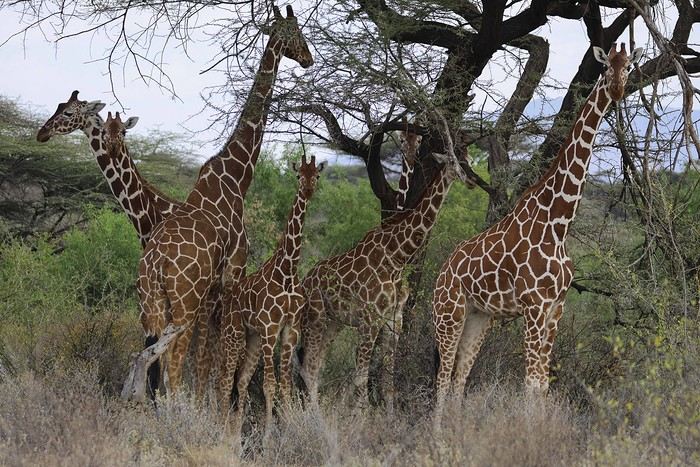
While heading to our camp for lunch, Alfred crossed paths with another vehicle and learned that a leopard was nearby. We started searching, and a few minutes later, Anny spotted a shape in a tree—it was our leopard!
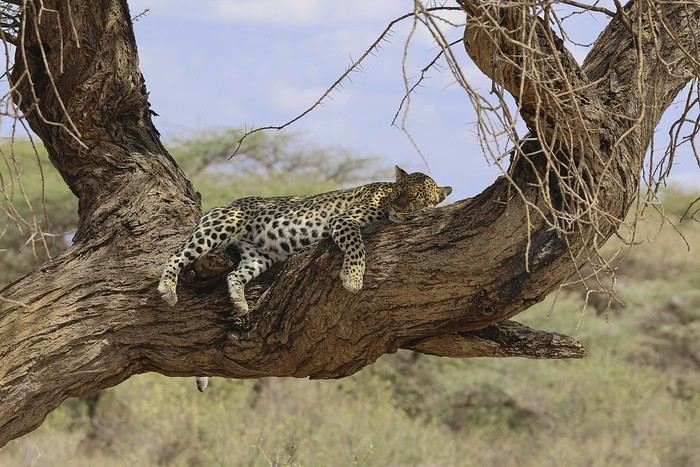
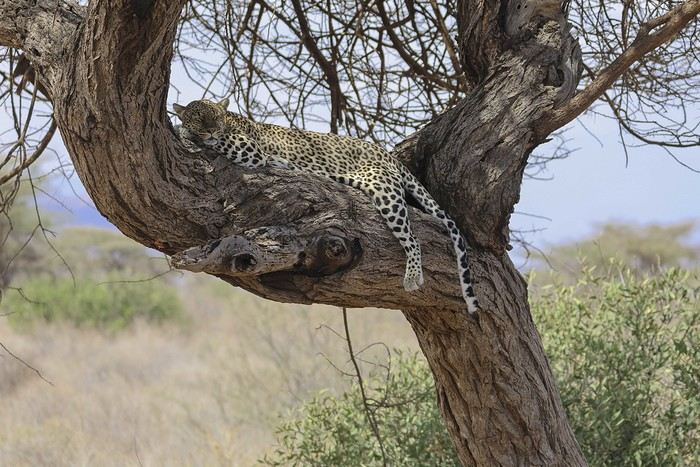
There were actually two of them—a mother and her adolescent. The young one was perched high in the tree, in the shade. We got to observe them for a good half-hour in excellent conditions, with just one other vehicle nearby.
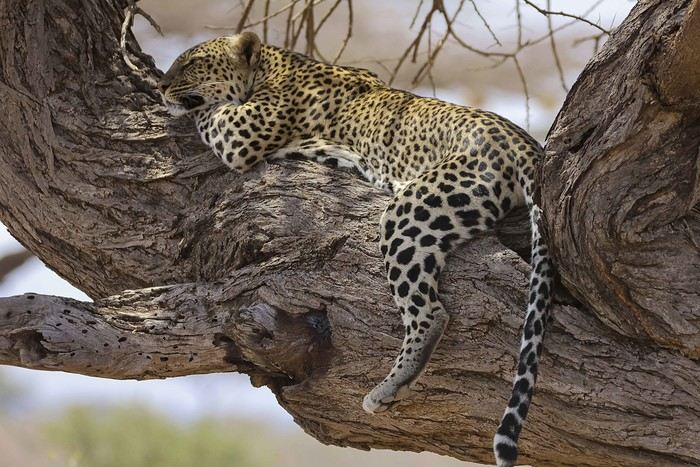
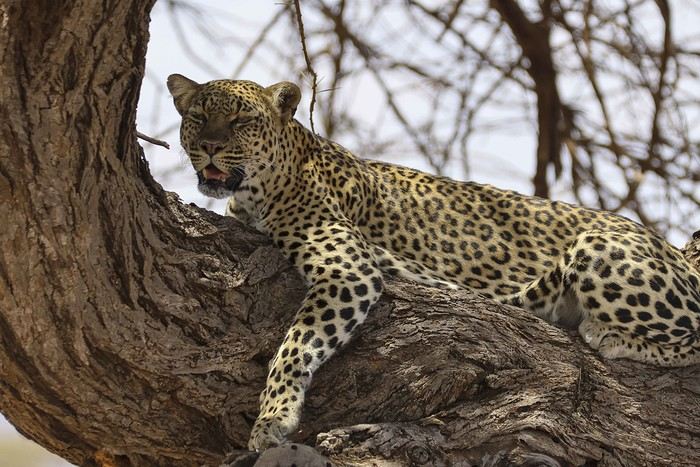
Alfred also noticed that the mother had hidden prey (a gerenuk gazelle) in the vegetation, away from prying eyes.
It was time to head to our camp, the Ashnil Samburu Camp, located in the Buffalo Springs area, by the river, in an idyllic setting surrounded by the region’s typical vegetation.
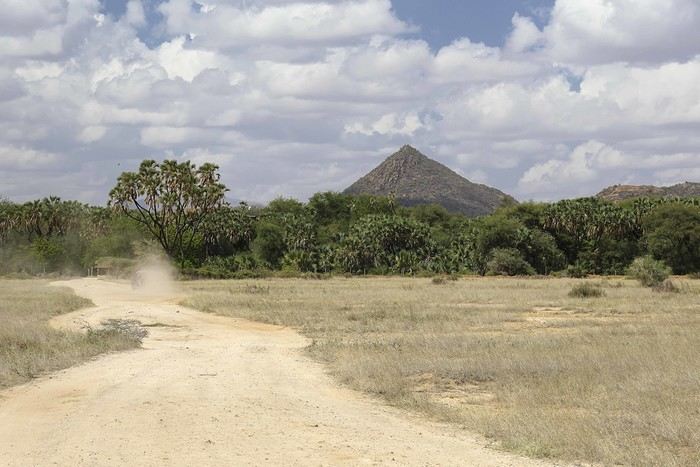
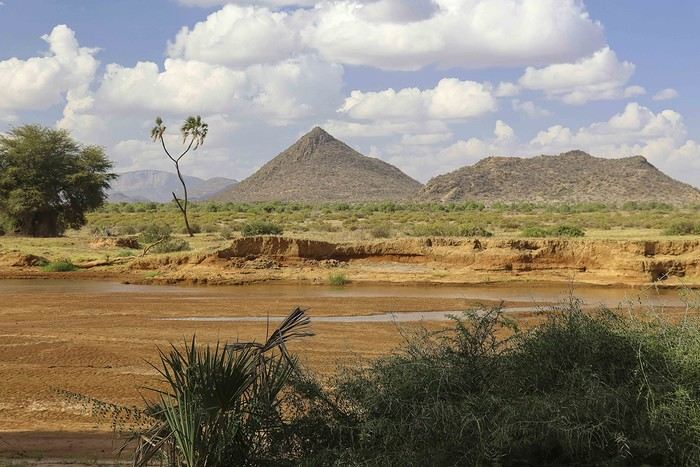
The welcome was fantastic—we immediately felt at home, and that feeling lasted throughout our 3-day stay in the reserve. It was 2 PM, but no one rushed us to the table. Our waitress, Sheila, who took care of us the whole time, was as lovely as the rest of the team. Barely seated, we were invited to watch an elephant passing right by the camp, in front of the restaurant. This trip was off to a great start!
After lunch, we relaxed by the pool. Monkeys, especially vervets, were everywhere, and a camp employee was assigned to keep an eye on them and shoo them away if needed (especially the baboons).
A little before 4 PM, we met up with Alfred for our first game drive. Just outside the camp, a few elephants were in the valley near the river.
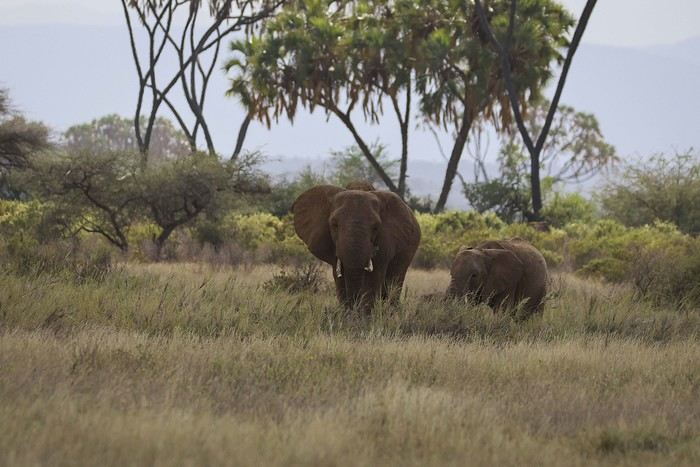
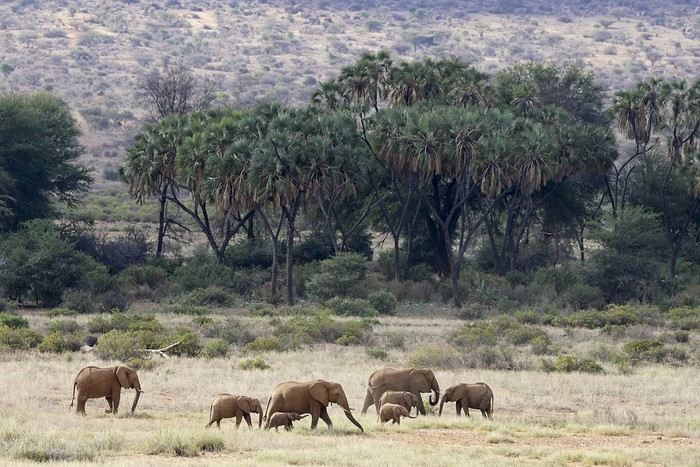
We’d see them in the same area almost every day. We also spotted some gazelles.
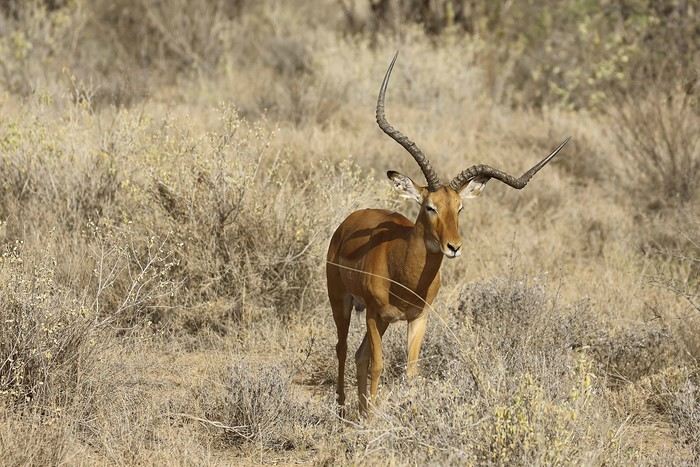
After several years, I’ve finally decided to repost a travel journal on the forum. We returned a few weeks ago from an incredible trip to Kenya, and it’s reignited my desire to share our emotions in the face of these animals.
Kenya wasn’t originally a priority for us in terms of safari—we had the impression it was too touristy. So, we started with other destinations: Namibia, Tanzania, Botswana, and South Africa. But as I did more research, especially on the forum (thanks in part to Sylvie’s many trips), I eventually convinced myself that Kenya could be magnificent, as long as we chose our itinerary carefully and avoided peak seasons.
We ended up going in January, from the 17th to the 31st. We worked with a travel agency (TP) that crafted a custom itinerary for us: Samburu-Ol Pejeta-Naivasha-Maji Moto-Maasai Mara-Diani. They partnered with a local French-speaking agency, and everything was perfectly organized. Our trip exceeded all our expectations, and none of it would’ve been as amazing without our guide, Alfred. He accompanied us for 10 days and was a fantastic travel companion—professional, respectful of the animals, and always in good spirits. We formed a great bond with him in such a short time.
- **January 17th** After meeting up with Juliette and Charlotte in Rennes the night before, we left at 4 AM for Roissy Charles de Gaulle Airport. The thick fog made the drive pretty rough, but we arrived safely around 7:45 AM. A Blue Valet driver was waiting to take our car. Check-in went smoothly, and we waited patiently for our 10:40 AM flight. Unfortunately, despite boarding on time, a passenger was missing, and we had to find a replacement last minute. Then, another passenger who had checked in and dropped off their luggage wasn’t on the plane, so they had to unload their bags. After a long period of uncertainty and spotty communication from the crew, we finally took off over an hour late.
We arrived in Nairobi in the late afternoon, 45 minutes behind schedule. The administrative formalities were endless—it took nearly 1.5 hours from landing to leaving the airport with our luggage. When we stepped out, Alfred, our guide, was waiting with a big smile and drove us to the Eka Hotel, not far from the airport. Exhausted from the long journey, we fell asleep quickly.
- **January 18th** Alfred met us at 7 AM for a long drive to Samburu Reserve. We had a peaceful night, unlike the girls, who barely slept because their neighbors were talking loudly all night. Things even escalated when Charlotte started shouting insults to get them to quiet down, but it didn’t work.
It was Sunday, so traffic around Nairobi and along the route was light. Aside from a quick "technical stop," we drove straight through and arrived in Samburu after just under 6 hours. Because of the lower altitude (around 1,000m on average), it was hot—over 30°C in mid-January.
As soon as we entered the reserve, we spotted some impalas and quickly came across one of the region’s endemic species: the reticulated giraffe, which is absolutely stunning.
While heading to our camp for lunch, Alfred crossed paths with another vehicle and learned that a leopard was nearby. We started searching, and a few minutes later, Anny spotted a shape in a tree—it was our leopard!
There were actually two of them—a mother and her adolescent. The young one was perched high in the tree, in the shade. We got to observe them for a good half-hour in excellent conditions, with just one other vehicle nearby.
Alfred also noticed that the mother had hidden prey (a gerenuk gazelle) in the vegetation, away from prying eyes.
It was time to head to our camp, the Ashnil Samburu Camp, located in the Buffalo Springs area, by the river, in an idyllic setting surrounded by the region’s typical vegetation.
The welcome was fantastic—we immediately felt at home, and that feeling lasted throughout our 3-day stay in the reserve. It was 2 PM, but no one rushed us to the table. Our waitress, Sheila, who took care of us the whole time, was as lovely as the rest of the team. Barely seated, we were invited to watch an elephant passing right by the camp, in front of the restaurant. This trip was off to a great start!
After lunch, we relaxed by the pool. Monkeys, especially vervets, were everywhere, and a camp employee was assigned to keep an eye on them and shoo them away if needed (especially the baboons).
A little before 4 PM, we met up with Alfred for our first game drive. Just outside the camp, a few elephants were in the valley near the river.
We’d see them in the same area almost every day. We also spotted some gazelles.
Hi everyone,
This short stay in Doha is part of a longer trip. It lets us break up a flight to the Seychelles.
Friday, January 16, The Corniche
Despite the adventures we had the day before (read about it here), we just can’t get up later than 8 a.m. Our minds are a bit clearer and a bit more positive after some sleep.
View of the Corniche from the 12th floor.
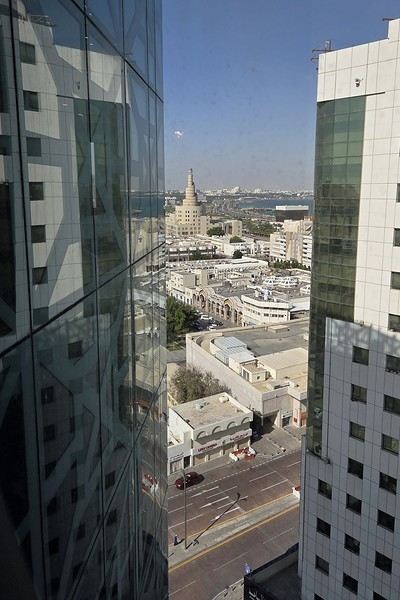
Breakfast is sumptuous—it really lifts our spirits.
On this Friday morning, almost everything is closed, so we head out to explore the Corniche, which is just a few hundred meters from our hotel in Old Doha.
A marathon is happening today on the Corniche, so the road is closed and empty, making it easy to cross. The palm-shaped streetlights are gorgeous when they’re lit up at night.
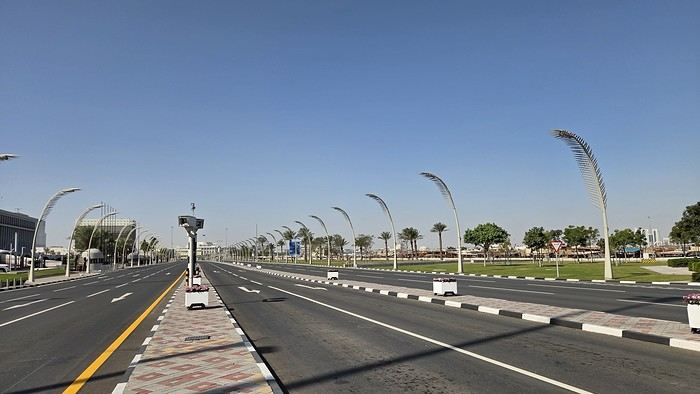
A little reminder of Qatar’s once-thriving pearl trade.
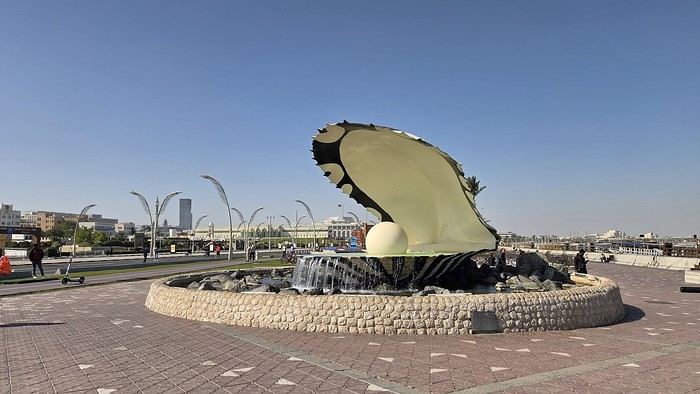
A memory of a much more recent past.
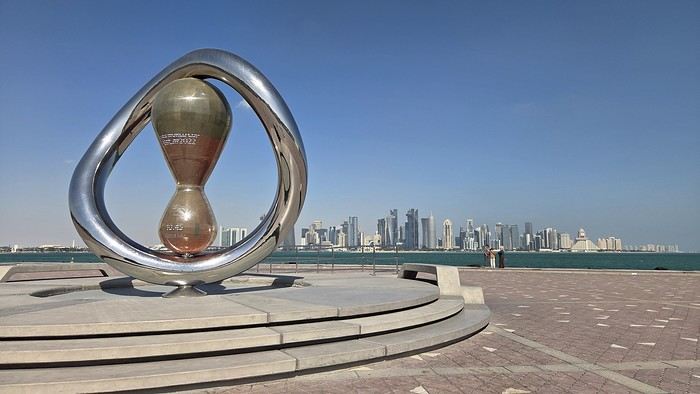
The sun is shining, but it’s not very warm—just 19°C at the hottest part of the day. Tough luck, last week it was 24°C.
The walk along the crescent-shaped Corniche is pretty long. From the old town to the modern center, where massive Dubai-style towers rise, it’s a 6 km promenade along the waterfront.
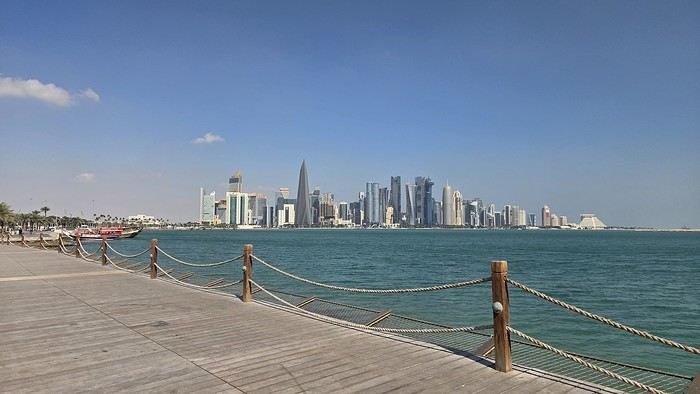
Many dhows are docked, waiting for tourists to take a little cruise in the bay, but visitors are scarce.
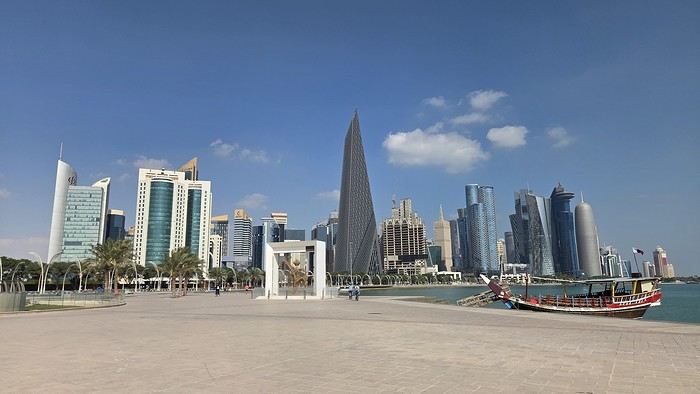
The skyscrapers are so stunning, you can’t help but admire them.
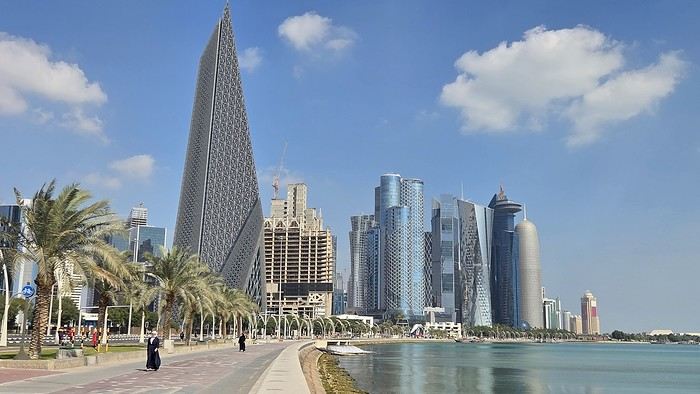
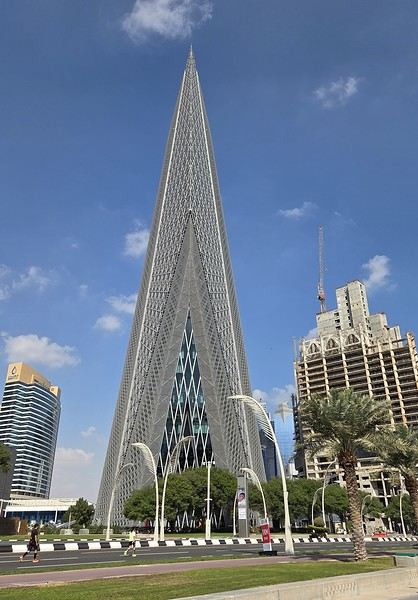
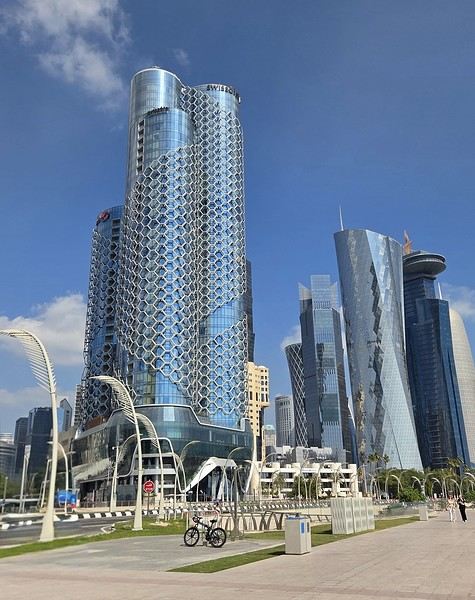
to be continued...
This short stay in Doha is part of a longer trip. It lets us break up a flight to the Seychelles.
Friday, January 16, The Corniche
Despite the adventures we had the day before (read about it here), we just can’t get up later than 8 a.m. Our minds are a bit clearer and a bit more positive after some sleep.
View of the Corniche from the 12th floor.
Breakfast is sumptuous—it really lifts our spirits.
On this Friday morning, almost everything is closed, so we head out to explore the Corniche, which is just a few hundred meters from our hotel in Old Doha.
A marathon is happening today on the Corniche, so the road is closed and empty, making it easy to cross. The palm-shaped streetlights are gorgeous when they’re lit up at night.
A little reminder of Qatar’s once-thriving pearl trade.
A memory of a much more recent past.
The sun is shining, but it’s not very warm—just 19°C at the hottest part of the day. Tough luck, last week it was 24°C.
The walk along the crescent-shaped Corniche is pretty long. From the old town to the modern center, where massive Dubai-style towers rise, it’s a 6 km promenade along the waterfront.
Many dhows are docked, waiting for tourists to take a little cruise in the bay, but visitors are scarce.
The skyscrapers are so stunning, you can’t help but admire them.
to be continued...
As I’ve mentioned elsewhere, I inherited my love of travel from my parents and some of my grandparents. A strong passion, but one that was unfortunately limited by our family’s modest resources. Back then, living in northern Alsace, a simple trip to the southern part of the region—with the Wine Route as our destination—felt like an extraordinary journey to a land of plenty for the little boy I was in the late 60s and early 70s.
Everything seemed so huge when you were still just a kid.
Back then, I was overwhelmed by countless sensations—I was already highly sensitive, with a keen mind and a nose and taste buds that were developing like a pro’s. Which, as I’d later realize, wasn’t always an advantage.
Those magical days always began with a gentle late-spring or midsummer morning. The interior of the white Peugeot 404, license plate 210 LZ 67, had already soaked up the sun before the engine purred to life, and the cabin gave off a scent I could still recognize today—a fragrance I found so pleasant. Back then, I had no idea it was just the smell of warm plastic from the car’s interior. Yes, the scents of the 404 on sunny days became my madeleine de Proust... What’s more, the whole family was unusually cheerful because those moments of relaxation and leisure were rare. Everyone worked, and no one had an easy job or was well paid. Without the *Trente Glorieuses*, these experiences might never have happened.
Once we crossed the canton’s borders, I felt like I was light-years away from my everyday surroundings, and every kilometer plunged me deeper into *terra incognita*. It was thrilling. Far from my so-called "medium-sized" town, wheat fields, cornfields, and cabbage patches stretched out, punctuated by tall poles connected by long wires and topped with vegetation—like giant clotheslines without laundry, where magical beanstalks might grow to touch the sky. Back then, I was still far from tasting their product, which was simply beer. At the time, there was still a significant local hop production. Fun fact: it wasn’t until 2002 that Anglo-Saxon scientists proved hops and cannabis belong to the same biological family.
After the fields, the landscape took another step up as it rolled past the little boy’s eyes, often glued to the windows. First came modest hills, then a succession of rolling slopes that soon formed an unbroken chain. Their 700 meters in altitude felt like Himalayan peaks to me—impressive, inert giants, a whole new world. Gazing at them, an intense emotion welled up somewhere between my stomach and lungs, nearly taking my breath away. What mysteries, what treasures did these heights hold? And then there were the cherries on top—the crowning touch that made the scene even more magical: proud, majestic castles perched on the summits like impassive sentinels. Monuments from the past, yet firmly rooted in the present on their rocky spurs. The little boy’s eyes sparkled—he’d been given a castle for Christmas, complete with battlements, towers, a drawbridge, and fully armed knights. He’d watched and lived *Ivanhoe* on the only French TV channel that existed back then.
Only once did my paternal grandfather join us on one of these trips. A tall, intelligent man with a face that could shift from stern to mischievous, clearly full of humor and charisma. Sadly, his relationship with alcohol had taken a toll on his life and, by extension, those of his loved ones. He had a strong personality—if his boss crossed the line, he wouldn’t hesitate to punch him, which meant he went through a lot of different jobs. Back then, you could quit one job and easily find another. It was quite something to see him in his final stages, hallucinating pink elephants and even drinking perfume when he had nothing else left. The last time I saw him, he’d slipped away from the doctors and nurses while hospitalized in pretty bad shape—at least, I assume his liver was the issue. We were sitting down for a family lunch when the door burst open, and there he stood in his pajamas, eyes twinkling with mischief, clearly pleased with the dramatic entrance. That theatrical moment didn’t spare us from burying him a few months later at the age of 71. One day, my mother told me the family doctor had quietly remarked that it was a shame—with his robust constitution, he could’ve lived to be a hundred. Yes, the family doctor—this was the man who’d come treat you any day, at almost any hour, just for a phone call. It really existed, it’s not a myth!
That day, his wife—my paternal grandmother—was also along for the ride. Everyone agreed that Jeannette was a good woman. She worked as a waitress at *Le Tigre*, the biggest brasserie in town, right in the center. Most customers preferred to be served by her, including local dignitaries and even the mayor. As a kid, I didn’t find her very fun, open, or warm—she seemed a bit stern. Back then, women in their fifties already had the face and build of grandmothers. Same went for men, don’t get me wrong. I had no idea about the struggles she faced because of her husband. I didn’t know that 30 years earlier, she’d had to flee Alsace while pregnant, under threat from Nazi fighter-bombers. I didn’t know she’d had several miscarriages, and that my father—her only surviving child, born prematurely in March 1940 at the other end of France—weighed less than a kilo at birth and was so tiny he could fit in a shoebox. Hard to imagine he’d grow into a strapping man nearly 1.80 meters tall, tipping the scales at 100 kilos. When you come back from summer camp in early August and ask why she didn’t pick you up with your parents, and they gently tell you she’s "in heaven," you don’t realize she passed away at 54 after suffering greatly from stomach cancer that had spread.
Back to that family outing, that enchanted parenthesis. I even remembered where we’d had lunch when I passed through Dambach-la-Ville decades later. One of those charming, flower-filled towns Alsace produces in abundance—and preserves so well. This one sits high on a hill, and I was a bit stunned on the parking lot because the view stretched far, revealing the Alsace plain below—its fields, villages, hills, and forests. The world seemed so vast and enticing that day, even though I was only glimpsing a tiny fraction of it.
The region was already very touristy, but I wouldn’t notice the downsides until much later. That Sunday noon, I discovered a large restaurant filled with diners. I can still see the enormous piece of meat they served me, decorated with a little wooden skewer topped with a flag. I kept that one for a long time. Those were the golden days of rich, flowing, thick sauces—so flavorful—and the era of the world’s best fries, made on the spot with the best potatoes. To top it off, I was *exceptionally* allowed a small bottle of apple juice, Orangina, or—even better if possible—Sinalco. Yes, Sinalco—like Orangina, but better. A brand that must’ve disappeared in the 70s, but why, and what a shame! Since then, Orangina’s little bubbles have taken the brand to the other side of the planet—it’s now Japanese.
Year after year, I’d eagerly await that ecstatic moment when the most beautiful castle in Alsace, the Haut-Koenigsbourg, appeared in my field of vision. The perfect model, the archetype that blended into the landscape at the height of a child’s dreams. The trip home always felt like a reality check—less jarring than an alarm clock, but more diffuse and melancholic. From then on, there was only one wish: *When do we leave again?*
Those magical days always began with a gentle late-spring or midsummer morning. The interior of the white Peugeot 404, license plate 210 LZ 67, had already soaked up the sun before the engine purred to life, and the cabin gave off a scent I could still recognize today—a fragrance I found so pleasant. Back then, I had no idea it was just the smell of warm plastic from the car’s interior. Yes, the scents of the 404 on sunny days became my madeleine de Proust... What’s more, the whole family was unusually cheerful because those moments of relaxation and leisure were rare. Everyone worked, and no one had an easy job or was well paid. Without the *Trente Glorieuses*, these experiences might never have happened.
Once we crossed the canton’s borders, I felt like I was light-years away from my everyday surroundings, and every kilometer plunged me deeper into *terra incognita*. It was thrilling. Far from my so-called "medium-sized" town, wheat fields, cornfields, and cabbage patches stretched out, punctuated by tall poles connected by long wires and topped with vegetation—like giant clotheslines without laundry, where magical beanstalks might grow to touch the sky. Back then, I was still far from tasting their product, which was simply beer. At the time, there was still a significant local hop production. Fun fact: it wasn’t until 2002 that Anglo-Saxon scientists proved hops and cannabis belong to the same biological family.
After the fields, the landscape took another step up as it rolled past the little boy’s eyes, often glued to the windows. First came modest hills, then a succession of rolling slopes that soon formed an unbroken chain. Their 700 meters in altitude felt like Himalayan peaks to me—impressive, inert giants, a whole new world. Gazing at them, an intense emotion welled up somewhere between my stomach and lungs, nearly taking my breath away. What mysteries, what treasures did these heights hold? And then there were the cherries on top—the crowning touch that made the scene even more magical: proud, majestic castles perched on the summits like impassive sentinels. Monuments from the past, yet firmly rooted in the present on their rocky spurs. The little boy’s eyes sparkled—he’d been given a castle for Christmas, complete with battlements, towers, a drawbridge, and fully armed knights. He’d watched and lived *Ivanhoe* on the only French TV channel that existed back then.
Only once did my paternal grandfather join us on one of these trips. A tall, intelligent man with a face that could shift from stern to mischievous, clearly full of humor and charisma. Sadly, his relationship with alcohol had taken a toll on his life and, by extension, those of his loved ones. He had a strong personality—if his boss crossed the line, he wouldn’t hesitate to punch him, which meant he went through a lot of different jobs. Back then, you could quit one job and easily find another. It was quite something to see him in his final stages, hallucinating pink elephants and even drinking perfume when he had nothing else left. The last time I saw him, he’d slipped away from the doctors and nurses while hospitalized in pretty bad shape—at least, I assume his liver was the issue. We were sitting down for a family lunch when the door burst open, and there he stood in his pajamas, eyes twinkling with mischief, clearly pleased with the dramatic entrance. That theatrical moment didn’t spare us from burying him a few months later at the age of 71. One day, my mother told me the family doctor had quietly remarked that it was a shame—with his robust constitution, he could’ve lived to be a hundred. Yes, the family doctor—this was the man who’d come treat you any day, at almost any hour, just for a phone call. It really existed, it’s not a myth!
That day, his wife—my paternal grandmother—was also along for the ride. Everyone agreed that Jeannette was a good woman. She worked as a waitress at *Le Tigre*, the biggest brasserie in town, right in the center. Most customers preferred to be served by her, including local dignitaries and even the mayor. As a kid, I didn’t find her very fun, open, or warm—she seemed a bit stern. Back then, women in their fifties already had the face and build of grandmothers. Same went for men, don’t get me wrong. I had no idea about the struggles she faced because of her husband. I didn’t know that 30 years earlier, she’d had to flee Alsace while pregnant, under threat from Nazi fighter-bombers. I didn’t know she’d had several miscarriages, and that my father—her only surviving child, born prematurely in March 1940 at the other end of France—weighed less than a kilo at birth and was so tiny he could fit in a shoebox. Hard to imagine he’d grow into a strapping man nearly 1.80 meters tall, tipping the scales at 100 kilos. When you come back from summer camp in early August and ask why she didn’t pick you up with your parents, and they gently tell you she’s "in heaven," you don’t realize she passed away at 54 after suffering greatly from stomach cancer that had spread.
Back to that family outing, that enchanted parenthesis. I even remembered where we’d had lunch when I passed through Dambach-la-Ville decades later. One of those charming, flower-filled towns Alsace produces in abundance—and preserves so well. This one sits high on a hill, and I was a bit stunned on the parking lot because the view stretched far, revealing the Alsace plain below—its fields, villages, hills, and forests. The world seemed so vast and enticing that day, even though I was only glimpsing a tiny fraction of it.
The region was already very touristy, but I wouldn’t notice the downsides until much later. That Sunday noon, I discovered a large restaurant filled with diners. I can still see the enormous piece of meat they served me, decorated with a little wooden skewer topped with a flag. I kept that one for a long time. Those were the golden days of rich, flowing, thick sauces—so flavorful—and the era of the world’s best fries, made on the spot with the best potatoes. To top it off, I was *exceptionally* allowed a small bottle of apple juice, Orangina, or—even better if possible—Sinalco. Yes, Sinalco—like Orangina, but better. A brand that must’ve disappeared in the 70s, but why, and what a shame! Since then, Orangina’s little bubbles have taken the brand to the other side of the planet—it’s now Japanese.
Year after year, I’d eagerly await that ecstatic moment when the most beautiful castle in Alsace, the Haut-Koenigsbourg, appeared in my field of vision. The perfect model, the archetype that blended into the landscape at the height of a child’s dreams. The trip home always felt like a reality check—less jarring than an alarm clock, but more diffuse and melancholic. From then on, there was only one wish: *When do we leave again?*
Hi everyone,
I’m planning my next trip in September, and after two self-drive trips to Botswana last year, I’d love to explore Kruger. Since I’m used to camping, I’m thinking of renting an equipped van from Kitted Africa (a small Suzuki van—thanks Safari Expert!) to sleep in a tent and occasionally in a hut.
Here’s my provisional itinerary, and I’d love to hear your thoughts if you don’t mind. I’ve got 13 nights to plan in Kruger. The rental company is based in Nelspruit.
Entering from the south: 14-15-16.09: 3 nights at Crocodile Bridge or Lower Sabie 17-18-19.09: 3 nights at Skukuza 20-21.09: 2 nights at Satara 22-23-24.09: 3 nights at Olifants 25-26.09: 2 nights at Tamboti or Talamati
Exiting the park on 27.09 via Orpen Gate, then heading to Blyde River Canyon for a night in a hotel or elsewhere. 28.09: Return to Nelspruit, drop off the van, and stay in a hotel. 29.09 (midday): Airlink flight to Johannesburg, then an evening return flight to GVA.
What do you think? Too many nights here, not enough there?
I’ll be traveling solo, I love driving, and I enjoy settling in the middle of nature to listen, observe, and take photos (Botswana was perfect for that).
Thanks in advance! Nicole Photo: Baines Baobab, Botswana, April 2025
I would wish never to go to bed where I had woken up, to wander my tent from the shores of Egypt to those of the Persian Gulf; to have no goal for the evening other than the evening itself; to traverse on foot, with my eyes and my heart, all these unknown lands, all these races of people so different from my own; to contemplate humanity, God’s finest creation, in all its forms.
Lamartine in Fatalla Sayeghir’s Account (1861)
As soon as it’s about flying, I lose all willpower. Being reasonable and thoughtful, I still lose all my composure at the mere possibility of a flight—especially if it’s piloted by F.—and even more so if that flight can take me to unexplored lands. I’ve long wanted to unravel the mystery of animal tourism, and why not in Tanzania, following up on my trip from four years ago, when I was already questioning the glaring inequalities in Zanzibar: the coastal strip sacrificed to capitalism, and the inland areas, just a hundred meters from the waves, where you find—though a bit more peaceful than elsewhere on the continent—the chaos of Africa.
I’m an adventurer at heart. When it comes to the terrain, though, it’s a whole different story. I see people setting off for months at a time; I know my endurance doesn’t last beyond three days. It’s not that I’m afraid of this unfamiliar environment when it comes to embracing different realities. I’m mostly afraid of myself—of this heightened sensitivity that makes me see things I’d rather not see and understand others that sometimes overwhelm me.
After an absolutely fantastic daytime flight, I land in Zanzibar and have to resign myself—this is the whole point of the trip—to what feels like a real spacewalk. I’m alone. My lucky star, backed up by my phone, will serve as my lifeline. I step out of the airport and breathe in the scent of Africa full-on: a mix of exotic perfumes, baked earth, and poorly refined fuel, inevitably mingled with the smell of wood smoke. So many images come flooding back. So many stories. Another world.
I head to Arusha the very next day. The gateway to the country’s northern national parks, this city of half a million offers one of those rare breath-holding dives that Africa keeps secret. As the only white person walking the streets, I know I’m visible and vulnerable, yet I move forward confidently, barely bothered. But where are all my fellow Westerners? While this city draws countless tourists, I only cross paths with one white couple in nearly three hours of walking. Because you have to hold on tight to wander here. You have to stay alert. The traffic is dense and erratic—don’t even trust the fact that in Tanzania, people drive on the left. That can change from one minute to the next, especially with motorbikes. With barely centimeters between vehicles, I weave my way through the urban jungle, trying not to stumble into the huge ditch on my left or get sideswiped by cars brushing past me on the right. Speakers blare music, ads, or political speeches at will—the explosion of yellow and green tells us we’re on the eve of the presidential election—but they barely compete with the calls to prayer, nearly nonstop on this holy Friday. The vital space is as saturated as the sound. Imagine an unbroken line of shops and stalls of every kind—supermarkets haven’t made it here yet—where you can find just about anything: phones, copper pipes, Chinese-made hardware, shoes, clothes, basins, and professional tools… The luckiest own a big store; others spend their lives trying to survive on the profits from selling toothbrushes one at a time on the streets. But maybe it’s more lucrative than spending the day slumped on the sidewalk, preferably missing a limb, trusting your survival to the mercy of passersby.
I think I’ll escape the street by slipping into the narrow alleys of the central market. Here, I know I won’t run into anyone like me! The vendors’ stalls start at waist height; the sellers, perched higher up, haggle or not while discussing prices. Here, colorful fruits and vegetables; there, huge piles of dried fish. Spices, seeds, roots. Smells. Noises. Africa. Life. Further on, the fresh fish aisle makes a right angle with the butchers’. Everywhere, flies—everywhere, the same gesture from vendors swatting blindly at these relentless pests. Aware that I’ll be eating this same meat within the hour, displayed with total disregard for basic hygiene, I reassure myself that Arusha sits at 1400m altitude. Yes, we can probably do without a fridge.
*
It’s time to leave the city and go wildlife spotting in the surrounding parks. To that end, I’ve negotiated a package deal with a local agency that prides itself on grouping solo travelers into a vehicle meant for seven. We leave behind the imposing masses of Mount Meru and Kilimanjaro, peaking at 4565m and 5895m respectively, and head west to conquer Tarangire and Ngorongoro parks. I’ve been promised a spectacle; I remain cautious. I’ve read rave reviews; I know how to temper my expectations. Above all, I know what I came for—and paradoxically, my hopes are less about animals than strictly anthropological. So I’m sure I won’t go home disappointed.
I’m in the thick of it. Since 2021, tourism has been booming: I’m one of the two million tourists who come here every year seeking thrills. I also contribute, in a small way, to the 20% of the country’s GDP generated by tourism revenue. Around 3 billion € annually… Tanzania has 16 national parks, twice as many reserves; it charges meticulously for every entry, every night, every activity, to the tune of several dozen euros. I calculated that Tarangire Park alone rakes in around 15 million € a year. Mind-boggling. Yet to get there, a dusty, rickety old track is used daily by hundreds of vehicles that literally saturate the surrounding area with white dust and exhaust fumes. At the park entrance, we wait a good hour while the driver pays the entry fees. Then it’s a free-for-all: dozens of 4x4s try to enter at the same time through the single access point, to the left of the building, while the three barriers are stuck due to a computer glitch. It’s pure chaos: no way to buy your ticket in advance—the QR code revolution hasn’t arrived; no smart layout before the barriers; nothing smooth, nothing practical, everything improvised.
So, the animals? Given the time and money involved, I’d be tempted to say it’s not worth the hassle and there’s really no need to break five legs off one of the too-many zebras we pass. Hours and hours of travel to get to Tanzania, specifically Arusha; hours and hours on the road—up to 12 hours a day—to spend barely three in the parks; at least 200 € per day for the most basic option, so 400 € in my case, and up to several thousand for those wealthy couples opting for the luxury package with a private vehicle. Sure, I saw zebras and elephants in their natural habitat, wildebeest, buffalo, and a few hippos, but I didn’t feel the thrill touted in the articles or even by my two-day trip organizer. Would I have been more satisfied if I’d seen the lion, the leopard, and the rhino? Maybe. But the story won’t be rewritten in light of those assumptions.
Yet I’m not disappointed. As I said earlier: I know what I came for. I wanted to see the world as it is with my own eyes. And the safari world fascinates me more for its anthropological aspect than for what it offers. Yes, the fact that people from all over the world come here, juggling hotels and big 4x4s—while notably avoiding the streets of cities and villages—truly fascinates me. Two worlds coexist on either side of a barely porous border. As soon as the tourist sets foot in the airport, they’re whisked away, sight unseen, into a tourist vehicle. Dropped off at the hotel, they rest there, shielded from view, until the 4x4 departs. Then they speed through those same cities and villages they scorn out of fear or disdain, leaving on the roadside the Maasai herding their flocks and all those poignant or mundane scenes that make up daily African life. In the evening, in their lodge, far from the city’s pulse, they fall asleep thinking about the images they’ve collected, those long hours on the road, the wait for the animals. And the days go by… Maybe the term *luxury*, whether for food or accommodation, refers to what we experience as utterly ordinary in the West? Forgetting that you’re there, in Africa, just steps away from poverty and a certain arbitrariness. And at the end of the journey: back to the airport, back to normal life.
Maybe we need to take a broader view. All that money seems invisible, yet it must serve the population at some point, right? The main roads are passable, the power grid seems well-maintained—I can tell by the excellent condition of the high-voltage transmission towers. Is it really too expensive to significantly improve all the infrastructure? I hoped this windfall would truly serve the people’s interests. The driver taking me back to the airport on the last evening dashes my sweet illusions: « All this is bad. Africa is bad. But you have no choice. The hospitals don’t work, the schools don’t work, the roads don’t work (just as he says this, roadworks force us onto a terrible detour for several kilometers—a rutted track, in fact), and if you say anything, if you speak up too much, they come for you and then you disappear. » That’s just one opinion. Nothing empirical. But I don’t need to be a West Point graduate to realize how rampant corruption is in these regions: while the muezzin bellows the greatness of Allah, I consider the dilapidated equipment and the energy expended by the masses just to survive here. But maybe all that money keeps the country afloat by paying civil servants’ salaries? Meanwhile, one thing is certain: regardless of where the profits go, tourism supports millions of people, and I’m in no position to judge this system too harshly. Maybe I’m too much of an aesthete to appreciate the almost exclusive use of corrugated iron at its true value…
*
I’ll give this system credit for one thing: the chance to set foot in spaces impossible to visit otherwise. At one point, in the heart of the Ngorongoro Crater—a vast 20km-wide plain topped by a 600m-high caldera—I was simply happy to be there. Barely bothered by the constant ballet of 4x4s—the space is vast—I contemplate the simple life of the local animals. Buffalo, wildebeest, zebras as numerous as the flamingos patiently standing on one leg, waiting for the day to pass. Over there, you can make out a few hyenas with vultures circling above. Finally, in a large body of water, hippos surface at regular intervals. I’m aware of my luck. I’m especially aware that, unlike all the people I’ve met there, a lot of money and a little resourcefulness greatly favor the luck factor.
I’m heading home. I soak up the last images of this improbable Africa as night falls quickly over the countryside. I’m fascinated by the number of Maasai herding their livestock along the main road. Some pass the time, globalization obliges, on an old phone; others, sometimes as young as my eldest—barely 10 years old—watch us pass, indifferent. We overtake or are overtaken; the two-lane road is the stage for a majestic ballet of semi-trailers, *dalas-dalas*, and other 4x4s, as numerous as the names of their companies: Leopard Tours, Climbing Kilimanjaro, Smiling Zebra, Nomad Life Enhanced, Elephant Roaming, Mountain Warrior, Master of the Ambush… They drop me off at the hotel, where I have an hour to shower and change into clean clothes before my return flight. Already, I’m slipping back into my own world without really seeing it, leaving behind the hotel’s glass window that African life to which nothing truly binds me. Then that chaotic, suffocating nighttime drive to the airport. Check-in; the stupid questions (« Where are you going? »); the slow police officer who, in the end, stamps my passport anywhere; the idiocy of the security agent (my empty 33cl bottle is forbidden); the rather shabby lounge at Kilimanjaro Airport. Then the return to the vessel—to the Air France plane that left Zanzibar an hour earlier—after this 72-hour spacewalk without a real lifeline. I’ve never been so happy to see F. again.
I got into music with the will
To light up many hearths like Che could do,
To circulate ideas, to advance utopia
Alternating barricades, sharp thought, and poetry.
Mc Solaar, Guérilla
Subscribing without a fight to the slightest line of my itinerary sometimes feels like an illusion. Because there are countries where, despite the fever and enthusiasm, despite the triumphant revolution, certain elements block my path. And if I had planned, for F. and me, a beautiful ascent up Tabouret Hill (Loma del Taburete, 453m), it was without accounting for vegetation as dense as it was thorny, which barred our way after just a few quarters of an hour of walking. Exhausted, I had to face the facts: we wouldn’t go any further. I needed to come up with some kind of Plan B.
But what is this country, an unwitting laboratory of the worst that white civilization has done during its reign? What is this magnificent place—yet another—entrusted to the care of oblivion, just 150 km from the land of freedom? According to Donald Trump, a country supporting terrorism; according to the locals, the vast battlefield of 20th-century ideologies; according to the average tourist, a hot country, a beautiful country, a country where the last illusions of a lost paradise are dying.
On the other side of Havana Bay, we love that statue of Christ blessing the city. There’s something gentle, soothing, in that patriarchal gesture. You’d almost be tempted to forget that at the dawn of the 16th century, those who claimed to represent the Church had no scruples about eradicating the Ciboney and Taíno populations. Worse, you’ll find magnificent this cathedral dedicated to the Virgin Mary, right in the heart of the old city. Under the guise of a civilizing necessity, Havana became, like so many other places, the gilded seat of European pretensions, at the expense of local populations doomed to extermination, then enslaved populations—more or less indigenous—who, you can imagine, didn’t often set foot in this holy place.
Lost in my thoughts, I try to push through this tangled vegetation. Nature reclaims its rights; nature abhors a vacuum. Yes, the well-trodden path of revolution couldn’t stay free of weeds! The road is buried. We give up and turn back, until that fork I’d noted before leaving, which would let us reach the top of the hill by skirting its northern slope.
So the white man arrives, settles, and gets rid of everything that bothers him. He has two unstoppable forces at his disposal: gunpowder and the spiritual certainty of being on the side of an all-powerful god. While the first gives him an unmatched material advantage over his new enemy, the second lets him use the first without feeling too guilty. That’s the magic of this supreme Church: it condemns all forms of pleasure—calling them impurity—while promoting plunder and crime under the cover of evangelization.
Walking through the city, you find a bit of Algiers, except that here, the decay is almost irreversible. You feel the splendor of the past, a disconcerting image of all vanity, from an era when men knew how to build beauty—especially if they didn’t have to share it. We’ll debate the benefits of colonialism for a long time, while glossing over the fact that those benefits often stopped at the city limits, limits all too obvious to the indigenous people. Havana isn’t just one or a few buildings; it’s an impressive collection of works of art built one after another, in what I think was a spirit of healthy competition. Yes, you find Algiers in this exuberance. As if these distant cities were the receptacle of everything that was best in the lands of origin. Atlantes and lintels, golds, blues, ogives, and monumental windows—exceptional architecture in an exceptional place.
Some streets are clean, swept with care; others are not, scattered here and there with potholes filled with water. A rather persistent smell of urine invades us regularly. We move on. And we look up: Havana is visited with your nose in the air. Because the beauty is truly up there, on those magnificent balconies and terracotta arches. Also because it’s not impossible that a piece of that balcony might suddenly detach, hurling our ends into an overseas tragedy we’d rather avoid. On the ground, here and there, rubble. Inexorably, this city is returning to dust.
My Plan B turns out to be no more successful than the first attempt. After a cheerful progression of a few hundred meters, same outcome, same struggle—the vegetation opposes any revolution: impossible to go around the hill! Once again, we have to turn back. We’ll try Plan C. I reassure myself by convincing myself to stay in the logic of this country: Cuba has been searching for itself for five centuries.
Coffee, tobacco, and sugarcane—the green gold of the colonies—so that money could flow and Europe could enjoy itself. Cuba’s history isn’t original. In reality, all the hot lands at these latitudes suffer the same fate: to serve the white man. While waiting for the awakening of consciences, UN Resolution 1514 and more or less affirmed revolutionary desires. Except that—and this reflection is just my own—if the awakening of consciences and the revolutionary will don’t play into what Resolution 1514 hides, there’s a good chance the said state will become a pariah. Those who don’t follow the American doctrine risk a lot; those who decide to follow Moscow risk everything. Independence was only the barely discreet instrument of American views. Patrice Lumumba will gladly enlighten us on the subject.
Turning back is good. Setting up Plan C is better. I won’t deviate from my goal: we will reach the top of Tabouret, whatever the cost! Near a small country road, I hesitate to change the program. Time is ticking—is it really reasonable to attempt the ascent? Then a tricycle taxi appears, a kind of tuk-tuk powered by an electric moped. I take it as a sign from fate, and we board for the starting point of Plan C.
In Cuba, even before Resolution 1514, independence was assured by a pawn of the United States, Fulgencio Batista. There’s no need to go over the whole history here; we’ll just remember that if you know how to give without counting to your former masters, you can enjoy a facade of freedom. Fidel Castro, on the other hand, didn’t know how to give. It never even occurred to him. That’s why the United States harbors such terrible hatred for this rebellious state, opposed to capitalist values and political prostitution. From there to slowly killing its people for nearly seventy years, one can legitimately cry injustice. But there are other priorities. Oh yes! Greenland...
Do Cubans eat their fill? Does seeing overweight people mean opulence? Food grows, no doubt about it. The soil is fertile, the climate favorable. No, what shocks here is the absolute precarity, the feeling of a people living in survival mode, and the decay of both goods and hope. Where to go? What’s the point? The stubbornness of the United States in wanting to impose its views on the Cuban government is felt much more by an overwhelmed people than by those few elites—caricatures of communism—who instill their vision of happiness with a crowbar. The embargo imposed in 1960; the false-flag attacks—American planes flying the colors of the Cuban revolution during the Bay of Pigs invasion in 1961—the exasperation of placing Cuba on the list of countries supporting terrorism. More recently, Donald Trump decided to heavily tax countries supplying Cuba with fuel. The last time I saw such long lines near gas stations was during my first trip to Romania... in 1991. It’s not for me to judge whether Raúl and his clique are playing fair by thumbing their noses at the West. I don’t hold the ins and outs of this war of egos that keeps the world’s great powers awake. I only caught a glimpse of the poverty of an island in 2026, while we in Europe are buried under an avalanche of the useless and superficial.
At the start of the San Juan baths, we find the trailhead. It climbs steeply. But the weather is relatively mild, thanks to a cold wave hitting higher up in the United States. Dallas is under snow; we’re walking in 16°C, a stroke of luck. We climb over rocks, under fairly decent vegetation, sometimes low but passable. And we succeed in the ascent in an hour. Up there, the top of the hill is somewhat maintained, at a minimum, but maintained, as if to honor Che through an awful monument erected in his glory—a stubborn specimen from those years when good taste was inversely proportional to the delusional ideas of those being honored. Birds of prey (raptors?) circle overhead; the monument is dying, crumbling, falling into ruin. *Hasta siempre*—forever—will be for the words. Nature, erosion, life itself will have the last word over all revolutions.
Back at the foot of the hill, just before a memorable swim, we talk with a family living there in miserable shacks whose stability wasn’t unlike that of the Leaning Tower of Pisa. The grandmother holds an animal, a rodent, by its feet. The grandfather has just killed it; she’s plucking its fur. A few steps away, water boils in a pot. She plunges the beast into the container. Tonight, the family will eat ragondin stew. Further on, another shack where, in a disorder rivaling the filth, a mother breastfeeds while sitting on the edge of a bed. Then, on the way down, we’ll meet a middle-aged man carrying a large jerrycan of water on his shoulder. Are these people happy here, far from the cities and their stakes? Is it too much to ask that they at least have access to electricity, running water, and decent, safe housing?
Outside the old city, Havana reveals wide avenues serving imposing institutions here and there. But whether in the colorful alleys of the old town or on the majestic and austere Plaza de la Revolución, the same feeling moves me: sadness. Seeing that only chaos has come from ideas crushes me. We praise, we sing the revolution—above all, we impose it in people’s minds as a necessity, when it’s nothing of the sort. Revolution is just the fruit of a few tortured minds who, once in power, do nothing better than all those before them. Enjoy power. Impose their views. It’s just a matter of color. Fidel saw red and knew how to persuade—or silence forever—his many detractors. The West sees everything in white, through the prism of human rights, and also knows how to persuade and silence its slightest detractors forever.
Paradoxically, Cuba survives largely thanks to tourism, a key element—let’s not be afraid to say it—of capitalism. And when a few players pick up the crumbs from transactions, the lion’s share and the foreign currency go to the government. So we won’t go to Varadero, the high place of relaxation overrun by Canadians. Instead, we’ll limit ourselves to crossing the ocean 30 minutes from the capital, at Santa María del Mar, to get an idea of cheaper tourism and to splash around for a few minutes in turquoise water invaded by sargassum. At the heart of the tourist season, we’ll meet few people. Like Havana, and according to its inhabitants, the high season is rather dead. But we won’t have come for nothing: we particularly love this return where, feverish, the taxi driver pushes his Moskvitch 2140 to the max on the highway, singing karaoke versions of hits at the top of his lungs from an onboard DVD player. East/West, the culture clash with a hint of Latino.
It’s time to leave this country of resourcefulness where extremes are very present. We’re leaving a 5-star hotel in front of yet another crumbling building. We’ve known restaurants at 40,000 pesos while in the street people eat for 400. We’ve seen those countless cars from another era and another culture—Pontiac, Lada, Chevrolet, Moskvitch—being overtaken by gleaming Mercedes and other Porsche Cayennes, the prerogative—if it still needed to be demonstrated—of the newly rich in search of recognition. Boarding the plane, we also understand that we’re not just traveling with tourists: there’s undoubtedly a rich and prosperous diaspora, just as there are relatively wealthy Cubans—well, wealthy enough to travel comfortably in the front of the aircraft. Meanwhile, on all the country’s roads, other Cubans try hitchhiking, their wives and children perched on a suitcase by the roadside. The father holds out his arm and holds a few bills in his hand like a card game. Where are they going? Who will pick them up?
Behind me, the gold of the Capitol. I’m told this gold comes from Russia. Like Marx and Lenin’s smoky theories? Like Stalin’s subtle and delicate paternalism? Let’s bet that, like the other buildings crumbling around it, the Capitol will also collapse one day, to avenge the Indians who perished from the diseases and guns of the whites, to avenge the Africans who obliterated their lives so Europeans could enjoy themselves, finally, to avenge all this abandoned people, left to the arbitrariness of democratic or non-democratic elections.
A sign in the street: We understand history. This is the revolution! We understand history. That’s the revolution.
No comment.
Hi everyone! 🙂
As you can see, we're heading back from September 6th to the 27th.
Everything’s booked for September—flights, accommodations, and the car. As I plan, I’ll be asking the experts for help. This is our second trip to California, but most of the stops are new to us.
We’ll start directly from San Francisco to our first overnight stop, Davis, before heading to Lassen Volcanic Park for 4 nights. Our flight lands at 12:50 PM.
Here’s our itinerary: Day 1: Davis – overnight stop Day 2: Red Bluff – exploring Lassen Volcanic Park (scenic drive to Lake Helen) Day 3: Susanville – scenic drive through the park via the South Entrance, points of interest, and hikes Day 4: Susanville – Cinder Cone and Painted Dunes hike Day 5: Susanville – Warner Valley (hikes) Day 6: South Lake Tahoe Day 7: South Lake Tahoe Day 8: Mammoth Lake Day 9: Mammoth Lake Day 10: El Portal via Tioga Road Day 11: El Portal Day 12: El Portal Day 13: Oakhurst Day 14: Miramonte Day 15: Three Rivers Day 16: Three Rivers Day 17: Coalinga Day 18: Monterey Day 19: Monterey Day 20: San Francisco Day 21: San Francisco Day 22: Departure
For hikes in Lassen Volcanic Park, I’ve planned: Bumpass Hell, Cold Boiling Lake (Day 2) Paradise Meadow (maybe not going all the way), Devastated Area, and the loop around Reflection and Manzanita Lakes (Day 3) Cinder Cone and Painted Dunes (Day 4) Devil’s Kitchen and Boiling Spring Lake (Day 5)
I’ve read there are trails to access the trailheads for Cinder Cone (11 km) and Warner Valley. Are these easy trails for an SUV? Are there any other must-see spots or things we shouldn’t miss?
That’s where I’m at for now. Thanks for your replies, and have a great evening! Marcalamar 🙂
Hi,
On October 30, 2025, the Court of Justice of the European Union issued its ruling in case C-558/24 Corendon.
When an airline issues a ticket (or booking confirmation) and later issues a new ticket delaying the arrival time at the final destination, the delay of "3 hours or more"—which entitles passengers to compensation of 250, 400, or 600 euros (depending on the distance) per paying passenger—must be calculated based on the arrival time stated in the initial booking.
In the case examined, the airline had issued a new booking confirmation that delayed the flight. The passenger arrived less than 3 hours late compared to the arrival time in the new confirmation but was more than 3 hours late compared to the original booking confirmation.
This puts an end to interpretations that the previous texts allowed.
The ruling states:
"Article 5(1)(c) and Article 7(1) of Regulation (EC) No 261/2004 of the European Parliament and of the Council of 11 February 2004 [...] must be interpreted as meaning that: in the event of a change to the departure and arrival times of a flight, announced in advance by an air carrier and accompanied by the issuance of a new booking confirmation to the passengers concerned, the duration of the delay suffered by those passengers upon arrival must be determined by taking into consideration the initially scheduled arrival time."
Full ruling here:
https://eur-lex.europa.eu/legal-content/FR/TXT/PDF/?uri=CELEX:62024CJ0558
Best regards
5-day cruise around Komodo
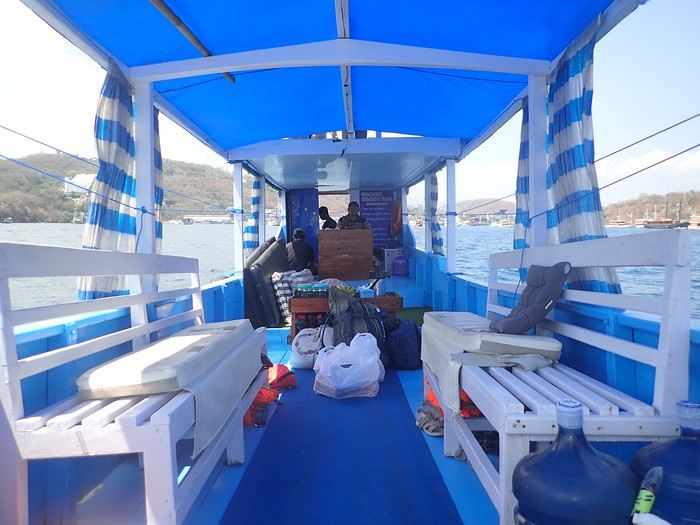 Not usually a fan of organized trips, during my stay in Labuan Bajo on Flores in May 2024, I started looking for a fisherman who could show me the islands around Komodo. At the port, I met Ari, a former freediver who knows the islands well, especially the best spots for fish and coral.
At the Bohême guest house, I proposed this outing, and one of the activity leaders was happy to join. We headed to Angel Island, where Ari took us snorkeling around the island. During this beautiful day, we appreciated his professionalism, and I suggested coming back the following year for a 5-day cruise. We had to agree on a budget and the period to consider.
Over the next year, we kept in touch via WhatsApp.
However, a month before departure, Ari told me he had lent his boat to a friend, who ran it aground on a rock, causing it to sink. No boat, no cruise! Since we had an agreement, I asked him to find another solution. His searches in the port, where everyone knows each other, turned out to be fruitful.
A certain "Captain" Kambar agreed to take us. He sometimes charters his boat for local travel agencies and could free up the requested period.
There will be six of us on board, as in the meantime, my daughter’s friend, Amandine, could join us for the cruise. Ari will act as a guide, and a mechanic will also be present. To reserve the boat for September 4th, Ari asked me to transfer a deposit of 5 million IDR to his account. After some hesitation, I decided to trust him and made the transfer. A few days later, he confirmed receipt of the amount.
In early September, we arrived in Labuan Bajo. Our first mission was to check the boat’s condition, the presence of life jackets, what we would eat, and if there were any restrictions on drinks. Everything was in order and met our expectations.
The day before departure, we met a 26-year-old Czech woman traveling alone after a stay in New Zealand. The description of our cruise excited her, and she got Ari’s number. That evening, at the restaurant, while we discussed the final preparations, Thérèsa joined us and asked if she could come along for the five-day cruise. Since she seemed like good company, I gladly accepted. However, following Indonesian custom, I negotiated firmly with Ari for a discount, and he agreed to lower the price by 2 million.
On September 4th, we set sail to explore the islands of Komodo and, above all, the seabeds, equipped with fins, masks, and snorkels. We had brought a board game for the trips between islands or for the evenings. In the end, it wasn’t used: the crossings rarely lasted more than an hour, except for two two-hour trips, and the conditions on board weren’t suitable for playing.
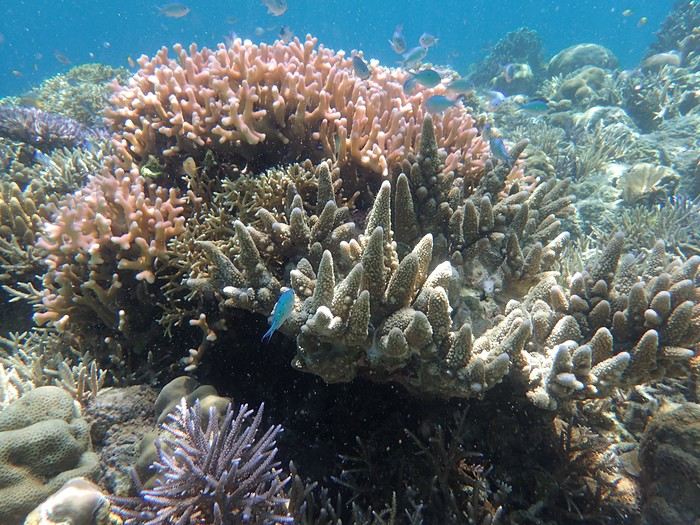
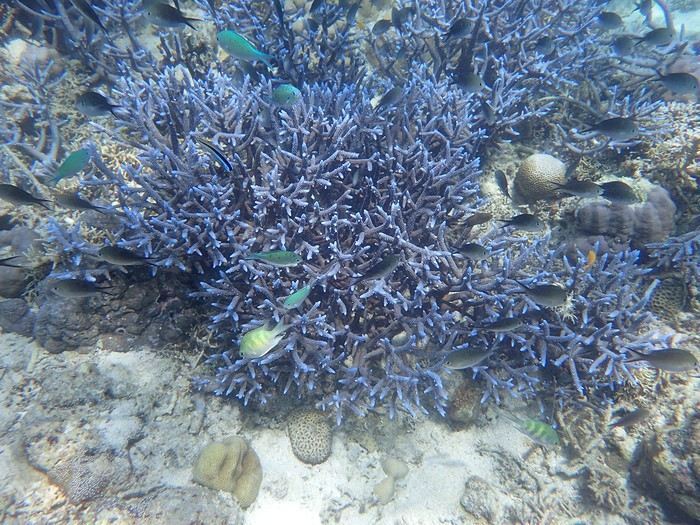 The first island we visited is north of Labuan Bajo: Seraya Small.
We didn’t disembark but anchored a short distance away. The coral reef, between 5 and 10 meters deep, offered visibility of 8 to 10 meters. We started with a few dives from the boat, as the water was so inviting. As with most of the upcoming sites, we were the only ones enjoying this little paradise.
Over about a kilometer along the drop-off, colorful corals and fish abound. As long as you don’t go past the rocky point on the right, the currents remain very weak, and the spot is accessible to beginners. After enjoying the sea enough, we returned to the boat, where Ari had prepared a good meal of rice, chicken, and vegetables. It was simple but excellent after all that effort.
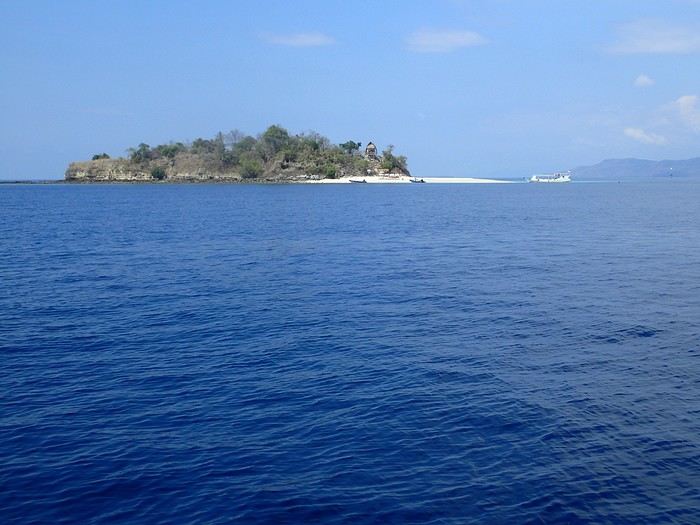 In the afternoon, we discovered Bero Island, where it was very hot. There were fewer fish and corals than at Seraya, but the corals were on white sand, allowing for beautiful, bright photos.
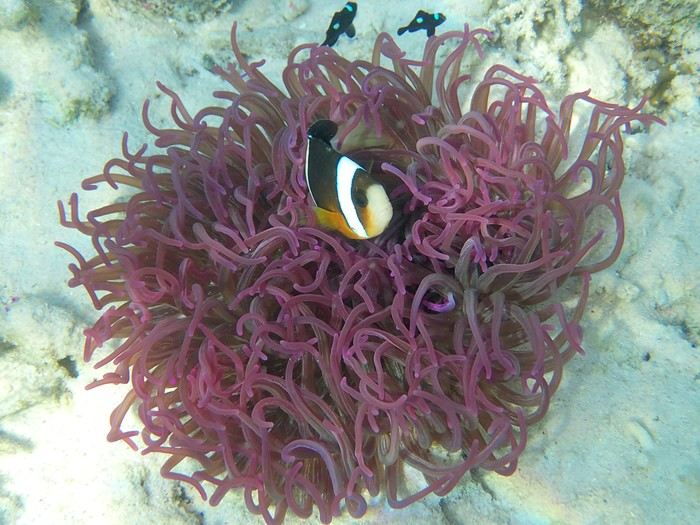 In the evening, we visited Hatamin, a fishing village. The population is very young and curious about our visit. At our request, we could have watched a local dance, but it would have taken some time to organize, and we didn’t plan to return. Ari asked if we wanted to take a shower, as on the boat, we could only rinse off with a little water from a basin.
On the second day, snorkeling near Hatamin, a small paradise island with white sand like in a travel brochure. A small temple is located in the middle of the island. In the water, we saw our first small reef sharks, some clownfish, and a sergeant major fish that followed us throughout our swim. The most beautiful part to explore is opposite the beach. Many corals and fish of all colors. A sailboat was anchored a short distance away, but we didn’t see anyone except an old man who apparently lived in the temple above.
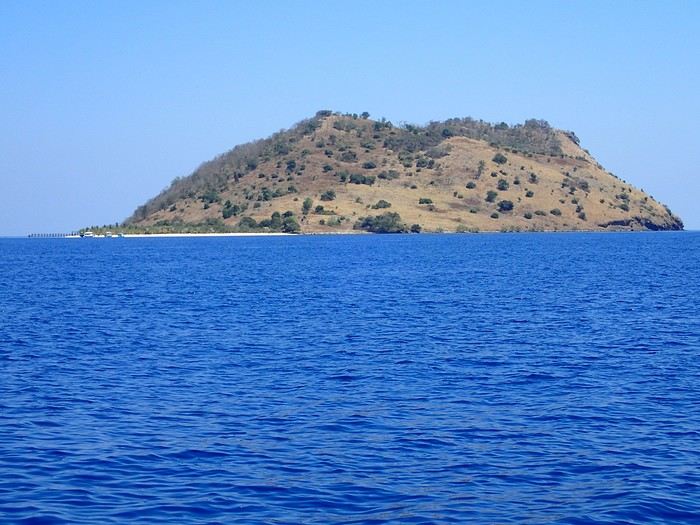
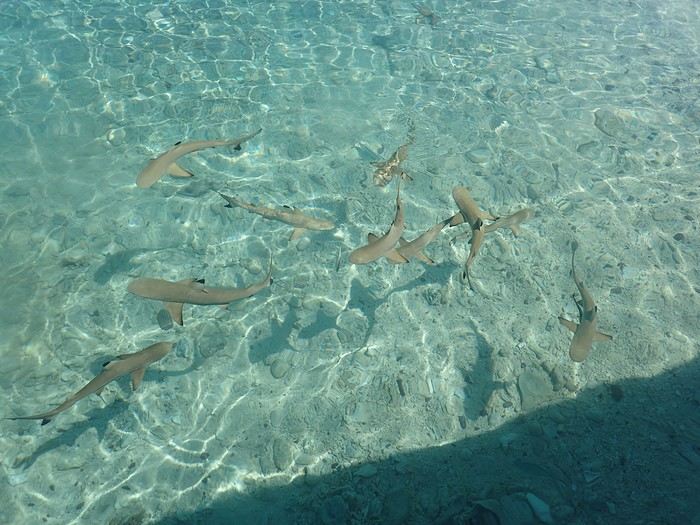
In the afternoon, we headed to the nearby island of Sabolong Besar. It’s a pretty little island with a harmonious resort made up of luxury huts that don’t spoil the landscape. In some places, the water is very clear with good visibility, and some schools of very young blacktip reef sharks swirl near the boat. There are beautiful corals on the left side of the resort and a bit of current when you approach the drop-off. Since the area to explore wasn’t very large, we had time to head to Sabolong Kecil. Then we went to the fishing village of Messah, where a Muslim celebration was taking place. There were people everywhere with many food offerings—what activity! It was like an anthill.
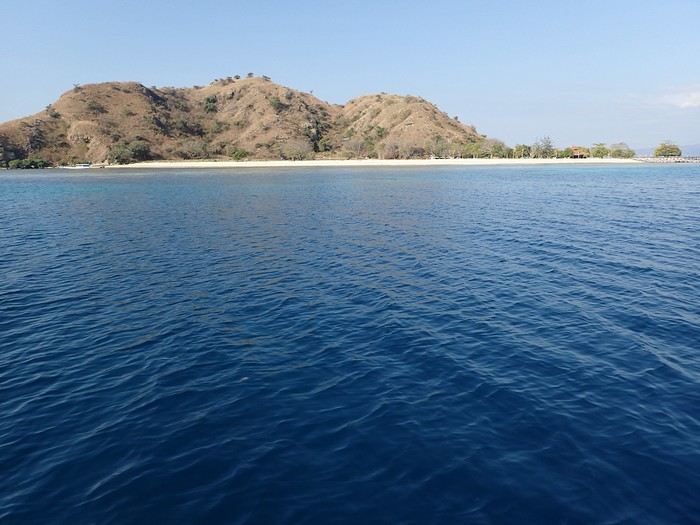
And at the end of the day, we anchored near Kanawa with a beautiful sunset.
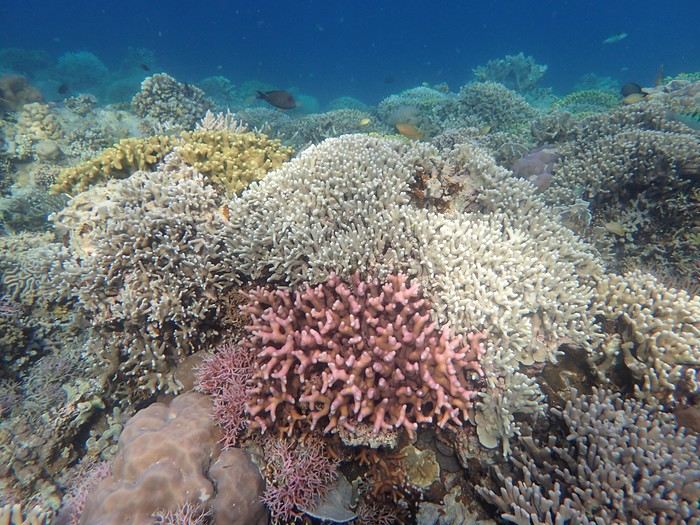 On the third day, we discovered Kanawa and some hawksbill turtles. There were many colorful corals, but we didn’t stay long. During this day, the stops were close together, making it intense with four visits.
Then we arrived at Sebayur Besar with a different snorkeling approach: Ari dropped us in the current, and we drifted for over a kilometer before he came to pick us up. At first, it seemed a bit worrying to see the boat move away while we were offshore, but we were quickly carried by the current and passed almost too quickly by so many corals and fish to see. What a pleasure to drift and freedive with little effort.
The drift lasted a good hour, and we reached Siaba Island, where the water was colder. There were many boats, and we had quickly lost the habit of seeing other tourists. Visibility was average—it was a nice spot, but after the drift at Sebayur, we liked it less. Around 1 p.m., we anchored with other boats because Ari met up with some friends, and we ate heartily since the cool water had whetted our appetites.
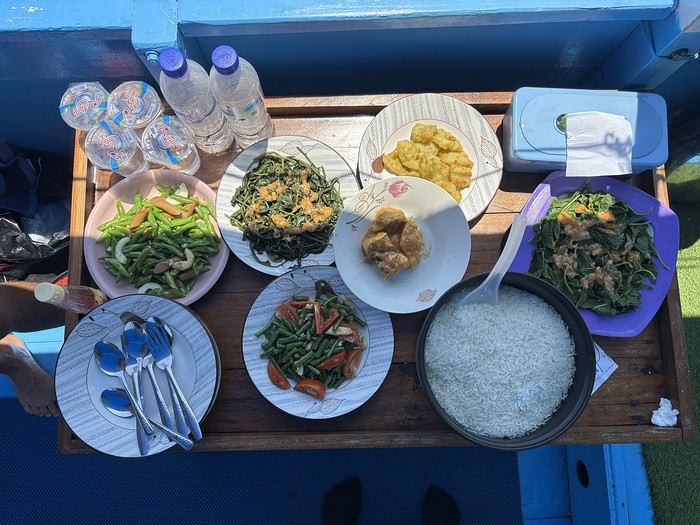
In the afternoon, we were at Manta Point. The water was cool, and there was a lot of excitement trying to follow the giant manta rays. We managed to dive down and get close to them, but it took a lot of effort and breath because, despite their leisurely appearance, they move quite fast for us little swimmers. Here, they come to feed and then return to the depths, and it’s not always certain you’ll encounter them. We ended the day at Makassar with a two-hour sail. There was a lot of wind and swell, the boat rocked, and we hoped there wouldn’t be an engine breakdown. We had to take down the tent on the boat’s roof, which had also been used for sleeping. Makassar’s beach is pink, caused by microorganisms called foraminifera. There are many beach huts along the shore, and we were alone, though it must get busy here during the day. On the fourth day, we visited Padar Island for its viewpoint amid hordes of tourists, then headed to Rinca and its Komodo dragons. Rinca is much less crowded than Komodo, which is why we chose this visit. We saw a few and took the usual photos. In the late afternoon, we snorkeled at Pempend Island, where the sea was choppy and the water a bit murky. And on the last day, we visited Strawberry Rock, named after the reddish rock overlooking the sea. There were many corals, but the water was rough with reduced visibility, and then we went to Kelor with its tourist "bars" and the pretty viewpoint.
In conclusion, we shared amazing moments and managed to complete our program. Luckily, the weather was very kind, and not a drop of rain fell in early September, except just upon returning to the port. It’s worth noting that after five intense days in the water from morning to night, we were glad to return to dry land because we were exhausted.
My daughter and her friend were so thrilled that, in return, they developed a website for Ari to help him get known, and I can share the link if you’d like. I visit Voyage Forum from time to time, so if you have any questions, don’t hesitate—I’ll answer them.
Not usually a fan of organized trips, during my stay in Labuan Bajo on Flores in May 2024, I started looking for a fisherman who could show me the islands around Komodo. At the port, I met Ari, a former freediver who knows the islands well, especially the best spots for fish and coral.
At the Bohême guest house, I proposed this outing, and one of the activity leaders was happy to join. We headed to Angel Island, where Ari took us snorkeling around the island. During this beautiful day, we appreciated his professionalism, and I suggested coming back the following year for a 5-day cruise. We had to agree on a budget and the period to consider.
Over the next year, we kept in touch via WhatsApp.
However, a month before departure, Ari told me he had lent his boat to a friend, who ran it aground on a rock, causing it to sink. No boat, no cruise! Since we had an agreement, I asked him to find another solution. His searches in the port, where everyone knows each other, turned out to be fruitful.
A certain "Captain" Kambar agreed to take us. He sometimes charters his boat for local travel agencies and could free up the requested period.There will be six of us on board, as in the meantime, my daughter’s friend, Amandine, could join us for the cruise. Ari will act as a guide, and a mechanic will also be present. To reserve the boat for September 4th, Ari asked me to transfer a deposit of 5 million IDR to his account. After some hesitation, I decided to trust him and made the transfer. A few days later, he confirmed receipt of the amount.
In early September, we arrived in Labuan Bajo. Our first mission was to check the boat’s condition, the presence of life jackets, what we would eat, and if there were any restrictions on drinks. Everything was in order and met our expectations.
The day before departure, we met a 26-year-old Czech woman traveling alone after a stay in New Zealand. The description of our cruise excited her, and she got Ari’s number. That evening, at the restaurant, while we discussed the final preparations, Thérèsa joined us and asked if she could come along for the five-day cruise. Since she seemed like good company, I gladly accepted. However, following Indonesian custom, I negotiated firmly with Ari for a discount, and he agreed to lower the price by 2 million.
On September 4th, we set sail to explore the islands of Komodo and, above all, the seabeds, equipped with fins, masks, and snorkels. We had brought a board game for the trips between islands or for the evenings. In the end, it wasn’t used: the crossings rarely lasted more than an hour, except for two two-hour trips, and the conditions on board weren’t suitable for playing.
The first island we visited is north of Labuan Bajo: Seraya Small.
We didn’t disembark but anchored a short distance away. The coral reef, between 5 and 10 meters deep, offered visibility of 8 to 10 meters. We started with a few dives from the boat, as the water was so inviting. As with most of the upcoming sites, we were the only ones enjoying this little paradise.
Over about a kilometer along the drop-off, colorful corals and fish abound. As long as you don’t go past the rocky point on the right, the currents remain very weak, and the spot is accessible to beginners. After enjoying the sea enough, we returned to the boat, where Ari had prepared a good meal of rice, chicken, and vegetables. It was simple but excellent after all that effort.
In the afternoon, we discovered Bero Island, where it was very hot. There were fewer fish and corals than at Seraya, but the corals were on white sand, allowing for beautiful, bright photos.
In the evening, we visited Hatamin, a fishing village. The population is very young and curious about our visit. At our request, we could have watched a local dance, but it would have taken some time to organize, and we didn’t plan to return. Ari asked if we wanted to take a shower, as on the boat, we could only rinse off with a little water from a basin.On the second day, snorkeling near Hatamin, a small paradise island with white sand like in a travel brochure. A small temple is located in the middle of the island. In the water, we saw our first small reef sharks, some clownfish, and a sergeant major fish that followed us throughout our swim. The most beautiful part to explore is opposite the beach. Many corals and fish of all colors. A sailboat was anchored a short distance away, but we didn’t see anyone except an old man who apparently lived in the temple above.
In the afternoon, we headed to the nearby island of Sabolong Besar. It’s a pretty little island with a harmonious resort made up of luxury huts that don’t spoil the landscape. In some places, the water is very clear with good visibility, and some schools of very young blacktip reef sharks swirl near the boat. There are beautiful corals on the left side of the resort and a bit of current when you approach the drop-off. Since the area to explore wasn’t very large, we had time to head to Sabolong Kecil. Then we went to the fishing village of Messah, where a Muslim celebration was taking place. There were people everywhere with many food offerings—what activity! It was like an anthill.
And at the end of the day, we anchored near Kanawa with a beautiful sunset.
On the third day, we discovered Kanawa and some hawksbill turtles. There were many colorful corals, but we didn’t stay long. During this day, the stops were close together, making it intense with four visits.
Then we arrived at Sebayur Besar with a different snorkeling approach: Ari dropped us in the current, and we drifted for over a kilometer before he came to pick us up. At first, it seemed a bit worrying to see the boat move away while we were offshore, but we were quickly carried by the current and passed almost too quickly by so many corals and fish to see. What a pleasure to drift and freedive with little effort.The drift lasted a good hour, and we reached Siaba Island, where the water was colder. There were many boats, and we had quickly lost the habit of seeing other tourists. Visibility was average—it was a nice spot, but after the drift at Sebayur, we liked it less. Around 1 p.m., we anchored with other boats because Ari met up with some friends, and we ate heartily since the cool water had whetted our appetites.
In the afternoon, we were at Manta Point. The water was cool, and there was a lot of excitement trying to follow the giant manta rays. We managed to dive down and get close to them, but it took a lot of effort and breath because, despite their leisurely appearance, they move quite fast for us little swimmers. Here, they come to feed and then return to the depths, and it’s not always certain you’ll encounter them. We ended the day at Makassar with a two-hour sail. There was a lot of wind and swell, the boat rocked, and we hoped there wouldn’t be an engine breakdown. We had to take down the tent on the boat’s roof, which had also been used for sleeping. Makassar’s beach is pink, caused by microorganisms called foraminifera. There are many beach huts along the shore, and we were alone, though it must get busy here during the day. On the fourth day, we visited Padar Island for its viewpoint amid hordes of tourists, then headed to Rinca and its Komodo dragons. Rinca is much less crowded than Komodo, which is why we chose this visit. We saw a few and took the usual photos. In the late afternoon, we snorkeled at Pempend Island, where the sea was choppy and the water a bit murky. And on the last day, we visited Strawberry Rock, named after the reddish rock overlooking the sea. There were many corals, but the water was rough with reduced visibility, and then we went to Kelor with its tourist "bars" and the pretty viewpoint.
In conclusion, we shared amazing moments and managed to complete our program. Luckily, the weather was very kind, and not a drop of rain fell in early September, except just upon returning to the port. It’s worth noting that after five intense days in the water from morning to night, we were glad to return to dry land because we were exhausted.
My daughter and her friend were so thrilled that, in return, they developed a website for Ari to help him get known, and I can share the link if you’d like. I visit Voyage Forum from time to time, so if you have any questions, don’t hesitate—I’ll answer them.
Hi there!! We all know there are mosquitoes in Quebec… but is it bearable? Are the cities affected too? Like Montreal and Quebec City? I can imagine it’s bad in the parks… The road trip would be from July 5th to the 21st, right in the middle of bug season!! Best, Christophe
Hi everyone,
It’s been a while since I last posted... so I’m jumping back in with this amazing trip we took in October 2025:
We’re doing this trip with fellow traveler friends who, like us, have already been to Japan. That means we can aim for a different side of Japan, away from the usual tourist circuits. That’s why I opted to rent a car instead of relying on trains. I was drawn to the castles and the samurai-novel atmosphere.
When I plotted the sites I wanted to visit on Google Maps, it suggested a return route via the island of Shikoku, so it turned into a nice loop around the Seto Inland Sea between Kyushu, Chugoku, and Shikoku.
The trip will be just the four of us, doing it all independently. I rented a car from Budget in Fukuoka. Before heading over, I watched several videos to get an idea of what to expect—road signs, parking, and general driving behavior. In Japan, they drive on the left, but that’s not an issue since in Southern Africa we also drive on the “wrong side of the road,” so I’m used to it. For accommodations, after checking with two agencies, I decided to handle it myself. It saved a significant amount of money, and I was able to choose exactly what I wanted. I know I can be picky about the type of lodging I want, especially in Japan where you can really treat yourself. We stayed in some stunning ryokans, once in little cabins run by monks next to a temple, and more.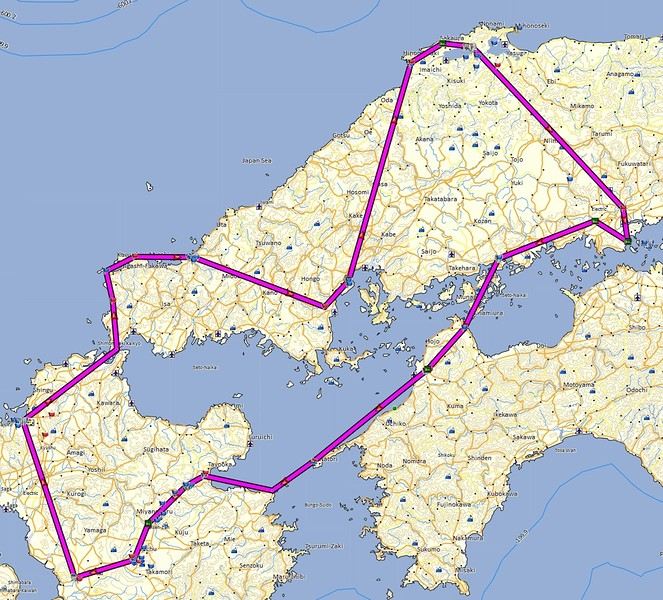
Here’s the route: Fukuoka - Hagi - Miyajima - Matsue - Okayama - Kurashiki - Matsuyama - Yufuin - Kurokawa - Kumamoto - Fukuoka
Here we gooo...
It’s been a while since I last posted... so I’m jumping back in with this amazing trip we took in October 2025:
We’re doing this trip with fellow traveler friends who, like us, have already been to Japan. That means we can aim for a different side of Japan, away from the usual tourist circuits. That’s why I opted to rent a car instead of relying on trains. I was drawn to the castles and the samurai-novel atmosphere.
When I plotted the sites I wanted to visit on Google Maps, it suggested a return route via the island of Shikoku, so it turned into a nice loop around the Seto Inland Sea between Kyushu, Chugoku, and Shikoku.
The trip will be just the four of us, doing it all independently. I rented a car from Budget in Fukuoka. Before heading over, I watched several videos to get an idea of what to expect—road signs, parking, and general driving behavior. In Japan, they drive on the left, but that’s not an issue since in Southern Africa we also drive on the “wrong side of the road,” so I’m used to it. For accommodations, after checking with two agencies, I decided to handle it myself. It saved a significant amount of money, and I was able to choose exactly what I wanted. I know I can be picky about the type of lodging I want, especially in Japan where you can really treat yourself. We stayed in some stunning ryokans, once in little cabins run by monks next to a temple, and more.
Here’s the route: Fukuoka - Hagi - Miyajima - Matsue - Okayama - Kurashiki - Matsuyama - Yufuin - Kurokawa - Kumamoto - Fukuoka
Here we gooo...
Hi there, I’m heading to Quebec from 08/07/26 to 08/21/26 with my wife and our two sons, aged 8 and 10. I’m sharing my itinerary below—if you have any suggestions or feedback, I’d love to hear it!
Day 1: Arrival in Montreal on Friday, August 7th around 2 PM (it’s also one of my sons’ 8th birthday!). We’ll head to Westmount via public transit or taxi to pick up our Airbnb.
Day 2 & 3: Exploring Montreal.
Day 4: Picking up our rental car (not yet booked, but likely with Hertz via BSP Auto). We’ll explore the area around Montreal and then head to Montebello for the night.
Day 5: Visit to Parc Omega, staying overnight in Montebello (Airbnb).
Day 6: Heading to Shawinigan, possibly catching an evening show at Cité de l’Énergie. I’ve spotted Motel Auberge Pique-Nique for the night.
Day 7: Mauricie National Park. Overnight in Shawinigan.
Day 8: Heading to Lac Saint-Jean. I’ve looked into the Village Historique Val-Jalbert, but many say there are better options for visiting an old village, like the Village Québécois d’Antan near Quebec City. We’ll stay somewhere around the lake.
Day 9: Day around the lake, then overnight in Saguenay. FYI, August 15th is a holiday in Quebec (like in France), so some places might be busier or closed.
Day 10: Heading to Tadoussac. Staying overnight at the youth hostel to meet other travelers.
Day 11: Day in Tadoussac—whale watching and a guided forest excursion to see bears. Another night in Tadoussac.
Day 12: Heading to Quebec City, possibly stopping at Montmorency Falls along the way. We’ll pick up our Airbnb along the St. Lawrence River, not far from the aquarium.
Day 13 & 14: Exploring Quebec City and its surroundings.
Day 15: Returning to Montreal to catch our flight in the late afternoon.
I’ve tried to stay in the same place for two nights in a row for logistical reasons—it’s easier with kids. So far, only the Airbnbs are booked. For the rest, motels seem like the most budget-friendly option. I’d also love to find B&Bs with meals included, like Gîtes de France, but I’m not sure if that’s a thing here—I’m struggling to find options.
Don’t hesitate to let me know if this itinerary seems too packed. I’ve been mindful of the distances, but unfortunately, we can’t do everything, so we’ve had to make some tough choices.
Thanks in advance to anyone who can chime in!