Hi there,
Back in 2002, we spent two weeks in Playa del Carmen. We did day trips to Cozumel, Isla Mujeres, Chichén Itzá, Tulum, and Xcaret.
We’re heading back at Christmas with our two daughters, aged 15 and 19. I’m sure it’s changed a lot with the booming tourism.
Flights are booked: Paris-Cancún on 19/12 (arriving at 8:20 PM) and Cancún-Paris on 01/01 at 1:30 PM. We’re still finalizing the itinerary because we want to explore but don’t want to switch hotels too often. We’ll be there for 13 nights and 12 days, so we’re choosing among:
- Playa del Carmen
- Cozumel
- Holbox
- Valladolid
- Tulum
- Mahahual
We won’t do everything, so any tips would be great! I’m also unsure if renting a car is the best option.
Thanks in advance!
Stéphane
28 similar discussions in English
Hello everyone,
What a pleasure to be back on VF after a few difficult years 😎 So, before diving into the topic, welcome back to VF and above all... keep going!
Well, I’m finally picking up my old habit of posting a new travel journal.
Before heading to Mexico in the summer of 2023 with my family (my partner and our two boys, aged 18 and 16), I had somehow convinced myself—though I can’t even remember why—that the Yucatán was too touristy, too cliché, too expensive, and overrated!
The country didn’t particularly appeal to me, but faced with my wife’s insistence—she’d been there years ago, before we met, and had promised to show our sons this incredible place—my arguments didn’t hold much weight.
And thank goodness, because I have to admit she was absolutely right to take us there! In the end, we encountered far fewer tourists than we’d feared (except at a few sites), and the prices, which we’d been told were geared toward American neighbors (US), turned out to be quite affordable. In short, it was pure joy on both counts. All that was left was for the trip itself to be beautiful and memorable—and it was...
1st stop: Isla Holbox and the whale sharks
Holbox (pronounced “Hol-bosh”) is a stunning island where you can relax in an enchanting setting.
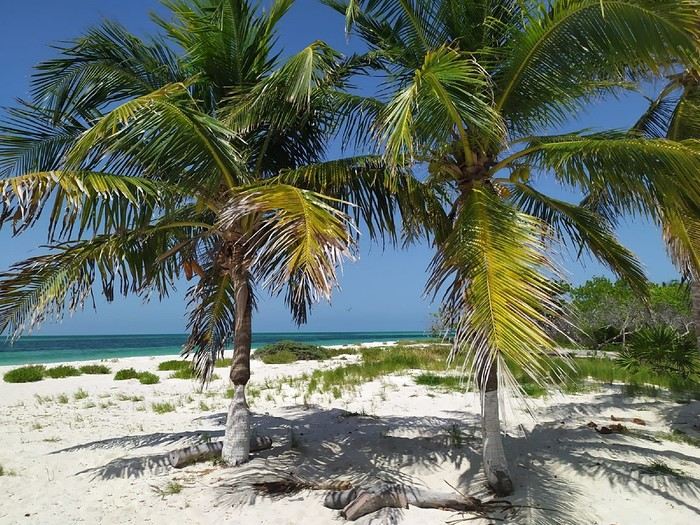
Our main goal in coming to Holbox was to swim with whale sharks. So, the first thing we told our hotel, Los Arcos Holbox, upon arrival was to arrange an excursion with one of the island’s many tour operators: Glendy Tours Holbox. We set off the next morning, bright and early.
The itinerary for this outing is the same for all tour operators (and there are about thirty of them!): roughly two hours by speedboat, then snorkeling with the whale sharks, followed by another boat ride to Cabo Catoche for lunch, then more boating to a fish-filled snorkeling spot before heading back. In total, the excursion can take eight hours—or even longer.
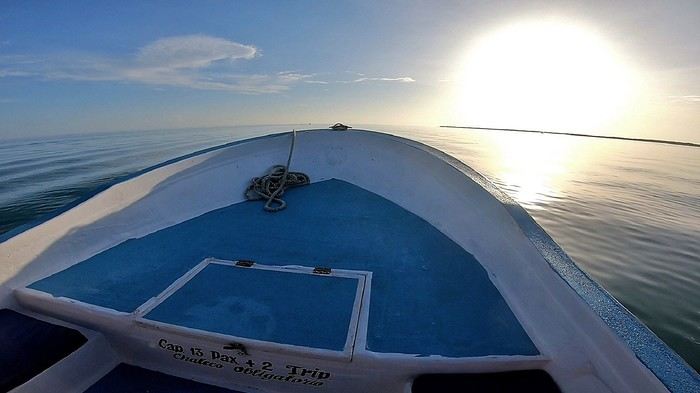
Besides my two sons and me, there were only two other clients on board—a French couple. Our boat was one of the very first to leave, but after ten minutes, the pilot got a radio call. We turned back without any explanation, returning to the departure dock.
There, a young woman who clearly fancied herself a diva was waiting for us. She was Mexican and boarded the boat, snubbing all five of us while flirting with the pilot and guide, who were suddenly all eyes for her. We couldn’t understand how this diva had convinced our tour operator to turn the boat around just to pick her up when she hadn’t even booked and we were already far out. We left 20 minutes late.
The two-hour journey passed surprisingly quickly, and for good reason: we spotted dolphins six times! They were leaping out of the water as they moved. Pure joy. We stopped whenever they were near the boat.
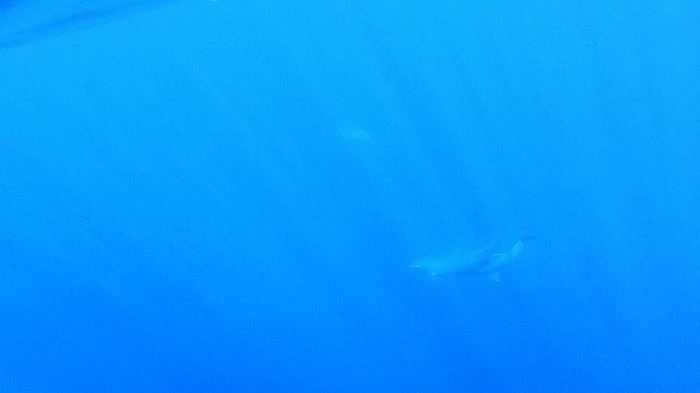
The photo isn’t great—the ultra-wide-angle lens on my GoPro makes the dolphins look smaller—but at least I got a souvenir.
A few flying fish (exocets) also glided a meter or two above the water as we sped along. The false start was forgotten, and the day was off to a fantastic start in this stunning marine environment...
When we reached the area where the whale sharks were supposed to be, the guide explained that we’d now have to scan the sea until we spotted one. It could take five minutes or forty-five, he said, and if we were unlucky, we might not see any at all!
An hour and a half later—still nothing! The captain then headed toward a distant area where about twenty other boats were already gathered.
Sure enough, there was a juvenile whale shark (still a good eight meters long) there, and all the boats were lining up to approach it slowly, one by one, so as not to scare the animal. Each boat got about thirty seconds within a few meters of it, engine idling, before making way for the next. We were allowed to approach three times, but we weren’t permitted to dive in. That’s normal—such a crowd of divers around a single animal would stress it out, and here, whale sharks are protected by regulations: swimming with them is strictly controlled. There was even a coast guard boat with us at all times, monitoring everyone’s behavior.
We were torn between the luck of seeing such a magnificent animal, even from the surface, and the discomfort we felt about the absurd situation. All those boats lined up just to catch a fleeting glimpse of the shark for a few seconds—let’s be honest, it was ridiculous. In short, the whole thing was unpleasant, and probably even more so for the shark than for us, though it did keep gulping down kilos of plankton as if nothing were happening...
When it was our turn to approach, I dipped my GoPro into the water at arm’s length and framed the shot blindly, hoping for a decent image of the shark.
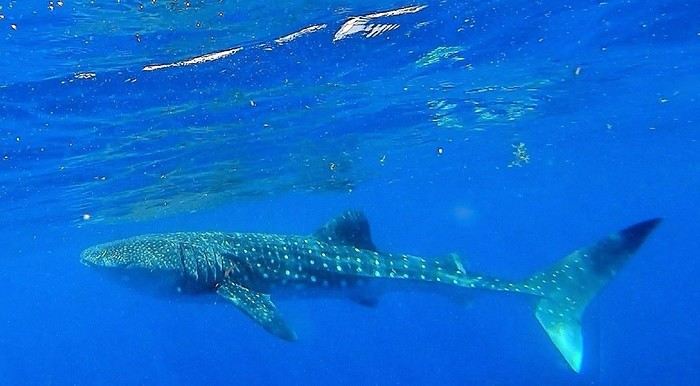
On the third and final approach, the sixth passenger on board—the one we’d had to turn back for ten minutes after departure—quietly spoke to the guide and captain after putting on her flippers (even though, I’ll remind you, no one was allowed to dive). She wanted them to ask the coast guard for permission to dive with the shark—just her! She whispered so we couldn’t hear what she was offering in exchange.
The two lackeys complied and shouted the request to the officials in front of all the other boats, with no shame whatsoever. With so many witnesses, the coast guard had no choice but to refuse. The diva wouldn’t let it go and asked them to insist, which they did, but the refusal was firm and final.
On the nearest boats, everyone had heard and was stunned. They openly mocked this bimbo who clearly had no shame. Hidden behind her star sunglasses, she responded with a dismissive smile. Pathetic.
The encounter with the shark ended, and we set off for Cabo Catoche, a site on Holbox Island where we were to have lunch.
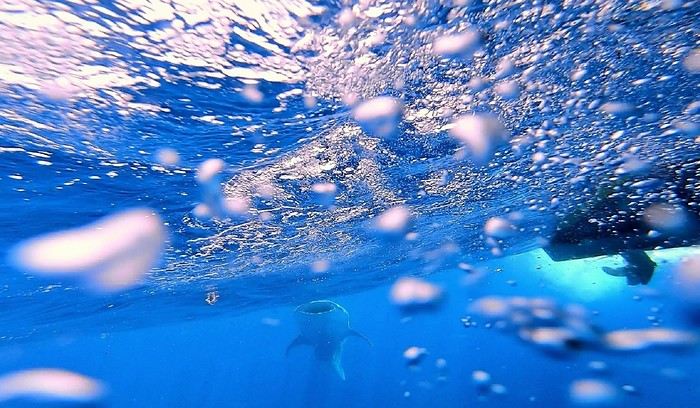
We were a little disappointed not to have had the chance to see the usual school of whale sharks (they’re often dozens swimming together!), but that’s nature’s way, and we knew it.
And then, an unlikely stroke of luck: a boat ahead of us was putting divers in the water with a pair of adult whale sharks. We joined them, and while we were putting on our masks and snorkels, the guide briefed us. He said my sons and I would go first, followed by the French couple and the diva.
But Miss World, clearly unhappy with this order, quietly complained to the guide, who eventually switched the order. It didn’t bother us since we’d only get a minute in the water anyway—what’s a minute more or less?
So the three of them got in the water, and a moment later, they were done. My two sons and I, sitting on the edge of the boat with masks on and snorkels in our mouths, were ready to finally take the plunge. But instead of continuing to follow the shark, the captain was suddenly all eyes for Miss Silicone! He even let go of the wheel for a moment to help her back on board.
One of the two sharks had already left minutes earlier, and the second was swimming farther away. Other boats were arriving, and the captain went to join the queue 100 meters from the shark. Soon, even more boats showed up. There were way too many people, the shark left, and diving was no longer possible.
I was, of course, a little disappointed not to have fulfilled my long-time dream of swimming with a whale shark, even briefly. But I was mostly disgusted for my two boys, who had been so excited about it. I told the guide exactly what I thought and asked for compensation—not for missing out on swimming with the shark (you can never guarantee seeing one, nature isn’t at our beck and call), but for clearly skipping our turn to dive. He promised a refund.
At the end of the day, back on land, he dropped us all off, and as he was about to leave, I reminded him about the refund. He agreed again, calmly got back on board, and sped off as if nothing had happened—just him and the captain, two total cowards. I couldn’t believe it.
Of course, back at our hotel (which had booked this tour operator—Glendy Tours), I explained the situation and asked for my refund again. The receptionist called the manager, who arrived with the guide. Our runaway wasn’t so cocky anymore. Inside, I was fuming, but I kept my cool during the discussion that followed.
Right off the bat, I made a point of looking the so-called guide in the eyes while telling him he’d run off like a coward. I did my best to stay calm, speaking clearly, staring him down the whole time, and repeating several times that he was a coward, in front of the manager, who didn’t say a word. The guide had clearly been told by his boss to keep quiet because he didn’t utter a word during the entire twenty-minute conversation.
Anyway, I’ll spare you the details, but in the end, the manager only offered us another excursion the next day as compensation for the “inconvenience.” It was just snorkeling with fish, not another whale shark trip. He admitted their fault, but since we had to leave early the next morning and had other bookings for the rest of the trip, we couldn’t accept. And he refused to refund us.
On Tripadvisor, Glendy Tours has a mediocre rating (3 out of 5), but more importantly, it ranks 29th out of 36 nautical tour operators rated by customers. I was pretty upset with the hotel for booking such an amateur for us.

If you want to swim with whale sharks in Holbox, you might end up with Glendy Tours. And it might go well—I certainly hope so. But given the price of such an excursion (3,000 pesos per person, about 160 €!), I’d still suggest quickly checking online before you go to see which providers have the best ratings. You’ll have a much better chance of things going smoothly with the top-rated ones than with those as poorly ranked as Glendy Tours.
On the other hand, if you’re a beautiful young woman, you can choose them without worry—you’ll get better treatment than the rest of us...
To wrap up this excursion, I have to mention the “respect for nature” angle that all these tour operators highlight. They tell us they respect the whale sharks: only two or three people can dive at a time, and only for a few minutes, so as not to disturb these gentle giants...
We believed them before we left, but that’s not what we saw. When the sharks are hard to find except for one, everyone rushes it, and only the constant presence of the coast guard prevents the tour operators from putting their clients in the water.
Because for the second shark we saw, when the divers from our boat got out of the water and we left to join the queue while it was our turn to dive, other boats quickly arrived and started swarming the poor shark, which eventually left.
In other words, it’s clear these companies only respect the sharks when they’re being watched.
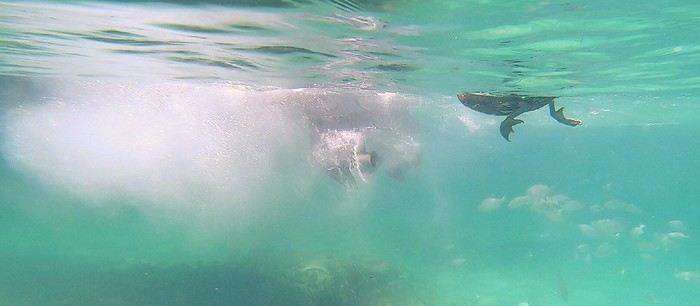 Boat reversing a meter away from a pelican
And for the snorkeling near Cabo Catoche, they attract fish daily by feeding them—a practice that’s normally discouraged. Afterward, these fish can’t feed naturally anymore and become dependent on Glendy Tours and its competitors.
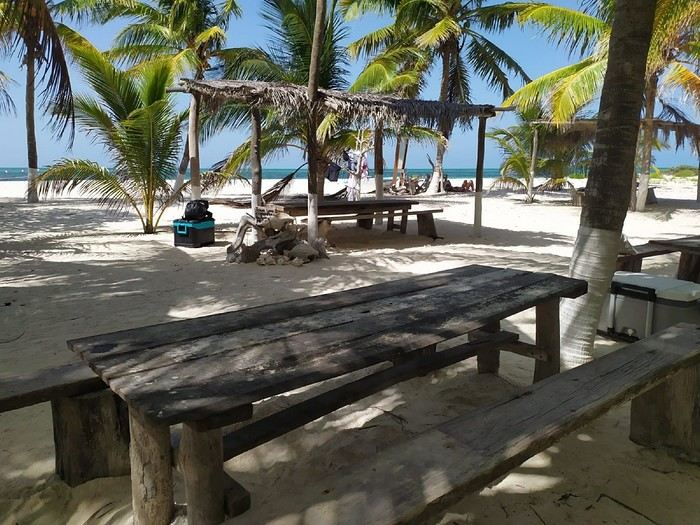
A quick note on the rest of the excursion: Cabo Catoche (the site where we had lunch, on Holbox Island) is the northernmost point of the entire Yucatán. The place is paradise.
On the way back, we spent half an hour snorkeling at a site that turned out to be fish-filled only because the tour operators had the bad habit of feeding the fish. But this practice, which isn’t respectful of nature, is normally discouraged.
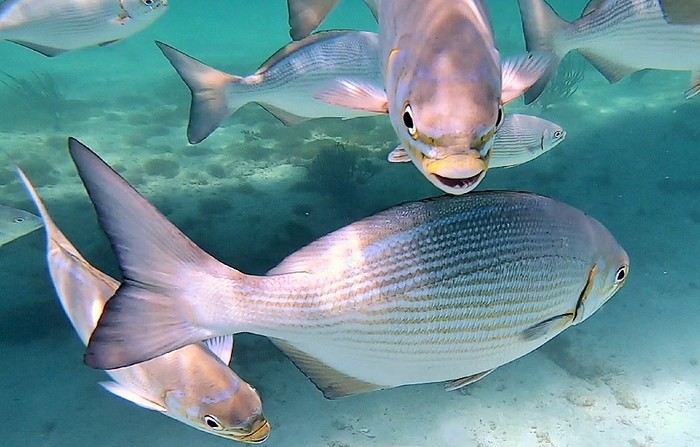
Plus, life jackets—like in many places in the Yucatán—are mandatory!!
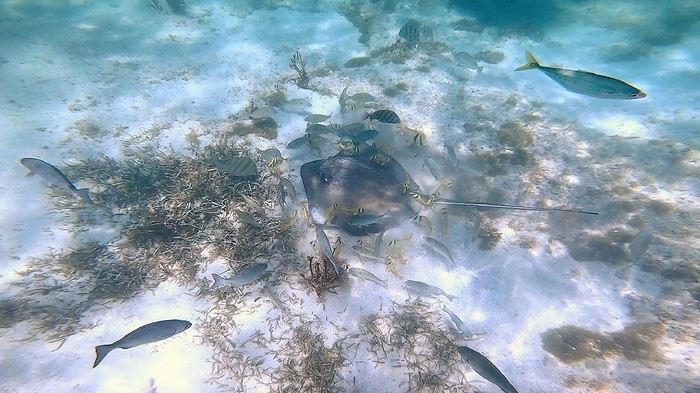
As divers, we didn’t find the site very interesting, but objectively, it should delight those who aren’t used to putting their heads underwater in beautiful dive spots.
We hated feeling trapped in those life jackets, stuck at the surface, and for me, the highlight was swimming next to a pelican that wasn’t too shy—it was paddling right beside me in green water.
Anyway, it seems we can’t post more than 10 photos at once on VF, so I’ll come back with the rest of the journal in another message. Because after these early trip mishaps, the rest of the journey turned out to be magnificent...
What a pleasure to be back on VF after a few difficult years 😎 So, before diving into the topic, welcome back to VF and above all... keep going!
Well, I’m finally picking up my old habit of posting a new travel journal.
Before heading to Mexico in the summer of 2023 with my family (my partner and our two boys, aged 18 and 16), I had somehow convinced myself—though I can’t even remember why—that the Yucatán was too touristy, too cliché, too expensive, and overrated!
The country didn’t particularly appeal to me, but faced with my wife’s insistence—she’d been there years ago, before we met, and had promised to show our sons this incredible place—my arguments didn’t hold much weight.
And thank goodness, because I have to admit she was absolutely right to take us there! In the end, we encountered far fewer tourists than we’d feared (except at a few sites), and the prices, which we’d been told were geared toward American neighbors (US), turned out to be quite affordable. In short, it was pure joy on both counts. All that was left was for the trip itself to be beautiful and memorable—and it was...
1st stop: Isla Holbox and the whale sharks
Holbox (pronounced “Hol-bosh”) is a stunning island where you can relax in an enchanting setting.
Our main goal in coming to Holbox was to swim with whale sharks. So, the first thing we told our hotel, Los Arcos Holbox, upon arrival was to arrange an excursion with one of the island’s many tour operators: Glendy Tours Holbox. We set off the next morning, bright and early.
The itinerary for this outing is the same for all tour operators (and there are about thirty of them!): roughly two hours by speedboat, then snorkeling with the whale sharks, followed by another boat ride to Cabo Catoche for lunch, then more boating to a fish-filled snorkeling spot before heading back. In total, the excursion can take eight hours—or even longer.
Besides my two sons and me, there were only two other clients on board—a French couple. Our boat was one of the very first to leave, but after ten minutes, the pilot got a radio call. We turned back without any explanation, returning to the departure dock.
There, a young woman who clearly fancied herself a diva was waiting for us. She was Mexican and boarded the boat, snubbing all five of us while flirting with the pilot and guide, who were suddenly all eyes for her. We couldn’t understand how this diva had convinced our tour operator to turn the boat around just to pick her up when she hadn’t even booked and we were already far out. We left 20 minutes late.
The two-hour journey passed surprisingly quickly, and for good reason: we spotted dolphins six times! They were leaping out of the water as they moved. Pure joy. We stopped whenever they were near the boat.
The photo isn’t great—the ultra-wide-angle lens on my GoPro makes the dolphins look smaller—but at least I got a souvenir.
A few flying fish (exocets) also glided a meter or two above the water as we sped along. The false start was forgotten, and the day was off to a fantastic start in this stunning marine environment...
When we reached the area where the whale sharks were supposed to be, the guide explained that we’d now have to scan the sea until we spotted one. It could take five minutes or forty-five, he said, and if we were unlucky, we might not see any at all!
An hour and a half later—still nothing! The captain then headed toward a distant area where about twenty other boats were already gathered.
Sure enough, there was a juvenile whale shark (still a good eight meters long) there, and all the boats were lining up to approach it slowly, one by one, so as not to scare the animal. Each boat got about thirty seconds within a few meters of it, engine idling, before making way for the next. We were allowed to approach three times, but we weren’t permitted to dive in. That’s normal—such a crowd of divers around a single animal would stress it out, and here, whale sharks are protected by regulations: swimming with them is strictly controlled. There was even a coast guard boat with us at all times, monitoring everyone’s behavior.
We were torn between the luck of seeing such a magnificent animal, even from the surface, and the discomfort we felt about the absurd situation. All those boats lined up just to catch a fleeting glimpse of the shark for a few seconds—let’s be honest, it was ridiculous. In short, the whole thing was unpleasant, and probably even more so for the shark than for us, though it did keep gulping down kilos of plankton as if nothing were happening...
When it was our turn to approach, I dipped my GoPro into the water at arm’s length and framed the shot blindly, hoping for a decent image of the shark.
On the third and final approach, the sixth passenger on board—the one we’d had to turn back for ten minutes after departure—quietly spoke to the guide and captain after putting on her flippers (even though, I’ll remind you, no one was allowed to dive). She wanted them to ask the coast guard for permission to dive with the shark—just her! She whispered so we couldn’t hear what she was offering in exchange.
The two lackeys complied and shouted the request to the officials in front of all the other boats, with no shame whatsoever. With so many witnesses, the coast guard had no choice but to refuse. The diva wouldn’t let it go and asked them to insist, which they did, but the refusal was firm and final.
On the nearest boats, everyone had heard and was stunned. They openly mocked this bimbo who clearly had no shame. Hidden behind her star sunglasses, she responded with a dismissive smile. Pathetic.
The encounter with the shark ended, and we set off for Cabo Catoche, a site on Holbox Island where we were to have lunch.
We were a little disappointed not to have had the chance to see the usual school of whale sharks (they’re often dozens swimming together!), but that’s nature’s way, and we knew it.
And then, an unlikely stroke of luck: a boat ahead of us was putting divers in the water with a pair of adult whale sharks. We joined them, and while we were putting on our masks and snorkels, the guide briefed us. He said my sons and I would go first, followed by the French couple and the diva.
But Miss World, clearly unhappy with this order, quietly complained to the guide, who eventually switched the order. It didn’t bother us since we’d only get a minute in the water anyway—what’s a minute more or less?
So the three of them got in the water, and a moment later, they were done. My two sons and I, sitting on the edge of the boat with masks on and snorkels in our mouths, were ready to finally take the plunge. But instead of continuing to follow the shark, the captain was suddenly all eyes for Miss Silicone! He even let go of the wheel for a moment to help her back on board.
One of the two sharks had already left minutes earlier, and the second was swimming farther away. Other boats were arriving, and the captain went to join the queue 100 meters from the shark. Soon, even more boats showed up. There were way too many people, the shark left, and diving was no longer possible.
I was, of course, a little disappointed not to have fulfilled my long-time dream of swimming with a whale shark, even briefly. But I was mostly disgusted for my two boys, who had been so excited about it. I told the guide exactly what I thought and asked for compensation—not for missing out on swimming with the shark (you can never guarantee seeing one, nature isn’t at our beck and call), but for clearly skipping our turn to dive. He promised a refund.
At the end of the day, back on land, he dropped us all off, and as he was about to leave, I reminded him about the refund. He agreed again, calmly got back on board, and sped off as if nothing had happened—just him and the captain, two total cowards. I couldn’t believe it.
Of course, back at our hotel (which had booked this tour operator—Glendy Tours), I explained the situation and asked for my refund again. The receptionist called the manager, who arrived with the guide. Our runaway wasn’t so cocky anymore. Inside, I was fuming, but I kept my cool during the discussion that followed.
Right off the bat, I made a point of looking the so-called guide in the eyes while telling him he’d run off like a coward. I did my best to stay calm, speaking clearly, staring him down the whole time, and repeating several times that he was a coward, in front of the manager, who didn’t say a word. The guide had clearly been told by his boss to keep quiet because he didn’t utter a word during the entire twenty-minute conversation.
Anyway, I’ll spare you the details, but in the end, the manager only offered us another excursion the next day as compensation for the “inconvenience.” It was just snorkeling with fish, not another whale shark trip. He admitted their fault, but since we had to leave early the next morning and had other bookings for the rest of the trip, we couldn’t accept. And he refused to refund us.
On Tripadvisor, Glendy Tours has a mediocre rating (3 out of 5), but more importantly, it ranks 29th out of 36 nautical tour operators rated by customers. I was pretty upset with the hotel for booking such an amateur for us.
If you want to swim with whale sharks in Holbox, you might end up with Glendy Tours. And it might go well—I certainly hope so. But given the price of such an excursion (3,000 pesos per person, about 160 €!), I’d still suggest quickly checking online before you go to see which providers have the best ratings. You’ll have a much better chance of things going smoothly with the top-rated ones than with those as poorly ranked as Glendy Tours.
On the other hand, if you’re a beautiful young woman, you can choose them without worry—you’ll get better treatment than the rest of us...
To wrap up this excursion, I have to mention the “respect for nature” angle that all these tour operators highlight. They tell us they respect the whale sharks: only two or three people can dive at a time, and only for a few minutes, so as not to disturb these gentle giants...
We believed them before we left, but that’s not what we saw. When the sharks are hard to find except for one, everyone rushes it, and only the constant presence of the coast guard prevents the tour operators from putting their clients in the water.
Because for the second shark we saw, when the divers from our boat got out of the water and we left to join the queue while it was our turn to dive, other boats quickly arrived and started swarming the poor shark, which eventually left.
In other words, it’s clear these companies only respect the sharks when they’re being watched.
Boat reversing a meter away from a pelicanAnd for the snorkeling near Cabo Catoche, they attract fish daily by feeding them—a practice that’s normally discouraged. Afterward, these fish can’t feed naturally anymore and become dependent on Glendy Tours and its competitors.
A quick note on the rest of the excursion: Cabo Catoche (the site where we had lunch, on Holbox Island) is the northernmost point of the entire Yucatán. The place is paradise.
On the way back, we spent half an hour snorkeling at a site that turned out to be fish-filled only because the tour operators had the bad habit of feeding the fish. But this practice, which isn’t respectful of nature, is normally discouraged.
Plus, life jackets—like in many places in the Yucatán—are mandatory!!
As divers, we didn’t find the site very interesting, but objectively, it should delight those who aren’t used to putting their heads underwater in beautiful dive spots.
We hated feeling trapped in those life jackets, stuck at the surface, and for me, the highlight was swimming next to a pelican that wasn’t too shy—it was paddling right beside me in green water.
Anyway, it seems we can’t post more than 10 photos at once on VF, so I’ll come back with the rest of the journal in another message. Because after these early trip mishaps, the rest of the journey turned out to be magnificent...
TREN MAYA in Yucatán
We’re just back from our 7th or 8th trip to the Yucatán since 1971, and it’ll probably be our last (a little tear). We’ve crisscrossed the peninsula many times, but this post isn’t about listing the countless wonders to visit—there are already plenty of articles on that part of Mexico. For this trip, we chose to travel by train to try out this new way of getting around.
The TREN MAYA routes roughly follow the coast in a loop: Cancún – Valladolid – Mérida – Campeche – Escárcega – Chetumal – Tulum – Playa del Carmen – Cancún, with the main stations listed here and usually 2 or 3 stops in between. A branch line runs from Escárcega to Palenque. We only traveled the Cancún – Mérida – Escárcega – Palenque section, as the loop via Chetumal wasn’t open when we planned our trip. Besides, Chetumal itself isn’t very interesting. However, the Escárcega–Chetumal route has lots of Maya sites worth visiting.
The tracks, stations, and rolling stock are all brand new. The Tulum–Mérida section opened in early 2024, and the full loop was inaugurated at the end of 2024. The trains currently consist of 4 tourist-class cars and 2 first-class cars. I imagine this setup might change, since first class was nearly empty while tourist class was between 25% and 70% full, depending on the time and route.
The cars are designed by Alstom and built in Mexico, with the same seating layout as in France: 2+2 in tourist class and 2+1 in first class. The seats are a bit more comfortable than in France for tourist class and slightly firmer in first class.
The track is very well laid on the Cancún–Mérida–Escárcega section we traveled: no jolts at all. However, the Escárcega–Palenque branch is likely built with short rails, so I don’t think it’ll support very high speeds. The line is single-track except for the Cancún–Valladolid–Mérida stretch, which is double-track, and electrification is underway. Signaling is also being installed—the targets are in place but not yet operational. Given the current low traffic, we weren’t too worried.
The trains are diesel-electric hybrids and very quiet in diesel mode. I clocked a speed of 140 km/h, and they say it’ll reach 200 km/h once electrified.
Now, the stations: *grand* is the word that comes to mind. The architects did an amazing job aesthetically—it reminds us of Canfranc, with the same spirit 150 years apart, using marble (?) for the flooring. Technically, though, at least in Valladolid station, it’s a miss—they’ve already added unattractive metal reinforcements to the concrete framework barely a year after the inauguration.
Practical info: Tickets can be bought online on the Tren Maya website.
But contrary to what the *Routard* guide says, you can only book about a week in advance. So, we bought our tickets for the first leg, Cancún–Valladolid, from France, and then got the rest at the station a few days ahead. It seems there’s no ticket sales in travel agencies.
Arrive at the station about 20–30 minutes early, as there are airport-style security checks. Right now, the staff are still getting the hang of the baggage scanners and metal detectors, which can be a bit amusing.
Important note: This is a completely new rail network, so the tracks—and especially the stations—are far from city centers. To get downtown, you’ll need to take a shuttle or a taxi.
Here’s the breakdown for station-to-downtown travel: - **Cancún**: There are shuttles between the airports and the station (35 MXN/person). Taxis are pricier than in NYC: 50 € (1000 MXN) for a 10-minute ride—it’s an organized scam, but at least it’s clean, which is more than you can say for Cancún. If you’re staying at a hotel in Cancún or Playa del Carmen, make sure to arrange the hotel shuttle in advance. - **Valladolid**: 15 minutes from downtown, 150 MXN by taxi, or 36 MXN/person by shuttle, which drops you 3 *cuadras* (a *cuadra* = a block ≈ 100 m) from the center. - **Mérida**: 30 minutes from downtown, 300 MXN by taxi, or 50 MXN/person by shuttle, which drops you 7 or 8 *cuadras* from the center. The ticket agent told us it was just 1 *cuadra* (and we’re perfectly bilingual, so no confusion), but dragging suitcases over broken sidewalks in 33°C heat with no taxis in sight? Not great. So, for Mérida, just take a taxi. - **Campeche**: 10 minutes from downtown, 50 MXN by shuttle, which drops you right in the center (at the *Malecón*, across from the Gamma Hotel). We didn’t see any taxis at the station. - **Palenque**: Most hotels are outside the city center, so a taxi is a must—around 150 to 250 MXN.
Don’t forget to agree on the taxi fare with the driver before getting in.
For Tren Maya fares, there’s a rate for non-Mexican residents and several others for residents based on income. Here are the non-resident fares per person: - Cancún – Valladolid: 472 MXN (539 MXN on the return) - Valladolid – Mérida: 505.50 MXN (553 MXN on the return) - Mérida – Campeche: 574 MXN - Campeche – Palenque: 1300 MXN - Escárcega – Palenque: 789 MXN
The main reason we chose the train over renting a car (our usual go-to) was that on our last trip, just before COVID in 2020, the rental company refused to insure us in Chiapas due to safety concerns. So, we had to skip Palenque—but with the Tren Maya, it became possible again. The big downside of the train is that you need shuttles or taxis to visit all the Maya sites, which adds up in cost and time.
**Conclusion**: If you add up the train fares, taxis, etc., it might be better to rent a car for the whole trip and leave it in a hotel parking lot in Campeche or Escárcega for a couple of days if you want to visit Palenque. Then, take the train for a round trip between Campeche–Palenque or Escárcega–Palenque.
Safe travels! *
The TREN MAYA routes roughly follow the coast in a loop: Cancún – Valladolid – Mérida – Campeche – Escárcega – Chetumal – Tulum – Playa del Carmen – Cancún, with the main stations listed here and usually 2 or 3 stops in between. A branch line runs from Escárcega to Palenque. We only traveled the Cancún – Mérida – Escárcega – Palenque section, as the loop via Chetumal wasn’t open when we planned our trip. Besides, Chetumal itself isn’t very interesting. However, the Escárcega–Chetumal route has lots of Maya sites worth visiting.
The tracks, stations, and rolling stock are all brand new. The Tulum–Mérida section opened in early 2024, and the full loop was inaugurated at the end of 2024. The trains currently consist of 4 tourist-class cars and 2 first-class cars. I imagine this setup might change, since first class was nearly empty while tourist class was between 25% and 70% full, depending on the time and route.
The cars are designed by Alstom and built in Mexico, with the same seating layout as in France: 2+2 in tourist class and 2+1 in first class. The seats are a bit more comfortable than in France for tourist class and slightly firmer in first class.
The track is very well laid on the Cancún–Mérida–Escárcega section we traveled: no jolts at all. However, the Escárcega–Palenque branch is likely built with short rails, so I don’t think it’ll support very high speeds. The line is single-track except for the Cancún–Valladolid–Mérida stretch, which is double-track, and electrification is underway. Signaling is also being installed—the targets are in place but not yet operational. Given the current low traffic, we weren’t too worried.
The trains are diesel-electric hybrids and very quiet in diesel mode. I clocked a speed of 140 km/h, and they say it’ll reach 200 km/h once electrified.
Now, the stations: *grand* is the word that comes to mind. The architects did an amazing job aesthetically—it reminds us of Canfranc, with the same spirit 150 years apart, using marble (?) for the flooring. Technically, though, at least in Valladolid station, it’s a miss—they’ve already added unattractive metal reinforcements to the concrete framework barely a year after the inauguration.
Practical info: Tickets can be bought online on the Tren Maya website.
But contrary to what the *Routard* guide says, you can only book about a week in advance. So, we bought our tickets for the first leg, Cancún–Valladolid, from France, and then got the rest at the station a few days ahead. It seems there’s no ticket sales in travel agencies.
Arrive at the station about 20–30 minutes early, as there are airport-style security checks. Right now, the staff are still getting the hang of the baggage scanners and metal detectors, which can be a bit amusing.
Important note: This is a completely new rail network, so the tracks—and especially the stations—are far from city centers. To get downtown, you’ll need to take a shuttle or a taxi.
Here’s the breakdown for station-to-downtown travel: - **Cancún**: There are shuttles between the airports and the station (35 MXN/person). Taxis are pricier than in NYC: 50 € (1000 MXN) for a 10-minute ride—it’s an organized scam, but at least it’s clean, which is more than you can say for Cancún. If you’re staying at a hotel in Cancún or Playa del Carmen, make sure to arrange the hotel shuttle in advance. - **Valladolid**: 15 minutes from downtown, 150 MXN by taxi, or 36 MXN/person by shuttle, which drops you 3 *cuadras* (a *cuadra* = a block ≈ 100 m) from the center. - **Mérida**: 30 minutes from downtown, 300 MXN by taxi, or 50 MXN/person by shuttle, which drops you 7 or 8 *cuadras* from the center. The ticket agent told us it was just 1 *cuadra* (and we’re perfectly bilingual, so no confusion), but dragging suitcases over broken sidewalks in 33°C heat with no taxis in sight? Not great. So, for Mérida, just take a taxi. - **Campeche**: 10 minutes from downtown, 50 MXN by shuttle, which drops you right in the center (at the *Malecón*, across from the Gamma Hotel). We didn’t see any taxis at the station. - **Palenque**: Most hotels are outside the city center, so a taxi is a must—around 150 to 250 MXN.
Don’t forget to agree on the taxi fare with the driver before getting in.
For Tren Maya fares, there’s a rate for non-Mexican residents and several others for residents based on income. Here are the non-resident fares per person: - Cancún – Valladolid: 472 MXN (539 MXN on the return) - Valladolid – Mérida: 505.50 MXN (553 MXN on the return) - Mérida – Campeche: 574 MXN - Campeche – Palenque: 1300 MXN - Escárcega – Palenque: 789 MXN
The main reason we chose the train over renting a car (our usual go-to) was that on our last trip, just before COVID in 2020, the rental company refused to insure us in Chiapas due to safety concerns. So, we had to skip Palenque—but with the Tren Maya, it became possible again. The big downside of the train is that you need shuttles or taxis to visit all the Maya sites, which adds up in cost and time.
**Conclusion**: If you add up the train fares, taxis, etc., it might be better to rent a car for the whole trip and leave it in a hotel parking lot in Campeche or Escárcega for a couple of days if you want to visit Palenque. Then, take the train for a round trip between Campeche–Palenque or Escárcega–Palenque.
Safe travels! *
Hi everyone!
We’re a family of 4: 2 adults and 2 kids aged 3 and 6.
I’m looking for a nature-beach-culture destination for May 2026. Right now, I’m torn between Mexico and Malaysia. I’ve read about the Yucatán, for example—it’s easy for a first trip to Mexico, but I’m worried I won’t get that authentic Mexican vibe, especially if we have to rent a car. I don’t want our trip to just be a checklist of beautiful sites. I love Asia for the atmosphere and the ease of traveling independently. Anyway, can you share your thoughts on these two destinations and help me with my research? Thanks!
Hélène
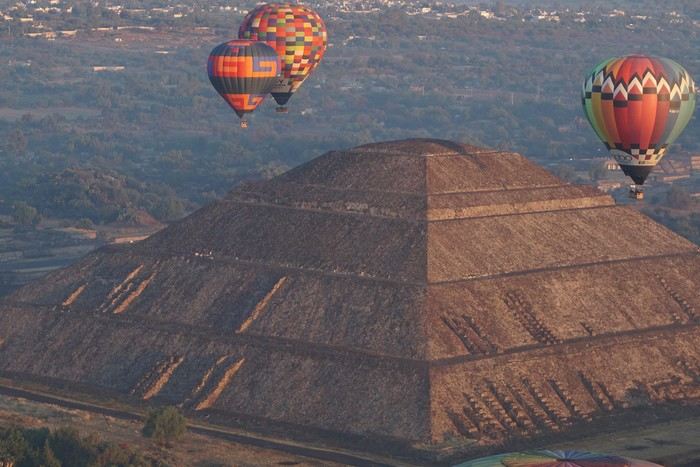
This one-month trip, from January 18 to February 17, 2026, allowed us to visit Mexico City and travel through the states of Puebla, Oaxaca, and Chiapas. We mainly used buses (ADO company) for medium and long distances and colectivos or taxis (or Uber) for shorter trips. Before leaving, I had contacted several people on the ground: Harry, a Vendéan settled in Oaxaca offering, among other things, discoveries of artisan villages or the Monte Albán site, and Oscar in Comitán de Domínguez. I’ll come back to our meeting with Oscar, who runs a local agency (CVL Travel Turismo Alternativo & Corre la voz) and owns a very pleasant hostel, a real highlight of our trip. Our journey took place in 8 stages on a loop starting from Mexico City. The connections between each were made by day or night buses depending on the trip duration. I had booked our seats in advance, either directly on the ADO company’s website or through booking platforms depending on the rates offered. Note that by planning ahead, I was able to benefit from very interesting "Early Booking" rates. There are several comfort classes. For all our trips, I had booked seats in Primera class buses, except for two in GL (Grand Luxe) class. The rates are very reasonable, and the buses turned out to be comfortable or even very comfortable (only the basic seat recline might surprise you).
Our itinerary and number of days per stage: Stage 1 – Mexico City: 4 days Stage 2 – Puebla: 2 days Stage 3 – Oaxaca: 4 days Stage 4 – San Agustinillo: 4 days Stage 5 – San Cristóbal de las Casas: 3 days Stage 6 – Comitán de Domínguez: 6 days Stage 7 – Palenque: 4 days Stage 8 – Mexico City: 2 days If I were to do it again, I’d remove one day from Palenque and add it either to Puebla or San Cristóbal to visit nearby sites or villages, or to San Agustinillo to enjoy one more day by the Pacific Ocean.
Stage 1: Mexico City (2,200 m / 9.2 million inhabitants) We arrived in the Mexican capital around 10:00 PM. The simplified customs process was very quick. After exchanging some money at the airport, we took a taxi to our youth hostel. We got around the capital on foot, of course, but also by metro. Signs are very rare, and we took the train in the wrong direction several times. After a few mistakes, we systematically asked on the platform if we were going the right way. The metro is very affordable. You need to get a rechargeable card (the Tarjeta de Movilidad Integrada) and top it up as needed. This card (less than 1 €) isn’t personal, so there’s no need to get one per person.
Mexico City: Day 1.

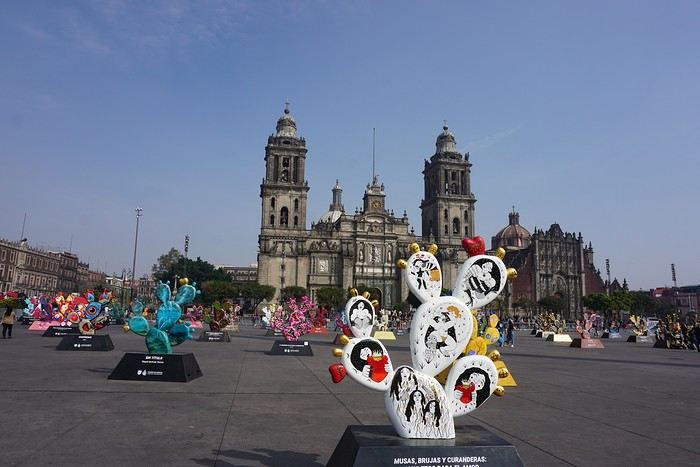
Visits and walks of the day (note: many museums are closed on Mondays): The Zócalo or Constitution Square: it’s one of the most beautiful, largest (195m x 240m), and oldest squares in the world. This is where Cortés decided to build the center of the new Spanish city on the site of the former Tenochtitlan market. Stones from the pyramids were used to pave the esplanade and build the surrounding colonial churches and buildings. During our visit, the huge square was covered with (resin) cacti, the theme of the temporary exhibition at the time. Indeed, temporary events or exhibitions take place here throughout the year. It’s also the endpoint for many protest marches.
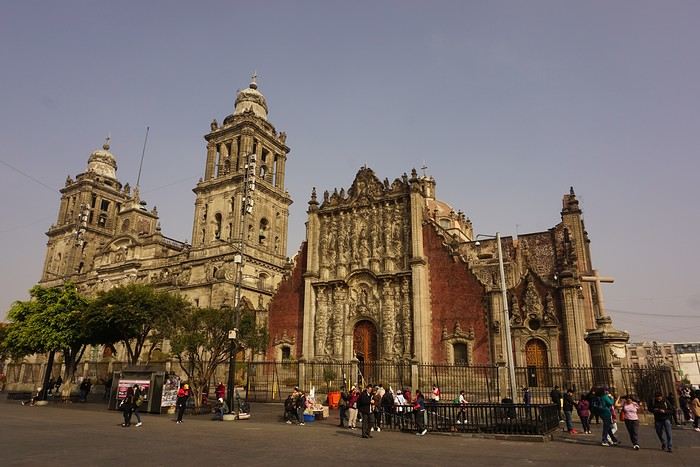
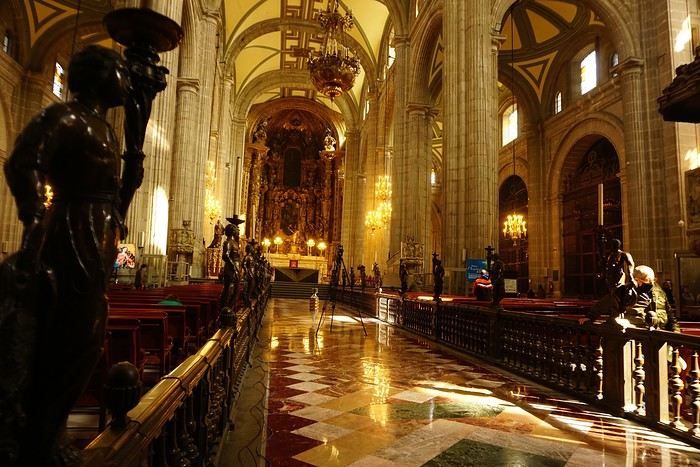


The cathedral: it’s sinking by one centimeter per year despite massive stabilization work (the collapse of many Mexican buildings—30 cm/year—is due to groundwater pumping). It was built starting in 1571 and completed in... 1813. The modest remains of the Templo Mayor (exterior view): they have high symbolic value, as this monument was the most important in the Mexica Empire.
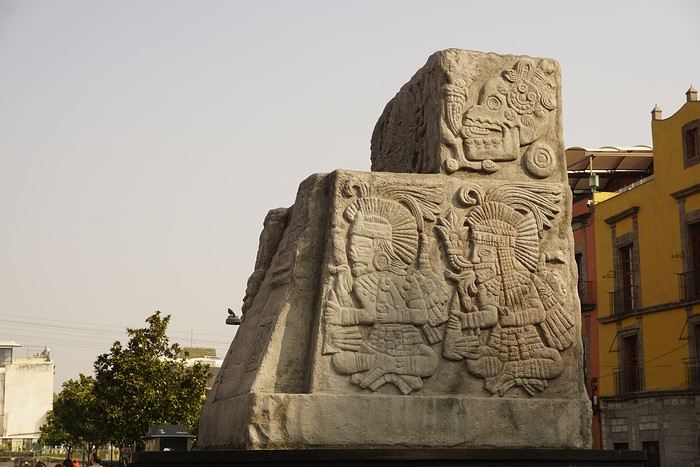 We then walked through the streets of the historic center to the Santísima Church, unfortunately closed for renovation work.
Next, we took the metro to visit one of Mexico’s most important pilgrimage sites: the Insigne y Nacional Basílicas de Santa María de Guadalupe, as well as the Capilla del Cerrito on the hill.
The first, dating from the colonial era, is really leaning a lot.
We then walked through the streets of the historic center to the Santísima Church, unfortunately closed for renovation work.
Next, we took the metro to visit one of Mexico’s most important pilgrimage sites: the Insigne y Nacional Basílicas de Santa María de Guadalupe, as well as the Capilla del Cerrito on the hill.
The first, dating from the colonial era, is really leaning a lot.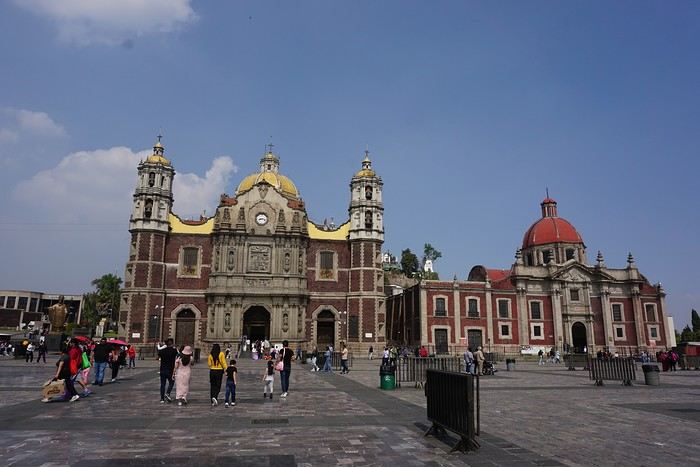
The second, shaped like a rotunda, is very impressive from the inside.
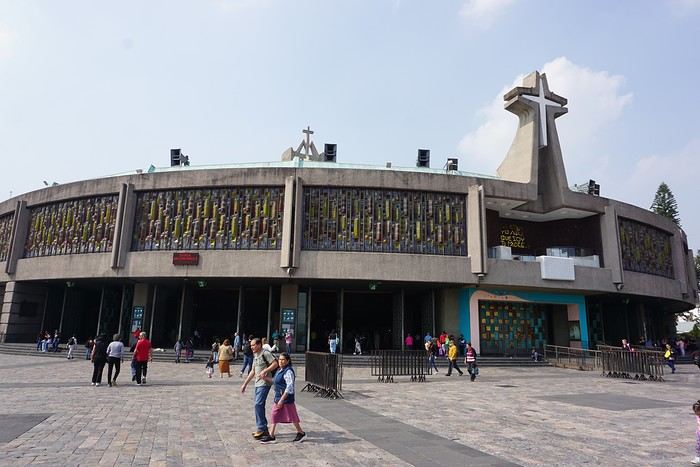
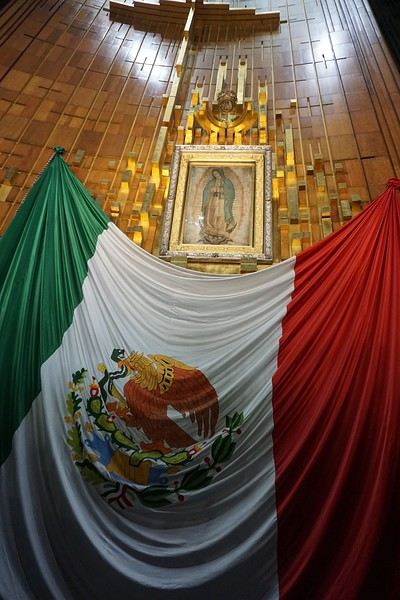
In the basement, there’s a sacred tunic where, in 1531, an image of the Virgin Mary is said to have appeared. A real mystery for scientists, the garment has never deteriorated since that date. Slow-moving conveyor belts allow pilgrims to admire it, preventing crowds from gathering in front of the image for hours. Well thought out!
 From the top of the Capilla del Cerrito, you get beautiful views of huge Mexico City.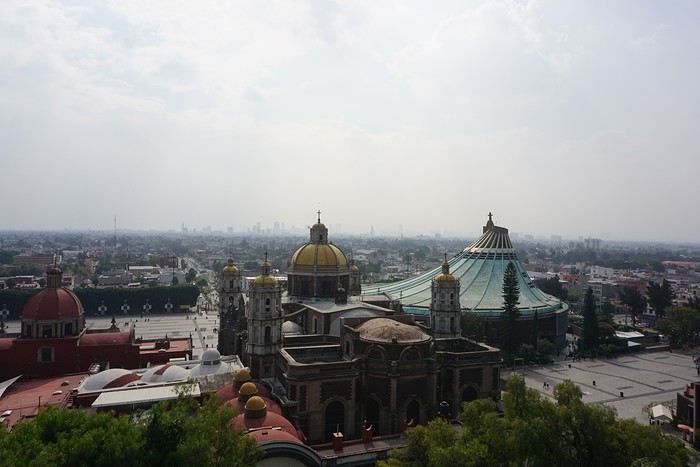
Hi everyone,
Back from my summer vacation, and it's already time to start planning the next one! I mean, I work to go on vacation and explore with my family—don’t you?
Next destination: Mexico (Yucatán and Quintana Roo),
When: February/March 2026,
Duration: 17 nights there (+1 arrival night, either a layover or late in the evening),
Who: Two adults and two young kids (3 and 8 years old),
Transport: Rental car
Interests: Culture, a little relaxation, hiking (though I’m not sure if the destination is ideal for that), and nature exploration.
The plan is to do the classic route but stay longer in each place—it’s easier to manage with kids. Here’s what I had in mind:
Valladolid = 3 nights to visit Ek Balam, Chichén Itzá, and a cenote. Mérida = 3 nights for a stop in Izamal on the way, exploring Mérida, then Uxmal + a trip to Celestún. Campeche = 2 nights to see the Xtacumbilxunaan cave and the Edzná Maya site. Calakmul = 1 night Bacalar = 3 nights for the Lagoon of Seven Colors, Fort San Felipe, some downtime, and a possible day trip to Cozumel if needed. Tulum = 5 nights to visit Cobá, Tulum, cenotes, the beach, Sian Ka’an + Muyil. Then back to the airport (1h30 drive or 2h if flying into Cancún).
Does this seem well-balanced? Could I improve it by grouping accommodations more? I’m guessing Palenque/Yaxchilán is too far (even if I cut other things from the itinerary)? It still sounds like an amazing trip... Thanks,
The plan is to do the classic route but stay longer in each place—it’s easier to manage with kids. Here’s what I had in mind:
Valladolid = 3 nights to visit Ek Balam, Chichén Itzá, and a cenote. Mérida = 3 nights for a stop in Izamal on the way, exploring Mérida, then Uxmal + a trip to Celestún. Campeche = 2 nights to see the Xtacumbilxunaan cave and the Edzná Maya site. Calakmul = 1 night Bacalar = 3 nights for the Lagoon of Seven Colors, Fort San Felipe, some downtime, and a possible day trip to Cozumel if needed. Tulum = 5 nights to visit Cobá, Tulum, cenotes, the beach, Sian Ka’an + Muyil. Then back to the airport (1h30 drive or 2h if flying into Cancún).
Does this seem well-balanced? Could I improve it by grouping accommodations more? I’m guessing Palenque/Yaxchilán is too far (even if I cut other things from the itinerary)? It still sounds like an amazing trip... Thanks,
Hi there,
We’re planning a 15-day family trip in February 2026 (with 3 teens). We’ll be visiting friends who live in Puebla. Initially, I was thinking of the Yucatán, but after reading up on it, I don’t think it’s the right fit for us (too crowded, too touristy). So, we’re leaning toward something like this: - Mexico City: 2 days (Teotihuacán + city) - Puebla: 3 days - Tehuacán: 2 days (to break up the trip—is this a good choice? Is there enough to do for 2 days?) - Oaxaca: 3 days (Hierve el Agua, Monte Albán, city/tours) - Pacific Coast: 4 days (snorkeling, excursions)
Does this seem balanced? We’d like to end on the coast for some relaxation, ocean time, and fun for the kids. I’ve seen lots of excursions offered along the coast but can’t decide where to stay. Puerto Escondido? Huatulco? The beaches seem better for snorkeling in Huatulco, but I’ve read mixed things, and it’s farther away. What do you think?
For transportation, is this doable by bus? I’m struggling to find a decent bus between Tehuacán and Oaxaca (overnight schedules), and I’m not sure how to get around the coast. Also, how do we handle luggage between cities? We usually rent a car.
Finally, I’d love feedback on the Pacific Coast excursions—I get the feeling some are worth it and others aren’t. Is bioluminescence really magical? Are dolphin-watching tours ethical and not too "factory-like"? (We skipped them in Quebec and just watched whales from shore.) Can you see sea turtles up close?
Thanks for your help!
We’re planning a 15-day family trip in February 2026 (with 3 teens). We’ll be visiting friends who live in Puebla. Initially, I was thinking of the Yucatán, but after reading up on it, I don’t think it’s the right fit for us (too crowded, too touristy). So, we’re leaning toward something like this: - Mexico City: 2 days (Teotihuacán + city) - Puebla: 3 days - Tehuacán: 2 days (to break up the trip—is this a good choice? Is there enough to do for 2 days?) - Oaxaca: 3 days (Hierve el Agua, Monte Albán, city/tours) - Pacific Coast: 4 days (snorkeling, excursions)
Does this seem balanced? We’d like to end on the coast for some relaxation, ocean time, and fun for the kids. I’ve seen lots of excursions offered along the coast but can’t decide where to stay. Puerto Escondido? Huatulco? The beaches seem better for snorkeling in Huatulco, but I’ve read mixed things, and it’s farther away. What do you think?
For transportation, is this doable by bus? I’m struggling to find a decent bus between Tehuacán and Oaxaca (overnight schedules), and I’m not sure how to get around the coast. Also, how do we handle luggage between cities? We usually rent a car.
Finally, I’d love feedback on the Pacific Coast excursions—I get the feeling some are worth it and others aren’t. Is bioluminescence really magical? Are dolphin-watching tours ethical and not too "factory-like"? (We skipped them in Quebec and just watched whales from shore.) Can you see sea turtles up close?
Thanks for your help!
I'm about to leave for Tulum, and unlike many who worry about which amusement park they can visit, I'm doing in-depth research on the place I'm going to. And this time, the more I look, the scarier it gets. Numerous articles, mostly in English (with a few rare ones in French like this one: https://parismatch.be/actualites/environnement/114152/la-pollution-la-face-cachee-de-tulum), show that Tulum, behind the postcard image, is an extremely polluted area because it developed very quickly without putting in place the infrastructure to handle human waste.
Two key points:
- 80% of the hotels, which are multiplying in Tulum, dump their wastewater directly into nature (the sea and the ground)! We know that Tulum's subsoil is like Swiss cheese, with water circulating in an interconnected way. Fecal pollution is everywhere, as is chemical pollution from everyday products. You're swimming in sewage in the sea and in the cenotes, which are all interconnected. The water in your shower is polluted with fecal matter. The water used for cooking is too.
- Trash is dumped in the jungle 10 km from Tulum. A massive landfill there grows every day.
Greenwashing is intense there, even more so than elsewhere. And the hipsters lounge around on Instagram without a care about where their... well, you know, goes. I contacted about ten hotels, explicitly asking which wastewater treatment plant their sewage goes to and how they recycle their waste. I got no response, except for one very arrogant one, explaining that this isn't the developed world and that waste isn't viewed the same way here. The manager, who has the look of a mobster, claimed not to know where his wastewater and waste go and advised me to look elsewhere. I don't think I'll be giving my money to this place or risking my health just to say "I went there too."
Two key points:
- 80% of the hotels, which are multiplying in Tulum, dump their wastewater directly into nature (the sea and the ground)! We know that Tulum's subsoil is like Swiss cheese, with water circulating in an interconnected way. Fecal pollution is everywhere, as is chemical pollution from everyday products. You're swimming in sewage in the sea and in the cenotes, which are all interconnected. The water in your shower is polluted with fecal matter. The water used for cooking is too.
- Trash is dumped in the jungle 10 km from Tulum. A massive landfill there grows every day.
Greenwashing is intense there, even more so than elsewhere. And the hipsters lounge around on Instagram without a care about where their... well, you know, goes. I contacted about ten hotels, explicitly asking which wastewater treatment plant their sewage goes to and how they recycle their waste. I got no response, except for one very arrogant one, explaining that this isn't the developed world and that waste isn't viewed the same way here. The manager, who has the look of a mobster, claimed not to know where his wastewater and waste go and advised me to look elsewhere. I don't think I'll be giving my money to this place or risking my health just to say "I went there too."
I recently took a six-week trip to Mexico with Y, my Thai partner. To be precise, we spent 43 days there plus a final half-day before heading to Mexico City Airport for our return flight to Europe.
I’d already been to Mexico about 40 years ago! But that was only for a week or so, between Mérida and the Belize border.
First off, I should mention that I’ve never seen a beach in Mexico. I say this because discussions about Mexico always seem to revolve around the Costa / Riviera Maya.
Let’s start with an overview of the trip. Our itinerary can be split into two halves:
- First half: Querétaro, San Miguel de Allende, Morelia, Guanajuato, Mexico City “CDMX” (the capital). - Second half: Palenque, San Cristóbal de Las Casas, Chiapa de Corzo, Oaxaca, Puebla, Cholula, and finally Mexico City CDMX.
To move from one part of the trip to the other, we took a flight from Mexico City CDMX to Villahermosa, then a bus to Palenque.
In six weeks, we visited maybe a quarter or a fifth of the country (see the attached maps). Mexico is about three times the size of France! And when I say “visited,” it was really just a quick stop—enough to get a first impression. I understand that some people can only spend one or two weeks on vacation in a given country, but that’s not my idea of travel. Personally, I’d say a country as rich in every way as Mexico deserves several months of travel before you can say you’ve “seen” it.
In my next post, I’ll break down the expenses. That might help future travelers plan their trips. You don’t go to a country for several weeks (or more) without thinking about the budget! Besides, one of those future travelers to Mexico is us—we were so thrilled by Mexico that we’re definitely going back.
I’d already been to Mexico about 40 years ago! But that was only for a week or so, between Mérida and the Belize border.
First off, I should mention that I’ve never seen a beach in Mexico. I say this because discussions about Mexico always seem to revolve around the Costa / Riviera Maya.
Let’s start with an overview of the trip. Our itinerary can be split into two halves:
- First half: Querétaro, San Miguel de Allende, Morelia, Guanajuato, Mexico City “CDMX” (the capital). - Second half: Palenque, San Cristóbal de Las Casas, Chiapa de Corzo, Oaxaca, Puebla, Cholula, and finally Mexico City CDMX.
To move from one part of the trip to the other, we took a flight from Mexico City CDMX to Villahermosa, then a bus to Palenque.
In six weeks, we visited maybe a quarter or a fifth of the country (see the attached maps). Mexico is about three times the size of France! And when I say “visited,” it was really just a quick stop—enough to get a first impression. I understand that some people can only spend one or two weeks on vacation in a given country, but that’s not my idea of travel. Personally, I’d say a country as rich in every way as Mexico deserves several months of travel before you can say you’ve “seen” it.
In my next post, I’ll break down the expenses. That might help future travelers plan their trips. You don’t go to a country for several weeks (or more) without thinking about the budget! Besides, one of those future travelers to Mexico is us—we were so thrilled by Mexico that we’re definitely going back.
Hi everyone!
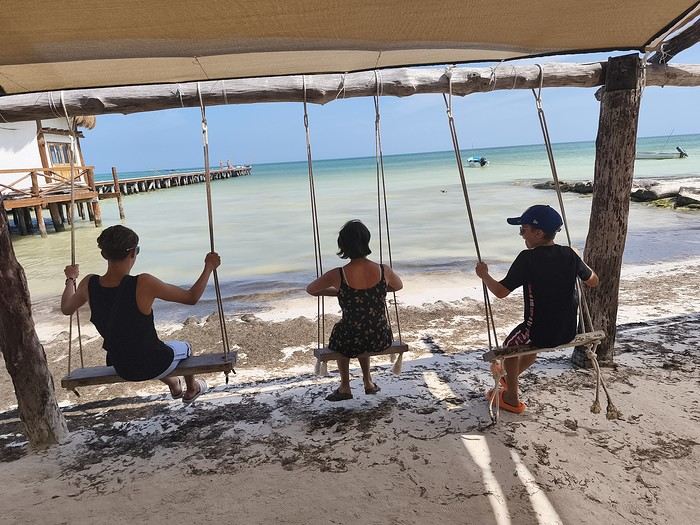
That was about all the Spanish I could speak before we left... Luckily, Tom, 15 and in high school, gets by just fine! And Caroline did a year of Duolingo before we took off... Anyway, after 55 days in the American West three years ago, it’s Mexico’s turn for this second long adventure.
A quick intro to the crew:
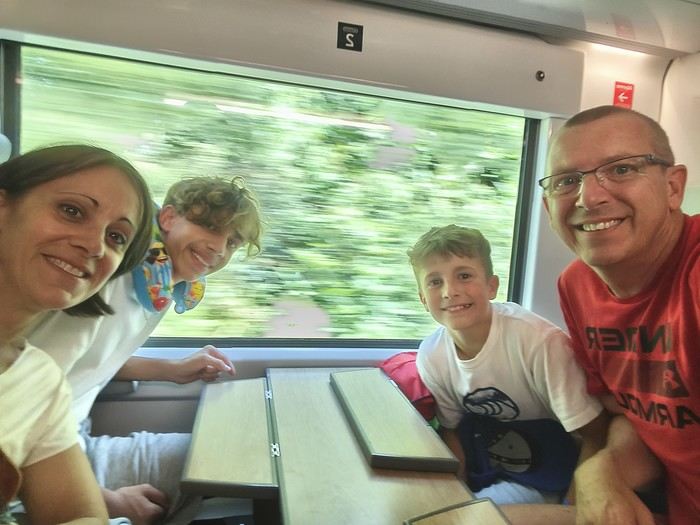

- Oscar, 10, a sporty and lively little boy who loves swimming and basketball, - Tom, 15, a high schooler, sporty and tall, who loves swimming and American football, - Caroline, 47, a PE teacher, sporty , loves hiking and snorkeling, - and me, Sylvain, 50, a science teacher, sporty, loves traveling and always has a possible next trip in mind
We mostly travel by swapping our house to discover beautiful France and the world: 135 swaps over the last 13 years.....
Our itinerary is pretty classic since it’s our first time in the Yucatán, and we’ll make a little 10-day detour to Belize...
See you soon...
Hi everyone,
My partner and I would like to travel to Mexico during the Christmas holidays. We’re well aware that this is a peak tourist season, but it’s the only time of year when we can take a long trip (over two weeks) due to work commitments.
We’re looking to avoid overly touristy areas and travel independently (renting a car). We want to explore Mexico’s history, take our time, and enjoy nature and the sea.
I’ve never been to Mexico before, and I’m considering the following regions (not all of them, of course): Yucatán (outside Quintana Roo), Baja California, Oaxaca, or Chiapas.
I’ve more or less ruled out Chiapas for safety reasons (even though the nature there looks amazing), and I’d love to hear your thoughts on the other regions. From experience, I know that even in highly touristy areas, you can often find quieter spots with good planning and by avoiding the main hotspots. For example, we were in Thailand last year during the same period, and aside from 2-3 places, we had a very peaceful trip—sometimes even being the only Westerners around. Would the same be true for Yucatán or Baja California?
Do you have any recommendations for nice, less touristy spots? What are your thoughts on the regions I mentioned?
Thanks so much for your help, and I hope you have a great weekend!
My partner and I would like to travel to Mexico during the Christmas holidays. We’re well aware that this is a peak tourist season, but it’s the only time of year when we can take a long trip (over two weeks) due to work commitments.
We’re looking to avoid overly touristy areas and travel independently (renting a car). We want to explore Mexico’s history, take our time, and enjoy nature and the sea.
I’ve never been to Mexico before, and I’m considering the following regions (not all of them, of course): Yucatán (outside Quintana Roo), Baja California, Oaxaca, or Chiapas.
I’ve more or less ruled out Chiapas for safety reasons (even though the nature there looks amazing), and I’d love to hear your thoughts on the other regions. From experience, I know that even in highly touristy areas, you can often find quieter spots with good planning and by avoiding the main hotspots. For example, we were in Thailand last year during the same period, and aside from 2-3 places, we had a very peaceful trip—sometimes even being the only Westerners around. Would the same be true for Yucatán or Baja California?
Do you have any recommendations for nice, less touristy spots? What are your thoughts on the regions I mentioned?
Thanks so much for your help, and I hope you have a great weekend!
Hi,
We had to cancel our trip to the Yucatan in April 2025.
So now I’m looking at 2026. But since it’s tricky to take time off during the April school holidays (we have young kids, so we have to travel around school vacation periods), what would be the best alternative time (we’re in Zone B)?
February break: end of February / early March All Saints' break: end of October / early November Summer vacation (but I don’t think that’s ideal). I’m not mentioning Christmas—it’ll be too expensive.
Thanks,
February break: end of February / early March All Saints' break: end of October / early November Summer vacation (but I don’t think that’s ideal). I’m not mentioning Christmas—it’ll be too expensive.
Thanks,
Arrival at Chetumal Airport - Car rental
- 3 days in BACALAR: Magnificent lagoon. The edges of the lagoon are private (so paid access!). From the road, you can't see the lagoon. You have to take one of the many unpaved trails and walk about 2 km. You get a beautiful view of the lagoon from the Bacalar fort, a charming little lively town.
Los Rapidos: A really beautiful spot (paid entry, of course!). It's definitely worth spending a few hours there. You just let yourself drift gently with the current in turquoise, warm water. Hard to find—it's very poorly signposted.
Cenote Azul: Very close to Los Rapidos. It's a round lake with deep blue water. Nothing extraordinary. We have the same in Auvergne! A little restaurant by the edge is nice.
Cocalitos: Beautiful viewpoint over the lagoon and the submerged cenote. Developed shoreline (large field to lay your towel, hammocks, bar).
Mayan ruins ICHTIKAL, recently discovered. Recent developments, and one of the few places still free (parking is paid). A lovely walk in the woods, but as everywhere in this region, there are very few animals!
1 night in Pisté to visit Chichen Itza at the first light. Hire a French-speaking guide and go at opening time to enjoy the site before the tourist buses arrive. It's an exceptional place! At the end of the visit, check out the Sacred Cenote. It's inside the site at the end of a small path lined with souvenir vendors. Just to see—no swimming.
Cenote TSUKAN: A recently discovered cenote, so still not very crowded (12 km from Pisté). Very peaceful environment. Swimming (water max. 22°C). Life jacket mandatory. Good restaurant.
2 days in Coba - Visit to the Coba ruins. Very busy site. Paid parking + tax for the Mayans + site entry.
Punta Laguna: A 3-hour walk in the woods with a guide. We saw just one pair of howler monkeys high up in a tree, 25 m away! As I mentioned earlier, we saw few animals and birds in this region (except for iguanas, which are everywhere). I imagined trekking through the jungle surrounded by monkeys and toucans—nope, no jungle, just undergrowth, and no toucans (they come in July during the rainy season, apparently!).
4 days on the island of COZUMEL: Car ferry taken from Calica (Punta Venado). Bookings on the Ultramar or Transcaribe websites.
Sargassum invasion on the beaches (same, if not worse, in Tulum and Playa del Carmen, according to tourists we met). All beaches are private. Access to Beach Clubs is expensive. You have to book entry to Playa Palancar if you want to be sure to get a spot (it was full for us!). The El Cielo beach to see the starfish is only accessible by boat! Near El Cielo, many stingrays swim in the shallow waters of El Cielito. That's where all the boats stop, and we enjoyed ceviche with water up to our knees and rays looking for food! Poor rays!!!
Hello,
When’s the best week at the end of the year to go back to Mexico?
Cheers,
Jean Pierre
Hi everyone,
In late February to early March 2025, we were lucky enough to spend about ten days in Mexico—heading to Cancún. We then embarked on a 9-day road trip to explore the Yucatán Peninsula! Since planning a trip isn’t always easy, we’re sharing our original itinerary (different from the "classic" loop) and our feedback on the places we visited.
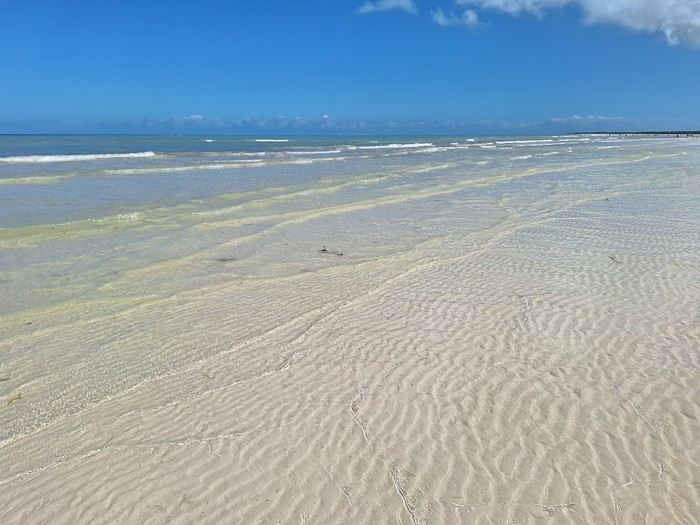
With a few photos to illustrate each day, we hope to wow you 🙂! Here’s our loop itinerary starting from Cancún (a packed schedule, but it let us see so much): Day 1 - Cancún’s beach and Holbox Island
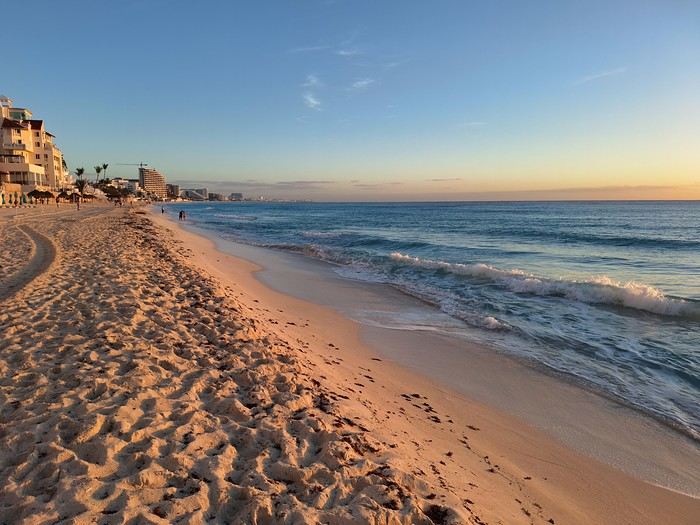
×768 214 KB
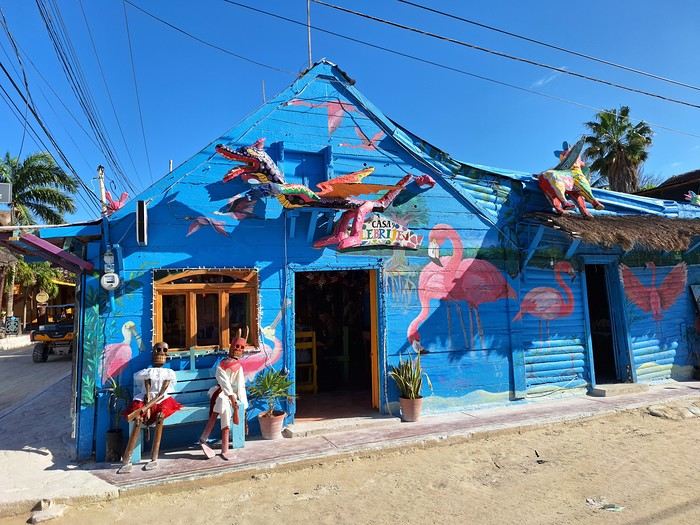
Day 2 - Holbox Island and the fishing village of Río Lagartos
6 KB
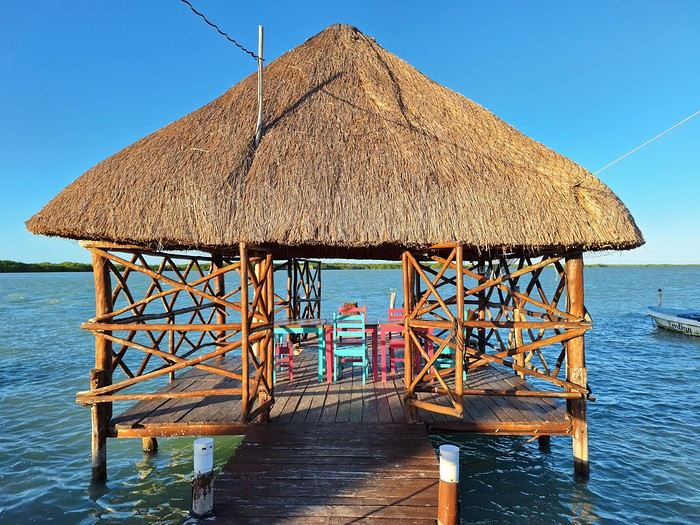
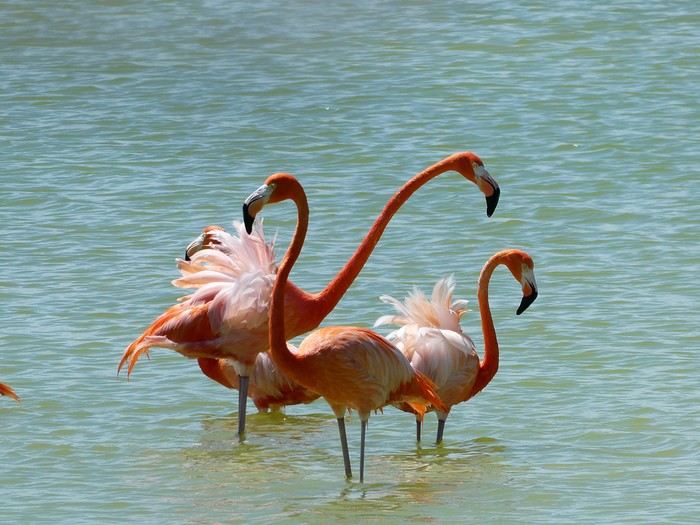
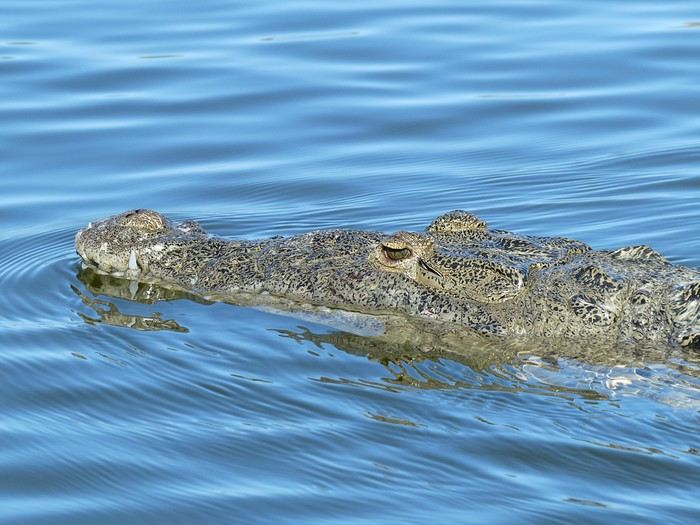
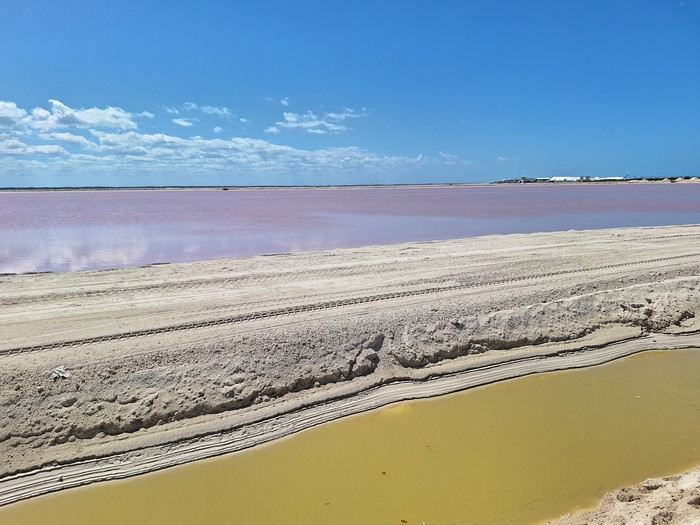
Day 3 - The Río Lagartos nature reserve, Las Coloradas salt flats, the Ek'Balam Mayan site, the church of Uayma, and the colonial city of Valladolid
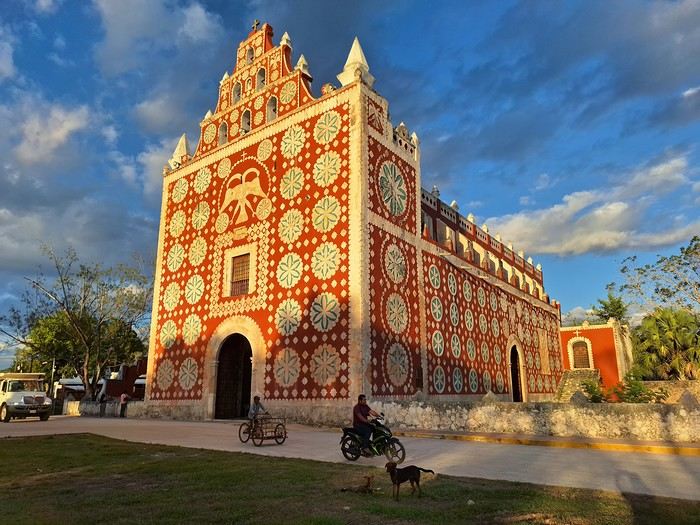
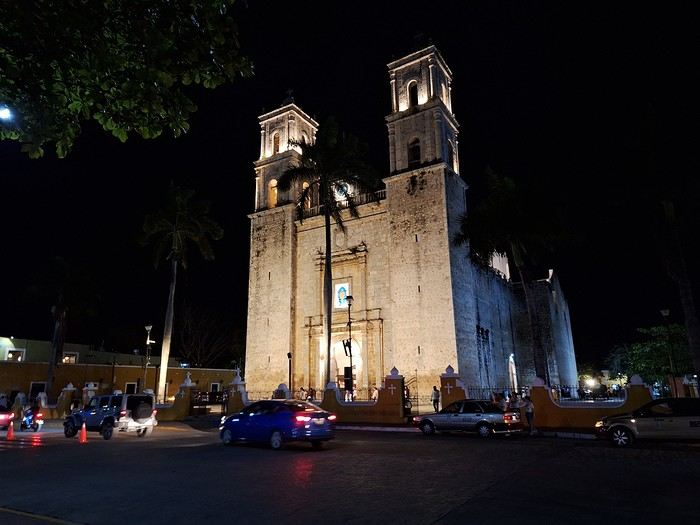
With a few photos to illustrate each day, we hope to wow you 🙂! Here’s our loop itinerary starting from Cancún (a packed schedule, but it let us see so much): Day 1 - Cancún’s beach and Holbox Island
×768 214 KB
Day 2 - Holbox Island and the fishing village of Río Lagartos
6 KB
Day 3 - The Río Lagartos nature reserve, Las Coloradas salt flats, the Ek'Balam Mayan site, the church of Uayma, and the colonial city of Valladolid
Hi everyone,
I’d like to share my thoughts on my recent trip to Mexico (just before the COVID lockdown), specifically in the Yucatan Peninsula, with my twin toddlers (2 and a half years old).
The itinerary is super classic, and I’ll focus mostly on tips and tricks for traveling with young kids.
For the winter of 2019-2020, we were looking for a sunny destination. After going to Guadeloupe when our kids were 6 months old and then Martinique last year (the French West Indies had the advantage of being able to rent a house and easily explore from there, plus having the same standards as mainland France for kids), we decided to try a bit of adventure by heading to the Yucatan. This destination has several advantages: - Very "Americanized" (I never thought I’d list that as an advantage one day), so it’s easy for kids; - Varied activities and sightseeing opportunities; - Easy house rentals on Airbnb; - Direct flights from Paris; - Ability to explore from one base without having to move every 2-3 days.
After buying our flight tickets to Cancun on Air France, we decided to base our house rental in two places: Tulum and Mérida. Needless to say, we didn’t stray off the beaten path at all.
Spoiler alert: the vacation went really well, and we were able to enjoy it fully with the kids.
02/28: Flight from CDG to Cancun on Air France. A 10.5-hour flight is long with kids, so we tried to keep them busy as best we could: games, coloring, walking around the plane, meals, a little nap, etc. At that age, it’s hard to get them to focus on a screen. We arrived in Cancun around 6 PM, picked up our rental car from Alamo. Watch out for a scam attempt at Alamo where the person at the counter wanted us to pay taxes and surcharges that don’t exist! We resisted, but they insisted. In the end, we got away without paying anything extra. We had paid 285 € for the 14-day car rental. Then we drove to Tulum, which is about 1.5 hours from Cancun Airport. The road was in perfect condition, no complaints, and we arrived at our Airbnb: https://www.airbnb.fr/rooms/35334526?source_impression_id=p3_1584888418_t6pB%2BGyeDwqqkvA0 A really beautiful, spacious house with two large bedrooms and a big pool so parents could relax while the kids napped. The house is in a residential neighborhood in Tulum pueblo, away from restaurants and bars. Bikes were available, but we used our car (no baby seats or helmets provided).
02/29: A quiet day to recover from the trip and jet lag: grocery shopping at Chedraui supermarket in Tulum. Morning at the pool and late afternoon at Tulum Beach.
About the beach: it’s 3 km from Tulum town. Most of the beach is privatized, and there are only 2 or 3 public access points (though you can walk freely along the entire beach afterward). No parking issues at the times we went—usually around 9 AM and after nap time at 5 PM.
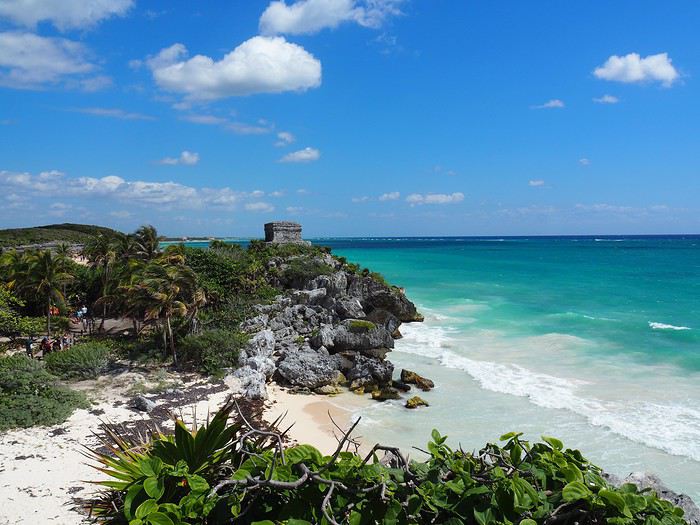
03/01: Let’s get motivated! We tried visiting an archaeological site with the kids to see how it went... So we started modestly with the ruins of Tulum. I won’t go into detail about the ruins—they’re super well-known and very touristy. I’ll just mention that when we arrived at the site around 9:30 AM, there was already a 10-minute line at the ticket booth, and by the time we left at noon, the line had grown to at least 45 minutes to an hour under the blazing sun. Like all the Mayan sites we visited, we appreciated that a large part was accessible for people with reduced mobility (at least the main paths), which also made it stroller-friendly! No problem walking around with the kids or using the stroller when they were tired, and we could store their stuff in it (water bottles, snacks, sunscreen, hats, sunglasses, etc.). Lunch at home, then nap time and late afternoon at the pool.
03/02: Today the weather is gray, so we decided to visit a cenote. Since accessibility was key, we didn’t go for the most remote or wild one (like we usually would) but headed to the Grand Cenote, which is beautiful, well-organized, and relatively quiet when you arrive around 9:30 AM. The upside of having kids is that they wake you up early, so you can still enjoy the sites without too many people!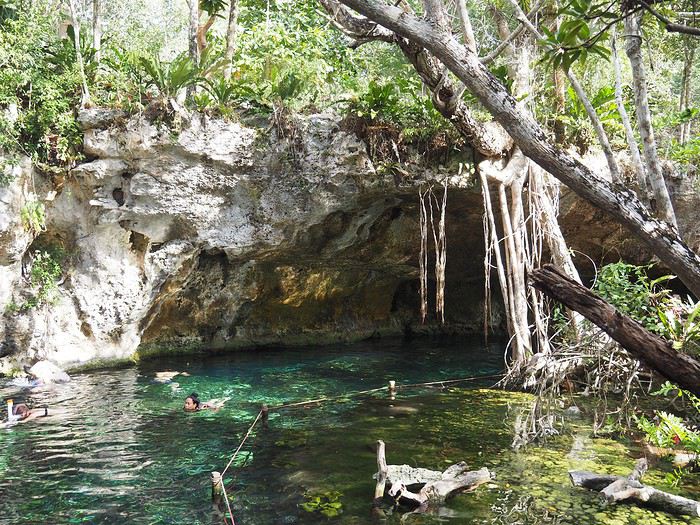
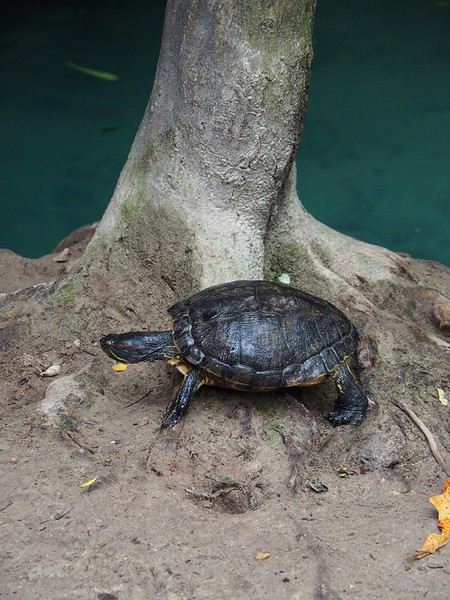
Lunch at home, then nap time and pool time. Note that in Tulum, near the town hall, there’s a playground where Mexican families go, with lots of swings and slides—our kids loved it.
03/03: Encouraged by our experience at the Tulum ruins, we decided to go all out and visit the ruins of Coba. Even though the access isn’t as PMR-friendly, the site is still manageable with a double stroller, especially since it’s huge and the main pyramid is only reachable after a 20-minute walk through the jungle. The kids loved running around and climbing on some of the structures, but we didn’t let them climb the main pyramid (over 40 meters high) because the stairs were uneven and slippery.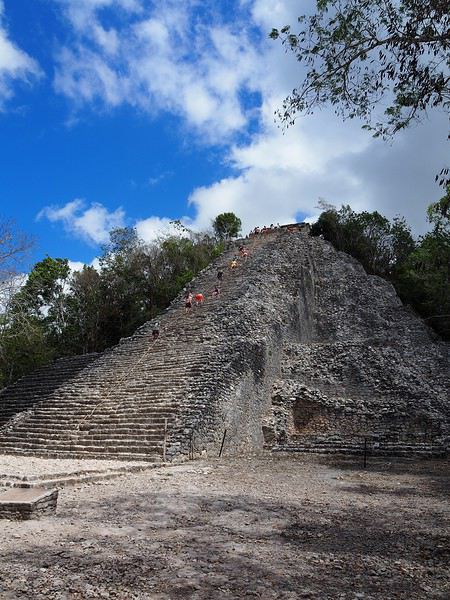
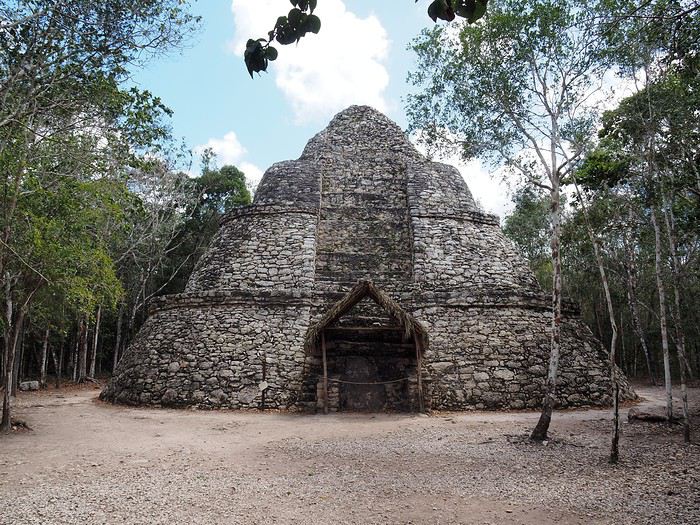
We then had lunch at a restaurant near the parking lot with a view of the lake before heading home for nap time and an afternoon at the pool.
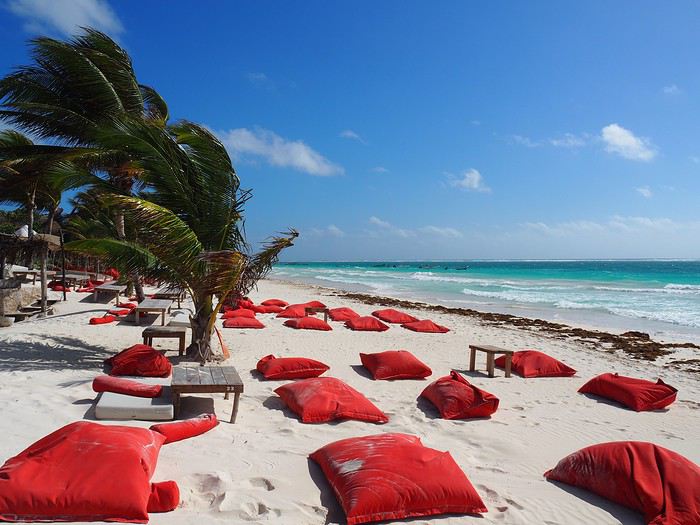
03/04 and 03/05: Two beautiful days spent at Tulum Beach. The beach is really stunning, with white sand and gorgeous turquoise water. There were quite a few seaweed patches when we were there, but not enough to ruin the scenery or the swim.
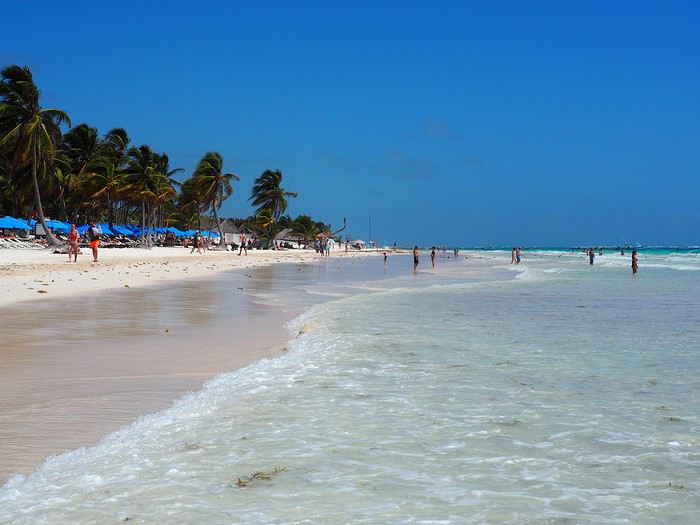
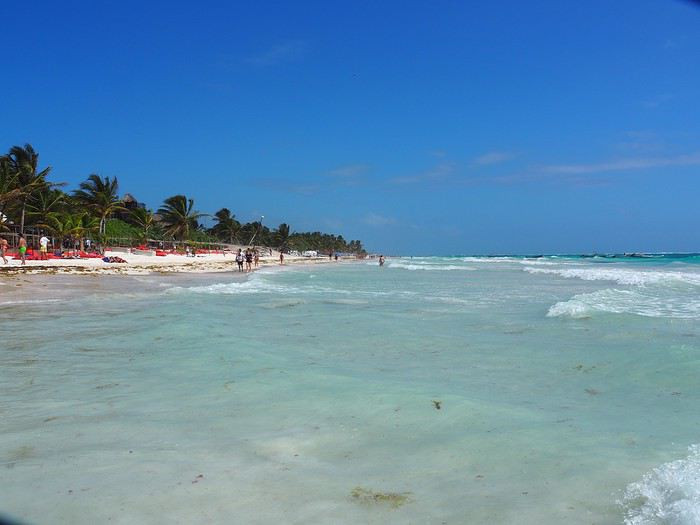
03/06: Second part of the vacation—today we’re heading to Mérida! To break up the drive, we decided to stop at Chichen Itza. We arrived at the site around noon, and wow—it was packed! It felt like the Louvre in the middle of summer (well, almost). We queued to buy tickets and decided to start with lunch at one of the restaurants at the entrance. The upside of everything being so Americanized is that it’s easy to find food on-site, there are restrooms everywhere (super handy with toddlers who can’t hold it for long), and everything is stroller-accessible. We then visited Chichen Itza, which was a bit disappointing: souvenir vendors all over the site ruined the vibe, and there were crowds everywhere... but the kids loved running around, so we powered through and explored the huge, well-preserved site.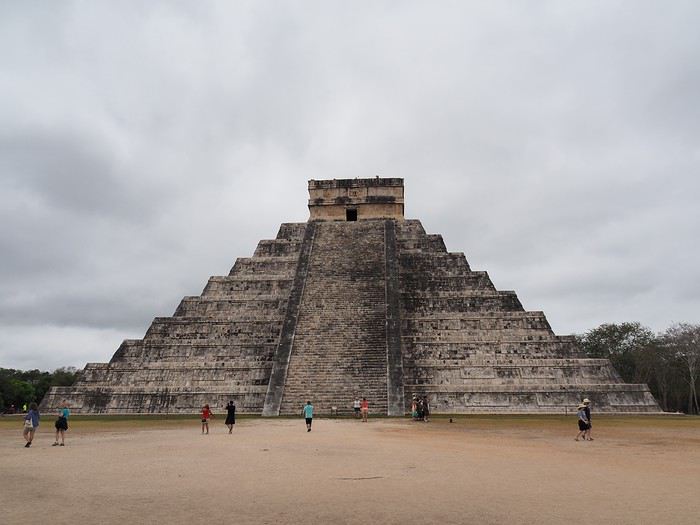
We then hit the road to Mérida, and the kids fell asleep in the car since they hadn’t napped during the Chichen Itza visit.
We arrived at our Airbnb, which was really beautiful: https://www.airbnb.fr/rooms/38632543?source_impression_id=p3_1584891113_XTnbrcb2G3pcuD6C A gorgeous colonial-style house with a private patio and small pool, right in the center of Mérida, a 20-minute walk north of the main square but just 5 minutes from a Walmart for groceries.
03/07: Morning stroll in Mérida, afternoon nap, and—at the kids’ insistence—a horse-drawn carriage ride through the city in the late afternoon. They loved it!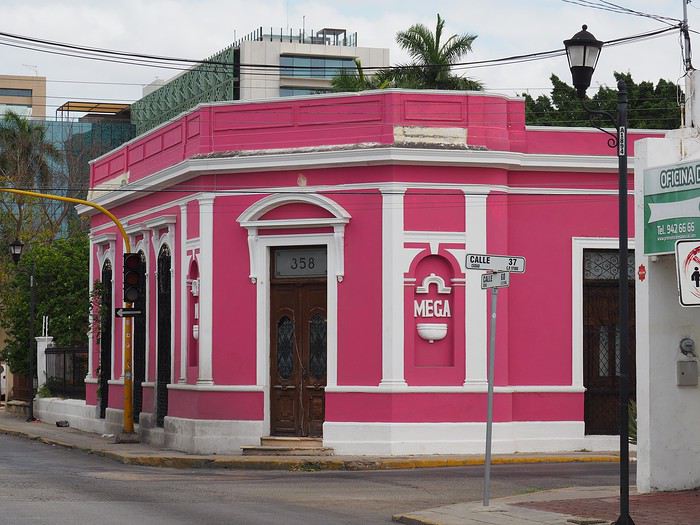
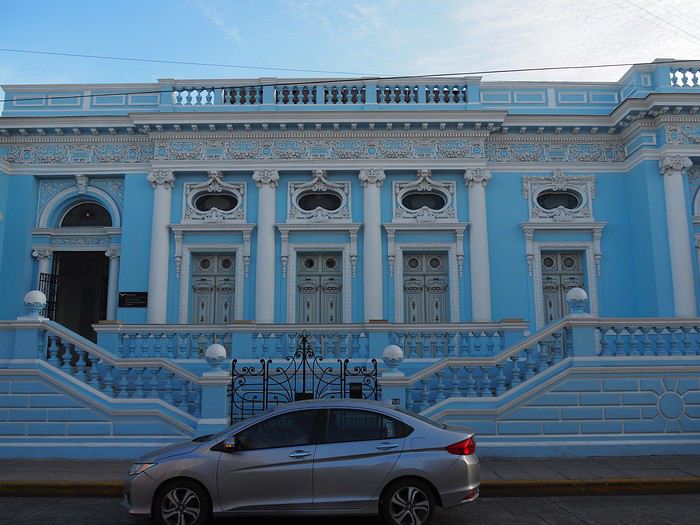
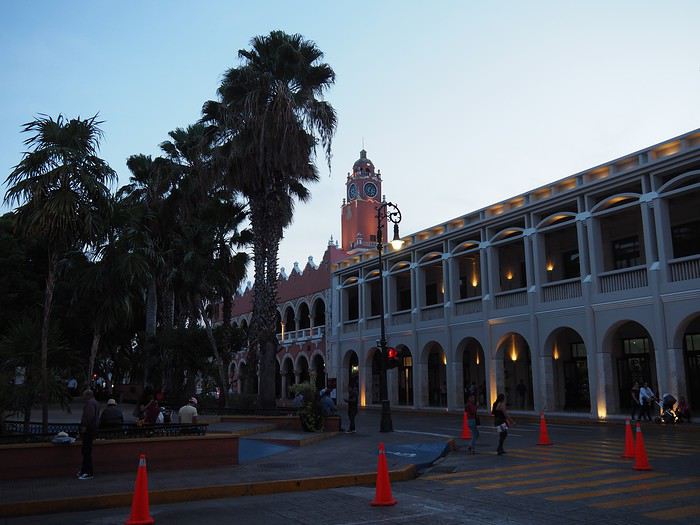
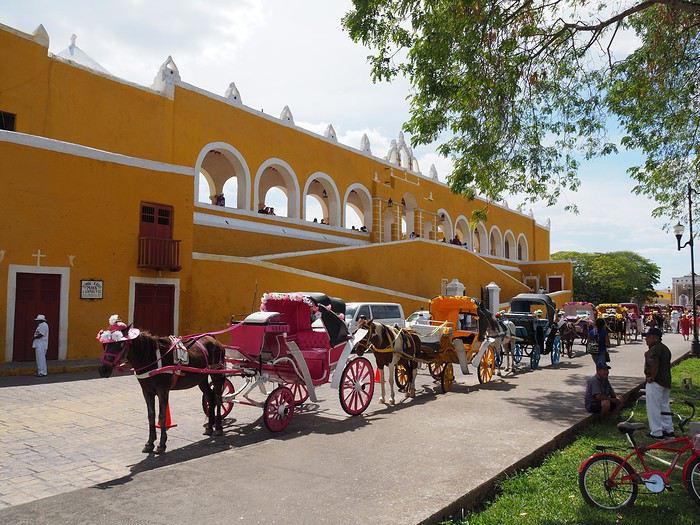
03/08: We decided to visit the beautiful town of Izamal, about an hour’s drive from Mérida. This all-yellow town is worth the detour—it’s stunning and almost tourist-free! We had lunch at a restaurant on the main square, then took another post-lunch carriage ride (again!) before heading back to Mérida with the kids napping in the car.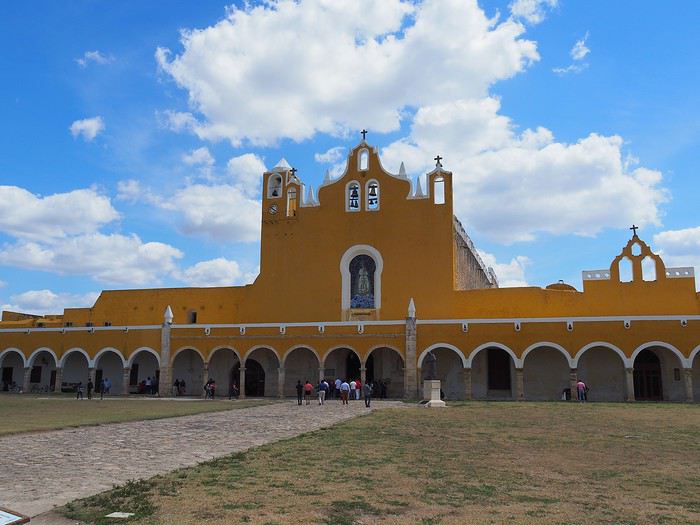
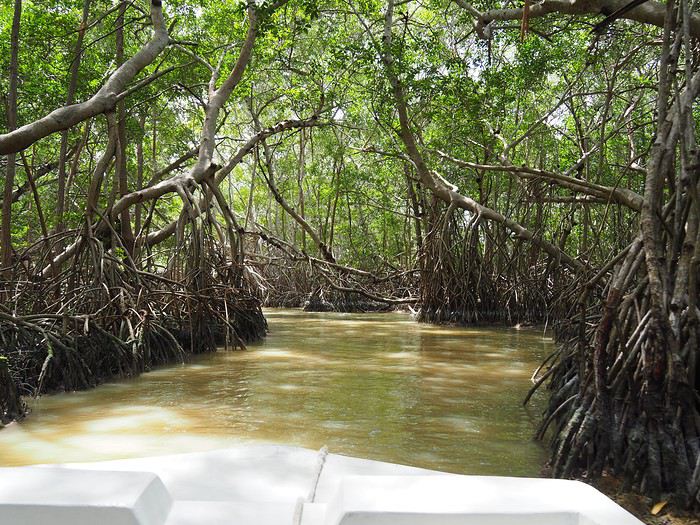
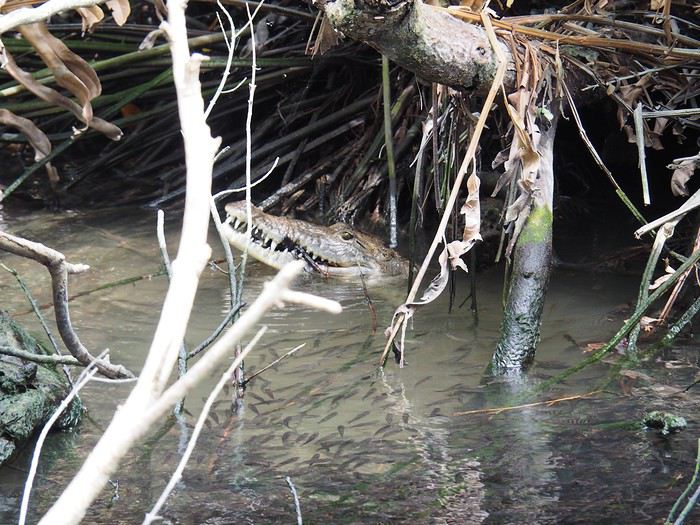
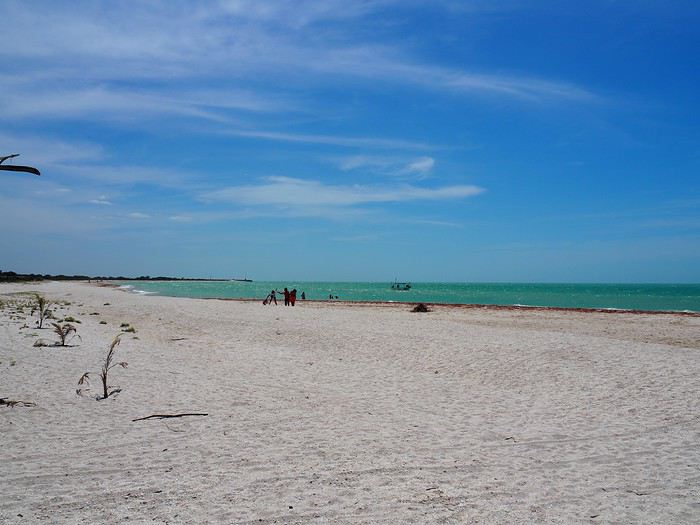
03/09: Nature day today with a visit to the Celestun Reserve, also about an hour from Mérida. The kids loved the boat ride along the river and through the mangroves, spotting pink flamingos, cormorants, and other birds. We were also lucky enough to see crocodiles. For info, renting a boat costs 1800 pesos, and you can share it with other tourists to split the cost (kids don’t count). We then had lunch at a beachside shack before heading back to Mérida in the late afternoon. The beach at Celestun is also really beautiful and surprisingly empty. However, it was very windy when we were there, so we didn’t swim.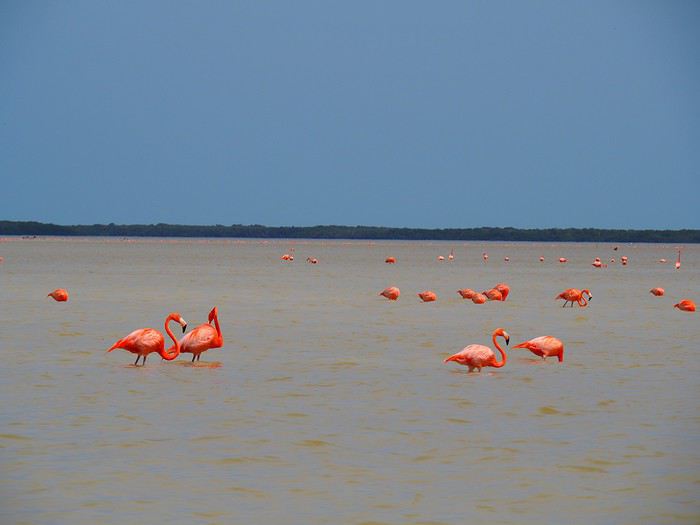
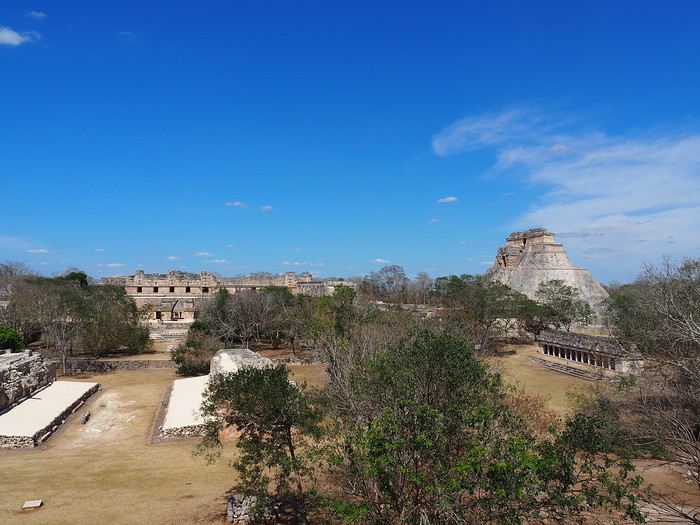
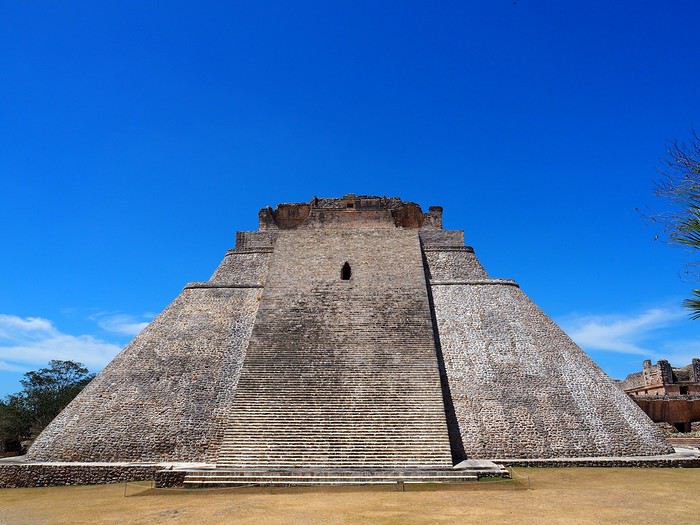
03/10: Last day of sightseeing, and we chose to visit the Mayan site of Uxmal. Like the other sites, most of it is easily accessible by stroller, but there are many parts where it’s not possible (stairs, tree roots on the path, etc.). No big deal, though, because this site was probably our favorite along with Coba: it’s huge, beautiful, with well-preserved/restored ruins, very few tourists, and you can climb to the top of the last pyramid for a panoramic view of the site. Plus, the iguanas all over the place made our kids’ day. What more could you ask for? We then had lunch at the restaurant of the resort across from the parking lot, which offered a pretty good buffet (quick service for the kids) and a pool that restaurant guests could use! Unfortunately, we hadn’t planned ahead and left our swimsuits at home...
03/11: For our last day in Mérida, we decided to take it easy. We spent the morning at the zoo (free entry), which has lots of playground equipment (slides, climbing structures, etc.) and a few animals, kind of like the Ménagerie at the Jardin des Plantes. After the kids’ nap, we went to Progreso Beach, which is big but not as pretty as the photos online suggest. A bit of a letdown, but the kids had fun playing in the sand and were thrilled.
03/12: Our flight left Cancun at 5:45 PM. We had a 3.5-hour drive on the highway from Mérida to Cancun. The road was easy, and we were often alone. We stopped in Valladolid for a quick lunch to break up the drive but didn’t really have time to explore the town since we were pressed for time. Be careful: there’s a 1-hour time difference between Mérida and Cancun, so factor that in when calculating your flight departure time.
All in all, it was a great trip with the kids—we mixed relaxation, beach time, pool time, and a few visits, adapting to their pace. They seemed happy and had no trouble adjusting to the time difference or the local food.
See you soon,
Antoine
I’d like to share my thoughts on my recent trip to Mexico (just before the COVID lockdown), specifically in the Yucatan Peninsula, with my twin toddlers (2 and a half years old).
The itinerary is super classic, and I’ll focus mostly on tips and tricks for traveling with young kids.
For the winter of 2019-2020, we were looking for a sunny destination. After going to Guadeloupe when our kids were 6 months old and then Martinique last year (the French West Indies had the advantage of being able to rent a house and easily explore from there, plus having the same standards as mainland France for kids), we decided to try a bit of adventure by heading to the Yucatan. This destination has several advantages: - Very "Americanized" (I never thought I’d list that as an advantage one day), so it’s easy for kids; - Varied activities and sightseeing opportunities; - Easy house rentals on Airbnb; - Direct flights from Paris; - Ability to explore from one base without having to move every 2-3 days.
After buying our flight tickets to Cancun on Air France, we decided to base our house rental in two places: Tulum and Mérida. Needless to say, we didn’t stray off the beaten path at all.
Spoiler alert: the vacation went really well, and we were able to enjoy it fully with the kids.
02/28: Flight from CDG to Cancun on Air France. A 10.5-hour flight is long with kids, so we tried to keep them busy as best we could: games, coloring, walking around the plane, meals, a little nap, etc. At that age, it’s hard to get them to focus on a screen. We arrived in Cancun around 6 PM, picked up our rental car from Alamo. Watch out for a scam attempt at Alamo where the person at the counter wanted us to pay taxes and surcharges that don’t exist! We resisted, but they insisted. In the end, we got away without paying anything extra. We had paid 285 € for the 14-day car rental. Then we drove to Tulum, which is about 1.5 hours from Cancun Airport. The road was in perfect condition, no complaints, and we arrived at our Airbnb: https://www.airbnb.fr/rooms/35334526?source_impression_id=p3_1584888418_t6pB%2BGyeDwqqkvA0 A really beautiful, spacious house with two large bedrooms and a big pool so parents could relax while the kids napped. The house is in a residential neighborhood in Tulum pueblo, away from restaurants and bars. Bikes were available, but we used our car (no baby seats or helmets provided).
02/29: A quiet day to recover from the trip and jet lag: grocery shopping at Chedraui supermarket in Tulum. Morning at the pool and late afternoon at Tulum Beach.
About the beach: it’s 3 km from Tulum town. Most of the beach is privatized, and there are only 2 or 3 public access points (though you can walk freely along the entire beach afterward). No parking issues at the times we went—usually around 9 AM and after nap time at 5 PM.
03/01: Let’s get motivated! We tried visiting an archaeological site with the kids to see how it went... So we started modestly with the ruins of Tulum. I won’t go into detail about the ruins—they’re super well-known and very touristy. I’ll just mention that when we arrived at the site around 9:30 AM, there was already a 10-minute line at the ticket booth, and by the time we left at noon, the line had grown to at least 45 minutes to an hour under the blazing sun. Like all the Mayan sites we visited, we appreciated that a large part was accessible for people with reduced mobility (at least the main paths), which also made it stroller-friendly! No problem walking around with the kids or using the stroller when they were tired, and we could store their stuff in it (water bottles, snacks, sunscreen, hats, sunglasses, etc.). Lunch at home, then nap time and late afternoon at the pool.
03/02: Today the weather is gray, so we decided to visit a cenote. Since accessibility was key, we didn’t go for the most remote or wild one (like we usually would) but headed to the Grand Cenote, which is beautiful, well-organized, and relatively quiet when you arrive around 9:30 AM. The upside of having kids is that they wake you up early, so you can still enjoy the sites without too many people!
Lunch at home, then nap time and pool time. Note that in Tulum, near the town hall, there’s a playground where Mexican families go, with lots of swings and slides—our kids loved it.
03/03: Encouraged by our experience at the Tulum ruins, we decided to go all out and visit the ruins of Coba. Even though the access isn’t as PMR-friendly, the site is still manageable with a double stroller, especially since it’s huge and the main pyramid is only reachable after a 20-minute walk through the jungle. The kids loved running around and climbing on some of the structures, but we didn’t let them climb the main pyramid (over 40 meters high) because the stairs were uneven and slippery.
We then had lunch at a restaurant near the parking lot with a view of the lake before heading home for nap time and an afternoon at the pool.
03/04 and 03/05: Two beautiful days spent at Tulum Beach. The beach is really stunning, with white sand and gorgeous turquoise water. There were quite a few seaweed patches when we were there, but not enough to ruin the scenery or the swim.
03/06: Second part of the vacation—today we’re heading to Mérida! To break up the drive, we decided to stop at Chichen Itza. We arrived at the site around noon, and wow—it was packed! It felt like the Louvre in the middle of summer (well, almost). We queued to buy tickets and decided to start with lunch at one of the restaurants at the entrance. The upside of everything being so Americanized is that it’s easy to find food on-site, there are restrooms everywhere (super handy with toddlers who can’t hold it for long), and everything is stroller-accessible. We then visited Chichen Itza, which was a bit disappointing: souvenir vendors all over the site ruined the vibe, and there were crowds everywhere... but the kids loved running around, so we powered through and explored the huge, well-preserved site.
We then hit the road to Mérida, and the kids fell asleep in the car since they hadn’t napped during the Chichen Itza visit.
We arrived at our Airbnb, which was really beautiful: https://www.airbnb.fr/rooms/38632543?source_impression_id=p3_1584891113_XTnbrcb2G3pcuD6C A gorgeous colonial-style house with a private patio and small pool, right in the center of Mérida, a 20-minute walk north of the main square but just 5 minutes from a Walmart for groceries.
03/07: Morning stroll in Mérida, afternoon nap, and—at the kids’ insistence—a horse-drawn carriage ride through the city in the late afternoon. They loved it!
03/08: We decided to visit the beautiful town of Izamal, about an hour’s drive from Mérida. This all-yellow town is worth the detour—it’s stunning and almost tourist-free! We had lunch at a restaurant on the main square, then took another post-lunch carriage ride (again!) before heading back to Mérida with the kids napping in the car.
03/09: Nature day today with a visit to the Celestun Reserve, also about an hour from Mérida. The kids loved the boat ride along the river and through the mangroves, spotting pink flamingos, cormorants, and other birds. We were also lucky enough to see crocodiles. For info, renting a boat costs 1800 pesos, and you can share it with other tourists to split the cost (kids don’t count). We then had lunch at a beachside shack before heading back to Mérida in the late afternoon. The beach at Celestun is also really beautiful and surprisingly empty. However, it was very windy when we were there, so we didn’t swim.
03/10: Last day of sightseeing, and we chose to visit the Mayan site of Uxmal. Like the other sites, most of it is easily accessible by stroller, but there are many parts where it’s not possible (stairs, tree roots on the path, etc.). No big deal, though, because this site was probably our favorite along with Coba: it’s huge, beautiful, with well-preserved/restored ruins, very few tourists, and you can climb to the top of the last pyramid for a panoramic view of the site. Plus, the iguanas all over the place made our kids’ day. What more could you ask for? We then had lunch at the restaurant of the resort across from the parking lot, which offered a pretty good buffet (quick service for the kids) and a pool that restaurant guests could use! Unfortunately, we hadn’t planned ahead and left our swimsuits at home...
03/11: For our last day in Mérida, we decided to take it easy. We spent the morning at the zoo (free entry), which has lots of playground equipment (slides, climbing structures, etc.) and a few animals, kind of like the Ménagerie at the Jardin des Plantes. After the kids’ nap, we went to Progreso Beach, which is big but not as pretty as the photos online suggest. A bit of a letdown, but the kids had fun playing in the sand and were thrilled.
03/12: Our flight left Cancun at 5:45 PM. We had a 3.5-hour drive on the highway from Mérida to Cancun. The road was easy, and we were often alone. We stopped in Valladolid for a quick lunch to break up the drive but didn’t really have time to explore the town since we were pressed for time. Be careful: there’s a 1-hour time difference between Mérida and Cancun, so factor that in when calculating your flight departure time.
All in all, it was a great trip with the kids—we mixed relaxation, beach time, pool time, and a few visits, adapting to their pace. They seemed happy and had no trouble adjusting to the time difference or the local food.
See you soon,
Antoine
My partner and I traveled from Sunday, July 5, 2026, to Wednesday, July 22, 2026.
We spent a long time debating whether to rent a car or use public transportation. In the end, after reading so many posts about travelers getting scammed by police or rental companies—even those recommended by blogs and reviews—we decided to stick with public transport. It worked out really well. Sure, we had a little less freedom to go where we wanted, but it was way less stressful for us.
Sunday, July 5:
Arrived at Cancun Airport. Withdrew cash from the ATM in the terminal just before exiting. The ADO bus counter (they pronounce it "A-Jee-O") is right behind you when you're facing the ATM. Bus to downtown Cancun cost 145 pesos per person. Stayed at "Rose 5," booked on Booking. The studio was super clean and perfect for one night. The owner’s instructions for accessing the place were very precise, with photos included. Check-in was self-service with a code. The ADO bus terminal isn’t far, and there are shops and restaurants nearby. We really appreciated that the AC was already on when we arrived. By the way, I’d recommend always booking places with AC—it’s *really* hot in Mexico.
Monday, July 6:
Bought a SIM card with data from a TELCEL store. My partner, who’s on Free Mobile, was able to use her regular plan. Just so you know, I found the network pretty unstable. As soon as we left the cities, neither of us—me with TELCEL or her with Free—had any signal. Another thing to watch out for: roaming charges. I had to turn my SIM back on for less than 30 seconds to get a bank SMS code, and my phone apparently connected to the internet—resulting in an 8-euro roaming fee. Left on an ADO bus to Chiquila for 278 pesos per person. During our trip, ADO buses were always on time, comfortable, and clean. The AC is *cranked* though, so bring something to cover up with—it gets cold. Some routes were fully booked even in the low season, so try to reserve 1 or 2 days in advance either via the app (when it works) or at the counter. When we arrived at the ADO terminal in Chiquila, the ferry company counters were right next to it. Ferries leave every 30 minutes, alternating between companies, so no need to book ahead. Just take whichever one is leaving next (330 pesos per person). When we got to Holbox (pronounced "Hol-bosh"), we’d booked a place via Booking called "Casa de Nana." It was a huge studio with a fridge, cooking plate, and utensils. The best part? The *location*. It was 100 meters from the beach and 200 meters from a Chedraui supermarket. They provided bath towels and beach towels, and the AC worked perfectly. There’s a key box so you can leave your keys inside when you go out. The only downside was that no one was there to let us in when we arrived, so we had to wait a while. The Wi-Fi was good, which was lucky because during our 4-day stay in Holbox, the phone network *never* worked. According to locals, that’s pretty common in Holbox, along with water outages. Luckily, I’d had the good idea to download an offline map, which helped us find our way back to the place more easily. You can walk there from the dock.
The restaurant next to our place (La Barracuda) was great if you like seafood—I’d recommend their octopus dishes.
Tuesday, July 7:
We did a kayak tour in Holbox’s mangroves at 6 AM. We were looking for a sunrise kayak tour with a French-speaking guide. That’s exactly what we got with "Kayaking Holbox," where Diego, the owner, speaks English and French. He was joined by Gustavo, another guide. We’d booked for a group tour, but we were the only ones. Diego still went ahead with it instead of canceling due to lack of participants, so we got a private tour at the group rate—really professional of him. They showed us this amazing ecosystem for over 3 hours. We saw all kinds of birds: pink flamingos, pelicans, egrets, frigatebirds... rays, a horseshoe crab, and a little crocodile that was *so* well hidden. Diego and Gustavo have a real eye for spotting animals—I could’ve passed by the crocodile 100 times and never seen it, it blended in so well. Their explanations about the flora and fauna were super interesting. We also got a little break where we tasted mangoes and bananas that taste *nothing* like the ones in France. A real treat—those little Mexican yellow mangoes! I’d definitely recommend Diego and his agency for a French-language kayak tour (1000 pesos per person). In the evening, we walked to Punta Coco to see the bioluminescence. No need for a guided tour—if you really don’t want to walk, you can take a taxi. At Punta Coco, you have to pass the beach bar/restaurant and then go left into a kind of inlet that forms a lagoon. You have to wiggle your feet or move your hands in the water to create movement, which makes the light appear. Just don’t expect the kind of photos you’ve seen online—they’re all edited! It’s fun to see, but you won’t be dazzled by the light...
Wednesday, July 8:
Whale shark tour with "My Holbox Tours." Why recommend this agency over others for swimming with whale sharks? Simply because Valérie surrounds herself with top professionals to make your experience unforgettable. We were with Captain Fernando, who does everything to position the boat perfectly and make your swim easier. In the water, we were with Humberto, who also goes above and beyond to make sure you have an incredible time. He doesn’t just "supervise" like some guides from other companies who leave you on your own. No, Humberto reads the whale shark’s trajectory and guides you—all you have to do is follow him. He really puts in the effort, even holding your hand to guide you through this quick but intense encounter. Humberto also films the moment and will offer to show you the videos and sell them to you. His footage is really high quality. Fernando and Humberto also prepared food for us. Special mention for their guacamole! Valérie is there to make sure everything goes smoothly on the boat and to answer your questions in French, English, or Spanish about these animals. If you choose My Holbox Tours, you can be sure you’ll get a top-notch experience. About the tour itself: before you go, you should know that the sharks can be *really* far away. The day we went, it took 3.5 hours by boat to reach them. The boats are small, and let me tell you—on the way there, when we weren’t going with the waves, it was *rough*. Out of 9 passengers, 4 got seasick. But once you’re face-to-face with the shark, you forget all about that. Even if swimming with a whale shark isn’t exactly a walk in the park—they swim pretty fast, so you need some endurance to keep up. You’ll usually get 2 turns. Our first swim lasted a little over 4 minutes, and the second about 2 minutes because the shark was moving fast and we were still tired from the first swim. It might seem short, but when you’re swimming, it feels *long*. Either way, it’s an experience you *have* to do—but choose your company wisely. On the way back, there’s a stop at Cabo Catoche. Honestly, the snorkeling is pretty disappointing if you’ve done it elsewhere in the world. But the lunch stop at Cabo Catoche is really nice for relaxing (white sand and hammocks).
Thursday, July 9:
Short morning walk to Punta Mosquito at 6 AM. Really nice. Ferry to Chiquila (330 pesos per person) + ADO bus to Valladolid (300 pesos per person).
In Valladolid, we booked "Casa Lucia" via Booking. The hotel is gorgeous, with a colonial style, and very close to the ADO bus terminal and downtown. It’s super quiet and clean. There’s a shared kitchen you can use with a fridge, microwave, and water dispenser, plus a big table by the pool and a nice indoor terrace. Breakfast was simple but included. The only small downsides were the tiny room and bathroom, no mirror in the room, and a noisy fan.
Friday, July 10:
Not far from the ADO bus terminal is the colectivo station for Chichen Itza. They offer a round-trip to Chichen Itza with an option to stop at Ik Kil cenote on the way back and then drop you off in Valladolid for 370 pesos per person (Ik Kil entrance included). For the Chichen Itza visit, we’d booked a tour with a guide often mentioned in groups—his name is Juan Pat. He’s a Maya who lives near the site and speaks excellent French. He reserves spots in advance for you and queues up to be the first on-site. It cost 500 pesos per person + entrance fees. His tour lasts 2 hours and focuses mainly on the main pyramid and the ball court. He’s passionate and fascinating, even if some of his claims, as a Maya, might be a little biased. I think it’s *really* important to have a guide—otherwise, you’ll miss so much. You can contact Juan Pat on WhatsApp at +52 985 121 2381. Afterward, we went to Ik Kil cenote (showers and life jackets mandatory, lockers available). It’s *very* crowded, but still really beautiful with its lush vegetation.
Saturday, July 11:
Since we didn’t have a car but still wanted to visit other cenotes that seemed hard to reach by public transport, we decided to book a taxi for the day. We agreed on 1200 pesos to take us to 3 different cenotes and wait for us at each one. (To find taxis, just look where they park near the ADO bus station.) He picked us up at Zaci cenote, which we’d walked to. We got there at opening time and were the first ones there—had the place to ourselves for a while! 150 pesos per person. A pretty cenote in the city center with lush vegetation. It’s a bit like Ik Kil but without the deep cylindrical effect.
Cenote Xcanahaltun: the most beautiful cenote we visited. Entry 250 pesos per person. It’s a closed cenote with a hole that lets light in—a cave-like setting. You can kayak inside. There are little fish at the edge that nibble dead skin off your feet. Since it’s closed, the water is *freezing*!
Cenote Palomitas: entry 250 pesos per person. Another stunning closed cenote, even more enclosed than Xcanahaltun. The hole in the ceiling is smaller, so it was pretty dark when we arrived—kind of an eerie vibe. But when the staff turned on the lights, it looked like a "Gothic cathedral" full of bright stalactites.
Cenote Sac Aua: entry 290 pesos per person. The ticket includes a guided cave tour (tip-based). This cenote is really unique with its central island and way less crowded than Suytun. Just so you know, the water is *really* cold in cenotes. In these three, in July, we had the place to ourselves for a while and never saw more than 2 families at once—so peaceful!
Sunday, July 12:
ADO bus to Bacalar (536 pesos per person). In Bacalar, we stayed via Airbnb with a host named Luli, who offers several rooms with shared bathroom and kitchen.
The room is nicely decorated in a pleasant setting. It’s ideally located near the lagoon and downtown. The shared kitchen is handy. The mosquito net over the bed is useful because there are *a lot* of mosquitoes in Bacalar. Luli provides a water jug, which is really nice. The only big downside is the lack of water pressure in the shower—we had to rinse off by filling a bucket. Also, there’s no real door separating the room from the bathroom. We never met Luli in person, but she was very responsive via messages. The terrace in the middle of the vegetation is lovely. From the ADO terminal to the place, we took a taxi for 40 pesos. Since this driver was honest about the price (we’d checked beforehand), we decided to use him every time we needed a taxi in Bacalar. Here’s his WhatsApp: +52 983 184 3585.
Monday, July 13:
We did a boat tour on the lagoon with "Bacalar Francophone Activities." Since we were just the two of us, it cost 3500 pesos. If we’d managed to be 4 people, it would’ve been 1000 pesos per person. We had a private 4-hour tour on the lagoon with Steeve and his very comfortable boat. He’s from Quebec, so his French is perfect. During those 4 hours, Steeve showed us the lagoon’s iconic spots *and* places other boats don’t go. He told us about the lagoon’s history and gave great tips on where to go and where to eat. As a little bonus, he gave us a video taken with his drone during our swimming break.
Tuesday, July 14:
We went to Los Rapidos by taxi (400 pesos round trip) and entry was 225 pesos per person. It’s *very* touristy but really beautiful. You can eat there (expensive), relax, and go down the "rapids" as many times as you want. It’s worth it if you spend a few hours there. You can’t bring in food or drinks—you leave them at the entrance and pick them up on the way out.
Wednesday, July 15:
On Wednesdays, navigation is banned on Bacalar Lagoon, so we’d planned another excursion. Visit to Calakmul from Bacalar with ABCtours (WhatsApp +52 983 319 8359). This agency organized a trip from Bacalar to Calakmul with a French-speaking guide. Communication beforehand via WhatsApp was smooth. Mr. Checo, the driver, and Fernando, the guide (who spoke great French), picked us up on the day. Mr. Checo drove very carefully on the long road and always made sure we were comfortable. Fernando is passionate about flora and fauna—he’s a biologist with a degree in ornithology, so he knows *everything* about animals. The slightest sound or song, and he knows what it is. He’s got an eye for spotting them, from the biggest to the smallest. During the trip, we stopped at km 27 for a short forest walk, then went to see the two main pyramids on the site. On the way back, we stopped at the bat cave for the magical spectacle of millions of bats flying out at dusk. In the end, we saw or glimpsed (some briefly) spider monkeys, howler monkeys, a toucan, 2 tapirs, turkeys, 2 deer, and lots of birds. If, like us, you’re more into flora and fauna than archaeology, I’d *highly* recommend this agency and tour with Fernando. It’s not cheap, but the road between Bacalar and the site is *long* (3.5 hours). Price: 3900 pesos per person for 2 (3500 for 3, 3200 for 4).
Thursday, July 16:
ADO bus to Playa del Carmen (614 pesos per person). In Playa del Carmen, we stayed in an Airbnb. The building is on the town hall square, next to the casino. The best thing about this place is the *location*—super close to Fifth Avenue (La Quinta). The kitchen is pretty basic, but the fridge works well. There are supermarkets nearby. The rooftop pool is really nice. The two big downsides, though, are the soundproofing (you can *hear* the neighbor’s alarm and all the events on the square) and the *total* lack of water pressure in the shower. We had to fill a trash can with water to pour over ourselves. When we told the owner, he said it wasn’t normal and someone would come fix it, but we never heard back. Based on previous reviews, this seems to be a known issue that never gets resolved. Playa del Carmen is *very* touristy on Fifth Avenue, but in a fun, musical vibe—we never felt unsafe. There are *tons* of little souvenir shops for tourists on this street. There’s a beautiful monumental sculpture on the beach (the two figures meeting in the air), next to which you can see the Voladores show (men climbing a pole, tying themselves with ropes, and descending headfirst while "flying" around the pole). The show is tip-based and happens several times a day. In our opinion, Calle 38 is prettier than Fifth Avenue—it’s lush, green, and quieter, with the sea at the end. Great for an early evening stroll. We had really good meals at great prices at "El Tio Noy" tacos, just a few meters from Fifth Avenue in a side street. For souvenirs, we’d recommend going to Walmart instead of Fifth Avenue—you’ll find skulls, tequila, mezcal, keychains, mugs, glasses... at good, fixed prices.
Friday, July 17:
We did the excursion to Isla Contoy. Isla Contoy is an uninhabited, highly protected island. Only 200 people are allowed to land per day on a rotating basis, so only a few companies have permission to dock there. Most agencies subcontract the day to a third-party company. We booked through VRM (Viviendo Riviera Maya), but it was Ocean Tours Mexico that handled the tour. Contoy is a little paradise. We were accompanied by multilingual guides, including French speakers, throughout the day. Steffy gave us info about the island during a short walk on the marked trails, and Leño Tlatemoa kept the mood up on the boat rides with music and dancing. Isla Contoy is *truly* stunning, and the lunch was delicious: grilled fish and chicken, guacamole and tortilla chips, rice, fruit, drinks (everything is brought and taken back by the guides). The snorkeling part was pretty disappointing if you’ve done it in Cozumel, though. The stop at Isla Mujeres isn’t very interesting either—it’s too short to explore, and the island is *extremely* touristy. Still, the excursion was very well organized, and we had a great day (2970 pesos per person).
Saturday, July 18:
We wanted to go snorkeling in Cozumel but thought the prices from French-speaking agencies were too high. Plus, for snorkeling, we figured we didn’t *need* a French-speaking guide. So we found a much cheaper solution by taking the ferry from Playa del Carmen ourselves and choosing an agency in Playa. The round-trip ferry cost 663.50 pesos per person. Then we took a taxi to the snorkeling boat (100 pesos). The agency we chose is called Mystic Snorkel—they don’t have a physical office. The tour cost 1400 pesos per person. It was a small boat, but that day we were the only ones, so we got a private tour at the group rate. We stopped at 4 different sites, all very different and beautiful. We saw all kinds of fish, corals, a nurse shark, and turtles. El Cielo, with its huge starfish, is *exceptional*. If you’re going snorkeling in the Yucatan Peninsula, this is *the* tour to do—the other sites are pretty "poor" in comparison.
Sunday, July 19:
Morning dive with Triton Diving. I chose the Cozumel dive option. Great experience. Booking via WhatsApp was easy. On the day of the dive, Selene, who speaks French, was our guide. She’s *very* attentive to the group’s safety. The briefings are clear and precise. In Cozumel, we did 2 very different sites: the first was a drift dive with lots of life—beautiful corals and fish. The second was a wreck, the C53, a 56-meter boat you can enter. Not much marine life, but a beautiful wreck intentionally sunk for divers—still in great condition. An unforgettable moment. Selene even took videos during the dive, which the club sends you for free afterward. I’d *highly* recommend this club.
Just so you know, in Playa del Carmen, the beaches were full of sargassum during our stay, despite barriers and daily cleanup. Locals told us the problem is getting worse and the sargassum is arriving earlier in the season. Tourism has taken a *big* hit this summer, and they’re wondering if tourism can even survive the sargassum season anymore. A lot of tourists are heading to the islands—Isla Mujeres and Cozumel—to enjoy the beaches, as the west side of those islands is sargassum-free.
Monday, July 20:
Colectivo to Puerto Morelos. First, a colectivo toward Cancun that drops you off between Puerto Morelos town and Puerto Morelos beach (40 pesos per person), then another from that junction to the beach (10 pesos per person). In Puerto Morelos, we’d booked a room via Airbnb at "Piedra del Caribe." *Best* place we stayed in Mexico. It’s an aparthotel. Our room was ready before check-in, so they let us in early. The place matched the description—spacious, with a comfortable king-size bed. The shower had *great* pressure, which isn’t a given in Mexico. The staff was super friendly and welcoming. They let us use the pool, restrooms, and rooftop shower after check-out while we waited for our ride to Cancun Airport. They even kept our luggage. I *highly* recommend this place. In Puerto Morelos, there was *way* less sargassum than in Playa del Carmen—it was actually swimmable. We did the snorkeling tour with the fishermen’s cooperative for 450 pesos per person for 2 hours. The reef is close to the beach (you’re not allowed to swim there), so the boat ride is short. It’s not as pretty as Cozumel, but it’s nice and affordable. On Puerto Morelos’s page, you can also access a small, not-very-well-preserved reef. There’s also a cenote in the sea where fresh water mixes with saltwater—the water is murky there. We had a great dinner and excellent cocktails at "La Choza del Puerto."
Tuesday, July 21:
Wandered around Puerto Morelos (check out the church and read everything—it’s entertaining!), relaxed by the hotel pool, and left for Cancun Airport by taxi (400 pesos) booked via InDrive to head back to France.
Our highlights: - Holbox - The whale shark tour - The cenotes - The local flora and fauna (so present!) - Isla Contoy - Cabo Catoche (except for the snorkeling)
What we liked least: - The bioluminescence (barely visible despite good conditions) - The food—we found it not very diverse in taquerias - The constant tipping - The lack of water pressure in showers (fixed, wall-mounted, no hose or showerhead)
Don’t hesitate to ask if you have any questions while it’s still fresh in our minds.
Sunday, July 5:
Arrived at Cancun Airport. Withdrew cash from the ATM in the terminal just before exiting. The ADO bus counter (they pronounce it "A-Jee-O") is right behind you when you're facing the ATM. Bus to downtown Cancun cost 145 pesos per person. Stayed at "Rose 5," booked on Booking. The studio was super clean and perfect for one night. The owner’s instructions for accessing the place were very precise, with photos included. Check-in was self-service with a code. The ADO bus terminal isn’t far, and there are shops and restaurants nearby. We really appreciated that the AC was already on when we arrived. By the way, I’d recommend always booking places with AC—it’s *really* hot in Mexico.
Monday, July 6:
Bought a SIM card with data from a TELCEL store. My partner, who’s on Free Mobile, was able to use her regular plan. Just so you know, I found the network pretty unstable. As soon as we left the cities, neither of us—me with TELCEL or her with Free—had any signal. Another thing to watch out for: roaming charges. I had to turn my SIM back on for less than 30 seconds to get a bank SMS code, and my phone apparently connected to the internet—resulting in an 8-euro roaming fee. Left on an ADO bus to Chiquila for 278 pesos per person. During our trip, ADO buses were always on time, comfortable, and clean. The AC is *cranked* though, so bring something to cover up with—it gets cold. Some routes were fully booked even in the low season, so try to reserve 1 or 2 days in advance either via the app (when it works) or at the counter. When we arrived at the ADO terminal in Chiquila, the ferry company counters were right next to it. Ferries leave every 30 minutes, alternating between companies, so no need to book ahead. Just take whichever one is leaving next (330 pesos per person). When we got to Holbox (pronounced "Hol-bosh"), we’d booked a place via Booking called "Casa de Nana." It was a huge studio with a fridge, cooking plate, and utensils. The best part? The *location*. It was 100 meters from the beach and 200 meters from a Chedraui supermarket. They provided bath towels and beach towels, and the AC worked perfectly. There’s a key box so you can leave your keys inside when you go out. The only downside was that no one was there to let us in when we arrived, so we had to wait a while. The Wi-Fi was good, which was lucky because during our 4-day stay in Holbox, the phone network *never* worked. According to locals, that’s pretty common in Holbox, along with water outages. Luckily, I’d had the good idea to download an offline map, which helped us find our way back to the place more easily. You can walk there from the dock.
The restaurant next to our place (La Barracuda) was great if you like seafood—I’d recommend their octopus dishes.
Tuesday, July 7:
We did a kayak tour in Holbox’s mangroves at 6 AM. We were looking for a sunrise kayak tour with a French-speaking guide. That’s exactly what we got with "Kayaking Holbox," where Diego, the owner, speaks English and French. He was joined by Gustavo, another guide. We’d booked for a group tour, but we were the only ones. Diego still went ahead with it instead of canceling due to lack of participants, so we got a private tour at the group rate—really professional of him. They showed us this amazing ecosystem for over 3 hours. We saw all kinds of birds: pink flamingos, pelicans, egrets, frigatebirds... rays, a horseshoe crab, and a little crocodile that was *so* well hidden. Diego and Gustavo have a real eye for spotting animals—I could’ve passed by the crocodile 100 times and never seen it, it blended in so well. Their explanations about the flora and fauna were super interesting. We also got a little break where we tasted mangoes and bananas that taste *nothing* like the ones in France. A real treat—those little Mexican yellow mangoes! I’d definitely recommend Diego and his agency for a French-language kayak tour (1000 pesos per person). In the evening, we walked to Punta Coco to see the bioluminescence. No need for a guided tour—if you really don’t want to walk, you can take a taxi. At Punta Coco, you have to pass the beach bar/restaurant and then go left into a kind of inlet that forms a lagoon. You have to wiggle your feet or move your hands in the water to create movement, which makes the light appear. Just don’t expect the kind of photos you’ve seen online—they’re all edited! It’s fun to see, but you won’t be dazzled by the light...
Wednesday, July 8:
Whale shark tour with "My Holbox Tours." Why recommend this agency over others for swimming with whale sharks? Simply because Valérie surrounds herself with top professionals to make your experience unforgettable. We were with Captain Fernando, who does everything to position the boat perfectly and make your swim easier. In the water, we were with Humberto, who also goes above and beyond to make sure you have an incredible time. He doesn’t just "supervise" like some guides from other companies who leave you on your own. No, Humberto reads the whale shark’s trajectory and guides you—all you have to do is follow him. He really puts in the effort, even holding your hand to guide you through this quick but intense encounter. Humberto also films the moment and will offer to show you the videos and sell them to you. His footage is really high quality. Fernando and Humberto also prepared food for us. Special mention for their guacamole! Valérie is there to make sure everything goes smoothly on the boat and to answer your questions in French, English, or Spanish about these animals. If you choose My Holbox Tours, you can be sure you’ll get a top-notch experience. About the tour itself: before you go, you should know that the sharks can be *really* far away. The day we went, it took 3.5 hours by boat to reach them. The boats are small, and let me tell you—on the way there, when we weren’t going with the waves, it was *rough*. Out of 9 passengers, 4 got seasick. But once you’re face-to-face with the shark, you forget all about that. Even if swimming with a whale shark isn’t exactly a walk in the park—they swim pretty fast, so you need some endurance to keep up. You’ll usually get 2 turns. Our first swim lasted a little over 4 minutes, and the second about 2 minutes because the shark was moving fast and we were still tired from the first swim. It might seem short, but when you’re swimming, it feels *long*. Either way, it’s an experience you *have* to do—but choose your company wisely. On the way back, there’s a stop at Cabo Catoche. Honestly, the snorkeling is pretty disappointing if you’ve done it elsewhere in the world. But the lunch stop at Cabo Catoche is really nice for relaxing (white sand and hammocks).
Thursday, July 9:
Short morning walk to Punta Mosquito at 6 AM. Really nice. Ferry to Chiquila (330 pesos per person) + ADO bus to Valladolid (300 pesos per person).
In Valladolid, we booked "Casa Lucia" via Booking. The hotel is gorgeous, with a colonial style, and very close to the ADO bus terminal and downtown. It’s super quiet and clean. There’s a shared kitchen you can use with a fridge, microwave, and water dispenser, plus a big table by the pool and a nice indoor terrace. Breakfast was simple but included. The only small downsides were the tiny room and bathroom, no mirror in the room, and a noisy fan.
Friday, July 10:
Not far from the ADO bus terminal is the colectivo station for Chichen Itza. They offer a round-trip to Chichen Itza with an option to stop at Ik Kil cenote on the way back and then drop you off in Valladolid for 370 pesos per person (Ik Kil entrance included). For the Chichen Itza visit, we’d booked a tour with a guide often mentioned in groups—his name is Juan Pat. He’s a Maya who lives near the site and speaks excellent French. He reserves spots in advance for you and queues up to be the first on-site. It cost 500 pesos per person + entrance fees. His tour lasts 2 hours and focuses mainly on the main pyramid and the ball court. He’s passionate and fascinating, even if some of his claims, as a Maya, might be a little biased. I think it’s *really* important to have a guide—otherwise, you’ll miss so much. You can contact Juan Pat on WhatsApp at +52 985 121 2381. Afterward, we went to Ik Kil cenote (showers and life jackets mandatory, lockers available). It’s *very* crowded, but still really beautiful with its lush vegetation.
Saturday, July 11:
Since we didn’t have a car but still wanted to visit other cenotes that seemed hard to reach by public transport, we decided to book a taxi for the day. We agreed on 1200 pesos to take us to 3 different cenotes and wait for us at each one. (To find taxis, just look where they park near the ADO bus station.) He picked us up at Zaci cenote, which we’d walked to. We got there at opening time and were the first ones there—had the place to ourselves for a while! 150 pesos per person. A pretty cenote in the city center with lush vegetation. It’s a bit like Ik Kil but without the deep cylindrical effect.
Cenote Xcanahaltun: the most beautiful cenote we visited. Entry 250 pesos per person. It’s a closed cenote with a hole that lets light in—a cave-like setting. You can kayak inside. There are little fish at the edge that nibble dead skin off your feet. Since it’s closed, the water is *freezing*!
Cenote Palomitas: entry 250 pesos per person. Another stunning closed cenote, even more enclosed than Xcanahaltun. The hole in the ceiling is smaller, so it was pretty dark when we arrived—kind of an eerie vibe. But when the staff turned on the lights, it looked like a "Gothic cathedral" full of bright stalactites.
Cenote Sac Aua: entry 290 pesos per person. The ticket includes a guided cave tour (tip-based). This cenote is really unique with its central island and way less crowded than Suytun. Just so you know, the water is *really* cold in cenotes. In these three, in July, we had the place to ourselves for a while and never saw more than 2 families at once—so peaceful!
Sunday, July 12:
ADO bus to Bacalar (536 pesos per person). In Bacalar, we stayed via Airbnb with a host named Luli, who offers several rooms with shared bathroom and kitchen.
The room is nicely decorated in a pleasant setting. It’s ideally located near the lagoon and downtown. The shared kitchen is handy. The mosquito net over the bed is useful because there are *a lot* of mosquitoes in Bacalar. Luli provides a water jug, which is really nice. The only big downside is the lack of water pressure in the shower—we had to rinse off by filling a bucket. Also, there’s no real door separating the room from the bathroom. We never met Luli in person, but she was very responsive via messages. The terrace in the middle of the vegetation is lovely. From the ADO terminal to the place, we took a taxi for 40 pesos. Since this driver was honest about the price (we’d checked beforehand), we decided to use him every time we needed a taxi in Bacalar. Here’s his WhatsApp: +52 983 184 3585.
Monday, July 13:
We did a boat tour on the lagoon with "Bacalar Francophone Activities." Since we were just the two of us, it cost 3500 pesos. If we’d managed to be 4 people, it would’ve been 1000 pesos per person. We had a private 4-hour tour on the lagoon with Steeve and his very comfortable boat. He’s from Quebec, so his French is perfect. During those 4 hours, Steeve showed us the lagoon’s iconic spots *and* places other boats don’t go. He told us about the lagoon’s history and gave great tips on where to go and where to eat. As a little bonus, he gave us a video taken with his drone during our swimming break.
Tuesday, July 14:
We went to Los Rapidos by taxi (400 pesos round trip) and entry was 225 pesos per person. It’s *very* touristy but really beautiful. You can eat there (expensive), relax, and go down the "rapids" as many times as you want. It’s worth it if you spend a few hours there. You can’t bring in food or drinks—you leave them at the entrance and pick them up on the way out.
Wednesday, July 15:
On Wednesdays, navigation is banned on Bacalar Lagoon, so we’d planned another excursion. Visit to Calakmul from Bacalar with ABCtours (WhatsApp +52 983 319 8359). This agency organized a trip from Bacalar to Calakmul with a French-speaking guide. Communication beforehand via WhatsApp was smooth. Mr. Checo, the driver, and Fernando, the guide (who spoke great French), picked us up on the day. Mr. Checo drove very carefully on the long road and always made sure we were comfortable. Fernando is passionate about flora and fauna—he’s a biologist with a degree in ornithology, so he knows *everything* about animals. The slightest sound or song, and he knows what it is. He’s got an eye for spotting them, from the biggest to the smallest. During the trip, we stopped at km 27 for a short forest walk, then went to see the two main pyramids on the site. On the way back, we stopped at the bat cave for the magical spectacle of millions of bats flying out at dusk. In the end, we saw or glimpsed (some briefly) spider monkeys, howler monkeys, a toucan, 2 tapirs, turkeys, 2 deer, and lots of birds. If, like us, you’re more into flora and fauna than archaeology, I’d *highly* recommend this agency and tour with Fernando. It’s not cheap, but the road between Bacalar and the site is *long* (3.5 hours). Price: 3900 pesos per person for 2 (3500 for 3, 3200 for 4).
Thursday, July 16:
ADO bus to Playa del Carmen (614 pesos per person). In Playa del Carmen, we stayed in an Airbnb. The building is on the town hall square, next to the casino. The best thing about this place is the *location*—super close to Fifth Avenue (La Quinta). The kitchen is pretty basic, but the fridge works well. There are supermarkets nearby. The rooftop pool is really nice. The two big downsides, though, are the soundproofing (you can *hear* the neighbor’s alarm and all the events on the square) and the *total* lack of water pressure in the shower. We had to fill a trash can with water to pour over ourselves. When we told the owner, he said it wasn’t normal and someone would come fix it, but we never heard back. Based on previous reviews, this seems to be a known issue that never gets resolved. Playa del Carmen is *very* touristy on Fifth Avenue, but in a fun, musical vibe—we never felt unsafe. There are *tons* of little souvenir shops for tourists on this street. There’s a beautiful monumental sculpture on the beach (the two figures meeting in the air), next to which you can see the Voladores show (men climbing a pole, tying themselves with ropes, and descending headfirst while "flying" around the pole). The show is tip-based and happens several times a day. In our opinion, Calle 38 is prettier than Fifth Avenue—it’s lush, green, and quieter, with the sea at the end. Great for an early evening stroll. We had really good meals at great prices at "El Tio Noy" tacos, just a few meters from Fifth Avenue in a side street. For souvenirs, we’d recommend going to Walmart instead of Fifth Avenue—you’ll find skulls, tequila, mezcal, keychains, mugs, glasses... at good, fixed prices.
Friday, July 17:
We did the excursion to Isla Contoy. Isla Contoy is an uninhabited, highly protected island. Only 200 people are allowed to land per day on a rotating basis, so only a few companies have permission to dock there. Most agencies subcontract the day to a third-party company. We booked through VRM (Viviendo Riviera Maya), but it was Ocean Tours Mexico that handled the tour. Contoy is a little paradise. We were accompanied by multilingual guides, including French speakers, throughout the day. Steffy gave us info about the island during a short walk on the marked trails, and Leño Tlatemoa kept the mood up on the boat rides with music and dancing. Isla Contoy is *truly* stunning, and the lunch was delicious: grilled fish and chicken, guacamole and tortilla chips, rice, fruit, drinks (everything is brought and taken back by the guides). The snorkeling part was pretty disappointing if you’ve done it in Cozumel, though. The stop at Isla Mujeres isn’t very interesting either—it’s too short to explore, and the island is *extremely* touristy. Still, the excursion was very well organized, and we had a great day (2970 pesos per person).
Saturday, July 18:
We wanted to go snorkeling in Cozumel but thought the prices from French-speaking agencies were too high. Plus, for snorkeling, we figured we didn’t *need* a French-speaking guide. So we found a much cheaper solution by taking the ferry from Playa del Carmen ourselves and choosing an agency in Playa. The round-trip ferry cost 663.50 pesos per person. Then we took a taxi to the snorkeling boat (100 pesos). The agency we chose is called Mystic Snorkel—they don’t have a physical office. The tour cost 1400 pesos per person. It was a small boat, but that day we were the only ones, so we got a private tour at the group rate. We stopped at 4 different sites, all very different and beautiful. We saw all kinds of fish, corals, a nurse shark, and turtles. El Cielo, with its huge starfish, is *exceptional*. If you’re going snorkeling in the Yucatan Peninsula, this is *the* tour to do—the other sites are pretty "poor" in comparison.
Sunday, July 19:
Morning dive with Triton Diving. I chose the Cozumel dive option. Great experience. Booking via WhatsApp was easy. On the day of the dive, Selene, who speaks French, was our guide. She’s *very* attentive to the group’s safety. The briefings are clear and precise. In Cozumel, we did 2 very different sites: the first was a drift dive with lots of life—beautiful corals and fish. The second was a wreck, the C53, a 56-meter boat you can enter. Not much marine life, but a beautiful wreck intentionally sunk for divers—still in great condition. An unforgettable moment. Selene even took videos during the dive, which the club sends you for free afterward. I’d *highly* recommend this club.
Just so you know, in Playa del Carmen, the beaches were full of sargassum during our stay, despite barriers and daily cleanup. Locals told us the problem is getting worse and the sargassum is arriving earlier in the season. Tourism has taken a *big* hit this summer, and they’re wondering if tourism can even survive the sargassum season anymore. A lot of tourists are heading to the islands—Isla Mujeres and Cozumel—to enjoy the beaches, as the west side of those islands is sargassum-free.
Monday, July 20:
Colectivo to Puerto Morelos. First, a colectivo toward Cancun that drops you off between Puerto Morelos town and Puerto Morelos beach (40 pesos per person), then another from that junction to the beach (10 pesos per person). In Puerto Morelos, we’d booked a room via Airbnb at "Piedra del Caribe." *Best* place we stayed in Mexico. It’s an aparthotel. Our room was ready before check-in, so they let us in early. The place matched the description—spacious, with a comfortable king-size bed. The shower had *great* pressure, which isn’t a given in Mexico. The staff was super friendly and welcoming. They let us use the pool, restrooms, and rooftop shower after check-out while we waited for our ride to Cancun Airport. They even kept our luggage. I *highly* recommend this place. In Puerto Morelos, there was *way* less sargassum than in Playa del Carmen—it was actually swimmable. We did the snorkeling tour with the fishermen’s cooperative for 450 pesos per person for 2 hours. The reef is close to the beach (you’re not allowed to swim there), so the boat ride is short. It’s not as pretty as Cozumel, but it’s nice and affordable. On Puerto Morelos’s page, you can also access a small, not-very-well-preserved reef. There’s also a cenote in the sea where fresh water mixes with saltwater—the water is murky there. We had a great dinner and excellent cocktails at "La Choza del Puerto."
Tuesday, July 21:
Wandered around Puerto Morelos (check out the church and read everything—it’s entertaining!), relaxed by the hotel pool, and left for Cancun Airport by taxi (400 pesos) booked via InDrive to head back to France.
Our highlights: - Holbox - The whale shark tour - The cenotes - The local flora and fauna (so present!) - Isla Contoy - Cabo Catoche (except for the snorkeling)
What we liked least: - The bioluminescence (barely visible despite good conditions) - The food—we found it not very diverse in taquerias - The constant tipping - The lack of water pressure in showers (fixed, wall-mounted, no hose or showerhead)
Don’t hesitate to ask if you have any questions while it’s still fresh in our minds.
Hi there,
We’re planning a road trip in Mexico.
Is it feasible to rent a car from Mexico City to Oaxaca? What’s the road safety like?
After that, we’d like to take a domestic flight to the Yucatán. Same question—especially about safety when visiting Palenque.
We have a child, so we don’t want to take any risks with safety.
We speak Spanish and have already lived in Nicaragua for two years.
What’s the weather like in August? We’re a bit unsure.
Thanks for your help and tips!
Marc
We’re planning a road trip in Mexico.
Is it feasible to rent a car from Mexico City to Oaxaca? What’s the road safety like?
After that, we’d like to take a domestic flight to the Yucatán. Same question—especially about safety when visiting Palenque.
We have a child, so we don’t want to take any risks with safety.
We speak Spanish and have already lived in Nicaragua for two years.
What’s the weather like in August? We’re a bit unsure.
Thanks for your help and tips!
Marc
Hi,
I’m planning a trip to Mexico in spring 2019. Has anyone here done it before, and if so, which tour operator did you use? What’s the climate like during that time? Thanks for your tips!
Looking forward to hearing from you! 😊
Hello,
I’m reaching out for your valuable advice before our Caribbean cruise on the Seascape (departing February 22, 2025, from Miami).
In Jamaica, we’re considering the excursion to the Green Grotto Caves. If anyone has done this excursion, what did you think, please? We also planned to take the “Tulum Mayan Ruins” excursion in Mexico and the “Island-to-Island Panoramic Tour, Hell and Starfish Point” in the Cayman Islands. Unfortunately, these two excursions are fully booked. What do you recommend? Can we visit on our own (not the Mayan ruins, as they’re too far and the risk of missing the ship is too high in my opinion)? Is it safe enough? Will these excursions be available on the ship (in case of cancellations, for example)? For your information, I’m traveling with my parents, who are 80 years old. Thanks in advance for your advice and suggestions...
In Jamaica, we’re considering the excursion to the Green Grotto Caves. If anyone has done this excursion, what did you think, please? We also planned to take the “Tulum Mayan Ruins” excursion in Mexico and the “Island-to-Island Panoramic Tour, Hell and Starfish Point” in the Cayman Islands. Unfortunately, these two excursions are fully booked. What do you recommend? Can we visit on our own (not the Mayan ruins, as they’re too far and the risk of missing the ship is too high in my opinion)? Is it safe enough? Will these excursions be available on the ship (in case of cancellations, for example)? For your information, I’m traveling with my parents, who are 80 years old. Thanks in advance for your advice and suggestions...
🚐 Looking for a travel companion for a big adventure! 🌄
For the summer :)
I want to hit the road again like I’ve done before—crossing the United States by car or camper van and living all kinds of unforgettable experiences.
The idea isn’t to follow a rigid itinerary. We’ll go wherever the mood takes us! Discover new places, meet people, visit cities, national parks, offbeat spots, and just enjoy the moment.
For accommodation, I’m open to anything:
• Couchsurfing (if it still exists!)
• Tent
• Truck stops
• Airbnb
• Small motels
• Or any other option that comes up along the way
I’ve got several weeks, maybe even months, ahead of me. No pressure, no packed schedule. We’ll drive 8 to 10 hours if we feel like it, stay a few days in a place we love, then move on. Why not extend the adventure all the way to Mexico?
I’m 40, a cheerful, spontaneous, and easygoing woman. I’m looking for someone who loves adventure, is flexible, open-minded, and wants to enjoy the trip without overcomplicating things.
The goal: collect memories, live unique experiences, and fully embrace the freedom of the road.
If this adventure speaks to you, drop me a line!
🌄🚐✨
Hello!
I’ve just got two tickets for my partner and me to spend 18 days starting from Oaxaca. We arrive on the morning of 10/27 and leave on the afternoon of 11/13.
I’ve already booked a lodge for 7 nights about 20 km from Oaxaca. The idea is to be nearby, especially for Día de los Muertos, which my partner has been dreaming about.
I’ve got a few questions:
- First, do you think renting a car is essential, or are the local bus networks (around Oaxaca) dense and reliable enough? - Roughly how much do taxi rides cost? - After our stay in Oaxaca (where the schedule is still flexible), I plan to head to the Pacific coast around Mazunte, with a goal of visiting a lagoon at night to swim in the bioluminescent algae and possibly witness turtle hatchings. But so far, I haven’t noted much else. Any suggestions for things to do/see around Mazunte, or along the route between Oaxaca and the Pacific coast?
Thanks in advance for your advice—I’ll definitely be back with more questions! :)
I’ve just got two tickets for my partner and me to spend 18 days starting from Oaxaca. We arrive on the morning of 10/27 and leave on the afternoon of 11/13.
I’ve already booked a lodge for 7 nights about 20 km from Oaxaca. The idea is to be nearby, especially for Día de los Muertos, which my partner has been dreaming about.
I’ve got a few questions:
- First, do you think renting a car is essential, or are the local bus networks (around Oaxaca) dense and reliable enough? - Roughly how much do taxi rides cost? - After our stay in Oaxaca (where the schedule is still flexible), I plan to head to the Pacific coast around Mazunte, with a goal of visiting a lagoon at night to swim in the bioluminescent algae and possibly witness turtle hatchings. But so far, I haven’t noted much else. Any suggestions for things to do/see around Mazunte, or along the route between Oaxaca and the Pacific coast?
Thanks in advance for your advice—I’ll definitely be back with more questions! :)
Hello,
We’re heading to Playa del Carmen for two weeks in August with our 4-year-old child.
We’ve seen that you can visit places like Tulum or Cozumel on your own using colectivos. For Coba, we’re hesitant to go alone because we’d like to see the cenotes and the Mayan village.
But we’d prefer to find a French-speaking agency that guarantees small-group tours, especially for Sian Ka’an.
We’d rather avoid the "mimi tours" even though they’re recommended by a lot of people and the *Guide du Routard*, based on the reviews we’ve read.
I’m interested in the agency Muuch Ximbal, which seems to offer slightly different outings. There’s also H and L Tours or Delphine Fautré’s agency (though the last two don’t list excursion prices). We also found Promomaya, but apparently, they don’t have an on-site agency.
Do you have any tips or other agencies to recommend?
We’d also like to swim with dolphins but outside of the Xcaret and Xel-Há parks. Do you know of other ways to swim with them, maybe even in the open sea???
I’ve also seen that it’s possible to swim with whale sharks—is this doable with a 4-year-old who doesn’t like putting her head underwater yet? Have any of you done it? This excursion is quite expensive, and I’d be okay with swimming with them, but just sailing on a boat without being able to see them would be disappointing.
PS: Our Spanish isn’t very good.
Thanks in advance for your replies.
We’ve got our flight tickets and a few euros in our pockets, and we’re heading to Mexico for four weeks in July.
I’m looking for a great tip on renting a vehicle from a reliable local agency and an idea of the going rates. There are three of us, including a teenager.
Can we find RVs or 4x4s with a camper shell to be self-sufficient? If so, is it allowed to sleep near the sites, and is there any danger with this type of accommodation?
Are the roads suitable for driving large vehicles like these?
We leave in just under two months... Woo-hoo!!!!
I’m looking for a great tip on renting a vehicle from a reliable local agency and an idea of the going rates. There are three of us, including a teenager.
Can we find RVs or 4x4s with a camper shell to be self-sufficient? If so, is it allowed to sleep near the sites, and is there any danger with this type of accommodation?
Are the roads suitable for driving large vehicles like these?
We leave in just under two months... Woo-hoo!!!!
Hi everyone, absolute travel lovers after our 20 trips to the USA, we’ve decided to head to Mexico in February (flight already booked: Nice to Cancun on February 20th, returning on the evening of March 1st).
I’m mainly hesitating about trying to do too much, as usual when discovering a new country. Here’s my itinerary—I’m unsure about a few things: - **Day 1**: Should we stay relaxed at the resort we booked, or should we do Isla Mujeres instead? If we stay, when’s the best time to visit the island? - **Day 3**: If we visit Chichén Itzá right at opening, will the Ik-Kil cenote be quieter in terms of tourists? If not, which cenote nearby would you recommend? - **Big decision**: Should we go all the way down to Bacalar or not? After that, it feels a bit rushed. **Day 6** is mandatory, or are there other options? Honestly, I’m counting on your advice!
For context, we’re a family of four (with very grown-up kids who are used to traveling), and we’ve already rented an SUV for this period. Thanks in advance for your help—it’ll be invaluable!
**Departure – February 20th**: Arrival in Cancún
Arrival at 8:20 PM, pick up rental car. Overnight in Cancún.
**Day 1 – February 21st**: Isla Mujeres
Ferry from Cancún to Isla Mujeres. Playa Norte, snorkeling, golf cart tour. Return to Cancún. Overnight in Cancún.
**Day 2 – February 22nd**: Ek’ Balam + Cenote X’Canché → Valladolid
Drive from Cancún to Ek’ Balam (~2h). Visit the archaeological site. Swim at Cenote X’Canché. Drive to Valladolid (~30 min). Overnight in Valladolid.
**Day 3 – February 23rd**: Chichén Itzá → Bacalar
Early departure to Chichén Itzá (~45 min). Guided tour + optional visit to Ik-Kil cenote. Drive to Bacalar (~4h). Overnight in Bacalar.
**Day 4 – February 24th**: Bacalar
Boat excursion to the "Laguna of Seven Colors." Cenote Azul + Fuerte San Felipe. Overnight in Bacalar.
**Day 5 – February 25th**: Bacalar → Tulum + Ruins, Cenote & Beach
Drive (~3.5h). Settle in Tulum. Visit the Mayan ruins of Tulum (stunning ocean view). Swim in Gran Cenote or Cenote Calavera. End the day at Playa Paraíso. Overnight in Tulum.
**Day 6 – February 26th**: Sian Ka’an Reserve
Guided excursion:
Option Muyil (half-day): boat tour + swim in the Mayan canal. Option Punta Allen (full-day): dolphins, turtles, snorkeling on the reef.
Overnight in Tulum.
**Day 7 – February 27th**: Tulum → Akumal → Playa del Carmen
Morning: snorkeling with turtles in Akumal. Lunch, then drive to Playa del Carmen. Evening on 5th Avenue. Overnight in Playa del Carmen.
**Day 8 – February 28th**: Playa del Carmen → Puerto Morelos
Free morning in Playa del Carmen (beach or Cenotes Azul & Cristalino). Afternoon: drive to Puerto Morelos (~30 min). Overnight in Puerto Morelos.
**Day 9 – March 1st**: Puerto Morelos → Cancún → Return flight
Relaxing morning in Puerto Morelos. Drive (~30 min) to Cancún Airport. Return rental car. Return flight.
I’m mainly hesitating about trying to do too much, as usual when discovering a new country. Here’s my itinerary—I’m unsure about a few things: - **Day 1**: Should we stay relaxed at the resort we booked, or should we do Isla Mujeres instead? If we stay, when’s the best time to visit the island? - **Day 3**: If we visit Chichén Itzá right at opening, will the Ik-Kil cenote be quieter in terms of tourists? If not, which cenote nearby would you recommend? - **Big decision**: Should we go all the way down to Bacalar or not? After that, it feels a bit rushed. **Day 6** is mandatory, or are there other options? Honestly, I’m counting on your advice!
For context, we’re a family of four (with very grown-up kids who are used to traveling), and we’ve already rented an SUV for this period. Thanks in advance for your help—it’ll be invaluable!
**Departure – February 20th**: Arrival in Cancún
Arrival at 8:20 PM, pick up rental car. Overnight in Cancún.
**Day 1 – February 21st**: Isla Mujeres
Ferry from Cancún to Isla Mujeres. Playa Norte, snorkeling, golf cart tour. Return to Cancún. Overnight in Cancún.
**Day 2 – February 22nd**: Ek’ Balam + Cenote X’Canché → Valladolid
Drive from Cancún to Ek’ Balam (~2h). Visit the archaeological site. Swim at Cenote X’Canché. Drive to Valladolid (~30 min). Overnight in Valladolid.
**Day 3 – February 23rd**: Chichén Itzá → Bacalar
Early departure to Chichén Itzá (~45 min). Guided tour + optional visit to Ik-Kil cenote. Drive to Bacalar (~4h). Overnight in Bacalar.
**Day 4 – February 24th**: Bacalar
Boat excursion to the "Laguna of Seven Colors." Cenote Azul + Fuerte San Felipe. Overnight in Bacalar.
**Day 5 – February 25th**: Bacalar → Tulum + Ruins, Cenote & Beach
Drive (~3.5h). Settle in Tulum. Visit the Mayan ruins of Tulum (stunning ocean view). Swim in Gran Cenote or Cenote Calavera. End the day at Playa Paraíso. Overnight in Tulum.
**Day 6 – February 26th**: Sian Ka’an Reserve
Guided excursion:
Option Muyil (half-day): boat tour + swim in the Mayan canal. Option Punta Allen (full-day): dolphins, turtles, snorkeling on the reef.
Overnight in Tulum.
**Day 7 – February 27th**: Tulum → Akumal → Playa del Carmen
Morning: snorkeling with turtles in Akumal. Lunch, then drive to Playa del Carmen. Evening on 5th Avenue. Overnight in Playa del Carmen.
**Day 8 – February 28th**: Playa del Carmen → Puerto Morelos
Free morning in Playa del Carmen (beach or Cenotes Azul & Cristalino). Afternoon: drive to Puerto Morelos (~30 min). Overnight in Puerto Morelos.
**Day 9 – March 1st**: Puerto Morelos → Cancún → Return flight
Relaxing morning in Puerto Morelos. Drive (~30 min) to Cancún Airport. Return rental car. Return flight.
I’d like to visit Chiapas this summer with my husband and my son (young adult). After a few days in San Cristobal and the surrounding area, we want to take a bus to Palenque.
I’ve heard conflicting things about the danger of being stopped on the road by revolutionaries. We’re planning to take a daytime bus. Is the most direct route safe, or is it wiser to take the long detour via Villahermosa?
If you’ve made this trip recently, could you share your thoughts?
Thanks
Hey everyone reading my post!
I’ll be in Mexico, specifically in Playa del Carmen and Tulum, from March 11 to April 2.
I’m looking online for things to do, but they all seem pretty similar—I’m after something a bit more original but don’t wanna get ripped off either!
If you’ve had any great experiences in those areas, feel free to share them. Thanks in advance!
Hello,
We’ll be on a cruise in February 2025. Among our stops are Jamaica, the Cayman Islands, and Mexico. - We’d like to swim with dolphins but are torn between Jamaica and the Cayman Islands. Which would you recommend? - Does anyone have recommendations for French-speaking guides in either of these destinations? - In Mexico, we’re thinking of taking the Tulum excursion. Has anyone tried it? If so, is it worth it? On our last day, we arrive in Miami at 7 AM and our flight is at 6:25 PM. We’re considering the MSC excursion “Miami city tour: ends at the airport,” but I’d love to hear if anyone has done it. We’re wondering if there are stops during the bus tour of different neighborhoods or if it’s just a drive-by with the tour ending at Bayside Market before heading back to the airport. Thanks in advance
We’ll be on a cruise in February 2025. Among our stops are Jamaica, the Cayman Islands, and Mexico. - We’d like to swim with dolphins but are torn between Jamaica and the Cayman Islands. Which would you recommend? - Does anyone have recommendations for French-speaking guides in either of these destinations? - In Mexico, we’re thinking of taking the Tulum excursion. Has anyone tried it? If so, is it worth it? On our last day, we arrive in Miami at 7 AM and our flight is at 6:25 PM. We’re considering the MSC excursion “Miami city tour: ends at the airport,” but I’d love to hear if anyone has done it. We’re wondering if there are stops during the bus tour of different neighborhoods or if it’s just a drive-by with the tour ending at Bayside Market before heading back to the airport. Thanks in advance