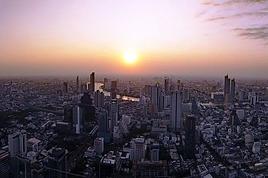
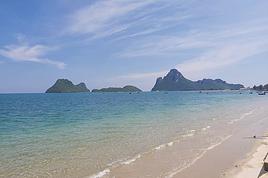
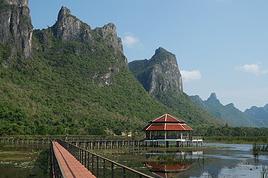
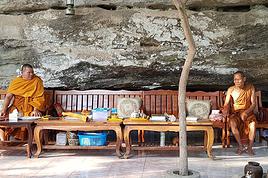
I really loved Thailand, but it was too touristy for my taste. So I'm hesitating about going back and wondering if Cambodia or Vietnam would be less crowded with tourists...
hi fellow travelers,
I'm "finalizing" a trip with my adventurous family (wife + 3 kids aged 16, 14, and 8) for this Easter break in Thailand (we'll be there from 04/19 to 05/01).
I'm going through the site and wanted to thank you all for the tips and insights you share on the forum. They're really valuable. But boy, it's tough to sketch out an itinerary
Of course, my backpacking route might be debatable, but I'm trying to target this path to get a first taste of the country's different "facets" and keep everyone in the family happy 😛
For this first trip, we're sticking to the classics and planning to explore a different side of the Land of Smiles in the future:
- arrival in BKK at 4 PM on 04/19 ==> leaving the same day at 7 PM for Chiang Mai (I "hesitated" with the 5:30 PM flight but was worried we wouldn't have enough time to switch from British AW to Thai Airways + airport fees + baggage + customs, etc. )
- from 04/20 to 04/23 ==> Chiang Mai with the main highlights (we've picked: Doi Suthep, Wat Pha Lat, elephant sanctuary, Doi Inthanon, the old city, Wat Chedi, Wat Phra Singh).
==> For the elephant sanctuary: any recommendations? Morning or afternoon visit?
==> It might seem ambitious, but we're considering a day trip to Chiang Rai—though it's not a must. Yes, we know it means ~6 hours of travel in one day.
- direct flight on the morning of 04/24 to Krabi ==> Railay - Phang Nga ==> this part isn't finalized yet (we won't stay in Krabi).
For those who've been there, which part of the south would be best weather-wise during this period?
We'd stay in the south until 04/28 and take a 8 PM flight to BKK.
- BKK on 04/29, 04/30, and part of 05/01 before our flight to London at 11 PM.
We'll hit the must-see/classic spots there.
If you have time to share some insights, I'd really appreciate it.
Thanks a million to everyone!
Hédi.
I'm "finalizing" a trip with my adventurous family (wife + 3 kids aged 16, 14, and 8) for this Easter break in Thailand (we'll be there from 04/19 to 05/01).
I'm going through the site and wanted to thank you all for the tips and insights you share on the forum. They're really valuable. But boy, it's tough to sketch out an itinerary
Of course, my backpacking route might be debatable, but I'm trying to target this path to get a first taste of the country's different "facets" and keep everyone in the family happy 😛
For this first trip, we're sticking to the classics and planning to explore a different side of the Land of Smiles in the future:
- arrival in BKK at 4 PM on 04/19 ==> leaving the same day at 7 PM for Chiang Mai (I "hesitated" with the 5:30 PM flight but was worried we wouldn't have enough time to switch from British AW to Thai Airways + airport fees + baggage + customs, etc. )
- from 04/20 to 04/23 ==> Chiang Mai with the main highlights (we've picked: Doi Suthep, Wat Pha Lat, elephant sanctuary, Doi Inthanon, the old city, Wat Chedi, Wat Phra Singh).
==> For the elephant sanctuary: any recommendations? Morning or afternoon visit?
==> It might seem ambitious, but we're considering a day trip to Chiang Rai—though it's not a must. Yes, we know it means ~6 hours of travel in one day.
- direct flight on the morning of 04/24 to Krabi ==> Railay - Phang Nga ==> this part isn't finalized yet (we won't stay in Krabi).
For those who've been there, which part of the south would be best weather-wise during this period?
We'd stay in the south until 04/28 and take a 8 PM flight to BKK.
- BKK on 04/29, 04/30, and part of 05/01 before our flight to London at 11 PM.
We'll hit the must-see/classic spots there.
If you have time to share some insights, I'd really appreciate it.
Thanks a million to everyone!
Hédi.
Ideas for things to see and do
We’ve already explored Bali, eastern Java, and its volcanoes back in 2013, and we’d love to return to Java to discover other spots that aren’t so "mainstream." There’ll be three of us—a couple and our 25-year-old son. We love nature, small towns, villages, beautiful landscapes, and a bit of beach time... We’re used to backpacking around Southeast Asia. Any tips for exploring some great spots in Java in a coherent way, with 3 or 4 bases for a 3-week trip from late June to mid-July? We don’t want to revisit Bromo or Ijen (they seem way too crowded compared to 2013), and we might swing by Djogja but won’t redo Borobudur or Prambanan (same issue...). Looking forward to your tips! Thanks 🙂
Hi there,
After visiting southern Sumatra in 2020 (Padang area, Bukkitinggi, Lake Maninjau), we’re heading north in two weeks to explore.
We’ll arrive in Medan after Singapore.
Then we plan to go to Bukit Lawang, Berastagi, and Lake Toba before finishing up on Pulau Weh.
Yeah, I know three weeks is short, but we like taking our time now that we’re in our fifties 😄.
My questions:
- Which direction should we do the loop: Medan → Bukit Lawang → Lake Toba → Medan (we’ll be traveling by taxi)?
- Can I buy the Medan/Banda Aceh flights just 10 days in advance while we’re there? Any airline to prefer?
Thanks in advance to anyone familiar with this part of the world 😊
Hi,
On September 1st, we're heading to Kalimantan for six weeks, probably from Pontianak to the Derawan Islands.
I've scoured this site, which is usually my go-to 😉, and others like VoyageForum, but recent info is pretty scarce.
I'd love any tips on places you've visited—our itinerary is still a work in progress.
We're two couples traveling with backpacks, using buses, boats, guesthouses, and homestays.
Thanks in advance!
Hi there,
My partner and I are planning a trip to Indonesia in September-October 2026. It’ll be our first time in Asia, and we’re thinking of hitting the classic spots in East Java and Bali, then wrapping up with a cruise around Komodo for some snorkeling/diving. Here’s a rough draft of our itinerary—I’m wondering if it’s doable.
20/09: Flight from Jakarta to Yogyakarta, arrive around noon, afternoon/evening and overnight in Yogyakarta. 21/09: Borobudur 22/09: Prambanan 23/09: Travel to Bromo (Cemoro Lawang) 24/09: Bromo 25/09: Kawa Ijen 26/09: Travel to Bali, overnight in Pemuteran 27/09: Excursion to Pulau Melujan, overnight in Pemuteran 28/09: Travel to Munduk, overnight in Munduk 29/09: Explore Munduk and surroundings, overnight in Munduk 30/09: Explore Munduk and surroundings, overnight in Munduk 01/10: Route to Ubud (via Pura Ulu Danau Bratan, Jatiluwih?), overnight in Ubud 02/10: Explore Ubud and surroundings, overnight in Ubud 03/10: Explore Ubud and surroundings, overnight in Ubud 04/10: Travel to Denpasar, flight to Labuan Bajo, overnight in Labuan Bajo 05/10: Komodo cruise 06/10: Komodo cruise 07/10: Komodo cruise, flight to Denpasar in the late afternoon/evening or overnight in Labuan Bajo. 08/10: Flight to Denpasar (if not taken the day before), afternoon in Jimbaran, overnight near Denpasar 09/10: 10:00 AM flight Denpasar - SIN, overnight in Singapore 10/10: Flight SIN-YQB
Thanks for your thoughts—and for your time!
My partner and I are planning a trip to Indonesia in September-October 2026. It’ll be our first time in Asia, and we’re thinking of hitting the classic spots in East Java and Bali, then wrapping up with a cruise around Komodo for some snorkeling/diving. Here’s a rough draft of our itinerary—I’m wondering if it’s doable.
20/09: Flight from Jakarta to Yogyakarta, arrive around noon, afternoon/evening and overnight in Yogyakarta. 21/09: Borobudur 22/09: Prambanan 23/09: Travel to Bromo (Cemoro Lawang) 24/09: Bromo 25/09: Kawa Ijen 26/09: Travel to Bali, overnight in Pemuteran 27/09: Excursion to Pulau Melujan, overnight in Pemuteran 28/09: Travel to Munduk, overnight in Munduk 29/09: Explore Munduk and surroundings, overnight in Munduk 30/09: Explore Munduk and surroundings, overnight in Munduk 01/10: Route to Ubud (via Pura Ulu Danau Bratan, Jatiluwih?), overnight in Ubud 02/10: Explore Ubud and surroundings, overnight in Ubud 03/10: Explore Ubud and surroundings, overnight in Ubud 04/10: Travel to Denpasar, flight to Labuan Bajo, overnight in Labuan Bajo 05/10: Komodo cruise 06/10: Komodo cruise 07/10: Komodo cruise, flight to Denpasar in the late afternoon/evening or overnight in Labuan Bajo. 08/10: Flight to Denpasar (if not taken the day before), afternoon in Jimbaran, overnight near Denpasar 09/10: 10:00 AM flight Denpasar - SIN, overnight in Singapore 10/10: Flight SIN-YQB
Thanks for your thoughts—and for your time!
Hi there, fellow travelers,
My mom and I are heading to Indonesia on July 11, 2025, for a month. We’ll spend 15 days in Borneo (Kalimantan) and 15 days in Sulawesi. We’re traveling with backpacks and really want to meet locals and experience their culture. We have a layover in Singapore before flying to Borneo, but we’re not sure yet which part of the island we’d like to land in.
I’m looking for the most up-to-date info possible because our research results are pretty confusing. Initially, we wanted to focus on the Indonesian side of the island, but we’re finding way more info on the Malaysian side (better tourist infrastructure). We’re feeling a bit lost...
Our priority is a 4-5 day trek max. We also want to connect with an English-speaking guide to explore Borneo’s primary forest and its wildlife. Ideally, we’d like to venture into the island’s center. But we might not have the time (given the lack of infrastructure and long distances—we don’t have 15 days just for a trek) or the physical stamina to get there. Still, we’d love to get off the beaten path and avoid pricey, touristy excursions. From our research, we’ve come across 3-day, 2-night trips on longboats or 4x4s (e.g., orangutans in Tanjung Puting) for 400 to 500 €. But that’s way out of our budget, and we think it’s too expensive. We get that as tourists with higher incomes than locals, we should pay more—but there’s a limit, especially compared to the cost of living in Indonesia. We want to avoid tour operators and crowds of tourists. Our goal is to see what’s left of Borneo’s preserved and wild tropical forest and observe animals in their natural habitat. If we don’t see any during a trek, oh well—we’ll take our chances.
On the Malaysian side, there’s Danum Valley, and on the Indonesian side, places like Gunung Palung, Betung Kerihun, and Kayan Mentarang...
What do you think?
Does anyone have any tips?
Has anyone here met indigenous communities on the island?
Does anyone know a friendly local guide?
We’d love any extra info on Borneo and Sulawesi! ;)
Take care!
My mom and I are heading to Indonesia on July 11, 2025, for a month. We’ll spend 15 days in Borneo (Kalimantan) and 15 days in Sulawesi. We’re traveling with backpacks and really want to meet locals and experience their culture. We have a layover in Singapore before flying to Borneo, but we’re not sure yet which part of the island we’d like to land in.
I’m looking for the most up-to-date info possible because our research results are pretty confusing. Initially, we wanted to focus on the Indonesian side of the island, but we’re finding way more info on the Malaysian side (better tourist infrastructure). We’re feeling a bit lost...
Our priority is a 4-5 day trek max. We also want to connect with an English-speaking guide to explore Borneo’s primary forest and its wildlife. Ideally, we’d like to venture into the island’s center. But we might not have the time (given the lack of infrastructure and long distances—we don’t have 15 days just for a trek) or the physical stamina to get there. Still, we’d love to get off the beaten path and avoid pricey, touristy excursions. From our research, we’ve come across 3-day, 2-night trips on longboats or 4x4s (e.g., orangutans in Tanjung Puting) for 400 to 500 €. But that’s way out of our budget, and we think it’s too expensive. We get that as tourists with higher incomes than locals, we should pay more—but there’s a limit, especially compared to the cost of living in Indonesia. We want to avoid tour operators and crowds of tourists. Our goal is to see what’s left of Borneo’s preserved and wild tropical forest and observe animals in their natural habitat. If we don’t see any during a trek, oh well—we’ll take our chances.
On the Malaysian side, there’s Danum Valley, and on the Indonesian side, places like Gunung Palung, Betung Kerihun, and Kayan Mentarang...
What do you think?
Does anyone have any tips?
Has anyone here met indigenous communities on the island?
Does anyone know a friendly local guide?
We’d love any extra info on Borneo and Sulawesi! ;)
Take care!
Hi there,
I can’t seem to find a car rental with a driver for several days in Chiang Mai to explore the surrounding areas, preferably in the countryside/mountains, villages, etc.
Would anyone have a driver to recommend?
Thanks
🙂 Hi everyone!
Hope you're all doing well! It's been a while since I last traveled, but I'm finally heading out again soon!
For those familiar with SOUTHEAST ASIA, I'm planning to leave in mid-June (with the trip ending at the latest in November), and I don’t have a precise idea of exact places or itineraries yet. The thing is, this period is usually the rainy season...
Any advice? I was thinking of Malaysia or Indonesia, like Sulawesi, for example (all countries and islands in Southeast Asia interest me except Bali).
Any recommendations? I’m doing my research online, but if anyone here has the time and knowledge, I’d love to hear from you.
Thanks everyone, take care and stay happy! ❤️
Hope you're all doing well! It's been a while since I last traveled, but I'm finally heading out again soon!
For those familiar with SOUTHEAST ASIA, I'm planning to leave in mid-June (with the trip ending at the latest in November), and I don’t have a precise idea of exact places or itineraries yet. The thing is, this period is usually the rainy season...
Any advice? I was thinking of Malaysia or Indonesia, like Sulawesi, for example (all countries and islands in Southeast Asia interest me except Bali).
Any recommendations? I’m doing my research online, but if anyone here has the time and knowledge, I’d love to hear from you.
Thanks everyone, take care and stay happy! ❤️
Hi everyone,
I’m starting to plan my next trip to Southeast Asia this winter (2.5 months, leaving in early December), and here’s a rough outline of my route—I’d love to share it with you and hear your thoughts and tips.
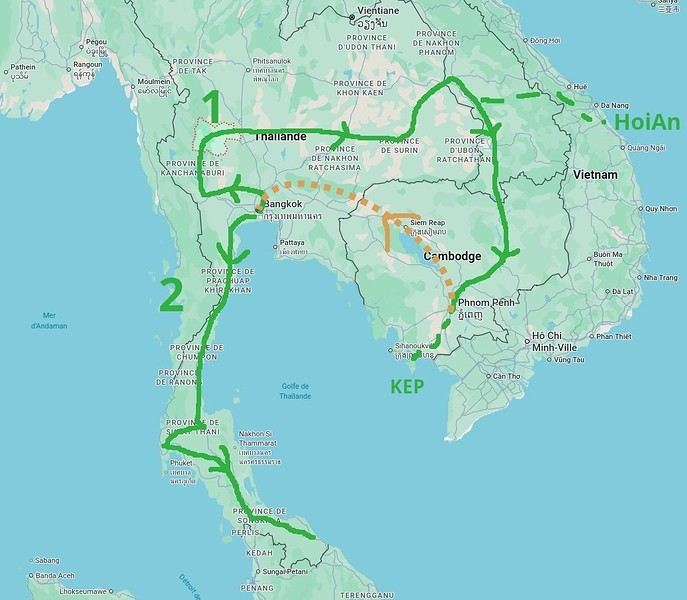
- I’ll start in Bangkok and already have three spots I’ve marked: Ayutthaya, Kanchanaburi, and Uthai Thani (I haven’t been to any of these places yet). - Next, I’d like to cross the country from west to east to reach the Laos border. I’d love suggestions for any interesting stops along this route—I don’t know this part of Thailand at all... - Then I’ll head into Laos, probably at Savannakhet (you can usually get a visa at the border). - > I’m tempted to spend a week in Hoi An, Vietnam, since I loved that city and the area when I visited two years ago. No visa needed for Vietnam now, so it could be a nice little detour. On the map, it doesn’t look too far, but I know you’ve got to be careful with these things, and I’m not sure if it’s a good idea. Any opinions on this? - Back to Laos (maybe via Dakta), and I’ll head south along the Mekong, probably doing the Bolaven Plateau loop that I missed last time. Then Paksé, the 4,000 Islands... I’ve been before, but I’d happily go back. - Crossing into Cambodia, I’ll follow the Mekong down to Phnom Penh (I know this area and love how untouristy it is). From there, I’ll probably spend a few days in Kep (quieter than Kampot). Still undecided, though. - Then back to Thailand (BKK), likely by plane from Phnom Penh since the borders between the two countries are currently closed (plus, let’s be honest, Cambodian roads... ;-). We’ll see how things look when the time comes. - After that, I’d like to explore southern Thailand, taking it slow with short hops. I’ve got my eye on Khao Sok National Park, and I’ve heard good things about Krabi... Again, I don’t know this region well, so any info or tips would be great.
So, I think this should be doable in 2.5 months, especially since I prefer short hops of 300 km max to avoid getting too tired, and I like staying 2-3 days in each place to explore. Plus, I’ll take a week off to relax if I find a spot I love—maybe by the sea for some real downtime.
Thanks for your feedback and for sharing your favorite spots! Pascal
- I’ll start in Bangkok and already have three spots I’ve marked: Ayutthaya, Kanchanaburi, and Uthai Thani (I haven’t been to any of these places yet). - Next, I’d like to cross the country from west to east to reach the Laos border. I’d love suggestions for any interesting stops along this route—I don’t know this part of Thailand at all... - Then I’ll head into Laos, probably at Savannakhet (you can usually get a visa at the border). - > I’m tempted to spend a week in Hoi An, Vietnam, since I loved that city and the area when I visited two years ago. No visa needed for Vietnam now, so it could be a nice little detour. On the map, it doesn’t look too far, but I know you’ve got to be careful with these things, and I’m not sure if it’s a good idea. Any opinions on this? - Back to Laos (maybe via Dakta), and I’ll head south along the Mekong, probably doing the Bolaven Plateau loop that I missed last time. Then Paksé, the 4,000 Islands... I’ve been before, but I’d happily go back. - Crossing into Cambodia, I’ll follow the Mekong down to Phnom Penh (I know this area and love how untouristy it is). From there, I’ll probably spend a few days in Kep (quieter than Kampot). Still undecided, though. - Then back to Thailand (BKK), likely by plane from Phnom Penh since the borders between the two countries are currently closed (plus, let’s be honest, Cambodian roads... ;-). We’ll see how things look when the time comes. - After that, I’d like to explore southern Thailand, taking it slow with short hops. I’ve got my eye on Khao Sok National Park, and I’ve heard good things about Krabi... Again, I don’t know this region well, so any info or tips would be great.
So, I think this should be doable in 2.5 months, especially since I prefer short hops of 300 km max to avoid getting too tired, and I like staying 2-3 days in each place to explore. Plus, I’ll take a week off to relax if I find a spot I love—maybe by the sea for some real downtime.
Thanks for your feedback and for sharing your favorite spots! Pascal
Hello everyone!
In early July, we’re heading to Indonesia for a solid three weeks as a family (my partner and I are in our fifties, and we have two daughters aged 17 and 20). We’ll be arriving and departing from Denpasar. Our itinerary is still entirely up in the air, and we’d like to explore islands other than Bali (we’ve already been there a few years ago).
I’d love to gather your tips and great recommendations to help us plan our route. For now, we’re thinking of visiting Lombok, Flores, and the Komodo archipelago. Here are some of our questions: - I visited Lombok myself back in 1999. I loved it, but I’ve been reading very mixed reviews in recent travel journals. Some are as enthusiastic as I was back then, while others are much more lukewarm (due to the overly strict and visible influence of the island’s governor on the population and because of massive hotel projects—I’m not sure if they’re on hold, underway, or completed). What’s the current situation? Is Lombok still a must-visit? And do you have any tips (hotels, places to visit, health, etc.)? - Still on Lombok, I did the Rinjani trek back then. I remember the hike wasn’t easy, but it wasn’t as tough as what I’ve read in quite a few recent travel journals... My partner and I are in decent shape, but that’s about it, and especially, my partner and our two daughters really don’t like the cold. What’s your experience with this trek? And do you have a trekking agency to recommend? (If we do it, I think we’d want to make sure we have good support, including quality gear, tents, jackets, etc.) - Flores and Komodo would be a completely new experience for all of us. Any tips and recommendations are welcome (sightseeing, accommodations, transport, etc.)! In particular, we’d like to explore the Komodo archipelago with a trusted agency that will take the time to show us the archipelago’s treasures in good conditions (safety and "decent" comfort). Do you know of any such agencies? - Are there other nearby islands you’d recommend? Any advice on places to visit and where to stay?
We’ll have three weeks on the ground... and we like to mix sightseeing with downtime where we just enjoy the moment. So we’re not looking for an overly packed itinerary, but still something rich (no point traveling so far just to lie on a sunbed all day ;-))
Thanks so much in advance for your advice!
Albin
In early July, we’re heading to Indonesia for a solid three weeks as a family (my partner and I are in our fifties, and we have two daughters aged 17 and 20). We’ll be arriving and departing from Denpasar. Our itinerary is still entirely up in the air, and we’d like to explore islands other than Bali (we’ve already been there a few years ago).
I’d love to gather your tips and great recommendations to help us plan our route. For now, we’re thinking of visiting Lombok, Flores, and the Komodo archipelago. Here are some of our questions: - I visited Lombok myself back in 1999. I loved it, but I’ve been reading very mixed reviews in recent travel journals. Some are as enthusiastic as I was back then, while others are much more lukewarm (due to the overly strict and visible influence of the island’s governor on the population and because of massive hotel projects—I’m not sure if they’re on hold, underway, or completed). What’s the current situation? Is Lombok still a must-visit? And do you have any tips (hotels, places to visit, health, etc.)? - Still on Lombok, I did the Rinjani trek back then. I remember the hike wasn’t easy, but it wasn’t as tough as what I’ve read in quite a few recent travel journals... My partner and I are in decent shape, but that’s about it, and especially, my partner and our two daughters really don’t like the cold. What’s your experience with this trek? And do you have a trekking agency to recommend? (If we do it, I think we’d want to make sure we have good support, including quality gear, tents, jackets, etc.) - Flores and Komodo would be a completely new experience for all of us. Any tips and recommendations are welcome (sightseeing, accommodations, transport, etc.)! In particular, we’d like to explore the Komodo archipelago with a trusted agency that will take the time to show us the archipelago’s treasures in good conditions (safety and "decent" comfort). Do you know of any such agencies? - Are there other nearby islands you’d recommend? Any advice on places to visit and where to stay?
We’ll have three weeks on the ground... and we like to mix sightseeing with downtime where we just enjoy the moment. So we’re not looking for an overly packed itinerary, but still something rich (no point traveling so far just to lie on a sunbed all day ;-))
Thanks so much in advance for your advice!
Albin
Hi everyone,
Could you share your thoughts on my 3-week itinerary?
We’re a small group (family + friends) of 12 people, planning to leave around January 21, 2027.
Here’s my itinerary:
3 nights in Bangkok
4 nights in Chiang Mai
3 nights on Koh Samui
3 nights on Koh Phangan
4 nights in Krabi
4 nights in Phuket
I’m also open to any great tips you might have...
Thanks, everyone! Alain.
Hello everyone!
First stop on our discovery of the peninsula: Amphawa. It’s our first night in Thailand (we arrived at Suvarnabhumi at 8:50 AM). Our initial plan was to explore the area before heading further south. The Mae Klong Railway Market is tempting... but what else is there to do???? We’ll be there on a Wednesday, and from what I’ve read on the forum, some say there’s absolutely nothing to do during the week—no floating market, barely any shops open, no restaurants, etc. Others, though, say the place is actually more charming without the weekend crowds.
Could you share your thoughts? Missing the floating market is one thing, but if it’s really a ghost town on Wednesdays, I might just drop our bags somewhere else. Amphawa seemed like a good first stop, just 1.5 hours from the airport, but I’d still like to settle somewhere a bit lively for our first evening. We’ll be there at the end of October. Thanks!
First stop on our discovery of the peninsula: Amphawa. It’s our first night in Thailand (we arrived at Suvarnabhumi at 8:50 AM). Our initial plan was to explore the area before heading further south. The Mae Klong Railway Market is tempting... but what else is there to do???? We’ll be there on a Wednesday, and from what I’ve read on the forum, some say there’s absolutely nothing to do during the week—no floating market, barely any shops open, no restaurants, etc. Others, though, say the place is actually more charming without the weekend crowds.
Could you share your thoughts? Missing the floating market is one thing, but if it’s really a ghost town on Wednesdays, I might just drop our bags somewhere else. Amphawa seemed like a good first stop, just 1.5 hours from the airport, but I’d still like to settle somewhere a bit lively for our first evening. We’ll be there at the end of October. Thanks!
DANANG
A big city in the midst of an economic boom. The setting is stunning, with its large bay, the Son Tra Peninsula, and the Annamite Mountains on the horizon.
Where to stay and eat? Da Nang is a bustling business hub, so hotels are pricier and often fully booked. I was lucky to find a motorbike taxi driver who, after six full hotels, took me to Mai Son Hotel, 113 Nguyen Van Linh, a spotless 2-star place. Plus, right next door, there’s a great restaurant that seems popular with locals, and a good Chinese restaurant just a 5-minute walk away, Phi Lu (178 Nguyen Van Linh), recommended by the *Guide du Routard*. So, I’d definitely recommend this hotel. For a pricier option, the very Christian Dai A Hotel, near the tiny pink cathedral, is nice, but why pay more?
Actually, why stay in Da Nang when the gorgeous Hoi An is just 34 km to the south?
What to see? - The lovely Cham Museum (small, takes at most an hour) - The climb up Son Tra Peninsula (great views of the whole area) - The “tour” of the peninsula—quotation marks because the road stops two-thirds of the way. There’s an interesting little museum on the left before reaching the base of the huge statue, the Đong Đinh (large entrance on the left side of the hill), with traditional houses in the jungle holding artifacts over 2,000 years old (Sa Huynh culture; if you’re interested, check out the small Sa Huynh Museum in Hoi An, just before the Japanese Bridge). However, the big Linh Ung Pagoda is just colorful concrete! A beautiful resort, the Son Tra Beach Resort and Spa, sits on a pristine beach and isn’t too expensive: $120 for a garden room and $200–$270 for duplexes with a pool, where you can sleep six. Before reaching the resort, you’ll find two excellent seafood restaurants with large beachfront terraces on your right. - On the way to Hoi An, Marble Mountain, where I loved the village of marble sculpture workshops, the pretty pagodas and caves, and the stunning view from the top of the last promontory (the stairs are steep!). However, you can skip the famous China Beach and its resorts—all pretentious and expensive, not to mention the ones under construction on both sides of the road (they’re multiplying like crazy!). So, when traveling from Da Nang to Hoi An, I recommend two stops: the Cham Museum and Marble Mountain. - The beautiful drive to the Hai Van Pass (there weren’t any clouds!), offering spectacular views of the Da Nang region to the south and the coast to the north. The descent leads to the fishing village and beach of Lang Co, which is lovely but destined for rampant resort development, judging by the huge projects advertised on billboards along the road after the village. - Some affordable guesthouses ($15) and big resorts, including the lovely Lang Co Beach Resort, with a large pool and great value given the beautiful gardens and elegant bungalows. Recommended in Lang Co: lunch at one of the two stilt restaurants over the lagoon—great views and fresh seafood.
The public bus to Hoi An, 34 km south of Da Nang, takes 45 minutes for 50,000 dong. There’s one every half hour.
HOI AN This is a “must-see” for so many reasons: stunning old houses, temples, and pagodas; a colorful daily open-air and covered market near the bridge; charming little streets in the old quarter—especially at night, with all the multicolored lanterns and riverside restaurant terraces, it’s very romantic. The local food is delicious, the people are friendly and kind, there are two beautiful beaches, and attractions like the Cham ruins of My Son. Some say Hoi An is overrun with tourists and should be avoided. That’s true for the historic center and An Bang Beach, but not at all once you step outside.
WHERE TO STAY For a 2-star option, I recommend Ngo House Villa (99 Nguyen Phuc Tan St), very quiet on the island just across from the Old Quarter: 3-star rooms + suites, a large “Family” room, and a nice pool, all for $20 ($40 for the “Family” room). The same charming owner has a second hotel 20 meters away (No. 74), Phan Ngô, which is older but has a large terrace and a small pool—I prefer this one. For 3 stars, Thuy Duong 3 (92 Ba Trieu) is perfect, with a pool and garden ($40–$60). A bit pricier but great is A Han on Phan Bai Chau, with a large garden and terrace restaurant.
For those with a bigger budget, I recommend two riverside spots with rooms, suites, and pools, priced at $200–$350: the secluded Coco River Resort (formerly Ancient House River, with a large wooden terrace for romantic dinners by the river) and Anantara, (formerly Heritage), with bungalows close to the old town—but pricey.
Outside the city, my favorite hotel is Villa Loan, the new place from the famous Loan of Tam Coc, very quiet in the countryside, 15 minutes by bike from Old Hoi An and An Bang Beach. Beautiful rooms ($35), a Family room with two double beds ($55), two 65 m² twins that can sleep six (two large beds + two single beds—$80), a terrace restaurant, and a lovely pool. Prices include a buffet breakfast and a bike.
Also great is Daisy Anbang on An Bang Beach, elegant with a pool and beach just 50 meters away (skip the Aira next door—too expensive).
WHERE TO EAT Hoi An is Vietnam’s culinary capital. For Vietnamese food, I recommend Dao Tien, 21 Phan Bai Chau. No surprise—the chef is a former chef at the luxury 4-star Victoria Hoi An, a solid reference. The restaurant now has a beautiful terrace by the river (take the alley on the right side of the main street Dao Tien). Plus, you’re doing a good deed: a large part of the profits goes toward educating underprivileged children—one year of free hospitality, cooking, and English training, followed by job placement in local establishments. Madame Hien Hoi An (formerly Co Mai), 2 Nguyen Thai Hoc (left of the market), is another great spot—the chef is Didier Corlou, formerly of the famous *Porte d’Annam* and *Madame Hien* in Hanoi (closed in March 2022 due to COVID, so foreign tourists are still scarce). Also worth checking out is Secret Garden, in the Phuong Minh An alley (entrance at 60 Le Loi), set in a beautiful space. One of my favorites is Madam Kieu, 43 Nguyen Phuc Chu, right on the river across from the little bridge—very elegant with excellent Vietnamese cuisine. Unfortunately, all the restaurants on this esplanade blast “music” (boom boom boom yeah yeah yeah) in the evenings, so it’s impossible to talk—go for lunch instead.
For a break from Vietnamese food, try Good Morning Vietnam, a ridiculous name for an excellent Italian restaurant (11 Le Loi). The cheerful chef is from Bologna, the “Lyon of Italy”: lasagna like an Italian *mama*’s, delicious tagliatelle ai porcini (porcini mushrooms imported from Italy), and a divine homemade tiramisu (pro tip: order a grappa and drizzle a few drops on the tiramisu). It’s also one of the few places where you can get an excellent bottle of red wine for 350,000 dong instead of the usual 600,000–800,000 dong (South African Robertson Chapel). Another gem: the Japanese restaurant Samurai Kitchen (no sushi, but divine gyoza), 21 Phan Chau Trinh—the street on the right side of the market when you turn your back to the river. Finally, Ganesh, which I consider the best Indian restaurant in Vietnam (99 Tran Hung Dao St).
At An Bang, there are plenty of beachfront restaurants. The two best are the large one at the far right of the parking lot (huge seafood selection) and the fantastic La Luna d’Autumno, owned by the same person as the Italian restaurant of the same name, once considered the best in Vietnam but closed in 2020 due to COVID. Divine pizzas, including the vegetariana.
WHAT TO VISIT The Japanese Bridge and all the old Chinese houses, temples, and pagodas in the three historic streets. Don’t miss the extraordinary gallery-museum of the great French photographer Réhahn, the Precious Heritage Museum at 26 Phan Boi Chau. His remarkable photo collection—including the famous shot of the little Cham girl with clear blue eyes—has graced the covers of many magazines. His Montagnard Museum is a wonder, with a larger collection of tribal women’s costumes than the Museum of Ethnology in Hanoi. Free entry.
THE BEACHES Cua Dai Beach has mostly disappeared, a victim of the waves, except in a few spots. The beautiful An Bang Beach remains, with great beachfront restaurants, or you can head to Cham Island.
MY SON A beautiful complex of Cham ruins surrounded by mountains, 50 km southwest of Hoi An via a scenic road. You can rent a motorbike, take a motorbike taxi, or join a half-day organized tour. It’s best to go in the afternoon—less crowded than in the morning.
CHAM ISLANDS (Cu Lao Cham) Wow, I loved it! It reminded me of St. Barts 35 years ago. The archipelago, 19 km from Hoi An, consists of eight small islands within the Cu Lao Cham Marine Reserve, declared a “Biosphere Reserve” by UNESCO. The largest and only inhabited island, Hon Lao (Pearl Island), covers 1,317 hectares, and its highest peak reaches 517 meters. Hon Lao has two villages: Bai Lang, where the boats from Hoi An dock, and the charming little fishing port of Bai Huong. Part of the island is a military zone, so only the east coast is accessible to tourists.
To get there, you have three options: - The public boat (100,000 dong) that leaves from in front of Café des Amis at 7:30 AM. The catch is it returns to Hoi An at noon, so to enjoy the charm of the place, you’ll need to spend a night on the island (which I highly recommend). - Organized tours by Cham Diving Club, with two options: diving or snorkeling only. - A private speedboat, but it’s not cheap: $200 for the day!
Note: Even if the weather seems fine, the large public boat won’t leave if the sea is too rough. The only solution is to go to the port around 7:30 AM and check (easy, since it brings all the supplies for the island’s locals—if it’s leaving, it’ll be loading up). Avoid weekends—it gets swarmed with locals.
Small coves with dreamy beaches, as they say. Two are very close to Bai Lang: one to the left (facing the village), Bai Ong, lined with restaurants, and a tiny one to the right of the village. The other two beaches, including Bai Chong and the little fishing port of Bai Huong, are accessible by motorbike or boat. I recommend renting a motorbike (biking is tough due to steep hills) and taking the road that overlooks the coast—it’s stunning.
Great diving. The Cham Diving Club is superbly organized by a very friendly Italian, Lodovico, and two French guys (www.chamislanddiving.com).
When you arrive at Bai Lang’s pier, they’ll offer you TWO family-run guesthouses in the village. There are also homestays, but they’re really basic (usually bamboo mats on wooden planks as beds), no English or French is spoken, and locals speak a dialect that’s hard to understand even if you’re decent at Vietnamese. Anyway, I don’t recommend staying in Bai Lang because of the public loudspeakers. Two options if you want a quiet night: - A small guesthouse facing the tiny rice field on the way to Bai Ong Beach. Very clean rooms and a large terrace overlooking the “rice field.” 300,000 dong, with meals available on the terrace. Nha Nghi Vu Truong Tel: 235 386 4783 Mobile: 01 67 76 63 110. - Homestays in the little fishing port of Bai Huong.
Where to stay and eat? Da Nang is a bustling business hub, so hotels are pricier and often fully booked. I was lucky to find a motorbike taxi driver who, after six full hotels, took me to Mai Son Hotel, 113 Nguyen Van Linh, a spotless 2-star place. Plus, right next door, there’s a great restaurant that seems popular with locals, and a good Chinese restaurant just a 5-minute walk away, Phi Lu (178 Nguyen Van Linh), recommended by the *Guide du Routard*. So, I’d definitely recommend this hotel. For a pricier option, the very Christian Dai A Hotel, near the tiny pink cathedral, is nice, but why pay more?
Actually, why stay in Da Nang when the gorgeous Hoi An is just 34 km to the south?
What to see? - The lovely Cham Museum (small, takes at most an hour) - The climb up Son Tra Peninsula (great views of the whole area) - The “tour” of the peninsula—quotation marks because the road stops two-thirds of the way. There’s an interesting little museum on the left before reaching the base of the huge statue, the Đong Đinh (large entrance on the left side of the hill), with traditional houses in the jungle holding artifacts over 2,000 years old (Sa Huynh culture; if you’re interested, check out the small Sa Huynh Museum in Hoi An, just before the Japanese Bridge). However, the big Linh Ung Pagoda is just colorful concrete! A beautiful resort, the Son Tra Beach Resort and Spa, sits on a pristine beach and isn’t too expensive: $120 for a garden room and $200–$270 for duplexes with a pool, where you can sleep six. Before reaching the resort, you’ll find two excellent seafood restaurants with large beachfront terraces on your right. - On the way to Hoi An, Marble Mountain, where I loved the village of marble sculpture workshops, the pretty pagodas and caves, and the stunning view from the top of the last promontory (the stairs are steep!). However, you can skip the famous China Beach and its resorts—all pretentious and expensive, not to mention the ones under construction on both sides of the road (they’re multiplying like crazy!). So, when traveling from Da Nang to Hoi An, I recommend two stops: the Cham Museum and Marble Mountain. - The beautiful drive to the Hai Van Pass (there weren’t any clouds!), offering spectacular views of the Da Nang region to the south and the coast to the north. The descent leads to the fishing village and beach of Lang Co, which is lovely but destined for rampant resort development, judging by the huge projects advertised on billboards along the road after the village. - Some affordable guesthouses ($15) and big resorts, including the lovely Lang Co Beach Resort, with a large pool and great value given the beautiful gardens and elegant bungalows. Recommended in Lang Co: lunch at one of the two stilt restaurants over the lagoon—great views and fresh seafood.
The public bus to Hoi An, 34 km south of Da Nang, takes 45 minutes for 50,000 dong. There’s one every half hour.
HOI AN This is a “must-see” for so many reasons: stunning old houses, temples, and pagodas; a colorful daily open-air and covered market near the bridge; charming little streets in the old quarter—especially at night, with all the multicolored lanterns and riverside restaurant terraces, it’s very romantic. The local food is delicious, the people are friendly and kind, there are two beautiful beaches, and attractions like the Cham ruins of My Son. Some say Hoi An is overrun with tourists and should be avoided. That’s true for the historic center and An Bang Beach, but not at all once you step outside.
WHERE TO STAY For a 2-star option, I recommend Ngo House Villa (99 Nguyen Phuc Tan St), very quiet on the island just across from the Old Quarter: 3-star rooms + suites, a large “Family” room, and a nice pool, all for $20 ($40 for the “Family” room). The same charming owner has a second hotel 20 meters away (No. 74), Phan Ngô, which is older but has a large terrace and a small pool—I prefer this one. For 3 stars, Thuy Duong 3 (92 Ba Trieu) is perfect, with a pool and garden ($40–$60). A bit pricier but great is A Han on Phan Bai Chau, with a large garden and terrace restaurant.
For those with a bigger budget, I recommend two riverside spots with rooms, suites, and pools, priced at $200–$350: the secluded Coco River Resort (formerly Ancient House River, with a large wooden terrace for romantic dinners by the river) and Anantara, (formerly Heritage), with bungalows close to the old town—but pricey.
Outside the city, my favorite hotel is Villa Loan, the new place from the famous Loan of Tam Coc, very quiet in the countryside, 15 minutes by bike from Old Hoi An and An Bang Beach. Beautiful rooms ($35), a Family room with two double beds ($55), two 65 m² twins that can sleep six (two large beds + two single beds—$80), a terrace restaurant, and a lovely pool. Prices include a buffet breakfast and a bike.
Also great is Daisy Anbang on An Bang Beach, elegant with a pool and beach just 50 meters away (skip the Aira next door—too expensive).
WHERE TO EAT Hoi An is Vietnam’s culinary capital. For Vietnamese food, I recommend Dao Tien, 21 Phan Bai Chau. No surprise—the chef is a former chef at the luxury 4-star Victoria Hoi An, a solid reference. The restaurant now has a beautiful terrace by the river (take the alley on the right side of the main street Dao Tien). Plus, you’re doing a good deed: a large part of the profits goes toward educating underprivileged children—one year of free hospitality, cooking, and English training, followed by job placement in local establishments. Madame Hien Hoi An (formerly Co Mai), 2 Nguyen Thai Hoc (left of the market), is another great spot—the chef is Didier Corlou, formerly of the famous *Porte d’Annam* and *Madame Hien* in Hanoi (closed in March 2022 due to COVID, so foreign tourists are still scarce). Also worth checking out is Secret Garden, in the Phuong Minh An alley (entrance at 60 Le Loi), set in a beautiful space. One of my favorites is Madam Kieu, 43 Nguyen Phuc Chu, right on the river across from the little bridge—very elegant with excellent Vietnamese cuisine. Unfortunately, all the restaurants on this esplanade blast “music” (boom boom boom yeah yeah yeah) in the evenings, so it’s impossible to talk—go for lunch instead.
For a break from Vietnamese food, try Good Morning Vietnam, a ridiculous name for an excellent Italian restaurant (11 Le Loi). The cheerful chef is from Bologna, the “Lyon of Italy”: lasagna like an Italian *mama*’s, delicious tagliatelle ai porcini (porcini mushrooms imported from Italy), and a divine homemade tiramisu (pro tip: order a grappa and drizzle a few drops on the tiramisu). It’s also one of the few places where you can get an excellent bottle of red wine for 350,000 dong instead of the usual 600,000–800,000 dong (South African Robertson Chapel). Another gem: the Japanese restaurant Samurai Kitchen (no sushi, but divine gyoza), 21 Phan Chau Trinh—the street on the right side of the market when you turn your back to the river. Finally, Ganesh, which I consider the best Indian restaurant in Vietnam (99 Tran Hung Dao St).
At An Bang, there are plenty of beachfront restaurants. The two best are the large one at the far right of the parking lot (huge seafood selection) and the fantastic La Luna d’Autumno, owned by the same person as the Italian restaurant of the same name, once considered the best in Vietnam but closed in 2020 due to COVID. Divine pizzas, including the vegetariana.
WHAT TO VISIT The Japanese Bridge and all the old Chinese houses, temples, and pagodas in the three historic streets. Don’t miss the extraordinary gallery-museum of the great French photographer Réhahn, the Precious Heritage Museum at 26 Phan Boi Chau. His remarkable photo collection—including the famous shot of the little Cham girl with clear blue eyes—has graced the covers of many magazines. His Montagnard Museum is a wonder, with a larger collection of tribal women’s costumes than the Museum of Ethnology in Hanoi. Free entry.
THE BEACHES Cua Dai Beach has mostly disappeared, a victim of the waves, except in a few spots. The beautiful An Bang Beach remains, with great beachfront restaurants, or you can head to Cham Island.
MY SON A beautiful complex of Cham ruins surrounded by mountains, 50 km southwest of Hoi An via a scenic road. You can rent a motorbike, take a motorbike taxi, or join a half-day organized tour. It’s best to go in the afternoon—less crowded than in the morning.
CHAM ISLANDS (Cu Lao Cham) Wow, I loved it! It reminded me of St. Barts 35 years ago. The archipelago, 19 km from Hoi An, consists of eight small islands within the Cu Lao Cham Marine Reserve, declared a “Biosphere Reserve” by UNESCO. The largest and only inhabited island, Hon Lao (Pearl Island), covers 1,317 hectares, and its highest peak reaches 517 meters. Hon Lao has two villages: Bai Lang, where the boats from Hoi An dock, and the charming little fishing port of Bai Huong. Part of the island is a military zone, so only the east coast is accessible to tourists.
To get there, you have three options: - The public boat (100,000 dong) that leaves from in front of Café des Amis at 7:30 AM. The catch is it returns to Hoi An at noon, so to enjoy the charm of the place, you’ll need to spend a night on the island (which I highly recommend). - Organized tours by Cham Diving Club, with two options: diving or snorkeling only. - A private speedboat, but it’s not cheap: $200 for the day!
Note: Even if the weather seems fine, the large public boat won’t leave if the sea is too rough. The only solution is to go to the port around 7:30 AM and check (easy, since it brings all the supplies for the island’s locals—if it’s leaving, it’ll be loading up). Avoid weekends—it gets swarmed with locals.
Small coves with dreamy beaches, as they say. Two are very close to Bai Lang: one to the left (facing the village), Bai Ong, lined with restaurants, and a tiny one to the right of the village. The other two beaches, including Bai Chong and the little fishing port of Bai Huong, are accessible by motorbike or boat. I recommend renting a motorbike (biking is tough due to steep hills) and taking the road that overlooks the coast—it’s stunning.
Great diving. The Cham Diving Club is superbly organized by a very friendly Italian, Lodovico, and two French guys (www.chamislanddiving.com).
When you arrive at Bai Lang’s pier, they’ll offer you TWO family-run guesthouses in the village. There are also homestays, but they’re really basic (usually bamboo mats on wooden planks as beds), no English or French is spoken, and locals speak a dialect that’s hard to understand even if you’re decent at Vietnamese. Anyway, I don’t recommend staying in Bai Lang because of the public loudspeakers. Two options if you want a quiet night: - A small guesthouse facing the tiny rice field on the way to Bai Ong Beach. Very clean rooms and a large terrace overlooking the “rice field.” 300,000 dong, with meals available on the terrace. Nha Nghi Vu Truong Tel: 235 386 4783 Mobile: 01 67 76 63 110. - Homestays in the little fishing port of Bai Huong.
Hi everyone, we’ll be in Thailand from August 2nd to 21st, arriving in Bangkok on the 2nd for a visit.
From the 5th to the 8th: Angkor temples.
Then, starting on the 9th, we’re planning to head to Chiang Mai, and by the 14th or 15th, we’d like to be on an island until the 19th, when we return to Bangkok. Five days in Chiang Mai seems a bit long to us. What do you recommend between the 9th and 15th, and which island? We’re not big fans of sunbathing—we’d love to snorkel and explore the island. Ideally, I’d have liked to find a house to rent, but every time, I end up with places far from the beach, whereas we’d really like to be able to walk to the beach for strolls. By the way, are there a lot of shells? Can we collect them? It seems that in August, swimming can sometimes be tricky due to tides—is that true?
Thanks to all the contributors! 😊
Hi there,
After arriving in Ho Chi Minh City at the beginning of March 26, where I think I’ll stay for maybe two days (or more?), we’d like to spend a few days in the Mekong Delta.
Is it better to stay in one place (Vinh Long, Cai Be, My Tho, An Binh, etc.) and take boat trips every day, or split our time between two or three spots, which means changing accommodation and moving our luggage around? Of course, agencies offer 3- or 5-day tours from Ho Chi Minh City, but are they really worth it, both financially and in terms of the visits themselves?
What’s your experience with this? How did you do it, and if you had to do it again? Any tips?
Thanks in advance for your help.
Dominique
Hi there,
we’re planning to spend a month in Lombok in July 2026 and would love to hear your thoughts on Gili Gede.
We really enjoy snorkeling, preferably from the beach (so we don’t have to rely on renting a boat). On the side, we also love short hikes of a few hours—like to waterfalls or through rice fields (max 5–6 hours round trip). We’d like to stay in small family-run hotels away from the crowds (but with a pool, since our kids love spending their evenings there).
Do you think Gili Gede checks at least 2 of these 3 boxes (snorkeling + small family-run hotels away from the crowds)? Would you recommend a better spot in Lombok that ticks all 3 boxes?
Thanks so much in advance! Fanny
We really enjoy snorkeling, preferably from the beach (so we don’t have to rely on renting a boat). On the side, we also love short hikes of a few hours—like to waterfalls or through rice fields (max 5–6 hours round trip). We’d like to stay in small family-run hotels away from the crowds (but with a pool, since our kids love spending their evenings there).
Do you think Gili Gede checks at least 2 of these 3 boxes (snorkeling + small family-run hotels away from the crowds)? Would you recommend a better spot in Lombok that ticks all 3 boxes?
Thanks so much in advance! Fanny
Hi everyone!
I’m reaching out because we’re planning a trip to Thailand next year (around March/April), and we’d like to visit Chiang Mai and then Krabi, plus a few islands near Krabi.
We’ve been to Thailand before, 10 years ago, and this time, we’d just like to focus on 5 days in Chiang Mai and 10–12 days in the Krabi area.
I’ll admit, I’m really struggling to pick an island near Krabi.
We hated Phi Phi: dirty, noisy, and the food was gross… such a letdown!
Which island would you recommend for snorkeling, nature walks, and beautiful beaches?
Maybe we could also make a stop between Chiang Mai and Krabi—perhaps Sukhothai?
Is it easy to travel between these three cities?
Thanks so much for your help! 🙂
Hi there,
Big travel year in Asia for me. I’m heading to Southeast Asia for a month in mid-July. The dates aren’t flexible since I’m going primarily for a wedding (Laos). So, I’ll start my trip in Laos for 4 days, then head off... where?
I’ve already done a trip exclusively in Laos a few years ago. I also visited Vietnam for the second time last year, so I’d love to explore something new. I was thinking of Cambodia (but only for Angkor) and northern Thailand, which I haven’t seen yet (Chiang Mai, Chiang Rai, Mae Hong Son, Nan, Phrae, Phayao, Pa Hin Ngam National Park), and wrapping up with a few nights in Koh Samui. My question is about the weather. From what I’ve seen, Koh Samui seems to be spared during this period. But for Angkor and northern Thailand, I’m not so sure—it feels like a gamble. And I’m really not in the mood for rainy vacations, since I already get enough gray skies where I live 😅.
So, I had another idea: after Laos, I could head to Bali (or another Indonesian island) where it’s supposedly the right season. The flight ticket price is exactly the same, including a one-way to Bali and the return from Bali (with a layover in Bangkok). For those who’ve traveled in July, what do you think? Is there a big risk in trying northern Thailand and Angkor?
Thanks in advance!
I’ve already done a trip exclusively in Laos a few years ago. I also visited Vietnam for the second time last year, so I’d love to explore something new. I was thinking of Cambodia (but only for Angkor) and northern Thailand, which I haven’t seen yet (Chiang Mai, Chiang Rai, Mae Hong Son, Nan, Phrae, Phayao, Pa Hin Ngam National Park), and wrapping up with a few nights in Koh Samui. My question is about the weather. From what I’ve seen, Koh Samui seems to be spared during this period. But for Angkor and northern Thailand, I’m not so sure—it feels like a gamble. And I’m really not in the mood for rainy vacations, since I already get enough gray skies where I live 😅.
So, I had another idea: after Laos, I could head to Bali (or another Indonesian island) where it’s supposedly the right season. The flight ticket price is exactly the same, including a one-way to Bali and the return from Bali (with a layover in Bangkok). For those who’ve traveled in July, what do you think? Is there a big risk in trying northern Thailand and Angkor?
Thanks in advance!
I’d like to do a kind of personal retreat this winter and I’m looking for a destination near the sea (preferably an island) that’s quiet. Is that possible in Thailand, or should I consider another destination?
Thanks for your thoughts.
Dayi
Hello,
Our flights are booked, and we’ll arrive in Thailand at the beginning of January.
Originally, we were supposed to spend 14 days there. But after booking the flights and seeing the prices, we’ll now be there for 20 days instead.
Our initial plan was: 2 days in Bangkok 1 day in Ayutthaya 4 days in Chiang Mai 6 days around Krabi
So we have 7 more days to fill. What do you recommend?
An extra day in Bangkok? Adding more days in the north? If so, where? Exploring another region, like Kanchanaburi or Cheow Lan Lake? Traveling north in stages instead of taking the overnight train?
A few extra details about us: For us, vacation isn’t about relaxation—we love walking, exploring, and packed days don’t bother us. Hiking for hours and doing active things is what makes us happy. That said, we also enjoy visiting villages and towns if they’re worth the detour. In Thailand, we’d like to visit temples too. We’re early risers, so our days tend to be long. 🙂 In short, we like to keep things moving during our trips. 😉
Unfortunately, seeing terraced rice fields isn’t possible in January. I read there are rice fields around Sukhothai. Are they green in January?
In the north, do you recommend Doi Inthanon, Huai Nam Dang, or Doi Chiang Dao National Parks? Which one is the most beautiful and best for January?
Our flights are booked, and we’ll arrive in Thailand at the beginning of January.
Originally, we were supposed to spend 14 days there. But after booking the flights and seeing the prices, we’ll now be there for 20 days instead.
Our initial plan was: 2 days in Bangkok 1 day in Ayutthaya 4 days in Chiang Mai 6 days around Krabi
So we have 7 more days to fill. What do you recommend?
An extra day in Bangkok? Adding more days in the north? If so, where? Exploring another region, like Kanchanaburi or Cheow Lan Lake? Traveling north in stages instead of taking the overnight train?
A few extra details about us: For us, vacation isn’t about relaxation—we love walking, exploring, and packed days don’t bother us. Hiking for hours and doing active things is what makes us happy. That said, we also enjoy visiting villages and towns if they’re worth the detour. In Thailand, we’d like to visit temples too. We’re early risers, so our days tend to be long. 🙂 In short, we like to keep things moving during our trips. 😉
Unfortunately, seeing terraced rice fields isn’t possible in January. I read there are rice fields around Sukhothai. Are they green in January?
In the north, do you recommend Doi Inthanon, Huai Nam Dang, or Doi Chiang Dao National Parks? Which one is the most beautiful and best for January?
Hi everyone,
We have a chance to stop in Hanoi on our way from Japan back to France.
We arrive on Tuesday, May 12th around 2 PM and leave for France on Saturday, May 16th around 10 PM.
I’d like to do a 2-day cruise in Halong Bay or Lan Ha Bay, then either 2 days in Ninh Binh or 1 day.
- 12/05: Hanoi
- 13/05: cruise
- 14/05: end of cruise and head to Tam Coc
- 15/05: sightseeing
- 16/05: early departure for Hanoi, day in Hanoi, then flight to France at 10 PM
We don’t want to be overwhelmed by crowds of tourists and prefer to be on our own.
Do you have any tips for us—agencies, transport, sights, accommodation, or visits? Thanks so much for your feedback! Best regards, Isabelle
Do you have any tips for us—agencies, transport, sights, accommodation, or visits? Thanks so much for your feedback! Best regards, Isabelle
Hello everyone,
Not long ago, I used to travel as a couple, but my husband has since passed away, and I’ve decided to set off again. The trip I took to Cambodia in January 2025 did me a world of good.
I’m now considering Thailand, a destination we never included in our plans because even 15 years ago, people said it was too touristy. Still, I’m thinking about the itinerary below, but I don’t feel up to arranging buses, trains, or guides on my own while I’m there. I’m looking for one or more drivers and have been in touch with an agency, but their offers are just copy-paste group tours that I don’t want.
So, if you have any contacts, experiences, or advice, I’d be so grateful if you’d share them with me. Here’s my rough plan:
Arrival in Bangkok
Ayutthaya (2 nights)
Kanchanaburi (2 or 3 nights)
Sangkhlaburi/Sai Yok (3 nights)
Sukhothai (2 nights)
Lampang (I’ve planned 3 nights, but that might be a bit much—it depends on what time I arrive in the city)
Chiang Mai
Chiang Dao
Pai
Chiang Rai
I was thinking about the Mae Hong Son loop—thoughts?
What do you think about staying overnight at the Golden Triangle?
When I look online, of course, I can find agencies that organize tours to national parks, etc.
I’m retired but in great physical shape. I’d rather go hiking than sit in hot springs with crowds of tourists who’ve all arranged meet-ups. I don’t want to spend a day at an elephant camp, and I don’t want to visit Karen villages.
I’d love to hear your advice.
Thank you all,
I’d love to get some feedback on our itinerary—it’s probably pretty basic! This is our second trip to Asia and our first to Indonesia. We have three kids aged 20, 18, and 12. We land in Jakarta at 4 PM, spend 3 nights/2 days there, then take the train to Yogyakarta for 3 nights/2 days, followed by the train to Surabaya for 2 nights/1 day, then the train to Bromo for 1 day/1 night, a private driver to Ijen for 2 nights/2 days, then on to Bali (Ubud) for 4 nights/3 days, followed by Gili Air for 3 nights/2 days, Senggigi (Lombok) for 2 nights, and finally 5 nights in Kuta. I’m considering cutting the 2 nights in Senggigi to just keep Kuta and extend it to 7 nights. In Lombok, I’m not sure how to get around since I’m not comfortable with scooters... Your thoughts on all of this, and any advice, are more than welcome—don’t hesitate!
For those wondering why cities like Jakarta and Surabaya: we don’t often get the chance to visit big Asian cities, so we wanted to include that discovery in our trip. The trains between Jakarta and Yogyakarta, Surabaya and Probolinggo are booked. The return flight from Lombok to Jakarta is also set. Accommodations are booked but flexible (same for the trains).
Thanks!
For those wondering why cities like Jakarta and Surabaya: we don’t often get the chance to visit big Asian cities, so we wanted to include that discovery in our trip. The trains between Jakarta and Yogyakarta, Surabaya and Probolinggo are booked. The return flight from Lombok to Jakarta is also set. Accommodations are booked but flexible (same for the trains).
Thanks!
Hi, just a quick note mainly for Samsong, even if he’s still giving me the silent treatment.
I’ve been in Nan since yesterday and... I love it! So thanks, Thierry. It’s exactly the kind of place I’d been dreaming of... Even if communication is a bit tough, it’s not impossible. They don’t even know the most basic English words! Everyone laughs and they’re the first to pull out their phones to... translate. They’re even quicker on the uptake than I am.
And then there’s the time I say Nan (pronounced "Nane"). They don’t understand me. After a while (sometimes a long one), they reply: "Ah, Nan?" (pronounced "Nane") 😵🤳😃
The town is exactly how you described it back in 2022. Though I’m surprised to find so many trendy, slightly intellectual "Cafés." Apparently, coffee—excellent everywhere—is king in Nan. It feels like a university town. And it seems pretty lively at night! But for now, I’m going to bed early. I caught a nasty cold, which didn’t stop me from walking 12 km this morning. But I came back to my accommodation by 3 PM (gorgeous and luxurious with top-notch service for 800 baht—even a cute local welcome gift this morning, plus other unexpected touches like a bottle of honey and chrysanthemum flowers for tea. The lady must’ve guessed I was coming down with something yesterday). I thought about going out for dinner but didn’t have the energy. I think I’ve got at least 39°C fever...
Anyway, I’m sending you this message, Thierry, because you mentioned a daily bus to Chiang Rai, so I didn’t look into it. But now it’s a real problem—no buses to Chiang Rai, only taxis. At least 2,500 baht for the cheapest one! I’ll check the bus station directly tomorrow. Online, it’s all taxis, no buses. I’d like to explore the countryside/mountains if I can find an affordable driver. Any ideas for destinations or itineraries? Thanks.
The town is exactly how you described it back in 2022. Though I’m surprised to find so many trendy, slightly intellectual "Cafés." Apparently, coffee—excellent everywhere—is king in Nan. It feels like a university town. And it seems pretty lively at night! But for now, I’m going to bed early. I caught a nasty cold, which didn’t stop me from walking 12 km this morning. But I came back to my accommodation by 3 PM (gorgeous and luxurious with top-notch service for 800 baht—even a cute local welcome gift this morning, plus other unexpected touches like a bottle of honey and chrysanthemum flowers for tea. The lady must’ve guessed I was coming down with something yesterday). I thought about going out for dinner but didn’t have the energy. I think I’ve got at least 39°C fever...
Anyway, I’m sending you this message, Thierry, because you mentioned a daily bus to Chiang Rai, so I didn’t look into it. But now it’s a real problem—no buses to Chiang Rai, only taxis. At least 2,500 baht for the cheapest one! I’ll check the bus station directly tomorrow. Online, it’s all taxis, no buses. I’d like to explore the countryside/mountains if I can find an affordable driver. Any ideas for destinations or itineraries? Thanks.
Hi, I’d like to visit northern Laos by car with a driver from Luang Prabang.
Anyone able to share their experience and give me the contact details for a private driver? Thanks for your replies!
Hello, it’s been a while since I last asked for your help on this forum—I’ve really missed it! I hope you’re all doing well, whether you're new or returning members.
I’m planning a trip from February 6 to 18, 2027, with my sister (we’re 47 and 50—time flies!). I’ve got my eye on a flight from Paris that lands in Bangkok on February 7 at 3 PM, with a return flight from Bangkok on February 18 at noon.
My sister has never been to this destination, and it’ll be her first time in Asia. Her priorities: beaches, sunshine, and cocktails by the shore. For me, I love that too, but I also enjoy exploring, nature, forests, and a bit of comfort (mixing guesthouses and higher-end hotels with pools). A little evening entertainment would be great, but not too much—good cocktails in a nice atmosphere rather than a rave party ;-). And I can’t help but dream of taking her on a little trek through a tropical forest (guaranteed memories and laughs, though she might curse me at the time) and showing her some karst landscapes.
I’ve been to Thailand before, but it was 15 years ago...
The idea is to give her a taste of Bangkok for 1 or 2 nights, a few days on an island (but which one...?), a tropical forest excursion with 1 or 2 nights on-site (Khao Sok?), and then back to Bangkok.
For the "main" island, even after reading the *Guide du Routard*, I’m still undecided. It’s hard to find a place that ticks all the boxes without feeling as crowded as the French Riviera in August: Koh Lanta? Khao Lak (though it’s not an island)? Koh Tao (I could maybe get my PADI certification, but I’m afraid she’d get bored, and it might be better to save that for a solo trip)? Koh Yao Yai (I worry we’d be bored in the evenings)? What a dilemma!
Thank you if you’ve read this far! Feel free to share any advice—it’ll all be warmly welcomed.
Here’s a rough outline of the itinerary (I’d rather skip a night in Bangkok if needed):
· Saturday, February 6, 2027: departure (overnight flight) · Sunday, February 7, 2027: arrival at 3 PM, probably at the hotel by 6 PM, evening in Bangkok (overnight in Bangkok) · Monday, February 8, 2027: day in Bangkok (Wat Pho and a floating market?) (overnight in Bangkok) · Tuesday, February 9, 2027: travel to Koh Lanta or another island (flight to Phuket or Krabi?) (overnight on island "x") · Wednesday, February 10, 2027: beach and walks (overnight on island "x") · Thursday, February 11, 2027: beach and walks (overnight on island "x") · Friday, February 12, 2027: beach and walks (overnight on island "x") · Saturday, February 13, 2027: beach and walks (overnight on island "x") · Sunday, February 14, 2027: beach and walks (overnight on island "x") · Monday, February 15, 2027: travel to Khao Sok—nighttime excursion to Khao Sok (overnight in Khao Sok) · Tuesday, February 16, 2027: exploration and hike in Khao Sok (overnight in Khao Sok) · Wednesday, February 17, 2027: return trip to Bangkok (overnight in Bangkok) · Thursday, February 18, 2027: return flight to Paris at noon
I’m planning a trip from February 6 to 18, 2027, with my sister (we’re 47 and 50—time flies!). I’ve got my eye on a flight from Paris that lands in Bangkok on February 7 at 3 PM, with a return flight from Bangkok on February 18 at noon.
My sister has never been to this destination, and it’ll be her first time in Asia. Her priorities: beaches, sunshine, and cocktails by the shore. For me, I love that too, but I also enjoy exploring, nature, forests, and a bit of comfort (mixing guesthouses and higher-end hotels with pools). A little evening entertainment would be great, but not too much—good cocktails in a nice atmosphere rather than a rave party ;-). And I can’t help but dream of taking her on a little trek through a tropical forest (guaranteed memories and laughs, though she might curse me at the time) and showing her some karst landscapes.
I’ve been to Thailand before, but it was 15 years ago...
The idea is to give her a taste of Bangkok for 1 or 2 nights, a few days on an island (but which one...?), a tropical forest excursion with 1 or 2 nights on-site (Khao Sok?), and then back to Bangkok.
For the "main" island, even after reading the *Guide du Routard*, I’m still undecided. It’s hard to find a place that ticks all the boxes without feeling as crowded as the French Riviera in August: Koh Lanta? Khao Lak (though it’s not an island)? Koh Tao (I could maybe get my PADI certification, but I’m afraid she’d get bored, and it might be better to save that for a solo trip)? Koh Yao Yai (I worry we’d be bored in the evenings)? What a dilemma!
Thank you if you’ve read this far! Feel free to share any advice—it’ll all be warmly welcomed.
Here’s a rough outline of the itinerary (I’d rather skip a night in Bangkok if needed):
· Saturday, February 6, 2027: departure (overnight flight) · Sunday, February 7, 2027: arrival at 3 PM, probably at the hotel by 6 PM, evening in Bangkok (overnight in Bangkok) · Monday, February 8, 2027: day in Bangkok (Wat Pho and a floating market?) (overnight in Bangkok) · Tuesday, February 9, 2027: travel to Koh Lanta or another island (flight to Phuket or Krabi?) (overnight on island "x") · Wednesday, February 10, 2027: beach and walks (overnight on island "x") · Thursday, February 11, 2027: beach and walks (overnight on island "x") · Friday, February 12, 2027: beach and walks (overnight on island "x") · Saturday, February 13, 2027: beach and walks (overnight on island "x") · Sunday, February 14, 2027: beach and walks (overnight on island "x") · Monday, February 15, 2027: travel to Khao Sok—nighttime excursion to Khao Sok (overnight in Khao Sok) · Tuesday, February 16, 2027: exploration and hike in Khao Sok (overnight in Khao Sok) · Wednesday, February 17, 2027: return trip to Bangkok (overnight in Bangkok) · Thursday, February 18, 2027: return flight to Paris at noon
We’re in Dong Van for a few days and we’re looking for a guide to give us advice and accompany us on some beautiful walks, hikes, and scenic sites to see. Would you have a contact to share or a method to find one? There’s no visible offer here for newcomers like us!
Thanks so much for any info that could help!
Catherine
Hi!
We're spending 4 days in Krabi in April—lots of walks, hikes, and sites to explore, all about 30 km away.
I'm wondering, since I'm not a big fan of minibuses (some of us get motion sickness easily), is it feasible to rent a car to explore the Krabi area?
Or is that a bad idea?
Thanks for your feedback!!!