This catchy and somewhat mysterious title comes from several questions I’ve been asking myself.
VF has been back open for a reasonable number of weeks and months now.
The number of visitors overall matches past averages, but the number of members online in the last 24 hours seems relatively lower than what we used to see.
Yet, to my surprise, I’m seeing fewer travel journals, way fewer messages, and way fewer questions.
I don’t see many new registered users online, and I notice a number of members who are logged in but either aren’t participating or have stopped participating.
Something’s not adding up for me because, in my opinion, VF is still appealing, and I don’t see which other sites could really compete.
Was there a real break between pre- and post-Covid?
Does it just take more time for some people to discover the site or learn that it’s active again?
Do people now prefer quick consumption on sites like FB or others I’m not familiar with?
Where have the site’s old-timers gone, and what are they doing with their time now?
What’s really going on here?
Hello,
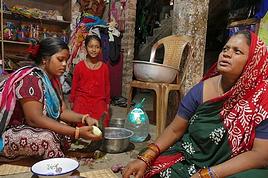
There’s a big debate among travelers who are attached to India and have been visiting often, regularly, for 15 years or more.
I’ve experienced it—and still do—in every sense of the word, first as a tourist, then from the inside by living there for 12 years. I feel it has changed a lot and continues to change at a dizzying pace, year after year, almost month after month.
It all depends on how you see it, how you visit it, where you stay, etc... North or south, and so on...
The debate is open—no animosity or arguments if opinions differ. Just your own take, your personal experiences, your travel conditions, what you’ve noticed and still notice today... Let’s try to be objective, if possible, though it’s a tough exercise.
Hello 🙂
I should be serving a warming drink to the participants in the discussion about gardens and parks that provide us with beautiful photos, I could mention the delicious buttery scent wafting from bakeries in the thread about returning to France, but my heart, its powerful pulse that nourishes my entire being, is elsewhere.
Dasht-e Lut, Yazd, Esfahan, Bam, Kerman, Qeshm, Hormuz—a melody, a prayer at the heart of desire.
A dream, an unattainable fantasy? No. Not anymore. A very serious Italian travel agency is organizing this trip for 6 people this winter. I’m signed up, I’m going, I’m living. Maybe.
"But you’re completely crazy!!!!"
I know... I know that every civilization, every society has a vital need to create scapegoats to define and justify itself, pathetically. And Iran is one of them, top of the list. I laugh or sigh, and it doesn’t bother me.
But that unchanging red, deep red and garnet, so beautiful in itself, in all the Western chancelleries repeats, whispers, shouts: don’t go, don’t go, don’t go, you’re putting yourself in danger and we can’t do anything for you. You’ll be turned into mere bargaining chips, into arguments for endless negotiations. Fear must be instilled, its power absolutely preserved, no concessions made to the enemy. The information (how many French hostages, real or fake, compared to the number of travelers?) is always lacking.
Traveling becomes a merciless confrontation between desire, the vital pulse, and anxiety, its ghosts.
Catherine
I should be serving a warming drink to the participants in the discussion about gardens and parks that provide us with beautiful photos, I could mention the delicious buttery scent wafting from bakeries in the thread about returning to France, but my heart, its powerful pulse that nourishes my entire being, is elsewhere.
Dasht-e Lut, Yazd, Esfahan, Bam, Kerman, Qeshm, Hormuz—a melody, a prayer at the heart of desire.
A dream, an unattainable fantasy? No. Not anymore. A very serious Italian travel agency is organizing this trip for 6 people this winter. I’m signed up, I’m going, I’m living. Maybe.
"But you’re completely crazy!!!!"
I know... I know that every civilization, every society has a vital need to create scapegoats to define and justify itself, pathetically. And Iran is one of them, top of the list. I laugh or sigh, and it doesn’t bother me.
But that unchanging red, deep red and garnet, so beautiful in itself, in all the Western chancelleries repeats, whispers, shouts: don’t go, don’t go, don’t go, you’re putting yourself in danger and we can’t do anything for you. You’ll be turned into mere bargaining chips, into arguments for endless negotiations. Fear must be instilled, its power absolutely preserved, no concessions made to the enemy. The information (how many French hostages, real or fake, compared to the number of travelers?) is always lacking.
Traveling becomes a merciless confrontation between desire, the vital pulse, and anxiety, its ghosts.
Catherine
“Slow travel” is a concept that some tout as a philosophical revolution in travel. But on closer inspection, it’s nothing more than a marketing repackaging of an age-old practice.
This term is wrapped in an aura of intellectualism. It promises to reinvent the experience of travel by valuing slowness, contemplation, and cultural immersion.
The term “slow travel” claims to bring depth to travel, but it often relies on clichés.
Taking your time, meeting locals, avoiding quick visits—these practices have always existed and are nothing revolutionary.
Before the era of airplanes, high-speed trains, and express stays, traveling necessarily meant taking your time. Pilgrims, merchants, and explorers already practiced a form of “slow travel,” without hashtags or self-proclaimed spiritual guides.
Crossing lands on foot or by horse required total immersion in the landscapes, cultures, and unpredictability of the journey. Yet, no one attributed philosophical intentions to them: it was a necessity.
Slow travel, in its current version, may be less a philosophy than a reflection of the contradictions of an affluent class searching for meaning in a world they help overload.
So-called “slow” travel is presented as a privileged way to understand a culture, but this claim is debatable. A region never represents an entire country.
Immersing yourself in a community doesn’t guarantee a complete or more authentic understanding than any other way of traveling.
Slowness in itself doesn’t guarantee depth or ethics. You can immerse yourself in a place over a weekend, just as you can spend months in a country without grasping its subtleties.
By positioning itself as an antidote to “fast” tourism, slow travel fetishizes a temporality that only makes sense if it’s accompanied by real openness and an effort to integrate.
But this over-intellectualization often masks a desire to belong to a trend or a need to stand out socially.
Behind this posture sometimes lies a whim: the urge to reinvent one’s life elsewhere in an idealized form. But this quest for elsewhere remains fundamentally a way to escape or respond to unease, rather than a true commitment to the cultures visited.
When we talk about “encounters” while traveling, we often forget that these exchanges are facilitated by biased contexts. As a traveler, you’re seen as a temporary visitor, unattached, and that changes the dynamic.
Locals, whether curious or used to tourists, adopt a different stance than they would with a neighbor they see daily.
This interaction is also tinged with asymmetry: the traveler has the luxury of time and availability, while in daily life, personal concerns often take precedence over the desire to connect.
The flip side is that the openness displayed while traveling is often a facade. We boast about chatting with a fisherman or sharing a meal with a local family, but how many of these encounters lead to a real understanding of cultural differences or sincere reflection?
Once home, these moments become anecdotes, social trophies to show off, without fundamentally changing our relationship with others in our daily lives.
By imposing a definition, we push people to adapt their practices to fit an idealized model. This can lead to a paradoxical standardization: “slow travel” becomes a checklist of behaviors (meetings, immersion, slowness).
The “bobos” (bourgeois-bohemians), often in search of meaning in a world saturated with options, believe that giving a name to a practice grants it legitimacy or moral value. But this obsession with framing and theorizing travel only drains it of its spontaneity.
Someone who grew up at the crossroads of multiple cultures, on the other hand, doesn’t feel this need. For them, traveling isn’t a philosophical project but an intrinsic part of their life.
The very concept of “slow travel” can seem absurd: why glorify what’s simply natural?
Why try to turn into an ideology what should be a personal, intimate experience, free from semantic constraints?
Ultimately, this need for labeling, this frantic quest to name every gesture, reveals a society craving simplicity.
Travel, in its purest form, doesn’t need justification or slogans. It doesn’t need slowness or speed: it’s simply lived.
Perhaps the real challenge is to unlearn this Western habit of conceptualizing everything that should simply be felt.
For many, travel is a parenthesis, a temporary break from daily life. But if we reject this distinction between “home” and “elsewhere,” every human life becomes a continuous journey through varied environments.
From this perspective, “slow travel” loses all meaning, because living somewhere—whether for a week or five years—is part of the same experience of adaptation.
So, we ask the fans of marketing slogans: is travel a parenthesis or a journey?
“Slow travel” is often driven by a Western eco-bobo ideology, tinged with post-colonial guilt. This discourse promotes a supposedly virtuous way of traveling while forgetting that these practices remain a privilege.
Far from deconstructing power dynamics, it sometimes reinforces them by glorifying a different kind of consumption, still centered on comfort.
There’s also a condescending side to this rhetoric. By idealizing slowness, slow travel advocates imply that those who travel quickly or on a budget are less “authentic” in their approach.
Yet, isn’t that a form of contempt? Do those who leave for a well-deserved week after months of hard work deserve less consideration?
Concepts like “slow travel” or “sustainable tourism” seem hollow when reduced to marketing slogans or standardized behaviors. They confine travel to preconceived frameworks, stripping it of its spontaneous and unpredictable dimension.
Instead of categorizing, it would be more relevant to recognize the plurality of human experiences without trying to define them.
Slow travel doesn’t invent anything. It simply puts into words—and often slogans—what travel has always been for those who practice it with intention.
Maybe we should stop trying to theorize every movement and simply rediscover travel for what it is: a human experience, sometimes slow, sometimes fast, but always personal.
More info on our site
This term is wrapped in an aura of intellectualism. It promises to reinvent the experience of travel by valuing slowness, contemplation, and cultural immersion.
The term “slow travel” claims to bring depth to travel, but it often relies on clichés.
Taking your time, meeting locals, avoiding quick visits—these practices have always existed and are nothing revolutionary.
Before the era of airplanes, high-speed trains, and express stays, traveling necessarily meant taking your time. Pilgrims, merchants, and explorers already practiced a form of “slow travel,” without hashtags or self-proclaimed spiritual guides.
Crossing lands on foot or by horse required total immersion in the landscapes, cultures, and unpredictability of the journey. Yet, no one attributed philosophical intentions to them: it was a necessity.
Slow travel, in its current version, may be less a philosophy than a reflection of the contradictions of an affluent class searching for meaning in a world they help overload.
So-called “slow” travel is presented as a privileged way to understand a culture, but this claim is debatable. A region never represents an entire country.
Immersing yourself in a community doesn’t guarantee a complete or more authentic understanding than any other way of traveling.
Slowness in itself doesn’t guarantee depth or ethics. You can immerse yourself in a place over a weekend, just as you can spend months in a country without grasping its subtleties.
By positioning itself as an antidote to “fast” tourism, slow travel fetishizes a temporality that only makes sense if it’s accompanied by real openness and an effort to integrate.
But this over-intellectualization often masks a desire to belong to a trend or a need to stand out socially.
Behind this posture sometimes lies a whim: the urge to reinvent one’s life elsewhere in an idealized form. But this quest for elsewhere remains fundamentally a way to escape or respond to unease, rather than a true commitment to the cultures visited.
When we talk about “encounters” while traveling, we often forget that these exchanges are facilitated by biased contexts. As a traveler, you’re seen as a temporary visitor, unattached, and that changes the dynamic.
Locals, whether curious or used to tourists, adopt a different stance than they would with a neighbor they see daily.
This interaction is also tinged with asymmetry: the traveler has the luxury of time and availability, while in daily life, personal concerns often take precedence over the desire to connect.
The flip side is that the openness displayed while traveling is often a facade. We boast about chatting with a fisherman or sharing a meal with a local family, but how many of these encounters lead to a real understanding of cultural differences or sincere reflection?
Once home, these moments become anecdotes, social trophies to show off, without fundamentally changing our relationship with others in our daily lives.
By imposing a definition, we push people to adapt their practices to fit an idealized model. This can lead to a paradoxical standardization: “slow travel” becomes a checklist of behaviors (meetings, immersion, slowness).
The “bobos” (bourgeois-bohemians), often in search of meaning in a world saturated with options, believe that giving a name to a practice grants it legitimacy or moral value. But this obsession with framing and theorizing travel only drains it of its spontaneity.
Someone who grew up at the crossroads of multiple cultures, on the other hand, doesn’t feel this need. For them, traveling isn’t a philosophical project but an intrinsic part of their life.
The very concept of “slow travel” can seem absurd: why glorify what’s simply natural?
Why try to turn into an ideology what should be a personal, intimate experience, free from semantic constraints?
Ultimately, this need for labeling, this frantic quest to name every gesture, reveals a society craving simplicity.
Travel, in its purest form, doesn’t need justification or slogans. It doesn’t need slowness or speed: it’s simply lived.
Perhaps the real challenge is to unlearn this Western habit of conceptualizing everything that should simply be felt.
For many, travel is a parenthesis, a temporary break from daily life. But if we reject this distinction between “home” and “elsewhere,” every human life becomes a continuous journey through varied environments.
From this perspective, “slow travel” loses all meaning, because living somewhere—whether for a week or five years—is part of the same experience of adaptation.
So, we ask the fans of marketing slogans: is travel a parenthesis or a journey?
“Slow travel” is often driven by a Western eco-bobo ideology, tinged with post-colonial guilt. This discourse promotes a supposedly virtuous way of traveling while forgetting that these practices remain a privilege.
Far from deconstructing power dynamics, it sometimes reinforces them by glorifying a different kind of consumption, still centered on comfort.
There’s also a condescending side to this rhetoric. By idealizing slowness, slow travel advocates imply that those who travel quickly or on a budget are less “authentic” in their approach.
Yet, isn’t that a form of contempt? Do those who leave for a well-deserved week after months of hard work deserve less consideration?
Concepts like “slow travel” or “sustainable tourism” seem hollow when reduced to marketing slogans or standardized behaviors. They confine travel to preconceived frameworks, stripping it of its spontaneous and unpredictable dimension.
Instead of categorizing, it would be more relevant to recognize the plurality of human experiences without trying to define them.
Slow travel doesn’t invent anything. It simply puts into words—and often slogans—what travel has always been for those who practice it with intention.
Maybe we should stop trying to theorize every movement and simply rediscover travel for what it is: a human experience, sometimes slow, sometimes fast, but always personal.
More info on our site
Good evening! 🙂,
I’m paraphrasing the title of discussions that were popping up back in 2020. Back then, the obstacles were travel restrictions and all sorts of often very arbitrary "health" rules. Today, it feels like we’re facing an epidemic of wanderlust that’s piling up in certain places—places that keep expanding. Places that end up feeling like wallpaper, just part of the scenery, more or less exotic, since the people, the dominant crowd, are always the same. And they’re especially overwhelming in limited spaces like villages, museums, and other remarkable sites.
Personally, it tends to send my cortisol levels through the roof, leading to desperate attempts to salvage what I can (the stress when I saw a travel journal about eastern Crete—then, phew, at least this little piece of old Greece hasn’t been exposed yet. Maybe it’ll survive a little longer). So, no more weekends in beautiful European cities. So, adjusted visiting hours, but that’s not always enough (I’ll still have to say goodbye to Caravaggio’s *Madeleine* since I can’t have a quiet moment with her anymore, even late in the day). So, outright giving up: I’ll never see Machu Picchu. Too late. So, shifting travel dates to minimize the damage (Uzbekistan was originally planned for Easter—with April 24th and May 1st to limit vacation days—but the anxiety of tourist crowds during that mild climate period, with few days off, led me to reschedule the trip for winter. Short days and possible rain are a thousand times better).
Avoiding crowds has become a fundamental criterion for choosing destinations and timing.
And you? Are you able to tune out this identical crowd everywhere, or has it changed your relationship with travel/tourism?
Catherine
I’m paraphrasing the title of discussions that were popping up back in 2020. Back then, the obstacles were travel restrictions and all sorts of often very arbitrary "health" rules. Today, it feels like we’re facing an epidemic of wanderlust that’s piling up in certain places—places that keep expanding. Places that end up feeling like wallpaper, just part of the scenery, more or less exotic, since the people, the dominant crowd, are always the same. And they’re especially overwhelming in limited spaces like villages, museums, and other remarkable sites.
Personally, it tends to send my cortisol levels through the roof, leading to desperate attempts to salvage what I can (the stress when I saw a travel journal about eastern Crete—then, phew, at least this little piece of old Greece hasn’t been exposed yet. Maybe it’ll survive a little longer). So, no more weekends in beautiful European cities. So, adjusted visiting hours, but that’s not always enough (I’ll still have to say goodbye to Caravaggio’s *Madeleine* since I can’t have a quiet moment with her anymore, even late in the day). So, outright giving up: I’ll never see Machu Picchu. Too late. So, shifting travel dates to minimize the damage (Uzbekistan was originally planned for Easter—with April 24th and May 1st to limit vacation days—but the anxiety of tourist crowds during that mild climate period, with few days off, led me to reschedule the trip for winter. Short days and possible rain are a thousand times better).
Avoiding crowds has become a fundamental criterion for choosing destinations and timing.
And you? Are you able to tune out this identical crowd everywhere, or has it changed your relationship with travel/tourism?
Catherine
There’s a similar discussion about India, by the way...
I really, really want to go back to China, but since the country is evolving at lightning speed, I’m wondering. I went there nearly 20 years ago. It was already undergoing a lot of changes, slowly but surely, but I still have wonderful memories of the country, which I found so endearing at the time. I visited Beijing, Sichuan, Guangxi, Hainan, and also Tibet by train, then Xinjiang. Now, we’re mainly considering Gansu and Hunan.
It was still possible to get 60-day visas back then, which isn’t the case anymore since they’re now limited to 30 days. But at the same time, the country seems more accessible. Many hotels are open to foreign tourists, sophisticated transport options have developed everywhere, and it’s possible to visit for up to 15 days without a visa... Tourists can easily travel by train or plane, but to reach places "off the beaten path," it seems you need to rent a vehicle with a driver. There used to be plenty of day-trip group tours, but that doesn’t seem to be the case anymore.
It’s hard to find info on whether certain routes are feasible for independent travel.
From what I’ve gathered here and there, "high tech" has taken over the entire country, the countryside has given way to imposing buildings, cities are increasingly industrialized and polluted—basically, the country has become dehumanized... In short, are there still beautiful places left—dare I say preserved—to see?
Add to this the bad reputation, not always justified, that China suffers from. It seems like the country is being boycotted by travel agencies, as if it’s not "politically correct" to visit. Maybe I’m exaggerating, but I’ve noticed this with French agencies like Nomade, Allibert, etc., which used to offer a wide range of itineraries everywhere, especially in Yunnan. Now, they’ve limited themselves to the classics: Beijing, Xi’an, Shanghai, water towns, or Tibet. Yunnan, Gansu, Qinghai, and many other Chinese provinces are no longer on the menu. Maybe it’s due to COVID...
The destination isn’t exactly a hit on forums either...
So, is it still worth going in 2025? I’d love to hear from those who’ve been there recently. Looking forward to exchanging thoughts on this fascinating destination (from my point of view, of course).
Anne-Claire
I really, really want to go back to China, but since the country is evolving at lightning speed, I’m wondering. I went there nearly 20 years ago. It was already undergoing a lot of changes, slowly but surely, but I still have wonderful memories of the country, which I found so endearing at the time. I visited Beijing, Sichuan, Guangxi, Hainan, and also Tibet by train, then Xinjiang. Now, we’re mainly considering Gansu and Hunan.
It was still possible to get 60-day visas back then, which isn’t the case anymore since they’re now limited to 30 days. But at the same time, the country seems more accessible. Many hotels are open to foreign tourists, sophisticated transport options have developed everywhere, and it’s possible to visit for up to 15 days without a visa... Tourists can easily travel by train or plane, but to reach places "off the beaten path," it seems you need to rent a vehicle with a driver. There used to be plenty of day-trip group tours, but that doesn’t seem to be the case anymore.
It’s hard to find info on whether certain routes are feasible for independent travel.
From what I’ve gathered here and there, "high tech" has taken over the entire country, the countryside has given way to imposing buildings, cities are increasingly industrialized and polluted—basically, the country has become dehumanized... In short, are there still beautiful places left—dare I say preserved—to see?
Add to this the bad reputation, not always justified, that China suffers from. It seems like the country is being boycotted by travel agencies, as if it’s not "politically correct" to visit. Maybe I’m exaggerating, but I’ve noticed this with French agencies like Nomade, Allibert, etc., which used to offer a wide range of itineraries everywhere, especially in Yunnan. Now, they’ve limited themselves to the classics: Beijing, Xi’an, Shanghai, water towns, or Tibet. Yunnan, Gansu, Qinghai, and many other Chinese provinces are no longer on the menu. Maybe it’s due to COVID...
The destination isn’t exactly a hit on forums either...
So, is it still worth going in 2025? I’d love to hear from those who’ve been there recently. Looking forward to exchanging thoughts on this fascinating destination (from my point of view, of course).
Anne-Claire
"In one place, in one day, a single deed accomplished,
May hold the theater filled until the end."
- Sunday morning, a chilly dawn - The kitchen - Smell of coffee and toast, a jar of honey on the table.
- Tits pecking at sunflower seeds in the transparent feeder stuck to the window.
- France Musique on the radio: Brahms, violin concerto by the lovely Hilary Hahn - Characters: - An old man in a plush dark blue dressing gown - An old woman in a worn-out duck-blue dressing gown. They dance cheek to cheek, the woman’s head resting on the old man’s broad chest. The old man breathes in the tangled hair of the lady. She smiles. Happy. Tomorrow, they’re off on a trip.
- Sunday morning, a chilly dawn - The kitchen - Smell of coffee and toast, a jar of honey on the table.
- Tits pecking at sunflower seeds in the transparent feeder stuck to the window.
- France Musique on the radio: Brahms, violin concerto by the lovely Hilary Hahn - Characters: - An old man in a plush dark blue dressing gown - An old woman in a worn-out duck-blue dressing gown. They dance cheek to cheek, the woman’s head resting on the old man’s broad chest. The old man breathes in the tangled hair of the lady. She smiles. Happy. Tomorrow, they’re off on a trip.
Hello everyone,
It’s something we often notice in this forum—and many others—this behavioral shift.
A long-time member, or even a new one, asks a question. They get one or more answers, some brief, some detailed, and then... nothing???
Not even a simple thank you!!!
From what I’ve gathered, if the answers don’t align with what they wanted to hear, it seems natural for the asker to just disappear!! 😕 Unless—(and I fear this is the case)—basic politeness is no longer part of our society????
Please forgive my little rant.
Wishing everyone all the best. Cheers,
Puma2A

...
It’s something we often notice in this forum—and many others—this behavioral shift.
A long-time member, or even a new one, asks a question. They get one or more answers, some brief, some detailed, and then... nothing???
Not even a simple thank you!!!
From what I’ve gathered, if the answers don’t align with what they wanted to hear, it seems natural for the asker to just disappear!! 😕 Unless—(and I fear this is the case)—basic politeness is no longer part of our society????
Please forgive my little rant.
Wishing everyone all the best. Cheers,
Puma2A
...
Hi there,
The title might be a bit long, but I hope it’s completely understandable!
When it comes to choosing your next trip, what tips the scales in favor of Eritrea over Ibiza?
Why pick Canada over French Polynesia?
The price? A magazine or TV report, a travel journal, an Instagram ad? Ease of travel? Minimal time difference? The country that has the most in common with all the trip participants? Activities? Relaxation? The desire to push your limits?
A photo?
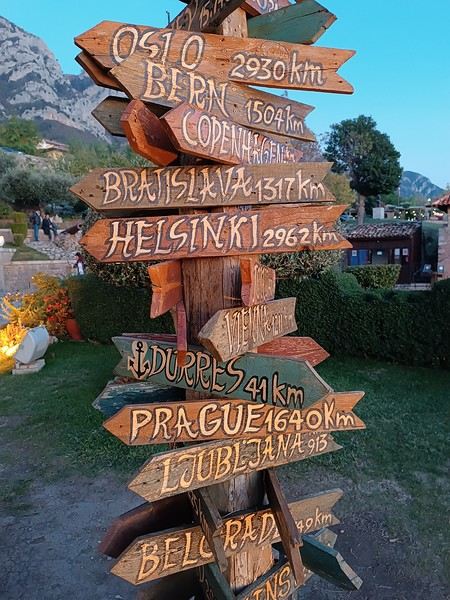
What else, I wonder...
Personally, I often prioritize simple destinations (no administrative hassles), where I’m not at risk (nothing extraordinary like getting kidnapped by Daesh or ending up in a jail cell because the current geopolitics aren’t favorable to my passport, etc.), and where I can drive.
Wide-open natural spaces are more my thing than urban anthills.
Finally, I try not to spend three days on a plane to reach my destination, and I aim for a maximum budget of 3500 € (for 3 weeks) in comfortable conditions—that means charming hotels, good meals, etc.
What about you?🙂
The title might be a bit long, but I hope it’s completely understandable!
When it comes to choosing your next trip, what tips the scales in favor of Eritrea over Ibiza?
Why pick Canada over French Polynesia?
The price? A magazine or TV report, a travel journal, an Instagram ad? Ease of travel? Minimal time difference? The country that has the most in common with all the trip participants? Activities? Relaxation? The desire to push your limits?
A photo?
What else, I wonder...
Personally, I often prioritize simple destinations (no administrative hassles), where I’m not at risk (nothing extraordinary like getting kidnapped by Daesh or ending up in a jail cell because the current geopolitics aren’t favorable to my passport, etc.), and where I can drive.
Wide-open natural spaces are more my thing than urban anthills.
Finally, I try not to spend three days on a plane to reach my destination, and I aim for a maximum budget of 3500 € (for 3 weeks) in comfortable conditions—that means charming hotels, good meals, etc.
What about you?🙂
Hi everyone,
I feel like I’ve been lucky enough over the past few years to travel—a lot of that’s thanks to retirement... (see my profile!)
So, aside from my beautiful country, France, here’s my totally subjective top 3:
1 – Antarctica
2 – Greenland
3 – Yellowstone Park
Of course, this is just my opinion—human, architectural, cultural, and gastronomic treasures are everywhere on our unique planet, Earth. Have a great day, everyone!
Of course, this is just my opinion—human, architectural, cultural, and gastronomic treasures are everywhere on our unique planet, Earth. Have a great day, everyone!
hello to all travelers with their eyes wide open to the desert...
I’ve always wondered what I was "doing" on this earth. And why my father, who died a few months after I was born—a former youngest French resistance fighter—joined the First Saharan Motorized Company in Atar and spent the rest of his life repairing army engines in Algeria, Mauritania, Senegal, Mali (which didn’t exist under that name back then), Morocco, and finally Algeria, where my mother was born and raised. (Believe me, it’s not "cool" being the child of a soldier in a country occupied by France, and even less so the child of a "pied-noir.") Of course, I never got an answer: the dead don’t talk, and the army doesn’t either. But here’s the thing—I had photos... So naturally, one day I hit the road. I wanted to see, to understand. It’s thanks to VF that I was able to do a little research on crossing the Morocco-Mauritania border, and I’m grateful to its members, just as I’m grateful to all those who welcomed me on the road for 14 years. For the past few weeks, I’ve been wondering if I should talk about this or not... It turns out the Mauritanians changed my life by asking for my help... And that started as early as February 2012... (Did I owe them something? No answer to that question.) Ah, the irony—they saw me coming. But when you’re handed sick children and begged to do something, what would you have done? I’d worked in a hospital, so I knew a bit about the rules to follow. I didn’t hesitate. And well, over all these years, I met doctors, surgeons, and together we organized care, evacuations of children, training for surgeons—even trying to stop children from having to travel outside their country. It was never easy. I’d like to thank those who supported us, as well as *La Chaîne de l’Espoir*, *La Fondation Face au Monde*, and everyone who built bridges between our two countries. Unfortunately, despite the constant efforts of Mauritanian doctors and surgeons, some children couldn’t be helped in time. Today, I want to talk about four siblings—orphans of their mother—suffering from congenital glaucoma causing irreversible blindness. Their case was entrusted to me in 2020, just weeks before the big lockdown. We couldn’t do anything for them then, but when their father asked me for a gift, I rushed to my computer and wrote a story. Through a tale, the children take a great journey, explore their country, and fulfill a dream. I never thought this book would be published—it was, in 2023. This book pays tribute to Mauritania. It’s a message for those who know nothing about the hardships of life there, carrying both the harshness and beauty of an immense desert where you can travel by 4x4, bike, on foot, or by camel in complete safety. It bears witness to the kindness of Mauritanians toward travelers. As a woman traveling alone in my vehicle—a now-rusted old Mercedes that no longer runs—I had the most beautiful encounters of my life there (I’ve seen other parts of the world...). The blind children of Choum, Atar, Nouadhibou, and Nouakchott will forever be in my heart. Volunteer readers transcribed the book into a free audio version for the visually impaired. It’s available in sound libraries in France, the *Fondation Valentin Haüy*, and the Swiss Romande library. I made my last trip to Mauritania in my old 4x4 to distribute the book everywhere, especially to its heroes and the school for the visually impaired in Nouakchott. After that, I thought it was time to close the chapter because I no longer have the means or the strength to travel. My publishers chose this title for it: *The Blue Eyes of the Desert*. This publication helped a mission of Swiss volunteer ophthalmologists come to operate on glaucomas in Mauritania. I’m thrilled because they come back every year! This adventure is ending, yes—everything must come to an end—but ultimately, it was born here, on the VF site!! So yes, I had to say it: THANK YOU!!!!!
I’ve always wondered what I was "doing" on this earth. And why my father, who died a few months after I was born—a former youngest French resistance fighter—joined the First Saharan Motorized Company in Atar and spent the rest of his life repairing army engines in Algeria, Mauritania, Senegal, Mali (which didn’t exist under that name back then), Morocco, and finally Algeria, where my mother was born and raised. (Believe me, it’s not "cool" being the child of a soldier in a country occupied by France, and even less so the child of a "pied-noir.") Of course, I never got an answer: the dead don’t talk, and the army doesn’t either. But here’s the thing—I had photos... So naturally, one day I hit the road. I wanted to see, to understand. It’s thanks to VF that I was able to do a little research on crossing the Morocco-Mauritania border, and I’m grateful to its members, just as I’m grateful to all those who welcomed me on the road for 14 years. For the past few weeks, I’ve been wondering if I should talk about this or not... It turns out the Mauritanians changed my life by asking for my help... And that started as early as February 2012... (Did I owe them something? No answer to that question.) Ah, the irony—they saw me coming. But when you’re handed sick children and begged to do something, what would you have done? I’d worked in a hospital, so I knew a bit about the rules to follow. I didn’t hesitate. And well, over all these years, I met doctors, surgeons, and together we organized care, evacuations of children, training for surgeons—even trying to stop children from having to travel outside their country. It was never easy. I’d like to thank those who supported us, as well as *La Chaîne de l’Espoir*, *La Fondation Face au Monde*, and everyone who built bridges between our two countries. Unfortunately, despite the constant efforts of Mauritanian doctors and surgeons, some children couldn’t be helped in time. Today, I want to talk about four siblings—orphans of their mother—suffering from congenital glaucoma causing irreversible blindness. Their case was entrusted to me in 2020, just weeks before the big lockdown. We couldn’t do anything for them then, but when their father asked me for a gift, I rushed to my computer and wrote a story. Through a tale, the children take a great journey, explore their country, and fulfill a dream. I never thought this book would be published—it was, in 2023. This book pays tribute to Mauritania. It’s a message for those who know nothing about the hardships of life there, carrying both the harshness and beauty of an immense desert where you can travel by 4x4, bike, on foot, or by camel in complete safety. It bears witness to the kindness of Mauritanians toward travelers. As a woman traveling alone in my vehicle—a now-rusted old Mercedes that no longer runs—I had the most beautiful encounters of my life there (I’ve seen other parts of the world...). The blind children of Choum, Atar, Nouadhibou, and Nouakchott will forever be in my heart. Volunteer readers transcribed the book into a free audio version for the visually impaired. It’s available in sound libraries in France, the *Fondation Valentin Haüy*, and the Swiss Romande library. I made my last trip to Mauritania in my old 4x4 to distribute the book everywhere, especially to its heroes and the school for the visually impaired in Nouakchott. After that, I thought it was time to close the chapter because I no longer have the means or the strength to travel. My publishers chose this title for it: *The Blue Eyes of the Desert*. This publication helped a mission of Swiss volunteer ophthalmologists come to operate on glaucomas in Mauritania. I’m thrilled because they come back every year! This adventure is ending, yes—everything must come to an end—but ultimately, it was born here, on the VF site!! So yes, I had to say it: THANK YOU!!!!!
Now that the curtain has fallen on the past year, it’s time to see what’s happening around here.
It seems pretty quiet, but I’ll read more in detail later.
First, I need to tell you all an anecdote.
My eldest little girl, in her third year of law school, was really scared she wouldn’t pass the year. I told her: “Trust yourself, you’ve worked so hard, and worst case, if you fail, you’ll just redo the year.” “But I don’t think I’ll make it—they changed the rules, and if I mess up even one unit, I have to start all over.” I knew her grades weren’t exactly stellar, and with what I was about to say, I wasn’t taking much of a risk. “Here’s the deal, sweetheart: if you pass, I promise I’ll take you to India, just the two of us.” I have to admit, India is a country I’ve talked about so much to all my grandchildren that in their minds, it’s become a magical, mythical place (hmm).
July had barely begun when my phone rang, her name flashing on the screen. “Mamido, I did it!” My promise came rushing back—oh no, oh no, oh no! “Congratulations, sweetheart!” A little shyly, she said: “Is the India trip still on?”
And me, replying: “Of course it is!”
And that’s that—a promise is a promise, or you risk losing that precious trust that keeps hearts warm and at peace.
We’re leaving in February. Only 8 days—yikes, the carbon footprint! But we can’t miss her tutorials, or she’ll be kicked out. Personally, that works just fine for me.
Going to India has become a challenge for me. It’s far, it’s exhausting, I sweat, I hate mosquitoes, the spices bother my mouth when I used to love them. There’s noise all the time—at night, the dogs bark nonstop, and we almost get run over. I’ll get lost in the streets because my sense of direction has vanished. I don’t like rice anymore. All that chaos and those cultural differences that once enchanted me now just overwhelm me. But I promised.
The upside—and it’s a big one—Raman, the same driver I’ve had forever, will be at the airport with a sign with our names. We’ll stop at the same little shop for chai (or tea, plain and simple) with that aroma that intoxicates me, halfway through the trip.
It’ll be a tiny trip—staying with friends, I’ll show her a few places I love: Chidambaram, Mamallapuram, and the clinic where I worked. Then we’ll head back. My little girl will go home to her parents.
As for me, I’ll leave right away for our Scottish island with Homme for our chilly winter.
How can you love a country so much you want to live there, then suddenly reject it, no longer able to appreciate what once made it special? That’s the mystery of love, I guess.
First, I need to tell you all an anecdote.
My eldest little girl, in her third year of law school, was really scared she wouldn’t pass the year. I told her: “Trust yourself, you’ve worked so hard, and worst case, if you fail, you’ll just redo the year.” “But I don’t think I’ll make it—they changed the rules, and if I mess up even one unit, I have to start all over.” I knew her grades weren’t exactly stellar, and with what I was about to say, I wasn’t taking much of a risk. “Here’s the deal, sweetheart: if you pass, I promise I’ll take you to India, just the two of us.” I have to admit, India is a country I’ve talked about so much to all my grandchildren that in their minds, it’s become a magical, mythical place (hmm).
July had barely begun when my phone rang, her name flashing on the screen. “Mamido, I did it!” My promise came rushing back—oh no, oh no, oh no! “Congratulations, sweetheart!” A little shyly, she said: “Is the India trip still on?”
And me, replying: “Of course it is!”
And that’s that—a promise is a promise, or you risk losing that precious trust that keeps hearts warm and at peace.
We’re leaving in February. Only 8 days—yikes, the carbon footprint! But we can’t miss her tutorials, or she’ll be kicked out. Personally, that works just fine for me.
Going to India has become a challenge for me. It’s far, it’s exhausting, I sweat, I hate mosquitoes, the spices bother my mouth when I used to love them. There’s noise all the time—at night, the dogs bark nonstop, and we almost get run over. I’ll get lost in the streets because my sense of direction has vanished. I don’t like rice anymore. All that chaos and those cultural differences that once enchanted me now just overwhelm me. But I promised.
The upside—and it’s a big one—Raman, the same driver I’ve had forever, will be at the airport with a sign with our names. We’ll stop at the same little shop for chai (or tea, plain and simple) with that aroma that intoxicates me, halfway through the trip.
It’ll be a tiny trip—staying with friends, I’ll show her a few places I love: Chidambaram, Mamallapuram, and the clinic where I worked. Then we’ll head back. My little girl will go home to her parents.
As for me, I’ll leave right away for our Scottish island with Homme for our chilly winter.
How can you love a country so much you want to live there, then suddenly reject it, no longer able to appreciate what once made it special? That’s the mystery of love, I guess.
A turbulent period came to an end around 2022.
Many of us have returned to big trips after making only very small ones—or none at all. For a little anecdote, my dentist told me that due to the lack of travel, a lot of clients treated themselves to implants they would’ve otherwise skipped. The joy of traveling again probably gave some vacationers smiles they hadn’t dared to show before!
Here, you can share what’s on your mind: Have these new, real trips disappointed you, rejuvenated you, or just relieved a long frustration?
For my part, not being so young anymore, there was definitely relief but no explosion of joy. I just had the feeling of picking up the thread of life after a foggy pause, with the bitter taste that 2 or 3 years of my life had been partly stolen from me.
Many of us have returned to big trips after making only very small ones—or none at all. For a little anecdote, my dentist told me that due to the lack of travel, a lot of clients treated themselves to implants they would’ve otherwise skipped. The joy of traveling again probably gave some vacationers smiles they hadn’t dared to show before!
Here, you can share what’s on your mind: Have these new, real trips disappointed you, rejuvenated you, or just relieved a long frustration?
For my part, not being so young anymore, there was definitely relief but no explosion of joy. I just had the feeling of picking up the thread of life after a foggy pause, with the bitter taste that 2 or 3 years of my life had been partly stolen from me.
Hey hey,
A great way to meet locals! I got hooked on it over the years, and after a few women-only trips with an all-female agency (bad experiences with 5 to 10 chicks every time—many of them think they’re well-educated but actually stick their noses in everything 🤪), I’m heading out solo again soon. (Don’t ask me where—I rarely plan my trips and usually leave on a whim within days. Thinking of Canada in September, should be cool!)
Little tip for those who are nervous but still want to travel solo: It’s all about attitude because everything shows on your face. Sometimes approached by aggressive or just rowdy groups, it’s easy to spot the ringleader (it’s the one running his mouth 😏). And that’s who you need to target—use a tone that’ll leave him speechless (after that, you’ve won, and sometimes they even become friends). Not always, though! 😄
Little tip for those who are nervous but still want to travel solo: It’s all about attitude because everything shows on your face. Sometimes approached by aggressive or just rowdy groups, it’s easy to spot the ringleader (it’s the one running his mouth 😏). And that’s who you need to target—use a tone that’ll leave him speechless (after that, you’ve won, and sometimes they even become friends). Not always, though! 😄
As part of my Master’s thesis, I’m currently conducting a public survey on a topic that concerns all of us when planning a trip: artificial intelligence and the role of human contact in travel planning.
These days, we’re using more and more digital tools to find ideas, compare options, and book trips... but is the role of human advisors still essential? At what moments? And for what types of trips?
The survey is anonymous and takes about 7 minutes.
It’s aimed at anyone who travels (or has traveled) for leisure, whether you plan everything yourself or go through an agency.
Survey link: https://docs.google.com/forms/d/e/1FAIpQLSdkmBzW2QOE3_ZirhmdG8e2LQyaWLJxWUeyTR0LzpC8ytlufQ/viewform
Your response will be a huge help for my work and will contribute to a broader reflection on the future of the travel experience.
Thanks in advance to everyone who takes the time to participate!!
These days, we’re using more and more digital tools to find ideas, compare options, and book trips... but is the role of human advisors still essential? At what moments? And for what types of trips?
The survey is anonymous and takes about 7 minutes.
It’s aimed at anyone who travels (or has traveled) for leisure, whether you plan everything yourself or go through an agency.
Survey link: https://docs.google.com/forms/d/e/1FAIpQLSdkmBzW2QOE3_ZirhmdG8e2LQyaWLJxWUeyTR0LzpC8ytlufQ/viewform
Your response will be a huge help for my work and will contribute to a broader reflection on the future of the travel experience.
Thanks in advance to everyone who takes the time to participate!!
Hi there,
My name’s Emilie, and my view of travel has changed. I used to travel just to tick off the "places and things to do/see" boxes. But lately, I’ve realized that encounters have become really important to me while traveling. In fact, the people I’ve met and what they’ve brought to my life are now my best travel memories. What do you think? Have you had a similar shift in perspective? Are you more interested in meeting people while traveling now?
To be totally honest, I’m training to become a travel planner (a trip organizer), and I was thinking of focusing on organizing trips that are more centered around encounters. So I’d love to know if this makes sense—if travelers are interested in this kind of experience. Just to be clear, I’m not selling anything; I just want to chat and hear your thoughts.
Have a lovely evening, everyone! :)
My name’s Emilie, and my view of travel has changed. I used to travel just to tick off the "places and things to do/see" boxes. But lately, I’ve realized that encounters have become really important to me while traveling. In fact, the people I’ve met and what they’ve brought to my life are now my best travel memories. What do you think? Have you had a similar shift in perspective? Are you more interested in meeting people while traveling now?
To be totally honest, I’m training to become a travel planner (a trip organizer), and I was thinking of focusing on organizing trips that are more centered around encounters. So I’d love to know if this makes sense—if travelers are interested in this kind of experience. Just to be clear, I’m not selling anything; I just want to chat and hear your thoughts.
Have a lovely evening, everyone! :)
The chosen title was easy to find: it's from today's French daily newspaper "Le Figaro" (front page, right side, in the "Le Flash actualité" section at 10:31 AM).
Link: https://www.lefigaro.fr/voyages/et-si-votre-prochain-agent-de-voyage-etait-une-intelligence-artificielle-20250414
As some participants had mentioned, a simple query could sometimes yield very satisfying results, even if the initial comments from readers of this article don’t necessarily agree.
Instead of presenting our request in writing, I assume we’ll soon be able to speak to AI orally or even have a conversation with it. Refining our searches to perfection would then be a breeze.
But then, what about travel agencies and travel forums? Will Vfistes, in a twilight atmosphere, keep talking in a closed circle, fewer and fewer of them, until the last one is left monologuing? Will a side effect be that we start addressing our fellow humans in the same cold, dry way we talk to the Machine? Well, some of us have already gotten into that habit... With over 30% of current jobs set to disappear because of AI, will it become possible to quickly and perfectly plan trips we can no longer afford financially? What a paradox!
I admit I haven’t looked into this yet, and one of these days I’ll probably end up talking to the Machine, but for now, I prefer to keep laboriously and methodically planning my upcoming trips, telling myself that at least I’m still good for something...
As some participants had mentioned, a simple query could sometimes yield very satisfying results, even if the initial comments from readers of this article don’t necessarily agree.
Instead of presenting our request in writing, I assume we’ll soon be able to speak to AI orally or even have a conversation with it. Refining our searches to perfection would then be a breeze.
But then, what about travel agencies and travel forums? Will Vfistes, in a twilight atmosphere, keep talking in a closed circle, fewer and fewer of them, until the last one is left monologuing? Will a side effect be that we start addressing our fellow humans in the same cold, dry way we talk to the Machine? Well, some of us have already gotten into that habit... With over 30% of current jobs set to disappear because of AI, will it become possible to quickly and perfectly plan trips we can no longer afford financially? What a paradox!
I admit I haven’t looked into this yet, and one of these days I’ll probably end up talking to the Machine, but for now, I prefer to keep laboriously and methodically planning my upcoming trips, telling myself that at least I’m still good for something...
Hello fellow travel enthusiasts! 🌍
As a traveler and blogger, I’ve often been struck by the huge inequalities tied to freedom of movement. While some cross borders with ease, others face major obstacles due to their nationality, background, or the restrictive policies of certain countries.
On the occasion of International Human Rights Day, I wrote an article reflecting on this issue: 📖 Travelers' Rights: A Reflection on Freedom of Movement and Global Inequalities
In this article, I cover topics like:
Inequalities between passports ("strong" vs. "weak" passports). The specific challenges faced by travelers from marginalized communities. How to take action to promote more inclusive and equitable travel.
I’d love to hear your thoughts! 😊 Have you ever experienced these inequalities while traveling? How do you think we could raise more awareness about this issue? Feel free to share your experiences or ask questions in this thread. I can’t wait to discuss this with you!
Travel is also about building bridges between cultures. So let’s make sure it becomes a reality for everyone. ✈️🌎 Thanks for reading, and I look forward to exchanging ideas with you!
On the occasion of International Human Rights Day, I wrote an article reflecting on this issue: 📖 Travelers' Rights: A Reflection on Freedom of Movement and Global Inequalities
In this article, I cover topics like:
Inequalities between passports ("strong" vs. "weak" passports). The specific challenges faced by travelers from marginalized communities. How to take action to promote more inclusive and equitable travel.
I’d love to hear your thoughts! 😊 Have you ever experienced these inequalities while traveling? How do you think we could raise more awareness about this issue? Feel free to share your experiences or ask questions in this thread. I can’t wait to discuss this with you!
Travel is also about building bridges between cultures. So let’s make sure it becomes a reality for everyone. ✈️🌎 Thanks for reading, and I look forward to exchanging ideas with you!
Dear members of this forum,
*With the pandemic, travel guides were replaced by cookbooks. With lockdown, there’s no need for the *Guía del Trotamundos*—the cookbook is gospel, and your daily life turns into a *Spaghetti Western*. It’s no longer about good and bad actors but good and bad fats. And for a few extra pinches of salt. To the tune of Ennio Morricone, it’s hard to diagnose pastalogy—sorry, the pathology—you’re suffering from. Italy, now confined, and pasta—no more aimless gondola rides on Venice’s canals or *Dolce Vita* weekends in Rome. The beauty of the soul blends with minestrone preparation.
*With the pandemic, Professor Didier Raoult became the new Christ-like figure; like the Indira Gandhi of medicine, like Moses showing the way to the people across the Dead Sea, for tormented souls, the value of a medical prescription doesn’t wait for the years to pass. And plexiglass reigned over the world.
*With the pandemic and gender theory, in particular, pushing us to become androgynous, hermaphroditic beings—*patatras*—the Colossi of Rhodes we are waver because of a tiny nuisance.
*Phew, the pandemic has receded... but watch out for a new swine flu pandemic, because on this forum, it’ll be followed by long-winded rants. Political/historical revisionism with such a pandemic—Fidel Castro wouldn’t have been able to invade the *Bahía de los Cochinos*. And that’s where his comrade Ernesto *Che* Guevara becomes a perfect scam. A fierce opponent of capitalist ideology, yet many clothing sellers got rich selling T-shirts with his face on them.
*Neutrality and the Helvetic underground. Last summer, I found myself passing the *Chalet Gaillard* deep in the *Forêt du Risoux* in the Jura, then crossing the border into the Canton of Vaud on foot. My disappointment was great: no sign indicating we were in neutral territory. And what kind of neutrality are we talking about? Since neutrality is an abstract concept. It’s like those visitors eager to see Calais who, spotting the sign for the *Pas-de-Calais* department, turn around on the road.
*There’s always a traveler quick to recommend a local guide. I know an excellent guide named Michel who lives in Cairo—Michel of Cairo. He has a truck and takes you to see the pharaoh’s ruins by truck. Still, be careful—good guides aren’t that common, because there are only eight Cairenes.
*The mix between large mammals and humans. Or how infantilism rules the world. The ultimate quest for happiness is petting rhinos in Nepal—we’ll confirm if this kind of animal is visible on the streets of Sauraha, a town near Chitwan National Park. The downside of this animal? It takes up too much space as a pet—better to raise a Yorkshire terrier in your modest apartment.
*I’m tired of recurring topics like, *‘Do I have time for my connection at New York airport?’* Aren’t you? There’s the discussion about *Gare de Lyon Part-Dieu*—*Gare de Lyon Part-Dieu*, God bless you. In the name of the Father, the taxman, and the Holy Spirit, don’t miss your connection. *Gare de Lyon-Part-Dieu*—apparently, a great French actor, Gérard de Part-Dieu, was born there. If you think you’ll miss your connection, just get rich and fly private. The working masses of the *lumpenproletariat*—they dare everything, that’s how you recognize them.
*Experts in non-events: learning that some members don’t like Spanish-speaking countries because, supposedly, the people are too loud. That’s it, I’m not going to China anymore—too many stairs on the Great Wall. So, too bad, I’m not going. It’s like two people crossing paths—one asks, *‘Going fishing?’* and the other says no. These experts are probably natives of Arles, because with people like that, it’s *l’Arlésienne*...
*The art of taking selfies at every turn. You’d think it’s an ancient practice, almost an anthropological ritual—everything suggests it dates back to prehistoric times. Back in the days of the Lascaux caves, instead of photographing the meal they were about to eat (it’s crazy how many food photos we see on this forum, especially in travel journals), prehistoric men and women could only make cave paintings. From there, it’s only a small step to conclude that cave art was nothing more than the menu served in caves that doubled as *Buffalo Grills* long before the chain existed. By the way, if you want to visit the caves, ask for a guide named Josiane. When it comes to parietal art skills, Josiane beats Lascaux... (Only the French on this forum will get that one.)
*Mythology of an object: the suitcase (a nod to Mr. Éric Libiot, whose columns I enjoy) An object that gets lost during a flight, especially during a transfer at an airport. And it’s stuffed to the brim with clothes and other useless items, like Mickey Mouse slippers. You’re in despair: when going through customs, the officers find those slightly risqué photos hidden in your laundry, taken at Cap d’Agde on a naturist beach. The suitcase is an object that makes noise when rolling because of its wheels—you’re quickly spotted.
*Hurry up and visit New York while you still can. Because of *Woke* ideology, more and more statues are being torn down, and the Statue of Liberty will likely meet the same fate. *Queer* culture isn’t everyone’s cup of tea.
*The Dead Poets Society I admired the beautiful photos of Venice, and *click*—I check the new discussions when I come across one where Mr. J.M.B. offers money loans. This person probably works at the Ministry of Finance and risks loosening the purse strings of your wallets.
*Toward the independence of New Caledonia: will we call it *Nouvelle Nouvelle-Calédonie*? From what I know, Chinese authorities want to settle there and invest; apparently, they want to send (fake) tourists—facsimiles of real travelers. So, it’ll be hard to separate the wheat from the chaff (the *ivraie* tourists).
*There’s a topic about hitchhiking in Scotland: apparently, Scots are very welcoming people. I imagine arriving at Aberdeen Airport to a typical welcoming committee—men in kilts and a bagpiper playing. Just like arriving in Papeete, where you’re greeted with flower leis—*Aloha! (Jacta Est)*. To attract tourists, Scottish cities will end up installing whisky vending machines.
*Eskimo pies banned for sale because of *cancel culture*—you can’t go to Iqaluit anymore. Panicked, ice cream manufacturers had to revise their *packaging*—sorry for the anglicism. Because of *cancel culture*, we can no longer say *Eskimo* without it being pejorative. The identity of the Arctic people of the same name takes a hit—it’s crazy how *bien-pensance* wreaks havoc in our minds... We can’t even bite into a chocolate *Eskimo* pie anymore.
*Diplomatic tensions between France and Australia: and there goes the submarine sale project, canceled. Given that the cost of these machines is a fifth of Australia’s public finances budget, it’s tough to pay in didgeridoos and kangaroo skins.
Thanks for reading, and see you soon for more chronicles.
*With the pandemic, travel guides were replaced by cookbooks. With lockdown, there’s no need for the *Guía del Trotamundos*—the cookbook is gospel, and your daily life turns into a *Spaghetti Western*. It’s no longer about good and bad actors but good and bad fats. And for a few extra pinches of salt. To the tune of Ennio Morricone, it’s hard to diagnose pastalogy—sorry, the pathology—you’re suffering from. Italy, now confined, and pasta—no more aimless gondola rides on Venice’s canals or *Dolce Vita* weekends in Rome. The beauty of the soul blends with minestrone preparation.
*With the pandemic, Professor Didier Raoult became the new Christ-like figure; like the Indira Gandhi of medicine, like Moses showing the way to the people across the Dead Sea, for tormented souls, the value of a medical prescription doesn’t wait for the years to pass. And plexiglass reigned over the world.
*With the pandemic and gender theory, in particular, pushing us to become androgynous, hermaphroditic beings—*patatras*—the Colossi of Rhodes we are waver because of a tiny nuisance.
*Phew, the pandemic has receded... but watch out for a new swine flu pandemic, because on this forum, it’ll be followed by long-winded rants. Political/historical revisionism with such a pandemic—Fidel Castro wouldn’t have been able to invade the *Bahía de los Cochinos*. And that’s where his comrade Ernesto *Che* Guevara becomes a perfect scam. A fierce opponent of capitalist ideology, yet many clothing sellers got rich selling T-shirts with his face on them.
*Neutrality and the Helvetic underground. Last summer, I found myself passing the *Chalet Gaillard* deep in the *Forêt du Risoux* in the Jura, then crossing the border into the Canton of Vaud on foot. My disappointment was great: no sign indicating we were in neutral territory. And what kind of neutrality are we talking about? Since neutrality is an abstract concept. It’s like those visitors eager to see Calais who, spotting the sign for the *Pas-de-Calais* department, turn around on the road.
*There’s always a traveler quick to recommend a local guide. I know an excellent guide named Michel who lives in Cairo—Michel of Cairo. He has a truck and takes you to see the pharaoh’s ruins by truck. Still, be careful—good guides aren’t that common, because there are only eight Cairenes.
*The mix between large mammals and humans. Or how infantilism rules the world. The ultimate quest for happiness is petting rhinos in Nepal—we’ll confirm if this kind of animal is visible on the streets of Sauraha, a town near Chitwan National Park. The downside of this animal? It takes up too much space as a pet—better to raise a Yorkshire terrier in your modest apartment.
*I’m tired of recurring topics like, *‘Do I have time for my connection at New York airport?’* Aren’t you? There’s the discussion about *Gare de Lyon Part-Dieu*—*Gare de Lyon Part-Dieu*, God bless you. In the name of the Father, the taxman, and the Holy Spirit, don’t miss your connection. *Gare de Lyon-Part-Dieu*—apparently, a great French actor, Gérard de Part-Dieu, was born there. If you think you’ll miss your connection, just get rich and fly private. The working masses of the *lumpenproletariat*—they dare everything, that’s how you recognize them.
*Experts in non-events: learning that some members don’t like Spanish-speaking countries because, supposedly, the people are too loud. That’s it, I’m not going to China anymore—too many stairs on the Great Wall. So, too bad, I’m not going. It’s like two people crossing paths—one asks, *‘Going fishing?’* and the other says no. These experts are probably natives of Arles, because with people like that, it’s *l’Arlésienne*...
*The art of taking selfies at every turn. You’d think it’s an ancient practice, almost an anthropological ritual—everything suggests it dates back to prehistoric times. Back in the days of the Lascaux caves, instead of photographing the meal they were about to eat (it’s crazy how many food photos we see on this forum, especially in travel journals), prehistoric men and women could only make cave paintings. From there, it’s only a small step to conclude that cave art was nothing more than the menu served in caves that doubled as *Buffalo Grills* long before the chain existed. By the way, if you want to visit the caves, ask for a guide named Josiane. When it comes to parietal art skills, Josiane beats Lascaux... (Only the French on this forum will get that one.)
*Mythology of an object: the suitcase (a nod to Mr. Éric Libiot, whose columns I enjoy) An object that gets lost during a flight, especially during a transfer at an airport. And it’s stuffed to the brim with clothes and other useless items, like Mickey Mouse slippers. You’re in despair: when going through customs, the officers find those slightly risqué photos hidden in your laundry, taken at Cap d’Agde on a naturist beach. The suitcase is an object that makes noise when rolling because of its wheels—you’re quickly spotted.
*Hurry up and visit New York while you still can. Because of *Woke* ideology, more and more statues are being torn down, and the Statue of Liberty will likely meet the same fate. *Queer* culture isn’t everyone’s cup of tea.
*The Dead Poets Society I admired the beautiful photos of Venice, and *click*—I check the new discussions when I come across one where Mr. J.M.B. offers money loans. This person probably works at the Ministry of Finance and risks loosening the purse strings of your wallets.
*Toward the independence of New Caledonia: will we call it *Nouvelle Nouvelle-Calédonie*? From what I know, Chinese authorities want to settle there and invest; apparently, they want to send (fake) tourists—facsimiles of real travelers. So, it’ll be hard to separate the wheat from the chaff (the *ivraie* tourists).
*There’s a topic about hitchhiking in Scotland: apparently, Scots are very welcoming people. I imagine arriving at Aberdeen Airport to a typical welcoming committee—men in kilts and a bagpiper playing. Just like arriving in Papeete, where you’re greeted with flower leis—*Aloha! (Jacta Est)*. To attract tourists, Scottish cities will end up installing whisky vending machines.
*Eskimo pies banned for sale because of *cancel culture*—you can’t go to Iqaluit anymore. Panicked, ice cream manufacturers had to revise their *packaging*—sorry for the anglicism. Because of *cancel culture*, we can no longer say *Eskimo* without it being pejorative. The identity of the Arctic people of the same name takes a hit—it’s crazy how *bien-pensance* wreaks havoc in our minds... We can’t even bite into a chocolate *Eskimo* pie anymore.
*Diplomatic tensions between France and Australia: and there goes the submarine sale project, canceled. Given that the cost of these machines is a fifth of Australia’s public finances budget, it’s tough to pay in didgeridoos and kangaroo skins.
Thanks for reading, and see you soon for more chronicles.
It’s nighttime and 3 degrees in Tashkent.
Hi there,
Reflection: an act of thought that revisits an object to examine it. The object here is travel (or tourist movement, it doesn’t really matter) and the desire to examine it from the particular angle of the verb that drives it came from reading a sentence by Xrctn in the introduction to his travel journal about Turkmenistan.
Part of that strange category of travelers who like ticking boxes...
Ticking I have no idea how strange that is—I actually get the impression it might be pretty common when I see the diverse mix of trips some people here take. But maybe it’s a different approach that drives these compulsive travelers.
Still, it wouldn’t even occur to me. What does it add?
Connecting Or chaining, assembling, linking. These are my verbs. If I can’t do it—either because finances are tight (I live in one of Europe’s pigsties—a PIIGS country, where the virtuous northern barbarians sent the G&S troika to "nurse us back to health" through austerity, making it all the more pleasant to spend every summer among civilized folks on the terrace of my little white house in Kalymnos overlooking the Aegean), or because I’ve chosen a tricky, unstable direction (Lebanon had to be canceled in summer 2006, Syria too, and Iran right now)—I don’t really feel like traveling. I might just tag along to be nice, but it doesn’t mean anything to me.
If I think about the need behind my verbs—this continuous, meticulous, patient way of traveling—it’s about stripping away sudden, artificial exoticism, weaving small, successive changes, and feeling the presence of the knots too. About understanding, integrating something a little different from the image on a screen.
And you? What’s your guiding verb?
Catherine
Hi there,
Reflection: an act of thought that revisits an object to examine it. The object here is travel (or tourist movement, it doesn’t really matter) and the desire to examine it from the particular angle of the verb that drives it came from reading a sentence by Xrctn in the introduction to his travel journal about Turkmenistan.
Part of that strange category of travelers who like ticking boxes...
Ticking I have no idea how strange that is—I actually get the impression it might be pretty common when I see the diverse mix of trips some people here take. But maybe it’s a different approach that drives these compulsive travelers.
Still, it wouldn’t even occur to me. What does it add?
Connecting Or chaining, assembling, linking. These are my verbs. If I can’t do it—either because finances are tight (I live in one of Europe’s pigsties—a PIIGS country, where the virtuous northern barbarians sent the G&S troika to "nurse us back to health" through austerity, making it all the more pleasant to spend every summer among civilized folks on the terrace of my little white house in Kalymnos overlooking the Aegean), or because I’ve chosen a tricky, unstable direction (Lebanon had to be canceled in summer 2006, Syria too, and Iran right now)—I don’t really feel like traveling. I might just tag along to be nice, but it doesn’t mean anything to me.
If I think about the need behind my verbs—this continuous, meticulous, patient way of traveling—it’s about stripping away sudden, artificial exoticism, weaving small, successive changes, and feeling the presence of the knots too. About understanding, integrating something a little different from the image on a screen.
And you? What’s your guiding verb?
Catherine
Hi everyone,
I’m Loulou, a French expat who’s been living in Southeast Asia for about fifteen years, currently in Phnom Penh, Cambodia. A passionate walker at heart, I’ve trekked in Nepal (Thorung La, Mardi Himal), India, Vietnam, and I’m still planning new hikes (Char Dham, Langtang, Annapurna).
I’ve just published my first travel journal, recounting three months of walking and encounters across India. A portion of the sales goes to an educational center I support in Kep, for children whose parents work in the salt marshes.
I’m also working on a second book about Nepal with a musician friend, focusing on the Mardi Himal trek—two independent perspectives on the same journey.
Happy to swap stories with you about the Himalayas, India, Southeast Asia, or just the urge to hit the road and walk far from home.
Safe travels,
Loulou
My passion for travel
Travel is an endless source of wonder and discovery for me. It lets me escape the everyday and immerse myself in different cultures, varied landscapes, and unique ways of life. Every destination is an invitation to learn and grow, while fueling an insatiable curiosity.
The types of trips I love I’m especially drawn to trips that combine adventure and cultural immersion. I love discovering places off the beaten path, where authenticity takes precedence over mass tourism. Whether it’s trekking through isolated mountains, exploring historic cities, or staying in remote villages, every trip is a chance to step out of my comfort zone and embrace the world’s diversity.
I also prioritize trips that let me deepen my knowledge in a particular area, like gastronomy, history, or art. Exchanges with locals—whether sharing a meal or taking part in traditional events—are essential to making the experience rich and meaningful.
Trips I’ve taken Among the memorable trips I’ve done, some have been turning points in how I see the world. My journey through the Austrian Alps, for example, didn’t just offer spectacular landscapes—it also let me discover Austrian culture in all its diversity, from festivals to music to cuisine.
I’ve also had the chance to visit more exotic destinations, like Southeast Asia, where I immersed myself in fascinating cultures, learned ancient practices, and met people whose life philosophies really inspired me.
Future travels Looking ahead, I dream of going to Latin America to explore its vibrant cultures and breathtaking landscapes. A road trip through Peru, Bolivia, and Chile is one of my long-term travel goals. I’d also love to discover the Pacific Islands and maybe even take part in volunteer projects with local communities.
I hope my future travels will keep pushing my limits while letting me meet people who share this passion for travel and connection.
The types of trips I love I’m especially drawn to trips that combine adventure and cultural immersion. I love discovering places off the beaten path, where authenticity takes precedence over mass tourism. Whether it’s trekking through isolated mountains, exploring historic cities, or staying in remote villages, every trip is a chance to step out of my comfort zone and embrace the world’s diversity.
I also prioritize trips that let me deepen my knowledge in a particular area, like gastronomy, history, or art. Exchanges with locals—whether sharing a meal or taking part in traditional events—are essential to making the experience rich and meaningful.
Trips I’ve taken Among the memorable trips I’ve done, some have been turning points in how I see the world. My journey through the Austrian Alps, for example, didn’t just offer spectacular landscapes—it also let me discover Austrian culture in all its diversity, from festivals to music to cuisine.
I’ve also had the chance to visit more exotic destinations, like Southeast Asia, where I immersed myself in fascinating cultures, learned ancient practices, and met people whose life philosophies really inspired me.
Future travels Looking ahead, I dream of going to Latin America to explore its vibrant cultures and breathtaking landscapes. A road trip through Peru, Bolivia, and Chile is one of my long-term travel goals. I’d also love to discover the Pacific Islands and maybe even take part in volunteer projects with local communities.
I hope my future travels will keep pushing my limits while letting me meet people who share this passion for travel and connection.
After taking a little trip around the world, I came back a few months ago with an idea in mind.
I mostly do diving, and I love observing animals in their natural habitat without disturbing them.
During the trip, I realized it was quite complicated to know where and when to see certain species.
For example:
where to dive with sharks or manta rays where you might get a chance to swim with whales
I even discovered thresher sharks during my trip… I didn’t even know this species existed before, even though they’re incredible to see.
We spent a ton of time searching for info all over the place, especially on social media, without ever getting a clear picture.
So I started putting all this together on my own, in the form of a map, to make it easier to visualize where to go depending on the seasons.
I recently put a first version online (it’s called Fauneya). There are probably mistakes, inconsistencies, or things to improve, and that’s partly why I’m posting here.
I’d really love to know how you all go about planning this kind of trip.
I mostly do diving, and I love observing animals in their natural habitat without disturbing them.
During the trip, I realized it was quite complicated to know where and when to see certain species.
For example:
where to dive with sharks or manta rays where you might get a chance to swim with whales
I even discovered thresher sharks during my trip… I didn’t even know this species existed before, even though they’re incredible to see.
We spent a ton of time searching for info all over the place, especially on social media, without ever getting a clear picture.
So I started putting all this together on my own, in the form of a map, to make it easier to visualize where to go depending on the seasons.
I recently put a first version online (it’s called Fauneya). There are probably mistakes, inconsistencies, or things to improve, and that’s partly why I’m posting here.
I’d really love to know how you all go about planning this kind of trip.
Hi there, I’m not quite sure how to introduce this topic...
Let’s just say that since Covid—and the shutdown of VF—Facebook travel groups have exploded, while travel forums (VF or Le Forum du Routard) are much less active than they used to be.
And that’s where I realize (maybe it’s just my impression) that the average traveler seems to need assistance with *every* little detail... When I look at the questions posted in travel groups on social media—oh my goodness, we’re really not in the same traveler universe. You might think I’m being harsh, even condescending toward the overwhelming majority of travelers, but at the end of the day, travel forums still inspire way more and are much more geared toward long-term travelers, those who set off on adventures, who have the traveler’s soul—rather than those asking what clothes to pack for Bogotá or whether the weather will be nice in Mexico from April 18 to 30...
I’m just noticing that travelers who have the time and love to improvise their trips are becoming really rare...
For a travel aficionado like me, it’s kind of sad to see such a demand for hand-holding... but I guess it fits with our times.
There, I said it!
Let’s just say that since Covid—and the shutdown of VF—Facebook travel groups have exploded, while travel forums (VF or Le Forum du Routard) are much less active than they used to be.
And that’s where I realize (maybe it’s just my impression) that the average traveler seems to need assistance with *every* little detail... When I look at the questions posted in travel groups on social media—oh my goodness, we’re really not in the same traveler universe. You might think I’m being harsh, even condescending toward the overwhelming majority of travelers, but at the end of the day, travel forums still inspire way more and are much more geared toward long-term travelers, those who set off on adventures, who have the traveler’s soul—rather than those asking what clothes to pack for Bogotá or whether the weather will be nice in Mexico from April 18 to 30...
I’m just noticing that travelers who have the time and love to improvise their trips are becoming really rare...
For a travel aficionado like me, it’s kind of sad to see such a demand for hand-holding... but I guess it fits with our times.
There, I said it!
We just got back from a nearly 3-week trip to Costa Rica in March. For the occasion, we used EVANEOS to plan our trip based on our preferences.
After some setbacks with ADOBE RENT-A-CAR—they refused the Visa Premier card and forced us to pay for extra insurance (which is usually covered by the Visa Premier)—we finally set off to explore the country.
Observation: Apart from nature, wildlife, and flora, there isn’t much else to see, but it’s so beautiful! Some people criticize the country as insignificant, with bland food and unwelcoming locals. I think those people didn’t really explore—maybe they stayed in their hotel near the beach (UVITA?) without venturing out. Otherwise, there wouldn’t be so many Europeans living in Costa Rica who don’t even consider going back to their home countries.
For our part, we found Costa Ricans very kind and welcoming. It’s often said they’re thieves, but personally, we left a small suitcase in a restaurant. When we returned after driving 20 km round trip, the staff were trying to find our phone number to contact us. I think it’s like anywhere—even in France, I’d tell tourists not to leave anything in their car to avoid… well, you know.
Food: Traditional dishes, fish plates (tilapia was excellent), and especially ceviche (around 15 € per person)—really good—and lobster (around 30 to 35 € per person), all served with fruit batidos (around 3 € per person).
Car: We had a 2-wheel-drive vehicle, which kept us from visiting some sites that require a 4x4, like Boruca, the town of artisan masks. Some lodges are also only accessible via rough, rocky trails that are tough to navigate in a regular car. Don’t hesitate to insist on a 4x4.
Keep in mind that driving fast in Costa Rica isn’t possible. Some roads are in poor condition, and there are often unmarked speed bumps that are much worse than the ones in France. You’ll average about 50 to 60 km/h on a leg of the trip.
I also recommend bringing a road map to cross-check the routes suggested by Waze or Google Maps. Sometimes, these apps will send you down completely wrecked roads to save time! A paper map will help you verify the road type. It’s better to drive an extra 20 km than to get stuck on a rocky path.
- San José to Barra de Pacuare (much less crowded than Tortuguero). Sea turtles are still rare this time of year. Via the canals, we spotted howler monkeys, sloths, and birds, and on land, we saw venomous spiders, poisonous frogs, and a leatherback turtle conservation site.
Explored a primary tropical forest with its many species of flora and fauna (monkeys, snakes, sloths, toucans, raccoons, etc.).
- Barra de Pacuare to Cahuita: Explored Cahuita National Park (howler monkeys, capuchin monkeys, raccoons, sloths, blue crabs, leaf-cutter ants, etc.) and walked along the trail by Puerto Viejo’s beach.
- Cahuita to Bambú: Visited the Bribri tribe and their customs. This isn’t a tourist trap—it’s a deep immersion into a community living almost self-sufficiently. To get there, you take a motorized canoe for over an hour. But be warned:
1 - The restroom cleanliness leaves a lot to be desired
2 - There’s no hot water
3 - A waterfall hike is offered. The first two-thirds are fine, but the last third is very dangerous, especially if it’s rained, even with sneakers. You need sturdy shoes. Our guide turned back halfway…
- Bambú to Sarapiquí:
- La Fortuna: Explored the Mistico Park tropical forest. A 3+ km trail lets you discover animals and lush vegetation. Sixteen suspension bridges, some up to 45 meters high, offer stunning views of the canopy.
Walked around Arenal Volcano: Big disappointment for seeing lava flows. After 2 km, a viewpoint shows vegetation that’s taken over—only a few volcanic rocks hint at the 1968 eruption.
- La Fortuna to Carara: Spotted crocodiles at the Tarcoles Bridge.
- Carara to Uvita: Relaxed. Uvita is a small tourist town with nothing particularly original, but it’s the place to try CEVICHE, a typical dish of raw fish “cooked” in lime juice. Delicious! We recommend Mestizo for very affordable prices.
- Osa to Corcovado National Park: This park is gorgeous. You’ll see all four monkey species, tapirs, scarlet macaws, etc.
From Drake Bay, it takes about 1 hour 15 to 1 hour 30 to cross to the park. After navigating the mangroves, the boat heads into open sea until reaching the beach, where you’ll wade ashore (water up to your thighs—bring shoes for the slippery rocks).
National Geographic called the park a "jewel of humanity" that must be preserved at all costs due to its incredible biodiversity. The park represents 3% of the world’s biodiversity. You can observe countless monkeys (all four species are present), crocodiles, tapirs, and scarlet macaws.
Our guided hike with a French-speaking guide lasted 4 hours before returning by boat to the lodge.
WARNING: There’s strict control at the park entrance:
- No plastic bottles
- No knives
- No plastic items
- No bare feet. Closed-toe shoes are required (in addition to a pair for the boat)
- Osa to Zona de los Santos: This is the coffee region and home to the quetzal, a stunning but hard-to-spot bird that’s also Guatemala’s symbol. Paraíso Quetzal Lodge has a platform with a spotting scope to try to see the bird in the forest. CAUTION: This beautiful lodge is at 2,650 meters altitude. The rooms have incredible forest views, but it’s VERY VERY cold!
- Zona de los Santos to San José: Detour to Irazú Volcano. WARNING: Buy tickets before arriving. The staff kindly bought them for us via their phone. Small disappointment: The crater lake hasn’t existed for years! The ads are misleading about this.
- San José: A city we found uninteresting.
It’s vacation time
Vacation and silence
Silence and absence
Absence and latency
Latency and silence
Silence and vacation
Vacation and absence
It’s vacation time
I wrote these few words on July 12, 2010, and I can post them again today—nothing’s changed...🙂
I wrote these few words on July 12, 2010, and I can post them again today—nothing’s changed...🙂
Three of our grandchildren came to spend the last weekend of the holidays at our house.
With her driver’s license just in hand, the oldest took her sister and a cousin along.
I was talking about VoyageForum, and the conversation turned to AI, which finds writing travel journals a breeze—churning out amazing ads for this or that country and even nudging tourists to visit one place over another.
Jules: "It’s crazy, you can plan and organize everything, then just add your photos and the AI’s text, and boom—you’ve got something great." Héloïse: "What a cheat for yourself and for others." (She’s so wise!) Gaïané: "Ugh, no more surprises. It even picks the restaurants—so lame."
I had this idea to stay on the theme of travel journals:
I found an excerpt from a book (I’ll let you guess the title and author—of course, the kids figured it out in two seconds with their phones), then I wrote my own version, and finally, the AI generated its own using a few keywords.
Here they are:
"We walked at dusk through the thick, dark forest. Sometimes, a clearing would reveal a dreamlike landscape. A magical world, far from humans. A world of frozen waterfalls, stiff fir trees, and sharp peaks slicing through the blinding whiteness of the air.
We gazed, dazzled, at the spectacle, imagining we’d left the human world behind and joined that of the spirits."
"For days, we walked through the half-darkness of dense, untouched forests, then suddenly, a clearing would unveil landscapes you only see in dreams. Sharp peaks piercing the sky, icy torrents, giant waterfalls—an entire fantastical world, blindingly white, rising above the dark line traced by the giant fir trees. We stared at this extraordinary sight, speechless, awestruck, ready to believe we’d reached the limits of the human world and stood at the threshold of the spirits’ realm."
"We walked through the mountain, wild and unyielding, its sharp peaks tearing the sky like honed blades. Giant waterfalls roared and foamed, as if the earth’s hidden forces were pouring out. Higher still, the blinding whiteness belonged to the world of spirits—capricious beings whispering to lost travelers. Faced with this silent vastness, we felt tiny, uninvited guests meditating on the invisible that dwells in these forbidden peaks."
And, amazingly, they unanimously agreed that the author’s excerpt was a thousand times more poetic. Héloïse, my history buff, said: "Nothing replaces the real travel experience." Jules said: "Yeah, but it does the job. Even if the excerpt is cool." And our oldest added: "It makes you want to go there—not at all like the other two versions. Sorry, Mamido."
And then, miracle—Jules asks: "Do you have the book? Can I borrow it?"
I’m so relieved—young people aren’t completely devoured by technology yet. And the forum will keep its charm and usefulness for a long time. Phew!
You agree, right?
Jules: "It’s crazy, you can plan and organize everything, then just add your photos and the AI’s text, and boom—you’ve got something great." Héloïse: "What a cheat for yourself and for others." (She’s so wise!) Gaïané: "Ugh, no more surprises. It even picks the restaurants—so lame."
I had this idea to stay on the theme of travel journals:
I found an excerpt from a book (I’ll let you guess the title and author—of course, the kids figured it out in two seconds with their phones), then I wrote my own version, and finally, the AI generated its own using a few keywords.
Here they are:
"We walked at dusk through the thick, dark forest. Sometimes, a clearing would reveal a dreamlike landscape. A magical world, far from humans. A world of frozen waterfalls, stiff fir trees, and sharp peaks slicing through the blinding whiteness of the air.
We gazed, dazzled, at the spectacle, imagining we’d left the human world behind and joined that of the spirits."
"For days, we walked through the half-darkness of dense, untouched forests, then suddenly, a clearing would unveil landscapes you only see in dreams. Sharp peaks piercing the sky, icy torrents, giant waterfalls—an entire fantastical world, blindingly white, rising above the dark line traced by the giant fir trees. We stared at this extraordinary sight, speechless, awestruck, ready to believe we’d reached the limits of the human world and stood at the threshold of the spirits’ realm."
"We walked through the mountain, wild and unyielding, its sharp peaks tearing the sky like honed blades. Giant waterfalls roared and foamed, as if the earth’s hidden forces were pouring out. Higher still, the blinding whiteness belonged to the world of spirits—capricious beings whispering to lost travelers. Faced with this silent vastness, we felt tiny, uninvited guests meditating on the invisible that dwells in these forbidden peaks."
And, amazingly, they unanimously agreed that the author’s excerpt was a thousand times more poetic. Héloïse, my history buff, said: "Nothing replaces the real travel experience." Jules said: "Yeah, but it does the job. Even if the excerpt is cool." And our oldest added: "It makes you want to go there—not at all like the other two versions. Sorry, Mamido."
And then, miracle—Jules asks: "Do you have the book? Can I borrow it?"
I’m so relieved—young people aren’t completely devoured by technology yet. And the forum will keep its charm and usefulness for a long time. Phew!
You agree, right?
I’ll admit, the hook is intentionally ambiguous 😉
but I really do want to talk about travel, inspired by a side discussion and a recent experience.
The topic is obviously about independent travel, in a closed group—not those hordes of tourists who step off a plane just to flop onto a beach (no judgment, I do it too… rarely).
Have you tried traveling with others? How did it feel? Never again? Always? Do you travel solo by choice (not due to constraints)? Why?
Your turn! !
The topic is obviously about independent travel, in a closed group—not those hordes of tourists who step off a plane just to flop onto a beach (no judgment, I do it too… rarely).
Have you tried traveling with others? How did it feel? Never again? Always? Do you travel solo by choice (not due to constraints)? Why?
Your turn! !
I’ve visited the U.S. four times myself, including two long road trips. The last one was just this past August...
I won’t be going back. I already felt guilty last August, but recent policies have finally convinced me: the humiliation of Zelensky, authoritarian excesses, Gestapo-like methods for detaining people of foreign origin, the murder of innocent people (a mother shot dead), corruption, insane "tariffs," skyrocketing healthcare costs for Americans, the abduction of foreign figures to secure oil, the requirement to disclose social media accounts, and now... threats and blackmail to forcibly take Greenland—a region that belongs to Denmark and thus the European Union!
The reality is that simply posting this could get me denied entry to the U.S.!
In this context, I just can’t keep spending money there. I loved my trips, but there are so many other countries with stunning landscapes to explore.
So I get why you’d want to travel there. I did, and I loved it. But once a country no longer respects any of the values that made us love it, why go?
How can we even consider traveling to a country that threatens to take one of our territories by force?
I won’t be going back. I already felt guilty last August, but recent policies have finally convinced me: the humiliation of Zelensky, authoritarian excesses, Gestapo-like methods for detaining people of foreign origin, the murder of innocent people (a mother shot dead), corruption, insane "tariffs," skyrocketing healthcare costs for Americans, the abduction of foreign figures to secure oil, the requirement to disclose social media accounts, and now... threats and blackmail to forcibly take Greenland—a region that belongs to Denmark and thus the European Union!
The reality is that simply posting this could get me denied entry to the U.S.!
In this context, I just can’t keep spending money there. I loved my trips, but there are so many other countries with stunning landscapes to explore.
So I get why you’d want to travel there. I did, and I loved it. But once a country no longer respects any of the values that made us love it, why go?
How can we even consider traveling to a country that threatens to take one of our territories by force?
Hi there, I’ve been traveling for 18 years now, at least 6 months a year, and as the years go by, I actually enjoy coming back to France more and more—a feeling I struggled with at first. I mean, we always think the grass is greener elsewhere.
But in the end, I find meaning in that saying about how there’s no place like home. I still love traveling just as much, but now my trips are shorter, and I enjoy spending more time in our beautiful country, even though I don’t hesitate to criticize it.
How about you? How do you handle coming back from your travels?