Discussions Champassak took part in
10 results on this page.
More options
Many results are in French, the community’s main language. English translations are added over time.
Search results
Redécouvrir la Corse, un vrai plaisir
Après un départ manqué pour la Louisiane et deux mois de confinement, on avait comme beaucoup envie de changer d'air (encore que Hyères soit une ville extrêmement agréable, surtout quand la fréquentation reste modérée).
Début juin, il y avait peu d'opportunités d'évasion, sauf un tour en Corse qui paraissait une bonne solution. Mais c'était sans compter sur les atermoiements de l’exécutif Corse, avec la demande d'un passeport sanitaire (mais quel type de passeport, quels tests, quand, comment?) et le mutisme du gouvernement sur le même sujet.
Finalement, nous avons choisi de partir quand même le 22 juin, avec transport, hôtels, location tous annulables sans frais sous 48 h et, progressivement, les obstacles au départ ont été levés.
Malgré tout, petit suspense à l'embarquement à Toulon le 22 au soir : y aurait t'il un nouveau rebondissement dans la gestion Corse de l'épidémie ?
Finalement, tout se passe en douceur : accueil beaucoup moins stressé que d'habitude, que ce soit sur le port même, à l'embarquement, où souvent les garagistes de Corsica Ferries sont plutôt sur les dents, et également sur le bateau où le personnel est beaucoup plus aimable que d'habitude (facile diront les habitués de la traversée).
A bord, beaucoup moins de monde, port généralisé du masque, sauf quelques jeunes adultes qui s'estiment au dessus de ça.
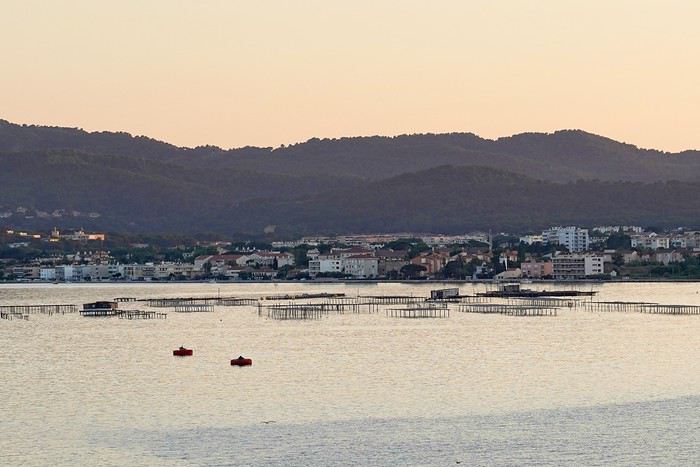
On quitte le port de Toulon au soleil couchant, en saluant à tribord les fermes aquacoles des Tamaris
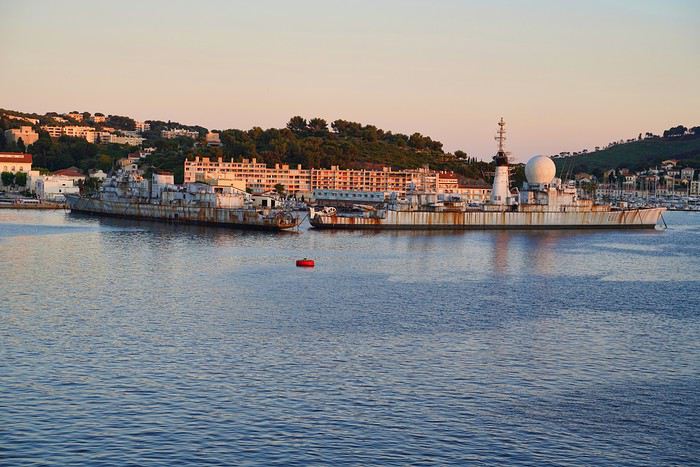
 , puis les deux vieux bateaux de la Marine qui finissent leur carrière comme brise lames à la Seyne
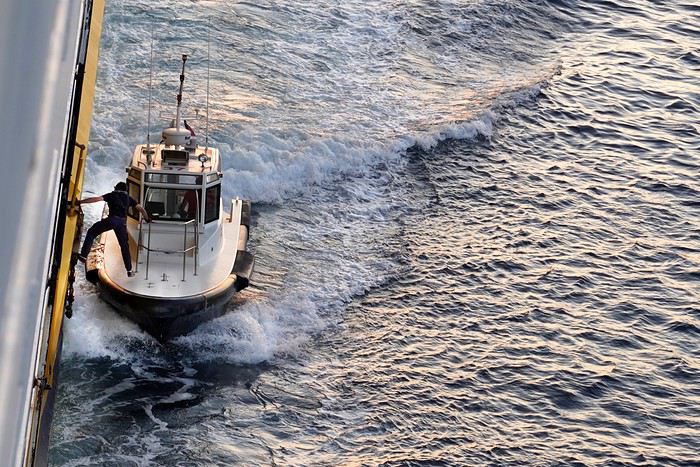
 et on admire le départ toujours acrobatique du pilote
 - Sommeil tranquille dans une cabine où personne n'a pris la peine de remplir les distributeurs de savon du lavabo et de la douche. Ce sera donc une toilette de chat.
On vire les Sanguinaires à 7 h du matin, par grand beau temps et mer plate,
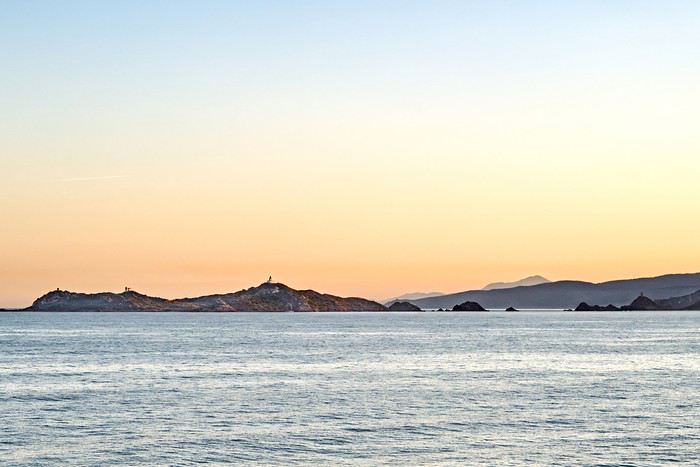 pour accoster comme prévu à Ajaccio à 7 h 30.
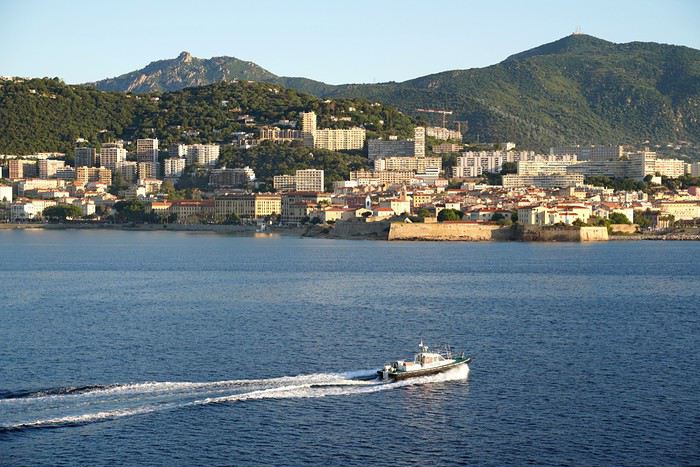 A 8 h, on met l'autoradio sur radio Corsica, ce qui nous met tout de suite dans l'ambiance (Non, rien de rien d'Edith Piaf chanté en Corse, ça vaut le déplacement!) et on roule tranquillement en direction de la Parata, avec très peu de trafic, pas de bus touristiques et sans l'affreux petit train sur pneus qui bloque habituellement la circulation.
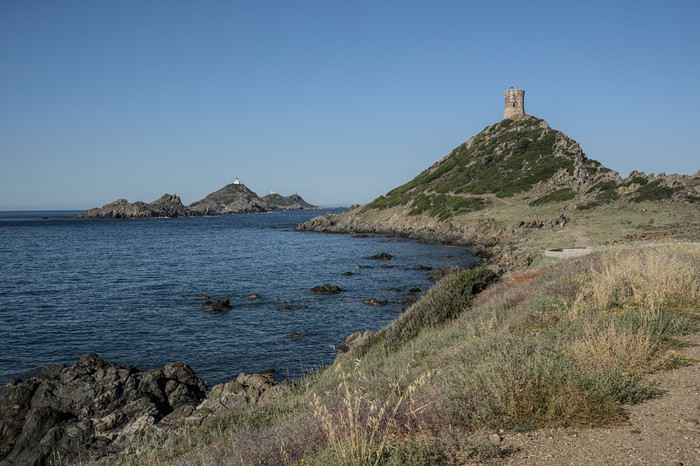
Arrivé au parking de la Parata, les navettes électriques ne fonctionnent pas encore, on continue donc à pied vers la pointe, en admirant les Iles sanguinaires qui se reflètent dans l'eau lisse.
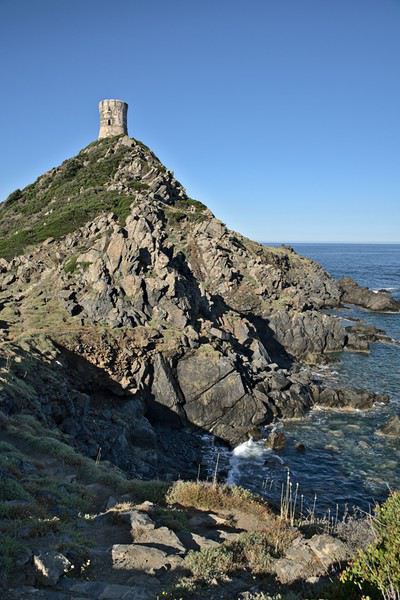
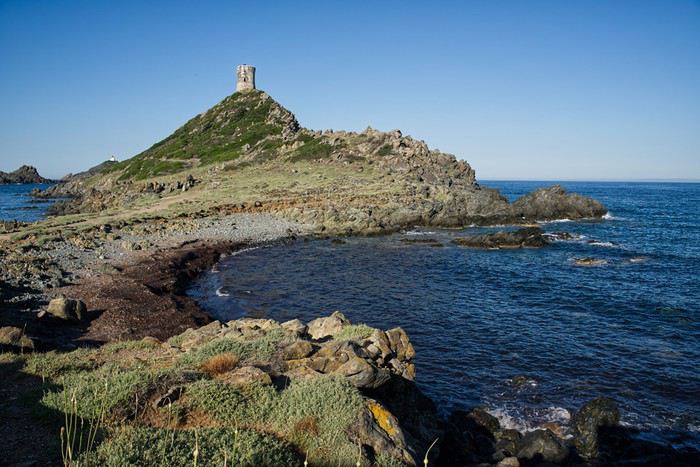
Après notre tour de la pointe, c'est l'heure du café, mais la brasserie est fermée, nous repartons vers Ajaccio et prenons notre café à Marinella, le petit bar de plage sympa à coté de l'ancienne propriété de Tino Rossi et de là embrayons direction Cargese avec quelques embouteillages pour quitter Ajaccio. A Cargese, nous saluons comme il se doit les deux églises jumelles, l'orthodoxe d'un coté, la catholique en face et nous descendons jusqu'au port qui visiblement tourne au ralenti. Nous déjeunons fort agréablement a U Rasaghiu.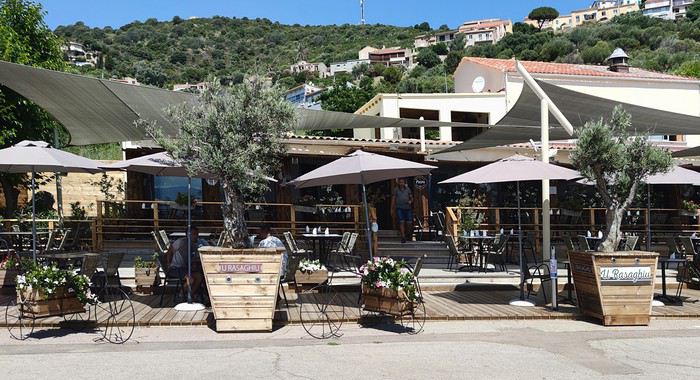 Dans le temps, nous avions l'habitude d'y aller souvent le soir, le patron laissait tomber le service pour pousser la chanson pour ses clients pinzutti, dont nous étions et nous ne nous lassions pas d'écouter la Boudeuse et la Vieille Guitare. L'établissement a été fort joliment modernisé, l'accueil et la cuisine y sont toujours excellents, mais la maison attend qu'il y ait plus de clients pour rentabiliser ses soirées Chansons Corses, ainsi va la vie.
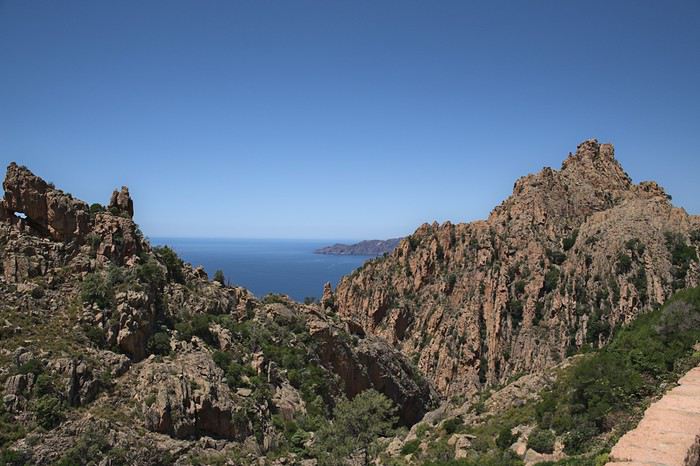
Nous nous dirigeons ensuite vers Porto Ota en traversant au ralenti la zone des calanques de Piana, en profitant de la faible circulation pour nous arrêter sur les petites aires de stationnement et admirer le paysage, superbe sous le bel éclairage que nous avons la chance d'avoir aujourd'hui.
A suivre....
, puis les deux vieux bateaux de la Marine qui finissent leur carrière comme brise lames à la Seyne
et on admire le départ toujours acrobatique du pilote
- Sommeil tranquille dans une cabine où personne n'a pris la peine de remplir les distributeurs de savon du lavabo et de la douche. Ce sera donc une toilette de chat.
On vire les Sanguinaires à 7 h du matin, par grand beau temps et mer plate,
pour accoster comme prévu à Ajaccio à 7 h 30.
A 8 h, on met l'autoradio sur radio Corsica, ce qui nous met tout de suite dans l'ambiance (Non, rien de rien d'Edith Piaf chanté en Corse, ça vaut le déplacement!) et on roule tranquillement en direction de la Parata, avec très peu de trafic, pas de bus touristiques et sans l'affreux petit train sur pneus qui bloque habituellement la circulation.
Arrivé au parking de la Parata, les navettes électriques ne fonctionnent pas encore, on continue donc à pied vers la pointe, en admirant les Iles sanguinaires qui se reflètent dans l'eau lisse.
Après notre tour de la pointe, c'est l'heure du café, mais la brasserie est fermée, nous repartons vers Ajaccio et prenons notre café à Marinella, le petit bar de plage sympa à coté de l'ancienne propriété de Tino Rossi et de là embrayons direction Cargese avec quelques embouteillages pour quitter Ajaccio. A Cargese, nous saluons comme il se doit les deux églises jumelles, l'orthodoxe d'un coté, la catholique en face et nous descendons jusqu'au port qui visiblement tourne au ralenti. Nous déjeunons fort agréablement a U Rasaghiu.
Dans le temps, nous avions l'habitude d'y aller souvent le soir, le patron laissait tomber le service pour pousser la chanson pour ses clients pinzutti, dont nous étions et nous ne nous lassions pas d'écouter la Boudeuse et la Vieille Guitare. L'établissement a été fort joliment modernisé, l'accueil et la cuisine y sont toujours excellents, mais la maison attend qu'il y ait plus de clients pour rentabiliser ses soirées Chansons Corses, ainsi va la vie.
Nous nous dirigeons ensuite vers Porto Ota en traversant au ralenti la zone des calanques de Piana, en profitant de la faible circulation pour nous arrêter sur les petites aires de stationnement et admirer le paysage, superbe sous le bel éclairage que nous avons la chance d'avoir aujourd'hui.
A suivre....
Louer un 4x4 à Nairobi ou Arusha et passer au Rwanda, Ouganda...?
Bonjour,
Est-il possible de louer un 4x4 à Nairobi ou Arusha et de passer au Rwanda, en Ouganda, et de revenir à NBO ou Arusha . L’idée est de partir vers les parcs nord-Tanzanie,
Serengeti, Mwanza, Kigali, parcs ougandais, et revenir via Eldoret sur NBO ou Arusha.
Merci beaucoup pour votre réponse.
Namibie, quand tu nous tiens!
Bonjour à tous.
Depuis quelques années les aleas de la vie professionnelle font qu'il ne nous est plus possible d'organiser nos voyages longtemps à l'avance et encore une fois cela s'est vérifié!. Un trou entre 2 contrats de travail c'est l'occasion à saisir pour changer d'air! Faire le tour des possibles entre ce qui nous fait vibrer, la saison, les difficultés d'organisation, les coûts et surgit une évidence: ce sera en Namibie que nous retournerons! En plus Claude, mon épouse, voulait découvrir le Richtersveld et sa flore si particulière et incroyable et le récit de Ticapi (merci à elle et à son magnifique carnet)nous avait tellement séduit que nous avons dit banco c'est jouable!
On achète donc les billets d'avion le mardi pour un vol le jeudi, on trouve une voiture avec sa tente de toit et le tour est joué!
On se retrouve donc le Vendredi 7 Février au Lodge "Auas safari lodge" pour 3 semaines de balade. Nous apprécions beaucoup ce lodge car il est perdu au milieu de la nature, l'accueil y est sympa, il est proche de Windhoek et de l'aéroport, et que l'on est de suite dans le bain car on peut y photographier pas mal d'oiseaux au bord de la petite mare.
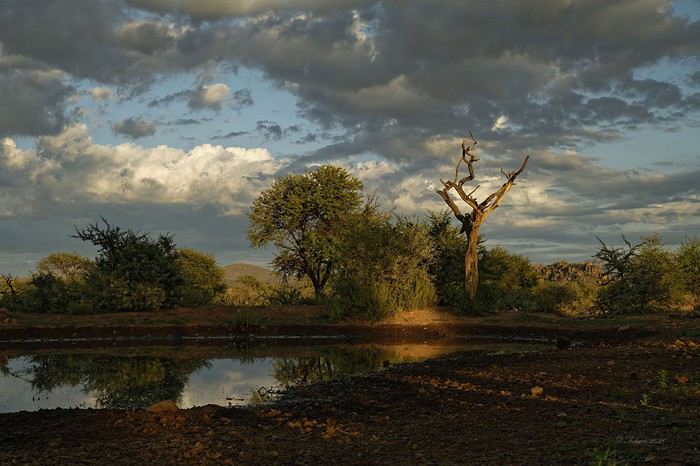
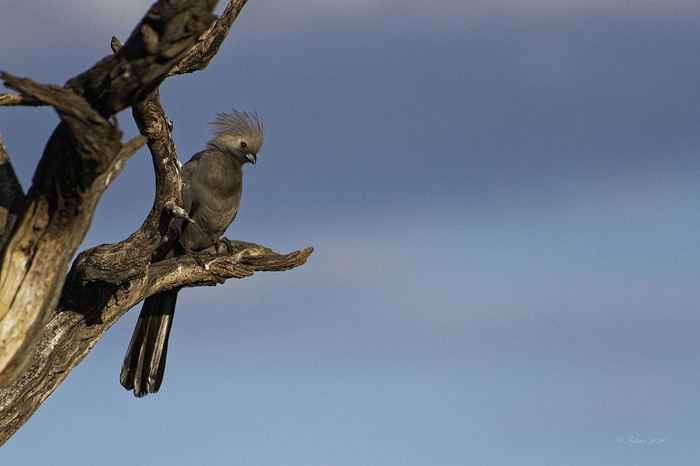
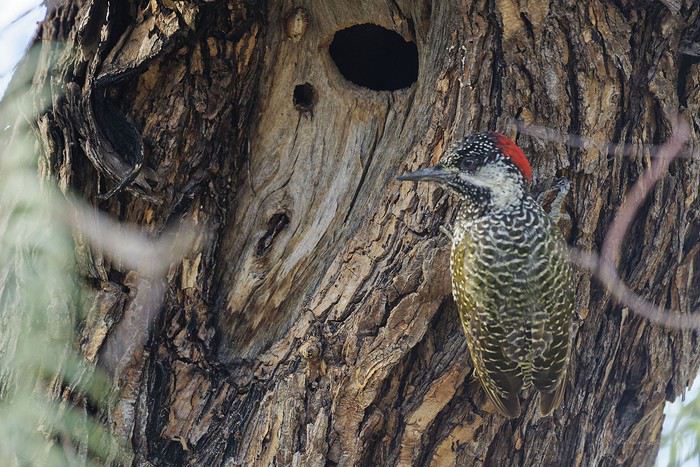
Ceci est important pour nous qui apprécions beaucoup l'image et la transmission d'une émotion, d'une certaine esthétique au travers de la photo, moteur de notre motivation à voyager. Pour notre virée nous avons hérité d'un Toyota à boîte automatique vieux d'un an avec un coffre tente sur le toit. Et, dès la 1ère nuit d'utilisation on verra que ce n'est pas le top. 2 photos pour montrer la différence: 2017: tente traditionnelle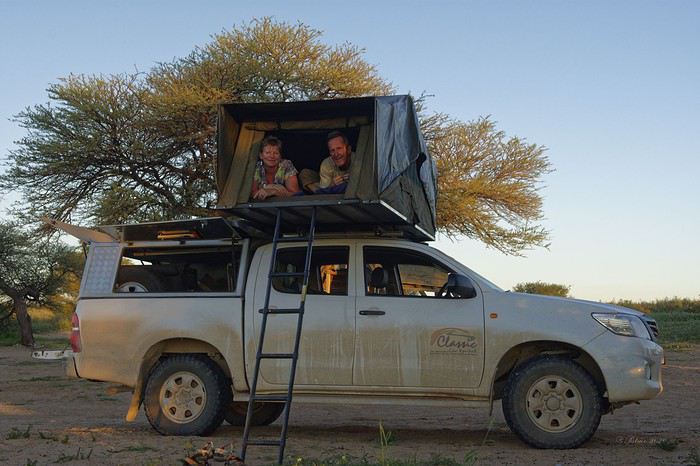
2020 tente coffre
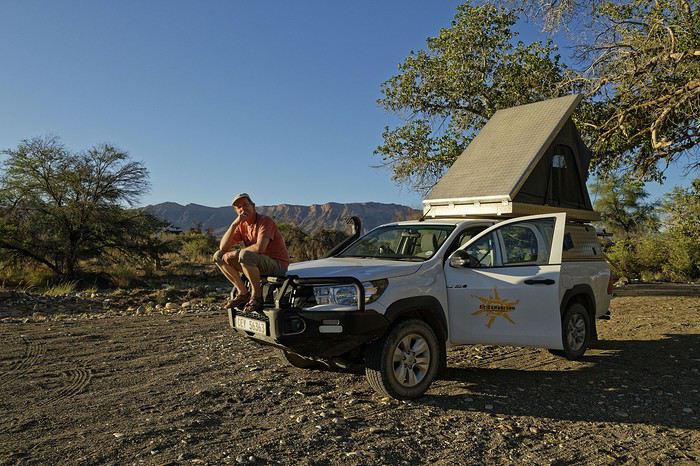
Le coffre métallique est plus facile a ouvrir et a fermer qu'une tente traditionnelle, mais beaucoup moins confortable car on dort dans le sens de la longueur et donc c'est moins large (les 2 oreillers se chevauchent et quand il fait chaud cela devient vite inconfortable… Par contre nous avons gagné un vrai réservoir d'eau de 50L équipé d'une pompe électrique et d'une douchette, ainsi que des lumières à leds dans la tente et dans la malle arrière ce qui est pratique. Pas oublier non plus tout le necessaire de camping, le frigo, le compresseur, les plaques de desensablement, les 2 roues de secours, les sangles de remorquage, les cables electiques, la mallette a outils de base, et 2 reservoirs de gasoil capacité totale 150L: Paré donc pour aller au bout du monde!!!
Nous n'irons que jusqu'au P.N. du Richtersveld, avant de poursuivre vers les chutes d'Augrabies et remonter par le P.N. Kgalagadi. Voyager dans ces contrées en Février c'est assurément avoir chaud, très chaud, c'est aussi risquer la pluie, les orages (hyper localisés, parfois très violents, très spectaculaires ) ou alors rien du tout; mais c'est aussi l'assurance d'avoir des ambiances, des lumières de folies…
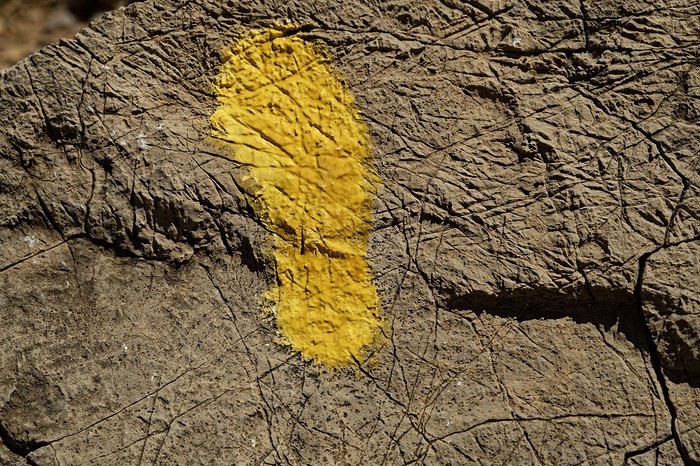
Nous entamons notre descente ar le Parc du Naukluftet sa chaîne de montagne spectaculaire, parc connu pour ses trails riche en découvertes, sportifs, ses piscines d'eau claire perdues dans la montagne.

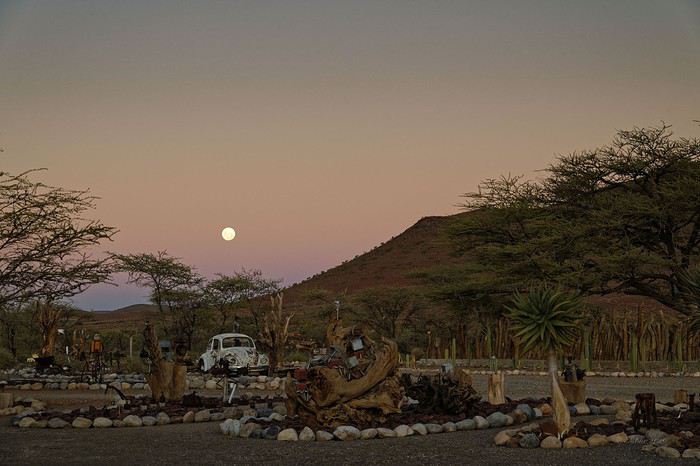
Notre camp de base
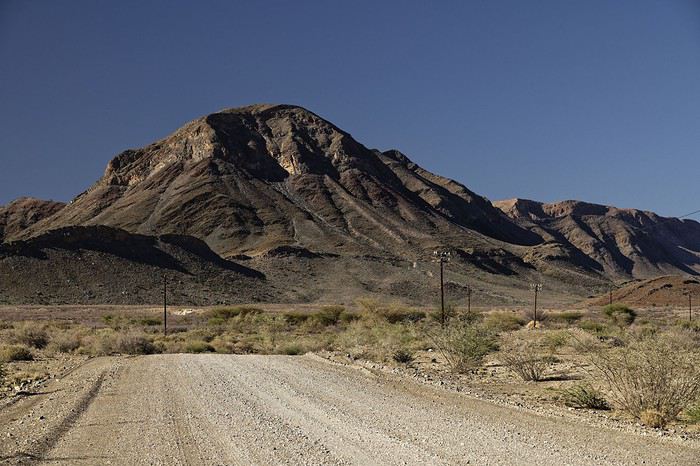
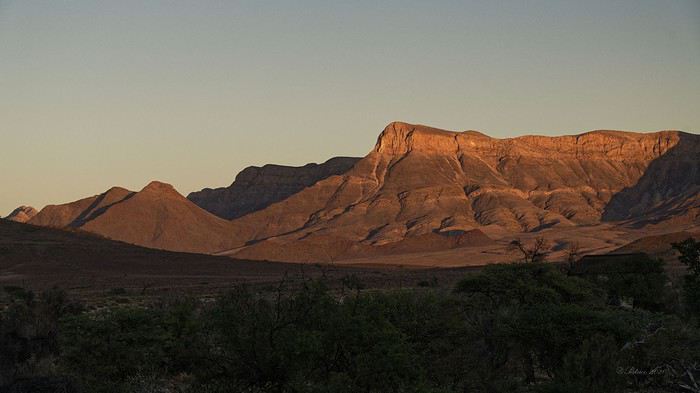
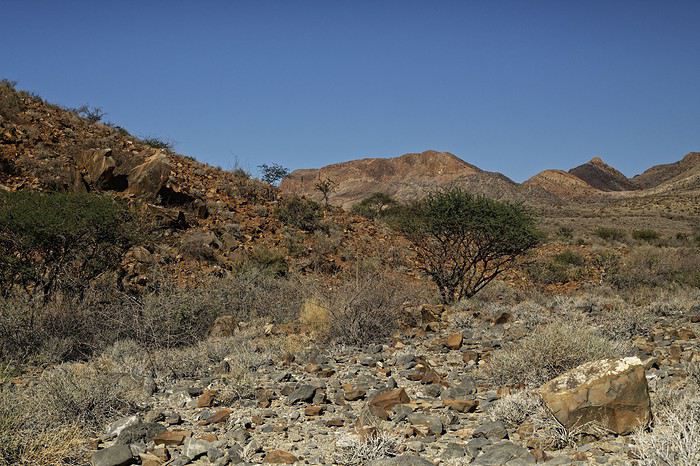
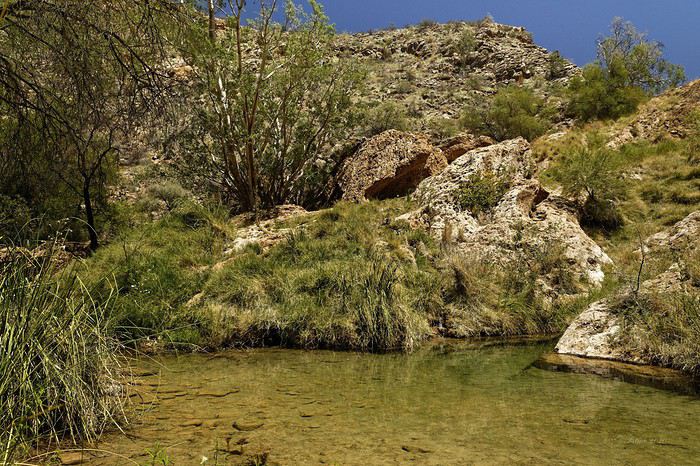
Nous découvrirons que même les Kokkerbaum peuvent souffrir de la sécheresse jusqu'à en mourir!
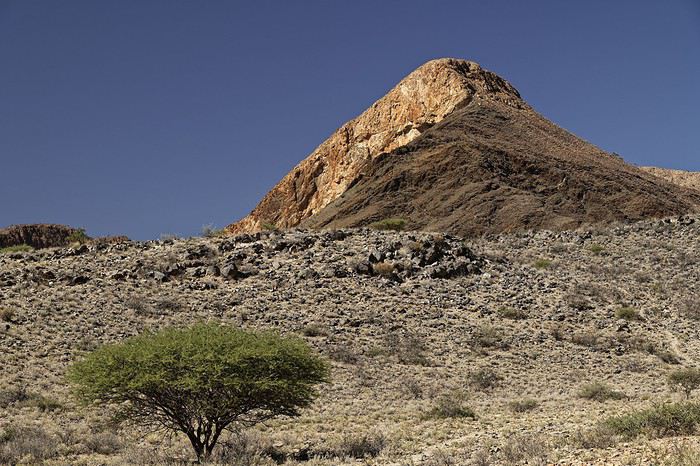
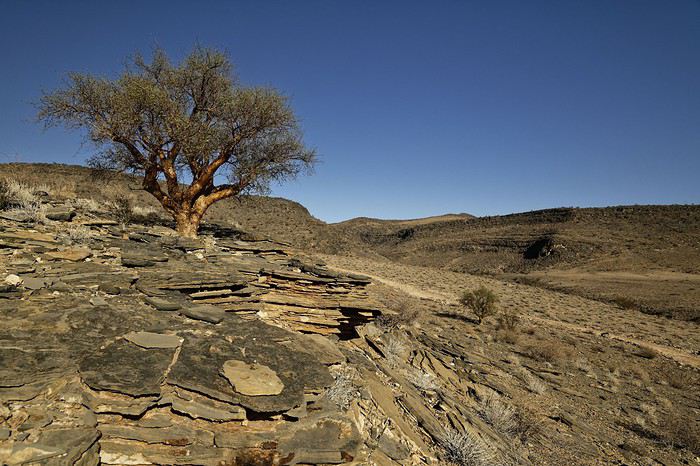
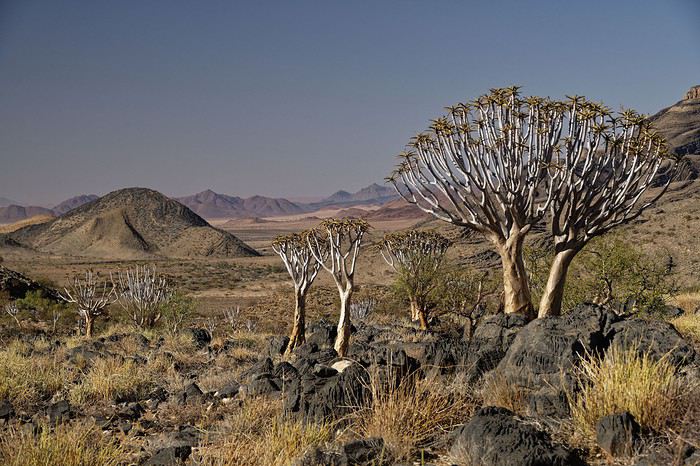
Bien sur un stop à Sesriem est inévitable, d'autant qu'il n'y a pas foule et que l'on peut profiter des paysages dans de belles conditions. Par contre nous ne verrons pas la faune traditionnelle des lieux: ni springboks, ni oryx.
Depuis quelques années les aleas de la vie professionnelle font qu'il ne nous est plus possible d'organiser nos voyages longtemps à l'avance et encore une fois cela s'est vérifié!. Un trou entre 2 contrats de travail c'est l'occasion à saisir pour changer d'air! Faire le tour des possibles entre ce qui nous fait vibrer, la saison, les difficultés d'organisation, les coûts et surgit une évidence: ce sera en Namibie que nous retournerons! En plus Claude, mon épouse, voulait découvrir le Richtersveld et sa flore si particulière et incroyable et le récit de Ticapi (merci à elle et à son magnifique carnet)nous avait tellement séduit que nous avons dit banco c'est jouable!
On achète donc les billets d'avion le mardi pour un vol le jeudi, on trouve une voiture avec sa tente de toit et le tour est joué!
On se retrouve donc le Vendredi 7 Février au Lodge "Auas safari lodge" pour 3 semaines de balade. Nous apprécions beaucoup ce lodge car il est perdu au milieu de la nature, l'accueil y est sympa, il est proche de Windhoek et de l'aéroport, et que l'on est de suite dans le bain car on peut y photographier pas mal d'oiseaux au bord de la petite mare.
Ceci est important pour nous qui apprécions beaucoup l'image et la transmission d'une émotion, d'une certaine esthétique au travers de la photo, moteur de notre motivation à voyager. Pour notre virée nous avons hérité d'un Toyota à boîte automatique vieux d'un an avec un coffre tente sur le toit. Et, dès la 1ère nuit d'utilisation on verra que ce n'est pas le top. 2 photos pour montrer la différence: 2017: tente traditionnelle
2020 tente coffre
Le coffre métallique est plus facile a ouvrir et a fermer qu'une tente traditionnelle, mais beaucoup moins confortable car on dort dans le sens de la longueur et donc c'est moins large (les 2 oreillers se chevauchent et quand il fait chaud cela devient vite inconfortable… Par contre nous avons gagné un vrai réservoir d'eau de 50L équipé d'une pompe électrique et d'une douchette, ainsi que des lumières à leds dans la tente et dans la malle arrière ce qui est pratique. Pas oublier non plus tout le necessaire de camping, le frigo, le compresseur, les plaques de desensablement, les 2 roues de secours, les sangles de remorquage, les cables electiques, la mallette a outils de base, et 2 reservoirs de gasoil capacité totale 150L: Paré donc pour aller au bout du monde!!!
Nous n'irons que jusqu'au P.N. du Richtersveld, avant de poursuivre vers les chutes d'Augrabies et remonter par le P.N. Kgalagadi. Voyager dans ces contrées en Février c'est assurément avoir chaud, très chaud, c'est aussi risquer la pluie, les orages (hyper localisés, parfois très violents, très spectaculaires ) ou alors rien du tout; mais c'est aussi l'assurance d'avoir des ambiances, des lumières de folies…
Nous entamons notre descente ar le Parc du Naukluftet sa chaîne de montagne spectaculaire, parc connu pour ses trails riche en découvertes, sportifs, ses piscines d'eau claire perdues dans la montagne.
Notre camp de base
Nous découvrirons que même les Kokkerbaum peuvent souffrir de la sécheresse jusqu'à en mourir!
Bien sur un stop à Sesriem est inévitable, d'autant qu'il n'y a pas foule et que l'on peut profiter des paysages dans de belles conditions. Par contre nous ne verrons pas la faune traditionnelle des lieux: ni springboks, ni oryx.
Botswana-Namibie octobre 2019... le retour
Cette fois c’est à trois que nous ferons le voyage, un ami de longue date nous accompagnant.
A l’origine cela devait être notre premier voyage avec notre propre véhicule (stationné à Maun), malheureusement quelque temps avant mon contact sur place m’annonce qu’il y avait un « bruit » manifestement un problème au niveau de la boite de transfert. La pièce fautive devant venir d’Afrique du Sud le véhicule ne sera pas prêt pour notre venue. J’ai contacté Bushlore chez qui nous avions déjà loué un véhicule et ils nous ont appris qu’ils ont maintenant une agence à Maun et il ne leur reste plus qu’un Land Cruiser … nickel c’est la voiture reine sous ces latitudes. Nous acceptons, même si c’est plus cher que rouler avec notre propre véhicule, mais on n’a pas voulu annuler ou décaler le voyage.
C’est ainsi que nous partons, gaillards, de notre aéroport favori, Frankfurt le mardi 22 octobre à 22h40. Nous volerons sur Lufthansa. A titre d’information pour les futurs voyageurs, ça nous a couté moins cher d’acheter d’un côté un A/R FRA-JNB, de l’autre un JNB-MUB et en troisième un WDH-JNB, plutôt qu’un billet combiné.
Mercredi 23 octobre
Arrivée à 8h30 à JNB Vol BP212 Botswana Air à 11h20 … ça fait une longue escale ! Arrivée à Maun à 13h20
Sur place Bushlore nous attend, on va à leur agence faire l’état des lieux et remplir les papiers. Ensuite les courses, puis un tour chez Joe pour voir la voiture. Malheureusement, là il est déjà tard, on part de Maun vers 17h30 / 18h.
La piste de nuit vers Duncan Camp’s n’est pas top. On s’arrête une première fois demander notre route, le gars a les yeux rouges explosés … On voit une piste qui part à gauche et on voit les phares arriver de cette piste, chouette ça doit être là !... quand on arrive à leur hauteur on les hèle, dans le véhicule 4 noirs armés de fusils … aille, à mon avis ce sont des braconniers … pas cool tout ça.😮 On reprend la piste principale qui va vers Mababe. Le problème c’est que T4A ne connait pas la piste qui mène au camp et Osmand veut nous proposer des « raccourcis ». En fait il faut rester sur la piste principale jusqu’à ce qu’on croise un panneau indiquant le camp (de nuit c’est moins évident). La piste est très approximative et sablonneuse … ce qui devait arriver arriva, à un embranchement nous avons hésité entre deux ornières et on s’est ensablé. Ok, il fait nuit, ok on est au milieu de nulle part … pas de panique. Il ne faut surtout pas insister, on sort « tranquillement », on analyse la situation, pelletons un peu, une marche arrière, un choix d’ornières et c’est reparti. On navigue plus ou moins au cap car point de référence sur les cartes. Au bout d’un moment on voit de la lumière au loin et ouf c’est là !😎 Les gars du camp était venu à notre rencontre lorsqu’ils ont vu des phares se « promener ».
L’accueil a été chaleureux. Il n’y a que nous. Nous avons deux tentes sur les 4 dont dispose le camp. L’endroit est splendide au bord de la Thamalakane, l’ambiance aussi … incroyable, on n’arrive pas à s’imaginer qu’il y a encore quelques heures nous étions au milieu de la civilisation occidentale, frénétique. Qu’est-ce qu’on est bien.🙂 Ce n’est pas tout ça mais là il est temps de boire une petite bière …😛 Ensuite le chef viendra nous chercher, nous énoncera le menu. Vous n’imaginez pas comme on est bien là, seuls au milieu de la nature, avec les bruits des animaux, la douceur du climat, le sourire de nos hôtes et la bonne nourriture … génial nous sommes de nouveau en Afrique Australe. 🙂 😎
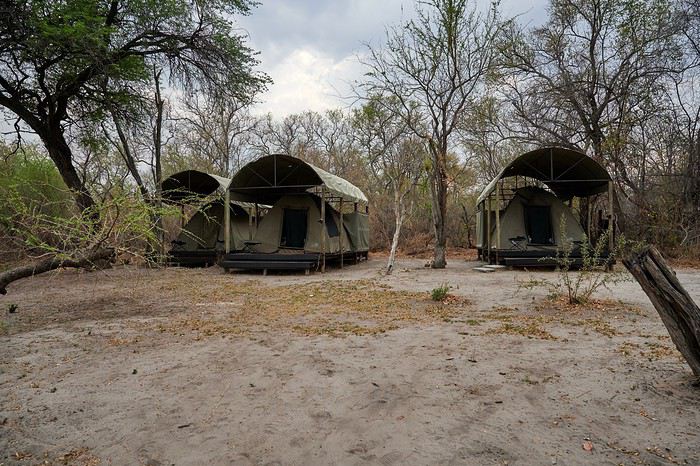
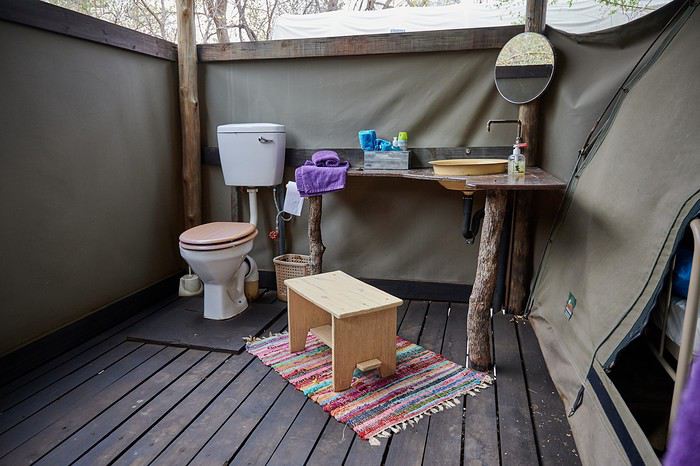
Vous l’aurez compris on recommande chaudement Duncan Camp ‘s. En revanche n’essayez pas d’y aller directement, réservation obligatoire et paiement soit par internet soit à Maun. La durée du trajet depuis Maun est de 1h30.
Version longue en cours de création ici
A l’origine cela devait être notre premier voyage avec notre propre véhicule (stationné à Maun), malheureusement quelque temps avant mon contact sur place m’annonce qu’il y avait un « bruit » manifestement un problème au niveau de la boite de transfert. La pièce fautive devant venir d’Afrique du Sud le véhicule ne sera pas prêt pour notre venue. J’ai contacté Bushlore chez qui nous avions déjà loué un véhicule et ils nous ont appris qu’ils ont maintenant une agence à Maun et il ne leur reste plus qu’un Land Cruiser … nickel c’est la voiture reine sous ces latitudes. Nous acceptons, même si c’est plus cher que rouler avec notre propre véhicule, mais on n’a pas voulu annuler ou décaler le voyage.
C’est ainsi que nous partons, gaillards, de notre aéroport favori, Frankfurt le mardi 22 octobre à 22h40. Nous volerons sur Lufthansa. A titre d’information pour les futurs voyageurs, ça nous a couté moins cher d’acheter d’un côté un A/R FRA-JNB, de l’autre un JNB-MUB et en troisième un WDH-JNB, plutôt qu’un billet combiné.
Mercredi 23 octobre
Arrivée à 8h30 à JNB Vol BP212 Botswana Air à 11h20 … ça fait une longue escale ! Arrivée à Maun à 13h20
Sur place Bushlore nous attend, on va à leur agence faire l’état des lieux et remplir les papiers. Ensuite les courses, puis un tour chez Joe pour voir la voiture. Malheureusement, là il est déjà tard, on part de Maun vers 17h30 / 18h.
La piste de nuit vers Duncan Camp’s n’est pas top. On s’arrête une première fois demander notre route, le gars a les yeux rouges explosés … On voit une piste qui part à gauche et on voit les phares arriver de cette piste, chouette ça doit être là !... quand on arrive à leur hauteur on les hèle, dans le véhicule 4 noirs armés de fusils … aille, à mon avis ce sont des braconniers … pas cool tout ça.😮 On reprend la piste principale qui va vers Mababe. Le problème c’est que T4A ne connait pas la piste qui mène au camp et Osmand veut nous proposer des « raccourcis ». En fait il faut rester sur la piste principale jusqu’à ce qu’on croise un panneau indiquant le camp (de nuit c’est moins évident). La piste est très approximative et sablonneuse … ce qui devait arriver arriva, à un embranchement nous avons hésité entre deux ornières et on s’est ensablé. Ok, il fait nuit, ok on est au milieu de nulle part … pas de panique. Il ne faut surtout pas insister, on sort « tranquillement », on analyse la situation, pelletons un peu, une marche arrière, un choix d’ornières et c’est reparti. On navigue plus ou moins au cap car point de référence sur les cartes. Au bout d’un moment on voit de la lumière au loin et ouf c’est là !😎 Les gars du camp était venu à notre rencontre lorsqu’ils ont vu des phares se « promener ».
L’accueil a été chaleureux. Il n’y a que nous. Nous avons deux tentes sur les 4 dont dispose le camp. L’endroit est splendide au bord de la Thamalakane, l’ambiance aussi … incroyable, on n’arrive pas à s’imaginer qu’il y a encore quelques heures nous étions au milieu de la civilisation occidentale, frénétique. Qu’est-ce qu’on est bien.🙂 Ce n’est pas tout ça mais là il est temps de boire une petite bière …😛 Ensuite le chef viendra nous chercher, nous énoncera le menu. Vous n’imaginez pas comme on est bien là, seuls au milieu de la nature, avec les bruits des animaux, la douceur du climat, le sourire de nos hôtes et la bonne nourriture … génial nous sommes de nouveau en Afrique Australe. 🙂 😎
Vous l’aurez compris on recommande chaudement Duncan Camp ‘s. En revanche n’essayez pas d’y aller directement, réservation obligatoire et paiement soit par internet soit à Maun. La durée du trajet depuis Maun est de 1h30.
Version longue en cours de création ici
Voyage du West Bengal à Varanasi en passant par Bodhgaya
Atteints par le virus "Inde" depuis notre premier voyage en 2013 , (seulement😮 ! ), nous y revoilà pour un 8° séjour ( du 14 au 28 janvier 2020).
Cette fois-ci notre périple nous amènera de Calcutta à Varanasi en passant par des petits villages du Westbengal et par Bodhgaya..
Nous prendrons ensuite notre vol de retour de Delhi à Nice .
Je me lance enfin pour rédiger mon premier cahier de voyage en remerciant aux passage tous ceux et celles qui ont alimenté ce forum en postant carnets, photos et commentaires, fort utiles à la préparation d'un voyage. Je demande d'avance un peu d'indulgence concernant ce récit, où quelques fautes vont peut-être s'immiscer par ci par là car, même si je vis en France depuis longtemps, ma langue maternelle reste l'allemand. Vous voilà prévenus 🙂!
Notre séjour débute à Kolkata ou nous resterons 2 jours entiers. Nous logeons dans un petit hôtel de College street . Le personnel est très sympathique et très serviable, notre chambre très propre, que demander de plus? Certes , c'est bruyant côté rue mais l'avantage d'un petit balcon nous permet d'observer tout le trafic d'en bas. Celui -ci ne s'arrête guère même pendant la nuit...Ceci dit, nous dormons très bien, le voyage a été long !
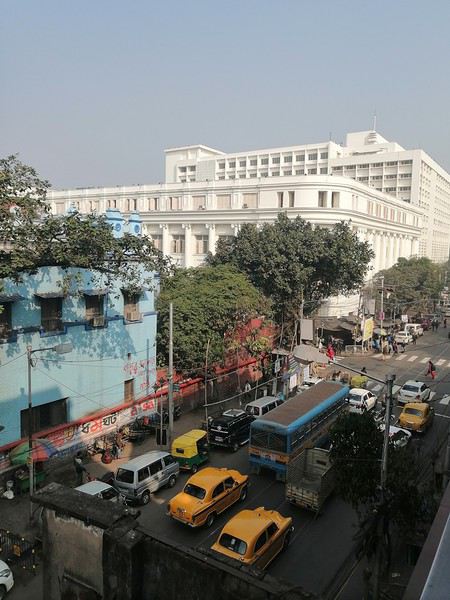
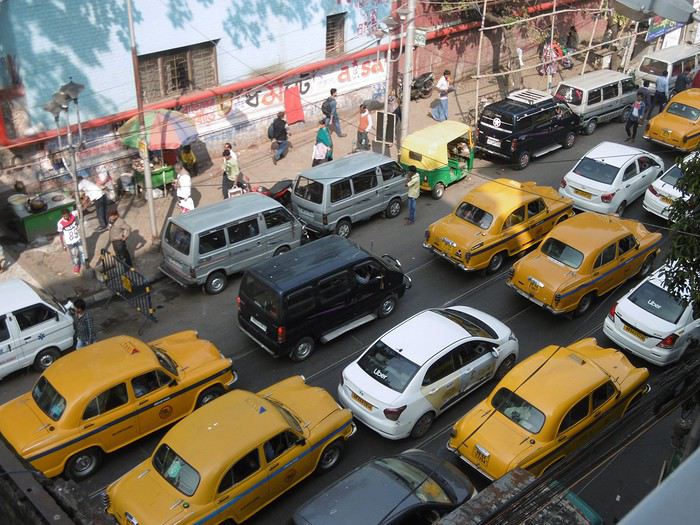
 Vue du balcon de l'hôtel

Je me lance enfin pour rédiger mon premier cahier de voyage en remerciant aux passage tous ceux et celles qui ont alimenté ce forum en postant carnets, photos et commentaires, fort utiles à la préparation d'un voyage. Je demande d'avance un peu d'indulgence concernant ce récit, où quelques fautes vont peut-être s'immiscer par ci par là car, même si je vis en France depuis longtemps, ma langue maternelle reste l'allemand. Vous voilà prévenus 🙂!
Notre séjour débute à Kolkata ou nous resterons 2 jours entiers. Nous logeons dans un petit hôtel de College street . Le personnel est très sympathique et très serviable, notre chambre très propre, que demander de plus? Certes , c'est bruyant côté rue mais l'avantage d'un petit balcon nous permet d'observer tout le trafic d'en bas. Celui -ci ne s'arrête guère même pendant la nuit...Ceci dit, nous dormons très bien, le voyage a été long !
Vue du balcon de l'hôtelSumatra: Off the Beaten Path in Asia
Here’s the thing: ever since Sumatra, I’ve become picky.
I don’t want the grey-green of the North Sea anymore. I want turquoise, crystal-clear waters—so clear you can see the coral 10 meters down. You see it, right?
I don’t want those "equatorial greenhouses" you visit politely in well-maintained park alleys. I want wild, humid, buzzing jungle—hostile yet captivating at the same time.
I don’t want wheat that becomes flour that becomes bread that dips into soup. I want jade-green rice terraces rippling in the wind through distant valleys, where you can enjoy a nasi goreng.
I want more! I want coconut trees in sight, fine sand underfoot, smiles in the streets, and the world’s largest volcanic lake with a charming little island inside. Simple, really!
Here’s the 26-day itinerary across this island:
LAKE TOBA: 4 days It’s the story of a volcanic island at the bottom of a lake at the bottom of a volcano. The lake is Toba. The island is Samosir. Time here is for pausing. Time is for savoring lobsters, swimming in calm waters, enjoying the mild climate without the tourist crowds. And when time isn’t for pausing, it’s for wandering at a leisurely pace—walking, canoeing, or scootering. You’ll discover lush jungle landscapes, Batak villages (a Christian ethnic group) with surprising architecture, small inner lakes, and breathtaking views from the summit. Tuk Tuk, the main village on Samosir, offers plenty of charming restaurants and accommodations. But you can also venture into lost villages and find a peaceful haven with locals... and never want to leave. If you want to know more and see all the photos, it’s here: Lake Toba.
BERASTAGI: 2 days We’re in the heart of Sumatra’s volcanoes. Berastagi is the starting point for climbing the smoking, sulfurous mountains nearby. The town itself isn’t interesting, but you’ll find everything you need (markets, lodging, warungs, restaurants...). For the volcanoes, the most accessible is Gunung Sibayak. No guide needed—the hike only takes a few hours (depending on where you start). All accommodations provide clear directions. The summit is only 2,095 meters high. Oh, this volcano isn’t all that impressive. But it’s really nice to feel the earth’s warmth in this lunar, ochre-yellow landscape, through the hissing fumaroles escaping the rocks. The place is stunning on a clear day, or even better if you’re lucky enough to rise above the clouds. Across from it, you’ll see the splendid view of a more turbulent neighboring volcano: Mount Sinabung and its dramas.
The jungle KETAMBE: 4 days
This is the real jungle. Not the Hollywood studio kind or the city zoo version. No: the jungle. Teeming, dense, humid, and noisy. With the help of a specialized guide, we spotted plenty of insects and birds, long-tailed macaques, "Thomas leaf monkeys," and the much-anticipated orangutan... Ketambe is less touristy than Bukit Lawang. The animals are completely wild, not "semi-tame." This part of Gunung Leuser National Park is also harder to access, but the experience remains authentic even as tourism grows. In these times of deforestation advancing like a terrestrial cancer, experiencing the jungle is a unique, moving, essential moment: it’s "For the wild beauty of the last primary forests" (Le Monde, November 13, 2013). Leech socks and a small backpack: you’re ready for a multi-day trek? Off you go for muddy slopes, liters of sweat, hot rivers, endless green... and primates! Sleeping at least one night is a memorable adventure: the sounds of the jungle in total darkness deliver their dose of sensations, chills, and lifelong memories. If you want to know more and see all the photos, it’s here: the Ketambe jungle.
PULAU WEH: 5 days It’s all here: turquoise waters, fishing villages, thrilling scuba diving, lush jungle, coconut trees, warungs, and fresh fish on abandoned beaches with seashells and crustaceans. A small island north of Sumatra (50 minutes by ferry), Pulau Weh is slowly recovering from the 2004 tsunami. For now, the place isn’t overrun by tourists. But the infrastructure is more pleasant than in the rest of Sumatra. You’ll find some charming bungalows right on the water. Rent a scooter, and you can easily find yourself alone on a paradise-like cove for a romantic sunset. For the party scene, uh... it’s pretty quiet! People come here mainly for scuba diving with its colorful corals (though some have bleached) and lively marine life. Snorkeling also reveals beautiful sights. If you’re not here to swim, there’s always lazing on the beach in a hammock, sipping while gazing at the turquoise waves. That’s great too! If you want to know more and see all the photos, it’s here: Pulau Weh.
LAKE MANINJAU: 2 days The mist yawns slowly over the waters at dawn. When it finally lifts, you discover a blue treasure at the bottom of the old volcano’s caldera. In central-west Sumatra, Lake Maninjau is home to the Minang Kabau people. Less touristy than Lake Toba, it still offers equally beautiful landscapes. By scooter, a full day is enough to circle the lake (40 km) through villages, jungle, and rice terraces: it’s very pleasant, especially the southern part where traffic is light. You’ll find bungalows by the water, mainly near the village of Maninjau (yes, same name as the lake). From the crater’s heights, you can admire the whole of Maninjau (the lake!). To get there, you can navigate the 44 hairpin turns (!) by motorized vehicle from Maninjau (the village!) or tackle the path climbing from Bayur to Puncak Lawang, where the view is... top (yes, same name as the village).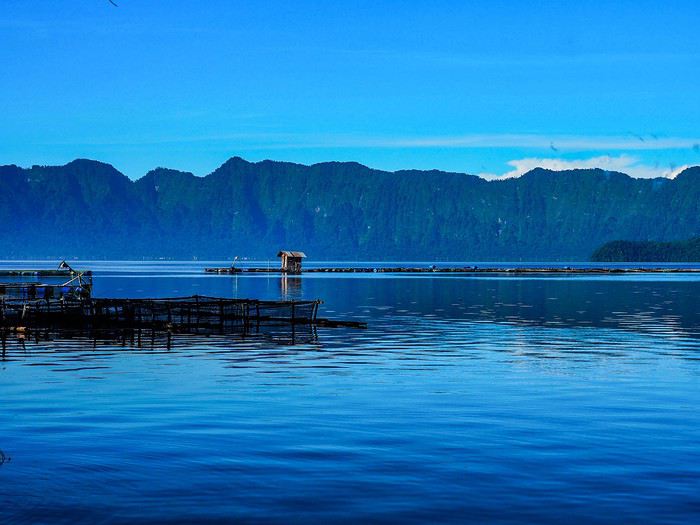
HARAU VALLEY: 3 days Magnificent rice terraces surrounded by towering cliffs and cascading waterfalls. That’s what awaits the adventurer—happy like Ulysses after a long journey to the fertile Harau Valley. It’s peaceful, off the beaten path, and rejuvenating. Few tourists here, and few accommodations. The well-known Abdi Homestay offers quiet bungalows, slightly set back from the main road, in a stunning setting. Again, renting a scooter is a great idea, but here, "happiness is in the fields"—well, the rice terraces. So, park your two wheels and venture along the paths crisscrossing the terraces, following small streams, brushing past villages lost in the valley. If you want to know more and see all the photos, it’s here: Harau Valley.
BEACHES SOUTH of PADANG: 4 days 20 km south of Padang lies Bungus Beach. But that’s not it yet... You’ll need to take a fisherman’s boat for 40 minutes south to land on a peninsula inaccessible by car. That’s the minimum to reach this little paradise, nestled between jungle and sea, far from Padang’s pollution and hustle. An Eden on an isolated beach, with nothing but small bungalows and possible excursions to the nearby islands. The only way to get around: by boat and on foot... Pure bliss, toes in the water. And on the blog "Un tour dans le sac", nothing is spared—especially not the description to make your mouth water (Indian Ocean water, that is): sublime turquoise waters, postcard-perfect coconut trees, lazing in your favorite hammock.
For the practical side, here’s some info:
Sumatra Travel: Itinerary Summary My thoughts Sumatra is a magnificent Indonesian island and still relatively untouched. Tourists mainly flock to Java and Bali. It’s especially suited for nature lovers who’ll appreciate its volcanoes, paradise islands, jungle, and rice terraces. Sumatra is huge: in 3 weeks, we only visited the northern half of the island... And even then, we barely scratched the surface of this stunning part of Sumatra. That said, this itinerary offers an exceptional variety of landscapes: beaches, volcanoes, rice terraces, jungle—the winning combo!
Overall, Sumatra is still lacking in infrastructure, and maybe that’s a good thing: it’s far from Bali’s rampant "hotel urbanization." That said, you’ll have to accept spartan comfort: Sumatra, as beautiful as it is, is only for backpackers, adventurers, and travelers who can do without cozy 3-star hotels. In short, Sumatra is earned, but the effort is well worth it, and the warm welcome from the locals will make you forget the minor travel inconveniences.
A disappointment? The food isn’t as good as Bali’s (check out our article on the subject (link)). The stop in Berastagi is nice but not essential, especially if you’ve already seen Java’s impressive volcanoes.
A favorite? There were so many! But if I had to choose, I’d pick the Ketambe jungle. It was my first experience in a natural environment I didn’t know: a primary forest and memories that’ll last!
Would I do the Sumatra trip again? I regret not going to the Mentawai Islands. This archipelago, off Sumatra’s west coast, has long remained isolated: some inhabitants still live traditionally. These "flower men" live in harmony with nature. Unfortunately, their way of life is threatened by modern influences, and their fragile, unique culture risks disappearing. I would’ve loved to spend time with this incredible ethnic group. But it takes time: a week seems necessary. I would’ve had to skip some stops in our itinerary—maybe the peninsula south of Bungus and Berastagi?
Budget: It’s really cheap, especially the food, which, let’s be honest, isn’t amazing. Backpackers who can settle for spartan comfort (small bungalows without AC or hot water) and local food in warungs can easily get by on 20 € per day for two people (food + lodging). The cost of flights from Europe to Sumatra remains high. For our part, we found great deals on Paris-Hong Kong tickets (350 € round trip). Then you just need to reach Medan by low-cost airline.
No mandatory tipping in restaurants or accommodations. However, it’s more common to tip guides or taxi drivers.
Like many places in Indonesia, everything is negotiable. If you’re new to this, it’s not easy at first... Especially when dealing with a population poorer than us, "rich Westerners." But bargaining is part of the local culture! And you’ll get used to it—it even becomes fun. Plus, you don’t want to be that tourist paying the "tourist price" they’ll likely quote first, right?
To negotiate, be firm, respect your counterpart, smile, stay polite... Clearly show it’s too expensive or that the deal is done (by shaking hands, for example). Typing the numbers on your phone helps communicate the price. Learning a few words in the local language ("It’s too expensive," "How much?") is appreciated! Okay, it’s a rough tip, but here’s a base: dividing the first price by 2 gets you close to a fair negotiation.
Currently, 15,000 Indonesian rupiahs are worth about 1 €.
Accommodation Infrastructure is underdeveloped in Sumatra. You’ll find fewer "charming lodgings" than in Bali. Still, there are some very pleasant places. If you read our Sumatra articles, we recommend Abdi Homestay in Harau Valley and Silimalumbo at Lake Toba. In Pulau Weh, the choice is wider, but we suggest trying the seafood pasta at Bixio Café!
Health We didn’t get sick in Sumatra. By following a few simple rules (avoiding tap water, not swimming in stagnant freshwater), you’ll avoid the main issues. Hygiene is improving anyway. Anti-malaria treatment is still recommended, but cases are rare.
Also, keep in mind that Sumatra has a hot, humid climate—adjust your behavior accordingly (stay hydrated, protect yourself from the sun, etc.).
Here’s the 26-day itinerary across this island:
LAKE TOBA: 4 days It’s the story of a volcanic island at the bottom of a lake at the bottom of a volcano. The lake is Toba. The island is Samosir. Time here is for pausing. Time is for savoring lobsters, swimming in calm waters, enjoying the mild climate without the tourist crowds. And when time isn’t for pausing, it’s for wandering at a leisurely pace—walking, canoeing, or scootering. You’ll discover lush jungle landscapes, Batak villages (a Christian ethnic group) with surprising architecture, small inner lakes, and breathtaking views from the summit. Tuk Tuk, the main village on Samosir, offers plenty of charming restaurants and accommodations. But you can also venture into lost villages and find a peaceful haven with locals... and never want to leave. If you want to know more and see all the photos, it’s here: Lake Toba.
BERASTAGI: 2 days We’re in the heart of Sumatra’s volcanoes. Berastagi is the starting point for climbing the smoking, sulfurous mountains nearby. The town itself isn’t interesting, but you’ll find everything you need (markets, lodging, warungs, restaurants...). For the volcanoes, the most accessible is Gunung Sibayak. No guide needed—the hike only takes a few hours (depending on where you start). All accommodations provide clear directions. The summit is only 2,095 meters high. Oh, this volcano isn’t all that impressive. But it’s really nice to feel the earth’s warmth in this lunar, ochre-yellow landscape, through the hissing fumaroles escaping the rocks. The place is stunning on a clear day, or even better if you’re lucky enough to rise above the clouds. Across from it, you’ll see the splendid view of a more turbulent neighboring volcano: Mount Sinabung and its dramas.
The jungle KETAMBE: 4 days
This is the real jungle. Not the Hollywood studio kind or the city zoo version. No: the jungle. Teeming, dense, humid, and noisy. With the help of a specialized guide, we spotted plenty of insects and birds, long-tailed macaques, "Thomas leaf monkeys," and the much-anticipated orangutan... Ketambe is less touristy than Bukit Lawang. The animals are completely wild, not "semi-tame." This part of Gunung Leuser National Park is also harder to access, but the experience remains authentic even as tourism grows. In these times of deforestation advancing like a terrestrial cancer, experiencing the jungle is a unique, moving, essential moment: it’s "For the wild beauty of the last primary forests" (Le Monde, November 13, 2013). Leech socks and a small backpack: you’re ready for a multi-day trek? Off you go for muddy slopes, liters of sweat, hot rivers, endless green... and primates! Sleeping at least one night is a memorable adventure: the sounds of the jungle in total darkness deliver their dose of sensations, chills, and lifelong memories. If you want to know more and see all the photos, it’s here: the Ketambe jungle.
PULAU WEH: 5 days It’s all here: turquoise waters, fishing villages, thrilling scuba diving, lush jungle, coconut trees, warungs, and fresh fish on abandoned beaches with seashells and crustaceans. A small island north of Sumatra (50 minutes by ferry), Pulau Weh is slowly recovering from the 2004 tsunami. For now, the place isn’t overrun by tourists. But the infrastructure is more pleasant than in the rest of Sumatra. You’ll find some charming bungalows right on the water. Rent a scooter, and you can easily find yourself alone on a paradise-like cove for a romantic sunset. For the party scene, uh... it’s pretty quiet! People come here mainly for scuba diving with its colorful corals (though some have bleached) and lively marine life. Snorkeling also reveals beautiful sights. If you’re not here to swim, there’s always lazing on the beach in a hammock, sipping while gazing at the turquoise waves. That’s great too! If you want to know more and see all the photos, it’s here: Pulau Weh.
LAKE MANINJAU: 2 days The mist yawns slowly over the waters at dawn. When it finally lifts, you discover a blue treasure at the bottom of the old volcano’s caldera. In central-west Sumatra, Lake Maninjau is home to the Minang Kabau people. Less touristy than Lake Toba, it still offers equally beautiful landscapes. By scooter, a full day is enough to circle the lake (40 km) through villages, jungle, and rice terraces: it’s very pleasant, especially the southern part where traffic is light. You’ll find bungalows by the water, mainly near the village of Maninjau (yes, same name as the lake). From the crater’s heights, you can admire the whole of Maninjau (the lake!). To get there, you can navigate the 44 hairpin turns (!) by motorized vehicle from Maninjau (the village!) or tackle the path climbing from Bayur to Puncak Lawang, where the view is... top (yes, same name as the village).
HARAU VALLEY: 3 days Magnificent rice terraces surrounded by towering cliffs and cascading waterfalls. That’s what awaits the adventurer—happy like Ulysses after a long journey to the fertile Harau Valley. It’s peaceful, off the beaten path, and rejuvenating. Few tourists here, and few accommodations. The well-known Abdi Homestay offers quiet bungalows, slightly set back from the main road, in a stunning setting. Again, renting a scooter is a great idea, but here, "happiness is in the fields"—well, the rice terraces. So, park your two wheels and venture along the paths crisscrossing the terraces, following small streams, brushing past villages lost in the valley. If you want to know more and see all the photos, it’s here: Harau Valley.
BEACHES SOUTH of PADANG: 4 days 20 km south of Padang lies Bungus Beach. But that’s not it yet... You’ll need to take a fisherman’s boat for 40 minutes south to land on a peninsula inaccessible by car. That’s the minimum to reach this little paradise, nestled between jungle and sea, far from Padang’s pollution and hustle. An Eden on an isolated beach, with nothing but small bungalows and possible excursions to the nearby islands. The only way to get around: by boat and on foot... Pure bliss, toes in the water. And on the blog "Un tour dans le sac", nothing is spared—especially not the description to make your mouth water (Indian Ocean water, that is): sublime turquoise waters, postcard-perfect coconut trees, lazing in your favorite hammock.
For the practical side, here’s some info:
Sumatra Travel: Itinerary Summary My thoughts Sumatra is a magnificent Indonesian island and still relatively untouched. Tourists mainly flock to Java and Bali. It’s especially suited for nature lovers who’ll appreciate its volcanoes, paradise islands, jungle, and rice terraces. Sumatra is huge: in 3 weeks, we only visited the northern half of the island... And even then, we barely scratched the surface of this stunning part of Sumatra. That said, this itinerary offers an exceptional variety of landscapes: beaches, volcanoes, rice terraces, jungle—the winning combo!
Overall, Sumatra is still lacking in infrastructure, and maybe that’s a good thing: it’s far from Bali’s rampant "hotel urbanization." That said, you’ll have to accept spartan comfort: Sumatra, as beautiful as it is, is only for backpackers, adventurers, and travelers who can do without cozy 3-star hotels. In short, Sumatra is earned, but the effort is well worth it, and the warm welcome from the locals will make you forget the minor travel inconveniences.
A disappointment? The food isn’t as good as Bali’s (check out our article on the subject (link)). The stop in Berastagi is nice but not essential, especially if you’ve already seen Java’s impressive volcanoes.
A favorite? There were so many! But if I had to choose, I’d pick the Ketambe jungle. It was my first experience in a natural environment I didn’t know: a primary forest and memories that’ll last!
Would I do the Sumatra trip again? I regret not going to the Mentawai Islands. This archipelago, off Sumatra’s west coast, has long remained isolated: some inhabitants still live traditionally. These "flower men" live in harmony with nature. Unfortunately, their way of life is threatened by modern influences, and their fragile, unique culture risks disappearing. I would’ve loved to spend time with this incredible ethnic group. But it takes time: a week seems necessary. I would’ve had to skip some stops in our itinerary—maybe the peninsula south of Bungus and Berastagi?
Budget: It’s really cheap, especially the food, which, let’s be honest, isn’t amazing. Backpackers who can settle for spartan comfort (small bungalows without AC or hot water) and local food in warungs can easily get by on 20 € per day for two people (food + lodging). The cost of flights from Europe to Sumatra remains high. For our part, we found great deals on Paris-Hong Kong tickets (350 € round trip). Then you just need to reach Medan by low-cost airline.
No mandatory tipping in restaurants or accommodations. However, it’s more common to tip guides or taxi drivers.
Like many places in Indonesia, everything is negotiable. If you’re new to this, it’s not easy at first... Especially when dealing with a population poorer than us, "rich Westerners." But bargaining is part of the local culture! And you’ll get used to it—it even becomes fun. Plus, you don’t want to be that tourist paying the "tourist price" they’ll likely quote first, right?
To negotiate, be firm, respect your counterpart, smile, stay polite... Clearly show it’s too expensive or that the deal is done (by shaking hands, for example). Typing the numbers on your phone helps communicate the price. Learning a few words in the local language ("It’s too expensive," "How much?") is appreciated! Okay, it’s a rough tip, but here’s a base: dividing the first price by 2 gets you close to a fair negotiation.
Currently, 15,000 Indonesian rupiahs are worth about 1 €.
Accommodation Infrastructure is underdeveloped in Sumatra. You’ll find fewer "charming lodgings" than in Bali. Still, there are some very pleasant places. If you read our Sumatra articles, we recommend Abdi Homestay in Harau Valley and Silimalumbo at Lake Toba. In Pulau Weh, the choice is wider, but we suggest trying the seafood pasta at Bixio Café!
Health We didn’t get sick in Sumatra. By following a few simple rules (avoiding tap water, not swimming in stagnant freshwater), you’ll avoid the main issues. Hygiene is improving anyway. Anti-malaria treatment is still recommended, but cases are rare.
Also, keep in mind that Sumatra has a hot, humid climate—adjust your behavior accordingly (stay hydrated, protect yourself from the sun, etc.).
Alternatif au traitement antipaludéen
Bonjour,
Supportant très mal les traitements antipalu. sur les conseils d'un voyageur, je me suis tournée vers l'Artemisinine, un médicament qui, selon Youyou Tu , nobel de médecine,
a révolutionné la lutte contre le palu. Depuis que je l'utilise, je n'ai plus aucun problème.
Attention= je ne suis pas Medecin , mais vous propose simplement de vérifier ceci sur Internet , si vous faites partie des gens qui évitent l'Afrique à cause d'un traitement mal supporté.
Minimiser ses frais bancaires en voyage
Bonjour à tous.
Nous avons prévus deux voyages dans les 6 prochains mois hors UE.
Nous sommes partis au Québec cet été, en prenant, faute de temps, l'option internationale à la Caisse d'Epargne sur notre visa premier (16€/mois, paiements illimités et 10 retraits en GAB). 😐
Je pensais opter pour l'ouverture d'un compte dans banque en ligne, ou certains frais de tenu de compte et de cotisation CB sont quasi inexistants... (pour un dépôt initial assez minime, du type monabanq, boursorama etc...)
Avant de pousser les recherches un peu plus loin, j'aimerais savoir comment fonctionnez-vous pour limiter vos frais bancaires en voyage ? Dans quelle banque êtes vous? Avez-vous quelques astuces à partager ? (Hormis se trimbaler avec une liasse de billets en poche 😄 )
Merci pour vos retours. Bonne journée à tous !! 😉
Voyage Zimbabwe, Namibie et Botswana
Bonjour à tous,
A mon tour de mettre en ligne le carnet de notre voyage en Afrique australe réalisé en septembre-octobre 2017. Nous avons eu une approche visiblement différente de la plupart des voyageurs pour découvrir ces magnifiques pays. Plutôt que la location d'un 4x4 équipé très couteux (les prix étaient de l'ordre de 1000€ la semaine), nous avons opté pour la location d'un Rav 4 2x4 quasi neuf qui nous a couté 800€... pour 4 semaines kms illimité. Plutôt que de partir de Windhoek, nous sommes partis de Johannesburg, vol moins cher, voitures de loc moins chères et nous avons du passer toutes les frontières avec la voiture. L'inconvénient, parce que bien entendu il y en a un, c'est qu'il a fallu faire beaucoup de kms en 4 semaines pour visiter ces 3 pays, mais comme j'aime conduire et que ma femme aime visiter en voiture, ça n'a pas été un pb. En fait, je savais qu'avec une voiture 2x4, on pouvait emprunter pratiquement toutes les pistes excepté ManaPools et le sud Kariba, excepté La partie Okavango et Chobe du Botswana et l'extrême ouest de la Namibie. L'idée était de commencer par le Kruger, puis de passer au Zimbabwe en allant vers l'est et les montagnes de Chimanimani, puis d'aller sur Kariba, de faire la traversée du lac avec le ferry, de visiter la réserve Hwange et les chutes Victoria, puis de passer au Botswana avec la visite du parc Chobe, puis la bande de Caprivi, Popa Falls, Etosha, puis Ruacana et Epupa Falls, descendre sur Opuwo, Swakopmund, Sesriem puis retour sur le Botswana, Maun et retour Johannesburg. On a presque tout fait à part la traversée du Kariba pour cause d'annulation du ferry pour manque de clients. Au niveau réservations, nous n'avons réservé qu'une seule nuit, la première à Pretoria le soir de notre arrivée. Tout le reste a été réservé sur place, au fur et à mesure, les journées n'étant pas planifiées en avance, juste la trame du voyage l'était, c'est comme ça qu'on aime voyager. Nous sommes arrivés avec du matériel de camping, tente, matelas double gonflable ultra confortable, housse de couette, réchaud, lampes, tout ce qui était petit, léger et transportable en avion. Nous avons acheté à notre arrivée tout le reste en grande partie à Johannesburg, table, chaise, couette, oreiller... Le but étant de donner tout à quelqu'un avant notre retour.
24 septembre 2017 : Arrivée à JHB
Vol depuis Francfort, sans histoire, on vient récupérer notre voiture à l'aéroport. On pense que tout va aller vite, on a beaucoup communiqué avec l'agence locale depuis la France pour qu'ils préparent les papiers nécessaires au passage des différentes frontières. En fait, rien n'est prêt, personne n'est au courant, on a passé 3 h à l'agence principalement à cause de la frontière Afsud - Zimbabwe qu'on savait très compliquée mais pas à ce point. Il fallait 4 documents différents et un manquait, l'autorisation du fabriquant du véhicule pour entrer au Zimbabwe.. et nous étions un dimanche. Bref, à force de faire le forcing, on a fini par y arriver et c'est le départ pour les magasins pour préparer le voyage. On trouve tout ce qui est énuméré plus haut pour pas cher, du gaz, de la nourriture puis c'est parti pour l'équipement de la voiture version Zimbabwe. Ce pays exige en effet certains équipements non fournis par les loueurs et j'avais lu que les nombreux Road Blocks sur leurs routes ont la fâcheuse tendance à dresser des amendes sans qu'on puisse acheter ce matériel chez eux. Je tombe sur un magasin en pièces autos parfaitement au courant du matériel demandé (extincteur, stickers, gilets...), on équipe la voiture et c'est parti pour Pretoria. La seule nuit réservée nous attendait, on se pointe devant la porte de la maison grâce à notre GPS qu'on a amené depuis la France. Personne, pas de sonnette, ils étaient pourtant prévenus de notre arrivée. Envoi d'un sms, pas de réponse. je me décide à connecter les données internet, envoi d'un message et la miracle, la porte s'ouvre. Et le porte monnaie aussi, je paierai cash cette erreur, 55€ de supplément sur la facture téléphone au retour, pour 1 mn de connexion, 2 fois le prix de la chambre.
Pascal
An 80-Day Tour of Southern Africa
An 80-Day Tour of Southern Africa
Back in South Africa
January 12, 2013, 5:30 AM, Flight BA043 London-Cape Town
Directly below, Windhoek glittered like a tangle of fairy lights still lit and tossed into a box.
The horizon, edged in purple, was setting up a backup fireworks display, and suddenly, like a cherry on the platter and with unbearable intensity, in less than two minutes the entire sun revealed a gray dam and then a vast, untouched massif.
A few more minutes and the glare to the east of the plane was total. In Africa, the sun is swift.
We still had a France to cross before landing, but it felt as if we were already there. To the west, the raking light revealed what looked like acne and long, swollen scars in a desert region that might be the Swartkloofberg. Further still, straight as far as the eye could see, the two parallel tracks of a dirt road.
At 11,500 meters altitude and 940 km/h, we had a sense of stillness until the Orange River appeared, an incongruous serpent, gray edged with green.
The first South African settlements were dotted with trees providing shade, then rivers highlighted by continuous lines of vegetation.
Water and shade that make life possible.
We’ll return here by the backroads.
Half an hour from Cape Town, the plane tilted toward the sea, crossing plantations (likely citrus) and then an explosion of cultivated greenery in circles on either side of an unruly river. Finally, the coastline was no longer just sand and water—a frothy hem, a suture?
A peninsula came into view, forming two magnificent bays, and... a flight attendant firmly instructed me to return to my seat: we’d arrived!
The Colors of Cape Town
The city was dressed up as I like them—deserted, fluid, free of its vendors.
In the parking lot of the endless beach next to the commercial port north of the city, about two hundred people were unloading their goods in front of their pickups or combis, none of which were from this century: mixed-race, ageless Black people, and white folks who looked like they’d stepped out of another era.
After a few minutes, intrigued, I played a game: first looking at the merchandise, then imagining who was selling it, and finally looking at who was actually manning the stall. Tall Black vendors were selling what they often sell in Europe—leather, sunglasses, watches; mixed-race folks offered discount bundles, and the tanned older white people seemed to have emptied their attics.
We left with an antique tin kettle for morning tea over an open fire, a pack of five exercise books (that’s 600 pages to fill), Bill Bryson’s earliest stories in English, some snoek rillettes (a local fish), and—never seen before—tuna biltong and snoek biltong.
In so-called advanced countries, Sunday is for sports: white cyclists dressed like pros sweating diligently, Black street vendors running in loops at red lights to sell trash bags that day; white golfers losing their balls, which a scantily clad Black man retrieves from the water; under the sails of kite surf boards, it’s all blondes, and in the foam, joyful splashes from a bunch of Black kids.
Searching for an unusual spot for lunch, we drove through the fishing port looking for a dive and, at the end of a dead-end road with no warning, we arrived at the Shimmy Beach Club—quite the program.
The place, open for just three weeks, aims to be ultra-trendy. You could be in San Francisco, Lisbon’s docks, or St. Barth. This time, the "visible" staff was diverse, but the clientele was exclusively white, except for one mixed-race couple.
For this Sunday lunch, the women had pulled out all the stops, and local starlets—who’d make ours look tame—were turning the terrace into a frenzy.
At Cape Town’s port, the girls have *port*. The trend seems to be crochet dresses over swimsuits.
For two hours, a team of employees watered and raked the sand, starting over when they finished. A child in a floaty pink dress and a gold headband, but a future adventurer, stepped onto the freshly raked artificial beach sand for the first time.
A lanky mixed-race man dragged a hose across the ground, followed by a white woman—enchanted?—who then started watering the sand herself, carelessly splashing the glass terrace her colleague had just swept. I suspect a tacit work arrangement to keep everyone employed.
A galleon packed with tourists (are there any in the hold? Does it take tourists to Robben Island?) left the port. A helicopter took off in its wake. Trawlers returned, cutting through a ballet of catamarans, their waterlines well above the water: a bad catch.
If there’s one country where you can’t pretend to ignore skin color, it’s this one. The question is in everyone’s mind, and here more than anywhere else, it’s a decisive economic and political factor.
Columbine of Brittany
200 km north of Cape Town and 9,000 km south of the Breton coast, but on the same cold ocean, we camped on the shore of the Columbine Cape Nature Reserve, sheltered by a rocky chaos that, at first light tomorrow, would transport us to Perros-Guirec.
Our first encounter with wild animals wouldn’t end well for them: it was crayfish season, and they were the size of lobsters at Lorient’s fish market. Bought for R60 (5.5 €) a pair from kids in Pater Noster, they’d end up between two rocks, over a fire. But first, we had to pair the Chenin blanc with some snoek biltong.
With no wood, I lit a fire at dawn with dried seaweed and kelp, as if petrified; it gave off a smell of court-bouillon and... tires. Two hundred fathoms away, on an outpost, an army of cormorants stood at attention, unmoved among the frolicking seals.
At the reserve’s exit, the guard spoke French; Patrick Mwanba had arrived from Congo three years earlier to study, but the cost of living here forced him to drop out. He’d like to return home because life is cheaper there, but the war made him hesitate.
Ding ding dong! Vroom! Arf arf, Woof! Buzz! (A night from hell!)
I’d long planned to visit Calvinia, the center of a region known for extensive sheep farming. An excellent provincial museum, run by an enthusiastic curator, kept us too late to start the drive north.
So we camped in a tiny, charming campsite set up in the garden of a house. A few trees, a patch of resilient grass, and a view of a pretty lit-up steeple—what else?
Well, it turned out to be a sound-and-light show, with the pretty steeple chiming the hours and half-hours. Then suddenly, we were in the VIP stands of the Karoo-Kalahari Truck Race: roaring trucks paraded under our canvas windows, and we realized we were on the main road through town. To top it off, we enjoyed an uninterrupted canine cacophony, from the *arf arf* of little dogs to the *woof* of a mastiff. Oh, and some mosquitoes—the first ones—insisted on keeping us company in the tent, and we hadn’t yet bought the arsenal to neutralize them.
I walked through Calvinia at night; the house gardens weren’t fenced, nor did they have the «Armed Response» signs so common in the country.
The Kalahari Trails
(No, no, I haven’t converted to hiking.)
North of Calvinia, in the south of the Northern Cape, small towns follow one another up to Upington, about a hundred kilometers apart—welcome havens. Between them, with no trees in sight, we stopped in the shade of a motionless cloud: the temperature exceeded 40°C in mid-January.
We were almost out of the High Karoo and into a region of pans drying up, until the first red dunes appeared, precursors of the Kalahari. In the sparse veld vegetation, gatherings of quiver trees in the kopjes, and a caravan of camels without a handler or packs, marching in perfect formation across a pan (no, I hadn’t overdone the Windhoek at the last stop, and no, I wasn’t dehydrated enough to hallucinate).
The historic part of these towns, European in style, was built on the same plans as those in the American Midwest or the Australian Outback: a grid of streets wide enough to turn a wagon pulled by eight pairs of oxen. The architecture was Dutch-inspired, tropicalized with awnings.
Then came more recent housing, functional in style, where the wealthier mixed-race people—who make up the majority of this state—lived, and further on, the township, an assemblage of corrugated iron and plastic, like everywhere else.
Orange, Right Bank
North of Augrabies Falls National Park, on the other side of the Orange River, stretches a rugged and wild territory the size of fifty Groix islands, crisscrossed by a few tracks—the Riemvasmaak.
The inhabitants were driven out half a century ago for a military base, and as soon as President Mandela was elected, he made it a symbol by allowing the exiled populations to return. Several ethnic groups live here on almost nothing, in government-built shacks.
A community camp is set up in a small cirque at the end of a canyon that, while not in the history books, offers a good descent. By mid-afternoon, the air was at 44°C, but luckily there was a spring... except it was a hot spring, with water at 38°C. And they haven’t invented a reversible spring yet. Once the birds and baboons had settled in, in absolute silence and far from any light pollution, we enjoyed the stars like nowhere else (well, that’s what they claim in the region).
The Orange didn’t choose the easy path: arriving from Lesotho, it was almost at the ocean. The terrain to the south and north of this massif seemed easier to cross. Was it to avoid the curse of the Okavango, whose waters disappear into the sands without ever seeing the sea, that it chose this rocky route, thinking that at least the granite wouldn’t steal its water?
I Love You, I Eat You
In the dry bed of the Auob, it lay panting, head raised, alert, between its paws but head-to-tail, a tawny springbok, motionless.
A few minutes earlier, their story had been written in a lightning-fast chase, captured in photos by the driver of the car that alerted us.
It would be a long time before it started eating at the groin without breaking its surveillance.
Earlier, there was a lion lounging in the shade and hundreds of antelopes: springboks and gemsboks (oryx) in herds, hartebeests and steenboks alone. Strange pairs, apart several times, formed by a springbok and a gemsbok.
A few solitary jackals moved slightly sideways, looking furtive. Ostriches, alone, looking a bit dazed.
It was a lucky morning in the Kgalagadi (KTP).
In and Out
Kgalagadi, Nossob Camp.
We were at the very end of the almost-empty camp, ten meters from the fence, whose structure wouldn’t resist an elephant (though there aren’t any here), but it was electrified.
At dusk, on the other side, ten meters away, three lions passed in a row, as if on parade, seemingly focused on their goal and indifferent to the camp, though they glanced at it.
A jackal had gotten into the camp and was trying to get out without success while scavenging. I offered it two pieces of snoek biltong (Don’t feed the animals!) from three meters away—it smelled strong and had bones (bones in biltong!). When it passed by again, it sniffed but didn’t dare approach. Curled up in the chair, motionless, by the faint moonlight, I finally saw it come closer, grab the nearest piece, and move ten meters away to enjoy it (how many jackals know the finer points of sea biltong?). A little reassured, it came back for the second piece.
Another Morning
By morning, the jackal was gone, but our luck hadn’t left us. Two cheetahs again, who found me in the way and slowly moved toward a calmer shadow. Enough birds of prey to form a squadron, but they’re solitary hunters. Two ostriches busy with their dozen unruly chicks. And while we’re at it, a group of four Kalahari lions, sprawled under a thorny bush. Lots of oryx crossing the dunes and herds of red hartebeest. Kori bustards and secretary birds.
It was the first time the Kgalagadi had spoiled us so much.