Results for "Espagne+souvenir+artisanat"
About 23,595 results.
More options
Many results are in French, the community’s main language. English translations are added over time.
Search results
Où faire une retraite professionnelle en Europe du sud?
Bonjour,
Je suis nouvelle ici.
J'aimerais savoir s'il existe en Europe (plutôt dans le Sud) un endroit assez reculé ou les cadres et les managers peuvent décompressé à fond. loin de tout, du téléphone, des ordinateurs. Un endroit un peu coupé du monde. Une sorte de retraite en monastère, mais plus libre et sans histoire de religion.
C'est vraiment très important pour moi et je ne trouve rien.
Merci d'avance beaucoup à tout le monde
PS. le moindre indice ou élément de recherche me sera très utile!!!
Je suis nouvelle ici.
J'aimerais savoir s'il existe en Europe (plutôt dans le Sud) un endroit assez reculé ou les cadres et les managers peuvent décompressé à fond. loin de tout, du téléphone, des ordinateurs. Un endroit un peu coupé du monde. Une sorte de retraite en monastère, mais plus libre et sans histoire de religion.
C'est vraiment très important pour moi et je ne trouve rien.
Merci d'avance beaucoup à tout le monde
PS. le moindre indice ou élément de recherche me sera très utile!!!
Des avis sur lastminute.com
Bonjour,
Je souhaite reserver un week end a londres sur lastminute.com, j'ai trouvée une offre qui me parais tres interessante : eurostar aller/retour + 2 nuits d'hotel 3* avec petits dejeuner dans la city de Londres pour 188 euros par pers. 😎
Mais je n'ose pas encore reserver car cela ne me parait pas cher, j'ai peur de me faire avoir en passant par une agence en ligne. 😕
S'il y en a parmis vous qui sont parti avec cette agence, donner moi votre avis. 😉
Merci d'avance
Je souhaite reserver un week end a londres sur lastminute.com, j'ai trouvée une offre qui me parais tres interessante : eurostar aller/retour + 2 nuits d'hotel 3* avec petits dejeuner dans la city de Londres pour 188 euros par pers. 😎
Mais je n'ose pas encore reserver car cela ne me parait pas cher, j'ai peur de me faire avoir en passant par une agence en ligne. 😕
S'il y en a parmis vous qui sont parti avec cette agence, donner moi votre avis. 😉
Merci d'avance
Retour du Bavaro Princess Punta Cana
nous venons de rentrer du bavaro princess de punta cana, ou nous etions en voyage de noces... Dur dur !!!
Tout etait génial !!!
Si quelqu'un a besoin de renseignementd sur l'hotel ou autre, n'hesitez pas a me contacter, je vous repondrais avec grand plaisir...
Un grand merci egalement a tous ceux qui m'ont renseigné sur le forum avant que je parte...
Tout etait génial !!!
Si quelqu'un a besoin de renseignementd sur l'hotel ou autre, n'hesitez pas a me contacter, je vous repondrais avec grand plaisir...
Un grand merci egalement a tous ceux qui m'ont renseigné sur le forum avant que je parte...
Il était une fois... la Laponie
Car il est de ces voyages qui ... bouleversent ...
Parce que bien trop d’étoiles ont été offertes à mon regard que pour pouvoir les y loger toutes … Parce que tant de jolis diamants tellement purs m’ont été montrés, dans des écrins tout aussi magnifiques … Je vous en envoie, des fragments, des étincelles, des poussières d’étoiles … avec une plume trempée dans l’encrier de la beauté pure … pour que vous hébergiez ces petites perles en surplus qui méritent tout sauf d’être oubliées … Récit d’un rêve éveillé à jamais vivant au fond de mes yeux émerveillés …
Au départ, une idée, lancée comme cela un jour tout gris d’hiver tout froid. Au départ, beaucoup d’imagination, d’espoirs, de rêves. Au départ quelques petites bulles toutes fraîches, toutes vierges dans nos ptites têtes. Sans doute un peu trop d’optimisme pour tout esprit bien rangé. Sans doute un peu trop d’audace pour nos cœurs peu habitués. Sans doute … Mais à trop prévoir, anticiper, imaginer, on se retrouve bien souvent le cœur un peu déçu … On a peut-être envisagé l’impossible, mais à atteindre la lune, on s’est retrouvés le cœur à jamais différent, léger, souriant, aérien, le regard étoilé, pétillant et chantant …
Quelques jours à peine ont suffi à mûrir quelque peu l’idée. Non à grand recours de programmes savants ou de planification exempte du moindre défaut. Juste l’heureuse rencontre de nos ptites bulles isolées, le partage de nos rêves parallèles …
Quelques journées plus tard à peine, pendant que le jour entamait lentement sa victoire quotidienne sur la nuit, cinq silhouettes encore tout ensommeillées filaient dans un taxi tout silencieux. Après quelques heures, un grand avion coupait le ciel, tout alourdi de nos ptites têtes pleines de rêves et d’espoirs. Nous c’est une jolie ptite macédoine internationale : Hélène (France), Coen (Hollande), Nico (Espagne), Luca (Italie) et moi …
L’avion atterrit dans le cercle polaire, à Kiruna. Lieu des extrêmes, d’abord géographiques … Kiruna, c’est la principale « ville » de Lappland, à quelques 1700 kilomètres de Lund, quelques 3000 kilomètres de Bruxelles … Lieu des extrêmes de températures aussi : soleil de minuit de mai à août, jusque –30°C dans les profondeurs de l’hiver.
L’avion atterrit et débutent quatre journées si jolies. Quatre journées tout d’abord magnifiées par la splendeur des paysages.
Car entre Kiruna et Narvik (Norvège), un immense lac, Torne Träsk, se déployant sur près de 80 kilomètres de long, quelques 15 kilomètres de large, longeant tour à tour forêts et montagnes … Lac entièrement gelé, sur plus d’un mètre d’épaisseur … De temps à autres, deux ptites âmes perdues au milieu de ce vide si joli, de temps à autre deux ptits cœurs battants sur cette immensité ; ils sont pêcheurs … et en communion si parfaite avec cet environnement si joli, ils pratiquent leur sport favori.
Entre Kiruna et Narvik, une seule route, esseulée et désertée, fendant un ciel épuré par l’absence humaine et des étendues si vastes que, bien au-delà de s’y perdre, on ne peut que s’y retrouver …
Car entre Kiruna et Narvik, sur les bords du Torne Träsk, Abisko, petit village qui, malgré ses … 180 âmes … se trouve sur toutes les cartes suédoies. 180 habitants, oui mais … oui mais … deux gares 🙂!
A Abisko, un canyon. Et dans le canyon, une chute d’eau, totalement gelée, figée … A Abisko toujours, un point de départ pour une piste de trekking mondialement connue, Kungsleden, la Piste Royale. A quelque distance de là, le sommet suédois, Kebnekaïse, dominant le pays du haut de ses 2111 mètres … Grâce à lui, un horizon toujours découpé, superbement sculpté dans ces impressionnantes montagnes …
Car en Norvège, dans les alentours de Narvik, des fjords, des fjords superbes. Certes pas les plus impressionnants du pays, mais il n’a jamais fallu de superlatifs pour trouver son bonheur … A chaque détour de la petite et unique route, un nouveau trésor, un nouveau cadeau de la nature. Tellement d’images adorables gravées dans ma ptite tête, si difficiles à transcrire, en plus sous le risque de les décolorer. Fermez les yeux quelques secondes (après avoir lu cette ligne, ce sera plus facile 🙂), et imaginez … Imaginez, au loin, des montagnes parfois si escarpées, comme pressées de rejoindre la mer, mer toute limpide qui se faufile entre ces falaises … montagnes parfois plus lentes, plus lisses, plus douces. Au pied des montagnes, ou de l’autre côté du bras de mer, parsemez de ptites forêts toutes mignonnes et si fières, fières sans doute d’être les seules sources de couleur des alentours … Saupoudrez, sans lésiner sur les quantités, d’une couche de neige blanche et pure, intouchée. Entre la mer et le ciel, rajoutez toute la beauté et la grandeur du silence, beaucoup beaucoup de silence, sauf peut-être la musique d’un ptit ruisseau chantant sa victoire sur le froid et le gel et contant les secrets des paysages traversés …
Fjords, un jour je vous reviendrai. Majesté et beauté à couper le souffle. Mais pas au sens fort du terme … pas à donner des coups, à choquer … Juste à faire taire. Car devant de telles cartes postales animées, rien de telle que la grandeur du silence pour les apprécier à leur juste valeur. Sérénité d’un paysage silencieux et grandiose … calme d’une nature pure et magnifique.
Quatre journées rendues impressionnantes par l’immensité du silence … amplifié par le froid et par la blancheur tellement pure des paysages environnants. Pas du silence qui effraie, non, de celui qui magnifie, qui embellit, qui soutient, qui apaise. De ces silences qui nous font nous sentir petits, tellement tellement petits.
Pour explorer ces paysages de rêve, on expérimente un moyen de locomotion local, le traîneau à chien. Petit aperçu de cette jolie journée. 9h. Un taxi nous mène au point de rendez-vous. Il roule, roule, roule … sentiers de plus en plus petits, enneigés, isolés … jusqu’à nous débarquer, au milieu de nulle part. D’humain, rien que nous cinq, une caravane et une trentaine de chiens. Pas un bruit pas une âme … rien. En fait non, tout : rien que la beauté du silence l’immensité du vide, la grandeur de l’espace … impressionnant ! Voici que nous rejoignent nos compagnons d’aventure. Notre guide, étrange Monsieur qui terminaient toutes ses phrases par l’inévitable « So it is ! », comme si notre épopée était inéluctable 😉 nous explique les règles du jeu. Puis commence l’attelage des chiens. La tension monte parmi les bêtes … les chiens s’excitent, aboient, sautent … Le signal de départ est donné ; les traîneaux se mettent en route, tirés par des chiens débordant d’énergie. Les jolis paysages se succèdent … d’abord le rien, le vide blanc … puis la forêt … un ruisseau … un lac gelé sur plus d’un mètre d’épaisseur. Il fait froid, si froid … Le froid pénètre dans nos corps inhabitués et les ralentit ; les fige … Les chiens fatiguent un peu, on s’arrête. Les bêtes sont attachées et nourries. A pied, on rejoint un lieu pittoresque bien joli. Pendant que se prépare notre repas, promenade dans les alentours. Traversée de forêt … et puis, et puis … vision magique. Le ciel se dégage, prélude à son déploiement dans sa splendide immensité bleue. Cette perle de lumière éclaire alors un tableau magique, une petite rivière s’écoulant dans une plaine toute enneigée … à l’horizon, de jolies montagnes … Et ce chant si joli de cette rivière si esseulée …
Anciens combattants du Collège St Pierre, vous pourrez illustrer ce tableau par la citation mainte et mainte fois lue pendant les heures d’ennui passées dans l’auditorium de notre chère école (pardonnez ma mémoire si elle est défaillante … elle n’est que visuelle) :
« Il y a de la musique dans le murmure du roseau Il y a de la musique dans le bourdonnement du ruisseau Il y a de la musique en toutes choses, Si les hommes pouvaient l’entendre … Leur terre n’est qu’un écho des astres »
Lord Byron, Don Juan, XIII
Magnifique. Magique … Retour à la base où nous attend un repas revigorant : renne fumé, champignons, pâtes … Nous voilà déjà repartis, les chiens nous ramènent à quelque civilisation. Le soleil se couche et achève une bien jolie journéee. Il brille … comme nos regards ravis.
Près de Kiruna se trouve le village de Jukkasjärvi et son célèbre Hôtel de Glace. Ouvert aux touristes en journée, aux courageux volontaires et intrépides durant la nuit, l’hôtel, entièrement bâti de glace, renferme d’abord un nombre impressionnant de chambres. Chacune est sculptée par un artiste différent, par un regard, un toucher, une technique unique. De la pièce robot-écho à celle de la fertilité, de celle des vagues à celle africaine … chaque chambre est un bijou d’imagination, de sculpture, de lumière … Outre les chambres, on s’extasie également sur le lustre en glace, déguste un cocktail dans un verre en glace, accoudés à « l’Absolute Ice Bar ». A l’extérieur, un joli théâtre de glace, une église de glace … un couple en sort d’ailleurs … juste marié 🙂
Tant tant tant de perles en si peu de journées à peine … Un élément manque pourtant encore à mon histoire, une vision magique et irréelle … Pour vous esquissez son décor, il me faut d’abord vous conter le mode d’emploi d’une activité suédoise bien souvent pratiquée … le sauna 😉 Un vrai sauna, parole de suédois, commence par … ben le sauna lui-même 🙂 Un ptit quart d’heure à faire grimper le thermomètre et à se sentir tout purifié de l’intérieur, tout vidé … Ensuite, histoire d’activer la circulation sanguine, il faut un ptit choc thermique. Dans la plupart des cas, ce sera la douche glacée, mais si d’autres moyens sont à disposition, on retardera d’une étape le réveil du corps endormi. Quand on en a l’occasion, on enchaînera d’abord par un Hot Tub (ou Tab ou Tab ou Tob ou Top, on n’a jamais vraiment su 🙂) … bain chauffant … en plein air (environ –15 ce soir là). Ensuite vient alors le réveil thermique : roulade dans la neige … Et juste avant que les pieds ne deviennent irréversiblement insensibles 😉 retour dans le Hot Tub. À ce moment-là, histoire de consoler le corps de cette épreuve et l’esprit de sa décision qu’il avait cru sage 😛 il est d’usage d’avaler une ptite gorgée de la substance alcoolisée de son choix … Et puis, on recommence. Et ce processus est supposé (parole de suédois toujours) se faire dans son plus simple appareil …
Voici donc le cadre … Vous y rajoutez quelques personnes bien sympathiques et un ptit cottage adorable, et je pense que vous en aurez les éléments essentiels.
Samedi 8 mars, environ 23h. Nous voici en plein dans notre apprentissage du vrai sauna laponien (non, lapolinaire, c’est décidément plus joli 🙂), à l’étape du bain chaud extérieur. Et c’est là que soudain, on se retrouve spectateurs d’une pièce de théâtre magique, au cœur d’un spectacle de lumière époustouflant. Le ciel se déchire … non … non … rien de violent. Le ciel s’entrouve. Les nuages s’écartent pour laisser place à un arc-en-ciel vert pâle qui sort des entrailles du ciel et se montre à nos regards éblouis. Il tremble, s’allonge un peu, puis s’évapore, se dissout dans un ciel sans doute un peu trop ennuagé. A peine le temps de nous remettre de nos émotions que d’autres lumières un peu divines, un peu étranges, un peu incomprises, iréelles se présentent. Tour à tour un peu bleues, un peu jaunes, parfois s’intensifiant parfois si fugitives, si furtives, elles dansent dans le ciel ennuagé, comme un rideau sous le vent …
En s’offrant à nos ptites âmes perdues dans un bain chaud au milieu d’un village de 180 habitants, isolé quelque par dans le cercle polaire, la majestueuse aurore boréale concrétise un des derniers espoirs qui nous restaient encore, un des derniers rêves dont on n’osait plus trop parler. Le spectacle est magique … les spectateurs un peu abasourdis, mais tellement ravis …
C’est ici que s’achève mon épopée magique … Enfin non, pas tout à fait … il y a encore la splendide Stockholm sur le chemin du retour. Je vous la conterai la prochaine fois, promis.
Si vous entendez parler d’un silhouette sur un vélo bleu tout rouillé, arpentant les ruelles de Lund avec un sourire béat, sur les lèvres, mais également dans le cœur et dans le regard … ne lui en tenez par rigueur … Je suis revenue amoureuse, amoureuse de la vie recolorée et de sa vitalité, regonflée d’énergie et d’envie de croquer cette vie à pleines dents.
Parce que bien trop d’étoiles ont été offertes à mon regard que pour pouvoir les y loger toutes … Parce que tant de jolis diamants tellement purs m’ont été montrés, dans des écrins tout aussi magnifiques … Je vous en envoie, des fragments, des étincelles, des poussières d’étoiles … avec une plume trempée dans l’encrier de la beauté pure … pour que vous hébergiez ces petites perles en surplus qui méritent tout sauf d’être oubliées … Récit d’un rêve éveillé à jamais vivant au fond de mes yeux émerveillés …
Au départ, une idée, lancée comme cela un jour tout gris d’hiver tout froid. Au départ, beaucoup d’imagination, d’espoirs, de rêves. Au départ quelques petites bulles toutes fraîches, toutes vierges dans nos ptites têtes. Sans doute un peu trop d’optimisme pour tout esprit bien rangé. Sans doute un peu trop d’audace pour nos cœurs peu habitués. Sans doute … Mais à trop prévoir, anticiper, imaginer, on se retrouve bien souvent le cœur un peu déçu … On a peut-être envisagé l’impossible, mais à atteindre la lune, on s’est retrouvés le cœur à jamais différent, léger, souriant, aérien, le regard étoilé, pétillant et chantant …
Quelques jours à peine ont suffi à mûrir quelque peu l’idée. Non à grand recours de programmes savants ou de planification exempte du moindre défaut. Juste l’heureuse rencontre de nos ptites bulles isolées, le partage de nos rêves parallèles …
Quelques journées plus tard à peine, pendant que le jour entamait lentement sa victoire quotidienne sur la nuit, cinq silhouettes encore tout ensommeillées filaient dans un taxi tout silencieux. Après quelques heures, un grand avion coupait le ciel, tout alourdi de nos ptites têtes pleines de rêves et d’espoirs. Nous c’est une jolie ptite macédoine internationale : Hélène (France), Coen (Hollande), Nico (Espagne), Luca (Italie) et moi …
L’avion atterrit dans le cercle polaire, à Kiruna. Lieu des extrêmes, d’abord géographiques … Kiruna, c’est la principale « ville » de Lappland, à quelques 1700 kilomètres de Lund, quelques 3000 kilomètres de Bruxelles … Lieu des extrêmes de températures aussi : soleil de minuit de mai à août, jusque –30°C dans les profondeurs de l’hiver.
L’avion atterrit et débutent quatre journées si jolies. Quatre journées tout d’abord magnifiées par la splendeur des paysages.
Car entre Kiruna et Narvik (Norvège), un immense lac, Torne Träsk, se déployant sur près de 80 kilomètres de long, quelques 15 kilomètres de large, longeant tour à tour forêts et montagnes … Lac entièrement gelé, sur plus d’un mètre d’épaisseur … De temps à autres, deux ptites âmes perdues au milieu de ce vide si joli, de temps à autre deux ptits cœurs battants sur cette immensité ; ils sont pêcheurs … et en communion si parfaite avec cet environnement si joli, ils pratiquent leur sport favori.
Entre Kiruna et Narvik, une seule route, esseulée et désertée, fendant un ciel épuré par l’absence humaine et des étendues si vastes que, bien au-delà de s’y perdre, on ne peut que s’y retrouver …
Car entre Kiruna et Narvik, sur les bords du Torne Träsk, Abisko, petit village qui, malgré ses … 180 âmes … se trouve sur toutes les cartes suédoies. 180 habitants, oui mais … oui mais … deux gares 🙂!
A Abisko, un canyon. Et dans le canyon, une chute d’eau, totalement gelée, figée … A Abisko toujours, un point de départ pour une piste de trekking mondialement connue, Kungsleden, la Piste Royale. A quelque distance de là, le sommet suédois, Kebnekaïse, dominant le pays du haut de ses 2111 mètres … Grâce à lui, un horizon toujours découpé, superbement sculpté dans ces impressionnantes montagnes …
Car en Norvège, dans les alentours de Narvik, des fjords, des fjords superbes. Certes pas les plus impressionnants du pays, mais il n’a jamais fallu de superlatifs pour trouver son bonheur … A chaque détour de la petite et unique route, un nouveau trésor, un nouveau cadeau de la nature. Tellement d’images adorables gravées dans ma ptite tête, si difficiles à transcrire, en plus sous le risque de les décolorer. Fermez les yeux quelques secondes (après avoir lu cette ligne, ce sera plus facile 🙂), et imaginez … Imaginez, au loin, des montagnes parfois si escarpées, comme pressées de rejoindre la mer, mer toute limpide qui se faufile entre ces falaises … montagnes parfois plus lentes, plus lisses, plus douces. Au pied des montagnes, ou de l’autre côté du bras de mer, parsemez de ptites forêts toutes mignonnes et si fières, fières sans doute d’être les seules sources de couleur des alentours … Saupoudrez, sans lésiner sur les quantités, d’une couche de neige blanche et pure, intouchée. Entre la mer et le ciel, rajoutez toute la beauté et la grandeur du silence, beaucoup beaucoup de silence, sauf peut-être la musique d’un ptit ruisseau chantant sa victoire sur le froid et le gel et contant les secrets des paysages traversés …
Fjords, un jour je vous reviendrai. Majesté et beauté à couper le souffle. Mais pas au sens fort du terme … pas à donner des coups, à choquer … Juste à faire taire. Car devant de telles cartes postales animées, rien de telle que la grandeur du silence pour les apprécier à leur juste valeur. Sérénité d’un paysage silencieux et grandiose … calme d’une nature pure et magnifique.
Quatre journées rendues impressionnantes par l’immensité du silence … amplifié par le froid et par la blancheur tellement pure des paysages environnants. Pas du silence qui effraie, non, de celui qui magnifie, qui embellit, qui soutient, qui apaise. De ces silences qui nous font nous sentir petits, tellement tellement petits.
Pour explorer ces paysages de rêve, on expérimente un moyen de locomotion local, le traîneau à chien. Petit aperçu de cette jolie journée. 9h. Un taxi nous mène au point de rendez-vous. Il roule, roule, roule … sentiers de plus en plus petits, enneigés, isolés … jusqu’à nous débarquer, au milieu de nulle part. D’humain, rien que nous cinq, une caravane et une trentaine de chiens. Pas un bruit pas une âme … rien. En fait non, tout : rien que la beauté du silence l’immensité du vide, la grandeur de l’espace … impressionnant ! Voici que nous rejoignent nos compagnons d’aventure. Notre guide, étrange Monsieur qui terminaient toutes ses phrases par l’inévitable « So it is ! », comme si notre épopée était inéluctable 😉 nous explique les règles du jeu. Puis commence l’attelage des chiens. La tension monte parmi les bêtes … les chiens s’excitent, aboient, sautent … Le signal de départ est donné ; les traîneaux se mettent en route, tirés par des chiens débordant d’énergie. Les jolis paysages se succèdent … d’abord le rien, le vide blanc … puis la forêt … un ruisseau … un lac gelé sur plus d’un mètre d’épaisseur. Il fait froid, si froid … Le froid pénètre dans nos corps inhabitués et les ralentit ; les fige … Les chiens fatiguent un peu, on s’arrête. Les bêtes sont attachées et nourries. A pied, on rejoint un lieu pittoresque bien joli. Pendant que se prépare notre repas, promenade dans les alentours. Traversée de forêt … et puis, et puis … vision magique. Le ciel se dégage, prélude à son déploiement dans sa splendide immensité bleue. Cette perle de lumière éclaire alors un tableau magique, une petite rivière s’écoulant dans une plaine toute enneigée … à l’horizon, de jolies montagnes … Et ce chant si joli de cette rivière si esseulée …
Anciens combattants du Collège St Pierre, vous pourrez illustrer ce tableau par la citation mainte et mainte fois lue pendant les heures d’ennui passées dans l’auditorium de notre chère école (pardonnez ma mémoire si elle est défaillante … elle n’est que visuelle) :
« Il y a de la musique dans le murmure du roseau Il y a de la musique dans le bourdonnement du ruisseau Il y a de la musique en toutes choses, Si les hommes pouvaient l’entendre … Leur terre n’est qu’un écho des astres »
Lord Byron, Don Juan, XIII
Magnifique. Magique … Retour à la base où nous attend un repas revigorant : renne fumé, champignons, pâtes … Nous voilà déjà repartis, les chiens nous ramènent à quelque civilisation. Le soleil se couche et achève une bien jolie journéee. Il brille … comme nos regards ravis.
Près de Kiruna se trouve le village de Jukkasjärvi et son célèbre Hôtel de Glace. Ouvert aux touristes en journée, aux courageux volontaires et intrépides durant la nuit, l’hôtel, entièrement bâti de glace, renferme d’abord un nombre impressionnant de chambres. Chacune est sculptée par un artiste différent, par un regard, un toucher, une technique unique. De la pièce robot-écho à celle de la fertilité, de celle des vagues à celle africaine … chaque chambre est un bijou d’imagination, de sculpture, de lumière … Outre les chambres, on s’extasie également sur le lustre en glace, déguste un cocktail dans un verre en glace, accoudés à « l’Absolute Ice Bar ». A l’extérieur, un joli théâtre de glace, une église de glace … un couple en sort d’ailleurs … juste marié 🙂
Tant tant tant de perles en si peu de journées à peine … Un élément manque pourtant encore à mon histoire, une vision magique et irréelle … Pour vous esquissez son décor, il me faut d’abord vous conter le mode d’emploi d’une activité suédoise bien souvent pratiquée … le sauna 😉 Un vrai sauna, parole de suédois, commence par … ben le sauna lui-même 🙂 Un ptit quart d’heure à faire grimper le thermomètre et à se sentir tout purifié de l’intérieur, tout vidé … Ensuite, histoire d’activer la circulation sanguine, il faut un ptit choc thermique. Dans la plupart des cas, ce sera la douche glacée, mais si d’autres moyens sont à disposition, on retardera d’une étape le réveil du corps endormi. Quand on en a l’occasion, on enchaînera d’abord par un Hot Tub (ou Tab ou Tab ou Tob ou Top, on n’a jamais vraiment su 🙂) … bain chauffant … en plein air (environ –15 ce soir là). Ensuite vient alors le réveil thermique : roulade dans la neige … Et juste avant que les pieds ne deviennent irréversiblement insensibles 😉 retour dans le Hot Tub. À ce moment-là, histoire de consoler le corps de cette épreuve et l’esprit de sa décision qu’il avait cru sage 😛 il est d’usage d’avaler une ptite gorgée de la substance alcoolisée de son choix … Et puis, on recommence. Et ce processus est supposé (parole de suédois toujours) se faire dans son plus simple appareil …
Voici donc le cadre … Vous y rajoutez quelques personnes bien sympathiques et un ptit cottage adorable, et je pense que vous en aurez les éléments essentiels.
Samedi 8 mars, environ 23h. Nous voici en plein dans notre apprentissage du vrai sauna laponien (non, lapolinaire, c’est décidément plus joli 🙂), à l’étape du bain chaud extérieur. Et c’est là que soudain, on se retrouve spectateurs d’une pièce de théâtre magique, au cœur d’un spectacle de lumière époustouflant. Le ciel se déchire … non … non … rien de violent. Le ciel s’entrouve. Les nuages s’écartent pour laisser place à un arc-en-ciel vert pâle qui sort des entrailles du ciel et se montre à nos regards éblouis. Il tremble, s’allonge un peu, puis s’évapore, se dissout dans un ciel sans doute un peu trop ennuagé. A peine le temps de nous remettre de nos émotions que d’autres lumières un peu divines, un peu étranges, un peu incomprises, iréelles se présentent. Tour à tour un peu bleues, un peu jaunes, parfois s’intensifiant parfois si fugitives, si furtives, elles dansent dans le ciel ennuagé, comme un rideau sous le vent …
En s’offrant à nos ptites âmes perdues dans un bain chaud au milieu d’un village de 180 habitants, isolé quelque par dans le cercle polaire, la majestueuse aurore boréale concrétise un des derniers espoirs qui nous restaient encore, un des derniers rêves dont on n’osait plus trop parler. Le spectacle est magique … les spectateurs un peu abasourdis, mais tellement ravis …
C’est ici que s’achève mon épopée magique … Enfin non, pas tout à fait … il y a encore la splendide Stockholm sur le chemin du retour. Je vous la conterai la prochaine fois, promis.
Si vous entendez parler d’un silhouette sur un vélo bleu tout rouillé, arpentant les ruelles de Lund avec un sourire béat, sur les lèvres, mais également dans le cœur et dans le regard … ne lui en tenez par rigueur … Je suis revenue amoureuse, amoureuse de la vie recolorée et de sa vitalité, regonflée d’énergie et d’envie de croquer cette vie à pleines dents.
Climat en septembre-octobre en France
😇 Bonjour à tous les Français. Je vous adore et je débarque chez vous pour septembre. Je dois m'acheter un sac de voyage et je veux savoir pour bien le remplir:
comment est la température pour septembre, octobre en France du nord au sud.
merci....d'autres questions suiveront au cours de l'été....merci de me répondre 😊
comment est la température pour septembre, octobre en France du nord au sud.
merci....d'autres questions suiveront au cours de l'été....merci de me répondre 😊
Votre avis sur Thomas Cook
J'ai réservé pour voyage de noces à Hacienda dominicus avec T Cook car meilleur prix. Mais j'ai entendu qu'il y avait des problèmes avec eux: pourriez vous me donner vos expériences, tant positives que négatives? Merci, car je stresse un peu...
Jazz manouche
je suis une fan de jazz manouche, de musique tzigane et de tout ce qui s'en approche.
J'aime bien sûr Django Reinhardt, mais aussi Gilles Apap, Sanseverino, la musique du film "chat noir, chat blanc"...mais je ne suis pas très compétente dans le domaine.
Auriez vous des groupes, des musiciens à me faire connaître?
Qui a également ce goût?
Personnellement il n'y a pas que leur musique qui m'attire mais également leur culture, leur mode de vie.
Comme pour toute minorité contre laquelle la majorité des gens a des a priori et des préjugés, cette population m'attire et me les rend encore plus intéressant.
Si vous avez les mêmes goûts, le même intérêt pour ceux que l'on nomme "les gens du voyage" et leur musique, je serai contente que vous m'en fassiez part.
Kénavo
J'aime bien sûr Django Reinhardt, mais aussi Gilles Apap, Sanseverino, la musique du film "chat noir, chat blanc"...mais je ne suis pas très compétente dans le domaine.
Auriez vous des groupes, des musiciens à me faire connaître?
Qui a également ce goût?
Personnellement il n'y a pas que leur musique qui m'attire mais également leur culture, leur mode de vie.
Comme pour toute minorité contre laquelle la majorité des gens a des a priori et des préjugés, cette population m'attire et me les rend encore plus intéressant.
Si vous avez les mêmes goûts, le même intérêt pour ceux que l'on nomme "les gens du voyage" et leur musique, je serai contente que vous m'en fassiez part.
Kénavo
Europe de l'Est en 3 ou 4 semaines
Je compte partir en voiture au départ de Perpignan vers la Suisse (Lausanne, Neufchâtel, Berne, Lucerne Zurich) puis l'Autriche (Vienne) jusqu'à Prague en Rép. Tchèque, puis Slovaquie, Hongrie, Slovénie avec peut-être un petit crochet sur la Croatie puis l'Italie (Milan, Turin...?).
Alors, suis-je tout-à-fait inconsciente ou est-ce bien réalisable en 3-4 semaines ?!?
Sachant que je pars avec ma fille de 19 ans, ce qui veut dire que nous sommes 2 filles et que je redoute les routes sinueuses ou longeant le vide...
A moins que ce soit facile et pas cher en train vu que c'est un moyen de transport que j'utilise énormément...
Pour se faire comprendre, l'anglais suffit ou il vaut mieux avoir des notions d'allemand ou autre ?
Pour manger et dormir, connaissez-vous des astuces, des lieux ? On parle beaucoup de chambre chez l'habitant (les zimmers) Est-ce vraiment le mieux, et le moins cher bien sûr rapport qualité prix ?
Est-il préférable de tout organiser et réserver maintenant ou ça peut se faire au fur et à mesure vu que c'est en juin et y a-t-il des papiers à prévoir ou vaccins ou autre ?
Pour payer, la carte bleue visa est-elle suffisante pour tous ces pays et quelle est la monnaie de ceux qui ne sont pas à l'euro ?
J'ai vraiment besoin de conseils, alors merci beaucoup si vous pouvez m'aider !
à bientôt
Choisir entre Tryp Cayo Coco-Melia-Sol Cayo Guillermo
Nous désirons partir pour janvier 2004, nous hésitons entre les destinations inscrites ci-haut. Avez-vous des commentaires sur ces choix. Nous sommes dans le début trentaine et recherchons un endroit propre et tranquille ou la nourriture est bonne. Nous voulons surtout éviter les mauvaises surprises. C'est notre premier voyage.
Merci.
Merci.
Staircases. Photo contest theme for May 2026.
Hello
This month’s photo contest theme for May 2026 is "Staircases"
Plural or singular? Does it really matter as long as you’re told you’ve gone up or down them well?
Anyway, it’s not that complicated, even though I’m sure some will manage to overcomplicate it—after all, why keep things simple when making them complicated is so much more fun (as an Indian proverb goes).
To participate: Submit your photos until Monday, May 25 at 11:59 PM You can post up to 3 photos, numbered and shared in separate messages, along with a short description of the location and the story behind it.
To vote: From Tuesday, May 26 at 12:01 AM until Saturday, May 30 at 11:59 PM After the deadline, it’s too late.
Please include the photo number, username, and the points awarded: Photo #1 = 3 pts Photo #2 = 2 pts Photo #3 = 1 pt
All VF members can vote (even those who didn’t submit photos). In case of a tie for first place, the winning photo will be the one with the most first-place votes, then second-place votes! The lucky winner will get to organize June 2026’s photo contest.
For discussions about the theme, click here: Discussion thread for May 2026’s theme: Staircases
This month’s photo contest theme for May 2026 is "Staircases"
Plural or singular? Does it really matter as long as you’re told you’ve gone up or down them well?
Anyway, it’s not that complicated, even though I’m sure some will manage to overcomplicate it—after all, why keep things simple when making them complicated is so much more fun (as an Indian proverb goes).
To participate: Submit your photos until Monday, May 25 at 11:59 PM You can post up to 3 photos, numbered and shared in separate messages, along with a short description of the location and the story behind it.
To vote: From Tuesday, May 26 at 12:01 AM until Saturday, May 30 at 11:59 PM After the deadline, it’s too late.
Please include the photo number, username, and the points awarded: Photo #1 = 3 pts Photo #2 = 2 pts Photo #3 = 1 pt
All VF members can vote (even those who didn’t submit photos). In case of a tie for first place, the winning photo will be the one with the most first-place votes, then second-place votes! The lucky winner will get to organize June 2026’s photo contest.
For discussions about the theme, click here: Discussion thread for May 2026’s theme: Staircases
Back in Tunisia (live account)
Hi there,
On this forum, I shared my first trip to Tunisia from mid-February to early March (https://voyageforum.com/forum/impressions-tunisiennes-en-direct-d11460662/), a stay I enjoyed so much that six weeks later, I’m back in Tunisia for a full 15 days (I return on April 27).
This time, I landed in Monastir on a direct flight from Nice, again with Tunisair. We left about ten minutes late, and the flight lasted around 1 hour 30 minutes. A meal was served on board (cucumber salad with Edam-like cheese, carrots, and two small portions of dishes I couldn’t identify—semolina with peppers, olives, and parsley, two small rolls, a square of processed cheese, and a chocolate cake). It’s worth noting because it’s not common on flights this short.
In February, France and Tunisia were in the same time zone, but now Tunisia is one hour behind. This time difference and the flight duration work perfectly for a short 15-day trip since it takes me a few days to adjust to jet lag.
Luckily, I’d asked my hotel about the taxi fare from the airport because the drivers (there were several around me) didn’t hesitate to quote outrageous prices. The actual fare is 20 dinars, but one asked for 120 dinars. I refused, and another offered 60 dinars. I replied, "That’s too expensive—I’ll take the metro!" (Having tried the Tunis metro, I had no desire to repeat the experience in Monastir with a suitcase!). I started walking toward the metro, and one of the drivers caught up with me, saying, "20 dinars is fine!" I’ll skip the details, but the negotiation took a little while. When I arrived at the hotel, I told the receptionist someone had asked for 120 dinars. He put his hands to his head and said, "They’re awful!" He remembered our phone call two days earlier when I’d booked (he’s the one who told me I could take the metro).
The Mezri Hotel isn’t expensive. I got a sea-view room for 75 dinars (22 €). (I’d booked a balcony room for 90 dinars but wouldn’t have had time to enjoy it.) It’s well-located but noisy because there’s no double glazing. The receptionist is a very kind older gentleman. He called a friend whose wife is from Tozeur to find out if I should take a bus or a *louage* tomorrow and what time.
I arrived at the hotel around 7:00 PM and had time to stroll along the corniche to the ribat. Despite some run-down buildings, the seaside seemed livelier and cheerier than Sousse’s.
Monastir is the hometown of former president Bourguiba. I passed his mausoleum by taxi. There are Tunisian flags along the avenue by the sea because every year on April 6—the anniversary of Habib Bourguiba’s death—the president of the Republic visits the Bourguiba Mausoleum in Monastir to pay respects.
The taxi driver mentioned other Tunisian presidents. He complained about rising prices and insecurity, blaming President Kaïs Saïed (I’d already heard that security was better under Ben Ali).
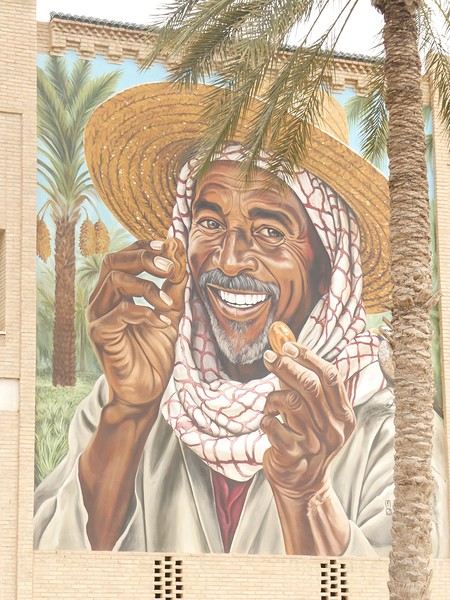
At the end of my stay, I’ll take time to explore Monastir, but tomorrow morning, I’m off to Tozeur—a long bus ride awaits me.

TO BE CONTINUED....
On this forum, I shared my first trip to Tunisia from mid-February to early March (https://voyageforum.com/forum/impressions-tunisiennes-en-direct-d11460662/), a stay I enjoyed so much that six weeks later, I’m back in Tunisia for a full 15 days (I return on April 27).
This time, I landed in Monastir on a direct flight from Nice, again with Tunisair. We left about ten minutes late, and the flight lasted around 1 hour 30 minutes. A meal was served on board (cucumber salad with Edam-like cheese, carrots, and two small portions of dishes I couldn’t identify—semolina with peppers, olives, and parsley, two small rolls, a square of processed cheese, and a chocolate cake). It’s worth noting because it’s not common on flights this short.
In February, France and Tunisia were in the same time zone, but now Tunisia is one hour behind. This time difference and the flight duration work perfectly for a short 15-day trip since it takes me a few days to adjust to jet lag.
Luckily, I’d asked my hotel about the taxi fare from the airport because the drivers (there were several around me) didn’t hesitate to quote outrageous prices. The actual fare is 20 dinars, but one asked for 120 dinars. I refused, and another offered 60 dinars. I replied, "That’s too expensive—I’ll take the metro!" (Having tried the Tunis metro, I had no desire to repeat the experience in Monastir with a suitcase!). I started walking toward the metro, and one of the drivers caught up with me, saying, "20 dinars is fine!" I’ll skip the details, but the negotiation took a little while. When I arrived at the hotel, I told the receptionist someone had asked for 120 dinars. He put his hands to his head and said, "They’re awful!" He remembered our phone call two days earlier when I’d booked (he’s the one who told me I could take the metro).
The Mezri Hotel isn’t expensive. I got a sea-view room for 75 dinars (22 €). (I’d booked a balcony room for 90 dinars but wouldn’t have had time to enjoy it.) It’s well-located but noisy because there’s no double glazing. The receptionist is a very kind older gentleman. He called a friend whose wife is from Tozeur to find out if I should take a bus or a *louage* tomorrow and what time.
I arrived at the hotel around 7:00 PM and had time to stroll along the corniche to the ribat. Despite some run-down buildings, the seaside seemed livelier and cheerier than Sousse’s.
Monastir is the hometown of former president Bourguiba. I passed his mausoleum by taxi. There are Tunisian flags along the avenue by the sea because every year on April 6—the anniversary of Habib Bourguiba’s death—the president of the Republic visits the Bourguiba Mausoleum in Monastir to pay respects.
The taxi driver mentioned other Tunisian presidents. He complained about rising prices and insecurity, blaming President Kaïs Saïed (I’d already heard that security was better under Ben Ali).
At the end of my stay, I’ll take time to explore Monastir, but tomorrow morning, I’m off to Tozeur—a long bus ride awaits me.
TO BE CONTINUED....
Practical aspects spring 2026: border to Murmansk, to Pskov, SIM cards, internet.
I took a few days to get some fresh air outside the Schengen-NATO prison. Between March 18, 2026, and March 25, 2026, as shown by the passport stamps:
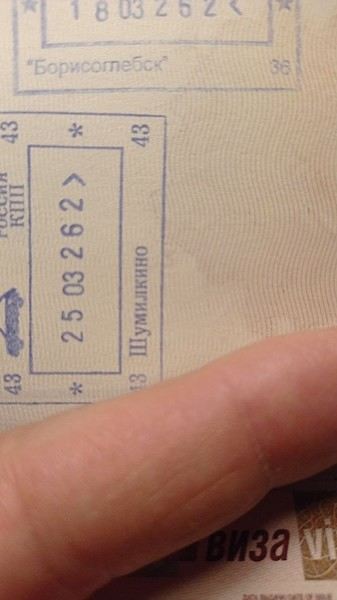
Borisoglebsk is the Russian border checkpoint after Kirkenes, on the road to Murmansk.
Kirkenes is a tiny town with a correspondingly small airport. Nothing has changed there: the minibuses to Murmansk wait on the right as you exit the airport. They’re synchronized with the two daily flights from Oslo—the SAS around 11:00 AM and Norwegian around 11:30 AM. They stop in Kirkenes at the corner of the Scandic for an hour, where other passengers can board, then head straight to the nearby border.
This is the least hassle Frontex/Schengen border. The Norwegian agent quickly scans your passport, and that’s it. No customs, since Norway is Schengen but not in the EU. On the Russian side, there’s a passport check and a quick customs inspection. All in all, crossing both the Norwegian and Russian checkpoints takes about 15 minutes.
A paper visa is required; e-visas aren’t accepted.
Two companies run the route: Avto Ekspress and Borodin: https://ae51.ru/routes/kirkenes-murmansk/ https://borodinbus.com/
The one-way fare is 5,500 ₽. You can either buy it online in rubles with a MIR card or make a formal reservation and pay in NOK cash to the driver. I took Borodin, and the price in NOK was much more expensive than in ₽.
=========================
On March 25, I left from Pskov via the Estonian border post at Luhaama. I spent three days in Murmansk, flew to St. Petersburg (SPB), stayed there for two days, then took an evening train to Pskov.
Since the end of February—and reportedly until the end of May—the Estonians have restricted the opening hours of the two border crossings near Pskov: Koidula (Pechory on the Russian side) and Luhaama (Izborsk on the Russian side). They’re closed at night between 7:00 PM and 7:00 AM. Right now, there’s a bus from Pskov at 7:00 AM to the border. It drops you off at the end of the road where truckers—many Kazakh and Serbian—are parked on the side. You finish the rest on foot to the barrier, where there’s a quick initial check for Ukrainian stamps in passports. Then you walk to the customs building, followed by passport control at the kiosk for motorists. After that, it’s a 500-meter walk to the Estonian checkpoint. At the moment, things seem calmer. Passport control is quick. The usual silly questions in English: "Where were you? Where are you going?" I just gave my most clueless smile: "Sorry, I don’t understand." Yeah, right—I don’t speak English, especially not at an Estonian border with a French passport. If they’re in a mood, though... A very quick bag inspection. Once you exit the Estonian post, walk to the bus stop sign by the road where another coach takes you to Riga.
The catch: in my case, last Wednesday, there were two passengers (Russians) with old Ukrainian stamps in their passports. The bus from the Estonian post to Riga was supposed to leave around 9:30 AM. We ended up leaving around noon after the two were grilled by the FSB. Since it was a weekday outside of holidays, the bus was half-empty. The fuller the bus and the more people with Ukrainian stamps, the worse the nightmare. Don’t book a same-day flight from Riga. I had a flight at 6:00 PM, so it worked out.
=============
The Kirkenes-Murmansk route is still clearly the easiest and fastest. But it’s not the most convenient since it’s way up north.
Next, I’d say the Gdansk-Kaliningrad route in the middle of the week. Avoid weekends and holiday departures/returns.
Avoid the Narva-Ivangorod route during Christmas, Easter, May 9, and *all* summer.
==============
About flights from Murmansk to St. Petersburg: prices are good. I bought my ticket the day before departure on Rossiya for 7,500 ₽, including 10 kg of luggage + a handbag.
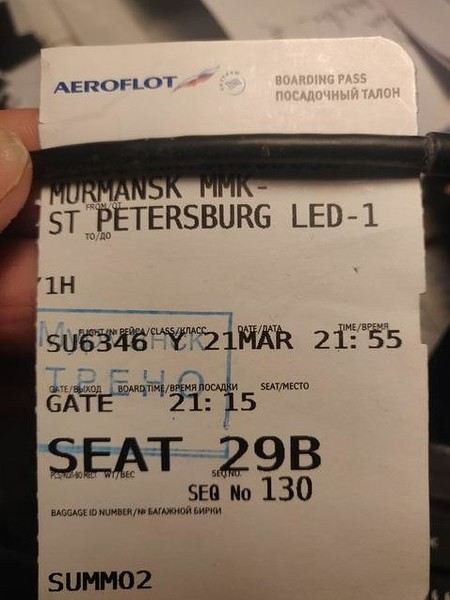
It’s the tail end of the northern lights season, and there were still crowds of Chinese tourists.
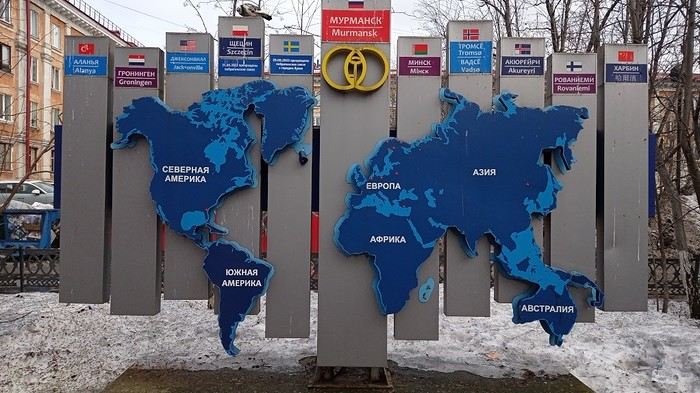
By the way, Murmansk is twinned with Harbin:
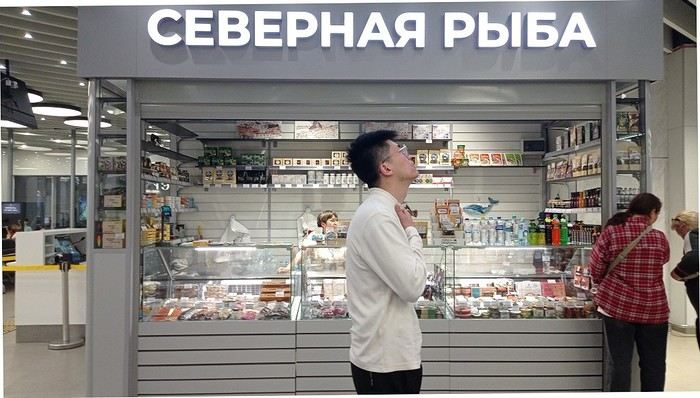
Chinese tourists are the largest foreign group, followed by Indians, then a mix of others from the Far East, Turks, Arabs, etc. Brochures are bilingual—Russian and Chinese:
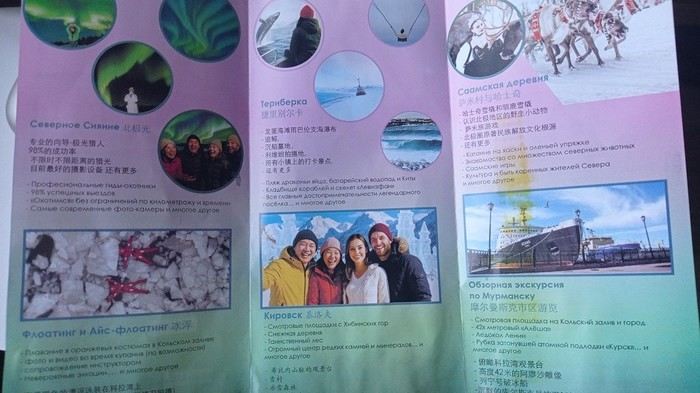
============================
But let’s talk practical stuff. --
My domestic SIM card was restricted for SMS and internet for 24 hours. After that, if you want to keep using SMS, don’t turn off your phone—restarting triggers another 24-hour purgatory.
My Russian SIM cards (Megafon, MTS, Beeline) were activated as soon as I logged into their respective apps with my credentials.
Internet --
Telegram is heavily slowed down by authorities. To use it, you need to connect through proxy servers, which you load into the latest version of the app. Traffic is then rerouted internally within Telegram to servers outside Russia (Germany, Poland, Sweden, etc.). You can find these proxies on various channels. One is ChatVPN—check their website too.
For general internet use, like browsing the web, VPNs that work right now use the VLESS protocol. You can find several on Telegram by searching "VPN." A few free days, then payment in rubles or crypto.
Rozkomnadzor’s team are experts at this, so things can change. It’s a constant cat-and-mouse game.
Pskov is a special case. The city is near Estonia and has a large military base. Depending on NATO drone swarms launched from the Baltics, Wi-Fi can be completely suspended except for the most essential mobile apps. The drone swarms use the 4G network, and the powerful electronic jamming and drone suppression systems cause periods without Wi-Fi—including in hotels. Wired connections aren’t affected.
Borisoglebsk is the Russian border checkpoint after Kirkenes, on the road to Murmansk.
Kirkenes is a tiny town with a correspondingly small airport. Nothing has changed there: the minibuses to Murmansk wait on the right as you exit the airport. They’re synchronized with the two daily flights from Oslo—the SAS around 11:00 AM and Norwegian around 11:30 AM. They stop in Kirkenes at the corner of the Scandic for an hour, where other passengers can board, then head straight to the nearby border.
This is the least hassle Frontex/Schengen border. The Norwegian agent quickly scans your passport, and that’s it. No customs, since Norway is Schengen but not in the EU. On the Russian side, there’s a passport check and a quick customs inspection. All in all, crossing both the Norwegian and Russian checkpoints takes about 15 minutes.
A paper visa is required; e-visas aren’t accepted.
Two companies run the route: Avto Ekspress and Borodin: https://ae51.ru/routes/kirkenes-murmansk/ https://borodinbus.com/
The one-way fare is 5,500 ₽. You can either buy it online in rubles with a MIR card or make a formal reservation and pay in NOK cash to the driver. I took Borodin, and the price in NOK was much more expensive than in ₽.
=========================
On March 25, I left from Pskov via the Estonian border post at Luhaama. I spent three days in Murmansk, flew to St. Petersburg (SPB), stayed there for two days, then took an evening train to Pskov.
Since the end of February—and reportedly until the end of May—the Estonians have restricted the opening hours of the two border crossings near Pskov: Koidula (Pechory on the Russian side) and Luhaama (Izborsk on the Russian side). They’re closed at night between 7:00 PM and 7:00 AM. Right now, there’s a bus from Pskov at 7:00 AM to the border. It drops you off at the end of the road where truckers—many Kazakh and Serbian—are parked on the side. You finish the rest on foot to the barrier, where there’s a quick initial check for Ukrainian stamps in passports. Then you walk to the customs building, followed by passport control at the kiosk for motorists. After that, it’s a 500-meter walk to the Estonian checkpoint. At the moment, things seem calmer. Passport control is quick. The usual silly questions in English: "Where were you? Where are you going?" I just gave my most clueless smile: "Sorry, I don’t understand." Yeah, right—I don’t speak English, especially not at an Estonian border with a French passport. If they’re in a mood, though... A very quick bag inspection. Once you exit the Estonian post, walk to the bus stop sign by the road where another coach takes you to Riga.
The catch: in my case, last Wednesday, there were two passengers (Russians) with old Ukrainian stamps in their passports. The bus from the Estonian post to Riga was supposed to leave around 9:30 AM. We ended up leaving around noon after the two were grilled by the FSB. Since it was a weekday outside of holidays, the bus was half-empty. The fuller the bus and the more people with Ukrainian stamps, the worse the nightmare. Don’t book a same-day flight from Riga. I had a flight at 6:00 PM, so it worked out.
=============
The Kirkenes-Murmansk route is still clearly the easiest and fastest. But it’s not the most convenient since it’s way up north.
Next, I’d say the Gdansk-Kaliningrad route in the middle of the week. Avoid weekends and holiday departures/returns.
Avoid the Narva-Ivangorod route during Christmas, Easter, May 9, and *all* summer.
==============
About flights from Murmansk to St. Petersburg: prices are good. I bought my ticket the day before departure on Rossiya for 7,500 ₽, including 10 kg of luggage + a handbag.
It’s the tail end of the northern lights season, and there were still crowds of Chinese tourists.
By the way, Murmansk is twinned with Harbin:
Chinese tourists are the largest foreign group, followed by Indians, then a mix of others from the Far East, Turks, Arabs, etc. Brochures are bilingual—Russian and Chinese:
============================
But let’s talk practical stuff. --
My domestic SIM card was restricted for SMS and internet for 24 hours. After that, if you want to keep using SMS, don’t turn off your phone—restarting triggers another 24-hour purgatory.
My Russian SIM cards (Megafon, MTS, Beeline) were activated as soon as I logged into their respective apps with my credentials.
Internet --
Telegram is heavily slowed down by authorities. To use it, you need to connect through proxy servers, which you load into the latest version of the app. Traffic is then rerouted internally within Telegram to servers outside Russia (Germany, Poland, Sweden, etc.). You can find these proxies on various channels. One is ChatVPN—check their website too.
For general internet use, like browsing the web, VPNs that work right now use the VLESS protocol. You can find several on Telegram by searching "VPN." A few free days, then payment in rubles or crypto.
Rozkomnadzor’s team are experts at this, so things can change. It’s a constant cat-and-mouse game.
Pskov is a special case. The city is near Estonia and has a large military base. Depending on NATO drone swarms launched from the Baltics, Wi-Fi can be completely suspended except for the most essential mobile apps. The drone swarms use the 4G network, and the powerful electronic jamming and drone suppression systems cause periods without Wi-Fi—including in hotels. Wired connections aren’t affected.
Waterways Around the World: January 2026 Photo Contest
The first theme of 2026 is:
"Waterways Around the World".
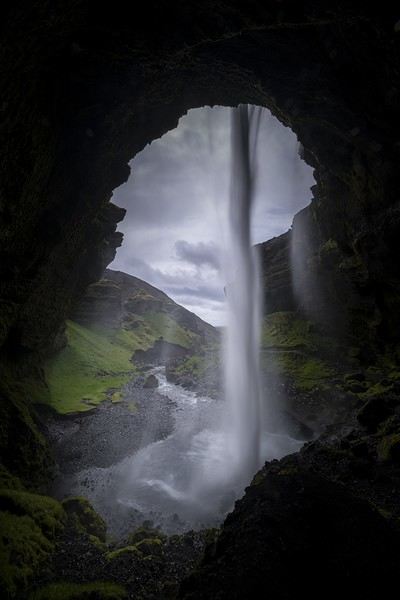
Water is present almost everywhere on our blue planet, so I’ve narrowed the theme down to waterways—rivers, streams, brooks, and the like.
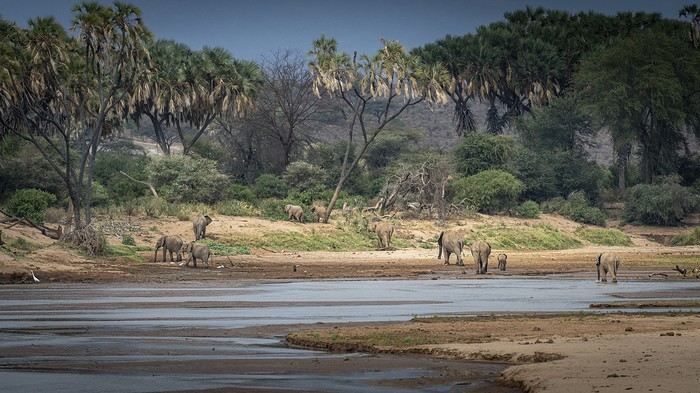
Seas, oceans, lakes, or other stagnant waters won’t be considered for this month’s theme 😅. However, waterfalls and cascades are very welcome 😊!
Practical details:
**Participation** Each VF member can submit up to 3 photos, until Sunday, January 25th at 11:59 PM Paris time. Each photo must be posted in a separate message, with its number (1, 2, or 3). Don’t forget to add a little explanation (commentary, location, etc.).
**Voting** Each VF member can vote for the 3 photos they consider the best, based on their own criteria and the theme.
Voting will take place from Monday, January 26th to Saturday, January 31st at 11:59 PM Paris time.
Photos should be ranked in order of preference: - 1st photo: 3 points - 2nd photo: 2 points - 3rd photo: 1 point
The winner is the photographer whose photo receives the most points.
Results will be published on February 1st. In case of a tie, the number of first-place votes will decide. The winner will have the honor of organizing February 2026’s contest.
Photos that have already been nominated (1st, 2nd, or 3rd place) in another contest are not eligible to participate in this one.
This thread is exclusively for contest photo submissions. All discussions, comments, and chit-chat should take place in the thread: here
Water is present almost everywhere on our blue planet, so I’ve narrowed the theme down to waterways—rivers, streams, brooks, and the like.
Seas, oceans, lakes, or other stagnant waters won’t be considered for this month’s theme 😅. However, waterfalls and cascades are very welcome 😊!
Practical details:
**Participation** Each VF member can submit up to 3 photos, until Sunday, January 25th at 11:59 PM Paris time. Each photo must be posted in a separate message, with its number (1, 2, or 3). Don’t forget to add a little explanation (commentary, location, etc.).
**Voting** Each VF member can vote for the 3 photos they consider the best, based on their own criteria and the theme.
Voting will take place from Monday, January 26th to Saturday, January 31st at 11:59 PM Paris time.
Photos should be ranked in order of preference: - 1st photo: 3 points - 2nd photo: 2 points - 3rd photo: 1 point
The winner is the photographer whose photo receives the most points.
Results will be published on February 1st. In case of a tie, the number of first-place votes will decide. The winner will have the honor of organizing February 2026’s contest.
Photos that have already been nominated (1st, 2nd, or 3rd place) in another contest are not eligible to participate in this one.
This thread is exclusively for contest photo submissions. All discussions, comments, and chit-chat should take place in the thread: here
Impressions after two months in El Salvador
Hi there,
In 2024, I spent two months solo in El Salvador. While I’m still putting together my travel journal on Myatlas, here’s a quick recap. It’s a country where it’s really easy to travel without a guide or agency.
SAFETY:
For a long time, the country was considered one of the most dangerous in the world because of the "maras," ultra-violent gangs. But today, I think it’s the safest country in Latin America.
BUDGET:
For French tourists, the country is very affordable, especially in the less touristy regions.
TRANSPORT:
I got around everywhere by local bus.
Local buses go everywhere and run all the time. For me, it’s the best way to travel in El Salvador—you’re fully immersed, moving at the pace of the locals, and interacting with Salvadorans who are eager to connect with travelers.
I saw all sorts of things on those buses—I’ve got dozens of stories!
PEOPLE:
I’m used to traveling all over Latin America, and for me, Salvadorans are the warmest and most welcoming. Everywhere you go, people say, "Welcome to El Salvador!" The connections and long conversations with locals were my favorite part of the trip.
TOURIST CROWDS:
The country isn’t well-known among European tourists, but Americans and Quebecers visit. Overall, it’s still pretty low-key, especially compared to other Central American countries. That said, tourism has been growing since security improved significantly.
WHAT I LOVED ❤️
-Suchitoto, one of the most beautiful colonial towns in Central America.
-The volcanoes—there are so many! Santa Ana is the most touristy.
-The lakes—also plentiful. Coatepeque is the most famous, but there are lots of lagoons too.
-The mountainous regions, where the cooler weather is a nice break: La Palma, Perquín, Cerro El Pital, etc.
-The charming villages along the Ruta de las Flores, especially Nahuizalco with its nighttime atmosphere and food stalls. Juayúa and others are great too.
-The conversations with people who lived through the horrors of the civil war in Perquín and Cinquera. I met one of them by chance while waiting for a bus.
For surfers, El Salvador is a paradise, with world-famous beaches.
WHAT I LIKED LESS:
I loved almost everything, but I found the archaeological sites a bit underwhelming. Joyabaj de Cerén is billed as the "Pompeii of El Salvador," which is a stretch (though it *is* a UNESCO World Heritage Site for its historical value).
In 2024, I spent two months solo in El Salvador. While I’m still putting together my travel journal on Myatlas, here’s a quick recap. It’s a country where it’s really easy to travel without a guide or agency.
SAFETY:
For a long time, the country was considered one of the most dangerous in the world because of the "maras," ultra-violent gangs. But today, I think it’s the safest country in Latin America.
BUDGET:
For French tourists, the country is very affordable, especially in the less touristy regions.
TRANSPORT:
I got around everywhere by local bus.
Local buses go everywhere and run all the time. For me, it’s the best way to travel in El Salvador—you’re fully immersed, moving at the pace of the locals, and interacting with Salvadorans who are eager to connect with travelers.
I saw all sorts of things on those buses—I’ve got dozens of stories!
PEOPLE:
I’m used to traveling all over Latin America, and for me, Salvadorans are the warmest and most welcoming. Everywhere you go, people say, "Welcome to El Salvador!" The connections and long conversations with locals were my favorite part of the trip.
TOURIST CROWDS:
The country isn’t well-known among European tourists, but Americans and Quebecers visit. Overall, it’s still pretty low-key, especially compared to other Central American countries. That said, tourism has been growing since security improved significantly.
WHAT I LOVED ❤️
-Suchitoto, one of the most beautiful colonial towns in Central America.
-The volcanoes—there are so many! Santa Ana is the most touristy.
-The lakes—also plentiful. Coatepeque is the most famous, but there are lots of lagoons too.
-The mountainous regions, where the cooler weather is a nice break: La Palma, Perquín, Cerro El Pital, etc.
-The charming villages along the Ruta de las Flores, especially Nahuizalco with its nighttime atmosphere and food stalls. Juayúa and others are great too.
-The conversations with people who lived through the horrors of the civil war in Perquín and Cinquera. I met one of them by chance while waiting for a bus.
For surfers, El Salvador is a paradise, with world-famous beaches.
WHAT I LIKED LESS:
I loved almost everything, but I found the archaeological sites a bit underwhelming. Joyabaj de Cerén is billed as the "Pompeii of El Salvador," which is a stretch (though it *is* a UNESCO World Heritage Site for its historical value).
Review of Renaissance Cruise (Iberian Flavors) from October 18 to 29, 2025
Hi there,
Here’s a little review of our cruise on the Renaissance from October 18 to 29, 2025 (11 nights). It was our first experience with CFC.
Some other forum members were on board too, so we can probably compare notes and correct me if I’m wrong!
The stops were as follows: 10/18 departure from Marseille 10/19 at sea 10/20 Cartagena 10/21 Almería 10/22 Gibraltar 10/23 Cádiz 10/24 at sea 10/25 Leixões (Porto) 10/26 Vigo 10/27 at sea 10/28 at sea 10/29 Dunkirk
First, a quick intro. We’re a family of four with two kids, ages 8 and 11. We booked this cruise in January 2025, right when it went on sale. At the time, it was priced at 763 € per adult (+ 99 € in tips) and 114.45 € per child (under 12, no tips to pay) for an ocean-view cabin (all ocean-view categories were the same price). Since there was also a single-parent offer (meaning one paying adult in the cabin was enough to get the child rate for the accompanying kid), I asked if we could take advantage of this offer to get two double cabins at the same price as one quadruple cabin (to have more space), and yes, it was possible. So we booked two premium ocean-view double cabins side by side. It was the same price as a quadruple. We booked directly through CFC because my husband had a promotional code from his works council. In total, for the four of us, we paid 1830 €, tips included. It’s true we booked early, but the rate was good, and we had the constraint of traveling as a family of four, so cabin choices were more limited. It’s also worth noting that the single-parent offer is limited.
Now, about embarkation: 10/18 Marseille Coming from the north, we took the direct TGV that morning at 7:22 AM, scheduled to arrive in Marseille at 12:24 PM. The trip went smoothly, great weather, and we arrived just one minute late. I had planned to get to the port using the free 35T shuttle from Joliette. To get to the bus stop, there were two options: the metro or walking. Since the weather was beautiful and the kids needed to stretch their legs, we opted for the second option. The route is all downhill, so it was pretty easy even with the suitcases. But I wouldn’t do it the other way around! We arrived at Joliette around 12:50 PM, just in time for the 1:00 PM shuttle, which arrived a few minutes late. Other cruisers got on board too. That day, there were two Costa ships and one MSC ship at the port as well. Traffic was heavy, and the shuttle arrived at the port entrance at 1:30 PM. We were scheduled for 2:30 PM. We were lucky to be at the closest embarkation terminal. So we were among those who had the least walking to do. We dropped off our suitcases and headed to the check-in counter. There were plenty of desks and almost no passengers. So we quickly completed the embarkation formalities—in just a few minutes—and when we boarded, it wasn’t even 2:00 PM yet. We headed to the buffet, where there weren’t many people. As we finished lunch, it was around 3:00 PM when they announced the cabins were ready. We went down to drop off our luggage in the cabins and then went up to the top deck to take some photos. The ship’s daily program said the safety drill would be at 4:00 PM. So we went to deck 6 at the scheduled time. But later, they announced it would actually be at 4:30 PM! In short, we waited 30 minutes for nothing because of a difference between the scheduled and actual time! The drill itself was long. Gathering everyone took about 20 minutes, I think. Just as we finished, they announced the departure, originally scheduled for 5:00 PM, was delayed until 9:00 PM due to latecomers. We went to check out the library, which had tons of board games and books—more than we’d ever seen. What stood out on this first day was that, for the first time, we had a French-speaking embarkation, announcements only in French (except for the safety drill), French-speaking servers, a paper daily program in French, books in French (which we’d never find on another ship), and menus in French. To wrap up the day, we had dinner at Vatel. I had requested the first seating (6:30 PM) and a table for four, and we got it. We were seated upstairs near the window—a very pleasant table that we’d occupy every evening. What was a little surprising, but we got used to it, was that you had to order everything you wanted at once. The portions weren’t big, but you could choose what you wanted. The cheese was French and excellent.
To be continued...
The stops were as follows: 10/18 departure from Marseille 10/19 at sea 10/20 Cartagena 10/21 Almería 10/22 Gibraltar 10/23 Cádiz 10/24 at sea 10/25 Leixões (Porto) 10/26 Vigo 10/27 at sea 10/28 at sea 10/29 Dunkirk
First, a quick intro. We’re a family of four with two kids, ages 8 and 11. We booked this cruise in January 2025, right when it went on sale. At the time, it was priced at 763 € per adult (+ 99 € in tips) and 114.45 € per child (under 12, no tips to pay) for an ocean-view cabin (all ocean-view categories were the same price). Since there was also a single-parent offer (meaning one paying adult in the cabin was enough to get the child rate for the accompanying kid), I asked if we could take advantage of this offer to get two double cabins at the same price as one quadruple cabin (to have more space), and yes, it was possible. So we booked two premium ocean-view double cabins side by side. It was the same price as a quadruple. We booked directly through CFC because my husband had a promotional code from his works council. In total, for the four of us, we paid 1830 €, tips included. It’s true we booked early, but the rate was good, and we had the constraint of traveling as a family of four, so cabin choices were more limited. It’s also worth noting that the single-parent offer is limited.
Now, about embarkation: 10/18 Marseille Coming from the north, we took the direct TGV that morning at 7:22 AM, scheduled to arrive in Marseille at 12:24 PM. The trip went smoothly, great weather, and we arrived just one minute late. I had planned to get to the port using the free 35T shuttle from Joliette. To get to the bus stop, there were two options: the metro or walking. Since the weather was beautiful and the kids needed to stretch their legs, we opted for the second option. The route is all downhill, so it was pretty easy even with the suitcases. But I wouldn’t do it the other way around! We arrived at Joliette around 12:50 PM, just in time for the 1:00 PM shuttle, which arrived a few minutes late. Other cruisers got on board too. That day, there were two Costa ships and one MSC ship at the port as well. Traffic was heavy, and the shuttle arrived at the port entrance at 1:30 PM. We were scheduled for 2:30 PM. We were lucky to be at the closest embarkation terminal. So we were among those who had the least walking to do. We dropped off our suitcases and headed to the check-in counter. There were plenty of desks and almost no passengers. So we quickly completed the embarkation formalities—in just a few minutes—and when we boarded, it wasn’t even 2:00 PM yet. We headed to the buffet, where there weren’t many people. As we finished lunch, it was around 3:00 PM when they announced the cabins were ready. We went down to drop off our luggage in the cabins and then went up to the top deck to take some photos. The ship’s daily program said the safety drill would be at 4:00 PM. So we went to deck 6 at the scheduled time. But later, they announced it would actually be at 4:30 PM! In short, we waited 30 minutes for nothing because of a difference between the scheduled and actual time! The drill itself was long. Gathering everyone took about 20 minutes, I think. Just as we finished, they announced the departure, originally scheduled for 5:00 PM, was delayed until 9:00 PM due to latecomers. We went to check out the library, which had tons of board games and books—more than we’d ever seen. What stood out on this first day was that, for the first time, we had a French-speaking embarkation, announcements only in French (except for the safety drill), French-speaking servers, a paper daily program in French, books in French (which we’d never find on another ship), and menus in French. To wrap up the day, we had dinner at Vatel. I had requested the first seating (6:30 PM) and a table for four, and we got it. We were seated upstairs near the window—a very pleasant table that we’d occupy every evening. What was a little surprising, but we got used to it, was that you had to order everything you wanted at once. The portions weren’t big, but you could choose what you wanted. The cheese was French and excellent.
To be continued...
A summer in the sun in... Iceland!!
Ah, Iceland and us—it’s quite the story, or rather, a long wait... The first time we considered going was already 7-8 years ago, after reading travel journals describing breathtaking landscapes, countless active and dormant volcanoes, glaciers, and waterfalls with extraordinary flows. In short, this island, made of fire and ice, right at Europe’s doorstep with its own unique culture, had nothing but advantages, and it was urgent to visit without delay 😇
My *Routard* guidebook is actually from 2016. So why did Iceland make us wait so long before we finally gave in to its charms? Yes, why indeed?
Simply because reading other travel journals revealed the cost of living there—and especially the harsh climate, even in the middle of July 🤪! Some journals described entire weeks of rain and foggy weather, making it tricky to explore the island. The budget wasn’t spared either, because in the most touristy areas, especially in the south and around Myvatn, accommodation prices are downright indecent—even outright robbery. 😕
Plus, in the Highlands, there’s literally no permanent lodging, and the only way to spend several nights there is to camp. And camping in winter conditions wasn’t exactly part of our plans... 😄
So, year after year, this trip kept getting postponed...
until August 2023, when prices for Southern Africa, North or South America, or even Asia were all way too high for summer 2024!
That’s when I turned my attention back to the Land of Fire and Ice and scoured all the comparison sites for the best accommodation deals across the country. Planning for 20 nights, I found 13 nights in "proper" lodging for 5 people at an average cost of under 200 €! A miracle, considering that in the southern glacier region, around Vik or Myvatn, prices range from 300 to 1000 € per night 😮 😮!
Still, that means we’ll have to camp for 7 nights, mostly in the Highlands, near Askja or Landmannalaugar. 😎
For once, I built the daily itinerary entirely around the decently priced lodgings I found 11 months in advance! The shortage of places to stay in some areas forced me to plan a few long transition days and make some tough choices. No big deal, though—there’s so much to do on this island 🙂!
Once the main itinerary was set, everyone agreed to the plan: 2/3 in proper lodging and 1/3 camping, even the most camping-averse among us! *Follow my gaze...*
By the time we bought the flight tickets, I had to tweak the itinerary a bit because one or two places were already booked! Plus, it was impossible to wait for a more refined plan to adjust reservations, since almost all bookings are non-refundable!! The harsh law of supply and demand...
For the car rental, we booked a Hyundai Tucson, approved for the Highlands, from Lava Car Rental—a company I’d read good reviews about in a Facebook group—for a cool 2500 € with full insurance. A real 4x4, like a Defender, would’ve been more than double...! Welcome to Iceland 😕...
Activities and excursions also required some tough choices. We had two must-dos: whale watching in Húsavík (60 € pp on Getyourguide) and a Glacier and Summer Treasure Glacier Walk with BlueIceland (165 € pp with discount codes on Getyourguide).
For the baths, we skipped the Blue Lagoon—too expensive—in favor of the Secret Lagoon and the Myvatn Baths, the Blue Lagoon’s equivalent but half the price.
Two baths for the price of one... and even more, since I spotted several free hot-water swimming spots.
Itinerary: Day 1: Arrival in Reykjavik - Hraunfossar Waterfall - Surtshellir Cave Day 2: Grábrók Crater - Snæfellsnes Peninsula Day 3: Stykkishólmur - Sturlungalaug Hot Springs Day 4: Northwest Coast - Akureyri - Goðafoss Day 5: Myvatn Day 6: Myvatn - Dettifoss - Selfoss - Rauðhólar Day 7: Húsavík Whale Watching - Dettifoss - Selfoss Day 8: Stuðlagil Canyon - Seyðisfjörður Day 9: Puffin colony - Störurð Hike Day 10: Hengifoss - East Fjords, Mjóifjörður Day 11: Viking Village - Jökulsárlón - Fjallsárlón Day 12: Glacier Excursion - Svartifoss Day 13: Fjaðrárgljúfur Canyon - Vík Day 14: Þakgil - Lava Show Vík Day 15: Southern Waterfalls Day Day 16: Landmannalaugar - Skalli Hike Day 17: Landmannalaugar - Bláhnjúkur - Brennisteinsalda Day 18: Secret Lagoon, Kerlingarfjöll, and Gullfoss Day 19: Geysir - Reykjavik Day 20: Bruarfoss - Þingvellir - Kerid Crater - Krýsuvík Geothermal Area Day 21: Reykjanes Peninsula
Friday, July 5, 2024, is our last workday before driving up to Alsace overnight to leave the cockers at Grandpa’s for boarding. Then, at 1:30 AM, we’ll head to Frankfurt, where a direct flight to Iceland awaits.
We arrive at 4 AM. Since we leave at 7 AM, the "night" will only last the equivalent of a 30-minute nap 🤪... just enough to get us in the road-trip mood 😏!!
My *Routard* guidebook is actually from 2016. So why did Iceland make us wait so long before we finally gave in to its charms? Yes, why indeed?
Simply because reading other travel journals revealed the cost of living there—and especially the harsh climate, even in the middle of July 🤪! Some journals described entire weeks of rain and foggy weather, making it tricky to explore the island. The budget wasn’t spared either, because in the most touristy areas, especially in the south and around Myvatn, accommodation prices are downright indecent—even outright robbery. 😕
Plus, in the Highlands, there’s literally no permanent lodging, and the only way to spend several nights there is to camp. And camping in winter conditions wasn’t exactly part of our plans... 😄
So, year after year, this trip kept getting postponed...
until August 2023, when prices for Southern Africa, North or South America, or even Asia were all way too high for summer 2024!
That’s when I turned my attention back to the Land of Fire and Ice and scoured all the comparison sites for the best accommodation deals across the country. Planning for 20 nights, I found 13 nights in "proper" lodging for 5 people at an average cost of under 200 €! A miracle, considering that in the southern glacier region, around Vik or Myvatn, prices range from 300 to 1000 € per night 😮 😮!
Still, that means we’ll have to camp for 7 nights, mostly in the Highlands, near Askja or Landmannalaugar. 😎
For once, I built the daily itinerary entirely around the decently priced lodgings I found 11 months in advance! The shortage of places to stay in some areas forced me to plan a few long transition days and make some tough choices. No big deal, though—there’s so much to do on this island 🙂!
Once the main itinerary was set, everyone agreed to the plan: 2/3 in proper lodging and 1/3 camping, even the most camping-averse among us! *Follow my gaze...*
By the time we bought the flight tickets, I had to tweak the itinerary a bit because one or two places were already booked! Plus, it was impossible to wait for a more refined plan to adjust reservations, since almost all bookings are non-refundable!! The harsh law of supply and demand...
For the car rental, we booked a Hyundai Tucson, approved for the Highlands, from Lava Car Rental—a company I’d read good reviews about in a Facebook group—for a cool 2500 € with full insurance. A real 4x4, like a Defender, would’ve been more than double...! Welcome to Iceland 😕...
Activities and excursions also required some tough choices. We had two must-dos: whale watching in Húsavík (60 € pp on Getyourguide) and a Glacier and Summer Treasure Glacier Walk with BlueIceland (165 € pp with discount codes on Getyourguide).
For the baths, we skipped the Blue Lagoon—too expensive—in favor of the Secret Lagoon and the Myvatn Baths, the Blue Lagoon’s equivalent but half the price.
Two baths for the price of one... and even more, since I spotted several free hot-water swimming spots.
Itinerary: Day 1: Arrival in Reykjavik - Hraunfossar Waterfall - Surtshellir Cave Day 2: Grábrók Crater - Snæfellsnes Peninsula Day 3: Stykkishólmur - Sturlungalaug Hot Springs Day 4: Northwest Coast - Akureyri - Goðafoss Day 5: Myvatn Day 6: Myvatn - Dettifoss - Selfoss - Rauðhólar Day 7: Húsavík Whale Watching - Dettifoss - Selfoss Day 8: Stuðlagil Canyon - Seyðisfjörður Day 9: Puffin colony - Störurð Hike Day 10: Hengifoss - East Fjords, Mjóifjörður Day 11: Viking Village - Jökulsárlón - Fjallsárlón Day 12: Glacier Excursion - Svartifoss Day 13: Fjaðrárgljúfur Canyon - Vík Day 14: Þakgil - Lava Show Vík Day 15: Southern Waterfalls Day Day 16: Landmannalaugar - Skalli Hike Day 17: Landmannalaugar - Bláhnjúkur - Brennisteinsalda Day 18: Secret Lagoon, Kerlingarfjöll, and Gullfoss Day 19: Geysir - Reykjavik Day 20: Bruarfoss - Þingvellir - Kerid Crater - Krýsuvík Geothermal Area Day 21: Reykjanes Peninsula
Friday, July 5, 2024, is our last workday before driving up to Alsace overnight to leave the cockers at Grandpa’s for boarding. Then, at 1:30 AM, we’ll head to Frankfurt, where a direct flight to Iceland awaits.
We arrive at 4 AM. Since we leave at 7 AM, the "night" will only last the equivalent of a 30-minute nap 🤪... just enough to get us in the road-trip mood 😏!!
Backpacking itinerary in Tunisia
Hi there,
I'm urgently planning a trip to Tunisia in November, backpacker-style (no agency, no guide or taxi, public transport, youth hostels or small hotels, local restaurants). I'm not interested in the beach, and I like to take my time at archaeological sites and museums (twice as long as the average visitor). I'm aiming for about two weeks, give or take.
First, I'm trying to roughly outline a route/schedule so I can book my flight as soon as possible (no desert in the south this time—I went there years ago and want to stay independent). I’ve sketched out the following itinerary, knowing that apparently, there are quite a few towns without budget-friendly hotels (even on Airbnb), which means I’ll be staying longer where they’re available. Three questions: 1. Does this seem reasonable overall (time spent in each city)? 2. Should I add other cities, maybe in the northwest? 3. For hotels, in November, is it better to scout options on booking sites first, then book on the spot for cheaper rates (no site commission + possible negotiation)? Also, are hotels not listed online and found randomly on-site much cheaper?
ROUGH ITINERARY (order to be confirmed)
TUNIS 5 days (cheap accommodations: 13 or 19 €) 2 days: Medina, souks, Bardo Museum, Royal Mausoleum of Tourbet El Bey, Zitouna Mosque (exterior) 1 day: Sidi Bou Said 1 day: Carthage 1 day: A-R Dougga (bus to Tebersouk 2h + taxi) – pack a picnic + option: hike to Zaghouan (750m+, 10km round trip) – worth it? Doable alone?
KAIROUAN 2 days (very expensive room: 40-50 €!) Great Mosque, Medina, Three Doors Mosque, medieval cemetery, Sidi Sahbi Mosque...
SOUSSE 3 days (room 15 €) 2 days: Medina, archaeological museum, Port El Kantaoui, the Ribat (fortress), Contemporary Art Museum Dar Am Taïeb, Dar Essid (17th-century traditional house) 1 day: A-R El Jem (60km away) + option: 1 day A-R Monastir? Worth it? + option: 1 day A-R Mahdia (or 2 days sleeping there)?
OPTIONS -> Gabes to mix things up? But is it easy to find cheap lodging and get around/visit alone? -> Other sights or stops to sleep: Sfax, El Kef, others? -> Kerkenna Islands (easy accommodation?)
Thanks for your thoughts and opinions on these options. Once I’ve adjusted the duration, I’ll book my tickets for early November! (By the way, do you think I should arrive and depart from two different airports?)
I'm urgently planning a trip to Tunisia in November, backpacker-style (no agency, no guide or taxi, public transport, youth hostels or small hotels, local restaurants). I'm not interested in the beach, and I like to take my time at archaeological sites and museums (twice as long as the average visitor). I'm aiming for about two weeks, give or take.
First, I'm trying to roughly outline a route/schedule so I can book my flight as soon as possible (no desert in the south this time—I went there years ago and want to stay independent). I’ve sketched out the following itinerary, knowing that apparently, there are quite a few towns without budget-friendly hotels (even on Airbnb), which means I’ll be staying longer where they’re available. Three questions: 1. Does this seem reasonable overall (time spent in each city)? 2. Should I add other cities, maybe in the northwest? 3. For hotels, in November, is it better to scout options on booking sites first, then book on the spot for cheaper rates (no site commission + possible negotiation)? Also, are hotels not listed online and found randomly on-site much cheaper?
ROUGH ITINERARY (order to be confirmed)
TUNIS 5 days (cheap accommodations: 13 or 19 €) 2 days: Medina, souks, Bardo Museum, Royal Mausoleum of Tourbet El Bey, Zitouna Mosque (exterior) 1 day: Sidi Bou Said 1 day: Carthage 1 day: A-R Dougga (bus to Tebersouk 2h + taxi) – pack a picnic + option: hike to Zaghouan (750m+, 10km round trip) – worth it? Doable alone?
KAIROUAN 2 days (very expensive room: 40-50 €!) Great Mosque, Medina, Three Doors Mosque, medieval cemetery, Sidi Sahbi Mosque...
SOUSSE 3 days (room 15 €) 2 days: Medina, archaeological museum, Port El Kantaoui, the Ribat (fortress), Contemporary Art Museum Dar Am Taïeb, Dar Essid (17th-century traditional house) 1 day: A-R El Jem (60km away) + option: 1 day A-R Monastir? Worth it? + option: 1 day A-R Mahdia (or 2 days sleeping there)?
OPTIONS -> Gabes to mix things up? But is it easy to find cheap lodging and get around/visit alone? -> Other sights or stops to sleep: Sfax, El Kef, others? -> Kerkenna Islands (easy accommodation?)
Thanks for your thoughts and opinions on these options. Once I’ve adjusted the duration, I’ll book my tickets for early November! (By the way, do you think I should arrive and depart from two different airports?)
My life in Camargue, my homeland, and in Colombia, my heart's country
My two bullfighting traditions when I'm back home in Camargue (France) and in Colombia (Caribbean) every time I return. 🤠
Details:
Bullfights (corridas) aren’t part of my two bullfighting traditions, but I respect those who attend them!!!
In these two ancestral bullfighting traditions—which aren’t bullfights—the Bulls and Toros aren’t killed or tortured, as some might think.
These are bull games where the animals return to their pastures afterward and only come back to the Arenas 2–3 times a year at most.
They spend 15 minutes in the ring for the Camarguais and 5 minutes for the Toros in the Colombian Corralejas.
They’re cared for and pampered. They’ll die of old age in miles of open fields.
The young people who face them are professionals, risking their lives to support their families and live their Passion for the Toro!!! 😄
https://youtu.be/yYKQer42HoQ
Colombian Corraleja in the link below (hope it works) 🤪
https://fb.watch/BMfmuCgQpG/
Croatia, Montenegro – two victims of overtourism?
Mid-June, two Auvergnats on the starting blocks—off we go to the former Yugoslavia!
We’d already explored some nooks and crannies of northern Croatia back in 2019, so we’re keeping the momentum going by planning a trip to the south of the country and then Montenegro.
On the way back, we’ll drift into Bosnia-Herzegovina just to mix things up a bit!
We’re a little unsure about what to expect in terms of tourist crowds.
Dubrovnik has a reputation for being the hardest-hit city by overtourism, and Kotor and the whole Dalmatian coast aren’t exactly empty...
Luckily, most European countries haven’t started school holidays yet, and some measures seem to have been put in place to limit the flow (like restrictions on the number of cruise ships allowed to dock at the same time).
Maybe we’ll manage to escape the promised hell?
For now, we’re slamming the doors of the Scirocco and heading off to our first stop: northern Italy!
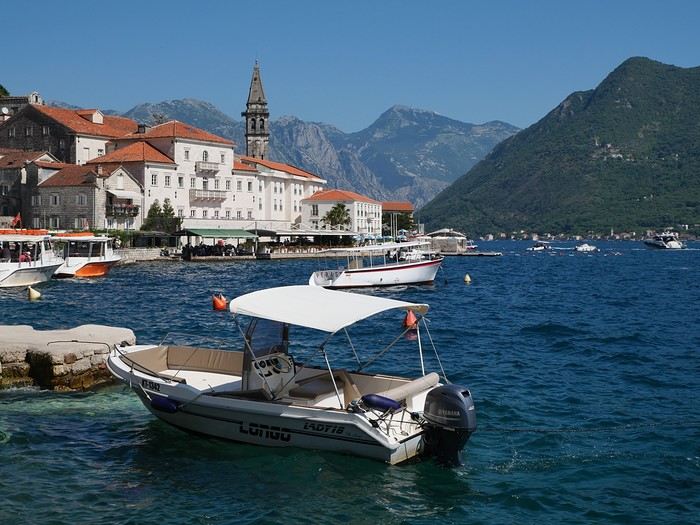
On the way back, we’ll drift into Bosnia-Herzegovina just to mix things up a bit!
We’re a little unsure about what to expect in terms of tourist crowds.
Dubrovnik has a reputation for being the hardest-hit city by overtourism, and Kotor and the whole Dalmatian coast aren’t exactly empty...
Luckily, most European countries haven’t started school holidays yet, and some measures seem to have been put in place to limit the flow (like restrictions on the number of cruise ships allowed to dock at the same time).
Maybe we’ll manage to escape the promised hell?
For now, we’re slamming the doors of the Scirocco and heading off to our first stop: northern Italy!
Is crossing Iran to Pakistan safe?
Hi there,
We’d like to travel overland from Turkey to India in our converted van, but there are very few options these days. Crossing Iran seems risky and not particularly safe. Has anyone here done it? If so, which route did you take to minimize safety concerns?
Thanks for your replies, Julie 😎
We’d like to travel overland from Turkey to India in our converted van, but there are very few options these days. Crossing Iran seems risky and not particularly safe. Has anyone here done it? If so, which route did you take to minimize safety concerns?
Thanks for your replies, Julie 😎