Results for "Tanzanie+déplacer"
About 4,035 results.
More options
Many results are in French, the community’s main language. English translations are added over time.
Search results
Namibia: Exponential increase in park entry fees
Hey everyone!
Heading to Namibia in a few days and I just read that the entry fees for all parks in Namibia have skyrocketed. Increases between 86 and 100%, and this has been in effect since April 1st (no joke). Have any of you heard about this, and if so, do you know if it’s actually being enforced?
For example, the fee for Etosha has gone from 150 NAD to 280 NAD per day per person.
Thanks in advance!
Namibia raises park fees by 86 to 100 percent
Namibia raises park fees by 86 to 100 percent
Prepping for a North-to-South Africa backpacking trip for 8-9 months
Hey everyone!
I’m diving into planning a trip I’ve dreamed of for a long time: crossing Africa from North to South solo, with a departure planned for October 2025 for about 8-9 months. I’m leaving from Paris with a starting budget of around 7,000 €, aiming to supplement it with work along the way.
My planned route: Senegal → Gambia → Sierra Leone/Liberia (if logistics work out) → Côte d'Ivoire → Ghana → Togo → Benin → Cameroon → Gabon → Kenya (Masai Mara) → Uganda (Bwindi gorillas) → Rwanda → Tanzania (Kili + Serengeti + Zanzibar) → Mozambique → Malawi → Zambia (Victoria Falls) → Botswana → Namibia → South Africa (Cape Town). Madagascar as a bonus if timing/budget allows from Mozambique.
I’m not a backpacking newbie—I’ve done several trips in Europe and I’m familiar with the lifestyle, hostels, local transport, etc. But Africa is my first big adventure on this continent, and I’ve got some very concrete questions I’d love feedback on from people who’ve been there.
🎭 My big dilemma: flexibility vs. pre-organized work
What matters most to me is NOT rushing through. If I feel good somewhere, I’ll stay longer. If a region doesn’t click, I’ll cut it short. That seems totally incompatible with having pre-booked work or volunteer gigs, yet I need that income to stretch my budget.
I’m torn between two approaches:
Option A: The mixed rhythm: 3-4 weeks of volunteering in a country (free accommodation, full immersion), then 1-2 countries in classic backpacker "vacation" mode, then another mission somewhere, etc. This gives a breathing rhythm and avoids burnout from non-stop volunteering.
Option B: The continuous flow: finding gigs as I go, from the previous country, contacting hosts 2-3 weeks in advance with a flexible date range. Keeping maximum spontaneity but never arriving anywhere without a safety net.
Have you tried either? What actually works on the ground in Africa?
🌍 What I’m really looking for in this trip
Not just the classic tourist spots. I want to see the country as it is—eating at local joints, taking local transport (bush taxis, minibuses, sept-places), staying with locals when possible. The big reserves and safaris are part of the plan (Masai Mara, Serengeti, Okavango), but just as much as hanging out in a residential neighborhood in Dakar, understanding how people really live.
Volunteering or work interests me for that reason too (not just for free lodging, but because it’s the deepest way to dive into a country). Working at a school in Ghana, a lodge in Kenya, a permaculture farm in Mozambique—I see it as an immersion that classic tourism can’t offer.
🎒 My concrete questions
About Workaway and Worldpackers: I’ve read a lot but would love on-the-ground feedback, especially for West and East Africa. Are hosts really flexible with dates for long-term travelers? Do the advertised gigs match reality? Are there alternative platforms you’d recommend for Africa specifically (I’ve heard of Help Exchange, WWOOF Africa, local networks…)?
About "off-platform" jobs: Is it really doable to find informal work on the spot (bars, restaurants, lodges) without prior contacts? In which countries/cities is this most accessible for a French speaker without a local work permit?
About logistics between countries: For those who’ve done the West Coast (Senegal → Ghana → Benin), how did you cross borders? Direct buses or local shared taxis at each border? And for the jump from Central Africa → Kenya, is a flight mandatory, or are there feasible overland routes?
About Madagascar: I’m considering adding it from Mozambique (flight Maputo or Beira → Tana). Those who’ve done it backpacker-style on a tight budget—is 3-4 weeks doable, or is it too short to be worth it?
I’m open to all tips, experiences, warnings, and pleasant surprises. And if you’ve got trusted local contacts (Workaway hosts, associations, community lodges), I’m all ears!
I’ve got tons of questions and I’m eager for any advice or experiences you can share!!
I’m diving into planning a trip I’ve dreamed of for a long time: crossing Africa from North to South solo, with a departure planned for October 2025 for about 8-9 months. I’m leaving from Paris with a starting budget of around 7,000 €, aiming to supplement it with work along the way.
My planned route: Senegal → Gambia → Sierra Leone/Liberia (if logistics work out) → Côte d'Ivoire → Ghana → Togo → Benin → Cameroon → Gabon → Kenya (Masai Mara) → Uganda (Bwindi gorillas) → Rwanda → Tanzania (Kili + Serengeti + Zanzibar) → Mozambique → Malawi → Zambia (Victoria Falls) → Botswana → Namibia → South Africa (Cape Town). Madagascar as a bonus if timing/budget allows from Mozambique.
I’m not a backpacking newbie—I’ve done several trips in Europe and I’m familiar with the lifestyle, hostels, local transport, etc. But Africa is my first big adventure on this continent, and I’ve got some very concrete questions I’d love feedback on from people who’ve been there.
🎭 My big dilemma: flexibility vs. pre-organized work
What matters most to me is NOT rushing through. If I feel good somewhere, I’ll stay longer. If a region doesn’t click, I’ll cut it short. That seems totally incompatible with having pre-booked work or volunteer gigs, yet I need that income to stretch my budget.
I’m torn between two approaches:
Option A: The mixed rhythm: 3-4 weeks of volunteering in a country (free accommodation, full immersion), then 1-2 countries in classic backpacker "vacation" mode, then another mission somewhere, etc. This gives a breathing rhythm and avoids burnout from non-stop volunteering.
Option B: The continuous flow: finding gigs as I go, from the previous country, contacting hosts 2-3 weeks in advance with a flexible date range. Keeping maximum spontaneity but never arriving anywhere without a safety net.
Have you tried either? What actually works on the ground in Africa?
🌍 What I’m really looking for in this trip
Not just the classic tourist spots. I want to see the country as it is—eating at local joints, taking local transport (bush taxis, minibuses, sept-places), staying with locals when possible. The big reserves and safaris are part of the plan (Masai Mara, Serengeti, Okavango), but just as much as hanging out in a residential neighborhood in Dakar, understanding how people really live.
Volunteering or work interests me for that reason too (not just for free lodging, but because it’s the deepest way to dive into a country). Working at a school in Ghana, a lodge in Kenya, a permaculture farm in Mozambique—I see it as an immersion that classic tourism can’t offer.
🎒 My concrete questions
About Workaway and Worldpackers: I’ve read a lot but would love on-the-ground feedback, especially for West and East Africa. Are hosts really flexible with dates for long-term travelers? Do the advertised gigs match reality? Are there alternative platforms you’d recommend for Africa specifically (I’ve heard of Help Exchange, WWOOF Africa, local networks…)?
About "off-platform" jobs: Is it really doable to find informal work on the spot (bars, restaurants, lodges) without prior contacts? In which countries/cities is this most accessible for a French speaker without a local work permit?
About logistics between countries: For those who’ve done the West Coast (Senegal → Ghana → Benin), how did you cross borders? Direct buses or local shared taxis at each border? And for the jump from Central Africa → Kenya, is a flight mandatory, or are there feasible overland routes?
About Madagascar: I’m considering adding it from Mozambique (flight Maputo or Beira → Tana). Those who’ve done it backpacker-style on a tight budget—is 3-4 weeks doable, or is it too short to be worth it?
I’m open to all tips, experiences, warnings, and pleasant surprises. And if you’ve got trusted local contacts (Workaway hosts, associations, community lodges), I’m all ears!
I’ve got tons of questions and I’m eager for any advice or experiences you can share!!
Love at First Sight in Kenya
Hello,
After several years, I’ve finally decided to repost a travel journal on the forum. We returned a few weeks ago from an incredible trip to Kenya, and it’s reignited my desire to share our emotions in the face of these animals.
Kenya wasn’t originally a priority for us in terms of safari—we had the impression it was too touristy. So, we started with other destinations: Namibia, Tanzania, Botswana, and South Africa. But as I did more research, especially on the forum (thanks in part to Sylvie’s many trips), I eventually convinced myself that Kenya could be magnificent, as long as we chose our itinerary carefully and avoided peak seasons.
We ended up going in January, from the 17th to the 31st. We worked with a travel agency (TP) that crafted a custom itinerary for us: Samburu-Ol Pejeta-Naivasha-Maji Moto-Maasai Mara-Diani. They partnered with a local French-speaking agency, and everything was perfectly organized. Our trip exceeded all our expectations, and none of it would’ve been as amazing without our guide, Alfred. He accompanied us for 10 days and was a fantastic travel companion—professional, respectful of the animals, and always in good spirits. We formed a great bond with him in such a short time.
- **January 17th** After meeting up with Juliette and Charlotte in Rennes the night before, we left at 4 AM for Roissy Charles de Gaulle Airport. The thick fog made the drive pretty rough, but we arrived safely around 7:45 AM. A Blue Valet driver was waiting to take our car. Check-in went smoothly, and we waited patiently for our 10:40 AM flight. Unfortunately, despite boarding on time, a passenger was missing, and we had to find a replacement last minute. Then, another passenger who had checked in and dropped off their luggage wasn’t on the plane, so they had to unload their bags. After a long period of uncertainty and spotty communication from the crew, we finally took off over an hour late.
We arrived in Nairobi in the late afternoon, 45 minutes behind schedule. The administrative formalities were endless—it took nearly 1.5 hours from landing to leaving the airport with our luggage. When we stepped out, Alfred, our guide, was waiting with a big smile and drove us to the Eka Hotel, not far from the airport. Exhausted from the long journey, we fell asleep quickly.
- **January 18th** Alfred met us at 7 AM for a long drive to Samburu Reserve. We had a peaceful night, unlike the girls, who barely slept because their neighbors were talking loudly all night. Things even escalated when Charlotte started shouting insults to get them to quiet down, but it didn’t work.
It was Sunday, so traffic around Nairobi and along the route was light. Aside from a quick "technical stop," we drove straight through and arrived in Samburu after just under 6 hours. Because of the lower altitude (around 1,000m on average), it was hot—over 30°C in mid-January.
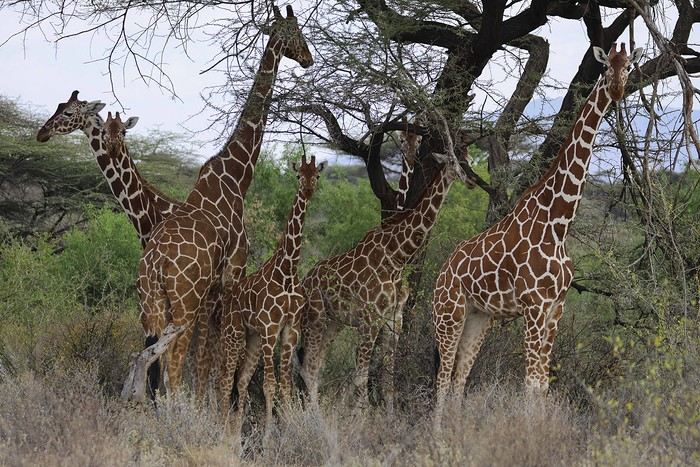
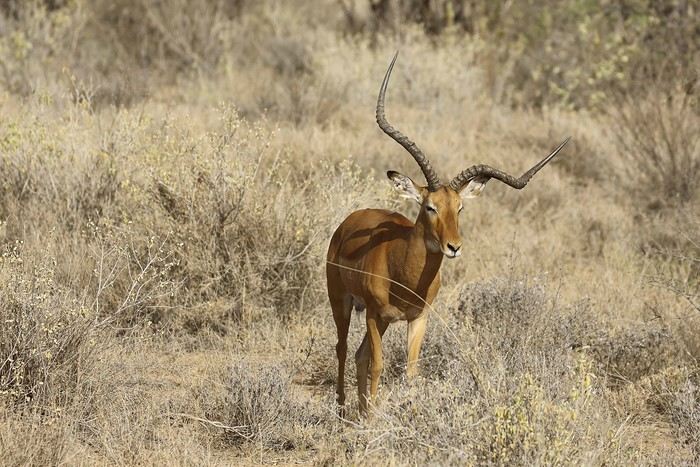
As soon as we entered the reserve, we spotted some impalas and quickly came across one of the region’s endemic species: the reticulated giraffe, which is absolutely stunning.
While heading to our camp for lunch, Alfred crossed paths with another vehicle and learned that a leopard was nearby. We started searching, and a few minutes later, Anny spotted a shape in a tree—it was our leopard!
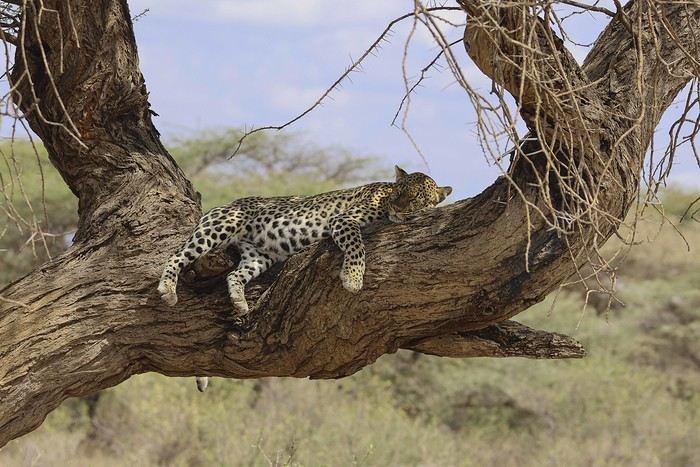
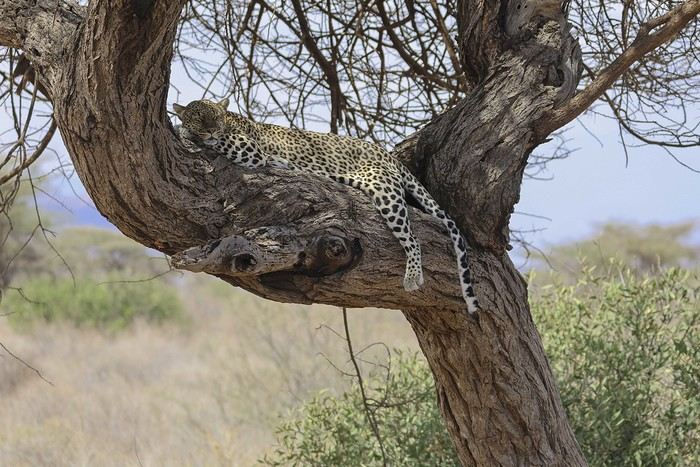
There were actually two of them—a mother and her adolescent. The young one was perched high in the tree, in the shade. We got to observe them for a good half-hour in excellent conditions, with just one other vehicle nearby.
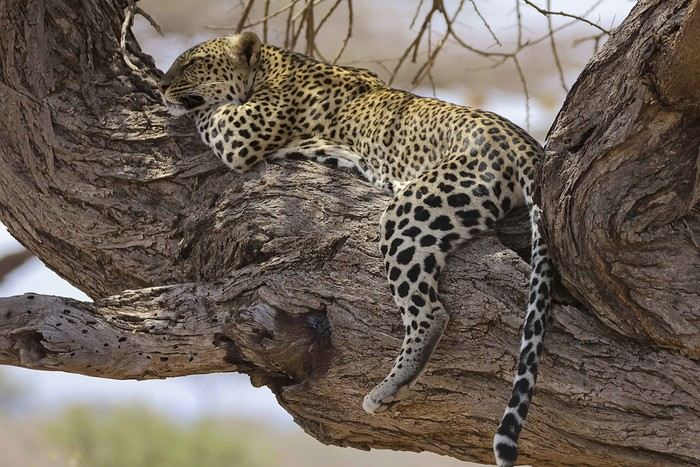
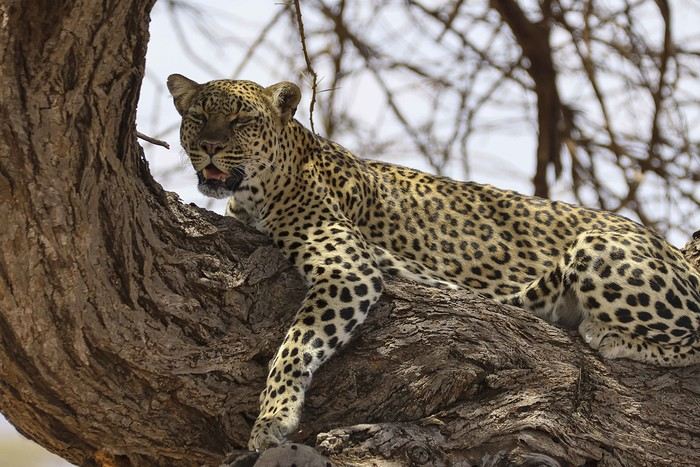
Alfred also noticed that the mother had hidden prey (a gerenuk gazelle) in the vegetation, away from prying eyes.
It was time to head to our camp, the Ashnil Samburu Camp, located in the Buffalo Springs area, by the river, in an idyllic setting surrounded by the region’s typical vegetation.
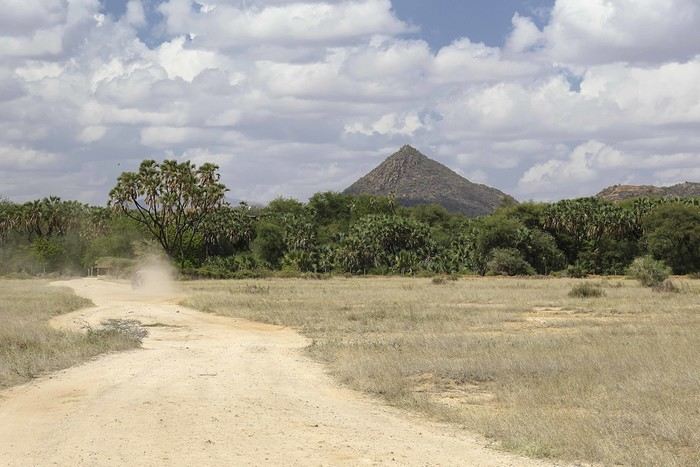
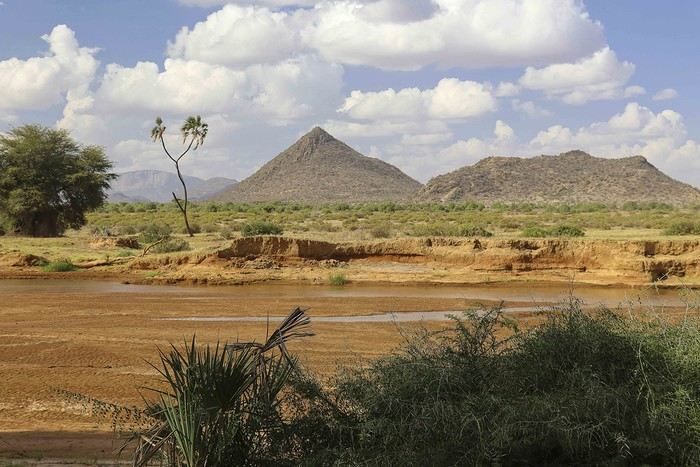
The welcome was fantastic—we immediately felt at home, and that feeling lasted throughout our 3-day stay in the reserve. It was 2 PM, but no one rushed us to the table. Our waitress, Sheila, who took care of us the whole time, was as lovely as the rest of the team. Barely seated, we were invited to watch an elephant passing right by the camp, in front of the restaurant. This trip was off to a great start!
After lunch, we relaxed by the pool. Monkeys, especially vervets, were everywhere, and a camp employee was assigned to keep an eye on them and shoo them away if needed (especially the baboons).
A little before 4 PM, we met up with Alfred for our first game drive. Just outside the camp, a few elephants were in the valley near the river.
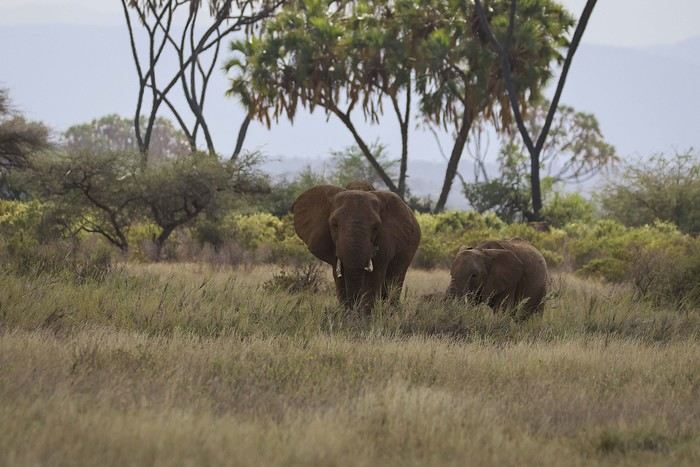
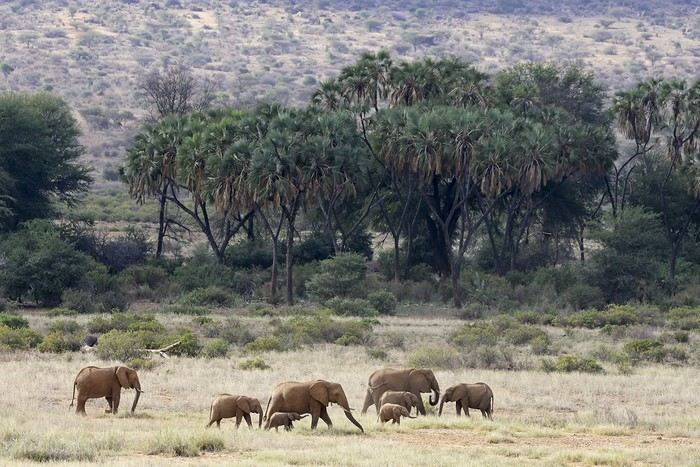
We’d see them in the same area almost every day. We also spotted some gazelles.
After several years, I’ve finally decided to repost a travel journal on the forum. We returned a few weeks ago from an incredible trip to Kenya, and it’s reignited my desire to share our emotions in the face of these animals.
Kenya wasn’t originally a priority for us in terms of safari—we had the impression it was too touristy. So, we started with other destinations: Namibia, Tanzania, Botswana, and South Africa. But as I did more research, especially on the forum (thanks in part to Sylvie’s many trips), I eventually convinced myself that Kenya could be magnificent, as long as we chose our itinerary carefully and avoided peak seasons.
We ended up going in January, from the 17th to the 31st. We worked with a travel agency (TP) that crafted a custom itinerary for us: Samburu-Ol Pejeta-Naivasha-Maji Moto-Maasai Mara-Diani. They partnered with a local French-speaking agency, and everything was perfectly organized. Our trip exceeded all our expectations, and none of it would’ve been as amazing without our guide, Alfred. He accompanied us for 10 days and was a fantastic travel companion—professional, respectful of the animals, and always in good spirits. We formed a great bond with him in such a short time.
- **January 17th** After meeting up with Juliette and Charlotte in Rennes the night before, we left at 4 AM for Roissy Charles de Gaulle Airport. The thick fog made the drive pretty rough, but we arrived safely around 7:45 AM. A Blue Valet driver was waiting to take our car. Check-in went smoothly, and we waited patiently for our 10:40 AM flight. Unfortunately, despite boarding on time, a passenger was missing, and we had to find a replacement last minute. Then, another passenger who had checked in and dropped off their luggage wasn’t on the plane, so they had to unload their bags. After a long period of uncertainty and spotty communication from the crew, we finally took off over an hour late.
We arrived in Nairobi in the late afternoon, 45 minutes behind schedule. The administrative formalities were endless—it took nearly 1.5 hours from landing to leaving the airport with our luggage. When we stepped out, Alfred, our guide, was waiting with a big smile and drove us to the Eka Hotel, not far from the airport. Exhausted from the long journey, we fell asleep quickly.
- **January 18th** Alfred met us at 7 AM for a long drive to Samburu Reserve. We had a peaceful night, unlike the girls, who barely slept because their neighbors were talking loudly all night. Things even escalated when Charlotte started shouting insults to get them to quiet down, but it didn’t work.
It was Sunday, so traffic around Nairobi and along the route was light. Aside from a quick "technical stop," we drove straight through and arrived in Samburu after just under 6 hours. Because of the lower altitude (around 1,000m on average), it was hot—over 30°C in mid-January.
As soon as we entered the reserve, we spotted some impalas and quickly came across one of the region’s endemic species: the reticulated giraffe, which is absolutely stunning.
While heading to our camp for lunch, Alfred crossed paths with another vehicle and learned that a leopard was nearby. We started searching, and a few minutes later, Anny spotted a shape in a tree—it was our leopard!
There were actually two of them—a mother and her adolescent. The young one was perched high in the tree, in the shade. We got to observe them for a good half-hour in excellent conditions, with just one other vehicle nearby.
Alfred also noticed that the mother had hidden prey (a gerenuk gazelle) in the vegetation, away from prying eyes.
It was time to head to our camp, the Ashnil Samburu Camp, located in the Buffalo Springs area, by the river, in an idyllic setting surrounded by the region’s typical vegetation.
The welcome was fantastic—we immediately felt at home, and that feeling lasted throughout our 3-day stay in the reserve. It was 2 PM, but no one rushed us to the table. Our waitress, Sheila, who took care of us the whole time, was as lovely as the rest of the team. Barely seated, we were invited to watch an elephant passing right by the camp, in front of the restaurant. This trip was off to a great start!
After lunch, we relaxed by the pool. Monkeys, especially vervets, were everywhere, and a camp employee was assigned to keep an eye on them and shoo them away if needed (especially the baboons).
A little before 4 PM, we met up with Alfred for our first game drive. Just outside the camp, a few elephants were in the valley near the river.
We’d see them in the same area almost every day. We also spotted some gazelles.
Visiting Kenya Without Breaking the Bank
Good evening,
As two senior French couples who are used to traveling independently all over the world, we’d like to visit Kenya next November.
Now, after seeing and reading a bit everywhere, and with the first quotes for a 6/7-day safari, I’m shocked by the prices (like $2,250) for places like Maasai Mara, where entry alone costs $200 per person per day, plus fees for the driver and vehicle.
So if you have any recent great tips or contacts to share to help me out, I’d really appreciate it—because despite the costs, we’d still love to go, while keeping things reasonable.
The most plausible solution is probably renting a vehicle with a driver-guide.
Thanks in advance for all your replies.
Jacques
Which airport should I choose for Hammamet?
hi
I’d like to know which airport to land at for Hammamet.
Thanks for your help!
Best,
Actor Robert REDFORD has passed away.
Hello,
In 1985, the film "Out of Africa" was released, which inspired me to visit Kenya for the first time a year later. My passion for animals in their wild and natural habitat, and thus for safaris, was born while watching this film and appreciating Robert REDFORD’s acting.
Of course, the film’s director and Meryl STREEP also contributed greatly to this wonderful movie.....
In a way, I owe him this passion, and I thank him for it. Sometimes, during safaris, when we had our breakfasts in the middle of nature, in one reserve or another in Kenya or Tanzania, I often thought of him.
May he rest in peace, far from our world of madness. Thank you for EVERYTHING, Mr. REDFORD.
( In three weeks in Kenya, I think I’ll often be thinking of him....... )
...
In 1985, the film "Out of Africa" was released, which inspired me to visit Kenya for the first time a year later. My passion for animals in their wild and natural habitat, and thus for safaris, was born while watching this film and appreciating Robert REDFORD’s acting.
Of course, the film’s director and Meryl STREEP also contributed greatly to this wonderful movie.....
In a way, I owe him this passion, and I thank him for it. Sometimes, during safaris, when we had our breakfasts in the middle of nature, in one reserve or another in Kenya or Tanzania, I often thought of him.
May he rest in peace, far from our world of madness. Thank you for EVERYTHING, Mr. REDFORD.
( In three weeks in Kenya, I think I’ll often be thinking of him....... )
...
Camera Fee at Tadoba Andhari Tiger Reserve, India
Hi,
Does anyone have recent info on the camera fee amount at Tadoba-Moharli? We spent 8 days there in the second half of February, and the local tour operator (The Wild Cat Eyes) collected 2000 rupees per camera per safari without any receipt—totaling 240,000 rupees (~265 €) for 12 safaris (9 in core zones and 3 in buffer zones). The signs at the park entrance listed 250 rupees, and the tour operator ignored our requests for an official park receipt.
Thanks in advance! Pk
Does anyone have recent info on the camera fee amount at Tadoba-Moharli? We spent 8 days there in the second half of February, and the local tour operator (The Wild Cat Eyes) collected 2000 rupees per camera per safari without any receipt—totaling 240,000 rupees (~265 €) for 12 safaris (9 in core zones and 3 in buffer zones). The signs at the park entrance listed 250 rupees, and the tour operator ignored our requests for an official park receipt.
Thanks in advance! Pk
Off-the-beaten-path walking safari
Hi there,
I’m looking for organizations that specialize in walking safaris, but not at the price points I’m seeing online.
I’m after a truly immersive experience in the wild, with the option to sleep in very basic tents and help prepare meals...
Ideal duration: 7 to 10 days.
I’d rather avoid the super touristy destinations (Kenya, Tanzania, etc.).
Thanks for any tips you can share! !
Choosing a Destination in Southern or East Africa
Hello,
We’re a family from Réunion with three kids, used to active holidays: biking, camping, hitchhiking, and finding last-minute accommodations.
This time, we’d like to visit a country in Southern or East Africa (since it’s close to our island—flights to Johannesburg aren’t too expensive). The kids dream of seeing animals, but we don’t want to spend our whole holiday in a 4x4!
My husband and I know West Africa well (we’ve lived for months in Burkina, Benin, and Madagascar), where it’s easy to get around by public transport, get unexpectedly invited into villages, and find food in roadside eateries... But we’re not sure if we can find that same vibe in "safari" countries.
More specific criteria:
- See animals and varied landscapes, but without ending up with 25 4x4s around one elephant... - Not spend 5 hours a day in the car every day - Do some travel by public transport - A holiday focused not just on nature but also on taking time to meet locals - Be able to hike (or even bike, canoe...) - Camp for all or part of the trip
Given all this, which destination would you recommend? South Africa, Namibia, Zimbabwe? Or Kenya, Tanzania? Or somewhere else?
I’ve read tons of websites and forums but I’m still confused!
This would be for about 3 weeks next July-August.
Thanks for your help!
This time, we’d like to visit a country in Southern or East Africa (since it’s close to our island—flights to Johannesburg aren’t too expensive). The kids dream of seeing animals, but we don’t want to spend our whole holiday in a 4x4!
My husband and I know West Africa well (we’ve lived for months in Burkina, Benin, and Madagascar), where it’s easy to get around by public transport, get unexpectedly invited into villages, and find food in roadside eateries... But we’re not sure if we can find that same vibe in "safari" countries.
More specific criteria:
- See animals and varied landscapes, but without ending up with 25 4x4s around one elephant... - Not spend 5 hours a day in the car every day - Do some travel by public transport - A holiday focused not just on nature but also on taking time to meet locals - Be able to hike (or even bike, canoe...) - Camp for all or part of the trip
Given all this, which destination would you recommend? South Africa, Namibia, Zimbabwe? Or Kenya, Tanzania? Or somewhere else?
I’ve read tons of websites and forums but I’m still confused!
This would be for about 3 weeks next July-August.
Thanks for your help!
Engineering internship in an African country
Hello,
As part of my engineering degree, I need to complete a three-month internship abroad. I’d prefer to do it in an English-speaking African country, though I’m also open to French-speaking ones. Below is a non-exhaustive list of countries I’m currently considering. I should mention that I’m African myself—I’m from the Central African Republic and I’m studying in France.
I’d love to hear your thoughts on the best country to choose based on criteria like safety, infrastructure, and hospitality. Which countries would you recommend, friends?
Thanks in advance for your feedback!
Countries:
South Africa, Ghana, Gabon, Ivory Coast, Angola, Tanzania, Senegal, Uganda, Mozambique, Cameroon, Benin
Nord de l'Ethiopie: entre émerveillement et déception...
Nous voici fraichement rentrés d’un voyage de 15 jours en Ethiopie. J’avais lu des carnets avant de partir(ceux de Max et de Michant en particulier, d’autres également et tous agrémentés de belles photos), je vais donc en rédiger un qui ne sera sans doute pas très original, mais vous y trouverez mes impressions , quelques détails d’ordre plus pratique et bien sûr des photos.
Cela faisait un moment que j’avais envie de découvrir ce pays. Nous n’avons pas une grande connaissance de l’Afrique ayant surtout voyagé en Asie et sur le continent Américain. Mais nous nous sommes quand même rendus au Kenya, en Tanzanie, en Namibie et au Zimbabwe. C’est important de le préciser car nous avons souvent comparé notre ressenti en Ethiopie par rapport à ce qu’on avait vécu dans ces autres pays d’Afrique. J’ai personnellement trouvé le voyage en Ethiopie plus difficile. On dit souvent que l’Inde ne peut laisser indifférent. On aime ou on déteste. C’est un peu la même chose au sujet de l’Ethiopie. On en revient pas indemne. Pour ma part, il y a eu des moments où j’ai adoré ce voyage et d’autres où j’avais du mal à supporter certaines choses.
Avant de partir, je pensais que les impressions négatives des uns et des autres étaient exagérées. Je les ai trouvé justifiées par la suite même si nous sommes tous d’accord au final pour dire que le voyage vaut largement le détour. Les paysages sont souvent magnifiques et le patrimoine culturel est bien présent.
Nous sommes passés par une agence locale de Lalibela qui s’est occupée de nous réserver un 4X4 avec chauffeur. Sinon, nous nous sommes « débrouillés » sur place. L’agence nous avait aussi réservé un circuit de 2 jours/1 nuit dans le Danakyl et un trek d’une journée au dessus de Lalibela. Nous n’avons pas rencontré beaucoup de voyageurs ayant choisi cette option. Beaucoup étaient en groupe et se déplaçaient donc avec le minibus de l’agence. Les voyageurs en individuel suivaient un programme qu’ils avaient totalement réservé auprès d’une agence et avaient un guide durant toute la durée de leur séjour. A la réflexion, cela peut être une bonne option quand on ne veut pas se prendre la tête avec les négociations sans fin concernant les guides sur place, les scouts etc…Au moins, cela évite d’avoir conscience de l’énormité des sommes demandées parfois pour visiter une église ou autre… J’y reviendrai ...
Agence de voyage pour circuit à vélo en Namibie
Bonjour à tous,
Avec mon mari on envisage de partir en Namibie et faire un circuit à vélo et je voudrais savoir si vous aviez une agence de voyage à recommander car nous ne trouvons pas forcément d'agence qui s'en occupe. Et des régions à ne pas manquer ?
Merci,
Alexie
Avec mon mari on envisage de partir en Namibie et faire un circuit à vélo et je voudrais savoir si vous aviez une agence de voyage à recommander car nous ne trouvons pas forcément d'agence qui s'en occupe. Et des régions à ne pas manquer ?
Merci,
Alexie
Partir en Argentine pour fuir l'hiver
Nous connaissons l'hiver depuis 70 ans. Toutes sortes d'hiver. Alors, sur un coup de tête, nous partirions pour l'Argentine car l'été commence le 21 décembre. Voilà. Lina et Raymond
Vaccin fièvre jaune et vol pour l'Afrique du Sud avec escale au Kenya
Bonjour à tous,
Nous avons un projet de voyage pour l'AFS pour juillet 2020. J'ai trouvé des vols à bon prix avec escale à Nairobi . Je n'arrive pas à trouver d'info avec certitude. L'AFS exige un vaccin obligatoire contre la fièvre jaune en cas de séjour dans un pays infecté. Le Kenya a l'air de faire partie de la liste. Est-ce que cela concerne également les simples stops pour cause d'escale ?
Merci! Pascale
Nous avons un projet de voyage pour l'AFS pour juillet 2020. J'ai trouvé des vols à bon prix avec escale à Nairobi . Je n'arrive pas à trouver d'info avec certitude. L'AFS exige un vaccin obligatoire contre la fièvre jaune en cas de séjour dans un pays infecté. Le Kenya a l'air de faire partie de la liste. Est-ce que cela concerne également les simples stops pour cause d'escale ?
Merci! Pascale
Problème de paiement à la forêt de Nyungwe
Nous revenons d'un séjour de 15 jours au Rwanda. Pays que nous avons adoré, de par ses paysages, ses habitants, la propreté, la sécurité... J'y reviendrai dans un autre post.
Mais je voudrais mettre en garde ceux qui voudraient visiter la forêt de Nyungwe.
Depuis le 1/07, le parc n'accepte plus le cash. Pas de problèmes direz-vous, il suffit de payer avec une carte de crédit. Sauf que... le centre d'Uwinka (les autres je ne sais pas), d'où part la canopy walk, n'a pas de lecteur de cartes😠. Et donc, après vous avoir demandé d'introduire vos données (nom, adresse, passeport, nr carte de banque...) dans l'ordinateur, on vous demande de signer le paiement avec votre digipass (la petite calculette de la banque), ... que je n'avais pas avec moi 😠. Le règlement prévoit bien que le cash peut être accepté dans des circonstances exceptionnelles, mais en l'absence de son supérieur hiérarchique, l'employé n'a pas osé en prendre la responsabilité. Conclusion : nous avons dû renoncer à toute balade et le centre a perdu 240 USD (nous étions 4).
Par contre, le thé africain (lait et gingembre) que nous y avons pris était excellent 😛
Quelle période pour le Kenya?
Bonjour quelle est la bonne période pour le Kenya?
Je compte y séjourner en janvier et février 2019 pour 4 semaines
Il y a 2 ans j étais chez son voisin l Etiopie à la même période c était super
merci de vos sages conseils
Sac de couchage pour la Patagonie
Bonjour,
Je voudrais savoir, si quelqu’un connaît un bon sac de couchage, de préférence en plume, jumelable, à moins de 100 euros ? C’est pour un voyage de plusieurs mois en couple en Patagonie. Merci
Je voudrais savoir, si quelqu’un connaît un bon sac de couchage, de préférence en plume, jumelable, à moins de 100 euros ? C’est pour un voyage de plusieurs mois en couple en Patagonie. Merci
Visa pour le Mozambique à la frontière?
Bonjour, je suis en Afrique du Sud et voudrais me rendre au Mozambique est il possible de prendre le visa a la frontière terrestre mozambicain ?
Who uses the N26 or Revolut card in India?
Hi,
I'm about to open an account (payment card) with N26 Black (seems more transparent in its presentation and explanations) or maybe Revolut (but it seems to hide quite a few things).
Has anyone here used either of these two cards (or both) in India?
Thanks for your feedback and experience with this payment method.
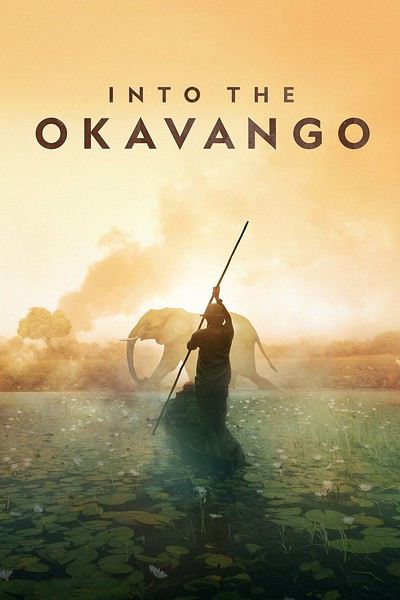
Film "Into the Okavango"
Quel plaisir de voir hier soir sur la chaine National Geo Wild le film "Into The Okavango" qui était diffusé pour la 1ère fois en France.
https://www.nationalgeographic.com/films/okavango/
C'est un film de 94 min de Neil Gelinas dont voici le résumé officiel :
"Le bassin de l'Okavango est une source d'eau vitale pour près d'un million d'individus, dont la plus grande population d'éléphants d'Afrique au monde, de nombreux lions et guépards ainsi que des centaines d'espèces d'oiseaux. Mais cette oasis autrefois préservée est aujourd'hui en proie à la pression croissante exercée par l'activité humaine. Partez aux côtés de nos explorateurs pour une expédition de 2500kilomètres à travers trois pays."
Des extraits sont visibles ici : https://vimeo.com/266082323
Ce plaisir était décuplé pour nous qui allons nous rendre en septembre prochain pour la 1ère fois au Botswana après avoir visité la Namibie, l'Afrique du Sud, le Kenya et la Tanzanie. Ah cette Afrique si belle, si désirable mais malheureusement si fragile comme le film le décrit avec la possibilité de voir prochainement disparaitre le delta de l'Okavango. La bonne nouvelle est que l'Angola pays source de l'Okavango après des années de guerre semble prendre conscience de ses formidables ressources géographiques, ethniques et zoologiques. Une zone de conservation serait ainsi créée. Un peu d'espoir.
https://www.nationalgeographic.com/films/okavango/
C'est un film de 94 min de Neil Gelinas dont voici le résumé officiel :
"Le bassin de l'Okavango est une source d'eau vitale pour près d'un million d'individus, dont la plus grande population d'éléphants d'Afrique au monde, de nombreux lions et guépards ainsi que des centaines d'espèces d'oiseaux. Mais cette oasis autrefois préservée est aujourd'hui en proie à la pression croissante exercée par l'activité humaine. Partez aux côtés de nos explorateurs pour une expédition de 2500kilomètres à travers trois pays."
Des extraits sont visibles ici : https://vimeo.com/266082323
Ce plaisir était décuplé pour nous qui allons nous rendre en septembre prochain pour la 1ère fois au Botswana après avoir visité la Namibie, l'Afrique du Sud, le Kenya et la Tanzanie. Ah cette Afrique si belle, si désirable mais malheureusement si fragile comme le film le décrit avec la possibilité de voir prochainement disparaitre le delta de l'Okavango. La bonne nouvelle est que l'Angola pays source de l'Okavango après des années de guerre semble prendre conscience de ses formidables ressources géographiques, ethniques et zoologiques. Une zone de conservation serait ainsi créée. Un peu d'espoir.