Results for "Belgique+hébergement"
About 16,994 results.
More options
Many results are in French, the community’s main language. English translations are added over time.
Search results
Tour d'Europe d'octobre à mars
Bonjour,
Etant donné que je viens de finir mes études, je vais pouvoir prendre quelques mois pour réaliser un rêve : faire un tour d’Europe.
Je compte partir d’octobre à mars, selon en gros le parcours suivant : Belgique (Bruxelles, Liège), Pays-Bas (Maastricht, Rotterdam, La Haye, Amsterdam), Allemagne (Bremen, Hamburg), Danemark (Kolding, Odense, Copenhague), Suède, Norvège, Finlande, les pays Baltes, Bielorussie ? Pologne ? Ukraine ?, Slovaquie (Bratislava), Autriche (Vienne), Italie. Mon budget total serait entre 3000 et 6000 € (c’est large, mais ça me permet de viser 3000€ mais pas me laisser mourir de fin si je n’arrive pas)
Mais j’ai quelques questions :
- déjà que pensez-vous de mon parcours ? (faisabilité et points d’intérêts à aller voir)
- quels moyens de transport me conseillez-vous ? (je compte dépenser le moins d’argent possible, et je m’en fous un peu du confort ; je tenterais peut-être le stop, mais seule ça me fait assez flipper, surtout dans les pays dont je ne parle pas la langue) J’ai envisagé Interrail (ça peut revenir cher sauf si j’arrive à faire des étapes dans des villes relativement éloignées et rester plusieurs jours dans chaque), un pass Eurolines (ça semble moins cher, mais je ne peux pas faire plusieurs villes dans le même pays sauf si j’utilise un autre moyen de transport, et ça ne couvre pas la Scandinavie). Y a-t-il des compagnies de bus ou des pass de train intéressants dans les pays ? Et comment faire dans les pays baltes ?
- connaissez-vous des hébergements pas chers sur ma route ? (je connais HC et CS, mais je pense que parfois ça fait du bien de se poser un peu plus seul)
- si je devais faire du wwoofing, où me conseillerez-vous d’en faire ?
- pour les assurances, que me conseillez-vous ? est-ce que je peux encore être couverte par ma sécu étudiante ? est-ce qu’à 22 ans je peux revenir dans la sécu de mes parents ? sinon quoi ?
Merci d’avance de vos réponses.
Raphaelle
Etant donné que je viens de finir mes études, je vais pouvoir prendre quelques mois pour réaliser un rêve : faire un tour d’Europe.
Je compte partir d’octobre à mars, selon en gros le parcours suivant : Belgique (Bruxelles, Liège), Pays-Bas (Maastricht, Rotterdam, La Haye, Amsterdam), Allemagne (Bremen, Hamburg), Danemark (Kolding, Odense, Copenhague), Suède, Norvège, Finlande, les pays Baltes, Bielorussie ? Pologne ? Ukraine ?, Slovaquie (Bratislava), Autriche (Vienne), Italie. Mon budget total serait entre 3000 et 6000 € (c’est large, mais ça me permet de viser 3000€ mais pas me laisser mourir de fin si je n’arrive pas)
Mais j’ai quelques questions :
- déjà que pensez-vous de mon parcours ? (faisabilité et points d’intérêts à aller voir)
- quels moyens de transport me conseillez-vous ? (je compte dépenser le moins d’argent possible, et je m’en fous un peu du confort ; je tenterais peut-être le stop, mais seule ça me fait assez flipper, surtout dans les pays dont je ne parle pas la langue) J’ai envisagé Interrail (ça peut revenir cher sauf si j’arrive à faire des étapes dans des villes relativement éloignées et rester plusieurs jours dans chaque), un pass Eurolines (ça semble moins cher, mais je ne peux pas faire plusieurs villes dans le même pays sauf si j’utilise un autre moyen de transport, et ça ne couvre pas la Scandinavie). Y a-t-il des compagnies de bus ou des pass de train intéressants dans les pays ? Et comment faire dans les pays baltes ?
- connaissez-vous des hébergements pas chers sur ma route ? (je connais HC et CS, mais je pense que parfois ça fait du bien de se poser un peu plus seul)
- si je devais faire du wwoofing, où me conseillerez-vous d’en faire ?
- pour les assurances, que me conseillez-vous ? est-ce que je peux encore être couverte par ma sécu étudiante ? est-ce qu’à 22 ans je peux revenir dans la sécu de mes parents ? sinon quoi ?
Merci d’avance de vos réponses.
Raphaelle
Quatre mois en Sicile
Bonjour à vous tous,
cherche toutes infos (route, détroit de Messine, visites, région, températures, pêche, enfin tout) sur la Sicile, nos partons mon épouse et moi de Belgique en voiture de janvier à fin avril à Noto di Marina ( région de Syracuse, )nous avons loué une villa, c'est notre première visite en Sicile et nous voudrions visiter un maximum .Merci😉😉
Choix d'hôtels en mer Rouge (Égypte)
Bonsoir,
j'hésite avec plusieurs hôtels en MER ROUGE Pouvez vous me donner infos sur hotels suivants PENSEE ROYAL GARDEN - EL QUSEIR AKASSIA SWISS RESORT - EL QUSEIR SOL Y MAR SAMAYA - MARSA ALAM IBEROTEL LAMAYA RESORT - MARSA ALAM FLAMENCO BEACH HOTEL Nourriture, site, hébergements, loisirs on est 2 adultes et une petite de 08ans pour AUG 2006 merci pour infos et tuyaux cordialement cat
j'hésite avec plusieurs hôtels en MER ROUGE Pouvez vous me donner infos sur hotels suivants PENSEE ROYAL GARDEN - EL QUSEIR AKASSIA SWISS RESORT - EL QUSEIR SOL Y MAR SAMAYA - MARSA ALAM IBEROTEL LAMAYA RESORT - MARSA ALAM FLAMENCO BEACH HOTEL Nourriture, site, hébergements, loisirs on est 2 adultes et une petite de 08ans pour AUG 2006 merci pour infos et tuyaux cordialement cat
St Jacques de Compostelle par la voie de nord
Bonjour, 😮
J'éssaie d'organiser pour mon club de Cyclotourisme une randonnée itinérante : Bordeaux - St Jacques de Compostelle en longeant la côte Atlantique.
Un baroudeur ou un groupe, a-t-il fait ce voyage par cette voie là, veux t-il me faire partager son expérience, difficultés rencontrés sur les routes, les côtes, les hébergements. j'ai actuellement 18 cyclo à amener.
Merci d'avance !
J'éssaie d'organiser pour mon club de Cyclotourisme une randonnée itinérante : Bordeaux - St Jacques de Compostelle en longeant la côte Atlantique.
Un baroudeur ou un groupe, a-t-il fait ce voyage par cette voie là, veux t-il me faire partager son expérience, difficultés rencontrés sur les routes, les côtes, les hébergements. j'ai actuellement 18 cyclo à amener.
Merci d'avance !
Madagascar - June 2025
Five years of an unintended break... The closure of VF, COVID... What a joy to rediscover the pleasure of sharing!
I’ve stayed true to my habits: the following account is a collection of practical tips rather than a travel journal...
Madagascar is as big as France and Belgium combined. In three weeks, choices have to be made! It was the Great Tsingy that inspired our trip. We decided to focus on the southwest and the RN7. We skipped the Deep South and the North. Oh well...
OUR ITINERARY IN 3 WEEKS:
Fri 6 June – Direct AF flight to Tana – Flight arrives at 10:30 PM – Tana Sat – Antsirabe Sun – Miandrivazo Mon – Drive to the Masiakampy pier – Descent of the Tsiribihina River by pirogue - Bivouac Tue – Descent of the Tsiribihina River by pirogue - Bivouac Wed – Descent of the Tsiribihina River by pirogue – Bekopaka Thu – Pirogue on the Manambolo River and Small Tsingy of Bemaraha – Bekopaka Fri – Great Tsingy of Bemaraha – Bekopaka Sat – Avenue of the Baobabs – Morondava Sun – Belo sur Mer Mon – Free day – Belo sur Mer Tue – Manja Wed – Andavadoaka Thu – Free day – Andavadoaka Fri – Salary Lagoon – Mangily Sat – Ranohira Sun – Isalo National Park - Ranohira Mon – Anja Reserve - Ambalavao - Fianarantsoa Tue – FCE train canceled – Visit to a Tanala village - Manakara Wed – Pirogue on the Pangalanes Canal – Ranomafana Thu – Ranomafana NP – Ranomafana Fri – Ambositra – Antsirabe Sat 28 June – AF flight to Paris – Flight departs at 11:55 PM
TRIP ORGANIZATION: I prepared my trip using the usual guides (LP and Rough Guide), the internet, and the Freytag & Berndt map (1:1,000,000). I’m old-school—I still love visualizing my route on a paper map, even though in Madagascar, it’s misleading because some National Roads are only national in name!...
The agency: Since we couldn’t deal directly with a driver-guide (we lacked reliable info to take the plunge), we went through an agency to organize the logistics of our trip. We didn’t feel like using bush taxis (not enough time) or driving a 4x4 ourselves (neither the skills nor the boldness). The French agency connected us with a local agency, to whom I sent my detailed itinerary by email. A few exchanges via email and WhatsApp calls allowed us to finalize everything quickly after some adjustments. As you’ve gathered... we multiplied the commissions, which inflated the budget. That said, in the end, we were thrilled with our decision and our choice. Our trip was booked by the end of 2024, and reservations were made immediately. No bad surprises: the bookings in the planned hotels were honored, often with one of the best rooms. On our last day in Tana, before departure, we were lucky enough to meet the director I’d been communicating with, who helped build and validate our circuit. A very warm debriefing.
The driver-guide: The agency assigned us Faly, 33, a driver-guide for over 10 years. He stayed with us from start to finish: he picked us up at the airport on arrival and dropped us off 23 days later. A very experienced driver (which is important here), an open and cultured guide, reliable, punctual, and a great companion. And a provider of good advice throughout the trip. We made the most of the long stretches on dirt roads or highways to listen to him talk about daily life, rituals, wildlife, and flora... No time wasted! With a great playlist in the background, we combined business with pleasure! Faly’s accommodation and meals were included (quite often, hotels offer free lodging and meals to driver-guides who bring clients), as was the fuel. That didn’t stop us from inviting Faly to share a beer or our evening meal sometimes. He didn’t always accept, wanting to let us "enjoy our romantic evenings," as he put it. Present without being intrusive! Faly is fully capable of organizing a tailor-made trip directly. I recommend him without any hesitation—we were delighted with his service. I’ll gladly share his contact details via PM to anyone who asks.
Local guides: It’s the national guide’s prerogative to choose the local guides (mandatory in the parks). Thanks to his experience, Faly always booked us amazing, competent, and interesting local guides.
Hotels: I told the agency I wanted charming, comfortable accommodations, without falling into flashy luxury. We loved all the hotels (except the Hôtel Kanto in Manja). The rooms, mostly bungalows, were always spacious and clean. Unfortunately, I can’t give the prices—I didn’t get the details. Breakfast is always included, usually fresh and hearty. Very often, a small bottle of water is provided in the room.
Tana Hôtel Les 3 Métis Power cuts are common (!) in Tana. Bring a headlamp.
Antsirabe Ecolodge – Les chambres du voyageur Maybe our favorite! A few bungalows, beautifully arranged in a splendid tropical garden. The dog Kodak welcomes us warmly.
Miandrivazo Hôtel Princesse Tsiribihina Magnificent view of the valley.
Bekopaka Hôtel Orchidée du Bemaraha 2 (yes, 2) beautiful pools, a large open common room.
Morondava Hôtel Baobab Café Brand new or at least, according to Faly, just renovated. Very comfortable but without much charm (international style).
Belo sur Mer Ecolodge du Menabe The bungalows, all made of wood, bamboo, and thatch, are set on the beach. Very spacious and fully equipped! Large open-air restaurant by the sea. No hot water from the tap—it’s available in plastic bottles heated by the sun in front of each bungalow. Actually, we never used it... Another very, very beautiful spot.
Manja Hôtel Kanto The only hotel on this leg of the journey, so no choice. The owner knows it and, as a result, doesn’t bother. It’s a real dive! Tiny, dark room, a sordid bathroom with only a trickle of water—we skipped the shower! Clean sheets, though. Obviously, no Wi-Fi. The only place where I didn’t leave a tip. We were well warned about the discomfort of this stop, both by the agency and Faly. We weren’t surprised, and it even became a running joke during the trip. On the other hand, we found a nice little market in town.
Andavadoaka Manga Lodge What bliss! Especially after the horrible Hôtel Kanto. A paradise-like spot, overlooking three beautiful deserted white-sand beaches. Meals are served on the terrace facing the sea. Stunning sunset. We loved spending a day lounging here! We were the only guests and were pampered.
Mangily (Ifaty) Mangily is the "suburb" of Ifaty. Hôtel Vovo Telo A large beachfront bungalow complex. More touristy but pleasant—we spent a lovely evening there with our feet in the sand.
Ranohira Le Relais de la Reine A splendid resort built by a Frenchman, at the foot of the rocks, very well integrated into the environment. Beautiful marked trail starting from the garden.
Fianarantsoa Villa Sylvestre Contrary to what its name suggests, it’s a hotel right in the city center. Quite decent, though.
Manakara Parthenay Club Pretty bungalows in a large garden by the sea, but swimming isn’t safe—the water is too dangerous and rough.
Ranomafana Hôtel Thermal Very spacious rooms.
Meals: Not all our meals were included. It’s really not expensive. 1 meat or fish dish: around 35,000 Ar 1 full menu (starter, main, dessert): around 70,000 Ar 1 large THB beer (65 cl): between 8,000 and 12,000 Ar 1 piña colada: 15,000 Ar 1 flavored rum: 6,000 Ar (sometimes free) 1 glass of baobab juice (!): 5,000 Ar
We always ate very well. Rice is everywhere, served in large quantities. Zebu meat is quite good if not overcooked. Personally, I prefer fish, and I feasted: grouper, captain, crab, small lobsters...
We happily discovered baobab juice (especially in Belo, on the west coast). And of course, flavored rums!
We bought 2 packs of 6 bottles of mineral water at Carrefour (!) (about 5,000 Ar per large bottle) at the start of our trip. That was enough, especially since we often got water in the bungalows.
We had a few picnics included in our trip. Instead of picking up the hotel’s lunchbox, Faly prepared delicious, fresh, and varied picnics for us: tuna pasta salad, fried rice with eggs, grilled vegetables, and avocado...
An exceptional address not to miss: Mad Zébu – Belo sur Tsiribihina A highly reputed restaurant, a favorite of LP and Rough Guide, and rightly so! Gourmet cuisine, refined and elegant. Barely more expensive than elsewhere, and it’s worth it. We stopped there on our way up to Bekopaka and the Tsingy NP. Fully booked! So Faly reserved for our return, three days later. We’re still thanking him! What a treat!
THE BUDGET: Ariary exchange rate: 5,000 Ar = 1 €
Pre-trip expenses: Direct Air France flights: 930 € per person round trip Cost of the circuit with the agency: 2,880 € per person
The visa: Issued on arrival, very quickly. 35 € per person for a stay under 30 days. Super simple. Super fast.
On-site expenses: As soon as we arrived at the airport (it was nearly midnight), Faly advised us to exchange our euros for all our needs. There are few opportunities on our route to find an ATM or an open bank with a good rate. To be more comfortable, he took us to a small office under military protection just outside the airport. I exchanged 1,200 € (I had asked the agency for advice on the amount to bring) at a rate of 4,750 Ar and became a millionaire. Faly recounted all the stacks. That covered all our expenses (meals, drinks, tips) without ever feeling deprived. Personal purchases were made at the end of the trip. Convenient—it served as an adjustment variable. We spent our last million (200 €) on marquetry and vanilla. Tip: We asked for 200,000 Ar in 5,000 Ar bills for tips. That wasn’t too much—I even ran short of small bills in the last two days.
Tips: Madagascar is a poor country where every service deserves a small reward. While not mandatory, it’s customary. But no one ever demanded or expected it openly. On the contrary, I sometimes had to remind a porter to give them my small bill. We never carried our luggage—porters were always present when the car arrived or waiting at our door to watch for our departure. I gave each of them 5,000 Ar. In restaurants, I rounded up to the nearest ten and left the change. Local guides also expect a tip: I gave around 20,000 Ar per day for the two of us. Finally, the national guide also expects a gratuity. I had read online to budget 5 € per day per person. I added more since we were so happy with his services. The tip was given at the end of the trip, in euros, outside the budget.
Total budget all included (excluding personal purchases): 8,690 € Clearly, Madagascar is a country where life isn’t expensive, but travel costs add up quickly due to the need to rent a 4x4 with a driver.
HIGHLIGHTS:
· The dirt roads Yes, I’m listing them among the highlights! We loved those long hours spent driving at 20 km/h on rocky, muddy, white, red, or gray sand tracks... surrounded by tropical vegetation, palm trees, pandanus, mango trees... The experiences were sometimes thrilling: crossing a river on a ferry (just planks of wood fixed on two motorized pirogues side by side) or crossing a river without a ferry, with just a kid running ahead of the 4x4 to show the way; soft sand where the 4x4 easily gets stuck... The tracks are quite narrow, and crossing paths with a bush taxi, a zebu cart, or a herd of goats is always epic. So many beautiful images, so many beautiful photos! Much more beautiful than on asphalt. So yes, we loved those long stretches on dirt roads. For us, it was clearly part of the journey. Faly was particularly careful, and the 4x4 was comfortable. No injuries, no fatigue, even after 7 or 8 hours on rough tracks. The national roads (including the famous RN7) are badly damaged by cyclones, huge trucks, and lack of maintenance. Potholes have turned into ostrich nests, and we didn’t drive much faster than on the dirt roads.
· The landscapes, villages, encounters... We crossed a variety of stunning landscapes: mountains with slopes covered in terraced crops, rice fields from apple green to emerald green, sugarcane fields, then tropical forests, baobab forests (they deserve a special paragraph below), traveler’s tree forests. And then coastlines with white sand dunes against a backdrop of blue hues!... Magical! We also passed through many villages with houses whose architecture varied by region. The Betsileo houses display beautiful decorative brick reliefs. On the west coast, the houses are more precarious, made of bamboo with palm-thatched roofs. In the Highlands region, we found solid houses with pastel plaster. Each region has its own landscape, crops, habitat, and clothing. Zebu carts are often the only means of transport in remote villages. We saw them very frequently. Again, the cart’s decoration depends on the region. And then, we met many villagers coming out of the bush and walking to the next market, carrying their crops on their heads or shoulders. More beautiful photos!
· The descent of the Tsiribihina River We boarded around 9 AM in a long pirogue with Gana, the local guide, and two pirogue men. So, five of us. The pirogue is long but narrow, about 65 cm wide. We sat one behind the other at the front on seats padded with what would become our mattresses during the bivouacs. We only took the bare essentials for two nights. A little goodbye to Faly, whom we’d see again in three days! Don’t forget us! The river is silty—meaning orange, opaque but clean. We glided along silently. Gana showed us the trees, birds, crocodiles (we saw five—apparently, we were lucky). The pirogue men rowed to get us as close as possible to these crocs sunbathing on the roots of big trees. Yeah, right!... as soon as we got too close, *splash*, they disappeared into the water. We marveled at the mini rice fields lining the river. Every tiny plot, no matter how small, is cultivated. Above them, banana fields. And on the water, a whole life of fishermen and villagers living with and from the river. Gana warned us we’d eat on the pirogue because the journey was long. So, I expected chips... But no—fried rice and zebu steak, cooked right in the pirogue!! Incredible! In the middle of the afternoon, we reached a small beach where we disembarked. Gana led us about a hundred meters to a sublime waterfall. We were alone there. We had time to swim. We’d brought our swimsuits and a towel (bought at the Carrefour in Antsirabe on Faly’s wise advice!). This swim in this paradise-like spot remains one of our best memories. We found our pirogue again and set off until our first bivouac. We’d sailed for 7 hours today. The tents were set up on a wide beach, without a single tree. A moment of solitude... Uh, where can we go to the bathroom?... Especially since it was a full moon, so we felt like we were in the spotlight. Anyway... we did as everyone else—walked away, dug a hole, and the others turned their backs. A hearty meal on the beach before a comfortable and silent night. The next day, same program, with slightly different landscapes. The gorges widened, the trees were different. But still many colorful birds. Again, we ate on the pirogue: grilled chicken and vegetables. 9 hours of sailing. A similar bivouac. This time, we got it. On the third day, we finished the descent with 5 hours of sailing. So, 7 hours, 9 hours, 5 hours... doing nothing. It might sound boring... but it wasn’t. Like the dirt roads, these were contemplative moments. It glides, it’s calm, relaxing, and there’s a lot of life on this river, animal and human. Contemplation. Suspended time. On arrival, we disembarked at a sort of joyful, bustling river port. Of course, Faly was already there to pick us up.
· The Tsingy de Bemaraha NP (Small and Great) I have vertigo. During my research, several agencies advised me against visiting the Great Tsingy. "Stick to the Small ones," they said. Grrr, no, not what I wanted—we’ve dreamed of this for years! The agency we chose also warned me but didn’t discourage me. So we started with the Small Tsingy, quite close to Bekopaka, guided by Alisha. This forest of sharp limestone rocks is impressive. No vertigo issues here. The day was completed with a short pirogue ride on the Manambolo River and a visit to two caves with pretty formations. The next day, Faly and Alisha drove us to the Great Tsingy (a good hour on a terrible track). Arriving at the park entrance, Alisha equipped us with harnesses, carabiners, and gave us some safety instructions. Faly was also equipped. Wait? He’s coming with us? I quickly understood he was there for me—if I got stuck, he could go back with me, and Philippe could continue with Alisha. A wise precaution that delighted and reassured me. In the end, it was unnecessary since the famous bridge crossing was fully secured by the harness and carabiners. 18 meters on planks, one by one, it didn’t sway too much—I walked looking straight ahead, not a glance down. I even managed to smile in the middle of the crossing—I have a photo to prove it! I was overjoyed! The circuit in the Great Tsingy is a loop, so we didn’t have to cross the bridge again. We climbed to viewpoints offering breathtaking panoramic views. It’s extraordinary, unique, incredible. All this to say that if you have vertigo, don’t hesitate! It’s doable! It’s completely safe and really worth pushing your limits a bit! For those who’ve done treetop adventure courses, it’s similar. Also, no need to be a great athlete—just a bit of agility to climb a few ladders and high steps. Don’t censor yourself! I even had a small regret—the loop was a bit short (about 2 hours). I would’ve liked to continue or even redo it, with less apprehension. Tip: Do the Small Tsingy before the Great ones, or not at all. And if you can only do one, do the Great ones without hesitation.
· Canoeing in the Belo mangrove The Belo sur Mer ecolodge lends small individual canoes for free to go to the mangrove. We left at high tide, paddled for about twenty minutes to reach a fairly sparse forest where we could easily venture in. Very shallow water, crystal clear—we could see the roots of all these trees, schools of tiny fish... It was quite surprising. Until then, I only knew impenetrable, tangled mangroves. Here, nothing like that—we walked through an aquatic forest. We loved this adventure so much we left a bit late. The tide had gone out, and we had to carry our canoes for the last few meters... Of course, the staff came to help (probably laughing silently!). The lodge owners gave all the necessary explanations and lent a waterproof bag for the phone (because yes, it’s worth taking photos!). A very useful precaution—the canoes are small, low in the water, and paddling quickly soaks you. Again, this isn’t just for Tony Estanguet! It didn’t cause us any problems, not even sore muscles the next day. A great experience. It’ll take about 2 hours.
· Isalo NP Big surprise when we saw this huge rocky massif appear on the RN7! A massif of colored sandstone, carved with crevasses giving it a ruined look. Le Relais de la Reine is a little gem cleverly nestled in the heart of these rocks. A small marked trail starts from the garden. We picked up the description at reception and set off. Without a guide, alone following the markers, it took us 2 hours to complete this magnificent little trail, giving us a first glimpse of the massif before the hike the next day. And we enjoyed being completely alone for this walk. It’s free, easy, and well-signposted. Don’t miss it. In the evening, Faly took us to the so-called Isalo Window site—a hole in a wall through which we could see the sunset. We met all the tourists in the area here. We weren’t blown away by the show... The next day, we left early to reach the start of the hike. We met Zozoly at the guides’ office in the small town of Ranohira. During this hike, we climbed through the rocks to a viewpoint offering stunning 360° views of the massif. Then we reached a site called the "natural pool," breathtakingly beautiful, especially since we were alone again. A sort of oasis, a cascading waterfall, palm trees and tree ferns, fine sand, all nestled at the bottom of a small canyon. Paradise-like. We resisted swimming, but it was really tempting. A long walk on the plateaus then led us to a well-equipped picnic site where a local team prepared grills. Concrete tables were tiered in a spacious, shady clearing where a whole family of ring-tailed lemurs frolicked. They knew the tourists’ habits and tried to snatch food. Playful and not very shy, they amused us with their antics! We had to resist not luring them with a piece of banana!! Thousands of photos!! After the meal, we set off again with Zozoly for another landscape. This time, we were by a small river at the bottom of a canyon with high walls covered in vegetation. The trail was narrow and slippery, on a ledge of the wall. We progressed carefully. No danger, though. We first reached the Blue Pool, which only turns blue in photos (surprise!), then the Black Pool fed by a shower of waterfalls. Two magnificent spots that showed us a completely different aspect of the massif.
· Anja Reserve This ficus forest is home to many groups of lemurs. Used to humans, whom they don’t fear, they move around us, ignoring us completely. It’s almost annoying... The best place on our trip to see lemurs.
· The FCE train To the great regret of Manakara’s inhabitants, the FCE train hasn’t reached here for over a year and a half. As a result, there are far fewer tourists—the train was part of the experience. We drove there and didn’t regret coming to this port on the east coast.
· Visit to a Tanala village This visit wasn’t part of our program—it was added by the agency to compensate for the train not running. Which was the case. Not big fans of this kind of visit, where we feel like we’re at a zoo, voyeuristic, lacking authenticity, we followed the local guide with some skepticism and exchanged dubious looks. And yet... the guide’s explanations about village life and the warm, smiling welcome from the villagers charmed us and dispelled all our concerns. We learned a lot, met smiling families, and were able to enter these beautiful bamboo houses. A very pleasant surprise, rich in lessons.
· The Pangalanes Canal Arriving in Manakara, we crossed a bridge overlooking the Pangalanes Canal. A cry of surprise: the water is turquoise! We took a short pirogue ride with a team of three pirogue men and Joël, a local guide who explained the drama caused by the train’s halt. We stopped in a fishing village where Joël bought fish for the barbecue. We ended up on a beach where the team prepared the meal while we went to watch the fishermen return on the nearby beach. We admired the fishermen’s dexterity in untangling their nets, sorting their fish, cleaning their gear. On our return, we found a small table set up on the beach, in the shade of palm trees and casuarinas. Lobsters, captain fish, grilled vegetables, sautéed potatoes. A real feast (included in the trip cost).
· Ranomafana NP A 4-5 hour hike (some climbing) in a dense secondary forest to look for lemurs. As usual, we were accompanied by a local guide who, while waiting to find our furry friends, gave us lots of info on the vegetation, birds, and Tanala ethnic rituals. In the forest, we met 4 or 5 trackers, armed with radios to alert guides of their findings. In the end, we saw several lemurs of different types. Quite far, quite high... A nice complement to our lemur encounters in Isalo. Here, it rains 200 days a year. We started the hike in thick fog, but the forest’s density protected us from the humidity. Be careful—it can be a bit frustrating to see the lemurs so far away, so high. Nothing like the Anja Reserve or Isalo NP. Here, what’s fun is the hunt.
· The baobabs We were captivated by these kings of the forest, noble, imposing, majestic. We spotted them from very far away, towering over the rest of the vegetation. Alone, in small groups, or in forests, our trip allowed us to see hundreds of them! Mainly on the west coast. All different—bald, hairy, shaggy, short and stout, tall and thin, like Laurel and Hardy. Philippe took to naming them. Respectfully!
OUR FAVORITES: · The variety of landscapes. · The Tsingy NP.
OUR DISAPPOINTMENTS: · The Avenue of the Baobabs, very overrated and the only place where we saw crowds. We saw many other "forests" of baobabs that were much more impressive. · It’s hard to approach the population calmly as swarms of children run up as soon as we arrive, asking for sweets. Without any aggression, their smiles and laughter quickly made us forget this small inconvenience. We never gave out candy, clothes, or money. We left pens at a school and clothes with Faly.
IF WE WERE TO DO IT AGAIN: · Same period, same duration, same pace, same itinerary, but if we were to do it again today, I’d go through Faly directly! · Maybe we should’ve stayed in Ambalavao instead of Fianarantsoa. · Plan a longer loop in the Great Tsingy—it felt a bit too short.
MISCELLANEOUS: The welcome: ‘Samala Vazaha,’ there are many, many kids, sometimes overwhelming, never aggressive. We were impressed by the villagers’ smiles and good humor, towards us or even among themselves—laughter was everywhere. Safety: No problems. Out of (excessive?) caution, we spread all our money across several bags that we padlocked whenever we left the hotel. Bribes: We were stopped several times on the road by police or gendarmes. They checked our papers, sometimes our passports. Faly was perfectly in order. No discussion, no bribes, a cordial greeting from the officers. However, several times we found ourselves at small "tolls" on the tracks for villagers who had leveled the road or filled a hole, or for the young guy who ran through the river to show the way... Faly complied without discussion: every service deserves a small bill. Language: French is still widely spoken. Credit card: Unused. Cash: You need it! The climate at this time: Ideal—blue skies, sunshine, and mild temperatures (20-25°C) throughout our trip. Temperatures started to drop by our departure—winter was setting in. Clothing: T-shirt or polo and a vest sometimes in the evening, sandals on our feet, hiking shoes for all the hikes. Tip: We left a bag in the car (completely safe) with things we didn’t need daily and dirty laundry. The two bags to take out at each stop were much lighter. Before leaving, we left several polos and T-shirts with Faly, which, once washed, will make a few people happy. Tourist crowds at this time: Low—we were sometimes the only guests at the hotel. Faly explained that at the Isalo picnic site, in high season, you have to queue for a table, whereas we had our pick. Photos: Lots! Too many! That’s the problem with digital—we take so many! Health issues: Nothing serious, just the usual mild traveler’s diarrhea. Mosquitoes: They’re voracious. We took anti-malaria treatment. I’m still not sure if it was the right thing to do... I’m always very skeptical about such precautions. Internet: Free Wi-Fi at the lodges’ reception (except at Hôtel Kanto!), sometimes (rarely) in the bungalows. Phone: We didn’t try to get a local SIM card—the evening Wi-Fi was enough for us to make calls and send messages via WhatsApp. Make sure to turn off mobile data and switch to airplane mode (I activated it a bit late—received calls, spam ones at that, were charged...). Electricity: French plugs. Personal purchases: Beautiful wooden objects (sculptures and marquetry) or zebu horn items in Ambositra. 1 kg of vanilla (400,000 Ar – 80 € per kg) in Tana.
IN CONCLUSION: A trip of contemplation. A pause for admiration, as our local guide in Isalo NP said. Nothing else to do but walk, look, and enjoy. Here, there are no old stones, no museums—it’s a trip where nature reigns supreme. And what nature!
I’ve stayed true to my habits: the following account is a collection of practical tips rather than a travel journal...
Madagascar is as big as France and Belgium combined. In three weeks, choices have to be made! It was the Great Tsingy that inspired our trip. We decided to focus on the southwest and the RN7. We skipped the Deep South and the North. Oh well...
OUR ITINERARY IN 3 WEEKS:
Fri 6 June – Direct AF flight to Tana – Flight arrives at 10:30 PM – Tana Sat – Antsirabe Sun – Miandrivazo Mon – Drive to the Masiakampy pier – Descent of the Tsiribihina River by pirogue - Bivouac Tue – Descent of the Tsiribihina River by pirogue - Bivouac Wed – Descent of the Tsiribihina River by pirogue – Bekopaka Thu – Pirogue on the Manambolo River and Small Tsingy of Bemaraha – Bekopaka Fri – Great Tsingy of Bemaraha – Bekopaka Sat – Avenue of the Baobabs – Morondava Sun – Belo sur Mer Mon – Free day – Belo sur Mer Tue – Manja Wed – Andavadoaka Thu – Free day – Andavadoaka Fri – Salary Lagoon – Mangily Sat – Ranohira Sun – Isalo National Park - Ranohira Mon – Anja Reserve - Ambalavao - Fianarantsoa Tue – FCE train canceled – Visit to a Tanala village - Manakara Wed – Pirogue on the Pangalanes Canal – Ranomafana Thu – Ranomafana NP – Ranomafana Fri – Ambositra – Antsirabe Sat 28 June – AF flight to Paris – Flight departs at 11:55 PM
TRIP ORGANIZATION: I prepared my trip using the usual guides (LP and Rough Guide), the internet, and the Freytag & Berndt map (1:1,000,000). I’m old-school—I still love visualizing my route on a paper map, even though in Madagascar, it’s misleading because some National Roads are only national in name!...
The agency: Since we couldn’t deal directly with a driver-guide (we lacked reliable info to take the plunge), we went through an agency to organize the logistics of our trip. We didn’t feel like using bush taxis (not enough time) or driving a 4x4 ourselves (neither the skills nor the boldness). The French agency connected us with a local agency, to whom I sent my detailed itinerary by email. A few exchanges via email and WhatsApp calls allowed us to finalize everything quickly after some adjustments. As you’ve gathered... we multiplied the commissions, which inflated the budget. That said, in the end, we were thrilled with our decision and our choice. Our trip was booked by the end of 2024, and reservations were made immediately. No bad surprises: the bookings in the planned hotels were honored, often with one of the best rooms. On our last day in Tana, before departure, we were lucky enough to meet the director I’d been communicating with, who helped build and validate our circuit. A very warm debriefing.
The driver-guide: The agency assigned us Faly, 33, a driver-guide for over 10 years. He stayed with us from start to finish: he picked us up at the airport on arrival and dropped us off 23 days later. A very experienced driver (which is important here), an open and cultured guide, reliable, punctual, and a great companion. And a provider of good advice throughout the trip. We made the most of the long stretches on dirt roads or highways to listen to him talk about daily life, rituals, wildlife, and flora... No time wasted! With a great playlist in the background, we combined business with pleasure! Faly’s accommodation and meals were included (quite often, hotels offer free lodging and meals to driver-guides who bring clients), as was the fuel. That didn’t stop us from inviting Faly to share a beer or our evening meal sometimes. He didn’t always accept, wanting to let us "enjoy our romantic evenings," as he put it. Present without being intrusive! Faly is fully capable of organizing a tailor-made trip directly. I recommend him without any hesitation—we were delighted with his service. I’ll gladly share his contact details via PM to anyone who asks.
Local guides: It’s the national guide’s prerogative to choose the local guides (mandatory in the parks). Thanks to his experience, Faly always booked us amazing, competent, and interesting local guides.
Hotels: I told the agency I wanted charming, comfortable accommodations, without falling into flashy luxury. We loved all the hotels (except the Hôtel Kanto in Manja). The rooms, mostly bungalows, were always spacious and clean. Unfortunately, I can’t give the prices—I didn’t get the details. Breakfast is always included, usually fresh and hearty. Very often, a small bottle of water is provided in the room.
Tana Hôtel Les 3 Métis Power cuts are common (!) in Tana. Bring a headlamp.
Antsirabe Ecolodge – Les chambres du voyageur Maybe our favorite! A few bungalows, beautifully arranged in a splendid tropical garden. The dog Kodak welcomes us warmly.
Miandrivazo Hôtel Princesse Tsiribihina Magnificent view of the valley.
Bekopaka Hôtel Orchidée du Bemaraha 2 (yes, 2) beautiful pools, a large open common room.
Morondava Hôtel Baobab Café Brand new or at least, according to Faly, just renovated. Very comfortable but without much charm (international style).
Belo sur Mer Ecolodge du Menabe The bungalows, all made of wood, bamboo, and thatch, are set on the beach. Very spacious and fully equipped! Large open-air restaurant by the sea. No hot water from the tap—it’s available in plastic bottles heated by the sun in front of each bungalow. Actually, we never used it... Another very, very beautiful spot.
Manja Hôtel Kanto The only hotel on this leg of the journey, so no choice. The owner knows it and, as a result, doesn’t bother. It’s a real dive! Tiny, dark room, a sordid bathroom with only a trickle of water—we skipped the shower! Clean sheets, though. Obviously, no Wi-Fi. The only place where I didn’t leave a tip. We were well warned about the discomfort of this stop, both by the agency and Faly. We weren’t surprised, and it even became a running joke during the trip. On the other hand, we found a nice little market in town.
Andavadoaka Manga Lodge What bliss! Especially after the horrible Hôtel Kanto. A paradise-like spot, overlooking three beautiful deserted white-sand beaches. Meals are served on the terrace facing the sea. Stunning sunset. We loved spending a day lounging here! We were the only guests and were pampered.
Mangily (Ifaty) Mangily is the "suburb" of Ifaty. Hôtel Vovo Telo A large beachfront bungalow complex. More touristy but pleasant—we spent a lovely evening there with our feet in the sand.
Ranohira Le Relais de la Reine A splendid resort built by a Frenchman, at the foot of the rocks, very well integrated into the environment. Beautiful marked trail starting from the garden.
Fianarantsoa Villa Sylvestre Contrary to what its name suggests, it’s a hotel right in the city center. Quite decent, though.
Manakara Parthenay Club Pretty bungalows in a large garden by the sea, but swimming isn’t safe—the water is too dangerous and rough.
Ranomafana Hôtel Thermal Very spacious rooms.
Meals: Not all our meals were included. It’s really not expensive. 1 meat or fish dish: around 35,000 Ar 1 full menu (starter, main, dessert): around 70,000 Ar 1 large THB beer (65 cl): between 8,000 and 12,000 Ar 1 piña colada: 15,000 Ar 1 flavored rum: 6,000 Ar (sometimes free) 1 glass of baobab juice (!): 5,000 Ar
We always ate very well. Rice is everywhere, served in large quantities. Zebu meat is quite good if not overcooked. Personally, I prefer fish, and I feasted: grouper, captain, crab, small lobsters...
We happily discovered baobab juice (especially in Belo, on the west coast). And of course, flavored rums!
We bought 2 packs of 6 bottles of mineral water at Carrefour (!) (about 5,000 Ar per large bottle) at the start of our trip. That was enough, especially since we often got water in the bungalows.
We had a few picnics included in our trip. Instead of picking up the hotel’s lunchbox, Faly prepared delicious, fresh, and varied picnics for us: tuna pasta salad, fried rice with eggs, grilled vegetables, and avocado...
An exceptional address not to miss: Mad Zébu – Belo sur Tsiribihina A highly reputed restaurant, a favorite of LP and Rough Guide, and rightly so! Gourmet cuisine, refined and elegant. Barely more expensive than elsewhere, and it’s worth it. We stopped there on our way up to Bekopaka and the Tsingy NP. Fully booked! So Faly reserved for our return, three days later. We’re still thanking him! What a treat!
THE BUDGET: Ariary exchange rate: 5,000 Ar = 1 €
Pre-trip expenses: Direct Air France flights: 930 € per person round trip Cost of the circuit with the agency: 2,880 € per person
The visa: Issued on arrival, very quickly. 35 € per person for a stay under 30 days. Super simple. Super fast.
On-site expenses: As soon as we arrived at the airport (it was nearly midnight), Faly advised us to exchange our euros for all our needs. There are few opportunities on our route to find an ATM or an open bank with a good rate. To be more comfortable, he took us to a small office under military protection just outside the airport. I exchanged 1,200 € (I had asked the agency for advice on the amount to bring) at a rate of 4,750 Ar and became a millionaire. Faly recounted all the stacks. That covered all our expenses (meals, drinks, tips) without ever feeling deprived. Personal purchases were made at the end of the trip. Convenient—it served as an adjustment variable. We spent our last million (200 €) on marquetry and vanilla. Tip: We asked for 200,000 Ar in 5,000 Ar bills for tips. That wasn’t too much—I even ran short of small bills in the last two days.
Tips: Madagascar is a poor country where every service deserves a small reward. While not mandatory, it’s customary. But no one ever demanded or expected it openly. On the contrary, I sometimes had to remind a porter to give them my small bill. We never carried our luggage—porters were always present when the car arrived or waiting at our door to watch for our departure. I gave each of them 5,000 Ar. In restaurants, I rounded up to the nearest ten and left the change. Local guides also expect a tip: I gave around 20,000 Ar per day for the two of us. Finally, the national guide also expects a gratuity. I had read online to budget 5 € per day per person. I added more since we were so happy with his services. The tip was given at the end of the trip, in euros, outside the budget.
Total budget all included (excluding personal purchases): 8,690 € Clearly, Madagascar is a country where life isn’t expensive, but travel costs add up quickly due to the need to rent a 4x4 with a driver.
HIGHLIGHTS:
· The dirt roads Yes, I’m listing them among the highlights! We loved those long hours spent driving at 20 km/h on rocky, muddy, white, red, or gray sand tracks... surrounded by tropical vegetation, palm trees, pandanus, mango trees... The experiences were sometimes thrilling: crossing a river on a ferry (just planks of wood fixed on two motorized pirogues side by side) or crossing a river without a ferry, with just a kid running ahead of the 4x4 to show the way; soft sand where the 4x4 easily gets stuck... The tracks are quite narrow, and crossing paths with a bush taxi, a zebu cart, or a herd of goats is always epic. So many beautiful images, so many beautiful photos! Much more beautiful than on asphalt. So yes, we loved those long stretches on dirt roads. For us, it was clearly part of the journey. Faly was particularly careful, and the 4x4 was comfortable. No injuries, no fatigue, even after 7 or 8 hours on rough tracks. The national roads (including the famous RN7) are badly damaged by cyclones, huge trucks, and lack of maintenance. Potholes have turned into ostrich nests, and we didn’t drive much faster than on the dirt roads.
· The landscapes, villages, encounters... We crossed a variety of stunning landscapes: mountains with slopes covered in terraced crops, rice fields from apple green to emerald green, sugarcane fields, then tropical forests, baobab forests (they deserve a special paragraph below), traveler’s tree forests. And then coastlines with white sand dunes against a backdrop of blue hues!... Magical! We also passed through many villages with houses whose architecture varied by region. The Betsileo houses display beautiful decorative brick reliefs. On the west coast, the houses are more precarious, made of bamboo with palm-thatched roofs. In the Highlands region, we found solid houses with pastel plaster. Each region has its own landscape, crops, habitat, and clothing. Zebu carts are often the only means of transport in remote villages. We saw them very frequently. Again, the cart’s decoration depends on the region. And then, we met many villagers coming out of the bush and walking to the next market, carrying their crops on their heads or shoulders. More beautiful photos!
· The descent of the Tsiribihina River We boarded around 9 AM in a long pirogue with Gana, the local guide, and two pirogue men. So, five of us. The pirogue is long but narrow, about 65 cm wide. We sat one behind the other at the front on seats padded with what would become our mattresses during the bivouacs. We only took the bare essentials for two nights. A little goodbye to Faly, whom we’d see again in three days! Don’t forget us! The river is silty—meaning orange, opaque but clean. We glided along silently. Gana showed us the trees, birds, crocodiles (we saw five—apparently, we were lucky). The pirogue men rowed to get us as close as possible to these crocs sunbathing on the roots of big trees. Yeah, right!... as soon as we got too close, *splash*, they disappeared into the water. We marveled at the mini rice fields lining the river. Every tiny plot, no matter how small, is cultivated. Above them, banana fields. And on the water, a whole life of fishermen and villagers living with and from the river. Gana warned us we’d eat on the pirogue because the journey was long. So, I expected chips... But no—fried rice and zebu steak, cooked right in the pirogue!! Incredible! In the middle of the afternoon, we reached a small beach where we disembarked. Gana led us about a hundred meters to a sublime waterfall. We were alone there. We had time to swim. We’d brought our swimsuits and a towel (bought at the Carrefour in Antsirabe on Faly’s wise advice!). This swim in this paradise-like spot remains one of our best memories. We found our pirogue again and set off until our first bivouac. We’d sailed for 7 hours today. The tents were set up on a wide beach, without a single tree. A moment of solitude... Uh, where can we go to the bathroom?... Especially since it was a full moon, so we felt like we were in the spotlight. Anyway... we did as everyone else—walked away, dug a hole, and the others turned their backs. A hearty meal on the beach before a comfortable and silent night. The next day, same program, with slightly different landscapes. The gorges widened, the trees were different. But still many colorful birds. Again, we ate on the pirogue: grilled chicken and vegetables. 9 hours of sailing. A similar bivouac. This time, we got it. On the third day, we finished the descent with 5 hours of sailing. So, 7 hours, 9 hours, 5 hours... doing nothing. It might sound boring... but it wasn’t. Like the dirt roads, these were contemplative moments. It glides, it’s calm, relaxing, and there’s a lot of life on this river, animal and human. Contemplation. Suspended time. On arrival, we disembarked at a sort of joyful, bustling river port. Of course, Faly was already there to pick us up.
· The Tsingy de Bemaraha NP (Small and Great) I have vertigo. During my research, several agencies advised me against visiting the Great Tsingy. "Stick to the Small ones," they said. Grrr, no, not what I wanted—we’ve dreamed of this for years! The agency we chose also warned me but didn’t discourage me. So we started with the Small Tsingy, quite close to Bekopaka, guided by Alisha. This forest of sharp limestone rocks is impressive. No vertigo issues here. The day was completed with a short pirogue ride on the Manambolo River and a visit to two caves with pretty formations. The next day, Faly and Alisha drove us to the Great Tsingy (a good hour on a terrible track). Arriving at the park entrance, Alisha equipped us with harnesses, carabiners, and gave us some safety instructions. Faly was also equipped. Wait? He’s coming with us? I quickly understood he was there for me—if I got stuck, he could go back with me, and Philippe could continue with Alisha. A wise precaution that delighted and reassured me. In the end, it was unnecessary since the famous bridge crossing was fully secured by the harness and carabiners. 18 meters on planks, one by one, it didn’t sway too much—I walked looking straight ahead, not a glance down. I even managed to smile in the middle of the crossing—I have a photo to prove it! I was overjoyed! The circuit in the Great Tsingy is a loop, so we didn’t have to cross the bridge again. We climbed to viewpoints offering breathtaking panoramic views. It’s extraordinary, unique, incredible. All this to say that if you have vertigo, don’t hesitate! It’s doable! It’s completely safe and really worth pushing your limits a bit! For those who’ve done treetop adventure courses, it’s similar. Also, no need to be a great athlete—just a bit of agility to climb a few ladders and high steps. Don’t censor yourself! I even had a small regret—the loop was a bit short (about 2 hours). I would’ve liked to continue or even redo it, with less apprehension. Tip: Do the Small Tsingy before the Great ones, or not at all. And if you can only do one, do the Great ones without hesitation.
· Canoeing in the Belo mangrove The Belo sur Mer ecolodge lends small individual canoes for free to go to the mangrove. We left at high tide, paddled for about twenty minutes to reach a fairly sparse forest where we could easily venture in. Very shallow water, crystal clear—we could see the roots of all these trees, schools of tiny fish... It was quite surprising. Until then, I only knew impenetrable, tangled mangroves. Here, nothing like that—we walked through an aquatic forest. We loved this adventure so much we left a bit late. The tide had gone out, and we had to carry our canoes for the last few meters... Of course, the staff came to help (probably laughing silently!). The lodge owners gave all the necessary explanations and lent a waterproof bag for the phone (because yes, it’s worth taking photos!). A very useful precaution—the canoes are small, low in the water, and paddling quickly soaks you. Again, this isn’t just for Tony Estanguet! It didn’t cause us any problems, not even sore muscles the next day. A great experience. It’ll take about 2 hours.
· Isalo NP Big surprise when we saw this huge rocky massif appear on the RN7! A massif of colored sandstone, carved with crevasses giving it a ruined look. Le Relais de la Reine is a little gem cleverly nestled in the heart of these rocks. A small marked trail starts from the garden. We picked up the description at reception and set off. Without a guide, alone following the markers, it took us 2 hours to complete this magnificent little trail, giving us a first glimpse of the massif before the hike the next day. And we enjoyed being completely alone for this walk. It’s free, easy, and well-signposted. Don’t miss it. In the evening, Faly took us to the so-called Isalo Window site—a hole in a wall through which we could see the sunset. We met all the tourists in the area here. We weren’t blown away by the show... The next day, we left early to reach the start of the hike. We met Zozoly at the guides’ office in the small town of Ranohira. During this hike, we climbed through the rocks to a viewpoint offering stunning 360° views of the massif. Then we reached a site called the "natural pool," breathtakingly beautiful, especially since we were alone again. A sort of oasis, a cascading waterfall, palm trees and tree ferns, fine sand, all nestled at the bottom of a small canyon. Paradise-like. We resisted swimming, but it was really tempting. A long walk on the plateaus then led us to a well-equipped picnic site where a local team prepared grills. Concrete tables were tiered in a spacious, shady clearing where a whole family of ring-tailed lemurs frolicked. They knew the tourists’ habits and tried to snatch food. Playful and not very shy, they amused us with their antics! We had to resist not luring them with a piece of banana!! Thousands of photos!! After the meal, we set off again with Zozoly for another landscape. This time, we were by a small river at the bottom of a canyon with high walls covered in vegetation. The trail was narrow and slippery, on a ledge of the wall. We progressed carefully. No danger, though. We first reached the Blue Pool, which only turns blue in photos (surprise!), then the Black Pool fed by a shower of waterfalls. Two magnificent spots that showed us a completely different aspect of the massif.
· Anja Reserve This ficus forest is home to many groups of lemurs. Used to humans, whom they don’t fear, they move around us, ignoring us completely. It’s almost annoying... The best place on our trip to see lemurs.
· The FCE train To the great regret of Manakara’s inhabitants, the FCE train hasn’t reached here for over a year and a half. As a result, there are far fewer tourists—the train was part of the experience. We drove there and didn’t regret coming to this port on the east coast.
· Visit to a Tanala village This visit wasn’t part of our program—it was added by the agency to compensate for the train not running. Which was the case. Not big fans of this kind of visit, where we feel like we’re at a zoo, voyeuristic, lacking authenticity, we followed the local guide with some skepticism and exchanged dubious looks. And yet... the guide’s explanations about village life and the warm, smiling welcome from the villagers charmed us and dispelled all our concerns. We learned a lot, met smiling families, and were able to enter these beautiful bamboo houses. A very pleasant surprise, rich in lessons.
· The Pangalanes Canal Arriving in Manakara, we crossed a bridge overlooking the Pangalanes Canal. A cry of surprise: the water is turquoise! We took a short pirogue ride with a team of three pirogue men and Joël, a local guide who explained the drama caused by the train’s halt. We stopped in a fishing village where Joël bought fish for the barbecue. We ended up on a beach where the team prepared the meal while we went to watch the fishermen return on the nearby beach. We admired the fishermen’s dexterity in untangling their nets, sorting their fish, cleaning their gear. On our return, we found a small table set up on the beach, in the shade of palm trees and casuarinas. Lobsters, captain fish, grilled vegetables, sautéed potatoes. A real feast (included in the trip cost).
· Ranomafana NP A 4-5 hour hike (some climbing) in a dense secondary forest to look for lemurs. As usual, we were accompanied by a local guide who, while waiting to find our furry friends, gave us lots of info on the vegetation, birds, and Tanala ethnic rituals. In the forest, we met 4 or 5 trackers, armed with radios to alert guides of their findings. In the end, we saw several lemurs of different types. Quite far, quite high... A nice complement to our lemur encounters in Isalo. Here, it rains 200 days a year. We started the hike in thick fog, but the forest’s density protected us from the humidity. Be careful—it can be a bit frustrating to see the lemurs so far away, so high. Nothing like the Anja Reserve or Isalo NP. Here, what’s fun is the hunt.
· The baobabs We were captivated by these kings of the forest, noble, imposing, majestic. We spotted them from very far away, towering over the rest of the vegetation. Alone, in small groups, or in forests, our trip allowed us to see hundreds of them! Mainly on the west coast. All different—bald, hairy, shaggy, short and stout, tall and thin, like Laurel and Hardy. Philippe took to naming them. Respectfully!
OUR FAVORITES: · The variety of landscapes. · The Tsingy NP.
OUR DISAPPOINTMENTS: · The Avenue of the Baobabs, very overrated and the only place where we saw crowds. We saw many other "forests" of baobabs that were much more impressive. · It’s hard to approach the population calmly as swarms of children run up as soon as we arrive, asking for sweets. Without any aggression, their smiles and laughter quickly made us forget this small inconvenience. We never gave out candy, clothes, or money. We left pens at a school and clothes with Faly.
IF WE WERE TO DO IT AGAIN: · Same period, same duration, same pace, same itinerary, but if we were to do it again today, I’d go through Faly directly! · Maybe we should’ve stayed in Ambalavao instead of Fianarantsoa. · Plan a longer loop in the Great Tsingy—it felt a bit too short.
MISCELLANEOUS: The welcome: ‘Samala Vazaha,’ there are many, many kids, sometimes overwhelming, never aggressive. We were impressed by the villagers’ smiles and good humor, towards us or even among themselves—laughter was everywhere. Safety: No problems. Out of (excessive?) caution, we spread all our money across several bags that we padlocked whenever we left the hotel. Bribes: We were stopped several times on the road by police or gendarmes. They checked our papers, sometimes our passports. Faly was perfectly in order. No discussion, no bribes, a cordial greeting from the officers. However, several times we found ourselves at small "tolls" on the tracks for villagers who had leveled the road or filled a hole, or for the young guy who ran through the river to show the way... Faly complied without discussion: every service deserves a small bill. Language: French is still widely spoken. Credit card: Unused. Cash: You need it! The climate at this time: Ideal—blue skies, sunshine, and mild temperatures (20-25°C) throughout our trip. Temperatures started to drop by our departure—winter was setting in. Clothing: T-shirt or polo and a vest sometimes in the evening, sandals on our feet, hiking shoes for all the hikes. Tip: We left a bag in the car (completely safe) with things we didn’t need daily and dirty laundry. The two bags to take out at each stop were much lighter. Before leaving, we left several polos and T-shirts with Faly, which, once washed, will make a few people happy. Tourist crowds at this time: Low—we were sometimes the only guests at the hotel. Faly explained that at the Isalo picnic site, in high season, you have to queue for a table, whereas we had our pick. Photos: Lots! Too many! That’s the problem with digital—we take so many! Health issues: Nothing serious, just the usual mild traveler’s diarrhea. Mosquitoes: They’re voracious. We took anti-malaria treatment. I’m still not sure if it was the right thing to do... I’m always very skeptical about such precautions. Internet: Free Wi-Fi at the lodges’ reception (except at Hôtel Kanto!), sometimes (rarely) in the bungalows. Phone: We didn’t try to get a local SIM card—the evening Wi-Fi was enough for us to make calls and send messages via WhatsApp. Make sure to turn off mobile data and switch to airplane mode (I activated it a bit late—received calls, spam ones at that, were charged...). Electricity: French plugs. Personal purchases: Beautiful wooden objects (sculptures and marquetry) or zebu horn items in Ambositra. 1 kg of vanilla (400,000 Ar – 80 € per kg) in Tana.
IN CONCLUSION: A trip of contemplation. A pause for admiration, as our local guide in Isalo NP said. Nothing else to do but walk, look, and enjoy. Here, there are no old stones, no museums—it’s a trip where nature reigns supreme. And what nature!
Kattegat Tour and Norway’s Majestic Fjords – 32 Days (Denmark, Sweden, Norway)
Kattegat isn’t just the name of the village in the TV series *Vikings*—it’s also the stretch of water separating Denmark from Sweden... the sea, basically! And further north, you’ve got Norway and its fjords!
Originally, I’d planned to just do a loop around Kattegat, with the *Under* restaurant in Lindesnes as our anniversary treat... but along the way, we thought, why not "push" a little further north, keeping an eye on the budget since we’d chosen to travel by car in June 2025 through Scandinavia.
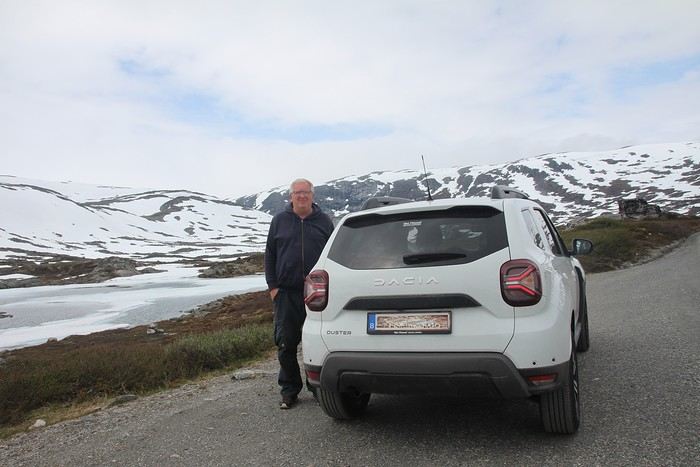
Why by car when most travelers opt for a camper van, while others prefer the comfort of cruises? Well, because we don’t own a camper van, renting one is pricey, and then you’ve got to add fuel costs (those things guzzle gas!), ferry fees, and other "tolls." All things considered, we went for mostly rentals—especially since there were four of us at the start of the trip. We spent the first week in Denmark with our daughter and son-in-law. Then they flew back to Belgium, and we continued our adventure as a couple. For accommodation, we mainly booked Airbnb apartments, which helped keep costs down and, most importantly, let us prepare our own meals (diet, diet!). In this travel journal, you’ll discover (or rediscover, for those who followed my older ones) our unbridled love for theme parks, museums, unique experiences, and—especially in Denmark—Legos! Unfortunately, we didn’t do any hikes this year because the unpredictable weather had made the trails slippery, and since I’d already taken three tumbles during the trip, I didn’t want to risk another! In the end, we traveled for 32 days, covered 6,200 km, and most importantly, discovered the charming country of Denmark, marveled at Norway’s breathtaking fjords—all without suffering the heatwave that hit France and Belgium that June! If you’ve got any questions, don’t hesitate to ask!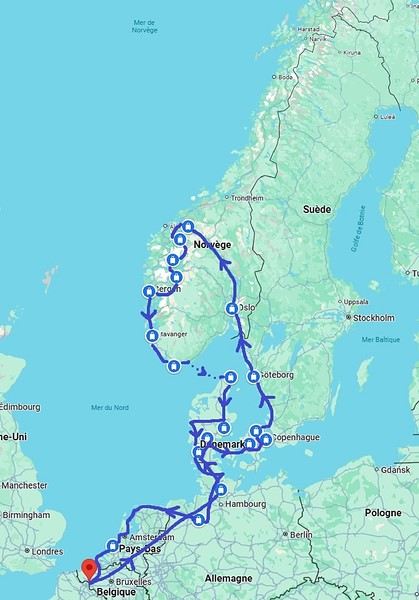
Why by car when most travelers opt for a camper van, while others prefer the comfort of cruises? Well, because we don’t own a camper van, renting one is pricey, and then you’ve got to add fuel costs (those things guzzle gas!), ferry fees, and other "tolls." All things considered, we went for mostly rentals—especially since there were four of us at the start of the trip. We spent the first week in Denmark with our daughter and son-in-law. Then they flew back to Belgium, and we continued our adventure as a couple. For accommodation, we mainly booked Airbnb apartments, which helped keep costs down and, most importantly, let us prepare our own meals (diet, diet!). In this travel journal, you’ll discover (or rediscover, for those who followed my older ones) our unbridled love for theme parks, museums, unique experiences, and—especially in Denmark—Legos! Unfortunately, we didn’t do any hikes this year because the unpredictable weather had made the trails slippery, and since I’d already taken three tumbles during the trip, I didn’t want to risk another! In the end, we traveled for 32 days, covered 6,200 km, and most importantly, discovered the charming country of Denmark, marveled at Norway’s breathtaking fjords—all without suffering the heatwave that hit France and Belgium that June! If you’ve got any questions, don’t hesitate to ask!
Je vous invite à découvrir l'île de Lanzarote
INTRODUCTION
Des vidéos sont insérées tout au long du résumé. Veuillez cliquer sur l'image pour démarrer la vidéo.
En février dernier, nous avons séjourné 2 semaines sur l'île de Lanzarote afin d'en découvrir les différents attraits touristiques.
Comme la plupart de nos précédents voyages, plusieurs semaines ont été consacrées à la création de notre itinéraire afin de pouvoir être en mesure d'atteindre parfaitement nos objectifs.
Lors de notre séjour, nous avons utilisé l'application Maps.me, une application mobile qui fournit des cartes hors ligne. Cette application s'avère très précieuse lors de nos déplacements en voiture, en randonnée et même lors de nos circuits à pied dans les grandes villes.
J'avais préalablement téléchargé les coordonnées GPS de toutes les attractions prévues à notre itinéraire dans l'application Maps.me, ce qui a facilité grandement nos déplacements.
La réservation de l'hébergement ainsi que la location d'une voiture ont été effectuées sur le web avant notre départ.
Nous sommes partis de l'aéroport de Québec et avons eu une escale à Montréal ainsi qu'à Bruxelles en Belgique avant d'atteindre Lanzarote.
Lanzarote fait partie des Îles Canaries qui elles-mêmes sont situées dans l'océan Atlantique, à l'ouest du Maroc. Celles-ci font d'ailleurs partie de l'Espagne.
Nous avions déjà visité l'île de Tenerife et nous avions adoré notre séjour à cet endroit.
Nous avons donc décidé de poursuivre la découverte des Îles Canaries en nous rendant à Lanzarote car cette île offre un paysage volcanique spectaculaire, des plages à faire rêver ainsi que de magnifiques villages aux maisons typiques de l'île qui sont majoritairement blanches.
Les sentiers de randonnée sont nombreux et nous permettent de découvrir une grande diversité de paysages.
Les attraits touristiques sont également fort nombreux et facilement accessibles car les routes de Lanzarote se parcourent aisément en voiture car celles-ci sont dans un état impeccable.
D'ailleurs, c'est un pur plaisir que de se déplacer sur ces routes car les paysages qui défilent sous nos yeux sont sensationnels et présentent une perspective différente selon la lumière du jour.
Des vidéos sont insérées tout au long du résumé. Veuillez cliquer sur l'image pour démarrer la vidéo.
En février dernier, nous avons séjourné 2 semaines sur l'île de Lanzarote afin d'en découvrir les différents attraits touristiques.
Comme la plupart de nos précédents voyages, plusieurs semaines ont été consacrées à la création de notre itinéraire afin de pouvoir être en mesure d'atteindre parfaitement nos objectifs.
Lors de notre séjour, nous avons utilisé l'application Maps.me, une application mobile qui fournit des cartes hors ligne. Cette application s'avère très précieuse lors de nos déplacements en voiture, en randonnée et même lors de nos circuits à pied dans les grandes villes.
J'avais préalablement téléchargé les coordonnées GPS de toutes les attractions prévues à notre itinéraire dans l'application Maps.me, ce qui a facilité grandement nos déplacements.
La réservation de l'hébergement ainsi que la location d'une voiture ont été effectuées sur le web avant notre départ.
Nous sommes partis de l'aéroport de Québec et avons eu une escale à Montréal ainsi qu'à Bruxelles en Belgique avant d'atteindre Lanzarote.
Lanzarote fait partie des Îles Canaries qui elles-mêmes sont situées dans l'océan Atlantique, à l'ouest du Maroc. Celles-ci font d'ailleurs partie de l'Espagne.
Nous avions déjà visité l'île de Tenerife et nous avions adoré notre séjour à cet endroit.
Nous avons donc décidé de poursuivre la découverte des Îles Canaries en nous rendant à Lanzarote car cette île offre un paysage volcanique spectaculaire, des plages à faire rêver ainsi que de magnifiques villages aux maisons typiques de l'île qui sont majoritairement blanches.
Les sentiers de randonnée sont nombreux et nous permettent de découvrir une grande diversité de paysages.
Les attraits touristiques sont également fort nombreux et facilement accessibles car les routes de Lanzarote se parcourent aisément en voiture car celles-ci sont dans un état impeccable.
D'ailleurs, c'est un pur plaisir que de se déplacer sur ces routes car les paysages qui défilent sous nos yeux sont sensationnels et présentent une perspective différente selon la lumière du jour.
EuroVelo 19 de Rotterdam jusqu'au plateau de Langres source de la Meuse
Bonjour,
Pour le mois de Mai j'ai l'intention de faire L'eurovelo19 de Rotterdam juqu'au plateau de Langres source de la Meuse .
Habitant le 67 je pense prendre un flixbus équipé vélo de Strasbourg à Rotterdam .
Y en a j'ai vérifié
Particularité, pour la première fois je vais le tenter en V.A.E.
Je veux remonter la Meuse par des étapes de 80 kms environ . J'ai les cartes Ravel pour la Belgique et je pense acheter le topoguide Eurovelo19 même s'il est dans le sens Langres -Rotterdam .
Pour éviter l'immense agglo de Rotterdam , j'ai songé à prendre un hébergement de 2-3 nuits à une 50taine de kms de l'embouchure et faire l'A.R jusqu'à la mer depuis cet hébergement
DEMANDE: Suis à la recherche de toute info pratique concernant hébergement sur le trajet principalement en Nollandie et en Belgie
Vélotix
Choisir Oslo ou Bergen pour trois jours?
Bonjour,
Nous comptons partir 3 jours 2 nuits en Norvege pour nos 20 ans de mariage. Les liaisons possibles en avion entre la Belgique étant Bergen ou Oslo, j’aurais besoin de vos conseils.
Notre but est de voir de beaux Fjords et des villages typiques et charmants . Nous sommes bien conscients qu’en 3 jours, nous ne pourrons pas voir les plus beaux Fjords, mais pourriez vous me conseiller sur le meilleur choix de destination Olso ou Bergen ?
J’ai vu que Bergen avait l’air d’être une ville plus typique et charmante qu’Oslo, mais il pleut beaucoup et et je n’arrive pas à voir s’il est préférable de faire une « mini »croisière à partir de Bergen ou Oslo.
Merci pour vos conseils. Je suis un peu perdu à force de chercher.
Carnet de voyage... 9 jours en Sicile
Carnet de voyage « La Sicile ».
Hello la compagnie. Comme convenu, voici un petit condensé de ce très joli voyage en Sicile, réparti sur 9 journées, entre le 24 mars et le 02 avril 2019.
Tout d’abord, en quelques chiffres, mon road-trip, c’est 1.326 kilomètres parcourus en voiture, 142 kilomètres parcourus à pied. Une moyenne de 85€ dépensé par jour ( hébergement, nourriture, visites, parkings, carburant ).
Je voyageais seul, et mon circuit s’est concrétisé en fonction des lieux les plus connus et réputés de la Sicile, selon les divers avis glanés dans les forums, les guides, et autres reportages TV et Youtube.
L’arrivée et le départ se sont fait à l’aéroport de Palerme. Idem pour la prise et la remise des clefs du véhicule de location.
Le décor est planté, il ne me reste plus qu’à vous narrer mon récit.. Bonne lecture.
Hyon, Belgique. Dimanche 24 mars, 03h30. Mon réveil sonne. Les vacances commencent. Mon avion décolle de l’aéroport de Charleroi, vol Ryanair en direction de Palerme pour 06h30, arrivée prévue à 09h. Je trépigne d’impatience pour ce qui est mon premier voyage solo, organisé 100% par moi – même. Dès la phase d’atterrissage, le ton est donné. En effet, la météo prévoit des températures oscillantes avec les 23 degrés tout au long de mon séjour.
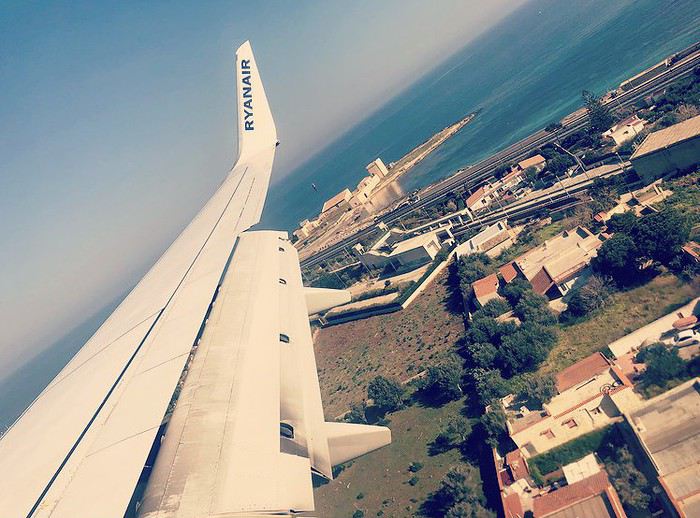
Direction le comptoir d’Avis pour la prise de ma voiture de location. Je suis passé via AutoEurope. Budget pour toute la durée du séjour, un peu moins de 200€, avec le super cover comprise. Alors, oui, une fois sur place, l’hôtesse vous proposera toutes sortes d’assurances différentes, mais répondre non avec le sourire, et elles n’insisteront pas. Bien faire le tour de la voiture avant de quitter sa place de parking, et si c’est ok, y a plus qu’à ! Enjoy.
Mon fidèle destrier pour ce séjour sera une Fiat Panda Essence, de 69 cv. Avec une conso moyenne de 6 litres / 100 kms, jamais elle n'a failli à sa tâche. Sauf peut - être dans les cols m'amenant au Refuge de Sapienza où la puissance s'est montrée parois très juste.
Il est environ 11h30 lorsque je me mets en chemin pour Ségeste et son temple. 55 petits kilomètres avalés en moins de 40 minutes.
Le site est un peu en retrait du parking, mais une navette nous y amène en moins de 5 minutes.
Ensuite, c'est quartier libre.
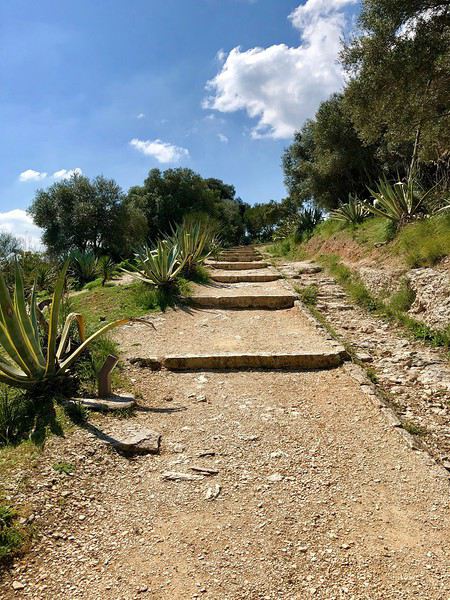
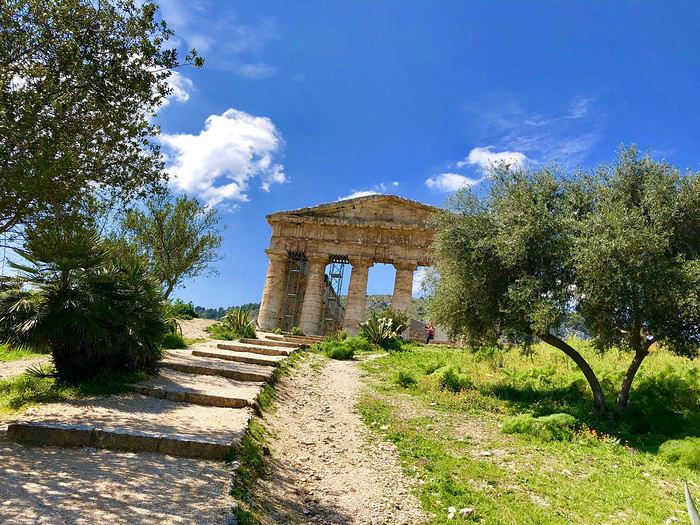
Le voici en approche. Et une fois face à face, hé bien, on reste pantois devant une telle majestuosité! Et ce ne sera pas la seule fois durant ce séjour.
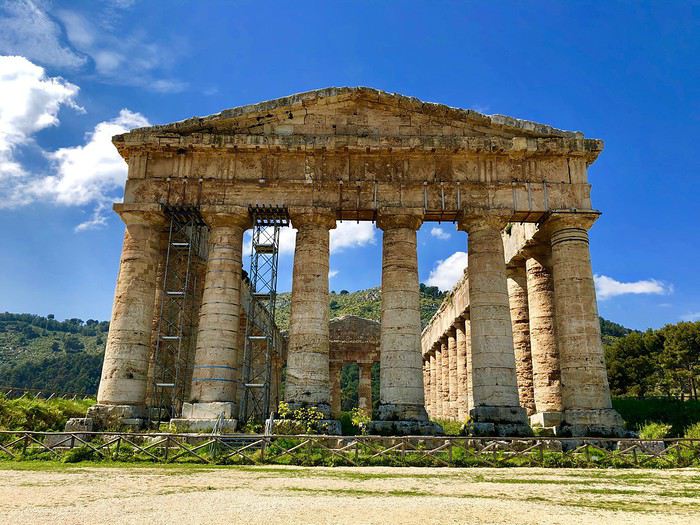
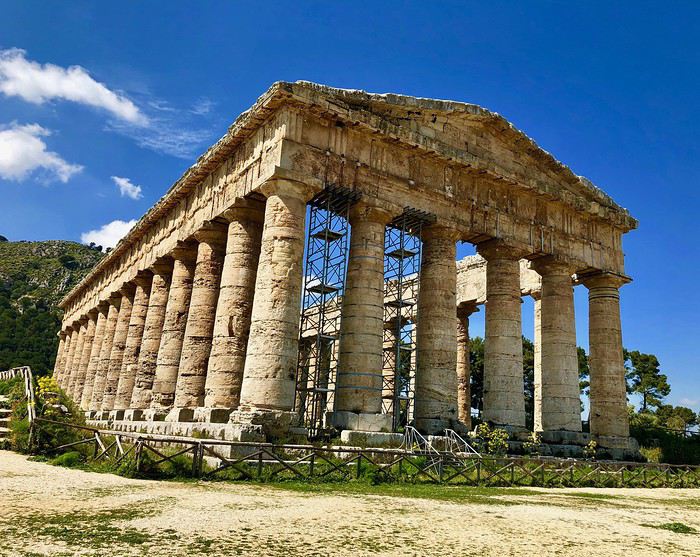
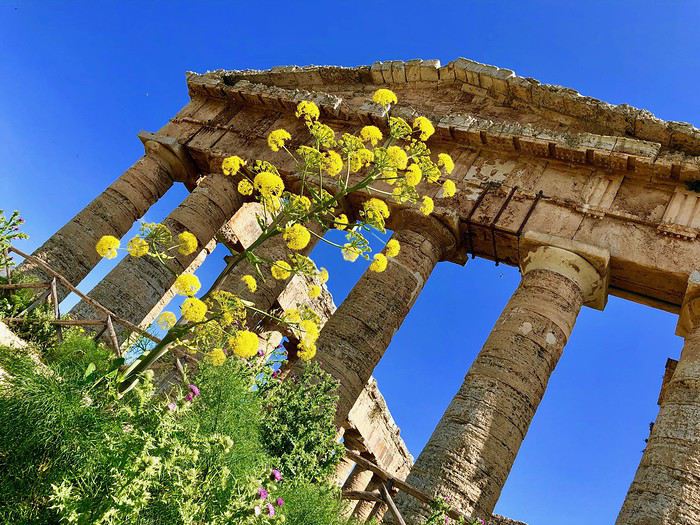
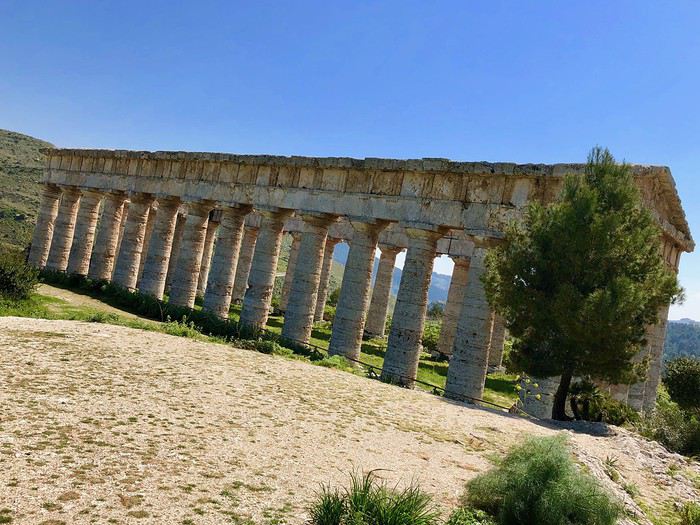
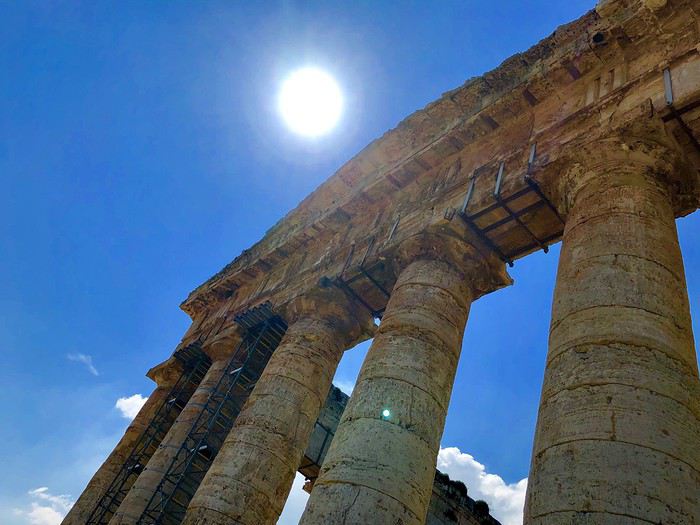
J'y suis resté une bonne heure à le contempler, faire le tour de cet édifice, de ses environs. Tantôt assis à l'ombre, tantôt en plein soleil. Ne pas oublier sa bouteille d'eau. J'aurai pu tenter le théâtre Grec, mais pour une raison que j'ignore, je n'ai pas eu la motivation. Ou plutôt, l'envie de rejoindre Erice était très fort. L'excitation sans doute.
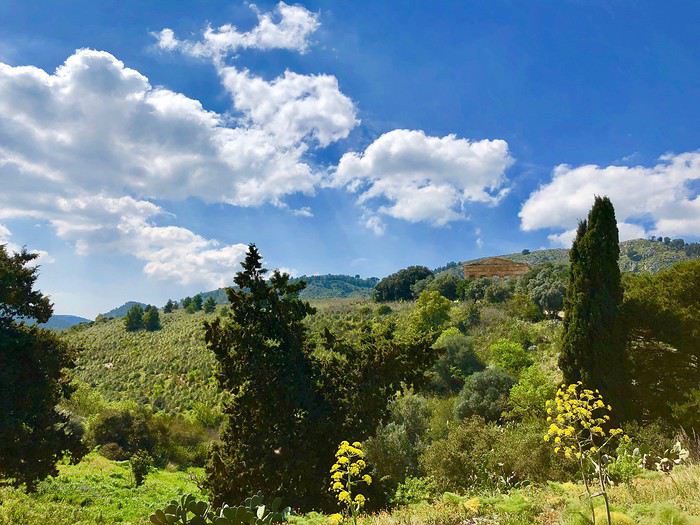
De là, moins de 30 minutes pour rejoindre Erice, ce petit village médiéval, non dénué de charme.
La route qui nous y amène est assez tortueuse, les lacets s'enchaînent à vitesse grand " V ". C'est le terrain de jeu pour ma Lotus, mais pas de ma Fiat Panda. Néanmoins, de magnifiques points de vues s'offrent à moi.
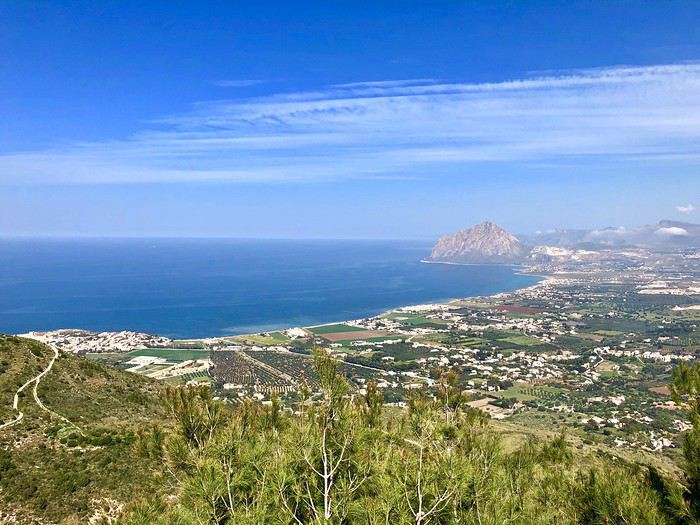
Je me gare près de l'entré, une petite contribution au parking, et ensuite, c'est guidé par différents facteurs ( les odeurs, le bruit, les rayons du soleil, la foule ) que je me perds dans Erice.
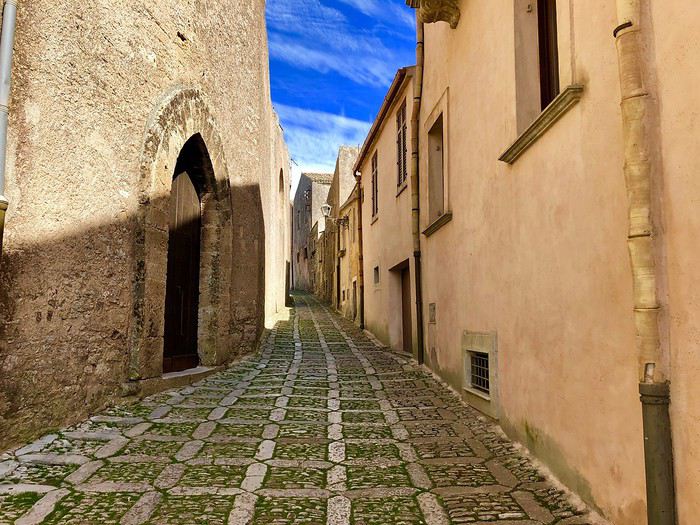
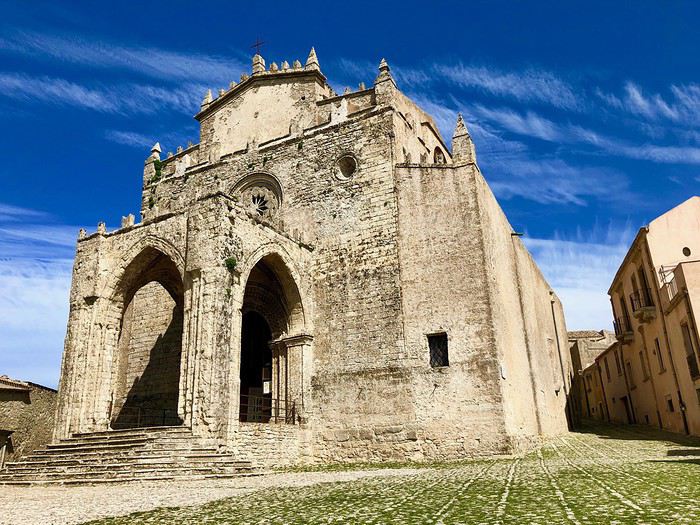
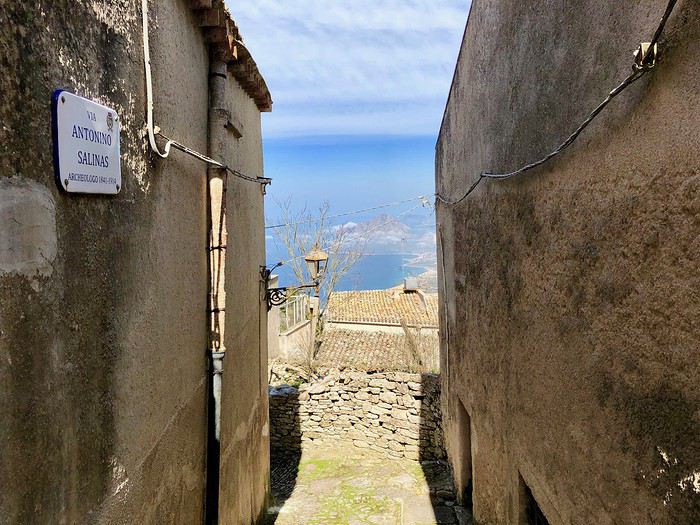
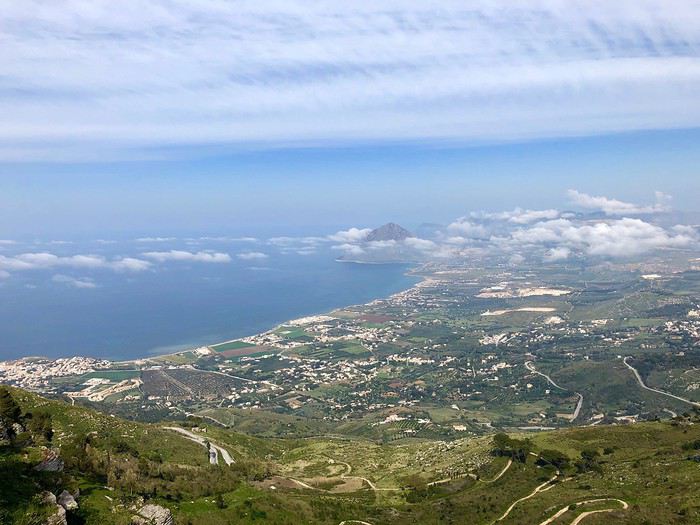
Et une dernière photo, prise du belvédère du vieux château.
Erice est belle, est propre. Est calme en cette période. Très plaisant. Quelques terrasses bien mises, bercées par le doux soleil. Que demander de plus? J'y ai mangé mon premier conollo. Un délice. Mon premier cappuccino aussi. L'après - midi touche à sa fin.
Je prends donc la route du mon bnb, le Secret, situé en plein cœur de Trapani. Assez facile à se garer gratuitement, l'entrée du bnb, elle, est plus délicate à dénicher. Moins de 35€, douche italienne, et terrasse avec vue sur les toits de la ville.
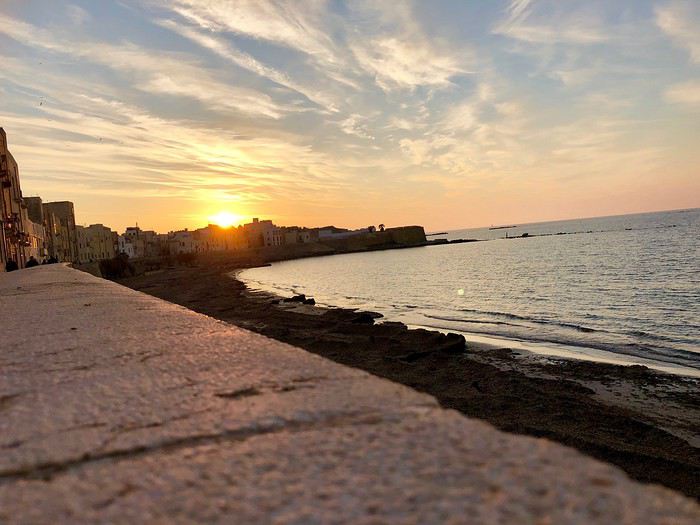
Ma fin de journée sera dédiée à la visite de Trapani, à une balade sur le port, le centre ville.
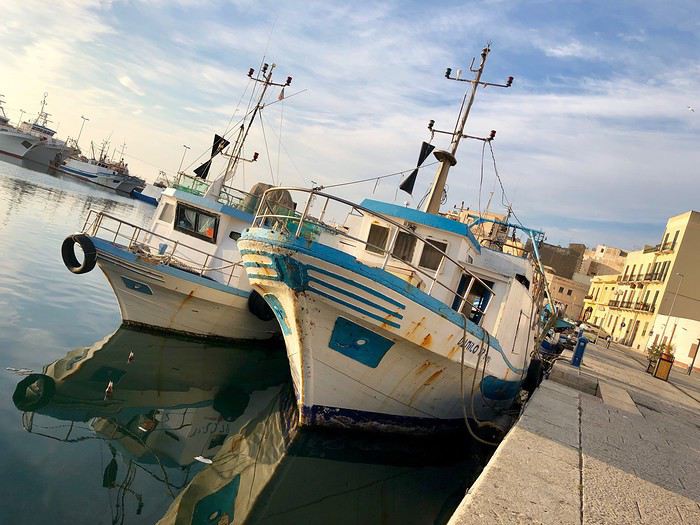
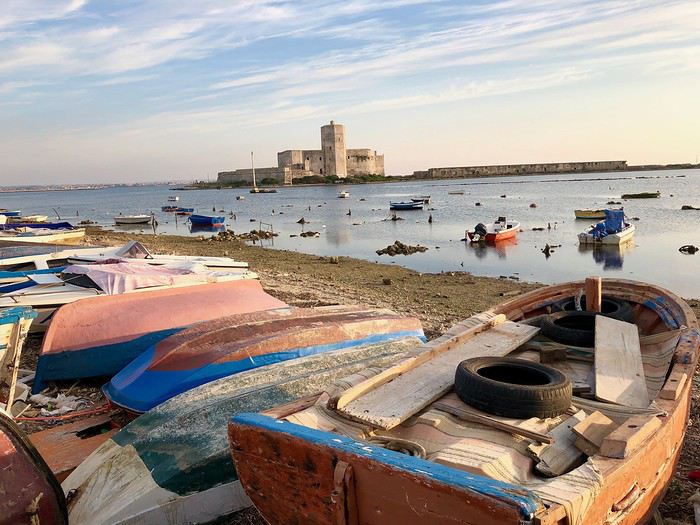
Fin de la première journée. Mon bilan est hyper convaincant. Une bonne nuit de sommeil, et mon road - trip reprendra de plus beau!
A suivre..
Hello la compagnie. Comme convenu, voici un petit condensé de ce très joli voyage en Sicile, réparti sur 9 journées, entre le 24 mars et le 02 avril 2019.
Tout d’abord, en quelques chiffres, mon road-trip, c’est 1.326 kilomètres parcourus en voiture, 142 kilomètres parcourus à pied. Une moyenne de 85€ dépensé par jour ( hébergement, nourriture, visites, parkings, carburant ).
Je voyageais seul, et mon circuit s’est concrétisé en fonction des lieux les plus connus et réputés de la Sicile, selon les divers avis glanés dans les forums, les guides, et autres reportages TV et Youtube.
L’arrivée et le départ se sont fait à l’aéroport de Palerme. Idem pour la prise et la remise des clefs du véhicule de location.
Le décor est planté, il ne me reste plus qu’à vous narrer mon récit.. Bonne lecture.
Hyon, Belgique. Dimanche 24 mars, 03h30. Mon réveil sonne. Les vacances commencent. Mon avion décolle de l’aéroport de Charleroi, vol Ryanair en direction de Palerme pour 06h30, arrivée prévue à 09h. Je trépigne d’impatience pour ce qui est mon premier voyage solo, organisé 100% par moi – même. Dès la phase d’atterrissage, le ton est donné. En effet, la météo prévoit des températures oscillantes avec les 23 degrés tout au long de mon séjour.
Direction le comptoir d’Avis pour la prise de ma voiture de location. Je suis passé via AutoEurope. Budget pour toute la durée du séjour, un peu moins de 200€, avec le super cover comprise. Alors, oui, une fois sur place, l’hôtesse vous proposera toutes sortes d’assurances différentes, mais répondre non avec le sourire, et elles n’insisteront pas. Bien faire le tour de la voiture avant de quitter sa place de parking, et si c’est ok, y a plus qu’à ! Enjoy.
Mon fidèle destrier pour ce séjour sera une Fiat Panda Essence, de 69 cv. Avec une conso moyenne de 6 litres / 100 kms, jamais elle n'a failli à sa tâche. Sauf peut - être dans les cols m'amenant au Refuge de Sapienza où la puissance s'est montrée parois très juste.
Il est environ 11h30 lorsque je me mets en chemin pour Ségeste et son temple. 55 petits kilomètres avalés en moins de 40 minutes.
Le site est un peu en retrait du parking, mais une navette nous y amène en moins de 5 minutes.
Ensuite, c'est quartier libre.
Le voici en approche. Et une fois face à face, hé bien, on reste pantois devant une telle majestuosité! Et ce ne sera pas la seule fois durant ce séjour.
J'y suis resté une bonne heure à le contempler, faire le tour de cet édifice, de ses environs. Tantôt assis à l'ombre, tantôt en plein soleil. Ne pas oublier sa bouteille d'eau. J'aurai pu tenter le théâtre Grec, mais pour une raison que j'ignore, je n'ai pas eu la motivation. Ou plutôt, l'envie de rejoindre Erice était très fort. L'excitation sans doute.
De là, moins de 30 minutes pour rejoindre Erice, ce petit village médiéval, non dénué de charme.
La route qui nous y amène est assez tortueuse, les lacets s'enchaînent à vitesse grand " V ". C'est le terrain de jeu pour ma Lotus, mais pas de ma Fiat Panda. Néanmoins, de magnifiques points de vues s'offrent à moi.
Je me gare près de l'entré, une petite contribution au parking, et ensuite, c'est guidé par différents facteurs ( les odeurs, le bruit, les rayons du soleil, la foule ) que je me perds dans Erice.
Et une dernière photo, prise du belvédère du vieux château.
Erice est belle, est propre. Est calme en cette période. Très plaisant. Quelques terrasses bien mises, bercées par le doux soleil. Que demander de plus? J'y ai mangé mon premier conollo. Un délice. Mon premier cappuccino aussi. L'après - midi touche à sa fin.
Je prends donc la route du mon bnb, le Secret, situé en plein cœur de Trapani. Assez facile à se garer gratuitement, l'entrée du bnb, elle, est plus délicate à dénicher. Moins de 35€, douche italienne, et terrasse avec vue sur les toits de la ville.
Ma fin de journée sera dédiée à la visite de Trapani, à une balade sur le port, le centre ville.
Fin de la première journée. Mon bilan est hyper convaincant. Une bonne nuit de sommeil, et mon road - trip reprendra de plus beau!
A suivre..
Choisir un hôtel ou Airbnb à Los Angeles? (voyage seule)
Bonsoir,
Je pars toute seule à los Angeles pour la 1ère fois à partir du 17 juin pour 1 semaine, un bon connaisseur du pays peut me conseiller pour l'itinéraire des visites et l'hébergement ?
Merci pour le conseil
Vols Ryanair annulés
Ryanair: les pilotes allemands rejoignent la grève
Le mouvement social concerne 400 pilotes basés dans dix aéroports allemands. Ils rejoindront vendredi la grève des pilotes basés en Irlande, Suède et Belgique.
Les pilotes allemands de la compagnie à bas coûts Ryanair rejoindront vendredi la grève des pilotes basés en Irlande, Suède et Belgique, a annoncé mercredi le principal syndicat allemand. «Nous ne voyons pas chez Ryanair la volonté de s'engager dans de réelles négociations salariales», a déclaré Martin Locher, président du syndicat Vereinigung Cockpit, qui demande de meilleures conditions contractuelles et une hausse des salaires. Le principe de la grève avait été approuvé fin juillet par un vote des membres de Cockpits à 96% qui avait aussi fixé un ultimatum à Ryanair qui a expiré dans la nuit de lundi à mardi sans qu'un compromis n'ait été trouvé. 400 pilotes Le mouvement social, qui concerne quelque 400 pilotes basés dans dix aéroports allemands, débutera vendredi à 01h01 GMT (03h01 locale) et s'achèvera samedi à 00h59 GMT (02h59 locale). «Ryanair a exclu toute hausse des dépenses de personnel. Parallèlement Ryanair n'a donné aucune indication sur les marges de manoeuvre pour trouver une solution. Ryanair est donc totalement responsable de l'escalade», a martelé Martin Locher. Ryanair a prévu pour sa part une conférence de presse mercredi à 11h30 GMT (13h30 locale) à Francfort et pourrait y détailler l'ampleur des perturbations attendues vendredi au départ de l'Allemagne mais aussi des autres pays européens concernés. 146 vols déjà annulés Selon l'agence allemande dpa, 146 vols des 2400 prévus en Europe vendredi avaient déjà été annulés avant l'annonce des pilotes allemands en raison des grèves annoncées en Irlande, Suède et Belgique ce jour-là. Cockpit «regrette les conséquences (de la grève) pour les passagers, les équipages en cabines, le personnel au sol», a-t-il indiqué dans son communiqué, «les passagers peuvent s'adresser directement à Ryanair concernant leurs vols, car seule l'entreprise peut dire quels vols auront lieu». Le malaise au sein du groupe a éclaté au grand jour à la suite d'un sérieux problème de planning de pilotes en septembre 2017, qui a entraîné un grave conflit social et des annulations portant au total sur 20'000 vols dans les mois qui ont suivi. Cette crise a poussé Ryanair à négocier un virage à 180 degrés en entamant des négociations avec des syndicats dans plusieurs pays, alors que la compagnie avait toujours refusé de les reconnaître. En raison de la crise et des annulations de vols, le directeur général du groupe Michael O'Leary a renoncé à son bonus au titre de 2018, qui aurait pu atteindre un million d'euros.
Les pilotes allemands de la compagnie à bas coûts Ryanair rejoindront vendredi la grève des pilotes basés en Irlande, Suède et Belgique, a annoncé mercredi le principal syndicat allemand. «Nous ne voyons pas chez Ryanair la volonté de s'engager dans de réelles négociations salariales», a déclaré Martin Locher, président du syndicat Vereinigung Cockpit, qui demande de meilleures conditions contractuelles et une hausse des salaires. Le principe de la grève avait été approuvé fin juillet par un vote des membres de Cockpits à 96% qui avait aussi fixé un ultimatum à Ryanair qui a expiré dans la nuit de lundi à mardi sans qu'un compromis n'ait été trouvé. 400 pilotes Le mouvement social, qui concerne quelque 400 pilotes basés dans dix aéroports allemands, débutera vendredi à 01h01 GMT (03h01 locale) et s'achèvera samedi à 00h59 GMT (02h59 locale). «Ryanair a exclu toute hausse des dépenses de personnel. Parallèlement Ryanair n'a donné aucune indication sur les marges de manoeuvre pour trouver une solution. Ryanair est donc totalement responsable de l'escalade», a martelé Martin Locher. Ryanair a prévu pour sa part une conférence de presse mercredi à 11h30 GMT (13h30 locale) à Francfort et pourrait y détailler l'ampleur des perturbations attendues vendredi au départ de l'Allemagne mais aussi des autres pays européens concernés. 146 vols déjà annulés Selon l'agence allemande dpa, 146 vols des 2400 prévus en Europe vendredi avaient déjà été annulés avant l'annonce des pilotes allemands en raison des grèves annoncées en Irlande, Suède et Belgique ce jour-là. Cockpit «regrette les conséquences (de la grève) pour les passagers, les équipages en cabines, le personnel au sol», a-t-il indiqué dans son communiqué, «les passagers peuvent s'adresser directement à Ryanair concernant leurs vols, car seule l'entreprise peut dire quels vols auront lieu». Le malaise au sein du groupe a éclaté au grand jour à la suite d'un sérieux problème de planning de pilotes en septembre 2017, qui a entraîné un grave conflit social et des annulations portant au total sur 20'000 vols dans les mois qui ont suivi. Cette crise a poussé Ryanair à négocier un virage à 180 degrés en entamant des négociations avec des syndicats dans plusieurs pays, alors que la compagnie avait toujours refusé de les reconnaître. En raison de la crise et des annulations de vols, le directeur général du groupe Michael O'Leary a renoncé à son bonus au titre de 2018, qui aurait pu atteindre un million d'euros.
L'Ouest américain: départ et retour à Denver (3 semaines)
Bonjour,
Je me décide d'ouvrir un post dédié afin de ne pas faire n'importe quoi trop rapidement...🤪
En gros, nous sommes deux adultes et trois enfants (qui auront 4 ans 1/2, 8 ans et 10 ans en juillet 2019).
Nous aimerions partir trois semaines dans l'ouest mais avec départ et retour à Denver. Venant de Belgique, nous partirons de Bruxelles, c'est le plus pratique pour nous.
Pourquoi Denver? Car pour l'instant, il n'y a que via Icelandair (que l'on connait) qui donne un prix correct (+/- 4030€ pour nous 5).
Nos Estas et passeports sont ok (partis à NY cette année).
Pour la période, c'était soit juillet soit le congé de Pâques en avril. Au final, on a décidé de privilégier juillet malgré les désavantages de la chaleur, la foule etc.
Le but de ce post (dans un premier temps) est de savoir si c'est pas un peu dingue de partir de Denver pour faire une GROSSE boucle.
C-à-d → Denver, Las Vegas, LA, SF etc pour revenir par le nord sur Denver. En +/- 20 jours...😇
Si c'est totalement débile, nous devrions trouver des vols vers LA ou SF afin de faire une boucle plus petite. Du coup, prix encore plus conséquent mais autant faire les choses correctement, quitte à devoir post-poser ce voyage à 2020...🙁
Je vous remercie d'avance pour votre précieuse aide. Je m'en vais me documenter! 🙂
Je me décide d'ouvrir un post dédié afin de ne pas faire n'importe quoi trop rapidement...🤪
En gros, nous sommes deux adultes et trois enfants (qui auront 4 ans 1/2, 8 ans et 10 ans en juillet 2019).
Nous aimerions partir trois semaines dans l'ouest mais avec départ et retour à Denver. Venant de Belgique, nous partirons de Bruxelles, c'est le plus pratique pour nous.
Pourquoi Denver? Car pour l'instant, il n'y a que via Icelandair (que l'on connait) qui donne un prix correct (+/- 4030€ pour nous 5).
Nos Estas et passeports sont ok (partis à NY cette année).
Pour la période, c'était soit juillet soit le congé de Pâques en avril. Au final, on a décidé de privilégier juillet malgré les désavantages de la chaleur, la foule etc.
Le but de ce post (dans un premier temps) est de savoir si c'est pas un peu dingue de partir de Denver pour faire une GROSSE boucle.
C-à-d → Denver, Las Vegas, LA, SF etc pour revenir par le nord sur Denver. En +/- 20 jours...😇
Si c'est totalement débile, nous devrions trouver des vols vers LA ou SF afin de faire une boucle plus petite. Du coup, prix encore plus conséquent mais autant faire les choses correctement, quitte à devoir post-poser ce voyage à 2020...🙁
Je vous remercie d'avance pour votre précieuse aide. Je m'en vais me documenter! 🙂
Passeport pour les Seychelles avec mon fils
Bonjour,
Je pars avc mon fils début septembre aux Seychelles, et je m interroge concernant le passeport.
En effet le miens expire debut mars 2019 donc il aura moins de 6 mois de validité au moment du retour, est ce que je dois faire une nouvelle demande ou est ce que le fait qu il soit valide est suffisant?
Merci infiniment pour vos retour.
Je pars avc mon fils début septembre aux Seychelles, et je m interroge concernant le passeport.
En effet le miens expire debut mars 2019 donc il aura moins de 6 mois de validité au moment du retour, est ce que je dois faire une nouvelle demande ou est ce que le fait qu il soit valide est suffisant?
Merci infiniment pour vos retour.
Semaine en Bosnie (Pâques)
Bonsoir à tous
Je souhaite me rendre avec mon père en Bosnie-Herzégovine du 31mars jusqu'au 6avril.
J'ai quelques questions (comme d'habitude) sur ce pays:
- Est-ce un pays dangereux? ( Suite à la guerre)
- Savent-ils parler un anglais de base ? ( De mon côté je vais apprendre quelques mots en Serbe, Croate)
- La vie est-elle cher par rapport à la Belgique?
- Les gens sont-ils serviables et acceuillants?
- Mon genre n'est pas la plage mais plutôt la culture et les montagnes, la Bosnie est-elle un bon choix?
Pour l'instant ce sont les seuls questions que j'ai en tête Merci d'avance pour les réponses
Pour l'instant ce sont les seuls questions que j'ai en tête Merci d'avance pour les réponses
Voyage en Iran: où faire son visa
Bonjour à tous ,
Fin avril 2018 , je pars 3 semaines en Iran avec une amie , elle part de Paris Et Moi De Bruxelles.Nous nous donnons RDV à l'aéroport de TÉHÉRAN.Moi , je suis Belge, éclairez-Moi svp au sujet des formalités pour entrer dans le pays au sujet du visa.J'ai naturellement déjà regardé sur les sites de voyage, Mais je voudrais avoir les certitudes pour ne pas me faire refoulée à mon arrivée.Puis -je acheter le visa à l'aéroport ou vaut-il mieux me le procurer ici en Belgique avant mon départ .Dois je aller jusqu'à l'ambassade à Bruxelles et le coût du visa.Merci pour vos réponses amis voyageurs.Encore une chose , dois je avoir une adresse De logement, sachant que nous resterons seulement 2 ou 3 nuit à Téhéran, avant de poursuivre notre périple.Viviane.
Première prise de contact avec l'Afrique au Kenya
Bonjour aux voyageurs,
Nous avons déjà voyagé au : Bali, Mexique, Thaïlande et Ile Maurice.
Nous souhaitons partir au mois de janvier ou mars pour avoir une toute première idée des voyages en Afrique.
Nous envisageons de séjourner dans l'hôtel Jumbo Club Watamu Beach et un safari 1 nuit : Hébergement en chambre standard en lodge & Formule pension complète (hors boissons) & Chauffeur-guide voici mes questions, si vous aviez quelques minutes pour y répondre :
-connaissez-vous cet hôtel et si oui qu'en pensez-vous?
- quelle serait la meilleure période : janvier ou mars?
quelles sont les recommandations en matière de santé (avant, pendant et après le séjour)? Sachant que nous avons fait le vaccin de la fièvre jaune l'année dernière. Si vous pensez que le traitement anti-pallu est important, quel médicament vous semble le mieux?
- connaissez-vous Eros Safari Kenya, si oui qu'en pensez-vous?
- combien de jours de safari faut-il mieux prendre? 1 ou 2 sachant que c'est une toute première approche car nous avons quelques petits problème de santé?
- en cas de problème de santé, lors du safari, y-a-t'il des possibilités de trouver facilement des sanitaires?
- quelle compagnie aérienne recommandez-vous?
- est-ce une région d’insécurité?
Je vous remercie par avance.
Je vous remercie par avance.
Citytrip à Edimbourg - avril 2017
Bonjour,
Ceci est mon tout premier carnet sur le forum (que je lis beaucoup!). Je m'y mets tardivement mais vaut mieux tard que jamais.
De plus, lorsque je vois toute l'aide précieuse apportée par les personnes qui prennent le temps de rédiger leur carnet, je me dis que je me dois de rendre la pareille.
Je vais donc tenter de le faire à ma façon! 😇
--
Ce voyage en Écosse est notre premier vrai voyage en couple (malgré nos trois filles de 2,5 – 6 – 8 ans) .
Au départ nous avions décidé de réaliser un city trip début avril 2017 qui s’est assez rapidement orienté vers la ville d’Edimbourg (du lundi au vendredi).
Deux mois avant de partir, tout était presque bouclé. L’avion a été rapidement réservé chez Ryanair qui était une première fois pour nous. Voyage avec places réservées, embarquement prioritaire et uniquement bagages en cabine pour un peu moins de 200€ pour deux adultes. Les hébergements ont été réservés sur Booking. Rien d’original !
-- Jour 1 - le départ
Le trajet domicile/aéroport s’est effectué via la navette Flibco. Nous sommes dans le sud de la Belgique et nous avons la « chance » d’avoir un arrêt non loin de notre maison. 30€ l’aller/retour pour deux adultes avec assurance bagages...pourquoi s’ennuyer à prendre la voiture ? 1H30 après le départ nous voilà à l’aéroport de Charleroi (Bruxelles sud).
Une première fois ici aussi. Très facile depuis la navette. Malgré le fait d’avoir imprimé nos tickets, nous nous sommes vite rendus compte qu’il était tout à fait possible de s’en passer (et d’utiliser son smartphone). L’embarquement est un petit peu plus rapide avec la priorité d’embarquement qui permet simplement d’attendre dans l’avion et pas dans l’aéroport. A refaire ? Oui...
Le vol se passe sans problème. Voyager avec uniquement des bagages en cabine est un gros plus. Bien plus rapide et largement suffisant pour moins d’une semaine sur place.
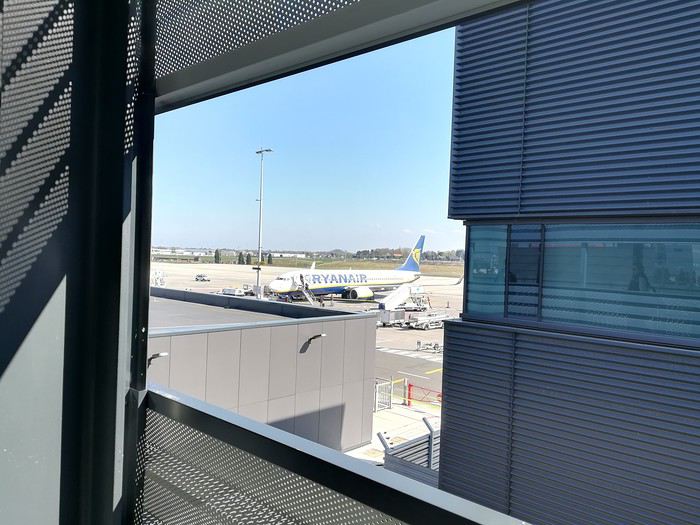
Nous décidons de prendre le tram pour rejoindre le centre de la capitale. Très simple via la borne automatique et la carte Visa. Onze livres l’aller simple vers York Place pour deux. Une demi-heure plus tard et un trajet sympa nous sommes à destination. En plein dans la ville. Il nous reste une vingtaine de minutes afin de rejoindre notre hébergement.
Entre York Place et l’hébergement on en profite pour visiter un peu et surtout, manger !! Nous arrivons devant le « Nom de plume » qui nous semble sympa. Ce qui est le cas. Personnellement j’ai décidé de me mettre dans le bain directement avec une bière locale et surtout, le plat locale ! Prix très correct, bonne ambiance, calme...Je recommande !
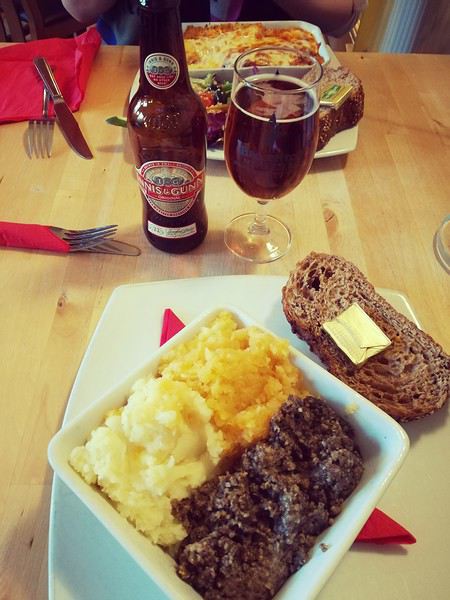
Ensuite, direction le Fraoch House qui se situe à plus ou moins 20 minutes à pieds de York Place (vers le nord est). Ce choix s’est fait par rapport au prix et à l’emplacement. Le lendemain nous devrons aller chez ArnoldClarck pour la location de voiture (40 minutes à pieds).
Le Fraoch est très calme malgré la chambre sur la rue. Le proprio est ultra sympathique (petit mail pour signaler qu’il serait incapable d’être présent lors de notre arrivée). Petite enveloppe à l’entrée avec plein de bonnes infos. Chambre un peu « kitsh » mais propre et correcte.
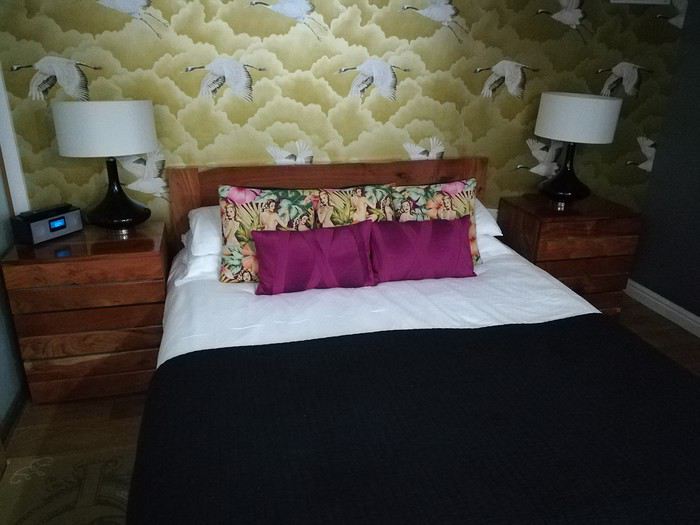
Ceci est mon tout premier carnet sur le forum (que je lis beaucoup!). Je m'y mets tardivement mais vaut mieux tard que jamais.
De plus, lorsque je vois toute l'aide précieuse apportée par les personnes qui prennent le temps de rédiger leur carnet, je me dis que je me dois de rendre la pareille.
Je vais donc tenter de le faire à ma façon! 😇
--
Ce voyage en Écosse est notre premier vrai voyage en couple (malgré nos trois filles de 2,5 – 6 – 8 ans) .
Au départ nous avions décidé de réaliser un city trip début avril 2017 qui s’est assez rapidement orienté vers la ville d’Edimbourg (du lundi au vendredi).
Deux mois avant de partir, tout était presque bouclé. L’avion a été rapidement réservé chez Ryanair qui était une première fois pour nous. Voyage avec places réservées, embarquement prioritaire et uniquement bagages en cabine pour un peu moins de 200€ pour deux adultes. Les hébergements ont été réservés sur Booking. Rien d’original !
-- Jour 1 - le départ
Le trajet domicile/aéroport s’est effectué via la navette Flibco. Nous sommes dans le sud de la Belgique et nous avons la « chance » d’avoir un arrêt non loin de notre maison. 30€ l’aller/retour pour deux adultes avec assurance bagages...pourquoi s’ennuyer à prendre la voiture ? 1H30 après le départ nous voilà à l’aéroport de Charleroi (Bruxelles sud).
Une première fois ici aussi. Très facile depuis la navette. Malgré le fait d’avoir imprimé nos tickets, nous nous sommes vite rendus compte qu’il était tout à fait possible de s’en passer (et d’utiliser son smartphone). L’embarquement est un petit peu plus rapide avec la priorité d’embarquement qui permet simplement d’attendre dans l’avion et pas dans l’aéroport. A refaire ? Oui...
Le vol se passe sans problème. Voyager avec uniquement des bagages en cabine est un gros plus. Bien plus rapide et largement suffisant pour moins d’une semaine sur place.
Nous décidons de prendre le tram pour rejoindre le centre de la capitale. Très simple via la borne automatique et la carte Visa. Onze livres l’aller simple vers York Place pour deux. Une demi-heure plus tard et un trajet sympa nous sommes à destination. En plein dans la ville. Il nous reste une vingtaine de minutes afin de rejoindre notre hébergement.
Entre York Place et l’hébergement on en profite pour visiter un peu et surtout, manger !! Nous arrivons devant le « Nom de plume » qui nous semble sympa. Ce qui est le cas. Personnellement j’ai décidé de me mettre dans le bain directement avec une bière locale et surtout, le plat locale ! Prix très correct, bonne ambiance, calme...Je recommande !
Ensuite, direction le Fraoch House qui se situe à plus ou moins 20 minutes à pieds de York Place (vers le nord est). Ce choix s’est fait par rapport au prix et à l’emplacement. Le lendemain nous devrons aller chez ArnoldClarck pour la location de voiture (40 minutes à pieds).
Le Fraoch est très calme malgré la chambre sur la rue. Le proprio est ultra sympathique (petit mail pour signaler qu’il serait incapable d’être présent lors de notre arrivée). Petite enveloppe à l’entrée avec plein de bonnes infos. Chambre un peu « kitsh » mais propre et correcte.
EuroVelo 4 jusqu'en Pologne
Bonjour à vous cycliste en herbe ou pro !
Je cherche des infos sur l'euro velo 4 je ne trouve pas grand chose meme pas une carte papier.
Alors je voudrais savoir si l'un d'entre vous l'a déjà faite jusqu'en Pologne et comment vous avez fait pour le retour train, velo...? Je ne sais pas démonter mon velo et je suis plutôt une cycliste du dimanche mais rien n'est impossible à qui le veut!
Et je voudrais savoir votre équipement, l'état de la piste, ou manger, ou dormir bref tout ce que vous êtes pret à me transmettre.
Merci!
Budget 18 jours avec location de véhicule au Québec
Bonjour,
Aujourd'hui dégagée des obligations maternelles j'envisage de bouger un peut avant la décrépitude totale.
Le Quebec !!! le rêve de plus de 35 ans avec ma fille qui en aura 23 et moi 51 en 2018. Outre le billet d'avion, quel budget pour 18 jours avec location de véhicule, hébergement et carburant..... les formalités aussi... Nous avons des points de chute, mais ne souhaitons pas imposer notre présence et contraintes aux autres. Je commence à y penser maintenant car il faut mettre les sous de coté. Notre voyage de cet été (le vrai premier est pourvu en terme de budget c'est le Maroc)
Montréal, Quebec c'est sur !! un peut de lacs, d'architecture, de découverte de l'autre ..voilà les souhaits dans un premier temps.
Merci de votre aide Cordialement
A.
Aujourd'hui dégagée des obligations maternelles j'envisage de bouger un peut avant la décrépitude totale.
Le Quebec !!! le rêve de plus de 35 ans avec ma fille qui en aura 23 et moi 51 en 2018. Outre le billet d'avion, quel budget pour 18 jours avec location de véhicule, hébergement et carburant..... les formalités aussi... Nous avons des points de chute, mais ne souhaitons pas imposer notre présence et contraintes aux autres. Je commence à y penser maintenant car il faut mettre les sous de coté. Notre voyage de cet été (le vrai premier est pourvu en terme de budget c'est le Maroc)
Montréal, Quebec c'est sur !! un peut de lacs, d'architecture, de découverte de l'autre ..voilà les souhaits dans un premier temps.
Merci de votre aide Cordialement
A.