Results for "Congo"
About 7,753 results.
More options
Many results are in French, the community’s main language. English translations are added over time.
Search results
Bagages en consigne à Sao Paulo?
Je souhaiterais laisser une partie de mes bagages en consigne à sao paulo. Savez-vous si cela est possible dans un des aéroports de la ville, lequel, à quel tarif ?
merci
merci
Aéroport de Sao Paulo Brésil
Bonjour,
J'arrive à Sao Paulo le 19 janvier avec des amis mais on n'arrive pas avec le même vol. Connaitriez vous un endroit à l'aéroport où il serait facile de se retrouver sachant que les portables ne fonctionnent pas sur place.
Il y aurait apparemment un arrêt de bus qui amène au centre ville de Sao Paulo mais on ne se rappelle plus du n° de bus. A défaut, vous pourriez connaître éventuellement le bus en question.
Merci d'avance de vos réponses.
Exemple de lettre d'invitation Rwanda
Bonjour à tous,
voila je dois me rendre au rwanda en janvier pour le visa le consulat de belgique me demande une Invitation.
Mon beau-frére qui doit me la faire n'a jamais fait çà et moi non plus.
Pouvez-vous me donner des exemples.
Merci à tous et au plaisir de vous lire( je sais que je peux compter sur vous) Maryse
Merci à tous et au plaisir de vous lire( je sais que je peux compter sur vous) Maryse
Visa algérien avec le sourire!
Pour rassurer tous ceux qui se posent encore la question, ou qui doutent de la possibilité d'obtenir un visa pour l'Algérie, l'obtention est FACILE ET SIMPLE !
Pour les Français Un passeport valide encore 6 mois 2 photos 1 Impirmé fourni par le consulat 33 Euros Une attestation spécifique d'assurance rapatriement Suffisamment de patience pour obtenir une attestation d'hébergement de la part d'un Algérien, document visé par les autorités Ou une réservation d'hotel
Pour aller se balader dans le sud : Un certif de guidage de la part d'une agence (à Tam par exemple)
Pour sortir du pays par la route, au sud : Le visa valable du pays concerné
J'ai fait tout cela de chez moi, par internet, cela a pris du temps mais c'est avec le SOURIRE et un CHALEUREUX REMERCIEMENT que le secrétaire du consul me l'a donné, en 2 heures, ce matin même ....
Pour les Français Un passeport valide encore 6 mois 2 photos 1 Impirmé fourni par le consulat 33 Euros Une attestation spécifique d'assurance rapatriement Suffisamment de patience pour obtenir une attestation d'hébergement de la part d'un Algérien, document visé par les autorités Ou une réservation d'hotel
Pour aller se balader dans le sud : Un certif de guidage de la part d'une agence (à Tam par exemple)
Pour sortir du pays par la route, au sud : Le visa valable du pays concerné
J'ai fait tout cela de chez moi, par internet, cela a pris du temps mais c'est avec le SOURIRE et un CHALEUREUX REMERCIEMENT que le secrétaire du consul me l'a donné, en 2 heures, ce matin même ....
Africa: A Heartfelt Love for a Continent
“When the Whites came to Africa, we had the land and they had the Bible. They taught us to pray with our eyes closed: when we opened them, the Whites had the land and we had the Bible.” Jomo Kenyatta (p.7)
The Maggi cube, an unchallenged hegemony, and so much more
“The hopeless continent,” headlined The Economist, a British magazine, in July 2000 about Africa. Eleven years later, the same magazine headlined “Africa rising” instead. Images of Africa in the prosperous North constantly oscillate between apocalyptic scenarios and enthusiastic projections. A key issue with such images lies in the generalization they entail. If you look at the continent, considerable contrasts emerge depending on space and time. It’s no surprise that a region of the world encompassing such diverse ecological zones, maintaining such varied ties with other continents, comprising nearly fifty nation-states in sub-Saharan Africa alone, and characterized by a great diversity of languages, belief systems, and historical paths, doesn’t share a single destiny.
And yet, for many people outside Africa, as well as for many Africans, the continent constitutes a single entity, defined by criteria such as skin color, a colonial past, poverty, and the art of survival. Until now, these perspectives were generally accompanied by the idea that Africa had to—or should have—followed a single path together, sometimes called development, sometimes modernization, sometimes liberation, then a market economy. None of these paths delivered on their promises.
The two writers Alain Mabanckou and Abdourahman Waberi—one from Congo, the other raised in Djibouti, both long settled in France and now professors at renowned North American universities (Los Angeles, Washington)—have had enough of pessimistic scenarios: “We are aware that Africa is in the world and the world is in Africa. The same goes for all other continents, as our destinies are inextricably linked for better or worse. We refuse to see Africa as a reservoir of misfortunes or a continent cursed by atavistic misfortune and characterized by ethnic conflicts. [...] It’s this passionate flame we wanted to capture in a book [...] a kind of stroll through African cultures, without any demands, each letter of the alphabet leading us to a notion, a practice, a concept, a moment in history, literature, painting, politics, economics, cuisine, etc.” (p.10-11). Africa, they write, is on the verge of “imposing a signature, a style, a way of being in the world and in relation to the rest of the world.” (p.11) To put words to the continent’s diversity and dynamism, the two authors created a “rambling ABC,” a kind of portrait—or more precisely, a mythography—that lets you see and feel the pulse of a vast continent whose cultural power is unfolding before our eyes. Once marginalized or even mocked, the voice and importance of the Continent in global affairs are now undeniable” (p.11), containing over a hundred entries, mostly concise, written in a relaxed and casual style. The optimistic, even exuberant tone is set from the brief introduction. The duo of authors wants to “sing a love song to the cultures of our continent, to its inhabitants past and present, to its exceptional resources and its spectacular globalization despite a certain pollution that still clouds our skies due to the unmatched duration of dictatorships in some of our regions.” (p.12) In doing so, they don’t want to be too distracted by today’s Afewerki-Biya-Bongo-Déby & Co. ...
Of course, you’ll find tributes to great precursors like Frantz Fanon (“[...] it was a love story and admiration that wasn’t dimmed by the four decades separating his birth from ours. Let’s add that we were born while the native of Fort-de-France had left the world’s stage four years earlier, in the prime of life” p.141), Mongo Beti (“You must read and reread Mongo Beti, a genius who used his fame to support often just causes in Africa, like defending oppressed groups. His place is already in History. His oppressors, like the dictators Ahmadou Ahidjo and Paul Biya, can’t compete in the same category” p.64), the Malian Amadou Hampâté Bâ
(“Posterity remembers him mainly as an tireless defender of African cultures. His plea for the collection and preservation of traditional African knowledge remains a major event for all men and women of good will. One day in 1960, at the UNESCO podium, the native of Bandiagara sounded the alarm: ‘[...] Since we’ve admitted that the humanity of each people is the heritage of all humanity, if African traditions aren’t collected in time and written down, they’ll one day be missing from the universal archives of humanity.’” p.51),
Kwame Nkrumah, “one of the founders of Pan-Africanism, father of Ghana’s independence” (p.239), as well as the historian Cheikh Anta Diop, the writer, poet, and politician Aimé Césaire, and the economist and thinker Samir Amin, but also very warm tributes to certain contemporary African intellectuals like Souleymane Bachir Diagne and Achille Mbembe
(“A few years ago, in dominant economic circles, a rumor often resurfaced, usually disguised as a cold and scientifically proven analysis: Africa is useless. It’s a burden for the rest of the human community. With its 2% share in world trade, it would disappear from stock market radars without anyone noticing. So? Maybe it’ll be pulled up by other continents. Wanting to surpass itself is a crazy bet for Africans, they concluded. Arrogant or clueless, President Nicolas Sarkozy declared before an audience of students and teachers at Cheikh Anta Diop University in Dakar: ‘The African man hasn’t entered history enough [...] He only knows the eternal repetition of time marked by the endless repetition of the same gestures and words.’ That was in 2007. For decades, armed only with reason, an intellectual often steps up to debunk prejudices, lazy readings, and dishonest frameworks used as false fronts by those who, like Nicolas Sarkozy or former journalist Stephen Smith, out of ignorance, contempt, or condescension, distort African reality. This intellectual is none other than the historian and political scientist Achille Mbembe. This heir of Frantz Fanon, Amílcar Cabral, Jean-Marc Ela, and Fabien Eboussi-Boulaga was born in 1957 in Cameroon, in the Bassa region. Marked early by the upheavals of a fratricidal war, Achille Mbembe became the guardian of the memory of martyrs. After brilliant studies in Paris, he went on to teach at the best American universities, but the call of the Continent was stronger than anything else. In Dakar, he once directed CODESRIA (Council for the Development of Social Science Research in Africa) before joining the University of the Witwatersrand in Johannesburg, South Africa. Even though the author of *Critique of Black Reason* (Éditions La Découverte, 2015) spends a few months at Duke University in North Carolina, his observation post remains South Africa. From Johannesburg, Achille Mbembe scrutinizes Africa and the whole world. A lucid observer with an elegant and generous pen, Achille Mbembe knows how to blend big and small history: ‘I was born one day in July, as the month was drawing to a close. It was 1957, in that part of Africa recently named ‘Cameroon,’ a memory of the wonder that seized Portuguese sailors in the 15th century when, sailing up the river near Douala, they couldn’t help but note the presence of a multitude of crustaceans, and named it *Rio dos Camarões*, meaning ‘River of Shrimp.’ I grew up in the shadow of this nameless land, since, in a way, the name it bears is only the product of someone else’s astonishment: a lexical mistake, if you will.’ From this mistake or wound, he made leaven, a springboard to compose a rich work, recognized worldwide. To denounce barriers and barbarians too. But that’s not enough. Among his peers in circles of thought and action, Achille Mbembe passionately and consistently defends human dignity and the beauty of the world. In doing so, he fulfills the mission Frantz Fanon entrusted to him.” (p.227-229),
as well as entries dedicated to lesser-known artists and intellectuals, like the French journalist and activist Rokhaya Diallo, daughter of Senegalese and Gambian parents, or the Ethiopian filmmaker Haile Gerima, who has long lived in the United States. Other names from politics, sports, music, art, and literature: Kofi Annan, p.36; Barack Obama, p.243; Thomas Sankara, p.277; Ousmane Sow, p.285; Yambo Ouologuem, p.250; Léopold Sédar Senghor, p.282; Muhammad Ali, p.30; Nuruddin Farah, p.146; Salif Keita, p.203; Ahmadou Kourouma, p.206; Ngũgĩ wa Thiong’o, p.236; Winnie Mandela, p.224; Kylian Mbappé, p.226 ...
The authors, who resolutely commit to a “mythography” (p.11) of Africa, also pay special attention to local social movements, cultural events, and aspects of daily life. *Y’en a marre*, “which also meant ‘we’re fed up with sitting on our hands’” (p.320-321), emerged about a decade ago in Senegal as a citizen movement of peaceful resistance and symbolizes, the authors emphasize, the fact that African youth are increasingly fed up “with the political circus deployed in Africa since independence, as our parents would say, ‘since the White man left’...” (p.321). A full entry is dedicated to the Maggi bouillon cube, which has flooded African markets for about forty years and enjoys immense popularity (“It’s everywhere in Africa, from Dakar to Djibouti, and from Tangier to Cape Town. It’s in every pot, every stew. Little hands put it in every sauce, every local or adapted dish. An unchallenged hegemony! You’ll find it in diasporas too. The culinary strolls in Paris, in the [...] neighborhood” p.90). Critics blame it not only for impoverishing the aromatic diversity of local dishes but also for being harmful to health. And yet, “he poorest Africans, those who eat only once a day, a few spoonfuls of white beans and a ball of *foufou*, for example, are the most fervent users of the magic cube.” (p.92-93)
For *fonio*, “the new trendy cereal. [...] From the millet family, fonio is probably the oldest cereal cultivated in West Africa, and mainly in its sub-Saharan part, for millennia. [...] Easy to grow, water-efficient, fonio grows everywhere except on clay soils. Long neglected because it was considered the poor man’s crop, fonio is now a source of pride for the farmers who cultivate it and cherish it like the apple of their eye” (p.156-157), the authors immediately offer a detailed recipe, letting the reader know that “e can’t resist sharing this fonio with chicken recipe from Mali with you:
Ingredients: 1 chicken 3 large ripe red tomatoes 4 tbsp tomato paste 4 large onions 1 garlic clove 1/2 cup oil 2 Maggi cubes or salt 2 large carrots 1 turnip 1 large cabbage 2 large potatoes 1 celery stalk 1 packet pre-cooked fonio 4 okra (or okra powder) salt, pepper
Preparation: 1. Prepare the sauce: wash and cut the chicken. Peel the onions, garlic, and vegetables. 2. In a pot, fry the chicken pieces. 3. Dice the onions, tomatoes, carrots, and turnip very small and add them to the pot. 4. Add the tomato paste, salt, and pepper. 5. Simmer for 15 min, then add 2 L of water and the cooked chicken pieces. 6. Simmer for 30 min, then add the crushed garlic and celery, plus the cabbage cut into 4 and the potatoes cut in half. 7. Prepare the fonio: cover it with warm water, let it rest for 15 min, and cook it over low heat. 8. In a small pot, boil the okra and crush them. 9. Mix the crushed okra with the cooked fonio, then salt. Serve hot.” (p.158-159)
The comedy *Black Mic Mac*, released in French theaters in 1986 and addressing France’s increasingly restrictive immigration policy at the time, also gets an entry, as do *Tintin in the Congo*, the popular comic, and *Jip’s Café* (“[...] a little Africa in the heart of Paris, with passersby stopping to admire the ‘ambianceurs’ on the dance floor or attend the cultural events offered by the place” (p.194), an African establishment in Paris that Alain Mabanckou already immortalized in one of his novels.
The duo of authors also tackles thorny subjects like jihadism (p.119), the Rwandan genocide (p.272), the CFA franc (p.82), and dictatorship (p.110). While the two strike the right tone here, many entries leave a slightly bitter taste. Two examples: why doesn’t the text on Barack Obama mention the great disappointment of many people in Africa, who expected more from the African policy of the first U.S. president with African roots than just occasional warm words? Why do the comments on Winnie Mandela gloss over the fact that she was a highly controversial icon of the anti-apartheid movement due to her involvement in kidnappings, acts of torture, and murders of alleged apartheid collaborators? Instead, there’s a compassion that brings tears to the eyes: “She was often reduced to a secondary role, the wife of a great man” or “When victory came, she didn’t taste its fruits. Divorced, isolated. She would never be a ‘first lady’ in an evening gown, posing before a bed of chrysanthemums. They’d keep her far from the circles of power” (p.224-225). At this point, I would’ve liked the authors to take a slightly more critical stance...
That said, these “weaknesses” (if you can call them that) shouldn’t overshadow the book as a whole. It remains an informative, sometimes very entertaining, and often even original work in its own way.
Book information (the original French and the German translation):
Alain Mabanckou/Abdourahman Waberi. Dictionnaire enjoué des cultures africaines. Fayard, 2019. Alain Mabanckou/Abdourahman Waberi. Der Puls Afrikas. Eine Liebeserklärung von A bis Z. Reclam, 2022.
Hery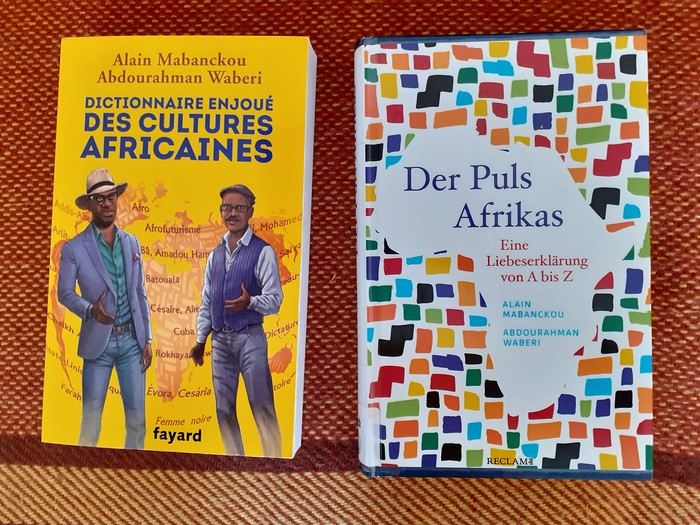
The Maggi cube, an unchallenged hegemony, and so much more
“The hopeless continent,” headlined The Economist, a British magazine, in July 2000 about Africa. Eleven years later, the same magazine headlined “Africa rising” instead. Images of Africa in the prosperous North constantly oscillate between apocalyptic scenarios and enthusiastic projections. A key issue with such images lies in the generalization they entail. If you look at the continent, considerable contrasts emerge depending on space and time. It’s no surprise that a region of the world encompassing such diverse ecological zones, maintaining such varied ties with other continents, comprising nearly fifty nation-states in sub-Saharan Africa alone, and characterized by a great diversity of languages, belief systems, and historical paths, doesn’t share a single destiny.
And yet, for many people outside Africa, as well as for many Africans, the continent constitutes a single entity, defined by criteria such as skin color, a colonial past, poverty, and the art of survival. Until now, these perspectives were generally accompanied by the idea that Africa had to—or should have—followed a single path together, sometimes called development, sometimes modernization, sometimes liberation, then a market economy. None of these paths delivered on their promises.
The two writers Alain Mabanckou and Abdourahman Waberi—one from Congo, the other raised in Djibouti, both long settled in France and now professors at renowned North American universities (Los Angeles, Washington)—have had enough of pessimistic scenarios: “We are aware that Africa is in the world and the world is in Africa. The same goes for all other continents, as our destinies are inextricably linked for better or worse. We refuse to see Africa as a reservoir of misfortunes or a continent cursed by atavistic misfortune and characterized by ethnic conflicts. [...] It’s this passionate flame we wanted to capture in a book [...] a kind of stroll through African cultures, without any demands, each letter of the alphabet leading us to a notion, a practice, a concept, a moment in history, literature, painting, politics, economics, cuisine, etc.” (p.10-11). Africa, they write, is on the verge of “imposing a signature, a style, a way of being in the world and in relation to the rest of the world.” (p.11) To put words to the continent’s diversity and dynamism, the two authors created a “rambling ABC,” a kind of portrait—or more precisely, a mythography—that lets you see and feel the pulse of a vast continent whose cultural power is unfolding before our eyes. Once marginalized or even mocked, the voice and importance of the Continent in global affairs are now undeniable” (p.11), containing over a hundred entries, mostly concise, written in a relaxed and casual style. The optimistic, even exuberant tone is set from the brief introduction. The duo of authors wants to “sing a love song to the cultures of our continent, to its inhabitants past and present, to its exceptional resources and its spectacular globalization despite a certain pollution that still clouds our skies due to the unmatched duration of dictatorships in some of our regions.” (p.12) In doing so, they don’t want to be too distracted by today’s Afewerki-Biya-Bongo-Déby & Co. ...
Of course, you’ll find tributes to great precursors like Frantz Fanon (“[...] it was a love story and admiration that wasn’t dimmed by the four decades separating his birth from ours. Let’s add that we were born while the native of Fort-de-France had left the world’s stage four years earlier, in the prime of life” p.141), Mongo Beti (“You must read and reread Mongo Beti, a genius who used his fame to support often just causes in Africa, like defending oppressed groups. His place is already in History. His oppressors, like the dictators Ahmadou Ahidjo and Paul Biya, can’t compete in the same category” p.64), the Malian Amadou Hampâté Bâ
(“Posterity remembers him mainly as an tireless defender of African cultures. His plea for the collection and preservation of traditional African knowledge remains a major event for all men and women of good will. One day in 1960, at the UNESCO podium, the native of Bandiagara sounded the alarm: ‘[...] Since we’ve admitted that the humanity of each people is the heritage of all humanity, if African traditions aren’t collected in time and written down, they’ll one day be missing from the universal archives of humanity.’” p.51),
Kwame Nkrumah, “one of the founders of Pan-Africanism, father of Ghana’s independence” (p.239), as well as the historian Cheikh Anta Diop, the writer, poet, and politician Aimé Césaire, and the economist and thinker Samir Amin, but also very warm tributes to certain contemporary African intellectuals like Souleymane Bachir Diagne and Achille Mbembe
(“A few years ago, in dominant economic circles, a rumor often resurfaced, usually disguised as a cold and scientifically proven analysis: Africa is useless. It’s a burden for the rest of the human community. With its 2% share in world trade, it would disappear from stock market radars without anyone noticing. So? Maybe it’ll be pulled up by other continents. Wanting to surpass itself is a crazy bet for Africans, they concluded. Arrogant or clueless, President Nicolas Sarkozy declared before an audience of students and teachers at Cheikh Anta Diop University in Dakar: ‘The African man hasn’t entered history enough [...] He only knows the eternal repetition of time marked by the endless repetition of the same gestures and words.’ That was in 2007. For decades, armed only with reason, an intellectual often steps up to debunk prejudices, lazy readings, and dishonest frameworks used as false fronts by those who, like Nicolas Sarkozy or former journalist Stephen Smith, out of ignorance, contempt, or condescension, distort African reality. This intellectual is none other than the historian and political scientist Achille Mbembe. This heir of Frantz Fanon, Amílcar Cabral, Jean-Marc Ela, and Fabien Eboussi-Boulaga was born in 1957 in Cameroon, in the Bassa region. Marked early by the upheavals of a fratricidal war, Achille Mbembe became the guardian of the memory of martyrs. After brilliant studies in Paris, he went on to teach at the best American universities, but the call of the Continent was stronger than anything else. In Dakar, he once directed CODESRIA (Council for the Development of Social Science Research in Africa) before joining the University of the Witwatersrand in Johannesburg, South Africa. Even though the author of *Critique of Black Reason* (Éditions La Découverte, 2015) spends a few months at Duke University in North Carolina, his observation post remains South Africa. From Johannesburg, Achille Mbembe scrutinizes Africa and the whole world. A lucid observer with an elegant and generous pen, Achille Mbembe knows how to blend big and small history: ‘I was born one day in July, as the month was drawing to a close. It was 1957, in that part of Africa recently named ‘Cameroon,’ a memory of the wonder that seized Portuguese sailors in the 15th century when, sailing up the river near Douala, they couldn’t help but note the presence of a multitude of crustaceans, and named it *Rio dos Camarões*, meaning ‘River of Shrimp.’ I grew up in the shadow of this nameless land, since, in a way, the name it bears is only the product of someone else’s astonishment: a lexical mistake, if you will.’ From this mistake or wound, he made leaven, a springboard to compose a rich work, recognized worldwide. To denounce barriers and barbarians too. But that’s not enough. Among his peers in circles of thought and action, Achille Mbembe passionately and consistently defends human dignity and the beauty of the world. In doing so, he fulfills the mission Frantz Fanon entrusted to him.” (p.227-229),
as well as entries dedicated to lesser-known artists and intellectuals, like the French journalist and activist Rokhaya Diallo, daughter of Senegalese and Gambian parents, or the Ethiopian filmmaker Haile Gerima, who has long lived in the United States. Other names from politics, sports, music, art, and literature: Kofi Annan, p.36; Barack Obama, p.243; Thomas Sankara, p.277; Ousmane Sow, p.285; Yambo Ouologuem, p.250; Léopold Sédar Senghor, p.282; Muhammad Ali, p.30; Nuruddin Farah, p.146; Salif Keita, p.203; Ahmadou Kourouma, p.206; Ngũgĩ wa Thiong’o, p.236; Winnie Mandela, p.224; Kylian Mbappé, p.226 ...
The authors, who resolutely commit to a “mythography” (p.11) of Africa, also pay special attention to local social movements, cultural events, and aspects of daily life. *Y’en a marre*, “which also meant ‘we’re fed up with sitting on our hands’” (p.320-321), emerged about a decade ago in Senegal as a citizen movement of peaceful resistance and symbolizes, the authors emphasize, the fact that African youth are increasingly fed up “with the political circus deployed in Africa since independence, as our parents would say, ‘since the White man left’...” (p.321). A full entry is dedicated to the Maggi bouillon cube, which has flooded African markets for about forty years and enjoys immense popularity (“It’s everywhere in Africa, from Dakar to Djibouti, and from Tangier to Cape Town. It’s in every pot, every stew. Little hands put it in every sauce, every local or adapted dish. An unchallenged hegemony! You’ll find it in diasporas too. The culinary strolls in Paris, in the [...] neighborhood” p.90). Critics blame it not only for impoverishing the aromatic diversity of local dishes but also for being harmful to health. And yet, “he poorest Africans, those who eat only once a day, a few spoonfuls of white beans and a ball of *foufou*, for example, are the most fervent users of the magic cube.” (p.92-93)
For *fonio*, “the new trendy cereal. [...] From the millet family, fonio is probably the oldest cereal cultivated in West Africa, and mainly in its sub-Saharan part, for millennia. [...] Easy to grow, water-efficient, fonio grows everywhere except on clay soils. Long neglected because it was considered the poor man’s crop, fonio is now a source of pride for the farmers who cultivate it and cherish it like the apple of their eye” (p.156-157), the authors immediately offer a detailed recipe, letting the reader know that “e can’t resist sharing this fonio with chicken recipe from Mali with you:
Ingredients: 1 chicken 3 large ripe red tomatoes 4 tbsp tomato paste 4 large onions 1 garlic clove 1/2 cup oil 2 Maggi cubes or salt 2 large carrots 1 turnip 1 large cabbage 2 large potatoes 1 celery stalk 1 packet pre-cooked fonio 4 okra (or okra powder) salt, pepper
Preparation: 1. Prepare the sauce: wash and cut the chicken. Peel the onions, garlic, and vegetables. 2. In a pot, fry the chicken pieces. 3. Dice the onions, tomatoes, carrots, and turnip very small and add them to the pot. 4. Add the tomato paste, salt, and pepper. 5. Simmer for 15 min, then add 2 L of water and the cooked chicken pieces. 6. Simmer for 30 min, then add the crushed garlic and celery, plus the cabbage cut into 4 and the potatoes cut in half. 7. Prepare the fonio: cover it with warm water, let it rest for 15 min, and cook it over low heat. 8. In a small pot, boil the okra and crush them. 9. Mix the crushed okra with the cooked fonio, then salt. Serve hot.” (p.158-159)
The comedy *Black Mic Mac*, released in French theaters in 1986 and addressing France’s increasingly restrictive immigration policy at the time, also gets an entry, as do *Tintin in the Congo*, the popular comic, and *Jip’s Café* (“[...] a little Africa in the heart of Paris, with passersby stopping to admire the ‘ambianceurs’ on the dance floor or attend the cultural events offered by the place” (p.194), an African establishment in Paris that Alain Mabanckou already immortalized in one of his novels.
The duo of authors also tackles thorny subjects like jihadism (p.119), the Rwandan genocide (p.272), the CFA franc (p.82), and dictatorship (p.110). While the two strike the right tone here, many entries leave a slightly bitter taste. Two examples: why doesn’t the text on Barack Obama mention the great disappointment of many people in Africa, who expected more from the African policy of the first U.S. president with African roots than just occasional warm words? Why do the comments on Winnie Mandela gloss over the fact that she was a highly controversial icon of the anti-apartheid movement due to her involvement in kidnappings, acts of torture, and murders of alleged apartheid collaborators? Instead, there’s a compassion that brings tears to the eyes: “She was often reduced to a secondary role, the wife of a great man” or “When victory came, she didn’t taste its fruits. Divorced, isolated. She would never be a ‘first lady’ in an evening gown, posing before a bed of chrysanthemums. They’d keep her far from the circles of power” (p.224-225). At this point, I would’ve liked the authors to take a slightly more critical stance...
That said, these “weaknesses” (if you can call them that) shouldn’t overshadow the book as a whole. It remains an informative, sometimes very entertaining, and often even original work in its own way.
Book information (the original French and the German translation):
Alain Mabanckou/Abdourahman Waberi. Dictionnaire enjoué des cultures africaines. Fayard, 2019. Alain Mabanckou/Abdourahman Waberi. Der Puls Afrikas. Eine Liebeserklärung von A bis Z. Reclam, 2022.
Hery
Africa Round Trip: Questions About Vehicle Type and Roads
Hi there!
I'm considering doing a round trip of Africa, starting in Morocco, then following the west coast down to the south, and finally heading back up along the east coast.
However, I have some big questions about the route:
From what I've gathered after a lot of research, the road seems quite doable without a 4x4 as far as Senegal, or even Benin?
It's between Benin and Namibia that it would get really tough, and I'd either need a 4x4 or to ship my vehicle if I'm in a converted H2L2 van (not 4x4)?
Could someone clarify this for me?
Otherwise, it seems like Southern, Northern, and Eastern Africa are accessible without a 4x4?
As for the vehicle, if a 4x4 is essential, I'm torn between: Kangoo 4x4 Lada Niva 4x4 standard C15 C15 4x4 Renault Trafic 4x4 (H2L2, so still quite large) or a Subaru Libero 4x4
Or would it even be possible with a simple Twingo? ^
But is that enough, or do I absolutely need a 4x4 like a Toyota, Land Rover, or something similar?
Those are my current questions! If anyone has some answers, that would be amazing!
Thanks so much!
I'm considering doing a round trip of Africa, starting in Morocco, then following the west coast down to the south, and finally heading back up along the east coast.
However, I have some big questions about the route:
From what I've gathered after a lot of research, the road seems quite doable without a 4x4 as far as Senegal, or even Benin?
It's between Benin and Namibia that it would get really tough, and I'd either need a 4x4 or to ship my vehicle if I'm in a converted H2L2 van (not 4x4)?
Could someone clarify this for me?
Otherwise, it seems like Southern, Northern, and Eastern Africa are accessible without a 4x4?
As for the vehicle, if a 4x4 is essential, I'm torn between: Kangoo 4x4 Lada Niva 4x4 standard C15 C15 4x4 Renault Trafic 4x4 (H2L2, so still quite large) or a Subaru Libero 4x4
Or would it even be possible with a simple Twingo? ^
But is that enough, or do I absolutely need a 4x4 like a Toyota, Land Rover, or something similar?
Those are my current questions! If anyone has some answers, that would be amazing!
Thanks so much!
Crossing Borders by Car: Zambia, Malawi, Tanzania
Hi there,
We’re doing a staged tour of Africa in our Citroën Dyane 2CV.
We left Belgium and our car is currently in Zambia. We’ll be joining it at the start of 2025 to continue on to Malawi and Tanzania.
We’d love to chat with overlanders who’ve already crossed these borders with a vehicle—without necessarily having a carnet de passage, given the costs and guarantees required.
Thanks
Itinéraire en self-drive Rwanda - Ouganda
Bonjour,
Je prépare un voyage au Rwanda/Ouganda en 2021, certainement en self drive pour la partie rwandaise et avec un chauffeur pour la partie ougandaise. Je prévois de 15 à 17 nuits sur place.
J'aime les animaux bien sur mais encore plus les paysages et la vie quotidienne. Je voudrais néanmoins voir les gorilles et les lions arboricoles. Le bec en sabot et les rhinos aussi mais cela me semble compliqué.
J'ai demandé à deux agences des itinéraires, j'ai estimé via google nombre d'heures à passer sur la route.
Agence 1 : (15 nuits) - 31.5 h de route
Kigali - Forêt de Nyungwe - Lac Kivu ( trail) - Parc des Volcans- Forêt de Bwindi - Ishasha - Queen Elizabeth Nord - Hoima - Murchisson Falls - Entebbe
Agence 2 : (16 nuits) - 27 h de route
Entebbe - Forêt de Kibale - Queen Elisabeth Nord -Forêt de Bwindi - Forêt de Mgahinga - Lac Kivu (trail) - Forêt de Nyungwe - Kigali.
Le premier itinéraire me permet de voir le plus de choses mais ressemble à un marathon Le second un peu moins, mais peut être trop de forêts : redondant ?
J'ai essayé de simplifier :
Mon projet : - 21 h de route
Kigali (1 nuit) - Forêt de Nyungwe (3 nuits) - Lac Kivu (3 ou 4 nuits) (trail) - Forêt de Bwindi (3 nuits) - Ishasha ( 2 nuits) - Kigali (2 nuits)
J'ai plusieurs questions :
- Kibale et Mgahinga apportent ils un plus (surtout en terme de paysage) à Nyungwe et Bwindi ou j'ai raison de privilégier ces 2 parcs en y restant un peu plus longtemps ?
- Ishasha (2 nuits) se suffit il à lui même ou il est préférable d'aller passer aussi deux jours dans le nord du parc Queen Elizabeth me permettant en plus de faire du bateau sur le canal de Kazinga ?
- Je peux rajouter une étape le long de mon dernier itinéraire (Butare, parc des volcans, lacs jumeaux du nord du Rwanda ... ou autre) ?
- Question que j'ai déjà posé sur un autre fil, La meilleure période : Janvier ou Juillet ?
Rien n'est figé, n'hésitez pas à me proposer un meilleur itinéraire.
Grand merci d'avance à vous. Bonne journée Franck
Je prépare un voyage au Rwanda/Ouganda en 2021, certainement en self drive pour la partie rwandaise et avec un chauffeur pour la partie ougandaise. Je prévois de 15 à 17 nuits sur place.
J'aime les animaux bien sur mais encore plus les paysages et la vie quotidienne. Je voudrais néanmoins voir les gorilles et les lions arboricoles. Le bec en sabot et les rhinos aussi mais cela me semble compliqué.
J'ai demandé à deux agences des itinéraires, j'ai estimé via google nombre d'heures à passer sur la route.
Agence 1 : (15 nuits) - 31.5 h de route
Kigali - Forêt de Nyungwe - Lac Kivu ( trail) - Parc des Volcans- Forêt de Bwindi - Ishasha - Queen Elizabeth Nord - Hoima - Murchisson Falls - Entebbe
Agence 2 : (16 nuits) - 27 h de route
Entebbe - Forêt de Kibale - Queen Elisabeth Nord -Forêt de Bwindi - Forêt de Mgahinga - Lac Kivu (trail) - Forêt de Nyungwe - Kigali.
Le premier itinéraire me permet de voir le plus de choses mais ressemble à un marathon Le second un peu moins, mais peut être trop de forêts : redondant ?
J'ai essayé de simplifier :
Mon projet : - 21 h de route
Kigali (1 nuit) - Forêt de Nyungwe (3 nuits) - Lac Kivu (3 ou 4 nuits) (trail) - Forêt de Bwindi (3 nuits) - Ishasha ( 2 nuits) - Kigali (2 nuits)
J'ai plusieurs questions :
- Kibale et Mgahinga apportent ils un plus (surtout en terme de paysage) à Nyungwe et Bwindi ou j'ai raison de privilégier ces 2 parcs en y restant un peu plus longtemps ?
- Ishasha (2 nuits) se suffit il à lui même ou il est préférable d'aller passer aussi deux jours dans le nord du parc Queen Elizabeth me permettant en plus de faire du bateau sur le canal de Kazinga ?
- Je peux rajouter une étape le long de mon dernier itinéraire (Butare, parc des volcans, lacs jumeaux du nord du Rwanda ... ou autre) ?
- Question que j'ai déjà posé sur un autre fil, La meilleure période : Janvier ou Juillet ?
Rien n'est figé, n'hésitez pas à me proposer un meilleur itinéraire.
Grand merci d'avance à vous. Bonne journée Franck
Voyage en Zambie, trop froid pour camper en juillet ou août (climat)
Bonjour,
j'envisage un voyage en Zambie en juillet ou août mais je me demande si c'est la meilleure période? Cela me permettrait d'y rester un mois mais ne fait-il pas trop froid pour camper?
D'avance merci pour vos retours
Volontariat à 16 ans auprès des animaux
Bonjour,
J'ai 16 ans et j'aimerai pouvoir faire du bénévolat auprès d'animaux dans à peu près n'importe quel pays même si je suis plus tournée vers l'Afrique. Cependant avec mon âge c'est pas facile de trouver des organisations sérieuses qui, si possibles, ne font pas payer 1000€ pour une semaine alors que le billet d'avon n'est pas compris. J'ai déjà trouvé plusieurs organisations mais ce sont vraiment les principales que l'on peut trouver directement sur le net : Cybelle planète ; volunteer world, free packers ... Mais ils ne proposent vraiment pas beaucoup de missions à partir de 16 ans et parfois d'après les témoignages ou certaines vidéos YouTube je n'avais pas l'impression que les bénévoles servaient à quelque chose mais qu'ils se contentaient de suivre un peu le mouvement (je comprends que sans qualifications spéciales ça peut peut être dur d'être vraiment utile : après je n'y connaît rien, c'est juste une impression). Est ce que quelqu'un connaîtrait de bons organismes ? 🙂 merci !
J'ai 16 ans et j'aimerai pouvoir faire du bénévolat auprès d'animaux dans à peu près n'importe quel pays même si je suis plus tournée vers l'Afrique. Cependant avec mon âge c'est pas facile de trouver des organisations sérieuses qui, si possibles, ne font pas payer 1000€ pour une semaine alors que le billet d'avon n'est pas compris. J'ai déjà trouvé plusieurs organisations mais ce sont vraiment les principales que l'on peut trouver directement sur le net : Cybelle planète ; volunteer world, free packers ... Mais ils ne proposent vraiment pas beaucoup de missions à partir de 16 ans et parfois d'après les témoignages ou certaines vidéos YouTube je n'avais pas l'impression que les bénévoles servaient à quelque chose mais qu'ils se contentaient de suivre un peu le mouvement (je comprends que sans qualifications spéciales ça peut peut être dur d'être vraiment utile : après je n'y connaît rien, c'est juste une impression). Est ce que quelqu'un connaîtrait de bons organismes ? 🙂 merci !
Change à l'arrivée à Kigali (Rwanda)
Bonsoir,
J'arrive à Kigali le 10 Février à 22h passés (vol AF sud) et quitte dès le lendemain au guidon d'une moto de location. Où effectuer un change "zen" (rapide, sûr et taux correct) ?
Merci à Rotsaka ! 😉
Loïc
J'arrive à Kigali le 10 Février à 22h passés (vol AF sud) et quitte dès le lendemain au guidon d'une moto de location. Où effectuer un change "zen" (rapide, sûr et taux correct) ?
Merci à Rotsaka ! 😉
Loïc
Carnet de voyage d'une Djembefolette au pays de Thomas Sankara
 Bonjour les voyageurs et voyageuses,
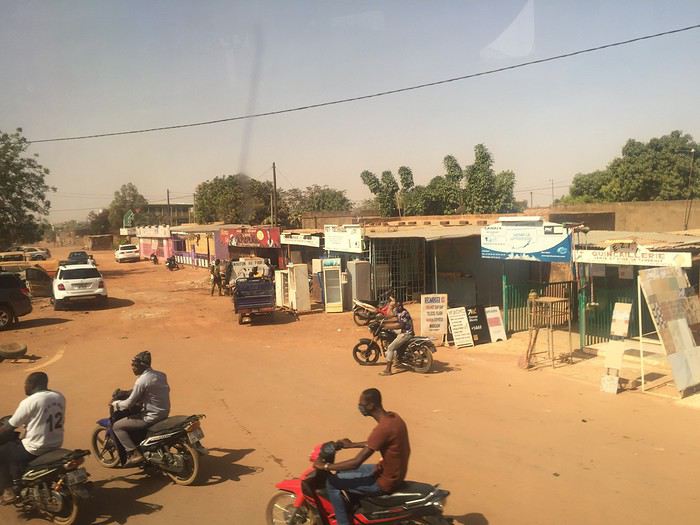
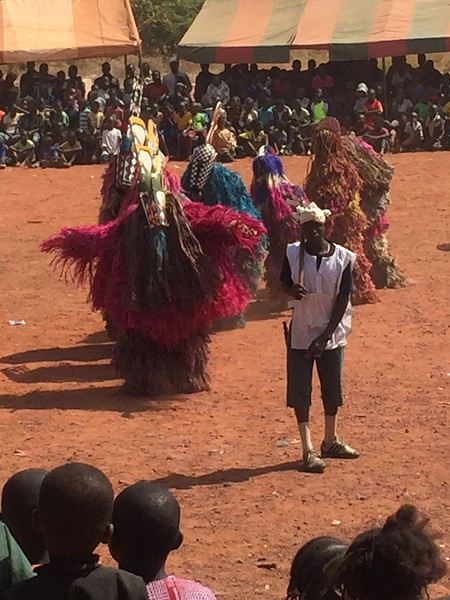
Je suis rentrée il y a 3 jours tout juste d’un voyage de 15 jours au Burkina Faso dans le cadre d’un stage de percussion à Bobo-Dioulasso. Je me sens nourrie du souvenir des belles rencontres que j’y ai faite, de la richesse des expériences que j’y ai vécu et de la beauté de ses paysages. Ce pays mérite vraiment qu'on s'y attarde quoiqu’en disent les médias tant il est riche par son histoire, sa culture, ses couleurs, sa chaleur humaine. C’est très triste de voir les touristes déserter le pays. Je n’ai senti aucune insécurité à Bobo, bien au contraire. La musique est la sève inépuisable de beau pays. Djembefolette en formation, je me suis régalée. Je n'en suis pas à mon premier voyage en Afrique et pourtant, mon passage dans ce pays dans la ville de Bobo-Dioulasso, quoique bref, m'a bien chamboulée. Je suis littéralement tombée amoureuse du pays. Il me faudra quelques semaine pour atterrir. Je vous emmène en voyage, vous venez avec moi ?
Voici quelques photos de mon voyage sur mon compte Facebook:
https://m.facebook.com/benedicte.bimoko/albums/10221130406278176/?ref=bookmarks
Habituée des voyages en sac à dos responsables et hors des sentiers battus, cette fois j'ai envie de contribuer et de ne pas faire que « passer » six ans après mon premier voyage, mon Alter-Native Trip project (voyage alternatif solidaire et écolo en solo de six mois en Inde, au Népal, en Australie et en Jamaïque), avec quelques cheveux gris en plus et quelques pays de plus visités depuis à mon actif (Congo, Ethiopie, etc.).
Faites de beaux voyages et au plaisir de vous croiser en chemin sur la route, ici ou ailleurs.
Bénédicte
Petit compte-rendu rapide de mon voyage au Rwanda
Petit compte-rendu de mon voyage au Rwanda, si ça peut être utile… D’abord les dates, je suis parti (seul, sac au dos) le 25 novembre et rentré le 12 décembre avec Brussels Airlines (313€ AR de Lyon). Objectif : découvrir le Rwanda à peid ou en bus...
Côté météo, je n’ai pas été trop gêné par la pluie, il pleuvait généralement à la nuit tombée. Juste une grosse averse une après-midi qui m’a obligé de rentrer à mon hôtel., sinon quelques averses par ci, par là. On se met à l’abri et on attend que ça passe. Côté transport, taxi à l’arrivée et le premier jour pour aller à la gare des bus, sinon bus et moto-taxi, il y en a partout, souvent et vraiment pas chers. Mon parcours : Kigali – Ruhengeri – Kinigi : 2 nuits au Kinigi Guest House (15000 FRW la nuit) à côté du Volcanoes National Park Headquarters, lieu du RV pour le trek « gorilles ». Une folie, financièrement parlant, mais vraiment une expérience extraordinaire. Très bien organisé par les guides (bilingues français-anglais). Je n’avais pas de voiture (nécessaire pour aller au point de départ du trek), mais j’ai pu en trouver une le matin parmi celles des autres touristes partants pour les gorilles. Sinon, les gardes me proposaient d’en appeler une. On peut donc attendre le dernier moment pour se décider vu que cela ajoute 80$ à la note déjà salée du permis (1500$).
Pour info à propos des dollars, il ne faut pas faire comme moi, c’est-à-dire apporter des devises. C’est assez compliqué de payer les permis pour les parcs nationaux en devises. Il faut privilégier les cartes de crédit (pas de problèmes pour payer en dollars avec). Après Kinigi, bus Ruhengeri – Rubavu (1300 FRW). Hébergement au Centre d’Accueil Saint-François-Xavier (Une chambre minuscule à 5000 FRW). Balade dans la ville. Ensuite le Congo-Nile-Trail en solitaire, 4 jours de marche. Magnifique. La première étape est assez longue si on part comme moi du Centre d’Accueil Saint-François-Xavier (28km). Il semble plus raisonnable de se faire conduire à la brasserie, point de départ officiel du trail, voire plus loin (Kigufi), l’étape devient alors raisonnable. A noter de gros travaux sur la route au départ de l’itinéraire et une piste très large qui manque de charme. Je peux fournir les enregistrements GPS avec notamment une ou deux variantes plus sympas que le tracé originel. 1ère étape à la Cyimbiri Guest House. (20000 FRW pour la nuit, le diner, le petit-déjeuner et 2 bières !). 2ème étape à Kinunu Basecamp après une magnifique rando de 14 km environ. Le propriétaire parle très bien le français et est vraiment passionnant. 3ème étape à Musasa Homestay après 15 km de marche. Très minimaliste, toilette dans une cuvette d’eau chaude. Ma dernière étape fera 25 km jusqu’à Rubengera. On peut éviter les derniers km que j’ai fait sur la route (bien qu’il y ait très peu de voitures). De là, minibus jusqu’à Kibuye où je passerai 2 nuits (Home Saint-Jean, magnifiquement placé, terrasse superbe). A Kibuye, une journée farniente avec visite des iles en bateau. Le Home Saint-Jean force un peu la main pour que l’on fasse la visite de ces iles, mais elles sont de peu d’intérêt, sauf celle des chauve-souris, des groupement d’énormes chauve-souris très bruyantes agrippées dans les arbres que l’on ne voit pas tous les jours ! En revanche, il y a très peu de singes sur l’ile aux singes (5 ou 6 je crois), du coup, on en a vu qu’un seul lors de notre passage. La 3ème ile est juste pour se baigner, pas d’intérêt si on ne s’y baigne pas. En résumé, je conseille de prendre un bateau simplement pour l’ile aux chauve-souris. Départ de Kibuye pour le camping du Parc National de la forêt de Nyungwe en 2 bus, Kibuye-Buhinga, puis Buhinga-Camping (Il faut demander l’arrêt au chauffeur et vérifier qu’il n’oublie pas !). J’ai loué une tente pour deux nuits (40$ la nuit avec la tente), envie de passer la nuit dans la forêt. Petit repas sur place possible, mais assez tôt. Tout le monde part vers 19 heures. On se retrouve seul en forêt sans éclairage, ni wifi (plus de groupe électrogène). Les tentes sont montées sur une plateforme et sous un abri et heureusement à la saison des pluies ! Le lendemain 5 heures de trek dans la forêt avec un guide (obligatoire) (40$, vu des singes et des oiseaux. Après bus pour Butare. Le long de la frontière avec le Burundi. Des militaires armés tout du long… Et des singes sur le bord de la route. A Butare, logement au Mater Boni Consilii. Toujours peu cher, 30000 FRW avec petit déjeuner. Ville très agréable, j’y resterai 3 nuits avec visite du musée ethnographique, du King Palace Museum à Nyanza (minibus pour y aller), des plantations de café (Huye Montain Coffee), le Mémorial de Murambi (A mon avis, on ne peut pas faire l’impasse, mais visite TRES difficile). Enfin retour sur Kigali, hébergement au Centre Saint-Paul pour 2 nuits (pas loin des bureaux de Brussels Airlines. A noter qu’à Kigali, Brussels Airlines offre la possibilité d’enregistrer son voyage pour le vol du soir à leur bureau dès 10 heures le matin, intéressant pour profiter de la dernière journée au maximum ! ). Petite chambre sympa donnant sur jardin pour 20000 FRW. Le lendemain bus pour Nyamata que l’on prend à la gare de Nyanza (Kigali) accessible en moto-taxi. J’ai fait une partie de la route retour à pied pour traverser le fleuve Nyabarongo et ses marais. Dernier jour, visite de Kigali, dont le Mémorial pour le génocide qui en présente une histoire très complète et documentée. Aéroport en moto-taxi pour 1500 FRW.
Voilà, j'ai pris mon temps pour me mettre au rythme de l'Afrique et le Rwanda est une bonne façon de s'y plonger totalement.
Je peux essayer de répondre aux questions éventuelles concernant ce voyage...
Côté météo, je n’ai pas été trop gêné par la pluie, il pleuvait généralement à la nuit tombée. Juste une grosse averse une après-midi qui m’a obligé de rentrer à mon hôtel., sinon quelques averses par ci, par là. On se met à l’abri et on attend que ça passe. Côté transport, taxi à l’arrivée et le premier jour pour aller à la gare des bus, sinon bus et moto-taxi, il y en a partout, souvent et vraiment pas chers. Mon parcours : Kigali – Ruhengeri – Kinigi : 2 nuits au Kinigi Guest House (15000 FRW la nuit) à côté du Volcanoes National Park Headquarters, lieu du RV pour le trek « gorilles ». Une folie, financièrement parlant, mais vraiment une expérience extraordinaire. Très bien organisé par les guides (bilingues français-anglais). Je n’avais pas de voiture (nécessaire pour aller au point de départ du trek), mais j’ai pu en trouver une le matin parmi celles des autres touristes partants pour les gorilles. Sinon, les gardes me proposaient d’en appeler une. On peut donc attendre le dernier moment pour se décider vu que cela ajoute 80$ à la note déjà salée du permis (1500$).
Pour info à propos des dollars, il ne faut pas faire comme moi, c’est-à-dire apporter des devises. C’est assez compliqué de payer les permis pour les parcs nationaux en devises. Il faut privilégier les cartes de crédit (pas de problèmes pour payer en dollars avec). Après Kinigi, bus Ruhengeri – Rubavu (1300 FRW). Hébergement au Centre d’Accueil Saint-François-Xavier (Une chambre minuscule à 5000 FRW). Balade dans la ville. Ensuite le Congo-Nile-Trail en solitaire, 4 jours de marche. Magnifique. La première étape est assez longue si on part comme moi du Centre d’Accueil Saint-François-Xavier (28km). Il semble plus raisonnable de se faire conduire à la brasserie, point de départ officiel du trail, voire plus loin (Kigufi), l’étape devient alors raisonnable. A noter de gros travaux sur la route au départ de l’itinéraire et une piste très large qui manque de charme. Je peux fournir les enregistrements GPS avec notamment une ou deux variantes plus sympas que le tracé originel. 1ère étape à la Cyimbiri Guest House. (20000 FRW pour la nuit, le diner, le petit-déjeuner et 2 bières !). 2ème étape à Kinunu Basecamp après une magnifique rando de 14 km environ. Le propriétaire parle très bien le français et est vraiment passionnant. 3ème étape à Musasa Homestay après 15 km de marche. Très minimaliste, toilette dans une cuvette d’eau chaude. Ma dernière étape fera 25 km jusqu’à Rubengera. On peut éviter les derniers km que j’ai fait sur la route (bien qu’il y ait très peu de voitures). De là, minibus jusqu’à Kibuye où je passerai 2 nuits (Home Saint-Jean, magnifiquement placé, terrasse superbe). A Kibuye, une journée farniente avec visite des iles en bateau. Le Home Saint-Jean force un peu la main pour que l’on fasse la visite de ces iles, mais elles sont de peu d’intérêt, sauf celle des chauve-souris, des groupement d’énormes chauve-souris très bruyantes agrippées dans les arbres que l’on ne voit pas tous les jours ! En revanche, il y a très peu de singes sur l’ile aux singes (5 ou 6 je crois), du coup, on en a vu qu’un seul lors de notre passage. La 3ème ile est juste pour se baigner, pas d’intérêt si on ne s’y baigne pas. En résumé, je conseille de prendre un bateau simplement pour l’ile aux chauve-souris. Départ de Kibuye pour le camping du Parc National de la forêt de Nyungwe en 2 bus, Kibuye-Buhinga, puis Buhinga-Camping (Il faut demander l’arrêt au chauffeur et vérifier qu’il n’oublie pas !). J’ai loué une tente pour deux nuits (40$ la nuit avec la tente), envie de passer la nuit dans la forêt. Petit repas sur place possible, mais assez tôt. Tout le monde part vers 19 heures. On se retrouve seul en forêt sans éclairage, ni wifi (plus de groupe électrogène). Les tentes sont montées sur une plateforme et sous un abri et heureusement à la saison des pluies ! Le lendemain 5 heures de trek dans la forêt avec un guide (obligatoire) (40$, vu des singes et des oiseaux. Après bus pour Butare. Le long de la frontière avec le Burundi. Des militaires armés tout du long… Et des singes sur le bord de la route. A Butare, logement au Mater Boni Consilii. Toujours peu cher, 30000 FRW avec petit déjeuner. Ville très agréable, j’y resterai 3 nuits avec visite du musée ethnographique, du King Palace Museum à Nyanza (minibus pour y aller), des plantations de café (Huye Montain Coffee), le Mémorial de Murambi (A mon avis, on ne peut pas faire l’impasse, mais visite TRES difficile). Enfin retour sur Kigali, hébergement au Centre Saint-Paul pour 2 nuits (pas loin des bureaux de Brussels Airlines. A noter qu’à Kigali, Brussels Airlines offre la possibilité d’enregistrer son voyage pour le vol du soir à leur bureau dès 10 heures le matin, intéressant pour profiter de la dernière journée au maximum ! ). Petite chambre sympa donnant sur jardin pour 20000 FRW. Le lendemain bus pour Nyamata que l’on prend à la gare de Nyanza (Kigali) accessible en moto-taxi. J’ai fait une partie de la route retour à pied pour traverser le fleuve Nyabarongo et ses marais. Dernier jour, visite de Kigali, dont le Mémorial pour le génocide qui en présente une histoire très complète et documentée. Aéroport en moto-taxi pour 1500 FRW.
Voilà, j'ai pris mon temps pour me mettre au rythme de l'Afrique et le Rwanda est une bonne façon de s'y plonger totalement.
Je peux essayer de répondre aux questions éventuelles concernant ce voyage...
Uganda: 20 days discovering authenticity
Preamble:
For summer 2019, the idea was to return to Africa. We had already been to Namibia in 2017 (+ a few days in Botswana and the end of the trip at Victoria Falls), which we loved, and a trip to Asia in 2018 (Borneo, Perhentian, and Singapore), a nature-focused trip but a bit disappointing due to environmental destruction. The desire to return to Africa was very strong. We wanted a change of scenery, nature, discoveries, to step out of our little comfort zone (a bit, anyway!) and experience travel differently. In short, we dreamed of authenticity, and we weren’t disappointed.
We traveled as a family of four with our daughters, aged 19 and 17. When the urge for Africa hit, Uganda quickly stood out, especially for the chance to see rare animals, particularly the famous mountain gorillas. When I looked into the budget, I was quickly disheartened. It’s really expensive. Too expensive… Then, after reading a few trip reports on "VoyageForum" (thanks Muriel J!), I decided to ask a local agency for a quote. The first contact was very friendly and responsive, and the initial offer for two weeks fit our budget :). A few images gathered from the internet (especially Sipi Falls) finally convinced us all. I asked for an adapted offer with a few more sites to extend the trip to three weeks and cover a fairly complete visit to the country (which, of course, increased the budget! To stay within an acceptable range, we prioritized activities over accommodations and regularly chose the cheapest options, with 2-3 nice lodges in between). It’s booked! We were in October 2018, and the first thing to do was reserve permits to see the gorillas and chimpanzees. Then, the agency took care of all the bookings except for the international flights, which we booked with Ethiopian Airlines. A few months of waiting to look forward to… and a little worry too! Two events didn’t reassure us: the kidnapping of an American tourist by four men at the DRC border and the Ebola outbreak in Congo, with confirmed cases in Uganda by mid-June…
Here we are in July, and departure is approaching. The suitcases are packed (warm clothes, long, short, dark, light, practical, sun, rain, hiking/trekking shoes, flip-flops—clothes for every situation! Don’t forget: headlamp (essential!), binoculars, cameras), and we’re ready.
One day before departure, our agency Mpolampola, through its manager Paul, informs us that he won’t be the one taking care of us during the trip but another guide named Moses. He has a big problem with a vehicle and can’t do otherwise. For us, as long as everything is okay, no worries, especially since I had read glowing reviews about Moses, who turned out to be a very pleasant guide, cautious (most important) on the road, clear about all the activities, and an expert on birds, his specialty. We briefly met Paul in the middle of the trip, who is also very friendly. In short, we 100% recommend this agency. Flights to Entebbe went smoothly; we arrived around 10:30 AM, filled out health forms (Ebola information signs everywhere), visas, baggage claim, and met Moses, who took us directly to the vehicle. It was in pretty good condition with huge tires (we’d understand why later!), but it had quite a few miles (400,000 on the odometer!). Just missing a seatbelt… Okay, it’s Africa!
Now, here’s our day-by-day itinerary, which I’ll summarize briefly with ratings for each activity: ****TOPISSIME (Amazing) ***Very good **Good *Meh
Day 1) Departure from the airport at 11:45 AM for some currency exchange. Stop along the way at the equator for a meal and souvenir photo! Arrival at Lake Mburo Park *** around 5:00 PM. Even before entering the park, we saw lots of antelopes, zebras, elks, etc.—it’s magnificent. On the way, we had already encountered many goats and cows, and we were impressed by their enormous horns. We enjoyed a nice game drive until about 7:00 PM, when we reached our lodge, one of the nicest of the trip, Eagle’s Nest ****, with a magnificent view, a tent with a nice bathroom/shower, and a very good meal.
Day 2) Departure at 7:00 AM for a game drive; we encountered many animals again, especially antelopes, zebras, and birds. There are no giraffes, lions, or cheetahs in this park. We didn’t get lucky enough to see a leopard… :-) Then, we continued to Lake Bunyonyi ***, where the road and views are very beautiful, but we were shocked to see locals (mostly women and children) breaking stones by hand on the mountainside in very precarious safety conditions. There are regularly dramatic accidents because, over time, entire sections detach and cause landslides. These stones are then used for road construction… Another world… This was the only place we saw this. Lake Bunyonyi is a nice stop (but less exotic in our opinion since we have many lakes back home too!). We took a boat to our accommodation, Byoona Amagara ***, which has a lot of charm. We stayed in huts called "geodomes," completely open to nature, so it was very cool at night. To reach the toilets located below, you had to be brave! The meal consisted of lake shrimp—good but a bit bland.
Day 3) After a good breakfast, departure at 9:00 AM to visit three islands. We took several nice walks with beautiful views of the lake and islands. A local meal was served on the last island. At 1:00 PM, we met Moses for the rest of the program and headed to Ruhija in Bwindi Forest****. The landscapes are breathtaking. After two hours of driving and many photo stops, we arrived at our accommodation near the trekking starting point, Ruhija Gorilla Friends Resort **. We stayed in a room instead of the initially planned tents, which was just as well because there was a lot of wind during the night. We still had time for an activity and decided to meet the Bwata pygmies despite the bad reviews in the guide… The first part of the visit was quite nice, with a visit to a school where the children gave us a very joyful welcome. We had a great time listening to them sing and dance! Then we met the Bwata pygmies who live on the edge of the forest. When Bwindi Forest was declared a national park, they had to leave their habitat because their activities weren’t compatible with nature and wildlife protection. We left on a somewhat sad note… The visit ended with a local doctor explaining different medicinal plants, and we watched the making of local beer from sorghum. Good meal. We had butterflies in our stomachs—tomorrow was a big day! I admit I was a bit stressed, not entirely confident in my physical abilities…
Day 4) After a short night due to excitement, breakfast, and departure at 7:30 AM. First, it started calmly with singing and dancing. Then, a 15-minute briefing and group assignments. No one asked if we had any physical problems or anything (when booking, I had inquired a bit, and they told me groups were assigned based on physical abilities). We were assigned to the Mukiza group. At first, I was pretty happy—it was a fairly large group with babies :). The ranger explained that for now, they didn’t know where the gorillas were… the trackers couldn’t find them… Oh… (that’s not a good sign!!!) We set off at a good pace, first on a reasonably sloped path. We were accompanied by a family of four Italians and five porters (four for us!). After an hour, the ranger stopped us and informed us they still couldn’t find them—they had fought with another group the day before and scattered throughout the forest, so they were very far away, and we needed to move faster… Hmm… we picked up the pace (we weren’t going slowly before!!!) and walked for another good hour—down, up, down again, up again, we kept going, but always more or less on paths. Then another stop. A 10-minute break waiting for news. The news wasn’t very precise, it seemed! The ranger decided to cut through the forest—machetes were used to clear the path. We descended unimaginable slopes, then climbed back up. Our stick kept getting stuck; luckily, our porter helped us, held our hands, and the terrain was vertical! An hour later, another stop: we heard gorilla cries (yay!!!). False hope—we waited again for news from the trackers, who informed our ranger that it was a non-habituated family, so we couldn’t see them. Cold shower—we had to go all the way back up and return to the starting point to maybe see another group. But time was running out… We arrived around 1:30 PM; all the other groups had already left long ago. Our guide was worried because we still had a long drive ahead. We quickly ate a banana, and off we went for another trek (I was exhausted!). Luckily, this group was close—about 45 minutes of steep descent (I was already thinking about the climb back and considering being adopted by a gorilla ). The forest was sublime, with magnificent tree ferns—the place was truly splendid. Finally, we were there. The porters stayed behind, we grabbed our cameras, and followed the ranger. The progress wasn’t easy, but suddenly, a female was in front of us, curled up in a little ball, eating—so cute. The emotion overwhelmed us. But she moved away—it’s hard to observe them; they move constantly, and the terrain is very steep and uneven. We saw a female descending from a tree with a baby on her back—too adorable. Then, here was the silverback, enormous, incredible, yet so calm and peaceful. He ate quietly and gave us a nice demonstration of nostril exploration! We could observe them for a good hour, but photographing them wasn’t easy because they kept moving, and we could barely stand! Toward the end, a large male (black back) suddenly stood up and decided to pass right where I was! I ended up in the bushes, and the male passed in front of me just a few centimeters away (he stepped on one of my daughters’ feet!) followed by the whole family. Just an exceptional moment. It was time to leave; we had to climb back up. I dreaded it because, I admit, I was exhausted. We finished the hike after 4:00 PM, exhausted but happy. The ranger gave us diplomas, and we didn’t linger because we still had a long drive—we needed to reach Ishasha before nightfall. Our guide was a bit stressed. If we were to do it again, we’d spend an extra night in Bwindi. However, it seems finishing so late is exceptional—it never happens, according to our guide! The road between Bwindi and Ishasha is sublime, with extraordinary landscapes, and despite the late hour, we regularly asked our guide to stop for photos. We arrived at Enjojo *** Lodge around 6:00 PM. The huts are located quite far from the reception and the bathrooms, a bit far from the huts, but otherwise, it was very nice.
Day 5) Departure at 8:00 AM after a good breakfast with the hope of seeing tree-climbing lions (no luck!). Overall, there weren’t many animals, and we arrived around 12:45 PM at our next stop, Parkview Safari Lodge ****, with a magnificent view, a beautiful family bungalow, and a good meal. We enjoyed a short relaxation by the lovely pool. At 4:00 PM, we left to see Kyambura Gorge *** and hike there. Unfortunately, this activity is no longer available, so we walked around the area—it was very beautiful. Back at the hotel, a little rest after the previous day wasn’t a bad idea! Reading, swimming, meals, and dances made the end of the day enjoyable.
Day 6) Departure at 6:30 AM—one of our daughters was sick (stomachache, cold sweats…). Safari in Queen Elizabeth ** (Kaseny Plains)—a bit disappointing. Stop by the salt lake with a nice view. A small market, but we weren’t thrilled by the crafts (overall, apart from some beautiful baskets/plates, there wasn’t much, and the wooden objects were, in our opinion, much less pretty than in Namibia). Then we took the crater road (27 km long) **** with magnificent landscapes. However, you absolutely must close the windows because it’s infested with tsetse flies. At noon, we arrived at Mweya, where we stayed in basic rooms, but the restaurant was well-placed with a beautiful view of the Kazinga Channel. At 2:00 PM, we enjoyed a magnificent cruise **** on the channel. Elephants, antelopes, crocodiles, hippos (including adorable babies), buffaloes, all kinds of birds. Wow!!! Two hours of pure bliss. Quiet end of the day playing cards with a view of the channel and elephants.
Day 7) Departure at 6:00 AM—still sick, we weren’t sure if it was due to the preventive treatment (Malarone) or something else… Another game drive in Queen Elizabeth (Kaseny Plains) and breakfast by the salt lake. Overall, we were a bit disappointed by this park. Then we took the road to Crater Lakes***, again with very beautiful landscapes. A hike of about an hour and a half allowed us to discover these beautiful crater lakes (the water mainly comes from the Rwenzoris). We crossed pretty villages and had nice encounters. End of the day at Tinka’s Home ****, with a family. We loved this place—very welcoming, where we took a cooking class with our hosts. A really great time. After the meal, we enjoyed African stories and dances. Really awesome.
Day 8) Departure at 7:30 AM for another highly anticipated discovery—the chimpanzees in Kibale Forest ****. We went to the meeting point and were split into groups of six, each with a guide. We saw three different groups, and for the last group, we followed a chimpanzee (slightly more comfortable running in the forest than we were!) that led us to the group. Their cries are very impressive, and we could observe them well, even though they were often high up in the trees. We were lucky enough to see two on the ground, very close to us. It was magnificent. End of the encounter and return to the starting point—it was noon. We went back to Tinka’s Home for the meal (delicious!). At 2:00 PM, we hiked in Bigodi Swamp ***, a marsh surrounded by beautiful vegetation, especially huge papyrus, and inhabited by many birds and monkeys. We saw, among others, black-and-white colobus monkeys, red colobus monkeys, and vervet monkeys. We also visited a basket-weaving workshop where we bought two beautiful baskets. Then a short stop in Fort Portal, where we stayed for two nights at Ruwenzori View Guesthouse ***, a nice place with a family room and very good communal meals.
Day 9) Departure at 8:00 AM for a hike in the Rwenzori****—it was a bit chaotic today. First, we had to exchange shillings because we wouldn’t have another chance in the following days. At the bank, employees went to get the bills by motorcycle from other buildings—it was quite surreal! And it took time! Then there was a misunderstanding between the organizer and me… I really wanted to see the region where chameleons are found in the Rwenzori—this region is south of the mountain range, and we were in the north! Anyway, the program included an ascent in the northern part with a positive elevation gain of over 1,500 meters… Talking to the guide scheduled for this hike (Noah), we explained that we really wanted to discover the vegetation and these famous chameleons, not necessarily achieve a physical feat… (we’d had enough!). The decision was made to go south, which meant quite a bit of driving. The hike was really enjoyable, with magnificent vegetation by the river. We saw three of the four chameleon species present, including the famous three-horned chameleon. The region is superb. We ended with a drink at Ruboni Camp, which has a magnificent view of the region (ideally, we should have stayed there). Two hours of driving to finish, and a good meal :).
Day 10) Departure at 8:00 AM—we had a long drive to Ziwa Rhino Ranch****. We passed through Hoima, had lunch in Masindi, and arrived in time for the rhino tracking walk. We could approach them closely on foot—it was impressive. We saw eight. Since we were staying on-site in the guesthouse **, we received precise safety instructions for moving between the rooms and the restaurant. And we quickly understood why!
Day 11) Departure at 6:00 AM for breakfast—surprise, in front of our room, several large rhinos were sleeping (we had also heard a lot of animal noises during the night—rhinos but also what seemed to be predators). So we had to take a detour to reach the restaurant! Second surprise—next to the restaurant, just three meters away at most, two mothers and their baby were also sleeping! Memorable! Then we had an appointment for the shoebill trek and canoe ride **** (package with the previous day’s walk). So there we were, in our boots, splashing through 30 cm of water in search of the shoebill (I really wanted to see one :))! It was really fun, and luck was on our side—a shoebill had just landed in the distance! We approached as best we could and observed it from afar. What a strange bird! There are very few left, and Uganda is one of the countries where the chances of seeing one are quite good. The tour continued with a canoe cruise where we saw a herd of cows (the famous ones with enormous horns) being swum as a dowry to the father of the future bride! A funny spectacle. This stop wasn’t the most anticipated, but we all thought it was really worth the detour. Road to Murchison Falls Park, and arrival around noon at Red Chili Rest Camp **, where we stayed for two nights (family banda). Good meal. Then a cruise to Murchison Falls*** where we disembarked and continued on foot. It was pretty. Back to Red Chili.
Day 12) This morning, early departure for a cruise in search of the shoebill*** (booked in case we didn’t see one at Ziwa). The landscapes were pretty, but there weren’t many birds in the end. We spotted the chosen one from afar after the first 10 minutes—so the suspense didn’t last long :-) It was a nice activity but quite long—5 hours. In the afternoon, safari in Murchison Park****—this park is sublime, the landscapes fabulous. Really one of our favorite parts of the trip. Lots of animals and even a leopard spotted with binoculars because it was far away! Night at Red Chili.
Day 13) Departure for the first morning ferry—it was drizzling, the sky was threatening at first, so the landscape was spectacular! Beautiful contrasts. In the middle of the morning, we were lucky to observe a whole group of lions, first from afar, then with a little patience, the whole group approached until they passed beside and in front of our vehicle. What emotion and excitement! We could then observe large groups of giraffes. They were magnificent. The morning was incredible. Then we headed to our lodge, Fort Murchison ****, and on the way, we saw a whole group of elephants—the view was magnificent. We had a very good meal and enjoyed the pool a bit. We also met Paul, the organizer of our trip. Very nice :). In the late afternoon, off for a short safari in the park. We slept in very well-equipped tents.
Day 14) Today, we had a long drive to Kidepo Park. It was raining, which didn’t help our guide—according to him, the tracks near Kidepo turn to mud with rain and become difficult to navigate. We saw, among other things, a bus in a bad situation in the ditch. Some sections were really tricky, and we were glad to have a driver. The end of the trip—the landscape was spectacular and original, and we saw some traditional villages. We arrived at Kidepo quite late. Short safari in the park before reaching the accommodation. We booked two simple bandas in the park camp**. It was clean but didn’t hold up well in the rain . The restaurant was very nice, though.
Day 15) The day was dedicated to discovering Kidepo Park **** where the landscapes were again superb. First encounter with a lioness resting on a rock. We saw other lions later and observed them for a long time. There were almost no other tourists in the park. Our daughter wasn’t feeling well, and by the time we arrived at the lodge, she had a temperature of 39.5°C (103.1°F)… A nap was necessary. In the late afternoon, we returned to the spot where we had seen the lions that morning, and they were still there—they weren’t happy because rain was threatening! It was a great photo opportunity. Then came the downpour, and our driver urged us to return quickly because the tracks were becoming impassable. Indeed, a jeep was in the ditch… The return was eventful, and several times we slid without being able to do anything… Wow, what a day!
Day 16) No safari this morning because of impassable tracks—the road to Kotido*** was longer than expected as we had to take a detour. The landscapes along the way were surprising. We finally arrived around 1:00 PM at the accommodation and left at 3:00 PM to visit the largest manyatta in East Africa with two translators. It was incredible—a very beautiful experience. The manyatta is immense and has 28,000 inhabitants. Night at Karamojaarts guesthouse*—very average meal.
Day 17) Departure for Moroto****—on the way, we saw many bird species. Moroto doesn’t look like other Ugandan cities. Life there seems very pleasant. We arrived at Kara-Tunga and had a bite to eat. At 4:00 PM, we left to visit a Karamojong village. We enjoyed beautiful dances and watched communal games—it was fun and so authentic. Then we headed to a kraal (where shepherds and herds are) to set up our camp. Moses had to get used to the idea of sleeping in the tribe in a tent! It was incredible to find ourselves in this universe. The place was beautiful, and we had a great time with the Karamojong. Some had never seen white people… had never been in a car… Their culture is incredible. During the evening, around the fire, to our guide’s dismay (a bird enthusiast), they grilled hornbills! On our side, we ate a meal prepared by Kara-Tunga for our sensitive stomachs! Night in a tent.
Day 18) Dawn wake-up in the fog—the atmosphere was quite strange. Our daughter was attacked by a cow—fortunately, more fear than harm, but she ended up with a lot of thorns in her buttocks and thighs ! Then we left for the Mount Elgon region, specifically Sipi Falls****. Lacam Lodge****, perched on the edge of the cliff with a direct view of one of the falls, was just magnificent. The view and landscapes were fabulous. Big favorite. We had dinner and then went for a hike to visit the three falls in the region, partly in the rain. The landscapes were breathtaking! Sunset at Lacam Lodge with the sun setting over the waterfall. We couldn’t get enough and stayed to admire until nightfall!
Day 19) Visit to coffee plantations*** where we were given all the useful explanations to understand the culture and the incredible work required for this product, which is ultimately not very glorified. The visit was very interesting, and we drank very good coffee with the owners. Last photos at Lacam Lodge, and then departure for Jinja, where we arrived in the middle of the afternoon. We took a small cruise to see the source of the Nile*. Very touristy and not at all to our taste… Then a meal at Jinja Base Camp** where we enjoyed guacamole. Our guide Moses left us because another group was waiting for him!
Day 20) Road to Kampala***, the market, the Gaddafi Mosque. Short but interesting visit. Last meal in Entebbe by Lake Victoria, where we almost felt like we were by the sea. Transfer to the airport and return to Switzerland…
Epilogue: All four of us were enchanted by this trip, which will undoubtedly remain one of the most beautiful we’ve ever taken. Talking about it gives me chills and brings tears to my eyes. It was simply a magnificent experience. However, I wouldn’t recommend this trip to everyone because you often have to overlook small inconveniences like toilets (the worst of my life) and certain comfort details that, for us, remain details but could be important to others.
Our favorites: - The gorilla trek - The cruise on Kazinga Channel - The Fort Portal region - The Rwenzori Mountains - The chimpanzee trek - Murchison Falls - Kidepo - Spending time with the Karamojong tribe - The Sipi Falls region - The accommodations: Eagle’s Nest, Byonna Amagara, Parkview Lodge, Tinka’s Home, Rwenzori Guesthouse, Fort Murchison, Night in the kraal, and Lacam Lodge
What we liked less: - Queen Elizabeth Park - Jinja - The accommodations: Ziwa Rhino Ranch, Karamojaarts Guesthouse
I’ll try to post some photos later. If you have any questions about a future trip, I’d be happy to answer them.
For summer 2019, the idea was to return to Africa. We had already been to Namibia in 2017 (+ a few days in Botswana and the end of the trip at Victoria Falls), which we loved, and a trip to Asia in 2018 (Borneo, Perhentian, and Singapore), a nature-focused trip but a bit disappointing due to environmental destruction. The desire to return to Africa was very strong. We wanted a change of scenery, nature, discoveries, to step out of our little comfort zone (a bit, anyway!) and experience travel differently. In short, we dreamed of authenticity, and we weren’t disappointed.
We traveled as a family of four with our daughters, aged 19 and 17. When the urge for Africa hit, Uganda quickly stood out, especially for the chance to see rare animals, particularly the famous mountain gorillas. When I looked into the budget, I was quickly disheartened. It’s really expensive. Too expensive… Then, after reading a few trip reports on "VoyageForum" (thanks Muriel J!), I decided to ask a local agency for a quote. The first contact was very friendly and responsive, and the initial offer for two weeks fit our budget :). A few images gathered from the internet (especially Sipi Falls) finally convinced us all. I asked for an adapted offer with a few more sites to extend the trip to three weeks and cover a fairly complete visit to the country (which, of course, increased the budget! To stay within an acceptable range, we prioritized activities over accommodations and regularly chose the cheapest options, with 2-3 nice lodges in between). It’s booked! We were in October 2018, and the first thing to do was reserve permits to see the gorillas and chimpanzees. Then, the agency took care of all the bookings except for the international flights, which we booked with Ethiopian Airlines. A few months of waiting to look forward to… and a little worry too! Two events didn’t reassure us: the kidnapping of an American tourist by four men at the DRC border and the Ebola outbreak in Congo, with confirmed cases in Uganda by mid-June…
Here we are in July, and departure is approaching. The suitcases are packed (warm clothes, long, short, dark, light, practical, sun, rain, hiking/trekking shoes, flip-flops—clothes for every situation! Don’t forget: headlamp (essential!), binoculars, cameras), and we’re ready.
One day before departure, our agency Mpolampola, through its manager Paul, informs us that he won’t be the one taking care of us during the trip but another guide named Moses. He has a big problem with a vehicle and can’t do otherwise. For us, as long as everything is okay, no worries, especially since I had read glowing reviews about Moses, who turned out to be a very pleasant guide, cautious (most important) on the road, clear about all the activities, and an expert on birds, his specialty. We briefly met Paul in the middle of the trip, who is also very friendly. In short, we 100% recommend this agency. Flights to Entebbe went smoothly; we arrived around 10:30 AM, filled out health forms (Ebola information signs everywhere), visas, baggage claim, and met Moses, who took us directly to the vehicle. It was in pretty good condition with huge tires (we’d understand why later!), but it had quite a few miles (400,000 on the odometer!). Just missing a seatbelt… Okay, it’s Africa!
Now, here’s our day-by-day itinerary, which I’ll summarize briefly with ratings for each activity: ****TOPISSIME (Amazing) ***Very good **Good *Meh
Day 1) Departure from the airport at 11:45 AM for some currency exchange. Stop along the way at the equator for a meal and souvenir photo! Arrival at Lake Mburo Park *** around 5:00 PM. Even before entering the park, we saw lots of antelopes, zebras, elks, etc.—it’s magnificent. On the way, we had already encountered many goats and cows, and we were impressed by their enormous horns. We enjoyed a nice game drive until about 7:00 PM, when we reached our lodge, one of the nicest of the trip, Eagle’s Nest ****, with a magnificent view, a tent with a nice bathroom/shower, and a very good meal.
Day 2) Departure at 7:00 AM for a game drive; we encountered many animals again, especially antelopes, zebras, and birds. There are no giraffes, lions, or cheetahs in this park. We didn’t get lucky enough to see a leopard… :-) Then, we continued to Lake Bunyonyi ***, where the road and views are very beautiful, but we were shocked to see locals (mostly women and children) breaking stones by hand on the mountainside in very precarious safety conditions. There are regularly dramatic accidents because, over time, entire sections detach and cause landslides. These stones are then used for road construction… Another world… This was the only place we saw this. Lake Bunyonyi is a nice stop (but less exotic in our opinion since we have many lakes back home too!). We took a boat to our accommodation, Byoona Amagara ***, which has a lot of charm. We stayed in huts called "geodomes," completely open to nature, so it was very cool at night. To reach the toilets located below, you had to be brave! The meal consisted of lake shrimp—good but a bit bland.
Day 3) After a good breakfast, departure at 9:00 AM to visit three islands. We took several nice walks with beautiful views of the lake and islands. A local meal was served on the last island. At 1:00 PM, we met Moses for the rest of the program and headed to Ruhija in Bwindi Forest****. The landscapes are breathtaking. After two hours of driving and many photo stops, we arrived at our accommodation near the trekking starting point, Ruhija Gorilla Friends Resort **. We stayed in a room instead of the initially planned tents, which was just as well because there was a lot of wind during the night. We still had time for an activity and decided to meet the Bwata pygmies despite the bad reviews in the guide… The first part of the visit was quite nice, with a visit to a school where the children gave us a very joyful welcome. We had a great time listening to them sing and dance! Then we met the Bwata pygmies who live on the edge of the forest. When Bwindi Forest was declared a national park, they had to leave their habitat because their activities weren’t compatible with nature and wildlife protection. We left on a somewhat sad note… The visit ended with a local doctor explaining different medicinal plants, and we watched the making of local beer from sorghum. Good meal. We had butterflies in our stomachs—tomorrow was a big day! I admit I was a bit stressed, not entirely confident in my physical abilities…
Day 4) After a short night due to excitement, breakfast, and departure at 7:30 AM. First, it started calmly with singing and dancing. Then, a 15-minute briefing and group assignments. No one asked if we had any physical problems or anything (when booking, I had inquired a bit, and they told me groups were assigned based on physical abilities). We were assigned to the Mukiza group. At first, I was pretty happy—it was a fairly large group with babies :). The ranger explained that for now, they didn’t know where the gorillas were… the trackers couldn’t find them… Oh… (that’s not a good sign!!!) We set off at a good pace, first on a reasonably sloped path. We were accompanied by a family of four Italians and five porters (four for us!). After an hour, the ranger stopped us and informed us they still couldn’t find them—they had fought with another group the day before and scattered throughout the forest, so they were very far away, and we needed to move faster… Hmm… we picked up the pace (we weren’t going slowly before!!!) and walked for another good hour—down, up, down again, up again, we kept going, but always more or less on paths. Then another stop. A 10-minute break waiting for news. The news wasn’t very precise, it seemed! The ranger decided to cut through the forest—machetes were used to clear the path. We descended unimaginable slopes, then climbed back up. Our stick kept getting stuck; luckily, our porter helped us, held our hands, and the terrain was vertical! An hour later, another stop: we heard gorilla cries (yay!!!). False hope—we waited again for news from the trackers, who informed our ranger that it was a non-habituated family, so we couldn’t see them. Cold shower—we had to go all the way back up and return to the starting point to maybe see another group. But time was running out… We arrived around 1:30 PM; all the other groups had already left long ago. Our guide was worried because we still had a long drive ahead. We quickly ate a banana, and off we went for another trek (I was exhausted!). Luckily, this group was close—about 45 minutes of steep descent (I was already thinking about the climb back and considering being adopted by a gorilla ). The forest was sublime, with magnificent tree ferns—the place was truly splendid. Finally, we were there. The porters stayed behind, we grabbed our cameras, and followed the ranger. The progress wasn’t easy, but suddenly, a female was in front of us, curled up in a little ball, eating—so cute. The emotion overwhelmed us. But she moved away—it’s hard to observe them; they move constantly, and the terrain is very steep and uneven. We saw a female descending from a tree with a baby on her back—too adorable. Then, here was the silverback, enormous, incredible, yet so calm and peaceful. He ate quietly and gave us a nice demonstration of nostril exploration! We could observe them for a good hour, but photographing them wasn’t easy because they kept moving, and we could barely stand! Toward the end, a large male (black back) suddenly stood up and decided to pass right where I was! I ended up in the bushes, and the male passed in front of me just a few centimeters away (he stepped on one of my daughters’ feet!) followed by the whole family. Just an exceptional moment. It was time to leave; we had to climb back up. I dreaded it because, I admit, I was exhausted. We finished the hike after 4:00 PM, exhausted but happy. The ranger gave us diplomas, and we didn’t linger because we still had a long drive—we needed to reach Ishasha before nightfall. Our guide was a bit stressed. If we were to do it again, we’d spend an extra night in Bwindi. However, it seems finishing so late is exceptional—it never happens, according to our guide! The road between Bwindi and Ishasha is sublime, with extraordinary landscapes, and despite the late hour, we regularly asked our guide to stop for photos. We arrived at Enjojo *** Lodge around 6:00 PM. The huts are located quite far from the reception and the bathrooms, a bit far from the huts, but otherwise, it was very nice.
Day 5) Departure at 8:00 AM after a good breakfast with the hope of seeing tree-climbing lions (no luck!). Overall, there weren’t many animals, and we arrived around 12:45 PM at our next stop, Parkview Safari Lodge ****, with a magnificent view, a beautiful family bungalow, and a good meal. We enjoyed a short relaxation by the lovely pool. At 4:00 PM, we left to see Kyambura Gorge *** and hike there. Unfortunately, this activity is no longer available, so we walked around the area—it was very beautiful. Back at the hotel, a little rest after the previous day wasn’t a bad idea! Reading, swimming, meals, and dances made the end of the day enjoyable.
Day 6) Departure at 6:30 AM—one of our daughters was sick (stomachache, cold sweats…). Safari in Queen Elizabeth ** (Kaseny Plains)—a bit disappointing. Stop by the salt lake with a nice view. A small market, but we weren’t thrilled by the crafts (overall, apart from some beautiful baskets/plates, there wasn’t much, and the wooden objects were, in our opinion, much less pretty than in Namibia). Then we took the crater road (27 km long) **** with magnificent landscapes. However, you absolutely must close the windows because it’s infested with tsetse flies. At noon, we arrived at Mweya, where we stayed in basic rooms, but the restaurant was well-placed with a beautiful view of the Kazinga Channel. At 2:00 PM, we enjoyed a magnificent cruise **** on the channel. Elephants, antelopes, crocodiles, hippos (including adorable babies), buffaloes, all kinds of birds. Wow!!! Two hours of pure bliss. Quiet end of the day playing cards with a view of the channel and elephants.
Day 7) Departure at 6:00 AM—still sick, we weren’t sure if it was due to the preventive treatment (Malarone) or something else… Another game drive in Queen Elizabeth (Kaseny Plains) and breakfast by the salt lake. Overall, we were a bit disappointed by this park. Then we took the road to Crater Lakes***, again with very beautiful landscapes. A hike of about an hour and a half allowed us to discover these beautiful crater lakes (the water mainly comes from the Rwenzoris). We crossed pretty villages and had nice encounters. End of the day at Tinka’s Home ****, with a family. We loved this place—very welcoming, where we took a cooking class with our hosts. A really great time. After the meal, we enjoyed African stories and dances. Really awesome.
Day 8) Departure at 7:30 AM for another highly anticipated discovery—the chimpanzees in Kibale Forest ****. We went to the meeting point and were split into groups of six, each with a guide. We saw three different groups, and for the last group, we followed a chimpanzee (slightly more comfortable running in the forest than we were!) that led us to the group. Their cries are very impressive, and we could observe them well, even though they were often high up in the trees. We were lucky enough to see two on the ground, very close to us. It was magnificent. End of the encounter and return to the starting point—it was noon. We went back to Tinka’s Home for the meal (delicious!). At 2:00 PM, we hiked in Bigodi Swamp ***, a marsh surrounded by beautiful vegetation, especially huge papyrus, and inhabited by many birds and monkeys. We saw, among others, black-and-white colobus monkeys, red colobus monkeys, and vervet monkeys. We also visited a basket-weaving workshop where we bought two beautiful baskets. Then a short stop in Fort Portal, where we stayed for two nights at Ruwenzori View Guesthouse ***, a nice place with a family room and very good communal meals.
Day 9) Departure at 8:00 AM for a hike in the Rwenzori****—it was a bit chaotic today. First, we had to exchange shillings because we wouldn’t have another chance in the following days. At the bank, employees went to get the bills by motorcycle from other buildings—it was quite surreal! And it took time! Then there was a misunderstanding between the organizer and me… I really wanted to see the region where chameleons are found in the Rwenzori—this region is south of the mountain range, and we were in the north! Anyway, the program included an ascent in the northern part with a positive elevation gain of over 1,500 meters… Talking to the guide scheduled for this hike (Noah), we explained that we really wanted to discover the vegetation and these famous chameleons, not necessarily achieve a physical feat… (we’d had enough!). The decision was made to go south, which meant quite a bit of driving. The hike was really enjoyable, with magnificent vegetation by the river. We saw three of the four chameleon species present, including the famous three-horned chameleon. The region is superb. We ended with a drink at Ruboni Camp, which has a magnificent view of the region (ideally, we should have stayed there). Two hours of driving to finish, and a good meal :).
Day 10) Departure at 8:00 AM—we had a long drive to Ziwa Rhino Ranch****. We passed through Hoima, had lunch in Masindi, and arrived in time for the rhino tracking walk. We could approach them closely on foot—it was impressive. We saw eight. Since we were staying on-site in the guesthouse **, we received precise safety instructions for moving between the rooms and the restaurant. And we quickly understood why!
Day 11) Departure at 6:00 AM for breakfast—surprise, in front of our room, several large rhinos were sleeping (we had also heard a lot of animal noises during the night—rhinos but also what seemed to be predators). So we had to take a detour to reach the restaurant! Second surprise—next to the restaurant, just three meters away at most, two mothers and their baby were also sleeping! Memorable! Then we had an appointment for the shoebill trek and canoe ride **** (package with the previous day’s walk). So there we were, in our boots, splashing through 30 cm of water in search of the shoebill (I really wanted to see one :))! It was really fun, and luck was on our side—a shoebill had just landed in the distance! We approached as best we could and observed it from afar. What a strange bird! There are very few left, and Uganda is one of the countries where the chances of seeing one are quite good. The tour continued with a canoe cruise where we saw a herd of cows (the famous ones with enormous horns) being swum as a dowry to the father of the future bride! A funny spectacle. This stop wasn’t the most anticipated, but we all thought it was really worth the detour. Road to Murchison Falls Park, and arrival around noon at Red Chili Rest Camp **, where we stayed for two nights (family banda). Good meal. Then a cruise to Murchison Falls*** where we disembarked and continued on foot. It was pretty. Back to Red Chili.
Day 12) This morning, early departure for a cruise in search of the shoebill*** (booked in case we didn’t see one at Ziwa). The landscapes were pretty, but there weren’t many birds in the end. We spotted the chosen one from afar after the first 10 minutes—so the suspense didn’t last long :-) It was a nice activity but quite long—5 hours. In the afternoon, safari in Murchison Park****—this park is sublime, the landscapes fabulous. Really one of our favorite parts of the trip. Lots of animals and even a leopard spotted with binoculars because it was far away! Night at Red Chili.
Day 13) Departure for the first morning ferry—it was drizzling, the sky was threatening at first, so the landscape was spectacular! Beautiful contrasts. In the middle of the morning, we were lucky to observe a whole group of lions, first from afar, then with a little patience, the whole group approached until they passed beside and in front of our vehicle. What emotion and excitement! We could then observe large groups of giraffes. They were magnificent. The morning was incredible. Then we headed to our lodge, Fort Murchison ****, and on the way, we saw a whole group of elephants—the view was magnificent. We had a very good meal and enjoyed the pool a bit. We also met Paul, the organizer of our trip. Very nice :). In the late afternoon, off for a short safari in the park. We slept in very well-equipped tents.
Day 14) Today, we had a long drive to Kidepo Park. It was raining, which didn’t help our guide—according to him, the tracks near Kidepo turn to mud with rain and become difficult to navigate. We saw, among other things, a bus in a bad situation in the ditch. Some sections were really tricky, and we were glad to have a driver. The end of the trip—the landscape was spectacular and original, and we saw some traditional villages. We arrived at Kidepo quite late. Short safari in the park before reaching the accommodation. We booked two simple bandas in the park camp**. It was clean but didn’t hold up well in the rain . The restaurant was very nice, though.
Day 15) The day was dedicated to discovering Kidepo Park **** where the landscapes were again superb. First encounter with a lioness resting on a rock. We saw other lions later and observed them for a long time. There were almost no other tourists in the park. Our daughter wasn’t feeling well, and by the time we arrived at the lodge, she had a temperature of 39.5°C (103.1°F)… A nap was necessary. In the late afternoon, we returned to the spot where we had seen the lions that morning, and they were still there—they weren’t happy because rain was threatening! It was a great photo opportunity. Then came the downpour, and our driver urged us to return quickly because the tracks were becoming impassable. Indeed, a jeep was in the ditch… The return was eventful, and several times we slid without being able to do anything… Wow, what a day!
Day 16) No safari this morning because of impassable tracks—the road to Kotido*** was longer than expected as we had to take a detour. The landscapes along the way were surprising. We finally arrived around 1:00 PM at the accommodation and left at 3:00 PM to visit the largest manyatta in East Africa with two translators. It was incredible—a very beautiful experience. The manyatta is immense and has 28,000 inhabitants. Night at Karamojaarts guesthouse*—very average meal.
Day 17) Departure for Moroto****—on the way, we saw many bird species. Moroto doesn’t look like other Ugandan cities. Life there seems very pleasant. We arrived at Kara-Tunga and had a bite to eat. At 4:00 PM, we left to visit a Karamojong village. We enjoyed beautiful dances and watched communal games—it was fun and so authentic. Then we headed to a kraal (where shepherds and herds are) to set up our camp. Moses had to get used to the idea of sleeping in the tribe in a tent! It was incredible to find ourselves in this universe. The place was beautiful, and we had a great time with the Karamojong. Some had never seen white people… had never been in a car… Their culture is incredible. During the evening, around the fire, to our guide’s dismay (a bird enthusiast), they grilled hornbills! On our side, we ate a meal prepared by Kara-Tunga for our sensitive stomachs! Night in a tent.
Day 18) Dawn wake-up in the fog—the atmosphere was quite strange. Our daughter was attacked by a cow—fortunately, more fear than harm, but she ended up with a lot of thorns in her buttocks and thighs ! Then we left for the Mount Elgon region, specifically Sipi Falls****. Lacam Lodge****, perched on the edge of the cliff with a direct view of one of the falls, was just magnificent. The view and landscapes were fabulous. Big favorite. We had dinner and then went for a hike to visit the three falls in the region, partly in the rain. The landscapes were breathtaking! Sunset at Lacam Lodge with the sun setting over the waterfall. We couldn’t get enough and stayed to admire until nightfall!
Day 19) Visit to coffee plantations*** where we were given all the useful explanations to understand the culture and the incredible work required for this product, which is ultimately not very glorified. The visit was very interesting, and we drank very good coffee with the owners. Last photos at Lacam Lodge, and then departure for Jinja, where we arrived in the middle of the afternoon. We took a small cruise to see the source of the Nile*. Very touristy and not at all to our taste… Then a meal at Jinja Base Camp** where we enjoyed guacamole. Our guide Moses left us because another group was waiting for him!
Day 20) Road to Kampala***, the market, the Gaddafi Mosque. Short but interesting visit. Last meal in Entebbe by Lake Victoria, where we almost felt like we were by the sea. Transfer to the airport and return to Switzerland…
Epilogue: All four of us were enchanted by this trip, which will undoubtedly remain one of the most beautiful we’ve ever taken. Talking about it gives me chills and brings tears to my eyes. It was simply a magnificent experience. However, I wouldn’t recommend this trip to everyone because you often have to overlook small inconveniences like toilets (the worst of my life) and certain comfort details that, for us, remain details but could be important to others.
Our favorites: - The gorilla trek - The cruise on Kazinga Channel - The Fort Portal region - The Rwenzori Mountains - The chimpanzee trek - Murchison Falls - Kidepo - Spending time with the Karamojong tribe - The Sipi Falls region - The accommodations: Eagle’s Nest, Byonna Amagara, Parkview Lodge, Tinka’s Home, Rwenzori Guesthouse, Fort Murchison, Night in the kraal, and Lacam Lodge
What we liked less: - Queen Elizabeth Park - Jinja - The accommodations: Ziwa Rhino Ranch, Karamojaarts Guesthouse
I’ll try to post some photos later. If you have any questions about a future trip, I’d be happy to answer them.
Listes de tours-opérateurs locaux pour le Rwanda
Bonjour.
Je cherche vainement la liste de tous les tours opérateurs locaux du RWANDA, voire même la recommandation de l'un ou de plusieurs d'entre eux.
Merci de votre aide. Cordialement
Je cherche vainement la liste de tous les tours opérateurs locaux du RWANDA, voire même la recommandation de l'un ou de plusieurs d'entre eux.
Merci de votre aide. Cordialement
Cherche motards (débutants?) pour le Maroc en avril 2020
Bonjour,
Mon premier voyage au Maroc est programmé pour 2020.
Je suis à la recherche éventuellement d'un ou deux autres motards , débutant ? comme moi pour cette destination.
La moto une Africa Twin 750 équipé avec des pneus "trail"
- Je pars de chez moi en sud-Corrèze le 18 avril pour un retour au plus tard le 17 mai.
- Traversée de l'Espagne pour prendre le bateau à Tarifa
- Je ne veux pas prendre le bateau à Sète ni à Barcelone
- Le parcours au Maroc se fera essentiellement sur les petites routes , exceptionnellement sur une piste ROULANTE.
- Le trajet en gros :
Tanger , Chefchaouen , Meknès , Azrou, Agoudal , gorges du Dadès/Todra , Ouazazate , Descente au sud à voir ? : Merzouga ,
Zagora , vers Tata....? Agadir......remontée par la côte vers Tanger et retour.......
Donc si vous êtes libre à cette période à 2 ou 3 ce serait sympa , sinon j'irai en solitaire............ https://www.solartrike.fr/voyages-%C3%A0-moto/
Donc si vous êtes libre à cette période à 2 ou 3 ce serait sympa , sinon j'irai en solitaire............ https://www.solartrike.fr/voyages-%C3%A0-moto/
Retour de 3 semaines en famille au Rwanda
Bonjour
Nous revenons de 3 semaines au Rwanda en famille et je vais essayer de vous faire un retour de cette expérience magique ! Ce forum nous a beaucoup aidé à préparer ce voyage (une mention spéciale à Rotsaka ...)
Nous voyageons à 5 avec 3 enfants de 7, 10 et 11 ans en mode "routard". Nous souhaitions découvrir un pays d'Afrique centrale et le Rwanda nous a enchanté à tout point de vue : des paysages sublimes, des habitants chaleureux et extrêmement accueillants, une faune et une flore d'exception, aucune difficulté pour trouver des hébergements et des repas à petit prix. Un magnifique voyage à tout point de vue.
Avant de présenter notre parcours, une petite alerte cependant, le mode routard en famille au Rwanda n'est pas le plus simple. En dehors des établissements très touristiques, nous avons trouvé peu d'indications sur les activités à faire avec des enfants (seul le petit futé existe en français et les informations ne sont pas très fiables), les déplacements ne sont pas toujours faciles pour 5 personnes, les distances et les temps de trajet sont plus qu'approximatifs .... Ceci étant dit, on rencontre toujours quelqu’un pour vous renseigner ou vous aider... donc aucune galère à déplorer !
Nous nous sommes déplacé en bus et en voiture+chauffeur pour les plus grands trajets et à pied dans les villes. Je pense cependant qu'une location de voiture est une bonne option pour voyager en famille. Nous avions hésité ne sachant pas trop comment étaient les routes et les indications routières. Les axes principaux sont en très bon état et des routes s'aménagent un peu partout. Avec un bon GPS il n'y a aucun souci pour se déplacer. Avoir une voiture nous aurait permis quelques petites excursions supplémentaires depuis Gisenyi ou Kitabi par exemple.
Notre parcours a été le suivant : - arrivant en fin de journée à Kigali nous avions prévu une nuit à la Maurice Guesthouse. Très bon accueil, ils sont venus nous chercher à l’aéroport. Repas et petit dej très copieux. Ils nous ont amené à la gare routière le lendemain et aidé à prendre nos billets. 2 chambres très confortables avec moustiquaires 90€ - Direction le foyer de charité de Remera, un lieu magique à voir absolument, le cadre est réellement enchanteur, l’accueil et le confort au top. Nous avions suivi les conseils du petit futé et tenté la dernière partie à pied… à éviter ! 1h30 annoncé, nous avons marché 2h30 et fini à l’arrière d’un pick up pendant plus de 30 min… heureusement ! Le foyer nous a mis en contact avec un chauffeur pour faire le tour des lacs le lendemain. Très chouette journée avec une petite balade guidée en bateau sur le lac. - Nous avons ensuite rejoint Gisenyi en bus pour 4 jours au bord du lac Kivu. o Logement : Kunda village guesthouse, chez Emmanuel, le fondateur d’une association qui vient en aide aux enfants. Confort sommaire, propreté des chambres ok mais sanitaires un peu limite. Pas de petit dej. 48€. Accueil sympathique mais peu d’accompagnement dans la prévision des activités, nous nous sommes débrouillés tout seul pour découvrir cette ville très sympathique. o Activités : farniente et promenade au bord du lac et baignade pour les enfants qui ont noué des contacts très rapidement (nous en avons profité pour rencontrer rwandais et congolais très nombreux avec qui nous avons beaucoup échangé). Visite de la bibliothèque en construction d’Emmanuel et contacts avec une autre association d’aide aux enfants des rues (soulofrwanda.org). Visite à la petite barrière et du marché à proximité. Marché de Gisenyi. o Nous avons beaucoup aimé prendre un café et déjeuner au Calafia café (il y a des jeux pour les enfants) et passé une très bonne soirée au New Tam Tam beach. - Nous avons poursuivi sur Kibuye, toujours au bord du lac Kivu mais avec des paysages très différents. Nous avons logé au Macheo ecolodge, site magnifique surplombant le lac. Nuit dans une hutte familiale : 75,5€. Il y a la possibilité de louer des tentes. - Nous avons été mis en contact avec Emmanuel qui nous a organisé deux sorties : o Sur le lac avec visite de l’île Napoléon et baignade o Balade de 4 heures à pied - Nous avons préféré rejoindre notre prochaine étape à Kitabi en voiture, le trajet étant un peu compliqué et long en bus (2 changements). Emmanuel nous a arrangé un contact. o Logement au Kitabi Ecocenter en tente. Equipe très sympathique et cadre magnifique. Logement en huttes ou en tentes. Repas simples mais copieux. Confort sommaire mais très propre, eau chaude pour la douche sur demande, bouillottes pour la nuit. Nuit 54€ pour 2 tentes. o Possibilité de faire des visites guidées sur place (observation faune et flore), un peu cher pour une famille (20$ par personne) mais très sympathique. o Après maintes hésitations, nous avons fait le canopy walk. Le centre nous a organisé le trajet en voiture (70$). Un peu déçus et frustrés de cette balade qui est très chère (60$/personne au-delà de 7 ans) et ne dure que 2h, sans grande explication sur la faune et la flore. Nous avons appris (une fois le permis payé) que les autres trails moins chers (40$/personne) permettent un accès au parc pour la journée. Il est donc possible de faire 2 de ces trails dans la même journée (à l’exception du canopy). Attention les départs sont à heures fixes et le paiement se fait en CB (ou sur internet avant). - Etape d’une nuit à Kigali. Nous sommes retournés à la Maurice Guesthouse. - Départ pour 2 jours dans le parc de l’Akagera. Cette partie du voyage avait été organisée à l’avance. Nous avions prévu une nuit à l’extérieur du parc à l’akagera rhinolodge (un peu cher pour une nuit de transit) et une nuit à l’intérieur (Karenge bushcamp, très confortable, une équipe adorable, un repas exceptionnel et un cadre magique… c’était le cadeau de Noël des enfants, nous n’avons pas regretté l’investissement !). Nous avions une voiture avec chauffeur pour les 3 jours. Ce parc est superbe. Des paysages magnifiques et très variés et des animaux en pagaille : impalas, zèbres, hippo, crocos, girafes, zébus, singes, éléphants, antilopes… Pour rejoindre le rhinolodge nous avons fait un détour par les chutes de Rusumo sur les conseils du petit futé… je ne le recommande pas… Les chutes sont chouettes mais l’environnement pas top. La route était en cours de réaménagement, le voyage a donc été un peu long. Sur place, il est nécessaire de passer par la zone de transit et de négocier avec les douaniers, les chutes étant en tanzanie… beaucoup de démarches et de temps d’attente pour pas grand-chose … A mon avis, il vaut mieux partir de Kigali en début de matinée pour entrer dans le parc avant 12h et rejoindre le bushcamp vers 16h. Les animaux sont surtout dans la partie nord du parc où se trouve le camp. Le lendemain matin petite boucle matinale, retour au camp pour un méga petit dej et nouvelle boucle avant de sortir. Le bushcamp fournit le panier déjeuner. - Retour à Kigali avec un arrêt pique-nique au bord du lac Muhasi. Très chouette - Nous avons ensuite passé 3 jours à Kigali au Peponi Living Space. Hotel choisi pour sa piscine et pour retrouver un peu de confort (65€ pour 2 chambres). Un service de voiture nous a permis de facilement rejoindre les lieux de visite. Nous revenions à l’hôtel en taxi. o Activités : marché de Kigali, musée de la campagne contre le terrorisme (musée très intéressant situé dans l’enceinte du parlement, préféré au mémorial sur le génocide car je craignais la brutalité des images pour les enfants), galerie d’art Inema Art Center (très bien), musée Richard Kandt (intéressant sur l’histoire coloniale).
Bilan budget : 220€/jour 90€ pour les nuits (60 sans la nuit dans l’akagera), 35€ pour les repas, 55€ pour les activités (21€ sans les parcs), 45€ pour les transports (18€ sans les 3 jours pour l’Akagera)
N’hésitez pas, visitez ce magnifique pays et n’hésitez pas à me solliciter pour plus d’infos !!!
Nous revenons de 3 semaines au Rwanda en famille et je vais essayer de vous faire un retour de cette expérience magique ! Ce forum nous a beaucoup aidé à préparer ce voyage (une mention spéciale à Rotsaka ...)
Nous voyageons à 5 avec 3 enfants de 7, 10 et 11 ans en mode "routard". Nous souhaitions découvrir un pays d'Afrique centrale et le Rwanda nous a enchanté à tout point de vue : des paysages sublimes, des habitants chaleureux et extrêmement accueillants, une faune et une flore d'exception, aucune difficulté pour trouver des hébergements et des repas à petit prix. Un magnifique voyage à tout point de vue.
Avant de présenter notre parcours, une petite alerte cependant, le mode routard en famille au Rwanda n'est pas le plus simple. En dehors des établissements très touristiques, nous avons trouvé peu d'indications sur les activités à faire avec des enfants (seul le petit futé existe en français et les informations ne sont pas très fiables), les déplacements ne sont pas toujours faciles pour 5 personnes, les distances et les temps de trajet sont plus qu'approximatifs .... Ceci étant dit, on rencontre toujours quelqu’un pour vous renseigner ou vous aider... donc aucune galère à déplorer !
Nous nous sommes déplacé en bus et en voiture+chauffeur pour les plus grands trajets et à pied dans les villes. Je pense cependant qu'une location de voiture est une bonne option pour voyager en famille. Nous avions hésité ne sachant pas trop comment étaient les routes et les indications routières. Les axes principaux sont en très bon état et des routes s'aménagent un peu partout. Avec un bon GPS il n'y a aucun souci pour se déplacer. Avoir une voiture nous aurait permis quelques petites excursions supplémentaires depuis Gisenyi ou Kitabi par exemple.
Notre parcours a été le suivant : - arrivant en fin de journée à Kigali nous avions prévu une nuit à la Maurice Guesthouse. Très bon accueil, ils sont venus nous chercher à l’aéroport. Repas et petit dej très copieux. Ils nous ont amené à la gare routière le lendemain et aidé à prendre nos billets. 2 chambres très confortables avec moustiquaires 90€ - Direction le foyer de charité de Remera, un lieu magique à voir absolument, le cadre est réellement enchanteur, l’accueil et le confort au top. Nous avions suivi les conseils du petit futé et tenté la dernière partie à pied… à éviter ! 1h30 annoncé, nous avons marché 2h30 et fini à l’arrière d’un pick up pendant plus de 30 min… heureusement ! Le foyer nous a mis en contact avec un chauffeur pour faire le tour des lacs le lendemain. Très chouette journée avec une petite balade guidée en bateau sur le lac. - Nous avons ensuite rejoint Gisenyi en bus pour 4 jours au bord du lac Kivu. o Logement : Kunda village guesthouse, chez Emmanuel, le fondateur d’une association qui vient en aide aux enfants. Confort sommaire, propreté des chambres ok mais sanitaires un peu limite. Pas de petit dej. 48€. Accueil sympathique mais peu d’accompagnement dans la prévision des activités, nous nous sommes débrouillés tout seul pour découvrir cette ville très sympathique. o Activités : farniente et promenade au bord du lac et baignade pour les enfants qui ont noué des contacts très rapidement (nous en avons profité pour rencontrer rwandais et congolais très nombreux avec qui nous avons beaucoup échangé). Visite de la bibliothèque en construction d’Emmanuel et contacts avec une autre association d’aide aux enfants des rues (soulofrwanda.org). Visite à la petite barrière et du marché à proximité. Marché de Gisenyi. o Nous avons beaucoup aimé prendre un café et déjeuner au Calafia café (il y a des jeux pour les enfants) et passé une très bonne soirée au New Tam Tam beach. - Nous avons poursuivi sur Kibuye, toujours au bord du lac Kivu mais avec des paysages très différents. Nous avons logé au Macheo ecolodge, site magnifique surplombant le lac. Nuit dans une hutte familiale : 75,5€. Il y a la possibilité de louer des tentes. - Nous avons été mis en contact avec Emmanuel qui nous a organisé deux sorties : o Sur le lac avec visite de l’île Napoléon et baignade o Balade de 4 heures à pied - Nous avons préféré rejoindre notre prochaine étape à Kitabi en voiture, le trajet étant un peu compliqué et long en bus (2 changements). Emmanuel nous a arrangé un contact. o Logement au Kitabi Ecocenter en tente. Equipe très sympathique et cadre magnifique. Logement en huttes ou en tentes. Repas simples mais copieux. Confort sommaire mais très propre, eau chaude pour la douche sur demande, bouillottes pour la nuit. Nuit 54€ pour 2 tentes. o Possibilité de faire des visites guidées sur place (observation faune et flore), un peu cher pour une famille (20$ par personne) mais très sympathique. o Après maintes hésitations, nous avons fait le canopy walk. Le centre nous a organisé le trajet en voiture (70$). Un peu déçus et frustrés de cette balade qui est très chère (60$/personne au-delà de 7 ans) et ne dure que 2h, sans grande explication sur la faune et la flore. Nous avons appris (une fois le permis payé) que les autres trails moins chers (40$/personne) permettent un accès au parc pour la journée. Il est donc possible de faire 2 de ces trails dans la même journée (à l’exception du canopy). Attention les départs sont à heures fixes et le paiement se fait en CB (ou sur internet avant). - Etape d’une nuit à Kigali. Nous sommes retournés à la Maurice Guesthouse. - Départ pour 2 jours dans le parc de l’Akagera. Cette partie du voyage avait été organisée à l’avance. Nous avions prévu une nuit à l’extérieur du parc à l’akagera rhinolodge (un peu cher pour une nuit de transit) et une nuit à l’intérieur (Karenge bushcamp, très confortable, une équipe adorable, un repas exceptionnel et un cadre magique… c’était le cadeau de Noël des enfants, nous n’avons pas regretté l’investissement !). Nous avions une voiture avec chauffeur pour les 3 jours. Ce parc est superbe. Des paysages magnifiques et très variés et des animaux en pagaille : impalas, zèbres, hippo, crocos, girafes, zébus, singes, éléphants, antilopes… Pour rejoindre le rhinolodge nous avons fait un détour par les chutes de Rusumo sur les conseils du petit futé… je ne le recommande pas… Les chutes sont chouettes mais l’environnement pas top. La route était en cours de réaménagement, le voyage a donc été un peu long. Sur place, il est nécessaire de passer par la zone de transit et de négocier avec les douaniers, les chutes étant en tanzanie… beaucoup de démarches et de temps d’attente pour pas grand-chose … A mon avis, il vaut mieux partir de Kigali en début de matinée pour entrer dans le parc avant 12h et rejoindre le bushcamp vers 16h. Les animaux sont surtout dans la partie nord du parc où se trouve le camp. Le lendemain matin petite boucle matinale, retour au camp pour un méga petit dej et nouvelle boucle avant de sortir. Le bushcamp fournit le panier déjeuner. - Retour à Kigali avec un arrêt pique-nique au bord du lac Muhasi. Très chouette - Nous avons ensuite passé 3 jours à Kigali au Peponi Living Space. Hotel choisi pour sa piscine et pour retrouver un peu de confort (65€ pour 2 chambres). Un service de voiture nous a permis de facilement rejoindre les lieux de visite. Nous revenions à l’hôtel en taxi. o Activités : marché de Kigali, musée de la campagne contre le terrorisme (musée très intéressant situé dans l’enceinte du parlement, préféré au mémorial sur le génocide car je craignais la brutalité des images pour les enfants), galerie d’art Inema Art Center (très bien), musée Richard Kandt (intéressant sur l’histoire coloniale).
Bilan budget : 220€/jour 90€ pour les nuits (60 sans la nuit dans l’akagera), 35€ pour les repas, 55€ pour les activités (21€ sans les parcs), 45€ pour les transports (18€ sans les 3 jours pour l’Akagera)
N’hésitez pas, visitez ce magnifique pays et n’hésitez pas à me solliciter pour plus d’infos !!!
Langue locale à Yaoundé
Bonjour à tous,
Je pars vivre et travailler au Cameroun pour 2 ans et je serai basé principalement à Yaoundé. J'ai un genre de fascination pour les langues bantoues et je souhaiterais apprendre les rudiments d'une langue locale Camerounaise (je sais qu'il y a plus de 250 dans ce pays...). Si j'ai bien compris, Yaoundé se trouve en terre Beti n'est-ce pas ? Quelle langue ou dialecte me conseillez vous d'apprendre dans cette région ? La plus répandue si possible :)
Je n'ai pas la prétention de pouvoir bien la parler mais j'aimerais faire cet effort tout de même. Pour ma part j'ai déjà commencé l'apprentissage du kinyarwanda depuis 1 an qui est aussi une langue bantoue et donc tonale mais visiblement très très très très éloignée de ce que j'ai pu lire et entendre au Cameroun.
Je vous remercie par avance !
Je pars vivre et travailler au Cameroun pour 2 ans et je serai basé principalement à Yaoundé. J'ai un genre de fascination pour les langues bantoues et je souhaiterais apprendre les rudiments d'une langue locale Camerounaise (je sais qu'il y a plus de 250 dans ce pays...). Si j'ai bien compris, Yaoundé se trouve en terre Beti n'est-ce pas ? Quelle langue ou dialecte me conseillez vous d'apprendre dans cette région ? La plus répandue si possible :)
Je n'ai pas la prétention de pouvoir bien la parler mais j'aimerais faire cet effort tout de même. Pour ma part j'ai déjà commencé l'apprentissage du kinyarwanda depuis 1 an qui est aussi une langue bantoue et donc tonale mais visiblement très très très très éloignée de ce que j'ai pu lire et entendre au Cameroun.
Je vous remercie par avance !
Ouganda en août et suivi Ebola
Bonjour à tous,
Nouveau sur le forum 🙂, je le lis depuis plusieurs mois maintenant.
Nous partons cet été, au mois d'août en Ouganda 😎. 4x4 en selfdrive avec roof tent, parcours assez classique, mais pas organisé. Une grosse partie de notre intérêt pour le pays réside en la possibilité de se laisser un peu porter, sans un planning millimétré jours par jours.
Force est de constater qu'un certain nombre de "points d'intérêt" se concentre à l'ouest (bien que des témoignages de l'est du pays donnent envie). En qu'à l'ouest de la RDC, une épidémie Ebola sévit... à vol d'oiseau à quelques dizaines de kilomètres de la frontière ougandaise.🏴☠️
Sans être alarmiste, cette situation nécessite de se renseigner et de se tenir informé. Je pense que nous sommes plusieurs à prévoir un voyage en Ouganda, et à regarder de près ou de loin l'évolution d'Ebola en RDC. Les informations que j'ai récoltées à ce jour démontrent qu'il n'y a pas eu de cas Ebola en Ouganda. Le pays se prépare néanmoins: dépistage à l'aéroport, renforcement des contrôles frontaliers, fermeture des pistes menant en RDC... 2 enfants ont été retrouvés morts en Ouganda, avec des symptômes qui pouvaient faire penser à Ebola, mais c'est une fausse piste à priori (test labo encore en cours d'analyse).
Si quelqu'un à des infos, je suis preneur. C'est pas toujours facile de rester objectif entre ce qu'on lit, l'envie de voyager, l'envie de ne pas prendre de risque... c'est difficile d'y voir clair.
D'avance merci pour vos participations ! 😇
Nouveau sur le forum 🙂, je le lis depuis plusieurs mois maintenant.
Nous partons cet été, au mois d'août en Ouganda 😎. 4x4 en selfdrive avec roof tent, parcours assez classique, mais pas organisé. Une grosse partie de notre intérêt pour le pays réside en la possibilité de se laisser un peu porter, sans un planning millimétré jours par jours.
Force est de constater qu'un certain nombre de "points d'intérêt" se concentre à l'ouest (bien que des témoignages de l'est du pays donnent envie). En qu'à l'ouest de la RDC, une épidémie Ebola sévit... à vol d'oiseau à quelques dizaines de kilomètres de la frontière ougandaise.🏴☠️
Sans être alarmiste, cette situation nécessite de se renseigner et de se tenir informé. Je pense que nous sommes plusieurs à prévoir un voyage en Ouganda, et à regarder de près ou de loin l'évolution d'Ebola en RDC. Les informations que j'ai récoltées à ce jour démontrent qu'il n'y a pas eu de cas Ebola en Ouganda. Le pays se prépare néanmoins: dépistage à l'aéroport, renforcement des contrôles frontaliers, fermeture des pistes menant en RDC... 2 enfants ont été retrouvés morts en Ouganda, avec des symptômes qui pouvaient faire penser à Ebola, mais c'est une fausse piste à priori (test labo encore en cours d'analyse).
Si quelqu'un à des infos, je suis preneur. C'est pas toujours facile de rester objectif entre ce qu'on lit, l'envie de voyager, l'envie de ne pas prendre de risque... c'est difficile d'y voir clair.
D'avance merci pour vos participations ! 😇
Rwanda ou Ouganda: que choisir?
Bonjour à tous,
On prépare un nouveau départ avec ma compagne, pour l'Afrique de l'Est cette fois, pour 2 semaines début septembre.
On hésite encore entre Ouganda et Rwanda, auriez-vous des remarques, propositions, pistes... pour nous aider à trancher ?
Dans les 2 cas, vu le tarif, on fait l'impasse sur les gorilles.
On part avec l'idée de 2 jours de safari (éventuellement self-drive), 2 ou 3 jours de rando, 2 jours d'explo à moto... On aimerait varier les paysages, pouvoir rencontrer un peu les gens, prendre le temps de gouter tranquillement le rythme du pays...
Un budget d'environ 1500€ pour 2 (hors avion et visa), ça passe ?
Pour le Rwanda, on a déjà fait un peu le tour des infos, on trouve moins sur l'Ouganda. Des trucs à ne pas rater et endroits à voir ? Y a-t-il beaucoup de route à faire de l'un à l'autre ? Difficile ? (apparemment, le Rwanda semble assez accessible niveau routes).
merci de vos retours :)