Results for "Libye"
About 5,540 results.
More options
Many results are in French, the community’s main language. English translations are added over time.
Search results
Le Nord du Mali
Nord Mali Ibrahim Ag Bahanga recrute
Selon des sources concordantes en provenance du Nord Mali, les hommes de Ibrahim Bahanga seraient en train de procéder à des recrutements massifs dans les régions du Nord Mali à savoir Tombouctou, Gao et Kidal. Ces rebelles en rupture de ban sont en train de sillonner les brousses et les villes du Nord avec des valises pleines d’argent.
Ce sont les jeunes qui sont particulièrement visés. A ces derniers qui sont animés d’un sentiment d’abandon par l’état et qui sont toujours sollicités pour déclencher des opérations militaires en cas de mouvement irrédentiste, Ibrahim Ag Bahanga leur propose la rondelette somme de quatre cent mille (400 000 F Cfa). Un montant difficile à refuser dans une zone caractérisée par l’aridité, l’excentricité géographique, l’enclavement et le sous-peuplement. Selon nos sources, c’est la région de Gao plus peuplée que les autres qui est visée par les hommes de Bahanga.
Face à ce danger qui guette les jeunes des régions du Nord, un forum dit Forum des populations du Nord vient aussi de lancer une vaste campagne de sensibilisation à l’adresse des jeunes du Nord Mali. Cette campagne, selon nos sources, a pour objectif principal de dissuader ces jeunes du Nord à répondre à l’appel des hommes de Bahanga qualifiés de «bandits armés».
Si officiellement on ne fait nullement état d’une telle information ni de sa véracité, il n‘en demeure pas moins qu’elle constitue aujourd’hui un secret de polichinelle pour les populations du Nord.
Le Forum des populations du Nord dont les membres ont joué un grand rôle lors de la résolution de la rébellion touarègue de 1991 se dit plus que déterminé à barrer la route à des gens qui veulent aujourd’hui réactiver la rébellion.
Toutes ces initiatives belliqueuses de Ibrahim Bahanga sont prises depuis la ville algérienne de Tamanrasset où il réside présentement. Le journal français «L’express» dans sa parution de la semaine du 4 au 10 octobre 2007, N°2935 a d’ailleurs fait état d’un rendez-vous à Alger entre rebelles touaregs.
Notre confrère de l’Express, Vincent Hugueux fera en effet savoir qu’«A la faveur de rencontres supposées secrètes, de hauts responsables algériens, proches du président Abdelaziz Boutéflika, viennent de recevoir tour à tour les chefs des deux mouvements de rébellion touareg actifs dans la zone sahélienne. D’abord le Malien Ibrahim Bahanga, présent à Alger dès le 28 septembre, puis Aghaly Alambo, patron du Mouvement des Nigériens pour la Justice (MNJ), parvenu le 1er octobre dans la capitale Algérienne via Tamanrasset».
Dans le même journal français, «L’Express» il ressort : «Tandis que plane le spectre d’une Alliance touareg Niger Mali, ces contacts perpétuent une longue tradition de médiation cultivée par l’Algérie. Mais ils s’inscrivent aussi dans la chronique tumultueuse de la rivalité régionale entre ce pays et son voisin Libyen, «Haut médiateur de la communauté des Etats Sahélo sahariens, le Guide Mouammar Kadhafi a en effet été sollicité, fût-ce de manière indirecte, tant par les rebelles du MNJ que par Niamey, où l’on redoute sa capacité de nuisance».
Cette révélation montre en tout cas la position équivoque de l’Algérie dans ce dossier du Nord Mali.
Birama Fall
Selon des sources concordantes en provenance du Nord Mali, les hommes de Ibrahim Bahanga seraient en train de procéder à des recrutements massifs dans les régions du Nord Mali à savoir Tombouctou, Gao et Kidal. Ces rebelles en rupture de ban sont en train de sillonner les brousses et les villes du Nord avec des valises pleines d’argent.
Ce sont les jeunes qui sont particulièrement visés. A ces derniers qui sont animés d’un sentiment d’abandon par l’état et qui sont toujours sollicités pour déclencher des opérations militaires en cas de mouvement irrédentiste, Ibrahim Ag Bahanga leur propose la rondelette somme de quatre cent mille (400 000 F Cfa). Un montant difficile à refuser dans une zone caractérisée par l’aridité, l’excentricité géographique, l’enclavement et le sous-peuplement. Selon nos sources, c’est la région de Gao plus peuplée que les autres qui est visée par les hommes de Bahanga.
Face à ce danger qui guette les jeunes des régions du Nord, un forum dit Forum des populations du Nord vient aussi de lancer une vaste campagne de sensibilisation à l’adresse des jeunes du Nord Mali. Cette campagne, selon nos sources, a pour objectif principal de dissuader ces jeunes du Nord à répondre à l’appel des hommes de Bahanga qualifiés de «bandits armés».
Si officiellement on ne fait nullement état d’une telle information ni de sa véracité, il n‘en demeure pas moins qu’elle constitue aujourd’hui un secret de polichinelle pour les populations du Nord.
Le Forum des populations du Nord dont les membres ont joué un grand rôle lors de la résolution de la rébellion touarègue de 1991 se dit plus que déterminé à barrer la route à des gens qui veulent aujourd’hui réactiver la rébellion.
Toutes ces initiatives belliqueuses de Ibrahim Bahanga sont prises depuis la ville algérienne de Tamanrasset où il réside présentement. Le journal français «L’express» dans sa parution de la semaine du 4 au 10 octobre 2007, N°2935 a d’ailleurs fait état d’un rendez-vous à Alger entre rebelles touaregs.
Notre confrère de l’Express, Vincent Hugueux fera en effet savoir qu’«A la faveur de rencontres supposées secrètes, de hauts responsables algériens, proches du président Abdelaziz Boutéflika, viennent de recevoir tour à tour les chefs des deux mouvements de rébellion touareg actifs dans la zone sahélienne. D’abord le Malien Ibrahim Bahanga, présent à Alger dès le 28 septembre, puis Aghaly Alambo, patron du Mouvement des Nigériens pour la Justice (MNJ), parvenu le 1er octobre dans la capitale Algérienne via Tamanrasset».
Dans le même journal français, «L’Express» il ressort : «Tandis que plane le spectre d’une Alliance touareg Niger Mali, ces contacts perpétuent une longue tradition de médiation cultivée par l’Algérie. Mais ils s’inscrivent aussi dans la chronique tumultueuse de la rivalité régionale entre ce pays et son voisin Libyen, «Haut médiateur de la communauté des Etats Sahélo sahariens, le Guide Mouammar Kadhafi a en effet été sollicité, fût-ce de manière indirecte, tant par les rebelles du MNJ que par Niamey, où l’on redoute sa capacité de nuisance».
Cette révélation montre en tout cas la position équivoque de l’Algérie dans ce dossier du Nord Mali.
Birama Fall
Permis de travail canadien
Bonjour.
Comme autant des jeunes d'aujourd'hui, j'aime vivre et travailler dans un pays ou le travail est bien remunere par exemple le Canada.A chaque fois que je repond a une offre d'emploi, on me repond par "il faut avoir le permis de travail".
Je cherche un particulier ou une entreprise qui a un emploi et pouvant me delivrer ce papier si cher.
Merci.
Hôtel simple à el Hamma de Gabès (Tunisie)
bonjour,
J'aimerais savoir s'il existe un ou des hotels simples mais propres à el hamma de gabès car je compte y passer une nuit lors de mon prochain voyage à bicyclette en tunisie. merci.
Aller du Mali en Algérie avec un véhicule?
bonjour,
je recherche des informations pour passer avec un véhicule 4X4 du mali à l'Algérie et vice et versa. Par bordj moktar et soit reggane soit tam direct.
merci d'avance!!
Circuit de quelques jours au départ de Zarzis en Tunisie
Hello,
Nous allons partir au mois d'aout nous pensons aller à l'hotel Iberostar Zephir à Zarzis pendant 1 semaine et faire en plus quelques jours en ciruit mais nous ne savons pas quoi. Que nous conseillez-vous nous avons 2 ados de 14 et 16 ans. Merci d'avance.
Nous allons partir au mois d'aout nous pensons aller à l'hotel Iberostar Zephir à Zarzis pendant 1 semaine et faire en plus quelques jours en ciruit mais nous ne savons pas quoi. Que nous conseillez-vous nous avons 2 ados de 14 et 16 ans. Merci d'avance.
Préparation d'un séjour de quinze jours au Mali
Bonjour à tous,
j'ai besoin de votre aide !
Je pars dans 3 semaines au Mali pour 15 jours et j'aimerai savoir si il y a des choses en particulier que je dois prévoir par exemple rapport au climat ou aux conditions d'hygiène...
D'autre part, connaitriez vous une compagnie qui propose des billets pas trop cher. Pour 'insant, je suis arretée sur Air Algérie qui propose 623 euros avec go voyage pour l'aller retour Paris Bamako. Pensez vous que je puisse trouver moins cher ?
Merci d'avance, Marie
Merci d'avance, Marie
Papiers nécessaires pour les États-Unis?
bonjour à tous,
je m'en vais en janvier aux Etats Unis dans le vermont, je voulais avoir des infos sur les papiers necessaires pour se rendre dans ce pays et ou se les procurer.
un grand merci d'avance ! 😉
je m'en vais en janvier aux Etats Unis dans le vermont, je voulais avoir des infos sur les papiers necessaires pour se rendre dans ce pays et ou se les procurer.
un grand merci d'avance ! 😉
Peut-on profiter de la plage en Tunisie en décembre?
Bonjour à tous,
Je souhaite partir en tunisie au mois de decembre en club vers Zarzis je crois, je voulais savoir si il fera beau et si on pourra profiter de la plage?????? pour ceux qui connaissent et ceux qui y sont déjà allés
MERCI BEAUCOUP CIAO CIAO 😉🙂
Je souhaite partir en tunisie au mois de decembre en club vers Zarzis je crois, je voulais savoir si il fera beau et si on pourra profiter de la plage?????? pour ceux qui connaissent et ceux qui y sont déjà allés
MERCI BEAUCOUP CIAO CIAO 😉🙂
Budget pour une semaine en Tunisie?
Bonjour,
Je pars bientot pour la Tunisie, j'ai réservé l'hôtel en demi pension et je ne sais pas tro quelle somme d'argent prévoir pour les sorties et le repas du midi
merci
Je pars bientot pour la Tunisie, j'ai réservé l'hôtel en demi pension et je ne sais pas tro quelle somme d'argent prévoir pour les sorties et le repas du midi
merci
Hôtel thalasso/balnéo et climat mi-octobre
Bonjour,
J'envisage une semaine en Thalasso/balnéo avec ma chérie en Tunisie vers le 15 octobre, quelqu'un peut-il me conseiller un endroit en particulier? Par ailleurs je me demande quel temps il fait là-bas à cette époque de l'année. Merci.
Hôtel Gyktis 3* à Zarzis
😛salut a tous,
je part le premier octobre a l'hotel gyktis a zarzis, j'aurai aimé avoir des avis sur cet hotel, sur l'environnement, les visites, tout ca tout ca quoi!!!
je vous remerci par avance
bisous a tous😉
Égypte: piste entre Siwa et Dakhla?
bonjour,
j'ai deja fait l'oasis de Siwa, Baharailla, desert blanc. quelqu'un peut il me dire s'il existe une piste Siwa Dakhla, l'etat de cette piste, et en combien de temps peut on la faire? doit on passer par des controles militaires et doit on etre accompagne. merci pour toutes vos reponses je vous recommande la visite de l'oasis de Siwa avant que celle ci ne s'ouvre trop aux touristes. je peux vous donner quelques renseigements si vous le desirez
j'ai deja fait l'oasis de Siwa, Baharailla, desert blanc. quelqu'un peut il me dire s'il existe une piste Siwa Dakhla, l'etat de cette piste, et en combien de temps peut on la faire? doit on passer par des controles militaires et doit on etre accompagne. merci pour toutes vos reponses je vous recommande la visite de l'oasis de Siwa avant que celle ci ne s'ouvre trop aux touristes. je peux vous donner quelques renseigements si vous le desirez
Egypte: entre Le Caire et Sharm el Sheikh
Bonjour à tous,
Comment se transporter, que voir, où (bien) dormir, ou (bien) se restaurer, en combien de jours, à quels prix, depuis Le Caire jusqu'à Sharm, et retour (2 routes différentes ?) pour fin juin prochain, ma femme et moi ?
Hotel et club de plongée à Sharm pendant une semaine ?
Merci d'avance pour toutes vos suggestions
Comment se transporter, que voir, où (bien) dormir, ou (bien) se restaurer, en combien de jours, à quels prix, depuis Le Caire jusqu'à Sharm, et retour (2 routes différentes ?) pour fin juin prochain, ma femme et moi ?
Hotel et club de plongée à Sharm pendant une semaine ?
Merci d'avance pour toutes vos suggestions
Utile d'apprendre l'arabe?
bon, avant de me faire jeter, je tiens à préciser que la réponse va de soi. C'était une ruse de sioux pour suciter le débat ! 😛
je pars dans plusieurs pays du monde arabe. J'ai entendu dire qu'il y a autant de langues arabes que de pays. je me demande ce qu'il est plus utile d'apprendre et si je pourrais être comprise et comprendre quelque soit le pays (je vais en Egypte, SYrie et Jordanie).
par avance merci pour les infos.
bises - calou
je pars dans plusieurs pays du monde arabe. J'ai entendu dire qu'il y a autant de langues arabes que de pays. je me demande ce qu'il est plus utile d'apprendre et si je pourrais être comprise et comprendre quelque soit le pays (je vais en Egypte, SYrie et Jordanie).
par avance merci pour les infos.
bises - calou
Carnet de passage en douane
Je voyage en camionette depuis bientot 3 mois, et je viens de me faire refouler au passage frontiere de la republique islamique d'iran sous pretexte que je n'avais pas de carnet de passage en douane. Degoute!
Ma question est donc la suivante: Est-ce qu'il risque de m'arriver la meme chose au poste frontiere syrien et jordanien? de meme pour l'egypte et la lybie? tchao et bonne route!
Ma question est donc la suivante: Est-ce qu'il risque de m'arriver la meme chose au poste frontiere syrien et jordanien? de meme pour l'egypte et la lybie? tchao et bonne route!
Billet d'avion pour le Sénégal
Bonjour!
Je voudrai partir au Sénégal en Janvier de cette année pour une durée de 10 jours... Est ce que quelqu'un connaitrait les filons pour un billet d'avion bon marché???
Merci,
Daphné
Je voudrai partir au Sénégal en Janvier de cette année pour une durée de 10 jours... Est ce que quelqu'un connaitrait les filons pour un billet d'avion bon marché???
Merci,
Daphné
Africa: A Heartfelt Love for a Continent
“When the Whites came to Africa, we had the land and they had the Bible. They taught us to pray with our eyes closed: when we opened them, the Whites had the land and we had the Bible.” Jomo Kenyatta (p.7)
The Maggi cube, an unchallenged hegemony, and so much more
“The hopeless continent,” headlined The Economist, a British magazine, in July 2000 about Africa. Eleven years later, the same magazine headlined “Africa rising” instead. Images of Africa in the prosperous North constantly oscillate between apocalyptic scenarios and enthusiastic projections. A key issue with such images lies in the generalization they entail. If you look at the continent, considerable contrasts emerge depending on space and time. It’s no surprise that a region of the world encompassing such diverse ecological zones, maintaining such varied ties with other continents, comprising nearly fifty nation-states in sub-Saharan Africa alone, and characterized by a great diversity of languages, belief systems, and historical paths, doesn’t share a single destiny.
And yet, for many people outside Africa, as well as for many Africans, the continent constitutes a single entity, defined by criteria such as skin color, a colonial past, poverty, and the art of survival. Until now, these perspectives were generally accompanied by the idea that Africa had to—or should have—followed a single path together, sometimes called development, sometimes modernization, sometimes liberation, then a market economy. None of these paths delivered on their promises.
The two writers Alain Mabanckou and Abdourahman Waberi—one from Congo, the other raised in Djibouti, both long settled in France and now professors at renowned North American universities (Los Angeles, Washington)—have had enough of pessimistic scenarios: “We are aware that Africa is in the world and the world is in Africa. The same goes for all other continents, as our destinies are inextricably linked for better or worse. We refuse to see Africa as a reservoir of misfortunes or a continent cursed by atavistic misfortune and characterized by ethnic conflicts. [...] It’s this passionate flame we wanted to capture in a book [...] a kind of stroll through African cultures, without any demands, each letter of the alphabet leading us to a notion, a practice, a concept, a moment in history, literature, painting, politics, economics, cuisine, etc.” (p.10-11). Africa, they write, is on the verge of “imposing a signature, a style, a way of being in the world and in relation to the rest of the world.” (p.11) To put words to the continent’s diversity and dynamism, the two authors created a “rambling ABC,” a kind of portrait—or more precisely, a mythography—that lets you see and feel the pulse of a vast continent whose cultural power is unfolding before our eyes. Once marginalized or even mocked, the voice and importance of the Continent in global affairs are now undeniable” (p.11), containing over a hundred entries, mostly concise, written in a relaxed and casual style. The optimistic, even exuberant tone is set from the brief introduction. The duo of authors wants to “sing a love song to the cultures of our continent, to its inhabitants past and present, to its exceptional resources and its spectacular globalization despite a certain pollution that still clouds our skies due to the unmatched duration of dictatorships in some of our regions.” (p.12) In doing so, they don’t want to be too distracted by today’s Afewerki-Biya-Bongo-Déby & Co. ...
Of course, you’ll find tributes to great precursors like Frantz Fanon (“[...] it was a love story and admiration that wasn’t dimmed by the four decades separating his birth from ours. Let’s add that we were born while the native of Fort-de-France had left the world’s stage four years earlier, in the prime of life” p.141), Mongo Beti (“You must read and reread Mongo Beti, a genius who used his fame to support often just causes in Africa, like defending oppressed groups. His place is already in History. His oppressors, like the dictators Ahmadou Ahidjo and Paul Biya, can’t compete in the same category” p.64), the Malian Amadou Hampâté Bâ
(“Posterity remembers him mainly as an tireless defender of African cultures. His plea for the collection and preservation of traditional African knowledge remains a major event for all men and women of good will. One day in 1960, at the UNESCO podium, the native of Bandiagara sounded the alarm: ‘[...] Since we’ve admitted that the humanity of each people is the heritage of all humanity, if African traditions aren’t collected in time and written down, they’ll one day be missing from the universal archives of humanity.’” p.51),
Kwame Nkrumah, “one of the founders of Pan-Africanism, father of Ghana’s independence” (p.239), as well as the historian Cheikh Anta Diop, the writer, poet, and politician Aimé Césaire, and the economist and thinker Samir Amin, but also very warm tributes to certain contemporary African intellectuals like Souleymane Bachir Diagne and Achille Mbembe
(“A few years ago, in dominant economic circles, a rumor often resurfaced, usually disguised as a cold and scientifically proven analysis: Africa is useless. It’s a burden for the rest of the human community. With its 2% share in world trade, it would disappear from stock market radars without anyone noticing. So? Maybe it’ll be pulled up by other continents. Wanting to surpass itself is a crazy bet for Africans, they concluded. Arrogant or clueless, President Nicolas Sarkozy declared before an audience of students and teachers at Cheikh Anta Diop University in Dakar: ‘The African man hasn’t entered history enough [...] He only knows the eternal repetition of time marked by the endless repetition of the same gestures and words.’ That was in 2007. For decades, armed only with reason, an intellectual often steps up to debunk prejudices, lazy readings, and dishonest frameworks used as false fronts by those who, like Nicolas Sarkozy or former journalist Stephen Smith, out of ignorance, contempt, or condescension, distort African reality. This intellectual is none other than the historian and political scientist Achille Mbembe. This heir of Frantz Fanon, Amílcar Cabral, Jean-Marc Ela, and Fabien Eboussi-Boulaga was born in 1957 in Cameroon, in the Bassa region. Marked early by the upheavals of a fratricidal war, Achille Mbembe became the guardian of the memory of martyrs. After brilliant studies in Paris, he went on to teach at the best American universities, but the call of the Continent was stronger than anything else. In Dakar, he once directed CODESRIA (Council for the Development of Social Science Research in Africa) before joining the University of the Witwatersrand in Johannesburg, South Africa. Even though the author of *Critique of Black Reason* (Éditions La Découverte, 2015) spends a few months at Duke University in North Carolina, his observation post remains South Africa. From Johannesburg, Achille Mbembe scrutinizes Africa and the whole world. A lucid observer with an elegant and generous pen, Achille Mbembe knows how to blend big and small history: ‘I was born one day in July, as the month was drawing to a close. It was 1957, in that part of Africa recently named ‘Cameroon,’ a memory of the wonder that seized Portuguese sailors in the 15th century when, sailing up the river near Douala, they couldn’t help but note the presence of a multitude of crustaceans, and named it *Rio dos Camarões*, meaning ‘River of Shrimp.’ I grew up in the shadow of this nameless land, since, in a way, the name it bears is only the product of someone else’s astonishment: a lexical mistake, if you will.’ From this mistake or wound, he made leaven, a springboard to compose a rich work, recognized worldwide. To denounce barriers and barbarians too. But that’s not enough. Among his peers in circles of thought and action, Achille Mbembe passionately and consistently defends human dignity and the beauty of the world. In doing so, he fulfills the mission Frantz Fanon entrusted to him.” (p.227-229),
as well as entries dedicated to lesser-known artists and intellectuals, like the French journalist and activist Rokhaya Diallo, daughter of Senegalese and Gambian parents, or the Ethiopian filmmaker Haile Gerima, who has long lived in the United States. Other names from politics, sports, music, art, and literature: Kofi Annan, p.36; Barack Obama, p.243; Thomas Sankara, p.277; Ousmane Sow, p.285; Yambo Ouologuem, p.250; Léopold Sédar Senghor, p.282; Muhammad Ali, p.30; Nuruddin Farah, p.146; Salif Keita, p.203; Ahmadou Kourouma, p.206; Ngũgĩ wa Thiong’o, p.236; Winnie Mandela, p.224; Kylian Mbappé, p.226 ...
The authors, who resolutely commit to a “mythography” (p.11) of Africa, also pay special attention to local social movements, cultural events, and aspects of daily life. *Y’en a marre*, “which also meant ‘we’re fed up with sitting on our hands’” (p.320-321), emerged about a decade ago in Senegal as a citizen movement of peaceful resistance and symbolizes, the authors emphasize, the fact that African youth are increasingly fed up “with the political circus deployed in Africa since independence, as our parents would say, ‘since the White man left’...” (p.321). A full entry is dedicated to the Maggi bouillon cube, which has flooded African markets for about forty years and enjoys immense popularity (“It’s everywhere in Africa, from Dakar to Djibouti, and from Tangier to Cape Town. It’s in every pot, every stew. Little hands put it in every sauce, every local or adapted dish. An unchallenged hegemony! You’ll find it in diasporas too. The culinary strolls in Paris, in the [...] neighborhood” p.90). Critics blame it not only for impoverishing the aromatic diversity of local dishes but also for being harmful to health. And yet, “he poorest Africans, those who eat only once a day, a few spoonfuls of white beans and a ball of *foufou*, for example, are the most fervent users of the magic cube.” (p.92-93)
For *fonio*, “the new trendy cereal. [...] From the millet family, fonio is probably the oldest cereal cultivated in West Africa, and mainly in its sub-Saharan part, for millennia. [...] Easy to grow, water-efficient, fonio grows everywhere except on clay soils. Long neglected because it was considered the poor man’s crop, fonio is now a source of pride for the farmers who cultivate it and cherish it like the apple of their eye” (p.156-157), the authors immediately offer a detailed recipe, letting the reader know that “e can’t resist sharing this fonio with chicken recipe from Mali with you:
Ingredients: 1 chicken 3 large ripe red tomatoes 4 tbsp tomato paste 4 large onions 1 garlic clove 1/2 cup oil 2 Maggi cubes or salt 2 large carrots 1 turnip 1 large cabbage 2 large potatoes 1 celery stalk 1 packet pre-cooked fonio 4 okra (or okra powder) salt, pepper
Preparation: 1. Prepare the sauce: wash and cut the chicken. Peel the onions, garlic, and vegetables. 2. In a pot, fry the chicken pieces. 3. Dice the onions, tomatoes, carrots, and turnip very small and add them to the pot. 4. Add the tomato paste, salt, and pepper. 5. Simmer for 15 min, then add 2 L of water and the cooked chicken pieces. 6. Simmer for 30 min, then add the crushed garlic and celery, plus the cabbage cut into 4 and the potatoes cut in half. 7. Prepare the fonio: cover it with warm water, let it rest for 15 min, and cook it over low heat. 8. In a small pot, boil the okra and crush them. 9. Mix the crushed okra with the cooked fonio, then salt. Serve hot.” (p.158-159)
The comedy *Black Mic Mac*, released in French theaters in 1986 and addressing France’s increasingly restrictive immigration policy at the time, also gets an entry, as do *Tintin in the Congo*, the popular comic, and *Jip’s Café* (“[...] a little Africa in the heart of Paris, with passersby stopping to admire the ‘ambianceurs’ on the dance floor or attend the cultural events offered by the place” (p.194), an African establishment in Paris that Alain Mabanckou already immortalized in one of his novels.
The duo of authors also tackles thorny subjects like jihadism (p.119), the Rwandan genocide (p.272), the CFA franc (p.82), and dictatorship (p.110). While the two strike the right tone here, many entries leave a slightly bitter taste. Two examples: why doesn’t the text on Barack Obama mention the great disappointment of many people in Africa, who expected more from the African policy of the first U.S. president with African roots than just occasional warm words? Why do the comments on Winnie Mandela gloss over the fact that she was a highly controversial icon of the anti-apartheid movement due to her involvement in kidnappings, acts of torture, and murders of alleged apartheid collaborators? Instead, there’s a compassion that brings tears to the eyes: “She was often reduced to a secondary role, the wife of a great man” or “When victory came, she didn’t taste its fruits. Divorced, isolated. She would never be a ‘first lady’ in an evening gown, posing before a bed of chrysanthemums. They’d keep her far from the circles of power” (p.224-225). At this point, I would’ve liked the authors to take a slightly more critical stance...
That said, these “weaknesses” (if you can call them that) shouldn’t overshadow the book as a whole. It remains an informative, sometimes very entertaining, and often even original work in its own way.
Book information (the original French and the German translation):
Alain Mabanckou/Abdourahman Waberi. Dictionnaire enjoué des cultures africaines. Fayard, 2019. Alain Mabanckou/Abdourahman Waberi. Der Puls Afrikas. Eine Liebeserklärung von A bis Z. Reclam, 2022.
Hery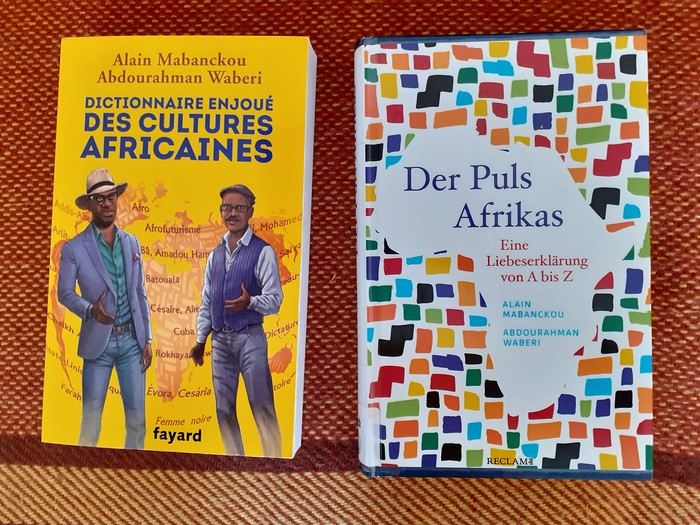
The Maggi cube, an unchallenged hegemony, and so much more
“The hopeless continent,” headlined The Economist, a British magazine, in July 2000 about Africa. Eleven years later, the same magazine headlined “Africa rising” instead. Images of Africa in the prosperous North constantly oscillate between apocalyptic scenarios and enthusiastic projections. A key issue with such images lies in the generalization they entail. If you look at the continent, considerable contrasts emerge depending on space and time. It’s no surprise that a region of the world encompassing such diverse ecological zones, maintaining such varied ties with other continents, comprising nearly fifty nation-states in sub-Saharan Africa alone, and characterized by a great diversity of languages, belief systems, and historical paths, doesn’t share a single destiny.
And yet, for many people outside Africa, as well as for many Africans, the continent constitutes a single entity, defined by criteria such as skin color, a colonial past, poverty, and the art of survival. Until now, these perspectives were generally accompanied by the idea that Africa had to—or should have—followed a single path together, sometimes called development, sometimes modernization, sometimes liberation, then a market economy. None of these paths delivered on their promises.
The two writers Alain Mabanckou and Abdourahman Waberi—one from Congo, the other raised in Djibouti, both long settled in France and now professors at renowned North American universities (Los Angeles, Washington)—have had enough of pessimistic scenarios: “We are aware that Africa is in the world and the world is in Africa. The same goes for all other continents, as our destinies are inextricably linked for better or worse. We refuse to see Africa as a reservoir of misfortunes or a continent cursed by atavistic misfortune and characterized by ethnic conflicts. [...] It’s this passionate flame we wanted to capture in a book [...] a kind of stroll through African cultures, without any demands, each letter of the alphabet leading us to a notion, a practice, a concept, a moment in history, literature, painting, politics, economics, cuisine, etc.” (p.10-11). Africa, they write, is on the verge of “imposing a signature, a style, a way of being in the world and in relation to the rest of the world.” (p.11) To put words to the continent’s diversity and dynamism, the two authors created a “rambling ABC,” a kind of portrait—or more precisely, a mythography—that lets you see and feel the pulse of a vast continent whose cultural power is unfolding before our eyes. Once marginalized or even mocked, the voice and importance of the Continent in global affairs are now undeniable” (p.11), containing over a hundred entries, mostly concise, written in a relaxed and casual style. The optimistic, even exuberant tone is set from the brief introduction. The duo of authors wants to “sing a love song to the cultures of our continent, to its inhabitants past and present, to its exceptional resources and its spectacular globalization despite a certain pollution that still clouds our skies due to the unmatched duration of dictatorships in some of our regions.” (p.12) In doing so, they don’t want to be too distracted by today’s Afewerki-Biya-Bongo-Déby & Co. ...
Of course, you’ll find tributes to great precursors like Frantz Fanon (“[...] it was a love story and admiration that wasn’t dimmed by the four decades separating his birth from ours. Let’s add that we were born while the native of Fort-de-France had left the world’s stage four years earlier, in the prime of life” p.141), Mongo Beti (“You must read and reread Mongo Beti, a genius who used his fame to support often just causes in Africa, like defending oppressed groups. His place is already in History. His oppressors, like the dictators Ahmadou Ahidjo and Paul Biya, can’t compete in the same category” p.64), the Malian Amadou Hampâté Bâ
(“Posterity remembers him mainly as an tireless defender of African cultures. His plea for the collection and preservation of traditional African knowledge remains a major event for all men and women of good will. One day in 1960, at the UNESCO podium, the native of Bandiagara sounded the alarm: ‘[...] Since we’ve admitted that the humanity of each people is the heritage of all humanity, if African traditions aren’t collected in time and written down, they’ll one day be missing from the universal archives of humanity.’” p.51),
Kwame Nkrumah, “one of the founders of Pan-Africanism, father of Ghana’s independence” (p.239), as well as the historian Cheikh Anta Diop, the writer, poet, and politician Aimé Césaire, and the economist and thinker Samir Amin, but also very warm tributes to certain contemporary African intellectuals like Souleymane Bachir Diagne and Achille Mbembe
(“A few years ago, in dominant economic circles, a rumor often resurfaced, usually disguised as a cold and scientifically proven analysis: Africa is useless. It’s a burden for the rest of the human community. With its 2% share in world trade, it would disappear from stock market radars without anyone noticing. So? Maybe it’ll be pulled up by other continents. Wanting to surpass itself is a crazy bet for Africans, they concluded. Arrogant or clueless, President Nicolas Sarkozy declared before an audience of students and teachers at Cheikh Anta Diop University in Dakar: ‘The African man hasn’t entered history enough [...] He only knows the eternal repetition of time marked by the endless repetition of the same gestures and words.’ That was in 2007. For decades, armed only with reason, an intellectual often steps up to debunk prejudices, lazy readings, and dishonest frameworks used as false fronts by those who, like Nicolas Sarkozy or former journalist Stephen Smith, out of ignorance, contempt, or condescension, distort African reality. This intellectual is none other than the historian and political scientist Achille Mbembe. This heir of Frantz Fanon, Amílcar Cabral, Jean-Marc Ela, and Fabien Eboussi-Boulaga was born in 1957 in Cameroon, in the Bassa region. Marked early by the upheavals of a fratricidal war, Achille Mbembe became the guardian of the memory of martyrs. After brilliant studies in Paris, he went on to teach at the best American universities, but the call of the Continent was stronger than anything else. In Dakar, he once directed CODESRIA (Council for the Development of Social Science Research in Africa) before joining the University of the Witwatersrand in Johannesburg, South Africa. Even though the author of *Critique of Black Reason* (Éditions La Découverte, 2015) spends a few months at Duke University in North Carolina, his observation post remains South Africa. From Johannesburg, Achille Mbembe scrutinizes Africa and the whole world. A lucid observer with an elegant and generous pen, Achille Mbembe knows how to blend big and small history: ‘I was born one day in July, as the month was drawing to a close. It was 1957, in that part of Africa recently named ‘Cameroon,’ a memory of the wonder that seized Portuguese sailors in the 15th century when, sailing up the river near Douala, they couldn’t help but note the presence of a multitude of crustaceans, and named it *Rio dos Camarões*, meaning ‘River of Shrimp.’ I grew up in the shadow of this nameless land, since, in a way, the name it bears is only the product of someone else’s astonishment: a lexical mistake, if you will.’ From this mistake or wound, he made leaven, a springboard to compose a rich work, recognized worldwide. To denounce barriers and barbarians too. But that’s not enough. Among his peers in circles of thought and action, Achille Mbembe passionately and consistently defends human dignity and the beauty of the world. In doing so, he fulfills the mission Frantz Fanon entrusted to him.” (p.227-229),
as well as entries dedicated to lesser-known artists and intellectuals, like the French journalist and activist Rokhaya Diallo, daughter of Senegalese and Gambian parents, or the Ethiopian filmmaker Haile Gerima, who has long lived in the United States. Other names from politics, sports, music, art, and literature: Kofi Annan, p.36; Barack Obama, p.243; Thomas Sankara, p.277; Ousmane Sow, p.285; Yambo Ouologuem, p.250; Léopold Sédar Senghor, p.282; Muhammad Ali, p.30; Nuruddin Farah, p.146; Salif Keita, p.203; Ahmadou Kourouma, p.206; Ngũgĩ wa Thiong’o, p.236; Winnie Mandela, p.224; Kylian Mbappé, p.226 ...
The authors, who resolutely commit to a “mythography” (p.11) of Africa, also pay special attention to local social movements, cultural events, and aspects of daily life. *Y’en a marre*, “which also meant ‘we’re fed up with sitting on our hands’” (p.320-321), emerged about a decade ago in Senegal as a citizen movement of peaceful resistance and symbolizes, the authors emphasize, the fact that African youth are increasingly fed up “with the political circus deployed in Africa since independence, as our parents would say, ‘since the White man left’...” (p.321). A full entry is dedicated to the Maggi bouillon cube, which has flooded African markets for about forty years and enjoys immense popularity (“It’s everywhere in Africa, from Dakar to Djibouti, and from Tangier to Cape Town. It’s in every pot, every stew. Little hands put it in every sauce, every local or adapted dish. An unchallenged hegemony! You’ll find it in diasporas too. The culinary strolls in Paris, in the [...] neighborhood” p.90). Critics blame it not only for impoverishing the aromatic diversity of local dishes but also for being harmful to health. And yet, “he poorest Africans, those who eat only once a day, a few spoonfuls of white beans and a ball of *foufou*, for example, are the most fervent users of the magic cube.” (p.92-93)
For *fonio*, “the new trendy cereal. [...] From the millet family, fonio is probably the oldest cereal cultivated in West Africa, and mainly in its sub-Saharan part, for millennia. [...] Easy to grow, water-efficient, fonio grows everywhere except on clay soils. Long neglected because it was considered the poor man’s crop, fonio is now a source of pride for the farmers who cultivate it and cherish it like the apple of their eye” (p.156-157), the authors immediately offer a detailed recipe, letting the reader know that “e can’t resist sharing this fonio with chicken recipe from Mali with you:
Ingredients: 1 chicken 3 large ripe red tomatoes 4 tbsp tomato paste 4 large onions 1 garlic clove 1/2 cup oil 2 Maggi cubes or salt 2 large carrots 1 turnip 1 large cabbage 2 large potatoes 1 celery stalk 1 packet pre-cooked fonio 4 okra (or okra powder) salt, pepper
Preparation: 1. Prepare the sauce: wash and cut the chicken. Peel the onions, garlic, and vegetables. 2. In a pot, fry the chicken pieces. 3. Dice the onions, tomatoes, carrots, and turnip very small and add them to the pot. 4. Add the tomato paste, salt, and pepper. 5. Simmer for 15 min, then add 2 L of water and the cooked chicken pieces. 6. Simmer for 30 min, then add the crushed garlic and celery, plus the cabbage cut into 4 and the potatoes cut in half. 7. Prepare the fonio: cover it with warm water, let it rest for 15 min, and cook it over low heat. 8. In a small pot, boil the okra and crush them. 9. Mix the crushed okra with the cooked fonio, then salt. Serve hot.” (p.158-159)
The comedy *Black Mic Mac*, released in French theaters in 1986 and addressing France’s increasingly restrictive immigration policy at the time, also gets an entry, as do *Tintin in the Congo*, the popular comic, and *Jip’s Café* (“[...] a little Africa in the heart of Paris, with passersby stopping to admire the ‘ambianceurs’ on the dance floor or attend the cultural events offered by the place” (p.194), an African establishment in Paris that Alain Mabanckou already immortalized in one of his novels.
The duo of authors also tackles thorny subjects like jihadism (p.119), the Rwandan genocide (p.272), the CFA franc (p.82), and dictatorship (p.110). While the two strike the right tone here, many entries leave a slightly bitter taste. Two examples: why doesn’t the text on Barack Obama mention the great disappointment of many people in Africa, who expected more from the African policy of the first U.S. president with African roots than just occasional warm words? Why do the comments on Winnie Mandela gloss over the fact that she was a highly controversial icon of the anti-apartheid movement due to her involvement in kidnappings, acts of torture, and murders of alleged apartheid collaborators? Instead, there’s a compassion that brings tears to the eyes: “She was often reduced to a secondary role, the wife of a great man” or “When victory came, she didn’t taste its fruits. Divorced, isolated. She would never be a ‘first lady’ in an evening gown, posing before a bed of chrysanthemums. They’d keep her far from the circles of power” (p.224-225). At this point, I would’ve liked the authors to take a slightly more critical stance...
That said, these “weaknesses” (if you can call them that) shouldn’t overshadow the book as a whole. It remains an informative, sometimes very entertaining, and often even original work in its own way.
Book information (the original French and the German translation):
Alain Mabanckou/Abdourahman Waberi. Dictionnaire enjoué des cultures africaines. Fayard, 2019. Alain Mabanckou/Abdourahman Waberi. Der Puls Afrikas. Eine Liebeserklärung von A bis Z. Reclam, 2022.
Hery
Back in Tunisia (live account)
Hi there,
On this forum, I shared my first trip to Tunisia from mid-February to early March (https://voyageforum.com/forum/impressions-tunisiennes-en-direct-d11460662/), a stay I enjoyed so much that six weeks later, I’m back in Tunisia for a full 15 days (I return on April 27).
This time, I landed in Monastir on a direct flight from Nice, again with Tunisair. We left about ten minutes late, and the flight lasted around 1 hour 30 minutes. A meal was served on board (cucumber salad with Edam-like cheese, carrots, and two small portions of dishes I couldn’t identify—semolina with peppers, olives, and parsley, two small rolls, a square of processed cheese, and a chocolate cake). It’s worth noting because it’s not common on flights this short.
In February, France and Tunisia were in the same time zone, but now Tunisia is one hour behind. This time difference and the flight duration work perfectly for a short 15-day trip since it takes me a few days to adjust to jet lag.
Luckily, I’d asked my hotel about the taxi fare from the airport because the drivers (there were several around me) didn’t hesitate to quote outrageous prices. The actual fare is 20 dinars, but one asked for 120 dinars. I refused, and another offered 60 dinars. I replied, "That’s too expensive—I’ll take the metro!" (Having tried the Tunis metro, I had no desire to repeat the experience in Monastir with a suitcase!). I started walking toward the metro, and one of the drivers caught up with me, saying, "20 dinars is fine!" I’ll skip the details, but the negotiation took a little while. When I arrived at the hotel, I told the receptionist someone had asked for 120 dinars. He put his hands to his head and said, "They’re awful!" He remembered our phone call two days earlier when I’d booked (he’s the one who told me I could take the metro).
The Mezri Hotel isn’t expensive. I got a sea-view room for 75 dinars (22 €). (I’d booked a balcony room for 90 dinars but wouldn’t have had time to enjoy it.) It’s well-located but noisy because there’s no double glazing. The receptionist is a very kind older gentleman. He called a friend whose wife is from Tozeur to find out if I should take a bus or a *louage* tomorrow and what time.
I arrived at the hotel around 7:00 PM and had time to stroll along the corniche to the ribat. Despite some run-down buildings, the seaside seemed livelier and cheerier than Sousse’s.
Monastir is the hometown of former president Bourguiba. I passed his mausoleum by taxi. There are Tunisian flags along the avenue by the sea because every year on April 6—the anniversary of Habib Bourguiba’s death—the president of the Republic visits the Bourguiba Mausoleum in Monastir to pay respects.
The taxi driver mentioned other Tunisian presidents. He complained about rising prices and insecurity, blaming President Kaïs Saïed (I’d already heard that security was better under Ben Ali).
At the end of my stay, I’ll take time to explore Monastir, but tomorrow morning, I’m off to Tozeur—a long bus ride awaits me.

TO BE CONTINUED....
On this forum, I shared my first trip to Tunisia from mid-February to early March (https://voyageforum.com/forum/impressions-tunisiennes-en-direct-d11460662/), a stay I enjoyed so much that six weeks later, I’m back in Tunisia for a full 15 days (I return on April 27).
This time, I landed in Monastir on a direct flight from Nice, again with Tunisair. We left about ten minutes late, and the flight lasted around 1 hour 30 minutes. A meal was served on board (cucumber salad with Edam-like cheese, carrots, and two small portions of dishes I couldn’t identify—semolina with peppers, olives, and parsley, two small rolls, a square of processed cheese, and a chocolate cake). It’s worth noting because it’s not common on flights this short.
In February, France and Tunisia were in the same time zone, but now Tunisia is one hour behind. This time difference and the flight duration work perfectly for a short 15-day trip since it takes me a few days to adjust to jet lag.
Luckily, I’d asked my hotel about the taxi fare from the airport because the drivers (there were several around me) didn’t hesitate to quote outrageous prices. The actual fare is 20 dinars, but one asked for 120 dinars. I refused, and another offered 60 dinars. I replied, "That’s too expensive—I’ll take the metro!" (Having tried the Tunis metro, I had no desire to repeat the experience in Monastir with a suitcase!). I started walking toward the metro, and one of the drivers caught up with me, saying, "20 dinars is fine!" I’ll skip the details, but the negotiation took a little while. When I arrived at the hotel, I told the receptionist someone had asked for 120 dinars. He put his hands to his head and said, "They’re awful!" He remembered our phone call two days earlier when I’d booked (he’s the one who told me I could take the metro).
The Mezri Hotel isn’t expensive. I got a sea-view room for 75 dinars (22 €). (I’d booked a balcony room for 90 dinars but wouldn’t have had time to enjoy it.) It’s well-located but noisy because there’s no double glazing. The receptionist is a very kind older gentleman. He called a friend whose wife is from Tozeur to find out if I should take a bus or a *louage* tomorrow and what time.
I arrived at the hotel around 7:00 PM and had time to stroll along the corniche to the ribat. Despite some run-down buildings, the seaside seemed livelier and cheerier than Sousse’s.
Monastir is the hometown of former president Bourguiba. I passed his mausoleum by taxi. There are Tunisian flags along the avenue by the sea because every year on April 6—the anniversary of Habib Bourguiba’s death—the president of the Republic visits the Bourguiba Mausoleum in Monastir to pay respects.
The taxi driver mentioned other Tunisian presidents. He complained about rising prices and insecurity, blaming President Kaïs Saïed (I’d already heard that security was better under Ben Ali).
At the end of my stay, I’ll take time to explore Monastir, but tomorrow morning, I’m off to Tozeur—a long bus ride awaits me.
TO BE CONTINUED....
Airports in the Persian Gulf Emirates
Hi,
Right now, with the war raging in Iran and affecting all the neighboring countries of the Persian Gulf, many airports are completely closed to all traffic.
Several airlines like Qatar Airways, Emirates, and others have almost completely halted their operations.
Whether in the Middle East or Africa, many travelers are stranded—maybe for a long time... A heartfelt thought for them and the struggles this will cause.
Four months ago, I was in Kenya with a flight booked through Qatar Airways... I can’t even imagine how I’d react if I were stuck there now. ??
Wishing all these travelers courage, patience, and success in making it back home.
...
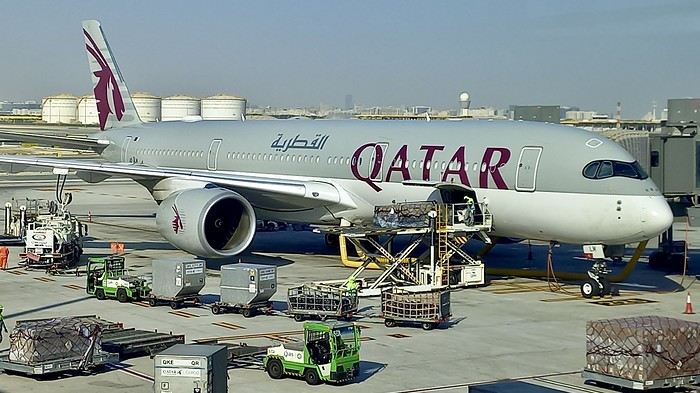
Doha Airport on October 21, 2025:
...
Right now, with the war raging in Iran and affecting all the neighboring countries of the Persian Gulf, many airports are completely closed to all traffic.
Several airlines like Qatar Airways, Emirates, and others have almost completely halted their operations.
Whether in the Middle East or Africa, many travelers are stranded—maybe for a long time... A heartfelt thought for them and the struggles this will cause.
Four months ago, I was in Kenya with a flight booked through Qatar Airways... I can’t even imagine how I’d react if I were stuck there now. ??
Wishing all these travelers courage, patience, and success in making it back home.
...
Doha Airport on October 21, 2025:
...
Bright red and a headache
Hello 🙂
I should be serving a warming drink to the participants in the discussion about gardens and parks that provide us with beautiful photos, I could mention the delicious buttery scent wafting from bakeries in the thread about returning to France, but my heart, its powerful pulse that nourishes my entire being, is elsewhere.
Dasht-e Lut, Yazd, Esfahan, Bam, Kerman, Qeshm, Hormuz—a melody, a prayer at the heart of desire.
A dream, an unattainable fantasy? No. Not anymore. A very serious Italian travel agency is organizing this trip for 6 people this winter. I’m signed up, I’m going, I’m living. Maybe.
"But you’re completely crazy!!!!"
I know... I know that every civilization, every society has a vital need to create scapegoats to define and justify itself, pathetically. And Iran is one of them, top of the list. I laugh or sigh, and it doesn’t bother me.
But that unchanging red, deep red and garnet, so beautiful in itself, in all the Western chancelleries repeats, whispers, shouts: don’t go, don’t go, don’t go, you’re putting yourself in danger and we can’t do anything for you. You’ll be turned into mere bargaining chips, into arguments for endless negotiations. Fear must be instilled, its power absolutely preserved, no concessions made to the enemy. The information (how many French hostages, real or fake, compared to the number of travelers?) is always lacking.
Traveling becomes a merciless confrontation between desire, the vital pulse, and anxiety, its ghosts.
Catherine
I should be serving a warming drink to the participants in the discussion about gardens and parks that provide us with beautiful photos, I could mention the delicious buttery scent wafting from bakeries in the thread about returning to France, but my heart, its powerful pulse that nourishes my entire being, is elsewhere.
Dasht-e Lut, Yazd, Esfahan, Bam, Kerman, Qeshm, Hormuz—a melody, a prayer at the heart of desire.
A dream, an unattainable fantasy? No. Not anymore. A very serious Italian travel agency is organizing this trip for 6 people this winter. I’m signed up, I’m going, I’m living. Maybe.
"But you’re completely crazy!!!!"
I know... I know that every civilization, every society has a vital need to create scapegoats to define and justify itself, pathetically. And Iran is one of them, top of the list. I laugh or sigh, and it doesn’t bother me.
But that unchanging red, deep red and garnet, so beautiful in itself, in all the Western chancelleries repeats, whispers, shouts: don’t go, don’t go, don’t go, you’re putting yourself in danger and we can’t do anything for you. You’ll be turned into mere bargaining chips, into arguments for endless negotiations. Fear must be instilled, its power absolutely preserved, no concessions made to the enemy. The information (how many French hostages, real or fake, compared to the number of travelers?) is always lacking.
Traveling becomes a merciless confrontation between desire, the vital pulse, and anxiety, its ghosts.
Catherine