Results for "Allemagne+souvenir+artisanat"
About 20,840 results.
More options
Many results are in French, the community’s main language. English translations are added over time.
Search results
Taïwan au départ de Hong Kong
Bonjour à tous, je suis étudiant à Hong Kong pour cette année, et j'aimerai bien occupé mes vacances et mes week end pour profiter de l'Asie et ses merveilles.
J'ai déjà fais la Malaisie, Singapour et la Thailande. Quelques régions de Chine aussi (même jusqu'au Tibet) mais maintenant je me tournerais plutot vers le nord - nord est.
Je suis vraiment tenté par la Corée et le Japon mais le budjet me calme un peu donc je vais attendre un peu.
Par contre j'ai trouvé une nouvelle issue que je n'avais pas envisager, c'est Taiwan.
Donc je me rend sur ce forum mais rien ou quasi rien sur Taiwan ...
Quelqu'un y serait il déjà allé ? Qui y a t il d'"intérréssant à voir ? En combien de temps ? Et une compagnie pas cher pour y aller depuis une ville de CHine ? Etant en possion d'un Visa "Multipass" pour la Chine Pop, a t on besoin d'un Visa pour Taiwan ?? En voilà une bonne question !
J'espere avoir sucité votre envie de faire partager votre expérience sur cette île à l'histoire mouvementée...
Quelqu'un y serait il déjà allé ? Qui y a t il d'"intérréssant à voir ? En combien de temps ? Et une compagnie pas cher pour y aller depuis une ville de CHine ? Etant en possion d'un Visa "Multipass" pour la Chine Pop, a t on besoin d'un Visa pour Taiwan ?? En voilà une bonne question !
J'espere avoir sucité votre envie de faire partager votre expérience sur cette île à l'histoire mouvementée...
Quel pays d'Europe avez-vous préféré?
J'aimerais avoir votre opinion sur le pays d'Europe que vous avez préférez lors de vos voayges??
Pour ma part pas difficile à comprendre non?? 😉
Combien de pays avez-vous visités?
Bonjour à tous!
Simple curiosité: combien de pays avez-vous visité? Et quels sont les pays que vous avez visité plusieurs fois, tellement c'était bien?
Bonne journée
Marliese
Simple curiosité: combien de pays avez-vous visité? Et quels sont les pays que vous avez visité plusieurs fois, tellement c'était bien?
Bonne journée
Marliese
N'ai je rien oublié pour deux mois en Inde du Nord?
Concernant le matériel que je compte prendre pour l'inde cet été (2mois) est ce que j'ai oublié quelque chose?
Je ne sais pas combien de degrés il fera en août à Dharamsala, dois je prévoir des vêtements chauds?
Santé : Trousse médicale Moustiquaire + produits répulsifs moustiques Pensements + ciseaux pastilles purificatrices eau savon
Matériel sac chaussures (quoi pour la mousson + montagne + chaleur) ?? Vêtements fermés (achetés en Inde : quel prix et ou?) Papiers et carnet de bord Lonely Planet Cadenas a numéros Doublure sac a dos (nécéssaire, cher ?) Parapluie (plutot que k-way) ? tongs (pour douches) chapeau contre soleil ? crême solaire couteau pour peler fruits réveil ficelle et pinces pour le linge poche a mettre sous le svetements pour passeport et argent pochez de congélation avec zip pour préserver de la pluie
Argent travellers chèques Calculatrice
Merci à vous !! 😉🙂
Santé : Trousse médicale Moustiquaire + produits répulsifs moustiques Pensements + ciseaux pastilles purificatrices eau savon
Matériel sac chaussures (quoi pour la mousson + montagne + chaleur) ?? Vêtements fermés (achetés en Inde : quel prix et ou?) Papiers et carnet de bord Lonely Planet Cadenas a numéros Doublure sac a dos (nécéssaire, cher ?) Parapluie (plutot que k-way) ? tongs (pour douches) chapeau contre soleil ? crême solaire couteau pour peler fruits réveil ficelle et pinces pour le linge poche a mettre sous le svetements pour passeport et argent pochez de congélation avec zip pour préserver de la pluie
Argent travellers chèques Calculatrice
Merci à vous !! 😉🙂
Tour de l'Europe 2007-2008
Bonjour je m'appelle Marie-Eve et je voudrais partir pour le tour de l'europe en 2007-2008 en vélo ! je commence mes recherches sur le sujets auriex-vous des infos sur l'itinéraire, le choix de vélo, accessoires, etc. tout ce qui pourrais toucher ce voyage. Je pars seul ou accompagner et je ne sais pas ma date de retour. Merci d'avance🙂
La Thaïlande outrée par des Miss en bikini devant ses temples
La nuée de reines de beauté présentes en Thaïlande pour le concours de Miss Univers en fin de mois s'est attirée les foudres des autorités religieuses en paradant en bikini devant des temples bouddhiques, a rapporté mercredi la presse. La Thaïlande doit accueillir le 31 mai le concours Miss Univers, et il ne se passe plus de jours sans que les photos des prétendantes au titre de tous les continents ne soient publiées par la presse, dans un pays traditionnellement fasciné par les concours de beauté.
Mais mercredi, des photos d'une brochette de Miss en deux-pièces à bord d'un bateau sur la rivière qui baigne la capitale, le Chao Praya, avec pour arrière-plan le célèbre temple Wat Arun, ont provoqué la consternation de nombreux Thaïlandais.
"Ces visiteurs ne sont pas bouddhistes, ils ne comprennent pas notre culture", a déclaré à l'AFP Udom Charoen, directeur du Bureau national du bouddhisme.
Le ministre du Sport et du Tourisme, Somsak Thepsuthin, a indiqué que ces scènes auraient disparu lors de la diffusion d'un film sur les activités des Miss à Bangkok, le 31 mai, a annoncé le quotidien The Nation.
Quatre-vingt-une Miss participent au concours dont les images seront diffusées pour toute la planète et la Thaïlande espère que ce sont surtout ses méritoires efforts de reconstruction après le tsunami de décembre dernier qui attireront l'attention.
Mais mercredi, des photos d'une brochette de Miss en deux-pièces à bord d'un bateau sur la rivière qui baigne la capitale, le Chao Praya, avec pour arrière-plan le célèbre temple Wat Arun, ont provoqué la consternation de nombreux Thaïlandais.
"Ces visiteurs ne sont pas bouddhistes, ils ne comprennent pas notre culture", a déclaré à l'AFP Udom Charoen, directeur du Bureau national du bouddhisme.
Le ministre du Sport et du Tourisme, Somsak Thepsuthin, a indiqué que ces scènes auraient disparu lors de la diffusion d'un film sur les activités des Miss à Bangkok, le 31 mai, a annoncé le quotidien The Nation.
Quatre-vingt-une Miss participent au concours dont les images seront diffusées pour toute la planète et la Thaïlande espère que ce sont surtout ses méritoires efforts de reconstruction après le tsunami de décembre dernier qui attireront l'attention.
qui connait concordia (chantiers)
bonjour, j'aurais voulu savoir si quelqu'un avait deja participé a un chantier pour adultes, a l'étranger, organisé par une association comme Concordia par exemple.
merci pour vos réponses
merci pour vos réponses
Ile Maurice en janvier
Je pars le 20 janvier pour l'ile maurice ( un peu plus de 15 jours).
Quelqu'un pourrait me dire s'il y a eu des dégats suite au tsunami?
D'autre part y-a -t-il des journées de pluie a cette période de l'année??
Merci d'avance😎
Quelqu'un pourrait me dire s'il y a eu des dégats suite au tsunami?
D'autre part y-a -t-il des journées de pluie a cette période de l'année??
Merci d'avance😎
La beauté des portes du monde
Une fois n'est pas coutume!!! J'suis sur ma lancée et plus rien ne m'arrête 😏😏😏 ...O!!! Secours! diront certains! Yek Yek!
En feuilletant mes nombreux albums, je me suis dite tiens en vlà un topic qui peut-être sympa et pas trop "classique" ...
Les portes du monde ...Elles "portent" (c'est le cas de le dire) en elles pas mal de richesses architecturales, diversifiées ...
Alors je me lance ...
Burano ...petit village coloré de pêcheurs dans la lagune de Venise : la porte d'une des ces maisons.
Roussillon et son village ocre et la beauté de ses portes sur le même ton.
Une des entrées de la Cathédrale de Sienne.
Va qd même falloir que je les referme ces albums ...parce que après les portes m'est venue l'idée des statues et des fontaines! O secours!!!😏😏
En feuilletant mes nombreux albums, je me suis dite tiens en vlà un topic qui peut-être sympa et pas trop "classique" ...
Les portes du monde ...Elles "portent" (c'est le cas de le dire) en elles pas mal de richesses architecturales, diversifiées ...
Alors je me lance ...
Burano ...petit village coloré de pêcheurs dans la lagune de Venise : la porte d'une des ces maisons.
Roussillon et son village ocre et la beauté de ses portes sur le même ton.
Une des entrées de la Cathédrale de Sienne.
Va qd même falloir que je les referme ces albums ...parce que après les portes m'est venue l'idée des statues et des fontaines! O secours!!!😏😏
Bons plans pour la Croatie à vélo
Bonjour,
Je prépare un voyage en vélo en croatie avec mon ami, nous ommes aux débuts de nos recherches.
Auriez-vous des bons plans, des lieux incontournables, insolites, typiques...à nous indiquer?
Avez-vous déjà tenté l'aventure en vélo? Le relief est-il difficile ? Comment vous êtes vous organisé pour dormir et les bagages?
Merci
Je prépare un voyage en vélo en croatie avec mon ami, nous ommes aux débuts de nos recherches.
Auriez-vous des bons plans, des lieux incontournables, insolites, typiques...à nous indiquer?
Avez-vous déjà tenté l'aventure en vélo? Le relief est-il difficile ? Comment vous êtes vous organisé pour dormir et les bagages?
Merci
Esperanto: enfin une langue facile et utile
Saluton !
L'esperanto, à quoi ça sert, qui le parle, ... des questions que l'on entend souvent, alors je vais leur apporter quelques réponses...
Qui le parle ? Plusieurs millions de personnes. 3 millions d'après esperanto-france, 6 millions d'après le livre des records, certains vont même jusqu'à dire 15 millions. Le nombre exact est très dur à savoir, d'autant qu'il y a actellement un développement important de la langue en Afrique, Asie, ...
A quoi ça sert ? A vous de choisir ! Moi ce qui me plait le plus, c'est de pouvoir parler très rapidement avec des personnes du monde entier, beaucoup plus facilement qu'avec l'anglais par exemple. Un aspect que les utilisateurs de ce site apprécieront surement c'est la possibilité de voyager un peu partout. Il y a de nombreuses rencontres qui ont lieu un peu partout dans le monde à tout instant, et qui réunissent des centaines, voire des milliers de participants des quatre coins du globe.
Je viens par exemple de rentrer d'une petite rencontre organisée par des français d'une semaine à Orléans où nous étions 57 participants, dont des russes, des roumaines, des italiens, une anglaise, des allemands, un belge, un danois, ... Mais il y a aussi eu IJK (Internacia Junulara Kongreso : congrès international jeunes) en Russie, UK (Universala Kongreso) à Pékin, ... A UK par exemple à Varsovie il y avait plus de 5000 participants ("partoprenantoj" en esperanto). Il y a de nombreuses grandes rencontres tous les ans (IJS, IS en Allemagne, KISO, ...) qui permettent de voir du pays et des gens. Le programme classique d'une rencontre c'est le matin des ateliers (a FESTO par exemple on avait dessin, théatre, faire un petit film, ...), l'après midi du sport, de la découverte de la région (à FESTO on a fait du canoë, de l'accrobranche, on a visité le château de Chambord, ...), après des "prelegoj" (exposés ou débats, ... à FESTO un mathématicien nous a présenté la 4ème dimension, on a eu un exposé sur les MST, un débat sur le totalitarisme, des cours de dessin, un exposé sur l'Ido, ...), et le soir de la fête (à FESTO on a eu deux concerts, du théatre fait par des pros, ... le tout en esperanto bien sûr !)... Plutôt pas aml quand on sait que FESTO a été préparé par une bande de jeunes et que le sigle lui-même veut dire "Franca Esperanta Semajno Terure Organizita" : Semaine française esperantiste horriblement organisée :)
Un autre aspect apprécié des voyageurs est le "pasporta servo" : allez sur le site http://www.tejo.org/ps/, choisissez un pays, et vous aurez une liste d'esperantistes proposant de vous héberger gratuitement pendant plusieurs nuits ! Vous voulez vous faire un tour du monde ? Vous aurez des contacts et un logement à toutes vos étapes ! Une façon agréable de prendre contact et de voir la vie véritable des gens du pays visité !
C'est long à apprendre ce truc ? D'après l'institut de cybernétique de paderborn, il faut environ 1500h d'anglais pour le niveau Bac, 150h pour l'esperanto... Juste un petit exemple que j'ai vu la semaine dernière durant la rencontre : trois jeunes italiennes qui ne parlaient pas du tout esperanto en arrivant à FESTO, au bout d'une journée elles commençaient à comprendre la langue car la grammaire est évidente (par exemple les verbes au présent se termine par -as, les noms par -o, les adjectifs par -a, donc on comprend vite la phrase "la floro estas bela"), et au bout d'une semaine elles comprenaient très bien et pouvaient participer activement à une conversation ! En apprenant cette langue 4 ans au collége 1h par semaine je la parle et après avoir du l'arréter pendant 6 ans je la comprend et parle mieux que l'anglais que j'étudie depuis 10 ans ! Et truc non négligeable les cours sont dans 99% des cas gratuits ! Contactez moi à maxmanseb2@aol.com pour plus d'infos sur les cours dans votre région !
Ca a une culture ce machin ? Eh oui ! et même une histoire très mouvementée : combattue par les régimes fascites et totalitaires, avec remaniements, ... Une littérature ? 33000 ouvrages traduits, une littérature originale importante ! De la musique ? Du rock, de la techno, ... et même brassens traduit en esperanto ! Ce qui est intéressant c'est que ça donne beaucoup plus un contact culturel que l'anglais (enfin c'est ce que j'ai personnellement éprouvé), parce qu'on apprend cette langue pour le plaisir et le contact, pas parcequ'on nous l'impose.
Voilà, j'espère que certains d'entre vous seront intéressés par cette manière très agréable de découvrir le monde et les pays étrangers, et sachez que si vous avez moins de 30 ans et adhérez à Esperanto-jeunes france vous avez droit à une aide de 100 euros pour votre première rencontre internationale (je pense qu'ils font pareil à esperanto france). Le site d'informations est http://esperanto-jeunes.org .
Et si vous cherchez des correspondants (pas forcément par l'esperanto), jetez un oeil à http://www.esperantomondo.net, il y a déjà plus de 230 inscrits et le site est trilingue !
Voilà une petite liste de rencontres à venir en 2004, je vous laisse deviner les traductions des descriptions... Comme vous le voyez, il y en a un peu partout dans le monde !
9 -15. augusto 43-a Somerlernejo en Barlaston. Inf: Esperanto-House, Wedgwood Memorial College, Barlaston, Stoke-on-trent, Britio, ST12 9DG. Tel: 01782-372105. Rete: arturo@signalprent.demon.co.uk
12 - 22. augusto Somera renkontigo "Nigramara baseno en Batumi, Kartvelujo". Inf: Kartvela Esperanta Asocio, Tbilisi, Str. Ketevan Camebuli 25, korp.2 ap.29 Avtandil Abuladze, Karvelujo (Georgia), rete: Tea Turmanidze nh_eo@posta.ge au teako1@mail.ge, telefonoj: +7-893-604257 Nana H^izambareli, prezidanto de Kartvela E-Ao; +7-893-600338 Ia Kakulia; +7-893- 997116 Tea Turmanidze
13 - 15. augusto 6-a Balkana Esperanto-konferenco en Nis, Serbio kaj Montenegro. Inf: rete: slumpy@baknerinter.net au esperanto@bankerinter.net
14 - 15. augusto 27-a Somera Kunveno de Pakistana Esperanto-Asocio en Abbotabad. Inf: Pakistana Esperanto-Asocio, Esperanto Markaz, Chowk Shahidan, Multan, Pakistano. Rete ?en. Sekretario Jawaid Eahsan
14 - 21. augusto Seminario por la trejnado de kulturaj manageroj (kunlabore kun TEJO) parte en Caudefono. Inf: Kultura Centro Esperantista, C.P. 311, Postiers 27, CH-2301 La Chaux-de-Fonds, Svisio. Tel/fakso: +41-32-9267407. Rete: kce.esperanto@bluewin.ch
14 - 21. augusto 8-aj Bretonaj Renkontigoj de Plouëzec. Inf: Jean-Pierre Ducloyer, 8, Rue de Montauban, FR-35750 Iffendic, Francio. Tel/fakso: +33-(0)2 99 09 71 92. Retadreso:jeanpierre-ducloyer@club-internet.fr
14 - 21. augusto 37-a ILEI-Konferenco en Bratislava, Slovakio. Inf: Sekretario
14 - 21. augusto 77-a SAT-Kongreso en Bratislava, Slovakio. Inf: Petro Chrdle, CZ-25229 Anglická 878, Dobrichovice, Cehio. Rete: Petro Hrdle
14- 21. augusto Malkovru la regionon bicikle au ripozu en Grezijono. Inf: Kulturdomo de Esperanto, Kastelo Grezijono, FR-49150 Baugé, Francio. Tel : +33-(0)241891034, Fakso: +33-(0)241825522. Rete: Kulturdomo de Esperanto, Kastelo Grezijono
14 - 22. augusto Rusiaj Esperanto-Tagoj RET-04 en Tihvin, Rusio. Temo: "Nia kulturo - nia espero". Inf: Viktor Kandinskij, Pk. 2, RU-187556 Tihvin, Rusio. Rete: Mikaelo Bron?tejn, tel: +7-812-6726093 kaj Garik Kokolija, tel: +7-095-5677007
15. augusto Unua Visbadena Esperanto-Tago en Wiesbaden (Germanio) kun prelegetoj, migrado kaj urbovizitado. Inf: Ulrich Matthias
16 - 27. augusto 38-a Internacia Esperanto Feriado kun lingvaj kursoj, en Kudowa Zdrój. Inf.: Silezia Esperanto-Asocio, str. Dubois 3/1, , PL-50-208 Wroc?aw, Pollando. tel: +48-71-3296954, rete: vroclavo@poczta.onet.pl
17 - 22. augusto Malkovro de romanika arto en Piktavio (Poitou) en Bouresse. Inf: Kvinpetalo Esperanto-Centro, Rue du Lavoir, FR-86410 Bouresse, Francio. Tel/fakso: +33-(0)549428074. Rete: kvinpetalo@club-internet.fr
21 - 28. augusto Verda biciklaumdo en Grezijono. Inf: Kastelo Grezijono, FR-49150 Baugé, Francio. Tel: +33-0241891034. Rete: grezijono.kastelo@free.fr
21 - 28. augusto 30-a Internacia Semajno de Esperanto en Sèete apud Montpellier. Inf: Esperanto Kulturo kaj Progreso, 5 rie de D-ro Roux, FR-34090 Montpellier, Francio. Tel/fakso: +33-(0)467541543. Rete: jf.passarella@free.fr
22 - 31. augusto Busvojago al 6-a Europunia Esperanto-Kongreso en Bilbao. Inf: Internacia Klubo "Esperantotur", str. M.Sklodowskiej-Curie 10, PL-85-094 Bydgoszcz, Polio. Tel/fakso +48-52-3461151. Rete: turismo@bydg.pdi.net
24 - 29. augusto Internacia Renkontigo kun Jarkonferenco de AEH-IKEH kaj tradicia XV-a Esperanto - Tago en Rybitvi ce Pardubice. Inf: Asocio de Esperantistoj-Handikapuloj kaj Esperanto-klubo de doktoro Schulhof, Na Okrouhliku 953/ 21, CZ-530 03 Pardubice, Ceha Respubliko. Tel: +420-46-6611941. Rete: aeh-ikeh@volny.cz
25 - 29. augusto 6-a Esperanta Europ-Unia Kongreso (EEU-Kongreso) kaj 63-a Hispana Esperanto-Kongreso en Bilbao (Vaskio-Hispanio). Inf: Grupo Esperantista de Bilbao, Barrencalle Barrena 7 - 1 D, ES-48005 Bilbao, Hispanio. Tel: +34-944-164492 (automata respondilo) Rete: esperantobilbao@terra.com
27 - 29. augusto Montopintoj de Altaj Tatroj, Liptovký Hrádok, Slovakio. Inf: Surov?ek Vlado, tel: +421-(0)908-218680, +421-(0)44-5222402
29. augusto - 4. septembro SUS 27 de AIS San-Marino en Komárno (SK), Studadsesio de la Akademio Internacia de la Sciencoj. Inf: Reinhard Fössmeier, Rahel-Straus-Weg 19, DE-81673 München, Germanio
30. augusto - 6. septembro Sud-Nigramara Fotofiesto en Bulgario. Inf: Lasto Nikov, BG-1000 Sofio, P.K.497, Bulgario. Tel.:+359-2-9835084, +359-2-318840, posxtelefono: +359-887-303427. Rete: lasto@mail.bg au lasto11@yahoo.co.uk
3 - 7. septembro 72-a Itala Kongreso de Esperanto - en Treviso. Inf: Itala Esperanto-Federacio, Flavia Del Zilio, via Capella 17/2, IT-31059 Zero Branco (TV), Italio. Rete: kuniklo@tiscali.it
4 - 5. septembro 3-aj Someraj Dialogoj en Esperanto-Restadejo Monistrol de Monserrat, Barcelono, Hispanio
9 - 16. septembro Apud beletro en Esperanto - biografioj - taglibroj - vojagrakontoj - leterkolektoj en Bouresse. Inf: Kvinpetalo Esperanto-Centro, Rue du Lavoir, FR-86410 Bouresse, Francio. Tel/fakso: +33-(0)549428074. Rete: kvinpetalo@club-internet.fr
10 - 12. septembro NOREK (Nord-Okcidenta Regiona Esperanto-Konferenco) en urbo Boise, ?tato Idaho, Usono. info@terpomuloj.org
10 - 12. septembro Dua Benina Esperanto-Kongreso en Cotonou, cefurbo de Benino. Temo: Estonteco de Benina E-movado. Inf: BEF, BP 226, Lokossa-Mono, Bénin. Tel: +229-965124, rete: esperantobenin@yahoo.fr au hounfranc@yahoo.fr
10 - 22. septembro 22-a Cina Templa Foiro en Jiuhua monto, Sanktejo de Budhismo, Ritaro por Ksitigarbha Bodisatvo, Sankta Naskigtago por Ksitigarbha Bodisatvo en Jiuhua monto, Sanktejo de Budhismo kun Esperanto kiel pontlingvo en Guichi urbo de Anhui provinco, Cinio. Inf: s-ro Liu Jianguo direktoro, Hefei Verdstelo Esplora Instituto pri Turismo, Langyashan Lu, Changhuai Xincun, B-Qu 3-105#, CN-230011, Hefei, Cinio. Tel.: +86-551-4484370, fakso: +86-551-4210414, rete: yjs00815@mail.hf.ah.cn
11 - 19. septembro Internacia Arta Esperanto-Festivalo "Velura Sezono-2004" - en Jalta, Ukrainio. Inf: Loka organiza omitato, UA-98612 Jalta, a/k 74, Esperanto, Ukrainio. Tel. +38-0654-231651 Jefim Zajdman, rete: espero@yalta.crimea.ua au tero@yalta.us vidu ankau alian hejmpagon
15 - 18. septembro 11-a Cina Internacia Kultura Festivalo de Toufuo/Veterajo, 4-a Huainan Bagongshan Turisma Festivalo de Chinio kun E-o kiel laborlingvo, okazigota en Huainan urbo de Anhui provinco. Inf: s-ro Liu Jianguo direktoro, Hefei Verdstelo Esplora Instituto pri Turismo, Langyashan Lu, Changhuai Xincun, B-Qu 3-105#, CN-230011, Hefei, Cinio. Tel.: +86-551-4484370, fakso: +86-551-4210414, rete: yjs00815@mail.hf.ah.cn
18 - 19. septembro 20-a Renkontigo de Portugalaj Esperantistoj en urbeto Tábua (45 km nordoriente de Coimbra). Inf: Portugala Esperanto-Asocio
19. septembro 7-a Esperanta Renkontigo de Taguatinga. Temo: "Esperanto - ilo por solidara tutmondigo". Renkontigejo: Auditorio de administrejo de Taguatinga. Inf: Taguatinga Esperanto-Klubo (C 12, Ed. Paranoá Center, sala 112, Taguatinga, BR-72010-120 Brasilia, DF - Brazilio. Rete: tek.esperanto@ig.com.br
23 - 26. septembro 15-a MKR (MontKabana Renkontigo), Pliskovica apud Se¸ana, Slovenio. Inf: Informoj rete: vanja.radovanovic@ericsson.com kaj telefone: +385-(0)91-3654626
24 - 28. septembro 30-a Internacia Forumo pri Turismo, Edukado kaj Kulturo en Bydgoszcz kaj 5-a BUS de AIS kaj 26-a AKB-Sesio. Inf: Internacia Klubo "Esperantotur", str. M.Sklodowskiej-Curie 10, PL-85-094 Bydgoszcz, Polio. Tel/fakso +48-52-3461151. Rete: turismo@bydg.pdi.net
25 - 26. septembro Kultura Semajnfino pri muziko, prelegos (kaj kantos) Georg Roessler kaj Jean-Thierry von Bueren en Caudefono (provizora). Inf: Kultura Centro Esperantista, C.P. 311, Postiers 27, CH-2301 La Chaux-de-Fonds, Svisio. Tel/fakso: +41-32-9267407. Rete: kce.esperanto@bluewin.ch
26. septembro - 26. oktobro Hefei Internacia Akrobata kaj Cirka Festivalo de Cinio kun E-o kiel pontlingvo, okazigota en Hefei urbo. Inf: s-ro Liu Jianguo direktoro, Hefei Verdstelo Esplora Instituto pri Turismo, Langyashan Lu, Changhuai Xincun, B-Qu 3-105#, CN-230011, Hefei, Cinio. Tel.: +86-551-4484370, fakso: +86-551-4210414, rete: yjs00815@mail.hf.ah.cn
1 - 3. oktobro 4-a KoKoLoRES (kafokla?o- kaj ludosemajnfino) en Herne, Germanio. Samtempe okazos Esperanto-kurso por komencantoj. Inf.: Petra Dückershoff petra.dueckershoff@web.de
1 - 3. oktobro XX-aj Artaj Konfrontoj en Esperanto ARKONES 2004 en Pozna? Inf: Pawe? Janowczyk, ul. Zawady 2/7, PL-61-002 Pozna?, Polio. Tel. +48-(61)8755879, tel. +48-(602)283242, rete: janowczykpawel@poczta.onet.pl
1 - 3. oktobro Ora autuno en ´ilina, Slovakio. Inf: Juraj Gondzur
1 - 3. oktobro 17-a Intenacia Kultura Festivalo en Ústi nad Labem, Cehio. Inf: Miroslav Smy?ka, Kojetická 90, CZ-40003 Ústi Nad Labem, Cehio. Tel: +420-721851502, rete: j_kriz@volny.cz au m.smyczka@seznam.cz
1 - 7. oktobro 55-a Nacia Festo de Cina Popola Respubliko, Hefei Internacia Wushu/Kongfuo Festivalo de Cinio (2004.10.01-05) kaj 5-a Hefei Konkurso pri Drakboatado (2004.10.01-02) kun Esperanto kiel laborlingvo au pontlingvo, okazigota en Hefei urbo. Inf: s-ro Liu Jianguo direktoro, Hefei Verdstelo Esplora Instituto pri Turismo, Langyashan Lu, Changhuai Xincun, B-Qu 3-105#, CN-230011, Hefei, Cinio. Tel.: +86-551-4484370, fakso: +86-551-4210414, rete: yjs00815@mail.hf.ah.cn
2 - 9. oktobro 12-a Internacia Esperanto-Semajno de la Kulturo kaj Turismo en Salou (Tarragona). Inf: Luis Serrano Pérez, Apartat 423, ES-08200 Sabadell, Hispanio. Tel: +34-93-7275021, fakso: +34-93-7314111. Rete: luis_serrano@mixmail.com
7 - 10. oktobro "Teslica Alvoko Movigi al Europa Nacieco" seminario apud Teslic, Bosnio por junuloj (gis 40-jaraj) el Kroatujo, Bosnio/Hercegovino, Serbio/Montenegro, Makedonio kaj Albanujo. Inf: est@teol.net Küld?: Johan Derks
8 - 9. oktobro Internacia Esperanto-Simpozio en la Austria Nacia Biblioteko: Esperanto en la Uragano de Ideologioj en Vieno. Inf: Internacia Esperanto-Muzeo, Hofburg, Michaelerkuppel, AT-1010 Wien, Austrio. Rete: Helga Farukuoye
8 - 10. oktobro 21-a Studadsesio en Herzberg am Harz. Inf: Esperanto-Centro, DE-37412 Herzberg am Harz, Grubenhagenstr. 8, Germanio. Tel/fakso: +49-(0)5521-1363, +49-(0)5521-71123, rete: zilvar@t-online.de
8 - 10. oktobro Bavelo/Bavelido-renkontigo sur la kastelo Teck, supre de la Leninga Valo, 40 kilometroj sudoriente de Stuttgart. Temo: "?ancoj kaj riskoj de pligrandigo de Europa Unio" . Inf: Janek Bender
9. oktobro Kalocsay memortago en Fels?pakony, Hungario. Inf: Telefon: s-ino Elizabeta L?rentei-Szabó: +36(06)-29-317873, rete: brila-stelo@freemail.hu au szazo@vipmail.hu
9 - 11.oktobro Internacia Semajnfino Esperantista en Okemo, Vermont, Usono
22 - 24. oktobro Maanshan-a Internacia Recitversa Festivalo de Cinio kaj Cina Festo de Duobla Nauo, festo por Respektata Maljunulo kun Esperanto kiel laborlingvo, okazigota en Maanshan urbo de Anhui provinco. Inf: s-ro Liu Jianguo direktoro, Hefei Verdstelo Esplora Instituto pri Turismo, Langyashan Lu, Changhuai Xincun, B-Qu 3-105#, CN-230011, Hefei, Cinio. Tel.: +86-551-4484370, fakso: +86-551-4210414, rete: yjs00815@mail.hf.ah.cn
22 - 24. oktobro Kurso en Barlaston, Britio. Inf: Wedgwood Memorial College, Station Road Barlaston, Stroke on Trent, ST12 9DG, Britio. Tel: +44-(0)1782-372105, fakso: +44-(0)1782-372393. Rete: wedgwood.college@staffordshire.gov.uk
22 - 24. oktobro 91-a Japana Esperanto-Kongreso en turisma urbo Inuyama (apud Nagoya), Japanio. Temo: ?oju kaj kunvivu esperante. Inf: rete: salikojp@ybb.ne.jp
22 - 24. oktobro Maanshan-a Internacia Versrecita Festivalo de Cinio kaj Cina Festo de Duobla Nauo, festo por Respektata Maljunulo kun Esperanto kiel laborlingvo en Maanshan de Anhui-provinco. Inf: s-ro Liu Jianguo direktoro, Hefei Verdstelo Esplora Instituto pri Turismo, Langyashan Lu, Changhuai Xincun, B-Qu 3-105#, CN-230011, Hefei, Cinio. Tel.: +86-551-4484370, fakso: +86-551-4210414, rete: yjs00815@mail.hf.ah.cn
22 - 24. oktobro 41-a Faulhaber Semajnfino en la feriejo Mennorode, Apeldoornseweg 185 Elspeet, Nederlando. La temo estas Kiom granda estas Europo? Inf: Esperanto Nederland, R.Balk, van IJsendijkstraat 271, NL-1442 CM Purmerend, Nederlando. Rete: r.balk@wanadoo.nl
26 - 30. oktobro Praktikado de la lingvo kun Manette Bernardin kaj Marie-Hélène Désert en Bouresse, Francio. Inf: Kvinpetalo Esperanto-Centro, Rue du Lavoir, FR-86410 Bouresse, Francio. Tel/fakso: +33-(0)549428074. Rete: kvinpetalo@club-internet.fr
30. oktobro - 1. novembro 32-a Kataluna Kongreso de Esperanto en Ceret, Nord-Katalunio
5 - 8. novembro STRIGO-10 en Ni¸nij Novgorod, Rusio. Temo: Nirvano. Inf: Irina Gon?arova au rbolsxakov@mail.hu
6 - 7. novembro Studsemajnfino (Pluraj nivelaj) en Hoek van Holland (Nederlando). Inf: Jeannette Bosse, Veldm. Montgomerylaan 361, NL-5612 BH Eindhoven, Nederlando. Tel. +41-(0)40-2113344. Rete: hj.bosse@wxs.nl
12 - 14. novembro Konferenco pri Scienca Aplikado de Esperanto, KAEST-2004 en Dobrichovice (je c. 20 km-oj apud Prago. Inf: KAVA-PECH, Petro Chrdle, Anglická 878, CZ-252 29 Dobichovice, Cehio. Tel.: +420-257-712201; fakso: +420-257-712126. Rete: info@kava-pech.cz
20. novembro 6-a Festivalo de Esperantaj Filmoj en Bratislava. Inf: Natasa ¦ándorová Tel: +421-(0)905-138769
29. novembro - 5. decembro Lernu Esperanton en Cehio kun francaj fervojistoj kun turisma kaj plezura programo. Inf: Petro Chrdle, CZ-25229 Anglická 878, Dobrichovice, Cehio. Rete: Petro Hrdle
10 - 11. decembro Antau-Kristnaskaj vesperoj en Bratislava. Inf: Alica Komlósiová
10 - 12. decembro 22-a Studadsesio en Herzberg am Harz. Inf: Esperanto-Centro, DE-37412 Herzberg am Harz, Grubenhagenstr. 8, Germanio. Tel/fakso: +49-(0)5521-1363, +49-(0)5521-71123, rete: zilvar@t-online.de
11. decembro Ceha-saksa tago en Ústi nad Labem, Cehio. Inf: Miroslav Smy?ka, Kojetická 90, CZ-40003 Ústi Nad Labem, Cehio. Tel: +420-721851502, rete: j_kriz@volny.cz au m.smyczka@seznam.cz
25 - 26. decembro 27-a Jara Kongreso de Pakistana Esperanto-Asocio en Multan. Inf: centra oficejo de la asocio, Esperanto Markaz, Chowk Shahidan, Multan, Pakistano. Rete: ?en. Sekretario Jawaid Eahsan
27. decembro - 2. januaro Ago-semajno en Zakopane, Pollando. Inf: Irek Bobrzak, Toru?ska 82/133, Pollando, Tel: +48-508-779097, rete: viavento@poczta.onet.pl
27. decembro - 3. januaro 21-a Internacia Festivalo (arango por familioj kaj personoj 25 - 55 jaragaj) en germana Magdeburg. Kadra temo: "Tradicioj". Inf: Hans-Dieter Platz (HDP), Postfach 1148, DE-34303 Niedenstein, Germanio. Tel/fakso: +49-5624-8007, portebla +49-171-4964558. Rete: HDP@internacia-festivalo.de
27. decembro - 3. januaro 3-a Novjara Renkontigo Komune festi la Novan Jaron en la kastelo Marienburg ce Mozelo (inter Koblenz kaj Trier). Inf: EsperantoLand e. V., Lu Wunsch-Rolshoven, Wiclefstr. 9, DE-10551 Berlin, Germanio. Tel: +49-30-6855831. Rete: Lu@EsperantoLand.org
Lars Forman, professeur de langues : "Comme professeur de langues, j'étais très sceptique à propos de l'espéranto jusqu'à ce que je me trouve, il y a quelques années, devant un groupe de professeurs d'espéranto afin de faire une conférence sur la pédagogie des langues. Je constatais alors que cette langue que l'on dit "artificielle" était utilisée avec élégance par les participants entre eux et aujourd'hui -- après avoir été professeur depuis quatre ans à l'École Supérieure Populaire de Karlskoga, dans la section Espéranto --, je sais qu'elle fonctionne aussi bien que toute autre langue."
Genevoix (Maurice), écrivain français, Académie française en 1946 : "Ce que je souhaite, et ce que je souhaite vivement, ce que je souhaite de tout mon c½ur, c'est que les nations se soucient d'abord de tout ce qui peut les rapprocher, de tout ce qui peut les amener à une compréhension et à une tolérance mutuelle - et dans ce domaine-là une seconde langue, vraiment internationale et commune, peut être - cela va de soi - d'extrême conséquence, d'une bienfaisance sans prix, pour les générations à venir. L'espéranto n'est pas du tout une langue uniforme, une langue robot, mais, au contraire, une langue naturelle et souple. Je sais qui est Zamenhof, je sais que vous avez traduit des ½uvres qui appartiennent au patrimoine de la littérature universelle et d'ailleurs vous devriez continuer dans cette voie. L'espéranto est en mesure d'exprimer les nuances les plus subtiles de la pensée et du sentiment, elle est propre à permettre, par conséquent, l'expression la plus juste, la plus littéraire, la plus esthétique et de nature à satisfaire les esprits les plus ombrageux et les plus particularistes, et il ne peut pas porter ombrage aux fidèles des langues nationales."
Inazo Nitobe, scientifique, membre de l'Académie Impériale du Japon : "On peut affirmer avec une certitude absolue que l'Espéranto est de huit à dix fois plus facile que n'importe quelle langue étrangère et qu'il est possible d'acquérir une parfaite élocution sans quitter son propre pays. Ceci est en soi un résultat très appréciable."
Serge Tchakhotine, dans son ouvrage Le viol des foules par la propagande politique : "Il est clair que la nation dont la langue serait reconnue comme universelle, acquerrait des avantages économiques, culturels et politiques sur les autres. Mais l'inertie et l'esprit conservateur des gouvernants de presque tous les pays empêche encore que l'espéranto puisse devenir la langue auxiliaire mondiale"
Albert Einstein, Baden-Powell, Barbusse, Maryse Bastié, Belin Édouard, Léon Blum, Brandt (Prix Nobel de la paix 1971), De Broglie, Caï Yuanpei, Fidel Castro, Rudolf Diesel, Georges Duhamel, Auguste Forel, Lars Forsman, Gandhi (dit le Mahatma, "la Grande Âme"), Alexeï Maximovitch Pechkov, Edouard Herriot, André Honnorat, Jean XXIII, Jean-Paul II, Franz Jonas, Robert Francis Kennedy (!!), Paul Langevin, Louis Lumière, Paul VI, Pelé, Pie X, Pie XII, Romain Rolland, Jean Rostand, Rollet de l'Isle, Berthe Von Suttner, Léon Tolstoï, Umberto Eco, Jules Verne, ... se sont également prononcés pour l'esperanto...
L'esperanto, à quoi ça sert, qui le parle, ... des questions que l'on entend souvent, alors je vais leur apporter quelques réponses...
Qui le parle ? Plusieurs millions de personnes. 3 millions d'après esperanto-france, 6 millions d'après le livre des records, certains vont même jusqu'à dire 15 millions. Le nombre exact est très dur à savoir, d'autant qu'il y a actellement un développement important de la langue en Afrique, Asie, ...
A quoi ça sert ? A vous de choisir ! Moi ce qui me plait le plus, c'est de pouvoir parler très rapidement avec des personnes du monde entier, beaucoup plus facilement qu'avec l'anglais par exemple. Un aspect que les utilisateurs de ce site apprécieront surement c'est la possibilité de voyager un peu partout. Il y a de nombreuses rencontres qui ont lieu un peu partout dans le monde à tout instant, et qui réunissent des centaines, voire des milliers de participants des quatre coins du globe.
Je viens par exemple de rentrer d'une petite rencontre organisée par des français d'une semaine à Orléans où nous étions 57 participants, dont des russes, des roumaines, des italiens, une anglaise, des allemands, un belge, un danois, ... Mais il y a aussi eu IJK (Internacia Junulara Kongreso : congrès international jeunes) en Russie, UK (Universala Kongreso) à Pékin, ... A UK par exemple à Varsovie il y avait plus de 5000 participants ("partoprenantoj" en esperanto). Il y a de nombreuses grandes rencontres tous les ans (IJS, IS en Allemagne, KISO, ...) qui permettent de voir du pays et des gens. Le programme classique d'une rencontre c'est le matin des ateliers (a FESTO par exemple on avait dessin, théatre, faire un petit film, ...), l'après midi du sport, de la découverte de la région (à FESTO on a fait du canoë, de l'accrobranche, on a visité le château de Chambord, ...), après des "prelegoj" (exposés ou débats, ... à FESTO un mathématicien nous a présenté la 4ème dimension, on a eu un exposé sur les MST, un débat sur le totalitarisme, des cours de dessin, un exposé sur l'Ido, ...), et le soir de la fête (à FESTO on a eu deux concerts, du théatre fait par des pros, ... le tout en esperanto bien sûr !)... Plutôt pas aml quand on sait que FESTO a été préparé par une bande de jeunes et que le sigle lui-même veut dire "Franca Esperanta Semajno Terure Organizita" : Semaine française esperantiste horriblement organisée :)
Un autre aspect apprécié des voyageurs est le "pasporta servo" : allez sur le site http://www.tejo.org/ps/, choisissez un pays, et vous aurez une liste d'esperantistes proposant de vous héberger gratuitement pendant plusieurs nuits ! Vous voulez vous faire un tour du monde ? Vous aurez des contacts et un logement à toutes vos étapes ! Une façon agréable de prendre contact et de voir la vie véritable des gens du pays visité !
C'est long à apprendre ce truc ? D'après l'institut de cybernétique de paderborn, il faut environ 1500h d'anglais pour le niveau Bac, 150h pour l'esperanto... Juste un petit exemple que j'ai vu la semaine dernière durant la rencontre : trois jeunes italiennes qui ne parlaient pas du tout esperanto en arrivant à FESTO, au bout d'une journée elles commençaient à comprendre la langue car la grammaire est évidente (par exemple les verbes au présent se termine par -as, les noms par -o, les adjectifs par -a, donc on comprend vite la phrase "la floro estas bela"), et au bout d'une semaine elles comprenaient très bien et pouvaient participer activement à une conversation ! En apprenant cette langue 4 ans au collége 1h par semaine je la parle et après avoir du l'arréter pendant 6 ans je la comprend et parle mieux que l'anglais que j'étudie depuis 10 ans ! Et truc non négligeable les cours sont dans 99% des cas gratuits ! Contactez moi à maxmanseb2@aol.com pour plus d'infos sur les cours dans votre région !
Ca a une culture ce machin ? Eh oui ! et même une histoire très mouvementée : combattue par les régimes fascites et totalitaires, avec remaniements, ... Une littérature ? 33000 ouvrages traduits, une littérature originale importante ! De la musique ? Du rock, de la techno, ... et même brassens traduit en esperanto ! Ce qui est intéressant c'est que ça donne beaucoup plus un contact culturel que l'anglais (enfin c'est ce que j'ai personnellement éprouvé), parce qu'on apprend cette langue pour le plaisir et le contact, pas parcequ'on nous l'impose.
Voilà, j'espère que certains d'entre vous seront intéressés par cette manière très agréable de découvrir le monde et les pays étrangers, et sachez que si vous avez moins de 30 ans et adhérez à Esperanto-jeunes france vous avez droit à une aide de 100 euros pour votre première rencontre internationale (je pense qu'ils font pareil à esperanto france). Le site d'informations est http://esperanto-jeunes.org .
Et si vous cherchez des correspondants (pas forcément par l'esperanto), jetez un oeil à http://www.esperantomondo.net, il y a déjà plus de 230 inscrits et le site est trilingue !
Voilà une petite liste de rencontres à venir en 2004, je vous laisse deviner les traductions des descriptions... Comme vous le voyez, il y en a un peu partout dans le monde !
9 -15. augusto 43-a Somerlernejo en Barlaston. Inf: Esperanto-House, Wedgwood Memorial College, Barlaston, Stoke-on-trent, Britio, ST12 9DG. Tel: 01782-372105. Rete: arturo@signalprent.demon.co.uk
12 - 22. augusto Somera renkontigo "Nigramara baseno en Batumi, Kartvelujo". Inf: Kartvela Esperanta Asocio, Tbilisi, Str. Ketevan Camebuli 25, korp.2 ap.29 Avtandil Abuladze, Karvelujo (Georgia), rete: Tea Turmanidze nh_eo@posta.ge au teako1@mail.ge, telefonoj: +7-893-604257 Nana H^izambareli, prezidanto de Kartvela E-Ao; +7-893-600338 Ia Kakulia; +7-893- 997116 Tea Turmanidze
13 - 15. augusto 6-a Balkana Esperanto-konferenco en Nis, Serbio kaj Montenegro. Inf: rete: slumpy@baknerinter.net au esperanto@bankerinter.net
14 - 15. augusto 27-a Somera Kunveno de Pakistana Esperanto-Asocio en Abbotabad. Inf: Pakistana Esperanto-Asocio, Esperanto Markaz, Chowk Shahidan, Multan, Pakistano. Rete ?en. Sekretario Jawaid Eahsan
14 - 21. augusto Seminario por la trejnado de kulturaj manageroj (kunlabore kun TEJO) parte en Caudefono. Inf: Kultura Centro Esperantista, C.P. 311, Postiers 27, CH-2301 La Chaux-de-Fonds, Svisio. Tel/fakso: +41-32-9267407. Rete: kce.esperanto@bluewin.ch
14 - 21. augusto 8-aj Bretonaj Renkontigoj de Plouëzec. Inf: Jean-Pierre Ducloyer, 8, Rue de Montauban, FR-35750 Iffendic, Francio. Tel/fakso: +33-(0)2 99 09 71 92. Retadreso:jeanpierre-ducloyer@club-internet.fr
14 - 21. augusto 37-a ILEI-Konferenco en Bratislava, Slovakio. Inf: Sekretario
14 - 21. augusto 77-a SAT-Kongreso en Bratislava, Slovakio. Inf: Petro Chrdle, CZ-25229 Anglická 878, Dobrichovice, Cehio. Rete: Petro Hrdle
14- 21. augusto Malkovru la regionon bicikle au ripozu en Grezijono. Inf: Kulturdomo de Esperanto, Kastelo Grezijono, FR-49150 Baugé, Francio. Tel : +33-(0)241891034, Fakso: +33-(0)241825522. Rete: Kulturdomo de Esperanto, Kastelo Grezijono
14 - 22. augusto Rusiaj Esperanto-Tagoj RET-04 en Tihvin, Rusio. Temo: "Nia kulturo - nia espero". Inf: Viktor Kandinskij, Pk. 2, RU-187556 Tihvin, Rusio. Rete: Mikaelo Bron?tejn, tel: +7-812-6726093 kaj Garik Kokolija, tel: +7-095-5677007
15. augusto Unua Visbadena Esperanto-Tago en Wiesbaden (Germanio) kun prelegetoj, migrado kaj urbovizitado. Inf: Ulrich Matthias
16 - 27. augusto 38-a Internacia Esperanto Feriado kun lingvaj kursoj, en Kudowa Zdrój. Inf.: Silezia Esperanto-Asocio, str. Dubois 3/1, , PL-50-208 Wroc?aw, Pollando. tel: +48-71-3296954, rete: vroclavo@poczta.onet.pl
17 - 22. augusto Malkovro de romanika arto en Piktavio (Poitou) en Bouresse. Inf: Kvinpetalo Esperanto-Centro, Rue du Lavoir, FR-86410 Bouresse, Francio. Tel/fakso: +33-(0)549428074. Rete: kvinpetalo@club-internet.fr
21 - 28. augusto Verda biciklaumdo en Grezijono. Inf: Kastelo Grezijono, FR-49150 Baugé, Francio. Tel: +33-0241891034. Rete: grezijono.kastelo@free.fr
21 - 28. augusto 30-a Internacia Semajno de Esperanto en Sèete apud Montpellier. Inf: Esperanto Kulturo kaj Progreso, 5 rie de D-ro Roux, FR-34090 Montpellier, Francio. Tel/fakso: +33-(0)467541543. Rete: jf.passarella@free.fr
22 - 31. augusto Busvojago al 6-a Europunia Esperanto-Kongreso en Bilbao. Inf: Internacia Klubo "Esperantotur", str. M.Sklodowskiej-Curie 10, PL-85-094 Bydgoszcz, Polio. Tel/fakso +48-52-3461151. Rete: turismo@bydg.pdi.net
24 - 29. augusto Internacia Renkontigo kun Jarkonferenco de AEH-IKEH kaj tradicia XV-a Esperanto - Tago en Rybitvi ce Pardubice. Inf: Asocio de Esperantistoj-Handikapuloj kaj Esperanto-klubo de doktoro Schulhof, Na Okrouhliku 953/ 21, CZ-530 03 Pardubice, Ceha Respubliko. Tel: +420-46-6611941. Rete: aeh-ikeh@volny.cz
25 - 29. augusto 6-a Esperanta Europ-Unia Kongreso (EEU-Kongreso) kaj 63-a Hispana Esperanto-Kongreso en Bilbao (Vaskio-Hispanio). Inf: Grupo Esperantista de Bilbao, Barrencalle Barrena 7 - 1 D, ES-48005 Bilbao, Hispanio. Tel: +34-944-164492 (automata respondilo) Rete: esperantobilbao@terra.com
27 - 29. augusto Montopintoj de Altaj Tatroj, Liptovký Hrádok, Slovakio. Inf: Surov?ek Vlado, tel: +421-(0)908-218680, +421-(0)44-5222402
29. augusto - 4. septembro SUS 27 de AIS San-Marino en Komárno (SK), Studadsesio de la Akademio Internacia de la Sciencoj. Inf: Reinhard Fössmeier, Rahel-Straus-Weg 19, DE-81673 München, Germanio
30. augusto - 6. septembro Sud-Nigramara Fotofiesto en Bulgario. Inf: Lasto Nikov, BG-1000 Sofio, P.K.497, Bulgario. Tel.:+359-2-9835084, +359-2-318840, posxtelefono: +359-887-303427. Rete: lasto@mail.bg au lasto11@yahoo.co.uk
3 - 7. septembro 72-a Itala Kongreso de Esperanto - en Treviso. Inf: Itala Esperanto-Federacio, Flavia Del Zilio, via Capella 17/2, IT-31059 Zero Branco (TV), Italio. Rete: kuniklo@tiscali.it
4 - 5. septembro 3-aj Someraj Dialogoj en Esperanto-Restadejo Monistrol de Monserrat, Barcelono, Hispanio
9 - 16. septembro Apud beletro en Esperanto - biografioj - taglibroj - vojagrakontoj - leterkolektoj en Bouresse. Inf: Kvinpetalo Esperanto-Centro, Rue du Lavoir, FR-86410 Bouresse, Francio. Tel/fakso: +33-(0)549428074. Rete: kvinpetalo@club-internet.fr
10 - 12. septembro NOREK (Nord-Okcidenta Regiona Esperanto-Konferenco) en urbo Boise, ?tato Idaho, Usono. info@terpomuloj.org
10 - 12. septembro Dua Benina Esperanto-Kongreso en Cotonou, cefurbo de Benino. Temo: Estonteco de Benina E-movado. Inf: BEF, BP 226, Lokossa-Mono, Bénin. Tel: +229-965124, rete: esperantobenin@yahoo.fr au hounfranc@yahoo.fr
10 - 22. septembro 22-a Cina Templa Foiro en Jiuhua monto, Sanktejo de Budhismo, Ritaro por Ksitigarbha Bodisatvo, Sankta Naskigtago por Ksitigarbha Bodisatvo en Jiuhua monto, Sanktejo de Budhismo kun Esperanto kiel pontlingvo en Guichi urbo de Anhui provinco, Cinio. Inf: s-ro Liu Jianguo direktoro, Hefei Verdstelo Esplora Instituto pri Turismo, Langyashan Lu, Changhuai Xincun, B-Qu 3-105#, CN-230011, Hefei, Cinio. Tel.: +86-551-4484370, fakso: +86-551-4210414, rete: yjs00815@mail.hf.ah.cn
11 - 19. septembro Internacia Arta Esperanto-Festivalo "Velura Sezono-2004" - en Jalta, Ukrainio. Inf: Loka organiza omitato, UA-98612 Jalta, a/k 74, Esperanto, Ukrainio. Tel. +38-0654-231651 Jefim Zajdman, rete: espero@yalta.crimea.ua au tero@yalta.us vidu ankau alian hejmpagon
15 - 18. septembro 11-a Cina Internacia Kultura Festivalo de Toufuo/Veterajo, 4-a Huainan Bagongshan Turisma Festivalo de Chinio kun E-o kiel laborlingvo, okazigota en Huainan urbo de Anhui provinco. Inf: s-ro Liu Jianguo direktoro, Hefei Verdstelo Esplora Instituto pri Turismo, Langyashan Lu, Changhuai Xincun, B-Qu 3-105#, CN-230011, Hefei, Cinio. Tel.: +86-551-4484370, fakso: +86-551-4210414, rete: yjs00815@mail.hf.ah.cn
18 - 19. septembro 20-a Renkontigo de Portugalaj Esperantistoj en urbeto Tábua (45 km nordoriente de Coimbra). Inf: Portugala Esperanto-Asocio
19. septembro 7-a Esperanta Renkontigo de Taguatinga. Temo: "Esperanto - ilo por solidara tutmondigo". Renkontigejo: Auditorio de administrejo de Taguatinga. Inf: Taguatinga Esperanto-Klubo (C 12, Ed. Paranoá Center, sala 112, Taguatinga, BR-72010-120 Brasilia, DF - Brazilio. Rete: tek.esperanto@ig.com.br
23 - 26. septembro 15-a MKR (MontKabana Renkontigo), Pliskovica apud Se¸ana, Slovenio. Inf: Informoj rete: vanja.radovanovic@ericsson.com kaj telefone: +385-(0)91-3654626
24 - 28. septembro 30-a Internacia Forumo pri Turismo, Edukado kaj Kulturo en Bydgoszcz kaj 5-a BUS de AIS kaj 26-a AKB-Sesio. Inf: Internacia Klubo "Esperantotur", str. M.Sklodowskiej-Curie 10, PL-85-094 Bydgoszcz, Polio. Tel/fakso +48-52-3461151. Rete: turismo@bydg.pdi.net
25 - 26. septembro Kultura Semajnfino pri muziko, prelegos (kaj kantos) Georg Roessler kaj Jean-Thierry von Bueren en Caudefono (provizora). Inf: Kultura Centro Esperantista, C.P. 311, Postiers 27, CH-2301 La Chaux-de-Fonds, Svisio. Tel/fakso: +41-32-9267407. Rete: kce.esperanto@bluewin.ch
26. septembro - 26. oktobro Hefei Internacia Akrobata kaj Cirka Festivalo de Cinio kun E-o kiel pontlingvo, okazigota en Hefei urbo. Inf: s-ro Liu Jianguo direktoro, Hefei Verdstelo Esplora Instituto pri Turismo, Langyashan Lu, Changhuai Xincun, B-Qu 3-105#, CN-230011, Hefei, Cinio. Tel.: +86-551-4484370, fakso: +86-551-4210414, rete: yjs00815@mail.hf.ah.cn
1 - 3. oktobro 4-a KoKoLoRES (kafokla?o- kaj ludosemajnfino) en Herne, Germanio. Samtempe okazos Esperanto-kurso por komencantoj. Inf.: Petra Dückershoff petra.dueckershoff@web.de
1 - 3. oktobro XX-aj Artaj Konfrontoj en Esperanto ARKONES 2004 en Pozna? Inf: Pawe? Janowczyk, ul. Zawady 2/7, PL-61-002 Pozna?, Polio. Tel. +48-(61)8755879, tel. +48-(602)283242, rete: janowczykpawel@poczta.onet.pl
1 - 3. oktobro Ora autuno en ´ilina, Slovakio. Inf: Juraj Gondzur
1 - 3. oktobro 17-a Intenacia Kultura Festivalo en Ústi nad Labem, Cehio. Inf: Miroslav Smy?ka, Kojetická 90, CZ-40003 Ústi Nad Labem, Cehio. Tel: +420-721851502, rete: j_kriz@volny.cz au m.smyczka@seznam.cz
1 - 7. oktobro 55-a Nacia Festo de Cina Popola Respubliko, Hefei Internacia Wushu/Kongfuo Festivalo de Cinio (2004.10.01-05) kaj 5-a Hefei Konkurso pri Drakboatado (2004.10.01-02) kun Esperanto kiel laborlingvo au pontlingvo, okazigota en Hefei urbo. Inf: s-ro Liu Jianguo direktoro, Hefei Verdstelo Esplora Instituto pri Turismo, Langyashan Lu, Changhuai Xincun, B-Qu 3-105#, CN-230011, Hefei, Cinio. Tel.: +86-551-4484370, fakso: +86-551-4210414, rete: yjs00815@mail.hf.ah.cn
2 - 9. oktobro 12-a Internacia Esperanto-Semajno de la Kulturo kaj Turismo en Salou (Tarragona). Inf: Luis Serrano Pérez, Apartat 423, ES-08200 Sabadell, Hispanio. Tel: +34-93-7275021, fakso: +34-93-7314111. Rete: luis_serrano@mixmail.com
7 - 10. oktobro "Teslica Alvoko Movigi al Europa Nacieco" seminario apud Teslic, Bosnio por junuloj (gis 40-jaraj) el Kroatujo, Bosnio/Hercegovino, Serbio/Montenegro, Makedonio kaj Albanujo. Inf: est@teol.net Küld?: Johan Derks
8 - 9. oktobro Internacia Esperanto-Simpozio en la Austria Nacia Biblioteko: Esperanto en la Uragano de Ideologioj en Vieno. Inf: Internacia Esperanto-Muzeo, Hofburg, Michaelerkuppel, AT-1010 Wien, Austrio. Rete: Helga Farukuoye
8 - 10. oktobro 21-a Studadsesio en Herzberg am Harz. Inf: Esperanto-Centro, DE-37412 Herzberg am Harz, Grubenhagenstr. 8, Germanio. Tel/fakso: +49-(0)5521-1363, +49-(0)5521-71123, rete: zilvar@t-online.de
8 - 10. oktobro Bavelo/Bavelido-renkontigo sur la kastelo Teck, supre de la Leninga Valo, 40 kilometroj sudoriente de Stuttgart. Temo: "?ancoj kaj riskoj de pligrandigo de Europa Unio" . Inf: Janek Bender
9. oktobro Kalocsay memortago en Fels?pakony, Hungario. Inf: Telefon: s-ino Elizabeta L?rentei-Szabó: +36(06)-29-317873, rete: brila-stelo@freemail.hu au szazo@vipmail.hu
9 - 11.oktobro Internacia Semajnfino Esperantista en Okemo, Vermont, Usono
22 - 24. oktobro Maanshan-a Internacia Recitversa Festivalo de Cinio kaj Cina Festo de Duobla Nauo, festo por Respektata Maljunulo kun Esperanto kiel laborlingvo, okazigota en Maanshan urbo de Anhui provinco. Inf: s-ro Liu Jianguo direktoro, Hefei Verdstelo Esplora Instituto pri Turismo, Langyashan Lu, Changhuai Xincun, B-Qu 3-105#, CN-230011, Hefei, Cinio. Tel.: +86-551-4484370, fakso: +86-551-4210414, rete: yjs00815@mail.hf.ah.cn
22 - 24. oktobro Kurso en Barlaston, Britio. Inf: Wedgwood Memorial College, Station Road Barlaston, Stroke on Trent, ST12 9DG, Britio. Tel: +44-(0)1782-372105, fakso: +44-(0)1782-372393. Rete: wedgwood.college@staffordshire.gov.uk
22 - 24. oktobro 91-a Japana Esperanto-Kongreso en turisma urbo Inuyama (apud Nagoya), Japanio. Temo: ?oju kaj kunvivu esperante. Inf: rete: salikojp@ybb.ne.jp
22 - 24. oktobro Maanshan-a Internacia Versrecita Festivalo de Cinio kaj Cina Festo de Duobla Nauo, festo por Respektata Maljunulo kun Esperanto kiel laborlingvo en Maanshan de Anhui-provinco. Inf: s-ro Liu Jianguo direktoro, Hefei Verdstelo Esplora Instituto pri Turismo, Langyashan Lu, Changhuai Xincun, B-Qu 3-105#, CN-230011, Hefei, Cinio. Tel.: +86-551-4484370, fakso: +86-551-4210414, rete: yjs00815@mail.hf.ah.cn
22 - 24. oktobro 41-a Faulhaber Semajnfino en la feriejo Mennorode, Apeldoornseweg 185 Elspeet, Nederlando. La temo estas Kiom granda estas Europo? Inf: Esperanto Nederland, R.Balk, van IJsendijkstraat 271, NL-1442 CM Purmerend, Nederlando. Rete: r.balk@wanadoo.nl
26 - 30. oktobro Praktikado de la lingvo kun Manette Bernardin kaj Marie-Hélène Désert en Bouresse, Francio. Inf: Kvinpetalo Esperanto-Centro, Rue du Lavoir, FR-86410 Bouresse, Francio. Tel/fakso: +33-(0)549428074. Rete: kvinpetalo@club-internet.fr
30. oktobro - 1. novembro 32-a Kataluna Kongreso de Esperanto en Ceret, Nord-Katalunio
5 - 8. novembro STRIGO-10 en Ni¸nij Novgorod, Rusio. Temo: Nirvano. Inf: Irina Gon?arova au rbolsxakov@mail.hu
6 - 7. novembro Studsemajnfino (Pluraj nivelaj) en Hoek van Holland (Nederlando). Inf: Jeannette Bosse, Veldm. Montgomerylaan 361, NL-5612 BH Eindhoven, Nederlando. Tel. +41-(0)40-2113344. Rete: hj.bosse@wxs.nl
12 - 14. novembro Konferenco pri Scienca Aplikado de Esperanto, KAEST-2004 en Dobrichovice (je c. 20 km-oj apud Prago. Inf: KAVA-PECH, Petro Chrdle, Anglická 878, CZ-252 29 Dobichovice, Cehio. Tel.: +420-257-712201; fakso: +420-257-712126. Rete: info@kava-pech.cz
20. novembro 6-a Festivalo de Esperantaj Filmoj en Bratislava. Inf: Natasa ¦ándorová Tel: +421-(0)905-138769
29. novembro - 5. decembro Lernu Esperanton en Cehio kun francaj fervojistoj kun turisma kaj plezura programo. Inf: Petro Chrdle, CZ-25229 Anglická 878, Dobrichovice, Cehio. Rete: Petro Hrdle
10 - 11. decembro Antau-Kristnaskaj vesperoj en Bratislava. Inf: Alica Komlósiová
10 - 12. decembro 22-a Studadsesio en Herzberg am Harz. Inf: Esperanto-Centro, DE-37412 Herzberg am Harz, Grubenhagenstr. 8, Germanio. Tel/fakso: +49-(0)5521-1363, +49-(0)5521-71123, rete: zilvar@t-online.de
11. decembro Ceha-saksa tago en Ústi nad Labem, Cehio. Inf: Miroslav Smy?ka, Kojetická 90, CZ-40003 Ústi Nad Labem, Cehio. Tel: +420-721851502, rete: j_kriz@volny.cz au m.smyczka@seznam.cz
25 - 26. decembro 27-a Jara Kongreso de Pakistana Esperanto-Asocio en Multan. Inf: centra oficejo de la asocio, Esperanto Markaz, Chowk Shahidan, Multan, Pakistano. Rete: ?en. Sekretario Jawaid Eahsan
27. decembro - 2. januaro Ago-semajno en Zakopane, Pollando. Inf: Irek Bobrzak, Toru?ska 82/133, Pollando, Tel: +48-508-779097, rete: viavento@poczta.onet.pl
27. decembro - 3. januaro 21-a Internacia Festivalo (arango por familioj kaj personoj 25 - 55 jaragaj) en germana Magdeburg. Kadra temo: "Tradicioj". Inf: Hans-Dieter Platz (HDP), Postfach 1148, DE-34303 Niedenstein, Germanio. Tel/fakso: +49-5624-8007, portebla +49-171-4964558. Rete: HDP@internacia-festivalo.de
27. decembro - 3. januaro 3-a Novjara Renkontigo Komune festi la Novan Jaron en la kastelo Marienburg ce Mozelo (inter Koblenz kaj Trier). Inf: EsperantoLand e. V., Lu Wunsch-Rolshoven, Wiclefstr. 9, DE-10551 Berlin, Germanio. Tel: +49-30-6855831. Rete: Lu@EsperantoLand.org
Lars Forman, professeur de langues : "Comme professeur de langues, j'étais très sceptique à propos de l'espéranto jusqu'à ce que je me trouve, il y a quelques années, devant un groupe de professeurs d'espéranto afin de faire une conférence sur la pédagogie des langues. Je constatais alors que cette langue que l'on dit "artificielle" était utilisée avec élégance par les participants entre eux et aujourd'hui -- après avoir été professeur depuis quatre ans à l'École Supérieure Populaire de Karlskoga, dans la section Espéranto --, je sais qu'elle fonctionne aussi bien que toute autre langue."
Genevoix (Maurice), écrivain français, Académie française en 1946 : "Ce que je souhaite, et ce que je souhaite vivement, ce que je souhaite de tout mon c½ur, c'est que les nations se soucient d'abord de tout ce qui peut les rapprocher, de tout ce qui peut les amener à une compréhension et à une tolérance mutuelle - et dans ce domaine-là une seconde langue, vraiment internationale et commune, peut être - cela va de soi - d'extrême conséquence, d'une bienfaisance sans prix, pour les générations à venir. L'espéranto n'est pas du tout une langue uniforme, une langue robot, mais, au contraire, une langue naturelle et souple. Je sais qui est Zamenhof, je sais que vous avez traduit des ½uvres qui appartiennent au patrimoine de la littérature universelle et d'ailleurs vous devriez continuer dans cette voie. L'espéranto est en mesure d'exprimer les nuances les plus subtiles de la pensée et du sentiment, elle est propre à permettre, par conséquent, l'expression la plus juste, la plus littéraire, la plus esthétique et de nature à satisfaire les esprits les plus ombrageux et les plus particularistes, et il ne peut pas porter ombrage aux fidèles des langues nationales."
Inazo Nitobe, scientifique, membre de l'Académie Impériale du Japon : "On peut affirmer avec une certitude absolue que l'Espéranto est de huit à dix fois plus facile que n'importe quelle langue étrangère et qu'il est possible d'acquérir une parfaite élocution sans quitter son propre pays. Ceci est en soi un résultat très appréciable."
Serge Tchakhotine, dans son ouvrage Le viol des foules par la propagande politique : "Il est clair que la nation dont la langue serait reconnue comme universelle, acquerrait des avantages économiques, culturels et politiques sur les autres. Mais l'inertie et l'esprit conservateur des gouvernants de presque tous les pays empêche encore que l'espéranto puisse devenir la langue auxiliaire mondiale"
Albert Einstein, Baden-Powell, Barbusse, Maryse Bastié, Belin Édouard, Léon Blum, Brandt (Prix Nobel de la paix 1971), De Broglie, Caï Yuanpei, Fidel Castro, Rudolf Diesel, Georges Duhamel, Auguste Forel, Lars Forsman, Gandhi (dit le Mahatma, "la Grande Âme"), Alexeï Maximovitch Pechkov, Edouard Herriot, André Honnorat, Jean XXIII, Jean-Paul II, Franz Jonas, Robert Francis Kennedy (!!), Paul Langevin, Louis Lumière, Paul VI, Pelé, Pie X, Pie XII, Romain Rolland, Jean Rostand, Rollet de l'Isle, Berthe Von Suttner, Léon Tolstoï, Umberto Eco, Jules Verne, ... se sont également prononcés pour l'esperanto...
Agence Portes de l'Aventure pour trek au Népal
😮Bonjour !
Mon cousin et moi-même envisageons de partir au Népal faire un trek en septembre. Par ce forum, j'ai connu l'agence "Portes de l'aventure" qui me paraît sérieuse. Or, je lui ai déjà envoyé deux messages pour avoir plus de renseignements sur les formalités à accomplir pour s'inscrire et je n'ai pas eu de réponse.
Y a t il parmi vous des personnes qui auraient déjà voyagé avec cette agence ? Si oui, comment êtes vous entrés en contact et comment cela s'est-il passé ?
Un grand merci à celles et ceux qui prendront le temps de me répondre.
Mon cousin et moi-même envisageons de partir au Népal faire un trek en septembre. Par ce forum, j'ai connu l'agence "Portes de l'aventure" qui me paraît sérieuse. Or, je lui ai déjà envoyé deux messages pour avoir plus de renseignements sur les formalités à accomplir pour s'inscrire et je n'ai pas eu de réponse.
Y a t il parmi vous des personnes qui auraient déjà voyagé avec cette agence ? Si oui, comment êtes vous entrés en contact et comment cela s'est-il passé ?
Un grand merci à celles et ceux qui prendront le temps de me répondre.
Hébergement au Portugal
Bonjour,
Ayant effectué le tour du Portugal l'année derniére, j'ai une adresse à communiquer à COIMBRA. C'est tres sympa, simple, pas cher du tout et très propre. Les 2 personnes qui ont cette pension sont tout le temps en train de laver !! Elles nous ont prete leur frigo et bien d'autres services!! Souriantes et acceuillantes.Elles parlent plusieurs langues.
Pensào Lorvanense Rua da Sota, 27 3000-392 Coimbra 239 823 481
A part ça evitez l'auberge de jeunesse de Lisbonne en aout qui n'est pas tres propre et bondé ! ou alors juste pour une nuit. La forêt de Busaco est tres belle mais il vaut mieux prendre une journée entiere pour la faire en entier et prevoir une carte et un casse croute !!! On peut y aller de Coimbra en bus depart tôt le matin retour tard le soir : c 'est une tres belle excursion.
Nous avons adoré Lisbonne et Porto. Il y a une fête de la biere à Porto en aôut avec une nourriture pas cher et excellente ! C'est aussi tres bien pour avoir un vrai contact avec la population.
Mention speciale pour l 'auberge de jeunesse de Porto qui est tres classe .Elle ressemble beaucoup plus à un hôtel qu'à une auberge!!! L'accueil y est aussi tres tres chaleureux. Leiria est une ville tres bien pour rayonner, flanner, se reposeret se sentir au portugal . La encore l'auberge de jeunesse est extra !
Pour la locaton de voiture :Leiria possede un loueur de voiture qui ne nous a meme pas demander de caution avant de nous louer une clio neuve climatisée à un prix record!!
Une derniere chose : la mer de la côte est glaciale, plus froide qu'en Bretagne. ...mais les plages sont magnifiques et desertes à certains endroits.( vous pouvez prendre des combi) Nous avons louer une chambre chez l'habitant dans un village de pecheur.Souvenir inoubliable! Bonnes vacances à tous !
Ayant effectué le tour du Portugal l'année derniére, j'ai une adresse à communiquer à COIMBRA. C'est tres sympa, simple, pas cher du tout et très propre. Les 2 personnes qui ont cette pension sont tout le temps en train de laver !! Elles nous ont prete leur frigo et bien d'autres services!! Souriantes et acceuillantes.Elles parlent plusieurs langues.
Pensào Lorvanense Rua da Sota, 27 3000-392 Coimbra 239 823 481
A part ça evitez l'auberge de jeunesse de Lisbonne en aout qui n'est pas tres propre et bondé ! ou alors juste pour une nuit. La forêt de Busaco est tres belle mais il vaut mieux prendre une journée entiere pour la faire en entier et prevoir une carte et un casse croute !!! On peut y aller de Coimbra en bus depart tôt le matin retour tard le soir : c 'est une tres belle excursion.
Nous avons adoré Lisbonne et Porto. Il y a une fête de la biere à Porto en aôut avec une nourriture pas cher et excellente ! C'est aussi tres bien pour avoir un vrai contact avec la population.
Mention speciale pour l 'auberge de jeunesse de Porto qui est tres classe .Elle ressemble beaucoup plus à un hôtel qu'à une auberge!!! L'accueil y est aussi tres tres chaleureux. Leiria est une ville tres bien pour rayonner, flanner, se reposeret se sentir au portugal . La encore l'auberge de jeunesse est extra !
Pour la locaton de voiture :Leiria possede un loueur de voiture qui ne nous a meme pas demander de caution avant de nous louer une clio neuve climatisée à un prix record!!
Une derniere chose : la mer de la côte est glaciale, plus froide qu'en Bretagne. ...mais les plages sont magnifiques et desertes à certains endroits.( vous pouvez prendre des combi) Nous avons louer une chambre chez l'habitant dans un village de pecheur.Souvenir inoubliable! Bonnes vacances à tous !
Se déplacer en Namibie, danger?
Bonjour à tous,
Je souhaite effectuer un voyage en Namibie au mois d'août et j'aimerais avoir des infos pour savoir s'il est facile de se déplacer par soi-même ou s'il faut souvent des guides pour accéder aux sites interessants.Le pays n'est-il pas trop dangereuxà cause de sa faune ou de ses habitants.Donc si qqu'un à des infos sur ce pays, qu'il n'hésite pas à me les faire parvenir.
Merci d'avance.
Je souhaite effectuer un voyage en Namibie au mois d'août et j'aimerais avoir des infos pour savoir s'il est facile de se déplacer par soi-même ou s'il faut souvent des guides pour accéder aux sites interessants.Le pays n'est-il pas trop dangereuxà cause de sa faune ou de ses habitants.Donc si qqu'un à des infos sur ce pays, qu'il n'hésite pas à me les faire parvenir.
Merci d'avance.
Review of MSC ORCHESTRA cruise
Hello,
We just returned from a cruise from 08/13/26 to 08/20/26 on the MSC ORCHESTRA with stops in Tarragona, Valencia, Livorno, Civitavecchia, Genoa, and back to Marseille. The ship was fully booked. Deck chairs were already occupied by beach towels early in the morning, and there were only 1 or 2 people in the pools... However, on the day the Italians disembarked, there were very few towels on the deck chairs. We found the Italians less talkative.
We had a balcony cabin on deck 9, starboard side. The cabin was spacious, but the sofa was facing the desk, making it a pain to watch TV (neck strain guaranteed). So, we changed the sofa’s orientation to face the TV (we put it back in place on disembarkation day). There were 325 French speakers on board, and a lot of staff from Mauritius, which made communication easier.
No annoying announcements about bingo, etc.—a nice change from COSTA.
For dinner, we were at the first sitting at 7:45 PM, at a table for 6. On the first night, we were two "gray-haired" couples at the table. The second night, two young women joined us but asked to change tables after seeing us... The show for our dinner time was at 10:15 PM and ended around 11:00 PM. We found that a bit late for us. The shows were varied and of good quality. The restaurant menus offered plenty of choices, but at the buffet at lunchtime, there were a lot of dishes with quite a few carbs. Afternoon tea from 4:30 PM to 5:30 PM included some great pastries, among other things.
We had an issue with the air conditioning and bad odors in the cabin one afternoon. I reported the problem to the reception, and staff along with our cabin steward came to check the cabin. The issue was resolved that same afternoon. Two days later, we were surprised to find a bag with items inside: 2 MSC mugs and 2 MSC thermos flasks that keep drinks hot or cold for 10 hours. It was a gift from customer service following the bad odors in our cabin. We weren’t expecting this at all and thanked MSC’s customer service.
For excursions, MSC always offers port-to-city-center transfers for 14 € per adult in Valencia and Tarragona, and 12 € per child. In Livorno, it was 10 € per adult and 7 € per child. In Civitavecchia, there was a shuttle to the train station for 6 €. On the MSC for Me app, there were "promotions" on certain excursions. We really enjoyed this cruise, but we couldn’t revisit some stops (Tarragona and Valencia) on our own because it was too hot. Great evening: Mum49
We just returned from a cruise from 08/13/26 to 08/20/26 on the MSC ORCHESTRA with stops in Tarragona, Valencia, Livorno, Civitavecchia, Genoa, and back to Marseille. The ship was fully booked. Deck chairs were already occupied by beach towels early in the morning, and there were only 1 or 2 people in the pools... However, on the day the Italians disembarked, there were very few towels on the deck chairs. We found the Italians less talkative.
We had a balcony cabin on deck 9, starboard side. The cabin was spacious, but the sofa was facing the desk, making it a pain to watch TV (neck strain guaranteed). So, we changed the sofa’s orientation to face the TV (we put it back in place on disembarkation day). There were 325 French speakers on board, and a lot of staff from Mauritius, which made communication easier.
No annoying announcements about bingo, etc.—a nice change from COSTA.
For dinner, we were at the first sitting at 7:45 PM, at a table for 6. On the first night, we were two "gray-haired" couples at the table. The second night, two young women joined us but asked to change tables after seeing us... The show for our dinner time was at 10:15 PM and ended around 11:00 PM. We found that a bit late for us. The shows were varied and of good quality. The restaurant menus offered plenty of choices, but at the buffet at lunchtime, there were a lot of dishes with quite a few carbs. Afternoon tea from 4:30 PM to 5:30 PM included some great pastries, among other things.
We had an issue with the air conditioning and bad odors in the cabin one afternoon. I reported the problem to the reception, and staff along with our cabin steward came to check the cabin. The issue was resolved that same afternoon. Two days later, we were surprised to find a bag with items inside: 2 MSC mugs and 2 MSC thermos flasks that keep drinks hot or cold for 10 hours. It was a gift from customer service following the bad odors in our cabin. We weren’t expecting this at all and thanked MSC’s customer service.
For excursions, MSC always offers port-to-city-center transfers for 14 € per adult in Valencia and Tarragona, and 12 € per child. In Livorno, it was 10 € per adult and 7 € per child. In Civitavecchia, there was a shuttle to the train station for 6 €. On the MSC for Me app, there were "promotions" on certain excursions. We really enjoyed this cruise, but we couldn’t revisit some stops (Tarragona and Valencia) on our own because it was too hot. Great evening: Mum49
Discussion thread on the May 2026 theme: Staircases
If you’ve already posted your three photos in the contest thread Staircases: May 2026 Photo Contest Theme and a fourth one comes to mind, you can ease your staircase obsession here.
A few examples of staircases:
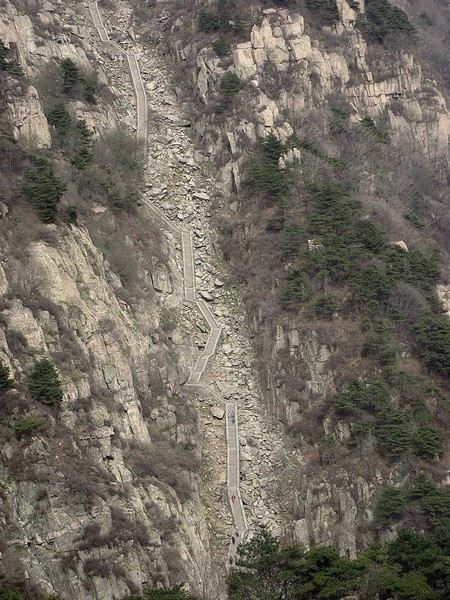
Some of the 6,600 steps on the staircase leading to the summit of Jade Emperor Peak at 1,545 meters.
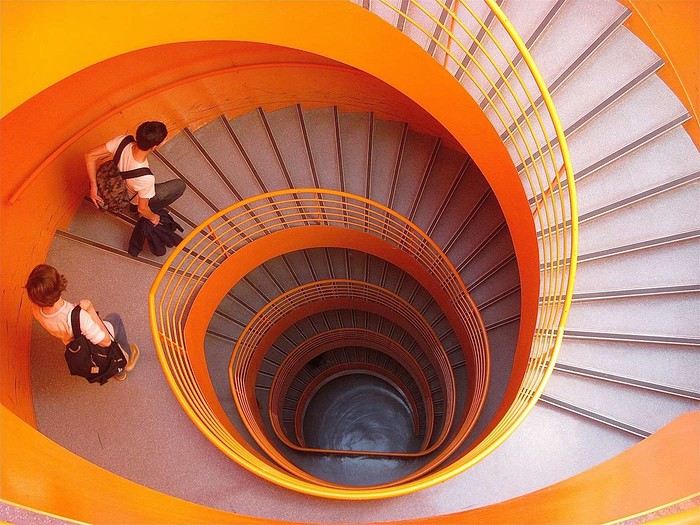
Emergency staircase at the Orléans library (France).
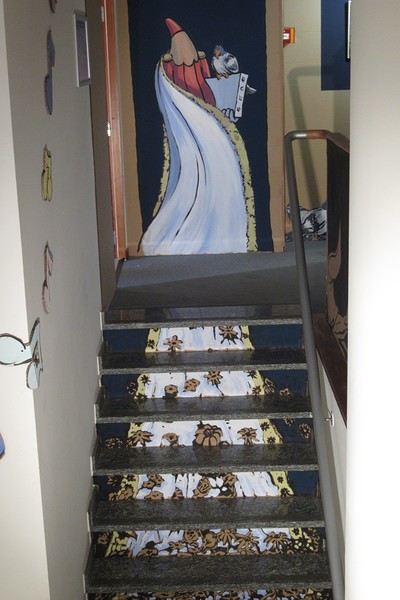
Brussels street artist Créons incorporates the staircase into the dress design of his character.
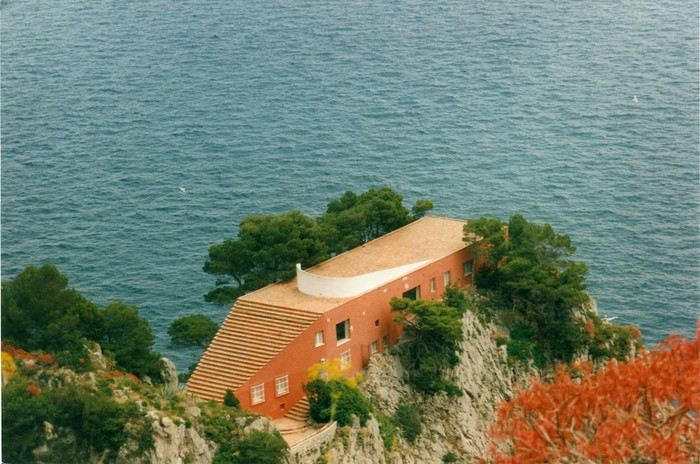
The staircase is part of the roof of Villa Malaparte (Adalberto Libera) on the island of Capri (Italy).
A few examples of staircases:
Some of the 6,600 steps on the staircase leading to the summit of Jade Emperor Peak at 1,545 meters.
Emergency staircase at the Orléans library (France).
Brussels street artist Créons incorporates the staircase into the dress design of his character.
The staircase is part of the roof of Villa Malaparte (Adalberto Libera) on the island of Capri (Italy).
Practical aspects spring 2026: border to Murmansk, to Pskov, SIM cards, internet.
I took a few days to get some fresh air outside the Schengen-NATO prison. Between March 18, 2026, and March 25, 2026, as shown by the passport stamps:
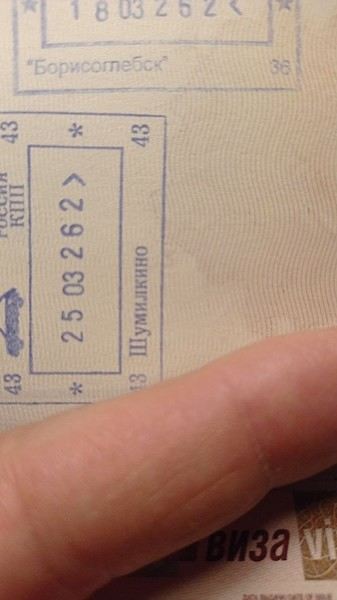
Borisoglebsk is the Russian border checkpoint after Kirkenes, on the road to Murmansk.
Kirkenes is a tiny town with a correspondingly small airport. Nothing has changed there: the minibuses to Murmansk wait on the right as you exit the airport. They’re synchronized with the two daily flights from Oslo—the SAS around 11:00 AM and Norwegian around 11:30 AM. They stop in Kirkenes at the corner of the Scandic for an hour, where other passengers can board, then head straight to the nearby border.
This is the least hassle Frontex/Schengen border. The Norwegian agent quickly scans your passport, and that’s it. No customs, since Norway is Schengen but not in the EU. On the Russian side, there’s a passport check and a quick customs inspection. All in all, crossing both the Norwegian and Russian checkpoints takes about 15 minutes.
A paper visa is required; e-visas aren’t accepted.
Two companies run the route: Avto Ekspress and Borodin: https://ae51.ru/routes/kirkenes-murmansk/ https://borodinbus.com/
The one-way fare is 5,500 ₽. You can either buy it online in rubles with a MIR card or make a formal reservation and pay in NOK cash to the driver. I took Borodin, and the price in NOK was much more expensive than in ₽.
=========================
On March 25, I left from Pskov via the Estonian border post at Luhaama. I spent three days in Murmansk, flew to St. Petersburg (SPB), stayed there for two days, then took an evening train to Pskov.
Since the end of February—and reportedly until the end of May—the Estonians have restricted the opening hours of the two border crossings near Pskov: Koidula (Pechory on the Russian side) and Luhaama (Izborsk on the Russian side). They’re closed at night between 7:00 PM and 7:00 AM. Right now, there’s a bus from Pskov at 7:00 AM to the border. It drops you off at the end of the road where truckers—many Kazakh and Serbian—are parked on the side. You finish the rest on foot to the barrier, where there’s a quick initial check for Ukrainian stamps in passports. Then you walk to the customs building, followed by passport control at the kiosk for motorists. After that, it’s a 500-meter walk to the Estonian checkpoint. At the moment, things seem calmer. Passport control is quick. The usual silly questions in English: "Where were you? Where are you going?" I just gave my most clueless smile: "Sorry, I don’t understand." Yeah, right—I don’t speak English, especially not at an Estonian border with a French passport. If they’re in a mood, though... A very quick bag inspection. Once you exit the Estonian post, walk to the bus stop sign by the road where another coach takes you to Riga.
The catch: in my case, last Wednesday, there were two passengers (Russians) with old Ukrainian stamps in their passports. The bus from the Estonian post to Riga was supposed to leave around 9:30 AM. We ended up leaving around noon after the two were grilled by the FSB. Since it was a weekday outside of holidays, the bus was half-empty. The fuller the bus and the more people with Ukrainian stamps, the worse the nightmare. Don’t book a same-day flight from Riga. I had a flight at 6:00 PM, so it worked out.
=============
The Kirkenes-Murmansk route is still clearly the easiest and fastest. But it’s not the most convenient since it’s way up north.
Next, I’d say the Gdansk-Kaliningrad route in the middle of the week. Avoid weekends and holiday departures/returns.
Avoid the Narva-Ivangorod route during Christmas, Easter, May 9, and *all* summer.
==============
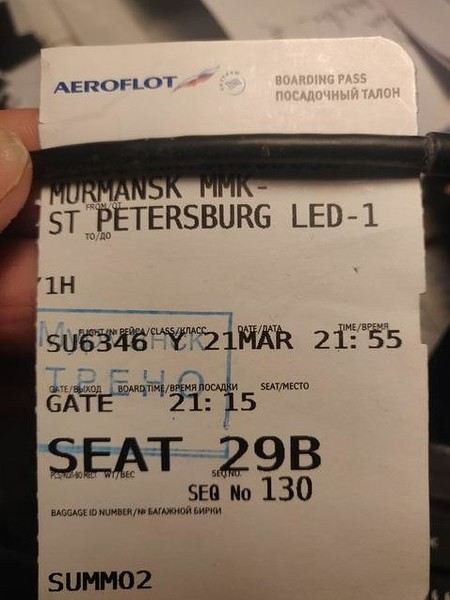
About flights from Murmansk to St. Petersburg: prices are good. I bought my ticket the day before departure on Rossiya for 7,500 ₽, including 10 kg of luggage + a handbag.
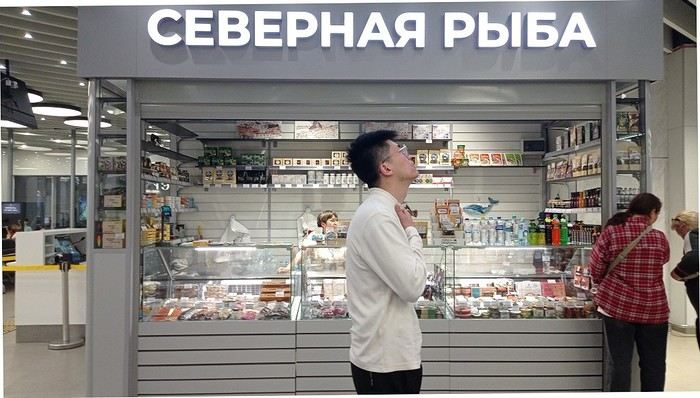
It’s the tail end of the northern lights season, and there were still crowds of Chinese tourists.
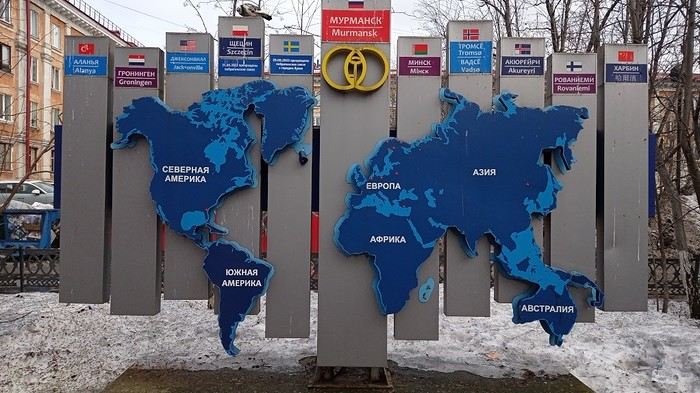
By the way, Murmansk is twinned with Harbin:
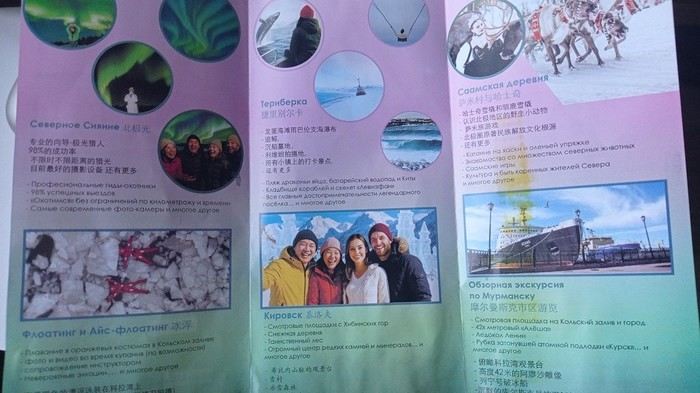
Chinese tourists are the largest foreign group, followed by Indians, then a mix of others from the Far East, Turks, Arabs, etc. Brochures are bilingual—Russian and Chinese:
============================
But let’s talk practical stuff. --
My domestic SIM card was restricted for SMS and internet for 24 hours. After that, if you want to keep using SMS, don’t turn off your phone—restarting triggers another 24-hour purgatory.
My Russian SIM cards (Megafon, MTS, Beeline) were activated as soon as I logged into their respective apps with my credentials.
Internet --
Telegram is heavily slowed down by authorities. To use it, you need to connect through proxy servers, which you load into the latest version of the app. Traffic is then rerouted internally within Telegram to servers outside Russia (Germany, Poland, Sweden, etc.). You can find these proxies on various channels. One is ChatVPN—check their website too.
For general internet use, like browsing the web, VPNs that work right now use the VLESS protocol. You can find several on Telegram by searching "VPN." A few free days, then payment in rubles or crypto.
Rozkomnadzor’s team are experts at this, so things can change. It’s a constant cat-and-mouse game.
Pskov is a special case. The city is near Estonia and has a large military base. Depending on NATO drone swarms launched from the Baltics, Wi-Fi can be completely suspended except for the most essential mobile apps. The drone swarms use the 4G network, and the powerful electronic jamming and drone suppression systems cause periods without Wi-Fi—including in hotels. Wired connections aren’t affected.
Borisoglebsk is the Russian border checkpoint after Kirkenes, on the road to Murmansk.
Kirkenes is a tiny town with a correspondingly small airport. Nothing has changed there: the minibuses to Murmansk wait on the right as you exit the airport. They’re synchronized with the two daily flights from Oslo—the SAS around 11:00 AM and Norwegian around 11:30 AM. They stop in Kirkenes at the corner of the Scandic for an hour, where other passengers can board, then head straight to the nearby border.
This is the least hassle Frontex/Schengen border. The Norwegian agent quickly scans your passport, and that’s it. No customs, since Norway is Schengen but not in the EU. On the Russian side, there’s a passport check and a quick customs inspection. All in all, crossing both the Norwegian and Russian checkpoints takes about 15 minutes.
A paper visa is required; e-visas aren’t accepted.
Two companies run the route: Avto Ekspress and Borodin: https://ae51.ru/routes/kirkenes-murmansk/ https://borodinbus.com/
The one-way fare is 5,500 ₽. You can either buy it online in rubles with a MIR card or make a formal reservation and pay in NOK cash to the driver. I took Borodin, and the price in NOK was much more expensive than in ₽.
=========================
On March 25, I left from Pskov via the Estonian border post at Luhaama. I spent three days in Murmansk, flew to St. Petersburg (SPB), stayed there for two days, then took an evening train to Pskov.
Since the end of February—and reportedly until the end of May—the Estonians have restricted the opening hours of the two border crossings near Pskov: Koidula (Pechory on the Russian side) and Luhaama (Izborsk on the Russian side). They’re closed at night between 7:00 PM and 7:00 AM. Right now, there’s a bus from Pskov at 7:00 AM to the border. It drops you off at the end of the road where truckers—many Kazakh and Serbian—are parked on the side. You finish the rest on foot to the barrier, where there’s a quick initial check for Ukrainian stamps in passports. Then you walk to the customs building, followed by passport control at the kiosk for motorists. After that, it’s a 500-meter walk to the Estonian checkpoint. At the moment, things seem calmer. Passport control is quick. The usual silly questions in English: "Where were you? Where are you going?" I just gave my most clueless smile: "Sorry, I don’t understand." Yeah, right—I don’t speak English, especially not at an Estonian border with a French passport. If they’re in a mood, though... A very quick bag inspection. Once you exit the Estonian post, walk to the bus stop sign by the road where another coach takes you to Riga.
The catch: in my case, last Wednesday, there were two passengers (Russians) with old Ukrainian stamps in their passports. The bus from the Estonian post to Riga was supposed to leave around 9:30 AM. We ended up leaving around noon after the two were grilled by the FSB. Since it was a weekday outside of holidays, the bus was half-empty. The fuller the bus and the more people with Ukrainian stamps, the worse the nightmare. Don’t book a same-day flight from Riga. I had a flight at 6:00 PM, so it worked out.
=============
The Kirkenes-Murmansk route is still clearly the easiest and fastest. But it’s not the most convenient since it’s way up north.
Next, I’d say the Gdansk-Kaliningrad route in the middle of the week. Avoid weekends and holiday departures/returns.
Avoid the Narva-Ivangorod route during Christmas, Easter, May 9, and *all* summer.
==============
About flights from Murmansk to St. Petersburg: prices are good. I bought my ticket the day before departure on Rossiya for 7,500 ₽, including 10 kg of luggage + a handbag.
It’s the tail end of the northern lights season, and there were still crowds of Chinese tourists.
By the way, Murmansk is twinned with Harbin:
Chinese tourists are the largest foreign group, followed by Indians, then a mix of others from the Far East, Turks, Arabs, etc. Brochures are bilingual—Russian and Chinese:
============================
But let’s talk practical stuff. --
My domestic SIM card was restricted for SMS and internet for 24 hours. After that, if you want to keep using SMS, don’t turn off your phone—restarting triggers another 24-hour purgatory.
My Russian SIM cards (Megafon, MTS, Beeline) were activated as soon as I logged into their respective apps with my credentials.
Internet --
Telegram is heavily slowed down by authorities. To use it, you need to connect through proxy servers, which you load into the latest version of the app. Traffic is then rerouted internally within Telegram to servers outside Russia (Germany, Poland, Sweden, etc.). You can find these proxies on various channels. One is ChatVPN—check their website too.
For general internet use, like browsing the web, VPNs that work right now use the VLESS protocol. You can find several on Telegram by searching "VPN." A few free days, then payment in rubles or crypto.
Rozkomnadzor’s team are experts at this, so things can change. It’s a constant cat-and-mouse game.
Pskov is a special case. The city is near Estonia and has a large military base. Depending on NATO drone swarms launched from the Baltics, Wi-Fi can be completely suspended except for the most essential mobile apps. The drone swarms use the 4G network, and the powerful electronic jamming and drone suppression systems cause periods without Wi-Fi—including in hotels. Wired connections aren’t affected.
Naha & Osaka, Japan - June 2025
It’s an understatement to say that Japan is a world apart. All around me, people exclaim: "How lucky you are to be able to go there! I’ve always dreamed of visiting, of finding myself in that culture blending tradition and technology!" Yes, they’re right. Until the moment their dreams become reality and things appear as they truly are, without the filter of fantasized preconceptions. Because in the collective unconscious, Japan indeed seems like a civilization—if not neutral—at least stripped of any social maturation. As if it had emerged all at once from its canonical ages, offering only the best of its traditions, and as if those traditions were undoubtedly the foundation of its extraordinary discipline. Yet, as always, the truth is far more complex. Modern Japan is likely shaped by its millennia-old traditions. But that Japan is also the result of its own uncertainties and contradictions. I’ve always been wary. I’ve never understood why the cleaning women on the platform bow when the train arrives. At some point, too much discipline, too much deference—it makes you smile, it raises questions.
Finally, thanks to F., a dream is coming true! Not the dream of going to Japan—a country I’ve visited more than any other, except for Réunion and the UK—but the dream of completing the fastest round-the-world trip of my career. Indeed, due to the restrictions imposed by the Russians*, the plane flies over the Caucasus and China on the way there; on the return, it gracefully heads toward the Arctic after skirting the Aleutian Islands, Alaska, and Greenland. So, in nearly 26 hours of flight, I complete my 6th round-the-world trip. A round-the-world trip with just one stopover. Or two, if you count our impromptu detour to Okinawa.
(* In response to Western sanctions, Russia closed its airspace to Western airlines on February 28, 2022, except for Air Serbia, Turkish Airlines, Pegasus, and Belavia. This decision adds 2 to 3 hours to flight times and, incidentally, increases operating costs.)
The empire of noise. The empire that dazzles. In Japan, the auditory and visual space is constantly fed. No respite. You have to be strong. Navigating public transport feels like playing the most advanced video game: moving between language barriers and a different organization, the hero tries to ignore the numerous visual and auditory distractions. Mostly auditory, though. Because in Japan, there’s a culture of noise that has undoubtedly inspired our national railways. Everything must be announced. So, here and there, all along the route, we find agents whose sole role is to endlessly repeat safety messages through megaphones more or less suited to the situation. The result is a constant murmur, a kind of tinnitus, a subtle but incessant buzz that fades only at bedtime and returns with a vengeance at first light, when we descend back into the supposedly sterile depths of Osaka’s subway. "To go right, please turn right, kudasaï. When descending the stairs, please mind the steps, kudasaï. To go straight, please take the left corridor, kudasaï." That *kudasaï* ("please" in Japanese), I assure you, has permanently lodged itself in my auditory cells.
Screens are no exception; the brain is constantly stimulated. But paradoxically, passengers massively retreat into their own worlds via their screens. Literally glued to their phones, earbuds firmly in place, people escape into the virtual aisles of a furniture store, a game, a movie... In the train cars, raised voices are rare. The field is clear for announcements and other jingles. Each stop is announced by a little tune unique to each station. Simply incredible.
If we usually judge a country by the welcome its inhabitants offer, in Japan, we’re left wanting. Indeed, the Lost in Translation* spirit doesn’t just apply to verbal exchanges—it applies to everything, especially non-verbal communication. In Japan, me, the slightly North African Corsican, I’m at a loss. I speak loudly, I gesture, in front of a hotel concierge just as lost. Each for our own reasons. Yes, he speaks some English, but we can’t seem to connect. It’s a losing battle trying to find a bit of compassion from a local who’s far from familiar with Western concerns. I try to buy tickets for the World Expo? I run into a systematization as rigid as it is abrupt, which the concierge can’t seem to navigate. While we might still have a shred of common sense, here in Japan, everything is digitized. Soon, no one will be surprised that a QR code becomes essential just to go to the bathroom.
(* Film by Sofia Coppola, released in 2003, which explores isolation, unease, Japanese culture, and language through the experiences of two protagonists.)
In the end, we get that ticket for the Expo. After providing personal information on yet another account created for the occasion, we buy electronic tickets—a QR code, then—to regulate the comings and goings, the souls and aspirations of all these wandering beings scattered across the globe. And it’s probably for the best... Because we’ll be tens of thousands of visitors—100,000 to 150,000 per day—walking the aisles of this enormous improvised amusement park, a kind of delirious superstructure surrounded by the Grand Ring, the largest wooden construction in the world. Inside the park, the pavilions, flagship vessels of their respective countries, compete in ingenuity, proportionate to their GDP, to attract visitors. But you have to wait up to two hours to visit the most popular ones! Fortunately, about a hundred countries can be explored without waiting in shared, more spacious areas. What will I remember from this adventure? The beauty of that wooden structure, despite any environmental or financial considerations—200M € for barely renewable elements; a certain poetry, even magic, in the expression of this event—conversing with Juliette Petit, the splendid representative of Vanuatu, had something indescribable; a close-up experience of Japanese discipline when it came time to return to the subway after that epic evening—thousands upon thousands of people converging at the same time toward a single place without any interruption in the flow.
But my real passion is the countryside. So, I’ll especially remember that brief escape, on the very first day, to the Mino-o waterfall, where the journey itself was already enchanting. Quickly leaving the underground lines, our train speeds through the city’s endless expanse and drops us at the foot of a hill, the abrupt edge of the urban sprawl. The slope was too steep to build anything? We leave behind an impressive hotel, a capitalist eyesore defying the laws of elevation to tackle the climb toward the waterfall. A bucolic walk where the stroller can choose between a paved path or more epic trails. Here and there, stalls, temples, everywhere, a certain serenity. The city’s pulse gives way to a magnificent spectacle magnified by giant sequoias. From the depths of a ravine, we try to glimpse the sky beyond the foliage. Everything is oversized. Here, you can breathe.
***
In reality, Japan has never undertaken any real work of memory. Aside from a few feeble gestures to appease Washington in its choice of Asian partners, one wonders if the Japanese have ever truly grasped the horror they were forced to participate in. While our Judeo-Christian society has more or less assimilated the notions of forgiveness and self-questioning, where does Japanese society stand, juggling a millennia-old Zen philosophy and the unabashed Machiavellianism of an emperor utterly possessed? Is it just me, or does there float in the atmosphere a kind of unease, a malaise, an awkward relationship with reality? For me, bowing to a train as it enters the station is just the result of a poorly directed moral dilemma...
Ah, how distant is the time of sakoku, that closure of the country—both concrete and ideological—that was in vogue for two centuries. Because if no one could enter, no one could leave either! A boon for neighboring countries. But from 1854, following the skirmishes of Commodore Matthew Perry, who demanded Japan’s participation in trade, the country suddenly became aware of the disparities separating it from the West. Bring Japan up to the level of other nations? Industrialization, competition, search for raw materials... Hirohito (1901–1989) emerges on the scene, a bit expansionist and willing to stop at nothing to achieve his goals. Above all, he knew how to use, in his own way, the incredible capacity for self-sacrifice of his people...
We protest, we condemn, we all rally behind an acceptable discourse when it comes to discussing the use of the atomic bomb. Yet, we forget one essential thing: Hiroshima wasn’t enough to make Hirohito yield. While we’re bombarded with anti-fascist elements, as if the sole purpose of school curricula were to prevent us from voting for the National Rally, we completely overlook those events of rare cruelty that took place on the other side of the globe at a time contemporary with Nazi atrocities. Why? Because it was farther away, on the other side of the world? Because we must both condemn the use of nuclear weapons and Nazism? What a dangerous game. Killing civilians is beyond comprehension, everyone agrees on that. But hasn’t Japan ever been guilty of such atrocities? Our empathy is legitimate; it won’t, however, remove from my mind the idea that there was no other solution. Nagasaki is the most telling proof of that.
At least in France, in school textbooks, Hitler will have completely overshadowed the existence of people crueler and more abject than him. Certainly, Adolf was a deeply disturbed man whom events propelled to power. But I’m justified in believing that his approach was probably more humane than that of Joseph Stalin at the height of his art*. And if Hirohito followed the same line as Hitler, in the sense that he represented the superior race, he would apply with conviction what was Stalin’s credo: contempt for his own people when sending them to slaughter, and an even fiercer contempt for the human race when it didn’t have the good fortune to be Japanese. Just look at how China was invaded and by what means millions of Chinese were annihilated, burned, deported, buried alive! Operation Scorched Earth or Three Alls Policy for kill all, burn all, loot all? No comment. Even today, the Japanese are convinced they waged a patriotic war, when clearly, that war served only vague ideological (and certainly economic) interests.
(* "In many ways, Hitler’s National Socialism was far more humane than Communism: it wasn’t unthinkable to speak to the SS or the Gestapo, and dissuading them from sending you to a prison camp wasn’t utopian. To some extent (compared to the Communists), you could still expect a semblance of justice. All those who lived under Hitler and under Communism will tell you: as the front lines shifted, they always managed to end up in Germany, where, though it was a strange place ruled by a madman, life went on. Under Communism, there was no life; totalitarianism was absolute. Probably, Hitler’s conservatism prevented him from fully imitating Bolshevism." Seraphim Rose in The Revolutions of the 19th and 20th Centuries (circa 1970))
In Naha, we visit two strategic sites: the Imperial Navy headquarters and Maeda Escarpment, in Urasoe, better known as Hacksaw Ridge. I love this confrontation with history. In the hand-dug tunnels of the headquarters, we meet Japanese people seeking information. They’re not responsible for this tragedy. Neither are we. I would have liked to tell them that, to hug them, to move on. To finally believe in those peace messages displayed here and there. Yes, it’s curious to read those calls for peace* when no real work of memory** has been undertaken. Two civilizations, two perspectives, a profound misunderstanding. When I analyze the waste of that war—and particularly the waste of those Pacific battles—like Peleliu in autumn 1944 and Okinawa in spring 1945—I can’t bring myself to share in the pathological patriotism that reigns within these walls. There, the room where the last message of Admiral Minoru Ōta was transmitted in Morse, praising the merits of the archipelago’s people. A tangled mix that, yes, is charged with positive emotions but, no, won’t remove from my mind the idea that this people was completely conditioned, completely disconnected from reality. Allying with the Axis powers? Invading the South Pacific? And finding that noble! Everyone sees things through their own lens.
(* Peace Declaration by Denny Tamaki, Governor of Okinawa, June 2020. ** "Recognizing the atrocities committed by one’s country requires a mix of democratic culture and self-confidence that is more the exception than the rule." Dominique Moïsi in Les Échos, April 30, 2015)
Okinawa. 200,000 dead. Stemming from bushido, the way of the warrior, this conditioning reached its peak with the kamikaze philosophy in particular and suicide in general. So, schematically, here’s how things went: as the island was encircled—Peleliu, Iwo Jima, Okinawa—and all hope was lost, the order was given to kill ten American soldiers before taking one’s own life. The deceit of this system, where surrender is synonymous with dishonor, involves creating tunnels and secret pockets where Japanese soldiers hide and from which they emerge. Long before the atomic bomb, the knell of their war had sounded. Hiroshima and Nagasaki are just the result of human pride, of which Hirohito’s reign is the finest example. Why was this henchman of Satan left in place until his death? I don’t understand. While the humiliation inflicted on Germany repeatedly was abject, especially for its people, the absence of any real and pressing accountability for Hirohito in this large-scale carnage he instigated leaves room for the wildest interpretations. As if to underscore my point, Emperor Naruhito visited Okinawa the same day we did, paying his respects to the inhabitants who fell in battle. I looked at the faces in the monorail serving the south of the island. There were elderly people who undoubtedly lost their parents eighty years ago. To what extent can they blame this tragedy on the delusional visions of their leaders?
On Maeda Escarpment, I salute the courage of Desmond Doss, that conscientious objector who fought to serve his country while refusing to ever carry a weapon. There, at the top of a steep ridge, you can see to the north the Allies’ advance, while to the south, the slope is gentler down to Shuri, in front of the headquarters. The underground is a Swiss cheese filled with enemies. Desmond works as a medic. He manages to save 75 wounded from certain death by evacuating them at night from the battlefield using makeshift ropes. Back in Osaka, far from the somewhat dilapidated tropical islands, I rediscover the splendor and grandeur of Japan’s second-largest city. To tell the truth, and this applies to Okinawa too, the density is so insane on this archipelago that you sometimes wonder if it’s not just one giant city spread across the vast territory. Because between Tokyo and Osaka, while there are some mountains and forests, it’s the city that dominates; during rush hour, a rapid train connects the two cities every five minutes. We get lost in rather quiet alleys parallel to the main streets, only to find ourselves in the covered and lively galleries of Dōtonbori. We’re looking for a place to eat—above all, we’re trying to navigate the unlimited options stretching endlessly along the sidewalks. It’s absolutely mind-blowing. And while I introduce F. to a part of history that our Western societies have quickly forgotten, he initiates me into Japanese gastronomy despite my well-known aversion to Asian food. But nothing beats having a master in the field! We feast on okonomiyaki, Japanese pancakes expertly prepared and served on a teppan embedded in our table.
Night falls on Japan, and I still haven’t found the answer. Like in Singapore, one can praise the calm and serenity of human relationships, the delicacy that may just be hypocrisy, the politeness, the discipline. But above all, we notice that in the absence of freedom, in the absence of madness, poetry struggles to take root, boredom looms, as does real madness. Bushido still exists, honor is there and must be preserved. But the youth drowns in electronics and in willingly sterile cults (otaku), unable to discern what’s essential, failing to believe in their dreams. You have to succeed? Young people commit suicide because of school bullying, the slightly older ones because of work-related difficulties or marital problems. Nothing exceptional, we might say—average*—but you’d expect better from a country so well-organized, a country that makes so many Westerners dream. Yes, night falls on Japan. Empire of noise, empire of the senses, a very strange land where you find clean toilets in subway corridors but where the very meaning of life seems stifled by the mirages of technology. Above all, a civilization deprived of a penance that would prove salutary. We’re caught between two waters. Those of a shallow modernity without depth or anchor; those of a past that was majestic but irreparably tainted by the demonic madness of an overly adored emperor.
How can one fully thrive when guilt has no outlet?
(* France and Japan share a common statistic of 17 suicides per 100,000 inhabitants, which, depending on density, means 30 per day in France and 70 in Japan...)
Finally, thanks to F., a dream is coming true! Not the dream of going to Japan—a country I’ve visited more than any other, except for Réunion and the UK—but the dream of completing the fastest round-the-world trip of my career. Indeed, due to the restrictions imposed by the Russians*, the plane flies over the Caucasus and China on the way there; on the return, it gracefully heads toward the Arctic after skirting the Aleutian Islands, Alaska, and Greenland. So, in nearly 26 hours of flight, I complete my 6th round-the-world trip. A round-the-world trip with just one stopover. Or two, if you count our impromptu detour to Okinawa.
(* In response to Western sanctions, Russia closed its airspace to Western airlines on February 28, 2022, except for Air Serbia, Turkish Airlines, Pegasus, and Belavia. This decision adds 2 to 3 hours to flight times and, incidentally, increases operating costs.)
The empire of noise. The empire that dazzles. In Japan, the auditory and visual space is constantly fed. No respite. You have to be strong. Navigating public transport feels like playing the most advanced video game: moving between language barriers and a different organization, the hero tries to ignore the numerous visual and auditory distractions. Mostly auditory, though. Because in Japan, there’s a culture of noise that has undoubtedly inspired our national railways. Everything must be announced. So, here and there, all along the route, we find agents whose sole role is to endlessly repeat safety messages through megaphones more or less suited to the situation. The result is a constant murmur, a kind of tinnitus, a subtle but incessant buzz that fades only at bedtime and returns with a vengeance at first light, when we descend back into the supposedly sterile depths of Osaka’s subway. "To go right, please turn right, kudasaï. When descending the stairs, please mind the steps, kudasaï. To go straight, please take the left corridor, kudasaï." That *kudasaï* ("please" in Japanese), I assure you, has permanently lodged itself in my auditory cells.
Screens are no exception; the brain is constantly stimulated. But paradoxically, passengers massively retreat into their own worlds via their screens. Literally glued to their phones, earbuds firmly in place, people escape into the virtual aisles of a furniture store, a game, a movie... In the train cars, raised voices are rare. The field is clear for announcements and other jingles. Each stop is announced by a little tune unique to each station. Simply incredible.
If we usually judge a country by the welcome its inhabitants offer, in Japan, we’re left wanting. Indeed, the Lost in Translation* spirit doesn’t just apply to verbal exchanges—it applies to everything, especially non-verbal communication. In Japan, me, the slightly North African Corsican, I’m at a loss. I speak loudly, I gesture, in front of a hotel concierge just as lost. Each for our own reasons. Yes, he speaks some English, but we can’t seem to connect. It’s a losing battle trying to find a bit of compassion from a local who’s far from familiar with Western concerns. I try to buy tickets for the World Expo? I run into a systematization as rigid as it is abrupt, which the concierge can’t seem to navigate. While we might still have a shred of common sense, here in Japan, everything is digitized. Soon, no one will be surprised that a QR code becomes essential just to go to the bathroom.
(* Film by Sofia Coppola, released in 2003, which explores isolation, unease, Japanese culture, and language through the experiences of two protagonists.)
In the end, we get that ticket for the Expo. After providing personal information on yet another account created for the occasion, we buy electronic tickets—a QR code, then—to regulate the comings and goings, the souls and aspirations of all these wandering beings scattered across the globe. And it’s probably for the best... Because we’ll be tens of thousands of visitors—100,000 to 150,000 per day—walking the aisles of this enormous improvised amusement park, a kind of delirious superstructure surrounded by the Grand Ring, the largest wooden construction in the world. Inside the park, the pavilions, flagship vessels of their respective countries, compete in ingenuity, proportionate to their GDP, to attract visitors. But you have to wait up to two hours to visit the most popular ones! Fortunately, about a hundred countries can be explored without waiting in shared, more spacious areas. What will I remember from this adventure? The beauty of that wooden structure, despite any environmental or financial considerations—200M € for barely renewable elements; a certain poetry, even magic, in the expression of this event—conversing with Juliette Petit, the splendid representative of Vanuatu, had something indescribable; a close-up experience of Japanese discipline when it came time to return to the subway after that epic evening—thousands upon thousands of people converging at the same time toward a single place without any interruption in the flow.
But my real passion is the countryside. So, I’ll especially remember that brief escape, on the very first day, to the Mino-o waterfall, where the journey itself was already enchanting. Quickly leaving the underground lines, our train speeds through the city’s endless expanse and drops us at the foot of a hill, the abrupt edge of the urban sprawl. The slope was too steep to build anything? We leave behind an impressive hotel, a capitalist eyesore defying the laws of elevation to tackle the climb toward the waterfall. A bucolic walk where the stroller can choose between a paved path or more epic trails. Here and there, stalls, temples, everywhere, a certain serenity. The city’s pulse gives way to a magnificent spectacle magnified by giant sequoias. From the depths of a ravine, we try to glimpse the sky beyond the foliage. Everything is oversized. Here, you can breathe.
***
In reality, Japan has never undertaken any real work of memory. Aside from a few feeble gestures to appease Washington in its choice of Asian partners, one wonders if the Japanese have ever truly grasped the horror they were forced to participate in. While our Judeo-Christian society has more or less assimilated the notions of forgiveness and self-questioning, where does Japanese society stand, juggling a millennia-old Zen philosophy and the unabashed Machiavellianism of an emperor utterly possessed? Is it just me, or does there float in the atmosphere a kind of unease, a malaise, an awkward relationship with reality? For me, bowing to a train as it enters the station is just the result of a poorly directed moral dilemma...
Ah, how distant is the time of sakoku, that closure of the country—both concrete and ideological—that was in vogue for two centuries. Because if no one could enter, no one could leave either! A boon for neighboring countries. But from 1854, following the skirmishes of Commodore Matthew Perry, who demanded Japan’s participation in trade, the country suddenly became aware of the disparities separating it from the West. Bring Japan up to the level of other nations? Industrialization, competition, search for raw materials... Hirohito (1901–1989) emerges on the scene, a bit expansionist and willing to stop at nothing to achieve his goals. Above all, he knew how to use, in his own way, the incredible capacity for self-sacrifice of his people...
We protest, we condemn, we all rally behind an acceptable discourse when it comes to discussing the use of the atomic bomb. Yet, we forget one essential thing: Hiroshima wasn’t enough to make Hirohito yield. While we’re bombarded with anti-fascist elements, as if the sole purpose of school curricula were to prevent us from voting for the National Rally, we completely overlook those events of rare cruelty that took place on the other side of the globe at a time contemporary with Nazi atrocities. Why? Because it was farther away, on the other side of the world? Because we must both condemn the use of nuclear weapons and Nazism? What a dangerous game. Killing civilians is beyond comprehension, everyone agrees on that. But hasn’t Japan ever been guilty of such atrocities? Our empathy is legitimate; it won’t, however, remove from my mind the idea that there was no other solution. Nagasaki is the most telling proof of that.
At least in France, in school textbooks, Hitler will have completely overshadowed the existence of people crueler and more abject than him. Certainly, Adolf was a deeply disturbed man whom events propelled to power. But I’m justified in believing that his approach was probably more humane than that of Joseph Stalin at the height of his art*. And if Hirohito followed the same line as Hitler, in the sense that he represented the superior race, he would apply with conviction what was Stalin’s credo: contempt for his own people when sending them to slaughter, and an even fiercer contempt for the human race when it didn’t have the good fortune to be Japanese. Just look at how China was invaded and by what means millions of Chinese were annihilated, burned, deported, buried alive! Operation Scorched Earth or Three Alls Policy for kill all, burn all, loot all? No comment. Even today, the Japanese are convinced they waged a patriotic war, when clearly, that war served only vague ideological (and certainly economic) interests.
(* "In many ways, Hitler’s National Socialism was far more humane than Communism: it wasn’t unthinkable to speak to the SS or the Gestapo, and dissuading them from sending you to a prison camp wasn’t utopian. To some extent (compared to the Communists), you could still expect a semblance of justice. All those who lived under Hitler and under Communism will tell you: as the front lines shifted, they always managed to end up in Germany, where, though it was a strange place ruled by a madman, life went on. Under Communism, there was no life; totalitarianism was absolute. Probably, Hitler’s conservatism prevented him from fully imitating Bolshevism." Seraphim Rose in The Revolutions of the 19th and 20th Centuries (circa 1970))
In Naha, we visit two strategic sites: the Imperial Navy headquarters and Maeda Escarpment, in Urasoe, better known as Hacksaw Ridge. I love this confrontation with history. In the hand-dug tunnels of the headquarters, we meet Japanese people seeking information. They’re not responsible for this tragedy. Neither are we. I would have liked to tell them that, to hug them, to move on. To finally believe in those peace messages displayed here and there. Yes, it’s curious to read those calls for peace* when no real work of memory** has been undertaken. Two civilizations, two perspectives, a profound misunderstanding. When I analyze the waste of that war—and particularly the waste of those Pacific battles—like Peleliu in autumn 1944 and Okinawa in spring 1945—I can’t bring myself to share in the pathological patriotism that reigns within these walls. There, the room where the last message of Admiral Minoru Ōta was transmitted in Morse, praising the merits of the archipelago’s people. A tangled mix that, yes, is charged with positive emotions but, no, won’t remove from my mind the idea that this people was completely conditioned, completely disconnected from reality. Allying with the Axis powers? Invading the South Pacific? And finding that noble! Everyone sees things through their own lens.
(* Peace Declaration by Denny Tamaki, Governor of Okinawa, June 2020. ** "Recognizing the atrocities committed by one’s country requires a mix of democratic culture and self-confidence that is more the exception than the rule." Dominique Moïsi in Les Échos, April 30, 2015)
Okinawa. 200,000 dead. Stemming from bushido, the way of the warrior, this conditioning reached its peak with the kamikaze philosophy in particular and suicide in general. So, schematically, here’s how things went: as the island was encircled—Peleliu, Iwo Jima, Okinawa—and all hope was lost, the order was given to kill ten American soldiers before taking one’s own life. The deceit of this system, where surrender is synonymous with dishonor, involves creating tunnels and secret pockets where Japanese soldiers hide and from which they emerge. Long before the atomic bomb, the knell of their war had sounded. Hiroshima and Nagasaki are just the result of human pride, of which Hirohito’s reign is the finest example. Why was this henchman of Satan left in place until his death? I don’t understand. While the humiliation inflicted on Germany repeatedly was abject, especially for its people, the absence of any real and pressing accountability for Hirohito in this large-scale carnage he instigated leaves room for the wildest interpretations. As if to underscore my point, Emperor Naruhito visited Okinawa the same day we did, paying his respects to the inhabitants who fell in battle. I looked at the faces in the monorail serving the south of the island. There were elderly people who undoubtedly lost their parents eighty years ago. To what extent can they blame this tragedy on the delusional visions of their leaders?
On Maeda Escarpment, I salute the courage of Desmond Doss, that conscientious objector who fought to serve his country while refusing to ever carry a weapon. There, at the top of a steep ridge, you can see to the north the Allies’ advance, while to the south, the slope is gentler down to Shuri, in front of the headquarters. The underground is a Swiss cheese filled with enemies. Desmond works as a medic. He manages to save 75 wounded from certain death by evacuating them at night from the battlefield using makeshift ropes. Back in Osaka, far from the somewhat dilapidated tropical islands, I rediscover the splendor and grandeur of Japan’s second-largest city. To tell the truth, and this applies to Okinawa too, the density is so insane on this archipelago that you sometimes wonder if it’s not just one giant city spread across the vast territory. Because between Tokyo and Osaka, while there are some mountains and forests, it’s the city that dominates; during rush hour, a rapid train connects the two cities every five minutes. We get lost in rather quiet alleys parallel to the main streets, only to find ourselves in the covered and lively galleries of Dōtonbori. We’re looking for a place to eat—above all, we’re trying to navigate the unlimited options stretching endlessly along the sidewalks. It’s absolutely mind-blowing. And while I introduce F. to a part of history that our Western societies have quickly forgotten, he initiates me into Japanese gastronomy despite my well-known aversion to Asian food. But nothing beats having a master in the field! We feast on okonomiyaki, Japanese pancakes expertly prepared and served on a teppan embedded in our table.
Night falls on Japan, and I still haven’t found the answer. Like in Singapore, one can praise the calm and serenity of human relationships, the delicacy that may just be hypocrisy, the politeness, the discipline. But above all, we notice that in the absence of freedom, in the absence of madness, poetry struggles to take root, boredom looms, as does real madness. Bushido still exists, honor is there and must be preserved. But the youth drowns in electronics and in willingly sterile cults (otaku), unable to discern what’s essential, failing to believe in their dreams. You have to succeed? Young people commit suicide because of school bullying, the slightly older ones because of work-related difficulties or marital problems. Nothing exceptional, we might say—average*—but you’d expect better from a country so well-organized, a country that makes so many Westerners dream. Yes, night falls on Japan. Empire of noise, empire of the senses, a very strange land where you find clean toilets in subway corridors but where the very meaning of life seems stifled by the mirages of technology. Above all, a civilization deprived of a penance that would prove salutary. We’re caught between two waters. Those of a shallow modernity without depth or anchor; those of a past that was majestic but irreparably tainted by the demonic madness of an overly adored emperor.
How can one fully thrive when guilt has no outlet?
(* France and Japan share a common statistic of 17 suicides per 100,000 inhabitants, which, depending on density, means 30 per day in France and 70 in Japan...)
Requirements for travel to Russia and Mongolia
Hi there,
I’m planning a trip to Russia and Mongolia, starting from France.
Crossing the border at Poland/Belarus or Georgia/Russia—other borders seem either closed or complicated.
Tourist visas for 3 months with multiple entries.
Do you have any info on Russian companies that cover a 4x4 vehicle for 3 months, and what prices in rubles or euros you’ve paid?
Which bank did you use for expenses? (EuroMastercard and Visa cards no longer work.)
Regarding Russian SIM cards, a new system called "Gosuslugi" has been introduced. How long did it take you to get one, and what steps did you follow?
Thanks
Which bank did you use for expenses? (EuroMastercard and Visa cards no longer work.)
Regarding Russian SIM cards, a new system called "Gosuslugi" has been introduced. How long did it take you to get one, and what steps did you follow?
Thanks
Kattegat Tour and Norway’s Majestic Fjords – 32 Days (Denmark, Sweden, Norway)
Kattegat isn’t just the name of the village in the TV series *Vikings*—it’s also the stretch of water separating Denmark from Sweden... the sea, basically! And further north, you’ve got Norway and its fjords!
Originally, I’d planned to just do a loop around Kattegat, with the *Under* restaurant in Lindesnes as our anniversary treat... but along the way, we thought, why not "push" a little further north, keeping an eye on the budget since we’d chosen to travel by car in June 2025 through Scandinavia.
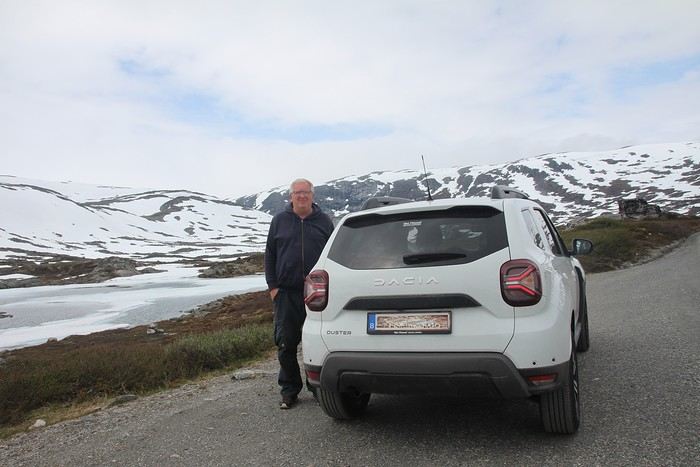
Why by car when most travelers opt for a camper van, while others prefer the comfort of cruises? Well, because we don’t own a camper van, renting one is pricey, and then you’ve got to add fuel costs (those things guzzle gas!), ferry fees, and other "tolls." All things considered, we went for mostly rentals—especially since there were four of us at the start of the trip. We spent the first week in Denmark with our daughter and son-in-law. Then they flew back to Belgium, and we continued our adventure as a couple. For accommodation, we mainly booked Airbnb apartments, which helped keep costs down and, most importantly, let us prepare our own meals (diet, diet!). In this travel journal, you’ll discover (or rediscover, for those who followed my older ones) our unbridled love for theme parks, museums, unique experiences, and—especially in Denmark—Legos! Unfortunately, we didn’t do any hikes this year because the unpredictable weather had made the trails slippery, and since I’d already taken three tumbles during the trip, I didn’t want to risk another! In the end, we traveled for 32 days, covered 6,200 km, and most importantly, discovered the charming country of Denmark, marveled at Norway’s breathtaking fjords—all without suffering the heatwave that hit France and Belgium that June! If you’ve got any questions, don’t hesitate to ask!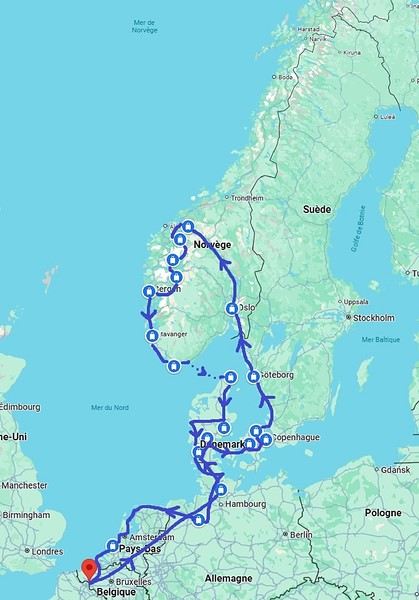
Why by car when most travelers opt for a camper van, while others prefer the comfort of cruises? Well, because we don’t own a camper van, renting one is pricey, and then you’ve got to add fuel costs (those things guzzle gas!), ferry fees, and other "tolls." All things considered, we went for mostly rentals—especially since there were four of us at the start of the trip. We spent the first week in Denmark with our daughter and son-in-law. Then they flew back to Belgium, and we continued our adventure as a couple. For accommodation, we mainly booked Airbnb apartments, which helped keep costs down and, most importantly, let us prepare our own meals (diet, diet!). In this travel journal, you’ll discover (or rediscover, for those who followed my older ones) our unbridled love for theme parks, museums, unique experiences, and—especially in Denmark—Legos! Unfortunately, we didn’t do any hikes this year because the unpredictable weather had made the trails slippery, and since I’d already taken three tumbles during the trip, I didn’t want to risk another! In the end, we traveled for 32 days, covered 6,200 km, and most importantly, discovered the charming country of Denmark, marveled at Norway’s breathtaking fjords—all without suffering the heatwave that hit France and Belgium that June! If you’ve got any questions, don’t hesitate to ask!