Results for "Brésil+sécurité"
About 13,120 results.
More options
Many results are in French, the community’s main language. English translations are added over time.
Search results
Questions about visiting Guatemala in 14 days
hi there,
we’re traveling as a couple to Guatemala from Feb 8 to 22. We’ve realized that given the distances, it feels a bit short. So, we’ve decided to limit ourselves to:
- Antigua: 3 nights (from Feb 8 to 11), including the arrival day - Lake Atitlán: from Feb 11 to 14 – 3 nights in San Juan La Laguna, including the morning trip from Antigua to Lake Atitlán - Chichicastenango: from Feb 14 to 15 – 1 night to attend the Sunday market and visit the cemetery
We have 7 days left that we’re not sure how to organize to cover: Flores – Tikal – El Remate, then head back to Guatemala City for our flight on Feb 22. Actually, I have a few questions: Do you think the time in Antigua and at the lake is enough? We might do the Pacaya Volcano, which is accessible for beginners, and that’s it. Should we spend a bit more time at these two spots: Antigua and the lake? If so, we’d have to skip the Chichicastenango market. We’re also thinking of leaving Chichicastenango to head to Flores, then staying overnight in El Remate. Does that seem doable in one day? We’ve noted that the trips are long, and since we don’t want to rush, we’ve reduced the number of accommodations. Even though we know we won’t see everything, we don’t want to miss the must-sees. We’re also wondering if we’ve planned the route in the right direction, or if we should head straight to Tikal when we arrive. Anyway, I know this is long, but we’re a bit lost. Thanks so much for your help! Annick
we’re traveling as a couple to Guatemala from Feb 8 to 22. We’ve realized that given the distances, it feels a bit short. So, we’ve decided to limit ourselves to:
- Antigua: 3 nights (from Feb 8 to 11), including the arrival day - Lake Atitlán: from Feb 11 to 14 – 3 nights in San Juan La Laguna, including the morning trip from Antigua to Lake Atitlán - Chichicastenango: from Feb 14 to 15 – 1 night to attend the Sunday market and visit the cemetery
We have 7 days left that we’re not sure how to organize to cover: Flores – Tikal – El Remate, then head back to Guatemala City for our flight on Feb 22. Actually, I have a few questions: Do you think the time in Antigua and at the lake is enough? We might do the Pacaya Volcano, which is accessible for beginners, and that’s it. Should we spend a bit more time at these two spots: Antigua and the lake? If so, we’d have to skip the Chichicastenango market. We’re also thinking of leaving Chichicastenango to head to Flores, then staying overnight in El Remate. Does that seem doable in one day? We’ve noted that the trips are long, and since we don’t want to rush, we’ve reduced the number of accommodations. Even though we know we won’t see everything, we don’t want to miss the must-sees. We’re also wondering if we’ve planned the route in the right direction, or if we should head straight to Tikal when we arrive. Anyway, I know this is long, but we’re a bit lost. Thanks so much for your help! Annick
CAPE VERDE 2025: 3 weeks, 4 islands.
And we still haven’t seen everything!
Before setting off for new horizons at the end of this year, it’s time for me to share my trip to Cape Verde this summer 2025.
I particularly love these spontaneous trips, and our stay in Cape Verde is one of those because it was only at the beginning of April that we decided on this getaway, which had been catching our eye for a while, given our love for the mountains.
As always—well, when it’s open—I turned to VF, and I want to immediately thank Marie, aka ptitortue, who helped me a lot in planning this trip through her travel journals and our exchanges!
Because Cape Verde is both small and vast! We decided not to rush from one airport to another, to enjoy the places and the people, but also to relax, since the work backlog from being stuck in May (see my previous travel journal 😅) had to be caught up on in June.
So, 4 islands will be our winners from 06/28 to 07/19:
Santiago first for logistical reasons, as round-trip flights from the capital Praia were the cheapest (650 €/person from Lyon via Lisbon with TAP, still!)
São Vicente, because it’s the gateway to the next one but ultimately more than that...
Santo Antão, pretty much the main goal of the trip since Marie (and the photos) had really sold it to me.
And finally, Sal Island, for some rest—a non-negotiable condition for my other half—and we’ll see that I should’ve listened to Marie...
That said, what a chatterbox I am—buckle up, flight attendants at the doors, off we go on new beautiful escapes! (Thanks to Sophie for the easy loan)
Last note for my eager fan club 😏: yes, there will be alcohol—how could there not be in the land of grogue!
It starts here:
https://voyageforum.com/v.f?post=10790234;a=10790234
I particularly love these spontaneous trips, and our stay in Cape Verde is one of those because it was only at the beginning of April that we decided on this getaway, which had been catching our eye for a while, given our love for the mountains.
As always—well, when it’s open—I turned to VF, and I want to immediately thank Marie, aka ptitortue, who helped me a lot in planning this trip through her travel journals and our exchanges!
Because Cape Verde is both small and vast! We decided not to rush from one airport to another, to enjoy the places and the people, but also to relax, since the work backlog from being stuck in May (see my previous travel journal 😅) had to be caught up on in June.
So, 4 islands will be our winners from 06/28 to 07/19:
Santiago first for logistical reasons, as round-trip flights from the capital Praia were the cheapest (650 €/person from Lyon via Lisbon with TAP, still!)
São Vicente, because it’s the gateway to the next one but ultimately more than that...
Santo Antão, pretty much the main goal of the trip since Marie (and the photos) had really sold it to me.
And finally, Sal Island, for some rest—a non-negotiable condition for my other half—and we’ll see that I should’ve listened to Marie...
That said, what a chatterbox I am—buckle up, flight attendants at the doors, off we go on new beautiful escapes! (Thanks to Sophie for the easy loan)
Last note for my eager fan club 😏: yes, there will be alcohol—how could there not be in the land of grogue!
It starts here:
https://voyageforum.com/v.f?post=10790234;a=10790234
Hitchhiking in the 70s-80s
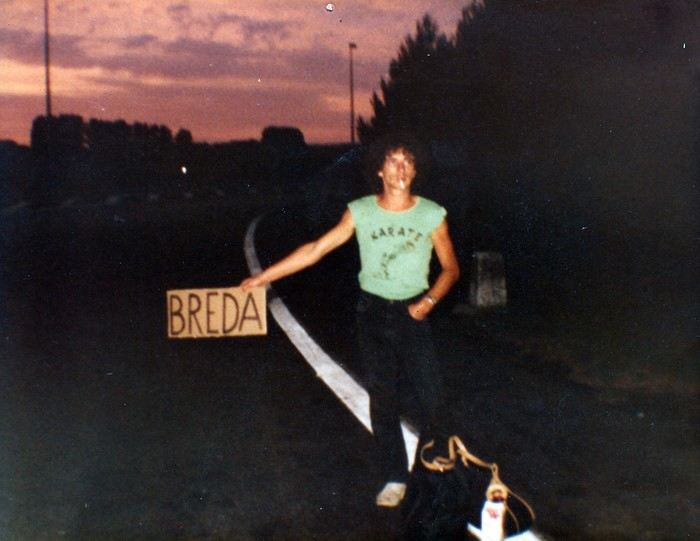
“Hey, your Marker... - My Marker? - The one you used to make hitchhiking signs.”
The marker in question is sitting proudly on the kitchen table. Marielle found it at the bottom of a moving box.
I’ve been meaning to tell the long story of my love affair with hitchhiking for years. Here we go.
To be honest, I’m not quite sure when it started. My earliest memory goes back to a fair with a bike race in my maternal grandparents’ village. I was with my cousin, my little sister, and three girl cousins. There were six of us, ages ranging from six or seven to thirteen or fourteen. Our parents stayed at the fair, and we’d had enough. So we decided to walk home. Only it was four kilometers away. So we hitchhiked. A guy driving an old car picked us all up and dropped us off at the farm. He probably found it amusing to see us thumbing a ride by the side of the road, but maybe it also worried him a bit. With everything you read in the papers...
Around fifteen or sixteen, I started hitchhiking regularly, alone or with a friend, to go to the nearby town. But it was especially when I started boarding school in Orléans that it became more regular. The first year, I’d leave Monday morning and come back Saturday noon by bus. It was an old, uncomfortable bus where we froze in winter. To make matters worse, I often got motion sickness if, as was too often the case, I ended up sitting in the back. In the spring, a high school friend suggested I hitchhike back. It meant a slight detour, but the advantage was taking only national roads.
So that’s how, from the end of tenth grade to twelfth grade, I’d thumb a ride every Saturday on the Pont de Bourgogne. Drivers were used to seeing young people hitchhiking, and it worked pretty well. Our biggest fear? Soldiers! At that time, military service was still mandatory, and on weekends, it wasn’t rare to see them competing with us. They’d keep their uniforms on to go home. That gave people confidence—with everything you read in the papers—and they’d rarely wait more than five minutes. We, with our long hair, were definitely less popular. From time to time, three big red-faced guys in a van coming back from a construction site would flip us off, yelling things like “go get a haircut, you bums!” Those were the good old days.
We still had a good laugh, though. Patrice, the friend I’d hitchhike back from school with on Saturdays, is a musician—I’d later discover he’s an excellent composer. A die-hard Beatles fan, he knows their repertoire by heart and spends his time singing at the top of his lungs while we thumb a ride. One Saturday late morning, we’d been waiting for a while at the exit of Châteauneuf-sur-Loire when a little lady came up to him and asked if he could please sing a little quieter: a baby was sleeping in the house. He put on the most sorry face: “Oh, sorry ma’am, we didn’t realize.” No sooner had the lady gone back inside than he started again. Luckily, a car stopped just then, sparing me the embarrassment of seeing the lady come back out.
Saturday was also the day when the cigarette pack was dangerously low. So before leaving, we’d go buy some “Parisiennes,” the “P4s” as we called them back then. They were slightly thinner cigarettes with a mix of tobacco scraps. Sometimes they tasted like light tobacco, sometimes like dark. Not great, but by the end of the week, our pocket money was gone. They were sold in small packs of four, hence the name P4. We’d only pay 20 centimes. On Saturdays, it was rare for the two of us to manage to scrape together 1.50 F to buy a whole pack of Gauloises...
The last twenty kilometers, I’d usually do alone, Patrice having reached his destination. From time to time, luck would smile on me: an acquaintance would just happen to pass by and stop. One January Saturday, at the exit of Gien, I ran into another guy from Argenton whom I knew a little. That day, the weather was nice, but the temperature was well below zero. It was around noon, and it was the off-peak hour. We were shivering, stamping our feet by the side of the road, when a Citroën “Tube” arrived: it was his father’s boss’s, a mason. They were both sitting in the front, but since they were obese, they had us climb onto the open back. Even though we huddled against the cab to shelter from the wind, the twenty kilometers felt very long, especially since we were only going sixty kilometers an hour. Our hands and cheeks were blue when we finally arrived.
The year I took my baccalaureate, a friend with a 2CV would take me Monday mornings with one or two others we’d pick up in nearby villages. We’d share the gas costs, but it was still cheaper than the bus. And in winter, the bus was my nightmare. You had to get up at five to catch it at six. Not enough sleep, and outside it was freezing or raining—or both. The 2CV was luxury. Plus, Philippe would pick me up at home. On the other hand, since I didn’t have class Saturday mornings—well, I did, but we only had PE the first two hours and nothing after—I’d skip class and slip out right after breakfast to thumb a ride at the Pont de Bourgogne.
Those three high school years were formative in this optional subject that was hitchhiking. Little by little, I learned the rules of the game. First, you shouldn’t walk along the road while thumbing. Cars go too fast and can’t stop easily. Accepting a ride that’s too short is also a no-go. The guy who offers to take you a little way but drops you off at some vague crossroads in the middle of nowhere? No thanks. You need to get dropped off in a town. If it’s a fairly big city, you often have to cross it from one end to the other, but it’s better. At the exit, you have to choose your spot well. Actually, you have to put yourself in the driver’s shoes: they need to see you early enough, not be going too fast, and be able to stop easily without risking an accident. So when leaving a city, it’s better not to go too far. It’s wiser to find a spot where cars go slowly and can stop easily. And preferably near a café. The café is for when you still have a few coins for a coffee and need to warm up. From time to time, you’d run into someone nice who’d make a detour to drop you off at a better spot to start again. Finally, if possible, avoid hitchhiking on Sundays. Cars are packed with whole families who, most of the time, aren’t going far. And then there’s the little worry of those people who rarely leave home: with everything you read in the papers...
During those high school years, it was only short trips, rarely exceeding a hundred kilometers. Later, I aimed bigger, and things were a bit different. In 1973-74, I crossed part of France for the first time on two or three occasions, coming back from the German border or returning to Bordeaux, where we lived briefly. Since there weren’t many highways back then, we took national roads. It was during these trips that I realized it was better to leave in the evening. As I said earlier, Sunday is to be avoided, but on weekdays, there’s another problem: if you leave in the morning, you only make short hops. First, it often takes longer to get going because drivers are people going to work nearby. Which brings us back to those who drop you off in a bad spot, far from everything. There, you have to know how to refuse. You thank the driver for stopping—oh, if only everyone could be like you—while explaining why you’d rather stay put. People don’t take offense, by the way. Those who pick up hitchhikers often hitchhiked themselves when they were in the military or before they had a car. In the late afternoon, you’d often run into salespeople or truckers, in other words, people who drive a lot. At that time, salespeople no longer had appointments and were more relaxed. They wanted to talk about something other than the merits of their products. On the radio, it was time for *Les Grosses Têtes*. You’d also quite often run into small business owners, professionals, or even hippies. The conversations were pleasant and often enriching. A little later in the evening, truckers would take over. They’d already driven a few hundred kilometers, and the depot or customs was still far away. So they’d gladly take a hitchhiker to stay awake at the wheel and chat. The radio with Max Ménier’s show *Les routiers sont sympas*, you’d eventually get tired of it. So a hitchhiker was a change. Others, who’d hit the road at midnight to be at their destination by morning, were nice and offered to let you lie down on the bunk while they drove. When you’d been hitchhiking since six in the evening, freezing in the wind between two vehicles, you weren’t unhappy to take a little nap.
Speaking of Max Ménier, he’d often make announcements for hitchhikers. One evening, I called him. It was getting late, and I still had quite a way to go. No luck: the show had ended for good the day before!
In short, it’s better not to rush, sleep in, and leave after lunch, or better yet, in the late afternoon. Obviously, I’m talking about when you have several hundred kilometers to cover. That’s when you have to play it pro.
First thing, especially at night, but it also applies in the middle of summer when the light is blinding: dress to be seen from far away. I’ll admit I have an advantage over most other hitchhikers: I’m small and don’t scare people. To balance that out, racist drivers often take me for an Arab and are less likely to pick me up, but overall, the balance tips in my favor. Back to the need to be seen: at night, I wear light-colored clothes. In headlights, you can see me from far away.
Second thing: travel light. Forget the big backpack with a frame. Drivers don’t always have room in the trunk or on the back seat, especially if it’s rained and the ground is wet. Plus, it forces them to get out of the car. If they’re nice enough to pick up a hitchhiker, you shouldn’t ask for too much either.
Third thing: bring a cardboard sign and a big marker—like the ones in the photo at the start of this post—to write the name of your destination. In the early 80s, I ran a tourist house in the Cher, but I lived in the Netherlands. In the off-season, it was only open on weekends. On Fridays, I’d leave Holland and return on Mondays. 1200 km round trip. On the way there, in Paris, I’d stand at Porte de la Chapelle. At that spot, the road is very wide, and drivers could stop easily. Obviously, on the sign, I didn’t write Eindhoven, which not everyone knows, and even less Amsterdam because of its seedy reputation. In that case, you’d expect to see a police car stop and two officers in kepis ask for your papers. So as a first destination, I’d write Compiègne. We were well out of Paris, and since it wasn’t too far, a trucker or salesperson was less reluctant to stop. Once past Compiègne, I’d take out my Lille sign. Once in Belgium, it wasn’t really necessary to use a sign anymore, since everyone was going in the same direction. Usually, the guy who picked me up at Porte de la Chapelle would say he wasn’t going far but could take me a little way. Before that, I’d still ask if there was a gas station on the highway where he could drop me off before exiting. While talking, the guy would realize he wasn’t dealing with a dangerous criminal. He’d pretend to check his watch, think for a moment, then say that actually, he was going to Belgium and could take me to the border or a little beyond. To leave Paris on the way back, I’d take the train to Melun, where it was easier to hitchhike than at Porte d’Italie.
Over all those years, I think I was pretty lucky. Or maybe philosophical enough not to imagine a car would stop after a few minutes. An hour’s wait was average. Sure, I sometimes waited three, four, or five hours. Most often at odd hours and in terrible weather. When it doesn’t work, it doesn’t work. But there’s always a moment when things pick up. Sure, when you’re soaked in freezing rain in the early morning after a sleepless night, you’re less philosophical than when I’m writing these lines comfortably at my computer, but it still holds true.
Earlier, I mentioned clothing and the importance of being well-rested before leaving. When you’ve eaten well and just gotten out of the shower, shaved, you’re in a better mood. And somehow, drivers sense it. Or at least, that’s the impression I’ve always had. It’s better to look in shape than disgusted at standing there, half-heartedly thumbing a ride. In short, when I’d start to get fed up with waiting, I’d go into the first café I saw for a coffee. Coming back out, I’d be refreshed, and most of the time, a car would stop within minutes. I’ve often said that when I stood by the side of the road thumbing a ride, I felt a bit like a gambler in front of a slot machine. It was a matter of giving luck a chance. And well, it worked out pretty well.
Then, there are countries where hitchhiking works really well and others where it’s harder. In the 70s-80s, it worked best in Germany and England. In the late afternoon, it wasn’t rare to be invited for tea. Well, that was in England. Tea meant being offered room and board. In Germany, they’d offer you coffee. Once there, they’d first show you the guest room and point out the bathroom before sitting you down in front of a big plate of cold cuts. In the evening, they’d go out in town, and the next morning, they’d usually drop you off at a good spot for hitchhiking. On the other hand, in Mediterranean and Scandinavian countries, you’d better be patient. In Spain or Italy, it’s better to take the train, which was dirt cheap back then. However, if you’re a couple traveling light, it’s already easier in most countries.
In 1982, I went on a trip around Turkey with my girlfriend. We only had two small bags, which was plenty. It was November-December, and we wore our warm, bulky clothes. Leaving Eindhoven at nine in the morning, we arrived in Graz, near the Yugoslav border, at eleven at night. 1300 km in a day! In just four or five vehicles. One to the German border, about fifty kilometers from Eindhoven, the second to Hagen in the Ruhr, the third to Salzburg, and the last to Graz at the Yugoslav border. Record broken. During the night crossing of Yugoslavia, we ran into a trucker close to retirement who lent us the truck’s bunk. So we arrived fresh and rested near Skopje the next morning. We continued to Thessaloniki in northern Greece before taking the train to Istanbul. In Turkey, we traveled a good part of the country by hitchhiking too. With truckers in old, overloaded, slow trucks that climbed hills at fifteen kilometers an hour, but also in cars where five or six people were already crammed in. And every time, we were invited for tea. Once, we were even picked up by a big shot in his Mercedes with a chauffeur. Until then, the average speed was around fifty kilometers an hour. There, we were going two hundred. On a national road, not a nice European highway.
I’ve also hitchhiked in Nepal, from Lumbini, Buddha’s birthplace, to a village on the way to Pokhara. It must have been midday. No bus until the next day. I gave it a try. A small truck overloaded with rice sacks, with two or three young people already perched on top, stopped. I rode on the roof of the cab. At fifty kilometers an hour when it was going well, with a breathtaking view. Coming back from India, I also crossed part of Iran by hitchhiking, from Tehran to the Turkish border. I did this trip with an Austrian I met at the hotel who, like me, had to watch his pennies. We gave it a shot. There was almost no traffic, but to our great surprise, the first car that passed in the area would always stop. They’d just ask for a modest contribution for gas, and it cost next to nothing.
Sometimes, you get scared too. After leaving Turkey in early December 82, we spent about two weeks in the southern Peloponnese harvesting olives. A few days before Christmas, we hitchhiked back to Holland. A girl picked us up in her little Fiat 500. We were driving on a mountain road, and that morning there was a bit of black ice. After crossing a pass, we saw the old Ford Taunus ahead of us at fifty meters start to skid. The driver let out a “heeee!” while grabbing my knees. I reflexively grabbed the wheel. Finally, the Taunus got back on track. And we didn’t swerve. But those few seconds felt very long.
In January 77, while I’d been living in Germany for a few months, I decided to spend a few days in Italy. By hitchhiking, of course. I left in the early afternoon, and by ten at night, I wasn’t far from Frankfurt. I saw a big Mercedes stop. The four or five young people crammed inside were listening to Schlager at full volume. Beer cans littered the floor. They didn’t have a precise destination, and as long as they were going south, that was fine with me. They’d finished their military service that very day and had clearly already celebrated their discharge. The driver was going 160, zigzagging dangerously from one side of the highway to the other. I should have realized he wasn’t entirely sober either. Luckily, there was almost no traffic. Finally, I managed to get dropped off at a gas station just before Frankfurt, relieved. I hope their trip didn’t end tragically.
Another time, coming back from Holland with my wife, we were picked up early in the morning near Senlis by two guys from Lille. They were going to work near Tours and could drop us off at Porte d’Italie. Apparently, they were coworkers but barely knew each other. The driver offered us a beer—at six in the morning, sure!—before opening another can for himself. He was clearly having trouble staying in the right lane. We politely declined, the passenger too. Everyone was tense. Luckily, it was rush hour on the ring road, and we were going slowly. When we got out of the car, the passenger said goodbye with the look of a guy being offered the condemned man’s rum and cigarette.
Finally, there are the annoying remarks from drivers who are either gay when you’re alone or turned on by the sight of your girlfriend when you’re a couple. In those cases, I’d get in the back so the guy wouldn’t feel too confident. And if the conversation got a little too suggestive, we’d deflect until we got dropped off.
And luckily, there are the times, not so rare after all, when you run into really nice people who invite you to eat and sleep at their place and drive you to a good spot the next morning. In Germany and England, that was common. And then there are the big strokes of luck, like during our trip to Turkey when we crossed most of Germany in one car, or that other time when some Germans drove me from the exit of Geneva all the way to the Costa Brava.
Going back to “with everything you read in the papers” and its variant “with everything you see on TV”—and now on the internet—it’s always left me perplexed. Personally, I’ve never heard of hitchhikers assaulting drivers, even if it may have happened. On the other hand, what was most common were hitchhikers being assaulted, especially girls. Anyway, even armed, it seems a bit stupid to assault the driver—wouldn’t that risk causing an accident?
Finally, since that time, I’ve occasionally wanted to hitchhike somewhere far away in France. Most often, too busy with work, it never happened, but the nostalgia hasn’t completely disappeared.
* * *
Other Hitchhikers
And then one day, I... settled down to become a driver myself. Ten years had passed, and you saw fewer and fewer hitchhikers. Or maybe I saw fewer because I had a regular job and wasn’t traveling the same way. And then I understood a few things.
Several times, I was tempted to pick up a hitchhiker, but they didn’t meet the required conditions. They were walking along the road instead of staying at the exit of the previous town. Hard to stop without risking an accident. Or the guy looked really scruffy. Or he was sulking, if not both. Then you think of that famous “with everything you read in the papers.” Not that I was scared, but unfortunately, the few hitchhikers I did pick up later were rarely interesting.
A few years ago, we picked up a young guy at the exit of a small town in Sologne. Not an easy spot for hitchhiking. Bad luck, he was a pretentious little jerk. He was barely 20 or 25 and talked like a bitter old man. He was a waiter in a restaurant. According to him, it was lucky he was there, otherwise the boss would have closed up shop long ago. You’d think he had thirty or forty years of professional experience behind him. As we approached Blois, he started ranting about Arabs, blaming them for all evils. And he laid it on thick. That morning, we were going to a teenager’s funeral who had just committed suicide, so he really got on our nerves, Mr. Know-It-All. Out of anger, I dropped him off next to a shopping center a few kilometers from downtown. Not nice, but it felt good.
Some time ago, we were driving around the Limousin on a Sunday to try out the used Twingo we’d just bought. We picked up a guy in his forties. A German who spoke French well. He started talking about the environment. He was a green Khmer. He got worked up all by himself with his pseudo-eco rant and, after a few kilometers, was almost yelling at us. As we were about to leave the main road for a small one, I dropped him off at a crossroads in the middle of nowhere. Normally, I would have made a little detour to take him to a better spot, but this time, I didn’t feel like doing the... eco-warrior a favor.
On the other hand, I’ve still done my good deed a few times. One June morning, coming back from Orléans, I saw a man in his sixties hitchhiking. The poor guy had had a rough time. He was from Montpellier and was coming back from Caen, where he’d been promised a job. Once there, they bluntly told him the position was already taken, and he had to go back. Except he didn’t have enough money left for the train. He’d spent the night hitchhiking without success. I could only take him as far as Lamotte-Beuvron, where I dropped him off near the fire station. Apparently, there was some vague shelter there or something, but it only opened a few hours later. In the meantime, he settled on the grass in a corner to sleep a little. While he was doing that, I quickly went to the train station to check the price of a ticket to Montpellier. It was within my means. Since he was sound asleep, I slipped the train ticket and 100 francs into his pocket. I couldn’t imagine him continuing to hitchhike all the way to Montpellier. And I bet he didn’t even have a piece of cardboard and a marker!
When we go to Brazil, we usually rent a small car. One day, we were coming back from Paracuru to Fortaleza when we saw a whole family hitchhiking. Two adults and two or three small children. Here near the equator, the sun sets very quickly, and it would soon be night. There was little traffic, and trucks wouldn’t stop because there was no room in the cab. As for the rich people driving big 4x4s, they wouldn’t stoop to picking up the lower classes. The only hope for this kind of family was usually a farmer or artisan who’d let them ride in the back of his pickup. Obviously, they were a bit surprised to see us. Everyone crammed in as best they could in the back of our little car. When we dropped them off, we got a whole string of “Deus lhes abençõe”—God bless you.
Still in Brazil, we were on the road from Barreirinhas to São Luís do Maranhão. About 150 km of deserted road with an isolated mud house here and there. A young woman flagged us down. She was very pregnant and had to get to the clinic twenty or thirty kilometers away to give birth. Someone was supposed to drive her, but the first signs of labor started earlier than expected, and the driver was unavailable. Even driving fast, we weren’t feeling great: it would be just our luck if she gave birth in the car!
Today, we’re in the age of smartphones and carpooling apps. Safety. With everything you see on TV... Three or four years ago, we signed up on a platform. Our first, and only, “client” was a little jerk who didn’t say a word the whole trip. No hello, no goodbye, and certainly no thank you. The next day, we found his Ray-Bans in the car. We didn’t run after him to give them back. Ha!
Grand tour of Argentina March 2025
My buddy Christian and I (Patrick) are off for 28 days in Argentina in March.
We’ve already shared several trips as a duo (Bolivia Peru, Namibia, Laos, Costa Rica).
Since we’re starting from the idea that at our age (65) we won’t be coming back here—there are just too many other corners of the world to discover—we did the "grand tour" of Argentina, with 6 domestic flights to make the most of our 28 days.
Here are our stops:
1) Departure from Brussels to Buenos Aires via Madrid
2) Arrival and first contact with Buenos Aires
3) Early morning flight to Ushuaia. Boat trip on the Beagle Channel
4) Ushuaia: hikes in Tierra del Fuego National Park
5) Ushuaia: last hike and flight to El Calafate
6) El Calafate to El Chaltén by bus. First hike
7) El Chaltén: hike
8) El Chaltén: hike
9) El Chaltén: hike and bus back to El Calafate
10) El Calafate: Perito Moreno Glacier
11) Flight to Bariloche. Car rental and surrounding areas
12) Seven Lakes Region
13) Nahuel Huapi National Park region
14) Flight to Salta. Car rental
15) To Tilcara
16) To Humahuaca
17) To Purmamarca
18) To Jujuy via the salt flats
19) To Cafayate
20) Around Cafayate
21) To Cachi
22) Back to Salta
23) Flight to Iguazu
24) Waterfalls on the Argentine side
25) Waterfalls on the Brazilian side and flight to Buenos Aires
26) Buenos Aires
27) Return flight
28) Morning arrival
Happy reading!..
What are the criteria that make you choose one destination over another?
Hi there,
The title might be a bit long, but I hope it’s completely understandable!
When it comes to choosing your next trip, what tips the scales in favor of Eritrea over Ibiza?
Why pick Canada over French Polynesia?
The price? A magazine or TV report, a travel journal, an Instagram ad? Ease of travel? Minimal time difference? The country that has the most in common with all the trip participants? Activities? Relaxation? The desire to push your limits?
A photo?
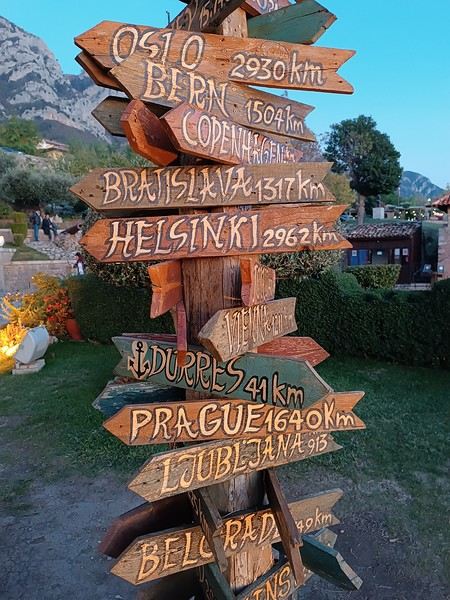
What else, I wonder...
Personally, I often prioritize simple destinations (no administrative hassles), where I’m not at risk (nothing extraordinary like getting kidnapped by Daesh or ending up in a jail cell because the current geopolitics aren’t favorable to my passport, etc.), and where I can drive.
Wide-open natural spaces are more my thing than urban anthills.
Finally, I try not to spend three days on a plane to reach my destination, and I aim for a maximum budget of 3500 € (for 3 weeks) in comfortable conditions—that means charming hotels, good meals, etc.
What about you?🙂
The title might be a bit long, but I hope it’s completely understandable!
When it comes to choosing your next trip, what tips the scales in favor of Eritrea over Ibiza?
Why pick Canada over French Polynesia?
The price? A magazine or TV report, a travel journal, an Instagram ad? Ease of travel? Minimal time difference? The country that has the most in common with all the trip participants? Activities? Relaxation? The desire to push your limits?
A photo?
What else, I wonder...
Personally, I often prioritize simple destinations (no administrative hassles), where I’m not at risk (nothing extraordinary like getting kidnapped by Daesh or ending up in a jail cell because the current geopolitics aren’t favorable to my passport, etc.), and where I can drive.
Wide-open natural spaces are more my thing than urban anthills.
Finally, I try not to spend three days on a plane to reach my destination, and I aim for a maximum budget of 3500 € (for 3 weeks) in comfortable conditions—that means charming hotels, good meals, etc.
What about you?🙂
Sao Tomé, the forgotten island
Hey there, it's me again—back with my usual travel journal share for our loved ones, from our 15-day trip in October 2019.
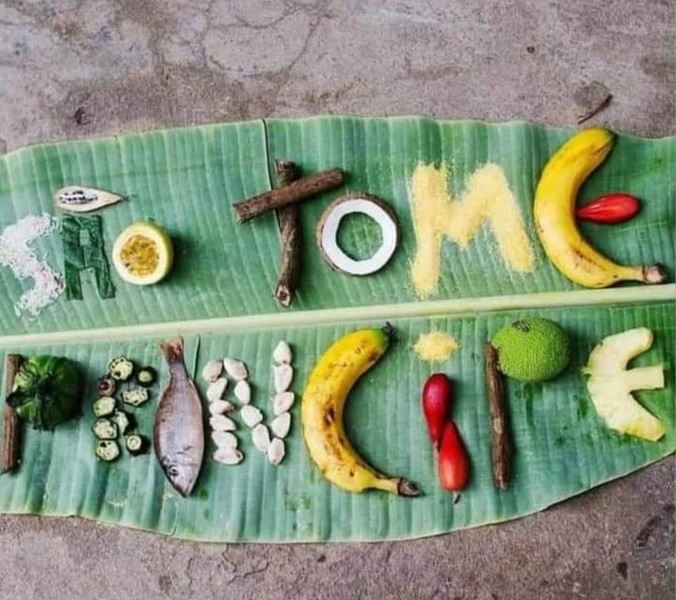
"Ah, here it is at last—that sweet scent of elsewhere so dear to Cricri and Lulu’s noses, that mix of apprehension and desire when facing the unknown.
We’re really diving into the unknown this time, taking you to the island of SAO TOMÉ... also known as the island: *‘Wait, what did you say?’* 😄. Because apparently, no one’s heard of Sao Tomé—except our Portuguese friends.
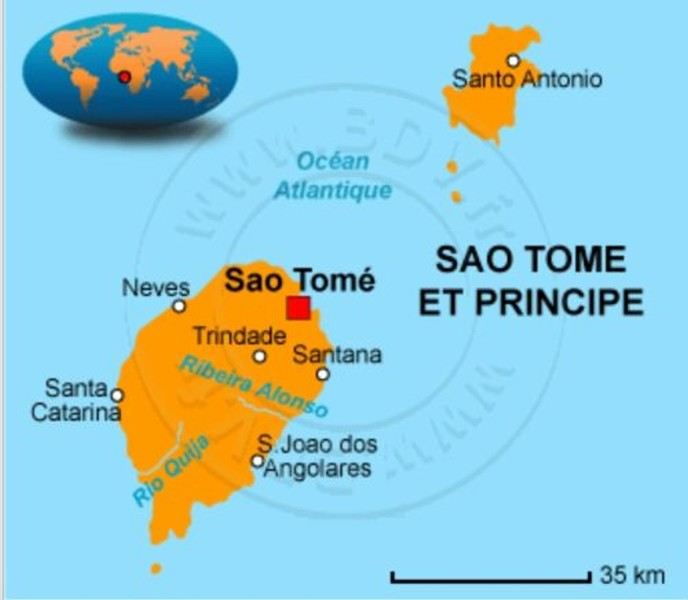
It’s an archipelago of three islands smack in the middle of the world, right on the equator, off the coast of Gabon.
No, these aren’t the sun-soaked, Polynesian lagoon islands. Here, *‘it rains, it pours...’* pretty much all the time, it seems.
There’s not much to *‘see’* in the traditional tourist sense—EXCEPT for stunning landscapes, lush vegetation, a few beaches with golden or black sand, colonial buildings still in their original state, a single main road, and plenty of *‘tracks’* that are more or less drivable. All this surrounded by an African population that speaks Portuguese and is known for its warm welcome.
Well, that should be enough for our happiness—and hopefully yours too! 😊
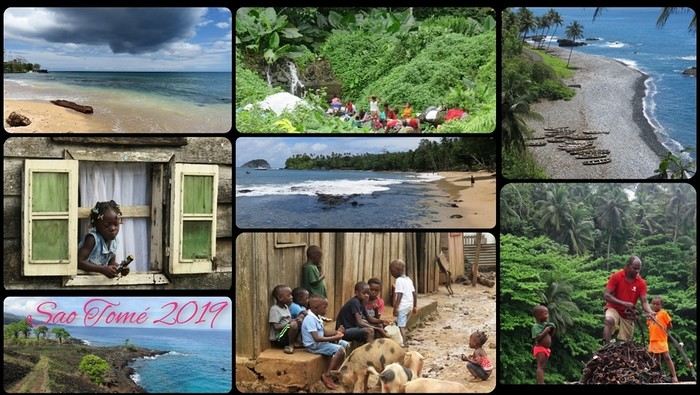
Ready for landing?
"Ah, here it is at last—that sweet scent of elsewhere so dear to Cricri and Lulu’s noses, that mix of apprehension and desire when facing the unknown.
We’re really diving into the unknown this time, taking you to the island of SAO TOMÉ... also known as the island: *‘Wait, what did you say?’* 😄. Because apparently, no one’s heard of Sao Tomé—except our Portuguese friends.
It’s an archipelago of three islands smack in the middle of the world, right on the equator, off the coast of Gabon.
No, these aren’t the sun-soaked, Polynesian lagoon islands. Here, *‘it rains, it pours...’* pretty much all the time, it seems.
There’s not much to *‘see’* in the traditional tourist sense—EXCEPT for stunning landscapes, lush vegetation, a few beaches with golden or black sand, colonial buildings still in their original state, a single main road, and plenty of *‘tracks’* that are more or less drivable. All this surrounded by an African population that speaks Portuguese and is known for its warm welcome.
Well, that should be enough for our happiness—and hopefully yours too! 😊
Ready for landing?
So where are they and what are they doing?
This catchy and somewhat mysterious title comes from several questions I’ve been asking myself.
VF has been back open for a reasonable number of weeks and months now. The number of visitors overall matches past averages, but the number of members online in the last 24 hours seems relatively lower than what we used to see.
Yet, to my surprise, I’m seeing fewer travel journals, way fewer messages, and way fewer questions. I don’t see many new registered users online, and I notice a number of members who are logged in but either aren’t participating or have stopped participating.
Something’s not adding up for me because, in my opinion, VF is still appealing, and I don’t see which other sites could really compete.
Was there a real break between pre- and post-Covid? Does it just take more time for some people to discover the site or learn that it’s active again? Do people now prefer quick consumption on sites like FB or others I’m not familiar with? Where have the site’s old-timers gone, and what are they doing with their time now? What’s really going on here?
VF has been back open for a reasonable number of weeks and months now. The number of visitors overall matches past averages, but the number of members online in the last 24 hours seems relatively lower than what we used to see.
Yet, to my surprise, I’m seeing fewer travel journals, way fewer messages, and way fewer questions. I don’t see many new registered users online, and I notice a number of members who are logged in but either aren’t participating or have stopped participating.
Something’s not adding up for me because, in my opinion, VF is still appealing, and I don’t see which other sites could really compete.
Was there a real break between pre- and post-Covid? Does it just take more time for some people to discover the site or learn that it’s active again? Do people now prefer quick consumption on sites like FB or others I’m not familiar with? Where have the site’s old-timers gone, and what are they doing with their time now? What’s really going on here?
Fêtes de fin d'année au Canada 2019-2020!
Bonjour à tous,
Je poste enfin mon carnet de voyages de cet hiver passé.
Nous sommes partis en couple du 23/12/2019 au 04/01/2020 avec KLM/ Air France depuis Bordeaux à Montréal. Nous avons acheté les billets en Juillet 2019 pour 1286€ à 2 (inclus 1 bagage en soute chacun à l’aller et un seul pour le retour). ***j’ai ramené les skis à ma cousine*** Nous sommes arrivés à Montréal vers 17h00 (-2°C), ma cousine est venue nous chercher et nous a logés dans un appartement proche de la station de métro Namur (ligne orange). Pendant 3 jours, cet endroit était notre point de chute car le Condo de ma cousine était en travaux. Le premier soir, on a mangé Burger King (24 CAD pour 2) et on s’est couché tôt car nous étions fatigués du voyage.
Le lendemain (24/12), on s’est fait un bon petit déjeuner à l’appart et on est parti se balader au centre-ville : on a traversé le quartier chinois, on a flâné dans la rue St Paul Est, on a fait une pause sur la Place Jacques-Cartier, puis on est allé au Marché Bonsecours. On a également vu la Basilique Notre Dame de Montréal (où s’est mariée Céline DION) 😊
On s’est promené sur les quais du Vieux-Port et vu la Grande roue avec la patinoire aménagée pour la saison hivernale. A l’approche du réveillon de Noël, peu de monde dans les rues…. On a grignoté des Tacos vers 15h00, mais pas top ☹ (99 CAD pour 4 tout de même) on se rattrapera le soir 😊. Nous avons marché sur toute la rue Ste Catherine d’Ouest en Est et nous sommes remontés jusqu’à la station de métro Laurier en passant dans les rues du quartier Plateau Mont-royal fatigués nous avons pris le métro pour rentrer jusqu’à notre logement. (8 allers/retours = 26 CAD – à utiliser en plusieurs fois).
Nous avions décidé de réveillonner pour la première fois en amoureux (ma cousine partait dans sa belle-famille). Malheureusement, beaucoup de restaurants étaient fermés pour les fêtes et bien sûr j’avais oublié de lui demander conseil ! pfff ! … Après plusieurs appels (faute de trouver quelque chose qui nous convienne vraiment), on réserve au Rib’n Reef Steakhouse pour 21h30 non loin de l’appart (pensant que ce restaurant était équivalent à « La Boucherie »). Enfin, une sieste s’impose de 18h à 20h30 et nous voilà repartis à pieds au restau. De loin, ça ne payait pas de mine, un peu dans une zone commerciale, mais une fois arrivés devant on regarde sur le parking : que des voitures haut de gamme et un portier aussi devant l’entrée ! Une famille est arrivée en même temps que nous (ils avaient la classe !) et nous, on était en jeans, blouson de ski et boots 😊 (la honte !). Le restau était spacieux et rempli de monde, les serveurs et serveuses étaient bien apprêtés (robe sexy et costumes), et quasiment un par table…
Même si on n’était pas bien habillés, on savait qu’on allait finalement passer un bon moment romantique et se faire plaisir. Notre serveur était drôle et a bien mérité son pourboire. On a pris des huîtres en entrée : passables, on ne peut pas les comparer aux françaises bien sûr ! On a bu une bouteille de vin rouge californien « Cabernet Sauvignon 2016 » (conseillé par notre serveur) à un prix raisonnable (69 CAD) contrairement à celles notées sur la carte des vins (les prix s’envolaient), puis on a choisi une côte de bœuf chacun environ 400 gr accompagnés de légumes et purée. Hélas, la cuisson de la viande n’a pas été à la hauteur de nos espérances, elle n’était pas grillée comme on aurait pu l’imaginer mais cuite dans un jus/ bouillon. Elle était tendre, mais déçus ! ☹ La note finale avec 2 expressos = 350 CAD pour 2. Pour notre 1ère expérience dans un restaurant canadien et pour le réveillon de Noël, on a passé un très bon moment : c’était fort agréable et convivial ! Nous sommes rentrés vers 1h00 du matin (environ -9°C) gla-gla !
Le jour de Noël (25/12), nous avons un peu dormi, et ma cousine et son fiancé nous ont rejoints pour le petit déjeuner/ brunch. Ils avaient réservé un spa nordique à Rosemère pour la journée de Noël : « Spa Le Finlandais » (40 CAD/ pers + 22 CAD/ pers pour le prêt des peignoirs et serviettes). Journée très agréable et détente. Il faisait entre -1° et 2°C dehors et l’eau était à 38°C, trop génial ! La sensation de froid sur le visage et de chaud sur le reste du corps est excellent ! Il n’y avait pas trop de monde le matin, mais les gens sont arrivés en milieu d’après-midi. Le soir, nous étions invités chez des canadiens, des amis à ma cousine (comme elle dit : sa famille de cœur !) pour fêter Noël tous ensemble. Nous étions une quinzaine d’adultes et une dizaine d’enfants. Quel moment magique nous avons passé avec eux : nous avons été accueillis les bras grands ouverts, nous avons bu et mangé à outrance et quel repas délicieux ! Nous nous sommes bien amusés et sommes rentrés vers 4h du matin.
Nous sommes partis en couple du 23/12/2019 au 04/01/2020 avec KLM/ Air France depuis Bordeaux à Montréal. Nous avons acheté les billets en Juillet 2019 pour 1286€ à 2 (inclus 1 bagage en soute chacun à l’aller et un seul pour le retour). ***j’ai ramené les skis à ma cousine*** Nous sommes arrivés à Montréal vers 17h00 (-2°C), ma cousine est venue nous chercher et nous a logés dans un appartement proche de la station de métro Namur (ligne orange). Pendant 3 jours, cet endroit était notre point de chute car le Condo de ma cousine était en travaux. Le premier soir, on a mangé Burger King (24 CAD pour 2) et on s’est couché tôt car nous étions fatigués du voyage.
Le lendemain (24/12), on s’est fait un bon petit déjeuner à l’appart et on est parti se balader au centre-ville : on a traversé le quartier chinois, on a flâné dans la rue St Paul Est, on a fait une pause sur la Place Jacques-Cartier, puis on est allé au Marché Bonsecours. On a également vu la Basilique Notre Dame de Montréal (où s’est mariée Céline DION) 😊
On s’est promené sur les quais du Vieux-Port et vu la Grande roue avec la patinoire aménagée pour la saison hivernale. A l’approche du réveillon de Noël, peu de monde dans les rues…. On a grignoté des Tacos vers 15h00, mais pas top ☹ (99 CAD pour 4 tout de même) on se rattrapera le soir 😊. Nous avons marché sur toute la rue Ste Catherine d’Ouest en Est et nous sommes remontés jusqu’à la station de métro Laurier en passant dans les rues du quartier Plateau Mont-royal fatigués nous avons pris le métro pour rentrer jusqu’à notre logement. (8 allers/retours = 26 CAD – à utiliser en plusieurs fois).
Nous avions décidé de réveillonner pour la première fois en amoureux (ma cousine partait dans sa belle-famille). Malheureusement, beaucoup de restaurants étaient fermés pour les fêtes et bien sûr j’avais oublié de lui demander conseil ! pfff ! … Après plusieurs appels (faute de trouver quelque chose qui nous convienne vraiment), on réserve au Rib’n Reef Steakhouse pour 21h30 non loin de l’appart (pensant que ce restaurant était équivalent à « La Boucherie »). Enfin, une sieste s’impose de 18h à 20h30 et nous voilà repartis à pieds au restau. De loin, ça ne payait pas de mine, un peu dans une zone commerciale, mais une fois arrivés devant on regarde sur le parking : que des voitures haut de gamme et un portier aussi devant l’entrée ! Une famille est arrivée en même temps que nous (ils avaient la classe !) et nous, on était en jeans, blouson de ski et boots 😊 (la honte !). Le restau était spacieux et rempli de monde, les serveurs et serveuses étaient bien apprêtés (robe sexy et costumes), et quasiment un par table…
Même si on n’était pas bien habillés, on savait qu’on allait finalement passer un bon moment romantique et se faire plaisir. Notre serveur était drôle et a bien mérité son pourboire. On a pris des huîtres en entrée : passables, on ne peut pas les comparer aux françaises bien sûr ! On a bu une bouteille de vin rouge californien « Cabernet Sauvignon 2016 » (conseillé par notre serveur) à un prix raisonnable (69 CAD) contrairement à celles notées sur la carte des vins (les prix s’envolaient), puis on a choisi une côte de bœuf chacun environ 400 gr accompagnés de légumes et purée. Hélas, la cuisson de la viande n’a pas été à la hauteur de nos espérances, elle n’était pas grillée comme on aurait pu l’imaginer mais cuite dans un jus/ bouillon. Elle était tendre, mais déçus ! ☹ La note finale avec 2 expressos = 350 CAD pour 2. Pour notre 1ère expérience dans un restaurant canadien et pour le réveillon de Noël, on a passé un très bon moment : c’était fort agréable et convivial ! Nous sommes rentrés vers 1h00 du matin (environ -9°C) gla-gla !
Le jour de Noël (25/12), nous avons un peu dormi, et ma cousine et son fiancé nous ont rejoints pour le petit déjeuner/ brunch. Ils avaient réservé un spa nordique à Rosemère pour la journée de Noël : « Spa Le Finlandais » (40 CAD/ pers + 22 CAD/ pers pour le prêt des peignoirs et serviettes). Journée très agréable et détente. Il faisait entre -1° et 2°C dehors et l’eau était à 38°C, trop génial ! La sensation de froid sur le visage et de chaud sur le reste du corps est excellent ! Il n’y avait pas trop de monde le matin, mais les gens sont arrivés en milieu d’après-midi. Le soir, nous étions invités chez des canadiens, des amis à ma cousine (comme elle dit : sa famille de cœur !) pour fêter Noël tous ensemble. Nous étions une quinzaine d’adultes et une dizaine d’enfants. Quel moment magique nous avons passé avec eux : nous avons été accueillis les bras grands ouverts, nous avons bu et mangé à outrance et quel repas délicieux ! Nous nous sommes bien amusés et sommes rentrés vers 4h du matin.
La Bolivie, un voyage riche en émotions!
Bonjour à tous,
Ce carnet, je ne pensais pas le rédiger, à mon retour de Bolivie. Certains d’entre vous le savent d’ailleurs. Trop amère, trop choquée.
Et puis heureusement, le temps fait son affaire et estompe les mauvais souvenirs pour laisser principalement les bons. Rédiger ce carnet m’aide aussi je pense à tourner la page sur certains (très) mauvais moments, quand bien même ils datent déjà de huit mois. Certains épisodes auront été riches en émotions….
La Bolivie, j’en rêvais depuis plusieurs années. Envie de grands espaces, de nature, de kaléidoscope coloré. Envie de voir des lamas, des viscaches, des vigognes, des condors. Envie de voir les lagunes, LE salar, les couleurs du désert de Dali. Envie de découvrir l’Amérique du Sud et ce pays encore peu prisé des touristes. Envie de réaliser ce voyage tel que nous le pouvons sans nos enfants : peu de réservations d’hôtels, du camping sauvage et un itinéraire décidé pour les grandes étapes mais ajusté au jour le jour selon nos coups de cœur.
Les carnets lus au fil des mois confirmaient que le Sud Lipez reste accessible en individuel et autonome, même s’il est évidemment préférable de voyager à deux voitures. Mes beaux-parents acceptant de venir garder nos fils quelques jours avant le début des vacances scolaires de la Toussaint, je commence à organiser dès le mois de mai un périple de 16 jours entiers sur place. Depuis plusieurs mois, je m’étais forgé un début d’itinéraire selon ces différents critères :
J’exclus La Paz. Nous visiterons la capitale lors d’un futur voyage au Pérou où nous ajouterons quelques étapes nord-boliviennes. Je choisis d’atterrir à Santa Cruz de la Sierra avant de reprendre dans la foulée un avion pour Sucre. En effet, notre loueur de voiture, Biz Rent a Car, est situé à Sucre et a bonne réputation sur forum, notamment grâce à l’une des employées, Alejandra et sa maîtrise du français. Je prévois la majorité de notre temps dans le Sud Lipez afin de pouvoir admirer notamment les lagunes et le salar. Le carnet d’AirOne me donne envie de découvrir Tajira, région viticole et par conséquent plus verdoyante que le Sud Lipez désertique. Je réserve auprès de Vicente deux nuits dans sa ferme-auberge à Rosillas et un trek d’une journée permettant d’observer les condors Difficultés d’acclimatation liées à l’altitude : ne pas atterrir à La Paz permet déjà d’éviter une mise dans le bain d’entrée à 3600 mètres. Il sera plus aisé d’atterrir à Santa Cruz (416 mètres) et même Sucre (2750 mètres), d’autant que nous prévoyons de partir rapidement sur la région de Tajira (1900 mètres).
L’Amérique du Sud offrant plusieurs pays nous attirant depuis quelques années, mon mari a commencé à apprendre l’espagnol deux ans auparavant. Heureusement, car nous n’avons rencontré que très peu de Boliviens parlant (un peu) l’anglais. Comme beaucoup de voyageurs, nous avions téléchargé des cartes sous Maps.me qui une fois stockées sur les téléphones permettent de circuler sans accès au réseau.
J’apprends dans le courant de l’été 2019 que les élections présidentielles auront lieu pendant notre séjour. Soit ! Ce ne sera pas notre premier voyage en pleine campagne présidentielle. Au départ, je n’y prête pas tellement attention. Et puis fin août, Carmen (Ticapi) m’apprend qu’il sera interdit de circuler lors du premier tour des élections, le dimanche 20 octobre. Après consultation de mon ébauche d’itinéraire, nous avions justement prévu de repartir ce jour-là de Rosillas pour rejoindre Tupiza avant d’enchaîner sur le Sud Lipez. Avec seize jours sur place, nous n’avions pas envie de « perdre » une journée à Rosillas et reporter notre départ d’une journée. Il était également difficile de prévoir le trek le dimanche 20 car Vincent nous a précisé qu’en raison des élections, les villageois ne seraient pas disponibles pour faire office de guide dans la montagne. Il nous fallait trouver un endroit où nous pourrions passer la journée entière sans utiliser la voiture. Pas si simple. Alors finalement, plutôt qu’entamer notre séjour par Rosillas, cette étape sera la dernière de notre voyage. Nous devons atterrir à Sucre le matin du mercredi 17 et je prévois d’y séjourner deux jours. Direction ensuite Tupiza puis Guadalupe et enfin la laguna Celeste où nous resterons la fameuse journée des élections présidentielles à randonner dans les environs. Ça, c’était le programme initial. Ça ne s’est pas tout à fait déroulé ainsi !
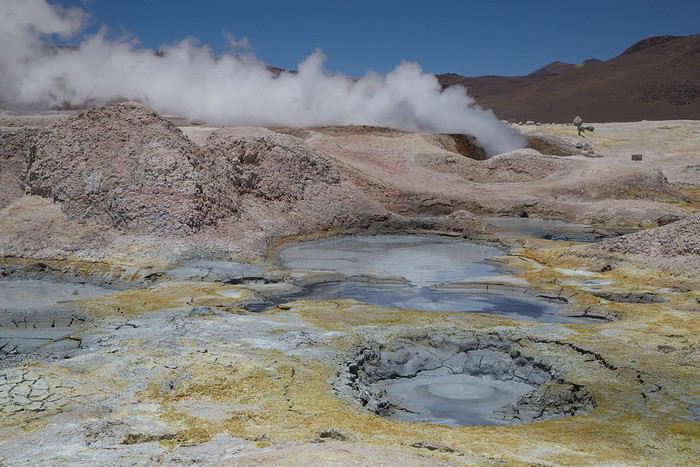
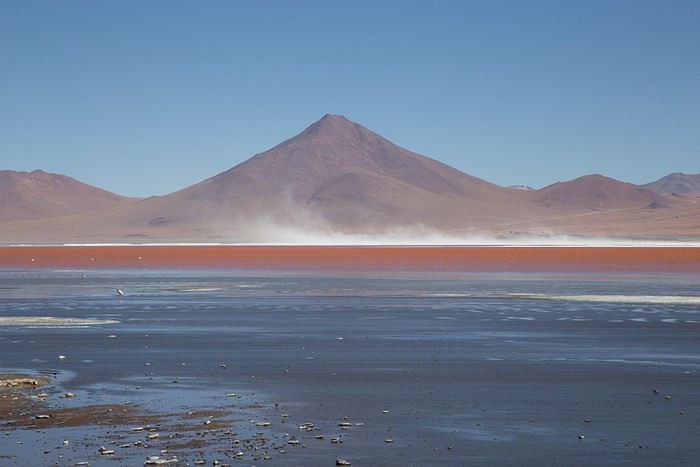
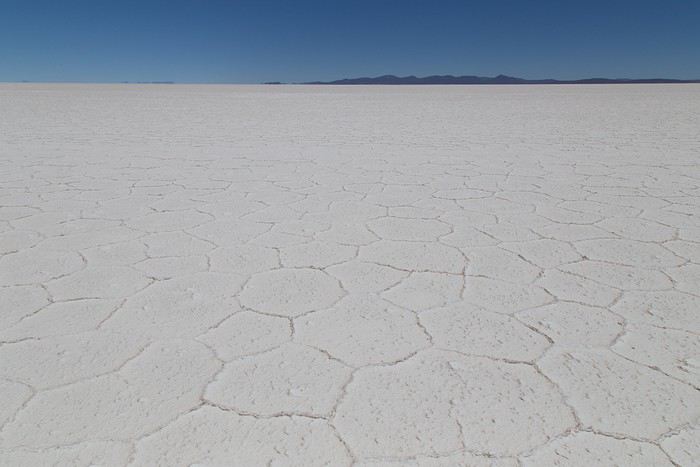
Allez, quelques photos pour, peut-être, vous donner envie de poursuivre la lecture de ce carnet 🙂
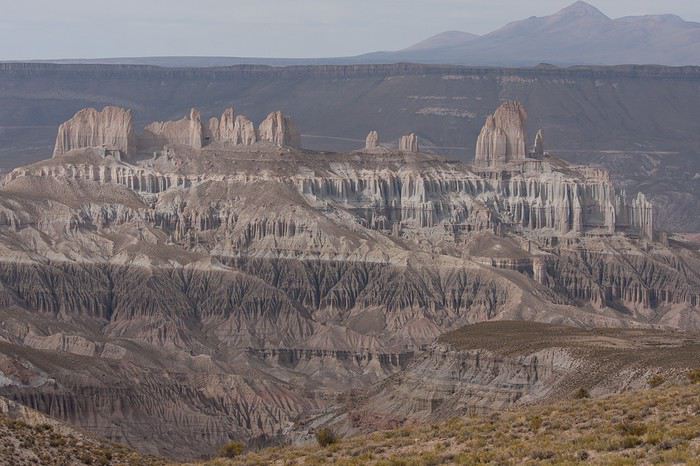
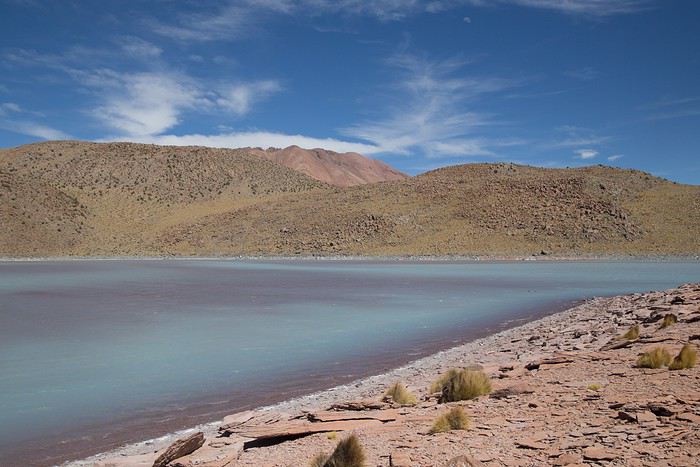
Et puis heureusement, le temps fait son affaire et estompe les mauvais souvenirs pour laisser principalement les bons. Rédiger ce carnet m’aide aussi je pense à tourner la page sur certains (très) mauvais moments, quand bien même ils datent déjà de huit mois. Certains épisodes auront été riches en émotions….
La Bolivie, j’en rêvais depuis plusieurs années. Envie de grands espaces, de nature, de kaléidoscope coloré. Envie de voir des lamas, des viscaches, des vigognes, des condors. Envie de voir les lagunes, LE salar, les couleurs du désert de Dali. Envie de découvrir l’Amérique du Sud et ce pays encore peu prisé des touristes. Envie de réaliser ce voyage tel que nous le pouvons sans nos enfants : peu de réservations d’hôtels, du camping sauvage et un itinéraire décidé pour les grandes étapes mais ajusté au jour le jour selon nos coups de cœur.
Les carnets lus au fil des mois confirmaient que le Sud Lipez reste accessible en individuel et autonome, même s’il est évidemment préférable de voyager à deux voitures. Mes beaux-parents acceptant de venir garder nos fils quelques jours avant le début des vacances scolaires de la Toussaint, je commence à organiser dès le mois de mai un périple de 16 jours entiers sur place. Depuis plusieurs mois, je m’étais forgé un début d’itinéraire selon ces différents critères :
J’exclus La Paz. Nous visiterons la capitale lors d’un futur voyage au Pérou où nous ajouterons quelques étapes nord-boliviennes. Je choisis d’atterrir à Santa Cruz de la Sierra avant de reprendre dans la foulée un avion pour Sucre. En effet, notre loueur de voiture, Biz Rent a Car, est situé à Sucre et a bonne réputation sur forum, notamment grâce à l’une des employées, Alejandra et sa maîtrise du français. Je prévois la majorité de notre temps dans le Sud Lipez afin de pouvoir admirer notamment les lagunes et le salar. Le carnet d’AirOne me donne envie de découvrir Tajira, région viticole et par conséquent plus verdoyante que le Sud Lipez désertique. Je réserve auprès de Vicente deux nuits dans sa ferme-auberge à Rosillas et un trek d’une journée permettant d’observer les condors Difficultés d’acclimatation liées à l’altitude : ne pas atterrir à La Paz permet déjà d’éviter une mise dans le bain d’entrée à 3600 mètres. Il sera plus aisé d’atterrir à Santa Cruz (416 mètres) et même Sucre (2750 mètres), d’autant que nous prévoyons de partir rapidement sur la région de Tajira (1900 mètres).
L’Amérique du Sud offrant plusieurs pays nous attirant depuis quelques années, mon mari a commencé à apprendre l’espagnol deux ans auparavant. Heureusement, car nous n’avons rencontré que très peu de Boliviens parlant (un peu) l’anglais. Comme beaucoup de voyageurs, nous avions téléchargé des cartes sous Maps.me qui une fois stockées sur les téléphones permettent de circuler sans accès au réseau.
J’apprends dans le courant de l’été 2019 que les élections présidentielles auront lieu pendant notre séjour. Soit ! Ce ne sera pas notre premier voyage en pleine campagne présidentielle. Au départ, je n’y prête pas tellement attention. Et puis fin août, Carmen (Ticapi) m’apprend qu’il sera interdit de circuler lors du premier tour des élections, le dimanche 20 octobre. Après consultation de mon ébauche d’itinéraire, nous avions justement prévu de repartir ce jour-là de Rosillas pour rejoindre Tupiza avant d’enchaîner sur le Sud Lipez. Avec seize jours sur place, nous n’avions pas envie de « perdre » une journée à Rosillas et reporter notre départ d’une journée. Il était également difficile de prévoir le trek le dimanche 20 car Vincent nous a précisé qu’en raison des élections, les villageois ne seraient pas disponibles pour faire office de guide dans la montagne. Il nous fallait trouver un endroit où nous pourrions passer la journée entière sans utiliser la voiture. Pas si simple. Alors finalement, plutôt qu’entamer notre séjour par Rosillas, cette étape sera la dernière de notre voyage. Nous devons atterrir à Sucre le matin du mercredi 17 et je prévois d’y séjourner deux jours. Direction ensuite Tupiza puis Guadalupe et enfin la laguna Celeste où nous resterons la fameuse journée des élections présidentielles à randonner dans les environs. Ça, c’était le programme initial. Ça ne s’est pas tout à fait déroulé ainsi !
Allez, quelques photos pour, peut-être, vous donner envie de poursuivre la lecture de ce carnet 🙂
Annuler une croisière pour les fjords au départ de Kiel en août 2020 étant Français
Bonjour
Ayant depuis longtemps réservé une croisiere pour les fjords en aout 2020. Je me demande dans quelle conditions je peux l annuler sans avoir à payer le solde puisque étant français nous ne pourrons sortir du territoire pour prendre le bateau msc à kiel. Merci de vos conseils cordialement
Déréclusion!
Déréclusion !
Je ne suis pas à un néologisme près.
Parce que j’me demande : Suis-je libre ? En liberté surveillée ? Contrainte ? Coercition sanitaire et salubrité publique... J’crois que secouer les peurs est mille fois plus efficace qu’un bracelet électronique. Voir le monde entier en pause, je ne pensais pas le vivre. Je comprends aujourd’hui avec quelle rapidité pourrait s’installer une dictature.
J’me demande pourquoi je ne ressens aucune crainte, pourquoi je me sens à mille lieux des peurs dont j’entends parler. Suis-je normale ? Suis-je inconsciente ? J’ai vu des gens avec un masque en voiture, mettre des gants pour tenir un chariot de magasin, où s’arrête le bon sens ? C’est quand même horripilant de se sentir infantilisé. Quand j’entends toutes ces sommités parler, j’ai l’impression qu’elles s’adressent à une population de mômes.
Parait que certains sont porteurs sains et transmettent le virus, paraît que certains ont eu la maladie sans s’en apercevoir et ont des anticorps, paraît que certains ont été malades et ont développé des anticorps, paraît que certains n’ont jamais été en contact et ne seront jamais malades, paraît qu’il faut qu’il y ait 60 % au moins de gens avec des anticorps pour l’immunité collective. Ca s’appelle RO lala.
Et beaucoup sont morts et au regard de l’humanité sur nos plus de 7 milliards, c’est une goutte. Une goutte d’acide et de chagrin pour les familles et amis des décédés, c’est certain. Des cataractes de panique pour des millions d’autres qui tremblent d’entendre un reniflement ou un éternuement. J’me demande aussi combien sont morts de faim et de maladie dans le même temps et aussi combien vont mourir des dégâts induits par le monde à l’arrêt.
Combien de pandémies ont-elles eu lieu sans que le monde occidental ne bouge un cil ? Un virus à la volette et qui disparaîtra comme tous les virus avant qu’un autre ne prenne le relais. C’est ainsi depuis toujours.
Ma solution : je respecte les peurs et angoisses des autres. Je respecte les consignes assenées à longueur de temps. Mais dans l’absolu, au fond de ma p’tite tête, j’pense tout autre chose et me tiens coite.
Je ne suis pas à un néologisme près.
Parce que j’me demande : Suis-je libre ? En liberté surveillée ? Contrainte ? Coercition sanitaire et salubrité publique... J’crois que secouer les peurs est mille fois plus efficace qu’un bracelet électronique. Voir le monde entier en pause, je ne pensais pas le vivre. Je comprends aujourd’hui avec quelle rapidité pourrait s’installer une dictature.
J’me demande pourquoi je ne ressens aucune crainte, pourquoi je me sens à mille lieux des peurs dont j’entends parler. Suis-je normale ? Suis-je inconsciente ? J’ai vu des gens avec un masque en voiture, mettre des gants pour tenir un chariot de magasin, où s’arrête le bon sens ? C’est quand même horripilant de se sentir infantilisé. Quand j’entends toutes ces sommités parler, j’ai l’impression qu’elles s’adressent à une population de mômes.
Parait que certains sont porteurs sains et transmettent le virus, paraît que certains ont eu la maladie sans s’en apercevoir et ont des anticorps, paraît que certains ont été malades et ont développé des anticorps, paraît que certains n’ont jamais été en contact et ne seront jamais malades, paraît qu’il faut qu’il y ait 60 % au moins de gens avec des anticorps pour l’immunité collective. Ca s’appelle RO lala.
Et beaucoup sont morts et au regard de l’humanité sur nos plus de 7 milliards, c’est une goutte. Une goutte d’acide et de chagrin pour les familles et amis des décédés, c’est certain. Des cataractes de panique pour des millions d’autres qui tremblent d’entendre un reniflement ou un éternuement. J’me demande aussi combien sont morts de faim et de maladie dans le même temps et aussi combien vont mourir des dégâts induits par le monde à l’arrêt.
Combien de pandémies ont-elles eu lieu sans que le monde occidental ne bouge un cil ? Un virus à la volette et qui disparaîtra comme tous les virus avant qu’un autre ne prenne le relais. C’est ainsi depuis toujours.
Ma solution : je respecte les peurs et angoisses des autres. Je respecte les consignes assenées à longueur de temps. Mais dans l’absolu, au fond de ma p’tite tête, j’pense tout autre chose et me tiens coite.
Itinéraire 3 mois en Asie Philippines - Malaisie - Indonésie
Bonjour à tous,
Après 2 séjours de 5 semaines chacun en Thaïlande, l'envie de retourner en Asie nous démange...
Nous avons pour projet de partir 3 mois en avril, mai et juin avec nos deux enfants qui auront 6 ans et 3 ans.
C'est encore un "projet" et nous bloquons vraiment sur l'itinéraire (qui me parait essentiel pour dessiner ce projet).
Pensez-vous que ce soit simple de faire Philippines > Malaisie > Indonésie ? (ordre le plus logique par rapport aux saisons)
Pensez-vous qu'une escale en nouvelle Calédonie ou Polynésie française au cours du voyage puisse être à envisager ?
Est-ce que l'ordre des pays vous parait le plus simple?
Merci de vos réponses !
Pensez-vous que ce soit simple de faire Philippines > Malaisie > Indonésie ? (ordre le plus logique par rapport aux saisons)
Pensez-vous qu'une escale en nouvelle Calédonie ou Polynésie française au cours du voyage puisse être à envisager ?
Est-ce que l'ordre des pays vous parait le plus simple?
Merci de vos réponses !
Adventures of a Bygone Era: The Philippines in 1984
After several discussions on VF about travel journals from the Philippines, I decided to write this curiosity: a trip report from a journey made in 1984, when traveling to the Philippines was still an adventure.
A curiosity because writing a travel journal about a trip 35 years later isn’t common, but also (mostly?) because exploring the Philippines at that time had little in common with traveling there today.
Obviously, I’ve forgotten a number of facts, most of the details, but with the help of a few notes from that time and a stack of slides (yes, there was life before digital 😊), many memories came back and added to the highlights I’d never forgotten. The scanned slides aren’t always great quality, but there are still quite a few to brighten up this chatter. Back then, we didn’t snap photos like we do now—film was too expensive—so I don’t have pictures of every place we visited... too bad, comparing some of those spots to how they look today would’ve been interesting.
Why "Adventures"? Why call it "Adventures" in the Philippines in 1984, a word so often used for a simple exotic trip? - Because the lack of information (no *Guide du Routard*, no *Lonely Planet*, no *Michelin Guide*, nothing, and obviously no internet) gave this trip what’s at the heart of adventure: the unknown. - Because the political situation made the stay sometimes dangerous. - Because transportation conditions were always epic, often perilous. - Because the question of where we’d spend the night came up almost every evening. - And for... quite a few other reasons.
That said, we weren’t exactly explorers!
Why the Philippines? First of all, why go to the Philippines in 1984—a country not exactly set up for tourism and about which we knew very little? How could we get an idea of the beauty of the Philippines and its points of interest when we had no guides or photos?
The idea came to us from Thailand a year earlier, during our first long-haul trip. After touring the north of the country, we met a Frenchman living in Phuket, where there were only a few tourists in Patong, with just a few small hotels and guesthouses. Kata and Karon had no buildings or roads, Rawai only had three palm-thatched bungalows, including ours, and the other islands were unknown to tourists. There was plenty to discover, and we wanted to return to this beautiful country... but the Frenchman made us dream about the Philippines—a country to explore, with wild landscapes.
Long evenings of discussion over multiple Sprite-Mekong cocktails (what memories of those headaches!) finally convinced us we had to go to the Philippines.
Episode 0: Before Departure The decision was made: we’d go to the Philippines in May 1984. Our friends and family were surprised when we announced we were going on vacation to the Philippines (a bit like saying today we were going paddleboarding in the Kerguelen Islands 🤪).
These days, preparing for each of our trips takes long evenings of research, planning, and noting down good addresses... etc. But for the Philippines in 1984, preparation was quick: we had very little information about the country, we were leaving almost at random, and the discovery would only be more exciting.
We still had a few bits of info gathered here and there: the rice terraces in northern Luzon, volcanoes, Negros where we were supposed to visit an acquaintance, Cebu and its marine life (we ended up going elsewhere), and absolutely avoid Mindanao, which was practically at war with the regime. That was about it, but it was already a great itinerary.
Nothing was organized in advance; we’d see day by day. We had no idea about travel times or even the existence of transportation options. The main (and sometimes only) way to connect two islands was by overloaded, rusty ferry. Only the big cities had airports.
Let’s Go: Episode 1: Paris to Manila My travel journals always start after arriving at the airport—the Europe-to-“Other Continent” trip isn’t interesting—but the flight to the Philippines was already an adventure, so I’ll make an exception.
This was the era when only a few Asian airlines were on par with Western ones: Thai, Singapore Airlines, and Philippine Airlines. They had beautiful, brand-new planes, and to attract customers (almost exclusively “businessmen”) from the usual airlines (Air France, Lufthansa, British Airways), there was opulence on board: unlimited champagne, all sorts of cocktails... Compared to today’s long-haul flights, there was still one small difference: no personal screens, just one screen at the front of the cabin with one mandatory movie. And I don’t know why, but we only got James Bond films, both ways... that must’ve been the trend at the time.
The tourism boom to Southeast Asia hadn’t started yet, and the “Asian Tigers” weren’t a thing, so there weren’t many business trips. That meant long-haul flights made stops everywhere to fill the planes. Our Philippine Airlines Boeing 747 left London, picked us up in Paris, then stopped in Frankfurt to take on a few Germans. I don’t know why we then made a stop in Dubai—a totally exotic place at the time. There was nothing to do there... things have changed a lot since. It was a small town lost in the desert. The airport was tiny, with just one or two buildings and a supermarket. During the stopover, everyone had to get off the plane and walk to the supermarket. Photo and electronic equipment were dirt cheap—I guess that was the only reason for the stop. Maybe it was their first commercial move. Emirates didn’t exist yet, as I checked online, but anyway, the idea that such a remote place could have its own airline was unthinkable.
Online, I found this photo of Dubai Airport in 1980. Anyone who’s transited through today’s massive airport with its rows of A380s will appreciate it: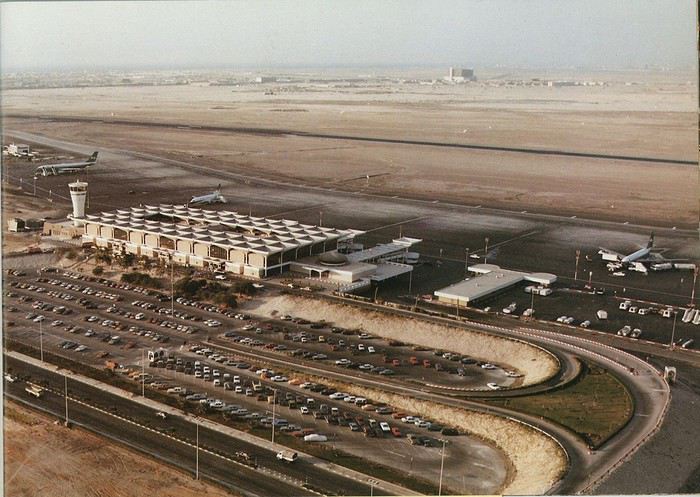
Next stop: New Delhi to drop off some Europeans and pick up a few Indians, and finally, the terminus: Manila. I don’t remember how long the trip took with its five stops—an unimaginable journey today. Despite all those stops to fill the plane, there was still enough space to stretch out on the four center seats of the 747, something that never happens these days despite all the flights in every direction.
So here we are, finally at Manila Airport around midnight.
Episode 1: Manila and Baguio To start, a quick note on the political and economic situation in the Philippines in 1984, which had consequences for us as tourists, as we’d soon realize upon arrival.
After several centuries of Spanish colonization, the Philippines became American at the start of the 20th century, then independent. In 1966, Marcos took power, and little by little, his regime sank into corruption and mismanagement, becoming a dictatorship with martial law, all for the benefit of his family and friends, who enriched themselves endlessly. The peak was the assassination of opposition leader Benigno Aquino in August 1983, which triggered harshly repressed protests. So we arrived a few months later in a very poor country, with omnipresent corruption and an extremely tense political situation, as we’d soon see for ourselves. Major protests took place in the main cities during our trip—I’ll come back to that. Two years later, Marcos fled to Hawaii after being forced out of power following rigged elections. This historical context explains a lot of the situations we found ourselves in over the following weeks.
Arriving in the middle of the night isn’t very cheerful. Manila was already a huge city with many slums, where you could find a few business hotels like the Hilton or Intercontinental—way out of our budget—and plenty of run-down hotels. Luckily, two Indians we’d chatted with on the plane offered to take us to their usual hotel. They came to Manila twice a year for business. We accepted their offer, relieved not to have to look for a place to stay in the middle of the night, figuring the address must be good since they came back every time... we were wrong 🙁
We left the airport and immediately got a taste of the local vibe when we got into the taxi: the police asked for our passports. We thought: what’s more normal than police in a dictatorship?
But that wasn’t it at all. Our two Indian friends explained that the police were noting our names along with the taxi number and time. Crime in Manila was so bad that the taxi driver would be held responsible if anything happened to us... welcome to the Philippines 😎 😎
Historically, the Philippines was a very violent country, where everything was settled with guns or machetes. Previous governments had banned carrying weapons, but Marcos later allowed the free sale and carrying of guns, and disputes were settled with pistols again (or worse, as we’d discover later). Since he’d released most of the criminals from prison to form a paramilitary militia at his service (I’ll talk about our encounter with these “heroes” later), it was pretty dangerous to go into many parts of Manila, where these “tonton macoutes” ruled.
We arrived at our hotel without incident... and then things started badly. The room was infested with big cockroaches—exactly what I hate most in those kinds of countries. No way to find another hotel at that hour. After the long flight, the urge to take a shower was so strong that we squeezed into the bathroom as best we could. After that, I don’t remember—I guess we must’ve fallen asleep exhausted under the sheets in the heat... air conditioning wasn’t widespread yet.
The next day, we just wanted to leave that dump as soon as possible. So we decided to head north right away, stopping in Baguio, and we’d visit Manila a bit on the way back.
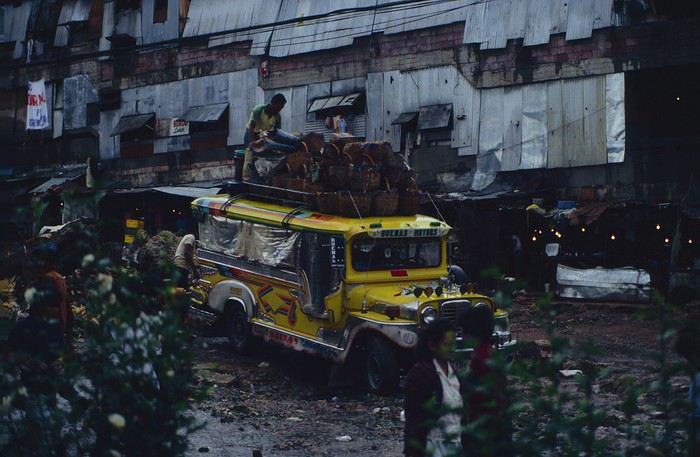
When we stepped outside, we discovered a pretty run-down neighborhood with potholed streets. But we also discovered the jeepneys. They were everywhere, flooding the streets.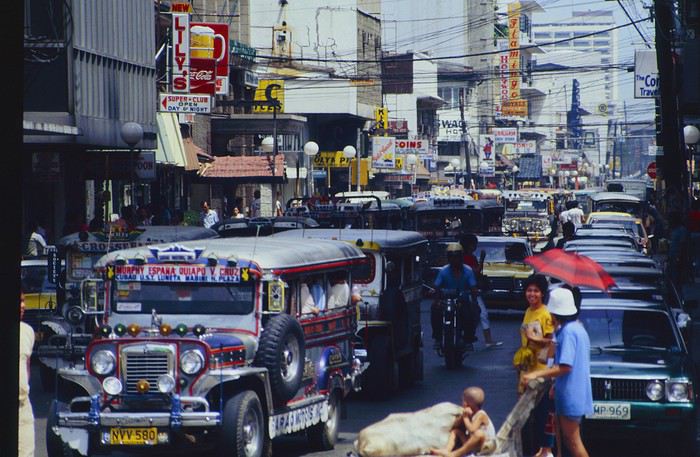
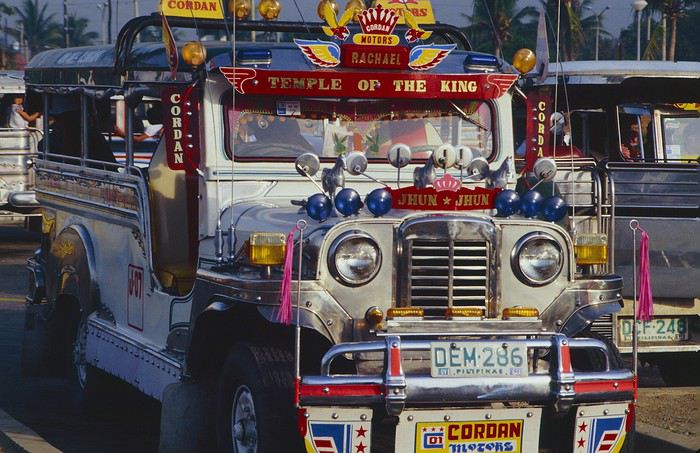
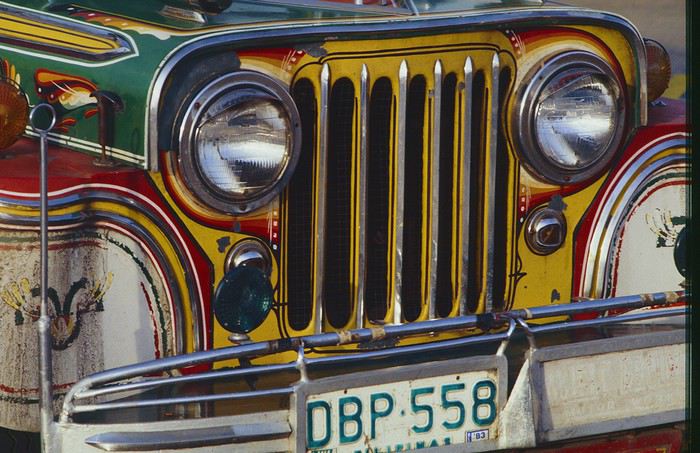
They had crazy sound systems, each one blasting louder than the last. The interiors were kitschy but fun. There weren’t many private cars—almost all transportation was by jeepney, with buses reserved for intercity trips.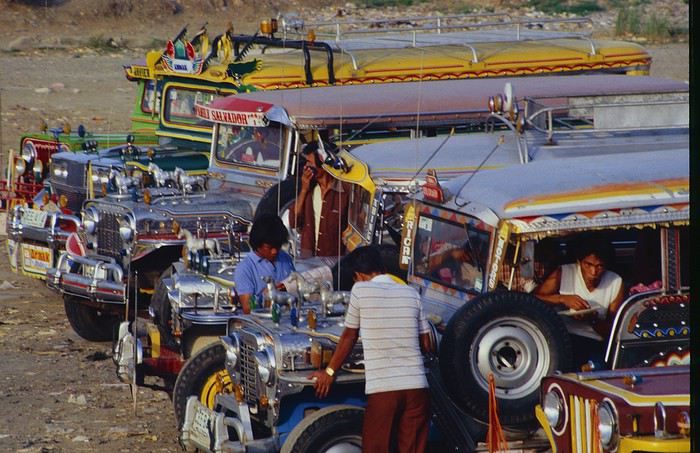
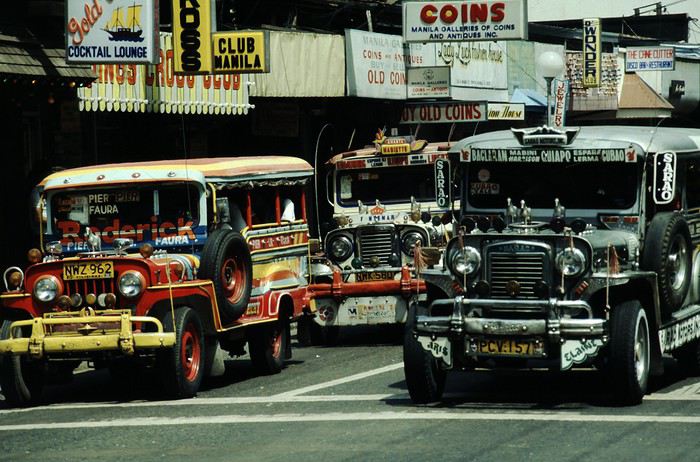
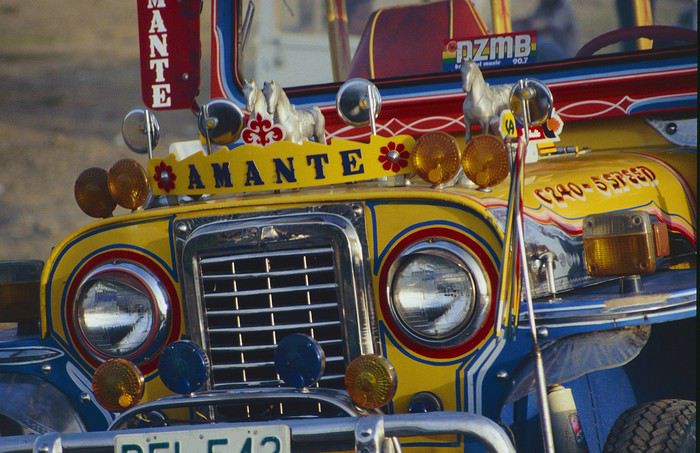
Before heading to the bus terminal for the north, somewhere on the outskirts of the city, we needed to exchange some money. I don’t remember how we ended up in a policeman’s jeep who offered his services: - Exchange money on the black market at a better rate than the banks. - Take us wherever we wanted, in this case, the bus terminal.
We accepted both offers (we’d still checked the official exchange rate from dollars to pesos). So we found ourselves in his jeep. After exchanging money, we left in his vehicle and stopped for gas. Without turning off the engine, he calmly smoked a cigarette while filling up. Since we were in a jeep with no doors or roof, we were ready to jump out if things went south, our travel bag in hand.
But we weren’t done with surprises yet. Once we left the small streets, we ended up in a neighborhood with wide avenues and not much traffic, which didn’t justify his incredible behavior. At every intersection, he made the sign of the cross, closed his eyes, and crossed without looking. I was more stunned than terrified! It wasn’t until we got out of the car later that I told Anne-Marie what had happened. I’d seen everything because the cop had put me in the front seat. Luckily, A-Marie hadn’t noticed anything from the back. Crossing Manila by trusting God rather than the rules of the road was ultimately effective. We were lucky—the trip was off to a good start. 🙂 🙂
We then passed through a neighborhood where slums stretched on for a while, and we left our policeman—friendly but a bit crazy—with relief.
A few hours by bus later, here we are in Baguio, cool in the mountains. My memories of Baguio are pretty fuzzy. I remember a small town. After some research while writing this journal, I found that the population was 120,000 in 1980. Given the population density in each home, that confirms my memory of a smallish town. Outside the “official” district with the president’s summer residence and government buildings, there were two or three paved streets with nice houses. The rest was very dirty and very poor, with lots of slums and dirt roads.
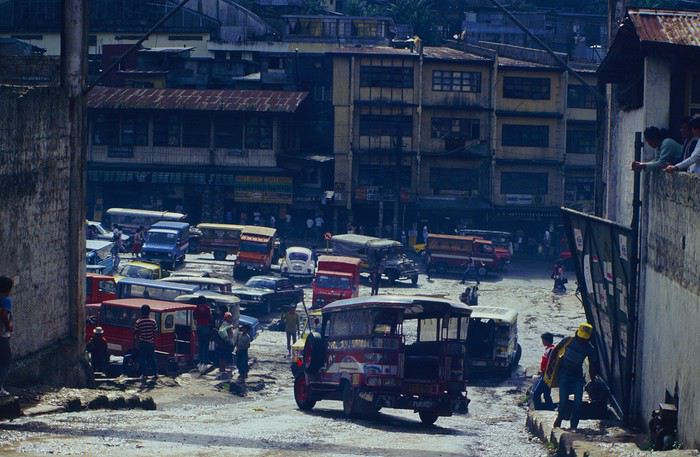
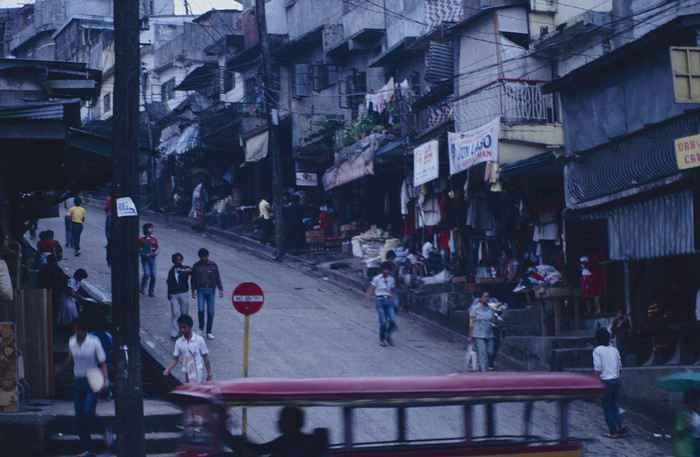
People we met on the street invited us to stay with them. These days, we wouldn’t just show up at strangers’ houses, which we should’ve done in Baguio—it would’ve saved us from an unimaginable and dangerous situation... which I won’t say anything about... !😊
The simple wooden house was on stilts at the edge of a hill with a view of the mountains. Since it was the start of the rainy season in a city that gets a lot of rain, we saw a lot of water. Our outings in town happened between downpours.
View from our lodging: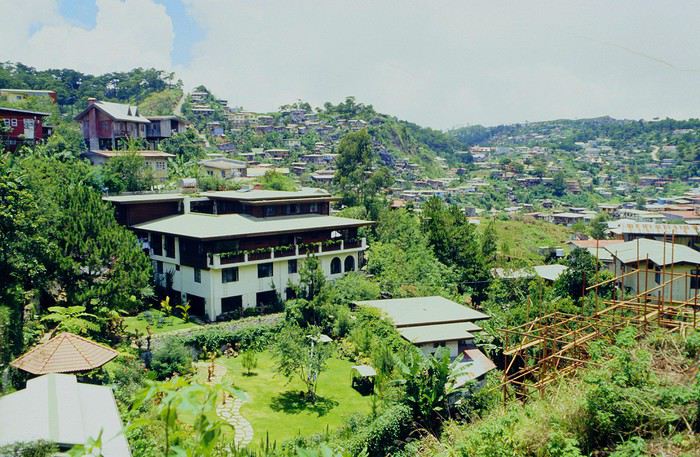
Episode 2: Baguio to Bontoc Aside from the situation briefly mentioned above, it was on the next leg to Bontoc that the adventure really began: an endless and dangerous road, a bus from another era, breathtaking landscapes, and surprising people.
We didn’t know the distance or how long it would take to get to Bontoc. When we arrived after about ten hours, we learned that Baguio to Bontoc was 140 km.
We got on a bus with wooden seats and settled in, two to a seat meant for two. As the bus filled up, passengers squeezed in three or four per seat, with chickens and baskets full of all sorts of things in the aisle. A little embarrassed, we didn’t know if we should squeeze in three on our seat. The seats were super tight (luckily, Filipinos are small), and I didn’t know where to put my legs given my height. I don’t remember if we stayed alone on our bench or if we ended up sharing with others.
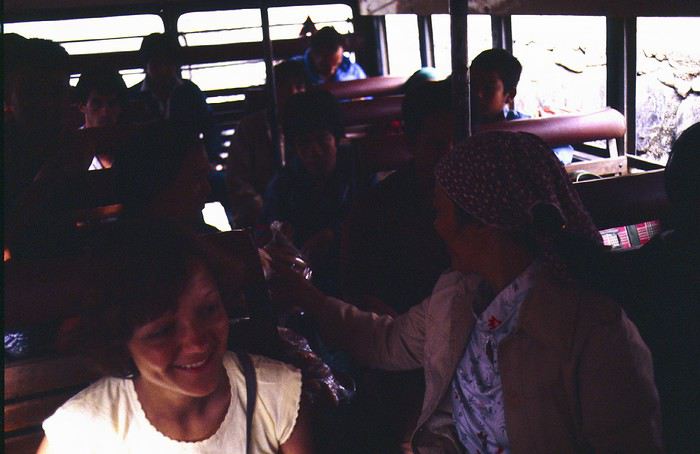
The “road” was a dirt track (or rather, a mud track) with endless turns. We held on as best we could to our slippery wooden seats—it was shaking in every direction. The woman behind us was carsick and throwing up... gross... but what were we doing there? Then we plunged into the Sierra Madre... just the name is dreamy!
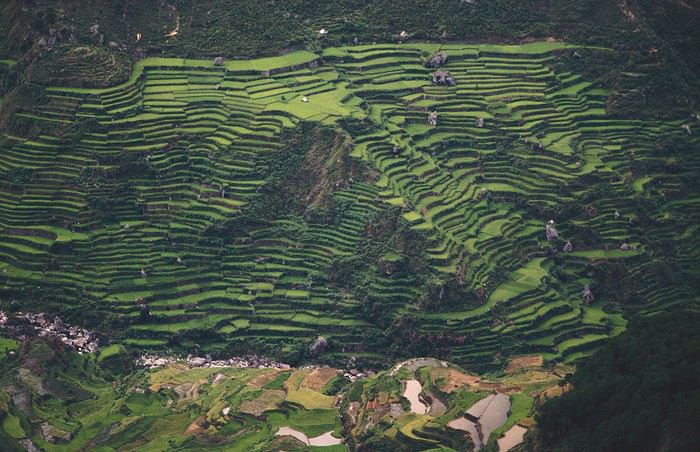
Rice terraces started to appear: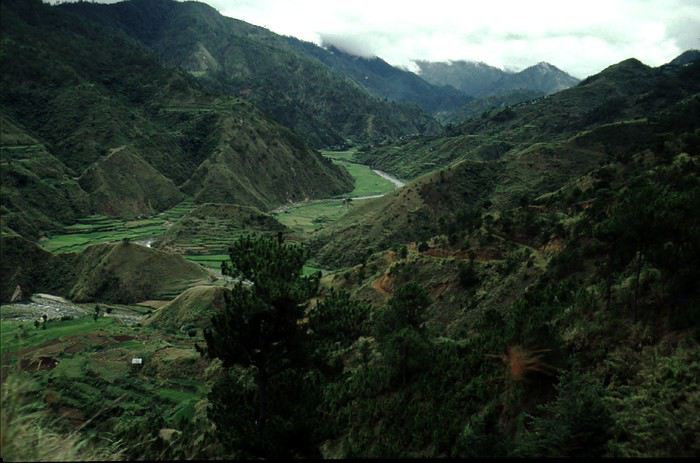
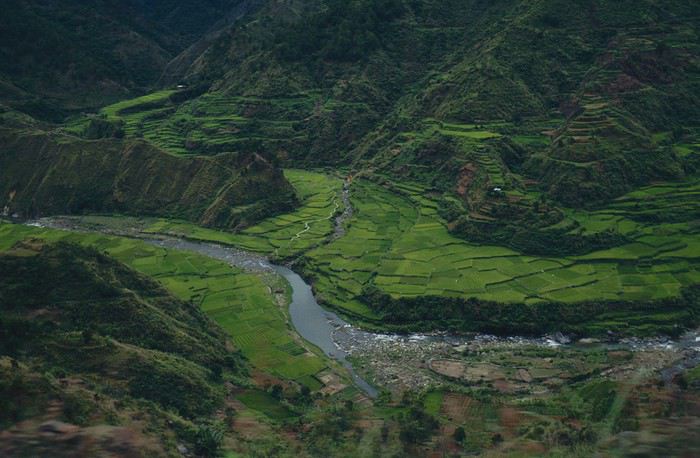
they took up more and more space along cliffs where we weren’t always reassured,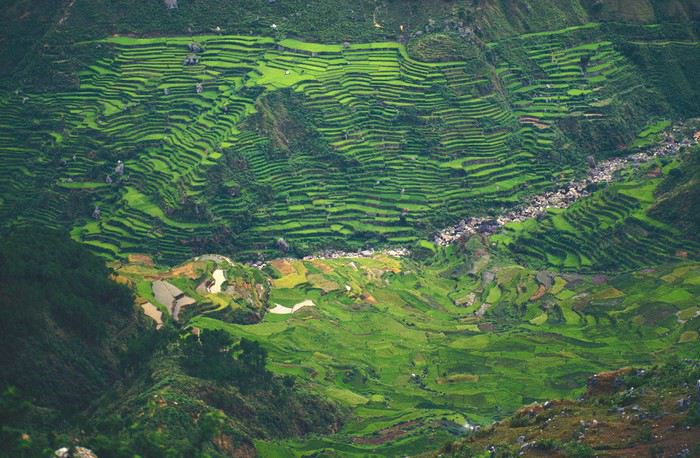
with lots of waterfalls (all that water had to go somewhere).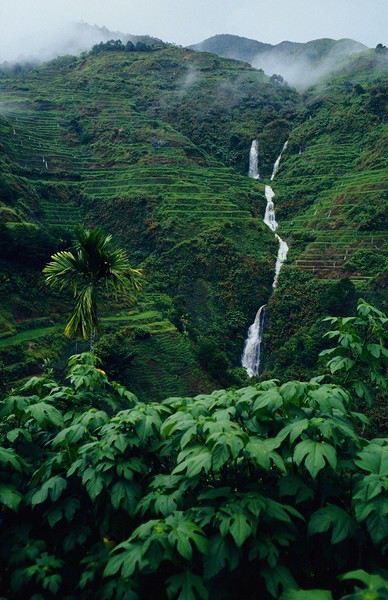
A few miserable villages stretched along the track, most often just a few houses balancing between the road and the drop. The bus stopped in every village—people got on or off and settled inside or on the roof. Street vendors offered their products to the bus passengers—a common sight in Asia, even today.
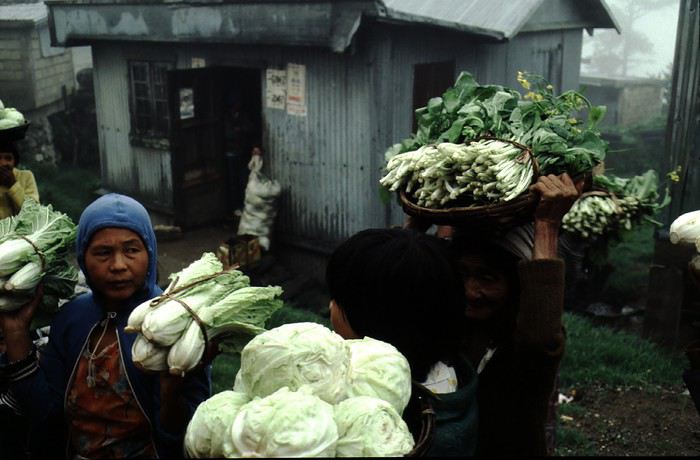
We were in another world—villagers were in loincloths, others had spears. The atmosphere was strange... but all good, we wanted exoticism, and we got it: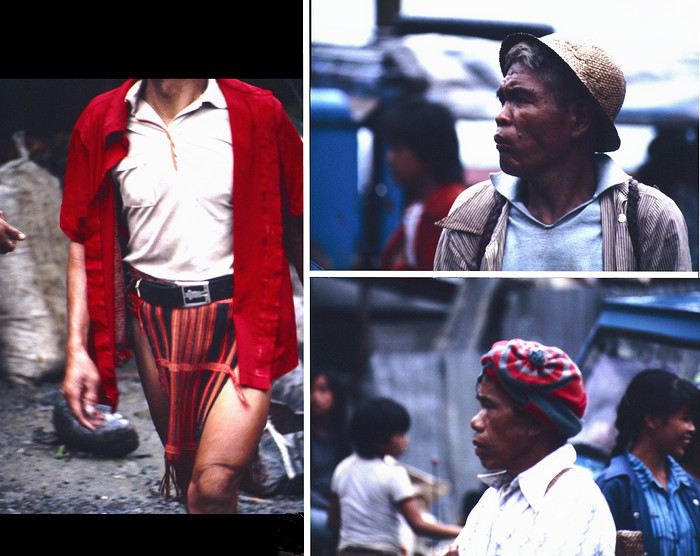
This so-called traditional outfit was everyday wear—it wasn’t for tourists since there weren’t any.
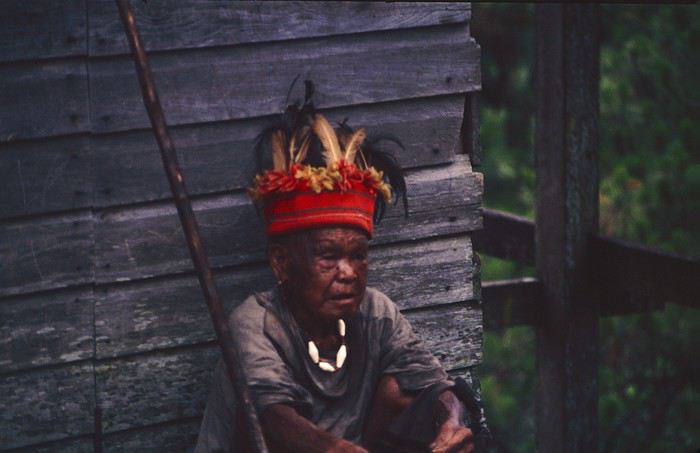
A curiosity because writing a travel journal about a trip 35 years later isn’t common, but also (mostly?) because exploring the Philippines at that time had little in common with traveling there today.
Obviously, I’ve forgotten a number of facts, most of the details, but with the help of a few notes from that time and a stack of slides (yes, there was life before digital 😊), many memories came back and added to the highlights I’d never forgotten. The scanned slides aren’t always great quality, but there are still quite a few to brighten up this chatter. Back then, we didn’t snap photos like we do now—film was too expensive—so I don’t have pictures of every place we visited... too bad, comparing some of those spots to how they look today would’ve been interesting.
Why "Adventures"? Why call it "Adventures" in the Philippines in 1984, a word so often used for a simple exotic trip? - Because the lack of information (no *Guide du Routard*, no *Lonely Planet*, no *Michelin Guide*, nothing, and obviously no internet) gave this trip what’s at the heart of adventure: the unknown. - Because the political situation made the stay sometimes dangerous. - Because transportation conditions were always epic, often perilous. - Because the question of where we’d spend the night came up almost every evening. - And for... quite a few other reasons.
That said, we weren’t exactly explorers!
Why the Philippines? First of all, why go to the Philippines in 1984—a country not exactly set up for tourism and about which we knew very little? How could we get an idea of the beauty of the Philippines and its points of interest when we had no guides or photos?
The idea came to us from Thailand a year earlier, during our first long-haul trip. After touring the north of the country, we met a Frenchman living in Phuket, where there were only a few tourists in Patong, with just a few small hotels and guesthouses. Kata and Karon had no buildings or roads, Rawai only had three palm-thatched bungalows, including ours, and the other islands were unknown to tourists. There was plenty to discover, and we wanted to return to this beautiful country... but the Frenchman made us dream about the Philippines—a country to explore, with wild landscapes.
Long evenings of discussion over multiple Sprite-Mekong cocktails (what memories of those headaches!) finally convinced us we had to go to the Philippines.
Episode 0: Before Departure The decision was made: we’d go to the Philippines in May 1984. Our friends and family were surprised when we announced we were going on vacation to the Philippines (a bit like saying today we were going paddleboarding in the Kerguelen Islands 🤪).
These days, preparing for each of our trips takes long evenings of research, planning, and noting down good addresses... etc. But for the Philippines in 1984, preparation was quick: we had very little information about the country, we were leaving almost at random, and the discovery would only be more exciting.
We still had a few bits of info gathered here and there: the rice terraces in northern Luzon, volcanoes, Negros where we were supposed to visit an acquaintance, Cebu and its marine life (we ended up going elsewhere), and absolutely avoid Mindanao, which was practically at war with the regime. That was about it, but it was already a great itinerary.
Nothing was organized in advance; we’d see day by day. We had no idea about travel times or even the existence of transportation options. The main (and sometimes only) way to connect two islands was by overloaded, rusty ferry. Only the big cities had airports.
Let’s Go: Episode 1: Paris to Manila My travel journals always start after arriving at the airport—the Europe-to-“Other Continent” trip isn’t interesting—but the flight to the Philippines was already an adventure, so I’ll make an exception.
This was the era when only a few Asian airlines were on par with Western ones: Thai, Singapore Airlines, and Philippine Airlines. They had beautiful, brand-new planes, and to attract customers (almost exclusively “businessmen”) from the usual airlines (Air France, Lufthansa, British Airways), there was opulence on board: unlimited champagne, all sorts of cocktails... Compared to today’s long-haul flights, there was still one small difference: no personal screens, just one screen at the front of the cabin with one mandatory movie. And I don’t know why, but we only got James Bond films, both ways... that must’ve been the trend at the time.
The tourism boom to Southeast Asia hadn’t started yet, and the “Asian Tigers” weren’t a thing, so there weren’t many business trips. That meant long-haul flights made stops everywhere to fill the planes. Our Philippine Airlines Boeing 747 left London, picked us up in Paris, then stopped in Frankfurt to take on a few Germans. I don’t know why we then made a stop in Dubai—a totally exotic place at the time. There was nothing to do there... things have changed a lot since. It was a small town lost in the desert. The airport was tiny, with just one or two buildings and a supermarket. During the stopover, everyone had to get off the plane and walk to the supermarket. Photo and electronic equipment were dirt cheap—I guess that was the only reason for the stop. Maybe it was their first commercial move. Emirates didn’t exist yet, as I checked online, but anyway, the idea that such a remote place could have its own airline was unthinkable.
Online, I found this photo of Dubai Airport in 1980. Anyone who’s transited through today’s massive airport with its rows of A380s will appreciate it:
Next stop: New Delhi to drop off some Europeans and pick up a few Indians, and finally, the terminus: Manila. I don’t remember how long the trip took with its five stops—an unimaginable journey today. Despite all those stops to fill the plane, there was still enough space to stretch out on the four center seats of the 747, something that never happens these days despite all the flights in every direction.
So here we are, finally at Manila Airport around midnight.
Episode 1: Manila and Baguio To start, a quick note on the political and economic situation in the Philippines in 1984, which had consequences for us as tourists, as we’d soon realize upon arrival.
After several centuries of Spanish colonization, the Philippines became American at the start of the 20th century, then independent. In 1966, Marcos took power, and little by little, his regime sank into corruption and mismanagement, becoming a dictatorship with martial law, all for the benefit of his family and friends, who enriched themselves endlessly. The peak was the assassination of opposition leader Benigno Aquino in August 1983, which triggered harshly repressed protests. So we arrived a few months later in a very poor country, with omnipresent corruption and an extremely tense political situation, as we’d soon see for ourselves. Major protests took place in the main cities during our trip—I’ll come back to that. Two years later, Marcos fled to Hawaii after being forced out of power following rigged elections. This historical context explains a lot of the situations we found ourselves in over the following weeks.
Arriving in the middle of the night isn’t very cheerful. Manila was already a huge city with many slums, where you could find a few business hotels like the Hilton or Intercontinental—way out of our budget—and plenty of run-down hotels. Luckily, two Indians we’d chatted with on the plane offered to take us to their usual hotel. They came to Manila twice a year for business. We accepted their offer, relieved not to have to look for a place to stay in the middle of the night, figuring the address must be good since they came back every time... we were wrong 🙁
We left the airport and immediately got a taste of the local vibe when we got into the taxi: the police asked for our passports. We thought: what’s more normal than police in a dictatorship?
But that wasn’t it at all. Our two Indian friends explained that the police were noting our names along with the taxi number and time. Crime in Manila was so bad that the taxi driver would be held responsible if anything happened to us... welcome to the Philippines 😎 😎
Historically, the Philippines was a very violent country, where everything was settled with guns or machetes. Previous governments had banned carrying weapons, but Marcos later allowed the free sale and carrying of guns, and disputes were settled with pistols again (or worse, as we’d discover later). Since he’d released most of the criminals from prison to form a paramilitary militia at his service (I’ll talk about our encounter with these “heroes” later), it was pretty dangerous to go into many parts of Manila, where these “tonton macoutes” ruled.
We arrived at our hotel without incident... and then things started badly. The room was infested with big cockroaches—exactly what I hate most in those kinds of countries. No way to find another hotel at that hour. After the long flight, the urge to take a shower was so strong that we squeezed into the bathroom as best we could. After that, I don’t remember—I guess we must’ve fallen asleep exhausted under the sheets in the heat... air conditioning wasn’t widespread yet.
The next day, we just wanted to leave that dump as soon as possible. So we decided to head north right away, stopping in Baguio, and we’d visit Manila a bit on the way back.
When we stepped outside, we discovered a pretty run-down neighborhood with potholed streets. But we also discovered the jeepneys. They were everywhere, flooding the streets.
They had crazy sound systems, each one blasting louder than the last. The interiors were kitschy but fun. There weren’t many private cars—almost all transportation was by jeepney, with buses reserved for intercity trips.
Before heading to the bus terminal for the north, somewhere on the outskirts of the city, we needed to exchange some money. I don’t remember how we ended up in a policeman’s jeep who offered his services: - Exchange money on the black market at a better rate than the banks. - Take us wherever we wanted, in this case, the bus terminal.
We accepted both offers (we’d still checked the official exchange rate from dollars to pesos). So we found ourselves in his jeep. After exchanging money, we left in his vehicle and stopped for gas. Without turning off the engine, he calmly smoked a cigarette while filling up. Since we were in a jeep with no doors or roof, we were ready to jump out if things went south, our travel bag in hand.
But we weren’t done with surprises yet. Once we left the small streets, we ended up in a neighborhood with wide avenues and not much traffic, which didn’t justify his incredible behavior. At every intersection, he made the sign of the cross, closed his eyes, and crossed without looking. I was more stunned than terrified! It wasn’t until we got out of the car later that I told Anne-Marie what had happened. I’d seen everything because the cop had put me in the front seat. Luckily, A-Marie hadn’t noticed anything from the back. Crossing Manila by trusting God rather than the rules of the road was ultimately effective. We were lucky—the trip was off to a good start. 🙂 🙂
We then passed through a neighborhood where slums stretched on for a while, and we left our policeman—friendly but a bit crazy—with relief.
A few hours by bus later, here we are in Baguio, cool in the mountains. My memories of Baguio are pretty fuzzy. I remember a small town. After some research while writing this journal, I found that the population was 120,000 in 1980. Given the population density in each home, that confirms my memory of a smallish town. Outside the “official” district with the president’s summer residence and government buildings, there were two or three paved streets with nice houses. The rest was very dirty and very poor, with lots of slums and dirt roads.
People we met on the street invited us to stay with them. These days, we wouldn’t just show up at strangers’ houses, which we should’ve done in Baguio—it would’ve saved us from an unimaginable and dangerous situation... which I won’t say anything about... !😊
The simple wooden house was on stilts at the edge of a hill with a view of the mountains. Since it was the start of the rainy season in a city that gets a lot of rain, we saw a lot of water. Our outings in town happened between downpours.
View from our lodging:
Episode 2: Baguio to Bontoc Aside from the situation briefly mentioned above, it was on the next leg to Bontoc that the adventure really began: an endless and dangerous road, a bus from another era, breathtaking landscapes, and surprising people.
We didn’t know the distance or how long it would take to get to Bontoc. When we arrived after about ten hours, we learned that Baguio to Bontoc was 140 km.
We got on a bus with wooden seats and settled in, two to a seat meant for two. As the bus filled up, passengers squeezed in three or four per seat, with chickens and baskets full of all sorts of things in the aisle. A little embarrassed, we didn’t know if we should squeeze in three on our seat. The seats were super tight (luckily, Filipinos are small), and I didn’t know where to put my legs given my height. I don’t remember if we stayed alone on our bench or if we ended up sharing with others.
The “road” was a dirt track (or rather, a mud track) with endless turns. We held on as best we could to our slippery wooden seats—it was shaking in every direction. The woman behind us was carsick and throwing up... gross... but what were we doing there? Then we plunged into the Sierra Madre... just the name is dreamy!
Rice terraces started to appear:
they took up more and more space along cliffs where we weren’t always reassured,
with lots of waterfalls (all that water had to go somewhere).
A few miserable villages stretched along the track, most often just a few houses balancing between the road and the drop. The bus stopped in every village—people got on or off and settled inside or on the roof. Street vendors offered their products to the bus passengers—a common sight in Asia, even today.
We were in another world—villagers were in loincloths, others had spears. The atmosphere was strange... but all good, we wanted exoticism, and we got it:
This so-called traditional outfit was everyday wear—it wasn’t for tourists since there weren’t any.
Le premier jour
Nous sommes le xx xx xxxx, jour de votre déconfinement, vous êtes guéri ou n'avez jamais été en contact avec le virus couronné.
Qu'imaginez-vous faire en premier ? 😛
(Par simplicité, nous allons partir du principe que votre région est redevenue comme avant à défaut du monde.)
(Par simplicité, nous allons partir du principe que votre région est redevenue comme avant à défaut du monde.)
Un mois au Mozambique: logistique et réflexions
Bonjour
Les retours de voyages au Mozambique sont peu nombreux sur VF, aussi je propose le mien qui s’est déroulé du 1 février au 29 février 2020. C’est la saison des pluies, ce n’est pas la saison touristique, on rencontre très peu de touristes, voire aucun, mais il y a beaucoup de soleil.
Je vais d’abord présenter la logistique, puis proposer quelques réflexions plus tard.
Visa. J’ai obtenu le visa très facilement au consulat de Mozambique à Zanzibar en 7 jours, le temps de visiter tranquillement l’île. Le visa a une durée de 90 jours, pour une visite de 30 jours maximum, il coûte 60 euros. Il semble que le e-visa soit pas facile à obtenir; en Europe, il faut se rendre au consulat du pays. Le visa à la frontière terrestre n’est pas possible.
Les gens. La population, bien que très pauvre, est d’un naturel souriant, aimable et serviable. On vous propose souvent de l’aide de façon désintéressée. La politesse est de mise en toutes circonstances. Aucune insécurité dans les campagnes ni même dans les villes, mais nous ne sortions pas le soir. Ce qui ne veut pas dire que le dangé soit inexistant, simplement qu’il y a moyen de l’éviter. La promiscuité très grande dans les chapas n’engendre aucun geste déplacé envers les femmes. Bien que la langue officielle soit le portugais, la plupart des gens parlent des dialectes bantous différents selon les régions. Il est parfois nécessaire de recourir au langage des signes en plus de quelques mots portugais. Sauf dans les hôtels et les comptoirs qui vendent les billets de bus, l’anglais est rarement pratiqué, mais les chauffeurs de chapas et les petits commerçants se débrouillent avec quelques mots. Les enfants vous lanceront spontanément des « how are you » auxquels il convient de répondre. On nous appelle Papa ou Mama – nous sommes les deux retraités -, une formule à la fois familière et respectueuse. Comme partout en Afrique, on vit dehors. Une occasion pour le voyageur d’observer respectueusement les comportements et de se comporter en conséquence.
Les livres. On avait deux livres, l’un excellent, le Bradt (éd.2017), l’autre minable : le Petit Futé (PF). Pour le montrer, je prends un seul exemple. Page 231 du PF, édition 2017 - celle vendue pour l’édition 2019-2020 -, on lit : « Pour aller vers le Sud, la route est relativement longue, avec un obstacle de taille : le Zambèze. En effet, il lui manquerait un pont [ … ] de nombreux chapas direction Beira attendent tous les futés ( je souligne ) qui ont décidé de ne pas rester assis deux heures inutilement dans le bus. ». Or il y a un pont qui permet de traverser le Zambèze depuis 2009 ! CQFD.
Les sous. Tous les ATM ne conviennent pas aux touristes. Millennium (en couleur rose) accepte les cartes visa et master étrangères, retrait de 10 000 meticals (mzn) maximum, 200 mzn de frais fixes. Du coup on n’a pas essayé d’autres banques, ces conditions sont excellentes, Millennium est partout présent au Mozambique. On peut payer sans frais avec sa carte bancaire dans de nombreux hôtels, restaurants et magasins, même pour quelques euros. Si on privilégie ce mode de paiement, alors les mzn retirés dans les ATM deviennent de l’argent de poche, pour les achats sur les marchés, payer les chapas, etc… ; ainsi on limite le recours aux ATM et on minimise les frais.
Le transport. Pour les machibombos (de grands bus confortables) on nous demande de venir à 5 h du matin. Il faut comprendre que la vente des billets restants se fait à partir de 5 h ; le bus est susceptible de partir dès qu’il est plein, à défaut, il partira à 6 h au plus tard et prendra des passagers en route. Les gens qui ont pris leur billet la veille arrivent vers les 5h 45. Si vous n’avez pas de billet, venir tôt permet d’obtenir les meilleures places libres.
Pour les chapas, idem, sauf qu’ils se remplissent plus vite. On achète le billet toujours sur place ou dans le chapa. Il y a de nombreux chapas le matin, ils se font plus rares l’après-midi. Le nombre de passagers n’est pas limité. Les meilleures places sont celles à partir du deuxième rang, côté vitre, ainsi vous ne serez pas gênés par les nombreuses sorties-entrées des passagers et vous aurez un peu d‘air si la vitre s’ouvre. Les 2 places de devant sont les meilleures. Contrairement à ce que j’ai lu sur VF, on n’a jamais rien payé pour les bagages.
Le logement. On choisit des logements corrects, dans la catégorie « prix moyen », avec une bonne literie, une chambre toujours très propre - draps et serviettes de bains changés -, la wifi, une salle de bain non partagée, l’eau chaude, la climatisation - à défaut un ventilateur, souvent les deux à la fois -, une moustiquaire, mais sans personnalité, pour un prix correct, autour de 3 000 mzn pour une chambre double, soit 40 euros. Mais on peut se loger pour beaucoup moins cher, dans des dortoirs ou des chambres moins bien équipées, voire camper. Le Mozambique peut être une destination pour routards.
La météo. L’été austral est la saison des pluies. Sauf en cas de dépression – comme ce fut le cas fin janvier dans la partie nord – les pluies peuvent être fortes mais elles ne durent jamais longtemps. Il y a surtout du soleil, ainsi on n’a eu que peu ou pas de pluie au total et beaucoup de soleil. Le jour se lève tôt, le soleil frappe fort assez rapidement, il fait très chaud dès le matin ; aussi les Mozambicains se lèvent tôt. C’est surtout la chaleur et le soleil, bien plus que la pluie, qui peuvent rendre les conditions du voyage difficiles sauf pour la route.
Le passage de la frontière. On vient de Tanzanie et nous traversons la frontière par la côte, à Kiranbo. Nous passons notre dernière nuit tanzanienne à Mtwara, au Lole grand lodge : 30000 tsh, breakfast inclus ; chambre un peu petite mais confortable ; excellent wifi ; bon breakfast ; bonne situation ; bon rapport qualité prix. De l’hôtel nous réservons un dalla dalla pour le lendemain matin 5 heures (h) qui ne viendra pas. L’unique dalla-dalla qui va à la frontière stationne dans une rue à droite de l’entrée de la gare routière des dalla-dalla. A 5 h effectivement, là, un taxi collectif attend les passagers. Il part à 6 h sans être plein, aussi il passe à la gare routière des bus pour finir de se remplir.
Le dalla-dalla s’arrête pour les formalités au poste frontière, puis continue jusqu’à la rivière Ruvuma, son terminus où attend une embarcation. Ici le Bradt conseille de faire le change, pour mon malheur. Le prix de la traversée est de 1 000 shillings (tsh), payable en tsh « uniquement ». Comme j’avais changé tous mes tsh, j’ai voulu payer en USD, et ce fut une palabre des plus désagréables pour y arriver.
Du côté Mozambique on arrive au milieu de nulle part. Il faut marcher sur un sentier rendu glissant par la pluie pour atteindre la route. Les militaires font une première vérification méticuleuse de nos papiers et bagages. On monte dans un taxi collectif qui attend. Il stoppe un peu plus loin au vrai poste frontière en dur - nouvelles vérifications méticuleuses – et va jusqu’à Mocimboa da Praia son terminus. La route en terre est épouvantable jusqu’à Palma, ensuite on trouve le goudron. Le prix du trajet revient à 1 000 mzn, le chauffeur nous demandera 2 500 mzn, après discussion, on paiera 1 500 mzn chacun.
On ne s’est pas arrêté à Palma où l’on voit quelques guest houses correctes de l’extérieur. La route est longue jusqu’à Mocimboa, le taxi assez confortable, mais on n’a pas à changer de véhicule, un avantage certain. On a été trop souvent arrêtés par l’armée sur ce tronçon avec à chaque fois une vérification minutieuse de nos passeports. Un des postes a été jusqu’à téléphoner au consulat de Zanzibar ! A croire que les touristes qui viennent par la frontière tanzanienne sont suspects. Cependant, le climat politique dans la province du Cabo Delgado explique cette suspicion.
Le Nord.
Mocimboa da praia. On descend au Vumba complex, seul hôtel convenable à notre avis : 3750 mzn breakfast inclus ; chambre immense, mais tout est déglingué dans la salle de bains : ni eau, ni électricité, seau d’eau et lampe de poche. En revanche, très bon restaurant-bar avec wifi. Le prix trop élevé. L’environnement est misérable, la plage une décharge, l’hôtel loin du centre. La ville ne présente pas d’intérêt particulier, sauf le soir son petit marché et l’ATM Millennium.
Macomia. Pour rejoindre le village étape, on doit faire un détour par Mueda, à cause de l’état de la route, nous dit-on. Pas de chapa, on prend le premier petit camion bâché avec les chèvres et les bidons d’essence. À Mueda on reste de longues heures à attendre que l’on puisse monter à l’arrière d’un camion non bâché, surchargé de voyageurs, dans des conditions précaires. La route pour rejoindre la nationale est en fin de construction, aussi seuls les camions 4X4 peuvent circuler sur le bas-côté. Sur la nationale on doit changer de chapa pour traverser le Rio Messalo (nom incertain) sur une pirogue traditionnelle (100 mzn) : il n’y a pas de pont. On arrive à Macomia à la nuit. On nous recommande le 2M hôtel : 2000 mzn sans breakfast ; chambre moderne avec salle de bains récente, très bonne douche ; mais le tout très humide et oppressant ; wifi. Le village est tout simple, on trouve des marchands de brochettes et d’autres en-cas, et aussi de la bière - la 2 M, qui est bonne -
Pemba. La route ne se fait qu’en chapa, le pont de la rivière Montepuez (nom certain) s’est cassé à la dernière dépression. On arrive 1 h avant que les embarcations officielles s’activent. On prend place dans la file indienne, sous un soleil qui tue, dans une chaleur moite, c’est le quotidien de la population. Une fois la rivière traversée (gratuit), il faut suivre un sentier boueux et chaotique, pour prendre un nouveau chapa qui va à Pemba. (À la fin du séjour, à Maputo, nous avons vu à la TV l’inauguration d’une digue permettant de traverser le Rio à sec. Digue qui était en préparation lors de notre passage.)
À Pemba on a choisi l’Hôtel Saruma : 3000 mzn par nuit au lieu de 3 200, breakfast inclus. L’hôtel est moderne avec piscine ; confort moyen ; problèmes wifi résolus le deuxième jour ; bon restaurant ; breakfast de base gratuit mais payant si on ajoute une commande… Situation en bout de plage qui rend l’hôtel plus attractif que ceux de la ville moite et poussiéreuse. Proximité Shoprite (Hyper). Loin de la gare routière et du centre-ville, le trajet se fait cependant facilement en chapa pour quelques mzn. Pemba possède une plage qui pourrait être agréable si elle était propre.
On prend la veille les billets de bus pour Namialo, dans une rue juste avant la place des héros. On nous demande d’être près de l’aéroport à 5h et de fait le bus part à l’heure, sauf qu’il retourne en ville pour prendre les passagers et attend pour se remplir, de sorte que ce n’est que vers 6 h que nous partons vraiment.
À partir de Pemba il est possible de prendre des machibombos pour les longs trajets, puis les chapas pour les terminer, un luxe sans pareil. On refusera de monter dans les camions, même si l’on doit attendre un peu plus de temps, l’expérience de Mueda nous a totalement dégoûtés.
Isla de Mozambique. Pour se rendre dans l’ile, on s’arrête à Namiolo et on termine le trajet en chapa. Il faut faire attention parce que tous les chapas crient Isla ! Cependant ils ne vont pas tous à Isla, certains vont à Quixaxe et vous déposent au carrefour pour Isla, ou encore, un peu plus loin à un autre carrefour pour Isla s’ils vont à Nacala. De là il faudra prendre un autre chapa ou un camion alors que d’autres chapas vont directement de Namiolo à Isla ; il faut donc demander le terminus du chapa. On a dû finir le trajet en camion non bâché… le dernier !
Puis on prend un autre véhicule pour le pont et parcourir la ville. Nous sommes descendus au Café central : 3000 mzn au lieu de 3200, Breakfast inclus. Magnifique maison ancienne superbement restaurée par un Autrichien des plus sympathiques parlant le français – mais l’hôtel est très humide ; piscine ; wifi dans la chambre. Très agréable, si on excepte l’humidité. Restaurant et bar excellents, breakfast somptueux ; service impeccable.
Isla de Mozambique est inscrite à l’Unesco ce qui se justifie. On a surtout apprécié la visite du musée dans le palais Sao Paulo et sa très belle chapelle ; les balades dans l’ile ; moins le fort qui est vide - la restauration est incomplète, voire laissée à l’abandon -. Isla possède un énorme potentiel architectural. Je souligne la nette séparation du village autochtone avec la partie touristique de l’ile. Il est agréable de prendre une bière face à la mer.
NB. Un beau documentaire sur Isla Mozambique a été diffusé sur la chaîne Ô : https://www.france.tv/documentaires/voyages/1319865-a-la-decouverte-de-l-ile-de-mozambique.html
Le centre
Nampula. Vers 5 h on prend un chapa pour rejoindre le continent. Le chapa cherche de rares clients et fait plusieurs fois le tour de l’Ile. Puis il s’arrête encore, on est dans le chapa depuis 1 h. On décide de le quitter pour se mettre à l’entrée du pont, où une moto nous prend rapidement. Dans la foulée, sur le continent, un autre chapa ira directement à Nampula. On trouvera l’Hôtel Lucio, un peu au culot : 3000 mzn obtenus du patron - un marocain qui parle bien le français - au lieu de 4000, breakfast inclus ; situation centrale ; bon confort ; wifi dans la chambre ; breakfast un peu basique et solennel mais correct. Nampula est la première vraie ville où on s’arrête, avec de larges avenues. On a apprécié la visite du musée et le restaurant Copacabana.
Ici nous nous séparons, mon amie et moi. Elle préfère prendre l’avion pour Beira, 1 000 km plus loin, moins fatigant, plus sécuritaire. Moi je continue en bus, 2 fois 500 Km, avec un arrêt à Quelimane.
Quelimane. Je prends un bus qui part à 6 h (j’y étais comme tous les autres à 5 h) pour 6 heures de trajet. J’arrive donc à destination à midi. Je m’installe à la Pensao ideal, 1 500 mzn, chambre petite, clim, salle de bain correcte mais basique. L’hôtel est en rénovation. Je pensais rester 2 nuits pour me reposer une journée entre deux trajets en bus, la ville ne le mérite même pas. La vieille église ne se visite plus. Je suis surpris de voir des immeubles totalement glauques et repoussants, pourtant habités - j’ai eu cette impression en Russie -. Il semble que cet état soit dû aux cyclones qui ont pourri ces immeubles ; à côté, il y a des bâtiments modernes. De plus c’est dimanche, il n’y a personne dans la ville, tout est fermé. Aussi, face à l’ambiance pesante de la ville, je décide de repartir le lendemain, en bus, pour Beira.
En Avion. De son côté, mon amie prend le vol Nampula-Maputo, avec une escale à Beira : Ethiopian Airlines, un petit avion neuf, 9000 mzn, le billet est pris à l’aéroport sans réservation. L’aéroport de Nampula est moderne avec une bonne organisation, alors que mon amie s’attendait à un vieux coucou et une atmosphère chaotique. En fait les lignes intérieures mozambicaines sont bien développées, les gens qui le peuvent les empruntent de préférence aux bus. Le temps est dégagé, le paysage est magnifique, notamment le delta du Zambèze. À Beira, seulement deux personnes descendent, aéroport endormi, pas de chapa pour la ville, 10km plus loin. Le taxi revient à 800 mzn, prix affiché, on a intérêt à être plusieurs…
Beira. Je retrouve mon amie au VIP Inn : 4000 mzn au lieu de 4500, breakfast inclus ; hôtel classe un peu triste (parce que vide, hors saison ?) ; chambre et salle de bains impeccables ; wifi dans la chambre ; restaurant tristounet et breakfast aussi, mais tout est très correct. L’environnement est décourageant, route en mauvais état, immeubles en ruine, ordures à ciel ouvert, et le VIP INN apparaît comme un havre de luxe au milieu de cette désolation. Le centre-ville a dû être très agréable autrefois pour une promenade. Elle a, nous a-t-on dit, souffert du cyclone dévastateur de 2019 et la reconstruction est lente. Il reste quelques vestiges coloniaux intéressants. Les livres conseillent la visite de la maison de la culture que l’on repère de loin par des tags sur les murs : bof, tout est vide, un peu triste, sauf 2 pièces qui exposent des objets à vendre. Comme la maison de la culture est en retrait de la route, c’est agréable de prendre une bière, au calme, avant de repartir. Quand on s’écarte du centre-ville, pour rejoindre la plage, on retrouve ces immeubles délabrés comme ceux de Quelimane. L’ensemble ressemble plus à un « bidonville » qu’à une « résidence », face à une plage sale, très sale. Tout cela est bien triste.
Le sud, les plages
Vilankulo. On fait le trajet Beira-Vilankulo en machibombo. On descend au Baobab Backpackers : 3 000 mzn au lieu de 3200, breakfast payant ; paillote super confortable en bord de plage, salon terrasse. Restaurant et bar agréables ; très bonne cuisine ; wifi capricieuse au bar, magasin ; service agréable. Un magnifique endroit, à conseiller. Possibilité de dortoirs. Un peu loin du centre et de la gare routière. Pour y arriver, au T - qui est aussi un carrefour -, prendre à droite jusqu’au marché, puis la 2 ème rue à gauche. Ensuite c’est vaguement indiqué. Assez loin, devant une ruine, prendre le chemin de sable en face, enfin après une petite boutique, prendre à droite, vous y êtes tout de suite La plage est immense, tout en longueur à marée haute, tout en profondeur à marée basse. Comme certaines plages de Zanzibar, la mer se retire très loin. La plage alors devient un jeu de couleur, le vert et le bleu dominant dans un dégradé infini, un paysage pour les peintres impressionnistes. Sur la plage quelques bateaux se reposent ou flottent. Quand la mer est haute, les pêcheurs reviennent de la pêche.
Tofo. Certains posts sur VF expliquent bien que, venant de Beira, il faut descendre à Maxixe pour embarquer sur une coquille de noix surchargée afin de rejoindre Inhambane, un raccourci. De là un gros bus de ville, surchargé aussi, va à Tofo. Le trajet en bus a été pénible à cause des secousses de la route - on est debout –, et de la chaleur. La récompense fut Liquid dive (tout près du Fatima’s Nest, un centre de plongée ; 6 300 mzn, breakfast inclus. Bungalow en dur tout confort, en face de la plage, le rêve. Excellents restaurant (végétarien) et breakfast ; piscine ; activités diverses en rapport avec la plongée, wifi à la réception. Le village de Tofo est minuscule et très agréable. La plage est immense, avec du sable blanc fin, les dunes une bonne surprise, une plage très différente de celle de Vilankulo. On peut regretter la proximité des hôtels qui mangent la plage.
Imhabane. Comme on n’a pas visité la ville à l’aller, que faire le trajet Tofo-Imhabane pour attraper un bus pour Xai-Xai tôt le matin est impossible, on en profite pour ne pas se presser. La visite de la ville se justifie par sa bibliothèque, sa baie, ses maisons, son petit musée, dense, intéressant, à la gloire du parti Frelimo et de ses leaders. On descend à l’Hôtel Africa Tropical : 3 000 mzn, breakfast inclus ; chambre agréable dans un jardin, tout correct ; wifi dans la chambre ; le week-end musique en live dans le café-restaurant. On n’a pas profité du breakfast, départ matinal. On a acheté le billet de bus la veille avec l’aide d’un policier ; il sera là pour nous indiquer le bus à prendre à 5 h du matin ; une fois installés le bus démarre. Incroyable, il nous attendait ! Le bus nous dépose à l’entrée de Xai Xai, pour prendre un chapa en direction de la plage, 10 km.
Xai Xai. On descend au Complex Halley 3000 mzn au lieu de 3500 breakfast inclus, centre de vacances à la plage, vide parce que hors saison. Un semblant de luxe agréable ; excellent restaurant un peu cher ; wifi dans la chambre ; service stylé. La plage de Xai Xai est particulière. Elle est vaste et déserte en cette saison, le sable un peu granulé et épais, pas comme celui de Tofo. Une barre de rochers délimite un bassin plus tranquille où jouent les enfants qui semblent ignorer l’école. La mer est sauvage surtout au-delà de la barre, les vagues s’écrasant sur les rochers de façon spectaculaire. La localité se compose de résidences secondaires et de quelques ruines. Tout est fermé. Petit magasin au village local, loin de la mer. Atmosphère pour films nostalgiques, pas pour nous déplaire.
Maputo. De la plage de Xai Xai, on prend un chapa pour rejoindre la ville de Xai Xai, il nous dépose à la sortie de la ville, près du pont du Limpopo, où on attend le bus confortable que nous avons pris il y a 2 jours, venant d’Imhabane. Le bus s’arrête à la demande … on sait qu’il passe vers 9h, le chauffeur nous reconnaît. Vous devez refuser toutes les propositions de chapas, nettement moins pratiques, sans doute moins chers ; le bus les dépassera sur la route. La gare routière de Maputo, du moins celle où s’arrête le bus, est à la périphérie du bidonville que nous avons traversé et qui encercle la capitale. On a pris un taxi collectif pour se rendre à l’hôtel et négocié le prix. On s’installe à l’hôtel Santa Cruz, 2500 mzn au lieu de 2800 à condition de réserver 5 nuits, breakfast inclus. La situation centrale est idéale pour visiter la ville. Wifi dans la chambre ; ascenseur. Confort correct mais chambre petite et salle de bains trop petite et vieillotte. Breakfast basique. Dîner très moyen. Bon rapport qualité prix mais pas très classe On a apprécié la découverte de la vieille ville, les musées, le marché artisanal idéal pour les cadeaux, les vestiges de la colonisation portugaise, la gare avec son très intéressant musée qui explique le développement du pays par le développement du chemin de fer, le fort, la ville moderne et ses grandes avenues. Maputo a plusieurs visages, quartiers résidentiels, quartiers défavorisés, comme toute grande ville, mais somme toute une ville agréable. La plage – Costa do sol - est une longue barre de sable qui s’étend très loin à marée basse, déserte à cette période de l’année. Il semble que cette plage soit le lieu de la future croissance de Maputo : on y trouve déjà un casino, des grandes enseignes d’hyper, des immeubles d’habitation, souvent vides. Se déplacer en transport en commun est facile, il y a des plans affichés à chaque arrêt de bus : les bus et chapas ont souvent leur terminus à la gare. Pour se rendre vers le N-E de Maputo, où se trouvent : - le marché artisanal ; - la Présidence ; - l’hôtel Polana Serena magnifique par son architecture, son histoire, sa situation ; - la Costa do Sol ; on prend un bus ou un chapa indiquant do Sol, sur l’avenida Eduardo Mondlane, et on descend au bon arrêt, par exemple, pour le marché artisanal, le premier arrêt sur avenida Julius Nyerere, et continuer à pied, les chauffeurs vous aideront. Toutefois, la ville historique (Baixa) se visite facilement à pied.
Ponta do Ouro. Mon amie est retournée chez elle, fatiguée : les 2500 km parcourus ont été une épreuve, qui aujourd’hui l’étonnent de s’être si bien comportée. Il me reste quelques jours et je décide de visiter la dernière plage du sud du pays avant mon passage en Afrique du Sud (AS). Je quitte l’hôtel Santa Cruz pour prendre un autre hôtel juste à côté du Musée de la Monnaie – j’ai oublié le nom -, rue Bagamoyo. L’hôtel a accepté de garder mon sac à dos avant de prendre la chambre. Je me rends à la Gare pour un bus en direction de Catembe, avant 7 h. Je descends au grand rond-point après le grand pont suspendu où arrive bientôt le bus de ville qui se rend à Ouro - départ régulier toutes les heures, aussi la visite de Ouro peut-elle se faire dans la journée de Maputo, ce qui est suffisant - ; le bus passe d’abord par la frontière. Au retour pareil : on descend à ce grand rond-point (le bus Maputo-Ouro ne passe pas par la gare) pour prendre la correspondance gratuite pour la gare, c’est la même compagnie. À Ouro, je m’installe au Underwater Explorer, pas cher, 12 euros, une petite chambre très basique pour backpacker, avec douches partagées, ventilateur, mais cuisine et réfrigérateur, la plage juste derrière ; c’est surtout un centre de plongée. La plage do Ouro est très belle, l’océan agité, du déjà vu. Le fait marquant vient de ce que l’on est déjà « plus tout à fait » au Mozambique mais « déjà un peu » en AS tant la présence des Sud-Africains est visible par leurs « gros tubes 4x4 », ou encore par leur vedette-hors-bord qu’ils font glisser sur le sable en sortant de l’eau à toute vitesse : bonjour les « musclors ». Certains SA possèdent des maisons secondaires à Ouro. Un peu comme à Las Vegas, on est dans un environnement surfait.
L'Afrique su Sud. De retour à Maputo, avec le bus Intercape, je passe en AS. La formalité à la frontière est simple … juste un tampon sur le passeport. Un mot pour souligner l’incroyable différence entre les deux pays. L’AS est bien le pays le plus développé de l’Afrique australe, c’est une évidence dès les premiers Km dans le pays, en regardant par la fenêtre les champs de maïs ou de bananes bien alignés, bien entretenus.
Limites. On n’a pas visité les réserves, fermées ; ni la région de Tete pour notre sécurité, à cause aussi de la saison des pluies qui devait rendre les déplacements difficiles – même par temps sec comme l’indiquent certains posts sur VF les transports sont épuisants - ; ni le train qui nous a bien tentés ; ni les îles qui sont hors de prix pour nous. Nous ne parlons pas le portugais, nos échanges avec la population étaient limités, on a beaucoup appris par l’observation cependant.
Remerciements. Je remercie Alice2017, Emersmile, Bof et tous les autres forumistes pour leurs carnets qui m’ont aidé dans la préparation du voyage.
Les retours de voyages au Mozambique sont peu nombreux sur VF, aussi je propose le mien qui s’est déroulé du 1 février au 29 février 2020. C’est la saison des pluies, ce n’est pas la saison touristique, on rencontre très peu de touristes, voire aucun, mais il y a beaucoup de soleil.
Je vais d’abord présenter la logistique, puis proposer quelques réflexions plus tard.
Visa. J’ai obtenu le visa très facilement au consulat de Mozambique à Zanzibar en 7 jours, le temps de visiter tranquillement l’île. Le visa a une durée de 90 jours, pour une visite de 30 jours maximum, il coûte 60 euros. Il semble que le e-visa soit pas facile à obtenir; en Europe, il faut se rendre au consulat du pays. Le visa à la frontière terrestre n’est pas possible.
Les gens. La population, bien que très pauvre, est d’un naturel souriant, aimable et serviable. On vous propose souvent de l’aide de façon désintéressée. La politesse est de mise en toutes circonstances. Aucune insécurité dans les campagnes ni même dans les villes, mais nous ne sortions pas le soir. Ce qui ne veut pas dire que le dangé soit inexistant, simplement qu’il y a moyen de l’éviter. La promiscuité très grande dans les chapas n’engendre aucun geste déplacé envers les femmes. Bien que la langue officielle soit le portugais, la plupart des gens parlent des dialectes bantous différents selon les régions. Il est parfois nécessaire de recourir au langage des signes en plus de quelques mots portugais. Sauf dans les hôtels et les comptoirs qui vendent les billets de bus, l’anglais est rarement pratiqué, mais les chauffeurs de chapas et les petits commerçants se débrouillent avec quelques mots. Les enfants vous lanceront spontanément des « how are you » auxquels il convient de répondre. On nous appelle Papa ou Mama – nous sommes les deux retraités -, une formule à la fois familière et respectueuse. Comme partout en Afrique, on vit dehors. Une occasion pour le voyageur d’observer respectueusement les comportements et de se comporter en conséquence.
Les livres. On avait deux livres, l’un excellent, le Bradt (éd.2017), l’autre minable : le Petit Futé (PF). Pour le montrer, je prends un seul exemple. Page 231 du PF, édition 2017 - celle vendue pour l’édition 2019-2020 -, on lit : « Pour aller vers le Sud, la route est relativement longue, avec un obstacle de taille : le Zambèze. En effet, il lui manquerait un pont [ … ] de nombreux chapas direction Beira attendent tous les futés ( je souligne ) qui ont décidé de ne pas rester assis deux heures inutilement dans le bus. ». Or il y a un pont qui permet de traverser le Zambèze depuis 2009 ! CQFD.
Les sous. Tous les ATM ne conviennent pas aux touristes. Millennium (en couleur rose) accepte les cartes visa et master étrangères, retrait de 10 000 meticals (mzn) maximum, 200 mzn de frais fixes. Du coup on n’a pas essayé d’autres banques, ces conditions sont excellentes, Millennium est partout présent au Mozambique. On peut payer sans frais avec sa carte bancaire dans de nombreux hôtels, restaurants et magasins, même pour quelques euros. Si on privilégie ce mode de paiement, alors les mzn retirés dans les ATM deviennent de l’argent de poche, pour les achats sur les marchés, payer les chapas, etc… ; ainsi on limite le recours aux ATM et on minimise les frais.
Le transport. Pour les machibombos (de grands bus confortables) on nous demande de venir à 5 h du matin. Il faut comprendre que la vente des billets restants se fait à partir de 5 h ; le bus est susceptible de partir dès qu’il est plein, à défaut, il partira à 6 h au plus tard et prendra des passagers en route. Les gens qui ont pris leur billet la veille arrivent vers les 5h 45. Si vous n’avez pas de billet, venir tôt permet d’obtenir les meilleures places libres.
Pour les chapas, idem, sauf qu’ils se remplissent plus vite. On achète le billet toujours sur place ou dans le chapa. Il y a de nombreux chapas le matin, ils se font plus rares l’après-midi. Le nombre de passagers n’est pas limité. Les meilleures places sont celles à partir du deuxième rang, côté vitre, ainsi vous ne serez pas gênés par les nombreuses sorties-entrées des passagers et vous aurez un peu d‘air si la vitre s’ouvre. Les 2 places de devant sont les meilleures. Contrairement à ce que j’ai lu sur VF, on n’a jamais rien payé pour les bagages.
Le logement. On choisit des logements corrects, dans la catégorie « prix moyen », avec une bonne literie, une chambre toujours très propre - draps et serviettes de bains changés -, la wifi, une salle de bain non partagée, l’eau chaude, la climatisation - à défaut un ventilateur, souvent les deux à la fois -, une moustiquaire, mais sans personnalité, pour un prix correct, autour de 3 000 mzn pour une chambre double, soit 40 euros. Mais on peut se loger pour beaucoup moins cher, dans des dortoirs ou des chambres moins bien équipées, voire camper. Le Mozambique peut être une destination pour routards.
La météo. L’été austral est la saison des pluies. Sauf en cas de dépression – comme ce fut le cas fin janvier dans la partie nord – les pluies peuvent être fortes mais elles ne durent jamais longtemps. Il y a surtout du soleil, ainsi on n’a eu que peu ou pas de pluie au total et beaucoup de soleil. Le jour se lève tôt, le soleil frappe fort assez rapidement, il fait très chaud dès le matin ; aussi les Mozambicains se lèvent tôt. C’est surtout la chaleur et le soleil, bien plus que la pluie, qui peuvent rendre les conditions du voyage difficiles sauf pour la route.
Le passage de la frontière. On vient de Tanzanie et nous traversons la frontière par la côte, à Kiranbo. Nous passons notre dernière nuit tanzanienne à Mtwara, au Lole grand lodge : 30000 tsh, breakfast inclus ; chambre un peu petite mais confortable ; excellent wifi ; bon breakfast ; bonne situation ; bon rapport qualité prix. De l’hôtel nous réservons un dalla dalla pour le lendemain matin 5 heures (h) qui ne viendra pas. L’unique dalla-dalla qui va à la frontière stationne dans une rue à droite de l’entrée de la gare routière des dalla-dalla. A 5 h effectivement, là, un taxi collectif attend les passagers. Il part à 6 h sans être plein, aussi il passe à la gare routière des bus pour finir de se remplir.
Le dalla-dalla s’arrête pour les formalités au poste frontière, puis continue jusqu’à la rivière Ruvuma, son terminus où attend une embarcation. Ici le Bradt conseille de faire le change, pour mon malheur. Le prix de la traversée est de 1 000 shillings (tsh), payable en tsh « uniquement ». Comme j’avais changé tous mes tsh, j’ai voulu payer en USD, et ce fut une palabre des plus désagréables pour y arriver.
Du côté Mozambique on arrive au milieu de nulle part. Il faut marcher sur un sentier rendu glissant par la pluie pour atteindre la route. Les militaires font une première vérification méticuleuse de nos papiers et bagages. On monte dans un taxi collectif qui attend. Il stoppe un peu plus loin au vrai poste frontière en dur - nouvelles vérifications méticuleuses – et va jusqu’à Mocimboa da Praia son terminus. La route en terre est épouvantable jusqu’à Palma, ensuite on trouve le goudron. Le prix du trajet revient à 1 000 mzn, le chauffeur nous demandera 2 500 mzn, après discussion, on paiera 1 500 mzn chacun.
On ne s’est pas arrêté à Palma où l’on voit quelques guest houses correctes de l’extérieur. La route est longue jusqu’à Mocimboa, le taxi assez confortable, mais on n’a pas à changer de véhicule, un avantage certain. On a été trop souvent arrêtés par l’armée sur ce tronçon avec à chaque fois une vérification minutieuse de nos passeports. Un des postes a été jusqu’à téléphoner au consulat de Zanzibar ! A croire que les touristes qui viennent par la frontière tanzanienne sont suspects. Cependant, le climat politique dans la province du Cabo Delgado explique cette suspicion.
Le Nord.
Mocimboa da praia. On descend au Vumba complex, seul hôtel convenable à notre avis : 3750 mzn breakfast inclus ; chambre immense, mais tout est déglingué dans la salle de bains : ni eau, ni électricité, seau d’eau et lampe de poche. En revanche, très bon restaurant-bar avec wifi. Le prix trop élevé. L’environnement est misérable, la plage une décharge, l’hôtel loin du centre. La ville ne présente pas d’intérêt particulier, sauf le soir son petit marché et l’ATM Millennium.
Macomia. Pour rejoindre le village étape, on doit faire un détour par Mueda, à cause de l’état de la route, nous dit-on. Pas de chapa, on prend le premier petit camion bâché avec les chèvres et les bidons d’essence. À Mueda on reste de longues heures à attendre que l’on puisse monter à l’arrière d’un camion non bâché, surchargé de voyageurs, dans des conditions précaires. La route pour rejoindre la nationale est en fin de construction, aussi seuls les camions 4X4 peuvent circuler sur le bas-côté. Sur la nationale on doit changer de chapa pour traverser le Rio Messalo (nom incertain) sur une pirogue traditionnelle (100 mzn) : il n’y a pas de pont. On arrive à Macomia à la nuit. On nous recommande le 2M hôtel : 2000 mzn sans breakfast ; chambre moderne avec salle de bains récente, très bonne douche ; mais le tout très humide et oppressant ; wifi. Le village est tout simple, on trouve des marchands de brochettes et d’autres en-cas, et aussi de la bière - la 2 M, qui est bonne -
Pemba. La route ne se fait qu’en chapa, le pont de la rivière Montepuez (nom certain) s’est cassé à la dernière dépression. On arrive 1 h avant que les embarcations officielles s’activent. On prend place dans la file indienne, sous un soleil qui tue, dans une chaleur moite, c’est le quotidien de la population. Une fois la rivière traversée (gratuit), il faut suivre un sentier boueux et chaotique, pour prendre un nouveau chapa qui va à Pemba. (À la fin du séjour, à Maputo, nous avons vu à la TV l’inauguration d’une digue permettant de traverser le Rio à sec. Digue qui était en préparation lors de notre passage.)
À Pemba on a choisi l’Hôtel Saruma : 3000 mzn par nuit au lieu de 3 200, breakfast inclus. L’hôtel est moderne avec piscine ; confort moyen ; problèmes wifi résolus le deuxième jour ; bon restaurant ; breakfast de base gratuit mais payant si on ajoute une commande… Situation en bout de plage qui rend l’hôtel plus attractif que ceux de la ville moite et poussiéreuse. Proximité Shoprite (Hyper). Loin de la gare routière et du centre-ville, le trajet se fait cependant facilement en chapa pour quelques mzn. Pemba possède une plage qui pourrait être agréable si elle était propre.
On prend la veille les billets de bus pour Namialo, dans une rue juste avant la place des héros. On nous demande d’être près de l’aéroport à 5h et de fait le bus part à l’heure, sauf qu’il retourne en ville pour prendre les passagers et attend pour se remplir, de sorte que ce n’est que vers 6 h que nous partons vraiment.
À partir de Pemba il est possible de prendre des machibombos pour les longs trajets, puis les chapas pour les terminer, un luxe sans pareil. On refusera de monter dans les camions, même si l’on doit attendre un peu plus de temps, l’expérience de Mueda nous a totalement dégoûtés.
Isla de Mozambique. Pour se rendre dans l’ile, on s’arrête à Namiolo et on termine le trajet en chapa. Il faut faire attention parce que tous les chapas crient Isla ! Cependant ils ne vont pas tous à Isla, certains vont à Quixaxe et vous déposent au carrefour pour Isla, ou encore, un peu plus loin à un autre carrefour pour Isla s’ils vont à Nacala. De là il faudra prendre un autre chapa ou un camion alors que d’autres chapas vont directement de Namiolo à Isla ; il faut donc demander le terminus du chapa. On a dû finir le trajet en camion non bâché… le dernier !
Puis on prend un autre véhicule pour le pont et parcourir la ville. Nous sommes descendus au Café central : 3000 mzn au lieu de 3200, Breakfast inclus. Magnifique maison ancienne superbement restaurée par un Autrichien des plus sympathiques parlant le français – mais l’hôtel est très humide ; piscine ; wifi dans la chambre. Très agréable, si on excepte l’humidité. Restaurant et bar excellents, breakfast somptueux ; service impeccable.
Isla de Mozambique est inscrite à l’Unesco ce qui se justifie. On a surtout apprécié la visite du musée dans le palais Sao Paulo et sa très belle chapelle ; les balades dans l’ile ; moins le fort qui est vide - la restauration est incomplète, voire laissée à l’abandon -. Isla possède un énorme potentiel architectural. Je souligne la nette séparation du village autochtone avec la partie touristique de l’ile. Il est agréable de prendre une bière face à la mer.
NB. Un beau documentaire sur Isla Mozambique a été diffusé sur la chaîne Ô : https://www.france.tv/documentaires/voyages/1319865-a-la-decouverte-de-l-ile-de-mozambique.html
Le centre
Nampula. Vers 5 h on prend un chapa pour rejoindre le continent. Le chapa cherche de rares clients et fait plusieurs fois le tour de l’Ile. Puis il s’arrête encore, on est dans le chapa depuis 1 h. On décide de le quitter pour se mettre à l’entrée du pont, où une moto nous prend rapidement. Dans la foulée, sur le continent, un autre chapa ira directement à Nampula. On trouvera l’Hôtel Lucio, un peu au culot : 3000 mzn obtenus du patron - un marocain qui parle bien le français - au lieu de 4000, breakfast inclus ; situation centrale ; bon confort ; wifi dans la chambre ; breakfast un peu basique et solennel mais correct. Nampula est la première vraie ville où on s’arrête, avec de larges avenues. On a apprécié la visite du musée et le restaurant Copacabana.
Ici nous nous séparons, mon amie et moi. Elle préfère prendre l’avion pour Beira, 1 000 km plus loin, moins fatigant, plus sécuritaire. Moi je continue en bus, 2 fois 500 Km, avec un arrêt à Quelimane.
Quelimane. Je prends un bus qui part à 6 h (j’y étais comme tous les autres à 5 h) pour 6 heures de trajet. J’arrive donc à destination à midi. Je m’installe à la Pensao ideal, 1 500 mzn, chambre petite, clim, salle de bain correcte mais basique. L’hôtel est en rénovation. Je pensais rester 2 nuits pour me reposer une journée entre deux trajets en bus, la ville ne le mérite même pas. La vieille église ne se visite plus. Je suis surpris de voir des immeubles totalement glauques et repoussants, pourtant habités - j’ai eu cette impression en Russie -. Il semble que cet état soit dû aux cyclones qui ont pourri ces immeubles ; à côté, il y a des bâtiments modernes. De plus c’est dimanche, il n’y a personne dans la ville, tout est fermé. Aussi, face à l’ambiance pesante de la ville, je décide de repartir le lendemain, en bus, pour Beira.
En Avion. De son côté, mon amie prend le vol Nampula-Maputo, avec une escale à Beira : Ethiopian Airlines, un petit avion neuf, 9000 mzn, le billet est pris à l’aéroport sans réservation. L’aéroport de Nampula est moderne avec une bonne organisation, alors que mon amie s’attendait à un vieux coucou et une atmosphère chaotique. En fait les lignes intérieures mozambicaines sont bien développées, les gens qui le peuvent les empruntent de préférence aux bus. Le temps est dégagé, le paysage est magnifique, notamment le delta du Zambèze. À Beira, seulement deux personnes descendent, aéroport endormi, pas de chapa pour la ville, 10km plus loin. Le taxi revient à 800 mzn, prix affiché, on a intérêt à être plusieurs…
Beira. Je retrouve mon amie au VIP Inn : 4000 mzn au lieu de 4500, breakfast inclus ; hôtel classe un peu triste (parce que vide, hors saison ?) ; chambre et salle de bains impeccables ; wifi dans la chambre ; restaurant tristounet et breakfast aussi, mais tout est très correct. L’environnement est décourageant, route en mauvais état, immeubles en ruine, ordures à ciel ouvert, et le VIP INN apparaît comme un havre de luxe au milieu de cette désolation. Le centre-ville a dû être très agréable autrefois pour une promenade. Elle a, nous a-t-on dit, souffert du cyclone dévastateur de 2019 et la reconstruction est lente. Il reste quelques vestiges coloniaux intéressants. Les livres conseillent la visite de la maison de la culture que l’on repère de loin par des tags sur les murs : bof, tout est vide, un peu triste, sauf 2 pièces qui exposent des objets à vendre. Comme la maison de la culture est en retrait de la route, c’est agréable de prendre une bière, au calme, avant de repartir. Quand on s’écarte du centre-ville, pour rejoindre la plage, on retrouve ces immeubles délabrés comme ceux de Quelimane. L’ensemble ressemble plus à un « bidonville » qu’à une « résidence », face à une plage sale, très sale. Tout cela est bien triste.
Le sud, les plages
Vilankulo. On fait le trajet Beira-Vilankulo en machibombo. On descend au Baobab Backpackers : 3 000 mzn au lieu de 3200, breakfast payant ; paillote super confortable en bord de plage, salon terrasse. Restaurant et bar agréables ; très bonne cuisine ; wifi capricieuse au bar, magasin ; service agréable. Un magnifique endroit, à conseiller. Possibilité de dortoirs. Un peu loin du centre et de la gare routière. Pour y arriver, au T - qui est aussi un carrefour -, prendre à droite jusqu’au marché, puis la 2 ème rue à gauche. Ensuite c’est vaguement indiqué. Assez loin, devant une ruine, prendre le chemin de sable en face, enfin après une petite boutique, prendre à droite, vous y êtes tout de suite La plage est immense, tout en longueur à marée haute, tout en profondeur à marée basse. Comme certaines plages de Zanzibar, la mer se retire très loin. La plage alors devient un jeu de couleur, le vert et le bleu dominant dans un dégradé infini, un paysage pour les peintres impressionnistes. Sur la plage quelques bateaux se reposent ou flottent. Quand la mer est haute, les pêcheurs reviennent de la pêche.
Tofo. Certains posts sur VF expliquent bien que, venant de Beira, il faut descendre à Maxixe pour embarquer sur une coquille de noix surchargée afin de rejoindre Inhambane, un raccourci. De là un gros bus de ville, surchargé aussi, va à Tofo. Le trajet en bus a été pénible à cause des secousses de la route - on est debout –, et de la chaleur. La récompense fut Liquid dive (tout près du Fatima’s Nest, un centre de plongée ; 6 300 mzn, breakfast inclus. Bungalow en dur tout confort, en face de la plage, le rêve. Excellents restaurant (végétarien) et breakfast ; piscine ; activités diverses en rapport avec la plongée, wifi à la réception. Le village de Tofo est minuscule et très agréable. La plage est immense, avec du sable blanc fin, les dunes une bonne surprise, une plage très différente de celle de Vilankulo. On peut regretter la proximité des hôtels qui mangent la plage.
Imhabane. Comme on n’a pas visité la ville à l’aller, que faire le trajet Tofo-Imhabane pour attraper un bus pour Xai-Xai tôt le matin est impossible, on en profite pour ne pas se presser. La visite de la ville se justifie par sa bibliothèque, sa baie, ses maisons, son petit musée, dense, intéressant, à la gloire du parti Frelimo et de ses leaders. On descend à l’Hôtel Africa Tropical : 3 000 mzn, breakfast inclus ; chambre agréable dans un jardin, tout correct ; wifi dans la chambre ; le week-end musique en live dans le café-restaurant. On n’a pas profité du breakfast, départ matinal. On a acheté le billet de bus la veille avec l’aide d’un policier ; il sera là pour nous indiquer le bus à prendre à 5 h du matin ; une fois installés le bus démarre. Incroyable, il nous attendait ! Le bus nous dépose à l’entrée de Xai Xai, pour prendre un chapa en direction de la plage, 10 km.
Xai Xai. On descend au Complex Halley 3000 mzn au lieu de 3500 breakfast inclus, centre de vacances à la plage, vide parce que hors saison. Un semblant de luxe agréable ; excellent restaurant un peu cher ; wifi dans la chambre ; service stylé. La plage de Xai Xai est particulière. Elle est vaste et déserte en cette saison, le sable un peu granulé et épais, pas comme celui de Tofo. Une barre de rochers délimite un bassin plus tranquille où jouent les enfants qui semblent ignorer l’école. La mer est sauvage surtout au-delà de la barre, les vagues s’écrasant sur les rochers de façon spectaculaire. La localité se compose de résidences secondaires et de quelques ruines. Tout est fermé. Petit magasin au village local, loin de la mer. Atmosphère pour films nostalgiques, pas pour nous déplaire.
Maputo. De la plage de Xai Xai, on prend un chapa pour rejoindre la ville de Xai Xai, il nous dépose à la sortie de la ville, près du pont du Limpopo, où on attend le bus confortable que nous avons pris il y a 2 jours, venant d’Imhabane. Le bus s’arrête à la demande … on sait qu’il passe vers 9h, le chauffeur nous reconnaît. Vous devez refuser toutes les propositions de chapas, nettement moins pratiques, sans doute moins chers ; le bus les dépassera sur la route. La gare routière de Maputo, du moins celle où s’arrête le bus, est à la périphérie du bidonville que nous avons traversé et qui encercle la capitale. On a pris un taxi collectif pour se rendre à l’hôtel et négocié le prix. On s’installe à l’hôtel Santa Cruz, 2500 mzn au lieu de 2800 à condition de réserver 5 nuits, breakfast inclus. La situation centrale est idéale pour visiter la ville. Wifi dans la chambre ; ascenseur. Confort correct mais chambre petite et salle de bains trop petite et vieillotte. Breakfast basique. Dîner très moyen. Bon rapport qualité prix mais pas très classe On a apprécié la découverte de la vieille ville, les musées, le marché artisanal idéal pour les cadeaux, les vestiges de la colonisation portugaise, la gare avec son très intéressant musée qui explique le développement du pays par le développement du chemin de fer, le fort, la ville moderne et ses grandes avenues. Maputo a plusieurs visages, quartiers résidentiels, quartiers défavorisés, comme toute grande ville, mais somme toute une ville agréable. La plage – Costa do sol - est une longue barre de sable qui s’étend très loin à marée basse, déserte à cette période de l’année. Il semble que cette plage soit le lieu de la future croissance de Maputo : on y trouve déjà un casino, des grandes enseignes d’hyper, des immeubles d’habitation, souvent vides. Se déplacer en transport en commun est facile, il y a des plans affichés à chaque arrêt de bus : les bus et chapas ont souvent leur terminus à la gare. Pour se rendre vers le N-E de Maputo, où se trouvent : - le marché artisanal ; - la Présidence ; - l’hôtel Polana Serena magnifique par son architecture, son histoire, sa situation ; - la Costa do Sol ; on prend un bus ou un chapa indiquant do Sol, sur l’avenida Eduardo Mondlane, et on descend au bon arrêt, par exemple, pour le marché artisanal, le premier arrêt sur avenida Julius Nyerere, et continuer à pied, les chauffeurs vous aideront. Toutefois, la ville historique (Baixa) se visite facilement à pied.
Ponta do Ouro. Mon amie est retournée chez elle, fatiguée : les 2500 km parcourus ont été une épreuve, qui aujourd’hui l’étonnent de s’être si bien comportée. Il me reste quelques jours et je décide de visiter la dernière plage du sud du pays avant mon passage en Afrique du Sud (AS). Je quitte l’hôtel Santa Cruz pour prendre un autre hôtel juste à côté du Musée de la Monnaie – j’ai oublié le nom -, rue Bagamoyo. L’hôtel a accepté de garder mon sac à dos avant de prendre la chambre. Je me rends à la Gare pour un bus en direction de Catembe, avant 7 h. Je descends au grand rond-point après le grand pont suspendu où arrive bientôt le bus de ville qui se rend à Ouro - départ régulier toutes les heures, aussi la visite de Ouro peut-elle se faire dans la journée de Maputo, ce qui est suffisant - ; le bus passe d’abord par la frontière. Au retour pareil : on descend à ce grand rond-point (le bus Maputo-Ouro ne passe pas par la gare) pour prendre la correspondance gratuite pour la gare, c’est la même compagnie. À Ouro, je m’installe au Underwater Explorer, pas cher, 12 euros, une petite chambre très basique pour backpacker, avec douches partagées, ventilateur, mais cuisine et réfrigérateur, la plage juste derrière ; c’est surtout un centre de plongée. La plage do Ouro est très belle, l’océan agité, du déjà vu. Le fait marquant vient de ce que l’on est déjà « plus tout à fait » au Mozambique mais « déjà un peu » en AS tant la présence des Sud-Africains est visible par leurs « gros tubes 4x4 », ou encore par leur vedette-hors-bord qu’ils font glisser sur le sable en sortant de l’eau à toute vitesse : bonjour les « musclors ». Certains SA possèdent des maisons secondaires à Ouro. Un peu comme à Las Vegas, on est dans un environnement surfait.
L'Afrique su Sud. De retour à Maputo, avec le bus Intercape, je passe en AS. La formalité à la frontière est simple … juste un tampon sur le passeport. Un mot pour souligner l’incroyable différence entre les deux pays. L’AS est bien le pays le plus développé de l’Afrique australe, c’est une évidence dès les premiers Km dans le pays, en regardant par la fenêtre les champs de maïs ou de bananes bien alignés, bien entretenus.
Limites. On n’a pas visité les réserves, fermées ; ni la région de Tete pour notre sécurité, à cause aussi de la saison des pluies qui devait rendre les déplacements difficiles – même par temps sec comme l’indiquent certains posts sur VF les transports sont épuisants - ; ni le train qui nous a bien tentés ; ni les îles qui sont hors de prix pour nous. Nous ne parlons pas le portugais, nos échanges avec la population étaient limités, on a beaucoup appris par l’observation cependant.
Remerciements. Je remercie Alice2017, Emersmile, Bof et tous les autres forumistes pour leurs carnets qui m’ont aidé dans la préparation du voyage.
Un petit tour au bout du monde: Ushuaïa
Un libro como un viaje se comienza con inquietud y se termina con melancolía. José Vasconcelos Calderón
CHAPITRE 1 : USHUAÏA
Me voici à Londres, où m’attends une journée d’escale. Située assez loin dans ma liste personnelle des lieux à visiter, je suis quand même heureuse de pouvoir découvrir une nouvelle ville, pour le peu de temps que j’ai à y passer. Elle me fait penser à un Paris version Britannique. Je visite le British Museum : c’est une mine d’or historique et culturelle ( en plus on m’offre le guide audio ) ! Je vois Big Ben en travaux de loin, ainsi que Buckingham Palace. Je monte dans un des fameux bus rouge à étages, et m’arrête boire une bière locale dans un pub : en bref, je fais ma touriste de base.
Je comprends que l’on puisse aimer les grandes villes ( diversité et abondance culturelle, ambiance, tout à disposition, animation.. ), mais il m’est compliqué de faire abstraction du brouhaha incessant, des bruits de voitures, du mauvais temps, du stress qui pourrait se couper au couteau, et du béton omniprésent.
Je me dirige vers l’aéroport, et, 13h de vol, la sympathisation avec une française, 3h d’escale à Buenos Aires, et 4h de vol plus tard, me voici enfin à Ushuaïa ! Je suis heureuse d’avoir un pied sur le continent, et de pouvoir enfin démarrer mon voyage.
À l’atterrissage, je peux distinguer la Terre de Feu sous les nuages, avec ses îles et ses sommets enneigés. Ushuaïa est une petite ville dont le centre compte de petits chalets mignons, même si j’avoue, il y plane une odeur pesante de machine à fric. Le soir, je regarde la ville s’endormir avec le soleil, spectacle que je dois avouer très agréable.
Le lendemain, je me réveille tôt, auberge de jeunesse tmtc, on paie moins cher car on offre sa promiscuité. Je vais me faire tamponner le passeport à l’Office du tourisme, après avoir dégusté le petit déjeuner copieux de l’auberge ( avec du pain fait maison ! ).
Dans la matinée, je vais au Musée Maritime de l’Antarctique dans l’ancienne prison d’Ushuaia. Un prisonnier avait dessiné son portrait sur les murs de sa cellule. Toute une aile du musée est dédiée à l’entreprise Total, dont l’apologie est faite ( ils sauveraient les pingouins en Antarctique, et contribueraient à leur protection ). Je ris jaune très fort dans ma tête.
Dans l’après-midi, je teste l’Icebar. Le concept : un congélateur géant à -18 degrés, orné de sculptures de glace ( maintenues telles quelles depuis deux ans ), de la musique, et un vrai bar avec boissons à volonté. Je me bois trois cocktails dans des verres de glace, en papotant avec le barman. Je ne vois pas le temps passer, à part mes doigts qui commencent à se congeler : je reste en tout 40min, grand maximum pour la santé.
Je rentre à l’auberge frigorifiée, en pensant prendre une douche brûlante avant de dormir. Que Neni, je tombe sur une Suisse dans mon dortoir, paniquée car elle venait de se rendre compte qu’elle s’était faite voler sa carte bleue ! On accroche de suite et je me prends d’une envie de l’aider. On part donc en ville pour essayer de régler son problème, alors qu’on se connaît depuis à peine dix minutes. On va dans différentes institutions, réussit à appeler sa banque aux Etats Unis, et finalement, après quelques montagnes russes, on réussit à régler son problème. On va donc boire un coup pour se détendre, dans un bar Irlandais, où je recroise un français avec qui j’avais papoté. On parle durant des heures. Cette fille est incroyable, elle a une vie hors du commun. Elle me raconte ses péripéties, et on part dans de grandes conversations. Je passe une très bonne soirée.
Le lendemain, je pars pour la Estancia Tunel. Le colectivo ( minibus, ( attend d’être plein avant de partir selon les endroits )) n’accepte que la carte » Sube « , et pas le liquide. La conductrice, adorable, me laisse passer gratuitement. Je marche environ 45 minutes, avant d’arriver à la balise qui est malheureusement en travaux; on ne peut pas accéder à la forêt. Tant pis, je trouve un coin isolé et désert, entre la forêt et le bord du canal. Les pics enneigés, la verdure, les lacs : c’est magnifique et très agréable. Je pique-nique et me pose toute l’après-midi avant de rentrer. Un local très gentil passe sa carte Sube pour moi, et refuse que je le rembourse en liquide.
À l’auberge, je retrouve la Suisse qui a passé une sale journée. On fait le tour des hostals, pour qu’elle puisse trouver un volontariat afin de rester, seulement, on est entre deux périodes touristiques, et aucune auberge ne recherche de volontaires. On se boit une bouteille de vin au bord du lac, et rentre assez éméchées. Nos rires ont l’air d’agacer les deux autres personnes du dortoir, qui écoutent leurs telenovelas sans écouteurs H24 : ça leur fait les pieds un peu.
Le lendemain, incroyable en Amérique latine : le car arrive en avance. Je pars dans le parc national Tierra del Fuego. Cela fait trois jours que ma cheville droite me fait souffrir et a doublé de volume: après 1h30 de marche je fais du stop pour aller sur mon lieu de campement. J’avais prévu de faire le trek du Hito XXIV, le seul qui n’est pas enseveli sous la neige, mais ça ne sera pas possible pour aujourd’hui. En montant ma tente, je me rend compte que le problème vient de mes chaussures, qui sont devenues bien trop petites pour moi, et que l’os de mon pied creuse le cuir de la chaussure haha, c’est pour ça que ma cheville a autant gonflé.
Il y a un petit ruisseau, le coin est très agréable, et une fois tous les touristes partis, sachant que je suis la seule campeuse du parc, personne à des kilomètres, j’en profite pour chanter à tue-tête.
Je dors à peine ( des rafales de vent à 100km/h ça fait du bruit contre une tente ), mais je n’ai pas froid, mon sac de couchage a une température maximale de -5°.
Je fais le Hito XXIV en chaussettes, et 2h30 de marche plus tard, j’arrive à à la frontière officielle Chilienne, délimitée par un simple panneau et la fin du sentier. Avec la fonte des neiges, je suis trempée, mais bon, j’aurai vu le joli lac. Je croise deux magnifiques chevaux dans la forêt. Il y a un petit restau à côté de l’arrêt de bus, où le patron m’offre un thé, sûrement car j’ai été la seule idiote à camper par ce temps haha.
En rentrant, j’achète des baskets de piètre qualité, mais qui tiendront tous mes treks des quatre prochains mois.
En rentrant à l’auberge, j’apprends que la Suisse a pu trouver un couchsurfing. Je suis contente pour elle, même si on a pas échangé nos contacts.
Le lendemain, je me fais réveiller par une brésilienne, paniquée car des clients nous avaient enfermées à clé sans faire exprès. J’appelle mes proches, le lendemain je pars pour le Chili.
J'alimente régulièrement mon blog de mes récits de voyage également ! Si ça peut vous intéresser : lacobayeailee.com
CHAPITRE 1 : USHUAÏA
Me voici à Londres, où m’attends une journée d’escale. Située assez loin dans ma liste personnelle des lieux à visiter, je suis quand même heureuse de pouvoir découvrir une nouvelle ville, pour le peu de temps que j’ai à y passer. Elle me fait penser à un Paris version Britannique. Je visite le British Museum : c’est une mine d’or historique et culturelle ( en plus on m’offre le guide audio ) ! Je vois Big Ben en travaux de loin, ainsi que Buckingham Palace. Je monte dans un des fameux bus rouge à étages, et m’arrête boire une bière locale dans un pub : en bref, je fais ma touriste de base.
Je comprends que l’on puisse aimer les grandes villes ( diversité et abondance culturelle, ambiance, tout à disposition, animation.. ), mais il m’est compliqué de faire abstraction du brouhaha incessant, des bruits de voitures, du mauvais temps, du stress qui pourrait se couper au couteau, et du béton omniprésent.
Je me dirige vers l’aéroport, et, 13h de vol, la sympathisation avec une française, 3h d’escale à Buenos Aires, et 4h de vol plus tard, me voici enfin à Ushuaïa ! Je suis heureuse d’avoir un pied sur le continent, et de pouvoir enfin démarrer mon voyage.
À l’atterrissage, je peux distinguer la Terre de Feu sous les nuages, avec ses îles et ses sommets enneigés. Ushuaïa est une petite ville dont le centre compte de petits chalets mignons, même si j’avoue, il y plane une odeur pesante de machine à fric. Le soir, je regarde la ville s’endormir avec le soleil, spectacle que je dois avouer très agréable.
Le lendemain, je me réveille tôt, auberge de jeunesse tmtc, on paie moins cher car on offre sa promiscuité. Je vais me faire tamponner le passeport à l’Office du tourisme, après avoir dégusté le petit déjeuner copieux de l’auberge ( avec du pain fait maison ! ).
Dans la matinée, je vais au Musée Maritime de l’Antarctique dans l’ancienne prison d’Ushuaia. Un prisonnier avait dessiné son portrait sur les murs de sa cellule. Toute une aile du musée est dédiée à l’entreprise Total, dont l’apologie est faite ( ils sauveraient les pingouins en Antarctique, et contribueraient à leur protection ). Je ris jaune très fort dans ma tête.
Dans l’après-midi, je teste l’Icebar. Le concept : un congélateur géant à -18 degrés, orné de sculptures de glace ( maintenues telles quelles depuis deux ans ), de la musique, et un vrai bar avec boissons à volonté. Je me bois trois cocktails dans des verres de glace, en papotant avec le barman. Je ne vois pas le temps passer, à part mes doigts qui commencent à se congeler : je reste en tout 40min, grand maximum pour la santé.
Je rentre à l’auberge frigorifiée, en pensant prendre une douche brûlante avant de dormir. Que Neni, je tombe sur une Suisse dans mon dortoir, paniquée car elle venait de se rendre compte qu’elle s’était faite voler sa carte bleue ! On accroche de suite et je me prends d’une envie de l’aider. On part donc en ville pour essayer de régler son problème, alors qu’on se connaît depuis à peine dix minutes. On va dans différentes institutions, réussit à appeler sa banque aux Etats Unis, et finalement, après quelques montagnes russes, on réussit à régler son problème. On va donc boire un coup pour se détendre, dans un bar Irlandais, où je recroise un français avec qui j’avais papoté. On parle durant des heures. Cette fille est incroyable, elle a une vie hors du commun. Elle me raconte ses péripéties, et on part dans de grandes conversations. Je passe une très bonne soirée.
Le lendemain, je pars pour la Estancia Tunel. Le colectivo ( minibus, ( attend d’être plein avant de partir selon les endroits )) n’accepte que la carte » Sube « , et pas le liquide. La conductrice, adorable, me laisse passer gratuitement. Je marche environ 45 minutes, avant d’arriver à la balise qui est malheureusement en travaux; on ne peut pas accéder à la forêt. Tant pis, je trouve un coin isolé et désert, entre la forêt et le bord du canal. Les pics enneigés, la verdure, les lacs : c’est magnifique et très agréable. Je pique-nique et me pose toute l’après-midi avant de rentrer. Un local très gentil passe sa carte Sube pour moi, et refuse que je le rembourse en liquide.
À l’auberge, je retrouve la Suisse qui a passé une sale journée. On fait le tour des hostals, pour qu’elle puisse trouver un volontariat afin de rester, seulement, on est entre deux périodes touristiques, et aucune auberge ne recherche de volontaires. On se boit une bouteille de vin au bord du lac, et rentre assez éméchées. Nos rires ont l’air d’agacer les deux autres personnes du dortoir, qui écoutent leurs telenovelas sans écouteurs H24 : ça leur fait les pieds un peu.
Le lendemain, incroyable en Amérique latine : le car arrive en avance. Je pars dans le parc national Tierra del Fuego. Cela fait trois jours que ma cheville droite me fait souffrir et a doublé de volume: après 1h30 de marche je fais du stop pour aller sur mon lieu de campement. J’avais prévu de faire le trek du Hito XXIV, le seul qui n’est pas enseveli sous la neige, mais ça ne sera pas possible pour aujourd’hui. En montant ma tente, je me rend compte que le problème vient de mes chaussures, qui sont devenues bien trop petites pour moi, et que l’os de mon pied creuse le cuir de la chaussure haha, c’est pour ça que ma cheville a autant gonflé.
Il y a un petit ruisseau, le coin est très agréable, et une fois tous les touristes partis, sachant que je suis la seule campeuse du parc, personne à des kilomètres, j’en profite pour chanter à tue-tête.
Je dors à peine ( des rafales de vent à 100km/h ça fait du bruit contre une tente ), mais je n’ai pas froid, mon sac de couchage a une température maximale de -5°.
Je fais le Hito XXIV en chaussettes, et 2h30 de marche plus tard, j’arrive à à la frontière officielle Chilienne, délimitée par un simple panneau et la fin du sentier. Avec la fonte des neiges, je suis trempée, mais bon, j’aurai vu le joli lac. Je croise deux magnifiques chevaux dans la forêt. Il y a un petit restau à côté de l’arrêt de bus, où le patron m’offre un thé, sûrement car j’ai été la seule idiote à camper par ce temps haha.
En rentrant, j’achète des baskets de piètre qualité, mais qui tiendront tous mes treks des quatre prochains mois.
En rentrant à l’auberge, j’apprends que la Suisse a pu trouver un couchsurfing. Je suis contente pour elle, même si on a pas échangé nos contacts.
Le lendemain, je me fais réveiller par une brésilienne, paniquée car des clients nous avaient enfermées à clé sans faire exprès. J’appelle mes proches, le lendemain je pars pour le Chili.
J'alimente régulièrement mon blog de mes récits de voyage également ! Si ça peut vous intéresser : lacobayeailee.com
Voyage d’un mois en Colombie avec deux enfants: notre cauchemar
J'aurais voulu poster un carnet de voyage avec notre itinéraire et quelques conseils que j'aurais aimé trouver moi-même, mais comme notre voyage s'est mal terminé, je vais surtout parler de notre expérience traumatique à Santa Marta.
Nous avons préparé depuis plus d'un an ce voyage, le premier aussi loin avec nos deux enfants (3 et 7 ans). Nous nous sommes calés sur les vacances scolaires en ajoutant une semaine avant et une semaine après, en accord avec les écoles de nos enfants (programme de rattrapage scolaire que nous avons suivi !).
Arrivée Bogota et environs (Zipaquira, Guatavita) 4 jours
Région du café Armenia Salento Armenia parc du café Manizales Parque de los Nevados 8 jours
Pour certaines excursions, nous avons alterné : un adulte avec notre aîné, l'autre restant au calme avec la petite. Très bon système qui nous convenait très bien, et permettait de faire des choses assez difficile sans se mettre en danger et en prenant notre temps, au rythme des enfants tout en profitant.
Medellin 3 jours
Premiers trajets : tous en bus
Medellin - Cartagena : avion
Cartagena et îles voisines : 5 jours
Santa Marta et Parc Tayrona 3 jours
C'est là que notre voyage a mal tourné. Nous avons été victimes d'une agression très grave à Santa Marta, un homme nous a menacés avec une bouteille en verre cassée, drogué sans doute, il a pris notre fils "en otage" puisque c'est lui qu'il a attrapé et menacé tout d'abord. Nous avons donné nos affaires, mais alors que nous sommes tous les deux calmes et habitués au voyage (beaucoup de voyages seuls ou en couple pour mon conjoint et moi). Mais dans cette situation, nos enfants hurlaient et nous avons été totalement été submergés, larmes et nerfs à vif, malgré la nécessité de rester calmes pour les enfants. Un autre voleur que nous n'avions pas vu nous a arraché des bouts de vêtements, pour voir si nous avions des poches ou des ceintures de voyage. Les cris ont attiré des policiers, les voleurs sont partis, il y a eu des coups de feu sans que nous puissions voir la suite, ce qui a augmenté le traumatisme. Nous étions dans un état second, il fallait prendre en charge les enfants, c'était vraiment très dur, les mots manquent pour décrire. Il était 17heures. Nous avons été pris en charge par la police. Mais on ne nous a pas rendu nos affaires, ce qui laisse penser que le voleur n'a pas été arrêté. Au plan matériel, rien de grave puisque nos passeports n'étaient pas sur nous, seulement des photocopies, et rien de grande valeur dans nos sacs. Nous pensions le soir même demander un rapatriement, et après une nuit d'hésitation nous avons décidé de terminer notre voyage, sans plaisir il faut le dire. Les derniers jours à San Gil puis Villa de Leyva ont été les pires journées de voyage, car la peur ne nous quittait plus Nous avons pensé que poursuivre le voyage atténuerait le traumatisme ("life goes on"), mais ça l'a peut-être prolongé ou accentué. Quelques jours après le retour, nous reprenons une vie "normale", mais les nuits sont difficiles. Je ne porte aucun jugement sur la Colombie, c'est la vie, c'est le destin, mais le souvenir en restera plus qu'amer pour nous.
C'est là que notre voyage a mal tourné. Nous avons été victimes d'une agression très grave à Santa Marta, un homme nous a menacés avec une bouteille en verre cassée, drogué sans doute, il a pris notre fils "en otage" puisque c'est lui qu'il a attrapé et menacé tout d'abord. Nous avons donné nos affaires, mais alors que nous sommes tous les deux calmes et habitués au voyage (beaucoup de voyages seuls ou en couple pour mon conjoint et moi). Mais dans cette situation, nos enfants hurlaient et nous avons été totalement été submergés, larmes et nerfs à vif, malgré la nécessité de rester calmes pour les enfants. Un autre voleur que nous n'avions pas vu nous a arraché des bouts de vêtements, pour voir si nous avions des poches ou des ceintures de voyage. Les cris ont attiré des policiers, les voleurs sont partis, il y a eu des coups de feu sans que nous puissions voir la suite, ce qui a augmenté le traumatisme. Nous étions dans un état second, il fallait prendre en charge les enfants, c'était vraiment très dur, les mots manquent pour décrire. Il était 17heures. Nous avons été pris en charge par la police. Mais on ne nous a pas rendu nos affaires, ce qui laisse penser que le voleur n'a pas été arrêté. Au plan matériel, rien de grave puisque nos passeports n'étaient pas sur nous, seulement des photocopies, et rien de grande valeur dans nos sacs. Nous pensions le soir même demander un rapatriement, et après une nuit d'hésitation nous avons décidé de terminer notre voyage, sans plaisir il faut le dire. Les derniers jours à San Gil puis Villa de Leyva ont été les pires journées de voyage, car la peur ne nous quittait plus Nous avons pensé que poursuivre le voyage atténuerait le traumatisme ("life goes on"), mais ça l'a peut-être prolongé ou accentué. Quelques jours après le retour, nous reprenons une vie "normale", mais les nuits sont difficiles. Je ne porte aucun jugement sur la Colombie, c'est la vie, c'est le destin, mais le souvenir en restera plus qu'amer pour nous.
Discussion autour du concours du mois de mars 2020: Seul(e) au monde ou la solitude
Bonjour 😉
C'est ici - et uniquement ici - qu'on discute à propos de la thématique du mois : Seul(e) au monde - concours photo du mois de Mars 2020
C'est ici - et uniquement ici - qu'on discute à propos de la thématique du mois : Seul(e) au monde - concours photo du mois de Mars 2020
Oman, le pays des Mille et Une Merveilles
Qui n’a jamais eu envie de vivre les aventures de Sindbad le marin, qui n’a jamais rêvé de Shéhérazade lors de ses lectures des contes Les Mille et Une Nuits? Ou encore de la reine de Saba...
Eh bien! En parcourant le Sultanat d’Oman, nous allons à leur recherche ou plutôt découvrir ce pays des Mille et Une Merveilles décrites dans les célèbres contes persans dont a fait partie l’actuel Sultanat.
Voici l’itinéraire prévu pour ces deux semaines :
21/12 Lyon – Mascate 22/12 Mascate 23/12 Mascate – Wadi Tiwi 24/12 Wadi Shab – Sour 25/12 Ras Al Jinz – Wadi Bani Kalid 26/12 Wahiba Sands 27/12 Sugar Dunes – Sanctuaire Oryx 28/12 Mirbat 29/12 Wadi Darbat – Salalah 30/12 Mughsayl – Rakyut 31/12 Rub Al Khali - Haima 01/01 Jabreen - Nizwa 02/01 Tanuf - Bahla – Jebel Shams 03/01 Jebel Shams – Al Hamra - Misfat 04/01 Bilad Sayt – Wadi Bani Awf – Mascate 05/01 Mascate - Lyon
Montagnes, Wadis, déserts et plages, chacun y trouvera son bonheur. Voici un petit aperçu de ce qui vous attend.
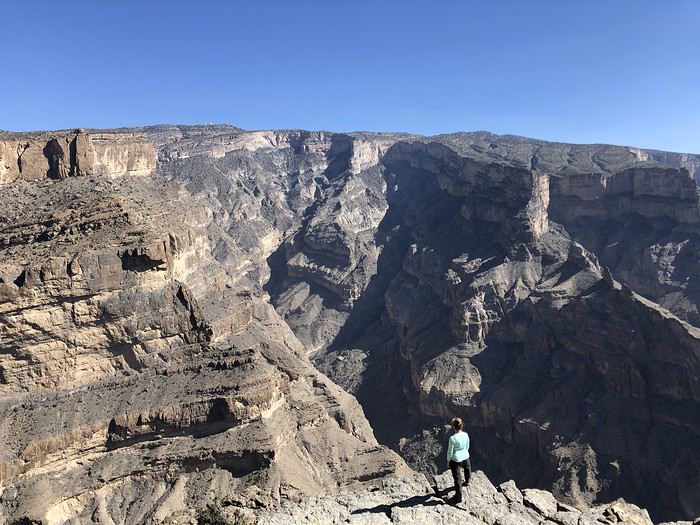
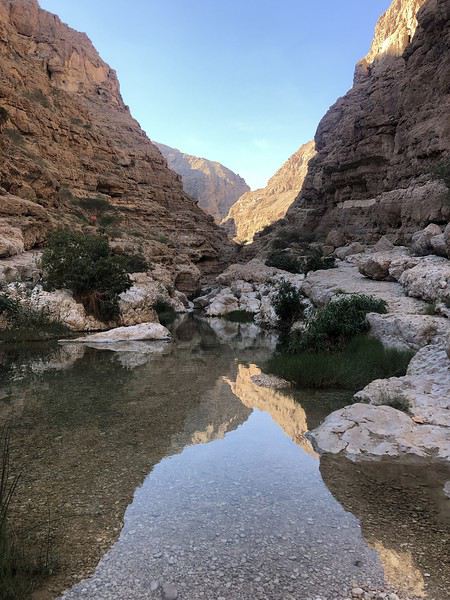
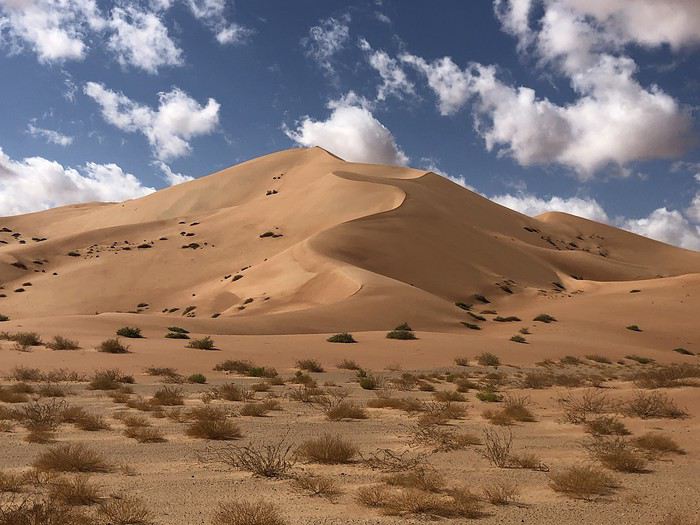
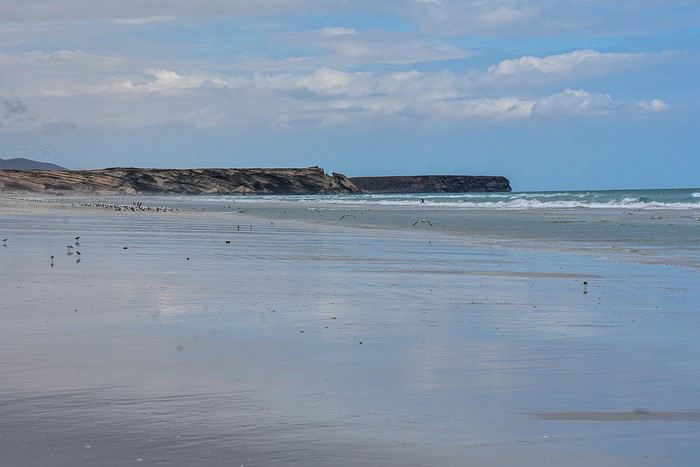
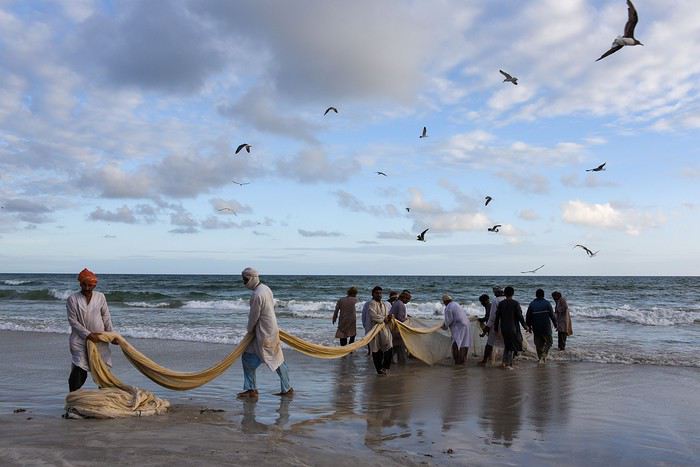
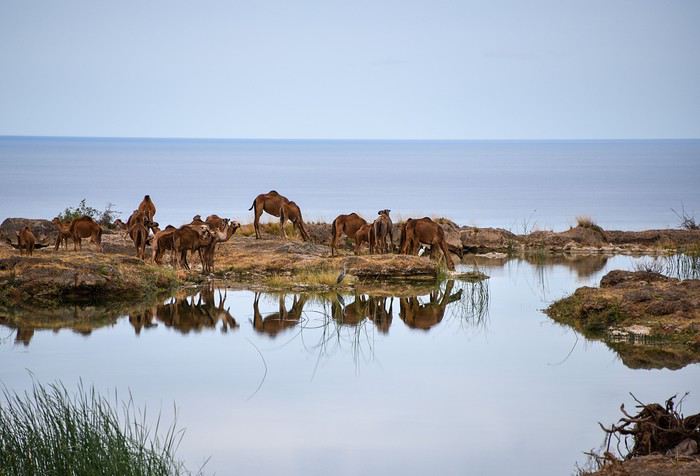
Alors si vous voulez bien me suivre...
Eh bien! En parcourant le Sultanat d’Oman, nous allons à leur recherche ou plutôt découvrir ce pays des Mille et Une Merveilles décrites dans les célèbres contes persans dont a fait partie l’actuel Sultanat.
Voici l’itinéraire prévu pour ces deux semaines :
21/12 Lyon – Mascate 22/12 Mascate 23/12 Mascate – Wadi Tiwi 24/12 Wadi Shab – Sour 25/12 Ras Al Jinz – Wadi Bani Kalid 26/12 Wahiba Sands 27/12 Sugar Dunes – Sanctuaire Oryx 28/12 Mirbat 29/12 Wadi Darbat – Salalah 30/12 Mughsayl – Rakyut 31/12 Rub Al Khali - Haima 01/01 Jabreen - Nizwa 02/01 Tanuf - Bahla – Jebel Shams 03/01 Jebel Shams – Al Hamra - Misfat 04/01 Bilad Sayt – Wadi Bani Awf – Mascate 05/01 Mascate - Lyon
Montagnes, Wadis, déserts et plages, chacun y trouvera son bonheur. Voici un petit aperçu de ce qui vous attend.
Alors si vous voulez bien me suivre...
Bolivia: Exploring the South Lipez by Self-Drive
Hi everyone,
The idea of traveling to Bolivia came to me after seeing Jean-François (Max68)’s photos on his website. I thought we *had* to see those stunning landscapes with the colorful lagoons for ourselves. But a self-drive trip didn’t seem doable at first. A few years ago, everyone advised against going to the South Lipez with just one car.
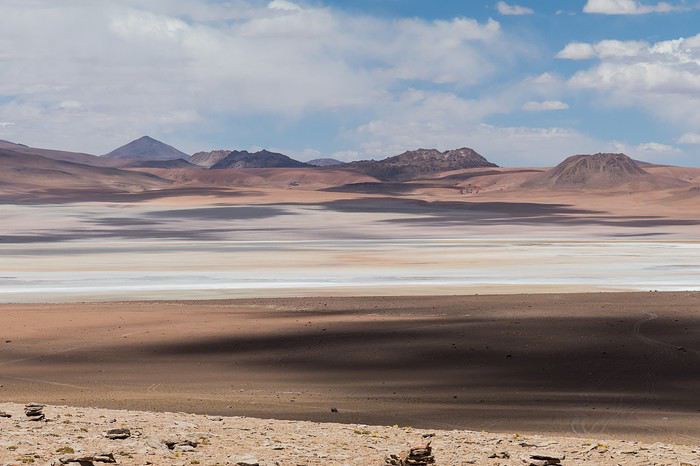 Laguna Kara
It was only after reading Laurent (Lolobe) and Pascal (Pepe874)’s travel journals—who explored the South Lipez solo with a car from Biz Rent a Car—that I thought we might be able to do the same. Meanwhile, we’d already contacted a local agency to organize a trip with a driver and guide. But the idea of a self-drive adventure really appealed to us. With encouragement and tips from Thierry (Tbernay) and Jean-François (Max68), we decided to plan our own self-drive trip. I’d like to thank them for their advice—it was *super* helpful. And a big thanks to all the other forum members for the info shared during our prep!
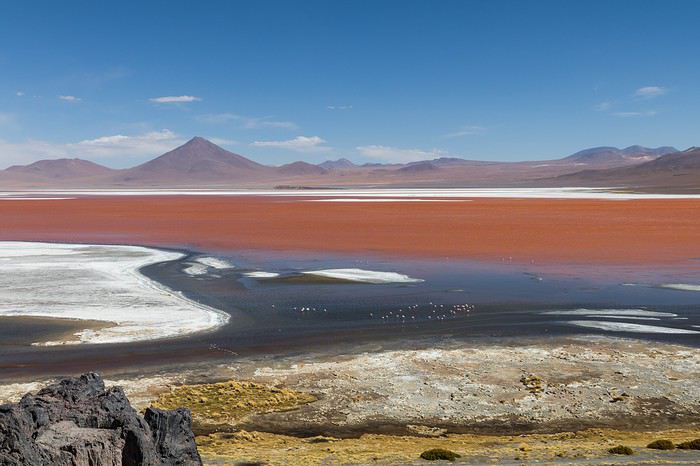 Laguna Colorada
Planning this trip happened during a tough time for our family. My mother-in-law’s illness and passing, plus a few health issues of my own, made us doubt the trip multiple times and nearly scrap the whole thing.
We booked our international flights in February with Swiss. They offered the best balance of travel time and price from Switzerland. Swiss operates Zurich–São Paulo with their own fleet, and São Paulo–Santa Cruz with GOL. In June, GOL canceled the Saturday flight and rebooked us on Sunday. Spending over 24 hours in that huge Brazilian city didn’t work for us at all, so we asked Swiss to put us on the next Zurich–São Paulo flight. Too bad—we lost a day in Bolivia and had to skip the Tarabucco market on Sunday.
Right after, we also booked the car in February. After contacting Imbex and Biz, we went with Biz. Not speaking Spanish, we were relieved to communicate with Alejandra in French. The contact was great—she answered all our questions patiently. Sometimes it took a few days to get a reply, but we could also reach her on WhatsApp. After our trip, we can *only* recommend Biz for rentals in Bolivia. The cars are well-prepped for the South Lipez tracks. The agency is reliable, and the vehicles are new and well-maintained.
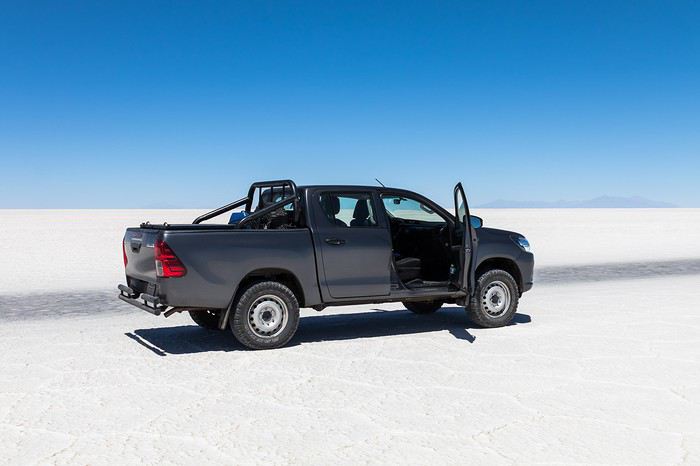 “Our” car, a Toyota Hilux
While planning, we realized the presidential elections would happen while we were in Bolivia. The risk of *bloqueos* (roadblocks and protests) was very real. But in Bolivia, *bloqueos* seem common—you always have to account for that kind of hassle. In late August/early September, Uyuni and the Salar region were blocked for days, leading to food, fuel, and cash shortages. Worried about a blockade in Uyuni and missing the Salar, we decided to visit it first *just in case*.
On election day, the whole country shut down. Planes were grounded, buses and taxis couldn’t circulate, and private cars were banned. There were a few exceptions—ambulances, police, or certain professions—but as tourists, we couldn’t get permission to drive. We asked the embassy, and Biz even requested a permit from the electoral office. So we had to plan to be somewhere with things to do *without* the car.
We decided not to book any accommodations in advance—a first for us. Usually, we plan our stops and reserve lodges, hotels, or campgrounds well ahead. This time, only the room in Sucre was booked, so we’d have a base when we arrived.
In July, Alex (Delhenry) reached out to propose joining part of the trip. He didn’t realize we were leaving in October. Still, we got fresh updates when he returned from the South Lipez. Thanks, Alex—your tips, especially about the Guadalupe–Tupiza stretch, were *super* useful.
In September, we connected with Jean-Louis (Avx) and Anne (Xeta), who were also heading to Bolivia in October, one and two weeks after us. We had dinner with Jean-Louis and his friend after our South Lipez trip and stayed in touch with Anne. It was great to chat with them! Unfortunately, Anne and her husband had a much rockier trip—they got hit hard by post-election issues.
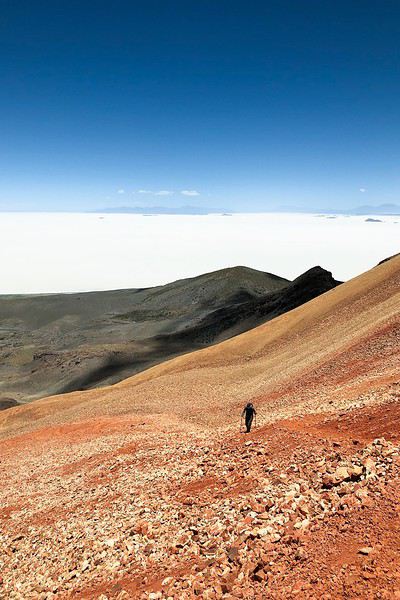 Climbing Volcán Tunupa
Our itinerary wasn’t set in stone—we decided to wing it on the spot. Two weeks before departure, I reconnected with Alejandra at Biz to move the car rental up by a day. With the elections, we wanted to leave Sucre ASAP and focus on the South Lipez. Outside Uyuni and Tupiza, the risk of blockades was zero. We also planned a two-night buffer in Sucre before our flights, just in case. It might sound overcautious, but in hindsight, we made the right call. If we’d left Sucre a day later, we wouldn’t have made it to Potosí—it was completely blocked. On the way back, we *just* dodged blockades in Potosí and elsewhere. Sometimes, you’ve gotta trust your gut.
Here’s our route—only the first two nights in Sucre were booked ahead:
D1 Departure from Switzerland
D2 Sucre (La Selenita)
D3 Sucre (La Selenita)
D4 Colchani (Hotel de Sal Luna Salada)
D5 Jirira (Auberge Doña Lupe)
D6 On the Salar (in the car)
D7 A few kilometers from Estancia Catal (in the car)
D8 Laguna Hedionda (Hotel Los Flamencos)
D9 Laguna Colorada (Lodge by the lagoon)
D10 Middle of nowhere, en route Laguna Verde–Mina Horsu–Quetena Chico (in the car)
D11 Quetena Chico (Lamphaya Lodge Andino)
D12 Quetena Chico (Lamphaya Lodge Andino)
D13 Guadalupe (Guest room at Celia’s)
D14 Along the Rio Grande (in the car)
D15 Tupiza (Hotel Mitru)
D16 Tupiza (Hotel Mitru)
D17 Sucre (La Selenita)
D18 Sucre (La Selenita)
D19 Santa Cruz (Hotel Sun)
D20 Departure from Santa Cruz
D21 Arrival in Switzerland
As you can see, we spent 13 nights in the South Lipez. Initially, we’d planned for nine, but Jean-François (Max68) suggested staying longer. Great advice—we didn’t regret it one bit. We could’ve even added 2–3 more days without getting bored.
Self-driving in the South Lipez takes some prep and a good GPS. We kept it simple and used maps.me to navigate. It’s a solid app—just save your waypoints ahead of time. For some stretches, I used Google Earth to visualize the tracks and sites. If you stick to the tour operator routes, you *almost* can’t get lost. But we often veered off the beaten path and took different routes. Some days, we didn’t see another car. So in case of a breakdown, it’s key to have water and food for several days. In some spots, there’s *zero* signal—your phone won’t work. Another must: it gets *cold* in the South Lipez, and a good sleeping bag is essential. We brought down sleeping bags rated for -10°C and didn’t regret it during our car nights.
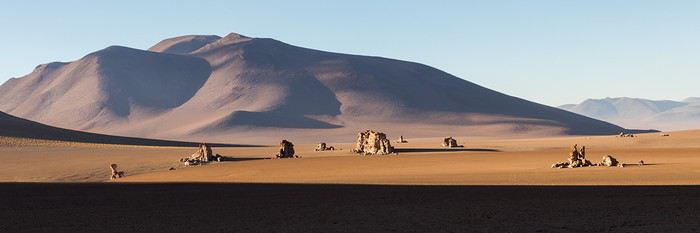 The Dalí Desert
Some tracks are *super* rocky—flat tires are a real risk. On those stretches, maps.me’s estimated travel time was way off. Some sections barely let us go over 15 km/h.
Lots of forum members recommend doing the South Lipez “loop” from Tupiza to Uyuni—ending with the Salar—to avoid Uyuni’s crowds. That might work for organized tours, but for self-drive, the direction *doesn’t* matter. I’ll say this: the few vehicles we saw mostly came from Tupiza and Chile, not Uyuni. So if starting from Uyuni works better for you, go for it! Ending in Tupiza means heading toward warmer weather. For our planned stops and climbs, starting in Uyuni helped with acclimatization. Spending a few nights between 3,600–3,800 m before going over 4,000 m is a smart move.
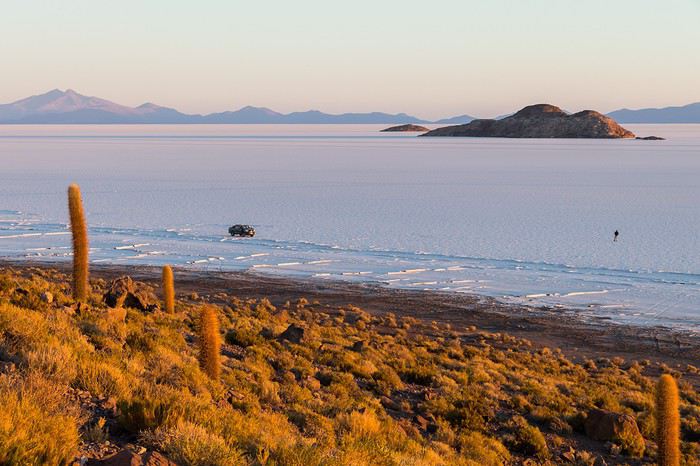 Uyuni Salt Flats in the morning
Overall, we barely saw anyone—except at Laguna Hedionda and Chalviri. There were several tour groups at Hotel Los Flamencos (Laguna Hedionda), but we didn’t cross paths during the day. Hardly anyone on the Salar, on the roads, or at the lodges in the evenings. The *only* place that shocked us was Chalviri. We’d planned to stay there, but it was fully booked—and we counted *forty* tour jeeps on-site. This was around noon! At the Polques hot springs (Chalviri), it was *packed*—we quickly nixed the idea of a dip. Plus, the vibe wasn’t great: soaking right by the road with lodges and restaurants in the background? Meh. Still, lots of tourists love it, so it’s up to you.
For the photos, I kept the colors and mood we saw. The lagoons’ hues are often stunning, but some online photos are *way* over-edited and oversaturated. The South Lipez’s landscapes are breathtaking—no need for excessive retouching.
If you don’t want to read all the details, the start of the travel journal is here: https://voyageforum.com/v.f?post=9888761;a=9888761
The idea of traveling to Bolivia came to me after seeing Jean-François (Max68)’s photos on his website. I thought we *had* to see those stunning landscapes with the colorful lagoons for ourselves. But a self-drive trip didn’t seem doable at first. A few years ago, everyone advised against going to the South Lipez with just one car.
Laguna KaraIt was only after reading Laurent (Lolobe) and Pascal (Pepe874)’s travel journals—who explored the South Lipez solo with a car from Biz Rent a Car—that I thought we might be able to do the same. Meanwhile, we’d already contacted a local agency to organize a trip with a driver and guide. But the idea of a self-drive adventure really appealed to us. With encouragement and tips from Thierry (Tbernay) and Jean-François (Max68), we decided to plan our own self-drive trip. I’d like to thank them for their advice—it was *super* helpful. And a big thanks to all the other forum members for the info shared during our prep!
Laguna ColoradaPlanning this trip happened during a tough time for our family. My mother-in-law’s illness and passing, plus a few health issues of my own, made us doubt the trip multiple times and nearly scrap the whole thing.
We booked our international flights in February with Swiss. They offered the best balance of travel time and price from Switzerland. Swiss operates Zurich–São Paulo with their own fleet, and São Paulo–Santa Cruz with GOL. In June, GOL canceled the Saturday flight and rebooked us on Sunday. Spending over 24 hours in that huge Brazilian city didn’t work for us at all, so we asked Swiss to put us on the next Zurich–São Paulo flight. Too bad—we lost a day in Bolivia and had to skip the Tarabucco market on Sunday.
Right after, we also booked the car in February. After contacting Imbex and Biz, we went with Biz. Not speaking Spanish, we were relieved to communicate with Alejandra in French. The contact was great—she answered all our questions patiently. Sometimes it took a few days to get a reply, but we could also reach her on WhatsApp. After our trip, we can *only* recommend Biz for rentals in Bolivia. The cars are well-prepped for the South Lipez tracks. The agency is reliable, and the vehicles are new and well-maintained.
“Our” car, a Toyota HiluxWhile planning, we realized the presidential elections would happen while we were in Bolivia. The risk of *bloqueos* (roadblocks and protests) was very real. But in Bolivia, *bloqueos* seem common—you always have to account for that kind of hassle. In late August/early September, Uyuni and the Salar region were blocked for days, leading to food, fuel, and cash shortages. Worried about a blockade in Uyuni and missing the Salar, we decided to visit it first *just in case*.
On election day, the whole country shut down. Planes were grounded, buses and taxis couldn’t circulate, and private cars were banned. There were a few exceptions—ambulances, police, or certain professions—but as tourists, we couldn’t get permission to drive. We asked the embassy, and Biz even requested a permit from the electoral office. So we had to plan to be somewhere with things to do *without* the car.
We decided not to book any accommodations in advance—a first for us. Usually, we plan our stops and reserve lodges, hotels, or campgrounds well ahead. This time, only the room in Sucre was booked, so we’d have a base when we arrived.
In July, Alex (Delhenry) reached out to propose joining part of the trip. He didn’t realize we were leaving in October. Still, we got fresh updates when he returned from the South Lipez. Thanks, Alex—your tips, especially about the Guadalupe–Tupiza stretch, were *super* useful.
In September, we connected with Jean-Louis (Avx) and Anne (Xeta), who were also heading to Bolivia in October, one and two weeks after us. We had dinner with Jean-Louis and his friend after our South Lipez trip and stayed in touch with Anne. It was great to chat with them! Unfortunately, Anne and her husband had a much rockier trip—they got hit hard by post-election issues.
Climbing Volcán TunupaOur itinerary wasn’t set in stone—we decided to wing it on the spot. Two weeks before departure, I reconnected with Alejandra at Biz to move the car rental up by a day. With the elections, we wanted to leave Sucre ASAP and focus on the South Lipez. Outside Uyuni and Tupiza, the risk of blockades was zero. We also planned a two-night buffer in Sucre before our flights, just in case. It might sound overcautious, but in hindsight, we made the right call. If we’d left Sucre a day later, we wouldn’t have made it to Potosí—it was completely blocked. On the way back, we *just* dodged blockades in Potosí and elsewhere. Sometimes, you’ve gotta trust your gut.
Here’s our route—only the first two nights in Sucre were booked ahead:
D1 Departure from Switzerland
D2 Sucre (La Selenita)
D3 Sucre (La Selenita)
D4 Colchani (Hotel de Sal Luna Salada)
D5 Jirira (Auberge Doña Lupe)
D6 On the Salar (in the car)
D7 A few kilometers from Estancia Catal (in the car)
D8 Laguna Hedionda (Hotel Los Flamencos)
D9 Laguna Colorada (Lodge by the lagoon)
D10 Middle of nowhere, en route Laguna Verde–Mina Horsu–Quetena Chico (in the car)
D11 Quetena Chico (Lamphaya Lodge Andino)
D12 Quetena Chico (Lamphaya Lodge Andino)
D13 Guadalupe (Guest room at Celia’s)
D14 Along the Rio Grande (in the car)
D15 Tupiza (Hotel Mitru)
D16 Tupiza (Hotel Mitru)
D17 Sucre (La Selenita)
D18 Sucre (La Selenita)
D19 Santa Cruz (Hotel Sun)
D20 Departure from Santa Cruz
D21 Arrival in Switzerland
As you can see, we spent 13 nights in the South Lipez. Initially, we’d planned for nine, but Jean-François (Max68) suggested staying longer. Great advice—we didn’t regret it one bit. We could’ve even added 2–3 more days without getting bored.
Self-driving in the South Lipez takes some prep and a good GPS. We kept it simple and used maps.me to navigate. It’s a solid app—just save your waypoints ahead of time. For some stretches, I used Google Earth to visualize the tracks and sites. If you stick to the tour operator routes, you *almost* can’t get lost. But we often veered off the beaten path and took different routes. Some days, we didn’t see another car. So in case of a breakdown, it’s key to have water and food for several days. In some spots, there’s *zero* signal—your phone won’t work. Another must: it gets *cold* in the South Lipez, and a good sleeping bag is essential. We brought down sleeping bags rated for -10°C and didn’t regret it during our car nights.
The Dalí DesertSome tracks are *super* rocky—flat tires are a real risk. On those stretches, maps.me’s estimated travel time was way off. Some sections barely let us go over 15 km/h.
Lots of forum members recommend doing the South Lipez “loop” from Tupiza to Uyuni—ending with the Salar—to avoid Uyuni’s crowds. That might work for organized tours, but for self-drive, the direction *doesn’t* matter. I’ll say this: the few vehicles we saw mostly came from Tupiza and Chile, not Uyuni. So if starting from Uyuni works better for you, go for it! Ending in Tupiza means heading toward warmer weather. For our planned stops and climbs, starting in Uyuni helped with acclimatization. Spending a few nights between 3,600–3,800 m before going over 4,000 m is a smart move.
Uyuni Salt Flats in the morningOverall, we barely saw anyone—except at Laguna Hedionda and Chalviri. There were several tour groups at Hotel Los Flamencos (Laguna Hedionda), but we didn’t cross paths during the day. Hardly anyone on the Salar, on the roads, or at the lodges in the evenings. The *only* place that shocked us was Chalviri. We’d planned to stay there, but it was fully booked—and we counted *forty* tour jeeps on-site. This was around noon! At the Polques hot springs (Chalviri), it was *packed*—we quickly nixed the idea of a dip. Plus, the vibe wasn’t great: soaking right by the road with lodges and restaurants in the background? Meh. Still, lots of tourists love it, so it’s up to you.
For the photos, I kept the colors and mood we saw. The lagoons’ hues are often stunning, but some online photos are *way* over-edited and oversaturated. The South Lipez’s landscapes are breathtaking—no need for excessive retouching.
If you don’t want to read all the details, the start of the travel journal is here: https://voyageforum.com/v.f?post=9888761;a=9888761