Results for "grotte+ou+spéleo+|+46+>+91"
12560 results found.
Rando VF sud ouest (France) - 12, 13, 14 novembre 2004 English translation pending
🙂Oyez, oyez, randonneurs, randonneuses, et autres voyageurs de tout poils de france et de navarre,
aujourd'hui je ne vous parlerai pas de longs voyages à l'autre bout du monde ( et c'est pas l'envie qui m'en manque ),
Moi, je voudrai juste savoir s'il y a des gens motivés habitant le sud ouest ( toulouse, albi ), où j'emménage dans une semaine, pour partir en week end rando dans les pyrénées ou les cevennes, ou ailleurs, pendant l'année. Même des gens qui habitent pas le sud-ouest, d'ailleurs, l'important, on le sait, c'est d'être motivé😉.
aujourd'hui je ne vous parlerai pas de longs voyages à l'autre bout du monde ( et c'est pas l'envie qui m'en manque ),
Moi, je voudrai juste savoir s'il y a des gens motivés habitant le sud ouest ( toulouse, albi ), où j'emménage dans une semaine, pour partir en week end rando dans les pyrénées ou les cevennes, ou ailleurs, pendant l'année. Même des gens qui habitent pas le sud-ouest, d'ailleurs, l'important, on le sait, c'est d'être motivé😉.
Excursions Punta Cana English translation pending
Bonjour
Quelles sont les excursions intéressantes à faire à punta cana? Nous y sommes allés en mars de cette année, mais comme nous étions avec notre petite fille, nous avons simplement fait l'excursion du Manati Park. En février 2005, nous y retournons probablement, mais en adultes seulement.
Merci !!
Quelles sont les excursions intéressantes à faire à punta cana? Nous y sommes allés en mars de cette année, mais comme nous étions avec notre petite fille, nous avons simplement fait l'excursion du Manati Park. En février 2005, nous y retournons probablement, mais en adultes seulement.
Merci !!
Hôtel Villa Bavaro Punta Cana English translation pending
Salut à tous,
Je vais avec mon mec du 28/08 au 12/09 à cet hotel.
Si quelqu'un connait et peux me donner des tuyaux sur les chambres les excursions.
Si quelqu'un y va on pourrais se voir sur place.
Ingrid😏
In
Je vais avec mon mec du 28/08 au 12/09 à cet hotel.
Si quelqu'un connait et peux me donner des tuyaux sur les chambres les excursions.
Si quelqu'un y va on pourrais se voir sur place.
Ingrid😏
In
Bons plans à Cuba English translation pending
Bonjour bonjour,
toute novice sur ce site je cherche à avoir quelques bons conseils sur Cuba... 😉
j ai pour le moment mon billet d'avion sec en poche (je pars du 27 septembre au 12 octobre), mais je ne sais pas encore comment je peux profiter à fond de ces 15 jours pour découvrir un max le pays!
Tous vos consels sont les bienvenus !! 😛
merci
Mélanie
toute novice sur ce site je cherche à avoir quelques bons conseils sur Cuba... 😉
j ai pour le moment mon billet d'avion sec en poche (je pars du 27 septembre au 12 octobre), mais je ne sais pas encore comment je peux profiter à fond de ces 15 jours pour découvrir un max le pays!
Tous vos consels sont les bienvenus !! 😛
merci
Mélanie
Diana Beach- Mombassa (Kenya) English translation pending
😊 Rerebonjour. Je mets mes questions séparées pour interpeler les personnes concernées. Désolée si cela n'est pas la façon de faire. Je suis parmi vous depuis peu...
Ma question est la suivante: quelqu'un est-il déjà allé à cette plage (vs Tiwi beach) et si oui, pourriez-vous me donner le nom d'un petit hotel, lodge avec l'eau courante, une toilette, un lieu pour accrocher mon moustiquaire et du calme SVP.
Sinon, quels ont été vos coups de coeur pour manger? (ce sera ma première destination d'un long voyage de 9 mois et je veux commencer en douceur ds des conditions pas trop difficiles de grâce mais évidemment mon $$$ est limité)
Merci à tous
Coyote
Ma question est la suivante: quelqu'un est-il déjà allé à cette plage (vs Tiwi beach) et si oui, pourriez-vous me donner le nom d'un petit hotel, lodge avec l'eau courante, une toilette, un lieu pour accrocher mon moustiquaire et du calme SVP.
Sinon, quels ont été vos coups de coeur pour manger? (ce sera ma première destination d'un long voyage de 9 mois et je veux commencer en douceur ds des conditions pas trop difficiles de grâce mais évidemment mon $$$ est limité)
Merci à tous
Coyote
Climat à Koh Phi Phi en septembre? English translation pending
Hello tout le monde,
Avec mon amie, nous avons l'intention de faire 2 semaines à Koh Phi Phi entre le 27 septembre et le 8 octobre.
Jusque là, les informations trouvées concernant la météo ne sont pas bonnes. Il semblerait qu'il pleut très souvent.
Maintenant ma question est: est-ce que le soleil est quand-meme souvent présent (possibilité de faire bronzette) et est-ce que l'eau est clair sur la plage ou faut-il prendre un bateau pour trouver de beaux endroits pour faire du snorkling!?
Merci déjà pour vos réponses!
Avec mon amie, nous avons l'intention de faire 2 semaines à Koh Phi Phi entre le 27 septembre et le 8 octobre.
Jusque là, les informations trouvées concernant la météo ne sont pas bonnes. Il semblerait qu'il pleut très souvent.
Maintenant ma question est: est-ce que le soleil est quand-meme souvent présent (possibilité de faire bronzette) et est-ce que l'eau est clair sur la plage ou faut-il prendre un bateau pour trouver de beaux endroits pour faire du snorkling!?
Merci déjà pour vos réponses!
Souvenirs English translation pending
Bonjour à tous!!😉
Je demarre une nouvelle discussion:je voudrais savoir quelle a été la chose, la personne, qui vous a vraiment marqué pendant vos voyages.
Ce souvenir peut être positif ou négatif!!
Partagez vos meilleurs ou pires moments passés à l'étranger!!
On attend avec impatience vos récits!!!
Bisous et à bientôt!!
Je demarre une nouvelle discussion:je voudrais savoir quelle a été la chose, la personne, qui vous a vraiment marqué pendant vos voyages.
Ce souvenir peut être positif ou négatif!!
Partagez vos meilleurs ou pires moments passés à l'étranger!!
On attend avec impatience vos récits!!!
Bisous et à bientôt!!
Parc du Pantanal et Parc de la Chapada Diamantina (Brésil) English translation pending
🙂Bonjour à tous,
Je prepare actuellement un voyage au Brésil en Juillet.😇
Quelqun'un pourrait il me donner des infos sur le parc du Pantanal et le parc de la Chapada diamantina😎. Je recherche également un endroit sympa où dormir à Rio ( type pas cher et sympa !!! )🤪.
Je recherche également le témoignage de personnes qui auraient déjà routardé au Brésil .
Merci pour vos témoignage et vos meileurs souvenirs du Bresil.
Je prepare actuellement un voyage au Brésil en Juillet.😇
Quelqun'un pourrait il me donner des infos sur le parc du Pantanal et le parc de la Chapada diamantina😎. Je recherche également un endroit sympa où dormir à Rio ( type pas cher et sympa !!! )🤪.
Je recherche également le témoignage de personnes qui auraient déjà routardé au Brésil .
Merci pour vos témoignage et vos meileurs souvenirs du Bresil.
2 semaines à Madagascar English translation pending
je voudrais aller à madagascar fin aout pour 2 semaines
j'aime marcher, découvrir la nature et les gens
je pense qu'en 2 semaines, il faut se contenter d'une petite partie de l'île
que me conseillez-vous?
j'aime marcher, découvrir la nature et les gens
je pense qu'en 2 semaines, il faut se contenter d'une petite partie de l'île
que me conseillez-vous?
Hotel Oasis Cancun English translation pending
Bonjour,
j'aimerais avoir des informations sur l'Oasis cancun à savoir si c'est un endroit que vous recommendez. La nourriture, la temperature en debut janvier, animation et employés de l'hotel, la plage et les choses a faire ou a visiter a cet endroit, qualité de la chambre et hotel, qualité du service, rapport qualité prix...
J'aimerais avoir votre opinion et description de votre voyage, points positifs et negatifs...
Nous partons 4 gars et nous sommes a la mi vingtaine... Merci beaucoup de votre attention!
Nous partons 4 gars et nous sommes a la mi vingtaine... Merci beaucoup de votre attention!
Deux sortes de destins... English translation pending
Le grand écrivain ivoirien Ahmadou Kourouma (Allah n'est pas obligé), amoureux de la paix et de la liberté, vient de mourir. Il avait écrit que
" Il y a dans la vie deux sortes de destin. Ceux qui ouvrent les pistes dans la grande brousse de la vie et ceux qui suivent ces pistes ouvertes".
Lequel de ce destin pensez-vous être le vôtre (ou souhaitez que soit le vôtre) et pourquoi ? Comment interprétez-vous "la brousse de la vie" ? Dans quelle mesure pensez-vous que le voyage ouvre ou suit des pistes (autres que la piste ou voie de sa propre vie que chacun décide un jour de suivre ou pas).
" Il y a dans la vie deux sortes de destin. Ceux qui ouvrent les pistes dans la grande brousse de la vie et ceux qui suivent ces pistes ouvertes".
Lequel de ce destin pensez-vous être le vôtre (ou souhaitez que soit le vôtre) et pourquoi ? Comment interprétez-vous "la brousse de la vie" ? Dans quelle mesure pensez-vous que le voyage ouvre ou suit des pistes (autres que la piste ou voie de sa propre vie que chacun décide un jour de suivre ou pas).
Infos sur logement à Nouméa en Nouvelle-Calédonie English translation pending
Salut la compagnie, encore un!!
je viens de m'inscrire, je suis élève infirmier, je parts a nouméa de juin a aout, je recherche des infos sur le logement et j'espère de nouveaux amis qui partent la-bas ou des compagons de voyage..
voila si ça vous intéresse..😊 contactez moi!!!
Retour hôtel Le Santana à la Romana avec Switch English translation pending
Bonjour à tous,
Ca y est, fini les vacances, il faut se remettre au boulot...mais avec des couleurs pleins les yeux.
Je partais très stressée par les commentaires calamiteux que je lisais sur switch, mais tout s'est très très bien passé.
Alors je raconte dans l'ordre: Après avoir payé les vacances le 15/08, j'ai reçu le fax exactement une semaine avant le départ, sans avoir à les relancer. Départ le 15/09 de Orly, nous étions convoqué à 8h20 au guichet switch. Comme j'ai toujours peur d'être en retard, nous sommes arrivés à 7h45 et il y avait déja 2 hôtesses, nous avons donc récupéré nos papiers tout de suite et nous sommes allés directement à l'enregistrement qui a commencé vers 8h pour un vol Corsair à 11h20 Décollage à l'heure, le vol s'est passé sans problème. Arrivée à La Romana vers 14h15, comme prévu. Un peu le bazar pour payer (10 dollars US) et remplir les cartes de tourisme (on connait la légendaire patience des français qui sont prêts à se marcher dessus pour gagner une place dans la queue). Passage sans problème à l'immigration. Et nouveau bazar pour récupérer les bagages! A la sortie de l'aéroport, on est dirigés vers les bus switch où les représentants ont la liste des clients. Puis 40mn environ de bus vers l'hôtel Santana, avec déja du merengue dans le bus: bienvenue en république dominicaine!!! J1:Le Santana: très bel hôtel, bien entretenu, les chambres sont confortables et nettoyées tous les jours. Le personnel est très gentil, il suffit d'être poli et tout se passe bien, comme partout dans le pays d'ailleurs. La plage, bien qu'artificielle est agréable, il y a de la place pour tout le monde. Par contre, je confirme que la mer est dégueu et ne fait vraiment pas envie! L'équipe d'animation de l'hôtel est très présente et met de l'ambiance. La nourriture est plutôt bonne.Certes il y a parfois des mouches au buffet mais quand les clients laissent les vitres de protection ouvertes, ça paraît inévitable!! Et quand on ouvre pour se servir, c'est difficile d'empêcher les mouches de rentrer, mais bon, j'ai en vu 2 ou 3. J2: réunion d'information avec les représentants switch qui racontent des petites choses sur le pays, conseils pratiques(genre: "attention au lait de coco, c'est laxatif")...et décrivent les excursions. Personnellement, je n'ai pas eu tant que ça l'impression qu'ils faisaient passer les locaux pour des voleurs et le pays pour être très dangereux dans le but de vendre leurs excursions à eux. Ceci dit, c'est vrai que c'est assez cher. J3: il y avait le safari jeep de switch, ceux qui l'ont fait ont dit que c'est super, très intéressant. Nous, nous avons fait un safari mais en quad avec l'hôtel pour 35 dollars chacun pour 4 heures (moitié prix de switch, pour moitié de temps). C'était très sympa, nous sommes allés dans des villages... J4:certains sont allés à Catalina avec switch(catamaran, langoustes grillées sur la plage...). Nous, on y est allés aussi...mais avec l'hôtel pour moitié prix aussi (soit 35 dollars chacun). C'était une barque à moteur, marrant, pas de mal de mer. Nous avons plongé avec masques et tubas, d'autres avec bouteilles. Dans l'ensemble, tout le monde était plutôt déçu par la plage, qui est belle mais on nous annonce une pure merveille de la nature. Moi ce qui m'a embêté, c'est les vendeurs de souvenirs qui te sautent dessus dès que tu as un pied sur la plage. J5: Visite de Santo Domingo avec un guide de switch, pour nous, c'était Renato, un dominicain très sympa qui est resté avec nous pour tout le circuit. Il y a beaucoup de choses à voir, alors c'est vrai qu'on enchaîne les visites mais on a eu plus d'une heure dans le centre pour faire ce qu'on voulait. Pour ceux qui voudrait visiter tranquillement et flâner, je conseillerai d'y aller une journée seuls. La ville est jolie et survoltée à la fois, ça vaut le coup. Nous avons vu la grotte de los tres ojos, le musée de l'ambre, la calle conde, la cathédrale(visite commentée), l'alcazar colon(visite commentée), le mercado et l'aquarium et nous avons fait une pause devant le monument en hommage à Colon et le palais présidentiel. C'est donc une journée bien remplie et l'occasion d'acheter les souvenirs au meilleur prix je trouve. J6:départ en début d'après-midi pour Puerto plata, soit plusieurs heures de bus. C'est un peu long mais ça permet de voir le paysage, qui change quand on arrive dans les cordillères, c'est très beau. Nous avons fait un petit arrêt à Santiago pour voir le monument de la résistance, mais on ne voit pas grand chose de la ville. Arrivée à l'hôtel Paradise vers 19h, après un passage très rapide dans Puerto plata, malheureusement, il faisait déja nuit, donc on a pas vu beaucoup, dommage. Arrivée à L'hôtel Paradise vers 19h30. J7: l'hôtel est sympa mais je l'ai trouvé moins confortable et moins bien entretenu que le Santana. Certains ont fait du rafting, il parait que c'est sympa. Le temps était moins lourd qu'au sud, bien que l'ouragan Isabel soit passé quelques jours plus tôt, il y avait plus de vent, c'était très agréable. C'est là que nous avons eu droit au seisme qui nous a réveillé en pleine nuit, nous avons eu très peur, tout le monde s'est retrouvé autour de la piscine(après que les mecs de la sécurité aient fait sortir tt le monde des chambres), c'était un peu la panique. Il y a eu plusieurs répliques jusqu'au matin. J8, départ pour Samana en début d'apres-midi après avoir passé une mauvaise nuit! Le trajet dure plusieurs heures. Nous avons fait un arrêt à Cabarete, qui est sympa mais artificiel, le vrai village est un peu plus loin dans les terres. Quoi qu'il en soit, ça a l'air sympa pour des vacances, la plage est belle, c'est le paradis du windsurf et de la planche à voile, mais il n'y avait personne sur l'eau!!
L'hôtel se trouvant à Las Galeras, tout au bout de la péninsule, le trajet semble interminable! Mais la végétation luxuriante et le paysage sont magnifiques. C'est l'endroit que j'ai préféré, Samana, c'est le paradis sur terre. J9: l'hotel casa marina est grand et très beau. La plage est très belle, l'eau est turquoise. Les chambres sont très bien et propres, rien à dire. La nourriture est bien, rien d'exceptionnel mais c'est bon et assez varié.
L'après-midi, excursion à la playa rincon, une magnifique plage peu fréquentée, genre "seul au monde". On était presque les seuls, vu le trajet pour y aller, ça se comprend! c'est comme une expédition dans la jungle, avec au passage, traversée de petits villages et au détour des virages, on trouve une petite maison colorée, ou une vache au milieu de la route qui vous regarde d'un air nonchalant, j'ai adoré!! On a mangé des langoustes (pour 9 dollars par personne). On devait aller voir une carrière de marbre mais avec les seismes, ça a été annulé, parce qu'il y a des grottes et que guides et touristes avaient un peu peur!! J10: journée libre. Moi j'ai fait du cheval (en supplément contrairement à ce qui est annoncé: 300 pesos par heure). Nous sommes allés un peu dans les terres puis galoper sur une plage déserte et paradisiaque, ça valait le coup. J11: départ pour Punta Cana. Traversée en bateau de la baie de samana puis trajet en bus en faisant un détour vers le sud. Ca rallonge bien le trajet mais ça permet de voir d'autres paysages (cordillère), passage à Higüey et traversée de champs de cannes à sucre à perte de vue. Arrivée au sirenis en fin d'après-midi après quelques kilomètres d'une piste absolument pourrie, on n'en pouvait plus!!! J-12-13: journées libres au Sirenis, très bel hôtel, le soir, c'est illuminé, on dirait Las Vegas! Il y a plus d'américains que dans les autres hôtels(beaucoup plus...). Les chambres sont très bien, propres, la nourriture très variée, les buffets sont impressionnants! Nous avons testé le steak house, décevant et le mexicain, très bon; il paraît que le méditerranéen est super. J14: nous avons l'excursion switch à Saona, c'était génial. Trajet en bus d'1h environ jusqu'à Bayahibe. Là on prend une bateau rapide (très rapide) vers Saona, en route, on s'arrête dans une piscine naturelle, on est loin du rivage mais on a pied, l'eau est transparente et il y a de superbes étoiles de mer. Avant d'arriver à Saona, nous avons vu des dauphins, d'après le guide, il y a plus de chances de gagner au tiercé que de voir les dauphins...(je vais jouer!), c'est très émouvant, tout le monde voulait sauter du bateau!! Et puis Saona...ça, c'est une pure merveille. Une plage magnifique, des cocotiers, un vrai paysage de carte postale, il y a un peu de monde mais de la place pour tous. Je vous recommande d'y aller. Déjeuner sur la plage puis retour en catamaran, tranquillement. Par contre, le soleil tapait dur, c'était le dernier jour et c'est là que nous avons pris de gros coups de soleil (ça fait un souvenir...). Le soir, il y avait la soirée caraïbes et langoustes sur une plage à une heure de trajet de l'hôtel. Nous n'y sommes pas allés, parce qu'on avait mal à la tête après le soleil de saona mais les autres nous ont dit que c'était super et que les langoustes étaient très grosses et très bonnes! Pour le retour, nous sommes partis vers midi pour un vol prévu à 17h15. Il y a 1h30 de trajet. On pensait arriver trop tôt mais les clients du Santana étaient déja en train d'enregistrer. Le vol Corsair est parti avec un peu d'avance et s'est très bien passé. A l'arrivée, il faisait 10° à Paris, là on a bien compris que les vacances étaient finies!!!
Voila, c'était de très belles vacances. Il n'y a eu aucun problème avec switch, tout le monde était très content, c'était très bien organisé. Pendant les trajets ou les excursions, nous avions des commentaires intéressants.Nous avons juste regretté de ne pas faire plus d'arrêts dans les petits villages où nos sous auraient été bien accueillis au lieu des magasins de souvenirs à touristes où nous avons fait les arrêts pipi. Pour ce qui est des représentants switch dans les hôtels, je n'ai pas fait très attention mais une fois au sirenis, j'ai vu un mec au bureau switch qui était là à son poste mais il n'y avait pas de clients!!
Pour ceux qui aiment voir du pays, ce circuit est très bien, même s'il y a pas mal de bus, on voit vraiment beaucoup de choses différentes. Moi, malgré la longueur des trajets, je ne me suis jamais ennuyée, il y a tant à découvrir. Et puis, c'est un bon compromis entre visites et farniente. Je confirme ce que tout le monde sait déja: les dominicains sont adorables, toujours souriants, quelles que soient leurs conditions de vie et leur pauvreté, ils sont toujours accueillants.
Par contre, nous avons payé très cher pour envoyer des cartes postales en express, ça fait plus de 2 semaines, et toujours rien!!!
Voila, c'est un peu long mais après avoir apprécié les commentaires et conseils des autres avant mon départ, je me devais de participer! J'espère avoir rassuré ceux qui partent bientôt, si vous avez des questions, n'hésitez pas!
Alice
Ca y est, fini les vacances, il faut se remettre au boulot...mais avec des couleurs pleins les yeux.
Je partais très stressée par les commentaires calamiteux que je lisais sur switch, mais tout s'est très très bien passé.
Alors je raconte dans l'ordre: Après avoir payé les vacances le 15/08, j'ai reçu le fax exactement une semaine avant le départ, sans avoir à les relancer. Départ le 15/09 de Orly, nous étions convoqué à 8h20 au guichet switch. Comme j'ai toujours peur d'être en retard, nous sommes arrivés à 7h45 et il y avait déja 2 hôtesses, nous avons donc récupéré nos papiers tout de suite et nous sommes allés directement à l'enregistrement qui a commencé vers 8h pour un vol Corsair à 11h20 Décollage à l'heure, le vol s'est passé sans problème. Arrivée à La Romana vers 14h15, comme prévu. Un peu le bazar pour payer (10 dollars US) et remplir les cartes de tourisme (on connait la légendaire patience des français qui sont prêts à se marcher dessus pour gagner une place dans la queue). Passage sans problème à l'immigration. Et nouveau bazar pour récupérer les bagages! A la sortie de l'aéroport, on est dirigés vers les bus switch où les représentants ont la liste des clients. Puis 40mn environ de bus vers l'hôtel Santana, avec déja du merengue dans le bus: bienvenue en république dominicaine!!! J1:Le Santana: très bel hôtel, bien entretenu, les chambres sont confortables et nettoyées tous les jours. Le personnel est très gentil, il suffit d'être poli et tout se passe bien, comme partout dans le pays d'ailleurs. La plage, bien qu'artificielle est agréable, il y a de la place pour tout le monde. Par contre, je confirme que la mer est dégueu et ne fait vraiment pas envie! L'équipe d'animation de l'hôtel est très présente et met de l'ambiance. La nourriture est plutôt bonne.Certes il y a parfois des mouches au buffet mais quand les clients laissent les vitres de protection ouvertes, ça paraît inévitable!! Et quand on ouvre pour se servir, c'est difficile d'empêcher les mouches de rentrer, mais bon, j'ai en vu 2 ou 3. J2: réunion d'information avec les représentants switch qui racontent des petites choses sur le pays, conseils pratiques(genre: "attention au lait de coco, c'est laxatif")...et décrivent les excursions. Personnellement, je n'ai pas eu tant que ça l'impression qu'ils faisaient passer les locaux pour des voleurs et le pays pour être très dangereux dans le but de vendre leurs excursions à eux. Ceci dit, c'est vrai que c'est assez cher. J3: il y avait le safari jeep de switch, ceux qui l'ont fait ont dit que c'est super, très intéressant. Nous, nous avons fait un safari mais en quad avec l'hôtel pour 35 dollars chacun pour 4 heures (moitié prix de switch, pour moitié de temps). C'était très sympa, nous sommes allés dans des villages... J4:certains sont allés à Catalina avec switch(catamaran, langoustes grillées sur la plage...). Nous, on y est allés aussi...mais avec l'hôtel pour moitié prix aussi (soit 35 dollars chacun). C'était une barque à moteur, marrant, pas de mal de mer. Nous avons plongé avec masques et tubas, d'autres avec bouteilles. Dans l'ensemble, tout le monde était plutôt déçu par la plage, qui est belle mais on nous annonce une pure merveille de la nature. Moi ce qui m'a embêté, c'est les vendeurs de souvenirs qui te sautent dessus dès que tu as un pied sur la plage. J5: Visite de Santo Domingo avec un guide de switch, pour nous, c'était Renato, un dominicain très sympa qui est resté avec nous pour tout le circuit. Il y a beaucoup de choses à voir, alors c'est vrai qu'on enchaîne les visites mais on a eu plus d'une heure dans le centre pour faire ce qu'on voulait. Pour ceux qui voudrait visiter tranquillement et flâner, je conseillerai d'y aller une journée seuls. La ville est jolie et survoltée à la fois, ça vaut le coup. Nous avons vu la grotte de los tres ojos, le musée de l'ambre, la calle conde, la cathédrale(visite commentée), l'alcazar colon(visite commentée), le mercado et l'aquarium et nous avons fait une pause devant le monument en hommage à Colon et le palais présidentiel. C'est donc une journée bien remplie et l'occasion d'acheter les souvenirs au meilleur prix je trouve. J6:départ en début d'après-midi pour Puerto plata, soit plusieurs heures de bus. C'est un peu long mais ça permet de voir le paysage, qui change quand on arrive dans les cordillères, c'est très beau. Nous avons fait un petit arrêt à Santiago pour voir le monument de la résistance, mais on ne voit pas grand chose de la ville. Arrivée à l'hôtel Paradise vers 19h, après un passage très rapide dans Puerto plata, malheureusement, il faisait déja nuit, donc on a pas vu beaucoup, dommage. Arrivée à L'hôtel Paradise vers 19h30. J7: l'hôtel est sympa mais je l'ai trouvé moins confortable et moins bien entretenu que le Santana. Certains ont fait du rafting, il parait que c'est sympa. Le temps était moins lourd qu'au sud, bien que l'ouragan Isabel soit passé quelques jours plus tôt, il y avait plus de vent, c'était très agréable. C'est là que nous avons eu droit au seisme qui nous a réveillé en pleine nuit, nous avons eu très peur, tout le monde s'est retrouvé autour de la piscine(après que les mecs de la sécurité aient fait sortir tt le monde des chambres), c'était un peu la panique. Il y a eu plusieurs répliques jusqu'au matin. J8, départ pour Samana en début d'apres-midi après avoir passé une mauvaise nuit! Le trajet dure plusieurs heures. Nous avons fait un arrêt à Cabarete, qui est sympa mais artificiel, le vrai village est un peu plus loin dans les terres. Quoi qu'il en soit, ça a l'air sympa pour des vacances, la plage est belle, c'est le paradis du windsurf et de la planche à voile, mais il n'y avait personne sur l'eau!!
L'hôtel se trouvant à Las Galeras, tout au bout de la péninsule, le trajet semble interminable! Mais la végétation luxuriante et le paysage sont magnifiques. C'est l'endroit que j'ai préféré, Samana, c'est le paradis sur terre. J9: l'hotel casa marina est grand et très beau. La plage est très belle, l'eau est turquoise. Les chambres sont très bien et propres, rien à dire. La nourriture est bien, rien d'exceptionnel mais c'est bon et assez varié.
L'après-midi, excursion à la playa rincon, une magnifique plage peu fréquentée, genre "seul au monde". On était presque les seuls, vu le trajet pour y aller, ça se comprend! c'est comme une expédition dans la jungle, avec au passage, traversée de petits villages et au détour des virages, on trouve une petite maison colorée, ou une vache au milieu de la route qui vous regarde d'un air nonchalant, j'ai adoré!! On a mangé des langoustes (pour 9 dollars par personne). On devait aller voir une carrière de marbre mais avec les seismes, ça a été annulé, parce qu'il y a des grottes et que guides et touristes avaient un peu peur!! J10: journée libre. Moi j'ai fait du cheval (en supplément contrairement à ce qui est annoncé: 300 pesos par heure). Nous sommes allés un peu dans les terres puis galoper sur une plage déserte et paradisiaque, ça valait le coup. J11: départ pour Punta Cana. Traversée en bateau de la baie de samana puis trajet en bus en faisant un détour vers le sud. Ca rallonge bien le trajet mais ça permet de voir d'autres paysages (cordillère), passage à Higüey et traversée de champs de cannes à sucre à perte de vue. Arrivée au sirenis en fin d'après-midi après quelques kilomètres d'une piste absolument pourrie, on n'en pouvait plus!!! J-12-13: journées libres au Sirenis, très bel hôtel, le soir, c'est illuminé, on dirait Las Vegas! Il y a plus d'américains que dans les autres hôtels(beaucoup plus...). Les chambres sont très bien, propres, la nourriture très variée, les buffets sont impressionnants! Nous avons testé le steak house, décevant et le mexicain, très bon; il paraît que le méditerranéen est super. J14: nous avons l'excursion switch à Saona, c'était génial. Trajet en bus d'1h environ jusqu'à Bayahibe. Là on prend une bateau rapide (très rapide) vers Saona, en route, on s'arrête dans une piscine naturelle, on est loin du rivage mais on a pied, l'eau est transparente et il y a de superbes étoiles de mer. Avant d'arriver à Saona, nous avons vu des dauphins, d'après le guide, il y a plus de chances de gagner au tiercé que de voir les dauphins...(je vais jouer!), c'est très émouvant, tout le monde voulait sauter du bateau!! Et puis Saona...ça, c'est une pure merveille. Une plage magnifique, des cocotiers, un vrai paysage de carte postale, il y a un peu de monde mais de la place pour tous. Je vous recommande d'y aller. Déjeuner sur la plage puis retour en catamaran, tranquillement. Par contre, le soleil tapait dur, c'était le dernier jour et c'est là que nous avons pris de gros coups de soleil (ça fait un souvenir...). Le soir, il y avait la soirée caraïbes et langoustes sur une plage à une heure de trajet de l'hôtel. Nous n'y sommes pas allés, parce qu'on avait mal à la tête après le soleil de saona mais les autres nous ont dit que c'était super et que les langoustes étaient très grosses et très bonnes! Pour le retour, nous sommes partis vers midi pour un vol prévu à 17h15. Il y a 1h30 de trajet. On pensait arriver trop tôt mais les clients du Santana étaient déja en train d'enregistrer. Le vol Corsair est parti avec un peu d'avance et s'est très bien passé. A l'arrivée, il faisait 10° à Paris, là on a bien compris que les vacances étaient finies!!!
Voila, c'était de très belles vacances. Il n'y a eu aucun problème avec switch, tout le monde était très content, c'était très bien organisé. Pendant les trajets ou les excursions, nous avions des commentaires intéressants.Nous avons juste regretté de ne pas faire plus d'arrêts dans les petits villages où nos sous auraient été bien accueillis au lieu des magasins de souvenirs à touristes où nous avons fait les arrêts pipi. Pour ce qui est des représentants switch dans les hôtels, je n'ai pas fait très attention mais une fois au sirenis, j'ai vu un mec au bureau switch qui était là à son poste mais il n'y avait pas de clients!!
Pour ceux qui aiment voir du pays, ce circuit est très bien, même s'il y a pas mal de bus, on voit vraiment beaucoup de choses différentes. Moi, malgré la longueur des trajets, je ne me suis jamais ennuyée, il y a tant à découvrir. Et puis, c'est un bon compromis entre visites et farniente. Je confirme ce que tout le monde sait déja: les dominicains sont adorables, toujours souriants, quelles que soient leurs conditions de vie et leur pauvreté, ils sont toujours accueillants.
Par contre, nous avons payé très cher pour envoyer des cartes postales en express, ça fait plus de 2 semaines, et toujours rien!!!
Voila, c'est un peu long mais après avoir apprécié les commentaires et conseils des autres avant mon départ, je me devais de participer! J'espère avoir rassuré ceux qui partent bientôt, si vous avez des questions, n'hésitez pas!
Alice
Bons plans pour le Sri Lanka English translation pending
Salut tous !
Ben voila je vais essayer faire court en fait, nous souhaitons partir au sri lanka ma compagne et moi en septembre, et je suis avide d'infos concernant ce pays, sur votre périple par exemple afin d'avoir de bonnes idées de que faire et quoi faire durant notre séjour.
Jusqu'au aujourd'hui touts les témoignages que je lis me poussent à allonger la durée de notre séjour qui n'est pas encore fixée (2 ou 3 semaines ?).
Pour infos nous allons simplement prendre un AR en avion et réserver sur place tout ce qui est hotel, guide etc ...
Merci de votre réponse
Jusqu'au aujourd'hui touts les témoignages que je lis me poussent à allonger la durée de notre séjour qui n'est pas encore fixée (2 ou 3 semaines ?).
Pour infos nous allons simplement prendre un AR en avion et réserver sur place tout ce qui est hotel, guide etc ...
Merci de votre réponse
Trek Annapurna en septembre English translation pending
Bonjour !
Je suis etudiant a Paris et je compte faire le trek de l'annapurna en Septembre avec un ami.On aurais aimer savoir si c'etait vraiment difficile, si il est possible de le faire en moins de 20 jours et si le guide est necessaire!
Sinon j'ai plein d'autres questions mais je voudrais pas saouler le forum.Je cherche donc une ame charitable connaissant le nepal qui acceterait de correspondre avec moi (carte postale promise en remerciements)
Merci d'avance et bons voyages !!!
Je suis etudiant a Paris et je compte faire le trek de l'annapurna en Septembre avec un ami.On aurais aimer savoir si c'etait vraiment difficile, si il est possible de le faire en moins de 20 jours et si le guide est necessaire!
Sinon j'ai plein d'autres questions mais je voudrais pas saouler le forum.Je cherche donc une ame charitable connaissant le nepal qui acceterait de correspondre avec moi (carte postale promise en remerciements)
Merci d'avance et bons voyages !!!
Nouvelle-Zélande - Novembre 2002 English translation pending
Je rentre d'un voyage de 4 semaines en NZ. Voici quelques infos pratiques qui vous aideront peut-être à préparer ce magnifique voyage.
Je répondrai avec plaisir à toutes vos questions complémentaires.
TRANSPORTS :
1 - Vols Nous avons fait le choix de Singapore Airlines : http://www.singaporeair.com/saa/app/saa Billets achetés auprès de Voyageurs du Monde (Charlotte Lesartre) : http://www.vdm.com/vdm/index.asp A l'aller Paris/Singapour/Christchurch (8 ou 9 heures d'escale à Singapour - Hôtel et navette mis à disposition gracieusement par Singapor Airline - Nous a permis la visite de la ville) Au retour Auckland/Singapour/Paris (2 heures d'escale) Environ 24 heures de vol (hors escale) à chaque voyage. Pas forcément le moins cher (1300 € l'A/R), mais un des plus rapides par une compagnie fiable et en vol de nuit.
2 - Ferry inter ïles A réserver à l'avance, surtout s'il faut passer un camping car http://www.interislandline.co.nz/ Simple et pratique via internet ; attention, ils encaissent le montant dès la réservation
3 - Sur place Nous avions opté pour la location de voiture. Catégorie B (Ka, Ford - 2 portes !) chez Hertz (environ 1700 NZ$ pour 4 semaines) Professionalisme de Hertz - voiture quasi neuve Présent dans les aéroports et aux ports d'embarquement des ferrys (pas de passage de la voiture sur le ferry) Permis internationaux nécessaires - Pas de surcoût pour le conducteur additionnel Réservation effectuée en France par tel au 01.39.38.38.38 Essence : 1 litre = 1NZ$ Réseau routier excellent - Pompes à essence fréquentes, un peu moins dans le sud de l'île du Sud Conduite à gauche - Facile même en ville, les NZ sont cools au volant. Location de camping car également très répandue.
BUDGET :
1 NZ$ = 0, 5 € Distributeurs de cash partout - Paiement avec CB très très répandu (Visa-Eurocard-un peu moins fréquent Amex) Niveau de vie élevé. Un des moyens pour limiter les dépenses est de faire soi-même ses repas. A la différence des USA, l'entrée dans les Parcs Nationaux est gratuite, les randonnées sont elles-aussi gratuites. Par contre, les sites volcaniques de l'ile du N sont payants et chers (toutes les activités payantes sont chères). C'est globalement un voyage qui coûte cher (en comparaison à l'Asie ou l'Amérique du Sud) ...
HEBERGEMENT : Les B&B sont chers (100 - 150 $) Motels : pour les camping cars, les tentes ou les voitures !.... Chaîne Holiday Park Top 10 - Carte Club à 20$ = 10% de réduc (+ réduc sur bcp de sites dans lîle du N), hyper rentable Logements spacieux (de 30 à 50 m2 : 1 coin salon, 1 parfois 2 chambres, 1sdb, 1 cuisine équipée), modernes, pratiques, bon marché (45 à 95 $, 70 $ en moyenne) Réservation indispensable assurée par leurs soins, gratuitement et toujours très gentiment Possibilité de louer des cabines : logement simple avec lit et matelas uniquement. Ca suppose qu'on a un sac de couchage et qu'on utilise les parties communes (toujours propres)
REPAS :
Restaurants chers : plat principal autour de 20 $ Gastronomie quelconque, anglo-saxone : pané et frit ... pas géniale ... Fast food, surtout MacDo, Pizza Hut, Kentucky Fried Chicken très présents Bons plans : les chinois et les indiens (notamment la chaine Little India, excellente qualité), Pizza Hut formule à volonté pas chère ... Le diner se tient plus tôt que chez nous : les restaurants ouvrent le soir parfois à 17h30 ! Possibilité de cuisiner dans les logements des motels (cuisine perso complète : plaques électriques, micro-onde, frigo, vaiselle ...) Eau du robinet potable et bonne. Vins agréables, très souvent vendus au verre (entre 6 et 8 $ le verre), à partir de 15 $ une bonne bouteille au supermarché. Pratique répandue du BYO (Bring Your Own) qui consiste à apporter sa propre bouteille de vin au restaurant. En bons Français, ... on ne l'a jamais fait ... à tort !
ACTIVITES :
Un bon réflexe : dès l'arrivée dans un nouveau coin, aller faire un tour au DOC (Visitors Center). Ce sont des mines d'informations, très agréables. Ils proposent, entre autres, pour chaque région des brochures détaillant les randos du coin. Aucune brochure en Français. Attention, ils ferment parfois très tôt (16h30). De nombreuses possibilités de randonnées, partout. De 10 minutes à plusieurs heures, voire plusieurs jours (mais, dans ce cas, résa des gîtes à l'avance nécessaire) Les randos sont toujours bien fléchées, propres (ultra propres !), extrêmement agréables et toujours gratuites !
Les points forts de notre voyage :
D'une façon générale, la beauté et la variété des paysages, les sommets enneigés, la Rain Forest, les phénomènes volcaniques, la beauté et le soin avec lequel les randonnées sont aménagées, la qualité de vie (douceur et serviabilité des NZ).
L'ile du N et l'ile du S sont très différentes et très complémentaires. Je n'ai pas de préférence ...
ILE DU SUD
Punakaïki : en plus des Pancakes Rocks, rando sympa le long du torrent. Un petit café/restau, en face du sentier menant à Pancakes Rocks a l'excellente idée de servir des ... pancakes ... absolument délicieuses !
Glaciers (Franz Joseph et Fox Glacier) : attention, on reste à qq dizaines de mètres du front des glaciers ... un peu frustrant. Pour aller plus loin, il faut prévoir une rando accompagnée (et payante) sur le glacier. Pas fait ... (trop mauvais temps)
Fjordland : Croisière sur Milford Sound - Incontournable s'il fait beau ! En plus, la route jusqu'à Milford Sound est très belle.
Pas fait Doubtful Sound. Un peu cher ...
Grotte de Te Anau : glowworm (vers luisants) : cher (traversée du lac) et moins spectaculaire que Waitomo (Ile du N) -
Catlins NP et Southern Scenic Drive : attention, assez longue partie de la route gravillonnée (pénible surtout par mauvais temps - prévoir du temps). Nous, on a fait Te Anau/Dunedin par cette route en une seule étape, c'était épuisant !
Nugget Point : colonie de fur seals et de sea lions en contre bas (prévoir jumelles et coupe-vent !). Ils sont loin mais nombreux et dans un très bel environnement. Sympa.
Péninsule d'Otago : paysages superbes ! Le DOC de Dunedin offre une carte de la péninsule indiquant les endroits où se trouve la faune. Nous avons r��ussi à voir les fameux mais craintifs Yellow Eyed Pingouins dans une réserve, en milieu naturel. Assez cher (27 $ je crois) mais seul moyen pour nous ... Mieux et gratuit pour ceux qui ont le temps : sur les plages, mais seulement en fin d'apm quand ils remontent de leur journée de pêche en mer ...
Moeraki Boulders : phénomène géologique extraordinaire. De gros rochers hémi-sphériques ou sphériques parsemés sur une plage. Surréaliste et très photogénique !
Kaikoura : petite ville balnéaire "offrant" (!) la logistique pour approcher les mammifères marins (baleines et dauphins) Nous avions réservé depuis Paris un tour pour nager avec les dauphins (plus petits que Flipper !) : http://www.dolphin.co.nz/ (98 $ / p) Réservation obligatoire - Départ dépendant des conditions météo ... Carte débitée après l'activité. Moment magique mais attention au mal de mer !!... . Pas vu de baleines : http://www.whalewatch.co.nz/ - Trop cher.
Abel Tasman NP : superbes plages dorées ... où les touristes portaient, non pas un maillot de bain, mais des chaussures de marche ! Rando le long de la côte magnifique. Incontournable. Rando à la journée possible en organisant son transport avec Aqua Taxi. Résa conseillée (les bateaux sont tout petits !) Rando Bark Bay - Torrent Bay splendide !! Prévoir un bon bouquin pour attendre ensuite la navette. Dans un tel cadre, c'est un plaisir.
ILE DU NORD
Tongariro NP : Le DOC de Whakapapa fournit une excellente brochure sur la Tongariro Crossing, the most famous NZ's one day trek ! Logistique assurée à Whakapapa pour cette randonée INCONTOURNABLE S'IL FAIT BEAU !! Paysages hallucinants, à couper le souffle. 17 km, 800 mètres de dénivelé, 6h30 de marche, 2 pentes très raides dont une sur des scories ... Chaussures de marche indispensables, bonne condition physique (pas besoin d'être marathonien non plus ...) et plusieurs pellicules photos ! Cette randonnée, à elle seule, justifie le voyage en NZ. S'il fait beau !
Tama Lakes : rando de 5 heures dans un paysage de buissons (tussocks). 2 beaux lacs récompensent l'effort fourni. Bonne préparation pour la TCrossing.
Rotorua : Petite ville, morte après 18h, au coeur d'une région volcanique. Nombreux parcs (payants, assez chers, entre 15 et 20 $). Prévoir 2 heures pour chacun, un peu plus pour Wai O Tapu. Wai O Tapu (Le geyser Lady Knox, à qq km du parc, est déclenché "manuellement" tous les jours à 10h15). Parc désert avant 10h15 (et on peut y retourner après Lady Knox) - Le plus coloré, très photogénique - A ne pas manquer. Whakawerawera : attention 2 entrées distinctes qui ne communiquent pas. Entrer par l'institut et non pas par le village pour voir de près l'attraction majeure, le Pohutu, beau geyser. La visite du village n'est pas intéressante sauf pour y voir le petit concert maori (30 minutes). Hell's Gate : ambiance démoniaque assurée. A faire, même s'il pleut. Orakei Korako : accès sympathique par un petit bateau (qq minutes pour traverser un petit lac). En retrait, peu de monde. Craters of the moon (dans Wharakei NP - Taupo - entrée libre) : de vrais grands cratères. Encore une balade dans un paysage tourmenté et vaporeux. Waimangu : pas vu (mauvais temps) mais je pense que le grand lac bouillonnnant vaut le coup.
Waitomo Caves : à 2 heures à l'Ouest de Rotorua. Une grotte que l'on découvre d'abord à pied, puis dans un canot. Voute couverte de glowworms. Entrée chère (25$). Vraiment surprenant et assez émouvant. Petit film au musée expliquant le phénomène. Par ailleurs, à quelques km, une randonnée en boucle dans le bush permet d'admirer les glowworms dans un autre environnement (sur les falaises, sous les roches, dans des tunnels naturels) à la nuit tombée. Ambiance garantie. Gratuit. Spectacle inoubliable et finalement aussi impressionnant (plus peut-être) que la grotte. L'intérêt de cette rando par rapport à la grotte : on peut voir les glowworms de tout près en leur mettant un coup de torche dans la figure et voir les fameux "fils de pêche". Autre intérêt, majeur à mon goût : on est seul !
Les points faibles :
D'une façon générale, la gastronomie, la pluie trop fréquente et les petites villes sans charme et bien peu animées. L'artisanat de qualité est absolument hors de prix et ce qui est abordable est assez banal ... Enfin, 4 semaines, c'est encore trop court et on n'a pas eu le temps de faire un tour dans le Northland (Nord de l'ile du N) ....
Wellington : le musée Te Papa ne nous a pas plu. Pas suffisamment didactique à notre goût, notamment concernant l'histoire et la culture des Maoris.
Rotorua : Whakarewarewa, côté village et surtout la soirée Hangi (concert et repas traditionnel). Le concert est à peine mieux que celui du village de Whaka (gratuit !) et le repas traditionnel est un buffet sympathique mais qui n'a rien de traditionnel !.... Le seul vrai regret de notre voyage.
Bon voyage à tous !!
TRANSPORTS :
1 - Vols Nous avons fait le choix de Singapore Airlines : http://www.singaporeair.com/saa/app/saa Billets achetés auprès de Voyageurs du Monde (Charlotte Lesartre) : http://www.vdm.com/vdm/index.asp A l'aller Paris/Singapour/Christchurch (8 ou 9 heures d'escale à Singapour - Hôtel et navette mis à disposition gracieusement par Singapor Airline - Nous a permis la visite de la ville) Au retour Auckland/Singapour/Paris (2 heures d'escale) Environ 24 heures de vol (hors escale) à chaque voyage. Pas forcément le moins cher (1300 € l'A/R), mais un des plus rapides par une compagnie fiable et en vol de nuit.
2 - Ferry inter ïles A réserver à l'avance, surtout s'il faut passer un camping car http://www.interislandline.co.nz/ Simple et pratique via internet ; attention, ils encaissent le montant dès la réservation
3 - Sur place Nous avions opté pour la location de voiture. Catégorie B (Ka, Ford - 2 portes !) chez Hertz (environ 1700 NZ$ pour 4 semaines) Professionalisme de Hertz - voiture quasi neuve Présent dans les aéroports et aux ports d'embarquement des ferrys (pas de passage de la voiture sur le ferry) Permis internationaux nécessaires - Pas de surcoût pour le conducteur additionnel Réservation effectuée en France par tel au 01.39.38.38.38 Essence : 1 litre = 1NZ$ Réseau routier excellent - Pompes à essence fréquentes, un peu moins dans le sud de l'île du Sud Conduite à gauche - Facile même en ville, les NZ sont cools au volant. Location de camping car également très répandue.
BUDGET :
1 NZ$ = 0, 5 € Distributeurs de cash partout - Paiement avec CB très très répandu (Visa-Eurocard-un peu moins fréquent Amex) Niveau de vie élevé. Un des moyens pour limiter les dépenses est de faire soi-même ses repas. A la différence des USA, l'entrée dans les Parcs Nationaux est gratuite, les randonnées sont elles-aussi gratuites. Par contre, les sites volcaniques de l'ile du N sont payants et chers (toutes les activités payantes sont chères). C'est globalement un voyage qui coûte cher (en comparaison à l'Asie ou l'Amérique du Sud) ...
HEBERGEMENT : Les B&B sont chers (100 - 150 $) Motels : pour les camping cars, les tentes ou les voitures !.... Chaîne Holiday Park Top 10 - Carte Club à 20$ = 10% de réduc (+ réduc sur bcp de sites dans lîle du N), hyper rentable Logements spacieux (de 30 à 50 m2 : 1 coin salon, 1 parfois 2 chambres, 1sdb, 1 cuisine équipée), modernes, pratiques, bon marché (45 à 95 $, 70 $ en moyenne) Réservation indispensable assurée par leurs soins, gratuitement et toujours très gentiment Possibilité de louer des cabines : logement simple avec lit et matelas uniquement. Ca suppose qu'on a un sac de couchage et qu'on utilise les parties communes (toujours propres)
REPAS :
Restaurants chers : plat principal autour de 20 $ Gastronomie quelconque, anglo-saxone : pané et frit ... pas géniale ... Fast food, surtout MacDo, Pizza Hut, Kentucky Fried Chicken très présents Bons plans : les chinois et les indiens (notamment la chaine Little India, excellente qualité), Pizza Hut formule à volonté pas chère ... Le diner se tient plus tôt que chez nous : les restaurants ouvrent le soir parfois à 17h30 ! Possibilité de cuisiner dans les logements des motels (cuisine perso complète : plaques électriques, micro-onde, frigo, vaiselle ...) Eau du robinet potable et bonne. Vins agréables, très souvent vendus au verre (entre 6 et 8 $ le verre), à partir de 15 $ une bonne bouteille au supermarché. Pratique répandue du BYO (Bring Your Own) qui consiste à apporter sa propre bouteille de vin au restaurant. En bons Français, ... on ne l'a jamais fait ... à tort !
ACTIVITES :
Un bon réflexe : dès l'arrivée dans un nouveau coin, aller faire un tour au DOC (Visitors Center). Ce sont des mines d'informations, très agréables. Ils proposent, entre autres, pour chaque région des brochures détaillant les randos du coin. Aucune brochure en Français. Attention, ils ferment parfois très tôt (16h30). De nombreuses possibilités de randonnées, partout. De 10 minutes à plusieurs heures, voire plusieurs jours (mais, dans ce cas, résa des gîtes à l'avance nécessaire) Les randos sont toujours bien fléchées, propres (ultra propres !), extrêmement agréables et toujours gratuites !
Les points forts de notre voyage :
D'une façon générale, la beauté et la variété des paysages, les sommets enneigés, la Rain Forest, les phénomènes volcaniques, la beauté et le soin avec lequel les randonnées sont aménagées, la qualité de vie (douceur et serviabilité des NZ).
L'ile du N et l'ile du S sont très différentes et très complémentaires. Je n'ai pas de préférence ...
ILE DU SUD
Punakaïki : en plus des Pancakes Rocks, rando sympa le long du torrent. Un petit café/restau, en face du sentier menant à Pancakes Rocks a l'excellente idée de servir des ... pancakes ... absolument délicieuses !
Glaciers (Franz Joseph et Fox Glacier) : attention, on reste à qq dizaines de mètres du front des glaciers ... un peu frustrant. Pour aller plus loin, il faut prévoir une rando accompagnée (et payante) sur le glacier. Pas fait ... (trop mauvais temps)
Fjordland : Croisière sur Milford Sound - Incontournable s'il fait beau ! En plus, la route jusqu'à Milford Sound est très belle.
Pas fait Doubtful Sound. Un peu cher ...
Grotte de Te Anau : glowworm (vers luisants) : cher (traversée du lac) et moins spectaculaire que Waitomo (Ile du N) -
Catlins NP et Southern Scenic Drive : attention, assez longue partie de la route gravillonnée (pénible surtout par mauvais temps - prévoir du temps). Nous, on a fait Te Anau/Dunedin par cette route en une seule étape, c'était épuisant !
Nugget Point : colonie de fur seals et de sea lions en contre bas (prévoir jumelles et coupe-vent !). Ils sont loin mais nombreux et dans un très bel environnement. Sympa.
Péninsule d'Otago : paysages superbes ! Le DOC de Dunedin offre une carte de la péninsule indiquant les endroits où se trouve la faune. Nous avons r��ussi à voir les fameux mais craintifs Yellow Eyed Pingouins dans une réserve, en milieu naturel. Assez cher (27 $ je crois) mais seul moyen pour nous ... Mieux et gratuit pour ceux qui ont le temps : sur les plages, mais seulement en fin d'apm quand ils remontent de leur journée de pêche en mer ...
Moeraki Boulders : phénomène géologique extraordinaire. De gros rochers hémi-sphériques ou sphériques parsemés sur une plage. Surréaliste et très photogénique !
Kaikoura : petite ville balnéaire "offrant" (!) la logistique pour approcher les mammifères marins (baleines et dauphins) Nous avions réservé depuis Paris un tour pour nager avec les dauphins (plus petits que Flipper !) : http://www.dolphin.co.nz/ (98 $ / p) Réservation obligatoire - Départ dépendant des conditions météo ... Carte débitée après l'activité. Moment magique mais attention au mal de mer !!... . Pas vu de baleines : http://www.whalewatch.co.nz/ - Trop cher.
Abel Tasman NP : superbes plages dorées ... où les touristes portaient, non pas un maillot de bain, mais des chaussures de marche ! Rando le long de la côte magnifique. Incontournable. Rando à la journée possible en organisant son transport avec Aqua Taxi. Résa conseillée (les bateaux sont tout petits !) Rando Bark Bay - Torrent Bay splendide !! Prévoir un bon bouquin pour attendre ensuite la navette. Dans un tel cadre, c'est un plaisir.
ILE DU NORD
Tongariro NP : Le DOC de Whakapapa fournit une excellente brochure sur la Tongariro Crossing, the most famous NZ's one day trek ! Logistique assurée à Whakapapa pour cette randonée INCONTOURNABLE S'IL FAIT BEAU !! Paysages hallucinants, à couper le souffle. 17 km, 800 mètres de dénivelé, 6h30 de marche, 2 pentes très raides dont une sur des scories ... Chaussures de marche indispensables, bonne condition physique (pas besoin d'être marathonien non plus ...) et plusieurs pellicules photos ! Cette randonnée, à elle seule, justifie le voyage en NZ. S'il fait beau !
Tama Lakes : rando de 5 heures dans un paysage de buissons (tussocks). 2 beaux lacs récompensent l'effort fourni. Bonne préparation pour la TCrossing.
Rotorua : Petite ville, morte après 18h, au coeur d'une région volcanique. Nombreux parcs (payants, assez chers, entre 15 et 20 $). Prévoir 2 heures pour chacun, un peu plus pour Wai O Tapu. Wai O Tapu (Le geyser Lady Knox, à qq km du parc, est déclenché "manuellement" tous les jours à 10h15). Parc désert avant 10h15 (et on peut y retourner après Lady Knox) - Le plus coloré, très photogénique - A ne pas manquer. Whakawerawera : attention 2 entrées distinctes qui ne communiquent pas. Entrer par l'institut et non pas par le village pour voir de près l'attraction majeure, le Pohutu, beau geyser. La visite du village n'est pas intéressante sauf pour y voir le petit concert maori (30 minutes). Hell's Gate : ambiance démoniaque assurée. A faire, même s'il pleut. Orakei Korako : accès sympathique par un petit bateau (qq minutes pour traverser un petit lac). En retrait, peu de monde. Craters of the moon (dans Wharakei NP - Taupo - entrée libre) : de vrais grands cratères. Encore une balade dans un paysage tourmenté et vaporeux. Waimangu : pas vu (mauvais temps) mais je pense que le grand lac bouillonnnant vaut le coup.
Waitomo Caves : à 2 heures à l'Ouest de Rotorua. Une grotte que l'on découvre d'abord à pied, puis dans un canot. Voute couverte de glowworms. Entrée chère (25$). Vraiment surprenant et assez émouvant. Petit film au musée expliquant le phénomène. Par ailleurs, à quelques km, une randonnée en boucle dans le bush permet d'admirer les glowworms dans un autre environnement (sur les falaises, sous les roches, dans des tunnels naturels) à la nuit tombée. Ambiance garantie. Gratuit. Spectacle inoubliable et finalement aussi impressionnant (plus peut-être) que la grotte. L'intérêt de cette rando par rapport à la grotte : on peut voir les glowworms de tout près en leur mettant un coup de torche dans la figure et voir les fameux "fils de pêche". Autre intérêt, majeur à mon goût : on est seul !
Les points faibles :
D'une façon générale, la gastronomie, la pluie trop fréquente et les petites villes sans charme et bien peu animées. L'artisanat de qualité est absolument hors de prix et ce qui est abordable est assez banal ... Enfin, 4 semaines, c'est encore trop court et on n'a pas eu le temps de faire un tour dans le Northland (Nord de l'ile du N) ....
Wellington : le musée Te Papa ne nous a pas plu. Pas suffisamment didactique à notre goût, notamment concernant l'histoire et la culture des Maoris.
Rotorua : Whakarewarewa, côté village et surtout la soirée Hangi (concert et repas traditionnel). Le concert est à peine mieux que celui du village de Whaka (gratuit !) et le repas traditionnel est un buffet sympathique mais qui n'a rien de traditionnel !.... Le seul vrai regret de notre voyage.
Bon voyage à tous !!
Which island to choose in Thailand for a few days with my sister?
Hello, it’s been a while since I last asked for your help on this forum—I’ve really missed it! I hope you’re all doing well, whether you're new or returning members.
I’m planning a trip from February 6 to 18, 2027, with my sister (we’re 47 and 50—time flies!). I’ve got my eye on a flight from Paris that lands in Bangkok on February 7 at 3 PM, with a return flight from Bangkok on February 18 at noon.
My sister has never been to this destination, and it’ll be her first time in Asia. Her priorities: beaches, sunshine, and cocktails by the shore. For me, I love that too, but I also enjoy exploring, nature, forests, and a bit of comfort (mixing guesthouses and higher-end hotels with pools). A little evening entertainment would be great, but not too much—good cocktails in a nice atmosphere rather than a rave party ;-). And I can’t help but dream of taking her on a little trek through a tropical forest (guaranteed memories and laughs, though she might curse me at the time) and showing her some karst landscapes.
I’ve been to Thailand before, but it was 15 years ago...
The idea is to give her a taste of Bangkok for 1 or 2 nights, a few days on an island (but which one...?), a tropical forest excursion with 1 or 2 nights on-site (Khao Sok?), and then back to Bangkok.
For the "main" island, even after reading the *Guide du Routard*, I’m still undecided. It’s hard to find a place that ticks all the boxes without feeling as crowded as the French Riviera in August: Koh Lanta? Khao Lak (though it’s not an island)? Koh Tao (I could maybe get my PADI certification, but I’m afraid she’d get bored, and it might be better to save that for a solo trip)? Koh Yao Yai (I worry we’d be bored in the evenings)? What a dilemma!
Thank you if you’ve read this far! Feel free to share any advice—it’ll all be warmly welcomed.
Here’s a rough outline of the itinerary (I’d rather skip a night in Bangkok if needed):
· Saturday, February 6, 2027: departure (overnight flight) · Sunday, February 7, 2027: arrival at 3 PM, probably at the hotel by 6 PM, evening in Bangkok (overnight in Bangkok) · Monday, February 8, 2027: day in Bangkok (Wat Pho and a floating market?) (overnight in Bangkok) · Tuesday, February 9, 2027: travel to Koh Lanta or another island (flight to Phuket or Krabi?) (overnight on island "x") · Wednesday, February 10, 2027: beach and walks (overnight on island "x") · Thursday, February 11, 2027: beach and walks (overnight on island "x") · Friday, February 12, 2027: beach and walks (overnight on island "x") · Saturday, February 13, 2027: beach and walks (overnight on island "x") · Sunday, February 14, 2027: beach and walks (overnight on island "x") · Monday, February 15, 2027: travel to Khao Sok—nighttime excursion to Khao Sok (overnight in Khao Sok) · Tuesday, February 16, 2027: exploration and hike in Khao Sok (overnight in Khao Sok) · Wednesday, February 17, 2027: return trip to Bangkok (overnight in Bangkok) · Thursday, February 18, 2027: return flight to Paris at noon
I’m planning a trip from February 6 to 18, 2027, with my sister (we’re 47 and 50—time flies!). I’ve got my eye on a flight from Paris that lands in Bangkok on February 7 at 3 PM, with a return flight from Bangkok on February 18 at noon.
My sister has never been to this destination, and it’ll be her first time in Asia. Her priorities: beaches, sunshine, and cocktails by the shore. For me, I love that too, but I also enjoy exploring, nature, forests, and a bit of comfort (mixing guesthouses and higher-end hotels with pools). A little evening entertainment would be great, but not too much—good cocktails in a nice atmosphere rather than a rave party ;-). And I can’t help but dream of taking her on a little trek through a tropical forest (guaranteed memories and laughs, though she might curse me at the time) and showing her some karst landscapes.
I’ve been to Thailand before, but it was 15 years ago...
The idea is to give her a taste of Bangkok for 1 or 2 nights, a few days on an island (but which one...?), a tropical forest excursion with 1 or 2 nights on-site (Khao Sok?), and then back to Bangkok.
For the "main" island, even after reading the *Guide du Routard*, I’m still undecided. It’s hard to find a place that ticks all the boxes without feeling as crowded as the French Riviera in August: Koh Lanta? Khao Lak (though it’s not an island)? Koh Tao (I could maybe get my PADI certification, but I’m afraid she’d get bored, and it might be better to save that for a solo trip)? Koh Yao Yai (I worry we’d be bored in the evenings)? What a dilemma!
Thank you if you’ve read this far! Feel free to share any advice—it’ll all be warmly welcomed.
Here’s a rough outline of the itinerary (I’d rather skip a night in Bangkok if needed):
· Saturday, February 6, 2027: departure (overnight flight) · Sunday, February 7, 2027: arrival at 3 PM, probably at the hotel by 6 PM, evening in Bangkok (overnight in Bangkok) · Monday, February 8, 2027: day in Bangkok (Wat Pho and a floating market?) (overnight in Bangkok) · Tuesday, February 9, 2027: travel to Koh Lanta or another island (flight to Phuket or Krabi?) (overnight on island "x") · Wednesday, February 10, 2027: beach and walks (overnight on island "x") · Thursday, February 11, 2027: beach and walks (overnight on island "x") · Friday, February 12, 2027: beach and walks (overnight on island "x") · Saturday, February 13, 2027: beach and walks (overnight on island "x") · Sunday, February 14, 2027: beach and walks (overnight on island "x") · Monday, February 15, 2027: travel to Khao Sok—nighttime excursion to Khao Sok (overnight in Khao Sok) · Tuesday, February 16, 2027: exploration and hike in Khao Sok (overnight in Khao Sok) · Wednesday, February 17, 2027: return trip to Bangkok (overnight in Bangkok) · Thursday, February 18, 2027: return flight to Paris at noon
Mexico Trip Report – July 2026
My partner and I traveled from Sunday, July 5, 2026, to Wednesday, July 22, 2026.
We spent a long time debating whether to rent a car or use public transportation. In the end, after reading so many posts about travelers getting scammed by police or rental companies—even those recommended by blogs and reviews—we decided to stick with public transport. It worked out really well. Sure, we had a little less freedom to go where we wanted, but it was way less stressful for us.
Sunday, July 5:
Arrived at Cancun Airport. Withdrew cash from the ATM in the terminal just before exiting. The ADO bus counter (they pronounce it "A-Jee-O") is right behind you when you're facing the ATM. Bus to downtown Cancun cost 145 pesos per person. Stayed at "Rose 5," booked on Booking. The studio was super clean and perfect for one night. The owner’s instructions for accessing the place were very precise, with photos included. Check-in was self-service with a code. The ADO bus terminal isn’t far, and there are shops and restaurants nearby. We really appreciated that the AC was already on when we arrived. By the way, I’d recommend always booking places with AC—it’s *really* hot in Mexico.
Monday, July 6:
Bought a SIM card with data from a TELCEL store. My partner, who’s on Free Mobile, was able to use her regular plan. Just so you know, I found the network pretty unstable. As soon as we left the cities, neither of us—me with TELCEL or her with Free—had any signal. Another thing to watch out for: roaming charges. I had to turn my SIM back on for less than 30 seconds to get a bank SMS code, and my phone apparently connected to the internet—resulting in an 8-euro roaming fee. Left on an ADO bus to Chiquila for 278 pesos per person. During our trip, ADO buses were always on time, comfortable, and clean. The AC is *cranked* though, so bring something to cover up with—it gets cold. Some routes were fully booked even in the low season, so try to reserve 1 or 2 days in advance either via the app (when it works) or at the counter. When we arrived at the ADO terminal in Chiquila, the ferry company counters were right next to it. Ferries leave every 30 minutes, alternating between companies, so no need to book ahead. Just take whichever one is leaving next (330 pesos per person). When we got to Holbox (pronounced "Hol-bosh"), we’d booked a place via Booking called "Casa de Nana." It was a huge studio with a fridge, cooking plate, and utensils. The best part? The *location*. It was 100 meters from the beach and 200 meters from a Chedraui supermarket. They provided bath towels and beach towels, and the AC worked perfectly. There’s a key box so you can leave your keys inside when you go out. The only downside was that no one was there to let us in when we arrived, so we had to wait a while. The Wi-Fi was good, which was lucky because during our 4-day stay in Holbox, the phone network *never* worked. According to locals, that’s pretty common in Holbox, along with water outages. Luckily, I’d had the good idea to download an offline map, which helped us find our way back to the place more easily. You can walk there from the dock.
The restaurant next to our place (La Barracuda) was great if you like seafood—I’d recommend their octopus dishes.
Tuesday, July 7:
We did a kayak tour in Holbox’s mangroves at 6 AM. We were looking for a sunrise kayak tour with a French-speaking guide. That’s exactly what we got with "Kayaking Holbox," where Diego, the owner, speaks English and French. He was joined by Gustavo, another guide. We’d booked for a group tour, but we were the only ones. Diego still went ahead with it instead of canceling due to lack of participants, so we got a private tour at the group rate—really professional of him. They showed us this amazing ecosystem for over 3 hours. We saw all kinds of birds: pink flamingos, pelicans, egrets, frigatebirds... rays, a horseshoe crab, and a little crocodile that was *so* well hidden. Diego and Gustavo have a real eye for spotting animals—I could’ve passed by the crocodile 100 times and never seen it, it blended in so well. Their explanations about the flora and fauna were super interesting. We also got a little break where we tasted mangoes and bananas that taste *nothing* like the ones in France. A real treat—those little Mexican yellow mangoes! I’d definitely recommend Diego and his agency for a French-language kayak tour (1000 pesos per person). In the evening, we walked to Punta Coco to see the bioluminescence. No need for a guided tour—if you really don’t want to walk, you can take a taxi. At Punta Coco, you have to pass the beach bar/restaurant and then go left into a kind of inlet that forms a lagoon. You have to wiggle your feet or move your hands in the water to create movement, which makes the light appear. Just don’t expect the kind of photos you’ve seen online—they’re all edited! It’s fun to see, but you won’t be dazzled by the light...
Wednesday, July 8:
Whale shark tour with "My Holbox Tours." Why recommend this agency over others for swimming with whale sharks? Simply because Valérie surrounds herself with top professionals to make your experience unforgettable. We were with Captain Fernando, who does everything to position the boat perfectly and make your swim easier. In the water, we were with Humberto, who also goes above and beyond to make sure you have an incredible time. He doesn’t just "supervise" like some guides from other companies who leave you on your own. No, Humberto reads the whale shark’s trajectory and guides you—all you have to do is follow him. He really puts in the effort, even holding your hand to guide you through this quick but intense encounter. Humberto also films the moment and will offer to show you the videos and sell them to you. His footage is really high quality. Fernando and Humberto also prepared food for us. Special mention for their guacamole! Valérie is there to make sure everything goes smoothly on the boat and to answer your questions in French, English, or Spanish about these animals. If you choose My Holbox Tours, you can be sure you’ll get a top-notch experience. About the tour itself: before you go, you should know that the sharks can be *really* far away. The day we went, it took 3.5 hours by boat to reach them. The boats are small, and let me tell you—on the way there, when we weren’t going with the waves, it was *rough*. Out of 9 passengers, 4 got seasick. But once you’re face-to-face with the shark, you forget all about that. Even if swimming with a whale shark isn’t exactly a walk in the park—they swim pretty fast, so you need some endurance to keep up. You’ll usually get 2 turns. Our first swim lasted a little over 4 minutes, and the second about 2 minutes because the shark was moving fast and we were still tired from the first swim. It might seem short, but when you’re swimming, it feels *long*. Either way, it’s an experience you *have* to do—but choose your company wisely. On the way back, there’s a stop at Cabo Catoche. Honestly, the snorkeling is pretty disappointing if you’ve done it elsewhere in the world. But the lunch stop at Cabo Catoche is really nice for relaxing (white sand and hammocks).
Thursday, July 9:
Short morning walk to Punta Mosquito at 6 AM. Really nice. Ferry to Chiquila (330 pesos per person) + ADO bus to Valladolid (300 pesos per person).
In Valladolid, we booked "Casa Lucia" via Booking. The hotel is gorgeous, with a colonial style, and very close to the ADO bus terminal and downtown. It’s super quiet and clean. There’s a shared kitchen you can use with a fridge, microwave, and water dispenser, plus a big table by the pool and a nice indoor terrace. Breakfast was simple but included. The only small downsides were the tiny room and bathroom, no mirror in the room, and a noisy fan.
Friday, July 10:
Not far from the ADO bus terminal is the colectivo station for Chichen Itza. They offer a round-trip to Chichen Itza with an option to stop at Ik Kil cenote on the way back and then drop you off in Valladolid for 370 pesos per person (Ik Kil entrance included). For the Chichen Itza visit, we’d booked a tour with a guide often mentioned in groups—his name is Juan Pat. He’s a Maya who lives near the site and speaks excellent French. He reserves spots in advance for you and queues up to be the first on-site. It cost 500 pesos per person + entrance fees. His tour lasts 2 hours and focuses mainly on the main pyramid and the ball court. He’s passionate and fascinating, even if some of his claims, as a Maya, might be a little biased. I think it’s *really* important to have a guide—otherwise, you’ll miss so much. You can contact Juan Pat on WhatsApp at +52 985 121 2381. Afterward, we went to Ik Kil cenote (showers and life jackets mandatory, lockers available). It’s *very* crowded, but still really beautiful with its lush vegetation.
Saturday, July 11:
Since we didn’t have a car but still wanted to visit other cenotes that seemed hard to reach by public transport, we decided to book a taxi for the day. We agreed on 1200 pesos to take us to 3 different cenotes and wait for us at each one. (To find taxis, just look where they park near the ADO bus station.) He picked us up at Zaci cenote, which we’d walked to. We got there at opening time and were the first ones there—had the place to ourselves for a while! 150 pesos per person. A pretty cenote in the city center with lush vegetation. It’s a bit like Ik Kil but without the deep cylindrical effect.
Cenote Xcanahaltun: the most beautiful cenote we visited. Entry 250 pesos per person. It’s a closed cenote with a hole that lets light in—a cave-like setting. You can kayak inside. There are little fish at the edge that nibble dead skin off your feet. Since it’s closed, the water is *freezing*!
Cenote Palomitas: entry 250 pesos per person. Another stunning closed cenote, even more enclosed than Xcanahaltun. The hole in the ceiling is smaller, so it was pretty dark when we arrived—kind of an eerie vibe. But when the staff turned on the lights, it looked like a "Gothic cathedral" full of bright stalactites.
Cenote Sac Aua: entry 290 pesos per person. The ticket includes a guided cave tour (tip-based). This cenote is really unique with its central island and way less crowded than Suytun. Just so you know, the water is *really* cold in cenotes. In these three, in July, we had the place to ourselves for a while and never saw more than 2 families at once—so peaceful!
Sunday, July 12:
ADO bus to Bacalar (536 pesos per person). In Bacalar, we stayed via Airbnb with a host named Luli, who offers several rooms with shared bathroom and kitchen.
The room is nicely decorated in a pleasant setting. It’s ideally located near the lagoon and downtown. The shared kitchen is handy. The mosquito net over the bed is useful because there are *a lot* of mosquitoes in Bacalar. Luli provides a water jug, which is really nice. The only big downside is the lack of water pressure in the shower—we had to rinse off by filling a bucket. Also, there’s no real door separating the room from the bathroom. We never met Luli in person, but she was very responsive via messages. The terrace in the middle of the vegetation is lovely. From the ADO terminal to the place, we took a taxi for 40 pesos. Since this driver was honest about the price (we’d checked beforehand), we decided to use him every time we needed a taxi in Bacalar. Here’s his WhatsApp: +52 983 184 3585.
Monday, July 13:
We did a boat tour on the lagoon with "Bacalar Francophone Activities." Since we were just the two of us, it cost 3500 pesos. If we’d managed to be 4 people, it would’ve been 1000 pesos per person. We had a private 4-hour tour on the lagoon with Steeve and his very comfortable boat. He’s from Quebec, so his French is perfect. During those 4 hours, Steeve showed us the lagoon’s iconic spots *and* places other boats don’t go. He told us about the lagoon’s history and gave great tips on where to go and where to eat. As a little bonus, he gave us a video taken with his drone during our swimming break.
Tuesday, July 14:
We went to Los Rapidos by taxi (400 pesos round trip) and entry was 225 pesos per person. It’s *very* touristy but really beautiful. You can eat there (expensive), relax, and go down the "rapids" as many times as you want. It’s worth it if you spend a few hours there. You can’t bring in food or drinks—you leave them at the entrance and pick them up on the way out.
Wednesday, July 15:
On Wednesdays, navigation is banned on Bacalar Lagoon, so we’d planned another excursion. Visit to Calakmul from Bacalar with ABCtours (WhatsApp +52 983 319 8359). This agency organized a trip from Bacalar to Calakmul with a French-speaking guide. Communication beforehand via WhatsApp was smooth. Mr. Checo, the driver, and Fernando, the guide (who spoke great French), picked us up on the day. Mr. Checo drove very carefully on the long road and always made sure we were comfortable. Fernando is passionate about flora and fauna—he’s a biologist with a degree in ornithology, so he knows *everything* about animals. The slightest sound or song, and he knows what it is. He’s got an eye for spotting them, from the biggest to the smallest. During the trip, we stopped at km 27 for a short forest walk, then went to see the two main pyramids on the site. On the way back, we stopped at the bat cave for the magical spectacle of millions of bats flying out at dusk. In the end, we saw or glimpsed (some briefly) spider monkeys, howler monkeys, a toucan, 2 tapirs, turkeys, 2 deer, and lots of birds. If, like us, you’re more into flora and fauna than archaeology, I’d *highly* recommend this agency and tour with Fernando. It’s not cheap, but the road between Bacalar and the site is *long* (3.5 hours). Price: 3900 pesos per person for 2 (3500 for 3, 3200 for 4).
Thursday, July 16:
ADO bus to Playa del Carmen (614 pesos per person). In Playa del Carmen, we stayed in an Airbnb. The building is on the town hall square, next to the casino. The best thing about this place is the *location*—super close to Fifth Avenue (La Quinta). The kitchen is pretty basic, but the fridge works well. There are supermarkets nearby. The rooftop pool is really nice. The two big downsides, though, are the soundproofing (you can *hear* the neighbor’s alarm and all the events on the square) and the *total* lack of water pressure in the shower. We had to fill a trash can with water to pour over ourselves. When we told the owner, he said it wasn’t normal and someone would come fix it, but we never heard back. Based on previous reviews, this seems to be a known issue that never gets resolved. Playa del Carmen is *very* touristy on Fifth Avenue, but in a fun, musical vibe—we never felt unsafe. There are *tons* of little souvenir shops for tourists on this street. There’s a beautiful monumental sculpture on the beach (the two figures meeting in the air), next to which you can see the Voladores show (men climbing a pole, tying themselves with ropes, and descending headfirst while "flying" around the pole). The show is tip-based and happens several times a day. In our opinion, Calle 38 is prettier than Fifth Avenue—it’s lush, green, and quieter, with the sea at the end. Great for an early evening stroll. We had really good meals at great prices at "El Tio Noy" tacos, just a few meters from Fifth Avenue in a side street. For souvenirs, we’d recommend going to Walmart instead of Fifth Avenue—you’ll find skulls, tequila, mezcal, keychains, mugs, glasses... at good, fixed prices.
Friday, July 17:
We did the excursion to Isla Contoy. Isla Contoy is an uninhabited, highly protected island. Only 200 people are allowed to land per day on a rotating basis, so only a few companies have permission to dock there. Most agencies subcontract the day to a third-party company. We booked through VRM (Viviendo Riviera Maya), but it was Ocean Tours Mexico that handled the tour. Contoy is a little paradise. We were accompanied by multilingual guides, including French speakers, throughout the day. Steffy gave us info about the island during a short walk on the marked trails, and Leño Tlatemoa kept the mood up on the boat rides with music and dancing. Isla Contoy is *truly* stunning, and the lunch was delicious: grilled fish and chicken, guacamole and tortilla chips, rice, fruit, drinks (everything is brought and taken back by the guides). The snorkeling part was pretty disappointing if you’ve done it in Cozumel, though. The stop at Isla Mujeres isn’t very interesting either—it’s too short to explore, and the island is *extremely* touristy. Still, the excursion was very well organized, and we had a great day (2970 pesos per person).
Saturday, July 18:
We wanted to go snorkeling in Cozumel but thought the prices from French-speaking agencies were too high. Plus, for snorkeling, we figured we didn’t *need* a French-speaking guide. So we found a much cheaper solution by taking the ferry from Playa del Carmen ourselves and choosing an agency in Playa. The round-trip ferry cost 663.50 pesos per person. Then we took a taxi to the snorkeling boat (100 pesos). The agency we chose is called Mystic Snorkel—they don’t have a physical office. The tour cost 1400 pesos per person. It was a small boat, but that day we were the only ones, so we got a private tour at the group rate. We stopped at 4 different sites, all very different and beautiful. We saw all kinds of fish, corals, a nurse shark, and turtles. El Cielo, with its huge starfish, is *exceptional*. If you’re going snorkeling in the Yucatan Peninsula, this is *the* tour to do—the other sites are pretty "poor" in comparison.
Sunday, July 19:
Morning dive with Triton Diving. I chose the Cozumel dive option. Great experience. Booking via WhatsApp was easy. On the day of the dive, Selene, who speaks French, was our guide. She’s *very* attentive to the group’s safety. The briefings are clear and precise. In Cozumel, we did 2 very different sites: the first was a drift dive with lots of life—beautiful corals and fish. The second was a wreck, the C53, a 56-meter boat you can enter. Not much marine life, but a beautiful wreck intentionally sunk for divers—still in great condition. An unforgettable moment. Selene even took videos during the dive, which the club sends you for free afterward. I’d *highly* recommend this club.
Just so you know, in Playa del Carmen, the beaches were full of sargassum during our stay, despite barriers and daily cleanup. Locals told us the problem is getting worse and the sargassum is arriving earlier in the season. Tourism has taken a *big* hit this summer, and they’re wondering if tourism can even survive the sargassum season anymore. A lot of tourists are heading to the islands—Isla Mujeres and Cozumel—to enjoy the beaches, as the west side of those islands is sargassum-free.
Monday, July 20:
Colectivo to Puerto Morelos. First, a colectivo toward Cancun that drops you off between Puerto Morelos town and Puerto Morelos beach (40 pesos per person), then another from that junction to the beach (10 pesos per person). In Puerto Morelos, we’d booked a room via Airbnb at "Piedra del Caribe." *Best* place we stayed in Mexico. It’s an aparthotel. Our room was ready before check-in, so they let us in early. The place matched the description—spacious, with a comfortable king-size bed. The shower had *great* pressure, which isn’t a given in Mexico. The staff was super friendly and welcoming. They let us use the pool, restrooms, and rooftop shower after check-out while we waited for our ride to Cancun Airport. They even kept our luggage. I *highly* recommend this place. In Puerto Morelos, there was *way* less sargassum than in Playa del Carmen—it was actually swimmable. We did the snorkeling tour with the fishermen’s cooperative for 450 pesos per person for 2 hours. The reef is close to the beach (you’re not allowed to swim there), so the boat ride is short. It’s not as pretty as Cozumel, but it’s nice and affordable. On Puerto Morelos’s page, you can also access a small, not-very-well-preserved reef. There’s also a cenote in the sea where fresh water mixes with saltwater—the water is murky there. We had a great dinner and excellent cocktails at "La Choza del Puerto."
Tuesday, July 21:
Wandered around Puerto Morelos (check out the church and read everything—it’s entertaining!), relaxed by the hotel pool, and left for Cancun Airport by taxi (400 pesos) booked via InDrive to head back to France.
Our highlights: - Holbox - The whale shark tour - The cenotes - The local flora and fauna (so present!) - Isla Contoy - Cabo Catoche (except for the snorkeling)
What we liked least: - The bioluminescence (barely visible despite good conditions) - The food—we found it not very diverse in taquerias - The constant tipping - The lack of water pressure in showers (fixed, wall-mounted, no hose or showerhead)
Don’t hesitate to ask if you have any questions while it’s still fresh in our minds.
Sunday, July 5:
Arrived at Cancun Airport. Withdrew cash from the ATM in the terminal just before exiting. The ADO bus counter (they pronounce it "A-Jee-O") is right behind you when you're facing the ATM. Bus to downtown Cancun cost 145 pesos per person. Stayed at "Rose 5," booked on Booking. The studio was super clean and perfect for one night. The owner’s instructions for accessing the place were very precise, with photos included. Check-in was self-service with a code. The ADO bus terminal isn’t far, and there are shops and restaurants nearby. We really appreciated that the AC was already on when we arrived. By the way, I’d recommend always booking places with AC—it’s *really* hot in Mexico.
Monday, July 6:
Bought a SIM card with data from a TELCEL store. My partner, who’s on Free Mobile, was able to use her regular plan. Just so you know, I found the network pretty unstable. As soon as we left the cities, neither of us—me with TELCEL or her with Free—had any signal. Another thing to watch out for: roaming charges. I had to turn my SIM back on for less than 30 seconds to get a bank SMS code, and my phone apparently connected to the internet—resulting in an 8-euro roaming fee. Left on an ADO bus to Chiquila for 278 pesos per person. During our trip, ADO buses were always on time, comfortable, and clean. The AC is *cranked* though, so bring something to cover up with—it gets cold. Some routes were fully booked even in the low season, so try to reserve 1 or 2 days in advance either via the app (when it works) or at the counter. When we arrived at the ADO terminal in Chiquila, the ferry company counters were right next to it. Ferries leave every 30 minutes, alternating between companies, so no need to book ahead. Just take whichever one is leaving next (330 pesos per person). When we got to Holbox (pronounced "Hol-bosh"), we’d booked a place via Booking called "Casa de Nana." It was a huge studio with a fridge, cooking plate, and utensils. The best part? The *location*. It was 100 meters from the beach and 200 meters from a Chedraui supermarket. They provided bath towels and beach towels, and the AC worked perfectly. There’s a key box so you can leave your keys inside when you go out. The only downside was that no one was there to let us in when we arrived, so we had to wait a while. The Wi-Fi was good, which was lucky because during our 4-day stay in Holbox, the phone network *never* worked. According to locals, that’s pretty common in Holbox, along with water outages. Luckily, I’d had the good idea to download an offline map, which helped us find our way back to the place more easily. You can walk there from the dock.
The restaurant next to our place (La Barracuda) was great if you like seafood—I’d recommend their octopus dishes.
Tuesday, July 7:
We did a kayak tour in Holbox’s mangroves at 6 AM. We were looking for a sunrise kayak tour with a French-speaking guide. That’s exactly what we got with "Kayaking Holbox," where Diego, the owner, speaks English and French. He was joined by Gustavo, another guide. We’d booked for a group tour, but we were the only ones. Diego still went ahead with it instead of canceling due to lack of participants, so we got a private tour at the group rate—really professional of him. They showed us this amazing ecosystem for over 3 hours. We saw all kinds of birds: pink flamingos, pelicans, egrets, frigatebirds... rays, a horseshoe crab, and a little crocodile that was *so* well hidden. Diego and Gustavo have a real eye for spotting animals—I could’ve passed by the crocodile 100 times and never seen it, it blended in so well. Their explanations about the flora and fauna were super interesting. We also got a little break where we tasted mangoes and bananas that taste *nothing* like the ones in France. A real treat—those little Mexican yellow mangoes! I’d definitely recommend Diego and his agency for a French-language kayak tour (1000 pesos per person). In the evening, we walked to Punta Coco to see the bioluminescence. No need for a guided tour—if you really don’t want to walk, you can take a taxi. At Punta Coco, you have to pass the beach bar/restaurant and then go left into a kind of inlet that forms a lagoon. You have to wiggle your feet or move your hands in the water to create movement, which makes the light appear. Just don’t expect the kind of photos you’ve seen online—they’re all edited! It’s fun to see, but you won’t be dazzled by the light...
Wednesday, July 8:
Whale shark tour with "My Holbox Tours." Why recommend this agency over others for swimming with whale sharks? Simply because Valérie surrounds herself with top professionals to make your experience unforgettable. We were with Captain Fernando, who does everything to position the boat perfectly and make your swim easier. In the water, we were with Humberto, who also goes above and beyond to make sure you have an incredible time. He doesn’t just "supervise" like some guides from other companies who leave you on your own. No, Humberto reads the whale shark’s trajectory and guides you—all you have to do is follow him. He really puts in the effort, even holding your hand to guide you through this quick but intense encounter. Humberto also films the moment and will offer to show you the videos and sell them to you. His footage is really high quality. Fernando and Humberto also prepared food for us. Special mention for their guacamole! Valérie is there to make sure everything goes smoothly on the boat and to answer your questions in French, English, or Spanish about these animals. If you choose My Holbox Tours, you can be sure you’ll get a top-notch experience. About the tour itself: before you go, you should know that the sharks can be *really* far away. The day we went, it took 3.5 hours by boat to reach them. The boats are small, and let me tell you—on the way there, when we weren’t going with the waves, it was *rough*. Out of 9 passengers, 4 got seasick. But once you’re face-to-face with the shark, you forget all about that. Even if swimming with a whale shark isn’t exactly a walk in the park—they swim pretty fast, so you need some endurance to keep up. You’ll usually get 2 turns. Our first swim lasted a little over 4 minutes, and the second about 2 minutes because the shark was moving fast and we were still tired from the first swim. It might seem short, but when you’re swimming, it feels *long*. Either way, it’s an experience you *have* to do—but choose your company wisely. On the way back, there’s a stop at Cabo Catoche. Honestly, the snorkeling is pretty disappointing if you’ve done it elsewhere in the world. But the lunch stop at Cabo Catoche is really nice for relaxing (white sand and hammocks).
Thursday, July 9:
Short morning walk to Punta Mosquito at 6 AM. Really nice. Ferry to Chiquila (330 pesos per person) + ADO bus to Valladolid (300 pesos per person).
In Valladolid, we booked "Casa Lucia" via Booking. The hotel is gorgeous, with a colonial style, and very close to the ADO bus terminal and downtown. It’s super quiet and clean. There’s a shared kitchen you can use with a fridge, microwave, and water dispenser, plus a big table by the pool and a nice indoor terrace. Breakfast was simple but included. The only small downsides were the tiny room and bathroom, no mirror in the room, and a noisy fan.
Friday, July 10:
Not far from the ADO bus terminal is the colectivo station for Chichen Itza. They offer a round-trip to Chichen Itza with an option to stop at Ik Kil cenote on the way back and then drop you off in Valladolid for 370 pesos per person (Ik Kil entrance included). For the Chichen Itza visit, we’d booked a tour with a guide often mentioned in groups—his name is Juan Pat. He’s a Maya who lives near the site and speaks excellent French. He reserves spots in advance for you and queues up to be the first on-site. It cost 500 pesos per person + entrance fees. His tour lasts 2 hours and focuses mainly on the main pyramid and the ball court. He’s passionate and fascinating, even if some of his claims, as a Maya, might be a little biased. I think it’s *really* important to have a guide—otherwise, you’ll miss so much. You can contact Juan Pat on WhatsApp at +52 985 121 2381. Afterward, we went to Ik Kil cenote (showers and life jackets mandatory, lockers available). It’s *very* crowded, but still really beautiful with its lush vegetation.
Saturday, July 11:
Since we didn’t have a car but still wanted to visit other cenotes that seemed hard to reach by public transport, we decided to book a taxi for the day. We agreed on 1200 pesos to take us to 3 different cenotes and wait for us at each one. (To find taxis, just look where they park near the ADO bus station.) He picked us up at Zaci cenote, which we’d walked to. We got there at opening time and were the first ones there—had the place to ourselves for a while! 150 pesos per person. A pretty cenote in the city center with lush vegetation. It’s a bit like Ik Kil but without the deep cylindrical effect.
Cenote Xcanahaltun: the most beautiful cenote we visited. Entry 250 pesos per person. It’s a closed cenote with a hole that lets light in—a cave-like setting. You can kayak inside. There are little fish at the edge that nibble dead skin off your feet. Since it’s closed, the water is *freezing*!
Cenote Palomitas: entry 250 pesos per person. Another stunning closed cenote, even more enclosed than Xcanahaltun. The hole in the ceiling is smaller, so it was pretty dark when we arrived—kind of an eerie vibe. But when the staff turned on the lights, it looked like a "Gothic cathedral" full of bright stalactites.
Cenote Sac Aua: entry 290 pesos per person. The ticket includes a guided cave tour (tip-based). This cenote is really unique with its central island and way less crowded than Suytun. Just so you know, the water is *really* cold in cenotes. In these three, in July, we had the place to ourselves for a while and never saw more than 2 families at once—so peaceful!
Sunday, July 12:
ADO bus to Bacalar (536 pesos per person). In Bacalar, we stayed via Airbnb with a host named Luli, who offers several rooms with shared bathroom and kitchen.
The room is nicely decorated in a pleasant setting. It’s ideally located near the lagoon and downtown. The shared kitchen is handy. The mosquito net over the bed is useful because there are *a lot* of mosquitoes in Bacalar. Luli provides a water jug, which is really nice. The only big downside is the lack of water pressure in the shower—we had to rinse off by filling a bucket. Also, there’s no real door separating the room from the bathroom. We never met Luli in person, but she was very responsive via messages. The terrace in the middle of the vegetation is lovely. From the ADO terminal to the place, we took a taxi for 40 pesos. Since this driver was honest about the price (we’d checked beforehand), we decided to use him every time we needed a taxi in Bacalar. Here’s his WhatsApp: +52 983 184 3585.
Monday, July 13:
We did a boat tour on the lagoon with "Bacalar Francophone Activities." Since we were just the two of us, it cost 3500 pesos. If we’d managed to be 4 people, it would’ve been 1000 pesos per person. We had a private 4-hour tour on the lagoon with Steeve and his very comfortable boat. He’s from Quebec, so his French is perfect. During those 4 hours, Steeve showed us the lagoon’s iconic spots *and* places other boats don’t go. He told us about the lagoon’s history and gave great tips on where to go and where to eat. As a little bonus, he gave us a video taken with his drone during our swimming break.
Tuesday, July 14:
We went to Los Rapidos by taxi (400 pesos round trip) and entry was 225 pesos per person. It’s *very* touristy but really beautiful. You can eat there (expensive), relax, and go down the "rapids" as many times as you want. It’s worth it if you spend a few hours there. You can’t bring in food or drinks—you leave them at the entrance and pick them up on the way out.
Wednesday, July 15:
On Wednesdays, navigation is banned on Bacalar Lagoon, so we’d planned another excursion. Visit to Calakmul from Bacalar with ABCtours (WhatsApp +52 983 319 8359). This agency organized a trip from Bacalar to Calakmul with a French-speaking guide. Communication beforehand via WhatsApp was smooth. Mr. Checo, the driver, and Fernando, the guide (who spoke great French), picked us up on the day. Mr. Checo drove very carefully on the long road and always made sure we were comfortable. Fernando is passionate about flora and fauna—he’s a biologist with a degree in ornithology, so he knows *everything* about animals. The slightest sound or song, and he knows what it is. He’s got an eye for spotting them, from the biggest to the smallest. During the trip, we stopped at km 27 for a short forest walk, then went to see the two main pyramids on the site. On the way back, we stopped at the bat cave for the magical spectacle of millions of bats flying out at dusk. In the end, we saw or glimpsed (some briefly) spider monkeys, howler monkeys, a toucan, 2 tapirs, turkeys, 2 deer, and lots of birds. If, like us, you’re more into flora and fauna than archaeology, I’d *highly* recommend this agency and tour with Fernando. It’s not cheap, but the road between Bacalar and the site is *long* (3.5 hours). Price: 3900 pesos per person for 2 (3500 for 3, 3200 for 4).
Thursday, July 16:
ADO bus to Playa del Carmen (614 pesos per person). In Playa del Carmen, we stayed in an Airbnb. The building is on the town hall square, next to the casino. The best thing about this place is the *location*—super close to Fifth Avenue (La Quinta). The kitchen is pretty basic, but the fridge works well. There are supermarkets nearby. The rooftop pool is really nice. The two big downsides, though, are the soundproofing (you can *hear* the neighbor’s alarm and all the events on the square) and the *total* lack of water pressure in the shower. We had to fill a trash can with water to pour over ourselves. When we told the owner, he said it wasn’t normal and someone would come fix it, but we never heard back. Based on previous reviews, this seems to be a known issue that never gets resolved. Playa del Carmen is *very* touristy on Fifth Avenue, but in a fun, musical vibe—we never felt unsafe. There are *tons* of little souvenir shops for tourists on this street. There’s a beautiful monumental sculpture on the beach (the two figures meeting in the air), next to which you can see the Voladores show (men climbing a pole, tying themselves with ropes, and descending headfirst while "flying" around the pole). The show is tip-based and happens several times a day. In our opinion, Calle 38 is prettier than Fifth Avenue—it’s lush, green, and quieter, with the sea at the end. Great for an early evening stroll. We had really good meals at great prices at "El Tio Noy" tacos, just a few meters from Fifth Avenue in a side street. For souvenirs, we’d recommend going to Walmart instead of Fifth Avenue—you’ll find skulls, tequila, mezcal, keychains, mugs, glasses... at good, fixed prices.
Friday, July 17:
We did the excursion to Isla Contoy. Isla Contoy is an uninhabited, highly protected island. Only 200 people are allowed to land per day on a rotating basis, so only a few companies have permission to dock there. Most agencies subcontract the day to a third-party company. We booked through VRM (Viviendo Riviera Maya), but it was Ocean Tours Mexico that handled the tour. Contoy is a little paradise. We were accompanied by multilingual guides, including French speakers, throughout the day. Steffy gave us info about the island during a short walk on the marked trails, and Leño Tlatemoa kept the mood up on the boat rides with music and dancing. Isla Contoy is *truly* stunning, and the lunch was delicious: grilled fish and chicken, guacamole and tortilla chips, rice, fruit, drinks (everything is brought and taken back by the guides). The snorkeling part was pretty disappointing if you’ve done it in Cozumel, though. The stop at Isla Mujeres isn’t very interesting either—it’s too short to explore, and the island is *extremely* touristy. Still, the excursion was very well organized, and we had a great day (2970 pesos per person).
Saturday, July 18:
We wanted to go snorkeling in Cozumel but thought the prices from French-speaking agencies were too high. Plus, for snorkeling, we figured we didn’t *need* a French-speaking guide. So we found a much cheaper solution by taking the ferry from Playa del Carmen ourselves and choosing an agency in Playa. The round-trip ferry cost 663.50 pesos per person. Then we took a taxi to the snorkeling boat (100 pesos). The agency we chose is called Mystic Snorkel—they don’t have a physical office. The tour cost 1400 pesos per person. It was a small boat, but that day we were the only ones, so we got a private tour at the group rate. We stopped at 4 different sites, all very different and beautiful. We saw all kinds of fish, corals, a nurse shark, and turtles. El Cielo, with its huge starfish, is *exceptional*. If you’re going snorkeling in the Yucatan Peninsula, this is *the* tour to do—the other sites are pretty "poor" in comparison.
Sunday, July 19:
Morning dive with Triton Diving. I chose the Cozumel dive option. Great experience. Booking via WhatsApp was easy. On the day of the dive, Selene, who speaks French, was our guide. She’s *very* attentive to the group’s safety. The briefings are clear and precise. In Cozumel, we did 2 very different sites: the first was a drift dive with lots of life—beautiful corals and fish. The second was a wreck, the C53, a 56-meter boat you can enter. Not much marine life, but a beautiful wreck intentionally sunk for divers—still in great condition. An unforgettable moment. Selene even took videos during the dive, which the club sends you for free afterward. I’d *highly* recommend this club.
Just so you know, in Playa del Carmen, the beaches were full of sargassum during our stay, despite barriers and daily cleanup. Locals told us the problem is getting worse and the sargassum is arriving earlier in the season. Tourism has taken a *big* hit this summer, and they’re wondering if tourism can even survive the sargassum season anymore. A lot of tourists are heading to the islands—Isla Mujeres and Cozumel—to enjoy the beaches, as the west side of those islands is sargassum-free.
Monday, July 20:
Colectivo to Puerto Morelos. First, a colectivo toward Cancun that drops you off between Puerto Morelos town and Puerto Morelos beach (40 pesos per person), then another from that junction to the beach (10 pesos per person). In Puerto Morelos, we’d booked a room via Airbnb at "Piedra del Caribe." *Best* place we stayed in Mexico. It’s an aparthotel. Our room was ready before check-in, so they let us in early. The place matched the description—spacious, with a comfortable king-size bed. The shower had *great* pressure, which isn’t a given in Mexico. The staff was super friendly and welcoming. They let us use the pool, restrooms, and rooftop shower after check-out while we waited for our ride to Cancun Airport. They even kept our luggage. I *highly* recommend this place. In Puerto Morelos, there was *way* less sargassum than in Playa del Carmen—it was actually swimmable. We did the snorkeling tour with the fishermen’s cooperative for 450 pesos per person for 2 hours. The reef is close to the beach (you’re not allowed to swim there), so the boat ride is short. It’s not as pretty as Cozumel, but it’s nice and affordable. On Puerto Morelos’s page, you can also access a small, not-very-well-preserved reef. There’s also a cenote in the sea where fresh water mixes with saltwater—the water is murky there. We had a great dinner and excellent cocktails at "La Choza del Puerto."
Tuesday, July 21:
Wandered around Puerto Morelos (check out the church and read everything—it’s entertaining!), relaxed by the hotel pool, and left for Cancun Airport by taxi (400 pesos) booked via InDrive to head back to France.
Our highlights: - Holbox - The whale shark tour - The cenotes - The local flora and fauna (so present!) - Isla Contoy - Cabo Catoche (except for the snorkeling)
What we liked least: - The bioluminescence (barely visible despite good conditions) - The food—we found it not very diverse in taquerias - The constant tipping - The lack of water pressure in showers (fixed, wall-mounted, no hose or showerhead)
Don’t hesitate to ask if you have any questions while it’s still fresh in our minds.
1 month in northern Laos (Oct 23 to Nov 24, 2025)
Northern Laos, Nov 25
Thursday, Oct 23. Left home at 8:25 AM, took the bus from St Cyp to Perpignan, then a BlaBlaBus to Barcelona airport. Last night, a huge storm crossed France, and the bus was an hour late. We finally left at 11 AM. At the Spanish border, we were checked—several Africans were traveling on the bus, and their document verification took quite a while. In the end, everything was in order, and we set off again a good half-hour later. We finally arrived at Barcelona airport after 2 PM, but no stress since my flight was scheduled for 4:30 PM with Saudia. At check-in, the hostess told me there’d be a 1-hour delay due to bad weather in France and Belgium. In the end, the flight didn’t just have a 1-hour delay but a 5-hour one because of a technical issue. The next flight wouldn’t wait for us. When we arrived in Jeddah, they gave us another ticket for the following day—the flight to Bangkok was scheduled for 11:55 AM. The airline assigned us a room, which was good news since I was exhausted. Friday morning, the flight was still scheduled for 11:55 AM, but the gate wasn’t displayed. It was announced with a 1-hour delay, but that stretched to 4 hours. They handed out drinks and a snack—again, the delay was due to technical problems. In Bangkok, I had a connecting flight to Chiang Rai, where I’d also booked a room—I lost everything. We finally arrived in Bangkok on Saturday at 4 AM. I had to buy another ticket for a 7 AM flight. The formalities were quick, and my flight went smoothly. A taxi took me to Bus Terminal 1, where I caught a bus leaving at 10 AM, and we arrived at the Thailand-Laos border. I shared a taxi with other travelers, which took us to Houay Xai. The guesthouse I’d booked was right across from the stop—that was great. I exchanged some money and bought a SIM card at the guesthouse. Despite the fatigue, I needed to stretch my legs, so I walked down the street to the temple.
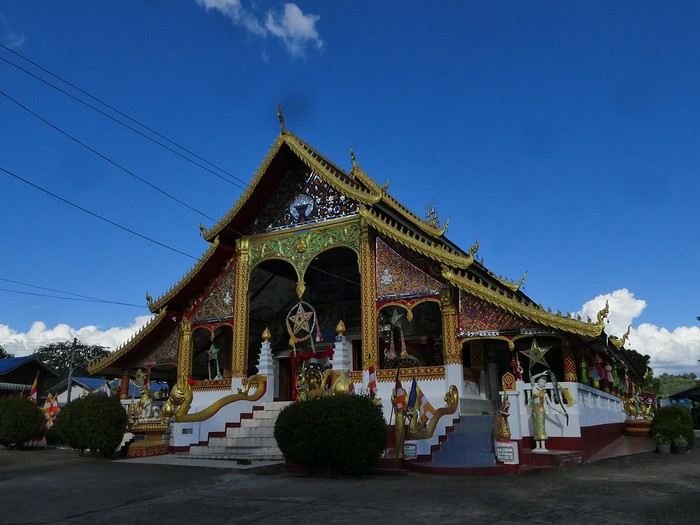
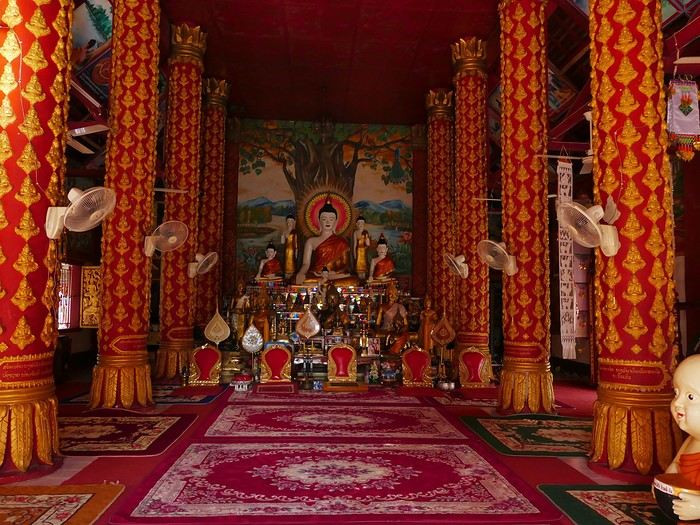
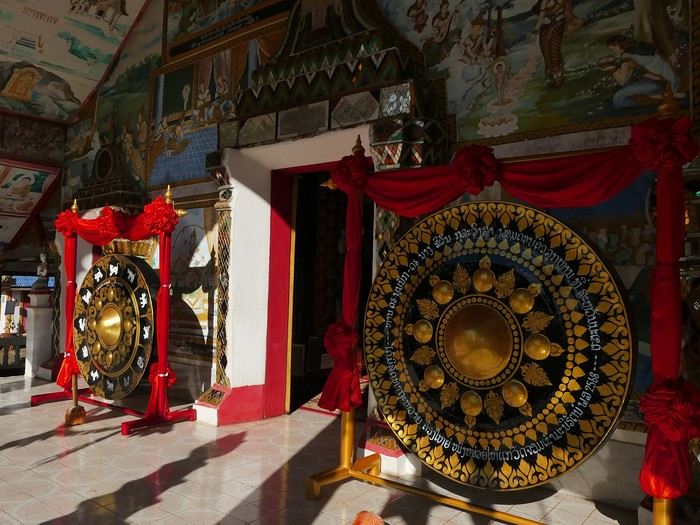
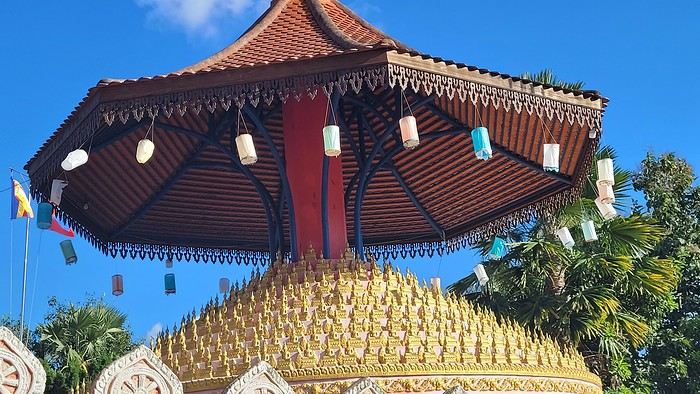
and continued to Fort Carnot, built by the French.
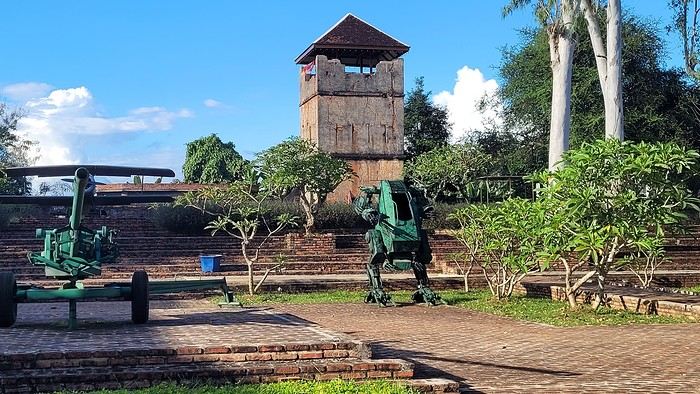
The views of the Mekong are beautiful for a first glimpse of the country.
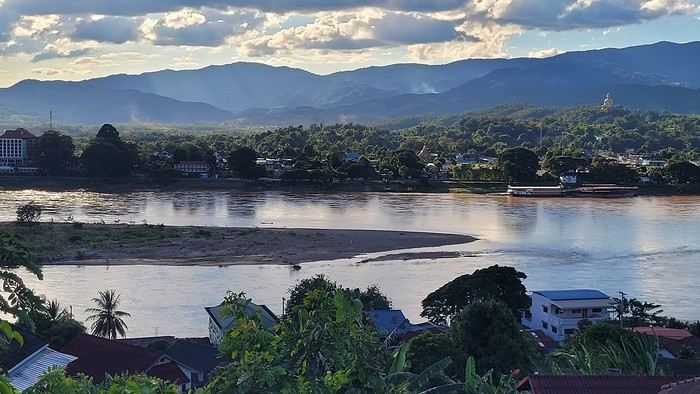
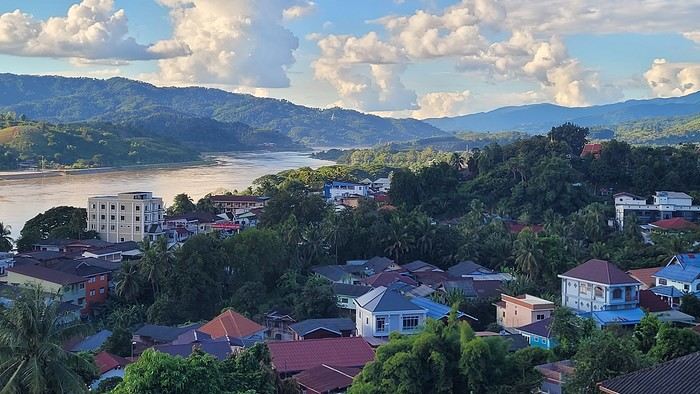
yum-yum, bon appétit!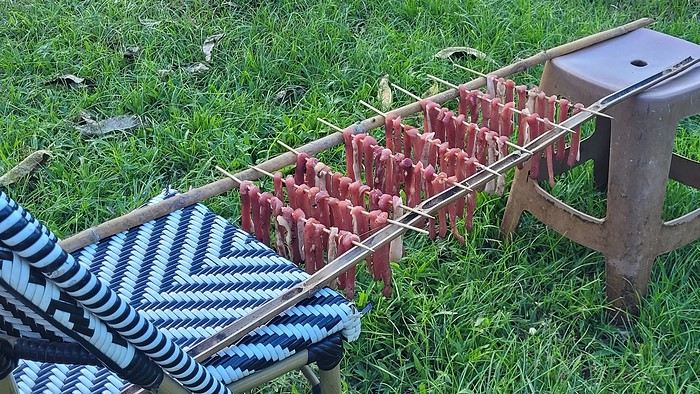
At 6:30 PM, I went to dinner at a restaurant across from the guesthouse—a chicken curry with vegetables.
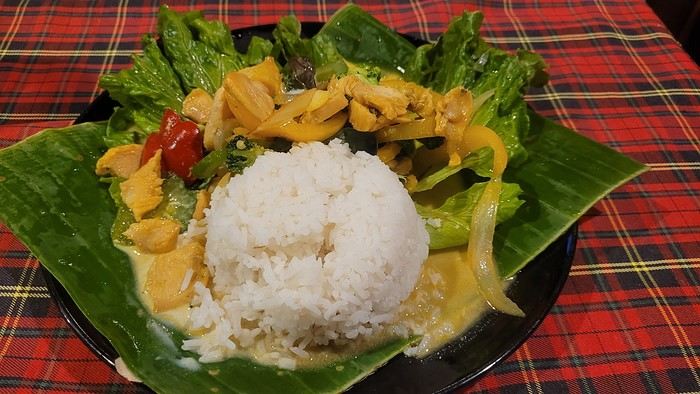
I didn’t linger and went back to bed. I slept well, even if I woke up often.
Thursday, Oct 23. Left home at 8:25 AM, took the bus from St Cyp to Perpignan, then a BlaBlaBus to Barcelona airport. Last night, a huge storm crossed France, and the bus was an hour late. We finally left at 11 AM. At the Spanish border, we were checked—several Africans were traveling on the bus, and their document verification took quite a while. In the end, everything was in order, and we set off again a good half-hour later. We finally arrived at Barcelona airport after 2 PM, but no stress since my flight was scheduled for 4:30 PM with Saudia. At check-in, the hostess told me there’d be a 1-hour delay due to bad weather in France and Belgium. In the end, the flight didn’t just have a 1-hour delay but a 5-hour one because of a technical issue. The next flight wouldn’t wait for us. When we arrived in Jeddah, they gave us another ticket for the following day—the flight to Bangkok was scheduled for 11:55 AM. The airline assigned us a room, which was good news since I was exhausted. Friday morning, the flight was still scheduled for 11:55 AM, but the gate wasn’t displayed. It was announced with a 1-hour delay, but that stretched to 4 hours. They handed out drinks and a snack—again, the delay was due to technical problems. In Bangkok, I had a connecting flight to Chiang Rai, where I’d also booked a room—I lost everything. We finally arrived in Bangkok on Saturday at 4 AM. I had to buy another ticket for a 7 AM flight. The formalities were quick, and my flight went smoothly. A taxi took me to Bus Terminal 1, where I caught a bus leaving at 10 AM, and we arrived at the Thailand-Laos border. I shared a taxi with other travelers, which took us to Houay Xai. The guesthouse I’d booked was right across from the stop—that was great. I exchanged some money and bought a SIM card at the guesthouse. Despite the fatigue, I needed to stretch my legs, so I walked down the street to the temple.
and continued to Fort Carnot, built by the French.
The views of the Mekong are beautiful for a first glimpse of the country.
yum-yum, bon appétit!
At 6:30 PM, I went to dinner at a restaurant across from the guesthouse—a chicken curry with vegetables.
I didn’t linger and went back to bed. I slept well, even if I woke up often.
Looking for a beach spot near Bangkok
Hi there,
I’m looking for a beach spot within 3 hours max of Bangkok for the end of my trip (January). I know full well I won’t find that postcard-perfect vibe of the more remote islands! But I don’t have a choice. If you’ve got any ideas... no high-rises, obviously not Pattaya, somewhere quiet, swimming possible, a hotel right on the beach (and not too dirty, the beach itself!) I’ve looked at hotels around Ko Samet or, across from it, on the mainland. I spotted the Bann Pae Cabana. But nothing really exciting on either side. New ideas welcome! 🙂
I’m looking for a beach spot within 3 hours max of Bangkok for the end of my trip (January). I know full well I won’t find that postcard-perfect vibe of the more remote islands! But I don’t have a choice. If you’ve got any ideas... no high-rises, obviously not Pattaya, somewhere quiet, swimming possible, a hotel right on the beach (and not too dirty, the beach itself!) I’ve looked at hotels around Ko Samet or, across from it, on the mainland. I spotted the Bann Pae Cabana. But nothing really exciting on either side. New ideas welcome! 🙂
Trip Report: Silk Road Journey in China
Hi everyone,
This trip report covers a journey along the Silk Road in China (see detailed description below) undertaken in October 2025. The goal isn’t to recount the trip but to provide information that might help those who want to take a similar journey. Much of the information is valid for any trip to China.
Who we are: a retired couple, aged 63 and 65 (age gives discounts on entry to various sites and museums in China, which is why I won’t list prices here—I don’t know them, but you can easily find them online). We’re used to traveling independently. We speak English, which is the only foreign language spoken in China, though by very few people. I speak and read a little Chinese, which helped, but you can easily get by without it (without any English at all, I think it would be more difficult).
Period: We arrived just after "Golden Week," when all of China is on vacation, and after the summer, when schools are out, so we encountered very few tourists (99.99% of whom were Chinese). Our experience with booking visits in advance (which we didn’t need to do) isn’t representative for those who want to travel in the summer! The October-November period was perfect for our trip—it wasn’t too hot or too cold (one day of snow on the Tibetan Plateau), though it was only a few degrees on the Tibetan part, with altitudes between 2,000 and 3,000 meters. The trees were beautifully colored.
General remarks: Everyone we dealt with was very kind and perfectly honest. If you order a meal without really understanding what to do and the person modifies your order, trust them—the result is what you need. If a taxi driver signals that they’ll wait for you to finish your visit and pick you up afterward, trust them. It means there aren’t many taxis where you are, and it’ll be more convenient. For prices at street vendors, we always found the right ballpark, and sometimes they even added a little extra to please us. A taxi driver treated us to lunch, and an employee drove us back to the hotel after a visit because there were no taxis. If you struggle to buy a ticket online because there’s no counter, someone will come to help. People even spontaneously ask if everything’s okay and if you need anything.
Everywhere we went was very clean, including restrooms (trains, stations, hotels, museums, tourist sites) and streets. The old stereotypes about this no longer apply.
The trip can be challenging for those who have difficulty walking. The distances to cover on foot in stations, to access sites, and within the sites themselves can sometimes be really long.
We used the Lonely Planet guide in English (published at the end of August 2025) a little for preparation, but mostly relied on the internet.
Before leaving: No visa is needed for French citizens for stays under 30 days. You get a stamp on your passport upon arrival and departure, and the formalities themselves are very quick in both directions (excluding any potential queues). Just a photo and fingerprints upon arrival, and welcome to China’s facial recognition system.
Money: All your payments (see below) will go through your Visa card—there will be hundreds, including many payments of 20 cents to a few euros. So, you need an international option that allows unlimited card transactions. Since cash is rarely needed, the allowed number of ATM withdrawals can be low. We made 3 withdrawals totaling 800 € for a month and could have managed with just 2. The exchange rate charged on our Visa card was 12 € for 100 RMB (yuan).
Install the following apps on your smartphone before leaving (otherwise, you’ll only have access to the Chinese versions, if available): - Alipay, which is used to pay everywhere in China (details below). You need to link it to your credit card, then provide proof of identity by uploading a passport photo and completing a facial recognition session. Alipay gives access to Didi (China’s Uber), public transport (metro/bus), and can also translate phrases. - WeChat (Weixin in Chinese, pronounced *weishin*), which is also used for payments but also replaces WhatsApp. Unfortunately, to activate your account, you need someone who already has WeChat to sponsor you (preferably a Chinese person). We asked someone at our first accommodations to do this—no problem. By sharing your WeChat number with accommodations, they can send you messages that are automatically translated, and you can communicate with people thanks to the translation (translation to French is very poor; it’s much better in English, but unfortunately, WeChat detects your phone’s language). Alipay and WeChat are accepted almost everywhere, but some places only accept WeChat. - Amap, the international version of Baidu Maps, which replaces Google Maps (not at all up-to-date in China). The English names of hotels often have little to do with the Chinese names except for a phonetic resemblance. To find them on Amap, it’s best to copy the Chinese name found on your Trip reservation under "show address in Chinese." - A VPN. We had CyberGhost, which didn’t work, but according to other travelers, NordVPN and Windscribe do. Without a VPN, you can’t access Google services, on WhatsApp you can send and receive text but not photos, and you can’t send or receive emails on Gmail addresses. We managed without a VPN by using Firefox as a browser and Bing as a search engine. - Trip, for booking trains and accommodations, and buying some tickets. It’s the equivalent of Booking for accommodations, but Booking has very few listings in China, while Trip has hundreds in every city. Most hotels and trains are exchangeable and refundable until the day before, with no or minimal fees.
You don’t need contactless (NFC) payment on your phone. Either you scan a barcode and enter the amount to pay, or you display a barcode, and they scan it with a scanner, and the amount is deducted directly.
Upon arrival: - Buy a Chinese SIM card: 100 RMB for 300 GB of data and several hours of talk time (we didn’t use it). Set the Chinese number as a reference on Alipay, WeChat, and Amap. - Find someone to sponsor you on WeChat.
Transportation: - **Plane**: China Eastern, Paris-Canton then Canton-Urumqi on the way out, and Xian-Canton then Canton-Paris on the way back. International flights were smooth, but the schedules for the two domestic flights were changed. It was fine on the way out because we had some leeway, but on the way back, we were notified the morning of that our flight was canceled and replaced with one that didn’t allow for the connection. We called and changed to an earlier flight (I think we were lucky to find available seats). - **Train**: Most long distances were covered by high-speed trains (called D or G in China) at 240 or 300 km/h. Second class is perfect—just as comfortable and clean as our TGVs. The only advantage of first class is the wider seats for larger people, but the downside is that seats are often booked in advance and thus less available. You can book trains long in advance on Trip, but they only go on sale in China 15 days before departure, so that’s when you’ll know if you have a ticket. Initially, we booked first class, but there were no seats available on the day, so we ended up booking everything in second class, which was perfect. There’s no paper ticket—if you’ve bought one, you go to the station, show your passport, and enter. You do the same to access the platform 15 minutes before the train, and that’s it. Our train was canceled twice, but no problem—we went to the ticket counter, got a refund, and were offered a replacement. It didn’t delay us by more than an hour (maybe it would be harder in peak season). For prices, check Trip.com, but it’s significantly cheaper than in France. - **Bus**: We took the bus between Xining and Tongren, Tongren to Xiahe, and Hezuo to Lanzhou—about 3 hours each time for 200 km, 6 € per person, and departures were right on time. - **Taxi**: For trips between the station and hotel, or hotel and visits. If you take a Didi via the Alipay app, you activate your location, enter your destination, and it offers several taxis. You accept, and you get the car’s license plate and its real-time position on the map. When you get in, the driver often asks for the last four digits of your phone number to confirm. Otherwise, you go to the taxi stand outside the station. The price per kilometer is around 20 cents, so for a 30 km trip from the station to the hotel, you’ll pay about 6 €. We never tried to save more by taking local buses, but since the metro in Xian costs 25 cents per trip, it’s probably in the same ballpark. Amap provides public transport routes like Google Maps. - **Driver**: We hired a taxi/driver for the day several times for sightseeing. Prices ranged from 350 to 1,000 RMB (the most expensive was arranged through the Sofitel Xining concierge) for trips ranging from a few hours to a full day, sometimes covering over 300 km (see the detailed trip description).
Accommodations: All booked in advance on Trip, but several were changed during the trip. Off-season, there were no issues. We mostly stayed in upscale places, but in China, that means 50 to 60 € per night in the most central or convenient neighborhood. Note: Almost all hotels have a 5/5 rating on Trip, but it seems the Chinese avoid giving lower ratings to be polite. So, you have to read the comments to realize that in France, we might have given a 2 or 3!
Food: At the table, you’re served hot water or a hot infusion, presumably made with purified water. We never got sick from drinking it, but don’t drink tap water. Purified or mineral water is easy to find.
In restaurants, you can manage by pointing to the dish you want from another diner, on the wall where there are photos, or on the menu with pictures. The food in the region isn’t often spicy, and people usually ask or signal before adding the red spicy sauce, so you should be able to handle it if you don’t like chili at all.
The "fake old quarters" in several cities are great places to find all kinds of restaurants (see detailed trip below).
Like Google Maps, Amap can show you nearby restaurants.
Shopping: For dried fruits, buy them in Turfan—you won’t find the same variety and quality even in Xian. Generally, if you like something, buy it. If you wait, you might not find it outside the region where you are.
In Xian, there’s a "Tea City" where you can find all kinds of tea (from cheap to very expensive).
The trip in more detail: I won’t dwell on the beauty or interest of the sites here since that’s a matter of personal taste. However, I will do so for lesser-known places to give an idea to those who might be interested.
For many sites, there are shuttles (sometimes not included in the ticket price but costing around 1 €) that take you to the interesting spots. We always took them—it saves you from walking past countless shops or along uninteresting paths.
- **Urumqi**: We spent only one night there, arriving in the middle of the afternoon and leaving the next morning. We stayed at the Dana Hotel in the bazaar. Given the size of the city, it’s a good option because I don’t think there are many other interesting places. The bazaar is brand new and not at all "typical" (Turfan’s bazaar is infinitely more interesting), but the dining area is very nice.
- **Turfan**: Stayed at the New Dap Hostel, which was great. The neighborhood is nice, not far from the city, and easy to find food. The museum is closed until 2026 (Amap provides museum hours and closures). We took a day trip (for the two of us) with a driver to the Bezeklik Caves, Flaming Mountains, the abandoned city of Gaochang, the Tuyuk Village Museum, and the Emin Minaret for 500 RMB from 9 AM to 8 PM (arranged by the hostel). The landscape during the excursion was quite fabulous. We also visited the Karez Museum and the abandoned city of Jiaohe on our own the next day. At this time of year, the sun sets around 6 PM, and there’s often haze after 5 PM, so for Jiaohe, for example, which takes about 3 hours to visit, it’s best to be there by 1 or 2 PM at the latest.
The Dahua Market area is perfect for dried fruits (including the famous grapes), and you can eat there among locals in their traditional costumes. Next to it, there are buildings full of shops selling made-in-China items—it kept us busy for a good half-day, if not more.
- **Dunhuang**: Stayed in a guesthouse near the dunes—the city center isn’t far but seems quite artificial. Visited the dunes, with a ticket valid for 3 days. Lots of Chinese tourists—very typical and interesting from an ethnological perspective 😊. We got up early one morning to climb the highest dune, just beyond the one everyone goes to. It’s a bit long and tiring, but the view is worth it. Visited the Mogao Caves, buying the ticket on-site (no chance in season without booking in advance). We met two other French people and got a French-speaking guide (by pretending not to understand English). It was really worth it—a group of 4 instead of 20, and they took their time (2 hours) for the visit. We took a day trip to the Yulin Caves (2.5 hours by road and 160 km one way) with a driver for 350 RMB. We liked it a lot, but if the Mogao Caves are enough for you, it’s not very different.
- **Jiayuguan**: Stayed in a city-center hotel. Visited the Wei and Jin tombs (actually just one)—that’s where we were told the taxi should wait to take us back to the city. We went down into a crypt with lots of decorated bricks from the 3rd century. We really liked it, but it’s not as spectacular as the fort if you’re not a fan. Visited the Jiayuguan Fort and, with the same ticket, climbed a small section of the Great Wall 10 km away. Plan at least 3 good hours for all this—there’s plenty to see.
- **Zhangye**: Stayed at The Silk Road Travelers Hostel, rustic but very nice and organizes excursions. Visited the Danxia (colored mountains)—just as spectacular as the photos. You can easily spend 3 hours there, so plan to finish before sunset to avoid the haze (you can always stay longer for the sunset if the weather’s nice). The next day, visited the Mati Si Temple in the cliff. The 10,000 Buddha Caves are under renovation, but the setting and the main temple are well worth the visit (the paths through the cliff tunnels must be hellish in peak season). You can probably organize these two excursions yourself by asking any taxi driver. Also visited the Giant Buddha Temple in the city center—really worth it.
- **Xining**: Stayed in a city-center hotel. Visited the Tibetan Medicine Museum to see the world’s largest thangka (1 km long), made over 40 years by renowned artists. It’s absolutely magnificent, on par with the virtuosity (but over 1 km) of the thangkas painted by famous artists in Xiahe (see below). Hired a female taxi driver for the day to visit Kumbum Monastery (Ta’er Si in Chinese) and the Danxia area in Guide, 50 km beyond the monastery. It’s less spectacular than Zhangye’s Danxia, but we really liked it (including the journey’s landscape). The next day, visited the old Ming-era Qutan Monastery—no visitors, with beautiful murals (half under renovation). Accessible by train to Haidong or Ledu, then a taxi. Xining’s mosque is of no interest, but there’s a pedestrian street with food stalls nearby that’s very nice.
- **Tongren**: Stayed near the main monastery. Visited Longwu Monastery (several hours), with lots of nice shops along the street leading to it. Then visited Wutun Monastery, which is less lively but beautiful and close to thangka workshops. You can go in and watch the painters at work. For a thangka made by a renowned artist, count about a year of work for 1 m² and around 10,000 €.
- **Xiahe**: Stayed in a city-center hotel. Visited Labrang Monastery—very nice but not as much as Tongren’s because many halls were closed. I think it’s better to go in season and take an English-guided tour (but it’s still worth the trip, even off-season).
- **Langmusi**: Took a taxi, but you can also take a bus (though very early in the morning and longer). Particularly beautiful for us because we woke up to bright sunshine and 5 cm of snow everywhere. Visited the two temples (really nice) and did the classic hike in the gorges starting at the Fairy Cave. For those interested, we continued along the canyon path, and after the meadow where marmots are clearly visible in summer, we climbed toward a pass on the left at 3,800 meters. The view of Langmusi and, above all, the vast grasslands and distant mountains was fabulous (3 hours round trip from the temple). You could probably reach the 4,000-meter summit by continuing up the valley instead of turning left, but according to guides, it’s better to count 7 hours round trip (no technical difficulty). You can leave Langmusi by bus, but off-season, you first have to take a taxi to a stop outside the city and wait for the bus. We didn’t try and took a taxi to Hezuo instead.
Note on this region: A high-speed train is under construction from Xining to Langmusi and beyond (never seen such an impressive construction site!). When it’s operational (in one or two years, I think), access to the area will be revolutionized, and perhaps some of the charm will be lost.
- **Hezuo**: Stopped on the way from Langmusi to Lanzhou. Visited the Milarepa Pagoda, entirely destroyed during the Cultural Revolution and since rebuilt. We liked it since we were passing through, but it doesn’t necessarily justify a long detour.
- **Lanzhou**: Reached by one of the many buses from Hezuo. Stayed in the "fake old quarter," which is extremely pleasant, especially in the evening with restaurants, groups of Chinese women dancing to loud music, etc. Visited Bingling Si with a driver, 120 km away—the landscape and site are absolutely magnificent, with no one around at our time of year. Visited the Gansu Museum (where the famous Flying Horse is, but it’s a replica). We bought the ticket on entry, but in season, you probably need to book in advance.
- **Yinchuan**: Stayed in the city center. A city we discovered by chance in the Lonely Planet—worth it if you have time. On the way, we stopped for a few hours in Zhongwei, where there’s an incredible Taoist temple (I’ll let you be surprised). Visited the Western Xia tombs—we took the short option, which visits Tomb 3. We think the others are similar but less impressive. The surrounding landscape and site are quite spectacular. Visited the film sets (really fun if you like Chinese movies), the short but interesting Ningxia Museum, and finally the modern art museum. The architecture is avant-garde, and there are some beautiful works (we like it, but it’s far from the center—hire a driver who waits, or you might have to wait for an employee to offer a ride back).
- **Tianshui**: Stayed in the suburbs, but you should find a hotel near the "fake old quarter" between the Fu Xi Temples and the Taoist temple—it’s a very nice area, and the two temples (especially the Taoist one) are within walking distance. Visited the Maijishan Caves—the ticket includes the shuttle to get there. Took a taxi from Lanzhou for about 10 € in 45 minutes. We found these caves fabulous.
- **Xi’an**: Stayed 500 meters from the Bell Tower at Hantang Inn—very convenient. We’d been before, so we didn’t revisit the Terracotta Army. The calligraphy district is worth it, as is the Muslim Quarter, though it’s very touristy. The area indicated on the Lonely Planet’s walking tour near the old fruit and vegetable market isn’t very interesting. To buy tea, you can go to the Northwest International Tea City, with dozens of shops. We chose one at random, tasted, and bought various teas. There’s everything from cheap to extremely expensive, but you can find reasonable prices even in seemingly luxurious shops. Along the street north of this area, there are large stores with tons of Chinese goods selling dishes, wedding items, etc. We spent hours there. In the city center, there are only malls with more or less international brands.
- **Longmen Grottoes**: Visited as a round trip by high-speed train from Xian—1 hour 15 minutes to Longmen’s high-speed train station, and the site entrance is 15 minutes by taxi.
We didn’t go to Mount Hua Shan, but there’s a high-speed train station nearby, and there were people on the train who were clearly going there. So, you can probably do this excursion in a day from Xian as well.
Conclusion: We hope this report makes you want to go or helps you if you’re already planning to. If you have questions that you can’t find the answer to by searching properly online and we can answer, don’t hesitate.
This trip report covers a journey along the Silk Road in China (see detailed description below) undertaken in October 2025. The goal isn’t to recount the trip but to provide information that might help those who want to take a similar journey. Much of the information is valid for any trip to China.
Who we are: a retired couple, aged 63 and 65 (age gives discounts on entry to various sites and museums in China, which is why I won’t list prices here—I don’t know them, but you can easily find them online). We’re used to traveling independently. We speak English, which is the only foreign language spoken in China, though by very few people. I speak and read a little Chinese, which helped, but you can easily get by without it (without any English at all, I think it would be more difficult).
Period: We arrived just after "Golden Week," when all of China is on vacation, and after the summer, when schools are out, so we encountered very few tourists (99.99% of whom were Chinese). Our experience with booking visits in advance (which we didn’t need to do) isn’t representative for those who want to travel in the summer! The October-November period was perfect for our trip—it wasn’t too hot or too cold (one day of snow on the Tibetan Plateau), though it was only a few degrees on the Tibetan part, with altitudes between 2,000 and 3,000 meters. The trees were beautifully colored.
General remarks: Everyone we dealt with was very kind and perfectly honest. If you order a meal without really understanding what to do and the person modifies your order, trust them—the result is what you need. If a taxi driver signals that they’ll wait for you to finish your visit and pick you up afterward, trust them. It means there aren’t many taxis where you are, and it’ll be more convenient. For prices at street vendors, we always found the right ballpark, and sometimes they even added a little extra to please us. A taxi driver treated us to lunch, and an employee drove us back to the hotel after a visit because there were no taxis. If you struggle to buy a ticket online because there’s no counter, someone will come to help. People even spontaneously ask if everything’s okay and if you need anything.
Everywhere we went was very clean, including restrooms (trains, stations, hotels, museums, tourist sites) and streets. The old stereotypes about this no longer apply.
The trip can be challenging for those who have difficulty walking. The distances to cover on foot in stations, to access sites, and within the sites themselves can sometimes be really long.
We used the Lonely Planet guide in English (published at the end of August 2025) a little for preparation, but mostly relied on the internet.
Before leaving: No visa is needed for French citizens for stays under 30 days. You get a stamp on your passport upon arrival and departure, and the formalities themselves are very quick in both directions (excluding any potential queues). Just a photo and fingerprints upon arrival, and welcome to China’s facial recognition system.
Money: All your payments (see below) will go through your Visa card—there will be hundreds, including many payments of 20 cents to a few euros. So, you need an international option that allows unlimited card transactions. Since cash is rarely needed, the allowed number of ATM withdrawals can be low. We made 3 withdrawals totaling 800 € for a month and could have managed with just 2. The exchange rate charged on our Visa card was 12 € for 100 RMB (yuan).
Install the following apps on your smartphone before leaving (otherwise, you’ll only have access to the Chinese versions, if available): - Alipay, which is used to pay everywhere in China (details below). You need to link it to your credit card, then provide proof of identity by uploading a passport photo and completing a facial recognition session. Alipay gives access to Didi (China’s Uber), public transport (metro/bus), and can also translate phrases. - WeChat (Weixin in Chinese, pronounced *weishin*), which is also used for payments but also replaces WhatsApp. Unfortunately, to activate your account, you need someone who already has WeChat to sponsor you (preferably a Chinese person). We asked someone at our first accommodations to do this—no problem. By sharing your WeChat number with accommodations, they can send you messages that are automatically translated, and you can communicate with people thanks to the translation (translation to French is very poor; it’s much better in English, but unfortunately, WeChat detects your phone’s language). Alipay and WeChat are accepted almost everywhere, but some places only accept WeChat. - Amap, the international version of Baidu Maps, which replaces Google Maps (not at all up-to-date in China). The English names of hotels often have little to do with the Chinese names except for a phonetic resemblance. To find them on Amap, it’s best to copy the Chinese name found on your Trip reservation under "show address in Chinese." - A VPN. We had CyberGhost, which didn’t work, but according to other travelers, NordVPN and Windscribe do. Without a VPN, you can’t access Google services, on WhatsApp you can send and receive text but not photos, and you can’t send or receive emails on Gmail addresses. We managed without a VPN by using Firefox as a browser and Bing as a search engine. - Trip, for booking trains and accommodations, and buying some tickets. It’s the equivalent of Booking for accommodations, but Booking has very few listings in China, while Trip has hundreds in every city. Most hotels and trains are exchangeable and refundable until the day before, with no or minimal fees.
You don’t need contactless (NFC) payment on your phone. Either you scan a barcode and enter the amount to pay, or you display a barcode, and they scan it with a scanner, and the amount is deducted directly.
Upon arrival: - Buy a Chinese SIM card: 100 RMB for 300 GB of data and several hours of talk time (we didn’t use it). Set the Chinese number as a reference on Alipay, WeChat, and Amap. - Find someone to sponsor you on WeChat.
Transportation: - **Plane**: China Eastern, Paris-Canton then Canton-Urumqi on the way out, and Xian-Canton then Canton-Paris on the way back. International flights were smooth, but the schedules for the two domestic flights were changed. It was fine on the way out because we had some leeway, but on the way back, we were notified the morning of that our flight was canceled and replaced with one that didn’t allow for the connection. We called and changed to an earlier flight (I think we were lucky to find available seats). - **Train**: Most long distances were covered by high-speed trains (called D or G in China) at 240 or 300 km/h. Second class is perfect—just as comfortable and clean as our TGVs. The only advantage of first class is the wider seats for larger people, but the downside is that seats are often booked in advance and thus less available. You can book trains long in advance on Trip, but they only go on sale in China 15 days before departure, so that’s when you’ll know if you have a ticket. Initially, we booked first class, but there were no seats available on the day, so we ended up booking everything in second class, which was perfect. There’s no paper ticket—if you’ve bought one, you go to the station, show your passport, and enter. You do the same to access the platform 15 minutes before the train, and that’s it. Our train was canceled twice, but no problem—we went to the ticket counter, got a refund, and were offered a replacement. It didn’t delay us by more than an hour (maybe it would be harder in peak season). For prices, check Trip.com, but it’s significantly cheaper than in France. - **Bus**: We took the bus between Xining and Tongren, Tongren to Xiahe, and Hezuo to Lanzhou—about 3 hours each time for 200 km, 6 € per person, and departures were right on time. - **Taxi**: For trips between the station and hotel, or hotel and visits. If you take a Didi via the Alipay app, you activate your location, enter your destination, and it offers several taxis. You accept, and you get the car’s license plate and its real-time position on the map. When you get in, the driver often asks for the last four digits of your phone number to confirm. Otherwise, you go to the taxi stand outside the station. The price per kilometer is around 20 cents, so for a 30 km trip from the station to the hotel, you’ll pay about 6 €. We never tried to save more by taking local buses, but since the metro in Xian costs 25 cents per trip, it’s probably in the same ballpark. Amap provides public transport routes like Google Maps. - **Driver**: We hired a taxi/driver for the day several times for sightseeing. Prices ranged from 350 to 1,000 RMB (the most expensive was arranged through the Sofitel Xining concierge) for trips ranging from a few hours to a full day, sometimes covering over 300 km (see the detailed trip description).
Accommodations: All booked in advance on Trip, but several were changed during the trip. Off-season, there were no issues. We mostly stayed in upscale places, but in China, that means 50 to 60 € per night in the most central or convenient neighborhood. Note: Almost all hotels have a 5/5 rating on Trip, but it seems the Chinese avoid giving lower ratings to be polite. So, you have to read the comments to realize that in France, we might have given a 2 or 3!
Food: At the table, you’re served hot water or a hot infusion, presumably made with purified water. We never got sick from drinking it, but don’t drink tap water. Purified or mineral water is easy to find.
In restaurants, you can manage by pointing to the dish you want from another diner, on the wall where there are photos, or on the menu with pictures. The food in the region isn’t often spicy, and people usually ask or signal before adding the red spicy sauce, so you should be able to handle it if you don’t like chili at all.
The "fake old quarters" in several cities are great places to find all kinds of restaurants (see detailed trip below).
Like Google Maps, Amap can show you nearby restaurants.
Shopping: For dried fruits, buy them in Turfan—you won’t find the same variety and quality even in Xian. Generally, if you like something, buy it. If you wait, you might not find it outside the region where you are.
In Xian, there’s a "Tea City" where you can find all kinds of tea (from cheap to very expensive).
The trip in more detail: I won’t dwell on the beauty or interest of the sites here since that’s a matter of personal taste. However, I will do so for lesser-known places to give an idea to those who might be interested.
For many sites, there are shuttles (sometimes not included in the ticket price but costing around 1 €) that take you to the interesting spots. We always took them—it saves you from walking past countless shops or along uninteresting paths.
- **Urumqi**: We spent only one night there, arriving in the middle of the afternoon and leaving the next morning. We stayed at the Dana Hotel in the bazaar. Given the size of the city, it’s a good option because I don’t think there are many other interesting places. The bazaar is brand new and not at all "typical" (Turfan’s bazaar is infinitely more interesting), but the dining area is very nice.
- **Turfan**: Stayed at the New Dap Hostel, which was great. The neighborhood is nice, not far from the city, and easy to find food. The museum is closed until 2026 (Amap provides museum hours and closures). We took a day trip (for the two of us) with a driver to the Bezeklik Caves, Flaming Mountains, the abandoned city of Gaochang, the Tuyuk Village Museum, and the Emin Minaret for 500 RMB from 9 AM to 8 PM (arranged by the hostel). The landscape during the excursion was quite fabulous. We also visited the Karez Museum and the abandoned city of Jiaohe on our own the next day. At this time of year, the sun sets around 6 PM, and there’s often haze after 5 PM, so for Jiaohe, for example, which takes about 3 hours to visit, it’s best to be there by 1 or 2 PM at the latest.
The Dahua Market area is perfect for dried fruits (including the famous grapes), and you can eat there among locals in their traditional costumes. Next to it, there are buildings full of shops selling made-in-China items—it kept us busy for a good half-day, if not more.
- **Dunhuang**: Stayed in a guesthouse near the dunes—the city center isn’t far but seems quite artificial. Visited the dunes, with a ticket valid for 3 days. Lots of Chinese tourists—very typical and interesting from an ethnological perspective 😊. We got up early one morning to climb the highest dune, just beyond the one everyone goes to. It’s a bit long and tiring, but the view is worth it. Visited the Mogao Caves, buying the ticket on-site (no chance in season without booking in advance). We met two other French people and got a French-speaking guide (by pretending not to understand English). It was really worth it—a group of 4 instead of 20, and they took their time (2 hours) for the visit. We took a day trip to the Yulin Caves (2.5 hours by road and 160 km one way) with a driver for 350 RMB. We liked it a lot, but if the Mogao Caves are enough for you, it’s not very different.
- **Jiayuguan**: Stayed in a city-center hotel. Visited the Wei and Jin tombs (actually just one)—that’s where we were told the taxi should wait to take us back to the city. We went down into a crypt with lots of decorated bricks from the 3rd century. We really liked it, but it’s not as spectacular as the fort if you’re not a fan. Visited the Jiayuguan Fort and, with the same ticket, climbed a small section of the Great Wall 10 km away. Plan at least 3 good hours for all this—there’s plenty to see.
- **Zhangye**: Stayed at The Silk Road Travelers Hostel, rustic but very nice and organizes excursions. Visited the Danxia (colored mountains)—just as spectacular as the photos. You can easily spend 3 hours there, so plan to finish before sunset to avoid the haze (you can always stay longer for the sunset if the weather’s nice). The next day, visited the Mati Si Temple in the cliff. The 10,000 Buddha Caves are under renovation, but the setting and the main temple are well worth the visit (the paths through the cliff tunnels must be hellish in peak season). You can probably organize these two excursions yourself by asking any taxi driver. Also visited the Giant Buddha Temple in the city center—really worth it.
- **Xining**: Stayed in a city-center hotel. Visited the Tibetan Medicine Museum to see the world’s largest thangka (1 km long), made over 40 years by renowned artists. It’s absolutely magnificent, on par with the virtuosity (but over 1 km) of the thangkas painted by famous artists in Xiahe (see below). Hired a female taxi driver for the day to visit Kumbum Monastery (Ta’er Si in Chinese) and the Danxia area in Guide, 50 km beyond the monastery. It’s less spectacular than Zhangye’s Danxia, but we really liked it (including the journey’s landscape). The next day, visited the old Ming-era Qutan Monastery—no visitors, with beautiful murals (half under renovation). Accessible by train to Haidong or Ledu, then a taxi. Xining’s mosque is of no interest, but there’s a pedestrian street with food stalls nearby that’s very nice.
- **Tongren**: Stayed near the main monastery. Visited Longwu Monastery (several hours), with lots of nice shops along the street leading to it. Then visited Wutun Monastery, which is less lively but beautiful and close to thangka workshops. You can go in and watch the painters at work. For a thangka made by a renowned artist, count about a year of work for 1 m² and around 10,000 €.
- **Xiahe**: Stayed in a city-center hotel. Visited Labrang Monastery—very nice but not as much as Tongren’s because many halls were closed. I think it’s better to go in season and take an English-guided tour (but it’s still worth the trip, even off-season).
- **Langmusi**: Took a taxi, but you can also take a bus (though very early in the morning and longer). Particularly beautiful for us because we woke up to bright sunshine and 5 cm of snow everywhere. Visited the two temples (really nice) and did the classic hike in the gorges starting at the Fairy Cave. For those interested, we continued along the canyon path, and after the meadow where marmots are clearly visible in summer, we climbed toward a pass on the left at 3,800 meters. The view of Langmusi and, above all, the vast grasslands and distant mountains was fabulous (3 hours round trip from the temple). You could probably reach the 4,000-meter summit by continuing up the valley instead of turning left, but according to guides, it’s better to count 7 hours round trip (no technical difficulty). You can leave Langmusi by bus, but off-season, you first have to take a taxi to a stop outside the city and wait for the bus. We didn’t try and took a taxi to Hezuo instead.
Note on this region: A high-speed train is under construction from Xining to Langmusi and beyond (never seen such an impressive construction site!). When it’s operational (in one or two years, I think), access to the area will be revolutionized, and perhaps some of the charm will be lost.
- **Hezuo**: Stopped on the way from Langmusi to Lanzhou. Visited the Milarepa Pagoda, entirely destroyed during the Cultural Revolution and since rebuilt. We liked it since we were passing through, but it doesn’t necessarily justify a long detour.
- **Lanzhou**: Reached by one of the many buses from Hezuo. Stayed in the "fake old quarter," which is extremely pleasant, especially in the evening with restaurants, groups of Chinese women dancing to loud music, etc. Visited Bingling Si with a driver, 120 km away—the landscape and site are absolutely magnificent, with no one around at our time of year. Visited the Gansu Museum (where the famous Flying Horse is, but it’s a replica). We bought the ticket on entry, but in season, you probably need to book in advance.
- **Yinchuan**: Stayed in the city center. A city we discovered by chance in the Lonely Planet—worth it if you have time. On the way, we stopped for a few hours in Zhongwei, where there’s an incredible Taoist temple (I’ll let you be surprised). Visited the Western Xia tombs—we took the short option, which visits Tomb 3. We think the others are similar but less impressive. The surrounding landscape and site are quite spectacular. Visited the film sets (really fun if you like Chinese movies), the short but interesting Ningxia Museum, and finally the modern art museum. The architecture is avant-garde, and there are some beautiful works (we like it, but it’s far from the center—hire a driver who waits, or you might have to wait for an employee to offer a ride back).
- **Tianshui**: Stayed in the suburbs, but you should find a hotel near the "fake old quarter" between the Fu Xi Temples and the Taoist temple—it’s a very nice area, and the two temples (especially the Taoist one) are within walking distance. Visited the Maijishan Caves—the ticket includes the shuttle to get there. Took a taxi from Lanzhou for about 10 € in 45 minutes. We found these caves fabulous.
- **Xi’an**: Stayed 500 meters from the Bell Tower at Hantang Inn—very convenient. We’d been before, so we didn’t revisit the Terracotta Army. The calligraphy district is worth it, as is the Muslim Quarter, though it’s very touristy. The area indicated on the Lonely Planet’s walking tour near the old fruit and vegetable market isn’t very interesting. To buy tea, you can go to the Northwest International Tea City, with dozens of shops. We chose one at random, tasted, and bought various teas. There’s everything from cheap to extremely expensive, but you can find reasonable prices even in seemingly luxurious shops. Along the street north of this area, there are large stores with tons of Chinese goods selling dishes, wedding items, etc. We spent hours there. In the city center, there are only malls with more or less international brands.
- **Longmen Grottoes**: Visited as a round trip by high-speed train from Xian—1 hour 15 minutes to Longmen’s high-speed train station, and the site entrance is 15 minutes by taxi.
We didn’t go to Mount Hua Shan, but there’s a high-speed train station nearby, and there were people on the train who were clearly going there. So, you can probably do this excursion in a day from Xian as well.
Conclusion: We hope this report makes you want to go or helps you if you’re already planning to. If you have questions that you can’t find the answer to by searching properly online and we can answer, don’t hesitate.
Off we go on an adventure in Puglia!
Hey there, VF crew!
After wrapping up our travel journal on Java (link below), we’re now diving into our recent adventure in Puglia! Happy reading... Off we go on an adventure in Java (and a bit of Bali) | Travel journal > Indonesia | Voyage Forum
Day 1 - October 19
When you tell your friends and family you’re itching to escape to the other side of the planet to mingle with the Mongols, you can usually expect a barrage of questionable jokes and terrible puns. For this new adventure, it’s a different destination but the same old story—this time, we’re visiting the "pouilleux" (the "scruffy" ones). We’re taking off straight for Puglia! If you need a cheat sheet to remember where this oddly named place is on a world map, just think of it this way: Puglia is the maiden name on the ID card of the heel of the Italian boot! Personally, I prefer to remember it as the land of creamy burrata, the smell of focaccia fresh from the oven, orecchiette shaped by mamas, golden olive oil that shines like the sun (which beams down here 300 days a year), amaretto that makes you happy, and those famous trulli—those little hobbit-like dry-stone houses straight out of a movie set...
But I’ll stop spoiling the rest of our trip and focus on a factual rundown of this first Puglian day. So, are you joining us on this new adventure beyond our Gallic borders? Either way, Sasha (my youngest) and Luna (Flo’s daughter) didn’t need much convincing to stick with us and keep up the pace!
Our plane drops our little crew in Bari, the site of a famously tragic battle lost in 1991. But revenge is sweet! After renting a motorized carriage, we escape the landing zone and head to our military base of operations: Ostuni, a strategic little town where we’ll set up camp for the next four days. Why Ostuni? First, for its central location, which lets us explore a region packed with must-see gems. Second, for its vibe and beauty, which have earned it quite the reputation. Perched high on a hill, the *città bianca* (the "White City") lives up to its nickname. It literally dazzles visitors. The reason? The whitewashed facades of its houses, a testament to the region’s rich architectural heritage.

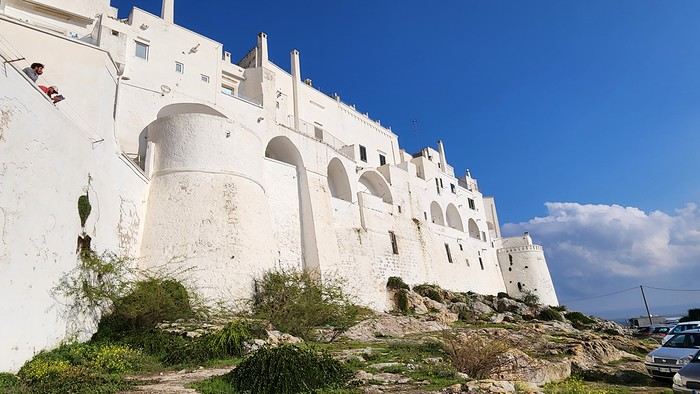
We arrived late last night, so only the two bravest soldiers volunteered to scout ahead at dawn, while the younger recruits stayed behind—for now. But not for long! After the first wave of streets and the next round of exploration, headquarters made the inevitable call to retreat. Reinforcements were needed! A few strategic errands, a breakfast ration, and our battalion marched in tight formation, flag held high, to conquer Ostuni the White! *Charge!* In my squadron leader’s memoirs, I’ll write that I didn’t expect Ostuni to put up such a fight. What I thought would take two hours to conquer turned into a humbling experience—we could only bow in respect to its beauty, its relentless charm. The alleys are whiter, more labyrinthine, narrower, and more photogenic than the last. *Veni, vidi, vici*—but what an entrance, my troops!
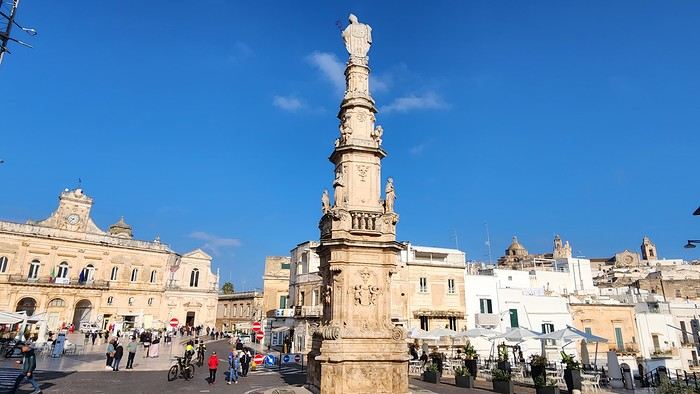
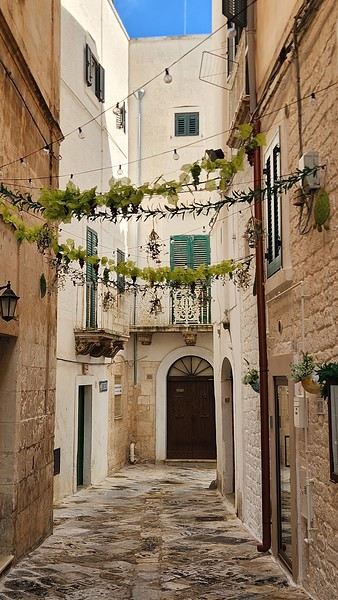
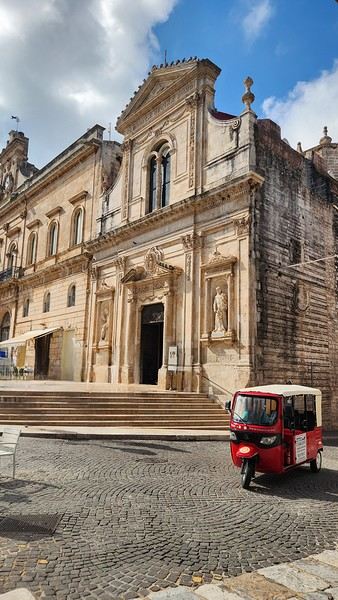
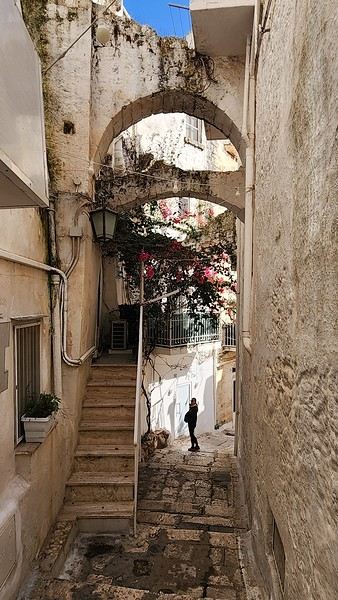
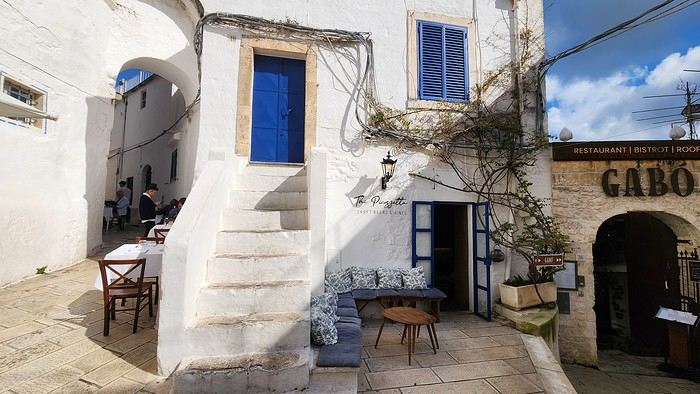
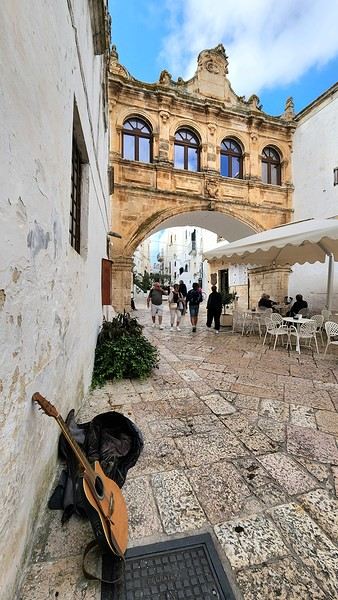
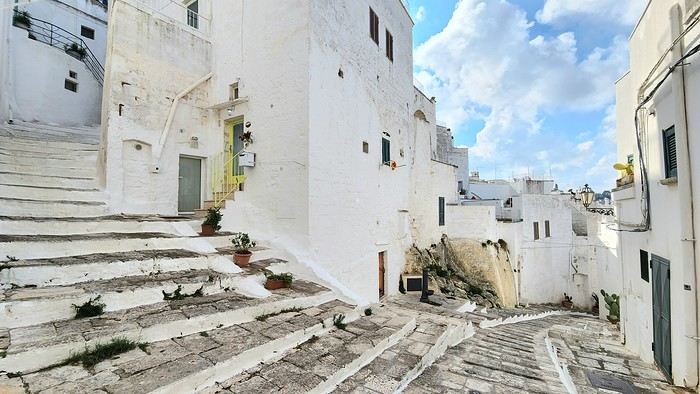
After wrapping up our travel journal on Java (link below), we’re now diving into our recent adventure in Puglia! Happy reading... Off we go on an adventure in Java (and a bit of Bali) | Travel journal > Indonesia | Voyage Forum
Day 1 - October 19
When you tell your friends and family you’re itching to escape to the other side of the planet to mingle with the Mongols, you can usually expect a barrage of questionable jokes and terrible puns. For this new adventure, it’s a different destination but the same old story—this time, we’re visiting the "pouilleux" (the "scruffy" ones). We’re taking off straight for Puglia! If you need a cheat sheet to remember where this oddly named place is on a world map, just think of it this way: Puglia is the maiden name on the ID card of the heel of the Italian boot! Personally, I prefer to remember it as the land of creamy burrata, the smell of focaccia fresh from the oven, orecchiette shaped by mamas, golden olive oil that shines like the sun (which beams down here 300 days a year), amaretto that makes you happy, and those famous trulli—those little hobbit-like dry-stone houses straight out of a movie set...
But I’ll stop spoiling the rest of our trip and focus on a factual rundown of this first Puglian day. So, are you joining us on this new adventure beyond our Gallic borders? Either way, Sasha (my youngest) and Luna (Flo’s daughter) didn’t need much convincing to stick with us and keep up the pace!
Our plane drops our little crew in Bari, the site of a famously tragic battle lost in 1991. But revenge is sweet! After renting a motorized carriage, we escape the landing zone and head to our military base of operations: Ostuni, a strategic little town where we’ll set up camp for the next four days. Why Ostuni? First, for its central location, which lets us explore a region packed with must-see gems. Second, for its vibe and beauty, which have earned it quite the reputation. Perched high on a hill, the *città bianca* (the "White City") lives up to its nickname. It literally dazzles visitors. The reason? The whitewashed facades of its houses, a testament to the region’s rich architectural heritage.
We arrived late last night, so only the two bravest soldiers volunteered to scout ahead at dawn, while the younger recruits stayed behind—for now. But not for long! After the first wave of streets and the next round of exploration, headquarters made the inevitable call to retreat. Reinforcements were needed! A few strategic errands, a breakfast ration, and our battalion marched in tight formation, flag held high, to conquer Ostuni the White! *Charge!* In my squadron leader’s memoirs, I’ll write that I didn’t expect Ostuni to put up such a fight. What I thought would take two hours to conquer turned into a humbling experience—we could only bow in respect to its beauty, its relentless charm. The alleys are whiter, more labyrinthine, narrower, and more photogenic than the last. *Veni, vidi, vici*—but what an entrance, my troops!
Mauritian Ti' Punch
The recipe for the cocktail: endless beaches, a dazzling palette of colors, some breathtaking hikes, and excellent cuisine...
For the tasting, follow along in the pages of this travel journal! 😉
Don’t forget your hiking shoes, a swimsuit, sunscreen, but also a sweater, your driver’s license, and your credit card...
Just over 11 hours of flight, and we’ll be setting foot on Mauritian soil!
For the tasting, follow along in the pages of this travel journal! 😉
Don’t forget your hiking shoes, a swimsuit, sunscreen, but also a sweater, your driver’s license, and your credit card...
Just over 11 hours of flight, and we’ll be setting foot on Mauritian soil!
Your recommendations for 20 days in Thailand
Hello,
Our flights are booked, and we’ll arrive in Thailand at the beginning of January.
Originally, we were supposed to spend 14 days there. But after booking the flights and seeing the prices, we’ll now be there for 20 days instead.
Our initial plan was: 2 days in Bangkok 1 day in Ayutthaya 4 days in Chiang Mai 6 days around Krabi
So we have 7 more days to fill. What do you recommend?
An extra day in Bangkok? Adding more days in the north? If so, where? Exploring another region, like Kanchanaburi or Cheow Lan Lake? Traveling north in stages instead of taking the overnight train?
A few extra details about us: For us, vacation isn’t about relaxation—we love walking, exploring, and packed days don’t bother us. Hiking for hours and doing active things is what makes us happy. That said, we also enjoy visiting villages and towns if they’re worth the detour. In Thailand, we’d like to visit temples too. We’re early risers, so our days tend to be long. 🙂 In short, we like to keep things moving during our trips. 😉
Unfortunately, seeing terraced rice fields isn’t possible in January. I read there are rice fields around Sukhothai. Are they green in January?
In the north, do you recommend Doi Inthanon, Huai Nam Dang, or Doi Chiang Dao National Parks? Which one is the most beautiful and best for January?
Our flights are booked, and we’ll arrive in Thailand at the beginning of January.
Originally, we were supposed to spend 14 days there. But after booking the flights and seeing the prices, we’ll now be there for 20 days instead.
Our initial plan was: 2 days in Bangkok 1 day in Ayutthaya 4 days in Chiang Mai 6 days around Krabi
So we have 7 more days to fill. What do you recommend?
An extra day in Bangkok? Adding more days in the north? If so, where? Exploring another region, like Kanchanaburi or Cheow Lan Lake? Traveling north in stages instead of taking the overnight train?
A few extra details about us: For us, vacation isn’t about relaxation—we love walking, exploring, and packed days don’t bother us. Hiking for hours and doing active things is what makes us happy. That said, we also enjoy visiting villages and towns if they’re worth the detour. In Thailand, we’d like to visit temples too. We’re early risers, so our days tend to be long. 🙂 In short, we like to keep things moving during our trips. 😉
Unfortunately, seeing terraced rice fields isn’t possible in January. I read there are rice fields around Sukhothai. Are they green in January?
In the north, do you recommend Doi Inthanon, Huai Nam Dang, or Doi Chiang Dao National Parks? Which one is the most beautiful and best for January?
From Southern Shikoku, between land and sea, to the blue waters of Miyakojima and finally the Tokyo metropolis
From Southern Shikoku, between land and sea, to the blue waters of Miyakojima and finally Tokyo’s megacity
Hi everyone,
I have to admit, I really hesitated before deciding to write this travel journal... Writing one takes a lot of time and energy, and since this is my 4th trip, I wondered if it would actually interest anyone other than myself (both for the discovery and the writing). But after a few "Are you going to write a journal?" requests and especially the renewed pleasure from reading other travelers’ travel journals about Japan or elsewhere on this forum or elsewhere, I’ve decided to share this 4th installment in the Land of the Rising Sun here.
The itinerary: 27 full days, from late May to late June 2025, right in the middle of the rainy season, including:
-->13 days in Shikoku, from Kochi (Kochi Prefecture) to Matsuyama (Ehime Prefecture)
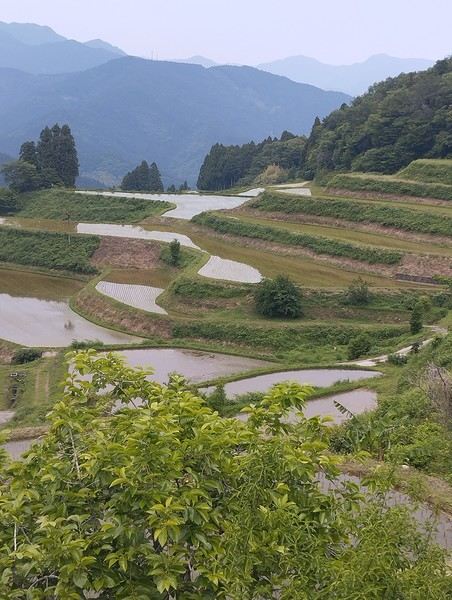
-->7 days in Miyakojima (Okinawa Prefecture)
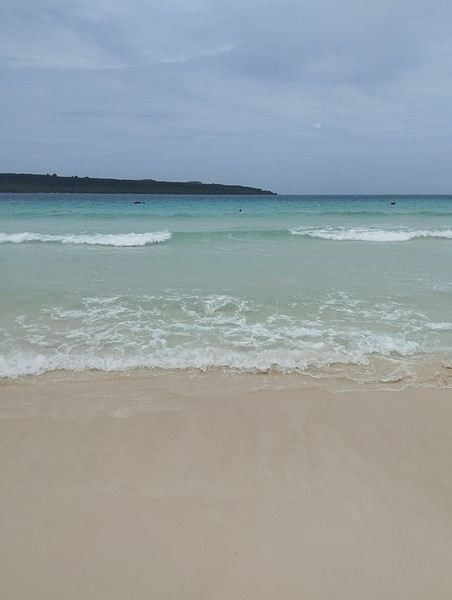
-->7 days in Tokyo
The trip was decided on fairly last-minute this year, as usual.
I regularly check flight prices to track fluctuations for this destination, even without concrete plans. Finding a slightly cheaper direct flight (900 €) than what I’d seen in previous months (around 1,200–1,400 € on average) for a Paris-Tokyo route with Japanese airline ANA was too tempting to resist the urge to return to this enchanting country. After long hesitations between exploring the San’in region (Matsue, Tottori, Yamaguchi) and southern Shikoku, the decision was made—I took the plunge! The tickets are booked: Paris to Kochi with a layover in Tokyo, all with ANA, the airline I’d been dreaming of... for 1,120 € per person. Okay, it’s not cheap, but it’s still better than in 2023.
We leave in 2 weeks!! Now it’s just a matter of getting everything ready!
Intense work ahead in these 2 weeks to:
finalize a more precise itinerary and reach an agreement—yep, because even though we both love Japan, our preferences differ slightly, and we have to choose between exploring new places or taking time to revisit beloved spots... decide how much time to spend in each selected area without rushing while still exploring research places that might interest us and watch videos about Japan book accommodations: yes, it’s possible to do this on the spot as we go, but last year, we noticed that last-minute options were pretty expensive, so we’re booking ahead—even if it means keeping a few options open while we decide or see if better deals pop up later reserve rental cars order yen check the weather regularly and wonder if choosing the *tsuyu* (rainy season) was really a good idea—and whether we’ll be stuck in non-stop rain???
What a tough job, right? Traveling to Japan for a month—such a hard life! Despite this being my 4th trip, the excitement is just as intense as the first time.
The only small downside is that when we booked the flight tickets, there were only a few seats left, so we’re only sitting together on the international return flight. Plus, on the outbound flight, we’ve got the middle seats. Another lingering question: what French-language films will be available? According to the internet, the selection seems limited. Oh well, these are just minor details—it’s almost time to fly!
PS: I’ll be posting slowly and irregularly... so for those interested, be patient or maybe set an alert...
Hi everyone,
I have to admit, I really hesitated before deciding to write this travel journal... Writing one takes a lot of time and energy, and since this is my 4th trip, I wondered if it would actually interest anyone other than myself (both for the discovery and the writing). But after a few "Are you going to write a journal?" requests and especially the renewed pleasure from reading other travelers’ travel journals about Japan or elsewhere on this forum or elsewhere, I’ve decided to share this 4th installment in the Land of the Rising Sun here.
The itinerary: 27 full days, from late May to late June 2025, right in the middle of the rainy season, including:
-->13 days in Shikoku, from Kochi (Kochi Prefecture) to Matsuyama (Ehime Prefecture)
-->7 days in Miyakojima (Okinawa Prefecture)
-->7 days in Tokyo
The trip was decided on fairly last-minute this year, as usual.
I regularly check flight prices to track fluctuations for this destination, even without concrete plans. Finding a slightly cheaper direct flight (900 €) than what I’d seen in previous months (around 1,200–1,400 € on average) for a Paris-Tokyo route with Japanese airline ANA was too tempting to resist the urge to return to this enchanting country. After long hesitations between exploring the San’in region (Matsue, Tottori, Yamaguchi) and southern Shikoku, the decision was made—I took the plunge! The tickets are booked: Paris to Kochi with a layover in Tokyo, all with ANA, the airline I’d been dreaming of... for 1,120 € per person. Okay, it’s not cheap, but it’s still better than in 2023.
We leave in 2 weeks!! Now it’s just a matter of getting everything ready!
Intense work ahead in these 2 weeks to:
finalize a more precise itinerary and reach an agreement—yep, because even though we both love Japan, our preferences differ slightly, and we have to choose between exploring new places or taking time to revisit beloved spots... decide how much time to spend in each selected area without rushing while still exploring research places that might interest us and watch videos about Japan book accommodations: yes, it’s possible to do this on the spot as we go, but last year, we noticed that last-minute options were pretty expensive, so we’re booking ahead—even if it means keeping a few options open while we decide or see if better deals pop up later reserve rental cars order yen check the weather regularly and wonder if choosing the *tsuyu* (rainy season) was really a good idea—and whether we’ll be stuck in non-stop rain???
What a tough job, right? Traveling to Japan for a month—such a hard life! Despite this being my 4th trip, the excitement is just as intense as the first time.
The only small downside is that when we booked the flight tickets, there were only a few seats left, so we’re only sitting together on the international return flight. Plus, on the outbound flight, we’ve got the middle seats. Another lingering question: what French-language films will be available? According to the internet, the selection seems limited. Oh well, these are just minor details—it’s almost time to fly!
PS: I’ll be posting slowly and irregularly... so for those interested, be patient or maybe set an alert...
Mice in Switzerland, the Other Cheese Country!
I'm starting my first travel journal since VF reopened!
This will mostly be to share my impressions and some photos, with a few days' delay, but I'm starting this journal while I'm still here.
First, I'd like to thank those who helped me prepare for this trip.
I was able to organize this stay in one of the most expensive countries in the world thanks to the home-exchange principle. Not necessarily a direct swap, but through a points system, which is more practical for choosing where you want to go without it having to be a reciprocal exchange.
For this trip, there will already be two different accommodations. We'll see how it goes after that.
The first place is near Yverdon-les-Bains, close to Lake Neuchâtel.
So, we're going to explore this area!
We arrived under capricious weather that won’t leave us for the next few days!
We had dinner at a pizzeria recommended by *Le Routard* in Yverdon, then took a little nighttime stroll through the town center before heading inland to settle into our accommodation.
We discovered a very large, quiet house—and especially the cat that stayed behind! Funny for a couple of mice! He’ll be sleeping with us 😹
This will mostly be to share my impressions and some photos, with a few days' delay, but I'm starting this journal while I'm still here.
First, I'd like to thank those who helped me prepare for this trip.
I was able to organize this stay in one of the most expensive countries in the world thanks to the home-exchange principle. Not necessarily a direct swap, but through a points system, which is more practical for choosing where you want to go without it having to be a reciprocal exchange.
For this trip, there will already be two different accommodations. We'll see how it goes after that.
The first place is near Yverdon-les-Bains, close to Lake Neuchâtel.
So, we're going to explore this area!
We arrived under capricious weather that won’t leave us for the next few days!
We had dinner at a pizzeria recommended by *Le Routard* in Yverdon, then took a little nighttime stroll through the town center before heading inland to settle into our accommodation.
We discovered a very large, quiet house—and especially the cat that stayed behind! Funny for a couple of mice! He’ll be sleeping with us 😹
Feedback on Thailand itinerary with 4- and 7-year-old kids
Hi everyone!!
My wife and I are heading to Thailand in April 2025 with our two daughters, aged 4 and 7. I’d love to get your thoughts and some great tips on our itinerary (which isn’t set in stone at all!!). We’re planning to arrive in Phuket and head straight to Koh Lanta (4/5 nights). I’d love to visit another spot in the area, but nothing’s really grabbing us—so if you’ve got any ideas, we’re all ears! Next, we’re heading to Koh Phangan (the north) for about 4 nights. After that, we’ll head east to Ko Chang and Koh Kood, spending around 3 nights on each island. Then, Bangkok for 2 days and one night before flying back to France. We’ll have about 16-17 days there. Like most people, we’re looking for quiet spots, far from big resorts, with beaches, pools, and walks/activities for our young kids. From my research, the west has great beaches and views, while the east offers a bit more adventure and fewer crowds. Thanks in advance for your feedback!
Quentin, Dune, Juno, and Marley
My wife and I are heading to Thailand in April 2025 with our two daughters, aged 4 and 7. I’d love to get your thoughts and some great tips on our itinerary (which isn’t set in stone at all!!). We’re planning to arrive in Phuket and head straight to Koh Lanta (4/5 nights). I’d love to visit another spot in the area, but nothing’s really grabbing us—so if you’ve got any ideas, we’re all ears! Next, we’re heading to Koh Phangan (the north) for about 4 nights. After that, we’ll head east to Ko Chang and Koh Kood, spending around 3 nights on each island. Then, Bangkok for 2 days and one night before flying back to France. We’ll have about 16-17 days there. Like most people, we’re looking for quiet spots, far from big resorts, with beaches, pools, and walks/activities for our young kids. From my research, the west has great beaches and views, while the east offers a bit more adventure and fewer crowds. Thanks in advance for your feedback!
Quentin, Dune, Juno, and Marley
Feedback on our summer trip to Bulgaria
Hi there,
This summer, we’re heading to Bulgaria as a family (2 adults and 2 kids aged 15 and 12). Our flights and rental car are already booked, and our accommodations are pre-reserved (cancellable). Just so you know, we prefer nature over cities for our vacations.
I’d love your thoughts on our itinerary—specifically, any interesting sites, hikes, or nature activities you’d recommend. - Day 1: Arrival in Sofia at 11 PM - Day 2: Sofia - Day 3: Drive to Veliko Tarnovo, overnight there - Day 4: Drive to the Black Sea (we were supposed to go to Varna, but our booking was canceled) - Days 5–8: We were planning to stay in Varna and visit Balchik and Nesebar. But since our accommodation fell through, we’re wondering if we should spend only 2 nights in Varna and 3 in Nesebar instead. What do you think? - Day 9: Drive to Sinemorets - Days 10–11: Sinemorets, Strandja (3 nights in Sinemorets) - Days 12–13: Plovdiv - Days 14–16: Rhodopes, staying in Yagodina for 3 nights - Day 17: Melnik - Days 18–20: Bansko (Bansko Jazz Fest, hikes) - Day 21: Rila Monastery, then overnight in Sapareva Banya - Day 22: Seven Rila Lakes hike - Day 23: Return to Sofia and fly home
Does this route feel balanced, or too rushed? What do you think are the must-see spots along the way?
Thanks! PM
This summer, we’re heading to Bulgaria as a family (2 adults and 2 kids aged 15 and 12). Our flights and rental car are already booked, and our accommodations are pre-reserved (cancellable). Just so you know, we prefer nature over cities for our vacations.
I’d love your thoughts on our itinerary—specifically, any interesting sites, hikes, or nature activities you’d recommend. - Day 1: Arrival in Sofia at 11 PM - Day 2: Sofia - Day 3: Drive to Veliko Tarnovo, overnight there - Day 4: Drive to the Black Sea (we were supposed to go to Varna, but our booking was canceled) - Days 5–8: We were planning to stay in Varna and visit Balchik and Nesebar. But since our accommodation fell through, we’re wondering if we should spend only 2 nights in Varna and 3 in Nesebar instead. What do you think? - Day 9: Drive to Sinemorets - Days 10–11: Sinemorets, Strandja (3 nights in Sinemorets) - Days 12–13: Plovdiv - Days 14–16: Rhodopes, staying in Yagodina for 3 nights - Day 17: Melnik - Days 18–20: Bansko (Bansko Jazz Fest, hikes) - Day 21: Rila Monastery, then overnight in Sapareva Banya - Day 22: Seven Rila Lakes hike - Day 23: Return to Sofia and fly home
Does this route feel balanced, or too rushed? What do you think are the must-see spots along the way?
Thanks! PM
Newfoundland: Hikes in Gros Morne National Park
INTRODUCTION
Creating a masterpiece like Gros Morne National Park wasn’t done overnight. So, when you first discover this extraordinary place, it’s easy to understand why Mother Nature took over 485 million years to bring it to life.
Here, glacial valleys, forests, rugged coastline, beaches, and peat bogs follow one another and intertwine to form a unique ecosystem, one that’s rare in the world. After all, this is where geologists found tangible evidence of the theory of continental drift, and it’s one of the few places on Earth where you can see—and even walk on—the Earth’s mantle. This site is a true celebration of the raw, enigmatic power and beauty of the physical world.
Designated a national park in 1973 and later a UNESCO World Heritage Site in 1987, it’s an 1,805 km² playground just waiting for the adventurer in you. Whether you’re traveling solo, with family, or with friends, for a few days or several weeks, you won’t run out of things to do here.
Source: https://www.exploretnl.ca/parc-national-gros-morne
The hikes we did in this region are listed below. Each hike has a link so you can quickly access more information about it.
Videos are embedded throughout the summary. Click on the image to start the video.
Stanleyville Trail Trout River Pond Trail Trout River Pond Trail (Return) Green Gardens Trail Tablelands Trail Scenic Route 431 Lookout Hills Trail Southeast Brook Falls Trail Gros Morne Mountain Trail (James Callaghan Trail) Berry Hill Trail Baker's Brook Falls Trail Berry Hill Pond Trail Western Brook Pond Trail Boat Tour on Western Brook Pond Steve’s Trail Shallow Bay Beach
Creating a masterpiece like Gros Morne National Park wasn’t done overnight. So, when you first discover this extraordinary place, it’s easy to understand why Mother Nature took over 485 million years to bring it to life.
Here, glacial valleys, forests, rugged coastline, beaches, and peat bogs follow one another and intertwine to form a unique ecosystem, one that’s rare in the world. After all, this is where geologists found tangible evidence of the theory of continental drift, and it’s one of the few places on Earth where you can see—and even walk on—the Earth’s mantle. This site is a true celebration of the raw, enigmatic power and beauty of the physical world.
Designated a national park in 1973 and later a UNESCO World Heritage Site in 1987, it’s an 1,805 km² playground just waiting for the adventurer in you. Whether you’re traveling solo, with family, or with friends, for a few days or several weeks, you won’t run out of things to do here.
Source: https://www.exploretnl.ca/parc-national-gros-morne
The hikes we did in this region are listed below. Each hike has a link so you can quickly access more information about it.
Videos are embedded throughout the summary. Click on the image to start the video.
Stanleyville Trail Trout River Pond Trail Trout River Pond Trail (Return) Green Gardens Trail Tablelands Trail Scenic Route 431 Lookout Hills Trail Southeast Brook Falls Trail Gros Morne Mountain Trail (James Callaghan Trail) Berry Hill Trail Baker's Brook Falls Trail Berry Hill Pond Trail Western Brook Pond Trail Boat Tour on Western Brook Pond Steve’s Trail Shallow Bay Beach
What to see in Madagascar in 10 days with kids?
Hello,
A few months ago, I posted a message in the Southern Africa section about a family trip in July/August. In the end, since I had too much trouble deciding on the destination and procrastinated too much with the planning 😎, I changed my mind and we’re going for a completely different trip—to Madagascar, a country we already know a bit since we’ve traveled there several times for 4 to 6 months each time, though our last visit was back in 2012!
The tickets are booked: 19 days on the ground (excluding arrival and departure days in Tana), spanning July and August.
We’re not looking to rack up landscapes (and kilometers). The kids really want to see lots of animals, while we mostly want to show them what daily life is like in Malagasy villages. So ideally, we’d like a trip split into two parts: - For 8/10 days, a hiking portion. The idea isn’t to do a tough trek in very remote areas but rather to walk from one village to another. Let’s say 3-4 hours a day. And when we arrive in each village, we’d have time to explore a bit, chat with the locals, let our kids play with the village children, etc. Stay with locals when possible. Move to a new village every day or every 2-3 days. - A few days visiting 1 or 2 national parks (with lemurs if possible to keep everyone happy!) - With the inevitable travel days, we’ll quickly hit 19 days.
Does this kind of trip sound doable (and fun) to you? Do you know of any villages that would fit our hiking plans?
I don’t have a preferred region yet, except that very dry landscapes appeal to me less. My real love from past trips was the highlands and their bright green rice paddies against red earth, but I’m a bit worried about the cold at this time of year.
After my initial research (thanks to this forum), I get the impression that the Ambalavao/Ambohimahamasina area might meet our criteria. I saw there are "accueil paysan" (farm stays) in that area, which could match what we’re looking for and would let us visit Andringitra National Park and Ranomafana on the way there or back.
But I’m open to all your more original ideas!
For logistical questions (transport, guides, accommodations, etc.), I’ll tackle those later—it’ll depend on the area we choose.
Thanks in advance for your suggestions
A few months ago, I posted a message in the Southern Africa section about a family trip in July/August. In the end, since I had too much trouble deciding on the destination and procrastinated too much with the planning 😎, I changed my mind and we’re going for a completely different trip—to Madagascar, a country we already know a bit since we’ve traveled there several times for 4 to 6 months each time, though our last visit was back in 2012!
The tickets are booked: 19 days on the ground (excluding arrival and departure days in Tana), spanning July and August.
We’re not looking to rack up landscapes (and kilometers). The kids really want to see lots of animals, while we mostly want to show them what daily life is like in Malagasy villages. So ideally, we’d like a trip split into two parts: - For 8/10 days, a hiking portion. The idea isn’t to do a tough trek in very remote areas but rather to walk from one village to another. Let’s say 3-4 hours a day. And when we arrive in each village, we’d have time to explore a bit, chat with the locals, let our kids play with the village children, etc. Stay with locals when possible. Move to a new village every day or every 2-3 days. - A few days visiting 1 or 2 national parks (with lemurs if possible to keep everyone happy!) - With the inevitable travel days, we’ll quickly hit 19 days.
Does this kind of trip sound doable (and fun) to you? Do you know of any villages that would fit our hiking plans?
I don’t have a preferred region yet, except that very dry landscapes appeal to me less. My real love from past trips was the highlands and their bright green rice paddies against red earth, but I’m a bit worried about the cold at this time of year.
After my initial research (thanks to this forum), I get the impression that the Ambalavao/Ambohimahamasina area might meet our criteria. I saw there are "accueil paysan" (farm stays) in that area, which could match what we’re looking for and would let us visit Andringitra National Park and Ranomafana on the way there or back.
But I’m open to all your more original ideas!
For logistical questions (transport, guides, accommodations, etc.), I’ll tackle those later—it’ll depend on the area we choose.
Thanks in advance for your suggestions