Results for "Lao+Cai+|+59+>+194"
4434 results found.
Vol, hébergement et transport au Vietnam English translation pending
Bien le bon soir à tous,
J'ai l'intention de me rendre seule au Vietnam en novembre 2004 pour 4 semaines. Bien sûr moins je dépenserais d'argent mieux cela sera pour moi.
Il y a-t-il des personnes succeptibles de me donner quelques conseils aussi bien sur les compagnies aériennes pratiquant des tarifs bas, que sur l'hébergement genre guest houses, les transports etc... ?
Aussi le fait de voyager seule peut-il être un "problème" ?
Merci.
Lydia Anne 🏴☠️
J'ai l'intention de me rendre seule au Vietnam en novembre 2004 pour 4 semaines. Bien sûr moins je dépenserais d'argent mieux cela sera pour moi.
Il y a-t-il des personnes succeptibles de me donner quelques conseils aussi bien sur les compagnies aériennes pratiquant des tarifs bas, que sur l'hébergement genre guest houses, les transports etc... ?
Aussi le fait de voyager seule peut-il être un "problème" ?
Merci.
Lydia Anne 🏴☠️
Trajet Chiang Mai (Thaïlande) Luang Prabang (Laos) English translation pending
Je serai à Chiang Mai en décembre et je voudrais aller à Luang Prabang
Je me pose la question si il est préferable de passer par HoueySai et le Mekong ou de faire le trajet en avion et visiter la région au départ de Luang Prabang ????
Si vous avez déjà fait des expériences......Merci
Philippe
Je me pose la question si il est préferable de passer par HoueySai et le Mekong ou de faire le trajet en avion et visiter la région au départ de Luang Prabang ????
Si vous avez déjà fait des expériences......Merci
Philippe
Passage de frontière Laos-Cambodge? English translation pending
Bonjour,
Nous partons en Janvier 2005 à Bangkok, destination le Laos.
Ma question est la suivante:
Est il possible de passer du Laos au Cambodge, et comment? (certains guide affirme qu'il n'y a pas de liaisons entre ces deux pays...).
Nous partons en Janvier 2005 à Bangkok, destination le Laos.
Ma question est la suivante:
Est il possible de passer du Laos au Cambodge, et comment? (certains guide affirme qu'il n'y a pas de liaisons entre ces deux pays...).
Passage des frontières en Asie Sud-Est English translation pending
Bonjour,
Je vais en Malaisie, Thaïlande, Laos, Cambodge et Viet-Nam en esayant de prendre l'avion le moins possible. On m'a dit par exemple que passer la frontière Thaïlande/Malaisie ou encore Laos/Cambodge par voie terrestre avec un sourire était assez périlleux. Pouvez-vous me renseigner?
Merci et bon week end.
Je vais en Malaisie, Thaïlande, Laos, Cambodge et Viet-Nam en esayant de prendre l'avion le moins possible. On m'a dit par exemple que passer la frontière Thaïlande/Malaisie ou encore Laos/Cambodge par voie terrestre avec un sourire était assez périlleux. Pouvez-vous me renseigner?
Merci et bon week end.
Voyage vacances/travail en Australie en septembre 2004 English translation pending
Bonjour!🙂
Je voudrais avoir des renseignements concernant l'australie (côte est): la température durant les mois de septembre a avril, les endroits a visiter et si certains d'entre-vous on déja travaillé la-bas avec un Working Holiday visa?? Quels genres d'emplois avez-vous eu?
Je partirais vers le début septembre et je suis invitée chez un ami qui habite Sydney!! Avez-vous une idée si il y a un long délai pour obtenir le visa? (je n'ai pas fait ma demande encore😊!!!)
Merci d'avance!!!
Je voudrais avoir des renseignements concernant l'australie (côte est): la température durant les mois de septembre a avril, les endroits a visiter et si certains d'entre-vous on déja travaillé la-bas avec un Working Holiday visa?? Quels genres d'emplois avez-vous eu?
Je partirais vers le début septembre et je suis invitée chez un ami qui habite Sydney!! Avez-vous une idée si il y a un long délai pour obtenir le visa? (je n'ai pas fait ma demande encore😊!!!)
Merci d'avance!!!
De Chiang Rai (Thaïlande) à la frontière du Laos English translation pending
Bonsoir a tous,
je souhaiterais des détails sur la descente du mékong de Houey Say a Luang Prabang,
Comment cela se passe t'il exactement au niveau des bateaux?
Est-il préférable d'arriver la veille ou peut on arriver le matin et partir (presque) toute de suite? A quelle heure ont les lieux les départs et quel est le cout de cette descente pour aller jusqu'à Luang Prabang avec une nuit, si j'ai bien compris, à Pakbeng? Combient de personnes sur le bateau?
J'ai vu que l'on pouvait sur "le chemin" visiter les grottes de Pak Ou ? Le bateau sarrete t'il d'office ou faut-il se mettre d'accord à l'avance?Combien faut-il de temps pour relier Chiang Mai à la frontière Laotienne ? MERCI DE TOUS VOS RENSEIGNEMENTS et Conseils
je souhaiterais des détails sur la descente du mékong de Houey Say a Luang Prabang,
Comment cela se passe t'il exactement au niveau des bateaux?
Est-il préférable d'arriver la veille ou peut on arriver le matin et partir (presque) toute de suite? A quelle heure ont les lieux les départs et quel est le cout de cette descente pour aller jusqu'à Luang Prabang avec une nuit, si j'ai bien compris, à Pakbeng? Combient de personnes sur le bateau?
J'ai vu que l'on pouvait sur "le chemin" visiter les grottes de Pak Ou ? Le bateau sarrete t'il d'office ou faut-il se mettre d'accord à l'avance?Combien faut-il de temps pour relier Chiang Mai à la frontière Laotienne ? MERCI DE TOUS VOS RENSEIGNEMENTS et Conseils
Hébergement sur Koh Lanta en Thaïlande English translation pending
Salut à tous
Je part bientôt en thailande avec ma petite famille. Je connais bien la thailande mais je ne suis jamais aller à koh lanta. Je sais qu'il y a une multitude de "bungalow" sur toute la côte ouest . Je cherche un endroit tenu par des thai de préférence, qui auraient des bungalow familliale pour un budget de 1000 bath env/jour( nous sommes quatre. deux adulte deux enfant 6 et 3 ans). Je tenterais bien aussi vers Rayong à la frontière du myamar. Alors vous tous merci pour les infos que vous me communiquerez. Dépard le 30 Janvier. Joyeuse fêtes à tous et sawasdii pii may.
Je part bientôt en thailande avec ma petite famille. Je connais bien la thailande mais je ne suis jamais aller à koh lanta. Je sais qu'il y a une multitude de "bungalow" sur toute la côte ouest . Je cherche un endroit tenu par des thai de préférence, qui auraient des bungalow familliale pour un budget de 1000 bath env/jour( nous sommes quatre. deux adulte deux enfant 6 et 3 ans). Je tenterais bien aussi vers Rayong à la frontière du myamar. Alors vous tous merci pour les infos que vous me communiquerez. Dépard le 30 Janvier. Joyeuse fêtes à tous et sawasdii pii may.
Aller au Laos au départ de Bangkok? English translation pending
je me rends au laos en janvier 2004 et j'espere effecture ce vioyage a partir de bangkok.
j'aimerai savoir s'il y a des bus qui font la navette vers la frontiere du laos et quelle sont les horaires.
j'aimerai savoir s'il y a des bus qui font la navette vers la frontiere du laos et quelle sont les horaires.
Bons plans et transport au Vietnam et en Thaïlande English translation pending
Coucou!
Je pars dans un mois pour le Vietnam et la Thailande.
J'arrive à Saigon et je vais longer toute la côte vietnamienne pour arriver à Hanoi, là où je reprendrai l'avion pour la Thailande.
Quel est le meilleur moyen de transport? train, minibus, taxi...?
Si vous avez des bons plans, n'hésitez pas!!
😄😄😄 Merci à ++++++++++
KittyB
Je pars dans un mois pour le Vietnam et la Thailande.
J'arrive à Saigon et je vais longer toute la côte vietnamienne pour arriver à Hanoi, là où je reprendrai l'avion pour la Thailande.
Quel est le meilleur moyen de transport? train, minibus, taxi...?
Si vous avez des bons plans, n'hésitez pas!!
😄😄😄 Merci à ++++++++++
KittyB
Budget, visites et logement au Laos et Vietnam English translation pending
Salut🙂
Je projete a la derniere minute un viron en Asie du Sud-Est (c'est sur ma route pour passer en France de Sydney...pas de visa de travail, alors je rentre!! lol)...
Je suis un fada de l'Asie... et je voudrais aller au Laos ou Vietnam (ou les 2....)
Si quelqu'un a des infos sur: Le budget bouffe/guest-house... Laos et Vietnam (compare a la Thailande par exemple..) Les fameuses adresses pour les premieres nuits...(quartiers sympas) Les transports internes (prix/temps pour aller de A a B).... Les etapes a ne pas louper.......
Merci pour les renseignements !!! et Bons futurs voyages a tous !!!!!!!!!😄
Fred
Je projete a la derniere minute un viron en Asie du Sud-Est (c'est sur ma route pour passer en France de Sydney...pas de visa de travail, alors je rentre!! lol)...
Je suis un fada de l'Asie... et je voudrais aller au Laos ou Vietnam (ou les 2....)
Si quelqu'un a des infos sur: Le budget bouffe/guest-house... Laos et Vietnam (compare a la Thailande par exemple..) Les fameuses adresses pour les premieres nuits...(quartiers sympas) Les transports internes (prix/temps pour aller de A a B).... Les etapes a ne pas louper.......
Merci pour les renseignements !!! et Bons futurs voyages a tous !!!!!!!!!😄
Fred
Bangkok-Vientiane en train? English translation pending
🙂salut a tous j'aimerais connaitre le prix de la liaison en train bankok vientiane s'il y a?
Et est ce qu'il y aurait des bus qui ferait cette meme liaison ??????????????????????
3 weeks in Laos, stress-free
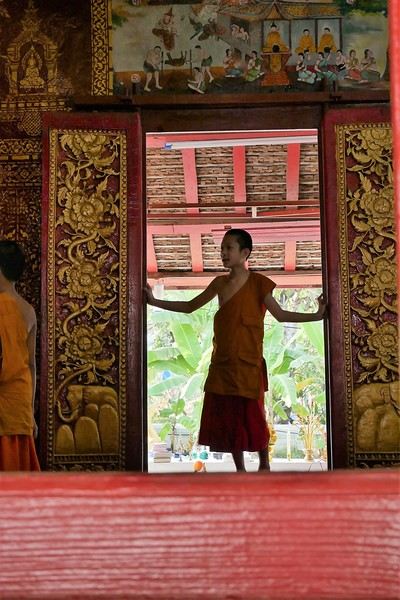 Come along, I'm taking you to this country where it's so nice to wander and slow down...
This trip was in 2023, but when I wanted to write my travel journal, VF was still closed to contributions... So, now that I've just finished my Japan travel journal here, I figured it was high time to honor this destination we came back from so enchanted. Disclaimer 1: This is a written travel journal. There’ll be text! Too much, for some! Disclaimer 2: This is an illustrated travel journal. There’ll be photos! Too many, for some!
I have to say, every time I try to discipline myself, to keep it shorter, to include fewer photos... I end up adding more. It feels like my dear Aunt Nicole, who exhausted us with her slide-show evenings in the 70s/80s, decided to take her revenge. The upside for you, readers, is that you can slip away anytime without offending Aunt Nicole. I won’t even notice!
Anyway, since I love maps, here’s one to give you an idea of where I’m taking you. As you can see, we only saw a tiny part of Laos (the areas circled in red); we only had 3 weeks for ourselves (my husband’s newly retired, I still work), and we prefer taking our time over rushing around like crazy.
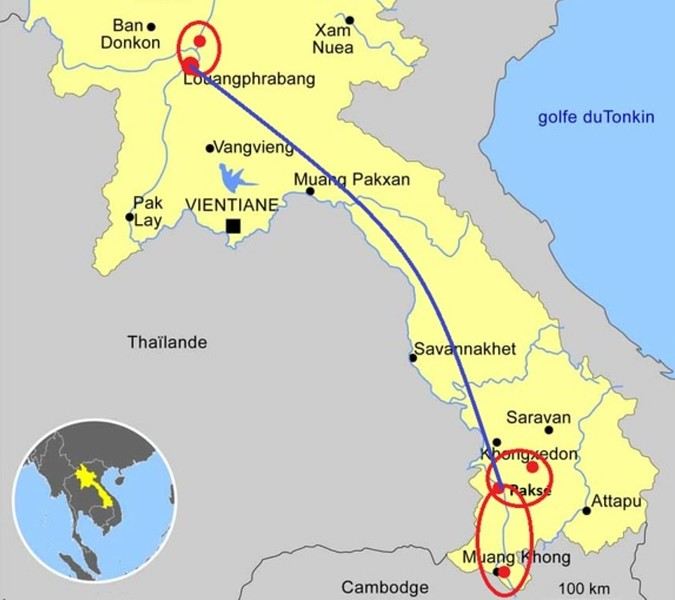
In broad strokes, it was very classic:
First, we “settled in” at Luang Prabang (8 days), because we wanted and needed to. From there, we took three days to venture a little further north—not far in kilometers, but as we know, distances aren’t just about km! Then we flew south to Paksé, letting ourselves drift down to the 4,000 Islands while stopping by the pre-Angkorian archaeological sites. We wrapped up with the Bolaven Plateau.
A few practical notes: We arrived via Bangkok, then took a Bangkok-Luang Prabang flight, having picked up our luggage in Bangkok to check it in for Luang Prabang. No issues—the Bangkok airport, which many of you know, is very well organized. We got our visas on arrival in Luang Prabang. Quick, but to be fair, we were on a “small” plane, and the big flights had arrived earlier, so we weren’t too crowded in line! At the end of our trip, we didn’t fly out of Paksé but from the nearby airport in Thailand, Ubon Ratchathani (a 2.5-hour drive from Paksé), then Bangkok and Paris. You’ll notice we skipped Vientiane to stay longer in Luang Prabang. That said, there’s now a high-speed train between Vientiane and Luang Prabang—good to know—and soon the (Chinese) train will go all the way to Bangkok and even Kuala Lumpur!
With that intro out of the way, let’s dive into the heart of the matter. To be continued: Slowing down the pace... in Luang Prabang
Which bank card for a car rental in Canada?
Hi there,
I know there are similar topics here and elsewhere, but they’re a few years old, and I need an up-to-date answer to make sure I don’t throw over 1000 € out the window. Thanks for your patience.
I’m planning a trip from France to Alberta/British Columbia, and I’m unsure about which bank card to use for the security deposit with the rental company (I’m thinking of going with AVIS).
I contacted Avis Canada, and they told me a credit card is absolutely required. I asked my bank for a credit card (a *real* credit card), but they only offered me a deferred debit card.
My question: For a rental with Avis Canada, is a Gold International Mastercard deferred debit card usable for the security deposit needed to finalize the rental? Is the "CREDIT" label enough? (Some cards say "CREDIT" and others say "CARTE DE CREDIT"—seems minor, but it’s actually a big deal in how the card works.)
I’ve seen conflicting info everywhere I look... My bank says it’s *usually* okay (the deferred debit card), while Avis Canada insists it *must* be a credit card, not debit—even when I mention the deferred debit card.
I know the whole credit card concept is already confusing, and on top of that, some sites say a deferred debit card counts as a credit card, while others say it doesn’t.
Thanks to anyone who can share a recent experience! Have a great day
I’m planning a trip from France to Alberta/British Columbia, and I’m unsure about which bank card to use for the security deposit with the rental company (I’m thinking of going with AVIS).
I contacted Avis Canada, and they told me a credit card is absolutely required. I asked my bank for a credit card (a *real* credit card), but they only offered me a deferred debit card.
My question: For a rental with Avis Canada, is a Gold International Mastercard deferred debit card usable for the security deposit needed to finalize the rental? Is the "CREDIT" label enough? (Some cards say "CREDIT" and others say "CARTE DE CREDIT"—seems minor, but it’s actually a big deal in how the card works.)
I’ve seen conflicting info everywhere I look... My bank says it’s *usually* okay (the deferred debit card), while Avis Canada insists it *must* be a credit card, not debit—even when I mention the deferred debit card.
I know the whole credit card concept is already confusing, and on top of that, some sites say a deferred debit card counts as a credit card, while others say it doesn’t.
Thanks to anyone who can share a recent experience! Have a great day
Looking for a beach spot near Bangkok
Hi there,
I’m looking for a beach spot within 3 hours max of Bangkok for the end of my trip (January). I know full well I won’t find that postcard-perfect vibe of the more remote islands! But I don’t have a choice. If you’ve got any ideas... no high-rises, obviously not Pattaya, somewhere quiet, swimming possible, a hotel right on the beach (and not too dirty, the beach itself!) I’ve looked at hotels around Ko Samet or, across from it, on the mainland. I spotted the Bann Pae Cabana. But nothing really exciting on either side. New ideas welcome! 🙂
I’m looking for a beach spot within 3 hours max of Bangkok for the end of my trip (January). I know full well I won’t find that postcard-perfect vibe of the more remote islands! But I don’t have a choice. If you’ve got any ideas... no high-rises, obviously not Pattaya, somewhere quiet, swimming possible, a hotel right on the beach (and not too dirty, the beach itself!) I’ve looked at hotels around Ko Samet or, across from it, on the mainland. I spotted the Bann Pae Cabana. But nothing really exciting on either side. New ideas welcome! 🙂
Cambodia and Indonesia in summer: ideal itinerary with kids?
Hi everyone,
After letting our backpacks gather dust for several years, we’ve decided to set off on another adventure—this time as a family, with our 10- and 12-year-old kids! We’re planning a trip from mid-June to the end of July, with two stops: Cambodia (2 weeks) and Indonesia (4 weeks). But before diving into the details, we’ve got quite a few questions and doubts.
About Cambodia: We know this period is the rainy season. Is it really a good idea to go then? And if so, is it better to start with Cambodia and then move on to Indonesia, or does the order not matter from a climate perspective? Here are the activities and sites we’ve shortlisted: · The Mekong and Irrawaddy dolphins: do we actually have a chance of seeing them? · The Mondulkiri Project (elephant sanctuary): is this an ethical project? We want to avoid any form of animal exploitation. · The temples of Angkor: are 2 or 3 days enough to fully enjoy them? · Floating villages: where should we go for an authentic experience? Is it possible to spend the night there? · Hikes with waterfalls, lakes, etc.: are there any must-do treks? · And most importantly, what activities or sites would appeal to kids?
For Indonesia: We were there 15 years ago and loved our itinerary: Yogyakarta / Borobudur → Bromo → Kawah Ijen → Bali → Gili Trawangan. This time, we’re torn: · Retracing part of that route to share it with our kids (even if revisiting the same places isn’t super appealing), · Or exploring new regions. What’s almost certain is that we’d like to spend about two weeks in Raja Ampat. For the other two weeks, we’re undecided. We’re looking for kid-friendly ideas for places and activities, while avoiding too many connections for budget and environmental reasons. Since we’ll already see temples in Cambodia, we’d like to mix things up.
And finally… On our last trip to the region, we traveled without kids and went super free-spirited: only the round-trip tickets were booked, and we improvised the rest day by day without any major issues finding accommodation, food, or accessing the activities we’d spotted. Do you think this style of travel is still doable with two kids? Or has it become too risky or stressful? Are there regions where the "backpacker" approach is still possible, and others where it’s better to book in advance? And for certain activities or sites, is it recommended to hire guides?
Thanks in advance for your tips and experiences!
After letting our backpacks gather dust for several years, we’ve decided to set off on another adventure—this time as a family, with our 10- and 12-year-old kids! We’re planning a trip from mid-June to the end of July, with two stops: Cambodia (2 weeks) and Indonesia (4 weeks). But before diving into the details, we’ve got quite a few questions and doubts.
About Cambodia: We know this period is the rainy season. Is it really a good idea to go then? And if so, is it better to start with Cambodia and then move on to Indonesia, or does the order not matter from a climate perspective? Here are the activities and sites we’ve shortlisted: · The Mekong and Irrawaddy dolphins: do we actually have a chance of seeing them? · The Mondulkiri Project (elephant sanctuary): is this an ethical project? We want to avoid any form of animal exploitation. · The temples of Angkor: are 2 or 3 days enough to fully enjoy them? · Floating villages: where should we go for an authentic experience? Is it possible to spend the night there? · Hikes with waterfalls, lakes, etc.: are there any must-do treks? · And most importantly, what activities or sites would appeal to kids?
For Indonesia: We were there 15 years ago and loved our itinerary: Yogyakarta / Borobudur → Bromo → Kawah Ijen → Bali → Gili Trawangan. This time, we’re torn: · Retracing part of that route to share it with our kids (even if revisiting the same places isn’t super appealing), · Or exploring new regions. What’s almost certain is that we’d like to spend about two weeks in Raja Ampat. For the other two weeks, we’re undecided. We’re looking for kid-friendly ideas for places and activities, while avoiding too many connections for budget and environmental reasons. Since we’ll already see temples in Cambodia, we’d like to mix things up.
And finally… On our last trip to the region, we traveled without kids and went super free-spirited: only the round-trip tickets were booked, and we improvised the rest day by day without any major issues finding accommodation, food, or accessing the activities we’d spotted. Do you think this style of travel is still doable with two kids? Or has it become too risky or stressful? Are there regions where the "backpacker" approach is still possible, and others where it’s better to book in advance? And for certain activities or sites, is it recommended to hire guides?
Thanks in advance for your tips and experiences!
Looking for feedback and advice on a Thailand-Laos-Cambodia itinerary plan
Hi everyone,
I’m starting to plan my next trip to Southeast Asia this winter (2.5 months, leaving in early December), and here’s a rough outline of my route—I’d love to share it with you and hear your thoughts and tips.
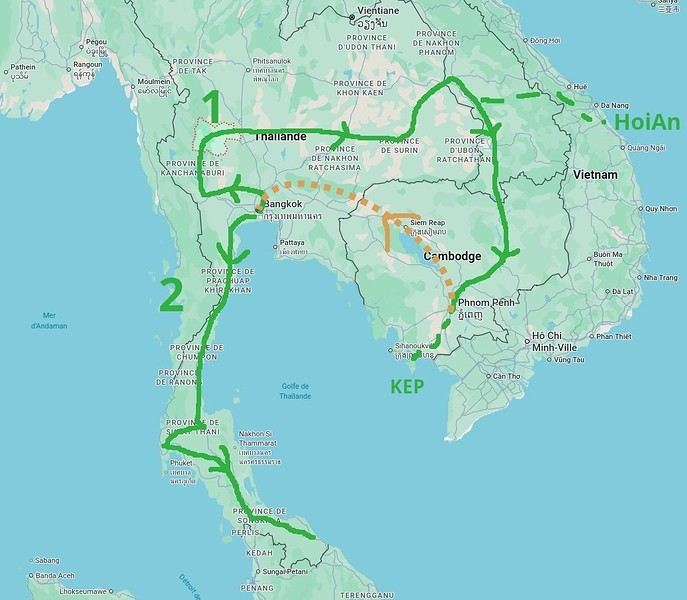
- I’ll start in Bangkok and already have three spots I’ve marked: Ayutthaya, Kanchanaburi, and Uthai Thani (I haven’t been to any of these places yet). - Next, I’d like to cross the country from west to east to reach the Laos border. I’d love suggestions for any interesting stops along this route—I don’t know this part of Thailand at all... - Then I’ll head into Laos, probably at Savannakhet (you can usually get a visa at the border). - > I’m tempted to spend a week in Hoi An, Vietnam, since I loved that city and the area when I visited two years ago. No visa needed for Vietnam now, so it could be a nice little detour. On the map, it doesn’t look too far, but I know you’ve got to be careful with these things, and I’m not sure if it’s a good idea. Any opinions on this? - Back to Laos (maybe via Dakta), and I’ll head south along the Mekong, probably doing the Bolaven Plateau loop that I missed last time. Then Paksé, the 4,000 Islands... I’ve been before, but I’d happily go back. - Crossing into Cambodia, I’ll follow the Mekong down to Phnom Penh (I know this area and love how untouristy it is). From there, I’ll probably spend a few days in Kep (quieter than Kampot). Still undecided, though. - Then back to Thailand (BKK), likely by plane from Phnom Penh since the borders between the two countries are currently closed (plus, let’s be honest, Cambodian roads... ;-). We’ll see how things look when the time comes. - After that, I’d like to explore southern Thailand, taking it slow with short hops. I’ve got my eye on Khao Sok National Park, and I’ve heard good things about Krabi... Again, I don’t know this region well, so any info or tips would be great.
So, I think this should be doable in 2.5 months, especially since I prefer short hops of 300 km max to avoid getting too tired, and I like staying 2-3 days in each place to explore. Plus, I’ll take a week off to relax if I find a spot I love—maybe by the sea for some real downtime.
Thanks for your feedback and for sharing your favorite spots! Pascal
- I’ll start in Bangkok and already have three spots I’ve marked: Ayutthaya, Kanchanaburi, and Uthai Thani (I haven’t been to any of these places yet). - Next, I’d like to cross the country from west to east to reach the Laos border. I’d love suggestions for any interesting stops along this route—I don’t know this part of Thailand at all... - Then I’ll head into Laos, probably at Savannakhet (you can usually get a visa at the border). - > I’m tempted to spend a week in Hoi An, Vietnam, since I loved that city and the area when I visited two years ago. No visa needed for Vietnam now, so it could be a nice little detour. On the map, it doesn’t look too far, but I know you’ve got to be careful with these things, and I’m not sure if it’s a good idea. Any opinions on this? - Back to Laos (maybe via Dakta), and I’ll head south along the Mekong, probably doing the Bolaven Plateau loop that I missed last time. Then Paksé, the 4,000 Islands... I’ve been before, but I’d happily go back. - Crossing into Cambodia, I’ll follow the Mekong down to Phnom Penh (I know this area and love how untouristy it is). From there, I’ll probably spend a few days in Kep (quieter than Kampot). Still undecided, though. - Then back to Thailand (BKK), likely by plane from Phnom Penh since the borders between the two countries are currently closed (plus, let’s be honest, Cambodian roads... ;-). We’ll see how things look when the time comes. - After that, I’d like to explore southern Thailand, taking it slow with short hops. I’ve got my eye on Khao Sok National Park, and I’ve heard good things about Krabi... Again, I don’t know this region well, so any info or tips would be great.
So, I think this should be doable in 2.5 months, especially since I prefer short hops of 300 km max to avoid getting too tired, and I like staying 2-3 days in each place to explore. Plus, I’ll take a week off to relax if I find a spot I love—maybe by the sea for some real downtime.
Thanks for your feedback and for sharing your favorite spots! Pascal
Grand tour of Argentina March 2025
My buddy Christian and I (Patrick) are off for 28 days in Argentina in March.
We’ve already shared several trips as a duo (Bolivia Peru, Namibia, Laos, Costa Rica).
Since we’re starting from the idea that at our age (65) we won’t be coming back here—there are just too many other corners of the world to discover—we did the "grand tour" of Argentina, with 6 domestic flights to make the most of our 28 days.
Here are our stops:
1) Departure from Brussels to Buenos Aires via Madrid
2) Arrival and first contact with Buenos Aires
3) Early morning flight to Ushuaia. Boat trip on the Beagle Channel
4) Ushuaia: hikes in Tierra del Fuego National Park
5) Ushuaia: last hike and flight to El Calafate
6) El Calafate to El Chaltén by bus. First hike
7) El Chaltén: hike
8) El Chaltén: hike
9) El Chaltén: hike and bus back to El Calafate
10) El Calafate: Perito Moreno Glacier
11) Flight to Bariloche. Car rental and surrounding areas
12) Seven Lakes Region
13) Nahuel Huapi National Park region
14) Flight to Salta. Car rental
15) To Tilcara
16) To Humahuaca
17) To Purmamarca
18) To Jujuy via the salt flats
19) To Cafayate
20) Around Cafayate
21) To Cachi
22) Back to Salta
23) Flight to Iguazu
24) Waterfalls on the Argentine side
25) Waterfalls on the Brazilian side and flight to Buenos Aires
26) Buenos Aires
27) Return flight
28) Morning arrival
Happy reading!..
From Bangkok to Krabi, Thailand by Car!
This first trip of 2025 will have the taste of Asia.
More precisely, Thailand!
It’s not my first time—I’ve often traveled across Southeast Asia between 2000 and 2015. (This travel journal, for example...)
But it’ll be my partner’s first steps in this part of the world.
The itinerary we’ve chosen will alternate between familiar sights for me and new discoveries for both of us.
I’ll get to see how the country has changed in 20 years—and what’s stayed the same!
We were torn between the north and the south of the kingdom. Fears of smoke from slash-and-burn farming and a desire to relax on the sand tipped the scales toward the south...
What if we rented a car?
I think driving in sprawling Bangkok would be a bit ambitious, so we’ll only book our vehicle from Hua Hin to return it in Surat Thani.
Other transportation will range from tuk-tuks to overnight trains and ride-hailing services.
And of course, the plane!
I’d love to travel from Auvergne to Bangkok by road, but 15 days wouldn’t be enough...
Plus, the current geopolitical situation isn’t exactly favorable...
So, once again, we’ll be stuck for hours in the less-than-comfortable economy class of Qatar Airways.
The arrival time was on schedule, entry formalities were quick, and all our luggage made it.
We left Lyon in wind and cold—now we’re breathing in the warm, humid air of กรุงเทพมหานคร.
To reach our hotel, we first took the metro, which dropped us off in the city center in about 30 minutes for the incredible price of 1.18 €.
A few taps on the GRAB app, and we booked a ride-hailing service for the last few kilometers.
We waited a while for our driver due to insane traffic in the area, but once in the 4x4, we were at our lodging in no time.
We chose this small hotel for its riverside location, tranquility, and price.
It’ll do the job perfectly—the only downside is the weak breakfast.
The room is inviting, and we collapse onto the bed for a well-deserved short nap.
Wake-up call in an hour for our first visits!
See you soon...
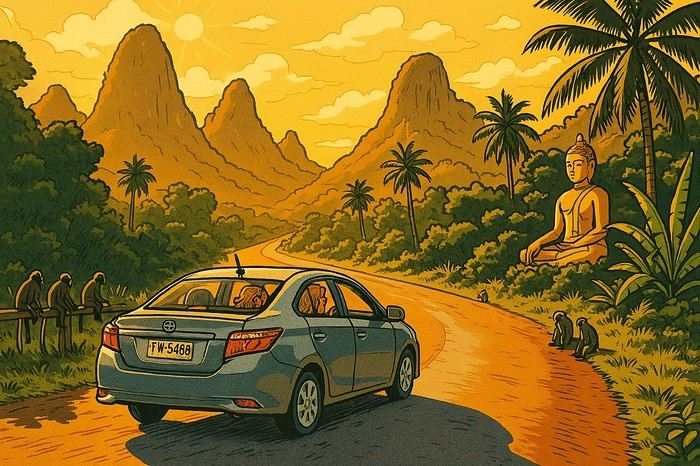
More precisely, Thailand!
It’s not my first time—I’ve often traveled across Southeast Asia between 2000 and 2015. (This travel journal, for example...)
But it’ll be my partner’s first steps in this part of the world.
The itinerary we’ve chosen will alternate between familiar sights for me and new discoveries for both of us.
I’ll get to see how the country has changed in 20 years—and what’s stayed the same!
We were torn between the north and the south of the kingdom. Fears of smoke from slash-and-burn farming and a desire to relax on the sand tipped the scales toward the south...
What if we rented a car?
I think driving in sprawling Bangkok would be a bit ambitious, so we’ll only book our vehicle from Hua Hin to return it in Surat Thani.
Other transportation will range from tuk-tuks to overnight trains and ride-hailing services.
And of course, the plane!
I’d love to travel from Auvergne to Bangkok by road, but 15 days wouldn’t be enough...
Plus, the current geopolitical situation isn’t exactly favorable...
So, once again, we’ll be stuck for hours in the less-than-comfortable economy class of Qatar Airways.
The arrival time was on schedule, entry formalities were quick, and all our luggage made it.
We left Lyon in wind and cold—now we’re breathing in the warm, humid air of กรุงเทพมหานคร.
To reach our hotel, we first took the metro, which dropped us off in the city center in about 30 minutes for the incredible price of 1.18 €.
A few taps on the GRAB app, and we booked a ride-hailing service for the last few kilometers.
We waited a while for our driver due to insane traffic in the area, but once in the 4x4, we were at our lodging in no time.
We chose this small hotel for its riverside location, tranquility, and price.
It’ll do the job perfectly—the only downside is the weak breakfast.
The room is inviting, and we collapse onto the bed for a well-deserved short nap.
Wake-up call in an hour for our first visits!
See you soon...
Back from 4 weeks in northern Laos, November 2023
Hi there,
I’m so glad the VoyageForum is back up. Reading 'Montagnard74’s' Laos trip report (which I read yesterday) made me want to share my own (which I already posted a year ago on another forum).
Here’s a little recap of our 3 weeks in northern Laos, plus a few days in Vientiane.
By the way, we could easily go back to the north—there’s so much to see and do; probably in a few years.
This was our 3rd trip to Laos after having already done:
1st trip in 2012 (3 weeks), a quick overview: Vientiane Vang Vieng Luang Prabang Plain of Jars
2nd trip in 2017 (1 month): Vientiane all the way to the 4,000 Islands via Thakhek, Kong Lor, the Bolaven Plateau, Savannakhet, Pakse...
Our 2023 itinerary (1 month): Vientiane Luang Prabang Muang Ngoi Nong Khiew Luang Namtha Muang Sing Boten Vang Vieng Vientiane
Some general info (2023): For those who’ve already been to Laos: everything has gone up a lot—I think prices have almost doubled for transport, accommodation, meals... everything. But Laos is still a budget-friendly country for us. As a couple, we spent 1,100 € for a month, all included (and we definitely didn’t skimp on massages :)).
Don’t trust the transport signs posted everywhere—at travel agencies, bus terminals, hotels... THEY’RE ALL WRONG (especially the schedules). They haven’t been updated since before Covid.
There are hardly any bikes for rent anymore, but scooters are easy to find everywhere. We switched our mode of transport toward the end of our stay: from bikes to scooters, which let us go farther. In Vientiane, we only saw one bike rental place, near Ong Teu Pagoda.
BCEL bank doesn’t charge a commission on foreign currency exchanges. Using ATMs is expensive due to fees. Outside Laos, Lao kip are basically worthless. There’s so much inflation that I couldn’t find a single bank or exchange office willing to swap the kip we had left. So, don’t exchange too much toward the end of your trip.
Some little tips from our experience (2023): The Muang Koua to Muang Ngoi boat still runs daily. At the dam, you have to get off and take a bus, then get back on the boat.
The boat from Muang Ngoi to Nong Khiew only leaves at 9:30 AM (don’t miss it or you’ll pay a lot for a private boat). From Nong Khiew to Muang Ngoi, there are at least two boats a day.
From Luang Namtha to Muang Sing: 4 to 5 buses a day, the last one leaves around 3:30 PM.
From Luang Namtha or Muang Sing to Nateuy or Boten (to catch the new train): 3 to 5 buses a day.
The new train is really hard to book—it’s often fully booked 48 hours in advance, even the local train (5 hours from Boten to Vientiane instead of 3 hours on the high-speed train). (That makes it tough to travel day by day, which we love... too bad.) For baggage checks: don’t bring anything flammable (sprays...) or sharp. My mosquito repellent (flammable but in a small plastic bottle) got through. Water bottles and a tiny pocketknife are okay. But it seems to depend on the station.
Some guesthouses prefer to be paid in dollars, otherwise the price is much higher.
If you’re entering Laos from Vietnam via Dien Bien Phu, you have to get your visa at the embassy in Hanoi—otherwise, you’ll be refused at the border (no e-visa or visa on arrival).
Apart from Luang Prabang, Vientiane, and Muang Ngoi/Nong Khiew, there are very few tourists.
Some bus prices (in addition to those mentioned in my trip report) (with pick-up) 2023: Luang Prabang to Luang Namtha: 320,000 kip per person, 9h LP to Phonesavan: 250,000 kip per person, 7h LP to Phongsaly: 450,000 kip per person, 13h LP to Huay Xai: 420,000 kip per person, 14h Train Nateuy to Vientiane: 400,000 kip per person LP to Chiang Rai: 780,000 kip per person, 18h LP to Hanoi: 900,000 kip per person, 24h LP to train station: 50,000 kip per person LP to airport: 100,000 kip per person Vientiane from train station: 180,000 kip by taxi
Boats: LP to Pak Beng: 300,000 kip per person, 1 day LP to Houay Xai: 500,000 kip per person, 2 days LP to Pak Ou: 180,000 kip per person, 5h
This was our 3rd trip to Laos after having already done:
1st trip in 2012 (3 weeks), a quick overview: Vientiane Vang Vieng Luang Prabang Plain of Jars
2nd trip in 2017 (1 month): Vientiane all the way to the 4,000 Islands via Thakhek, Kong Lor, the Bolaven Plateau, Savannakhet, Pakse...
Our 2023 itinerary (1 month): Vientiane Luang Prabang Muang Ngoi Nong Khiew Luang Namtha Muang Sing Boten Vang Vieng Vientiane
Some general info (2023): For those who’ve already been to Laos: everything has gone up a lot—I think prices have almost doubled for transport, accommodation, meals... everything. But Laos is still a budget-friendly country for us. As a couple, we spent 1,100 € for a month, all included (and we definitely didn’t skimp on massages :)).
Don’t trust the transport signs posted everywhere—at travel agencies, bus terminals, hotels... THEY’RE ALL WRONG (especially the schedules). They haven’t been updated since before Covid.
There are hardly any bikes for rent anymore, but scooters are easy to find everywhere. We switched our mode of transport toward the end of our stay: from bikes to scooters, which let us go farther. In Vientiane, we only saw one bike rental place, near Ong Teu Pagoda.
BCEL bank doesn’t charge a commission on foreign currency exchanges. Using ATMs is expensive due to fees. Outside Laos, Lao kip are basically worthless. There’s so much inflation that I couldn’t find a single bank or exchange office willing to swap the kip we had left. So, don’t exchange too much toward the end of your trip.
Some little tips from our experience (2023): The Muang Koua to Muang Ngoi boat still runs daily. At the dam, you have to get off and take a bus, then get back on the boat.
The boat from Muang Ngoi to Nong Khiew only leaves at 9:30 AM (don’t miss it or you’ll pay a lot for a private boat). From Nong Khiew to Muang Ngoi, there are at least two boats a day.
From Luang Namtha to Muang Sing: 4 to 5 buses a day, the last one leaves around 3:30 PM.
From Luang Namtha or Muang Sing to Nateuy or Boten (to catch the new train): 3 to 5 buses a day.
The new train is really hard to book—it’s often fully booked 48 hours in advance, even the local train (5 hours from Boten to Vientiane instead of 3 hours on the high-speed train). (That makes it tough to travel day by day, which we love... too bad.) For baggage checks: don’t bring anything flammable (sprays...) or sharp. My mosquito repellent (flammable but in a small plastic bottle) got through. Water bottles and a tiny pocketknife are okay. But it seems to depend on the station.
Some guesthouses prefer to be paid in dollars, otherwise the price is much higher.
If you’re entering Laos from Vietnam via Dien Bien Phu, you have to get your visa at the embassy in Hanoi—otherwise, you’ll be refused at the border (no e-visa or visa on arrival).
Apart from Luang Prabang, Vientiane, and Muang Ngoi/Nong Khiew, there are very few tourists.
Some bus prices (in addition to those mentioned in my trip report) (with pick-up) 2023: Luang Prabang to Luang Namtha: 320,000 kip per person, 9h LP to Phonesavan: 250,000 kip per person, 7h LP to Phongsaly: 450,000 kip per person, 13h LP to Huay Xai: 420,000 kip per person, 14h Train Nateuy to Vientiane: 400,000 kip per person LP to Chiang Rai: 780,000 kip per person, 18h LP to Hanoi: 900,000 kip per person, 24h LP to train station: 50,000 kip per person LP to airport: 100,000 kip per person Vientiane from train station: 180,000 kip by taxi
Boats: LP to Pak Beng: 300,000 kip per person, 1 day LP to Houay Xai: 500,000 kip per person, 2 days LP to Pak Ou: 180,000 kip per person, 5h
Luang Prabang, Nong Khiaw, and Muang Ngoi (Laos) – Trip Report
Arrival at Luang Prabang Airport: Got my visa on the spot in under 5 minutes, but it cost me $40 + $1 for some "processing fee" and a photo.
First ATM withdrawal of the maximum allowed—about 82 €! Luckily, I had euros on me because each withdrawal comes with a fixed fee of 30,000 kips (like in Thailand, where it’s 200 baht per withdrawal, but here you can take out up to 800 €!).
Then I took the airport taxi service for 100,000 kips per person. It’s a minivan that drops passengers (8–10) at their hotels. The ticket booth is right at the exit—easy to spot with a sign that says "Taxi Service."
I left Luang Prabang for Nong Khiaw by minivan, paying 180,000 kips. A big tuk-tuk taxi picked us up at the hotel at 8:40 AM, and we picked up more people along the way until we reached a small minivan station. Our "minivan" was *very* mini—we still managed to squeeze in 12 people, with 2 up front + the driver, even though there wasn’t really space for 2 full seats—more like 1.5! Luggage was strapped to the roof under a tarp for the trip. Scheduled to leave at 9 AM, we finally took off at 9:30. The ride took 4 hours and 15 minutes from station to station—roads were rough, sometimes unpaved, and always full of potholes. This route is mostly used by trucks registered in China. We passed the dam that now blocks boat traffic between Luang Prabang and Nong Khiaw. About 40 km from Nong Khiaw, we turned off the main road onto a smaller one, less crowded with trucks but still rough. At the Nong Khiaw bus station, a shared taxi was waiting to drop everyone off at their hotels. I walked to mine—the Nam Ou View Villa, about 600 meters from the station. Nice room with a great view of the river.
Nong Khiaw is easy to explore on foot. One unpaved road runs along the river, lined with hotels and restaurants with terraces, while a parallel paved road has little traffic and all the shops. I loved the vibe and tranquility of the town. There are plenty of guesthouses, especially on the other side of the bridge. Restaurants everywhere, all in a calm atmosphere. I hiked up to the highest viewpoint—there are several. The climb is supposed to take 1.5 hours, but it took me 2. Time to enjoy the nature and catch my breath! No real difficulty, just a *lot* of uphill. There’s a small toll at the start of the climb—I don’t remember the exact amount, but it wasn’t expensive. The view at the top is stunning—360°! Mornings are cloudy, midday is usually clear, and evenings are all about the sunset ☀️. The descent was tougher for me—guaranteed sore muscles!
I also walked along the Nam Ou toward Muang Ngoi. The road is quiet and unpaved but often narrow with no views. Small villages along the way. In town, you can rent canoes, and agencies offer day trips or multi-day excursions. There are shops, a bank, and 2 ATMs.
Departure for Muang Ngoi—a village only accessible by private or public boat. I took the 11:30 AM public boat (sold as 11 AM) for 70,000 kips. There were so many of us that two boats were needed, and we were still packed in! We left 40 minutes late because the ticket collector didn’t check anything, and one ticket was missing. Of course, everyone insisted they’d paid—which was probably true, given the general disorganization. The trip took 1 hour and 5 minutes, going upstream against the current. Gorgeous.
Arriving at Muang Ngoi’s tiny dock, hotel owners were waiting for their guests or offering rooms to those without reservations. I’d booked the Riverview Bungalows & GH. The room was a bit worn but comfortable, and the view was amazing!
Muang Ngoi has ONE recently paved main street—all other paths are red dirt and dusty, perfect for unguided day hikes. I *loved* this village. People live their lives without worrying much about tourists, who aren’t too numerous yet. There’s no bank or ATM, and dollars are accepted (even preferred) for transport and hotels. Watch the condition of your bills—the hotelier refused one with a tiny stain I hadn’t even noticed! There are travel agencies for excursions, small shops... I often ate at Gecko (Western food, I admit) and across the street at Vita, which serves a delicious local dish called *Suzy*—a curry-like specialty. From Muang Ngoi, there are plenty of easy hikes. The trails are simple to find and follow, except for those crossing rice fields. Maps.Me helped me stay on track.
If you don’t want to walk, there are very local transport options: modified tractors with platforms for passengers and luggage. I took an excursion to Sopchem, a small village 40 minutes away by boat. I paid $20 round-trip for two people on a private boat. The ride was stunning—the river cuts through mountains in this section. Sopchem is tiny but charming, especially for buying textiles. Every house has a loom out front and a display selling their work. I bought two scarves for 60,000 kips each without bargaining—it seemed like a steal. Back in Luang Prabang, I saw the same scarves in a fancy boutique for 55,000 kips each—9 or 10 times the price!!!!
I also tried the village laundry service—everywhere lists the price as 25,000 kips per kilo. I picked the closest one to my hotel and watched from my balcony as the woman washed my clothes in the river, then hung them on her fence all day in the dust! Turns out only hotels have washing machines. Better to postpone laundry or do it yourself—my clothes didn’t smell great afterward!
For the return to Luang Prabang, I splurged on a private transfer. An agency at the dock arranged it for $100. I took the public boat to Nong Khiaw, where a driver was waiting. His vehicle was a pickup truck, and the trip took 4 hours total to my hotel in the city center. I recommend this agency (Lattanavongsa Tour Adventure)—very professional. They also run a hotel (same name) that looked nice from the outside, though not riverfront.
In Luang Prabang, I did the Mekong sunset cruise. Departed at 4:30 PM with Sasa Sunset Cruise for 245,000 kips, including one drink and spring rolls. I was lucky to see a beautiful sunset—I don’t regret it. I also visited the tiny Traditional Arts and Ethnology Centre—very interesting for learning about Laos’ ethnic groups and textile traditions, but *very* small. Of course, I visited the temples and wandered the alleys to admire the stunning houses. The sunset at Mount Phousi was nice, but *so* crowded! The night market is fun but not super interesting—vendors sell pretty much the same things you’ll find in daytime shops at the same prices. There are two food courts, one huge at the end of the market. I love the concept, but the quality of the stalls is debatable.
Luang Prabang The morning alms-giving ceremony for monks is called *Tak Bat*. This ritual has turned into a circus for Chinese tourists. I’d visited Luang Prabang 15 years ago and didn’t find the same serenity in the ceremony. In Luang Prabang, I exchanged euros at BFL BRED Bank (recommended in the *Routard* guide). Good rates and a smooth transaction. The employee spoke excellent French and offered me deals on the Sasa sunset cruise (with dinner) and a taxi to the airport. I took her up on the taxi—it was much cheaper. She explained that she works evenings at Sasa Sunset Cruise and the taxi driver is her husband.
Hope this gives you some practical tips for your next trip!
I left Luang Prabang for Nong Khiaw by minivan, paying 180,000 kips. A big tuk-tuk taxi picked us up at the hotel at 8:40 AM, and we picked up more people along the way until we reached a small minivan station. Our "minivan" was *very* mini—we still managed to squeeze in 12 people, with 2 up front + the driver, even though there wasn’t really space for 2 full seats—more like 1.5! Luggage was strapped to the roof under a tarp for the trip. Scheduled to leave at 9 AM, we finally took off at 9:30. The ride took 4 hours and 15 minutes from station to station—roads were rough, sometimes unpaved, and always full of potholes. This route is mostly used by trucks registered in China. We passed the dam that now blocks boat traffic between Luang Prabang and Nong Khiaw. About 40 km from Nong Khiaw, we turned off the main road onto a smaller one, less crowded with trucks but still rough. At the Nong Khiaw bus station, a shared taxi was waiting to drop everyone off at their hotels. I walked to mine—the Nam Ou View Villa, about 600 meters from the station. Nice room with a great view of the river.
Nong Khiaw is easy to explore on foot. One unpaved road runs along the river, lined with hotels and restaurants with terraces, while a parallel paved road has little traffic and all the shops. I loved the vibe and tranquility of the town. There are plenty of guesthouses, especially on the other side of the bridge. Restaurants everywhere, all in a calm atmosphere. I hiked up to the highest viewpoint—there are several. The climb is supposed to take 1.5 hours, but it took me 2. Time to enjoy the nature and catch my breath! No real difficulty, just a *lot* of uphill. There’s a small toll at the start of the climb—I don’t remember the exact amount, but it wasn’t expensive. The view at the top is stunning—360°! Mornings are cloudy, midday is usually clear, and evenings are all about the sunset ☀️. The descent was tougher for me—guaranteed sore muscles!
I also walked along the Nam Ou toward Muang Ngoi. The road is quiet and unpaved but often narrow with no views. Small villages along the way. In town, you can rent canoes, and agencies offer day trips or multi-day excursions. There are shops, a bank, and 2 ATMs.
Departure for Muang Ngoi—a village only accessible by private or public boat. I took the 11:30 AM public boat (sold as 11 AM) for 70,000 kips. There were so many of us that two boats were needed, and we were still packed in! We left 40 minutes late because the ticket collector didn’t check anything, and one ticket was missing. Of course, everyone insisted they’d paid—which was probably true, given the general disorganization. The trip took 1 hour and 5 minutes, going upstream against the current. Gorgeous.
Arriving at Muang Ngoi’s tiny dock, hotel owners were waiting for their guests or offering rooms to those without reservations. I’d booked the Riverview Bungalows & GH. The room was a bit worn but comfortable, and the view was amazing!
Muang Ngoi has ONE recently paved main street—all other paths are red dirt and dusty, perfect for unguided day hikes. I *loved* this village. People live their lives without worrying much about tourists, who aren’t too numerous yet. There’s no bank or ATM, and dollars are accepted (even preferred) for transport and hotels. Watch the condition of your bills—the hotelier refused one with a tiny stain I hadn’t even noticed! There are travel agencies for excursions, small shops... I often ate at Gecko (Western food, I admit) and across the street at Vita, which serves a delicious local dish called *Suzy*—a curry-like specialty. From Muang Ngoi, there are plenty of easy hikes. The trails are simple to find and follow, except for those crossing rice fields. Maps.Me helped me stay on track.
If you don’t want to walk, there are very local transport options: modified tractors with platforms for passengers and luggage. I took an excursion to Sopchem, a small village 40 minutes away by boat. I paid $20 round-trip for two people on a private boat. The ride was stunning—the river cuts through mountains in this section. Sopchem is tiny but charming, especially for buying textiles. Every house has a loom out front and a display selling their work. I bought two scarves for 60,000 kips each without bargaining—it seemed like a steal. Back in Luang Prabang, I saw the same scarves in a fancy boutique for 55,000 kips each—9 or 10 times the price!!!!
I also tried the village laundry service—everywhere lists the price as 25,000 kips per kilo. I picked the closest one to my hotel and watched from my balcony as the woman washed my clothes in the river, then hung them on her fence all day in the dust! Turns out only hotels have washing machines. Better to postpone laundry or do it yourself—my clothes didn’t smell great afterward!
For the return to Luang Prabang, I splurged on a private transfer. An agency at the dock arranged it for $100. I took the public boat to Nong Khiaw, where a driver was waiting. His vehicle was a pickup truck, and the trip took 4 hours total to my hotel in the city center. I recommend this agency (Lattanavongsa Tour Adventure)—very professional. They also run a hotel (same name) that looked nice from the outside, though not riverfront.
In Luang Prabang, I did the Mekong sunset cruise. Departed at 4:30 PM with Sasa Sunset Cruise for 245,000 kips, including one drink and spring rolls. I was lucky to see a beautiful sunset—I don’t regret it. I also visited the tiny Traditional Arts and Ethnology Centre—very interesting for learning about Laos’ ethnic groups and textile traditions, but *very* small. Of course, I visited the temples and wandered the alleys to admire the stunning houses. The sunset at Mount Phousi was nice, but *so* crowded! The night market is fun but not super interesting—vendors sell pretty much the same things you’ll find in daytime shops at the same prices. There are two food courts, one huge at the end of the market. I love the concept, but the quality of the stalls is debatable.
Luang Prabang The morning alms-giving ceremony for monks is called *Tak Bat*. This ritual has turned into a circus for Chinese tourists. I’d visited Luang Prabang 15 years ago and didn’t find the same serenity in the ceremony. In Luang Prabang, I exchanged euros at BFL BRED Bank (recommended in the *Routard* guide). Good rates and a smooth transaction. The employee spoke excellent French and offered me deals on the Sasa sunset cruise (with dinner) and a taxi to the airport. I took her up on the taxi—it was much cheaper. She explained that she works evenings at Sasa Sunset Cruise and the taxi driver is her husband.
Hope this gives you some practical tips for your next trip!
Da Nang and Hoi An (Vietnam)
DANANG
A big city in the midst of an economic boom. The setting is stunning, with its large bay, the Son Tra Peninsula, and the Annamite Mountains on the horizon.
Where to stay and eat? Da Nang is a bustling business hub, so hotels are pricier and often fully booked. I was lucky to find a motorbike taxi driver who, after six full hotels, took me to Mai Son Hotel, 113 Nguyen Van Linh, a spotless 2-star place. Plus, right next door, there’s a great restaurant that seems popular with locals, and a good Chinese restaurant just a 5-minute walk away, Phi Lu (178 Nguyen Van Linh), recommended by the *Guide du Routard*. So, I’d definitely recommend this hotel. For a pricier option, the very Christian Dai A Hotel, near the tiny pink cathedral, is nice, but why pay more?
Actually, why stay in Da Nang when the gorgeous Hoi An is just 34 km to the south?
What to see? - The lovely Cham Museum (small, takes at most an hour) - The climb up Son Tra Peninsula (great views of the whole area) - The “tour” of the peninsula—quotation marks because the road stops two-thirds of the way. There’s an interesting little museum on the left before reaching the base of the huge statue, the Đong Đinh (large entrance on the left side of the hill), with traditional houses in the jungle holding artifacts over 2,000 years old (Sa Huynh culture; if you’re interested, check out the small Sa Huynh Museum in Hoi An, just before the Japanese Bridge). However, the big Linh Ung Pagoda is just colorful concrete! A beautiful resort, the Son Tra Beach Resort and Spa, sits on a pristine beach and isn’t too expensive: $120 for a garden room and $200–$270 for duplexes with a pool, where you can sleep six. Before reaching the resort, you’ll find two excellent seafood restaurants with large beachfront terraces on your right. - On the way to Hoi An, Marble Mountain, where I loved the village of marble sculpture workshops, the pretty pagodas and caves, and the stunning view from the top of the last promontory (the stairs are steep!). However, you can skip the famous China Beach and its resorts—all pretentious and expensive, not to mention the ones under construction on both sides of the road (they’re multiplying like crazy!). So, when traveling from Da Nang to Hoi An, I recommend two stops: the Cham Museum and Marble Mountain. - The beautiful drive to the Hai Van Pass (there weren’t any clouds!), offering spectacular views of the Da Nang region to the south and the coast to the north. The descent leads to the fishing village and beach of Lang Co, which is lovely but destined for rampant resort development, judging by the huge projects advertised on billboards along the road after the village. - Some affordable guesthouses ($15) and big resorts, including the lovely Lang Co Beach Resort, with a large pool and great value given the beautiful gardens and elegant bungalows. Recommended in Lang Co: lunch at one of the two stilt restaurants over the lagoon—great views and fresh seafood.
The public bus to Hoi An, 34 km south of Da Nang, takes 45 minutes for 50,000 dong. There’s one every half hour.
HOI AN This is a “must-see” for so many reasons: stunning old houses, temples, and pagodas; a colorful daily open-air and covered market near the bridge; charming little streets in the old quarter—especially at night, with all the multicolored lanterns and riverside restaurant terraces, it’s very romantic. The local food is delicious, the people are friendly and kind, there are two beautiful beaches, and attractions like the Cham ruins of My Son. Some say Hoi An is overrun with tourists and should be avoided. That’s true for the historic center and An Bang Beach, but not at all once you step outside.
WHERE TO STAY For a 2-star option, I recommend Ngo House Villa (99 Nguyen Phuc Tan St), very quiet on the island just across from the Old Quarter: 3-star rooms + suites, a large “Family” room, and a nice pool, all for $20 ($40 for the “Family” room). The same charming owner has a second hotel 20 meters away (No. 74), Phan Ngô, which is older but has a large terrace and a small pool—I prefer this one. For 3 stars, Thuy Duong 3 (92 Ba Trieu) is perfect, with a pool and garden ($40–$60). A bit pricier but great is A Han on Phan Bai Chau, with a large garden and terrace restaurant.
For those with a bigger budget, I recommend two riverside spots with rooms, suites, and pools, priced at $200–$350: the secluded Coco River Resort (formerly Ancient House River, with a large wooden terrace for romantic dinners by the river) and Anantara, (formerly Heritage), with bungalows close to the old town—but pricey.
Outside the city, my favorite hotel is Villa Loan, the new place from the famous Loan of Tam Coc, very quiet in the countryside, 15 minutes by bike from Old Hoi An and An Bang Beach. Beautiful rooms ($35), a Family room with two double beds ($55), two 65 m² twins that can sleep six (two large beds + two single beds—$80), a terrace restaurant, and a lovely pool. Prices include a buffet breakfast and a bike.
Also great is Daisy Anbang on An Bang Beach, elegant with a pool and beach just 50 meters away (skip the Aira next door—too expensive).
WHERE TO EAT Hoi An is Vietnam’s culinary capital. For Vietnamese food, I recommend Dao Tien, 21 Phan Bai Chau. No surprise—the chef is a former chef at the luxury 4-star Victoria Hoi An, a solid reference. The restaurant now has a beautiful terrace by the river (take the alley on the right side of the main street Dao Tien). Plus, you’re doing a good deed: a large part of the profits goes toward educating underprivileged children—one year of free hospitality, cooking, and English training, followed by job placement in local establishments. Madame Hien Hoi An (formerly Co Mai), 2 Nguyen Thai Hoc (left of the market), is another great spot—the chef is Didier Corlou, formerly of the famous *Porte d’Annam* and *Madame Hien* in Hanoi (closed in March 2022 due to COVID, so foreign tourists are still scarce). Also worth checking out is Secret Garden, in the Phuong Minh An alley (entrance at 60 Le Loi), set in a beautiful space. One of my favorites is Madam Kieu, 43 Nguyen Phuc Chu, right on the river across from the little bridge—very elegant with excellent Vietnamese cuisine. Unfortunately, all the restaurants on this esplanade blast “music” (boom boom boom yeah yeah yeah) in the evenings, so it’s impossible to talk—go for lunch instead.
For a break from Vietnamese food, try Good Morning Vietnam, a ridiculous name for an excellent Italian restaurant (11 Le Loi). The cheerful chef is from Bologna, the “Lyon of Italy”: lasagna like an Italian *mama*’s, delicious tagliatelle ai porcini (porcini mushrooms imported from Italy), and a divine homemade tiramisu (pro tip: order a grappa and drizzle a few drops on the tiramisu). It’s also one of the few places where you can get an excellent bottle of red wine for 350,000 dong instead of the usual 600,000–800,000 dong (South African Robertson Chapel). Another gem: the Japanese restaurant Samurai Kitchen (no sushi, but divine gyoza), 21 Phan Chau Trinh—the street on the right side of the market when you turn your back to the river. Finally, Ganesh, which I consider the best Indian restaurant in Vietnam (99 Tran Hung Dao St).
At An Bang, there are plenty of beachfront restaurants. The two best are the large one at the far right of the parking lot (huge seafood selection) and the fantastic La Luna d’Autumno, owned by the same person as the Italian restaurant of the same name, once considered the best in Vietnam but closed in 2020 due to COVID. Divine pizzas, including the vegetariana.
WHAT TO VISIT The Japanese Bridge and all the old Chinese houses, temples, and pagodas in the three historic streets. Don’t miss the extraordinary gallery-museum of the great French photographer Réhahn, the Precious Heritage Museum at 26 Phan Boi Chau. His remarkable photo collection—including the famous shot of the little Cham girl with clear blue eyes—has graced the covers of many magazines. His Montagnard Museum is a wonder, with a larger collection of tribal women’s costumes than the Museum of Ethnology in Hanoi. Free entry.
THE BEACHES Cua Dai Beach has mostly disappeared, a victim of the waves, except in a few spots. The beautiful An Bang Beach remains, with great beachfront restaurants, or you can head to Cham Island.
MY SON A beautiful complex of Cham ruins surrounded by mountains, 50 km southwest of Hoi An via a scenic road. You can rent a motorbike, take a motorbike taxi, or join a half-day organized tour. It’s best to go in the afternoon—less crowded than in the morning.
CHAM ISLANDS (Cu Lao Cham) Wow, I loved it! It reminded me of St. Barts 35 years ago. The archipelago, 19 km from Hoi An, consists of eight small islands within the Cu Lao Cham Marine Reserve, declared a “Biosphere Reserve” by UNESCO. The largest and only inhabited island, Hon Lao (Pearl Island), covers 1,317 hectares, and its highest peak reaches 517 meters. Hon Lao has two villages: Bai Lang, where the boats from Hoi An dock, and the charming little fishing port of Bai Huong. Part of the island is a military zone, so only the east coast is accessible to tourists.
To get there, you have three options: - The public boat (100,000 dong) that leaves from in front of Café des Amis at 7:30 AM. The catch is it returns to Hoi An at noon, so to enjoy the charm of the place, you’ll need to spend a night on the island (which I highly recommend). - Organized tours by Cham Diving Club, with two options: diving or snorkeling only. - A private speedboat, but it’s not cheap: $200 for the day!
Note: Even if the weather seems fine, the large public boat won’t leave if the sea is too rough. The only solution is to go to the port around 7:30 AM and check (easy, since it brings all the supplies for the island’s locals—if it’s leaving, it’ll be loading up). Avoid weekends—it gets swarmed with locals.
Small coves with dreamy beaches, as they say. Two are very close to Bai Lang: one to the left (facing the village), Bai Ong, lined with restaurants, and a tiny one to the right of the village. The other two beaches, including Bai Chong and the little fishing port of Bai Huong, are accessible by motorbike or boat. I recommend renting a motorbike (biking is tough due to steep hills) and taking the road that overlooks the coast—it’s stunning.
Great diving. The Cham Diving Club is superbly organized by a very friendly Italian, Lodovico, and two French guys (www.chamislanddiving.com).
When you arrive at Bai Lang’s pier, they’ll offer you TWO family-run guesthouses in the village. There are also homestays, but they’re really basic (usually bamboo mats on wooden planks as beds), no English or French is spoken, and locals speak a dialect that’s hard to understand even if you’re decent at Vietnamese. Anyway, I don’t recommend staying in Bai Lang because of the public loudspeakers. Two options if you want a quiet night: - A small guesthouse facing the tiny rice field on the way to Bai Ong Beach. Very clean rooms and a large terrace overlooking the “rice field.” 300,000 dong, with meals available on the terrace. Nha Nghi Vu Truong Tel: 235 386 4783 Mobile: 01 67 76 63 110. - Homestays in the little fishing port of Bai Huong.
Where to stay and eat? Da Nang is a bustling business hub, so hotels are pricier and often fully booked. I was lucky to find a motorbike taxi driver who, after six full hotels, took me to Mai Son Hotel, 113 Nguyen Van Linh, a spotless 2-star place. Plus, right next door, there’s a great restaurant that seems popular with locals, and a good Chinese restaurant just a 5-minute walk away, Phi Lu (178 Nguyen Van Linh), recommended by the *Guide du Routard*. So, I’d definitely recommend this hotel. For a pricier option, the very Christian Dai A Hotel, near the tiny pink cathedral, is nice, but why pay more?
Actually, why stay in Da Nang when the gorgeous Hoi An is just 34 km to the south?
What to see? - The lovely Cham Museum (small, takes at most an hour) - The climb up Son Tra Peninsula (great views of the whole area) - The “tour” of the peninsula—quotation marks because the road stops two-thirds of the way. There’s an interesting little museum on the left before reaching the base of the huge statue, the Đong Đinh (large entrance on the left side of the hill), with traditional houses in the jungle holding artifacts over 2,000 years old (Sa Huynh culture; if you’re interested, check out the small Sa Huynh Museum in Hoi An, just before the Japanese Bridge). However, the big Linh Ung Pagoda is just colorful concrete! A beautiful resort, the Son Tra Beach Resort and Spa, sits on a pristine beach and isn’t too expensive: $120 for a garden room and $200–$270 for duplexes with a pool, where you can sleep six. Before reaching the resort, you’ll find two excellent seafood restaurants with large beachfront terraces on your right. - On the way to Hoi An, Marble Mountain, where I loved the village of marble sculpture workshops, the pretty pagodas and caves, and the stunning view from the top of the last promontory (the stairs are steep!). However, you can skip the famous China Beach and its resorts—all pretentious and expensive, not to mention the ones under construction on both sides of the road (they’re multiplying like crazy!). So, when traveling from Da Nang to Hoi An, I recommend two stops: the Cham Museum and Marble Mountain. - The beautiful drive to the Hai Van Pass (there weren’t any clouds!), offering spectacular views of the Da Nang region to the south and the coast to the north. The descent leads to the fishing village and beach of Lang Co, which is lovely but destined for rampant resort development, judging by the huge projects advertised on billboards along the road after the village. - Some affordable guesthouses ($15) and big resorts, including the lovely Lang Co Beach Resort, with a large pool and great value given the beautiful gardens and elegant bungalows. Recommended in Lang Co: lunch at one of the two stilt restaurants over the lagoon—great views and fresh seafood.
The public bus to Hoi An, 34 km south of Da Nang, takes 45 minutes for 50,000 dong. There’s one every half hour.
HOI AN This is a “must-see” for so many reasons: stunning old houses, temples, and pagodas; a colorful daily open-air and covered market near the bridge; charming little streets in the old quarter—especially at night, with all the multicolored lanterns and riverside restaurant terraces, it’s very romantic. The local food is delicious, the people are friendly and kind, there are two beautiful beaches, and attractions like the Cham ruins of My Son. Some say Hoi An is overrun with tourists and should be avoided. That’s true for the historic center and An Bang Beach, but not at all once you step outside.
WHERE TO STAY For a 2-star option, I recommend Ngo House Villa (99 Nguyen Phuc Tan St), very quiet on the island just across from the Old Quarter: 3-star rooms + suites, a large “Family” room, and a nice pool, all for $20 ($40 for the “Family” room). The same charming owner has a second hotel 20 meters away (No. 74), Phan Ngô, which is older but has a large terrace and a small pool—I prefer this one. For 3 stars, Thuy Duong 3 (92 Ba Trieu) is perfect, with a pool and garden ($40–$60). A bit pricier but great is A Han on Phan Bai Chau, with a large garden and terrace restaurant.
For those with a bigger budget, I recommend two riverside spots with rooms, suites, and pools, priced at $200–$350: the secluded Coco River Resort (formerly Ancient House River, with a large wooden terrace for romantic dinners by the river) and Anantara, (formerly Heritage), with bungalows close to the old town—but pricey.
Outside the city, my favorite hotel is Villa Loan, the new place from the famous Loan of Tam Coc, very quiet in the countryside, 15 minutes by bike from Old Hoi An and An Bang Beach. Beautiful rooms ($35), a Family room with two double beds ($55), two 65 m² twins that can sleep six (two large beds + two single beds—$80), a terrace restaurant, and a lovely pool. Prices include a buffet breakfast and a bike.
Also great is Daisy Anbang on An Bang Beach, elegant with a pool and beach just 50 meters away (skip the Aira next door—too expensive).
WHERE TO EAT Hoi An is Vietnam’s culinary capital. For Vietnamese food, I recommend Dao Tien, 21 Phan Bai Chau. No surprise—the chef is a former chef at the luxury 4-star Victoria Hoi An, a solid reference. The restaurant now has a beautiful terrace by the river (take the alley on the right side of the main street Dao Tien). Plus, you’re doing a good deed: a large part of the profits goes toward educating underprivileged children—one year of free hospitality, cooking, and English training, followed by job placement in local establishments. Madame Hien Hoi An (formerly Co Mai), 2 Nguyen Thai Hoc (left of the market), is another great spot—the chef is Didier Corlou, formerly of the famous *Porte d’Annam* and *Madame Hien* in Hanoi (closed in March 2022 due to COVID, so foreign tourists are still scarce). Also worth checking out is Secret Garden, in the Phuong Minh An alley (entrance at 60 Le Loi), set in a beautiful space. One of my favorites is Madam Kieu, 43 Nguyen Phuc Chu, right on the river across from the little bridge—very elegant with excellent Vietnamese cuisine. Unfortunately, all the restaurants on this esplanade blast “music” (boom boom boom yeah yeah yeah) in the evenings, so it’s impossible to talk—go for lunch instead.
For a break from Vietnamese food, try Good Morning Vietnam, a ridiculous name for an excellent Italian restaurant (11 Le Loi). The cheerful chef is from Bologna, the “Lyon of Italy”: lasagna like an Italian *mama*’s, delicious tagliatelle ai porcini (porcini mushrooms imported from Italy), and a divine homemade tiramisu (pro tip: order a grappa and drizzle a few drops on the tiramisu). It’s also one of the few places where you can get an excellent bottle of red wine for 350,000 dong instead of the usual 600,000–800,000 dong (South African Robertson Chapel). Another gem: the Japanese restaurant Samurai Kitchen (no sushi, but divine gyoza), 21 Phan Chau Trinh—the street on the right side of the market when you turn your back to the river. Finally, Ganesh, which I consider the best Indian restaurant in Vietnam (99 Tran Hung Dao St).
At An Bang, there are plenty of beachfront restaurants. The two best are the large one at the far right of the parking lot (huge seafood selection) and the fantastic La Luna d’Autumno, owned by the same person as the Italian restaurant of the same name, once considered the best in Vietnam but closed in 2020 due to COVID. Divine pizzas, including the vegetariana.
WHAT TO VISIT The Japanese Bridge and all the old Chinese houses, temples, and pagodas in the three historic streets. Don’t miss the extraordinary gallery-museum of the great French photographer Réhahn, the Precious Heritage Museum at 26 Phan Boi Chau. His remarkable photo collection—including the famous shot of the little Cham girl with clear blue eyes—has graced the covers of many magazines. His Montagnard Museum is a wonder, with a larger collection of tribal women’s costumes than the Museum of Ethnology in Hanoi. Free entry.
THE BEACHES Cua Dai Beach has mostly disappeared, a victim of the waves, except in a few spots. The beautiful An Bang Beach remains, with great beachfront restaurants, or you can head to Cham Island.
MY SON A beautiful complex of Cham ruins surrounded by mountains, 50 km southwest of Hoi An via a scenic road. You can rent a motorbike, take a motorbike taxi, or join a half-day organized tour. It’s best to go in the afternoon—less crowded than in the morning.
CHAM ISLANDS (Cu Lao Cham) Wow, I loved it! It reminded me of St. Barts 35 years ago. The archipelago, 19 km from Hoi An, consists of eight small islands within the Cu Lao Cham Marine Reserve, declared a “Biosphere Reserve” by UNESCO. The largest and only inhabited island, Hon Lao (Pearl Island), covers 1,317 hectares, and its highest peak reaches 517 meters. Hon Lao has two villages: Bai Lang, where the boats from Hoi An dock, and the charming little fishing port of Bai Huong. Part of the island is a military zone, so only the east coast is accessible to tourists.
To get there, you have three options: - The public boat (100,000 dong) that leaves from in front of Café des Amis at 7:30 AM. The catch is it returns to Hoi An at noon, so to enjoy the charm of the place, you’ll need to spend a night on the island (which I highly recommend). - Organized tours by Cham Diving Club, with two options: diving or snorkeling only. - A private speedboat, but it’s not cheap: $200 for the day!
Note: Even if the weather seems fine, the large public boat won’t leave if the sea is too rough. The only solution is to go to the port around 7:30 AM and check (easy, since it brings all the supplies for the island’s locals—if it’s leaving, it’ll be loading up). Avoid weekends—it gets swarmed with locals.
Small coves with dreamy beaches, as they say. Two are very close to Bai Lang: one to the left (facing the village), Bai Ong, lined with restaurants, and a tiny one to the right of the village. The other two beaches, including Bai Chong and the little fishing port of Bai Huong, are accessible by motorbike or boat. I recommend renting a motorbike (biking is tough due to steep hills) and taking the road that overlooks the coast—it’s stunning.
Great diving. The Cham Diving Club is superbly organized by a very friendly Italian, Lodovico, and two French guys (www.chamislanddiving.com).
When you arrive at Bai Lang’s pier, they’ll offer you TWO family-run guesthouses in the village. There are also homestays, but they’re really basic (usually bamboo mats on wooden planks as beds), no English or French is spoken, and locals speak a dialect that’s hard to understand even if you’re decent at Vietnamese. Anyway, I don’t recommend staying in Bai Lang because of the public loudspeakers. Two options if you want a quiet night: - A small guesthouse facing the tiny rice field on the way to Bai Ong Beach. Very clean rooms and a large terrace overlooking the “rice field.” 300,000 dong, with meals available on the terrace. Nha Nghi Vu Truong Tel: 235 386 4783 Mobile: 01 67 76 63 110. - Homestays in the little fishing port of Bai Huong.
A Month in Laos and Cambodia
Hello everyone,
At the start of November, a bit of rest before winter will be perfect to kick off this travel journal. There aren’t many recent journals about this part of the world, so I’ll take the plunge—my way of celebrating the (unexpected) return of this forum, which has been such a big part of my life for over 15 years.
So, back to Asia at the end of 2023. After Myanmar in 2015 and Vietnam in 2018, we’ve chosen Laos this time. And when talking with friends (you know how it is—everyone asks, "So, where are you going this year?"), a couple of friends asked to join us ("You see, my wife dreams of a trip to Asia, and I dream of traveling like you, independently"). We’ve spent a week with them (and other friends) in Portugal, so we know they’re easygoing and flexible. They’ll only be with us after Christmas (due to lots of grandkids), so deal—we’re bringing them along! A new experience for us.
A new experience that’ll start with tweaking the itinerary. Originally, I planned to stay a month in Laos, but what could be more magical for my friend’s wife than discovering Asia by way of Angkor! Plus, our two daughters asked for some beach time at the end of the trip! So, it’ll be Laos and Cambodia—neither of which we’ve visited before, so no complaints there.
The route will be pretty classic, though a bit scattered to fit our dates and wishes. For us, we’ll arrive in Luang Prabang (LP) to take some time to acclimate, then a few days in the northern Laos mountains, Nong Khiaw and Muang Ngoi. Back to LP for a direct flight to Pakse. Yes, I know—so many amazing places we’ll miss along the way, but as you know, choosing means letting go... From Pakse, I’m leaving a few days open (no bookings), but I’m eyeing Champassak and the 4,000 Islands. That’s where Mariel and Naty (our friends!) will join us on December 30th. I’ve tentatively added the Bolaven Plateau loop to the plan (still no bookings). Their Laos adventure will be short—by January 3rd, we’ll cross the border into Cambodia, heading straight to Siem Reap for 5 days. Then, I’ll fulfill my promise with a magical detour to Koh Rong Sanloem via a night bus (a must-do in Asia!). On to Phnom Penh for 2 days—where our trip ends, while Mariel and Naty will stop in Bangkok for 3 days before flying home.
So, fasten your seatbelts, flight attendants at the doors, and sorry for the long intro—here we go on this Asian adventure!
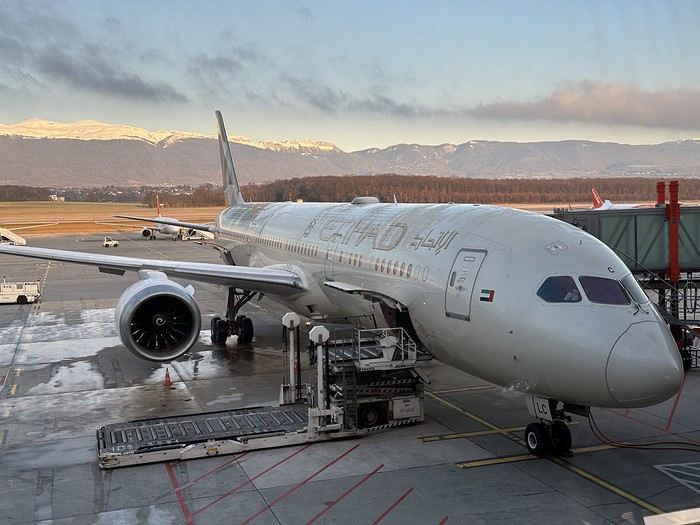
At the start of November, a bit of rest before winter will be perfect to kick off this travel journal. There aren’t many recent journals about this part of the world, so I’ll take the plunge—my way of celebrating the (unexpected) return of this forum, which has been such a big part of my life for over 15 years.
So, back to Asia at the end of 2023. After Myanmar in 2015 and Vietnam in 2018, we’ve chosen Laos this time. And when talking with friends (you know how it is—everyone asks, "So, where are you going this year?"), a couple of friends asked to join us ("You see, my wife dreams of a trip to Asia, and I dream of traveling like you, independently"). We’ve spent a week with them (and other friends) in Portugal, so we know they’re easygoing and flexible. They’ll only be with us after Christmas (due to lots of grandkids), so deal—we’re bringing them along! A new experience for us.
A new experience that’ll start with tweaking the itinerary. Originally, I planned to stay a month in Laos, but what could be more magical for my friend’s wife than discovering Asia by way of Angkor! Plus, our two daughters asked for some beach time at the end of the trip! So, it’ll be Laos and Cambodia—neither of which we’ve visited before, so no complaints there.
The route will be pretty classic, though a bit scattered to fit our dates and wishes. For us, we’ll arrive in Luang Prabang (LP) to take some time to acclimate, then a few days in the northern Laos mountains, Nong Khiaw and Muang Ngoi. Back to LP for a direct flight to Pakse. Yes, I know—so many amazing places we’ll miss along the way, but as you know, choosing means letting go... From Pakse, I’m leaving a few days open (no bookings), but I’m eyeing Champassak and the 4,000 Islands. That’s where Mariel and Naty (our friends!) will join us on December 30th. I’ve tentatively added the Bolaven Plateau loop to the plan (still no bookings). Their Laos adventure will be short—by January 3rd, we’ll cross the border into Cambodia, heading straight to Siem Reap for 5 days. Then, I’ll fulfill my promise with a magical detour to Koh Rong Sanloem via a night bus (a must-do in Asia!). On to Phnom Penh for 2 days—where our trip ends, while Mariel and Naty will stop in Bangkok for 3 days before flying home.
So, fasten your seatbelts, flight attendants at the doors, and sorry for the long intro—here we go on this Asian adventure!
Discussion au sujet du concours photo de juin 2020: "Multicolore" English translation pending
Hello,
C'est ici qu'on en parle.
Philippe
C'est ici qu'on en parle.
Philippe
Camping sauvage sur une île inhabité en Asie English translation pending
Bonjour à tous, après de nombreuses recherches au sujet du "camping sauvage sur ile inhabité en Asie", je me retrouve a poser ma question sur ce forum car très peu d'informations ou même de retours d’expériences sont disponible sur internet.
J'ai pour projet de partir 3 semaines avec un groupe d'ami sur une Île inhabité au mois de SEPTEMBRE 2020. Idéalement vis à vis de la saison, l’Indonésie, la Malaisie, les philippines paraissent être les endroits idéaux (saison & nombre d'île confondu).
Si je devais résumer vulgairement notre projet, il s’agirait de nous faire déposer en bateau sur une île inhabité avec nos ressources (eau, nourriture, tente & équipement indispensable a la survie) pour 3 semaines d'aventure, puis a la fin de cette période, le bateau reviendrait nous chercher pour nous ramener à la civilisation. C'est un rêves d'enfance que nous souhaitons réaliser ensemble en étant totalement conscient de la difficulté de ce projet un peu fou. Nous ne sommes pas débutant dans le domaine & la galère est notre recherche commune hihi.
Nos questions sont les suivantes : Est-il possible de faire du camping sauvage sur ces îles inhabités ? La population/gouvernement est-elle/il contre ce type de voyageur ? Quels sont les législations ? ...
Bien évidement si vous avez des retours d’expérience dans d'autres pays ou autres, si vous connaissez des personnes qui pourraient potentiellement nous renseigner ou même des liens que j'aurais loupé a ce sujet, merci de me les renseigner. Ca serait une aide précieuse dans l'organisation de notre périple.
J’espère avoir été clair dans mes propos. Dans l’espoir d'avoir des réponses. Merci à tous
J'ai pour projet de partir 3 semaines avec un groupe d'ami sur une Île inhabité au mois de SEPTEMBRE 2020. Idéalement vis à vis de la saison, l’Indonésie, la Malaisie, les philippines paraissent être les endroits idéaux (saison & nombre d'île confondu).
Si je devais résumer vulgairement notre projet, il s’agirait de nous faire déposer en bateau sur une île inhabité avec nos ressources (eau, nourriture, tente & équipement indispensable a la survie) pour 3 semaines d'aventure, puis a la fin de cette période, le bateau reviendrait nous chercher pour nous ramener à la civilisation. C'est un rêves d'enfance que nous souhaitons réaliser ensemble en étant totalement conscient de la difficulté de ce projet un peu fou. Nous ne sommes pas débutant dans le domaine & la galère est notre recherche commune hihi.
Nos questions sont les suivantes : Est-il possible de faire du camping sauvage sur ces îles inhabités ? La population/gouvernement est-elle/il contre ce type de voyageur ? Quels sont les législations ? ...
Bien évidement si vous avez des retours d’expérience dans d'autres pays ou autres, si vous connaissez des personnes qui pourraient potentiellement nous renseigner ou même des liens que j'aurais loupé a ce sujet, merci de me les renseigner. Ca serait une aide précieuse dans l'organisation de notre périple.
J’espère avoir été clair dans mes propos. Dans l’espoir d'avoir des réponses. Merci à tous
Les mythes touristiques English translation pending
Les Mythes Touristiques
Dans un carnet que je suis en train d'écrire sur un voyage récent au Mexique, nous sommes arrivés à une petite discussion sur les fameux groupes de musiciens Mexicains, les mariachis. Il existe un mythe selon lequel « mariachi » serait une déformation du mot Français « mariage », et que cela viendrait des fêtes tenues par les Français lors de leurs quelques années d’occupation du Mexique, dans les années 1860 et quelques. Je cite l’un des intervenants sur mon poste Mexicain :
« Les français organisaient de grandes fêtes aux mariages et avaient l'habitude d'inviter des musiciens…. Mariachi serait une déformation du mot mariage ..? »
Ce mythe a été réfuté car il a été prouvé que le terme « mariachi » était d’usage longtemps avant la peu glorieuse « Intervention » de la France au Mexique (c’était sous Napoléon III).
Plusieurs mythes semblables circulent. Certains semblent être propagés à l’intention des touristes, pour leur donner l’illusion de « mieux comprendre le pays », pour donner une profondeur supplémentaire à leurs voyages, pour alimenter leurs conversations avec les amis quand ils sont de retour. Car tout cela gonfle l’égo et donne envie de faire d’autres voyages, ça alimente le tourisme. D’où revenus, tiens donc, pour qui ?
Mais d’autres mythes existent qui ne sont peut-être pas créés à but lucratif.
Vous connaissez sans aucun doute de tels mythes et je vous propose de les partager. Et de donner les raisons pour lesquelles ces mythes existent.
Dans un carnet que je suis en train d'écrire sur un voyage récent au Mexique, nous sommes arrivés à une petite discussion sur les fameux groupes de musiciens Mexicains, les mariachis. Il existe un mythe selon lequel « mariachi » serait une déformation du mot Français « mariage », et que cela viendrait des fêtes tenues par les Français lors de leurs quelques années d’occupation du Mexique, dans les années 1860 et quelques. Je cite l’un des intervenants sur mon poste Mexicain :
« Les français organisaient de grandes fêtes aux mariages et avaient l'habitude d'inviter des musiciens…. Mariachi serait une déformation du mot mariage ..? »
Ce mythe a été réfuté car il a été prouvé que le terme « mariachi » était d’usage longtemps avant la peu glorieuse « Intervention » de la France au Mexique (c’était sous Napoléon III).
Plusieurs mythes semblables circulent. Certains semblent être propagés à l’intention des touristes, pour leur donner l’illusion de « mieux comprendre le pays », pour donner une profondeur supplémentaire à leurs voyages, pour alimenter leurs conversations avec les amis quand ils sont de retour. Car tout cela gonfle l’égo et donne envie de faire d’autres voyages, ça alimente le tourisme. D’où revenus, tiens donc, pour qui ?
Mais d’autres mythes existent qui ne sont peut-être pas créés à but lucratif.
Vous connaissez sans aucun doute de tels mythes et je vous propose de les partager. Et de donner les raisons pour lesquelles ces mythes existent.
Une semaine "plage" à Phuket ou Koh Samui? English translation pending
Bonjour à tous, nous partons du 1 au 15 décembre d'abord 4 jours à Dubaï puis 4 à Bangkok pensez-vous que ce soit assez 4 à Bangkok? Ensuite nous aimerions faire une semaine "plage", je le met entre "" car nous aimons bouger, voir des choses, ne pas rester à ne rien faire sur une plage justement… Nous voulions aller à Phuket, mais lorsque je regarde je trouve que les hôtels et paysages ont l'air bien plus beaux à Koh Samui, mais j'ai peur que l'on s'y ennuie, c'est pe ridicule et vous allez me dire qu'il n'y a pe pas grand chose à faire de plus à Phuket, que me conseillez-vous? Si vous connaissez des hôtels sympas à prix raisonnable, n'hésitez pas 😉, un grand merci pour vos conseils!!
Programme 15 jours au Vietnam à 5 enfants et 7 adultes cet été English translation pending
Bonjour,
oui nous voyageons en groupe 😄 enfant de 7 à 13 ans
Je suis parti au vietnam en 96 et 98 depuis les choses en bien du changer.....
Voici notre programme :
Nous arrivons à Hanoï le 30 juillet pour un départ le lendemain sur Quang Ngai (en dessous de Hoi An) le vendredi en principe en train de nuit. Donc arrivé le samedi 1/08 à midi max.
De là visite de la famille d'un Ami à Quang Ngai, plage, visite de Hoi An et Hué
Dans l'idéal nous souhaiterions repartir de Hué le mardi 4/08 au pire le mercredi 05/08 pour Hanoï en avion.
De là un minibus viens nous chercher à l'aéroport pour partir directement dans le Nord depuis Hanoï. Nous devrions prendre une excursion avec guide + chauffeur.
(trajet à définir, optimiser) Nous avons dans l'idée d'aller à Sa Pa en passant par Khau Phạ Pass et Mù Cang Chải avec un retour par l'autoroute entre Sa Pa et Hanoï en 3 jours 2 nuits.
Ensuite direction Ninh Binh pour 2 jours dans la baie d'Halong Terrestre histoire de profiter, ne pas oublier les enfants. De Tam Coc bus pour Cat Ba et baie de Lan Ha pour 2 nuits donc 1 sur une jonque Retour à Hanoï Qu'en pensez vous, est-ce jouable sachant que nous repartons en France le 14/08 en milieu de matinée et que nous souhaitons arrivé à Hanoï la veille et surtout en tenant compte des enfants. merci d'avance
Ensuite direction Ninh Binh pour 2 jours dans la baie d'Halong Terrestre histoire de profiter, ne pas oublier les enfants. De Tam Coc bus pour Cat Ba et baie de Lan Ha pour 2 nuits donc 1 sur une jonque Retour à Hanoï Qu'en pensez vous, est-ce jouable sachant que nous repartons en France le 14/08 en milieu de matinée et que nous souhaitons arrivé à Hanoï la veille et surtout en tenant compte des enfants. merci d'avance
S'il vous plaît, réfléchissez avant de "donner" English translation pending
Coucou les voyageurs
Je m'excuse par avance si j'y vais un peu fort mais je suis quelque peu furax 😉.
Je rentre juste d'un voyage en Afrique (mais c'est pareil parfois en Asie) et j'ai été hallucinée par ce que j'ai vu.
2 exemples au hasard :
On roule ; devant nous, un 4x4 s' arrête, une touriste descend et, "ni ouch ni trouch" comme on dit chez moi, donne un sac à 2 gamins qui passaient par là pour repartir aussi sec !!
Un autre sur une plage, une voiture de touristes arrivent aussitôt entourés par une dizaine de gamins. Royalement, le monsieur donne un paquet de bonbons sans se soucier de faire une distribution individuelle, provoquant un pugilat général entre eux !
Mais quelle bonté, quelle générosité !!!
Grâce à des gens comme eux, quasiment tous les gamins croisés en voiture ou dans les villages te hurlent "donne moi des bonbons, donne moi un ballon, donne moi de l'argent...".
Grâce à des gens comme eux, ils croient que leur avenir c'est de "taper" les blancs qui passent, plutôt que d'aller à l'école !
Grâce à des gens comme eux, les gamins d'autres fois " si mignons" , sont devenus de jeunes adultes qui cambriolent les voitures des " blancs" !
Et grâce à des gens comme eux, demain, ça sera quoi !!
Alors par pitié, réfléchissez avant de vouloir "faire le bien".
Il m'est aussi bien difficile de visiter un pays si pauvre alors que je baigne dans l'opulence mais il y a d'autres moyens pour les aider.
La 1ere c'est de faire "profiter" son argent aux "locaux" tant qu'on peut. Faire travailler les guesthouse et restos tenus par des "autochtones", ou donner un max de pourboires à tous le "petit personnel" (serveurs, femme de ménage...) qui ont des familles à charge et vivent souvent dans des conditions difficiles,
La 2nde c'est de donner quand on a créé un lien, quand on veut remercier de l'accueil qu'on a reçu. Et surtout de donner à un/une adulte qui repartira les dons équitablement et évitera les pugilat entre gamins (ex : des ballons de foot dans les villages, j'ai rien trouvé qui pouvait se partager aussi bien entre 150 gamins 😉),
Enfin on peut donner à une école ou à une association locale qui connaissent bien les besoins sur place.
Alors oui, c'est moins "fun", vous n'aurez pas la joie en live des gamins mais au moins vous n'aurez fait aucun mal en voulant faire le bien 😜.
Merci d'y réfléchir et bon voyage 😉😁
PS qui a son importance : j'étais à Sao Tomé où la nature est extrêmement généreuse et où, heureusement personne ne meurt de faim. Les dons des touristes n'ont ici rien à voir avec la survie (parce que donner à manger dans les pays où ils crevent la dalle, évidemment que je fais aussi. Je ne parle pas de nourriture ici)
Je m'excuse par avance si j'y vais un peu fort mais je suis quelque peu furax 😉.
Je rentre juste d'un voyage en Afrique (mais c'est pareil parfois en Asie) et j'ai été hallucinée par ce que j'ai vu.
2 exemples au hasard :
On roule ; devant nous, un 4x4 s' arrête, une touriste descend et, "ni ouch ni trouch" comme on dit chez moi, donne un sac à 2 gamins qui passaient par là pour repartir aussi sec !!
Un autre sur une plage, une voiture de touristes arrivent aussitôt entourés par une dizaine de gamins. Royalement, le monsieur donne un paquet de bonbons sans se soucier de faire une distribution individuelle, provoquant un pugilat général entre eux !
Mais quelle bonté, quelle générosité !!!
Grâce à des gens comme eux, quasiment tous les gamins croisés en voiture ou dans les villages te hurlent "donne moi des bonbons, donne moi un ballon, donne moi de l'argent...".
Grâce à des gens comme eux, ils croient que leur avenir c'est de "taper" les blancs qui passent, plutôt que d'aller à l'école !
Grâce à des gens comme eux, les gamins d'autres fois " si mignons" , sont devenus de jeunes adultes qui cambriolent les voitures des " blancs" !
Et grâce à des gens comme eux, demain, ça sera quoi !!
Alors par pitié, réfléchissez avant de vouloir "faire le bien".
Il m'est aussi bien difficile de visiter un pays si pauvre alors que je baigne dans l'opulence mais il y a d'autres moyens pour les aider.
La 1ere c'est de faire "profiter" son argent aux "locaux" tant qu'on peut. Faire travailler les guesthouse et restos tenus par des "autochtones", ou donner un max de pourboires à tous le "petit personnel" (serveurs, femme de ménage...) qui ont des familles à charge et vivent souvent dans des conditions difficiles,
La 2nde c'est de donner quand on a créé un lien, quand on veut remercier de l'accueil qu'on a reçu. Et surtout de donner à un/une adulte qui repartira les dons équitablement et évitera les pugilat entre gamins (ex : des ballons de foot dans les villages, j'ai rien trouvé qui pouvait se partager aussi bien entre 150 gamins 😉),
Enfin on peut donner à une école ou à une association locale qui connaissent bien les besoins sur place.
Alors oui, c'est moins "fun", vous n'aurez pas la joie en live des gamins mais au moins vous n'aurez fait aucun mal en voulant faire le bien 😜.
Merci d'y réfléchir et bon voyage 😉😁
PS qui a son importance : j'étais à Sao Tomé où la nature est extrêmement généreuse et où, heureusement personne ne meurt de faim. Les dons des touristes n'ont ici rien à voir avec la survie (parce que donner à manger dans les pays où ils crevent la dalle, évidemment que je fais aussi. Je ne parle pas de nourriture ici)
Phra Kreuang: Thai protective amulets
S🙂wasdee!
Kicking off the thread with an informative article about Phra Kreuang, protective amulets (according to local belief) that Thai people of all kinds wear around their necks:
https://www.objetsdevasion.com/guides/objet-bouddhiste/amulette-bouddha/les-amulettes-bouddhiques-thailandaises.html
You can find them all over the Kingdom: in temples, at markets, in specialty shops, and even in mail-order flyers at Seven/Eleven.
Also, heads up for those in Paris—from October 11th to 20th, there’s a collective exhibition featuring Thai artists: https://phenixwebtv.com/2019/07/23/facets-of-thailand-une-exposition-collective-de-cinq-artistes-de-la-scene-contemporaine-thailandaise/?fbclid=IwAR28PCY1t48M2DiwVlnc5uZvT20FnsxNLMppOb8d1pSfOjiw_sW_htV2CnI
@ ++, for the *sanouk* debrief from our last trip to the Land of the Free, as it’s so beautifully nicknamed.
Sânouk3😎
Kicking off the thread with an informative article about Phra Kreuang, protective amulets (according to local belief) that Thai people of all kinds wear around their necks:
https://www.objetsdevasion.com/guides/objet-bouddhiste/amulette-bouddha/les-amulettes-bouddhiques-thailandaises.html
You can find them all over the Kingdom: in temples, at markets, in specialty shops, and even in mail-order flyers at Seven/Eleven.
Also, heads up for those in Paris—from October 11th to 20th, there’s a collective exhibition featuring Thai artists: https://phenixwebtv.com/2019/07/23/facets-of-thailand-une-exposition-collective-de-cinq-artistes-de-la-scene-contemporaine-thailandaise/?fbclid=IwAR28PCY1t48M2DiwVlnc5uZvT20FnsxNLMppOb8d1pSfOjiw_sW_htV2CnI
@ ++, for the *sanouk* debrief from our last trip to the Land of the Free, as it’s so beautifully nicknamed.
Sânouk3😎
Itinéraire 20 jours à la rencontre des ethnies peuplant le nord du Laos English translation pending
Bonjour à tous,
Je prépare un voyage de près de trois semaines exclusivement dans le Nord du Laos avec mes parents (arrivée Luang Prabang / retour depuis Vientiane).
Il y a quelques années, nous avions été enchanté par la semaine passée à la rencontre des ethnies peuplant le Nord-Vietnam et souhaiterions revivre ce type d'expérience au Laos.
Je souhaitais avoir quelques avis et conseils divers. Voilà en gros l’itinéraire et les quelques questions que je me pose. En principe, nous réserverons à l’avance uniquement les nuits à Luang Prabang et un Bungalow chez Noy (Nam Nga Bungalow). Que pensez-vous de cet itinéraire?
J1. Arrivée à LUANG PRABANG
J2. LUANG PRABANG
J3. LUANG PRABANG
J4. LUANG PRABANG – PAKBENG en bateau
J5. PAKBENG – OUDOMXAI / MUANG LA / BAN YOR ? question 1- entre Pakbeng et Pak Nam Noi, on souhaite s'arrêter une nuit pour couper cette étape en deux. Du coup je m'interroge, à quel endroit est-il préférable de passer la nuit : Oudomxay (Namkat Yorla Resort ?), Muang La ou un petit village (Ban Yor : quelqu’un a-t-il des infos ?) ?
J6/7/8/9. TREK DANS LA REGION SUD DE PHONGSALY – Massif de l’Elephant (PhuSang) question 2 : Je souhaite éviter (pour des questions de longueur de transport) de me rendre à Phongsaly mais il semble que la région du sud soit accessible depuis BounTai ou NamLy. Quelqu’un qui est passé dans cette région a-t-il des conseils à me donner ? question 3 : Connaissez-vous un guide local francophone ou anglophone susceptible d’organiser un voyage dans cette région ? ou bien une agence à recommander ?question 4 : Si je passe par une agence, à quel endroit est-il préférable que je réserve : PhongSaly, Oudomxai, Muang La, Pak Nam Noy, Boun Tai ?
J9. Fin du TREK - MUANG KOUA - MUANG NGOI en bateau question 5 : Je ne trouve pas beaucoup d’infos mais il semble qu’il n’y ait des départs que le matin vers Muang Ngoi ?
J10. MUANG NGOI question 6 : Plutôt que de dormir deux nuits à Muang Ngoi, je pensais y dormir la première, et passer la seconde dans un village alentour avant de revenir à Muang Ngoi le lendemain et repartir pour Nong Khiaw le même jour. Est-ce envisageable?
J11. MUANG NGOI – NONG KHIAW en bateauJ12. NONG KHIAW
J13. NONG KHIAW – NAM NGA BUNGALOW (chez Noy : www.namngabungalowslaos.com/)
J14. NAM NGA BUNGALOW
J15. NAM NGA BUNGALOW
J16. NAM NGA BUNGALOW - LUANG PRABANG - VANG VIENG question 7 : On pensait, en fonction du budget pour un véhicule avec chauffeur, louer directement une une voiture depuis Luang Prabang jusqu’à Ventiane.
J17. VANG VIENG question 8 : En discutant, je trouve des avis très divers sur Vang Vieng, je suis moi-même passé par le Laos en 2012 en venant de Chine et j'avais décidé de continuer vers la Thailande sans descendre plus bas que Luang Prabang. Les commentaires que j'en avais eus par les voyageurs rencontrés étaient souvent très négatifs. Il semble néanmoins que depuis quelques années il y a eu un effort de la part du gouvernement pour transformer ce bourg en coin paisible... Je trouve aujourd'hui de très bons avis avec des personnes qui ont trouvé les alentours de Vang Vieng très beaux et toujours "authentiques"... On pensait donc y consacrer une ou deux journée à se balader dans la campagne environnante. Et vous, vous y retournerez ?
question 9 : Sinon, entre LP et Vientiane, avez-vous d'autres coins à nous recommander? Ou bien une route particulière à emprunter pour profiter des paysages et d’arrêts le long du chemin ?
18 VANG VIENG
19 VANG VIENG - VIENTIANE
20 VIENTIANE avion retour Voila pour l'itinéraire, c'est le fruit d'une synthèse des différentes lectures sur des forums et blog mais je suis ouvert à la critique, rien n'est encore vraiment réservé (à part l'avion) donc les modifications sont encore possibles :)
Au plaisir de vous lire, Bonne soirée
Je prépare un voyage de près de trois semaines exclusivement dans le Nord du Laos avec mes parents (arrivée Luang Prabang / retour depuis Vientiane).
Il y a quelques années, nous avions été enchanté par la semaine passée à la rencontre des ethnies peuplant le Nord-Vietnam et souhaiterions revivre ce type d'expérience au Laos.
Je souhaitais avoir quelques avis et conseils divers. Voilà en gros l’itinéraire et les quelques questions que je me pose. En principe, nous réserverons à l’avance uniquement les nuits à Luang Prabang et un Bungalow chez Noy (Nam Nga Bungalow). Que pensez-vous de cet itinéraire?
J1. Arrivée à LUANG PRABANG
J2. LUANG PRABANG
J3. LUANG PRABANG
J4. LUANG PRABANG – PAKBENG en bateau
J5. PAKBENG – OUDOMXAI / MUANG LA / BAN YOR ? question 1- entre Pakbeng et Pak Nam Noi, on souhaite s'arrêter une nuit pour couper cette étape en deux. Du coup je m'interroge, à quel endroit est-il préférable de passer la nuit : Oudomxay (Namkat Yorla Resort ?), Muang La ou un petit village (Ban Yor : quelqu’un a-t-il des infos ?) ?
J6/7/8/9. TREK DANS LA REGION SUD DE PHONGSALY – Massif de l’Elephant (PhuSang) question 2 : Je souhaite éviter (pour des questions de longueur de transport) de me rendre à Phongsaly mais il semble que la région du sud soit accessible depuis BounTai ou NamLy. Quelqu’un qui est passé dans cette région a-t-il des conseils à me donner ? question 3 : Connaissez-vous un guide local francophone ou anglophone susceptible d’organiser un voyage dans cette région ? ou bien une agence à recommander ?question 4 : Si je passe par une agence, à quel endroit est-il préférable que je réserve : PhongSaly, Oudomxai, Muang La, Pak Nam Noy, Boun Tai ?
J9. Fin du TREK - MUANG KOUA - MUANG NGOI en bateau question 5 : Je ne trouve pas beaucoup d’infos mais il semble qu’il n’y ait des départs que le matin vers Muang Ngoi ?
J10. MUANG NGOI question 6 : Plutôt que de dormir deux nuits à Muang Ngoi, je pensais y dormir la première, et passer la seconde dans un village alentour avant de revenir à Muang Ngoi le lendemain et repartir pour Nong Khiaw le même jour. Est-ce envisageable?
J11. MUANG NGOI – NONG KHIAW en bateauJ12. NONG KHIAW
J13. NONG KHIAW – NAM NGA BUNGALOW (chez Noy : www.namngabungalowslaos.com/)
J14. NAM NGA BUNGALOW
J15. NAM NGA BUNGALOW
J16. NAM NGA BUNGALOW - LUANG PRABANG - VANG VIENG question 7 : On pensait, en fonction du budget pour un véhicule avec chauffeur, louer directement une une voiture depuis Luang Prabang jusqu’à Ventiane.
J17. VANG VIENG question 8 : En discutant, je trouve des avis très divers sur Vang Vieng, je suis moi-même passé par le Laos en 2012 en venant de Chine et j'avais décidé de continuer vers la Thailande sans descendre plus bas que Luang Prabang. Les commentaires que j'en avais eus par les voyageurs rencontrés étaient souvent très négatifs. Il semble néanmoins que depuis quelques années il y a eu un effort de la part du gouvernement pour transformer ce bourg en coin paisible... Je trouve aujourd'hui de très bons avis avec des personnes qui ont trouvé les alentours de Vang Vieng très beaux et toujours "authentiques"... On pensait donc y consacrer une ou deux journée à se balader dans la campagne environnante. Et vous, vous y retournerez ?
question 9 : Sinon, entre LP et Vientiane, avez-vous d'autres coins à nous recommander? Ou bien une route particulière à emprunter pour profiter des paysages et d’arrêts le long du chemin ?
18 VANG VIENG
19 VANG VIENG - VIENTIANE
20 VIENTIANE avion retour Voila pour l'itinéraire, c'est le fruit d'une synthèse des différentes lectures sur des forums et blog mais je suis ouvert à la critique, rien n'est encore vraiment réservé (à part l'avion) donc les modifications sont encore possibles :)
Au plaisir de vous lire, Bonne soirée