Results for "Laon+|+127"
17187 results found.
dakar-cap vert??? English translation pending
salut a tous,
je me rends pour la 2eme fois au senegal et je voudrais savoir les differents moyens de transports pour rallier le capvert.... avion, bateau.... et les tarifs. merci. et si qqn a des infos sur le capvert, je suis preneur.
yohann
Banque à Santa Lucia!! English translation pending
Quelqu'un peut-il me dire si la banque de Santa Lucia est ouverte le samedi pour quelques heures !! J'arrive a cet endroit le vendredi a samedi dans la nuit ( Enfin je pense car je voyage avec zoom airlines ??????😕 ) et je me rends compte que pour changé nos dollards Canadiens, le meilleur endroit n'est pas a l'hôtel !! merci !!
Carte Air France Club 2000 English translation pending
Bonjour,
quelqu'un peut il me renseigner sur la carte CLUB 2000 Air FRANCE, je sais que c'est le niveau au dessus de Fréquence Rouge mais à combien de miles la donnent ils?Quelles sont les conditions d'attribution?quels en sont les avantages?
Je suis déjà F+Rouge.
Merci pour vos infos.
F
quelqu'un peut il me renseigner sur la carte CLUB 2000 Air FRANCE, je sais que c'est le niveau au dessus de Fréquence Rouge mais à combien de miles la donnent ils?Quelles sont les conditions d'attribution?quels en sont les avantages?
Je suis déjà F+Rouge.
Merci pour vos infos.
F
Ocean Bavaro English translation pending
Salut à tous!!!
Je pars pour la R.P à Punta cana en Avril prochain quelqu'un a-t-il une expertise nouvelle concernant cet hôtel qui est quand même bien cotée et bien commentée sur ce forum.
J'aimerais avoir une opinion récente de quelqu'un qui y arrive concernant la gastro et le malaria.Merci de bien vouloir me répondre!!!
Tatie13 😎
Je pars pour la R.P à Punta cana en Avril prochain quelqu'un a-t-il une expertise nouvelle concernant cet hôtel qui est quand même bien cotée et bien commentée sur ce forum.
J'aimerais avoir une opinion récente de quelqu'un qui y arrive concernant la gastro et le malaria.Merci de bien vouloir me répondre!!!
Tatie13 😎
Indonésie: Paris-Balikpapan/Manado-Paris English translation pending
Je voulais intituler mon post : Indonésie: vols à la tire et prix à la va comme je te pousse mais c'était trop long et personne n'aurait rien compris. Je m'explique:
Je voudrais acheter mon billet d'avion pour mon départ au mois de septembre. Mais pas un aller-retour classique. Un open jaw: aller Paris-Balikpapan, retour Manado-Paris.
Il y a justement ....bip... airlines qui dessert les deux destinations... Jusque là, pas de pb, le vol existe; il y a même les horaires en ligne sur le site internet de la compagnie. Oui, tout va bien sauf que :
sur le site, le prix est as-tro-no-mique! (Environ 6000 euros...). Ok, je m'affole pas, je vais chez ...bip...(grosse agence). Là, ils n'ont pas de contrat avec cette compagnie pour cette destination. Et alors? Et alors, pas de billet possible! Ah, heu, bon?! (J'imaginais que je pouvais acheter un billet pour n'importe où dans n'importe quelle agence mais ça devait être une vision romantique de la réalité...)
Je vais donc chez ...bip...(une petite agence de quartier), là, qu'est-ce que j'apprend, qu'ils n'ont pas encore les tarifs pour septembre (pourquoi en douter?: je suis carrément en avance pour prendre mon billet)...Ok, bon, puisque je suis là, j'en profite pour demander à comparer avec les prix des vols pour Jakarta. Là, on a les prix, oui, pour septembre...mais quoi?!...plus que 4 places sur le vol?! A sept mois du départ? C'est pas un peu bizarre, ça?!
Au passage, on m'informe que d'ici deux mois, les accords entre les compagnies et les agences de voyages vont être bouleversés. Que les compagnies, qui rémunèrent actuellement les agences (ça, je ne savais pas!), vont cesser de le faire à partir du mois d'avril.
Sous-entendu: les compagnies bloquent-elles les prix et les places en espérant les vendre à partir du mois d'avril avec une meilleure marge? Qu'est-ce que ça augure pour les clients? Quelle incidence cela aura-t-il sur les prix? Est-ce que ce sera toujours intéressant d'acheter en agence ou est-ce qu'il deviendra plus opportun d'acheter son billet directement à la compagnie?
Il paraît que cette nouvelle organisation est déjà une pratique courante chez nos voisins européens. Mais j'en sais pas plus... Alors, si vous voulez mettre votre grain de sel, réagir, éclairer ma lanterne et alimenter le sujet...j'attends vos réflexions avec impatience.
Pour en revenir à mon idée première: le vol panaché Balikpapan-Manado...
J'ai reçu une réponse par mail d'une agence (une grosse agence en laquelle j'avais vraiment foi) qui me laisse plutôt perplexe :laconique, la réponse, qui m'informe que: "le prix serait de 2560 euros". Heu, c'est pas possible, j'ai mal lu, là? J'ai pas un portefeuille de ministre, moi! Je relis, nan, nan, c'est bien marqué ça! Remarque, j'avais omis de préciser que je voulais voyager en classe éco! Mais bon...Même pour deux personnes en classe éco, il me semble que c'est plutôt onéreux! Enfin, je relis quand même, desfois que j'aie oublié de décoder quelque chose...et là, ben, je remarque que le vol supposé Paris-Balikpapan, il atterri à Denpasar. Heu?! une escale, peut-être? Que nenni, le terminus...!
Bon, là franchement, sois je rigole, soit j'explose! C'est vrai, quoi, à la fin (comme dirait le petit Nicolas)...je croyais que penser à mes vacances, ça allait me détendre mais là, ça m'a plutôt filé mal à la tête!
Je voudrais acheter mon billet d'avion pour mon départ au mois de septembre. Mais pas un aller-retour classique. Un open jaw: aller Paris-Balikpapan, retour Manado-Paris.
Il y a justement ....bip... airlines qui dessert les deux destinations... Jusque là, pas de pb, le vol existe; il y a même les horaires en ligne sur le site internet de la compagnie. Oui, tout va bien sauf que :
sur le site, le prix est as-tro-no-mique! (Environ 6000 euros...). Ok, je m'affole pas, je vais chez ...bip...(grosse agence). Là, ils n'ont pas de contrat avec cette compagnie pour cette destination. Et alors? Et alors, pas de billet possible! Ah, heu, bon?! (J'imaginais que je pouvais acheter un billet pour n'importe où dans n'importe quelle agence mais ça devait être une vision romantique de la réalité...)
Je vais donc chez ...bip...(une petite agence de quartier), là, qu'est-ce que j'apprend, qu'ils n'ont pas encore les tarifs pour septembre (pourquoi en douter?: je suis carrément en avance pour prendre mon billet)...Ok, bon, puisque je suis là, j'en profite pour demander à comparer avec les prix des vols pour Jakarta. Là, on a les prix, oui, pour septembre...mais quoi?!...plus que 4 places sur le vol?! A sept mois du départ? C'est pas un peu bizarre, ça?!
Au passage, on m'informe que d'ici deux mois, les accords entre les compagnies et les agences de voyages vont être bouleversés. Que les compagnies, qui rémunèrent actuellement les agences (ça, je ne savais pas!), vont cesser de le faire à partir du mois d'avril.
Sous-entendu: les compagnies bloquent-elles les prix et les places en espérant les vendre à partir du mois d'avril avec une meilleure marge? Qu'est-ce que ça augure pour les clients? Quelle incidence cela aura-t-il sur les prix? Est-ce que ce sera toujours intéressant d'acheter en agence ou est-ce qu'il deviendra plus opportun d'acheter son billet directement à la compagnie?
Il paraît que cette nouvelle organisation est déjà une pratique courante chez nos voisins européens. Mais j'en sais pas plus... Alors, si vous voulez mettre votre grain de sel, réagir, éclairer ma lanterne et alimenter le sujet...j'attends vos réflexions avec impatience.
Pour en revenir à mon idée première: le vol panaché Balikpapan-Manado...
J'ai reçu une réponse par mail d'une agence (une grosse agence en laquelle j'avais vraiment foi) qui me laisse plutôt perplexe :laconique, la réponse, qui m'informe que: "le prix serait de 2560 euros". Heu, c'est pas possible, j'ai mal lu, là? J'ai pas un portefeuille de ministre, moi! Je relis, nan, nan, c'est bien marqué ça! Remarque, j'avais omis de préciser que je voulais voyager en classe éco! Mais bon...Même pour deux personnes en classe éco, il me semble que c'est plutôt onéreux! Enfin, je relis quand même, desfois que j'aie oublié de décoder quelque chose...et là, ben, je remarque que le vol supposé Paris-Balikpapan, il atterri à Denpasar. Heu?! une escale, peut-être? Que nenni, le terminus...!
Bon, là franchement, sois je rigole, soit j'explose! C'est vrai, quoi, à la fin (comme dirait le petit Nicolas)...je croyais que penser à mes vacances, ça allait me détendre mais là, ça m'a plutôt filé mal à la tête!
Hôtel Sirenis tropical English translation pending
Qui revient du sirenis tropical suite depuis peu?
La dernière discussion sur ce forum me laisse un peu sur ma faim?😮 j'aimerai en savoir plus !!!😏(je suis très curieuse!😊)
Notemment sur les chambre à éviter.(j'aurai une petite fille de 4 ans et je n'aimerait pas tomber sur une chambre trop près de la disco ou des scène de spectacle...)
merci d'avance
La dernière discussion sur ce forum me laisse un peu sur ma faim?😮 j'aimerai en savoir plus !!!😏(je suis très curieuse!😊)
Notemment sur les chambre à éviter.(j'aurai une petite fille de 4 ans et je n'aimerait pas tomber sur une chambre trop près de la disco ou des scène de spectacle...)
merci d'avance
Kirghizistan, Ouzbekistan ou Mongolie? English translation pending
Bjr à tous,
Nous hésitons entre le Kirghizistan, l'Ouzbekistan ou la Mongolie comme destination pour l'année prochaine. J'ai listé ci-dessous quelques infos sur nos goûts. D'avance merci pour vos avis ... sachant que ceux qui répondent risquent ensuite d'être assaillis de questions 😉.
Donc voilà les infos : C'est pour environ 3 semaines l'été prochain (juillet ou août) Nous voyagerons avec nos deux enfants qui auront 9 ans Nous avons l'habitude des voyages en solo ... et nous adorons ça ! Question budget, nous aimerions rester "raisonnables" Nous aimons à la fois les grands espaces, les villages et les contacts humains et le partage des cultures, et les sites à visiter tant que l'on ne fait pas que ça, Nous adorons voyager chez l'habitant et partager les transports locaux tant que cela n'est pas trop "galère" (cf ci-dessous !) Nous détestons passer trop de temps dans les trajets (train ou bus pendant des heures et des jours ...) Nous adorons la rando !
Je pourrais vous en mettre encore des lignes vu ma passion pour les voyages, mais bon je vais arrêter pour ne pas trop vous casser les pieds
D'avance merci pour vos réponses !
Hervé (avec notamment des photos sur la Namibie et le Cap Vert)
Nous hésitons entre le Kirghizistan, l'Ouzbekistan ou la Mongolie comme destination pour l'année prochaine. J'ai listé ci-dessous quelques infos sur nos goûts. D'avance merci pour vos avis ... sachant que ceux qui répondent risquent ensuite d'être assaillis de questions 😉.
Donc voilà les infos : C'est pour environ 3 semaines l'été prochain (juillet ou août) Nous voyagerons avec nos deux enfants qui auront 9 ans Nous avons l'habitude des voyages en solo ... et nous adorons ça ! Question budget, nous aimerions rester "raisonnables" Nous aimons à la fois les grands espaces, les villages et les contacts humains et le partage des cultures, et les sites à visiter tant que l'on ne fait pas que ça, Nous adorons voyager chez l'habitant et partager les transports locaux tant que cela n'est pas trop "galère" (cf ci-dessous !) Nous détestons passer trop de temps dans les trajets (train ou bus pendant des heures et des jours ...) Nous adorons la rando !
Je pourrais vous en mettre encore des lignes vu ma passion pour les voyages, mais bon je vais arrêter pour ne pas trop vous casser les pieds
D'avance merci pour vos réponses !
Hervé (avec notamment des photos sur la Namibie et le Cap Vert)
Escale de 12 heures à Londres English translation pending
Bonjour,
Mon copain et moi partons pour la Thïlande en janvier prochain. Nous partons du canada via Londre. Nous avons une escale de 12 hres à Londre ouf!!! avant d'arriver à Bkk. Nous vous demandons conseils à savoir s'il y a un bon petit resto ou quelque chose qui vaut le coup d'oeil non loin de l'aéroport. Cela nous permetterait de découvrir un peu ce coin de pays et de nous dégourdir les jambes !
Merci, Paul & Lan
Mon copain et moi partons pour la Thïlande en janvier prochain. Nous partons du canada via Londre. Nous avons une escale de 12 hres à Londre ouf!!! avant d'arriver à Bkk. Nous vous demandons conseils à savoir s'il y a un bon petit resto ou quelque chose qui vaut le coup d'oeil non loin de l'aéroport. Cela nous permetterait de découvrir un peu ce coin de pays et de nous dégourdir les jambes !
Merci, Paul & Lan
Chuquicamata au Mexique English translation pending
QUI PEUT ME DONNER DES INFOS SUR LA MINE LA VISITE VAUT ELLE LE DETOUR
MERCI D AVANCE
MERCI D AVANCE
Météo en République Dominicaine English translation pending
Voila, ai enfin mon billet pour la rd, une euphorie 🙂🙂, du coups, je fouine sur le net, je cherche et la.....patatra, je tombe sur la météo.Mais, c'est une blague ?je ne voit en prévision que de gros nuages?
Y'a quelqu'un qui sait m'en dire plus?
?je ne voit en prévision que de gros nuages?Y'a quelqu'un qui sait m'en dire plus?
C'est parti!!!! English translation pending
Ca y est, le projet Geantropie commence vraiment. Et par la même mon grand voyage, rêvé depuis tant d'années. Après des mois de démarches personnelles puis administratives, je me suis envolé hier matin pour ma nouvelle vie, pour Mexico. Vous pourrez lire mes aventures géantropiques sur mon site (http://geantropie.free.fr, rubrique "En direct d'Amérique Latine"). Parfois, lorsque les aventures qui m'arriveront vaudront vraiment le coup, ou seront intéressantes mais sans rapport direct avec la Géantropie, je les relaterai ici, dans cette discussion. A suivre, donc.
Je souhaite à tous de réaliser ses rêves comme je viens de le faire hier.
Adelante!
Loopkin, le géantrope.
Je souhaite à tous de réaliser ses rêves comme je viens de le faire hier.
Adelante!
Loopkin, le géantrope.
Petite escapade vers les pays de l'Est English translation pending
Et bien voilou, c'est notre dernière journéé à la maison. Il pleut des cordes depuis 2 jours, que dis-je, depuis des semaines ! Il est grand temps de décamper d'ici et de voir ailleur si je n'y suis pas ! Demain, nous partons rejoindre des amis pour le week-end à la côte belge, histoire de faire un peu la fête et puis, lundi, pendant une quinzaine de jours, nous roulerons au gré des petits chemins jusqu'à la mer baltique en Pologne en passant par l'Allemagne et la Tchéquie. Nous n'avons vraiment aucune idée de ce que nous allons trouver, nous ne nous sommes pas documentée, n'avons rien réservé, tout ce fera au coup de coeur.
J'ai hâte de vous raconter les paysages, nos coups de foudre et nos rencontres.
A bientôt sur VF bien sûr, et surtout à Bruxelles pour la rencontre des belch's comme dirait Parvat.
Marie
J'ai hâte de vous raconter les paysages, nos coups de foudre et nos rencontres.
A bientôt sur VF bien sûr, et surtout à Bruxelles pour la rencontre des belch's comme dirait Parvat.
Marie
Du Mali au Mississipi English translation pending
Parmi mes musiques préférées, il y a le résultat de la confrontation de musiciens africains (principalement du Mali, considéré par beaucoup comme le berceau du blues) et de jazzmen ou bluesmen américains.
Quand chacun fait un pas vers l'autre, cela donne des résultats fascinants.
Voici la liste de mes favoris :
Hank Jones et Cheick Tidiane Seck : Sarala (1995) C'est un album magnifique ou le vieux pianiste de jazz Hank Jones joue légèrement et humblement avec le malien Seck accompagné d' anciens musiciens du célèbre orchestre du Super Rail Band de Bamako. "Sarala" signifie "je me confie à toi" en mandingue, et c'est ainsi que les griots affirment leur sincérité. Cet album est une des rencontres les plus abouties et émouvantes entre le jazz et sa mère Afrique... Voir critiques ici : http://www.cheick-tidiane-seck.com/francais/critiques3.htm
Ali Farka Touré et Ry Cooder : Talking Timbuktu (1994) Faut-il présenter ce disque qui est sans doute le plus connu de ma liste ? Ry Cooder est un guitariste américain amoureux de toutes les musiques. Le projet Buena Vista Social Club qui a relancé de la musique cubaine, c'est lui. Avant Buena Vista Social Club, il a réuni quelques musiciens américains de renom avec Ali Farka Touré et deux percussionistes maliens. Ali Farka Touré est un grand guitariste et chanteur qui interprète ses propres compositions. Celles-ci, mieux produites et accompagnées que d'habitude, sonnent magnifiquement sur ce disque dans lequel la guitare de Ry Cooder est très discrète.
Taj Mahal et Toumani Diabaté : Kulanjan (1999) Le fameux bluesman américain Taj Mahal a fait venir aux USA 6 musiciens maliens pour confronter son art à celui de sa terre d'origine. Toumani Diabaté est un virtuose de la kora, instrument du griot mandingue entre la guitare et la harpe. Le résultat est une réussite, les titres sont spontanés, inventifs, harmonieux, sereins, enracinés dans la tradition du peuple noir, tirant ici sur les mélodies africaines, rappelant là le blues du Mississippi, toujours à mi-chemin de ces deux cultures dont on sait bien qu'elle ont des racines communes.
Corey Harris : Mississipi to Mali (2004) Dans le film de Martin Scorcese "Feel like going home", consacré aux liens entre le blues du Mississippi et la musique malienne, Corey Harris tient le rôle de guide. Fils de bluesman et bluesman lui-même cet anthropologue de 34 ans a fait le voyage musical du retour à la terre mère. Ce disque en est l'aboutissement, une partie des morceaux ayant été enregistrés aux USA et l'autre au Mali, l'ensemble étant d'une belle unité. On retrouve sur certains morceaux le son de la guitare d'Ali Farke Touré et sa voix profonde.
Si vous en avez d'autres à conseiller, je suis preneur.
Hank Jones et Cheick Tidiane Seck : Sarala (1995) C'est un album magnifique ou le vieux pianiste de jazz Hank Jones joue légèrement et humblement avec le malien Seck accompagné d' anciens musiciens du célèbre orchestre du Super Rail Band de Bamako. "Sarala" signifie "je me confie à toi" en mandingue, et c'est ainsi que les griots affirment leur sincérité. Cet album est une des rencontres les plus abouties et émouvantes entre le jazz et sa mère Afrique... Voir critiques ici : http://www.cheick-tidiane-seck.com/francais/critiques3.htm
Ali Farka Touré et Ry Cooder : Talking Timbuktu (1994) Faut-il présenter ce disque qui est sans doute le plus connu de ma liste ? Ry Cooder est un guitariste américain amoureux de toutes les musiques. Le projet Buena Vista Social Club qui a relancé de la musique cubaine, c'est lui. Avant Buena Vista Social Club, il a réuni quelques musiciens américains de renom avec Ali Farka Touré et deux percussionistes maliens. Ali Farka Touré est un grand guitariste et chanteur qui interprète ses propres compositions. Celles-ci, mieux produites et accompagnées que d'habitude, sonnent magnifiquement sur ce disque dans lequel la guitare de Ry Cooder est très discrète.
Taj Mahal et Toumani Diabaté : Kulanjan (1999) Le fameux bluesman américain Taj Mahal a fait venir aux USA 6 musiciens maliens pour confronter son art à celui de sa terre d'origine. Toumani Diabaté est un virtuose de la kora, instrument du griot mandingue entre la guitare et la harpe. Le résultat est une réussite, les titres sont spontanés, inventifs, harmonieux, sereins, enracinés dans la tradition du peuple noir, tirant ici sur les mélodies africaines, rappelant là le blues du Mississippi, toujours à mi-chemin de ces deux cultures dont on sait bien qu'elle ont des racines communes.
Corey Harris : Mississipi to Mali (2004) Dans le film de Martin Scorcese "Feel like going home", consacré aux liens entre le blues du Mississippi et la musique malienne, Corey Harris tient le rôle de guide. Fils de bluesman et bluesman lui-même cet anthropologue de 34 ans a fait le voyage musical du retour à la terre mère. Ce disque en est l'aboutissement, une partie des morceaux ayant été enregistrés aux USA et l'autre au Mali, l'ensemble étant d'une belle unité. On retrouve sur certains morceaux le son de la guitare d'Ali Farke Touré et sa voix profonde.
Si vous en avez d'autres à conseiller, je suis preneur.
Expérience de compagnon de route English translation pending
Hello à tous
ce site me plaît vraiment, il fait rêver...
la rubrique compagnon de route m'interesse et voyager seule aussi
car moi j'ai pas encore eu les c. nécessaires pour me laisser tenter par un trip toute seule, peur de quoi ? je sais pas mais bon....ca me passera ou je ne suis pas faire pour voyager seule d'ou rubrique compagnon de route.
Tout ca pour dire que je voudrais avoir un retour d'expérience de gens qui ont pu se rencontrer via la rubrique " compagnon de route" :
savoir comment ca c passé, si les personnes sont parties ensemble ou se sont-elles rencontrées sur le lieu de " vacances"
enfin savoir si il y a eu de bonnes expériences voire de moins bonnes.
merci pour votre aide.
Rox
ce site me plaît vraiment, il fait rêver...
la rubrique compagnon de route m'interesse et voyager seule aussi
car moi j'ai pas encore eu les c. nécessaires pour me laisser tenter par un trip toute seule, peur de quoi ? je sais pas mais bon....ca me passera ou je ne suis pas faire pour voyager seule d'ou rubrique compagnon de route.
Tout ca pour dire que je voudrais avoir un retour d'expérience de gens qui ont pu se rencontrer via la rubrique " compagnon de route" :
savoir comment ca c passé, si les personnes sont parties ensemble ou se sont-elles rencontrées sur le lieu de " vacances"
enfin savoir si il y a eu de bonnes expériences voire de moins bonnes.
merci pour votre aide.
Rox
Climat au Laos/Cambodge en juillet/août English translation pending
bonjour
je sais effectivement que c est la pèriode de la mousson😕, mais est ce possible de profiter pleinement du pays...et de se deplacer facilement ?
qui est deja parti au laos en cette periode ?
au cambodge?
merci
je sais effectivement que c est la pèriode de la mousson😕, mais est ce possible de profiter pleinement du pays...et de se deplacer facilement ?
qui est deja parti au laos en cette periode ?
au cambodge?
merci
Vaccins pour le Pérou English translation pending
Hola !!
Serait-ce possible de se vacciner contre la fievre jaune et autre vaccins necessaire une fois AU PÉROU??? Je ne connais pas mon ittinéraire donc je ne sais pas encore si ca vaut la peine maintenant de dépenser une somme de 100 $?! 😕
Je me demandais s'il n'y aurait pas quelqu'un qui connaitrait une clinique de voyage à Montreal pour se faire vacciner contre l'hépatite A. Apparemment c'est le seul vaccin obligatoire, et coute un autre bras!! 63 $ + 30 $ service de l'infirmiere.
Derniere ptite question... est-ce que ces 2 vaccins seront suffisant pour mon sejour de 2 mois au Pérou?? ou dois-je également penser au PALU?! Hépatite B ?!
merciiiiiii 😉
Serait-ce possible de se vacciner contre la fievre jaune et autre vaccins necessaire une fois AU PÉROU??? Je ne connais pas mon ittinéraire donc je ne sais pas encore si ca vaut la peine maintenant de dépenser une somme de 100 $?! 😕
Je me demandais s'il n'y aurait pas quelqu'un qui connaitrait une clinique de voyage à Montreal pour se faire vacciner contre l'hépatite A. Apparemment c'est le seul vaccin obligatoire, et coute un autre bras!! 63 $ + 30 $ service de l'infirmiere.
Derniere ptite question... est-ce que ces 2 vaccins seront suffisant pour mon sejour de 2 mois au Pérou?? ou dois-je également penser au PALU?! Hépatite B ?!
merciiiiiii 😉
Iberia Airlines, votre avis? English translation pending
QUELQU UN A T IL DEJA VOYAGER AVEC LA COMPAGNIE IBERIA?
MERCI
MERCI
Tibet: épopée très longue avec photos English translation pending
En fait avec Marsu (c Ivo qui ecrit la), on a ete faire un tour au Tibet, et on s'est dit qu'on allait raconter toutes ces belles choses. Alors on s'est laisse aller sur un clavier, il y a 6 pages. On espere que ca va vous plaire, et surtout vous donner envie d'aller faire un tour sur le pays du toit du monde.
Un rayon matinal éclaire doucement les terrasses de la vallée de KTM. Le vert éclatant mélangé aux couleurs dorées des tiges de riz coupées accompagnent notre regard sur la longue route menant à la terre interdite du Tibet. Nos corps ballottés de tous côtés sentent à peine les vibrations du bus tellement nos sens sont en éveil. Partout où notre regard se pose, nos yeux volent un instant de vie, captent un geste, un sourire, une moue pleine de rides jetant un regard tendre sur un petit enfant. Le travail des champs ne peux attendre, le riz doit être battu. D’un mouvement habile une femme au corps velouté dans son sari chatoyant, fait tournoyer autour de sa tête un long bâton, qu’elle abat de manière régulière sur les gerbes de riz posées a ses pieds. Mouvement lent, langoureusement rythmé, simplement naturel.
C’est le début du voyage, on a oublié la course poursuite dans Thamel, les taxis, la poussière, les combats de klaxons, les Tata imposants dans la lumière matinale, l’agitation qui les entoure, les visages curieux fixés sur les quelques occidentaux que nous sommes. Le Tata, c’est un monstre moderne qui trimballe les voyageurs et la marchandise, qui passe partout ou presque, coloré et chromé, au klaxon puissant, moyen de transport fonctionnel et multiforme, qui s’impose par sa présence à l’arrêt comme sur la route.
Des gens partout, sur les sièges, debout dans la travée, assis sur le toit, des hommes au teint couleur terre, des femmes portant des tissus aux milles nuances, des enfants souriants dans le vide, nous détaillant. Ce sont pour la plupart des gens de la terre, aux paniers chargés et aux mains calleuses, qui voyagent à travers le pays. L’aide du chauffeur, qui fait office de contrôleur, rameute les voyageurs en criant par la porte entrouverte, accroché d’une main, penché au dessus de la route. Il monte sur le toit pour encaisser le trajet, les billets croisés entre ses doigts, tape du poing sur la cabine pour signifier les arrêts au chauffeur, siffle pour aider à la manœuvre dans les parties délicates. Il est jeune et agile, son visage et lisse et souriant, il a de la prestance lorsqu’il se glisse par la porte. À l’approche d’un village, une jeune fille s’apprête à descendre : elle est jeune aussi, porte une robe punjabi aux couleurs miroitantes, elle se tient à coté de la porte, ses cheveux longs lâchés brillent dans le courant d’air, elle tient son sac d’une main, se tenant de l’autre, son bras frôlant le visage du jeune qui regarde dehors. Le Tata file, loin dessous c’est la rivière, des parcelles de riz, devant un village s’approche. Klaxon tonitruant, on rentre a vive allure, le jeune tape du poing. Freinage brusque, balancement des corps dans tout le bus, le coude de la jeune fille vient frapper le visage du jeune. Dans le même élan, elle descend du bus, son bras tendu vient laisser une caresse douce sur la joue du garçon, avec tendresse, pour s’excuser du choc, et plus encore car tout deux sont jeunes, mais enfermés dans la rigueur d’une société. Une fois sortie, c’est le plus beau de ses sourires qu’elle lui offre. Témoignage d’une jeunesse cloîtrée qui demande à vivre, ailleurs que dans l’instant furtif.
Un nuage de poussière s’élève devant nous laissant passer un rayon de lumière qui éclaire les montagnes drues et arides. Les strates semblables à des coulées de lave forment les montagnes des plateaux tibétains. La lumière glisse langoureusement dans les sillons de l’érosion de la dernière saison des pluies.
On a changé de monde, même si on garde en tête la longue montée dans la gorge, la rivière plusieurs centaines de mètres en contre bas, les pentes escarpées et encore boisées, la piste sinueuse accrochée aux flancs, l’eau qui ruisselle sur la roche. À quel moment sont apparues les premières pierres, quand ont disparus arbres, bambous plantes, terre grasse? L’aridité prend le dessus, la poussière s’élève derrière le véhicule, et malgré les cahots, les yeux parcourent chaque détail de ce nouveau monde, de ce grand vide qui nous aspire, de cet instant sorti du néant des mémoires et de l’imagination. Le toit du monde est sec, recouvrant d’une toile bleue tendue vers l’infini des pierres semées par un petit Poucet errant depuis l’éternité, laissant à penser que ici tout est sans repères. Ce petit Poucet, c’est celui que vous croiserez au bord de la route, jouant avec une roue de vélo, tirant sur un mégot ou bien que vous apercevrez sous l’habit d’un petit berger fouettant un âne, dirigeant un troupeau de chèvres, flattant un yack. C’est peut être la petite fille venant vous voir dans un village avec sa petite figure sale, ses yeux noirs de profondeur, mais éclatants d’une beauté intérieure. Le petit Poucet, c’est celui qui marche au fond de vous, qui vous cherche.
Shigatse
À l’aurore, l’air est frais à 4200 mètres, les rayons de soleil bataillent doucement pour réchauffer les parcelles de terre gelée. L’immense allée de bowling de 987 mètres de long par 24 de large, flanquée de part et d’autre de boutiques en tous genres, se dresse devant nous en jurant dans le décor. Lorsqu’on jette un coup d’œil à l’intérieur, nos yeux se butent sur des locaux vides, derrières les belles devantures à la gloire du communisme, les dépotoirs s’accumulent. Les tibétains avec leur allure rustre et sans façons font presque vulgaires dans ce décor aseptisé, leur beauté naturelle rehaussée par les rouges, turquoises et ambres ornant leurs cheveux n’arrivant pas à compenser cette incongruité. Caché entre deux majestueuses devantures, un discret bouiboui pointe devant une bande de joyeux nomades jouant avec ardeur à un jeu de dés sans signification pour nous. Ils font peu cas de notre passage, l’attrait du jeu étant plus fort. Nos pas nous mènent de nouveau devant une grande allée, plus sobre, bordée de pèlerins aux coiffures complexes et aux habits divers. Les moulins tournent, les Om mani padme hum fusent et sous nos yeux éblouis par la forte lumière des couleurs ocres, blanches et jaunes, le monastère de TashiLompo s’élève fier et majestueux devant nous.
Le chemin des pèlerins parsemé d’arbres divers nous entraîne dans son sillage, à l’assaut d’une bâtisse orange feu, précédée d’un escalier pentu et glissant menant à une porte masquée d’une tenture. Dans le désordre, les pèlerins surgissent du passage, le visage composé en prosternations, les lèvres marmonnant les Om mani padme hum de façon incessante, aucune cohésion dans la descente, tout le monde se lance de manière désordonnée, concentrés dans leur dévotion. On attaque l’escalier essayant de se faire un chemin au travers des pèlerins, intrus que nous sommes, je ressens une forme de rejet, spécialement lorsque nous arrivons à l’intérieur et que je nous sens coincés entre l’énorme Bouddha de 26 mètres et les pèlerins qui sont tous à leur adoration. Impressionnée par le regard perçant de Bouddha et l’émotion de la ferveur des pèlerins, je suis assaillie d’un sentiment de gène et de voyeurisme, qui me pousse à contourner respectueusement par la gauche et avec humilité cette immense force de spiritualité pour retourner à ma place, au grand air.
Un groupe attire le regard, ils sont une dizaine entre enfants, adultes et le Monk de la famille. Ils tranchent parmi les autres avec leurs cheveux scintillants finement tressés, ornés de parures de turquoises et d’ambres pour les femmes. Les hommes portent entremêlés dans leur grosses tresses de minces fils rouges ou noirs qui attirent l’œil comme un aimant, parfois au centre un énorme anneau en os de yack est glissé dans l’enroulement complexe de leur chevelure. Les gros manteaux doublés en fourrure de yack sont portés avec élégance, leurs habits sont simples mais raffinés, nomades de l’est ils se doivent d’être à l’abris des intempéries et des vents violents, ils sont beaux, plein de prestance, se tiennent droit pour montrer qu’ils sont fiers de leurs origines. Une seule manche couvre leur corps tandis que l’autre est artistiquement nouée autour de la taille. Difficile de deviner leur forme sous ces épaisseurs mais on arrive tout de même à percevoir leur grâce.
Parmi eux une petite princesse des hauts plateaux virevolte en tous sens avec espièglerie comme tous les enfants de son âge. Un petit manteau de soie rose lui cintre la taille, tombant en cascade de froufrou sur ses frêles chevilles. Ses délicates tresses remontées comme ceux de la princesse Léa contraste avec les cheveux noirs de jais du reste de la troupe par un semblant de reflets blond-roux. Un sourire resplendissant d’innocence reste suspendu à ses lèvres pendant qu’elle titille sa grand-mère au regard attendri appuyée sur un bâton qui supporte le poids de son âge.
Contraste entre âge et innocence, entre technologie et temps passé, entre Occident et Asie qui se mélangent dans une même dévotion. À leur suite deux personnes arrivent pour continuer le pèlerinage, pour mettre les dissemblances plus en évidence. Une jeune fille aux habits modernes, jeans moulant, pull échancré, coupe stylé, tient dans une main le beurre de yack qui sert à entretenir le feu des offrandes. De l’autre, elle soutient avec tendresse une autre main, plus usée, plus foncée, plus marquée par la vie. Lorsqu’on lève les yeux sur cette main on découvre une femme sans âge, aux rides souriantes cachées derrière une grosse paire de lunettes sortie d’une autre époque. Elle prend son bol nacré usé par les années pour puiser l’eau de la fontaine sacrée tandis que la jeune fille utilise sans broncher une vieille bouteille de Pepsi machouillée pour exécuter le même geste.
Les pas résonnent dans les petites ruelles du monastère, nous voilà entourés de jeunes, de vieux, de tibétains sans âge. Des voix rauques, des yeux curieux, une odeur de yack rance emplit leur aura comme une deuxième peau. Le croisement Asie-Occident se soude, les sourires se font hésitants, puis plein de franchise à la limite de la rigolade de part et d’autre. Échange de mots via le guide, échange d’écriture, curiosité dans les deux camps. L’un essayant de prononcer tant bien que mal dans la langue de l’autre. Intérêt des différences, les piercing, les cheveux blonds, les bijoux lourds, les vêtements tout est susceptible d’attirer l’attention de l’autre sans permettre d’en comprendre les significations profondes. Jeunesse insouciante qui prend le temps de connaître l’autre, de lire au fond de lui pour y trouver ce qu’il y a de meilleur, qui porte une attention sincère sans arrière pensée. Les adieux sont émouvants, l’impression d’avoir touché un bout de vie, d’âme, d’avoir trouvé des amis sincères qui n’attendent rien d’autre qu’un sourire provenant du cœur.
La cœur lourd, la tête pleine de sourire, de joie on découvre sous un nuage de poussière la petite ville de Gyatse. Ici tout est simple et grandiose de simplicité. Pas de fioriture à l’essence chinoise, juste la simplicité tibétaine malgré l’imposant fort dominant la ville. Le monastère dégage une atmosphère de grandeur, de sérénité qui nous prend dans ses filets. Les murs noirs aux mille représentations de Bouddha nous clouent sur place, nos petites lampes arrivent à peine a rendre la splendeur du lieu. Les pèlerins profitent de cette parcelle de lumière pour vénérer avec encore plus d’émotion ce dieu de la générosité.
Lhassa
Cinq jours que nos corps subissent les contre coups de la piste défoncée que notre jeep suit sans fin. Un sourire éclaire tout a coup le visage de notre chauffeur sans nom car malgré nos efforts la communication est impossible. Un sourire parce que devant nous se dresse enfin Lhassa, le but ultime de cette longue route. On a eu beau se le faire dire, on a essayé de se préparer mentalement mais le choc est grand, Lhassa n’est pas le reflet d’une petite ville paisible avec un temple aux consonances magiques, nous ramenant aux textes féeriques de Henrich Harrer ou Alexandra David-Neel, flanqué au centre de la ville comme on l’imaginait. C’est la première ville du Tibet autonome où il y a le moins de tibétains, son centre et ses environs sont remplis de chinois, l’allure en est chinoise. Cachées derrière les grandes devantures de magasins à rayons vides de monde, se dressent les petites rues sinueuses et pleines de vie du quartier tibétain dans une ville dite tibétaine. Découvrir les grandes artères chinoises nous donne l’impression de vivre dans deux univers parallèles, où les longs trottoirs luisants sont habités par les nomades mendiants qui regardent devant eux les fringues des boutiques de luxe comme s’il s’agissait d’habits d’extra-terrestre.
Une petite porte s’ouvre sur un grand couloir à ciel ouvert, la pénombre se mélange à la fumée et semble nous envelopper dans un doux cocon . Une rumeur s’élève au loin presque indescriptible, un petit chant imperceptible, des mots éparses incompréhensibles, les mains rudes pleines de sillons, sales, presque sans forme, se tendent vers nous. Dans l’autre main dans un tourbillon incessant, un moulin à prière tourne presque sans effort comme si une force ultime aidait au roulement. Au bout de la voie une essence de pin s’insinue dans nos narines, des dizaines de pèlerins assis de façon éparse, en structure finie mais chaotique, tournent d’un même rythme lancinant leur moulins tout en répétant de manière imperceptible le chant de leurs offrandes. Leurs regards sont souriants et accueillants, nos pas glissent doucement entre eux comme si nous nous promenions sur un nuage, le bien-être s’emparent de nous, sans nous sentir intrus ou malvenus. Nous laissons nos regards se fondre dans leurs yeux malins où toute une vie tient. Leur peau mate, durcie par le soleil, recueille les mystères d’une vie de nomade perdu au milieu des plateaux vides et silencieux. Les mains tendues égrainant les chapelets nous dirigent avec bonté vers l’immense moulin à prière tourné avec ferveur par des doigts calleux. De nouveau la pénombre nous oblige a plisser les yeux pour voir et sentir au travers des effluves les pèlerins assis en rond autour des moines à la voix sourde entonnant les prières. Des sourires invitant nous attirent a l’intérieur pour un tour dans un autre monde…..
On touche le cœur du Tibet, celui des anciens et des fervents religieux, force tranquille et combien reposante quand on connaît l’histoire ensanglantée du pays. Ces gens, cette cours des miracles fantastique, leur nombre, le mouvement des moulins omniprésent dans les yeux, leur son dans les oreilles, le balancement des corps, les bouches qui ruminent et mâchent, glaviots et chicots. Rentrer dans ce lieu, c’est renouer avec le Tibet antique, avec ses couleurs et ses traditions religieuses : il y a un sentiment très fort a vivre cela, a sentir tous ces regards pointés sur soi, cette bienveillance dont ils sont chargés alors que nous sommes des intrus. La bâche qui recouvre l’assemblée devient une tenture, les chaudrons fument de thé salé, et partout tournent les moulins, les tissus sont des trônes, les cartons deviennent tapis, ils sont beaux de leur age, de leur saleté, de leur difformités, et nous, nous sommes choquant de notre modernité, de notre regard pacifique et si éloigné de ce qu’ils connaissent. Nous sommes bercés du son des moulins, de ce marmonnement sorti de ces nombreuses bouches, de ces regards encore et toujours fixés sur nous. Cette tranquillité qu’ils sont capables de transmettre, laminant tout ce que nous croyons savoir, sur nous, sur les autres. Mon souhait le plus profond a alors été de ressentir cela au plus profond de moi, d’être en communion avec cette assemblée, en paix avec moi même également, avec les raisons du voyage. Nous n’avons pas su comment décrire, transmettre cet instant, ou bien plutôt ces instant, si forts que nous y sommes revenus, de même que nous n’avons pas voulu trahir le bien-être et la confiance de ces pèlerins en prenant des images qui n’auraient été que des reflets vides de sens.
Soir
On roule depuis des heures, les kilomètres s’accumulent au ralenti, la vallée s’allonge loin devant nous, bordée de collines. Des collines devant, des montagnes derrières, des sommets posés sur l’infini du plateau tibétain. Nous sommes assis, le programme télé dans le pare-brise est différent de celui des vitres arrières et des portières, le ronronnement du moteur, les vibrations et les cahots encore et toujours sont les seuls éléments réels. Dehors, c’est l’explosion des teintes, le grand feu d’artifice pour notre retour dans les plaines du Népal, la route du retour que nous avions parcourue au petit matin il y a peu, vers l’avant, en direction de Lhassa. Les rivières sont sages, gelées dans leur lit, les berges blanches de glace sont le présage d’un hiver proche et rude, bloquant la route et les cols, isolant cette partie du monde sous une cloche de froidure. On se croirait sur Mars, la planète rouge, le sol parsemé de caillasses, de rochers, modulé par les glissements de terrain sur les pentes arides, aux lignes cassées par les empilements en équilibres sur les promontoires, et si ce n’était des ruines ou bien des troupeaux éparpillés, on pourrait croire toute vie absente. Il faut imaginer une sorte de couloir, le fond de vallée, qui s’étire langoureusement en de larges virages, cerné par une haute dentelle décharnée, accessible par des pentes empierrées, des talus abrupts. Ces broderies semblent avoir été arrachées par des doigts géants, déchirées d’un mouvement brusque, laissant des cicatrices dans chaque profil de la roche, ouvrant des brèches, déformant les strates colorées, remontant du plus profond de la terre des couleurs chaudes et douces. Le soleil couchant renforce la teinte qui se nuance à l’infini, palette magique et folle, oxyde de fer, érosion, terres soulevées durant des siècles, offertes en pâture aux éléments naturels, aujourd`hui spectacle magique pour touristes en mal de vie. L’homme comme nous le connaissons ne peut vivre ici, mais on ne s’étonne plus de trouver ses maisons colorées, ses troupeaux éparpillés dans les collines, des enfants marchant dans la poussière, un panier en osier sur le dos. On regarde avec normalité un chariot chargé, un tracteur transportant vers nulle part une quinzaine de personnes, un cavalier tendu sur sa montures, des bottes colorées aux pieds. Mais nous nous émerveillons toujours autant, le charme agit toujours, comme des enfants à qui on raconte encore une même histoire. Nous sommes sans voix face à ce dernier cadeau, à ces couleurs, ces ombres, ces nappes de soleil surgissant dans un recoin, isolées dans l’ombre. Le lendemain, c’est le dernier col, les derniers nomades, devant nous en arc de cercle et chargés de blanc, les sommets du Tibet, du Népal et de l’Inde, pesant de tout leur poids sur le tissus de velours qui se tend au sol, creux et rondeurs, courbes de femme allongée, la peau brunie par le soleil, lissée par les ages. Pas de vent, les drapeaux de prières se laissent aller dans cet instant de répit, attendant la neige prochaine et le calme du plateau durant la période d’hiver. Quant à nous, nous amorçons notre descente vers la frontière, les gorges embrumées, les arbres suspendus au dessus du vide, les rizières et nous nous réjouissons de retrouver le Népal, avec au fond de la bouche, des yeux et du cœur des sensations éternelles.
Escapade au Tibet, 3 novembre - 15 novembre 2003
Marsu et Ivo pour Luc, Maeva, Ismaël, Chantal, Yves 😉
Un rayon matinal éclaire doucement les terrasses de la vallée de KTM. Le vert éclatant mélangé aux couleurs dorées des tiges de riz coupées accompagnent notre regard sur la longue route menant à la terre interdite du Tibet. Nos corps ballottés de tous côtés sentent à peine les vibrations du bus tellement nos sens sont en éveil. Partout où notre regard se pose, nos yeux volent un instant de vie, captent un geste, un sourire, une moue pleine de rides jetant un regard tendre sur un petit enfant. Le travail des champs ne peux attendre, le riz doit être battu. D’un mouvement habile une femme au corps velouté dans son sari chatoyant, fait tournoyer autour de sa tête un long bâton, qu’elle abat de manière régulière sur les gerbes de riz posées a ses pieds. Mouvement lent, langoureusement rythmé, simplement naturel.
C’est le début du voyage, on a oublié la course poursuite dans Thamel, les taxis, la poussière, les combats de klaxons, les Tata imposants dans la lumière matinale, l’agitation qui les entoure, les visages curieux fixés sur les quelques occidentaux que nous sommes. Le Tata, c’est un monstre moderne qui trimballe les voyageurs et la marchandise, qui passe partout ou presque, coloré et chromé, au klaxon puissant, moyen de transport fonctionnel et multiforme, qui s’impose par sa présence à l’arrêt comme sur la route.
Des gens partout, sur les sièges, debout dans la travée, assis sur le toit, des hommes au teint couleur terre, des femmes portant des tissus aux milles nuances, des enfants souriants dans le vide, nous détaillant. Ce sont pour la plupart des gens de la terre, aux paniers chargés et aux mains calleuses, qui voyagent à travers le pays. L’aide du chauffeur, qui fait office de contrôleur, rameute les voyageurs en criant par la porte entrouverte, accroché d’une main, penché au dessus de la route. Il monte sur le toit pour encaisser le trajet, les billets croisés entre ses doigts, tape du poing sur la cabine pour signifier les arrêts au chauffeur, siffle pour aider à la manœuvre dans les parties délicates. Il est jeune et agile, son visage et lisse et souriant, il a de la prestance lorsqu’il se glisse par la porte. À l’approche d’un village, une jeune fille s’apprête à descendre : elle est jeune aussi, porte une robe punjabi aux couleurs miroitantes, elle se tient à coté de la porte, ses cheveux longs lâchés brillent dans le courant d’air, elle tient son sac d’une main, se tenant de l’autre, son bras frôlant le visage du jeune qui regarde dehors. Le Tata file, loin dessous c’est la rivière, des parcelles de riz, devant un village s’approche. Klaxon tonitruant, on rentre a vive allure, le jeune tape du poing. Freinage brusque, balancement des corps dans tout le bus, le coude de la jeune fille vient frapper le visage du jeune. Dans le même élan, elle descend du bus, son bras tendu vient laisser une caresse douce sur la joue du garçon, avec tendresse, pour s’excuser du choc, et plus encore car tout deux sont jeunes, mais enfermés dans la rigueur d’une société. Une fois sortie, c’est le plus beau de ses sourires qu’elle lui offre. Témoignage d’une jeunesse cloîtrée qui demande à vivre, ailleurs que dans l’instant furtif.
Un nuage de poussière s’élève devant nous laissant passer un rayon de lumière qui éclaire les montagnes drues et arides. Les strates semblables à des coulées de lave forment les montagnes des plateaux tibétains. La lumière glisse langoureusement dans les sillons de l’érosion de la dernière saison des pluies.
On a changé de monde, même si on garde en tête la longue montée dans la gorge, la rivière plusieurs centaines de mètres en contre bas, les pentes escarpées et encore boisées, la piste sinueuse accrochée aux flancs, l’eau qui ruisselle sur la roche. À quel moment sont apparues les premières pierres, quand ont disparus arbres, bambous plantes, terre grasse? L’aridité prend le dessus, la poussière s’élève derrière le véhicule, et malgré les cahots, les yeux parcourent chaque détail de ce nouveau monde, de ce grand vide qui nous aspire, de cet instant sorti du néant des mémoires et de l’imagination. Le toit du monde est sec, recouvrant d’une toile bleue tendue vers l’infini des pierres semées par un petit Poucet errant depuis l’éternité, laissant à penser que ici tout est sans repères. Ce petit Poucet, c’est celui que vous croiserez au bord de la route, jouant avec une roue de vélo, tirant sur un mégot ou bien que vous apercevrez sous l’habit d’un petit berger fouettant un âne, dirigeant un troupeau de chèvres, flattant un yack. C’est peut être la petite fille venant vous voir dans un village avec sa petite figure sale, ses yeux noirs de profondeur, mais éclatants d’une beauté intérieure. Le petit Poucet, c’est celui qui marche au fond de vous, qui vous cherche.
Shigatse
À l’aurore, l’air est frais à 4200 mètres, les rayons de soleil bataillent doucement pour réchauffer les parcelles de terre gelée. L’immense allée de bowling de 987 mètres de long par 24 de large, flanquée de part et d’autre de boutiques en tous genres, se dresse devant nous en jurant dans le décor. Lorsqu’on jette un coup d’œil à l’intérieur, nos yeux se butent sur des locaux vides, derrières les belles devantures à la gloire du communisme, les dépotoirs s’accumulent. Les tibétains avec leur allure rustre et sans façons font presque vulgaires dans ce décor aseptisé, leur beauté naturelle rehaussée par les rouges, turquoises et ambres ornant leurs cheveux n’arrivant pas à compenser cette incongruité. Caché entre deux majestueuses devantures, un discret bouiboui pointe devant une bande de joyeux nomades jouant avec ardeur à un jeu de dés sans signification pour nous. Ils font peu cas de notre passage, l’attrait du jeu étant plus fort. Nos pas nous mènent de nouveau devant une grande allée, plus sobre, bordée de pèlerins aux coiffures complexes et aux habits divers. Les moulins tournent, les Om mani padme hum fusent et sous nos yeux éblouis par la forte lumière des couleurs ocres, blanches et jaunes, le monastère de TashiLompo s’élève fier et majestueux devant nous.
Le chemin des pèlerins parsemé d’arbres divers nous entraîne dans son sillage, à l’assaut d’une bâtisse orange feu, précédée d’un escalier pentu et glissant menant à une porte masquée d’une tenture. Dans le désordre, les pèlerins surgissent du passage, le visage composé en prosternations, les lèvres marmonnant les Om mani padme hum de façon incessante, aucune cohésion dans la descente, tout le monde se lance de manière désordonnée, concentrés dans leur dévotion. On attaque l’escalier essayant de se faire un chemin au travers des pèlerins, intrus que nous sommes, je ressens une forme de rejet, spécialement lorsque nous arrivons à l’intérieur et que je nous sens coincés entre l’énorme Bouddha de 26 mètres et les pèlerins qui sont tous à leur adoration. Impressionnée par le regard perçant de Bouddha et l’émotion de la ferveur des pèlerins, je suis assaillie d’un sentiment de gène et de voyeurisme, qui me pousse à contourner respectueusement par la gauche et avec humilité cette immense force de spiritualité pour retourner à ma place, au grand air.
Un groupe attire le regard, ils sont une dizaine entre enfants, adultes et le Monk de la famille. Ils tranchent parmi les autres avec leurs cheveux scintillants finement tressés, ornés de parures de turquoises et d’ambres pour les femmes. Les hommes portent entremêlés dans leur grosses tresses de minces fils rouges ou noirs qui attirent l’œil comme un aimant, parfois au centre un énorme anneau en os de yack est glissé dans l’enroulement complexe de leur chevelure. Les gros manteaux doublés en fourrure de yack sont portés avec élégance, leurs habits sont simples mais raffinés, nomades de l’est ils se doivent d’être à l’abris des intempéries et des vents violents, ils sont beaux, plein de prestance, se tiennent droit pour montrer qu’ils sont fiers de leurs origines. Une seule manche couvre leur corps tandis que l’autre est artistiquement nouée autour de la taille. Difficile de deviner leur forme sous ces épaisseurs mais on arrive tout de même à percevoir leur grâce.
Parmi eux une petite princesse des hauts plateaux virevolte en tous sens avec espièglerie comme tous les enfants de son âge. Un petit manteau de soie rose lui cintre la taille, tombant en cascade de froufrou sur ses frêles chevilles. Ses délicates tresses remontées comme ceux de la princesse Léa contraste avec les cheveux noirs de jais du reste de la troupe par un semblant de reflets blond-roux. Un sourire resplendissant d’innocence reste suspendu à ses lèvres pendant qu’elle titille sa grand-mère au regard attendri appuyée sur un bâton qui supporte le poids de son âge.
Contraste entre âge et innocence, entre technologie et temps passé, entre Occident et Asie qui se mélangent dans une même dévotion. À leur suite deux personnes arrivent pour continuer le pèlerinage, pour mettre les dissemblances plus en évidence. Une jeune fille aux habits modernes, jeans moulant, pull échancré, coupe stylé, tient dans une main le beurre de yack qui sert à entretenir le feu des offrandes. De l’autre, elle soutient avec tendresse une autre main, plus usée, plus foncée, plus marquée par la vie. Lorsqu’on lève les yeux sur cette main on découvre une femme sans âge, aux rides souriantes cachées derrière une grosse paire de lunettes sortie d’une autre époque. Elle prend son bol nacré usé par les années pour puiser l’eau de la fontaine sacrée tandis que la jeune fille utilise sans broncher une vieille bouteille de Pepsi machouillée pour exécuter le même geste.
Les pas résonnent dans les petites ruelles du monastère, nous voilà entourés de jeunes, de vieux, de tibétains sans âge. Des voix rauques, des yeux curieux, une odeur de yack rance emplit leur aura comme une deuxième peau. Le croisement Asie-Occident se soude, les sourires se font hésitants, puis plein de franchise à la limite de la rigolade de part et d’autre. Échange de mots via le guide, échange d’écriture, curiosité dans les deux camps. L’un essayant de prononcer tant bien que mal dans la langue de l’autre. Intérêt des différences, les piercing, les cheveux blonds, les bijoux lourds, les vêtements tout est susceptible d’attirer l’attention de l’autre sans permettre d’en comprendre les significations profondes. Jeunesse insouciante qui prend le temps de connaître l’autre, de lire au fond de lui pour y trouver ce qu’il y a de meilleur, qui porte une attention sincère sans arrière pensée. Les adieux sont émouvants, l’impression d’avoir touché un bout de vie, d’âme, d’avoir trouvé des amis sincères qui n’attendent rien d’autre qu’un sourire provenant du cœur.
La cœur lourd, la tête pleine de sourire, de joie on découvre sous un nuage de poussière la petite ville de Gyatse. Ici tout est simple et grandiose de simplicité. Pas de fioriture à l’essence chinoise, juste la simplicité tibétaine malgré l’imposant fort dominant la ville. Le monastère dégage une atmosphère de grandeur, de sérénité qui nous prend dans ses filets. Les murs noirs aux mille représentations de Bouddha nous clouent sur place, nos petites lampes arrivent à peine a rendre la splendeur du lieu. Les pèlerins profitent de cette parcelle de lumière pour vénérer avec encore plus d’émotion ce dieu de la générosité.
Lhassa
Cinq jours que nos corps subissent les contre coups de la piste défoncée que notre jeep suit sans fin. Un sourire éclaire tout a coup le visage de notre chauffeur sans nom car malgré nos efforts la communication est impossible. Un sourire parce que devant nous se dresse enfin Lhassa, le but ultime de cette longue route. On a eu beau se le faire dire, on a essayé de se préparer mentalement mais le choc est grand, Lhassa n’est pas le reflet d’une petite ville paisible avec un temple aux consonances magiques, nous ramenant aux textes féeriques de Henrich Harrer ou Alexandra David-Neel, flanqué au centre de la ville comme on l’imaginait. C’est la première ville du Tibet autonome où il y a le moins de tibétains, son centre et ses environs sont remplis de chinois, l’allure en est chinoise. Cachées derrière les grandes devantures de magasins à rayons vides de monde, se dressent les petites rues sinueuses et pleines de vie du quartier tibétain dans une ville dite tibétaine. Découvrir les grandes artères chinoises nous donne l’impression de vivre dans deux univers parallèles, où les longs trottoirs luisants sont habités par les nomades mendiants qui regardent devant eux les fringues des boutiques de luxe comme s’il s’agissait d’habits d’extra-terrestre.
Une petite porte s’ouvre sur un grand couloir à ciel ouvert, la pénombre se mélange à la fumée et semble nous envelopper dans un doux cocon . Une rumeur s’élève au loin presque indescriptible, un petit chant imperceptible, des mots éparses incompréhensibles, les mains rudes pleines de sillons, sales, presque sans forme, se tendent vers nous. Dans l’autre main dans un tourbillon incessant, un moulin à prière tourne presque sans effort comme si une force ultime aidait au roulement. Au bout de la voie une essence de pin s’insinue dans nos narines, des dizaines de pèlerins assis de façon éparse, en structure finie mais chaotique, tournent d’un même rythme lancinant leur moulins tout en répétant de manière imperceptible le chant de leurs offrandes. Leurs regards sont souriants et accueillants, nos pas glissent doucement entre eux comme si nous nous promenions sur un nuage, le bien-être s’emparent de nous, sans nous sentir intrus ou malvenus. Nous laissons nos regards se fondre dans leurs yeux malins où toute une vie tient. Leur peau mate, durcie par le soleil, recueille les mystères d’une vie de nomade perdu au milieu des plateaux vides et silencieux. Les mains tendues égrainant les chapelets nous dirigent avec bonté vers l’immense moulin à prière tourné avec ferveur par des doigts calleux. De nouveau la pénombre nous oblige a plisser les yeux pour voir et sentir au travers des effluves les pèlerins assis en rond autour des moines à la voix sourde entonnant les prières. Des sourires invitant nous attirent a l’intérieur pour un tour dans un autre monde…..
On touche le cœur du Tibet, celui des anciens et des fervents religieux, force tranquille et combien reposante quand on connaît l’histoire ensanglantée du pays. Ces gens, cette cours des miracles fantastique, leur nombre, le mouvement des moulins omniprésent dans les yeux, leur son dans les oreilles, le balancement des corps, les bouches qui ruminent et mâchent, glaviots et chicots. Rentrer dans ce lieu, c’est renouer avec le Tibet antique, avec ses couleurs et ses traditions religieuses : il y a un sentiment très fort a vivre cela, a sentir tous ces regards pointés sur soi, cette bienveillance dont ils sont chargés alors que nous sommes des intrus. La bâche qui recouvre l’assemblée devient une tenture, les chaudrons fument de thé salé, et partout tournent les moulins, les tissus sont des trônes, les cartons deviennent tapis, ils sont beaux de leur age, de leur saleté, de leur difformités, et nous, nous sommes choquant de notre modernité, de notre regard pacifique et si éloigné de ce qu’ils connaissent. Nous sommes bercés du son des moulins, de ce marmonnement sorti de ces nombreuses bouches, de ces regards encore et toujours fixés sur nous. Cette tranquillité qu’ils sont capables de transmettre, laminant tout ce que nous croyons savoir, sur nous, sur les autres. Mon souhait le plus profond a alors été de ressentir cela au plus profond de moi, d’être en communion avec cette assemblée, en paix avec moi même également, avec les raisons du voyage. Nous n’avons pas su comment décrire, transmettre cet instant, ou bien plutôt ces instant, si forts que nous y sommes revenus, de même que nous n’avons pas voulu trahir le bien-être et la confiance de ces pèlerins en prenant des images qui n’auraient été que des reflets vides de sens.
Soir
On roule depuis des heures, les kilomètres s’accumulent au ralenti, la vallée s’allonge loin devant nous, bordée de collines. Des collines devant, des montagnes derrières, des sommets posés sur l’infini du plateau tibétain. Nous sommes assis, le programme télé dans le pare-brise est différent de celui des vitres arrières et des portières, le ronronnement du moteur, les vibrations et les cahots encore et toujours sont les seuls éléments réels. Dehors, c’est l’explosion des teintes, le grand feu d’artifice pour notre retour dans les plaines du Népal, la route du retour que nous avions parcourue au petit matin il y a peu, vers l’avant, en direction de Lhassa. Les rivières sont sages, gelées dans leur lit, les berges blanches de glace sont le présage d’un hiver proche et rude, bloquant la route et les cols, isolant cette partie du monde sous une cloche de froidure. On se croirait sur Mars, la planète rouge, le sol parsemé de caillasses, de rochers, modulé par les glissements de terrain sur les pentes arides, aux lignes cassées par les empilements en équilibres sur les promontoires, et si ce n’était des ruines ou bien des troupeaux éparpillés, on pourrait croire toute vie absente. Il faut imaginer une sorte de couloir, le fond de vallée, qui s’étire langoureusement en de larges virages, cerné par une haute dentelle décharnée, accessible par des pentes empierrées, des talus abrupts. Ces broderies semblent avoir été arrachées par des doigts géants, déchirées d’un mouvement brusque, laissant des cicatrices dans chaque profil de la roche, ouvrant des brèches, déformant les strates colorées, remontant du plus profond de la terre des couleurs chaudes et douces. Le soleil couchant renforce la teinte qui se nuance à l’infini, palette magique et folle, oxyde de fer, érosion, terres soulevées durant des siècles, offertes en pâture aux éléments naturels, aujourd`hui spectacle magique pour touristes en mal de vie. L’homme comme nous le connaissons ne peut vivre ici, mais on ne s’étonne plus de trouver ses maisons colorées, ses troupeaux éparpillés dans les collines, des enfants marchant dans la poussière, un panier en osier sur le dos. On regarde avec normalité un chariot chargé, un tracteur transportant vers nulle part une quinzaine de personnes, un cavalier tendu sur sa montures, des bottes colorées aux pieds. Mais nous nous émerveillons toujours autant, le charme agit toujours, comme des enfants à qui on raconte encore une même histoire. Nous sommes sans voix face à ce dernier cadeau, à ces couleurs, ces ombres, ces nappes de soleil surgissant dans un recoin, isolées dans l’ombre. Le lendemain, c’est le dernier col, les derniers nomades, devant nous en arc de cercle et chargés de blanc, les sommets du Tibet, du Népal et de l’Inde, pesant de tout leur poids sur le tissus de velours qui se tend au sol, creux et rondeurs, courbes de femme allongée, la peau brunie par le soleil, lissée par les ages. Pas de vent, les drapeaux de prières se laissent aller dans cet instant de répit, attendant la neige prochaine et le calme du plateau durant la période d’hiver. Quant à nous, nous amorçons notre descente vers la frontière, les gorges embrumées, les arbres suspendus au dessus du vide, les rizières et nous nous réjouissons de retrouver le Népal, avec au fond de la bouche, des yeux et du cœur des sensations éternelles.
Escapade au Tibet, 3 novembre - 15 novembre 2003
Marsu et Ivo pour Luc, Maeva, Ismaël, Chantal, Yves 😉
Marc Landez en Turquie, quelque chose me dérange English translation pending
🤪 Je vais peut-être choquer ou faire de la peine.
Je regardais Julien courbet hier soir ou j'ai vu l'intervention de monsieur Marc Landez.
Ceci me rappelant des articles dans les journaux cet été, j'ai surfé sur internet pour rechercher une information dont je me souvenais, et j'ai été un peu géné par la tournure des choses:
Je suis tombé sur une quantité impressionnante d'interventions de monsieur Landez, tout d'abord dans des forums comme celui-ci, mais aussi chez LIBERATION, LE ROUTARD, des Radios, des TV, etc, avec un discours qui me semble trop bien rôdé .
Ca sent le futur bouquin à plein nez, non !
J'ai pour ma part trouvé l'intervention télévisuelle de mr Landez dépourvue de tout naturel. Je pense qu'on devrait être beaucoup plus choqué d'un tel incident, et pour ma part, j'aurais craché à la figure du voyagiste qui après m'avoir remboursé les frais de procès, me fait cadeau d'un voyage. Mr Landez avait l'air très satisfait. Je trouve qu'il y a un bug dans ce dossier.
Parce que moi, cet été, j'ai lu dans un journal que monsieur LANDEZ était un collectionneur averti de ce genre d'objet.
Cela n'enlève rien à la disproprtion de ce qu'il a subi.
Mais moi qui voyage tous les ans, je sais parfaitement qu'il y a des choses à faire et ne pas faire à l'étranger. Comme aux canaries où il ne faut pas ramasser de pierre ponces . tout le monde le fait, et de temps en temps, je suppose que certains touristes se font coincer. Comme près de chez nous à Vintimille ou les français continuent à acheter des conterfaçons bas de gammes et de temps en temps se font coincer .
Monsieur Landez est jeune et ne me semble pas être une personne dépourvue d'intelligence. Je pense qu'il monte en épingle un événement certes très douloureux, mais dont il est à l'origne responsable en toute connaisance de cause, et à l'heure actuelle dans une prespective commerciale.
Je regardais Julien courbet hier soir ou j'ai vu l'intervention de monsieur Marc Landez.
Ceci me rappelant des articles dans les journaux cet été, j'ai surfé sur internet pour rechercher une information dont je me souvenais, et j'ai été un peu géné par la tournure des choses:
Je suis tombé sur une quantité impressionnante d'interventions de monsieur Landez, tout d'abord dans des forums comme celui-ci, mais aussi chez LIBERATION, LE ROUTARD, des Radios, des TV, etc, avec un discours qui me semble trop bien rôdé .
Ca sent le futur bouquin à plein nez, non !
J'ai pour ma part trouvé l'intervention télévisuelle de mr Landez dépourvue de tout naturel. Je pense qu'on devrait être beaucoup plus choqué d'un tel incident, et pour ma part, j'aurais craché à la figure du voyagiste qui après m'avoir remboursé les frais de procès, me fait cadeau d'un voyage. Mr Landez avait l'air très satisfait. Je trouve qu'il y a un bug dans ce dossier.
Parce que moi, cet été, j'ai lu dans un journal que monsieur LANDEZ était un collectionneur averti de ce genre d'objet.
Cela n'enlève rien à la disproprtion de ce qu'il a subi.
Mais moi qui voyage tous les ans, je sais parfaitement qu'il y a des choses à faire et ne pas faire à l'étranger. Comme aux canaries où il ne faut pas ramasser de pierre ponces . tout le monde le fait, et de temps en temps, je suppose que certains touristes se font coincer. Comme près de chez nous à Vintimille ou les français continuent à acheter des conterfaçons bas de gammes et de temps en temps se font coincer .
Monsieur Landez est jeune et ne me semble pas être une personne dépourvue d'intelligence. Je pense qu'il monte en épingle un événement certes très douloureux, mais dont il est à l'origne responsable en toute connaisance de cause, et à l'heure actuelle dans une prespective commerciale.
Situation politique au Népal English translation pending
Vous qui revennez juste du Népal, vos conseils sur la situation politique actuelle sont les bienvenus, afin de pouvoir répondre à la question suivante : Est-il inconcient de partir là-bas actuellement ?
QL
A little piece of Sulawesi with the family: Rantepao and Selayar
I’d been wanting to discover Sulawesi for years. But then life happened—COVID, the cost of flight tickets, you name it. Long story short, years went by, but we finally set off as a family for a three-week trip in southern Sulawesi: Rammang Rammang, Rantepao, Sengkang, Bira, and Selayar.
I like to spend a good amount of time in the places I visit, giving myself the chance to really get to know the area and meet locals. So no island-hopping this time—just the south. But when I say "just," it’s not restrictive at all, given how rich this island is in landscapes, little encounters, and magical moments.
Wednesday 07/08 - Thursday 07/09: We left Montpellier for what was supposed to be five flights, though we only took four to start, landing in Jakarta. We picked up our luggage there to catch a flight to Makassar the next day. That’s the only way we could get an affordable ticket (702 €). I won’t bore you with the flight details—there’s not much to say. We arrived at 7 PM and considered heading straight to Makassar that evening. But we opted for a recovery night before taking off again. Good thing we did, because my son’s suitcase was missing... First contact with the locals was a bit stressful—a trip without your luggage isn’t exactly fun. But right away, a woman reassured us: the suitcase was just enjoying some extra time in Singapore. Maybe it was doing some last-minute shopping. Anyway, nothing serious—it was supposed to arrive at 9 AM the next day. That gave us some breathing room since our flight wasn’t until noon. So off we went to our hotel (Days Hotel & Suites) near the airport. It was cheap (40 € for three rooms—my kids are older and need their space), but it wasn’t worth much more. The place had definitely seen better days. But no big deal—we were only there for the night, and... we got to watch France beat Morocco in the World Cup live at 3 AM. That’s what really mattered!
Friday 07/10: In search of the lost suitcase First challenge of the morning: finding our missing suitcase. They sent us to the airport basement, to the staff entrance. We were greeted with smiles, and an airport employee led me through the underground corridors back to the baggage claim. Right on time at 9 AM, the suitcase arrived, just like they’d promised. We were finally complete! Off we went to change terminals, grab a well-deserved meal, and board our fifth flight to Makassar. Little side note: I struggled for a while trying to book domestic flights directly on the airlines’ websites with no luck. Without meaning to advertise (though I guess I am a little), I realized it’d be easier to use sites like tiket.com or Traveloka. That turned out to be a great choice—I even ended up booking hotels through them later in the trip. 12:40 PM: We were on our way to Makassar. First good news: we were the only tourists. Well, the only European tourists on the flight, anyway. No, you’re not dreaming—the bag is full of... potato chip packets. To each their own souvenirs, I guess...
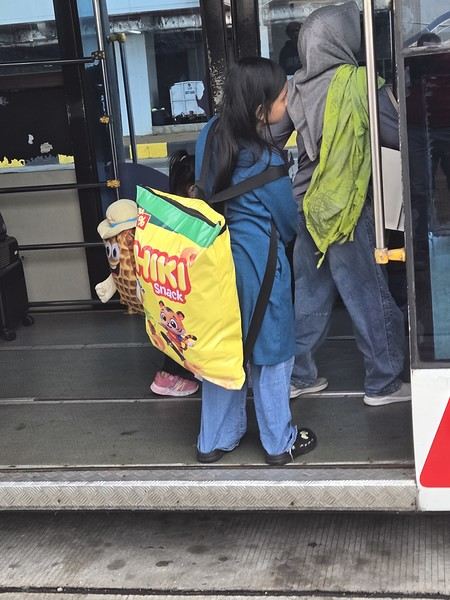
When we arrived in Makassar, a driver was waiting to take us straight to Rammang Rammang: 250,000 IDR (12 €) to our guesthouse (Rammang Rammang House). Forget about meeting people on the bus—we were headed straight to the first stop of our trip, and it was already stunning.
My kids’ guesthouse: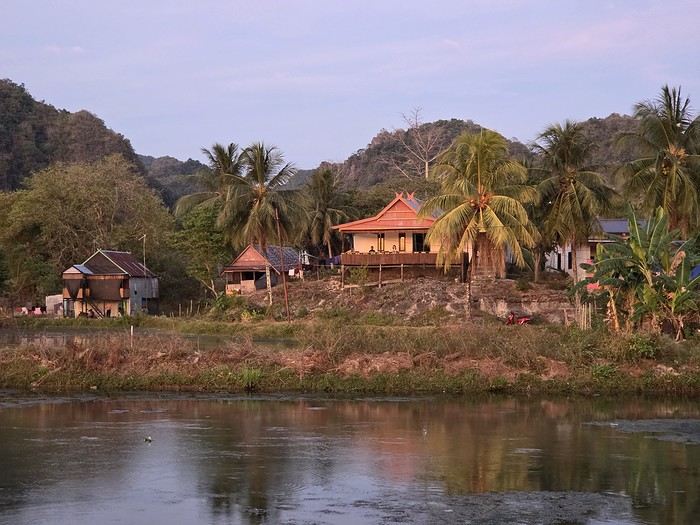
Ours: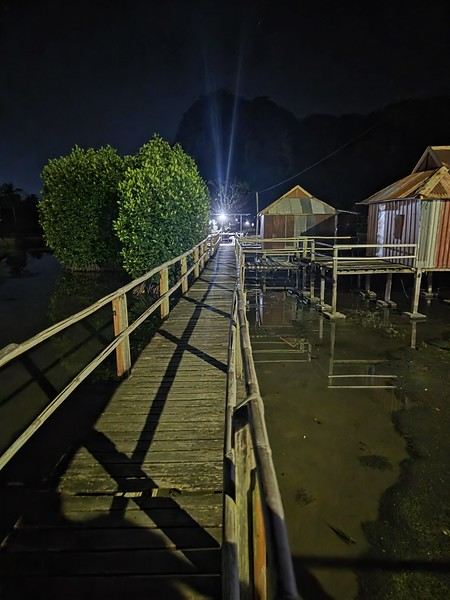
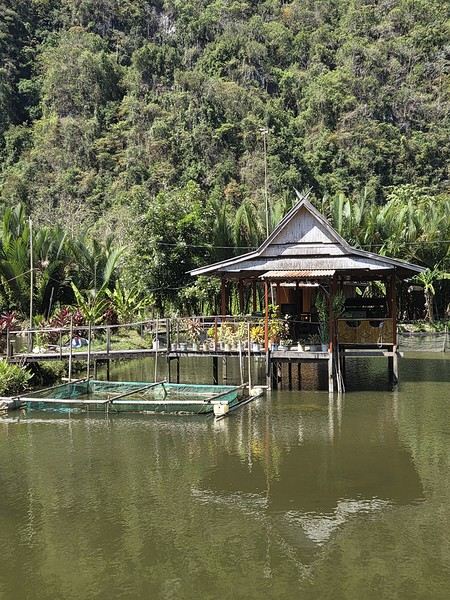
View of the little lake: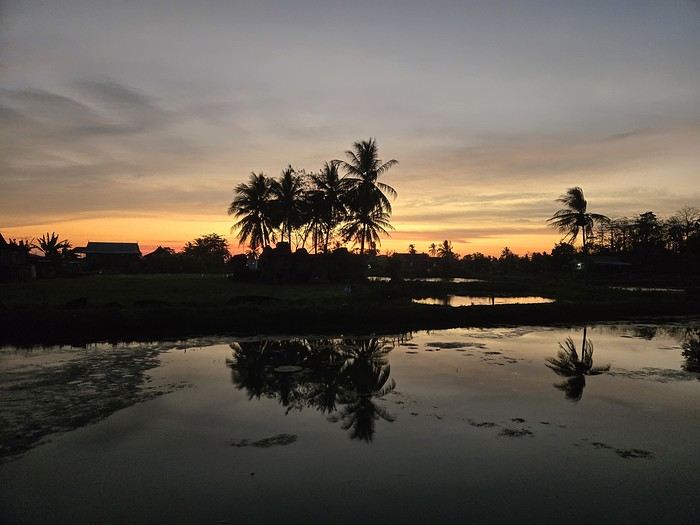
But not everything is straightforward around here. I wanted to get a local SIM card for internet and calls. I found them expensive at Jakarta’s airport (20 € for 20 GB), so I decided to wait. Well, no luck in Rammang Rammang either. You can’t just buy one from the local shop—you need a Telkomsat store (they have the best coverage). So we’d have to wait for Rantepao to get Wi-Fi... When I say "local shop," I mean the little shack around the corner. No big deal—we’d find one easily in Rantepao for 5 € and 25 GB. So there we were, offline, just the four of us enjoying the amazing view.
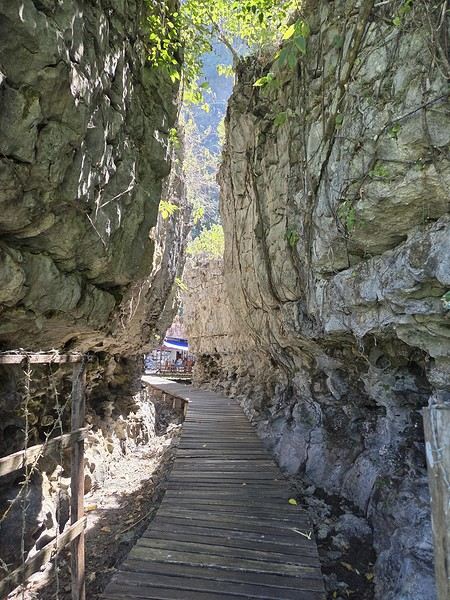
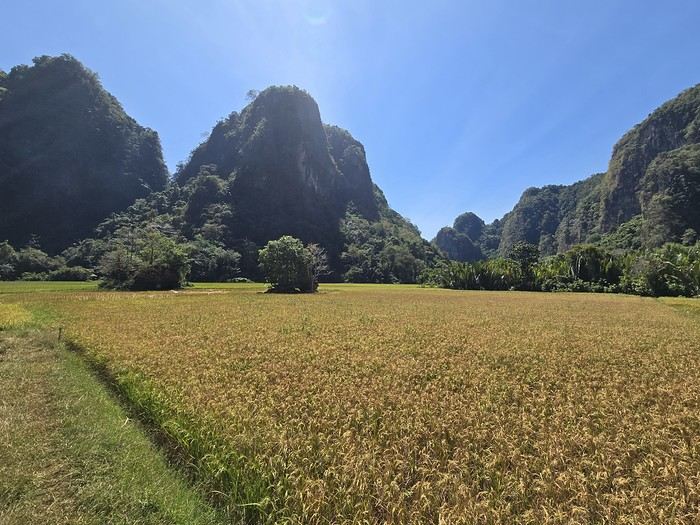
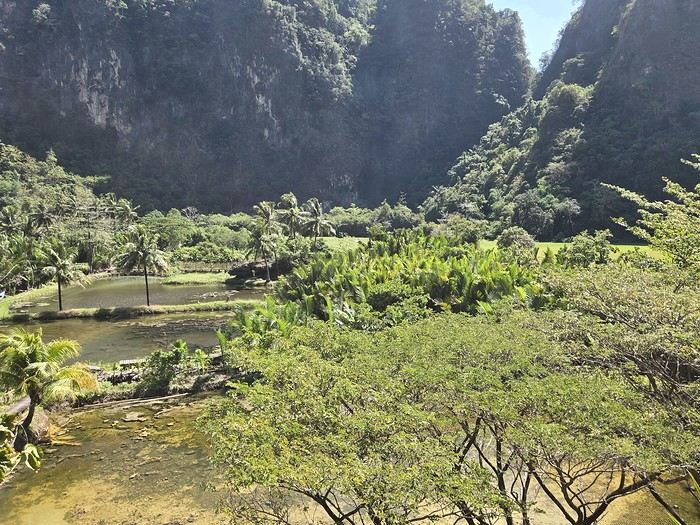
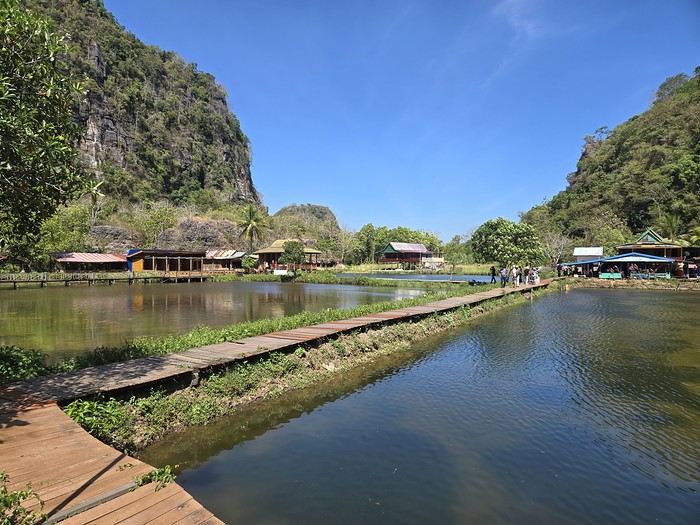
Saturday 07/11: Rammang Rammang We woke up early to the sound of wedding music blasting through the village (everyone’s invited!). Off we went to explore the area. A little walking, a little boat ride (shared with a French tourist and a Polish one—yes, there *are* tourists here, just not many; 750,000 IDR for up to 8 people) through a lovely canal, and we discovered the karst site. It was peaceful and beautiful. The river: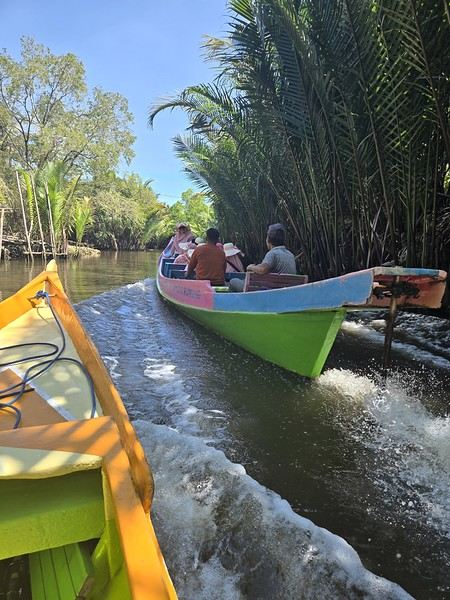 The karst site:
Wednesday 07/08 - Thursday 07/09: We left Montpellier for what was supposed to be five flights, though we only took four to start, landing in Jakarta. We picked up our luggage there to catch a flight to Makassar the next day. That’s the only way we could get an affordable ticket (702 €). I won’t bore you with the flight details—there’s not much to say. We arrived at 7 PM and considered heading straight to Makassar that evening. But we opted for a recovery night before taking off again. Good thing we did, because my son’s suitcase was missing... First contact with the locals was a bit stressful—a trip without your luggage isn’t exactly fun. But right away, a woman reassured us: the suitcase was just enjoying some extra time in Singapore. Maybe it was doing some last-minute shopping. Anyway, nothing serious—it was supposed to arrive at 9 AM the next day. That gave us some breathing room since our flight wasn’t until noon. So off we went to our hotel (Days Hotel & Suites) near the airport. It was cheap (40 € for three rooms—my kids are older and need their space), but it wasn’t worth much more. The place had definitely seen better days. But no big deal—we were only there for the night, and... we got to watch France beat Morocco in the World Cup live at 3 AM. That’s what really mattered!
Friday 07/10: In search of the lost suitcase First challenge of the morning: finding our missing suitcase. They sent us to the airport basement, to the staff entrance. We were greeted with smiles, and an airport employee led me through the underground corridors back to the baggage claim. Right on time at 9 AM, the suitcase arrived, just like they’d promised. We were finally complete! Off we went to change terminals, grab a well-deserved meal, and board our fifth flight to Makassar. Little side note: I struggled for a while trying to book domestic flights directly on the airlines’ websites with no luck. Without meaning to advertise (though I guess I am a little), I realized it’d be easier to use sites like tiket.com or Traveloka. That turned out to be a great choice—I even ended up booking hotels through them later in the trip. 12:40 PM: We were on our way to Makassar. First good news: we were the only tourists. Well, the only European tourists on the flight, anyway. No, you’re not dreaming—the bag is full of... potato chip packets. To each their own souvenirs, I guess...
When we arrived in Makassar, a driver was waiting to take us straight to Rammang Rammang: 250,000 IDR (12 €) to our guesthouse (Rammang Rammang House). Forget about meeting people on the bus—we were headed straight to the first stop of our trip, and it was already stunning.
My kids’ guesthouse:
Ours:
View of the little lake:
But not everything is straightforward around here. I wanted to get a local SIM card for internet and calls. I found them expensive at Jakarta’s airport (20 € for 20 GB), so I decided to wait. Well, no luck in Rammang Rammang either. You can’t just buy one from the local shop—you need a Telkomsat store (they have the best coverage). So we’d have to wait for Rantepao to get Wi-Fi... When I say "local shop," I mean the little shack around the corner. No big deal—we’d find one easily in Rantepao for 5 € and 25 GB. So there we were, offline, just the four of us enjoying the amazing view.
Saturday 07/11: Rammang Rammang We woke up early to the sound of wedding music blasting through the village (everyone’s invited!). Off we went to explore the area. A little walking, a little boat ride (shared with a French tourist and a Polish one—yes, there *are* tourists here, just not many; 750,000 IDR for up to 8 people) through a lovely canal, and we discovered the karst site. It was peaceful and beautiful. The river:
The karst site:
Practical aspects spring 2026: border to Murmansk, to Pskov, SIM cards, internet.
I took a few days to get some fresh air outside the Schengen-NATO prison. Between March 18, 2026, and March 25, 2026, as shown by the passport stamps:
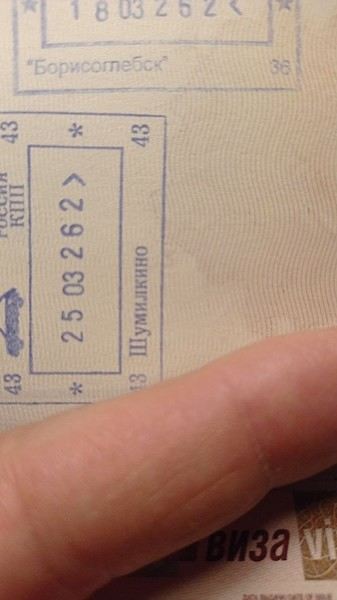
Borisoglebsk is the Russian border checkpoint after Kirkenes, on the road to Murmansk.
Kirkenes is a tiny town with a correspondingly small airport. Nothing has changed there: the minibuses to Murmansk wait on the right as you exit the airport. They’re synchronized with the two daily flights from Oslo—the SAS around 11:00 AM and Norwegian around 11:30 AM. They stop in Kirkenes at the corner of the Scandic for an hour, where other passengers can board, then head straight to the nearby border.
This is the least hassle Frontex/Schengen border. The Norwegian agent quickly scans your passport, and that’s it. No customs, since Norway is Schengen but not in the EU. On the Russian side, there’s a passport check and a quick customs inspection. All in all, crossing both the Norwegian and Russian checkpoints takes about 15 minutes.
A paper visa is required; e-visas aren’t accepted.
Two companies run the route: Avto Ekspress and Borodin: https://ae51.ru/routes/kirkenes-murmansk/ https://borodinbus.com/
The one-way fare is 5,500 ₽. You can either buy it online in rubles with a MIR card or make a formal reservation and pay in NOK cash to the driver. I took Borodin, and the price in NOK was much more expensive than in ₽.
=========================
On March 25, I left from Pskov via the Estonian border post at Luhaama. I spent three days in Murmansk, flew to St. Petersburg (SPB), stayed there for two days, then took an evening train to Pskov.
Since the end of February—and reportedly until the end of May—the Estonians have restricted the opening hours of the two border crossings near Pskov: Koidula (Pechory on the Russian side) and Luhaama (Izborsk on the Russian side). They’re closed at night between 7:00 PM and 7:00 AM. Right now, there’s a bus from Pskov at 7:00 AM to the border. It drops you off at the end of the road where truckers—many Kazakh and Serbian—are parked on the side. You finish the rest on foot to the barrier, where there’s a quick initial check for Ukrainian stamps in passports. Then you walk to the customs building, followed by passport control at the kiosk for motorists. After that, it’s a 500-meter walk to the Estonian checkpoint. At the moment, things seem calmer. Passport control is quick. The usual silly questions in English: "Where were you? Where are you going?" I just gave my most clueless smile: "Sorry, I don’t understand." Yeah, right—I don’t speak English, especially not at an Estonian border with a French passport. If they’re in a mood, though... A very quick bag inspection. Once you exit the Estonian post, walk to the bus stop sign by the road where another coach takes you to Riga.
The catch: in my case, last Wednesday, there were two passengers (Russians) with old Ukrainian stamps in their passports. The bus from the Estonian post to Riga was supposed to leave around 9:30 AM. We ended up leaving around noon after the two were grilled by the FSB. Since it was a weekday outside of holidays, the bus was half-empty. The fuller the bus and the more people with Ukrainian stamps, the worse the nightmare. Don’t book a same-day flight from Riga. I had a flight at 6:00 PM, so it worked out.
=============
The Kirkenes-Murmansk route is still clearly the easiest and fastest. But it’s not the most convenient since it’s way up north.
Next, I’d say the Gdansk-Kaliningrad route in the middle of the week. Avoid weekends and holiday departures/returns.
Avoid the Narva-Ivangorod route during Christmas, Easter, May 9, and *all* summer.
==============
About flights from Murmansk to St. Petersburg: prices are good. I bought my ticket the day before departure on Rossiya for 7,500 ₽, including 10 kg of luggage + a handbag.
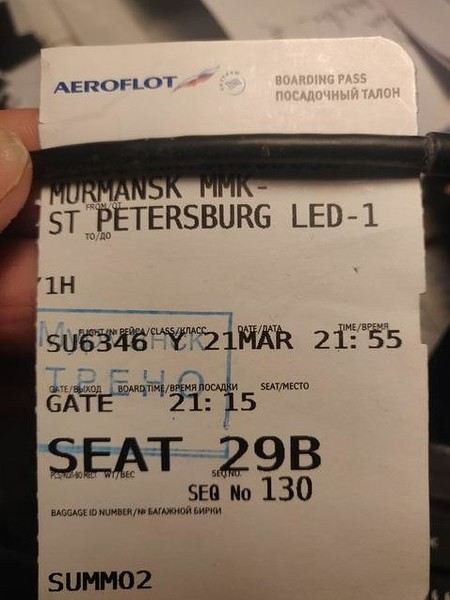
It’s the tail end of the northern lights season, and there were still crowds of Chinese tourists.
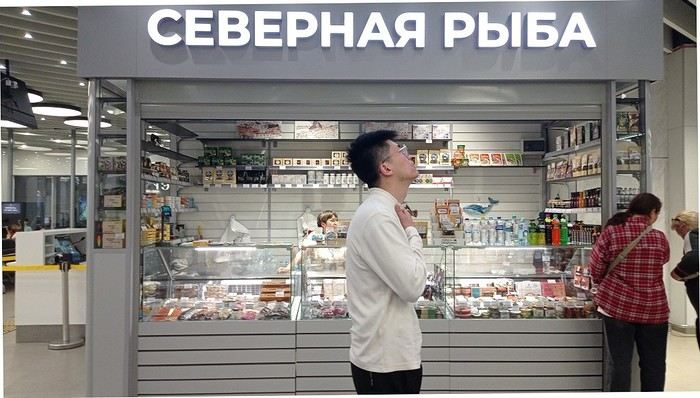
By the way, Murmansk is twinned with Harbin:
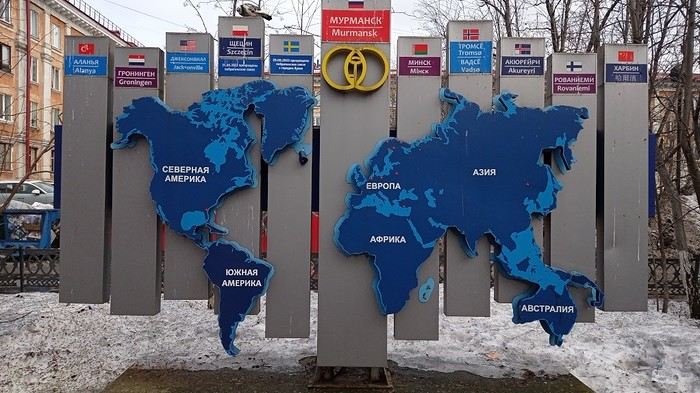
Chinese tourists are the largest foreign group, followed by Indians, then a mix of others from the Far East, Turks, Arabs, etc. Brochures are bilingual—Russian and Chinese:
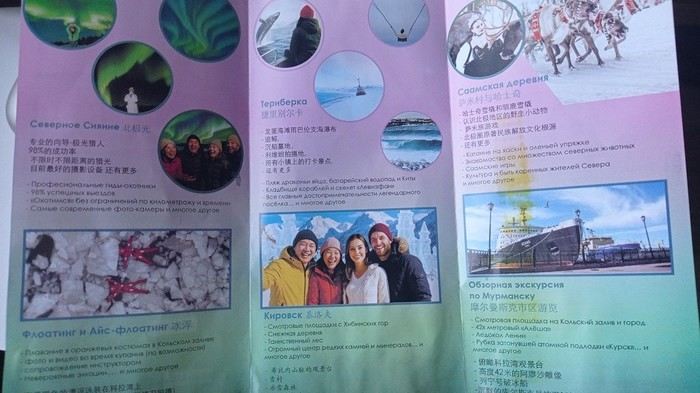
============================
But let’s talk practical stuff. --
My domestic SIM card was restricted for SMS and internet for 24 hours. After that, if you want to keep using SMS, don’t turn off your phone—restarting triggers another 24-hour purgatory.
My Russian SIM cards (Megafon, MTS, Beeline) were activated as soon as I logged into their respective apps with my credentials.
Internet --
Telegram is heavily slowed down by authorities. To use it, you need to connect through proxy servers, which you load into the latest version of the app. Traffic is then rerouted internally within Telegram to servers outside Russia (Germany, Poland, Sweden, etc.). You can find these proxies on various channels. One is ChatVPN—check their website too.
For general internet use, like browsing the web, VPNs that work right now use the VLESS protocol. You can find several on Telegram by searching "VPN." A few free days, then payment in rubles or crypto.
Rozkomnadzor’s team are experts at this, so things can change. It’s a constant cat-and-mouse game.
Pskov is a special case. The city is near Estonia and has a large military base. Depending on NATO drone swarms launched from the Baltics, Wi-Fi can be completely suspended except for the most essential mobile apps. The drone swarms use the 4G network, and the powerful electronic jamming and drone suppression systems cause periods without Wi-Fi—including in hotels. Wired connections aren’t affected.
Borisoglebsk is the Russian border checkpoint after Kirkenes, on the road to Murmansk.
Kirkenes is a tiny town with a correspondingly small airport. Nothing has changed there: the minibuses to Murmansk wait on the right as you exit the airport. They’re synchronized with the two daily flights from Oslo—the SAS around 11:00 AM and Norwegian around 11:30 AM. They stop in Kirkenes at the corner of the Scandic for an hour, where other passengers can board, then head straight to the nearby border.
This is the least hassle Frontex/Schengen border. The Norwegian agent quickly scans your passport, and that’s it. No customs, since Norway is Schengen but not in the EU. On the Russian side, there’s a passport check and a quick customs inspection. All in all, crossing both the Norwegian and Russian checkpoints takes about 15 minutes.
A paper visa is required; e-visas aren’t accepted.
Two companies run the route: Avto Ekspress and Borodin: https://ae51.ru/routes/kirkenes-murmansk/ https://borodinbus.com/
The one-way fare is 5,500 ₽. You can either buy it online in rubles with a MIR card or make a formal reservation and pay in NOK cash to the driver. I took Borodin, and the price in NOK was much more expensive than in ₽.
=========================
On March 25, I left from Pskov via the Estonian border post at Luhaama. I spent three days in Murmansk, flew to St. Petersburg (SPB), stayed there for two days, then took an evening train to Pskov.
Since the end of February—and reportedly until the end of May—the Estonians have restricted the opening hours of the two border crossings near Pskov: Koidula (Pechory on the Russian side) and Luhaama (Izborsk on the Russian side). They’re closed at night between 7:00 PM and 7:00 AM. Right now, there’s a bus from Pskov at 7:00 AM to the border. It drops you off at the end of the road where truckers—many Kazakh and Serbian—are parked on the side. You finish the rest on foot to the barrier, where there’s a quick initial check for Ukrainian stamps in passports. Then you walk to the customs building, followed by passport control at the kiosk for motorists. After that, it’s a 500-meter walk to the Estonian checkpoint. At the moment, things seem calmer. Passport control is quick. The usual silly questions in English: "Where were you? Where are you going?" I just gave my most clueless smile: "Sorry, I don’t understand." Yeah, right—I don’t speak English, especially not at an Estonian border with a French passport. If they’re in a mood, though... A very quick bag inspection. Once you exit the Estonian post, walk to the bus stop sign by the road where another coach takes you to Riga.
The catch: in my case, last Wednesday, there were two passengers (Russians) with old Ukrainian stamps in their passports. The bus from the Estonian post to Riga was supposed to leave around 9:30 AM. We ended up leaving around noon after the two were grilled by the FSB. Since it was a weekday outside of holidays, the bus was half-empty. The fuller the bus and the more people with Ukrainian stamps, the worse the nightmare. Don’t book a same-day flight from Riga. I had a flight at 6:00 PM, so it worked out.
=============
The Kirkenes-Murmansk route is still clearly the easiest and fastest. But it’s not the most convenient since it’s way up north.
Next, I’d say the Gdansk-Kaliningrad route in the middle of the week. Avoid weekends and holiday departures/returns.
Avoid the Narva-Ivangorod route during Christmas, Easter, May 9, and *all* summer.
==============
About flights from Murmansk to St. Petersburg: prices are good. I bought my ticket the day before departure on Rossiya for 7,500 ₽, including 10 kg of luggage + a handbag.
It’s the tail end of the northern lights season, and there were still crowds of Chinese tourists.
By the way, Murmansk is twinned with Harbin:
Chinese tourists are the largest foreign group, followed by Indians, then a mix of others from the Far East, Turks, Arabs, etc. Brochures are bilingual—Russian and Chinese:
============================
But let’s talk practical stuff. --
My domestic SIM card was restricted for SMS and internet for 24 hours. After that, if you want to keep using SMS, don’t turn off your phone—restarting triggers another 24-hour purgatory.
My Russian SIM cards (Megafon, MTS, Beeline) were activated as soon as I logged into their respective apps with my credentials.
Internet --
Telegram is heavily slowed down by authorities. To use it, you need to connect through proxy servers, which you load into the latest version of the app. Traffic is then rerouted internally within Telegram to servers outside Russia (Germany, Poland, Sweden, etc.). You can find these proxies on various channels. One is ChatVPN—check their website too.
For general internet use, like browsing the web, VPNs that work right now use the VLESS protocol. You can find several on Telegram by searching "VPN." A few free days, then payment in rubles or crypto.
Rozkomnadzor’s team are experts at this, so things can change. It’s a constant cat-and-mouse game.
Pskov is a special case. The city is near Estonia and has a large military base. Depending on NATO drone swarms launched from the Baltics, Wi-Fi can be completely suspended except for the most essential mobile apps. The drone swarms use the 4G network, and the powerful electronic jamming and drone suppression systems cause periods without Wi-Fi—including in hotels. Wired connections aren’t affected.
Kattegat Tour and Norway’s Majestic Fjords – 32 Days (Denmark, Sweden, Norway)
Kattegat isn’t just the name of the village in the TV series *Vikings*—it’s also the stretch of water separating Denmark from Sweden... the sea, basically! And further north, you’ve got Norway and its fjords!
Originally, I’d planned to just do a loop around Kattegat, with the *Under* restaurant in Lindesnes as our anniversary treat... but along the way, we thought, why not "push" a little further north, keeping an eye on the budget since we’d chosen to travel by car in June 2025 through Scandinavia.
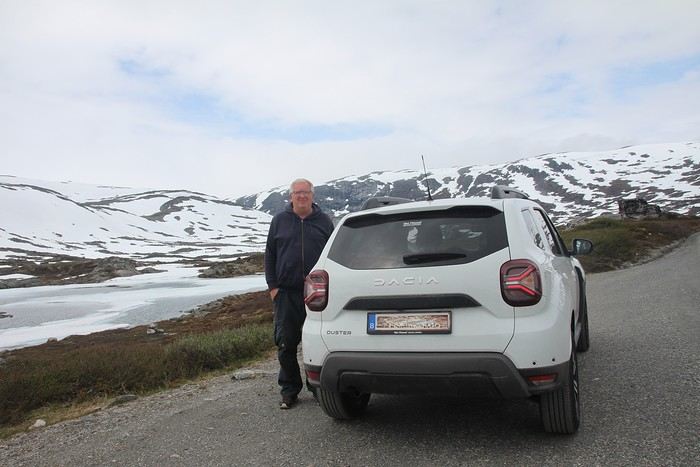
Why by car when most travelers opt for a camper van, while others prefer the comfort of cruises? Well, because we don’t own a camper van, renting one is pricey, and then you’ve got to add fuel costs (those things guzzle gas!), ferry fees, and other "tolls." All things considered, we went for mostly rentals—especially since there were four of us at the start of the trip. We spent the first week in Denmark with our daughter and son-in-law. Then they flew back to Belgium, and we continued our adventure as a couple. For accommodation, we mainly booked Airbnb apartments, which helped keep costs down and, most importantly, let us prepare our own meals (diet, diet!). In this travel journal, you’ll discover (or rediscover, for those who followed my older ones) our unbridled love for theme parks, museums, unique experiences, and—especially in Denmark—Legos! Unfortunately, we didn’t do any hikes this year because the unpredictable weather had made the trails slippery, and since I’d already taken three tumbles during the trip, I didn’t want to risk another! In the end, we traveled for 32 days, covered 6,200 km, and most importantly, discovered the charming country of Denmark, marveled at Norway’s breathtaking fjords—all without suffering the heatwave that hit France and Belgium that June! If you’ve got any questions, don’t hesitate to ask!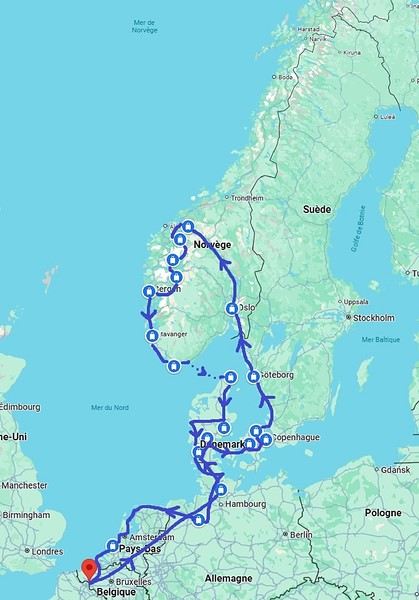
Why by car when most travelers opt for a camper van, while others prefer the comfort of cruises? Well, because we don’t own a camper van, renting one is pricey, and then you’ve got to add fuel costs (those things guzzle gas!), ferry fees, and other "tolls." All things considered, we went for mostly rentals—especially since there were four of us at the start of the trip. We spent the first week in Denmark with our daughter and son-in-law. Then they flew back to Belgium, and we continued our adventure as a couple. For accommodation, we mainly booked Airbnb apartments, which helped keep costs down and, most importantly, let us prepare our own meals (diet, diet!). In this travel journal, you’ll discover (or rediscover, for those who followed my older ones) our unbridled love for theme parks, museums, unique experiences, and—especially in Denmark—Legos! Unfortunately, we didn’t do any hikes this year because the unpredictable weather had made the trails slippery, and since I’d already taken three tumbles during the trip, I didn’t want to risk another! In the end, we traveled for 32 days, covered 6,200 km, and most importantly, discovered the charming country of Denmark, marveled at Norway’s breathtaking fjords—all without suffering the heatwave that hit France and Belgium that June! If you’ve got any questions, don’t hesitate to ask!
Marrakech 2025: My First Steps as a Private Guide
Preamble:
.
This isn’t about drumming up business for a new professional venture—just sharing, under pressure from eager Vf members hungry for juicy anecdotes, my 10-day trip to Marrakech with 10 friends.
I’d mentioned during the planning discussion for this trip ((https://voyageforum.com/forum/questions-excursions-autour-marrakech-d10685703/)) that there wouldn’t be a travel journal... And since I’m a man of my word—but also stuck with a nasty calf muscle tear at the end of the trip that’s keeping me immobile for 15 days (more on that later)—I’ve got some time to dedicate to this. So, after this preamble, off we go to the Medina!
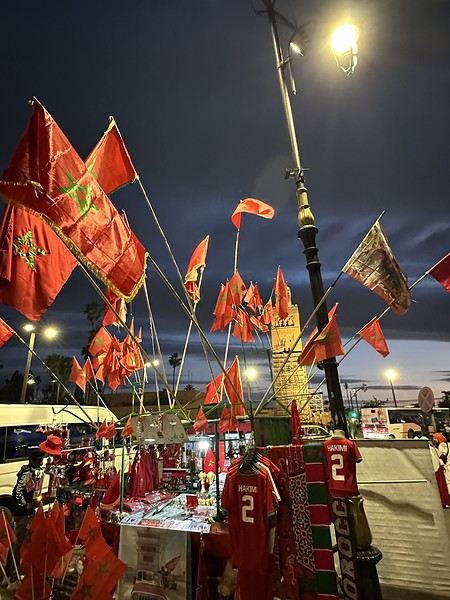 .
.
Day 1: Friday, May 2nd – The Day the Group Split
Before we dive in, let’s talk about the trip prep. Among my friends, I’ve got a rep as the go-to independent travel expert (thanks to a few trips, some with this same crew). So, naturally, the task of planning this one fell to me—and I took it on gladly (you’re never better served than by yourself, right?). The prep and itinerary were hashed out over multiple meet-ups (excuses?) during shared meals at one another’s places, guided by yours truly. Travel style, accommodation, sightseeing—all decisions were made together, trying to balance everyone’s wishes over a good bottle (generic term, not numerical!)
So, a group of five—including me and my girlfriend—set off for Geneva at 3 AM that Friday, while the rest would join us on Sunday due to family or work commitments. We’ll skip the EasyJet flight—it was nothing special, just a means to get us there safely (which, in itself, is already a win). We landed in Marrakech at 9 AM local time. There, a spotless Dacia Logan was waiting for us, chartered by MEDLOC, whose impeccable service I’ll praise here (thanks, friends, for the tip!). My first challenge, after loading the suitcases into the trunk: reaching the riad booked for our first two nights as the advance team. https://www.astradamusmarrakesh.top/fr/
I was a little nervous about driving here—Marrakech’s driving reputation precedes it. The hiccup? While setting up Google Maps for the route, I accidentally added a level-5 difficulty and enabled pedestrian mode... Imagine a rental car stubbornly trying for over half an hour to navigate the Medina (the riad was in the north), cursing all the pedestrians in streets too narrow for the car, and having to reverse multiple times because “it won’t fit,” ignoring the many Marrakechis waving to signal the street was impassable (but what are they trying to sell me now? 🤪)... Until my co-pilot, holding my phone, asked if it was “normal for the route to be dotted on Google Maps?” Yes, it’s normal—pedestrian mode was on.... We’ll still be laughing about this in the nursing home in 40 years, but at the time, I was genuinely surprised by what driving in Morocco had in store for me—and for good reason! After fixing the Google Maps settings, we arrived more calmly at the private parking lot (90 dirhams per night) and then at the riad, where we received a warm welcome while our rooms were being prepared.
After freshening up, we crossed the souks for the first time to have lunch at Jemaa el-Fna Square, at Zeitoun Café, where we enjoyed our first couscous or tagine on its terrace. We’d return to Jemaa el-Fna that evening after a restorative nap at the riad, another late afternoon in the souk, and an evening at this famous UNESCO World Heritage site. This time, it was the restaurant Lafarmacie (you can’t make this up!) that won us over, despite the lack of a rooftop. I recommend this place to everyone—the prices are great, the welcome is extraordinary, and the food is excellent...
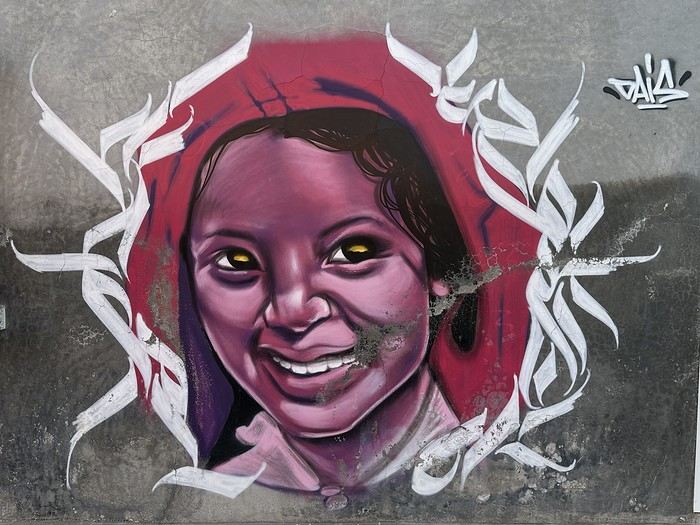
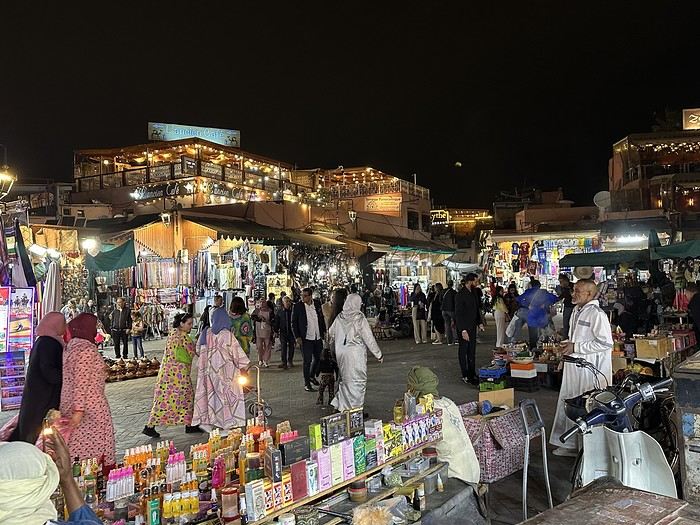
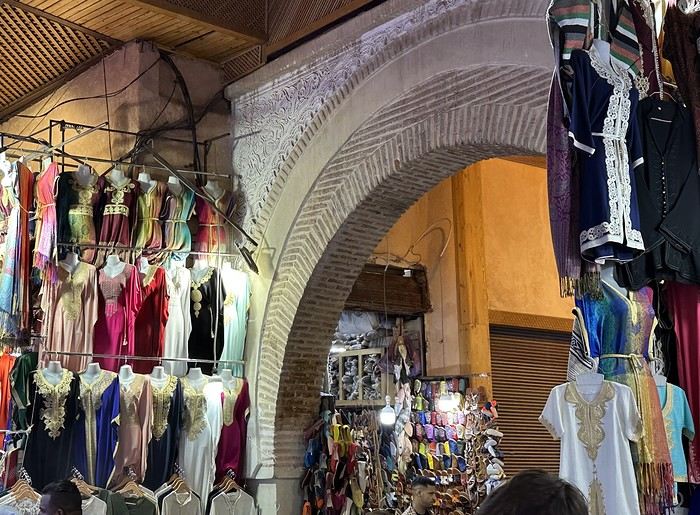
Returning after 11 PM, we learned the hard way that the souk has its own entry points and hours, and the path to our beds was full of detours and closed doors. Fortunately, we were guided by friendly locals who showed us the right way (in exchange for a fiercely negotiated tip each time...)
.Day 1: Friday, May 2nd – The Day the Group Split
Before we dive in, let’s talk about the trip prep. Among my friends, I’ve got a rep as the go-to independent travel expert (thanks to a few trips, some with this same crew). So, naturally, the task of planning this one fell to me—and I took it on gladly (you’re never better served than by yourself, right?). The prep and itinerary were hashed out over multiple meet-ups (excuses?) during shared meals at one another’s places, guided by yours truly. Travel style, accommodation, sightseeing—all decisions were made together, trying to balance everyone’s wishes over a good bottle (generic term, not numerical!)
So, a group of five—including me and my girlfriend—set off for Geneva at 3 AM that Friday, while the rest would join us on Sunday due to family or work commitments. We’ll skip the EasyJet flight—it was nothing special, just a means to get us there safely (which, in itself, is already a win). We landed in Marrakech at 9 AM local time. There, a spotless Dacia Logan was waiting for us, chartered by MEDLOC, whose impeccable service I’ll praise here (thanks, friends, for the tip!). My first challenge, after loading the suitcases into the trunk: reaching the riad booked for our first two nights as the advance team. https://www.astradamusmarrakesh.top/fr/
I was a little nervous about driving here—Marrakech’s driving reputation precedes it. The hiccup? While setting up Google Maps for the route, I accidentally added a level-5 difficulty and enabled pedestrian mode... Imagine a rental car stubbornly trying for over half an hour to navigate the Medina (the riad was in the north), cursing all the pedestrians in streets too narrow for the car, and having to reverse multiple times because “it won’t fit,” ignoring the many Marrakechis waving to signal the street was impassable (but what are they trying to sell me now? 🤪)... Until my co-pilot, holding my phone, asked if it was “normal for the route to be dotted on Google Maps?” Yes, it’s normal—pedestrian mode was on.... We’ll still be laughing about this in the nursing home in 40 years, but at the time, I was genuinely surprised by what driving in Morocco had in store for me—and for good reason! After fixing the Google Maps settings, we arrived more calmly at the private parking lot (90 dirhams per night) and then at the riad, where we received a warm welcome while our rooms were being prepared.
After freshening up, we crossed the souks for the first time to have lunch at Jemaa el-Fna Square, at Zeitoun Café, where we enjoyed our first couscous or tagine on its terrace. We’d return to Jemaa el-Fna that evening after a restorative nap at the riad, another late afternoon in the souk, and an evening at this famous UNESCO World Heritage site. This time, it was the restaurant Lafarmacie (you can’t make this up!) that won us over, despite the lack of a rooftop. I recommend this place to everyone—the prices are great, the welcome is extraordinary, and the food is excellent...
Returning after 11 PM, we learned the hard way that the souk has its own entry points and hours, and the path to our beds was full of detours and closed doors. Fortunately, we were guided by friendly locals who showed us the right way (in exchange for a fiercely negotiated tip each time...)
The Kingdom of Lions...
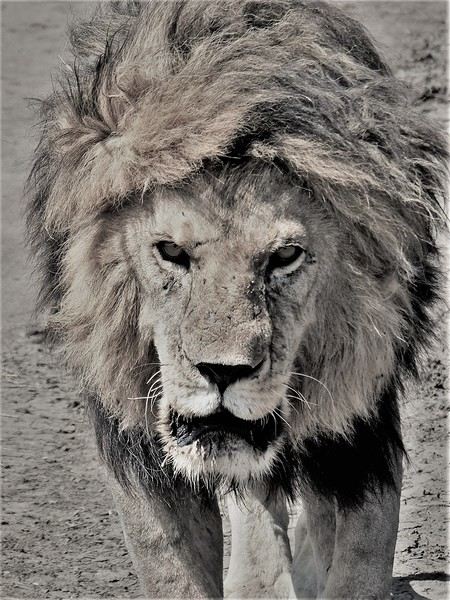 Hello everyone!
This trip dates back to late 2021, but since Voyage Forum reopened for writing, I haven’t seen many travel journals about Tanzania, so I decided to repost this one, which I originally shared on another well-known travelers’ site—even though I prefer Voyage Forum’s user experience.
It’s also a chance for me to relive this exhilarating trip... So, if you’re up for it, let me take you on a classic adventure: Tarangire - Ngorongoro - Serengeti, plus a little bonus—the small Arusha Park.
First off, yes, as the title of this journal suggests, we were lucky enough to spot *tons* of lions. The power they exude is incredible, even if most of the time they just look like big cats napping or strolling around. But lock eyes with one, and you’ll be glad you’re in the jeep.
Hello everyone!
This trip dates back to late 2021, but since Voyage Forum reopened for writing, I haven’t seen many travel journals about Tanzania, so I decided to repost this one, which I originally shared on another well-known travelers’ site—even though I prefer Voyage Forum’s user experience.
It’s also a chance for me to relive this exhilarating trip... So, if you’re up for it, let me take you on a classic adventure: Tarangire - Ngorongoro - Serengeti, plus a little bonus—the small Arusha Park.
First off, yes, as the title of this journal suggests, we were lucky enough to spot *tons* of lions. The power they exude is incredible, even if most of the time they just look like big cats napping or strolling around. But lock eyes with one, and you’ll be glad you’re in the jeep.
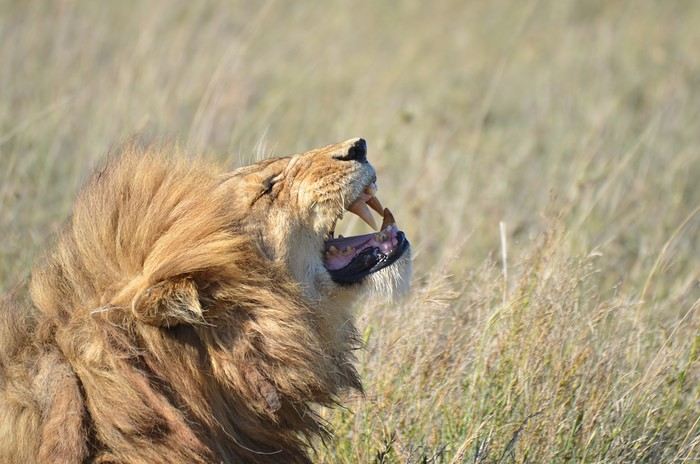
But let’s not forget the rest of the wildlife—and the landscapes, which are absolutely stunning, with those iconic tree silhouettes.
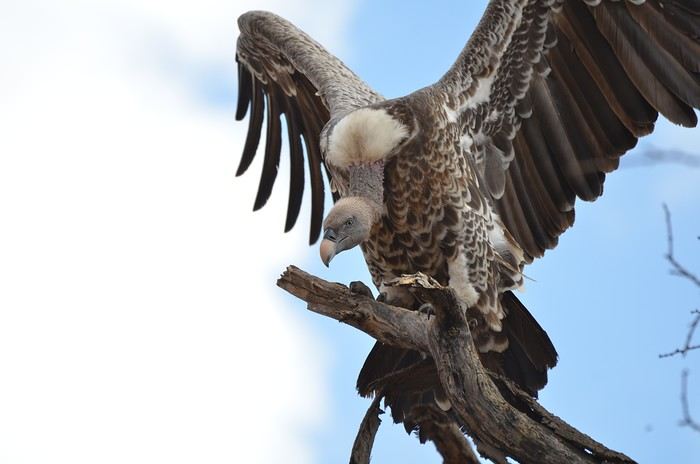
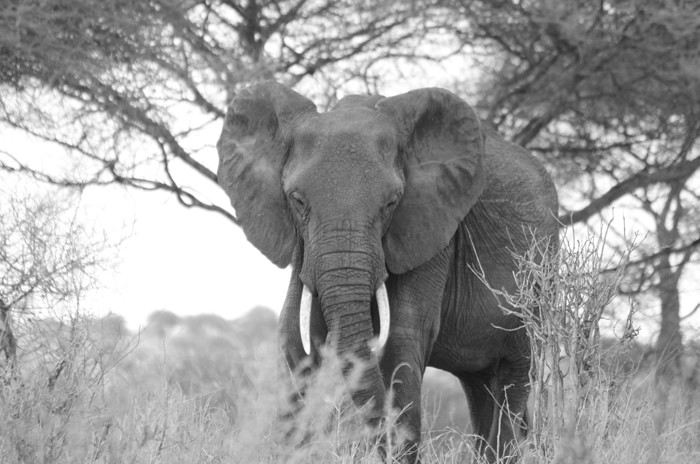
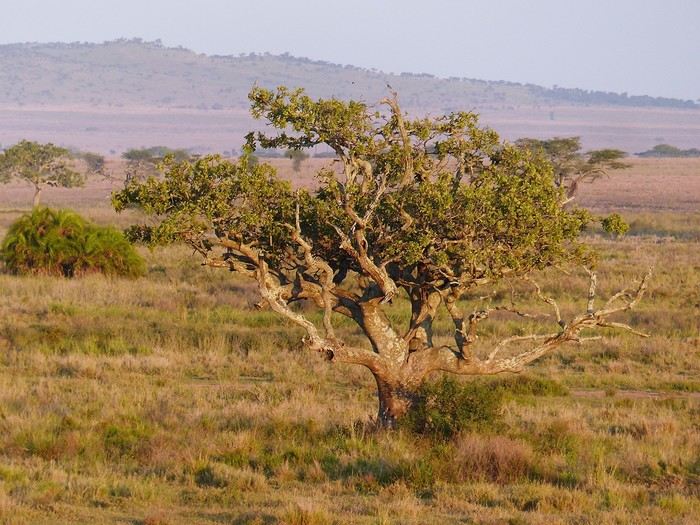
I remember before leaving, I was a little worried I wouldn’t feel that same sense of wonder I’d experienced two years earlier in Botswana (see my travel journal). That fear was unfounded—the magic worked its charm once again! Note: Since we had limited time, we focused our trip entirely on safari, so this journal is 100% animals and landscapes—and 0% Maasai. Next post: TARANGIRE
Practical tips after 3 months in Morocco
MOROCCO END 2024 / BEGINNING 2025
Off-season, I was lucky enough to negotiate hotel prices.
I should also mention that this was for a solo traveler until December 30th.
After that, there’ll be three of us!
Practical info.
Here’s all the info I gathered during my 3-month trip.
Cities: TANGIER / CHEFCHAOUEN / FES / MOULAY IDRISS, VOLUBILIS / AZROU / MIDELT /
ERRACHIDIA / RISSANI / MERZOUGA / TINGHIR / BOUMLANE DADES, AIT OUGLIF /
OUARZAZATE / TALIOUINE / TAROUDANT / TIZNIT / TAFRAOUT / SIDI IFNI, LEGZIRA /
AGADIR / ESSAOUIRA / MARRAKECH ///
From there, we’ll be three people. Cities: IMLIL / OUARZAZATE / AGDZ / ZAGORA / AIT BEN HADDOU / MARRAKECH / ESSAOUIRA / CASABLANCA. (Generally, I found that mattresses in Morocco were quite hard. My solution: I put two, even three folded blankets on the mattress to add some softness. Wi-Fi almost never works in the room.)
Tangier: Hôtel Fuentes Petit Socco, Old Medina +212 539 934 669 (For one person, end of October) Upon arrival, 19 € for a double room with a private bathroom. Breakfast included. Chefchaouen: Dar Besmellah Av Ibn Askar +212 539 986 489 (For one person, end of October). I don’t recommend it. A small, low-ceilinged room with a window facing a patio. Very dark and damp. Shared bathroom. 9 € Dar Bleu Pearl N° 4 Derb Benyaakoub +212 (0)539 88 28 86. Negotiated on-site to 130 MAD instead of 160 on Booking. Small room, furniture, Wi-Fi, private bathroom. Fes: Riad Alfredo or Riad Rocco—it’s the same place. It’s in a very narrow alley. N° 15 Derb Sidi Kjih or Qjih Talla Sagira +212 662 769 688 (see photos and virtual tour) Negotiated to 13 € on-site; on Booking, it was 16 €. Breakfast included. Atypical Anne room with private bathroom, Wi-Fi. The room is a bit dark. One of the best beds on my trip. Again, this was for a solo traveler off-season (end of October to end of December). Moulay Idriss: Gite El Menzeh (see the map) Negotiated on-site to 14 € with breakfast; on Booking, it was 24 €. I also negotiated for dinner—very good and hearty—for 5 € (the manager wanted 20 €). I stayed in the large upstairs room with a double bed, window, and private bathroom, not the tiny windowless rooms downstairs. Azrou: Hôtel des Cèdres Place Mohamed V. (see the map and photos) Negotiated 13 € instead of 16 € on Booking for a room with two small beds and a private bathroom. This hotel is honestly run-down and not worth the price at all. The owner thinks it’s a very classy hotel because of its old reputation! Midelt: Chez Ali, city center (see map) Negotiated to 14 € instead of 17 € on Booking. Room with two beds, bathroom, window, small terrace, and Wi-Fi. Er Rachidia: Hôtel El Fekri. Rue Moulay Abdalah Ben Ali (see map and photos) Couldn’t negotiate on-site—14 €, but on Booking, it was 5 € more! Rissani: Hôtel Restaurant Panorama +212 615 978 445 Well, I’d say skip it. Rooms without windows and shared bathrooms. Or on the terrace, there’s a sort of space with a big bed and a small bed behind a locked iron door with a window and an external bathroom that’s also used by people eating on the terrace. If there are people on the terrace, forget about privacy! Not to mention the internet doesn’t work, and the bed is as hard as a straw mat. All that for 150 MAD—luckily, I didn’t book through Booking, or it would’ve been more expensive!!! I didn’t stay. This closet isn’t even worth 100 MAD—and even that’s too much! A little further on, I went to a hotel where no one spoke English or anything else. I got a large room with 3 beds, a private bathroom, and Wi-Fi for 100 MAD. Merzouga: Said’s apartment +212 618 659 264. No real address—it’s right next to a souvenir shop, far from the center. (see photos) 15 €. The apartment is large with two bedrooms and all the comforts. But for me, it was too far from the village. Chez Belkecem: Marked on GPS. I don’t have any coordinates (see photos). +212 666 911 732 Negotiated on-site to 13 € with breakfast; on Booking, it was 2 € more. The room is decorated in a Berber style, with a private bathroom and a window to the outside. The worst breakfast I had in Morocco! Tinghir: Dar Al Medina Av Mohamed V (see map) Beautiful hotel negotiated to 13 € instead of 18 € on Booking. Breakfast included, Wi-Fi, room with a double bed and a single bed, window, and private bathroom. (Top floor) Boumlane Dades: Auberge Tamazirt (no contact) see GPS. Negotiated to 13 € with breakfast. It’s rustic, but I had a private bathroom, a large bed, Wi-Fi, a window, and a double bed. And the best part—the super-friendly owner gave me one of the gas heaters from the hallway. Aït Ouglif: Hôtel Aït Marghad. (See the map) Negotiated to 150 MAD instead of 240 MAD with breakfast. The place was half-closed because it was off-season. Room with a double bed on the ground floor, window, Wi-Fi, and bathroom. Heating provided—essential. The hassle was that there was almost no hot water. Ouarzazate: Hôtel Atlas 13 rue du marché +212 524 887 745 It’s on the pedestrian street. (See photos) Negotiated to 13 €. Old-fashioned room, double bed with a very hard mattress. Private bathroom, window, and Wi-Fi. Taliouine: Hôtel Le Safran. A 20-minute walk from the center—no other choice. Otherwise, there are a few local hotels, but even if I’m not always picky, there are limits. (See the map) Negotiated from 300 MAD to 200 MAD. Breakfast, Wi-Fi, window, king-size bed, private bathroom. The room is large (No. 11). (There’s a pool in the hotel.) Hôtel Atlas Bordeaux: +212 666 752 292 (next to the bus station) Usually, I’m not too picky, but honestly, skip this one. This place could be good because it’s central if: the cleaning was thorough. The bathrooms need to be redone... etc. No sheets—just a sort of blanket on the mattress and another to cover yourself. Obviously not clean. No towel. A bathroom that hasn’t been cleaned in way too long. In short, absolutely avoid. 120 MAD! Taroudant: Hôtel (mini) Atlas Bld Mansour Eddahbi (see map and photos) Double room with window, large bed, private bathroom, Wi-Fi (not great). A hotel that doesn’t look like much but is sparkling clean! 90 MAD for a single, 120 MAD for a double. Tiznit: Résidence Chem (see map) 100 MAD for a room with two single beds (very hard), window, private bathroom, and Wi-Fi. Clean but poorly maintained. Tafraout: Espace Tifawine (see the map). Hotel with a pool. Negotiated to 14 € on-site instead of 30 € on Booking. I could even choose my room. A large room with two beds—one big and one small. A large bathroom, a window, and Wi-Fi. Sidi Ifni: Hôtel Suerte Loca. (No contact, see GPS) I paid 140 MAD for a room in this dive—no negotiation possible. My room had a tiny terrace, the walls were repainted, but it’s super noisy (neighbors). Worse, when someone uses the water, there’s a loud machinery noise. That’s not all—the mattress is really worn out and sagging. The bathroom isn’t great. The Wi-Fi doesn’t work! This place still enjoys its old reputation, but it’s really run-down, and everything is old. The bedding is the worst I had in Morocco. Skip it. There’s much better for cheaper elsewhere! Hôtel La Belle Vue: Just before Suerte Loca +212 528 875 242 The reception staff was more than unfriendly. After seeing the rooms, I didn’t stay because the bedding would’ve been like sleeping on a yoga mat. Obviously not worth the 200 MAD asked for. Hôtel Aït Baamrane. Further down on the beach. Same price as above. The only difference is that everything is in good condition and comfortable, with a warm welcome.
Hôtel Safa: (see the map and photos.) On-site, no negotiation possible—200 MAD; on Booking, it was over 350 MAD. Huge room with all the luxury you could hope for. Breakfast included, large bay window, king-size bed, TV, Wi-Fi, furniture, and of course, a private bathroom. Agadir: Hôtel Kamal (see map) The only hotel I booked through Booking because there was a good discount. Except on-site, the hotel never wanted to give me the discount. At night, small insects that strongly resemble cockroaches—yet it’s high-end with doormen, etc. I contacted Booking, but nothing worked! I paid 250 MAD! Essaouira: Hôtel Elkasbah Souiria (See map and photo) Small room (No. 18) with a single bed and all the comforts. Private bathroom, window, Wi-Fi, and breakfast included (all-you-can-eat buffet). No negotiation possible—200 MAD. Chez Lina: Rue El Khemiset +212 658 042 562 (she speaks French) Large apartment with two bedrooms. Private bathroom on the landing. Wi-Fi. New, so not yet well set up. Far from the center. I paid 15 € instead of 18 € on Booking. Marrakech: Hôtel Atlas 50 rue Sidi Bouloukate +212 661 358 662 Tiny room on the ground floor with a shared bathroom. Wi-Fi, tiny window, very dark and noisy. 12 €
On December 31st, I’m joined by friends. The rooms will be for three people. Marrakech: Hôtel Agnaou 10 avenue or passage Moulay Rachid. +212 705 306 275. Negotiated on-site to 28 € for a room with a window to the outside and a private bathroom. Wi-Fi. Riad Todos: in the old medina +34 643 480 502 Watch out for extra taxes they might try to charge you. No heating. This place could be nice if better maintained. Bad smell of cat urine. Water leak in the bathroom. Wall crumbling from humidity. However, the reception staff is warm and tries to satisfy you. 120 MAD booked on Airbnb! Imlil: Auberge de la Vallée (see map) Large room with 4 beds. All comforts. Private bathroom, heating, Wi-Fi, and breakfast. Negotiated on-site to 300 MAD for three people. Ouarzazate: Hôtel Iazal: Av. Moulay Abdellah +212 524 886 187 (see photos) Very expensive for this hotel. Small room for 3 with a tiny, impractical bathroom. Heating, Wi-Fi, window. The showerhead is placed between the tiny sink and the toilet. The small space floods quickly. Far from the pedestrian center. No negotiation possible—350 MAD for three. Agdz: Guesthouse Le Chant des Palmiers. (See map) Very nice room—more like a small apartment with a fireplace corner, gas heating, private bathroom, Wi-Fi, windows, bedroom area plus two single beds. Breakfast included. Negotiated to 400 MAD for 3 people instead of 840 MAD on Booking. Zagora: Hôtel La Palmeraie. (See map) Room with bathroom, Wi-Fi (not great), heating, and window. Breakfast included. No negotiation—300 MAD (for 3). Aït Ben Haddou: Auberge La Barraka (see the map) Large, beautiful room with windows, Wi-Fi, heating, bathroom. Breakfast included. Pool. Negotiate a good price—but I didn’t note it down. (Around mid-January) Essaouira: El Kasbah Souiria. (See above) Room for three. Same benefits. No negotiation. 500 MAD. Casablanca: 664, Résidence Clémentine BD Mohamed V, Roches Noires. +33 6681 48002 Large, upscale apartment. Not far from Casa Voyageurs train station. Booked on Booking. 45 € (Last day, January 16th). Upon arrival, the price is always a few euros cheaper than on Booking—except in rare cases. Then, negotiation is possible or not! Prices vary depending on the season.
A few good places (for me) to eat.
Fes: Chez Hakim. (See map) Very good, hearty, and almost cheaper than anywhere else in the medina. Ouarzazate: Pasto wood-fired oven Place Al-Mouahidine +212 696 484 281 It had been a long time since I’d eaten such a good pizza (better than in most restaurants in France). At a price that beats all competition! Midelt: Berber Restaurant. (See map and photos) A dive that doesn’t look like much but is delicious at a more than affordable price. Marrakech: Dar EL WALIDIN Raid laahrouse, Rte Sidi Abdelaziz +212 653 493 637 Great selection, good food, and also cheap!
(At Jemaa el-Fnaa square. Under the warm welcome at restaurant « Chez Ali N° 65 », we got scammed out of 7 € when paying the bill! Experts at swindling.) Azrou: Snack La Forêt (see map) Again, good food at a low price. Merzouga: Snack Alafrah VOLUBILIS: The price has gone up to 100 MAD. Honestly, if you’re not an archaeology buff, it’s not worth it! BANKS: The best exchange rate I got was at BMCI. For ATMs, I paid the least fees at Banque Populaire. TRANSPORTATION:
Airport taxi Tangier to Petit Socco: 100 MAD Train: Fes to Meknès Al Amir: 35 MAD Casablanca to Airport: 60 MAD
Grand Taxis: (Shared taxi for 7 people that only leaves when full. I never waited more than 15 minutes to leave. There’s good turnover, and the vehicles are in good condition. They go faster than buses and are almost always cheaper. Prices are fixed, and you don’t pay the driver but the station chief!)
Meknès to Moulay Idriss: 12 MAD Moulay Idriss to Azrou: 35 MAD Midelt to Errachidia: 60 MAD Errachidia to Rissani: 40 MAD (I preferred this option rather than leaving at night or very early in the morning from Errachidia to Merzouga with Supratour, the only company that goes to Merzouga.) Rissani to Merzouga: 15 MAD Taliouine to Taroudant: 45 MAD (The bus is cheaper but takes longer) Taroudant to Inezgane: 35 MAD (Agadir suburb) I connected directly to Tiznit. Inezgane to Tiznit: 35 MAD Tiznit to Tafraout: 45 MAD (2-hour trip) Tiznit to Sidi Ifni: 35 MAD Agadir to Essaouira: 100 MAD Essaouira to Marrakech: 100 MAD Imlil to Marrakech: 35 MAD Grand taxi for three to Imlil: 220 MAD BUS: Tangier to Chefchaouen: 65 + 5 MAD baggage CTM Chefchaouen to Fes: 135 + 5 MAD CTM Azrou to Midelt: 50 MAD local bus Merzouga to Tinghir: 110 + 5 MAD Supratour Tinghir to Boumlane Dades: 30 + 5 MAD Supratour Boumlane Dades to Ouarzazate: 30 MAD minibus Ouarzazate to Taliouine: 60 MAD Satas company Sidi Ifni to Agadir: 95 + 5 MAD CTM Agadir to Essaouira: 70 MAD Trans Al Yamama Essaouira to Marrakech: 65 MAD Argana company Marrakech to Essaouira: 60 + 5 MAD Virago Mogador company Essaouira to Casablanca: 100 + 5 MAD
Sidi Ifni: To go to Legzira, there are green shared buses that leave every 2 hours for 6 MAD. Petit Taxis: You have to negotiate hard—the price can double. Example: In Fes, they asked me for 50 MAD from the bus station to the Blue Gate. By walking a bit further and being patient, I got a taxi for 20 MAD! Another example: From Agadir’s bus station, they asked for 40 MAD to go to Hôtel Kamal. In the end, I paid 15 MAD! Here’s all the practical info I gathered during my trip to Morocco from late October to mid-January. It’s up to you to see if it’s useful or not.
From there, we’ll be three people. Cities: IMLIL / OUARZAZATE / AGDZ / ZAGORA / AIT BEN HADDOU / MARRAKECH / ESSAOUIRA / CASABLANCA. (Generally, I found that mattresses in Morocco were quite hard. My solution: I put two, even three folded blankets on the mattress to add some softness. Wi-Fi almost never works in the room.)
Tangier: Hôtel Fuentes Petit Socco, Old Medina +212 539 934 669 (For one person, end of October) Upon arrival, 19 € for a double room with a private bathroom. Breakfast included. Chefchaouen: Dar Besmellah Av Ibn Askar +212 539 986 489 (For one person, end of October). I don’t recommend it. A small, low-ceilinged room with a window facing a patio. Very dark and damp. Shared bathroom. 9 € Dar Bleu Pearl N° 4 Derb Benyaakoub +212 (0)539 88 28 86. Negotiated on-site to 130 MAD instead of 160 on Booking. Small room, furniture, Wi-Fi, private bathroom. Fes: Riad Alfredo or Riad Rocco—it’s the same place. It’s in a very narrow alley. N° 15 Derb Sidi Kjih or Qjih Talla Sagira +212 662 769 688 (see photos and virtual tour) Negotiated to 13 € on-site; on Booking, it was 16 €. Breakfast included. Atypical Anne room with private bathroom, Wi-Fi. The room is a bit dark. One of the best beds on my trip. Again, this was for a solo traveler off-season (end of October to end of December). Moulay Idriss: Gite El Menzeh (see the map) Negotiated on-site to 14 € with breakfast; on Booking, it was 24 €. I also negotiated for dinner—very good and hearty—for 5 € (the manager wanted 20 €). I stayed in the large upstairs room with a double bed, window, and private bathroom, not the tiny windowless rooms downstairs. Azrou: Hôtel des Cèdres Place Mohamed V. (see the map and photos) Negotiated 13 € instead of 16 € on Booking for a room with two small beds and a private bathroom. This hotel is honestly run-down and not worth the price at all. The owner thinks it’s a very classy hotel because of its old reputation! Midelt: Chez Ali, city center (see map) Negotiated to 14 € instead of 17 € on Booking. Room with two beds, bathroom, window, small terrace, and Wi-Fi. Er Rachidia: Hôtel El Fekri. Rue Moulay Abdalah Ben Ali (see map and photos) Couldn’t negotiate on-site—14 €, but on Booking, it was 5 € more! Rissani: Hôtel Restaurant Panorama +212 615 978 445 Well, I’d say skip it. Rooms without windows and shared bathrooms. Or on the terrace, there’s a sort of space with a big bed and a small bed behind a locked iron door with a window and an external bathroom that’s also used by people eating on the terrace. If there are people on the terrace, forget about privacy! Not to mention the internet doesn’t work, and the bed is as hard as a straw mat. All that for 150 MAD—luckily, I didn’t book through Booking, or it would’ve been more expensive!!! I didn’t stay. This closet isn’t even worth 100 MAD—and even that’s too much! A little further on, I went to a hotel where no one spoke English or anything else. I got a large room with 3 beds, a private bathroom, and Wi-Fi for 100 MAD. Merzouga: Said’s apartment +212 618 659 264. No real address—it’s right next to a souvenir shop, far from the center. (see photos) 15 €. The apartment is large with two bedrooms and all the comforts. But for me, it was too far from the village. Chez Belkecem: Marked on GPS. I don’t have any coordinates (see photos). +212 666 911 732 Negotiated on-site to 13 € with breakfast; on Booking, it was 2 € more. The room is decorated in a Berber style, with a private bathroom and a window to the outside. The worst breakfast I had in Morocco! Tinghir: Dar Al Medina Av Mohamed V (see map) Beautiful hotel negotiated to 13 € instead of 18 € on Booking. Breakfast included, Wi-Fi, room with a double bed and a single bed, window, and private bathroom. (Top floor) Boumlane Dades: Auberge Tamazirt (no contact) see GPS. Negotiated to 13 € with breakfast. It’s rustic, but I had a private bathroom, a large bed, Wi-Fi, a window, and a double bed. And the best part—the super-friendly owner gave me one of the gas heaters from the hallway. Aït Ouglif: Hôtel Aït Marghad. (See the map) Negotiated to 150 MAD instead of 240 MAD with breakfast. The place was half-closed because it was off-season. Room with a double bed on the ground floor, window, Wi-Fi, and bathroom. Heating provided—essential. The hassle was that there was almost no hot water. Ouarzazate: Hôtel Atlas 13 rue du marché +212 524 887 745 It’s on the pedestrian street. (See photos) Negotiated to 13 €. Old-fashioned room, double bed with a very hard mattress. Private bathroom, window, and Wi-Fi. Taliouine: Hôtel Le Safran. A 20-minute walk from the center—no other choice. Otherwise, there are a few local hotels, but even if I’m not always picky, there are limits. (See the map) Negotiated from 300 MAD to 200 MAD. Breakfast, Wi-Fi, window, king-size bed, private bathroom. The room is large (No. 11). (There’s a pool in the hotel.) Hôtel Atlas Bordeaux: +212 666 752 292 (next to the bus station) Usually, I’m not too picky, but honestly, skip this one. This place could be good because it’s central if: the cleaning was thorough. The bathrooms need to be redone... etc. No sheets—just a sort of blanket on the mattress and another to cover yourself. Obviously not clean. No towel. A bathroom that hasn’t been cleaned in way too long. In short, absolutely avoid. 120 MAD! Taroudant: Hôtel (mini) Atlas Bld Mansour Eddahbi (see map and photos) Double room with window, large bed, private bathroom, Wi-Fi (not great). A hotel that doesn’t look like much but is sparkling clean! 90 MAD for a single, 120 MAD for a double. Tiznit: Résidence Chem (see map) 100 MAD for a room with two single beds (very hard), window, private bathroom, and Wi-Fi. Clean but poorly maintained. Tafraout: Espace Tifawine (see the map). Hotel with a pool. Negotiated to 14 € on-site instead of 30 € on Booking. I could even choose my room. A large room with two beds—one big and one small. A large bathroom, a window, and Wi-Fi. Sidi Ifni: Hôtel Suerte Loca. (No contact, see GPS) I paid 140 MAD for a room in this dive—no negotiation possible. My room had a tiny terrace, the walls were repainted, but it’s super noisy (neighbors). Worse, when someone uses the water, there’s a loud machinery noise. That’s not all—the mattress is really worn out and sagging. The bathroom isn’t great. The Wi-Fi doesn’t work! This place still enjoys its old reputation, but it’s really run-down, and everything is old. The bedding is the worst I had in Morocco. Skip it. There’s much better for cheaper elsewhere! Hôtel La Belle Vue: Just before Suerte Loca +212 528 875 242 The reception staff was more than unfriendly. After seeing the rooms, I didn’t stay because the bedding would’ve been like sleeping on a yoga mat. Obviously not worth the 200 MAD asked for. Hôtel Aït Baamrane. Further down on the beach. Same price as above. The only difference is that everything is in good condition and comfortable, with a warm welcome.
Hôtel Safa: (see the map and photos.) On-site, no negotiation possible—200 MAD; on Booking, it was over 350 MAD. Huge room with all the luxury you could hope for. Breakfast included, large bay window, king-size bed, TV, Wi-Fi, furniture, and of course, a private bathroom. Agadir: Hôtel Kamal (see map) The only hotel I booked through Booking because there was a good discount. Except on-site, the hotel never wanted to give me the discount. At night, small insects that strongly resemble cockroaches—yet it’s high-end with doormen, etc. I contacted Booking, but nothing worked! I paid 250 MAD! Essaouira: Hôtel Elkasbah Souiria (See map and photo) Small room (No. 18) with a single bed and all the comforts. Private bathroom, window, Wi-Fi, and breakfast included (all-you-can-eat buffet). No negotiation possible—200 MAD. Chez Lina: Rue El Khemiset +212 658 042 562 (she speaks French) Large apartment with two bedrooms. Private bathroom on the landing. Wi-Fi. New, so not yet well set up. Far from the center. I paid 15 € instead of 18 € on Booking. Marrakech: Hôtel Atlas 50 rue Sidi Bouloukate +212 661 358 662 Tiny room on the ground floor with a shared bathroom. Wi-Fi, tiny window, very dark and noisy. 12 €
On December 31st, I’m joined by friends. The rooms will be for three people. Marrakech: Hôtel Agnaou 10 avenue or passage Moulay Rachid. +212 705 306 275. Negotiated on-site to 28 € for a room with a window to the outside and a private bathroom. Wi-Fi. Riad Todos: in the old medina +34 643 480 502 Watch out for extra taxes they might try to charge you. No heating. This place could be nice if better maintained. Bad smell of cat urine. Water leak in the bathroom. Wall crumbling from humidity. However, the reception staff is warm and tries to satisfy you. 120 MAD booked on Airbnb! Imlil: Auberge de la Vallée (see map) Large room with 4 beds. All comforts. Private bathroom, heating, Wi-Fi, and breakfast. Negotiated on-site to 300 MAD for three people. Ouarzazate: Hôtel Iazal: Av. Moulay Abdellah +212 524 886 187 (see photos) Very expensive for this hotel. Small room for 3 with a tiny, impractical bathroom. Heating, Wi-Fi, window. The showerhead is placed between the tiny sink and the toilet. The small space floods quickly. Far from the pedestrian center. No negotiation possible—350 MAD for three. Agdz: Guesthouse Le Chant des Palmiers. (See map) Very nice room—more like a small apartment with a fireplace corner, gas heating, private bathroom, Wi-Fi, windows, bedroom area plus two single beds. Breakfast included. Negotiated to 400 MAD for 3 people instead of 840 MAD on Booking. Zagora: Hôtel La Palmeraie. (See map) Room with bathroom, Wi-Fi (not great), heating, and window. Breakfast included. No negotiation—300 MAD (for 3). Aït Ben Haddou: Auberge La Barraka (see the map) Large, beautiful room with windows, Wi-Fi, heating, bathroom. Breakfast included. Pool. Negotiate a good price—but I didn’t note it down. (Around mid-January) Essaouira: El Kasbah Souiria. (See above) Room for three. Same benefits. No negotiation. 500 MAD. Casablanca: 664, Résidence Clémentine BD Mohamed V, Roches Noires. +33 6681 48002 Large, upscale apartment. Not far from Casa Voyageurs train station. Booked on Booking. 45 € (Last day, January 16th). Upon arrival, the price is always a few euros cheaper than on Booking—except in rare cases. Then, negotiation is possible or not! Prices vary depending on the season.
A few good places (for me) to eat.
Fes: Chez Hakim. (See map) Very good, hearty, and almost cheaper than anywhere else in the medina. Ouarzazate: Pasto wood-fired oven Place Al-Mouahidine +212 696 484 281 It had been a long time since I’d eaten such a good pizza (better than in most restaurants in France). At a price that beats all competition! Midelt: Berber Restaurant. (See map and photos) A dive that doesn’t look like much but is delicious at a more than affordable price. Marrakech: Dar EL WALIDIN Raid laahrouse, Rte Sidi Abdelaziz +212 653 493 637 Great selection, good food, and also cheap!
(At Jemaa el-Fnaa square. Under the warm welcome at restaurant « Chez Ali N° 65 », we got scammed out of 7 € when paying the bill! Experts at swindling.) Azrou: Snack La Forêt (see map) Again, good food at a low price. Merzouga: Snack Alafrah VOLUBILIS: The price has gone up to 100 MAD. Honestly, if you’re not an archaeology buff, it’s not worth it! BANKS: The best exchange rate I got was at BMCI. For ATMs, I paid the least fees at Banque Populaire. TRANSPORTATION:
Airport taxi Tangier to Petit Socco: 100 MAD Train: Fes to Meknès Al Amir: 35 MAD Casablanca to Airport: 60 MAD
Grand Taxis: (Shared taxi for 7 people that only leaves when full. I never waited more than 15 minutes to leave. There’s good turnover, and the vehicles are in good condition. They go faster than buses and are almost always cheaper. Prices are fixed, and you don’t pay the driver but the station chief!)
Meknès to Moulay Idriss: 12 MAD Moulay Idriss to Azrou: 35 MAD Midelt to Errachidia: 60 MAD Errachidia to Rissani: 40 MAD (I preferred this option rather than leaving at night or very early in the morning from Errachidia to Merzouga with Supratour, the only company that goes to Merzouga.) Rissani to Merzouga: 15 MAD Taliouine to Taroudant: 45 MAD (The bus is cheaper but takes longer) Taroudant to Inezgane: 35 MAD (Agadir suburb) I connected directly to Tiznit. Inezgane to Tiznit: 35 MAD Tiznit to Tafraout: 45 MAD (2-hour trip) Tiznit to Sidi Ifni: 35 MAD Agadir to Essaouira: 100 MAD Essaouira to Marrakech: 100 MAD Imlil to Marrakech: 35 MAD Grand taxi for three to Imlil: 220 MAD BUS: Tangier to Chefchaouen: 65 + 5 MAD baggage CTM Chefchaouen to Fes: 135 + 5 MAD CTM Azrou to Midelt: 50 MAD local bus Merzouga to Tinghir: 110 + 5 MAD Supratour Tinghir to Boumlane Dades: 30 + 5 MAD Supratour Boumlane Dades to Ouarzazate: 30 MAD minibus Ouarzazate to Taliouine: 60 MAD Satas company Sidi Ifni to Agadir: 95 + 5 MAD CTM Agadir to Essaouira: 70 MAD Trans Al Yamama Essaouira to Marrakech: 65 MAD Argana company Marrakech to Essaouira: 60 + 5 MAD Virago Mogador company Essaouira to Casablanca: 100 + 5 MAD
Sidi Ifni: To go to Legzira, there are green shared buses that leave every 2 hours for 6 MAD. Petit Taxis: You have to negotiate hard—the price can double. Example: In Fes, they asked me for 50 MAD from the bus station to the Blue Gate. By walking a bit further and being patient, I got a taxi for 20 MAD! Another example: From Agadir’s bus station, they asked for 40 MAD to go to Hôtel Kamal. In the end, I paid 15 MAD! Here’s all the practical info I gathered during my trip to Morocco from late October to mid-January. It’s up to you to see if it’s useful or not.
The Great Ocean Road in Australia
Tuesday, December 5, 2023
Melbourne – Lorne
We pick up the car 500 meters away, in a Chinatown parking lot that the hotel has a deal with, then it’s off with a *vroom vroom* while listening to a podcast about the victim of a compulsive mythomaniac—who also happens to be her husband—leading a completely compartmentalized double life. Later, he discovers, after contacting his alter-ego from this parallel universe, that he was actually living a *third* life... and maybe even more? We arrive in Torquay, where we stretch our legs along the Koorie Cultural Walk with a view of Bells Beach...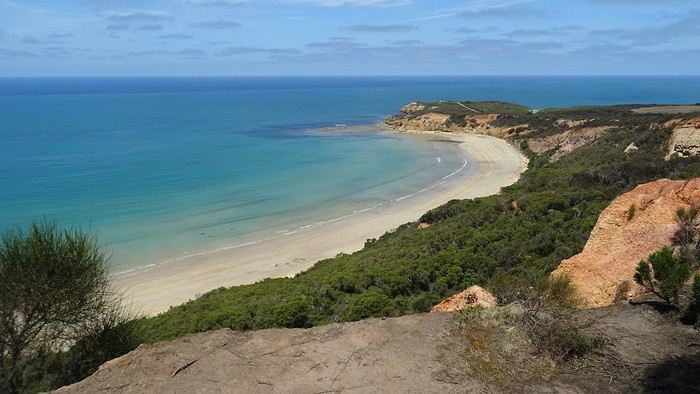
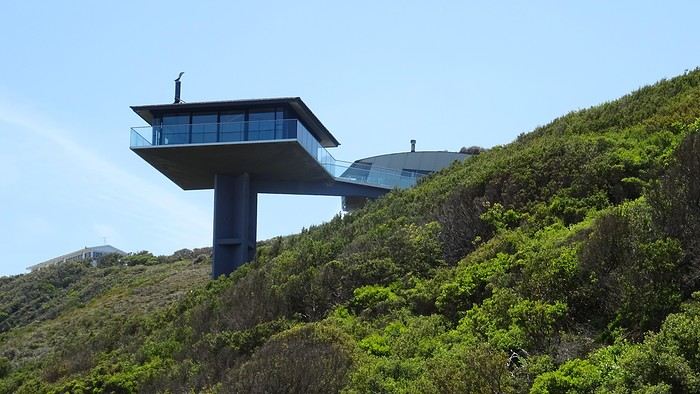
It’s here, just outside Lorne, that the Great Ocean Road officially begins...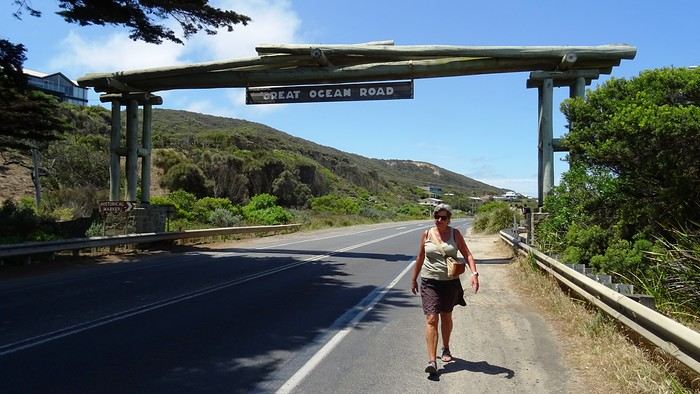
We arrive at our apartment, which is pretty nice—Dom and I are really particular about the quality of our terraces. I’ve never really talked about the practical quirks of daily life in Australia. For example, I could tell you that *every single* power outlet we used on this trip had a switch to turn it on or off. No exceptions, ever! Why? They must find it useful, but for us, it’s a total mystery... And of course, their power outlets require an adapter. Just one of many little peculiarities. Another odd observation: *every* toilet, even the most remote ones hidden deep in the bush, always had a roll of toilet paper available. No shortages here!
And then we’re greeted by a big family of cute sparrows...
Another odd observation: *every* toilet, even the most remote ones hidden deep in the bush, always had a roll of toilet paper available. No shortages here!
And then we’re greeted by a big family of cute sparrows...
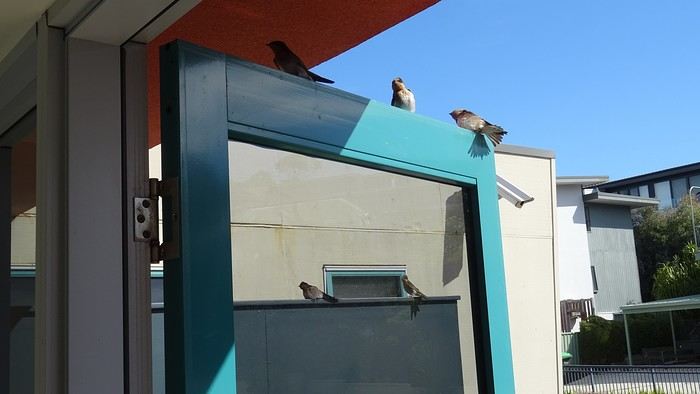
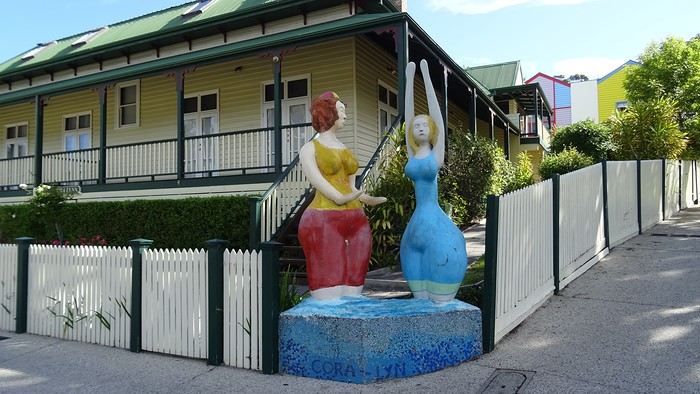
We spent a long time enjoying their pool before heading out for a walk—all the way to Erskine Falls, about ten kilometers away...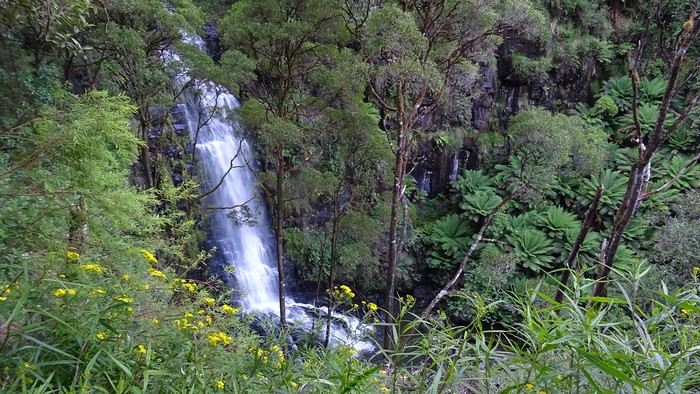
We pick up the car 500 meters away, in a Chinatown parking lot that the hotel has a deal with, then it’s off with a *vroom vroom* while listening to a podcast about the victim of a compulsive mythomaniac—who also happens to be her husband—leading a completely compartmentalized double life. Later, he discovers, after contacting his alter-ego from this parallel universe, that he was actually living a *third* life... and maybe even more? We arrive in Torquay, where we stretch our legs along the Koorie Cultural Walk with a view of Bells Beach...
It’s here, just outside Lorne, that the Great Ocean Road officially begins...
We arrive at our apartment, which is pretty nice—Dom and I are really particular about the quality of our terraces. I’ve never really talked about the practical quirks of daily life in Australia. For example, I could tell you that *every single* power outlet we used on this trip had a switch to turn it on or off. No exceptions, ever! Why? They must find it useful, but for us, it’s a total mystery... And of course, their power outlets require an adapter. Just one of many little peculiarities.
Another odd observation: *every* toilet, even the most remote ones hidden deep in the bush, always had a roll of toilet paper available. No shortages here!
And then we’re greeted by a big family of cute sparrows...We spent a long time enjoying their pool before heading out for a walk—all the way to Erskine Falls, about ten kilometers away...
12 days in Israel, before...
This trip took place in May 2023, a period of calm that later proved precarious.
Day of May 17
Departure from Marseille on El Al (tickets booked by ourselves, while the stay itself was organized by Voyageurs du Monde). Before check-in, six or seven El Al staff members conduct a security check—quite understandable, but they do it in total chaos. They send people to the left, then block them, redirect them to the right, for no apparent reason. Most of the staff don’t speak French, which complicates things. They work at an incomprehensible slow pace, stopping the interview to do something else, then coming back and starting over...
The flight goes smoothly, except for the meal service, which, for a four-hour flight that El Al delayed to lunchtime, is more than basic: a quarter-liter of water and a corned beef sandwich that’s absolutely disgusting and inedible. To get a coffee, you have to queue at the back of the plane. You end up missing Ryanair🙂
Arrival at Ben Gurion goes better than expected—the passport control is fairly quick, as is baggage delivery.
Transfer to the Lily and Bloom hotel, Lilienblaum Street (easy to remember 🙂)
As advised by Voyageurs du Monde, we book a table for the evening at the nearest restaurant, North Abraxas. Good atmosphere and decent food. We get a sense of the price level in Israeli restaurants.
Around us, diners share dishes placed in the middle of the table. Much more convivial than our individual plates!!
Day of May 18
The next morning, we go down for breakfast at 7:30 AM—a late hour, but the setup is slow, with the two servers taking their time. We ask the bartender for a long coffee and a black tea... It must be a complicated order because it takes him over 10 minutes to make it. He serves us with the grace of a dancer. A good breakfast if you’re not in a hurry, followed by a little stroll in the neighborhood, since our meet-up with Patrick Arfi, our guide for the day, isn’t until 10 AM. P. Arfi is a former publishing house director in Paris who has lived in Israel for a long time and has a vast cultural knowledge. After an initial chat, we head toward Jaffa, focusing on the Bauhaus buildings preserved by a clever urban policy that allows high-rise construction while maintaining old architectural ensembles.
This policy keeps the streets looking more human-scale than the usual high-rise districts in modern cities.
 With the visit to Jaffa, Patrick introduces us to a fascinating slice of history, despite the temperature nearing 38°C. Jaffa, once an independent city, is now a neighborhood of Tel Aviv—a predominantly Muslim area. We notice a few buildings in poor condition. They belong to Palestinian families who left Tel Aviv. Otherwise, the city has been very well restored, apart from these few buildings.
A government agency rents out the ground floors of these buildings, which helps fund part of the security work. They also try to track down the owners and buy back the abandoned properties, but some refuse to sell. The visit is very touristy—most of the people we meet are tourists like us.


There’s very little local life, except in the lower part of the city. To be continued, as I’ve reached the allowed photo limit.
The next morning, we go down for breakfast at 7:30 AM—a late hour, but the setup is slow, with the two servers taking their time. We ask the bartender for a long coffee and a black tea... It must be a complicated order because it takes him over 10 minutes to make it. He serves us with the grace of a dancer. A good breakfast if you’re not in a hurry, followed by a little stroll in the neighborhood, since our meet-up with Patrick Arfi, our guide for the day, isn’t until 10 AM. P. Arfi is a former publishing house director in Paris who has lived in Israel for a long time and has a vast cultural knowledge. After an initial chat, we head toward Jaffa, focusing on the Bauhaus buildings preserved by a clever urban policy that allows high-rise construction while maintaining old architectural ensembles.
This policy keeps the streets looking more human-scale than the usual high-rise districts in modern cities.
With the visit to Jaffa, Patrick introduces us to a fascinating slice of history, despite the temperature nearing 38°C. Jaffa, once an independent city, is now a neighborhood of Tel Aviv—a predominantly Muslim area. We notice a few buildings in poor condition. They belong to Palestinian families who left Tel Aviv. Otherwise, the city has been very well restored, apart from these few buildings.
A government agency rents out the ground floors of these buildings, which helps fund part of the security work. They also try to track down the owners and buy back the abandoned properties, but some refuse to sell. The visit is very touristy—most of the people we meet are tourists like us.
There’s very little local life, except in the lower part of the city. To be continued, as I’ve reached the allowed photo limit.
3 weeks in Colombia in August 2024
Hi there,
This summer, we spent 3 weeks in northern Colombia. A vibrant trip that complemented our southern Peru adventure from the previous year perfectly. Two neighboring countries, but completely different.
To start, we had to make a choice because the country is vast.
So we focused on 3 different regions for our 3 weeks: - Week 1: Bogotá and the colonial villages (Villa de Leyva, Barichara) - Week 2: Medellín and the Coffee Region - Week 3: the Caribbean coast
We entrusted the organization to a small local agency that handled accommodations, guides, and transportation. Transportation is key. The country is large, the road network isn’t very efficient, and we spent a lot of time traveling (cars, planes, and boats...), but it was the price to pay to explore it.
The overall budget isn’t exactly "backpacker" level. We spent 7,500 € (excluding Air France) for our 3-week stay (hotels, drivers, guides, flights, visits, meals). But we treated ourselves to nice accommodations—you’ll see as we share more posts.
For vacations, I try to follow Philippe Noiret’s motto: "Travel is short. Let’s try to do it first class."
This summer, we spent 3 weeks in northern Colombia. A vibrant trip that complemented our southern Peru adventure from the previous year perfectly. Two neighboring countries, but completely different.
To start, we had to make a choice because the country is vast.
So we focused on 3 different regions for our 3 weeks: - Week 1: Bogotá and the colonial villages (Villa de Leyva, Barichara) - Week 2: Medellín and the Coffee Region - Week 3: the Caribbean coast
We entrusted the organization to a small local agency that handled accommodations, guides, and transportation. Transportation is key. The country is large, the road network isn’t very efficient, and we spent a lot of time traveling (cars, planes, and boats...), but it was the price to pay to explore it.
The overall budget isn’t exactly "backpacker" level. We spent 7,500 € (excluding Air France) for our 3-week stay (hotels, drivers, guides, flights, visits, meals). But we treated ourselves to nice accommodations—you’ll see as we share more posts.
For vacations, I try to follow Philippe Noiret’s motto: "Travel is short. Let’s try to do it first class."
Tahiti Dutyfree and the Rum Bottle Scam
Hi everyone,
I’d like to share the misadventure I had a few days ago when returning from French Polynesia.
It’s 10:30 PM on October 29, 2024. My wife and I just had an incredible trip and are about to face the gray skies of Paris again. We decide to buy two bottles of Mana'O rum as a souvenir from the Tahiti Dutyfree shop. The staff is charming, the price attractive, everything goes smoothly. They give us our products in a special customs bag—all good. Then my wife has a doubt: we’re transiting through the US, will the bottles make it through customs?
That’s when the trouble starts. I go back to the counter to confirm everything is in order and the products will pass through. They reassure me, explaining that with the special bag, there won’t be any issues. My wife checks customer reviews that say otherwise, so I go back. Again, they tell me there won’t be a problem and that they’ve never received complaints or negative feedback. After half an hour, I return, thinking I’d rather not take the risk. This time, they insist there won’t be a problem and even tell me that if US customs confiscate the bottles, they’ll refund me in full upon presenting the receipt and proof of confiscation: “contact us on Facebook, we’ll refund you.”
Ten hours later, I’m standing in front of a customs officer who opens the hermetically sealed bag and runs my bottles through some kind of obscure machine. Each bottle is tested three times—each fails. I’m not the only one; many other travelers have their bottles confiscated too. Without hesitation, I grab my phone and document the scene with the officer’s permission.
A few days later, I contact Tahiti Dutyfree, and they refuse to refund the products, claiming responsibility lies with US customs. A misleading response, since it would mean absolving themselves of the responsibility of selling products banned from entering the US to customers who are *required* to bring these purchases into the country.
For the record, it’s impossible that the management of this shop isn’t aware of the issue. They continue selling these items to customers, fully knowing they’ll end up in a trash bin at Seattle or Los Angeles airports.
I’d like to warn Tahiti Dutyfree customers and travelers who might want to bring back this kind of souvenir from French Polynesia, so my experience can help others avoid getting scammed.
If you’ve also been a victim of this, don’t hesitate to reply to this post :) My poor bottles that will end up alone
 The official ICAO-STEB duty-free bag
 The US customs officer who let me capture this sweet moment
I’d like to share the misadventure I had a few days ago when returning from French Polynesia.
It’s 10:30 PM on October 29, 2024. My wife and I just had an incredible trip and are about to face the gray skies of Paris again. We decide to buy two bottles of Mana'O rum as a souvenir from the Tahiti Dutyfree shop. The staff is charming, the price attractive, everything goes smoothly. They give us our products in a special customs bag—all good. Then my wife has a doubt: we’re transiting through the US, will the bottles make it through customs?
That’s when the trouble starts. I go back to the counter to confirm everything is in order and the products will pass through. They reassure me, explaining that with the special bag, there won’t be any issues. My wife checks customer reviews that say otherwise, so I go back. Again, they tell me there won’t be a problem and that they’ve never received complaints or negative feedback. After half an hour, I return, thinking I’d rather not take the risk. This time, they insist there won’t be a problem and even tell me that if US customs confiscate the bottles, they’ll refund me in full upon presenting the receipt and proof of confiscation: “contact us on Facebook, we’ll refund you.”
Ten hours later, I’m standing in front of a customs officer who opens the hermetically sealed bag and runs my bottles through some kind of obscure machine. Each bottle is tested three times—each fails. I’m not the only one; many other travelers have their bottles confiscated too. Without hesitation, I grab my phone and document the scene with the officer’s permission.
A few days later, I contact Tahiti Dutyfree, and they refuse to refund the products, claiming responsibility lies with US customs. A misleading response, since it would mean absolving themselves of the responsibility of selling products banned from entering the US to customers who are *required* to bring these purchases into the country.
For the record, it’s impossible that the management of this shop isn’t aware of the issue. They continue selling these items to customers, fully knowing they’ll end up in a trash bin at Seattle or Los Angeles airports.
I’d like to warn Tahiti Dutyfree customers and travelers who might want to bring back this kind of souvenir from French Polynesia, so my experience can help others avoid getting scammed.
If you’ve also been a victim of this, don’t hesitate to reply to this post :)
My poor bottles that will end up alone
The official ICAO-STEB duty-free bag
The US customs officer who let me capture this sweet moment