Results for "Corne+|+123+>+233"
20380 results found.
Entrer dans une école secondaire aux Philippines English translation pending
Bonjours,
Je viens d'arriver aux philippines depuis 1 semaine. En france j'etais en premiere scientifique et je n'est donc pas finit mon annee, il me reste les mois de avril, mais et juin. Je n'est donc pas mon BAC de francais.
Ici je suis aller au "departement of education pour faire une equivalence de mon niveau scolaire, j'ai donner mes bulletins qui sont vraiment bons et ils m'ont mit en 3 rd years of high school ce qui correspond au grade d'un enfant de 15 ans (2nde) alors que je vais avoir mes 17 ans ! Je veux bien au pire redoubler ma premiere car c'est comprehensible vu que je ne parle pas encore bien anglais mais de-la me faire revenir en arriere de 1an ! Sinon l'ecole francaise de Manille est trop loin (makati et j'habite a Quezon City) et puis j'ai pas envie de continuer le programme francais. Sinon il y a le CNED mais c'est pareil c'est le prgramme francais. Ou puis je aller si je veut reprendre le meme niveau que j'avais avant ? Peut etre que dans une ecole international ils vondront bien me mettre en 4th year mais apparement il demande l'equivalence du 3department of education" qui ma mi en 3th years...
Donc voila si qq'un aurait une solution pour pas que je perde une annee que j'ai dja faite qui plus est, pour rien, je serais vraiment reconnaissant. De plus si vous pouvier me donner une liste des ecoles international ou je pourrais rentrer.
Merci d'avance a tous.
Je viens d'arriver aux philippines depuis 1 semaine. En france j'etais en premiere scientifique et je n'est donc pas finit mon annee, il me reste les mois de avril, mais et juin. Je n'est donc pas mon BAC de francais.
Ici je suis aller au "departement of education pour faire une equivalence de mon niveau scolaire, j'ai donner mes bulletins qui sont vraiment bons et ils m'ont mit en 3 rd years of high school ce qui correspond au grade d'un enfant de 15 ans (2nde) alors que je vais avoir mes 17 ans ! Je veux bien au pire redoubler ma premiere car c'est comprehensible vu que je ne parle pas encore bien anglais mais de-la me faire revenir en arriere de 1an ! Sinon l'ecole francaise de Manille est trop loin (makati et j'habite a Quezon City) et puis j'ai pas envie de continuer le programme francais. Sinon il y a le CNED mais c'est pareil c'est le prgramme francais. Ou puis je aller si je veut reprendre le meme niveau que j'avais avant ? Peut etre que dans une ecole international ils vondront bien me mettre en 4th year mais apparement il demande l'equivalence du 3department of education" qui ma mi en 3th years...
Donc voila si qq'un aurait une solution pour pas que je perde une annee que j'ai dja faite qui plus est, pour rien, je serais vraiment reconnaissant. De plus si vous pouvier me donner une liste des ecoles international ou je pourrais rentrer.
Merci d'avance a tous.
Itinéraire pour trois semaines au Laos via la Thaïlande English translation pending
Bonjour à tous !
Je suis désolé d'encombrer le forum avec un nouveau post alors que j'en avais déjà créer un à ce sujet il y a quelques jours... Mais mes messages y sont "verrouillés" et je ne peux donc plus changer les termes... Alors que mes questionnements ont, eux, sensiblement évolués (notamment à la lecture du Blog de Karolus, que je recommande vraiment à tout le monde) !!!
Donc je pars fin avril pour 3 semaines avec un billet A/R Paris-Bangkok. Je suis déjà venu en Thailande (où j'ai passé quelque temps, comme la plupart des visiteurs, dans les régions de Bangkok, Chiang Mai / Chiang Rai et dans les îles du Golfe - Koh Tao Koh Pah Ngan). Je compte du coup ne pas trop m'attarder en Thaïlande et me rendre au Laos. Toutefois, vu la situation géographique des différents points de passage de la frontière, j'aimerai bien en profiter pour passer quelques jours (à l'aller ? Au retour ? les deux ?) dans soit dans la région des parcs naturels autour Phu Kradung et au dessus avec la zone frontalière entre Chang Khan et Nong Khai, soit dans l'Isan (si jamais je vais le sud du Laos).
D'où ma première question : Auriez vous des recommandations particulières, témoignages, etc... sur ces 2 régions ? Sachant que je n'y passerai sûrement que quelques jours (4 / 6 j.), est-ce une option intéressante (ou serait-il mieux de conserver ces précieux jours pour le Laos ?) et quels endroits me conseilleriez vous de visiter en priorité ? Pour info, je ne suis pas un énorme fan des vieilles pierres à moins qu'elles se trouvent dans un environnement particulièrement joli et je n'ai pas beaucoup d'attirance non plus pour les zones de "tourisme de masse", genre Pattaya, si vous voyez ce que je veux dire...
Le programme du Laos maintenant 😉 ! Ne disposant pas d'un "capital temps" important, je ne pourrais sûrement pas m'arrêter très longtemps dans les différents endroits. Voici ceux que j'aimerai déjà visiter : Vientiane, bien sûr (surement et malheureusement pour 2 jours, comme la plupart...) Luang Pra Bang, évidemment (disons 4 / 5 jours). Nong Khiaw et sa région alentour que j'aimerais rejoindre ou quitter par bateau via la Nam Ou (puisqu'il semble que ce trajet là en bateau soit particulièrement beau) Sûrement aussi un passage à Vang Vien la Plaine des Jarres
Par contre, j'ai du mal à définir le reste du programme et je manque un peu d'info sur les autres "régions" du Laos. Il semble que le Nord Est (la zone de Pakbeng, Louang Namtha, Muang Sing, Boten...) ne soit pas la plus belle et qu'à part des treks (pas forcément les meilleurs puisqu'il n'y aurait quasiment plus d'arbres...), il n'y a pas beaucoup de chose à y faire. je ne sais rien de la corne Nord (Mouang Khoua, Phongsaly...)... la région centrale (la partie la plus étroite du pays, comme un couloir entre le Nord et le Sud) n'a pas l'air particulièrement touristique et surtout j'hésite sur le Sud... Les dauphins et les chutes d'eau sonnent un peu trop "attractions", Paksé n'est pas décrite comme d'un intérêt particulier. J'ai lu quelques jolis commentaires sur Champassak, du plateau des Bolovens et Saravane et des "4000 iles"... Mais je ne sais si, vu le temps que j'ai, il est très interessant pour moi de faire tout le trajet pour aller (et repartir) dans le Sud plutôt que de me concentrer sur la région du Nord ou encore de passer un peu plus de temps dans les régions Thailandaises que je ne connais pas...
Bref, ma reconnaissance éternelle à toute âme charitable qui pourrait m'aider un peu à m'orienter !!! Et bon voyage à tous !!!! 😎
Je suis désolé d'encombrer le forum avec un nouveau post alors que j'en avais déjà créer un à ce sujet il y a quelques jours... Mais mes messages y sont "verrouillés" et je ne peux donc plus changer les termes... Alors que mes questionnements ont, eux, sensiblement évolués (notamment à la lecture du Blog de Karolus, que je recommande vraiment à tout le monde) !!!
Donc je pars fin avril pour 3 semaines avec un billet A/R Paris-Bangkok. Je suis déjà venu en Thailande (où j'ai passé quelque temps, comme la plupart des visiteurs, dans les régions de Bangkok, Chiang Mai / Chiang Rai et dans les îles du Golfe - Koh Tao Koh Pah Ngan). Je compte du coup ne pas trop m'attarder en Thaïlande et me rendre au Laos. Toutefois, vu la situation géographique des différents points de passage de la frontière, j'aimerai bien en profiter pour passer quelques jours (à l'aller ? Au retour ? les deux ?) dans soit dans la région des parcs naturels autour Phu Kradung et au dessus avec la zone frontalière entre Chang Khan et Nong Khai, soit dans l'Isan (si jamais je vais le sud du Laos).
D'où ma première question : Auriez vous des recommandations particulières, témoignages, etc... sur ces 2 régions ? Sachant que je n'y passerai sûrement que quelques jours (4 / 6 j.), est-ce une option intéressante (ou serait-il mieux de conserver ces précieux jours pour le Laos ?) et quels endroits me conseilleriez vous de visiter en priorité ? Pour info, je ne suis pas un énorme fan des vieilles pierres à moins qu'elles se trouvent dans un environnement particulièrement joli et je n'ai pas beaucoup d'attirance non plus pour les zones de "tourisme de masse", genre Pattaya, si vous voyez ce que je veux dire...
Le programme du Laos maintenant 😉 ! Ne disposant pas d'un "capital temps" important, je ne pourrais sûrement pas m'arrêter très longtemps dans les différents endroits. Voici ceux que j'aimerai déjà visiter : Vientiane, bien sûr (surement et malheureusement pour 2 jours, comme la plupart...) Luang Pra Bang, évidemment (disons 4 / 5 jours). Nong Khiaw et sa région alentour que j'aimerais rejoindre ou quitter par bateau via la Nam Ou (puisqu'il semble que ce trajet là en bateau soit particulièrement beau) Sûrement aussi un passage à Vang Vien la Plaine des Jarres
Par contre, j'ai du mal à définir le reste du programme et je manque un peu d'info sur les autres "régions" du Laos. Il semble que le Nord Est (la zone de Pakbeng, Louang Namtha, Muang Sing, Boten...) ne soit pas la plus belle et qu'à part des treks (pas forcément les meilleurs puisqu'il n'y aurait quasiment plus d'arbres...), il n'y a pas beaucoup de chose à y faire. je ne sais rien de la corne Nord (Mouang Khoua, Phongsaly...)... la région centrale (la partie la plus étroite du pays, comme un couloir entre le Nord et le Sud) n'a pas l'air particulièrement touristique et surtout j'hésite sur le Sud... Les dauphins et les chutes d'eau sonnent un peu trop "attractions", Paksé n'est pas décrite comme d'un intérêt particulier. J'ai lu quelques jolis commentaires sur Champassak, du plateau des Bolovens et Saravane et des "4000 iles"... Mais je ne sais si, vu le temps que j'ai, il est très interessant pour moi de faire tout le trajet pour aller (et repartir) dans le Sud plutôt que de me concentrer sur la région du Nord ou encore de passer un peu plus de temps dans les régions Thailandaises que je ne connais pas...
Bref, ma reconnaissance éternelle à toute âme charitable qui pourrait m'aider un peu à m'orienter !!! Et bon voyage à tous !!!! 😎
Où partir en Turquie? English translation pending
Bonjour !
De retour de vacance, nous pensons déja partir en voyage en turquie pour avril mai ou juin, mais nous voudrions des infos sur ce pays à savoir où doit-on aller pour pouvoir visiter, être au coeur de la population et dans quel hotel ?
Merci pour les infos !
Bonne journée
Aurélie
De retour de vacance, nous pensons déja partir en voyage en turquie pour avril mai ou juin, mais nous voudrions des infos sur ce pays à savoir où doit-on aller pour pouvoir visiter, être au coeur de la population et dans quel hotel ?
Merci pour les infos !
Bonne journée
Aurélie
Adresses d'ambassades à Istanbul English translation pending
Bonjour,
Je pars tres bientot (dimanche !!) pour Ze Grand Voyage, plus ou moins sur la routede la soie, en tout cas vers l'Est, resolument, en train et sac à dos. Je compte traverser (transit) la géorgie, l'azerbaijan, le (petit bout du) Kazakstan, et rester plus longtemps en Uzbekistan, Kyrghysie, Kazakstan (de l'autre coté cette fois). Apres, on verra si on va plus loin ...
Mes recherches actuelles portent sur les visas, que l'on compte faire à Istanbul. Est-ce que quelqu'un pourtait me donner les adresses des ambassades de ces pays à Ist, ou Ankara a defaut ? Jeprends aussi les infos concernant lesprix et les delais, meme si j'aideja glanné pas mal de choses sur le forum.
Mercipar avance pour votre aide !🙂
Pimprenelle
Je pars tres bientot (dimanche !!) pour Ze Grand Voyage, plus ou moins sur la routede la soie, en tout cas vers l'Est, resolument, en train et sac à dos. Je compte traverser (transit) la géorgie, l'azerbaijan, le (petit bout du) Kazakstan, et rester plus longtemps en Uzbekistan, Kyrghysie, Kazakstan (de l'autre coté cette fois). Apres, on verra si on va plus loin ...
Mes recherches actuelles portent sur les visas, que l'on compte faire à Istanbul. Est-ce que quelqu'un pourtait me donner les adresses des ambassades de ces pays à Ist, ou Ankara a defaut ? Jeprends aussi les infos concernant lesprix et les delais, meme si j'aideja glanné pas mal de choses sur le forum.
Mercipar avance pour votre aide !🙂
Pimprenelle
Auberge de jeunesse à Istanbul? English translation pending
bien cher tous, j'en appelle à votre savoir et à votre expérience
En effet je recherche une bonne adresse d'auberge de jeunesse à Istanbul,
pas trop cher si possible. Mon voyage sera visiblement en gros du 19 mars au 26.
Je ne recherche pas d'établissements luxueux, mon seul désir
serait d'être dans le coin de la tour de GALATA.
Pourquoi, parce que c'est un quartier qui bouge et qu'il ya plein de concerts, notamment Replikas et kafabindunya qui jouent au peyote le 21/03.
n'hesitez pas à laisser vos impressions et vos bons conseils.
amicalement
NIKO
Istanbul et Ephese en Turquie English translation pending
Bonjour,
Je désire partir avec mon amie environ 8 jours en turquie du 09 juillet au 17 juillet 07. Je voudrais visiter Istanbul (bien sûr !) puis faire une virée sur la côte de la mer Egée pour voir les sites antiques et si possible faire une journée farniente sur une plage peu connue.
Pourriez vous me dire si : Istanbul en 3 jours c'est suffisant ? Quels est le prix en train d'un Istanbul-Izmir ? en bus ? en ferries ? c'est un voyage de nuit? Quels sont les plus beaux sites antiques autour d'IZMIR (Ephése et Pergame, je suppose !). Quelle est cette plage paradisiaque et inconnue ? quels est le prix moyen pour une chambre en bas de gamme, avec minimum hygiène et tranquilité à Istanbul et vers Selcuk ? Des adresses?
c'est beaucoup de questions. Merci .
morgan.
Je désire partir avec mon amie environ 8 jours en turquie du 09 juillet au 17 juillet 07. Je voudrais visiter Istanbul (bien sûr !) puis faire une virée sur la côte de la mer Egée pour voir les sites antiques et si possible faire une journée farniente sur une plage peu connue.
Pourriez vous me dire si : Istanbul en 3 jours c'est suffisant ? Quels est le prix en train d'un Istanbul-Izmir ? en bus ? en ferries ? c'est un voyage de nuit? Quels sont les plus beaux sites antiques autour d'IZMIR (Ephése et Pergame, je suppose !). Quelle est cette plage paradisiaque et inconnue ? quels est le prix moyen pour une chambre en bas de gamme, avec minimum hygiène et tranquilité à Istanbul et vers Selcuk ? Des adresses?
c'est beaucoup de questions. Merci .
morgan.
Animaux sauvages au Mali? English translation pending
Salut,
Je prépare un petit voyage au Mali (20 jours), et, outre les intérêts ethniques du pays, je suis aussi trés intéressé par la faune sauvage type grand mamifère que l'on peut y trouver. Je fais appel à vos expériences pour savoir dans quel coin (parc de la Boucle de Baoulé par exemple) j'ai le plus de chance d'en voir, même s'il faut aller jusqu'au Burkina. Merci.
Ps: Et pour qui recherche des infos sur l'état des routes dans la région le blog de HJ61 http://papyetmamyenvoyage.oldiblog.com/ est une mine de renseignements, merci à lui ! 😉
Je prépare un petit voyage au Mali (20 jours), et, outre les intérêts ethniques du pays, je suis aussi trés intéressé par la faune sauvage type grand mamifère que l'on peut y trouver. Je fais appel à vos expériences pour savoir dans quel coin (parc de la Boucle de Baoulé par exemple) j'ai le plus de chance d'en voir, même s'il faut aller jusqu'au Burkina. Merci.
Ps: Et pour qui recherche des infos sur l'état des routes dans la région le blog de HJ61 http://papyetmamyenvoyage.oldiblog.com/ est une mine de renseignements, merci à lui ! 😉
Visite de l'Ecosse à moto English translation pending
Salut à tous🙂
Pour le mois de Mai où Juin 2007 (je n’est pas encore décider de la date exacte ) je vais partir faire une ballade d’une semaine en Écosse à moto. Je souhaiterai faire du camping mais je ne sais pas ou trouver la liste des campings en Ecosse tout en sachant que je vais faire plusieur étape dans la semaine. Existe t'il un livre du style « les campings de France » mais pour l’Écosse et que dit la législation Ecossaise consernant le campigne sauvage? Et par la même occasin si vous arriez des lieux de visite à me conseiller.
😉
Pour le mois de Mai où Juin 2007 (je n’est pas encore décider de la date exacte ) je vais partir faire une ballade d’une semaine en Écosse à moto. Je souhaiterai faire du camping mais je ne sais pas ou trouver la liste des campings en Ecosse tout en sachant que je vais faire plusieur étape dans la semaine. Existe t'il un livre du style « les campings de France » mais pour l’Écosse et que dit la législation Ecossaise consernant le campigne sauvage? Et par la même occasin si vous arriez des lieux de visite à me conseiller.
😉
Hôtel Royal Hideway Cayo Ensenacho English translation pending
Salut,
Je m'adresse à ceux et celles qui ont été à cet hotel. Je suis un amateur d'apnée et je voulais savoir si ca vaut le coup d'amener mes affaires pour faire de l'apnée. De plus, est-ce que certains d'entre-vous ont fait le catamaran? Est-ce que ca vaut la peine? combien cela coute?
Je pars en novembre pour cet hotel et j'ai vraiment hâte.
Merci pour vos réponses
Je m'adresse à ceux et celles qui ont été à cet hotel. Je suis un amateur d'apnée et je voulais savoir si ca vaut le coup d'amener mes affaires pour faire de l'apnée. De plus, est-ce que certains d'entre-vous ont fait le catamaran? Est-ce que ca vaut la peine? combien cela coute?
Je pars en novembre pour cet hotel et j'ai vraiment hâte.
Merci pour vos réponses
Pérou: récits de treks en photos English translation pending
De retour du Pérou, j'entame un récit des quelques treks & ascensions que j'y ai effectué.
Tour de l'Alpamayo
Pendant ce voyage, j'avais envie de faire un grand trek seul et en autonomie. L'avantage est une totale liberté d'itinéraire, de durée, de rythme de marche, de lieu de campement ... le bonheur. Je m'oriente vers le tour de l'Alpamayo dans la cordilliere blanche. Ce choix est guidé par le fait qu'il s'agit d'une des trois plus belles cordillieres du Pérou (les trois plus belles - du moins plus connues: C.Blanche, C.Huayshuah, C.Vilcanota) et aussi par le fait que la navigation y est rendue tres facile grâce à la carte 1/100 000 du club Alpin allemand.
Il s'agit grosso modo de la concaténation de treks classiques de cette région: le classissime trek de Santa Cruz qui longe l'Alpamayo par le sud le trek de Los Cedros qui rejoint Cashapampa à Pomabamba par le nord
Il peut s'effectuer dans un sens ou dans l'autre, le sens retenu ici étant de commencer par l'itinéraire de Santa Cruz pour permettre une meilleure acclimatation à l'altitude. L'itinéraire est inspiré d'un petit topo vu dans le numéro 44 de trek magazine. Il est donné en 9 jours mais j'ai bien l'intention de le "raccourcir" en 8 jours tout en le "prolongeant" de quelques détours :)
Etape 1: Cashampampa (2900m) - Laguna Ichiccocha (3800m) L'etape commence avec les transports en collectivos de Huaraz jusqu'à Caraz (2 heures environ) et de Caraz jusqu'à Cashapampa (2 heures aussi). J'adore ce type de transport, économique, souvent efficace et qui permet d'être au contact (parfois très rapproché vu le nombre de personnes qui montent 😉 !) de la population. Les collectivos jusqu'à Caraz sont les petits vans traditionnels tandis que ceux qui montent à Cashampampa sont des voitures classiques. C'est ici que j'ai constaté qu'on pouvait monter à 7 dans une voiture "standard": le conducteur, deux personnes sur le siège avant et quatre à l'arrière ! A l'arrière avec moi, il y'a deux allemands Max & Bernd que j'avais croisé le matin à l'hotel et que je recroiserai régulièrement pendant mon voyage, à commencer pendant ce trek puisqu'ils prévoient de faire le trek de Los Cedros.
A Cashapampa, il n'est pas difficile de trouver le chemin du trek de Santa Cruz puisque les conducteurs de collectivos - qui comprennent bien que les gringos sont venus faire un peu de marche à pied - s'arrêtent au pied du sentier marqué par un panneau. Seule difficulté d'orientation du parcours: savoir qu'après 100m, il faut tourner à gauche et pas à droite .
.

Au début du sentier, je croise pas mal de personnes qui s'étonnent de la taille de mon sac dont le poids doit dépasser les quelques 20 kg. Le sentier est bien tracé et très fréquenté (c'est l'autoroute !) par les touristes en agence et par quelques insectes qui viendront bien gentiment transformer la peau de mes bras en bronzé à poids rouge. Il fait plutôt beau - même si ça se gate -, ça monte gentiment et c'est tant mieux. Avec mon sac et mon acclimatation à deux balles, je marche avec le frein à main, ce qui ne m'empêche pas de doubler tout le monde - super condition physique oblige.
J'arrive au très grand campement de Llammacoral, halte systématique des groupes. Mouais, il est pas tard, et ça sert à rien que je plante ma tente ici histoire de papoter avec les voisins: il y'a tellement de monde et personne ne se parle qu'on se croirait dans le métro parisien 🤪. Autant poursuivre jusqu'à la laguna Illicocha où je devrais trouver de la place pour ma tente d'après un de mes topos. D'ici au campement m'arrive une petite mésaventure dont je rigole aujourd'hui : je me fais attaquer par une vache ! Non non, je n'hallucine pas: le bovidé - vraissemblablement excité par la rougeur de mes coups de soleils - me charge cornes baissées ! Je le chope par les cornes mais la bestiole à de la force et je tombe en arrière sur le sac à dos. Sa corne se prend dans une bretelle de mon sac et me secoue gentiment au sol. Ouf, le proprio vient à mon secours. Bilan de l'opération: quelques éraflures et plaies aux bras mais surtout le sac à dos bien amoché et la trouille des bêtes à cornes pendant tout le parcours !!
Etape 2: Laguna Ichiccocha (3800m) - Taullipampa (4200m) Ce matin, le ciel est d'un bleu magnifique. Je peux donc admirer les quelques sommets qui dépasse la falaise en face du campement (Pucaraju et Quitaraju). Après la lagune JatunCocha, la vue sur le Quitaraju se dégage.


Aujourd'hui encore, le chemin est tranquille. Partit tot, je ne croise personne. Arrivé au lieu dit "Quishuar", je dois bifurquer à droite pour faire un "side trip" au camp sud de l'Alpamayo. Avec mon gros sac et mon acclimatation baclée, j'ai peur de me choper un MAM. Une petite forêt au pied de la montée m'apporte la solution: je vais planquer mon sac ici. Ce petit détour (3 heures aller/retour environ) vaut le coup: l'Alpamayo coté sud est pas vilain quoique pas transcendant mais surtout le Pucajirca est pas dégueu avec ses ice flutes. Comme hier, le temps se gâte - dommage - mais ne m'empêche pas d'admirer le Taulliraju depuis le campement de Taullipampa.


Etape 3: Taullipampa (4200m) - Q.Tuctubamba (3800m)
Après deux nuits à 3000, une à 3800 et à 4200 et tres peu de maux de tetes, je me considère comme suffisamment acclimaté pour lâcher le frein à main. Je décide donc de me faire un petit plaisir: je vais me faire deux étapes de 6h théoriques en une seule journée... enfin de l'action. 12h de marche théorique sans compter les arrêts et un lever/coucher du soleil à 6h/18h environ: s'agit de pas trainer. Lever et préparation matinal du sac à dos sans prendre le temps de faire sécher la tente: ca sera pour le déjeuner.
La météo est pas top top et ça ne s'arrangera pas une fois passé le Punta Union.

Le Punta Union représente un dénivellé assez faible: 550m et l'altitude reste raisonnable (4700m environ). Pourtant, j'en chie un sacré coup....mais pourquoi donc ? Alimentation et acclimatation limitées ? Sac à dos chargé ? Sans doute un peu de tout ça.
La descente s'effectue dans la purée de poids et le sentier est mal tracé. Qu'à cela ne tienne, les crottes d'anes servent de balises. En prenant la direction du col de Pucaraju, je quitte l'itinéraire de Santa Cruz pour aborder une zone peu fréquentée. D'une difficulté identique au Punta Union, le Pucaraju m'en fait baver aussi. Heureusement quand je regarde la montre et mon avancement sur la carte, je constate que j'ai explosé les temps de marche du topo trekmag. Le "lâchage de frein à main" a été efficace même si les sensations ne sont pas au rendez vous.
La météo maussage gâche cette étape et tout particulièrement la vue depuis le Pucaraju qui devrait être tout à fait sympathique par beau temps. De l'autre coté du col, les paysages ne sont pas terribles et la descente assez inintéressante. Bien fatigué, j'arrive tant bien que mal à la Q.Tuctubamba où les paysans ne parlent pas un mot d'espagnol. Zut, j'ai pas trouvé de petit Quechua illustré à la FNAC. Qu'à cela ne tienne, signes de la main et sourires sont universels chez les êtres humains. Reste à trouver un campement ce qui est loin d'être facile. Planter la tente dans la pampa ne me paraît pas raisonnable: trop humide; j'opte donc pour un terrain en pente pas terrible au niveau du chemin. Je suis bien naze et décide de fêter ça avec un boeuf Strogonnoff Travellunch... un régal !
Etape 4: Q.Tuctubamba (3800m) - Pomabamba (2900m) D'après mon topo, l'itinéraire normal devrait me mener à Jacapampa en environ 7 à 8h de marche. Assez court et puis je me verrai bien faire un petit détour par le village de Pomabamba, ne serait ce que pour m'offrir un bon diner et une nuit dans un lit. Décision prise d'aller à Pomabamba sauf s'il est tard arrivé vers Jacapampa. Avant d'en arriver là, il faut arriver à trouver où se trouve le col de Tupapa. Il n'y a plus de chemin depuis l'entrée dans la Quebrada et deux options se présentent pour le col. C'est bien la seule difficulté de navigation que j'ai rencontrée de tout le parcours. Inutile de sortir la boussole: la carte est excellente et si j'avoue avoir tergiversé, mon choix final penche vers la bonne option: "à droite". Du col, la vue aurait pu être magnifique sur le Taulliraju si la météo était du rendez vous. A Pishgopampa, il n'est vraiment pas tard et je demande le chemin pour Pomabamba. En consultant la carte, ça ne semble pas très loin et il semblerait que ce soit assez plat. En fait, c'est beaucoup plus loin que prévu et le chemin est valloné (sic). Trois heures de marche me seront nécessaires sur ce chemin interminable. Heureusement, il est assez sympathique mais bien moins que la population locale que je croise en nombre et qui me gratifie de grands sourires et de grands "hola gringo !".
Pomabamba est un petit village où il ne faut pas s'attendre au grand confort. Les hospedaje sont très sommaires et réservés aux voyageurs routards. Après 4 jours en montagne, j'enchaîne les petits bonheures: pouvoir boire un jus de pêche, une douche bien chaude aux banos termales, naviguer sur internet (si si...enfin avec une connexion 20Mb/s où "M" signifie "Milli" 😏) et un super Lomo Saltado dans mon diner à 3.5 soles.
Tour de l'Alpamayo
Pendant ce voyage, j'avais envie de faire un grand trek seul et en autonomie. L'avantage est une totale liberté d'itinéraire, de durée, de rythme de marche, de lieu de campement ... le bonheur. Je m'oriente vers le tour de l'Alpamayo dans la cordilliere blanche. Ce choix est guidé par le fait qu'il s'agit d'une des trois plus belles cordillieres du Pérou (les trois plus belles - du moins plus connues: C.Blanche, C.Huayshuah, C.Vilcanota) et aussi par le fait que la navigation y est rendue tres facile grâce à la carte 1/100 000 du club Alpin allemand.
Il s'agit grosso modo de la concaténation de treks classiques de cette région: le classissime trek de Santa Cruz qui longe l'Alpamayo par le sud le trek de Los Cedros qui rejoint Cashapampa à Pomabamba par le nord
Il peut s'effectuer dans un sens ou dans l'autre, le sens retenu ici étant de commencer par l'itinéraire de Santa Cruz pour permettre une meilleure acclimatation à l'altitude. L'itinéraire est inspiré d'un petit topo vu dans le numéro 44 de trek magazine. Il est donné en 9 jours mais j'ai bien l'intention de le "raccourcir" en 8 jours tout en le "prolongeant" de quelques détours :)
Etape 1: Cashampampa (2900m) - Laguna Ichiccocha (3800m) L'etape commence avec les transports en collectivos de Huaraz jusqu'à Caraz (2 heures environ) et de Caraz jusqu'à Cashapampa (2 heures aussi). J'adore ce type de transport, économique, souvent efficace et qui permet d'être au contact (parfois très rapproché vu le nombre de personnes qui montent 😉 !) de la population. Les collectivos jusqu'à Caraz sont les petits vans traditionnels tandis que ceux qui montent à Cashampampa sont des voitures classiques. C'est ici que j'ai constaté qu'on pouvait monter à 7 dans une voiture "standard": le conducteur, deux personnes sur le siège avant et quatre à l'arrière ! A l'arrière avec moi, il y'a deux allemands Max & Bernd que j'avais croisé le matin à l'hotel et que je recroiserai régulièrement pendant mon voyage, à commencer pendant ce trek puisqu'ils prévoient de faire le trek de Los Cedros.
A Cashapampa, il n'est pas difficile de trouver le chemin du trek de Santa Cruz puisque les conducteurs de collectivos - qui comprennent bien que les gringos sont venus faire un peu de marche à pied - s'arrêtent au pied du sentier marqué par un panneau. Seule difficulté d'orientation du parcours: savoir qu'après 100m, il faut tourner à gauche et pas à droite
.Au début du sentier, je croise pas mal de personnes qui s'étonnent de la taille de mon sac dont le poids doit dépasser les quelques 20 kg. Le sentier est bien tracé et très fréquenté (c'est l'autoroute !) par les touristes en agence et par quelques insectes qui viendront bien gentiment transformer la peau de mes bras en bronzé à poids rouge. Il fait plutôt beau - même si ça se gate -, ça monte gentiment et c'est tant mieux. Avec mon sac et mon acclimatation à deux balles, je marche avec le frein à main, ce qui ne m'empêche pas de doubler tout le monde - super condition physique oblige.
J'arrive au très grand campement de Llammacoral, halte systématique des groupes. Mouais, il est pas tard, et ça sert à rien que je plante ma tente ici histoire de papoter avec les voisins: il y'a tellement de monde et personne ne se parle qu'on se croirait dans le métro parisien 🤪. Autant poursuivre jusqu'à la laguna Illicocha où je devrais trouver de la place pour ma tente d'après un de mes topos. D'ici au campement m'arrive une petite mésaventure dont je rigole aujourd'hui : je me fais attaquer par une vache ! Non non, je n'hallucine pas: le bovidé - vraissemblablement excité par la rougeur de mes coups de soleils - me charge cornes baissées ! Je le chope par les cornes mais la bestiole à de la force et je tombe en arrière sur le sac à dos. Sa corne se prend dans une bretelle de mon sac et me secoue gentiment au sol. Ouf, le proprio vient à mon secours. Bilan de l'opération: quelques éraflures et plaies aux bras mais surtout le sac à dos bien amoché et la trouille des bêtes à cornes pendant tout le parcours !!
Etape 2: Laguna Ichiccocha (3800m) - Taullipampa (4200m) Ce matin, le ciel est d'un bleu magnifique. Je peux donc admirer les quelques sommets qui dépasse la falaise en face du campement (Pucaraju et Quitaraju). Après la lagune JatunCocha, la vue sur le Quitaraju se dégage.
Aujourd'hui encore, le chemin est tranquille. Partit tot, je ne croise personne. Arrivé au lieu dit "Quishuar", je dois bifurquer à droite pour faire un "side trip" au camp sud de l'Alpamayo. Avec mon gros sac et mon acclimatation baclée, j'ai peur de me choper un MAM. Une petite forêt au pied de la montée m'apporte la solution: je vais planquer mon sac ici. Ce petit détour (3 heures aller/retour environ) vaut le coup: l'Alpamayo coté sud est pas vilain quoique pas transcendant mais surtout le Pucajirca est pas dégueu avec ses ice flutes. Comme hier, le temps se gâte - dommage - mais ne m'empêche pas d'admirer le Taulliraju depuis le campement de Taullipampa.
Etape 3: Taullipampa (4200m) - Q.Tuctubamba (3800m)
Après deux nuits à 3000, une à 3800 et à 4200 et tres peu de maux de tetes, je me considère comme suffisamment acclimaté pour lâcher le frein à main. Je décide donc de me faire un petit plaisir: je vais me faire deux étapes de 6h théoriques en une seule journée... enfin de l'action. 12h de marche théorique sans compter les arrêts et un lever/coucher du soleil à 6h/18h environ: s'agit de pas trainer. Lever et préparation matinal du sac à dos sans prendre le temps de faire sécher la tente: ca sera pour le déjeuner.
La météo est pas top top et ça ne s'arrangera pas une fois passé le Punta Union.
Le Punta Union représente un dénivellé assez faible: 550m et l'altitude reste raisonnable (4700m environ). Pourtant, j'en chie un sacré coup....mais pourquoi donc ? Alimentation et acclimatation limitées ? Sac à dos chargé ? Sans doute un peu de tout ça.
La descente s'effectue dans la purée de poids et le sentier est mal tracé. Qu'à cela ne tienne, les crottes d'anes servent de balises. En prenant la direction du col de Pucaraju, je quitte l'itinéraire de Santa Cruz pour aborder une zone peu fréquentée. D'une difficulté identique au Punta Union, le Pucaraju m'en fait baver aussi. Heureusement quand je regarde la montre et mon avancement sur la carte, je constate que j'ai explosé les temps de marche du topo trekmag. Le "lâchage de frein à main" a été efficace même si les sensations ne sont pas au rendez vous.
La météo maussage gâche cette étape et tout particulièrement la vue depuis le Pucaraju qui devrait être tout à fait sympathique par beau temps. De l'autre coté du col, les paysages ne sont pas terribles et la descente assez inintéressante. Bien fatigué, j'arrive tant bien que mal à la Q.Tuctubamba où les paysans ne parlent pas un mot d'espagnol. Zut, j'ai pas trouvé de petit Quechua illustré à la FNAC. Qu'à cela ne tienne, signes de la main et sourires sont universels chez les êtres humains. Reste à trouver un campement ce qui est loin d'être facile. Planter la tente dans la pampa ne me paraît pas raisonnable: trop humide; j'opte donc pour un terrain en pente pas terrible au niveau du chemin. Je suis bien naze et décide de fêter ça avec un boeuf Strogonnoff Travellunch... un régal !
Etape 4: Q.Tuctubamba (3800m) - Pomabamba (2900m) D'après mon topo, l'itinéraire normal devrait me mener à Jacapampa en environ 7 à 8h de marche. Assez court et puis je me verrai bien faire un petit détour par le village de Pomabamba, ne serait ce que pour m'offrir un bon diner et une nuit dans un lit. Décision prise d'aller à Pomabamba sauf s'il est tard arrivé vers Jacapampa. Avant d'en arriver là, il faut arriver à trouver où se trouve le col de Tupapa. Il n'y a plus de chemin depuis l'entrée dans la Quebrada et deux options se présentent pour le col. C'est bien la seule difficulté de navigation que j'ai rencontrée de tout le parcours. Inutile de sortir la boussole: la carte est excellente et si j'avoue avoir tergiversé, mon choix final penche vers la bonne option: "à droite". Du col, la vue aurait pu être magnifique sur le Taulliraju si la météo était du rendez vous. A Pishgopampa, il n'est vraiment pas tard et je demande le chemin pour Pomabamba. En consultant la carte, ça ne semble pas très loin et il semblerait que ce soit assez plat. En fait, c'est beaucoup plus loin que prévu et le chemin est valloné (sic). Trois heures de marche me seront nécessaires sur ce chemin interminable. Heureusement, il est assez sympathique mais bien moins que la population locale que je croise en nombre et qui me gratifie de grands sourires et de grands "hola gringo !".
Pomabamba est un petit village où il ne faut pas s'attendre au grand confort. Les hospedaje sont très sommaires et réservés aux voyageurs routards. Après 4 jours en montagne, j'enchaîne les petits bonheures: pouvoir boire un jus de pêche, une douche bien chaude aux banos termales, naviguer sur internet (si si...enfin avec une connexion 20Mb/s où "M" signifie "Milli" 😏) et un super Lomo Saltado dans mon diner à 3.5 soles.
Vélo à travers l'Ethiopie English translation pending
je cherche des infos pour un voyage a velo a travers l ethiopie et eventuellement qn pour voyager avec moi
Trouver un bon vélo de rando English translation pending
Bonjour,
Est-ce que quelqu'un connait un endroit pas trop loin de Genève, ou je peux me renseigner, essayer, trouver un bon vélo de rando. Est-ce possible à Annecy ou Lyon par exemple ? Je suis pour l'instant branché sur le Villiger Cabonga ou un Papalagi (2 marques suisses sauf erreur). J'ai un peu de temps devant moi, mon départ est prévu mars/avril 2006.
Merci et bonne fin de journée.
Est-ce que quelqu'un connait un endroit pas trop loin de Genève, ou je peux me renseigner, essayer, trouver un bon vélo de rando. Est-ce possible à Annecy ou Lyon par exemple ? Je suis pour l'instant branché sur le Villiger Cabonga ou un Papalagi (2 marques suisses sauf erreur). J'ai un peu de temps devant moi, mon départ est prévu mars/avril 2006.
Merci et bonne fin de journée.
Comment évaluer le pourcentage des côtes? English translation pending
j'ai utiliser la fonction recherche du forum. je ne trouve pas.
comment faites-vous pour évaluer le pourcentage des côtes que vous grimpez ?
j'ai vu qu'il existe des compteurs kilométriques évolués qui font ça aussi. mais mais j'ai pas envie de dépenser une fortune.
y'aurais pas des niveaux tous simples qui le font ? ou bien une astuce ?
Mal aux pieds, que faire? English translation pending
Bonjour,
Mon ami et moi sommes allés faire notre première expérience de randonnée une semaine, dans l'Aveyron et le Lot. Nous ne connaissons personne qui pratique la randonnée pédestre et nous nous posions quelques questions. En effet, lui se demande si nous ne sommes pas particulièrement pas faits pour marcher (pour ma part, même si je n'étais pas faite pour ça, j'essaierai quand même de continuer car j'ai adoré marcher!!) car nous avons beaucoup beaucoup souffert des pieds. Quand nous nous entraînions par chez nous, où le terrain est bien plat, je me suis faite pas mal d'ampoules. On pensait que je n'allais plus rien avoir en vacances tellement j'avais été envahie mais encore pire : des champs de mines d'ampoules à piquer aux aiguilles tous les soirs, quand elles n'étaient pas déjà percées dans mes chaussures... Et je me suis fait un mal blanc à un doigt de pied ( càd autour de l'ongle tout plein de pu)... Enfin, d'autres trucs encore. Nous sommes au départ parti sans crème et nous sommes peu à peu équipés au long du chemin.
Les randonneurs qui faisaient leurs premiers pas comme nous ne semblaientpas avoir tant de petits soucis!! Ou alors, ils mentaient!!🙂🙂
Est-ce que c'est bien normal de réagir comme ça?? Que nous conseillez-vous??
Ca doit vous sembler rigolo, vous qui avez l'habitude de marcher!! 😊😊
Mon ami et moi sommes allés faire notre première expérience de randonnée une semaine, dans l'Aveyron et le Lot. Nous ne connaissons personne qui pratique la randonnée pédestre et nous nous posions quelques questions. En effet, lui se demande si nous ne sommes pas particulièrement pas faits pour marcher (pour ma part, même si je n'étais pas faite pour ça, j'essaierai quand même de continuer car j'ai adoré marcher!!) car nous avons beaucoup beaucoup souffert des pieds. Quand nous nous entraînions par chez nous, où le terrain est bien plat, je me suis faite pas mal d'ampoules. On pensait que je n'allais plus rien avoir en vacances tellement j'avais été envahie mais encore pire : des champs de mines d'ampoules à piquer aux aiguilles tous les soirs, quand elles n'étaient pas déjà percées dans mes chaussures... Et je me suis fait un mal blanc à un doigt de pied ( càd autour de l'ongle tout plein de pu)... Enfin, d'autres trucs encore. Nous sommes au départ parti sans crème et nous sommes peu à peu équipés au long du chemin.
Les randonneurs qui faisaient leurs premiers pas comme nous ne semblaientpas avoir tant de petits soucis!! Ou alors, ils mentaient!!🙂🙂
Est-ce que c'est bien normal de réagir comme ça?? Que nous conseillez-vous??
Ca doit vous sembler rigolo, vous qui avez l'habitude de marcher!! 😊😊
ska sud americain English translation pending
salut a tous,
est que vous n auriez pas quelques noms de groupe de ska sud ameicain???
car a part les fabulosos cadillacs en argentine et les panteon roccoco au mexique je ne connai pas grand chose.
merci par avance
Johann
Johann
Voilier - Nicaragua English translation pending
Salut,
Qqn saurait s'il y a des marinas sympa sur la côte caraïbe parce que y'a toujours moyen de se faire embarquer pour une petite croisière.
Merci
Qqn saurait s'il y a des marinas sympa sur la côte caraïbe parce que y'a toujours moyen de se faire embarquer pour une petite croisière.
Merci
Rencontre à Istanbul, le 7 avril 2005 English translation pending
Qui sera là?
Parvat', Pili21 et Tama.
Qui dit mieux? 😎
Parvat', Pili21 et Tama.
Qui dit mieux? 😎
Bons plans au Ladakh (Inde) English translation pending
Bonjour,
Qui a été au Ladak ? nous parainons un enfant tibétain qui vit à Leh. C'est un voyage que nous aimerions faire. Je crois que les conditions sont difficiles aussi j'aimerais avoir des renseignements, des conseils.
Pour aller de Delhi à Leh, quelle est la meilleure façon ? combien faut il compter par jour et par personne pour un hébergement et les repas. Sans luxe mais avec les commodités de base.
Merci à tous ceux qui me répondront
Marijanick
Qui a été au Ladak ? nous parainons un enfant tibétain qui vit à Leh. C'est un voyage que nous aimerions faire. Je crois que les conditions sont difficiles aussi j'aimerais avoir des renseignements, des conseils.
Pour aller de Delhi à Leh, quelle est la meilleure façon ? combien faut il compter par jour et par personne pour un hébergement et les repas. Sans luxe mais avec les commodités de base.
Merci à tous ceux qui me répondront
Marijanick
Inde du Nord-Ouest Ete 2004 English translation pending
Les differentes sections de ce fil...
sur le sejour a Jaisalmer et le depart pour Bikaner Attention la vache, attention le bouc ! Encore un petit effort ! Bonjour, un petit massage, ca vous dirait ? Depart Jaisalmer pour Bikaner sur la partie Bikaner Delhi Jaisalmer-Bikaner : pratiques douteuses De Aurangabad a Bikaner : ce qui fut bon sur les 16 jours a Ujjain Sejour a Ujjain : visites... Sejour a Ujjain : le train-train quotidien Sejour a Ujjain : revue de presse
Attention ! J'ajoute regulierement, au contenu de ces trois derniers messages, et non par un nouveau post, les dernieres visites, les dernieres journees vecues et les nouveaux articles du Times of India qui m'ont sembles interessants.
Ce sejour est decoupe en deux parties, la premiere du 26 juin au 17 juillet en couple, la seconde du 18 juillet au 24 septembre seul. Si la tolerance (je parlerais d'amour) de votre conjoint vous accorde de passer plus de deux mois seul a l’etranger, ne choisissez pas cette formule. En effet, apres neuf mois passes en commun a la maison, nous avons vecu pleinement cette decouverte a deux pendant vingt-deux jours, pour connaitre ensuite la totale separation pendant un tres long moment.
A l’avenir, nous reprendrons comme a l’habitude : ma femme me rejoindra a la fin, voire au milieu de mon sejour.
Plus je mets d'etoiles plus j'ai apprecie l'endroit
26 juin – 17 juillet
Mumbai (3 nuits puis train pour Aurangabad)
Aurangabad (5 nuits puis depart en bus pour Indore et taxi pour Mandu) Bibi ka Maqbara *** (1677), petit Taj Mahal dedie a Rabia-Ud-Daurani, 1ere femme de Aurangzeb http://membres.lycos.fr/indes/aur/aur_bbk.htm Le Pan Chakki *, un Moulin a eau situe dans un endroit tres paisible.Le muse Shiva-Ji ***. Superbe collection de pieces de monnaie (couvrant +-1300 ans). Les caves d’Ellora (en rickshaw) ****. Informations dans tous les guides et sur Internet. Au retour d’Ellora, le fort de Daulatabad ** et la tombe d’Aurangzeb a Khuldabad *. En bus, les caves d’Ajanta ****. Informations dans tous les guides et sur Internet. Mandu ***** (3 nuits puis taxi pour Indore et train pour Chittaurgarh)
Chittaurgarh ** (3 nuits puis train pour Ajmer et bus pour Pushkar)
Puskar (3 nuits de repos puis train pour Jodhpur)
Jodhpur *** (3 nuits)
18 juillet – 24 septembre. Sejour est place sous le signe de Krishna. C’est le surnom que m’a donne depuis longtemps notre chaleureux bhangiri Manu de la Kila Bhawan de Jaisalmer. Ensuite j’ai inaugure le Krishna hotel de Bikaner. Puis j’ai achete le magazine Outlook ou j’ai trouve l’article sur la naissance de Krishna. J’ai achete un superbe stylo (20 roupies) et un joli cahier de 184 pages (10 roupies) que je n’ai pas choisi et sur la couverture duquel est inscrit le nom de… Krishna. Mon sympathique chauffeur de taxi qui m’a enmene a Omkareshwar puis a Maheshwar a pour nom… Krishna.
Jaisalmer ***** (41 jours puis bus pour Bikaner) rencontres de Frenchgirl, puis de Phil64, party a Ram Kunda. retrouvailles avec la famille. Bikaner **** 27 Aout – 1er septembre (puis train pour Delhi) le jour des freres et des soeurs. Content de revoir Kussum*****Delhi *** 2 septembre – 5 septembre (puis train pour Ujjain) rencontre avec mon sympathique professeur de l’Inalco, Harit Joshi Visite commentee par Harit du Lodi garden Achats avec Harit de 6 dictionnaires aux editions Oxford Ujjain 6 septembre – 21 septembre (puis train pour Mumbai) Ujjain et ses temples *** Le Birla Mandir de Nagda ** et... rencontre *** du leader du syndicat HMS / Birla company. Les derniers joyaux de mon sejour : Omkareshwar ***** et Maheshwar ****. Le debut de ce fil s’institulait “Attention la vache, attention le bouc”. Le carnet debutait a Jaisalmer… Je reprends le fil la ou il avait debute... de facon un peu desordonnee.
=====================
Je suis tres serieux. Surveillez bien la vache que vous croisez. Meme si cela arrive rarement ce peut etre un animal dangereux (je ne voulais pas effrayer Phil : 15 jours avant mon arrivee une dame rajasthani est morte d'un coup de corne). Ne les quittez pas des yeux !
Les chevres, quand je vais donner a manger aux pigeons, sont aussi affectueuses que les vaches pour quemander quelque chose a grignoter. Oblige de me laver les pieds en rentrant, les museaux ne sont pas toujours propres.
Le bouc que je croise au matin a un petit truc dans l'oreille pour dire a tout le monde qu'il a le droit de vivre sa vie jusqu'au bout : sacre, don't cut !
Il a des cornes tres longues et surperbement vrillees. J'en ai encore le dessin sur mon abdomen. Les cours de jujitsu ont servi, une superbe esquive suivi d'une prise de cornes tetue. J'ai cru que j'y allais passer la journee. Aucun de nous deux voulait ceder et pas question de lacher un bouc en colere. Les amis locaux ont admire le spectacle sans realiser que j'etais un peu ennuye (quand est-ce que je vais le prendre mon pancake, moi ?). Heureusement, Yassine est venu a la rescousse (la prise de cornes ca s'appelle, une sorte de releve de la garde en plus spectaculaire).
Je l'ai croise a nouveau, il n'a pas l'air rancunier. Moi, si. Bon, j'ai decide quand meme de changer d'heure pour aller donner a manger aux pigeons.
A plus
sur le sejour a Jaisalmer et le depart pour Bikaner Attention la vache, attention le bouc ! Encore un petit effort ! Bonjour, un petit massage, ca vous dirait ? Depart Jaisalmer pour Bikaner sur la partie Bikaner Delhi Jaisalmer-Bikaner : pratiques douteuses De Aurangabad a Bikaner : ce qui fut bon sur les 16 jours a Ujjain Sejour a Ujjain : visites... Sejour a Ujjain : le train-train quotidien Sejour a Ujjain : revue de presse
Attention ! J'ajoute regulierement, au contenu de ces trois derniers messages, et non par un nouveau post, les dernieres visites, les dernieres journees vecues et les nouveaux articles du Times of India qui m'ont sembles interessants.
Ce sejour est decoupe en deux parties, la premiere du 26 juin au 17 juillet en couple, la seconde du 18 juillet au 24 septembre seul. Si la tolerance (je parlerais d'amour) de votre conjoint vous accorde de passer plus de deux mois seul a l’etranger, ne choisissez pas cette formule. En effet, apres neuf mois passes en commun a la maison, nous avons vecu pleinement cette decouverte a deux pendant vingt-deux jours, pour connaitre ensuite la totale separation pendant un tres long moment.
A l’avenir, nous reprendrons comme a l’habitude : ma femme me rejoindra a la fin, voire au milieu de mon sejour.
Plus je mets d'etoiles plus j'ai apprecie l'endroit
26 juin – 17 juillet
Mumbai (3 nuits puis train pour Aurangabad)
Aurangabad (5 nuits puis depart en bus pour Indore et taxi pour Mandu) Bibi ka Maqbara *** (1677), petit Taj Mahal dedie a Rabia-Ud-Daurani, 1ere femme de Aurangzeb http://membres.lycos.fr/indes/aur/aur_bbk.htm Le Pan Chakki *, un Moulin a eau situe dans un endroit tres paisible.Le muse Shiva-Ji ***. Superbe collection de pieces de monnaie (couvrant +-1300 ans). Les caves d’Ellora (en rickshaw) ****. Informations dans tous les guides et sur Internet. Au retour d’Ellora, le fort de Daulatabad ** et la tombe d’Aurangzeb a Khuldabad *. En bus, les caves d’Ajanta ****. Informations dans tous les guides et sur Internet. Mandu ***** (3 nuits puis taxi pour Indore et train pour Chittaurgarh)
Chittaurgarh ** (3 nuits puis train pour Ajmer et bus pour Pushkar)
Puskar (3 nuits de repos puis train pour Jodhpur)
Jodhpur *** (3 nuits)
18 juillet – 24 septembre. Sejour est place sous le signe de Krishna. C’est le surnom que m’a donne depuis longtemps notre chaleureux bhangiri Manu de la Kila Bhawan de Jaisalmer. Ensuite j’ai inaugure le Krishna hotel de Bikaner. Puis j’ai achete le magazine Outlook ou j’ai trouve l’article sur la naissance de Krishna. J’ai achete un superbe stylo (20 roupies) et un joli cahier de 184 pages (10 roupies) que je n’ai pas choisi et sur la couverture duquel est inscrit le nom de… Krishna. Mon sympathique chauffeur de taxi qui m’a enmene a Omkareshwar puis a Maheshwar a pour nom… Krishna.
Jaisalmer ***** (41 jours puis bus pour Bikaner) rencontres de Frenchgirl, puis de Phil64, party a Ram Kunda. retrouvailles avec la famille. Bikaner **** 27 Aout – 1er septembre (puis train pour Delhi) le jour des freres et des soeurs. Content de revoir Kussum*****Delhi *** 2 septembre – 5 septembre (puis train pour Ujjain) rencontre avec mon sympathique professeur de l’Inalco, Harit Joshi Visite commentee par Harit du Lodi garden Achats avec Harit de 6 dictionnaires aux editions Oxford Ujjain 6 septembre – 21 septembre (puis train pour Mumbai) Ujjain et ses temples *** Le Birla Mandir de Nagda ** et... rencontre *** du leader du syndicat HMS / Birla company. Les derniers joyaux de mon sejour : Omkareshwar ***** et Maheshwar ****. Le debut de ce fil s’institulait “Attention la vache, attention le bouc”. Le carnet debutait a Jaisalmer… Je reprends le fil la ou il avait debute... de facon un peu desordonnee.
=====================
Je suis tres serieux. Surveillez bien la vache que vous croisez. Meme si cela arrive rarement ce peut etre un animal dangereux (je ne voulais pas effrayer Phil : 15 jours avant mon arrivee une dame rajasthani est morte d'un coup de corne). Ne les quittez pas des yeux !
Les chevres, quand je vais donner a manger aux pigeons, sont aussi affectueuses que les vaches pour quemander quelque chose a grignoter. Oblige de me laver les pieds en rentrant, les museaux ne sont pas toujours propres.
Le bouc que je croise au matin a un petit truc dans l'oreille pour dire a tout le monde qu'il a le droit de vivre sa vie jusqu'au bout : sacre, don't cut !
Il a des cornes tres longues et surperbement vrillees. J'en ai encore le dessin sur mon abdomen. Les cours de jujitsu ont servi, une superbe esquive suivi d'une prise de cornes tetue. J'ai cru que j'y allais passer la journee. Aucun de nous deux voulait ceder et pas question de lacher un bouc en colere. Les amis locaux ont admire le spectacle sans realiser que j'etais un peu ennuye (quand est-ce que je vais le prendre mon pancake, moi ?). Heureusement, Yassine est venu a la rescousse (la prise de cornes ca s'appelle, une sorte de releve de la garde en plus spectaculaire).
Je l'ai croise a nouveau, il n'a pas l'air rancunier. Moi, si. Bon, j'ai decide quand meme de changer d'heure pour aller donner a manger aux pigeons.
A plus
Vos suggestions pour le Népal English translation pending
😉salut à tous et à toutes
voila la situation, 1 pote et moi partons faire le tr des annapurnas, le trajet est fait mais, vous qui avez deja foulés le sol nepalais, je suis sur que vous pourriez ns filer ds plans bien sympas .dernier truc, si qqn connait le royal chitwan national park, j'aimerai avoir son opinion sur la faune qui s'y trouve
alors à vos clavier et merci d'avance pr vos reponse
voila la situation, 1 pote et moi partons faire le tr des annapurnas, le trajet est fait mais, vous qui avez deja foulés le sol nepalais, je suis sur que vous pourriez ns filer ds plans bien sympas .dernier truc, si qqn connait le royal chitwan national park, j'aimerai avoir son opinion sur la faune qui s'y trouve
alors à vos clavier et merci d'avance pr vos reponse
Voyage à vélo de Strasbourg à St Pertersbourg (Russie) English translation pending
Salut amie voyageur(se) !!!
Cette été j'envisage de relier Strasbourg à St Pertersbourg (Russie) en vélo avec un copain. J'ai déjà un peu voyagé, surtout dans les pays anglosaxons cependant j'aimerai bénéficier de quelques conseils qui pourraient m'orienter dans mon périple...
Je suis actuellement dans la phase achat du matériel, demande de visa et tracé global du voyage, donc si vous avez une expérience dans ces domaines à vélo ou sur les pays tels que Allemagne, Littuanie, Lettonie, Pologne et bien sûr Russie n'hésitez pas à m'envoyez un mail!
Merci 😉
Merci 😉
Africa: A Heartfelt Love for a Continent
“When the Whites came to Africa, we had the land and they had the Bible. They taught us to pray with our eyes closed: when we opened them, the Whites had the land and we had the Bible.” Jomo Kenyatta (p.7)
The Maggi cube, an unchallenged hegemony, and so much more
“The hopeless continent,” headlined The Economist, a British magazine, in July 2000 about Africa. Eleven years later, the same magazine headlined “Africa rising” instead. Images of Africa in the prosperous North constantly oscillate between apocalyptic scenarios and enthusiastic projections. A key issue with such images lies in the generalization they entail. If you look at the continent, considerable contrasts emerge depending on space and time. It’s no surprise that a region of the world encompassing such diverse ecological zones, maintaining such varied ties with other continents, comprising nearly fifty nation-states in sub-Saharan Africa alone, and characterized by a great diversity of languages, belief systems, and historical paths, doesn’t share a single destiny.
And yet, for many people outside Africa, as well as for many Africans, the continent constitutes a single entity, defined by criteria such as skin color, a colonial past, poverty, and the art of survival. Until now, these perspectives were generally accompanied by the idea that Africa had to—or should have—followed a single path together, sometimes called development, sometimes modernization, sometimes liberation, then a market economy. None of these paths delivered on their promises.
The two writers Alain Mabanckou and Abdourahman Waberi—one from Congo, the other raised in Djibouti, both long settled in France and now professors at renowned North American universities (Los Angeles, Washington)—have had enough of pessimistic scenarios: “We are aware that Africa is in the world and the world is in Africa. The same goes for all other continents, as our destinies are inextricably linked for better or worse. We refuse to see Africa as a reservoir of misfortunes or a continent cursed by atavistic misfortune and characterized by ethnic conflicts. [...] It’s this passionate flame we wanted to capture in a book [...] a kind of stroll through African cultures, without any demands, each letter of the alphabet leading us to a notion, a practice, a concept, a moment in history, literature, painting, politics, economics, cuisine, etc.” (p.10-11). Africa, they write, is on the verge of “imposing a signature, a style, a way of being in the world and in relation to the rest of the world.” (p.11) To put words to the continent’s diversity and dynamism, the two authors created a “rambling ABC,” a kind of portrait—or more precisely, a mythography—that lets you see and feel the pulse of a vast continent whose cultural power is unfolding before our eyes. Once marginalized or even mocked, the voice and importance of the Continent in global affairs are now undeniable” (p.11), containing over a hundred entries, mostly concise, written in a relaxed and casual style. The optimistic, even exuberant tone is set from the brief introduction. The duo of authors wants to “sing a love song to the cultures of our continent, to its inhabitants past and present, to its exceptional resources and its spectacular globalization despite a certain pollution that still clouds our skies due to the unmatched duration of dictatorships in some of our regions.” (p.12) In doing so, they don’t want to be too distracted by today’s Afewerki-Biya-Bongo-Déby & Co. ...
Of course, you’ll find tributes to great precursors like Frantz Fanon (“[...] it was a love story and admiration that wasn’t dimmed by the four decades separating his birth from ours. Let’s add that we were born while the native of Fort-de-France had left the world’s stage four years earlier, in the prime of life” p.141), Mongo Beti (“You must read and reread Mongo Beti, a genius who used his fame to support often just causes in Africa, like defending oppressed groups. His place is already in History. His oppressors, like the dictators Ahmadou Ahidjo and Paul Biya, can’t compete in the same category” p.64), the Malian Amadou Hampâté Bâ
(“Posterity remembers him mainly as an tireless defender of African cultures. His plea for the collection and preservation of traditional African knowledge remains a major event for all men and women of good will. One day in 1960, at the UNESCO podium, the native of Bandiagara sounded the alarm: ‘[...] Since we’ve admitted that the humanity of each people is the heritage of all humanity, if African traditions aren’t collected in time and written down, they’ll one day be missing from the universal archives of humanity.’” p.51),
Kwame Nkrumah, “one of the founders of Pan-Africanism, father of Ghana’s independence” (p.239), as well as the historian Cheikh Anta Diop, the writer, poet, and politician Aimé Césaire, and the economist and thinker Samir Amin, but also very warm tributes to certain contemporary African intellectuals like Souleymane Bachir Diagne and Achille Mbembe
(“A few years ago, in dominant economic circles, a rumor often resurfaced, usually disguised as a cold and scientifically proven analysis: Africa is useless. It’s a burden for the rest of the human community. With its 2% share in world trade, it would disappear from stock market radars without anyone noticing. So? Maybe it’ll be pulled up by other continents. Wanting to surpass itself is a crazy bet for Africans, they concluded. Arrogant or clueless, President Nicolas Sarkozy declared before an audience of students and teachers at Cheikh Anta Diop University in Dakar: ‘The African man hasn’t entered history enough [...] He only knows the eternal repetition of time marked by the endless repetition of the same gestures and words.’ That was in 2007. For decades, armed only with reason, an intellectual often steps up to debunk prejudices, lazy readings, and dishonest frameworks used as false fronts by those who, like Nicolas Sarkozy or former journalist Stephen Smith, out of ignorance, contempt, or condescension, distort African reality. This intellectual is none other than the historian and political scientist Achille Mbembe. This heir of Frantz Fanon, Amílcar Cabral, Jean-Marc Ela, and Fabien Eboussi-Boulaga was born in 1957 in Cameroon, in the Bassa region. Marked early by the upheavals of a fratricidal war, Achille Mbembe became the guardian of the memory of martyrs. After brilliant studies in Paris, he went on to teach at the best American universities, but the call of the Continent was stronger than anything else. In Dakar, he once directed CODESRIA (Council for the Development of Social Science Research in Africa) before joining the University of the Witwatersrand in Johannesburg, South Africa. Even though the author of *Critique of Black Reason* (Éditions La Découverte, 2015) spends a few months at Duke University in North Carolina, his observation post remains South Africa. From Johannesburg, Achille Mbembe scrutinizes Africa and the whole world. A lucid observer with an elegant and generous pen, Achille Mbembe knows how to blend big and small history: ‘I was born one day in July, as the month was drawing to a close. It was 1957, in that part of Africa recently named ‘Cameroon,’ a memory of the wonder that seized Portuguese sailors in the 15th century when, sailing up the river near Douala, they couldn’t help but note the presence of a multitude of crustaceans, and named it *Rio dos Camarões*, meaning ‘River of Shrimp.’ I grew up in the shadow of this nameless land, since, in a way, the name it bears is only the product of someone else’s astonishment: a lexical mistake, if you will.’ From this mistake or wound, he made leaven, a springboard to compose a rich work, recognized worldwide. To denounce barriers and barbarians too. But that’s not enough. Among his peers in circles of thought and action, Achille Mbembe passionately and consistently defends human dignity and the beauty of the world. In doing so, he fulfills the mission Frantz Fanon entrusted to him.” (p.227-229),
as well as entries dedicated to lesser-known artists and intellectuals, like the French journalist and activist Rokhaya Diallo, daughter of Senegalese and Gambian parents, or the Ethiopian filmmaker Haile Gerima, who has long lived in the United States. Other names from politics, sports, music, art, and literature: Kofi Annan, p.36; Barack Obama, p.243; Thomas Sankara, p.277; Ousmane Sow, p.285; Yambo Ouologuem, p.250; Léopold Sédar Senghor, p.282; Muhammad Ali, p.30; Nuruddin Farah, p.146; Salif Keita, p.203; Ahmadou Kourouma, p.206; Ngũgĩ wa Thiong’o, p.236; Winnie Mandela, p.224; Kylian Mbappé, p.226 ...
The authors, who resolutely commit to a “mythography” (p.11) of Africa, also pay special attention to local social movements, cultural events, and aspects of daily life. *Y’en a marre*, “which also meant ‘we’re fed up with sitting on our hands’” (p.320-321), emerged about a decade ago in Senegal as a citizen movement of peaceful resistance and symbolizes, the authors emphasize, the fact that African youth are increasingly fed up “with the political circus deployed in Africa since independence, as our parents would say, ‘since the White man left’...” (p.321). A full entry is dedicated to the Maggi bouillon cube, which has flooded African markets for about forty years and enjoys immense popularity (“It’s everywhere in Africa, from Dakar to Djibouti, and from Tangier to Cape Town. It’s in every pot, every stew. Little hands put it in every sauce, every local or adapted dish. An unchallenged hegemony! You’ll find it in diasporas too. The culinary strolls in Paris, in the [...] neighborhood” p.90). Critics blame it not only for impoverishing the aromatic diversity of local dishes but also for being harmful to health. And yet, “he poorest Africans, those who eat only once a day, a few spoonfuls of white beans and a ball of *foufou*, for example, are the most fervent users of the magic cube.” (p.92-93)
For *fonio*, “the new trendy cereal. [...] From the millet family, fonio is probably the oldest cereal cultivated in West Africa, and mainly in its sub-Saharan part, for millennia. [...] Easy to grow, water-efficient, fonio grows everywhere except on clay soils. Long neglected because it was considered the poor man’s crop, fonio is now a source of pride for the farmers who cultivate it and cherish it like the apple of their eye” (p.156-157), the authors immediately offer a detailed recipe, letting the reader know that “e can’t resist sharing this fonio with chicken recipe from Mali with you:
Ingredients: 1 chicken 3 large ripe red tomatoes 4 tbsp tomato paste 4 large onions 1 garlic clove 1/2 cup oil 2 Maggi cubes or salt 2 large carrots 1 turnip 1 large cabbage 2 large potatoes 1 celery stalk 1 packet pre-cooked fonio 4 okra (or okra powder) salt, pepper
Preparation: 1. Prepare the sauce: wash and cut the chicken. Peel the onions, garlic, and vegetables. 2. In a pot, fry the chicken pieces. 3. Dice the onions, tomatoes, carrots, and turnip very small and add them to the pot. 4. Add the tomato paste, salt, and pepper. 5. Simmer for 15 min, then add 2 L of water and the cooked chicken pieces. 6. Simmer for 30 min, then add the crushed garlic and celery, plus the cabbage cut into 4 and the potatoes cut in half. 7. Prepare the fonio: cover it with warm water, let it rest for 15 min, and cook it over low heat. 8. In a small pot, boil the okra and crush them. 9. Mix the crushed okra with the cooked fonio, then salt. Serve hot.” (p.158-159)
The comedy *Black Mic Mac*, released in French theaters in 1986 and addressing France’s increasingly restrictive immigration policy at the time, also gets an entry, as do *Tintin in the Congo*, the popular comic, and *Jip’s Café* (“[...] a little Africa in the heart of Paris, with passersby stopping to admire the ‘ambianceurs’ on the dance floor or attend the cultural events offered by the place” (p.194), an African establishment in Paris that Alain Mabanckou already immortalized in one of his novels.
The duo of authors also tackles thorny subjects like jihadism (p.119), the Rwandan genocide (p.272), the CFA franc (p.82), and dictatorship (p.110). While the two strike the right tone here, many entries leave a slightly bitter taste. Two examples: why doesn’t the text on Barack Obama mention the great disappointment of many people in Africa, who expected more from the African policy of the first U.S. president with African roots than just occasional warm words? Why do the comments on Winnie Mandela gloss over the fact that she was a highly controversial icon of the anti-apartheid movement due to her involvement in kidnappings, acts of torture, and murders of alleged apartheid collaborators? Instead, there’s a compassion that brings tears to the eyes: “She was often reduced to a secondary role, the wife of a great man” or “When victory came, she didn’t taste its fruits. Divorced, isolated. She would never be a ‘first lady’ in an evening gown, posing before a bed of chrysanthemums. They’d keep her far from the circles of power” (p.224-225). At this point, I would’ve liked the authors to take a slightly more critical stance...
That said, these “weaknesses” (if you can call them that) shouldn’t overshadow the book as a whole. It remains an informative, sometimes very entertaining, and often even original work in its own way.
Book information (the original French and the German translation):
Alain Mabanckou/Abdourahman Waberi. Dictionnaire enjoué des cultures africaines. Fayard, 2019. Alain Mabanckou/Abdourahman Waberi. Der Puls Afrikas. Eine Liebeserklärung von A bis Z. Reclam, 2022.
Hery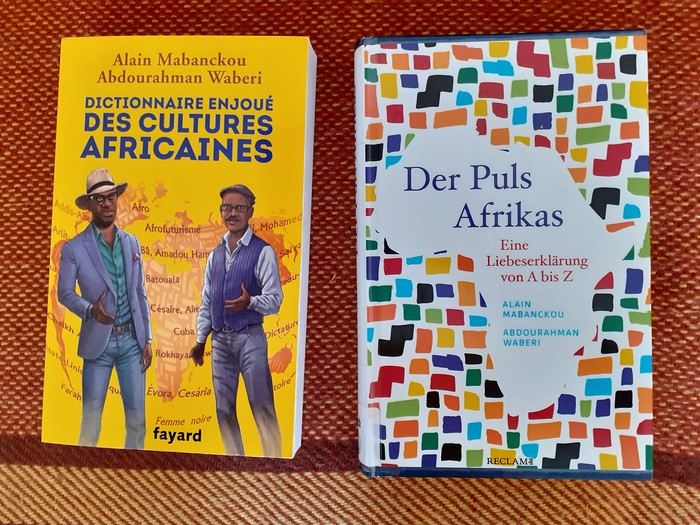
The Maggi cube, an unchallenged hegemony, and so much more
“The hopeless continent,” headlined The Economist, a British magazine, in July 2000 about Africa. Eleven years later, the same magazine headlined “Africa rising” instead. Images of Africa in the prosperous North constantly oscillate between apocalyptic scenarios and enthusiastic projections. A key issue with such images lies in the generalization they entail. If you look at the continent, considerable contrasts emerge depending on space and time. It’s no surprise that a region of the world encompassing such diverse ecological zones, maintaining such varied ties with other continents, comprising nearly fifty nation-states in sub-Saharan Africa alone, and characterized by a great diversity of languages, belief systems, and historical paths, doesn’t share a single destiny.
And yet, for many people outside Africa, as well as for many Africans, the continent constitutes a single entity, defined by criteria such as skin color, a colonial past, poverty, and the art of survival. Until now, these perspectives were generally accompanied by the idea that Africa had to—or should have—followed a single path together, sometimes called development, sometimes modernization, sometimes liberation, then a market economy. None of these paths delivered on their promises.
The two writers Alain Mabanckou and Abdourahman Waberi—one from Congo, the other raised in Djibouti, both long settled in France and now professors at renowned North American universities (Los Angeles, Washington)—have had enough of pessimistic scenarios: “We are aware that Africa is in the world and the world is in Africa. The same goes for all other continents, as our destinies are inextricably linked for better or worse. We refuse to see Africa as a reservoir of misfortunes or a continent cursed by atavistic misfortune and characterized by ethnic conflicts. [...] It’s this passionate flame we wanted to capture in a book [...] a kind of stroll through African cultures, without any demands, each letter of the alphabet leading us to a notion, a practice, a concept, a moment in history, literature, painting, politics, economics, cuisine, etc.” (p.10-11). Africa, they write, is on the verge of “imposing a signature, a style, a way of being in the world and in relation to the rest of the world.” (p.11) To put words to the continent’s diversity and dynamism, the two authors created a “rambling ABC,” a kind of portrait—or more precisely, a mythography—that lets you see and feel the pulse of a vast continent whose cultural power is unfolding before our eyes. Once marginalized or even mocked, the voice and importance of the Continent in global affairs are now undeniable” (p.11), containing over a hundred entries, mostly concise, written in a relaxed and casual style. The optimistic, even exuberant tone is set from the brief introduction. The duo of authors wants to “sing a love song to the cultures of our continent, to its inhabitants past and present, to its exceptional resources and its spectacular globalization despite a certain pollution that still clouds our skies due to the unmatched duration of dictatorships in some of our regions.” (p.12) In doing so, they don’t want to be too distracted by today’s Afewerki-Biya-Bongo-Déby & Co. ...
Of course, you’ll find tributes to great precursors like Frantz Fanon (“[...] it was a love story and admiration that wasn’t dimmed by the four decades separating his birth from ours. Let’s add that we were born while the native of Fort-de-France had left the world’s stage four years earlier, in the prime of life” p.141), Mongo Beti (“You must read and reread Mongo Beti, a genius who used his fame to support often just causes in Africa, like defending oppressed groups. His place is already in History. His oppressors, like the dictators Ahmadou Ahidjo and Paul Biya, can’t compete in the same category” p.64), the Malian Amadou Hampâté Bâ
(“Posterity remembers him mainly as an tireless defender of African cultures. His plea for the collection and preservation of traditional African knowledge remains a major event for all men and women of good will. One day in 1960, at the UNESCO podium, the native of Bandiagara sounded the alarm: ‘[...] Since we’ve admitted that the humanity of each people is the heritage of all humanity, if African traditions aren’t collected in time and written down, they’ll one day be missing from the universal archives of humanity.’” p.51),
Kwame Nkrumah, “one of the founders of Pan-Africanism, father of Ghana’s independence” (p.239), as well as the historian Cheikh Anta Diop, the writer, poet, and politician Aimé Césaire, and the economist and thinker Samir Amin, but also very warm tributes to certain contemporary African intellectuals like Souleymane Bachir Diagne and Achille Mbembe
(“A few years ago, in dominant economic circles, a rumor often resurfaced, usually disguised as a cold and scientifically proven analysis: Africa is useless. It’s a burden for the rest of the human community. With its 2% share in world trade, it would disappear from stock market radars without anyone noticing. So? Maybe it’ll be pulled up by other continents. Wanting to surpass itself is a crazy bet for Africans, they concluded. Arrogant or clueless, President Nicolas Sarkozy declared before an audience of students and teachers at Cheikh Anta Diop University in Dakar: ‘The African man hasn’t entered history enough [...] He only knows the eternal repetition of time marked by the endless repetition of the same gestures and words.’ That was in 2007. For decades, armed only with reason, an intellectual often steps up to debunk prejudices, lazy readings, and dishonest frameworks used as false fronts by those who, like Nicolas Sarkozy or former journalist Stephen Smith, out of ignorance, contempt, or condescension, distort African reality. This intellectual is none other than the historian and political scientist Achille Mbembe. This heir of Frantz Fanon, Amílcar Cabral, Jean-Marc Ela, and Fabien Eboussi-Boulaga was born in 1957 in Cameroon, in the Bassa region. Marked early by the upheavals of a fratricidal war, Achille Mbembe became the guardian of the memory of martyrs. After brilliant studies in Paris, he went on to teach at the best American universities, but the call of the Continent was stronger than anything else. In Dakar, he once directed CODESRIA (Council for the Development of Social Science Research in Africa) before joining the University of the Witwatersrand in Johannesburg, South Africa. Even though the author of *Critique of Black Reason* (Éditions La Découverte, 2015) spends a few months at Duke University in North Carolina, his observation post remains South Africa. From Johannesburg, Achille Mbembe scrutinizes Africa and the whole world. A lucid observer with an elegant and generous pen, Achille Mbembe knows how to blend big and small history: ‘I was born one day in July, as the month was drawing to a close. It was 1957, in that part of Africa recently named ‘Cameroon,’ a memory of the wonder that seized Portuguese sailors in the 15th century when, sailing up the river near Douala, they couldn’t help but note the presence of a multitude of crustaceans, and named it *Rio dos Camarões*, meaning ‘River of Shrimp.’ I grew up in the shadow of this nameless land, since, in a way, the name it bears is only the product of someone else’s astonishment: a lexical mistake, if you will.’ From this mistake or wound, he made leaven, a springboard to compose a rich work, recognized worldwide. To denounce barriers and barbarians too. But that’s not enough. Among his peers in circles of thought and action, Achille Mbembe passionately and consistently defends human dignity and the beauty of the world. In doing so, he fulfills the mission Frantz Fanon entrusted to him.” (p.227-229),
as well as entries dedicated to lesser-known artists and intellectuals, like the French journalist and activist Rokhaya Diallo, daughter of Senegalese and Gambian parents, or the Ethiopian filmmaker Haile Gerima, who has long lived in the United States. Other names from politics, sports, music, art, and literature: Kofi Annan, p.36; Barack Obama, p.243; Thomas Sankara, p.277; Ousmane Sow, p.285; Yambo Ouologuem, p.250; Léopold Sédar Senghor, p.282; Muhammad Ali, p.30; Nuruddin Farah, p.146; Salif Keita, p.203; Ahmadou Kourouma, p.206; Ngũgĩ wa Thiong’o, p.236; Winnie Mandela, p.224; Kylian Mbappé, p.226 ...
The authors, who resolutely commit to a “mythography” (p.11) of Africa, also pay special attention to local social movements, cultural events, and aspects of daily life. *Y’en a marre*, “which also meant ‘we’re fed up with sitting on our hands’” (p.320-321), emerged about a decade ago in Senegal as a citizen movement of peaceful resistance and symbolizes, the authors emphasize, the fact that African youth are increasingly fed up “with the political circus deployed in Africa since independence, as our parents would say, ‘since the White man left’...” (p.321). A full entry is dedicated to the Maggi bouillon cube, which has flooded African markets for about forty years and enjoys immense popularity (“It’s everywhere in Africa, from Dakar to Djibouti, and from Tangier to Cape Town. It’s in every pot, every stew. Little hands put it in every sauce, every local or adapted dish. An unchallenged hegemony! You’ll find it in diasporas too. The culinary strolls in Paris, in the [...] neighborhood” p.90). Critics blame it not only for impoverishing the aromatic diversity of local dishes but also for being harmful to health. And yet, “he poorest Africans, those who eat only once a day, a few spoonfuls of white beans and a ball of *foufou*, for example, are the most fervent users of the magic cube.” (p.92-93)
For *fonio*, “the new trendy cereal. [...] From the millet family, fonio is probably the oldest cereal cultivated in West Africa, and mainly in its sub-Saharan part, for millennia. [...] Easy to grow, water-efficient, fonio grows everywhere except on clay soils. Long neglected because it was considered the poor man’s crop, fonio is now a source of pride for the farmers who cultivate it and cherish it like the apple of their eye” (p.156-157), the authors immediately offer a detailed recipe, letting the reader know that “e can’t resist sharing this fonio with chicken recipe from Mali with you:
Ingredients: 1 chicken 3 large ripe red tomatoes 4 tbsp tomato paste 4 large onions 1 garlic clove 1/2 cup oil 2 Maggi cubes or salt 2 large carrots 1 turnip 1 large cabbage 2 large potatoes 1 celery stalk 1 packet pre-cooked fonio 4 okra (or okra powder) salt, pepper
Preparation: 1. Prepare the sauce: wash and cut the chicken. Peel the onions, garlic, and vegetables. 2. In a pot, fry the chicken pieces. 3. Dice the onions, tomatoes, carrots, and turnip very small and add them to the pot. 4. Add the tomato paste, salt, and pepper. 5. Simmer for 15 min, then add 2 L of water and the cooked chicken pieces. 6. Simmer for 30 min, then add the crushed garlic and celery, plus the cabbage cut into 4 and the potatoes cut in half. 7. Prepare the fonio: cover it with warm water, let it rest for 15 min, and cook it over low heat. 8. In a small pot, boil the okra and crush them. 9. Mix the crushed okra with the cooked fonio, then salt. Serve hot.” (p.158-159)
The comedy *Black Mic Mac*, released in French theaters in 1986 and addressing France’s increasingly restrictive immigration policy at the time, also gets an entry, as do *Tintin in the Congo*, the popular comic, and *Jip’s Café* (“[...] a little Africa in the heart of Paris, with passersby stopping to admire the ‘ambianceurs’ on the dance floor or attend the cultural events offered by the place” (p.194), an African establishment in Paris that Alain Mabanckou already immortalized in one of his novels.
The duo of authors also tackles thorny subjects like jihadism (p.119), the Rwandan genocide (p.272), the CFA franc (p.82), and dictatorship (p.110). While the two strike the right tone here, many entries leave a slightly bitter taste. Two examples: why doesn’t the text on Barack Obama mention the great disappointment of many people in Africa, who expected more from the African policy of the first U.S. president with African roots than just occasional warm words? Why do the comments on Winnie Mandela gloss over the fact that she was a highly controversial icon of the anti-apartheid movement due to her involvement in kidnappings, acts of torture, and murders of alleged apartheid collaborators? Instead, there’s a compassion that brings tears to the eyes: “She was often reduced to a secondary role, the wife of a great man” or “When victory came, she didn’t taste its fruits. Divorced, isolated. She would never be a ‘first lady’ in an evening gown, posing before a bed of chrysanthemums. They’d keep her far from the circles of power” (p.224-225). At this point, I would’ve liked the authors to take a slightly more critical stance...
That said, these “weaknesses” (if you can call them that) shouldn’t overshadow the book as a whole. It remains an informative, sometimes very entertaining, and often even original work in its own way.
Book information (the original French and the German translation):
Alain Mabanckou/Abdourahman Waberi. Dictionnaire enjoué des cultures africaines. Fayard, 2019. Alain Mabanckou/Abdourahman Waberi. Der Puls Afrikas. Eine Liebeserklärung von A bis Z. Reclam, 2022.
Hery
South Africa in safari mode: February/March 2026
Hi everyone,
With my girlfriend Christelle, we’ve chosen South Africa for our first trip to Southern Africa, focusing on safaris—after a long debate with a Cape Town/Kruger combo. But that would’ve meant cutting out St Lucia, which would’ve been harder to fit into another trip. And St Lucia—thanks to Michel and all those travel journals—we really wanted to go there.
So our 11-night itinerary ended up like this, mostly shaped by school holidays: - 3 nights in St Lucia - 1 night in Hluhluwe - 1 night at Mkhaya Game Reserve (Eswatini) - 1 night at Hlane Royal National Park (Eswatini) - 3 nights in Kruger (Berg en Dal / Satara / Tamboti) - 1 night at Shindzela Tented Camp in the Timbavati private reserve - 1 final night in Kruger at Lower Sabie
All of this in the off-season and rainy season, just a month after catastrophic floods that killed over 150 people and seriously damaged Kruger’s infrastructure.
I’ll jump straight to St Lucia and skip the loooong journey to get there (with a layover in Frankfurt, landing in Johannesburg, a domestic flight to Durban, and the rest by rental SUV—First Car Rental, perfect, no complaints).
To motivate readers—especially some familiar faces here—I’ll drop in a first photo.
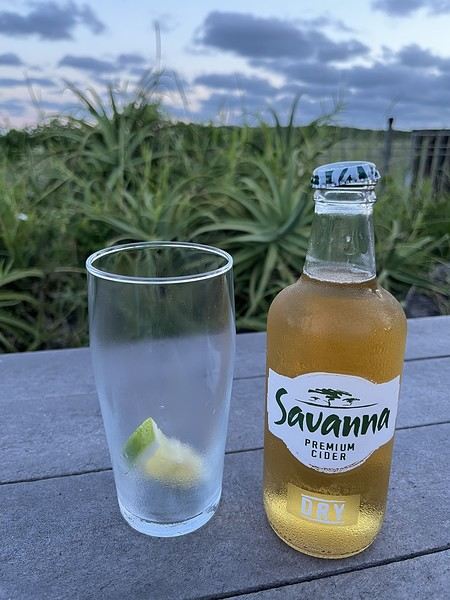
With my girlfriend Christelle, we’ve chosen South Africa for our first trip to Southern Africa, focusing on safaris—after a long debate with a Cape Town/Kruger combo. But that would’ve meant cutting out St Lucia, which would’ve been harder to fit into another trip. And St Lucia—thanks to Michel and all those travel journals—we really wanted to go there.
So our 11-night itinerary ended up like this, mostly shaped by school holidays: - 3 nights in St Lucia - 1 night in Hluhluwe - 1 night at Mkhaya Game Reserve (Eswatini) - 1 night at Hlane Royal National Park (Eswatini) - 3 nights in Kruger (Berg en Dal / Satara / Tamboti) - 1 night at Shindzela Tented Camp in the Timbavati private reserve - 1 final night in Kruger at Lower Sabie
All of this in the off-season and rainy season, just a month after catastrophic floods that killed over 150 people and seriously damaged Kruger’s infrastructure.
I’ll jump straight to St Lucia and skip the loooong journey to get there (with a layover in Frankfurt, landing in Johannesburg, a domestic flight to Durban, and the rest by rental SUV—First Car Rental, perfect, no complaints).
To motivate readers—especially some familiar faces here—I’ll drop in a first photo.
Back to RUAHA and SELOUS (Southern Tanzania).
...
" We’re ALL different, and so are our expectations when it comes to travel or leisure ". There are—without a doubt—as many ways to experience a trip as there are travelers!! For the two of us, it’s only our love of wild nature that guides us to East Africa. The stated goal of this trip was purely wildlife-focused, and NOT about discovering the country or its people.
...
Hello everyone,
Previously, I shared the account of a trip/safari in southern Tanzania in June 2024, in the Mikumi and Selous reserves.
This time, still in southern Tanzania, I invite you to join us in Ruaha National Park. (Then, depending on the number of images allowed in my quota, at the end of my story, we’ll return to Selous for the second part of the same trip.)
- This trip/safari took place in November 2022. - Our flight started in Marseille, heading to Addis Ababa, then Dar es Salaam (via Ethiopian Airlines). In Dar, we spent one night at a hotel near the airfield.
-1- During the layover in Addis Ababa. The Airbus A-350 in the early morning mist.

Reminder: Click on each image to enlarge it, if needed. .
From Dar es Salaam, if you want to go by road to Ruaha, it’ll take a very long and tiring day. 🤪
On previous trips, we’ve always taken a bush plane for this route. In this case, it took just over an hour and a half, with two short intermediate stops to drop off passengers at other bush airstrips.
Since I’m also passionate about aviation, I love these flights where you can admire the landscapes from low altitude while sitting right behind the pilot 🙂.
-2- These routes mainly use Cessna 208 Caravans.
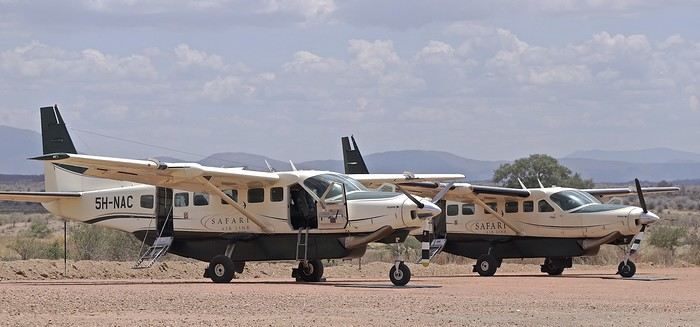
At the Msembe airstrip, we’re greeted around 1:30 PM by a guide and a driver from our chosen lodge. They brought a picnic basket, which we enjoy at a nearby picnic area. We’re by the Ruaha River, completely dry—it’s scorching hot.
-3- The first mammals we encounter are a pair of female impalas, accompanied by a young male.
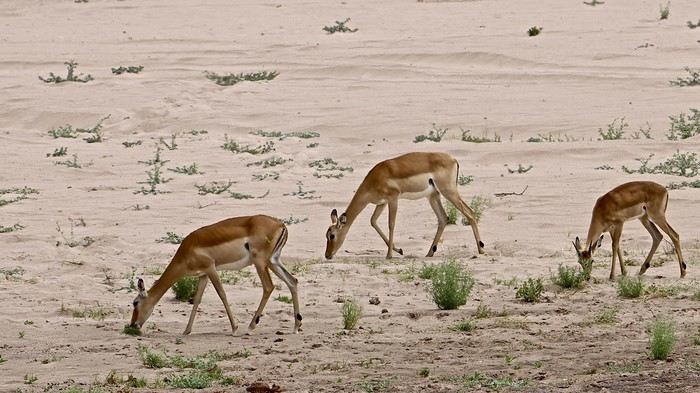
Reminder: Click on the image to view it in larger size. 😉
-4- To save the hippopotamus populations from certain death, rangers had to dig holes in the sand with bulldozers. Fortunately, water is present beneath the sand layer.
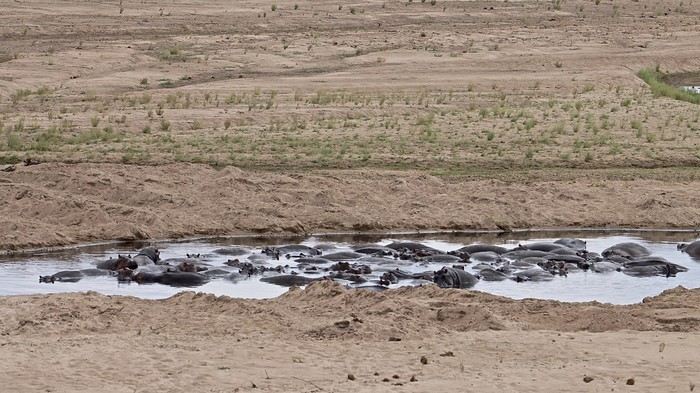
-5- This crocodile doesn’t seem to have been accepted as a swimming neighbor by the hippos...
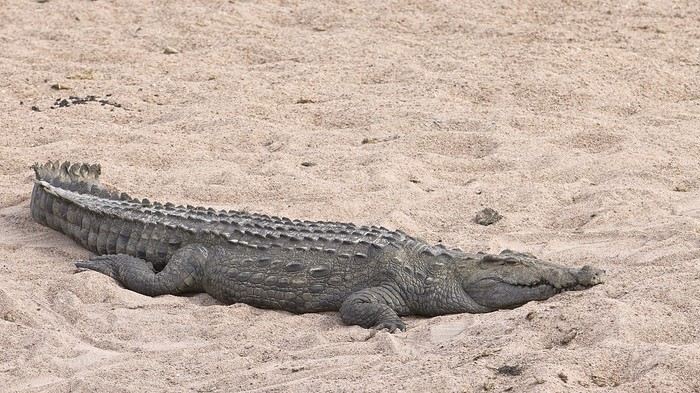
We’ll explore along the river for 2-3 hours before crossing it at a ford toward the southern part of the reserve.
-6- The typical landscape of Ruaha, with its many baobabs.
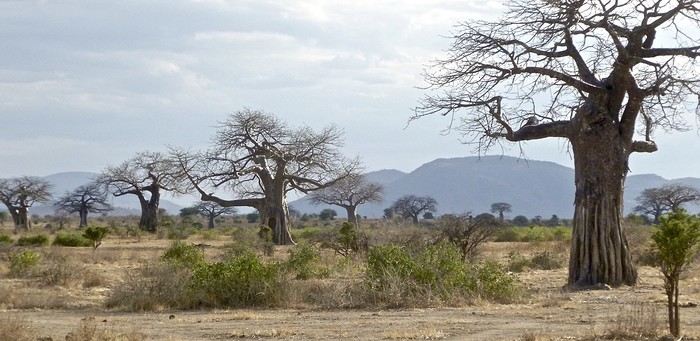
-7- My buddy the R.L.B. is also here to welcome me.... 🙂 🙂
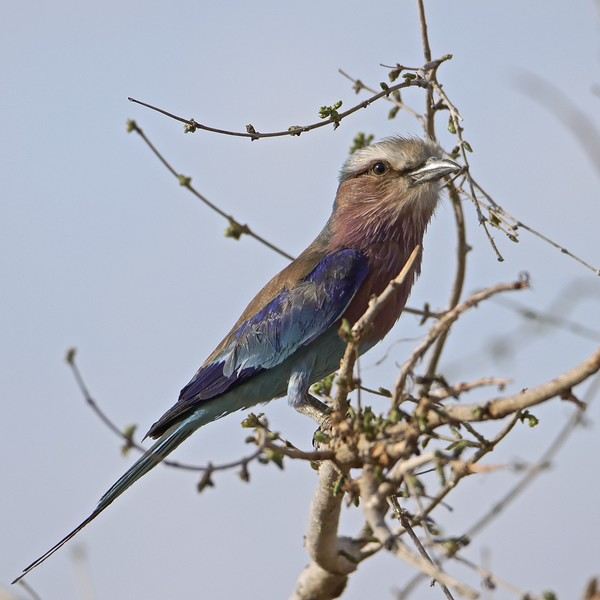
-8- As well as this little bee-eater... 😎
-9- ...which reminds us of the origin of its name...!
-10- Above a rare waterhole, a fish eagle keeps watch for fish...
...
*** Please wait until the end of the story for any questions or to share your own experiences in Ruaha. (Or via PM.) Thanks in advance for keeping this account smooth and enjoyable. 😉
...
*** I’m not an ornithologist, but birds are an important and unavoidable part of safari discoveries. You’ll find quite a few in the images of my story. 😎
...
" We’re ALL different, and so are our expectations when it comes to travel or leisure ". There are—without a doubt—as many ways to experience a trip as there are travelers!! For the two of us, it’s only our love of wild nature that guides us to East Africa. The stated goal of this trip was purely wildlife-focused, and NOT about discovering the country or its people.
...
Hello everyone,
Previously, I shared the account of a trip/safari in southern Tanzania in June 2024, in the Mikumi and Selous reserves.
This time, still in southern Tanzania, I invite you to join us in Ruaha National Park. (Then, depending on the number of images allowed in my quota, at the end of my story, we’ll return to Selous for the second part of the same trip.)
- This trip/safari took place in November 2022. - Our flight started in Marseille, heading to Addis Ababa, then Dar es Salaam (via Ethiopian Airlines). In Dar, we spent one night at a hotel near the airfield.
-1- During the layover in Addis Ababa. The Airbus A-350 in the early morning mist.
Reminder: Click on each image to enlarge it, if needed. .
From Dar es Salaam, if you want to go by road to Ruaha, it’ll take a very long and tiring day. 🤪
On previous trips, we’ve always taken a bush plane for this route. In this case, it took just over an hour and a half, with two short intermediate stops to drop off passengers at other bush airstrips.
Since I’m also passionate about aviation, I love these flights where you can admire the landscapes from low altitude while sitting right behind the pilot 🙂.
-2- These routes mainly use Cessna 208 Caravans.
At the Msembe airstrip, we’re greeted around 1:30 PM by a guide and a driver from our chosen lodge. They brought a picnic basket, which we enjoy at a nearby picnic area. We’re by the Ruaha River, completely dry—it’s scorching hot.
-3- The first mammals we encounter are a pair of female impalas, accompanied by a young male.
Reminder: Click on the image to view it in larger size. 😉
-4- To save the hippopotamus populations from certain death, rangers had to dig holes in the sand with bulldozers. Fortunately, water is present beneath the sand layer.
-5- This crocodile doesn’t seem to have been accepted as a swimming neighbor by the hippos...
We’ll explore along the river for 2-3 hours before crossing it at a ford toward the southern part of the reserve.
-6- The typical landscape of Ruaha, with its many baobabs.
-7- My buddy the R.L.B. is also here to welcome me.... 🙂 🙂
-8- As well as this little bee-eater... 😎
-9- ...which reminds us of the origin of its name...!
-10- Above a rare waterhole, a fish eagle keeps watch for fish...
...
*** Please wait until the end of the story for any questions or to share your own experiences in Ruaha. (Or via PM.) Thanks in advance for keeping this account smooth and enjoyable. 😉
...
*** I’m not an ornithologist, but birds are an important and unavoidable part of safari discoveries. You’ll find quite a few in the images of my story. 😎
...
The Two of Us in Istanbul: A Turkish Blue Round
Hello everyone,
I’m not really a regular contributor to VoyageForum, but every time Kate and I travel, she encourages me to write a travel journal and publish it. And I must admit, it’s a very enjoyable intellectual exercise, though not always easy. As a VF contributor whose journals I’ve read once said, this retrospective work not only helps preserve memories but also provides a fruitful moment of introspection by bringing back emotions and feelings.
Kate and I spent a week in Istanbul. For her, who had already visited, it was a return; for me, it was a discovery.
As we’ve now made a habit of, I write the texts, and she posts her photos. We hope this illustrated story, crafted together, will revive beautiful sensations for those who know the city and inspire others to discover it. Here we go!
I’m not really a regular contributor to VoyageForum, but every time Kate and I travel, she encourages me to write a travel journal and publish it. And I must admit, it’s a very enjoyable intellectual exercise, though not always easy. As a VF contributor whose journals I’ve read once said, this retrospective work not only helps preserve memories but also provides a fruitful moment of introspection by bringing back emotions and feelings.
Kate and I spent a week in Istanbul. For her, who had already visited, it was a return; for me, it was a discovery.
As we’ve now made a habit of, I write the texts, and she posts her photos. We hope this illustrated story, crafted together, will revive beautiful sensations for those who know the city and inspire others to discover it. Here we go!
Review of a Norway cruise on the Emerald Princess in June 2025 (1)
Hello everyone,
I’ve wanted to take this Norway cruise for a very long time. The first time I booked it was in July 2020 with Azamara. Unfortunately, it was canceled, as everyone remembers. When I tried to book it again, the prices (already a bit high with Azamara) had simply doubled. So, since then, I’ve been keeping an eye out every year for any opportunities...
The last time we sailed with Princess was eleven years ago, and things didn’t go very well. I came back pretty unhappy with their service and quite disappointed. Despite the $600 they gave me as credit for a future cruise, I’d never set foot on one of their ships again.
But this time, the opportunity arose—a fantastic itinerary with lots of stops, a reasonable price for 16 nights (I’ll share the details in the conclusion), and a ship that’s not too big, so to speak, with only 3,000 passengers. I’m not expecting much from the cruise line this time and am boarding the ship with low expectations beyond the itinerary.
Princess has introduced an app to download before the cruise. It’s essential because online check-in is no longer available, and the agency doesn’t send a travel journal. Everything is done through the app. After completing the check-in on the app, we only know that we’ll need to pick up our key, the Medallion, at embarkation by following the blue line in the terminal and presenting our passport.

Up until our departure, the weather forecast for the coming week in Norway is disastrous—rain, rain, and more rain. It was pretty much the same two years ago before our Iceland cruise, and in the end, the weather turned out fine.
If you’re ready to embark on the Emerald Princess to discover this beautiful cruise and the stunning landscapes of Norway, let’s go!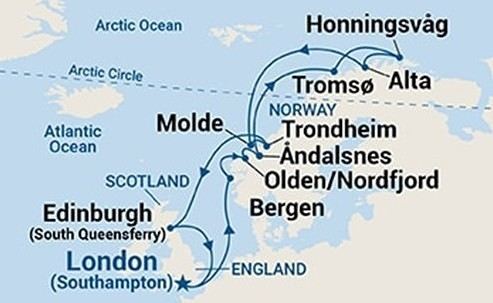
Southampton - Sea day - Bergen - Olden - Åndalsnes - Sea day - Tromsø - Honningsvåg (North Cape) - Alta - Sea day - Molde - Trondheim - Two sea days - Edinburgh - Sea day - Southampton
I’ve wanted to take this Norway cruise for a very long time. The first time I booked it was in July 2020 with Azamara. Unfortunately, it was canceled, as everyone remembers. When I tried to book it again, the prices (already a bit high with Azamara) had simply doubled. So, since then, I’ve been keeping an eye out every year for any opportunities...
The last time we sailed with Princess was eleven years ago, and things didn’t go very well. I came back pretty unhappy with their service and quite disappointed. Despite the $600 they gave me as credit for a future cruise, I’d never set foot on one of their ships again.
But this time, the opportunity arose—a fantastic itinerary with lots of stops, a reasonable price for 16 nights (I’ll share the details in the conclusion), and a ship that’s not too big, so to speak, with only 3,000 passengers. I’m not expecting much from the cruise line this time and am boarding the ship with low expectations beyond the itinerary.
Princess has introduced an app to download before the cruise. It’s essential because online check-in is no longer available, and the agency doesn’t send a travel journal. Everything is done through the app. After completing the check-in on the app, we only know that we’ll need to pick up our key, the Medallion, at embarkation by following the blue line in the terminal and presenting our passport.
Up until our departure, the weather forecast for the coming week in Norway is disastrous—rain, rain, and more rain. It was pretty much the same two years ago before our Iceland cruise, and in the end, the weather turned out fine.
If you’re ready to embark on the Emerald Princess to discover this beautiful cruise and the stunning landscapes of Norway, let’s go!
Southampton - Sea day - Bergen - Olden - Åndalsnes - Sea day - Tromsø - Honningsvåg (North Cape) - Alta - Sea day - Molde - Trondheim - Two sea days - Edinburgh - Sea day - Southampton
Madagascar - June 2025
Five years of an unintended break... The closure of VF, COVID... What a joy to rediscover the pleasure of sharing!
I’ve stayed true to my habits: the following account is a collection of practical tips rather than a travel journal...
Madagascar is as big as France and Belgium combined. In three weeks, choices have to be made! It was the Great Tsingy that inspired our trip. We decided to focus on the southwest and the RN7. We skipped the Deep South and the North. Oh well...
OUR ITINERARY IN 3 WEEKS:
Fri 6 June – Direct AF flight to Tana – Flight arrives at 10:30 PM – Tana Sat – Antsirabe Sun – Miandrivazo Mon – Drive to the Masiakampy pier – Descent of the Tsiribihina River by pirogue - Bivouac Tue – Descent of the Tsiribihina River by pirogue - Bivouac Wed – Descent of the Tsiribihina River by pirogue – Bekopaka Thu – Pirogue on the Manambolo River and Small Tsingy of Bemaraha – Bekopaka Fri – Great Tsingy of Bemaraha – Bekopaka Sat – Avenue of the Baobabs – Morondava Sun – Belo sur Mer Mon – Free day – Belo sur Mer Tue – Manja Wed – Andavadoaka Thu – Free day – Andavadoaka Fri – Salary Lagoon – Mangily Sat – Ranohira Sun – Isalo National Park - Ranohira Mon – Anja Reserve - Ambalavao - Fianarantsoa Tue – FCE train canceled – Visit to a Tanala village - Manakara Wed – Pirogue on the Pangalanes Canal – Ranomafana Thu – Ranomafana NP – Ranomafana Fri – Ambositra – Antsirabe Sat 28 June – AF flight to Paris – Flight departs at 11:55 PM
TRIP ORGANIZATION: I prepared my trip using the usual guides (LP and Rough Guide), the internet, and the Freytag & Berndt map (1:1,000,000). I’m old-school—I still love visualizing my route on a paper map, even though in Madagascar, it’s misleading because some National Roads are only national in name!...
The agency: Since we couldn’t deal directly with a driver-guide (we lacked reliable info to take the plunge), we went through an agency to organize the logistics of our trip. We didn’t feel like using bush taxis (not enough time) or driving a 4x4 ourselves (neither the skills nor the boldness). The French agency connected us with a local agency, to whom I sent my detailed itinerary by email. A few exchanges via email and WhatsApp calls allowed us to finalize everything quickly after some adjustments. As you’ve gathered... we multiplied the commissions, which inflated the budget. That said, in the end, we were thrilled with our decision and our choice. Our trip was booked by the end of 2024, and reservations were made immediately. No bad surprises: the bookings in the planned hotels were honored, often with one of the best rooms. On our last day in Tana, before departure, we were lucky enough to meet the director I’d been communicating with, who helped build and validate our circuit. A very warm debriefing.
The driver-guide: The agency assigned us Faly, 33, a driver-guide for over 10 years. He stayed with us from start to finish: he picked us up at the airport on arrival and dropped us off 23 days later. A very experienced driver (which is important here), an open and cultured guide, reliable, punctual, and a great companion. And a provider of good advice throughout the trip. We made the most of the long stretches on dirt roads or highways to listen to him talk about daily life, rituals, wildlife, and flora... No time wasted! With a great playlist in the background, we combined business with pleasure! Faly’s accommodation and meals were included (quite often, hotels offer free lodging and meals to driver-guides who bring clients), as was the fuel. That didn’t stop us from inviting Faly to share a beer or our evening meal sometimes. He didn’t always accept, wanting to let us "enjoy our romantic evenings," as he put it. Present without being intrusive! Faly is fully capable of organizing a tailor-made trip directly. I recommend him without any hesitation—we were delighted with his service. I’ll gladly share his contact details via PM to anyone who asks.
Local guides: It’s the national guide’s prerogative to choose the local guides (mandatory in the parks). Thanks to his experience, Faly always booked us amazing, competent, and interesting local guides.
Hotels: I told the agency I wanted charming, comfortable accommodations, without falling into flashy luxury. We loved all the hotels (except the Hôtel Kanto in Manja). The rooms, mostly bungalows, were always spacious and clean. Unfortunately, I can’t give the prices—I didn’t get the details. Breakfast is always included, usually fresh and hearty. Very often, a small bottle of water is provided in the room.
Tana Hôtel Les 3 Métis Power cuts are common (!) in Tana. Bring a headlamp.
Antsirabe Ecolodge – Les chambres du voyageur Maybe our favorite! A few bungalows, beautifully arranged in a splendid tropical garden. The dog Kodak welcomes us warmly.
Miandrivazo Hôtel Princesse Tsiribihina Magnificent view of the valley.
Bekopaka Hôtel Orchidée du Bemaraha 2 (yes, 2) beautiful pools, a large open common room.
Morondava Hôtel Baobab Café Brand new or at least, according to Faly, just renovated. Very comfortable but without much charm (international style).
Belo sur Mer Ecolodge du Menabe The bungalows, all made of wood, bamboo, and thatch, are set on the beach. Very spacious and fully equipped! Large open-air restaurant by the sea. No hot water from the tap—it’s available in plastic bottles heated by the sun in front of each bungalow. Actually, we never used it... Another very, very beautiful spot.
Manja Hôtel Kanto The only hotel on this leg of the journey, so no choice. The owner knows it and, as a result, doesn’t bother. It’s a real dive! Tiny, dark room, a sordid bathroom with only a trickle of water—we skipped the shower! Clean sheets, though. Obviously, no Wi-Fi. The only place where I didn’t leave a tip. We were well warned about the discomfort of this stop, both by the agency and Faly. We weren’t surprised, and it even became a running joke during the trip. On the other hand, we found a nice little market in town.
Andavadoaka Manga Lodge What bliss! Especially after the horrible Hôtel Kanto. A paradise-like spot, overlooking three beautiful deserted white-sand beaches. Meals are served on the terrace facing the sea. Stunning sunset. We loved spending a day lounging here! We were the only guests and were pampered.
Mangily (Ifaty) Mangily is the "suburb" of Ifaty. Hôtel Vovo Telo A large beachfront bungalow complex. More touristy but pleasant—we spent a lovely evening there with our feet in the sand.
Ranohira Le Relais de la Reine A splendid resort built by a Frenchman, at the foot of the rocks, very well integrated into the environment. Beautiful marked trail starting from the garden.
Fianarantsoa Villa Sylvestre Contrary to what its name suggests, it’s a hotel right in the city center. Quite decent, though.
Manakara Parthenay Club Pretty bungalows in a large garden by the sea, but swimming isn’t safe—the water is too dangerous and rough.
Ranomafana Hôtel Thermal Very spacious rooms.
Meals: Not all our meals were included. It’s really not expensive. 1 meat or fish dish: around 35,000 Ar 1 full menu (starter, main, dessert): around 70,000 Ar 1 large THB beer (65 cl): between 8,000 and 12,000 Ar 1 piña colada: 15,000 Ar 1 flavored rum: 6,000 Ar (sometimes free) 1 glass of baobab juice (!): 5,000 Ar
We always ate very well. Rice is everywhere, served in large quantities. Zebu meat is quite good if not overcooked. Personally, I prefer fish, and I feasted: grouper, captain, crab, small lobsters...
We happily discovered baobab juice (especially in Belo, on the west coast). And of course, flavored rums!
We bought 2 packs of 6 bottles of mineral water at Carrefour (!) (about 5,000 Ar per large bottle) at the start of our trip. That was enough, especially since we often got water in the bungalows.
We had a few picnics included in our trip. Instead of picking up the hotel’s lunchbox, Faly prepared delicious, fresh, and varied picnics for us: tuna pasta salad, fried rice with eggs, grilled vegetables, and avocado...
An exceptional address not to miss: Mad Zébu – Belo sur Tsiribihina A highly reputed restaurant, a favorite of LP and Rough Guide, and rightly so! Gourmet cuisine, refined and elegant. Barely more expensive than elsewhere, and it’s worth it. We stopped there on our way up to Bekopaka and the Tsingy NP. Fully booked! So Faly reserved for our return, three days later. We’re still thanking him! What a treat!
THE BUDGET: Ariary exchange rate: 5,000 Ar = 1 €
Pre-trip expenses: Direct Air France flights: 930 € per person round trip Cost of the circuit with the agency: 2,880 € per person
The visa: Issued on arrival, very quickly. 35 € per person for a stay under 30 days. Super simple. Super fast.
On-site expenses: As soon as we arrived at the airport (it was nearly midnight), Faly advised us to exchange our euros for all our needs. There are few opportunities on our route to find an ATM or an open bank with a good rate. To be more comfortable, he took us to a small office under military protection just outside the airport. I exchanged 1,200 € (I had asked the agency for advice on the amount to bring) at a rate of 4,750 Ar and became a millionaire. Faly recounted all the stacks. That covered all our expenses (meals, drinks, tips) without ever feeling deprived. Personal purchases were made at the end of the trip. Convenient—it served as an adjustment variable. We spent our last million (200 €) on marquetry and vanilla. Tip: We asked for 200,000 Ar in 5,000 Ar bills for tips. That wasn’t too much—I even ran short of small bills in the last two days.
Tips: Madagascar is a poor country where every service deserves a small reward. While not mandatory, it’s customary. But no one ever demanded or expected it openly. On the contrary, I sometimes had to remind a porter to give them my small bill. We never carried our luggage—porters were always present when the car arrived or waiting at our door to watch for our departure. I gave each of them 5,000 Ar. In restaurants, I rounded up to the nearest ten and left the change. Local guides also expect a tip: I gave around 20,000 Ar per day for the two of us. Finally, the national guide also expects a gratuity. I had read online to budget 5 € per day per person. I added more since we were so happy with his services. The tip was given at the end of the trip, in euros, outside the budget.
Total budget all included (excluding personal purchases): 8,690 € Clearly, Madagascar is a country where life isn’t expensive, but travel costs add up quickly due to the need to rent a 4x4 with a driver.
HIGHLIGHTS:
· The dirt roads Yes, I’m listing them among the highlights! We loved those long hours spent driving at 20 km/h on rocky, muddy, white, red, or gray sand tracks... surrounded by tropical vegetation, palm trees, pandanus, mango trees... The experiences were sometimes thrilling: crossing a river on a ferry (just planks of wood fixed on two motorized pirogues side by side) or crossing a river without a ferry, with just a kid running ahead of the 4x4 to show the way; soft sand where the 4x4 easily gets stuck... The tracks are quite narrow, and crossing paths with a bush taxi, a zebu cart, or a herd of goats is always epic. So many beautiful images, so many beautiful photos! Much more beautiful than on asphalt. So yes, we loved those long stretches on dirt roads. For us, it was clearly part of the journey. Faly was particularly careful, and the 4x4 was comfortable. No injuries, no fatigue, even after 7 or 8 hours on rough tracks. The national roads (including the famous RN7) are badly damaged by cyclones, huge trucks, and lack of maintenance. Potholes have turned into ostrich nests, and we didn’t drive much faster than on the dirt roads.
· The landscapes, villages, encounters... We crossed a variety of stunning landscapes: mountains with slopes covered in terraced crops, rice fields from apple green to emerald green, sugarcane fields, then tropical forests, baobab forests (they deserve a special paragraph below), traveler’s tree forests. And then coastlines with white sand dunes against a backdrop of blue hues!... Magical! We also passed through many villages with houses whose architecture varied by region. The Betsileo houses display beautiful decorative brick reliefs. On the west coast, the houses are more precarious, made of bamboo with palm-thatched roofs. In the Highlands region, we found solid houses with pastel plaster. Each region has its own landscape, crops, habitat, and clothing. Zebu carts are often the only means of transport in remote villages. We saw them very frequently. Again, the cart’s decoration depends on the region. And then, we met many villagers coming out of the bush and walking to the next market, carrying their crops on their heads or shoulders. More beautiful photos!
· The descent of the Tsiribihina River We boarded around 9 AM in a long pirogue with Gana, the local guide, and two pirogue men. So, five of us. The pirogue is long but narrow, about 65 cm wide. We sat one behind the other at the front on seats padded with what would become our mattresses during the bivouacs. We only took the bare essentials for two nights. A little goodbye to Faly, whom we’d see again in three days! Don’t forget us! The river is silty—meaning orange, opaque but clean. We glided along silently. Gana showed us the trees, birds, crocodiles (we saw five—apparently, we were lucky). The pirogue men rowed to get us as close as possible to these crocs sunbathing on the roots of big trees. Yeah, right!... as soon as we got too close, *splash*, they disappeared into the water. We marveled at the mini rice fields lining the river. Every tiny plot, no matter how small, is cultivated. Above them, banana fields. And on the water, a whole life of fishermen and villagers living with and from the river. Gana warned us we’d eat on the pirogue because the journey was long. So, I expected chips... But no—fried rice and zebu steak, cooked right in the pirogue!! Incredible! In the middle of the afternoon, we reached a small beach where we disembarked. Gana led us about a hundred meters to a sublime waterfall. We were alone there. We had time to swim. We’d brought our swimsuits and a towel (bought at the Carrefour in Antsirabe on Faly’s wise advice!). This swim in this paradise-like spot remains one of our best memories. We found our pirogue again and set off until our first bivouac. We’d sailed for 7 hours today. The tents were set up on a wide beach, without a single tree. A moment of solitude... Uh, where can we go to the bathroom?... Especially since it was a full moon, so we felt like we were in the spotlight. Anyway... we did as everyone else—walked away, dug a hole, and the others turned their backs. A hearty meal on the beach before a comfortable and silent night. The next day, same program, with slightly different landscapes. The gorges widened, the trees were different. But still many colorful birds. Again, we ate on the pirogue: grilled chicken and vegetables. 9 hours of sailing. A similar bivouac. This time, we got it. On the third day, we finished the descent with 5 hours of sailing. So, 7 hours, 9 hours, 5 hours... doing nothing. It might sound boring... but it wasn’t. Like the dirt roads, these were contemplative moments. It glides, it’s calm, relaxing, and there’s a lot of life on this river, animal and human. Contemplation. Suspended time. On arrival, we disembarked at a sort of joyful, bustling river port. Of course, Faly was already there to pick us up.
· The Tsingy de Bemaraha NP (Small and Great) I have vertigo. During my research, several agencies advised me against visiting the Great Tsingy. "Stick to the Small ones," they said. Grrr, no, not what I wanted—we’ve dreamed of this for years! The agency we chose also warned me but didn’t discourage me. So we started with the Small Tsingy, quite close to Bekopaka, guided by Alisha. This forest of sharp limestone rocks is impressive. No vertigo issues here. The day was completed with a short pirogue ride on the Manambolo River and a visit to two caves with pretty formations. The next day, Faly and Alisha drove us to the Great Tsingy (a good hour on a terrible track). Arriving at the park entrance, Alisha equipped us with harnesses, carabiners, and gave us some safety instructions. Faly was also equipped. Wait? He’s coming with us? I quickly understood he was there for me—if I got stuck, he could go back with me, and Philippe could continue with Alisha. A wise precaution that delighted and reassured me. In the end, it was unnecessary since the famous bridge crossing was fully secured by the harness and carabiners. 18 meters on planks, one by one, it didn’t sway too much—I walked looking straight ahead, not a glance down. I even managed to smile in the middle of the crossing—I have a photo to prove it! I was overjoyed! The circuit in the Great Tsingy is a loop, so we didn’t have to cross the bridge again. We climbed to viewpoints offering breathtaking panoramic views. It’s extraordinary, unique, incredible. All this to say that if you have vertigo, don’t hesitate! It’s doable! It’s completely safe and really worth pushing your limits a bit! For those who’ve done treetop adventure courses, it’s similar. Also, no need to be a great athlete—just a bit of agility to climb a few ladders and high steps. Don’t censor yourself! I even had a small regret—the loop was a bit short (about 2 hours). I would’ve liked to continue or even redo it, with less apprehension. Tip: Do the Small Tsingy before the Great ones, or not at all. And if you can only do one, do the Great ones without hesitation.
· Canoeing in the Belo mangrove The Belo sur Mer ecolodge lends small individual canoes for free to go to the mangrove. We left at high tide, paddled for about twenty minutes to reach a fairly sparse forest where we could easily venture in. Very shallow water, crystal clear—we could see the roots of all these trees, schools of tiny fish... It was quite surprising. Until then, I only knew impenetrable, tangled mangroves. Here, nothing like that—we walked through an aquatic forest. We loved this adventure so much we left a bit late. The tide had gone out, and we had to carry our canoes for the last few meters... Of course, the staff came to help (probably laughing silently!). The lodge owners gave all the necessary explanations and lent a waterproof bag for the phone (because yes, it’s worth taking photos!). A very useful precaution—the canoes are small, low in the water, and paddling quickly soaks you. Again, this isn’t just for Tony Estanguet! It didn’t cause us any problems, not even sore muscles the next day. A great experience. It’ll take about 2 hours.
· Isalo NP Big surprise when we saw this huge rocky massif appear on the RN7! A massif of colored sandstone, carved with crevasses giving it a ruined look. Le Relais de la Reine is a little gem cleverly nestled in the heart of these rocks. A small marked trail starts from the garden. We picked up the description at reception and set off. Without a guide, alone following the markers, it took us 2 hours to complete this magnificent little trail, giving us a first glimpse of the massif before the hike the next day. And we enjoyed being completely alone for this walk. It’s free, easy, and well-signposted. Don’t miss it. In the evening, Faly took us to the so-called Isalo Window site—a hole in a wall through which we could see the sunset. We met all the tourists in the area here. We weren’t blown away by the show... The next day, we left early to reach the start of the hike. We met Zozoly at the guides’ office in the small town of Ranohira. During this hike, we climbed through the rocks to a viewpoint offering stunning 360° views of the massif. Then we reached a site called the "natural pool," breathtakingly beautiful, especially since we were alone again. A sort of oasis, a cascading waterfall, palm trees and tree ferns, fine sand, all nestled at the bottom of a small canyon. Paradise-like. We resisted swimming, but it was really tempting. A long walk on the plateaus then led us to a well-equipped picnic site where a local team prepared grills. Concrete tables were tiered in a spacious, shady clearing where a whole family of ring-tailed lemurs frolicked. They knew the tourists’ habits and tried to snatch food. Playful and not very shy, they amused us with their antics! We had to resist not luring them with a piece of banana!! Thousands of photos!! After the meal, we set off again with Zozoly for another landscape. This time, we were by a small river at the bottom of a canyon with high walls covered in vegetation. The trail was narrow and slippery, on a ledge of the wall. We progressed carefully. No danger, though. We first reached the Blue Pool, which only turns blue in photos (surprise!), then the Black Pool fed by a shower of waterfalls. Two magnificent spots that showed us a completely different aspect of the massif.
· Anja Reserve This ficus forest is home to many groups of lemurs. Used to humans, whom they don’t fear, they move around us, ignoring us completely. It’s almost annoying... The best place on our trip to see lemurs.
· The FCE train To the great regret of Manakara’s inhabitants, the FCE train hasn’t reached here for over a year and a half. As a result, there are far fewer tourists—the train was part of the experience. We drove there and didn’t regret coming to this port on the east coast.
· Visit to a Tanala village This visit wasn’t part of our program—it was added by the agency to compensate for the train not running. Which was the case. Not big fans of this kind of visit, where we feel like we’re at a zoo, voyeuristic, lacking authenticity, we followed the local guide with some skepticism and exchanged dubious looks. And yet... the guide’s explanations about village life and the warm, smiling welcome from the villagers charmed us and dispelled all our concerns. We learned a lot, met smiling families, and were able to enter these beautiful bamboo houses. A very pleasant surprise, rich in lessons.
· The Pangalanes Canal Arriving in Manakara, we crossed a bridge overlooking the Pangalanes Canal. A cry of surprise: the water is turquoise! We took a short pirogue ride with a team of three pirogue men and Joël, a local guide who explained the drama caused by the train’s halt. We stopped in a fishing village where Joël bought fish for the barbecue. We ended up on a beach where the team prepared the meal while we went to watch the fishermen return on the nearby beach. We admired the fishermen’s dexterity in untangling their nets, sorting their fish, cleaning their gear. On our return, we found a small table set up on the beach, in the shade of palm trees and casuarinas. Lobsters, captain fish, grilled vegetables, sautéed potatoes. A real feast (included in the trip cost).
· Ranomafana NP A 4-5 hour hike (some climbing) in a dense secondary forest to look for lemurs. As usual, we were accompanied by a local guide who, while waiting to find our furry friends, gave us lots of info on the vegetation, birds, and Tanala ethnic rituals. In the forest, we met 4 or 5 trackers, armed with radios to alert guides of their findings. In the end, we saw several lemurs of different types. Quite far, quite high... A nice complement to our lemur encounters in Isalo. Here, it rains 200 days a year. We started the hike in thick fog, but the forest’s density protected us from the humidity. Be careful—it can be a bit frustrating to see the lemurs so far away, so high. Nothing like the Anja Reserve or Isalo NP. Here, what’s fun is the hunt.
· The baobabs We were captivated by these kings of the forest, noble, imposing, majestic. We spotted them from very far away, towering over the rest of the vegetation. Alone, in small groups, or in forests, our trip allowed us to see hundreds of them! Mainly on the west coast. All different—bald, hairy, shaggy, short and stout, tall and thin, like Laurel and Hardy. Philippe took to naming them. Respectfully!
OUR FAVORITES: · The variety of landscapes. · The Tsingy NP.
OUR DISAPPOINTMENTS: · The Avenue of the Baobabs, very overrated and the only place where we saw crowds. We saw many other "forests" of baobabs that were much more impressive. · It’s hard to approach the population calmly as swarms of children run up as soon as we arrive, asking for sweets. Without any aggression, their smiles and laughter quickly made us forget this small inconvenience. We never gave out candy, clothes, or money. We left pens at a school and clothes with Faly.
IF WE WERE TO DO IT AGAIN: · Same period, same duration, same pace, same itinerary, but if we were to do it again today, I’d go through Faly directly! · Maybe we should’ve stayed in Ambalavao instead of Fianarantsoa. · Plan a longer loop in the Great Tsingy—it felt a bit too short.
MISCELLANEOUS: The welcome: ‘Samala Vazaha,’ there are many, many kids, sometimes overwhelming, never aggressive. We were impressed by the villagers’ smiles and good humor, towards us or even among themselves—laughter was everywhere. Safety: No problems. Out of (excessive?) caution, we spread all our money across several bags that we padlocked whenever we left the hotel. Bribes: We were stopped several times on the road by police or gendarmes. They checked our papers, sometimes our passports. Faly was perfectly in order. No discussion, no bribes, a cordial greeting from the officers. However, several times we found ourselves at small "tolls" on the tracks for villagers who had leveled the road or filled a hole, or for the young guy who ran through the river to show the way... Faly complied without discussion: every service deserves a small bill. Language: French is still widely spoken. Credit card: Unused. Cash: You need it! The climate at this time: Ideal—blue skies, sunshine, and mild temperatures (20-25°C) throughout our trip. Temperatures started to drop by our departure—winter was setting in. Clothing: T-shirt or polo and a vest sometimes in the evening, sandals on our feet, hiking shoes for all the hikes. Tip: We left a bag in the car (completely safe) with things we didn’t need daily and dirty laundry. The two bags to take out at each stop were much lighter. Before leaving, we left several polos and T-shirts with Faly, which, once washed, will make a few people happy. Tourist crowds at this time: Low—we were sometimes the only guests at the hotel. Faly explained that at the Isalo picnic site, in high season, you have to queue for a table, whereas we had our pick. Photos: Lots! Too many! That’s the problem with digital—we take so many! Health issues: Nothing serious, just the usual mild traveler’s diarrhea. Mosquitoes: They’re voracious. We took anti-malaria treatment. I’m still not sure if it was the right thing to do... I’m always very skeptical about such precautions. Internet: Free Wi-Fi at the lodges’ reception (except at Hôtel Kanto!), sometimes (rarely) in the bungalows. Phone: We didn’t try to get a local SIM card—the evening Wi-Fi was enough for us to make calls and send messages via WhatsApp. Make sure to turn off mobile data and switch to airplane mode (I activated it a bit late—received calls, spam ones at that, were charged...). Electricity: French plugs. Personal purchases: Beautiful wooden objects (sculptures and marquetry) or zebu horn items in Ambositra. 1 kg of vanilla (400,000 Ar – 80 € per kg) in Tana.
IN CONCLUSION: A trip of contemplation. A pause for admiration, as our local guide in Isalo NP said. Nothing else to do but walk, look, and enjoy. Here, there are no old stones, no museums—it’s a trip where nature reigns supreme. And what nature!
I’ve stayed true to my habits: the following account is a collection of practical tips rather than a travel journal...
Madagascar is as big as France and Belgium combined. In three weeks, choices have to be made! It was the Great Tsingy that inspired our trip. We decided to focus on the southwest and the RN7. We skipped the Deep South and the North. Oh well...
OUR ITINERARY IN 3 WEEKS:
Fri 6 June – Direct AF flight to Tana – Flight arrives at 10:30 PM – Tana Sat – Antsirabe Sun – Miandrivazo Mon – Drive to the Masiakampy pier – Descent of the Tsiribihina River by pirogue - Bivouac Tue – Descent of the Tsiribihina River by pirogue - Bivouac Wed – Descent of the Tsiribihina River by pirogue – Bekopaka Thu – Pirogue on the Manambolo River and Small Tsingy of Bemaraha – Bekopaka Fri – Great Tsingy of Bemaraha – Bekopaka Sat – Avenue of the Baobabs – Morondava Sun – Belo sur Mer Mon – Free day – Belo sur Mer Tue – Manja Wed – Andavadoaka Thu – Free day – Andavadoaka Fri – Salary Lagoon – Mangily Sat – Ranohira Sun – Isalo National Park - Ranohira Mon – Anja Reserve - Ambalavao - Fianarantsoa Tue – FCE train canceled – Visit to a Tanala village - Manakara Wed – Pirogue on the Pangalanes Canal – Ranomafana Thu – Ranomafana NP – Ranomafana Fri – Ambositra – Antsirabe Sat 28 June – AF flight to Paris – Flight departs at 11:55 PM
TRIP ORGANIZATION: I prepared my trip using the usual guides (LP and Rough Guide), the internet, and the Freytag & Berndt map (1:1,000,000). I’m old-school—I still love visualizing my route on a paper map, even though in Madagascar, it’s misleading because some National Roads are only national in name!...
The agency: Since we couldn’t deal directly with a driver-guide (we lacked reliable info to take the plunge), we went through an agency to organize the logistics of our trip. We didn’t feel like using bush taxis (not enough time) or driving a 4x4 ourselves (neither the skills nor the boldness). The French agency connected us with a local agency, to whom I sent my detailed itinerary by email. A few exchanges via email and WhatsApp calls allowed us to finalize everything quickly after some adjustments. As you’ve gathered... we multiplied the commissions, which inflated the budget. That said, in the end, we were thrilled with our decision and our choice. Our trip was booked by the end of 2024, and reservations were made immediately. No bad surprises: the bookings in the planned hotels were honored, often with one of the best rooms. On our last day in Tana, before departure, we were lucky enough to meet the director I’d been communicating with, who helped build and validate our circuit. A very warm debriefing.
The driver-guide: The agency assigned us Faly, 33, a driver-guide for over 10 years. He stayed with us from start to finish: he picked us up at the airport on arrival and dropped us off 23 days later. A very experienced driver (which is important here), an open and cultured guide, reliable, punctual, and a great companion. And a provider of good advice throughout the trip. We made the most of the long stretches on dirt roads or highways to listen to him talk about daily life, rituals, wildlife, and flora... No time wasted! With a great playlist in the background, we combined business with pleasure! Faly’s accommodation and meals were included (quite often, hotels offer free lodging and meals to driver-guides who bring clients), as was the fuel. That didn’t stop us from inviting Faly to share a beer or our evening meal sometimes. He didn’t always accept, wanting to let us "enjoy our romantic evenings," as he put it. Present without being intrusive! Faly is fully capable of organizing a tailor-made trip directly. I recommend him without any hesitation—we were delighted with his service. I’ll gladly share his contact details via PM to anyone who asks.
Local guides: It’s the national guide’s prerogative to choose the local guides (mandatory in the parks). Thanks to his experience, Faly always booked us amazing, competent, and interesting local guides.
Hotels: I told the agency I wanted charming, comfortable accommodations, without falling into flashy luxury. We loved all the hotels (except the Hôtel Kanto in Manja). The rooms, mostly bungalows, were always spacious and clean. Unfortunately, I can’t give the prices—I didn’t get the details. Breakfast is always included, usually fresh and hearty. Very often, a small bottle of water is provided in the room.
Tana Hôtel Les 3 Métis Power cuts are common (!) in Tana. Bring a headlamp.
Antsirabe Ecolodge – Les chambres du voyageur Maybe our favorite! A few bungalows, beautifully arranged in a splendid tropical garden. The dog Kodak welcomes us warmly.
Miandrivazo Hôtel Princesse Tsiribihina Magnificent view of the valley.
Bekopaka Hôtel Orchidée du Bemaraha 2 (yes, 2) beautiful pools, a large open common room.
Morondava Hôtel Baobab Café Brand new or at least, according to Faly, just renovated. Very comfortable but without much charm (international style).
Belo sur Mer Ecolodge du Menabe The bungalows, all made of wood, bamboo, and thatch, are set on the beach. Very spacious and fully equipped! Large open-air restaurant by the sea. No hot water from the tap—it’s available in plastic bottles heated by the sun in front of each bungalow. Actually, we never used it... Another very, very beautiful spot.
Manja Hôtel Kanto The only hotel on this leg of the journey, so no choice. The owner knows it and, as a result, doesn’t bother. It’s a real dive! Tiny, dark room, a sordid bathroom with only a trickle of water—we skipped the shower! Clean sheets, though. Obviously, no Wi-Fi. The only place where I didn’t leave a tip. We were well warned about the discomfort of this stop, both by the agency and Faly. We weren’t surprised, and it even became a running joke during the trip. On the other hand, we found a nice little market in town.
Andavadoaka Manga Lodge What bliss! Especially after the horrible Hôtel Kanto. A paradise-like spot, overlooking three beautiful deserted white-sand beaches. Meals are served on the terrace facing the sea. Stunning sunset. We loved spending a day lounging here! We were the only guests and were pampered.
Mangily (Ifaty) Mangily is the "suburb" of Ifaty. Hôtel Vovo Telo A large beachfront bungalow complex. More touristy but pleasant—we spent a lovely evening there with our feet in the sand.
Ranohira Le Relais de la Reine A splendid resort built by a Frenchman, at the foot of the rocks, very well integrated into the environment. Beautiful marked trail starting from the garden.
Fianarantsoa Villa Sylvestre Contrary to what its name suggests, it’s a hotel right in the city center. Quite decent, though.
Manakara Parthenay Club Pretty bungalows in a large garden by the sea, but swimming isn’t safe—the water is too dangerous and rough.
Ranomafana Hôtel Thermal Very spacious rooms.
Meals: Not all our meals were included. It’s really not expensive. 1 meat or fish dish: around 35,000 Ar 1 full menu (starter, main, dessert): around 70,000 Ar 1 large THB beer (65 cl): between 8,000 and 12,000 Ar 1 piña colada: 15,000 Ar 1 flavored rum: 6,000 Ar (sometimes free) 1 glass of baobab juice (!): 5,000 Ar
We always ate very well. Rice is everywhere, served in large quantities. Zebu meat is quite good if not overcooked. Personally, I prefer fish, and I feasted: grouper, captain, crab, small lobsters...
We happily discovered baobab juice (especially in Belo, on the west coast). And of course, flavored rums!
We bought 2 packs of 6 bottles of mineral water at Carrefour (!) (about 5,000 Ar per large bottle) at the start of our trip. That was enough, especially since we often got water in the bungalows.
We had a few picnics included in our trip. Instead of picking up the hotel’s lunchbox, Faly prepared delicious, fresh, and varied picnics for us: tuna pasta salad, fried rice with eggs, grilled vegetables, and avocado...
An exceptional address not to miss: Mad Zébu – Belo sur Tsiribihina A highly reputed restaurant, a favorite of LP and Rough Guide, and rightly so! Gourmet cuisine, refined and elegant. Barely more expensive than elsewhere, and it’s worth it. We stopped there on our way up to Bekopaka and the Tsingy NP. Fully booked! So Faly reserved for our return, three days later. We’re still thanking him! What a treat!
THE BUDGET: Ariary exchange rate: 5,000 Ar = 1 €
Pre-trip expenses: Direct Air France flights: 930 € per person round trip Cost of the circuit with the agency: 2,880 € per person
The visa: Issued on arrival, very quickly. 35 € per person for a stay under 30 days. Super simple. Super fast.
On-site expenses: As soon as we arrived at the airport (it was nearly midnight), Faly advised us to exchange our euros for all our needs. There are few opportunities on our route to find an ATM or an open bank with a good rate. To be more comfortable, he took us to a small office under military protection just outside the airport. I exchanged 1,200 € (I had asked the agency for advice on the amount to bring) at a rate of 4,750 Ar and became a millionaire. Faly recounted all the stacks. That covered all our expenses (meals, drinks, tips) without ever feeling deprived. Personal purchases were made at the end of the trip. Convenient—it served as an adjustment variable. We spent our last million (200 €) on marquetry and vanilla. Tip: We asked for 200,000 Ar in 5,000 Ar bills for tips. That wasn’t too much—I even ran short of small bills in the last two days.
Tips: Madagascar is a poor country where every service deserves a small reward. While not mandatory, it’s customary. But no one ever demanded or expected it openly. On the contrary, I sometimes had to remind a porter to give them my small bill. We never carried our luggage—porters were always present when the car arrived or waiting at our door to watch for our departure. I gave each of them 5,000 Ar. In restaurants, I rounded up to the nearest ten and left the change. Local guides also expect a tip: I gave around 20,000 Ar per day for the two of us. Finally, the national guide also expects a gratuity. I had read online to budget 5 € per day per person. I added more since we were so happy with his services. The tip was given at the end of the trip, in euros, outside the budget.
Total budget all included (excluding personal purchases): 8,690 € Clearly, Madagascar is a country where life isn’t expensive, but travel costs add up quickly due to the need to rent a 4x4 with a driver.
HIGHLIGHTS:
· The dirt roads Yes, I’m listing them among the highlights! We loved those long hours spent driving at 20 km/h on rocky, muddy, white, red, or gray sand tracks... surrounded by tropical vegetation, palm trees, pandanus, mango trees... The experiences were sometimes thrilling: crossing a river on a ferry (just planks of wood fixed on two motorized pirogues side by side) or crossing a river without a ferry, with just a kid running ahead of the 4x4 to show the way; soft sand where the 4x4 easily gets stuck... The tracks are quite narrow, and crossing paths with a bush taxi, a zebu cart, or a herd of goats is always epic. So many beautiful images, so many beautiful photos! Much more beautiful than on asphalt. So yes, we loved those long stretches on dirt roads. For us, it was clearly part of the journey. Faly was particularly careful, and the 4x4 was comfortable. No injuries, no fatigue, even after 7 or 8 hours on rough tracks. The national roads (including the famous RN7) are badly damaged by cyclones, huge trucks, and lack of maintenance. Potholes have turned into ostrich nests, and we didn’t drive much faster than on the dirt roads.
· The landscapes, villages, encounters... We crossed a variety of stunning landscapes: mountains with slopes covered in terraced crops, rice fields from apple green to emerald green, sugarcane fields, then tropical forests, baobab forests (they deserve a special paragraph below), traveler’s tree forests. And then coastlines with white sand dunes against a backdrop of blue hues!... Magical! We also passed through many villages with houses whose architecture varied by region. The Betsileo houses display beautiful decorative brick reliefs. On the west coast, the houses are more precarious, made of bamboo with palm-thatched roofs. In the Highlands region, we found solid houses with pastel plaster. Each region has its own landscape, crops, habitat, and clothing. Zebu carts are often the only means of transport in remote villages. We saw them very frequently. Again, the cart’s decoration depends on the region. And then, we met many villagers coming out of the bush and walking to the next market, carrying their crops on their heads or shoulders. More beautiful photos!
· The descent of the Tsiribihina River We boarded around 9 AM in a long pirogue with Gana, the local guide, and two pirogue men. So, five of us. The pirogue is long but narrow, about 65 cm wide. We sat one behind the other at the front on seats padded with what would become our mattresses during the bivouacs. We only took the bare essentials for two nights. A little goodbye to Faly, whom we’d see again in three days! Don’t forget us! The river is silty—meaning orange, opaque but clean. We glided along silently. Gana showed us the trees, birds, crocodiles (we saw five—apparently, we were lucky). The pirogue men rowed to get us as close as possible to these crocs sunbathing on the roots of big trees. Yeah, right!... as soon as we got too close, *splash*, they disappeared into the water. We marveled at the mini rice fields lining the river. Every tiny plot, no matter how small, is cultivated. Above them, banana fields. And on the water, a whole life of fishermen and villagers living with and from the river. Gana warned us we’d eat on the pirogue because the journey was long. So, I expected chips... But no—fried rice and zebu steak, cooked right in the pirogue!! Incredible! In the middle of the afternoon, we reached a small beach where we disembarked. Gana led us about a hundred meters to a sublime waterfall. We were alone there. We had time to swim. We’d brought our swimsuits and a towel (bought at the Carrefour in Antsirabe on Faly’s wise advice!). This swim in this paradise-like spot remains one of our best memories. We found our pirogue again and set off until our first bivouac. We’d sailed for 7 hours today. The tents were set up on a wide beach, without a single tree. A moment of solitude... Uh, where can we go to the bathroom?... Especially since it was a full moon, so we felt like we were in the spotlight. Anyway... we did as everyone else—walked away, dug a hole, and the others turned their backs. A hearty meal on the beach before a comfortable and silent night. The next day, same program, with slightly different landscapes. The gorges widened, the trees were different. But still many colorful birds. Again, we ate on the pirogue: grilled chicken and vegetables. 9 hours of sailing. A similar bivouac. This time, we got it. On the third day, we finished the descent with 5 hours of sailing. So, 7 hours, 9 hours, 5 hours... doing nothing. It might sound boring... but it wasn’t. Like the dirt roads, these were contemplative moments. It glides, it’s calm, relaxing, and there’s a lot of life on this river, animal and human. Contemplation. Suspended time. On arrival, we disembarked at a sort of joyful, bustling river port. Of course, Faly was already there to pick us up.
· The Tsingy de Bemaraha NP (Small and Great) I have vertigo. During my research, several agencies advised me against visiting the Great Tsingy. "Stick to the Small ones," they said. Grrr, no, not what I wanted—we’ve dreamed of this for years! The agency we chose also warned me but didn’t discourage me. So we started with the Small Tsingy, quite close to Bekopaka, guided by Alisha. This forest of sharp limestone rocks is impressive. No vertigo issues here. The day was completed with a short pirogue ride on the Manambolo River and a visit to two caves with pretty formations. The next day, Faly and Alisha drove us to the Great Tsingy (a good hour on a terrible track). Arriving at the park entrance, Alisha equipped us with harnesses, carabiners, and gave us some safety instructions. Faly was also equipped. Wait? He’s coming with us? I quickly understood he was there for me—if I got stuck, he could go back with me, and Philippe could continue with Alisha. A wise precaution that delighted and reassured me. In the end, it was unnecessary since the famous bridge crossing was fully secured by the harness and carabiners. 18 meters on planks, one by one, it didn’t sway too much—I walked looking straight ahead, not a glance down. I even managed to smile in the middle of the crossing—I have a photo to prove it! I was overjoyed! The circuit in the Great Tsingy is a loop, so we didn’t have to cross the bridge again. We climbed to viewpoints offering breathtaking panoramic views. It’s extraordinary, unique, incredible. All this to say that if you have vertigo, don’t hesitate! It’s doable! It’s completely safe and really worth pushing your limits a bit! For those who’ve done treetop adventure courses, it’s similar. Also, no need to be a great athlete—just a bit of agility to climb a few ladders and high steps. Don’t censor yourself! I even had a small regret—the loop was a bit short (about 2 hours). I would’ve liked to continue or even redo it, with less apprehension. Tip: Do the Small Tsingy before the Great ones, or not at all. And if you can only do one, do the Great ones without hesitation.
· Canoeing in the Belo mangrove The Belo sur Mer ecolodge lends small individual canoes for free to go to the mangrove. We left at high tide, paddled for about twenty minutes to reach a fairly sparse forest where we could easily venture in. Very shallow water, crystal clear—we could see the roots of all these trees, schools of tiny fish... It was quite surprising. Until then, I only knew impenetrable, tangled mangroves. Here, nothing like that—we walked through an aquatic forest. We loved this adventure so much we left a bit late. The tide had gone out, and we had to carry our canoes for the last few meters... Of course, the staff came to help (probably laughing silently!). The lodge owners gave all the necessary explanations and lent a waterproof bag for the phone (because yes, it’s worth taking photos!). A very useful precaution—the canoes are small, low in the water, and paddling quickly soaks you. Again, this isn’t just for Tony Estanguet! It didn’t cause us any problems, not even sore muscles the next day. A great experience. It’ll take about 2 hours.
· Isalo NP Big surprise when we saw this huge rocky massif appear on the RN7! A massif of colored sandstone, carved with crevasses giving it a ruined look. Le Relais de la Reine is a little gem cleverly nestled in the heart of these rocks. A small marked trail starts from the garden. We picked up the description at reception and set off. Without a guide, alone following the markers, it took us 2 hours to complete this magnificent little trail, giving us a first glimpse of the massif before the hike the next day. And we enjoyed being completely alone for this walk. It’s free, easy, and well-signposted. Don’t miss it. In the evening, Faly took us to the so-called Isalo Window site—a hole in a wall through which we could see the sunset. We met all the tourists in the area here. We weren’t blown away by the show... The next day, we left early to reach the start of the hike. We met Zozoly at the guides’ office in the small town of Ranohira. During this hike, we climbed through the rocks to a viewpoint offering stunning 360° views of the massif. Then we reached a site called the "natural pool," breathtakingly beautiful, especially since we were alone again. A sort of oasis, a cascading waterfall, palm trees and tree ferns, fine sand, all nestled at the bottom of a small canyon. Paradise-like. We resisted swimming, but it was really tempting. A long walk on the plateaus then led us to a well-equipped picnic site where a local team prepared grills. Concrete tables were tiered in a spacious, shady clearing where a whole family of ring-tailed lemurs frolicked. They knew the tourists’ habits and tried to snatch food. Playful and not very shy, they amused us with their antics! We had to resist not luring them with a piece of banana!! Thousands of photos!! After the meal, we set off again with Zozoly for another landscape. This time, we were by a small river at the bottom of a canyon with high walls covered in vegetation. The trail was narrow and slippery, on a ledge of the wall. We progressed carefully. No danger, though. We first reached the Blue Pool, which only turns blue in photos (surprise!), then the Black Pool fed by a shower of waterfalls. Two magnificent spots that showed us a completely different aspect of the massif.
· Anja Reserve This ficus forest is home to many groups of lemurs. Used to humans, whom they don’t fear, they move around us, ignoring us completely. It’s almost annoying... The best place on our trip to see lemurs.
· The FCE train To the great regret of Manakara’s inhabitants, the FCE train hasn’t reached here for over a year and a half. As a result, there are far fewer tourists—the train was part of the experience. We drove there and didn’t regret coming to this port on the east coast.
· Visit to a Tanala village This visit wasn’t part of our program—it was added by the agency to compensate for the train not running. Which was the case. Not big fans of this kind of visit, where we feel like we’re at a zoo, voyeuristic, lacking authenticity, we followed the local guide with some skepticism and exchanged dubious looks. And yet... the guide’s explanations about village life and the warm, smiling welcome from the villagers charmed us and dispelled all our concerns. We learned a lot, met smiling families, and were able to enter these beautiful bamboo houses. A very pleasant surprise, rich in lessons.
· The Pangalanes Canal Arriving in Manakara, we crossed a bridge overlooking the Pangalanes Canal. A cry of surprise: the water is turquoise! We took a short pirogue ride with a team of three pirogue men and Joël, a local guide who explained the drama caused by the train’s halt. We stopped in a fishing village where Joël bought fish for the barbecue. We ended up on a beach where the team prepared the meal while we went to watch the fishermen return on the nearby beach. We admired the fishermen’s dexterity in untangling their nets, sorting their fish, cleaning their gear. On our return, we found a small table set up on the beach, in the shade of palm trees and casuarinas. Lobsters, captain fish, grilled vegetables, sautéed potatoes. A real feast (included in the trip cost).
· Ranomafana NP A 4-5 hour hike (some climbing) in a dense secondary forest to look for lemurs. As usual, we were accompanied by a local guide who, while waiting to find our furry friends, gave us lots of info on the vegetation, birds, and Tanala ethnic rituals. In the forest, we met 4 or 5 trackers, armed with radios to alert guides of their findings. In the end, we saw several lemurs of different types. Quite far, quite high... A nice complement to our lemur encounters in Isalo. Here, it rains 200 days a year. We started the hike in thick fog, but the forest’s density protected us from the humidity. Be careful—it can be a bit frustrating to see the lemurs so far away, so high. Nothing like the Anja Reserve or Isalo NP. Here, what’s fun is the hunt.
· The baobabs We were captivated by these kings of the forest, noble, imposing, majestic. We spotted them from very far away, towering over the rest of the vegetation. Alone, in small groups, or in forests, our trip allowed us to see hundreds of them! Mainly on the west coast. All different—bald, hairy, shaggy, short and stout, tall and thin, like Laurel and Hardy. Philippe took to naming them. Respectfully!
OUR FAVORITES: · The variety of landscapes. · The Tsingy NP.
OUR DISAPPOINTMENTS: · The Avenue of the Baobabs, very overrated and the only place where we saw crowds. We saw many other "forests" of baobabs that were much more impressive. · It’s hard to approach the population calmly as swarms of children run up as soon as we arrive, asking for sweets. Without any aggression, their smiles and laughter quickly made us forget this small inconvenience. We never gave out candy, clothes, or money. We left pens at a school and clothes with Faly.
IF WE WERE TO DO IT AGAIN: · Same period, same duration, same pace, same itinerary, but if we were to do it again today, I’d go through Faly directly! · Maybe we should’ve stayed in Ambalavao instead of Fianarantsoa. · Plan a longer loop in the Great Tsingy—it felt a bit too short.
MISCELLANEOUS: The welcome: ‘Samala Vazaha,’ there are many, many kids, sometimes overwhelming, never aggressive. We were impressed by the villagers’ smiles and good humor, towards us or even among themselves—laughter was everywhere. Safety: No problems. Out of (excessive?) caution, we spread all our money across several bags that we padlocked whenever we left the hotel. Bribes: We were stopped several times on the road by police or gendarmes. They checked our papers, sometimes our passports. Faly was perfectly in order. No discussion, no bribes, a cordial greeting from the officers. However, several times we found ourselves at small "tolls" on the tracks for villagers who had leveled the road or filled a hole, or for the young guy who ran through the river to show the way... Faly complied without discussion: every service deserves a small bill. Language: French is still widely spoken. Credit card: Unused. Cash: You need it! The climate at this time: Ideal—blue skies, sunshine, and mild temperatures (20-25°C) throughout our trip. Temperatures started to drop by our departure—winter was setting in. Clothing: T-shirt or polo and a vest sometimes in the evening, sandals on our feet, hiking shoes for all the hikes. Tip: We left a bag in the car (completely safe) with things we didn’t need daily and dirty laundry. The two bags to take out at each stop were much lighter. Before leaving, we left several polos and T-shirts with Faly, which, once washed, will make a few people happy. Tourist crowds at this time: Low—we were sometimes the only guests at the hotel. Faly explained that at the Isalo picnic site, in high season, you have to queue for a table, whereas we had our pick. Photos: Lots! Too many! That’s the problem with digital—we take so many! Health issues: Nothing serious, just the usual mild traveler’s diarrhea. Mosquitoes: They’re voracious. We took anti-malaria treatment. I’m still not sure if it was the right thing to do... I’m always very skeptical about such precautions. Internet: Free Wi-Fi at the lodges’ reception (except at Hôtel Kanto!), sometimes (rarely) in the bungalows. Phone: We didn’t try to get a local SIM card—the evening Wi-Fi was enough for us to make calls and send messages via WhatsApp. Make sure to turn off mobile data and switch to airplane mode (I activated it a bit late—received calls, spam ones at that, were charged...). Electricity: French plugs. Personal purchases: Beautiful wooden objects (sculptures and marquetry) or zebu horn items in Ambositra. 1 kg of vanilla (400,000 Ar – 80 € per kg) in Tana.
IN CONCLUSION: A trip of contemplation. A pause for admiration, as our local guide in Isalo NP said. Nothing else to do but walk, look, and enjoy. Here, there are no old stones, no museums—it’s a trip where nature reigns supreme. And what nature!
15 days in Texas in October 2022
Ah! This trip to Texas, postponed so many times because of Covid. I wanted to discover this state, but not in the summer due to the temperatures.
I’ll try to dig into my memories since I didn’t take any notes.
Day 1: Departure
Early morning flight from Lyon to Frankfurt (I often fly with Lufthansa). We only have a 50-minute layover, but I trust German organization—it’s not just talk, since it took us only 30 minutes to get to the boarding gate. Arriving in Houston, we’re excited because it’s been 3 years since we last visited the USA, and we’ve missed it.
Everything goes smoothly with the formalities and the car rental, so 1.5 hours after landing, I park near Sam Houston Park to start our discovery. The park is pretty, clean, and has the unique feature of housing some well-preserved Victorian houses. The sun is shining, and it’s always fun to see old wooden houses surrounded by gleaming skyscrapers. A quick drive to the Rothko Chapel, which is dedicated to all faiths. There are also modern artworks in an annex building and outside. Then we head to Pasadena to reach our hotel and go to bed since we’ve been awake for a while!
Hotel: A classic Days Inn. It’s standard, but the beds are comfortable, and it’s a quiet place. The + of the day: We're back in the USA The -: Nothing
Day 2: NASA and then Galveston
Of course, we wake up super early. A quick trip to the nearby Walmart for the usual small purchases. Surprise—I can’t buy a bottle of California white wine because in Texas, there are set hours for buying alcohol. Talk about a bummer for my apéro! Next, we head to Kemah, a small, hyper-touristy port where everything is kitschy but clean and nice. It’s a bit overdone, but since NASA doesn’t open until 10 AM and it’s still early, we might as well enjoy the good weather in a pleasant spot.
We arrive at the NASA Houston center without any issues. It’s smaller than the one in Florida and organized a bit differently. There are trains that take passengers to the different sites, but you need to get tickets (included in the price), and once you’ve finished visiting one site, you have to return to the center to get a ticket for another. Not very practical.
We choose to visit the training center and the rockets, skipping the control room, which, based on the photos, looks like the one at Cape Canaveral. The training center is a cool place because it’s still in use. Engineers are working on machines and computers. We don’t see any astronauts training, but we see the space chair, the shuttle’s robotic arm, and lots of gadgets—this hangar is like Gyro Gearloose’s or Doc’s domain!
Next, we head to the rocket hangar, featuring the Saturn V, the same one as at Cape Canaveral. Finally, we wrap up our tour by returning to the center, where a Boeing 747 with a shuttle attached to its back dominates the outside. We can visit the shuttle, and we don’t miss the chance.
A few exhibits inside complete the experience and satisfy our thirst for knowledge. I love the space exploration era, and gotta say, the Americans do it right. Then we drive to Galveston, about 100 km away. Why Galveston? It’s by the sea, so swimming in late October isn’t unpleasant, and there’s a neighborhood called East End Historic District filled with stunning Victorian houses, each more beautiful than the last. Plus, it’s Halloween season, so the decorations are over the top! They really go all out!
Madame takes a swim, but I find the water too cold for my taste. Apéro (they didn’t trick me twice—I had time to go back to another Walmart!) Dinner + bedtime
Hotel: A classic Quality Inn. No issues. The +: NASA, even if it’s smaller than Cape Canaveral The -: I would’ve preferred the water in the Gulf of Mexico to be a bit warmer
Day 1: Departure
Early morning flight from Lyon to Frankfurt (I often fly with Lufthansa). We only have a 50-minute layover, but I trust German organization—it’s not just talk, since it took us only 30 minutes to get to the boarding gate. Arriving in Houston, we’re excited because it’s been 3 years since we last visited the USA, and we’ve missed it.
Everything goes smoothly with the formalities and the car rental, so 1.5 hours after landing, I park near Sam Houston Park to start our discovery. The park is pretty, clean, and has the unique feature of housing some well-preserved Victorian houses. The sun is shining, and it’s always fun to see old wooden houses surrounded by gleaming skyscrapers. A quick drive to the Rothko Chapel, which is dedicated to all faiths. There are also modern artworks in an annex building and outside. Then we head to Pasadena to reach our hotel and go to bed since we’ve been awake for a while!
Hotel: A classic Days Inn. It’s standard, but the beds are comfortable, and it’s a quiet place. The + of the day: We're back in the USA The -: Nothing
Day 2: NASA and then Galveston
Of course, we wake up super early. A quick trip to the nearby Walmart for the usual small purchases. Surprise—I can’t buy a bottle of California white wine because in Texas, there are set hours for buying alcohol. Talk about a bummer for my apéro! Next, we head to Kemah, a small, hyper-touristy port where everything is kitschy but clean and nice. It’s a bit overdone, but since NASA doesn’t open until 10 AM and it’s still early, we might as well enjoy the good weather in a pleasant spot.
We arrive at the NASA Houston center without any issues. It’s smaller than the one in Florida and organized a bit differently. There are trains that take passengers to the different sites, but you need to get tickets (included in the price), and once you’ve finished visiting one site, you have to return to the center to get a ticket for another. Not very practical.
We choose to visit the training center and the rockets, skipping the control room, which, based on the photos, looks like the one at Cape Canaveral. The training center is a cool place because it’s still in use. Engineers are working on machines and computers. We don’t see any astronauts training, but we see the space chair, the shuttle’s robotic arm, and lots of gadgets—this hangar is like Gyro Gearloose’s or Doc’s domain!
Next, we head to the rocket hangar, featuring the Saturn V, the same one as at Cape Canaveral. Finally, we wrap up our tour by returning to the center, where a Boeing 747 with a shuttle attached to its back dominates the outside. We can visit the shuttle, and we don’t miss the chance.
A few exhibits inside complete the experience and satisfy our thirst for knowledge. I love the space exploration era, and gotta say, the Americans do it right. Then we drive to Galveston, about 100 km away. Why Galveston? It’s by the sea, so swimming in late October isn’t unpleasant, and there’s a neighborhood called East End Historic District filled with stunning Victorian houses, each more beautiful than the last. Plus, it’s Halloween season, so the decorations are over the top! They really go all out!
Madame takes a swim, but I find the water too cold for my taste. Apéro (they didn’t trick me twice—I had time to go back to another Walmart!) Dinner + bedtime
Hotel: A classic Quality Inn. No issues. The +: NASA, even if it’s smaller than Cape Canaveral The -: I would’ve preferred the water in the Gulf of Mexico to be a bit warmer
Choosing a Museum Pass for Istanbul
Hi everyone,
In spring 2025, we’re planning a 10-day trip to Istanbul.
There are several museum passes (PASS) available. I’m torn between the Istanbul Welcome Card, Istanbul E-pass, and Istanbul Museum Pass.
We’ll be visiting Topkapi, Hagia Sophia, Galata Tower, etc...
Based on your experiences, which of these passes would you recommend?
Thanks so much!
Cécile découvre Amsterdam, les Pays-Bas et... Metz English translation pending
et hop ! une nouvelle capitale européenne et ses alentours pour Cécile ....
Brel et Béart ont chanté cette charmante ville qui lui tardait de découvrir.. grâce à un CE généreux qui rend accessibles les Adagio Hôtel d'Europe...
11h de route ce dimanche de de retour de vacances... arrivée tardive et nocturne sur place donc dodo le 1er soir
La météo est mouvant mais que rien ne nous arrête... direction Utrecht..
1er choc: des vélos partout !!!! donc vitesse réduite ce qui permet de découvrir des bâtiments insolites

Utrecht centre ses canaux, l'Oudegracht

les touristes n ont pas encore envahi les bars des quais
Même le ramassage des poubelles se fait par péniche!
Pas de chance les 465 marches du Dom sont impossibles d accès
Brel et Béart ont chanté cette charmante ville qui lui tardait de découvrir.. grâce à un CE généreux qui rend accessibles les Adagio Hôtel d'Europe...
11h de route ce dimanche de de retour de vacances... arrivée tardive et nocturne sur place donc dodo le 1er soir
La météo est mouvant mais que rien ne nous arrête... direction Utrecht..
1er choc: des vélos partout !!!! donc vitesse réduite ce qui permet de découvrir des bâtiments insolites
Utrecht centre ses canaux, l'Oudegracht
les touristes n ont pas encore envahi les bars des quais
Même le ramassage des poubelles se fait par péniche!
Pas de chance les 465 marches du Dom sont impossibles d accès