Results for "Concepcion+|+4+>+127"
5140 results found.
Qui peut m'aider à vendre des ponchos pour humanitaire? English translation pending
Bonjour a tous !!🙂
Bon la j’en appel a tous ceux qui veulent faire un peu d’humanitaire…en restant chez eux…😊 .je m’occupe en France de l’association « karing for kids » dont l’objectif est d’apporter des ressources médicales dans des endroit reculés via la création de cliniques …. Le Népal est pour le moment l’objet de toutes nos préoccupations……L’association « mère » est dirigée au Népal par Gyanendra Guale, membre de l’organisation mondiale de la santé et responsable de l’UNESCO pour le pays …son action est relayée a travers le monde par un groupe d’alpinistes et himalayistes, dont Scott MacLennan, président de la fondation Anatoly Boukreev, Daniel Mazur, ou moi même ….
Le constat est aujourd’hui évident, malgré la bonne volonté de chacun, la clinique de la province de Rasawa Fermera après seulement 4 ans d’existence faute de moyens financier pour assurer un service correct…si personne ne se mobilise. evidemment...🤪
J’en appel donc a la bonne volonté de chacun pour m’aider dans ce sens…..je propose actuellement a la vente au profit de la clinique des ponchos (tjrs bien utile ds une voiture ou ds le fond du sac) au prix dérisoire de 3 Euros …. Avec 3 Euros on soigne un enfant pendant 1 an …. (50% des mères ont perdus au moins un enfant….😠)
Je me suis donc dis que si quelques bonnes âmes se faisaient l’éco de ceci est m’aidaient a en vendre quelques uns (juste 10, 20, 50 chacun ???…) …..alors peut être à beaucoup, les choses pourraient vite changer pour quelques milliers d’enfants…
Merci d’avance pour eux …🙂😉
Bon la j’en appel a tous ceux qui veulent faire un peu d’humanitaire…en restant chez eux…😊 .je m’occupe en France de l’association « karing for kids » dont l’objectif est d’apporter des ressources médicales dans des endroit reculés via la création de cliniques …. Le Népal est pour le moment l’objet de toutes nos préoccupations……L’association « mère » est dirigée au Népal par Gyanendra Guale, membre de l’organisation mondiale de la santé et responsable de l’UNESCO pour le pays …son action est relayée a travers le monde par un groupe d’alpinistes et himalayistes, dont Scott MacLennan, président de la fondation Anatoly Boukreev, Daniel Mazur, ou moi même ….
Le constat est aujourd’hui évident, malgré la bonne volonté de chacun, la clinique de la province de Rasawa Fermera après seulement 4 ans d’existence faute de moyens financier pour assurer un service correct…si personne ne se mobilise. evidemment...🤪
J’en appel donc a la bonne volonté de chacun pour m’aider dans ce sens…..je propose actuellement a la vente au profit de la clinique des ponchos (tjrs bien utile ds une voiture ou ds le fond du sac) au prix dérisoire de 3 Euros …. Avec 3 Euros on soigne un enfant pendant 1 an …. (50% des mères ont perdus au moins un enfant….😠)
Je me suis donc dis que si quelques bonnes âmes se faisaient l’éco de ceci est m’aidaient a en vendre quelques uns (juste 10, 20, 50 chacun ???…) …..alors peut être à beaucoup, les choses pourraient vite changer pour quelques milliers d’enfants…
Merci d’avance pour eux …🙂😉
Le voyage et les langues English translation pending
J'ai comme principe de visiter que les pays dont je connais la langue.
C'est en partie une question de respect pour les gens, mais c'est aussi une question de sécurité. Le français ou l'anglais n'ont aucune utilité dans de nombreux coins du monde. On oublie souvent que dans cet "ère de mondialisation" 90% des gens de la planète ne vont pas plus loin que leur "dépanneur" et n'ont aucune utilité pour une langue étrangère.
Vous ne trouvez pas que le commerce mondial du tourisme (inclut le tourisme écologique, social, extrême sport etc.) ne fait qu'éroder les limites du monde de nombreuses cultures avec des cabanes ou hôtels dédiés aux touristes et d'imposer sur leur culture une langue "internationale", que ce soit le français, l'anglais, l'espagnol, le portugais, le russe, le japonais, thai...
Je me suis rendu compte que d'étudier l'espagnol ne fait que soutenir la classe hispanophone dominant d'anciennes culture nobles, celles que les Conquistadores ont soumises : Mayas, Toltèques, Olmèques, Incas, Quechuas...
Maintenant que j'apprends le japonais, je ne voudrais pas contacter les "pauvres" Ainus dont le pays et la culture a été réduit à quelques milliers de personnes à Hokkaido, à la veille de leur disparition.
Le tourisme n'est pas un droit international. Dans bien des cas, ça ne fait que répondre à des basses obsessions commerciales qui donnent des "jobs minables qu'ils auraient pas autrement". Les voyageurs se motivent avec le prétexte de "voir les gens dans leur milieu". Mais qui a invité ces gens à observer les gens dans leur misère ?
Qu'en pensez-vous ?
C'est en partie une question de respect pour les gens, mais c'est aussi une question de sécurité. Le français ou l'anglais n'ont aucune utilité dans de nombreux coins du monde. On oublie souvent que dans cet "ère de mondialisation" 90% des gens de la planète ne vont pas plus loin que leur "dépanneur" et n'ont aucune utilité pour une langue étrangère.
Vous ne trouvez pas que le commerce mondial du tourisme (inclut le tourisme écologique, social, extrême sport etc.) ne fait qu'éroder les limites du monde de nombreuses cultures avec des cabanes ou hôtels dédiés aux touristes et d'imposer sur leur culture une langue "internationale", que ce soit le français, l'anglais, l'espagnol, le portugais, le russe, le japonais, thai...
Je me suis rendu compte que d'étudier l'espagnol ne fait que soutenir la classe hispanophone dominant d'anciennes culture nobles, celles que les Conquistadores ont soumises : Mayas, Toltèques, Olmèques, Incas, Quechuas...
Maintenant que j'apprends le japonais, je ne voudrais pas contacter les "pauvres" Ainus dont le pays et la culture a été réduit à quelques milliers de personnes à Hokkaido, à la veille de leur disparition.
Le tourisme n'est pas un droit international. Dans bien des cas, ça ne fait que répondre à des basses obsessions commerciales qui donnent des "jobs minables qu'ils auraient pas autrement". Les voyageurs se motivent avec le prétexte de "voir les gens dans leur milieu". Mais qui a invité ces gens à observer les gens dans leur misère ?
Qu'en pensez-vous ?
Patagonie en hiver? English translation pending
Hola todos!!
Je prévois de partir en Argentine et au Chili de juillet à septembre prochain et je me demande s'il est raisonnable de ma part d'envisager de visiter la Patagonie pendant cette période-la ou si je dois me contenter uniquement de la partie Nord de ces pays. Ce n'est pas forcément parce que je crainds le froid mais j'aimerais savoir si les lignes de bus sont maintenues et certains hôtels ouverts en Patagonie et en Terre de Feu à cette période, de même si le ferry assure la liaison entre Puerto Montt et Puerto Natales au Chili...
Quelqu'un y étant allé en hiver pourrait-il me faire part de son expérience?
Muchas gracias!
Je prévois de partir en Argentine et au Chili de juillet à septembre prochain et je me demande s'il est raisonnable de ma part d'envisager de visiter la Patagonie pendant cette période-la ou si je dois me contenter uniquement de la partie Nord de ces pays. Ce n'est pas forcément parce que je crainds le froid mais j'aimerais savoir si les lignes de bus sont maintenues et certains hôtels ouverts en Patagonie et en Terre de Feu à cette période, de même si le ferry assure la liaison entre Puerto Montt et Puerto Natales au Chili...
Quelqu'un y étant allé en hiver pourrait-il me faire part de son expérience?
Muchas gracias!
Pérou, le volcan Misti English translation pending
😛La semaine dernière j'ai effectué, en individuel, l'ascension du volcan MISTI situé à Arequipa au Pérou. Il culmine à 5822 mètres d'altitude. Si vous souhaitez des infos pour y accéder, je me ferais un plaisir de vous répondre. Aussi si vous voulez des infos d'hôtel, circuit sur le Pérou ou autres, prix des bus, budget à prévoir... je me ferais un plaisir de vous aider dans vos recherches. Je suis un ancien routard, français et vivant au Pérou.
Pourquoi vous voulez faire de l'humanitaire? English translation pending
Voila, c'est une question qui me travaille, non pas que j'ai qlque chose à reprocher à tout ça, bien au contraire. Mais tout le monde (presque ...) à un moment ou un autre semble avoir envie d'aider son prochain, de preference à l'etranger, avec toutes les convictions et motivations que cela implique. Qu'est ce c'est pour vous l'humanitaire, comment vous voyez ça, pour ceux qui l'ont vécu, pour ceux qui souhaitent le vivre ... allez, faisons tourner le moulin.
Comment faites-vous pour vivre et voyager? English translation pending
🤪 Bonjour à toutes et à tous !!!!
Si jai décidé de démarrer une nouvelle discussion, c'est parce que j'ai un gros problème existenciel !
Je m'explique :
Cela fait maintenant 1 ou 2 mois que je suis menbre de ce forum et je suis devenu complètement accro : je reste des heures devant mon poste (d'ailleurs je pense que ça ne plairait pas trop à mon patron !!!) en train de lire les discussions sur n'importe quel thème, regarder les profils de chaque membre, ... et tout me fait rêver, chaque destination me donne envie d'y aller ...
Mais je me pose quand même une petite question ... 😕 COMMENT FAITES VOUS ?????? Bon, c'est vrai je n'ai que 23 ans, mais en regardant certains profils (agatha), je me rends compte que certaines personnes de mon âge ont déjà fait pas mal de voyages ... Et puis même les personnes plus âgées (30, 40 ou 50 ans), je me demande comment vous faîtes pour pouvoir partir autant. c'ets vrai vous devez avoir un boulot qui ne vous donne pas forcément la possibilité de partir 1 ou 2 mois en voyage. Et puis si vous avez des enfants, comment faîtes vous pour "bourlinguer"avec des gosses. Et au niveau financier ... Là aussi ça me fait peur. Je sais qu'en cherchant bien on peut se débrouiller pour partir pas cher (j'ai fait un week-end à Londres où le vol m'a couté pour 2 personnes 300 F aller -retour), mais si on sort un peu de l'Union Europééne, alors là, il faut aligner la monnaie. Mais bon, je me dis que si on n'a vraiment envie de partir il faut économiser et c'est tout ... En fait, je crois qu'il me faudrait plusieurs vies : - 1 vie pour avoir une super carrière profesionnelle : j'ai envie de faire pleins de choses, traviller dans une agence de voyage, dans la presse, la communication, la déco, ... - 1 vie pour m'occuper de mes futurs enfants : je veux 4 enfants, donc je pense que ça m'occupera pendant au moins toute une vie non ?!? - et bien-sur, 1 vie pour voyager : je voudrais vivre un peu dans chaque pays pour avoir le temps de découvrir chaque culture, chaque coutume, chaque religion, ... 🤪 Vous vous rendez bien compte vous aussi que je ne pourrais pas faire tout ça en 1 seule vie !!! En fait, si j'ai décidé d'écrire ce message, c'est surtout pour vous remercier, vous tous qui me font tant rêver dans ce forum avec vos multiples expériences autour du monde. 🙂 Merci et à très beintôt. Mumu
Si jai décidé de démarrer une nouvelle discussion, c'est parce que j'ai un gros problème existenciel !
Je m'explique :
Cela fait maintenant 1 ou 2 mois que je suis menbre de ce forum et je suis devenu complètement accro : je reste des heures devant mon poste (d'ailleurs je pense que ça ne plairait pas trop à mon patron !!!) en train de lire les discussions sur n'importe quel thème, regarder les profils de chaque membre, ... et tout me fait rêver, chaque destination me donne envie d'y aller ...
Mais je me pose quand même une petite question ... 😕 COMMENT FAITES VOUS ?????? Bon, c'est vrai je n'ai que 23 ans, mais en regardant certains profils (agatha), je me rends compte que certaines personnes de mon âge ont déjà fait pas mal de voyages ... Et puis même les personnes plus âgées (30, 40 ou 50 ans), je me demande comment vous faîtes pour pouvoir partir autant. c'ets vrai vous devez avoir un boulot qui ne vous donne pas forcément la possibilité de partir 1 ou 2 mois en voyage. Et puis si vous avez des enfants, comment faîtes vous pour "bourlinguer"avec des gosses. Et au niveau financier ... Là aussi ça me fait peur. Je sais qu'en cherchant bien on peut se débrouiller pour partir pas cher (j'ai fait un week-end à Londres où le vol m'a couté pour 2 personnes 300 F aller -retour), mais si on sort un peu de l'Union Europééne, alors là, il faut aligner la monnaie. Mais bon, je me dis que si on n'a vraiment envie de partir il faut économiser et c'est tout ... En fait, je crois qu'il me faudrait plusieurs vies : - 1 vie pour avoir une super carrière profesionnelle : j'ai envie de faire pleins de choses, traviller dans une agence de voyage, dans la presse, la communication, la déco, ... - 1 vie pour m'occuper de mes futurs enfants : je veux 4 enfants, donc je pense que ça m'occupera pendant au moins toute une vie non ?!? - et bien-sur, 1 vie pour voyager : je voudrais vivre un peu dans chaque pays pour avoir le temps de découvrir chaque culture, chaque coutume, chaque religion, ... 🤪 Vous vous rendez bien compte vous aussi que je ne pourrais pas faire tout ça en 1 seule vie !!! En fait, si j'ai décidé d'écrire ce message, c'est surtout pour vous remercier, vous tous qui me font tant rêver dans ce forum avec vos multiples expériences autour du monde. 🙂 Merci et à très beintôt. Mumu
Renouvellement vélo: problème de choix English translation pending
Bonjour tout le monde,
après avoir eprouvé mon vélo un vieux VTT carrefour bien lourd mais neanmoins costaud pour l'usage que j'en ai fait.
Mais apres de bons et loyaux services, j'ai decidé de changer de vélo.
J'ai envie de partir faire de tres longues ballades (dans un premier temps Espagne et Portugal) et je voudrais investir dans un modele bien costaud et bien adapté au cyclotourisme.
J'aurai besoin de quelques conseils : j'ai vu a Decathlon une nouvelle gamme de vélo : les Triban et l'un d'entre eux est estampillé "le Triban des globe trotters", c'est le Triban Trail 7 http://www.decathlon.fr/Magasin/produit.asp?int%5FPfId=587134&int%5FDeptId=23869&int%5FDeptPereId=33008&mscssid=GMVQLVT8BXXV8HSWDBJSTVGJGKPQF00B
je n'ai jamais entendu parler de cette gamme de velo et je ne sais pas ce que ca vaut ( d'ailleurs que valent les velos decathlon ). Mais le prix m'a l'air interessant 550 euros
d'autre part je ne sais pas quoi choisir, je vais surtout faire de longues ballades sur les routes et chemins avec pas mal de bagages pour le camping ( duree 15 jours à 1 mois ). Donc que dois je prendre comme velo .... plutot VTT ou bien velo specialisé pour le touring comme on peut en trouver chez Trek, Cannondale ou Giant. Je veux un velo robuste capable de passer sans broncher des chemins parfois un peu defoncés . J'ai une remise possible sur un velo Cannondale le T800 qui m'a l'air vraiment adapté au Touring mais est il vraiment solide par rapport à un Triban Trail 7 qui est un peu plus acces VTT, VTC. http://fr.cannondale.com/bikes/03/ce/model-3TR8.html mais ce modele m'a l'air moins robuste et je ne comprends pas un prix aussi elevé 1000euros alors que l'equipement a l'air assez standard ( est ce que l'on paye surtout le fait que ce soit un cannondale )
Voila donc en gros : vous me conseillez un modele genre Triban ou Touring le Triban est equipé d'un frein a disque mecanique, est ce que ca pose des problemes pour reparer tout ca une fois perdu dans la brousse ;) Triban 15kg c'est pas un peu lourd ?? je n'ai aucune idee sur le poids acceptable d'un cyclo En economisant sur le vélo je pourrais investir un peu plus dans les sacoches et le materiel ( ca me parait etre un bon calcul )
Derniere question : est ce possible de mettre un guidon type course a la place d'un guidon VTT
Merci si j'ai d'autres question je passerai par ici, j'ai l'impression que la petite tribu de ce forum est tres sympa
Merci et à bientot
J'aurai besoin de quelques conseils : j'ai vu a Decathlon une nouvelle gamme de vélo : les Triban et l'un d'entre eux est estampillé "le Triban des globe trotters", c'est le Triban Trail 7 http://www.decathlon.fr/Magasin/produit.asp?int%5FPfId=587134&int%5FDeptId=23869&int%5FDeptPereId=33008&mscssid=GMVQLVT8BXXV8HSWDBJSTVGJGKPQF00B
je n'ai jamais entendu parler de cette gamme de velo et je ne sais pas ce que ca vaut ( d'ailleurs que valent les velos decathlon ). Mais le prix m'a l'air interessant 550 euros
d'autre part je ne sais pas quoi choisir, je vais surtout faire de longues ballades sur les routes et chemins avec pas mal de bagages pour le camping ( duree 15 jours à 1 mois ). Donc que dois je prendre comme velo .... plutot VTT ou bien velo specialisé pour le touring comme on peut en trouver chez Trek, Cannondale ou Giant. Je veux un velo robuste capable de passer sans broncher des chemins parfois un peu defoncés . J'ai une remise possible sur un velo Cannondale le T800 qui m'a l'air vraiment adapté au Touring mais est il vraiment solide par rapport à un Triban Trail 7 qui est un peu plus acces VTT, VTC. http://fr.cannondale.com/bikes/03/ce/model-3TR8.html mais ce modele m'a l'air moins robuste et je ne comprends pas un prix aussi elevé 1000euros alors que l'equipement a l'air assez standard ( est ce que l'on paye surtout le fait que ce soit un cannondale )
Voila donc en gros : vous me conseillez un modele genre Triban ou Touring le Triban est equipé d'un frein a disque mecanique, est ce que ca pose des problemes pour reparer tout ca une fois perdu dans la brousse ;) Triban 15kg c'est pas un peu lourd ?? je n'ai aucune idee sur le poids acceptable d'un cyclo En economisant sur le vélo je pourrais investir un peu plus dans les sacoches et le materiel ( ca me parait etre un bon calcul )
Derniere question : est ce possible de mettre un guidon type course a la place d'un guidon VTT
Merci si j'ai d'autres question je passerai par ici, j'ai l'impression que la petite tribu de ce forum est tres sympa
Merci et à bientot
Breathtaking Kyrgyzstan!
This trip had been on my mind for about fifteen years.
But the discomfort of overnight stays, the difficulty of communication, and the prices of the few car rental options kept making me postpone the project.
And then, everything suddenly fell into place—I told myself, it’s time!
The preparations took longer than usual; the destination is still far from mainstream.
A bit of Kazakhstan? Not in the end.
The south or not the south? Yes, in the end.
Pre-book or go with the flow? Only two stops were a leap into the unknown.
To help me find the ideal route, I made great use of this forum (thanks to everyone for patiently answering my questions!), pored over travel journals and blogs (Christian, Jeff), zoomed in on Google Maps and Yandex, and bought the guide published by OunTravela about this destination (the guide has been updated since).
---/---
You’ve got your passport, international driver’s license, bank cards, and euros?
Off we go to Lyon—just one night left before our early morning flight.
Tomorrow night, we’ll be sleeping in Bishkek! (Steak for my partner’s mischievous nephews...)
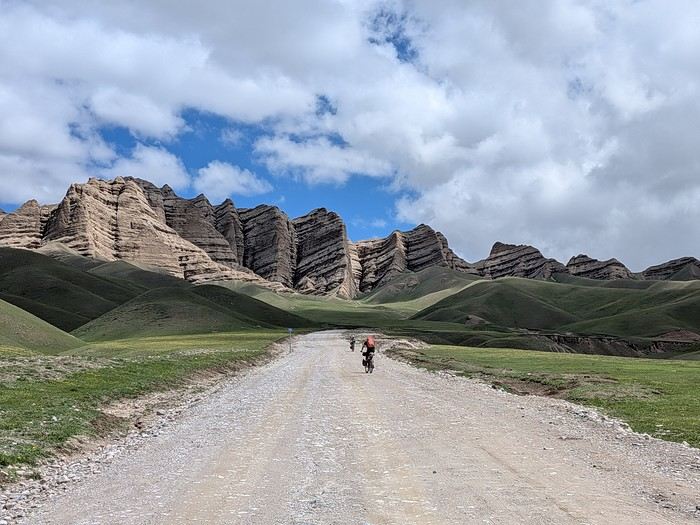
You’ll find here a post with some practical information.
And here, the version of the travel journal without comments.
---/---
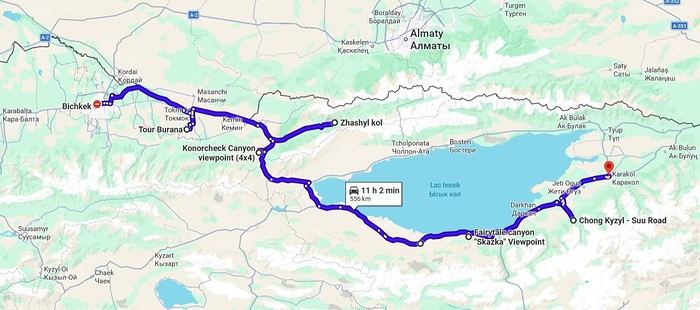
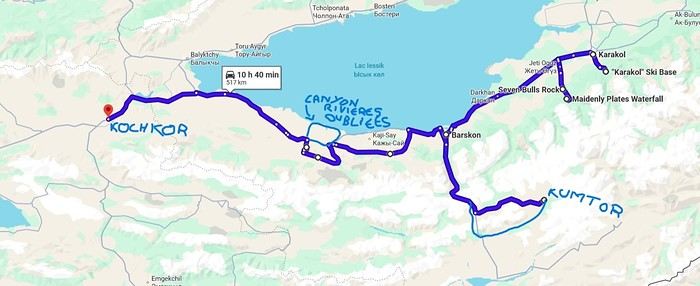
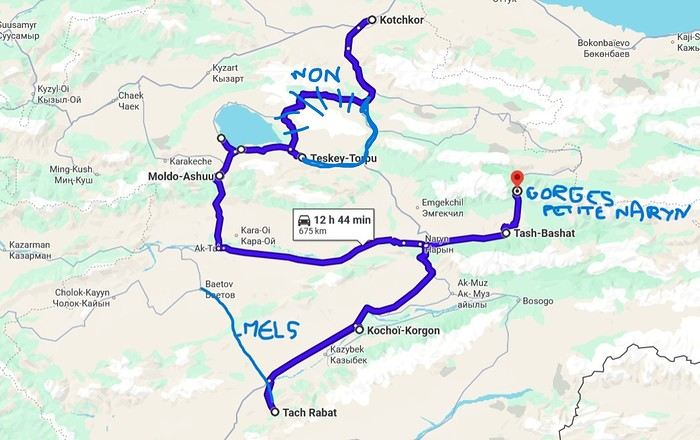
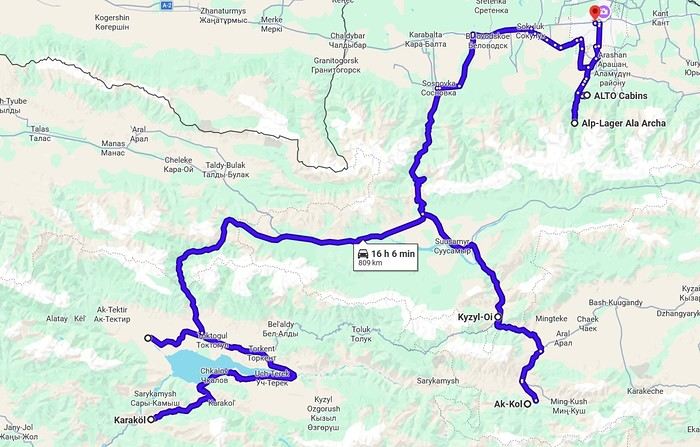
As a supplement, the route track. Not necessarily ultra-accurate since Google has serious gaps for this destination...
From Bishkek to Karakol:
From Karakol to Kochkor:
From Kochkor to Baetov:
From Baetov to Kara-Köl:
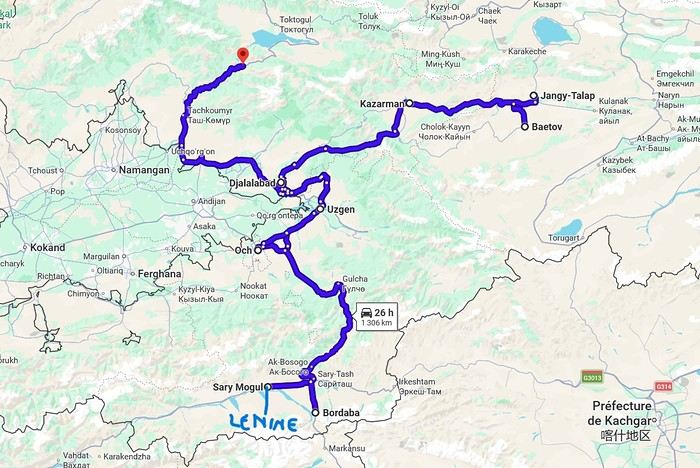
From Kara-Köl to Bishkek:

But the discomfort of overnight stays, the difficulty of communication, and the prices of the few car rental options kept making me postpone the project.
And then, everything suddenly fell into place—I told myself, it’s time!
The preparations took longer than usual; the destination is still far from mainstream.
A bit of Kazakhstan? Not in the end.
The south or not the south? Yes, in the end.
Pre-book or go with the flow? Only two stops were a leap into the unknown.
To help me find the ideal route, I made great use of this forum (thanks to everyone for patiently answering my questions!), pored over travel journals and blogs (Christian, Jeff), zoomed in on Google Maps and Yandex, and bought the guide published by OunTravela about this destination (the guide has been updated since).
---/---
You’ve got your passport, international driver’s license, bank cards, and euros?
Off we go to Lyon—just one night left before our early morning flight.
Tomorrow night, we’ll be sleeping in Bishkek! (Steak for my partner’s mischievous nephews...)
You’ll find here a post with some practical information.
And here, the version of the travel journal without comments.
---/---
As a supplement, the route track. Not necessarily ultra-accurate since Google has serious gaps for this destination...
From Bishkek to Karakol:
From Karakol to Kochkor:
From Kochkor to Baetov:
From Baetov to Kara-Köl:
From Kara-Köl to Bishkek:
9-Day Trek in the Balkans
Hi there,
Here’s a recap of a trek through the Balkans covering three countries: Albania, Montenegro, and Kosovo. I was with a friend, and we didn’t do the full route (only one day in Kosovo).
It was a wonderful trek through snow-capped mountains and vast flower-filled meadows, meeting incredibly welcoming people.
At the end of the travel journal, I’ll share what I loved and what I liked less.
Day 1: Flight from Paris-Beauvais to Tirana with Wizz Air.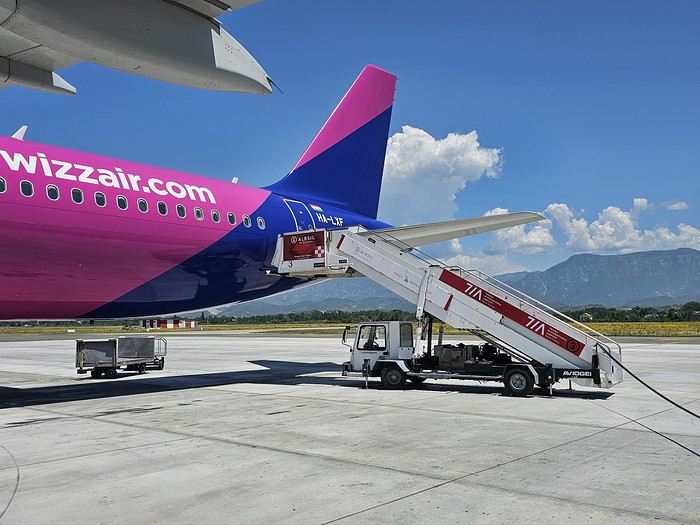 Since Albania isn’t part of Europe when it comes to phone service (at least not yet! :-)), we had to buy a physical SIM card—otherwise, the bill would’ve been sky-high if we’d used our French plan! We got one from Vodafone AL at the airport. You can buy online before leaving with a virtual SIM (e-SIM) for compatible phones, so you don’t have to swap cards. But given the uncertainty about choosing a plan online, we preferred buying one directly at Tirana Airport. Cost: 31 € for 100 GB. That’s way too much—100 GB is overkill. For 40 GB, it’s 27 €, and the plan lasts 21 days. The price difference isn’t huge, and it was cheaper than online. This plan covers all the countries along the Balkan range.
Money tip: All guesthouses and accommodations accept euros. The local currency in Albania is the LEK. In Montenegro, it’s the euro. Bank fees for withdrawing money from an ATM in Albania are pretty steep: 8 € for a withdrawal of 600–700 LEK (about 200 €)! So it’s better to withdraw cash (euros) in France. Oh, and we booked all our accommodations before leaving, but payment is always in cash. Budget around 400–500 € for 9 days of trekking.
Since Albania isn’t part of Europe when it comes to phone service (at least not yet! :-)), we had to buy a physical SIM card—otherwise, the bill would’ve been sky-high if we’d used our French plan! We got one from Vodafone AL at the airport. You can buy online before leaving with a virtual SIM (e-SIM) for compatible phones, so you don’t have to swap cards. But given the uncertainty about choosing a plan online, we preferred buying one directly at Tirana Airport. Cost: 31 € for 100 GB. That’s way too much—100 GB is overkill. For 40 GB, it’s 27 €, and the plan lasts 21 days. The price difference isn’t huge, and it was cheaper than online. This plan covers all the countries along the Balkan range.
Money tip: All guesthouses and accommodations accept euros. The local currency in Albania is the LEK. In Montenegro, it’s the euro. Bank fees for withdrawing money from an ATM in Albania are pretty steep: 8 € for a withdrawal of 600–700 LEK (about 200 €)! So it’s better to withdraw cash (euros) in France. Oh, and we booked all our accommodations before leaving, but payment is always in cash. Budget around 400–500 € for 9 days of trekking.
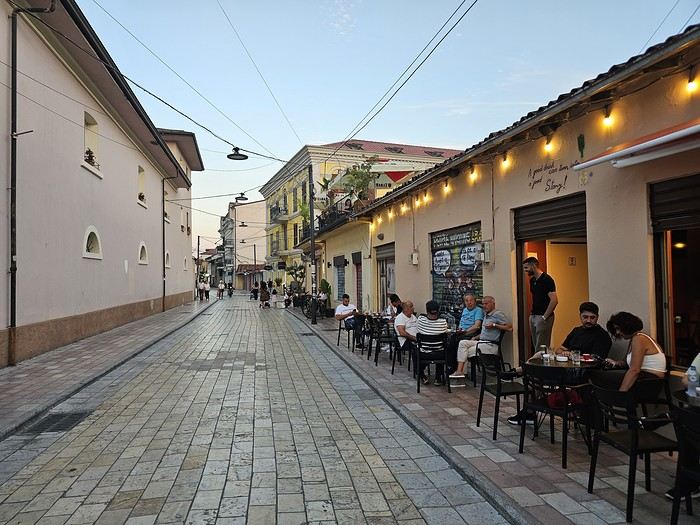
Then, a transfer the same day to Shköder, about a 2-hour bus ride. Cost: 10 € per person. Tickets bought directly on the bus. We spent the night in Shköder at a very clean guesthouse, Open Doors B&B. It had a small balcony overlooking the city.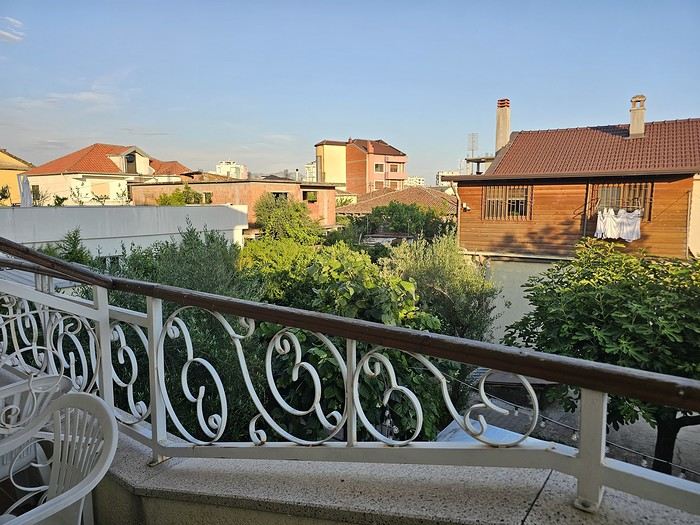 I really liked Shköder, especially its pedestrian street lined with restaurants and lit up at night. It’s a great place to stroll and eat. The food isn’t expensive—two big salads and two beers: 14 € :-) . Fruit prices are also very reasonable: 3 € for a kilo of cherries, compared to 9–10 € in France.
Religions coexist peacefully in these countries—Catholics and Muslims. From our balcony, my friend heard the call to prayer for the first time, coming from one of the city’s mosques.
I really liked Shköder, especially its pedestrian street lined with restaurants and lit up at night. It’s a great place to stroll and eat. The food isn’t expensive—two big salads and two beers: 14 € :-) . Fruit prices are also very reasonable: 3 € for a kilo of cherries, compared to 9–10 € in France.
Religions coexist peacefully in these countries—Catholics and Muslims. From our balcony, my friend heard the call to prayer for the first time, coming from one of the city’s mosques.
Day 2: Bus ride to Theth, about 1,100 meters in elevation gain, the starting point for our hike the next day.
The trip took 2 hours and 40 minutes with a break in the middle. The bus was affordable, but taxis also make the trip—though they’re very expensive.
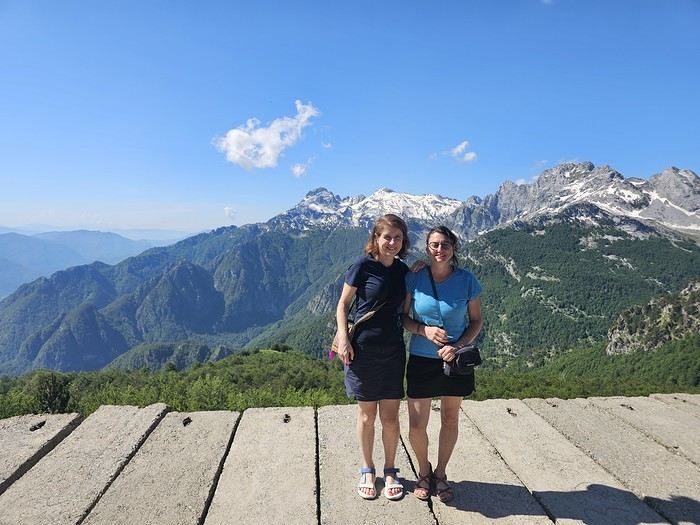
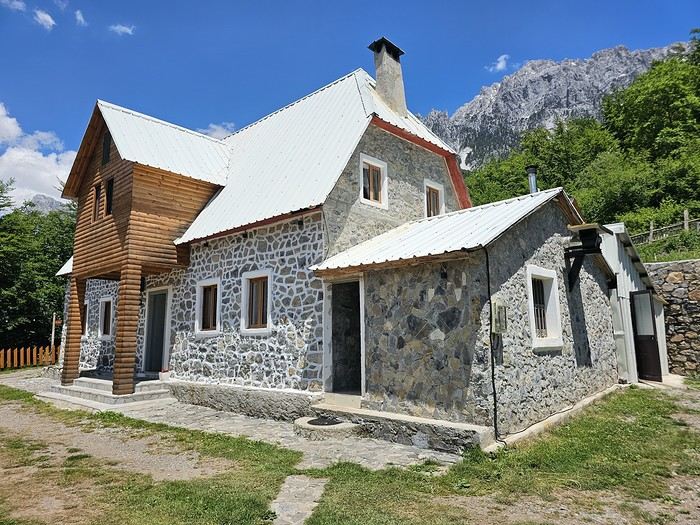 We slept in the heights of Theth at a new guesthouse, "Mountain Vista Shkafi," with an amazing view.
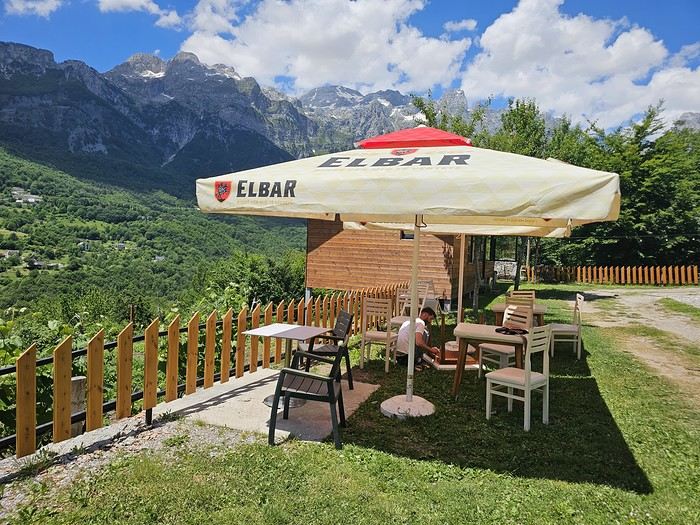
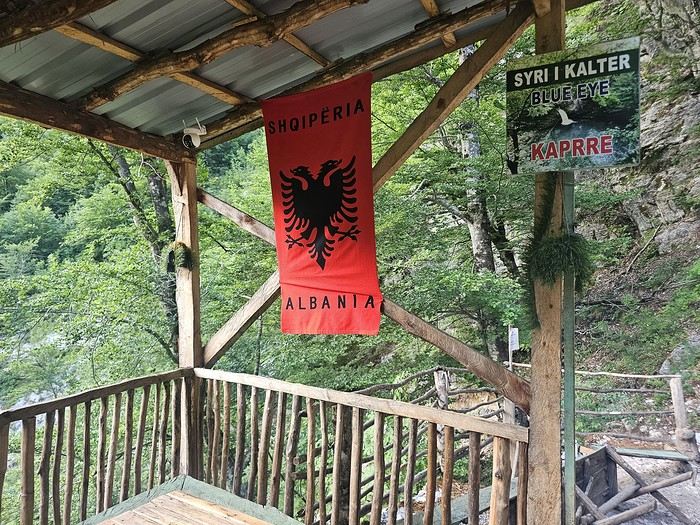
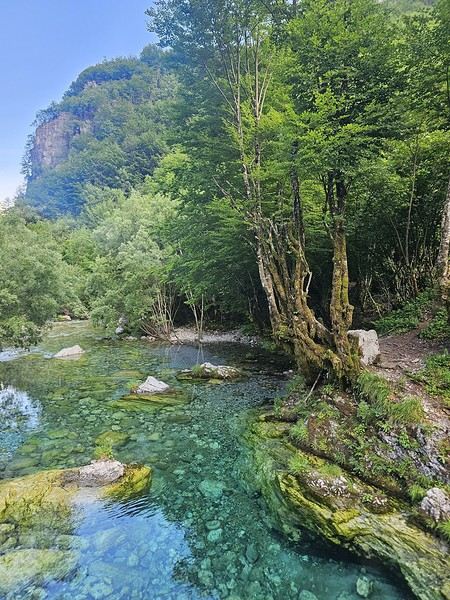
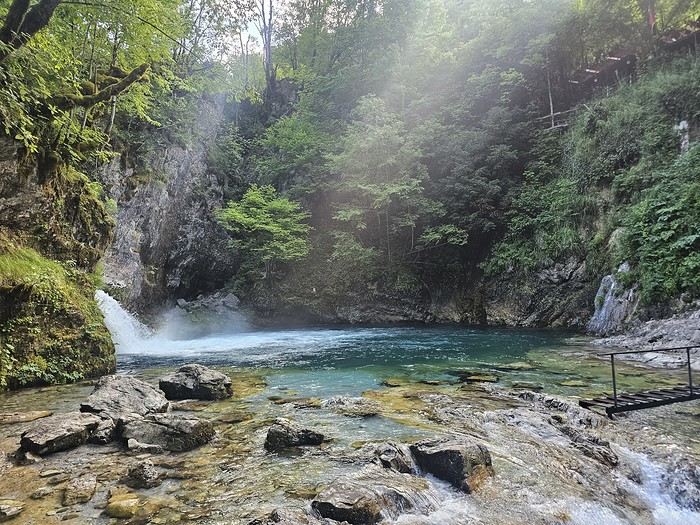
The family was adorable. The husband is a handyman and built almost everything himself. Their baby is named "Sky"—such a cute name, right? :-) Throughout the trek, I found the guesthouses very clean, and the hosts think of everything—no need to bring soap or shampoo; they provide it. Lunch in Theth at a traditional restaurant on the main road. We tried "Tave Dheu," an Albanian dish with beef, cabbage (very common), and cottage cheese. Delicious but not quite filling enough. For dessert, a honey cake that was perfectly moist—such a treat! Desserts like this are rare; sometimes they serve watermelon instead. We took a small private bus for 5 € to the "Blue Eye" parking lot, then walked for about 45 minutes to reach a stunning natural site—a kind of lagoon with incredibly blue water. The bravest can swim, but the water’s freezing!
That evening, we dined at "La Montagne Blanche"—excellent! A delightful mix of grilled meats with potatoes and grilled peppers. Some watermelon slices (which I’m not a fan of) and the famous Raki, a brandy served in Turkey and the Balkans! It was my first time drinking brandy "bottoms up." 😉
To be continued... 😉
Day 1: Flight from Paris-Beauvais to Tirana with Wizz Air.
Since Albania isn’t part of Europe when it comes to phone service (at least not yet! :-)), we had to buy a physical SIM card—otherwise, the bill would’ve been sky-high if we’d used our French plan! We got one from Vodafone AL at the airport. You can buy online before leaving with a virtual SIM (e-SIM) for compatible phones, so you don’t have to swap cards. But given the uncertainty about choosing a plan online, we preferred buying one directly at Tirana Airport. Cost: 31 € for 100 GB. That’s way too much—100 GB is overkill. For 40 GB, it’s 27 €, and the plan lasts 21 days. The price difference isn’t huge, and it was cheaper than online. This plan covers all the countries along the Balkan range.
Money tip: All guesthouses and accommodations accept euros. The local currency in Albania is the LEK. In Montenegro, it’s the euro. Bank fees for withdrawing money from an ATM in Albania are pretty steep: 8 € for a withdrawal of 600–700 LEK (about 200 €)! So it’s better to withdraw cash (euros) in France. Oh, and we booked all our accommodations before leaving, but payment is always in cash. Budget around 400–500 € for 9 days of trekking.Then, a transfer the same day to Shköder, about a 2-hour bus ride. Cost: 10 € per person. Tickets bought directly on the bus. We spent the night in Shköder at a very clean guesthouse, Open Doors B&B. It had a small balcony overlooking the city.
I really liked Shköder, especially its pedestrian street lined with restaurants and lit up at night. It’s a great place to stroll and eat. The food isn’t expensive—two big salads and two beers: 14 € :-) . Fruit prices are also very reasonable: 3 € for a kilo of cherries, compared to 9–10 € in France.
Religions coexist peacefully in these countries—Catholics and Muslims. From our balcony, my friend heard the call to prayer for the first time, coming from one of the city’s mosques.
Day 2: Bus ride to Theth, about 1,100 meters in elevation gain, the starting point for our hike the next day.
The trip took 2 hours and 40 minutes with a break in the middle. The bus was affordable, but taxis also make the trip—though they’re very expensive.
We slept in the heights of Theth at a new guesthouse, "Mountain Vista Shkafi," with an amazing view.
The family was adorable. The husband is a handyman and built almost everything himself. Their baby is named "Sky"—such a cute name, right? :-) Throughout the trek, I found the guesthouses very clean, and the hosts think of everything—no need to bring soap or shampoo; they provide it. Lunch in Theth at a traditional restaurant on the main road. We tried "Tave Dheu," an Albanian dish with beef, cabbage (very common), and cottage cheese. Delicious but not quite filling enough. For dessert, a honey cake that was perfectly moist—such a treat! Desserts like this are rare; sometimes they serve watermelon instead. We took a small private bus for 5 € to the "Blue Eye" parking lot, then walked for about 45 minutes to reach a stunning natural site—a kind of lagoon with incredibly blue water. The bravest can swim, but the water’s freezing!
That evening, we dined at "La Montagne Blanche"—excellent! A delightful mix of grilled meats with potatoes and grilled peppers. Some watermelon slices (which I’m not a fan of) and the famous Raki, a brandy served in Turkey and the Balkans! It was my first time drinking brandy "bottoms up." 😉
To be continued... 😉
Villages around Hazaribagh in West Bengal
Wednesday, April 1st
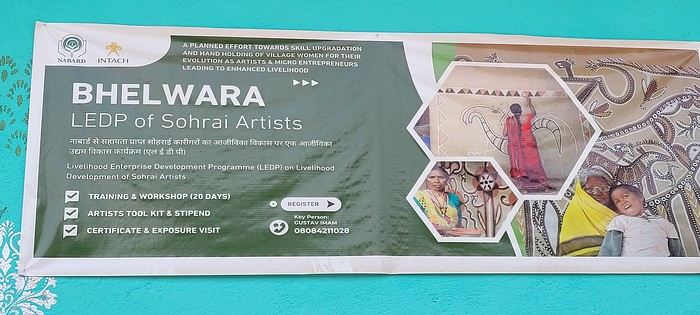
Hazaribagh I’ve got a meet-up with Adam Iman, a guide and painter. He picks me up from the hotel at 10 AM. Another traveler from Bangalore is supposed to join us, but while we wait for him to arrive, Adam takes me to see the paintings his mother and sister created at Hazaribagh station. The town became famous thanks to these murals, which can also be found in several surrounding villages. This art form has earned recognition and is now protected, a sign of its cultural importance. Once the visit is over, we go to pick up the other traveler and then head to our first village: Belwara, where Sohrai art is practiced. At the entrance, a sign proudly announces that we’re entering an artists’ village, where this art is created by women organized into micro-enterprises. Some even offer workshops for those who’d like to learn this tradition.
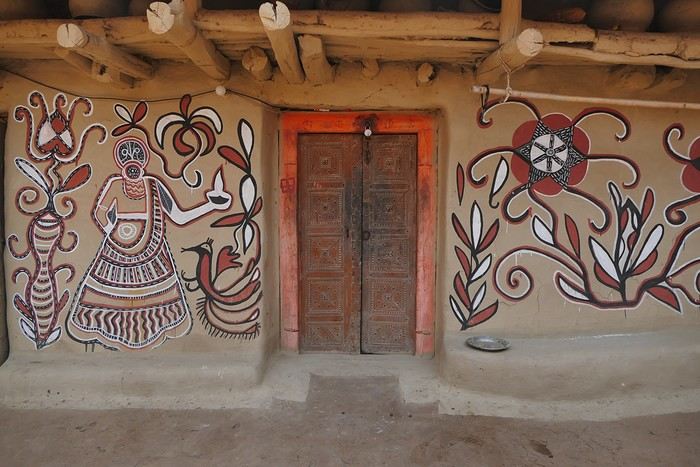
Sohrai art is tied to the harvest season, from October to mid-November. The motifs, in natural colors, celebrate fertility and abundance. The artists use pigments from the earth: red oxides, ochre, white kaolin, and black manganese. On the walls, you’ll see animals, fish, birds—all symbols of life and prosperity. As I look closer at the murals, I start to realize that each motif tells a story. Large animals like cows or bulls often take center stage. Their bodies are filled with intricate, almost hypnotic patterns. They symbolize wealth and prosperity for the household, as well as the deep respect for cattle, which are essential to daily life. On some facades, elephants stand out—massive and decorated with the same precision. They evoke quiet strength and protection. But it’s when I stop in front of one of the houses that I really take the time to look. The wall, a soft ochre, is entirely covered in murals. Two large animals stretch out on either side of the door, their elongated bodies fitting the length of the wall. Their silhouettes are filled with geometric patterns and incredibly fine curved lines, as if every space was patiently filled. Around them, stylized plants, flowers, and small decorative elements fill every gap. The door, dark and worn, becomes almost the silent center of the composition, framed by these living, protective forms. To the right, a more colorful motif catches the eye—a flower or a stylized lamp—like a touch of light on the earth. The whole thing gives an impression of perfect balance, between the rigor of the patterns and the freedom of the gesture.
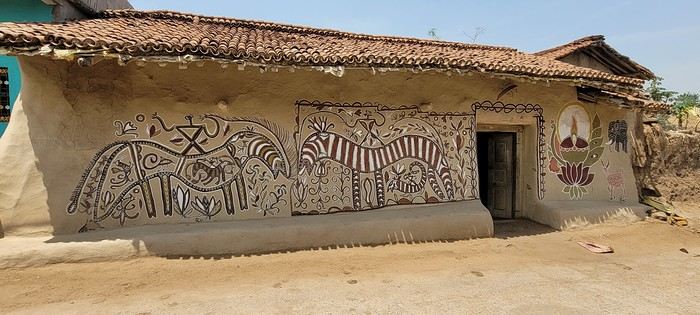
Elsewhere, birds and freer forms bring movement. Peacocks, recognizable by their stylized silhouettes, embody beauty and vitality, while fish symbolize water, fertility, and the continuity of life.
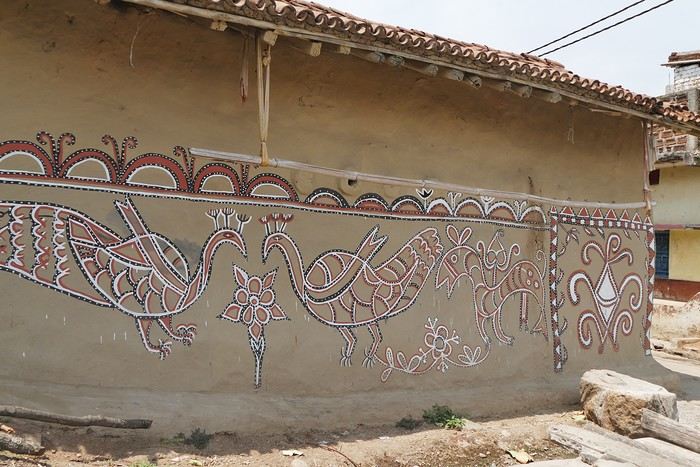 On some paintings, the scenes become almost narrative: you can make out figures, everyday gestures, like a memory of the village inscribed in the walls. The decorative frames around the doors aren’t left to chance either—they symbolically protect the house, like a boundary between the inside and the outside world.
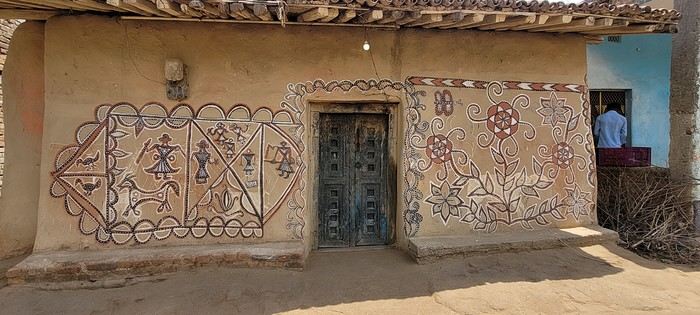
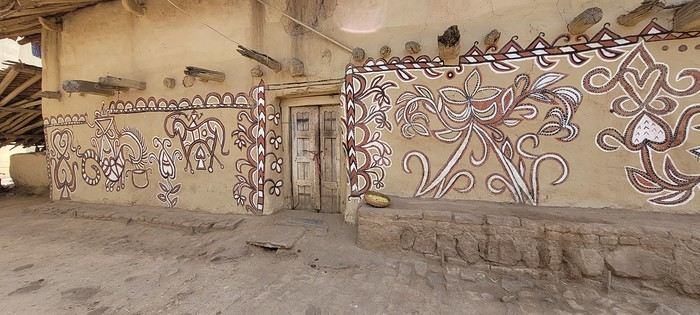
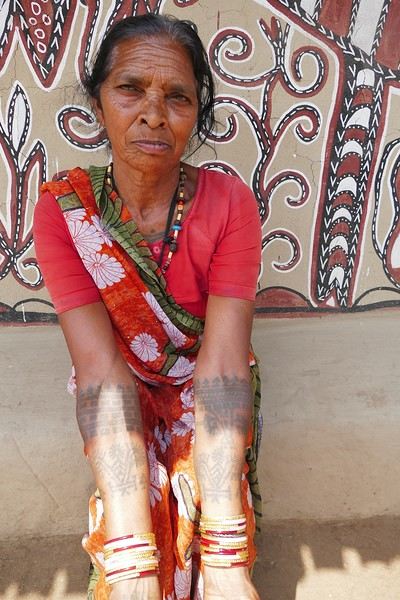
During the Sohrai festival, cattle are led into the jungle in the morning. Meanwhile, the women finish the *aripans*—these floor paintings—and continue the wall murals. Around noon, the animals return to the village, and the bulls’ horns are anointed with oil and vermilion in a gesture of gratitude, amid the vibrant colors adorning the houses. We visit several artists, including Parvat Devi, a well-known woman who has received many awards. Her arms are adorned with intriguing tattoos, which I’ll talk about in more detail later.
On another wall, the style changes completely. Here, no massive animals—just birds occupying the space, light and graceful, as if caught in mid-movement. Two silhouettes face each other, their long necks arched almost like mirrors, while their outstretched wings seem to vibrate with the patterns that compose them.
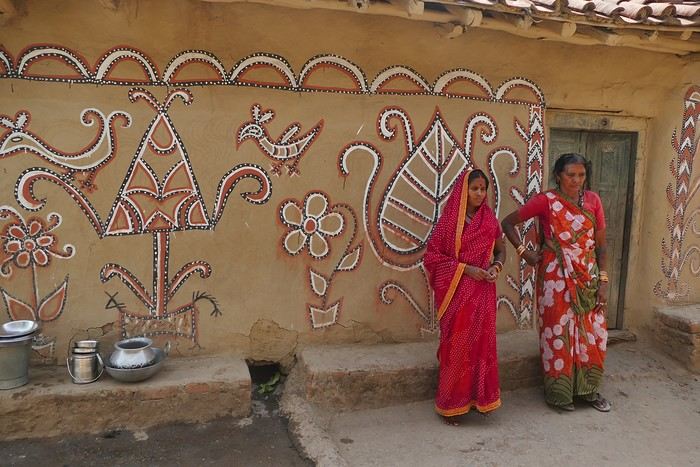
The design is more graphic, almost airy. The lines are smoother, more fluid, as if drawn in one confident stroke. The birds’ bodies aren’t solid—they’re filled with repetitive motifs like scales, stylized feathers, and spirals, giving a sense of continuous movement. Around them, everything comes to life: flowers burst open, arabesques swirl, and even the simplest shapes seem alive. What strikes me here is the sense of lightness. Where the large animals evoked stability and grounding, these birds bring something freer, almost joyful. They seem to embody movement, the circulation of life, like a breath flowing through the village.
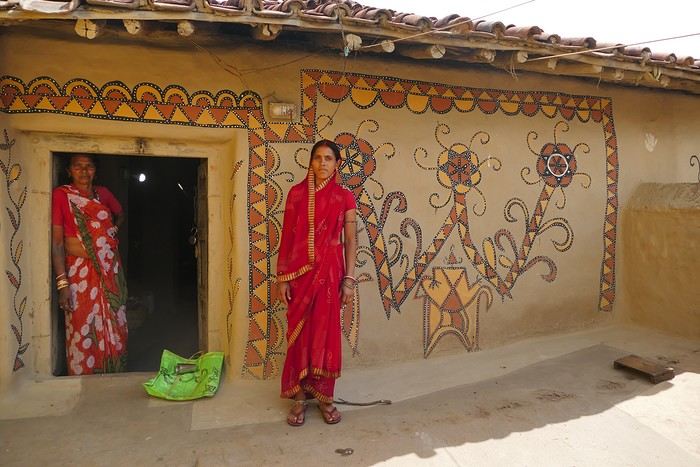
The colors remain the same—deep reds, intense blacks, and chalky white—but the rhythm is different. Faster, more spontaneous. As if each wall had its own personality, while still speaking the same language.
That’s probably why I’m so moved. I’d heard about these paintings from my friend Raja, and last year, I saw an exhibition in a village near my home. That first encounter made me want to come here. But seeing them in person is a whole different experience. These paintings are unique. This ancient art is passed down from mother to daughter, or mother-in-law to daughter-in-law, in a quiet, deeply living continuity. At first glance, it might seem almost childlike in its simplicity and pared-down forms. And yet, everything is thought out, balanced, mastered. Nothing is left to chance.
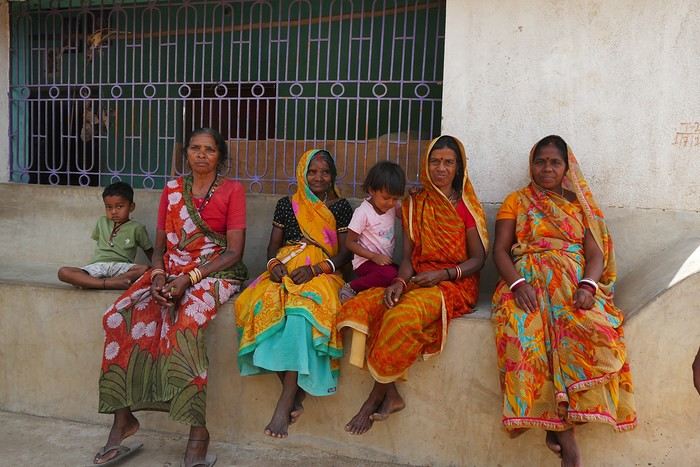
That apparent simplicity, combined with such rich symbolism, touches me deeply. There’s something sincere and essential in these walls—and that’s what moves me.
Hazaribagh I’ve got a meet-up with Adam Iman, a guide and painter. He picks me up from the hotel at 10 AM. Another traveler from Bangalore is supposed to join us, but while we wait for him to arrive, Adam takes me to see the paintings his mother and sister created at Hazaribagh station. The town became famous thanks to these murals, which can also be found in several surrounding villages. This art form has earned recognition and is now protected, a sign of its cultural importance. Once the visit is over, we go to pick up the other traveler and then head to our first village: Belwara, where Sohrai art is practiced. At the entrance, a sign proudly announces that we’re entering an artists’ village, where this art is created by women organized into micro-enterprises. Some even offer workshops for those who’d like to learn this tradition.
Sohrai art is tied to the harvest season, from October to mid-November. The motifs, in natural colors, celebrate fertility and abundance. The artists use pigments from the earth: red oxides, ochre, white kaolin, and black manganese. On the walls, you’ll see animals, fish, birds—all symbols of life and prosperity. As I look closer at the murals, I start to realize that each motif tells a story. Large animals like cows or bulls often take center stage. Their bodies are filled with intricate, almost hypnotic patterns. They symbolize wealth and prosperity for the household, as well as the deep respect for cattle, which are essential to daily life. On some facades, elephants stand out—massive and decorated with the same precision. They evoke quiet strength and protection. But it’s when I stop in front of one of the houses that I really take the time to look. The wall, a soft ochre, is entirely covered in murals. Two large animals stretch out on either side of the door, their elongated bodies fitting the length of the wall. Their silhouettes are filled with geometric patterns and incredibly fine curved lines, as if every space was patiently filled. Around them, stylized plants, flowers, and small decorative elements fill every gap. The door, dark and worn, becomes almost the silent center of the composition, framed by these living, protective forms. To the right, a more colorful motif catches the eye—a flower or a stylized lamp—like a touch of light on the earth. The whole thing gives an impression of perfect balance, between the rigor of the patterns and the freedom of the gesture.
Elsewhere, birds and freer forms bring movement. Peacocks, recognizable by their stylized silhouettes, embody beauty and vitality, while fish symbolize water, fertility, and the continuity of life.
On some paintings, the scenes become almost narrative: you can make out figures, everyday gestures, like a memory of the village inscribed in the walls. The decorative frames around the doors aren’t left to chance either—they symbolically protect the house, like a boundary between the inside and the outside world.During the Sohrai festival, cattle are led into the jungle in the morning. Meanwhile, the women finish the *aripans*—these floor paintings—and continue the wall murals. Around noon, the animals return to the village, and the bulls’ horns are anointed with oil and vermilion in a gesture of gratitude, amid the vibrant colors adorning the houses. We visit several artists, including Parvat Devi, a well-known woman who has received many awards. Her arms are adorned with intriguing tattoos, which I’ll talk about in more detail later.
On another wall, the style changes completely. Here, no massive animals—just birds occupying the space, light and graceful, as if caught in mid-movement. Two silhouettes face each other, their long necks arched almost like mirrors, while their outstretched wings seem to vibrate with the patterns that compose them.
The design is more graphic, almost airy. The lines are smoother, more fluid, as if drawn in one confident stroke. The birds’ bodies aren’t solid—they’re filled with repetitive motifs like scales, stylized feathers, and spirals, giving a sense of continuous movement. Around them, everything comes to life: flowers burst open, arabesques swirl, and even the simplest shapes seem alive. What strikes me here is the sense of lightness. Where the large animals evoked stability and grounding, these birds bring something freer, almost joyful. They seem to embody movement, the circulation of life, like a breath flowing through the village.
The colors remain the same—deep reds, intense blacks, and chalky white—but the rhythm is different. Faster, more spontaneous. As if each wall had its own personality, while still speaking the same language.
That’s probably why I’m so moved. I’d heard about these paintings from my friend Raja, and last year, I saw an exhibition in a village near my home. That first encounter made me want to come here. But seeing them in person is a whole different experience. These paintings are unique. This ancient art is passed down from mother to daughter, or mother-in-law to daughter-in-law, in a quiet, deeply living continuity. At first glance, it might seem almost childlike in its simplicity and pared-down forms. And yet, everything is thought out, balanced, mastered. Nothing is left to chance.
That apparent simplicity, combined with such rich symbolism, touches me deeply. There’s something sincere and essential in these walls—and that’s what moves me.
Peru: A Childhood Dream Finally Fulfilled
Preamble
I could have titled my travel journal like Carmen: "Some trips are born twice." Indeed, we had considered this destination back in February 2020. However, an honest tour operator advised us against traveling at that time due to the climate. So, we gave up and opted for Guatemala instead (see "On the Mayan Lands" on this site).
So, why this title? When I was in primary school, over 65 years ago, the illustrations in my history books (Machu Picchu) and geography books (Lake Titicaca) made me dream, and those images stayed in my mind. It took until 2026 to finally make this dream come true!
We prepared our trip with Tout Pérou, a French-speaking "agency." Everything was handled via email and WhatsApp exchanges with our contact: Laurent, who was both competent, friendly, and full of good advice. For 200 €, Tout Pérou provided us with drivers and guides whenever we wanted, helped us buy our domestic flights (cheaper when purchased in Peru), booked shuttles between airports and hotels, and got us a discount on the train ride to Aguas Calientes, as well as on the buses between Chivay and Puno and between Puno and Cusco. In short, Laurent took care of all the logistics and the Machu Picchu tickets. It was up to us to book our hotels. Tout Pérou provided a list, but we weren’t obliged to follow it. Another advantage of the package: we didn’t have to pay in advance; we paid the service providers directly day by day.
We didn’t meet Laurent in person because he was on vacation in Europe. Before his departure, he gave us a briefing, provided a summary table with the entire program, the service providers, their phone numbers, their fees, the schedules, and gave us plenty of advice (money, exchange, safety, etc.). After returning at the end of our stay, he kept checking in on us.
Lastly, we had also gathered information from Arnaud Lagadec, who runs a hotel in Cusco and offers tours of the region. He gave us a lot of useful information. Another contact: Thomas Montaigne, very friendly, who runs an agency in Arequipa (Agence Pérou Exclusif).
Day 1 – Paris to Lima
Foreword I’ll share our trip without any pretension—I don’t have the talent of some contributors on this forum—and I’ll illustrate it with a few photos (taken with an ordinary smartphone). My comments are personal and only reflect my own views. So, please be kind! Feel free to comment on my story as you like, but let’s avoid pointless debates.
Even though we live in the south of the Paris region, true to our habits when the flight is in the morning, we chose to spend the night before our departure in a hotel near CDG and parked our car in a parking lot in Garches. This way, we avoid the stress that often comes with traveling around Paris (accidents, roadworks, traffic jams, etc.).
Check-in and border control went smoothly on that Sunday morning. Our Air France flight was uneventful. In Lima, border control took a particularly long time, and for the first time, we didn’t get an entry visa stamped in our passports.
As planned, a driver took us to the Miraflores district, where our hotel was located. We were surprised by the numerous signs about possible tsunamis, having forgotten that Peru is prone to such events and regularly experiences earthquakes. We’d see the consequences of these during our journey.
Exhausted from the early wake-up, the 13-hour flight, and the 7-hour time difference, we had dinner at the hotel before a restful night.
Note that this day was Peru’s presidential election day. As a result, we weren’t served beer—the sale of alcohol was banned that Sunday.
I could have titled my travel journal like Carmen: "Some trips are born twice." Indeed, we had considered this destination back in February 2020. However, an honest tour operator advised us against traveling at that time due to the climate. So, we gave up and opted for Guatemala instead (see "On the Mayan Lands" on this site).
So, why this title? When I was in primary school, over 65 years ago, the illustrations in my history books (Machu Picchu) and geography books (Lake Titicaca) made me dream, and those images stayed in my mind. It took until 2026 to finally make this dream come true!
We prepared our trip with Tout Pérou, a French-speaking "agency." Everything was handled via email and WhatsApp exchanges with our contact: Laurent, who was both competent, friendly, and full of good advice. For 200 €, Tout Pérou provided us with drivers and guides whenever we wanted, helped us buy our domestic flights (cheaper when purchased in Peru), booked shuttles between airports and hotels, and got us a discount on the train ride to Aguas Calientes, as well as on the buses between Chivay and Puno and between Puno and Cusco. In short, Laurent took care of all the logistics and the Machu Picchu tickets. It was up to us to book our hotels. Tout Pérou provided a list, but we weren’t obliged to follow it. Another advantage of the package: we didn’t have to pay in advance; we paid the service providers directly day by day.
We didn’t meet Laurent in person because he was on vacation in Europe. Before his departure, he gave us a briefing, provided a summary table with the entire program, the service providers, their phone numbers, their fees, the schedules, and gave us plenty of advice (money, exchange, safety, etc.). After returning at the end of our stay, he kept checking in on us.
Lastly, we had also gathered information from Arnaud Lagadec, who runs a hotel in Cusco and offers tours of the region. He gave us a lot of useful information. Another contact: Thomas Montaigne, very friendly, who runs an agency in Arequipa (Agence Pérou Exclusif).
Day 1 – Paris to Lima
Foreword I’ll share our trip without any pretension—I don’t have the talent of some contributors on this forum—and I’ll illustrate it with a few photos (taken with an ordinary smartphone). My comments are personal and only reflect my own views. So, please be kind! Feel free to comment on my story as you like, but let’s avoid pointless debates.
Even though we live in the south of the Paris region, true to our habits when the flight is in the morning, we chose to spend the night before our departure in a hotel near CDG and parked our car in a parking lot in Garches. This way, we avoid the stress that often comes with traveling around Paris (accidents, roadworks, traffic jams, etc.).
Check-in and border control went smoothly on that Sunday morning. Our Air France flight was uneventful. In Lima, border control took a particularly long time, and for the first time, we didn’t get an entry visa stamped in our passports.
As planned, a driver took us to the Miraflores district, where our hotel was located. We were surprised by the numerous signs about possible tsunamis, having forgotten that Peru is prone to such events and regularly experiences earthquakes. We’d see the consequences of these during our journey.
Exhausted from the early wake-up, the 13-hour flight, and the 7-hour time difference, we had dinner at the hotel before a restful night.
Note that this day was Peru’s presidential election day. As a result, we weren’t served beer—the sale of alcohol was banned that Sunday.
Tanzania Classics (Safari & Zanzibar)
I hesitated about writing this travel journal...
This summer, we only did the classics (the 3 northern parks and Zanzibar) and let a local agency take care of everything from start to finish.
No craziness, no risks, no sleeping under the stars, no self-drive, no venturing off the beaten path, no incidents, and not even any delays in the pre-planned itinerary...
But don’t think we were disappointed! The whole family (there were 6 of us) came back with smiles and memories of great moments spent together. So, if you're looking for a "classic" way to discover Tanzania, this is the place to be.
Our 2-week itinerary: - Arusha (1 night upon arrival) - Tarangire (1 night) - Ngorongoro (2 nights in Karatu then Irmisigiyo) - Serengeti (3 nights in Robanda, Togoro Plains, and Seronera) - Zanzibar Stone Town (1 night) - Zanzibar Matemwe (3 nights) - Zanzibar Jambiani (3 nights)
Hakuna matata!
No craziness, no risks, no sleeping under the stars, no self-drive, no venturing off the beaten path, no incidents, and not even any delays in the pre-planned itinerary...
But don’t think we were disappointed! The whole family (there were 6 of us) came back with smiles and memories of great moments spent together. So, if you're looking for a "classic" way to discover Tanzania, this is the place to be.
Our 2-week itinerary: - Arusha (1 night upon arrival) - Tarangire (1 night) - Ngorongoro (2 nights in Karatu then Irmisigiyo) - Serengeti (3 nights in Robanda, Togoro Plains, and Seronera) - Zanzibar Stone Town (1 night) - Zanzibar Matemwe (3 nights) - Zanzibar Jambiani (3 nights)
Hakuna matata!
July 2026 Photo Contest Theme: Bridges of the World
The theme for this July’s photo contest is:
Bridges of the World
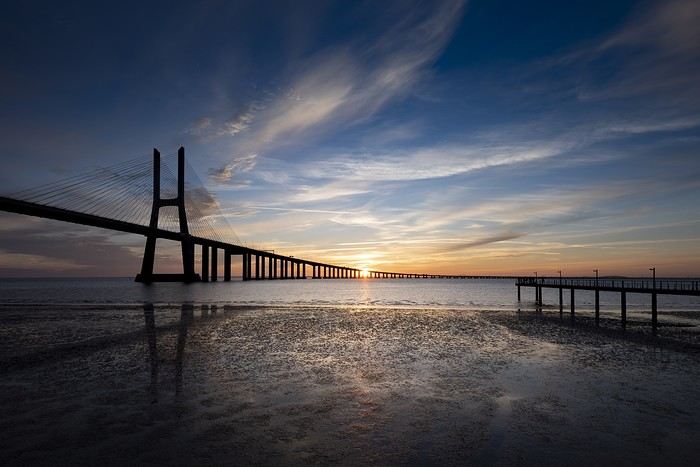 Vasco da Gama Bridge in Lisbon
Here’s the definition of a bridge: “A structure, typically made of stone, wood, or metal, that spans a depression or obstacle (such as a transportation route or waterway) by connecting the two sides or crossing over the obstacle.”
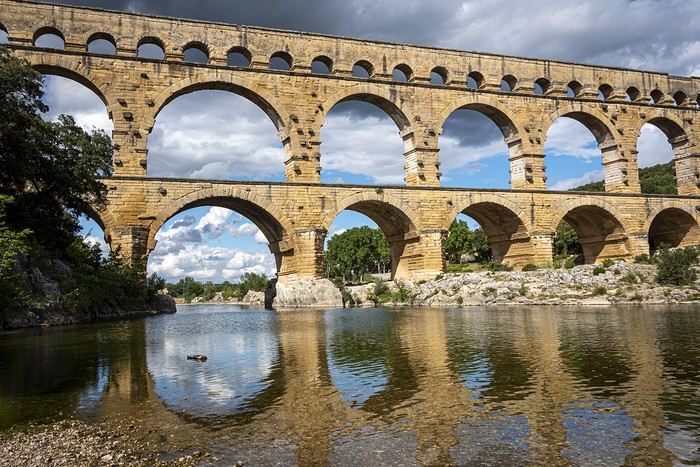
Viaducts, aqueducts, and footbridges will all be accepted.
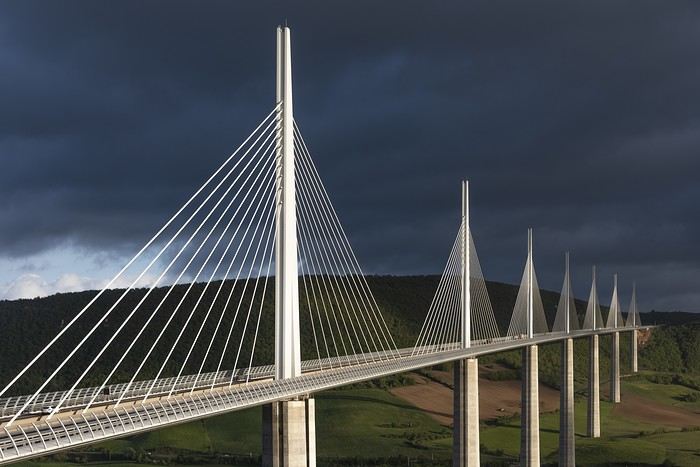 Millau Viaduct
To allow for as many original photos as possible, the bridge can be photographed from the side, below, or above—the main thing is that it’s the focal point of the image.
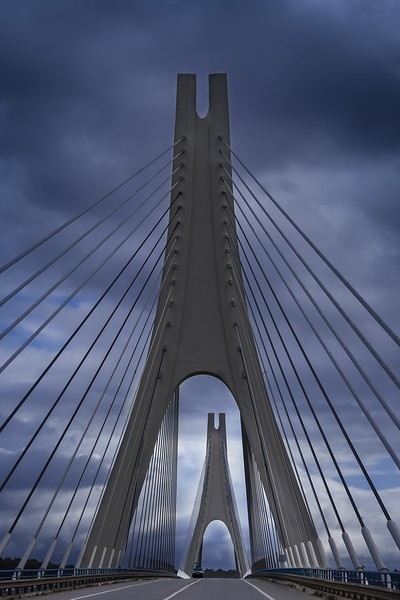 Bridge in the Algarve
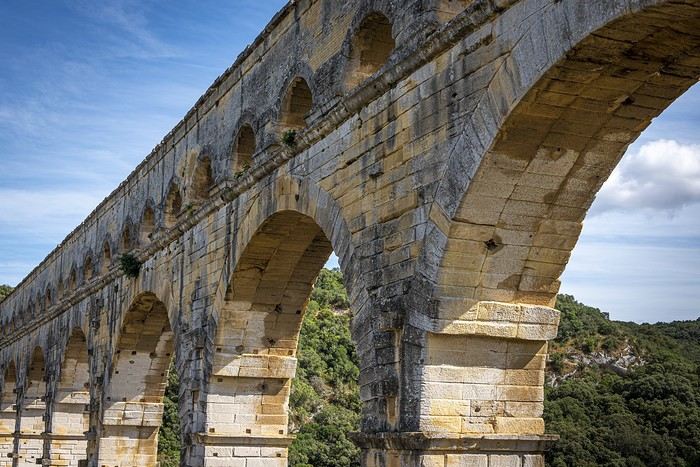 Pont du Gard from below
Details are also welcome, as long as you can still recognize it’s a bridge 😊
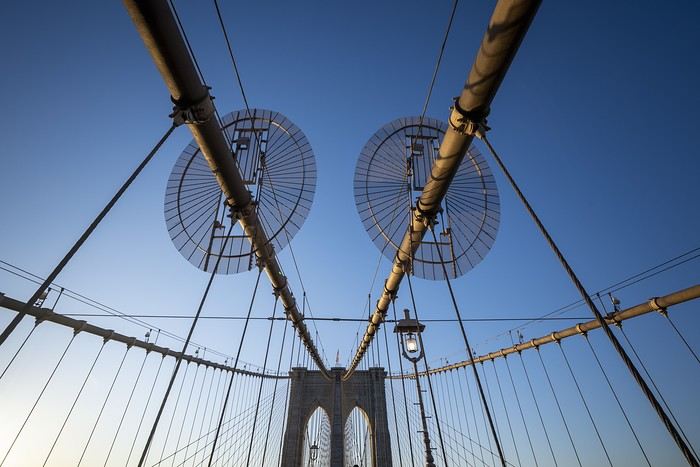 Brooklyn Bridge
Practical details:
Participation: Each VF member can submit up to 3 photos, until Sunday, 26/07 at 11:59 PM Paris time. Each photo must be posted in a separate message, with its number (1, 2, or 3). Don’t forget to add a little explanation (comment, location, etc.).
Voting: Each VF member can vote for the 3 photos they consider the best, based on their own criteria and the theme.
Voting will take place from Monday, 27/07 to Friday, 31/07 at 11:59 PM Paris time.
Selected photos should be listed in order of preference: - 1st photo: 3 points - 2nd photo: 2 points - 3rd photo: 1 point
The winner is the photographer whose photo receives the most points.
Results will be announced on 01/08. In case of a tie, the number of first-place votes will decide. The winner will have the honor of organizing August 2026’s contest.
Photos that have already been nominated (1st, 2nd, or 3rd place) in another contest are not eligible to participate in this one.
This thread is exclusively for contest submissions. Any discussions or comments should be posted in the following thread: Here
Vasco da Gama Bridge in LisbonHere’s the definition of a bridge: “A structure, typically made of stone, wood, or metal, that spans a depression or obstacle (such as a transportation route or waterway) by connecting the two sides or crossing over the obstacle.”
Viaducts, aqueducts, and footbridges will all be accepted.
Millau ViaductTo allow for as many original photos as possible, the bridge can be photographed from the side, below, or above—the main thing is that it’s the focal point of the image.
Bridge in the Algarve
Pont du Gard from belowDetails are also welcome, as long as you can still recognize it’s a bridge 😊
Brooklyn BridgePractical details:
Participation: Each VF member can submit up to 3 photos, until Sunday, 26/07 at 11:59 PM Paris time. Each photo must be posted in a separate message, with its number (1, 2, or 3). Don’t forget to add a little explanation (comment, location, etc.).
Voting: Each VF member can vote for the 3 photos they consider the best, based on their own criteria and the theme.
Voting will take place from Monday, 27/07 to Friday, 31/07 at 11:59 PM Paris time.
Selected photos should be listed in order of preference: - 1st photo: 3 points - 2nd photo: 2 points - 3rd photo: 1 point
The winner is the photographer whose photo receives the most points.
Results will be announced on 01/08. In case of a tie, the number of first-place votes will decide. The winner will have the honor of organizing August 2026’s contest.
Photos that have already been nominated (1st, 2nd, or 3rd place) in another contest are not eligible to participate in this one.
This thread is exclusively for contest submissions. Any discussions or comments should be posted in the following thread: Here
Discussion: Bridges of the World July 2026
This is where you can chat about bridges... let’s get the conversation started! 😊
Concession privée au parc national Kruger: Camp Shaw (Afrique du Sud) English translation pending
Bonjour,
Est-ce que quelqu'un aurait déjà logé dans ce camp?
Merci
Est-ce que quelqu'un aurait déjà logé dans ce camp?
Merci
Visite libre dans la concession de Palmwag? (Namibie) English translation pending
Bonjour
nous logeons en octobre 2017 au Palmwag Lodge et nous voudrions savoir s'il est possible de visiter la concession avec nos 4X4 seuls? Est-ce que les pistes ou routes sont bien pratiquables pour nos 4X4? nous avons entendu par d'autres internautes que les assurances de loueurs ne fonctionnaient pas dans les parcs nationaux ? Connaissez-vous également le prix de l'entrée? par véhicule ou par personne? Merci à vous pour ces précieux renseignements sandrine
nous logeons en octobre 2017 au Palmwag Lodge et nous voudrions savoir s'il est possible de visiter la concession avec nos 4X4 seuls? Est-ce que les pistes ou routes sont bien pratiquables pour nos 4X4? nous avons entendu par d'autres internautes que les assurances de loueurs ne fonctionnaient pas dans les parcs nationaux ? Connaissez-vous également le prix de l'entrée? par véhicule ou par personne? Merci à vous pour ces précieux renseignements sandrine
Palmwag et sa concession? (Namibie) English translation pending
Bonjour,
J'édite un nouveau message pour une question que je me pose au sujet de la concession de palmwag. J'ai pu constater sur la carte de tracks4africa qu'il y a des possibilités de camp dans la concession en elle-même. De plus il est possible d'aller au delà pour faire le palmwag crowther's trail avec comme camp le kai-ais et le crowther's camp (encore plus à l'ouest). La concession n'a pas l'air bien grande pour une visite à la journée. Quel intéret de prendre le game drive du lodge (qui n'est pas donné) sachant que l'on peut rentrer en payant un permis. On peut lire dans les derniers témoignages , des avis assez négatifs sur Palmwag et sa concession, alors que certains ont adoré. Je me dis que ça dépend peut être jusqu'où on s'aventure dans la concession ? D'avance merci pour le partage de votre expérience.

J'édite un nouveau message pour une question que je me pose au sujet de la concession de palmwag. J'ai pu constater sur la carte de tracks4africa qu'il y a des possibilités de camp dans la concession en elle-même. De plus il est possible d'aller au delà pour faire le palmwag crowther's trail avec comme camp le kai-ais et le crowther's camp (encore plus à l'ouest). La concession n'a pas l'air bien grande pour une visite à la journée. Quel intéret de prendre le game drive du lodge (qui n'est pas donné) sachant que l'on peut rentrer en payant un permis. On peut lire dans les derniers témoignages , des avis assez négatifs sur Palmwag et sa concession, alors que certains ont adoré. Je me dis que ça dépend peut être jusqu'où on s'aventure dans la concession ? D'avance merci pour le partage de votre expérience.
Namibie: track dans la concession Palmwag English translation pending
Bonjour,
Je souhaiterais savoir si c'est intéressant de faire la track des éléphants ou des rhinos dans la conssession de palmwag ?
Merci,
Sylvain
Namibie: itinéraire de la rivière Hoanib jusqu'à la concession de Palmwag en 4x4 English translation pending
Bonjour aux amoureux de la Namibie
en préparation de mon 8è voyage dans ces contrées envoutantes, et après des rencontres fabuleuses dans les fonds de rivière Hoarusib et Hoanib, je recherche un voyageur qui aurait fait l'itinéraire qui part de rivière Hoanib avant Hamspoort gorge (en venant de Hoarusib/Ganias Plains) vers la concession de Palmwag via le Palmwag Crowther's 4WD trail
Mes questions: que donne le campsite Blackridges? et état de la piste qui y va? il faut un permis que l'on prend où? à la concession Palmwag? et quid de la piste qui ensuite remonte vers conceson Palmwag?
J'ai de nombreuses fois emprunté les fonds de rivière Hoarusib et Hoanib mais jamais rejoint concession Palmwag par cette piste....peut-être Pierre 77 l'as tu fait?
Autre question: Ensuite je descendrai via le fond de rivière HUAB river sur le desolation Valley 4WD trail pour rejoindre Rhino Camp....la piste est comment?
Merci à tous ceux qui auront déjà fait ces itnéraires et pourront me renseigner Namib31
J'ai de nombreuses fois emprunté les fonds de rivière Hoarusib et Hoanib mais jamais rejoint concession Palmwag par cette piste....peut-être Pierre 77 l'as tu fait?
Autre question: Ensuite je descendrai via le fond de rivière HUAB river sur le desolation Valley 4WD trail pour rejoindre Rhino Camp....la piste est comment?
Merci à tous ceux qui auront déjà fait ces itnéraires et pourront me renseigner Namib31
Achat d un véhicule en France dans une concession, passage à la frontière marocaine? English translation pending
bonjour a tous
je dois acheter un vehicule en France (suis resident ) chez un concessionnaire je precise que ce vehicule a moins de 5 ans , alors dans ce cas precis qui a deja fait ce parcourt , pour deja passer la Frontiere a Tanger , je peux disposer de la CG barrée bien sur du certif de vente du garage a mon nom , du non gage des enregistrement prefecture Fr (3 volets )et c est tout , le probleme est que je ne peux avoir de procuration car le concessionnaire a repris ce vehicule a Mr untel ouX qui lui a signer le certif de vente , barrée CG et voila
J ai posé la question a la douane de Tanger , reponse , embarrassée du genre on sait pas et racrochage illico du combiné
merci de votre aide de tout coeur
Entrer par le nord de Palmwag, sortie par le sud (Namibie) English translation pending
Bonjour !!
Peut on rentrer dans la concession de Palmwag par le Nord, (un peu au Sud Ouest de Sesfontein), en longeant la Hoanib ? je vois "permit road" sur T4A, mais où prend on le permit?? L'idée c'est de descendre de Mudorib campsite vers Crowthers campsite (bivouac) puis Palmwag lodge campsite. Dans le même ordre d'idée, est il possible de traverser ensuite la concession vers le Sud pour sortir sur la C39 ? (vers la vet fence où il faut arriver avec le frigo vide !) Merciiii !!! 🙂
Peut on rentrer dans la concession de Palmwag par le Nord, (un peu au Sud Ouest de Sesfontein), en longeant la Hoanib ? je vois "permit road" sur T4A, mais où prend on le permit?? L'idée c'est de descendre de Mudorib campsite vers Crowthers campsite (bivouac) puis Palmwag lodge campsite. Dans le même ordre d'idée, est il possible de traverser ensuite la concession vers le Sud pour sortir sur la C39 ? (vers la vet fence où il faut arriver avec le frigo vide !) Merciiii !!! 🙂
Dépannage camping-car à Ténérife English translation pending
Bonjour,
J'aimerais savoir s'il y a une concession camping cars ou un service dépannage camping cars sur l'île de Ténérife.
Je compte passer l'hiver aux Canaries et l'on m'a dit que je pouvais rencontrer des problèmes de réception TV sur Astra, car nous sommes en limite.
Les loueurs de camping cars disent qu'ils reçoivent la TV, donc cela doit se faire.
merci à qui pourra me renseigner.
Loueur motos CoolDrive aux États-Unis English translation pending
Bonjour,
Je viens d'apprendre que la concession HarleyDavidson Chicago à Glenview ne loue plus ses motos, et qu'il faut passer par EagleRider, moyennant une hausse significative de ses tarifs et un prix exorbitant ( ceci à l'attention de Seagull qui m'avait déjà renseignée et qui doit repartir en Juin prochain)
Qui peut me dire s'il a déjà utilisé les services de CoolDrive (Société basée en France prestataire d'EagleRider) qui propose des prix un peu moins élevés. J'ai lu beaucoup d'avis concernant les camping-cars mais je souhaiterais avoir des avis pour les locations de moto par Eaglerider, savoir si tout s'est bien passé, les relations après résa et paiement, si tout a été respecté sur l'offre...etc
Merci beaucoup d'avance pour vos réponses. Katoune.
Je viens d'apprendre que la concession HarleyDavidson Chicago à Glenview ne loue plus ses motos, et qu'il faut passer par EagleRider, moyennant une hausse significative de ses tarifs et un prix exorbitant ( ceci à l'attention de Seagull qui m'avait déjà renseignée et qui doit repartir en Juin prochain)
Qui peut me dire s'il a déjà utilisé les services de CoolDrive (Société basée en France prestataire d'EagleRider) qui propose des prix un peu moins élevés. J'ai lu beaucoup d'avis concernant les camping-cars mais je souhaiterais avoir des avis pour les locations de moto par Eaglerider, savoir si tout s'est bien passé, les relations après résa et paiement, si tout a été respecté sur l'offre...etc
Merci beaucoup d'avance pour vos réponses. Katoune.
Tarifs des concessions English translation pending
Je suis passé à la mi-décembre dans une concession de camping-cars. Mon attention a été attirée par les tarifs appliqués, voici mon relevé :
main d'oeuvre pour toutes interventions : 75€ TTC/H.
" travaux de carrosserie : 89€ TTC/H.
devis : 150€ à déduire des travaux effectués.
contrôle étanchéité : 128 €.
Au regard de ceux pratiqués par mon garagiste (57,60 € TTC/H) ces tarifs me paraissent exagérés d'autant que les interventions dans les concessions ne nécessitent pas à mon sens une grande technicité.
Je soumets mes observations à la réflexion de ceux qui disposent d'éléments de comparaison.
Au regard de ceux pratiqués par mon garagiste (57,60 € TTC/H) ces tarifs me paraissent exagérés d'autant que les interventions dans les concessions ne nécessitent pas à mon sens une grande technicité.
Je soumets mes observations à la réflexion de ceux qui disposent d'éléments de comparaison.
Acheter un terrain à Saul (Guyane) English translation pending
Je cherches tous renseignements concernant l'obtention d'une concession et/ou l'achat d'un terrain dans la commune de Saül.😐
Merci.
Merci.
Région du Kaa Kalahari au départ de Kang (Botswana) English translation pending
Bonjour,
Je n'arrive pas à trouver des forums concernant la région de Kaa Kalahari Concession area.
J'aimerai partir de Kang et rejoindre les pans comme celui de Masetleng.
D’Hukuntsi, j'aimerai me rendre à l’ouest de la trans-kalaharienne, dans les villages de l’aire naturelle : Zutshwa, Ukwi, Ngwatle, Nkang ...
Qui a déjà traversé ce côté du Botswana et est-ce que c'est intéressant à faire ? (animaux- population)
Merci pour votre aide.
Je n'arrive pas à trouver des forums concernant la région de Kaa Kalahari Concession area.
J'aimerai partir de Kang et rejoindre les pans comme celui de Masetleng.
D’Hukuntsi, j'aimerai me rendre à l’ouest de la trans-kalaharienne, dans les villages de l’aire naturelle : Zutshwa, Ukwi, Ngwatle, Nkang ...
Qui a déjà traversé ce côté du Botswana et est-ce que c'est intéressant à faire ? (animaux- population)
Merci pour votre aide.
Tour guidé au Japon English translation pending
Bonjour
nous planifons toujours d'aller à tokyo pour le mois d'avril. Cependant, j'ai du faire une concession avec mon copain car il préférait vraiment faire un tour guidé au lieu qu'on débrouille par nous même. Donc, si je veux aller à cet endroit, je n'ai pas le choix d'abdiquer :). Comme il m'a dit aussi, si nous aimons vraiment ça, nous pourrions y retourner par nous même par la suite.
Bref, j'ai trouver avec Tour Chanteclerc, un mini-circuit qui nous ferait aussi Kyoto et Nara en plus. Nous n'aurions qu'a nous procurer les billets d'avion (que l'agent de voyage va probablement pouvoir nous dénicher) et avoir nos dépenses personnelles pour les repas etc....Qu'en pensez-vous??
Jour 1 : Tokyo Arrivée à Tokyo (vol non inclus). Transfert (non inclus) et installation à votre hôtel (selon la catégorie choisie) pour 2 nuits.
Jour 2 : Tokyo Visite du Musée National, du Palais Royal et de la Pagode D'Argent. Dîner dans un restaurant local. Visite en aprèsmidi du marché central (Phsar Thmey) et du marché russe (Phsar Toul Tom Pong), abondante source d'objets d'art. Ballade en bateau sur le Mékong pour y admirer le coucher du soleil. (DJ, DN) Jour 3 : Tokyo / Hakone / Kyoto Départ de votre hôtel en autocar de luxe en direction du Mont Fuji que l’autocar gravira à moitié jusqu’à 2 300 mètres. Dîner. En après-midi, visite de la Pagode de la Paix et continuation vers Hakone. Croisière sur le lac Ashi et remontée en téléphérique du Mont Komagatake. Transfert à Odawara et train rapide pour Kyoto. (DN)
Jour 4 : Kyoto / Nara / Kyoto Ce matin, tour de ville au départ de votre hôtel : le Château Nijo, le Pavillon d’Or, le Palais Impérial de Kyoto (sauf les week-ends). Le dîner est inclus au Centre d’Artisanat et continuation en après-midi vers Nara où vous visiterez le Temple Todaiji, le Sanctuaire Kasuga et le Parc des Cerfs. (DN)
Jour 5 : Kyoto / Tokyo Journée libre à Kyoto. En soirée, train rapide vers Tokyo. Transfert à l’hôtel.
Jour 6 : Tokyo / Départ Transfert (non inclus) à l’aéroport.
Le pris est de 1450$ canadien. Si on a calcule l'avion en plus, c'est dans le budget qu'on s'était fixer au départ. Nous ne pouvons partir pour plus de 10 jours. Donc, c'est d'après moi une bonne alternative pour nous 2.
De plus, vu que nous revenons à Tokyo avant notre départ, j'ai penser peut-etre nous trouver un autre hotel pour 1 ou 2 journée de plus pour voir un peu plus Tokyo et peut-etre aussi aller a Kawagoe qui est a 30 minutes 1heure de la ville.
votre avis svp!! :)
nous planifons toujours d'aller à tokyo pour le mois d'avril. Cependant, j'ai du faire une concession avec mon copain car il préférait vraiment faire un tour guidé au lieu qu'on débrouille par nous même. Donc, si je veux aller à cet endroit, je n'ai pas le choix d'abdiquer :). Comme il m'a dit aussi, si nous aimons vraiment ça, nous pourrions y retourner par nous même par la suite.
Bref, j'ai trouver avec Tour Chanteclerc, un mini-circuit qui nous ferait aussi Kyoto et Nara en plus. Nous n'aurions qu'a nous procurer les billets d'avion (que l'agent de voyage va probablement pouvoir nous dénicher) et avoir nos dépenses personnelles pour les repas etc....Qu'en pensez-vous??
Jour 1 : Tokyo Arrivée à Tokyo (vol non inclus). Transfert (non inclus) et installation à votre hôtel (selon la catégorie choisie) pour 2 nuits.
Jour 2 : Tokyo Visite du Musée National, du Palais Royal et de la Pagode D'Argent. Dîner dans un restaurant local. Visite en aprèsmidi du marché central (Phsar Thmey) et du marché russe (Phsar Toul Tom Pong), abondante source d'objets d'art. Ballade en bateau sur le Mékong pour y admirer le coucher du soleil. (DJ, DN) Jour 3 : Tokyo / Hakone / Kyoto Départ de votre hôtel en autocar de luxe en direction du Mont Fuji que l’autocar gravira à moitié jusqu’à 2 300 mètres. Dîner. En après-midi, visite de la Pagode de la Paix et continuation vers Hakone. Croisière sur le lac Ashi et remontée en téléphérique du Mont Komagatake. Transfert à Odawara et train rapide pour Kyoto. (DN)
Jour 4 : Kyoto / Nara / Kyoto Ce matin, tour de ville au départ de votre hôtel : le Château Nijo, le Pavillon d’Or, le Palais Impérial de Kyoto (sauf les week-ends). Le dîner est inclus au Centre d’Artisanat et continuation en après-midi vers Nara où vous visiterez le Temple Todaiji, le Sanctuaire Kasuga et le Parc des Cerfs. (DN)
Jour 5 : Kyoto / Tokyo Journée libre à Kyoto. En soirée, train rapide vers Tokyo. Transfert à l’hôtel.
Jour 6 : Tokyo / Départ Transfert (non inclus) à l’aéroport.
Le pris est de 1450$ canadien. Si on a calcule l'avion en plus, c'est dans le budget qu'on s'était fixer au départ. Nous ne pouvons partir pour plus de 10 jours. Donc, c'est d'après moi une bonne alternative pour nous 2.
De plus, vu que nous revenons à Tokyo avant notre départ, j'ai penser peut-etre nous trouver un autre hotel pour 1 ou 2 journée de plus pour voir un peu plus Tokyo et peut-etre aussi aller a Kawagoe qui est a 30 minutes 1heure de la ville.
votre avis svp!! :)
Plages payantes à Majorque aux Baléares English translation pending
Bonjour,
Dans la brochure de mon TO, ils disent, je cite : ''Toutes les plages aménagées sont sous concession privée, entraînant automatiquement le paiement à la journée des transats et parasols.'' Mais si moi je veux juste m'installer sur la plage avec ma petite serviette directement sur le sable, est-ce que j'ai le droit ?😊
Merci.
Dans la brochure de mon TO, ils disent, je cite : ''Toutes les plages aménagées sont sous concession privée, entraînant automatiquement le paiement à la journée des transats et parasols.'' Mais si moi je veux juste m'installer sur la plage avec ma petite serviette directement sur le sable, est-ce que j'ai le droit ?😊
Merci.
Back to RUAHA and SELOUS (Southern Tanzania).
...
" We’re ALL different, and so are our expectations when it comes to travel or leisure ". There are—without a doubt—as many ways to experience a trip as there are travelers!! For the two of us, it’s only our love of wild nature that guides us to East Africa. The stated goal of this trip was purely wildlife-focused, and NOT about discovering the country or its people.
...
Hello everyone,
Previously, I shared the account of a trip/safari in southern Tanzania in June 2024, in the Mikumi and Selous reserves.
This time, still in southern Tanzania, I invite you to join us in Ruaha National Park. (Then, depending on the number of images allowed in my quota, at the end of my story, we’ll return to Selous for the second part of the same trip.)
- This trip/safari took place in November 2022. - Our flight started in Marseille, heading to Addis Ababa, then Dar es Salaam (via Ethiopian Airlines). In Dar, we spent one night at a hotel near the airfield.
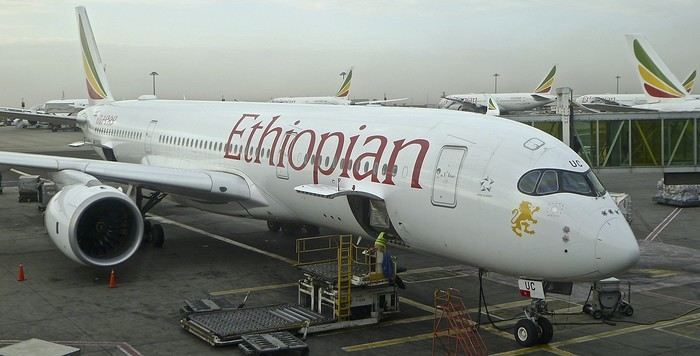
-1- During the layover in Addis Ababa. The Airbus A-350 in the early morning mist.
Reminder: Click on each image to enlarge it, if needed. .
From Dar es Salaam, if you want to go by road to Ruaha, it’ll take a very long and tiring day. 🤪
On previous trips, we’ve always taken a bush plane for this route. In this case, it took just over an hour and a half, with two short intermediate stops to drop off passengers at other bush airstrips.
Since I’m also passionate about aviation, I love these flights where you can admire the landscapes from low altitude while sitting right behind the pilot 🙂.
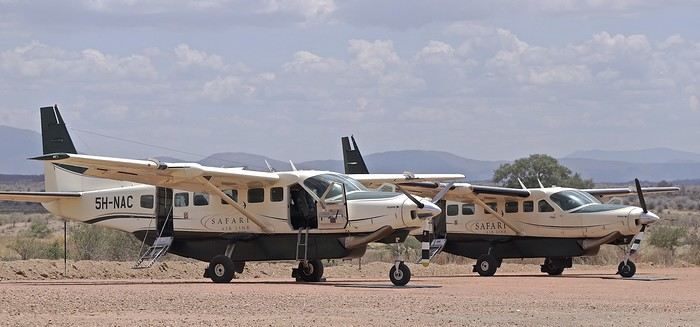
-2- These routes mainly use Cessna 208 Caravans.
At the Msembe airstrip, we’re greeted around 1:30 PM by a guide and a driver from our chosen lodge. They brought a picnic basket, which we enjoy at a nearby picnic area. We’re by the Ruaha River, completely dry—it’s scorching hot.
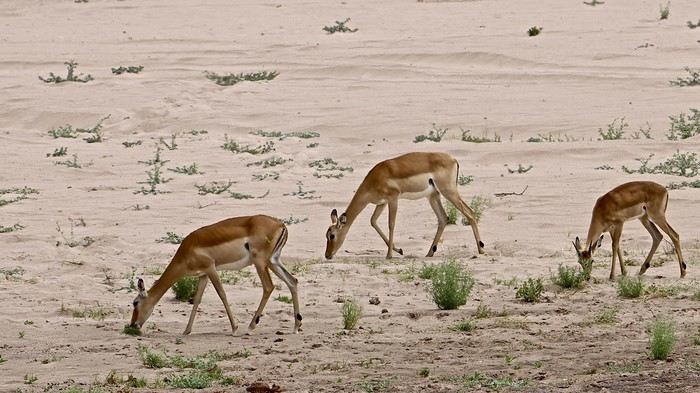
-3- The first mammals we encounter are a pair of female impalas, accompanied by a young male.
Reminder: Click on the image to view it in larger size. 😉
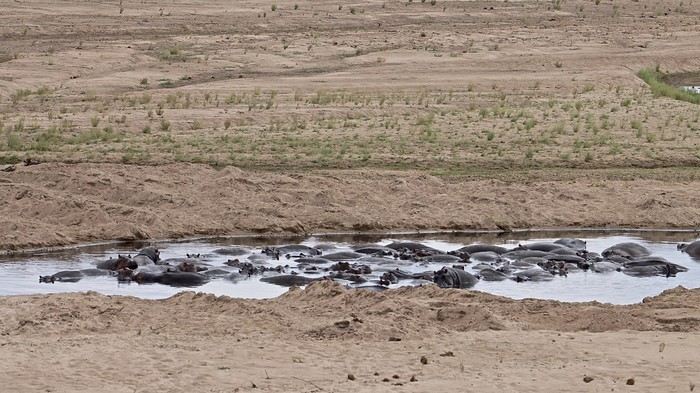
-4- To save the hippopotamus populations from certain death, rangers had to dig holes in the sand with bulldozers. Fortunately, water is present beneath the sand layer.
-5- This crocodile doesn’t seem to have been accepted as a swimming neighbor by the hippos...
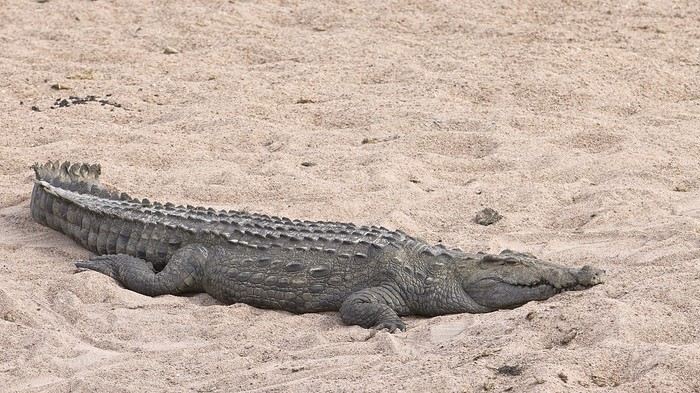
We’ll explore along the river for 2-3 hours before crossing it at a ford toward the southern part of the reserve.
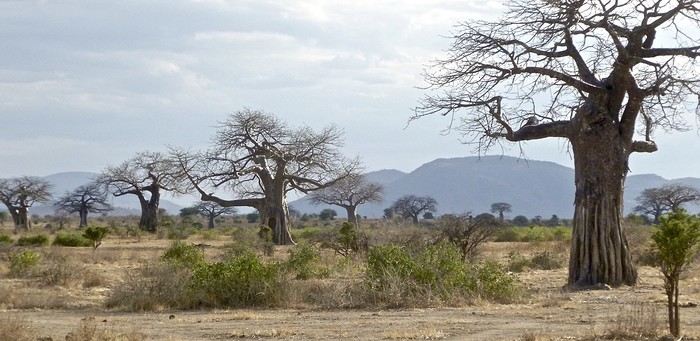
-6- The typical landscape of Ruaha, with its many baobabs.
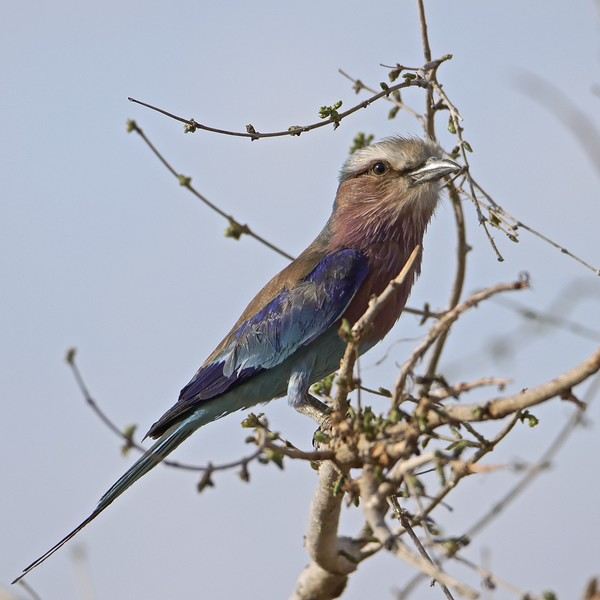
-7- My buddy the R.L.B. is also here to welcome me.... 🙂 🙂
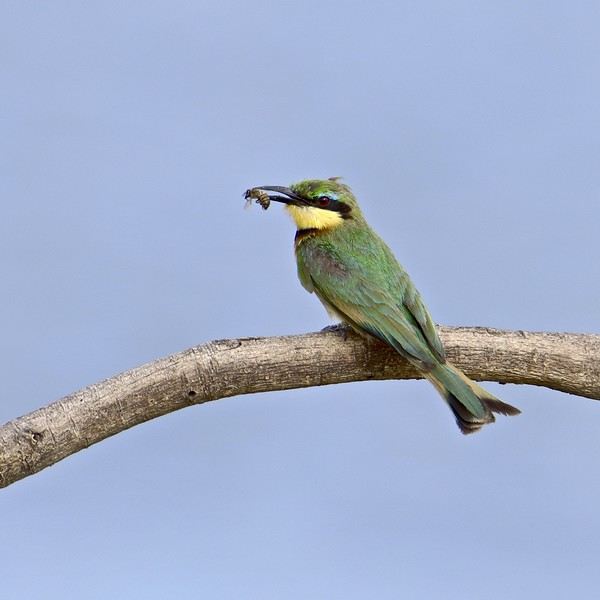
-8- As well as this little bee-eater... 😎
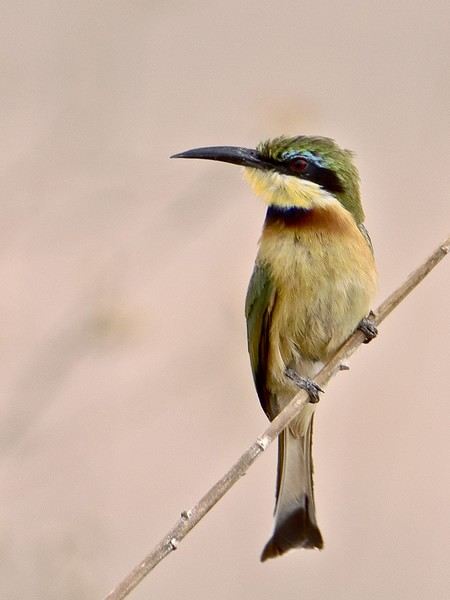
-9- ...which reminds us of the origin of its name...!
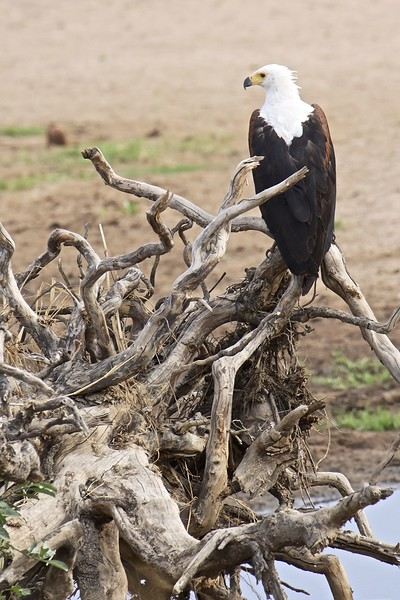
-10- Above a rare waterhole, a fish eagle keeps watch for fish...
...
*** Please wait until the end of the story for any questions or to share your own experiences in Ruaha. (Or via PM.) Thanks in advance for keeping this account smooth and enjoyable. 😉
...
*** I’m not an ornithologist, but birds are an important and unavoidable part of safari discoveries. You’ll find quite a few in the images of my story. 😎
...
" We’re ALL different, and so are our expectations when it comes to travel or leisure ". There are—without a doubt—as many ways to experience a trip as there are travelers!! For the two of us, it’s only our love of wild nature that guides us to East Africa. The stated goal of this trip was purely wildlife-focused, and NOT about discovering the country or its people.
...
Hello everyone,
Previously, I shared the account of a trip/safari in southern Tanzania in June 2024, in the Mikumi and Selous reserves.
This time, still in southern Tanzania, I invite you to join us in Ruaha National Park. (Then, depending on the number of images allowed in my quota, at the end of my story, we’ll return to Selous for the second part of the same trip.)
- This trip/safari took place in November 2022. - Our flight started in Marseille, heading to Addis Ababa, then Dar es Salaam (via Ethiopian Airlines). In Dar, we spent one night at a hotel near the airfield.
-1- During the layover in Addis Ababa. The Airbus A-350 in the early morning mist.
Reminder: Click on each image to enlarge it, if needed. .
From Dar es Salaam, if you want to go by road to Ruaha, it’ll take a very long and tiring day. 🤪
On previous trips, we’ve always taken a bush plane for this route. In this case, it took just over an hour and a half, with two short intermediate stops to drop off passengers at other bush airstrips.
Since I’m also passionate about aviation, I love these flights where you can admire the landscapes from low altitude while sitting right behind the pilot 🙂.
-2- These routes mainly use Cessna 208 Caravans.
At the Msembe airstrip, we’re greeted around 1:30 PM by a guide and a driver from our chosen lodge. They brought a picnic basket, which we enjoy at a nearby picnic area. We’re by the Ruaha River, completely dry—it’s scorching hot.
-3- The first mammals we encounter are a pair of female impalas, accompanied by a young male.
Reminder: Click on the image to view it in larger size. 😉
-4- To save the hippopotamus populations from certain death, rangers had to dig holes in the sand with bulldozers. Fortunately, water is present beneath the sand layer.
-5- This crocodile doesn’t seem to have been accepted as a swimming neighbor by the hippos...
We’ll explore along the river for 2-3 hours before crossing it at a ford toward the southern part of the reserve.
-6- The typical landscape of Ruaha, with its many baobabs.
-7- My buddy the R.L.B. is also here to welcome me.... 🙂 🙂
-8- As well as this little bee-eater... 😎
-9- ...which reminds us of the origin of its name...!
-10- Above a rare waterhole, a fish eagle keeps watch for fish...
...
*** Please wait until the end of the story for any questions or to share your own experiences in Ruaha. (Or via PM.) Thanks in advance for keeping this account smooth and enjoyable. 😉
...
*** I’m not an ornithologist, but birds are an important and unavoidable part of safari discoveries. You’ll find quite a few in the images of my story. 😎
...
Road trip moto aux dans l'Ouest américain (Las Vegas vers Zion, Bryce Canyon...) English translation pending
Bonjour,
je prévois un road trip à moto avec mon amie au début du mois d'octobre 2020, départ Las Vegas vers Zion, Bryce Canyon pour nous rendre à Monument Valley. La durée allée et retour estimée est de 1 semaine. Nous pensons louer 2 motos chez Eagle Rider à La Vegas, confier nos gros bagages à la concession motos. Nous ne voulons pas faire appel à un quelconque organisme. --Quelles assurances paraissent indispensables sachant que mon amie est jeune conductrice ?
Pouvez vous me renseigner sur la météo dans l'Ouest américain en octobre sur cette itinéraire ?
Quels équipements sont indispensables d'amener: blouson , équipement pluie...