Results for "Chaux+Fonds+|+9+>+232"
56516 results found.
Mongolie en vélo English translation pending
salut à tous les passionnés de Mongolie.
pour ma part je souhaite partir en Mongolie 2 ou 3 mois sur la période juin- aout 2005 et j'ai choisi le velo comme moyen de déplacement. Pour l'instant je suis toute seule et je cherche 1 ou des compagnons de voyage motivés pour faire des bouts de route avec moi ou des gens qui partent et auxquels je pourrais me joindre sur quelques centaines de kilometres.
Sinon je suis également curieuse de savoir quel est le moyen d'obtenir un visa de plus de 30 jours pour ce beau pays.
merci d'avance pour tous renseignement ou proposition
pour ma part je souhaite partir en Mongolie 2 ou 3 mois sur la période juin- aout 2005 et j'ai choisi le velo comme moyen de déplacement. Pour l'instant je suis toute seule et je cherche 1 ou des compagnons de voyage motivés pour faire des bouts de route avec moi ou des gens qui partent et auxquels je pourrais me joindre sur quelques centaines de kilometres.
Sinon je suis également curieuse de savoir quel est le moyen d'obtenir un visa de plus de 30 jours pour ce beau pays.
merci d'avance pour tous renseignement ou proposition
Comment s'habiller pour l'Argentine? English translation pending
Salut à tous!
Je pars le 30 dec et je rentre le 3 fev en Argentine. J'espere bien faire le pays du nord au sud! Mais voila....30° a BA c'est facil...mais au sud (ushuaia)? C'est vraimment froid? Peut on trouver des habits a un bon prix en argentine ? (ben oui tant qu'a faire si je peu m'habiller poa cher...) Que conseillez vous sur ce que je doit prendre dans mon sac pour que ce soit le plus leger possible?( je change de sous vetement frequement donc pas la peine de faire des blagues douteuses!🤪) Merci pour tout vos precieux conseils!
EZ.
Je pars le 30 dec et je rentre le 3 fev en Argentine. J'espere bien faire le pays du nord au sud! Mais voila....30° a BA c'est facil...mais au sud (ushuaia)? C'est vraimment froid? Peut on trouver des habits a un bon prix en argentine ? (ben oui tant qu'a faire si je peu m'habiller poa cher...) Que conseillez vous sur ce que je doit prendre dans mon sac pour que ce soit le plus leger possible?( je change de sous vetement frequement donc pas la peine de faire des blagues douteuses!🤪) Merci pour tout vos precieux conseils!
EZ.
Quel aliment vous fait perdre les pédales? English translation pending
Je suis curieux, quel aliment vous fait VRAIMENT perdre les pédales? Je ne parle pas nécessairement de cuisine exotique ou d’un petit plat de maman, ni d'un truc spécial que vous avez été assez "brave" pour avaler. Moi, j’aime tout ou presque, le gorgonzola et les choux à la crème et les chocolats belges et la cuisine thai et le sushi et la raclette (la liste est longue, et mon ventre grandit avec les années), etc. A la maison comme en voyage, je veux goutter à tout, de la baleine au harkla en passant par les curry, le foie gras et le mole negro, bien arrosé de St-Emilion, de chai ou d’eau pure d’un lac de l’Arctique. Délicieux ou dégueulasse (façon de parler, tout est question d’habitude), je dois l’essayer au moins une fois.
Mais rien, absolument rien n’arrive à la cheville de ce produit tellement simple mais combien magique, ou diabolique dans mon cas. Vous l’avez compris, je parle de quelque chose de profond, puissant, maladif, une « addiction » presqu’aussi forte que l’alcoolisme (avec des effets un peu moins dévastateurs tout de même…).
Ma drogue est toute simple, on en trouve partout dans toutes les épiceries ou supermarchés ou presque, à travers le monde, dans toutes les Amériques, Asie, Afrique, Europe. Je ne peux y résister. Si je sais qu’il y en a dans la maison, je ferai tous les placards et recoins pour le trouver, et quand je le tiendrai entre mes mains et que j’avalerai la première, puis la deuxième et la troisième cuillerée, je trouverai la force de caractère pour arréter, trouver un couvercle quelconque. Je le mettrai au frais dans le frigo, en espérant sincèrement que quelqu’un d’autre dans la famille finira tout avant moi, sachant très bien qu’une heure plus tard il sera toujours là. Et que je capitulerai, que je le finirai au complet comme un glouton, avec mes doigts glissant le long des parois de la boîte pour ne rien gaspiller, que je serais écoeuré et dégoûté de ma faiblesse de caractère, que j’aurai mal au ventre, et que j’aurai emmaganisé 3000 calories d’un coup!
Ce produit machiavélique qui me fait perdre toute retenue, c’est tout simplement du lait condensé sucré, du lait Nestlé comme on l’appelle encore dans quelques pays…Non, je vous en prie, ne me jugez pas trop sévèrement, je n’y peux rien…
Et vous? Partagez votre « addiction » avec moi!
Mais rien, absolument rien n’arrive à la cheville de ce produit tellement simple mais combien magique, ou diabolique dans mon cas. Vous l’avez compris, je parle de quelque chose de profond, puissant, maladif, une « addiction » presqu’aussi forte que l’alcoolisme (avec des effets un peu moins dévastateurs tout de même…).
Ma drogue est toute simple, on en trouve partout dans toutes les épiceries ou supermarchés ou presque, à travers le monde, dans toutes les Amériques, Asie, Afrique, Europe. Je ne peux y résister. Si je sais qu’il y en a dans la maison, je ferai tous les placards et recoins pour le trouver, et quand je le tiendrai entre mes mains et que j’avalerai la première, puis la deuxième et la troisième cuillerée, je trouverai la force de caractère pour arréter, trouver un couvercle quelconque. Je le mettrai au frais dans le frigo, en espérant sincèrement que quelqu’un d’autre dans la famille finira tout avant moi, sachant très bien qu’une heure plus tard il sera toujours là. Et que je capitulerai, que je le finirai au complet comme un glouton, avec mes doigts glissant le long des parois de la boîte pour ne rien gaspiller, que je serais écoeuré et dégoûté de ma faiblesse de caractère, que j’aurai mal au ventre, et que j’aurai emmaganisé 3000 calories d’un coup!
Ce produit machiavélique qui me fait perdre toute retenue, c’est tout simplement du lait condensé sucré, du lait Nestlé comme on l’appelle encore dans quelques pays…Non, je vous en prie, ne me jugez pas trop sévèrement, je n’y peux rien…
Et vous? Partagez votre « addiction » avec moi!
Ile Perhentian en Malaisie en mars English translation pending
Je projete de partir sur la grande ile des perhentian entre le 15 et 31 mars 2005.
Je recherche les informations suivantes : quel climat fait il a cette epoque je pense reserver a l'hotel Perhentian Island Resort, pouvez vous me donner des infos (qualite de l'hotel, plage, ...) est il possible d effectuer un transit vers l ile depuis kota baru en fin de matiné ? nous nous trouvons dans un pays musleman, que l'hotel ne vende pas d'alcool cela ne pose pas de probleme 🤪 mais je pars avec ma femme et nous souhaitons passer des vacances sans soucis. est ce que quelqu un peut me dire si la population est sympa et si pour une femme cela ne pose pas de soucis d'etre en short et tee short ? nous aimons le snorkeling, quand est il sur cette ile ?🙂 est ce que 13 nuits cela n'est pas trop ?enfin comme vous l avez compris je recherche des infos
laika3
Je recherche les informations suivantes : quel climat fait il a cette epoque je pense reserver a l'hotel Perhentian Island Resort, pouvez vous me donner des infos (qualite de l'hotel, plage, ...) est il possible d effectuer un transit vers l ile depuis kota baru en fin de matiné ? nous nous trouvons dans un pays musleman, que l'hotel ne vende pas d'alcool cela ne pose pas de probleme 🤪 mais je pars avec ma femme et nous souhaitons passer des vacances sans soucis. est ce que quelqu un peut me dire si la population est sympa et si pour une femme cela ne pose pas de soucis d'etre en short et tee short ? nous aimons le snorkeling, quand est il sur cette ile ?🙂 est ce que 13 nuits cela n'est pas trop ?enfin comme vous l avez compris je recherche des infos
laika3
Dehors il fait froid, finis ton Locro mon coco English translation pending
Il faut faire du gras car dehors il commence à faire froid !
Voici une recette vraiment merveilleuse qui nous vient du Nord Ouest de l'Argentine (Salta, Jujuy, etc.) et qui va transporter de bonheur les amateurs de bons petits plats hyper caloriques que vous-êtes (mais que vous n'osez pas trop avouer).
Mode opératoire en six coups de cuillère à pot :
1/ Invitez 5 voraces copains demain soir (avec vous ça fera 6, sauf si vous êtes en couple, auquel cas il faudra réduire le nombre de copains ou bien augmenter les doses proportionellement en vous prenant la tête avec une calculatrice).
2/ Filez vite faire les courses et rapportez : 1 kg de maïs blanc 1 kg de haricots blancs 1/2 kg de côtes de porc 200 g de lard 1/2 kg de viande de veau 3 grosses saucisses 2 chorizos espagnols 1 kg de viande de boeuf 1/4 kg de potiron 1/4 kg de carottes 1 cuiller de piment 1 cuiller de poivre 1/4 kg de pommes de terre 1/4 kg de patates douces 1/2 kg de choux blanc
+ pour la sauce : 1 tasse d’huile d’olive sel 1 tête d’ail 1 cuiller de piment échalote
3/ Ne traînez pas sur le chemin du retour et en rentrant à la maison, mettez à tremper une nuit entière un demi kilo de maïs et de haricots blancs. C'est tout pour aujourd'hui, vous pouvez faire autre chose, mais ne vous couchez pas trop tard...
4/ Debout ! Quoi il est 6h du matin ? Ben, oui si vous voulez réussir votre locro et retrouver ainsi l'estime et la considération de vos amis exigeants, il faut donner un peu de votre personne. Donc, dans la même eau qui aura servi à faire tremper le maïs et les haricots, mettez à bouillir les saucisses coupées en morceaux (avec le maïs et les haricots). Ajoutez également le lard, la viande de veau coupés en morceaux et les côtes de porc. Ne pas saler, sauf à la fin, si cela est nécessaire. Le tout doit bouillir une dizaine d’heures (oui, oui), ou jusqu’à ce que la préparation épaississe (soit environ 10 heures).
Mélangez avec une cuillère en bois pour éviter que les haricots n’attachent au fond de la marmite. Après sept heures de cuisson, ajoutez le restant de maïs et de haricots blancs, les légumes en dés et la cuiller de poivre.
Pour la sauce, pressez l’ail, ajoutez l’huile, le piment, le sel et le poivre (ça doit être bien relevé). Servir avec de l’échalote.
5/ Débouchez 2 bouteilles de vin argentin et passez à table avec vos 5 amis hilares et bientôt réjouis.
6/ Revenez sur VF pour tenter d'exprimer votre émerveillement avec des mots.
Voici une recette vraiment merveilleuse qui nous vient du Nord Ouest de l'Argentine (Salta, Jujuy, etc.) et qui va transporter de bonheur les amateurs de bons petits plats hyper caloriques que vous-êtes (mais que vous n'osez pas trop avouer).
Mode opératoire en six coups de cuillère à pot :
1/ Invitez 5 voraces copains demain soir (avec vous ça fera 6, sauf si vous êtes en couple, auquel cas il faudra réduire le nombre de copains ou bien augmenter les doses proportionellement en vous prenant la tête avec une calculatrice).
2/ Filez vite faire les courses et rapportez : 1 kg de maïs blanc 1 kg de haricots blancs 1/2 kg de côtes de porc 200 g de lard 1/2 kg de viande de veau 3 grosses saucisses 2 chorizos espagnols 1 kg de viande de boeuf 1/4 kg de potiron 1/4 kg de carottes 1 cuiller de piment 1 cuiller de poivre 1/4 kg de pommes de terre 1/4 kg de patates douces 1/2 kg de choux blanc
+ pour la sauce : 1 tasse d’huile d’olive sel 1 tête d’ail 1 cuiller de piment échalote
3/ Ne traînez pas sur le chemin du retour et en rentrant à la maison, mettez à tremper une nuit entière un demi kilo de maïs et de haricots blancs. C'est tout pour aujourd'hui, vous pouvez faire autre chose, mais ne vous couchez pas trop tard...
4/ Debout ! Quoi il est 6h du matin ? Ben, oui si vous voulez réussir votre locro et retrouver ainsi l'estime et la considération de vos amis exigeants, il faut donner un peu de votre personne. Donc, dans la même eau qui aura servi à faire tremper le maïs et les haricots, mettez à bouillir les saucisses coupées en morceaux (avec le maïs et les haricots). Ajoutez également le lard, la viande de veau coupés en morceaux et les côtes de porc. Ne pas saler, sauf à la fin, si cela est nécessaire. Le tout doit bouillir une dizaine d’heures (oui, oui), ou jusqu’à ce que la préparation épaississe (soit environ 10 heures).
Mélangez avec une cuillère en bois pour éviter que les haricots n’attachent au fond de la marmite. Après sept heures de cuisson, ajoutez le restant de maïs et de haricots blancs, les légumes en dés et la cuiller de poivre.
Pour la sauce, pressez l’ail, ajoutez l’huile, le piment, le sel et le poivre (ça doit être bien relevé). Servir avec de l’échalote.
5/ Débouchez 2 bouteilles de vin argentin et passez à table avec vos 5 amis hilares et bientôt réjouis.
6/ Revenez sur VF pour tenter d'exprimer votre émerveillement avec des mots.
Partir avec un bébé au Vietnam English translation pending
Bonjour à tous!
Je viens de découvrir ce site tout à fait exceptionnel, j'ai déjà trouvé plein d'infos, plein de bons conseils, plein de récits d'expérience, c'est vraiment sympa.
Alors voilà, nous aimerions partir au Vietnam en Avril prochain. En fait, on est un peu routard, on adore voyager "sac à dos" et surtout sortir des sentiers battus. Cela dit, notre fille aura 1 an en Avril et du coup, on se pose plein de questions. Est-ce que c'est prudent de partir avec un bébé? Question vaccins, précautions, côté pratique aussi.... Pour l'instant, on a fait des tours en France avec elle, Sud-Ouest, Sud-est et Nord-est. Elle est plutôt cool dans le fond!
Est-ce que vous êtes dejà parti en Asie avec un bébé ou est-ce que vous connaissez des personnes qui l'ont fait?
On a des amis d'amis à Hanoi qui nous hebergerait et qui je pense pourrait nous conseiller mais pour le moment, on n'est pas en contact!!!!
J'attends vos témoignages avec impatience!
Merci et à très bientôt
Je viens de découvrir ce site tout à fait exceptionnel, j'ai déjà trouvé plein d'infos, plein de bons conseils, plein de récits d'expérience, c'est vraiment sympa.
Alors voilà, nous aimerions partir au Vietnam en Avril prochain. En fait, on est un peu routard, on adore voyager "sac à dos" et surtout sortir des sentiers battus. Cela dit, notre fille aura 1 an en Avril et du coup, on se pose plein de questions. Est-ce que c'est prudent de partir avec un bébé? Question vaccins, précautions, côté pratique aussi.... Pour l'instant, on a fait des tours en France avec elle, Sud-Ouest, Sud-est et Nord-est. Elle est plutôt cool dans le fond!
Est-ce que vous êtes dejà parti en Asie avec un bébé ou est-ce que vous connaissez des personnes qui l'ont fait?
On a des amis d'amis à Hanoi qui nous hebergerait et qui je pense pourrait nous conseiller mais pour le moment, on n'est pas en contact!!!!
J'attends vos témoignages avec impatience!
Merci et à très bientôt
Comment est la plage de boca chica? English translation pending
je pars samedi, merci de me donner des infos.
Bonnes stations de ski au Canada? English translation pending
salut à tous,
si jamais par hasard y'avait des quebequois ou des canadiens sur forum qui connaissent des bonnes stations de ski au canada (freeride off-pist et freestyle park), merci à eux de m'aider à les découvrir!
c'est cool, merci!
si jamais par hasard y'avait des quebequois ou des canadiens sur forum qui connaissent des bonnes stations de ski au canada (freeride off-pist et freestyle park), merci à eux de m'aider à les découvrir!
c'est cool, merci!
Tournée des parcs nationaux du grand ouest English translation pending
Bonjour à tous,
L'année prochaine, nous avons décidé de faire la tournée des parcs nationaux de l'ouest americain.
Voici ce que nous contions faire :
partir plutôt en camping une vingtaine de jours en restant plusieurs jours sur certains sites.
Notre seul impératif (émotionnel) est de rester plusieurs jours à Yellowstone.
Est ce que quelqu'un pourrait me conseiller sur les points suivants : Quelle ville choisir pour l'arrivée par avion Quel circuit conseillerez vous (quels parcs à ne pas manquer, lesquels à éviter) Camping: faut-il réserver, acheter sur place le matériel ? Facilité d'accès ? Sinon, est ce qu'il faut mieux se tourner vers les motels ?
Je vous remercie tous par avance !
L'année prochaine, nous avons décidé de faire la tournée des parcs nationaux de l'ouest americain.
Voici ce que nous contions faire :
partir plutôt en camping une vingtaine de jours en restant plusieurs jours sur certains sites.
Notre seul impératif (émotionnel) est de rester plusieurs jours à Yellowstone.
Est ce que quelqu'un pourrait me conseiller sur les points suivants : Quelle ville choisir pour l'arrivée par avion Quel circuit conseillerez vous (quels parcs à ne pas manquer, lesquels à éviter) Camping: faut-il réserver, acheter sur place le matériel ? Facilité d'accès ? Sinon, est ce qu'il faut mieux se tourner vers les motels ?
Je vous remercie tous par avance !
Itinéraire et climat au Pérou en février/mars? English translation pending
Bonjour 😉,
Je compte me rendre au Perou en février ou mars 2005. Je sais que c'est la saison des pluies, mais est-ce que c'est si horrible que ça 😐 ?
Par ailleurs, j'aimerais faire Lima puis me rendre à Cuzco en bus ou train en 4-5 jours (est-ce aussi faisable ?). Ensuite, faire le chemin des Incas en 4-5 jours également puis gagner le lac Titicaca en 6 jours pour ensuite rejoindre la Paz. Je compte en tout y passer un mois.
Je voulais juste savoir si mon itinéraire était faisable... Je n'ai pas encore étudier à fond le Pérou !
Merci d'avance 😎 !
Je compte me rendre au Perou en février ou mars 2005. Je sais que c'est la saison des pluies, mais est-ce que c'est si horrible que ça 😐 ?
Par ailleurs, j'aimerais faire Lima puis me rendre à Cuzco en bus ou train en 4-5 jours (est-ce aussi faisable ?). Ensuite, faire le chemin des Incas en 4-5 jours également puis gagner le lac Titicaca en 6 jours pour ensuite rejoindre la Paz. Je compte en tout y passer un mois.
Je voulais juste savoir si mon itinéraire était faisable... Je n'ai pas encore étudier à fond le Pérou !
Merci d'avance 😎 !
Quel temps il fait en Irlande? English translation pending
Bonjour,
L'Irlande est un pays que j'adorerais visiter prochainement. En calculant mon budget, je serais prêt à partir au tour du mois de Janvier.
Quel est la température là-bas du mois de Janvier au mois de mars ?? Est-ce froid et pluvieux ?
L'Irlande est un pays que j'adorerais visiter prochainement. En calculant mon budget, je serais prêt à partir au tour du mois de Janvier.
Quel est la température là-bas du mois de Janvier au mois de mars ?? Est-ce froid et pluvieux ?
Bourses et sponsors pour tdm: créer une association? English translation pending
Bonjour à tOus!
Je suis en train de monter un projet culturel autour du monde avec une amie et nous nous demandions si pour faire des demandes de bourses et de sponsors, il valait mieux créer une association ou bien faire des demandes à titre personnel. Nous craignions que ça ne soit pas pris au serieux ou juste pas possible dans un cadre personnel. Si vous aviez des infos à nous transmettre nous sommes preneuses. MerCi bOucoup!!
MusHabOom
Je suis en train de monter un projet culturel autour du monde avec une amie et nous nous demandions si pour faire des demandes de bourses et de sponsors, il valait mieux créer une association ou bien faire des demandes à titre personnel. Nous craignions que ça ne soit pas pris au serieux ou juste pas possible dans un cadre personnel. Si vous aviez des infos à nous transmettre nous sommes preneuses. MerCi bOucoup!!
MusHabOom
Vacances d'hiver au Québec English translation pending
qui peut me renseigner sur des vacances d'hiver (noel ou jour de l'an) au canada (région quebec)
hotels ou location de chalet, louer une voiture ou pas, moto neige pour enfants de 17 ans (possible ou pas)
je suis à la martinique et je cherche un peu de frais pour cet hiver😛
hotels ou location de chalet, louer une voiture ou pas, moto neige pour enfants de 17 ans (possible ou pas)
je suis à la martinique et je cherche un peu de frais pour cet hiver😛
Vos impressions sur Cayo Guillermo English translation pending
bonjour a vous tous j aurais besoin de vos commentaire j aimerais aller a cayo guillermo mais j hesite entre le sol et le melia .je suis indecise car jai entendu dire que la plage du melia etais petite mais que la bouffe est tres bonne mais que les gens etais plus agee tandis qu au sol c est plus jeune et que la plage plus grande meme que le monde du melia y vienne et que la bouffe etait bonne aussi .je revient a peine du brisas guardalavaca et la bouffe n etait pas fameuse alors c est tres important pour moi .merci a l avance.
Cuisine réunionnaise English translation pending
Si vous avez été charmé par les carris et les rougails, ou que vous aimeriez tenter l'expérience, rien de plus simple que la cuisine créole!
Un repas créole commence avec un bon riz. La plupart du temps, c'est aliment pas trés appréçié, mais il faut savoir le faire cuire 😏
D'un point de vue qualité, le riz basmati est incontestablement le meilleur. Pour la cuisson, à défaut de posséder un rice cooker, une marmite à fond plutot épais fera l'affaire. Il suffit de doser votre riz, de bien le laver, en le brassant sous l'eau dans la marmite à plusieurs reprises jusqu'à ce que l'eau devienne claire. Une fois le riz lavé, le débarasser de l'eau pour pouvoir doser correctement: pour la cuisson, il faut autant d'eau que de riz. Ajoutez un peu de sel, et surtout laissez à couvert sur feu moyen, le riz cuit à la vapeur! Jetez un coup d'oeil de tps en tps pour verifier que le riz ne brule pas. Il est cuit lorsque toute l'eau a été absorbée par les grains, c'est à dire aprés une vingtaine de minute environ, mais cela dépend de la quantité.
Une fois le riz cuit, on peut s'attaquer à préparer un carri.
Je vous propose le plus simple, le
Carri Poulet
Ingrédients:
Un poulet de bonne qualité pour ne pas qu'il se décharne à la cuisson - 3-4 petites tomates - 2-3 oignons - 7-8 gousses d'ail - 1 petit morceau de gingembre - curcuma - clous de girofle - huile de mais ou de tournesol
1- coupez le poulet en morceaux et les faites revenir dans l'huile à feu vif jusqu'à ce qu'ils soient bien dorées sans trop cuire. Otez du feu, reservez.
2-dans la meme huile, sur feu moyen, faites fondre les oignons émincés, l'ail, le gingembre, et deux clous de goroflele tt mixés mais sans enfaire une purée, il faut que se soit en petits morceaux. Ajoutez un pincée de curcuma et enfin les tomates épépinées et coupés en dés. Salez, poivrez. Laissez mijoter quelques minutes à feu doux.
3-Ajoutez les morceaux de poulet dans la sauce, tjrs sur feu doux, tournez pour qu'ils soient impregnés. Couvrez pour laisser cuire à feu doux afin que tous les parfums s'expriment.
4-Lorsque la sauce est réduite et onctueuse, la viande moelleuse, c'est prêt!
Dressez une belle asiette avec du riz, un morceau ou deux de poulet et sa sauce. On accompagne généralement de haricots rouges ou rosés, communément appelés "grains". On fait revenir un peu d'ail et d'oignon émincé, on ajoute une branche de thym, les haricots, on couvre d'eau, salez et poivrez au gout et on laisse cuire.(Cette préparation s'applique aussi pour les lentilles, et les gros pois)
Faites moi part de vos remarques, et n'hésitez pas à me demandez d'autres recettes ou renseignements, je reponds avec plaisir 😉
Sur ce, bon apétit!
Un repas créole commence avec un bon riz. La plupart du temps, c'est aliment pas trés appréçié, mais il faut savoir le faire cuire 😏
D'un point de vue qualité, le riz basmati est incontestablement le meilleur. Pour la cuisson, à défaut de posséder un rice cooker, une marmite à fond plutot épais fera l'affaire. Il suffit de doser votre riz, de bien le laver, en le brassant sous l'eau dans la marmite à plusieurs reprises jusqu'à ce que l'eau devienne claire. Une fois le riz lavé, le débarasser de l'eau pour pouvoir doser correctement: pour la cuisson, il faut autant d'eau que de riz. Ajoutez un peu de sel, et surtout laissez à couvert sur feu moyen, le riz cuit à la vapeur! Jetez un coup d'oeil de tps en tps pour verifier que le riz ne brule pas. Il est cuit lorsque toute l'eau a été absorbée par les grains, c'est à dire aprés une vingtaine de minute environ, mais cela dépend de la quantité.
Une fois le riz cuit, on peut s'attaquer à préparer un carri.
Je vous propose le plus simple, le
Carri Poulet
Ingrédients:
Un poulet de bonne qualité pour ne pas qu'il se décharne à la cuisson - 3-4 petites tomates - 2-3 oignons - 7-8 gousses d'ail - 1 petit morceau de gingembre - curcuma - clous de girofle - huile de mais ou de tournesol
1- coupez le poulet en morceaux et les faites revenir dans l'huile à feu vif jusqu'à ce qu'ils soient bien dorées sans trop cuire. Otez du feu, reservez.
2-dans la meme huile, sur feu moyen, faites fondre les oignons émincés, l'ail, le gingembre, et deux clous de goroflele tt mixés mais sans enfaire une purée, il faut que se soit en petits morceaux. Ajoutez un pincée de curcuma et enfin les tomates épépinées et coupés en dés. Salez, poivrez. Laissez mijoter quelques minutes à feu doux.
3-Ajoutez les morceaux de poulet dans la sauce, tjrs sur feu doux, tournez pour qu'ils soient impregnés. Couvrez pour laisser cuire à feu doux afin que tous les parfums s'expriment.
4-Lorsque la sauce est réduite et onctueuse, la viande moelleuse, c'est prêt!
Dressez une belle asiette avec du riz, un morceau ou deux de poulet et sa sauce. On accompagne généralement de haricots rouges ou rosés, communément appelés "grains". On fait revenir un peu d'ail et d'oignon émincé, on ajoute une branche de thym, les haricots, on couvre d'eau, salez et poivrez au gout et on laisse cuire.(Cette préparation s'applique aussi pour les lentilles, et les gros pois)
Faites moi part de vos remarques, et n'hésitez pas à me demandez d'autres recettes ou renseignements, je reponds avec plaisir 😉
Sur ce, bon apétit!
Condition physique et âge maximum pour les Annapurna English translation pending
Bonjour,
Je souhaiterai obtenir l'avis de plusieurs personnes voir quelques spécialistes car mon père est passionné de montagne et l'Himalaya. Il m'a donné gout à la rando et tous les été, il randonne dans les Alpes, souvent à proximité du massif du mont Blanc qu'il admire par tant de glaciers.....
Bref, il est sportif et l'a toujours été depuis qu'il est jeune, mais je n'arrive pas à le convaincre qu'il pourrait aller faire le tour des Annapurna, pas compliqué à ce que j'ai lu et ce qu'un collègue m'a dit.
Il craint de ne pas avoir assez de condition physique, et craint également le mal d'altitude, tant rabaché par certaines personnes ici en France. Il va avoir 55 ans la semaine prochaine et je me documente à fond pour le convaincre. DONNEZ MOI VOS CONSEILS SVP 🙂
INFO: randos cet été jusqu'à 7H de marche, entraine tj une equipe de foot de jeunes (13ans) et court avec eux. Capable de faire des footing 30' à 1H sans pb je pense.
Merci bcp.
Je souhaiterai obtenir l'avis de plusieurs personnes voir quelques spécialistes car mon père est passionné de montagne et l'Himalaya. Il m'a donné gout à la rando et tous les été, il randonne dans les Alpes, souvent à proximité du massif du mont Blanc qu'il admire par tant de glaciers.....
Bref, il est sportif et l'a toujours été depuis qu'il est jeune, mais je n'arrive pas à le convaincre qu'il pourrait aller faire le tour des Annapurna, pas compliqué à ce que j'ai lu et ce qu'un collègue m'a dit.
Il craint de ne pas avoir assez de condition physique, et craint également le mal d'altitude, tant rabaché par certaines personnes ici en France. Il va avoir 55 ans la semaine prochaine et je me documente à fond pour le convaincre. DONNEZ MOI VOS CONSEILS SVP 🙂
INFO: randos cet été jusqu'à 7H de marche, entraine tj une equipe de foot de jeunes (13ans) et court avec eux. Capable de faire des footing 30' à 1H sans pb je pense.
Merci bcp.
Livre sur le Népal? English translation pending
Bonjour à tous,
Avez vous un livres à me conseiller sur le Népal ?
Merci d'avance.
Christribe
Avez vous un livres à me conseiller sur le Népal ?
Merci d'avance.
Christribe
Le désert en caravane English translation pending
bonjour🙂
j'aimerai faire une expedition en caravane dans un desert, le choix est large d'autant plus que je n'y connais rien; l'egypte le maroc et la tunisie m'interesse beaucoup, si quelqu'un a deja fait quelque chose comme ca
j'aimerai faire une expedition en caravane dans un desert, le choix est large d'autant plus que je n'y connais rien; l'egypte le maroc et la tunisie m'interesse beaucoup, si quelqu'un a deja fait quelque chose comme ca
Mexico Trip Report – July 2026
My partner and I traveled from Sunday, July 5, 2026, to Wednesday, July 22, 2026.
We spent a long time debating whether to rent a car or use public transportation. In the end, after reading so many posts about travelers getting scammed by police or rental companies—even those recommended by blogs and reviews—we decided to stick with public transport. It worked out really well. Sure, we had a little less freedom to go where we wanted, but it was way less stressful for us.
Sunday, July 5:
Arrived at Cancun Airport. Withdrew cash from the ATM in the terminal just before exiting. The ADO bus counter (they pronounce it "A-Jee-O") is right behind you when you're facing the ATM. Bus to downtown Cancun cost 145 pesos per person. Stayed at "Rose 5," booked on Booking. The studio was super clean and perfect for one night. The owner’s instructions for accessing the place were very precise, with photos included. Check-in was self-service with a code. The ADO bus terminal isn’t far, and there are shops and restaurants nearby. We really appreciated that the AC was already on when we arrived. By the way, I’d recommend always booking places with AC—it’s *really* hot in Mexico.
Monday, July 6:
Bought a SIM card with data from a TELCEL store. My partner, who’s on Free Mobile, was able to use her regular plan. Just so you know, I found the network pretty unstable. As soon as we left the cities, neither of us—me with TELCEL or her with Free—had any signal. Another thing to watch out for: roaming charges. I had to turn my SIM back on for less than 30 seconds to get a bank SMS code, and my phone apparently connected to the internet—resulting in an 8-euro roaming fee. Left on an ADO bus to Chiquila for 278 pesos per person. During our trip, ADO buses were always on time, comfortable, and clean. The AC is *cranked* though, so bring something to cover up with—it gets cold. Some routes were fully booked even in the low season, so try to reserve 1 or 2 days in advance either via the app (when it works) or at the counter. When we arrived at the ADO terminal in Chiquila, the ferry company counters were right next to it. Ferries leave every 30 minutes, alternating between companies, so no need to book ahead. Just take whichever one is leaving next (330 pesos per person). When we got to Holbox (pronounced "Hol-bosh"), we’d booked a place via Booking called "Casa de Nana." It was a huge studio with a fridge, cooking plate, and utensils. The best part? The *location*. It was 100 meters from the beach and 200 meters from a Chedraui supermarket. They provided bath towels and beach towels, and the AC worked perfectly. There’s a key box so you can leave your keys inside when you go out. The only downside was that no one was there to let us in when we arrived, so we had to wait a while. The Wi-Fi was good, which was lucky because during our 4-day stay in Holbox, the phone network *never* worked. According to locals, that’s pretty common in Holbox, along with water outages. Luckily, I’d had the good idea to download an offline map, which helped us find our way back to the place more easily. You can walk there from the dock.
The restaurant next to our place (La Barracuda) was great if you like seafood—I’d recommend their octopus dishes.
Tuesday, July 7:
We did a kayak tour in Holbox’s mangroves at 6 AM. We were looking for a sunrise kayak tour with a French-speaking guide. That’s exactly what we got with "Kayaking Holbox," where Diego, the owner, speaks English and French. He was joined by Gustavo, another guide. We’d booked for a group tour, but we were the only ones. Diego still went ahead with it instead of canceling due to lack of participants, so we got a private tour at the group rate—really professional of him. They showed us this amazing ecosystem for over 3 hours. We saw all kinds of birds: pink flamingos, pelicans, egrets, frigatebirds... rays, a horseshoe crab, and a little crocodile that was *so* well hidden. Diego and Gustavo have a real eye for spotting animals—I could’ve passed by the crocodile 100 times and never seen it, it blended in so well. Their explanations about the flora and fauna were super interesting. We also got a little break where we tasted mangoes and bananas that taste *nothing* like the ones in France. A real treat—those little Mexican yellow mangoes! I’d definitely recommend Diego and his agency for a French-language kayak tour (1000 pesos per person). In the evening, we walked to Punta Coco to see the bioluminescence. No need for a guided tour—if you really don’t want to walk, you can take a taxi. At Punta Coco, you have to pass the beach bar/restaurant and then go left into a kind of inlet that forms a lagoon. You have to wiggle your feet or move your hands in the water to create movement, which makes the light appear. Just don’t expect the kind of photos you’ve seen online—they’re all edited! It’s fun to see, but you won’t be dazzled by the light...
Wednesday, July 8:
Whale shark tour with "My Holbox Tours." Why recommend this agency over others for swimming with whale sharks? Simply because Valérie surrounds herself with top professionals to make your experience unforgettable. We were with Captain Fernando, who does everything to position the boat perfectly and make your swim easier. In the water, we were with Humberto, who also goes above and beyond to make sure you have an incredible time. He doesn’t just "supervise" like some guides from other companies who leave you on your own. No, Humberto reads the whale shark’s trajectory and guides you—all you have to do is follow him. He really puts in the effort, even holding your hand to guide you through this quick but intense encounter. Humberto also films the moment and will offer to show you the videos and sell them to you. His footage is really high quality. Fernando and Humberto also prepared food for us. Special mention for their guacamole! Valérie is there to make sure everything goes smoothly on the boat and to answer your questions in French, English, or Spanish about these animals. If you choose My Holbox Tours, you can be sure you’ll get a top-notch experience. About the tour itself: before you go, you should know that the sharks can be *really* far away. The day we went, it took 3.5 hours by boat to reach them. The boats are small, and let me tell you—on the way there, when we weren’t going with the waves, it was *rough*. Out of 9 passengers, 4 got seasick. But once you’re face-to-face with the shark, you forget all about that. Even if swimming with a whale shark isn’t exactly a walk in the park—they swim pretty fast, so you need some endurance to keep up. You’ll usually get 2 turns. Our first swim lasted a little over 4 minutes, and the second about 2 minutes because the shark was moving fast and we were still tired from the first swim. It might seem short, but when you’re swimming, it feels *long*. Either way, it’s an experience you *have* to do—but choose your company wisely. On the way back, there’s a stop at Cabo Catoche. Honestly, the snorkeling is pretty disappointing if you’ve done it elsewhere in the world. But the lunch stop at Cabo Catoche is really nice for relaxing (white sand and hammocks).
Thursday, July 9:
Short morning walk to Punta Mosquito at 6 AM. Really nice. Ferry to Chiquila (330 pesos per person) + ADO bus to Valladolid (300 pesos per person).
In Valladolid, we booked "Casa Lucia" via Booking. The hotel is gorgeous, with a colonial style, and very close to the ADO bus terminal and downtown. It’s super quiet and clean. There’s a shared kitchen you can use with a fridge, microwave, and water dispenser, plus a big table by the pool and a nice indoor terrace. Breakfast was simple but included. The only small downsides were the tiny room and bathroom, no mirror in the room, and a noisy fan.
Friday, July 10:
Not far from the ADO bus terminal is the colectivo station for Chichen Itza. They offer a round-trip to Chichen Itza with an option to stop at Ik Kil cenote on the way back and then drop you off in Valladolid for 370 pesos per person (Ik Kil entrance included). For the Chichen Itza visit, we’d booked a tour with a guide often mentioned in groups—his name is Juan Pat. He’s a Maya who lives near the site and speaks excellent French. He reserves spots in advance for you and queues up to be the first on-site. It cost 500 pesos per person + entrance fees. His tour lasts 2 hours and focuses mainly on the main pyramid and the ball court. He’s passionate and fascinating, even if some of his claims, as a Maya, might be a little biased. I think it’s *really* important to have a guide—otherwise, you’ll miss so much. You can contact Juan Pat on WhatsApp at +52 985 121 2381. Afterward, we went to Ik Kil cenote (showers and life jackets mandatory, lockers available). It’s *very* crowded, but still really beautiful with its lush vegetation.
Saturday, July 11:
Since we didn’t have a car but still wanted to visit other cenotes that seemed hard to reach by public transport, we decided to book a taxi for the day. We agreed on 1200 pesos to take us to 3 different cenotes and wait for us at each one. (To find taxis, just look where they park near the ADO bus station.) He picked us up at Zaci cenote, which we’d walked to. We got there at opening time and were the first ones there—had the place to ourselves for a while! 150 pesos per person. A pretty cenote in the city center with lush vegetation. It’s a bit like Ik Kil but without the deep cylindrical effect.
Cenote Xcanahaltun: the most beautiful cenote we visited. Entry 250 pesos per person. It’s a closed cenote with a hole that lets light in—a cave-like setting. You can kayak inside. There are little fish at the edge that nibble dead skin off your feet. Since it’s closed, the water is *freezing*!
Cenote Palomitas: entry 250 pesos per person. Another stunning closed cenote, even more enclosed than Xcanahaltun. The hole in the ceiling is smaller, so it was pretty dark when we arrived—kind of an eerie vibe. But when the staff turned on the lights, it looked like a "Gothic cathedral" full of bright stalactites.
Cenote Sac Aua: entry 290 pesos per person. The ticket includes a guided cave tour (tip-based). This cenote is really unique with its central island and way less crowded than Suytun. Just so you know, the water is *really* cold in cenotes. In these three, in July, we had the place to ourselves for a while and never saw more than 2 families at once—so peaceful!
Sunday, July 12:
ADO bus to Bacalar (536 pesos per person). In Bacalar, we stayed via Airbnb with a host named Luli, who offers several rooms with shared bathroom and kitchen.
The room is nicely decorated in a pleasant setting. It’s ideally located near the lagoon and downtown. The shared kitchen is handy. The mosquito net over the bed is useful because there are *a lot* of mosquitoes in Bacalar. Luli provides a water jug, which is really nice. The only big downside is the lack of water pressure in the shower—we had to rinse off by filling a bucket. Also, there’s no real door separating the room from the bathroom. We never met Luli in person, but she was very responsive via messages. The terrace in the middle of the vegetation is lovely. From the ADO terminal to the place, we took a taxi for 40 pesos. Since this driver was honest about the price (we’d checked beforehand), we decided to use him every time we needed a taxi in Bacalar. Here’s his WhatsApp: +52 983 184 3585.
Monday, July 13:
We did a boat tour on the lagoon with "Bacalar Francophone Activities." Since we were just the two of us, it cost 3500 pesos. If we’d managed to be 4 people, it would’ve been 1000 pesos per person. We had a private 4-hour tour on the lagoon with Steeve and his very comfortable boat. He’s from Quebec, so his French is perfect. During those 4 hours, Steeve showed us the lagoon’s iconic spots *and* places other boats don’t go. He told us about the lagoon’s history and gave great tips on where to go and where to eat. As a little bonus, he gave us a video taken with his drone during our swimming break.
Tuesday, July 14:
We went to Los Rapidos by taxi (400 pesos round trip) and entry was 225 pesos per person. It’s *very* touristy but really beautiful. You can eat there (expensive), relax, and go down the "rapids" as many times as you want. It’s worth it if you spend a few hours there. You can’t bring in food or drinks—you leave them at the entrance and pick them up on the way out.
Wednesday, July 15:
On Wednesdays, navigation is banned on Bacalar Lagoon, so we’d planned another excursion. Visit to Calakmul from Bacalar with ABCtours (WhatsApp +52 983 319 8359). This agency organized a trip from Bacalar to Calakmul with a French-speaking guide. Communication beforehand via WhatsApp was smooth. Mr. Checo, the driver, and Fernando, the guide (who spoke great French), picked us up on the day. Mr. Checo drove very carefully on the long road and always made sure we were comfortable. Fernando is passionate about flora and fauna—he’s a biologist with a degree in ornithology, so he knows *everything* about animals. The slightest sound or song, and he knows what it is. He’s got an eye for spotting them, from the biggest to the smallest. During the trip, we stopped at km 27 for a short forest walk, then went to see the two main pyramids on the site. On the way back, we stopped at the bat cave for the magical spectacle of millions of bats flying out at dusk. In the end, we saw or glimpsed (some briefly) spider monkeys, howler monkeys, a toucan, 2 tapirs, turkeys, 2 deer, and lots of birds. If, like us, you’re more into flora and fauna than archaeology, I’d *highly* recommend this agency and tour with Fernando. It’s not cheap, but the road between Bacalar and the site is *long* (3.5 hours). Price: 3900 pesos per person for 2 (3500 for 3, 3200 for 4).
Thursday, July 16:
ADO bus to Playa del Carmen (614 pesos per person). In Playa del Carmen, we stayed in an Airbnb. The building is on the town hall square, next to the casino. The best thing about this place is the *location*—super close to Fifth Avenue (La Quinta). The kitchen is pretty basic, but the fridge works well. There are supermarkets nearby. The rooftop pool is really nice. The two big downsides, though, are the soundproofing (you can *hear* the neighbor’s alarm and all the events on the square) and the *total* lack of water pressure in the shower. We had to fill a trash can with water to pour over ourselves. When we told the owner, he said it wasn’t normal and someone would come fix it, but we never heard back. Based on previous reviews, this seems to be a known issue that never gets resolved. Playa del Carmen is *very* touristy on Fifth Avenue, but in a fun, musical vibe—we never felt unsafe. There are *tons* of little souvenir shops for tourists on this street. There’s a beautiful monumental sculpture on the beach (the two figures meeting in the air), next to which you can see the Voladores show (men climbing a pole, tying themselves with ropes, and descending headfirst while "flying" around the pole). The show is tip-based and happens several times a day. In our opinion, Calle 38 is prettier than Fifth Avenue—it’s lush, green, and quieter, with the sea at the end. Great for an early evening stroll. We had really good meals at great prices at "El Tio Noy" tacos, just a few meters from Fifth Avenue in a side street. For souvenirs, we’d recommend going to Walmart instead of Fifth Avenue—you’ll find skulls, tequila, mezcal, keychains, mugs, glasses... at good, fixed prices.
Friday, July 17:
We did the excursion to Isla Contoy. Isla Contoy is an uninhabited, highly protected island. Only 200 people are allowed to land per day on a rotating basis, so only a few companies have permission to dock there. Most agencies subcontract the day to a third-party company. We booked through VRM (Viviendo Riviera Maya), but it was Ocean Tours Mexico that handled the tour. Contoy is a little paradise. We were accompanied by multilingual guides, including French speakers, throughout the day. Steffy gave us info about the island during a short walk on the marked trails, and Leño Tlatemoa kept the mood up on the boat rides with music and dancing. Isla Contoy is *truly* stunning, and the lunch was delicious: grilled fish and chicken, guacamole and tortilla chips, rice, fruit, drinks (everything is brought and taken back by the guides). The snorkeling part was pretty disappointing if you’ve done it in Cozumel, though. The stop at Isla Mujeres isn’t very interesting either—it’s too short to explore, and the island is *extremely* touristy. Still, the excursion was very well organized, and we had a great day (2970 pesos per person).
Saturday, July 18:
We wanted to go snorkeling in Cozumel but thought the prices from French-speaking agencies were too high. Plus, for snorkeling, we figured we didn’t *need* a French-speaking guide. So we found a much cheaper solution by taking the ferry from Playa del Carmen ourselves and choosing an agency in Playa. The round-trip ferry cost 663.50 pesos per person. Then we took a taxi to the snorkeling boat (100 pesos). The agency we chose is called Mystic Snorkel—they don’t have a physical office. The tour cost 1400 pesos per person. It was a small boat, but that day we were the only ones, so we got a private tour at the group rate. We stopped at 4 different sites, all very different and beautiful. We saw all kinds of fish, corals, a nurse shark, and turtles. El Cielo, with its huge starfish, is *exceptional*. If you’re going snorkeling in the Yucatan Peninsula, this is *the* tour to do—the other sites are pretty "poor" in comparison.
Sunday, July 19:
Morning dive with Triton Diving. I chose the Cozumel dive option. Great experience. Booking via WhatsApp was easy. On the day of the dive, Selene, who speaks French, was our guide. She’s *very* attentive to the group’s safety. The briefings are clear and precise. In Cozumel, we did 2 very different sites: the first was a drift dive with lots of life—beautiful corals and fish. The second was a wreck, the C53, a 56-meter boat you can enter. Not much marine life, but a beautiful wreck intentionally sunk for divers—still in great condition. An unforgettable moment. Selene even took videos during the dive, which the club sends you for free afterward. I’d *highly* recommend this club.
Just so you know, in Playa del Carmen, the beaches were full of sargassum during our stay, despite barriers and daily cleanup. Locals told us the problem is getting worse and the sargassum is arriving earlier in the season. Tourism has taken a *big* hit this summer, and they’re wondering if tourism can even survive the sargassum season anymore. A lot of tourists are heading to the islands—Isla Mujeres and Cozumel—to enjoy the beaches, as the west side of those islands is sargassum-free.
Monday, July 20:
Colectivo to Puerto Morelos. First, a colectivo toward Cancun that drops you off between Puerto Morelos town and Puerto Morelos beach (40 pesos per person), then another from that junction to the beach (10 pesos per person). In Puerto Morelos, we’d booked a room via Airbnb at "Piedra del Caribe." *Best* place we stayed in Mexico. It’s an aparthotel. Our room was ready before check-in, so they let us in early. The place matched the description—spacious, with a comfortable king-size bed. The shower had *great* pressure, which isn’t a given in Mexico. The staff was super friendly and welcoming. They let us use the pool, restrooms, and rooftop shower after check-out while we waited for our ride to Cancun Airport. They even kept our luggage. I *highly* recommend this place. In Puerto Morelos, there was *way* less sargassum than in Playa del Carmen—it was actually swimmable. We did the snorkeling tour with the fishermen’s cooperative for 450 pesos per person for 2 hours. The reef is close to the beach (you’re not allowed to swim there), so the boat ride is short. It’s not as pretty as Cozumel, but it’s nice and affordable. On Puerto Morelos’s page, you can also access a small, not-very-well-preserved reef. There’s also a cenote in the sea where fresh water mixes with saltwater—the water is murky there. We had a great dinner and excellent cocktails at "La Choza del Puerto."
Tuesday, July 21:
Wandered around Puerto Morelos (check out the church and read everything—it’s entertaining!), relaxed by the hotel pool, and left for Cancun Airport by taxi (400 pesos) booked via InDrive to head back to France.
Our highlights: - Holbox - The whale shark tour - The cenotes - The local flora and fauna (so present!) - Isla Contoy - Cabo Catoche (except for the snorkeling)
What we liked least: - The bioluminescence (barely visible despite good conditions) - The food—we found it not very diverse in taquerias - The constant tipping - The lack of water pressure in showers (fixed, wall-mounted, no hose or showerhead)
Don’t hesitate to ask if you have any questions while it’s still fresh in our minds.
Sunday, July 5:
Arrived at Cancun Airport. Withdrew cash from the ATM in the terminal just before exiting. The ADO bus counter (they pronounce it "A-Jee-O") is right behind you when you're facing the ATM. Bus to downtown Cancun cost 145 pesos per person. Stayed at "Rose 5," booked on Booking. The studio was super clean and perfect for one night. The owner’s instructions for accessing the place were very precise, with photos included. Check-in was self-service with a code. The ADO bus terminal isn’t far, and there are shops and restaurants nearby. We really appreciated that the AC was already on when we arrived. By the way, I’d recommend always booking places with AC—it’s *really* hot in Mexico.
Monday, July 6:
Bought a SIM card with data from a TELCEL store. My partner, who’s on Free Mobile, was able to use her regular plan. Just so you know, I found the network pretty unstable. As soon as we left the cities, neither of us—me with TELCEL or her with Free—had any signal. Another thing to watch out for: roaming charges. I had to turn my SIM back on for less than 30 seconds to get a bank SMS code, and my phone apparently connected to the internet—resulting in an 8-euro roaming fee. Left on an ADO bus to Chiquila for 278 pesos per person. During our trip, ADO buses were always on time, comfortable, and clean. The AC is *cranked* though, so bring something to cover up with—it gets cold. Some routes were fully booked even in the low season, so try to reserve 1 or 2 days in advance either via the app (when it works) or at the counter. When we arrived at the ADO terminal in Chiquila, the ferry company counters were right next to it. Ferries leave every 30 minutes, alternating between companies, so no need to book ahead. Just take whichever one is leaving next (330 pesos per person). When we got to Holbox (pronounced "Hol-bosh"), we’d booked a place via Booking called "Casa de Nana." It was a huge studio with a fridge, cooking plate, and utensils. The best part? The *location*. It was 100 meters from the beach and 200 meters from a Chedraui supermarket. They provided bath towels and beach towels, and the AC worked perfectly. There’s a key box so you can leave your keys inside when you go out. The only downside was that no one was there to let us in when we arrived, so we had to wait a while. The Wi-Fi was good, which was lucky because during our 4-day stay in Holbox, the phone network *never* worked. According to locals, that’s pretty common in Holbox, along with water outages. Luckily, I’d had the good idea to download an offline map, which helped us find our way back to the place more easily. You can walk there from the dock.
The restaurant next to our place (La Barracuda) was great if you like seafood—I’d recommend their octopus dishes.
Tuesday, July 7:
We did a kayak tour in Holbox’s mangroves at 6 AM. We were looking for a sunrise kayak tour with a French-speaking guide. That’s exactly what we got with "Kayaking Holbox," where Diego, the owner, speaks English and French. He was joined by Gustavo, another guide. We’d booked for a group tour, but we were the only ones. Diego still went ahead with it instead of canceling due to lack of participants, so we got a private tour at the group rate—really professional of him. They showed us this amazing ecosystem for over 3 hours. We saw all kinds of birds: pink flamingos, pelicans, egrets, frigatebirds... rays, a horseshoe crab, and a little crocodile that was *so* well hidden. Diego and Gustavo have a real eye for spotting animals—I could’ve passed by the crocodile 100 times and never seen it, it blended in so well. Their explanations about the flora and fauna were super interesting. We also got a little break where we tasted mangoes and bananas that taste *nothing* like the ones in France. A real treat—those little Mexican yellow mangoes! I’d definitely recommend Diego and his agency for a French-language kayak tour (1000 pesos per person). In the evening, we walked to Punta Coco to see the bioluminescence. No need for a guided tour—if you really don’t want to walk, you can take a taxi. At Punta Coco, you have to pass the beach bar/restaurant and then go left into a kind of inlet that forms a lagoon. You have to wiggle your feet or move your hands in the water to create movement, which makes the light appear. Just don’t expect the kind of photos you’ve seen online—they’re all edited! It’s fun to see, but you won’t be dazzled by the light...
Wednesday, July 8:
Whale shark tour with "My Holbox Tours." Why recommend this agency over others for swimming with whale sharks? Simply because Valérie surrounds herself with top professionals to make your experience unforgettable. We were with Captain Fernando, who does everything to position the boat perfectly and make your swim easier. In the water, we were with Humberto, who also goes above and beyond to make sure you have an incredible time. He doesn’t just "supervise" like some guides from other companies who leave you on your own. No, Humberto reads the whale shark’s trajectory and guides you—all you have to do is follow him. He really puts in the effort, even holding your hand to guide you through this quick but intense encounter. Humberto also films the moment and will offer to show you the videos and sell them to you. His footage is really high quality. Fernando and Humberto also prepared food for us. Special mention for their guacamole! Valérie is there to make sure everything goes smoothly on the boat and to answer your questions in French, English, or Spanish about these animals. If you choose My Holbox Tours, you can be sure you’ll get a top-notch experience. About the tour itself: before you go, you should know that the sharks can be *really* far away. The day we went, it took 3.5 hours by boat to reach them. The boats are small, and let me tell you—on the way there, when we weren’t going with the waves, it was *rough*. Out of 9 passengers, 4 got seasick. But once you’re face-to-face with the shark, you forget all about that. Even if swimming with a whale shark isn’t exactly a walk in the park—they swim pretty fast, so you need some endurance to keep up. You’ll usually get 2 turns. Our first swim lasted a little over 4 minutes, and the second about 2 minutes because the shark was moving fast and we were still tired from the first swim. It might seem short, but when you’re swimming, it feels *long*. Either way, it’s an experience you *have* to do—but choose your company wisely. On the way back, there’s a stop at Cabo Catoche. Honestly, the snorkeling is pretty disappointing if you’ve done it elsewhere in the world. But the lunch stop at Cabo Catoche is really nice for relaxing (white sand and hammocks).
Thursday, July 9:
Short morning walk to Punta Mosquito at 6 AM. Really nice. Ferry to Chiquila (330 pesos per person) + ADO bus to Valladolid (300 pesos per person).
In Valladolid, we booked "Casa Lucia" via Booking. The hotel is gorgeous, with a colonial style, and very close to the ADO bus terminal and downtown. It’s super quiet and clean. There’s a shared kitchen you can use with a fridge, microwave, and water dispenser, plus a big table by the pool and a nice indoor terrace. Breakfast was simple but included. The only small downsides were the tiny room and bathroom, no mirror in the room, and a noisy fan.
Friday, July 10:
Not far from the ADO bus terminal is the colectivo station for Chichen Itza. They offer a round-trip to Chichen Itza with an option to stop at Ik Kil cenote on the way back and then drop you off in Valladolid for 370 pesos per person (Ik Kil entrance included). For the Chichen Itza visit, we’d booked a tour with a guide often mentioned in groups—his name is Juan Pat. He’s a Maya who lives near the site and speaks excellent French. He reserves spots in advance for you and queues up to be the first on-site. It cost 500 pesos per person + entrance fees. His tour lasts 2 hours and focuses mainly on the main pyramid and the ball court. He’s passionate and fascinating, even if some of his claims, as a Maya, might be a little biased. I think it’s *really* important to have a guide—otherwise, you’ll miss so much. You can contact Juan Pat on WhatsApp at +52 985 121 2381. Afterward, we went to Ik Kil cenote (showers and life jackets mandatory, lockers available). It’s *very* crowded, but still really beautiful with its lush vegetation.
Saturday, July 11:
Since we didn’t have a car but still wanted to visit other cenotes that seemed hard to reach by public transport, we decided to book a taxi for the day. We agreed on 1200 pesos to take us to 3 different cenotes and wait for us at each one. (To find taxis, just look where they park near the ADO bus station.) He picked us up at Zaci cenote, which we’d walked to. We got there at opening time and were the first ones there—had the place to ourselves for a while! 150 pesos per person. A pretty cenote in the city center with lush vegetation. It’s a bit like Ik Kil but without the deep cylindrical effect.
Cenote Xcanahaltun: the most beautiful cenote we visited. Entry 250 pesos per person. It’s a closed cenote with a hole that lets light in—a cave-like setting. You can kayak inside. There are little fish at the edge that nibble dead skin off your feet. Since it’s closed, the water is *freezing*!
Cenote Palomitas: entry 250 pesos per person. Another stunning closed cenote, even more enclosed than Xcanahaltun. The hole in the ceiling is smaller, so it was pretty dark when we arrived—kind of an eerie vibe. But when the staff turned on the lights, it looked like a "Gothic cathedral" full of bright stalactites.
Cenote Sac Aua: entry 290 pesos per person. The ticket includes a guided cave tour (tip-based). This cenote is really unique with its central island and way less crowded than Suytun. Just so you know, the water is *really* cold in cenotes. In these three, in July, we had the place to ourselves for a while and never saw more than 2 families at once—so peaceful!
Sunday, July 12:
ADO bus to Bacalar (536 pesos per person). In Bacalar, we stayed via Airbnb with a host named Luli, who offers several rooms with shared bathroom and kitchen.
The room is nicely decorated in a pleasant setting. It’s ideally located near the lagoon and downtown. The shared kitchen is handy. The mosquito net over the bed is useful because there are *a lot* of mosquitoes in Bacalar. Luli provides a water jug, which is really nice. The only big downside is the lack of water pressure in the shower—we had to rinse off by filling a bucket. Also, there’s no real door separating the room from the bathroom. We never met Luli in person, but she was very responsive via messages. The terrace in the middle of the vegetation is lovely. From the ADO terminal to the place, we took a taxi for 40 pesos. Since this driver was honest about the price (we’d checked beforehand), we decided to use him every time we needed a taxi in Bacalar. Here’s his WhatsApp: +52 983 184 3585.
Monday, July 13:
We did a boat tour on the lagoon with "Bacalar Francophone Activities." Since we were just the two of us, it cost 3500 pesos. If we’d managed to be 4 people, it would’ve been 1000 pesos per person. We had a private 4-hour tour on the lagoon with Steeve and his very comfortable boat. He’s from Quebec, so his French is perfect. During those 4 hours, Steeve showed us the lagoon’s iconic spots *and* places other boats don’t go. He told us about the lagoon’s history and gave great tips on where to go and where to eat. As a little bonus, he gave us a video taken with his drone during our swimming break.
Tuesday, July 14:
We went to Los Rapidos by taxi (400 pesos round trip) and entry was 225 pesos per person. It’s *very* touristy but really beautiful. You can eat there (expensive), relax, and go down the "rapids" as many times as you want. It’s worth it if you spend a few hours there. You can’t bring in food or drinks—you leave them at the entrance and pick them up on the way out.
Wednesday, July 15:
On Wednesdays, navigation is banned on Bacalar Lagoon, so we’d planned another excursion. Visit to Calakmul from Bacalar with ABCtours (WhatsApp +52 983 319 8359). This agency organized a trip from Bacalar to Calakmul with a French-speaking guide. Communication beforehand via WhatsApp was smooth. Mr. Checo, the driver, and Fernando, the guide (who spoke great French), picked us up on the day. Mr. Checo drove very carefully on the long road and always made sure we were comfortable. Fernando is passionate about flora and fauna—he’s a biologist with a degree in ornithology, so he knows *everything* about animals. The slightest sound or song, and he knows what it is. He’s got an eye for spotting them, from the biggest to the smallest. During the trip, we stopped at km 27 for a short forest walk, then went to see the two main pyramids on the site. On the way back, we stopped at the bat cave for the magical spectacle of millions of bats flying out at dusk. In the end, we saw or glimpsed (some briefly) spider monkeys, howler monkeys, a toucan, 2 tapirs, turkeys, 2 deer, and lots of birds. If, like us, you’re more into flora and fauna than archaeology, I’d *highly* recommend this agency and tour with Fernando. It’s not cheap, but the road between Bacalar and the site is *long* (3.5 hours). Price: 3900 pesos per person for 2 (3500 for 3, 3200 for 4).
Thursday, July 16:
ADO bus to Playa del Carmen (614 pesos per person). In Playa del Carmen, we stayed in an Airbnb. The building is on the town hall square, next to the casino. The best thing about this place is the *location*—super close to Fifth Avenue (La Quinta). The kitchen is pretty basic, but the fridge works well. There are supermarkets nearby. The rooftop pool is really nice. The two big downsides, though, are the soundproofing (you can *hear* the neighbor’s alarm and all the events on the square) and the *total* lack of water pressure in the shower. We had to fill a trash can with water to pour over ourselves. When we told the owner, he said it wasn’t normal and someone would come fix it, but we never heard back. Based on previous reviews, this seems to be a known issue that never gets resolved. Playa del Carmen is *very* touristy on Fifth Avenue, but in a fun, musical vibe—we never felt unsafe. There are *tons* of little souvenir shops for tourists on this street. There’s a beautiful monumental sculpture on the beach (the two figures meeting in the air), next to which you can see the Voladores show (men climbing a pole, tying themselves with ropes, and descending headfirst while "flying" around the pole). The show is tip-based and happens several times a day. In our opinion, Calle 38 is prettier than Fifth Avenue—it’s lush, green, and quieter, with the sea at the end. Great for an early evening stroll. We had really good meals at great prices at "El Tio Noy" tacos, just a few meters from Fifth Avenue in a side street. For souvenirs, we’d recommend going to Walmart instead of Fifth Avenue—you’ll find skulls, tequila, mezcal, keychains, mugs, glasses... at good, fixed prices.
Friday, July 17:
We did the excursion to Isla Contoy. Isla Contoy is an uninhabited, highly protected island. Only 200 people are allowed to land per day on a rotating basis, so only a few companies have permission to dock there. Most agencies subcontract the day to a third-party company. We booked through VRM (Viviendo Riviera Maya), but it was Ocean Tours Mexico that handled the tour. Contoy is a little paradise. We were accompanied by multilingual guides, including French speakers, throughout the day. Steffy gave us info about the island during a short walk on the marked trails, and Leño Tlatemoa kept the mood up on the boat rides with music and dancing. Isla Contoy is *truly* stunning, and the lunch was delicious: grilled fish and chicken, guacamole and tortilla chips, rice, fruit, drinks (everything is brought and taken back by the guides). The snorkeling part was pretty disappointing if you’ve done it in Cozumel, though. The stop at Isla Mujeres isn’t very interesting either—it’s too short to explore, and the island is *extremely* touristy. Still, the excursion was very well organized, and we had a great day (2970 pesos per person).
Saturday, July 18:
We wanted to go snorkeling in Cozumel but thought the prices from French-speaking agencies were too high. Plus, for snorkeling, we figured we didn’t *need* a French-speaking guide. So we found a much cheaper solution by taking the ferry from Playa del Carmen ourselves and choosing an agency in Playa. The round-trip ferry cost 663.50 pesos per person. Then we took a taxi to the snorkeling boat (100 pesos). The agency we chose is called Mystic Snorkel—they don’t have a physical office. The tour cost 1400 pesos per person. It was a small boat, but that day we were the only ones, so we got a private tour at the group rate. We stopped at 4 different sites, all very different and beautiful. We saw all kinds of fish, corals, a nurse shark, and turtles. El Cielo, with its huge starfish, is *exceptional*. If you’re going snorkeling in the Yucatan Peninsula, this is *the* tour to do—the other sites are pretty "poor" in comparison.
Sunday, July 19:
Morning dive with Triton Diving. I chose the Cozumel dive option. Great experience. Booking via WhatsApp was easy. On the day of the dive, Selene, who speaks French, was our guide. She’s *very* attentive to the group’s safety. The briefings are clear and precise. In Cozumel, we did 2 very different sites: the first was a drift dive with lots of life—beautiful corals and fish. The second was a wreck, the C53, a 56-meter boat you can enter. Not much marine life, but a beautiful wreck intentionally sunk for divers—still in great condition. An unforgettable moment. Selene even took videos during the dive, which the club sends you for free afterward. I’d *highly* recommend this club.
Just so you know, in Playa del Carmen, the beaches were full of sargassum during our stay, despite barriers and daily cleanup. Locals told us the problem is getting worse and the sargassum is arriving earlier in the season. Tourism has taken a *big* hit this summer, and they’re wondering if tourism can even survive the sargassum season anymore. A lot of tourists are heading to the islands—Isla Mujeres and Cozumel—to enjoy the beaches, as the west side of those islands is sargassum-free.
Monday, July 20:
Colectivo to Puerto Morelos. First, a colectivo toward Cancun that drops you off between Puerto Morelos town and Puerto Morelos beach (40 pesos per person), then another from that junction to the beach (10 pesos per person). In Puerto Morelos, we’d booked a room via Airbnb at "Piedra del Caribe." *Best* place we stayed in Mexico. It’s an aparthotel. Our room was ready before check-in, so they let us in early. The place matched the description—spacious, with a comfortable king-size bed. The shower had *great* pressure, which isn’t a given in Mexico. The staff was super friendly and welcoming. They let us use the pool, restrooms, and rooftop shower after check-out while we waited for our ride to Cancun Airport. They even kept our luggage. I *highly* recommend this place. In Puerto Morelos, there was *way* less sargassum than in Playa del Carmen—it was actually swimmable. We did the snorkeling tour with the fishermen’s cooperative for 450 pesos per person for 2 hours. The reef is close to the beach (you’re not allowed to swim there), so the boat ride is short. It’s not as pretty as Cozumel, but it’s nice and affordable. On Puerto Morelos’s page, you can also access a small, not-very-well-preserved reef. There’s also a cenote in the sea where fresh water mixes with saltwater—the water is murky there. We had a great dinner and excellent cocktails at "La Choza del Puerto."
Tuesday, July 21:
Wandered around Puerto Morelos (check out the church and read everything—it’s entertaining!), relaxed by the hotel pool, and left for Cancun Airport by taxi (400 pesos) booked via InDrive to head back to France.
Our highlights: - Holbox - The whale shark tour - The cenotes - The local flora and fauna (so present!) - Isla Contoy - Cabo Catoche (except for the snorkeling)
What we liked least: - The bioluminescence (barely visible despite good conditions) - The food—we found it not very diverse in taquerias - The constant tipping - The lack of water pressure in showers (fixed, wall-mounted, no hose or showerhead)
Don’t hesitate to ask if you have any questions while it’s still fresh in our minds.
Second trip to Curaçao Island
Returning to Curaçao is a bit like reopening a book whose pages still smell of sun and salt.
As soon as the plane descends toward the island, the familiar colors reappear: the dazzling turquoise of the sea, the pastel facades of Willemstad, and that unique light that seems to soften everything.
For this second trip, we no longer arrive as hesitant explorers, but as confirmed lovers of this warm island.
We already know that the warm wind will welcome us as soon as we step out of the airport, that the beaches will once again offer their infinite shades of blue, and that each day will have that unhurried pace that makes you forget the rest of the world.
Yet, despite this sense of déjà vu, Curaçao always manages to surprise. A new cove to discover, a different sunset, a smile shared with a local...
The island has that rare talent for reinventing itself without ever betraying what makes it so endearing.
This second trip isn’t a repetition, then, but a reunion: a chance to rediscover Curaçao with more attentive, more connected, and perhaps even more amazed eyes.
I invite you to keep reading this travel journal and watch the videos that will help you learn a little more about the island’s different attractions.
Just click on the video image to start watching.
To go to a specific post, here are the appropriate links:
Exploring Willemstad’s colorful neighborhoods The Most Beautiful Beaches in Curaçao Hike at Boka Sint Michiel | Flamingos & panoramic views Climbing Christoffel Mountain Den Dunki & Flamingos of Jan Thiel Must-see spots in Curaçao Snorkeling at Playa Kenepa Chiki: Turquoise Water & Tropical Fish Snorkeling at Porto Mari: One of Curaçao’s Best Spots Snorkeling at Mambo Beach, the Perfect Spot Snorkeling at Daaibooi Beach, a diverse marine world
As soon as the plane descends toward the island, the familiar colors reappear: the dazzling turquoise of the sea, the pastel facades of Willemstad, and that unique light that seems to soften everything.
For this second trip, we no longer arrive as hesitant explorers, but as confirmed lovers of this warm island.
We already know that the warm wind will welcome us as soon as we step out of the airport, that the beaches will once again offer their infinite shades of blue, and that each day will have that unhurried pace that makes you forget the rest of the world.
Yet, despite this sense of déjà vu, Curaçao always manages to surprise. A new cove to discover, a different sunset, a smile shared with a local...
The island has that rare talent for reinventing itself without ever betraying what makes it so endearing.
This second trip isn’t a repetition, then, but a reunion: a chance to rediscover Curaçao with more attentive, more connected, and perhaps even more amazed eyes.
I invite you to keep reading this travel journal and watch the videos that will help you learn a little more about the island’s different attractions.
Just click on the video image to start watching.
To go to a specific post, here are the appropriate links:
Exploring Willemstad’s colorful neighborhoods The Most Beautiful Beaches in Curaçao Hike at Boka Sint Michiel | Flamingos & panoramic views Climbing Christoffel Mountain Den Dunki & Flamingos of Jan Thiel Must-see spots in Curaçao Snorkeling at Playa Kenepa Chiki: Turquoise Water & Tropical Fish Snorkeling at Porto Mari: One of Curaçao’s Best Spots Snorkeling at Mambo Beach, the Perfect Spot Snorkeling at Daaibooi Beach, a diverse marine world
June 2026 Theme Thread: Such a Beautiful Landscape
This is where we chat.
Tips for a 20-day family itinerary in the American West in 2028
Hello everyone,
After our first trip as a young couple to the West in 2007 (yes, that doesn’t make us any younger!), we’re planning to go back in 2028, but this time as a family of four! (We have two boys who’ll be 5½ and 13 years old in the summer of 2028.)
Our plan is to combine a few big cities (SF and LA, maybe San Diego) with national parks and state parks, mostly! Ideally, we’d like to leave at the end of June and head back to France around July 19–20, so we can enjoy the first week of the Olympic Games in Los Angeles.
Since we already did the "loop" in 2007, there are must-see places we absolutely want to revisit—and especially share with our kids: Bryce Canyon, Yosemite, and above all, the Grand Canyon, which is still the most incredible thing I’ve ever seen on Earth!
On the other hand, some places didn’t leave a big impression on us for various reasons, so we’re not making them a priority: Antelope Canyon, Monument Valley, for example.
We’re planning ahead, but might as well be smart about it😏
Do you have any tips for a fun and doable itinerary over about 20–25 days with kids, without rushing?
Thanks in advance for your feedback😉
After our first trip as a young couple to the West in 2007 (yes, that doesn’t make us any younger!), we’re planning to go back in 2028, but this time as a family of four! (We have two boys who’ll be 5½ and 13 years old in the summer of 2028.)
Our plan is to combine a few big cities (SF and LA, maybe San Diego) with national parks and state parks, mostly! Ideally, we’d like to leave at the end of June and head back to France around July 19–20, so we can enjoy the first week of the Olympic Games in Los Angeles.
Since we already did the "loop" in 2007, there are must-see places we absolutely want to revisit—and especially share with our kids: Bryce Canyon, Yosemite, and above all, the Grand Canyon, which is still the most incredible thing I’ve ever seen on Earth!
On the other hand, some places didn’t leave a big impression on us for various reasons, so we’re not making them a priority: Antelope Canyon, Monument Valley, for example.
We’re planning ahead, but might as well be smart about it😏
Do you have any tips for a fun and doable itinerary over about 20–25 days with kids, without rushing?
Thanks in advance for your feedback😉
Four days in Doha in January 2026
Hi everyone,
This short stay in Doha is part of a longer trip. It lets us break up a flight to the Seychelles.
Friday, January 16, The Corniche
Despite the adventures we had the day before (read about it here), we just can’t get up later than 8 a.m. Our minds are a bit clearer and a bit more positive after some sleep.
View of the Corniche from the 12th floor.

Breakfast is sumptuous—it really lifts our spirits.
On this Friday morning, almost everything is closed, so we head out to explore the Corniche, which is just a few hundred meters from our hotel in Old Doha.
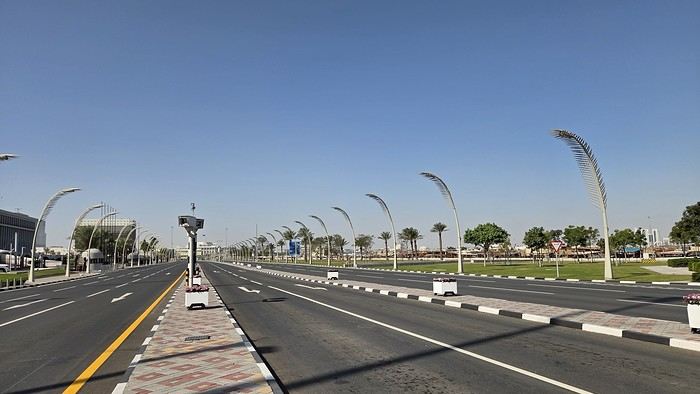
A marathon is happening today on the Corniche, so the road is closed and empty, making it easy to cross. The palm-shaped streetlights are gorgeous when they’re lit up at night.
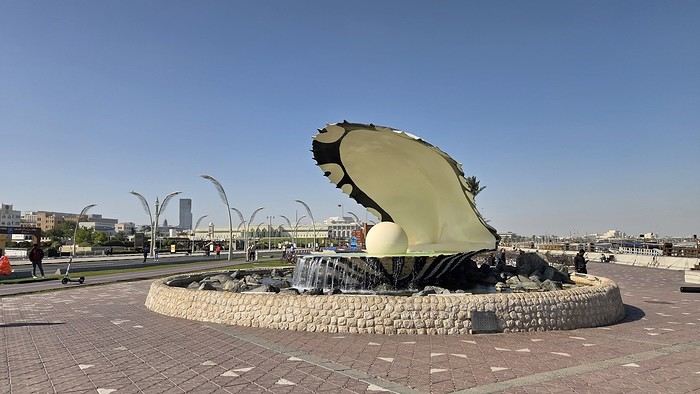
A little reminder of Qatar’s once-thriving pearl trade.
A memory of a much more recent past.
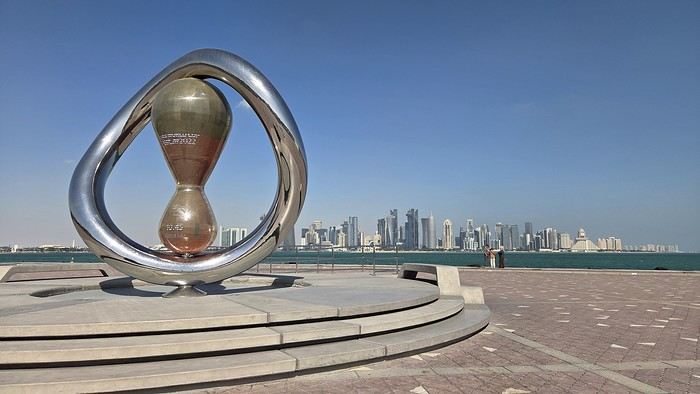
The sun is shining, but it’s not very warm—just 19°C at the hottest part of the day. Tough luck, last week it was 24°C.
The walk along the crescent-shaped Corniche is pretty long. From the old town to the modern center, where massive Dubai-style towers rise, it’s a 6 km promenade along the waterfront.
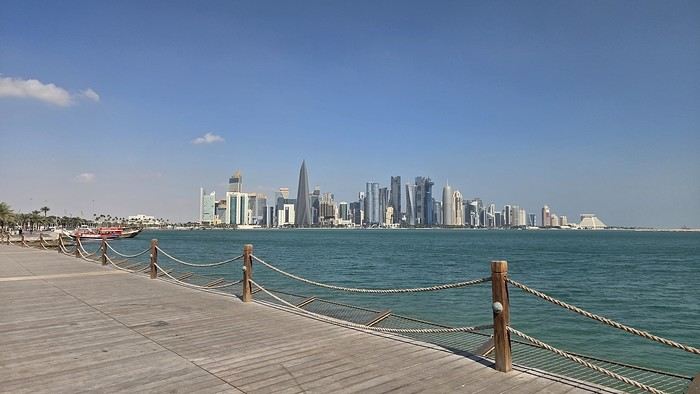
Many dhows are docked, waiting for tourists to take a little cruise in the bay, but visitors are scarce.
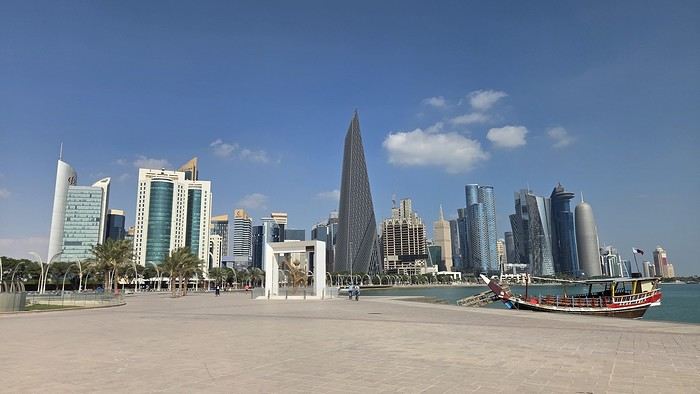
The skyscrapers are so stunning, you can’t help but admire them.
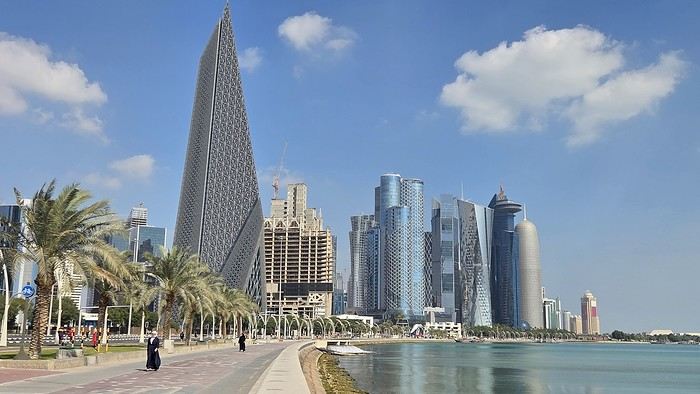
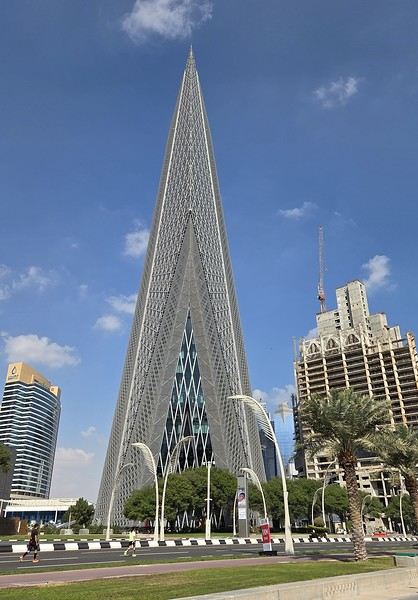
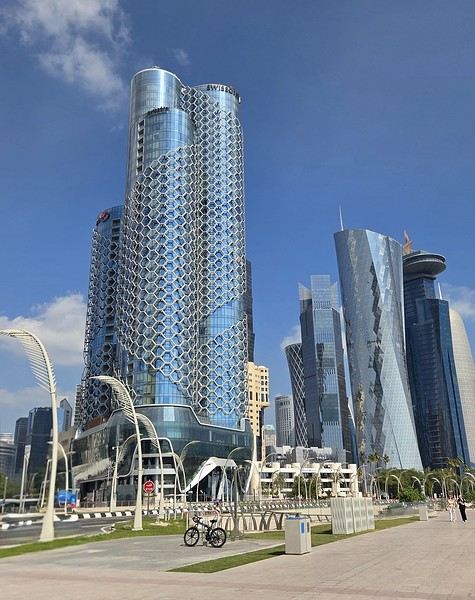
to be continued...
This short stay in Doha is part of a longer trip. It lets us break up a flight to the Seychelles.
Friday, January 16, The Corniche
Despite the adventures we had the day before (read about it here), we just can’t get up later than 8 a.m. Our minds are a bit clearer and a bit more positive after some sleep.
View of the Corniche from the 12th floor.
Breakfast is sumptuous—it really lifts our spirits.
On this Friday morning, almost everything is closed, so we head out to explore the Corniche, which is just a few hundred meters from our hotel in Old Doha.
A marathon is happening today on the Corniche, so the road is closed and empty, making it easy to cross. The palm-shaped streetlights are gorgeous when they’re lit up at night.
A little reminder of Qatar’s once-thriving pearl trade.
A memory of a much more recent past.
The sun is shining, but it’s not very warm—just 19°C at the hottest part of the day. Tough luck, last week it was 24°C.
The walk along the crescent-shaped Corniche is pretty long. From the old town to the modern center, where massive Dubai-style towers rise, it’s a 6 km promenade along the waterfront.
Many dhows are docked, waiting for tourists to take a little cruise in the bay, but visitors are scarce.
The skyscrapers are so stunning, you can’t help but admire them.
to be continued...
The Foam of Days
Now that the curtain has fallen on the past year, it’s time to see what’s happening around here.
It seems pretty quiet, but I’ll read more in detail later.
First, I need to tell you all an anecdote.
My eldest little girl, in her third year of law school, was really scared she wouldn’t pass the year. I told her: “Trust yourself, you’ve worked so hard, and worst case, if you fail, you’ll just redo the year.” “But I don’t think I’ll make it—they changed the rules, and if I mess up even one unit, I have to start all over.” I knew her grades weren’t exactly stellar, and with what I was about to say, I wasn’t taking much of a risk. “Here’s the deal, sweetheart: if you pass, I promise I’ll take you to India, just the two of us.” I have to admit, India is a country I’ve talked about so much to all my grandchildren that in their minds, it’s become a magical, mythical place (hmm).
July had barely begun when my phone rang, her name flashing on the screen. “Mamido, I did it!” My promise came rushing back—oh no, oh no, oh no! “Congratulations, sweetheart!” A little shyly, she said: “Is the India trip still on?”
And me, replying: “Of course it is!”
And that’s that—a promise is a promise, or you risk losing that precious trust that keeps hearts warm and at peace.
We’re leaving in February. Only 8 days—yikes, the carbon footprint! But we can’t miss her tutorials, or she’ll be kicked out. Personally, that works just fine for me.
Going to India has become a challenge for me. It’s far, it’s exhausting, I sweat, I hate mosquitoes, the spices bother my mouth when I used to love them. There’s noise all the time—at night, the dogs bark nonstop, and we almost get run over. I’ll get lost in the streets because my sense of direction has vanished. I don’t like rice anymore. All that chaos and those cultural differences that once enchanted me now just overwhelm me. But I promised.
The upside—and it’s a big one—Raman, the same driver I’ve had forever, will be at the airport with a sign with our names. We’ll stop at the same little shop for chai (or tea, plain and simple) with that aroma that intoxicates me, halfway through the trip.
It’ll be a tiny trip—staying with friends, I’ll show her a few places I love: Chidambaram, Mamallapuram, and the clinic where I worked. Then we’ll head back. My little girl will go home to her parents.
As for me, I’ll leave right away for our Scottish island with Homme for our chilly winter.
How can you love a country so much you want to live there, then suddenly reject it, no longer able to appreciate what once made it special? That’s the mystery of love, I guess.
First, I need to tell you all an anecdote.
My eldest little girl, in her third year of law school, was really scared she wouldn’t pass the year. I told her: “Trust yourself, you’ve worked so hard, and worst case, if you fail, you’ll just redo the year.” “But I don’t think I’ll make it—they changed the rules, and if I mess up even one unit, I have to start all over.” I knew her grades weren’t exactly stellar, and with what I was about to say, I wasn’t taking much of a risk. “Here’s the deal, sweetheart: if you pass, I promise I’ll take you to India, just the two of us.” I have to admit, India is a country I’ve talked about so much to all my grandchildren that in their minds, it’s become a magical, mythical place (hmm).
July had barely begun when my phone rang, her name flashing on the screen. “Mamido, I did it!” My promise came rushing back—oh no, oh no, oh no! “Congratulations, sweetheart!” A little shyly, she said: “Is the India trip still on?”
And me, replying: “Of course it is!”
And that’s that—a promise is a promise, or you risk losing that precious trust that keeps hearts warm and at peace.
We’re leaving in February. Only 8 days—yikes, the carbon footprint! But we can’t miss her tutorials, or she’ll be kicked out. Personally, that works just fine for me.
Going to India has become a challenge for me. It’s far, it’s exhausting, I sweat, I hate mosquitoes, the spices bother my mouth when I used to love them. There’s noise all the time—at night, the dogs bark nonstop, and we almost get run over. I’ll get lost in the streets because my sense of direction has vanished. I don’t like rice anymore. All that chaos and those cultural differences that once enchanted me now just overwhelm me. But I promised.
The upside—and it’s a big one—Raman, the same driver I’ve had forever, will be at the airport with a sign with our names. We’ll stop at the same little shop for chai (or tea, plain and simple) with that aroma that intoxicates me, halfway through the trip.
It’ll be a tiny trip—staying with friends, I’ll show her a few places I love: Chidambaram, Mamallapuram, and the clinic where I worked. Then we’ll head back. My little girl will go home to her parents.
As for me, I’ll leave right away for our Scottish island with Homme for our chilly winter.
How can you love a country so much you want to live there, then suddenly reject it, no longer able to appreciate what once made it special? That’s the mystery of love, I guess.
Review of an Aegean Sea cruise on Ponant's Bougainville from November 1-8, 2025
Hello everyone,
If you'd like, I invite you to join me for a week-long cruise to northern Greece, visiting ports that are often less crowded with cruise ships.
Itinerary: Athens, Skiathos, Volos, Thessaloniki, Kavala, Limnos, Hydra, Athens
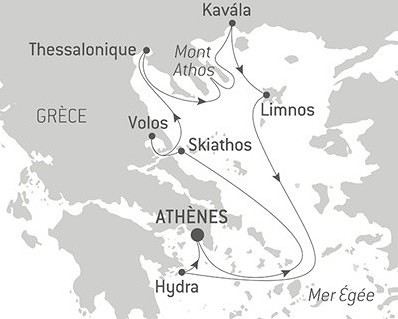
If you'd like, I invite you to join me for a week-long cruise to northern Greece, visiting ports that are often less crowded with cruise ships.
Itinerary: Athens, Skiathos, Volos, Thessaloniki, Kavala, Limnos, Hydra, Athens
Travel Journal - 28 Days in China in August 2025
Hi everyone! I’m sharing a modest travel journal from my trip to China in August 2025.
There wasn’t much room for improvisation on this trip—everything was planned in advance. Since August is peak season, I decided to book train tickets early, and once that was set, I reserved all the accommodations too. I got everything on Trip.com.
I bought the flight tickets back in March from Hainan Airlines. They were super expensive, but with these travel dates, I couldn’t exactly dream of a bargain!
I picked up e-SIMs valid for a month from Free just before departure: 10 € for the e-SIM + 19.90 € for a one-month plan with 35 GB of data abroad.
No need for a VPN with these e-SIMs, but D. still got one—a multi-device plan for 5 € with a discount from Let’s VPN, valid for a month. It was for evenings at the hotel on Wi-Fi to avoid burning through the 35 GB with video.
I downloaded Alipay, WeChat, Amap (Baidu Maps), and Trip.com. We also have Google Translate and Maps.me—absolute must-haves.
We’re ready to go!
I’ve been waiting for this day for nearly 15 years!! I travel a lot, but this one—this is MY TRIP 🙂 It’s been postponed so many times: because I wanted to do it with the right person, because I have a Turkish stamp in my passport and heard they don’t issue visas with that, because of COVID... and then China introduced a 30-day visa exemption, and that was the green light! Ugh, they forced us to take our vacation in August this year—far from ideal—but no more delays. Saturday, August 2, 2025: it’s finally the big day!
Days 1 and 2: We got dropped off at Charles de Gaulle at 9:30 AM. I supposedly checked in online, but only for the first flight and without getting the boarding pass... Might as well scrap online check-in in that case. So, we spent over an hour in line at the counter to get them. We didn’t have any checked luggage—just our backpacks as carry-ons—so this was a step we’d never had to deal with before, but whatever, it’s done. No wait at passport control, 5 minutes through security, a quick walk around the terminal, 10 minutes in the boarding area, and it was already time to board. Departure around 12:45 PM, arrival in Chongqing at 4:50 AM. We had a few hours of layover before our next flight. Went through immigration, connecting flight control, and security. Pro tip: check your next flight’s boarding gate right after immigration. We never saw it displayed again anywhere in the terminal.
The Free e-SIMs work—phew!
Took off at 9:30 AM, arrived in Guangzhou (Canton) at 11:20 AM in the rain. I love how Chongqing is translated as "Tchoung King" on the screens in the plane—very French!
During my first two trips to China, we paid for everything in cash, but this time, we’re going all-in on Alipay and WeChat. I still brought the leftover change from previous trips—it might come in handy. At the metro station, they showed us a QR code to buy tickets via WeChat. There were probably machines and even a ticket counter, but we didn’t see them, and buying via WeChat was pretty simple. 8 yuan to Changshu Lu, which is 22 stops. So far, so good. Then, we had to find the hotel, which wasn’t on Google Maps, Maps.me, or Amap... Easy 😎! We found it without too much hassle, though. Dropped off our stuff and went out to eat. 55 yuan for two claypots with fish/eel, rice, cabbage, and purple eggplant. When we left, it was pouring. We grabbed our umbrellas and set off to explore the neighborhood: Enning Road (we’ll come back later to check out a specific spot), Shangxiajiu (the pedestrian shopping street), Baohua Road... The area is pretty diverse—one street to the next, it’s like stepping into a different world.

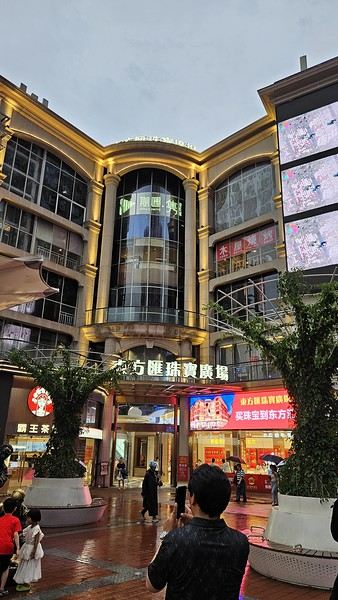
There weren’t many people around, probably because of the rain. We grabbed a quick street food dinner and went to bed—we were exhausted. We struggled to stay awake until 11 PM to adjust to the time change as quickly as possible. There’s a 6-hour time difference.
There wasn’t much room for improvisation on this trip—everything was planned in advance. Since August is peak season, I decided to book train tickets early, and once that was set, I reserved all the accommodations too. I got everything on Trip.com.
I bought the flight tickets back in March from Hainan Airlines. They were super expensive, but with these travel dates, I couldn’t exactly dream of a bargain!
I picked up e-SIMs valid for a month from Free just before departure: 10 € for the e-SIM + 19.90 € for a one-month plan with 35 GB of data abroad.
No need for a VPN with these e-SIMs, but D. still got one—a multi-device plan for 5 € with a discount from Let’s VPN, valid for a month. It was for evenings at the hotel on Wi-Fi to avoid burning through the 35 GB with video.
I downloaded Alipay, WeChat, Amap (Baidu Maps), and Trip.com. We also have Google Translate and Maps.me—absolute must-haves.
We’re ready to go!
I’ve been waiting for this day for nearly 15 years!! I travel a lot, but this one—this is MY TRIP 🙂 It’s been postponed so many times: because I wanted to do it with the right person, because I have a Turkish stamp in my passport and heard they don’t issue visas with that, because of COVID... and then China introduced a 30-day visa exemption, and that was the green light! Ugh, they forced us to take our vacation in August this year—far from ideal—but no more delays. Saturday, August 2, 2025: it’s finally the big day!
Days 1 and 2: We got dropped off at Charles de Gaulle at 9:30 AM. I supposedly checked in online, but only for the first flight and without getting the boarding pass... Might as well scrap online check-in in that case. So, we spent over an hour in line at the counter to get them. We didn’t have any checked luggage—just our backpacks as carry-ons—so this was a step we’d never had to deal with before, but whatever, it’s done. No wait at passport control, 5 minutes through security, a quick walk around the terminal, 10 minutes in the boarding area, and it was already time to board. Departure around 12:45 PM, arrival in Chongqing at 4:50 AM. We had a few hours of layover before our next flight. Went through immigration, connecting flight control, and security. Pro tip: check your next flight’s boarding gate right after immigration. We never saw it displayed again anywhere in the terminal.
The Free e-SIMs work—phew!
Took off at 9:30 AM, arrived in Guangzhou (Canton) at 11:20 AM in the rain. I love how Chongqing is translated as "Tchoung King" on the screens in the plane—very French!
During my first two trips to China, we paid for everything in cash, but this time, we’re going all-in on Alipay and WeChat. I still brought the leftover change from previous trips—it might come in handy. At the metro station, they showed us a QR code to buy tickets via WeChat. There were probably machines and even a ticket counter, but we didn’t see them, and buying via WeChat was pretty simple. 8 yuan to Changshu Lu, which is 22 stops. So far, so good. Then, we had to find the hotel, which wasn’t on Google Maps, Maps.me, or Amap... Easy 😎! We found it without too much hassle, though. Dropped off our stuff and went out to eat. 55 yuan for two claypots with fish/eel, rice, cabbage, and purple eggplant. When we left, it was pouring. We grabbed our umbrellas and set off to explore the neighborhood: Enning Road (we’ll come back later to check out a specific spot), Shangxiajiu (the pedestrian shopping street), Baohua Road... The area is pretty diverse—one street to the next, it’s like stepping into a different world.
There weren’t many people around, probably because of the rain. We grabbed a quick street food dinner and went to bed—we were exhausted. We struggled to stay awake until 11 PM to adjust to the time change as quickly as possible. There’s a 6-hour time difference.
When is the best time to travel to Namibia?
Hi there,
I’m planning a trip to Namibia in 2026.
I’m torn between visiting the Fish River Canyon and the Caprivi Strip / Victoria Falls.
I’d also love your advice on the best time to travel for wildlife viewing and pleasant weather.
I haven’t chosen a tour operator yet... since I’m traveling solo, I’d prefer a small-group escorted trip. Has anyone traveled with a local agency and what’s your feedback or advice?
Thanks so much!
What clothes should we pack for a trip to Finnish Lapland in February?
Hello, We’re heading to Finnish Lapland near Rovaniemi as a family at the end of February with two kids (8 and 14 years old). We’ve got direct flights with Luxairstours. The itinerary is already set, but I’m wondering if anyone has traveled with Luxair before and knows exactly what kind of clothes they provide on the second day? The agency just told me it’s a heavy-duty cold-weather suit. I’m thinking we should get Sorel Caribou boots, maybe second-hand. Here’s what I’ve already planned:
- Thermolactyl leggings and tights from Damart for the whole family as a base layer.
- A first layer of Damart socks + Nordic Stocks socks in 70% merino wool for all four of us.
- Loose fleece layers, including some Polartec.
- Ski pants for hikes.
- For my son and me, a The North Face Himalayan down parka with a hood.
- A ski parka for my husband and my 14-year-old daughter (she *really* wants a Roxy one—I hope it’ll be warm enough).
- For myself, for the flight and the first day at Santa’s village, I’ve packed The North Face winter hiking pants, a long-sleeve merino wool top from Decathlon (thin), a fleece, and my big parka.
I’m wondering if I should just pack fleece joggers or sweatpants for the kids and my husband, at least for the first and last days, to be comfortable on the plane? I’m also planning to buy balaclavas and neck warmers in addition to our beanies, as well as mittens for all of us. I really need advice because I have no idea—I’ve never been skiing! Also, for a 4-night, 5-day trip, should I pack a second set of base layers, like from Odlo?
Of course, I’ll be leaving cotton clothes out of the suitcase.
As you can tell, I’m someone who gets cold easily—especially my feet, hands, and ears—so that’s my biggest worry. I *don’t* want to be cold, even at -20°C during dog sledding, snowmobiling, or aurora hunting when we might be standing still. We won’t be in the city, and the kids will likely spend most of their time outside, as they usually do.
Thanks in advance for your tips!
I’m wondering if I should just pack fleece joggers or sweatpants for the kids and my husband, at least for the first and last days, to be comfortable on the plane? I’m also planning to buy balaclavas and neck warmers in addition to our beanies, as well as mittens for all of us. I really need advice because I have no idea—I’ve never been skiing! Also, for a 4-night, 5-day trip, should I pack a second set of base layers, like from Odlo?
Of course, I’ll be leaving cotton clothes out of the suitcase.
As you can tell, I’m someone who gets cold easily—especially my feet, hands, and ears—so that’s my biggest worry. I *don’t* want to be cold, even at -20°C during dog sledding, snowmobiling, or aurora hunting when we might be standing still. We won’t be in the city, and the kids will likely spend most of their time outside, as they usually do.
Thanks in advance for your tips!
What to see and do around Valensole?
Hi there,
We’re heading to Forcalquier as a couple and would love to explore the Valensole area, including the Verdon Gorge, etc. We’ll be there for 5 days, so I’d like to put together a little rundown of things to see, plus the best tips—what to avoid, what to recommend, restaurants, and so on.
Thanks so much!
California summer road trip itinerary with kids: your recommendations
Hi there,
We’re heading to California at the end of July for a road trip with our two kids, aged 7 and 9.
Here’s our planned two-week itinerary:
Los Angeles - San Diego - Palm Springs - Yosemite - Carmel and Big Sur - Santa Barbara - Los Angeles.
We don’t want to go to San Francisco.
Does this itinerary sound good to you?
Any recommendations for accommodations, especially in Yosemite and Carmel?
Thanks in advance for your help.
Thanks in advance for your help.