Results for "Long+Bien+|+8+>+194"
106850 results found.
Club Marmara Hurghada English translation pending
Bjr, je connais bien hurghada, mais pas la situation du club marmara.si vous connaissez ce club, sa situation, je serai ravie d'un connaitre le lieu exact ou quels sont les hotels avoisinants! mes enfants partent bientot.de mon coté si vous souhaitez des infos sur hurghada, au plaisir.caroline
Camping au Monténégro English translation pending
Je retourne le web en long et en large je ne trouve aucun camping sur la cote du montenegro, vu sa position gèografique, ce genre d'infrastructure doit bien exister, et je pense qu'avant la dissolution de la YU Bar et Kotor étaient des destinations en vue, si vous pouvez m'aider.
Le Père Noël est une hôtesse. English translation pending
Le 24 décembre on prend un vol long courrier Air France (départ 13h30 de CDG, arrivée 07h35 heure locale).
Est-ce que certains d' entre vous ont déjà passé un réveillon de Noel ou du jour de l' an en plein vol ?
Je me doute bien que le commandant ne sera pas habillé en Père Noel 😄 mais je suis curieux de savoir s' il y a un petit "plus" pour feter l' évènement.
Maroc-Dakar par route English translation pending
je veux fair un long voyage france senegal par route, la route de la france jusqu'au maroc je la conais tres bien mais il me reste le plus dur a fair c'est la route du maroc jusqu'au senegal je demande a tout ceux qui on fait cette route de e donner des renseignements en ce qui concerne les moyens de transport a prendre et si c'est possible les prix de transport dans les differents etapes, je vous remerci d'avance
Logement et visites de Paris? English translation pending
Bien le bonsoir !
Je viens visiter Paris du 16 au 18 novembre ! Je suis seule et je ne sais pas où loger, où aller et comment me retrouver là-bas.
Qq conseils ?!
Puis je suis tjs partante pour rencontrer de nouvelles personnes !
À+
Merci !
Je viens visiter Paris du 16 au 18 novembre ! Je suis seule et je ne sais pas où loger, où aller et comment me retrouver là-bas.
Qq conseils ?!
Puis je suis tjs partante pour rencontrer de nouvelles personnes !
À+
Merci !
Voyager pour >1000€ pour un mois? English translation pending
Salut à tous
j'aimerais bien aller m'aérer les idées en dehors de la France l'été prochain (juillet ou aout)
condition au voyage 1000€ pour aller le plus loin possible et en profiter le plus possible
la destination serait plutot asie centrale: Népal, Mongolie....
que conseillez vous pour pas cher et de mieux? avion jusqu'en Mongolie, train à travers la Russie? (ça serait pas trop long en train?)
une fois sur place? le camping en plein air est peut-être pas conseillé? hôtel?....
et il faut bien occupé ses journées, vous croyez qu'un guide local serait le bien venu?
je prends toutes les infos, même les plus extravagantes, le but, c'est bien de profiter donc tant qu'à faire autant faire des trucs inoubliables ;)
Merci d'avance @toute
je prends toutes les infos, même les plus extravagantes, le but, c'est bien de profiter donc tant qu'à faire autant faire des trucs inoubliables ;)
Merci d'avance @toute
"Testé et approuvé": Hotel Sunset Beach ***** English translation pending
Et bien voila, il y a de cela quelques semaines, j'ai posté un sujet concernant cet hotel que personne ne semblait connaitre...
Si je reviens a la charge aujourd'hui, c'est pcq j'en reviens et que c'est hotel est tout simplement (enfin, avis personnel) GENIAL ! Il est donc dommage qu'il soit si peu connu!
Petit descriptif : Points + 😎 :
* situé à +- 5km d'Alanya (centre animé avec de nombreux magasins) facilement accessible en dolmus (à prendre devant l hotel) pr la modique somme de 0, 75€ (= 1 lire turque).
* grandes chambres avec terrasse et lits standards (= 2 lits 1 personne ; à rapprocher selon désir ). Possibilité de prendre un coffre dans la chambre pour la somme de 10€. TV dans la chambre. Chambre nettoyée tous les jours et draps changés. Service nickel.
* grand restaurant (intérieur et extérieur) avec buffet froid - chaud - dessert. Toute la journée, possibilité de manger (matin : dejeuner ; midi et début d'apres-midi : diner ; milieu d'apres-midi : hamburgers ; fin d'apres-midi : gouter avec croustillons, bonbons secs, cake ; soirée : souper ; 23h30 : soupe DELICIEUSE)
* très belles piscines très propres : 1 avec toboggans où ont lieu toutes les animations ; 1 piscine calme près du bar ; 1 pataugeoire.
* animateurs sympas et vraiment motivés par ce qu'ils font.
* service de l'hotel impeccable.
* salon chicha (désolée pour l'orthographe) très agréable à coté de la réception. Prix : 4€ . Points - 🏴☠️ :
* pas beaucoup de prises dans la chambre (pour ma part : 2 mais déjà utilisées donc pas très pratique pour mettre à charger son gsm par exemple)
* beaucoup de russes (personnellement cela ne me dérange vrmt pas mais je préfère le préciser)
* personne ne parle français (encore une fois, cela ne me dérange pas mais je le dis qd même)
* buffet très bon mais à la longue pas très varié.
* transport en car de l'aéroport à l'hotel assez long : +-2h30 (néanmoins point positif : le car ne fait qu'un seul arret, et ce, à l'hotel green fuglia beach)
Voila, en ce qui me concerne, j'ai adoré cet hotel, cette ville, et cette ambiance ! Je le recommande à tous ! Néanmoins, je ne me rendais pas pour la premiere fois en Turquie, et à choisir, l'endroit que j 'ai tout de meme préféré est Kusadasi avec l'Hotel Onura***** (et vrmt RIEN à redire sur l'hotel!!!!!).
En espérant que mes conseils et ma description vous auront donné envie de découvrir ces petits coins de paradis, je vous souhaite d'ores et déjà à tous une excellente rentrée...
Larissa
PS : j'essaierai de joindre des photos de l'hotel à ce post dès qu'eles seront développées.
Si je reviens a la charge aujourd'hui, c'est pcq j'en reviens et que c'est hotel est tout simplement (enfin, avis personnel) GENIAL ! Il est donc dommage qu'il soit si peu connu!
Petit descriptif : Points + 😎 :
* situé à +- 5km d'Alanya (centre animé avec de nombreux magasins) facilement accessible en dolmus (à prendre devant l hotel) pr la modique somme de 0, 75€ (= 1 lire turque).
* grandes chambres avec terrasse et lits standards (= 2 lits 1 personne ; à rapprocher selon désir ). Possibilité de prendre un coffre dans la chambre pour la somme de 10€. TV dans la chambre. Chambre nettoyée tous les jours et draps changés. Service nickel.
* grand restaurant (intérieur et extérieur) avec buffet froid - chaud - dessert. Toute la journée, possibilité de manger (matin : dejeuner ; midi et début d'apres-midi : diner ; milieu d'apres-midi : hamburgers ; fin d'apres-midi : gouter avec croustillons, bonbons secs, cake ; soirée : souper ; 23h30 : soupe DELICIEUSE)
* très belles piscines très propres : 1 avec toboggans où ont lieu toutes les animations ; 1 piscine calme près du bar ; 1 pataugeoire.
* animateurs sympas et vraiment motivés par ce qu'ils font.
* service de l'hotel impeccable.
* salon chicha (désolée pour l'orthographe) très agréable à coté de la réception. Prix : 4€ . Points - 🏴☠️ :
* pas beaucoup de prises dans la chambre (pour ma part : 2 mais déjà utilisées donc pas très pratique pour mettre à charger son gsm par exemple)
* beaucoup de russes (personnellement cela ne me dérange vrmt pas mais je préfère le préciser)
* personne ne parle français (encore une fois, cela ne me dérange pas mais je le dis qd même)
* buffet très bon mais à la longue pas très varié.
* transport en car de l'aéroport à l'hotel assez long : +-2h30 (néanmoins point positif : le car ne fait qu'un seul arret, et ce, à l'hotel green fuglia beach)
Voila, en ce qui me concerne, j'ai adoré cet hotel, cette ville, et cette ambiance ! Je le recommande à tous ! Néanmoins, je ne me rendais pas pour la premiere fois en Turquie, et à choisir, l'endroit que j 'ai tout de meme préféré est Kusadasi avec l'Hotel Onura***** (et vrmt RIEN à redire sur l'hotel!!!!!).
En espérant que mes conseils et ma description vous auront donné envie de découvrir ces petits coins de paradis, je vous souhaite d'ores et déjà à tous une excellente rentrée...
Larissa
PS : j'essaierai de joindre des photos de l'hotel à ce post dès qu'eles seront développées.
Etat de l'île de Koh Phi Phi en Thaïlande après tsunami? English translation pending
Salut a tous,
je connais bien l'ile de ko phi phi j y suis allé 2 fois, et la j aimerai y retourné pour profité des bungalows de long beach sur la plage a 10 metres de l eau, voila le tsunamis est passé et j aimerai avoir des infos sur les lieux et les logement, la plages et le reste merci.
Nicoya (Costa Rica): location voiture? English translation pending
Et bien voilà!On part demain...
Denières questions...😉
Est ce plus pratique de louer une voiture(et est-ce possible?)a ossa et a nicoya en sachant qu'on veut pas mal bouger et faire du surf? En d'autres termes est-ce que le réseau des transports locaux est suffisant pour être mobile ou est-ce plus indiqué de louer un 4x4?
Merci à toutes et tous pour vos conseils, réponses et expériences en tout genre!...et cela tout au long de la préparation de notre voyage! A bientôt
Denières questions...😉
Est ce plus pratique de louer une voiture(et est-ce possible?)a ossa et a nicoya en sachant qu'on veut pas mal bouger et faire du surf? En d'autres termes est-ce que le réseau des transports locaux est suffisant pour être mobile ou est-ce plus indiqué de louer un 4x4?
Merci à toutes et tous pour vos conseils, réponses et expériences en tout genre!...et cela tout au long de la préparation de notre voyage! A bientôt
Adresses de guest house vers Sihanoukville (Cambodge) English translation pending
des adresses info bars ? pares un long periple culturel a travers thailande laos nous arriverons sur les plages pour nous vautrer et faire les touristes de base : jus de fruit, musique baignade mmmmmm des adresses donc ? merci !
Photos de voyage au Spiti, Kinnaur, Himachal Pradesh, etc. English translation pending
et bien d'autre dans l'etat du Himachal Pradesh ... Ki, Kibber, Nako etc ...
http://www.horizontaltravel.bravehost.com/4%20Picture%20Gallery.htm
🙂 😊 😕
http://www.horizontaltravel.bravehost.com/4%20Picture%20Gallery.htm
🙂 😊 😕
conseils pour la route: Marseille / Barcelonne / Morocco English translation pending
Bonjour à tous.
Et bien, je suis tiraillée entre plusieurs solutions et surtout au niveau budgetaire, et donc je viens a vous pour voir si vous pouvez m'aider!
Je dois partir de Marseille aux alentours du 09 aout pour me rendre pres de Barcelonne et Llieda à Nonaspe exactement pour le 11 aout. Tout d'abord je ne sais pas si le temps de voyage est assez long si je parcours le trajet en voiture... Ensuite j'aimerais bien faire un stop en cours de route mais ou? Un coin interessant? quelque chose a visiter? un hotel pas cher?
De la je souhaite repartir pour me rendre a Essaouira (enfin a Tafadna Beach) au Maroc, je sais que l'on peut passer en voiture par Gibraltar ou Algesiras, mais je n'ai aucune idée des tarifs ni des horaires des "ferry", si il s'agit bien de ferry!! On me dit aussi de passer par Ceuta car zone detaxée et plus rapide... Ce que je souhaite c'est faire le moins cher possible!
Qu'en pesez vous, est ce une bonne affaire au niveau budget de faire ca en voiture, combien de kilomètres represente le trajet et combien peut il couter?
Merci d'avance pour vos reponses!
Et bien, je suis tiraillée entre plusieurs solutions et surtout au niveau budgetaire, et donc je viens a vous pour voir si vous pouvez m'aider!
Je dois partir de Marseille aux alentours du 09 aout pour me rendre pres de Barcelonne et Llieda à Nonaspe exactement pour le 11 aout. Tout d'abord je ne sais pas si le temps de voyage est assez long si je parcours le trajet en voiture... Ensuite j'aimerais bien faire un stop en cours de route mais ou? Un coin interessant? quelque chose a visiter? un hotel pas cher?
De la je souhaite repartir pour me rendre a Essaouira (enfin a Tafadna Beach) au Maroc, je sais que l'on peut passer en voiture par Gibraltar ou Algesiras, mais je n'ai aucune idée des tarifs ni des horaires des "ferry", si il s'agit bien de ferry!! On me dit aussi de passer par Ceuta car zone detaxée et plus rapide... Ce que je souhaite c'est faire le moins cher possible!
Qu'en pesez vous, est ce une bonne affaire au niveau budget de faire ca en voiture, combien de kilomètres represente le trajet et combien peut il couter?
Merci d'avance pour vos reponses!
5 semaines au Pérou English translation pending
Bien le bonjour !
Nous partons au Pérou du 4/07/05 au 9/08/05 et j'ai quelques questions... Point de vue argent
Nous n'avons pas de carte visa et nous avons l'impression que les commissions sur les chèques de voyage sont importantes. Pour ne pas prendre tout en liquide, est-il possible de retirer de l'argent via une carte de banque classique (par maestro) dans les grandes villes du Pérou ? Point de vue itinéraire
Voici ce que nous comptons faire : +/- 12 jours dans la cordillières blanches (trek, sommet) +/- 12 jours dans la région de Cuzco (trek, vtt dans la vallée sacrée), visites) +/- 3 jours dans la région du lac Titicaca +/- 3 jours dans la région d'AréquipaEst-que cet itinéraire vous semble faisable et judicieux ?
Quel trek conseillez-vous dans la cordillière blanche (ou celle d'Huayhuash) ? Un chouette treck d'une petite semaine sans trop de touriste.
Quel sommet pas trop techinique est-il possible de grimper dans la région ? Après le Cotopaxi (5897 m en Equateur) que j'ai gravi sans trop de difficulté il y a deux ans, je cherche un 6000 "abordable" Peut-être y a-t-il plus de possibilité dans la région d'Aréquipa ? Il paraît que l'Ampato n'est pas trop difficile.
Dans la région de Cuzco, il paraît qu'il n'y a plus de place pour le chemin de l'Inca. Est-ce vrai ? Est-ce qu'un trek vers Choquequirau vaut autant la peine ? Est-il possible de le faire sans guide ?
Nous avons l'intention de louer des vtt pour 3-4 jours à Cuzco et de parcourir ainsi la vallée sacrée. Faisable ?
Quelle île conseillez-vous de visiter sur le lac Titicaca ?
Dans la région d'Aréquipa nous aimerions "faire" le Canyon del Colca en 2-3 jours mais si possible sans guide... Faisable ?
Voilà, déjà un tout tout grand merci pour ceux et celles qui me répondrons !
Bonne journée ! Oliche.
Nous partons au Pérou du 4/07/05 au 9/08/05 et j'ai quelques questions... Point de vue argent
Nous n'avons pas de carte visa et nous avons l'impression que les commissions sur les chèques de voyage sont importantes. Pour ne pas prendre tout en liquide, est-il possible de retirer de l'argent via une carte de banque classique (par maestro) dans les grandes villes du Pérou ? Point de vue itinéraire
Voici ce que nous comptons faire : +/- 12 jours dans la cordillières blanches (trek, sommet) +/- 12 jours dans la région de Cuzco (trek, vtt dans la vallée sacrée), visites) +/- 3 jours dans la région du lac Titicaca +/- 3 jours dans la région d'AréquipaEst-que cet itinéraire vous semble faisable et judicieux ?
Quel trek conseillez-vous dans la cordillière blanche (ou celle d'Huayhuash) ? Un chouette treck d'une petite semaine sans trop de touriste.
Quel sommet pas trop techinique est-il possible de grimper dans la région ? Après le Cotopaxi (5897 m en Equateur) que j'ai gravi sans trop de difficulté il y a deux ans, je cherche un 6000 "abordable" Peut-être y a-t-il plus de possibilité dans la région d'Aréquipa ? Il paraît que l'Ampato n'est pas trop difficile.
Dans la région de Cuzco, il paraît qu'il n'y a plus de place pour le chemin de l'Inca. Est-ce vrai ? Est-ce qu'un trek vers Choquequirau vaut autant la peine ? Est-il possible de le faire sans guide ?
Nous avons l'intention de louer des vtt pour 3-4 jours à Cuzco et de parcourir ainsi la vallée sacrée. Faisable ?
Quelle île conseillez-vous de visiter sur le lac Titicaca ?
Dans la région d'Aréquipa nous aimerions "faire" le Canyon del Colca en 2-3 jours mais si possible sans guide... Faisable ?
Voilà, déjà un tout tout grand merci pour ceux et celles qui me répondrons !
Bonne journée ! Oliche.
Les andamans après le tsunami English translation pending
Les iles andaman épargnées !?!?
Bien que sur la trajectoire du tsunami les iles andaman ont été épargné pour une trés large part par les eaux. Seul litel andaman a été durement touché, en effet hut bay est completement detruite, il n en reste absolument rien.
Pour sud, midel, north andaman, ainsi que havelok, long, et autres iles ouvertent aux occidentaux, les degats sont minimes, et tres souvent liés aux tremblements de terre plutot qu à la vague.
Par contre, les iles nicobars ont pris plein pot et sont ravagés à plus de 80 % selon les dires des rescappés, qui encore aujourd'hui se demandent ce qui a bien pu ce passer.
CEPENDANT.....
Cependant les andaman épargnés par la vague, ne veux pas dire des andamans sauvés.... En effet l'eau de puit de la majorité des iles à diminué de 9pieds le jour du tsunami, et aujourd hui presque 50% de ces puits sont impropre à la consommation. Il reste encore plus d'un mois avant le debut de la saison des pluits...
Les touristes qui en temps normaux sont legions ont deserté les lieux depuis le 26/12 et pour le mois de mars nous etions moins de 20 occidentaux sur l ensemble des iles et environs une 100n de touristes indiens.... Inutiles de faire le dessin de la cata economique, qui pése bien entendu sur les populations locales et non pas sur les investisseur du continent qui on simplement fermé leur ressort en attendant la saison prochaine....
La dessus la panique ambiante, entretenu par maintes superstitions et fausses allertes, incittent les petites gens à ceder leur terre 5 fois en dessous du cout reel ce au bénefice d'investisseur du continent qui comme des mouches à merde se precipittent dans les iles...
Enfin, plusieurs occidentaux de tous pays on tenté d'aider et de financer des micros projets (reconstruction de maison, rehabilitation d'entreprises dévasté, achat de jouets pour les enfants...) et on été menacé d'etre renvoyés chez eux par les stupides autorités des andamans pretextant qu ils n avaient qu un Tourist visa qui en aucun cas ne leur permettait d'aider les populations local.
Pour finir ce debut de tableau que nous develloperons sur notre site d'ici une 15n de jour, lorsque la moitié de l'Asie à été en alerte maximal à cause des risques de tsunami aucune sirene n'a retenti sur port Blair (La capitale) aucun plan de securisation des zone cotiére n a été adopter, les populations ont simplement été livré à elle même sans que quoi que ce soit ne fut fait. La c'est carrement de l'incompétence absolue de la part des autorités voir pire...
Bref épargnés par les eau mais menacé tout de même voila la situation de ces iles au 3 avril.... Plus d'infos sur notre site bientot mais sachez aux passage que pas un mort sur havelok et l ile de sanjoy.
Pour aider les andamans et sapopulation l'un des chemins les plus efficace est de vous y rendre et de vivre parmi les population locale et surtout d'eviter les resorts des continentaux.
Bien que sur la trajectoire du tsunami les iles andaman ont été épargné pour une trés large part par les eaux. Seul litel andaman a été durement touché, en effet hut bay est completement detruite, il n en reste absolument rien.
Pour sud, midel, north andaman, ainsi que havelok, long, et autres iles ouvertent aux occidentaux, les degats sont minimes, et tres souvent liés aux tremblements de terre plutot qu à la vague.
Par contre, les iles nicobars ont pris plein pot et sont ravagés à plus de 80 % selon les dires des rescappés, qui encore aujourd'hui se demandent ce qui a bien pu ce passer.
CEPENDANT.....
Cependant les andaman épargnés par la vague, ne veux pas dire des andamans sauvés.... En effet l'eau de puit de la majorité des iles à diminué de 9pieds le jour du tsunami, et aujourd hui presque 50% de ces puits sont impropre à la consommation. Il reste encore plus d'un mois avant le debut de la saison des pluits...
Les touristes qui en temps normaux sont legions ont deserté les lieux depuis le 26/12 et pour le mois de mars nous etions moins de 20 occidentaux sur l ensemble des iles et environs une 100n de touristes indiens.... Inutiles de faire le dessin de la cata economique, qui pése bien entendu sur les populations locales et non pas sur les investisseur du continent qui on simplement fermé leur ressort en attendant la saison prochaine....
La dessus la panique ambiante, entretenu par maintes superstitions et fausses allertes, incittent les petites gens à ceder leur terre 5 fois en dessous du cout reel ce au bénefice d'investisseur du continent qui comme des mouches à merde se precipittent dans les iles...
Enfin, plusieurs occidentaux de tous pays on tenté d'aider et de financer des micros projets (reconstruction de maison, rehabilitation d'entreprises dévasté, achat de jouets pour les enfants...) et on été menacé d'etre renvoyés chez eux par les stupides autorités des andamans pretextant qu ils n avaient qu un Tourist visa qui en aucun cas ne leur permettait d'aider les populations local.
Pour finir ce debut de tableau que nous develloperons sur notre site d'ici une 15n de jour, lorsque la moitié de l'Asie à été en alerte maximal à cause des risques de tsunami aucune sirene n'a retenti sur port Blair (La capitale) aucun plan de securisation des zone cotiére n a été adopter, les populations ont simplement été livré à elle même sans que quoi que ce soit ne fut fait. La c'est carrement de l'incompétence absolue de la part des autorités voir pire...
Bref épargnés par les eau mais menacé tout de même voila la situation de ces iles au 3 avril.... Plus d'infos sur notre site bientot mais sachez aux passage que pas un mort sur havelok et l ile de sanjoy.
Pour aider les andamans et sapopulation l'un des chemins les plus efficace est de vous y rendre et de vivre parmi les population locale et surtout d'eviter les resorts des continentaux.
envoi de colis depuis thailande English translation pending
partie pour unvoyage au long cours, j aimerais envoyer en france un colis depuis bangkok. Va t il arriver? leur poste est elle sure?
l'Afrique avec un S45 English translation pending
bonjours, j'ai pour projet de partir pour un long voyage en Afrique avec un S45. seulement est-ce bien raisonnable niveau état des routes sachant que les S45 sont des adeptes de la route bien lisse et goudronnée!!? nous comptons descendre jusqu'au moins le Sénégal, et continuer si ça l'fait un peu plus bas. Mise à part l'état des routes j'imagine que ya des coins à éviter?
enfin, on compte enmener des vivres humanitaires (livres scolaires, fournitures...) et dans l'idéal on aimerait bien partir à plusieurs véhicules si ça peut intéresser des adeptent de l'aventure avec un grand A qui n'ont pas les deux pieds dans le même sabot et qui ne sont pas des accrots du petit confort de la vie quotidienne... le voyage n'est prévu que dans 7-8 mois le temps de bien le préparer...avis aux amateurs!
enfin, on compte enmener des vivres humanitaires (livres scolaires, fournitures...) et dans l'idéal on aimerait bien partir à plusieurs véhicules si ça peut intéresser des adeptent de l'aventure avec un grand A qui n'ont pas les deux pieds dans le même sabot et qui ne sont pas des accrots du petit confort de la vie quotidienne... le voyage n'est prévu que dans 7-8 mois le temps de bien le préparer...avis aux amateurs!
Retour du Royal Décameron (3 au 13 janvier 2005) English translation pending
Eh bien pour commencer, je vais vous dire que c'est génial, comme tout le monde le dit ...
A l'aéroport, l'accueil est tres bien organisé par Reynald et Valérie de Nolitour. Les valises partent en camion et nous, en car avec une boisson car je tiens a vous dire qu'il fait 32 degrés la-bas ...
Apres 2.30 h de route (ouf...) et un guide de Décameron Explorer qui explique plein de choses sur le Panama, on arrive en musique au Décameron. Boisson coktail bien frais puis un membre du personnel (toujours souriant) vous amene soit a votre chambre, soit au restaurant.
Le site est tres grand et malgré 600 chambres et 2 à 3 fois plus de monde, on n'est jamais les uns sur les autres.
Le matin, petit déj au panamai ou a l'atlantis (sur le bord de la piscine).
Le midi, buffet dans les deux memes resto (le buffet est le meme dans les deux).
Petit bémol, il faut reserver le resto du soir (si on veut eviter le buffet) tres tot le matin. Ca se passe au bar du lobby 1, en face du resto El Canal. A partir de 6.15 - 6.30 (du matin), prenez un ticket et a partir de 7.00, on reserve dans l'ordre d'arrivée. Dans le forfait, on parle de 6 restos a la carte, mais en fait cela veut dire qu'il y a 6 resto et en fait, on peut y manger tous les soirs. Le plus demandé est le Sushi Bar, mais il y a 3 services à 18.15, 20.30 et 21.40. El canal est le seul climatisé (non fumeur). Celui que j'ai le moins aimé est le Café med, mais c'est une histoire de gout !!!
Dans tous les restos, le personnel est tres serviable et vraiment tres agreable, c, est un vrai plaisir ...
Je continueari un autre jour ma description pour ceux qui partent bientot. ca risque d'etre un peu dans le desordre ... ce sera selon ...
Je vais mettre queques photos dans la section ... Photos ...
A l'aéroport, l'accueil est tres bien organisé par Reynald et Valérie de Nolitour. Les valises partent en camion et nous, en car avec une boisson car je tiens a vous dire qu'il fait 32 degrés la-bas ...
Apres 2.30 h de route (ouf...) et un guide de Décameron Explorer qui explique plein de choses sur le Panama, on arrive en musique au Décameron. Boisson coktail bien frais puis un membre du personnel (toujours souriant) vous amene soit a votre chambre, soit au restaurant.
Le site est tres grand et malgré 600 chambres et 2 à 3 fois plus de monde, on n'est jamais les uns sur les autres.
Le matin, petit déj au panamai ou a l'atlantis (sur le bord de la piscine).
Le midi, buffet dans les deux memes resto (le buffet est le meme dans les deux).
Petit bémol, il faut reserver le resto du soir (si on veut eviter le buffet) tres tot le matin. Ca se passe au bar du lobby 1, en face du resto El Canal. A partir de 6.15 - 6.30 (du matin), prenez un ticket et a partir de 7.00, on reserve dans l'ordre d'arrivée. Dans le forfait, on parle de 6 restos a la carte, mais en fait cela veut dire qu'il y a 6 resto et en fait, on peut y manger tous les soirs. Le plus demandé est le Sushi Bar, mais il y a 3 services à 18.15, 20.30 et 21.40. El canal est le seul climatisé (non fumeur). Celui que j'ai le moins aimé est le Café med, mais c'est une histoire de gout !!!
Dans tous les restos, le personnel est tres serviable et vraiment tres agreable, c, est un vrai plaisir ...
Je continueari un autre jour ma description pour ceux qui partent bientot. ca risque d'etre un peu dans le desordre ... ce sera selon ...
Je vais mettre queques photos dans la section ... Photos ...
Besoin d'aide pour le Nicaragua English translation pending
Eh oui c'a été long à nous decider mais nous partons pour le Nicaragua 19 jours dans 2 semaines .Nous sommes maintenant à la préparation de notre itinéraire .J'aimerais avoir des conseils sur le meilleur trajets à emprunter pour une periode de 19 jours, nous recherchons le contact avec les gens voir des paysages et faire la fête bien sûr tout cela le plus securitairement possible.....merci
Fourche suspendue et porte bagages? English translation pending
Bien, je commence à avoir les idées un peu plus claires sur les equipements de mon futur vélo mais et il me reste un point assez flou : le porte bagage avant....
Un vélociste m'a affirmé que de monter un porte bagage sur une fourche suspendue ne pose aucun problème, un autre me l'a vivement déconseillé... qui croire ???
Est ce qu'une fourche suspendue "vérouillable" peu être une solution ??
J'ai envisagé la solution remorque qui semble très séduisante mais qui risque être un handicap lors du transport à l'étranger (avion, train, bus)
Merci d'avance
Un vélociste m'a affirmé que de monter un porte bagage sur une fourche suspendue ne pose aucun problème, un autre me l'a vivement déconseillé... qui croire ???
Est ce qu'une fourche suspendue "vérouillable" peu être une solution ??
J'ai envisagé la solution remorque qui semble très séduisante mais qui risque être un handicap lors du transport à l'étranger (avion, train, bus)
Merci d'avance
La Grèce et ses îles English translation pending
Bonjour,
J'aimerais bien aller en grèce au mois de mai prochain.J'ai besoin de votre aide pour organiser mon voyage.Combien de temps dois-je consacré pour visiter athène ? quelle sont les iles a ne pas manquer ? combien je peux prévoir en faire en 3 semaines ? Avez-vous des sugestions d'hotel pas trop cher a me faire ? A quel endroit sont les plus belles
plages ? Un budget de combien environ ? Merci beaucoup a l'avance.Carolyne
Un tour du monde n'est pas si intéressant English translation pending
à bien réfléchir, c'est plus superficiel, chaque pays on ne peut visiter que 10 jours si non on rallonge la durée totale ( 1, 5 mois x 15 pays = 22 mois ) et ça coute plus cher ( trop cher )
le tour du monde pour vanter ? de toute façon le TDM n'a plus la même valeur que autre fois, maintenant avec avion et communication moderne...
et si on part pour voir moins de pays mais plus en profondeur ? plus souvent ?
je ne critique rien, je pose simplement un sujet
le tour du monde pour vanter ? de toute façon le TDM n'a plus la même valeur que autre fois, maintenant avec avion et communication moderne...
et si on part pour voir moins de pays mais plus en profondeur ? plus souvent ?
je ne critique rien, je pose simplement un sujet
Questions sur voyage au Brésil en juillet English translation pending
Bien le bonjour a tt le monde,
Donc voila je pars pour le Brésil avec un pote pendant un mois et de poussieres!!!!!! Donc beaucoup de questions se posent a moi!!!
Nous avons pris le Brazil Air Pass de 5coupons, nous avons vu chez TAM(compagnie aerienne bresilienne) que c t eux les moins cher!!
J'aurais aimé savoir s'il excitait moins cher pour 5coupons sachant que nous allons faire: SAO PAULO-Iguacu, Iguacu-Manaus, Manaus-Belem, Belem-Recife et Recife-Rio. De plus si ya des plans pour avoir juste un vol supplémentaire soit 6 coupons pour le meme prix cité au dessus!!!!
Par rapport a Manaus, nous allons pouvoir y rester 4 a 5jours donc peu de temps, si kelkun connait un plan dans l'amazonie facon "Aventure-Nature" remontée de l'amazonie etc....pour la durée citée ca serait bien cool!!!
Sachant que le Nordeste est une zone du brésil a voir absolument mais que le temps est compté pour nous, je souhaiterai savoir si ya des imperatifs a faire.Nous allons certainement sur Fortaleza et Bahia, REcife donc, mais nous sommes pas trop accros du tourisme de masse!!!donc si kelkun pouvait nous donner un plan genre une ile magnifique ou ya personne(le reve si ca existe) ou autre, un trip original et depaysant. Un endroit typiquement Bresilien ou on fait la fete et on vit com les gens du pays!!!! Peut etre que je reve un peu mais les voyages c fait pour ça!!
Pour Rio on recherche un endroit trankil pour dormir, sympa, sur, pas tres cher non plus, c qd meme "le nerf de la guerre".Si possible des endroits inconnus du tourisme de masse mais avec une beauté certaine!!!!!!
BREF nous on cherche les bons plans sur les villes dites au debut, tt conseil est bienvenu!!!!si d'autres personnes ont besoin d'infos kil me laisse un message, nous aussi on a kelkes bons plans a donner.
donc je vous laisse repondre
Meerci.Bye
Donc voila je pars pour le Brésil avec un pote pendant un mois et de poussieres!!!!!! Donc beaucoup de questions se posent a moi!!!
Nous avons pris le Brazil Air Pass de 5coupons, nous avons vu chez TAM(compagnie aerienne bresilienne) que c t eux les moins cher!!
J'aurais aimé savoir s'il excitait moins cher pour 5coupons sachant que nous allons faire: SAO PAULO-Iguacu, Iguacu-Manaus, Manaus-Belem, Belem-Recife et Recife-Rio. De plus si ya des plans pour avoir juste un vol supplémentaire soit 6 coupons pour le meme prix cité au dessus!!!!
Par rapport a Manaus, nous allons pouvoir y rester 4 a 5jours donc peu de temps, si kelkun connait un plan dans l'amazonie facon "Aventure-Nature" remontée de l'amazonie etc....pour la durée citée ca serait bien cool!!!
Sachant que le Nordeste est une zone du brésil a voir absolument mais que le temps est compté pour nous, je souhaiterai savoir si ya des imperatifs a faire.Nous allons certainement sur Fortaleza et Bahia, REcife donc, mais nous sommes pas trop accros du tourisme de masse!!!donc si kelkun pouvait nous donner un plan genre une ile magnifique ou ya personne(le reve si ca existe) ou autre, un trip original et depaysant. Un endroit typiquement Bresilien ou on fait la fete et on vit com les gens du pays!!!! Peut etre que je reve un peu mais les voyages c fait pour ça!!
Pour Rio on recherche un endroit trankil pour dormir, sympa, sur, pas tres cher non plus, c qd meme "le nerf de la guerre".Si possible des endroits inconnus du tourisme de masse mais avec une beauté certaine!!!!!!
BREF nous on cherche les bons plans sur les villes dites au debut, tt conseil est bienvenu!!!!si d'autres personnes ont besoin d'infos kil me laisse un message, nous aussi on a kelkes bons plans a donner.
donc je vous laisse repondre
Meerci.Bye
Poids du sac English translation pending
Bien que j'entends déjà les défenseur du voyage léger venir me dire qu'un bagage à main est suffisant, je prends le risque de demander, grosso modo, combien pèsent vos sac-à-dos lors du départ ?
Par ailleur, je me demandais, au québec, jusqu'à combien de poids peut-on inscrire pour notre bagage dans l'avion ???
Je pars dans quelques jours et mon sac, bagage à main (DayBag) compris pèse en tout 30 lbs (13, 5 Kilos). Évidemment, dans l'avion je n'aurai pas à inscrire tout ce poids, puisque le DayBag rempli (4 à 5 lbs) fera le voayge avec moi en avion.
Donc juste pour une idée comme ça à savoir si je suis dans le "champ" je voulais avoir le poids moyens en voyage que vous trimballer sur votre dos.
Merci bien !
Par ailleur, je me demandais, au québec, jusqu'à combien de poids peut-on inscrire pour notre bagage dans l'avion ???
Je pars dans quelques jours et mon sac, bagage à main (DayBag) compris pèse en tout 30 lbs (13, 5 Kilos). Évidemment, dans l'avion je n'aurai pas à inscrire tout ce poids, puisque le DayBag rempli (4 à 5 lbs) fera le voayge avec moi en avion.
Donc juste pour une idée comme ça à savoir si je suis dans le "champ" je voulais avoir le poids moyens en voyage que vous trimballer sur votre dos.
Merci bien !
Budget mensuel pour l'Amérique Centrale? English translation pending
Bonjour!
J'aimerais si vous le voulez bien pour ceux qui sont déjà allés en Amérique Centrale le budget que vous avez utilisé en moyenne par mois pour tous. Je vous demande juste ça le montant, ce n'est pas très long à écrire! Merci, ça va me rendre service!
J'aimerais si vous le voulez bien pour ceux qui sont déjà allés en Amérique Centrale le budget que vous avez utilisé en moyenne par mois pour tous. Je vous demande juste ça le montant, ce n'est pas très long à écrire! Merci, ça va me rendre service!
Feedback on a 2-week Thailand itinerary with kids
Hello!
After a long travel hiatus, we’re (finally) back on the road for some getaways! Now with two kids in tow, we’re heading to Thailand for two weeks next February (a destination that’s stood us up twice before but seems perfect for our first big family trip).
We’d have loved to stay longer, but two weeks is already a great start and will be plenty enjoyable.
Key points: - Experience Thailand, not just live our usual routine in Thailand - Avoid crowds as much as possible, even though February will be busy - Not big city fans, so Bangkok (BKK) will be kept to a minimum - Focus on nature, the sea, forests, waterfalls, hiking, kayaking...
At this stage, here’s the rough itinerary I’m considering: - Arrival at 7 AM + a day in BKK
- DEPART for SURAT THANI (BUS) - Transfer + Khao Sok (overnight on the lake / in the trees)
- RETURN to Ko Samui - Transfer to Koh Pha Ngan or Koh Tao (snorkeling)
- RETURN to Khao Lak. While there: * Visit Ao Phang Nga Park by kayak * Excursion to caves / Ko Khao Phing Kan (the "007 beach" lol) * ALTERNATIVE = SIMILAN ISLANDS
- RETURN to KRABI or Koh Phi Phi * Visit Koh Hong or Koh Yao Yai
* Flight from SURAT THANI to BKK - If time left in BKK: - Explore BKK: Wat Pho / floating market / Maeklong Railway Market / Chinatown... - Or a day trip to Ayutthaya - Or a day at Erawan Waterfall (Haew Suwat) - Day +1 = Return to France
Questions I’m pondering: - Is this too ambitious? I think it might be... but since we’d rather see as much as possible than just lounge on a beach... - How to get around on this route? Bus or rental vehicle (which I’d prefer to avoid) - Are there any inconsistencies in the plan I’ve outlined? - Should I adjust any connections or prioritize differently? - Krabi vs. Koh Phi Phi? - Koh Hong vs. Koh Yao Yai?
We’ve booked the first night (using some leftover backpacking perks), but nothing else—so open to all ideas!
If you know a local agency that can offer advice (for a fee), that could work too, since the options feel endless...
Thanks so much for reading this far, and even more if you’ve got tips or suggestions to share!! Best wishes ;)
After a long travel hiatus, we’re (finally) back on the road for some getaways! Now with two kids in tow, we’re heading to Thailand for two weeks next February (a destination that’s stood us up twice before but seems perfect for our first big family trip).
We’d have loved to stay longer, but two weeks is already a great start and will be plenty enjoyable.
Key points: - Experience Thailand, not just live our usual routine in Thailand - Avoid crowds as much as possible, even though February will be busy - Not big city fans, so Bangkok (BKK) will be kept to a minimum - Focus on nature, the sea, forests, waterfalls, hiking, kayaking...
At this stage, here’s the rough itinerary I’m considering: - Arrival at 7 AM + a day in BKK
- DEPART for SURAT THANI (BUS) - Transfer + Khao Sok (overnight on the lake / in the trees)
- RETURN to Ko Samui - Transfer to Koh Pha Ngan or Koh Tao (snorkeling)
- RETURN to Khao Lak. While there: * Visit Ao Phang Nga Park by kayak * Excursion to caves / Ko Khao Phing Kan (the "007 beach" lol) * ALTERNATIVE = SIMILAN ISLANDS
- RETURN to KRABI or Koh Phi Phi * Visit Koh Hong or Koh Yao Yai
* Flight from SURAT THANI to BKK - If time left in BKK: - Explore BKK: Wat Pho / floating market / Maeklong Railway Market / Chinatown... - Or a day trip to Ayutthaya - Or a day at Erawan Waterfall (Haew Suwat) - Day +1 = Return to France
Questions I’m pondering: - Is this too ambitious? I think it might be... but since we’d rather see as much as possible than just lounge on a beach... - How to get around on this route? Bus or rental vehicle (which I’d prefer to avoid) - Are there any inconsistencies in the plan I’ve outlined? - Should I adjust any connections or prioritize differently? - Krabi vs. Koh Phi Phi? - Koh Hong vs. Koh Yao Yai?
We’ve booked the first night (using some leftover backpacking perks), but nothing else—so open to all ideas!
If you know a local agency that can offer advice (for a fee), that could work too, since the options feel endless...
Thanks so much for reading this far, and even more if you’ve got tips or suggestions to share!! Best wishes ;)
BERLIN on our own
Berlin in May is really nice.
Day 1: Flight from Orly to Berlin. We had a bit of a struggle finding the train or RER to get to "Mitte". The Berliners were quite helpful in trying to guide us. Settled into our hotel, we took some time to explore the northern part of "Mitte". Dinner at a pizzeria and off to bed.
Day 2: A 3-hour guided tour of Berlin East’s must-see spots. Great idea—it helped us plan the rest of our stay. After a quick lunch at a kebab place, we set off on foot to check out the graffitied Berlin Wall, including the Swiss Army Knife mural. We stopped by some cool bars along the way (we love walking). Back by metro—we’re starting to figure out how it works. Dinner near our hotel at a Chinese restaurant.
Day 3: We visited the Jewish quarter, walked to Charlottenburg, and then headed to the Memorial Museum, a must-see. Grabbed a snack with a slightly spicy Berlin sausage and made our way to the Jewish Museum. Since we’re not Jewish, we didn’t fully grasp its content, despite the richness of the exhibits. Walked back and had dinner at a traditional restaurant.
Day 4: Back in 1968, as a high school student, I stayed with a German family to improve my German—which I’ve since forgotten. I wanted to revisit Kurfürstendamm, but it was a mistake. This West Berlin neighborhood, with its bars, nightclubs, and luxury shops, has lost all its charm. It’s now just a residential area. We headed back through one of Berlin’s many beautiful parks.
Day 5: Our last day included a visit to Charlottenburg Palace—a mini Versailles—and a stroll around the Reichstag. The cherry on top of this trip was getting to visit the dome. Luckily, I’d read that you need to book in advance to access it. Three weeks before our departure, I logged on and—surprise—I got two spots for the day before we left at 6:30 PM. I confirmed right away. It’s true that on-site, buses drop off tourists who could crowd the dome, so booking early is *totally* worth it.
Day 6: Heading home. If we’d gotten a 72-hour metro pass, we could’ve saved a day. Sure, we walked a lot, but like in Paris, being outside lets you appreciate the city’s architecture even more.
Day 1: Flight from Orly to Berlin. We had a bit of a struggle finding the train or RER to get to "Mitte". The Berliners were quite helpful in trying to guide us. Settled into our hotel, we took some time to explore the northern part of "Mitte". Dinner at a pizzeria and off to bed.
Day 2: A 3-hour guided tour of Berlin East’s must-see spots. Great idea—it helped us plan the rest of our stay. After a quick lunch at a kebab place, we set off on foot to check out the graffitied Berlin Wall, including the Swiss Army Knife mural. We stopped by some cool bars along the way (we love walking). Back by metro—we’re starting to figure out how it works. Dinner near our hotel at a Chinese restaurant.
Day 3: We visited the Jewish quarter, walked to Charlottenburg, and then headed to the Memorial Museum, a must-see. Grabbed a snack with a slightly spicy Berlin sausage and made our way to the Jewish Museum. Since we’re not Jewish, we didn’t fully grasp its content, despite the richness of the exhibits. Walked back and had dinner at a traditional restaurant.
Day 4: Back in 1968, as a high school student, I stayed with a German family to improve my German—which I’ve since forgotten. I wanted to revisit Kurfürstendamm, but it was a mistake. This West Berlin neighborhood, with its bars, nightclubs, and luxury shops, has lost all its charm. It’s now just a residential area. We headed back through one of Berlin’s many beautiful parks.
Day 5: Our last day included a visit to Charlottenburg Palace—a mini Versailles—and a stroll around the Reichstag. The cherry on top of this trip was getting to visit the dome. Luckily, I’d read that you need to book in advance to access it. Three weeks before our departure, I logged on and—surprise—I got two spots for the day before we left at 6:30 PM. I confirmed right away. It’s true that on-site, buses drop off tourists who could crowd the dome, so booking early is *totally* worth it.
Day 6: Heading home. If we’d gotten a 72-hour metro pass, we could’ve saved a day. Sure, we walked a lot, but like in Paris, being outside lets you appreciate the city’s architecture even more.
Madagascar - June 2025
Five years of an unintended break... The closure of VF, COVID... What a joy to rediscover the pleasure of sharing!
I’ve stayed true to my habits: the following account is a collection of practical tips rather than a travel journal...
Madagascar is as big as France and Belgium combined. In three weeks, choices have to be made! It was the Great Tsingy that inspired our trip. We decided to focus on the southwest and the RN7. We skipped the Deep South and the North. Oh well...
OUR ITINERARY IN 3 WEEKS:
Fri 6 June – Direct AF flight to Tana – Flight arrives at 10:30 PM – Tana Sat – Antsirabe Sun – Miandrivazo Mon – Drive to the Masiakampy pier – Descent of the Tsiribihina River by pirogue - Bivouac Tue – Descent of the Tsiribihina River by pirogue - Bivouac Wed – Descent of the Tsiribihina River by pirogue – Bekopaka Thu – Pirogue on the Manambolo River and Small Tsingy of Bemaraha – Bekopaka Fri – Great Tsingy of Bemaraha – Bekopaka Sat – Avenue of the Baobabs – Morondava Sun – Belo sur Mer Mon – Free day – Belo sur Mer Tue – Manja Wed – Andavadoaka Thu – Free day – Andavadoaka Fri – Salary Lagoon – Mangily Sat – Ranohira Sun – Isalo National Park - Ranohira Mon – Anja Reserve - Ambalavao - Fianarantsoa Tue – FCE train canceled – Visit to a Tanala village - Manakara Wed – Pirogue on the Pangalanes Canal – Ranomafana Thu – Ranomafana NP – Ranomafana Fri – Ambositra – Antsirabe Sat 28 June – AF flight to Paris – Flight departs at 11:55 PM
TRIP ORGANIZATION: I prepared my trip using the usual guides (LP and Rough Guide), the internet, and the Freytag & Berndt map (1:1,000,000). I’m old-school—I still love visualizing my route on a paper map, even though in Madagascar, it’s misleading because some National Roads are only national in name!...
The agency: Since we couldn’t deal directly with a driver-guide (we lacked reliable info to take the plunge), we went through an agency to organize the logistics of our trip. We didn’t feel like using bush taxis (not enough time) or driving a 4x4 ourselves (neither the skills nor the boldness). The French agency connected us with a local agency, to whom I sent my detailed itinerary by email. A few exchanges via email and WhatsApp calls allowed us to finalize everything quickly after some adjustments. As you’ve gathered... we multiplied the commissions, which inflated the budget. That said, in the end, we were thrilled with our decision and our choice. Our trip was booked by the end of 2024, and reservations were made immediately. No bad surprises: the bookings in the planned hotels were honored, often with one of the best rooms. On our last day in Tana, before departure, we were lucky enough to meet the director I’d been communicating with, who helped build and validate our circuit. A very warm debriefing.
The driver-guide: The agency assigned us Faly, 33, a driver-guide for over 10 years. He stayed with us from start to finish: he picked us up at the airport on arrival and dropped us off 23 days later. A very experienced driver (which is important here), an open and cultured guide, reliable, punctual, and a great companion. And a provider of good advice throughout the trip. We made the most of the long stretches on dirt roads or highways to listen to him talk about daily life, rituals, wildlife, and flora... No time wasted! With a great playlist in the background, we combined business with pleasure! Faly’s accommodation and meals were included (quite often, hotels offer free lodging and meals to driver-guides who bring clients), as was the fuel. That didn’t stop us from inviting Faly to share a beer or our evening meal sometimes. He didn’t always accept, wanting to let us "enjoy our romantic evenings," as he put it. Present without being intrusive! Faly is fully capable of organizing a tailor-made trip directly. I recommend him without any hesitation—we were delighted with his service. I’ll gladly share his contact details via PM to anyone who asks.
Local guides: It’s the national guide’s prerogative to choose the local guides (mandatory in the parks). Thanks to his experience, Faly always booked us amazing, competent, and interesting local guides.
Hotels: I told the agency I wanted charming, comfortable accommodations, without falling into flashy luxury. We loved all the hotels (except the Hôtel Kanto in Manja). The rooms, mostly bungalows, were always spacious and clean. Unfortunately, I can’t give the prices—I didn’t get the details. Breakfast is always included, usually fresh and hearty. Very often, a small bottle of water is provided in the room.
Tana Hôtel Les 3 Métis Power cuts are common (!) in Tana. Bring a headlamp.
Antsirabe Ecolodge – Les chambres du voyageur Maybe our favorite! A few bungalows, beautifully arranged in a splendid tropical garden. The dog Kodak welcomes us warmly.
Miandrivazo Hôtel Princesse Tsiribihina Magnificent view of the valley.
Bekopaka Hôtel Orchidée du Bemaraha 2 (yes, 2) beautiful pools, a large open common room.
Morondava Hôtel Baobab Café Brand new or at least, according to Faly, just renovated. Very comfortable but without much charm (international style).
Belo sur Mer Ecolodge du Menabe The bungalows, all made of wood, bamboo, and thatch, are set on the beach. Very spacious and fully equipped! Large open-air restaurant by the sea. No hot water from the tap—it’s available in plastic bottles heated by the sun in front of each bungalow. Actually, we never used it... Another very, very beautiful spot.
Manja Hôtel Kanto The only hotel on this leg of the journey, so no choice. The owner knows it and, as a result, doesn’t bother. It’s a real dive! Tiny, dark room, a sordid bathroom with only a trickle of water—we skipped the shower! Clean sheets, though. Obviously, no Wi-Fi. The only place where I didn’t leave a tip. We were well warned about the discomfort of this stop, both by the agency and Faly. We weren’t surprised, and it even became a running joke during the trip. On the other hand, we found a nice little market in town.
Andavadoaka Manga Lodge What bliss! Especially after the horrible Hôtel Kanto. A paradise-like spot, overlooking three beautiful deserted white-sand beaches. Meals are served on the terrace facing the sea. Stunning sunset. We loved spending a day lounging here! We were the only guests and were pampered.
Mangily (Ifaty) Mangily is the "suburb" of Ifaty. Hôtel Vovo Telo A large beachfront bungalow complex. More touristy but pleasant—we spent a lovely evening there with our feet in the sand.
Ranohira Le Relais de la Reine A splendid resort built by a Frenchman, at the foot of the rocks, very well integrated into the environment. Beautiful marked trail starting from the garden.
Fianarantsoa Villa Sylvestre Contrary to what its name suggests, it’s a hotel right in the city center. Quite decent, though.
Manakara Parthenay Club Pretty bungalows in a large garden by the sea, but swimming isn’t safe—the water is too dangerous and rough.
Ranomafana Hôtel Thermal Very spacious rooms.
Meals: Not all our meals were included. It’s really not expensive. 1 meat or fish dish: around 35,000 Ar 1 full menu (starter, main, dessert): around 70,000 Ar 1 large THB beer (65 cl): between 8,000 and 12,000 Ar 1 piña colada: 15,000 Ar 1 flavored rum: 6,000 Ar (sometimes free) 1 glass of baobab juice (!): 5,000 Ar
We always ate very well. Rice is everywhere, served in large quantities. Zebu meat is quite good if not overcooked. Personally, I prefer fish, and I feasted: grouper, captain, crab, small lobsters...
We happily discovered baobab juice (especially in Belo, on the west coast). And of course, flavored rums!
We bought 2 packs of 6 bottles of mineral water at Carrefour (!) (about 5,000 Ar per large bottle) at the start of our trip. That was enough, especially since we often got water in the bungalows.
We had a few picnics included in our trip. Instead of picking up the hotel’s lunchbox, Faly prepared delicious, fresh, and varied picnics for us: tuna pasta salad, fried rice with eggs, grilled vegetables, and avocado...
An exceptional address not to miss: Mad Zébu – Belo sur Tsiribihina A highly reputed restaurant, a favorite of LP and Rough Guide, and rightly so! Gourmet cuisine, refined and elegant. Barely more expensive than elsewhere, and it’s worth it. We stopped there on our way up to Bekopaka and the Tsingy NP. Fully booked! So Faly reserved for our return, three days later. We’re still thanking him! What a treat!
THE BUDGET: Ariary exchange rate: 5,000 Ar = 1 €
Pre-trip expenses: Direct Air France flights: 930 € per person round trip Cost of the circuit with the agency: 2,880 € per person
The visa: Issued on arrival, very quickly. 35 € per person for a stay under 30 days. Super simple. Super fast.
On-site expenses: As soon as we arrived at the airport (it was nearly midnight), Faly advised us to exchange our euros for all our needs. There are few opportunities on our route to find an ATM or an open bank with a good rate. To be more comfortable, he took us to a small office under military protection just outside the airport. I exchanged 1,200 € (I had asked the agency for advice on the amount to bring) at a rate of 4,750 Ar and became a millionaire. Faly recounted all the stacks. That covered all our expenses (meals, drinks, tips) without ever feeling deprived. Personal purchases were made at the end of the trip. Convenient—it served as an adjustment variable. We spent our last million (200 €) on marquetry and vanilla. Tip: We asked for 200,000 Ar in 5,000 Ar bills for tips. That wasn’t too much—I even ran short of small bills in the last two days.
Tips: Madagascar is a poor country where every service deserves a small reward. While not mandatory, it’s customary. But no one ever demanded or expected it openly. On the contrary, I sometimes had to remind a porter to give them my small bill. We never carried our luggage—porters were always present when the car arrived or waiting at our door to watch for our departure. I gave each of them 5,000 Ar. In restaurants, I rounded up to the nearest ten and left the change. Local guides also expect a tip: I gave around 20,000 Ar per day for the two of us. Finally, the national guide also expects a gratuity. I had read online to budget 5 € per day per person. I added more since we were so happy with his services. The tip was given at the end of the trip, in euros, outside the budget.
Total budget all included (excluding personal purchases): 8,690 € Clearly, Madagascar is a country where life isn’t expensive, but travel costs add up quickly due to the need to rent a 4x4 with a driver.
HIGHLIGHTS:
· The dirt roads Yes, I’m listing them among the highlights! We loved those long hours spent driving at 20 km/h on rocky, muddy, white, red, or gray sand tracks... surrounded by tropical vegetation, palm trees, pandanus, mango trees... The experiences were sometimes thrilling: crossing a river on a ferry (just planks of wood fixed on two motorized pirogues side by side) or crossing a river without a ferry, with just a kid running ahead of the 4x4 to show the way; soft sand where the 4x4 easily gets stuck... The tracks are quite narrow, and crossing paths with a bush taxi, a zebu cart, or a herd of goats is always epic. So many beautiful images, so many beautiful photos! Much more beautiful than on asphalt. So yes, we loved those long stretches on dirt roads. For us, it was clearly part of the journey. Faly was particularly careful, and the 4x4 was comfortable. No injuries, no fatigue, even after 7 or 8 hours on rough tracks. The national roads (including the famous RN7) are badly damaged by cyclones, huge trucks, and lack of maintenance. Potholes have turned into ostrich nests, and we didn’t drive much faster than on the dirt roads.
· The landscapes, villages, encounters... We crossed a variety of stunning landscapes: mountains with slopes covered in terraced crops, rice fields from apple green to emerald green, sugarcane fields, then tropical forests, baobab forests (they deserve a special paragraph below), traveler’s tree forests. And then coastlines with white sand dunes against a backdrop of blue hues!... Magical! We also passed through many villages with houses whose architecture varied by region. The Betsileo houses display beautiful decorative brick reliefs. On the west coast, the houses are more precarious, made of bamboo with palm-thatched roofs. In the Highlands region, we found solid houses with pastel plaster. Each region has its own landscape, crops, habitat, and clothing. Zebu carts are often the only means of transport in remote villages. We saw them very frequently. Again, the cart’s decoration depends on the region. And then, we met many villagers coming out of the bush and walking to the next market, carrying their crops on their heads or shoulders. More beautiful photos!
· The descent of the Tsiribihina River We boarded around 9 AM in a long pirogue with Gana, the local guide, and two pirogue men. So, five of us. The pirogue is long but narrow, about 65 cm wide. We sat one behind the other at the front on seats padded with what would become our mattresses during the bivouacs. We only took the bare essentials for two nights. A little goodbye to Faly, whom we’d see again in three days! Don’t forget us! The river is silty—meaning orange, opaque but clean. We glided along silently. Gana showed us the trees, birds, crocodiles (we saw five—apparently, we were lucky). The pirogue men rowed to get us as close as possible to these crocs sunbathing on the roots of big trees. Yeah, right!... as soon as we got too close, *splash*, they disappeared into the water. We marveled at the mini rice fields lining the river. Every tiny plot, no matter how small, is cultivated. Above them, banana fields. And on the water, a whole life of fishermen and villagers living with and from the river. Gana warned us we’d eat on the pirogue because the journey was long. So, I expected chips... But no—fried rice and zebu steak, cooked right in the pirogue!! Incredible! In the middle of the afternoon, we reached a small beach where we disembarked. Gana led us about a hundred meters to a sublime waterfall. We were alone there. We had time to swim. We’d brought our swimsuits and a towel (bought at the Carrefour in Antsirabe on Faly’s wise advice!). This swim in this paradise-like spot remains one of our best memories. We found our pirogue again and set off until our first bivouac. We’d sailed for 7 hours today. The tents were set up on a wide beach, without a single tree. A moment of solitude... Uh, where can we go to the bathroom?... Especially since it was a full moon, so we felt like we were in the spotlight. Anyway... we did as everyone else—walked away, dug a hole, and the others turned their backs. A hearty meal on the beach before a comfortable and silent night. The next day, same program, with slightly different landscapes. The gorges widened, the trees were different. But still many colorful birds. Again, we ate on the pirogue: grilled chicken and vegetables. 9 hours of sailing. A similar bivouac. This time, we got it. On the third day, we finished the descent with 5 hours of sailing. So, 7 hours, 9 hours, 5 hours... doing nothing. It might sound boring... but it wasn’t. Like the dirt roads, these were contemplative moments. It glides, it’s calm, relaxing, and there’s a lot of life on this river, animal and human. Contemplation. Suspended time. On arrival, we disembarked at a sort of joyful, bustling river port. Of course, Faly was already there to pick us up.
· The Tsingy de Bemaraha NP (Small and Great) I have vertigo. During my research, several agencies advised me against visiting the Great Tsingy. "Stick to the Small ones," they said. Grrr, no, not what I wanted—we’ve dreamed of this for years! The agency we chose also warned me but didn’t discourage me. So we started with the Small Tsingy, quite close to Bekopaka, guided by Alisha. This forest of sharp limestone rocks is impressive. No vertigo issues here. The day was completed with a short pirogue ride on the Manambolo River and a visit to two caves with pretty formations. The next day, Faly and Alisha drove us to the Great Tsingy (a good hour on a terrible track). Arriving at the park entrance, Alisha equipped us with harnesses, carabiners, and gave us some safety instructions. Faly was also equipped. Wait? He’s coming with us? I quickly understood he was there for me—if I got stuck, he could go back with me, and Philippe could continue with Alisha. A wise precaution that delighted and reassured me. In the end, it was unnecessary since the famous bridge crossing was fully secured by the harness and carabiners. 18 meters on planks, one by one, it didn’t sway too much—I walked looking straight ahead, not a glance down. I even managed to smile in the middle of the crossing—I have a photo to prove it! I was overjoyed! The circuit in the Great Tsingy is a loop, so we didn’t have to cross the bridge again. We climbed to viewpoints offering breathtaking panoramic views. It’s extraordinary, unique, incredible. All this to say that if you have vertigo, don’t hesitate! It’s doable! It’s completely safe and really worth pushing your limits a bit! For those who’ve done treetop adventure courses, it’s similar. Also, no need to be a great athlete—just a bit of agility to climb a few ladders and high steps. Don’t censor yourself! I even had a small regret—the loop was a bit short (about 2 hours). I would’ve liked to continue or even redo it, with less apprehension. Tip: Do the Small Tsingy before the Great ones, or not at all. And if you can only do one, do the Great ones without hesitation.
· Canoeing in the Belo mangrove The Belo sur Mer ecolodge lends small individual canoes for free to go to the mangrove. We left at high tide, paddled for about twenty minutes to reach a fairly sparse forest where we could easily venture in. Very shallow water, crystal clear—we could see the roots of all these trees, schools of tiny fish... It was quite surprising. Until then, I only knew impenetrable, tangled mangroves. Here, nothing like that—we walked through an aquatic forest. We loved this adventure so much we left a bit late. The tide had gone out, and we had to carry our canoes for the last few meters... Of course, the staff came to help (probably laughing silently!). The lodge owners gave all the necessary explanations and lent a waterproof bag for the phone (because yes, it’s worth taking photos!). A very useful precaution—the canoes are small, low in the water, and paddling quickly soaks you. Again, this isn’t just for Tony Estanguet! It didn’t cause us any problems, not even sore muscles the next day. A great experience. It’ll take about 2 hours.
· Isalo NP Big surprise when we saw this huge rocky massif appear on the RN7! A massif of colored sandstone, carved with crevasses giving it a ruined look. Le Relais de la Reine is a little gem cleverly nestled in the heart of these rocks. A small marked trail starts from the garden. We picked up the description at reception and set off. Without a guide, alone following the markers, it took us 2 hours to complete this magnificent little trail, giving us a first glimpse of the massif before the hike the next day. And we enjoyed being completely alone for this walk. It’s free, easy, and well-signposted. Don’t miss it. In the evening, Faly took us to the so-called Isalo Window site—a hole in a wall through which we could see the sunset. We met all the tourists in the area here. We weren’t blown away by the show... The next day, we left early to reach the start of the hike. We met Zozoly at the guides’ office in the small town of Ranohira. During this hike, we climbed through the rocks to a viewpoint offering stunning 360° views of the massif. Then we reached a site called the "natural pool," breathtakingly beautiful, especially since we were alone again. A sort of oasis, a cascading waterfall, palm trees and tree ferns, fine sand, all nestled at the bottom of a small canyon. Paradise-like. We resisted swimming, but it was really tempting. A long walk on the plateaus then led us to a well-equipped picnic site where a local team prepared grills. Concrete tables were tiered in a spacious, shady clearing where a whole family of ring-tailed lemurs frolicked. They knew the tourists’ habits and tried to snatch food. Playful and not very shy, they amused us with their antics! We had to resist not luring them with a piece of banana!! Thousands of photos!! After the meal, we set off again with Zozoly for another landscape. This time, we were by a small river at the bottom of a canyon with high walls covered in vegetation. The trail was narrow and slippery, on a ledge of the wall. We progressed carefully. No danger, though. We first reached the Blue Pool, which only turns blue in photos (surprise!), then the Black Pool fed by a shower of waterfalls. Two magnificent spots that showed us a completely different aspect of the massif.
· Anja Reserve This ficus forest is home to many groups of lemurs. Used to humans, whom they don’t fear, they move around us, ignoring us completely. It’s almost annoying... The best place on our trip to see lemurs.
· The FCE train To the great regret of Manakara’s inhabitants, the FCE train hasn’t reached here for over a year and a half. As a result, there are far fewer tourists—the train was part of the experience. We drove there and didn’t regret coming to this port on the east coast.
· Visit to a Tanala village This visit wasn’t part of our program—it was added by the agency to compensate for the train not running. Which was the case. Not big fans of this kind of visit, where we feel like we’re at a zoo, voyeuristic, lacking authenticity, we followed the local guide with some skepticism and exchanged dubious looks. And yet... the guide’s explanations about village life and the warm, smiling welcome from the villagers charmed us and dispelled all our concerns. We learned a lot, met smiling families, and were able to enter these beautiful bamboo houses. A very pleasant surprise, rich in lessons.
· The Pangalanes Canal Arriving in Manakara, we crossed a bridge overlooking the Pangalanes Canal. A cry of surprise: the water is turquoise! We took a short pirogue ride with a team of three pirogue men and Joël, a local guide who explained the drama caused by the train’s halt. We stopped in a fishing village where Joël bought fish for the barbecue. We ended up on a beach where the team prepared the meal while we went to watch the fishermen return on the nearby beach. We admired the fishermen’s dexterity in untangling their nets, sorting their fish, cleaning their gear. On our return, we found a small table set up on the beach, in the shade of palm trees and casuarinas. Lobsters, captain fish, grilled vegetables, sautéed potatoes. A real feast (included in the trip cost).
· Ranomafana NP A 4-5 hour hike (some climbing) in a dense secondary forest to look for lemurs. As usual, we were accompanied by a local guide who, while waiting to find our furry friends, gave us lots of info on the vegetation, birds, and Tanala ethnic rituals. In the forest, we met 4 or 5 trackers, armed with radios to alert guides of their findings. In the end, we saw several lemurs of different types. Quite far, quite high... A nice complement to our lemur encounters in Isalo. Here, it rains 200 days a year. We started the hike in thick fog, but the forest’s density protected us from the humidity. Be careful—it can be a bit frustrating to see the lemurs so far away, so high. Nothing like the Anja Reserve or Isalo NP. Here, what’s fun is the hunt.
· The baobabs We were captivated by these kings of the forest, noble, imposing, majestic. We spotted them from very far away, towering over the rest of the vegetation. Alone, in small groups, or in forests, our trip allowed us to see hundreds of them! Mainly on the west coast. All different—bald, hairy, shaggy, short and stout, tall and thin, like Laurel and Hardy. Philippe took to naming them. Respectfully!
OUR FAVORITES: · The variety of landscapes. · The Tsingy NP.
OUR DISAPPOINTMENTS: · The Avenue of the Baobabs, very overrated and the only place where we saw crowds. We saw many other "forests" of baobabs that were much more impressive. · It’s hard to approach the population calmly as swarms of children run up as soon as we arrive, asking for sweets. Without any aggression, their smiles and laughter quickly made us forget this small inconvenience. We never gave out candy, clothes, or money. We left pens at a school and clothes with Faly.
IF WE WERE TO DO IT AGAIN: · Same period, same duration, same pace, same itinerary, but if we were to do it again today, I’d go through Faly directly! · Maybe we should’ve stayed in Ambalavao instead of Fianarantsoa. · Plan a longer loop in the Great Tsingy—it felt a bit too short.
MISCELLANEOUS: The welcome: ‘Samala Vazaha,’ there are many, many kids, sometimes overwhelming, never aggressive. We were impressed by the villagers’ smiles and good humor, towards us or even among themselves—laughter was everywhere. Safety: No problems. Out of (excessive?) caution, we spread all our money across several bags that we padlocked whenever we left the hotel. Bribes: We were stopped several times on the road by police or gendarmes. They checked our papers, sometimes our passports. Faly was perfectly in order. No discussion, no bribes, a cordial greeting from the officers. However, several times we found ourselves at small "tolls" on the tracks for villagers who had leveled the road or filled a hole, or for the young guy who ran through the river to show the way... Faly complied without discussion: every service deserves a small bill. Language: French is still widely spoken. Credit card: Unused. Cash: You need it! The climate at this time: Ideal—blue skies, sunshine, and mild temperatures (20-25°C) throughout our trip. Temperatures started to drop by our departure—winter was setting in. Clothing: T-shirt or polo and a vest sometimes in the evening, sandals on our feet, hiking shoes for all the hikes. Tip: We left a bag in the car (completely safe) with things we didn’t need daily and dirty laundry. The two bags to take out at each stop were much lighter. Before leaving, we left several polos and T-shirts with Faly, which, once washed, will make a few people happy. Tourist crowds at this time: Low—we were sometimes the only guests at the hotel. Faly explained that at the Isalo picnic site, in high season, you have to queue for a table, whereas we had our pick. Photos: Lots! Too many! That’s the problem with digital—we take so many! Health issues: Nothing serious, just the usual mild traveler’s diarrhea. Mosquitoes: They’re voracious. We took anti-malaria treatment. I’m still not sure if it was the right thing to do... I’m always very skeptical about such precautions. Internet: Free Wi-Fi at the lodges’ reception (except at Hôtel Kanto!), sometimes (rarely) in the bungalows. Phone: We didn’t try to get a local SIM card—the evening Wi-Fi was enough for us to make calls and send messages via WhatsApp. Make sure to turn off mobile data and switch to airplane mode (I activated it a bit late—received calls, spam ones at that, were charged...). Electricity: French plugs. Personal purchases: Beautiful wooden objects (sculptures and marquetry) or zebu horn items in Ambositra. 1 kg of vanilla (400,000 Ar – 80 € per kg) in Tana.
IN CONCLUSION: A trip of contemplation. A pause for admiration, as our local guide in Isalo NP said. Nothing else to do but walk, look, and enjoy. Here, there are no old stones, no museums—it’s a trip where nature reigns supreme. And what nature!
I’ve stayed true to my habits: the following account is a collection of practical tips rather than a travel journal...
Madagascar is as big as France and Belgium combined. In three weeks, choices have to be made! It was the Great Tsingy that inspired our trip. We decided to focus on the southwest and the RN7. We skipped the Deep South and the North. Oh well...
OUR ITINERARY IN 3 WEEKS:
Fri 6 June – Direct AF flight to Tana – Flight arrives at 10:30 PM – Tana Sat – Antsirabe Sun – Miandrivazo Mon – Drive to the Masiakampy pier – Descent of the Tsiribihina River by pirogue - Bivouac Tue – Descent of the Tsiribihina River by pirogue - Bivouac Wed – Descent of the Tsiribihina River by pirogue – Bekopaka Thu – Pirogue on the Manambolo River and Small Tsingy of Bemaraha – Bekopaka Fri – Great Tsingy of Bemaraha – Bekopaka Sat – Avenue of the Baobabs – Morondava Sun – Belo sur Mer Mon – Free day – Belo sur Mer Tue – Manja Wed – Andavadoaka Thu – Free day – Andavadoaka Fri – Salary Lagoon – Mangily Sat – Ranohira Sun – Isalo National Park - Ranohira Mon – Anja Reserve - Ambalavao - Fianarantsoa Tue – FCE train canceled – Visit to a Tanala village - Manakara Wed – Pirogue on the Pangalanes Canal – Ranomafana Thu – Ranomafana NP – Ranomafana Fri – Ambositra – Antsirabe Sat 28 June – AF flight to Paris – Flight departs at 11:55 PM
TRIP ORGANIZATION: I prepared my trip using the usual guides (LP and Rough Guide), the internet, and the Freytag & Berndt map (1:1,000,000). I’m old-school—I still love visualizing my route on a paper map, even though in Madagascar, it’s misleading because some National Roads are only national in name!...
The agency: Since we couldn’t deal directly with a driver-guide (we lacked reliable info to take the plunge), we went through an agency to organize the logistics of our trip. We didn’t feel like using bush taxis (not enough time) or driving a 4x4 ourselves (neither the skills nor the boldness). The French agency connected us with a local agency, to whom I sent my detailed itinerary by email. A few exchanges via email and WhatsApp calls allowed us to finalize everything quickly after some adjustments. As you’ve gathered... we multiplied the commissions, which inflated the budget. That said, in the end, we were thrilled with our decision and our choice. Our trip was booked by the end of 2024, and reservations were made immediately. No bad surprises: the bookings in the planned hotels were honored, often with one of the best rooms. On our last day in Tana, before departure, we were lucky enough to meet the director I’d been communicating with, who helped build and validate our circuit. A very warm debriefing.
The driver-guide: The agency assigned us Faly, 33, a driver-guide for over 10 years. He stayed with us from start to finish: he picked us up at the airport on arrival and dropped us off 23 days later. A very experienced driver (which is important here), an open and cultured guide, reliable, punctual, and a great companion. And a provider of good advice throughout the trip. We made the most of the long stretches on dirt roads or highways to listen to him talk about daily life, rituals, wildlife, and flora... No time wasted! With a great playlist in the background, we combined business with pleasure! Faly’s accommodation and meals were included (quite often, hotels offer free lodging and meals to driver-guides who bring clients), as was the fuel. That didn’t stop us from inviting Faly to share a beer or our evening meal sometimes. He didn’t always accept, wanting to let us "enjoy our romantic evenings," as he put it. Present without being intrusive! Faly is fully capable of organizing a tailor-made trip directly. I recommend him without any hesitation—we were delighted with his service. I’ll gladly share his contact details via PM to anyone who asks.
Local guides: It’s the national guide’s prerogative to choose the local guides (mandatory in the parks). Thanks to his experience, Faly always booked us amazing, competent, and interesting local guides.
Hotels: I told the agency I wanted charming, comfortable accommodations, without falling into flashy luxury. We loved all the hotels (except the Hôtel Kanto in Manja). The rooms, mostly bungalows, were always spacious and clean. Unfortunately, I can’t give the prices—I didn’t get the details. Breakfast is always included, usually fresh and hearty. Very often, a small bottle of water is provided in the room.
Tana Hôtel Les 3 Métis Power cuts are common (!) in Tana. Bring a headlamp.
Antsirabe Ecolodge – Les chambres du voyageur Maybe our favorite! A few bungalows, beautifully arranged in a splendid tropical garden. The dog Kodak welcomes us warmly.
Miandrivazo Hôtel Princesse Tsiribihina Magnificent view of the valley.
Bekopaka Hôtel Orchidée du Bemaraha 2 (yes, 2) beautiful pools, a large open common room.
Morondava Hôtel Baobab Café Brand new or at least, according to Faly, just renovated. Very comfortable but without much charm (international style).
Belo sur Mer Ecolodge du Menabe The bungalows, all made of wood, bamboo, and thatch, are set on the beach. Very spacious and fully equipped! Large open-air restaurant by the sea. No hot water from the tap—it’s available in plastic bottles heated by the sun in front of each bungalow. Actually, we never used it... Another very, very beautiful spot.
Manja Hôtel Kanto The only hotel on this leg of the journey, so no choice. The owner knows it and, as a result, doesn’t bother. It’s a real dive! Tiny, dark room, a sordid bathroom with only a trickle of water—we skipped the shower! Clean sheets, though. Obviously, no Wi-Fi. The only place where I didn’t leave a tip. We were well warned about the discomfort of this stop, both by the agency and Faly. We weren’t surprised, and it even became a running joke during the trip. On the other hand, we found a nice little market in town.
Andavadoaka Manga Lodge What bliss! Especially after the horrible Hôtel Kanto. A paradise-like spot, overlooking three beautiful deserted white-sand beaches. Meals are served on the terrace facing the sea. Stunning sunset. We loved spending a day lounging here! We were the only guests and were pampered.
Mangily (Ifaty) Mangily is the "suburb" of Ifaty. Hôtel Vovo Telo A large beachfront bungalow complex. More touristy but pleasant—we spent a lovely evening there with our feet in the sand.
Ranohira Le Relais de la Reine A splendid resort built by a Frenchman, at the foot of the rocks, very well integrated into the environment. Beautiful marked trail starting from the garden.
Fianarantsoa Villa Sylvestre Contrary to what its name suggests, it’s a hotel right in the city center. Quite decent, though.
Manakara Parthenay Club Pretty bungalows in a large garden by the sea, but swimming isn’t safe—the water is too dangerous and rough.
Ranomafana Hôtel Thermal Very spacious rooms.
Meals: Not all our meals were included. It’s really not expensive. 1 meat or fish dish: around 35,000 Ar 1 full menu (starter, main, dessert): around 70,000 Ar 1 large THB beer (65 cl): between 8,000 and 12,000 Ar 1 piña colada: 15,000 Ar 1 flavored rum: 6,000 Ar (sometimes free) 1 glass of baobab juice (!): 5,000 Ar
We always ate very well. Rice is everywhere, served in large quantities. Zebu meat is quite good if not overcooked. Personally, I prefer fish, and I feasted: grouper, captain, crab, small lobsters...
We happily discovered baobab juice (especially in Belo, on the west coast). And of course, flavored rums!
We bought 2 packs of 6 bottles of mineral water at Carrefour (!) (about 5,000 Ar per large bottle) at the start of our trip. That was enough, especially since we often got water in the bungalows.
We had a few picnics included in our trip. Instead of picking up the hotel’s lunchbox, Faly prepared delicious, fresh, and varied picnics for us: tuna pasta salad, fried rice with eggs, grilled vegetables, and avocado...
An exceptional address not to miss: Mad Zébu – Belo sur Tsiribihina A highly reputed restaurant, a favorite of LP and Rough Guide, and rightly so! Gourmet cuisine, refined and elegant. Barely more expensive than elsewhere, and it’s worth it. We stopped there on our way up to Bekopaka and the Tsingy NP. Fully booked! So Faly reserved for our return, three days later. We’re still thanking him! What a treat!
THE BUDGET: Ariary exchange rate: 5,000 Ar = 1 €
Pre-trip expenses: Direct Air France flights: 930 € per person round trip Cost of the circuit with the agency: 2,880 € per person
The visa: Issued on arrival, very quickly. 35 € per person for a stay under 30 days. Super simple. Super fast.
On-site expenses: As soon as we arrived at the airport (it was nearly midnight), Faly advised us to exchange our euros for all our needs. There are few opportunities on our route to find an ATM or an open bank with a good rate. To be more comfortable, he took us to a small office under military protection just outside the airport. I exchanged 1,200 € (I had asked the agency for advice on the amount to bring) at a rate of 4,750 Ar and became a millionaire. Faly recounted all the stacks. That covered all our expenses (meals, drinks, tips) without ever feeling deprived. Personal purchases were made at the end of the trip. Convenient—it served as an adjustment variable. We spent our last million (200 €) on marquetry and vanilla. Tip: We asked for 200,000 Ar in 5,000 Ar bills for tips. That wasn’t too much—I even ran short of small bills in the last two days.
Tips: Madagascar is a poor country where every service deserves a small reward. While not mandatory, it’s customary. But no one ever demanded or expected it openly. On the contrary, I sometimes had to remind a porter to give them my small bill. We never carried our luggage—porters were always present when the car arrived or waiting at our door to watch for our departure. I gave each of them 5,000 Ar. In restaurants, I rounded up to the nearest ten and left the change. Local guides also expect a tip: I gave around 20,000 Ar per day for the two of us. Finally, the national guide also expects a gratuity. I had read online to budget 5 € per day per person. I added more since we were so happy with his services. The tip was given at the end of the trip, in euros, outside the budget.
Total budget all included (excluding personal purchases): 8,690 € Clearly, Madagascar is a country where life isn’t expensive, but travel costs add up quickly due to the need to rent a 4x4 with a driver.
HIGHLIGHTS:
· The dirt roads Yes, I’m listing them among the highlights! We loved those long hours spent driving at 20 km/h on rocky, muddy, white, red, or gray sand tracks... surrounded by tropical vegetation, palm trees, pandanus, mango trees... The experiences were sometimes thrilling: crossing a river on a ferry (just planks of wood fixed on two motorized pirogues side by side) or crossing a river without a ferry, with just a kid running ahead of the 4x4 to show the way; soft sand where the 4x4 easily gets stuck... The tracks are quite narrow, and crossing paths with a bush taxi, a zebu cart, or a herd of goats is always epic. So many beautiful images, so many beautiful photos! Much more beautiful than on asphalt. So yes, we loved those long stretches on dirt roads. For us, it was clearly part of the journey. Faly was particularly careful, and the 4x4 was comfortable. No injuries, no fatigue, even after 7 or 8 hours on rough tracks. The national roads (including the famous RN7) are badly damaged by cyclones, huge trucks, and lack of maintenance. Potholes have turned into ostrich nests, and we didn’t drive much faster than on the dirt roads.
· The landscapes, villages, encounters... We crossed a variety of stunning landscapes: mountains with slopes covered in terraced crops, rice fields from apple green to emerald green, sugarcane fields, then tropical forests, baobab forests (they deserve a special paragraph below), traveler’s tree forests. And then coastlines with white sand dunes against a backdrop of blue hues!... Magical! We also passed through many villages with houses whose architecture varied by region. The Betsileo houses display beautiful decorative brick reliefs. On the west coast, the houses are more precarious, made of bamboo with palm-thatched roofs. In the Highlands region, we found solid houses with pastel plaster. Each region has its own landscape, crops, habitat, and clothing. Zebu carts are often the only means of transport in remote villages. We saw them very frequently. Again, the cart’s decoration depends on the region. And then, we met many villagers coming out of the bush and walking to the next market, carrying their crops on their heads or shoulders. More beautiful photos!
· The descent of the Tsiribihina River We boarded around 9 AM in a long pirogue with Gana, the local guide, and two pirogue men. So, five of us. The pirogue is long but narrow, about 65 cm wide. We sat one behind the other at the front on seats padded with what would become our mattresses during the bivouacs. We only took the bare essentials for two nights. A little goodbye to Faly, whom we’d see again in three days! Don’t forget us! The river is silty—meaning orange, opaque but clean. We glided along silently. Gana showed us the trees, birds, crocodiles (we saw five—apparently, we were lucky). The pirogue men rowed to get us as close as possible to these crocs sunbathing on the roots of big trees. Yeah, right!... as soon as we got too close, *splash*, they disappeared into the water. We marveled at the mini rice fields lining the river. Every tiny plot, no matter how small, is cultivated. Above them, banana fields. And on the water, a whole life of fishermen and villagers living with and from the river. Gana warned us we’d eat on the pirogue because the journey was long. So, I expected chips... But no—fried rice and zebu steak, cooked right in the pirogue!! Incredible! In the middle of the afternoon, we reached a small beach where we disembarked. Gana led us about a hundred meters to a sublime waterfall. We were alone there. We had time to swim. We’d brought our swimsuits and a towel (bought at the Carrefour in Antsirabe on Faly’s wise advice!). This swim in this paradise-like spot remains one of our best memories. We found our pirogue again and set off until our first bivouac. We’d sailed for 7 hours today. The tents were set up on a wide beach, without a single tree. A moment of solitude... Uh, where can we go to the bathroom?... Especially since it was a full moon, so we felt like we were in the spotlight. Anyway... we did as everyone else—walked away, dug a hole, and the others turned their backs. A hearty meal on the beach before a comfortable and silent night. The next day, same program, with slightly different landscapes. The gorges widened, the trees were different. But still many colorful birds. Again, we ate on the pirogue: grilled chicken and vegetables. 9 hours of sailing. A similar bivouac. This time, we got it. On the third day, we finished the descent with 5 hours of sailing. So, 7 hours, 9 hours, 5 hours... doing nothing. It might sound boring... but it wasn’t. Like the dirt roads, these were contemplative moments. It glides, it’s calm, relaxing, and there’s a lot of life on this river, animal and human. Contemplation. Suspended time. On arrival, we disembarked at a sort of joyful, bustling river port. Of course, Faly was already there to pick us up.
· The Tsingy de Bemaraha NP (Small and Great) I have vertigo. During my research, several agencies advised me against visiting the Great Tsingy. "Stick to the Small ones," they said. Grrr, no, not what I wanted—we’ve dreamed of this for years! The agency we chose also warned me but didn’t discourage me. So we started with the Small Tsingy, quite close to Bekopaka, guided by Alisha. This forest of sharp limestone rocks is impressive. No vertigo issues here. The day was completed with a short pirogue ride on the Manambolo River and a visit to two caves with pretty formations. The next day, Faly and Alisha drove us to the Great Tsingy (a good hour on a terrible track). Arriving at the park entrance, Alisha equipped us with harnesses, carabiners, and gave us some safety instructions. Faly was also equipped. Wait? He’s coming with us? I quickly understood he was there for me—if I got stuck, he could go back with me, and Philippe could continue with Alisha. A wise precaution that delighted and reassured me. In the end, it was unnecessary since the famous bridge crossing was fully secured by the harness and carabiners. 18 meters on planks, one by one, it didn’t sway too much—I walked looking straight ahead, not a glance down. I even managed to smile in the middle of the crossing—I have a photo to prove it! I was overjoyed! The circuit in the Great Tsingy is a loop, so we didn’t have to cross the bridge again. We climbed to viewpoints offering breathtaking panoramic views. It’s extraordinary, unique, incredible. All this to say that if you have vertigo, don’t hesitate! It’s doable! It’s completely safe and really worth pushing your limits a bit! For those who’ve done treetop adventure courses, it’s similar. Also, no need to be a great athlete—just a bit of agility to climb a few ladders and high steps. Don’t censor yourself! I even had a small regret—the loop was a bit short (about 2 hours). I would’ve liked to continue or even redo it, with less apprehension. Tip: Do the Small Tsingy before the Great ones, or not at all. And if you can only do one, do the Great ones without hesitation.
· Canoeing in the Belo mangrove The Belo sur Mer ecolodge lends small individual canoes for free to go to the mangrove. We left at high tide, paddled for about twenty minutes to reach a fairly sparse forest where we could easily venture in. Very shallow water, crystal clear—we could see the roots of all these trees, schools of tiny fish... It was quite surprising. Until then, I only knew impenetrable, tangled mangroves. Here, nothing like that—we walked through an aquatic forest. We loved this adventure so much we left a bit late. The tide had gone out, and we had to carry our canoes for the last few meters... Of course, the staff came to help (probably laughing silently!). The lodge owners gave all the necessary explanations and lent a waterproof bag for the phone (because yes, it’s worth taking photos!). A very useful precaution—the canoes are small, low in the water, and paddling quickly soaks you. Again, this isn’t just for Tony Estanguet! It didn’t cause us any problems, not even sore muscles the next day. A great experience. It’ll take about 2 hours.
· Isalo NP Big surprise when we saw this huge rocky massif appear on the RN7! A massif of colored sandstone, carved with crevasses giving it a ruined look. Le Relais de la Reine is a little gem cleverly nestled in the heart of these rocks. A small marked trail starts from the garden. We picked up the description at reception and set off. Without a guide, alone following the markers, it took us 2 hours to complete this magnificent little trail, giving us a first glimpse of the massif before the hike the next day. And we enjoyed being completely alone for this walk. It’s free, easy, and well-signposted. Don’t miss it. In the evening, Faly took us to the so-called Isalo Window site—a hole in a wall through which we could see the sunset. We met all the tourists in the area here. We weren’t blown away by the show... The next day, we left early to reach the start of the hike. We met Zozoly at the guides’ office in the small town of Ranohira. During this hike, we climbed through the rocks to a viewpoint offering stunning 360° views of the massif. Then we reached a site called the "natural pool," breathtakingly beautiful, especially since we were alone again. A sort of oasis, a cascading waterfall, palm trees and tree ferns, fine sand, all nestled at the bottom of a small canyon. Paradise-like. We resisted swimming, but it was really tempting. A long walk on the plateaus then led us to a well-equipped picnic site where a local team prepared grills. Concrete tables were tiered in a spacious, shady clearing where a whole family of ring-tailed lemurs frolicked. They knew the tourists’ habits and tried to snatch food. Playful and not very shy, they amused us with their antics! We had to resist not luring them with a piece of banana!! Thousands of photos!! After the meal, we set off again with Zozoly for another landscape. This time, we were by a small river at the bottom of a canyon with high walls covered in vegetation. The trail was narrow and slippery, on a ledge of the wall. We progressed carefully. No danger, though. We first reached the Blue Pool, which only turns blue in photos (surprise!), then the Black Pool fed by a shower of waterfalls. Two magnificent spots that showed us a completely different aspect of the massif.
· Anja Reserve This ficus forest is home to many groups of lemurs. Used to humans, whom they don’t fear, they move around us, ignoring us completely. It’s almost annoying... The best place on our trip to see lemurs.
· The FCE train To the great regret of Manakara’s inhabitants, the FCE train hasn’t reached here for over a year and a half. As a result, there are far fewer tourists—the train was part of the experience. We drove there and didn’t regret coming to this port on the east coast.
· Visit to a Tanala village This visit wasn’t part of our program—it was added by the agency to compensate for the train not running. Which was the case. Not big fans of this kind of visit, where we feel like we’re at a zoo, voyeuristic, lacking authenticity, we followed the local guide with some skepticism and exchanged dubious looks. And yet... the guide’s explanations about village life and the warm, smiling welcome from the villagers charmed us and dispelled all our concerns. We learned a lot, met smiling families, and were able to enter these beautiful bamboo houses. A very pleasant surprise, rich in lessons.
· The Pangalanes Canal Arriving in Manakara, we crossed a bridge overlooking the Pangalanes Canal. A cry of surprise: the water is turquoise! We took a short pirogue ride with a team of three pirogue men and Joël, a local guide who explained the drama caused by the train’s halt. We stopped in a fishing village where Joël bought fish for the barbecue. We ended up on a beach where the team prepared the meal while we went to watch the fishermen return on the nearby beach. We admired the fishermen’s dexterity in untangling their nets, sorting their fish, cleaning their gear. On our return, we found a small table set up on the beach, in the shade of palm trees and casuarinas. Lobsters, captain fish, grilled vegetables, sautéed potatoes. A real feast (included in the trip cost).
· Ranomafana NP A 4-5 hour hike (some climbing) in a dense secondary forest to look for lemurs. As usual, we were accompanied by a local guide who, while waiting to find our furry friends, gave us lots of info on the vegetation, birds, and Tanala ethnic rituals. In the forest, we met 4 or 5 trackers, armed with radios to alert guides of their findings. In the end, we saw several lemurs of different types. Quite far, quite high... A nice complement to our lemur encounters in Isalo. Here, it rains 200 days a year. We started the hike in thick fog, but the forest’s density protected us from the humidity. Be careful—it can be a bit frustrating to see the lemurs so far away, so high. Nothing like the Anja Reserve or Isalo NP. Here, what’s fun is the hunt.
· The baobabs We were captivated by these kings of the forest, noble, imposing, majestic. We spotted them from very far away, towering over the rest of the vegetation. Alone, in small groups, or in forests, our trip allowed us to see hundreds of them! Mainly on the west coast. All different—bald, hairy, shaggy, short and stout, tall and thin, like Laurel and Hardy. Philippe took to naming them. Respectfully!
OUR FAVORITES: · The variety of landscapes. · The Tsingy NP.
OUR DISAPPOINTMENTS: · The Avenue of the Baobabs, very overrated and the only place where we saw crowds. We saw many other "forests" of baobabs that were much more impressive. · It’s hard to approach the population calmly as swarms of children run up as soon as we arrive, asking for sweets. Without any aggression, their smiles and laughter quickly made us forget this small inconvenience. We never gave out candy, clothes, or money. We left pens at a school and clothes with Faly.
IF WE WERE TO DO IT AGAIN: · Same period, same duration, same pace, same itinerary, but if we were to do it again today, I’d go through Faly directly! · Maybe we should’ve stayed in Ambalavao instead of Fianarantsoa. · Plan a longer loop in the Great Tsingy—it felt a bit too short.
MISCELLANEOUS: The welcome: ‘Samala Vazaha,’ there are many, many kids, sometimes overwhelming, never aggressive. We were impressed by the villagers’ smiles and good humor, towards us or even among themselves—laughter was everywhere. Safety: No problems. Out of (excessive?) caution, we spread all our money across several bags that we padlocked whenever we left the hotel. Bribes: We were stopped several times on the road by police or gendarmes. They checked our papers, sometimes our passports. Faly was perfectly in order. No discussion, no bribes, a cordial greeting from the officers. However, several times we found ourselves at small "tolls" on the tracks for villagers who had leveled the road or filled a hole, or for the young guy who ran through the river to show the way... Faly complied without discussion: every service deserves a small bill. Language: French is still widely spoken. Credit card: Unused. Cash: You need it! The climate at this time: Ideal—blue skies, sunshine, and mild temperatures (20-25°C) throughout our trip. Temperatures started to drop by our departure—winter was setting in. Clothing: T-shirt or polo and a vest sometimes in the evening, sandals on our feet, hiking shoes for all the hikes. Tip: We left a bag in the car (completely safe) with things we didn’t need daily and dirty laundry. The two bags to take out at each stop were much lighter. Before leaving, we left several polos and T-shirts with Faly, which, once washed, will make a few people happy. Tourist crowds at this time: Low—we were sometimes the only guests at the hotel. Faly explained that at the Isalo picnic site, in high season, you have to queue for a table, whereas we had our pick. Photos: Lots! Too many! That’s the problem with digital—we take so many! Health issues: Nothing serious, just the usual mild traveler’s diarrhea. Mosquitoes: They’re voracious. We took anti-malaria treatment. I’m still not sure if it was the right thing to do... I’m always very skeptical about such precautions. Internet: Free Wi-Fi at the lodges’ reception (except at Hôtel Kanto!), sometimes (rarely) in the bungalows. Phone: We didn’t try to get a local SIM card—the evening Wi-Fi was enough for us to make calls and send messages via WhatsApp. Make sure to turn off mobile data and switch to airplane mode (I activated it a bit late—received calls, spam ones at that, were charged...). Electricity: French plugs. Personal purchases: Beautiful wooden objects (sculptures and marquetry) or zebu horn items in Ambositra. 1 kg of vanilla (400,000 Ar – 80 € per kg) in Tana.
IN CONCLUSION: A trip of contemplation. A pause for admiration, as our local guide in Isalo NP said. Nothing else to do but walk, look, and enjoy. Here, there are no old stones, no museums—it’s a trip where nature reigns supreme. And what nature!
Laptop bag for digital nomads
Hey everyone,
I’m prepping for a long trip (3 months between Asia and Eastern Europe), and I’m looking for a backpack that can go everywhere with me while properly protecting my laptop (15 inches).
The goal isn’t a big 70L backpack, but rather a secondary bag I can keep with me in the cabin, to carry my laptop, documents, a change of clothes or two, chargers, etc. I work remotely as a freelancer, so I’ll be opening it often in cafés, co-working spaces, and airports.
Any recommendations? What do you take with you when you need to work while traveling? Any reliable brands or models to suggest?
Thanks in advance for your tips—it’ll help me avoid a bad purchase right before my departure!
The goal isn’t a big 70L backpack, but rather a secondary bag I can keep with me in the cabin, to carry my laptop, documents, a change of clothes or two, chargers, etc. I work remotely as a freelancer, so I’ll be opening it often in cafés, co-working spaces, and airports.
Any recommendations? What do you take with you when you need to work while traveling? Any reliable brands or models to suggest?
Thanks in advance for your tips—it’ll help me avoid a bad purchase right before my departure!
World Cliffs Discussion: January 2025 Contest
So, to start the year off right (Happy New Year!),
This is where we can discuss January’s theme.
With 20,000 km of French coastline (there’s a catch ;)), our beautiful country should be well represented!
Dig out those hard drives! Bruno
Dig out those hard drives! Bruno
Iceland: A Week on the Land of Ice and Fire in April
4 years... it’s been so long!!!
What a pleasure to be back on VF and, most of all, to see all the forum members again 🙂
And what a joy to read the travel journals of those travel addicts who were quicker than their own shadow to share their discoveries. Their keyboards and mice must’ve been itching
I’ll admit I’m feeling a bit of that itch too, but I’m way too lazy to dive into the story of our latest trip—last summer in the northwest USA. I’ll probably get to it later, but it might take a while! So, I’m jumping into the short recap of our *way* too short trip to Iceland at the end of April 2024. And even though it’s not the done thing, I’m going to spoil it and start with the conclusion: it was *amazing*!!!
Back in February, on the eve of leaving for a few days’ holiday in Alsace, we started wondering what we could do for Easter break. Scotland and Iceland were the top contenders. The boys are growing up, but they still travel with us often, and they tipped the scales in favor of Iceland. Since we decided a bit late, before booking the flights, I took a quick look at available accommodations. There wasn’t much left, and some were at crazy prices, but I managed to line up a decent itinerary with places that seemed like good value for money. I read travel journals on VF and blogs I could find, picked up bits of info from Facebook groups, and the route quickly took shape—even if I struggled with the place names, mixing them up and forgetting them. The dream could begin...
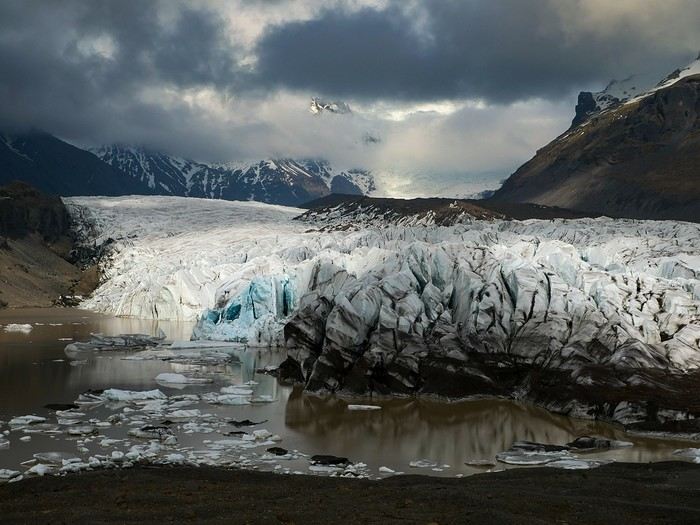
Bookings
Flight tickets bought directly from Fly Play’s website: 1520 € for the four of us (adult fare), with just two checked bags and one carry-on each. It was the compromise we found to keep costs down while still fitting all the bulky clothes we’d need. Late April isn’t quite winter anymore, but it’s not quite spring either, so we packed for chilly weather. Fly Play is Icelandair’s low-cost airline. No complaints: check-in was quick, service was efficient, and the flights were on time.
The car. Booked with Golden Circle car rental, a small family-run business with offices just 5 minutes from the airport. I’d read good things about them, and I can confirm everything went smoothly with our Dacia Duster—it wasn’t brand new, but it was reliable and spacious. We paid 463 € for the week, with full insurance included. The manager picked us up at the airport 10 minutes after I messaged him on WhatsApp to say we’d arrived. For the return trip, since our flight was super early and the agency wasn’t open yet, we agreed to leave the car in the airport parking lot and sent him a photo of the spot so he could find it. Super convenient! I read *so* many questions on Facebook groups about insurance: *Should I get the max coverage or not? I’ve got a Visa Premier, I’ve never had an accident, it adds 100 €...* Between sandstorms that can damage the bodywork and skidding off the road due to bad weather (we saw a few cars in ditches!), we decided to go for the rental company’s max insurance to be safe. It was also a requirement for leaving the car in the airport parking lot on our way back, since we couldn’t do the final inspection.
Accommodations were all booked on Booking.com and Hotels.com: - 2 nights in a cottage at Fossatun Country Hotel, near Borgarnes (we rented the sunset cottage—great spot, with a nice view and separate from the other lodgings) - 1 night in an apartment at Bakki Hostel and Apartments, in Eyrarbakki (top-notch) - 1 night in a gorgeous (and pricey!) apartment at Vik Apartments - 2 nights in a family room at Adventure Hof Hotel (perfect location) - 1 night at Blue Viking Studio near the airport (meh, but fine for a few hours’ sleep before an early flight) Total: 1234 €, averaging 176 € per night for 4-person accommodations.
The itinerary Day 1: Arrival around noon at the airport - Hraunfossar / Night at Fossatun Country Hotel Day 2: Snæfellsnes Peninsula / Night at Fossatun Country Hotel Day 3: Bruarfoss - Geysir - Gullfoss - Reykjadalur hot springs / Night in Eyrarbakki Day 4: Seljalandsfoss and Gljúfrafoss - DC-3 wreck (the one near Seljalandsfoss) - Skógafoss - Kvernufoss - Sólheimajökull (hike to the foot of the glacier) - Dyrhólaey - Reynisfjara Beach / Night in Vík Day 5: Fjaðrárgljúfur Canyon - Vatnajökull (3-hour hike to Svartifoss and Skaftafell) / Night in Hof Day 6: Múlagljúfur Canyon (2h45 hike) - Fjallsárlón - Jökulsárlón and Diamond Beach - Svínafellsjökull / Night in Hof Day 7: Drive back - Reykjavik - Sky Lagoon / Night in Keflavík Day 8: Flight back at 6 AM
That’s the practical side covered. I’ll leave you with a photo of our trusty steed.
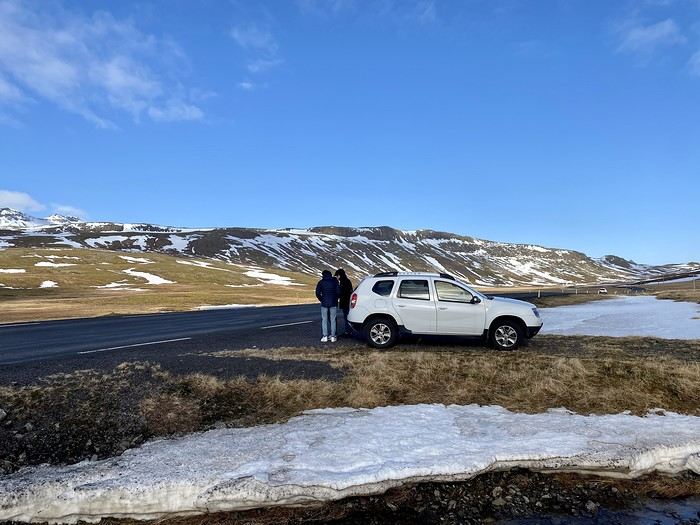
And what a joy to read the travel journals of those travel addicts who were quicker than their own shadow to share their discoveries. Their keyboards and mice must’ve been itching
I’ll admit I’m feeling a bit of that itch too, but I’m way too lazy to dive into the story of our latest trip—last summer in the northwest USA. I’ll probably get to it later, but it might take a while! So, I’m jumping into the short recap of our *way* too short trip to Iceland at the end of April 2024. And even though it’s not the done thing, I’m going to spoil it and start with the conclusion: it was *amazing*!!!
Back in February, on the eve of leaving for a few days’ holiday in Alsace, we started wondering what we could do for Easter break. Scotland and Iceland were the top contenders. The boys are growing up, but they still travel with us often, and they tipped the scales in favor of Iceland. Since we decided a bit late, before booking the flights, I took a quick look at available accommodations. There wasn’t much left, and some were at crazy prices, but I managed to line up a decent itinerary with places that seemed like good value for money. I read travel journals on VF and blogs I could find, picked up bits of info from Facebook groups, and the route quickly took shape—even if I struggled with the place names, mixing them up and forgetting them. The dream could begin...
Bookings
Flight tickets bought directly from Fly Play’s website: 1520 € for the four of us (adult fare), with just two checked bags and one carry-on each. It was the compromise we found to keep costs down while still fitting all the bulky clothes we’d need. Late April isn’t quite winter anymore, but it’s not quite spring either, so we packed for chilly weather. Fly Play is Icelandair’s low-cost airline. No complaints: check-in was quick, service was efficient, and the flights were on time.
The car. Booked with Golden Circle car rental, a small family-run business with offices just 5 minutes from the airport. I’d read good things about them, and I can confirm everything went smoothly with our Dacia Duster—it wasn’t brand new, but it was reliable and spacious. We paid 463 € for the week, with full insurance included. The manager picked us up at the airport 10 minutes after I messaged him on WhatsApp to say we’d arrived. For the return trip, since our flight was super early and the agency wasn’t open yet, we agreed to leave the car in the airport parking lot and sent him a photo of the spot so he could find it. Super convenient! I read *so* many questions on Facebook groups about insurance: *Should I get the max coverage or not? I’ve got a Visa Premier, I’ve never had an accident, it adds 100 €...* Between sandstorms that can damage the bodywork and skidding off the road due to bad weather (we saw a few cars in ditches!), we decided to go for the rental company’s max insurance to be safe. It was also a requirement for leaving the car in the airport parking lot on our way back, since we couldn’t do the final inspection.
Accommodations were all booked on Booking.com and Hotels.com: - 2 nights in a cottage at Fossatun Country Hotel, near Borgarnes (we rented the sunset cottage—great spot, with a nice view and separate from the other lodgings) - 1 night in an apartment at Bakki Hostel and Apartments, in Eyrarbakki (top-notch) - 1 night in a gorgeous (and pricey!) apartment at Vik Apartments - 2 nights in a family room at Adventure Hof Hotel (perfect location) - 1 night at Blue Viking Studio near the airport (meh, but fine for a few hours’ sleep before an early flight) Total: 1234 €, averaging 176 € per night for 4-person accommodations.
The itinerary Day 1: Arrival around noon at the airport - Hraunfossar / Night at Fossatun Country Hotel Day 2: Snæfellsnes Peninsula / Night at Fossatun Country Hotel Day 3: Bruarfoss - Geysir - Gullfoss - Reykjadalur hot springs / Night in Eyrarbakki Day 4: Seljalandsfoss and Gljúfrafoss - DC-3 wreck (the one near Seljalandsfoss) - Skógafoss - Kvernufoss - Sólheimajökull (hike to the foot of the glacier) - Dyrhólaey - Reynisfjara Beach / Night in Vík Day 5: Fjaðrárgljúfur Canyon - Vatnajökull (3-hour hike to Svartifoss and Skaftafell) / Night in Hof Day 6: Múlagljúfur Canyon (2h45 hike) - Fjallsárlón - Jökulsárlón and Diamond Beach - Svínafellsjökull / Night in Hof Day 7: Drive back - Reykjavik - Sky Lagoon / Night in Keflavík Day 8: Flight back at 6 AM
That’s the practical side covered. I’ll leave you with a photo of our trusty steed.