Results for "Vouvant+|+127"
6491 results found.
Air Namibia English translation pending
Quelqu'un est-il déjà parti par Air Namibia ?
Ca n'a pas l'air d'une grosse compagnie. En Europe, elle ne part que de Francfort...
J'ai trouvé un Paris-Francfort-Windhoek (acheminement avec Air France) pour 975 euros TTC en juillet 2004, soit 200 euros de moins que Air France, South African Airways ou Lufthansa.
Ca présente en plus l'avantage d'être le trajet le plus cours entre Paris et Windhoek.
Mais j'hésite...
Maldives: vol sec sans réservation English translation pending
Bonjour,
J'ai un vol (open) pour les Maldives.
Comment faire sur place ? Est-il possible de ne rien réservé à l'avance ? et de trouver à moindre prix hôtel et activité ?
Merci pour votre experience.
Gilles
(PartirOu.com)
Patagonie: court récit et photos English translation pending
¡Hola!
Comme je trouve pas mal d'info sur ce groupe de discussions, je vous envoie l'adresse de notre website avec notre recit et qq photos sur la Patagonie.
Nous sommes partis pour 8 mois de découvertes en Amerique Latine, et nous avons quittes la Patagonie hier. 😕
On va se poser a El Bolson, puis remonter lentement vers Mendoza. Aujourd'hui, nous sommes à Bariloche, ville de consommation par contraste avec le reste de la Patagonie. a+
Comme je trouve pas mal d'info sur ce groupe de discussions, je vous envoie l'adresse de notre website avec notre recit et qq photos sur la Patagonie.
Nous sommes partis pour 8 mois de découvertes en Amerique Latine, et nous avons quittes la Patagonie hier. 😕
On va se poser a El Bolson, puis remonter lentement vers Mendoza. Aujourd'hui, nous sommes à Bariloche, ville de consommation par contraste avec le reste de la Patagonie. a+
Boca Chica ou Punta Cana? English translation pending
Bonjour ou Bonsoir, nous désirons partir mon mari et moi en République Dominicaine ce mois-ci (janvier donc) pour 15 jours, afin de nous reposer d'une très dure année de travail.Nous hésitons entre boca chica et punta cana.Quelqu'un pourrait nous aider ??
Merci
Merci
Petite synthèse sur l'accès à Tortuguero (Costa Rica) English translation pending
Petite synthèse sur l'accès à Tortuguero (Costa-rica)...
Lors de notre séjour, nous avons exploré les différentes pistes pour y accéder, en voici un résumé, en espérant que cela vous permette de faire votre choix.
Tortuguero est un Mont St Michel Costa-ricain par l'affluence et l'exiguité. On y accède nécessairement en bateau ou en avion.
Voici les principales formules possibles, hors l'avion : acheter une excursion clef en main, à San José ou ailleurs, incluant ou non l'hébergement sur place. s'y rendre par ses propres moyens par le NW (via Cariari) en combinant bus et bateau publics puis organiser sur place son séjour. s'y rendre par le sud (via Limon et le port de Moin), toujours par ses propres moyens.
Trajets possibles par Cariari, en combinant 2 bus publics puis un bateau. Option la plus rapide depuis SJ, détaillé sur plusieurs sites et dans les guides. Inconvénient : le trajet en bateau fait partie de l'intérêt de Tortuguero, or il est moins long par cette voie, donc on en profite moins... C'est par là que passent le gros des tours vendus à SJ. par Limon (Moin exactement), sur la côte Caraïbes. La navigation de Moin à Tortuguero s'effectue sur un ensemble de canaux, lagunes et rios parallèles au rivage. Depuis le tremblement de terre de 1991 qui a rehaussé les fonds, seuls de petits bateaux empruntent ce chemin. La distance est d'environ 70 km, le décor somptueux. L'aller dure environ 5 heures avec les arrêts pour regarder oiseaux, caïmans ou chauve-souris naines, le retour 3 heures. Superbe si la météo est de la partie. Dans notre cas, 80% de l'intérêt de la visite à Tortuguero a été cette balade. en combinant les deux : en passant par Cariari d'abord puis en quittant Tortuguero pour aller à Moin. L'inverse serait plus intéressant mais est plus délicat à organiser, les "capitaines" de Moin ne voulant prendre que des A/R à Moin.
Les excursions ("tours") clef en main
Il en existe de deux types : pension complète et activités incluses. On vous prend à votre hôtel à SJ ou ailleurs, un mini-bus vous emmène à l'embarcadère, le bateau à votre lodge etc. Vous êtes en pension complète et faites les sorties dans le parc prévues au programme. A notre connaissance, uniquement par Cariari. Prix maximum. Le prix suit le confort hôtelier (avec ou sans jaccuzzi etc). transport simple. En général assuré par des agences plus modestes. Concerne plutôt les A/R depuis Limon et le port de Moin. Une fois sur place, vous vous débrouillez pour trouver à coucher et organisez vos activités à votre guise (sans aucune difficulté et avec bien plus de choix qu'à distance, tout au moins à la basse saison. N'avons pas testé la haute...). Tortuguero est rempli de cabinas, à des prix voisins mais allant de la cabane à lapins sentant la peinture et le moisi à du très bien (on a apprécié les cabinas et le restaurant de Miriam près de l'océan).
Tout le monde ou presque vend des "tours" au Costa-rica, en particulier pour Tortuguero : hôtels, agences etc. Les prix varient selon la période de l'année, la durée du séjour, son confort ... et votre habileté à négocier. On trouve les prix sur Internet, au moins pour les formules "tout compris". Cf sites des lodges et grandes agences. Pas de surprise : c'est cher et il peut y avoir de mauvaises surprises : gros bateaux ou horaires des visites inadéquats par exemple, cf plus bas.
Trajet par Cariari par ses propres moyens (A/R)
Nous ne l'avons pas pratiqué. La plupart des personnes rencontrées sont passées par là. Aucune n'a fait part de difficultés, qu'elles parlent espagnol ou non. C'est l'accès le plus économique à Tortuguero.
Trajet par Moin (A/R) La plus belle balade, 5 heures à l'aller avec les arrêts, 2h30 au retour. Déjà plus cher mais vaut son prix (~ 40 à 60$ / pers).
Deux manières de procéder : en réservant à l'avance un aller/retour (tout le monde en vend : hôtel, agence, laverie etc). Pas nécessairement beaucoup plus cher. en se présentant au port de Moin, vers 9 / 10 heures et en se joignant à d'autres personnes qui attendent pour négocier un passage. Le risque : ne trouver personne avec qui partager les frais. Risque faible, même à la basse saison. Nous n'avons rencontré personne qui soit resté bloqué. D'ailleurs une douzaine de personnes étaient sur le quai quand nous sommes arrivés.
Inconvénient : impossible de rester plus d'une nuit à Tortuguero. En effet, le "captain" fait le trajet, dort sur place et rentre le lendemain avec ses passagers. Si on reste plusieurs jours, on l'immobilise plusieurs nuits à Tortuguero.
il très difficile d'avoir un aller simple si on veut rentrer par Cariari (sauf à payer l'aller/retour et ne pas profiter du retour). L'A/R rapporte plus...
Pour info, j'ai compté plus de 20 bateaux dans le port, de 6 à 40 places.
Arrivée par Cariari, départ vers Moin C'est la grande boucle, durée du séjour illimitée. Les "captain" qui descendent sur Moin sont toujours heureux de charger quelques personnes en plus à Tortuguero et les emmener. Inconvénient : le retour se fait plein gaz, donc pas d'arrêt ailleurs qu'à la buvette. On voit le paysage mais pas les animaux.
Arrivée par Moin, départ vers Cariari La grande boucle, dans l'autre sens, durée du séjour illimitée. Nous n'avons pas réussi à le faire, bien que cela soit possible avec un peu de chance (c'est la loi de l'offre et la demande sur le port de Moin...). Avantage : la remontée "touristique" de 5 heures de Moin à Tortuguero.
A savoir dans tous les cas... demander la taille du bateau (pour le trajet). Plus il est petit, mieux c'est. Il en existe de 6 à 40/50 places ! Pas la peine de dire que sur un bateau-mouche de 40 places couvert vous ne verrez rien (nous étions deux sur un bateau de 6 places). Qui dit groupe ou tour dit risque de voyager sur un gros bateau. Bien demander au préalable. Evidemment s'il pleut, la balade nécessite un bon équipement (à 20 kt, çà mouille !). Dans tous les cas, prévoir un ou 2 sacs poubelle de 100 litres pour mettre à l'abri les bagages (les petits bateaux n'ont qu'un toit contre le soleil). quelle est l'heure des visites du parc. Les animaux sont actifs la nuit, donc plus tôt sont les visites, plus elles sont intéressantes. Inutile de faire des tours à 10 heures comme le font certains lodges. Départ à 5h30 ou 6 heures du matin impérativement. Là encore, la taille de l'embarcation va du canoë à 3 places jusqu'au bateau de 15/20 personnes. le mode de propulsion du bateau (pour la visite du parc). Plus il est silencieux, mieux c'est. On peut visiter en canoé, en bateau électrique .. ou au moteur 4 temps au ralenti (ce qui semble interdit mais pratiqué). On peut aussi louer des canoês. les guides. Tous semblent avoir l'oeil. Les prix et durées sont comparables (~15$ par personne). En revanche, certains sont capables de nettement plus d'explications que d'autres... Visites en Anglais ou Espagnol. On a apprécié le Canadien vivant en face de l'église et son érudition, malheureusement ce n'était pas à la rame... il est heureusement possible de louer un canoé et de se balader à sa guise (prévoir une carte et une boussole quand même avant de s'engager dans le parc). Une bonne formule : faire un tour guidé puis naviguer par ses propres moyens les jours suivants si vous aimez l'observation de la nature (inutile d'aller loin pour être au calme).
Ponte des tortues L'attraction numéro 1. Pourtant on peut en voir ailleurs de manière moins commerciale. Fonction de la saison. On a zappé sans regret (fin de saison). La visite s'achève à la 1ère tortue rencontrée.
Naissance des tortues Facile à voir en saison, avec un peu de chance. Il suffit de trainer le soir sur la plage (l'accès n'est interdit que la nuit). Quand la température est adéquate, les naissances surviennent. C'est rapide, en quelques minutes, tout le nid est parti pour la mer. A faire : marcher le long de la plage en cherchant la trace des premières arrivées à l'eau, remonter jusqu'au nid (demander la tête des traces sur place, c'est caractéristique) et regarder. Eventuellement chasser les chiens. A ne pas faire : creuser le nid, prendre les tortues à pleine main, les mettre à l'eau. Ce n'est pas un film de Disney ! Dixit un garde avec qui nous en avons parlé. C'est pourtant ce que font la plupart des gens (débat animé USA/Europe à ce sujet sur la plage, y'a pas des désaccords que sur l'Irak !).
Mafia ?
Une Française installée à Cahuita nous avait parlé de la mafia de Tortuguero : prix alignés, exploitation en coupe réglée du tourisme etc. Voici notre contribution au sujet.
Arrivée à Tortuguero. Notre "captain" nous présente "par hasard" un guide qui traine "par hasard" sur le quai ou nous accostons (toujours par hasard). Le guide propose de nous emmener voir les tortues le soir (10 ou 15 $ par pers) et faire un tour avec lui le lendemain matin (15$ par pers, tarif standard). On prend note sans s'engager. Il nous emmène voir des cabinas (sa sélection...). Pas de chance, aucune n'est terrible. On continue avec lui sur les talons avant de trouver. Il nous laisse. Puis on part à la pêche aux guides pour voir ce qu'ils proposent et s'il n'y en aurait pas qui articulent plus, les marmonements du premier étant assez indistincts. Tour sur la plage, naissance de tortues, dîner, retour à la cabina. On frappe à la porte. Un jeune, nous dit être envoyé par le guide et nous demande si on veut faire les visites avec lui. Réponse : "non merci". Encore quelques minutes, on refrappe à la porte. Le guide éconduit cette fois-ci. Il vient nous informer que notre "captain" a décidé de partir à 10 heures le lendemain et non 13 heures comme convenu. Nous devons donc être au bateau à 10 heures sinon on rentre à la nage. Cela nous laisse juste le temps de visiter avec lui (bin, tiens). Discussion conjugale animée, risque-t-on réellement de rester en plan ou non. Retour à notre maitre-chanteur : "où est le captain ?" "quelque part...". "Raison du départ avancé ?" ... Impossible d'en savoir plus.
Nous lui disons que le seul accord qui tienne est celui conclu en arrivant et visitons le lendemain à notre rythme avant de retrouver notre captain sur son bateau à l'heure dite.
The end
Une dernière disgression : le renvoi continuel d'ascenseur est vrai partout au CR où l'on aime beaucoup le tourisme "dirigé" (vers les tours, guides, les taxi, les copains etc). Même si cela se fait dans la bonne humeur, il arrive que cela devienne un peu pesant...
Bonne visite !
Lors de notre séjour, nous avons exploré les différentes pistes pour y accéder, en voici un résumé, en espérant que cela vous permette de faire votre choix.
Tortuguero est un Mont St Michel Costa-ricain par l'affluence et l'exiguité. On y accède nécessairement en bateau ou en avion.
Voici les principales formules possibles, hors l'avion : acheter une excursion clef en main, à San José ou ailleurs, incluant ou non l'hébergement sur place. s'y rendre par ses propres moyens par le NW (via Cariari) en combinant bus et bateau publics puis organiser sur place son séjour. s'y rendre par le sud (via Limon et le port de Moin), toujours par ses propres moyens.
Trajets possibles par Cariari, en combinant 2 bus publics puis un bateau. Option la plus rapide depuis SJ, détaillé sur plusieurs sites et dans les guides. Inconvénient : le trajet en bateau fait partie de l'intérêt de Tortuguero, or il est moins long par cette voie, donc on en profite moins... C'est par là que passent le gros des tours vendus à SJ. par Limon (Moin exactement), sur la côte Caraïbes. La navigation de Moin à Tortuguero s'effectue sur un ensemble de canaux, lagunes et rios parallèles au rivage. Depuis le tremblement de terre de 1991 qui a rehaussé les fonds, seuls de petits bateaux empruntent ce chemin. La distance est d'environ 70 km, le décor somptueux. L'aller dure environ 5 heures avec les arrêts pour regarder oiseaux, caïmans ou chauve-souris naines, le retour 3 heures. Superbe si la météo est de la partie. Dans notre cas, 80% de l'intérêt de la visite à Tortuguero a été cette balade. en combinant les deux : en passant par Cariari d'abord puis en quittant Tortuguero pour aller à Moin. L'inverse serait plus intéressant mais est plus délicat à organiser, les "capitaines" de Moin ne voulant prendre que des A/R à Moin.
Les excursions ("tours") clef en main
Il en existe de deux types : pension complète et activités incluses. On vous prend à votre hôtel à SJ ou ailleurs, un mini-bus vous emmène à l'embarcadère, le bateau à votre lodge etc. Vous êtes en pension complète et faites les sorties dans le parc prévues au programme. A notre connaissance, uniquement par Cariari. Prix maximum. Le prix suit le confort hôtelier (avec ou sans jaccuzzi etc). transport simple. En général assuré par des agences plus modestes. Concerne plutôt les A/R depuis Limon et le port de Moin. Une fois sur place, vous vous débrouillez pour trouver à coucher et organisez vos activités à votre guise (sans aucune difficulté et avec bien plus de choix qu'à distance, tout au moins à la basse saison. N'avons pas testé la haute...). Tortuguero est rempli de cabinas, à des prix voisins mais allant de la cabane à lapins sentant la peinture et le moisi à du très bien (on a apprécié les cabinas et le restaurant de Miriam près de l'océan).
Tout le monde ou presque vend des "tours" au Costa-rica, en particulier pour Tortuguero : hôtels, agences etc. Les prix varient selon la période de l'année, la durée du séjour, son confort ... et votre habileté à négocier. On trouve les prix sur Internet, au moins pour les formules "tout compris". Cf sites des lodges et grandes agences. Pas de surprise : c'est cher et il peut y avoir de mauvaises surprises : gros bateaux ou horaires des visites inadéquats par exemple, cf plus bas.
Trajet par Cariari par ses propres moyens (A/R)
Nous ne l'avons pas pratiqué. La plupart des personnes rencontrées sont passées par là. Aucune n'a fait part de difficultés, qu'elles parlent espagnol ou non. C'est l'accès le plus économique à Tortuguero.
Trajet par Moin (A/R) La plus belle balade, 5 heures à l'aller avec les arrêts, 2h30 au retour. Déjà plus cher mais vaut son prix (~ 40 à 60$ / pers).
Deux manières de procéder : en réservant à l'avance un aller/retour (tout le monde en vend : hôtel, agence, laverie etc). Pas nécessairement beaucoup plus cher. en se présentant au port de Moin, vers 9 / 10 heures et en se joignant à d'autres personnes qui attendent pour négocier un passage. Le risque : ne trouver personne avec qui partager les frais. Risque faible, même à la basse saison. Nous n'avons rencontré personne qui soit resté bloqué. D'ailleurs une douzaine de personnes étaient sur le quai quand nous sommes arrivés.
Inconvénient : impossible de rester plus d'une nuit à Tortuguero. En effet, le "captain" fait le trajet, dort sur place et rentre le lendemain avec ses passagers. Si on reste plusieurs jours, on l'immobilise plusieurs nuits à Tortuguero.
il très difficile d'avoir un aller simple si on veut rentrer par Cariari (sauf à payer l'aller/retour et ne pas profiter du retour). L'A/R rapporte plus...
Pour info, j'ai compté plus de 20 bateaux dans le port, de 6 à 40 places.
Arrivée par Cariari, départ vers Moin C'est la grande boucle, durée du séjour illimitée. Les "captain" qui descendent sur Moin sont toujours heureux de charger quelques personnes en plus à Tortuguero et les emmener. Inconvénient : le retour se fait plein gaz, donc pas d'arrêt ailleurs qu'à la buvette. On voit le paysage mais pas les animaux.
Arrivée par Moin, départ vers Cariari La grande boucle, dans l'autre sens, durée du séjour illimitée. Nous n'avons pas réussi à le faire, bien que cela soit possible avec un peu de chance (c'est la loi de l'offre et la demande sur le port de Moin...). Avantage : la remontée "touristique" de 5 heures de Moin à Tortuguero.
A savoir dans tous les cas... demander la taille du bateau (pour le trajet). Plus il est petit, mieux c'est. Il en existe de 6 à 40/50 places ! Pas la peine de dire que sur un bateau-mouche de 40 places couvert vous ne verrez rien (nous étions deux sur un bateau de 6 places). Qui dit groupe ou tour dit risque de voyager sur un gros bateau. Bien demander au préalable. Evidemment s'il pleut, la balade nécessite un bon équipement (à 20 kt, çà mouille !). Dans tous les cas, prévoir un ou 2 sacs poubelle de 100 litres pour mettre à l'abri les bagages (les petits bateaux n'ont qu'un toit contre le soleil). quelle est l'heure des visites du parc. Les animaux sont actifs la nuit, donc plus tôt sont les visites, plus elles sont intéressantes. Inutile de faire des tours à 10 heures comme le font certains lodges. Départ à 5h30 ou 6 heures du matin impérativement. Là encore, la taille de l'embarcation va du canoë à 3 places jusqu'au bateau de 15/20 personnes. le mode de propulsion du bateau (pour la visite du parc). Plus il est silencieux, mieux c'est. On peut visiter en canoé, en bateau électrique .. ou au moteur 4 temps au ralenti (ce qui semble interdit mais pratiqué). On peut aussi louer des canoês. les guides. Tous semblent avoir l'oeil. Les prix et durées sont comparables (~15$ par personne). En revanche, certains sont capables de nettement plus d'explications que d'autres... Visites en Anglais ou Espagnol. On a apprécié le Canadien vivant en face de l'église et son érudition, malheureusement ce n'était pas à la rame... il est heureusement possible de louer un canoé et de se balader à sa guise (prévoir une carte et une boussole quand même avant de s'engager dans le parc). Une bonne formule : faire un tour guidé puis naviguer par ses propres moyens les jours suivants si vous aimez l'observation de la nature (inutile d'aller loin pour être au calme).
Ponte des tortues L'attraction numéro 1. Pourtant on peut en voir ailleurs de manière moins commerciale. Fonction de la saison. On a zappé sans regret (fin de saison). La visite s'achève à la 1ère tortue rencontrée.
Naissance des tortues Facile à voir en saison, avec un peu de chance. Il suffit de trainer le soir sur la plage (l'accès n'est interdit que la nuit). Quand la température est adéquate, les naissances surviennent. C'est rapide, en quelques minutes, tout le nid est parti pour la mer. A faire : marcher le long de la plage en cherchant la trace des premières arrivées à l'eau, remonter jusqu'au nid (demander la tête des traces sur place, c'est caractéristique) et regarder. Eventuellement chasser les chiens. A ne pas faire : creuser le nid, prendre les tortues à pleine main, les mettre à l'eau. Ce n'est pas un film de Disney ! Dixit un garde avec qui nous en avons parlé. C'est pourtant ce que font la plupart des gens (débat animé USA/Europe à ce sujet sur la plage, y'a pas des désaccords que sur l'Irak !).
Mafia ?
Une Française installée à Cahuita nous avait parlé de la mafia de Tortuguero : prix alignés, exploitation en coupe réglée du tourisme etc. Voici notre contribution au sujet.
Arrivée à Tortuguero. Notre "captain" nous présente "par hasard" un guide qui traine "par hasard" sur le quai ou nous accostons (toujours par hasard). Le guide propose de nous emmener voir les tortues le soir (10 ou 15 $ par pers) et faire un tour avec lui le lendemain matin (15$ par pers, tarif standard). On prend note sans s'engager. Il nous emmène voir des cabinas (sa sélection...). Pas de chance, aucune n'est terrible. On continue avec lui sur les talons avant de trouver. Il nous laisse. Puis on part à la pêche aux guides pour voir ce qu'ils proposent et s'il n'y en aurait pas qui articulent plus, les marmonements du premier étant assez indistincts. Tour sur la plage, naissance de tortues, dîner, retour à la cabina. On frappe à la porte. Un jeune, nous dit être envoyé par le guide et nous demande si on veut faire les visites avec lui. Réponse : "non merci". Encore quelques minutes, on refrappe à la porte. Le guide éconduit cette fois-ci. Il vient nous informer que notre "captain" a décidé de partir à 10 heures le lendemain et non 13 heures comme convenu. Nous devons donc être au bateau à 10 heures sinon on rentre à la nage. Cela nous laisse juste le temps de visiter avec lui (bin, tiens). Discussion conjugale animée, risque-t-on réellement de rester en plan ou non. Retour à notre maitre-chanteur : "où est le captain ?" "quelque part...". "Raison du départ avancé ?" ... Impossible d'en savoir plus.
Nous lui disons que le seul accord qui tienne est celui conclu en arrivant et visitons le lendemain à notre rythme avant de retrouver notre captain sur son bateau à l'heure dite.
The end
Une dernière disgression : le renvoi continuel d'ascenseur est vrai partout au CR où l'on aime beaucoup le tourisme "dirigé" (vers les tours, guides, les taxi, les copains etc). Même si cela se fait dans la bonne humeur, il arrive que cela devienne un peu pesant...
Bonne visite !
El senador...encore une fois... English translation pending
Bonjour, je sais que le El senador a été abordé plusieurs fois dans ce forum mais je m'y rend du 27 février au 6 mars et je ne sais plus vraiment quoi penser. Plusieurs personnes ont vraiment adoré leur voyage et d'autres disent que c'était la pire semaine de leur vie! Je reste positive en me disant que j'y vais durant la haute saison donc tous les restaurants seront ouverts. Je logerai dans une villa sur pilotis: est-ce que ça pue tant que ça? Il y en a qui disent que oui, d'autre non. Dernier point: Je voyage avec Vacances air canada. Est-ce que quelqu'un a déja fait affaire avec eux? Si oui, est-ce que c'était bien?
J'attends vos réponses🙂
J'attends vos réponses🙂
Bons plans au Pérou English translation pending
Bonjour!
Je souhaite passer environ 5 semaines au Pérou cet été avec une amie. Nous partirions en juillet-août. Je sais qu'il y a beaucoup de choses à voir et à faire... J'aimerais connaître vos coup de coeur: endroits pas trop touristiques, auberge agréable, etc... Je me pose aussi quelques questions à savoir commment il est préférable de voyager entre les villes (bus, train, voiture?), est-il préférable d'emporter une tente pour les treks, combien peut coûter un billet d'avion Mtl-Lima à cette période de l'année? Bref, dites-moi tout ce que vous pouvez sur ce fascinant pays!
Merci à l'avance!
Je souhaite passer environ 5 semaines au Pérou cet été avec une amie. Nous partirions en juillet-août. Je sais qu'il y a beaucoup de choses à voir et à faire... J'aimerais connaître vos coup de coeur: endroits pas trop touristiques, auberge agréable, etc... Je me pose aussi quelques questions à savoir commment il est préférable de voyager entre les villes (bus, train, voiture?), est-il préférable d'emporter une tente pour les treks, combien peut coûter un billet d'avion Mtl-Lima à cette période de l'année? Bref, dites-moi tout ce que vous pouvez sur ce fascinant pays!
Merci à l'avance!
Des adresses pour de l'aide humanitaire English translation pending
Bonjour à vous tous,
Je vois que vous êtes nombreux à vouloir effectuer des chantiers humanitaires, monter des projets ou à vouloir vous investir réellemnt dans l'humanitaire. Et bien je peux, peut être, vous aider, mais vous avez jusqu'au 10 décembre car après je file au Sénégal et j'aurai moins de temps à vous consacrer.
Afin d'éviter de faire de la pub pour des asso en ligne. Je vous propose de m'envoyer un mail personnel, avec des questions assez précises pour que je puisse vous donner des adresses de site adaptées à vos demandes.
En attendant, je vous demande de réfléchir sur les raisons qui vous poussent à partir. Voyez-vous, cela me fait mal aux yeux lorsque je lis, je veux aider les pauvres 2, 3 mois et après je reviens faire mon bonhomme de chemin en France. Ok, c'est un expérience enrichissante, mais les pays en voie de développement ne doivent pas faire parti de nos caprices d'occidentaux ou même pire de nos loisirs de vacances. Je suis un peu dur, mais j'aimerai que cette exprérience se fasse à l'issue d'une grande réflexion, pour ne pas faire n'importe quoi, n'importe comment et sans continuité une fois de retour en France.
Voici quelques objectifs de réflexion : Prendre conscience de ma personnalité, de mes tendances et comportements dans mes relations avec les autres Prendre conscience de ces continents à la longue et riche histoire, des grandes étapes de l'évolution et des relations de ces continents avec l'Europe, de mon rôle en tant qu'acteur Prendre conscience de ce en quoi je crois et de comment je le vis Prendre conscience des besoins et des désirs que je cherche à satisfaire en voulant partir Prendre conscience de ce que je fais ici en France en matière de solidarité par rapport à ce que je veux faire là bas
Poser vous des questions, essayer d'y répondre de façon honnête même si votre réponse vous choque, car cela vous permettra d'avancer.
POURSUIVEZ VOS REVES ET VOS DESIRS, mais garder en tête que nous avons fait souvent plus de mal que de bien.
Conscientisation, responsabilisation pour un monde plus juste et solidaire.
Je vois que vous êtes nombreux à vouloir effectuer des chantiers humanitaires, monter des projets ou à vouloir vous investir réellemnt dans l'humanitaire. Et bien je peux, peut être, vous aider, mais vous avez jusqu'au 10 décembre car après je file au Sénégal et j'aurai moins de temps à vous consacrer.
Afin d'éviter de faire de la pub pour des asso en ligne. Je vous propose de m'envoyer un mail personnel, avec des questions assez précises pour que je puisse vous donner des adresses de site adaptées à vos demandes.
En attendant, je vous demande de réfléchir sur les raisons qui vous poussent à partir. Voyez-vous, cela me fait mal aux yeux lorsque je lis, je veux aider les pauvres 2, 3 mois et après je reviens faire mon bonhomme de chemin en France. Ok, c'est un expérience enrichissante, mais les pays en voie de développement ne doivent pas faire parti de nos caprices d'occidentaux ou même pire de nos loisirs de vacances. Je suis un peu dur, mais j'aimerai que cette exprérience se fasse à l'issue d'une grande réflexion, pour ne pas faire n'importe quoi, n'importe comment et sans continuité une fois de retour en France.
Voici quelques objectifs de réflexion : Prendre conscience de ma personnalité, de mes tendances et comportements dans mes relations avec les autres Prendre conscience de ces continents à la longue et riche histoire, des grandes étapes de l'évolution et des relations de ces continents avec l'Europe, de mon rôle en tant qu'acteur Prendre conscience de ce en quoi je crois et de comment je le vis Prendre conscience des besoins et des désirs que je cherche à satisfaire en voulant partir Prendre conscience de ce que je fais ici en France en matière de solidarité par rapport à ce que je veux faire là bas
Poser vous des questions, essayer d'y répondre de façon honnête même si votre réponse vous choque, car cela vous permettra d'avancer.
POURSUIVEZ VOS REVES ET VOS DESIRS, mais garder en tête que nous avons fait souvent plus de mal que de bien.
Conscientisation, responsabilisation pour un monde plus juste et solidaire.
Touristes bloqués en RD English translation pending
Voir article de presse ci-dessous:
Les touristes français sont victimes de la cessation de l'activité annoncée samedi par Avione Travel, un tour operator suisse.
Entre 138 et 180 touristes français sont bloqués en République dominicaine du fait de la cessation d'activités du voyagiste suisse Avione Travel, a-t-on appris dimanche auprès du Quai d'Orsay et de sources locales.
"Notre consulat sur place nous a informé que 138 vacanciers français, partis en République dominicaine par le biais d'Avione, n'avaient plus de vol pour rentrer", a indiqué dimanche après-midi une porte-parole du ministère des affaires étrangères français.
Nos sources donnent le chiffre de 180 personnes.
Ces Français étaient partis en vacances avec le Tour operator suisse Avione. Or Avione Travel a annoncé samedi qu'il avait cessé toutes ses activités depuis vendredi, à la suite notamment de la liquidation judiciaire de la compagnie aérienne Aéris et de "problèmes opérationnels" rencontrés avec Eurojet Airlines, les deux compagnies par lesquelles il faisait acheminer ses clients.
Une partie des touristes français sont restés bloqués à l'hôtel Camino del Sol à Cabarette. D'autres Français qui faisaient partie du groupe mais qui résidaient à l'hôtel Paradisio del Sol à Puerto Plata auraient réussi à rentrer.
"De plus, dans un hôtel (Camino del Sol), la direction a exigé des vacanciers qu'ils règlent leur séjour - normalement déjà payé par Avione, - et elle a pour cela fait appel à la police", a ajouté la porte-parole du Quai d'Orsay. L'hôtel exige le règlement d'une somme de 1200 dollars (1020 euros) par personne.
HOMMES EN ARMES
A l'appel de la direction, la police est venue sur place. Des hommes en uniforme avec des armes à feu sont installés dans l'hôtel.
Les autorités françaises, notamment consulaires, sont sur place, ainsi que l'ambassadeur de France en République dominicaine M. Jean-Claude Moyret. Elles essaient notamment d'obtenir la remise des passeports qui ont été confisqués.
Elles s'occupent aussi de rapatrier les Français. Le vol Aeris sur lequel ils devaient rentrer hier a été annulé. Elles essaient donc de les faire repartir sur un vol d'American Airlines, de Corsair ou d'Air Caraïbes, et au plus tard un vol Air France mercredi.
Les touristes français sont victimes de la cessation de l'activité annoncée samedi par Avione Travel, un tour operator suisse.
Entre 138 et 180 touristes français sont bloqués en République dominicaine du fait de la cessation d'activités du voyagiste suisse Avione Travel, a-t-on appris dimanche auprès du Quai d'Orsay et de sources locales.
"Notre consulat sur place nous a informé que 138 vacanciers français, partis en République dominicaine par le biais d'Avione, n'avaient plus de vol pour rentrer", a indiqué dimanche après-midi une porte-parole du ministère des affaires étrangères français.
Nos sources donnent le chiffre de 180 personnes.
Ces Français étaient partis en vacances avec le Tour operator suisse Avione. Or Avione Travel a annoncé samedi qu'il avait cessé toutes ses activités depuis vendredi, à la suite notamment de la liquidation judiciaire de la compagnie aérienne Aéris et de "problèmes opérationnels" rencontrés avec Eurojet Airlines, les deux compagnies par lesquelles il faisait acheminer ses clients.
Une partie des touristes français sont restés bloqués à l'hôtel Camino del Sol à Cabarette. D'autres Français qui faisaient partie du groupe mais qui résidaient à l'hôtel Paradisio del Sol à Puerto Plata auraient réussi à rentrer.
"De plus, dans un hôtel (Camino del Sol), la direction a exigé des vacanciers qu'ils règlent leur séjour - normalement déjà payé par Avione, - et elle a pour cela fait appel à la police", a ajouté la porte-parole du Quai d'Orsay. L'hôtel exige le règlement d'une somme de 1200 dollars (1020 euros) par personne.
HOMMES EN ARMES
A l'appel de la direction, la police est venue sur place. Des hommes en uniforme avec des armes à feu sont installés dans l'hôtel.
Les autorités françaises, notamment consulaires, sont sur place, ainsi que l'ambassadeur de France en République dominicaine M. Jean-Claude Moyret. Elles essaient notamment d'obtenir la remise des passeports qui ont été confisqués.
Elles s'occupent aussi de rapatrier les Français. Le vol Aeris sur lequel ils devaient rentrer hier a été annulé. Elles essaient donc de les faire repartir sur un vol d'American Airlines, de Corsair ou d'Air Caraïbes, et au plus tard un vol Air France mercredi.
Les premiers voyages... English translation pending
Comment était la toute première fois, qu'avez vous ressenti en mettant votre sac sur le dos? Quel choix pour un premier voyage, dans quelles conditions? juste pour le plaisir de partager ces petits instants qui sont des grands moments de nos vies 🙂
Lilou
Lilou
Qu'est un guest house par rapport à l'hôtel? English translation pending
Je vous ai entendu à plusieurs reprises parler les uns ou les autres de guest house. Est-ce différent d'un hôtel ? s.o.s. novice.com
Quels guides de voyage conseillez-vous pour l'Egypte? English translation pending
Bonjour à tous et toutes
Quels guides conseillez vous pour l'egypte, (voyage en mode routard) = Lonely planet, routard le petit futé autres? quel est selon vous celui qui donne les meilleurs tuyaus notemment pour l'hebergement et les transports ?
D'autre part j'ai lu sur le site de l'un d'entre vous qu, une des manière d'être est d'éviter de passer pour un touriste (appareil photi guide enmains etetc) Oui Oui çà je m'en doute bien, Mais (ne rigolez pas à ma question bete!!!), j'ai un blouson demi saison rouge pétard.('pas clignotant mais presque lol!) Pensez vous qu'il faut que j'évite ? 😊
Quels guides conseillez vous pour l'egypte, (voyage en mode routard) = Lonely planet, routard le petit futé autres? quel est selon vous celui qui donne les meilleurs tuyaus notemment pour l'hebergement et les transports ?
D'autre part j'ai lu sur le site de l'un d'entre vous qu, une des manière d'être est d'éviter de passer pour un touriste (appareil photi guide enmains etetc) Oui Oui çà je m'en doute bien, Mais (ne rigolez pas à ma question bete!!!), j'ai un blouson demi saison rouge pétard.('pas clignotant mais presque lol!) Pensez vous qu'il faut que j'évite ? 😊
Visiter la côte ouest ou est de la Malaisie? English translation pending
Bonjour je pars en Malaisie début octobre.
Vaut-il mieux faire la côte ouest de la péninsule ou la côte Est ? Sachant que je ne fais pas de plongée sous-marine !😉
Vaut-il mieux faire la côte ouest de la péninsule ou la côte Est ? Sachant que je ne fais pas de plongée sous-marine !😉
Sponsors.... English translation pending
Oui, c'est un peu bizarre le nombre de voyageurs qui veulent maintenant se faire sponsoriser. Vous me direz pour un voyage humanitaire ou peut être aller chercher des gens en difficulté quelquepart....non, même pas, juste pour se payer le luxe de voyager à moindre frais, et je ne sais pas vous, mais je trouve celà un peu énervant !
Un de nos amis voyageurs, bien connu sur ce forum et que j'apprécie pour ses judicieuses remarques, nous dit qu'il faut ne compter que sur soi même et que c'est là la base de l'aventure, et je le rejoins entièrement car autrement pourquoi ne pas demander à nos gouvernants de créer une allocation voyage profitable à tous, c'est un peu exagéré mais il n'y a pas de raison que certains obtiennent des aides de soi disants sponsors, et que d'autres ne goutent jamais aux joies du voyage sous prétexte qu'ils n'ont pas d'argent.
La préparation d'un voyage c'est aussi le financement il est vrai, mais quelle plus grande joie que le fruit de son labeur pour pouvoir partir....enfin. Déjà avec les moyens de communications actuels, il est aisé de relier n'importe quel point du globe, mais si en plus on peut partir à n'importe quel moment grâce à je ne sais quel généreux mécène, ou se trouve alors la recherche du plaisir de pouvoir partir un jour pour sa destination tant révée.
Qu'en pensez vous ?
Un de nos amis voyageurs, bien connu sur ce forum et que j'apprécie pour ses judicieuses remarques, nous dit qu'il faut ne compter que sur soi même et que c'est là la base de l'aventure, et je le rejoins entièrement car autrement pourquoi ne pas demander à nos gouvernants de créer une allocation voyage profitable à tous, c'est un peu exagéré mais il n'y a pas de raison que certains obtiennent des aides de soi disants sponsors, et que d'autres ne goutent jamais aux joies du voyage sous prétexte qu'ils n'ont pas d'argent.
La préparation d'un voyage c'est aussi le financement il est vrai, mais quelle plus grande joie que le fruit de son labeur pour pouvoir partir....enfin. Déjà avec les moyens de communications actuels, il est aisé de relier n'importe quel point du globe, mais si en plus on peut partir à n'importe quel moment grâce à je ne sais quel généreux mécène, ou se trouve alors la recherche du plaisir de pouvoir partir un jour pour sa destination tant révée.
Qu'en pensez vous ?
L'auto-stop en avion. English translation pending
L'auto-stop en avion c'est possible, sur le principe du covoiturage.
Je n'ai rien à vendre ni à gagner. Mais j'ai créé un site de petites annonces entièrement GRATUIT, sans pub ni pop up, pour mettre en rapport des pilotes bénévoles effectuant des vols privés avec des places libres dans les avions et des passagers qui voudraient les utiliser.
http://aerostop.free.fr
Cela pourra peut-être vous rendre service.🙂
Différente forme de voyage de regard.... English translation pending
Salut a tous,
Voilà Francois je me décide enfin a acquieser a ta demande🙂 et je met quelqu'uns de mes textes sur ton site. Les trois plus diversifiés, le style étant différent dans chacun des cas.
Bonne lecture.
Voilà Francois je me décide enfin a acquieser a ta demande🙂 et je met quelqu'uns de mes textes sur ton site. Les trois plus diversifiés, le style étant différent dans chacun des cas.
Bonne lecture.
Botswana and Zimbabwe
Before Our Departure
Preparing for this trip started 9 months before our departure in June. For those planning a similar itinerary, it’s important to book accommodations well in advance, especially in the Okavango and Savuti campsites—otherwise, you might not find any availability.
Introduction After visiting Zambia three years ago and Namibia and western Botswana a year and a half ago, this year we chose Zimbabwe (Hwange NP) and the northern half of Botswana. Our flight from Paris was to Victoria Falls with Ethiopian Airlines, with a layover in Addis Ababa. We rented a 4x4 from Bushlore in Kasane, complete with two rooftop tents since there are four of us on this adventure. Bushlore picked us up from our guesthouse to collect our 4x4 and, most importantly, gave us a rundown of the vehicle and its equipment. Pay close attention to what they tell you—it could be crucial if something goes wrong, as it did for us during the trip.
Our Itinerary We arrived on June 12th at noon. At Victoria Falls Airport, we got our double-entry visa right away—I’d already pre-booked it online on the site https://www.evisa.gov.zw/. Since our vehicle was in Botswana, we had to cross the border from Victoria Falls into Botswana for the first time. The next morning, Bushlore picked us up from our guesthouse to collect our 4x4. After completing the formalities, we headed toward Zimbabwe and the town of Victoria Falls. We woke up early the next morning to be at Victoria Falls at sunrise. The scenery was stunning, but since it was the start of the dry season, the Zambezi was still high, so the falls had a strong flow. This made it hard to fully appreciate their beauty. In the early afternoon, we left for Hwange NP, where we stayed for 4 days. Two days at Gwango campsite near Dete, followed by two days at Robins Camp. We expected to see more animals at Robins, but that wasn’t the case. In Hwange, we didn’t spot any predators, but we did see plenty of mammals (buffalo, elephants, giraffes, zebras, and antelopes). After a few days in Zimbabwe, we crossed back into Botswana at Pandamatenga. We stopped at Nata Lodge for a good night’s rest—driving on the dirt roads is exhausting. We left Nata and headed toward Nxai Pan. The road was sandy but manageable. We made a small detour to admire some beautiful baobabs at "Baines Baobabs." Then we continued to our campsite, Nxai Pan South Camp. Keep in mind that many campsites in Botswana aren’t fenced (except for the shower/toilet areas), so animals can roam freely within the camp. Take precautions, especially after dark. After our stop in Nxai Pan, we headed to Maun. We decided to break our journey in Maun before heading to Moremi and the Okavango Delta for three reasons: first, we needed to stock up on supplies and fuel for the next 5 days; second, our fridge had broken (luckily, Bushlore has a branch in Maun); and third, the drive from Nxai to our camp in Xakanaxa in the delta would’ve taken too long. I always avoid driving after dark. We arrived at our Xakanaxa camp on June 21st in the early afternoon. Not wanting to waste time, we booked a boat ride on the Okavango Delta, leaving at 4:00 PM for a 2-hour sunset cruise. For those interested, to the right of the Xakanaxa X1 site, there’s a sign for boat rides. The organizer is very professional and offers prices that are nothing like those of the lodges. It was a beautiful ride through the delta with a stunning sunset. Being on a boat is much more relaxing than driving on the dirt roads. That didn’t stop us from doing self-drive safaris the next morning and late afternoon, though.
Then came the time to leave the delta and head toward Savuti, a much drier region. And that’s when the toughest part of our trip began. First, we decided to go up via Khwai. The rainy season was over, but the area was still marshy. We had to cross a few small water patches, testing the depth to make sure we could get through. Luckily, a sign on the road pointed us toward a drier route. We reached Khwai without any issues, but then we made a major mistake. Instead of taking the main track toward Mababe Gate to reach Savuti Camp, we took a straight path north and then a right turn to get to our camp. Bad call—we got stuck in the sand, with one rear wheel buried halfway and a front wheel off the ground. We were genuinely scared we wouldn’t get out, especially since we were on a deserted track, 20 kilometers from our destination, with night falling in two hours. This is where paying attention to the vehicle instructions really paid off—we had to use the jack to get out of the mess. The result: we arrived at Savuti campsite just before dark (Distance: 146.3 km, Duration: 9 hours, 56 minutes, and 3 seconds, Average speed: 14.7 km/h, tracked with Osmand). At reception, the staff couldn’t understand how we’d gotten there—we hadn’t passed through any of Savuti’s reserve entry gates.
The next morning, no one felt like driving, so we did a game drive with a guide. I don’t know if it was some kind of reward, but the outing was amazing. We saw three lions and, best of all, a pack of African wild dogs that we had time to admire and photograph. The next day, we did a short self-drive and found one of the lions from the day before drinking at a waterhole. That was the end of our Savuti adventure.
Now we’re heading to Kasane. We returned our vehicle and settled in for our last two nights there. The next morning, since we no longer had a car, we decided to do one last early-morning game drive in Chobe NP. It turned out great—we followed two brother lions and saw plenty of other mammals. The only downside of Chobe is the number of tourists, which was a change from the other parks we’d visited. That said, we’re tourists too, so... In the evening, we took one last boat ride on the Chobe River to end on a high note with a beautiful sunset.
After a good night’s sleep and plenty of wonderful memories, landscapes, animals, and emotions, it was time to leave. We left early in the morning with the same taxi company as before to cross the border into Zimbabwe one last time and head to the airport, where we took off to return to France.
Introduction After visiting Zambia three years ago and Namibia and western Botswana a year and a half ago, this year we chose Zimbabwe (Hwange NP) and the northern half of Botswana. Our flight from Paris was to Victoria Falls with Ethiopian Airlines, with a layover in Addis Ababa. We rented a 4x4 from Bushlore in Kasane, complete with two rooftop tents since there are four of us on this adventure. Bushlore picked us up from our guesthouse to collect our 4x4 and, most importantly, gave us a rundown of the vehicle and its equipment. Pay close attention to what they tell you—it could be crucial if something goes wrong, as it did for us during the trip.
Our Itinerary We arrived on June 12th at noon. At Victoria Falls Airport, we got our double-entry visa right away—I’d already pre-booked it online on the site https://www.evisa.gov.zw/. Since our vehicle was in Botswana, we had to cross the border from Victoria Falls into Botswana for the first time. The next morning, Bushlore picked us up from our guesthouse to collect our 4x4. After completing the formalities, we headed toward Zimbabwe and the town of Victoria Falls. We woke up early the next morning to be at Victoria Falls at sunrise. The scenery was stunning, but since it was the start of the dry season, the Zambezi was still high, so the falls had a strong flow. This made it hard to fully appreciate their beauty. In the early afternoon, we left for Hwange NP, where we stayed for 4 days. Two days at Gwango campsite near Dete, followed by two days at Robins Camp. We expected to see more animals at Robins, but that wasn’t the case. In Hwange, we didn’t spot any predators, but we did see plenty of mammals (buffalo, elephants, giraffes, zebras, and antelopes). After a few days in Zimbabwe, we crossed back into Botswana at Pandamatenga. We stopped at Nata Lodge for a good night’s rest—driving on the dirt roads is exhausting. We left Nata and headed toward Nxai Pan. The road was sandy but manageable. We made a small detour to admire some beautiful baobabs at "Baines Baobabs." Then we continued to our campsite, Nxai Pan South Camp. Keep in mind that many campsites in Botswana aren’t fenced (except for the shower/toilet areas), so animals can roam freely within the camp. Take precautions, especially after dark. After our stop in Nxai Pan, we headed to Maun. We decided to break our journey in Maun before heading to Moremi and the Okavango Delta for three reasons: first, we needed to stock up on supplies and fuel for the next 5 days; second, our fridge had broken (luckily, Bushlore has a branch in Maun); and third, the drive from Nxai to our camp in Xakanaxa in the delta would’ve taken too long. I always avoid driving after dark. We arrived at our Xakanaxa camp on June 21st in the early afternoon. Not wanting to waste time, we booked a boat ride on the Okavango Delta, leaving at 4:00 PM for a 2-hour sunset cruise. For those interested, to the right of the Xakanaxa X1 site, there’s a sign for boat rides. The organizer is very professional and offers prices that are nothing like those of the lodges. It was a beautiful ride through the delta with a stunning sunset. Being on a boat is much more relaxing than driving on the dirt roads. That didn’t stop us from doing self-drive safaris the next morning and late afternoon, though.
Then came the time to leave the delta and head toward Savuti, a much drier region. And that’s when the toughest part of our trip began. First, we decided to go up via Khwai. The rainy season was over, but the area was still marshy. We had to cross a few small water patches, testing the depth to make sure we could get through. Luckily, a sign on the road pointed us toward a drier route. We reached Khwai without any issues, but then we made a major mistake. Instead of taking the main track toward Mababe Gate to reach Savuti Camp, we took a straight path north and then a right turn to get to our camp. Bad call—we got stuck in the sand, with one rear wheel buried halfway and a front wheel off the ground. We were genuinely scared we wouldn’t get out, especially since we were on a deserted track, 20 kilometers from our destination, with night falling in two hours. This is where paying attention to the vehicle instructions really paid off—we had to use the jack to get out of the mess. The result: we arrived at Savuti campsite just before dark (Distance: 146.3 km, Duration: 9 hours, 56 minutes, and 3 seconds, Average speed: 14.7 km/h, tracked with Osmand). At reception, the staff couldn’t understand how we’d gotten there—we hadn’t passed through any of Savuti’s reserve entry gates.
The next morning, no one felt like driving, so we did a game drive with a guide. I don’t know if it was some kind of reward, but the outing was amazing. We saw three lions and, best of all, a pack of African wild dogs that we had time to admire and photograph. The next day, we did a short self-drive and found one of the lions from the day before drinking at a waterhole. That was the end of our Savuti adventure.
Now we’re heading to Kasane. We returned our vehicle and settled in for our last two nights there. The next morning, since we no longer had a car, we decided to do one last early-morning game drive in Chobe NP. It turned out great—we followed two brother lions and saw plenty of other mammals. The only downside of Chobe is the number of tourists, which was a change from the other parks we’d visited. That said, we’re tourists too, so... In the evening, we took one last boat ride on the Chobe River to end on a high note with a beautiful sunset.
After a good night’s sleep and plenty of wonderful memories, landscapes, animals, and emotions, it was time to leave. We left early in the morning with the same taxi company as before to cross the border into Zimbabwe one last time and head to the airport, where we took off to return to France.
South Africa in safari mode: February/March 2026
Hi everyone,
With my girlfriend Christelle, we’ve chosen South Africa for our first trip to Southern Africa, focusing on safaris—after a long debate with a Cape Town/Kruger combo. But that would’ve meant cutting out St Lucia, which would’ve been harder to fit into another trip. And St Lucia—thanks to Michel and all those travel journals—we really wanted to go there.
So our 11-night itinerary ended up like this, mostly shaped by school holidays: - 3 nights in St Lucia - 1 night in Hluhluwe - 1 night at Mkhaya Game Reserve (Eswatini) - 1 night at Hlane Royal National Park (Eswatini) - 3 nights in Kruger (Berg en Dal / Satara / Tamboti) - 1 night at Shindzela Tented Camp in the Timbavati private reserve - 1 final night in Kruger at Lower Sabie
All of this in the off-season and rainy season, just a month after catastrophic floods that killed over 150 people and seriously damaged Kruger’s infrastructure.
I’ll jump straight to St Lucia and skip the loooong journey to get there (with a layover in Frankfurt, landing in Johannesburg, a domestic flight to Durban, and the rest by rental SUV—First Car Rental, perfect, no complaints).
To motivate readers—especially some familiar faces here—I’ll drop in a first photo.
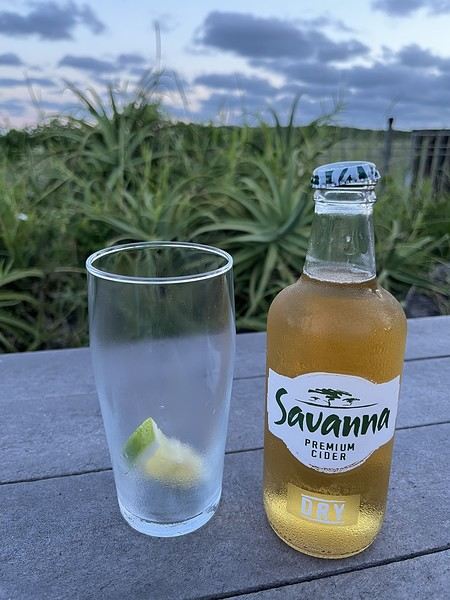
With my girlfriend Christelle, we’ve chosen South Africa for our first trip to Southern Africa, focusing on safaris—after a long debate with a Cape Town/Kruger combo. But that would’ve meant cutting out St Lucia, which would’ve been harder to fit into another trip. And St Lucia—thanks to Michel and all those travel journals—we really wanted to go there.
So our 11-night itinerary ended up like this, mostly shaped by school holidays: - 3 nights in St Lucia - 1 night in Hluhluwe - 1 night at Mkhaya Game Reserve (Eswatini) - 1 night at Hlane Royal National Park (Eswatini) - 3 nights in Kruger (Berg en Dal / Satara / Tamboti) - 1 night at Shindzela Tented Camp in the Timbavati private reserve - 1 final night in Kruger at Lower Sabie
All of this in the off-season and rainy season, just a month after catastrophic floods that killed over 150 people and seriously damaged Kruger’s infrastructure.
I’ll jump straight to St Lucia and skip the loooong journey to get there (with a layover in Frankfurt, landing in Johannesburg, a domestic flight to Durban, and the rest by rental SUV—First Car Rental, perfect, no complaints).
To motivate readers—especially some familiar faces here—I’ll drop in a first photo.
Practical aspects spring 2026: border to Murmansk, to Pskov, SIM cards, internet.
I took a few days to get some fresh air outside the Schengen-NATO prison. Between March 18, 2026, and March 25, 2026, as shown by the passport stamps:
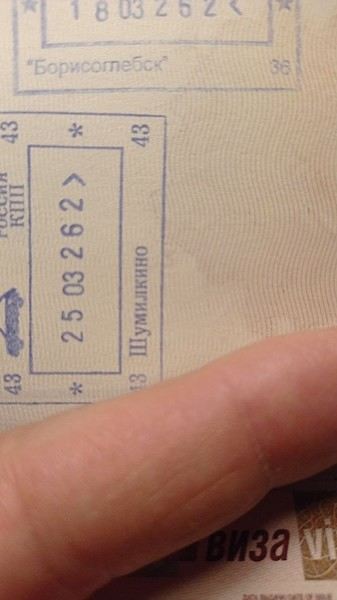
Borisoglebsk is the Russian border checkpoint after Kirkenes, on the road to Murmansk.
Kirkenes is a tiny town with a correspondingly small airport. Nothing has changed there: the minibuses to Murmansk wait on the right as you exit the airport. They’re synchronized with the two daily flights from Oslo—the SAS around 11:00 AM and Norwegian around 11:30 AM. They stop in Kirkenes at the corner of the Scandic for an hour, where other passengers can board, then head straight to the nearby border.
This is the least hassle Frontex/Schengen border. The Norwegian agent quickly scans your passport, and that’s it. No customs, since Norway is Schengen but not in the EU. On the Russian side, there’s a passport check and a quick customs inspection. All in all, crossing both the Norwegian and Russian checkpoints takes about 15 minutes.
A paper visa is required; e-visas aren’t accepted.
Two companies run the route: Avto Ekspress and Borodin: https://ae51.ru/routes/kirkenes-murmansk/ https://borodinbus.com/
The one-way fare is 5,500 ₽. You can either buy it online in rubles with a MIR card or make a formal reservation and pay in NOK cash to the driver. I took Borodin, and the price in NOK was much more expensive than in ₽.
=========================
On March 25, I left from Pskov via the Estonian border post at Luhaama. I spent three days in Murmansk, flew to St. Petersburg (SPB), stayed there for two days, then took an evening train to Pskov.
Since the end of February—and reportedly until the end of May—the Estonians have restricted the opening hours of the two border crossings near Pskov: Koidula (Pechory on the Russian side) and Luhaama (Izborsk on the Russian side). They’re closed at night between 7:00 PM and 7:00 AM. Right now, there’s a bus from Pskov at 7:00 AM to the border. It drops you off at the end of the road where truckers—many Kazakh and Serbian—are parked on the side. You finish the rest on foot to the barrier, where there’s a quick initial check for Ukrainian stamps in passports. Then you walk to the customs building, followed by passport control at the kiosk for motorists. After that, it’s a 500-meter walk to the Estonian checkpoint. At the moment, things seem calmer. Passport control is quick. The usual silly questions in English: "Where were you? Where are you going?" I just gave my most clueless smile: "Sorry, I don’t understand." Yeah, right—I don’t speak English, especially not at an Estonian border with a French passport. If they’re in a mood, though... A very quick bag inspection. Once you exit the Estonian post, walk to the bus stop sign by the road where another coach takes you to Riga.
The catch: in my case, last Wednesday, there were two passengers (Russians) with old Ukrainian stamps in their passports. The bus from the Estonian post to Riga was supposed to leave around 9:30 AM. We ended up leaving around noon after the two were grilled by the FSB. Since it was a weekday outside of holidays, the bus was half-empty. The fuller the bus and the more people with Ukrainian stamps, the worse the nightmare. Don’t book a same-day flight from Riga. I had a flight at 6:00 PM, so it worked out.
=============
The Kirkenes-Murmansk route is still clearly the easiest and fastest. But it’s not the most convenient since it’s way up north.
Next, I’d say the Gdansk-Kaliningrad route in the middle of the week. Avoid weekends and holiday departures/returns.
Avoid the Narva-Ivangorod route during Christmas, Easter, May 9, and *all* summer.
==============
About flights from Murmansk to St. Petersburg: prices are good. I bought my ticket the day before departure on Rossiya for 7,500 ₽, including 10 kg of luggage + a handbag.
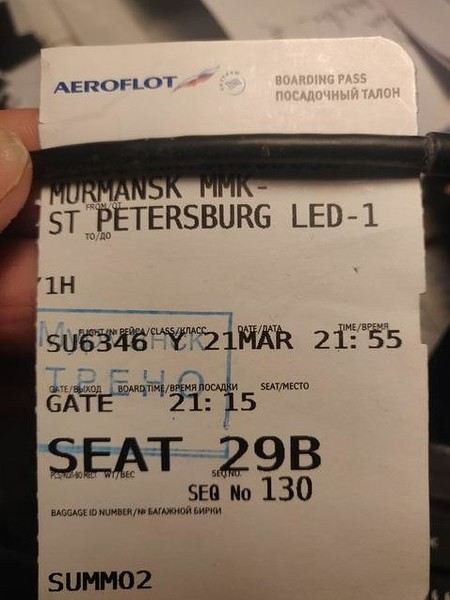
It’s the tail end of the northern lights season, and there were still crowds of Chinese tourists.
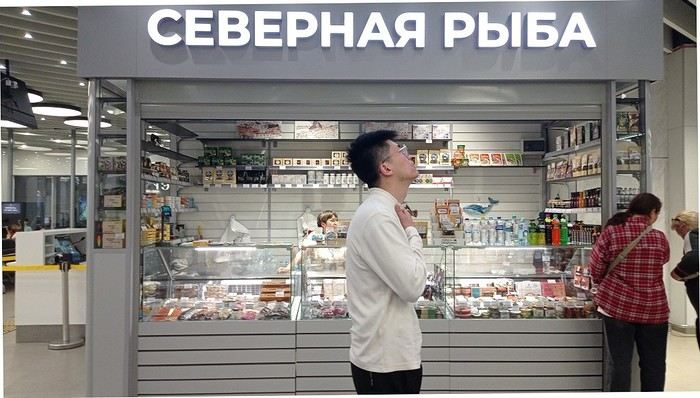
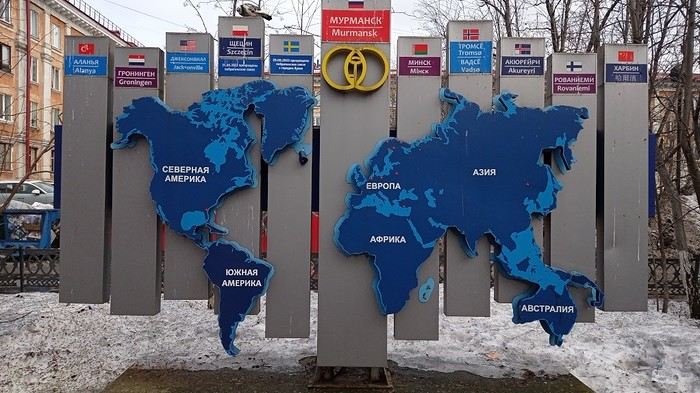
By the way, Murmansk is twinned with Harbin:
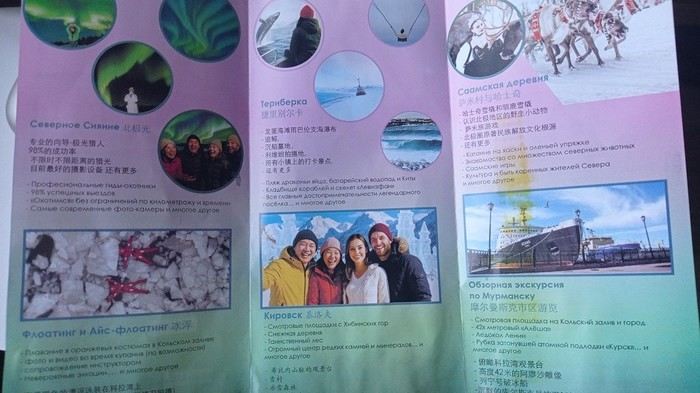
Chinese tourists are the largest foreign group, followed by Indians, then a mix of others from the Far East, Turks, Arabs, etc. Brochures are bilingual—Russian and Chinese:
============================
But let’s talk practical stuff. --
My domestic SIM card was restricted for SMS and internet for 24 hours. After that, if you want to keep using SMS, don’t turn off your phone—restarting triggers another 24-hour purgatory.
My Russian SIM cards (Megafon, MTS, Beeline) were activated as soon as I logged into their respective apps with my credentials.
Internet --
Telegram is heavily slowed down by authorities. To use it, you need to connect through proxy servers, which you load into the latest version of the app. Traffic is then rerouted internally within Telegram to servers outside Russia (Germany, Poland, Sweden, etc.). You can find these proxies on various channels. One is ChatVPN—check their website too.
For general internet use, like browsing the web, VPNs that work right now use the VLESS protocol. You can find several on Telegram by searching "VPN." A few free days, then payment in rubles or crypto.
Rozkomnadzor’s team are experts at this, so things can change. It’s a constant cat-and-mouse game.
Pskov is a special case. The city is near Estonia and has a large military base. Depending on NATO drone swarms launched from the Baltics, Wi-Fi can be completely suspended except for the most essential mobile apps. The drone swarms use the 4G network, and the powerful electronic jamming and drone suppression systems cause periods without Wi-Fi—including in hotels. Wired connections aren’t affected.
Borisoglebsk is the Russian border checkpoint after Kirkenes, on the road to Murmansk.
Kirkenes is a tiny town with a correspondingly small airport. Nothing has changed there: the minibuses to Murmansk wait on the right as you exit the airport. They’re synchronized with the two daily flights from Oslo—the SAS around 11:00 AM and Norwegian around 11:30 AM. They stop in Kirkenes at the corner of the Scandic for an hour, where other passengers can board, then head straight to the nearby border.
This is the least hassle Frontex/Schengen border. The Norwegian agent quickly scans your passport, and that’s it. No customs, since Norway is Schengen but not in the EU. On the Russian side, there’s a passport check and a quick customs inspection. All in all, crossing both the Norwegian and Russian checkpoints takes about 15 minutes.
A paper visa is required; e-visas aren’t accepted.
Two companies run the route: Avto Ekspress and Borodin: https://ae51.ru/routes/kirkenes-murmansk/ https://borodinbus.com/
The one-way fare is 5,500 ₽. You can either buy it online in rubles with a MIR card or make a formal reservation and pay in NOK cash to the driver. I took Borodin, and the price in NOK was much more expensive than in ₽.
=========================
On March 25, I left from Pskov via the Estonian border post at Luhaama. I spent three days in Murmansk, flew to St. Petersburg (SPB), stayed there for two days, then took an evening train to Pskov.
Since the end of February—and reportedly until the end of May—the Estonians have restricted the opening hours of the two border crossings near Pskov: Koidula (Pechory on the Russian side) and Luhaama (Izborsk on the Russian side). They’re closed at night between 7:00 PM and 7:00 AM. Right now, there’s a bus from Pskov at 7:00 AM to the border. It drops you off at the end of the road where truckers—many Kazakh and Serbian—are parked on the side. You finish the rest on foot to the barrier, where there’s a quick initial check for Ukrainian stamps in passports. Then you walk to the customs building, followed by passport control at the kiosk for motorists. After that, it’s a 500-meter walk to the Estonian checkpoint. At the moment, things seem calmer. Passport control is quick. The usual silly questions in English: "Where were you? Where are you going?" I just gave my most clueless smile: "Sorry, I don’t understand." Yeah, right—I don’t speak English, especially not at an Estonian border with a French passport. If they’re in a mood, though... A very quick bag inspection. Once you exit the Estonian post, walk to the bus stop sign by the road where another coach takes you to Riga.
The catch: in my case, last Wednesday, there were two passengers (Russians) with old Ukrainian stamps in their passports. The bus from the Estonian post to Riga was supposed to leave around 9:30 AM. We ended up leaving around noon after the two were grilled by the FSB. Since it was a weekday outside of holidays, the bus was half-empty. The fuller the bus and the more people with Ukrainian stamps, the worse the nightmare. Don’t book a same-day flight from Riga. I had a flight at 6:00 PM, so it worked out.
=============
The Kirkenes-Murmansk route is still clearly the easiest and fastest. But it’s not the most convenient since it’s way up north.
Next, I’d say the Gdansk-Kaliningrad route in the middle of the week. Avoid weekends and holiday departures/returns.
Avoid the Narva-Ivangorod route during Christmas, Easter, May 9, and *all* summer.
==============
About flights from Murmansk to St. Petersburg: prices are good. I bought my ticket the day before departure on Rossiya for 7,500 ₽, including 10 kg of luggage + a handbag.
It’s the tail end of the northern lights season, and there were still crowds of Chinese tourists.
By the way, Murmansk is twinned with Harbin:
Chinese tourists are the largest foreign group, followed by Indians, then a mix of others from the Far East, Turks, Arabs, etc. Brochures are bilingual—Russian and Chinese:
============================
But let’s talk practical stuff. --
My domestic SIM card was restricted for SMS and internet for 24 hours. After that, if you want to keep using SMS, don’t turn off your phone—restarting triggers another 24-hour purgatory.
My Russian SIM cards (Megafon, MTS, Beeline) were activated as soon as I logged into their respective apps with my credentials.
Internet --
Telegram is heavily slowed down by authorities. To use it, you need to connect through proxy servers, which you load into the latest version of the app. Traffic is then rerouted internally within Telegram to servers outside Russia (Germany, Poland, Sweden, etc.). You can find these proxies on various channels. One is ChatVPN—check their website too.
For general internet use, like browsing the web, VPNs that work right now use the VLESS protocol. You can find several on Telegram by searching "VPN." A few free days, then payment in rubles or crypto.
Rozkomnadzor’s team are experts at this, so things can change. It’s a constant cat-and-mouse game.
Pskov is a special case. The city is near Estonia and has a large military base. Depending on NATO drone swarms launched from the Baltics, Wi-Fi can be completely suspended except for the most essential mobile apps. The drone swarms use the 4G network, and the powerful electronic jamming and drone suppression systems cause periods without Wi-Fi—including in hotels. Wired connections aren’t affected.
3-month visa on arrival in Rwanda
Hi
Has anyone been to Rwanda recently and gotten a 3-month visa on arrival easily?
Thanks
Review of an expedition cruise to the Seychelles with Ponant from January 25 to February 2, 2026
Hi everyone,
It was totally by chance that I found this cruise while chatting with Alfred in November 2024. It wasn’t planned, but the price was attractive—one of those "great deals" from Ponant that I love and that don’t exist anymore. Since everyone’s wondering, here’s the answer without waiting for the end of the story: after my various loyalty discounts, I paid **3,250 € per person** for 8 nights/9 days on the expedition cruise *The Essentials of the Seychelles*.
Expedition cruises are by far our favorites. The outings are done by Zodiac with the ship’s naturalist guides, everything’s included, and there’s no need to add any excursions or prepare anything.
We’re liking long flights less and less, so to break up the trip, we decided to stop over in Doha for four days on the way there and one day on the way back.
I’m happy to share the good and not-so-good moments, the great surprises, and the disappointments of this trip with you.
It was totally by chance that I found this cruise while chatting with Alfred in November 2024. It wasn’t planned, but the price was attractive—one of those "great deals" from Ponant that I love and that don’t exist anymore. Since everyone’s wondering, here’s the answer without waiting for the end of the story: after my various loyalty discounts, I paid **3,250 € per person** for 8 nights/9 days on the expedition cruise *The Essentials of the Seychelles*.
Expedition cruises are by far our favorites. The outings are done by Zodiac with the ship’s naturalist guides, everything’s included, and there’s no need to add any excursions or prepare anything.
We’re liking long flights less and less, so to break up the trip, we decided to stop over in Doha for four days on the way there and one day on the way back.
I’m happy to share the good and not-so-good moments, the great surprises, and the disappointments of this trip with you.
Some trips are born twice - Peru April - May 2025
Some trips are born twice.
Ours was supposed to happen in 2020. Everything was ready: the itinerary, the flight tickets, hotel reservations and Machu Picchu, the rental car, dreams of high altitudes and wide-open spaces. And then the world stopped.
Like so many other plans, our trip to Peru was put on hold. Disappointment was followed by a more concrete reality: paperwork, endless back-and-forth, and battles to recover some of the costs we’d already paid.
The years went by. Life moved on, with its shifting priorities and unexpected twists. Rescheduling this trip wasn’t possible until 2025.
The itinerary stayed mostly true to what we’d imagined five years earlier. One major difference, though—in 2020, we’d planned to rent a car and explore the roads completely independently. Most importantly, we hadn’t included the three-day Ausangate trek, due to lack of time.
For 2025, our plans evolved. 4x4 rental prices had skyrocketed, and when we looked at our schedule more closely, we realized quite a few days didn’t actually need a vehicle. So we made a different choice and opted for private drivers instead. A decision we never regretted. Always punctual, thoughtful, and available... they were so much more than just drivers.
All our reservations were made in January, except for the trek, which we booked in February.
Finding reliable drivers on our own was tough, so we asked Laurent from Tout Pérou to handle it for us. Going through Tout Pérou also gave us a discount on the train ride to Aguas Calientes, so Laurent booked those tickets too. He also bought our Machu Picchu entrance tickets at the same price we would’ve paid on the official website. When comparing domestic flight prices, we found it was cheaper to book from Peru, so Laurent took care of those as well.
This time, nothing was going to stop us. Peru was waiting. And we were ready. 🙂
Ours was supposed to happen in 2020. Everything was ready: the itinerary, the flight tickets, hotel reservations and Machu Picchu, the rental car, dreams of high altitudes and wide-open spaces. And then the world stopped.
Like so many other plans, our trip to Peru was put on hold. Disappointment was followed by a more concrete reality: paperwork, endless back-and-forth, and battles to recover some of the costs we’d already paid.
The years went by. Life moved on, with its shifting priorities and unexpected twists. Rescheduling this trip wasn’t possible until 2025.
The itinerary stayed mostly true to what we’d imagined five years earlier. One major difference, though—in 2020, we’d planned to rent a car and explore the roads completely independently. Most importantly, we hadn’t included the three-day Ausangate trek, due to lack of time.
For 2025, our plans evolved. 4x4 rental prices had skyrocketed, and when we looked at our schedule more closely, we realized quite a few days didn’t actually need a vehicle. So we made a different choice and opted for private drivers instead. A decision we never regretted. Always punctual, thoughtful, and available... they were so much more than just drivers.
All our reservations were made in January, except for the trek, which we booked in February.
Finding reliable drivers on our own was tough, so we asked Laurent from Tout Pérou to handle it for us. Going through Tout Pérou also gave us a discount on the train ride to Aguas Calientes, so Laurent booked those tickets too. He also bought our Machu Picchu entrance tickets at the same price we would’ve paid on the official website. When comparing domestic flight prices, we found it was cheaper to book from Peru, so Laurent took care of those as well.
This time, nothing was going to stop us. Peru was waiting. And we were ready. 🙂
Veneto: Dolomites and Opera
I'm starting a new travel journal in Italy.
It's about a month-long trip (from September 3, 2025, to October 4, 2025), or rather a part of it. This section matches the title: an opera festival in Verona (one evening) and the Dolomites in the Veneto region.
I'm posting the part of the trip I think will interest French-speaking readers the most (since this is where I saw the most French travelers).
Here’s a quick summary:
- Trip in September 2025
- Solo travel with camping (caravan)
- Small geographic area: besides Verona, the surroundings of the Marmolada massif and Cortina d'Ampezzo.
- Main but not exclusive activity: hiking.
Since I have limited internet access where I am now, I’ll be writing slowly. Here we go!
Day 1: Thursday, September 4, 2025
I arrived in Veneto under the sun and with warm weather. I drove to Verona and tried to find a spot at the campsite (Verona Village) located south of the city. Unfortunately, it was full. Booking on the website was mandatory, but when I tried to reserve a few days ago, the site never moved from the "reservation" step to the "payment" step (I don’t know why—it’s always like that in these cases). I found another solution over the phone; the drive from southern Verona to the northeast was a bit long, but I finally settled at the "Oro Verde" campsite. It’s an "agricampeggio" (farm camping or rural campsite) on the outskirts of the city, and its name (green gold) suggests they produce olives there. Since it wasn’t late, I biked to the Adige River, following the recommended route into the city.
Since I have limited internet access where I am now, I’ll be writing slowly. Here we go!
Day 1: Thursday, September 4, 2025
I arrived in Veneto under the sun and with warm weather. I drove to Verona and tried to find a spot at the campsite (Verona Village) located south of the city. Unfortunately, it was full. Booking on the website was mandatory, but when I tried to reserve a few days ago, the site never moved from the "reservation" step to the "payment" step (I don’t know why—it’s always like that in these cases). I found another solution over the phone; the drive from southern Verona to the northeast was a bit long, but I finally settled at the "Oro Verde" campsite. It’s an "agricampeggio" (farm camping or rural campsite) on the outskirts of the city, and its name (green gold) suggests they produce olives there. Since it wasn’t late, I biked to the Adige River, following the recommended route into the city.
7 weeks and 150 years between us on a southern Morocco road trip
We arrive in the evening in Marrakesh, and a taxi arranged by our friendly Riad is waiting for us. The driver takes us to the door, where we’re briefly greeted by our hosts. The room is heated—phew—because it’s really cold on this January 17th for our arrival. Riad Alisma, where we’re staying for 2 nights. The next morning, it’s pouring rain when we wake up, but after a good breakfast, the rain has calmed down. Off we go to the medersa, which allows for a relatively sheltered visit. We’d visited this palace 15 years ago—it’s been renovated since then.
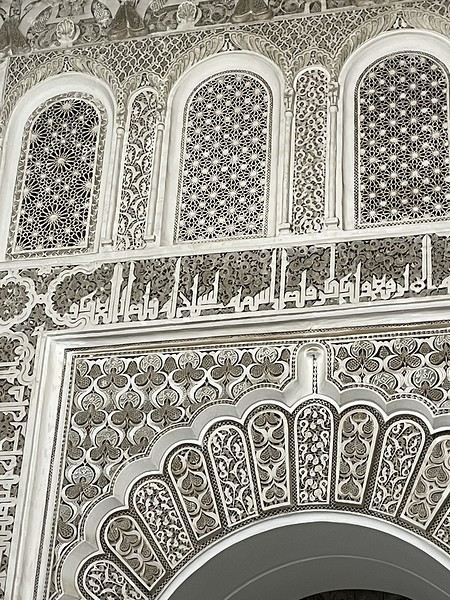
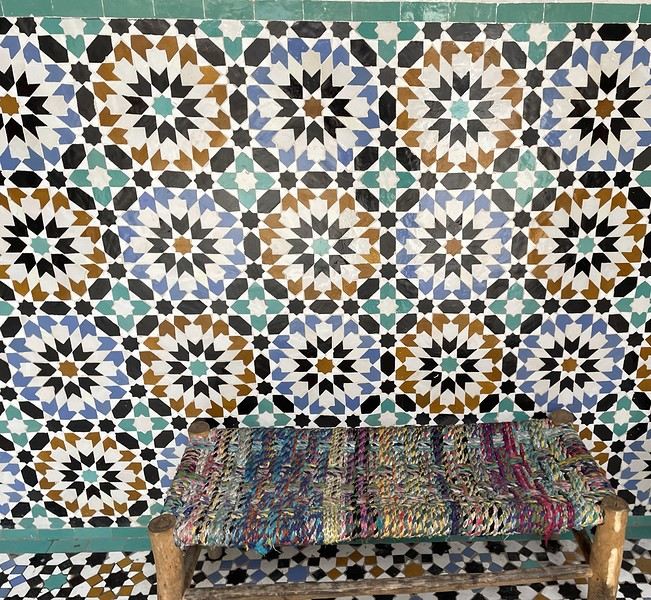
From there, without the rain, we wander aimlessly and eventually end up near the tanneries, but it’s Sunday, and there’s very little activity. Of course, we get hassled by a tout.
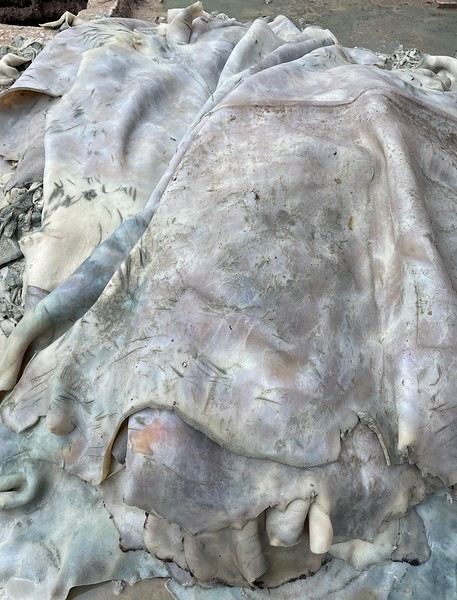
Here, the hides after being treated with lime—I love the colors.
We part ways a bit annoyed. He gets a little revenge by giving us bad directions, and we end up outside the city walls. We decide to take a taxi to the new modern art museum—60 dirhams for the 5 km, which is nothing when you think about it. That tout, who we didn’t ask for anything and made it clear we weren’t buying anything, dragged us into a shop supposedly only open that day and demanded 50 dirhams for his "services"! Let’s forget that bad moment and enjoy the exhibition at the MACAL.
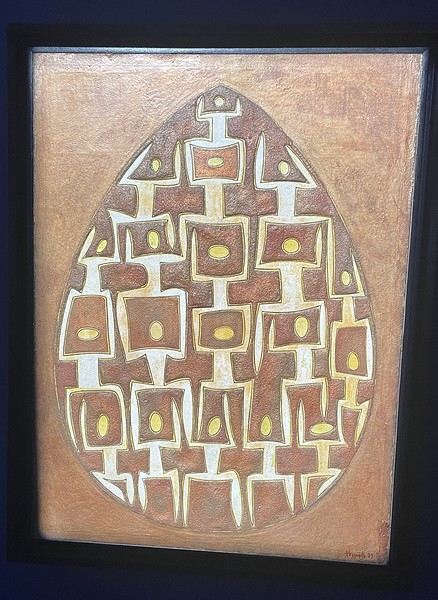
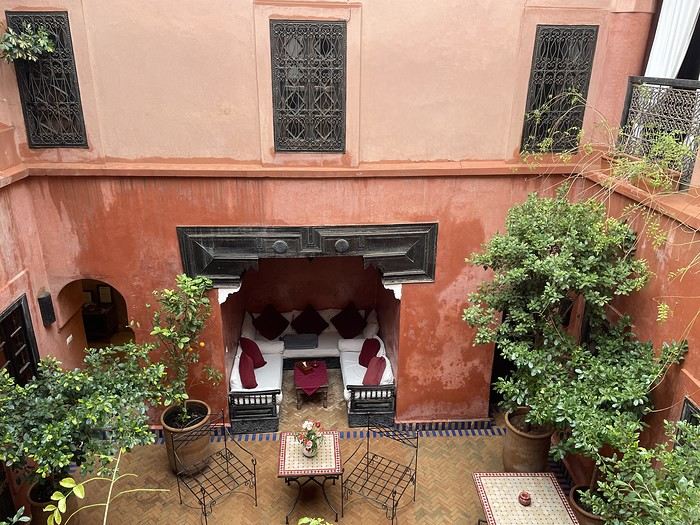
The taxi on the way back drops us off at Place des Ferblantiers, not far from our Riad. We’re a little peckish—it’s worth mentioning that at lunchtime, we only ate a plate of beans from a street vendor. So, we buy a bunch of little sweets, each more delicious than the last, at Ajar. We snack while sipping mint tea and watching life go by around us. A final visit to the Museum of Moroccan Cuisine on our way back helps us dodge a few more showers. Then it’s back to the Riad. The atmosphere in the city is heating up—it’s the AFCON final tonight. The temperatures, though? Not so much. We ordered a meal at the Riad, and it was a good call—not only was it really tasty, but the rain also picked up again. Our day in Marrakesh ends under the covers with a good book and some photo sorting. Still, we managed 10,750 steps. View of our Riad
Tomorrow, we’ll pick up our rental car from Medloc and head to Essaouira.
From there, without the rain, we wander aimlessly and eventually end up near the tanneries, but it’s Sunday, and there’s very little activity. Of course, we get hassled by a tout.
Here, the hides after being treated with lime—I love the colors.
We part ways a bit annoyed. He gets a little revenge by giving us bad directions, and we end up outside the city walls. We decide to take a taxi to the new modern art museum—60 dirhams for the 5 km, which is nothing when you think about it. That tout, who we didn’t ask for anything and made it clear we weren’t buying anything, dragged us into a shop supposedly only open that day and demanded 50 dirhams for his "services"! Let’s forget that bad moment and enjoy the exhibition at the MACAL.
The taxi on the way back drops us off at Place des Ferblantiers, not far from our Riad. We’re a little peckish—it’s worth mentioning that at lunchtime, we only ate a plate of beans from a street vendor. So, we buy a bunch of little sweets, each more delicious than the last, at Ajar. We snack while sipping mint tea and watching life go by around us. A final visit to the Museum of Moroccan Cuisine on our way back helps us dodge a few more showers. Then it’s back to the Riad. The atmosphere in the city is heating up—it’s the AFCON final tonight. The temperatures, though? Not so much. We ordered a meal at the Riad, and it was a good call—not only was it really tasty, but the rain also picked up again. Our day in Marrakesh ends under the covers with a good book and some photo sorting. Still, we managed 10,750 steps. View of our Riad
Tomorrow, we’ll pick up our rental car from Medloc and head to Essaouira.
From Nan to Chiang Rai: itinerary ideas?
Hi, just a quick note mainly for Samsong, even if he’s still giving me the silent treatment.
I’ve been in Nan since yesterday and... I love it! So thanks, Thierry. It’s exactly the kind of place I’d been dreaming of... Even if communication is a bit tough, it’s not impossible. They don’t even know the most basic English words! Everyone laughs and they’re the first to pull out their phones to... translate. They’re even quicker on the uptake than I am.
And then there’s the time I say Nan (pronounced "Nane"). They don’t understand me. After a while (sometimes a long one), they reply: "Ah, Nan?" (pronounced "Nane") 😵🤳😃
The town is exactly how you described it back in 2022. Though I’m surprised to find so many trendy, slightly intellectual "Cafés." Apparently, coffee—excellent everywhere—is king in Nan. It feels like a university town. And it seems pretty lively at night! But for now, I’m going to bed early. I caught a nasty cold, which didn’t stop me from walking 12 km this morning. But I came back to my accommodation by 3 PM (gorgeous and luxurious with top-notch service for 800 baht—even a cute local welcome gift this morning, plus other unexpected touches like a bottle of honey and chrysanthemum flowers for tea. The lady must’ve guessed I was coming down with something yesterday). I thought about going out for dinner but didn’t have the energy. I think I’ve got at least 39°C fever...
Anyway, I’m sending you this message, Thierry, because you mentioned a daily bus to Chiang Rai, so I didn’t look into it. But now it’s a real problem—no buses to Chiang Rai, only taxis. At least 2,500 baht for the cheapest one! I’ll check the bus station directly tomorrow. Online, it’s all taxis, no buses. I’d like to explore the countryside/mountains if I can find an affordable driver. Any ideas for destinations or itineraries? Thanks.
The town is exactly how you described it back in 2022. Though I’m surprised to find so many trendy, slightly intellectual "Cafés." Apparently, coffee—excellent everywhere—is king in Nan. It feels like a university town. And it seems pretty lively at night! But for now, I’m going to bed early. I caught a nasty cold, which didn’t stop me from walking 12 km this morning. But I came back to my accommodation by 3 PM (gorgeous and luxurious with top-notch service for 800 baht—even a cute local welcome gift this morning, plus other unexpected touches like a bottle of honey and chrysanthemum flowers for tea. The lady must’ve guessed I was coming down with something yesterday). I thought about going out for dinner but didn’t have the energy. I think I’ve got at least 39°C fever...
Anyway, I’m sending you this message, Thierry, because you mentioned a daily bus to Chiang Rai, so I didn’t look into it. But now it’s a real problem—no buses to Chiang Rai, only taxis. At least 2,500 baht for the cheapest one! I’ll check the bus station directly tomorrow. Online, it’s all taxis, no buses. I’d like to explore the countryside/mountains if I can find an affordable driver. Any ideas for destinations or itineraries? Thanks.
Lisbon/Galveston Transatlantic Review – NCL Viva in The Haven
Hi everyone,
Okay, here I go—I haven’t done a cruise review in ages, and even longer since I’ve posted one on this forum. So, this is kinda your fault, Catherine, if I’m getting back into it... I just hope I haven’t lost my touch!
It’s a transatlantic cruise, so there are a lot of sea days. That means this review will mostly focus on the ship, especially the "Haven" section, which doesn’t get much coverage on this forum. There’ll definitely be some comparisons with MSC’s Yacht Club, since they’re direct competitors.
This will be my third cruise with NCL—a company I really love—but my first in The Haven.
My two previous cruises were on smaller ships: the NCL Sun for the Chilean fjords and the NCL Spirit in February 2025 in Asia, departing from Taiwan and arriving in Korea. I *loved* the Spirit.
Alright, let’s get started!
This trip was booked almost last-minute in early October for late November, after I had to cut short my August trip for medical reasons.
At first, when I looked at this cruise, I hadn’t specifically decided to go for The Haven. I wanted a relaxing cruise but still with destinations I hadn’t been to before. I kinda stumbled upon this one, and the itinerary appealed to me. I also found the balcony cabin price pretty good—around 2800 € for a balcony cabin (for two), all-inclusive package included. Not including flights, of course. In the end, we decided to try The Haven (obviously not the same price), but I think we got a great deal for the promised perks.
Itinerary: Departure from Lisbon, arrival in Galveston, Texas. Stops: St. Martin, St. Thomas, La Romana, Cabo Rojo, Falmouth in Jamaica.
It’s a transatlantic cruise, so there are a lot of sea days. That means this review will mostly focus on the ship, especially the "Haven" section, which doesn’t get much coverage on this forum. There’ll definitely be some comparisons with MSC’s Yacht Club, since they’re direct competitors.
This will be my third cruise with NCL—a company I really love—but my first in The Haven.
My two previous cruises were on smaller ships: the NCL Sun for the Chilean fjords and the NCL Spirit in February 2025 in Asia, departing from Taiwan and arriving in Korea. I *loved* the Spirit.
Alright, let’s get started!
This trip was booked almost last-minute in early October for late November, after I had to cut short my August trip for medical reasons.
At first, when I looked at this cruise, I hadn’t specifically decided to go for The Haven. I wanted a relaxing cruise but still with destinations I hadn’t been to before. I kinda stumbled upon this one, and the itinerary appealed to me. I also found the balcony cabin price pretty good—around 2800 € for a balcony cabin (for two), all-inclusive package included. Not including flights, of course. In the end, we decided to try The Haven (obviously not the same price), but I think we got a great deal for the promised perks.
Itinerary: Departure from Lisbon, arrival in Galveston, Texas. Stops: St. Martin, St. Thomas, La Romana, Cabo Rojo, Falmouth in Jamaica.
Looking for a beach spot near Bangkok
Hi there,
I’m looking for a beach spot within 3 hours max of Bangkok for the end of my trip (January). I know full well I won’t find that postcard-perfect vibe of the more remote islands! But I don’t have a choice. If you’ve got any ideas... no high-rises, obviously not Pattaya, somewhere quiet, swimming possible, a hotel right on the beach (and not too dirty, the beach itself!) I’ve looked at hotels around Ko Samet or, across from it, on the mainland. I spotted the Bann Pae Cabana. But nothing really exciting on either side. New ideas welcome! 🙂
I’m looking for a beach spot within 3 hours max of Bangkok for the end of my trip (January). I know full well I won’t find that postcard-perfect vibe of the more remote islands! But I don’t have a choice. If you’ve got any ideas... no high-rises, obviously not Pattaya, somewhere quiet, swimming possible, a hotel right on the beach (and not too dirty, the beach itself!) I’ve looked at hotels around Ko Samet or, across from it, on the mainland. I spotted the Bann Pae Cabana. But nothing really exciting on either side. New ideas welcome! 🙂
Questions about a trip to Paris around mid-February 2026
Hi everyone,
I’m looking into a trip to Paris around mid-February. I’d love to know more about the temperature (weather) in Paris, museum access (closures or anything else), how easy it is to get around on foot (slippery due to ice?), public transport, etc.
Also, are there any events or activities I absolutely shouldn’t miss? I could adjust my dates based on what you know.
On another note, I’d love to catch a hockey game. Are there any around Paris? I’m happy to watch a few games no matter the level 🏒🥅
FYI, I’m not afraid of the cold since I’m from Quebec 😁😆😆🧑🌾
Thanks in advance for your help! 👍😊❤️❤️
I’m looking into a trip to Paris around mid-February. I’d love to know more about the temperature (weather) in Paris, museum access (closures or anything else), how easy it is to get around on foot (slippery due to ice?), public transport, etc.
Also, are there any events or activities I absolutely shouldn’t miss? I could adjust my dates based on what you know.
On another note, I’d love to catch a hockey game. Are there any around Paris? I’m happy to watch a few games no matter the level 🏒🥅
FYI, I’m not afraid of the cold since I’m from Quebec 😁😆😆🧑🌾
Thanks in advance for your help! 👍😊❤️❤️
Ding-Ding
Hey fellow cyclists,
Cyclists on trails, paths, or greenways—why do so few (if any) of you use your bells to warn walkers, runners, and other pedestrians when they’re moving in the same direction as you?
I exercise every day (brisk walking) among you in France and abroad, and it’s something I’ve noticed—often with a few scares (and I’m guessing some accidents between cyclists or with pedestrians).
Personally, I always stick to the rules, walking on the left (facing traffic) so I can see you coming, but not everyone does that—neither pedestrians nor cyclists, and let’s be honest, it’s a bit of a free-for-all. 🤪
Your bikes make little to no noise, so why take risks and put others at risk too?
A quick, light *ding-ding* would be enough to warn people—what do you think? 😅
Trip to Israel / Holy Land in 2022
For once, given the destination, the author can’t set aside their religious beliefs, which inevitably shape this kind of journey.
The Trip
Early in the morning at Orly Airport, in the departure lounge for Tel Aviv, a group of about forty young men arrives, all looking identical! The same neatly trimmed beards, the same identical haircuts, the same outfits with a touch of whimsy… The effect of seeing these forty “clones” is striking and raises questions! Why such perfect uniformity among this group of guys? Do they belong to the same family, sports club, cultural association, or religious group? A mystery! At the same time, the waiting area fills up with men who are more expected, given our destination: they wear large felt hats and dress in black suits with white shirts—Hassidim? The ones I’ve glimpsed fleetingly in Paris or New York, who have always been a mystery to me. More discreet-looking women accompany them.
I’m already in Israel without even setting foot there! Plus, I witness the preparations for an improvised show.
The “clones” start a flash mob at seven in the morning in a Paris airport departure lounge! Some pull out musical instruments, others begin singing and dancing. A music with strange, unfamiliar sounds enchants the waiting passengers.
The flight crew finally arrives, cutting through the flash mob, bringing us back to the reality of the moment: waiting to take off soon for this so troubling and mysterious Middle East. We go through passport control, presenting our faces to the scanners that operate the exit gate. The group of “identical” young men gets held up by the system: logically, a scanner let the first one through but blocked the second because of his perfect resemblance to the first. To the machine, the same person shouldn’t be able to cross the border twice? But eventually, the whole group makes it through the glass doors, leaving the Republic behind. My simplistic explanation is left looking ridiculous.
At every new destination, I ask myself countless questions, revealing a certain anxiety tied to the unknown: fear of attacks (one just happened at a bus station in Jerusalem), possible police pressure, unexpected events. Israel isn’t known for being a relaxing destination. In reality, if I did face a serious difficulty in this country, it wasn’t one I had anticipated—and it wasn’t particularly tied to Israel!
I take my seat by the window, which is already occupied by a little girl. Her father, a Hassidic man, politely asks if I’d be willing to give up my seat for his daughter. I tell him I’d be happy to make her happy. Seeing me masked, he asks if I’d like him and his daughter to wear masks too. In response, I take off my mask so as not to impose any constraints on them and wish them a good flight.
It was the first time I’d approached and spoken to a Hassidic man. He didn’t speak the way I might have expected after watching *Rabbi Jacob* with Louis de Funès; he spoke perfectly without an accent, just like you and me! Beware of stereotypes! Throughout the flight, I sneak glances at my strange neighbor: he prayed silently without stopping for a minute. His daughter, as good as gold, never interrupted him. He used several religious accessories during his three-hour continuous prayer: a kippa, a prayer shawl, and a rosary?… I left that plane deeply impressed, me, who has a very distant relationship with my Creator and only prays now and then.
The Trip
Early in the morning at Orly Airport, in the departure lounge for Tel Aviv, a group of about forty young men arrives, all looking identical! The same neatly trimmed beards, the same identical haircuts, the same outfits with a touch of whimsy… The effect of seeing these forty “clones” is striking and raises questions! Why such perfect uniformity among this group of guys? Do they belong to the same family, sports club, cultural association, or religious group? A mystery! At the same time, the waiting area fills up with men who are more expected, given our destination: they wear large felt hats and dress in black suits with white shirts—Hassidim? The ones I’ve glimpsed fleetingly in Paris or New York, who have always been a mystery to me. More discreet-looking women accompany them.
I’m already in Israel without even setting foot there! Plus, I witness the preparations for an improvised show.
The “clones” start a flash mob at seven in the morning in a Paris airport departure lounge! Some pull out musical instruments, others begin singing and dancing. A music with strange, unfamiliar sounds enchants the waiting passengers.
The flight crew finally arrives, cutting through the flash mob, bringing us back to the reality of the moment: waiting to take off soon for this so troubling and mysterious Middle East. We go through passport control, presenting our faces to the scanners that operate the exit gate. The group of “identical” young men gets held up by the system: logically, a scanner let the first one through but blocked the second because of his perfect resemblance to the first. To the machine, the same person shouldn’t be able to cross the border twice? But eventually, the whole group makes it through the glass doors, leaving the Republic behind. My simplistic explanation is left looking ridiculous.
At every new destination, I ask myself countless questions, revealing a certain anxiety tied to the unknown: fear of attacks (one just happened at a bus station in Jerusalem), possible police pressure, unexpected events. Israel isn’t known for being a relaxing destination. In reality, if I did face a serious difficulty in this country, it wasn’t one I had anticipated—and it wasn’t particularly tied to Israel!
I take my seat by the window, which is already occupied by a little girl. Her father, a Hassidic man, politely asks if I’d be willing to give up my seat for his daughter. I tell him I’d be happy to make her happy. Seeing me masked, he asks if I’d like him and his daughter to wear masks too. In response, I take off my mask so as not to impose any constraints on them and wish them a good flight.
It was the first time I’d approached and spoken to a Hassidic man. He didn’t speak the way I might have expected after watching *Rabbi Jacob* with Louis de Funès; he spoke perfectly without an accent, just like you and me! Beware of stereotypes! Throughout the flight, I sneak glances at my strange neighbor: he prayed silently without stopping for a minute. His daughter, as good as gold, never interrupted him. He used several religious accessories during his three-hour continuous prayer: a kippa, a prayer shawl, and a rosary?… I left that plane deeply impressed, me, who has a very distant relationship with my Creator and only prays now and then.