Results for "Mananara+Nord+|+122+>+63"
1357 results found.
Trajet Mananjary-Ile de Ste Marie à Madagascar English translation pending
Bonjour, je pars à Mada le 1er juin, j'atterris à Tana, vais a Fiaranantsoa, et pis prend le train jusqu'à la côte Est, manaja ou qque chose comme ça ! qqun m'a dit que
y'avait rien pour relier cette ville à l'île de Ste marie, sur la côte Est..si qqun l'a fait ou a des conseils a me donner ils sont tous les bienvenus !!! taxi brousse il met longtemps ? ou en bus alors...en avion ? Eclairez-moi !
merci
merci
Madagascar: de Ihosy à Fort Dauphin English translation pending
Bonjour,
quelqu'un connaît-il la route entre Ihosy et Fort Dauphin ?
vaut-elle le coup (voiture, sans doute 4x4) ?
Est-ce une perte de temps (la route semble vraiment mauvaise) ?
Je ne connais que le Nord de Mada et Monrondave, cette partie du territoire m'attire, qu'en pensez-vous ?
Merci
des pirlwes
Itinéraire pour trois semaines à Madagascar? English translation pending
Nous pensons partir 3 semaines en septembre à MADAGASCAR. Quel est l'itinéraire incontournable à faire ?
Merci à tous.
Tsiribina, Manabola et Tsingy à Madagascar English translation pending
bonjour a tous
lors mon drenier voyage a mada avec mon epouse j ai fait la connaissance de deux jeunes gasy super toujours a l heure (tres tatillon sur l heure) tres appreciable a mada
ils sont specialistes sur les rivieres de l ouest travaillent avec uncopain a eux
l aine c est :roger bloda le cadet aina et le copain eric
ils ont deux voiture une R21 une 405 et un 4X4 land cruiser toyota
ils sont specialistes de la tsiribina au depart de tana
antsirabe - miandrivazo -descente tsiribina-belotsiribina - 4X4 bekopaka tsingy et retour par morondava par les baobabs sejour possible puis tana ou suite
ou tana - tsirisomandity (ouest) petit avion descente mananbola vers tsingy puis retour vers morondava par 4X4
et meme chose
il peuvent aussi organiser d autres circuits tana_ fianar-train_ manakara-retour par ranmafana ou manajary pour retour par panganlanes vers tamataves ou sur tulear
voila leur contact qualite prix imbattablej en suis a mon 18 eme voyage depuis 1991
e mail: roger_bloda@yahoo.fr
tel: 00 261 320210587
adresse : lot IVV 9 b TER ankazomanga nord tananrivo 101 madagascar
c est des jeunes qui essayent se s ensortir tres serieux ils ont toutes assurances et etablissent avec vous un contract ecrit au depart
abon voyage a mada
e mail: roger_bloda@yahoo.fr
tel: 00 261 320210587
adresse : lot IVV 9 b TER ankazomanga nord tananrivo 101 madagascar
c est des jeunes qui essayent se s ensortir tres serieux ils ont toutes assurances et etablissent avec vous un contract ecrit au depart
abon voyage a mada
Conseils sur Madagascar et les Comores English translation pending
😉 je pars à Madagascar samedi 13 août dont 1 semaine aux Comores...J'aimerais savoir ce qu'il y a faire aux Comores car il n'y a pas grand chose dans les guides. Puis 2 ou 3 semaines à barouder à Madagascar. Je ne sais s'il vaut mieux aller vers le sud ou le nord...tout me séduit...Pourriez vous me donner quelques conseils. Merci à tous
2eme séjour à Madagascar English translation pending
Bonjour,
Au 1er séjour à Mada', j'ai fait la N7 de Tana' à Ifaty puis Diégo Suarez et fin des vacances sur Nosy Be.
Maintenant, je projette de faire l'est.
Plus précisément : Fort Dauphin, Fianar/ Manakara en train, Mananjary, Mahanoro (canal des pangalanes), Tamatave, Ste Marie.
Qu'en pensez vous?
Quels sont les "incontournables" ? Et les bons plans.
Merci de vos conseils
Madagascar: infos parcs naturels, transports et hébergement? English translation pending
Bonjour à tous,
Je voudrais avoir une idée à travers vos expériences des conditions (transport, hébergement et budget correspondant) pour visiter divers sites et parcs naturels à Madagascar (plutôt Ouest direction Tsingy de Bemaharana ou Nord direction Ankarana) (vous excuserez les orthographes je n'ai pas ma carte sous la main!). A lire les guides, pour se déplacer de ville en ville ça semble plutôt "facile" par les "transports en commun", par contre plutôt galère-galère pour visiter ces sites naturels. De plus je n'ai pas envie de trimballer ma tente et ma popotte pendant 3 semaines sur mon petit dos pas musclé ; voila pourquoi je me pose la question de faire appel à un tour opérator local pour des excursions de quelques jours (prendre un tour tout compris ou bien louer une voiture avec chauffeur)(sachant que nous serons 6 pour diviser l'addition). Est-ce que vous avez une expérience des tarifs pratiqués et des conditions? Merci...
De retour de Madagascar English translation pending
Nous rentrons enchantés de 3, 5 semaines à Mada pour un trajet classique Tana-Tulear (avec le détour par Manakara en train) + 2 jours à Perinet chez les Indris pour finir.
A votre disposition pour quelques infos fraiches.
'Lut
Lo
A votre disposition pour quelques infos fraiches.
'Lut
Lo
Transports locaux et conseils sur Madagascar English translation pending
bonjour a tous
je souhaite partir 3 semaine et decouvrir madagascar
Mon but connaitre cette ile à pied et transport locaux
Si vous avez tenté l'expérince j'attend vos conseils
Merci
Taye
Madagascar à vélo English translation pending
Salut tout l'monde
Je pars 1 mois à Madagascar pour la 1° fois fin Avril 2004. Je n'ai encore aucune idée de mon itinéraire à vélo. Nord, Sud, ... ? A priori, j'aurais envie de visiter l'Andringitra et l'Isalo. J'aimerai bien pouvoir grimper aussi. C'est pourquoi je pensais à une descente le long du canal des Pangalanes, l'Andrigintra, Tulear, puis remontée par la côte Ouest. Est ce que les routes seront praticables sur la côte Est à cette période ? Je me suis laissé dire que certaines sont encore innondées en Avril, surtout à l'Est.
Et si certains y ont grimpé, au Nord également, je suis preneur de toute info(quel niveau minimum, ...) Merci beaucoup. A plouch
Je pars 1 mois à Madagascar pour la 1° fois fin Avril 2004. Je n'ai encore aucune idée de mon itinéraire à vélo. Nord, Sud, ... ? A priori, j'aurais envie de visiter l'Andringitra et l'Isalo. J'aimerai bien pouvoir grimper aussi. C'est pourquoi je pensais à une descente le long du canal des Pangalanes, l'Andrigintra, Tulear, puis remontée par la côte Ouest. Est ce que les routes seront praticables sur la côte Est à cette période ? Je me suis laissé dire que certaines sont encore innondées en Avril, surtout à l'Est.
Et si certains y ont grimpé, au Nord également, je suis preneur de toute info(quel niveau minimum, ...) Merci beaucoup. A plouch
Madagascar - June 2025
Five years of an unintended break... The closure of VF, COVID... What a joy to rediscover the pleasure of sharing!
I’ve stayed true to my habits: the following account is a collection of practical tips rather than a travel journal...
Madagascar is as big as France and Belgium combined. In three weeks, choices have to be made! It was the Great Tsingy that inspired our trip. We decided to focus on the southwest and the RN7. We skipped the Deep South and the North. Oh well...
OUR ITINERARY IN 3 WEEKS:
Fri 6 June – Direct AF flight to Tana – Flight arrives at 10:30 PM – Tana Sat – Antsirabe Sun – Miandrivazo Mon – Drive to the Masiakampy pier – Descent of the Tsiribihina River by pirogue - Bivouac Tue – Descent of the Tsiribihina River by pirogue - Bivouac Wed – Descent of the Tsiribihina River by pirogue – Bekopaka Thu – Pirogue on the Manambolo River and Small Tsingy of Bemaraha – Bekopaka Fri – Great Tsingy of Bemaraha – Bekopaka Sat – Avenue of the Baobabs – Morondava Sun – Belo sur Mer Mon – Free day – Belo sur Mer Tue – Manja Wed – Andavadoaka Thu – Free day – Andavadoaka Fri – Salary Lagoon – Mangily Sat – Ranohira Sun – Isalo National Park - Ranohira Mon – Anja Reserve - Ambalavao - Fianarantsoa Tue – FCE train canceled – Visit to a Tanala village - Manakara Wed – Pirogue on the Pangalanes Canal – Ranomafana Thu – Ranomafana NP – Ranomafana Fri – Ambositra – Antsirabe Sat 28 June – AF flight to Paris – Flight departs at 11:55 PM
TRIP ORGANIZATION: I prepared my trip using the usual guides (LP and Rough Guide), the internet, and the Freytag & Berndt map (1:1,000,000). I’m old-school—I still love visualizing my route on a paper map, even though in Madagascar, it’s misleading because some National Roads are only national in name!...
The agency: Since we couldn’t deal directly with a driver-guide (we lacked reliable info to take the plunge), we went through an agency to organize the logistics of our trip. We didn’t feel like using bush taxis (not enough time) or driving a 4x4 ourselves (neither the skills nor the boldness). The French agency connected us with a local agency, to whom I sent my detailed itinerary by email. A few exchanges via email and WhatsApp calls allowed us to finalize everything quickly after some adjustments. As you’ve gathered... we multiplied the commissions, which inflated the budget. That said, in the end, we were thrilled with our decision and our choice. Our trip was booked by the end of 2024, and reservations were made immediately. No bad surprises: the bookings in the planned hotels were honored, often with one of the best rooms. On our last day in Tana, before departure, we were lucky enough to meet the director I’d been communicating with, who helped build and validate our circuit. A very warm debriefing.
The driver-guide: The agency assigned us Faly, 33, a driver-guide for over 10 years. He stayed with us from start to finish: he picked us up at the airport on arrival and dropped us off 23 days later. A very experienced driver (which is important here), an open and cultured guide, reliable, punctual, and a great companion. And a provider of good advice throughout the trip. We made the most of the long stretches on dirt roads or highways to listen to him talk about daily life, rituals, wildlife, and flora... No time wasted! With a great playlist in the background, we combined business with pleasure! Faly’s accommodation and meals were included (quite often, hotels offer free lodging and meals to driver-guides who bring clients), as was the fuel. That didn’t stop us from inviting Faly to share a beer or our evening meal sometimes. He didn’t always accept, wanting to let us "enjoy our romantic evenings," as he put it. Present without being intrusive! Faly is fully capable of organizing a tailor-made trip directly. I recommend him without any hesitation—we were delighted with his service. I’ll gladly share his contact details via PM to anyone who asks.
Local guides: It’s the national guide’s prerogative to choose the local guides (mandatory in the parks). Thanks to his experience, Faly always booked us amazing, competent, and interesting local guides.
Hotels: I told the agency I wanted charming, comfortable accommodations, without falling into flashy luxury. We loved all the hotels (except the Hôtel Kanto in Manja). The rooms, mostly bungalows, were always spacious and clean. Unfortunately, I can’t give the prices—I didn’t get the details. Breakfast is always included, usually fresh and hearty. Very often, a small bottle of water is provided in the room.
Tana Hôtel Les 3 Métis Power cuts are common (!) in Tana. Bring a headlamp.
Antsirabe Ecolodge – Les chambres du voyageur Maybe our favorite! A few bungalows, beautifully arranged in a splendid tropical garden. The dog Kodak welcomes us warmly.
Miandrivazo Hôtel Princesse Tsiribihina Magnificent view of the valley.
Bekopaka Hôtel Orchidée du Bemaraha 2 (yes, 2) beautiful pools, a large open common room.
Morondava Hôtel Baobab Café Brand new or at least, according to Faly, just renovated. Very comfortable but without much charm (international style).
Belo sur Mer Ecolodge du Menabe The bungalows, all made of wood, bamboo, and thatch, are set on the beach. Very spacious and fully equipped! Large open-air restaurant by the sea. No hot water from the tap—it’s available in plastic bottles heated by the sun in front of each bungalow. Actually, we never used it... Another very, very beautiful spot.
Manja Hôtel Kanto The only hotel on this leg of the journey, so no choice. The owner knows it and, as a result, doesn’t bother. It’s a real dive! Tiny, dark room, a sordid bathroom with only a trickle of water—we skipped the shower! Clean sheets, though. Obviously, no Wi-Fi. The only place where I didn’t leave a tip. We were well warned about the discomfort of this stop, both by the agency and Faly. We weren’t surprised, and it even became a running joke during the trip. On the other hand, we found a nice little market in town.
Andavadoaka Manga Lodge What bliss! Especially after the horrible Hôtel Kanto. A paradise-like spot, overlooking three beautiful deserted white-sand beaches. Meals are served on the terrace facing the sea. Stunning sunset. We loved spending a day lounging here! We were the only guests and were pampered.
Mangily (Ifaty) Mangily is the "suburb" of Ifaty. Hôtel Vovo Telo A large beachfront bungalow complex. More touristy but pleasant—we spent a lovely evening there with our feet in the sand.
Ranohira Le Relais de la Reine A splendid resort built by a Frenchman, at the foot of the rocks, very well integrated into the environment. Beautiful marked trail starting from the garden.
Fianarantsoa Villa Sylvestre Contrary to what its name suggests, it’s a hotel right in the city center. Quite decent, though.
Manakara Parthenay Club Pretty bungalows in a large garden by the sea, but swimming isn’t safe—the water is too dangerous and rough.
Ranomafana Hôtel Thermal Very spacious rooms.
Meals: Not all our meals were included. It’s really not expensive. 1 meat or fish dish: around 35,000 Ar 1 full menu (starter, main, dessert): around 70,000 Ar 1 large THB beer (65 cl): between 8,000 and 12,000 Ar 1 piña colada: 15,000 Ar 1 flavored rum: 6,000 Ar (sometimes free) 1 glass of baobab juice (!): 5,000 Ar
We always ate very well. Rice is everywhere, served in large quantities. Zebu meat is quite good if not overcooked. Personally, I prefer fish, and I feasted: grouper, captain, crab, small lobsters...
We happily discovered baobab juice (especially in Belo, on the west coast). And of course, flavored rums!
We bought 2 packs of 6 bottles of mineral water at Carrefour (!) (about 5,000 Ar per large bottle) at the start of our trip. That was enough, especially since we often got water in the bungalows.
We had a few picnics included in our trip. Instead of picking up the hotel’s lunchbox, Faly prepared delicious, fresh, and varied picnics for us: tuna pasta salad, fried rice with eggs, grilled vegetables, and avocado...
An exceptional address not to miss: Mad Zébu – Belo sur Tsiribihina A highly reputed restaurant, a favorite of LP and Rough Guide, and rightly so! Gourmet cuisine, refined and elegant. Barely more expensive than elsewhere, and it’s worth it. We stopped there on our way up to Bekopaka and the Tsingy NP. Fully booked! So Faly reserved for our return, three days later. We’re still thanking him! What a treat!
THE BUDGET: Ariary exchange rate: 5,000 Ar = 1 €
Pre-trip expenses: Direct Air France flights: 930 € per person round trip Cost of the circuit with the agency: 2,880 € per person
The visa: Issued on arrival, very quickly. 35 € per person for a stay under 30 days. Super simple. Super fast.
On-site expenses: As soon as we arrived at the airport (it was nearly midnight), Faly advised us to exchange our euros for all our needs. There are few opportunities on our route to find an ATM or an open bank with a good rate. To be more comfortable, he took us to a small office under military protection just outside the airport. I exchanged 1,200 € (I had asked the agency for advice on the amount to bring) at a rate of 4,750 Ar and became a millionaire. Faly recounted all the stacks. That covered all our expenses (meals, drinks, tips) without ever feeling deprived. Personal purchases were made at the end of the trip. Convenient—it served as an adjustment variable. We spent our last million (200 €) on marquetry and vanilla. Tip: We asked for 200,000 Ar in 5,000 Ar bills for tips. That wasn’t too much—I even ran short of small bills in the last two days.
Tips: Madagascar is a poor country where every service deserves a small reward. While not mandatory, it’s customary. But no one ever demanded or expected it openly. On the contrary, I sometimes had to remind a porter to give them my small bill. We never carried our luggage—porters were always present when the car arrived or waiting at our door to watch for our departure. I gave each of them 5,000 Ar. In restaurants, I rounded up to the nearest ten and left the change. Local guides also expect a tip: I gave around 20,000 Ar per day for the two of us. Finally, the national guide also expects a gratuity. I had read online to budget 5 € per day per person. I added more since we were so happy with his services. The tip was given at the end of the trip, in euros, outside the budget.
Total budget all included (excluding personal purchases): 8,690 € Clearly, Madagascar is a country where life isn’t expensive, but travel costs add up quickly due to the need to rent a 4x4 with a driver.
HIGHLIGHTS:
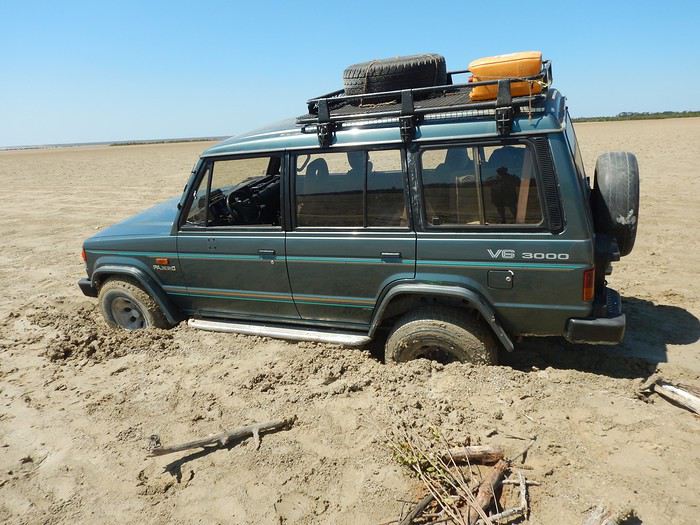
· The dirt roads Yes, I’m listing them among the highlights! We loved those long hours spent driving at 20 km/h on rocky, muddy, white, red, or gray sand tracks... surrounded by tropical vegetation, palm trees, pandanus, mango trees... The experiences were sometimes thrilling: crossing a river on a ferry (just planks of wood fixed on two motorized pirogues side by side) or crossing a river without a ferry, with just a kid running ahead of the 4x4 to show the way; soft sand where the 4x4 easily gets stuck... The tracks are quite narrow, and crossing paths with a bush taxi, a zebu cart, or a herd of goats is always epic. So many beautiful images, so many beautiful photos! Much more beautiful than on asphalt. So yes, we loved those long stretches on dirt roads. For us, it was clearly part of the journey. Faly was particularly careful, and the 4x4 was comfortable. No injuries, no fatigue, even after 7 or 8 hours on rough tracks. The national roads (including the famous RN7) are badly damaged by cyclones, huge trucks, and lack of maintenance. Potholes have turned into ostrich nests, and we didn’t drive much faster than on the dirt roads.
· The landscapes, villages, encounters... We crossed a variety of stunning landscapes: mountains with slopes covered in terraced crops, rice fields from apple green to emerald green, sugarcane fields, then tropical forests, baobab forests (they deserve a special paragraph below), traveler’s tree forests. And then coastlines with white sand dunes against a backdrop of blue hues!... Magical! We also passed through many villages with houses whose architecture varied by region. The Betsileo houses display beautiful decorative brick reliefs. On the west coast, the houses are more precarious, made of bamboo with palm-thatched roofs. In the Highlands region, we found solid houses with pastel plaster. Each region has its own landscape, crops, habitat, and clothing. Zebu carts are often the only means of transport in remote villages. We saw them very frequently. Again, the cart’s decoration depends on the region. And then, we met many villagers coming out of the bush and walking to the next market, carrying their crops on their heads or shoulders. More beautiful photos!
· The descent of the Tsiribihina River We boarded around 9 AM in a long pirogue with Gana, the local guide, and two pirogue men. So, five of us. The pirogue is long but narrow, about 65 cm wide. We sat one behind the other at the front on seats padded with what would become our mattresses during the bivouacs. We only took the bare essentials for two nights. A little goodbye to Faly, whom we’d see again in three days! Don’t forget us! The river is silty—meaning orange, opaque but clean. We glided along silently. Gana showed us the trees, birds, crocodiles (we saw five—apparently, we were lucky). The pirogue men rowed to get us as close as possible to these crocs sunbathing on the roots of big trees. Yeah, right!... as soon as we got too close, *splash*, they disappeared into the water. We marveled at the mini rice fields lining the river. Every tiny plot, no matter how small, is cultivated. Above them, banana fields. And on the water, a whole life of fishermen and villagers living with and from the river. Gana warned us we’d eat on the pirogue because the journey was long. So, I expected chips... But no—fried rice and zebu steak, cooked right in the pirogue!! Incredible! In the middle of the afternoon, we reached a small beach where we disembarked. Gana led us about a hundred meters to a sublime waterfall. We were alone there. We had time to swim. We’d brought our swimsuits and a towel (bought at the Carrefour in Antsirabe on Faly’s wise advice!). This swim in this paradise-like spot remains one of our best memories. We found our pirogue again and set off until our first bivouac. We’d sailed for 7 hours today. The tents were set up on a wide beach, without a single tree. A moment of solitude... Uh, where can we go to the bathroom?... Especially since it was a full moon, so we felt like we were in the spotlight. Anyway... we did as everyone else—walked away, dug a hole, and the others turned their backs. A hearty meal on the beach before a comfortable and silent night. The next day, same program, with slightly different landscapes. The gorges widened, the trees were different. But still many colorful birds. Again, we ate on the pirogue: grilled chicken and vegetables. 9 hours of sailing. A similar bivouac. This time, we got it. On the third day, we finished the descent with 5 hours of sailing. So, 7 hours, 9 hours, 5 hours... doing nothing. It might sound boring... but it wasn’t. Like the dirt roads, these were contemplative moments. It glides, it’s calm, relaxing, and there’s a lot of life on this river, animal and human. Contemplation. Suspended time. On arrival, we disembarked at a sort of joyful, bustling river port. Of course, Faly was already there to pick us up.
· The Tsingy de Bemaraha NP (Small and Great) I have vertigo. During my research, several agencies advised me against visiting the Great Tsingy. "Stick to the Small ones," they said. Grrr, no, not what I wanted—we’ve dreamed of this for years! The agency we chose also warned me but didn’t discourage me. So we started with the Small Tsingy, quite close to Bekopaka, guided by Alisha. This forest of sharp limestone rocks is impressive. No vertigo issues here. The day was completed with a short pirogue ride on the Manambolo River and a visit to two caves with pretty formations. The next day, Faly and Alisha drove us to the Great Tsingy (a good hour on a terrible track). Arriving at the park entrance, Alisha equipped us with harnesses, carabiners, and gave us some safety instructions. Faly was also equipped. Wait? He’s coming with us? I quickly understood he was there for me—if I got stuck, he could go back with me, and Philippe could continue with Alisha. A wise precaution that delighted and reassured me. In the end, it was unnecessary since the famous bridge crossing was fully secured by the harness and carabiners. 18 meters on planks, one by one, it didn’t sway too much—I walked looking straight ahead, not a glance down. I even managed to smile in the middle of the crossing—I have a photo to prove it! I was overjoyed! The circuit in the Great Tsingy is a loop, so we didn’t have to cross the bridge again. We climbed to viewpoints offering breathtaking panoramic views. It’s extraordinary, unique, incredible. All this to say that if you have vertigo, don’t hesitate! It’s doable! It’s completely safe and really worth pushing your limits a bit! For those who’ve done treetop adventure courses, it’s similar. Also, no need to be a great athlete—just a bit of agility to climb a few ladders and high steps. Don’t censor yourself! I even had a small regret—the loop was a bit short (about 2 hours). I would’ve liked to continue or even redo it, with less apprehension. Tip: Do the Small Tsingy before the Great ones, or not at all. And if you can only do one, do the Great ones without hesitation.
· Canoeing in the Belo mangrove The Belo sur Mer ecolodge lends small individual canoes for free to go to the mangrove. We left at high tide, paddled for about twenty minutes to reach a fairly sparse forest where we could easily venture in. Very shallow water, crystal clear—we could see the roots of all these trees, schools of tiny fish... It was quite surprising. Until then, I only knew impenetrable, tangled mangroves. Here, nothing like that—we walked through an aquatic forest. We loved this adventure so much we left a bit late. The tide had gone out, and we had to carry our canoes for the last few meters... Of course, the staff came to help (probably laughing silently!). The lodge owners gave all the necessary explanations and lent a waterproof bag for the phone (because yes, it’s worth taking photos!). A very useful precaution—the canoes are small, low in the water, and paddling quickly soaks you. Again, this isn’t just for Tony Estanguet! It didn’t cause us any problems, not even sore muscles the next day. A great experience. It’ll take about 2 hours.
· Isalo NP Big surprise when we saw this huge rocky massif appear on the RN7! A massif of colored sandstone, carved with crevasses giving it a ruined look. Le Relais de la Reine is a little gem cleverly nestled in the heart of these rocks. A small marked trail starts from the garden. We picked up the description at reception and set off. Without a guide, alone following the markers, it took us 2 hours to complete this magnificent little trail, giving us a first glimpse of the massif before the hike the next day. And we enjoyed being completely alone for this walk. It’s free, easy, and well-signposted. Don’t miss it. In the evening, Faly took us to the so-called Isalo Window site—a hole in a wall through which we could see the sunset. We met all the tourists in the area here. We weren’t blown away by the show... The next day, we left early to reach the start of the hike. We met Zozoly at the guides’ office in the small town of Ranohira. During this hike, we climbed through the rocks to a viewpoint offering stunning 360° views of the massif. Then we reached a site called the "natural pool," breathtakingly beautiful, especially since we were alone again. A sort of oasis, a cascading waterfall, palm trees and tree ferns, fine sand, all nestled at the bottom of a small canyon. Paradise-like. We resisted swimming, but it was really tempting. A long walk on the plateaus then led us to a well-equipped picnic site where a local team prepared grills. Concrete tables were tiered in a spacious, shady clearing where a whole family of ring-tailed lemurs frolicked. They knew the tourists’ habits and tried to snatch food. Playful and not very shy, they amused us with their antics! We had to resist not luring them with a piece of banana!! Thousands of photos!! After the meal, we set off again with Zozoly for another landscape. This time, we were by a small river at the bottom of a canyon with high walls covered in vegetation. The trail was narrow and slippery, on a ledge of the wall. We progressed carefully. No danger, though. We first reached the Blue Pool, which only turns blue in photos (surprise!), then the Black Pool fed by a shower of waterfalls. Two magnificent spots that showed us a completely different aspect of the massif.
· Anja Reserve This ficus forest is home to many groups of lemurs. Used to humans, whom they don’t fear, they move around us, ignoring us completely. It’s almost annoying... The best place on our trip to see lemurs.
· The FCE train To the great regret of Manakara’s inhabitants, the FCE train hasn’t reached here for over a year and a half. As a result, there are far fewer tourists—the train was part of the experience. We drove there and didn’t regret coming to this port on the east coast.
· Visit to a Tanala village This visit wasn’t part of our program—it was added by the agency to compensate for the train not running. Which was the case. Not big fans of this kind of visit, where we feel like we’re at a zoo, voyeuristic, lacking authenticity, we followed the local guide with some skepticism and exchanged dubious looks. And yet... the guide’s explanations about village life and the warm, smiling welcome from the villagers charmed us and dispelled all our concerns. We learned a lot, met smiling families, and were able to enter these beautiful bamboo houses. A very pleasant surprise, rich in lessons.
· The Pangalanes Canal Arriving in Manakara, we crossed a bridge overlooking the Pangalanes Canal. A cry of surprise: the water is turquoise! We took a short pirogue ride with a team of three pirogue men and Joël, a local guide who explained the drama caused by the train’s halt. We stopped in a fishing village where Joël bought fish for the barbecue. We ended up on a beach where the team prepared the meal while we went to watch the fishermen return on the nearby beach. We admired the fishermen’s dexterity in untangling their nets, sorting their fish, cleaning their gear. On our return, we found a small table set up on the beach, in the shade of palm trees and casuarinas. Lobsters, captain fish, grilled vegetables, sautéed potatoes. A real feast (included in the trip cost).
· Ranomafana NP A 4-5 hour hike (some climbing) in a dense secondary forest to look for lemurs. As usual, we were accompanied by a local guide who, while waiting to find our furry friends, gave us lots of info on the vegetation, birds, and Tanala ethnic rituals. In the forest, we met 4 or 5 trackers, armed with radios to alert guides of their findings. In the end, we saw several lemurs of different types. Quite far, quite high... A nice complement to our lemur encounters in Isalo. Here, it rains 200 days a year. We started the hike in thick fog, but the forest’s density protected us from the humidity. Be careful—it can be a bit frustrating to see the lemurs so far away, so high. Nothing like the Anja Reserve or Isalo NP. Here, what’s fun is the hunt.
· The baobabs We were captivated by these kings of the forest, noble, imposing, majestic. We spotted them from very far away, towering over the rest of the vegetation. Alone, in small groups, or in forests, our trip allowed us to see hundreds of them! Mainly on the west coast. All different—bald, hairy, shaggy, short and stout, tall and thin, like Laurel and Hardy. Philippe took to naming them. Respectfully!
OUR FAVORITES: · The variety of landscapes. · The Tsingy NP.
OUR DISAPPOINTMENTS: · The Avenue of the Baobabs, very overrated and the only place where we saw crowds. We saw many other "forests" of baobabs that were much more impressive. · It’s hard to approach the population calmly as swarms of children run up as soon as we arrive, asking for sweets. Without any aggression, their smiles and laughter quickly made us forget this small inconvenience. We never gave out candy, clothes, or money. We left pens at a school and clothes with Faly.
IF WE WERE TO DO IT AGAIN: · Same period, same duration, same pace, same itinerary, but if we were to do it again today, I’d go through Faly directly! · Maybe we should’ve stayed in Ambalavao instead of Fianarantsoa. · Plan a longer loop in the Great Tsingy—it felt a bit too short.
MISCELLANEOUS: The welcome: ‘Samala Vazaha,’ there are many, many kids, sometimes overwhelming, never aggressive. We were impressed by the villagers’ smiles and good humor, towards us or even among themselves—laughter was everywhere. Safety: No problems. Out of (excessive?) caution, we spread all our money across several bags that we padlocked whenever we left the hotel. Bribes: We were stopped several times on the road by police or gendarmes. They checked our papers, sometimes our passports. Faly was perfectly in order. No discussion, no bribes, a cordial greeting from the officers. However, several times we found ourselves at small "tolls" on the tracks for villagers who had leveled the road or filled a hole, or for the young guy who ran through the river to show the way... Faly complied without discussion: every service deserves a small bill. Language: French is still widely spoken. Credit card: Unused. Cash: You need it! The climate at this time: Ideal—blue skies, sunshine, and mild temperatures (20-25°C) throughout our trip. Temperatures started to drop by our departure—winter was setting in. Clothing: T-shirt or polo and a vest sometimes in the evening, sandals on our feet, hiking shoes for all the hikes. Tip: We left a bag in the car (completely safe) with things we didn’t need daily and dirty laundry. The two bags to take out at each stop were much lighter. Before leaving, we left several polos and T-shirts with Faly, which, once washed, will make a few people happy. Tourist crowds at this time: Low—we were sometimes the only guests at the hotel. Faly explained that at the Isalo picnic site, in high season, you have to queue for a table, whereas we had our pick. Photos: Lots! Too many! That’s the problem with digital—we take so many! Health issues: Nothing serious, just the usual mild traveler’s diarrhea. Mosquitoes: They’re voracious. We took anti-malaria treatment. I’m still not sure if it was the right thing to do... I’m always very skeptical about such precautions. Internet: Free Wi-Fi at the lodges’ reception (except at Hôtel Kanto!), sometimes (rarely) in the bungalows. Phone: We didn’t try to get a local SIM card—the evening Wi-Fi was enough for us to make calls and send messages via WhatsApp. Make sure to turn off mobile data and switch to airplane mode (I activated it a bit late—received calls, spam ones at that, were charged...). Electricity: French plugs. Personal purchases: Beautiful wooden objects (sculptures and marquetry) or zebu horn items in Ambositra. 1 kg of vanilla (400,000 Ar – 80 € per kg) in Tana.
IN CONCLUSION: A trip of contemplation. A pause for admiration, as our local guide in Isalo NP said. Nothing else to do but walk, look, and enjoy. Here, there are no old stones, no museums—it’s a trip where nature reigns supreme. And what nature!
I’ve stayed true to my habits: the following account is a collection of practical tips rather than a travel journal...
Madagascar is as big as France and Belgium combined. In three weeks, choices have to be made! It was the Great Tsingy that inspired our trip. We decided to focus on the southwest and the RN7. We skipped the Deep South and the North. Oh well...
OUR ITINERARY IN 3 WEEKS:
Fri 6 June – Direct AF flight to Tana – Flight arrives at 10:30 PM – Tana Sat – Antsirabe Sun – Miandrivazo Mon – Drive to the Masiakampy pier – Descent of the Tsiribihina River by pirogue - Bivouac Tue – Descent of the Tsiribihina River by pirogue - Bivouac Wed – Descent of the Tsiribihina River by pirogue – Bekopaka Thu – Pirogue on the Manambolo River and Small Tsingy of Bemaraha – Bekopaka Fri – Great Tsingy of Bemaraha – Bekopaka Sat – Avenue of the Baobabs – Morondava Sun – Belo sur Mer Mon – Free day – Belo sur Mer Tue – Manja Wed – Andavadoaka Thu – Free day – Andavadoaka Fri – Salary Lagoon – Mangily Sat – Ranohira Sun – Isalo National Park - Ranohira Mon – Anja Reserve - Ambalavao - Fianarantsoa Tue – FCE train canceled – Visit to a Tanala village - Manakara Wed – Pirogue on the Pangalanes Canal – Ranomafana Thu – Ranomafana NP – Ranomafana Fri – Ambositra – Antsirabe Sat 28 June – AF flight to Paris – Flight departs at 11:55 PM
TRIP ORGANIZATION: I prepared my trip using the usual guides (LP and Rough Guide), the internet, and the Freytag & Berndt map (1:1,000,000). I’m old-school—I still love visualizing my route on a paper map, even though in Madagascar, it’s misleading because some National Roads are only national in name!...
The agency: Since we couldn’t deal directly with a driver-guide (we lacked reliable info to take the plunge), we went through an agency to organize the logistics of our trip. We didn’t feel like using bush taxis (not enough time) or driving a 4x4 ourselves (neither the skills nor the boldness). The French agency connected us with a local agency, to whom I sent my detailed itinerary by email. A few exchanges via email and WhatsApp calls allowed us to finalize everything quickly after some adjustments. As you’ve gathered... we multiplied the commissions, which inflated the budget. That said, in the end, we were thrilled with our decision and our choice. Our trip was booked by the end of 2024, and reservations were made immediately. No bad surprises: the bookings in the planned hotels were honored, often with one of the best rooms. On our last day in Tana, before departure, we were lucky enough to meet the director I’d been communicating with, who helped build and validate our circuit. A very warm debriefing.
The driver-guide: The agency assigned us Faly, 33, a driver-guide for over 10 years. He stayed with us from start to finish: he picked us up at the airport on arrival and dropped us off 23 days later. A very experienced driver (which is important here), an open and cultured guide, reliable, punctual, and a great companion. And a provider of good advice throughout the trip. We made the most of the long stretches on dirt roads or highways to listen to him talk about daily life, rituals, wildlife, and flora... No time wasted! With a great playlist in the background, we combined business with pleasure! Faly’s accommodation and meals were included (quite often, hotels offer free lodging and meals to driver-guides who bring clients), as was the fuel. That didn’t stop us from inviting Faly to share a beer or our evening meal sometimes. He didn’t always accept, wanting to let us "enjoy our romantic evenings," as he put it. Present without being intrusive! Faly is fully capable of organizing a tailor-made trip directly. I recommend him without any hesitation—we were delighted with his service. I’ll gladly share his contact details via PM to anyone who asks.
Local guides: It’s the national guide’s prerogative to choose the local guides (mandatory in the parks). Thanks to his experience, Faly always booked us amazing, competent, and interesting local guides.
Hotels: I told the agency I wanted charming, comfortable accommodations, without falling into flashy luxury. We loved all the hotels (except the Hôtel Kanto in Manja). The rooms, mostly bungalows, were always spacious and clean. Unfortunately, I can’t give the prices—I didn’t get the details. Breakfast is always included, usually fresh and hearty. Very often, a small bottle of water is provided in the room.
Tana Hôtel Les 3 Métis Power cuts are common (!) in Tana. Bring a headlamp.
Antsirabe Ecolodge – Les chambres du voyageur Maybe our favorite! A few bungalows, beautifully arranged in a splendid tropical garden. The dog Kodak welcomes us warmly.
Miandrivazo Hôtel Princesse Tsiribihina Magnificent view of the valley.
Bekopaka Hôtel Orchidée du Bemaraha 2 (yes, 2) beautiful pools, a large open common room.
Morondava Hôtel Baobab Café Brand new or at least, according to Faly, just renovated. Very comfortable but without much charm (international style).
Belo sur Mer Ecolodge du Menabe The bungalows, all made of wood, bamboo, and thatch, are set on the beach. Very spacious and fully equipped! Large open-air restaurant by the sea. No hot water from the tap—it’s available in plastic bottles heated by the sun in front of each bungalow. Actually, we never used it... Another very, very beautiful spot.
Manja Hôtel Kanto The only hotel on this leg of the journey, so no choice. The owner knows it and, as a result, doesn’t bother. It’s a real dive! Tiny, dark room, a sordid bathroom with only a trickle of water—we skipped the shower! Clean sheets, though. Obviously, no Wi-Fi. The only place where I didn’t leave a tip. We were well warned about the discomfort of this stop, both by the agency and Faly. We weren’t surprised, and it even became a running joke during the trip. On the other hand, we found a nice little market in town.
Andavadoaka Manga Lodge What bliss! Especially after the horrible Hôtel Kanto. A paradise-like spot, overlooking three beautiful deserted white-sand beaches. Meals are served on the terrace facing the sea. Stunning sunset. We loved spending a day lounging here! We were the only guests and were pampered.
Mangily (Ifaty) Mangily is the "suburb" of Ifaty. Hôtel Vovo Telo A large beachfront bungalow complex. More touristy but pleasant—we spent a lovely evening there with our feet in the sand.
Ranohira Le Relais de la Reine A splendid resort built by a Frenchman, at the foot of the rocks, very well integrated into the environment. Beautiful marked trail starting from the garden.
Fianarantsoa Villa Sylvestre Contrary to what its name suggests, it’s a hotel right in the city center. Quite decent, though.
Manakara Parthenay Club Pretty bungalows in a large garden by the sea, but swimming isn’t safe—the water is too dangerous and rough.
Ranomafana Hôtel Thermal Very spacious rooms.
Meals: Not all our meals were included. It’s really not expensive. 1 meat or fish dish: around 35,000 Ar 1 full menu (starter, main, dessert): around 70,000 Ar 1 large THB beer (65 cl): between 8,000 and 12,000 Ar 1 piña colada: 15,000 Ar 1 flavored rum: 6,000 Ar (sometimes free) 1 glass of baobab juice (!): 5,000 Ar
We always ate very well. Rice is everywhere, served in large quantities. Zebu meat is quite good if not overcooked. Personally, I prefer fish, and I feasted: grouper, captain, crab, small lobsters...
We happily discovered baobab juice (especially in Belo, on the west coast). And of course, flavored rums!
We bought 2 packs of 6 bottles of mineral water at Carrefour (!) (about 5,000 Ar per large bottle) at the start of our trip. That was enough, especially since we often got water in the bungalows.
We had a few picnics included in our trip. Instead of picking up the hotel’s lunchbox, Faly prepared delicious, fresh, and varied picnics for us: tuna pasta salad, fried rice with eggs, grilled vegetables, and avocado...
An exceptional address not to miss: Mad Zébu – Belo sur Tsiribihina A highly reputed restaurant, a favorite of LP and Rough Guide, and rightly so! Gourmet cuisine, refined and elegant. Barely more expensive than elsewhere, and it’s worth it. We stopped there on our way up to Bekopaka and the Tsingy NP. Fully booked! So Faly reserved for our return, three days later. We’re still thanking him! What a treat!
THE BUDGET: Ariary exchange rate: 5,000 Ar = 1 €
Pre-trip expenses: Direct Air France flights: 930 € per person round trip Cost of the circuit with the agency: 2,880 € per person
The visa: Issued on arrival, very quickly. 35 € per person for a stay under 30 days. Super simple. Super fast.
On-site expenses: As soon as we arrived at the airport (it was nearly midnight), Faly advised us to exchange our euros for all our needs. There are few opportunities on our route to find an ATM or an open bank with a good rate. To be more comfortable, he took us to a small office under military protection just outside the airport. I exchanged 1,200 € (I had asked the agency for advice on the amount to bring) at a rate of 4,750 Ar and became a millionaire. Faly recounted all the stacks. That covered all our expenses (meals, drinks, tips) without ever feeling deprived. Personal purchases were made at the end of the trip. Convenient—it served as an adjustment variable. We spent our last million (200 €) on marquetry and vanilla. Tip: We asked for 200,000 Ar in 5,000 Ar bills for tips. That wasn’t too much—I even ran short of small bills in the last two days.
Tips: Madagascar is a poor country where every service deserves a small reward. While not mandatory, it’s customary. But no one ever demanded or expected it openly. On the contrary, I sometimes had to remind a porter to give them my small bill. We never carried our luggage—porters were always present when the car arrived or waiting at our door to watch for our departure. I gave each of them 5,000 Ar. In restaurants, I rounded up to the nearest ten and left the change. Local guides also expect a tip: I gave around 20,000 Ar per day for the two of us. Finally, the national guide also expects a gratuity. I had read online to budget 5 € per day per person. I added more since we were so happy with his services. The tip was given at the end of the trip, in euros, outside the budget.
Total budget all included (excluding personal purchases): 8,690 € Clearly, Madagascar is a country where life isn’t expensive, but travel costs add up quickly due to the need to rent a 4x4 with a driver.
HIGHLIGHTS:
· The dirt roads Yes, I’m listing them among the highlights! We loved those long hours spent driving at 20 km/h on rocky, muddy, white, red, or gray sand tracks... surrounded by tropical vegetation, palm trees, pandanus, mango trees... The experiences were sometimes thrilling: crossing a river on a ferry (just planks of wood fixed on two motorized pirogues side by side) or crossing a river without a ferry, with just a kid running ahead of the 4x4 to show the way; soft sand where the 4x4 easily gets stuck... The tracks are quite narrow, and crossing paths with a bush taxi, a zebu cart, or a herd of goats is always epic. So many beautiful images, so many beautiful photos! Much more beautiful than on asphalt. So yes, we loved those long stretches on dirt roads. For us, it was clearly part of the journey. Faly was particularly careful, and the 4x4 was comfortable. No injuries, no fatigue, even after 7 or 8 hours on rough tracks. The national roads (including the famous RN7) are badly damaged by cyclones, huge trucks, and lack of maintenance. Potholes have turned into ostrich nests, and we didn’t drive much faster than on the dirt roads.
· The landscapes, villages, encounters... We crossed a variety of stunning landscapes: mountains with slopes covered in terraced crops, rice fields from apple green to emerald green, sugarcane fields, then tropical forests, baobab forests (they deserve a special paragraph below), traveler’s tree forests. And then coastlines with white sand dunes against a backdrop of blue hues!... Magical! We also passed through many villages with houses whose architecture varied by region. The Betsileo houses display beautiful decorative brick reliefs. On the west coast, the houses are more precarious, made of bamboo with palm-thatched roofs. In the Highlands region, we found solid houses with pastel plaster. Each region has its own landscape, crops, habitat, and clothing. Zebu carts are often the only means of transport in remote villages. We saw them very frequently. Again, the cart’s decoration depends on the region. And then, we met many villagers coming out of the bush and walking to the next market, carrying their crops on their heads or shoulders. More beautiful photos!
· The descent of the Tsiribihina River We boarded around 9 AM in a long pirogue with Gana, the local guide, and two pirogue men. So, five of us. The pirogue is long but narrow, about 65 cm wide. We sat one behind the other at the front on seats padded with what would become our mattresses during the bivouacs. We only took the bare essentials for two nights. A little goodbye to Faly, whom we’d see again in three days! Don’t forget us! The river is silty—meaning orange, opaque but clean. We glided along silently. Gana showed us the trees, birds, crocodiles (we saw five—apparently, we were lucky). The pirogue men rowed to get us as close as possible to these crocs sunbathing on the roots of big trees. Yeah, right!... as soon as we got too close, *splash*, they disappeared into the water. We marveled at the mini rice fields lining the river. Every tiny plot, no matter how small, is cultivated. Above them, banana fields. And on the water, a whole life of fishermen and villagers living with and from the river. Gana warned us we’d eat on the pirogue because the journey was long. So, I expected chips... But no—fried rice and zebu steak, cooked right in the pirogue!! Incredible! In the middle of the afternoon, we reached a small beach where we disembarked. Gana led us about a hundred meters to a sublime waterfall. We were alone there. We had time to swim. We’d brought our swimsuits and a towel (bought at the Carrefour in Antsirabe on Faly’s wise advice!). This swim in this paradise-like spot remains one of our best memories. We found our pirogue again and set off until our first bivouac. We’d sailed for 7 hours today. The tents were set up on a wide beach, without a single tree. A moment of solitude... Uh, where can we go to the bathroom?... Especially since it was a full moon, so we felt like we were in the spotlight. Anyway... we did as everyone else—walked away, dug a hole, and the others turned their backs. A hearty meal on the beach before a comfortable and silent night. The next day, same program, with slightly different landscapes. The gorges widened, the trees were different. But still many colorful birds. Again, we ate on the pirogue: grilled chicken and vegetables. 9 hours of sailing. A similar bivouac. This time, we got it. On the third day, we finished the descent with 5 hours of sailing. So, 7 hours, 9 hours, 5 hours... doing nothing. It might sound boring... but it wasn’t. Like the dirt roads, these were contemplative moments. It glides, it’s calm, relaxing, and there’s a lot of life on this river, animal and human. Contemplation. Suspended time. On arrival, we disembarked at a sort of joyful, bustling river port. Of course, Faly was already there to pick us up.
· The Tsingy de Bemaraha NP (Small and Great) I have vertigo. During my research, several agencies advised me against visiting the Great Tsingy. "Stick to the Small ones," they said. Grrr, no, not what I wanted—we’ve dreamed of this for years! The agency we chose also warned me but didn’t discourage me. So we started with the Small Tsingy, quite close to Bekopaka, guided by Alisha. This forest of sharp limestone rocks is impressive. No vertigo issues here. The day was completed with a short pirogue ride on the Manambolo River and a visit to two caves with pretty formations. The next day, Faly and Alisha drove us to the Great Tsingy (a good hour on a terrible track). Arriving at the park entrance, Alisha equipped us with harnesses, carabiners, and gave us some safety instructions. Faly was also equipped. Wait? He’s coming with us? I quickly understood he was there for me—if I got stuck, he could go back with me, and Philippe could continue with Alisha. A wise precaution that delighted and reassured me. In the end, it was unnecessary since the famous bridge crossing was fully secured by the harness and carabiners. 18 meters on planks, one by one, it didn’t sway too much—I walked looking straight ahead, not a glance down. I even managed to smile in the middle of the crossing—I have a photo to prove it! I was overjoyed! The circuit in the Great Tsingy is a loop, so we didn’t have to cross the bridge again. We climbed to viewpoints offering breathtaking panoramic views. It’s extraordinary, unique, incredible. All this to say that if you have vertigo, don’t hesitate! It’s doable! It’s completely safe and really worth pushing your limits a bit! For those who’ve done treetop adventure courses, it’s similar. Also, no need to be a great athlete—just a bit of agility to climb a few ladders and high steps. Don’t censor yourself! I even had a small regret—the loop was a bit short (about 2 hours). I would’ve liked to continue or even redo it, with less apprehension. Tip: Do the Small Tsingy before the Great ones, or not at all. And if you can only do one, do the Great ones without hesitation.
· Canoeing in the Belo mangrove The Belo sur Mer ecolodge lends small individual canoes for free to go to the mangrove. We left at high tide, paddled for about twenty minutes to reach a fairly sparse forest where we could easily venture in. Very shallow water, crystal clear—we could see the roots of all these trees, schools of tiny fish... It was quite surprising. Until then, I only knew impenetrable, tangled mangroves. Here, nothing like that—we walked through an aquatic forest. We loved this adventure so much we left a bit late. The tide had gone out, and we had to carry our canoes for the last few meters... Of course, the staff came to help (probably laughing silently!). The lodge owners gave all the necessary explanations and lent a waterproof bag for the phone (because yes, it’s worth taking photos!). A very useful precaution—the canoes are small, low in the water, and paddling quickly soaks you. Again, this isn’t just for Tony Estanguet! It didn’t cause us any problems, not even sore muscles the next day. A great experience. It’ll take about 2 hours.
· Isalo NP Big surprise when we saw this huge rocky massif appear on the RN7! A massif of colored sandstone, carved with crevasses giving it a ruined look. Le Relais de la Reine is a little gem cleverly nestled in the heart of these rocks. A small marked trail starts from the garden. We picked up the description at reception and set off. Without a guide, alone following the markers, it took us 2 hours to complete this magnificent little trail, giving us a first glimpse of the massif before the hike the next day. And we enjoyed being completely alone for this walk. It’s free, easy, and well-signposted. Don’t miss it. In the evening, Faly took us to the so-called Isalo Window site—a hole in a wall through which we could see the sunset. We met all the tourists in the area here. We weren’t blown away by the show... The next day, we left early to reach the start of the hike. We met Zozoly at the guides’ office in the small town of Ranohira. During this hike, we climbed through the rocks to a viewpoint offering stunning 360° views of the massif. Then we reached a site called the "natural pool," breathtakingly beautiful, especially since we were alone again. A sort of oasis, a cascading waterfall, palm trees and tree ferns, fine sand, all nestled at the bottom of a small canyon. Paradise-like. We resisted swimming, but it was really tempting. A long walk on the plateaus then led us to a well-equipped picnic site where a local team prepared grills. Concrete tables were tiered in a spacious, shady clearing where a whole family of ring-tailed lemurs frolicked. They knew the tourists’ habits and tried to snatch food. Playful and not very shy, they amused us with their antics! We had to resist not luring them with a piece of banana!! Thousands of photos!! After the meal, we set off again with Zozoly for another landscape. This time, we were by a small river at the bottom of a canyon with high walls covered in vegetation. The trail was narrow and slippery, on a ledge of the wall. We progressed carefully. No danger, though. We first reached the Blue Pool, which only turns blue in photos (surprise!), then the Black Pool fed by a shower of waterfalls. Two magnificent spots that showed us a completely different aspect of the massif.
· Anja Reserve This ficus forest is home to many groups of lemurs. Used to humans, whom they don’t fear, they move around us, ignoring us completely. It’s almost annoying... The best place on our trip to see lemurs.
· The FCE train To the great regret of Manakara’s inhabitants, the FCE train hasn’t reached here for over a year and a half. As a result, there are far fewer tourists—the train was part of the experience. We drove there and didn’t regret coming to this port on the east coast.
· Visit to a Tanala village This visit wasn’t part of our program—it was added by the agency to compensate for the train not running. Which was the case. Not big fans of this kind of visit, where we feel like we’re at a zoo, voyeuristic, lacking authenticity, we followed the local guide with some skepticism and exchanged dubious looks. And yet... the guide’s explanations about village life and the warm, smiling welcome from the villagers charmed us and dispelled all our concerns. We learned a lot, met smiling families, and were able to enter these beautiful bamboo houses. A very pleasant surprise, rich in lessons.
· The Pangalanes Canal Arriving in Manakara, we crossed a bridge overlooking the Pangalanes Canal. A cry of surprise: the water is turquoise! We took a short pirogue ride with a team of three pirogue men and Joël, a local guide who explained the drama caused by the train’s halt. We stopped in a fishing village where Joël bought fish for the barbecue. We ended up on a beach where the team prepared the meal while we went to watch the fishermen return on the nearby beach. We admired the fishermen’s dexterity in untangling their nets, sorting their fish, cleaning their gear. On our return, we found a small table set up on the beach, in the shade of palm trees and casuarinas. Lobsters, captain fish, grilled vegetables, sautéed potatoes. A real feast (included in the trip cost).
· Ranomafana NP A 4-5 hour hike (some climbing) in a dense secondary forest to look for lemurs. As usual, we were accompanied by a local guide who, while waiting to find our furry friends, gave us lots of info on the vegetation, birds, and Tanala ethnic rituals. In the forest, we met 4 or 5 trackers, armed with radios to alert guides of their findings. In the end, we saw several lemurs of different types. Quite far, quite high... A nice complement to our lemur encounters in Isalo. Here, it rains 200 days a year. We started the hike in thick fog, but the forest’s density protected us from the humidity. Be careful—it can be a bit frustrating to see the lemurs so far away, so high. Nothing like the Anja Reserve or Isalo NP. Here, what’s fun is the hunt.
· The baobabs We were captivated by these kings of the forest, noble, imposing, majestic. We spotted them from very far away, towering over the rest of the vegetation. Alone, in small groups, or in forests, our trip allowed us to see hundreds of them! Mainly on the west coast. All different—bald, hairy, shaggy, short and stout, tall and thin, like Laurel and Hardy. Philippe took to naming them. Respectfully!
OUR FAVORITES: · The variety of landscapes. · The Tsingy NP.
OUR DISAPPOINTMENTS: · The Avenue of the Baobabs, very overrated and the only place where we saw crowds. We saw many other "forests" of baobabs that were much more impressive. · It’s hard to approach the population calmly as swarms of children run up as soon as we arrive, asking for sweets. Without any aggression, their smiles and laughter quickly made us forget this small inconvenience. We never gave out candy, clothes, or money. We left pens at a school and clothes with Faly.
IF WE WERE TO DO IT AGAIN: · Same period, same duration, same pace, same itinerary, but if we were to do it again today, I’d go through Faly directly! · Maybe we should’ve stayed in Ambalavao instead of Fianarantsoa. · Plan a longer loop in the Great Tsingy—it felt a bit too short.
MISCELLANEOUS: The welcome: ‘Samala Vazaha,’ there are many, many kids, sometimes overwhelming, never aggressive. We were impressed by the villagers’ smiles and good humor, towards us or even among themselves—laughter was everywhere. Safety: No problems. Out of (excessive?) caution, we spread all our money across several bags that we padlocked whenever we left the hotel. Bribes: We were stopped several times on the road by police or gendarmes. They checked our papers, sometimes our passports. Faly was perfectly in order. No discussion, no bribes, a cordial greeting from the officers. However, several times we found ourselves at small "tolls" on the tracks for villagers who had leveled the road or filled a hole, or for the young guy who ran through the river to show the way... Faly complied without discussion: every service deserves a small bill. Language: French is still widely spoken. Credit card: Unused. Cash: You need it! The climate at this time: Ideal—blue skies, sunshine, and mild temperatures (20-25°C) throughout our trip. Temperatures started to drop by our departure—winter was setting in. Clothing: T-shirt or polo and a vest sometimes in the evening, sandals on our feet, hiking shoes for all the hikes. Tip: We left a bag in the car (completely safe) with things we didn’t need daily and dirty laundry. The two bags to take out at each stop were much lighter. Before leaving, we left several polos and T-shirts with Faly, which, once washed, will make a few people happy. Tourist crowds at this time: Low—we were sometimes the only guests at the hotel. Faly explained that at the Isalo picnic site, in high season, you have to queue for a table, whereas we had our pick. Photos: Lots! Too many! That’s the problem with digital—we take so many! Health issues: Nothing serious, just the usual mild traveler’s diarrhea. Mosquitoes: They’re voracious. We took anti-malaria treatment. I’m still not sure if it was the right thing to do... I’m always very skeptical about such precautions. Internet: Free Wi-Fi at the lodges’ reception (except at Hôtel Kanto!), sometimes (rarely) in the bungalows. Phone: We didn’t try to get a local SIM card—the evening Wi-Fi was enough for us to make calls and send messages via WhatsApp. Make sure to turn off mobile data and switch to airplane mode (I activated it a bit late—received calls, spam ones at that, were charged...). Electricity: French plugs. Personal purchases: Beautiful wooden objects (sculptures and marquetry) or zebu horn items in Ambositra. 1 kg of vanilla (400,000 Ar – 80 € per kg) in Tana.
IN CONCLUSION: A trip of contemplation. A pause for admiration, as our local guide in Isalo NP said. Nothing else to do but walk, look, and enjoy. Here, there are no old stones, no museums—it’s a trip where nature reigns supreme. And what nature!
Agence locale pour faire la découverte de l'île de Madagascar English translation pending
Bonjour
Je souhaiterais trouver une agence locale malgache pour envisager 15 jours de découverte de cette île
Idée de circuit pour Madagascar et snorkeling fin février-début mars English translation pending
Bonsoir,
On aimerai aller a Madagascar la dernière semaine de Février et la première de Mars. On pensait faire la RN7 (par exemple LE PARC NATIONAL DE L'ISALO, VILLAGE D’AMBOSITRA, Tulear, IFATY...) et Nosy be. On sera sur place 12 13j. Que conseillez vous svp comme circuit (ou s arreter , que faire vu le nombre de jours) vu la période? On aime la nature, les animaux et on aimerai aussi faire du snorkeling dans des magnifiques plages. Est ce qu il risque de pleuvoir tous les jours et qu on ne puisse rien faire?
Conseillez vous d autres villes svp vu la periode?
Merci d avance pour vos precieux conseils
Parcours avec agence locale à Madagascar English translation pending
Bonjour
Projetant avec mon mari un périple de 15 jours sur Madagascar en mai 2020, pouvez vous me conseiller des agences locales sérieuses pour établir avec eux, le parcours.
Si quelqu'un connait Mi-Voyages, suis preneuse de renseignements
Merci pour vos réponses
Bonne journée
Itinéraire pour deux mois à Madagascar English translation pending
salut à tous et à toute
je pars début septembre pour 2 mois à Madagascar et j'aimerais avoir quelque conseils d’itinéraire afin d'éviter au maximum les long trajet en taxi brousse. suis les 2 mois ne suffise pas à visité toute l’île, je suis prêt à délaissé le grand sud (car ça a l'air difficile de rejoindre Morondava en partent de Tulear sans rebrousser chemin) pour me focaliser sur l’ouest, le nord et bien sur l'est avec l’île saint marie.
voila je vous remercie d'avance d'excuser les fautes d’orthographe 😉
voila je vous remercie d'avance d'excuser les fautes d’orthographe 😉
Guide pour le sud de Madagascar (avec enfants) English translation pending
Bonjour,
Je prépare actuellement un voyages de 2 semaines dans le sud de Madagascar et j'aimerais visiter les villes suivantes: Antananarivo, Andasibe, Antsirabe, Ranomafana, Ambalavao, Anakao, Toliara, Tana.
Est-ce que vous pensez que ce tour est faisable en 2 semaines, et pensez-vous qu'il est adapté pour des enfants (je voyages avec mes deux filles de 7 et 9 ans)?
Est-ce qu'un guide est nécessaire pour ce type de tour, si oui, est-ce que vous en connaissez un?
Merci Patrick
Je prépare actuellement un voyages de 2 semaines dans le sud de Madagascar et j'aimerais visiter les villes suivantes: Antananarivo, Andasibe, Antsirabe, Ranomafana, Ambalavao, Anakao, Toliara, Tana.
Est-ce que vous pensez que ce tour est faisable en 2 semaines, et pensez-vous qu'il est adapté pour des enfants (je voyages avec mes deux filles de 7 et 9 ans)?
Est-ce qu'un guide est nécessaire pour ce type de tour, si oui, est-ce que vous en connaissez un?
Merci Patrick
Itinéraire 2 semaines à Madagascar en avril English translation pending
Bonjour la communauté des voyageurs !
J'aimerais votre avis sur un itinéraire possible à Madagascar. Nous sommes 4, avec deux enfants de 9 et 10 ans. Nous souhaitons partir du 11 au 25 avril environ.
J'ai peur que l'itinéraire RN7 comporte un peu trop de trajets en voiture, donc j'ai pensé à ça, mais je ne sais pas si c'est opportun sur 2 semaines:
1ere semaine: Tana / Anstirabe / Ambositra puis retour sur Tana 2ème semaine: Diego Suarez et ses alentours ou Diego Suarez / Nosy Be
Le gros inconvénient de cette option, ce sont les vols interieurs, puisque le mieux serait que l'on fasse Tana / Diego Suarez puis Nosy Be / Tana en vols intérieurs mais les billets sont chers...
En même temps, j'ai très envie de voir les hauts plateaux / les rizières donc faire un itinéraire centre me semble indispensable. J'ai peur qu'un itinéraire nord seulement soit un peu trop cantonné à la plage ?
Merci d'avance de vos avis !
Gwénaëlle
J'aimerais votre avis sur un itinéraire possible à Madagascar. Nous sommes 4, avec deux enfants de 9 et 10 ans. Nous souhaitons partir du 11 au 25 avril environ.
J'ai peur que l'itinéraire RN7 comporte un peu trop de trajets en voiture, donc j'ai pensé à ça, mais je ne sais pas si c'est opportun sur 2 semaines:
1ere semaine: Tana / Anstirabe / Ambositra puis retour sur Tana 2ème semaine: Diego Suarez et ses alentours ou Diego Suarez / Nosy Be
Le gros inconvénient de cette option, ce sont les vols interieurs, puisque le mieux serait que l'on fasse Tana / Diego Suarez puis Nosy Be / Tana en vols intérieurs mais les billets sont chers...
En même temps, j'ai très envie de voir les hauts plateaux / les rizières donc faire un itinéraire centre me semble indispensable. J'ai peur qu'un itinéraire nord seulement soit un peu trop cantonné à la plage ?
Merci d'avance de vos avis !
Gwénaëlle
Sécurité sur les routes malgaches English translation pending
bonjour
Nous partons en famille le 5 juillet pour Madagascar. au programme partie 1 : Antsirabé - Morandava - l'allée des baobab et les tsingy en voiture avec chauffeur partie 2 : De diégo suarez à Nossy bé dans les mêmes conditions ou en taxi brousse. entre les deux vol interne Tana-Diego si on trouve des places.
Au vues des nouvelles qui nous sont parvenues nous nous interrogeons sur l'opportunité de maintenir ce voyage dans sa forme actuelle, (voir abondon de ce projet au profit d'un stop à la réunion).
Au delà de ce que l'on connaissait déjà, deux nouvelles ont engendré ce doute. -attaques de touriste en voiture sur les tsingites (source propriétaire de l'hotel que nous avons réservé à notre arrivée à Tana). - attaques de de nuit de deux voitures sur la R 4 au nord de Tana avec violence et bléssé ( mains amputées pour une partie des passagers). source internet donc difficilement vérifiable
difficile de se faire d'ici une idée claire de la situation.
avez vous des infos sur ces deux évènements. ou plus généralement sur les conditions de voyage en ce moment.
cordialement
J-Pierre
Nous partons en famille le 5 juillet pour Madagascar. au programme partie 1 : Antsirabé - Morandava - l'allée des baobab et les tsingy en voiture avec chauffeur partie 2 : De diégo suarez à Nossy bé dans les mêmes conditions ou en taxi brousse. entre les deux vol interne Tana-Diego si on trouve des places.
Au vues des nouvelles qui nous sont parvenues nous nous interrogeons sur l'opportunité de maintenir ce voyage dans sa forme actuelle, (voir abondon de ce projet au profit d'un stop à la réunion).
Au delà de ce que l'on connaissait déjà, deux nouvelles ont engendré ce doute. -attaques de touriste en voiture sur les tsingites (source propriétaire de l'hotel que nous avons réservé à notre arrivée à Tana). - attaques de de nuit de deux voitures sur la R 4 au nord de Tana avec violence et bléssé ( mains amputées pour une partie des passagers). source internet donc difficilement vérifiable
difficile de se faire d'ici une idée claire de la situation.
avez vous des infos sur ces deux évènements. ou plus généralement sur les conditions de voyage en ce moment.
cordialement
J-Pierre
Retour de Madagascar: que du bonheur English translation pending
2 mois passés a Mada 6000 kms parcourus et aucun problème a signaler , aucune agression (depuis 10 ans d'ailleur), pour la peste a tamatave et tana je n'ai pas vu de panique la vie suit son cours , les asiatiques surtout japonais touristes mais peu portent un masque en général (comme en france ) .mon parcours fut tana-tamatave-fenerive Est et retour par la route , ensuite manakara- farafangana-fort dauphin-betanty-lavanono-etc...tulear-morondava-tana, le tout uniquement par la piste de la cote est -sud -sud ouest.rencontre avec des populations accueillantes , et contentes de nous voir discuter et sakafo avec eux dans les rares gargotes du sud.le plus problématique 🤪fut les multiples pistes (les cartes 50.000 ne sont pas si précises et les pistes se modifient) sont légions au sud mais il y avait toujours surgi de nulle part 😮un Antandroy ou Mahafaly pour nous indiquer la bonne😎.
un conseil: prévoir des jerricans d'eau et de carburant ainsi que le maximum de FACOM 😉depuis fort dauphin jusqu'a tulear , on ne croise pratiquement aucun véhicule sur plusieurs routes , de tulear a morondava c'est facile , la piste du tourisme opérateur, vaza hotel lodge 4x4 vitres fermées , vazas bien propres douchés du matin qui n'approchent pas trop les gasys au cas ou 😕enfin chacun son truc.
ce fut un excellent parcours de toute beauté
cordialement
Deux circuits de 2 semaines à Madagascar English translation pending
Bonjour,
Je pars avec ma famille (2 ados + 2 adultes) en octobre à Mada. J'ai 2 options de circuit. Merci de vos avis et conseils sur ces 2 circuits. Lequel vous parait le plus pertinent?
Des bons plans également concernant une croisière en pirogue au départ de nosy be (3 jours) sachant que l'alefa qui parait sérieuse pratique des prix exhorbitants (100 euros par jour par personne).
Voilà mes 2 options: Circuit nord:
15/10 Tana 16/10 Tana – Ankarafantsika 17/10 Ankarafantsika 18/10 Ankarafantsika – Antsohihy 19/10 Antsohihy – Ambanja 20/10 Ambanja –Ankarana 21/10 Ankarana 22/10 Ankarana – Nosy be 23/10 Nosy Be 24/10 Pirogue ou boutre
25/10 Pirogue 26/10 Pirogue 27/10 Nosy Be - majunga 28/10 majunga - Tana 29/10- tana
Circuit sud:
15/10 : Tanà. 16/10 : Tanà - Antoetra. 17/10 : Antoetra (randonnée pays zafimaniry)
18/10 : Antoetra - Ranomafana.
19/10 : Ranomafana (randonnée parc) puis descente vers Ambalavao 20/10 : Ambalavao - Rahonira 21/10 : Isalo (randonnée isalo) 22/10 : Isalo - Tuléar. 23/10 : Tuléar - Anakao 24/10 : Anakao 25/10 : Anakao
26/10: Anakao - Fianarantsoa 27/10 : Fianarantsoa – Antsirabe 28/10 Antsirabe 29/10 : Antsirabe - Tana
Vous remerciant par avance. 🙂
Je pars avec ma famille (2 ados + 2 adultes) en octobre à Mada. J'ai 2 options de circuit. Merci de vos avis et conseils sur ces 2 circuits. Lequel vous parait le plus pertinent?
Des bons plans également concernant une croisière en pirogue au départ de nosy be (3 jours) sachant que l'alefa qui parait sérieuse pratique des prix exhorbitants (100 euros par jour par personne).
Voilà mes 2 options: Circuit nord:
15/10 Tana 16/10 Tana – Ankarafantsika 17/10 Ankarafantsika 18/10 Ankarafantsika – Antsohihy 19/10 Antsohihy – Ambanja 20/10 Ambanja –Ankarana 21/10 Ankarana 22/10 Ankarana – Nosy be 23/10 Nosy Be 24/10 Pirogue ou boutre
25/10 Pirogue 26/10 Pirogue 27/10 Nosy Be - majunga 28/10 majunga - Tana 29/10- tana
Circuit sud:
15/10 : Tanà. 16/10 : Tanà - Antoetra. 17/10 : Antoetra (randonnée pays zafimaniry)
18/10 : Antoetra - Ranomafana.
19/10 : Ranomafana (randonnée parc) puis descente vers Ambalavao 20/10 : Ambalavao - Rahonira 21/10 : Isalo (randonnée isalo) 22/10 : Isalo - Tuléar. 23/10 : Tuléar - Anakao 24/10 : Anakao 25/10 : Anakao
26/10: Anakao - Fianarantsoa 27/10 : Fianarantsoa – Antsirabe 28/10 Antsirabe 29/10 : Antsirabe - Tana
Vous remerciant par avance. 🙂
Vacances à Madagascar English translation pending
Bonjour, nous partons dans deux mois a Madagascar pour 3 semaines ou un mois. Nous n'avons pas de guide de voyage et ne rentrons pas en France entre temps. Avez vous des conseils a nous donner, des endroits a ne pas louper? Nous aimons tous: beaux paysages, randos, plages... Merci d'avance. Jessica et sylvain.
Itinéraire de 18 jours à Madagascar (avec adolescents) English translation pending
bonjour,
Nous partons 20 jours avec 2 ados pour Madagascar au mois d'Octobre et nous avons beaucoup de mal à établir un itinéraire. J'hésite à choisir entre le sud (RN7 voiture avec chauffeur) de Antananarivo jusqu'à Tuléar + vol pour nosy be à la fin
ou rester plus au centre ( et faire tsiribihina en pirogue, grande Tsinguy , Morondava , antsirabe et finir par l'île sainte Marie.
J'ai du mal à imaginer les temps de route et les trajets à privilégier en avion. Notre budget n'est pas extensible et les vols intérieurs m'ont l'air très chers.
Nous souhaitons partir à la découverte du pays et quelques jours de repos en fin de parcours.
Quelqu'un pourrait-il me conseiller ou me faire partager son itinéraire ? merci
fred
fred
Madagascar est-il vraiment si physique? English translation pending
Bonsoir,
J'espère que vous pouvez m'aider...
Après avoir pris billet d'avion pour mi-mai pour un séjour de 20 jrs et lu ici et là pour préparer le voyage, je me rends compte que le parc Tsingy semble être très très sportif. Le seul sport que je pratique est la natation et la marche alors là pas du tout! Je précise que je marche comme une tortue et pourtant je voudrais visiter les Tsingy. Qui a visité les Tsingy avec des conditions physiques pas très en forme?
Je profite de ce post pour vous avoir votre avis/commentaires sur mon itinéraire. Je précise que j'aime les beaux paysages et le snorkelling. Je voyage seule sans location de 4x4 individuelle mais espère joindre un groupe sur place pr les parcs.
1. Tana-Miandrivazo pour la pirogue sur Tsiribihana: 1 jr 2. De Miandrivazo, peut-on rejoindre les Tsingy et espérer joindre un groupe ou faut-il obligatoirement que j'aille à Morondava? 3. Morondava : baobabs + Tsingy 2/3 jrs Cette partie est mon plus gros appréhension. Est-il possible de se baser à un seul endroit et effectuer ces 3 activités?
4. Morondava - Antsirabe : 1 Jr 5. Antsirabe - Ambositra : 2 jr 6. Ambositra - Manakara. Le guide conseille le train (très lent). Peut-on se rendre en bus et le paysage en vaut-il la peine ou il vaut mieux le faire par le train? 7. Parc Isalo: est-ce aussi très physique comme les Tsingy? 8. Anakao. La mer est-elle très agitée en cette période d'année (mi-mai à fin mai)? Y a t-il un peu de chance de voir les baleines?
Y a t-il des choses qu'il ne faut absolument pas que je rate? Est-ce mon itinéraire semble trop ambitieux/pas assez?
Merci mille fois amis voyageurs
J'espère que vous pouvez m'aider...
Après avoir pris billet d'avion pour mi-mai pour un séjour de 20 jrs et lu ici et là pour préparer le voyage, je me rends compte que le parc Tsingy semble être très très sportif. Le seul sport que je pratique est la natation et la marche alors là pas du tout! Je précise que je marche comme une tortue et pourtant je voudrais visiter les Tsingy. Qui a visité les Tsingy avec des conditions physiques pas très en forme?
Je profite de ce post pour vous avoir votre avis/commentaires sur mon itinéraire. Je précise que j'aime les beaux paysages et le snorkelling. Je voyage seule sans location de 4x4 individuelle mais espère joindre un groupe sur place pr les parcs.
1. Tana-Miandrivazo pour la pirogue sur Tsiribihana: 1 jr 2. De Miandrivazo, peut-on rejoindre les Tsingy et espérer joindre un groupe ou faut-il obligatoirement que j'aille à Morondava? 3. Morondava : baobabs + Tsingy 2/3 jrs Cette partie est mon plus gros appréhension. Est-il possible de se baser à un seul endroit et effectuer ces 3 activités?
4. Morondava - Antsirabe : 1 Jr 5. Antsirabe - Ambositra : 2 jr 6. Ambositra - Manakara. Le guide conseille le train (très lent). Peut-on se rendre en bus et le paysage en vaut-il la peine ou il vaut mieux le faire par le train? 7. Parc Isalo: est-ce aussi très physique comme les Tsingy? 8. Anakao. La mer est-elle très agitée en cette période d'année (mi-mai à fin mai)? Y a t-il un peu de chance de voir les baleines?
Y a t-il des choses qu'il ne faut absolument pas que je rate? Est-ce mon itinéraire semble trop ambitieux/pas assez?
Merci mille fois amis voyageurs
Quel circuit sur 21 jours à Madagascar English translation pending
Bonjour
J'ai bien lu le post quel circuit en 14/15 Jours avec toutes vos réponses. Nous partirons à 2 vers mi Juin pour retour vers le 6/7/2016 Juillet. L'Idée est de ne pas tout voir pour en profiter. J'ai 2 Itinéraires et le choix est difficile. Avons opté pour voiture avec chauffeur et une semaine de Tana à Ste Marie avant vol pour la France Air Austral A/R. Bien sur je suis preneur quel que soit l'itinéraire que vous connaissez de conseils. Option 1 J1 Arrivée à Tana visite de la ville J2 Antsirabe J3 Sahambavy via Ambositra J4 Train pour Manakara J5 Manakara J6 Ranomafana J7 Andringitra J8 Andringitra J9 Ranohira J10 Ranohira J11 Tuléar - Ifaty j12 Ifaty j13 Tuléar vol pour Tana J14 Andasibe j15 Toamasina J16 Soaniera Ivongo - Ste Marie J17 Ste Marie J18Ste Marie J19 Toamasina J20 Vol pour Paris
N'est ce pas trop de route pour en profiter?
Option2 J1 Arrivée du vol à Nosy Be (air Austral) J2 Nosy Be Mont Pssot J3 NB Réserve de LOKOBE J4 Nosy Komba et Nosy Tanikely J5 Nosy Komba J6 Ankify - Ankarana J7 Ankarana (tsingy) J8 Montagne d'Ambre J9 Diégo J10 Diego J11 Vol pour Tana J12 Visite de Tana J13 Andasirbe et le reste comme le 1er itinéraire avec un jour de plus à Ste Marie.
Semble plus cool mais moins de contact avec la vie locale, pas ou peu de Baobab. A 73 ans je crapahute tjrs surtout dans l'ex Indochine, bivouac ou nuis chez l'habitant ne freinent pas. Je suis perplexe pour choisir. Ai besoin d'aide! Je compte sur vous et merci d'avance Eric
J'ai bien lu le post quel circuit en 14/15 Jours avec toutes vos réponses. Nous partirons à 2 vers mi Juin pour retour vers le 6/7/2016 Juillet. L'Idée est de ne pas tout voir pour en profiter. J'ai 2 Itinéraires et le choix est difficile. Avons opté pour voiture avec chauffeur et une semaine de Tana à Ste Marie avant vol pour la France Air Austral A/R. Bien sur je suis preneur quel que soit l'itinéraire que vous connaissez de conseils. Option 1 J1 Arrivée à Tana visite de la ville J2 Antsirabe J3 Sahambavy via Ambositra J4 Train pour Manakara J5 Manakara J6 Ranomafana J7 Andringitra J8 Andringitra J9 Ranohira J10 Ranohira J11 Tuléar - Ifaty j12 Ifaty j13 Tuléar vol pour Tana J14 Andasibe j15 Toamasina J16 Soaniera Ivongo - Ste Marie J17 Ste Marie J18Ste Marie J19 Toamasina J20 Vol pour Paris
N'est ce pas trop de route pour en profiter?
Option2 J1 Arrivée du vol à Nosy Be (air Austral) J2 Nosy Be Mont Pssot J3 NB Réserve de LOKOBE J4 Nosy Komba et Nosy Tanikely J5 Nosy Komba J6 Ankify - Ankarana J7 Ankarana (tsingy) J8 Montagne d'Ambre J9 Diégo J10 Diego J11 Vol pour Tana J12 Visite de Tana J13 Andasirbe et le reste comme le 1er itinéraire avec un jour de plus à Ste Marie.
Semble plus cool mais moins de contact avec la vie locale, pas ou peu de Baobab. A 73 ans je crapahute tjrs surtout dans l'ex Indochine, bivouac ou nuis chez l'habitant ne freinent pas. Je suis perplexe pour choisir. Ai besoin d'aide! Je compte sur vous et merci d'avance Eric
Raid en 4x4, boucle au sud de Madagascar English translation pending
je rentre de 3 semaines de raid en 4x4, boucle du sud de l'île,
avec bivouacs et hôtels, de Tana, Maintirano, les tsingys de Bémaraha (à ne pas manquer), la côte ouest par Bélo s/ mer,
Ifaty, Tuléar, bord de mer superbe , très beaux lagons,
la pointe sud à Faux Cap, Fort Dauphin et côte est jusqu'à Manakara, et les hauts plateaux pour retour sur Tana.
de vraies pistes pour des raideurs habitués, visites de parc et réserve,
avec organisateur local très pro.
des payasages très différents sur cette boucle, Madagascar est vraiment à découvrir.
"Guide" Nirina Raharomanana: plus jamais English translation pending
Bonjour,
Si vous êtes en contact avec :
Nirina RAHAROMANANA Guide Touristique Accompagnateur National (Français/Anglais) DÉCISION N°098 - 2010/MTA/SG/DGT/DNCS/GUIDE Lot II Y 33 IA OUEST ANTANIMORA TANANARIVE -101- MADAGASCAR Tel: +261 (0) 33 08 28 369 - +261 (0) 32 52 39 639 www.madagascar-circuits-tours.com
Surtout un conseil : FUYEZ !
Je reviens d’un voyage de 45 jours pour lequel j’ai choisi Nirina, sur la base de commentaires élogieux sur le forum du Routard. Il était prévu et payé en quasi-totalité les prestations suivantes : 4x4 avec essence Chauffeur-guide, y compris repas et hébergements Hôtels : réservations et paiements Transferts : navette, bateau, pirogue, train Entrée des parcs avec guides 4x4 avec essence J’ai partagé la route côtière du sud-ouest pendant 1 semaine avec d’autres clients de Nirina qui avaient un 4x2. Ni pelle, ni sangle, ni plaques de tôles dans aucun des véhicules. Nous avons donc marché et poussé leur 4x2 en plein soleil. Entre Andavadoaka et Salary, nous sommes finalement montés à 7 dans mon 4x4, pendant 6 heures, serrés les uns contre les autres. Nous sommes arrivés épuisés. Pour ma dernière semaine dans le nord, Nirina n’a payé ni le 4x4, ni l’essence, ni le chauffeur. J’ai du me débrouiller pour trouver l’argent via sa femme. Chauffeur-guide, y compris repas et hébergements Souvent repas et hébergements des chauffeurs sont offerts par les hôteliers. Sinon, les chauffeurs payent eux-mêmes leurs repas et dorment dans le véhicule, alors que Nirina m’avait assuré que ces frais étaient inclus dans le montant payé. Lors de nos échanges depuis Paris, j’avais demandé un seul accompagnateur. Une fois sur place, j’ai eu un chauffeur et un guide, ils parlaient malgache entre eux et comptaient l’un sur l’autre pour s’occuper de moi, au final, j’étais seule. J’en ai parlé à Nirina, qui ne m’a laissé que le chauffeur, jusqu’à ce que lui-même vienne me rejoindre à Fiana pour prendre le train avec moi. Nous sommes restés Nirina, le chauffeur et moi ensembles pendant 4 jours. Ce fut très désagréable, Nirina a été mal aimable et parlait à peine. A Manakara, je ne l’ai pas vu, par contre il ne s’est pas gêné sur le chemin du retour pour faire monter des gens dans le 4x4. A Ranomafana, la seule fois où je l’ai vu souriant c’est un verre à la main. Nous avons poursuivi le lendemain jusqu’à Ambositra, où nous sommes arrivés vers 16h, il m’a déposé dans ma chambre et a disparu, je suis restée seule jusqu’au lendemain, sans visiter la ville. Le lendemain, à Anstirabe, nous sommes arrivés dans la matinée et c’est l’après-midi que j’ai appris que Nirina était parti avec le 4x4 à Tana. Il a renvoyé un autre chauffeur de Tana pour ramener le 4x4 à Antsirabe le jour même. Il voulait que les 2 chauffeurs restent avec moi jusqu’à Sainte Marie, ce que je ne souhaitais pas. Hôtels : réservations et paiements Dès le début de mon séjour il y a eu des problèmes dans les réservations. A Morondava, j’ai eu une chambre sans sdb (alors que j’ai payé pour en avoir une), à Salary, la réservation était pour 1 nuit au lieu de 2, à Anakao, les dates ne correspondaient pas, sur l’île aux Nattes, les nuitées n’étaient pas payées, dans le nord, pendant 1 semaine, aucun hôtel n’était réservé, ni payé. J’avais sélectionné des hôtels, dont un à Nosy Komba et un à Tana. Nirina m’a assuré les avoir réservés mais c’est 2 jours avant que j’ai appris qu’aucune réservation n’avait été faite. J’ai du trouver un autre hôtel à Nosy Sakatia puisque tous ceux de Nosy Komba étaient complets. J’ai donc passé mon séjour sur la mauvaise île. A Tana, j’ai du trouver un autre hôtel. Transferts : navette, bateau, pirogue, train Nirina et moi avions convenu que je finirai mon séjour sur Nosy Komba (finalement c’était Nosy Sakatia) et que je rentrerai à Tana par avion. Il n’a pas réservé le vol. J’ai du me débrouiller pour trouver l’argent via sa femme et faire moi-même la réservation. Certains déplacements sur les îles ne m’ont pas été remboursés. Une petite note sur le personnage de Nirina Les 4 jours passés avec lui ont été désagréables. Hormis le fait qu’il sentait très fort l’alcool, il ne s’est pas comporté comme un professionnel du tourisme. Pendant tout mon séjour, il insistait pour que l’on devienne « ami » et qu’on passe plus de temps ensemble. Les dix derniers jours de mon voyage, il m’a laissé tomber, en ne payant, ni ne réservant les hôtels et l’avion, et ne payant pas le 4x4, l’essence et le chauffeur. Il a éteint son téléphone et a filtré mes appels. J’ai laissé des messages aux contacts que j’avais, y compris sa femme. Il ne m’a jamais rappelé, ni pour s’expliquer, ni pour s’excuser. J’ai discuté avec d’autres clients à lui que j’ai rencontrés sur place, ils ont aussi eu des problèmes avec lui en leur demandant d’avancer les frais d’hébergements et de transports. Il ne les aurait jamais remboursés. Sa réputation est très mauvaise auprès des hôteliers qui ont sans cesse des problèmes de réservation et de paiement avec lui.
Je ne parle ici que de mon expérience et j’aurais aimé lire de tels commentaires avant de choisir Nirina. Lors de mon prochain séjour à Madagascar je ne choisirai pas son agence. Cela n’enlève rien au fait que ce pays est magnifique, hormis qu’une femme voyageant seule doit être extrêmement attentive quant au choix du guide, surtout pour un séjour aussi long.
Beatrice
Si vous êtes en contact avec :
Nirina RAHAROMANANA Guide Touristique Accompagnateur National (Français/Anglais) DÉCISION N°098 - 2010/MTA/SG/DGT/DNCS/GUIDE Lot II Y 33 IA OUEST ANTANIMORA TANANARIVE -101- MADAGASCAR Tel: +261 (0) 33 08 28 369 - +261 (0) 32 52 39 639 www.madagascar-circuits-tours.com
Surtout un conseil : FUYEZ !
Je reviens d’un voyage de 45 jours pour lequel j’ai choisi Nirina, sur la base de commentaires élogieux sur le forum du Routard. Il était prévu et payé en quasi-totalité les prestations suivantes : 4x4 avec essence Chauffeur-guide, y compris repas et hébergements Hôtels : réservations et paiements Transferts : navette, bateau, pirogue, train Entrée des parcs avec guides 4x4 avec essence J’ai partagé la route côtière du sud-ouest pendant 1 semaine avec d’autres clients de Nirina qui avaient un 4x2. Ni pelle, ni sangle, ni plaques de tôles dans aucun des véhicules. Nous avons donc marché et poussé leur 4x2 en plein soleil. Entre Andavadoaka et Salary, nous sommes finalement montés à 7 dans mon 4x4, pendant 6 heures, serrés les uns contre les autres. Nous sommes arrivés épuisés. Pour ma dernière semaine dans le nord, Nirina n’a payé ni le 4x4, ni l’essence, ni le chauffeur. J’ai du me débrouiller pour trouver l’argent via sa femme. Chauffeur-guide, y compris repas et hébergements Souvent repas et hébergements des chauffeurs sont offerts par les hôteliers. Sinon, les chauffeurs payent eux-mêmes leurs repas et dorment dans le véhicule, alors que Nirina m’avait assuré que ces frais étaient inclus dans le montant payé. Lors de nos échanges depuis Paris, j’avais demandé un seul accompagnateur. Une fois sur place, j’ai eu un chauffeur et un guide, ils parlaient malgache entre eux et comptaient l’un sur l’autre pour s’occuper de moi, au final, j’étais seule. J’en ai parlé à Nirina, qui ne m’a laissé que le chauffeur, jusqu’à ce que lui-même vienne me rejoindre à Fiana pour prendre le train avec moi. Nous sommes restés Nirina, le chauffeur et moi ensembles pendant 4 jours. Ce fut très désagréable, Nirina a été mal aimable et parlait à peine. A Manakara, je ne l’ai pas vu, par contre il ne s’est pas gêné sur le chemin du retour pour faire monter des gens dans le 4x4. A Ranomafana, la seule fois où je l’ai vu souriant c’est un verre à la main. Nous avons poursuivi le lendemain jusqu’à Ambositra, où nous sommes arrivés vers 16h, il m’a déposé dans ma chambre et a disparu, je suis restée seule jusqu’au lendemain, sans visiter la ville. Le lendemain, à Anstirabe, nous sommes arrivés dans la matinée et c’est l’après-midi que j’ai appris que Nirina était parti avec le 4x4 à Tana. Il a renvoyé un autre chauffeur de Tana pour ramener le 4x4 à Antsirabe le jour même. Il voulait que les 2 chauffeurs restent avec moi jusqu’à Sainte Marie, ce que je ne souhaitais pas. Hôtels : réservations et paiements Dès le début de mon séjour il y a eu des problèmes dans les réservations. A Morondava, j’ai eu une chambre sans sdb (alors que j’ai payé pour en avoir une), à Salary, la réservation était pour 1 nuit au lieu de 2, à Anakao, les dates ne correspondaient pas, sur l’île aux Nattes, les nuitées n’étaient pas payées, dans le nord, pendant 1 semaine, aucun hôtel n’était réservé, ni payé. J’avais sélectionné des hôtels, dont un à Nosy Komba et un à Tana. Nirina m’a assuré les avoir réservés mais c’est 2 jours avant que j’ai appris qu’aucune réservation n’avait été faite. J’ai du trouver un autre hôtel à Nosy Sakatia puisque tous ceux de Nosy Komba étaient complets. J’ai donc passé mon séjour sur la mauvaise île. A Tana, j’ai du trouver un autre hôtel. Transferts : navette, bateau, pirogue, train Nirina et moi avions convenu que je finirai mon séjour sur Nosy Komba (finalement c’était Nosy Sakatia) et que je rentrerai à Tana par avion. Il n’a pas réservé le vol. J’ai du me débrouiller pour trouver l’argent via sa femme et faire moi-même la réservation. Certains déplacements sur les îles ne m’ont pas été remboursés. Une petite note sur le personnage de Nirina Les 4 jours passés avec lui ont été désagréables. Hormis le fait qu’il sentait très fort l’alcool, il ne s’est pas comporté comme un professionnel du tourisme. Pendant tout mon séjour, il insistait pour que l’on devienne « ami » et qu’on passe plus de temps ensemble. Les dix derniers jours de mon voyage, il m’a laissé tomber, en ne payant, ni ne réservant les hôtels et l’avion, et ne payant pas le 4x4, l’essence et le chauffeur. Il a éteint son téléphone et a filtré mes appels. J’ai laissé des messages aux contacts que j’avais, y compris sa femme. Il ne m’a jamais rappelé, ni pour s’expliquer, ni pour s’excuser. J’ai discuté avec d’autres clients à lui que j’ai rencontrés sur place, ils ont aussi eu des problèmes avec lui en leur demandant d’avancer les frais d’hébergements et de transports. Il ne les aurait jamais remboursés. Sa réputation est très mauvaise auprès des hôteliers qui ont sans cesse des problèmes de réservation et de paiement avec lui.
Je ne parle ici que de mon expérience et j’aurais aimé lire de tels commentaires avant de choisir Nirina. Lors de mon prochain séjour à Madagascar je ne choisirai pas son agence. Cela n’enlève rien au fait que ce pays est magnifique, hormis qu’une femme voyageant seule doit être extrêmement attentive quant au choix du guide, surtout pour un séjour aussi long.
Beatrice
Que choisir à Madagascar English translation pending
Bonjour à tous,
Je risque de partir à Madagascar vers le 15 octobre. Et, c'est un peu de la "dernière minute". Je ne suis donc pas préparée. J'ai l'habitude de voyager seule depuis dix ans mais surtout (voire exclusivement) en Asie.
J'aurais besoin de vos conseils :-) Tout d'abord, parce qu'on me parle beaucoup d'insécurité (même en dehors de Tana... Et j(avoue que le Bresil m'a laissé un petit goût amer par rapport à ça...)
Et surtout parce que Madagascar c'est une grande île et que je vais devoir choisir/ Je ne reste que 25 jours ( ce qui est déjà pas mal :-), mais je ne veux pas courir dans tous les sens.
Que me conseillez-vous ? Le nord ? L'Ouest ? L'est ?
J'aimerais voir vivre Madagascar, de l'interieur, marcher un peu dans de la nature et me poser quelques jours sur une jolie plage...
Si vous avez des idées, des avis, des conseils, des coups de cœur, des Guest house super... Bref. MERCI BEAUCOUP d'avance :-)
Sophie
Je risque de partir à Madagascar vers le 15 octobre. Et, c'est un peu de la "dernière minute". Je ne suis donc pas préparée. J'ai l'habitude de voyager seule depuis dix ans mais surtout (voire exclusivement) en Asie.
J'aurais besoin de vos conseils :-) Tout d'abord, parce qu'on me parle beaucoup d'insécurité (même en dehors de Tana... Et j(avoue que le Bresil m'a laissé un petit goût amer par rapport à ça...)
Et surtout parce que Madagascar c'est une grande île et que je vais devoir choisir/ Je ne reste que 25 jours ( ce qui est déjà pas mal :-), mais je ne veux pas courir dans tous les sens.
Que me conseillez-vous ? Le nord ? L'Ouest ? L'est ?
J'aimerais voir vivre Madagascar, de l'interieur, marcher un peu dans de la nature et me poser quelques jours sur une jolie plage...
Si vous avez des idées, des avis, des conseils, des coups de cœur, des Guest house super... Bref. MERCI BEAUCOUP d'avance :-)
Sophie
Connaissez-vous ces guides à Madagascar? English translation pending
Bonjour,
Nous partons pour environ trois semaines à Mada au mois d'Avril. J'ai envoyé des demandes de prix à plusieurs guides -trouvés sur le net - . J'en ai sélectionné deux : Marie-Joseph RAKOTOMAHAFALY et John ( johndemadagascar).
Connaissez vous ces guides ? Avez vous voyagé avec eux, et si oui que pensez vous de leurs "prestations" ? Lequel prendre ?
En vous remerciant pour vos réponses, je vous présente tous mes vœux pour cette nouvelle année, qu'elle soit pleine de bonheur, de joie.
Véloma.
😏 Annie 😏
En vous remerciant pour vos réponses, je vous présente tous mes vœux pour cette nouvelle année, qu'elle soit pleine de bonheur, de joie.
Véloma.
😏 Annie 😏
Parcs en Tanzanie: Arusha ou Mwanza? English translation pending
Bonjour,
je pars bientôt pour 11 jours en Tanzanie. J'avais dans l'idée de prendre un vol direct de Dar à Mwanza à l'arrivée, et de redescendre en passant par qq parcs. Mais je viens de lire que l'accès aux parcs depuis cette ville n'est pas aisée et revient très cher en terme de route.. est-ce vraiment le cas ? est-ce beaucoup plus pratique depuis Arusha ?
merci d'avance pour vos réponses :)
je pars bientôt pour 11 jours en Tanzanie. J'avais dans l'idée de prendre un vol direct de Dar à Mwanza à l'arrivée, et de redescendre en passant par qq parcs. Mais je viens de lire que l'accès aux parcs depuis cette ville n'est pas aisée et revient très cher en terme de route.. est-ce vraiment le cas ? est-ce beaucoup plus pratique depuis Arusha ?
merci d'avance pour vos réponses :)
Premier voyage seule à Madagascar English translation pending
Bonjour,
je compte partir pour la première fois seule pour 3 semaines à Madagascar mi janvier 2015.
Et donc je ne sais pas bien comment m'y prendre, par quoi commencer, et que choisir.
J'imagine faire la RN7 (bonne pour la saison des cyclones ?) et son parcours classique (Tana> Antsibe > Fianarantsoa> Isalo> Tulear) puis j'aurais bien aimé rejoindre Morondova mais est-ce possible à cette période de l'année ? Et comment ? 4x4 ? Taxi brousse ? Pirogue ? Est-ce possible de le faire en sens inverse à cette période en partant de Tulear ?
J'hésite à prendre un chauffeur + véhicule mais j'avoue qu'être seule dedans ça ne m'enchante pas trop (niveau écologie c'est pas top) du coup est-ce que ça intéresserait d'autres personnes de partager le taxi + chauffeur de mi janvier à début février ?
Après je me demande si la région nord ouest ne serait pas tout aussi intéressant et peut-être moins dangereux car plus reculé ?
Si vous avez des contacts de petits hôtels pas chers sur la route ? Ca suffit si on réserve le matin pour le soir selon où on est ?
Et qu'en on dit qu'il pleut beaucoup à cette saison, c'est genre on est bloqué pendant plusieurs jours ou c'est des orages de fin de journée ?
Bref et encore 1000 questions qui me viennent, si déjà vous pouvez m'aider sur quelques-unes c'est sympa.
Merci de vos retours !
J'imagine faire la RN7 (bonne pour la saison des cyclones ?) et son parcours classique (Tana> Antsibe > Fianarantsoa> Isalo> Tulear) puis j'aurais bien aimé rejoindre Morondova mais est-ce possible à cette période de l'année ? Et comment ? 4x4 ? Taxi brousse ? Pirogue ? Est-ce possible de le faire en sens inverse à cette période en partant de Tulear ?
J'hésite à prendre un chauffeur + véhicule mais j'avoue qu'être seule dedans ça ne m'enchante pas trop (niveau écologie c'est pas top) du coup est-ce que ça intéresserait d'autres personnes de partager le taxi + chauffeur de mi janvier à début février ?
Après je me demande si la région nord ouest ne serait pas tout aussi intéressant et peut-être moins dangereux car plus reculé ?
Si vous avez des contacts de petits hôtels pas chers sur la route ? Ca suffit si on réserve le matin pour le soir selon où on est ?
Et qu'en on dit qu'il pleut beaucoup à cette saison, c'est genre on est bloqué pendant plusieurs jours ou c'est des orages de fin de journée ?
Bref et encore 1000 questions qui me viennent, si déjà vous pouvez m'aider sur quelques-unes c'est sympa.
Merci de vos retours !