Results for "Chutes+Carbet+|+50+>+144"
27135 results found.
Organisation d'un séjour à Amman du 15 au 31 juillet English translation pending
Nous envisageons 1 voyage cet été (15/0/ au 31/07) en jordanie, avec mon épouse et fils de 15 ans.
Je suis pas un habitué des voyages, mais nous souhaitons le faire avec notre propre organisation, cad vol sec + hotel+ transport en commun.
Qqun peutil me proposer qques conseils de départ et des incontournables sur le séjour?
1 hotel pour l'arrivée en indiquant un prix moyen, autour de 20 à 25 € ?
Choix du mode de transport, bus, taxi, voiture de loc ?
Le nord de la jordanie c'est comment ? Biensur tout le monde pense à PETRA ou au WADI RUM, mais il y a sans doute des lieux moins connus et aussi interessants .
merciabiento 🙂
Apocalypto de Meil Gibson (film) English translation pending
Ceux qui aiment les films d'aventure, haletants, sans répit et avec du rythme de bout en bout seront comblés!
Au-delà de l'épopée et des images superbement maîtrisées, le film met en évidence plusieurs aspects des civilisations pré-colombiennes :
En préambule pour l'auteur, si les civilisations meurent sous les coups de boutoirs de l'extérieur
c'est parcequ'elles ont été gangréné au préalable de l'intérieur. L'utilisation de l'esclavage à grande échelle liée au tribalisme. Les sacrifices humains pour satisfaire les pouvoirs religieux et politiques.
C'est un film à grand spectacle avant tout, et que l'on soit d'accord ou pas avec Meil Gibson, ce dernier sait fabuleusement bien utilisé une caméra et rendre vivant un scénario.
C'est un film à grand spectacle avant tout, et que l'on soit d'accord ou pas avec Meil Gibson, ce dernier sait fabuleusement bien utilisé une caméra et rendre vivant un scénario.
Tourisme sexuel au féminin English translation pending
ben oui, on parle toujours sur ce forum du tourisme sexuel masculin et on ne se gene pas pour le descendre en flammes, ce qui ma foi est comprehensible.
mais qu en est il du tourisme sexuel au feminin?
mmmmh?
parce qu en fait, arretez moi si je me trompe, mais il me semble qu en fait il y a plus de tourisme sexuel feminin que masculin, en partie parce que les femmes peuvent se chercher un partenaire dans n importe quel pays, ce qui n est pas le cas des hommes(parce que c est par exemple pas demain la veille que les mecs iront faire ce type de tourisme en pays musulman).
petit tour du monde:
l afrique noire, une valeur sure, avec en tete le senegal et le kenya, mais aussi le malawi, la tanzanie etc...
les pays arabes, notamment le maroc, la tunisie et l egypte, a tel point que les blanches seules s y font sacrement harceler et que meme les couples n y echappent pas car les locaux pensent que toute occidentale est venue dans son beau pays pour gouter la "cuisine" locale vu le nombre impressionnant de celles qui y sont venu chercher l aventure.
la turquie evidemment, ce n est un secret pour personne.
l amerique latine(j y suis en ce moment)et entres autres cuba et ses cheums.
l inde ou ca n a pas atteint le niveau des pays arabes cites plus haut mais ou ca y va aussi pas mal.
et meme jusqu a l indonesie dont les gigolos de bali(et dans une moindre mesure ceux de sumatra et sulawesi)ont acquis une notoriete internationale.
et bien sur j englobe dans tout ca le tourisme sexuel direct ou on paye pour ce type de services et le tourisme sexuel indirect ou on paye seulement pour les repas, l hotel, les boissons etc...c est a dire le cas ou on entretient la personne.
je distinguerai par contre ceux ou celles qui viennent(un peu naivement quand meme me semble t il)chercher l amour et ceux qui viennent uniquement chercher des aventures avec des partenaires multiples.
notez quand meme que je ne fais partie d aucune ligue de morale et que honnetement je m en fous mais je trouvais normal qu on parle de ca vu qu on parle tout le temps des hommes que certaines se regalent a traiter de porcs etc...
faut pas faire deux poids deux mesures, y a des porcs mais y a des truies aussi quoi...
maintenant le moderateur c est a toi de jouer, si tu veux eviter le debat et user une fois de plus de ton droit de censure va s y...
Ban Don Kem, c'est le nom exact du village! (Thaïlande) English translation pending
j'ai beau chercher une ressemblance avec kounrat... desolée, on m'avait filé un mauvais tuyau
alors BAN DON KEM ds le nord apparement 290 km de bangkok, qui peux m'en parler?
Dangerosité de voyager seul en Thaïlande? English translation pending
Bonjour à tous
Je devais partir 3 mois en Thailande avec un ami, mais suite à un probleme, je me retrouve tout seul. Je suis motivé pour partir seul durant 2 mois, seulement, le souci, c'est que ma famille ne le voit pas du meme oeil. Ils pensent en effet que tel voyage et trop risqué pour une personne seule. Je suis donc dépité, car mon rêve de partir en thailande avec mon sac à dos vient de se briser. Mais je suis sûr que beaucoup d'entre vous ont vécu cette expérience du routard et n'ont rencontré que des choses positives. Donc je vous en supplie, à l'heure actuelle je n'ai plus d'arguments et mon projet de voyage s'éloigne, donc si certains sont deja parti avec leur sac à dos, écrivez moi un petit mot pour me dire à quelle point c'est une experience unique et enrichissante afin que je puisse les faire changer d'avis!!!!
C'est un SOS que j'envoie!!!
svp, svp, svp, svp..........je veux tellement partir.............
Je devais partir 3 mois en Thailande avec un ami, mais suite à un probleme, je me retrouve tout seul. Je suis motivé pour partir seul durant 2 mois, seulement, le souci, c'est que ma famille ne le voit pas du meme oeil. Ils pensent en effet que tel voyage et trop risqué pour une personne seule. Je suis donc dépité, car mon rêve de partir en thailande avec mon sac à dos vient de se briser. Mais je suis sûr que beaucoup d'entre vous ont vécu cette expérience du routard et n'ont rencontré que des choses positives. Donc je vous en supplie, à l'heure actuelle je n'ai plus d'arguments et mon projet de voyage s'éloigne, donc si certains sont deja parti avec leur sac à dos, écrivez moi un petit mot pour me dire à quelle point c'est une experience unique et enrichissante afin que je puisse les faire changer d'avis!!!!
C'est un SOS que j'envoie!!!
svp, svp, svp, svp..........je veux tellement partir.............
Shanghai - Dali à moto (Chine) English translation pending
bonjour à tout ceux qui, plus ou moins, connaissent, apprécient ou veulent découvrir la Chine.
Je vais etre bref pour présenter un projet qui m'amène à poser quelques questions. Donc nous sommes 3 étudiants à vouloir partir à moto de Shanghai pour rejoindre Dali, en 15 jours environ. Nous avons donc prévu d'acheter 2 motos 250cc (que ns souhaitons bien evidemment revendre apres!) et de partir carte en main dans 2 semaines.
Nous sommes donc à la recherche de toute personne ayant ce genre d'experience, et qui pourrai nous renseigner sur les routes chinoises, les choses à savoir, les difficultés d'orientation (si on peut se fier aux cartes routieres ...?) et surtout sur la faisabilité d'un tel voyage (environ 3500 km). Petit détail qui a son importance, nous n'avons jamais vraiment fait de moto auparavant.
Enfin, si vous avez des conseils concernant l'achat des motos, ca serai avec plaisir.
Voila, merci de votre aide
Sofi, Olivier et Paul
Sofi, Olivier et Paul
Journal d'un menteur English translation pending
Il est 6h30 et je suis coincé dans un petit cybercafé au milieu de nulle part. C’est étonnant comme la technologie peut nous rattraper à l’autre bout du monde. Je suis arrivé dans ce pays, le Sidisthan depuis à peine 3 jours et déjà, je me sens déjà différent. Mais le mieux est de commencer par le début.
Cela fait des années que je rêve de voyager mais mes moyens financiers, et la peur de partir aussi je crois, m’en ont toujours empêché. Puis j’ai visité ce site et j’y ai vu que partir était possible. Alors, j’ai posé un congé sans solde à ma boîte, j’ai ramassé toutes mes économies et j’ai acheté un billet (aller-retour) pour Damly, la capitale.
Le voyage a commencé bien avant d’arriver. L’avion que je devais prendre ne faisait qu’escale à Damly. Je me suis donc retrouvé coincé avec un groupe d’enseignants français en partance pour Beijing. Je dis Beijing parce que c’est « comme ça qu’on doit dire ». Quand j’ai voulu demander où allaient ces personnes, ils m’ont dit en me regardant bizarrement « Beijing ». J’ai ouvert de grands yeux et ai fait répéter. « Beijing ! Mais vous pouvez dire aussi Pékin, si vous voulez ». Je me suis senti tout petit devant tant de connaissance. J’ai donc voyagé pendant des heures en écoutant bien malgré moi une leçon de sinologie (non-appliquée) apprise depuis peu dans guide bleu. Cela aurait pu être instructif si mes jambes n’avaient pas été coincées contre le siège de devant et si j’avais pu regarder le film tranquillement sans être obligé d’hocher de temps en temps la tête d’un air passionné. Par politesse, je pense, mes voisins m’ont demandé où j’allais puisque, visiblement, je ne descendais pas à Beijing (je me serais cru dans le métro : Vous descendez à la prochaine ?). J’ai donc lâché un « Damly ». Ce fut la seule fois, où le silence régna un court instant dans mon espace aérien restreint. « Où avez-vous dit ? » J’ai donc répété ma destination.. « Mais il n’y a rien là-bas ! » J’aurais pu dire Metz, que j’aurais eu le même effet. Aller passer ces vacances dans un endroit où il n’y a ni musée ni boutique de souvenirs semblait faire de moi un aliéné. J’ai tenté un timide « Mais il y a des gens, vous savez ». Qu’avais-je dit là ! J’eu donc droit à un exposé (cours ?) sur le bon choix du bon endroit pour de bonnes vacances, c'est-à-dire (mais vous l’aurez deviné) Beijing ! Heureusement, nous avons fini par arriver à Damly. Au moment de quitter l’avion, j’ai vu comme un regard de pitié dans les yeux de mes voisins de trajet. Que m’importait maintenant d’être un inculte, j’étais enfin là où je voulais être.
A suivre... (Je vais aller prendre mon petit déjeuner.)
Cela fait des années que je rêve de voyager mais mes moyens financiers, et la peur de partir aussi je crois, m’en ont toujours empêché. Puis j’ai visité ce site et j’y ai vu que partir était possible. Alors, j’ai posé un congé sans solde à ma boîte, j’ai ramassé toutes mes économies et j’ai acheté un billet (aller-retour) pour Damly, la capitale.
Le voyage a commencé bien avant d’arriver. L’avion que je devais prendre ne faisait qu’escale à Damly. Je me suis donc retrouvé coincé avec un groupe d’enseignants français en partance pour Beijing. Je dis Beijing parce que c’est « comme ça qu’on doit dire ». Quand j’ai voulu demander où allaient ces personnes, ils m’ont dit en me regardant bizarrement « Beijing ». J’ai ouvert de grands yeux et ai fait répéter. « Beijing ! Mais vous pouvez dire aussi Pékin, si vous voulez ». Je me suis senti tout petit devant tant de connaissance. J’ai donc voyagé pendant des heures en écoutant bien malgré moi une leçon de sinologie (non-appliquée) apprise depuis peu dans guide bleu. Cela aurait pu être instructif si mes jambes n’avaient pas été coincées contre le siège de devant et si j’avais pu regarder le film tranquillement sans être obligé d’hocher de temps en temps la tête d’un air passionné. Par politesse, je pense, mes voisins m’ont demandé où j’allais puisque, visiblement, je ne descendais pas à Beijing (je me serais cru dans le métro : Vous descendez à la prochaine ?). J’ai donc lâché un « Damly ». Ce fut la seule fois, où le silence régna un court instant dans mon espace aérien restreint. « Où avez-vous dit ? » J’ai donc répété ma destination.. « Mais il n’y a rien là-bas ! » J’aurais pu dire Metz, que j’aurais eu le même effet. Aller passer ces vacances dans un endroit où il n’y a ni musée ni boutique de souvenirs semblait faire de moi un aliéné. J’ai tenté un timide « Mais il y a des gens, vous savez ». Qu’avais-je dit là ! J’eu donc droit à un exposé (cours ?) sur le bon choix du bon endroit pour de bonnes vacances, c'est-à-dire (mais vous l’aurez deviné) Beijing ! Heureusement, nous avons fini par arriver à Damly. Au moment de quitter l’avion, j’ai vu comme un regard de pitié dans les yeux de mes voisins de trajet. Que m’importait maintenant d’être un inculte, j’étais enfin là où je voulais être.
A suivre... (Je vais aller prendre mon petit déjeuner.)
Retour de Thaïlande et les blues... English translation pending
je suis rentre vendredi matin de thailande et comme d hab j ai le blues grr 4 semaines ca passe vite meme si cette fois j ai fais moins de "culturel" et plus voir bcp plus de fete de tout genre les gens que j y ai laisse me manquent deja!!! a chaque fois c est pareil voir meme de pire en pire !!!!!
Les fjords du nord-ouest de l'Islande English translation pending
Bonjour a tous,
nous partons cette ete (15 jours au mois d'aout) en islande et sommes entrain de reflechir a notre itineraire. Ce qui ressort pour l'instant, ca serait grosso-modo : voir pingvellir, geysir, gullfoss remonter la piste F35 pour visiter le centre et notamment Hvitarness, Hveravellir, Kerlingarfjoll remonter dans les fjords du nord-ouest redescendre pour visiter les snaefellness redescendre en direction de reykjavik/keflavik
Voila (en gros), une premiere approximation de notre itineraire... De la une question, les fjors du nord-ouest, a priori region vraiment sauvage, "valent" (desole de ce mot barbare) ils le deplacement ? Nous souhaiterions en effet limiter les kilometres pour pouvoir rester deux jours dans chaque endroit, en se baladant a partir de ce point, afin de profiter a fond de chaque lieu et pour eviter de faire un voyage voiture. Si vous avez des infos la dessus... ou des idees concernant des circuits/des lieux... Merci
Francois
nous partons cette ete (15 jours au mois d'aout) en islande et sommes entrain de reflechir a notre itineraire. Ce qui ressort pour l'instant, ca serait grosso-modo : voir pingvellir, geysir, gullfoss remonter la piste F35 pour visiter le centre et notamment Hvitarness, Hveravellir, Kerlingarfjoll remonter dans les fjords du nord-ouest redescendre pour visiter les snaefellness redescendre en direction de reykjavik/keflavik
Voila (en gros), une premiere approximation de notre itineraire... De la une question, les fjors du nord-ouest, a priori region vraiment sauvage, "valent" (desole de ce mot barbare) ils le deplacement ? Nous souhaiterions en effet limiter les kilometres pour pouvoir rester deux jours dans chaque endroit, en se baladant a partir de ce point, afin de profiter a fond de chaque lieu et pour eviter de faire un voyage voiture. Si vous avez des infos la dessus... ou des idees concernant des circuits/des lieux... Merci
Francois
Les bus... English translation pending
Les bus... J’adore les bus, l’ambiance dans les gares routières. Je perds la notion du temps quand les trajets sont longs. La nuit, mes sensations changent.
C’est un moment de grâce quand, seul, je peux contempler les paysages bordant la route ou, simplement, penser. Il m’arrive aussi de lire et biensûr, de profiter des rencontres. Mais ce que je préfère c’est ne rien faire... Me laisser avancer dans l’espace et le temps.
Heureux cependant quand j’arrive! La boûche pâteuse, les jambes lourdes...et le coeur battant à l’idée de découvrir enfin une ville attendue ou inconnue.
Au Japon, à ma descente de l’avion, je trouve très vite le bus pour Joyo-Shi, près de Kyoto. Je suis dans un état second, mélange de fatigue et d’excitation. La lumière est éclatante mais il fait frais. Le bus doit partir à 10h45... Je guette l’horloge! OUI, ce n’est pas une légende: l’heure qui bascule à 10h45 entraîne le démarrage du moteur et le départ. Quelle précision! Je suis bien au Japon.
En Egypte, il y a pas mal de contrôle à l’approche du canal de Suez. Plusieurs check-point aussi dans le Sinai. Je m’endors. Sans arrêt, l’assistant du chauffeur me réveille pour que je sois présentable aux militaires montant dans le bus. Rien à faire, je replonge aussitôt dans mon sommeil. Il me secoue et semble exaspéré de mon refus de coopérer.Il gueule en me disant “you’re drunk, you’re drunk”...Non, je suis juste incapable de maintenir mes yeux ouverts. Et de toute façon, aux contrôles, en voyant mon passeport français, on me laisse tranquille en me félicitant pour Chirac et Zidane.
Au Myanmar, ancienne Birmanie, la saison des pluie anéantit les routes. Le labeurs des travailleurs forcés, essentiellement des femmes, qui placent une pierre à côté de l’autre ne sert pas à grand chose. Les mosaiques recouvertes de sables sont rincées et emportées bien vite. La distance entre Yangoon et le Lac Inle n’est pas énorme...500 km peut-être. Mais les 27 heures de voyage m’ont paru bien longues. D’abord, des paysages assez monotones de rizière puis ...la nuit! Des montagnes, je n’ai pu que ressentir les innombrbles virages. Je fonds à cause de la chaleur humide.Les vitres transpirent mais les fenêtres restent fermées. Il y a eu une pause après 4 heures de trajet, puis, plus rien. Un seul chauffeur conduit. Il mâche sans cesse du Bethel. Sa joue est énorme et, de temps en temps, il crache couleur rouge sang. Au matin, la brume enveloppe les montagnes couvertes de végétation . Il fait frais maintenant, mais à quoi bon, on est presque arrivé. Le bus s’arrête... j’en profite pour dormir. Deux heures plus tard, nous n’avons pas bougé... les pluies ont provoqué la chute de rochers. Il faut attendre. Le chauffeur est hilare, il me conseille de continuer à pied. Il me récuperera au prochain village, Kalaw. Je marche une petite heure et mange quelques fritures de mais, et une soupe. Toujours ce mélange: je suis exténué, las, mais bien! Heureux d’être là.
Au Cambodge, entre Kratie et Phnom-Penh se trouve un village dont la spécialité est l’arraignée frite. C’est très apprécié mais, bizarrement, je n’ai pas faim! Tout le monde déguste ça et voudrait bien me faire gouter. Je ne suis pas courageux. Une araignée, pourquoi pas, on mange bien de crevettes. Mais cette odeur qui sature l’air du bus. C’est presque ennivrant, plutôt écoeurant.
Aller de France en Bulgarie en bus, d’une traite, a été un bonheur. je n’ai rien vu des pays, mais ce n’était pas le but! Ah, l’ambiance des frontières serbes ou bulgares... J’ai vu le soleil se lever sur les alpes slovènes, puis, me suis rendormi sur l’autoroute hongroise, entourée de plaines grises et baignée de pluie. Les faubourgs de belgrades et les montagnes au sud de la Serbie m’ont rempli de joie. Puis je suis retombé dans un demi sommeil, où mes pensées sur le voyage à venir et sur ma vie en général allaient librement.
Je croise souvent des personne qui s’ennuient lors des déplacements. Le bus est pourtant pour moi, le lieu idéal de tous les voyages intérieurs.
Au Japon, à ma descente de l’avion, je trouve très vite le bus pour Joyo-Shi, près de Kyoto. Je suis dans un état second, mélange de fatigue et d’excitation. La lumière est éclatante mais il fait frais. Le bus doit partir à 10h45... Je guette l’horloge! OUI, ce n’est pas une légende: l’heure qui bascule à 10h45 entraîne le démarrage du moteur et le départ. Quelle précision! Je suis bien au Japon.
En Egypte, il y a pas mal de contrôle à l’approche du canal de Suez. Plusieurs check-point aussi dans le Sinai. Je m’endors. Sans arrêt, l’assistant du chauffeur me réveille pour que je sois présentable aux militaires montant dans le bus. Rien à faire, je replonge aussitôt dans mon sommeil. Il me secoue et semble exaspéré de mon refus de coopérer.Il gueule en me disant “you’re drunk, you’re drunk”...Non, je suis juste incapable de maintenir mes yeux ouverts. Et de toute façon, aux contrôles, en voyant mon passeport français, on me laisse tranquille en me félicitant pour Chirac et Zidane.
Au Myanmar, ancienne Birmanie, la saison des pluie anéantit les routes. Le labeurs des travailleurs forcés, essentiellement des femmes, qui placent une pierre à côté de l’autre ne sert pas à grand chose. Les mosaiques recouvertes de sables sont rincées et emportées bien vite. La distance entre Yangoon et le Lac Inle n’est pas énorme...500 km peut-être. Mais les 27 heures de voyage m’ont paru bien longues. D’abord, des paysages assez monotones de rizière puis ...la nuit! Des montagnes, je n’ai pu que ressentir les innombrbles virages. Je fonds à cause de la chaleur humide.Les vitres transpirent mais les fenêtres restent fermées. Il y a eu une pause après 4 heures de trajet, puis, plus rien. Un seul chauffeur conduit. Il mâche sans cesse du Bethel. Sa joue est énorme et, de temps en temps, il crache couleur rouge sang. Au matin, la brume enveloppe les montagnes couvertes de végétation . Il fait frais maintenant, mais à quoi bon, on est presque arrivé. Le bus s’arrête... j’en profite pour dormir. Deux heures plus tard, nous n’avons pas bougé... les pluies ont provoqué la chute de rochers. Il faut attendre. Le chauffeur est hilare, il me conseille de continuer à pied. Il me récuperera au prochain village, Kalaw. Je marche une petite heure et mange quelques fritures de mais, et une soupe. Toujours ce mélange: je suis exténué, las, mais bien! Heureux d’être là.
Au Cambodge, entre Kratie et Phnom-Penh se trouve un village dont la spécialité est l’arraignée frite. C’est très apprécié mais, bizarrement, je n’ai pas faim! Tout le monde déguste ça et voudrait bien me faire gouter. Je ne suis pas courageux. Une araignée, pourquoi pas, on mange bien de crevettes. Mais cette odeur qui sature l’air du bus. C’est presque ennivrant, plutôt écoeurant.
Aller de France en Bulgarie en bus, d’une traite, a été un bonheur. je n’ai rien vu des pays, mais ce n’était pas le but! Ah, l’ambiance des frontières serbes ou bulgares... J’ai vu le soleil se lever sur les alpes slovènes, puis, me suis rendormi sur l’autoroute hongroise, entourée de plaines grises et baignée de pluie. Les faubourgs de belgrades et les montagnes au sud de la Serbie m’ont rempli de joie. Puis je suis retombé dans un demi sommeil, où mes pensées sur le voyage à venir et sur ma vie en général allaient librement.
Je croise souvent des personne qui s’ennuient lors des déplacements. Le bus est pourtant pour moi, le lieu idéal de tous les voyages intérieurs.
Retour d'Ouzbekistan / Kirghizstan: bons plans, infos, photos... (MAJ 2006) English translation pending
Salut
nous voila de retour après plus de 6 semaines passées dans ces 2 superbes pays.
Déjà, que tous les sceptiques soient rassurés... c'est un réel plaisir de les parcourir, sans contrainte ni galère, et ce sont des pays très faciles d'accès ! Pas de problème pour se déplacer, pour trouver un logement, pour se nourrir correctement.
Mais surtout, surtout... les gens rencontrés sont très très très accueillants. Nous avons été sans cesse invités pour boire un thé, partager un repas, ou passer une journée / une nuit avec eux ! De tous nos voyages, les invitations n'ont jamais été aussi fréquentes, et aussi chaleureuses (aucune embrouille derrière, aucune "vente" déguisée mais une réelle HOSPITALITE).
Bref, une excellente expérience !!!
Voici donc un petit compte rendu (sommaire), un détail des treks accomplis, et quelques trucs ou bons plans découverts sur place.
1) COUT DE LA VIE (Coût global incluant hôtels, repas, transports, entrées sur les sites, etc...).
Ouzbekistan : 359 € en 16 jours pour 2 personnes Soit 29 € par jour pour 2 / 14, 5 € par personne et par jour. Hôtels entre 16 et 20 $ la chambre double avec petit déjeuner (avec climatisation). Taxi pour la région du Kharezm partagé avec 2 autres touristes : 18 $ par couple
Taux de change ? Tashkent : 1 € = 1340 soms (banque) Khiva : 1 € = 1200 soms (hôtel) Boukhara : 1 € = 1250 soms (hôtel) Samarcande : 1 € = 1200 / 1250 soms (marché noir)
Quelques prix (vie quotidienne) : Bouteille d'eau 1, 5 l. / non gazeuse : 400 soms Repas pour 2 personnes : 4000 / 8000 soms Cartes postales (10) = 1500 / 2000 soms Soda (Coca...) : 200 soms Minibus (course en ville) : 100 / 200 soms Pêches (5) au bazar : 300 soms Samsa : 100 soms Internet (1h.) : 500 / 600 soms
Kirghizstan : 596 € en 27 jours pour 2 personnes Soit 22 € par jour pour 2 / 11 € par personne et par jour. Hôtels entre 8 et 12 € la chambre pour 2 personnes avec petit déjeuner (sans climatisation). Prix comprenant deux treks effectués via le CBT : coût 126 $ + 88 $
Taux de change ? Frontière Ouz - Kirg : 1 $ = 40, 9 sums (bureau de change) Osh : 1 € = 48, 9 sums / 1 $ = 41 sums (bureau de change) Arslanbob : 1 € = 45 sums / 1 $ = 40, 50 sums (épicerie du village) Karakol : 1 € = 48, 50 sums / 1 $ = 40, 50 sums (banque)
Quelques prix (vie quotidienne) : Bouteille d'eau 1, 5 l. / non gazeuse : 15 / 20 sums Repas pour 2 personnes : 60 / 120 sums (chaikhana) Diner (logement CBT) : 90 sums / personne Théière au bazar : 2 sums Pain : 3 / 5 sums Internet (1h.) : 30 sums Abricots secs (1 kg) : 35 sums Gauffrettes chocolat (1 kg) : 50 sums Plaque de chocolat : 20 sums Conserve de poissons : 18 sums
Bref, on ne se ruine pas ! Les hôtels sont assez chers en Ouzbékistan, en tout cas dans les villes les plus visitées. Il n'y a pas vraiment de guest house bon marché comme en Asie du Sud-Est par exemple. Mais, pour 15-20 $, on a accès à de très belles chambres, avec sanitaires, climatisation et petit déjeuner très copieux ! Avec des familles très attentionnées, aux petits soins. Le grand luxe... Au Kirghizstan, on peut trouver moins cher. Dans les petites villes, le prix tombe à 2 / 4 € par personne (à Chayek, Tamchy par exemple où l'on avait trouvé une chambre double à 1 € par personne), mais le confort chute également (sanitaires propres mais rudimentaires... pas de petit déjeuner compris).
2) BONS PLANS OUZBEKISTAN (En vrac...)
Khiva : Hôtel Méros, sympathique, propre, "calme" car excentré (mais toute la vieille ville de Khiva est calme), surtout 2 ou 3 chambres possèdent des balcons privatifs. S'endormir avec vue sur les remparts et les étoiles, c'est... comment dire... magique ?!?
Khiva : restaurants moyens et assez chers à l'intérieur de la vieille ville. Sortir par la porte Nord et tourner à droite, suivre la route, passage devant le jardin public. Il y a un grand resto autour d'un bassin avec jets d'eau. Sinon, au jardin public, prendre la rue principale le longeant par la gauche, il y a plusieurs petits resto vraiment pas chers (brochettes, salades, peu de choix par contre).
Khiva : absolument y rester une nuit (minimum)... Très belles lumières le soir et la nuit.
Kharezm : location de taxi onéreuse (35 $ la journée)... Forteresses dans un piteux état. La journée vaut davantage le coup pour la balade, les paysages que les Qala. A méditer.
Boukhara : les hôtels y ont poussé comme des petits pains autour de la place Lyabi-Hauz, tous autour de 18/20 $ la double (30/35 demandé au départ). Mais en s'enfonçant de peu dans la vieille ville (direction Sud-Ouest), on tombe sur des petites GH moins chères. Peu de monde car pas signalé sur les guides.
Boukhara : fuyez le grand restaurant sur la place Lyabi-Hauz, les prix sont exhorbitants et la nourriture très médiocre (une belle arnaque aux touristes...). Je vous conseille un excellent restaurant, excentré, en périphérie de la ville, où l'on mange très bien pour 2 fois rien ! Restaurant NIHOL, minibus n° 52 de la place (100 soms / personne). Impossible de le louper, les chauffeurs connaissent, situé sur un coin de route, grand panneau illuminé. Exemple : 6 brochettes boeuf, 2 salades, 2 pains, 2 bières 0, 5 l. : 3400 soms (< 3 €)
Boukhara : mausolée de Bakhaoutdin Naqchband en restauration actuellement (dallage), entrée interdite (on peut juste jeter un petit coup d'oeil).
Samarcande : hôtel Timur the Great (3 chambres, à 3 minutes du Registan - 18 $ la bouble), car la famille est très chaleureuse. Moins routard que Bahodir, mais beaucoup plus propre... pour pas beaucoup plus cher. Petit coup de pub : timurthegreat@mail.ru
Samarcande : peu de vrais restaurants une nouvelle fois ! Je vous en conseille deux, toujours excentrés vers l'ouest : Istiklol et Karimbek. Remonter la rue A. Timur pendant 20 / 30 minutes à pied (à partir de Net City Internet Café), ou prendre le minibus n°23. Restaurants branchés sur un grand croisement, larges terrasses. Excellentes grillades, choisies en vitrine au poids (!! prix pour 100 grs).
Vallée du Ferghana : aucun problème de circulation, de contrôle ou autre. Très peu de touristes, surtout dans les petites villes comme Margilan. Un étudiant nous disant en croiser un par mois en moyenne ! Population effectivement plus voilée, mais aussi accueillante que partout ailleurs... Par contre, hôtels moins bien tenus, moins de choix.
Passage Andijan-Osh (Ouzbekistan > Kirghizstan) : formalités rapides (45 minutes au total), aucun contrôle des bordereaux de change ou des enregistrements d'hébergement. Attention : les autres frontières terrestres sont moins facile selon les anecdotes de voyageurs rencontrés (100 $ demandés pour passer avec des vélos et 50 $ sans, au poste près de Namangan). Le poste en face de Ferghana est bien fermé aux touristes (les policiers ouzbeks autorisent la sortie passer mais les kirghizes refusent l'entrée).
Mise à jour avec les commentaires de Nicolaswww (août 2006) :
http://voyageforum.com/v.f?post=716722;
Taux de change : 1 EUR = 1.580 Soms 1 $ = 1.228 Soms
Prix des transports (je n’indique ici que les prix qui m’ont semblés avoir évolués suffisamment par rapport à ceux initialement donnés par Maxicool ou ceux de trajets différents) Tashkent – Boukhara : 5.000 / 10.000 / 15.000 soms / pers. en train selon la classe choisie. ourgentch - khiva : 250 soms / pers. en trolley bus (attention : 2h de trajet pour 25 km !!) ourgentch - boukhara : 6.000 soms / pers en minibus boukhara – ourgentch : 15.000 soms / pers en taxi collectif (Nexia) samarcande - tashkent : 3.000 soms / pers. en bus tashkent – Kokand : 8.000 soms en Nexia / personne ferghana - tashkent: 9.000 soms en Nexia / personne ferghana - margilan : 200 à 300 soms / pers. en mashroutnoe Kokand – Margilan : 800 sum / personne en bus
Déjà, que tous les sceptiques soient rassurés... c'est un réel plaisir de les parcourir, sans contrainte ni galère, et ce sont des pays très faciles d'accès ! Pas de problème pour se déplacer, pour trouver un logement, pour se nourrir correctement.
Mais surtout, surtout... les gens rencontrés sont très très très accueillants. Nous avons été sans cesse invités pour boire un thé, partager un repas, ou passer une journée / une nuit avec eux ! De tous nos voyages, les invitations n'ont jamais été aussi fréquentes, et aussi chaleureuses (aucune embrouille derrière, aucune "vente" déguisée mais une réelle HOSPITALITE).
Bref, une excellente expérience !!!
Voici donc un petit compte rendu (sommaire), un détail des treks accomplis, et quelques trucs ou bons plans découverts sur place.
1) COUT DE LA VIE (Coût global incluant hôtels, repas, transports, entrées sur les sites, etc...).
Ouzbekistan : 359 € en 16 jours pour 2 personnes Soit 29 € par jour pour 2 / 14, 5 € par personne et par jour. Hôtels entre 16 et 20 $ la chambre double avec petit déjeuner (avec climatisation). Taxi pour la région du Kharezm partagé avec 2 autres touristes : 18 $ par couple
Taux de change ? Tashkent : 1 € = 1340 soms (banque) Khiva : 1 € = 1200 soms (hôtel) Boukhara : 1 € = 1250 soms (hôtel) Samarcande : 1 € = 1200 / 1250 soms (marché noir)
Quelques prix (vie quotidienne) : Bouteille d'eau 1, 5 l. / non gazeuse : 400 soms Repas pour 2 personnes : 4000 / 8000 soms Cartes postales (10) = 1500 / 2000 soms Soda (Coca...) : 200 soms Minibus (course en ville) : 100 / 200 soms Pêches (5) au bazar : 300 soms Samsa : 100 soms Internet (1h.) : 500 / 600 soms
Kirghizstan : 596 € en 27 jours pour 2 personnes Soit 22 € par jour pour 2 / 11 € par personne et par jour. Hôtels entre 8 et 12 € la chambre pour 2 personnes avec petit déjeuner (sans climatisation). Prix comprenant deux treks effectués via le CBT : coût 126 $ + 88 $
Taux de change ? Frontière Ouz - Kirg : 1 $ = 40, 9 sums (bureau de change) Osh : 1 € = 48, 9 sums / 1 $ = 41 sums (bureau de change) Arslanbob : 1 € = 45 sums / 1 $ = 40, 50 sums (épicerie du village) Karakol : 1 € = 48, 50 sums / 1 $ = 40, 50 sums (banque)
Quelques prix (vie quotidienne) : Bouteille d'eau 1, 5 l. / non gazeuse : 15 / 20 sums Repas pour 2 personnes : 60 / 120 sums (chaikhana) Diner (logement CBT) : 90 sums / personne Théière au bazar : 2 sums Pain : 3 / 5 sums Internet (1h.) : 30 sums Abricots secs (1 kg) : 35 sums Gauffrettes chocolat (1 kg) : 50 sums Plaque de chocolat : 20 sums Conserve de poissons : 18 sums
Bref, on ne se ruine pas ! Les hôtels sont assez chers en Ouzbékistan, en tout cas dans les villes les plus visitées. Il n'y a pas vraiment de guest house bon marché comme en Asie du Sud-Est par exemple. Mais, pour 15-20 $, on a accès à de très belles chambres, avec sanitaires, climatisation et petit déjeuner très copieux ! Avec des familles très attentionnées, aux petits soins. Le grand luxe... Au Kirghizstan, on peut trouver moins cher. Dans les petites villes, le prix tombe à 2 / 4 € par personne (à Chayek, Tamchy par exemple où l'on avait trouvé une chambre double à 1 € par personne), mais le confort chute également (sanitaires propres mais rudimentaires... pas de petit déjeuner compris).
2) BONS PLANS OUZBEKISTAN (En vrac...)
Khiva : Hôtel Méros, sympathique, propre, "calme" car excentré (mais toute la vieille ville de Khiva est calme), surtout 2 ou 3 chambres possèdent des balcons privatifs. S'endormir avec vue sur les remparts et les étoiles, c'est... comment dire... magique ?!?
Khiva : restaurants moyens et assez chers à l'intérieur de la vieille ville. Sortir par la porte Nord et tourner à droite, suivre la route, passage devant le jardin public. Il y a un grand resto autour d'un bassin avec jets d'eau. Sinon, au jardin public, prendre la rue principale le longeant par la gauche, il y a plusieurs petits resto vraiment pas chers (brochettes, salades, peu de choix par contre).
Khiva : absolument y rester une nuit (minimum)... Très belles lumières le soir et la nuit.
Kharezm : location de taxi onéreuse (35 $ la journée)... Forteresses dans un piteux état. La journée vaut davantage le coup pour la balade, les paysages que les Qala. A méditer.
Boukhara : les hôtels y ont poussé comme des petits pains autour de la place Lyabi-Hauz, tous autour de 18/20 $ la double (30/35 demandé au départ). Mais en s'enfonçant de peu dans la vieille ville (direction Sud-Ouest), on tombe sur des petites GH moins chères. Peu de monde car pas signalé sur les guides.
Boukhara : fuyez le grand restaurant sur la place Lyabi-Hauz, les prix sont exhorbitants et la nourriture très médiocre (une belle arnaque aux touristes...). Je vous conseille un excellent restaurant, excentré, en périphérie de la ville, où l'on mange très bien pour 2 fois rien ! Restaurant NIHOL, minibus n° 52 de la place (100 soms / personne). Impossible de le louper, les chauffeurs connaissent, situé sur un coin de route, grand panneau illuminé. Exemple : 6 brochettes boeuf, 2 salades, 2 pains, 2 bières 0, 5 l. : 3400 soms (< 3 €)
Boukhara : mausolée de Bakhaoutdin Naqchband en restauration actuellement (dallage), entrée interdite (on peut juste jeter un petit coup d'oeil).
Samarcande : hôtel Timur the Great (3 chambres, à 3 minutes du Registan - 18 $ la bouble), car la famille est très chaleureuse. Moins routard que Bahodir, mais beaucoup plus propre... pour pas beaucoup plus cher. Petit coup de pub : timurthegreat@mail.ru
Samarcande : peu de vrais restaurants une nouvelle fois ! Je vous en conseille deux, toujours excentrés vers l'ouest : Istiklol et Karimbek. Remonter la rue A. Timur pendant 20 / 30 minutes à pied (à partir de Net City Internet Café), ou prendre le minibus n°23. Restaurants branchés sur un grand croisement, larges terrasses. Excellentes grillades, choisies en vitrine au poids (!! prix pour 100 grs).
Vallée du Ferghana : aucun problème de circulation, de contrôle ou autre. Très peu de touristes, surtout dans les petites villes comme Margilan. Un étudiant nous disant en croiser un par mois en moyenne ! Population effectivement plus voilée, mais aussi accueillante que partout ailleurs... Par contre, hôtels moins bien tenus, moins de choix.
Passage Andijan-Osh (Ouzbekistan > Kirghizstan) : formalités rapides (45 minutes au total), aucun contrôle des bordereaux de change ou des enregistrements d'hébergement. Attention : les autres frontières terrestres sont moins facile selon les anecdotes de voyageurs rencontrés (100 $ demandés pour passer avec des vélos et 50 $ sans, au poste près de Namangan). Le poste en face de Ferghana est bien fermé aux touristes (les policiers ouzbeks autorisent la sortie passer mais les kirghizes refusent l'entrée).
Mise à jour avec les commentaires de Nicolaswww (août 2006) :
http://voyageforum.com/v.f?post=716722;
Taux de change : 1 EUR = 1.580 Soms 1 $ = 1.228 Soms
Prix des transports (je n’indique ici que les prix qui m’ont semblés avoir évolués suffisamment par rapport à ceux initialement donnés par Maxicool ou ceux de trajets différents) Tashkent – Boukhara : 5.000 / 10.000 / 15.000 soms / pers. en train selon la classe choisie. ourgentch - khiva : 250 soms / pers. en trolley bus (attention : 2h de trajet pour 25 km !!) ourgentch - boukhara : 6.000 soms / pers en minibus boukhara – ourgentch : 15.000 soms / pers en taxi collectif (Nexia) samarcande - tashkent : 3.000 soms / pers. en bus tashkent – Kokand : 8.000 soms en Nexia / personne ferghana - tashkent: 9.000 soms en Nexia / personne ferghana - margilan : 200 à 300 soms / pers. en mashroutnoe Kokand – Margilan : 800 sum / personne en bus
Vos impressions sur la Papouasie Nouvelle Guinée English translation pending
Qui ici est déja allé en Papouasie Nouvelle Guinée ? Comment c'est ?
J'y pensais pour ce mois d'oût, et puis quand j'ai vu que le billet de zinc commençait à 3000€ sur BA et 4800€ sur AF, j'ai déécidé de changer de direction...... 🤪
Mais je reste curieux de vos expériences..... 🙂
Marseil. 😇
J'y pensais pour ce mois d'oût, et puis quand j'ai vu que le billet de zinc commençait à 3000€ sur BA et 4800€ sur AF, j'ai déécidé de changer de direction...... 🤪
Mais je reste curieux de vos expériences..... 🙂
Marseil. 😇
Barbecue dans la banquise English translation pending
18 juillet 2004 - Nous sommes au Spitzberg, par 80° de latitude Nord. Un archipel perdu à la marge du monde, au Nord-Est du Groenland, la dernière terre avant le pôle.
Après un voyage d’approche en avion depuis la Norvège, nous avons embarqué il y a quelques jours à bord du Grigoriy Mikheev, un navire scientifique russe de l’institut de recherche polaire de Mourmansk.
Le Grigoriy Mikheev est conçu pour naviguer dans la glace, mais ce soir, tout espoir de passer le détroit d’Hinlopen est définitivement abandonné. La progression dans la banquise est devenue extrêmement lente. Trop lente … Trop de glace … Trop épaisse ...
Le réchauffement de la planète est une réalité, mais le phénomène semble avoir des ratées … Il paraît qu’il n’y a pas eu autant de banquise ici en juillet depuis quinze ans !
Youriy Gorodnik, le capitaine, sait d'ores et déjà que nous allons être bloqués par les glaces flottantes qui couvrent maintenant les 9/10èmes de la surface de la mer. En effet, un quart d'heure plus tard, nous voici carrément coincés. Tout autour de nous, ce n'est pratiquement que de la glace. Devant l’étrave, quelques plaques cassées et basculées par notre dernière avancée montrent leur tranche qui fait plus d'un mètre d'épaisseur ...
Quand on parle de Youriy Gorodnik, n’imaginez pas un « capitaine » en tenue bleu marine et galons dorés ! Youriy c’est un grand gars simple et cordial, toujours en T-shirt à son poste de pilotage ou en gros pull de camionneur s’il doit faire un tour dehors.
Le jour où nous avons embarqué, Youriy nous a dit que nous serions toujours les bienvenus à la passerelle de commande du navire, à n'importe quelle heure du jour ou de la nuit. La seule exception peut-être, avait-il ajouté, ce serait au moment de manoeuvres un peu délicates ou dans certaines circonstances exceptionnelles, lorsque l'équipe de quart aurait besoin de toute sa concentration pour faire son travail, par exemple, avait-il dit, « s'il y avait vraiment trop de glace ... »
Depuis que nous sommes partis, nous sommes montés maintes fois à la passerelle, toujours accueillis cordialement. Sommes-nous aujourd'hui dans le genre de circonstances dont parlait Youriy ... ? Vaudrait-il mieux s'abstenir ? Ça se pourrait bien en effet, mais en même temps la tentation est vraiment énorme d'aller voir là-haut comment ça se passe !
Nous montons donc en nous promettant de ne pas déranger, de nous faire aussi petits que possible, mais avec l'espoir de partager avec les deux marins de quart ces moments exceptionnels.
A la porte de la passerelle, nous entrons sur la pointe des pieds ... façon « panthère rose » ! Andreï est debout à la barre et Youriy aux commandes moteur. Andreï nous a vus mais il ne se retourne pas. Nous refermons vite la porte pour ne pas laisser entrer le froid, mais nous restons sur le seuil comme des gamins qui savent confusément qu'ils abusent.
Youriy tourne la tête et nous voit près de la porte. Il nous fait un grand sourire et d'un signe de la main il nous dit d'approcher !
On s'avance à ses côtés, jusqu'au pupitre de commande. Le radar, tout en jaune et noir, montre la côte, les îles du détroit, et la mer saturée de glaces flottantes qui ressemblent à un puzzle anarchique. D’ici, à travers les vitres de la passerelle, à quelques mètres de hauteur, le paysage prend une nouvelle dimension. On reste fascinés, les yeux rivés sur le décor blanc dont les lointains s'évanouissent dans une vapeur glacée. La marge du monde ! C’est ici …
Après avoir tenté à deux reprises de reculer pour reprendre de l'élan et essayer de repartir de toute la puissance des deux moteurs, Youriy renonce, il abaisse les manettes et arrête tout ! On entend le régime des moteurs qui chute et s’évanouit … Le navire s'immobilise dans le grand blanc, en vue de la petite île de Nyströmøya. L'écran du GPS indique 79°40’ Nord.
Aucune inquiétude cependant : ce sont les courants de marée qui ont provoqué cette densité de glace flottante. Les grandes plaques de banquise (les "floes", comme on dit entre initiés), parfois de la taille d'un terrain de foot, se sont accumulés les uns contre les autres jusqu'à tout recouvrir. Youriy est serein : il nous explique qu'on va devoir attendre quelques heures que la marée s'inverse pour nous dégager. En effet, avec l'inversion de la marée, les courants vont "détendre" tout ce pack, les "floes" vont s'écarter, et nous pourrons alors repartir, remonter vers le Nord, vers les eaux libres de l’entrée du détroit où nous avons prévu, demain, de débarquer en zodiac sur l'île de Lågøya, à la rencontre d'une colonie de morses.
Ce blocage était prévisible depuis un moment, et puisque le navire va être à l'arrêt forcé, Youriy a demandé à Clare et Beverley, les deux jeunes cuisinières du Grigoriy Mikheev, de prévoir un barbecue sur le pont à l'avant du bateau, pour le repas du soir !
Clare et Beverley ne sont pas russes, vous l’auriez deviné, non ? Elles sont respectivement anglaise et néo-zélandaise. Quant au maître de la cambuse du bord, le très sympathique Phil, il est australien. C’est très international, l’arctique !
Tout le monde est invité à 20 heures sur le pont avant. Beverley a mis une affichette dans la coursive : « Tonight at 20, special arctic BBQ on foredeck. Don’t forget your party dress and dancing shoes ! »
Soirée surréaliste ! A 20 heures, navire arrêté en pleine banquise et sous un soleil superbe, nous nous retrouvons tous sur le pont, non pas en "party dress" ni en "dancing shoes", mais en anoraks et chaussures tout-terrains. Les trois marins ont empilé les zodiacs pour faire de la place. Ils ont installé des tréteaux et allumé un grand barbecue qui commence à faire rougir ses braises de charbon de bois.
Ce soir, les apéritifs sont offerts : Kir, Whisky ou … Pastis ! (je rassure la ligue anti-alcoolique : il y a aussi des jus de fruits !). Pour les glaçons, on n’est pas allé les chercher bien loin !
En guise d’apéro, certains préfèrent goûter un verre de vin. Phil en épate plus d’un : il a sorti de sa cambuse une caisse de vin rouge du Gers, proche cousin du Madiran ! Excellent, mais à ne pas laisser trop longtemps rafraîchir (la température n’est que de 4 degrés !). Du vin français à bord d’un navire russe au Spitzberg norvégien, servi par un sommelier australien, ce n’est pas vraiment commun ! Ambiance de fête : Tchin-Tchin ! On trinque à la banquise, aux phoques, aux morses, aux ours blancs et à la passion de l’arctique qui nous réunit ici !
Sur les tréteaux, un sympathique buffet d’entrées (froides !) nous attend. Juste à côté, près du bastingage tribord, Beverley armée d’une grande fourchette officie au barbecue : cuisses et ailes de poulet marinées aux épices, saucisses norvégiennes et côtelettes grillées apportent une note olfactive insolite dans l��air pur de l’arctique ! Les ours polaires doivent en être tout émoustillés dans un rayon de 15 km ! (il paraît que c’est à cette distance qu’ils sont capables de sentir la nourriture … )
Nataliya et Olga, les serveuses russes, ne sont pas en reste ! Ce soir pour elles, c’est relâche car tout est en self avec assiettes en carton et gobelets. Et relâche n’est pas un vain mot : la blonde Nataliya, en super forme, entonne son répertoire de chansons russes ! Ce ne sont pas les chœurs de l’Armée Rouge mais bien celui des mordus de l’arctique qui ne tarde pas à lui répondre en reprenant avec un bel ensemble les standards éternels du folklore : « Dans les plaines d’Ukraine », « Kalinka », « Le temps du muguet » … tout y passe, dans une ambiance de fous-rires auxquels les premiers verres de Madiran ne sont peut-être pas totalement étrangers !
Si de là-haut des extra-terrestres nous observent, ils doivent se poser bien des questions en voyant ce navire hérissé d’antennes et de radars, petit point perdu dans la banquise, si loin de toute vie humaine, avec sur le pont des hommes et des femmes de tous âges et de toutes origines qui se marrent en dévorant des cuisses de poulet, en picolant du vin rouge et en chantant des chansons russes !
Chanter, c’est bien, mais Beverley avait dit : « Don’t forget your dancing shoes ! » … Les marins ont apporté leur « sound machine » portatif et, avec l’arrivée des gâteaux et du « champagne », le pont avant se transforme en piste de danse !
En fait de « dancing shoes », c'est une joyeuse troupe en Pataugas, Tecnica ou Aigle qui improvise un « kazatchok » endiablé sous la conduite d’une Nataliya déchaînée !
Au beau milieu de la banquise, c'est une scène incroyable et bon enfant où tout le monde s'amuse, où farandoles et chorégraphies improvisées provoquent des fous rires à se tenir les côtes, le tout ponctué de puissants « Hhaï! Hhaï ! Hhaï ! Ka-zat-chok ! » scandés par le « choeur arctique » complètement déjanté !
Qui a dit qu’il faisait froid dans l’arctique ? C'est à une heure avancée de la nuit et toujours sous un beau soleil doré que s'achève la «boum polaire» ! Une scène inoubliable, vécue au premier degré (et même au degré zéro … !) par des gens simples et vrais.
C’était un dimanche soir dans la banquise, en juillet 2004, à la marge du monde.
Si ça vous dit de repartir dans le détroit d'Hinlopen (Spitzberg) ... mais cette fois-ci en zodiac et avec nos petits amis les pingouins guillemots qui sont au rendez-vous, par milliers ! C'est au pied des falaises d'Alkefjellet et c'est ici http://voyageforum.com/v.f?post=94799#94799
Après un voyage d’approche en avion depuis la Norvège, nous avons embarqué il y a quelques jours à bord du Grigoriy Mikheev, un navire scientifique russe de l’institut de recherche polaire de Mourmansk.
Le Grigoriy Mikheev est conçu pour naviguer dans la glace, mais ce soir, tout espoir de passer le détroit d’Hinlopen est définitivement abandonné. La progression dans la banquise est devenue extrêmement lente. Trop lente … Trop de glace … Trop épaisse ...
Le réchauffement de la planète est une réalité, mais le phénomène semble avoir des ratées … Il paraît qu’il n’y a pas eu autant de banquise ici en juillet depuis quinze ans !
Youriy Gorodnik, le capitaine, sait d'ores et déjà que nous allons être bloqués par les glaces flottantes qui couvrent maintenant les 9/10èmes de la surface de la mer. En effet, un quart d'heure plus tard, nous voici carrément coincés. Tout autour de nous, ce n'est pratiquement que de la glace. Devant l’étrave, quelques plaques cassées et basculées par notre dernière avancée montrent leur tranche qui fait plus d'un mètre d'épaisseur ...
Quand on parle de Youriy Gorodnik, n’imaginez pas un « capitaine » en tenue bleu marine et galons dorés ! Youriy c’est un grand gars simple et cordial, toujours en T-shirt à son poste de pilotage ou en gros pull de camionneur s’il doit faire un tour dehors.
Le jour où nous avons embarqué, Youriy nous a dit que nous serions toujours les bienvenus à la passerelle de commande du navire, à n'importe quelle heure du jour ou de la nuit. La seule exception peut-être, avait-il ajouté, ce serait au moment de manoeuvres un peu délicates ou dans certaines circonstances exceptionnelles, lorsque l'équipe de quart aurait besoin de toute sa concentration pour faire son travail, par exemple, avait-il dit, « s'il y avait vraiment trop de glace ... »
Depuis que nous sommes partis, nous sommes montés maintes fois à la passerelle, toujours accueillis cordialement. Sommes-nous aujourd'hui dans le genre de circonstances dont parlait Youriy ... ? Vaudrait-il mieux s'abstenir ? Ça se pourrait bien en effet, mais en même temps la tentation est vraiment énorme d'aller voir là-haut comment ça se passe !
Nous montons donc en nous promettant de ne pas déranger, de nous faire aussi petits que possible, mais avec l'espoir de partager avec les deux marins de quart ces moments exceptionnels.
A la porte de la passerelle, nous entrons sur la pointe des pieds ... façon « panthère rose » ! Andreï est debout à la barre et Youriy aux commandes moteur. Andreï nous a vus mais il ne se retourne pas. Nous refermons vite la porte pour ne pas laisser entrer le froid, mais nous restons sur le seuil comme des gamins qui savent confusément qu'ils abusent.
Youriy tourne la tête et nous voit près de la porte. Il nous fait un grand sourire et d'un signe de la main il nous dit d'approcher !
On s'avance à ses côtés, jusqu'au pupitre de commande. Le radar, tout en jaune et noir, montre la côte, les îles du détroit, et la mer saturée de glaces flottantes qui ressemblent à un puzzle anarchique. D’ici, à travers les vitres de la passerelle, à quelques mètres de hauteur, le paysage prend une nouvelle dimension. On reste fascinés, les yeux rivés sur le décor blanc dont les lointains s'évanouissent dans une vapeur glacée. La marge du monde ! C’est ici …
Après avoir tenté à deux reprises de reculer pour reprendre de l'élan et essayer de repartir de toute la puissance des deux moteurs, Youriy renonce, il abaisse les manettes et arrête tout ! On entend le régime des moteurs qui chute et s’évanouit … Le navire s'immobilise dans le grand blanc, en vue de la petite île de Nyströmøya. L'écran du GPS indique 79°40’ Nord.
Aucune inquiétude cependant : ce sont les courants de marée qui ont provoqué cette densité de glace flottante. Les grandes plaques de banquise (les "floes", comme on dit entre initiés), parfois de la taille d'un terrain de foot, se sont accumulés les uns contre les autres jusqu'à tout recouvrir. Youriy est serein : il nous explique qu'on va devoir attendre quelques heures que la marée s'inverse pour nous dégager. En effet, avec l'inversion de la marée, les courants vont "détendre" tout ce pack, les "floes" vont s'écarter, et nous pourrons alors repartir, remonter vers le Nord, vers les eaux libres de l’entrée du détroit où nous avons prévu, demain, de débarquer en zodiac sur l'île de Lågøya, à la rencontre d'une colonie de morses.
Ce blocage était prévisible depuis un moment, et puisque le navire va être à l'arrêt forcé, Youriy a demandé à Clare et Beverley, les deux jeunes cuisinières du Grigoriy Mikheev, de prévoir un barbecue sur le pont à l'avant du bateau, pour le repas du soir !
Clare et Beverley ne sont pas russes, vous l’auriez deviné, non ? Elles sont respectivement anglaise et néo-zélandaise. Quant au maître de la cambuse du bord, le très sympathique Phil, il est australien. C’est très international, l’arctique !
Tout le monde est invité à 20 heures sur le pont avant. Beverley a mis une affichette dans la coursive : « Tonight at 20, special arctic BBQ on foredeck. Don’t forget your party dress and dancing shoes ! »
Soirée surréaliste ! A 20 heures, navire arrêté en pleine banquise et sous un soleil superbe, nous nous retrouvons tous sur le pont, non pas en "party dress" ni en "dancing shoes", mais en anoraks et chaussures tout-terrains. Les trois marins ont empilé les zodiacs pour faire de la place. Ils ont installé des tréteaux et allumé un grand barbecue qui commence à faire rougir ses braises de charbon de bois.
Ce soir, les apéritifs sont offerts : Kir, Whisky ou … Pastis ! (je rassure la ligue anti-alcoolique : il y a aussi des jus de fruits !). Pour les glaçons, on n’est pas allé les chercher bien loin !
En guise d’apéro, certains préfèrent goûter un verre de vin. Phil en épate plus d’un : il a sorti de sa cambuse une caisse de vin rouge du Gers, proche cousin du Madiran ! Excellent, mais à ne pas laisser trop longtemps rafraîchir (la température n’est que de 4 degrés !). Du vin français à bord d’un navire russe au Spitzberg norvégien, servi par un sommelier australien, ce n’est pas vraiment commun ! Ambiance de fête : Tchin-Tchin ! On trinque à la banquise, aux phoques, aux morses, aux ours blancs et à la passion de l’arctique qui nous réunit ici !
Sur les tréteaux, un sympathique buffet d’entrées (froides !) nous attend. Juste à côté, près du bastingage tribord, Beverley armée d’une grande fourchette officie au barbecue : cuisses et ailes de poulet marinées aux épices, saucisses norvégiennes et côtelettes grillées apportent une note olfactive insolite dans l��air pur de l’arctique ! Les ours polaires doivent en être tout émoustillés dans un rayon de 15 km ! (il paraît que c’est à cette distance qu’ils sont capables de sentir la nourriture … )
Nataliya et Olga, les serveuses russes, ne sont pas en reste ! Ce soir pour elles, c’est relâche car tout est en self avec assiettes en carton et gobelets. Et relâche n’est pas un vain mot : la blonde Nataliya, en super forme, entonne son répertoire de chansons russes ! Ce ne sont pas les chœurs de l’Armée Rouge mais bien celui des mordus de l’arctique qui ne tarde pas à lui répondre en reprenant avec un bel ensemble les standards éternels du folklore : « Dans les plaines d’Ukraine », « Kalinka », « Le temps du muguet » … tout y passe, dans une ambiance de fous-rires auxquels les premiers verres de Madiran ne sont peut-être pas totalement étrangers !
Si de là-haut des extra-terrestres nous observent, ils doivent se poser bien des questions en voyant ce navire hérissé d’antennes et de radars, petit point perdu dans la banquise, si loin de toute vie humaine, avec sur le pont des hommes et des femmes de tous âges et de toutes origines qui se marrent en dévorant des cuisses de poulet, en picolant du vin rouge et en chantant des chansons russes !
Chanter, c’est bien, mais Beverley avait dit : « Don’t forget your dancing shoes ! » … Les marins ont apporté leur « sound machine » portatif et, avec l’arrivée des gâteaux et du « champagne », le pont avant se transforme en piste de danse !
En fait de « dancing shoes », c'est une joyeuse troupe en Pataugas, Tecnica ou Aigle qui improvise un « kazatchok » endiablé sous la conduite d’une Nataliya déchaînée !
Au beau milieu de la banquise, c'est une scène incroyable et bon enfant où tout le monde s'amuse, où farandoles et chorégraphies improvisées provoquent des fous rires à se tenir les côtes, le tout ponctué de puissants « Hhaï! Hhaï ! Hhaï ! Ka-zat-chok ! » scandés par le « choeur arctique » complètement déjanté !
Qui a dit qu’il faisait froid dans l’arctique ? C'est à une heure avancée de la nuit et toujours sous un beau soleil doré que s'achève la «boum polaire» ! Une scène inoubliable, vécue au premier degré (et même au degré zéro … !) par des gens simples et vrais.
C’était un dimanche soir dans la banquise, en juillet 2004, à la marge du monde.
Si ça vous dit de repartir dans le détroit d'Hinlopen (Spitzberg) ... mais cette fois-ci en zodiac et avec nos petits amis les pingouins guillemots qui sont au rendez-vous, par milliers ! C'est au pied des falaises d'Alkefjellet et c'est ici http://voyageforum.com/v.f?post=94799#94799
Turkey 2026: Riviera, Antalya, and Cappadocia
Hi everyone!
If you're looking for great tips and offbeat spots, if you love exploring uncharted parts of a country, if the exotic is your adrenaline, then move along!
Our 15 days in early May in this part of Turkey (a country I first discovered during a city trip to Istanbul in 2017) will only tread well-worn paths and revisit popular routes. Simply because I kept hoping until the very end that our flight to Jordan wouldn’t be canceled. Events in the Gulf proved me wrong, so we left with: Zero preparation. Not a single hotel booked (well, except the first one), no visits planned, just a flight ticket bought three weeks earlier. No guidebook, no app—just the desire to explore southern Turkey and Cappadocia, whose images and the chance to stretch our legs had caught my eye.
Oh, wait—I did bring along a new guide: Gemini! Yes, my friends, generative AI was my chief advisor throughout the trip for sites to visit, accommodations, routes, and even restaurants! An experiment I wanted to try to form my own opinion on using this new technology. And what better way to test it than a Turkish getaway?
The verdict? You’ll have to wait for the trip recap to find out!
The main idea of the trip is also relaxation.
So, the plan is Antalya for a few days, the Turkish Riviera for a few more, Cappadocia as the highlight, and a return via Antalya to wrap up the trip. And it was all planned by AI!
So, if you're ready, fasten your seatbelts—cabin crew, doors to automatic and cross check—boarding for Turkey now!
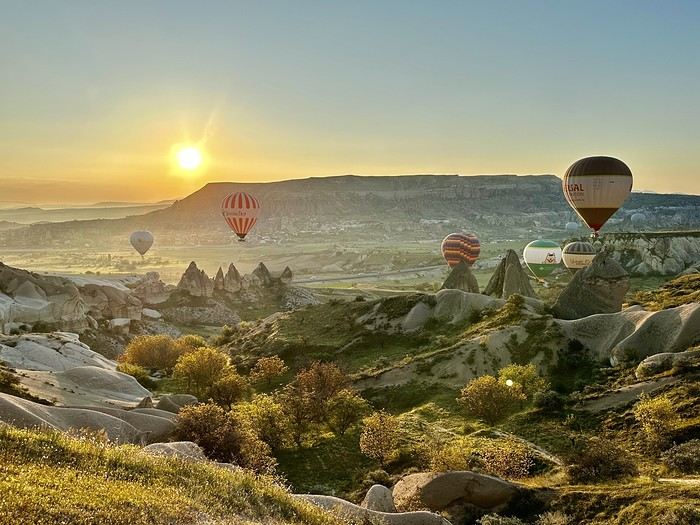 A little sneak peek?
If you're looking for great tips and offbeat spots, if you love exploring uncharted parts of a country, if the exotic is your adrenaline, then move along!
Our 15 days in early May in this part of Turkey (a country I first discovered during a city trip to Istanbul in 2017) will only tread well-worn paths and revisit popular routes. Simply because I kept hoping until the very end that our flight to Jordan wouldn’t be canceled. Events in the Gulf proved me wrong, so we left with: Zero preparation. Not a single hotel booked (well, except the first one), no visits planned, just a flight ticket bought three weeks earlier. No guidebook, no app—just the desire to explore southern Turkey and Cappadocia, whose images and the chance to stretch our legs had caught my eye.
Oh, wait—I did bring along a new guide: Gemini! Yes, my friends, generative AI was my chief advisor throughout the trip for sites to visit, accommodations, routes, and even restaurants! An experiment I wanted to try to form my own opinion on using this new technology. And what better way to test it than a Turkish getaway?
The verdict? You’ll have to wait for the trip recap to find out!
The main idea of the trip is also relaxation.
So, the plan is Antalya for a few days, the Turkish Riviera for a few more, Cappadocia as the highlight, and a return via Antalya to wrap up the trip. And it was all planned by AI!
So, if you're ready, fasten your seatbelts—cabin crew, doors to automatic and cross check—boarding for Turkey now!
A little sneak peek?Malaysia itinerary advice for summer 2027 with 3 kids
Hi there,
We’re planning a 3-week family trip next summer with our three kids, who’ll be 8, 8, and 7 years old.
After some research, we’re leaning toward Malaysia to combine nature/forests and paradise beaches. The idea is to introduce our kids to the country’s culture, nature, and wildlife.
We want a great trip but without splurging on luxury options like high-end lodges and resorts. We’re looking for comfort with a touch of authenticity—basically, a good middle ground.
I’ve started putting together an itinerary and would love your expert advice and tips to help us build this amazing trip with our little ones.
Day 1: Departure from France
Day 2: Kuala Lumpur Stay at a hotel near the airport or KL Sentral. Just one night.
Day 3: Morning flight to Sandakan (Borneo). Stay in Sepilok
Day 4: Sepilok: * Orangutan Center * Malayan Sun Bear Center * Rainforest Discovery Centre
Day 5: Depart for Kinabatangan. Boat safari in the late afternoon.
Day 6: Sunrise safari. Jungle walk. Evening safari.
Day 7: Final safari. Return to Sandakan.
Flight to Kuala Lumpur, then to Kota Bharu (or overnight transit depending on schedules).
Day 8: Transfer to the port. Boat to the Perhentian Islands.
Days 9 to 13: Perhentian Besar 5 full days. * Snorkeling * Hiking * Turtle watching * Wild beaches * Relaxation
Day 14: Return to the mainland. Bus or private car to Taman Negara.
Days 15 and 16: Taman Negara.
Day 17: Return to Kuala Lumpur.
Day 18: Visit the Petronas Towers or Batu Caves
Day 19: Free day.
Day 20: Return flight.
Thanks in advance, everyone!
Baptiste
After some research, we’re leaning toward Malaysia to combine nature/forests and paradise beaches. The idea is to introduce our kids to the country’s culture, nature, and wildlife.
We want a great trip but without splurging on luxury options like high-end lodges and resorts. We’re looking for comfort with a touch of authenticity—basically, a good middle ground.
I’ve started putting together an itinerary and would love your expert advice and tips to help us build this amazing trip with our little ones.
Day 1: Departure from France
Day 2: Kuala Lumpur Stay at a hotel near the airport or KL Sentral. Just one night.
Day 3: Morning flight to Sandakan (Borneo). Stay in Sepilok
Day 4: Sepilok: * Orangutan Center * Malayan Sun Bear Center * Rainforest Discovery Centre
Day 5: Depart for Kinabatangan. Boat safari in the late afternoon.
Day 6: Sunrise safari. Jungle walk. Evening safari.
Day 7: Final safari. Return to Sandakan.
Flight to Kuala Lumpur, then to Kota Bharu (or overnight transit depending on schedules).
Day 8: Transfer to the port. Boat to the Perhentian Islands.
Days 9 to 13: Perhentian Besar 5 full days. * Snorkeling * Hiking * Turtle watching * Wild beaches * Relaxation
Day 14: Return to the mainland. Bus or private car to Taman Negara.
Days 15 and 16: Taman Negara.
Day 17: Return to Kuala Lumpur.
Day 18: Visit the Petronas Towers or Batu Caves
Day 19: Free day.
Day 20: Return flight.
Thanks in advance, everyone!
Baptiste
A whimsical taste of coming back!
I left my heart’s country eight days ago and returned to my adopted one—or was it the other way around? Scotland-Morvan, Morvan-Scotland, I’m not quite sure anymore.
After a quarter without dragging my slippers around here, even though I’d loudly declared I had no interest left in this site, here I am again!
My imagination never stays fallow for long. Just enough time for my inner land to rest. It gets overgrown with fresh nettles, the kind you can pick without getting stung. Then, it’s time to till the fragrant earth and let the story grow.
I hesitated over where to set this story. Maybe the Highlands, maybe the Hebrides, maybe the Orkney Islands, maybe the Shetland Islands. All of Scotland is myth—easy to embroider. But in the end, no. I’d almost be too afraid to bare my soul.
The story will take place at home. Simple, practical.
1)
This morning, I was up well before dawn, feeling a bit grumpy, but nothing a bowl of coffee won’t fix. I love my bowl, and no one dares take it. It’s porcelain, edged with intertwined blue flowers. On the bottom, it says "Revol." The factory has existed long before the Revolution. It was my great-grandmother’s bowl. She drank roasted barley from it during the war, then her Leroux chicory.
Last year, a little guy dropped it. My bowl broke into three pieces. A black anger vibrated deep inside me. The little boy was so upset, on the verge of tears. How could I scold him!
I picked up the three pieces and took Little Boy in my arms. His hair smelled of the light, sweet sweat of toddlers. A gentle hug that healed—his budding sorrow and my anger—everything vanished, and time carried on.
Today, my bowl is even prettier. Man fixed it using the traditional kintsugi technique, except he didn’t use gold powder or lacquer but superglue, and he delicately painted the cracks with woad blue. And my bowl is even more beautiful now.
I’m lingering, I can tell—it’s just that a story wraps itself in life, and life can’t be told in the snap of a finger. Life is long. Like in architecture, you start with a rough sketch, called a "sous-cul" (the initial pencil drawing), then you make a tracing, which is the work itself, the one you later carefully roll up in a wooden tube. Life is like that: you erase, you start over, you use the nub of the pencil until it’s tiny, but you keep going—dreaming, loving.
"Living is a full-time occupation, a unique adventure. Always a surprise and a wonder, which sometimes turns into astonishment. And, from time to time, happiness."*
Alright, enough digressing—this introduction is definitely too long. Tomorrow, I’ll get to the heart of the matter. (I hate that expression; it feels like I’m cutting into someone’s skin.)
*Jean d’Ormesson
2)
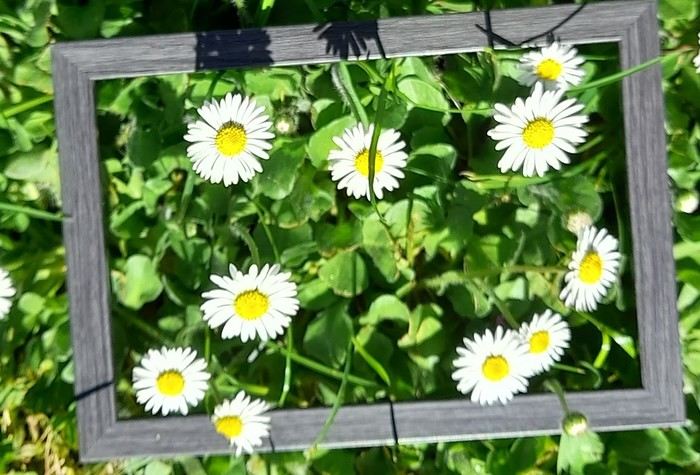
After a quarter without dragging my slippers around here, even though I’d loudly declared I had no interest left in this site, here I am again!
My imagination never stays fallow for long. Just enough time for my inner land to rest. It gets overgrown with fresh nettles, the kind you can pick without getting stung. Then, it’s time to till the fragrant earth and let the story grow.
I hesitated over where to set this story. Maybe the Highlands, maybe the Hebrides, maybe the Orkney Islands, maybe the Shetland Islands. All of Scotland is myth—easy to embroider. But in the end, no. I’d almost be too afraid to bare my soul.
The story will take place at home. Simple, practical.
1)
This morning, I was up well before dawn, feeling a bit grumpy, but nothing a bowl of coffee won’t fix. I love my bowl, and no one dares take it. It’s porcelain, edged with intertwined blue flowers. On the bottom, it says "Revol." The factory has existed long before the Revolution. It was my great-grandmother’s bowl. She drank roasted barley from it during the war, then her Leroux chicory.
Last year, a little guy dropped it. My bowl broke into three pieces. A black anger vibrated deep inside me. The little boy was so upset, on the verge of tears. How could I scold him!
I picked up the three pieces and took Little Boy in my arms. His hair smelled of the light, sweet sweat of toddlers. A gentle hug that healed—his budding sorrow and my anger—everything vanished, and time carried on.
Today, my bowl is even prettier. Man fixed it using the traditional kintsugi technique, except he didn’t use gold powder or lacquer but superglue, and he delicately painted the cracks with woad blue. And my bowl is even more beautiful now.
I’m lingering, I can tell—it’s just that a story wraps itself in life, and life can’t be told in the snap of a finger. Life is long. Like in architecture, you start with a rough sketch, called a "sous-cul" (the initial pencil drawing), then you make a tracing, which is the work itself, the one you later carefully roll up in a wooden tube. Life is like that: you erase, you start over, you use the nub of the pencil until it’s tiny, but you keep going—dreaming, loving.
"Living is a full-time occupation, a unique adventure. Always a surprise and a wonder, which sometimes turns into astonishment. And, from time to time, happiness."*
Alright, enough digressing—this introduction is definitely too long. Tomorrow, I’ll get to the heart of the matter. (I hate that expression; it feels like I’m cutting into someone’s skin.)
*Jean d’Ormesson
2)
Review of an expedition cruise to the Seychelles with Ponant from January 25 to February 2, 2026
Hi everyone,
It was totally by chance that I found this cruise while chatting with Alfred in November 2024. It wasn’t planned, but the price was attractive—one of those "great deals" from Ponant that I love and that don’t exist anymore. Since everyone’s wondering, here’s the answer without waiting for the end of the story: after my various loyalty discounts, I paid **3,250 € per person** for 8 nights/9 days on the expedition cruise *The Essentials of the Seychelles*.
Expedition cruises are by far our favorites. The outings are done by Zodiac with the ship’s naturalist guides, everything’s included, and there’s no need to add any excursions or prepare anything.
We’re liking long flights less and less, so to break up the trip, we decided to stop over in Doha for four days on the way there and one day on the way back.
I’m happy to share the good and not-so-good moments, the great surprises, and the disappointments of this trip with you.
It was totally by chance that I found this cruise while chatting with Alfred in November 2024. It wasn’t planned, but the price was attractive—one of those "great deals" from Ponant that I love and that don’t exist anymore. Since everyone’s wondering, here’s the answer without waiting for the end of the story: after my various loyalty discounts, I paid **3,250 € per person** for 8 nights/9 days on the expedition cruise *The Essentials of the Seychelles*.
Expedition cruises are by far our favorites. The outings are done by Zodiac with the ship’s naturalist guides, everything’s included, and there’s no need to add any excursions or prepare anything.
We’re liking long flights less and less, so to break up the trip, we decided to stop over in Doha for four days on the way there and one day on the way back.
I’m happy to share the good and not-so-good moments, the great surprises, and the disappointments of this trip with you.
The Foam of Days
Now that the curtain has fallen on the past year, it’s time to see what’s happening around here.
It seems pretty quiet, but I’ll read more in detail later.
First, I need to tell you all an anecdote.
My eldest little girl, in her third year of law school, was really scared she wouldn’t pass the year. I told her: “Trust yourself, you’ve worked so hard, and worst case, if you fail, you’ll just redo the year.” “But I don’t think I’ll make it—they changed the rules, and if I mess up even one unit, I have to start all over.” I knew her grades weren’t exactly stellar, and with what I was about to say, I wasn’t taking much of a risk. “Here’s the deal, sweetheart: if you pass, I promise I’ll take you to India, just the two of us.” I have to admit, India is a country I’ve talked about so much to all my grandchildren that in their minds, it’s become a magical, mythical place (hmm).
July had barely begun when my phone rang, her name flashing on the screen. “Mamido, I did it!” My promise came rushing back—oh no, oh no, oh no! “Congratulations, sweetheart!” A little shyly, she said: “Is the India trip still on?”
And me, replying: “Of course it is!”
And that’s that—a promise is a promise, or you risk losing that precious trust that keeps hearts warm and at peace.
We’re leaving in February. Only 8 days—yikes, the carbon footprint! But we can’t miss her tutorials, or she’ll be kicked out. Personally, that works just fine for me.
Going to India has become a challenge for me. It’s far, it’s exhausting, I sweat, I hate mosquitoes, the spices bother my mouth when I used to love them. There’s noise all the time—at night, the dogs bark nonstop, and we almost get run over. I’ll get lost in the streets because my sense of direction has vanished. I don’t like rice anymore. All that chaos and those cultural differences that once enchanted me now just overwhelm me. But I promised.
The upside—and it’s a big one—Raman, the same driver I’ve had forever, will be at the airport with a sign with our names. We’ll stop at the same little shop for chai (or tea, plain and simple) with that aroma that intoxicates me, halfway through the trip.
It’ll be a tiny trip—staying with friends, I’ll show her a few places I love: Chidambaram, Mamallapuram, and the clinic where I worked. Then we’ll head back. My little girl will go home to her parents.
As for me, I’ll leave right away for our Scottish island with Homme for our chilly winter.
How can you love a country so much you want to live there, then suddenly reject it, no longer able to appreciate what once made it special? That’s the mystery of love, I guess.
First, I need to tell you all an anecdote.
My eldest little girl, in her third year of law school, was really scared she wouldn’t pass the year. I told her: “Trust yourself, you’ve worked so hard, and worst case, if you fail, you’ll just redo the year.” “But I don’t think I’ll make it—they changed the rules, and if I mess up even one unit, I have to start all over.” I knew her grades weren’t exactly stellar, and with what I was about to say, I wasn’t taking much of a risk. “Here’s the deal, sweetheart: if you pass, I promise I’ll take you to India, just the two of us.” I have to admit, India is a country I’ve talked about so much to all my grandchildren that in their minds, it’s become a magical, mythical place (hmm).
July had barely begun when my phone rang, her name flashing on the screen. “Mamido, I did it!” My promise came rushing back—oh no, oh no, oh no! “Congratulations, sweetheart!” A little shyly, she said: “Is the India trip still on?”
And me, replying: “Of course it is!”
And that’s that—a promise is a promise, or you risk losing that precious trust that keeps hearts warm and at peace.
We’re leaving in February. Only 8 days—yikes, the carbon footprint! But we can’t miss her tutorials, or she’ll be kicked out. Personally, that works just fine for me.
Going to India has become a challenge for me. It’s far, it’s exhausting, I sweat, I hate mosquitoes, the spices bother my mouth when I used to love them. There’s noise all the time—at night, the dogs bark nonstop, and we almost get run over. I’ll get lost in the streets because my sense of direction has vanished. I don’t like rice anymore. All that chaos and those cultural differences that once enchanted me now just overwhelm me. But I promised.
The upside—and it’s a big one—Raman, the same driver I’ve had forever, will be at the airport with a sign with our names. We’ll stop at the same little shop for chai (or tea, plain and simple) with that aroma that intoxicates me, halfway through the trip.
It’ll be a tiny trip—staying with friends, I’ll show her a few places I love: Chidambaram, Mamallapuram, and the clinic where I worked. Then we’ll head back. My little girl will go home to her parents.
As for me, I’ll leave right away for our Scottish island with Homme for our chilly winter.
How can you love a country so much you want to live there, then suddenly reject it, no longer able to appreciate what once made it special? That’s the mystery of love, I guess.
Berlin impressions (live)
Hi there,
I arrived in Berlin last night. In another discussion, I shared how much of a "nightmare" the flights from Nice were.
I’ll be posting some impressions here—what I liked and what I didn’t like as much.
This is my first time in Berlin. I’m staying for two weeks. For now, I’m alone, but I’ll be joined by someone in a few days.
Just to clarify, I won’t be posting any photos because my camera gave up the ghost the day before I left. It refused to read memory cards, and I don’t have a smartphone—just a tablet that I leave at the hotel.
Speaking of photos, a few years ago, at the Ducasse d’Ath in Belgium, I met a retired teacher who wasn’t taking any pictures of the festival. I asked her, "You’re not taking any photos?" She told me that during a trip to Nicaragua, she’d photographed howler monkeys and only noticed when looking at the pictures later that the males had huge testicles—something she hadn’t realized in person. She said, "Since then, I don’t bother with photos anymore!" I’ve thought about that often and wonder if I should do the same and stop taking pictures. Still, I’ll probably get a smartphone since it’s hard to go without one these days.
I arrived in Berlin last night. In another discussion, I shared how much of a "nightmare" the flights from Nice were.
I’ll be posting some impressions here—what I liked and what I didn’t like as much.
This is my first time in Berlin. I’m staying for two weeks. For now, I’m alone, but I’ll be joined by someone in a few days.
Just to clarify, I won’t be posting any photos because my camera gave up the ghost the day before I left. It refused to read memory cards, and I don’t have a smartphone—just a tablet that I leave at the hotel.
Speaking of photos, a few years ago, at the Ducasse d’Ath in Belgium, I met a retired teacher who wasn’t taking any pictures of the festival. I asked her, "You’re not taking any photos?" She told me that during a trip to Nicaragua, she’d photographed howler monkeys and only noticed when looking at the pictures later that the males had huge testicles—something she hadn’t realized in person. She said, "Since then, I don’t bother with photos anymore!" I’ve thought about that often and wonder if I should do the same and stop taking pictures. Still, I’ll probably get a smartphone since it’s hard to go without one these days.
Bright red and a headache
Hello 🙂
I should be serving a warming drink to the participants in the discussion about gardens and parks that provide us with beautiful photos, I could mention the delicious buttery scent wafting from bakeries in the thread about returning to France, but my heart, its powerful pulse that nourishes my entire being, is elsewhere.
Dasht-e Lut, Yazd, Esfahan, Bam, Kerman, Qeshm, Hormuz—a melody, a prayer at the heart of desire.
A dream, an unattainable fantasy? No. Not anymore. A very serious Italian travel agency is organizing this trip for 6 people this winter. I’m signed up, I’m going, I’m living. Maybe.
"But you’re completely crazy!!!!"
I know... I know that every civilization, every society has a vital need to create scapegoats to define and justify itself, pathetically. And Iran is one of them, top of the list. I laugh or sigh, and it doesn’t bother me.
But that unchanging red, deep red and garnet, so beautiful in itself, in all the Western chancelleries repeats, whispers, shouts: don’t go, don’t go, don’t go, you’re putting yourself in danger and we can’t do anything for you. You’ll be turned into mere bargaining chips, into arguments for endless negotiations. Fear must be instilled, its power absolutely preserved, no concessions made to the enemy. The information (how many French hostages, real or fake, compared to the number of travelers?) is always lacking.
Traveling becomes a merciless confrontation between desire, the vital pulse, and anxiety, its ghosts.
Catherine
I should be serving a warming drink to the participants in the discussion about gardens and parks that provide us with beautiful photos, I could mention the delicious buttery scent wafting from bakeries in the thread about returning to France, but my heart, its powerful pulse that nourishes my entire being, is elsewhere.
Dasht-e Lut, Yazd, Esfahan, Bam, Kerman, Qeshm, Hormuz—a melody, a prayer at the heart of desire.
A dream, an unattainable fantasy? No. Not anymore. A very serious Italian travel agency is organizing this trip for 6 people this winter. I’m signed up, I’m going, I’m living. Maybe.
"But you’re completely crazy!!!!"
I know... I know that every civilization, every society has a vital need to create scapegoats to define and justify itself, pathetically. And Iran is one of them, top of the list. I laugh or sigh, and it doesn’t bother me.
But that unchanging red, deep red and garnet, so beautiful in itself, in all the Western chancelleries repeats, whispers, shouts: don’t go, don’t go, don’t go, you’re putting yourself in danger and we can’t do anything for you. You’ll be turned into mere bargaining chips, into arguments for endless negotiations. Fear must be instilled, its power absolutely preserved, no concessions made to the enemy. The information (how many French hostages, real or fake, compared to the number of travelers?) is always lacking.
Traveling becomes a merciless confrontation between desire, the vital pulse, and anxiety, its ghosts.
Catherine
Exchanging Euros in Cape Verde
Hi,
We’re heading to Cape Verde in January. We’re scheduled to arrive in Praia on a Saturday around 11 AM.
I read somewhere that the exchange rate for Euros to Escudos is the same everywhere—110 escudos for 1 euro. Can anyone confirm this? If that’s the case, I assume there’s a currency exchange desk at the airport, and the rate isn’t too bad? So, it’s better to exchange at the airport, right? What do you think? I don’t want to use ATMs.
Otherwise, are banks in town open on Saturdays? I read they close by 3 PM?
Langtang – Trekking in the Rain
We did the Langtang trek (hike) from September 10th to 17th, with the first and last days being the trip from Kathmandu and back—so 6 days of actual walking. It’s a fairly well-known trek but certainly not as famous or crowded as those in the Annapurna or Everest regions, which is why we chose it.
In theory, it’s mandatory to have a guide for this trek. In reality, it seems there are ways to bypass the regulations: we met at least two people hiking without a guide—a South Korean, a New Zealander, and possibly also a couple of English women and an American couple, though we’re not sure if they had a guide.
The agency we booked with had told us it was an affordable trek for relatively older people in good shape—which is our case (I’m 72 myself). I have to say upfront that we found it quite challenging, maybe because we didn’t have good weather—it was the end of the monsoon season. To be clear, no matter your fitness level, I’d say doing this trek in the middle of the monsoon season would be suicidal.
Day 1 – Journey from Kathmandu to Syapru Besi
On Monday, September 8th, there had been violent protests in Kathmandu against the government, which had, among other things, blocked access to social media and been accused of nepotism and corruption. There were 19 deaths. The situation was very tense on the day of our departure, Wednesday the 10th. The agency warned us that public transport was very unreliable. So, we decided to take a jeep, at an additional cost of $100 ($160 minus what was already budgeted for the bus).
We left a little before 7 a.m. and it took us a good hour just to reach the outskirts of Kathmandu. Along the way, we saw several houses and vehicles set on fire by protesters.
The road to Syapru Besi is only 120 km, but it’s frankly awful. It’s always narrow, winds through endless mountains, and the shoulders range from bad to confusing to nonexistent. Several sections are just dirt tracks. We didn’t regret opting for the jeep, as we could stop several times at our convenience—if only to let Y (my Thai partner) throw up everything she had. She’d taken her usual motion sickness medication, but the constant turns, accelerations, and braking eventually made her terribly carsick.
In Nuwakot, we stopped for breakfast at a nice little restaurant, Jimbu. It was around 8:30 a.m., and we’d barely covered 60 km. The restaurant has a lovely garden overlooking the Trishuli Ganga, the river flowing down from Syapru Besi. First photo: the river in the bottom right corner, mist and clouds over the mountain on the other side.
An hour later, my second photo: the hills along the Trishuli Ganga. You can see the different crops—lush green rice paddies in the lower right and corn, already yellowed and likely harvested, in the foreground on the left. And of course, the mist and clouds through which you can glimpse the mountain on the other side of the river.
In theory, it’s mandatory to have a guide for this trek. In reality, it seems there are ways to bypass the regulations: we met at least two people hiking without a guide—a South Korean, a New Zealander, and possibly also a couple of English women and an American couple, though we’re not sure if they had a guide.
The agency we booked with had told us it was an affordable trek for relatively older people in good shape—which is our case (I’m 72 myself). I have to say upfront that we found it quite challenging, maybe because we didn’t have good weather—it was the end of the monsoon season. To be clear, no matter your fitness level, I’d say doing this trek in the middle of the monsoon season would be suicidal.
Day 1 – Journey from Kathmandu to Syapru Besi
On Monday, September 8th, there had been violent protests in Kathmandu against the government, which had, among other things, blocked access to social media and been accused of nepotism and corruption. There were 19 deaths. The situation was very tense on the day of our departure, Wednesday the 10th. The agency warned us that public transport was very unreliable. So, we decided to take a jeep, at an additional cost of $100 ($160 minus what was already budgeted for the bus).
We left a little before 7 a.m. and it took us a good hour just to reach the outskirts of Kathmandu. Along the way, we saw several houses and vehicles set on fire by protesters.
The road to Syapru Besi is only 120 km, but it’s frankly awful. It’s always narrow, winds through endless mountains, and the shoulders range from bad to confusing to nonexistent. Several sections are just dirt tracks. We didn’t regret opting for the jeep, as we could stop several times at our convenience—if only to let Y (my Thai partner) throw up everything she had. She’d taken her usual motion sickness medication, but the constant turns, accelerations, and braking eventually made her terribly carsick.
In Nuwakot, we stopped for breakfast at a nice little restaurant, Jimbu. It was around 8:30 a.m., and we’d barely covered 60 km. The restaurant has a lovely garden overlooking the Trishuli Ganga, the river flowing down from Syapru Besi. First photo: the river in the bottom right corner, mist and clouds over the mountain on the other side.
An hour later, my second photo: the hills along the Trishuli Ganga. You can see the different crops—lush green rice paddies in the lower right and corn, already yellowed and likely harvested, in the foreground on the left. And of course, the mist and clouds through which you can glimpse the mountain on the other side of the river.
Looking for feedback on 16-day Bali itinerary
Hi there,
what do you think of this itinerary, please? Do you think it’s doable?
We’re two adults—it’s our honeymoon trip! 🙂
Our main interests lean more toward nature and landscapes than cultural visits (though we won’t rule out one or two temple visits).
01/10/2025 W 10:30 AM – Departure from CDG (overnight flight) 02/10/2025 Th 11:25 AM – Arrival in Denpasar -> Ubud (south of the city) – overnight in Ubud 03/10/2025 F – Excursions around Ubud – overnight in Ubud 04/10/2025 Sa – Excursions around Ubud (Jatiluwih) – overnight in Ubud 05/10/2025 Su – Excursions around Ubud – overnight in Ubud 06/10/2025 M – Ubud -> Amed – overnight in Amed 07/10/2025 Tu – Amed – overnight in Amed 08/10/2025 W – Amed -> Padangbai – overnight in Padangbai 09/10/2025 Th – Padangbai -> Gili Air (first morning boat) – overnight on Gili Air 10/10/2025 F – Gili Air – overnight on Gili Air 11/10/2025 Sa – Gili Air – overnight on Gili Air 12/10/2025 Su – Gili Air -> Nusa Lembongan – overnight on Nusa Lembongan 13/10/2025 M – Nusa Lembongan – overnight on Nusa Lembongan 14/10/2025 Tu – Nusa Lembongan – overnight on Nusa Lembongan 15/10/2025 W – Nusa Lembongan – overnight on Nusa Lembongan (or return to Bali depending on sea conditions) 16/10/2025 Th – Jimbaran or Seminyak – overnight in Jimbaran or Seminyak 17/10/2025 F – Jimbaran -> Denpasar – departure at 6:45 PM (overnight flight) 18/10/2025 Sa 8:00 AM – Arrival at CDG – overnight at home
Thanks in advance for your feedback! [;]
01/10/2025 W 10:30 AM – Departure from CDG (overnight flight) 02/10/2025 Th 11:25 AM – Arrival in Denpasar -> Ubud (south of the city) – overnight in Ubud 03/10/2025 F – Excursions around Ubud – overnight in Ubud 04/10/2025 Sa – Excursions around Ubud (Jatiluwih) – overnight in Ubud 05/10/2025 Su – Excursions around Ubud – overnight in Ubud 06/10/2025 M – Ubud -> Amed – overnight in Amed 07/10/2025 Tu – Amed – overnight in Amed 08/10/2025 W – Amed -> Padangbai – overnight in Padangbai 09/10/2025 Th – Padangbai -> Gili Air (first morning boat) – overnight on Gili Air 10/10/2025 F – Gili Air – overnight on Gili Air 11/10/2025 Sa – Gili Air – overnight on Gili Air 12/10/2025 Su – Gili Air -> Nusa Lembongan – overnight on Nusa Lembongan 13/10/2025 M – Nusa Lembongan – overnight on Nusa Lembongan 14/10/2025 Tu – Nusa Lembongan – overnight on Nusa Lembongan 15/10/2025 W – Nusa Lembongan – overnight on Nusa Lembongan (or return to Bali depending on sea conditions) 16/10/2025 Th – Jimbaran or Seminyak – overnight in Jimbaran or Seminyak 17/10/2025 F – Jimbaran -> Denpasar – departure at 6:45 PM (overnight flight) 18/10/2025 Sa 8:00 AM – Arrival at CDG – overnight at home
Thanks in advance for your feedback! [;]
Trip to Madagascar in 2026: Nosy Be or Île Sainte-Marie?
Hi everyone,
I’m planning a third trip to Madagascar in 2026. This time, heading north and then part of the west coast before going back up.
The question I’m asking myself—same as during our first visits—is Nosy Be or not?
Of course, the photos show stunning beaches, and when you mention Madagascar, almost everyone says Nosy Be or at least has heard of it. That’s actually why we didn’t include it in our itineraries before, especially since we’d already seen paradise-like beaches in the south, and we had them all to ourselves because they were hard to reach.
On the other hand, I’ve always been drawn to Île Sainte-Marie, but from the north, you have to go back down to Tana, which I’m okay with in principle.
So, what’s your take? Nosy Be and its surroundings—what do you think? Just tourists looking to party?
Thanks
3 weeks in Colombia in August 2024
Hi there,
This summer, we spent 3 weeks in northern Colombia. A vibrant trip that complemented our southern Peru adventure from the previous year perfectly. Two neighboring countries, but completely different.
To start, we had to make a choice because the country is vast.
So we focused on 3 different regions for our 3 weeks: - Week 1: Bogotá and the colonial villages (Villa de Leyva, Barichara) - Week 2: Medellín and the Coffee Region - Week 3: the Caribbean coast
We entrusted the organization to a small local agency that handled accommodations, guides, and transportation. Transportation is key. The country is large, the road network isn’t very efficient, and we spent a lot of time traveling (cars, planes, and boats...), but it was the price to pay to explore it.
The overall budget isn’t exactly "backpacker" level. We spent 7,500 € (excluding Air France) for our 3-week stay (hotels, drivers, guides, flights, visits, meals). But we treated ourselves to nice accommodations—you’ll see as we share more posts.
For vacations, I try to follow Philippe Noiret’s motto: "Travel is short. Let’s try to do it first class."
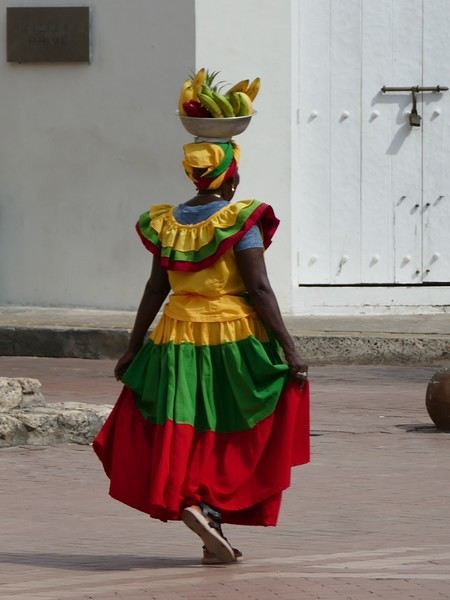
This summer, we spent 3 weeks in northern Colombia. A vibrant trip that complemented our southern Peru adventure from the previous year perfectly. Two neighboring countries, but completely different.
To start, we had to make a choice because the country is vast.
So we focused on 3 different regions for our 3 weeks: - Week 1: Bogotá and the colonial villages (Villa de Leyva, Barichara) - Week 2: Medellín and the Coffee Region - Week 3: the Caribbean coast
We entrusted the organization to a small local agency that handled accommodations, guides, and transportation. Transportation is key. The country is large, the road network isn’t very efficient, and we spent a lot of time traveling (cars, planes, and boats...), but it was the price to pay to explore it.
The overall budget isn’t exactly "backpacker" level. We spent 7,500 € (excluding Air France) for our 3-week stay (hotels, drivers, guides, flights, visits, meals). But we treated ourselves to nice accommodations—you’ll see as we share more posts.
For vacations, I try to follow Philippe Noiret’s motto: "Travel is short. Let’s try to do it first class."
Romania with the wind in my face
Hi there,
In spring 2023, I headed to Romania by motorcycle. I’ve been going there for over 20 years—by car, bike, and plane—and I’ve really fallen for this country. I feel so at home there. The big difference this time? I had all the time in the world, no constraints at all.
I left the Paris region (IDF) and headed for the Sundgau, avoiding the motorways. I know a little hotel tucked away in the countryside there. The next day, I followed the Swiss border on a small road along the Lucelle River, which acts as the frontier. Around a bend, you cross to the other side and then back into France—kind of fun.

I crossed Switzerland via the motorway—I know the route well, so no sightseeing. I arrived in Austria, which I also know pretty well, and took the Arlberg Pass. It was deserted, everything was closed, and there was still snow.

The weather wasn’t great—it was raining—so I stopped for the night at a remote inn. Perfect for drying off! I set off in the rain the next morning and kept going. Gradually, the rain stopped. I took a detour through the Trentino-Alto Adige region and the Sella Pass. Up there, it was rain, snow, and a bit of black ice in a tunnel (wind + rain + sub-zero temps = skating rink).

I arrived in Burgenland to see the famous giant glass-and-metal grape cluster, the largest in Europe. The region is hilly, full of tiny roads, and covered in vineyards.

Burgenland

Then into Slovenia.

I stopped for the night at a winegrower’s B&B perched on a ridge straddling the Croatian border. The welcome was fantastic—I spent the evening with the owners and their friends who arrived later. The white wine was amazing! The next day, I hit the road again.

I headed for Vukovar, on the Danube, a symbol of resistance during the Balkan War. I found a really comfortable B&B by the river and stayed for two nights to explore. What a strange monument!

I visited the water tower, which you can go inside—it’s riddled with bullet holes. There’s an exhibition inside. I also checked out a museum of equipment used during the Balkan War. Since it’s in a barracks, it’s guarded. I asked if I could bring my motorcycle in, and a Croatian officer came to meet me and gave me permission, along with a sticker to put on the bike. I met some fellow bikers from Marseille riding beautiful vintage bikes.

I left Vukovar following the Danube toward Serbia. The rain caught up with me. The roads were busy, with construction causing mud everywhere and crazy truck drivers. At one point, I cut through the construction zone! I stopped for coffee in a village—it had a *Deliverance* vibe. Total silence when I walked in, and the owner gave me a suspicious look. Finally, the Romanian border... and the sun came out! The Romanian customs officer asked if I had anything to declare. "Yes—just happy to be back in Romania!" I stopped for the night at a *cabana* (mountain hut) lost in the forest. Chaos ensued—a tourist! So they rushed to get supplies, quench my thirst, give me a room, and then the owner took charge: țuică (plum brandy), omelette, beers... Everyone bent over backwards to make me happy.
I love these Romanian roads!


I passed through Băile Herculane, which isn’t as beautiful as it once was—everything’s run-down. What are they waiting for to restore this *Mittel Europa*-style spa town that’s still active?
I stopped at the birthplace of Constantin Brâncuși.

Keep your eyes peeled on the roads!

Via the Jiu Valley, I arrived in Craiova to visit my in-laws. A few days of laughs and outings. I picked up my wife at the airport.
My favorite brand

We took a trip to Horezu, a village famous for its beautiful ceramics.


After those few days together, I dropped my wife off at the airport, and the next day, I set off for Dobrogea, a region split in two after the war with Bulgaria. The road was dull—flat as far as the eye could see—but the sun was out. I followed a military convoy of about fifty vehicles, with orders not to overtake. I stopped by the roadside for some homemade *ciorbă* (sour soup). That evening, I stopped in Călărași. The next day, I crossed the Danube by ferry. There are two ferries—one goes to Bulgaria, the other stays in Romania.

A priest on board came over to bless the motorcycle, the rider, and the ferry. I arrived on the other side with some traffic. Dobrogea

It’s like that all the way to the Bulgarian border—no restaurants, hotels, or gas stations, just old collective farms. And it’s the same in Bulgaria! I stopped at Adamclisi, site of a major battle in Moesia (now Dobrogea) in 101–102 BC, one of Trajan’s most important Dacian Wars.

An oasis in the agricultural steppe.

I arrived at the Bulgarian border.

A customs officer—built like a weightlifter, shaved head, thick neck, and as square as a truck—saw me take this photo and came over to ask me to delete it. I did... but I didn’t empty the trash! The weather turned stormy. I arrived in Balchik, a resort town where the last queen of Romania, Maria, used to vacation.
The Black Sea and the Bulgarian coast

The weather wasn’t great, so I headed back to Romania to follow the coastline. Constanța and its casino

Then came the seaside resorts—just as ugly as each other: Neptun, Mangalia, Eforie Nord, Eforie Sud. I stopped at a B&B near the Danube Delta, in some random village. The welcome was nice. The next day, I headed for Dunavățu de Jos, the last stretch of tarmac in Romania. After that, it’s the Danube Delta. The area is flat and sandy, with typical houses featuring reed roofs.

Now, I’m following the Ukrainian border. I passed the last active quarantine station in Europe. I came across a funeral procession—it’s customary to honk as you pass. If you’re on foot, you cross yourself. When I arrived in Galați, it was raining. I boarded the ferry in a downpour. On board, we were packed in like sardines. As soon as the ramp hit land, the drivers rushed out, revving their engines and honking. I let them go and exited calmly. I continued toward the Székely Land. These are Hungarians who, back in the day, were border guards for the king. They’ve kept their own script (it looks like runes), their flag, and their independence streak. For them, Romania is Hungarian, despite the Treaty of Sèvres in 1920. There are still clashes between Romanians and Székely Hungarians now and then. Since I speak a bit of Romanian, I used it—logical, since it’s the language there—and it put everyone in a good mood! Székely flag

I passed through Bicaz Chei, arriving via one of my favorite kinds of roads. During a break, a bear came to check me out from a distance.

Bicaz Chei

I arrived at the "Heart of Jesus" monument, built by public subscription to thank God for sparing the village from severe flooding.

Now, I’m heading west—next stop, Transylvania, with the in-laws. On the road

Roma house

Bozorka—a Hungarian specialty... 450 grams of meat!
I made it back to France without any issues, already thinking about my next trip. Actually, I just got back from one!
I left the Paris region (IDF) and headed for the Sundgau, avoiding the motorways. I know a little hotel tucked away in the countryside there. The next day, I followed the Swiss border on a small road along the Lucelle River, which acts as the frontier. Around a bend, you cross to the other side and then back into France—kind of fun.
I crossed Switzerland via the motorway—I know the route well, so no sightseeing. I arrived in Austria, which I also know pretty well, and took the Arlberg Pass. It was deserted, everything was closed, and there was still snow.
The weather wasn’t great—it was raining—so I stopped for the night at a remote inn. Perfect for drying off! I set off in the rain the next morning and kept going. Gradually, the rain stopped. I took a detour through the Trentino-Alto Adige region and the Sella Pass. Up there, it was rain, snow, and a bit of black ice in a tunnel (wind + rain + sub-zero temps = skating rink).
I arrived in Burgenland to see the famous giant glass-and-metal grape cluster, the largest in Europe. The region is hilly, full of tiny roads, and covered in vineyards.
Burgenland
Then into Slovenia.
I stopped for the night at a winegrower’s B&B perched on a ridge straddling the Croatian border. The welcome was fantastic—I spent the evening with the owners and their friends who arrived later. The white wine was amazing! The next day, I hit the road again.
I headed for Vukovar, on the Danube, a symbol of resistance during the Balkan War. I found a really comfortable B&B by the river and stayed for two nights to explore. What a strange monument!
I visited the water tower, which you can go inside—it’s riddled with bullet holes. There’s an exhibition inside. I also checked out a museum of equipment used during the Balkan War. Since it’s in a barracks, it’s guarded. I asked if I could bring my motorcycle in, and a Croatian officer came to meet me and gave me permission, along with a sticker to put on the bike. I met some fellow bikers from Marseille riding beautiful vintage bikes.
I left Vukovar following the Danube toward Serbia. The rain caught up with me. The roads were busy, with construction causing mud everywhere and crazy truck drivers. At one point, I cut through the construction zone! I stopped for coffee in a village—it had a *Deliverance* vibe. Total silence when I walked in, and the owner gave me a suspicious look. Finally, the Romanian border... and the sun came out! The Romanian customs officer asked if I had anything to declare. "Yes—just happy to be back in Romania!" I stopped for the night at a *cabana* (mountain hut) lost in the forest. Chaos ensued—a tourist! So they rushed to get supplies, quench my thirst, give me a room, and then the owner took charge: țuică (plum brandy), omelette, beers... Everyone bent over backwards to make me happy.
I love these Romanian roads!
I passed through Băile Herculane, which isn’t as beautiful as it once was—everything’s run-down. What are they waiting for to restore this *Mittel Europa*-style spa town that’s still active?
I stopped at the birthplace of Constantin Brâncuși.
Keep your eyes peeled on the roads!
Via the Jiu Valley, I arrived in Craiova to visit my in-laws. A few days of laughs and outings. I picked up my wife at the airport.
My favorite brand
We took a trip to Horezu, a village famous for its beautiful ceramics.
After those few days together, I dropped my wife off at the airport, and the next day, I set off for Dobrogea, a region split in two after the war with Bulgaria. The road was dull—flat as far as the eye could see—but the sun was out. I followed a military convoy of about fifty vehicles, with orders not to overtake. I stopped by the roadside for some homemade *ciorbă* (sour soup). That evening, I stopped in Călărași. The next day, I crossed the Danube by ferry. There are two ferries—one goes to Bulgaria, the other stays in Romania.
A priest on board came over to bless the motorcycle, the rider, and the ferry. I arrived on the other side with some traffic. Dobrogea
It’s like that all the way to the Bulgarian border—no restaurants, hotels, or gas stations, just old collective farms. And it’s the same in Bulgaria! I stopped at Adamclisi, site of a major battle in Moesia (now Dobrogea) in 101–102 BC, one of Trajan’s most important Dacian Wars.
An oasis in the agricultural steppe.
I arrived at the Bulgarian border.
A customs officer—built like a weightlifter, shaved head, thick neck, and as square as a truck—saw me take this photo and came over to ask me to delete it. I did... but I didn’t empty the trash! The weather turned stormy. I arrived in Balchik, a resort town where the last queen of Romania, Maria, used to vacation.
The Black Sea and the Bulgarian coast
The weather wasn’t great, so I headed back to Romania to follow the coastline. Constanța and its casino
Then came the seaside resorts—just as ugly as each other: Neptun, Mangalia, Eforie Nord, Eforie Sud. I stopped at a B&B near the Danube Delta, in some random village. The welcome was nice. The next day, I headed for Dunavățu de Jos, the last stretch of tarmac in Romania. After that, it’s the Danube Delta. The area is flat and sandy, with typical houses featuring reed roofs.
Now, I’m following the Ukrainian border. I passed the last active quarantine station in Europe. I came across a funeral procession—it’s customary to honk as you pass. If you’re on foot, you cross yourself. When I arrived in Galați, it was raining. I boarded the ferry in a downpour. On board, we were packed in like sardines. As soon as the ramp hit land, the drivers rushed out, revving their engines and honking. I let them go and exited calmly. I continued toward the Székely Land. These are Hungarians who, back in the day, were border guards for the king. They’ve kept their own script (it looks like runes), their flag, and their independence streak. For them, Romania is Hungarian, despite the Treaty of Sèvres in 1920. There are still clashes between Romanians and Székely Hungarians now and then. Since I speak a bit of Romanian, I used it—logical, since it’s the language there—and it put everyone in a good mood! Székely flag
I passed through Bicaz Chei, arriving via one of my favorite kinds of roads. During a break, a bear came to check me out from a distance.
Bicaz Chei
I arrived at the "Heart of Jesus" monument, built by public subscription to thank God for sparing the village from severe flooding.
Now, I’m heading west—next stop, Transylvania, with the in-laws. On the road
Roma house
Bozorka—a Hungarian specialty... 450 grams of meat!
I made it back to France without any issues, already thinking about my next trip. Actually, I just got back from one!
The "Must-Sees" of the American West
This adventure began during Covid... Yep, Covid turned a lot of things upside down, but most of all, it kept us cooped up for a few months and stopped us from traveling for a while—even longer for a die-hard fan of the American West like me.
While borders were closed, I started imagining what an ideal itinerary might look like—one that would string together all the Southwest must-sees in just two weeks, during the best time of year: September and October. When the U.S. announced in September 2021 that borders would reopen in the coming weeks, I regained hope and began scouting flight tickets for a departure in September 2022.
But here’s the thing: tackling solo hikes, each one tougher than the last, right in the heart of the Wilderness, could be a risky—even reckless—endeavor for a father of three. After a quick chat with some virtual friends who are just as passionate about the Southwest as I am, with good physical condition and nearly the same list of must-visit spots, Franck and his brother Sullivan were in! 🙂
In November, we snagged flight tickets from Nice to San Francisco for the modest sum of 400 €, and a few days later, I booked a Toyota Tacoma pickup for 840 € !
It’s not cheap for just 15 days, and a pickup isn’t exactly ideal for luggage, but the prices for full-size 4x4s have become totally outrageous! Due to border closures, rental companies had to offload a lot of these big 4x4s, which tourists love. Then, supply and demand did the rest !
Franck and I spent the winter and spring trying to cram the equivalent of three weeks of hikes into two. But even with physical limits, we had to stay reasonable! Three to four months before departure, we entered the lotteries for different must-see spots: The Subway, Coyote Buttes North (home to the famous Wave), and Coyote Buttes South (CBS).
The Wave is the holy grail for any Southwest enthusiast. Since 2015, we’ve tried our luck with the online and on-site lotteries about ten times, but the spots are unfortunately limited: just 20 per day. A glimmer of hope, though—since early 2022, that number has increased to 64 people allowed per day, with 48 spots awarded via the online lottery.
After all three of us tried our luck for The Wave, on June 1st at exactly 5 PM, I got an email that started with, "Congratulations! You were successful in the Coyote Buttes North (The Wave) September 2022 Permit Lottery at Coyote Buttes North (The Wave)...". At 5:01 PM, I called Franck, whose dream it’s been for over 20 years—ever since the first photos were published in a travel magazine! He didn’t believe me when I told him, and I had to forward the email for him to finally accept the unbelievable: we were going to The Wave and all the incredible spots scattered across the protected area of Coyote Buttes North.
I’ve already been to Coyote Buttes South twice, but there are areas I couldn’t explore in the middle of summer because they were too remote. So, I had no trouble letting my buddies convince me to go back for a third time. Plus, given how hard it is to access, we had no trouble securing a permit online as long as we logged in at exactly 8 PM on the dot!
For The Subway, all three of us struck out. No big deal—we won at CBN and CBS!
Among the sites to visit, there are two that I’m particularly attached to because I know my chances of wanting to see them again are slim. The first is Angel Arch, one of the most legendary arches in the Southwest, due to its remoteness from any trace of civilization. To get there, the recommended hike is Upper Salt Creek, and you’re looking at a 50 km round-trip in an area with no water (in September) and populated by bears.
The second site is the Hopi Salt Trail, in Navajo land, which, after a very tough hike, lets you marvel at the turquoise-blue waters of the Little Colorado before it meets the Colorado River. The Hopi Salt Trail is, like The Wave, the holy grail for any Southwest enthusiast, and the windows of opportunity to see the water in that magical color are very short each year. For this, you have to monitor the Little Colorado’s gauges downstream from Cameron: if the level stays at its lowest for 10 consecutive days—meaning no rain—you can hope for turquoise water. The ideal period rarely exceeds 30 days a year, and it’s usually in June that all the stars align.
But unfortunately, one month before departure, while the flow rate at Cameron looked promising, several storms in September dashed our hopes of doing the Hopi Salt Trail, even at the end of the road trip.
We still had two consolation prizes, though:
After a last-minute cancellation, while keeping an eye out for available spots for The Subway, it turned out that three spots opened up exactly on the day we’d planned to go—so we rushed to grab them!! Regarding the 4x4 rental, the prices for full-size models dropped by several hundred dollars, and we ended up finding a Chevrolet Tahoe for less than $1000. A steal and a serious boost in comfort, so we could store all our gear and food without worry!
Here’s the initial plan in a perfect world: D1 The White Domes - Camping D2 Sunrise at The White Domes - The Subway D3 Coyote Buttes North D4 Coyote Buttes South - White Pocket D5 Wahweap Hoodoos - Sidestep Canyon - Colourful Canyon - White Rocks - Sunset at Yellow Rock D6 Broken Bow Arch - Reflection Canyon D7 Coyote Gulch D8 The Volcano (or The Oasis - Zebra Slot Canyon if the weather’s good) - North Caineville Mesa D9 The Needles: Squaw Canyon - Lost Canyon combo - Druid Arch - Chesler Park D10 Upper Salt Creek Day 1 - Camping D11 Upper Salt Creek Day 2 D12 Hopi-Navajo Territory: Ha Ho No Geh Canyon, Coal Mine Canyon, Bends of the Little Colorado D13 Grand Canyon: South Kaibab Trail and Bright Angel Trail D14 Upper East Zion: East Temple Loop, Jughandle Arch, Center of the Universe, and Checkerboard Mesa Summit And several backup options in case of bad weather, including Spencer Trail, West Cove, and Buffington Pockets.
Enough talking—time for action!
While borders were closed, I started imagining what an ideal itinerary might look like—one that would string together all the Southwest must-sees in just two weeks, during the best time of year: September and October. When the U.S. announced in September 2021 that borders would reopen in the coming weeks, I regained hope and began scouting flight tickets for a departure in September 2022.
But here’s the thing: tackling solo hikes, each one tougher than the last, right in the heart of the Wilderness, could be a risky—even reckless—endeavor for a father of three. After a quick chat with some virtual friends who are just as passionate about the Southwest as I am, with good physical condition and nearly the same list of must-visit spots, Franck and his brother Sullivan were in! 🙂
In November, we snagged flight tickets from Nice to San Francisco for the modest sum of 400 €, and a few days later, I booked a Toyota Tacoma pickup for 840 € !
It’s not cheap for just 15 days, and a pickup isn’t exactly ideal for luggage, but the prices for full-size 4x4s have become totally outrageous! Due to border closures, rental companies had to offload a lot of these big 4x4s, which tourists love. Then, supply and demand did the rest !
Franck and I spent the winter and spring trying to cram the equivalent of three weeks of hikes into two. But even with physical limits, we had to stay reasonable! Three to four months before departure, we entered the lotteries for different must-see spots: The Subway, Coyote Buttes North (home to the famous Wave), and Coyote Buttes South (CBS).
The Wave is the holy grail for any Southwest enthusiast. Since 2015, we’ve tried our luck with the online and on-site lotteries about ten times, but the spots are unfortunately limited: just 20 per day. A glimmer of hope, though—since early 2022, that number has increased to 64 people allowed per day, with 48 spots awarded via the online lottery.
After all three of us tried our luck for The Wave, on June 1st at exactly 5 PM, I got an email that started with, "Congratulations! You were successful in the Coyote Buttes North (The Wave) September 2022 Permit Lottery at Coyote Buttes North (The Wave)...". At 5:01 PM, I called Franck, whose dream it’s been for over 20 years—ever since the first photos were published in a travel magazine! He didn’t believe me when I told him, and I had to forward the email for him to finally accept the unbelievable: we were going to The Wave and all the incredible spots scattered across the protected area of Coyote Buttes North.
I’ve already been to Coyote Buttes South twice, but there are areas I couldn’t explore in the middle of summer because they were too remote. So, I had no trouble letting my buddies convince me to go back for a third time. Plus, given how hard it is to access, we had no trouble securing a permit online as long as we logged in at exactly 8 PM on the dot!
For The Subway, all three of us struck out. No big deal—we won at CBN and CBS!
Among the sites to visit, there are two that I’m particularly attached to because I know my chances of wanting to see them again are slim. The first is Angel Arch, one of the most legendary arches in the Southwest, due to its remoteness from any trace of civilization. To get there, the recommended hike is Upper Salt Creek, and you’re looking at a 50 km round-trip in an area with no water (in September) and populated by bears.
The second site is the Hopi Salt Trail, in Navajo land, which, after a very tough hike, lets you marvel at the turquoise-blue waters of the Little Colorado before it meets the Colorado River. The Hopi Salt Trail is, like The Wave, the holy grail for any Southwest enthusiast, and the windows of opportunity to see the water in that magical color are very short each year. For this, you have to monitor the Little Colorado’s gauges downstream from Cameron: if the level stays at its lowest for 10 consecutive days—meaning no rain—you can hope for turquoise water. The ideal period rarely exceeds 30 days a year, and it’s usually in June that all the stars align.
But unfortunately, one month before departure, while the flow rate at Cameron looked promising, several storms in September dashed our hopes of doing the Hopi Salt Trail, even at the end of the road trip.
We still had two consolation prizes, though:
After a last-minute cancellation, while keeping an eye out for available spots for The Subway, it turned out that three spots opened up exactly on the day we’d planned to go—so we rushed to grab them!! Regarding the 4x4 rental, the prices for full-size models dropped by several hundred dollars, and we ended up finding a Chevrolet Tahoe for less than $1000. A steal and a serious boost in comfort, so we could store all our gear and food without worry!
Here’s the initial plan in a perfect world: D1 The White Domes - Camping D2 Sunrise at The White Domes - The Subway D3 Coyote Buttes North D4 Coyote Buttes South - White Pocket D5 Wahweap Hoodoos - Sidestep Canyon - Colourful Canyon - White Rocks - Sunset at Yellow Rock D6 Broken Bow Arch - Reflection Canyon D7 Coyote Gulch D8 The Volcano (or The Oasis - Zebra Slot Canyon if the weather’s good) - North Caineville Mesa D9 The Needles: Squaw Canyon - Lost Canyon combo - Druid Arch - Chesler Park D10 Upper Salt Creek Day 1 - Camping D11 Upper Salt Creek Day 2 D12 Hopi-Navajo Territory: Ha Ho No Geh Canyon, Coal Mine Canyon, Bends of the Little Colorado D13 Grand Canyon: South Kaibab Trail and Bright Angel Trail D14 Upper East Zion: East Temple Loop, Jughandle Arch, Center of the Universe, and Checkerboard Mesa Summit And several backup options in case of bad weather, including Spencer Trail, West Cove, and Buffington Pockets.
Enough talking—time for action!
Dream Islands: Greece, French Polynesia, Mauritius...
Hello,
Who among us hasn’t dreamed of having a ticket to Tahiti, Bora Bora, or the Marquesas in their pocket—preferably a one-way ticket to “paradise”?
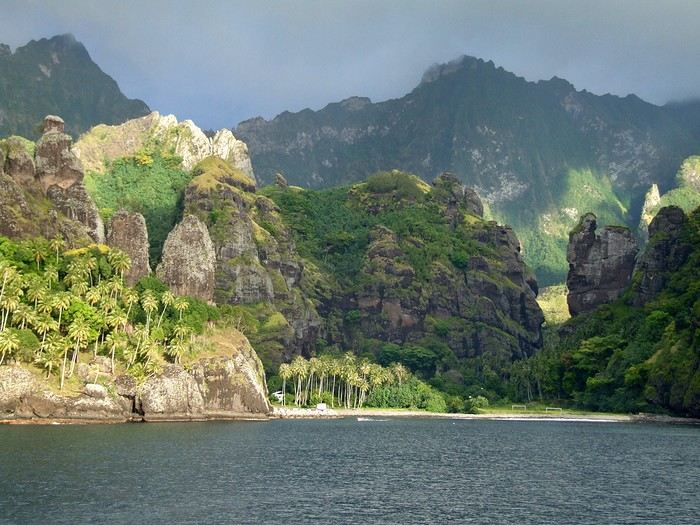 Idyllic landscape of a dream island, but difficult to access: the Bay of Virgins in Fatu Hiva, Marquesas Islands
Among the values conveyed by literature, tourism, and advertising is the quest for “elsewhere,” for a change of scenery, in the truest sense of the word—that is, the need to leave one’s country. This need for otherness, for difference, is projected onto dreamlike, idealized, even mythicized places. In our imaginary world, the island is often that place.
Yet we forget that islands have also been ideal prisons. The examples are numerous: Elba and Saint Helena, Alcatraz and Poulo Condor, If and Yeu, the Devil’s Islands and Leros. The latter, located in Greece in the Dodecanese, hosted a sinister forced labor camp during the colonels’ dictatorship as well as a psychiatric hospital. Despite the beauty of its bay, tourism has remained marginal there due to its bad reputation, unlike the neighboring island of Patmos.
I’d like to share a selection of about a dozen islands from across the world’s seas and oceans. For dreaming...
°°°°°°°°°°°°°°°
SANTORINI
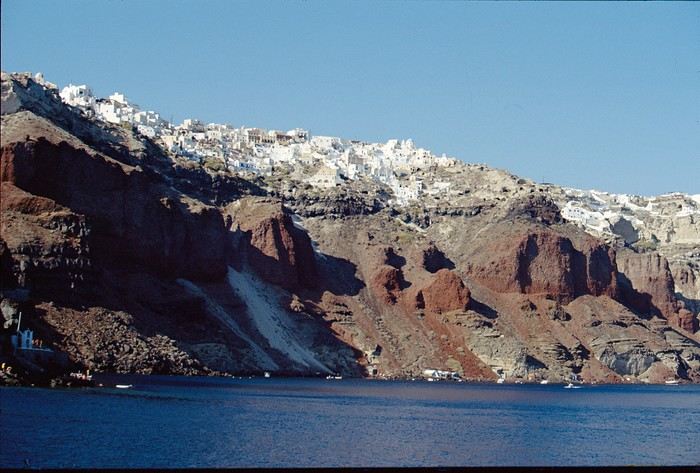
July 27, 1967
At dawn, the ferry from Agios Nikolaos (Crete) enters the immense caldera of Santorini. From the ship’s deck, Rainer, my travel companion, and I are left in awe by the sight of these towering, multicolored cliffs looming over us. We disembark and begin the steep climb on foot via the winding mule path up to the village of Fira, the capital perched above the cliff. Though it’s still very early, we head to the youth hostel. There wasn’t a soul in the alleys that morning—or rather, there were only cats! I have a fond memory of that encounter with Santorini: a sensory shock, a breathtaking volcanic site, a harmony of blue, ochre-red, and white. A welcoming island, as it was traditional to welcome the xénou, an island that hadn’t yet fully recovered from the terrible 1956 earthquake, a Cycladic architectural marvel where local life was still preserved.
It’s easy to see why, in antiquity, the island was named Kallisté (καλλίστη), “the most beautiful,” as it’s nearly impossible to resist gazing at this landscape shaped by tectonic forces. Indeed, a massive volcanic cataclysm—the Minoan eruption—shaped this scenery in the 17th century BCE, creating a caldera that was quickly filled by the sea. The enormous tsunamis that followed reached Crete, leading to the disappearance of the Minoan civilization.
A cliffside path along the caldera leads us to the peaceful village of Oia, at the northern tip of the island. Blue-domed churches and flower-filled villages with whitewashed houses line the way. This walk is a continuous marvel, offering splendid views of the caldera and the neighboring islands formed by the breakup of the ancient volcano (Thirissa, Nea Kameni). Oia is a large, picturesque village, like Fira perched on the cliff’s edge, which was severely damaged by the 1956 earthquake, and its scars are still visible. Its cave-like houses with vaulted roofs haven’t yet been turned into luxury hotels or shops. Absolute tranquility reigns here.
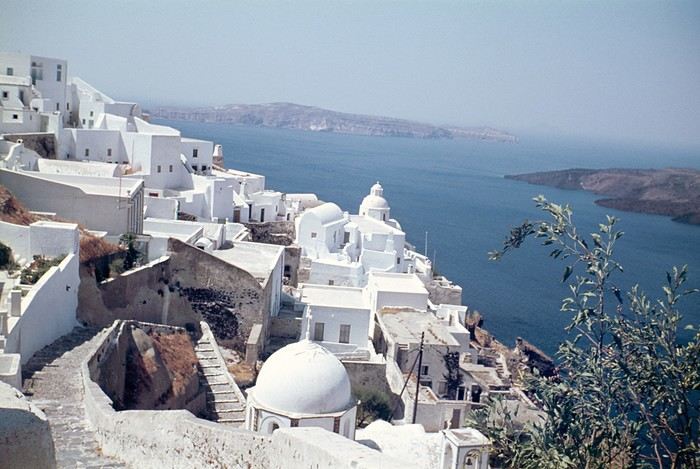 Oia in 1967—a peaceful village overlooking the caldera. But where are the pools and trendy bars?
A lush countryside covered in olive trees and vineyards welcomes us for a pleasant hike, interrupted by the kindness of a friendly islander who gives us a lift in his truck for a few kilometers. He’s off to harvest his tomatoes, which he grows at the foot of Pyrgos Hill. The delicious little cherry tomato of Santorini earned an EU Protected Designation of Origin (PDO) in 2013. We climb up to the village of Pyrgos, perched on a hill and dominated by the elegant bell tower of its church. Finally, we reach the black sand beach of Kamari on the island’s eastern coast to enjoy a swim.
{...} To be continued
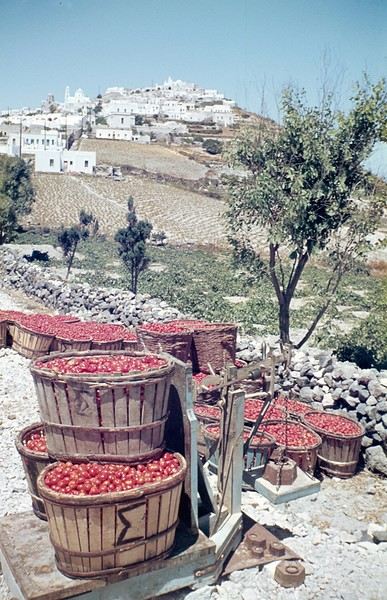

°°°°°°°°°°°°°°°°°
RAIVAVAE (French Polynesia)
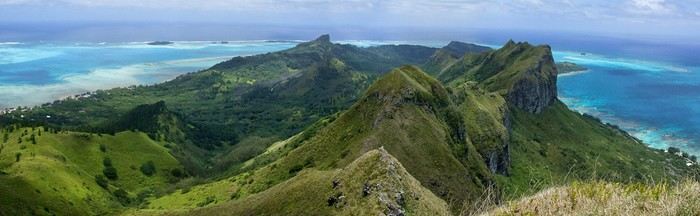
November 15, 2007
Éléonore from Pension Tama welcomes us with traditional flower leis, as if she’d been waiting for old friends she hadn’t seen in ages. The small airport terminal is lively, the atmosphere warm—people hugging, rejoicing in reunions, all under kilos of flowers. Then, just as quickly, the place empties until the next flight... in a few days.
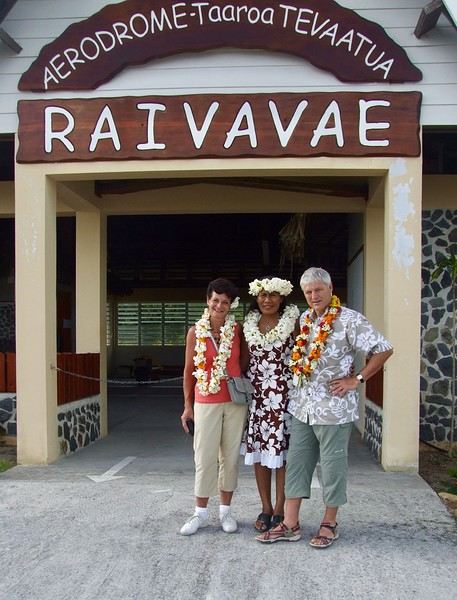
In the Austral Islands, a ninety-minute flight from Tahiti, Raivavae is a world away from the frenetic pace of Papeete or the tourist crowds of the Leeward Islands. The true paradise of the South Seas can still be savored here—it’s a bit like Bora Bora half a century ago. Our first feeling upon arriving on this island is wonder, with smiles that could melt even the gloomiest among us, landscapes so stunning they take your breath away, and above all, a sense of disorientation and fulfillment. Picture a mountainous island, about ten kilometers by three and a half, encircled by a coral reef and wild motu, cradling a lagoon with shades of blue that would make Bora Bora green with envy.
The roughly one thousand inhabitants of Raivavae are spread across four villages around the island. Children are everywhere, as is typical in Polynesia, and they greet you with open, genuine smiles. Here, ancestral values have survived progress. The predominantly Protestant population is very devout, as evidenced by the several temples built across the island. Religious fervor sets the rhythm of daily life. Sundays are reserved for worship and Sunday school (catechism). Work is forbidden on that day, and tourist activities are suspended. These rules are strict and respected.
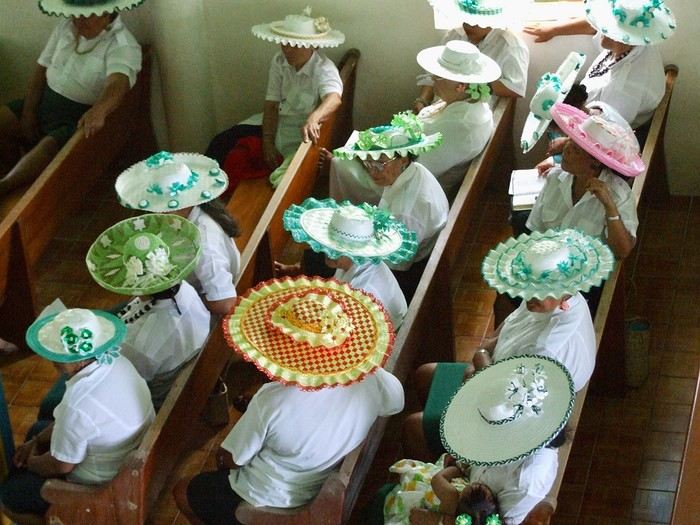 Hat contest for the worship celebration
Yet a sense of resignation is ever-present. The people of Raivavae know they are—and will remain—isolated. Despite the construction of an airstrip in 2004 and a few weekly flights to Tahiti and its nearest neighbor, Tubuai (200 km away), the island remains on the fringes of the world. One painful aspect is the separation of children from their parents when they leave for middle school in Tubuai starting in fifth grade. Television brings daily images of a world the islanders will likely never know, but one they often aspire to.
We are privileged. We have the pristine white-sand beaches of the motu and some of the most beautiful bays in Polynesia all to ourselves. The jewel in the crown, the island’s emblematic spot, is the “motu-pool,” about twenty minutes by boat. A natural, exquisite basin with crystal-clear water, gradients of blue, and white sand. And best of all, there’s almost no one there. In fact, lounging on the beach is frowned upon, especially for young women. Religion looks very unfavorably on sunbathing and lazing around. And yet, everything here leans toward that philosophy of life.
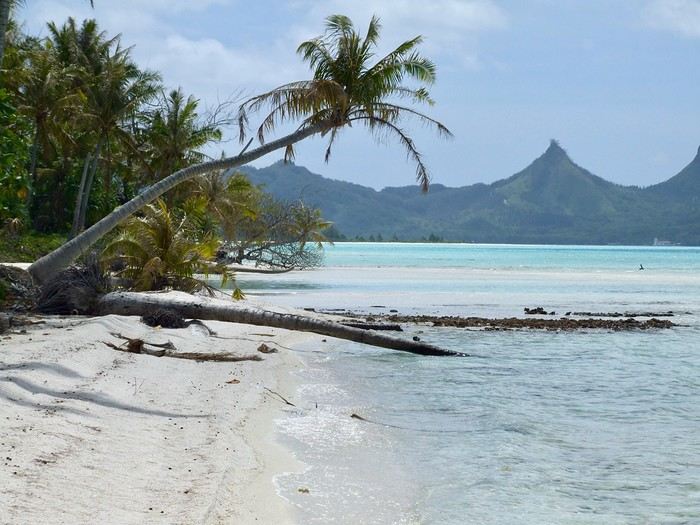
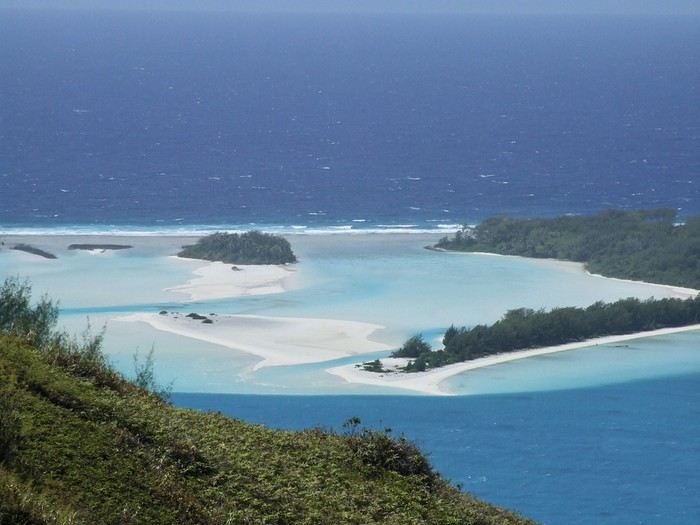 The "motu-pool"
{...} To be continued
Who among us hasn’t dreamed of having a ticket to Tahiti, Bora Bora, or the Marquesas in their pocket—preferably a one-way ticket to “paradise”?
Idyllic landscape of a dream island, but difficult to access: the Bay of Virgins in Fatu Hiva, Marquesas IslandsAmong the values conveyed by literature, tourism, and advertising is the quest for “elsewhere,” for a change of scenery, in the truest sense of the word—that is, the need to leave one’s country. This need for otherness, for difference, is projected onto dreamlike, idealized, even mythicized places. In our imaginary world, the island is often that place.
Yet we forget that islands have also been ideal prisons. The examples are numerous: Elba and Saint Helena, Alcatraz and Poulo Condor, If and Yeu, the Devil’s Islands and Leros. The latter, located in Greece in the Dodecanese, hosted a sinister forced labor camp during the colonels’ dictatorship as well as a psychiatric hospital. Despite the beauty of its bay, tourism has remained marginal there due to its bad reputation, unlike the neighboring island of Patmos.
I’d like to share a selection of about a dozen islands from across the world’s seas and oceans. For dreaming...
°°°°°°°°°°°°°°°
SANTORINI
July 27, 1967
At dawn, the ferry from Agios Nikolaos (Crete) enters the immense caldera of Santorini. From the ship’s deck, Rainer, my travel companion, and I are left in awe by the sight of these towering, multicolored cliffs looming over us. We disembark and begin the steep climb on foot via the winding mule path up to the village of Fira, the capital perched above the cliff. Though it’s still very early, we head to the youth hostel. There wasn’t a soul in the alleys that morning—or rather, there were only cats! I have a fond memory of that encounter with Santorini: a sensory shock, a breathtaking volcanic site, a harmony of blue, ochre-red, and white. A welcoming island, as it was traditional to welcome the xénou, an island that hadn’t yet fully recovered from the terrible 1956 earthquake, a Cycladic architectural marvel where local life was still preserved.
It’s easy to see why, in antiquity, the island was named Kallisté (καλλίστη), “the most beautiful,” as it’s nearly impossible to resist gazing at this landscape shaped by tectonic forces. Indeed, a massive volcanic cataclysm—the Minoan eruption—shaped this scenery in the 17th century BCE, creating a caldera that was quickly filled by the sea. The enormous tsunamis that followed reached Crete, leading to the disappearance of the Minoan civilization.
A cliffside path along the caldera leads us to the peaceful village of Oia, at the northern tip of the island. Blue-domed churches and flower-filled villages with whitewashed houses line the way. This walk is a continuous marvel, offering splendid views of the caldera and the neighboring islands formed by the breakup of the ancient volcano (Thirissa, Nea Kameni). Oia is a large, picturesque village, like Fira perched on the cliff’s edge, which was severely damaged by the 1956 earthquake, and its scars are still visible. Its cave-like houses with vaulted roofs haven’t yet been turned into luxury hotels or shops. Absolute tranquility reigns here.
Oia in 1967—a peaceful village overlooking the caldera. But where are the pools and trendy bars?A lush countryside covered in olive trees and vineyards welcomes us for a pleasant hike, interrupted by the kindness of a friendly islander who gives us a lift in his truck for a few kilometers. He’s off to harvest his tomatoes, which he grows at the foot of Pyrgos Hill. The delicious little cherry tomato of Santorini earned an EU Protected Designation of Origin (PDO) in 2013. We climb up to the village of Pyrgos, perched on a hill and dominated by the elegant bell tower of its church. Finally, we reach the black sand beach of Kamari on the island’s eastern coast to enjoy a swim.
{...} To be continued
°°°°°°°°°°°°°°°°°
RAIVAVAE (French Polynesia)
November 15, 2007
Éléonore from Pension Tama welcomes us with traditional flower leis, as if she’d been waiting for old friends she hadn’t seen in ages. The small airport terminal is lively, the atmosphere warm—people hugging, rejoicing in reunions, all under kilos of flowers. Then, just as quickly, the place empties until the next flight... in a few days.
In the Austral Islands, a ninety-minute flight from Tahiti, Raivavae is a world away from the frenetic pace of Papeete or the tourist crowds of the Leeward Islands. The true paradise of the South Seas can still be savored here—it’s a bit like Bora Bora half a century ago. Our first feeling upon arriving on this island is wonder, with smiles that could melt even the gloomiest among us, landscapes so stunning they take your breath away, and above all, a sense of disorientation and fulfillment. Picture a mountainous island, about ten kilometers by three and a half, encircled by a coral reef and wild motu, cradling a lagoon with shades of blue that would make Bora Bora green with envy.
The roughly one thousand inhabitants of Raivavae are spread across four villages around the island. Children are everywhere, as is typical in Polynesia, and they greet you with open, genuine smiles. Here, ancestral values have survived progress. The predominantly Protestant population is very devout, as evidenced by the several temples built across the island. Religious fervor sets the rhythm of daily life. Sundays are reserved for worship and Sunday school (catechism). Work is forbidden on that day, and tourist activities are suspended. These rules are strict and respected.
Hat contest for the worship celebrationYet a sense of resignation is ever-present. The people of Raivavae know they are—and will remain—isolated. Despite the construction of an airstrip in 2004 and a few weekly flights to Tahiti and its nearest neighbor, Tubuai (200 km away), the island remains on the fringes of the world. One painful aspect is the separation of children from their parents when they leave for middle school in Tubuai starting in fifth grade. Television brings daily images of a world the islanders will likely never know, but one they often aspire to.
We are privileged. We have the pristine white-sand beaches of the motu and some of the most beautiful bays in Polynesia all to ourselves. The jewel in the crown, the island’s emblematic spot, is the “motu-pool,” about twenty minutes by boat. A natural, exquisite basin with crystal-clear water, gradients of blue, and white sand. And best of all, there’s almost no one there. In fact, lounging on the beach is frowned upon, especially for young women. Religion looks very unfavorably on sunbathing and lazing around. And yet, everything here leans toward that philosophy of life.
The "motu-pool"{...} To be continued
Road trip in Iceland with my daughter from May 6 to 13, 2023
Hello everyone,
I’m happy to be back at my keyboard to share a few adventures. 😉
Right now, two more trips are in the works for 2025, but for the moment, I’d rather share than ask questions.
Like many of you, Iceland has been a longtime love of mine. My first trip there was in February 2016, when we went as a family of five—including our three daughters, who were 1, 6, and 5 at the time. It was a very short stay with just one place to stay, north of the capital. We explored the south, from Vik to Grindavik, and of course, I was left wanting more. We returned in April 2018 during a stopover on our way back from New York. We spent three days near Borgarnes, but fatigue and the weather kept me from doing everything I’d planned. After my mom passed away in January 2023, I decided to go back to Iceland for a full week. Just to clear my head... I thought I’d go alone, but in the end, my 8-year-old daughter (at the time) is a huge horseback riding fan, so I decided to take her along. This road trip came together quickly thanks to another well-known French-speaking forum for Iceland lovers. As usual, I quickly checked availability on Booking and flights with Icelandair. Booked the flight, then the accommodations—with quite a few changes right up until departure. Goals for this trip:
Go where I haven’t been yet. Do a road trip because I love them. Go horseback riding with my daughter.
Icelandair was booked for May 6–13, 2023. Accommodations were reserved on Booking, and once again, I rented a 4x4 from Blue Car Rental, which I really like. Not wanting to deal with boredom while there, I got all the insurance and the option to skip the counter. My English isn’t great…
I’m happy to be back at my keyboard to share a few adventures. 😉
Right now, two more trips are in the works for 2025, but for the moment, I’d rather share than ask questions.
Like many of you, Iceland has been a longtime love of mine. My first trip there was in February 2016, when we went as a family of five—including our three daughters, who were 1, 6, and 5 at the time. It was a very short stay with just one place to stay, north of the capital. We explored the south, from Vik to Grindavik, and of course, I was left wanting more. We returned in April 2018 during a stopover on our way back from New York. We spent three days near Borgarnes, but fatigue and the weather kept me from doing everything I’d planned. After my mom passed away in January 2023, I decided to go back to Iceland for a full week. Just to clear my head... I thought I’d go alone, but in the end, my 8-year-old daughter (at the time) is a huge horseback riding fan, so I decided to take her along. This road trip came together quickly thanks to another well-known French-speaking forum for Iceland lovers. As usual, I quickly checked availability on Booking and flights with Icelandair. Booked the flight, then the accommodations—with quite a few changes right up until departure. Goals for this trip:
Go where I haven’t been yet. Do a road trip because I love them. Go horseback riding with my daughter.
Icelandair was booked for May 6–13, 2023. Accommodations were reserved on Booking, and once again, I rented a 4x4 from Blue Car Rental, which I really like. Not wanting to deal with boredom while there, I got all the insurance and the option to skip the counter. My English isn’t great…
South Africa in Three Trips
Hello,
In these post-COVID years, South Africa (SA) has drawn me back again... The long-time forum members will say I'm a bit obsessed (I've now surpassed 20 trips to this country, including 2 in Namibia)... But new readers can find my old travel journals and enjoy this new installment. So, three new trips... each lasting a month... always too short. I’ll try to be pragmatic.
Let’s start with the basics! You can plan your trip from your couch with complete peace of mind. Through any Booking site or directly (sometimes cheaper), I’ve never had any issues with my direct bookings—they’ve always matched what was promised. For national parks outside KwaZulu-Natal (where it’s KZN Wildlife), use the SANparks website, or Nature Reserve for that type of "accommodation." Air France, Lufthansa, or KLM... depending on the year and circumstances. Most flights are overnight, allowing you to arrive early in Joburg and... leave this city I don’t much like as quickly as possible. KLM offers a daytime flight to Cape Town... just arrange your first night’s stay. You drive on the left in SA (you knew that, right?)... you get used to it. Passport: must still be valid for 6 months with several blank pages... Car rental? A car is pretty much essential, whether for short or long trips. It’s safer too. Aside from the secure Gautrain in Joburg and Cape Town (CT from now on), I don’t take the train. Except for the red bus drop-off/pick-up in CT, I don’t take the bus. In this specific case, it’s practical because you can access all of CT’s spots—including the famous Lion’s Head—without worrying about parking or traffic. These past three years, I’ve chosen Around About Cars as my rental company. I’m very satisfied with them. What kind of car? It depends on what you’re doing and your budget. The vast majority of roads don’t require a special vehicle. In a park, the "high ground clearance" of SUVs lets you see animals better and helps avoid potholes (the SA version—ostrich-sized), speed bumps (our "sleeping policemen" with a big belly), and tackle the last few kilometers or 100 meters that can be a bit rough with complete peace of mind. Do your research. For me, it’s 4x2 or 4x4 depending on... South Africans drive fast... and I feel safer that way. International driver’s permit? Legally required! Never asked for by a rental company, only once by the police—but I stood my ground, confident, and it went smoothly. Road checks? Yes, often—at least two every time, but they’re relaxed... Note that if a police officer wants to give you a fine, it must be done at the police station—insist on going there... they’ll usually drop it. If they suggest paying on the spot in cash to "make things easier"... it’s just for their pocket. There’s a special "police alert" number—remind them of it! The rand is the South African currency. Nowadays, cards work in many places. But note: a car rental company will ask for a credit card, not a debit card. Be careful: cash is no longer accepted in SANparks camps and other places (entrances, etc.)! It’s card only! I always carry some cash. I order it from Yeschange (sounds dodgy, but it’s very reliable). Phew... What an introduction!
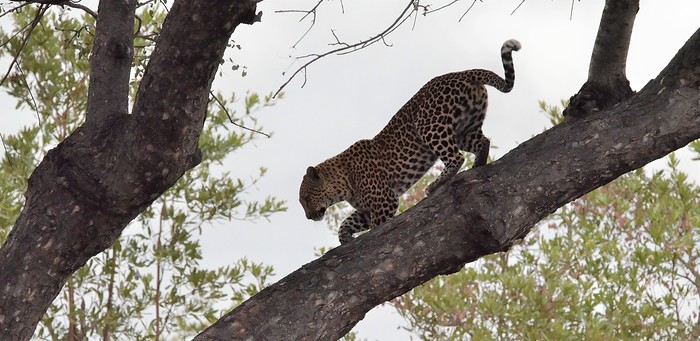
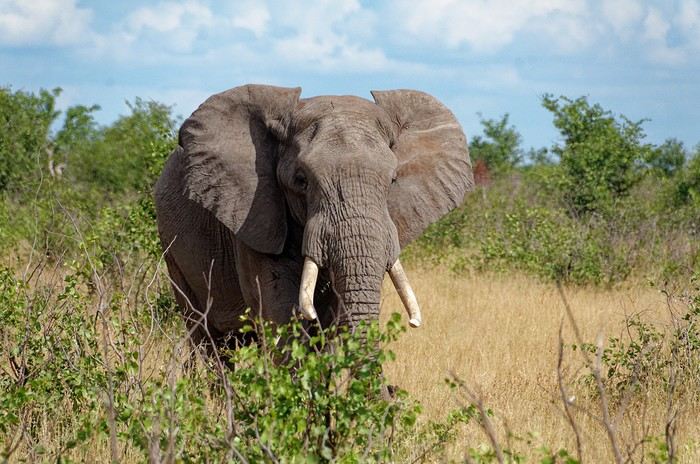
In these post-COVID years, South Africa (SA) has drawn me back again... The long-time forum members will say I'm a bit obsessed (I've now surpassed 20 trips to this country, including 2 in Namibia)... But new readers can find my old travel journals and enjoy this new installment. So, three new trips... each lasting a month... always too short. I’ll try to be pragmatic.
Let’s start with the basics! You can plan your trip from your couch with complete peace of mind. Through any Booking site or directly (sometimes cheaper), I’ve never had any issues with my direct bookings—they’ve always matched what was promised. For national parks outside KwaZulu-Natal (where it’s KZN Wildlife), use the SANparks website, or Nature Reserve for that type of "accommodation." Air France, Lufthansa, or KLM... depending on the year and circumstances. Most flights are overnight, allowing you to arrive early in Joburg and... leave this city I don’t much like as quickly as possible. KLM offers a daytime flight to Cape Town... just arrange your first night’s stay. You drive on the left in SA (you knew that, right?)... you get used to it. Passport: must still be valid for 6 months with several blank pages... Car rental? A car is pretty much essential, whether for short or long trips. It’s safer too. Aside from the secure Gautrain in Joburg and Cape Town (CT from now on), I don’t take the train. Except for the red bus drop-off/pick-up in CT, I don’t take the bus. In this specific case, it’s practical because you can access all of CT’s spots—including the famous Lion’s Head—without worrying about parking or traffic. These past three years, I’ve chosen Around About Cars as my rental company. I’m very satisfied with them. What kind of car? It depends on what you’re doing and your budget. The vast majority of roads don’t require a special vehicle. In a park, the "high ground clearance" of SUVs lets you see animals better and helps avoid potholes (the SA version—ostrich-sized), speed bumps (our "sleeping policemen" with a big belly), and tackle the last few kilometers or 100 meters that can be a bit rough with complete peace of mind. Do your research. For me, it’s 4x2 or 4x4 depending on... South Africans drive fast... and I feel safer that way. International driver’s permit? Legally required! Never asked for by a rental company, only once by the police—but I stood my ground, confident, and it went smoothly. Road checks? Yes, often—at least two every time, but they’re relaxed... Note that if a police officer wants to give you a fine, it must be done at the police station—insist on going there... they’ll usually drop it. If they suggest paying on the spot in cash to "make things easier"... it’s just for their pocket. There’s a special "police alert" number—remind them of it! The rand is the South African currency. Nowadays, cards work in many places. But note: a car rental company will ask for a credit card, not a debit card. Be careful: cash is no longer accepted in SANparks camps and other places (entrances, etc.)! It’s card only! I always carry some cash. I order it from Yeschange (sounds dodgy, but it’s very reliable). Phew... What an introduction!