Results for "Colon+|+46+>+96"
10428 results found.
Stockholm, la "Venise de Scandinavie" English translation pending
Octobre 2003: étudiante en Finlande (Erasmus-cf l'Auberge Espagnole), plus précisément à Rovaniemi, sur le cercle polaire arctique (si si !!), nous avons fin octobre 2003 une semaine de vacances comme en France.
mercredi:
Avec ma colocataire russe, nous décidons d'aller à Stockholm, en Suède: rapide passage par l'Office de Tourisme de Rovaniemi pour avoir infos sur tarifs de trains et ferry,
jeudi: on regarde sur internet les auberges de jeunesse à Stockholm...bingo y'en a 4 au moins...toutefois un peu inquiète je conseille à ma coloc de réserver, mais elle me dit "mais non regarde il reste plein de places, ça changera pas d'ici 2 jours"...hmhmhm
vendredi aprem: je décide de me limiter à mon fidèle sac à dos Quechua pour ces 5/6 jours prévus, en + bien sur de mon sac photo !! je bourre donc dedans qqs fringues, produits hygiéniques, bouffe que je veux pas laisser au frigo pendant mon abasence.
je prends mes 2 app-photos, et les 5 pellicules qui me restent, damned !! moi qui aodre la photo, dans une ville comme Stockholm ça risque d'e^tre juste !!
vendredi soir: filons à la gare à pied (1/2 heure), faisons faire rapidement une carte pour avoir les tarifs étudiants (comme la 12/25 de la SNCF, sauf que là ca coute que 2€, pas 44 !!), puis prenons le billet Rovaniemi-Turku via Tampere, pour 33 € (50% de réduc, et pas de chichi genre "ah mais c période machin dc c que 25%, ou "y(a plus de places a 50%: non ! on est étudiantes donc on a le tarif étudiants, point ! à méditer pour la SNCF !!): 18H, montons dans le train et départ 2 minutes après, on a failli le rater...
samedi: 03H45: arrivée à Tampere, changement de train, le suivant pour Turku est à 06H ! et nous devons rester dans le couloir sombre, la gare n'étant pas encore ouverte...un type complétement bourré erre dans le couloir, titubant, on va donc s'enfermer dans les toilettes pour femmes, on a beau être en Finlande, pas de risques inutiles !
lumière bleue étrange dans les toilettes, jamais vu ça ailleurs, paraît que c'est pour empêcher les gens de se shooter !
05H:la gare ouvre; 06H: montons dans le train pour Turku; 07h50: arrivée; re-cgangement de train, pour aller jusqu'au port: 08h00: arrivée au port, acaht du billet de ferry (pas de cabine, juste un siège sur le pont, 11€, ça va c pas cher la traversée...) et embarquement quasi direct sur le ferry de la compagnie "Viking Line" ! on est bien en Scandinavie, pas de doute !!
08h30: départ
20h00 (heure suédoise, 1h de moins que la finlande donc la même qu'en France): arrivée à Stochholm illuminée, enfin ! + de 24h de voyage, on est crevées...
débarquement du ferry puis, plan de la ville en main, on se dirige vers le centre ville; on a du mal à trouver le chemin alors on demande à un groupe de jeunes, qui nous expliquent tout, en anglais bien sûr mais no problem pour comprendre.
arrivée devant la 1è AJ où nous trouvons...porte close et cette affiche redoutée: "sorry we are full-booked" !! Damned !! c bien parti ! il en va de même avec les autres AJ...on décide, routardes que nous sommes, de dormir sur un banc à la gare...que nenni ! après douche et toilettes dans la gare (hyper propre et pas cher, serviettes et savon fournis), on s'installe sur un banc et une demi heure + tard a 00h30, on se fait éjecter avec d'autres gens ayant apparamment le même problème que nous ! l'avenue sur laquelle se situe cette CentraleStation est pleine d'hôtels tous + chers les uns que les autres, et en + pas de chambre libre, oups...
le dernier hôtel auquel nous demandons, a, miracle !! quelques chambres libres mais vu le prix on en prend qu'une (1000 couronnes soit 150 €...les économies réalisées sur le transport passent là dedans !!): re-damned !!
nuit réparatrice et p'tit déj extra à la scandinave, inclus, le lendemain matin.
dimanche 12h: devons libérer la chambre; on libère, on paye et on file à l'AJ la + proche réserver pour les 4 nuits suivantes, ouf, 20€ la nuit c mieux ! je préfère ça...
et là, c parti pour 4 jours extra à la découverte de la capitale suédoise ! à pied, avec juste mon sac photo et mon pic-nic de la journée... jeudi matin, 05h30: mes bagages prêts de la veille, douchée de la veille également je me lève silenceiusement pour pas réveiller les autres dans le dortoir...ma coloc russe a décidé de rester 3 jours de +, apprenant le suédois depuis 1 an en Russie...
je file à la cuisine récupérer ma bouffe;
06h00: je file à la gare pour prendre le bus qui va m'amener jusqu'au port;
06h30: je suis au port, je prends mon billet, et j'embarque sur le ferry.
07h15: départ pour Turku avec escale à Mariehamn dans l'archipel d'Aland entre les 2 pays.
20h15: arrivée en Finlande à Turku (heure Finlandaise)
21h00: départ du train pour Tampere, rencontre avec une jeune finalndaise bossant à Stockholm, allant en Finlande pour les vacances.
23h: arrivée à Tampere, changement de train
01h20: départ du train pour Rovaniemi
0600: je me réveille en sursaut, la porte du compartiment a claqué violemment...n'ayant dormi que 5h en plus de 24h, je vous laisse imaginer dans quel état j'étais ! impossible de me rendormir...
le jour se lève un peu plus tard, et à travers la fenêtre tout est blanc, de la neige partout !
10h00/10h30 : arrivée à Rovaniemi: il fait sacrément froid, ça pince quand je sors...
trop fatiguée pour rentrer à pied, et surtout grosse flemme (1/2 heure dans la naige à marcher avec mon gros sac à dos + un autre sac (que j'avais emporté au cas où en prévoyant les achats de souvenirs) plein de souvenirs, + mon sac photo, en étant fatiguée, bref je saute dans un taxi et 15 min + tard je suis de retour dans mon "dormitory", tout ça pour 7 euros !!
11h00: après avoir défait rapidement mes bagages, c à dire à l'arrache, fourgué la bouffe au frigo, et laissé le linge tel quel dans mon sac, la lessaive peut bien attendre le lendemain... je saute dans la douche (pur bonheur après + de 38h...
je me jette ensuite sous ma couette et dors jusqu'à 16h !
je me lève, prend mon repas de "midi"; le soir pas faim, je me recouche à 22h après avoir lézardé sur le canapé devant la TV depuis que je suis levée...et je redos jusqu'à 11h le lendemain matin !!!
bref, un voyage extra en Suède, mais petites moralités: 1) prendre moins de bagages (je parles des fringues, mesdemoiselles et mesdames, on le dit jamais assez, les femmes ne voyagent pas léger !) 2) réserver les AJ avant de partir sous peine de devoir se partager le 1er soir une chambre d'hotel a 150€ ! 3) ne pas acheter trop de souvenirs sur place...je sais c'est dur.... allez bon voyage à Stockholm !!!!!!!!
bref, un voyage extra en Suède, mais petites moralités: 1) prendre moins de bagages (je parles des fringues, mesdemoiselles et mesdames, on le dit jamais assez, les femmes ne voyagent pas léger !) 2) réserver les AJ avant de partir sous peine de devoir se partager le 1er soir une chambre d'hotel a 150€ ! 3) ne pas acheter trop de souvenirs sur place...je sais c'est dur.... allez bon voyage à Stockholm !!!!!!!!
Coup de foudre! English translation pending
Bonjour à tous!
Je ne sais pas si c'est le printemps, le soleil, les petites pâquerettes qui poussent devant ma fenêtre ou quoi, mais j'ai l'humeur joyeuse et la tête pleine de belles histoires.
Et je me demandais : Est-ce que certains d'entre vous ont rencontré leur moitié durant un voyage? Aussi bien parmi d'autres voyageurs qu'au coeur même d'un pays visité.
Bizzzzzzzzz
Je ne sais pas si c'est le printemps, le soleil, les petites pâquerettes qui poussent devant ma fenêtre ou quoi, mais j'ai l'humeur joyeuse et la tête pleine de belles histoires.
Et je me demandais : Est-ce que certains d'entre vous ont rencontré leur moitié durant un voyage? Aussi bien parmi d'autres voyageurs qu'au coeur même d'un pays visité.
Bizzzzzzzzz
Adresses de restaurants à Florence et Rome English translation pending
😉allo !
Si vous connaissez de bon resto pas chère a Florence et Rome je suis a l'écoute.
Je dois y ètre au mois de mai.
Merçi ! bye
Si vous connaissez de bon resto pas chère a Florence et Rome je suis a l'écoute.
Je dois y ètre au mois de mai.
Merçi ! bye
Que pensez-vous de ma liste de matériel pour un TDM? English translation pending
Bonjour, vous devez me justifier pourquoi selon vous cette pièce est de trop ou manquante.Voici la liste du matériel que j'apporterai lors de mon voyage autour du monde dans un an. Cette liste a été conçu pour un homme (donc sans serviette sanitaire et ses amies). Je ne suis pas allé dans les détails de chacunes des pièces d'équipement et des quantités nécessaires. De plus elle est conçu pour une personne qui travaillera le long du voyage. Si vous souhaitez utilisez cette liste, faites vous plaisir. Cette liste servira entre-autre à venir en aide à d'autres voyageurs qui seront initiés à la préparation au voyage par l'entremise d'atelier.
Liste dumatériel nécessaire pour le voyage
Vêtements
Espadrille
Soulier propre
Sandale
Botte de marche
Lacet de rechange
Liquide protecteur pour botte
Bas
Sous-vêtement (culotte)
T-Shirt de coton
Chandail à manche longue Bi-polar
Caleçon Bi-polar
Polar
Pantalon/short
Pantalon propre
Chemise propre
Chemise à manche longue
Chandail à manche longue
Costume de bain
Chapeau
Manteau coupe-vent (imperméable)
Lunette de soleil avec cordon
Tuque
Gant chaud
Ceinture
Montre
Premiers soins
Gel pour maux de dent
Pilules contre la malaria
Bandage adhésif (Band-aid)
Compresse stérile
Bandage élastique
Diachylon
Teinture d’iode
Épingle à couche
Condom
Moleskine (coussin contre les ampoules)
Seringue et aiguille jetable
Tylenol
Imodium
Gravol
Crème antibiotique
Codéine avec acétaminophène (Tylenol #3)
Solution de réhydratation orale (Gastrolyte)
Stérigel
Étui à premier soin
Couverture de survie
Crème anti-itch Band aid
Matériel de camping
Tente
Matelas de sol (bleu)
Sac de couchage
Couverture de soie En poche à patate
Sac à dos 105 litres
Sac de jour
Bâche bleu
Couteau suisse
Lampe frontale
Batteries de rechange pour lampe frontale
Support à batterie pour lampe frontale
Ampoule de rechange pour lampe frontale
Briquet
Allumettes (Strike anywhere)
Contenant de pellicule photo (pour allumettes)
Pierre de magnésium
Allumes feux
Brûleur
Sac à brûleur
Kit réflecteur pour brûleur
Kit de réparation pour brûleur
Bombonne à combustible
Casseroles
Spatule de plastique
Gourde nalgène
Contenant transparent Ziploc hermétique en plastique
Assiette
Tasse de plastique
Cuillère, fourchette, couteau
Sac en filet pour ustensiles et assiette
Contenant multi-épice
Laine d’acier
Papier d’aluminium
Bâtons de marche
Longues vues
Sac pour longues vues
Cordon 10 mètres de longueur
Mousqueton
Coussin en mousse bleu
Guenille
Sifflet
Crayon
Papier
Sac Ziploc petit
Sac Style Ziploc pour vêtements
Pristine
Filtre à café
Sac en plastique pour déchet
Sac à poubelle orange
Baladeur
Écouteur
Casette 90 minutes
Batterie AA de rechange
Duke Tape
Crayon de feutre à pointe large noir
Petit cadenas à combinaison
Chandelle
Lampe pour chandelle
Boussole Avec déclinaison magnétique
Aiguille de couture
Fil à coudre
Boucle de plastique de rechange
Moustiquaire de lit
Calculatrice
Jeu de carte
Jeu de société de poche
Cache yeux
Bouchon d’oreille
Bouchon plat universel en caoutchouc
Roman de poche
Petit réveil matin
Matériel photographique
Appareil photo
Batterie de rechange pour l’appareil photo
Pellicules
Filtre polariseur
Capuchon de protection pour la lentille
Nettoyeur à lentille
Trépied compacte
Sacoche
Sachet pour l’absorption de l’humidité
Chasse-moustique (avec deet)
Papiers et documents
Passeport
Visa
Photocopie du passeport et cartes d’identités
Carnet de vaccination
Permit de conduire international
Permis de conduire
Baptistère
Carte d’identité
Carte d’assurance sociale
Carte d’assurance maladie
Carte de guichet
Porte feuille avec chaîne de sécurité
Carte visas
Carte d’auberges jeunesses
Carnet de chèque
Chèque de voyage
Curriculum Vitae (anglais et français)
Lettre de référence (anglais et français)
Tube de plastique pour protéger les documents
Pochette de plastique 8 ½ x 11
Guide de voyage
Dictionnaire de langue (anglais/français et espagnol/français)
Carnet de voyage avec adresses importantes
Album photo du Québec
Mots du médecin pour transport de médicament
Billet d’avion
Etui de taille pour passeport
Carte d’appel
Carte de plongée
Hygiène
Verres de contact
Liquide à verres de contact
Boîtier pour verres de contact
Lunette
Boîtier à lunette
Dentifrice
Brosse à dent
Boîtier pour la brosse à dent
Fil dentaire
Coupe ongle
Pince à cils
Brosse à cheveux
Shampoing
Savon pour le corps
Boîtier à savon
Débarbouillette
Serviette de plage
Savon à linge
Petite brosse à linge
Rasoir à barbe
Lame de rechange pour rasoir
Crème à raser
Déodorisant
Etui pour accessoires d’hygiène
Lotion solaire
Q-Tips
Papier de toilette
Autres
Masque de plongée
Tuba
Produite par Patrick Nadeau 21/02/2004
Liste dumatériel nécessaire pour le voyage
Vêtements
Espadrille
Soulier propre
Sandale
Botte de marche
Lacet de rechange
Liquide protecteur pour botte
Bas
Sous-vêtement (culotte)
T-Shirt de coton
Chandail à manche longue Bi-polar
Caleçon Bi-polar
Polar
Pantalon/short
Pantalon propre
Chemise propre
Chemise à manche longue
Chandail à manche longue
Costume de bain
Chapeau
Manteau coupe-vent (imperméable)
Lunette de soleil avec cordon
Tuque
Gant chaud
Ceinture
Montre
Premiers soins
Gel pour maux de dent
Pilules contre la malaria
Bandage adhésif (Band-aid)
Compresse stérile
Bandage élastique
Diachylon
Teinture d’iode
Épingle à couche
Condom
Moleskine (coussin contre les ampoules)
Seringue et aiguille jetable
Tylenol
Imodium
Gravol
Crème antibiotique
Codéine avec acétaminophène (Tylenol #3)
Solution de réhydratation orale (Gastrolyte)
Stérigel
Étui à premier soin
Couverture de survie
Crème anti-itch Band aid
Matériel de camping
Tente
Matelas de sol (bleu)
Sac de couchage
Couverture de soie En poche à patate
Sac à dos 105 litres
Sac de jour
Bâche bleu
Couteau suisse
Lampe frontale
Batteries de rechange pour lampe frontale
Support à batterie pour lampe frontale
Ampoule de rechange pour lampe frontale
Briquet
Allumettes (Strike anywhere)
Contenant de pellicule photo (pour allumettes)
Pierre de magnésium
Allumes feux
Brûleur
Sac à brûleur
Kit réflecteur pour brûleur
Kit de réparation pour brûleur
Bombonne à combustible
Casseroles
Spatule de plastique
Gourde nalgène
Contenant transparent Ziploc hermétique en plastique
Assiette
Tasse de plastique
Cuillère, fourchette, couteau
Sac en filet pour ustensiles et assiette
Contenant multi-épice
Laine d’acier
Papier d’aluminium
Bâtons de marche
Longues vues
Sac pour longues vues
Cordon 10 mètres de longueur
Mousqueton
Coussin en mousse bleu
Guenille
Sifflet
Crayon
Papier
Sac Ziploc petit
Sac Style Ziploc pour vêtements
Pristine
Filtre à café
Sac en plastique pour déchet
Sac à poubelle orange
Baladeur
Écouteur
Casette 90 minutes
Batterie AA de rechange
Duke Tape
Crayon de feutre à pointe large noir
Petit cadenas à combinaison
Chandelle
Lampe pour chandelle
Boussole Avec déclinaison magnétique
Aiguille de couture
Fil à coudre
Boucle de plastique de rechange
Moustiquaire de lit
Calculatrice
Jeu de carte
Jeu de société de poche
Cache yeux
Bouchon d’oreille
Bouchon plat universel en caoutchouc
Roman de poche
Petit réveil matin
Matériel photographique
Appareil photo
Batterie de rechange pour l’appareil photo
Pellicules
Filtre polariseur
Capuchon de protection pour la lentille
Nettoyeur à lentille
Trépied compacte
Sacoche
Sachet pour l’absorption de l’humidité
Chasse-moustique (avec deet)
Papiers et documents
Passeport
Visa
Photocopie du passeport et cartes d’identités
Carnet de vaccination
Permit de conduire international
Permis de conduire
Baptistère
Carte d’identité
Carte d’assurance sociale
Carte d’assurance maladie
Carte de guichet
Porte feuille avec chaîne de sécurité
Carte visas
Carte d’auberges jeunesses
Carnet de chèque
Chèque de voyage
Curriculum Vitae (anglais et français)
Lettre de référence (anglais et français)
Tube de plastique pour protéger les documents
Pochette de plastique 8 ½ x 11
Guide de voyage
Dictionnaire de langue (anglais/français et espagnol/français)
Carnet de voyage avec adresses importantes
Album photo du Québec
Mots du médecin pour transport de médicament
Billet d’avion
Etui de taille pour passeport
Carte d’appel
Carte de plongée
Hygiène
Verres de contact
Liquide à verres de contact
Boîtier pour verres de contact
Lunette
Boîtier à lunette
Dentifrice
Brosse à dent
Boîtier pour la brosse à dent
Fil dentaire
Coupe ongle
Pince à cils
Brosse à cheveux
Shampoing
Savon pour le corps
Boîtier à savon
Débarbouillette
Serviette de plage
Savon à linge
Petite brosse à linge
Rasoir à barbe
Lame de rechange pour rasoir
Crème à raser
Déodorisant
Etui pour accessoires d’hygiène
Lotion solaire
Q-Tips
Papier de toilette
Autres
Masque de plongée
Tuba
Produite par Patrick Nadeau 21/02/2004
Budget au Costa Rica? English translation pending
J'ai envie d'aller au Costa Rica et je me pose des questions concernant les coûts??? Je sais, cela dépend toujours de notre façon de voyager mais je ne suis ni hotel de luxe, ni camping dans la bouette avec bébé. Je fait un rapide portrait. J'ai envie de visiter quelques trucs, par exemple un gros truc pas semaine (volcan, tortuego, parc), je vais me promener en bus, m'approvisioner au marché et manger au resto pour souper (pas trop cher),
j'ai pas besoin de luxe mais j'ai pas nonplus envie que le fait de prendre un café en sois un. Le montant que je lis dans les guides et sur le net est cher pour moi. 80 euro, 90 us, 120 can /par jour/pour le couple c, est les montants qui reviennent unpeu partout. Je fait un rapide calcul mais j'aurais plutôt 47 euro, 60 us, 80 can/par jour/pour notre famille. Estce-que c'est réaliste?
merci
Endroit sympa au Lac St-Jean (Québec) English translation pending
merci a tous pour vos precieux conseils, notre voyage au canada se construit peu à peu.
connaissez vous un hebergement sympa au lac st jean?
nous recherchons un endroit en pleine nature, loin de tout où il serait possible de passer quelques jours afin de faire de la motoneige, chien de traineau, raquette et ski de fond.
je rapelle notre itinéraire
montreal-quebec
quebec-lac st jean
lac st jean-montreal du 08 au 24/02/03.
si vous connaissez egalement des petits hotels pas trop cher a montreal et a quebec nous sommes preneur.
merci d'avance
leeloo
connaissez vous un hebergement sympa au lac st jean?
nous recherchons un endroit en pleine nature, loin de tout où il serait possible de passer quelques jours afin de faire de la motoneige, chien de traineau, raquette et ski de fond.
je rapelle notre itinéraire
montreal-quebec
quebec-lac st jean
lac st jean-montreal du 08 au 24/02/03.
si vous connaissez egalement des petits hotels pas trop cher a montreal et a quebec nous sommes preneur.
merci d'avance
leeloo
Partir seule? English translation pending
Désolée de poser encore une fois ce type de questions... Voila, j'ai 29 ans, voyagé dans différents pays et différentes conditions : professionnel, groupe (ucpa itinérant, terre d'av), famille, "sac à dos" (mon dernier voyage, à 3 : pagayer sur le nil en ouganda). Ce que j'aime ce sont les voyages un peu roots, pleine nature... mon voyage terre d'ave ne m'a pas emballée, ca faisait un peu "colo pour adulte" et pas mal de chochottes dans le groupe. Bref.
Je n'ai jamais encore franchie le cap de "voyager seule". J'en ai très envie, ça permet vraiment d'etre plus ouvert vers les autres, mais j'ai encore un "tout p'tit peu peur" encore que...
Ce qui m'inquiete finalement c'est que le type d'occupation que j'aime nécessite d'etre à plusieurs (rando, etc) et que j'ai peur de ne rencontrer personne que ça intéresse dans mes périgrinations...
Donc mon projet c'est de me tester sur un voyage de 15 jours-3 sem au Brésil, vers Bahia, Amazonie, a voir (je suis à moitié brésilienne mais je ne connais que la région de Rio) avant de partir 1 an ou plus je ne sais pas ou. Voila. Pas vraiment de questions donc mais j'aimerai savoir s'il y a des filles ayant un peu les memes gouts que moi, qui auraient des expériences à me faire partager : ca m'intéresse.
Merci
Je n'ai jamais encore franchie le cap de "voyager seule". J'en ai très envie, ça permet vraiment d'etre plus ouvert vers les autres, mais j'ai encore un "tout p'tit peu peur" encore que...
Ce qui m'inquiete finalement c'est que le type d'occupation que j'aime nécessite d'etre à plusieurs (rando, etc) et que j'ai peur de ne rencontrer personne que ça intéresse dans mes périgrinations...
Donc mon projet c'est de me tester sur un voyage de 15 jours-3 sem au Brésil, vers Bahia, Amazonie, a voir (je suis à moitié brésilienne mais je ne connais que la région de Rio) avant de partir 1 an ou plus je ne sais pas ou. Voila. Pas vraiment de questions donc mais j'aimerai savoir s'il y a des filles ayant un peu les memes gouts que moi, qui auraient des expériences à me faire partager : ca m'intéresse.
Merci
Mes impressions sur le Costa Rica 2001 English translation pending
Pour mon voyage Mexico - Panama - Mexico : 2 mois, petit budget, transport : bus, pirogue, train, voiture, moto, ........ avec mon sac à dos.... (a la fin de mon voyage, a ma remonté par la Pan Américan, je me suis fait volé mon sac à dos à 3h du matin au terminal bus "Tica" de San José au Costa Rica : il faut jamais quitté son sac de la main, maintenant sur mon sac j'ai un canedas de vélo et je l'attache même quand je suis à 50cm, comme lors du vol devant 50 personnes......)
le costa rica, c le pays que j'ai trouvé le plus cher !! mais il y a des choses à faire les canaux à la fontière di nicaragua entre Los Chiles et San Carlos (nicaragua) la montagne suisse de Los Chiles dans la région Alajuela le coin de Puerto Limon au départ du "Grand terminal del Caribé" il y a plein de bus : ex : pour Puerto Viejo de Sarapiqui par la Panoramique 885 colons à 6h30 & 9h30 les volcans : bus pour le Volcan IRAZU = av2 - C1/3 départ le dimanche à 8 & 10h retour à 12h30 & 14h pour 1430 colons
Globe
le costa rica, c le pays que j'ai trouvé le plus cher !! mais il y a des choses à faire les canaux à la fontière di nicaragua entre Los Chiles et San Carlos (nicaragua) la montagne suisse de Los Chiles dans la région Alajuela le coin de Puerto Limon au départ du "Grand terminal del Caribé" il y a plein de bus : ex : pour Puerto Viejo de Sarapiqui par la Panoramique 885 colons à 6h30 & 9h30 les volcans : bus pour le Volcan IRAZU = av2 - C1/3 départ le dimanche à 8 & 10h retour à 12h30 & 14h pour 1430 colons
Globe
Las Terrenas en République Dominicaine English translation pending
Bonjour,
à vous qui connaissez, que pouvez-vous me dire sur "Las Terrenas" (Péninsule de Samana)?
Toute information et suggestion sont les bienvenues.
Au plaisir de vous lire, Xavier.
à vous qui connaissez, que pouvez-vous me dire sur "Las Terrenas" (Péninsule de Samana)?
Toute information et suggestion sont les bienvenues.
Au plaisir de vous lire, Xavier.
S'installer à Sydney English translation pending
Bonjour,
nous envisageons serieusement de partir nous installer a Sydney. Si tout se passe comme prevu, nous allons avoir un visa, mon copain par son travail, et moi aussi. Nous attendons plus de precisions mais on voudrai savoir si qq'un a une piste, des conseils pour une premiere installation aux pays des koalas; ou est il sympa d'habiter ds cette ville, des exp de collacations par ex??
Merci de nous eclairer un peu....
nous envisageons serieusement de partir nous installer a Sydney. Si tout se passe comme prevu, nous allons avoir un visa, mon copain par son travail, et moi aussi. Nous attendons plus de precisions mais on voudrai savoir si qq'un a une piste, des conseils pour une premiere installation aux pays des koalas; ou est il sympa d'habiter ds cette ville, des exp de collacations par ex??
Merci de nous eclairer un peu....
Climat Ladakh English translation pending
Bonjour à tous,
Je dois partir la semaine prochaine pour un trek en Inde du nord : trek de Manali à Padum puis visite des monastères autour de Leh. Je ne sais pas trop quelle température je vais trouver. D'après les livres il fait chaud : 30 à 35° mais j'ai un doute avec une altitude aussi élevée (3500 en moyenne avec un passage de col à 5000).
Merci par avance de vos réponses.
Nath
Je dois partir la semaine prochaine pour un trek en Inde du nord : trek de Manali à Padum puis visite des monastères autour de Leh. Je ne sais pas trop quelle température je vais trouver. D'après les livres il fait chaud : 30 à 35° mais j'ai un doute avec une altitude aussi élevée (3500 en moyenne avec un passage de col à 5000).
Merci par avance de vos réponses.
Nath
Mes questions sur le Sol club Cayo Guillermo English translation pending
Bonjour!
Je vais réserver au Sol club à Cayo Guillermo, mais avant de le faire, j'aurais quelques questions...🤪 Tout d'abord, le restaurant de style buffet est-il à air ouverte et si oui, les moustiques sont-ils de la partie en août? La discothèque est elle achalandée (je sais que ca dépend toujours des clients présents à l'hotel...) ou est-ce que nous devons prévoir se coucher très tôt? Aussi, par curiosité, la passerrelle dans la mer avec les chaises longues fait elle partie du sol club ou du Mélia et pouvons nous l'utiliser à notre guise? J'ai entendu dire que le magasin au Mélia a une meilleure sélection de cigars que le sol club, est-ce vrai?? Merci d'avance pour vos réponses! Melissa
Je vais réserver au Sol club à Cayo Guillermo, mais avant de le faire, j'aurais quelques questions...🤪 Tout d'abord, le restaurant de style buffet est-il à air ouverte et si oui, les moustiques sont-ils de la partie en août? La discothèque est elle achalandée (je sais que ca dépend toujours des clients présents à l'hotel...) ou est-ce que nous devons prévoir se coucher très tôt? Aussi, par curiosité, la passerrelle dans la mer avec les chaises longues fait elle partie du sol club ou du Mélia et pouvons nous l'utiliser à notre guise? J'ai entendu dire que le magasin au Mélia a une meilleure sélection de cigars que le sol club, est-ce vrai?? Merci d'avance pour vos réponses! Melissa
Hôtel Santana Beach Resort & casino? English translation pending
BONJOUR,
J'AI RESERVE AVEC DES AMIS UN SEJOUR DE 16 NUITS DANS CET HOTEL AVEC UN DEPART LE 12/07/03.
SERAIT-IL POSSIBLE D'AVOIR QUELQUES AVIS SUR CET HOTEL DE LA PART DE PERSONNES QUI AURAIENT SEJOURNEES RECEMMENT DANS CE LIEU ? LA PLAGE ET LE SITE DANS SON ENSEMBLE SONT-ILS AGREABLE ?
PAR AVANCE MERCI.
J'AI RESERVE AVEC DES AMIS UN SEJOUR DE 16 NUITS DANS CET HOTEL AVEC UN DEPART LE 12/07/03.
SERAIT-IL POSSIBLE D'AVOIR QUELQUES AVIS SUR CET HOTEL DE LA PART DE PERSONNES QUI AURAIENT SEJOURNEES RECEMMENT DANS CE LIEU ? LA PLAGE ET LE SITE DANS SON ENSEMBLE SONT-ILS AGREABLE ?
PAR AVANCE MERCI.
Où aller vivre 1 an en Espagne? English translation pending
Voilà... Je voudrais partir une année (ou plus) en Espagne / sept. 2003... Dans une ville sympa, vivante où je suivrais des cours d'espagnol et de danse. Barcelone me tentait mais les locations me semblent hors de prix... Alors, si l'une ou l'autre ville espagnole vous a séduit, ou si au contraire, il y en a à éviter, n'hésitez pas à m'écrire: TOUS les conseils sont les bienvenus (concernant les locations, possibilités de jobs, ect, ect...). MERCI d'avance!!!! Alice
5-day visit to Palawan: your thoughts on this itinerary
Hi there,
We’ve never visited Palawan before. This time, we’d like to spend a few days there.
We’ll be there from the evening of October 30th until the early morning of November 5th (our return flight is at 7:20 AM). We’re arriving in Puerto Princesa and leaving from there as well.
While ChatGPT gave us an itinerary suggestion, I’d still love to hear other opinions—don’t want to rely on it blindly.
Here’s ChatGPT’s proposal:
Saturday, October 31: Pearl farm + local waterfalls • 9:00 AM: Private car to Brook’s Point pearl farm (1.5–2 hour visit). • 1:00 PM: Local lunch + drive to Nagtabon Falls (1-hour jungle hike). • Overnight in Puerto Princesa. Sunday, November 1: Tabon Caves (Quezon) • 8:00 AM: Private car from PPS to Quezon (3 hours). • 11:00 AM–3:00 PM: Visit Tabon Caves (2–3 hour hike, unique archaeological site). • Return to PPS late afternoon or stay overnight in Quezon if you prefer. Monday, November 2: Puerto Princesa → Port Barton • 8:00 AM: Private car from PPS to Port Barton (3–4 hours). • Afternoon: Stroll around the village, small market, acclimatization. • Overnight in Port Barton. Tuesday, November 3: Private boat from Port Barton • 8:30 AM: Private boat for island hopping (snorkeling at Twin Reef / Fantastic Reef + peaceful Maxima Island). • Return by 4:00 PM. Wednesday, November 4: Hike in Port Barton + return to PPS • Morning: Hike to Pamuayan Falls or local jungle (1–2 hours). • 1:00 PM: Private car from Port Barton to PPS. • Overnight near the airport in PPS. Thursday, November 5: Flight from PPS to Dumaguete • Early morning flight from PPS to Dumaguete (direct or via Cebu, with plenty of buffer time).
What do you think? Where can we find trustworthy private drivers without getting ripped off? Any recommendations for typical hotels or guesthouses? Our flights are already booked—arriving in PPS at 6:30 PM and departing at 7:20 AM.
Thanks for your advice!
Here’s ChatGPT’s proposal:
Saturday, October 31: Pearl farm + local waterfalls • 9:00 AM: Private car to Brook’s Point pearl farm (1.5–2 hour visit). • 1:00 PM: Local lunch + drive to Nagtabon Falls (1-hour jungle hike). • Overnight in Puerto Princesa. Sunday, November 1: Tabon Caves (Quezon) • 8:00 AM: Private car from PPS to Quezon (3 hours). • 11:00 AM–3:00 PM: Visit Tabon Caves (2–3 hour hike, unique archaeological site). • Return to PPS late afternoon or stay overnight in Quezon if you prefer. Monday, November 2: Puerto Princesa → Port Barton • 8:00 AM: Private car from PPS to Port Barton (3–4 hours). • Afternoon: Stroll around the village, small market, acclimatization. • Overnight in Port Barton. Tuesday, November 3: Private boat from Port Barton • 8:30 AM: Private boat for island hopping (snorkeling at Twin Reef / Fantastic Reef + peaceful Maxima Island). • Return by 4:00 PM. Wednesday, November 4: Hike in Port Barton + return to PPS • Morning: Hike to Pamuayan Falls or local jungle (1–2 hours). • 1:00 PM: Private car from Port Barton to PPS. • Overnight near the airport in PPS. Thursday, November 5: Flight from PPS to Dumaguete • Early morning flight from PPS to Dumaguete (direct or via Cebu, with plenty of buffer time).
What do you think? Where can we find trustworthy private drivers without getting ripped off? Any recommendations for typical hotels or guesthouses? Our flights are already booked—arriving in PPS at 6:30 PM and departing at 7:20 AM.
Thanks for your advice!
Luggage security, water, and mosquitoes in the Philippines – questions
We’re planning a trip to the Philippines from April 22 to May 8, 2026. Flight from Geneva with a layover in Turkey and Manila. Our itinerary: Angeles – Busuanga – Palawan…
The Philippines are a dream destination, but is it possible to travel there safely? I’ve heard that checked luggage often gets lost, tap water isn’t safe to drink, and mosquitoes are everywhere.
For water, what’s the best solution to carry in a backpack? Is a filtering water bottle 100% reliable?
For mosquitoes, should we treat our clothes with repellent? Are you vaccinated against hepatitis A, malaria, or dengue? Or is there an oral treatment to take?
Thanks for your feedback!
The Philippines are a dream destination, but is it possible to travel there safely? I’ve heard that checked luggage often gets lost, tap water isn’t safe to drink, and mosquitoes are everywhere.
For water, what’s the best solution to carry in a backpack? Is a filtering water bottle 100% reliable?
For mosquitoes, should we treat our clothes with repellent? Are you vaccinated against hepatitis A, malaria, or dengue? Or is there an oral treatment to take?
Thanks for your feedback!
Mamoudzou, Mayotte - December 2025
There exists a rare land where life expresses itself, a land where everything is destroyed, patched up, where everything is dirty and faded, yet paradoxically, each passing day is synonymous with light and joy. Seen from the sea, magnified by its translucent waters, the island is splendid; seen from inland, ochre and green dress a landscape one would wish to be pristine. As you approach the coast with the tides, countless boat wrecks never finish dying; returning from a hike, you know you’re nearing the city by the increasingly obvious proliferation of all kinds of trash. Overflowing the towns, makeshift homes made of corrugated iron stand here and there, wherever the eye lands; from a height, looking toward the horizon, you find the calm blue of the ocean and the beauty of infinity.
But where does all this corrugated iron come from? Blue, gray, red, or black, you find it pretty much everywhere—except, of course, on the island’s heights, where the heat is such that all life seems impossible. Yet, a few kilometers from the capital, more than an hour’s walk away, the corrugated iron is very much there, omnipresent, guaranteeing a land registry as hypothetical for us Europeans as it is very real for those who live there, far from civilization and comfort. I keep climbing. I’m precisely looking to meet these people who live on very little, if not nothing.
- Jéjé Mogné (Hello, sir in Shimahorais)! Where do you get water here, in this place? How do you drink, irrigate your plants?
- I wait for the rain. We have tanks that fill up well with each rainfall. But right now, it’s not raining much.
At the top of the next hill, lost in the bushes, it’s easier for me to guess the distant city, Mamoudzou, than the rest of the path, a remnant of a magnificent GR called the Island Tour, abandoned for the most part, sometimes maintained between two lost hamlets. The city, the pulse, water. Below, the ocean, running water, drinking water—despite regular interruptions; here, up high, an hour and a half’s walk away, tanks, arbitrariness. On other slopes, however, during another hike, I saw the water supply network, made of sturdy pipes tangled in the earth, right there by the path. It seems there are places where water climbs. Others not. Each to their own karma. In 2025. In a French department.
A path of misfortune, lost and regained, thanks to a sign, an inscription, or the compass’s directions. No one walks here anymore, except those who live here or come to harvest their crops. I remember that breathtaking hike in 2013, when I connected Bandrélé to Mamoudzou, passing by the peaks of Bénara (660m) and Bépilipili (643m), barely pausing at Tsararano and Vahibé: 34 km of intense effort on a rollercoaster path, along a trail that was still discernible. Today, it’s as if everything had disappeared. By also destroying the paths and vegetation, Chido* broke the last momentum of these cautious hikers: insecurity has made its way across the archipelago, and Sunday strolls are no longer the norm. Me, I keep going. I will have walked here and there during these three weeks to get an idea of the places, the people, the landscapes, and the superhuman effort required to move forward in over 40°C. To tell the truth, during my last hike, I cut my plans short and let myself be carried by a group of young people heading back to the city. The path is now just an inextricable network of small trails, the specter of Providence** comes to mind. True wisdom is knowing when to give up. I leave.
* A cyclone named "desire" (in Shona), which ravaged the island of Mayotte on December 14, 2024. ** June 2023, a very poorly prepared hike on Providence Island (Caribbean) from which I miraculously escaped.
On Petite-Terre, Marie takes me to visit some locals, white people who have lived there for a long time and make a living from their art; jewelry for her, all kinds of objects for him. We love this little shop, this oasis amid the chaos that embodies Dostoevsky’s phrase: "Beauty will save the world." It’s clean and tidy, beautiful, well-kept. Invariably, the question of insecurity resurfaces in the middle of the conversation. The woman says:
- I know someone who slipped in their bathtub. Still, I keep taking baths…
So, is this insecurity a myth or reality? I hear stories that are often true but sometimes seemingly exaggerated through the lens of misunderstanding and one-upmanship. Like that of this midwife assaulted one evening (it gets dark early) on her way home from work. Sometimes she was attacked on the path, dragged by the hair for several meters, sometimes she made it home, but it was her roommate who let the two men in. One version talks about a snatched phone and gratuitous violence, another about violence outright. In short, one thing is certain: walking around at night flaunting your phone isn’t a good idea, no more in Mamoudzou than in the rough neighborhoods of Nantes. Also, I played it safe: nothing flashy, nothing bling-bling, and always something to give if needed. I was never approached. It’s not easy to get a sense of the realities, between the hazy reports from journalists sensationalizing everything and the real lives of real people. But I know I can’t rely on these few ideas I’ve formed: I’m nobody, and above all, I don’t live here. What I do know, however, is that since my last visit to the island in 2017, over 80,000 babies have been born, and tens of thousands of immigrants have reached the archipelago’s shores. What’s also obvious is that poverty, hunger, and—let’s say it—indignity foster delinquency and insecurity. So, without taking journalists’ alarmist speeches at face value, we’ll try to keep in mind that a young person rendered orphaned by circumstances (parents expelled), poor and often hungry, involved more or less against their will in village wars and fueled by synthetic drugs*, will readily turn to violence when they truly have nothing to lose. We can trace the origin of this despair to the fact that in Mayotte, those without legal existence have virtually no hope of accessing anything.
* "Chimique" is a series of synthetic cannabinoids
Meanwhile, in the evening, it’s good to go home before the time of stone-throwing. From time to time, along the roads, gangs throw stones at vehicles and school buses, but mostly at police cars—almost all the white Dusters on the island! In front of the Mamoudzou police station, all parked vehicles—mostly Dusters—bear the scars of these attacks. Maybe it’s only at night that gangs unleash and all the burglaries happen? I saw nothing, heard nothing. I lived three weeks in a sort of bunker with no real access to outside light, protected by a fake wooden door doubled with a real metal door, both locked at all times. You don’t tempt fate. You endure it differently.
Today, extraordinarily, it’s raining. Yet, it’s the rainy season! But with my karma helping (what selfishness to want to walk dry when so many souls live off the rain) or is it climate change? The rain only falls once I’ve put on my horrible green pajamas. In front of the board outlining the program, I’m told that out of the six scheduled C-sections today (sic), they’ll probably only do two, maybe three. Because it’s raining. And when it rains, people don’t move around. Not for lack of will. Rather, for lack of means. And that ties into those sad days when the police patrol around the hospital: patients don’t come. They’ll come back tomorrow. To compensate, I’m happy at the thought of tackling the abscess program, but the sterilization unit is acting up and blocking the instrument trays. When it’s not the rain, it’s the unions. And when both finally quiet down, there’s always someone to find fault with the order of operations. You have to imagine an operating room where the question of urgency reigns supreme. Here, no surgery is scheduled more than 24 hours in advance—only emergencies, nothing but emergencies. So, following that reasonable adage that what’s done is no longer to be done, it’s sheer madness when the rain meets the interests of Force Ouvrière and the bad will of some combines with the laziness of others. To tell the truth, I’ve never seen so much energy expended to… do nothing. Hallucinating. But who am I, a small-time striver, an islander in my spare time, a temporary worker at the end of the world? I came, I saw, I was disappointed? Not really. Here again, I can’t judge a system in so little time. I can barely utter a few bitter words in front of obvious facts. But nothing will take away my joy of being here for three weeks. Here, they heal with somewhat outdated but still functional means. You do what you can with what you have, 8,000 km from the Métropole. Yes, the operating room doors hesitate, and the operating tables stutter, but in this blessed period, we lack neither medicines nor supplies. So we examine, anesthetize, and repair, far more undocumented people than French—if I may play with somewhat borderline statistics here; we deliver babies, dress wounds, and relieve pain in this hospital at the end of the world where neither white women nor Mahorais women would ever consider giving birth or getting treated.
What’s the solution? The obstetrician talks to the woman during a C-section under spinal anesthesia:
- Bouéni! (Madame, in Shimahorais) You need to think about tubal ligation. This is your fourth C-section. Your uterus is like tissue paper. Your next pregnancy will be very risky.
No answer. Culture. It’s all about culture. The funniest thing is that France also gets bogged down with the idea of other cultures’… cultures. The woman in question arrived illegally a few years ago to give birth to her first child. Since then, rejecting the very idea of contraception—her husband, for his part, will invoke God or Allah to refuse a vasectomy—she comes back every 12-14 months. And the obstetrician explains to me how his idea of making information about permanent contraception mandatory was deemed racist by associations. It’s always the same story. I suggest to the associations that they take charge of all these extra births, not only the medical costs but also the entire education, not just financial, of all these children doomed to live a life of misery on this forsaken archipelago. The probability that one of these offspring will emerge as a gifted, sensitive, and fiercely happy individual must truly be weighed against the degradation and abandonment that will invariably afflict the thousands of others living around him. In reality, simply mentioning a very real danger to the mother should be enough to impose sterilization. But we are a country whose greatness of soul is measured by the number of heads cut off to uphold the famous rights of man... Already a proponent at home of ending family allowances after the third child—you can’t subscribe to a certain idea of society and, at the same time, accept that tens of thousands of children are sacrificed on the altar of thoughtlessness and financial interest*—I will weakly advocate here for a controlled right to have children. Well, what will they say about me when I express the idea of imposing sterilization on women in irregular situations after the birth of their third child? National solidarity funds the noblest ideals? In Mayotte? Let’s be serious. It’s so much easier to hide behind the inalienable right of women to control their bodies than to acknowledge one’s own powerlessness to assume the consequences of such a policy. Because after 18 years of struggles as a second-class citizen, the young stateless person will have no choice but to live in hiding: faced with the impossibility of claiming birthright citizenship**, they will be deportable. In Mayotte, there aren’t enough schools, not enough housing, not enough projects for youth, not enough jobs, not enough money, not enough future… In Mayotte, an average of 5 children are born per woman. In reality, we never ask about the right of children to control their own lives.
* Single parent with 4 children: RSA at 1937 € + family allowances… ** Law of May 12, 2025 aiming to strengthen the conditions for accessing French nationality in Mayotte.
I live in the city in a clean apartment where air conditioning eases my aches and sweat, and where water flows abundantly, thanks to huge tanks that fill up between water cuts. On the hills of Koungou, I was struck by this image: there, women (a matriarchal society?) do the dishes in a miserable stream. Upstream of the same stream, the same image as downstream: disgusting water with bits of foam floating on it. A little further, however, there are taps with running water that children play with. Strange. In any case, water is a question. They tell me it’s drinkable; I doubt it. A system that’s regularly cut doesn’t seem reliable to me. In any case, I can’t help but think of the Canary Islands and their chronic water shortage, especially in Lanzarote. Without entering the debate on desalination plants—I’m quite ignorant about environmental repercussions—I’ll just say that in the Canary Islands, you can buy 8 L jugs of purified water for less than 2 €. Here, in Mayotte, the price of water—as is the price of gasoline—is the same everywhere: 0.65 € for a bottle of Cristaline (1 €/L)*. While I was walking up there with a couple of farmers shuttling between two remote spots, I know I hit the mark by offering them one of my two bottles I’d brought for the occasion.
* At home, we find Cristaline at 1.14 € for a 9 L pack, i.e., 0.13 € per liter.
Outside, everything is broken, abandoned, old, worn, torn, faded, heavy, dirty, forsaken. But life goes on. And that’s fascinating. At home, at 5:45 PM, people close their shutters and watch cable TV, sometimes late into the night, emptying the streets of any salutary clamor, unwittingly extinguishing the necessary pulse of life. At home, we die of boredom. In Mamoudzou, between two dying trash cans, metal frames laid on the ground are covered by the elements of a broken garden set. A bare concrete staircase, without railings, provides access to the upper floor of a dwelling. On the steps, you can read: Private space - Please take your trash with you. Metal rods protrude from the said dwelling. On the ground, it’s a festival of screws and nails… A cat passes by. It doesn’t look great. A madwoman crosses the street dancing. A slightly hurried driver brakes. A six- or seven-year-old boy comes out in his underwear from his low house made of corrugated iron. He smiles. He’s having fun doing acrobatic figures over an old mattress on the sidewalk. Forward roll, backward roll. You wonder if he eats enough. Different culture. Different customs.
I will remember for a long time this blinding morning light, a raw, vital, striking light. I almost forgot where I came from, the grayness and boredom of that continental European country where nothing really happens anymore. Here, I could join Camus, contemplating these people placed halfway between misery and the sun, resigned for the most part and, for the other part, not too unhappy with their lot. But the Mahorais discourse is unanimous: "France really screwed us over!" Today, more than half of the island’s inhabitants are undocumented; a tremendous amount of energy is spent expelling 20,000 to 25,000 of them each year; colossal sums are swallowed up to care for all these people, and the island is drifting. I talk with some gendarmes. One of them tells me:
- They intercept one kwassa* out of three… Can you explain to me why they can’t catch everyone? It’s 2025! Can’t they put the necessary boats in place?
Clearly, and this is also my opinion, this whole mess serves interests beyond us. For who can believe for a second that this glaring incompetence isn’t orchestrated? Shared interests between secret France and the Union of the Comoros? A desire to bring insecurity to its peak, either by the Comoros to eventually take back control of Mayotte, or by our own government, in a deliberate effort to see all the white people leave the archipelago and let the Mahorais fend for themselves? At one point, I’m even told about an extraordinary deposit beneath Mayotte’s soil, a promise of infinite wealth**. Not to infringe on human rights, to do some cleaning from time to time, to calm things down to avoid implosion, while waiting to go after this providential bounty? Decidedly, Mayotte hasn’t said its last word!
*What’s paradoxical is that in the early 2010s, to revive traditional fishing activity, the UN financed in Anjouan the construction of a factory to produce these light boats, 7-10m long and 1m wide, which largely served the interests of smugglers. This skiff owes its name to a Congolese dance known for being as rhythmic as it is jerky, much like the navigation experience offered during a crossing to Mayotte. ** A 2025 study revealed the existence of a gigantic magmatic reservoir located 23km beneath the archipelago. If the Icelandic experiment succeeds (Project KMT, see here), Mayotte will then possess almost unlimited energy.
Hell on earth. Paradise at sea. The world’s largest lagoon offering spectacular marine depths, Mayotte’s coral reef suffers less from the abundance of tourists* than from tropical storms**. So, let’s admit that Mayotte is best appreciated when approached from the lagoon. The heights are for old hands like me. The sea spray is rather for the snobs who shun the sun god Ra, risking too much exposure and ending up on sick leave for sunstroke! But I’m not exclusive: I twice don my snob attire and head out to tackle the waves, the seabeds, and the elusive. Because yes, underwater, we leave our landlubber reflexes behind, and flying over corals and other magnificent drop-offs, it’s as if we’re soaring, keeping in memory only what our eyes can store. Multicolored, even phosphorescent fish, sharks, rays, the immensity of the blue, and then, there, dolphins, just a few meters from me, underwater. Incredible.
* 70,000 tourists annually, mostly affinity tourism (links with family or an expatriate). ** Present almost at the water’s surface, the reefs were largely destroyed by Chido.
Paradise at sea? When you think that Mayotte comes from the Arabic Jazirat al Mawet—literally, Island of Death—because of its double coral barrier where many skiffs have run aground and continue to do so… Paradise. Eldorado. The Comoros now face an unprecedented influx of immigrants from the African Great Lakes. And Mayotte, for its part, continues to attract relentlessly, thanks to the evolution of the law*. In reality, whether hidden interests exist or not, France remains bound hand and foot by international, European, and French rules: it can’t do much. Barely has it boarded a kwassa when the one who flees by swimming cries attempted murder; barely has one been sent back to the Comoros when an association will look into their detention conditions and find a loophole; barely has one told a bouéni how her next pregnancy could be fatal when so-called human voices cry scandal.
* Regarding the Métropole, the rights of squatters and other bad payers against the notion of private property, legally violated in favor of the right to housing… ** You can read about France being condemned for its illegal practices of expelling Comorian minors. Inhumane treatment, arbitrary detention, collective expulsion.
Everyone forms their own idea of justice, and no one can claim a monopoly on good thinking. So, as long as I treat without prejudice, as long as my hands are sincerely guided by the love I bear for our humanity, I’ll allow myself to think what I think, understanding that I’m rather open to dialogue and that my opinions evolve with time and events. Today, Mayotte represents for me the failure of a model, a European one in this case, where opulence quickly meets its limits. For it’s not wrong to think that our society can’t share more than it produces, nor is it wrong to think that every human being has a right to their share of the pie; in Mayotte, you’ll find the proven result of our civilization: it doesn’t work. Exclusively financed by the right, the ideas of the left jam in Mayotte more than anywhere else: national solidarity coupled with a sense of guilt creates chaos. Political courage, or true social justice, would be to offer a future to those who have no choice—the one who’s already here, the child to be born—not to offer a present to those who can choose or to whom one can give keys to understanding—the woman of childbearing age, the candidate for exile. Ultimately, the Comoros’ coup d’état over France comes at the cost of many innocent victims, starting with the children*.
* Tens of thousands of deaths by drowning between Anjouan and Mayotte, tens of thousands of children left to fend for themselves and doomed to a non-existent future.
On the evening of the 31st, I go for my usual run and notice near a roundabout a fool in rags pedaling the wrong way. A police car passes by: the guy gets stopped. A rather quick identity check. The guy is taken away. Would he still be among us if he had ridden the right way? In the evening, the line is long in front of the club near the dock. Me, I’m just passing by, greeting my friends of the season, much more inclined to savor rest than to exhaust myself on an overheated dance floor. There, a man, thirty or forty years old, clearly in a world of his own, is searching the trash for something to eat. He’s barefoot. I console myself by thinking that at least he won’t die of cold. Out of ten children born in Mayotte, I can reasonably think that only one will be able to afford an existence that minimally meets any of our criteria.
It’s time to go home. After sweating and thinking so much about this gem of the Mozambique Channel, I spend peaceful hours by the pool at a hotel next to the airport. We checked out at 8 AM, and the flight is at 7 PM. The perfect opportunity to slack off and chat a bit more. I’m happy to get to know one of the co-pilots of tonight’s flight, staying at this hotel, while one of my flight attendant friends from this airline had already recommended me to the crew. But it’s not the captain’s day, who’s in a rather gloomy mood. I’ll travel in the back, up to the vertical of Cairo. Midnight has just struck; it’s January 2nd, my name day. Concerned about solving an unsolvable problem with a passenger, the crew asks me to give up my exit row seat and takes me to the front for the last four hours of the flight. In the end, the captain gave in? I laugh to myself: if there’s one thing I mustn’t forget, it’s that God never abandons me!
But where does all this corrugated iron come from? Blue, gray, red, or black, you find it pretty much everywhere—except, of course, on the island’s heights, where the heat is such that all life seems impossible. Yet, a few kilometers from the capital, more than an hour’s walk away, the corrugated iron is very much there, omnipresent, guaranteeing a land registry as hypothetical for us Europeans as it is very real for those who live there, far from civilization and comfort. I keep climbing. I’m precisely looking to meet these people who live on very little, if not nothing.
- Jéjé Mogné (Hello, sir in Shimahorais)! Where do you get water here, in this place? How do you drink, irrigate your plants?
- I wait for the rain. We have tanks that fill up well with each rainfall. But right now, it’s not raining much.
At the top of the next hill, lost in the bushes, it’s easier for me to guess the distant city, Mamoudzou, than the rest of the path, a remnant of a magnificent GR called the Island Tour, abandoned for the most part, sometimes maintained between two lost hamlets. The city, the pulse, water. Below, the ocean, running water, drinking water—despite regular interruptions; here, up high, an hour and a half’s walk away, tanks, arbitrariness. On other slopes, however, during another hike, I saw the water supply network, made of sturdy pipes tangled in the earth, right there by the path. It seems there are places where water climbs. Others not. Each to their own karma. In 2025. In a French department.
A path of misfortune, lost and regained, thanks to a sign, an inscription, or the compass’s directions. No one walks here anymore, except those who live here or come to harvest their crops. I remember that breathtaking hike in 2013, when I connected Bandrélé to Mamoudzou, passing by the peaks of Bénara (660m) and Bépilipili (643m), barely pausing at Tsararano and Vahibé: 34 km of intense effort on a rollercoaster path, along a trail that was still discernible. Today, it’s as if everything had disappeared. By also destroying the paths and vegetation, Chido* broke the last momentum of these cautious hikers: insecurity has made its way across the archipelago, and Sunday strolls are no longer the norm. Me, I keep going. I will have walked here and there during these three weeks to get an idea of the places, the people, the landscapes, and the superhuman effort required to move forward in over 40°C. To tell the truth, during my last hike, I cut my plans short and let myself be carried by a group of young people heading back to the city. The path is now just an inextricable network of small trails, the specter of Providence** comes to mind. True wisdom is knowing when to give up. I leave.
* A cyclone named "desire" (in Shona), which ravaged the island of Mayotte on December 14, 2024. ** June 2023, a very poorly prepared hike on Providence Island (Caribbean) from which I miraculously escaped.
On Petite-Terre, Marie takes me to visit some locals, white people who have lived there for a long time and make a living from their art; jewelry for her, all kinds of objects for him. We love this little shop, this oasis amid the chaos that embodies Dostoevsky’s phrase: "Beauty will save the world." It’s clean and tidy, beautiful, well-kept. Invariably, the question of insecurity resurfaces in the middle of the conversation. The woman says:
- I know someone who slipped in their bathtub. Still, I keep taking baths…
So, is this insecurity a myth or reality? I hear stories that are often true but sometimes seemingly exaggerated through the lens of misunderstanding and one-upmanship. Like that of this midwife assaulted one evening (it gets dark early) on her way home from work. Sometimes she was attacked on the path, dragged by the hair for several meters, sometimes she made it home, but it was her roommate who let the two men in. One version talks about a snatched phone and gratuitous violence, another about violence outright. In short, one thing is certain: walking around at night flaunting your phone isn’t a good idea, no more in Mamoudzou than in the rough neighborhoods of Nantes. Also, I played it safe: nothing flashy, nothing bling-bling, and always something to give if needed. I was never approached. It’s not easy to get a sense of the realities, between the hazy reports from journalists sensationalizing everything and the real lives of real people. But I know I can’t rely on these few ideas I’ve formed: I’m nobody, and above all, I don’t live here. What I do know, however, is that since my last visit to the island in 2017, over 80,000 babies have been born, and tens of thousands of immigrants have reached the archipelago’s shores. What’s also obvious is that poverty, hunger, and—let’s say it—indignity foster delinquency and insecurity. So, without taking journalists’ alarmist speeches at face value, we’ll try to keep in mind that a young person rendered orphaned by circumstances (parents expelled), poor and often hungry, involved more or less against their will in village wars and fueled by synthetic drugs*, will readily turn to violence when they truly have nothing to lose. We can trace the origin of this despair to the fact that in Mayotte, those without legal existence have virtually no hope of accessing anything.
* "Chimique" is a series of synthetic cannabinoids
Meanwhile, in the evening, it’s good to go home before the time of stone-throwing. From time to time, along the roads, gangs throw stones at vehicles and school buses, but mostly at police cars—almost all the white Dusters on the island! In front of the Mamoudzou police station, all parked vehicles—mostly Dusters—bear the scars of these attacks. Maybe it’s only at night that gangs unleash and all the burglaries happen? I saw nothing, heard nothing. I lived three weeks in a sort of bunker with no real access to outside light, protected by a fake wooden door doubled with a real metal door, both locked at all times. You don’t tempt fate. You endure it differently.
Today, extraordinarily, it’s raining. Yet, it’s the rainy season! But with my karma helping (what selfishness to want to walk dry when so many souls live off the rain) or is it climate change? The rain only falls once I’ve put on my horrible green pajamas. In front of the board outlining the program, I’m told that out of the six scheduled C-sections today (sic), they’ll probably only do two, maybe three. Because it’s raining. And when it rains, people don’t move around. Not for lack of will. Rather, for lack of means. And that ties into those sad days when the police patrol around the hospital: patients don’t come. They’ll come back tomorrow. To compensate, I’m happy at the thought of tackling the abscess program, but the sterilization unit is acting up and blocking the instrument trays. When it’s not the rain, it’s the unions. And when both finally quiet down, there’s always someone to find fault with the order of operations. You have to imagine an operating room where the question of urgency reigns supreme. Here, no surgery is scheduled more than 24 hours in advance—only emergencies, nothing but emergencies. So, following that reasonable adage that what’s done is no longer to be done, it’s sheer madness when the rain meets the interests of Force Ouvrière and the bad will of some combines with the laziness of others. To tell the truth, I’ve never seen so much energy expended to… do nothing. Hallucinating. But who am I, a small-time striver, an islander in my spare time, a temporary worker at the end of the world? I came, I saw, I was disappointed? Not really. Here again, I can’t judge a system in so little time. I can barely utter a few bitter words in front of obvious facts. But nothing will take away my joy of being here for three weeks. Here, they heal with somewhat outdated but still functional means. You do what you can with what you have, 8,000 km from the Métropole. Yes, the operating room doors hesitate, and the operating tables stutter, but in this blessed period, we lack neither medicines nor supplies. So we examine, anesthetize, and repair, far more undocumented people than French—if I may play with somewhat borderline statistics here; we deliver babies, dress wounds, and relieve pain in this hospital at the end of the world where neither white women nor Mahorais women would ever consider giving birth or getting treated.
What’s the solution? The obstetrician talks to the woman during a C-section under spinal anesthesia:
- Bouéni! (Madame, in Shimahorais) You need to think about tubal ligation. This is your fourth C-section. Your uterus is like tissue paper. Your next pregnancy will be very risky.
No answer. Culture. It’s all about culture. The funniest thing is that France also gets bogged down with the idea of other cultures’… cultures. The woman in question arrived illegally a few years ago to give birth to her first child. Since then, rejecting the very idea of contraception—her husband, for his part, will invoke God or Allah to refuse a vasectomy—she comes back every 12-14 months. And the obstetrician explains to me how his idea of making information about permanent contraception mandatory was deemed racist by associations. It’s always the same story. I suggest to the associations that they take charge of all these extra births, not only the medical costs but also the entire education, not just financial, of all these children doomed to live a life of misery on this forsaken archipelago. The probability that one of these offspring will emerge as a gifted, sensitive, and fiercely happy individual must truly be weighed against the degradation and abandonment that will invariably afflict the thousands of others living around him. In reality, simply mentioning a very real danger to the mother should be enough to impose sterilization. But we are a country whose greatness of soul is measured by the number of heads cut off to uphold the famous rights of man... Already a proponent at home of ending family allowances after the third child—you can’t subscribe to a certain idea of society and, at the same time, accept that tens of thousands of children are sacrificed on the altar of thoughtlessness and financial interest*—I will weakly advocate here for a controlled right to have children. Well, what will they say about me when I express the idea of imposing sterilization on women in irregular situations after the birth of their third child? National solidarity funds the noblest ideals? In Mayotte? Let’s be serious. It’s so much easier to hide behind the inalienable right of women to control their bodies than to acknowledge one’s own powerlessness to assume the consequences of such a policy. Because after 18 years of struggles as a second-class citizen, the young stateless person will have no choice but to live in hiding: faced with the impossibility of claiming birthright citizenship**, they will be deportable. In Mayotte, there aren’t enough schools, not enough housing, not enough projects for youth, not enough jobs, not enough money, not enough future… In Mayotte, an average of 5 children are born per woman. In reality, we never ask about the right of children to control their own lives.
* Single parent with 4 children: RSA at 1937 € + family allowances… ** Law of May 12, 2025 aiming to strengthen the conditions for accessing French nationality in Mayotte.
I live in the city in a clean apartment where air conditioning eases my aches and sweat, and where water flows abundantly, thanks to huge tanks that fill up between water cuts. On the hills of Koungou, I was struck by this image: there, women (a matriarchal society?) do the dishes in a miserable stream. Upstream of the same stream, the same image as downstream: disgusting water with bits of foam floating on it. A little further, however, there are taps with running water that children play with. Strange. In any case, water is a question. They tell me it’s drinkable; I doubt it. A system that’s regularly cut doesn’t seem reliable to me. In any case, I can’t help but think of the Canary Islands and their chronic water shortage, especially in Lanzarote. Without entering the debate on desalination plants—I’m quite ignorant about environmental repercussions—I’ll just say that in the Canary Islands, you can buy 8 L jugs of purified water for less than 2 €. Here, in Mayotte, the price of water—as is the price of gasoline—is the same everywhere: 0.65 € for a bottle of Cristaline (1 €/L)*. While I was walking up there with a couple of farmers shuttling between two remote spots, I know I hit the mark by offering them one of my two bottles I’d brought for the occasion.
* At home, we find Cristaline at 1.14 € for a 9 L pack, i.e., 0.13 € per liter.
Outside, everything is broken, abandoned, old, worn, torn, faded, heavy, dirty, forsaken. But life goes on. And that’s fascinating. At home, at 5:45 PM, people close their shutters and watch cable TV, sometimes late into the night, emptying the streets of any salutary clamor, unwittingly extinguishing the necessary pulse of life. At home, we die of boredom. In Mamoudzou, between two dying trash cans, metal frames laid on the ground are covered by the elements of a broken garden set. A bare concrete staircase, without railings, provides access to the upper floor of a dwelling. On the steps, you can read: Private space - Please take your trash with you. Metal rods protrude from the said dwelling. On the ground, it’s a festival of screws and nails… A cat passes by. It doesn’t look great. A madwoman crosses the street dancing. A slightly hurried driver brakes. A six- or seven-year-old boy comes out in his underwear from his low house made of corrugated iron. He smiles. He’s having fun doing acrobatic figures over an old mattress on the sidewalk. Forward roll, backward roll. You wonder if he eats enough. Different culture. Different customs.
I will remember for a long time this blinding morning light, a raw, vital, striking light. I almost forgot where I came from, the grayness and boredom of that continental European country where nothing really happens anymore. Here, I could join Camus, contemplating these people placed halfway between misery and the sun, resigned for the most part and, for the other part, not too unhappy with their lot. But the Mahorais discourse is unanimous: "France really screwed us over!" Today, more than half of the island’s inhabitants are undocumented; a tremendous amount of energy is spent expelling 20,000 to 25,000 of them each year; colossal sums are swallowed up to care for all these people, and the island is drifting. I talk with some gendarmes. One of them tells me:
- They intercept one kwassa* out of three… Can you explain to me why they can’t catch everyone? It’s 2025! Can’t they put the necessary boats in place?
Clearly, and this is also my opinion, this whole mess serves interests beyond us. For who can believe for a second that this glaring incompetence isn’t orchestrated? Shared interests between secret France and the Union of the Comoros? A desire to bring insecurity to its peak, either by the Comoros to eventually take back control of Mayotte, or by our own government, in a deliberate effort to see all the white people leave the archipelago and let the Mahorais fend for themselves? At one point, I’m even told about an extraordinary deposit beneath Mayotte’s soil, a promise of infinite wealth**. Not to infringe on human rights, to do some cleaning from time to time, to calm things down to avoid implosion, while waiting to go after this providential bounty? Decidedly, Mayotte hasn’t said its last word!
*What’s paradoxical is that in the early 2010s, to revive traditional fishing activity, the UN financed in Anjouan the construction of a factory to produce these light boats, 7-10m long and 1m wide, which largely served the interests of smugglers. This skiff owes its name to a Congolese dance known for being as rhythmic as it is jerky, much like the navigation experience offered during a crossing to Mayotte. ** A 2025 study revealed the existence of a gigantic magmatic reservoir located 23km beneath the archipelago. If the Icelandic experiment succeeds (Project KMT, see here), Mayotte will then possess almost unlimited energy.
Hell on earth. Paradise at sea. The world’s largest lagoon offering spectacular marine depths, Mayotte’s coral reef suffers less from the abundance of tourists* than from tropical storms**. So, let’s admit that Mayotte is best appreciated when approached from the lagoon. The heights are for old hands like me. The sea spray is rather for the snobs who shun the sun god Ra, risking too much exposure and ending up on sick leave for sunstroke! But I’m not exclusive: I twice don my snob attire and head out to tackle the waves, the seabeds, and the elusive. Because yes, underwater, we leave our landlubber reflexes behind, and flying over corals and other magnificent drop-offs, it’s as if we’re soaring, keeping in memory only what our eyes can store. Multicolored, even phosphorescent fish, sharks, rays, the immensity of the blue, and then, there, dolphins, just a few meters from me, underwater. Incredible.
* 70,000 tourists annually, mostly affinity tourism (links with family or an expatriate). ** Present almost at the water’s surface, the reefs were largely destroyed by Chido.
Paradise at sea? When you think that Mayotte comes from the Arabic Jazirat al Mawet—literally, Island of Death—because of its double coral barrier where many skiffs have run aground and continue to do so… Paradise. Eldorado. The Comoros now face an unprecedented influx of immigrants from the African Great Lakes. And Mayotte, for its part, continues to attract relentlessly, thanks to the evolution of the law*. In reality, whether hidden interests exist or not, France remains bound hand and foot by international, European, and French rules: it can’t do much. Barely has it boarded a kwassa when the one who flees by swimming cries attempted murder; barely has one been sent back to the Comoros when an association will look into their detention conditions and find a loophole; barely has one told a bouéni how her next pregnancy could be fatal when so-called human voices cry scandal.
* Regarding the Métropole, the rights of squatters and other bad payers against the notion of private property, legally violated in favor of the right to housing… ** You can read about France being condemned for its illegal practices of expelling Comorian minors. Inhumane treatment, arbitrary detention, collective expulsion.
Everyone forms their own idea of justice, and no one can claim a monopoly on good thinking. So, as long as I treat without prejudice, as long as my hands are sincerely guided by the love I bear for our humanity, I’ll allow myself to think what I think, understanding that I’m rather open to dialogue and that my opinions evolve with time and events. Today, Mayotte represents for me the failure of a model, a European one in this case, where opulence quickly meets its limits. For it’s not wrong to think that our society can’t share more than it produces, nor is it wrong to think that every human being has a right to their share of the pie; in Mayotte, you’ll find the proven result of our civilization: it doesn’t work. Exclusively financed by the right, the ideas of the left jam in Mayotte more than anywhere else: national solidarity coupled with a sense of guilt creates chaos. Political courage, or true social justice, would be to offer a future to those who have no choice—the one who’s already here, the child to be born—not to offer a present to those who can choose or to whom one can give keys to understanding—the woman of childbearing age, the candidate for exile. Ultimately, the Comoros’ coup d’état over France comes at the cost of many innocent victims, starting with the children*.
* Tens of thousands of deaths by drowning between Anjouan and Mayotte, tens of thousands of children left to fend for themselves and doomed to a non-existent future.
On the evening of the 31st, I go for my usual run and notice near a roundabout a fool in rags pedaling the wrong way. A police car passes by: the guy gets stopped. A rather quick identity check. The guy is taken away. Would he still be among us if he had ridden the right way? In the evening, the line is long in front of the club near the dock. Me, I’m just passing by, greeting my friends of the season, much more inclined to savor rest than to exhaust myself on an overheated dance floor. There, a man, thirty or forty years old, clearly in a world of his own, is searching the trash for something to eat. He’s barefoot. I console myself by thinking that at least he won’t die of cold. Out of ten children born in Mayotte, I can reasonably think that only one will be able to afford an existence that minimally meets any of our criteria.
It’s time to go home. After sweating and thinking so much about this gem of the Mozambique Channel, I spend peaceful hours by the pool at a hotel next to the airport. We checked out at 8 AM, and the flight is at 7 PM. The perfect opportunity to slack off and chat a bit more. I’m happy to get to know one of the co-pilots of tonight’s flight, staying at this hotel, while one of my flight attendant friends from this airline had already recommended me to the crew. But it’s not the captain’s day, who’s in a rather gloomy mood. I’ll travel in the back, up to the vertical of Cairo. Midnight has just struck; it’s January 2nd, my name day. Concerned about solving an unsolvable problem with a passenger, the crew asks me to give up my exit row seat and takes me to the front for the last four hours of the flight. In the end, the captain gave in? I laugh to myself: if there’s one thing I mustn’t forget, it’s that God never abandons me!
Are the Celebes and Togian Islands still exceptional destinations?
Hey everyone,
I travel quite a bit, and I’m here to share my thoughts about an upcoming trip to Indonesia, specifically the Togian Islands.
I’m planning to go for 3 or 4 weeks in July-August and looking for a sunny destination that’s not too expensive (flights + cost of living), with varied points of interest. About fifteen years ago, I had planned a trip to the Togian Islands, but it didn’t happen, so I’m revisiting this destination (Sulawesi, Toraja country) + maybe others? Given that in Indonesia, I’ve already done volcanoes in Java, Bali, part of Lombok, and the Gili Islands. The issue is that I’ve read some posts about the plastic waste problems around the Togians, and it seems like they’re not the paradise islands they once were.
So, I have a few questions: I’d love to hear recent feedback from travelers who’ve been to the Togians to get an objective opinion (?) or if you’d recommend other paradise-like islands in Indonesia (not overcrowded).
If you confirm that it’s still an exceptional destination, what did you pair it with? The Moluccas and which islands in particular? Or Flores/Komodo? For my part, I don’t scuba dive—just snorkeling.
Finally, if you have other dream-island destinations (affordable and sunny), I’m all ears.
Thanks in advance!
I’m planning to go for 3 or 4 weeks in July-August and looking for a sunny destination that’s not too expensive (flights + cost of living), with varied points of interest. About fifteen years ago, I had planned a trip to the Togian Islands, but it didn’t happen, so I’m revisiting this destination (Sulawesi, Toraja country) + maybe others? Given that in Indonesia, I’ve already done volcanoes in Java, Bali, part of Lombok, and the Gili Islands. The issue is that I’ve read some posts about the plastic waste problems around the Togians, and it seems like they’re not the paradise islands they once were.
So, I have a few questions: I’d love to hear recent feedback from travelers who’ve been to the Togians to get an objective opinion (?) or if you’d recommend other paradise-like islands in Indonesia (not overcrowded).
If you confirm that it’s still an exceptional destination, what did you pair it with? The Moluccas and which islands in particular? Or Flores/Komodo? For my part, I don’t scuba dive—just snorkeling.
Finally, if you have other dream-island destinations (affordable and sunny), I’m all ears.
Thanks in advance!
Is it possible not to book in advance for a trip to Sulawesi in July-August with kids?
Hi there,
We’re planning a solid six-week trip (July/August) to Sulawesi with our two kids, aged 5 and 7.
I’ve been browsing various forums and have a lot of questions:
Can we "improvise"? We love traveling without planning every step, going with the flow based on fatigue, encounters, and discoveries. So, can we book NO accommodations in advance (except maybe our arrival in Makassar)? On the Togian Islands—is that possible? Same question—can we "improvise" local transport like buses, taxis, or scooter rentals, and book flight tickets (e.g., Makassar-Luwuk) or ferry tickets just a few days ahead? Is it safe enough to travel by scooter for day trips with the kids? Do they generally have child-sized helmets available? We’re struggling to map out an itinerary. Our priorities are hiking (trekking) in the Mamasa Valley and Toraja region, and seeing at least one volcano. Then, of course, we’d love to enjoy the water—easy snorkeling. The Togian Islands look dreamy, but are they the best for "easy" snorkeling (from the beach) with young kids? The journey there is long, too. The Banggai Islands look amazing—could they be a good alternative to the Togian Islands (where finding accommodation might be trickier)? Any feedback?
Other questions: My oldest is crazy about crystals and geology. Has anyone explored the karst region north of Makassar? I also just learned there’s a volcano in the Togian Islands—Una Una (Colo Volcano). Any feedback on that?
Thanks so much for your insights!
Can we "improvise"? We love traveling without planning every step, going with the flow based on fatigue, encounters, and discoveries. So, can we book NO accommodations in advance (except maybe our arrival in Makassar)? On the Togian Islands—is that possible? Same question—can we "improvise" local transport like buses, taxis, or scooter rentals, and book flight tickets (e.g., Makassar-Luwuk) or ferry tickets just a few days ahead? Is it safe enough to travel by scooter for day trips with the kids? Do they generally have child-sized helmets available? We’re struggling to map out an itinerary. Our priorities are hiking (trekking) in the Mamasa Valley and Toraja region, and seeing at least one volcano. Then, of course, we’d love to enjoy the water—easy snorkeling. The Togian Islands look dreamy, but are they the best for "easy" snorkeling (from the beach) with young kids? The journey there is long, too. The Banggai Islands look amazing—could they be a good alternative to the Togian Islands (where finding accommodation might be trickier)? Any feedback?
Other questions: My oldest is crazy about crystals and geology. Has anyone explored the karst region north of Makassar? I also just learned there’s a volcano in the Togian Islands—Una Una (Colo Volcano). Any feedback on that?
Thanks so much for your insights!
You Don't Eat Cannibals (book)
Take a step back, forget your bearings, and momentarily set aside the boxes we use to categorize life: humans on one side, animals on the other. Immerse yourself in that unsettling zone where man, stripped of his humanity, and the beast—capable of emotions and sensitivity—stand face to face.
Who is the predator, who is the prey? Where do fear, barbarism, or extreme violence lie, and where do compassion and philosophy reside?
In this book steeped in anthropomorphism, Stéphanie Artarit weaves a cruel plot and pushes the boundaries of darkness without ever wallowing in the grim or sordid.
A story of love and vengeance, of fierce beasts and humans, where the abominable, the unbearable, and the unthinkable are pierced by the candor and fragile luminosity of the heroine, Bambi, around whom (very) dark passions rage.
The action takes place in the Pyrenees in the mid-1970s. A dilapidated, isolated house, the theater of the unthinkable, where a shattered family ignored by social services lives—or survives: a missing father, a helpless mother, two degenerate twins, Sam and Valerien, a violent older brother, Martin, an absolute bastard, a dog... and a young adolescent, Bambi, the precarious pillar of this teetering balance. To escape this hopeless daily life, she regularly finds refuge in a nearby zoo. Caught during yet another sneaky visit, she is taken to the owner of the place, Noel Rivière, who, moved by her misery (and her ethereal, unreal beauty...), hires her as an apprentice.
This could have been the start of a fairy tale, redemption through love, the bastard permanently neutralized... and a breather for the reader.
But no.
The zoo serves as the backdrop for the second part of the story, which introduces new characters... a little girl, Feline, and a chimpanzee, Adam, placed in an isolated enclosure upon arrival because he was aggressive and unable to live among his own kind.
Humans with primitive animality, animals with astonishing humanity... a deranged, fierce, and heartbreaking Jungle Book. A noir novel with fluid, poetic writing.
A breathless read, almost devoured in one go (in two sittings) because it’s impossible to catch your breath before finding out how far the author will push the limits and what fate she has in store for her characters...
You Don’t Eat Cannibals Stéphanie ARTARIT Belfond Noir
In this book steeped in anthropomorphism, Stéphanie Artarit weaves a cruel plot and pushes the boundaries of darkness without ever wallowing in the grim or sordid.
A story of love and vengeance, of fierce beasts and humans, where the abominable, the unbearable, and the unthinkable are pierced by the candor and fragile luminosity of the heroine, Bambi, around whom (very) dark passions rage.
The action takes place in the Pyrenees in the mid-1970s. A dilapidated, isolated house, the theater of the unthinkable, where a shattered family ignored by social services lives—or survives: a missing father, a helpless mother, two degenerate twins, Sam and Valerien, a violent older brother, Martin, an absolute bastard, a dog... and a young adolescent, Bambi, the precarious pillar of this teetering balance. To escape this hopeless daily life, she regularly finds refuge in a nearby zoo. Caught during yet another sneaky visit, she is taken to the owner of the place, Noel Rivière, who, moved by her misery (and her ethereal, unreal beauty...), hires her as an apprentice.
This could have been the start of a fairy tale, redemption through love, the bastard permanently neutralized... and a breather for the reader.
But no.
The zoo serves as the backdrop for the second part of the story, which introduces new characters... a little girl, Feline, and a chimpanzee, Adam, placed in an isolated enclosure upon arrival because he was aggressive and unable to live among his own kind.
Humans with primitive animality, animals with astonishing humanity... a deranged, fierce, and heartbreaking Jungle Book. A noir novel with fluid, poetic writing.
A breathless read, almost devoured in one go (in two sittings) because it’s impossible to catch your breath before finding out how far the author will push the limits and what fate she has in store for her characters...
You Don’t Eat Cannibals Stéphanie ARTARIT Belfond Noir
Actor Robert REDFORD has passed away.
Hello,
In 1985, the film "Out of Africa" was released, which inspired me to visit Kenya for the first time a year later. My passion for animals in their wild and natural habitat, and thus for safaris, was born while watching this film and appreciating Robert REDFORD’s acting.
Of course, the film’s director and Meryl STREEP also contributed greatly to this wonderful movie.....
In a way, I owe him this passion, and I thank him for it. Sometimes, during safaris, when we had our breakfasts in the middle of nature, in one reserve or another in Kenya or Tanzania, I often thought of him.
May he rest in peace, far from our world of madness. Thank you for EVERYTHING, Mr. REDFORD.
( In three weeks in Kenya, I think I’ll often be thinking of him....... )
...
In 1985, the film "Out of Africa" was released, which inspired me to visit Kenya for the first time a year later. My passion for animals in their wild and natural habitat, and thus for safaris, was born while watching this film and appreciating Robert REDFORD’s acting.
Of course, the film’s director and Meryl STREEP also contributed greatly to this wonderful movie.....
In a way, I owe him this passion, and I thank him for it. Sometimes, during safaris, when we had our breakfasts in the middle of nature, in one reserve or another in Kenya or Tanzania, I often thought of him.
May he rest in peace, far from our world of madness. Thank you for EVERYTHING, Mr. REDFORD.
( In three weeks in Kenya, I think I’ll often be thinking of him....... )
...
Spring getaway in search of Moroccan sunshine
Hey fellow travelers!
This isn’t meant to be a full-on travel journal—just a little springtime dip into the Moroccan coast (and maybe a bit more if we click).
For our third trip to this country, we set off for 8 days in early June 2025, *sure* we’d be greeted by non-stop sunshine...
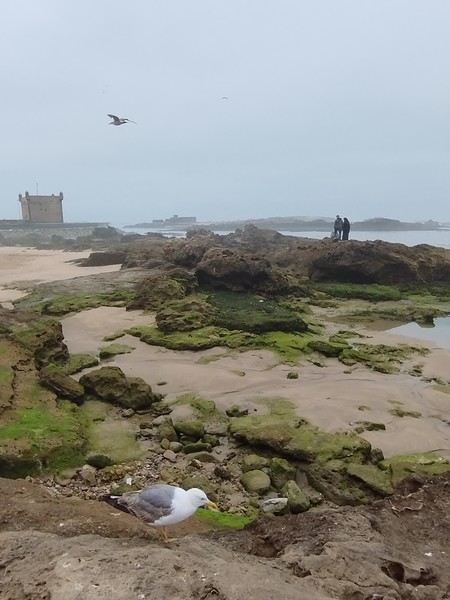
...and well, that didn’t happen! The gray stuck around for a day, then two, then three (while back home in the Landes, we had gorgeous sunshine 🤦♂️😂).
Now, unlike us, the Morocco experts here probably already know this, but apparently, it’s pretty common—especially in spring—when the warm air from inland meets the cool ocean breeze. Locals even have to warm up with hot water bottles, can you believe it? 😄!
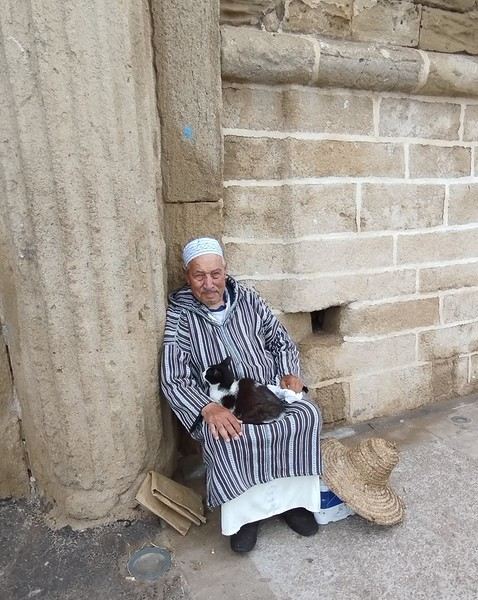
And of course, it had to happen now, since our plan is to follow the coast from Essaouira to Mirleft!!
Oh well, we’ll see how it goes—but luckily, this first stunning sunset made up for the weather 🌅.
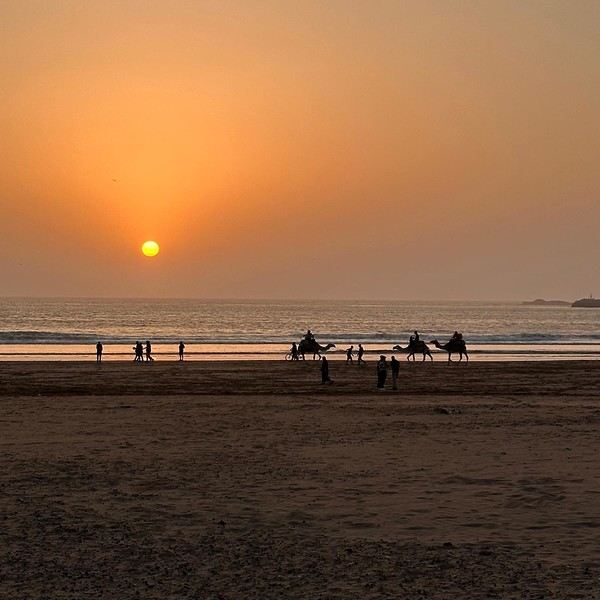
See you soon to anyone who’s up for it! 😊
This isn’t meant to be a full-on travel journal—just a little springtime dip into the Moroccan coast (and maybe a bit more if we click).
For our third trip to this country, we set off for 8 days in early June 2025, *sure* we’d be greeted by non-stop sunshine...
...and well, that didn’t happen! The gray stuck around for a day, then two, then three (while back home in the Landes, we had gorgeous sunshine 🤦♂️😂).
Now, unlike us, the Morocco experts here probably already know this, but apparently, it’s pretty common—especially in spring—when the warm air from inland meets the cool ocean breeze. Locals even have to warm up with hot water bottles, can you believe it? 😄!
And of course, it had to happen now, since our plan is to follow the coast from Essaouira to Mirleft!!
Oh well, we’ll see how it goes—but luckily, this first stunning sunset made up for the weather 🌅.
See you soon to anyone who’s up for it! 😊
What clothes should we pack for a trip to Finnish Lapland in February?
Hello, We’re heading to Finnish Lapland near Rovaniemi as a family at the end of February with two kids (8 and 14 years old). We’ve got direct flights with Luxairstours. The itinerary is already set, but I’m wondering if anyone has traveled with Luxair before and knows exactly what kind of clothes they provide on the second day? The agency just told me it’s a heavy-duty cold-weather suit. I’m thinking we should get Sorel Caribou boots, maybe second-hand. Here’s what I’ve already planned:
- Thermolactyl leggings and tights from Damart for the whole family as a base layer.
- A first layer of Damart socks + Nordic Stocks socks in 70% merino wool for all four of us.
- Loose fleece layers, including some Polartec.
- Ski pants for hikes.
- For my son and me, a The North Face Himalayan down parka with a hood.
- A ski parka for my husband and my 14-year-old daughter (she *really* wants a Roxy one—I hope it’ll be warm enough).
- For myself, for the flight and the first day at Santa’s village, I’ve packed The North Face winter hiking pants, a long-sleeve merino wool top from Decathlon (thin), a fleece, and my big parka.
I’m wondering if I should just pack fleece joggers or sweatpants for the kids and my husband, at least for the first and last days, to be comfortable on the plane? I’m also planning to buy balaclavas and neck warmers in addition to our beanies, as well as mittens for all of us. I really need advice because I have no idea—I’ve never been skiing! Also, for a 4-night, 5-day trip, should I pack a second set of base layers, like from Odlo?
Of course, I’ll be leaving cotton clothes out of the suitcase.
As you can tell, I’m someone who gets cold easily—especially my feet, hands, and ears—so that’s my biggest worry. I *don’t* want to be cold, even at -20°C during dog sledding, snowmobiling, or aurora hunting when we might be standing still. We won’t be in the city, and the kids will likely spend most of their time outside, as they usually do.
Thanks in advance for your tips!
I’m wondering if I should just pack fleece joggers or sweatpants for the kids and my husband, at least for the first and last days, to be comfortable on the plane? I’m also planning to buy balaclavas and neck warmers in addition to our beanies, as well as mittens for all of us. I really need advice because I have no idea—I’ve never been skiing! Also, for a 4-night, 5-day trip, should I pack a second set of base layers, like from Odlo?
Of course, I’ll be leaving cotton clothes out of the suitcase.
As you can tell, I’m someone who gets cold easily—especially my feet, hands, and ears—so that’s my biggest worry. I *don’t* want to be cold, even at -20°C during dog sledding, snowmobiling, or aurora hunting when we might be standing still. We won’t be in the city, and the kids will likely spend most of their time outside, as they usually do.
Thanks in advance for your tips!
9-Day Motorcycle Itinerary in Morocco
Hi there!
I’m currently planning a 9-day route starting from Marrakech with my husband. We land on the morning of June 13th—so soon! 😊
And we’re flying back to France on June 21st at 9 PM!
We’ve rented two Royal Enfield 450s.
This is our first motorcycle trip in Morocco. I got my license two years ago with the dream of taking this kind of trip, and here we are! ✌️😍
In France, we usually ride between 300 to 400 km per day on roadsters. We’re not used to off-road tracks, so we’re looking for easy ones 😅—especially for me 😅.
For Morocco, I’ve planned stages of 200 to 300 km per day. Here’s the idea: Day 1 (departure at noon): Marrakech - Tizi n Test - Tafingoult (165 km - 4h15) Day 2: Tafingoult - Amzarkou - Telouet (200 km - 4h34) Day 3: Telouet - Ait Benhaddou - Ouarzazate - Boumalne (200 km - 3h30) (+ Vallée des Roses maybe) Day 4: Boumalne - Dades Gorges - Agoudal - Todra Gorges - Tinghir - Goulmima (291 km - 6h) Day 5: Goulmima - Midelt - Cirque Jaffar - Agoudim (280 km - 4h45) Day 6: Agoudim - Imilchil - Aghbala - El Ksiba (280 km - 4h45) Day 7: El Ksiba - La Cathédrale - Zaouiat Ahansal (212 km - 4h20) Day 8: Ahansal - Ouzoud Waterfalls via R 302 (188 km - 4h22) Day 9: Ouzoud - Marrakech (160 km - 2h43) End of the trip 😮.
What do you think?
We haven’t booked any hotels—is that a problem? We were thinking of deciding day by day based on our progress.
Can we take our helmets with us in the cabin, or should we pack them in the checked luggage surrounded by clothes to avoid damage?
I’d love any tips! 😊 Thanks!
In France, we usually ride between 300 to 400 km per day on roadsters. We’re not used to off-road tracks, so we’re looking for easy ones 😅—especially for me 😅.
For Morocco, I’ve planned stages of 200 to 300 km per day. Here’s the idea: Day 1 (departure at noon): Marrakech - Tizi n Test - Tafingoult (165 km - 4h15) Day 2: Tafingoult - Amzarkou - Telouet (200 km - 4h34) Day 3: Telouet - Ait Benhaddou - Ouarzazate - Boumalne (200 km - 3h30) (+ Vallée des Roses maybe) Day 4: Boumalne - Dades Gorges - Agoudal - Todra Gorges - Tinghir - Goulmima (291 km - 6h) Day 5: Goulmima - Midelt - Cirque Jaffar - Agoudim (280 km - 4h45) Day 6: Agoudim - Imilchil - Aghbala - El Ksiba (280 km - 4h45) Day 7: El Ksiba - La Cathédrale - Zaouiat Ahansal (212 km - 4h20) Day 8: Ahansal - Ouzoud Waterfalls via R 302 (188 km - 4h22) Day 9: Ouzoud - Marrakech (160 km - 2h43) End of the trip 😮.
What do you think?
We haven’t booked any hotels—is that a problem? We were thinking of deciding day by day based on our progress.
Can we take our helmets with us in the cabin, or should we pack them in the checked luggage surrounded by clothes to avoid damage?
I’d love any tips! 😊 Thanks!
Louisiana - Mississippi - Tennessee - Arkansas - April 2024
The context:
The urge to return to the USA, to explore a new part of the country. I don’t need much convincing to go back to Uncle Sam’s land. My wife’s on board too.
So, off we go for my 9th trip to the USA! (I didn’t take notes, so this is from memory)
Day 1: The departure: Flight with two layovers. I usually avoid layovers in the US before the final destination because of immigration. This time, my flight was Lyon/Munich, then Munich/Chicago, and finally Chicago/New Orleans. The layover in Chicago was 3 hours, and since I’d been through this airport twice before and found it super efficient both times, I wasn’t too worried when I booked my tickets—especially with Lufthansa. Unfortunately, there were several flight changes before departure, the last one leaving us with only a 2h14 layover in Chicago. I called Lufthansa to check if that would be enough, and they told me immigration in Chicago takes about an hour and 45 minutes (according to their calculations). So, I left feeling confident. A 15-minute delay leaving Lyon, then a 1-hour delay leaving Munich—now I’m starting to worry. When we arrived in Chicago, we rushed, cut in line, and made it to immigration. And then—an impossible queue. Game over, we missed our last flight. Of course, Lufthansa rebooked us for the next morning, arriving around 10 AM, and booked us a hotel. I found someone to call Alamo in New Orleans to make sure my rental car would still be there. Everything’s sorted—except our luggage, which we have no idea where it is! My little worry is that we land at 9:45 AM the next morning, and we’ve booked a tour at 11 AM at Laura Plantation, which is about an hour’s drive away! Wait and see…
The +: We're back in the USA The -: Once again, flight delays
Day 1: The departure: Flight with two layovers. I usually avoid layovers in the US before the final destination because of immigration. This time, my flight was Lyon/Munich, then Munich/Chicago, and finally Chicago/New Orleans. The layover in Chicago was 3 hours, and since I’d been through this airport twice before and found it super efficient both times, I wasn’t too worried when I booked my tickets—especially with Lufthansa. Unfortunately, there were several flight changes before departure, the last one leaving us with only a 2h14 layover in Chicago. I called Lufthansa to check if that would be enough, and they told me immigration in Chicago takes about an hour and 45 minutes (according to their calculations). So, I left feeling confident. A 15-minute delay leaving Lyon, then a 1-hour delay leaving Munich—now I’m starting to worry. When we arrived in Chicago, we rushed, cut in line, and made it to immigration. And then—an impossible queue. Game over, we missed our last flight. Of course, Lufthansa rebooked us for the next morning, arriving around 10 AM, and booked us a hotel. I found someone to call Alamo in New Orleans to make sure my rental car would still be there. Everything’s sorted—except our luggage, which we have no idea where it is! My little worry is that we land at 9:45 AM the next morning, and we’ve booked a tour at 11 AM at Laura Plantation, which is about an hour’s drive away! Wait and see…
The +: We're back in the USA The -: Once again, flight delays
Chiang Rai to Pai road in April
Hi there,
As we’re putting the finishing touches on our travel journal, we could really use your help, please.
We’re heading to Thailand in three weeks and will be in Chiang Rai right during the burning season...
Will the stunning road between Chiang Rai and Pai still be beautiful?
Are the landscapes green like we’d expect at this time of year, or are they dry with gray and brown mountains due to the drought?
We were planning to rent a car, but that’s a lot of time we could spend elsewhere if it’s not worth it!
Thanks for your help.
Climbing Haut-Folin via the southern route, in stages
Hello everyone,
I’m so happy to share my climb with you, and if it inspires you to take it on, then it’ll be a success. Sometimes I’ll use the local language because I think it’s essential to connect with the people we meet along the way.
This adventure took place last year, just before winter, right after summer, and smack in the middle of autumn. That really sets the time of year. After climbing Mont-Beuvray—a story I shared here ages ago—I decided to tackle a much more adventurous peak: the summit of Haut-Folin, which rises to 901 m, and that’s no small feat, let’s be honest. It’s located in the Bois du Roi massif. Up there, you often brush against the clouds, which seem to take a mischievous pleasure in wrapping around you.
I’m going fully self-sufficient—no porters, no guide, no cook. I’m just treating myself to a very short approach flight. The flight is early in the morning on a small plane, the *Spirit of St Bernadette*, and it’s perfect. I’ll enjoy watching it deliver mail in the mountains. The pilot will drop me off at the hamlet of *La Pierre en Eau*, near Anost, a small village at the foot of this forest-covered giant.
Physical condition I’m now really seasoned for such an expedition because I’ve trained every day by walking to the village grocery store—round trip, in all weather, that’s 2.1 km. The 451 m elevation gain won’t be a problem for me. .../...
I’m so happy to share my climb with you, and if it inspires you to take it on, then it’ll be a success. Sometimes I’ll use the local language because I think it’s essential to connect with the people we meet along the way.
This adventure took place last year, just before winter, right after summer, and smack in the middle of autumn. That really sets the time of year. After climbing Mont-Beuvray—a story I shared here ages ago—I decided to tackle a much more adventurous peak: the summit of Haut-Folin, which rises to 901 m, and that’s no small feat, let’s be honest. It’s located in the Bois du Roi massif. Up there, you often brush against the clouds, which seem to take a mischievous pleasure in wrapping around you.
I’m going fully self-sufficient—no porters, no guide, no cook. I’m just treating myself to a very short approach flight. The flight is early in the morning on a small plane, the *Spirit of St Bernadette*, and it’s perfect. I’ll enjoy watching it deliver mail in the mountains. The pilot will drop me off at the hamlet of *La Pierre en Eau*, near Anost, a small village at the foot of this forest-covered giant.
Physical condition I’m now really seasoned for such an expedition because I’ve trained every day by walking to the village grocery store—round trip, in all weather, that’s 2.1 km. The 451 m elevation gain won’t be a problem for me. .../...
Family road trip across the Pyrenees (Spain)
Hi there,
We live in Lyon and usually stay in the Alps, but we don’t know the Pyrenees at all. It’s a mountain range that’s quite a long way from where we live. This summer, we’re thinking of traveling along the Pyrenees from west to east (Pyrénées-Atlantiques - Hautes-Pyrénées - PO). We might explore both the French and Spanish sides. We’d do this trip over 3 weeks, aiming to stay in each place for about 3 days before hitting the road again—so we don’t feel like we’re driving for hours every day...
Do you think a 3-week trip like this is doable? (Just to give you an idea, I’ve simplified the route with the link below, using random stops to illustrate the plan.) https://maps.app.goo.gl/eaShLrZzcmN54mZJ7
Two things that are influencing our planning: - We’re a family of 4 (2 kids, aged 9 and 6 1/2) - We’ll be in an electric car For the second point, could you tell me if there are plenty of electric charging stations along the mountain range, or if we’ll need to head to the main towns in the 3 Pyrenean departments?
Looking forward to your thoughts!
Thanks in advance.
We live in Lyon and usually stay in the Alps, but we don’t know the Pyrenees at all. It’s a mountain range that’s quite a long way from where we live. This summer, we’re thinking of traveling along the Pyrenees from west to east (Pyrénées-Atlantiques - Hautes-Pyrénées - PO). We might explore both the French and Spanish sides. We’d do this trip over 3 weeks, aiming to stay in each place for about 3 days before hitting the road again—so we don’t feel like we’re driving for hours every day...
Do you think a 3-week trip like this is doable? (Just to give you an idea, I’ve simplified the route with the link below, using random stops to illustrate the plan.) https://maps.app.goo.gl/eaShLrZzcmN54mZJ7
Two things that are influencing our planning: - We’re a family of 4 (2 kids, aged 9 and 6 1/2) - We’ll be in an electric car For the second point, could you tell me if there are plenty of electric charging stations along the mountain range, or if we’ll need to head to the main towns in the 3 Pyrenean departments?
Looking forward to your thoughts!
Thanks in advance.
Shoes for mountain hiking in high heat
I'd like to do all or part of the GR 11 in June or July. Spain.
What shoes would you recommend, given it'll be hot and it's a mountain hike?
Regular hiking shoes or sandals?
Thanks
What shoes would you recommend, given it'll be hot and it's a mountain hike?
Regular hiking shoes or sandals?
Thanks
El Nido, questions about our overall itinerary with a child
Hi! We’ll be in El Nido at the end of February. We’d love to explore the magical islands around it—any tips or guided tours you’d recommend? There are three of us, including a 10-year-old girl, and this will be our last stop before heading home!
Philippines Trip 2024
Flight Paris → Manila
Wednesday, 12/02
Flight Manila → Cebu Sunnyside Moalboal Guest House Guesthouse – 400 m from the beach
Thursday, 13/02 Turtle-sardine tour: 8 € per hotel? Departure between 6 AM and 3 PM Duration: 1 h to 1 h 30
Friday, 14/02 Sharks and waterfalls? Departure at 3 AM?
Or just sharks for 15 €
Saturday, 15/02 Nothing planned or diving
Sunday, 16/02 Watch out: taxi at 8 AM
2 h 10 min drive
Arrival at Quartel Beach Oslob at 10:00 AM Ferry departure from Quartel Beach Oslob at 11:30 AM, Arrival at Bohol, Momo Beach Panglao at 1 PM
50 min taxi / 1000 PHP (15 €) by tuk-tuk or 1500 PHP (24 €) by taxi
We arrive at Southside Hotel at 2 PM
Check if we can get room 7, which is set apart from the others, based on the reviews
Rest and walk along the river
Monday, 17/02 We visit the tarsiers
Tuesday, 18/02 The Chocolate Hills
Wednesday, 19/02 A kayak tour? A cruise?
PS: We sent an email about a dolphin tour—possible for 200 € Abraham Tour to contact for more info and rates
http://whales.bohol.ph/packages.php
Still deciding if we’ll do it.
Thursday, 20/02 Departure from Bohol to catch the flight in Cebu: Leave the hotel at 7 AM
2 h ferry ride Arrival at Pier 1: 11:20 AM
30 min to the airport
Arrival at 1:15 PM: 90 min before the flight, so 1 h 30
Arrival in Coron at 4:05 PM at a homestay
Friday, 21/02 Tour with Hakim or Coron Travel
Then a tour with Hakim’s team: reef and other islands Hakim’s rate between 3200 PHP (50 €) and 2150 PHP (33 €) Coron Travel rate: 1700 PHP (27 €)
Saturday, 22/02 Exploring the area
Sunday, 23/02 Tour with Hakim or Coron Travel
Monday, 24/02 Private tour with Hakim
Tuesday, 25/02 Travel time: accommodation to port is a 5-minute walk?? Arrival at the port at 6 AM Departure from Coron Port at 7:30 AM Ferry travel time: 3 h 30 Arrival at El Nido Port at 11 AM
11-minute drive
Wednesday, 26/02 Boat trips with Go Paradise? Contact via Messenger
Thursday, 27/02
Friday, 28/02
Saturday, 1/03
Sunday, 2/03 Book a Grab for 9 AM Drive to El Nido Airport: 12 minutes Arrival at the airport at 9:30 AM–10 AM Departure at 11:55 AM Landing in Manila at 1:25 PM NAIA Terminal 2 Travel time: 26 min Book a Grab for 2 PM
Hotel in Manila at Malaki Festive
Monday, 3/03 Possibility to explore the city for 3 hours?
Tuesday, 4/03 Departure from Manila at 7:45 PM
Landing in Hong Kong Terminal 1 at 10:15 PM Layover: 1 h 50
Wednesday, 5/03
Landing in Paris Terminal 1 at 7:35 AM
Philippines Trip 2024
Flight Paris → Manila
Wednesday, 12/02
Flight Manila → Cebu Sunnyside Moalboal Guest House Guesthouse – 400 m from the beach
Thursday, 13/02 Turtle-sardine tour: 8 € per hotel? Departure between 6 AM and 3 PM Duration: 1 h to 1 h 30
Friday, 14/02 Sharks and waterfalls? Departure at 3 AM?
Or just sharks for 15 €
Saturday, 15/02 Nothing planned or diving
Sunday, 16/02 Watch out: taxi at 8 AM
2 h 10 min drive
Arrival at Quartel Beach Oslob at 10:00 AM Ferry departure from Quartel Beach Oslob at 11:30 AM, Arrival at Bohol, Momo Beach Panglao at 1 PM
50 min taxi / 1000 PHP (15 €) by tuk-tuk or 1500 PHP (24 €) by taxi
We arrive at Southside Hotel at 2 PM
Check if we can get room 7, which is set apart from the others, based on the reviews
Rest and walk along the river
Monday, 17/02 We visit the tarsiers
Tuesday, 18/02 The Chocolate Hills
Wednesday, 19/02 A kayak tour? A cruise?
PS: We sent an email about a dolphin tour—possible for 200 € Abraham Tour to contact for more info and rates
http://whales.bohol.ph/packages.php
Still deciding if we’ll do it.
Thursday, 20/02 Departure from Bohol to catch the flight in Cebu: Leave the hotel at 7 AM
2 h ferry ride Arrival at Pier 1: 11:20 AM
30 min to the airport
Arrival at 1:15 PM: 90 min before the flight, so 1 h 30
Arrival in Coron at 4:05 PM at a homestay
Friday, 21/02 Tour with Hakim or Coron Travel
Then a tour with Hakim’s team: reef and other islands Hakim’s rate between 3200 PHP (50 €) and 2150 PHP (33 €) Coron Travel rate: 1700 PHP (27 €)
Saturday, 22/02 Exploring the area
Sunday, 23/02 Tour with Hakim or Coron Travel
Monday, 24/02 Private tour with Hakim
Tuesday, 25/02 Travel time: accommodation to port is a 5-minute walk?? Arrival at the port at 6 AM Departure from Coron Port at 7:30 AM Ferry travel time: 3 h 30 Arrival at El Nido Port at 11 AM
11-minute drive
Wednesday, 26/02 Boat trips with Go Paradise? Contact via Messenger
Thursday, 27/02
Friday, 28/02
Saturday, 1/03
Sunday, 2/03 Book a Grab for 9 AM Drive to El Nido Airport: 12 minutes Arrival at the airport at 9:30 AM–10 AM Departure at 11:55 AM Landing in Manila at 1:25 PM NAIA Terminal 2 Travel time: 26 min Book a Grab for 2 PM
Hotel in Manila at Malaki Festive
Monday, 3/03 Possibility to explore the city for 3 hours?
Tuesday, 4/03 Departure from Manila at 7:45 PM
Landing in Hong Kong Terminal 1 at 10:15 PM Layover: 1 h 50
Wednesday, 5/03
Landing in Paris Terminal 1 at 7:35 AM