Results for "Rouen+|+127"
14754 results found.
Quel vélo pour un débutant? English translation pending
Bonjour,
Quel vélo pour débuter ? Est-ce possible d'améliorer un VTC de base sachant que mon premier essai sera Geneve-Ardèche-Geneve et un peu plus tard Geneve-Slovénie-Geneve. Ce sera donc de la route et pour le matériel ce sera une tente et le matos de base pour une semaine.
Merci de vos conseils
Rémi
Quel vélo pour débuter ? Est-ce possible d'améliorer un VTC de base sachant que mon premier essai sera Geneve-Ardèche-Geneve et un peu plus tard Geneve-Slovénie-Geneve. Ce sera donc de la route et pour le matériel ce sera une tente et le matos de base pour une semaine.
Merci de vos conseils
Rémi
Location vélo avec siége enfant en Thaïlande English translation pending
bonjour ! Quelqu'un sait-il s'il est possible de louer un vélo avec siége enfant en Thailande ? Merci d'avance
Vos conseils sur modifications de nos vélos English translation pending
Bonjour,
J'ai besoin d'avis avisés!
Dans le cadre d'un tour du monde, nous allons apporter des modifications à nos vélos.
On nous conseille des pneus SCHWALBE MARATHON. C'est unanime ! Mais faut il quand même mettre des protections entre la chambre à air et le pneu?
Pour les jantes idem exit les notres pour la mise en place de jantes MAVIC. Mais à changer les jantes autant changer le reste aussi... On nous conseille de les équiper avec des rayons de tandems, mais pour le reste que doit on mettre comme moyeux, pignons...
Quand j'en ai parlé où nous avons achté nos vélos (des trceks 4300) le vendeur m' a regardé avec des yeux de merlan frit!!!!! et m'a conseillé de trouver des roues toutes prêtes (comment botter en touche....)
Existe t'il des roues toutes prêtes de grande qualité?
A quoi d'autre doit on penser pour améliorer les vélos?
Nous sommes équipés de remorques BOB.
Merci
Vél@ment votre
J'ai besoin d'avis avisés!
Dans le cadre d'un tour du monde, nous allons apporter des modifications à nos vélos.
On nous conseille des pneus SCHWALBE MARATHON. C'est unanime ! Mais faut il quand même mettre des protections entre la chambre à air et le pneu?
Pour les jantes idem exit les notres pour la mise en place de jantes MAVIC. Mais à changer les jantes autant changer le reste aussi... On nous conseille de les équiper avec des rayons de tandems, mais pour le reste que doit on mettre comme moyeux, pignons...
Quand j'en ai parlé où nous avons achté nos vélos (des trceks 4300) le vendeur m' a regardé avec des yeux de merlan frit!!!!! et m'a conseillé de trouver des roues toutes prêtes (comment botter en touche....)
Existe t'il des roues toutes prêtes de grande qualité?
A quoi d'autre doit on penser pour améliorer les vélos?
Nous sommes équipés de remorques BOB.
Merci
Vél@ment votre
Mauritanie 2004 English translation pending
Alors voilà, je me lance dans une petite dissert sur ma rando en Mauritanie. J’espère que ça vous plaira!
Le premier jour, arrivée à Atar. Première angoisse : il fait 18°C (contre 35 attendus) et le vent souffle tellement, que le sable nous masque complètement les plateaux juste derrière, on ne voit rien! On s'imagine déjà toute une semaine à lutter contre la tempête de sable....
Heureusement, à peine embarqués dans nos camionnette pour aller à Chinguetti, le paysage se dégage et la beauté des lieux nous apparaît : nous traversons l'Adrar et en route pour Chinguetti! Bien évidemment une des roues d'un des véhicules crève à quelques km de cette ville aux portes du désert de dunes et nous voilà à.....10 dans le même 4x4 pour finir la route!!!
Chinguetti : du toit de l'auberge on peut observer cette ville, prisonnière du sable et qui semble presque déserte. L'atmosphère est très surprenante. Plus surprenant encore, le guide qui nous montre des photos de l'an passé où l'oued qui sépare les deux parties de la ville est innondé! Impressionnant un fleuve en plein désert! Le soir petit tour en ville et rencontre avec des gamins fan de Zinedine et (heureusement) pas encore trop quémandant (A nous, "touristes" de ne pas leur donner de mauvaises habitudes!!). Rencontre aussi avec un homme qui détient une des bibliothèques de la ville et qui nous passe un beau message de tolérance en nous montrant des écrits anciens aussi bien en arabe, qu'en hébreux et quelques pages de la bible....
Le matin nous voilà en route, accompagnés de nos deux chameliers et de nos huit chameaux. C’est étrange de quitter les habitations pour s’enfoncer dans les dunes. Aucun repère, rapidement plus rien que du sable, quelques pousses de verdure (si!si!), quelques traces dans les dunes (scarabés, lapin...serpent???). Le midi, pause dans un oasis, à l’ombre bienvenu des palmiers. Le seul petit inconvénient du trajet c’est que les points d’eau sont forcément les points de raliement, non seulement des nomades mais aussi des autres groupes de rando...
Première nuit dans le désert, à la belle étoile. Ce qui surprend, c’est la variation de t°. A peine arrêté de marcher sous la cagna, on se retrouve à se changer et enfiler polaire et chaussette! Mais cela ne durera pas. On a pu se rendre compte de l’évolution de la température entre le premier et le dernier jour où là le sac de couchage n’était même plus nécessaire.
Et puis les jours défilent et ne se ressemblent pas : deux jours de dunes, avec des couleurs tellements variées. Dans le petit pot de sable que j’ai ramené, j’avais fait de belles couches blanches, grises, beiges, dorées, rouges....et évidemment tout s’est mélangé!!!!!! De temps à autre on croise des nomades, un homme avec son âne parti chercher du bois, un troupeau de chameau, des femmes sorties de nulle part qui arrivent pour étendre un tissus et poser dessus de l’artisanat à nous vendre. Et lorsqu’on se dit « mais bon sang, tout à coup, une femme au voile plein de couleur, qu’on n’a pas vu s’approcher se retrouve là, près de nous », le guide nous répond le plus naturellement du monde « ben, oui, elle habite dans le coin! ». On n’a forcément pas les mêmes repères....
Après les dunes, on se retrouve dans le désert de pierre. Tout à coup, sans même nous en rendre compte on se retrouve à marcher sur des plateaux caillouteux à couleur dominant brun foncé. Et puis, mais oui, au loin il semble que le plateaux se casse. Alors, presque on presse le pas pour voir « et après? ». Et là, tout le monde s’assied en silence pour admirer la palmeraie de Meirheit. Une « vallée » entre deux montages. Des palmiers verdoyant alors qu’on sort d’une étendue de pierre.
Puis petit à petit on se retrouve face aux hauts plateaux de l’Adrar. Magnifiques!!! Encore une fois on n’a pas vu arriver ce nouveau paysage et se retrouver face à « ça » nous laisse tous ébahis...
Pour finir une halte à Tergit qui se prolonge : notre guide nous annonce que l’avion n’est plus prévu pour dimanche, mais plutôt lundi. On reste donc une nuit à tergit avant de rejoindre Atar. Bon, honnêtement, ce n’est pas l’endroit que j’ai préféré. Certe la palmeraie est très agréable, très belle et nous permet de faire trempette dans une vasque naturelle...mais c’est surtout le point final de beaucoup de rando et on se retrouve donc à 6/7 groupes....On retrouve un peu de civilsation qu’on aurait bien encore laissée de côté.......
Et puis, et bien oui, il faut revenir à Atar, profiter d’une dernière soirée pour aller écouter un festival de contes et puis courte nuit et retour......
C’était une première rencontre avec le désert et on ne m’imaginait pas que ça puisse être aussi varié, aussi riche finalement! Et puis, il faut bien reconnaître qu’on a eu la chance de se retrouver dans un groupe de 9 personnes absolument extra! Tout le monde avait la même approche de se voyage qui s’est révélé bien paisible, bien reposant et comme d’habitude bien motivant pour préparer le prochain!!!!!!
Bon, je viens de relire et je ne sais pas si j’ai été suffisamment longue dans mes descriptions....suis pas non plus un bonne naratrice alors je ne voulais pas que trop long = trop saoulant!
Promis dès que j’arrive à me reconnecter sur le net à la maison, je me tais et je vous envoie quelques photos!!
Bizz à tous!
Le premier jour, arrivée à Atar. Première angoisse : il fait 18°C (contre 35 attendus) et le vent souffle tellement, que le sable nous masque complètement les plateaux juste derrière, on ne voit rien! On s'imagine déjà toute une semaine à lutter contre la tempête de sable....
Heureusement, à peine embarqués dans nos camionnette pour aller à Chinguetti, le paysage se dégage et la beauté des lieux nous apparaît : nous traversons l'Adrar et en route pour Chinguetti! Bien évidemment une des roues d'un des véhicules crève à quelques km de cette ville aux portes du désert de dunes et nous voilà à.....10 dans le même 4x4 pour finir la route!!!
Chinguetti : du toit de l'auberge on peut observer cette ville, prisonnière du sable et qui semble presque déserte. L'atmosphère est très surprenante. Plus surprenant encore, le guide qui nous montre des photos de l'an passé où l'oued qui sépare les deux parties de la ville est innondé! Impressionnant un fleuve en plein désert! Le soir petit tour en ville et rencontre avec des gamins fan de Zinedine et (heureusement) pas encore trop quémandant (A nous, "touristes" de ne pas leur donner de mauvaises habitudes!!). Rencontre aussi avec un homme qui détient une des bibliothèques de la ville et qui nous passe un beau message de tolérance en nous montrant des écrits anciens aussi bien en arabe, qu'en hébreux et quelques pages de la bible....
Le matin nous voilà en route, accompagnés de nos deux chameliers et de nos huit chameaux. C’est étrange de quitter les habitations pour s’enfoncer dans les dunes. Aucun repère, rapidement plus rien que du sable, quelques pousses de verdure (si!si!), quelques traces dans les dunes (scarabés, lapin...serpent???). Le midi, pause dans un oasis, à l’ombre bienvenu des palmiers. Le seul petit inconvénient du trajet c’est que les points d’eau sont forcément les points de raliement, non seulement des nomades mais aussi des autres groupes de rando...
Première nuit dans le désert, à la belle étoile. Ce qui surprend, c’est la variation de t°. A peine arrêté de marcher sous la cagna, on se retrouve à se changer et enfiler polaire et chaussette! Mais cela ne durera pas. On a pu se rendre compte de l’évolution de la température entre le premier et le dernier jour où là le sac de couchage n’était même plus nécessaire.
Et puis les jours défilent et ne se ressemblent pas : deux jours de dunes, avec des couleurs tellements variées. Dans le petit pot de sable que j’ai ramené, j’avais fait de belles couches blanches, grises, beiges, dorées, rouges....et évidemment tout s’est mélangé!!!!!! De temps à autre on croise des nomades, un homme avec son âne parti chercher du bois, un troupeau de chameau, des femmes sorties de nulle part qui arrivent pour étendre un tissus et poser dessus de l’artisanat à nous vendre. Et lorsqu’on se dit « mais bon sang, tout à coup, une femme au voile plein de couleur, qu’on n’a pas vu s’approcher se retrouve là, près de nous », le guide nous répond le plus naturellement du monde « ben, oui, elle habite dans le coin! ». On n’a forcément pas les mêmes repères....
Après les dunes, on se retrouve dans le désert de pierre. Tout à coup, sans même nous en rendre compte on se retrouve à marcher sur des plateaux caillouteux à couleur dominant brun foncé. Et puis, mais oui, au loin il semble que le plateaux se casse. Alors, presque on presse le pas pour voir « et après? ». Et là, tout le monde s’assied en silence pour admirer la palmeraie de Meirheit. Une « vallée » entre deux montages. Des palmiers verdoyant alors qu’on sort d’une étendue de pierre.
Puis petit à petit on se retrouve face aux hauts plateaux de l’Adrar. Magnifiques!!! Encore une fois on n’a pas vu arriver ce nouveau paysage et se retrouver face à « ça » nous laisse tous ébahis...
Pour finir une halte à Tergit qui se prolonge : notre guide nous annonce que l’avion n’est plus prévu pour dimanche, mais plutôt lundi. On reste donc une nuit à tergit avant de rejoindre Atar. Bon, honnêtement, ce n’est pas l’endroit que j’ai préféré. Certe la palmeraie est très agréable, très belle et nous permet de faire trempette dans une vasque naturelle...mais c’est surtout le point final de beaucoup de rando et on se retrouve donc à 6/7 groupes....On retrouve un peu de civilsation qu’on aurait bien encore laissée de côté.......
Et puis, et bien oui, il faut revenir à Atar, profiter d’une dernière soirée pour aller écouter un festival de contes et puis courte nuit et retour......
C’était une première rencontre avec le désert et on ne m’imaginait pas que ça puisse être aussi varié, aussi riche finalement! Et puis, il faut bien reconnaître qu’on a eu la chance de se retrouver dans un groupe de 9 personnes absolument extra! Tout le monde avait la même approche de se voyage qui s’est révélé bien paisible, bien reposant et comme d’habitude bien motivant pour préparer le prochain!!!!!!
Bon, je viens de relire et je ne sais pas si j’ai été suffisamment longue dans mes descriptions....suis pas non plus un bonne naratrice alors je ne voulais pas que trop long = trop saoulant!
Promis dès que j’arrive à me reconnecter sur le net à la maison, je me tais et je vous envoie quelques photos!!
Bizz à tous!
Sac à dos ou valise à roulettes? English translation pending
Cette question s'adresse à ceux qui voyagent "en routard".
Je suis toujours parti avec un sac à dos, mais finalement, je m'aperçois que dans les voyages sans trek ou rando, je ne porte mon sac que lors des transferts.
Pour mon prochain voyage j'hésite à prendre une valise à roulettes.
Ma femme, peut-être plus puriste que moi, est contre et va jusqu'à dire que je vais gâcher les vacances de tout le monde (2 enfants) avec ma valise, nettement plus lourde à vide qu'un sac à dos.
Sachant que les seuls transferts un peu délicats seront d'un bateau vers une plage et inversement, je sollicite votre avis sur la question.
Pour mon prochain voyage j'hésite à prendre une valise à roulettes.
Ma femme, peut-être plus puriste que moi, est contre et va jusqu'à dire que je vais gâcher les vacances de tout le monde (2 enfants) avec ma valise, nettement plus lourde à vide qu'un sac à dos.
Sachant que les seuls transferts un peu délicats seront d'un bateau vers une plage et inversement, je sollicite votre avis sur la question.
Choix d'hôtels English translation pending
nous partons en octobre en RD mais nous hesitons a aller au Ocean bavaro H10, sachant que nous sommes 4 adultes de la qarantaine avec 3 ados que nous recherchons une belle plage, une nourriture correcte, pas de mauvaises odeurs et de l'animation faisons nous le bon choix? 😛
Il y a aussi le coral hamaca by hilton ou le sirenis
Merci de nous aider
Il y a aussi le coral hamaca by hilton ou le sirenis
Merci de nous aider
Chine-France à velo2 (réponse a JREMI) English translation pending
jremi: je ne peut te repondre dans ma propre section de discussion (peut etre parceque je suis en Chine)j'espere que ca marchera en ouvrant une autre .
J'aime l'Aventure, depuis un grand nombre d'annees, mes parents mon beaucoup aide.
Mais tu as toujours quelque chose qui interesse quelqun et en general les gens aime aider un jeune qui decouvre leur pays par ses propre moyen.
A Pekin par exemple il est tres facile de donner des cour de langues (il sont desespere) et la vie est incroyablement bon marche, au Canada j'ai offert mon aide a l'ecole ou j'apprenais l'anglais (4 mois) en echange de cours moins cher et j'habitais avec deux filles dans un petit studio . Pour mon retour en france mes economie devraient faire l'affaire (300e par moi), quelques magasins de Nice qui me connaissent (la roue libre et Jogger pour la pub) mon offert du materiel en echange de quelques photos et Luftansa devrait remboursser mon billet retour. De plus des que tu sort d'Europe la vie devient bon marche (pour un francais), mon confort est secondaire, je privilegie la culture .
J'ai trop de potes qui a mon age son d'un conservatisme extraordinaire, l'un d'eux est meme marie 1 enfant ! Demande au premier venu ce qu'il veut faire dans la vie, il y a de forte chance qu'il te reponde : "gagner de l'argent ou rencontrer l'amour". Je prefere decouvrir et vivre ce que je pense etre le mieu en ce moment . Je hais le mot "ROUTINE"ou "SECURITE" il est tellement facile d'emputer sa liberte en leurs noms, pour se proteger de surprises qui le plus souvent etaient bonnes .
Au sujet de ta derniere question, je ne suis pas un expere de la muraille de Chine, je crois que quelqu'un la faite a pied, mais a velo cela me semble peu realisable :elle est compose de plusieurs sections distinctes et eloignees qui sont pour la plus part en tres mauvaise etat.la structure est un escalier montant et descendant pas etudie pour une roue.
Enfin je te conseil de te rensegner plus en details.
"QUAND DEUX CHEMINS S'OFFRENT A TOI, CHOISIS TOUJOURS LE PLUS DIFFICILE ". films HIMALAYA ENFANCE D'UN CHEF .
A Pekin par exemple il est tres facile de donner des cour de langues (il sont desespere) et la vie est incroyablement bon marche, au Canada j'ai offert mon aide a l'ecole ou j'apprenais l'anglais (4 mois) en echange de cours moins cher et j'habitais avec deux filles dans un petit studio . Pour mon retour en france mes economie devraient faire l'affaire (300e par moi), quelques magasins de Nice qui me connaissent (la roue libre et Jogger pour la pub) mon offert du materiel en echange de quelques photos et Luftansa devrait remboursser mon billet retour. De plus des que tu sort d'Europe la vie devient bon marche (pour un francais), mon confort est secondaire, je privilegie la culture .
J'ai trop de potes qui a mon age son d'un conservatisme extraordinaire, l'un d'eux est meme marie 1 enfant ! Demande au premier venu ce qu'il veut faire dans la vie, il y a de forte chance qu'il te reponde : "gagner de l'argent ou rencontrer l'amour". Je prefere decouvrir et vivre ce que je pense etre le mieu en ce moment . Je hais le mot "ROUTINE"ou "SECURITE" il est tellement facile d'emputer sa liberte en leurs noms, pour se proteger de surprises qui le plus souvent etaient bonnes .
Au sujet de ta derniere question, je ne suis pas un expere de la muraille de Chine, je crois que quelqu'un la faite a pied, mais a velo cela me semble peu realisable :elle est compose de plusieurs sections distinctes et eloignees qui sont pour la plus part en tres mauvaise etat.la structure est un escalier montant et descendant pas etudie pour une roue.
Enfin je te conseil de te rensegner plus en details.
"QUAND DEUX CHEMINS S'OFFRENT A TOI, CHOISIS TOUJOURS LE PLUS DIFFICILE ". films HIMALAYA ENFANCE D'UN CHEF .
Ocean Bavaro English translation pending
bonjour,
j'arrive le 9 avril 2004 à l'hotel ocean bavaro,
je souhaitais avoir quelques infos sur l'hotel et sur l'ambiance
Merci d'avance
j'arrive le 9 avril 2004 à l'hotel ocean bavaro,
je souhaitais avoir quelques infos sur l'hotel et sur l'ambiance
Merci d'avance
Coequipier pour un Chine-France a vélo par l'Asie Centrale, départ imminent! English translation pending
SALUT A TOI
Je suis a pekin depuis 6 mois. J'ai decide il y a quelques semaines de rentrer a velo.
Je pense partir fin mars du Yunan (sud )remontai au Xinjian et me debrouillerai pour passer au kirgistan, puis ce serra l'Ousbekistan, le Turkmenistan, la mer Caspienne, la Turquie, on verra apres...( je pense rouler 5 mois environs )
Si quelqun veut ce joindre a mon autonome et tres flexible aventure, des le depart ou en route il ou elle est le (la )bienvenu(e), je suis seul pour l'instant .
Merci de m'avoir lu .
: "Ils ne savaient pas que c'etait impossible .Alors ils l'ont fait." Antoine de Saint Exupery
Merci de m'avoir lu .
: "Ils ne savaient pas que c'etait impossible .Alors ils l'ont fait." Antoine de Saint Exupery
Porte bébé dorsal? English translation pending
Bonjours
Connaitriez vous un porte bebe dorsal vraiment bien (vendu ou livrable en Belgique ou eventuellement en France). Pas pour faire des treks mais pour emmener bebe (16 mois) avec nous en voyage sac-a-dos et bus etc en Asie.
Il faudrait donc qu'il ait un pare-soleil et une protection pluie, que le bebe soit en hauteur (donc il faut une armature alu), une bequille, pas lourds, et pliable au maximum. Les roues ne sont pas necessaires vu qu'on emmenerait une pousette cane ultra legere. J'en ai vu un sur un site internet qui a toutes ces qualites (alize de red castel) mais impossible de le trouver en vrai ni de le commander... Celui-la ou un autre avec les memes qualites, ca m'est egale evidemment.
Merci de nous aider si vous avez des idees.
Dorothee, Corentin et Zelie
Connaitriez vous un porte bebe dorsal vraiment bien (vendu ou livrable en Belgique ou eventuellement en France). Pas pour faire des treks mais pour emmener bebe (16 mois) avec nous en voyage sac-a-dos et bus etc en Asie.
Il faudrait donc qu'il ait un pare-soleil et une protection pluie, que le bebe soit en hauteur (donc il faut une armature alu), une bequille, pas lourds, et pliable au maximum. Les roues ne sont pas necessaires vu qu'on emmenerait une pousette cane ultra legere. J'en ai vu un sur un site internet qui a toutes ces qualites (alize de red castel) mais impossible de le trouver en vrai ni de le commander... Celui-la ou un autre avec les memes qualites, ca m'est egale evidemment.
Merci de nous aider si vous avez des idees.
Dorothee, Corentin et Zelie
Vtt en Irlande en mai? English translation pending
Bonjour,
J'ai l'intention de faire du vtt en IRLAND au mois de mai
Réaliste ou irréalisable ?
Les itinéraires de randonnée à pied sont ils faisables en vtt ?
Merci de me faire part de vos expériences sur cette activité dans ce pays (itinéraires, types de terrains, orientation, topos, cartes...)
Cordialement
patloyaux@yahoo.fr
J'ai l'intention de faire du vtt en IRLAND au mois de mai
Réaliste ou irréalisable ?
Les itinéraires de randonnée à pied sont ils faisables en vtt ?
Merci de me faire part de vos expériences sur cette activité dans ce pays (itinéraires, types de terrains, orientation, topos, cartes...)
Cordialement
patloyaux@yahoo.fr
Se déplacer à Madagascar? English translation pending
Pour qui aime la nature et les gens, comment ne pas tomber amoureux de cette île ? Après un périple inoubliable de 3 semaines le long de la N7 jusqu'à Tuléar en 1997, en employant tous les moyens de locomotion possibles, j'aimerai y retourner tout le mois d'Avril pour y decouvrir le Nord à moto..
En effet, cela reste le moyen idéal pour découvrir ce pays difficile d'accés avec un réseau routier qui ne nous permet pas forcément de nous enfoncer hors des sentiers battus...
Mon idée n'est pas de faire le paris dakar mais de prendre le temps au gré du voyage (je table sur 50 km par jour pour une 125cm3 ). Je suis donc interessé par toutes vos expériences en ce sens, une adresse de location proposant des deux roues en bon état ou les coins du Nord que vous avez particulièrement aimés...
Au fait, Avril au Nord c'est pas un peu limite pour les précipitations ??
Bon voyage à tous si vous partez et bon emerveillement si vous y partez !!
En effet, cela reste le moyen idéal pour découvrir ce pays difficile d'accés avec un réseau routier qui ne nous permet pas forcément de nous enfoncer hors des sentiers battus...
Mon idée n'est pas de faire le paris dakar mais de prendre le temps au gré du voyage (je table sur 50 km par jour pour une 125cm3 ). Je suis donc interessé par toutes vos expériences en ce sens, une adresse de location proposant des deux roues en bon état ou les coins du Nord que vous avez particulièrement aimés...
Au fait, Avril au Nord c'est pas un peu limite pour les précipitations ??
Bon voyage à tous si vous partez et bon emerveillement si vous y partez !!
panama visites et coutumes English translation pending
J'ai lu sur un guide que des petits Kdo étaient les bienvenus. Y a-t-il des choses à éviter pour ne pas vexer ? Je vais à l'hotel décameron (comme beaucoup ici) et j'aimerais voir du pays. Les locations de voiture sont elles cheres? ou bus ? ou fusée ? ou patin à roullettes ?
Une question pour PURAVIDA : c'est un alligator, un croco, ou un jouet ?😏
Une question pour PURAVIDA : c'est un alligator, un croco, ou un jouet ?😏
Royal Decameron Beach and Golf Resort English translation pending
Bonjour,
Je doit partir pour un voyage de 2 semaines au Royal Decameron Beach & Golf Resort au début mars. C'est la première fois que j'y vais et je ne connais personne qui y est allé. J'ai donc quelques questions: Devons nous donné un pourboire lors d'un forfait tout inclus? Y a t-il une expédition ou randonnée en 4 roues? Quelqu'un peut-il me dire quel est l'emplacement idéale à cette hôtel car il semble que c'est plusieurs petits complexes. Devons nous ou pouvons nous réserver plus d'un jour à l'avance pour les repas à la carte. Quel est la température au mois de mars? Les activitées sur place sont-elles intéressantes?Merci à l'avance à tous!
Nanc.
Je doit partir pour un voyage de 2 semaines au Royal Decameron Beach & Golf Resort au début mars. C'est la première fois que j'y vais et je ne connais personne qui y est allé. J'ai donc quelques questions: Devons nous donné un pourboire lors d'un forfait tout inclus? Y a t-il une expédition ou randonnée en 4 roues? Quelqu'un peut-il me dire quel est l'emplacement idéale à cette hôtel car il semble que c'est plusieurs petits complexes. Devons nous ou pouvons nous réserver plus d'un jour à l'avance pour les repas à la carte. Quel est la température au mois de mars? Les activitées sur place sont-elles intéressantes?Merci à l'avance à tous!
Nanc.
Thalassa-voeux pour 2004 English translation pending
En plus de nous souhaiter tout ce qu'il y a de mieux pour la prochaine année....j'aimerais faire une suggestion sous forme de....nouveau forum...de quoi occuper François lors de son retour au pays !
Si voyageforum est devenu le meilleur site de voyages à travers le monde(si ....si...), THALASSA est sans doute la meilleure émission de TV sur une autre forme de voyage:la MER. Impossible de rester insensible à toutes ces beautés....la mer....les îles...la voile!. La tranquille insousciance de ces audacieux barreurs voguant à tout vents. Les 5 vies du Pen Duick, le courage de Florence Artaud sans oublier Eric Tabarly, la légende maintenant disparue...
Qui n'a pas rêver de traversée, de croisiere dans les Antilles ou les Caraibes?. Les habitués de Cayo Largo ne nous parlent jamais de ces marins etrangers qui accostent à la marina . Idem pour Cayo Coco Varadero...ou Acapulco
J'en parle avec un brin de nostalgie...une impression de rêve inaccompli et....c'est vrai... la voile c'était mon 1er projet de retraite mais l'"équipage" n, a pas suivi et tranquillement le voilier à pris 4 roues et c'est devenu un camping-car....!!!
Bof!...finalement c'est peut-être aussi bien comme ça...
Quoique....
Bonne année...happy newyear...feliz nuevo año....
Memphre
Si voyageforum est devenu le meilleur site de voyages à travers le monde(si ....si...), THALASSA est sans doute la meilleure émission de TV sur une autre forme de voyage:la MER. Impossible de rester insensible à toutes ces beautés....la mer....les îles...la voile!. La tranquille insousciance de ces audacieux barreurs voguant à tout vents. Les 5 vies du Pen Duick, le courage de Florence Artaud sans oublier Eric Tabarly, la légende maintenant disparue...
Qui n'a pas rêver de traversée, de croisiere dans les Antilles ou les Caraibes?. Les habitués de Cayo Largo ne nous parlent jamais de ces marins etrangers qui accostent à la marina . Idem pour Cayo Coco Varadero...ou Acapulco
J'en parle avec un brin de nostalgie...une impression de rêve inaccompli et....c'est vrai... la voile c'était mon 1er projet de retraite mais l'"équipage" n, a pas suivi et tranquillement le voilier à pris 4 roues et c'est devenu un camping-car....!!!
Bof!...finalement c'est peut-être aussi bien comme ça...
Quoique....
Bonne année...happy newyear...feliz nuevo año....
Memphre
Cherche location de voiture au Maroc (Casablanca) English translation pending
quelqu'un a t'il des adresses de loueurs sérieux avec des voitures en bon état pour un séjour de 3 semaines au Maroc cette été (arrivée et départ de Casa)
merci
Bernard de Toulouse
merci
Bernard de Toulouse
Situation et prises électriques au Népal English translation pending
Bonjour.
Je m'envole pour le Népal dans un peu plus de deux semaines, et j'ai quelques questions qui me viennent à l'esprit.
Deja, ou en est la situation politique la-bas ? Est-ce que c'est plutôt calme ou non ? Je ne vais pas ne pas partir au dernier moment, mais c'est juste pour être tenu informé ! Si certains par ici ont eu droit au racket organisé, quelles sommes vous ont été demandées ?
Enfin, je vais bien évidemment emmener avec moi un appareil photo ( numérique d'ailleurs ) et je ne sais pas trop quoi faire : partir de Katmandou avec deux batteries bien chargées à bloc qui ne me quitteront pas afin de tenir les 10 jours de trekking ( les prises dans les hotels à Katmandou sont-elles les mêmes qu'en France ou non ? même voltage ? ), ou bien compter sur l'hypothétique présence d'une prise éléctrique pendant le trekking lui même, soit dans un lodge ou ou monastère, soit parce qu'un yack fournira de l'éléctricité en faisant tourner une roue géante à la manière d'un hamster...
Bref, que me conseillez-vous ???
J'espère que certains parmi vous sauront m'aider à bien choisir !!!
Merci :)
Népalement votre, Romain.
Escapade Espagne - recherche coéquipier (e) English translation pending
Je compte faire une escapade à vélo en Espagne au mois de Novembre. Une semaine probablement. J'avais envie d'aller vers un pays d'europe du sud et je propose Barcelone et la côte. Si cela tente qqun éventuellement sur une autre destination...
J'ai 35 ans. J'ai encore fait peu de ballade en vélo. A titre indicatif dans mon dernier voyage, je faisais au max 70 à 80 km. J'aime bien aller tranquille, sans challenge et sans trop prévoir non plus.
Pascale
J'ai 35 ans. J'ai encore fait peu de ballade en vélo. A titre indicatif dans mon dernier voyage, je faisais au max 70 à 80 km. J'aime bien aller tranquille, sans challenge et sans trop prévoir non plus.
Pascale
Visite du volcan Arenal (Costa Rica) English translation pending
Nous allons costa rica en fevrier, nous louons une voiture pour 2 semaines. les 3 premiers jours nous allons demeures a san jose dans un petit hotel. la dame de l'endroit nous a propose un tour organise en bus au volcan arenal pour $80.00 chaque personne incluant eaux thermal. On se demande si on ne devrait pas y aller par nos propres moyens et ainsi sauver $ 160.00. merci pour tous vos conseils.
Maroc: Location voiture English translation pending
Avez vous des conseils à me donner concernant la location de voitures au Maroc.
Je cherche le meilleur rapport qualite prix (etonnant non ?) Merci de vos bons plans.
Je cherche le meilleur rapport qualite prix (etonnant non ?) Merci de vos bons plans.
Making a packing case to bring your touring bike home
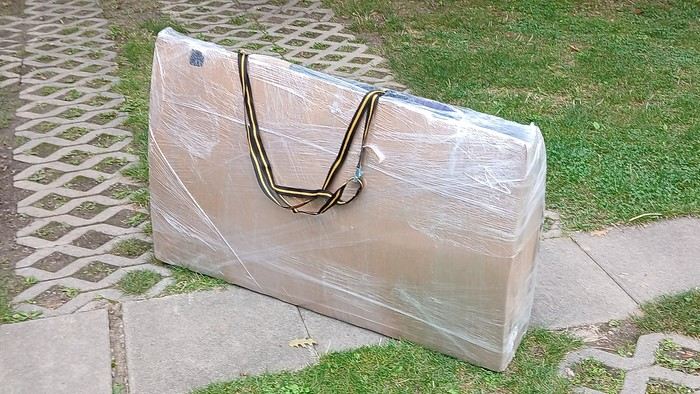
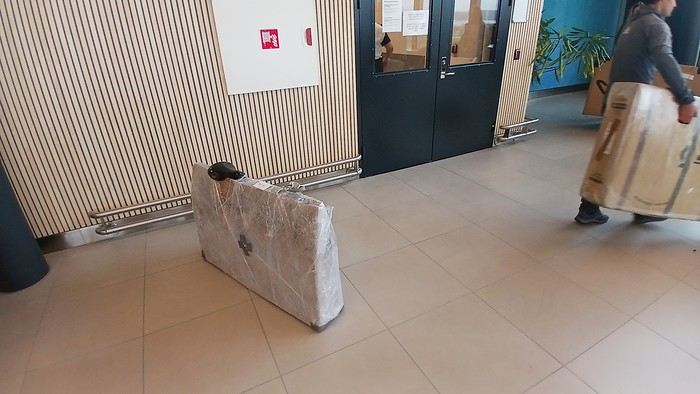
After testing it for three years across various modes of transport, I’m sharing this video of a bike packing case. It’s made from recycled cardboard and shrink-wrapped, with adjustable thickness and added bubble wrap depending on the level of protection you want.
Installing spacers at the fork and chainstays makes the packaging compact. With the fifteen-odd euros for shrink-wrapping at the airport, this case travels really well.
https://youtu.be/_GDJi-GqmkM
- Low bulk (1.10m x 0.70m x 0.25m for a large frame), it fits vertically in train luggage compartments and the total dimensions (x+y+z) don’t exceed 2.40m.
- Two carrying solutions for public transport and easy handling by airport staff (no more tears in the cardboard from openings).
- Discreet packaging when dealing with bus drivers and train conductors, as it looks like an ordinary parcel.
- No need to return to the starting point to retrieve the case from your outbound trip, which you’d otherwise have to store somewhere, or deal with a bulky cover to pack in your panniers.
- You can still check tire pressure through the plastic film without damaging the packaging too much.
Drawbacks: Around 3 hours for this lengthy and meticulous process—removing the wheels, pedals, handlebars, and derailleur without misaligning them, then securing all components to the frame.
If you get a chance to test it, send me your feedback for future improvements.
Bad Experience in Dali
Hi,
July 2026: I’m writing to you from Dali.
First, I got scammed on Booking—AI-retouched photos. No tourists at this hotel (Yishanju Designer Hotel), and the reality was horrible: dirty, with a disgusting breakfast. It’s better to use Trip.com here.
Next, the old town was an infernal cacophony, packed with tourists who shoved past without a care. Some vendors harassed you to buy things. All the stalls sold the same cheap plastic junk or other uninteresting stuff. The beautiful scenery was ruined by vendors lining 100% of the alleys. Impossible to walk, crushing heat, nothing good to eat except fresh fruit. Horrible experience.
Day 2: We went to Cangshan Mountain by cable car—the ride was short and nothing spectacular. We were at 2,600 m.
My plan was to see Erhai Lake. Unfortunately, I followed the advice of an AI chatbot: take the boat at Langkan Dock. The Didi dropped us off in the nearest area, which was full of charming little alleys but packed with Chinese tourists. The three-wheeled yellow cabs zoomed through the narrow streets, forcing you to hug the walls, on top of the scooters and other pedestrians to deal with. Crossing the neighborhood was hellish and suffocating. Once out, we hit the "corniche," which was also packed with Chinese tourists. The lake’s edge was all pebbles, and everyone was standing around taking photos. I was with my 5-year-old son. I would’ve liked to sit down and let him play with stones by the water, but it was clear we didn’t belong. They were even shoving each other for a shot! There were no boats in sight. In short, we’d had enough, and there was nothing interesting there either.
On the way back, we had to cross that maze again under the scorching sun. My son was braver than me—I even had a little dizzy spell from all the chaos. Add to that Dali’s altitude (2,200 m), so altitude insomnia, fatigue, and vulnerability during the day...
The restaurants weren’t inviting—the staff served sticky rice in a little bucket. The dishes were wrapped, and you had to figure it out yourself. After that, they ignored you completely, even if you were the only tourist.
On the 3rd day, it was time to leave for Shaxi. I hope to see beautiful villages. But honestly, I’m exhausted by this atmosphere where everything is complicated, communication is never smooth, noise is everywhere, and the behavior of some Chinese people is abusive...
Silver lining: not a drop of rain in 4 days and blue skies.
I couldn’t visit the villages in southern Yunnan because of rain and storms there... But I was expecting to see a few more tourists.
I couldn’t visit the villages in southern Yunnan because of rain and storms there... But I was expecting to see a few more tourists.
Camper Van for Sale in Bogotá
🚐 Ford Transit 2.4 TDCi 2000, 90 HP, RWD, 295,000 km
Chain-driven engine, robust, low fuel consumption: 9L/100km, 10L/100km on rough terrain/high altitude
French registration plate—much easier for crossing borders and reselling the vehicle in another country.
Engine maintenance 🔥⚙️ Engine oil change + filters at 287,000 km (filters in stock for next oil change) Accessory belt tensioner pulley at 245,000 km Vacuum pump at 220,000 km Accessory belt at 220,000 km 2 accessory belt pulleys at 274,000 km Fulmen 12V 77Ah 760A battery (09/23) Isotech 2.1kW starter (09/23) Injector seals in stock Alternator at 283,000 km
Transmission Gearbox oil change at 256,000 km Clutch kit at 284,000 km Clutch master cylinder at 196,000 km Driveshaft bearing at 196,000 km Driveshaft inspection + replacement of one universal joint at 230,000 km
Front axle: Wheel bearings at 278,250 km Suspension ball joint at 274,000 km Ceramic brake pads at 235,000 km (pads in stock) Control arm bushings at 210,000 km Suspension arm bushings at 276,000 km Brake discs at 196,000 km Shock absorbers, springs, mounts at 278,250 km Replacement of steering pre-cap arm at 274,000 km Right suspension link at 276,000 km Replacement of steering fluid leak seal at 276,000 km Stabilizer bar bushings at 279,000 km
Rear axle: Replacement of shock absorbers at 278,250 km Leaf spring bushings at 235,000 km Bearing seals + wheel bearing seals at 235,000 km Brake linings at 215,000 km (checked at 278,250 km—OK)
Photo records of all maintenance in South America
4 HiFly Super 2000 tires (274,000 km) + 1 spare wheel (50% tread) + 1 tire (50% tread)
Full conversion completed May 2022 🏠
Former isothermal vehicle, excellent insulation—fully fiberglass interior, no thermal bridging Bed: 190x140 cm, 20 cm thick comfortable mattress (2 duvets—winter and summer), pillows 💧 Clean water: 30L + 40L with 12V submersible pump 🔋 Full-black PERC 230W solar panel 150Ah carbon-lead AGM deep-cycle battery Victron 75/15 MPPT charge controller Victron 12/12/18A DC/DC charger Victron battery protector BM800 battery monitor + shunt 500W Dometic 220V inverter (for blender, 220V fan, etc.) ❄️ 40L 12V compressor fridge ☀️ Autoterm Air 2D diesel heater + comfort control + 4,600m altitude kit (home-like comfort) 🔥 3-burner gas stove + 9kg gas bottle (3 months of autonomy for daily cooking) Sink Roof vent with 12V extractor/fan LED lighting 220V outlet + USB ports Numerous storage spaces Large-volume trunk: skis, paragliding gear, climbing equipment, toolbox, accessories... Spare wheel rack + 4x 25L diesel jerry cans Dog bed (can be converted into a child bed—max 1.20m—or additional storage/toilet space)
Vehicle regularly maintained, washed, and pampered—some wear marks that don’t affect functionality or structure.
🏔️ All-terrain capable, good ground clearance, 5 months above 3,000m without issues—record altitude: 5,070m
⚡ Fully self-sufficient in electricity (5 days stationary in heat with fridge, fan, etc.)
Numerous accessories included: Table, chairs, solar shower, Fiamma leveling blocks, toolbox, kitchen accessories, snow chains, front window insulation/blackout, mosquito net, fire extinguisher...
Available end of January 2027 in Bogotá
Price: 13,000 €
Chain-driven engine, robust, low fuel consumption: 9L/100km, 10L/100km on rough terrain/high altitude
French registration plate—much easier for crossing borders and reselling the vehicle in another country.
Engine maintenance 🔥⚙️ Engine oil change + filters at 287,000 km (filters in stock for next oil change) Accessory belt tensioner pulley at 245,000 km Vacuum pump at 220,000 km Accessory belt at 220,000 km 2 accessory belt pulleys at 274,000 km Fulmen 12V 77Ah 760A battery (09/23) Isotech 2.1kW starter (09/23) Injector seals in stock Alternator at 283,000 km
Transmission Gearbox oil change at 256,000 km Clutch kit at 284,000 km Clutch master cylinder at 196,000 km Driveshaft bearing at 196,000 km Driveshaft inspection + replacement of one universal joint at 230,000 km
Front axle: Wheel bearings at 278,250 km Suspension ball joint at 274,000 km Ceramic brake pads at 235,000 km (pads in stock) Control arm bushings at 210,000 km Suspension arm bushings at 276,000 km Brake discs at 196,000 km Shock absorbers, springs, mounts at 278,250 km Replacement of steering pre-cap arm at 274,000 km Right suspension link at 276,000 km Replacement of steering fluid leak seal at 276,000 km Stabilizer bar bushings at 279,000 km
Rear axle: Replacement of shock absorbers at 278,250 km Leaf spring bushings at 235,000 km Bearing seals + wheel bearing seals at 235,000 km Brake linings at 215,000 km (checked at 278,250 km—OK)
Photo records of all maintenance in South America
4 HiFly Super 2000 tires (274,000 km) + 1 spare wheel (50% tread) + 1 tire (50% tread)
Full conversion completed May 2022 🏠
Former isothermal vehicle, excellent insulation—fully fiberglass interior, no thermal bridging Bed: 190x140 cm, 20 cm thick comfortable mattress (2 duvets—winter and summer), pillows 💧 Clean water: 30L + 40L with 12V submersible pump 🔋 Full-black PERC 230W solar panel 150Ah carbon-lead AGM deep-cycle battery Victron 75/15 MPPT charge controller Victron 12/12/18A DC/DC charger Victron battery protector BM800 battery monitor + shunt 500W Dometic 220V inverter (for blender, 220V fan, etc.) ❄️ 40L 12V compressor fridge ☀️ Autoterm Air 2D diesel heater + comfort control + 4,600m altitude kit (home-like comfort) 🔥 3-burner gas stove + 9kg gas bottle (3 months of autonomy for daily cooking) Sink Roof vent with 12V extractor/fan LED lighting 220V outlet + USB ports Numerous storage spaces Large-volume trunk: skis, paragliding gear, climbing equipment, toolbox, accessories... Spare wheel rack + 4x 25L diesel jerry cans Dog bed (can be converted into a child bed—max 1.20m—or additional storage/toilet space)
Vehicle regularly maintained, washed, and pampered—some wear marks that don’t affect functionality or structure.
🏔️ All-terrain capable, good ground clearance, 5 months above 3,000m without issues—record altitude: 5,070m
⚡ Fully self-sufficient in electricity (5 days stationary in heat with fridge, fan, etc.)
Numerous accessories included: Table, chairs, solar shower, Fiamma leveling blocks, toolbox, kitchen accessories, snow chains, front window insulation/blackout, mosquito net, fire extinguisher...
Available end of January 2027 in Bogotá
Price: 13,000 €
Which bike for a long trek to Nepal?
Hi everyone! Thanks for welcoming me to the forum :)
I’m preparing for a long trip heading to Nepal, with stops along the way depending on my mood, work needs, and the season. I cycle a lot, but this will be my first big touring adventure. I’d like to camp regularly to keep costs down, so I’ll be riding on all kinds of surfaces: smooth and rough roads, main highways and rocky paths to find my camping spots, flat terrain and the occasional steep slopes.
For my bike model, I’m prioritizing durability, versatility, and repairability. From that perspective, I prefer a steel frame and fork with rim brakes since I’m used to them. I’ve narrowed my choices down to four models:
- The VSF Fahrradmanufaktur T-700 LTD (1400 €): steel frame, aluminum fork, hydraulic rim brakes, 28" wheels, 40mm tires, 36 spokes (2 mm), lightweight rear rack (max 20 kg), no front rack included, smallest gear ratio of 0.72, weight of 13.9 kg.
- The VSF Fahrradmanufaktur TX-400 (2200 €): steel frame and fork, hydraulic rim brakes, 26" wheels, 50mm tires, 36 spokes (2.34 mm), front and rear racks included (40+18 kg), smallest gear ratio of 0.71, weight of 15.9 kg.
- The Genesis Tour de Fer 30 (2150 €): steel frame and fork, mechanical disc brakes, 28" wheels, 36 spokes, 40mm tires, front and rear racks included (27+10 kg), smallest gear ratio of 0.77, weight of 15.9 kg.
- The Rockrider ADTV 900 from Decathlon (1700 €): aluminum frame and fork, mechanical disc brakes, USB port, 28" wheels, 47mm tires, 28 spokes, front and rear racks included (40+20 kg), smallest gear ratio of 0.71, weight of 17.1 kg. This is the successor to the Riverside Touring 900, which was a hit.
I’ve got a few questions:
1/ Should I go for 26" or 28" wheels for my trip? 26" wheels seem better for rough terrain, but 28" wheels feel more comfortable on roads. I’ve also read that 26" tires/tubes are easier to find.
2/ Do you recommend a steel frame and fork over aluminum? I’m guessing a high-quality aluminum frame and fork would be better than a low-quality steel one, right?
3/ Regarding the smallest gear ratio, is 0.71 a good number for a loaded bike in the mountains?
4/ Finally, what do you think of these four models for my project? My heart leans toward the TX-400—it seems to combine the versatility and robustness I’m looking for. But the price difference with the T-700 LTD is making me think twice!
Thanks so much for reading and sharing your thoughts!
I’m preparing for a long trip heading to Nepal, with stops along the way depending on my mood, work needs, and the season. I cycle a lot, but this will be my first big touring adventure. I’d like to camp regularly to keep costs down, so I’ll be riding on all kinds of surfaces: smooth and rough roads, main highways and rocky paths to find my camping spots, flat terrain and the occasional steep slopes.
For my bike model, I’m prioritizing durability, versatility, and repairability. From that perspective, I prefer a steel frame and fork with rim brakes since I’m used to them. I’ve narrowed my choices down to four models:
- The VSF Fahrradmanufaktur T-700 LTD (1400 €): steel frame, aluminum fork, hydraulic rim brakes, 28" wheels, 40mm tires, 36 spokes (2 mm), lightweight rear rack (max 20 kg), no front rack included, smallest gear ratio of 0.72, weight of 13.9 kg.
- The VSF Fahrradmanufaktur TX-400 (2200 €): steel frame and fork, hydraulic rim brakes, 26" wheels, 50mm tires, 36 spokes (2.34 mm), front and rear racks included (40+18 kg), smallest gear ratio of 0.71, weight of 15.9 kg.
- The Genesis Tour de Fer 30 (2150 €): steel frame and fork, mechanical disc brakes, 28" wheels, 36 spokes, 40mm tires, front and rear racks included (27+10 kg), smallest gear ratio of 0.77, weight of 15.9 kg.
- The Rockrider ADTV 900 from Decathlon (1700 €): aluminum frame and fork, mechanical disc brakes, USB port, 28" wheels, 47mm tires, 28 spokes, front and rear racks included (40+20 kg), smallest gear ratio of 0.71, weight of 17.1 kg. This is the successor to the Riverside Touring 900, which was a hit.
I’ve got a few questions:
1/ Should I go for 26" or 28" wheels for my trip? 26" wheels seem better for rough terrain, but 28" wheels feel more comfortable on roads. I’ve also read that 26" tires/tubes are easier to find.
2/ Do you recommend a steel frame and fork over aluminum? I’m guessing a high-quality aluminum frame and fork would be better than a low-quality steel one, right?
3/ Regarding the smallest gear ratio, is 0.71 a good number for a loaded bike in the mountains?
4/ Finally, what do you think of these four models for my project? My heart leans toward the TX-400—it seems to combine the versatility and robustness I’m looking for. But the price difference with the T-700 LTD is making me think twice!
Thanks so much for reading and sharing your thoughts!
"Glory": an Animal Farm for Zimbabwe—and the world
"400 pages of verbal pyrotechnics and animal magic" — The Times
"Bulawayo leans into exaggeration and irony to tell hard truths. *Glory* is jam-packed with comedy and farce, poking fun at an autocratic regime while illustrating the absurdity and surreal nature of a police state." — The Guardian
The cruelty and savagery of Zimbabwe’s (and Africa’s in general) "powerful animals"
Zimbabwean author NoViolet Bulawayo has written a novel that illustrates better than any documentary the complexity of colonial legacy. In doing so, she revisits George Orwell’s Animal Farm. Her novel *Glory* is a political satire about Zimbabwe—and it’s brimming with humor.
For thirty years, Zimbabwe has been stagnating under Robert Mugabe’s presidency. Human rights violations, corruption, and international sanctions have kept the population mired in poverty and oppression, while the regime exploits the meager earnings of the economy. As the 2017 elections approach, a power struggle erupts over the succession of the very elderly Father of the Nation (Mugabe). On the streets, people hope for long-awaited reforms; the people feel their moment has come.
And indeed, the army ousts Mugabe and his wife—"with her Gucci heels" (p.32)—who was positioning herself for the presidency. Hopes are dashed, however. The generals install former vice-president Emmerson Mnangagwa in power; the regime merely changes faces, but the problems remain the same.
In the novel, the country is called "Jidada, with a -da and another -da" (p.1); there’s no mistaking that this fictional state is Zimbabwe.
For *Glory*, her second novel, NoViolet Bulawayo invents a whole series of codes whose strength lies precisely in how easy they are to decipher. Like George Orwell’s Animal Farm, the characters populating Bulawayo’s universe aren’t humans but horses, goats, or crocodiles with all-too-human traits. Mugabe and Mnangagwa are horses, the spiritual leader is a pig, the soldiers are all bloodthirsty dogs, while the populace consists of goats, chickens, donkeys, and cats. The shift to the animal world serves only to better grasp the laws of despotism—and to ridicule real-life models. On one hand, the animals are humanized: they tweet, torture, travel in private jets. On the other, their greed, stupidity, and brutality stem from their animal nature.
It’s the old trick of fable: dressing men in animal disguises to make them easier to recognize. That’s how Orwell, in Animal Farm, traced how the promise of liberation from the Russian Revolution turned into Stalinist terror. In his 1945 fable, George Orwell describes how the animals of a farm drive out their farmer to organize the exploitation themselves, collectively. For a time, they truly taste freedom, but a clique of pigs ends up taking control. The central figures of the Soviet story—Stalin, Trotsky, Molotov—were easily recognizable.
Yet Bulawayo departs sharply from Orwell. She’s less concerned with precision and the force of argument than with satirical exaggeration. The deposed president is a senile old man who believes he can control even the sun’s course. The new stallion in power is a greedy debaucher. His soldiers sniff respectfully at his tail and backside.
In Bulawayo’s *Glory*, things are more complicated, but her novel also tells of a failed, incomplete liberation. In the author’s Animal Farm, Jidada, the colonial exploiters are followed by new forms of oppression. Because the former liberators become tyrants themselves. And because global power dynamics persist in neocolonial structures.
Wouldn’t that be enough to fuel a deeply depressing narrative? No—Bulawayo turns it into a blazing satire, full of wit and uncompromising criticism of power, a thread running through contemporary (not just) Zimbabwean history. The old warhorses in NoViolet Bulawayo’s Jidada, who continue to act as pack leaders, are easily recognizable as caricatures of the longtime dictator Robert Mugabe and his successor, current president Emmerson Mnangagwa.
The plot kicks off in high gear with independence day festivities. From the crack of dawn, everyone waits on Jidada Square for the Old Horse, the Father of the Nation and former liberator, whose reign "was nearing all of—not one, not two, not three, but four solid decades" (p.1). Everywhere, the colors of the Jidada Party shine; everywhere, true supporters cheer. Even the scorching sun plays its part: "At this point the sun, upon seeing arrive the leader who was decreed by God himself to rule and rule and keep ruling, a leader who'd in turn decreed the very sun to head his cheerleading squad, took a deep, deep breath and thoroughly blazed to impress" (p.2).
Finally, the Old Horse’s luxury carriage approaches "with the slowness of a hearse" (p.2), and "hoping to catch a glimpse of the legendary Father of the Nation," which causes "the animals fell over themselves like intoxicated frogs" (p.2). The sovereign’s speech is delayed a moment longer: "what I really want is a nap," groans the Old Horse as he takes his seat with such care "like his backside was made of expensive porcelain" (p.6).
Meanwhile, Bulawayo parades his entourage: the president’s wife (who earns her doctorate at Jidada University faster than "you could say diss, for dissertation. Tholukuthi it was as easy as ordering from a KFC drive-through, or perhaps even easier being that it was cheaper than KFC; it in fact cost her nothing and the degree actually came with a zero-calorie Diet Coke and a purple straw" (p.41), and she’s now known as Dr Sweet Mother. The cabinet includes "the Minister of the Revolution, the Minister of Corruption, the Minister of Order, the Minister of Things, the Minister of Nothing, the Minister of Propaganda, the Minister of Homophobic Affairs, the Minister of Disinformation and the Minister of Looting" (p.9). And of course the vice-president, who will soon become interim president when the Old Horse finally kicks the bucket—and then settle in as the new long-term president, who in the novel is called Tuvius Delight Shasha, or "Tuvy" for short (p.253), none other than Emmerson Mnangagwa. It’s him Bulawayo reserves her most merciless character description for.
"New Dispensation" (p.109) is Tuvy’s slogan for Jidada, and he loves repeating it so much he even named his parrot after it ("So inspired was Tuvy by the realisation that he rechristened his new pet parrot with the name New Dispensation—tholukuthi the bird having been acquired explicitly for the purposes of tweeting eulogies and accordingly glorifying the Saviour throughout the airs and skies of the nation. Tuvy then went on to hire a lecturer in English from the University of Jidada to teach New Dispensation to say the phrase 'New Dispensation'" p.110). But Tuvy’s Zimbabwe remains a nation without free, fair, and credible elections ("#freefairncredibleelection" p.161), and the promised equal treatment applies only insofar as Zimbabweans now queue up without discrimination in endless lines—and everyone is as poor as the next in the "queuenation" (p.283). Except for the powerful. They can "yes, tholukuthi, her immeasurable riches theirs to take. And take they did—
just take—take—take—take—take—take—take—take—take—take—take—take—take—take—take—take—take—take—take—take—take—take—take—take—take—take—take" (p.249-250).
In short: Bulawayo brilliantly depicts how former independence fighters become exploiters themselves. And how the country threatens to suffocate under the weight of corruption and repression. But she also literally stages the polyphony with which the people oppose imposed obedience to the official line.
Controversial online discussions keep interrupting the narrative—dialogues and social threads (see photo below) that Bulawayo masterfully integrates. From a literary standpoint, it’s a brilliant idea. And it shows, above all, that the author’s sympathy—so likeable—goes to all those who refuse to let their dream of true freedom be stolen, not even by the corrupt elites of their own country.
In the book’s acknowledgments, the first tribute goes to "The Jidadas of the world, clamouring for freedom on many fronts—A luta continua." (p.401) This reflects the realization that, not only in Jidada-Zimbabwe but in many other corners of the world, the end of colonial domination is still far from meaning the freedom hoped for by the vast majority of people. But it also means, more broadly, that this freedom must be won "on many fronts" (see above), both domestically and geopolitically.
That’s precisely what *Glory* so vividly highlights: how complex the project behind the term "postcolonialism" really is. With *Glory*, Bulawayo also delivers a scathing critique of the persistence of colonial mindsets in the West.
In the novel, the murder of George Floyd, racist police violence, and white-supremacist ideology in Trump’s United States perfectly illustrate the persistence of racism. It’s especially in the final chapters that Bulawayo lets Jidada’s inhabitants explicitly and unflinchingly criticize a neocolonial world order:
"It was not lost on us how the West, which loved to 'save' Africa and announce every action to the whole world, did so with one limb while manipulating, looting and fleecing us with the rest of its limbs so that more money in fact poured out of the continent than trickled in." (p.376)
"It was no mistake that multinational corporations yearly reaped and shipped colossal profits from Africa back to their countries as had been the case during colonial times. Even the sticks and stones would tell you that the African earth at any given time howled and shook and heaved from the extraction of its precious minerals that rarely benefited its own miserable children." (p.376)
"(...) we vowed to wage yet another war for Africa's second Liberation from neocolonial oppression. From exploitation. From plunder. From Western dominion. From indignity. From Abuse. We wanted real freedom. We wanted greedy, thieving paws off our wealth. We wanted Justice. We wanted a new world; we wanted a brand-new world so much we didn't sleep a wink that night." (p.377)
The Jidadas of this world must fight two enemies: Western neocolonialism and the autocratic instrumentalization of that argument; the persistence of Western racism and the populist appropriation of that humiliation by tyrants from their own ranks. Neither of these obstacles to freedom diminishes the historical and current guilt of the other. But the path to postcolonial liberation must overcome all these forms of oppression. After all, the colonizers didn’t bequeath democracies to formerly dominated nations, but instability and the principles of oppression and exploitation—which the so-called liberators have also internalized. Yet the fact that a satirical novel can capture the complexity of historical relationships while remaining, despite all the darkness of the subject, hilarious—well, that’s truly astonishing.
Finally, *Glory* ties into a major trauma in Zimbabwe’s post-independence history: the so-called Gukurahundi massacres. Between 1983 and 1987, tens of thousands of civilians were murdered by Mugabe’s bloody henchmen, most of them Ndebele. The State Security Minister and head of secret services at the time? You guessed it—Emmerson Mnangagwa.
When *Glory* turns to the massacres, the novel’s tone shifts completely. The story is now told through the narrative of the goat called Destiny, who, like NoViolet Bulawayo herself, left her home country at 18 for the United States and only returned after 13 years. In the book, the city of Bulawayo becomes a village where Destiny retraces her family’s history—and learns that part of it was also brutally murdered during the massacres.
The abuse of power and life under a dictatorship, dispossession, and a fiercely proud awareness of the psychological wounds and emotional vulnerability of a uprooted and disenfranchised people who had to forge a new language—a new set of names—to express their lived experiences are at the heart of this wonderful Zimbabwean author’s literary work, NoViolet Bulawayo. Shortly after her studies, she was already writing short stories about postcolonial power dynamics in Africa. But her playful, masterful, and often unconventional approach to language also plays a key role in her work. With virtuosity, she shifts from cynical images of power-obsessed elites to compassionate descriptions of the people’s suffering, ending with a hopeful sermon on courage—the courage to break free from fear and thus gain the strength for change ("And every one of them understood that whatever they heard within those hearts was the new national anthem, tholukuthi an anthem that spoke of the kind of glory that burns eternal and glows with living light." p.400). This novel is a genuine pleasure to read. And it’s exceptional. Good, African...
Book info (original English and German translation):
NoViolet Bulawayo. Glory. Chatto & Windus, 2022. NoViolet Bulawayo. Glory. Suhrkamp, 2023.
Hery
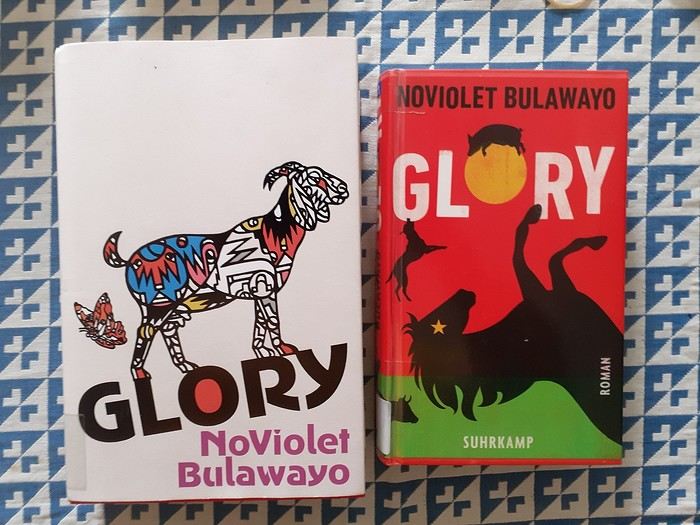 The books (in English, in German)
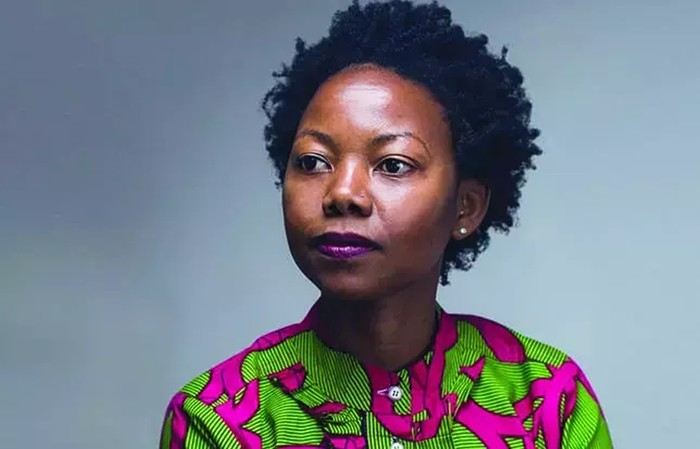 Author NoViolet Bulawayo, Zimbabwe
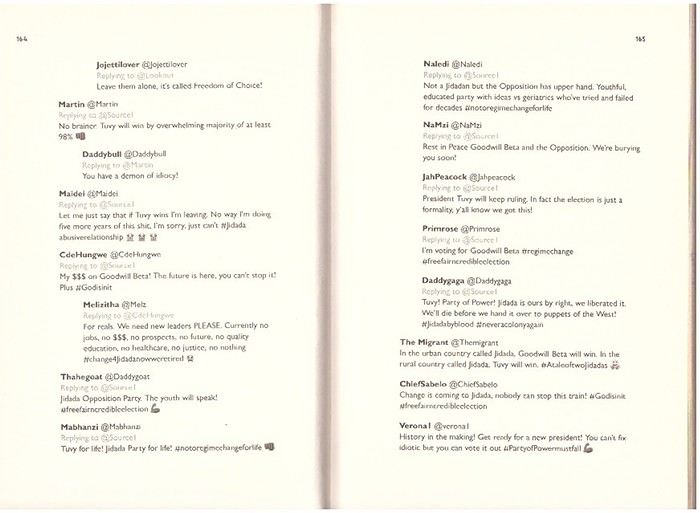 Threads (p.164-165)
"Bulawayo leans into exaggeration and irony to tell hard truths. *Glory* is jam-packed with comedy and farce, poking fun at an autocratic regime while illustrating the absurdity and surreal nature of a police state." — The Guardian
The cruelty and savagery of Zimbabwe’s (and Africa’s in general) "powerful animals"
Zimbabwean author NoViolet Bulawayo has written a novel that illustrates better than any documentary the complexity of colonial legacy. In doing so, she revisits George Orwell’s Animal Farm. Her novel *Glory* is a political satire about Zimbabwe—and it’s brimming with humor.
For thirty years, Zimbabwe has been stagnating under Robert Mugabe’s presidency. Human rights violations, corruption, and international sanctions have kept the population mired in poverty and oppression, while the regime exploits the meager earnings of the economy. As the 2017 elections approach, a power struggle erupts over the succession of the very elderly Father of the Nation (Mugabe). On the streets, people hope for long-awaited reforms; the people feel their moment has come.
And indeed, the army ousts Mugabe and his wife—"with her Gucci heels" (p.32)—who was positioning herself for the presidency. Hopes are dashed, however. The generals install former vice-president Emmerson Mnangagwa in power; the regime merely changes faces, but the problems remain the same.
In the novel, the country is called "Jidada, with a -da and another -da" (p.1); there’s no mistaking that this fictional state is Zimbabwe.
For *Glory*, her second novel, NoViolet Bulawayo invents a whole series of codes whose strength lies precisely in how easy they are to decipher. Like George Orwell’s Animal Farm, the characters populating Bulawayo’s universe aren’t humans but horses, goats, or crocodiles with all-too-human traits. Mugabe and Mnangagwa are horses, the spiritual leader is a pig, the soldiers are all bloodthirsty dogs, while the populace consists of goats, chickens, donkeys, and cats. The shift to the animal world serves only to better grasp the laws of despotism—and to ridicule real-life models. On one hand, the animals are humanized: they tweet, torture, travel in private jets. On the other, their greed, stupidity, and brutality stem from their animal nature.
It’s the old trick of fable: dressing men in animal disguises to make them easier to recognize. That’s how Orwell, in Animal Farm, traced how the promise of liberation from the Russian Revolution turned into Stalinist terror. In his 1945 fable, George Orwell describes how the animals of a farm drive out their farmer to organize the exploitation themselves, collectively. For a time, they truly taste freedom, but a clique of pigs ends up taking control. The central figures of the Soviet story—Stalin, Trotsky, Molotov—were easily recognizable.
Yet Bulawayo departs sharply from Orwell. She’s less concerned with precision and the force of argument than with satirical exaggeration. The deposed president is a senile old man who believes he can control even the sun’s course. The new stallion in power is a greedy debaucher. His soldiers sniff respectfully at his tail and backside.
In Bulawayo’s *Glory*, things are more complicated, but her novel also tells of a failed, incomplete liberation. In the author’s Animal Farm, Jidada, the colonial exploiters are followed by new forms of oppression. Because the former liberators become tyrants themselves. And because global power dynamics persist in neocolonial structures.
Wouldn’t that be enough to fuel a deeply depressing narrative? No—Bulawayo turns it into a blazing satire, full of wit and uncompromising criticism of power, a thread running through contemporary (not just) Zimbabwean history. The old warhorses in NoViolet Bulawayo’s Jidada, who continue to act as pack leaders, are easily recognizable as caricatures of the longtime dictator Robert Mugabe and his successor, current president Emmerson Mnangagwa.
The plot kicks off in high gear with independence day festivities. From the crack of dawn, everyone waits on Jidada Square for the Old Horse, the Father of the Nation and former liberator, whose reign "was nearing all of—not one, not two, not three, but four solid decades" (p.1). Everywhere, the colors of the Jidada Party shine; everywhere, true supporters cheer. Even the scorching sun plays its part: "At this point the sun, upon seeing arrive the leader who was decreed by God himself to rule and rule and keep ruling, a leader who'd in turn decreed the very sun to head his cheerleading squad, took a deep, deep breath and thoroughly blazed to impress" (p.2).
Finally, the Old Horse’s luxury carriage approaches "with the slowness of a hearse" (p.2), and "hoping to catch a glimpse of the legendary Father of the Nation," which causes "the animals fell over themselves like intoxicated frogs" (p.2). The sovereign’s speech is delayed a moment longer: "what I really want is a nap," groans the Old Horse as he takes his seat with such care "like his backside was made of expensive porcelain" (p.6).
Meanwhile, Bulawayo parades his entourage: the president’s wife (who earns her doctorate at Jidada University faster than "you could say diss, for dissertation. Tholukuthi it was as easy as ordering from a KFC drive-through, or perhaps even easier being that it was cheaper than KFC; it in fact cost her nothing and the degree actually came with a zero-calorie Diet Coke and a purple straw" (p.41), and she’s now known as Dr Sweet Mother. The cabinet includes "the Minister of the Revolution, the Minister of Corruption, the Minister of Order, the Minister of Things, the Minister of Nothing, the Minister of Propaganda, the Minister of Homophobic Affairs, the Minister of Disinformation and the Minister of Looting" (p.9). And of course the vice-president, who will soon become interim president when the Old Horse finally kicks the bucket—and then settle in as the new long-term president, who in the novel is called Tuvius Delight Shasha, or "Tuvy" for short (p.253), none other than Emmerson Mnangagwa. It’s him Bulawayo reserves her most merciless character description for.
"New Dispensation" (p.109) is Tuvy’s slogan for Jidada, and he loves repeating it so much he even named his parrot after it ("So inspired was Tuvy by the realisation that he rechristened his new pet parrot with the name New Dispensation—tholukuthi the bird having been acquired explicitly for the purposes of tweeting eulogies and accordingly glorifying the Saviour throughout the airs and skies of the nation. Tuvy then went on to hire a lecturer in English from the University of Jidada to teach New Dispensation to say the phrase 'New Dispensation'" p.110). But Tuvy’s Zimbabwe remains a nation without free, fair, and credible elections ("#freefairncredibleelection" p.161), and the promised equal treatment applies only insofar as Zimbabweans now queue up without discrimination in endless lines—and everyone is as poor as the next in the "queuenation" (p.283). Except for the powerful. They can "yes, tholukuthi, her immeasurable riches theirs to take. And take they did—
just take—take—take—take—take—take—take—take—take—take—take—take—take—take—take—take—take—take—take—take—take—take—take—take—take—take—take" (p.249-250).
In short: Bulawayo brilliantly depicts how former independence fighters become exploiters themselves. And how the country threatens to suffocate under the weight of corruption and repression. But she also literally stages the polyphony with which the people oppose imposed obedience to the official line.
Controversial online discussions keep interrupting the narrative—dialogues and social threads (see photo below) that Bulawayo masterfully integrates. From a literary standpoint, it’s a brilliant idea. And it shows, above all, that the author’s sympathy—so likeable—goes to all those who refuse to let their dream of true freedom be stolen, not even by the corrupt elites of their own country.
In the book’s acknowledgments, the first tribute goes to "The Jidadas of the world, clamouring for freedom on many fronts—A luta continua." (p.401) This reflects the realization that, not only in Jidada-Zimbabwe but in many other corners of the world, the end of colonial domination is still far from meaning the freedom hoped for by the vast majority of people. But it also means, more broadly, that this freedom must be won "on many fronts" (see above), both domestically and geopolitically.
That’s precisely what *Glory* so vividly highlights: how complex the project behind the term "postcolonialism" really is. With *Glory*, Bulawayo also delivers a scathing critique of the persistence of colonial mindsets in the West.
In the novel, the murder of George Floyd, racist police violence, and white-supremacist ideology in Trump’s United States perfectly illustrate the persistence of racism. It’s especially in the final chapters that Bulawayo lets Jidada’s inhabitants explicitly and unflinchingly criticize a neocolonial world order:
"It was not lost on us how the West, which loved to 'save' Africa and announce every action to the whole world, did so with one limb while manipulating, looting and fleecing us with the rest of its limbs so that more money in fact poured out of the continent than trickled in." (p.376)
"It was no mistake that multinational corporations yearly reaped and shipped colossal profits from Africa back to their countries as had been the case during colonial times. Even the sticks and stones would tell you that the African earth at any given time howled and shook and heaved from the extraction of its precious minerals that rarely benefited its own miserable children." (p.376)
"(...) we vowed to wage yet another war for Africa's second Liberation from neocolonial oppression. From exploitation. From plunder. From Western dominion. From indignity. From Abuse. We wanted real freedom. We wanted greedy, thieving paws off our wealth. We wanted Justice. We wanted a new world; we wanted a brand-new world so much we didn't sleep a wink that night." (p.377)
The Jidadas of this world must fight two enemies: Western neocolonialism and the autocratic instrumentalization of that argument; the persistence of Western racism and the populist appropriation of that humiliation by tyrants from their own ranks. Neither of these obstacles to freedom diminishes the historical and current guilt of the other. But the path to postcolonial liberation must overcome all these forms of oppression. After all, the colonizers didn’t bequeath democracies to formerly dominated nations, but instability and the principles of oppression and exploitation—which the so-called liberators have also internalized. Yet the fact that a satirical novel can capture the complexity of historical relationships while remaining, despite all the darkness of the subject, hilarious—well, that’s truly astonishing.
Finally, *Glory* ties into a major trauma in Zimbabwe’s post-independence history: the so-called Gukurahundi massacres. Between 1983 and 1987, tens of thousands of civilians were murdered by Mugabe’s bloody henchmen, most of them Ndebele. The State Security Minister and head of secret services at the time? You guessed it—Emmerson Mnangagwa.
When *Glory* turns to the massacres, the novel’s tone shifts completely. The story is now told through the narrative of the goat called Destiny, who, like NoViolet Bulawayo herself, left her home country at 18 for the United States and only returned after 13 years. In the book, the city of Bulawayo becomes a village where Destiny retraces her family’s history—and learns that part of it was also brutally murdered during the massacres.
The abuse of power and life under a dictatorship, dispossession, and a fiercely proud awareness of the psychological wounds and emotional vulnerability of a uprooted and disenfranchised people who had to forge a new language—a new set of names—to express their lived experiences are at the heart of this wonderful Zimbabwean author’s literary work, NoViolet Bulawayo. Shortly after her studies, she was already writing short stories about postcolonial power dynamics in Africa. But her playful, masterful, and often unconventional approach to language also plays a key role in her work. With virtuosity, she shifts from cynical images of power-obsessed elites to compassionate descriptions of the people’s suffering, ending with a hopeful sermon on courage—the courage to break free from fear and thus gain the strength for change ("And every one of them understood that whatever they heard within those hearts was the new national anthem, tholukuthi an anthem that spoke of the kind of glory that burns eternal and glows with living light." p.400). This novel is a genuine pleasure to read. And it’s exceptional. Good, African...
Book info (original English and German translation):
NoViolet Bulawayo. Glory. Chatto & Windus, 2022. NoViolet Bulawayo. Glory. Suhrkamp, 2023.
Hery
The books (in English, in German)
Author NoViolet Bulawayo, Zimbabwe
Threads (p.164-165)Driving in Tunisia – Questions
Hi there,
I’m looking for info about driving a vehicle in Tunisia.
Is it complicated?
Do I need an international driver’s permit?
Thanks for your help
Tips for a trip to Quebec: meeting locals and transportation
Hi, I’d like to visit Quebec this fall or starting in August (what do you recommend?). I’d love to meet some Quebecers and get some tips on transportation. I’m wondering if it’s doable with an electric mountain bike (not too much rain?). I’m planning to buy one second-hand and return it afterward. If there are any travel buddies out there too...thanks
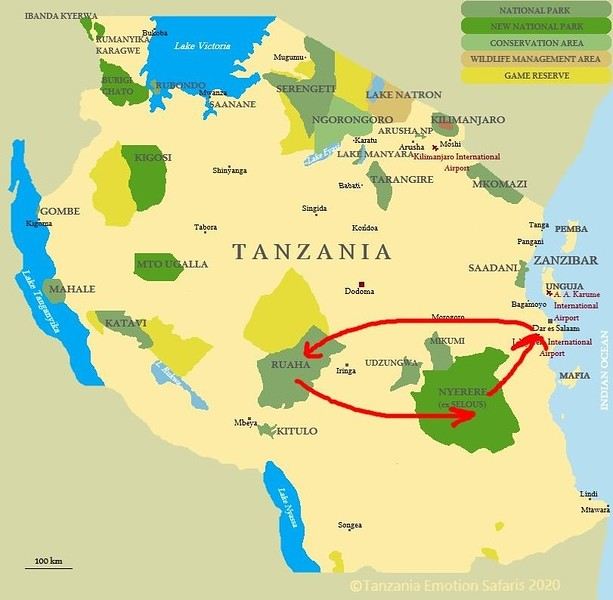
Tanzania: Discovering Ruaha and Nyerere (formerly Selous)
Hello,
We got back from Tanzania a month ago, on March 5th. I’ve started this trip report at the link the moderator asked me to use:
https://voyageforum.com/forum/decouverte-ruaha-nyerere-ex-selous-en-fevrier-mars-2026-d11466010/
You’ll find a video of our trip on my YouTube channel there.
Now I’ll tell you about our 10-night trip in Tanzania, with 8 nights spent in two parks we didn’t know. Tanzania isn’t new to us—it was even our first African safari destination back in 2012. https://www.youtube.com/@lolodetoul54 Since then, we’ve visited several East and Southern African countries: Kenya, South Africa, Namibia, Botswana, some of them multiple times. We usually travel in September during the dry season. We tried March 2024 for nine nights in the Okavango and loved it, except everything was dry, which wasn’t normal for the rainy season.
So for this second March trip during the wet season, we really got what we asked for… rain. But before that, we had to fight just to get to Tanzania.
Saturday, February 21, 2026:
It’s D-Day—the departure. What a hassle to organize flights to and within Tanzania! I’ll tell you all about it in another post: https://voyageforum.com/forum/toutes-compagnies-aeriennes-tanzaniennes-interdites-d10758360/ On top of that, Rwandair canceled our outbound flight a month before departure. They offered to reschedule us 3-4 days later—ridiculous for a 10-night trip we’d already booked. We had to cancel our tickets and buy new ones with Kenya Airways. We’re still waiting for our refund from Rwandair!!!!!!! So on Saturday, February 1st, our bags were packed. We headed to the Lorraine TGV station, about 30 km from home.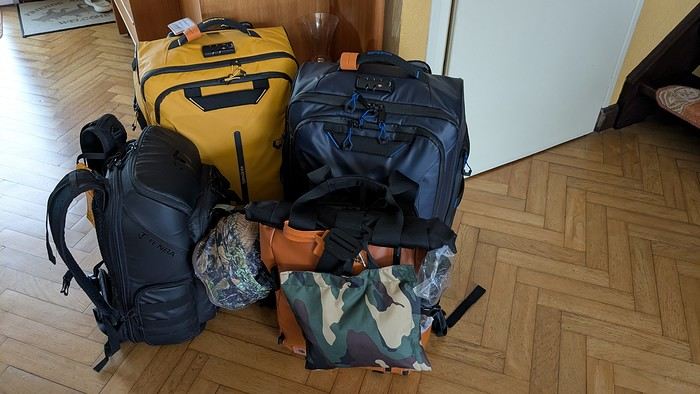 Direct train to Roissy—just 1h15. Quick and efficient.
All that was left was to wait for our overnight flight. We took off on time, just before 11 PM. Smooth flight, nothing unusual. Arrived in Nairobi around 9 AM. A few hours’ wait, then a flight to Dar es Salaam, landing at our first destination around 12:45 PM.
Our local contact, Anne from Asanterra agency, picked us up at the airport. It was hot and humid—it was raining.
Direct train to Roissy—just 1h15. Quick and efficient.
All that was left was to wait for our overnight flight. We took off on time, just before 11 PM. Smooth flight, nothing unusual. Arrived in Nairobi around 9 AM. A few hours’ wait, then a flight to Dar es Salaam, landing at our first destination around 12:45 PM.
Our local contact, Anne from Asanterra agency, picked us up at the airport. It was hot and humid—it was raining.
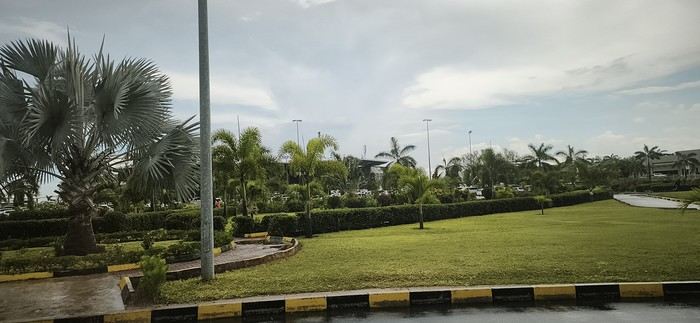
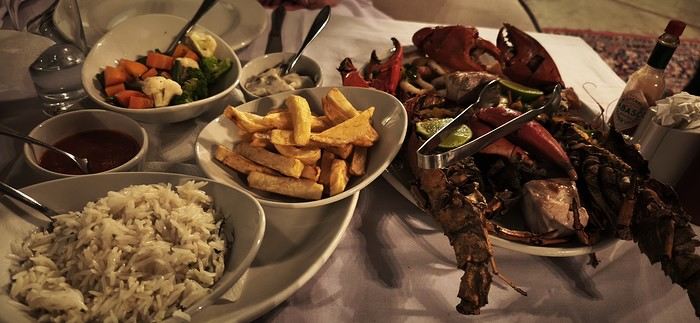
Our first night was at the Alexander Hotel. That evening, we treated ourselves to fish and shellfish at the hotel restaurant:
Sunday, February 22, 2026:
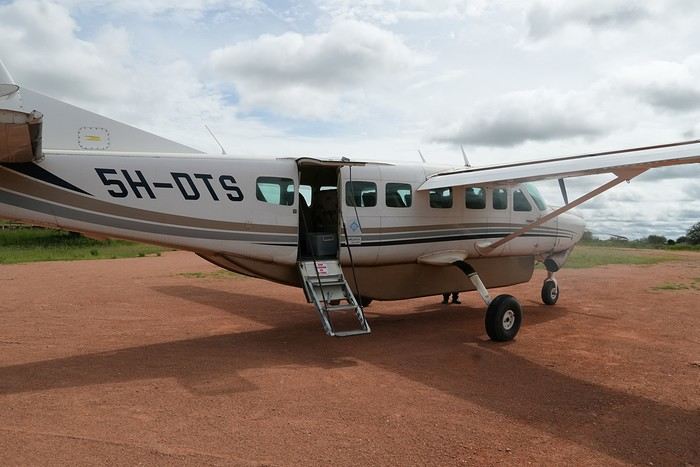
A driver picked us up at dawn to take us to the domestic airport so we could finally head to our first destination: Ruaha National Park. We flew with Auric.air for a 2-hour flight with two stops (Nyerere and Zkima airstrips).
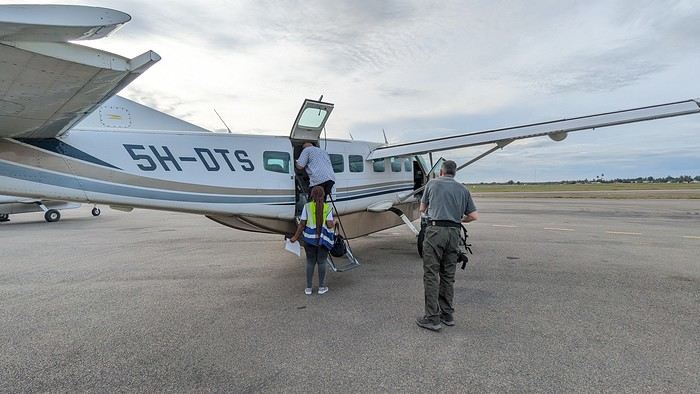
I’m always amazed at how easily these Cessnas take off and land on dirt runways—especially when they’re wet:
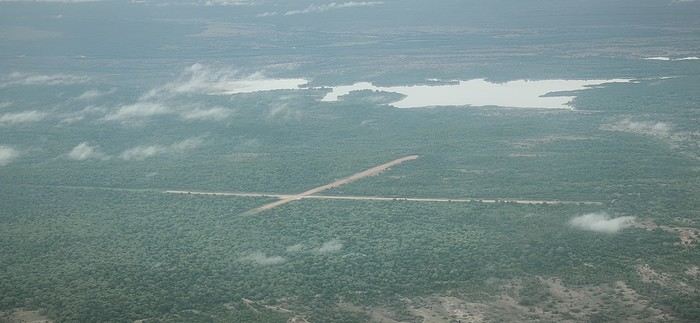
Aerial view of Zkima airstrip, where we’d landed just minutes earlier:
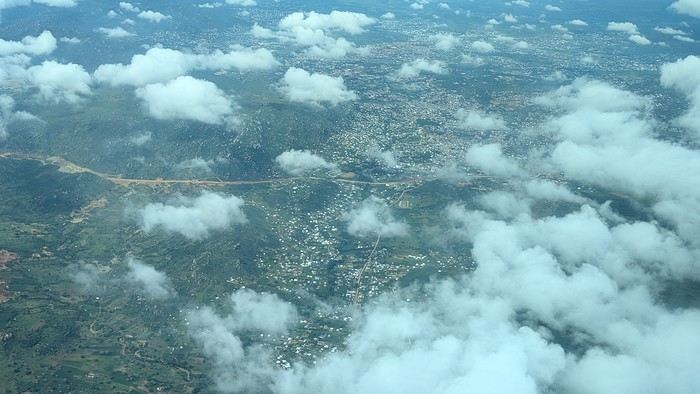
Flyover of Iringa, a "big" city in the country near Ruaha National Park:
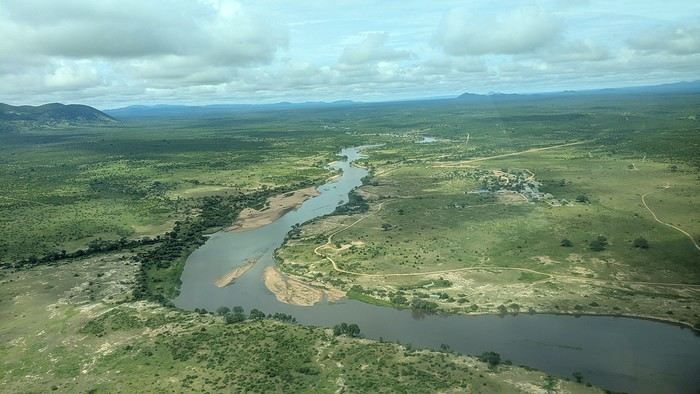
We’re getting close. The plane descends and flies over the Ruaha River, which gave the park its name:
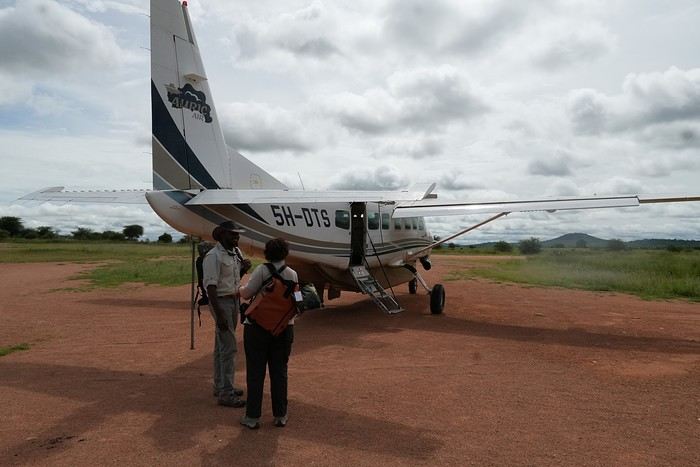
We land for the third and final time that day, reaching our destination: Msembe airstrip, the gateway to Ruaha.
We got back from Tanzania a month ago, on March 5th. I’ve started this trip report at the link the moderator asked me to use:
https://voyageforum.com/forum/decouverte-ruaha-nyerere-ex-selous-en-fevrier-mars-2026-d11466010/
You’ll find a video of our trip on my YouTube channel there.
Now I’ll tell you about our 10-night trip in Tanzania, with 8 nights spent in two parks we didn’t know. Tanzania isn’t new to us—it was even our first African safari destination back in 2012. https://www.youtube.com/@lolodetoul54 Since then, we’ve visited several East and Southern African countries: Kenya, South Africa, Namibia, Botswana, some of them multiple times. We usually travel in September during the dry season. We tried March 2024 for nine nights in the Okavango and loved it, except everything was dry, which wasn’t normal for the rainy season.
So for this second March trip during the wet season, we really got what we asked for… rain. But before that, we had to fight just to get to Tanzania.
Saturday, February 21, 2026:
It’s D-Day—the departure. What a hassle to organize flights to and within Tanzania! I’ll tell you all about it in another post: https://voyageforum.com/forum/toutes-compagnies-aeriennes-tanzaniennes-interdites-d10758360/ On top of that, Rwandair canceled our outbound flight a month before departure. They offered to reschedule us 3-4 days later—ridiculous for a 10-night trip we’d already booked. We had to cancel our tickets and buy new ones with Kenya Airways. We’re still waiting for our refund from Rwandair!!!!!!! So on Saturday, February 1st, our bags were packed. We headed to the Lorraine TGV station, about 30 km from home.
Direct train to Roissy—just 1h15. Quick and efficient.
All that was left was to wait for our overnight flight. We took off on time, just before 11 PM. Smooth flight, nothing unusual. Arrived in Nairobi around 9 AM. A few hours’ wait, then a flight to Dar es Salaam, landing at our first destination around 12:45 PM.
Our local contact, Anne from Asanterra agency, picked us up at the airport. It was hot and humid—it was raining.Our first night was at the Alexander Hotel. That evening, we treated ourselves to fish and shellfish at the hotel restaurant:
Sunday, February 22, 2026:
A driver picked us up at dawn to take us to the domestic airport so we could finally head to our first destination: Ruaha National Park. We flew with Auric.air for a 2-hour flight with two stops (Nyerere and Zkima airstrips).
I’m always amazed at how easily these Cessnas take off and land on dirt runways—especially when they’re wet:
Aerial view of Zkima airstrip, where we’d landed just minutes earlier:
Flyover of Iringa, a "big" city in the country near Ruaha National Park:
We’re getting close. The plane descends and flies over the Ruaha River, which gave the park its name:
We land for the third and final time that day, reaching our destination: Msembe airstrip, the gateway to Ruaha.
Off on an adventure in Sri Lanka
Day 1 – December 6
Our decision is our decision. And it’s firm and final. Next winter, our plane will spread its great wings toward the island of Ceylon! "Wait a minute... Ceylon... Ceylon... that name rings a bell, but I can’t quite place it on the globe Grandma gave me for Christmas! Ceylon... Oh right, I’ve got it: Ceylon is the name of my tea!" Exactly. But the name on your pretty tea box is also the one used until 1972 for this island nation, a speck on the Indian Ocean at the southern tip of the Indian subcontinent: Sri Lanka!
For this new adventure, I’m exceptionally leaving my Flo behind, cowardly replaced by a double dose of testosterone. To write the book of this journey with me, I’m bringing along my brother, who’s used to this kind of thing, and... a guest star: My model of resilience. My dad! All aboard! Or rather, all aboard our tuk-tuk! Yes, you read that right: A real tuk-tuk, a little colorful rolling box that putters along at two miles an hour. The idea? Well, Sri Lanka and its winding roads overlooking the vastness of lush nature are tailor-made for this kind of vehicle. And since it’s one of only two countries in the world that allow foreigners to rent and drive these mini speedsters, we’ll be crisscrossing the island in our two-square-meter rolling box. Plus, adopting this mode of transport is a surefire way to connect directly with the locals, who’ll surely be curious to see a foreigner driving their iconic vehicle. Not to mention the... let’s say... spicy anecdotes it might generate. I mean, heading into a subtropical zone with my jet-black dad and his unpredictable digestive flora while deliberately choosing the tuk-tuk as our *only* means of transport? That’s the winning combo for an unforgettable adventure! "More seriously, Dad, Sullivan, I’m already loving the idea of living this adventure together, the three of us—brothers and father..."
So, does the intro to this new adventure get your salivary glands going? Yes? Too bad. Because unfortunately, the program handed out by the lady at the entrance has been slightly... let’s say *crumpled*. Some might even say "scrunched up and nearly tossed in the trash." First, six days ago, as the countdown echoed in us like a call to adventure, Cyclone Ditwah grabbed Sri Lanka, played with it like a rag doll, and left it battered on the ground. The toll is devastating: over a thousand dead, thousands of homes wiped out by relentless rains, roads and railways swallowed by massive mudslides. A country wounded once again, after the civil war, the 2004 tsunami, and the post-Covid economic crisis.
But as if this weather disaster wasn’t enough to shake our unbreakable adventurer spirit, fate decided to mess with us further by cutting our trio down to two. The victim? My brother, violently turned away because of a simple date on his passport that didn’t match the border officials’ expectations. Return to sender!
So now it’s just the two of us allowed to board the Qatar Airways Airbus A380 for this trip. If he were here, Denis Brognart would say, "And in the end, only one remains!" Except I know you’ll be with us, following our adventures! Right?
Our decision is our decision. And it’s firm and final. Next winter, our plane will spread its great wings toward the island of Ceylon! "Wait a minute... Ceylon... Ceylon... that name rings a bell, but I can’t quite place it on the globe Grandma gave me for Christmas! Ceylon... Oh right, I’ve got it: Ceylon is the name of my tea!" Exactly. But the name on your pretty tea box is also the one used until 1972 for this island nation, a speck on the Indian Ocean at the southern tip of the Indian subcontinent: Sri Lanka!
For this new adventure, I’m exceptionally leaving my Flo behind, cowardly replaced by a double dose of testosterone. To write the book of this journey with me, I’m bringing along my brother, who’s used to this kind of thing, and... a guest star: My model of resilience. My dad! All aboard! Or rather, all aboard our tuk-tuk! Yes, you read that right: A real tuk-tuk, a little colorful rolling box that putters along at two miles an hour. The idea? Well, Sri Lanka and its winding roads overlooking the vastness of lush nature are tailor-made for this kind of vehicle. And since it’s one of only two countries in the world that allow foreigners to rent and drive these mini speedsters, we’ll be crisscrossing the island in our two-square-meter rolling box. Plus, adopting this mode of transport is a surefire way to connect directly with the locals, who’ll surely be curious to see a foreigner driving their iconic vehicle. Not to mention the... let’s say... spicy anecdotes it might generate. I mean, heading into a subtropical zone with my jet-black dad and his unpredictable digestive flora while deliberately choosing the tuk-tuk as our *only* means of transport? That’s the winning combo for an unforgettable adventure! "More seriously, Dad, Sullivan, I’m already loving the idea of living this adventure together, the three of us—brothers and father..."
So, does the intro to this new adventure get your salivary glands going? Yes? Too bad. Because unfortunately, the program handed out by the lady at the entrance has been slightly... let’s say *crumpled*. Some might even say "scrunched up and nearly tossed in the trash." First, six days ago, as the countdown echoed in us like a call to adventure, Cyclone Ditwah grabbed Sri Lanka, played with it like a rag doll, and left it battered on the ground. The toll is devastating: over a thousand dead, thousands of homes wiped out by relentless rains, roads and railways swallowed by massive mudslides. A country wounded once again, after the civil war, the 2004 tsunami, and the post-Covid economic crisis.
But as if this weather disaster wasn’t enough to shake our unbreakable adventurer spirit, fate decided to mess with us further by cutting our trio down to two. The victim? My brother, violently turned away because of a simple date on his passport that didn’t match the border officials’ expectations. Return to sender!
So now it’s just the two of us allowed to board the Qatar Airways Airbus A380 for this trip. If he were here, Denis Brognart would say, "And in the end, only one remains!" Except I know you’ll be with us, following our adventures! Right?
Traffic conditions on the Louang Namtha–Houei Sai road for cycling across
Hi there,
Coming from Laos (*), I’m planning to enter Thailand by bike via the Fourth Thai–Lao Friendship Bridge.
Before this bridge was built, I’d already cycled the road from Louang Namtha to Houei Sai and crossed the river by boat to reach Thailand.
At the time, the condition of that road was impeccable, and most importantly, traffic was light.
So I’m wondering if anyone who’s taken it recently can tell me whether traffic has increased since the bridge opened.
Thanks in advance!
(*) I’m currently cycling in China (Yunnan)
Coming from Laos (*), I’m planning to enter Thailand by bike via the Fourth Thai–Lao Friendship Bridge.
Before this bridge was built, I’d already cycled the road from Louang Namtha to Houei Sai and crossed the river by boat to reach Thailand.
At the time, the condition of that road was impeccable, and most importantly, traffic was light.
So I’m wondering if anyone who’s taken it recently can tell me whether traffic has increased since the bridge opened.
Thanks in advance!
(*) I’m currently cycling in China (Yunnan)