Results for "Six-Fours+|+127"
14171 results found.
réserver des chambres d'hôtes en Irlande English translation pending
Bonjour à tous,
Je pars en Irlande courant mai 2005 avec mon amie et j'aimerais savoir si je dois réserver des chambres d'hôtes à partir de la France. J'ai une voiture de location qui m'attend à l'aéroport de CORK pour un circuit que j'ai préparé dans le conté du KERRY pour une durée de six nuits. J'aimerais ne pas dépenser trop d'argent dans le logement et surtout ne pas me prendre la tête à passer mon temps à trouver des chambres d'hôtes.
Merci de me rassurer et de m'aider.
Je pars en Irlande courant mai 2005 avec mon amie et j'aimerais savoir si je dois réserver des chambres d'hôtes à partir de la France. J'ai une voiture de location qui m'attend à l'aéroport de CORK pour un circuit que j'ai préparé dans le conté du KERRY pour une durée de six nuits. J'aimerais ne pas dépenser trop d'argent dans le logement et surtout ne pas me prendre la tête à passer mon temps à trouver des chambres d'hôtes.
Merci de me rassurer et de m'aider.
Mamalapuram English translation pending
Suite au tsunami.............
Indian divers have found more evidence of an ancient port city, apparently revealed by December's tsunami. Stone structures that are "clearly man-made" were seen on the seabed off the south coast, archaeologists say. They could be part of the ancient city of Mahabalipuram, about which legend says a flood engulfed six of its seven temples. Other relics were revealed when the powerful waves washed away sand as they smashed into the Tamil Nadu coast. The Archaeological Survey of India launched the diving expedition after residents reported seeing a temple and other structures as the sea pulled back just before the tsunami hit. The new finds were made close to the 7th Century beach-front Mahabalipuram temple. "We've found some stone structures which are clearly man-made, " expedition leader Alok Tripathi told the AFP news agency. "They're perfect rectangular blocks, arranged in a clear pattern." The ancient "gifts" of the tsunami are expected to be presented to an international seminar on maritime archaeology in Delhi next month. Other discoveries made at Mahabalipuram earlier this month include a granite lion of a similar age to the temple that experts believe had been buried for centuries before the tsunami shifted the sand. Archaeologists have been working at the site for the last three years, since another diving expedition discovered what appeared to be a submerged city, including at least one temple.
Indian divers have found more evidence of an ancient port city, apparently revealed by December's tsunami. Stone structures that are "clearly man-made" were seen on the seabed off the south coast, archaeologists say. They could be part of the ancient city of Mahabalipuram, about which legend says a flood engulfed six of its seven temples. Other relics were revealed when the powerful waves washed away sand as they smashed into the Tamil Nadu coast. The Archaeological Survey of India launched the diving expedition after residents reported seeing a temple and other structures as the sea pulled back just before the tsunami hit. The new finds were made close to the 7th Century beach-front Mahabalipuram temple. "We've found some stone structures which are clearly man-made, " expedition leader Alok Tripathi told the AFP news agency. "They're perfect rectangular blocks, arranged in a clear pattern." The ancient "gifts" of the tsunami are expected to be presented to an international seminar on maritime archaeology in Delhi next month. Other discoveries made at Mahabalipuram earlier this month include a granite lion of a similar age to the temple that experts believe had been buried for centuries before the tsunami shifted the sand. Archaeologists have been working at the site for the last three years, since another diving expedition discovered what appeared to be a submerged city, including at least one temple.
Renouvellement du passeport English translation pending
J'ai acheté, en ligne avec Go Voyages, un billet vol sec Paris-Bangkok, départ le 28 février. Mon passeport actuel venant à expiration en juin 2005 et sachant qu'il faut un passeport valide au moins six mois après la date d'entrée en Thaïlande, j'ai pris la précaution de demander un renouvellement de passeport le 31 janvier près de la mairie de mon domicile. Le jour du dépôt de la demande, je m'inquiète près de l'employée du délai estimé pour l'obtention du passeport. Elle me répond "15 jours environ". Ce jour, n'ayant toujours pas reçu mon nouveau passeport, je m'inquiète près de la mairie qui me signale que, "la préfecture ayant des problèmes de personnel", je ne pourrais sans doute pas l'obtenir avant la fin de ce mois.
Je suis un peu désemparé, je risque donc de perdre mon billet, celui-ci étant non remboursable, ni modifiable. Je souhaiterais savoir quel recours je peux exercer. J'ai regardé les clauses d'annulation, ce cas de figure n'est pas pris en compte.
Si quelqu'un avait un début de solution ou un recours à me conseiller, d'avance merci!
Température en mars-avril à Montréal English translation pending
Salut à tous !!!😉
Je suis Fama, j'ai 20ans et habite en France.
J'ai l'incroyable chance de venir à Montréal en mars prochain, pour une durée de six semaines seulement.
J'ai juste une ptite chose à vous demander :
😕 Quels sont les températures en mars-avril à Montréal ?
C'est vrai que je ne me rends pas vraiment compte du temps qu'il peut faire la bas et plus j'y pense... plus "j'angoisse ! " ( )
)
merci mille fois de m'accorder de votre temps pour répondre à ma question.
Bisous à tous.
Je suis Fama, j'ai 20ans et habite en France.
J'ai l'incroyable chance de venir à Montréal en mars prochain, pour une durée de six semaines seulement.
J'ai juste une ptite chose à vous demander :
😕 Quels sont les températures en mars-avril à Montréal ?
C'est vrai que je ne me rends pas vraiment compte du temps qu'il peut faire la bas et plus j'y pense... plus "j'angoisse ! " (
)merci mille fois de m'accorder de votre temps pour répondre à ma question.
Bisous à tous.
Visa passeport 90 jours Etats-Unis English translation pending
Helloooo !
Je dois partir bientôt aux USA. J'ai mon passeport, flambant neuf et à lecture optique. Je voulais demander un visa touriste pour une période de six mois mais je m'y suis pris trop tard et je ne peux pas avoir de rdv à l'ambassade avant mi février alors que je dois impérativement être à New York le 25 janvier. Je vais donc partir sans visa. En bref ma question est: au bout des 90 jours autorisés, puis-je faire un aller-retour au Canada, histoire de pouvoir rester à nouveau 90 jours ou bien est-ce que je dois obligatoirement revenir en France avant de repartir ?
Merci beaucoup à celui ou celle qui aura su me répondre ! 🙂
Je dois partir bientôt aux USA. J'ai mon passeport, flambant neuf et à lecture optique. Je voulais demander un visa touriste pour une période de six mois mais je m'y suis pris trop tard et je ne peux pas avoir de rdv à l'ambassade avant mi février alors que je dois impérativement être à New York le 25 janvier. Je vais donc partir sans visa. En bref ma question est: au bout des 90 jours autorisés, puis-je faire un aller-retour au Canada, histoire de pouvoir rester à nouveau 90 jours ou bien est-ce que je dois obligatoirement revenir en France avant de repartir ?
Merci beaucoup à celui ou celle qui aura su me répondre ! 🙂
Question d'éthique en voyage English translation pending
Salut à tous!
Voila je susi étudiante en ethno et j'aurais quelques questions à vous poser pour un devoir que je fais ( sur les voyageurs à long terme)...
Tout d'abord concernant les motivations: qu'est ce qui vous pousse à partir, à tout quitter pendant six mois ou plus?
Ensuite sur les modalités du voyage: voyage seul ou à deux? Vers quelles destinations plus particulièrement, qu'est ce qui détermine le choix de la destination (nb rarement tourné vers des pays "occidentalisé" pourquoi?)? besoin d'écrire un carnet de voyage et de témoigner par construction d'un site? Pourquoi?
Ensuite sur "l'ethique" et la philo qui en découle: ce que je cherche à savoir par la c s'il y a une unité dans la façon de penser la vie et d'aborder les choses..Ya-t-il une démarche spécifique de vie avant le départ ou au retour, cad adhésion à assos, humanitaire? Est ce que le choix de partir est un rejet de certaines valeurs occidantales, d'un certain mode de vie ou d'un rythme de vie imposé? Voyage provoque un changement? Est-il plutot une parenthèse dans votre vie de tous les jours? L'adoption d'un certain style de vie? Un tournant pour vous?
Voila, j'avoue qu'il ya pas mal de questions si vous avez pas le temps faites un choix dans les questions (c'est le dernièr bloc qui m'intéresse le plus car pour les autres j'ai déjà pas mal d'info).. Je dit d'avance merci à tous ceux qui prendront le temps de me répondre....
Voila je susi étudiante en ethno et j'aurais quelques questions à vous poser pour un devoir que je fais ( sur les voyageurs à long terme)...
Tout d'abord concernant les motivations: qu'est ce qui vous pousse à partir, à tout quitter pendant six mois ou plus?
Ensuite sur les modalités du voyage: voyage seul ou à deux? Vers quelles destinations plus particulièrement, qu'est ce qui détermine le choix de la destination (nb rarement tourné vers des pays "occidentalisé" pourquoi?)? besoin d'écrire un carnet de voyage et de témoigner par construction d'un site? Pourquoi?
Ensuite sur "l'ethique" et la philo qui en découle: ce que je cherche à savoir par la c s'il y a une unité dans la façon de penser la vie et d'aborder les choses..Ya-t-il une démarche spécifique de vie avant le départ ou au retour, cad adhésion à assos, humanitaire? Est ce que le choix de partir est un rejet de certaines valeurs occidantales, d'un certain mode de vie ou d'un rythme de vie imposé? Voyage provoque un changement? Est-il plutot une parenthèse dans votre vie de tous les jours? L'adoption d'un certain style de vie? Un tournant pour vous?
Voila, j'avoue qu'il ya pas mal de questions si vous avez pas le temps faites un choix dans les questions (c'est le dernièr bloc qui m'intéresse le plus car pour les autres j'ai déjà pas mal d'info).. Je dit d'avance merci à tous ceux qui prendront le temps de me répondre....
Dehors il fait froid, finis ton Locro mon coco English translation pending
Il faut faire du gras car dehors il commence à faire froid !
Voici une recette vraiment merveilleuse qui nous vient du Nord Ouest de l'Argentine (Salta, Jujuy, etc.) et qui va transporter de bonheur les amateurs de bons petits plats hyper caloriques que vous-êtes (mais que vous n'osez pas trop avouer).
Mode opératoire en six coups de cuillère à pot :
1/ Invitez 5 voraces copains demain soir (avec vous ça fera 6, sauf si vous êtes en couple, auquel cas il faudra réduire le nombre de copains ou bien augmenter les doses proportionellement en vous prenant la tête avec une calculatrice).
2/ Filez vite faire les courses et rapportez : 1 kg de maïs blanc 1 kg de haricots blancs 1/2 kg de côtes de porc 200 g de lard 1/2 kg de viande de veau 3 grosses saucisses 2 chorizos espagnols 1 kg de viande de boeuf 1/4 kg de potiron 1/4 kg de carottes 1 cuiller de piment 1 cuiller de poivre 1/4 kg de pommes de terre 1/4 kg de patates douces 1/2 kg de choux blanc
+ pour la sauce : 1 tasse d’huile d’olive sel 1 tête d’ail 1 cuiller de piment échalote
3/ Ne traînez pas sur le chemin du retour et en rentrant à la maison, mettez à tremper une nuit entière un demi kilo de maïs et de haricots blancs. C'est tout pour aujourd'hui, vous pouvez faire autre chose, mais ne vous couchez pas trop tard...
4/ Debout ! Quoi il est 6h du matin ? Ben, oui si vous voulez réussir votre locro et retrouver ainsi l'estime et la considération de vos amis exigeants, il faut donner un peu de votre personne. Donc, dans la même eau qui aura servi à faire tremper le maïs et les haricots, mettez à bouillir les saucisses coupées en morceaux (avec le maïs et les haricots). Ajoutez également le lard, la viande de veau coupés en morceaux et les côtes de porc. Ne pas saler, sauf à la fin, si cela est nécessaire. Le tout doit bouillir une dizaine d’heures (oui, oui), ou jusqu’à ce que la préparation épaississe (soit environ 10 heures).
Mélangez avec une cuillère en bois pour éviter que les haricots n’attachent au fond de la marmite. Après sept heures de cuisson, ajoutez le restant de maïs et de haricots blancs, les légumes en dés et la cuiller de poivre.
Pour la sauce, pressez l’ail, ajoutez l’huile, le piment, le sel et le poivre (ça doit être bien relevé). Servir avec de l’échalote.
5/ Débouchez 2 bouteilles de vin argentin et passez à table avec vos 5 amis hilares et bientôt réjouis.
6/ Revenez sur VF pour tenter d'exprimer votre émerveillement avec des mots.
Voici une recette vraiment merveilleuse qui nous vient du Nord Ouest de l'Argentine (Salta, Jujuy, etc.) et qui va transporter de bonheur les amateurs de bons petits plats hyper caloriques que vous-êtes (mais que vous n'osez pas trop avouer).
Mode opératoire en six coups de cuillère à pot :
1/ Invitez 5 voraces copains demain soir (avec vous ça fera 6, sauf si vous êtes en couple, auquel cas il faudra réduire le nombre de copains ou bien augmenter les doses proportionellement en vous prenant la tête avec une calculatrice).
2/ Filez vite faire les courses et rapportez : 1 kg de maïs blanc 1 kg de haricots blancs 1/2 kg de côtes de porc 200 g de lard 1/2 kg de viande de veau 3 grosses saucisses 2 chorizos espagnols 1 kg de viande de boeuf 1/4 kg de potiron 1/4 kg de carottes 1 cuiller de piment 1 cuiller de poivre 1/4 kg de pommes de terre 1/4 kg de patates douces 1/2 kg de choux blanc
+ pour la sauce : 1 tasse d’huile d’olive sel 1 tête d’ail 1 cuiller de piment échalote
3/ Ne traînez pas sur le chemin du retour et en rentrant à la maison, mettez à tremper une nuit entière un demi kilo de maïs et de haricots blancs. C'est tout pour aujourd'hui, vous pouvez faire autre chose, mais ne vous couchez pas trop tard...
4/ Debout ! Quoi il est 6h du matin ? Ben, oui si vous voulez réussir votre locro et retrouver ainsi l'estime et la considération de vos amis exigeants, il faut donner un peu de votre personne. Donc, dans la même eau qui aura servi à faire tremper le maïs et les haricots, mettez à bouillir les saucisses coupées en morceaux (avec le maïs et les haricots). Ajoutez également le lard, la viande de veau coupés en morceaux et les côtes de porc. Ne pas saler, sauf à la fin, si cela est nécessaire. Le tout doit bouillir une dizaine d’heures (oui, oui), ou jusqu’à ce que la préparation épaississe (soit environ 10 heures).
Mélangez avec une cuillère en bois pour éviter que les haricots n’attachent au fond de la marmite. Après sept heures de cuisson, ajoutez le restant de maïs et de haricots blancs, les légumes en dés et la cuiller de poivre.
Pour la sauce, pressez l’ail, ajoutez l’huile, le piment, le sel et le poivre (ça doit être bien relevé). Servir avec de l’échalote.
5/ Débouchez 2 bouteilles de vin argentin et passez à table avec vos 5 amis hilares et bientôt réjouis.
6/ Revenez sur VF pour tenter d'exprimer votre émerveillement avec des mots.
Echangisme English translation pending
Ahhh....les ptits coquins....vous vous êtes rués sur le titre.........
Il sera question d, échangisme bien sur mais d, échange de camping-car....désolé
Un ami campingcariste rentre de six fabuleuses semaines de vacances à travers France et Espagne et m'a fait part de ces sites d, échanges ci-joints:
www.cybercampingcar.com
www.lsinzelle.free.fr/Echange.htm
Alors pour 2005 à moi la France, l'Espagne et le Portugal........
Memphre
Il sera question d, échangisme bien sur mais d, échange de camping-car....désolé
Un ami campingcariste rentre de six fabuleuses semaines de vacances à travers France et Espagne et m'a fait part de ces sites d, échanges ci-joints:
www.cybercampingcar.com
www.lsinzelle.free.fr/Echange.htm
Alors pour 2005 à moi la France, l'Espagne et le Portugal........
Memphre
Tour du monde toute seule! English translation pending
Voilà, ca y est c'est décidé JE LE FAIs!!! mais pas sans quelques appréhensions... Je compte partir en 2005 faire mon tour du monde à moi mais evidemment en étant une nana seule je me pose plein de questions!!! Alors si l'une d'entre vous à déjà voyager sur une période de plus de six mois et avec juste son sac a dos et sa tente je serai ravie de recevoir ses conseils avisés et impressions!!! De plus si l'une d'entre vous a un projet similaire au mien, ca serait sympa d'être en contact!!! pauline😉
Cherche mission humanitaire en Afrique English translation pending
🙂..a partir de septembre 2004, je prends une année de disponibilité et je voudrais la consacrer tout particuliérement à l AFRIQUE ... . en faisant de l humanitaire ...🙂Dans des pays tel que le NIGER, la MAURITANIE, MADACASGAR, et le MALI .. ..je travaille dans le milieu médical et posséde déja une expérience au niveau du bénévolat, car je suis déja allée pendant deux sejours de six mois, a Calcutta, en Inde, chez Mère Térésa ...etudie toute proposition et merci d avance !! 🙂
Obtention d'un visa de 8 mois au Myanmar? English translation pending
Bonjour,
J'aimerai rester 8 mois au Myanmar... savez-vous comment je pourrai obtenir un visa pour une aussi longue période? Visa de méditation?
Merchiiiiii,
Maateli
J'aimerai rester 8 mois au Myanmar... savez-vous comment je pourrai obtenir un visa pour une aussi longue période? Visa de méditation?
Merchiiiiii,
Maateli
Location de résidence à Cuba English translation pending
En Mars 2003 moi et ma conjointe avons passé une semaine tout inclus a l'hotel Villa Cuba de Varadéro. J'aimerais loué une résidence comme second voyage a Cuba. Par hazard ma cojointe a rencontré un québécois sur la plage qui est propriétaire d'une cantine au Québec. Il passe six mois a Trinidad. Il loue une résidence avec service femme de ménage. Le hic je n'ai pas les coordonnés de cette personne. Si quelqu'un a des coordonné d'endroit de location. Peu importe la localité. Je suis ouvert a vos suggestion. Merci
Shang😎
Shang😎
Conseils sur Népal-Tibet-Bouthan English translation pending
Bonjour !
Je cherche des personnes qui connaissent ces trois pays et qui pourraient me donner des infos : Est-ce faisable de faire ces trois pays en six semaines environ (tout en profitant et sans courir!!) ? S'il vaut mieux n'en faire qu'un...Par lequel commencer ?! Quel conseils me donneriez-vous (je n'y suis jamais allée : quels sites à ne pas rater ? etc.) ? Y a-t-il des guides (livres) intéressants et bien utiles ? Des guides (personnes sur place) de qualité à me recommander ? Des billets d'avion avec prix préférentiels (que faut-il compter maintenant pour cet été) ? Des recommandations (genre les ptits trucs que je pourrais oublier : vaccins, visas, ...) ? Est-ce possible même avec un budget moyen ? Est-ce risqué de partir seule, jeune, sac au dos ? Bref, donnez-moi toutes les infos qui pourraient m'être utiles, je suis ouverte ! Car je sais que je m'y prends un peu tard...
Merci d'avance !
Séverine
Je cherche des personnes qui connaissent ces trois pays et qui pourraient me donner des infos : Est-ce faisable de faire ces trois pays en six semaines environ (tout en profitant et sans courir!!) ? S'il vaut mieux n'en faire qu'un...Par lequel commencer ?! Quel conseils me donneriez-vous (je n'y suis jamais allée : quels sites à ne pas rater ? etc.) ? Y a-t-il des guides (livres) intéressants et bien utiles ? Des guides (personnes sur place) de qualité à me recommander ? Des billets d'avion avec prix préférentiels (que faut-il compter maintenant pour cet été) ? Des recommandations (genre les ptits trucs que je pourrais oublier : vaccins, visas, ...) ? Est-ce possible même avec un budget moyen ? Est-ce risqué de partir seule, jeune, sac au dos ? Bref, donnez-moi toutes les infos qui pourraient m'être utiles, je suis ouverte ! Car je sais que je m'y prends un peu tard...
Merci d'avance !
Séverine
Residence permit and getting an Egypt visa
The consulate tells me my French residence permit needs to be valid for at least 6 months after I leave Egypt, but my permit will only be valid for 5 months and a few days by my departure date from Egypt.
Is it still doable to get a visa on arrival (at the airport)?
Thanks in advance to anyone who can answer me.
Thailand in March: What itinerary for the south?
Hi everyone,
So excited to be back on this forum of fellow travel enthusiasts to ask for advice about my upcoming two-week trip to Thailand in March 2026.
Given that it’ll be the start of the intense heat and burning season, I’m wondering about my itinerary, which would focus on the central/southern part of the country.
Ideally, I’d like a mix of relaxation in a nice setting, culture (temples or old palaces), and I’m keeping six days in Bangkok, which I love :)
I’m planning to get around by train, car (through an agency), or plane if it’s easier.
Option 1: HUA HIN – 3/4 days (day trips to PHETCHABURI + SAM ROI YOT + ARTISAN MARKETS) KANCHANABURI – 3/4 days NAKHON PATHOM – 1 day BANGKOK – 6 days
My doubts: -Will the sky be too hazy (from smoke) for good photos? -Will Kanchanaburi and its surroundings be less enchanting during this period (dry landscapes)?
Option 2: PHUKET (4 days): exploring the island + PHANG NGA Bay HUA HIN (3/4 days) BANGKOK (7 days)
My doubts: -How do I get from Phuket to Hua Hin? It seems like flying isn’t an option, and I’d have to take a long trip up the southern coast or return to Bangkok to catch the train. -Is Phuket even remotely pleasant during this ultra-touristy period? -Is Karon a good base for exploring Phuket?
Option 3: PHUKET KAO SOK SURAT THANI? BANGKOK
My doubts: -I’d like to add a destination with beautiful temples in this area, but maybe Surat Thani isn’t the best idea.
Option 4: SURAT THANI >> HUA HIN (6/7 days) BANGKOK
Doubts: -I’m worried this route might be too tiring if I have to move every two days.
I’m open to any tips—or even a completely different itinerary if you have other ideas.
Thanks so much / Khob Khun Krap :)
So excited to be back on this forum of fellow travel enthusiasts to ask for advice about my upcoming two-week trip to Thailand in March 2026.
Given that it’ll be the start of the intense heat and burning season, I’m wondering about my itinerary, which would focus on the central/southern part of the country.
Ideally, I’d like a mix of relaxation in a nice setting, culture (temples or old palaces), and I’m keeping six days in Bangkok, which I love :)
I’m planning to get around by train, car (through an agency), or plane if it’s easier.
Option 1: HUA HIN – 3/4 days (day trips to PHETCHABURI + SAM ROI YOT + ARTISAN MARKETS) KANCHANABURI – 3/4 days NAKHON PATHOM – 1 day BANGKOK – 6 days
My doubts: -Will the sky be too hazy (from smoke) for good photos? -Will Kanchanaburi and its surroundings be less enchanting during this period (dry landscapes)?
Option 2: PHUKET (4 days): exploring the island + PHANG NGA Bay HUA HIN (3/4 days) BANGKOK (7 days)
My doubts: -How do I get from Phuket to Hua Hin? It seems like flying isn’t an option, and I’d have to take a long trip up the southern coast or return to Bangkok to catch the train. -Is Phuket even remotely pleasant during this ultra-touristy period? -Is Karon a good base for exploring Phuket?
Option 3: PHUKET KAO SOK SURAT THANI? BANGKOK
My doubts: -I’d like to add a destination with beautiful temples in this area, but maybe Surat Thani isn’t the best idea.
Option 4: SURAT THANI >> HUA HIN (6/7 days) BANGKOK
Doubts: -I’m worried this route might be too tiring if I have to move every two days.
I’m open to any tips—or even a completely different itinerary if you have other ideas.
Thanks so much / Khob Khun Krap :)
Hitchhiking in the 70s-80s
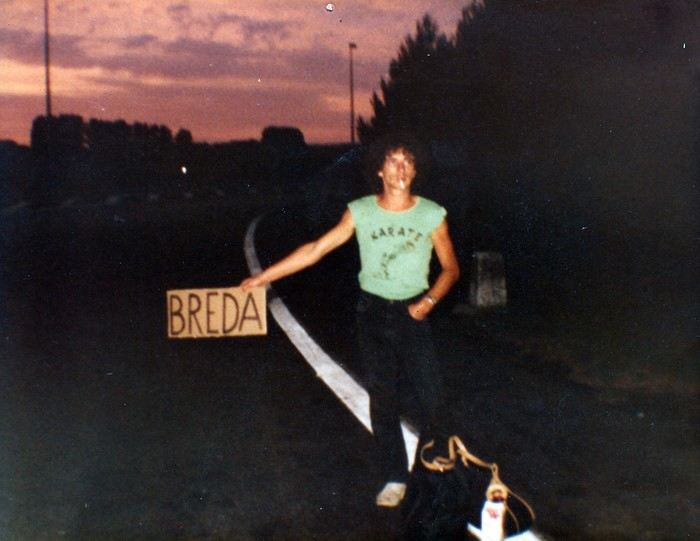
“Hey, your Marker... - My Marker? - The one you used to make hitchhiking signs.”
The marker in question is sitting proudly on the kitchen table. Marielle found it at the bottom of a moving box.
I’ve been meaning to tell the long story of my love affair with hitchhiking for years. Here we go.
To be honest, I’m not quite sure when it started. My earliest memory goes back to a fair with a bike race in my maternal grandparents’ village. I was with my cousin, my little sister, and three girl cousins. There were six of us, ages ranging from six or seven to thirteen or fourteen. Our parents stayed at the fair, and we’d had enough. So we decided to walk home. Only it was four kilometers away. So we hitchhiked. A guy driving an old car picked us all up and dropped us off at the farm. He probably found it amusing to see us thumbing a ride by the side of the road, but maybe it also worried him a bit. With everything you read in the papers...
Around fifteen or sixteen, I started hitchhiking regularly, alone or with a friend, to go to the nearby town. But it was especially when I started boarding school in Orléans that it became more regular. The first year, I’d leave Monday morning and come back Saturday noon by bus. It was an old, uncomfortable bus where we froze in winter. To make matters worse, I often got motion sickness if, as was too often the case, I ended up sitting in the back. In the spring, a high school friend suggested I hitchhike back. It meant a slight detour, but the advantage was taking only national roads.
So that’s how, from the end of tenth grade to twelfth grade, I’d thumb a ride every Saturday on the Pont de Bourgogne. Drivers were used to seeing young people hitchhiking, and it worked pretty well. Our biggest fear? Soldiers! At that time, military service was still mandatory, and on weekends, it wasn’t rare to see them competing with us. They’d keep their uniforms on to go home. That gave people confidence—with everything you read in the papers—and they’d rarely wait more than five minutes. We, with our long hair, were definitely less popular. From time to time, three big red-faced guys in a van coming back from a construction site would flip us off, yelling things like “go get a haircut, you bums!” Those were the good old days.
We still had a good laugh, though. Patrice, the friend I’d hitchhike back from school with on Saturdays, is a musician—I’d later discover he’s an excellent composer. A die-hard Beatles fan, he knows their repertoire by heart and spends his time singing at the top of his lungs while we thumb a ride. One Saturday late morning, we’d been waiting for a while at the exit of Châteauneuf-sur-Loire when a little lady came up to him and asked if he could please sing a little quieter: a baby was sleeping in the house. He put on the most sorry face: “Oh, sorry ma’am, we didn’t realize.” No sooner had the lady gone back inside than he started again. Luckily, a car stopped just then, sparing me the embarrassment of seeing the lady come back out.
Saturday was also the day when the cigarette pack was dangerously low. So before leaving, we’d go buy some “Parisiennes,” the “P4s” as we called them back then. They were slightly thinner cigarettes with a mix of tobacco scraps. Sometimes they tasted like light tobacco, sometimes like dark. Not great, but by the end of the week, our pocket money was gone. They were sold in small packs of four, hence the name P4. We’d only pay 20 centimes. On Saturdays, it was rare for the two of us to manage to scrape together 1.50 F to buy a whole pack of Gauloises...
The last twenty kilometers, I’d usually do alone, Patrice having reached his destination. From time to time, luck would smile on me: an acquaintance would just happen to pass by and stop. One January Saturday, at the exit of Gien, I ran into another guy from Argenton whom I knew a little. That day, the weather was nice, but the temperature was well below zero. It was around noon, and it was the off-peak hour. We were shivering, stamping our feet by the side of the road, when a Citroën “Tube” arrived: it was his father’s boss’s, a mason. They were both sitting in the front, but since they were obese, they had us climb onto the open back. Even though we huddled against the cab to shelter from the wind, the twenty kilometers felt very long, especially since we were only going sixty kilometers an hour. Our hands and cheeks were blue when we finally arrived.
The year I took my baccalaureate, a friend with a 2CV would take me Monday mornings with one or two others we’d pick up in nearby villages. We’d share the gas costs, but it was still cheaper than the bus. And in winter, the bus was my nightmare. You had to get up at five to catch it at six. Not enough sleep, and outside it was freezing or raining—or both. The 2CV was luxury. Plus, Philippe would pick me up at home. On the other hand, since I didn’t have class Saturday mornings—well, I did, but we only had PE the first two hours and nothing after—I’d skip class and slip out right after breakfast to thumb a ride at the Pont de Bourgogne.
Those three high school years were formative in this optional subject that was hitchhiking. Little by little, I learned the rules of the game. First, you shouldn’t walk along the road while thumbing. Cars go too fast and can’t stop easily. Accepting a ride that’s too short is also a no-go. The guy who offers to take you a little way but drops you off at some vague crossroads in the middle of nowhere? No thanks. You need to get dropped off in a town. If it’s a fairly big city, you often have to cross it from one end to the other, but it’s better. At the exit, you have to choose your spot well. Actually, you have to put yourself in the driver’s shoes: they need to see you early enough, not be going too fast, and be able to stop easily without risking an accident. So when leaving a city, it’s better not to go too far. It’s wiser to find a spot where cars go slowly and can stop easily. And preferably near a café. The café is for when you still have a few coins for a coffee and need to warm up. From time to time, you’d run into someone nice who’d make a detour to drop you off at a better spot to start again. Finally, if possible, avoid hitchhiking on Sundays. Cars are packed with whole families who, most of the time, aren’t going far. And then there’s the little worry of those people who rarely leave home: with everything you read in the papers...
During those high school years, it was only short trips, rarely exceeding a hundred kilometers. Later, I aimed bigger, and things were a bit different. In 1973-74, I crossed part of France for the first time on two or three occasions, coming back from the German border or returning to Bordeaux, where we lived briefly. Since there weren’t many highways back then, we took national roads. It was during these trips that I realized it was better to leave in the evening. As I said earlier, Sunday is to be avoided, but on weekdays, there’s another problem: if you leave in the morning, you only make short hops. First, it often takes longer to get going because drivers are people going to work nearby. Which brings us back to those who drop you off in a bad spot, far from everything. There, you have to know how to refuse. You thank the driver for stopping—oh, if only everyone could be like you—while explaining why you’d rather stay put. People don’t take offense, by the way. Those who pick up hitchhikers often hitchhiked themselves when they were in the military or before they had a car. In the late afternoon, you’d often run into salespeople or truckers, in other words, people who drive a lot. At that time, salespeople no longer had appointments and were more relaxed. They wanted to talk about something other than the merits of their products. On the radio, it was time for *Les Grosses Têtes*. You’d also quite often run into small business owners, professionals, or even hippies. The conversations were pleasant and often enriching. A little later in the evening, truckers would take over. They’d already driven a few hundred kilometers, and the depot or customs was still far away. So they’d gladly take a hitchhiker to stay awake at the wheel and chat. The radio with Max Ménier’s show *Les routiers sont sympas*, you’d eventually get tired of it. So a hitchhiker was a change. Others, who’d hit the road at midnight to be at their destination by morning, were nice and offered to let you lie down on the bunk while they drove. When you’d been hitchhiking since six in the evening, freezing in the wind between two vehicles, you weren’t unhappy to take a little nap.
Speaking of Max Ménier, he’d often make announcements for hitchhikers. One evening, I called him. It was getting late, and I still had quite a way to go. No luck: the show had ended for good the day before!
In short, it’s better not to rush, sleep in, and leave after lunch, or better yet, in the late afternoon. Obviously, I’m talking about when you have several hundred kilometers to cover. That’s when you have to play it pro.
First thing, especially at night, but it also applies in the middle of summer when the light is blinding: dress to be seen from far away. I’ll admit I have an advantage over most other hitchhikers: I’m small and don’t scare people. To balance that out, racist drivers often take me for an Arab and are less likely to pick me up, but overall, the balance tips in my favor. Back to the need to be seen: at night, I wear light-colored clothes. In headlights, you can see me from far away.
Second thing: travel light. Forget the big backpack with a frame. Drivers don’t always have room in the trunk or on the back seat, especially if it’s rained and the ground is wet. Plus, it forces them to get out of the car. If they’re nice enough to pick up a hitchhiker, you shouldn’t ask for too much either.
Third thing: bring a cardboard sign and a big marker—like the ones in the photo at the start of this post—to write the name of your destination. In the early 80s, I ran a tourist house in the Cher, but I lived in the Netherlands. In the off-season, it was only open on weekends. On Fridays, I’d leave Holland and return on Mondays. 1200 km round trip. On the way there, in Paris, I’d stand at Porte de la Chapelle. At that spot, the road is very wide, and drivers could stop easily. Obviously, on the sign, I didn’t write Eindhoven, which not everyone knows, and even less Amsterdam because of its seedy reputation. In that case, you’d expect to see a police car stop and two officers in kepis ask for your papers. So as a first destination, I’d write Compiègne. We were well out of Paris, and since it wasn’t too far, a trucker or salesperson was less reluctant to stop. Once past Compiègne, I’d take out my Lille sign. Once in Belgium, it wasn’t really necessary to use a sign anymore, since everyone was going in the same direction. Usually, the guy who picked me up at Porte de la Chapelle would say he wasn’t going far but could take me a little way. Before that, I’d still ask if there was a gas station on the highway where he could drop me off before exiting. While talking, the guy would realize he wasn’t dealing with a dangerous criminal. He’d pretend to check his watch, think for a moment, then say that actually, he was going to Belgium and could take me to the border or a little beyond. To leave Paris on the way back, I’d take the train to Melun, where it was easier to hitchhike than at Porte d’Italie.
Over all those years, I think I was pretty lucky. Or maybe philosophical enough not to imagine a car would stop after a few minutes. An hour’s wait was average. Sure, I sometimes waited three, four, or five hours. Most often at odd hours and in terrible weather. When it doesn’t work, it doesn’t work. But there’s always a moment when things pick up. Sure, when you’re soaked in freezing rain in the early morning after a sleepless night, you’re less philosophical than when I’m writing these lines comfortably at my computer, but it still holds true.
Earlier, I mentioned clothing and the importance of being well-rested before leaving. When you’ve eaten well and just gotten out of the shower, shaved, you’re in a better mood. And somehow, drivers sense it. Or at least, that’s the impression I’ve always had. It’s better to look in shape than disgusted at standing there, half-heartedly thumbing a ride. In short, when I’d start to get fed up with waiting, I’d go into the first café I saw for a coffee. Coming back out, I’d be refreshed, and most of the time, a car would stop within minutes. I’ve often said that when I stood by the side of the road thumbing a ride, I felt a bit like a gambler in front of a slot machine. It was a matter of giving luck a chance. And well, it worked out pretty well.
Then, there are countries where hitchhiking works really well and others where it’s harder. In the 70s-80s, it worked best in Germany and England. In the late afternoon, it wasn’t rare to be invited for tea. Well, that was in England. Tea meant being offered room and board. In Germany, they’d offer you coffee. Once there, they’d first show you the guest room and point out the bathroom before sitting you down in front of a big plate of cold cuts. In the evening, they’d go out in town, and the next morning, they’d usually drop you off at a good spot for hitchhiking. On the other hand, in Mediterranean and Scandinavian countries, you’d better be patient. In Spain or Italy, it’s better to take the train, which was dirt cheap back then. However, if you’re a couple traveling light, it’s already easier in most countries.
In 1982, I went on a trip around Turkey with my girlfriend. We only had two small bags, which was plenty. It was November-December, and we wore our warm, bulky clothes. Leaving Eindhoven at nine in the morning, we arrived in Graz, near the Yugoslav border, at eleven at night. 1300 km in a day! In just four or five vehicles. One to the German border, about fifty kilometers from Eindhoven, the second to Hagen in the Ruhr, the third to Salzburg, and the last to Graz at the Yugoslav border. Record broken. During the night crossing of Yugoslavia, we ran into a trucker close to retirement who lent us the truck’s bunk. So we arrived fresh and rested near Skopje the next morning. We continued to Thessaloniki in northern Greece before taking the train to Istanbul. In Turkey, we traveled a good part of the country by hitchhiking too. With truckers in old, overloaded, slow trucks that climbed hills at fifteen kilometers an hour, but also in cars where five or six people were already crammed in. And every time, we were invited for tea. Once, we were even picked up by a big shot in his Mercedes with a chauffeur. Until then, the average speed was around fifty kilometers an hour. There, we were going two hundred. On a national road, not a nice European highway.
I’ve also hitchhiked in Nepal, from Lumbini, Buddha’s birthplace, to a village on the way to Pokhara. It must have been midday. No bus until the next day. I gave it a try. A small truck overloaded with rice sacks, with two or three young people already perched on top, stopped. I rode on the roof of the cab. At fifty kilometers an hour when it was going well, with a breathtaking view. Coming back from India, I also crossed part of Iran by hitchhiking, from Tehran to the Turkish border. I did this trip with an Austrian I met at the hotel who, like me, had to watch his pennies. We gave it a shot. There was almost no traffic, but to our great surprise, the first car that passed in the area would always stop. They’d just ask for a modest contribution for gas, and it cost next to nothing.
Sometimes, you get scared too. After leaving Turkey in early December 82, we spent about two weeks in the southern Peloponnese harvesting olives. A few days before Christmas, we hitchhiked back to Holland. A girl picked us up in her little Fiat 500. We were driving on a mountain road, and that morning there was a bit of black ice. After crossing a pass, we saw the old Ford Taunus ahead of us at fifty meters start to skid. The driver let out a “heeee!” while grabbing my knees. I reflexively grabbed the wheel. Finally, the Taunus got back on track. And we didn’t swerve. But those few seconds felt very long.
In January 77, while I’d been living in Germany for a few months, I decided to spend a few days in Italy. By hitchhiking, of course. I left in the early afternoon, and by ten at night, I wasn’t far from Frankfurt. I saw a big Mercedes stop. The four or five young people crammed inside were listening to Schlager at full volume. Beer cans littered the floor. They didn’t have a precise destination, and as long as they were going south, that was fine with me. They’d finished their military service that very day and had clearly already celebrated their discharge. The driver was going 160, zigzagging dangerously from one side of the highway to the other. I should have realized he wasn’t entirely sober either. Luckily, there was almost no traffic. Finally, I managed to get dropped off at a gas station just before Frankfurt, relieved. I hope their trip didn’t end tragically.
Another time, coming back from Holland with my wife, we were picked up early in the morning near Senlis by two guys from Lille. They were going to work near Tours and could drop us off at Porte d’Italie. Apparently, they were coworkers but barely knew each other. The driver offered us a beer—at six in the morning, sure!—before opening another can for himself. He was clearly having trouble staying in the right lane. We politely declined, the passenger too. Everyone was tense. Luckily, it was rush hour on the ring road, and we were going slowly. When we got out of the car, the passenger said goodbye with the look of a guy being offered the condemned man’s rum and cigarette.
Finally, there are the annoying remarks from drivers who are either gay when you’re alone or turned on by the sight of your girlfriend when you’re a couple. In those cases, I’d get in the back so the guy wouldn’t feel too confident. And if the conversation got a little too suggestive, we’d deflect until we got dropped off.
And luckily, there are the times, not so rare after all, when you run into really nice people who invite you to eat and sleep at their place and drive you to a good spot the next morning. In Germany and England, that was common. And then there are the big strokes of luck, like during our trip to Turkey when we crossed most of Germany in one car, or that other time when some Germans drove me from the exit of Geneva all the way to the Costa Brava.
Going back to “with everything you read in the papers” and its variant “with everything you see on TV”—and now on the internet—it’s always left me perplexed. Personally, I’ve never heard of hitchhikers assaulting drivers, even if it may have happened. On the other hand, what was most common were hitchhikers being assaulted, especially girls. Anyway, even armed, it seems a bit stupid to assault the driver—wouldn’t that risk causing an accident?
Finally, since that time, I’ve occasionally wanted to hitchhike somewhere far away in France. Most often, too busy with work, it never happened, but the nostalgia hasn’t completely disappeared.
* * *
Other Hitchhikers
And then one day, I... settled down to become a driver myself. Ten years had passed, and you saw fewer and fewer hitchhikers. Or maybe I saw fewer because I had a regular job and wasn’t traveling the same way. And then I understood a few things.
Several times, I was tempted to pick up a hitchhiker, but they didn’t meet the required conditions. They were walking along the road instead of staying at the exit of the previous town. Hard to stop without risking an accident. Or the guy looked really scruffy. Or he was sulking, if not both. Then you think of that famous “with everything you read in the papers.” Not that I was scared, but unfortunately, the few hitchhikers I did pick up later were rarely interesting.
A few years ago, we picked up a young guy at the exit of a small town in Sologne. Not an easy spot for hitchhiking. Bad luck, he was a pretentious little jerk. He was barely 20 or 25 and talked like a bitter old man. He was a waiter in a restaurant. According to him, it was lucky he was there, otherwise the boss would have closed up shop long ago. You’d think he had thirty or forty years of professional experience behind him. As we approached Blois, he started ranting about Arabs, blaming them for all evils. And he laid it on thick. That morning, we were going to a teenager’s funeral who had just committed suicide, so he really got on our nerves, Mr. Know-It-All. Out of anger, I dropped him off next to a shopping center a few kilometers from downtown. Not nice, but it felt good.
Some time ago, we were driving around the Limousin on a Sunday to try out the used Twingo we’d just bought. We picked up a guy in his forties. A German who spoke French well. He started talking about the environment. He was a green Khmer. He got worked up all by himself with his pseudo-eco rant and, after a few kilometers, was almost yelling at us. As we were about to leave the main road for a small one, I dropped him off at a crossroads in the middle of nowhere. Normally, I would have made a little detour to take him to a better spot, but this time, I didn’t feel like doing the... eco-warrior a favor.
On the other hand, I’ve still done my good deed a few times. One June morning, coming back from Orléans, I saw a man in his sixties hitchhiking. The poor guy had had a rough time. He was from Montpellier and was coming back from Caen, where he’d been promised a job. Once there, they bluntly told him the position was already taken, and he had to go back. Except he didn’t have enough money left for the train. He’d spent the night hitchhiking without success. I could only take him as far as Lamotte-Beuvron, where I dropped him off near the fire station. Apparently, there was some vague shelter there or something, but it only opened a few hours later. In the meantime, he settled on the grass in a corner to sleep a little. While he was doing that, I quickly went to the train station to check the price of a ticket to Montpellier. It was within my means. Since he was sound asleep, I slipped the train ticket and 100 francs into his pocket. I couldn’t imagine him continuing to hitchhike all the way to Montpellier. And I bet he didn’t even have a piece of cardboard and a marker!
When we go to Brazil, we usually rent a small car. One day, we were coming back from Paracuru to Fortaleza when we saw a whole family hitchhiking. Two adults and two or three small children. Here near the equator, the sun sets very quickly, and it would soon be night. There was little traffic, and trucks wouldn’t stop because there was no room in the cab. As for the rich people driving big 4x4s, they wouldn’t stoop to picking up the lower classes. The only hope for this kind of family was usually a farmer or artisan who’d let them ride in the back of his pickup. Obviously, they were a bit surprised to see us. Everyone crammed in as best they could in the back of our little car. When we dropped them off, we got a whole string of “Deus lhes abençõe”—God bless you.
Still in Brazil, we were on the road from Barreirinhas to São Luís do Maranhão. About 150 km of deserted road with an isolated mud house here and there. A young woman flagged us down. She was very pregnant and had to get to the clinic twenty or thirty kilometers away to give birth. Someone was supposed to drive her, but the first signs of labor started earlier than expected, and the driver was unavailable. Even driving fast, we weren’t feeling great: it would be just our luck if she gave birth in the car!
Today, we’re in the age of smartphones and carpooling apps. Safety. With everything you see on TV... Three or four years ago, we signed up on a platform. Our first, and only, “client” was a little jerk who didn’t say a word the whole trip. No hello, no goodbye, and certainly no thank you. The next day, we found his Ray-Bans in the car. We didn’t run after him to give them back. Ha!
Is it risky to do an excursion from San Pedro de Atacama to the Salar de Uyuni? (Altitude Sickness)
Hello,
We’re planning a trip to Chile for next December (2025) as a family with our two kids (6 and 8 years old).
We’ve scheduled a week in San Pedro to take our time exploring the area, and we’re wondering whether to extend into Bolivia to see the Salar de Uyuni, the Laguna Verde and Laguna Colorada, the Desert of Dalí, etc.—basically the short loop that a lot of tour operators offer.
What’s making me hesitate is the altitude—there are stretches at 5,000 meters, and I’m wondering if that’s too risky for the kids, since the risk of AMS (acute mountain sickness) is high at that elevation.
Has anyone here done this loop with their kids? If so, could you share your experience?
Thanks so much!
France-Morocco road trip: Algeciras-Ceuta crossing
Hi everyone,
Even though I come to Morocco four times a year, it’s been a long time since I’ve made the trip by car. I need to refresh my knowledge! I’ll be traveling in early October. I have a car that’s about 20 years old. The plan is to cross via Algeciras/Ceuta.
A few questions:
1) Does this crossing still exist? If so, do I need to buy the ticket in advance or on the spot? From whom? Any advice is welcome!
2) What documents are required for the car?
3) If anyone is making the trip around the same time, it could be fun to drive together 😊
I know there are experts on this forum.
Thanks in advance
Even though I come to Morocco four times a year, it’s been a long time since I’ve made the trip by car. I need to refresh my knowledge! I’ll be traveling in early October. I have a car that’s about 20 years old. The plan is to cross via Algeciras/Ceuta.
A few questions:
1) Does this crossing still exist? If so, do I need to buy the ticket in advance or on the spot? From whom? Any advice is welcome!
2) What documents are required for the car?
3) If anyone is making the trip around the same time, it could be fun to drive together 😊
I know there are experts on this forum.
Thanks in advance
Official website for Tanzania e-visa
Hi,
We’re heading to Tanzania at the end of the year and I’d like to know where I can apply for the e-visas because I’ve found some sites, but they’re charging more than what I was told.
It’s not the official site, and I’m struggling to find it.
Do you have the direct official link, please? Thanks so much for your help! 😊
Flight ticket never received (eDreams)
Hi there,
Hi, I just bought a flight ticket on eDreams. My account was debited, but I haven’t received the tickets. I checked my spam folder, but no luck. Could you provide me with a contact number or a link to their site so I can file a complaint? Alternatively, if anyone has a solution, I’d be interested in getting a refund. I contacted my bank, but since the amount has already been debited, what can they do? Thanks in advance!
Hi, I just bought a flight ticket on eDreams. My account was debited, but I haven’t received the tickets. I checked my spam folder, but no luck. Could you provide me with a contact number or a link to their site so I can file a complaint? Alternatively, if anyone has a solution, I’d be interested in getting a refund. I contacted my bank, but since the amount has already been debited, what can they do? Thanks in advance!
Tips for choosing a long-distance touring bike
Hi there,
I’m currently looking for a bike to do my first bike trip across France, with the ultimate goal of cycling through Latin America. I’ve got a lot of questions and I’d love to hear if you have any answers or advice to share. First off, I’ve been through this before with hiking. I want to get top-quality gear right away. When I started hiking, I ended up buying everything three times—first beginner gear, then intermediate, then expert, etc. For biking, I’d prefer to skip that process and invest right now in a bike that could ideally handle Latin America. I’ve set a total max budget of around 5000 € (roughly 4000–4500 € for the bike and the rest for accessories: panniers, helmet, cycling shorts, etc.).
So, I’ve got quite a few questions:
* I’ve read in several places that some people recommend buying the bike directly in Latin America. Since I need a first bike to train in Europe, would it be better to buy an entry-level bike in France (and sell it before the big departure)? Or is it preferable to start right away with my final bike to get used to it? Is buying it there just to save a bit of money?
* For a long-term trip (around six months) in Latin America, is it better to go for a gravel bike or a mountain bike?
* Should I buy a new bike or a refurbished one? Even more so given that I’m planning a long trip—could a refurbished bike end up causing more breakdowns?
If you have any advice on models, technical features to prioritize, or recommended sellers or resellers, I’d love to hear it. I’m a total beginner—I’ve only just started watching videos and reading up on the subject, and all the technical specs are new to me!
Thanks in advance for your help!
I’m currently looking for a bike to do my first bike trip across France, with the ultimate goal of cycling through Latin America. I’ve got a lot of questions and I’d love to hear if you have any answers or advice to share. First off, I’ve been through this before with hiking. I want to get top-quality gear right away. When I started hiking, I ended up buying everything three times—first beginner gear, then intermediate, then expert, etc. For biking, I’d prefer to skip that process and invest right now in a bike that could ideally handle Latin America. I’ve set a total max budget of around 5000 € (roughly 4000–4500 € for the bike and the rest for accessories: panniers, helmet, cycling shorts, etc.).
So, I’ve got quite a few questions:
* I’ve read in several places that some people recommend buying the bike directly in Latin America. Since I need a first bike to train in Europe, would it be better to buy an entry-level bike in France (and sell it before the big departure)? Or is it preferable to start right away with my final bike to get used to it? Is buying it there just to save a bit of money?
* For a long-term trip (around six months) in Latin America, is it better to go for a gravel bike or a mountain bike?
* Should I buy a new bike or a refurbished one? Even more so given that I’m planning a long trip—could a refurbished bike end up causing more breakdowns?
If you have any advice on models, technical features to prioritize, or recommended sellers or resellers, I’d love to hear it. I’m a total beginner—I’ve only just started watching videos and reading up on the subject, and all the technical specs are new to me!
Thanks in advance for your help!
Helicopter crash in New York
For those who want to take a helicopter flight in New York:
In mid-April, a sightseeing helicopter flight in NYC turned tragic. A helicopter carrying a Spanish family of five and a pilot crashed into the Hudson River shortly after taking off from Manhattan.
Apparently, the loss of the rotor caused the sudden fall near the West Side Highway.
Despite rescue efforts, all six occupants died.
This has reignited the debate over whether helicopters should be banned for sightseeing flights in NYC or elsewhere.
Source
In mid-April, a sightseeing helicopter flight in NYC turned tragic. A helicopter carrying a Spanish family of five and a pilot crashed into the Hudson River shortly after taking off from Manhattan.
Apparently, the loss of the rotor caused the sudden fall near the West Side Highway.
Despite rescue efforts, all six occupants died.
This has reignited the debate over whether helicopters should be banned for sightseeing flights in NYC or elsewhere.
Source
Which health insurance should I choose for a trip to the USA?
Hi everyone.
After years of traveling to the USA without any medical insurance subscriptions—and luckily never having any major health issues (though I did get a scorpion sting buried in the sand at CBSouth, 😇)—life has caught up with us, and we’re now being forced into "wisdom" and leaving our carefree days behind.
So, I’m looking for the best compromise for a 2-month health insurance plan. I’ve read the discussions on this topic, but the most recent one is from last year, and I’d love your take on the current situation. I’m familiar with the usual options like Europ Assistance and AXA, but I’ve just discovered Chapka and Heymondo (the latter seems interesting in terms of both price and coverage).
What do you think of these last two? How do they compare in terms of value for money against the bigger companies?
Thanks in advance, everyone.
So, I’m looking for the best compromise for a 2-month health insurance plan. I’ve read the discussions on this topic, but the most recent one is from last year, and I’d love your take on the current situation. I’m familiar with the usual options like Europ Assistance and AXA, but I’ve just discovered Chapka and Heymondo (the latter seems interesting in terms of both price and coverage).
What do you think of these last two? How do they compare in terms of value for money against the bigger companies?
Thanks in advance, everyone.
Looking for a travel companion for Cebu in February 2026
Hi there!
I’m looking for a friendly female travel buddy to fly with me from Nice in February 2026. I’ve been keeping travel journals for 15 years now… and I know Southeast Asia pretty well!
If you love laughing, beaches, markets, sea excursions, or just heading out for a drink and dancing when there’s nothing planned the next morning—if you’re tidy and respectful (we’ll split accommodation costs and some transport, like tuk-tuks), then welcome aboard!
Here’s the plan: We’ll fly from Nice to either CEBU or PUERTO PRINCESA, depending on which ticket is cheapest. Speaking of which, I’m on a tight budget, so I don’t mind a 15-hour layover (for example, often in Singapore—we can even explore the city by taking the MRT!) because long layovers can save me 400 €–500. I’m in no rush—I’d rather save that money for our trip!
We’ll spend three full weeks there.
Just to be clear upfront so there are no surprises or misunderstandings: I’m looking for someone free from around February 20th to March 15th. We’ll leave Nice together. - Valid passport (must be valid for more than six months after our return date). - E-Travel form must be filled out online 72 hours before departure—**mandatory**, or no boarding!
We’ll also book a round-trip domestic flight in advance (cheaper than last-minute).
Our itinerary includes CEBU, BOHOL and the surrounding areas, then a flight to PUERTO PRINCESA, EL NIDO, PORT BARTON, etc.… basically, a dream trip!
Who’s joining me? (Ages 20–70 are fine, as long as you love to laugh and are free for three weeks!) Welcome! Caroline
I’m looking for a friendly female travel buddy to fly with me from Nice in February 2026. I’ve been keeping travel journals for 15 years now… and I know Southeast Asia pretty well!
If you love laughing, beaches, markets, sea excursions, or just heading out for a drink and dancing when there’s nothing planned the next morning—if you’re tidy and respectful (we’ll split accommodation costs and some transport, like tuk-tuks), then welcome aboard!
Here’s the plan: We’ll fly from Nice to either CEBU or PUERTO PRINCESA, depending on which ticket is cheapest. Speaking of which, I’m on a tight budget, so I don’t mind a 15-hour layover (for example, often in Singapore—we can even explore the city by taking the MRT!) because long layovers can save me 400 €–500. I’m in no rush—I’d rather save that money for our trip!
We’ll spend three full weeks there.
Just to be clear upfront so there are no surprises or misunderstandings: I’m looking for someone free from around February 20th to March 15th. We’ll leave Nice together. - Valid passport (must be valid for more than six months after our return date). - E-Travel form must be filled out online 72 hours before departure—**mandatory**, or no boarding!
We’ll also book a round-trip domestic flight in advance (cheaper than last-minute).
Our itinerary includes CEBU, BOHOL and the surrounding areas, then a flight to PUERTO PRINCESA, EL NIDO, PORT BARTON, etc.… basically, a dream trip!
Who’s joining me? (Ages 20–70 are fine, as long as you love to laugh and are free for three weeks!) Welcome! Caroline
Passport validity for a stay in Thailand
Hi,
I’m planning a trip to Thailand from April 1st to 24th. I’m flying with Qatar Airways.
My passport is valid until October 7th, 2025.
My question:
For entry into Thailand, my passport is valid for more than 6 months (6 months and 6 days).
For my exit, my passport’s validity will be 5 months and 14 days.
Do I need to renew my passport, or is it okay?
Thanks for your answers!
The 8 Most Beautiful Hikes to Do in Réunion Island
Réunion Island, this paradise in the Indian Ocean, is a must-visit destination for hiking enthusiasts. With its active volcanoes, majestic cirques, and impressive peaks, there’s plenty to delight nature and adventure lovers. This article takes you on a journey to discover the eight most beautiful hikes the island has to offer. Lace up your hiking boots—let’s go!
1- Piton des Neiges: The Summit of Réunion
Piton des Neiges is the highest point on Réunion Island at 3,070 meters. It’s an iconic hike that attracts a large number of hikers every year. Climbing Piton des Neiges is like stepping into a unique atmosphere where volcanic landscapes blend with lush vegetation.
The hike usually starts from the picturesque village of Cilaos. It takes about six hours to reach the summit, so good physical condition is a must. Once at the top, you’ll be rewarded with a breathtaking panoramic view of the entire island. A simple flight from Paris to Saint-Denis and you’re ready for this stunning adventure.
Here are a few tips:
Bring warm clothes—it can get very cold at the summit. Pack enough water and food. Start before dawn to catch the sunrise from the summit.
2- Piton de la Fournaise: A Volcanic Walk
You can’t visit Réunion without stopping by Piton de la Fournaise, one of the world’s most active volcanoes. The hike usually begins at Pas de Bellecombe, accessible after a winding road that already offers spectacular views. The well-marked trail first takes you through lunar landscapes to the Enclos Fouqué, then continues toward the Dolomieu crater. Frequent eruptions often change the scenery, making each visit unique. Piton de la Fournaise is a grand natural spectacle you won’t want to miss during your trip.
Here are a few tips:
Check the volcano’s current activity before heading out. Wear sturdy shoes for walking on solidified lava. Always bring maps or a GPS, as signs may be damaged by eruptions.
3- Cirque de Mafate: In the Heart of Nature
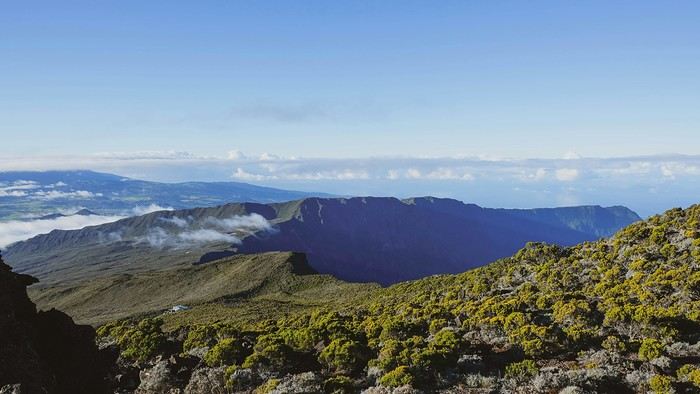
Accessible only on foot or by helicopter, the Cirque de Mafate is a true paradise for hikers. This isolated area offers a multitude of trails leading to authentic villages, stunning viewpoints, and untouched nature. The Sentier Scout is one of the most popular routes for exploring Mafate. It starts at Le Bélier, passes through the Col des Bœufs, and then descends into the cirque. Get ready to be amazed by the enchanting panoramas and majestic peaks along the way. It’s a full immersion into the tranquility of Mafate.
Here are a few tips:
Wear good hiking shoes, as some sections can be steep. Book your nights in a gîte in advance if you’re planning a multi-day hike. Respect the environment and locals by taking all your trash with you.
4- Cirque de Cilaos: Between Mountains and Vineyards
The Cirque de Cilaos, with its waterfalls and lush forests, also offers magnificent hiking opportunities. One of the most remarkable trails leads to Grand Bénare, the island’s third-highest peak.
The hike usually starts from the Plateau des Chênes. This moderate-difficulty hike takes about five hours to reach the summit. Once there, you’ll be treated to a breathtaking view of the Cirque de Cilaos and Piton des Neiges.
Here are a few tips:
Start early to avoid clouds that can quickly envelop the summit. Don’t forget your camera to capture the stunning landscapes. Visit the vineyards of Cilaos after your hike to taste local wine.
5- Cirque de Salazie: The Valley of Waterfalls
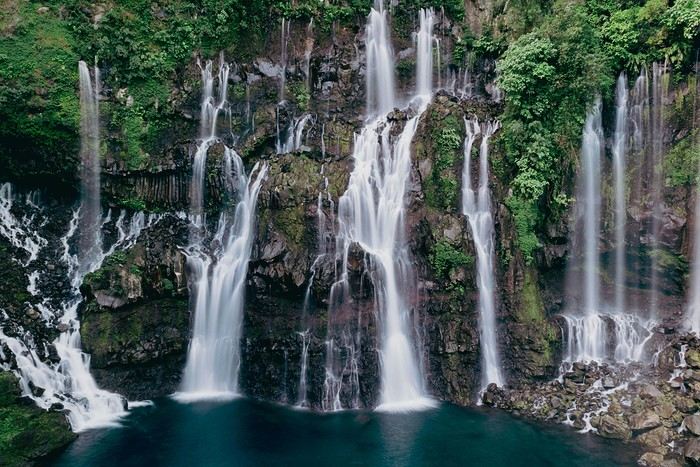
Known for its humid climate, the Cirque de Salazie is filled with impressive waterfalls and lush tropical forests. One of the most popular hikes leads to the Trou de Fer.
The trail starts in Hell-Bourg, ranked among France’s most beautiful villages. After a few hours of hiking through primary forest, you’ll reach a viewpoint offering an incredible view of the Trou de Fer’s abyss and its dizzying waterfalls.
Here are a few tips:
Wear waterproof and mosquito-repellent clothing. Bring a headlamp and compass, as fog can make the trail hard to follow. Check trail conditions before heading out, especially after heavy rain.
6- Grand Bénare: A Stunning Panorama
Grand Bénare offers a spectacular hike that’s a must-do on Réunion Island. Starting from the well-known viewpoint of Maïdo, the challenging yet rewarding ascent leads to the summit.
Over about ten kilometers of climbing through varied vegetation, the summit reveals a breathtaking panorama of the three cirques—Mafate, Cilaos, and Salazie. It’s a true feast for the eyes and a memorable experience for mountain lovers.
Here are a few tips:
Go when the weather is clear to fully enjoy the view from the summit. Wear good hiking shoes and bring trekking poles to make the climb easier. Don’t underestimate the duration—prepare physically for this long hike.
7- Roche Écrite: Biodiversity at Altitude
Located between the Cirque de Salazie and the Cirque de Mafate, Roche Écrite offers a hike that lets you discover exceptional flora and fauna. The hike often starts at Le Colorado, near Saint-Denis, the island’s capital.
After several hours of walking through tropical forests and varied landscapes, you’ll reach the summit at 2,276 meters. From there, you can enjoy a spectacular view of the two adjacent cirques and even spot Piton des Neiges in the distance. A must for adventurers and budding biologists.
Here are a few tips:
Check the weather forecast before heading out, as conditions can change quickly at altitude. Bring binoculars to observe endemic birds and other wildlife. Take regular breaks to soak in the scenery and recharge your energy.
8- Col des Bœufs: The Gateway to Mafate
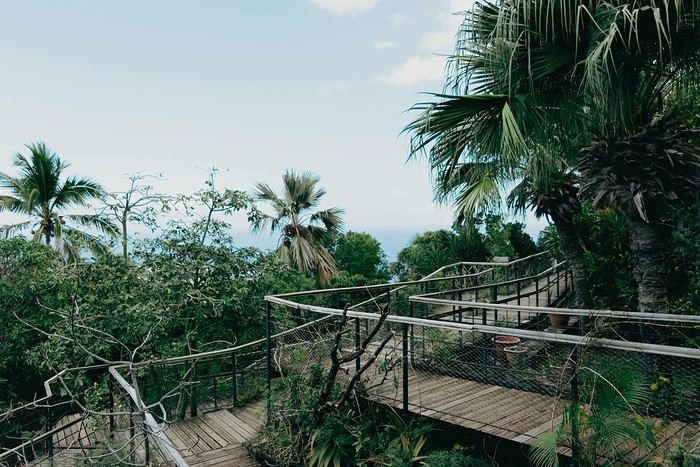
Col des Bœufs is another popular starting point for accessing the Cirque de Mafate. This comfortable hike offers beautiful views along the way and leads to picturesque villages like Marla and La Nouvelle.
The trail starts gently from the Col des Bœufs parking lot, climbing slightly before revealing a panoramic view of Mafate. Perfect for a relaxed day hike, this route is suitable for all levels of hikers.
Here are a few tips:
Bring a picnic to enjoy a lunch break with a view. Start early to avoid crowds and the afternoon heat. Check local bus schedules to avoid any surprises at the end of your hike.
In conclusion, Réunion Island offers a multitude of exceptional hikes that let you discover breathtaking landscapes—volcanoes, cirques, tropical forests, and waterfalls. Whether you’re a beginner or an experienced hiker, the island will amaze you with the diversity of its trails. Get ready for unforgettable adventures in the heart of preserved nature while admiring the unique beauty of this volcanic island.
1- Piton des Neiges: The Summit of Réunion
Piton des Neiges is the highest point on Réunion Island at 3,070 meters. It’s an iconic hike that attracts a large number of hikers every year. Climbing Piton des Neiges is like stepping into a unique atmosphere where volcanic landscapes blend with lush vegetation.
The hike usually starts from the picturesque village of Cilaos. It takes about six hours to reach the summit, so good physical condition is a must. Once at the top, you’ll be rewarded with a breathtaking panoramic view of the entire island. A simple flight from Paris to Saint-Denis and you’re ready for this stunning adventure.
Here are a few tips:
Bring warm clothes—it can get very cold at the summit. Pack enough water and food. Start before dawn to catch the sunrise from the summit.
2- Piton de la Fournaise: A Volcanic Walk
You can’t visit Réunion without stopping by Piton de la Fournaise, one of the world’s most active volcanoes. The hike usually begins at Pas de Bellecombe, accessible after a winding road that already offers spectacular views. The well-marked trail first takes you through lunar landscapes to the Enclos Fouqué, then continues toward the Dolomieu crater. Frequent eruptions often change the scenery, making each visit unique. Piton de la Fournaise is a grand natural spectacle you won’t want to miss during your trip.
Here are a few tips:
Check the volcano’s current activity before heading out. Wear sturdy shoes for walking on solidified lava. Always bring maps or a GPS, as signs may be damaged by eruptions.
3- Cirque de Mafate: In the Heart of Nature
Accessible only on foot or by helicopter, the Cirque de Mafate is a true paradise for hikers. This isolated area offers a multitude of trails leading to authentic villages, stunning viewpoints, and untouched nature. The Sentier Scout is one of the most popular routes for exploring Mafate. It starts at Le Bélier, passes through the Col des Bœufs, and then descends into the cirque. Get ready to be amazed by the enchanting panoramas and majestic peaks along the way. It’s a full immersion into the tranquility of Mafate.
Here are a few tips:
Wear good hiking shoes, as some sections can be steep. Book your nights in a gîte in advance if you’re planning a multi-day hike. Respect the environment and locals by taking all your trash with you.
4- Cirque de Cilaos: Between Mountains and Vineyards
The Cirque de Cilaos, with its waterfalls and lush forests, also offers magnificent hiking opportunities. One of the most remarkable trails leads to Grand Bénare, the island’s third-highest peak.
The hike usually starts from the Plateau des Chênes. This moderate-difficulty hike takes about five hours to reach the summit. Once there, you’ll be treated to a breathtaking view of the Cirque de Cilaos and Piton des Neiges.
Here are a few tips:
Start early to avoid clouds that can quickly envelop the summit. Don’t forget your camera to capture the stunning landscapes. Visit the vineyards of Cilaos after your hike to taste local wine.
5- Cirque de Salazie: The Valley of Waterfalls
Known for its humid climate, the Cirque de Salazie is filled with impressive waterfalls and lush tropical forests. One of the most popular hikes leads to the Trou de Fer.
The trail starts in Hell-Bourg, ranked among France’s most beautiful villages. After a few hours of hiking through primary forest, you’ll reach a viewpoint offering an incredible view of the Trou de Fer’s abyss and its dizzying waterfalls.
Here are a few tips:
Wear waterproof and mosquito-repellent clothing. Bring a headlamp and compass, as fog can make the trail hard to follow. Check trail conditions before heading out, especially after heavy rain.
6- Grand Bénare: A Stunning Panorama
Grand Bénare offers a spectacular hike that’s a must-do on Réunion Island. Starting from the well-known viewpoint of Maïdo, the challenging yet rewarding ascent leads to the summit.
Over about ten kilometers of climbing through varied vegetation, the summit reveals a breathtaking panorama of the three cirques—Mafate, Cilaos, and Salazie. It’s a true feast for the eyes and a memorable experience for mountain lovers.
Here are a few tips:
Go when the weather is clear to fully enjoy the view from the summit. Wear good hiking shoes and bring trekking poles to make the climb easier. Don’t underestimate the duration—prepare physically for this long hike.
7- Roche Écrite: Biodiversity at Altitude
Located between the Cirque de Salazie and the Cirque de Mafate, Roche Écrite offers a hike that lets you discover exceptional flora and fauna. The hike often starts at Le Colorado, near Saint-Denis, the island’s capital.
After several hours of walking through tropical forests and varied landscapes, you’ll reach the summit at 2,276 meters. From there, you can enjoy a spectacular view of the two adjacent cirques and even spot Piton des Neiges in the distance. A must for adventurers and budding biologists.
Here are a few tips:
Check the weather forecast before heading out, as conditions can change quickly at altitude. Bring binoculars to observe endemic birds and other wildlife. Take regular breaks to soak in the scenery and recharge your energy.
8- Col des Bœufs: The Gateway to Mafate
Col des Bœufs is another popular starting point for accessing the Cirque de Mafate. This comfortable hike offers beautiful views along the way and leads to picturesque villages like Marla and La Nouvelle.
The trail starts gently from the Col des Bœufs parking lot, climbing slightly before revealing a panoramic view of Mafate. Perfect for a relaxed day hike, this route is suitable for all levels of hikers.
Here are a few tips:
Bring a picnic to enjoy a lunch break with a view. Start early to avoid crowds and the afternoon heat. Check local bus schedules to avoid any surprises at the end of your hike.
In conclusion, Réunion Island offers a multitude of exceptional hikes that let you discover breathtaking landscapes—volcanoes, cirques, tropical forests, and waterfalls. Whether you’re a beginner or an experienced hiker, the island will amaze you with the diversity of its trails. Get ready for unforgettable adventures in the heart of preserved nature while admiring the unique beauty of this volcanic island.
Traveling to Thimphu (Bhutan) from Kolkata by land
Hi everyone!
So great to be back on this Forum!
My question is in the title: is it possible to reach Bhutan from Kolkata by entering through the Phuntsholing border crossing? If anyone has already done this route, it would really put my mind at ease... 😉
Thanks in advance for all your replies! 🤪
Lydie
The Island of Pelops
October 7, 2023, is a sunny day in Milan. Since morning, in this light, I’m WhatsApping with Afrooz in Tehran, and I decide to call her. A lively, joyful conversation—French with that Farsi accent becomes a wonderful language. Suddenly, everything feels possible. Isfahan, Shiraz, Damavand, Yazd, Yazd, Yazd—a delicious word savored endlessly—become within reach. Iran, so longed for, is finally here. Pure joy, absolute enthusiasm. Six months to plan and relish a trip before living it.
Then I open *Le Monde*.
Aaaaaaaaaaaaaaaaaaaaaaaaaaaaaaaaaaaaaaaaaaaaaaaaaaaaaaaaaaaaaaaaaaaaaaaa
Frozen. Empty. No. We decide to wait, not to give up right away, pretending to believe—just a little, just to keep from collapsing—that with this wretched human race, the worst isn’t necessarily certain. It is.
So... meh, Madeira? The Azores? Uzbekistan (a pale substitute)? New Zealand? Greece. Again, always. Nestling into the only European promise we’ve been given. Indulging in illusions, for the pleasure of it.
So, train from Milan to Ancona (9 AM–12 PM), a typically Marchigiano lunch (Italy is paradise for food lovers), a stroll through the city, then at 4 PM boarding the *Olympic Champion*. Arrival in Patras the next afternoon, car rental, and off to Lepanto—Nafpaktos today—to reminisce about glorious victories and pay tribute to Cervantes, who lost a hand there before writing.
That’s the plan, anyway. The train is unusually on time. The ferry, replaced in the meantime by the *Hellenic Spirit* (why not? Even if it’s less suited to the season), is 3 hours late, then 4, no 5, then finally 6—oh wait, 7. And on top of that, it’s pouring rain in Ancona, and the port waiting room closes at 6 PM. Great...
At 11 PM, the ferry’s lights emerge in the pitch-black night. We jostle through the downpour, board, and sleep well in a cozy cabin with the white noise of the engines. Then:
 23 hours of rest. Of forgetting.
Then I open *Le Monde*.
Aaaaaaaaaaaaaaaaaaaaaaaaaaaaaaaaaaaaaaaaaaaaaaaaaaaaaaaaaaaaaaaaaaaaaaaa
Frozen. Empty. No. We decide to wait, not to give up right away, pretending to believe—just a little, just to keep from collapsing—that with this wretched human race, the worst isn’t necessarily certain. It is.
So... meh, Madeira? The Azores? Uzbekistan (a pale substitute)? New Zealand? Greece. Again, always. Nestling into the only European promise we’ve been given. Indulging in illusions, for the pleasure of it.
So, train from Milan to Ancona (9 AM–12 PM), a typically Marchigiano lunch (Italy is paradise for food lovers), a stroll through the city, then at 4 PM boarding the *Olympic Champion*. Arrival in Patras the next afternoon, car rental, and off to Lepanto—Nafpaktos today—to reminisce about glorious victories and pay tribute to Cervantes, who lost a hand there before writing.
That’s the plan, anyway. The train is unusually on time. The ferry, replaced in the meantime by the *Hellenic Spirit* (why not? Even if it’s less suited to the season), is 3 hours late, then 4, no 5, then finally 6—oh wait, 7. And on top of that, it’s pouring rain in Ancona, and the port waiting room closes at 6 PM. Great...
At 11 PM, the ferry’s lights emerge in the pitch-black night. We jostle through the downpour, board, and sleep well in a cozy cabin with the white noise of the engines. Then:
23 hours of rest. Of forgetting.
Coût de la vie aux Philippines en 2020 English translation pending
Salut à toutes et tous,
enfin un frenchy qui donne des chiffres "réalistes"... ça change de tous ces foreigners qui te disent que tu peux vivre pour moins de 200$/mois sous les cocotiers ! 😉
https://m.youtube.com/watch?fbclid=IwAR3S9qW-bvomF5hMKJO_pZyGBtsggKJgB1IneoxAWgqqdpxFV8cH8FOqGaM&v=5dDJZfOw0E4
enfin un frenchy qui donne des chiffres "réalistes"... ça change de tous ces foreigners qui te disent que tu peux vivre pour moins de 200$/mois sous les cocotiers ! 😉
https://m.youtube.com/watch?fbclid=IwAR3S9qW-bvomF5hMKJO_pZyGBtsggKJgB1IneoxAWgqqdpxFV8cH8FOqGaM&v=5dDJZfOw0E4
Acheter un billet d'avion via un intermédiaire et numéro de "booking" English translation pending
Bonjour,
En achetant via un intermédiaire (mytrip, Opodo et compagnie), même s’il est très déconseillé, j’ai reçu ma confirmation de billet mais quand j’essaie de vérifier sur le site de la compagnie avec le booking number, je ne trouve rien. L’achat a été fait depuis belle lurette (un mois) et le vol n’a pas été annulé.
Je soupçonne que l’intermédiaire ne donne pas le véritable numéro de booking de la compagnie, n’est-ce pas ?
Comment leur faire cracher le véritable numéro de booking qui se trouve dans le système de la compagnie aérienne ? Appeler la compagnie directement ?
Merci.
En achetant via un intermédiaire (mytrip, Opodo et compagnie), même s’il est très déconseillé, j’ai reçu ma confirmation de billet mais quand j’essaie de vérifier sur le site de la compagnie avec le booking number, je ne trouve rien. L’achat a été fait depuis belle lurette (un mois) et le vol n’a pas été annulé.
Je soupçonne que l’intermédiaire ne donne pas le véritable numéro de booking de la compagnie, n’est-ce pas ?
Comment leur faire cracher le véritable numéro de booking qui se trouve dans le système de la compagnie aérienne ? Appeler la compagnie directement ?
Merci.