Results for "Cabot+Trail+|+3+>+98"
3498 results found.
Circuit au Portugal en août English translation pending
Bonjour et bonne année à tous,
je prévoie de partir 2 voir 3 semaines au Portugal en août 2007 avec des amis sous forme de circuit à travers le pays.
J'aimerai savoir quel sont les coins sympas et authentiques à voir, les lieux à ne pas rater, les circuits intéressants, les bonnes adresses ....
Et pour le côté pratique, les types d'hébergements et de transports pas chers car nous n'avons pas un gros budget.
Bref merci pour toutes les infos que vous pourrez me donner pour apprécier au mieux ce beau pays et revenir avec de pleins de bons souvenirs.
Mélanie.
Mélanie.
Parrainer un chien en Thaïlande? English translation pending
Aujourdhui, j'ai vu encore ce qui me fait trés mal au coeur,
des chiens sans rien, tout maigre, et qui toujours se batte dés qu'il y a du riz qui traine.
J'aimerais bien faire une sorte de parrainage, c'"est a dire choisir un ou plusieurs chien, et venir tout les jours leur donner de la bouffe, pas forcément du pedigree, mais du riz (il raffole de ca), histoire qu'il ai le ventre rempli. Ca nous couterai rien, pensez vous que c'est une bonne idée ?
Aussi je sais bien qu'il y a des thai qui ont besoin de manger, mais j'essai de donner un billet au mendiant, je fais attention a qui je donne ...
J'aimerais bien faire une sorte de parrainage, c'"est a dire choisir un ou plusieurs chien, et venir tout les jours leur donner de la bouffe, pas forcément du pedigree, mais du riz (il raffole de ca), histoire qu'il ai le ventre rempli. Ca nous couterai rien, pensez vous que c'est une bonne idée ?
Aussi je sais bien qu'il y a des thai qui ont besoin de manger, mais j'essai de donner un billet au mendiant, je fais attention a qui je donne ...
Si vous aimez l'Afrique! nouvelle tournée en France "Bougouniéré invite à dîner" English translation pending
Bonjour,
Je reprends ci-dessous in extenso une information sur ce spectacle pour lui donner un coup de pouce :--
Voici une information sur la prochaine tournée française de "Bougouniéré invite à dîner", qui commence jeudi soir dans une cité populaire de Bobigny (93). Depuis l'an dernier, le spectacle a été présenté au Mali, notamment à l'occasion du Forum social mondial de Bamako, dans la salle encore en chantier de BlonBa, et au Bénin dans le cadre du FITHEB (Festival international de théâtre du Bénin). Avec cette tournée, nous allons pouvoir dépasser les soixante représentations. Deux nouvelles tournées européennes sont prévues cette saison (mars et mai-juin 2007) et nous sommes en train de préparer une tournée malienne en lien avec des associations féminines.
Le spectacle a jusqu'à présent bénéficié d'un grand succès public, mais aussi du soutien de nombreux professionnels. Nous avons eu notamment la joie et la bonne surprise d'être présentés par la critique anglo-saxonne comme un des événements francophones du moment (British Theatre Guide, American Theatre). La revue américaine de référence American theatre a même donné à notre aventure une place de choix dans la partie "France" d'un dossier consacrer à la "new Europe". À côté de journaux ou d'événement engagés comme L'Humanité, Politis ou le Forum social mondial, ça faisait évidemment plaisir.
Pardon pour cette autopromotion, mais comme nos moyens sont plutôt limités, c'est aussi un moyen de faire passer une information propre à réjouir ceux qui nous suivent avec sympathie, à intriguer les autres et, nous l'espérons, à amener les uns et les autres devant le plat préparé pour tous par Bougouniéré.
Nous attirons l'attention de chacune et de chacun sur les représentations qui auront lieu durant le mois de décembre à Paris 18e, au Grand Parquet, un beau lieu alternatif situé dans un des derniers quartiers populaires de Paris, où nous serons à la recette !
Ces informations ne sont pas confidentielles. Les répandre nous aidera !
Bien cordialement
Alioune Ifra Ndiaye, Jean-Louis Sagot-Duvauroux
PS/ Le dossier complet est à disposition de qui en a besoin. Contact Jean-Jacques Barey : jeanjacques.barey@free.fr
La nouvelle tournée française du spectacle proposé par la compagnie malienne BlonBa :
Bougouniéré invite à dîner
avec Diarrah Sanogo, Michel Sangaré et Lassine Coulibaly
Une pièce de Jean-Louis Sagot Duvauroux et Alioune Ifra Ndiaye,
Mise en scène conduite par Patrick Le Mauff
Administration en France : Jean-Jacques Barey (jeanjacques.barey@free.fr - 06 81 30 66 45)
Bougouniéré (Diarrah Sanogo) dirige à Bamako une ONG ³ humanitaire ². Bamakoise moderne et engagée, elle a l¹esprit fort occupé par un sport bien connu : la chasse aux subventions. Ce soir, un bailleur venu des pays riches a souhaité faire connaissance avec ³ l¹Afrique profonde ². Installée dans sa cour. Bougouniéré commence à lui préparer à dîner. L¹eau bout déjà dans la marmite. Chacun de ses trois fils doit apporter un ingrédient. Mais la préparation du repas prend des allures de catastrophe, pour notre plus grand plaisir !
³ Ce Bougouniéré invite à dîner allie la finesse et l¹intelligence du texte au comique des gestes et des répliques, sur fond tragique d¹une situation malienne. Situation où l¹espoir semble encore échapper au naufrage puisqu¹un tel théâtre y est possible. ² (Alain Foix, écrivain, homme de théâtre)-- « Une satire sociale féroce et d¹une extrême drôlerie » (L¹Humanité)
« Trois comédiens excellents en communion constante avec le public » (Le Courrier de l¹Ouest)
« L¹événement francophone du moment » (Politis)
« Un remarquable mélange de comédie et de désespoir » (British theatre guide)
« Les dilemmes moraux de la pièce résonnent puissamment avec les banlieues en difficulté » (American theatre)
« Nous avons beaucoup ri, mais nous avons aussi mieux compris » (La Voix du Luxembourg).
Toutes les dates 2006 :
Jeudi 9 et Vendredi 10 novembre, à Bobigny (93) à 20h30 Salle Max Jacob, Equipement Édouard Vaillant, 3 rue de Vienne - 93000 Bobigny Tel : 01 48 96 25 60
Mardi 14 novembre, à Angoulême (16) à 20h30 Salle Iribe - Espace Franquin - 16000 Angoulême Tel : 05 45 92 48 32
Vendredi 17 et Samedi 18 novembre, à Chevilly-Larue (94) à 20 h 30 Centre Culturel 102 Avenue du Général de Gaulle - 94 500 Chevilly-Larue Tel : 01 41 80 69 60
Lundi 20 novembre, à Corbeil-Essonnes (91) à 20 h 00 Bourse du Travail 35 rue Emile Zola Tel : 01 60 91 90 26
Mardi 21 et Mercredi 22 novembre, à Evry (91) à 20 h 30 Salle des Fêtes Rue Bexley Tel : 06 81 30 66 45
Jeudi 23, Vendredi 24 et samedi 25 novembre à Pierrefitte (93) à 20 h 30 chapiteau installé au complexe Roger Fréville, 89, rue Nungesser et Coli 93380 Pierrefitte, Tel : 06 81 30 66 45
Du lundi 27 novembre au samedi 2 décembre, à l'invitation de la Scène Nationale de Cavaillon (13) à 20 h 30 Lundi 27 novembre à Lagnes - Lieu : La Grange Mardi 28 novembre à Chateauneuf-de-Gadagne - Lieu : L'Arbousière Mercredi 29 novembre à Joucas - Lieu : Centre culturel Jeudi 30 novembre à Noves - Lieu : L'Espacier Vendredi 1er décembre à Mérindol - Lieu : Salle des Fêtes Samedi 2 décembre à Sazes - Lieu : Salle des Fêtes Tel : 04 90 78 64 60
Du jeudi 7 au samedi 23 décembre au Grand Parquet (Paris 18ème) 20 bis rue du Département - 75018 Paris Du mercredi au samedi à 20 h 30 Le dimanche à 17 h 00 Tel : 01 40 05 01 50
Bougouniéré invite à dîner est un événement Africultures.
Merci pour leur soutien aux ministères maliens de l¹Education nationale et de la Jeunesse, à l¹APEJ, au Centre culturel français de Bamako, à l¹Agence intergouvernementale de la francophonie, au groupe des 20 théâtres en Île-de-France, au Conseil général de la Seine-Saint-Denis, à Thierry Sarfis et Olivier Cabon, à l¹OMJA et à la ville de Fontenay-sous-Bois.
Voici une information sur la prochaine tournée française de "Bougouniéré invite à dîner", qui commence jeudi soir dans une cité populaire de Bobigny (93). Depuis l'an dernier, le spectacle a été présenté au Mali, notamment à l'occasion du Forum social mondial de Bamako, dans la salle encore en chantier de BlonBa, et au Bénin dans le cadre du FITHEB (Festival international de théâtre du Bénin). Avec cette tournée, nous allons pouvoir dépasser les soixante représentations. Deux nouvelles tournées européennes sont prévues cette saison (mars et mai-juin 2007) et nous sommes en train de préparer une tournée malienne en lien avec des associations féminines.
Le spectacle a jusqu'à présent bénéficié d'un grand succès public, mais aussi du soutien de nombreux professionnels. Nous avons eu notamment la joie et la bonne surprise d'être présentés par la critique anglo-saxonne comme un des événements francophones du moment (British Theatre Guide, American Theatre). La revue américaine de référence American theatre a même donné à notre aventure une place de choix dans la partie "France" d'un dossier consacrer à la "new Europe". À côté de journaux ou d'événement engagés comme L'Humanité, Politis ou le Forum social mondial, ça faisait évidemment plaisir.
Pardon pour cette autopromotion, mais comme nos moyens sont plutôt limités, c'est aussi un moyen de faire passer une information propre à réjouir ceux qui nous suivent avec sympathie, à intriguer les autres et, nous l'espérons, à amener les uns et les autres devant le plat préparé pour tous par Bougouniéré.
Nous attirons l'attention de chacune et de chacun sur les représentations qui auront lieu durant le mois de décembre à Paris 18e, au Grand Parquet, un beau lieu alternatif situé dans un des derniers quartiers populaires de Paris, où nous serons à la recette !
Ces informations ne sont pas confidentielles. Les répandre nous aidera !
Bien cordialement
Alioune Ifra Ndiaye, Jean-Louis Sagot-Duvauroux
PS/ Le dossier complet est à disposition de qui en a besoin. Contact Jean-Jacques Barey : jeanjacques.barey@free.fr
La nouvelle tournée française du spectacle proposé par la compagnie malienne BlonBa :
Bougouniéré invite à dîner
avec Diarrah Sanogo, Michel Sangaré et Lassine Coulibaly
Une pièce de Jean-Louis Sagot Duvauroux et Alioune Ifra Ndiaye,
Mise en scène conduite par Patrick Le Mauff
Administration en France : Jean-Jacques Barey (jeanjacques.barey@free.fr - 06 81 30 66 45)
Bougouniéré (Diarrah Sanogo) dirige à Bamako une ONG ³ humanitaire ². Bamakoise moderne et engagée, elle a l¹esprit fort occupé par un sport bien connu : la chasse aux subventions. Ce soir, un bailleur venu des pays riches a souhaité faire connaissance avec ³ l¹Afrique profonde ². Installée dans sa cour. Bougouniéré commence à lui préparer à dîner. L¹eau bout déjà dans la marmite. Chacun de ses trois fils doit apporter un ingrédient. Mais la préparation du repas prend des allures de catastrophe, pour notre plus grand plaisir !
³ Ce Bougouniéré invite à dîner allie la finesse et l¹intelligence du texte au comique des gestes et des répliques, sur fond tragique d¹une situation malienne. Situation où l¹espoir semble encore échapper au naufrage puisqu¹un tel théâtre y est possible. ² (Alain Foix, écrivain, homme de théâtre)-- « Une satire sociale féroce et d¹une extrême drôlerie » (L¹Humanité)
« Trois comédiens excellents en communion constante avec le public » (Le Courrier de l¹Ouest)
« L¹événement francophone du moment » (Politis)
« Un remarquable mélange de comédie et de désespoir » (British theatre guide)
« Les dilemmes moraux de la pièce résonnent puissamment avec les banlieues en difficulté » (American theatre)
« Nous avons beaucoup ri, mais nous avons aussi mieux compris » (La Voix du Luxembourg).
Toutes les dates 2006 :
Jeudi 9 et Vendredi 10 novembre, à Bobigny (93) à 20h30 Salle Max Jacob, Equipement Édouard Vaillant, 3 rue de Vienne - 93000 Bobigny Tel : 01 48 96 25 60
Mardi 14 novembre, à Angoulême (16) à 20h30 Salle Iribe - Espace Franquin - 16000 Angoulême Tel : 05 45 92 48 32
Vendredi 17 et Samedi 18 novembre, à Chevilly-Larue (94) à 20 h 30 Centre Culturel 102 Avenue du Général de Gaulle - 94 500 Chevilly-Larue Tel : 01 41 80 69 60
Lundi 20 novembre, à Corbeil-Essonnes (91) à 20 h 00 Bourse du Travail 35 rue Emile Zola Tel : 01 60 91 90 26
Mardi 21 et Mercredi 22 novembre, à Evry (91) à 20 h 30 Salle des Fêtes Rue Bexley Tel : 06 81 30 66 45
Jeudi 23, Vendredi 24 et samedi 25 novembre à Pierrefitte (93) à 20 h 30 chapiteau installé au complexe Roger Fréville, 89, rue Nungesser et Coli 93380 Pierrefitte, Tel : 06 81 30 66 45
Du lundi 27 novembre au samedi 2 décembre, à l'invitation de la Scène Nationale de Cavaillon (13) à 20 h 30 Lundi 27 novembre à Lagnes - Lieu : La Grange Mardi 28 novembre à Chateauneuf-de-Gadagne - Lieu : L'Arbousière Mercredi 29 novembre à Joucas - Lieu : Centre culturel Jeudi 30 novembre à Noves - Lieu : L'Espacier Vendredi 1er décembre à Mérindol - Lieu : Salle des Fêtes Samedi 2 décembre à Sazes - Lieu : Salle des Fêtes Tel : 04 90 78 64 60
Du jeudi 7 au samedi 23 décembre au Grand Parquet (Paris 18ème) 20 bis rue du Département - 75018 Paris Du mercredi au samedi à 20 h 30 Le dimanche à 17 h 00 Tel : 01 40 05 01 50
Bougouniéré invite à dîner est un événement Africultures.
Merci pour leur soutien aux ministères maliens de l¹Education nationale et de la Jeunesse, à l¹APEJ, au Centre culturel français de Bamako, à l¹Agence intergouvernementale de la francophonie, au groupe des 20 théâtres en Île-de-France, au Conseil général de la Seine-Saint-Denis, à Thierry Sarfis et Olivier Cabon, à l¹OMJA et à la ville de Fontenay-sous-Bois.
Dilemme d'itinéraire de trois semaines au Maroc English translation pending
Bonjour à tous,
Je pars pour le Maroc la semaine prochaine pour 3 semaines. J'en suis à finaliser mon itinéraire et je me retrouve face à un dilemme. J'aimerais avoir vos opinions sur les deux scénarios que j'ai en tête :
Mon itinéraire ressemble à ça : Arrivée Casa, départ pour Rabat la journée même Asilah ( de là visite de Tanger ) Tetouan ( est-ce que cabo negro vaut le détour ? parce qu'on s'arrête à Tetouan en partie pour ça, on aimerait bien voir la mer méditérannée ) Chefchaouen Fès ( de là visite de Meknès )
Jusque là ça va, mais c'est la suite qui m'embête un peu :
Scénario #1 depuis Fès Fès Midelt Er Rachidia Ouarzazate ( y a t-il une façon plus simple pour se rendre à Ouarzazate depuis Fès, on ne veut pas faire 14 heures de bus en ligne ) Marrakech Essaouira Départ de Casa
Scénario #2 depuis Fès Fès Marrakech Ouarzazate Taroudant Essaouira Départ de Casa
Voilà, j'aimerais savoir ce qui est le plus intéressant à voir comme endroit pour m'aider à faire mon choix. Est-ce qu'on risque de faire un marathon à votre avis ? Parce que ce n'est pas le but de notre voyage, on trace les grandes lignes mais on veut se laisser porter par le temps qui passe une fois sur place.
Alors à vos claviers, j'attends avec impatience vos réponses et.... merci beaucoup
Je pars pour le Maroc la semaine prochaine pour 3 semaines. J'en suis à finaliser mon itinéraire et je me retrouve face à un dilemme. J'aimerais avoir vos opinions sur les deux scénarios que j'ai en tête :
Mon itinéraire ressemble à ça : Arrivée Casa, départ pour Rabat la journée même Asilah ( de là visite de Tanger ) Tetouan ( est-ce que cabo negro vaut le détour ? parce qu'on s'arrête à Tetouan en partie pour ça, on aimerait bien voir la mer méditérannée ) Chefchaouen Fès ( de là visite de Meknès )
Jusque là ça va, mais c'est la suite qui m'embête un peu :
Scénario #1 depuis Fès Fès Midelt Er Rachidia Ouarzazate ( y a t-il une façon plus simple pour se rendre à Ouarzazate depuis Fès, on ne veut pas faire 14 heures de bus en ligne ) Marrakech Essaouira Départ de Casa
Scénario #2 depuis Fès Fès Marrakech Ouarzazate Taroudant Essaouira Départ de Casa
Voilà, j'aimerais savoir ce qui est le plus intéressant à voir comme endroit pour m'aider à faire mon choix. Est-ce qu'on risque de faire un marathon à votre avis ? Parce que ce n'est pas le but de notre voyage, on trace les grandes lignes mais on veut se laisser porter par le temps qui passe une fois sur place.
Alors à vos claviers, j'attends avec impatience vos réponses et.... merci beaucoup
Excursion "Sugar Express" à Moron (Cuba) English translation pending
Vous pouvez me parler de cette excursion? Ça vaut la peine? J'ai entendu dire qu'il y a une possibilité d'une demie-journée ou d'une journée complète. La journée complète visiterait en plus Ciego De Avila. Ça en vaut la peine ou non?
Quels sont les coûts approximatifs? Quelles sont vos impressions générales? Vous me suggérez quelque chose de mieux?
Merci encore!
Quels sont les coûts approximatifs? Quelles sont vos impressions générales? Vous me suggérez quelque chose de mieux?
Merci encore!
Ferry de la pointe de la Basse-Californie à Puerto Vallarta? English translation pending
salut j'aimerai avoir des info sur le ferry qui rejoint le continent deouis la pointe de la baja california pnta lobos ou je ne sais plus, pour puerto valarta
faut il reserver un an a l'avance ect
merci d'avance
si vous avez des info sur la baja california, des beuax endroits, ou des hotel cool
n;hesitez pas
merci
Hôtel Covarrubias Holguin et excursions English translation pending
Cet hôtel est il proche de la "jungle"? quelles excursions y sont proposées? la place m'intéresse mais je ne veux pas passer 2 semaines a me faire griller ou a faire du snorkeling! il faut que ca bouge plus que ca!
ferais-je mieux d'oublier cet hôtels pour 4 jeunes de 20 ans quui veulent explorer et tripper?
Avis sur la La Basse-Californie au Mexique? English translation pending
😊 salut a tous,
depuis quelques jours je me demande ou je pourrais passer mes vacances avec ma famille, un amis m a conseille la basse Californie au mexique. est ce beau et est ce bien la bonne periode au mois d août ? si une personne peut me renseigner merci @+😎
depuis quelques jours je me demande ou je pourrais passer mes vacances avec ma famille, un amis m a conseille la basse Californie au mexique. est ce beau et est ce bien la bonne periode au mois d août ? si une personne peut me renseigner merci @+😎
Botswana en routard English translation pending
Bonjour.
Je serai en octobre prochain au Botswana, avec pour seul moyen de locomotion mes chaussures.
Je me déplace la plupart du temps en bus, train, stop etc... mais parfois il n'y a pas d'autre solution que de se regrouper pour louer un 4x4.
A cet égard, j'aimerais avoir qqs renseigments sur le Botswana.
Je souhaiterais vivement visiter le delta de l'okavango, et certaines réserves, notamment celle de Moremi.
Ma question : Comment faire lorsqu'on est un voyageur solitaire (sac à dos + tente) ?
Merci d'avance.
Ma question : Comment faire lorsqu'on est un voyageur solitaire (sac à dos + tente) ?
Merci d'avance.
Pantanal brésilien: trajet Santa Cruz (Bolivie) - Puerto Suarez - Corumbas (Brésil) English translation pending
Bonjour à tous,
je suis nouveau sur ce forum et j'ai déjà trouvé pas mal d'infos pour préparer mon futur voyage de un mois en Bolivie.
J'aimerais passer une semaine dans le Pantanal brezilien pour y decouvrir sa faune et sa flore. Est ce quelqu'un pourrait me renseigner sur le trajet de Santa Cruz jusqu'à Puerto Suarez et ensuite Corumbas? Combien de temps, en stop, bus ou train? Comment pourrais-je aller de Corumba à Ciuaba et combien de temps pensez vous?
Quelqu'un aurait-il des bons tuyaux pour visiter le Pantanal: hacienda à visiter, équitation, pêche, ou observation de la faune, à partir de Corumba ou Cuiaba?
Merci pour vos infos,
Ced
je suis nouveau sur ce forum et j'ai déjà trouvé pas mal d'infos pour préparer mon futur voyage de un mois en Bolivie.
J'aimerais passer une semaine dans le Pantanal brezilien pour y decouvrir sa faune et sa flore. Est ce quelqu'un pourrait me renseigner sur le trajet de Santa Cruz jusqu'à Puerto Suarez et ensuite Corumbas? Combien de temps, en stop, bus ou train? Comment pourrais-je aller de Corumba à Ciuaba et combien de temps pensez vous?
Quelqu'un aurait-il des bons tuyaux pour visiter le Pantanal: hacienda à visiter, équitation, pêche, ou observation de la faune, à partir de Corumba ou Cuiaba?
Merci pour vos infos,
Ced
Sécurité dans les transport en commun en Afrique du Sud? English translation pending
Bonjour,
L'un d'entre vous a t il pris les transports en communs en afrique du sud? Est ce que vous vous etes sentis en securité? (Les guide de voyages sont TRES alarmistes..) Plus généralement, en backpackers, est ce que vous avez souvent senti que ca "craignait"
Merci de m'aider a faire la part des choses
L'un d'entre vous a t il pris les transports en communs en afrique du sud? Est ce que vous vous etes sentis en securité? (Les guide de voyages sont TRES alarmistes..) Plus généralement, en backpackers, est ce que vous avez souvent senti que ca "craignait"
Merci de m'aider a faire la part des choses
Bonnes adresses à Rio et à Salvador? English translation pending
salut à tous, nous partons au brésil (que je connais déjà un peu) mais nous n'avons pas d'adresse pour dormir à salvador et à Rio.
nous comptons également voyager le long de la côte de Rio à Salvador, nous avons regardé les différents guides et je connais déjà ajuda, porto seguro et morro mais je voulais savoir si quelqu'un n'avait pas un endroit à me recommander en particulier ?
merci pour vos réponses.😉
Remorque "monoporter" de chez Weber English translation pending
Salut a tous et BONNE ANNEE.
Je souhaiterais obtenir des informations sur la remorque "monoporter"de chez Weber vue sur le site http://www.carrioles.com/index.php3?voir=monoporter.En effet, cette remorque a mon humble avis pourrait ouvrir de nouvelles perspectives en ce qui concerne les transports avion ou train.INCONVENIENT........son prix eleve aussi, si nombre d'entre vous avait eu des echos, voire essaye je serais preneur de toute info la concernant .Votre simple avis egalement m'interesse.
Durée trajets au Maroc English translation pending
Bonjkours à tous!!!!
Je cherche des infos pour ce qui a attrais au déplacement au Maroc.Je part au mois d'avril avec mon programme d'étude et nous cherchons quelle sont les durée de déplacement entre casablanca et marakesh. De Marakesh et Ouarzazat. De Ouarzazat au HAut Atlas et si il y a quelqu'un qui a des information sur les trekking et les rivière possible a descendre en canot!!!
Je vous remerci d'avance et je vous salut tous.
Frank The tank
Idées de parcours au Québec, août 2005 English translation pending
Bonjour,
Nous aimerions avoir des idées de parcours sur le Québec avec deux enfants de 7 et 8 ans! Les animaux pouraient être le fil rouge de nos deux semaines au Québec: animaux marins et terrestres!
Nous prévoyons une location de voiture et le camping !
Merci
Benoît
Nous aimerions avoir des idées de parcours sur le Québec avec deux enfants de 7 et 8 ans! Les animaux pouraient être le fil rouge de nos deux semaines au Québec: animaux marins et terrestres!
Nous prévoyons une location de voiture et le camping !
Merci
Benoît
Canada en août 2005 English translation pending
je suis une maman de 42 ans avec 3 jeunes enfants : 10, 7 et 3 ans
mon mari et moi voulons visiter le CANADA cet été (le rejoindre par avion) et faire la visite de ce pays par le train (via-rail)
avez vous des tuyaux pour des endroits sympas avec des jeunes enfants, des conseils,
à bientôt
Bernadette
mon mari et moi voulons visiter le CANADA cet été (le rejoindre par avion) et faire la visite de ce pays par le train (via-rail)
avez vous des tuyaux pour des endroits sympas avec des jeunes enfants, des conseils,
à bientôt
Bernadette
Guesthouse près de l'aéroport ou de la gare à Bangkok? English translation pending
Bonjour à tous,
ma blonde et moi arrivons à Bangkok à 10h20 pm par avion le 14 août et nous voulons repartir avec le train de 6h00 am pour Ayutayya. Comme nous ne voulons pas passer une nuit debout, nous aimerions réserver une guesthouse près de la gare de train ou de l'aéroport. Est-ce que quelqu'un connait une guesthouse dans ce coin là. Est-ce que la gare est près de l'aéroport???
Merci beaucoup!!!
ma blonde et moi arrivons à Bangkok à 10h20 pm par avion le 14 août et nous voulons repartir avec le train de 6h00 am pour Ayutayya. Comme nous ne voulons pas passer une nuit debout, nous aimerions réserver une guesthouse près de la gare de train ou de l'aéroport. Est-ce que quelqu'un connait une guesthouse dans ce coin là. Est-ce que la gare est près de l'aéroport???
Merci beaucoup!!!
Authentique Andalousie et camping... English translation pending
Bonjour à toutes et à tous,
Il y a deux ans nous sommes partis en Espagne jusqu'a Elche (et sa fameuse palmeraie).
Cet été je souhaiterais poursuivre vers l'andalousie, le Cabo de Gata, Grenade, la vallée tropicale, les alpujarras, et peut-être vers Cadiz Tarifa, et remonter vers Séville et Cordoue (aurais je le temps! sinon je pense séjourner au environs de Grenade alpujarras)
Nous partirions 3 semaines en Août, je sais on va avoir chaud!
Auriez des conseils à me donner, camping (sauvage ou non), restauration (pour la nourriture locale ou resto bon marchés), eau (si précieuse à cette époque) en trouve t'on facilement?, accueil, et bien sur quelques endroits sauvages préservés et où le dépaysement est total.
Je recherche l'authentique (village Maure blanc), le calme, et la beauté des paysages. Je compte faire un peu de rando mais la chaleur...
Y a t-il des campings bons marché et surtout agréables pour séjourner dans la vallée tropicale ( pour alterner entre mer et montagne )?
Je compte sur vous merci par avance
Il y a deux ans nous sommes partis en Espagne jusqu'a Elche (et sa fameuse palmeraie).
Cet été je souhaiterais poursuivre vers l'andalousie, le Cabo de Gata, Grenade, la vallée tropicale, les alpujarras, et peut-être vers Cadiz Tarifa, et remonter vers Séville et Cordoue (aurais je le temps! sinon je pense séjourner au environs de Grenade alpujarras)
Nous partirions 3 semaines en Août, je sais on va avoir chaud!
Auriez des conseils à me donner, camping (sauvage ou non), restauration (pour la nourriture locale ou resto bon marchés), eau (si précieuse à cette époque) en trouve t'on facilement?, accueil, et bien sur quelques endroits sauvages préservés et où le dépaysement est total.
Je recherche l'authentique (village Maure blanc), le calme, et la beauté des paysages. Je compte faire un peu de rando mais la chaleur...
Y a t-il des campings bons marché et surtout agréables pour séjourner dans la vallée tropicale ( pour alterner entre mer et montagne )?
Je compte sur vous merci par avance
Vos bons plans sur le Mozambique English translation pending
Je voudrai surtotusavoir si niveau sécurité ça craint bq ou pas.
Les endroits à ne pas manquer, ce que vous avez aimé
merci
Les endroits à ne pas manquer, ce que vous avez aimé
merci
Planning a summer trip to 4 Cape Verde islands
Hello,
We’ve booked our tickets for July—there’ll be 4 of us, maybe 6 (all in our sixties). We’d like to visit 4 islands: Arrival in Praia on July 8th Return from São Vicente on July 29th
Between those dates, I’m not sure how to split our time across each island. We’ll definitely spend at least a week on Santo Antão. We’re planning to visit Santiago, Fogo, São Vicente, and Santo Antão. We’re looking for easy hikes, diving, sightseeing, and a little beach time (but not too much). How do you think we should divide the 3 weeks among the islands? Is 3 days in Fogo enough? Are guides essential, and can we easily find them on the spot? Should we rent a car, given we won’t just be hiking?
Thanks in advance for your advice, tips, warnings, and anything else you can share… and I’ve still got plenty more questions! Valéry
We’ve booked our tickets for July—there’ll be 4 of us, maybe 6 (all in our sixties). We’d like to visit 4 islands: Arrival in Praia on July 8th Return from São Vicente on July 29th
Between those dates, I’m not sure how to split our time across each island. We’ll definitely spend at least a week on Santo Antão. We’re planning to visit Santiago, Fogo, São Vicente, and Santo Antão. We’re looking for easy hikes, diving, sightseeing, and a little beach time (but not too much). How do you think we should divide the 3 weeks among the islands? Is 3 days in Fogo enough? Are guides essential, and can we easily find them on the spot? Should we rent a car, given we won’t just be hiking?
Thanks in advance for your advice, tips, warnings, and anything else you can share… and I’ve still got plenty more questions! Valéry
Traveling in Italy: how to avoid ZTL traps in Milan, Como, and elsewhere?
Hi there,
This year, we booked a rental in Colonno, Italy, by Lake Como.
Everything was going well until my wife wanted to see Milan... Out of 11 days, why not spend a day there, even though I’m not really a "city" person? Then I discovered ZTLs (Zona a Traffico Limitato)...
A 90 € fine if you’re unlucky enough to drive into one, and another 90 € if you drive out... While I was looking for info on where to park without risking a fine in Milan (any tips?), I found out that Como also has a ZTL. (Any parking advice there too?)
My question is: is there a map showing all the cities with ZTLs? Because if it means getting hit with hundreds of euros in fines 9 months later... 😕
The more I look for info, the more I come across unsettling stories... Like people who pass a ZTL sign, turn around immediately, and still get hit with two 90 € fines in 3 minutes... I don’t want to ruin the vacation over a small mistake...
Thanks in advance,
This year, we booked a rental in Colonno, Italy, by Lake Como.
Everything was going well until my wife wanted to see Milan... Out of 11 days, why not spend a day there, even though I’m not really a "city" person? Then I discovered ZTLs (Zona a Traffico Limitato)...
A 90 € fine if you’re unlucky enough to drive into one, and another 90 € if you drive out... While I was looking for info on where to park without risking a fine in Milan (any tips?), I found out that Como also has a ZTL. (Any parking advice there too?)
My question is: is there a map showing all the cities with ZTLs? Because if it means getting hit with hundreds of euros in fines 9 months later... 😕
The more I look for info, the more I come across unsettling stories... Like people who pass a ZTL sign, turn around immediately, and still get hit with two 90 € fines in 3 minutes... I don’t want to ruin the vacation over a small mistake...
Thanks in advance,
From Bangkok to Krabi, Thailand by Car!
This first trip of 2025 will have the taste of Asia.
More precisely, Thailand!
It’s not my first time—I’ve often traveled across Southeast Asia between 2000 and 2015. (This travel journal, for example...)
But it’ll be my partner’s first steps in this part of the world.
The itinerary we’ve chosen will alternate between familiar sights for me and new discoveries for both of us.
I’ll get to see how the country has changed in 20 years—and what’s stayed the same!
We were torn between the north and the south of the kingdom. Fears of smoke from slash-and-burn farming and a desire to relax on the sand tipped the scales toward the south...
What if we rented a car?
I think driving in sprawling Bangkok would be a bit ambitious, so we’ll only book our vehicle from Hua Hin to return it in Surat Thani.
Other transportation will range from tuk-tuks to overnight trains and ride-hailing services.
And of course, the plane!
I’d love to travel from Auvergne to Bangkok by road, but 15 days wouldn’t be enough...
Plus, the current geopolitical situation isn’t exactly favorable...
So, once again, we’ll be stuck for hours in the less-than-comfortable economy class of Qatar Airways.
The arrival time was on schedule, entry formalities were quick, and all our luggage made it.
We left Lyon in wind and cold—now we’re breathing in the warm, humid air of กรุงเทพมหานคร.
To reach our hotel, we first took the metro, which dropped us off in the city center in about 30 minutes for the incredible price of 1.18 €.
A few taps on the GRAB app, and we booked a ride-hailing service for the last few kilometers.
We waited a while for our driver due to insane traffic in the area, but once in the 4x4, we were at our lodging in no time.
We chose this small hotel for its riverside location, tranquility, and price.
It’ll do the job perfectly—the only downside is the weak breakfast.
The room is inviting, and we collapse onto the bed for a well-deserved short nap.
Wake-up call in an hour for our first visits!
See you soon...
More precisely, Thailand!
It’s not my first time—I’ve often traveled across Southeast Asia between 2000 and 2015. (This travel journal, for example...)
But it’ll be my partner’s first steps in this part of the world.
The itinerary we’ve chosen will alternate between familiar sights for me and new discoveries for both of us.
I’ll get to see how the country has changed in 20 years—and what’s stayed the same!
We were torn between the north and the south of the kingdom. Fears of smoke from slash-and-burn farming and a desire to relax on the sand tipped the scales toward the south...
What if we rented a car?
I think driving in sprawling Bangkok would be a bit ambitious, so we’ll only book our vehicle from Hua Hin to return it in Surat Thani.
Other transportation will range from tuk-tuks to overnight trains and ride-hailing services.
And of course, the plane!
I’d love to travel from Auvergne to Bangkok by road, but 15 days wouldn’t be enough...
Plus, the current geopolitical situation isn’t exactly favorable...
So, once again, we’ll be stuck for hours in the less-than-comfortable economy class of Qatar Airways.
The arrival time was on schedule, entry formalities were quick, and all our luggage made it.
We left Lyon in wind and cold—now we’re breathing in the warm, humid air of กรุงเทพมหานคร.
To reach our hotel, we first took the metro, which dropped us off in the city center in about 30 minutes for the incredible price of 1.18 €.
A few taps on the GRAB app, and we booked a ride-hailing service for the last few kilometers.
We waited a while for our driver due to insane traffic in the area, but once in the 4x4, we were at our lodging in no time.
We chose this small hotel for its riverside location, tranquility, and price.
It’ll do the job perfectly—the only downside is the weak breakfast.
The room is inviting, and we collapse onto the bed for a well-deserved short nap.
Wake-up call in an hour for our first visits!
See you soon...
Where to stay between Tarifa and Cadiz for hiking along the beaches?
Hi there!
We’re heading to Andalusia for a week in early April. We’ll spend 3 days in Seville and 1 day in Córdoba. After that, we’d like to rent a car for the remaining 3 days to explore the Costa de la Luz.
We’d love to do some great hikes along the beaches between Tarifa and Cadiz and visit Cadiz itself. Is 3 full days enough to do this? Is it better to stay in Cadiz and explore the area from there, or should we move around to different villages? Do you have any hiking suggestions? We’ve spotted some hikes in Barbate, Trafalgar Beach, and Bolonia.
Thanks for your tips and hiking ideas! :-)
We’d love to do some great hikes along the beaches between Tarifa and Cadiz and visit Cadiz itself. Is 3 full days enough to do this? Is it better to stay in Cadiz and explore the area from there, or should we move around to different villages? Do you have any hiking suggestions? We’ve spotted some hikes in Barbate, Trafalgar Beach, and Bolonia.
Thanks for your tips and hiking ideas! :-)
Ouverture des frontières aux États-Unis pour les Européens English translation pending
Bonjour ma famille et moi même devont partir le 09 juillet pour faire un trip en Californie pour 3 semaines le souci je n’arrive pas à voir des informations sur l’ouverture des frontières américaines pour nous les européens. Quelqu’un aurait il une réponse à me donner . Merci
Se raconter nos galères en voyage English translation pending
Salut a tout les confines,
Au Botswana nous le sommes aussi a partir de demain minuit.
Faisant partie du personnel de sante, je ne le suis pas.
Peut etre, pour sortir de cette morbide atmosphere, pourrait on se raconter nos galeres en voyage, parce malgre les merveilleux carnets de voyage, tout ne se passe pas comme attendu..
On the Silk Road: Chronicles of a Sixty-Something Traveling Completely Independently
From Beijing to Khiva: China, Kyrgyzstan, Tajikistan, Uzbekistan
Chronicle of anecdotes, highlights, and other adventures that marked this eight-week journey in 2018.
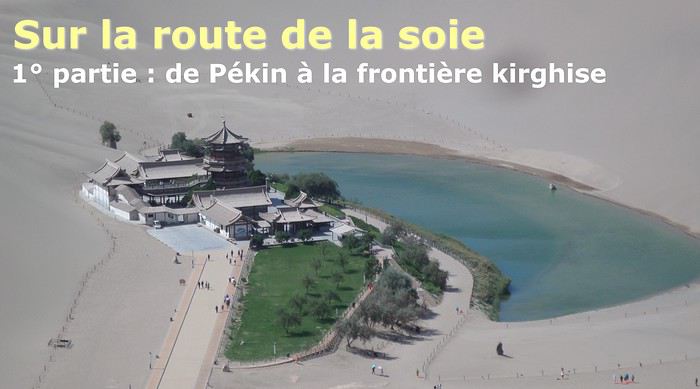
The Chinese Far West More than 30 years after my first trip to eastern China, I finally fulfilled an old dream: traveling solo from Beijing to the far west, discovering Xinjiang, the Uyghur people and the oppression they endure, the oases of Turpan and Kashgar, the Taklamakan Desert, the end of the Great Wall... The route was covered by train.
MENU PART 1: CHINA
1- Beijing (Jiankou) : the authentic Great Wall, without tourists 2- Cycling in Beijing, the best way to get around 3- Beijing : departure for the far west 4- Jiayuguan : getting by without English 5- Jiayuguan : scams and heritage 6- Dunhuang : abundance in the middle of the desert 7- Turpan : the Uyghurs under heavy surveillance 8- Kashgar : love at first sight for the old city 9- Kashgar : China’s recipe for controlling the populace 10- Tashkurgan : what on earth was I thinking going there! Kyrgyz border: a surreal epic Photo album from the 80s, contributions from other travelers (page 2)
1- JIANKOU Finding the authentic Great Wall, without tourists or a guide Friday, August 24, 2018 Thirty years later, I didn’t feel like revisiting the Great Wall at Badaling or any other overcrowded site. I chose to explore it at Jiankou, in its wildest, most authentic, and unrestored section, starting from a lost village deep in a valley—though it wasn’t *that* lost, since it had everything for communication.
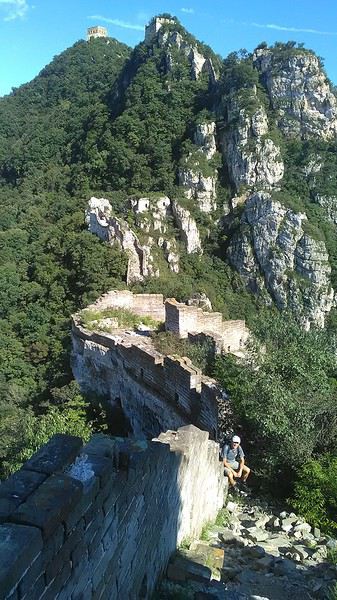
No need to pay for a taxi to get there—by timing it right, you can take the bus for just a few yuan. You have to get off at Xizhazi, the bus terminus. Be careful, there are only two buses a day in each direction. At the Xizhazi bus stop, I met a young couple who’d arrived with zero information about what to expect. We hiked the three of us toward the restored section of Mutianyu.
Still, be cautious With GPS and a topographic map (OpenTopoMap), you can set off without a problem or guide. The trail up to Jiankou is easy and well-marked. The trails down are too. But be careful—once you’re on the Wall, it’s real mountain hiking, with easy but dangerous climbing sections (over sheer drops). Not for amateurs or those afraid of heights! But what a reward. The Wall all to yourself, where it’s at its most daring. Truly mesmerizing.
More photos...
2- BEIJING The best way to get around the capital Sunday, August 26 The best way to explore the city is still by bike. Most are in a bike-share system, but you need to use an app—WeChat, the app that does everything, like monitoring your every move. No way I was installing that.
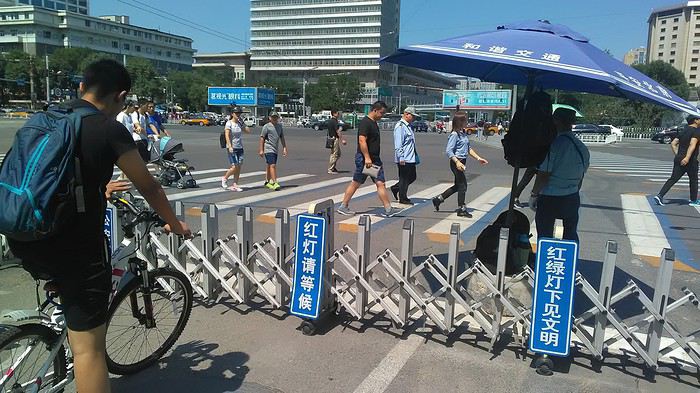
I found one at a rental shop near the hostel. The key is to quickly learn local traffic customs to minimize risks. Bike lanes are wide along the avenues.
But you still have to: - Watch out for anything parked on the bike paths—the most annoying are people napping or talking on the phone in their cars - Keep an eye on everything coming the wrong way—the list is long - The worst is right turns on red, which in Chinese traffic rules seem to have priority Once you get the hang of it, it’s fine. The city is huge but flat, so you can just wing it.
3- BEIJING By train to the far west Sunday, August 26 Beijing West Station is the size and operates like an airport. With your e-ticket from the agency, you first have to pick up your ticket at the special "English" counter, after passing through security. With your ticket in hand, you have to exit and enter through the boarding waiting area—not the platform—after a second security check.
 Then you find the right hall and wait for the sign to finally access the platform. In the end, it works pretty well given the incredible number of passengers to manage. Everywhere in Beijing, I saw that the Chinese have mastered crowd flow management.
Nice surprise: second-class carriages are clean, air-conditioned, and bright. Perfect, since I was in for 20 hours. One uniformed attendant per carriage, mobile meal service—luxury! Small downside: no luggage space. Hauling your suitcase up to the top bunk is quite a workout. I was in the middle, so it wasn’t too bad. The landscape, though, whether rural or urban, is pretty bleak. That should change once we leave the eastern plains.
Of course, I got my first police visit, with a thorough passport check and bag search. I was warned—going to the Chinese far west exposes you to this kind of hassle. But they were polite and respectful.
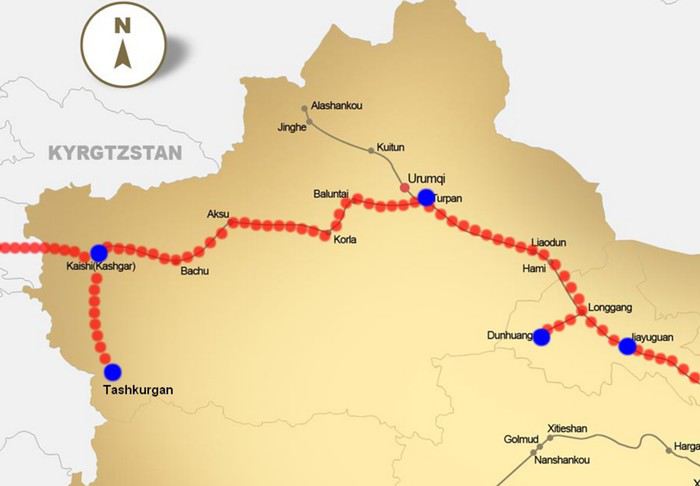 The Chinese Far West
4- JIAYUGUAN Getting by without English Monday, August 27 At the gates of two deserts (Gobi and Taklamakan) and at the foot of the Tibetan highlands, the Great Wall ends at Jiayuguan. Here, I found the deeper China I’d somewhat rediscovered during my bike ride, even if now everyone gets around on electric bikes and I’m no longer stared at like an alien.
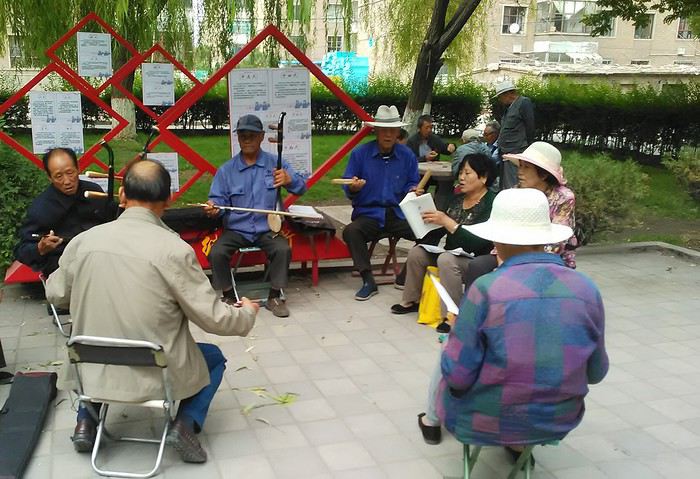
Prices are nothing like Beijing: you can find a full meal for 2 €, and my bike cost 7 € for two days. Plus, few people speak English—neither the owner of the HI hostel where I stayed, nor the ticket sellers at the sites, let alone the servers at the small eateries where I ate. Everything is written in Chinese. So I had to use the little Chinese I know to communicate about essentials. It makes the locals laugh to see a European trying to speak their language, but it earns respect. With Google Translate’s help, I managed.
Rant: With their avenues blocked for construction for kilometers without warning, and new roads not yet on maps, I must’ve taken 15 km of detours. More photos...
5- JIAYUGUAN Scams and heritage Tuesday, August 28 The Great Wall doesn’t exactly end at the fort I visited yesterday but 10 km further, at the entrance to a river gorge at the foot of the mountains. All that’s left is a badly damaged tower (more like a mound of earth) and a section of clay wall, similar to the one I biked yesterday.
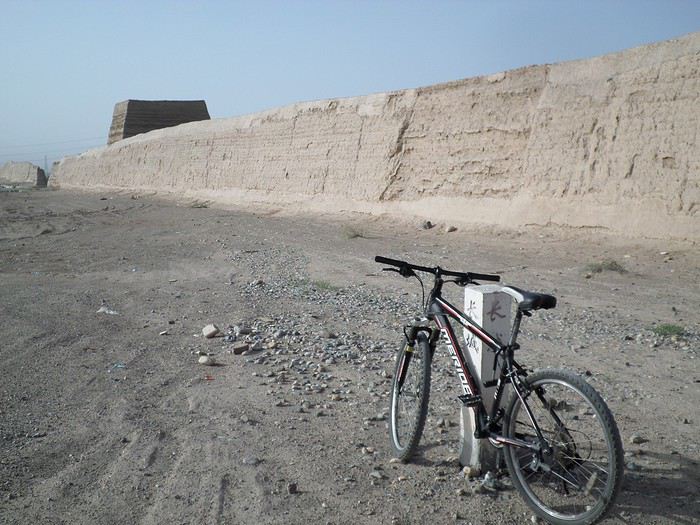
This morning, I hopped on my bike, determined to venture into the desert to see this highly symbolic site. First, you access it via a wide, brand-new road with not a soul in sight. Just before the site, I came across a grand welcome gate, very period-style, but it’s actually the inevitable toll booth.
Behind the gate, the road continues straight to the site, which you can see in the distance—at least 2 km away—the remains of the tower and wall. I had to leave my bike here. Fine. I went to the ticket counter and asked the price: 120 yuan! I couldn’t believe it—over 15 € for a simple mound of earth.
I showed my displeasure to the attendant, who couldn’t care less, and immediately turned back. 120 yuan—that’s the price for a new road, a fancy gate planted 2 km before the site just to force you to take a shuttle, and employees with nothing to do all day... Now I understand why I didn’t meet anyone!
Heritage China is a bit pricey Generally, sites are expensive for the country’s standard of living, but travelers are supposed to have money, so why hold back? I even gave up on the Forbidden City—reservations required days in advance (or on the black market at an impossible price). I prefer to keep the memory of my first visit, when entry must’ve cost a few dozen cents, and there were only a handful of visitors.
This morning, I took a taxi to see remarkable tombs of common people from the 3rd to 6th centuries. They’re small vaulted caves made of painted bricks, depicting scenes of daily life. Very pretty and moving. But even here, though the price was more reasonable, I was left wanting—only one of the 16 tombs is open to visitors, and it’s apparently not the most beautiful.
The authentic China—at least what’s left of it... Wandering the impersonal avenues of the city, you stumble upon a market. There, you still find traditional China—small shops with questionable hygiene, Go players, musicians, and even a dental prosthetist. The last refuge for those untouched by modernity. More photos...
6- DUNHUANG Abundance in the middle of the desert Wednesday, August 29 Well, I thought the landscape would be less bleak as I headed west. Nope. The only distraction in this expanse of dark, clayey sand is the forests of pylons and wind turbines, plus wild camels racing each other.
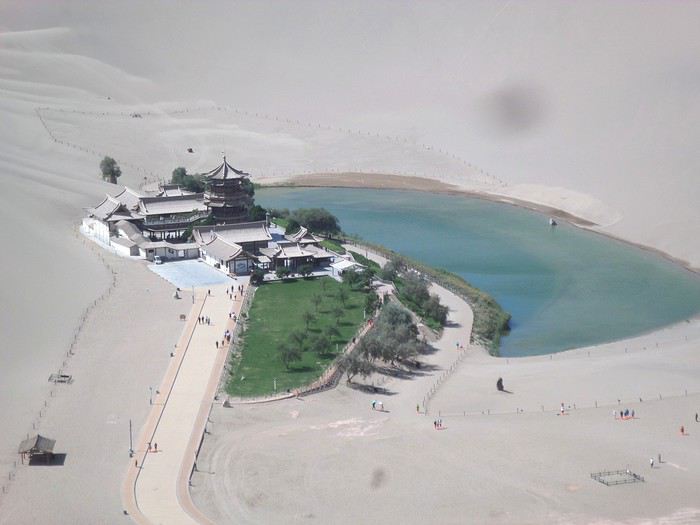 However, Dunhuang, the gateway to the Taklamakan, is by far the most pleasant Chinese city I know. There’s a real city center you can explore on foot. It’s hot but not unbearable, with a light, dry breeze. Much nicer than Beijing. The Han Chinese are still the majority, but the Muslim Uyghurs are more numerous, and the muezzin’s call to prayer echoes around the mosque.
The most surprising thing is the abundance and diversity of fruits and vegetables. You wonder how it all grows here. Well-irrigated, the desert sands are very fertile. Here, raisins have subtle, mysterious flavors, and the lamb really tastes like lamb.
Today, I visited the must-see Mingshashan, a dune complex next to which Pila is a molehill. The Basque Country, but covered in sand... More photos...
7- TURPAN The Uyghurs under heavy surveillance Friday, August 31 Surveillance cameras everywhere in the city, armed police stationed at intersections, in front of public buildings, at the entrance and inside tourist sites, police stations on every corner, patrols on foot or by car, khaki uniforms even for middle schoolers... here, the Han Chinese are in the minority, and you can feel it. Turpan feels like a city under siege.
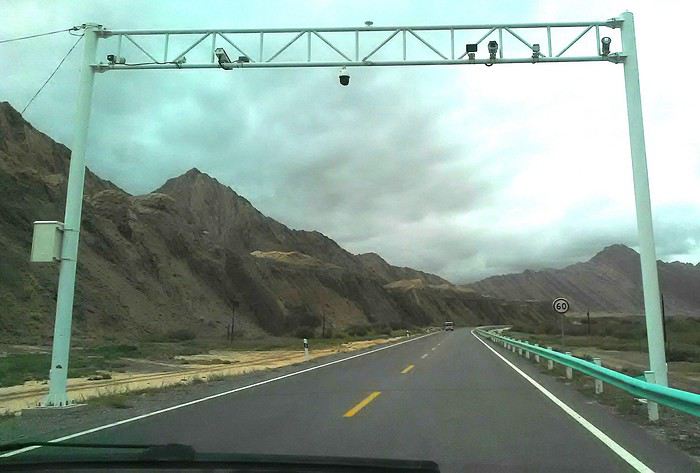
To enter the youth hostel where I stayed, there’s even a security gate, and the receptionist (a Han, like everyone in tourism) wears a bulletproof vest! Reassuring. Still, you don’t feel particularly threatened here, especially as a European. The troublemakers are the Chinese, not the Uyghurs. Generally, China is a very safe country for visitors.
Smile, you’re on camera! I was biking on an avenue when the car in front of me got flashed for driving slowly. I quickly understood why when I got flashed too.
Here, the official time is Beijing time, but it gets dark two hours later. It’ll be even worse in Kashgar. Trickier to manage: everything is displayed in Chinese and Arabic. Nothing in English. Choosing a menu is a shot in the dark. Apart from a few young Chinese, no one here speaks English, and my Chinese doesn’t seem very understandable...
Mogao, the end of the road for the Han Yesterday, near Dunhuang, I went to Mogao, a complex of decorated caves with Buddha sculptures and paintings. Stunning, but so crowded! Luckily, here in Turpan, Chinese tourists barely venture out. So I visited a Silk Road ghost town with only a handful of other visitors and under a howling wind.
The modern Chinese city is swallowing up the old Uyghur neighborhoods—only a museum-like district remains in the center, and pockets of resistance on the outskirts are doomed to disappear soon. More photos...
8- KASHGAR A (relative) love at first sight for the old city Sunday, September 2 After three overnight trains, here I am in the far west of China, nearly 4,000 km from the capital. Despite the omnipresent police and an old city preserved UNESCO-style, Kashgar is my Chinese love at first sight.
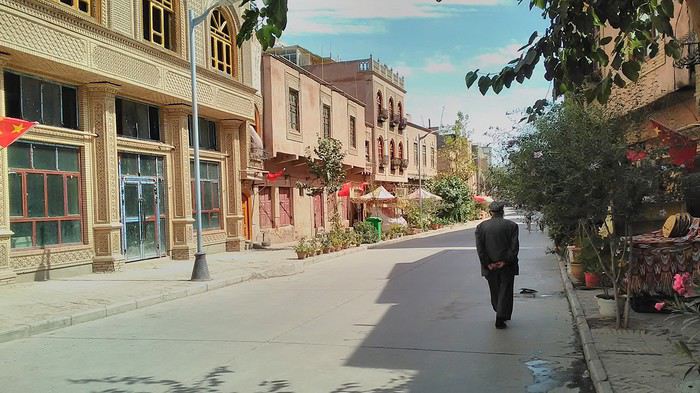
Finally, Chinese... well, sort of, because we’re in Uyghur territory here—a Turkic people with nothing culturally in common with the Han, the eastern Chinese. It started badly yesterday at Turfan station, where after three security gate passes, at least five passport checks, and a bag search, three adorable policewomen confiscated my antibacterial lotion because it had a flammable logo...
Then came the welcoming committee of armed cops at Kashgar station. Once all that was over, they left me alone—except you still have to go through security checks like everyone else to enter the old city, the bazaar, the livestock market... The further west you go, the more the siege mentality is evident. Luckily, the border isn’t far...
Despite the inevitable destruction-reconstruction, the city center has been well preserved. Thankfully, because it’s a very original style, a mix of local and colonial. I love it, even if it’s a bit too artificial, sanitized, and watered-down, and rather empty of residents. On the Silk Road, the city was famous for its great food. And it still is—rarely have I seen such richness and abundance of food! And not just scorpions or snakes. More photos...
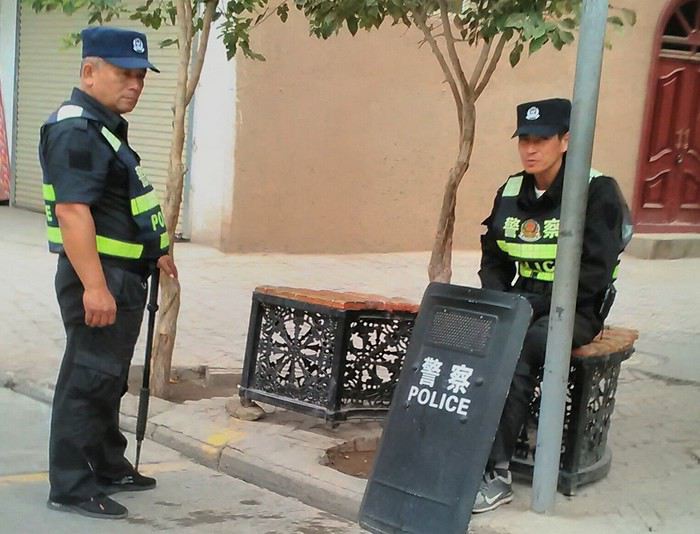
9- KASHGAR China’s recipe for controlling the populace Saturday, September 1 Xinjiang, along with Tibet, is a "sensitive" area of rebellion in the eyes of Chinese authorities. As a result, the state has these regions and their populations under total control. Tourists also feel the consequences, even if they’re not at risk of re-education camps.
 - Putting barbed wire and anti-ramming barriers around sensitive sites (schools, big hotels, government buildings...)
- Installing traffic surveillance gates with cameras and photo flashes (for all vehicles passing, including bikes) throughout the city and even in the countryside
- Posting uniformed guards with tasers, batons, or huge baseball bats every 100 meters
- Training the Han population (ethnic Chinese) in self-defense with sticks, preferably in the morning on the street. Men and women of all ages
- Starting school with the national anthem, doing military exercises, and receiving political indoctrination, all neatly lined up in the courtyard. (The dream school for any teacher)
- Placing a snitch in uniform (a pseudo-guard) in public gathering places, like youth hostels. Mine spends the day loafing around the courtyard
- Putting Chinese flags everywhere on the streets to remind everyone who’s in charge
- Installing security gates at every entrance to areas frequented by tourists (thanks for that) but not just there
- Never photographing cops, or else! I tried, but it’s not easy...
- Putting barbed wire and anti-ramming barriers around sensitive sites (schools, big hotels, government buildings...)
- Installing traffic surveillance gates with cameras and photo flashes (for all vehicles passing, including bikes) throughout the city and even in the countryside
- Posting uniformed guards with tasers, batons, or huge baseball bats every 100 meters
- Training the Han population (ethnic Chinese) in self-defense with sticks, preferably in the morning on the street. Men and women of all ages
- Starting school with the national anthem, doing military exercises, and receiving political indoctrination, all neatly lined up in the courtyard. (The dream school for any teacher)
- Placing a snitch in uniform (a pseudo-guard) in public gathering places, like youth hostels. Mine spends the day loafing around the courtyard
- Putting Chinese flags everywhere on the streets to remind everyone who’s in charge
- Installing security gates at every entrance to areas frequented by tourists (thanks for that) but not just there
- Never photographing cops, or else! I tried, but it’s not easy...
With all that, you can stroll around safely Not much crime! As for the amount the Chinese state spends to maintain such a system, it’s staggering! A third of the Han living in Xinjiang work in security. Today, I wandered freely around old Kashgar, which is quite large after all. More photos...
10- TASHKURGAN What on earth was I thinking going there! Wednesday, September 5 First, there’s the taxi—pretty crappy, with a driver who doesn’t speak a word of English and won’t stop smoking. Over six hours in that... shared with a completely out-of-it American.
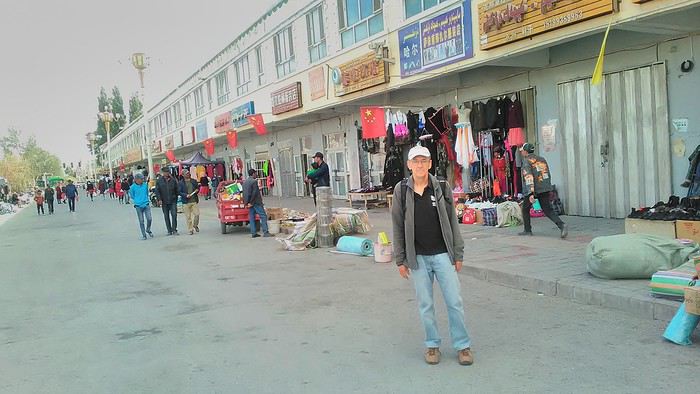
Then there are all the checkpoints along the way. I won’t go on—you know the drill by now.
After that, there’s Tashkurgan—a town with nothing to see, nothing to do. Deserted as soon as night falls. There’s this huge youth hostel and a few lost Chinese tapping away on their smartphones, chain-smoking. This lost American-European crowd, swapping tips on how to enter Pakistan or Tajikistan.
Luckily, there’s the Chinese Pamir Highway, lined with peaks over 7,000m. There’s the feeling of no longer being in China, with a population whose features are Middle Eastern. And these Tajik women with their stunning hairstyles and vibrant costumes. There’s the fact of having reached the westernmost Chinese city, far from crowds and tourist sites. A sort of end of the world. More photos...
11- KYRGYZ BORDER A surreal epic Thursday, September 6 The road from Kashgar to the Kyrgyzstan border is a little over 200 km and passes through beautiful landscapes of colorful, desert-like mountains with acrobatic folds. That’s the bucolic part of the trip.
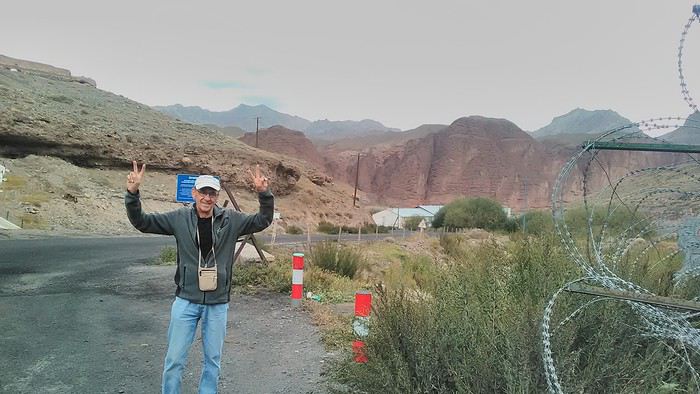 Yesterday, I managed to gather four people to rent a minibus to reach the border more easily: a Spaniard and an Argentine I’d already met in Turpan, and two New Zealanders who responded to the ad left at the hostel.
Absurdity and paranoia of Chinese authorities The highlight was crossing the town of Wuqia, 50 km past Kashgar. After tallying up with my fellow sufferers, we must’ve passed about ten checkpoints with: - Passport checks: 14 times, sometimes by two cops side by side - Bag checks: 4 times - Smartphone checks: 2 times, with deletion of "non-compliant" photos, and registration of your IMEI in the exit log!... Absurd and surreal at the same time, since my camera stayed in my bag, my apps are in French, and my photos have been online for ages...
With all that, we arrived just as the last checkpoint before the no man’s land marking the border between the two countries was on lunch break. And bam! Another 1.5-hour wait, alongside truckers who were much more used to this than we were.
What to think? The cops themselves aren’t fooled. They play the role they’re asked to, but sometimes you can coax a smile out of them—they realize how ridiculous the situation is.
What’s the point? That’s the big question my companions and I were tempted to answer with "to piss people off." To show you your place isn’t here, but with the other tourists, over there in the east, in Shanghai, Xi’an, or Guangzhou.
As for you, a traveler from a democratic country, you really experience this as aggression, humiliation, a violation of your private space. And yet, I’m respected, they speak to me properly. Today, I better understand what a Palestinian or a citizen of an occupied country might feel daily. A unique experience! Thanks, China.
And to top it off, the cherry on the cake! It’s still this glowing button you press to rate your passage after clearing the last obstacle before the exit stamp. I was so surprised it turned off before I could react. The Spaniard, with great humor and irony, had time to vote "excellent." In the end, he wasn’t wrong—you can hardly do better!
PS: I ditched my buddies at the border. They didn’t want to pay for a taxi to continue. So I took a direct taxi to Osh. The first 100 km are fabulous. I couldn’t take many photos, but I’ll be back on Monday to go to Tajikistan.
More photos...
The rest of the Silk Road, Part 2, in these travel journals: Kyrgyzstan, Tajikistan, Uzbekistan.
The Chinese Far West More than 30 years after my first trip to eastern China, I finally fulfilled an old dream: traveling solo from Beijing to the far west, discovering Xinjiang, the Uyghur people and the oppression they endure, the oases of Turpan and Kashgar, the Taklamakan Desert, the end of the Great Wall... The route was covered by train.
MENU PART 1: CHINA
1- Beijing (Jiankou) : the authentic Great Wall, without tourists 2- Cycling in Beijing, the best way to get around 3- Beijing : departure for the far west 4- Jiayuguan : getting by without English 5- Jiayuguan : scams and heritage 6- Dunhuang : abundance in the middle of the desert 7- Turpan : the Uyghurs under heavy surveillance 8- Kashgar : love at first sight for the old city 9- Kashgar : China’s recipe for controlling the populace 10- Tashkurgan : what on earth was I thinking going there! Kyrgyz border: a surreal epic Photo album from the 80s, contributions from other travelers (page 2)
1- JIANKOU Finding the authentic Great Wall, without tourists or a guide Friday, August 24, 2018 Thirty years later, I didn’t feel like revisiting the Great Wall at Badaling or any other overcrowded site. I chose to explore it at Jiankou, in its wildest, most authentic, and unrestored section, starting from a lost village deep in a valley—though it wasn’t *that* lost, since it had everything for communication.
No need to pay for a taxi to get there—by timing it right, you can take the bus for just a few yuan. You have to get off at Xizhazi, the bus terminus. Be careful, there are only two buses a day in each direction. At the Xizhazi bus stop, I met a young couple who’d arrived with zero information about what to expect. We hiked the three of us toward the restored section of Mutianyu.
Still, be cautious With GPS and a topographic map (OpenTopoMap), you can set off without a problem or guide. The trail up to Jiankou is easy and well-marked. The trails down are too. But be careful—once you’re on the Wall, it’s real mountain hiking, with easy but dangerous climbing sections (over sheer drops). Not for amateurs or those afraid of heights! But what a reward. The Wall all to yourself, where it’s at its most daring. Truly mesmerizing.
More photos...
2- BEIJING The best way to get around the capital Sunday, August 26 The best way to explore the city is still by bike. Most are in a bike-share system, but you need to use an app—WeChat, the app that does everything, like monitoring your every move. No way I was installing that.
I found one at a rental shop near the hostel. The key is to quickly learn local traffic customs to minimize risks. Bike lanes are wide along the avenues.
But you still have to: - Watch out for anything parked on the bike paths—the most annoying are people napping or talking on the phone in their cars - Keep an eye on everything coming the wrong way—the list is long - The worst is right turns on red, which in Chinese traffic rules seem to have priority Once you get the hang of it, it’s fine. The city is huge but flat, so you can just wing it.
3- BEIJING By train to the far west Sunday, August 26 Beijing West Station is the size and operates like an airport. With your e-ticket from the agency, you first have to pick up your ticket at the special "English" counter, after passing through security. With your ticket in hand, you have to exit and enter through the boarding waiting area—not the platform—after a second security check.
Then you find the right hall and wait for the sign to finally access the platform. In the end, it works pretty well given the incredible number of passengers to manage. Everywhere in Beijing, I saw that the Chinese have mastered crowd flow management.Nice surprise: second-class carriages are clean, air-conditioned, and bright. Perfect, since I was in for 20 hours. One uniformed attendant per carriage, mobile meal service—luxury! Small downside: no luggage space. Hauling your suitcase up to the top bunk is quite a workout. I was in the middle, so it wasn’t too bad. The landscape, though, whether rural or urban, is pretty bleak. That should change once we leave the eastern plains.
Of course, I got my first police visit, with a thorough passport check and bag search. I was warned—going to the Chinese far west exposes you to this kind of hassle. But they were polite and respectful.
The Chinese Far West4- JIAYUGUAN Getting by without English Monday, August 27 At the gates of two deserts (Gobi and Taklamakan) and at the foot of the Tibetan highlands, the Great Wall ends at Jiayuguan. Here, I found the deeper China I’d somewhat rediscovered during my bike ride, even if now everyone gets around on electric bikes and I’m no longer stared at like an alien.
Prices are nothing like Beijing: you can find a full meal for 2 €, and my bike cost 7 € for two days. Plus, few people speak English—neither the owner of the HI hostel where I stayed, nor the ticket sellers at the sites, let alone the servers at the small eateries where I ate. Everything is written in Chinese. So I had to use the little Chinese I know to communicate about essentials. It makes the locals laugh to see a European trying to speak their language, but it earns respect. With Google Translate’s help, I managed.
Rant: With their avenues blocked for construction for kilometers without warning, and new roads not yet on maps, I must’ve taken 15 km of detours. More photos...
5- JIAYUGUAN Scams and heritage Tuesday, August 28 The Great Wall doesn’t exactly end at the fort I visited yesterday but 10 km further, at the entrance to a river gorge at the foot of the mountains. All that’s left is a badly damaged tower (more like a mound of earth) and a section of clay wall, similar to the one I biked yesterday.
This morning, I hopped on my bike, determined to venture into the desert to see this highly symbolic site. First, you access it via a wide, brand-new road with not a soul in sight. Just before the site, I came across a grand welcome gate, very period-style, but it’s actually the inevitable toll booth.
Behind the gate, the road continues straight to the site, which you can see in the distance—at least 2 km away—the remains of the tower and wall. I had to leave my bike here. Fine. I went to the ticket counter and asked the price: 120 yuan! I couldn’t believe it—over 15 € for a simple mound of earth.
I showed my displeasure to the attendant, who couldn’t care less, and immediately turned back. 120 yuan—that’s the price for a new road, a fancy gate planted 2 km before the site just to force you to take a shuttle, and employees with nothing to do all day... Now I understand why I didn’t meet anyone!
Heritage China is a bit pricey Generally, sites are expensive for the country’s standard of living, but travelers are supposed to have money, so why hold back? I even gave up on the Forbidden City—reservations required days in advance (or on the black market at an impossible price). I prefer to keep the memory of my first visit, when entry must’ve cost a few dozen cents, and there were only a handful of visitors.
This morning, I took a taxi to see remarkable tombs of common people from the 3rd to 6th centuries. They’re small vaulted caves made of painted bricks, depicting scenes of daily life. Very pretty and moving. But even here, though the price was more reasonable, I was left wanting—only one of the 16 tombs is open to visitors, and it’s apparently not the most beautiful.
The authentic China—at least what’s left of it... Wandering the impersonal avenues of the city, you stumble upon a market. There, you still find traditional China—small shops with questionable hygiene, Go players, musicians, and even a dental prosthetist. The last refuge for those untouched by modernity. More photos...
6- DUNHUANG Abundance in the middle of the desert Wednesday, August 29 Well, I thought the landscape would be less bleak as I headed west. Nope. The only distraction in this expanse of dark, clayey sand is the forests of pylons and wind turbines, plus wild camels racing each other.
However, Dunhuang, the gateway to the Taklamakan, is by far the most pleasant Chinese city I know. There’s a real city center you can explore on foot. It’s hot but not unbearable, with a light, dry breeze. Much nicer than Beijing. The Han Chinese are still the majority, but the Muslim Uyghurs are more numerous, and the muezzin’s call to prayer echoes around the mosque.The most surprising thing is the abundance and diversity of fruits and vegetables. You wonder how it all grows here. Well-irrigated, the desert sands are very fertile. Here, raisins have subtle, mysterious flavors, and the lamb really tastes like lamb.
Today, I visited the must-see Mingshashan, a dune complex next to which Pila is a molehill. The Basque Country, but covered in sand... More photos...
7- TURPAN The Uyghurs under heavy surveillance Friday, August 31 Surveillance cameras everywhere in the city, armed police stationed at intersections, in front of public buildings, at the entrance and inside tourist sites, police stations on every corner, patrols on foot or by car, khaki uniforms even for middle schoolers... here, the Han Chinese are in the minority, and you can feel it. Turpan feels like a city under siege.
To enter the youth hostel where I stayed, there’s even a security gate, and the receptionist (a Han, like everyone in tourism) wears a bulletproof vest! Reassuring. Still, you don’t feel particularly threatened here, especially as a European. The troublemakers are the Chinese, not the Uyghurs. Generally, China is a very safe country for visitors.
Smile, you’re on camera! I was biking on an avenue when the car in front of me got flashed for driving slowly. I quickly understood why when I got flashed too.
Here, the official time is Beijing time, but it gets dark two hours later. It’ll be even worse in Kashgar. Trickier to manage: everything is displayed in Chinese and Arabic. Nothing in English. Choosing a menu is a shot in the dark. Apart from a few young Chinese, no one here speaks English, and my Chinese doesn’t seem very understandable...
Mogao, the end of the road for the Han Yesterday, near Dunhuang, I went to Mogao, a complex of decorated caves with Buddha sculptures and paintings. Stunning, but so crowded! Luckily, here in Turpan, Chinese tourists barely venture out. So I visited a Silk Road ghost town with only a handful of other visitors and under a howling wind.
The modern Chinese city is swallowing up the old Uyghur neighborhoods—only a museum-like district remains in the center, and pockets of resistance on the outskirts are doomed to disappear soon. More photos...
8- KASHGAR A (relative) love at first sight for the old city Sunday, September 2 After three overnight trains, here I am in the far west of China, nearly 4,000 km from the capital. Despite the omnipresent police and an old city preserved UNESCO-style, Kashgar is my Chinese love at first sight.
Finally, Chinese... well, sort of, because we’re in Uyghur territory here—a Turkic people with nothing culturally in common with the Han, the eastern Chinese. It started badly yesterday at Turfan station, where after three security gate passes, at least five passport checks, and a bag search, three adorable policewomen confiscated my antibacterial lotion because it had a flammable logo...
Then came the welcoming committee of armed cops at Kashgar station. Once all that was over, they left me alone—except you still have to go through security checks like everyone else to enter the old city, the bazaar, the livestock market... The further west you go, the more the siege mentality is evident. Luckily, the border isn’t far...
Despite the inevitable destruction-reconstruction, the city center has been well preserved. Thankfully, because it’s a very original style, a mix of local and colonial. I love it, even if it’s a bit too artificial, sanitized, and watered-down, and rather empty of residents. On the Silk Road, the city was famous for its great food. And it still is—rarely have I seen such richness and abundance of food! And not just scorpions or snakes. More photos...
9- KASHGAR China’s recipe for controlling the populace Saturday, September 1 Xinjiang, along with Tibet, is a "sensitive" area of rebellion in the eyes of Chinese authorities. As a result, the state has these regions and their populations under total control. Tourists also feel the consequences, even if they’re not at risk of re-education camps.
- Putting barbed wire and anti-ramming barriers around sensitive sites (schools, big hotels, government buildings...)
- Installing traffic surveillance gates with cameras and photo flashes (for all vehicles passing, including bikes) throughout the city and even in the countryside
- Posting uniformed guards with tasers, batons, or huge baseball bats every 100 meters
- Training the Han population (ethnic Chinese) in self-defense with sticks, preferably in the morning on the street. Men and women of all ages
- Starting school with the national anthem, doing military exercises, and receiving political indoctrination, all neatly lined up in the courtyard. (The dream school for any teacher)
- Placing a snitch in uniform (a pseudo-guard) in public gathering places, like youth hostels. Mine spends the day loafing around the courtyard
- Putting Chinese flags everywhere on the streets to remind everyone who’s in charge
- Installing security gates at every entrance to areas frequented by tourists (thanks for that) but not just there
- Never photographing cops, or else! I tried, but it’s not easy...With all that, you can stroll around safely Not much crime! As for the amount the Chinese state spends to maintain such a system, it’s staggering! A third of the Han living in Xinjiang work in security. Today, I wandered freely around old Kashgar, which is quite large after all. More photos...
10- TASHKURGAN What on earth was I thinking going there! Wednesday, September 5 First, there’s the taxi—pretty crappy, with a driver who doesn’t speak a word of English and won’t stop smoking. Over six hours in that... shared with a completely out-of-it American.
Then there are all the checkpoints along the way. I won’t go on—you know the drill by now.
After that, there’s Tashkurgan—a town with nothing to see, nothing to do. Deserted as soon as night falls. There’s this huge youth hostel and a few lost Chinese tapping away on their smartphones, chain-smoking. This lost American-European crowd, swapping tips on how to enter Pakistan or Tajikistan.
Luckily, there’s the Chinese Pamir Highway, lined with peaks over 7,000m. There’s the feeling of no longer being in China, with a population whose features are Middle Eastern. And these Tajik women with their stunning hairstyles and vibrant costumes. There’s the fact of having reached the westernmost Chinese city, far from crowds and tourist sites. A sort of end of the world. More photos...
11- KYRGYZ BORDER A surreal epic Thursday, September 6 The road from Kashgar to the Kyrgyzstan border is a little over 200 km and passes through beautiful landscapes of colorful, desert-like mountains with acrobatic folds. That’s the bucolic part of the trip.
Yesterday, I managed to gather four people to rent a minibus to reach the border more easily: a Spaniard and an Argentine I’d already met in Turpan, and two New Zealanders who responded to the ad left at the hostel.Absurdity and paranoia of Chinese authorities The highlight was crossing the town of Wuqia, 50 km past Kashgar. After tallying up with my fellow sufferers, we must’ve passed about ten checkpoints with: - Passport checks: 14 times, sometimes by two cops side by side - Bag checks: 4 times - Smartphone checks: 2 times, with deletion of "non-compliant" photos, and registration of your IMEI in the exit log!... Absurd and surreal at the same time, since my camera stayed in my bag, my apps are in French, and my photos have been online for ages...
With all that, we arrived just as the last checkpoint before the no man’s land marking the border between the two countries was on lunch break. And bam! Another 1.5-hour wait, alongside truckers who were much more used to this than we were.
What to think? The cops themselves aren’t fooled. They play the role they’re asked to, but sometimes you can coax a smile out of them—they realize how ridiculous the situation is.
What’s the point? That’s the big question my companions and I were tempted to answer with "to piss people off." To show you your place isn’t here, but with the other tourists, over there in the east, in Shanghai, Xi’an, or Guangzhou.
As for you, a traveler from a democratic country, you really experience this as aggression, humiliation, a violation of your private space. And yet, I’m respected, they speak to me properly. Today, I better understand what a Palestinian or a citizen of an occupied country might feel daily. A unique experience! Thanks, China.
And to top it off, the cherry on the cake! It’s still this glowing button you press to rate your passage after clearing the last obstacle before the exit stamp. I was so surprised it turned off before I could react. The Spaniard, with great humor and irony, had time to vote "excellent." In the end, he wasn’t wrong—you can hardly do better!
PS: I ditched my buddies at the border. They didn’t want to pay for a taxi to continue. So I took a direct taxi to Osh. The first 100 km are fabulous. I couldn’t take many photos, but I’ll be back on Monday to go to Tajikistan.
More photos...
The rest of the Silk Road, Part 2, in these travel journals: Kyrgyzstan, Tajikistan, Uzbekistan.
Projet voyage au Québec du 10 au 21 août (Montréal - Québec - Gaspésie) English translation pending
Bonjour à tous
Tout d'abord tous mes vœux pour cette nouvelle année 😊🇨🇦 ça y est pour nous le compte à rebours à sonner, les choses deviennent concrètes 😍nous avons réservé nos billets d'avions notre séjour se déroulera du 10 au 21 août Nous devons voir pour louer une voiture car l'idée est de passer 2/3 jours maximum à Montréal, 3/4 jours à Québec et découvrir la Gaspesie Petite question faut il louer une voiture sur Montréal ou peut on se déplacer facilement en métro ? Bus ?.... On a éventuellement penser à prendre le train de Montréal à Québec et de louer une voiture à partir de Québec jusqu'à la fin de notre séjour qu'en pensez-vous ? Autre question L'AVE doit être faite combien de temps avant ? Pour les hébergements on pense à faire du Air Bnb et se faire un bel hôtel du côté de Percé, côté excursion voir des baleines vers Percé, les chutes de Montmorency, un parc national pour des balades, du kayak et des milliers de photos 😝😝😊😊
Tout d'abord tous mes vœux pour cette nouvelle année 😊🇨🇦 ça y est pour nous le compte à rebours à sonner, les choses deviennent concrètes 😍nous avons réservé nos billets d'avions notre séjour se déroulera du 10 au 21 août Nous devons voir pour louer une voiture car l'idée est de passer 2/3 jours maximum à Montréal, 3/4 jours à Québec et découvrir la Gaspesie Petite question faut il louer une voiture sur Montréal ou peut on se déplacer facilement en métro ? Bus ?.... On a éventuellement penser à prendre le train de Montréal à Québec et de louer une voiture à partir de Québec jusqu'à la fin de notre séjour qu'en pensez-vous ? Autre question L'AVE doit être faite combien de temps avant ? Pour les hébergements on pense à faire du Air Bnb et se faire un bel hôtel du côté de Percé, côté excursion voir des baleines vers Percé, les chutes de Montmorency, un parc national pour des balades, du kayak et des milliers de photos 😝😝😊😊
Road trip 3 semaines en Patagonie en février-mars English translation pending
Hola les sud-américanos,
Ma fiancée et moi même avons fraichement débarqués sur le continent, en Guyane, il y a 2 mois. Initialement nous avions prévu, pour début 2020, de se faire un road-trip rando et faune au Costa Rica mais avec notre déménagement surprise à Cayenne on s'est finalement dit que ça risquait d’être un petit peu redondant avec la Guyane (Foret tropicale, jaguar, perroquets tout ça tout ça...). D'où l'Argentine ! 😉 Enfin plus précisément la Patagonie.
Nous projetons donc de partir 3 semaines en Argentine entre Février et mi-Mars.
L'idée serait de faire un road-trip de 2 semaines et demi en Patagonie, en van si possible, et de finir par un aller-retour de 2-3 jours aux chute d’Iguaçu.
Le mieux semble d'arriver à El Calafate, d'y louer un van et faire une boucle avec El Chalten, si possible Torres del paine, puis descendre sur la terre de feu et Ushuaïa.
Je voulais rapidement voir avec ceux qui ont déjà visité cette région, si ça semble réalisable ? Est-ce que vous avez des loueurs de vans à conseiller ou autres conseils en tout genre ?
Je suis en train de lire les carnets... 😉
Merci pour votre aide ! 🙂
Ma fiancée et moi même avons fraichement débarqués sur le continent, en Guyane, il y a 2 mois. Initialement nous avions prévu, pour début 2020, de se faire un road-trip rando et faune au Costa Rica mais avec notre déménagement surprise à Cayenne on s'est finalement dit que ça risquait d’être un petit peu redondant avec la Guyane (Foret tropicale, jaguar, perroquets tout ça tout ça...). D'où l'Argentine ! 😉 Enfin plus précisément la Patagonie.
Nous projetons donc de partir 3 semaines en Argentine entre Février et mi-Mars.
L'idée serait de faire un road-trip de 2 semaines et demi en Patagonie, en van si possible, et de finir par un aller-retour de 2-3 jours aux chute d’Iguaçu.
Le mieux semble d'arriver à El Calafate, d'y louer un van et faire une boucle avec El Chalten, si possible Torres del paine, puis descendre sur la terre de feu et Ushuaïa.
Je voulais rapidement voir avec ceux qui ont déjà visité cette région, si ça semble réalisable ? Est-ce que vous avez des loueurs de vans à conseiller ou autres conseils en tout genre ?
Je suis en train de lire les carnets... 😉
Merci pour votre aide ! 🙂
Vietnam du Nord au Sud English translation pending
Coucou,
Afin d'établir le programme d'1 mois au Vetnam en novembre2018, j'avais glané beaucoup d'infos sur ce forum.
Si ça peut en aider d'autres, j'ai fait un retour sur mon blog : https://virloblog.fr
PROGRAMME 4 SEMAINES AU VIETNAM
Les 4 semaines passées au Vietnam en novembre 2018 m’ont apportée tellement qu’il est toujours difficile de se replonger dans ces souvenirs sans une certaine nostalgie. Les paysages, les rencontres, la bienveillance de ce peuple, la cuisine font partie de cet amour du pays. Nous avons rencontré des personnes extraordinaires au cours de ce voyage, qui ont su nous communiquer leur amour pour leur pays. Le Vietnam, c’est une grande leçon de vie. Voilà une idée de parcours pour 4 semaines, tout à fait réalisable puisque nous sommes partis de Corse le 30 octobre et rentrés le 27 novembre. Les détails pour chaque ville, transports, hôtels, excursions, budget feront l’objet d’articles à part. ET C’EST PARTI POUR 4 SEMAINES…
HANOÏ : 5 jours / 5 nuits Hanoï (qui signifie « la ville entre les fleuves ») est la capitale du Vietnam. Située au nord du Vietnam, la ville ne cesse de s’étendre et compte plus de 7 000 000 d’habitants. Cette ville bouge 24h/24 et en débarquant à Hanoï, on est de suite « dans le bain » ! Il y a tant à découvrir à Hanoï que 4 à 5 jours ne seront pas de trop. Le mieux est de loger dans le quartier Hoàn Kiếm, qui est le vieux quartier, quartier des 40 corporations, non loin du lac du même nom, le Lac Hoàn Kiếm. Hanoï sera aussi le point de départ pour se rendre à Sapa ou à la Baie d’Halong. Retrouvez l’article sur Hanoï ici
SA PA : 3 jours / 4 nuits Pour Sa Pa, nous avons pris un Tour avec une agence de Hanoï, un Trek de 3 jours, 2 nuits et le train de nuit aller/retour. C’est je pense le plus simple côté organisation et tranquillité d’esprit. Sa Pa se trouve au nord du Vietnam, proche de la frontière chinoise. C’est la montagne et il fait plus frais et c’est la région des rizières en plateau. Plusieurs ethnies comme les Dao, les Hmongs, … vivent autour de Sa pa Alors pour le trek de Sa Pa, soyez en bonne condition physique parce ça grimpe quand même ! Retrouvez l’article sur Sa Pa ici
BAIE D’HALONG : 3 jours / 2 nuits Malgré les hordes de touristes dans ce lieu magnifique, on ne peut pas venir au Vietnam sans aller dans la Baie d’Halong et ses 1 969 îles karstiques calcaires immergées. Comme pour Sa Pa, il vaut mieux prendre un Tour depuis Hanoï qui vous prendra en charge à votre hôtel et vous y ramènera à moins de faire comme nous avons fait en prenant un transfert en bus depuis Halong vers Tam Coc. Il y a le choix entre 1 nuit à bord ou 2, c’est selon le budget et le temps. Retrouvez l’article sur la Baie d’Halong ici
NINH BINH / TAM COC : 3 jours / 3 nuits La région de Ninh Binh est appelée la Baie d’Halong terrestre et Tam Coc est un peu plus calme que Halong ! C’est l’occasion de louer un scooter pour explorer les campagnes environnantes et se rendre dans les différents embarcadères pour les promenades en barque et surtout monter sur la colline au dragon pour la magnifique vue. Retrouvez l’article sur Nihn Binh Part.1 ici et Part. 2 ici
HUE : 2 jours / 2 nuits Hué est l’ancienne capitale impériale du Vietnam et sa Cité Impériale est somptueuse. Remonter la Rivière des Parfums pour voir les tombeaux des anciens empereurs permet également de voir la vie des vietnamiens au fil de l’eau. Le soir, Hué est très animé et possède des bars rivalisant par leur décoration incroyable, et on mange très très bien à Hué. Retrouvez l’article sur Hué et la Cité Impériale ici et Hué - Rivière des parfums et Tombeaux ici
HOI AN : 3 jours / 3 nuits Pour faire le trajet Hué / Hoi An, nous avons suivi les recommandations de Worldwildbrice en faisant appel à Le Family Riders et ça a été une des plus belles journées de ce voyage. Retrouvez l’article sur Hué à Hôi An avec les Easy Riders ici.
Hoi An est une petite ville adorable mais pour l’apprécier, il faudra vous lever tôt parce que sinon c’est un peu comme Saint-Tropez en plein mois d’août ! Il y a énormément de choses à découvrir dans la campagne de Hoi An en faisant un Tour à vélo afin de découvrir l’artisanat. Retrouvez l’article sur Hôi An ici et l’article sur la campagne de Hôi An ici.
CAN THO : 2 jours / 2 nuits La ville de Can Tho n’a rien d’exceptionnel en elle-même mais sa situation sur le Mékong Toute la vie et l’activité se passent sur le Mékong et autour. On a passé une super journée avec Ngoc Paul, contactée via Facebook, en partant à 5h du matin en canot pour le marché flottant, et en continuant la ballade par une fabrique de nouilles de riz, une ferme de cacao, une balade à vélo, et autres… Retrouvez l’article sur Can Tho ici
HO CHI MINH : 2 jours / 2 nuits Ho Chi Minh est une grande ville beaucoup plus occidentale que Hanoï. Il y a à Saïgon beaucoup de bâtiments datant de l’époque coloniale française comme l’Opéra, La Poste centrale, la Cathédrale, … De Saïgon, vous pourrez vous rendre à Cu Chi, lieu emblématique de la guerre du Vietnam. Le passage à Ho Chi Minh est aussi l’occasion de se rendre au grand marché Bến Thành pour y faire les achats avant le retour. Retrouvez l’article sur les Tunnels de Cu Chi ici
MUI NE : 2 jours / 2 nuits Et pour finir par un peu de farniente et de plage parce que mine de rien, on ne s’est pas beaucoup reposé pendant ces vacances, direction Mui Né. Mui Né est la station balnéaire des russes, mais il y a des particularités à cet endroit qui sont à voir : Petite excursion matinale en Jeep dans le désert blanc, puis le désert rouge, la rivière des fées, et pour finir le retour de pêche sur la plage. Plus de précisions et conseils pour chaque étape arrivera dans les semaines qui viennent… Nous ne sommes jamais ennuyés au Vietnam, nous avons tout aimé : les paysages, les gens, la nourriture.
PROGRAMME 4 SEMAINES AU VIETNAM
Les 4 semaines passées au Vietnam en novembre 2018 m’ont apportée tellement qu’il est toujours difficile de se replonger dans ces souvenirs sans une certaine nostalgie. Les paysages, les rencontres, la bienveillance de ce peuple, la cuisine font partie de cet amour du pays. Nous avons rencontré des personnes extraordinaires au cours de ce voyage, qui ont su nous communiquer leur amour pour leur pays. Le Vietnam, c’est une grande leçon de vie. Voilà une idée de parcours pour 4 semaines, tout à fait réalisable puisque nous sommes partis de Corse le 30 octobre et rentrés le 27 novembre. Les détails pour chaque ville, transports, hôtels, excursions, budget feront l’objet d’articles à part. ET C’EST PARTI POUR 4 SEMAINES…
HANOÏ : 5 jours / 5 nuits Hanoï (qui signifie « la ville entre les fleuves ») est la capitale du Vietnam. Située au nord du Vietnam, la ville ne cesse de s’étendre et compte plus de 7 000 000 d’habitants. Cette ville bouge 24h/24 et en débarquant à Hanoï, on est de suite « dans le bain » ! Il y a tant à découvrir à Hanoï que 4 à 5 jours ne seront pas de trop. Le mieux est de loger dans le quartier Hoàn Kiếm, qui est le vieux quartier, quartier des 40 corporations, non loin du lac du même nom, le Lac Hoàn Kiếm. Hanoï sera aussi le point de départ pour se rendre à Sapa ou à la Baie d’Halong. Retrouvez l’article sur Hanoï ici
SA PA : 3 jours / 4 nuits Pour Sa Pa, nous avons pris un Tour avec une agence de Hanoï, un Trek de 3 jours, 2 nuits et le train de nuit aller/retour. C’est je pense le plus simple côté organisation et tranquillité d’esprit. Sa Pa se trouve au nord du Vietnam, proche de la frontière chinoise. C’est la montagne et il fait plus frais et c’est la région des rizières en plateau. Plusieurs ethnies comme les Dao, les Hmongs, … vivent autour de Sa pa Alors pour le trek de Sa Pa, soyez en bonne condition physique parce ça grimpe quand même ! Retrouvez l’article sur Sa Pa ici
BAIE D’HALONG : 3 jours / 2 nuits Malgré les hordes de touristes dans ce lieu magnifique, on ne peut pas venir au Vietnam sans aller dans la Baie d’Halong et ses 1 969 îles karstiques calcaires immergées. Comme pour Sa Pa, il vaut mieux prendre un Tour depuis Hanoï qui vous prendra en charge à votre hôtel et vous y ramènera à moins de faire comme nous avons fait en prenant un transfert en bus depuis Halong vers Tam Coc. Il y a le choix entre 1 nuit à bord ou 2, c’est selon le budget et le temps. Retrouvez l’article sur la Baie d’Halong ici
NINH BINH / TAM COC : 3 jours / 3 nuits La région de Ninh Binh est appelée la Baie d’Halong terrestre et Tam Coc est un peu plus calme que Halong ! C’est l’occasion de louer un scooter pour explorer les campagnes environnantes et se rendre dans les différents embarcadères pour les promenades en barque et surtout monter sur la colline au dragon pour la magnifique vue. Retrouvez l’article sur Nihn Binh Part.1 ici et Part. 2 ici
HUE : 2 jours / 2 nuits Hué est l’ancienne capitale impériale du Vietnam et sa Cité Impériale est somptueuse. Remonter la Rivière des Parfums pour voir les tombeaux des anciens empereurs permet également de voir la vie des vietnamiens au fil de l’eau. Le soir, Hué est très animé et possède des bars rivalisant par leur décoration incroyable, et on mange très très bien à Hué. Retrouvez l’article sur Hué et la Cité Impériale ici et Hué - Rivière des parfums et Tombeaux ici
HOI AN : 3 jours / 3 nuits Pour faire le trajet Hué / Hoi An, nous avons suivi les recommandations de Worldwildbrice en faisant appel à Le Family Riders et ça a été une des plus belles journées de ce voyage. Retrouvez l’article sur Hué à Hôi An avec les Easy Riders ici.
Hoi An est une petite ville adorable mais pour l’apprécier, il faudra vous lever tôt parce que sinon c’est un peu comme Saint-Tropez en plein mois d’août ! Il y a énormément de choses à découvrir dans la campagne de Hoi An en faisant un Tour à vélo afin de découvrir l’artisanat. Retrouvez l’article sur Hôi An ici et l’article sur la campagne de Hôi An ici.
CAN THO : 2 jours / 2 nuits La ville de Can Tho n’a rien d’exceptionnel en elle-même mais sa situation sur le Mékong Toute la vie et l’activité se passent sur le Mékong et autour. On a passé une super journée avec Ngoc Paul, contactée via Facebook, en partant à 5h du matin en canot pour le marché flottant, et en continuant la ballade par une fabrique de nouilles de riz, une ferme de cacao, une balade à vélo, et autres… Retrouvez l’article sur Can Tho ici
HO CHI MINH : 2 jours / 2 nuits Ho Chi Minh est une grande ville beaucoup plus occidentale que Hanoï. Il y a à Saïgon beaucoup de bâtiments datant de l’époque coloniale française comme l’Opéra, La Poste centrale, la Cathédrale, … De Saïgon, vous pourrez vous rendre à Cu Chi, lieu emblématique de la guerre du Vietnam. Le passage à Ho Chi Minh est aussi l’occasion de se rendre au grand marché Bến Thành pour y faire les achats avant le retour. Retrouvez l’article sur les Tunnels de Cu Chi ici
MUI NE : 2 jours / 2 nuits Et pour finir par un peu de farniente et de plage parce que mine de rien, on ne s’est pas beaucoup reposé pendant ces vacances, direction Mui Né. Mui Né est la station balnéaire des russes, mais il y a des particularités à cet endroit qui sont à voir : Petite excursion matinale en Jeep dans le désert blanc, puis le désert rouge, la rivière des fées, et pour finir le retour de pêche sur la plage. Plus de précisions et conseils pour chaque étape arrivera dans les semaines qui viennent… Nous ne sommes jamais ennuyés au Vietnam, nous avons tout aimé : les paysages, les gens, la nourriture.
Andalusia with family (and two families) by car, late April 2019
Hi everyone,
Just back from two weeks in Andalusia, and I wanted to share this experience with you—maybe it’ll help with planning a trip. I’ll start with a quick recap in this post and try to add photos and day-by-day details later (still sorting through them). Hope I don’t bore you too much! 😎
Trip details:
April 20 to May 4, 2019:
7 days on the Costa de la Luz (El Puerto de Santa María) in an Airbnb,
4 days at the junction of the Costa del Sol and Costa Tropical (Salobreña) in an Airbnb,
3 days at Cabo de Gata for some rest at a campsite in Los Escullos.
Two families of four, each with our own car: three 9-year-old boys and a 6-year-old girl. One family was more into city exploration (not us, but we’re working on it), and the other preferred relaxation and nature (that’s us). We speak a little Spanish.
Over 5,000 km, including 2,500 km for the round trip from Carcassonne.
The weather: Variable, but we expected better for this region in late April. The first week on the Costa de la Luz was sometimes chilly (< 20°C), and the second week was warmer but not excessive (< 25°C). At least we didn’t get much rain!
Our budget: Around 2600 € per family:
700 € for accommodations, about 50 € per night,
1000 € for meals and restaurants. We usually spent around 50 € per family at restaurants—we ate out for lunch (except for 2–3 picnics) and cooked at home in the evenings, trying to be back by 6 PM.
600 € for activities: Río Tinto, a flamenco show, visits to the Alhambra, Giralda, and Alcázar, Oasis Park with meals, and a kayaking trip.
300 € for gas and tolls.
Preparation: A few months ahead with bookings for accommodations and tickets for the Alhambra, Giralda, and Alcázar. We used a few travel guides—I like the *Évasion* guide for initial planning. *Géoguide* was okay, but our friends’ *Routard* was the most useful. We also spent three months brushing up on Spanish with Mosalingua (a great spaced-repetition method, max 10 minutes a day). Downloaded Maps.me and the Andalusia map in advance—essential. And we used Tricount to track shared expenses with friends—super handy.
What we did/saw:
3 city visits (Seville, Granada, and Cádiz) + Málaga for our friends (we vetoed Córdoba—too many cities for us).
4 white villages (Vejer de la Frontera, Arcos de la Frontera, Grazalema, Ronda) + Tarifa for our friends.
Beaches (Tarifa and Bolonia, Matalascañas, Nerja, Cabo de Gata).
Nature and fun moments: Doñana National Park, a kayaking trip along the rocky coast near Nerja, and the Wild West/animal park in the Tabernas Desert.
A little culture: Río Tinto mines, the archaeological site of Itálica, Columbus’s caravels, Nerja Cave for us, and the Picasso Museum in Málaga for our friends. Plus, seeing the ham-drying process in the Alpujarras (for our friends).
Our highlights
Nerja and the surrounding villages: The rocky coast was amazing, and we loved the kayaking trip, even if the water was freezing for snorkeling. The beaches are sheltered from the wind, the town is charming, and the cave is incredible.
El Rocío and Doñana National Park. El Rocío has a timeless, almost Wild West vibe—we could’ve stayed a day or two. The quiet and pine scents reminded us of the Landes region.
What we didn’t love as much:
Río Tinto mines: Not super exciting, and the guides’ nonstop chatter kind of ruined the "nature" experience.
Our little regrets (for next time):
Forgetting our passports and missing a day trip to Tangier from Tarifa.
Not having an extra day around Nerja to go snowboarding in the Sierra Nevada—just 1.5 hours away (the kayak guide suggested it).
Not spending at least one night in El Rocío to explore Doñana National Park at dawn.
Antequera with the Guadalhorce reservoir and the Caminito del Rey (but it would’ve meant 2 more hours of driving, and we didn’t have the energy).
My general impressions of Andalusia and Spain
Landscapes: A feeling of extreme concentration of a single activity in some areas—endless olive groves, wind farms on the Costa de la Luz (which I thought were well-integrated), rows of buildings along the Costa del Sol (yikes, glad we didn’t stop there), greenhouses around Almería (a shame to have frozen the coast for so many kilometers), and the massive industrial port of Huelva.
What surprised us compared to France was the lack of small hamlets—villages are clearly defined, and people cluster there, leaving vast landscapes without human presence. In France, you find houses scattered everywhere.
Roads: Relatively few tolls. Sure, rest areas aren’t as nice as in France, but the roads are in good condition, and our wallet was happy. The roads are pretty straight with countless bridges and tunnels—the upside (besides fast travel) is that there aren’t many secondary roads disrupting the scenery.
Tourism and activities: A huge variety and richness. Feels like everyone can find something they like, and 15 days barely scratched the surface. It’s amazing how quickly you go from the coast to snow-capped peaks (Sierra Nevada) or from farmland to desert (Tabernas). And the mix of European and Arabic architecture in the same city is really special.
One small regret: Not interacting more with locals. We didn’t luck out with our Airbnbs. But shopkeepers were great—very patient with my broken Spanish! :-)
Overall, I think our choice to stay on the Costa de la Luz and then near Nerja worked well. We could explore pretty easily (even if we logged a lot of kilometers), and the settings were fantastic. The 3 days of total relaxation at Cabo de Gata were perfect.
If you prefer shorter stops, you could try staying in El Rocío (easy access to Seville and great for an early visit to Doñana National Park) or maybe Grazalema for a hike in the mountains (weather-dependent). And of course, Tarifa for a day trip to Tangier or Gibraltar.
More details and photos to come soon!
Laurent
Just back from two weeks in Andalusia, and I wanted to share this experience with you—maybe it’ll help with planning a trip. I’ll start with a quick recap in this post and try to add photos and day-by-day details later (still sorting through them). Hope I don’t bore you too much! 😎
Trip details:
April 20 to May 4, 2019:
7 days on the Costa de la Luz (El Puerto de Santa María) in an Airbnb,
4 days at the junction of the Costa del Sol and Costa Tropical (Salobreña) in an Airbnb,
3 days at Cabo de Gata for some rest at a campsite in Los Escullos.
Two families of four, each with our own car: three 9-year-old boys and a 6-year-old girl. One family was more into city exploration (not us, but we’re working on it), and the other preferred relaxation and nature (that’s us). We speak a little Spanish.
Over 5,000 km, including 2,500 km for the round trip from Carcassonne.
The weather: Variable, but we expected better for this region in late April. The first week on the Costa de la Luz was sometimes chilly (< 20°C), and the second week was warmer but not excessive (< 25°C). At least we didn’t get much rain!
Our budget: Around 2600 € per family:
700 € for accommodations, about 50 € per night,
1000 € for meals and restaurants. We usually spent around 50 € per family at restaurants—we ate out for lunch (except for 2–3 picnics) and cooked at home in the evenings, trying to be back by 6 PM.
600 € for activities: Río Tinto, a flamenco show, visits to the Alhambra, Giralda, and Alcázar, Oasis Park with meals, and a kayaking trip.
300 € for gas and tolls.
Preparation: A few months ahead with bookings for accommodations and tickets for the Alhambra, Giralda, and Alcázar. We used a few travel guides—I like the *Évasion* guide for initial planning. *Géoguide* was okay, but our friends’ *Routard* was the most useful. We also spent three months brushing up on Spanish with Mosalingua (a great spaced-repetition method, max 10 minutes a day). Downloaded Maps.me and the Andalusia map in advance—essential. And we used Tricount to track shared expenses with friends—super handy.
What we did/saw:
3 city visits (Seville, Granada, and Cádiz) + Málaga for our friends (we vetoed Córdoba—too many cities for us).
4 white villages (Vejer de la Frontera, Arcos de la Frontera, Grazalema, Ronda) + Tarifa for our friends.
Beaches (Tarifa and Bolonia, Matalascañas, Nerja, Cabo de Gata).
Nature and fun moments: Doñana National Park, a kayaking trip along the rocky coast near Nerja, and the Wild West/animal park in the Tabernas Desert.
A little culture: Río Tinto mines, the archaeological site of Itálica, Columbus’s caravels, Nerja Cave for us, and the Picasso Museum in Málaga for our friends. Plus, seeing the ham-drying process in the Alpujarras (for our friends).
Our highlights
Nerja and the surrounding villages: The rocky coast was amazing, and we loved the kayaking trip, even if the water was freezing for snorkeling. The beaches are sheltered from the wind, the town is charming, and the cave is incredible.
El Rocío and Doñana National Park. El Rocío has a timeless, almost Wild West vibe—we could’ve stayed a day or two. The quiet and pine scents reminded us of the Landes region.
What we didn’t love as much:
Río Tinto mines: Not super exciting, and the guides’ nonstop chatter kind of ruined the "nature" experience.
Our little regrets (for next time):
Forgetting our passports and missing a day trip to Tangier from Tarifa.
Not having an extra day around Nerja to go snowboarding in the Sierra Nevada—just 1.5 hours away (the kayak guide suggested it).
Not spending at least one night in El Rocío to explore Doñana National Park at dawn.
Antequera with the Guadalhorce reservoir and the Caminito del Rey (but it would’ve meant 2 more hours of driving, and we didn’t have the energy).
My general impressions of Andalusia and Spain
Landscapes: A feeling of extreme concentration of a single activity in some areas—endless olive groves, wind farms on the Costa de la Luz (which I thought were well-integrated), rows of buildings along the Costa del Sol (yikes, glad we didn’t stop there), greenhouses around Almería (a shame to have frozen the coast for so many kilometers), and the massive industrial port of Huelva.
What surprised us compared to France was the lack of small hamlets—villages are clearly defined, and people cluster there, leaving vast landscapes without human presence. In France, you find houses scattered everywhere.
Roads: Relatively few tolls. Sure, rest areas aren’t as nice as in France, but the roads are in good condition, and our wallet was happy. The roads are pretty straight with countless bridges and tunnels—the upside (besides fast travel) is that there aren’t many secondary roads disrupting the scenery.
Tourism and activities: A huge variety and richness. Feels like everyone can find something they like, and 15 days barely scratched the surface. It’s amazing how quickly you go from the coast to snow-capped peaks (Sierra Nevada) or from farmland to desert (Tabernas). And the mix of European and Arabic architecture in the same city is really special.
One small regret: Not interacting more with locals. We didn’t luck out with our Airbnbs. But shopkeepers were great—very patient with my broken Spanish! :-)
Overall, I think our choice to stay on the Costa de la Luz and then near Nerja worked well. We could explore pretty easily (even if we logged a lot of kilometers), and the settings were fantastic. The 3 days of total relaxation at Cabo de Gata were perfect.
If you prefer shorter stops, you could try staying in El Rocío (easy access to Seville and great for an early visit to Doñana National Park) or maybe Grazalema for a hike in the mountains (weather-dependent). And of course, Tarifa for a day trip to Tangier or Gibraltar.
More details and photos to come soon!
Laurent