Results for "Sochaux+|+127"
3163 results found.
What to see around La Spezia besides the Cinque Terre?
Hi,
I’m planning my trip to La Spezia and I’m struggling to find nice places to visit besides the Cinque Terre and Portovenere.
Budget: Mid-range
NO hiking
Can you help me out?
Thanks!
Can you help me out?
Thanks!
What to see and do in Bilbao for a week?
Hi there,
Can you share your experiences about Bilbao with us? We're planning to go during the last week of April, with our main goal being to visit the Guggenheim Museum. Despite our research, we're not sure if a week is too long or what there really is to see and do in Bilbao. Should we rent a car to explore the surrounding areas? For San Sebastián, it seems there are pretty convenient buses. Would a day trip there and back be doable?
Any advice would be welcome regarding the itinerary, local transportation, hotels, and how long to stay.
Thanks in advance!
Maevita
Langtang – Trekking in the Rain
We did the Langtang trek (hike) from September 10th to 17th, with the first and last days being the trip from Kathmandu and back—so 6 days of actual walking. It’s a fairly well-known trek but certainly not as famous or crowded as those in the Annapurna or Everest regions, which is why we chose it.
In theory, it’s mandatory to have a guide for this trek. In reality, it seems there are ways to bypass the regulations: we met at least two people hiking without a guide—a South Korean, a New Zealander, and possibly also a couple of English women and an American couple, though we’re not sure if they had a guide.
The agency we booked with had told us it was an affordable trek for relatively older people in good shape—which is our case (I’m 72 myself). I have to say upfront that we found it quite challenging, maybe because we didn’t have good weather—it was the end of the monsoon season. To be clear, no matter your fitness level, I’d say doing this trek in the middle of the monsoon season would be suicidal.
Day 1 – Journey from Kathmandu to Syapru Besi
On Monday, September 8th, there had been violent protests in Kathmandu against the government, which had, among other things, blocked access to social media and been accused of nepotism and corruption. There were 19 deaths. The situation was very tense on the day of our departure, Wednesday the 10th. The agency warned us that public transport was very unreliable. So, we decided to take a jeep, at an additional cost of $100 ($160 minus what was already budgeted for the bus).
We left a little before 7 a.m. and it took us a good hour just to reach the outskirts of Kathmandu. Along the way, we saw several houses and vehicles set on fire by protesters.
The road to Syapru Besi is only 120 km, but it’s frankly awful. It’s always narrow, winds through endless mountains, and the shoulders range from bad to confusing to nonexistent. Several sections are just dirt tracks. We didn’t regret opting for the jeep, as we could stop several times at our convenience—if only to let Y (my Thai partner) throw up everything she had. She’d taken her usual motion sickness medication, but the constant turns, accelerations, and braking eventually made her terribly carsick.
In Nuwakot, we stopped for breakfast at a nice little restaurant, Jimbu. It was around 8:30 a.m., and we’d barely covered 60 km. The restaurant has a lovely garden overlooking the Trishuli Ganga, the river flowing down from Syapru Besi. First photo: the river in the bottom right corner, mist and clouds over the mountain on the other side.
An hour later, my second photo: the hills along the Trishuli Ganga. You can see the different crops—lush green rice paddies in the lower right and corn, already yellowed and likely harvested, in the foreground on the left. And of course, the mist and clouds through which you can glimpse the mountain on the other side of the river.
In theory, it’s mandatory to have a guide for this trek. In reality, it seems there are ways to bypass the regulations: we met at least two people hiking without a guide—a South Korean, a New Zealander, and possibly also a couple of English women and an American couple, though we’re not sure if they had a guide.
The agency we booked with had told us it was an affordable trek for relatively older people in good shape—which is our case (I’m 72 myself). I have to say upfront that we found it quite challenging, maybe because we didn’t have good weather—it was the end of the monsoon season. To be clear, no matter your fitness level, I’d say doing this trek in the middle of the monsoon season would be suicidal.
Day 1 – Journey from Kathmandu to Syapru Besi
On Monday, September 8th, there had been violent protests in Kathmandu against the government, which had, among other things, blocked access to social media and been accused of nepotism and corruption. There were 19 deaths. The situation was very tense on the day of our departure, Wednesday the 10th. The agency warned us that public transport was very unreliable. So, we decided to take a jeep, at an additional cost of $100 ($160 minus what was already budgeted for the bus).
We left a little before 7 a.m. and it took us a good hour just to reach the outskirts of Kathmandu. Along the way, we saw several houses and vehicles set on fire by protesters.
The road to Syapru Besi is only 120 km, but it’s frankly awful. It’s always narrow, winds through endless mountains, and the shoulders range from bad to confusing to nonexistent. Several sections are just dirt tracks. We didn’t regret opting for the jeep, as we could stop several times at our convenience—if only to let Y (my Thai partner) throw up everything she had. She’d taken her usual motion sickness medication, but the constant turns, accelerations, and braking eventually made her terribly carsick.
In Nuwakot, we stopped for breakfast at a nice little restaurant, Jimbu. It was around 8:30 a.m., and we’d barely covered 60 km. The restaurant has a lovely garden overlooking the Trishuli Ganga, the river flowing down from Syapru Besi. First photo: the river in the bottom right corner, mist and clouds over the mountain on the other side.
An hour later, my second photo: the hills along the Trishuli Ganga. You can see the different crops—lush green rice paddies in the lower right and corn, already yellowed and likely harvested, in the foreground on the left. And of course, the mist and clouds through which you can glimpse the mountain on the other side of the river.
Accommodation tips in Rajasthan
Hello everyone,
We’re a couple heading off in mid-October for 7 weeks to explore Rajasthan independently, with an extension to Varanasi.
We’re growing more skeptical about Booking.com reviews and would rather turn to fellow travelers for up-to-date recommendations on accommodations along our route. We’re looking for clean places—not necessarily luxurious—a good location preferably, and if there’s a special charm or character, even better. Budget-wise, up to 50 €, or more if needed. We’ve already gathered a few addresses from Solene and Aleph’s travel journals.
Here are our stops—we’ve already got a place for the starred cities but are still open to suggestions:
Delhi Airport*
Alwar
Bharatpur*
Mathura
Agra*
Dholpur
Karauli
Dausa*
Jaipur*
Bundi*
Kota
Udaipur*
Pushkar
Jodhpur
Barmer
Jaisalmer
Phalodi
Bikaner
Nawalgarh*
Varanasi
Central Delhi
Thanks for sharing your tips and favorites!
Tips for preparing a trip to Tanzania
Hi everyone!
My mom (75 years old, in great shape!) and I (40) are planning a trip to Tanzania between October 26th and November 16th (duration: 2 to 3 weeks). Yes, it’s a bit short notice to organize, but we don’t really have a choice :)
Here’s the rough idea:
Exploring the country on the go, with a touch of spontaneity and local encounters (not a 100% fixed itinerary). Personally, I’m used to total improvisation when traveling solo, but in this case, I’d prefer to be a bit more informed/structured.
Potentially climbing Kilimanjaro (for me) before ending with a few relaxing days in Zanzibar.
Maybe renting a 4x4 to stay independent?
No luxury requirements: we prioritize authenticity over comfort (as long as it’s at least clean). We’re not opposed to camping either if it lets us do some cool stuff! Not a huge budget, but this time we’re not completely broke either :)
I’m reaching out to you here for:
Ideas for off-the-beaten-path itineraries.
Advice on whether a guide is necessary in certain places or recommendations for reliable and friendly local contacts/tour operators.
If you have any recommendations, experiences, or great tips, we’re all ears! Thanks in advance for your advice and kindness.
See you soon.
Exploring the country on the go, with a touch of spontaneity and local encounters (not a 100% fixed itinerary). Personally, I’m used to total improvisation when traveling solo, but in this case, I’d prefer to be a bit more informed/structured.
Potentially climbing Kilimanjaro (for me) before ending with a few relaxing days in Zanzibar.
Maybe renting a 4x4 to stay independent?
No luxury requirements: we prioritize authenticity over comfort (as long as it’s at least clean). We’re not opposed to camping either if it lets us do some cool stuff! Not a huge budget, but this time we’re not completely broke either :)
I’m reaching out to you here for:
Ideas for off-the-beaten-path itineraries.
Advice on whether a guide is necessary in certain places or recommendations for reliable and friendly local contacts/tour operators.
If you have any recommendations, experiences, or great tips, we’re all ears! Thanks in advance for your advice and kindness.
See you soon.
The Most Read Travel Journals on VoyageForum
I briefly set out to tally things up, having asked myself the same question, and here are some figures and my thoughts on the travel journals that have seen the greatest success over more than 22 years—the first one was posted on 04/17/2003.
Before sharing the TOP 25, I notice that the United States of America seems to have sparked the most interest among readers: 11 out of the 25 most read. The American dream is still very much alive. With passionate travelers, too, since there are often many participants (quite chatty ones), which significantly boosts the number of views. Since VF was hosted in Canada, maybe there’s also a fair number of Canadian readers adding to that?
Asia comes in second with 8 journals, confirming the appeal of these destinations. We also see 4 Europe-related journals in this best-of.
The numbers are undeniable, but they should be put into perspective. For example: - A journal published a long time ago has a better chance of being widely read than a more recent one. - A journal published all at once will get fewer visitors than one published over 30 days, recounting a month-long trip. - Some journals have renewed readability because their author or readers add information or comments.
You could also say that a journal with 5,000 views about Ireland or Iceland, for instance, doesn’t fall short compared to those about a more popular destination like the U.S., which might have tens of thousands of views.
Personally, I regret the absence from the ranking of journals I admired—both very well-written and featuring stunning photos. On the other hand, the presence of some journals in the most-read list is quite puzzling to me.
Three distinct periods stand out: - The 2000s. It took some time for the site to become known and for word-of-mouth to spread. Back then, some people, especially older travelers (who are more likely to both travel and publish journals on VF), didn’t even have internet yet. Plus, many journals from that era had few or no photos, which doesn’t attract some readers. - The early 2010s. There was probably a peak, an optimal moment, with the site being more well-known and visible, and a generation of travelers ready to share and help. With few exceptions, all the most-read journals date from 2006 to 2016. - From the late 2010s onward, there may have been a turning point. Fewer people enjoying (or knowing how to) read, more people moving to various social media platforms for their immediacy and ease?
I’m not unhappy to be in 26th place with my 2013 journal about a part of southern Thailand. I owe it largely to the photos of the adorable langur monkeys and the messages from all those who went to see them thanks to me. Those were good times that will be hard to relive.
Before sharing the TOP 25, I notice that the United States of America seems to have sparked the most interest among readers: 11 out of the 25 most read. The American dream is still very much alive. With passionate travelers, too, since there are often many participants (quite chatty ones), which significantly boosts the number of views. Since VF was hosted in Canada, maybe there’s also a fair number of Canadian readers adding to that?
Asia comes in second with 8 journals, confirming the appeal of these destinations. We also see 4 Europe-related journals in this best-of.
The numbers are undeniable, but they should be put into perspective. For example: - A journal published a long time ago has a better chance of being widely read than a more recent one. - A journal published all at once will get fewer visitors than one published over 30 days, recounting a month-long trip. - Some journals have renewed readability because their author or readers add information or comments.
You could also say that a journal with 5,000 views about Ireland or Iceland, for instance, doesn’t fall short compared to those about a more popular destination like the U.S., which might have tens of thousands of views.
Personally, I regret the absence from the ranking of journals I admired—both very well-written and featuring stunning photos. On the other hand, the presence of some journals in the most-read list is quite puzzling to me.
Three distinct periods stand out: - The 2000s. It took some time for the site to become known and for word-of-mouth to spread. Back then, some people, especially older travelers (who are more likely to both travel and publish journals on VF), didn’t even have internet yet. Plus, many journals from that era had few or no photos, which doesn’t attract some readers. - The early 2010s. There was probably a peak, an optimal moment, with the site being more well-known and visible, and a generation of travelers ready to share and help. With few exceptions, all the most-read journals date from 2006 to 2016. - From the late 2010s onward, there may have been a turning point. Fewer people enjoying (or knowing how to) read, more people moving to various social media platforms for their immediacy and ease?
I’m not unhappy to be in 26th place with my 2013 journal about a part of southern Thailand. I owe it largely to the photos of the adorable langur monkeys and the messages from all those who went to see them thanks to me. Those were good times that will be hard to relive.
Facebook Travel Groups vs. Travel Forums
Hi there, I’m not quite sure how to introduce this topic...
Let’s just say that since Covid—and the shutdown of VF—Facebook travel groups have exploded, while travel forums (VF or Le Forum du Routard) are much less active than they used to be.
And that’s where I realize (maybe it’s just my impression) that the average traveler seems to need assistance with *every* little detail... When I look at the questions posted in travel groups on social media—oh my goodness, we’re really not in the same traveler universe. You might think I’m being harsh, even condescending toward the overwhelming majority of travelers, but at the end of the day, travel forums still inspire way more and are much more geared toward long-term travelers, those who set off on adventures, who have the traveler’s soul—rather than those asking what clothes to pack for Bogotá or whether the weather will be nice in Mexico from April 18 to 30...
I’m just noticing that travelers who have the time and love to improvise their trips are becoming really rare...
For a travel aficionado like me, it’s kind of sad to see such a demand for hand-holding... but I guess it fits with our times.
There, I said it!
Let’s just say that since Covid—and the shutdown of VF—Facebook travel groups have exploded, while travel forums (VF or Le Forum du Routard) are much less active than they used to be.
And that’s where I realize (maybe it’s just my impression) that the average traveler seems to need assistance with *every* little detail... When I look at the questions posted in travel groups on social media—oh my goodness, we’re really not in the same traveler universe. You might think I’m being harsh, even condescending toward the overwhelming majority of travelers, but at the end of the day, travel forums still inspire way more and are much more geared toward long-term travelers, those who set off on adventures, who have the traveler’s soul—rather than those asking what clothes to pack for Bogotá or whether the weather will be nice in Mexico from April 18 to 30...
I’m just noticing that travelers who have the time and love to improvise their trips are becoming really rare...
For a travel aficionado like me, it’s kind of sad to see such a demand for hand-holding... but I guess it fits with our times.
There, I said it!
Alternative to WhatsApp in China
Hi there,
We’re planning a trip to China this autumn, and I just read that we won’t be able to use WhatsApp to stay in touch with people outside the country. What do you think would be the best alternative? Thanks!
Trip report and practical tips for the American West Coast
Hi there,
Just back from 25 days in May 2025 in the American West—here are some practical tips that might help you plan your trip.
Flight: 2 tickets for 1270 € with British Airways (Lyon-LA, SF-Lyon) SIM card: 12GB from Sim USA for 39 €. Useful for looking up accommodation every late afternoon. 12GB was enough for us. Car rental: Booked with BSP Autos. 21 days = 538 € for a Jeep Compass SUV picked up at LA airport and dropped off at SF airport. An SUV isn’t essential at all, but since we had one, we did take some easy dirt roads. Driving is straightforward, highways are toll-free. Gas: Averaged $3.80/gallon = 1 €/liter. We drove 6700 km and spent $500 on gas. Big price differences between states, and even between stations in the same state. We checked Google Maps/fuel for the best deals. Water: Not recommended to drink tap water. We refilled two 3L bottles regularly at visitor centers in the parks and froze two 1L bottles overnight to keep water cool during the day. Money: Bring cash for tips and gas—sometimes cheaper when paying in cash. Accommodation: Averaged $100/night. Only the first night in LA was booked in advance. For the rest of the trip, we found places to stay (mostly motels outside the parks) near where we were each late afternoon by checking availability on Booking, among others. No issues finding places in May—the advantage was the freedom to improvise. For example, we’d planned to do the loop counterclockwise: LA, Joshua Tree, Grand Canyon. But seeing the forecast (3 days of snow and freezing temps at GC), we headed straight from JT to Las Vegas, did the loop clockwise, and by the time we got back to GC, the weather was perfect. Weather: Aside from the first 3 mixed days, we had perfect weather—20-30°C, except Death Valley (37°C) and SF (15°C). Food: Depends on your appetite. For us, snacks during the day, a bigger meal in the evening, plus miscellaneous extras—our budget was $40/day. Miscellaneous: The "America the Beautiful" pass is a must—80 $. Website: For us, the best site was roadtrippin’. Our itinerary: LA, Joshua Tree, Las Vegas, Zion, Bryce Canyon, Capitol Reef, Canyonlands, Arches, Colorado National Monument, Black Canyon of the Gunnison, Mesa Verde, Natural Bridges, Gooseneck Point, Canyon de Chelly, Painted Desert Park, Petrified Forest Park, Sedona, Grand Canyon, Route 66, LV, Red Rock Canyon Park, Death Valley, Sequoia Park, Yosemite Park, Big Sur-Monterey, San Francisco. 25 days—we didn’t lounge around, but we didn’t rush either. We took time in each park to drive the scenic routes, visit viewpoints, and do at least one hike (max 2 hours) per park.
Happy travels!
Flight: 2 tickets for 1270 € with British Airways (Lyon-LA, SF-Lyon) SIM card: 12GB from Sim USA for 39 €. Useful for looking up accommodation every late afternoon. 12GB was enough for us. Car rental: Booked with BSP Autos. 21 days = 538 € for a Jeep Compass SUV picked up at LA airport and dropped off at SF airport. An SUV isn’t essential at all, but since we had one, we did take some easy dirt roads. Driving is straightforward, highways are toll-free. Gas: Averaged $3.80/gallon = 1 €/liter. We drove 6700 km and spent $500 on gas. Big price differences between states, and even between stations in the same state. We checked Google Maps/fuel for the best deals. Water: Not recommended to drink tap water. We refilled two 3L bottles regularly at visitor centers in the parks and froze two 1L bottles overnight to keep water cool during the day. Money: Bring cash for tips and gas—sometimes cheaper when paying in cash. Accommodation: Averaged $100/night. Only the first night in LA was booked in advance. For the rest of the trip, we found places to stay (mostly motels outside the parks) near where we were each late afternoon by checking availability on Booking, among others. No issues finding places in May—the advantage was the freedom to improvise. For example, we’d planned to do the loop counterclockwise: LA, Joshua Tree, Grand Canyon. But seeing the forecast (3 days of snow and freezing temps at GC), we headed straight from JT to Las Vegas, did the loop clockwise, and by the time we got back to GC, the weather was perfect. Weather: Aside from the first 3 mixed days, we had perfect weather—20-30°C, except Death Valley (37°C) and SF (15°C). Food: Depends on your appetite. For us, snacks during the day, a bigger meal in the evening, plus miscellaneous extras—our budget was $40/day. Miscellaneous: The "America the Beautiful" pass is a must—80 $. Website: For us, the best site was roadtrippin’. Our itinerary: LA, Joshua Tree, Las Vegas, Zion, Bryce Canyon, Capitol Reef, Canyonlands, Arches, Colorado National Monument, Black Canyon of the Gunnison, Mesa Verde, Natural Bridges, Gooseneck Point, Canyon de Chelly, Painted Desert Park, Petrified Forest Park, Sedona, Grand Canyon, Route 66, LV, Red Rock Canyon Park, Death Valley, Sequoia Park, Yosemite Park, Big Sur-Monterey, San Francisco. 25 days—we didn’t lounge around, but we didn’t rush either. We took time in each park to drive the scenic routes, visit viewpoints, and do at least one hike (max 2 hours) per park.
Happy travels!
May 2025 Theme Discussion: Reflection(s)
This is the place for chit-chat on this month’s theme—reflections! I’m sure you’ve got some amazing ones to share. 😄
Payment Issue with Saudi Airlines
Hi there,
I’m facing a rather unusual issue with SAUDI AIRLINES.
I booked a flight to Jakarta with a layover in Jeddah for July directly on their website on February 25th, paying for our three tickets via PAYPAL.
I quickly received confirmation that my flight was booked and our e-tickets were issued.
However, after several days, I noticed we were never charged for the tickets, and I saw on our PayPal account that the payment authorization was still pending.
At first, I chalked it up to cross-border or banking delays… but since I use PayPal often and the debit from my bank account is usually almost immediate, I called PayPal. They told me that neither they nor I had anything more to do: when a transaction is paid using their solution, the payment is systematically validated by the seller before the transaction (an automated process, I imagine). However, PayPal confirmed that SAUDI hadn’t done this and that they had a month to do so, otherwise the transaction would be canceled by PAYPAL and SAUDI wouldn’t receive the funds. There must have been a technical glitch because normally, I shouldn’t have received the tickets until they had received the payment.
Given the reviews I’ve read about their customer service, I’m worried they might cancel our tickets without notice once they realize their mistake—or that they’ll ask us to pay the amount at that point (since the closer we get to the date, the higher the price goes).
So, I’ve been trying to contact them nonstop via their app (I’ve submitted about 10 tickets), I’ve called them, messaged them on Messenger and Instagram, and so far, I haven’t gotten any response. Either they don’t read my message to the end and just reply that the flight is confirmed + resend the tickets, or more recently, they tell me the issue is being handled by another department. We tried calling them again on Saturday, but no luck—the French-speaking agents were always busy. On Messenger, they keep asking for the secret code sent by SMS at the start of the conversation, but of course, I never receive anything even though my number is correctly registered in my SAUDI account.
I don’t know what else to do, and I’m not sure if I’m right to worry they might cancel our tickets.
I’m afraid this could jeopardize our dream trip, for which I’ve already booked hotels and activities… and we were really looking forward to it.
I hope you can shed some light on this?
Thanks for taking the time to read this
At first, I chalked it up to cross-border or banking delays… but since I use PayPal often and the debit from my bank account is usually almost immediate, I called PayPal. They told me that neither they nor I had anything more to do: when a transaction is paid using their solution, the payment is systematically validated by the seller before the transaction (an automated process, I imagine). However, PayPal confirmed that SAUDI hadn’t done this and that they had a month to do so, otherwise the transaction would be canceled by PAYPAL and SAUDI wouldn’t receive the funds. There must have been a technical glitch because normally, I shouldn’t have received the tickets until they had received the payment.
Given the reviews I’ve read about their customer service, I’m worried they might cancel our tickets without notice once they realize their mistake—or that they’ll ask us to pay the amount at that point (since the closer we get to the date, the higher the price goes).
So, I’ve been trying to contact them nonstop via their app (I’ve submitted about 10 tickets), I’ve called them, messaged them on Messenger and Instagram, and so far, I haven’t gotten any response. Either they don’t read my message to the end and just reply that the flight is confirmed + resend the tickets, or more recently, they tell me the issue is being handled by another department. We tried calling them again on Saturday, but no luck—the French-speaking agents were always busy. On Messenger, they keep asking for the secret code sent by SMS at the start of the conversation, but of course, I never receive anything even though my number is correctly registered in my SAUDI account.
I don’t know what else to do, and I’m not sure if I’m right to worry they might cancel our tickets.
I’m afraid this could jeopardize our dream trip, for which I’ve already booked hotels and activities… and we were really looking forward to it.
I hope you can shed some light on this?
Thanks for taking the time to read this
Occitanie and the Passion for Games: From Ancient Pastimes to Modern Game Cafés
Games have been an integral part of Occitanie’s culture for centuries. From traditional French games to the modern rise of game cafés, the region has embraced games not just as entertainment, but as a way to connect, strategize, and share experiences. Whether it’s playing pétanque in the village square, gathering for an intense chess match in a local café, or diving into the latest board games at Toulouse’s vibrant gaming spots, Occitanie offers a rich and evolving gaming culture.
Traditional games that shaped Occitanie
Long before video games and themed game cafés, the people of Occitanie entertained themselves with games passed down through generations.
Pétanque – This classic game, deeply rooted in southern France, is a staple of social life in Occitanie. Played in public squares and parks, it’s a game of precision and patience, with friendly rivalries often lasting for years.
La Mourre – A lesser-known but historically significant game, la mourre was once a favorite among locals. It involves quick hand gestures and guessing, blending skill with a bit of luck.
Jeu de Nain Jaune – This 18th-century card game, still played today, remains a favorite at family gatherings. Known as Le Nain Jaune, it mixes strategy and chance, much like modern board games.

These traditional games laid the foundation for Occitanie’s love of strategy and competition, paving the way for today’s board game culture. Whether in a lively café, at a family gathering, or in an entertainment venue where skill and chance meet, the region’s deep appreciation for games continues to evolve. Even today, that same blend of strategy and chance can be found in modern settings—whether around a board game café or during a poker tournament at an online casino.
Gaming expert François Leclerc highlights the best online casinos in France, offering players access to thousands of games, exciting daily tournaments, fast payouts, and attractive bonuses like matched deposit bets and free bets, so those who love the thrill of gaming can fully enjoy the experience.
The rise of game cafés and chess clubs
While traditional games remain beloved, board game cafés and chess clubs are experiencing a spectacular boom in the region. Blending nostalgia with innovation, these spaces provide a place for players of all backgrounds to meet and play.
Toulouse: A board game hotspot
Toulouse, Occitanie’s cultural and technological hub, has fully embraced the board game café trend. Popular spots like Blastodice, La Taverne du Troll, and Yggdrasil have become gathering places for locals and visitors looking for an alternative to traditional nightlife.
These cafés offer vast libraries of games, from classic strategy games like Catan and Carcassonne (named after the famous medieval city in Occitanie) to the latest indie releases. In these cafés, game nights often turn into social events where newcomers and experienced players bond over strategy and competition. Some venues even host themed nights, where players can immerse themselves in historical or fantasy game sessions.
The chess culture in Occitanie
Chess is experiencing a major revival, with tournaments and clubs multiplying across the region. The Toulouse Chess Club is one of the most well-known, attracting both casual and competitive players. This established club offers a structured environment where players can hone their skills, participate in local competitions, and deepen their passion for the game. With the rise of chess streaming and its representation in pop culture, the game’s appeal continues to grow, drawing in more participants eager to master its strategy.
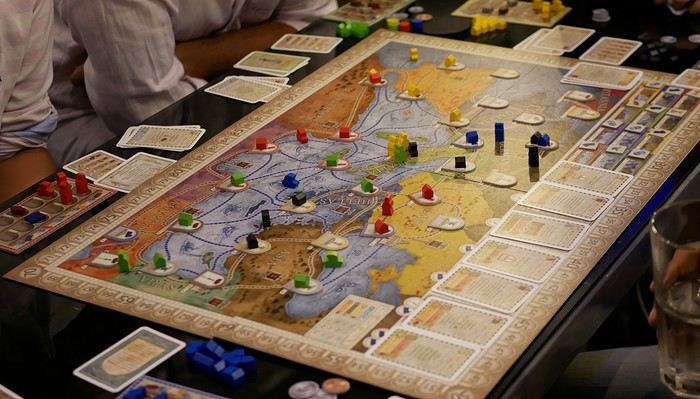
A new era of gaming and entertainment
Occitanie’s gaming culture extends beyond cafés and clubs. Larger entertainment venues now incorporate gaming zones with immersive experiences, virtual reality sections, and lounges for classic strategy games. While these venues focus on digital entertainment, many still host board game nights and chess tournaments. Cities like Toulouse offer a mix of experiences, from live music to themed game nights, for a complete evening out.
Why gaming thrives in Occitanie
What makes Occitanie a true hub for gaming culture? Several factors contribute to its success:
A strong social culture – The region’s love for shared experiences naturally extends to gaming. Whether it’s a game of pétanque or a chess match in a café, competition and camaraderie go hand in hand.
A growing gaming scene – Cities like Toulouse and Montpellier are home to expanding gaming communities that fuel demand for new and engaging social activities, making board game cafés and gaming lounges popular choices for all types of players.
A blend of tradition and innovation – Occitanie’s respect for tradition pairs perfectly with its openness to modern trends. Classic games remain popular, but new gaming formats keep the culture fresh and exciting.
Conclusion
From ancient pastimes played in village squares to lively modern board game cafés, gaming culture in Occitanie continues to thrive. Chess clubs, board game hotspots, and evolving entertainment spaces offer something for every type of player. Whether enjoying a game of pétanque under the southern sun or gathering with friends over a strategy game in a cozy café, the region’s love for games remains stronger than ever.
Traditional games that shaped Occitanie
Long before video games and themed game cafés, the people of Occitanie entertained themselves with games passed down through generations.
Pétanque – This classic game, deeply rooted in southern France, is a staple of social life in Occitanie. Played in public squares and parks, it’s a game of precision and patience, with friendly rivalries often lasting for years.
La Mourre – A lesser-known but historically significant game, la mourre was once a favorite among locals. It involves quick hand gestures and guessing, blending skill with a bit of luck.
Jeu de Nain Jaune – This 18th-century card game, still played today, remains a favorite at family gatherings. Known as Le Nain Jaune, it mixes strategy and chance, much like modern board games.
These traditional games laid the foundation for Occitanie’s love of strategy and competition, paving the way for today’s board game culture. Whether in a lively café, at a family gathering, or in an entertainment venue where skill and chance meet, the region’s deep appreciation for games continues to evolve. Even today, that same blend of strategy and chance can be found in modern settings—whether around a board game café or during a poker tournament at an online casino.
Gaming expert François Leclerc highlights the best online casinos in France, offering players access to thousands of games, exciting daily tournaments, fast payouts, and attractive bonuses like matched deposit bets and free bets, so those who love the thrill of gaming can fully enjoy the experience.
The rise of game cafés and chess clubs
While traditional games remain beloved, board game cafés and chess clubs are experiencing a spectacular boom in the region. Blending nostalgia with innovation, these spaces provide a place for players of all backgrounds to meet and play.
Toulouse: A board game hotspot
Toulouse, Occitanie’s cultural and technological hub, has fully embraced the board game café trend. Popular spots like Blastodice, La Taverne du Troll, and Yggdrasil have become gathering places for locals and visitors looking for an alternative to traditional nightlife.
These cafés offer vast libraries of games, from classic strategy games like Catan and Carcassonne (named after the famous medieval city in Occitanie) to the latest indie releases. In these cafés, game nights often turn into social events where newcomers and experienced players bond over strategy and competition. Some venues even host themed nights, where players can immerse themselves in historical or fantasy game sessions.
The chess culture in Occitanie
Chess is experiencing a major revival, with tournaments and clubs multiplying across the region. The Toulouse Chess Club is one of the most well-known, attracting both casual and competitive players. This established club offers a structured environment where players can hone their skills, participate in local competitions, and deepen their passion for the game. With the rise of chess streaming and its representation in pop culture, the game’s appeal continues to grow, drawing in more participants eager to master its strategy.
A new era of gaming and entertainment
Occitanie’s gaming culture extends beyond cafés and clubs. Larger entertainment venues now incorporate gaming zones with immersive experiences, virtual reality sections, and lounges for classic strategy games. While these venues focus on digital entertainment, many still host board game nights and chess tournaments. Cities like Toulouse offer a mix of experiences, from live music to themed game nights, for a complete evening out.
Why gaming thrives in Occitanie
What makes Occitanie a true hub for gaming culture? Several factors contribute to its success:
A strong social culture – The region’s love for shared experiences naturally extends to gaming. Whether it’s a game of pétanque or a chess match in a café, competition and camaraderie go hand in hand.
A growing gaming scene – Cities like Toulouse and Montpellier are home to expanding gaming communities that fuel demand for new and engaging social activities, making board game cafés and gaming lounges popular choices for all types of players.
A blend of tradition and innovation – Occitanie’s respect for tradition pairs perfectly with its openness to modern trends. Classic games remain popular, but new gaming formats keep the culture fresh and exciting.
Conclusion
From ancient pastimes played in village squares to lively modern board game cafés, gaming culture in Occitanie continues to thrive. Chess clubs, board game hotspots, and evolving entertainment spaces offer something for every type of player. Whether enjoying a game of pétanque under the southern sun or gathering with friends over a strategy game in a cozy café, the region’s love for games remains stronger than ever.
3 days in Milan: sights, hotels, restaurants, etc.
Hello, VoyageForum friends, and happy holidays!
I’m planning a trip with my 19-year-old grandson to Milan for Easter Saturday, Sunday, and Monday in 2025.
I’d love your insights on what we can visit in Milan that would interest both my grandson and me (I’m 75). Of course, I’m thinking of the must-sees, but not just those—cozy little restaurants, trendy neighborhoods, and anything else you’d recommend. I’m also looking for a comfortable hotel in the city center that isn’t too expensive!
I’m sure the VoyageForum community will help me uncover some hidden gems! Looking forward to your replies.
I’m sure the VoyageForum community will help me uncover some hidden gems! Looking forward to your replies.
Travel: A Right for All? Reflections on Global Freedoms and Inequalities
Hello fellow travel enthusiasts! 🌍
As a traveler and blogger, I’ve often been struck by the huge inequalities tied to freedom of movement. While some cross borders with ease, others face major obstacles due to their nationality, background, or the restrictive policies of certain countries.
On the occasion of International Human Rights Day, I wrote an article reflecting on this issue: 📖 Travelers' Rights: A Reflection on Freedom of Movement and Global Inequalities
In this article, I cover topics like:
Inequalities between passports ("strong" vs. "weak" passports). The specific challenges faced by travelers from marginalized communities. How to take action to promote more inclusive and equitable travel.
I’d love to hear your thoughts! 😊 Have you ever experienced these inequalities while traveling? How do you think we could raise more awareness about this issue? Feel free to share your experiences or ask questions in this thread. I can’t wait to discuss this with you!
Travel is also about building bridges between cultures. So let’s make sure it becomes a reality for everyone. ✈️🌎 Thanks for reading, and I look forward to exchanging ideas with you!
On the occasion of International Human Rights Day, I wrote an article reflecting on this issue: 📖 Travelers' Rights: A Reflection on Freedom of Movement and Global Inequalities
In this article, I cover topics like:
Inequalities between passports ("strong" vs. "weak" passports). The specific challenges faced by travelers from marginalized communities. How to take action to promote more inclusive and equitable travel.
I’d love to hear your thoughts! 😊 Have you ever experienced these inequalities while traveling? How do you think we could raise more awareness about this issue? Feel free to share your experiences or ask questions in this thread. I can’t wait to discuss this with you!
Travel is also about building bridges between cultures. So let’s make sure it becomes a reality for everyone. ✈️🌎 Thanks for reading, and I look forward to exchanging ideas with you!
Has overtourism changed your relationship with travel?
Good evening! 🙂,
I’m paraphrasing the title of discussions that were popping up back in 2020. Back then, the obstacles were travel restrictions and all sorts of often very arbitrary "health" rules. Today, it feels like we’re facing an epidemic of wanderlust that’s piling up in certain places—places that keep expanding. Places that end up feeling like wallpaper, just part of the scenery, more or less exotic, since the people, the dominant crowd, are always the same. And they’re especially overwhelming in limited spaces like villages, museums, and other remarkable sites.
Personally, it tends to send my cortisol levels through the roof, leading to desperate attempts to salvage what I can (the stress when I saw a travel journal about eastern Crete—then, phew, at least this little piece of old Greece hasn’t been exposed yet. Maybe it’ll survive a little longer). So, no more weekends in beautiful European cities. So, adjusted visiting hours, but that’s not always enough (I’ll still have to say goodbye to Caravaggio’s *Madeleine* since I can’t have a quiet moment with her anymore, even late in the day). So, outright giving up: I’ll never see Machu Picchu. Too late. So, shifting travel dates to minimize the damage (Uzbekistan was originally planned for Easter—with April 24th and May 1st to limit vacation days—but the anxiety of tourist crowds during that mild climate period, with few days off, led me to reschedule the trip for winter. Short days and possible rain are a thousand times better).
Avoiding crowds has become a fundamental criterion for choosing destinations and timing.
And you? Are you able to tune out this identical crowd everywhere, or has it changed your relationship with travel/tourism?
Catherine
I’m paraphrasing the title of discussions that were popping up back in 2020. Back then, the obstacles were travel restrictions and all sorts of often very arbitrary "health" rules. Today, it feels like we’re facing an epidemic of wanderlust that’s piling up in certain places—places that keep expanding. Places that end up feeling like wallpaper, just part of the scenery, more or less exotic, since the people, the dominant crowd, are always the same. And they’re especially overwhelming in limited spaces like villages, museums, and other remarkable sites.
Personally, it tends to send my cortisol levels through the roof, leading to desperate attempts to salvage what I can (the stress when I saw a travel journal about eastern Crete—then, phew, at least this little piece of old Greece hasn’t been exposed yet. Maybe it’ll survive a little longer). So, no more weekends in beautiful European cities. So, adjusted visiting hours, but that’s not always enough (I’ll still have to say goodbye to Caravaggio’s *Madeleine* since I can’t have a quiet moment with her anymore, even late in the day). So, outright giving up: I’ll never see Machu Picchu. Too late. So, shifting travel dates to minimize the damage (Uzbekistan was originally planned for Easter—with April 24th and May 1st to limit vacation days—but the anxiety of tourist crowds during that mild climate period, with few days off, led me to reschedule the trip for winter. Short days and possible rain are a thousand times better).
Avoiding crowds has become a fundamental criterion for choosing destinations and timing.
And you? Are you able to tune out this identical crowd everywhere, or has it changed your relationship with travel/tourism?
Catherine
Issues renting a car with a French credit card in Bangkok
Hi,
Has anyone else run into problems renting a car with a French credit card at Bangkok International Airport with international rental companies (like Avis, Budget, Europcar, Hertz)?
These international car rental companies require a "credit card" to hold the deposit when picking up the vehicle. However, in several countries, French credit cards are considered "debit" cards rather than "credit" cards (even if "credit" is printed on your Visa bank card, for example). The rental agencies can't "block" the deposit with certain bank cards (though paying for the rental itself isn’t an issue), and they’ll refuse to give you the vehicle even if the rental was already paid during booking.
I’ve already had this issue in several countries (Chile, Canada) with international rental companies that refused my bank card for holding the deposit, even though "credit" is clearly printed on my Visa Premier card.
Has anyone encountered this problem in Bangkok?
Thanks for your help!
P.S.: I have a valid international driver’s permit, and I’ve searched the forum for answers about Thailand.
Réserver des vols maintenant ou attendre? English translation pending
On lit partout qu'il faut attendre avant de réserver des voyage en avion, vu le nombre élevé des annulations de vols par les compagnies aériennes.
Si les compagnies annulent des vols c'est parce que les réservations sont en nombre insuffisant.
Si on s'abstient de faire des réservations par crainte d'une annulation, on ne fait qu'amplifier le problème, on entre dans un cercle vicieux et on n'en sortira pas de si tôt.
Je crois qu'il faut au contraire initier un cercle vertueux en ne craignant pas de réserver des vols, même s'il y a un risque d'annulation.
Quel est en fait ce risque ? On finit toujours bien par être remboursé d'une façon ou d'une autre, soit en cash soit en bon à valoir. Et je parle d'expérience car des vols annulés, j'en ai eu des quantités depuis le début de la crise.
Si on parvient à relancer la machine, ce sera au bénéfice de tout le monde : des compagnies aussi bien que des voyageurs.
D'ailleurs, les compagnies aériennes commencent à faire des rabais et certaines proposent déjà des billets à des prix extrêmement intéressants, dont il serait dommage de ne pas profiter.
Air France refuse de rembourser mon vol pour New York English translation pending
Bonjour,
J'ai besoin d'aide, nous avions un voyage prévu pour le 9 septembre 2020 à New York, les frontières américaines sont fermées aux touristes, notre vol n'est pas annulé, uniquement pour les "non touristes". Nous avons des billets non remboursable et notre assurance annulation ne couvre pas le coronavirus !
Le site AirFrance propose des remboursements et des avoirs uniquement pour les voyages avant le 31 août, c'est absurde le virus et toujours là en septembre !
Comment pouvons nous avoir gain de cause et ne pas perdre notre argent ??
Merci.
Nous testons la Flow Vélo en septembre (Sud-Ouest de la France) English translation pending
Bonjour ,
après 3 années d'interruption , C décidé la même équipe ( 4 personnes) repart vers le 14 septembre:
toujours en France et vu l'âge qui avance avec des vélos "nucléaire"; deux vélos montés avec des kits et 2 vélos de location Matra
Pas trop loin de chez nous , donc on y va en voitures : la Flow vélo , hébergement en mobilhomme , en auberges de jeunesse.
Aller et retour nous comptons 9 jours, 580km au total + les visites.
Si quelqu'un l'à déjà fait nous sommes preneur d'infos.
Cordialement
Formulaire obligatoire pour les voyages en Belgique et les retours des Belges de l'étranger English translation pending
Ce formulaire a été annonce hier. Le formulaire en ligne devrait être prêt lundi et sera obligatoire à partir du 1er aout.
Ne regardez pas la version actuelle du formulaire, elle est obsolète.
Quelques détails: https://www.vrt.be/vrtnws/nl/2020/07/23/al-wie-terugkeert-uit-buitenlandse-vakantie-moet-formulier-invul/
Pour tout voyage de plus de 48 heures à l'étranger.
Mais aussi pour tous les étrangers qui entrent en Belgique de plus de 24 heures.
Vol Bahamasair Miami-Bahamas cet été English translation pending
Bonjour, nous avions prévu un voyage en Floride et aux Bahamas cet été, qui est bien évidement reporté. Nous n avons eu aucune difficulté avec notre vol international qui a été annulé par la compagnie. En revanche, la situation est beaucoup plus compliquée avec le vol interne pour les bahamas depuis miami. Bahamasair a en effet procédé à la mise à jour de ses plans de vols et a procédé non pas à leur annulation malgré la fermeture des frontières entre les Bahamas et les États Unis mais à leur modification : au lieu de partir depuis miami, le départ se fait depuis fort lauderdale. J ai donc sauté sur l occasion pour demander le remboursement de mes billets dans la mesure où je considère que cette modification substantielle doit être analysée en une annulation de mon vol initial. Je n ai pas de réponse de la Compagnie. Êtes vous dans la même situation ou avez vous pu trouvé une solution?
En vous remerciant pour votre aide .
Joindre par téléphone le service clientèle de Lufthansa English translation pending
Bonjour,
Je n'arrive pas à avoir un numéro de téléphone valide de la Lufthansa. Tous les contacts donnés sur leur site ne sont pas valables. Qui a réussi à joindre par téléphone leur service clientèle ? Si oui à quel numéro ?
Nos billets d'avion pour cet été ont été annulés et je ne peux faire la procédure d'annulation en ligne.
Merci d'avance pour votre aide !
Je n'arrive pas à avoir un numéro de téléphone valide de la Lufthansa. Tous les contacts donnés sur leur site ne sont pas valables. Qui a réussi à joindre par téléphone leur service clientèle ? Si oui à quel numéro ?
Nos billets d'avion pour cet été ont été annulés et je ne peux faire la procédure d'annulation en ligne.
Merci d'avance pour votre aide !
Problèmes avec "agence" GoVoyages English translation pending
Bonjour,
Je suis passé par "l'agence" GoVoyages pour réserver des billets d'avion pour le Pérou. Depuis plusieurs semaines (mois) mes vols apparaissent comme annulés, mais impossible de se faire rembourser (ou d'avoir des nouvelles sur un remboursement / un voyage). Il sont très rapides pour vous encaisser, mais après...
Des personnes ont-ils connus des expériences similaires? Comment ont-elles débloqué la situation? Personnellement, je vais sans doute être amené à déposer plainte.
Pour ceux qui ont l'intention de passer par GoVoyages: Méfiance!
Je suis passé par "l'agence" GoVoyages pour réserver des billets d'avion pour le Pérou. Depuis plusieurs semaines (mois) mes vols apparaissent comme annulés, mais impossible de se faire rembourser (ou d'avoir des nouvelles sur un remboursement / un voyage). Il sont très rapides pour vous encaisser, mais après...
Des personnes ont-ils connus des expériences similaires? Comment ont-elles débloqué la situation? Personnellement, je vais sans doute être amené à déposer plainte.
Pour ceux qui ont l'intention de passer par GoVoyages: Méfiance!
Kenya February 2020: From Tsavo to Samburu via Meru National Park
Good evening everyone,
I hope you're all doing well despite this very unusual time…
Here’s a new travel journal to get you back on the Kenyan trails.
It was a really great idea to buy those flight tickets to Nairobi back in December. When Benoit suggested this new safari in February, I hesitated a little (very little): it was the season with particularly high temperatures, and the short rainy season in November/December had been very heavy, raising concerns about the state of the tracks… Given the current situation, no regrets, of course… We quickly organized the safari with our usual guide, and we booked the accommodations ourselves directly. (If we’d waited just a few more weeks, we might’ve regretted it…)
For once, we were able to leave from the airport near where we live (Lorient - Lann Bihoué), which is really convenient: no driving, no parking… We left home at 2 PM on Tuesday, February 18th, and arrived in Nairobi at 6 AM the next morning—perfect. (With a layover in CDG, of course 😉) Upon arrival, after a forehead temperature check by airport staff, we got our visas very quickly (forms filled out before departure). The customs agents congratulated us on our passports full of Kenyan stamps… but we still had to pay the 40 € for the visa.
All that was left was to collect our luggage, and we’d be ready to leave the airport shortly after landing. But there was a small issue: the baggage conveyor belt was broken… Eventually, the suitcases and bags were brought out by hand… Hakuna Matata, as they say here—no problem, as long as they’re all there. Benoit sent a message to Félix, our guide, to come meet us in the airport parking lot. After catching up with our respective families, we set off toward the Mombasa road, heading to Voi.
Traffic in Nairobi is still as heavy as ever, and the pollution is very noticeable (cars, but also cement factories…). The current lockdown has changed things. On social media, Mount Kenya and Kilimanjaro seem visible from Nairobi now!…
The first stop on this safari was a place we hadn’t visited before: the LUMO Community Wildlife Conservancy lumoconservancy.com/. It’s a small reserve located west of Tsavo West and near the Taita Hills. The reserve is managed by the local community, and entry fees are lower than in Tsavo’s national parks. We had initially planned to spend three days in Tsavo East, but since the accommodation wasn’t available for that long, we ended up choosing this option, which turned out to be a great discovery. Since the reserve is small, I think it’s hard to spend more than two days there. The advantage is that, since it’s not a national park, activities like walks or night safaris can be offered.
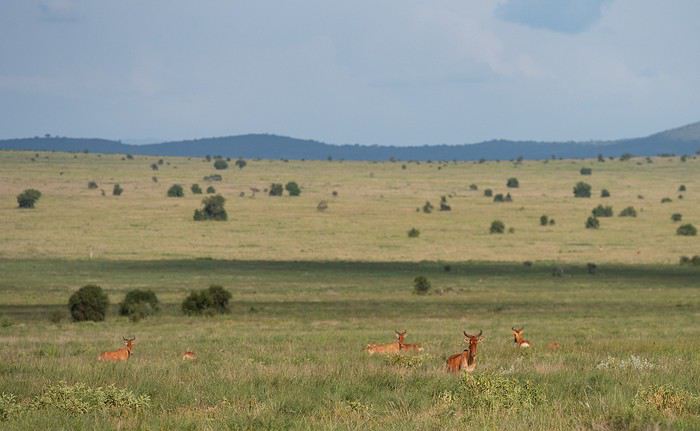
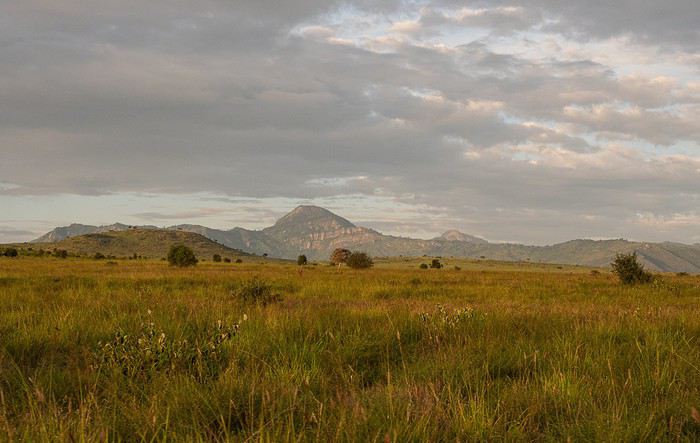
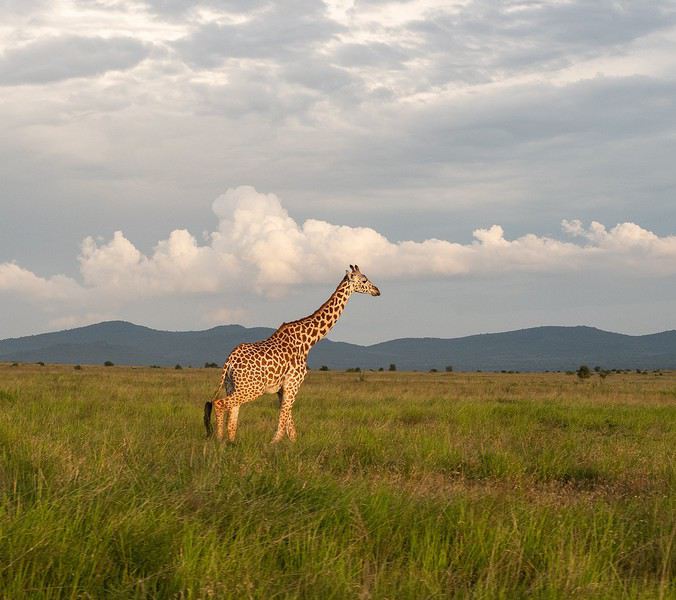
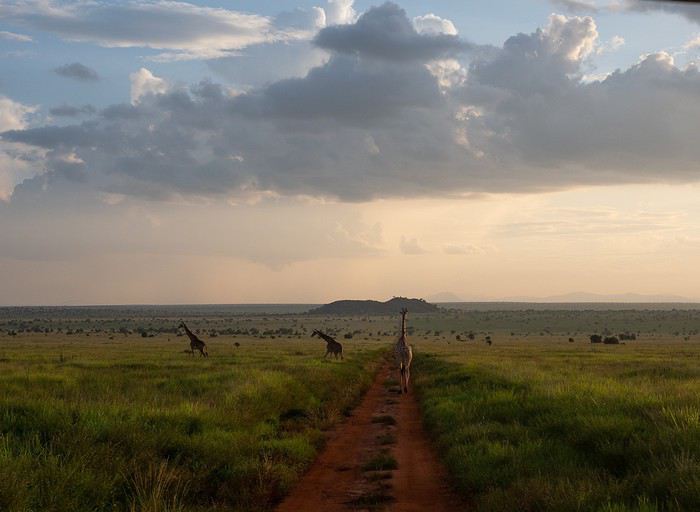
Alright, here are a few images to set the mood.
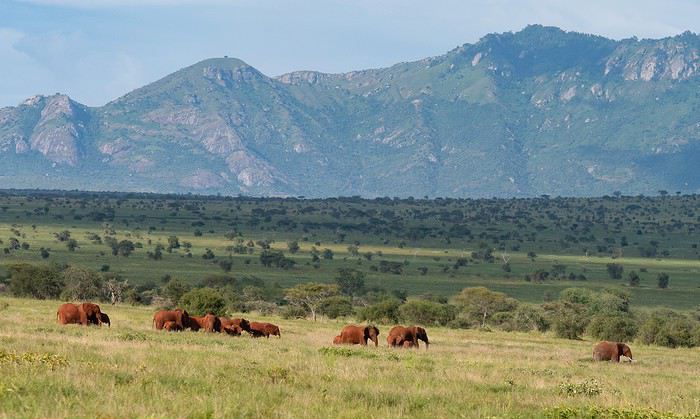
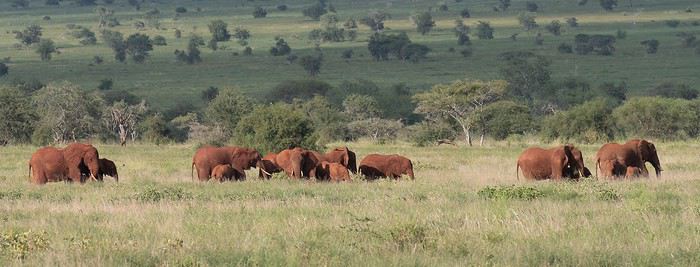
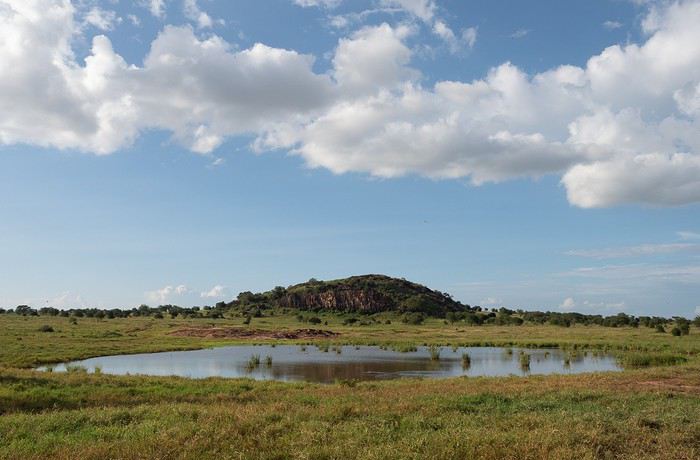
Elephants, but also hartebeests and lots of giraffes in a light we really liked.
It was a really great idea to buy those flight tickets to Nairobi back in December. When Benoit suggested this new safari in February, I hesitated a little (very little): it was the season with particularly high temperatures, and the short rainy season in November/December had been very heavy, raising concerns about the state of the tracks… Given the current situation, no regrets, of course… We quickly organized the safari with our usual guide, and we booked the accommodations ourselves directly. (If we’d waited just a few more weeks, we might’ve regretted it…)
For once, we were able to leave from the airport near where we live (Lorient - Lann Bihoué), which is really convenient: no driving, no parking… We left home at 2 PM on Tuesday, February 18th, and arrived in Nairobi at 6 AM the next morning—perfect. (With a layover in CDG, of course 😉) Upon arrival, after a forehead temperature check by airport staff, we got our visas very quickly (forms filled out before departure). The customs agents congratulated us on our passports full of Kenyan stamps… but we still had to pay the 40 € for the visa.
All that was left was to collect our luggage, and we’d be ready to leave the airport shortly after landing. But there was a small issue: the baggage conveyor belt was broken… Eventually, the suitcases and bags were brought out by hand… Hakuna Matata, as they say here—no problem, as long as they’re all there. Benoit sent a message to Félix, our guide, to come meet us in the airport parking lot. After catching up with our respective families, we set off toward the Mombasa road, heading to Voi.
Traffic in Nairobi is still as heavy as ever, and the pollution is very noticeable (cars, but also cement factories…). The current lockdown has changed things. On social media, Mount Kenya and Kilimanjaro seem visible from Nairobi now!…
The first stop on this safari was a place we hadn’t visited before: the LUMO Community Wildlife Conservancy lumoconservancy.com/. It’s a small reserve located west of Tsavo West and near the Taita Hills. The reserve is managed by the local community, and entry fees are lower than in Tsavo’s national parks. We had initially planned to spend three days in Tsavo East, but since the accommodation wasn’t available for that long, we ended up choosing this option, which turned out to be a great discovery. Since the reserve is small, I think it’s hard to spend more than two days there. The advantage is that, since it’s not a national park, activities like walks or night safaris can be offered.
Alright, here are a few images to set the mood.
Elephants, but also hartebeests and lots of giraffes in a light we really liked.
A quand l'ouverture des frontières dans l'espace Schengen? (à vélo) English translation pending
Hello,
C'est un peu la question qu'on se pose et qui nous oblige à revoir nos plans, pour l'instant c'est très flou, visiblement ce ne serait pas avant Septembre voir même pas envisageable cette année, mais si vous avez des infos de ce côté là n'hésitez pas à les partager.
Gilles
C'est un peu la question qu'on se pose et qui nous oblige à revoir nos plans, pour l'instant c'est très flou, visiblement ce ne serait pas avant Septembre voir même pas envisageable cette année, mais si vous avez des infos de ce côté là n'hésitez pas à les partager.
Gilles
Lonely Planet ferme des bureaux et licencie English translation pending
https://www.abc.net.au/news/2020-04-09/lonely-planet-to-cut-melbourne-office-as-coronavirus-hits-sales/12136662
Lonely Planet ferme ses bureaux de Melbourne et Londres. Le bureau de Dublin continue.
Lonely Planet ferme ses bureaux de Melbourne et Londres. Le bureau de Dublin continue.
Quels moyens de transport pour ces trajets au Pérou et en Bolivie? English translation pending
Bonjour à toutes et à tous
Je commence à élaborer un projet qui devrait en 3 mois, sept à fin nov, avec mon épouse, nous permettre de visiter le Pérou, la Bolivie et l'Argentine du nord.
Le trajet serait Lima, Ica, Aréquipa, Cuscos, Micchu Picchu, Puno, La Paz, Sucre, Potosi, le Salar, Tupiza, Salta, Cafayate, Buenos Aeres et finir à Montévidéo.
Quelqu'un pourrait il me conseiller une cie de Bus ou de privilégier le taxi pour ces différents trajets - Cusco La PAZ, Sucre Potosi Uyuni, Uyuni Tupiza, Tupiza Salta. Pour la sécurité nous pensons prendre l'avion pour La Paz Sucre. Merci de votre réponse Philippe
Et après tout cela... English translation pending
aujourd'hui j'ai envie de penser à l'après pandémie
et bien sur j'aurai certainement besoin de voir du monde beaucoup de monde
alors j'ai besoin de vous car je voudrais savoir quel lieu au cours de vos voyages vous à impressionnez le plus par la quantité de personne concentré dans un même lieu, extérieur évidemment . ne croyais pas que je sois insensible à ce qui se passe mais juste nous changer les idées
La Chine vole au secours de l'Italie English translation pending
hier j'ai reçu par le biais de la l'application flight radar "push vol spécial" que la chine a envoyé hier un vol spécial avec 35 tonnes de matériel et du personnel soignant pour aider l'italie Vol shanghai-rome...qui a du atterrir et les news ont pas l'air d'en avoir parlé...
bien que la chine soit responsable de cette catastrophe sanitaire ils vont se démener pour aider les italiens... et ça c'est BRAVO
bien que la chine soit responsable de cette catastrophe sanitaire ils vont se démener pour aider les italiens... et ça c'est BRAVO
Bravo à Agoda pour les hôtels réservés aux USA English translation pending
EN Tous les cas dans notre malchance que notre voyage tombe à l'eau pour Végas on vient d'avoir la possibilité par agoda de demander remboursement de la réservation d'hôtel en totalité (cette réservation était initialement non remboursable ni modifiable!!) un message indique avant la manipulation d'annuler que c'est une situation exceptionnelle... ils ont été très réactif depuis l'annonce faite cette nuit par les USA!! donc déjà bonne nouvelle
ils ont été très conciliant.. on va tenter maintenant de joindre BRITISH..... :)))humm very difficult
merci AGODA DE cette réactivité
ils ont été très conciliant.. on va tenter maintenant de joindre BRITISH..... :)))humm very difficult
merci AGODA DE cette réactivité