Results for "archéologique+Istanbul+|+123+>+233"
6500 results found.
Lieux les plus sympathiques pour dix jours en Grèce English translation pending
Bonjour, je souhaite partir en grèce cet été, pouvez-vous m'aider en m'indiquant les lieux les plus sympas à visiter ?
je vais partir 10jours environ.
je souhaite aller à athène, sur une ile et visiter des sites archéologique.
merci d'avance.
mag
merci d'avance.
mag
Carnet de route croisières 2005 et 2006 English translation pending
bonjour à tous
afin de partager mes photos souvenirs .... j'ai ouvert un blog destiné uniquement à mes voyages
vous y trouverez des indications et des centaines de photos des villes parcourues italie : bari, gênes, civitavecchi, rome grèce : corfou, athènes, olympie, katalolon croatie : dubrovnik tunisie : tunis, sidi bou said (la ville bleue) le port de la goulette libye : tripoli, et le site archéologique de Sabratha, le musée ile de malte : la valette sardaigne : cagliari
voici le site : à taper dans votre moteur de recherche (google et autres) http://bienvenuechezangelique.blogs-de-voyage.fr
bon vent à tous et bon voyage
afin de partager mes photos souvenirs .... j'ai ouvert un blog destiné uniquement à mes voyages
vous y trouverez des indications et des centaines de photos des villes parcourues italie : bari, gênes, civitavecchi, rome grèce : corfou, athènes, olympie, katalolon croatie : dubrovnik tunisie : tunis, sidi bou said (la ville bleue) le port de la goulette libye : tripoli, et le site archéologique de Sabratha, le musée ile de malte : la valette sardaigne : cagliari
voici le site : à taper dans votre moteur de recherche (google et autres) http://bienvenuechezangelique.blogs-de-voyage.fr
bon vent à tous et bon voyage
Trajet Penjikent-Khojand au Tadjikistan English translation pending
Bonjour les routards!
Nous partons a deux en Asie Centrale a la fin Mai et cherchons quelques infos recentes sur le Tadjikistan. Nous pensons, entre autres, faire le trajet Penjikent-Khojand. Du point de vue archeologique, est-ce que ca vaut la peine? Est-ce-que quelqu' un connait le prix approximatif a payer pour un taxi? Propositions de logement abordable et sympa a Penjikent et Khojand? Merci a l' avance pour toute info. Isabelle
Nous partons a deux en Asie Centrale a la fin Mai et cherchons quelques infos recentes sur le Tadjikistan. Nous pensons, entre autres, faire le trajet Penjikent-Khojand. Du point de vue archeologique, est-ce que ca vaut la peine? Est-ce-que quelqu' un connait le prix approximatif a payer pour un taxi? Propositions de logement abordable et sympa a Penjikent et Khojand? Merci a l' avance pour toute info. Isabelle
Ruines Maya de Tulum à partir du Bahia Principe English translation pending
Bonjour,
nous allons séjourner au Bahia Principe de Tulum et j'aimerais savoir si il est facile et rapide de se rendre aux ruines Maya de Tulum
Merci.
nous allons séjourner au Bahia Principe de Tulum et j'aimerais savoir si il est facile et rapide de se rendre aux ruines Maya de Tulum
Merci.
Thaïlande et patrimoine mondial English translation pending
pour ceux qui prépare leur voyage, je me permet de citer ici les biens inscrits sur la liste du patrimoine mondial de l'UNESCO.
Culturel Site archéologique de Ban Chiang (1992) Ville historique d'Ayutthaya et villes historiques associées (1991) Ville historique de Sukhothaï et villes historiques associées (1991)
Naturel Complexe forestier de Dong Phayayen-Khao Yai (2005) Sanctuaires de faune de Thung Yai-Huai Kha Khaeng (1991)
Culturel Site archéologique de Ban Chiang (1992) Ville historique d'Ayutthaya et villes historiques associées (1991) Ville historique de Sukhothaï et villes historiques associées (1991)
Naturel Complexe forestier de Dong Phayayen-Khao Yai (2005) Sanctuaires de faune de Thung Yai-Huai Kha Khaeng (1991)
Visite d'Athènes et îles voisines? English translation pending
bonsoir
je souhaite aller à Athènes prochainement. Pouvez vous me conseiller quoi faire : à Athènes à part l'acropole, le quartier Plaka ou le musée archéologique, en une journée et demi, comme île au départ du Pirée pour une journée : Egine ? Hydra ? un combiné ? savez vous si on peut réserver le bateau depuis la France ou au moins trouver les horaires (site internet) ?
merci d'avance de votre aide bonne soirée 🙂🙂
je souhaite aller à Athènes prochainement. Pouvez vous me conseiller quoi faire : à Athènes à part l'acropole, le quartier Plaka ou le musée archéologique, en une journée et demi, comme île au départ du Pirée pour une journée : Egine ? Hydra ? un combiné ? savez vous si on peut réserver le bateau depuis la France ou au moins trouver les horaires (site internet) ?
merci d'avance de votre aide bonne soirée 🙂🙂
Sécurité en Colombie English translation pending
bonjour cela fait quatre que je vie en colombie dans un village qui se nomme San Agustin, ou vous pouvez decouvrir un des plus beaux site archeologique d amerique du sud peu prise des tourismes en raisons des problemes interne .
Une chose a savoir ici la tranquilite est reelle en deux ans le taux de mortalite pour homicide a baisse de moitie, il est vrais qu il existe encore de gros probleme .Cela se resume a certaine region .Combien de fois on est surpris de l image que vehicule les media avec la realite du pays, alors j invite toutes les personnes qui se son rendu en colombie a parler de ce pays .
Algérie: patrimoine en danger English translation pending
Bonsoir à toutes et à tous,
Le Patrimoine Algérien est une association de la loi 1901, accréditée par des personnalités de l’éventail culturel algérien. Afin de dynamiser notre association par la création de comités d’actions, nous recherchons des futurs membres actifs. La situation d’urgence du patrimoine archéologique algérien est un de nos principaux objectifs. Rejoignez-nous pour des actions de terrain ; si vous avez des questions, nous vous invitons à nous les adresser à lpalg@hotmail.fr (attention .fr et non .com). A très bientôt...
Le Patrimoine Algérien est une association de la loi 1901, accréditée par des personnalités de l’éventail culturel algérien. Afin de dynamiser notre association par la création de comités d’actions, nous recherchons des futurs membres actifs. La situation d’urgence du patrimoine archéologique algérien est un de nos principaux objectifs. Rejoignez-nous pour des actions de terrain ; si vous avez des questions, nous vous invitons à nous les adresser à lpalg@hotmail.fr (attention .fr et non .com). A très bientôt...
Faire avancer les choses au Nicaragua... English translation pending
bonjour,
il y a au nicaragua des personnes extraordinnaires, qui n attendent que vous pour un projet fantastique. il s agit d un projet sur l ile Ometepe, un des lieu les plus interressant du monde au niveau archeologique, un lieu magique, une des necropoles les plus anciennes connues, ou il a ete retrouve des pierres venant d egypte! l association s appelle "foundation tierra", elle est composee de plusieures personnes, certaines travaillant sur Granada, ds le but de recolter des fonds pour financer le projet sur l ile Ometepe. le projet sur l ile est de reapprendre a vivre comme le faisaient les indigenes il y a longtemps, (habitat, cultures, medecine par les plantes...) l objectif final sera de creer un village pour des etudiants desireux d apprendre le mode de vie des indigenes qui vivaient ici. moi et qq amis avont passe du temps avec toute l equipe, nous devions rentrer en france malheureusement, mais je retourne en decembre prochain, pour bcp de temps. un des premiers travaux a mon retour sera la construction d un goam: une habitation traditionnelle (tipi de 7 m de haut et de 7 m de diametre). n hesitez pas si vous voulez plus de renseignements si vous voulez joindre directement l association, voici l adresse:
hcentralgranada@hotmail.com
autre site interessant: www.reforestation.net (site de l association terres des jeunes)
une fois que vous aurez mis le pied sur cette ile, et que vous aurez rencontre les personnes dont je vous parle, vous ne pourrez plus en partir!! les habitants de l ile Ometepe sont vraiment acceuillant, chaleureux. la vie y est paisible, et le temps y passe tres vite!!
a bientot
bruno
il y a au nicaragua des personnes extraordinnaires, qui n attendent que vous pour un projet fantastique. il s agit d un projet sur l ile Ometepe, un des lieu les plus interressant du monde au niveau archeologique, un lieu magique, une des necropoles les plus anciennes connues, ou il a ete retrouve des pierres venant d egypte! l association s appelle "foundation tierra", elle est composee de plusieures personnes, certaines travaillant sur Granada, ds le but de recolter des fonds pour financer le projet sur l ile Ometepe. le projet sur l ile est de reapprendre a vivre comme le faisaient les indigenes il y a longtemps, (habitat, cultures, medecine par les plantes...) l objectif final sera de creer un village pour des etudiants desireux d apprendre le mode de vie des indigenes qui vivaient ici. moi et qq amis avont passe du temps avec toute l equipe, nous devions rentrer en france malheureusement, mais je retourne en decembre prochain, pour bcp de temps. un des premiers travaux a mon retour sera la construction d un goam: une habitation traditionnelle (tipi de 7 m de haut et de 7 m de diametre). n hesitez pas si vous voulez plus de renseignements si vous voulez joindre directement l association, voici l adresse:
hcentralgranada@hotmail.com
autre site interessant: www.reforestation.net (site de l association terres des jeunes)
une fois que vous aurez mis le pied sur cette ile, et que vous aurez rencontre les personnes dont je vous parle, vous ne pourrez plus en partir!! les habitants de l ile Ometepe sont vraiment acceuillant, chaleureux. la vie y est paisible, et le temps y passe tres vite!!
a bientot
bruno
Plus beau site d'Egypte? English translation pending
Bonjour à tous !
Quel est pour vous le plus beau site d'Egypte ? Celui qu'il ne faut absolument pas louper ?
Pour moi je crois que c'est Abou-Simbel qui m'a frappée le plus, et sans doute aussi le tombeau d'Hatchepsout...
A vous de me dire !
Sauver le Machu Picchu English translation pending
Bon, le titre est un peu excessif, je vous l accorde.
Ce post est juste destine a livrer une info au sujet de ce site archeologique :
Le Machu Picchu recoit en moyenne la visite de 2000 touristes par jour et cela 365 jours sur 365. Imaginez vous, 2000 personnes par jour touchant les pierres, marchant sur les andenes (terrasses), prelevant un petit cailloux provenant d un mur, .... Il s avere que cela se passe quotidiennement et le resultat est que l UNESCO menace de retirer la classification de patrimoine mondial de l humanite, et le site est considere comme etant en grand danger de destruction... Evidemment, des gardiens sont la en permanence mais il n y en a pas 2000. De plus, le site n est pas amenage pour une telle affluence car, tout simplement, il n est pas possible de l amenager ainsi. Cet ensemble archeologique a traverse plus de 500 ans d histoire et il serait quand meme stupide que 20 ans de tourisme de masse le detruise. Tout cela pour demander aux futures personnes comptant le visiter de le respecter. D eviter de toucher les pierres et encore plus d en prelever, aussi minimes soient elles. N oublions pas que la preservation de notre passe nous donne une histoire. En plus de cela, il faut maintenant esperer que les autorites peruviennes et les agences cuzqueniennes assoifees d argent feront le necessaire. A voir, tout cela est en debat en ce moment.
Le Machu Picchu recoit en moyenne la visite de 2000 touristes par jour et cela 365 jours sur 365. Imaginez vous, 2000 personnes par jour touchant les pierres, marchant sur les andenes (terrasses), prelevant un petit cailloux provenant d un mur, .... Il s avere que cela se passe quotidiennement et le resultat est que l UNESCO menace de retirer la classification de patrimoine mondial de l humanite, et le site est considere comme etant en grand danger de destruction... Evidemment, des gardiens sont la en permanence mais il n y en a pas 2000. De plus, le site n est pas amenage pour une telle affluence car, tout simplement, il n est pas possible de l amenager ainsi. Cet ensemble archeologique a traverse plus de 500 ans d histoire et il serait quand meme stupide que 20 ans de tourisme de masse le detruise. Tout cela pour demander aux futures personnes comptant le visiter de le respecter. D eviter de toucher les pierres et encore plus d en prelever, aussi minimes soient elles. N oublions pas que la preservation de notre passe nous donne une histoire. En plus de cela, il faut maintenant esperer que les autorites peruviennes et les agences cuzqueniennes assoifees d argent feront le necessaire. A voir, tout cela est en debat en ce moment.
Mexique: Tulum ou Playa Del Carmen English translation pending
Bonjour,
J'hésite beaucoup entre passer 3 nuits plutôt à Tulum ou à Playa Del Carmen.
Objectif : Snorkeling accessible de la plage ou en bateau, Visite de quelques sites archéologique (Tulum et Coba), Cenotes, Natures, ...).
Pouvez-vous me conseiller ?
Merci Gilles (PartirOu.com)
J'hésite beaucoup entre passer 3 nuits plutôt à Tulum ou à Playa Del Carmen.
Objectif : Snorkeling accessible de la plage ou en bateau, Visite de quelques sites archéologique (Tulum et Coba), Cenotes, Natures, ...).
Pouvez-vous me conseiller ?
Merci Gilles (PartirOu.com)
Bénévolat en archéologie English translation pending
coucou!
étudiante en archéologie je cherche des plans pour fouiller à l'étranger nourri, logé(en camping c'est parfait)
je connais des adresses pour fouiller en france nourri, logé et à l'étranger avec participation n'hésitez pas à demander.
bisous
étudiante en archéologie je cherche des plans pour fouiller à l'étranger nourri, logé(en camping c'est parfait)
je connais des adresses pour fouiller en france nourri, logé et à l'étranger avec participation n'hésitez pas à demander.
bisous
Travailler en archéologie en Tunisie English translation pending
Coucou les ptits zamis
Voila, je cherche à travailler bénévolement (s'il le faut) dans un pays du Magrheb (la Tunisie me semble l'idéal) dans un domaine particulier, celui du patrimoine archéologique.
Et c'est ainsi que débutent les soucis. Pas moyen de trouver la moindre info dessus. Peut-être ai-je mal cherché? C'est fort possible. Le fait est que si quelqu'un peut me renseigner, qu'il se fasse connaître, je lui offrirai en retour... toute ma gratitude.
ciao
Voila, je cherche à travailler bénévolement (s'il le faut) dans un pays du Magrheb (la Tunisie me semble l'idéal) dans un domaine particulier, celui du patrimoine archéologique.
Et c'est ainsi que débutent les soucis. Pas moyen de trouver la moindre info dessus. Peut-être ai-je mal cherché? C'est fort possible. Le fait est que si quelqu'un peut me renseigner, qu'il se fasse connaître, je lui offrirai en retour... toute ma gratitude.
ciao
April 2026 Theme Discussion: Feeling Peachy?
Hey there!
This is the spot where we can chill and chat about fishing at sea worldwide 😊
Here are two charming fishermen taking a well-deserved break near Zanzibar!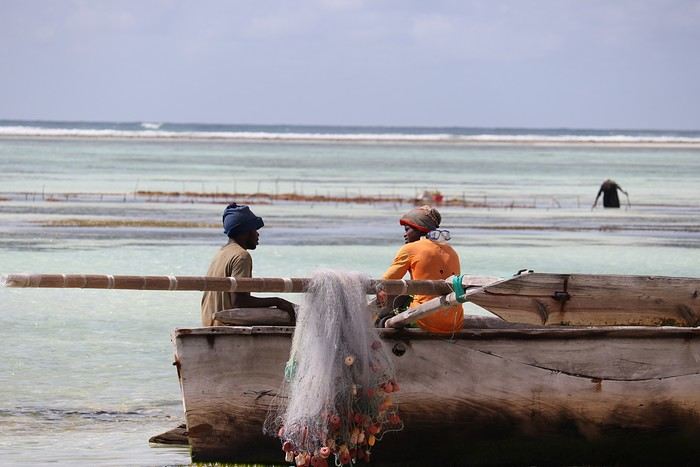
This is the spot where we can chill and chat about fishing at sea worldwide 😊
Here are two charming fishermen taking a well-deserved break near Zanzibar!
A Brief A to Z of Peru
Foreword
This text has been proofread many times.
Sorry if some points in this A to Z have already been covered on this forum.
Text and drawings by the author.
Peru is still a very vast country, with so much to see, and obviously this text can't list all the attractions of the country.
*Abiseo (River) A national park that's very hard to access and doesn’t seem open to visitors. Includes the Gran Pajaten site (see below). Personally, it really sparks my imagination (not visited personally)
*Aguas Calientes the town next to Machu Picchu, more precisely below the archaeological site. As far as I know, you can only get there by train. Reminds me of the market where stalls line both sides of the tracks near Bangkok. I love it
*Altiplano: somewhere the "heart" of the Andes. I was able to trek across it on foot, starting from Caracollo in Bolivia, and of course, it’s vast plains to explore. This is where people live in a very rural way. Andean populations are quite austere compared to those in the lowlands or on the coast. You really have to appreciate the harshness of life to live there. Life is anything but superficial. I set a compass heading and found myself walking west toward the expanse of water near a place called La Joya. For pitching the tent, the nights were still chilly
*Canyon del Colca One of the deepest canyons in the world. Personally, I hiked down and back up on foot. The toughest stretch I’ve ever covered in my life.
*Ceviche More or less the national dish. A marinade of fish, shellfish, and lime. But you can find it in some restaurants in Europe, France, and certainly in Belgium or Switzerland. In the small restaurants of Pisco, you can eat excellent ceviche
*Cerro Sechín: Mostly bas-reliefs. A site little known to travelers in the Casma province. The first vestiges of a pre-Inca civilization with iconography similar to that of Chavín (not visited personally)
*Chan Chan A large city of the Chimú civilization and relatively vast to visit. You can see adobe walls with bas-reliefs. Visit from Trujillo, take a colectivo. Plan for the whole day
*Charango: a small guitar widely used in Andean music
*Chauchilla A necropolis near Nazca where you can see mummies exposed on the ground. YouTubers can do paranormal experiments there. And for anyone wondering about the fate of the soul and body after death, here’s the answer: the body remains after death. You can imagine your own flesh and body exposed to the winds of the Pampa and before eternity... (not visited personally)
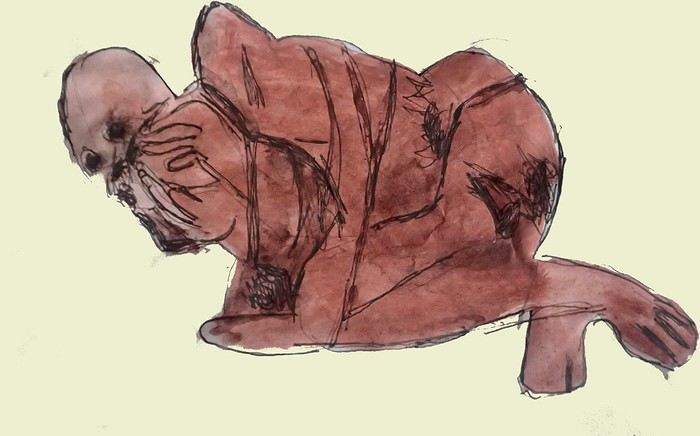
*Chavín de Huántar (Lanzón) The site’s appeal lies in its mountainous surroundings, the Lanzón stela, and the sculpted heads on the façades. What few people know is that the Chavín civilization began its expansion centuries before the Incas. Unfortunately, you can’t get too close to see the Lanzón—the day I was there, it was protected by grilles. To get there: minibus from Huaraz or trek from Olleros. Then cross a high pass (over 5,000m). If you do it solo on foot, be careful—the path isn’t obvious from Olleros
*Chullpa: funerary tower, notably at Sillustani in the Lake Titicaca region
*Chimú: pre-Inca civilization whose center was Chan Chan.
*Chola/Cholitas (Bolivia): typical clothing style of women from the Andean plateaus
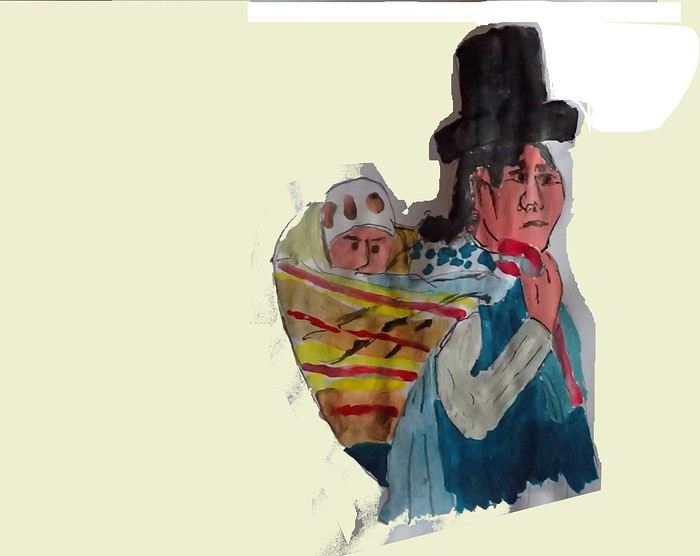
*Chompa: pronounce it *Chompaaa!* A common term for a wool sweater with vicuña patterns, often knitted from alpaca wool. If you dress like this, it’s a bit kitschy around the edges
*Cuy That one isn’t a guinea pig like in Guyana but an actual guinea pig. During a trip to Peru, I was hiking near a village north of Quillabamba (the terminus of the train line that passes through Aguas Calientes), and I was invited to stay in a house. The family raised a few of these pets. Apparently, the locals eat them. Since I’m not much of a meat-eater, it doesn’t really tempt me. How about you?
*Pacific Coast or how to talk about a place you haven’t visited? Except for the coast near Pisco and San Andrés, I haven’t visited any coastal cities. But that doesn’t mean these places lack interest or poetry. For fans of clichéd images, pelicans, seabirds, and fishing boats appear by the sea.
*Gran Pajaten: also closed to the public. Features anthropomorphic bas-reliefs. (not visited personally)
*Huaca. Visit the Huaca del Sol and Huaca de la Luna, especially near Trujillo. However, you can skip them—Chan Chan is still more interesting. Don’t forget to spend time visiting Chan Chan
*Huacachina A small oasis in the desert near Ica. Yes, we’re talking about an oasis because for those who’ve never traveled to Peru, the coastal strip along the Pacific is almost entirely desert, from north to south. Peru is territorially made up of three different regions: the desert coast, the Altiplano stretching north to south with mountain ranges (the Cordilleras), and the Amazon basin to the east. (not visited personally)
*Inca Kola It’s neither Coca-Cola nor Pepsi but a unique cola with a slightly orange color. Tastes like bubble gum
*Intiwatana: a carved rock shaped like a parallelepiped. Is it a sundial?
*Ballestas Islands: a highlight in Peru, though very touristy. You can only get there by boat from the port of San Andrés, a few kilometers from Pisco. It’s a surreal place to me—actually islets with cavities where sea lions and fur seals live. Since it’s a protected area, you’re not allowed to disembark. Guano is harvested there, which can be used as fertilizer.
*Kuelap: a fortress built by the Chachapoyas people. Rarely visited by travelers. (not visited personally)
*Larco Museum: an iconic museum in Lima with a large collection of pieces from archaeological and pre-Columbian sites. From what I remember, it has many pieces from the Moche civilization. As for the Moche statuettes, the prudish might look away. Probably a veneration of the god Priapus without knowing it.
*Nazca Lines Discovered by German archaeologist Maria Reiche, they stretch for kilometers. The designs in the desert around Nazca depict animals and cabalistic signs. The question I ask myself is why the creators of these lines represented a monkey and a hummingbird—species endemic to the tropical forest, not the desert plains around Nazca.
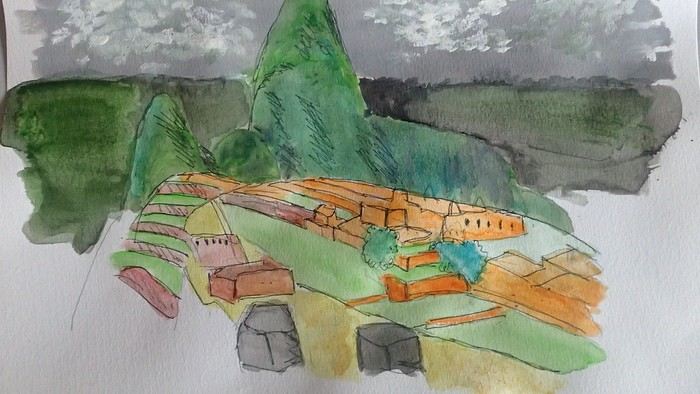
*Machu Picchu: means "old mountain" in Quechua. There’s also Wayna Picchu. The ruins of the site emerge from a sort of small plateau above Aguas Calientes. When the mist rises above the site and the bend of the Urubamba River, it’s truly magical... Also the starting point of the Inca Trail.
*Coca tea A decoction/infusion of the coca plant, meant to ease altitude sickness or *soroche*
*Chullo A rough translation would be a Peruvian wool hat.
*Moche: a civilization established in the Moche Valley, hence the term *Mochica*. What characterizes this civilization are the distinctive clay pieces representing faces and erotic statuettes
*Papa a la Huancaína A local potato dish
*Pisac: a typical market near Cusco
*Pisco Sour: perhaps the Peruvian equivalent of the *caipirinha* you drink in Brazil.
*Puya Raimondii A Bromeliaceae that still looks like a cactus, endemic to the Altiplano
*Quechua The language spoken by the indigenous people of the high plateaus (as well as Aymara in Bolivia)
*Quipu A knotted string used for counting. Widely used by the Inca administration.
*Sacsayhuamán (Q’enqo, Inca Bath) From Cusco’s Plaza de Armas, take the streets that climb above the city. Sacsayhuamán is called a fortress and is made up of large stone blocks. You wonder how the Incas could cut such huge blocks to assemble them—just like some streets in Cusco. The Q’enqo block is enigmatic; no one really knows what it represents.
*Savia Andina An Andean folk group.
*Tambo (=> Ollantaytambo) The Inca emperor (Atahualpa, Manco Capac) had the mission of controlling a vast empire. An empire that was still very extensive. Hence the importance of these *tambos* or relay stations. Napoleon created the civil code; the Incas invented the *tambos* and *quipus*.
*Tawantinsuyu: the Inca Empire
*Tinku: a warrior dance practiced mainly in Bolivia
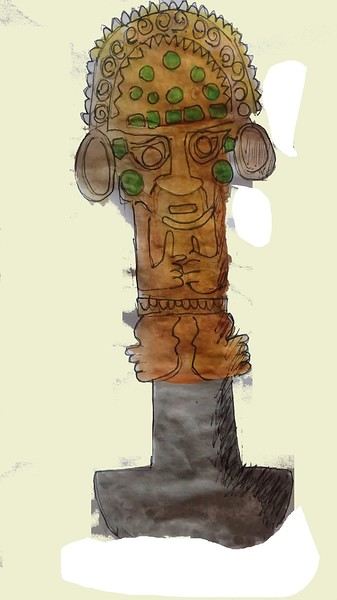
*Golden Tumi: a sacrificial weapon. Often featured in Peru travel guides. See illustration
*Terra X: a documentary series from the German TV channel that aired on Arte. Some episodes focused on pre-Inca and Inca Peru. I must have some old recording tapes. In memory of Gottfried Kirchner as a source of inspiration.
*Uros: I checked—it actually refers to the people who live on these floating islands. Even if it’s touristy, it’s a must-visit because it’s incredible how people can live on islets made from nothing. Take the boat from Puno
*Vicuña, llama, guanaco: camelids characteristic of the Altiplano
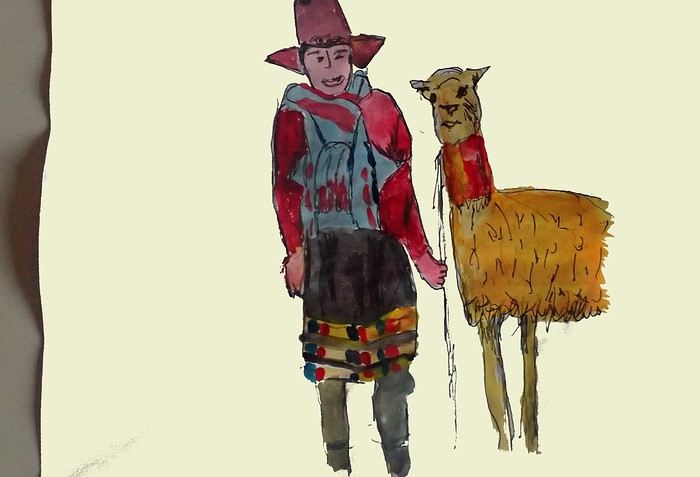
*Wayna Picchu The young Picchu mountain. In the first minutes of *Aguirre, the Wrath of God*, you see Klaus Kinski—well, Aguirre—making his way along the Inca Trail. Werner Herzog must have broken his back filming those sequences.
*Zampoña: pan flute
Peru is still a very vast country, with so much to see, and obviously this text can't list all the attractions of the country.
*Abiseo (River) A national park that's very hard to access and doesn’t seem open to visitors. Includes the Gran Pajaten site (see below). Personally, it really sparks my imagination (not visited personally)
*Aguas Calientes the town next to Machu Picchu, more precisely below the archaeological site. As far as I know, you can only get there by train. Reminds me of the market where stalls line both sides of the tracks near Bangkok. I love it
*Altiplano: somewhere the "heart" of the Andes. I was able to trek across it on foot, starting from Caracollo in Bolivia, and of course, it’s vast plains to explore. This is where people live in a very rural way. Andean populations are quite austere compared to those in the lowlands or on the coast. You really have to appreciate the harshness of life to live there. Life is anything but superficial. I set a compass heading and found myself walking west toward the expanse of water near a place called La Joya. For pitching the tent, the nights were still chilly
*Canyon del Colca One of the deepest canyons in the world. Personally, I hiked down and back up on foot. The toughest stretch I’ve ever covered in my life.
*Ceviche More or less the national dish. A marinade of fish, shellfish, and lime. But you can find it in some restaurants in Europe, France, and certainly in Belgium or Switzerland. In the small restaurants of Pisco, you can eat excellent ceviche
*Cerro Sechín: Mostly bas-reliefs. A site little known to travelers in the Casma province. The first vestiges of a pre-Inca civilization with iconography similar to that of Chavín (not visited personally)
*Chan Chan A large city of the Chimú civilization and relatively vast to visit. You can see adobe walls with bas-reliefs. Visit from Trujillo, take a colectivo. Plan for the whole day
*Charango: a small guitar widely used in Andean music
*Chauchilla A necropolis near Nazca where you can see mummies exposed on the ground. YouTubers can do paranormal experiments there. And for anyone wondering about the fate of the soul and body after death, here’s the answer: the body remains after death. You can imagine your own flesh and body exposed to the winds of the Pampa and before eternity... (not visited personally)
*Chavín de Huántar (Lanzón) The site’s appeal lies in its mountainous surroundings, the Lanzón stela, and the sculpted heads on the façades. What few people know is that the Chavín civilization began its expansion centuries before the Incas. Unfortunately, you can’t get too close to see the Lanzón—the day I was there, it was protected by grilles. To get there: minibus from Huaraz or trek from Olleros. Then cross a high pass (over 5,000m). If you do it solo on foot, be careful—the path isn’t obvious from Olleros
*Chullpa: funerary tower, notably at Sillustani in the Lake Titicaca region
*Chimú: pre-Inca civilization whose center was Chan Chan.
*Chola/Cholitas (Bolivia): typical clothing style of women from the Andean plateaus
*Chompa: pronounce it *Chompaaa!* A common term for a wool sweater with vicuña patterns, often knitted from alpaca wool. If you dress like this, it’s a bit kitschy around the edges
*Cuy That one isn’t a guinea pig like in Guyana but an actual guinea pig. During a trip to Peru, I was hiking near a village north of Quillabamba (the terminus of the train line that passes through Aguas Calientes), and I was invited to stay in a house. The family raised a few of these pets. Apparently, the locals eat them. Since I’m not much of a meat-eater, it doesn’t really tempt me. How about you?
*Pacific Coast or how to talk about a place you haven’t visited? Except for the coast near Pisco and San Andrés, I haven’t visited any coastal cities. But that doesn’t mean these places lack interest or poetry. For fans of clichéd images, pelicans, seabirds, and fishing boats appear by the sea.
*Gran Pajaten: also closed to the public. Features anthropomorphic bas-reliefs. (not visited personally)
*Huaca. Visit the Huaca del Sol and Huaca de la Luna, especially near Trujillo. However, you can skip them—Chan Chan is still more interesting. Don’t forget to spend time visiting Chan Chan
*Huacachina A small oasis in the desert near Ica. Yes, we’re talking about an oasis because for those who’ve never traveled to Peru, the coastal strip along the Pacific is almost entirely desert, from north to south. Peru is territorially made up of three different regions: the desert coast, the Altiplano stretching north to south with mountain ranges (the Cordilleras), and the Amazon basin to the east. (not visited personally)
*Inca Kola It’s neither Coca-Cola nor Pepsi but a unique cola with a slightly orange color. Tastes like bubble gum
*Intiwatana: a carved rock shaped like a parallelepiped. Is it a sundial?
*Ballestas Islands: a highlight in Peru, though very touristy. You can only get there by boat from the port of San Andrés, a few kilometers from Pisco. It’s a surreal place to me—actually islets with cavities where sea lions and fur seals live. Since it’s a protected area, you’re not allowed to disembark. Guano is harvested there, which can be used as fertilizer.
*Kuelap: a fortress built by the Chachapoyas people. Rarely visited by travelers. (not visited personally)
*Larco Museum: an iconic museum in Lima with a large collection of pieces from archaeological and pre-Columbian sites. From what I remember, it has many pieces from the Moche civilization. As for the Moche statuettes, the prudish might look away. Probably a veneration of the god Priapus without knowing it.
*Nazca Lines Discovered by German archaeologist Maria Reiche, they stretch for kilometers. The designs in the desert around Nazca depict animals and cabalistic signs. The question I ask myself is why the creators of these lines represented a monkey and a hummingbird—species endemic to the tropical forest, not the desert plains around Nazca.
*Machu Picchu: means "old mountain" in Quechua. There’s also Wayna Picchu. The ruins of the site emerge from a sort of small plateau above Aguas Calientes. When the mist rises above the site and the bend of the Urubamba River, it’s truly magical... Also the starting point of the Inca Trail.
*Coca tea A decoction/infusion of the coca plant, meant to ease altitude sickness or *soroche*
*Chullo A rough translation would be a Peruvian wool hat.
*Moche: a civilization established in the Moche Valley, hence the term *Mochica*. What characterizes this civilization are the distinctive clay pieces representing faces and erotic statuettes
*Papa a la Huancaína A local potato dish
*Pisac: a typical market near Cusco
*Pisco Sour: perhaps the Peruvian equivalent of the *caipirinha* you drink in Brazil.
*Puya Raimondii A Bromeliaceae that still looks like a cactus, endemic to the Altiplano
*Quechua The language spoken by the indigenous people of the high plateaus (as well as Aymara in Bolivia)
*Quipu A knotted string used for counting. Widely used by the Inca administration.
*Sacsayhuamán (Q’enqo, Inca Bath) From Cusco’s Plaza de Armas, take the streets that climb above the city. Sacsayhuamán is called a fortress and is made up of large stone blocks. You wonder how the Incas could cut such huge blocks to assemble them—just like some streets in Cusco. The Q’enqo block is enigmatic; no one really knows what it represents.
*Savia Andina An Andean folk group.
*Tambo (=> Ollantaytambo) The Inca emperor (Atahualpa, Manco Capac) had the mission of controlling a vast empire. An empire that was still very extensive. Hence the importance of these *tambos* or relay stations. Napoleon created the civil code; the Incas invented the *tambos* and *quipus*.
*Tawantinsuyu: the Inca Empire
*Tinku: a warrior dance practiced mainly in Bolivia
*Golden Tumi: a sacrificial weapon. Often featured in Peru travel guides. See illustration
*Terra X: a documentary series from the German TV channel that aired on Arte. Some episodes focused on pre-Inca and Inca Peru. I must have some old recording tapes. In memory of Gottfried Kirchner as a source of inspiration.
*Uros: I checked—it actually refers to the people who live on these floating islands. Even if it’s touristy, it’s a must-visit because it’s incredible how people can live on islets made from nothing. Take the boat from Puno
*Vicuña, llama, guanaco: camelids characteristic of the Altiplano
*Wayna Picchu The young Picchu mountain. In the first minutes of *Aguirre, the Wrath of God*, you see Klaus Kinski—well, Aguirre—making his way along the Inca Trail. Werner Herzog must have broken his back filming those sequences.
*Zampoña: pan flute
5-day visit to Palawan: your thoughts on this itinerary
Hi there,
We’ve never visited Palawan before. This time, we’d like to spend a few days there.
We’ll be there from the evening of October 30th until the early morning of November 5th (our return flight is at 7:20 AM). We’re arriving in Puerto Princesa and leaving from there as well.
While ChatGPT gave us an itinerary suggestion, I’d still love to hear other opinions—don’t want to rely on it blindly.
Here’s ChatGPT’s proposal:
Saturday, October 31: Pearl farm + local waterfalls • 9:00 AM: Private car to Brook’s Point pearl farm (1.5–2 hour visit). • 1:00 PM: Local lunch + drive to Nagtabon Falls (1-hour jungle hike). • Overnight in Puerto Princesa. Sunday, November 1: Tabon Caves (Quezon) • 8:00 AM: Private car from PPS to Quezon (3 hours). • 11:00 AM–3:00 PM: Visit Tabon Caves (2–3 hour hike, unique archaeological site). • Return to PPS late afternoon or stay overnight in Quezon if you prefer. Monday, November 2: Puerto Princesa → Port Barton • 8:00 AM: Private car from PPS to Port Barton (3–4 hours). • Afternoon: Stroll around the village, small market, acclimatization. • Overnight in Port Barton. Tuesday, November 3: Private boat from Port Barton • 8:30 AM: Private boat for island hopping (snorkeling at Twin Reef / Fantastic Reef + peaceful Maxima Island). • Return by 4:00 PM. Wednesday, November 4: Hike in Port Barton + return to PPS • Morning: Hike to Pamuayan Falls or local jungle (1–2 hours). • 1:00 PM: Private car from Port Barton to PPS. • Overnight near the airport in PPS. Thursday, November 5: Flight from PPS to Dumaguete • Early morning flight from PPS to Dumaguete (direct or via Cebu, with plenty of buffer time).
What do you think? Where can we find trustworthy private drivers without getting ripped off? Any recommendations for typical hotels or guesthouses? Our flights are already booked—arriving in PPS at 6:30 PM and departing at 7:20 AM.
Thanks for your advice!
Here’s ChatGPT’s proposal:
Saturday, October 31: Pearl farm + local waterfalls • 9:00 AM: Private car to Brook’s Point pearl farm (1.5–2 hour visit). • 1:00 PM: Local lunch + drive to Nagtabon Falls (1-hour jungle hike). • Overnight in Puerto Princesa. Sunday, November 1: Tabon Caves (Quezon) • 8:00 AM: Private car from PPS to Quezon (3 hours). • 11:00 AM–3:00 PM: Visit Tabon Caves (2–3 hour hike, unique archaeological site). • Return to PPS late afternoon or stay overnight in Quezon if you prefer. Monday, November 2: Puerto Princesa → Port Barton • 8:00 AM: Private car from PPS to Port Barton (3–4 hours). • Afternoon: Stroll around the village, small market, acclimatization. • Overnight in Port Barton. Tuesday, November 3: Private boat from Port Barton • 8:30 AM: Private boat for island hopping (snorkeling at Twin Reef / Fantastic Reef + peaceful Maxima Island). • Return by 4:00 PM. Wednesday, November 4: Hike in Port Barton + return to PPS • Morning: Hike to Pamuayan Falls or local jungle (1–2 hours). • 1:00 PM: Private car from Port Barton to PPS. • Overnight near the airport in PPS. Thursday, November 5: Flight from PPS to Dumaguete • Early morning flight from PPS to Dumaguete (direct or via Cebu, with plenty of buffer time).
What do you think? Where can we find trustworthy private drivers without getting ripped off? Any recommendations for typical hotels or guesthouses? Our flights are already booked—arriving in PPS at 6:30 PM and departing at 7:20 AM.
Thanks for your advice!
Guide and driver for Cairo
Hi there,
We’re a family of 4 with two boys aged 12 and 10 traveling to Egypt in February.
We’re spending 3 days in Cairo to take our time exploring the city and the sites before heading south.
-Is it necessary to have a guide to visit the GEM? Are audio guides available? -Do you have any contacts for drivers to organize a few transfers (Giza, Saqqara, Airport)? -Do you know a French-speaking guide who’s friendly, family-friendly, and good at making things exciting, with reasonable prices?
Marie
-Is it necessary to have a guide to visit the GEM? Are audio guides available? -Do you have any contacts for drivers to organize a few transfers (Giza, Saqqara, Airport)? -Do you know a French-speaking guide who’s friendly, family-friendly, and good at making things exciting, with reasonable prices?
Marie
Back from Albania (1,000km by car)
At the risk of drawing some harsh criticism, I’ll admit we were really disappointed: sure, this trip—taken at the end of September—was short (a week), but we’d planned this little road trip (1,000km by car) as a first scouting mission. We won’t be going back anytime soon!
First mistake: we flew into Tirana (from Marseille) when it would’ve been better to fly to Corfu and rent a car in the south of the country instead of staying in the capital, which frankly isn’t all that interesting. From Tirana, we headed east toward Lin, by Lake Ohrid (a very poor region facing Macedonia), then to Korça, which guidebooks call "the most pleasant city in Albania." From there, we drove to Gjirokastra, an old Ottoman town (170km of mountain roads that took us nearly 5 hours...), then further south to Butrint, near Greece. The goal of these stops? To visit UNESCO World Heritage sites. In Lin, 6th-century mosaics; in Korça, a remarkable icon museum; in Gjirokastra, the citadel. At Butrint, we fled at the sight of all the tour buses parked in front of "this major archaeological site in the Mediterranean" and headed back north! The entire Adriatic coast is undergoing severe overdevelopment: developers are destroying the coastline to attract even more tourists (11 million visited in 2024, while Albania only has 3 million residents). We preferred to leave the coastal road (in excellent condition, a future highway) to visit Berat, an Ottoman town topped by a citadel. Our favorite spot. Why were we so disappointed? Villages without charm, outskirts of major cities in advanced decay, trash along the roads... The weight of the communist dictatorship and forced industrialization over forty years is still felt everywhere. The country is recovering but betting on tourism. The result? Newly built villas for the newly rich, beaches near the capital already polluted... Too bad, because the natural landscapes are often stunning, the locals are welcoming (young people learn English, though their parents speak little), and prices remain very reasonable—except in the capital. We’d chosen to stay with locals as much as possible, but like in Croatia, families are turning their homes into guest houses (~35 € per night, hearty breakfast included). Renting the car cost us 312 € for a week (with an international rental company—it’s probably cheaper with a local one, but I prefer understanding the contract I sign), and we cautiously took the optional insurance. Just so you know: Albanians drive fast, seem unfamiliar with traffic rules, overtake before curves, ignore yellow lines, and rarely use turn signals...)
First mistake: we flew into Tirana (from Marseille) when it would’ve been better to fly to Corfu and rent a car in the south of the country instead of staying in the capital, which frankly isn’t all that interesting. From Tirana, we headed east toward Lin, by Lake Ohrid (a very poor region facing Macedonia), then to Korça, which guidebooks call "the most pleasant city in Albania." From there, we drove to Gjirokastra, an old Ottoman town (170km of mountain roads that took us nearly 5 hours...), then further south to Butrint, near Greece. The goal of these stops? To visit UNESCO World Heritage sites. In Lin, 6th-century mosaics; in Korça, a remarkable icon museum; in Gjirokastra, the citadel. At Butrint, we fled at the sight of all the tour buses parked in front of "this major archaeological site in the Mediterranean" and headed back north! The entire Adriatic coast is undergoing severe overdevelopment: developers are destroying the coastline to attract even more tourists (11 million visited in 2024, while Albania only has 3 million residents). We preferred to leave the coastal road (in excellent condition, a future highway) to visit Berat, an Ottoman town topped by a citadel. Our favorite spot. Why were we so disappointed? Villages without charm, outskirts of major cities in advanced decay, trash along the roads... The weight of the communist dictatorship and forced industrialization over forty years is still felt everywhere. The country is recovering but betting on tourism. The result? Newly built villas for the newly rich, beaches near the capital already polluted... Too bad, because the natural landscapes are often stunning, the locals are welcoming (young people learn English, though their parents speak little), and prices remain very reasonable—except in the capital. We’d chosen to stay with locals as much as possible, but like in Croatia, families are turning their homes into guest houses (~35 € per night, hearty breakfast included). Renting the car cost us 312 € for a week (with an international rental company—it’s probably cheaper with a local one, but I prefer understanding the contract I sign), and we cautiously took the optional insurance. Just so you know: Albanians drive fast, seem unfamiliar with traffic rules, overtake before curves, ignore yellow lines, and rarely use turn signals...)
Mexico itinerary in February
Hi everyone, absolute travel lovers after our 20 trips to the USA, we’ve decided to head to Mexico in February (flight already booked: Nice to Cancun on February 20th, returning on the evening of March 1st).
I’m mainly hesitating about trying to do too much, as usual when discovering a new country. Here’s my itinerary—I’m unsure about a few things: - **Day 1**: Should we stay relaxed at the resort we booked, or should we do Isla Mujeres instead? If we stay, when’s the best time to visit the island? - **Day 3**: If we visit Chichén Itzá right at opening, will the Ik-Kil cenote be quieter in terms of tourists? If not, which cenote nearby would you recommend? - **Big decision**: Should we go all the way down to Bacalar or not? After that, it feels a bit rushed. **Day 6** is mandatory, or are there other options? Honestly, I’m counting on your advice!
For context, we’re a family of four (with very grown-up kids who are used to traveling), and we’ve already rented an SUV for this period. Thanks in advance for your help—it’ll be invaluable!
**Departure – February 20th**: Arrival in Cancún
Arrival at 8:20 PM, pick up rental car. Overnight in Cancún.
**Day 1 – February 21st**: Isla Mujeres
Ferry from Cancún to Isla Mujeres. Playa Norte, snorkeling, golf cart tour. Return to Cancún. Overnight in Cancún.
**Day 2 – February 22nd**: Ek’ Balam + Cenote X’Canché → Valladolid
Drive from Cancún to Ek’ Balam (~2h). Visit the archaeological site. Swim at Cenote X’Canché. Drive to Valladolid (~30 min). Overnight in Valladolid.
**Day 3 – February 23rd**: Chichén Itzá → Bacalar
Early departure to Chichén Itzá (~45 min). Guided tour + optional visit to Ik-Kil cenote. Drive to Bacalar (~4h). Overnight in Bacalar.
**Day 4 – February 24th**: Bacalar
Boat excursion to the "Laguna of Seven Colors." Cenote Azul + Fuerte San Felipe. Overnight in Bacalar.
**Day 5 – February 25th**: Bacalar → Tulum + Ruins, Cenote & Beach
Drive (~3.5h). Settle in Tulum. Visit the Mayan ruins of Tulum (stunning ocean view). Swim in Gran Cenote or Cenote Calavera. End the day at Playa Paraíso. Overnight in Tulum.
**Day 6 – February 26th**: Sian Ka’an Reserve
Guided excursion:
Option Muyil (half-day): boat tour + swim in the Mayan canal. Option Punta Allen (full-day): dolphins, turtles, snorkeling on the reef.
Overnight in Tulum.
**Day 7 – February 27th**: Tulum → Akumal → Playa del Carmen
Morning: snorkeling with turtles in Akumal. Lunch, then drive to Playa del Carmen. Evening on 5th Avenue. Overnight in Playa del Carmen.
**Day 8 – February 28th**: Playa del Carmen → Puerto Morelos
Free morning in Playa del Carmen (beach or Cenotes Azul & Cristalino). Afternoon: drive to Puerto Morelos (~30 min). Overnight in Puerto Morelos.
**Day 9 – March 1st**: Puerto Morelos → Cancún → Return flight
Relaxing morning in Puerto Morelos. Drive (~30 min) to Cancún Airport. Return rental car. Return flight.
I’m mainly hesitating about trying to do too much, as usual when discovering a new country. Here’s my itinerary—I’m unsure about a few things: - **Day 1**: Should we stay relaxed at the resort we booked, or should we do Isla Mujeres instead? If we stay, when’s the best time to visit the island? - **Day 3**: If we visit Chichén Itzá right at opening, will the Ik-Kil cenote be quieter in terms of tourists? If not, which cenote nearby would you recommend? - **Big decision**: Should we go all the way down to Bacalar or not? After that, it feels a bit rushed. **Day 6** is mandatory, or are there other options? Honestly, I’m counting on your advice!
For context, we’re a family of four (with very grown-up kids who are used to traveling), and we’ve already rented an SUV for this period. Thanks in advance for your help—it’ll be invaluable!
**Departure – February 20th**: Arrival in Cancún
Arrival at 8:20 PM, pick up rental car. Overnight in Cancún.
**Day 1 – February 21st**: Isla Mujeres
Ferry from Cancún to Isla Mujeres. Playa Norte, snorkeling, golf cart tour. Return to Cancún. Overnight in Cancún.
**Day 2 – February 22nd**: Ek’ Balam + Cenote X’Canché → Valladolid
Drive from Cancún to Ek’ Balam (~2h). Visit the archaeological site. Swim at Cenote X’Canché. Drive to Valladolid (~30 min). Overnight in Valladolid.
**Day 3 – February 23rd**: Chichén Itzá → Bacalar
Early departure to Chichén Itzá (~45 min). Guided tour + optional visit to Ik-Kil cenote. Drive to Bacalar (~4h). Overnight in Bacalar.
**Day 4 – February 24th**: Bacalar
Boat excursion to the "Laguna of Seven Colors." Cenote Azul + Fuerte San Felipe. Overnight in Bacalar.
**Day 5 – February 25th**: Bacalar → Tulum + Ruins, Cenote & Beach
Drive (~3.5h). Settle in Tulum. Visit the Mayan ruins of Tulum (stunning ocean view). Swim in Gran Cenote or Cenote Calavera. End the day at Playa Paraíso. Overnight in Tulum.
**Day 6 – February 26th**: Sian Ka’an Reserve
Guided excursion:
Option Muyil (half-day): boat tour + swim in the Mayan canal. Option Punta Allen (full-day): dolphins, turtles, snorkeling on the reef.
Overnight in Tulum.
**Day 7 – February 27th**: Tulum → Akumal → Playa del Carmen
Morning: snorkeling with turtles in Akumal. Lunch, then drive to Playa del Carmen. Evening on 5th Avenue. Overnight in Playa del Carmen.
**Day 8 – February 28th**: Playa del Carmen → Puerto Morelos
Free morning in Playa del Carmen (beach or Cenotes Azul & Cristalino). Afternoon: drive to Puerto Morelos (~30 min). Overnight in Puerto Morelos.
**Day 9 – March 1st**: Puerto Morelos → Cancún → Return flight
Relaxing morning in Puerto Morelos. Drive (~30 min) to Cancún Airport. Return rental car. Return flight.
First trip to Sardinia from 04/12/24 to 04/21/24
I just got back from Sardinia 2 and wanted to share my little recap with you.
It’s a stunning country, and the people are so welcoming.
We were lucky to see it at the end of April—I wouldn’t go in July or August because it gets overcrowded and loses its charm!!!
SARDINIA 2: 10 days
-Departure from Geneva to Olbia on Friday, 04/12/24 with EasyJet: 1h30 flight -Return from Cagliari to Geneva on Sunday, 04/21/24 with EasyJet: 1h40 flight (Round-trip price: 314 €) -Car rental with Locauto: 250 €, including 51 € for "full" insurance + 87 € (drop-off at a different airport) -Accommodation every night via Booking 13: room + kitchen *OLBIA: Arrival at the airport… wasted time at Locauto because there was only one person at the desk (you can check in online and send the driver’s license and ID, but it was impossible to do!) Headed to our lodging. *COSTA SMERALDA: The part we liked the least… everything feels artificial since the billionaires moved in (Porto Rotondo, Porto Cervo, Baia di Sardinia). We regret not stopping at Golfo Aranci to see its underwater art museum, Mumart. *ARZACHENA and its archaeological park (Tomba dei Giganti: Coddu Ecchju, Li Muri, Nuraghe la Prisgiona) to see in beautiful nature. Coastal road toward Palau (lagoons with lots of birds). *PALAU: Ferries to La Maddalena Island every 15/30 minutes (37 € for 2 people + 1 car). *** La Maddalena is part of an archipelago with 7 large islands and small islets… absolutely stunning… views of Corsica! *** -La Maddalena: A charming little town with narrow streets. -Follow the scenic coastal road that loops around the island for 21 km (gorgeous). -On the east side of the island, take a 600m bridge to Caprera Island (lots of great hiking trails). -Lots of beaches with granite rocks and wild coves. -Return by ferry to Palau. *SANTA TERESA GALLURA: Departure for Bonifacio 2, 4 km to Capo Testa (cape with a lighthouse… granite rocks). Here, there were Roman quarries. *Drive down a beautiful road along the Costa Paradiso (red trachyte). *CASTELSARDO: A fortified hilltop town worth seeing. *PORTO TORRES: Visit the Basilica San Gavino. *STINTINO and its beaches, including La Pelosa with its Genoese tower… too crowded for us! *Viewpoint at Capo Falcone with a view of Parco dell’Asinara (we didn’t have time to go, but it’s a must). *Drive down to Argentiera via small coastal roads (old lead, zinc, and silver mines). A "ghost town" with a museum that’s apparently only open on weekends at this time of year. *Small road (with stunning sea views) toward Grotta di Nettuno (you get there by a long staircase, but it was too windy and closed!). Capo Caccia. *Drive down (along lagoons with birds, including pink flamingos) toward Alghero (historic center: ramparts, bell tower, churches). The city of coral and lobsters! *Drive along the sea to Bosa, a colorful little town (Malvasia vineyards) between the Temo River and the sea. *Road to Montiferru Castle on a volcanic massif—ruins of the castle with a beautiful panorama of rolling hills (cork oak forests, chestnut trees, oaks) and cultivated plots. *** Cuglieri: Olive oil museum *** *Santa Caterina di Pittinuri, S’Archittu (many beaches with limestone cliffs) (many archaeological sites). *SINIS PENINSULA: Cabras and its lagoons with lots of pink flamingos. Archaeological museum with its Nuragic giants. *Archaeological site of Tharros. *ORISTANO: Not much visited, but it has some beautiful buildings. A traditional Sardinian pastry shop—an absolute delight (DELIGIA, Via Figoli 61). *Road surrounded by marshes, along the coast with beautiful little beaches. *Arrival at Costa Verde: The Piscinas dunes and beaches are stunning. Miniera Montevecchio and the surrounding old mines (Iglesiente road) (Naracauli, Ingurtosu). *** Near Guspini, in the mountains, visit the village of Arbus, where many Sardinian knife makers are based. But make the detour to meet Paolo Pusceddu, the master knife maker who opens his workshop and created the *Museo del Coltello Sardo* Via Roma, 15 · +39 349 053 7765. Absolutely fascinating and super interesting… he also sells his knives at very reasonable prices. *Masua (mines) then Pan di Zucchero. *Porto Flavia: Transport of minerals from a port carved into the cliff with two 600m tunnels… the visit is a must. *IGLESIAS: Worth visiting. *ISOLA DI SANT’ANTIOCO: A bridge connects it to Sardinia 2. Drive around the island via small roads. Calasetta (white and blue houses), Nido del Passeri, Cala Lunga, Capo Sperone, Turri. Beautiful beaches and stunning views. *Road to Teulada, then Chia (see the small road from Chia to Tuerredda). *PULA: Archaeological site of Nora. *CAPOTERRA: We ended our trip with a night at an agriturismo in the middle of olive groves, "Azienda Agricola Corte degli Ulivi" (Pixina Sa Murta, Marco: +39 347 246 2361). Unforgettable welcome, eco-friendly place (wooden house with water and electricity self-sufficiency). *Cagliari airport. In total, 1000 km, and we still didn’t finish exploring (the area south of Olbia and the interior are still on the list). The Sardinians are very welcoming. Sardinia 2 is diverse (beaches, countryside, towns, archaeological sites…). We were lucky to visit at the end of April—summer must be awful with the heat and tourist crowds! Easy to visit with kids.
-Departure from Geneva to Olbia on Friday, 04/12/24 with EasyJet: 1h30 flight -Return from Cagliari to Geneva on Sunday, 04/21/24 with EasyJet: 1h40 flight (Round-trip price: 314 €) -Car rental with Locauto: 250 €, including 51 € for "full" insurance + 87 € (drop-off at a different airport) -Accommodation every night via Booking 13: room + kitchen *OLBIA: Arrival at the airport… wasted time at Locauto because there was only one person at the desk (you can check in online and send the driver’s license and ID, but it was impossible to do!) Headed to our lodging. *COSTA SMERALDA: The part we liked the least… everything feels artificial since the billionaires moved in (Porto Rotondo, Porto Cervo, Baia di Sardinia). We regret not stopping at Golfo Aranci to see its underwater art museum, Mumart. *ARZACHENA and its archaeological park (Tomba dei Giganti: Coddu Ecchju, Li Muri, Nuraghe la Prisgiona) to see in beautiful nature. Coastal road toward Palau (lagoons with lots of birds). *PALAU: Ferries to La Maddalena Island every 15/30 minutes (37 € for 2 people + 1 car). *** La Maddalena is part of an archipelago with 7 large islands and small islets… absolutely stunning… views of Corsica! *** -La Maddalena: A charming little town with narrow streets. -Follow the scenic coastal road that loops around the island for 21 km (gorgeous). -On the east side of the island, take a 600m bridge to Caprera Island (lots of great hiking trails). -Lots of beaches with granite rocks and wild coves. -Return by ferry to Palau. *SANTA TERESA GALLURA: Departure for Bonifacio 2, 4 km to Capo Testa (cape with a lighthouse… granite rocks). Here, there were Roman quarries. *Drive down a beautiful road along the Costa Paradiso (red trachyte). *CASTELSARDO: A fortified hilltop town worth seeing. *PORTO TORRES: Visit the Basilica San Gavino. *STINTINO and its beaches, including La Pelosa with its Genoese tower… too crowded for us! *Viewpoint at Capo Falcone with a view of Parco dell’Asinara (we didn’t have time to go, but it’s a must). *Drive down to Argentiera via small coastal roads (old lead, zinc, and silver mines). A "ghost town" with a museum that’s apparently only open on weekends at this time of year. *Small road (with stunning sea views) toward Grotta di Nettuno (you get there by a long staircase, but it was too windy and closed!). Capo Caccia. *Drive down (along lagoons with birds, including pink flamingos) toward Alghero (historic center: ramparts, bell tower, churches). The city of coral and lobsters! *Drive along the sea to Bosa, a colorful little town (Malvasia vineyards) between the Temo River and the sea. *Road to Montiferru Castle on a volcanic massif—ruins of the castle with a beautiful panorama of rolling hills (cork oak forests, chestnut trees, oaks) and cultivated plots. *** Cuglieri: Olive oil museum *** *Santa Caterina di Pittinuri, S’Archittu (many beaches with limestone cliffs) (many archaeological sites). *SINIS PENINSULA: Cabras and its lagoons with lots of pink flamingos. Archaeological museum with its Nuragic giants. *Archaeological site of Tharros. *ORISTANO: Not much visited, but it has some beautiful buildings. A traditional Sardinian pastry shop—an absolute delight (DELIGIA, Via Figoli 61). *Road surrounded by marshes, along the coast with beautiful little beaches. *Arrival at Costa Verde: The Piscinas dunes and beaches are stunning. Miniera Montevecchio and the surrounding old mines (Iglesiente road) (Naracauli, Ingurtosu). *** Near Guspini, in the mountains, visit the village of Arbus, where many Sardinian knife makers are based. But make the detour to meet Paolo Pusceddu, the master knife maker who opens his workshop and created the *Museo del Coltello Sardo* Via Roma, 15 · +39 349 053 7765. Absolutely fascinating and super interesting… he also sells his knives at very reasonable prices. *Masua (mines) then Pan di Zucchero. *Porto Flavia: Transport of minerals from a port carved into the cliff with two 600m tunnels… the visit is a must. *IGLESIAS: Worth visiting. *ISOLA DI SANT’ANTIOCO: A bridge connects it to Sardinia 2. Drive around the island via small roads. Calasetta (white and blue houses), Nido del Passeri, Cala Lunga, Capo Sperone, Turri. Beautiful beaches and stunning views. *Road to Teulada, then Chia (see the small road from Chia to Tuerredda). *PULA: Archaeological site of Nora. *CAPOTERRA: We ended our trip with a night at an agriturismo in the middle of olive groves, "Azienda Agricola Corte degli Ulivi" (Pixina Sa Murta, Marco: +39 347 246 2361). Unforgettable welcome, eco-friendly place (wooden house with water and electricity self-sufficiency). *Cagliari airport. In total, 1000 km, and we still didn’t finish exploring (the area south of Olbia and the interior are still on the list). The Sardinians are very welcoming. Sardinia 2 is diverse (beaches, countryside, towns, archaeological sites…). We were lucky to visit at the end of April—summer must be awful with the heat and tourist crowds! Easy to visit with kids.
Driving in Albania
Hi everyone,
We’re planning a trip to Albania. We’ve heard that driving there can be challenging. What do you think? I’m also looking for interesting spots to take black-and-white photos—think local people and typical landscapes in the region. Any places you’d recommend? Thanks a bunch!
We’re planning a trip to Albania. We’ve heard that driving there can be challenging. What do you think? I’m also looking for interesting spots to take black-and-white photos—think local people and typical landscapes in the region. Any places you’d recommend? Thanks a bunch!
Trip to southern Albania from Corfu
Hi there, we're planning to spend a few days in Corfu and then a week in the surrounding area, and we were wondering if southern Albania is worth visiting. Could we explore it in a week from Corfu?
Thanks
13 nights in Crete with family: itinerary, tips, and questions before departure
Hi everyone,
I’d love to get your thoughts on a 13-night trip to Crete this summer. We’ll be 2 adults and 2 kids (5 and 10 years old), and we’re renting a car to get around.
➔ If you have any tips on renting a car, I’m all ears! (I was thinking of picking it up at the airport.)
For now, I’m planning a round-trip flight to Heraklion (I’m still debating whether to return from Chania, in which case we’d spend our last night in Paleóchora or Elos). Here’s how I’m splitting up the nights:
08/07 - 11/07 (3 nights) → Heraklion
Visit the Minoan Palace of Knossos Explore the city: archaeological museum, Venetian harbor, Koules Fortress Possible day trip to Matala or the east coast, depending on how we feel
11/07 - 14/07 (3 nights) → Rethymnon
Explore Rethymnon’s old town Walk around Argiroupoli (natural springs, waterfalls) Relax on the beaches in the area
14/07 - 18/07 (4 nights) → Chania
Visit the historic center Day trip to Seitan Limania (wild beach) Day at Balos Beach & Gramvousa (by boat or hike)
18/07 - 20/07 (2 nights) → Paleóchora or Elos ➔ Do you have a preference between these two spots? They both seem like great, low-key places, but Elos is more mountainous.
Hike through Samaria Gorge (full-day trip) ➔ Do you think this is doable with a 5-year-old? I’ve read there’s a bus at the end of the gorge, but I’m worried about missing the ferry and having to rush the kids. Relax at Elafonissi Beach
20/07 - 21/07 (1 night) → Heraklion
Return the day before our flight to avoid stress.
Thanks in advance for your feedback and tips! 😊
08/07 - 11/07 (3 nights) → Heraklion
Visit the Minoan Palace of Knossos Explore the city: archaeological museum, Venetian harbor, Koules Fortress Possible day trip to Matala or the east coast, depending on how we feel
11/07 - 14/07 (3 nights) → Rethymnon
Explore Rethymnon’s old town Walk around Argiroupoli (natural springs, waterfalls) Relax on the beaches in the area
14/07 - 18/07 (4 nights) → Chania
Visit the historic center Day trip to Seitan Limania (wild beach) Day at Balos Beach & Gramvousa (by boat or hike)
18/07 - 20/07 (2 nights) → Paleóchora or Elos ➔ Do you have a preference between these two spots? They both seem like great, low-key places, but Elos is more mountainous.
Hike through Samaria Gorge (full-day trip) ➔ Do you think this is doable with a 5-year-old? I’ve read there’s a bus at the end of the gorge, but I’m worried about missing the ferry and having to rush the kids. Relax at Elafonissi Beach
20/07 - 21/07 (1 night) → Heraklion
Return the day before our flight to avoid stress.
Thanks in advance for your feedback and tips! 😊
Where to stop between Thessaloniki and Athens?
Hi lovely community,
I need your help for the last part of our trip to Greece next June. We’ll be in Thessaloniki and need to drive to Athens (485 km) in the same day. We’d like to stop for lunch—where should we go??
Please, we need ideas and suggestions!
Thanks everyone
Continuing Greece trip preparations: the itinerary
Hello,
We’ve finally decided on which Cycladic island to visit...
My partner and I are planning our first trip to Greece for June 2025. We’re leaving France for 15 days.
Here’s our itinerary, and I’d love your feedback on whether it’s doable, plus any other suggestions...
Arrival in Athens for 2 nights =
- Visiting the Acropolis, Parthenon, Theatre of Dionysus, Archaeological Museum, Syntagma Square for the changing of the guard, and strolling through the Plaka neighborhood...
4 nights in Nafplio
- To explore the town of Nafplio, the Theatre of Epidaurus, Mycenae, and Olympia
Then off to Milos for 7/8 nights (it was so hard to pick just one island). I’m considering flying from Athens with Olympic Air.
Is it worth doing a guided tour of the Acropolis or the other sites?
I’m open to all your tips.
Thanks so much.
Family excursions in Hurghada (Egypt)
Hello,
We’re heading to Hurghada for the end-of-year holidays—could you recommend some excursions for us (we’re a couple with our 14-year-old son)? Any trustworthy agencies you’d suggest? Do we need a visa?
Looking forward to your tips. Best regards
We’re heading to Hurghada for the end-of-year holidays—could you recommend some excursions for us (we’re a couple with our 14-year-old son)? Any trustworthy agencies you’d suggest? Do we need a visa?
Looking forward to your tips. Best regards
Itinéraire en Corse avec Île-Rousse et Porto-Vecchio, départ samedi English translation pending
Bonjour
Nous partons samedi avec ma petite famille découvrir la corse pendant 15 jours.
Nous sommes avons réserve sur un coup de tête ce qui n'est pas notre habitude et du coup je n'ai rien préparé concernant nos différentes visites.
Nous passerons 1 semaine du coté de l'Ile Rousse et 1 semaine sur Porto Vecchio.
Que pouvez vous nous conseillez ?
Merci
Nous partons samedi avec ma petite famille découvrir la corse pendant 15 jours.
Nous sommes avons réserve sur un coup de tête ce qui n'est pas notre habitude et du coup je n'ai rien préparé concernant nos différentes visites.
Nous passerons 1 semaine du coté de l'Ile Rousse et 1 semaine sur Porto Vecchio.
Que pouvez vous nous conseillez ?
Merci
Réserver sur place ou via un tour-operator pour visiter Delos? English translation pending
Bonjour à tous,
Ma fille et moi devrions (si nos avions ne sont pas annulés...) arriver à Mykonos pour les vacances et faire quelques îles avec les ferries. Ma question est la suivante : nous voudrions visiter Delos et je voudrai savoir s'il est plus avantageux (et) ou préférable d'acheter ses billets sur place ou en ligne via "getyourguide" ou "tripadvisor" ? Merci à l'avance pour vos retours. Le départ est prévu samedi...
Ma fille et moi devrions (si nos avions ne sont pas annulés...) arriver à Mykonos pour les vacances et faire quelques îles avec les ferries. Ma question est la suivante : nous voudrions visiter Delos et je voudrai savoir s'il est plus avantageux (et) ou préférable d'acheter ses billets sur place ou en ligne via "getyourguide" ou "tripadvisor" ? Merci à l'avance pour vos retours. Le départ est prévu samedi...
Musée de la Nubie à Assouan et/ou musée de Louxor? English translation pending
Bonjour à tous,
Billets A/R Paris - Le Caire réservés pour le mois d'octobre pour mon mari et moi.
Nous aurons 15 jours entiers sur place et avons prévu la visite du Caire, de Louxor et de ses merveilles, d'Assouan (avec vraisemblablement un tour à Abu Simbel) et peut-être Alexandrie si nous avons suffisamment de temps.
Je suis justement en train d'évaluer le temps nécessaire à chaque étape et je m'interroge sur les musées. N'étant pas d'absolus fans de musées, mon mari et moi apprécions d'en visiter un peu mais sans y consacrer des journées entières. Alors question peut-être bête : si nous devions n'en privilégier qu'un, lequel préférer : le musée de Louxor ou le musée de la Nubie à Assouan ?
PS : le musée du Caire a déjà été visité (par moi seule en 1999 et nous deux en 2010)