Results for "Sept-Iles+|+128"
13129 results found.
Trip to Israel / Holy Land in 2022
For once, given the destination, the author can’t set aside their religious beliefs, which inevitably shape this kind of journey.
The Trip
Early in the morning at Orly Airport, in the departure lounge for Tel Aviv, a group of about forty young men arrives, all looking identical! The same neatly trimmed beards, the same identical haircuts, the same outfits with a touch of whimsy… The effect of seeing these forty “clones” is striking and raises questions! Why such perfect uniformity among this group of guys? Do they belong to the same family, sports club, cultural association, or religious group? A mystery! At the same time, the waiting area fills up with men who are more expected, given our destination: they wear large felt hats and dress in black suits with white shirts—Hassidim? The ones I’ve glimpsed fleetingly in Paris or New York, who have always been a mystery to me. More discreet-looking women accompany them.
I’m already in Israel without even setting foot there! Plus, I witness the preparations for an improvised show.
The “clones” start a flash mob at seven in the morning in a Paris airport departure lounge! Some pull out musical instruments, others begin singing and dancing. A music with strange, unfamiliar sounds enchants the waiting passengers.
The flight crew finally arrives, cutting through the flash mob, bringing us back to the reality of the moment: waiting to take off soon for this so troubling and mysterious Middle East. We go through passport control, presenting our faces to the scanners that operate the exit gate. The group of “identical” young men gets held up by the system: logically, a scanner let the first one through but blocked the second because of his perfect resemblance to the first. To the machine, the same person shouldn’t be able to cross the border twice? But eventually, the whole group makes it through the glass doors, leaving the Republic behind. My simplistic explanation is left looking ridiculous.
At every new destination, I ask myself countless questions, revealing a certain anxiety tied to the unknown: fear of attacks (one just happened at a bus station in Jerusalem), possible police pressure, unexpected events. Israel isn’t known for being a relaxing destination. In reality, if I did face a serious difficulty in this country, it wasn’t one I had anticipated—and it wasn’t particularly tied to Israel!
I take my seat by the window, which is already occupied by a little girl. Her father, a Hassidic man, politely asks if I’d be willing to give up my seat for his daughter. I tell him I’d be happy to make her happy. Seeing me masked, he asks if I’d like him and his daughter to wear masks too. In response, I take off my mask so as not to impose any constraints on them and wish them a good flight.
It was the first time I’d approached and spoken to a Hassidic man. He didn’t speak the way I might have expected after watching *Rabbi Jacob* with Louis de Funès; he spoke perfectly without an accent, just like you and me! Beware of stereotypes! Throughout the flight, I sneak glances at my strange neighbor: he prayed silently without stopping for a minute. His daughter, as good as gold, never interrupted him. He used several religious accessories during his three-hour continuous prayer: a kippa, a prayer shawl, and a rosary?… I left that plane deeply impressed, me, who has a very distant relationship with my Creator and only prays now and then.
The Trip
Early in the morning at Orly Airport, in the departure lounge for Tel Aviv, a group of about forty young men arrives, all looking identical! The same neatly trimmed beards, the same identical haircuts, the same outfits with a touch of whimsy… The effect of seeing these forty “clones” is striking and raises questions! Why such perfect uniformity among this group of guys? Do they belong to the same family, sports club, cultural association, or religious group? A mystery! At the same time, the waiting area fills up with men who are more expected, given our destination: they wear large felt hats and dress in black suits with white shirts—Hassidim? The ones I’ve glimpsed fleetingly in Paris or New York, who have always been a mystery to me. More discreet-looking women accompany them.
I’m already in Israel without even setting foot there! Plus, I witness the preparations for an improvised show.
The “clones” start a flash mob at seven in the morning in a Paris airport departure lounge! Some pull out musical instruments, others begin singing and dancing. A music with strange, unfamiliar sounds enchants the waiting passengers.
The flight crew finally arrives, cutting through the flash mob, bringing us back to the reality of the moment: waiting to take off soon for this so troubling and mysterious Middle East. We go through passport control, presenting our faces to the scanners that operate the exit gate. The group of “identical” young men gets held up by the system: logically, a scanner let the first one through but blocked the second because of his perfect resemblance to the first. To the machine, the same person shouldn’t be able to cross the border twice? But eventually, the whole group makes it through the glass doors, leaving the Republic behind. My simplistic explanation is left looking ridiculous.
At every new destination, I ask myself countless questions, revealing a certain anxiety tied to the unknown: fear of attacks (one just happened at a bus station in Jerusalem), possible police pressure, unexpected events. Israel isn’t known for being a relaxing destination. In reality, if I did face a serious difficulty in this country, it wasn’t one I had anticipated—and it wasn’t particularly tied to Israel!
I take my seat by the window, which is already occupied by a little girl. Her father, a Hassidic man, politely asks if I’d be willing to give up my seat for his daughter. I tell him I’d be happy to make her happy. Seeing me masked, he asks if I’d like him and his daughter to wear masks too. In response, I take off my mask so as not to impose any constraints on them and wish them a good flight.
It was the first time I’d approached and spoken to a Hassidic man. He didn’t speak the way I might have expected after watching *Rabbi Jacob* with Louis de Funès; he spoke perfectly without an accent, just like you and me! Beware of stereotypes! Throughout the flight, I sneak glances at my strange neighbor: he prayed silently without stopping for a minute. His daughter, as good as gold, never interrupted him. He used several religious accessories during his three-hour continuous prayer: a kippa, a prayer shawl, and a rosary?… I left that plane deeply impressed, me, who has a very distant relationship with my Creator and only prays now and then.
Hitchhiking in the 70s-80s
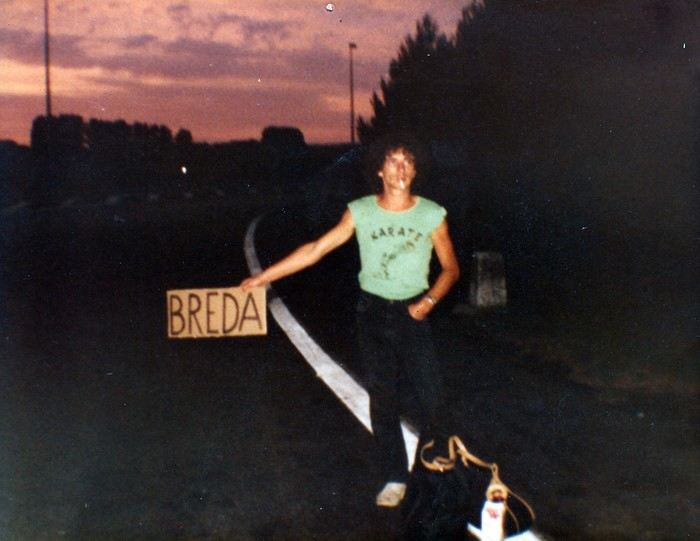
“Hey, your Marker... - My Marker? - The one you used to make hitchhiking signs.”
The marker in question is sitting proudly on the kitchen table. Marielle found it at the bottom of a moving box.
I’ve been meaning to tell the long story of my love affair with hitchhiking for years. Here we go.
To be honest, I’m not quite sure when it started. My earliest memory goes back to a fair with a bike race in my maternal grandparents’ village. I was with my cousin, my little sister, and three girl cousins. There were six of us, ages ranging from six or seven to thirteen or fourteen. Our parents stayed at the fair, and we’d had enough. So we decided to walk home. Only it was four kilometers away. So we hitchhiked. A guy driving an old car picked us all up and dropped us off at the farm. He probably found it amusing to see us thumbing a ride by the side of the road, but maybe it also worried him a bit. With everything you read in the papers...
Around fifteen or sixteen, I started hitchhiking regularly, alone or with a friend, to go to the nearby town. But it was especially when I started boarding school in Orléans that it became more regular. The first year, I’d leave Monday morning and come back Saturday noon by bus. It was an old, uncomfortable bus where we froze in winter. To make matters worse, I often got motion sickness if, as was too often the case, I ended up sitting in the back. In the spring, a high school friend suggested I hitchhike back. It meant a slight detour, but the advantage was taking only national roads.
So that’s how, from the end of tenth grade to twelfth grade, I’d thumb a ride every Saturday on the Pont de Bourgogne. Drivers were used to seeing young people hitchhiking, and it worked pretty well. Our biggest fear? Soldiers! At that time, military service was still mandatory, and on weekends, it wasn’t rare to see them competing with us. They’d keep their uniforms on to go home. That gave people confidence—with everything you read in the papers—and they’d rarely wait more than five minutes. We, with our long hair, were definitely less popular. From time to time, three big red-faced guys in a van coming back from a construction site would flip us off, yelling things like “go get a haircut, you bums!” Those were the good old days.
We still had a good laugh, though. Patrice, the friend I’d hitchhike back from school with on Saturdays, is a musician—I’d later discover he’s an excellent composer. A die-hard Beatles fan, he knows their repertoire by heart and spends his time singing at the top of his lungs while we thumb a ride. One Saturday late morning, we’d been waiting for a while at the exit of Châteauneuf-sur-Loire when a little lady came up to him and asked if he could please sing a little quieter: a baby was sleeping in the house. He put on the most sorry face: “Oh, sorry ma’am, we didn’t realize.” No sooner had the lady gone back inside than he started again. Luckily, a car stopped just then, sparing me the embarrassment of seeing the lady come back out.
Saturday was also the day when the cigarette pack was dangerously low. So before leaving, we’d go buy some “Parisiennes,” the “P4s” as we called them back then. They were slightly thinner cigarettes with a mix of tobacco scraps. Sometimes they tasted like light tobacco, sometimes like dark. Not great, but by the end of the week, our pocket money was gone. They were sold in small packs of four, hence the name P4. We’d only pay 20 centimes. On Saturdays, it was rare for the two of us to manage to scrape together 1.50 F to buy a whole pack of Gauloises...
The last twenty kilometers, I’d usually do alone, Patrice having reached his destination. From time to time, luck would smile on me: an acquaintance would just happen to pass by and stop. One January Saturday, at the exit of Gien, I ran into another guy from Argenton whom I knew a little. That day, the weather was nice, but the temperature was well below zero. It was around noon, and it was the off-peak hour. We were shivering, stamping our feet by the side of the road, when a Citroën “Tube” arrived: it was his father’s boss’s, a mason. They were both sitting in the front, but since they were obese, they had us climb onto the open back. Even though we huddled against the cab to shelter from the wind, the twenty kilometers felt very long, especially since we were only going sixty kilometers an hour. Our hands and cheeks were blue when we finally arrived.
The year I took my baccalaureate, a friend with a 2CV would take me Monday mornings with one or two others we’d pick up in nearby villages. We’d share the gas costs, but it was still cheaper than the bus. And in winter, the bus was my nightmare. You had to get up at five to catch it at six. Not enough sleep, and outside it was freezing or raining—or both. The 2CV was luxury. Plus, Philippe would pick me up at home. On the other hand, since I didn’t have class Saturday mornings—well, I did, but we only had PE the first two hours and nothing after—I’d skip class and slip out right after breakfast to thumb a ride at the Pont de Bourgogne.
Those three high school years were formative in this optional subject that was hitchhiking. Little by little, I learned the rules of the game. First, you shouldn’t walk along the road while thumbing. Cars go too fast and can’t stop easily. Accepting a ride that’s too short is also a no-go. The guy who offers to take you a little way but drops you off at some vague crossroads in the middle of nowhere? No thanks. You need to get dropped off in a town. If it’s a fairly big city, you often have to cross it from one end to the other, but it’s better. At the exit, you have to choose your spot well. Actually, you have to put yourself in the driver’s shoes: they need to see you early enough, not be going too fast, and be able to stop easily without risking an accident. So when leaving a city, it’s better not to go too far. It’s wiser to find a spot where cars go slowly and can stop easily. And preferably near a café. The café is for when you still have a few coins for a coffee and need to warm up. From time to time, you’d run into someone nice who’d make a detour to drop you off at a better spot to start again. Finally, if possible, avoid hitchhiking on Sundays. Cars are packed with whole families who, most of the time, aren’t going far. And then there’s the little worry of those people who rarely leave home: with everything you read in the papers...
During those high school years, it was only short trips, rarely exceeding a hundred kilometers. Later, I aimed bigger, and things were a bit different. In 1973-74, I crossed part of France for the first time on two or three occasions, coming back from the German border or returning to Bordeaux, where we lived briefly. Since there weren’t many highways back then, we took national roads. It was during these trips that I realized it was better to leave in the evening. As I said earlier, Sunday is to be avoided, but on weekdays, there’s another problem: if you leave in the morning, you only make short hops. First, it often takes longer to get going because drivers are people going to work nearby. Which brings us back to those who drop you off in a bad spot, far from everything. There, you have to know how to refuse. You thank the driver for stopping—oh, if only everyone could be like you—while explaining why you’d rather stay put. People don’t take offense, by the way. Those who pick up hitchhikers often hitchhiked themselves when they were in the military or before they had a car. In the late afternoon, you’d often run into salespeople or truckers, in other words, people who drive a lot. At that time, salespeople no longer had appointments and were more relaxed. They wanted to talk about something other than the merits of their products. On the radio, it was time for *Les Grosses Têtes*. You’d also quite often run into small business owners, professionals, or even hippies. The conversations were pleasant and often enriching. A little later in the evening, truckers would take over. They’d already driven a few hundred kilometers, and the depot or customs was still far away. So they’d gladly take a hitchhiker to stay awake at the wheel and chat. The radio with Max Ménier’s show *Les routiers sont sympas*, you’d eventually get tired of it. So a hitchhiker was a change. Others, who’d hit the road at midnight to be at their destination by morning, were nice and offered to let you lie down on the bunk while they drove. When you’d been hitchhiking since six in the evening, freezing in the wind between two vehicles, you weren’t unhappy to take a little nap.
Speaking of Max Ménier, he’d often make announcements for hitchhikers. One evening, I called him. It was getting late, and I still had quite a way to go. No luck: the show had ended for good the day before!
In short, it’s better not to rush, sleep in, and leave after lunch, or better yet, in the late afternoon. Obviously, I’m talking about when you have several hundred kilometers to cover. That’s when you have to play it pro.
First thing, especially at night, but it also applies in the middle of summer when the light is blinding: dress to be seen from far away. I’ll admit I have an advantage over most other hitchhikers: I’m small and don’t scare people. To balance that out, racist drivers often take me for an Arab and are less likely to pick me up, but overall, the balance tips in my favor. Back to the need to be seen: at night, I wear light-colored clothes. In headlights, you can see me from far away.
Second thing: travel light. Forget the big backpack with a frame. Drivers don’t always have room in the trunk or on the back seat, especially if it’s rained and the ground is wet. Plus, it forces them to get out of the car. If they’re nice enough to pick up a hitchhiker, you shouldn’t ask for too much either.
Third thing: bring a cardboard sign and a big marker—like the ones in the photo at the start of this post—to write the name of your destination. In the early 80s, I ran a tourist house in the Cher, but I lived in the Netherlands. In the off-season, it was only open on weekends. On Fridays, I’d leave Holland and return on Mondays. 1200 km round trip. On the way there, in Paris, I’d stand at Porte de la Chapelle. At that spot, the road is very wide, and drivers could stop easily. Obviously, on the sign, I didn’t write Eindhoven, which not everyone knows, and even less Amsterdam because of its seedy reputation. In that case, you’d expect to see a police car stop and two officers in kepis ask for your papers. So as a first destination, I’d write Compiègne. We were well out of Paris, and since it wasn’t too far, a trucker or salesperson was less reluctant to stop. Once past Compiègne, I’d take out my Lille sign. Once in Belgium, it wasn’t really necessary to use a sign anymore, since everyone was going in the same direction. Usually, the guy who picked me up at Porte de la Chapelle would say he wasn’t going far but could take me a little way. Before that, I’d still ask if there was a gas station on the highway where he could drop me off before exiting. While talking, the guy would realize he wasn’t dealing with a dangerous criminal. He’d pretend to check his watch, think for a moment, then say that actually, he was going to Belgium and could take me to the border or a little beyond. To leave Paris on the way back, I’d take the train to Melun, where it was easier to hitchhike than at Porte d’Italie.
Over all those years, I think I was pretty lucky. Or maybe philosophical enough not to imagine a car would stop after a few minutes. An hour’s wait was average. Sure, I sometimes waited three, four, or five hours. Most often at odd hours and in terrible weather. When it doesn’t work, it doesn’t work. But there’s always a moment when things pick up. Sure, when you’re soaked in freezing rain in the early morning after a sleepless night, you’re less philosophical than when I’m writing these lines comfortably at my computer, but it still holds true.
Earlier, I mentioned clothing and the importance of being well-rested before leaving. When you’ve eaten well and just gotten out of the shower, shaved, you’re in a better mood. And somehow, drivers sense it. Or at least, that’s the impression I’ve always had. It’s better to look in shape than disgusted at standing there, half-heartedly thumbing a ride. In short, when I’d start to get fed up with waiting, I’d go into the first café I saw for a coffee. Coming back out, I’d be refreshed, and most of the time, a car would stop within minutes. I’ve often said that when I stood by the side of the road thumbing a ride, I felt a bit like a gambler in front of a slot machine. It was a matter of giving luck a chance. And well, it worked out pretty well.
Then, there are countries where hitchhiking works really well and others where it’s harder. In the 70s-80s, it worked best in Germany and England. In the late afternoon, it wasn’t rare to be invited for tea. Well, that was in England. Tea meant being offered room and board. In Germany, they’d offer you coffee. Once there, they’d first show you the guest room and point out the bathroom before sitting you down in front of a big plate of cold cuts. In the evening, they’d go out in town, and the next morning, they’d usually drop you off at a good spot for hitchhiking. On the other hand, in Mediterranean and Scandinavian countries, you’d better be patient. In Spain or Italy, it’s better to take the train, which was dirt cheap back then. However, if you’re a couple traveling light, it’s already easier in most countries.
In 1982, I went on a trip around Turkey with my girlfriend. We only had two small bags, which was plenty. It was November-December, and we wore our warm, bulky clothes. Leaving Eindhoven at nine in the morning, we arrived in Graz, near the Yugoslav border, at eleven at night. 1300 km in a day! In just four or five vehicles. One to the German border, about fifty kilometers from Eindhoven, the second to Hagen in the Ruhr, the third to Salzburg, and the last to Graz at the Yugoslav border. Record broken. During the night crossing of Yugoslavia, we ran into a trucker close to retirement who lent us the truck’s bunk. So we arrived fresh and rested near Skopje the next morning. We continued to Thessaloniki in northern Greece before taking the train to Istanbul. In Turkey, we traveled a good part of the country by hitchhiking too. With truckers in old, overloaded, slow trucks that climbed hills at fifteen kilometers an hour, but also in cars where five or six people were already crammed in. And every time, we were invited for tea. Once, we were even picked up by a big shot in his Mercedes with a chauffeur. Until then, the average speed was around fifty kilometers an hour. There, we were going two hundred. On a national road, not a nice European highway.
I’ve also hitchhiked in Nepal, from Lumbini, Buddha’s birthplace, to a village on the way to Pokhara. It must have been midday. No bus until the next day. I gave it a try. A small truck overloaded with rice sacks, with two or three young people already perched on top, stopped. I rode on the roof of the cab. At fifty kilometers an hour when it was going well, with a breathtaking view. Coming back from India, I also crossed part of Iran by hitchhiking, from Tehran to the Turkish border. I did this trip with an Austrian I met at the hotel who, like me, had to watch his pennies. We gave it a shot. There was almost no traffic, but to our great surprise, the first car that passed in the area would always stop. They’d just ask for a modest contribution for gas, and it cost next to nothing.
Sometimes, you get scared too. After leaving Turkey in early December 82, we spent about two weeks in the southern Peloponnese harvesting olives. A few days before Christmas, we hitchhiked back to Holland. A girl picked us up in her little Fiat 500. We were driving on a mountain road, and that morning there was a bit of black ice. After crossing a pass, we saw the old Ford Taunus ahead of us at fifty meters start to skid. The driver let out a “heeee!” while grabbing my knees. I reflexively grabbed the wheel. Finally, the Taunus got back on track. And we didn’t swerve. But those few seconds felt very long.
In January 77, while I’d been living in Germany for a few months, I decided to spend a few days in Italy. By hitchhiking, of course. I left in the early afternoon, and by ten at night, I wasn’t far from Frankfurt. I saw a big Mercedes stop. The four or five young people crammed inside were listening to Schlager at full volume. Beer cans littered the floor. They didn’t have a precise destination, and as long as they were going south, that was fine with me. They’d finished their military service that very day and had clearly already celebrated their discharge. The driver was going 160, zigzagging dangerously from one side of the highway to the other. I should have realized he wasn’t entirely sober either. Luckily, there was almost no traffic. Finally, I managed to get dropped off at a gas station just before Frankfurt, relieved. I hope their trip didn’t end tragically.
Another time, coming back from Holland with my wife, we were picked up early in the morning near Senlis by two guys from Lille. They were going to work near Tours and could drop us off at Porte d’Italie. Apparently, they were coworkers but barely knew each other. The driver offered us a beer—at six in the morning, sure!—before opening another can for himself. He was clearly having trouble staying in the right lane. We politely declined, the passenger too. Everyone was tense. Luckily, it was rush hour on the ring road, and we were going slowly. When we got out of the car, the passenger said goodbye with the look of a guy being offered the condemned man’s rum and cigarette.
Finally, there are the annoying remarks from drivers who are either gay when you’re alone or turned on by the sight of your girlfriend when you’re a couple. In those cases, I’d get in the back so the guy wouldn’t feel too confident. And if the conversation got a little too suggestive, we’d deflect until we got dropped off.
And luckily, there are the times, not so rare after all, when you run into really nice people who invite you to eat and sleep at their place and drive you to a good spot the next morning. In Germany and England, that was common. And then there are the big strokes of luck, like during our trip to Turkey when we crossed most of Germany in one car, or that other time when some Germans drove me from the exit of Geneva all the way to the Costa Brava.
Going back to “with everything you read in the papers” and its variant “with everything you see on TV”—and now on the internet—it’s always left me perplexed. Personally, I’ve never heard of hitchhikers assaulting drivers, even if it may have happened. On the other hand, what was most common were hitchhikers being assaulted, especially girls. Anyway, even armed, it seems a bit stupid to assault the driver—wouldn’t that risk causing an accident?
Finally, since that time, I’ve occasionally wanted to hitchhike somewhere far away in France. Most often, too busy with work, it never happened, but the nostalgia hasn’t completely disappeared.
* * *
Other Hitchhikers
And then one day, I... settled down to become a driver myself. Ten years had passed, and you saw fewer and fewer hitchhikers. Or maybe I saw fewer because I had a regular job and wasn’t traveling the same way. And then I understood a few things.
Several times, I was tempted to pick up a hitchhiker, but they didn’t meet the required conditions. They were walking along the road instead of staying at the exit of the previous town. Hard to stop without risking an accident. Or the guy looked really scruffy. Or he was sulking, if not both. Then you think of that famous “with everything you read in the papers.” Not that I was scared, but unfortunately, the few hitchhikers I did pick up later were rarely interesting.
A few years ago, we picked up a young guy at the exit of a small town in Sologne. Not an easy spot for hitchhiking. Bad luck, he was a pretentious little jerk. He was barely 20 or 25 and talked like a bitter old man. He was a waiter in a restaurant. According to him, it was lucky he was there, otherwise the boss would have closed up shop long ago. You’d think he had thirty or forty years of professional experience behind him. As we approached Blois, he started ranting about Arabs, blaming them for all evils. And he laid it on thick. That morning, we were going to a teenager’s funeral who had just committed suicide, so he really got on our nerves, Mr. Know-It-All. Out of anger, I dropped him off next to a shopping center a few kilometers from downtown. Not nice, but it felt good.
Some time ago, we were driving around the Limousin on a Sunday to try out the used Twingo we’d just bought. We picked up a guy in his forties. A German who spoke French well. He started talking about the environment. He was a green Khmer. He got worked up all by himself with his pseudo-eco rant and, after a few kilometers, was almost yelling at us. As we were about to leave the main road for a small one, I dropped him off at a crossroads in the middle of nowhere. Normally, I would have made a little detour to take him to a better spot, but this time, I didn’t feel like doing the... eco-warrior a favor.
On the other hand, I’ve still done my good deed a few times. One June morning, coming back from Orléans, I saw a man in his sixties hitchhiking. The poor guy had had a rough time. He was from Montpellier and was coming back from Caen, where he’d been promised a job. Once there, they bluntly told him the position was already taken, and he had to go back. Except he didn’t have enough money left for the train. He’d spent the night hitchhiking without success. I could only take him as far as Lamotte-Beuvron, where I dropped him off near the fire station. Apparently, there was some vague shelter there or something, but it only opened a few hours later. In the meantime, he settled on the grass in a corner to sleep a little. While he was doing that, I quickly went to the train station to check the price of a ticket to Montpellier. It was within my means. Since he was sound asleep, I slipped the train ticket and 100 francs into his pocket. I couldn’t imagine him continuing to hitchhike all the way to Montpellier. And I bet he didn’t even have a piece of cardboard and a marker!
When we go to Brazil, we usually rent a small car. One day, we were coming back from Paracuru to Fortaleza when we saw a whole family hitchhiking. Two adults and two or three small children. Here near the equator, the sun sets very quickly, and it would soon be night. There was little traffic, and trucks wouldn’t stop because there was no room in the cab. As for the rich people driving big 4x4s, they wouldn’t stoop to picking up the lower classes. The only hope for this kind of family was usually a farmer or artisan who’d let them ride in the back of his pickup. Obviously, they were a bit surprised to see us. Everyone crammed in as best they could in the back of our little car. When we dropped them off, we got a whole string of “Deus lhes abençõe”—God bless you.
Still in Brazil, we were on the road from Barreirinhas to São Luís do Maranhão. About 150 km of deserted road with an isolated mud house here and there. A young woman flagged us down. She was very pregnant and had to get to the clinic twenty or thirty kilometers away to give birth. Someone was supposed to drive her, but the first signs of labor started earlier than expected, and the driver was unavailable. Even driving fast, we weren’t feeling great: it would be just our luck if she gave birth in the car!
Today, we’re in the age of smartphones and carpooling apps. Safety. With everything you see on TV... Three or four years ago, we signed up on a platform. Our first, and only, “client” was a little jerk who didn’t say a word the whole trip. No hello, no goodbye, and certainly no thank you. The next day, we found his Ray-Bans in the car. We didn’t run after him to give them back. Ha!
Feedback on Mexico itinerary with kids
Hi everyone,
Back from my summer vacation, and it's already time to start planning the next one! I mean, I work to go on vacation and explore with my family—don’t you?
Next destination: Mexico (Yucatán and Quintana Roo),
When: February/March 2026,
Duration: 17 nights there (+1 arrival night, either a layover or late in the evening),
Who: Two adults and two young kids (3 and 8 years old),
Transport: Rental car
Interests: Culture, a little relaxation, hiking (though I’m not sure if the destination is ideal for that), and nature exploration.
The plan is to do the classic route but stay longer in each place—it’s easier to manage with kids. Here’s what I had in mind:
Valladolid = 3 nights to visit Ek Balam, Chichén Itzá, and a cenote. Mérida = 3 nights for a stop in Izamal on the way, exploring Mérida, then Uxmal + a trip to Celestún. Campeche = 2 nights to see the Xtacumbilxunaan cave and the Edzná Maya site. Calakmul = 1 night Bacalar = 3 nights for the Lagoon of Seven Colors, Fort San Felipe, some downtime, and a possible day trip to Cozumel if needed. Tulum = 5 nights to visit Cobá, Tulum, cenotes, the beach, Sian Ka’an + Muyil. Then back to the airport (1h30 drive or 2h if flying into Cancún).
Does this seem well-balanced? Could I improve it by grouping accommodations more? I’m guessing Palenque/Yaxchilán is too far (even if I cut other things from the itinerary)? It still sounds like an amazing trip... Thanks,
The plan is to do the classic route but stay longer in each place—it’s easier to manage with kids. Here’s what I had in mind:
Valladolid = 3 nights to visit Ek Balam, Chichén Itzá, and a cenote. Mérida = 3 nights for a stop in Izamal on the way, exploring Mérida, then Uxmal + a trip to Celestún. Campeche = 2 nights to see the Xtacumbilxunaan cave and the Edzná Maya site. Calakmul = 1 night Bacalar = 3 nights for the Lagoon of Seven Colors, Fort San Felipe, some downtime, and a possible day trip to Cozumel if needed. Tulum = 5 nights to visit Cobá, Tulum, cenotes, the beach, Sian Ka’an + Muyil. Then back to the airport (1h30 drive or 2h if flying into Cancún).
Does this seem well-balanced? Could I improve it by grouping accommodations more? I’m guessing Palenque/Yaxchilán is too far (even if I cut other things from the itinerary)? It still sounds like an amazing trip... Thanks,
The Extraordinary Painted Houses Village of Tam Thanh near Hoi An
Not sure if I’ve already posted this, so here it is again!
https://hiddenhoian.com/travel/tam-thanh-mural-village/
Imagine a peaceful coastal fishing village completely transformed by artists who worked their magic on the walls of 100 residential houses. That’s the remarkable story of the Tam Thanh mural village in Quang Nam province. Once similar to many other coastal villages in the area, it now firmly stands out on the tourist map for day trips from Hoi An. In the summer of 2016, Tam Thanh was selected by a joint Korean-Vietnamese project called “Art For A Better Community.” The village was chosen to be their blank canvas, inspired by the success of mural villages in Korea. The project aimed to make Tam Thanh the first painted village of its kind in Vietnam. The team included five Korean artists and seven Vietnamese artists, along with local volunteers. Their goal was to show Vietnamese people that art could be part of everyday life, no matter their place in society. The effort began with about three weeks of wall washing, followed by painting the walls of over 100 residents’ homes. The project was a success, and the village came alive with the paintings. The entire village is now a breathtaking gallery just waiting to be explored. The murals capture the life and soul of the village, from young children playing to fishermen in the ocean. A mix of fantastic pieces offers stunning backdrops for photos. The painted art around the town hasn’t just had a visual impact—it’s also had a social one. The village was chosen not only for the layout of the houses but also to contribute to economic development opportunities in Tam Thanh. Tourists now visit the once-overlooked village, creating more income for locals and making it a successful “art for a cause” project. For example, one entrepreneurial resident who owned a small local café invested 000,000 VND (390 USD) in a sugarcane press a week before the paintings were completed. Sugarcane juice vendors then multiplied with the growth of tourism (5,000 VND - 0.20 USD). Walking down the village’s single street, it’s common to find locals selling refreshments and handmade crafts. In one house in particular, a tailor and his family are painted on an outer wall with incredible detail. The family started selling tote bags decorated by their young daughter. The price for the bags is 100,000 VND (4 USD). If you’re looking for a way to support the village’s economy, this is it. Since there’s no middleman here, you can be sure your money goes directly to the community. You can have lunch at a house with a terrace right by the beach at the edge of the village.
How to Get There Route No. 1: Cross the large Cua Đai bridge. Once you’ve crossed it, continue toward Duong 129/Duong Ven Bien. Stay on this road for 33 kilometers. Upside: this route has light traffic, no traffic lights, and no trucks or buses. It’s a great direct route to the village but offers little to see along the way. You’ll eventually reach a crossroads. Turn right toward Tam Ky town, while the left will take you toward the Tam Thanh mural village. Stay on Route 608 as it turns twice before reaching a bridge. Cross the bridge, and you’ll arrive at Thanh Nien Road. Finally, turn right to reach the village. This route takes about an hour. Use your best judgment. For reference, it costs about 5,000 VND (0.20 USD) to park a motorbike.
Route #2: Cross the large Cua Đai bridge. Once you’ve crossed it, continue toward Duong 129/Duong Ven Bien. Stay on this road for 12 kilometers, then turn left onto Route 613, where you’ll continue for 1.5 kilometers until you reach Thanh Nien Road. Finally, turn right and drive 23 kilometers to the painted village. For most of the trip, taking Thanh Nien Road will take you through a much more local part of the region. The journey takes about an hour and a half.
https://hiddenhoian.com/travel/tam-thanh-mural-village/
Imagine a peaceful coastal fishing village completely transformed by artists who worked their magic on the walls of 100 residential houses. That’s the remarkable story of the Tam Thanh mural village in Quang Nam province. Once similar to many other coastal villages in the area, it now firmly stands out on the tourist map for day trips from Hoi An. In the summer of 2016, Tam Thanh was selected by a joint Korean-Vietnamese project called “Art For A Better Community.” The village was chosen to be their blank canvas, inspired by the success of mural villages in Korea. The project aimed to make Tam Thanh the first painted village of its kind in Vietnam. The team included five Korean artists and seven Vietnamese artists, along with local volunteers. Their goal was to show Vietnamese people that art could be part of everyday life, no matter their place in society. The effort began with about three weeks of wall washing, followed by painting the walls of over 100 residents’ homes. The project was a success, and the village came alive with the paintings. The entire village is now a breathtaking gallery just waiting to be explored. The murals capture the life and soul of the village, from young children playing to fishermen in the ocean. A mix of fantastic pieces offers stunning backdrops for photos. The painted art around the town hasn’t just had a visual impact—it’s also had a social one. The village was chosen not only for the layout of the houses but also to contribute to economic development opportunities in Tam Thanh. Tourists now visit the once-overlooked village, creating more income for locals and making it a successful “art for a cause” project. For example, one entrepreneurial resident who owned a small local café invested 000,000 VND (390 USD) in a sugarcane press a week before the paintings were completed. Sugarcane juice vendors then multiplied with the growth of tourism (5,000 VND - 0.20 USD). Walking down the village’s single street, it’s common to find locals selling refreshments and handmade crafts. In one house in particular, a tailor and his family are painted on an outer wall with incredible detail. The family started selling tote bags decorated by their young daughter. The price for the bags is 100,000 VND (4 USD). If you’re looking for a way to support the village’s economy, this is it. Since there’s no middleman here, you can be sure your money goes directly to the community. You can have lunch at a house with a terrace right by the beach at the edge of the village.
How to Get There Route No. 1: Cross the large Cua Đai bridge. Once you’ve crossed it, continue toward Duong 129/Duong Ven Bien. Stay on this road for 33 kilometers. Upside: this route has light traffic, no traffic lights, and no trucks or buses. It’s a great direct route to the village but offers little to see along the way. You’ll eventually reach a crossroads. Turn right toward Tam Ky town, while the left will take you toward the Tam Thanh mural village. Stay on Route 608 as it turns twice before reaching a bridge. Cross the bridge, and you’ll arrive at Thanh Nien Road. Finally, turn right to reach the village. This route takes about an hour. Use your best judgment. For reference, it costs about 5,000 VND (0.20 USD) to park a motorbike.
Route #2: Cross the large Cua Đai bridge. Once you’ve crossed it, continue toward Duong 129/Duong Ven Bien. Stay on this road for 12 kilometers, then turn left onto Route 613, where you’ll continue for 1.5 kilometers until you reach Thanh Nien Road. Finally, turn right and drive 23 kilometers to the painted village. For most of the trip, taking Thanh Nien Road will take you through a much more local part of the region. The journey takes about an hour and a half.
Oman for backpackers: trip report
So happy to be back with you all that I’m rushing to share my trip report!
We chose to stay exactly 14 days to avoid paying for a visa. As a result, we didn’t have time to explore the south—we’ll be back because Oman is a great destination in January. Temperatures were a perfect 25–27°C during the day. No rain for us, but it can happen.
We bought the *Évasion Oman* guidebook. We started with the Jebels (the mountains), abandoned villages, then the desert, wadis along the coast, and finished in the capital. For us, it was easier to go from cold (2,000 meters, after all) to hot before returning to our freezing Normandy in January.
The people were incredibly welcoming and lovely. We camped in natural camping areas where you can make a fire (free, no facilities or water). Easy to find—just search "camping" on Google Maps (an essential app). We traveled as a group of five and rented a 4x4 seven-seater from Europcar before leaving (price included our insurance): 800 euros for 14 days. Essential for getting everywhere, as there are lots of dirt tracks. We brought our camping gear from France since the baggage allowance is 30 kg. Oh, and also two liters of rum and a box of white wine—also essential.
Food was tricky if you don’t like spicy dishes or just chicken. You have to eat at international restaurants, which cost about the same as back home. We’d packed vacuum-sealed meat for the first three days and a few cans. For beaches, stick to the ones marked on Google for swimming—otherwise, they can be dirty and full of oil.
We arrived at 6:30 AM, bought a SIM card (make sure to remove yours before arriving and tape it to the back of your phone), exchanged money (not great rates at the airport—better in malls or souks; no exchanges in banks), and picked up the car. Then we headed to a Carrefour supermarket, but it was closed. We drove to Jebel Al Akhdar, the Sayq Plateau, where we found markets along the way. There are also bazaar shops where you can get gas bottles—they’re everywhere in mid-sized towns. There are even hypermarkets.
We hiked the well-marked old Sayq trail (red and white markings). Our return was improvised. We camped on the plateau and got cold—bring 0°C sleeping bags! The next day, we visited the abandoned villages of Wadi Bani Habib: juniper forests, canyon viewpoints. Then Birkat Al Maws on the way down—a beautiful palm grove. Next, Nizwa Hotel. The beds were really hard there—ask to see the rooms and test the beds before booking. There’s always availability, with prices starting at 35 euros for two.
On the third day, we went to Jebel Shams. Hiked along the canyon starting from Ghul, then descended. Camped on the road to Balha Fortress, which we visited the next morning (stunning!). Then we explored Nizwa before heading to the Wahiba Desert. Camped along the way, then drove to our accommodation: two days in the desert. We found the Thousand Nights Camp 40% cheaper a month before. Note: you have to leave by 1 PM in a convoy to reach the hotel.
On the sixth day, we hiked in the desert on our own because the activity prices were outrageous.
On the seventh day, we headed to a wadi, Bani Khalid, then to Sur, a seaside hotel. We booked just one room for five of us—hotel apartments are huge, and since we had our camping mattresses, it wasn’t a problem to set up in the living room. There’s even a kitchen. In cities, camping spots are poorly located—near intersections, etc.
Beach time and sightseeing on the eighth day, then we drove to the white sand beach in Fins, where we stayed for two nights (we left the tents set up but empty). This was our favorite campsite—go all the way to the end of the road, there’s a small cove and a stunning spot.
On the ninth day, we visited Wadi Shab and the Salma Plateau to find the tombs. The hike up from Fins was way too long—probably better to take the route suggested in the guidebook for a round trip. Meh, no one really enjoyed it.
On the tenth day, we went to Wadi Al Arbiyyin and drove to Seeb Al Mouj to book a diving trip. Stayed at Al Ferdous Hotel Apartments until the end—well-located for visiting Muscat and a great value. Just make sure to check the room first, as some beds are very hard and others aren’t.
Eleventh day: diving and beach time.
Twelfth day: visited the Grand Mosque (unlucky—first day it became paid, and not just a little: 8 OMR). Then explored the old city.
Thirteenth day: the Grand Opera and beach at The Village, where we found a great pizzeria: pizzawifi.com.
Fourteenth day: And that’s it—back home, thrilled to have discovered this magical country. We’ll be back!
We bought the *Évasion Oman* guidebook. We started with the Jebels (the mountains), abandoned villages, then the desert, wadis along the coast, and finished in the capital. For us, it was easier to go from cold (2,000 meters, after all) to hot before returning to our freezing Normandy in January.
The people were incredibly welcoming and lovely. We camped in natural camping areas where you can make a fire (free, no facilities or water). Easy to find—just search "camping" on Google Maps (an essential app). We traveled as a group of five and rented a 4x4 seven-seater from Europcar before leaving (price included our insurance): 800 euros for 14 days. Essential for getting everywhere, as there are lots of dirt tracks. We brought our camping gear from France since the baggage allowance is 30 kg. Oh, and also two liters of rum and a box of white wine—also essential.
Food was tricky if you don’t like spicy dishes or just chicken. You have to eat at international restaurants, which cost about the same as back home. We’d packed vacuum-sealed meat for the first three days and a few cans. For beaches, stick to the ones marked on Google for swimming—otherwise, they can be dirty and full of oil.
We arrived at 6:30 AM, bought a SIM card (make sure to remove yours before arriving and tape it to the back of your phone), exchanged money (not great rates at the airport—better in malls or souks; no exchanges in banks), and picked up the car. Then we headed to a Carrefour supermarket, but it was closed. We drove to Jebel Al Akhdar, the Sayq Plateau, where we found markets along the way. There are also bazaar shops where you can get gas bottles—they’re everywhere in mid-sized towns. There are even hypermarkets.
We hiked the well-marked old Sayq trail (red and white markings). Our return was improvised. We camped on the plateau and got cold—bring 0°C sleeping bags! The next day, we visited the abandoned villages of Wadi Bani Habib: juniper forests, canyon viewpoints. Then Birkat Al Maws on the way down—a beautiful palm grove. Next, Nizwa Hotel. The beds were really hard there—ask to see the rooms and test the beds before booking. There’s always availability, with prices starting at 35 euros for two.
On the third day, we went to Jebel Shams. Hiked along the canyon starting from Ghul, then descended. Camped on the road to Balha Fortress, which we visited the next morning (stunning!). Then we explored Nizwa before heading to the Wahiba Desert. Camped along the way, then drove to our accommodation: two days in the desert. We found the Thousand Nights Camp 40% cheaper a month before. Note: you have to leave by 1 PM in a convoy to reach the hotel.
On the sixth day, we hiked in the desert on our own because the activity prices were outrageous.
On the seventh day, we headed to a wadi, Bani Khalid, then to Sur, a seaside hotel. We booked just one room for five of us—hotel apartments are huge, and since we had our camping mattresses, it wasn’t a problem to set up in the living room. There’s even a kitchen. In cities, camping spots are poorly located—near intersections, etc.
Beach time and sightseeing on the eighth day, then we drove to the white sand beach in Fins, where we stayed for two nights (we left the tents set up but empty). This was our favorite campsite—go all the way to the end of the road, there’s a small cove and a stunning spot.
On the ninth day, we visited Wadi Shab and the Salma Plateau to find the tombs. The hike up from Fins was way too long—probably better to take the route suggested in the guidebook for a round trip. Meh, no one really enjoyed it.
On the tenth day, we went to Wadi Al Arbiyyin and drove to Seeb Al Mouj to book a diving trip. Stayed at Al Ferdous Hotel Apartments until the end—well-located for visiting Muscat and a great value. Just make sure to check the room first, as some beds are very hard and others aren’t.
Eleventh day: diving and beach time.
Twelfth day: visited the Grand Mosque (unlucky—first day it became paid, and not just a little: 8 OMR). Then explored the old city.
Thirteenth day: the Grand Opera and beach at The Village, where we found a great pizzeria: pizzawifi.com.
Fourteenth day: And that’s it—back home, thrilled to have discovered this magical country. We’ll be back!
Translating terms of endearment into Bambara
Hi everyone, my partner is Malian and I’d love to be able to say sweet things to him in Bambara, as well as learn some polite phrases. Thanks for your help! 😊
Here are a few examples: I love you My love My heart My life You’re the man of my life I care about you I want to live with you Kiss me I miss you Thank you Please Hello See you soon
Here are a few examples: I love you My love My heart My life You’re the man of my life I care about you I want to live with you Kiss me I miss you Thank you Please Hello See you soon
What to prioritize in Mauritius?
Hi there, we’re heading to Mauritius in December-January.
The question is: what should we visit first?
Thanks for your tips!
JP
Thanks for your tips!
JP
The Extraordinary Painted-House Village of Tam Thanh near Hoi An
Imagine a peaceful fishing village, completely transformed by artists who worked their magic on the walls of 100 residential houses. That’s the remarkable story of the Tam Thanh mural village in Quang Nam province. Once similar to many other coastal villages in the area, it now firmly stands out on the tourist map for a day trip from Hoi An.
In the summer of 2016, Tam Thanh was selected by a Korean-Vietnamese joint project called Art For A Better Community. The village was chosen to be their blank canvas, inspired by the success of mural villages in Korea. The project aimed to make Tam Thanh the first painted village of its kind in Vietnam.
The joint project included five Korean artists and seven Vietnamese artists, along with local volunteers. They aimed to show Vietnamese people that art could be part of everyday life, no matter where you stand in society. The effort began with about three weeks of wall washing, followed by painting the walls of over 100 residents' houses.
The project was a success, and the village came alive with the paintings. The entire village is now a breathtaking gallery just waiting to be explored. The murals capture the life and soul of the village—from young children playing to fishermen in the ocean. A mix of fantastic pieces offers stunning backdrops for photos.
The painted art around the town didn’t just have a visual impact; it also had a social one. The village itself was chosen not only for the layout of the houses but also to contribute to economic development opportunities in Tam Thanh. Tourists now visit the once-overlooked village, creating more income for locals and making it a successful "art for a cause" project. For example, an entrepreneurial resident who owned a small local café invested 1,000,000 VND ($390 USD) in a sugarcane press a week before the paintings were completed. Sugarcane juice vendors then multiplied with the growth of tourism (5,000 VND - $0.20 USD).
Walking down the village’s single street, it’s common to find locals selling refreshments and handmade crafts. In one house in particular, a tailor and his family are painted on an outer wall with incredible detail. The family started selling tote bags decorated by their young daughter. The asking price for the bags is 100,000 VND ($4 USD). If you’re looking for a way to support the village’s economy, this is it. Since there’s no middleman here, you can be sure your money goes directly to the community.
Since the project’s completion, two other villages in the province have now been painted. The new mural villages were created with different local Vietnamese artists to raise awareness about each community’s issues. Tam Hai Island was redecorated to highlight the serious waste problem the population faces due to the lack of treatment plants. Another village on An Binh Island was painted to raise awareness among locals and tourists about the importance of environmental protection.
How to get there
Route No. 1: Cross the large Cua Dai bridge. Once you’ve crossed it, continue onto Duong 129/Duong Ven Bien. Stay on this road for 33 kilometers. Upside: this route has light traffic, no traffic lights, and no trucks or buses. It’s a great direct route to the village but offers little to see. You’ll eventually reach a crossroads. Turn right toward Tam Ky town, while the left will take you toward the mural village; stay on Road 608 as it turns twice before reaching a bridge. Cross the bridge, and you’ll arrive at Thanh Nien Road. Finally, turn right to reach the village. This route takes about an hour.
Route #2: Cross the large Cua Dai bridge. Once you’ve crossed it, continue onto Duong 129/Duong Ven Bien. Stay on this road for 12 kilometers, then turn left onto Road 613, where you’ll continue for 1.5 kilometers until you reach Thanh Nien Road. Finally, turn right and drive 23 kilometers to the painted village. For most of the trip, taking Thanh Nien Road will take you through a much more local part of the region. The journey takes about an hour and a half.
Changing the chainring on a Riverside 5
Hi there.
I'd like to change the chainring on my Riverside 5 with trigger shifters.
I’m attaching a photo for advice. I’m lacking power and want a larger chainring for road use because I’m spinning out on the highest gear even though I still have power to give on flat terrain.
At Decathlon, they were supposed to get back to me after checking it out in the workshop but never did. It was outside their standards, and the salesperson clearly forgot about me...
What are your recommendations and suitable products for purchase, please?
Thanks.
Best regards,
Forum is back
Great news that the forum is back—we’ve been waiting for this for ages! Now we can chat again with the die-hards like Claudio, Luc Bertand, and everyone else...
Voyager à vélo
Formalités spécifiques et destinations actuellement autorisées (ou pas) pour les voyageurs européens English translation pending
Frontières ouvertes ou fermées, visas délivrés ou pas, formalités spécifiques et autres particularités dues à la crise sanitaire. Un tour d'horizon actualisé quotidiennement par Action-Visas pour les Français et Européens souhaitant partir en voyage à l'étranger.
Lire la suite...
Vol Ryanair pour 14 à 15 jours en Andalousie English translation pending
Bonjour
Nous devons partir le 11 septembre 2020 en Andalousie par Raynair , mais nous ne voulons pas partir.
Il y a t'il des personnes qui ont écrit à Raynair mais en France
Il y a t'il des personnes qui ont été dans notre cas ?
Il y a t'il des personnes qui sont partis cet été en Andalousie ?
Merci en attendant votre réponse
Modification horaire d'un vol domestique en Grèce et correspondance English translation pending
Bonjour,
Voyage dans les Cyclades prévu en septembre. Pour le retour volotea a modifié les horaires de ses vols, du coup nous allons louper notre correspondance avec le vol retour via Ryanair. Quels sont mes possibilités ?
Mykonos Athènes par volotea Athènes Toulouse par Ryanair
Merci de votre aide
Mykonos Athènes par volotea Athènes Toulouse par Ryanair
Merci de votre aide
Qui connait les Scablands? (état de Washington) English translation pending
Hier sur RMC chaîne 23 très intéressant et à priori pas vu de discussion sur VF !
Etat de Washington mais frontalier avec Montana, Idaho, Oregon....
https://www.programme-tv.net/programme/culture-infos/r1549312445-au-coeur-des-cataclysmes/10571349-deluges/#chaine=rmc-story-203
Vaste zone au Sud/Ouest de Spokane en direction de Portland. Paysages grandioses !
Qui a des infos, par curiosité ...
Etat de Washington mais frontalier avec Montana, Idaho, Oregon....
https://www.programme-tv.net/programme/culture-infos/r1549312445-au-coeur-des-cataclysmes/10571349-deluges/#chaine=rmc-story-203
Vaste zone au Sud/Ouest de Spokane en direction de Portland. Paysages grandioses !
Qui a des infos, par curiosité ...
Ferry Trapani-Toulon (à moto) English translation pending
Bonjour,
Nous envisageons pour octobre un voyage en Sicile. Nous ferions l'aller (nous habitons le sud de la France) à moto, mais aimerions rentrer en ferry. J'ai lu qu'il excitait une liaison Trapani/ Toulon deux fois par semaine, mais je ne trouve pas les infos en ligne. Quelqu'un pourrait-il nous donner des détails....quels jours? possible début novembre? A quel prix? Merci d'avance
297 € vol aller-retour direct Paris - San Francisco septembre 2020, webcam live English translation pending
Bonjour ,
Les états Unis se déconfinent et je pense que pour septembre même pour Août il n'y aura aucun problème pour visiter les Parks Nationaux . À Las Vegas, Los Angeles l'activité reprend, Yosemite ré ouvre le 11 Juin , Bryce Canyon , Grand Canyon aussi son ré ouvert avec service restreint
297€ Vol Direct PARIS San Francisco du 1 au 30 Sept 2020 avec Air France avec 2 bagages Cabines de 12 et 7 kg sa passe en respectant les dimensions. 55 x 35 x 25 cm et un bag de 40X30X20
Location voiture SUV 27,37€ jour chez Hertz avec le code de réduction carte Gold 974500 c'est moins cher sur le site Français , Alamo avec -10% SUV a 28 € jour Je vous conseil de louer un GMC Acadia 7 pl AWD très confortable 11L /100 km et possibilité de dormis a l'arrière. Chez Hertz la radio satellite Sirius est comprise.
Voici quelques Webcam en Direct des USA
Venice Beach LIVE , vous pouvez changer de vue a distance https://www.westland.net/beachcam/
La jeter de Santa Monica en direct https://pacpark.com/santa-monica-pier-live-cams/pier/
Las Vegas Fremont Street en direct https://www.earthcam.com/usa/nevada/lasvegas/fremontstreet/?cam=catsmeow_lv_fremont
Las Vegas Signe en direct https://www.youtube.com/watch?v=EcM9m7Eo0u4
Las Vegas Boulevard en direct https://www.youtube.com/watch?v=Q7oswgzGIK0
Las Vegas hotel Bellagio en direct https://www.earthcam.com/usa/nevada/lasvegas/?cam=bellagio
San Francisco en Direct https://www.earthcam.com/usa/california/sanfrancisco/?cam=rowingclub
Jackson Hole en direct https://www.seejh.com/webcams/jackson/town-square-broadway
Durango Colorado en direct http://www.durangolivecam.com/downtown-cam/
Chute du Niagara en Direct https://www.earthcam.com/canada/niagarafalls/?cam=niagarafalls_str
NY Times Square en Direct https://www.earthcam.com/usa/newyork/timessquare/?cam=tsrobo1
Les états Unis se déconfinent et je pense que pour septembre même pour Août il n'y aura aucun problème pour visiter les Parks Nationaux . À Las Vegas, Los Angeles l'activité reprend, Yosemite ré ouvre le 11 Juin , Bryce Canyon , Grand Canyon aussi son ré ouvert avec service restreint
297€ Vol Direct PARIS San Francisco du 1 au 30 Sept 2020 avec Air France avec 2 bagages Cabines de 12 et 7 kg sa passe en respectant les dimensions. 55 x 35 x 25 cm et un bag de 40X30X20
Location voiture SUV 27,37€ jour chez Hertz avec le code de réduction carte Gold 974500 c'est moins cher sur le site Français , Alamo avec -10% SUV a 28 € jour Je vous conseil de louer un GMC Acadia 7 pl AWD très confortable 11L /100 km et possibilité de dormis a l'arrière. Chez Hertz la radio satellite Sirius est comprise.
Voici quelques Webcam en Direct des USA
Venice Beach LIVE , vous pouvez changer de vue a distance https://www.westland.net/beachcam/
La jeter de Santa Monica en direct https://pacpark.com/santa-monica-pier-live-cams/pier/
Las Vegas Fremont Street en direct https://www.earthcam.com/usa/nevada/lasvegas/fremontstreet/?cam=catsmeow_lv_fremont
Las Vegas Signe en direct https://www.youtube.com/watch?v=EcM9m7Eo0u4
Las Vegas Boulevard en direct https://www.youtube.com/watch?v=Q7oswgzGIK0
Las Vegas hotel Bellagio en direct https://www.earthcam.com/usa/nevada/lasvegas/?cam=bellagio
San Francisco en Direct https://www.earthcam.com/usa/california/sanfrancisco/?cam=rowingclub
Jackson Hole en direct https://www.seejh.com/webcams/jackson/town-square-broadway
Durango Colorado en direct http://www.durangolivecam.com/downtown-cam/
Chute du Niagara en Direct https://www.earthcam.com/canada/niagarafalls/?cam=niagarafalls_str
NY Times Square en Direct https://www.earthcam.com/usa/newyork/timessquare/?cam=tsrobo1
Off to explore Jordan!
Well, since the lockdown is dragging on, I’m starting a new travel journal following the one I finished publishing yesterday:
https://voyageforum.com/discussion/voyage-pays-perles-voyage-dans-ouest-americain-d9943984/
This time, after the U.S., we’re heading to the Middle East—Jordan!
And we’re keeping up the good habits: one day’s entry published every day at 5:30 PM! Happy reading, and feel free to leave a comment, question, or remark...
Franck
Franck
Demande de remboursement suite à un vol annulé French Bee English translation pending
Bonjour à tous,
Je viens vers vous et je ne pense pas être le seul dans notre cas. Suite aux récentes actualités sur le blocage des frontières à cause du Covid-19 nous devions aller à San Francisco avec ma conjointe le 10 avril 2020. Donald Trump ayant bloqué les frontières aux européens ayant séjourné plus de 14 jours dans l’espace Schengen.
La compagnie que nous avions prise FrenchBee a annulé notre vol et nous a proposé deux solutions :
· Report du vol. · Avoir.
Effectivement la première (Report du vol) est un arrangement commercial de la compagnie le deuxième (Avoir) est légal mais sous la validation signé du client mais ils se sont bien tenu de parler de la dernière qui est le remboursement total et qui est soumis à la réglementation française et européennes dont voici les extraits :
· Code du tourisme - Article L211-14 Alinéa III :
« -L’organisateur ou le détaillant peut résoudre le contrat et rembourser intégralement le voyageur des paiements effectués, mais il n'est pas tenu à une indemnisation supplémentaire, si : »
· Règlement (CE) n° 261/2004 – Article 8 Assistance : droit au remboursement ou au réacheminement :
« 1. Lorsqu'il est fait référence au présent article, les passagers se voient proposer le choix entre: a) — le remboursement du billet, dans un délai de sept jours, selon les modalités visées à l'article 7, paragraphe 3, au prix auquel il a été acheté, pour la ou les parties du voyage non effectuées et pour la ou les parties du voyage déjà effectuées et devenues inutiles par rapport à leur plan de voyage initial, ainsi que, le cas échéant, — un vol retour vers leur point de départ initial dans les meilleurs délais; »
Je souligne également les modalités de remboursement liée à l’article 8.1.a ci-dessus :
· Règlement (CE) n° 261/2004 – Article 7 Droit à indemnisation :
« 3. L'indemnisation visée au paragraphe 1 est payée en espèces, par virement bancaire électronique, par virement bancaire ou par chèque, ou, avec l'accord signé du passager, sous forme de bons de voyage et/ou d'autres services. »
J’ai envoyé un mail le mardi 24/03/2020 en expliquant que nous ne souhaitons ni le report de vol ni un avoir mais bien un remboursement total de ce fait je leurs ai rappelé leurs obligations dans ce cas en énonçant le volet législatif ci-dessus. Depuis aucune réponse d’accusé de réception par mail (Au pire un retour en expliquant que leur boite mail est saturé…mais bien sûr), ils ne répondent pas au téléphone (Pour cause de confinement…y’a même par le stricte minimum) en clair autruche total de leur part.
Dans le mail dans lequel ils nous annoncent que le vol est annulé il faut qu’on leur donne une réponse avant le 31 mars pour le report de vol ou l’avoir.
Etant donné qu’on a aucun retour de leurs part (On ne sait pas s’ils ont reçu notre mail) mais je pense que si car on a reçu un mail « Boite mail saturé » mais que pour nous nous voulons le remboursement vous pensez qu’il faut qu’on attende gentiment un « retour à la normale des services » pour réclamer notre remboursement en laissant passer la date butoir de demande d’avoir ?
Dans tout les cas notre vol ne décolleras pas.
Merci d’avance pour vos retours.
Je viens vers vous et je ne pense pas être le seul dans notre cas. Suite aux récentes actualités sur le blocage des frontières à cause du Covid-19 nous devions aller à San Francisco avec ma conjointe le 10 avril 2020. Donald Trump ayant bloqué les frontières aux européens ayant séjourné plus de 14 jours dans l’espace Schengen.
La compagnie que nous avions prise FrenchBee a annulé notre vol et nous a proposé deux solutions :
· Report du vol. · Avoir.
Effectivement la première (Report du vol) est un arrangement commercial de la compagnie le deuxième (Avoir) est légal mais sous la validation signé du client mais ils se sont bien tenu de parler de la dernière qui est le remboursement total et qui est soumis à la réglementation française et européennes dont voici les extraits :
· Code du tourisme - Article L211-14 Alinéa III :
« -L’organisateur ou le détaillant peut résoudre le contrat et rembourser intégralement le voyageur des paiements effectués, mais il n'est pas tenu à une indemnisation supplémentaire, si : »
· Règlement (CE) n° 261/2004 – Article 8 Assistance : droit au remboursement ou au réacheminement :
« 1. Lorsqu'il est fait référence au présent article, les passagers se voient proposer le choix entre: a) — le remboursement du billet, dans un délai de sept jours, selon les modalités visées à l'article 7, paragraphe 3, au prix auquel il a été acheté, pour la ou les parties du voyage non effectuées et pour la ou les parties du voyage déjà effectuées et devenues inutiles par rapport à leur plan de voyage initial, ainsi que, le cas échéant, — un vol retour vers leur point de départ initial dans les meilleurs délais; »
Je souligne également les modalités de remboursement liée à l’article 8.1.a ci-dessus :
· Règlement (CE) n° 261/2004 – Article 7 Droit à indemnisation :
« 3. L'indemnisation visée au paragraphe 1 est payée en espèces, par virement bancaire électronique, par virement bancaire ou par chèque, ou, avec l'accord signé du passager, sous forme de bons de voyage et/ou d'autres services. »
J’ai envoyé un mail le mardi 24/03/2020 en expliquant que nous ne souhaitons ni le report de vol ni un avoir mais bien un remboursement total de ce fait je leurs ai rappelé leurs obligations dans ce cas en énonçant le volet législatif ci-dessus. Depuis aucune réponse d’accusé de réception par mail (Au pire un retour en expliquant que leur boite mail est saturé…mais bien sûr), ils ne répondent pas au téléphone (Pour cause de confinement…y’a même par le stricte minimum) en clair autruche total de leur part.
Dans le mail dans lequel ils nous annoncent que le vol est annulé il faut qu’on leur donne une réponse avant le 31 mars pour le report de vol ou l’avoir.
Etant donné qu’on a aucun retour de leurs part (On ne sait pas s’ils ont reçu notre mail) mais je pense que si car on a reçu un mail « Boite mail saturé » mais que pour nous nous voulons le remboursement vous pensez qu’il faut qu’on attende gentiment un « retour à la normale des services » pour réclamer notre remboursement en laissant passer la date butoir de demande d’avoir ?
Dans tout les cas notre vol ne décolleras pas.
Merci d’avance pour vos retours.
Suspension de vols pour neuf compagnies de Thaïlande English translation pending
"Les neuf transporteurs sont Thai Airways International, Thai Smile, Bangkok Airways, Thai AirAsia, Thai AirAsia X, Thai Lion Air, Nok Air, Nok Scoot et Thai VietJet Air.
Thai Lion Air a indiqué qu’elle suspend tous ses vols intérieurs et internationaux entre le 25 mars et le 30 avril. Thai Smile, Thai AirAsia et Bangkok Airways ont également annoncé qu’elles suspendent tous les vols internationaux du 22 mars jusqu’à nouvel ordre. La compagnie nationale Thai Airways International a précisé que tous ses vols vers l’Europe seront suspendus du 1er avril au 31 mai, tandis que ses vols régionaux seront suspendus du 25 mars au 31 mai.
« Les transporteurs doivent avoir des plans pour compenser les clients qui ont déjà acheté leurs billets et ils doivent informer les clients des annulations de vol à l’avance« , prévient la CAAT, et de préciser : « Dans le cas où les clients avaient payé leurs billets en espèces, la transaction de remboursement doit être effectuée dans les sept jours suivant la demande par les clients« ."
https://www.air-journal.fr/2020-03-25-thailande-neuf-compagnies-aeriennes-suspendent-leurs-operations-5219052.html
Thai Lion Air a indiqué qu’elle suspend tous ses vols intérieurs et internationaux entre le 25 mars et le 30 avril. Thai Smile, Thai AirAsia et Bangkok Airways ont également annoncé qu’elles suspendent tous les vols internationaux du 22 mars jusqu’à nouvel ordre. La compagnie nationale Thai Airways International a précisé que tous ses vols vers l’Europe seront suspendus du 1er avril au 31 mai, tandis que ses vols régionaux seront suspendus du 25 mars au 31 mai.
« Les transporteurs doivent avoir des plans pour compenser les clients qui ont déjà acheté leurs billets et ils doivent informer les clients des annulations de vol à l’avance« , prévient la CAAT, et de préciser : « Dans le cas où les clients avaient payé leurs billets en espèces, la transaction de remboursement doit être effectuée dans les sept jours suivant la demande par les clients« ."
https://www.air-journal.fr/2020-03-25-thailande-neuf-compagnies-aeriennes-suspendent-leurs-operations-5219052.html
Bilan de 5 mois à vélo Yukon/Alaska en famille (mai/septembre 2019) English translation pending
Avec un peu de retard nous voulions livrer quelques impressions et suggestions qui peuvent peut être aider de futurs voyageurs particulièrement en 2 roues.
Nous (2 adultes et 2 enfants de 7 et 10 ans) avons effectué le trajet suivant à vélo.
Denali Park, peninsule du Kenai, Valdez-Dawson-Tombstone- Whitehorse-Skagway-Haines-Haines junction-Withehorse
soit environ 3000kms à un rythme tranquille et nous avons rajouté la descente de 16 jours en Canoë de Whitehorse à Dawson fin Aout-début Septembre.
Nous sommes arrivés début mai à Anchorage en provenance d’Océanie avec un aller simple pour éviter tout impératif et pouvoir laisser libre cours à nos envies. De ce fait nous avons utilisé un système de réservation annulable pour pouvoir présenter un billet de sortie à l immigration US mais ils ne nous ont pas interrogés outre mesure. Pour les 10 premiers jours nous avons loué un petit pick up (malheureusement bien moins cher qu un transport public) afin de faire l’aller retour jusqu à Denali qu il nous était difficile d’inclure dans notre itinéraire cyclo. Nous avons pédalé 5 jours en A/R dans le parc en direction de Wonder lake pour une mise en jambe ... relativement ardue ... route en gravel et uniquement montée ou descente mais en récompense le sentiment d avoir le parc pour vous seul et la faune locale. Nous ne pouvons que recommander l’expérience surtout lors des périodes mi mai-début juin ou fin sept-début oct quand la route est dégagée (cela dépend des saisons, date à vérifier sur le site du parc national) et lorsque les bus qui transportent les touristes ne sont pas en fonction …. Il faut au préalable faire le permis et recupérer des bear container (gratuits et obligatoires) chez les rangers.
Nous avons ensuite véritablement commencé le voyage a vélo en direction de la péninsule du Kenai La région est magnifique entre mer, montagnes, glaciers et forets … magique, malheureusement encore trop proche d’Anchorage et la circulation trop intense en tant que cycliste pour profiter sereinement des lieux …. à éviter spécialement le week-end et probablement pendant les vacances d été. (nous étions en juin) Nous avons donc pris l’initiative de s éloigner de l asphalte en prenant des itinéraires VTT/rando tel que la boucle des Russians lake et le Johnson pass ou l on a pu profiter pleinement de la magie des lieux. Sur chaque itinéraire plusieurs aires de campings gratuits équipes de bear box. C est pas très roulant, pas mal de portage mais on a pris le temps … seulement quelque kms par jours pour profiter du cadre et du calme. (beaucoup d autres itinéraires possibles) Nous avons également beaucoup apprécié la balade aux Harding icefield (camping gratuit super tranquille hors saison) Seward cadre superbe, ravitaillement agréable qqs jours (encore une fois éviter le week-end) de jolis balades aux environs. Nous ne sommes pas allés à Homer car itinéraire en AR et pas mal de circulation sur cette route. Nous avons ensuite quitter la péninsule via le ferry Whittier-Valdez Whitter ville étonnamment laide on l on accède via un tunnel interdit aux piétons et cyclistes, les agents se chargent de trouver un bon samaritain pour vous convoyer! Si il fait beau ne pas manquer le très accessible Portage glacier… nous avons également abandonné l idée d aller pagayer dans les environs tous les loueurs n étant pas encore ouvert (mi juin) et ne voulant pas louer avec des enfants sans parler d’un coût journalier à notre sens excessif (on reviendra on l espère pour un voyage plus axé kayak mais avec notre matériel) Valdez cadre superbe mais nous avons eu un temps mitigé et un acceuil mitigé également (camping refusant les enfants … préférant les pets des plus lucratifs RV). Pas mal de balades dans les environs Nous avons pris la route de Dawson via Glenallen/Tok et la top of the world une fois franchit la chaîne cotière les paysages se font plus monotones peu d animaux pas de problèmes particuliers. Ravitaillement à Glennallen et Tok, attention a bien gérer l’eau sur la Taylor highway et particulièrement durant les 100 derniers kms avant de rejoindre Dawson (il y a une petite source le long de la route qqs kms avant le poste frontière) Dawson Whithehorse trafic ok, paysage assez quelconque si ce n’est le détour pour Tombstone.
boucle Whitheorse/Skagway/Haines/Haines jct/Whitehorse «le golden circle» retour vers les montagnes et la cote ...fabuleux ! Nous avons spécialement apprécié la région de Haines (Chilkaat/Chilkoot) ou nous sommes restés une 10 aine de jours pêche, randonnées, aigle, ours …. (intéressante fête d’Alaska dans le courant de l été … concert ...ect) Très belle route Haines à Haines jct sans doute la plus belle que nous ayons parcouru dans la région (avec la route dans Denali) Kluane très beau parc immense. La route et les marches balisées n’affleurent que les limites Est de cette énorme zone protégée. La aussi une grande envie de s’aventurer plus a l’intérieur, d’approcher le mont Logan et ses énormes champs de glace mais c’est une aventure d une autre envergure nécessitant un matériel plus adapté. Nous avons malgré tout pu par le biais de rencontres s’approcher du glacier kaskawush et descendre la rivière du même nom en canoe gonflable (classe II) … très sauvage.
Fin aout-début septembre nous avons laissé nos vélos pour un beau canoë de 20 pieds et rejoindre Dawson sur la Yukon pendant 16 jours (600 dollars canadiens pour le canoë et retour de Dawson à vos frais … stop ou 100 dol/pers via husky bus) période vraiment propice couleurs d automne, pêche, moins de monde climat encore agréable et après 4 mois sans véritable nuit le retour des aurores boréales … Youpi !
Niveau moustique vraiment pas à se plaindre on imaginait bien pire … D après les voyageurs rencontrés cela à l air plus problématique lorsque l on se rapproche du cercle arctique… Dempster highway par exemple Probablement du a un été particulièrement sec seulement 4/5 jours de pluie en 5 mois. Bien pour le camping mais malheureusement moins pour l’écosystème et les feux de foret (très fort dans le Kenai en juillet/août 2019) …
Camping en gros 1/3 sauvage, 1/3 public, 1/3 privé Dans cette partie du globe la saison estivale est courte la plupart des camps officiels ouvre fin mai et ferme mi Septembre en dehors il faut un peu improviser mais il est relativement facile de camper ...si ce n’est la problématique des ours. Nous aimons beaucoup le camping sauvage mais lorsque nous avions la possibilité de bénéficier d une bear box nous choisissions la commodité car mettre 1 semaine de nourriture pour 4 en lieu sur n est pas toujours une partie de plaisir. Les campings gouvernementaux du Yukon sont vraiment excellents pour 12 dol avec bois compris, abris En Alaska camping d état corrects dans le Kenai (12 dol) mais portion Valdez jusqu à Tok certains campings d états sont maintenant a 20 dol… un peu cher pour le service rendu (parfois pas d eau potable ni de bear box alors que chez certains privés pour le même prix ou quelques dollars de plus on peu prendre une douche) A noter les 2 camps du BLM très sympa et pas cher sur la Taylor highway. Le camping pour randonneurs et cyclistes à 1 km du centre de Haines très pratique et superbe vue. Girwood et son petit camping «municipal»10 dol, Whitehorse et son camping en bord de ville également très pratique mais qui ferme début Septembre (possible quand même d y dormir discrètement attention aux renards chapardeurs) A Anchorage le Centennial est bien mais n ouvre que fin mai, le Ship creek campground pas cher hôtes charmants mais un peu mal famé et ours urbains errants. Sinon dans les environs d Anchorage pas mal de campings agréables à 15 dol comme Eklutna lake par exemple. Pour les cyclos connectés pas mal de possibilités du coté de warmshowers.
Réparateurs de vélo : Anchorage, Seward, Whitehorse, Skagway, Haines
Pêche Nous avons pris des permis de pêche au Yukon (40 dol par adulte. Gratuit pour les enfants). Nous avons pêché majoritairement sur la Yukon river essentiellement des graylings. En Alaska nous n’avons pas pris de permis (140 dol) et laissé s amuser les enfants pour lequel c’est gratuit et qui nous ont ramené pas mal de truites arc en ciel et de plus rares saumons dans les régions du Kenai et de Haines. Attention Yukon et Alaska ont des règles bien différentes.
Budget Sur place nous avons depensé environ 1200/1300 euros par mois pour nous 4 ( 300 euros mensuel pour le camping, 600 pour la nourriture et le reste pour les a cotes) plus la location du canoe sur la yukon river
Bilan ayant effectués de nombreux périples de ce genre dans différentes parties du monde, ce voyage Alaska/Yukon restera mémorable. Sans doute aidés par une météo exceptionnelle durant tout l été. Des paysages grandioses, faune ... nous ne pouvons qu être conquis nous qui sommes amoureux des grands espaces et du camping. De plus comme lors de notre dernier séjour américain (traversée des rocheuses a vélo via les grands parcs en 2015) l accueil fut des plus agréable. De belles rencontres, beaucoup de gens très aimables et aidants parfois même d une grande générosité. On se sent libre de laisser ses affaires, pas de craintes de vols …. Par contre pas de doute nous sommes en amérique du nord, si la nature est grandiose on aime aussi l exploiter ostensiblement. Voiture énormes, Quad, hélico, hydravions, armes à feux, chasse, pêche (on peut manger du saucisson d ours! Et oui la chasse aux plantigrades est ouverte) On sent bien ici une amérique tendance conservatrice avec ses drapeaux Trump 2020 moins vrai au Yukon et dans le sud est de l Alaska (Haines…) plus alternative il nous semble. Alors bien sur le climat est rude, un 4*4 peut être utile, le gibier est une source de nourriture pour de nombreuses familles …. mais cela dépasse à notre sens la simple nécessité pour un sérieux penchant surconsommateur. Symbole de ce phénomène les emblématiques RV (énormes camping car/bus) qui sillonnent la région par milliers… L Alaska est un graal pour de nombreux retraites americains et encore la plupart sont très gentils, ont peut être travailler dur pour s offrir ce voyage d une vie mais le bruit des générateurs portatifs n est peut être pas ce dont l on rêve lors d un bivouac en Alaska ! Mais ces territoires sont tellement immenses que cette 1ere incursion nous laisse imaginer des possibilités sans fins … sur l eau, en ski, a pied … tant de merveilles a decouvrir encore... Voila en espérant que ces qqs infos pourront être utile a certains et si questions plus précises n hésitez pas a nous contacter
sebetlilie
Nous sommes arrivés début mai à Anchorage en provenance d’Océanie avec un aller simple pour éviter tout impératif et pouvoir laisser libre cours à nos envies. De ce fait nous avons utilisé un système de réservation annulable pour pouvoir présenter un billet de sortie à l immigration US mais ils ne nous ont pas interrogés outre mesure. Pour les 10 premiers jours nous avons loué un petit pick up (malheureusement bien moins cher qu un transport public) afin de faire l’aller retour jusqu à Denali qu il nous était difficile d’inclure dans notre itinéraire cyclo. Nous avons pédalé 5 jours en A/R dans le parc en direction de Wonder lake pour une mise en jambe ... relativement ardue ... route en gravel et uniquement montée ou descente mais en récompense le sentiment d avoir le parc pour vous seul et la faune locale. Nous ne pouvons que recommander l’expérience surtout lors des périodes mi mai-début juin ou fin sept-début oct quand la route est dégagée (cela dépend des saisons, date à vérifier sur le site du parc national) et lorsque les bus qui transportent les touristes ne sont pas en fonction …. Il faut au préalable faire le permis et recupérer des bear container (gratuits et obligatoires) chez les rangers.
Nous avons ensuite véritablement commencé le voyage a vélo en direction de la péninsule du Kenai La région est magnifique entre mer, montagnes, glaciers et forets … magique, malheureusement encore trop proche d’Anchorage et la circulation trop intense en tant que cycliste pour profiter sereinement des lieux …. à éviter spécialement le week-end et probablement pendant les vacances d été. (nous étions en juin) Nous avons donc pris l’initiative de s éloigner de l asphalte en prenant des itinéraires VTT/rando tel que la boucle des Russians lake et le Johnson pass ou l on a pu profiter pleinement de la magie des lieux. Sur chaque itinéraire plusieurs aires de campings gratuits équipes de bear box. C est pas très roulant, pas mal de portage mais on a pris le temps … seulement quelque kms par jours pour profiter du cadre et du calme. (beaucoup d autres itinéraires possibles) Nous avons également beaucoup apprécié la balade aux Harding icefield (camping gratuit super tranquille hors saison) Seward cadre superbe, ravitaillement agréable qqs jours (encore une fois éviter le week-end) de jolis balades aux environs. Nous ne sommes pas allés à Homer car itinéraire en AR et pas mal de circulation sur cette route. Nous avons ensuite quitter la péninsule via le ferry Whittier-Valdez Whitter ville étonnamment laide on l on accède via un tunnel interdit aux piétons et cyclistes, les agents se chargent de trouver un bon samaritain pour vous convoyer! Si il fait beau ne pas manquer le très accessible Portage glacier… nous avons également abandonné l idée d aller pagayer dans les environs tous les loueurs n étant pas encore ouvert (mi juin) et ne voulant pas louer avec des enfants sans parler d’un coût journalier à notre sens excessif (on reviendra on l espère pour un voyage plus axé kayak mais avec notre matériel) Valdez cadre superbe mais nous avons eu un temps mitigé et un acceuil mitigé également (camping refusant les enfants … préférant les pets des plus lucratifs RV). Pas mal de balades dans les environs Nous avons pris la route de Dawson via Glenallen/Tok et la top of the world une fois franchit la chaîne cotière les paysages se font plus monotones peu d animaux pas de problèmes particuliers. Ravitaillement à Glennallen et Tok, attention a bien gérer l’eau sur la Taylor highway et particulièrement durant les 100 derniers kms avant de rejoindre Dawson (il y a une petite source le long de la route qqs kms avant le poste frontière) Dawson Whithehorse trafic ok, paysage assez quelconque si ce n’est le détour pour Tombstone.
boucle Whitheorse/Skagway/Haines/Haines jct/Whitehorse «le golden circle» retour vers les montagnes et la cote ...fabuleux ! Nous avons spécialement apprécié la région de Haines (Chilkaat/Chilkoot) ou nous sommes restés une 10 aine de jours pêche, randonnées, aigle, ours …. (intéressante fête d’Alaska dans le courant de l été … concert ...ect) Très belle route Haines à Haines jct sans doute la plus belle que nous ayons parcouru dans la région (avec la route dans Denali) Kluane très beau parc immense. La route et les marches balisées n’affleurent que les limites Est de cette énorme zone protégée. La aussi une grande envie de s’aventurer plus a l’intérieur, d’approcher le mont Logan et ses énormes champs de glace mais c’est une aventure d une autre envergure nécessitant un matériel plus adapté. Nous avons malgré tout pu par le biais de rencontres s’approcher du glacier kaskawush et descendre la rivière du même nom en canoe gonflable (classe II) … très sauvage.
Fin aout-début septembre nous avons laissé nos vélos pour un beau canoë de 20 pieds et rejoindre Dawson sur la Yukon pendant 16 jours (600 dollars canadiens pour le canoë et retour de Dawson à vos frais … stop ou 100 dol/pers via husky bus) période vraiment propice couleurs d automne, pêche, moins de monde climat encore agréable et après 4 mois sans véritable nuit le retour des aurores boréales … Youpi !
Niveau moustique vraiment pas à se plaindre on imaginait bien pire … D après les voyageurs rencontrés cela à l air plus problématique lorsque l on se rapproche du cercle arctique… Dempster highway par exemple Probablement du a un été particulièrement sec seulement 4/5 jours de pluie en 5 mois. Bien pour le camping mais malheureusement moins pour l’écosystème et les feux de foret (très fort dans le Kenai en juillet/août 2019) …
Camping en gros 1/3 sauvage, 1/3 public, 1/3 privé Dans cette partie du globe la saison estivale est courte la plupart des camps officiels ouvre fin mai et ferme mi Septembre en dehors il faut un peu improviser mais il est relativement facile de camper ...si ce n’est la problématique des ours. Nous aimons beaucoup le camping sauvage mais lorsque nous avions la possibilité de bénéficier d une bear box nous choisissions la commodité car mettre 1 semaine de nourriture pour 4 en lieu sur n est pas toujours une partie de plaisir. Les campings gouvernementaux du Yukon sont vraiment excellents pour 12 dol avec bois compris, abris En Alaska camping d état corrects dans le Kenai (12 dol) mais portion Valdez jusqu à Tok certains campings d états sont maintenant a 20 dol… un peu cher pour le service rendu (parfois pas d eau potable ni de bear box alors que chez certains privés pour le même prix ou quelques dollars de plus on peu prendre une douche) A noter les 2 camps du BLM très sympa et pas cher sur la Taylor highway. Le camping pour randonneurs et cyclistes à 1 km du centre de Haines très pratique et superbe vue. Girwood et son petit camping «municipal»10 dol, Whitehorse et son camping en bord de ville également très pratique mais qui ferme début Septembre (possible quand même d y dormir discrètement attention aux renards chapardeurs) A Anchorage le Centennial est bien mais n ouvre que fin mai, le Ship creek campground pas cher hôtes charmants mais un peu mal famé et ours urbains errants. Sinon dans les environs d Anchorage pas mal de campings agréables à 15 dol comme Eklutna lake par exemple. Pour les cyclos connectés pas mal de possibilités du coté de warmshowers.
Réparateurs de vélo : Anchorage, Seward, Whitehorse, Skagway, Haines
Pêche Nous avons pris des permis de pêche au Yukon (40 dol par adulte. Gratuit pour les enfants). Nous avons pêché majoritairement sur la Yukon river essentiellement des graylings. En Alaska nous n’avons pas pris de permis (140 dol) et laissé s amuser les enfants pour lequel c’est gratuit et qui nous ont ramené pas mal de truites arc en ciel et de plus rares saumons dans les régions du Kenai et de Haines. Attention Yukon et Alaska ont des règles bien différentes.
Budget Sur place nous avons depensé environ 1200/1300 euros par mois pour nous 4 ( 300 euros mensuel pour le camping, 600 pour la nourriture et le reste pour les a cotes) plus la location du canoe sur la yukon river
Bilan ayant effectués de nombreux périples de ce genre dans différentes parties du monde, ce voyage Alaska/Yukon restera mémorable. Sans doute aidés par une météo exceptionnelle durant tout l été. Des paysages grandioses, faune ... nous ne pouvons qu être conquis nous qui sommes amoureux des grands espaces et du camping. De plus comme lors de notre dernier séjour américain (traversée des rocheuses a vélo via les grands parcs en 2015) l accueil fut des plus agréable. De belles rencontres, beaucoup de gens très aimables et aidants parfois même d une grande générosité. On se sent libre de laisser ses affaires, pas de craintes de vols …. Par contre pas de doute nous sommes en amérique du nord, si la nature est grandiose on aime aussi l exploiter ostensiblement. Voiture énormes, Quad, hélico, hydravions, armes à feux, chasse, pêche (on peut manger du saucisson d ours! Et oui la chasse aux plantigrades est ouverte) On sent bien ici une amérique tendance conservatrice avec ses drapeaux Trump 2020 moins vrai au Yukon et dans le sud est de l Alaska (Haines…) plus alternative il nous semble. Alors bien sur le climat est rude, un 4*4 peut être utile, le gibier est une source de nourriture pour de nombreuses familles …. mais cela dépasse à notre sens la simple nécessité pour un sérieux penchant surconsommateur. Symbole de ce phénomène les emblématiques RV (énormes camping car/bus) qui sillonnent la région par milliers… L Alaska est un graal pour de nombreux retraites americains et encore la plupart sont très gentils, ont peut être travailler dur pour s offrir ce voyage d une vie mais le bruit des générateurs portatifs n est peut être pas ce dont l on rêve lors d un bivouac en Alaska ! Mais ces territoires sont tellement immenses que cette 1ere incursion nous laisse imaginer des possibilités sans fins … sur l eau, en ski, a pied … tant de merveilles a decouvrir encore... Voila en espérant que ces qqs infos pourront être utile a certains et si questions plus précises n hésitez pas a nous contacter
sebetlilie
Billets d'avion pour le Japon en septembre English translation pending
Je pars au Japon en septembre pour 3 semaines, je cherche un billet d'avion Paris Tokyo et retour Osaka Paris.Je trouve beaucoup de billets d'avion sur air China, je suis très étonnée et perplexe quand je vois que tous ces vols font escale à Pékin ou Shanghai, qui peut m'éclairer? Je ne sais pas si on peut utiliser cette compagnie, c'est vrai que la situation peut évoluer en bien d'ici à quelques mois Merci Vitrival
Sri Lanka en liberté, voyager seuls en utilisant les structures hôtelières locales et les transports en commun English translation pending
Bonjour
Nous souhaitons découvrir le Sri Lanka en liberté c’est à dire voyager seuls en utilisant les structures hôtelières locales et les transports en commun.
Avez vous voyagé ainsi dans ce pays ?
Est il possible de bénéficier de votre expérience ?
Merci
Etienne et Claudine
Vie nocturne aux Visayas (Siquijor, Bantayan...) English translation pending
Bonjour à tous
Je programme des vacances cet été
Nous sommes déjà allé il y’a 4 ans dans les Visayas et nous avions bien apprécié l’ambiance d’alona beach à Panglao.....
Pensez vous qu’on pourrait retrouver ce genre d’animation sur ces différents lieux...:
Dauin ou Dumaguete
Siquijor
Bantayan
Merci pour vos futures réponses !!!!
Hôtel et visites pour séjour 5 jours à New York en avril English translation pending
Bonjour a tous
Alors que nous terminons les préparatifs de notre road trip de cet été de denver à los angeles via le parc du yellowstone.. on a commencé à se pencher sur quoi faire pour les vacances d'avril sachant que nous pouvions partir une petite semaine !! Et la, après une courte réflexion et une large recherche des tarifs des liaison aériennes... hop... on vient de réserver un A/R nice new York ( avec escale car le direct est trop cher a nos dates)..
Donc nous partons revoir, après une 1ère fois en 2009, la grosse pomme... et cette fois ci avec notre jeune ado!!
Les dates sont du samedi 18 avril ( arrivée le soir) au jeudi 23 avril ( départ le soir)...
Me reste plus qu'à peaufiner le choix judicieux de l'hôtel... et de définir les visites des journées qui pourront convenir à tout le monde.. mais ça j'adore!!!
Si vous avez des conseils ( il y a peut-être des nouveautés à New York depuis 10 ans...).. bien sur nous irons au mémorial du 11 sept...
Alors que nous terminons les préparatifs de notre road trip de cet été de denver à los angeles via le parc du yellowstone.. on a commencé à se pencher sur quoi faire pour les vacances d'avril sachant que nous pouvions partir une petite semaine !! Et la, après une courte réflexion et une large recherche des tarifs des liaison aériennes... hop... on vient de réserver un A/R nice new York ( avec escale car le direct est trop cher a nos dates)..
Donc nous partons revoir, après une 1ère fois en 2009, la grosse pomme... et cette fois ci avec notre jeune ado!!
Les dates sont du samedi 18 avril ( arrivée le soir) au jeudi 23 avril ( départ le soir)...
Me reste plus qu'à peaufiner le choix judicieux de l'hôtel... et de définir les visites des journées qui pourront convenir à tout le monde.. mais ça j'adore!!!
Si vous avez des conseils ( il y a peut-être des nouveautés à New York depuis 10 ans...).. bien sur nous irons au mémorial du 11 sept...
Location de minibus avec chauffeur pour visite privée de l'île Maurice English translation pending
Bonjour,
Nous partons à 8 sur l'Ile Maurice du 14/03 au 26/03 et nous souhaiterions visiter l'Ile en louant un minibus avec chauffeur mauricien qui pourra nous servir de guide et être bon conseil.
Nous voulons faire 2 jours de visite et une journée Catamaran.
Nous logeons au RIU CREOLE au Morne.
Merci d'avance pour vos réponse.
Visite du Sud Ouest :
Explorez le Sud-Ouest de l’île Maurice, moins connu des touristes Admirez le paysage pittoresque durant le trajet jusqu’aux chutes de Chamarel Contemplez la terres des sept couleurs et les tortues géantes du parc Dégustez du rhum local à la rhumerie de Chamarel Savourez un délicieux déjeuner gastronomique Visitez le lac sacré de Grand Bassin Admirez la vue à 360 degrés sur l’île depuis Trou-aux-Cerfs Les tortues Géantes
Visite du Nord de l'Ile :
Port Louis et marché central Plages du Nord Cap Malheureux Trou aux biches etc..
Visite du Sud Ouest :
Explorez le Sud-Ouest de l’île Maurice, moins connu des touristes Admirez le paysage pittoresque durant le trajet jusqu’aux chutes de Chamarel Contemplez la terres des sept couleurs et les tortues géantes du parc Dégustez du rhum local à la rhumerie de Chamarel Savourez un délicieux déjeuner gastronomique Visitez le lac sacré de Grand Bassin Admirez la vue à 360 degrés sur l’île depuis Trou-aux-Cerfs Les tortues Géantes
Visite du Nord de l'Ile :
Port Louis et marché central Plages du Nord Cap Malheureux Trou aux biches etc..
Visa obligatoire pour la Thaïlande au départ de Paris? English translation pending
Bonjour à tous,
J'ai un vol Paris Bangkok début février avec Etihad Airways. Je vais rester a peu près un mois et demi en Thaïlande, avec une sortie du territoire prévue pour avoir une extension de visa.
J'ai toujours fais faire mon visa à mon arrivée en Thaïlande, seulement là, j'ai reçu un email stipulant que l'on pouvait me refuser de monter dans l'avion si je n'ai pas de visa .... je n'ai jamais vu ça 😮 !!!!
Qqu'un a déjà eu ce genre de message ???? je commence à flipper ....
Merci !
J'ai un vol Paris Bangkok début février avec Etihad Airways. Je vais rester a peu près un mois et demi en Thaïlande, avec une sortie du territoire prévue pour avoir une extension de visa.
J'ai toujours fais faire mon visa à mon arrivée en Thaïlande, seulement là, j'ai reçu un email stipulant que l'on pouvait me refuser de monter dans l'avion si je n'ai pas de visa .... je n'ai jamais vu ça 😮 !!!!
Qqu'un a déjà eu ce genre de message ???? je commence à flipper ....
Merci !
Portugal ou Normandie en location de voiture ou transports en commun (train) English translation pending
J’aimerais avoir des renseignements sur ces deux destinations afin de mieux éclairer notre chois.
On veut le faire avec location de voiture ou transports en commun(train)
Le mois de septembre/octobre est les mois choisis.
Si vous avez des suggestions pour des locations de maison, condo Airbnb sont les bienvenus.
Merçi.
Nous sommes deux retraités de la ville de Québec
Chapka et valenki English translation pending
Voilà, nous sommes presque partis !
Pas de valises latérales, pas de sacoche de réservoir, pas de casque ! Ce sera l’avion pour Novossibirsk, quelques heures dans les airs. On regrette presque de ne pas repartir à moto depuis la maison. Notre grosse moto est sous la bâche pour l’hiver. Déjà 15 ans quand nous partions début Janvier pour l’Inde à moto. Déjà 2 ans quand nous partions début mars pour le Japon encore à moto.
Aujourd’hui Homme frôle les sept décennies, et toujours fringuant, il préfère partir au long cours, à moto, sous un climat plus printanier. Je m’incline, facilement d’ailleurs, je deviens paresseuse.
Peu de bagages, valises qui roulent, plus de sacs à dos qui fusillent les épaules, on prend deux valises cabine en tassant bien les cadeaux, ça tient.
Olga et Sergueï seront à l’aéroport avec les vêtements chauds, les gants, moufles et les chapkas. Ils nous ont dit de ne pas acheter des vêtements – grand froid-, qu’ils ont tout ce qu’il faut bien adapté à leur climat et nous les croyons. On a investi dans les chaussures et les chaussettes et c’est tout ! Depuis des semaines, depuis l’été où nos amies étaient chez nous, on se parle avec ouatssappe, nos amis envoient des photos et ici, nous nous réjouissons de la pureté de la neige qui s’est installée chez eux. Chaque jour je regarde la météo de là-bas, comme un rituel matinal. -36° il y a quelques jours et hier un petit -11°. Les grands-parents de Sergueï étaient des zek et nous irons voir où était leur goulag. Si j’ai beaucoup lu sur les conditions d’existence dans ces lieux terribles, si durant notre dernier voyage au travers de la Russie, nous imaginions la vie des prisonniers, c’était le printemps puis l’été et tout semblait moins effroyables que l’hiver sibérien. Ma perception et mes émotions seront encore plus profondes et intenses, je pense.
Nous allons découvrir l’Altaï en hiver. J’en frissonne autant d’excitation que de froid anticipé. Autour du lac Teletskoïe, nous serons dans une maison traditionnelle de rondins, spartiate mais chauffée puis nous irons dans la vallée de la rivière Tchoulychman. Comment ? Je ne sais pas, surprise ont-ils dit.
Nous savons que nous habiterons chez un ami altaïen qui est un musicien et joue du tovshuur et que nous boirons du samogon, la vodka maison bien meilleure pour la santé que la vodka des magasins ! Et « n’aies pas peur pour les femmes elle n’a que 36 ° et pour les hommes 47 ° ». Il paraît que nous serons si heureux que nous pourrons communiquer avec les sources et la montagne, comme eux.
J’vais finir en glaçon translucide, je crois. J’ai hâte de vivre ma vie de glaçon.
A plus tard, quand j'aurai fondu...
Pas de valises latérales, pas de sacoche de réservoir, pas de casque ! Ce sera l’avion pour Novossibirsk, quelques heures dans les airs. On regrette presque de ne pas repartir à moto depuis la maison. Notre grosse moto est sous la bâche pour l’hiver. Déjà 15 ans quand nous partions début Janvier pour l’Inde à moto. Déjà 2 ans quand nous partions début mars pour le Japon encore à moto.
Aujourd’hui Homme frôle les sept décennies, et toujours fringuant, il préfère partir au long cours, à moto, sous un climat plus printanier. Je m’incline, facilement d’ailleurs, je deviens paresseuse.
Peu de bagages, valises qui roulent, plus de sacs à dos qui fusillent les épaules, on prend deux valises cabine en tassant bien les cadeaux, ça tient.
Olga et Sergueï seront à l’aéroport avec les vêtements chauds, les gants, moufles et les chapkas. Ils nous ont dit de ne pas acheter des vêtements – grand froid-, qu’ils ont tout ce qu’il faut bien adapté à leur climat et nous les croyons. On a investi dans les chaussures et les chaussettes et c’est tout ! Depuis des semaines, depuis l’été où nos amies étaient chez nous, on se parle avec ouatssappe, nos amis envoient des photos et ici, nous nous réjouissons de la pureté de la neige qui s’est installée chez eux. Chaque jour je regarde la météo de là-bas, comme un rituel matinal. -36° il y a quelques jours et hier un petit -11°. Les grands-parents de Sergueï étaient des zek et nous irons voir où était leur goulag. Si j’ai beaucoup lu sur les conditions d’existence dans ces lieux terribles, si durant notre dernier voyage au travers de la Russie, nous imaginions la vie des prisonniers, c’était le printemps puis l’été et tout semblait moins effroyables que l’hiver sibérien. Ma perception et mes émotions seront encore plus profondes et intenses, je pense.
Nous allons découvrir l’Altaï en hiver. J’en frissonne autant d’excitation que de froid anticipé. Autour du lac Teletskoïe, nous serons dans une maison traditionnelle de rondins, spartiate mais chauffée puis nous irons dans la vallée de la rivière Tchoulychman. Comment ? Je ne sais pas, surprise ont-ils dit.
Nous savons que nous habiterons chez un ami altaïen qui est un musicien et joue du tovshuur et que nous boirons du samogon, la vodka maison bien meilleure pour la santé que la vodka des magasins ! Et « n’aies pas peur pour les femmes elle n’a que 36 ° et pour les hommes 47 ° ». Il paraît que nous serons si heureux que nous pourrons communiquer avec les sources et la montagne, comme eux.
J’vais finir en glaçon translucide, je crois. J’ai hâte de vivre ma vie de glaçon.
A plus tard, quand j'aurai fondu...
Moukdavanh guest house, à Vang Vieng English translation pending
Moukdavanh guest house, à Vang Vieng.
Tout d'abord, dire que la route Vientiane/Vang Vieng semble immuablement figé dans le temps et la poussière.
Sans doute que les travaux lents et parcimonieux susceptibles d'améliorer la route ne génère pas suffisamment de royalties et de généreux pots de vin pour les décideurs et les membres du parti au pouvoir : ils préfèrent investir là où ça rapporte... on arrive donc à Vang Vieng !
Ma dernière visite dans ce lieu qui conserve sa beauté, tempéré (!) toutefois par un environnement urbain qui devient de plus en plus effarant, remonte à trois ou quatre ans, après m'en être absenté pendant plusieurs années. Déception : la "Moukdavanh guest house" dont j'avais souvent parlé était fermé.
Cette année, je suis retourné à Vang Vieng, et je n'en reviens pas de ce que c'est devenu, au point de ne plus savoir exactement dans quel lieu je me trouvais. J'ai eu de la chance : beaucoup d’hôtels ou guest houses étaient "full", alors en marchant quasiment au hasard, je suis repassé devant la "Moukdavanh guest house". Surprise, c'était ouvert. Moukda m'a raconté qu'elle avait été fermé pendant sept ans et qu'elle venait de rouvrir depuis deux mois. Les bungalows ont été rénové, tous pourvus de climatisation - ce fut fort utile, et elle n'est pas bruyante, très précise. Moukda a toujours le chic de coordonner les literies, et, ma fois, dormir dans du beau ce n'est pas désagréable. Le jardin est toujours accueillant, un havre de paix, toujours content d'y revenir après une balade dans ce Vang Vieng affreusement détonnant !
Il y a toujours cette ancienne piste d'aérodrome, devant laquelle on vous débarquera. Traversez la en allant sur la gauche, et au bout vous avez la ruelle qui vous amène devant la "Moukdavanh guest house". En face, à droite, le temple. Ici, ce n'est pas l'invasion, cela reste un endroit tranquille. Pour ceux qui vont me dire moi je connais une guest sympa, "Malyn", c'est au calme ! Je leur réponds : ça fait longtemps que vous n'y êtes pas passé !
Tout d'abord, dire que la route Vientiane/Vang Vieng semble immuablement figé dans le temps et la poussière.
Sans doute que les travaux lents et parcimonieux susceptibles d'améliorer la route ne génère pas suffisamment de royalties et de généreux pots de vin pour les décideurs et les membres du parti au pouvoir : ils préfèrent investir là où ça rapporte... on arrive donc à Vang Vieng !
Ma dernière visite dans ce lieu qui conserve sa beauté, tempéré (!) toutefois par un environnement urbain qui devient de plus en plus effarant, remonte à trois ou quatre ans, après m'en être absenté pendant plusieurs années. Déception : la "Moukdavanh guest house" dont j'avais souvent parlé était fermé.
Cette année, je suis retourné à Vang Vieng, et je n'en reviens pas de ce que c'est devenu, au point de ne plus savoir exactement dans quel lieu je me trouvais. J'ai eu de la chance : beaucoup d’hôtels ou guest houses étaient "full", alors en marchant quasiment au hasard, je suis repassé devant la "Moukdavanh guest house". Surprise, c'était ouvert. Moukda m'a raconté qu'elle avait été fermé pendant sept ans et qu'elle venait de rouvrir depuis deux mois. Les bungalows ont été rénové, tous pourvus de climatisation - ce fut fort utile, et elle n'est pas bruyante, très précise. Moukda a toujours le chic de coordonner les literies, et, ma fois, dormir dans du beau ce n'est pas désagréable. Le jardin est toujours accueillant, un havre de paix, toujours content d'y revenir après une balade dans ce Vang Vieng affreusement détonnant !
Il y a toujours cette ancienne piste d'aérodrome, devant laquelle on vous débarquera. Traversez la en allant sur la gauche, et au bout vous avez la ruelle qui vous amène devant la "Moukdavanh guest house". En face, à droite, le temple. Ici, ce n'est pas l'invasion, cela reste un endroit tranquille. Pour ceux qui vont me dire moi je connais une guest sympa, "Malyn", c'est au calme ! Je leur réponds : ça fait longtemps que vous n'y êtes pas passé !
Que faire les journées de Noël et du 24 décembre dans le région de La Valette à Malte English translation pending
Bonjour,
Nous allons passer Noël à Malte durant les fêtes de Noël.
En préparant mon "périple", il apparait que la quasi totalité des sites historiques sont fermés les 24 et 25 Décembre. Je vais donc décaler les visite avant ou après ces 2 journées.
Ma question est simple, que faire un 24/25 décembre dans les environs de La Valette ?
De même pour le jour de Noël connaissez vous des restaurants qui ont un christmas day lunch de bon niveau (il n'y a pas d'étoilés à malte?).
Merci d'avance pour vos idées,