Results for "Breda+|+9+>+223"
536 results found.
Itinéraire vélo Lille-Amsterdam English translation pending
Bonjour à tous !
Je souhaiterais faire cet été un voyage à vélo entre Lille et Amsterdam, mais vu le grand nombre de voies cyclables vu sur internet, je me perds un peu. Je pense disposer de 6 jours pour le faire.
Pensez-vous qu'il est préférable de passer par Maastricht ou par Brugges (puis suivre la LF1)? Je n'arrive pas à définir des étapes précises, quelqu'un l'ayant déjà fait pourrait me transmettre ses différentes villes d'arrêt ?
Vu que je pars toute seule, je préfererais travailler un peu mon trajet avant de m'embarquer la dedans !
Merci d'avance pour toute réponse,
Anaïs
Je souhaiterais faire cet été un voyage à vélo entre Lille et Amsterdam, mais vu le grand nombre de voies cyclables vu sur internet, je me perds un peu. Je pense disposer de 6 jours pour le faire.
Pensez-vous qu'il est préférable de passer par Maastricht ou par Brugges (puis suivre la LF1)? Je n'arrive pas à définir des étapes précises, quelqu'un l'ayant déjà fait pourrait me transmettre ses différentes villes d'arrêt ?
Vu que je pars toute seule, je préfererais travailler un peu mon trajet avant de m'embarquer la dedans !
Merci d'avance pour toute réponse,
Anaïs
Conseils sur itinéraire en Hollande du 31 juillet au 16 août English translation pending
Bonjour,
Voici une idée de création d'itinéraire que nous voulons réaliser à 3 en voiture. Donc nous pouvons changer, supprimer ou rajouter des étapes car rien n'est fixe. Si vous connaissez bien ce pays, pouvez vous me dire ce que vous en pensez ???
31 juillet – Départ de Cannes. 01 aout – Lyon – Luxembourg et visite 02 aout – Luxembourg le matin + Maastricht l’aprèm 03 aout – Suite et fin à Maastricht. Longer la route avec les lacs jusqu’à Roermond et poursuivre jusqu’à Nimegue. 04 aout - Nimegue + le musée Openluchtmusuem et direction la Park de Hoge Veluwe 05 aout – Park de Hoge Veluwe, direction Harderwijk 06 aout – Apeldoorn, Deventer / Zutphen (pas sur de l'intéret) – Harderwijk, Naarden (pas sur de l'intéret) et rejoinder Gronigue pour se rapprocher 06 aout – Leeuwarden et direction Den Helder et ile Wadden 07 aout – Ile Wadden 08 aout – Alkmaar, et station balnéaire de Zandvoort 09 aout – Zaanstad (?? Car on aura déjà fait l’Open…museum), Marken, volendam, Monnickendam, Edam, Enkhuizen, Hoorn 10 aout – Haarlem, suivi d’Amsterdam11 aout – Amsterdam 12 aout – Amsterdam, Almere, Leyde 13 aout – Leyde et direction La Haye 14 aout – Delft 15 aout –Gouda et Rotterdam et on passe par Breda16 aout – Retour en France Voilà !!Avez-vous des suggestions qui sortent des sentiers battues et des itinéraires touristiques. Le fait de passer que 2 jours et fait exprès car je sais que j'y retournerais un jour, alors que pour le reste du pays, je suis moins sur ! Merci de votre aide.
Voici une idée de création d'itinéraire que nous voulons réaliser à 3 en voiture. Donc nous pouvons changer, supprimer ou rajouter des étapes car rien n'est fixe. Si vous connaissez bien ce pays, pouvez vous me dire ce que vous en pensez ???
31 juillet – Départ de Cannes. 01 aout – Lyon – Luxembourg et visite 02 aout – Luxembourg le matin + Maastricht l’aprèm 03 aout – Suite et fin à Maastricht. Longer la route avec les lacs jusqu’à Roermond et poursuivre jusqu’à Nimegue. 04 aout - Nimegue + le musée Openluchtmusuem et direction la Park de Hoge Veluwe 05 aout – Park de Hoge Veluwe, direction Harderwijk 06 aout – Apeldoorn, Deventer / Zutphen (pas sur de l'intéret) – Harderwijk, Naarden (pas sur de l'intéret) et rejoinder Gronigue pour se rapprocher 06 aout – Leeuwarden et direction Den Helder et ile Wadden 07 aout – Ile Wadden 08 aout – Alkmaar, et station balnéaire de Zandvoort 09 aout – Zaanstad (?? Car on aura déjà fait l’Open…museum), Marken, volendam, Monnickendam, Edam, Enkhuizen, Hoorn 10 aout – Haarlem, suivi d’Amsterdam11 aout – Amsterdam 12 aout – Amsterdam, Almere, Leyde 13 aout – Leyde et direction La Haye 14 aout – Delft 15 aout –Gouda et Rotterdam et on passe par Breda16 aout – Retour en France Voilà !!Avez-vous des suggestions qui sortent des sentiers battues et des itinéraires touristiques. Le fait de passer que 2 jours et fait exprès car je sais que j'y retournerais un jour, alors que pour le reste du pays, je suis moins sur ! Merci de votre aide.
Traversée de la Belgique à vélo English translation pending
bonjour
j'habite à Armentières pas très loin de LIlle, et je voudrais cette été traversée la Belgique jusqu'en hollande en vélo, mo idée serait de : faire des étapes en vélo la journée et le soir m'arreter dans des fermes pour demander aux fermiers s'il voudrais préter un petit morceau de leur terrain pour planter ma tente pour la nuit (ce qui m'empecherais de payer des campings) je pense bien que certains me laisserais un petit bout de leur terrain pour ma tente, je voulais savoir si quelqu'un a deja fait cela en belgique ou a l'étrnager ca marche? c'est carrement fou? ce qui sont interesser par le projet sont les biens venus ! dite moi quoi....
merçi🙂
j'habite à Armentières pas très loin de LIlle, et je voudrais cette été traversée la Belgique jusqu'en hollande en vélo, mo idée serait de : faire des étapes en vélo la journée et le soir m'arreter dans des fermes pour demander aux fermiers s'il voudrais préter un petit morceau de leur terrain pour planter ma tente pour la nuit (ce qui m'empecherais de payer des campings) je pense bien que certains me laisserais un petit bout de leur terrain pour ma tente, je voulais savoir si quelqu'un a deja fait cela en belgique ou a l'étrnager ca marche? c'est carrement fou? ce qui sont interesser par le projet sont les biens venus ! dite moi quoi....
merçi🙂
Gites ou hôtel à Gand et Anvers entre 60 et 80 euros (Belgique) English translation pending
Bonjour,
Je pars pour la Belgique la semaine prochaine, et je me cherche un gîte / chambre d'hôte et/ou un hôtel dans la ville de Gand et de Anvers, assez central. Mon budget est entre 60 et 85 Euros pour deux personnes. Avez-vous des bons plans à me conseiller.
Également est-ce que 2 jours à Gand et 2 jours à Anvers vaut le coût ou je serai mieux de me limiter à une journée chacune.
Merci en avance.
Je pars pour la Belgique la semaine prochaine, et je me cherche un gîte / chambre d'hôte et/ou un hôtel dans la ville de Gand et de Anvers, assez central. Mon budget est entre 60 et 85 Euros pour deux personnes. Avez-vous des bons plans à me conseiller.
Également est-ce que 2 jours à Gand et 2 jours à Anvers vaut le coût ou je serai mieux de me limiter à une journée chacune.
Merci en avance.
Amsterdam-Avignon à vélo English translation pending
Youhou je vais descendre d'Amsterdam en vélo pour rentrer chez moi, à Avignon, mi-juillet.
D'où : - des amateurs ? des conseils ? des endroits où passer, où dormir, où se poser ? des avis........
Merci.-- En attendant la traversée de Biélorussie ! www.eceat.nl/belarus.htm
D'où : - des amateurs ? des conseils ? des endroits où passer, où dormir, où se poser ? des avis........
Merci.-- En attendant la traversée de Biélorussie ! www.eceat.nl/belarus.htm
Hébergements pour un groupe à vélo en Belgique et au Pays-Bas en juillet? English translation pending
Bonjour à tous,
avec l'association étudiante nantaise vélocampus, je pars avec une dizaine de voyageurs cyclistes pour un périple à travers la Belgique et les pays-bas, les deux premières semaines de juillet.
Nous somes à la recherche de bons plan hébergements: assos de cyclistes, agriculteurs sympas, particuliers tout aussi sympas, bref des coins pas chers voire gratuits juste pour poser nos tentes et rencontrer des gens, parler vélo ou autre.
Si vous penser avoir des plans, si vous mêmes seriez près à nous acceuillir, envoyez-moi un message sur le forum, je peux aussi vous donner une idée plus précise de notreitinéraire ( en gros, on part de Lille, puis on remonterait la côte, on passe à Amsterdam et on redescend plus par les terres)
tout autre conseil pour notre voyage est bienvenu.
mecri d'avance
amélie.
Rapporter deux tapis de Tunisie English translation pending
j'ai acheté 2 tapis (mergoums) en tunisie et les ai laissés chez un particulier; il me dit qu'il ne peut les envoyer par ptt, car interdit ("produit de l'artisanat, réservé aux professionnels"...) (??!!mmh...)
je cherche donc quelqu'un passant par tataouine (sud) en voiture et remontant en france por me les rapporter.
(je suis à manosque, pres de marseille ;)
ou bien je l'acompagnerais volontiers...
Hitchhiking in the 70s-80s
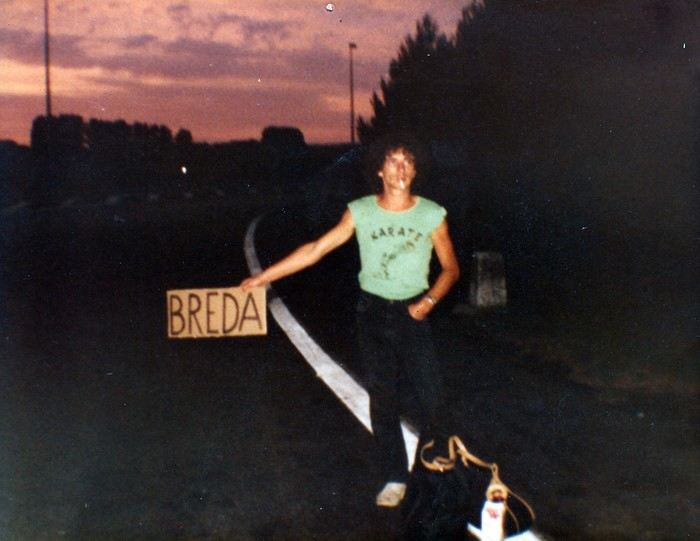
“Hey, your Marker... - My Marker? - The one you used to make hitchhiking signs.”
The marker in question is sitting proudly on the kitchen table. Marielle found it at the bottom of a moving box.
I’ve been meaning to tell the long story of my love affair with hitchhiking for years. Here we go.
To be honest, I’m not quite sure when it started. My earliest memory goes back to a fair with a bike race in my maternal grandparents’ village. I was with my cousin, my little sister, and three girl cousins. There were six of us, ages ranging from six or seven to thirteen or fourteen. Our parents stayed at the fair, and we’d had enough. So we decided to walk home. Only it was four kilometers away. So we hitchhiked. A guy driving an old car picked us all up and dropped us off at the farm. He probably found it amusing to see us thumbing a ride by the side of the road, but maybe it also worried him a bit. With everything you read in the papers...
Around fifteen or sixteen, I started hitchhiking regularly, alone or with a friend, to go to the nearby town. But it was especially when I started boarding school in Orléans that it became more regular. The first year, I’d leave Monday morning and come back Saturday noon by bus. It was an old, uncomfortable bus where we froze in winter. To make matters worse, I often got motion sickness if, as was too often the case, I ended up sitting in the back. In the spring, a high school friend suggested I hitchhike back. It meant a slight detour, but the advantage was taking only national roads.
So that’s how, from the end of tenth grade to twelfth grade, I’d thumb a ride every Saturday on the Pont de Bourgogne. Drivers were used to seeing young people hitchhiking, and it worked pretty well. Our biggest fear? Soldiers! At that time, military service was still mandatory, and on weekends, it wasn’t rare to see them competing with us. They’d keep their uniforms on to go home. That gave people confidence—with everything you read in the papers—and they’d rarely wait more than five minutes. We, with our long hair, were definitely less popular. From time to time, three big red-faced guys in a van coming back from a construction site would flip us off, yelling things like “go get a haircut, you bums!” Those were the good old days.
We still had a good laugh, though. Patrice, the friend I’d hitchhike back from school with on Saturdays, is a musician—I’d later discover he’s an excellent composer. A die-hard Beatles fan, he knows their repertoire by heart and spends his time singing at the top of his lungs while we thumb a ride. One Saturday late morning, we’d been waiting for a while at the exit of Châteauneuf-sur-Loire when a little lady came up to him and asked if he could please sing a little quieter: a baby was sleeping in the house. He put on the most sorry face: “Oh, sorry ma’am, we didn’t realize.” No sooner had the lady gone back inside than he started again. Luckily, a car stopped just then, sparing me the embarrassment of seeing the lady come back out.
Saturday was also the day when the cigarette pack was dangerously low. So before leaving, we’d go buy some “Parisiennes,” the “P4s” as we called them back then. They were slightly thinner cigarettes with a mix of tobacco scraps. Sometimes they tasted like light tobacco, sometimes like dark. Not great, but by the end of the week, our pocket money was gone. They were sold in small packs of four, hence the name P4. We’d only pay 20 centimes. On Saturdays, it was rare for the two of us to manage to scrape together 1.50 F to buy a whole pack of Gauloises...
The last twenty kilometers, I’d usually do alone, Patrice having reached his destination. From time to time, luck would smile on me: an acquaintance would just happen to pass by and stop. One January Saturday, at the exit of Gien, I ran into another guy from Argenton whom I knew a little. That day, the weather was nice, but the temperature was well below zero. It was around noon, and it was the off-peak hour. We were shivering, stamping our feet by the side of the road, when a Citroën “Tube” arrived: it was his father’s boss’s, a mason. They were both sitting in the front, but since they were obese, they had us climb onto the open back. Even though we huddled against the cab to shelter from the wind, the twenty kilometers felt very long, especially since we were only going sixty kilometers an hour. Our hands and cheeks were blue when we finally arrived.
The year I took my baccalaureate, a friend with a 2CV would take me Monday mornings with one or two others we’d pick up in nearby villages. We’d share the gas costs, but it was still cheaper than the bus. And in winter, the bus was my nightmare. You had to get up at five to catch it at six. Not enough sleep, and outside it was freezing or raining—or both. The 2CV was luxury. Plus, Philippe would pick me up at home. On the other hand, since I didn’t have class Saturday mornings—well, I did, but we only had PE the first two hours and nothing after—I’d skip class and slip out right after breakfast to thumb a ride at the Pont de Bourgogne.
Those three high school years were formative in this optional subject that was hitchhiking. Little by little, I learned the rules of the game. First, you shouldn’t walk along the road while thumbing. Cars go too fast and can’t stop easily. Accepting a ride that’s too short is also a no-go. The guy who offers to take you a little way but drops you off at some vague crossroads in the middle of nowhere? No thanks. You need to get dropped off in a town. If it’s a fairly big city, you often have to cross it from one end to the other, but it’s better. At the exit, you have to choose your spot well. Actually, you have to put yourself in the driver’s shoes: they need to see you early enough, not be going too fast, and be able to stop easily without risking an accident. So when leaving a city, it’s better not to go too far. It’s wiser to find a spot where cars go slowly and can stop easily. And preferably near a café. The café is for when you still have a few coins for a coffee and need to warm up. From time to time, you’d run into someone nice who’d make a detour to drop you off at a better spot to start again. Finally, if possible, avoid hitchhiking on Sundays. Cars are packed with whole families who, most of the time, aren’t going far. And then there’s the little worry of those people who rarely leave home: with everything you read in the papers...
During those high school years, it was only short trips, rarely exceeding a hundred kilometers. Later, I aimed bigger, and things were a bit different. In 1973-74, I crossed part of France for the first time on two or three occasions, coming back from the German border or returning to Bordeaux, where we lived briefly. Since there weren’t many highways back then, we took national roads. It was during these trips that I realized it was better to leave in the evening. As I said earlier, Sunday is to be avoided, but on weekdays, there’s another problem: if you leave in the morning, you only make short hops. First, it often takes longer to get going because drivers are people going to work nearby. Which brings us back to those who drop you off in a bad spot, far from everything. There, you have to know how to refuse. You thank the driver for stopping—oh, if only everyone could be like you—while explaining why you’d rather stay put. People don’t take offense, by the way. Those who pick up hitchhikers often hitchhiked themselves when they were in the military or before they had a car. In the late afternoon, you’d often run into salespeople or truckers, in other words, people who drive a lot. At that time, salespeople no longer had appointments and were more relaxed. They wanted to talk about something other than the merits of their products. On the radio, it was time for *Les Grosses Têtes*. You’d also quite often run into small business owners, professionals, or even hippies. The conversations were pleasant and often enriching. A little later in the evening, truckers would take over. They’d already driven a few hundred kilometers, and the depot or customs was still far away. So they’d gladly take a hitchhiker to stay awake at the wheel and chat. The radio with Max Ménier’s show *Les routiers sont sympas*, you’d eventually get tired of it. So a hitchhiker was a change. Others, who’d hit the road at midnight to be at their destination by morning, were nice and offered to let you lie down on the bunk while they drove. When you’d been hitchhiking since six in the evening, freezing in the wind between two vehicles, you weren’t unhappy to take a little nap.
Speaking of Max Ménier, he’d often make announcements for hitchhikers. One evening, I called him. It was getting late, and I still had quite a way to go. No luck: the show had ended for good the day before!
In short, it’s better not to rush, sleep in, and leave after lunch, or better yet, in the late afternoon. Obviously, I’m talking about when you have several hundred kilometers to cover. That’s when you have to play it pro.
First thing, especially at night, but it also applies in the middle of summer when the light is blinding: dress to be seen from far away. I’ll admit I have an advantage over most other hitchhikers: I’m small and don’t scare people. To balance that out, racist drivers often take me for an Arab and are less likely to pick me up, but overall, the balance tips in my favor. Back to the need to be seen: at night, I wear light-colored clothes. In headlights, you can see me from far away.
Second thing: travel light. Forget the big backpack with a frame. Drivers don’t always have room in the trunk or on the back seat, especially if it’s rained and the ground is wet. Plus, it forces them to get out of the car. If they’re nice enough to pick up a hitchhiker, you shouldn’t ask for too much either.
Third thing: bring a cardboard sign and a big marker—like the ones in the photo at the start of this post—to write the name of your destination. In the early 80s, I ran a tourist house in the Cher, but I lived in the Netherlands. In the off-season, it was only open on weekends. On Fridays, I’d leave Holland and return on Mondays. 1200 km round trip. On the way there, in Paris, I’d stand at Porte de la Chapelle. At that spot, the road is very wide, and drivers could stop easily. Obviously, on the sign, I didn’t write Eindhoven, which not everyone knows, and even less Amsterdam because of its seedy reputation. In that case, you’d expect to see a police car stop and two officers in kepis ask for your papers. So as a first destination, I’d write Compiègne. We were well out of Paris, and since it wasn’t too far, a trucker or salesperson was less reluctant to stop. Once past Compiègne, I’d take out my Lille sign. Once in Belgium, it wasn’t really necessary to use a sign anymore, since everyone was going in the same direction. Usually, the guy who picked me up at Porte de la Chapelle would say he wasn’t going far but could take me a little way. Before that, I’d still ask if there was a gas station on the highway where he could drop me off before exiting. While talking, the guy would realize he wasn’t dealing with a dangerous criminal. He’d pretend to check his watch, think for a moment, then say that actually, he was going to Belgium and could take me to the border or a little beyond. To leave Paris on the way back, I’d take the train to Melun, where it was easier to hitchhike than at Porte d’Italie.
Over all those years, I think I was pretty lucky. Or maybe philosophical enough not to imagine a car would stop after a few minutes. An hour’s wait was average. Sure, I sometimes waited three, four, or five hours. Most often at odd hours and in terrible weather. When it doesn’t work, it doesn’t work. But there’s always a moment when things pick up. Sure, when you’re soaked in freezing rain in the early morning after a sleepless night, you’re less philosophical than when I’m writing these lines comfortably at my computer, but it still holds true.
Earlier, I mentioned clothing and the importance of being well-rested before leaving. When you’ve eaten well and just gotten out of the shower, shaved, you’re in a better mood. And somehow, drivers sense it. Or at least, that’s the impression I’ve always had. It’s better to look in shape than disgusted at standing there, half-heartedly thumbing a ride. In short, when I’d start to get fed up with waiting, I’d go into the first café I saw for a coffee. Coming back out, I’d be refreshed, and most of the time, a car would stop within minutes. I’ve often said that when I stood by the side of the road thumbing a ride, I felt a bit like a gambler in front of a slot machine. It was a matter of giving luck a chance. And well, it worked out pretty well.
Then, there are countries where hitchhiking works really well and others where it’s harder. In the 70s-80s, it worked best in Germany and England. In the late afternoon, it wasn’t rare to be invited for tea. Well, that was in England. Tea meant being offered room and board. In Germany, they’d offer you coffee. Once there, they’d first show you the guest room and point out the bathroom before sitting you down in front of a big plate of cold cuts. In the evening, they’d go out in town, and the next morning, they’d usually drop you off at a good spot for hitchhiking. On the other hand, in Mediterranean and Scandinavian countries, you’d better be patient. In Spain or Italy, it’s better to take the train, which was dirt cheap back then. However, if you’re a couple traveling light, it’s already easier in most countries.
In 1982, I went on a trip around Turkey with my girlfriend. We only had two small bags, which was plenty. It was November-December, and we wore our warm, bulky clothes. Leaving Eindhoven at nine in the morning, we arrived in Graz, near the Yugoslav border, at eleven at night. 1300 km in a day! In just four or five vehicles. One to the German border, about fifty kilometers from Eindhoven, the second to Hagen in the Ruhr, the third to Salzburg, and the last to Graz at the Yugoslav border. Record broken. During the night crossing of Yugoslavia, we ran into a trucker close to retirement who lent us the truck’s bunk. So we arrived fresh and rested near Skopje the next morning. We continued to Thessaloniki in northern Greece before taking the train to Istanbul. In Turkey, we traveled a good part of the country by hitchhiking too. With truckers in old, overloaded, slow trucks that climbed hills at fifteen kilometers an hour, but also in cars where five or six people were already crammed in. And every time, we were invited for tea. Once, we were even picked up by a big shot in his Mercedes with a chauffeur. Until then, the average speed was around fifty kilometers an hour. There, we were going two hundred. On a national road, not a nice European highway.
I’ve also hitchhiked in Nepal, from Lumbini, Buddha’s birthplace, to a village on the way to Pokhara. It must have been midday. No bus until the next day. I gave it a try. A small truck overloaded with rice sacks, with two or three young people already perched on top, stopped. I rode on the roof of the cab. At fifty kilometers an hour when it was going well, with a breathtaking view. Coming back from India, I also crossed part of Iran by hitchhiking, from Tehran to the Turkish border. I did this trip with an Austrian I met at the hotel who, like me, had to watch his pennies. We gave it a shot. There was almost no traffic, but to our great surprise, the first car that passed in the area would always stop. They’d just ask for a modest contribution for gas, and it cost next to nothing.
Sometimes, you get scared too. After leaving Turkey in early December 82, we spent about two weeks in the southern Peloponnese harvesting olives. A few days before Christmas, we hitchhiked back to Holland. A girl picked us up in her little Fiat 500. We were driving on a mountain road, and that morning there was a bit of black ice. After crossing a pass, we saw the old Ford Taunus ahead of us at fifty meters start to skid. The driver let out a “heeee!” while grabbing my knees. I reflexively grabbed the wheel. Finally, the Taunus got back on track. And we didn’t swerve. But those few seconds felt very long.
In January 77, while I’d been living in Germany for a few months, I decided to spend a few days in Italy. By hitchhiking, of course. I left in the early afternoon, and by ten at night, I wasn’t far from Frankfurt. I saw a big Mercedes stop. The four or five young people crammed inside were listening to Schlager at full volume. Beer cans littered the floor. They didn’t have a precise destination, and as long as they were going south, that was fine with me. They’d finished their military service that very day and had clearly already celebrated their discharge. The driver was going 160, zigzagging dangerously from one side of the highway to the other. I should have realized he wasn’t entirely sober either. Luckily, there was almost no traffic. Finally, I managed to get dropped off at a gas station just before Frankfurt, relieved. I hope their trip didn’t end tragically.
Another time, coming back from Holland with my wife, we were picked up early in the morning near Senlis by two guys from Lille. They were going to work near Tours and could drop us off at Porte d’Italie. Apparently, they were coworkers but barely knew each other. The driver offered us a beer—at six in the morning, sure!—before opening another can for himself. He was clearly having trouble staying in the right lane. We politely declined, the passenger too. Everyone was tense. Luckily, it was rush hour on the ring road, and we were going slowly. When we got out of the car, the passenger said goodbye with the look of a guy being offered the condemned man’s rum and cigarette.
Finally, there are the annoying remarks from drivers who are either gay when you’re alone or turned on by the sight of your girlfriend when you’re a couple. In those cases, I’d get in the back so the guy wouldn’t feel too confident. And if the conversation got a little too suggestive, we’d deflect until we got dropped off.
And luckily, there are the times, not so rare after all, when you run into really nice people who invite you to eat and sleep at their place and drive you to a good spot the next morning. In Germany and England, that was common. And then there are the big strokes of luck, like during our trip to Turkey when we crossed most of Germany in one car, or that other time when some Germans drove me from the exit of Geneva all the way to the Costa Brava.
Going back to “with everything you read in the papers” and its variant “with everything you see on TV”—and now on the internet—it’s always left me perplexed. Personally, I’ve never heard of hitchhikers assaulting drivers, even if it may have happened. On the other hand, what was most common were hitchhikers being assaulted, especially girls. Anyway, even armed, it seems a bit stupid to assault the driver—wouldn’t that risk causing an accident?
Finally, since that time, I’ve occasionally wanted to hitchhike somewhere far away in France. Most often, too busy with work, it never happened, but the nostalgia hasn’t completely disappeared.
* * *
Other Hitchhikers
And then one day, I... settled down to become a driver myself. Ten years had passed, and you saw fewer and fewer hitchhikers. Or maybe I saw fewer because I had a regular job and wasn’t traveling the same way. And then I understood a few things.
Several times, I was tempted to pick up a hitchhiker, but they didn’t meet the required conditions. They were walking along the road instead of staying at the exit of the previous town. Hard to stop without risking an accident. Or the guy looked really scruffy. Or he was sulking, if not both. Then you think of that famous “with everything you read in the papers.” Not that I was scared, but unfortunately, the few hitchhikers I did pick up later were rarely interesting.
A few years ago, we picked up a young guy at the exit of a small town in Sologne. Not an easy spot for hitchhiking. Bad luck, he was a pretentious little jerk. He was barely 20 or 25 and talked like a bitter old man. He was a waiter in a restaurant. According to him, it was lucky he was there, otherwise the boss would have closed up shop long ago. You’d think he had thirty or forty years of professional experience behind him. As we approached Blois, he started ranting about Arabs, blaming them for all evils. And he laid it on thick. That morning, we were going to a teenager’s funeral who had just committed suicide, so he really got on our nerves, Mr. Know-It-All. Out of anger, I dropped him off next to a shopping center a few kilometers from downtown. Not nice, but it felt good.
Some time ago, we were driving around the Limousin on a Sunday to try out the used Twingo we’d just bought. We picked up a guy in his forties. A German who spoke French well. He started talking about the environment. He was a green Khmer. He got worked up all by himself with his pseudo-eco rant and, after a few kilometers, was almost yelling at us. As we were about to leave the main road for a small one, I dropped him off at a crossroads in the middle of nowhere. Normally, I would have made a little detour to take him to a better spot, but this time, I didn’t feel like doing the... eco-warrior a favor.
On the other hand, I’ve still done my good deed a few times. One June morning, coming back from Orléans, I saw a man in his sixties hitchhiking. The poor guy had had a rough time. He was from Montpellier and was coming back from Caen, where he’d been promised a job. Once there, they bluntly told him the position was already taken, and he had to go back. Except he didn’t have enough money left for the train. He’d spent the night hitchhiking without success. I could only take him as far as Lamotte-Beuvron, where I dropped him off near the fire station. Apparently, there was some vague shelter there or something, but it only opened a few hours later. In the meantime, he settled on the grass in a corner to sleep a little. While he was doing that, I quickly went to the train station to check the price of a ticket to Montpellier. It was within my means. Since he was sound asleep, I slipped the train ticket and 100 francs into his pocket. I couldn’t imagine him continuing to hitchhike all the way to Montpellier. And I bet he didn’t even have a piece of cardboard and a marker!
When we go to Brazil, we usually rent a small car. One day, we were coming back from Paracuru to Fortaleza when we saw a whole family hitchhiking. Two adults and two or three small children. Here near the equator, the sun sets very quickly, and it would soon be night. There was little traffic, and trucks wouldn’t stop because there was no room in the cab. As for the rich people driving big 4x4s, they wouldn’t stoop to picking up the lower classes. The only hope for this kind of family was usually a farmer or artisan who’d let them ride in the back of his pickup. Obviously, they were a bit surprised to see us. Everyone crammed in as best they could in the back of our little car. When we dropped them off, we got a whole string of “Deus lhes abençõe”—God bless you.
Still in Brazil, we were on the road from Barreirinhas to São Luís do Maranhão. About 150 km of deserted road with an isolated mud house here and there. A young woman flagged us down. She was very pregnant and had to get to the clinic twenty or thirty kilometers away to give birth. Someone was supposed to drive her, but the first signs of labor started earlier than expected, and the driver was unavailable. Even driving fast, we weren’t feeling great: it would be just our luck if she gave birth in the car!
Today, we’re in the age of smartphones and carpooling apps. Safety. With everything you see on TV... Three or four years ago, we signed up on a platform. Our first, and only, “client” was a little jerk who didn’t say a word the whole trip. No hello, no goodbye, and certainly no thank you. The next day, we found his Ray-Bans in the car. We didn’t run after him to give them back. Ha!
Tour d'Europe premier voyage English translation pending
Bonjour,
Mon ami et moi même partons pour un tour d'Europe.
Au lieux de partir avec de grosses appréhensions d'après ce que je peux entendre dans les journaux et ce que j'ai pu lire sur des sites officiels, je me suis dit qu'il serait plus simple de demander aux voyageurs, à ceux qui ont visité ces même pays dernièrement ce qu'il en était vraiment.
Où devons nous être plus prudents, y a t il des choses à éviter absolument, à ne pas faire, des pays à contourner etc...?
Devons nous nous cantonner uniquement à des campings ou aires de campings (en partant du principe que le camping sauvage puisse être autorisé dans certains pays)?
Nous avons la trentaine, nous voyageons en camping car et nous prévoyons un périple de 5 mois départ prévu mi mai de cette année. Voici la liste des pays que nous souhaitons traverser.
Merci par avance de vos retours.
Au départ de la France : l’Allemagne, l’Autriche, la Belgique, l’Estonie, la Finlande, la France, l’Italie, la Lettonie, le Luxembourg, les Pays-Bas, la Slovénie, Slovaquie, la Croatie, le Danemark, la Hongrie, le Liechtenstein, la Lituanie, (le Monténégro > pas encore sur), la Norvège, la Pologne, la République Tchèque, la Suède, et la Suisse.
😉
Que voir aux... Pays-Bas English translation pending
Que voir aux Pays-Bas ?
Pour préparer votre futur voyage, un aperçu des principaux sites et lieux à visiter dans ce pays qui ne se limite pas qu'à Amsterdam (carte).
1- La côteAlkmaar : jolie ville au nord d'Amsterdam connue pour sa foire aux fromages et son centre historique construit autour de canaux. Amsterdam : la capitale hollandaise est aussi la ville la plus visitée des Pays-Bas pour son architecture, ses monuments, ses canaux classés à l'UNESCO, ses musées et son animation.Delft : des canaux, une architecture traditionnelle et un centre historique, plus une porcelaine mondialement réputée pour cette ville située entre La Haye et Rotterdam.Digue d'Afsluitdijk : avec ses 30 km c'est la plus longue digue du pays, reliant la presqu'ile au nord d'Amsterdam à la Frise. Dans le même genre le pays compte nombre d'autres digues et barrages (dont celui de l'Escaut oriental) construits lors du "Plan delta" visant à protéger le pays des inondations.Edam-Volendam : petit port touristique au nord d'Amsterdam connu pour sa belle architecture traditionnelle et son fromage. Monnickendam, Marken et Broek in Waterland sont trois autres villages tout autant pittoresques et voisins d'Edam.Enkhuizen : au nord d'Amsterdam, ce joli port abrite un intéressant musée de plein air consacré à la vie et aux traditions locales.Forts de la Ligne de défense d'Amsterdam : c'est une série d'ouvrages militaires et autres petites fortifications construites autour d'Amsterdam fin XIXe - début XXe siècle. L'ensemble est classé à l'UNESCO mais n'est pas ouvert en principe à la visite.Haarlem : des canaux, des musées et un très beau centre du XVIIe siècle dans cette ville toute proche d'Amsterdam. La périphérie d'Haarlem est occupée par le parc national du Zuid-Kennemerland connu pour ses forêts, ses dunes, ses plages et ses possibilités de randonnées.Hoorn : joli petit port de la Frise occidentale avec nombre de bâtiments historiques et demeures datant des XVII et XVIIIe siècle.Iles de la Frise Occidentale : c'est la partie néerlandaise de cet archipel qui court des Pays-Bas au Danemark sur la Mer des Wadden qui est classée à l'UNESCO. Plusieurs îles, dont la plus connue est Texel, sont appréciées pour leurs paysages dunaires, leurs plages et les possibilités de randonnées. On y trouve aussi deux ou trois réserves naturelles avec des phoques et des oiseaux.Kinderdijk-Elshout : à la périphérie de Rotterdam, ce site offre l'image traditionnelle de moulins à vent en bordure de canaux. Il est d'ailleurs classé à l'UNESCO.La Haye : siège du gouvernement et de la royauté, La Haye n'est cependant pas la capitale du pays. On peut y voir divers bâtiments historiques ou à la belle architecture.Leeuwarden : la capitale de la Frise possède un petit centre médiéval.Leiden : des universités, des musées et un vieux centre-ville pour cette agglomération entre Amsterdam et La Haye.Middelbourg : c'est la "capitale" de la province de Zélande, au sud du pays. On y découvre quelques vieux édifices le long des canaux et une belle abbaye.Rotterdam : le plus grand port d'Europe est aussi une cité animée et réputée pour ses musées et son architecture.Scheveningen : c'est la principale station balnéaire du pays. Elle est officiellement rattachée à La Haye.Schokland : cette ancienne île abrite un site archéologique classé à l'UNESCO et son musée.Station de pompage à vapeur de D.F. Wouda : située à côté de la petite ville frisonne de Lemmer, c'est la plus vieille station de pompage au monde dans sa catégorie. Elle est inscrite au patrimoine de l'UNESCO. Zaanse Schans : pas loin d'Amsterdam il s'agit d'un petit village historique ("écomusée de plein air") très visité pour ses jolies maisons traditionnelles et ses moulins à vent.Zandvoort : station balnéaire pas mal fréquentée du fait de sa proximité avec Amsterdam.Patrimoine naturelKeukenhof : superbe parc floral où on peut voir des tulipes en fleur à profusion aux alentours du mois d'avril. Keukenhof fait partie de cette "région des bulbes" autour d'Amsterdam où sont cultivées les tulipes.Lacs de la Frise : cet ensemble d'une vingtaine de petits lacs du sud-ouest de la province de la Frise est un haut lieux du nautisme dans le pays.Parc National de Oosterschelde : un parc marin au large des îles de la Zélande riche en oiseaux et en faune marine. On peut d'ailleurs y faire de la plongée.Parc National du Zuid-Kennemerland : à la périphérie d'Haarlem ce parc littoral est connu pour ses forêts, ses dunes, ses plages et ses possibilités de randonnées.Polder de Beemster : à côté d'Amsterdam, c'est le plus vieux polder au monde dont on peut encore voir la structure. Il est classé au patrimoine de l'UNESCO à ce titre.Texel : c'est la plus grande île de l'archipel frison qui court des Pays-Bas au Danemark. Texel est assez touristique et appréciée pour ses paysages dunaires classés parc national. On y vient aussi pour ses plages et les possibilités de randonnées.2- L'intérieurApeldoorn : grande ville du centre qui abrite un très beaux palais royal avec des jardins à la française.Arnhem : grand ville pas mal détruite pendant la guerre et dont l'intérêt touristique premier est d'être située à coté du Parc National De Hoge Veluwe.Breda : grosse agglomération proche de la Belgique avec un vieux centre urbain.Deventer : juste à côté d'Apeldoorn, la ville possède de vieux quartiers et édifices datant notamment de l'époque médiévale.Dordrecht : grande ville au sud-est de Rotterdam avec quelques belles constructions, des canaux et des musées.Efteling : au sud du pays, c'est un des plus importants parcs de loisirs d'Europe.Eindhoven : grande ville moderne du sud des Pays-Bas.Enschede : ville industrielle et commerciale de l'est, à la frontière allemande.Giethoorn : joli petit village lacustre assez touristique du nord des Pays-Bas.Gouda : des canaux et des vieux bâtiments plus surtout une reconnaissance mondiale grâce au fromage du même nom qui est fabriqué dans cette ville proche de La HayeGroningen : cette grande ville étudiante et animée possède quelques vieux bâtiments et comme beaucoup d'autres villes hollandaises des canaux sur lesquels on peut se balader.Hertogenbosh : c'est une des plus vieilles cités néerlandaises. Elle a un vieux centre entouré de remparts.Hilversum : entre Utrecht et Amsterdam, la ville plutôt chic est connue pour son architecture de la première moitié du XXe siècle. Limbourg : c'est la "pointe" sud du pays qui s'enfonce dans la Belgique avec Maastricht pour capitale. Son aspect vallonné et les possibilités de randonnées attirent les visiteurs. On peut y voir également de jolis villages comme Valkenburg, quelques châteaux ainsi que le monastère de Kerkrade.Maastricht : connue surtout pour son Traité européen, Maastricht est aussi une cité médiévale fortifiée avec plusieurs musées. Elle est située dans le Limburg, dont elle est la capitale, entre la Belgique et l'Allemagne.Nimègue : c'est la plus ancienne commune des Pays-Bas avec cependant quasiment plus aucun témoignages de son passé. Actuellement la ville est plutôt connue pour la "Marche de quatre jours" (juillet) qui est la plus grande manifestation de marche au monde.Sittard : ville moyenne du Limbourg avec un petit centre historique.Tilburg : grande ville du sud, entre Breda et Eindhoven.Utrecht : quatrième ville du pays, elle compte beaucoup d'étudiants et bénéficie d'une certaine animation. Outre des musées, on peut y voir une architecture réputée avec notamment la Maison Schröder classée à l'UNESCO.Zwole : cette ancienne ville hanséatique du nord des Pays-Bas a conservé quelques beaux témoignages de cette époque.Patrimoine naturelParc National de De Groote Peel : à cheval entre les provinces du Brabant et du Limbourg, ces marais et petits lacs sont une zone privilégiée pour les oiseaux qui viennent y nicher.Parc National De Hoge Veluwe : c'est le plus grand parc naturel de Hollande qui abrite également le Musée Kröller-Müller riche en peintures. Il est situé à côté de Arnhem. On peut y randonner à pied ou à vélo.Parc National Drents-Friese Wold : des bois et des landes avec des pistes cyclables ou des chemins de randonnée.3- Le plus apprécié...
La côte : Alkmaar; Amsterdam; Delft; Digue d'Afsluitdijk; Edam-Volendam; Haarlem; Hoorn; Iles de la Frise Occidentale (dont Texel); Keukenhof; Leiden; Parc National du Zuid-Kennemerland.
L'intérieur : Giethoorn; Limbourg; Maastricht; Parc National De Hoge Veluwe.
- © VoyageForum -
1- La côteAlkmaar : jolie ville au nord d'Amsterdam connue pour sa foire aux fromages et son centre historique construit autour de canaux. Amsterdam : la capitale hollandaise est aussi la ville la plus visitée des Pays-Bas pour son architecture, ses monuments, ses canaux classés à l'UNESCO, ses musées et son animation.Delft : des canaux, une architecture traditionnelle et un centre historique, plus une porcelaine mondialement réputée pour cette ville située entre La Haye et Rotterdam.Digue d'Afsluitdijk : avec ses 30 km c'est la plus longue digue du pays, reliant la presqu'ile au nord d'Amsterdam à la Frise. Dans le même genre le pays compte nombre d'autres digues et barrages (dont celui de l'Escaut oriental) construits lors du "Plan delta" visant à protéger le pays des inondations.Edam-Volendam : petit port touristique au nord d'Amsterdam connu pour sa belle architecture traditionnelle et son fromage. Monnickendam, Marken et Broek in Waterland sont trois autres villages tout autant pittoresques et voisins d'Edam.Enkhuizen : au nord d'Amsterdam, ce joli port abrite un intéressant musée de plein air consacré à la vie et aux traditions locales.Forts de la Ligne de défense d'Amsterdam : c'est une série d'ouvrages militaires et autres petites fortifications construites autour d'Amsterdam fin XIXe - début XXe siècle. L'ensemble est classé à l'UNESCO mais n'est pas ouvert en principe à la visite.Haarlem : des canaux, des musées et un très beau centre du XVIIe siècle dans cette ville toute proche d'Amsterdam. La périphérie d'Haarlem est occupée par le parc national du Zuid-Kennemerland connu pour ses forêts, ses dunes, ses plages et ses possibilités de randonnées.Hoorn : joli petit port de la Frise occidentale avec nombre de bâtiments historiques et demeures datant des XVII et XVIIIe siècle.Iles de la Frise Occidentale : c'est la partie néerlandaise de cet archipel qui court des Pays-Bas au Danemark sur la Mer des Wadden qui est classée à l'UNESCO. Plusieurs îles, dont la plus connue est Texel, sont appréciées pour leurs paysages dunaires, leurs plages et les possibilités de randonnées. On y trouve aussi deux ou trois réserves naturelles avec des phoques et des oiseaux.Kinderdijk-Elshout : à la périphérie de Rotterdam, ce site offre l'image traditionnelle de moulins à vent en bordure de canaux. Il est d'ailleurs classé à l'UNESCO.La Haye : siège du gouvernement et de la royauté, La Haye n'est cependant pas la capitale du pays. On peut y voir divers bâtiments historiques ou à la belle architecture.Leeuwarden : la capitale de la Frise possède un petit centre médiéval.Leiden : des universités, des musées et un vieux centre-ville pour cette agglomération entre Amsterdam et La Haye.Middelbourg : c'est la "capitale" de la province de Zélande, au sud du pays. On y découvre quelques vieux édifices le long des canaux et une belle abbaye.Rotterdam : le plus grand port d'Europe est aussi une cité animée et réputée pour ses musées et son architecture.Scheveningen : c'est la principale station balnéaire du pays. Elle est officiellement rattachée à La Haye.Schokland : cette ancienne île abrite un site archéologique classé à l'UNESCO et son musée.Station de pompage à vapeur de D.F. Wouda : située à côté de la petite ville frisonne de Lemmer, c'est la plus vieille station de pompage au monde dans sa catégorie. Elle est inscrite au patrimoine de l'UNESCO. Zaanse Schans : pas loin d'Amsterdam il s'agit d'un petit village historique ("écomusée de plein air") très visité pour ses jolies maisons traditionnelles et ses moulins à vent.Zandvoort : station balnéaire pas mal fréquentée du fait de sa proximité avec Amsterdam.Patrimoine naturelKeukenhof : superbe parc floral où on peut voir des tulipes en fleur à profusion aux alentours du mois d'avril. Keukenhof fait partie de cette "région des bulbes" autour d'Amsterdam où sont cultivées les tulipes.Lacs de la Frise : cet ensemble d'une vingtaine de petits lacs du sud-ouest de la province de la Frise est un haut lieux du nautisme dans le pays.Parc National de Oosterschelde : un parc marin au large des îles de la Zélande riche en oiseaux et en faune marine. On peut d'ailleurs y faire de la plongée.Parc National du Zuid-Kennemerland : à la périphérie d'Haarlem ce parc littoral est connu pour ses forêts, ses dunes, ses plages et ses possibilités de randonnées.Polder de Beemster : à côté d'Amsterdam, c'est le plus vieux polder au monde dont on peut encore voir la structure. Il est classé au patrimoine de l'UNESCO à ce titre.Texel : c'est la plus grande île de l'archipel frison qui court des Pays-Bas au Danemark. Texel est assez touristique et appréciée pour ses paysages dunaires classés parc national. On y vient aussi pour ses plages et les possibilités de randonnées.2- L'intérieurApeldoorn : grande ville du centre qui abrite un très beaux palais royal avec des jardins à la française.Arnhem : grand ville pas mal détruite pendant la guerre et dont l'intérêt touristique premier est d'être située à coté du Parc National De Hoge Veluwe.Breda : grosse agglomération proche de la Belgique avec un vieux centre urbain.Deventer : juste à côté d'Apeldoorn, la ville possède de vieux quartiers et édifices datant notamment de l'époque médiévale.Dordrecht : grande ville au sud-est de Rotterdam avec quelques belles constructions, des canaux et des musées.Efteling : au sud du pays, c'est un des plus importants parcs de loisirs d'Europe.Eindhoven : grande ville moderne du sud des Pays-Bas.Enschede : ville industrielle et commerciale de l'est, à la frontière allemande.Giethoorn : joli petit village lacustre assez touristique du nord des Pays-Bas.Gouda : des canaux et des vieux bâtiments plus surtout une reconnaissance mondiale grâce au fromage du même nom qui est fabriqué dans cette ville proche de La HayeGroningen : cette grande ville étudiante et animée possède quelques vieux bâtiments et comme beaucoup d'autres villes hollandaises des canaux sur lesquels on peut se balader.Hertogenbosh : c'est une des plus vieilles cités néerlandaises. Elle a un vieux centre entouré de remparts.Hilversum : entre Utrecht et Amsterdam, la ville plutôt chic est connue pour son architecture de la première moitié du XXe siècle. Limbourg : c'est la "pointe" sud du pays qui s'enfonce dans la Belgique avec Maastricht pour capitale. Son aspect vallonné et les possibilités de randonnées attirent les visiteurs. On peut y voir également de jolis villages comme Valkenburg, quelques châteaux ainsi que le monastère de Kerkrade.Maastricht : connue surtout pour son Traité européen, Maastricht est aussi une cité médiévale fortifiée avec plusieurs musées. Elle est située dans le Limburg, dont elle est la capitale, entre la Belgique et l'Allemagne.Nimègue : c'est la plus ancienne commune des Pays-Bas avec cependant quasiment plus aucun témoignages de son passé. Actuellement la ville est plutôt connue pour la "Marche de quatre jours" (juillet) qui est la plus grande manifestation de marche au monde.Sittard : ville moyenne du Limbourg avec un petit centre historique.Tilburg : grande ville du sud, entre Breda et Eindhoven.Utrecht : quatrième ville du pays, elle compte beaucoup d'étudiants et bénéficie d'une certaine animation. Outre des musées, on peut y voir une architecture réputée avec notamment la Maison Schröder classée à l'UNESCO.Zwole : cette ancienne ville hanséatique du nord des Pays-Bas a conservé quelques beaux témoignages de cette époque.Patrimoine naturelParc National de De Groote Peel : à cheval entre les provinces du Brabant et du Limbourg, ces marais et petits lacs sont une zone privilégiée pour les oiseaux qui viennent y nicher.Parc National De Hoge Veluwe : c'est le plus grand parc naturel de Hollande qui abrite également le Musée Kröller-Müller riche en peintures. Il est situé à côté de Arnhem. On peut y randonner à pied ou à vélo.Parc National Drents-Friese Wold : des bois et des landes avec des pistes cyclables ou des chemins de randonnée.3- Le plus apprécié...
La côte : Alkmaar; Amsterdam; Delft; Digue d'Afsluitdijk; Edam-Volendam; Haarlem; Hoorn; Iles de la Frise Occidentale (dont Texel); Keukenhof; Leiden; Parc National du Zuid-Kennemerland.
L'intérieur : Giethoorn; Limbourg; Maastricht; Parc National De Hoge Veluwe.
- © VoyageForum -
Hollande: avancement de la floraison des tulipes? (printemps 2013) English translation pending
Bonjour à tous.
Je suis photographe, et me suis attardé sur les champs de tulipes voisins d'AMSTERDAM il y a une dizaine d'années, le climat de fin d'hiver / debut de printemps était "classique" sans variations notables, et donc la floraison était du point de vue "couleurs" tres convenable à la mi-avril comme c'est l'usage.
Le probleme c'est que l'hiver n'en finit pas la haut non plus et que je ne peux me rendre compte habitant a mille kilometres de l'eventuel retard de floraison.
Est ce qu'un membre du forum vit il a proximité de cette region? ou y passe suffisamment regulierement, ou se rend a AMSTERDAM dans les jours qui viennent, pour me dire si a priori pour le week end du 15 avril cette année c'est trop tot, et de combien de jours dois-je decaler mon parcours a travers les champs a priori....
Voila je vous remercie d'avance de vos reponses, en esperant avoir de vos nouvelles d'ici le mois prochain, c'est assez important pour moi de réussir cette chose la...
Bonne journée
Nikolas
La peur du départ! English translation pending
Voilà encore 4 jours et on est parti!Bon dieu quelle angoisse , est ce que j'ai choisi le bon matériel , est ce que la roue arrière du tandem va tenir , fallait il acheter une remorque, comment va ce dérouler le voyage comment appréhender les problèmes qui font survenir!Je n'arrives plus à savoir ci j'ai bien fait d'entrainer ma femme dans cette aventure bon dieu quelle angoisse!Donné moi un retour d'expérience , rassuré moi j'en ai besoin , merci.
Rencontre VF dans les Alpes (proche de Grenoble), le retour! les 18 et 19 septembre 2010 (Complet) English translation pending
Et si on remettait ça?
Vous vous souvenez de la rencontre VF Alpes 2009 🙂
Hé bien on remet ça les 18-19 septembre !
C'est toujours proche de Grenoble, pour la facilité d'accès, mais un peu plus au nord du massif de Belledonne cette fois, autour du col du Merdaret.
Regardez moi cette vue qu'on a depuis là-haut 🙂 (photo montagne.plisson.org)

Le week end se fera soit sous tente, soit en refuge, car cette année j'ai réservé un petit refuge rien que pour nous ! Par contre il est petit, il ne comporte qu'une douzaine de places pour y dormir... (tarif nuitée 5.50€) - Il y aura donc une répartition à prévoir entre campeurs et non-campeurs, les non-campeurs devant se montrer convaincants pour pouvoir bénéficier de la version luxe 😛 Le refuge servira bien évidemment à prendre le repas du samedi soir bien au chaud !
(photo refuges.info)
On se retrouvera le samedi matin dans la commune de FOND DE FRANCE, commune accessible depuis Grenoble via Allevard. Les horaires et le lieux précis seront communiqués ultérieurement (quelqu'un a une idée, j'ai pas réussi un trouver une terrasse ensoleillée pour s'attendre...).
Petit appel: pour m'éviter de partir de Lyon aux aurores, y'aurait un Grenoblois qui puisse, le samedi matin, passer au bar-tabac de Theys prendre la clé du refuge? (sachant que je la ramène le dimanche soir).
De là, 2h30 environ de montée pour aller jusqu'à notre p'tit refuge, qui s'appelle en fait l'abri du Merdaret, voir la fiche sur http://www.refuges.info/point/6/abri-non-garde/belledonne/abri-du-merdaret
Pour ceux qui veulent marcher, l'après midi pourra être consacrée à aller admirer le panorama depuis la Roche Noire (3h aller-retour)
La soirée sera bien entendu consacrée à un sympathique repas, tous ensemble dans le refuge. 2ème petit appel: y'aurait-il une autre âme charitable pour prendre en charge la logistique repas en commun du samedi soir? Il vaudrait mieux pour vos estomacs 😄
Le lendemain, on monte au refuge et au lac des 7 Laux en passant par le Cul de la Vieille (ben oui ça s'appelle comme ça...) Prévoir environ 4h de marche jusqu'au refuge.
(photo bernard-trekking.blogspot.com)
Il va bien être largement midi quand on va arriver au refuge des 7 Laux pour y déjeuner 😇 (Vous pouvez l'apercevoir au fond, tout petit, sur la photo ci-dessous).
(photo montagne.a.vaches.free.fr)
Dimanche après-midi baignade dans les lacs, regardez y'a même une plage.. 😎
(photo montagne.a.vaches.free.fr)
Aux alentours de 16h, il faudra penser au retour au parking, environ 2h30 de marche. Ne pas prévoir un retour au parking avant 19h (cool, on est en week-end, pas de stress...)
Ci-dessous, la carte faite par notre Simon national, ainsi que le topo:
Samedi matin : itinéraire rouge
2h30 de marche
Départ de Le Fond de France pour monter à l'abri Merdaret à 1720m
Pause repas à l'abri, et on y laisse les sacs
Samedi après-midi : itinéraire violet (facultatif)
3h de marche A/R
Aller/retour jusqu'au sommet du Roche Noir à 2129m
Dimanche matin/après-midi : itinéraire jaune
4h de marche
Départ tôt en direction les Sept Laux, pause repas et baignade pour les plus courageux(es)
Dimanche après midi : itinéraire orange
2h30 de marche
Retour aux voitures à Le Fond de France
L'heure des au revoirs et des « c'était extra, faudra recommencer l'année prochaine ! »
Hop hop hop ! Les inscriptions sont ouvertes à la suite de cette discussion 🙂
PS: D'autres détails pratiques viendront un peu plus tard (horaire de rendez-vous, ce qu'il faut prévoir, etc...)
Vous vous souvenez de la rencontre VF Alpes 2009 🙂
Hé bien on remet ça les 18-19 septembre !
C'est toujours proche de Grenoble, pour la facilité d'accès, mais un peu plus au nord du massif de Belledonne cette fois, autour du col du Merdaret.
Regardez moi cette vue qu'on a depuis là-haut 🙂 (photo montagne.plisson.org)
Le week end se fera soit sous tente, soit en refuge, car cette année j'ai réservé un petit refuge rien que pour nous ! Par contre il est petit, il ne comporte qu'une douzaine de places pour y dormir... (tarif nuitée 5.50€) - Il y aura donc une répartition à prévoir entre campeurs et non-campeurs, les non-campeurs devant se montrer convaincants pour pouvoir bénéficier de la version luxe 😛 Le refuge servira bien évidemment à prendre le repas du samedi soir bien au chaud !
(photo refuges.info)
On se retrouvera le samedi matin dans la commune de FOND DE FRANCE, commune accessible depuis Grenoble via Allevard. Les horaires et le lieux précis seront communiqués ultérieurement (quelqu'un a une idée, j'ai pas réussi un trouver une terrasse ensoleillée pour s'attendre...).
Petit appel: pour m'éviter de partir de Lyon aux aurores, y'aurait un Grenoblois qui puisse, le samedi matin, passer au bar-tabac de Theys prendre la clé du refuge? (sachant que je la ramène le dimanche soir).
De là, 2h30 environ de montée pour aller jusqu'à notre p'tit refuge, qui s'appelle en fait l'abri du Merdaret, voir la fiche sur http://www.refuges.info/point/6/abri-non-garde/belledonne/abri-du-merdaret
Pour ceux qui veulent marcher, l'après midi pourra être consacrée à aller admirer le panorama depuis la Roche Noire (3h aller-retour)
La soirée sera bien entendu consacrée à un sympathique repas, tous ensemble dans le refuge. 2ème petit appel: y'aurait-il une autre âme charitable pour prendre en charge la logistique repas en commun du samedi soir? Il vaudrait mieux pour vos estomacs 😄
Le lendemain, on monte au refuge et au lac des 7 Laux en passant par le Cul de la Vieille (ben oui ça s'appelle comme ça...) Prévoir environ 4h de marche jusqu'au refuge.
(photo bernard-trekking.blogspot.com)
Il va bien être largement midi quand on va arriver au refuge des 7 Laux pour y déjeuner 😇 (Vous pouvez l'apercevoir au fond, tout petit, sur la photo ci-dessous).
(photo montagne.a.vaches.free.fr)
Dimanche après-midi baignade dans les lacs, regardez y'a même une plage.. 😎
(photo montagne.a.vaches.free.fr)
Aux alentours de 16h, il faudra penser au retour au parking, environ 2h30 de marche. Ne pas prévoir un retour au parking avant 19h (cool, on est en week-end, pas de stress...)
Ci-dessous, la carte faite par notre Simon national, ainsi que le topo:
Samedi matin : itinéraire rouge
2h30 de marche
Départ de Le Fond de France pour monter à l'abri Merdaret à 1720m
Pause repas à l'abri, et on y laisse les sacs
Samedi après-midi : itinéraire violet (facultatif)
3h de marche A/R
Aller/retour jusqu'au sommet du Roche Noir à 2129m
Dimanche matin/après-midi : itinéraire jaune
4h de marche
Départ tôt en direction les Sept Laux, pause repas et baignade pour les plus courageux(es)
Dimanche après midi : itinéraire orange
2h30 de marche
Retour aux voitures à Le Fond de France
L'heure des au revoirs et des « c'était extra, faudra recommencer l'année prochaine ! »
Hop hop hop ! Les inscriptions sont ouvertes à la suite de cette discussion 🙂
PS: D'autres détails pratiques viendront un peu plus tard (horaire de rendez-vous, ce qu'il faut prévoir, etc...)
Groupe Magma English translation pending
J'ai envie de vous faire écouter un peu de Magma en cette période de fête
http://www.youtube.com/...bBSBRvJ8qI&hl=fr
http://www.youtube.com/...&feature=related
http://www.youtube.com/watch?v=MQCvFhv55gc&feature=related
C'est de la musique du monde qui vient de France :D
Vous connaissiez ?

C'est de la musique du monde qui vient de France :D
Vous connaissiez ?
Déplacements à San Francisco en fauteuil roulant English translation pending
Bonjour à tous,
je n'ai pas trouvé grand chose sur le sujet global du moyen de transport à SF mais ce que j'ai lu me fait un tantinet douter : OK, sans voiture, c'est mieux en général.
Mais avec le fauteuil roulant de ma fille, pourriez-vous me dire ce que vous pensez être le plus confortable et le moins stressant ?
En sachant que nous y serons à la fin de notre voyage, pendant 72 heures et avec parking gratuit à l'hôtel.
a) Plutôt garder la voiture et utiliser les places réservées ?
b) La rendre en ville 3 jours plus tôt que prévu et prendre les transports en commun ?
A priori, nous penchons pour cette dernière solution, pour des tas de raisons pas que financières mais si c'est galère, alors là, non !
J'oubliais : pour la solution a), j'ai téléchargé le document 195 du California DMV sur http://www.dmv.ca.gov/ pour obtenir le travel parking placard. Mais savez-vous s'il y a beaucoup de places réservées ?
Merci pour vos conseils et vos précisions.
Cécile
Un livre pour me faire rêver English translation pending
J'aimerais lire un livre qui me fasse rêver. Pas un livre qui donne des renseignements sur certains pays mais une histoire pour m'évader et peut être me faire changer ma vision du monde ou je ne sais quoi d'autres!
Si quelqu'un connais un livre qui pouurait me procurer ce bonheur, qu'il me le fasse parvenir... merci
Future piste cyclable La Brède - Hostens partiellement ouverte English translation pending
la future piste cyclable la brede hostens est partiellement ouverte depuis cabanac , il est possible de rejoindre la piste mios bazas environ 1 km avant hostens par la piste . fin des travaux courant 2013
Chanson de Brenda Lee English translation pending
bonjour
j'ai entendu une chanson de brenda lee sur la radio et j'arrive pas à mettre la main dessus même en ratissant you tube
c'est un titre rock qui déménage où elle donne toute sa voix
il me semble qu'elle répète le yeah yeah yeah et .. à un moment elle ralenti pour dire quelque chose du genre " tchoupitchoupi pitchoulalala "
merci pour vos infos
janick .. those boots are made for walking
j'ai entendu une chanson de brenda lee sur la radio et j'arrive pas à mettre la main dessus même en ratissant you tube
c'est un titre rock qui déménage où elle donne toute sa voix
il me semble qu'elle répète le yeah yeah yeah et .. à un moment elle ralenti pour dire quelque chose du genre " tchoupitchoupi pitchoulalala "
merci pour vos infos
janick .. those boots are made for walking
Recherche recette du banana bread English translation pending
Salut,
Après avoir goûté le succulent Banana Bread lors de mon voyage en Australie, je souhaiterais en faire moi même, si vous avez la recette !!!!! Merci d'avance
Après avoir goûté le succulent Banana Bread lors de mon voyage en Australie, je souhaiterais en faire moi même, si vous avez la recette !!!!! Merci d'avance
Pologne: descente de la Brda (rivière) English translation pending
Bonjour à tous,
j'envisage de faire un voyage en Pologne et j'ai vu que la descente de la Brda est magnifique. Cependant, je n'ai guère trouvé d'informations sur cela, et je me demandais si quelqu'un en connaissait le prix la durée, ...ou avait déja fait du Kayak dans le coin!
Merci
temps de trajet Split-Dubrovnik English translation pending
Bonjour à tous,
Nous partons en CROATIE début JUIN à BRELA (au sud de Split). Mais nous avons du mal à trouvé une information fiable concernant le temps nécessaire pour effectué SPLIT-DUBROVNIK en voiture.
SOS !!😛
Nous partons en CROATIE début JUIN à BRELA (au sud de Split). Mais nous avons du mal à trouvé une information fiable concernant le temps nécessaire pour effectué SPLIT-DUBROVNIK en voiture.
SOS !!😛
Pièce détachée pour machine à pain aux Philippines English translation pending
Bonjour à tous
Je recherche une cuve pour machine à pain Moulinex "Home Bread Baguette - Série B01 - Réf.: OW500333/B71-0210".
J'ai "éclaté" la mienne ! Trop d'usage !!!
Qui peut me dire si il y a un service de pièces détachées, faisant la marque Moulinex aux Philippines, où je puisse m'adresser ?
Merci à tous !
cordialement
Denis de Davao
Choix de trois gîtes à Montréal English translation pending
bonsoir
pour montreal j hesite entre 3 gites
accueil chez francois
ginger bread / manoir aux pains d epice de montreal
b&b& heritage victorien
voila si quelqu un peu m en dire plus sur tous ca merci
voila si quelqu un peu m en dire plus sur tous ca merci
Visa long séjour français pour une étudiante péruvienne? English translation pending
Bonjour,
Cela fait un an que je suis en couple avec Brenda, une Peruvienne qui habite Lima. Je suis allé la voir deux fois 1 mois elle souhaiterait faire une licence à Bordeaux à partir de 2013 donc je passerai un an au Pérou à partir de juin 2012 d'ailleurs je cherche un stage xD Nous voudrions savoir quels sont les documents à fournir pour qu'elle puisse obtenir un visa de long séjour pour les études et ce qui m'inquiète plus particulièrement c'est le justificatif de fonds car elle n'est pas tres riche et uniquement etudiante. Je voudrais savoir si le fait que mes parents prouvent qu'ils l'hebergeront gratuitement peut servir de justificatif.
Merci à tous ceux qui voudront bien répondre :)
Cela fait un an que je suis en couple avec Brenda, une Peruvienne qui habite Lima. Je suis allé la voir deux fois 1 mois elle souhaiterait faire une licence à Bordeaux à partir de 2013 donc je passerai un an au Pérou à partir de juin 2012 d'ailleurs je cherche un stage xD Nous voudrions savoir quels sont les documents à fournir pour qu'elle puisse obtenir un visa de long séjour pour les études et ce qui m'inquiète plus particulièrement c'est le justificatif de fonds car elle n'est pas tres riche et uniquement etudiante. Je voudrais savoir si le fait que mes parents prouvent qu'ils l'hebergeront gratuitement peut servir de justificatif.
Merci à tous ceux qui voudront bien répondre :)
Dormir à Hollywood ou Santa Monica? English translation pending
Bonjour,
je serai à Los Angeles début mai, avec le programme suivant :
J1 : arrivée de Santa Barbara Hollywood Beverly Hills La Brea Tar Pits
J2 Griffith Observatory, Autry National Center (musée de l’Ouest Américain) Little Tokyo Venice
J3 Universal Studios
J4 Départ de LAX
J'ai comparé les distances sur Google Maps : en 4 jours, j'économise 33 mn de voiture en dormant à Hollywood (en gros, c'est avantageux pour aller à Universal, les autres jours ça ne change rien ou presque), donc pas de quoi fouetter un chat. Si ça roule bien, évidemment ! Parce que sinon...
Alors, à votre avis, avec deux garçons de 14 et 10 ans, sachant que pour moi la vie nocturne s'arrête à un dîner dehors éventuellement (mais je pense plutôt dîner dans la chambre ou louer quelque chose avec une kitchenette), et que je peux mettre un budget un peu élevé, quel est le meilleur choix ? Santa Monica (le doux bruit de l'océan, tout ça) ou Hollywood (les trucs touristiques, tout ça, tout ça) ?
je serai à Los Angeles début mai, avec le programme suivant :
J1 : arrivée de Santa Barbara Hollywood Beverly Hills La Brea Tar Pits
J2 Griffith Observatory, Autry National Center (musée de l’Ouest Américain) Little Tokyo Venice
J3 Universal Studios
J4 Départ de LAX
J'ai comparé les distances sur Google Maps : en 4 jours, j'économise 33 mn de voiture en dormant à Hollywood (en gros, c'est avantageux pour aller à Universal, les autres jours ça ne change rien ou presque), donc pas de quoi fouetter un chat. Si ça roule bien, évidemment ! Parce que sinon...
Alors, à votre avis, avec deux garçons de 14 et 10 ans, sachant que pour moi la vie nocturne s'arrête à un dîner dehors éventuellement (mais je pense plutôt dîner dans la chambre ou louer quelque chose avec une kitchenette), et que je peux mettre un budget un peu élevé, quel est le meilleur choix ? Santa Monica (le doux bruit de l'océan, tout ça) ou Hollywood (les trucs touristiques, tout ça, tout ça) ?
Réservation d'un billet de vol en ligne chez Cathay Pacific English translation pending
Bonjour ,
est il possible de réserver un vol sur la compagnie " cathay pacific "
avec une carte visa électron (de la bred)
sur le site il ya marqué visa mais pas préciser électron,
merci,
merci,
Long séjour à Milan: sortir des sentiers battus English translation pending
Bonjour,
Je retourne bientôt à Milan, où je vais séjourner longuement.
Je cherche donc des idées pour sortir des sentiers battus (ou pour me rappeler que j'en oublie !).
Je "connais" donc : - l'axe depuis "l'Arco della Pace" jusqu'au Duomo (et la Galerie Vittorio Emanuele II) - les navigli - le quadrilatère de la mode - le quartier de Brera - l'Eglise San Satiro - la piazza Gae Aulenti et le quartier près de la Porta Garibaldi - le quartier entre Centrale et le jardin public "Indro Montanelli" - le quartier de la Piazza Gerusalemme
J'ai prévu d'aller à la fondation Prada cette fois. Je ne connais pas encore les musées.
A la recherche de conseils pour trouver des quartiers où être davantage entouré de Milanais que de touristes, et par exemple en dehors du centre historique (là, je ne connais presque rien).
Conseils restos bienvenus aussi (j'ai bien noté pour "la fourchette" ;-) )
Merci d'avance aux connaisseurs :-)
Je retourne bientôt à Milan, où je vais séjourner longuement.
Je cherche donc des idées pour sortir des sentiers battus (ou pour me rappeler que j'en oublie !).
Je "connais" donc : - l'axe depuis "l'Arco della Pace" jusqu'au Duomo (et la Galerie Vittorio Emanuele II) - les navigli - le quadrilatère de la mode - le quartier de Brera - l'Eglise San Satiro - la piazza Gae Aulenti et le quartier près de la Porta Garibaldi - le quartier entre Centrale et le jardin public "Indro Montanelli" - le quartier de la Piazza Gerusalemme
J'ai prévu d'aller à la fondation Prada cette fois. Je ne connais pas encore les musées.
A la recherche de conseils pour trouver des quartiers où être davantage entouré de Milanais que de touristes, et par exemple en dehors du centre historique (là, je ne connais presque rien).
Conseils restos bienvenus aussi (j'ai bien noté pour "la fourchette" ;-) )
Merci d'avance aux connaisseurs :-)
Retour de 10 jours dans l'Ouest américain English translation pending
Bonjour
je viens partager mon voyage de 10 jours en mars-avril 2015, rentré il y a 4 jours
mon programme
26 jeudi soir : arrivé à 20 h - nuit prés de Disney - visite de Disney downtown ( ouvert jusqu'à 2 h mais surtout les bars) 27 vendredi : Disney resort - nuit à anaheim 28 samedi : disney california - nuit a hollywood bd ( La brea inn- parking gratuit et situé sur le BD) 29 dimanche : Hollywood sign - observatoire griffith - caroll avenue - melroce avenue - farmer market - the Grove - beverly hills - santa monica ( + pacific park) - venice beach - 3th promenade - nuit a hollywood bd 30 lundi : Universal studios - nuit a hollywood bd 31 mardi : Six flags magic mountain - nuit à barstow. 1 mercredi : bagdad cafe - calico - fashion outlet à PRIMM (très BOF) - las vegas - Nuit las vegas 2 jeudi : mariage LAS VEGAS - Photo vers nelson canyon - Nuit las vegas 3 vendredi : matin canyon helicoptere papillon - aprem las vegas fremont street - Nuit las vegas 4 samedi : direction la death valley ( bad water, artist road - dune, ) - Los angeles - nuit vers torrance 5 dimanche : matin à torrance voir le lycée de la série buffy contre les vampires-
mon programme
26 jeudi soir : arrivé à 20 h - nuit prés de Disney - visite de Disney downtown ( ouvert jusqu'à 2 h mais surtout les bars) 27 vendredi : Disney resort - nuit à anaheim 28 samedi : disney california - nuit a hollywood bd ( La brea inn- parking gratuit et situé sur le BD) 29 dimanche : Hollywood sign - observatoire griffith - caroll avenue - melroce avenue - farmer market - the Grove - beverly hills - santa monica ( + pacific park) - venice beach - 3th promenade - nuit a hollywood bd 30 lundi : Universal studios - nuit a hollywood bd 31 mardi : Six flags magic mountain - nuit à barstow. 1 mercredi : bagdad cafe - calico - fashion outlet à PRIMM (très BOF) - las vegas - Nuit las vegas 2 jeudi : mariage LAS VEGAS - Photo vers nelson canyon - Nuit las vegas 3 vendredi : matin canyon helicoptere papillon - aprem las vegas fremont street - Nuit las vegas 4 samedi : direction la death valley ( bad water, artist road - dune, ) - Los angeles - nuit vers torrance 5 dimanche : matin à torrance voir le lycée de la série buffy contre les vampires-
Corse et Sardaigne (à moto): cherche itinéraires et hébergements English translation pending
Bonjour, mon épouse et moi désirons partir pour la première fois en Corse (1 base dans le nord et une base dans le sud) du 08 juin 2015 au 22 juin 2015 et du 23 juin 2015 au 28 juin 2015 en Sardaigne, en moto (Moto Guzzi 1100 Breva). Nous cherchons des informations et adresses utiles pour les itinéraires et hébergements. Merci pour vos infos. Bien sincèrement
😎
Guest House à Chiang Mai English translation pending
Bonjour à tous,
Nous arrivons demain matin sur Chiang Mai de Bangkok, nous avons chercher un CouchSurfing mais rien pour l'instant.
Connaissez vous une bonne Guest House sur Chiang Mai car le choix est vaste ... dur de choisir - Bien placé proche du centre - Pour petit budget ( alentour 500 bath avec chambre double privative)
Merci pour vos conseils Brenda et Clement
Nous arrivons demain matin sur Chiang Mai de Bangkok, nous avons chercher un CouchSurfing mais rien pour l'instant.
Connaissez vous une bonne Guest House sur Chiang Mai car le choix est vaste ... dur de choisir - Bien placé proche du centre - Pour petit budget ( alentour 500 bath avec chambre double privative)
Merci pour vos conseils Brenda et Clement