Results for "Forêt+Landes+|+127"
86006 results found.
Je vous conseille pour Tamarindo (Costa Rica) English translation pending
Bonjour A tous,
je suis francais et vis de puis plus de 2 ans a Tamarindo au Costa Rica. Si vous avez besoin de renseignements ou besoin d'aide pour votre venue au Costa Rica.
A tres bientot.
P.S: message pour Mr Paul Leduc : le message que vous m'avez envoye a ete supprime malhencontreuseument, merci de me le faire suivre directement a mon adresse e-mail : geralddesmons@hotmail.com
je suis francais et vis de puis plus de 2 ans a Tamarindo au Costa Rica. Si vous avez besoin de renseignements ou besoin d'aide pour votre venue au Costa Rica.
A tres bientot.
P.S: message pour Mr Paul Leduc : le message que vous m'avez envoye a ete supprime malhencontreuseument, merci de me le faire suivre directement a mon adresse e-mail : geralddesmons@hotmail.com
Dans quel pays choisir son tout-inclus? English translation pending
Bonjour. Je veux aller dans le sud avec ma fille de 16 ans. Nous cherchons un hôtel avec formule tout compris et directement sur la plage. Les activités et les discothèques ne nous intéressent pas, donc pas important. Vaut-il mieux aller en République ou à Cuba....ou peut-être Vénézuela? Et le climat, l'automne ou le printemps? Bref, plus je lis ce forum et plus j'y glane des renseignements utiles mais j'hésite encore. Et une petite question en passant....ou plutôt 2... Combien de valises peut-on emporter par personne? Vaut-il mieux avoir un passeport même si ce n'est pas exigé ( je suis du Québec) ? Merci 🙂 J'attends vos réponses avec impatience. 😛
Itinéraire 2 semaines au Costa Rica English translation pending
Bonjour,
Qui peut me suggèrer un itinéraire de 2 semaines (mer, plage, excursion tropical) au Costa Rica? Nous pensons louer un 4X4.
Merci beaucoup!
Qui peut me suggèrer un itinéraire de 2 semaines (mer, plage, excursion tropical) au Costa Rica? Nous pensons louer un 4X4.
Merci beaucoup!
Bénévolat international en Amérique Centrale et du Sud English translation pending
Bonjour,
J'envisage de voyager en Amérique Centrale et du Sud entre Juin et Aout 2003. J'aimerai voyager 'utile'... si vous connaissez des associations qui recherchent des bénévoles sur place notamment dans le développement durable ou la protection de l'environnement, ou qui souhaiteraient préparer un projet, je suis partante ! Je suis prête a m'impliquer sur le long terme, avant et après mon voyage. J'aimerai aussi faire la meme chose en Asie a partir de Septembre.
Merci d'avance pour votre aide.
Isabelle
J'envisage de voyager en Amérique Centrale et du Sud entre Juin et Aout 2003. J'aimerai voyager 'utile'... si vous connaissez des associations qui recherchent des bénévoles sur place notamment dans le développement durable ou la protection de l'environnement, ou qui souhaiteraient préparer un projet, je suis partante ! Je suis prête a m'impliquer sur le long terme, avant et après mon voyage. J'aimerai aussi faire la meme chose en Asie a partir de Septembre.
Merci d'avance pour votre aide.
Isabelle
Conseils sur le Vénézuela English translation pending
Bonjour eclairer ma lanterne s.v.p je voudrais avoir des info sur le Venezuela ou aller quel hotel et surtout ca vaut tu vraiment la peine apres avoir ete en republique a Punta Cana ?
Merci Jessy
Merci Jessy
Vaccins, lariam, devises pour l'Asie Sud Est? English translation pending
bonjour
je pars très bientôt (15/02) en thailande (et un petit peu CAMBODGE / LAOS / VIET NAM / MALAISIE), pour cela je suis allé chez mon médecin qui m'a prescris 2 vaccins typhoïde / et hépatite A + hépatite B (Twinnix), Et du LARIAM !
à ma grande surprise, la pharmacienne m'a donné les tarifs non remboursé par la sécu ... : Typhoide 25 € Twinnix (hep A et B) 46 € Lariam (il me faudrait parait il 2 boites) 45 € la boite (soit 90 €)
Est ce normal, je ne les ai pas encore acheté, donc ya t'il un moyen de se faire rembourser ? ou d'autre produit moins chere existent ils ?
Combien est ce que je dois prévoir pour un billet d'avion en derniere minute ??? Que me conseilleez vous pour l'argent en thailande ? (partir avec des dollars ? des chèques voyages ? le change est t'il compliqué ? ...)
cordialement
à bientôt
je pars très bientôt (15/02) en thailande (et un petit peu CAMBODGE / LAOS / VIET NAM / MALAISIE), pour cela je suis allé chez mon médecin qui m'a prescris 2 vaccins typhoïde / et hépatite A + hépatite B (Twinnix), Et du LARIAM !
à ma grande surprise, la pharmacienne m'a donné les tarifs non remboursé par la sécu ... : Typhoide 25 € Twinnix (hep A et B) 46 € Lariam (il me faudrait parait il 2 boites) 45 € la boite (soit 90 €)
Est ce normal, je ne les ai pas encore acheté, donc ya t'il un moyen de se faire rembourser ? ou d'autre produit moins chere existent ils ?
Combien est ce que je dois prévoir pour un billet d'avion en derniere minute ??? Que me conseilleez vous pour l'argent en thailande ? (partir avec des dollars ? des chèques voyages ? le change est t'il compliqué ? ...)
cordialement
à bientôt
Vos impressions sur Montelimar (Nicaragua) English translation pending
🙂Quelqu'un peut-il me parler de Montelimar au
Nicaragua? L'endroit en vaut-il le voyage,
est-ce très isolé, peut-on faire qq visites dans
le coin, est-ce une bonne idée d'y passer 2
semaines, comment est la plage et la
bouffe....
Which island to choose in Thailand for a few days with my sister?
Hello, it’s been a while since I last asked for your help on this forum—I’ve really missed it! I hope you’re all doing well, whether you're new or returning members.
I’m planning a trip from February 6 to 18, 2027, with my sister (we’re 47 and 50—time flies!). I’ve got my eye on a flight from Paris that lands in Bangkok on February 7 at 3 PM, with a return flight from Bangkok on February 18 at noon.
My sister has never been to this destination, and it’ll be her first time in Asia. Her priorities: beaches, sunshine, and cocktails by the shore. For me, I love that too, but I also enjoy exploring, nature, forests, and a bit of comfort (mixing guesthouses and higher-end hotels with pools). A little evening entertainment would be great, but not too much—good cocktails in a nice atmosphere rather than a rave party ;-). And I can’t help but dream of taking her on a little trek through a tropical forest (guaranteed memories and laughs, though she might curse me at the time) and showing her some karst landscapes.
I’ve been to Thailand before, but it was 15 years ago...
The idea is to give her a taste of Bangkok for 1 or 2 nights, a few days on an island (but which one...?), a tropical forest excursion with 1 or 2 nights on-site (Khao Sok?), and then back to Bangkok.
For the "main" island, even after reading the *Guide du Routard*, I’m still undecided. It’s hard to find a place that ticks all the boxes without feeling as crowded as the French Riviera in August: Koh Lanta? Khao Lak (though it’s not an island)? Koh Tao (I could maybe get my PADI certification, but I’m afraid she’d get bored, and it might be better to save that for a solo trip)? Koh Yao Yai (I worry we’d be bored in the evenings)? What a dilemma!
Thank you if you’ve read this far! Feel free to share any advice—it’ll all be warmly welcomed.
Here’s a rough outline of the itinerary (I’d rather skip a night in Bangkok if needed):
· Saturday, February 6, 2027: departure (overnight flight) · Sunday, February 7, 2027: arrival at 3 PM, probably at the hotel by 6 PM, evening in Bangkok (overnight in Bangkok) · Monday, February 8, 2027: day in Bangkok (Wat Pho and a floating market?) (overnight in Bangkok) · Tuesday, February 9, 2027: travel to Koh Lanta or another island (flight to Phuket or Krabi?) (overnight on island "x") · Wednesday, February 10, 2027: beach and walks (overnight on island "x") · Thursday, February 11, 2027: beach and walks (overnight on island "x") · Friday, February 12, 2027: beach and walks (overnight on island "x") · Saturday, February 13, 2027: beach and walks (overnight on island "x") · Sunday, February 14, 2027: beach and walks (overnight on island "x") · Monday, February 15, 2027: travel to Khao Sok—nighttime excursion to Khao Sok (overnight in Khao Sok) · Tuesday, February 16, 2027: exploration and hike in Khao Sok (overnight in Khao Sok) · Wednesday, February 17, 2027: return trip to Bangkok (overnight in Bangkok) · Thursday, February 18, 2027: return flight to Paris at noon
I’m planning a trip from February 6 to 18, 2027, with my sister (we’re 47 and 50—time flies!). I’ve got my eye on a flight from Paris that lands in Bangkok on February 7 at 3 PM, with a return flight from Bangkok on February 18 at noon.
My sister has never been to this destination, and it’ll be her first time in Asia. Her priorities: beaches, sunshine, and cocktails by the shore. For me, I love that too, but I also enjoy exploring, nature, forests, and a bit of comfort (mixing guesthouses and higher-end hotels with pools). A little evening entertainment would be great, but not too much—good cocktails in a nice atmosphere rather than a rave party ;-). And I can’t help but dream of taking her on a little trek through a tropical forest (guaranteed memories and laughs, though she might curse me at the time) and showing her some karst landscapes.
I’ve been to Thailand before, but it was 15 years ago...
The idea is to give her a taste of Bangkok for 1 or 2 nights, a few days on an island (but which one...?), a tropical forest excursion with 1 or 2 nights on-site (Khao Sok?), and then back to Bangkok.
For the "main" island, even after reading the *Guide du Routard*, I’m still undecided. It’s hard to find a place that ticks all the boxes without feeling as crowded as the French Riviera in August: Koh Lanta? Khao Lak (though it’s not an island)? Koh Tao (I could maybe get my PADI certification, but I’m afraid she’d get bored, and it might be better to save that for a solo trip)? Koh Yao Yai (I worry we’d be bored in the evenings)? What a dilemma!
Thank you if you’ve read this far! Feel free to share any advice—it’ll all be warmly welcomed.
Here’s a rough outline of the itinerary (I’d rather skip a night in Bangkok if needed):
· Saturday, February 6, 2027: departure (overnight flight) · Sunday, February 7, 2027: arrival at 3 PM, probably at the hotel by 6 PM, evening in Bangkok (overnight in Bangkok) · Monday, February 8, 2027: day in Bangkok (Wat Pho and a floating market?) (overnight in Bangkok) · Tuesday, February 9, 2027: travel to Koh Lanta or another island (flight to Phuket or Krabi?) (overnight on island "x") · Wednesday, February 10, 2027: beach and walks (overnight on island "x") · Thursday, February 11, 2027: beach and walks (overnight on island "x") · Friday, February 12, 2027: beach and walks (overnight on island "x") · Saturday, February 13, 2027: beach and walks (overnight on island "x") · Sunday, February 14, 2027: beach and walks (overnight on island "x") · Monday, February 15, 2027: travel to Khao Sok—nighttime excursion to Khao Sok (overnight in Khao Sok) · Tuesday, February 16, 2027: exploration and hike in Khao Sok (overnight in Khao Sok) · Wednesday, February 17, 2027: return trip to Bangkok (overnight in Bangkok) · Thursday, February 18, 2027: return flight to Paris at noon
What's the current situation with the wildfires in Canada?
Hello everyone,
We’ve planned a trip (retired couple) for late August to the first half of September in Western Canada.
Classic itinerary: arrival in Calgary, Banff, Jasper, Clearwater, Whistler, Vancouver Island, departure from Vancouver.
I know you can’t see into the future any better than I can, so I’m obviously not asking what the wildfire situation will be like in a month...
But if any of you could let me know if, CURRENTLY, there are major difficulties—not just for locals, of course, but for tourists as well?
We’re hesitating between taking the chance or canceling what we still can.
We’re not young anymore and don’t have the flexibility we once did...
A thousand thanks to those of you on the ground or with contacts there who can help us make this decision!
Where to go for 2 weeks in Canada during Indian summer?
Hi everyone,
I’ve got 2 weeks of vacation to take (around Sept 15–Oct 10 max).
I’m thinking of Canada since I’ve never been, to see the beautiful fall colors, mix in some sports activities (hiking or others), and a bit of city exploration...
Traveling solo, backpacker style (youth hostels), renting a car/van or using buses... (whichever is most cost-effective and practical).
Which area would you recommend?
For arrival, I can fly into Montreal, Quebec City, or Toronto at the cheapest fares.
What itinerary (big picture) or activities would you suggest? Or maybe you’d advise against it? ))
Thanks in advance!
For arrival, I can fly into Montreal, Quebec City, or Toronto at the cheapest fares.
What itinerary (big picture) or activities would you suggest? Or maybe you’d advise against it? ))
Thanks in advance!
Accommodation info in Kuching and weather
Hi everyone,
I couldn’t find any recent info on Kuching.
Can anyone recommend a hotel or guesthouse for under 100 RM that’s nice and affordable? No dorms, please.
Also, does it rain a lot in November, and is it still worth visiting Semenggoh or Bako?
Kyushu off the beaten path: itinerary feedback
Hi there,
This isn’t my first trip, but it’s still tough to make choices, so I’m open to outside perspectives. This time, the plan is southern Kyushu with a slightly more off-the-beaten-path twist. I’m not sure if you’ll be able to help since I’m skipping some of the classics in Kyushu, but you never know. I’d love to hear your thoughts on whether this itinerary is realistic in terms of time spent in each place, travel time, and the overall pace of the road trip. Just to note, I already have my translated driver’s license.
Here’s the itinerary: - **Day 1:** YAMAGA / overnight in Yamaga or Kumamoto Depart from Osaka by train early in the morning to Kumamoto, pick up the rental car, then drive to Yamaga for a visit. Overnight in Yamaga or Kumamoto.
- **Days 2–4:** HITOYOSHI / overnight in Hitoyoshi Drive to Hitoyoshi for 3 days and 3 nights, including a visit to the town, nearby waterfalls, a walk along the Kuma River, a tea producer visit, and some craft activities.
- **Day 5:** AYA / overnight in Miyazaki Drive to Aya, visit the town, craft activities, the forest, and the suspension bridge.
- **Day 6:** AOSHIMA - NICHINAN COAST / overnight in Miyazaki Udo Shrine + Aoshima + scenic drive along the coast.
- **Day 7:** MIYAKONOJO / overnight in Shibushi Drive to a waterfall, then continue along the Nichinan Coast if there’s anything left to see, or visit Kojima Island.
- **Day 8:** SHIBUSHI Walk around the port and along the Osumi Peninsula coast, maybe as far as the Kishira/Hetsuka coast, or visit a black pork producer, a market gardener, or a tea producer. Overnight at a farm?
- **Day 9:** KANOYA / overnight in Kagoshima Visit Ogawara Waterfall, Nishiharadai Park, and Kannon Cave, then Sugawara Shrine, followed by the drive to Kagoshima.
- **Day 10:** KAGOSHIMA / overnight in Kagoshima Explore the city + whisky distillery in Hioki.
- **Days 11–12:** KOSHIKISHIMA / 2 nights in Koshikishima
- **Day 13:** AKUNE OSHIMA / overnight in Akune Ferry, then drive to Akune Oshima with a stop at Sendai Taki.
- **Days 14–15:** AMAKUSA / overnight in Amakusa Drive via Nagashima and visit Shimoshima (Amakusa).
- **Day 16:** AMAKUSA / overnight in Fukuoka Drive back toward Kumamoto with stops along the way, return the rental car, then take the train to Fukuoka.
- **Days 17–18:** FUKUOKA CITY / overnight in Fukuoka Possible half-day excursion to Nokonoshima, Munakata, or Nanzoin.
Any thoughts or suggestions? Too ambitious? I could add an extra day but would prefer not to if it means less rushing around.
Thanks!
This isn’t my first trip, but it’s still tough to make choices, so I’m open to outside perspectives. This time, the plan is southern Kyushu with a slightly more off-the-beaten-path twist. I’m not sure if you’ll be able to help since I’m skipping some of the classics in Kyushu, but you never know. I’d love to hear your thoughts on whether this itinerary is realistic in terms of time spent in each place, travel time, and the overall pace of the road trip. Just to note, I already have my translated driver’s license.
Here’s the itinerary: - **Day 1:** YAMAGA / overnight in Yamaga or Kumamoto Depart from Osaka by train early in the morning to Kumamoto, pick up the rental car, then drive to Yamaga for a visit. Overnight in Yamaga or Kumamoto.
- **Days 2–4:** HITOYOSHI / overnight in Hitoyoshi Drive to Hitoyoshi for 3 days and 3 nights, including a visit to the town, nearby waterfalls, a walk along the Kuma River, a tea producer visit, and some craft activities.
- **Day 5:** AYA / overnight in Miyazaki Drive to Aya, visit the town, craft activities, the forest, and the suspension bridge.
- **Day 6:** AOSHIMA - NICHINAN COAST / overnight in Miyazaki Udo Shrine + Aoshima + scenic drive along the coast.
- **Day 7:** MIYAKONOJO / overnight in Shibushi Drive to a waterfall, then continue along the Nichinan Coast if there’s anything left to see, or visit Kojima Island.
- **Day 8:** SHIBUSHI Walk around the port and along the Osumi Peninsula coast, maybe as far as the Kishira/Hetsuka coast, or visit a black pork producer, a market gardener, or a tea producer. Overnight at a farm?
- **Day 9:** KANOYA / overnight in Kagoshima Visit Ogawara Waterfall, Nishiharadai Park, and Kannon Cave, then Sugawara Shrine, followed by the drive to Kagoshima.
- **Day 10:** KAGOSHIMA / overnight in Kagoshima Explore the city + whisky distillery in Hioki.
- **Days 11–12:** KOSHIKISHIMA / 2 nights in Koshikishima
- **Day 13:** AKUNE OSHIMA / overnight in Akune Ferry, then drive to Akune Oshima with a stop at Sendai Taki.
- **Days 14–15:** AMAKUSA / overnight in Amakusa Drive via Nagashima and visit Shimoshima (Amakusa).
- **Day 16:** AMAKUSA / overnight in Fukuoka Drive back toward Kumamoto with stops along the way, return the rental car, then take the train to Fukuoka.
- **Days 17–18:** FUKUOKA CITY / overnight in Fukuoka Possible half-day excursion to Nokonoshima, Munakata, or Nanzoin.
Any thoughts or suggestions? Too ambitious? I could add an extra day but would prefer not to if it means less rushing around.
Thanks!
Gaspésie off-season in October
Hi everyone,
I’ve already been to Quebec City and Montreal, so this time I’d like to return to Quebec but skip visiting those two cities and focus entirely on Gaspésie. I’ll be traveling solo from October 5th to 15th.
What do you think? Any thoughts on park closures, weather, etc.?
Thanks! :-)
I’ve already been to Quebec City and Montreal, so this time I’d like to return to Quebec but skip visiting those two cities and focus entirely on Gaspésie. I’ll be traveling solo from October 5th to 15th.
What do you think? Any thoughts on park closures, weather, etc.?
Thanks! :-)
Which chimpanzee trek option should I choose in Uganda?
Hi everyone,
I’ve read some travel journals here but I still have a question.
We’re heading to Uganda next February. The gorilla permits are booked, and the flight tickets are sorted too.
My question is about the chimpanzee trek. I’d love to know whether it’s better to book the habituation experience (4 hours) or the standard trek (1 hour).
The price difference isn’t huge, but I keep wondering and I’d hate to miss out on a great experience.
Could I get your thoughts?
Thanks! Have a great day, Elodie
I’ve read some travel journals here but I still have a question.
We’re heading to Uganda next February. The gorilla permits are booked, and the flight tickets are sorted too.
My question is about the chimpanzee trek. I’d love to know whether it’s better to book the habituation experience (4 hours) or the standard trek (1 hour).
The price difference isn’t huge, but I keep wondering and I’d hate to miss out on a great experience.
Could I get your thoughts?
Thanks! Have a great day, Elodie
What to visit in Brazil in March?
Hi there, we’ve decided to head to Brazil at the end of March for 2.5 weeks with our 13-year-old son. From what I’ve gathered from some research, Rio seems like a great destination at this time of year, and I’m thinking around 4-5 days to explore it—does that sound right to you? Copacabana, Ipanema, Sugarloaf Mountain, Christ the Redeemer, maybe a favela tour, or any other ideas?
How’s the best way to get around locally? I’ve heard about Bonito or Angra dos Reis and Ilha Grande—what do you think of those? Fernando de Noronha for snorkeling or even diving? Is Recife a good option at this time of year?
If you’ve got any suggestions, we’re all ears—it’s for our 50th birthdays! :-) Thanks so much for your help and tips. See you soon.
How’s the best way to get around locally? I’ve heard about Bonito or Angra dos Reis and Ilha Grande—what do you think of those? Fernando de Noronha for snorkeling or even diving? Is Recife a good option at this time of year?
If you’ve got any suggestions, we’re all ears—it’s for our 50th birthdays! :-) Thanks so much for your help and tips. See you soon.
Costa Rica: Our road trip through national parks, wildlife, and the Caribbean coast
Hi everyone,
It took us a long time to readjust after our last trip—the contrast with our daily life was just so stark.
Everything felt so simple and natural there... We were in this green paradise at the end of May 2026.
Our itinerary included: Manuel Antonio National Park and its beaches, Quepos and its marina (with a beautiful pair of scarlet macaws along the way), a photo stop at Crocodile Bridge on the way back to San José, and then the Caribbean coast with Cahuita National Park (an 8 km trail with caimans, sloths, and a tour with a local guide). We wrapped up with Tortuguero, accessible only by boat, before a final stop in the tropical rainforest of Sarapiquí and its stunning Selva Verde Lodge.
Our daily itinerary: |15/05/2026 Day 1|✈ Arrival — Juan Santamaría Airport, San José |16/05/2026 Day 2|🏠 San José |17/05/2026 Day 3|🚗 Road → Monteverde |18/05/2026 Day 4|🌳 Monteverde — Cloud Forest |19/05/2026 Day 5|🚤 Road → Manuel Antonio / Quepos |20/05/2026 Day 6|🦜 Manuel Antonio National Park |21/05/2026 Day 7|🏝 Manuel Antonio — Water activities |22/05/2026 Day 8|🌿 Manuel Antonio — Free day |23/05/2026 Day 9|✈ Juan Santamaría Airport |24/05/2026 Day 10|👨🌾 Road → Cahuita National Park |25/05/2026 Day 11|🐊 Cahuita National Park |26/05/2026 Day 12|🏝 Cahuita — Caribbean culture |27/05/2026 Day 13|🐢 Road → Tortuguero |28/05/2026 Day 14|🐊 Tortuguero — Canals & Jungle |29/05/2026 Day 15|⛺ Road to Sarapiquí |30/05/2026 Day 16|✈ Departure — Juan Santamaría Airport
We documented every step in detail (itinerary, practical tips, animals we spotted) in our travel journal: https://studiodurhone.blogspot.com
Feel free to ask if you have questions about any part of the trip!
It took us a long time to readjust after our last trip—the contrast with our daily life was just so stark.
Everything felt so simple and natural there... We were in this green paradise at the end of May 2026.
Our itinerary included: Manuel Antonio National Park and its beaches, Quepos and its marina (with a beautiful pair of scarlet macaws along the way), a photo stop at Crocodile Bridge on the way back to San José, and then the Caribbean coast with Cahuita National Park (an 8 km trail with caimans, sloths, and a tour with a local guide). We wrapped up with Tortuguero, accessible only by boat, before a final stop in the tropical rainforest of Sarapiquí and its stunning Selva Verde Lodge.
Our daily itinerary: |15/05/2026 Day 1|✈ Arrival — Juan Santamaría Airport, San José |16/05/2026 Day 2|🏠 San José |17/05/2026 Day 3|🚗 Road → Monteverde |18/05/2026 Day 4|🌳 Monteverde — Cloud Forest |19/05/2026 Day 5|🚤 Road → Manuel Antonio / Quepos |20/05/2026 Day 6|🦜 Manuel Antonio National Park |21/05/2026 Day 7|🏝 Manuel Antonio — Water activities |22/05/2026 Day 8|🌿 Manuel Antonio — Free day |23/05/2026 Day 9|✈ Juan Santamaría Airport |24/05/2026 Day 10|👨🌾 Road → Cahuita National Park |25/05/2026 Day 11|🐊 Cahuita National Park |26/05/2026 Day 12|🏝 Cahuita — Caribbean culture |27/05/2026 Day 13|🐢 Road → Tortuguero |28/05/2026 Day 14|🐊 Tortuguero — Canals & Jungle |29/05/2026 Day 15|⛺ Road to Sarapiquí |30/05/2026 Day 16|✈ Departure — Juan Santamaría Airport
We documented every step in detail (itinerary, practical tips, animals we spotted) in our travel journal: https://studiodurhone.blogspot.com
Feel free to ask if you have questions about any part of the trip!
Région du café (Salento, Filandia): infos à jour après le séisme d'août 2026 English translation pending
Bonjour à tous,
J'habite dans le Quindío et je vois passer beaucoup de questions inquiètes depuis le séisme d'août. Voici un point pour ceux qui préparent un voyage dans la région du café.
Les sites touristiques fonctionnent normalement : Salento, la vallée de Cocora, Filandia et l'aéroport de Pereira sont ouverts et accueillent les voyageurs. La région a besoin des visiteurs, venir ici aide directement les habitants.
Quelques repères pour organiser votre séjour :
· Aéroports : Pereira et Armenia, chacun à environ 1h de Salento. · Où dormir : Salento pour l'ambiance et la proximité de Cocora, Filandia ou une finca autour de Quimbaya pour plus de calme. · Cocora : se fait facilement en autonomie depuis Salento, avec les Willys (jeeps locales) qui partent de la place. Partez tôt pour éviter la foule. · La Carbonera : moins connue, plus sauvage, la plus grande forêt de palmiers de cire. Piste longue, à faire en 4x4 ou en Willys avec chauffeur. · Café : beaucoup de petites fincas familiales font la visite autour de Salento et Filandia. · Thermes : Santa Rosa de Cabal, sur la route de Pereira. · Durée : comptez 3 jours minimum pour profiter sans courir.
Si vous avez des questions sur la région, posez-les ici, je réponds volontiers.
J'habite dans le Quindío et je vois passer beaucoup de questions inquiètes depuis le séisme d'août. Voici un point pour ceux qui préparent un voyage dans la région du café.
Les sites touristiques fonctionnent normalement : Salento, la vallée de Cocora, Filandia et l'aéroport de Pereira sont ouverts et accueillent les voyageurs. La région a besoin des visiteurs, venir ici aide directement les habitants.
Quelques repères pour organiser votre séjour :
· Aéroports : Pereira et Armenia, chacun à environ 1h de Salento. · Où dormir : Salento pour l'ambiance et la proximité de Cocora, Filandia ou une finca autour de Quimbaya pour plus de calme. · Cocora : se fait facilement en autonomie depuis Salento, avec les Willys (jeeps locales) qui partent de la place. Partez tôt pour éviter la foule. · La Carbonera : moins connue, plus sauvage, la plus grande forêt de palmiers de cire. Piste longue, à faire en 4x4 ou en Willys avec chauffeur. · Café : beaucoup de petites fincas familiales font la visite autour de Salento et Filandia. · Thermes : Santa Rosa de Cabal, sur la route de Pereira. · Durée : comptez 3 jours minimum pour profiter sans courir.
Si vous avez des questions sur la région, posez-les ici, je réponds volontiers.
Draw Me Your Japan...
Hi there!
 I’m inviting you on a stroll through my drawings—a completely subjective, far from exhaustive, and totally personal take, since it’s based on my own sketches. I put this travel journal together after returning in late 2024, mostly using felt-tip pens and pencils, with a few collages thrown in. I worked from our personal photos.
Let’s start with the shotengai...
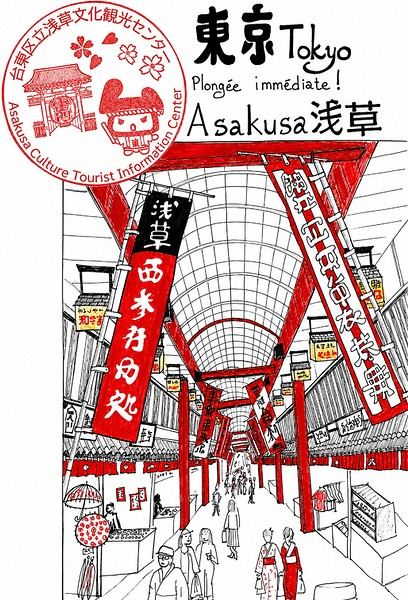
Our first "wow" moment came as we stepped out of the subway in Asakusa, the Tokyo neighborhood where we’d booked our hotel for our first five nights. Exhausted after our long flight, we finally arrived and took an exit that led straight into a shotengai—one of those covered shopping streets that pop up in city centers and flourished between the 1950s and 1980s.
It was an instant aesthetic shock, like a close encounter of the third kind between the modern city, a typical Asian market with its street stalls, the vintage vibe of the arcade, the sheer abundance of goods, and the bustling crowd—a mix of tourists, pilgrims (thanks to nearby Senso-ji Temple), and locals (it’s a very working-class area). In the end, it set the tone for a feeling we’d experience throughout the trip. Wherever we went, shotengai turned out to be fantastic spots for finding little restaurants, shops, or even fresh produce. Some are like real mazes, like in Kyoto, where we spent ages trying to relocate a restaurant we’d loved ;-)
In Kanazawa, the Omicho Market: And in Kyoto, Nishiki Market:
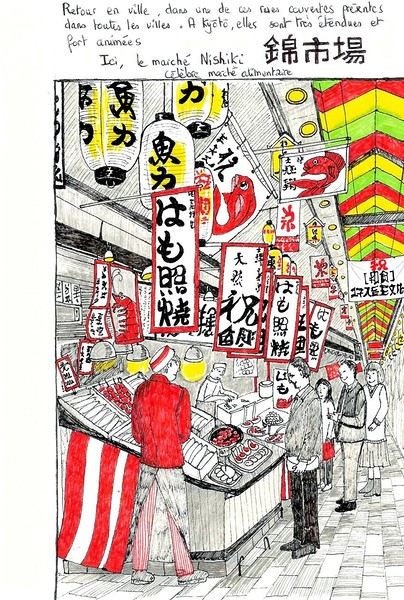
To be continued...
I’m inviting you on a stroll through my drawings—a completely subjective, far from exhaustive, and totally personal take, since it’s based on my own sketches. I put this travel journal together after returning in late 2024, mostly using felt-tip pens and pencils, with a few collages thrown in. I worked from our personal photos.Let’s start with the shotengai...
Our first "wow" moment came as we stepped out of the subway in Asakusa, the Tokyo neighborhood where we’d booked our hotel for our first five nights. Exhausted after our long flight, we finally arrived and took an exit that led straight into a shotengai—one of those covered shopping streets that pop up in city centers and flourished between the 1950s and 1980s.
It was an instant aesthetic shock, like a close encounter of the third kind between the modern city, a typical Asian market with its street stalls, the vintage vibe of the arcade, the sheer abundance of goods, and the bustling crowd—a mix of tourists, pilgrims (thanks to nearby Senso-ji Temple), and locals (it’s a very working-class area). In the end, it set the tone for a feeling we’d experience throughout the trip. Wherever we went, shotengai turned out to be fantastic spots for finding little restaurants, shops, or even fresh produce. Some are like real mazes, like in Kyoto, where we spent ages trying to relocate a restaurant we’d loved ;-)
In Kanazawa, the Omicho Market:
And in Kyoto, Nishiki Market:
To be continued...
Adventure from La Cure to La Chaux-de-Fonds on foot with a dog
Hello, I’d like to embark on a little trip in my home country, Switzerland. I’ll start walking from La Cure, heading toward Le Noirmont first, then I’ll improvise my route—but it’ll probably follow the French border... at least as far as Lac de Joux.
I’ll decide day by day how much farther to go after that. My goal is to stay in nature as much as possible, wander around for as long as I can, and restock food in villages or towns along the way.
I’m thinking of mostly camping, but we’ll see if I end up in a hotel or another campsite depending on my route.
I’d love to reach La Chaux-de-Fonds on foot... maybe even Delémont. The whole thing should take about a week, give or take.
I’ll be bringing my dog, and I’m preparing for this as soon as I’m ready.
Any tips to make sure everything goes smoothly for us? Things I should know—or avoid? What about shepherds with their flocks of sheep? And isn’t hunting season open right now?
I’m not sure if what I’m planning is even doable, which is why I’m asking around.
This’ll be my first time doing something like this—wandering in nature *and* with a dog. I’m really excited for this adventure... and I need it. Thanks!
I’ll decide day by day how much farther to go after that. My goal is to stay in nature as much as possible, wander around for as long as I can, and restock food in villages or towns along the way.
I’m thinking of mostly camping, but we’ll see if I end up in a hotel or another campsite depending on my route.
I’d love to reach La Chaux-de-Fonds on foot... maybe even Delémont. The whole thing should take about a week, give or take.
I’ll be bringing my dog, and I’m preparing for this as soon as I’m ready.
Any tips to make sure everything goes smoothly for us? Things I should know—or avoid? What about shepherds with their flocks of sheep? And isn’t hunting season open right now?
I’m not sure if what I’m planning is even doable, which is why I’m asking around.
This’ll be my first time doing something like this—wandering in nature *and* with a dog. I’m really excited for this adventure... and I need it. Thanks!
Do we need ID to spend a day in Switzerland and Italy?
Hi there,
My partner, our 8-year-old daughter, and I are going on vacation to Gex.
We’ve decided to spend one day in Switzerland and another in Italy. Will we need ID (national ID card or passport)? Do we also need ID for our daughter?
Thanks so much for your answers! 🙂
My partner, our 8-year-old daughter, and I are going on vacation to Gex.
We’ve decided to spend one day in Switzerland and another in Italy. Will we need ID (national ID card or passport)? Do we also need ID for our daughter?
Thanks so much for your answers! 🙂
Trip report: Albania, April 2026
A little trip report from an 11-day journey to Albania at the end of April 2026, with two friends in their early sixties and beyond...
Our route: Berat, Gjirokastër, Himarë, Tirana
Here are some opinions, tips, and great deals to share:
Flight Round-trip Beauvais-Tirana: Ryanair, 260 € with checked baggage (20 kg) and seat selection. Flight was fine and on time. 2h 30min flight.
Exchange: 1 € was worth 95 lek in April 2026. We were advised to exchange in the airport hall at the Illiria counter (98 lek outside the security zone), saying we wouldn’t find a better rate. However, the exchange rate was 93 lek for 1 euro, while in the city it was 95...
Car rental at Tirana airport for 9 days via Booking.com: 144 € (56 € for the car rental and 88 € for optional full insurance deductible waiver).
Wheego agency: the car was fine, but be careful when signing the contract—they tried to convince us that the insurance taken through Booking didn’t cover everything and insisted we take their own insurance for 250 €... We refused.
After reading about driving in Tirana, instead of starting our trip by visiting the capital, we decided to head straight to Berat upon arrival and return the car at the end of the trip to explore the city on foot. This turned out to be a great choice!
Accommodations: All our stays were booked via Booking.com. Everyone prefers to be paid in euros and in cash—they mention this when booking.
Berat: 2-hour drive from the airport.
Accommodation: Vila Arben Elezi: 135 € for 3 nights with breakfast and private parking. The room was decent and clean but a bit dark, located slightly below ground level near the parking. However, the breakfast on the rooftop was excellent, especially with the stunning view of the "city of a thousand windows." Great location.
Berat was our favorite—there are lovely walks through the different neighborhoods on both sides of the river, each with a very different vibe. The citadel visit is also fascinating, as it’s like a small town within the fortress.
The walk along the river is pleasant, with plenty of restaurant choices. Other restaurants in the old town are also very nice. The White House Restaurant, on the first floor along the road, is good and offers a great view of the Gorica district.
Gjirokastër:
Accommodation: Te Ajdini Guest House: 120 € for 3 nights with breakfast. A private home stay. There’s free parking just before entering the city, a 5-minute walk from the accommodation, which is very convenient since the cobblestone streets are narrow and parking is tricky. Yes, it’s a climb to get to the place, but everything in this city is uphill... The room was bright and clean. Breakfast was very good, hearty, and served in the courtyard with a view of the castle. The guesthouse is a 5-minute walk from the city center (the bazaar) but in a quiet area.
Restaurants: Rrapi and Kujtimi—good and affordable with their little pergolas.
The old town of Gjirokastër is charming but very touristy, with streets packed with souvenir shops and restaurant tables and chairs. Lots of people.
-The bunker visit (near the tourist office) is very interesting: Cold War Tunnel.
The castle offers a beautiful view of the city.
-Visit to the Ottoman house Skenduli: very well done. Don’t forget to climb the ladder facing a trapdoor in the ceiling to see the roof’s framework—it’s like a forest of beams: impressive!
-The bridge Ura e Ali Pasha: A steep 45-minute climb from the city to the site is worth it, but once you reach the viewpoint (which is stunning), you have to go back down a path to reach the bridge. You can drive to the viewpoint, but parking is very tricky.
Around Gjirokastër:
-Just outside the city: Lake Liqeni i Viroit: a nice, ordinary-looking lake, but at the end, there’s a natural spring making the water crystal clear and a brilliant blue—really spectacular, like photos of Blue Eye near Sarandë.
-Drive to Përmet along the gorges: beautiful viewpoints along the way and lovely countryside.
Himarë:
Accommodation: Vila Kosteli: 120 € for 2 nights with breakfast—slightly overpriced for this type of place but very close to a small beach and not far from the promenade with all the restaurants. Private parking, but very tight (4 cars on a tiny lot along the road). The "sea view" room is a bit obstructed by the building across the street. However, the rooftop breakfast view is beautiful. Friendly staff.
Himarë is a pleasant seaside resort, quite calm (but it was April...). There’s a cute promenade with restaurants along the beach. The castle on the heights of Himarë is worth a visit.
Around Himarë:
-Qeparo is worth a quick stop, but Qeparo village is really worth the detour: a village lost in the heights after a scenic drive up from the coastal road—narrow but well-maintained. Beautiful view from the top and a charming village.
-The Big Bunker and Llogora Panorama: take a right turn several kilometers after Dhermi—a road that climbs steeply from the start... A breathtaking winding road that reaches 900 meters in altitude. The view is stunning.
-Several small villages between Dhermi and Himarë are worth a quick stop.
-Porto Palermo Castle is somewhat disappointing.
Tirana:
Taxi from Tirana airport to the city center: 15 € with electric taxis (Green Taxi, Bee Taxi, Do Taxi).
Accommodation: Hotel Nevi Apartment: 63 € for 2 nights. A private apartment in an older building but very clean and well-equipped, with a kitchen and small enclosed balcony.
Great welcome and contact—the owner even booked a taxi for our departure. Very well located, close to the main square, shops, and restaurants. A small supermarket nearby is perfect for stocking up on breakfast supplies.
The city is lively and dynamic, with plenty of green spaces and promenades. Buildings are popping up everywhere, often with surprising architecture—like a building shaped like a face, a huge golden cube, and many others under construction.
-Sky Tower: at the top, a rotating bar offers a 360° view of the city and its buildings. Drinks are a bit pricier than usual, but it’s totally worth it (6 € for a beer or a glass of white wine, 3 € for coffee). We were there for sunset, and it was amazing! A must-do. Arrive early, as it fills up quickly.
-The House of Leaves: a house used for secret surveillance and interrogations during the dictatorship... A great way to learn about the surveillance systems of that era.
-Bunk’Art 2: a bunker in the heart of the city—very interesting, covering the dictatorship period and its system...
-The Pazari i Ri Bazaar: the new bazaar district. The large hall is worth a visit, but souvenir prices are often higher than elsewhere... The area is nice.
Restaurant: Kastrati Restaurant—a bit like a canteen with lots of traditional dishes. It’s on the first floor of a building. Excellent value for money, and the waitress explains the dishes in French.
That’s a little overview of our trip and my personal impressions! Albania is a beautiful and pleasant country to visit. If you have any questions, feel free to ask!
That’s a little overview of our trip and my personal impressions! Albania is a beautiful and pleasant country to visit. If you have any questions, feel free to ask!
Planning a 15-day trip to northern Morocco
Hi there, 🙂
This autumn’s trip should be in Morocco—barring any geopolitical issues between now and then.
After many trips to the south of Fès, I’m giving the north a try.
My plan is roughly to do a road trip loop from Rabat back to Rabat, passing through Asilah, Tangier, Tétouan, Chefchaouen, Akchour, Fès, Meknès, and Volubilis.
That’s a lot of cities. Probably a bit too many for our taste—we usually prefer more isolated spots...
So I’m looking for tips on little backroads, secluded beaches, half-day hikes, and offbeat places.
If you’ve also got recommendations for accommodation... (We’re open to splurging over 100 € if it’s a real favorite.)
Feel free to think outside the box—this is an open-ended plan! !😉
Thanks
This autumn’s trip should be in Morocco—barring any geopolitical issues between now and then.
After many trips to the south of Fès, I’m giving the north a try.
My plan is roughly to do a road trip loop from Rabat back to Rabat, passing through Asilah, Tangier, Tétouan, Chefchaouen, Akchour, Fès, Meknès, and Volubilis.
That’s a lot of cities. Probably a bit too many for our taste—we usually prefer more isolated spots...
So I’m looking for tips on little backroads, secluded beaches, half-day hikes, and offbeat places.
If you’ve also got recommendations for accommodation... (We’re open to splurging over 100 € if it’s a real favorite.)
Feel free to think outside the box—this is an open-ended plan! !😉
Thanks
What to see and do in Valencia and the surrounding area?
Hi there,
We’re planning to spend a few days in Valencia and the surrounding area. Can you recommend the must-see sights? PS: If you know any great restaurants, we’re all ears!
Thanks in advance
We’re planning to spend a few days in Valencia and the surrounding area. Can you recommend the must-see sights? PS: If you know any great restaurants, we’re all ears!
Thanks in advance
Biking in Madagascar: What loop route from Antananarivo?
hey everyone,
I’m landing in Madagascar with a buddy before the end of April 2026. We’re planning to bike around for about twenty days or so. We don’t have a specific goal other than exploring the country and meeting the locals.
Ideally, we’d prefer a loop route starting from Antananarivo with a good chunk of it along the coast. On the bike side, we’re used to riding 6 to 8 hours a day, depending on the needs, encounters, and mood 😉 Any feedback or tips from trips around this length?
Thanks in advance, Jérôme
I’m landing in Madagascar with a buddy before the end of April 2026. We’re planning to bike around for about twenty days or so. We don’t have a specific goal other than exploring the country and meeting the locals.
Ideally, we’d prefer a loop route starting from Antananarivo with a good chunk of it along the coast. On the bike side, we’re used to riding 6 to 8 hours a day, depending on the needs, encounters, and mood 😉 Any feedback or tips from trips around this length?
Thanks in advance, Jérôme
Prepping for a North-to-South Africa backpacking trip for 8-9 months
Hey everyone!
I’m diving into planning a trip I’ve dreamed of for a long time: crossing Africa from North to South solo, with a departure planned for October 2025 for about 8-9 months. I’m leaving from Paris with a starting budget of around 7,000 €, aiming to supplement it with work along the way.
My planned route: Senegal → Gambia → Sierra Leone/Liberia (if logistics work out) → Côte d'Ivoire → Ghana → Togo → Benin → Cameroon → Gabon → Kenya (Masai Mara) → Uganda (Bwindi gorillas) → Rwanda → Tanzania (Kili + Serengeti + Zanzibar) → Mozambique → Malawi → Zambia (Victoria Falls) → Botswana → Namibia → South Africa (Cape Town). Madagascar as a bonus if timing/budget allows from Mozambique.
I’m not a backpacking newbie—I’ve done several trips in Europe and I’m familiar with the lifestyle, hostels, local transport, etc. But Africa is my first big adventure on this continent, and I’ve got some very concrete questions I’d love feedback on from people who’ve been there.
🎭 My big dilemma: flexibility vs. pre-organized work
What matters most to me is NOT rushing through. If I feel good somewhere, I’ll stay longer. If a region doesn’t click, I’ll cut it short. That seems totally incompatible with having pre-booked work or volunteer gigs, yet I need that income to stretch my budget.
I’m torn between two approaches:
Option A: The mixed rhythm: 3-4 weeks of volunteering in a country (free accommodation, full immersion), then 1-2 countries in classic backpacker "vacation" mode, then another mission somewhere, etc. This gives a breathing rhythm and avoids burnout from non-stop volunteering.
Option B: The continuous flow: finding gigs as I go, from the previous country, contacting hosts 2-3 weeks in advance with a flexible date range. Keeping maximum spontaneity but never arriving anywhere without a safety net.
Have you tried either? What actually works on the ground in Africa?
🌍 What I’m really looking for in this trip
Not just the classic tourist spots. I want to see the country as it is—eating at local joints, taking local transport (bush taxis, minibuses, sept-places), staying with locals when possible. The big reserves and safaris are part of the plan (Masai Mara, Serengeti, Okavango), but just as much as hanging out in a residential neighborhood in Dakar, understanding how people really live.
Volunteering or work interests me for that reason too (not just for free lodging, but because it’s the deepest way to dive into a country). Working at a school in Ghana, a lodge in Kenya, a permaculture farm in Mozambique—I see it as an immersion that classic tourism can’t offer.
🎒 My concrete questions
About Workaway and Worldpackers: I’ve read a lot but would love on-the-ground feedback, especially for West and East Africa. Are hosts really flexible with dates for long-term travelers? Do the advertised gigs match reality? Are there alternative platforms you’d recommend for Africa specifically (I’ve heard of Help Exchange, WWOOF Africa, local networks…)?
About "off-platform" jobs: Is it really doable to find informal work on the spot (bars, restaurants, lodges) without prior contacts? In which countries/cities is this most accessible for a French speaker without a local work permit?
About logistics between countries: For those who’ve done the West Coast (Senegal → Ghana → Benin), how did you cross borders? Direct buses or local shared taxis at each border? And for the jump from Central Africa → Kenya, is a flight mandatory, or are there feasible overland routes?
About Madagascar: I’m considering adding it from Mozambique (flight Maputo or Beira → Tana). Those who’ve done it backpacker-style on a tight budget—is 3-4 weeks doable, or is it too short to be worth it?
I’m open to all tips, experiences, warnings, and pleasant surprises. And if you’ve got trusted local contacts (Workaway hosts, associations, community lodges), I’m all ears!
I’ve got tons of questions and I’m eager for any advice or experiences you can share!!
I’m diving into planning a trip I’ve dreamed of for a long time: crossing Africa from North to South solo, with a departure planned for October 2025 for about 8-9 months. I’m leaving from Paris with a starting budget of around 7,000 €, aiming to supplement it with work along the way.
My planned route: Senegal → Gambia → Sierra Leone/Liberia (if logistics work out) → Côte d'Ivoire → Ghana → Togo → Benin → Cameroon → Gabon → Kenya (Masai Mara) → Uganda (Bwindi gorillas) → Rwanda → Tanzania (Kili + Serengeti + Zanzibar) → Mozambique → Malawi → Zambia (Victoria Falls) → Botswana → Namibia → South Africa (Cape Town). Madagascar as a bonus if timing/budget allows from Mozambique.
I’m not a backpacking newbie—I’ve done several trips in Europe and I’m familiar with the lifestyle, hostels, local transport, etc. But Africa is my first big adventure on this continent, and I’ve got some very concrete questions I’d love feedback on from people who’ve been there.
🎭 My big dilemma: flexibility vs. pre-organized work
What matters most to me is NOT rushing through. If I feel good somewhere, I’ll stay longer. If a region doesn’t click, I’ll cut it short. That seems totally incompatible with having pre-booked work or volunteer gigs, yet I need that income to stretch my budget.
I’m torn between two approaches:
Option A: The mixed rhythm: 3-4 weeks of volunteering in a country (free accommodation, full immersion), then 1-2 countries in classic backpacker "vacation" mode, then another mission somewhere, etc. This gives a breathing rhythm and avoids burnout from non-stop volunteering.
Option B: The continuous flow: finding gigs as I go, from the previous country, contacting hosts 2-3 weeks in advance with a flexible date range. Keeping maximum spontaneity but never arriving anywhere without a safety net.
Have you tried either? What actually works on the ground in Africa?
🌍 What I’m really looking for in this trip
Not just the classic tourist spots. I want to see the country as it is—eating at local joints, taking local transport (bush taxis, minibuses, sept-places), staying with locals when possible. The big reserves and safaris are part of the plan (Masai Mara, Serengeti, Okavango), but just as much as hanging out in a residential neighborhood in Dakar, understanding how people really live.
Volunteering or work interests me for that reason too (not just for free lodging, but because it’s the deepest way to dive into a country). Working at a school in Ghana, a lodge in Kenya, a permaculture farm in Mozambique—I see it as an immersion that classic tourism can’t offer.
🎒 My concrete questions
About Workaway and Worldpackers: I’ve read a lot but would love on-the-ground feedback, especially for West and East Africa. Are hosts really flexible with dates for long-term travelers? Do the advertised gigs match reality? Are there alternative platforms you’d recommend for Africa specifically (I’ve heard of Help Exchange, WWOOF Africa, local networks…)?
About "off-platform" jobs: Is it really doable to find informal work on the spot (bars, restaurants, lodges) without prior contacts? In which countries/cities is this most accessible for a French speaker without a local work permit?
About logistics between countries: For those who’ve done the West Coast (Senegal → Ghana → Benin), how did you cross borders? Direct buses or local shared taxis at each border? And for the jump from Central Africa → Kenya, is a flight mandatory, or are there feasible overland routes?
About Madagascar: I’m considering adding it from Mozambique (flight Maputo or Beira → Tana). Those who’ve done it backpacker-style on a tight budget—is 3-4 weeks doable, or is it too short to be worth it?
I’m open to all tips, experiences, warnings, and pleasant surprises. And if you’ve got trusted local contacts (Workaway hosts, associations, community lodges), I’m all ears!
I’ve got tons of questions and I’m eager for any advice or experiences you can share!!
Feedback on 15-day family trip to Colombia
Hi everyone, it’s been a while since I last posted!
First time in South America for me, my wife, and our 7-year-old son. I’ve put together this itinerary and would love to hear your thoughts:
Bogotá 28/07 – 30/07: Arrival. Which neighborhood and outings would you recommend? Flight to
2 Filandia 30/07 – 03/08: (255 €). Waterfalls and horseback riding, Cocora Valley, Hiking, Nearby villages. Flight to 3 Tayrona 03/08 – 07/08: Hotel La Casablanca
Hike with Tierra Nevada and the Kogui village (any feedback?). Return by inner tube for the little one. Short night hike. Second hike to La Piscina, etc., return by 🐎.
4 Cartagena 07/08 – 10/08: Air-conditioned bus. Staying in Getsemaní? Mangroves & the Castle, exploring the city.
5 Bogotá 10/08 – 12/08
Feel free to share your feedback! Have a great day!
Seb
First time in South America for me, my wife, and our 7-year-old son. I’ve put together this itinerary and would love to hear your thoughts:
Bogotá 28/07 – 30/07: Arrival. Which neighborhood and outings would you recommend? Flight to
2 Filandia 30/07 – 03/08: (255 €). Waterfalls and horseback riding, Cocora Valley, Hiking, Nearby villages. Flight to 3 Tayrona 03/08 – 07/08: Hotel La Casablanca
Hike with Tierra Nevada and the Kogui village (any feedback?). Return by inner tube for the little one. Short night hike. Second hike to La Piscina, etc., return by 🐎.
4 Cartagena 07/08 – 10/08: Air-conditioned bus. Staying in Getsemaní? Mangroves & the Castle, exploring the city.
5 Bogotá 10/08 – 12/08
Feel free to share your feedback! Have a great day!
Seb
Retiring in Corsica
Hello,
I’ve visited Corsica several times with our kids, and we loved the warm welcome and friendliness of the locals as we explored many villages. We’re originally from the JURA region.
Now that we’re retired, we’d like to live somewhere between Bastia and Porto-Vecchio.
Which village or town would you recommend for a peaceful and welcoming lifestyle?
Unlikely California and Nevada Spots for Artists
Hi there, after 5 trips to the American West, where should we go in May 2025? My last stay in SF ended badly for me (diabetes flare-up, hospitalization after returning to France), but my wife insists on SF and places we haven’t seen yet... so I’ve decided to skip the big parks and head for some offbeat spots instead...
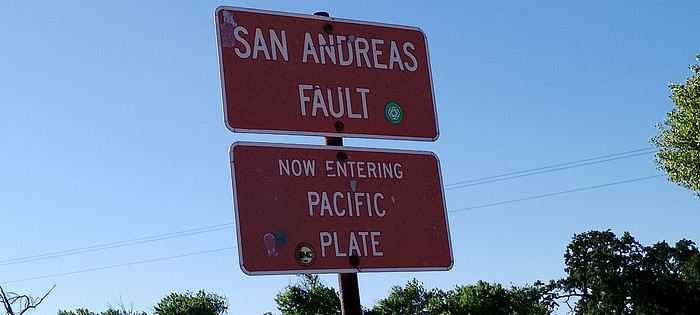
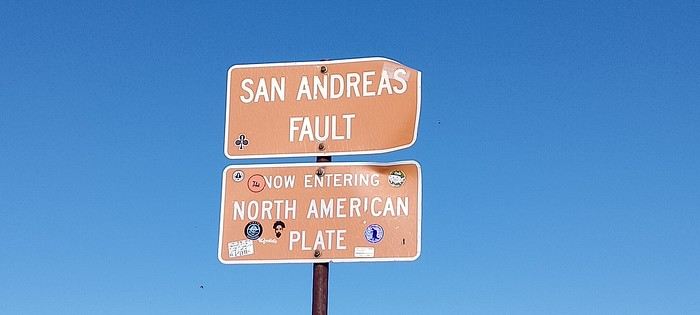
So, SF, then south to the crossroads where James Dean died. No luck—roadworks everywhere, impossible to stop—but I’d noted we could check out the San Andreas Fault near Parkfield and its bar before heading to Bakersfield.


Questions about SUV trails and must-sees for a California road trip
Hi everyone! 🙂
As you can see, we're heading back from September 6th to the 27th.
Everything’s booked for September—flights, accommodations, and the car. As I plan, I’ll be asking the experts for help. This is our second trip to California, but most of the stops are new to us.
We’ll start directly from San Francisco to our first overnight stop, Davis, before heading to Lassen Volcanic Park for 4 nights. Our flight lands at 12:50 PM.
Here’s our itinerary: Day 1: Davis – overnight stop Day 2: Red Bluff – exploring Lassen Volcanic Park (scenic drive to Lake Helen) Day 3: Susanville – scenic drive through the park via the South Entrance, points of interest, and hikes Day 4: Susanville – Cinder Cone and Painted Dunes hike Day 5: Susanville – Warner Valley (hikes) Day 6: South Lake Tahoe Day 7: South Lake Tahoe Day 8: Mammoth Lake Day 9: Mammoth Lake Day 10: El Portal via Tioga Road Day 11: El Portal Day 12: El Portal Day 13: Oakhurst Day 14: Miramonte Day 15: Three Rivers Day 16: Three Rivers Day 17: Coalinga Day 18: Monterey Day 19: Monterey Day 20: San Francisco Day 21: San Francisco Day 22: Departure
For hikes in Lassen Volcanic Park, I’ve planned: Bumpass Hell, Cold Boiling Lake (Day 2) Paradise Meadow (maybe not going all the way), Devastated Area, and the loop around Reflection and Manzanita Lakes (Day 3) Cinder Cone and Painted Dunes (Day 4) Devil’s Kitchen and Boiling Spring Lake (Day 5)
I’ve read there are trails to access the trailheads for Cinder Cone (11 km) and Warner Valley. Are these easy trails for an SUV? Are there any other must-see spots or things we shouldn’t miss?
That’s where I’m at for now. Thanks for your replies, and have a great evening! Marcalamar 🙂
Here’s our itinerary: Day 1: Davis – overnight stop Day 2: Red Bluff – exploring Lassen Volcanic Park (scenic drive to Lake Helen) Day 3: Susanville – scenic drive through the park via the South Entrance, points of interest, and hikes Day 4: Susanville – Cinder Cone and Painted Dunes hike Day 5: Susanville – Warner Valley (hikes) Day 6: South Lake Tahoe Day 7: South Lake Tahoe Day 8: Mammoth Lake Day 9: Mammoth Lake Day 10: El Portal via Tioga Road Day 11: El Portal Day 12: El Portal Day 13: Oakhurst Day 14: Miramonte Day 15: Three Rivers Day 16: Three Rivers Day 17: Coalinga Day 18: Monterey Day 19: Monterey Day 20: San Francisco Day 21: San Francisco Day 22: Departure
For hikes in Lassen Volcanic Park, I’ve planned: Bumpass Hell, Cold Boiling Lake (Day 2) Paradise Meadow (maybe not going all the way), Devastated Area, and the loop around Reflection and Manzanita Lakes (Day 3) Cinder Cone and Painted Dunes (Day 4) Devil’s Kitchen and Boiling Spring Lake (Day 5)
I’ve read there are trails to access the trailheads for Cinder Cone (11 km) and Warner Valley. Are these easy trails for an SUV? Are there any other must-see spots or things we shouldn’t miss?
That’s where I’m at for now. Thanks for your replies, and have a great evening! Marcalamar 🙂
Traveling Against the Grain in 2026: 8 Alternatives to Overcrowded Destinations
In 2026, traveling becomes a choice. While the same destinations are buckling under mass tourism, there are still preserved alternatives, often just a few hours away from the beaten path. This guide doesn’t ban any countries but suggests different practices and destinations that still breathe.
Here are 8 experiences to reinvent for better travel this year.
1. Tanzania: Swap the jeep safari for a walking safari The classic: Setting off to see the "Big Five" and the vast savanna from a 4x4. Why rethink this: You don’t go to see wild animals just to end up in a traffic jam of Toyota Land Cruisers. The noise of engines and exhaust fumes stress the wildlife. Some observation points look like parking lots. The alternative: A walking safari in the Ngorongoro Highlands or the Serengeti, accompanied by Maasai guides. On foot, your senses sharpen: it’s an immersion that a car window blocks.
Practical tip: Opt for mobile bush camps rather than fixed lodges. Look into walking safaris that include bivouacs.
2. India: Skip Kerala’s houseboats for kayaking on secret lagoons The classic: Cruising the famous Backwaters in a houseboat. Why rethink this: Houseboats pollute and destroy the fragile ecosystem of the lagoons. Overcrowding in Alleppey drains the experience of its magic. Not to mention the noise of the engines. The alternative: Munroe Island or Valiyaparamba by canoe or kayak. These northern lagoons remain preserved. You can organize trips with local fishermen, spend a day with families from the area, and sleep in the heart of biodiversity instead of floating resorts.
Good to know: The famous Kettuvallams (houseboats) aren’t that old. Originally, they were rice transport barges. It was only in the 1990s that someone had the idea to add rooms. Authenticity is sometimes a marketing invention!
3. Portugal: Forget Lisbon and the Algarve for the Alentejo The classic: The charm of Lisbon’s azulejos and the golden beaches of the Algarve. Why rethink this: Lisbon is suffocating under Airbnbs, and the Algarve has become a forest of umbrellas and tourist complexes. The Portuguese soul is fading under mass tourism. The alternative: The Alentejo region, between Lisbon and the Algarve. Stay in a *Herdade* (traditional farm), taste amphora wine, and explore wild beaches where cliffs replace concrete. This is Portugal at a slower pace—the one with white villages and endless plains.
Good to know: The Alentejo is the world’s largest cork producer. Cork oaks are harvested only once every 9 years. It’s a region that sets its own rhythm, slow and respectful of nature.
4. Indonesia: Less Bali, more Sulawesi, Java, or Lombok The classic: Spirituality, rice terraces, and Bali’s beaches. Why rethink this: Between water shortages, "spiritual" traffic jams in Ubud, and beaches turned into clubs, Bali needs a break. The island is suffocating. The alternative: Sulawesi for the ancestral rites of the Toraja people, Java for the lunar volcanoes of the East and lost temples, or Lombok for a quieter version of Bali. You’ll rediscover Indonesia’s wild origins.
Good to know: Bali is the only predominantly Hindu island in the world’s largest Muslim country. Exploring Java or Sulawesi reveals a cultural diversity that Bali’s tourist bubble often overshadows.
5. South Korea: Shorten Seoul for Gyeongju and Suncheon Bay The classic: Futuristic modernity and K-Culture in Seoul. Why rethink this: Seoul is experiencing the "Kyoto effect." Historic neighborhoods like Bukchon are closing streets to protect residents’ privacy from the influx of tourists in rented hanboks. The alternative: Gyeongju and Suncheon Bay in the authentic south. Between Gyeongju’s millennia-old temples (the ancient capital) and Suncheon’s biosphere reserve, you’ll discover the real Korea—without the lines.
Good to know: Gyeongju is often called "the museum without walls." You’ll find tumuli (royal tombs shaped like grassy hills) right in the middle of the modern city. Ancient history coexists with the present.
6. Thailand: Escape Bangkok and the southern islands for Isan The classic: Bangkok, then off to Phuket, Phi Phi, or Koh Samui. Why rethink this: The southern islands are suffocating: marine pollution, crowded beaches, authenticity diluted in standardized resorts. The experience feels more like Ibiza than traditional Thailand. The alternative: The Northeast (Isan), the unknown region. Forgotten Khmer temples, authentic villages, colorful local markets, and preserved nature in parks like Phu Kradueng. Few Westerners, lots of authenticity.
Good to know: Isan makes up a third of Thailand but receives less than 5% of tourists. Yet it’s the birthplace of authentic Thai cuisine and preserved traditions. Prices are also two to three times lower.
7. Peru: Skip Machu Picchu for Kuelap and northern Peru The classic: Machu Picchu and the Sacred Valley. Why rethink this: Strict quotas, mandatory bookings months in advance, sky-high prices, and timed tourist flows. The experience has become administrative before it’s spiritual. The alternative: Northern Peru with Kuelap, the "Machu Picchu of the north" without the crowds. The Gocta Canyon, the Chachapoyas region, and lesser-known but equally fascinating pre-Inca cultures. The modern cable car makes access easy without the hordes.
Good to know: Kuelap is larger and older than Machu Picchu but receives 100 times fewer visitors. Its cyclopean walls reach 20 meters high, and the fortress remains shrouded in mystery.
8. Iceland: Ditch the Golden Circle for the northern fjords The classic: The Iceland tour via the Ring Road and the famous Golden Circle. Why rethink this: The Ring Road has become a single-file line of rental vans. Iconic sites (Golden Circle, Solheimasandur plane wreck, Reynisfjara Beach) are saturated, turning the quest for Icelandic solitude into a crowded parking lot experience. The alternative: The Tröllaskagi Peninsula and the northern fjords. Forget the clock to rediscover the Iceland of the sagas. This is the kingdom of mountains plunging into the sea, secret hot springs accessible only on foot, and fjords where silence reigns.
Good to know: In Iceland, you don’t "own" nature—you borrow it. Over 50% of Icelanders still believe in the existence of *Huldufólk* (the hidden people), elves who live in the rocks. To catch a glimpse of them, they say, you must leave the noise of Route 1’s engines and learn to listen to the silence of the fjords.
1. Tanzania: Swap the jeep safari for a walking safari The classic: Setting off to see the "Big Five" and the vast savanna from a 4x4. Why rethink this: You don’t go to see wild animals just to end up in a traffic jam of Toyota Land Cruisers. The noise of engines and exhaust fumes stress the wildlife. Some observation points look like parking lots. The alternative: A walking safari in the Ngorongoro Highlands or the Serengeti, accompanied by Maasai guides. On foot, your senses sharpen: it’s an immersion that a car window blocks.
Practical tip: Opt for mobile bush camps rather than fixed lodges. Look into walking safaris that include bivouacs.
2. India: Skip Kerala’s houseboats for kayaking on secret lagoons The classic: Cruising the famous Backwaters in a houseboat. Why rethink this: Houseboats pollute and destroy the fragile ecosystem of the lagoons. Overcrowding in Alleppey drains the experience of its magic. Not to mention the noise of the engines. The alternative: Munroe Island or Valiyaparamba by canoe or kayak. These northern lagoons remain preserved. You can organize trips with local fishermen, spend a day with families from the area, and sleep in the heart of biodiversity instead of floating resorts.
Good to know: The famous Kettuvallams (houseboats) aren’t that old. Originally, they were rice transport barges. It was only in the 1990s that someone had the idea to add rooms. Authenticity is sometimes a marketing invention!
3. Portugal: Forget Lisbon and the Algarve for the Alentejo The classic: The charm of Lisbon’s azulejos and the golden beaches of the Algarve. Why rethink this: Lisbon is suffocating under Airbnbs, and the Algarve has become a forest of umbrellas and tourist complexes. The Portuguese soul is fading under mass tourism. The alternative: The Alentejo region, between Lisbon and the Algarve. Stay in a *Herdade* (traditional farm), taste amphora wine, and explore wild beaches where cliffs replace concrete. This is Portugal at a slower pace—the one with white villages and endless plains.
Good to know: The Alentejo is the world’s largest cork producer. Cork oaks are harvested only once every 9 years. It’s a region that sets its own rhythm, slow and respectful of nature.
4. Indonesia: Less Bali, more Sulawesi, Java, or Lombok The classic: Spirituality, rice terraces, and Bali’s beaches. Why rethink this: Between water shortages, "spiritual" traffic jams in Ubud, and beaches turned into clubs, Bali needs a break. The island is suffocating. The alternative: Sulawesi for the ancestral rites of the Toraja people, Java for the lunar volcanoes of the East and lost temples, or Lombok for a quieter version of Bali. You’ll rediscover Indonesia’s wild origins.
Good to know: Bali is the only predominantly Hindu island in the world’s largest Muslim country. Exploring Java or Sulawesi reveals a cultural diversity that Bali’s tourist bubble often overshadows.
5. South Korea: Shorten Seoul for Gyeongju and Suncheon Bay The classic: Futuristic modernity and K-Culture in Seoul. Why rethink this: Seoul is experiencing the "Kyoto effect." Historic neighborhoods like Bukchon are closing streets to protect residents’ privacy from the influx of tourists in rented hanboks. The alternative: Gyeongju and Suncheon Bay in the authentic south. Between Gyeongju’s millennia-old temples (the ancient capital) and Suncheon’s biosphere reserve, you’ll discover the real Korea—without the lines.
Good to know: Gyeongju is often called "the museum without walls." You’ll find tumuli (royal tombs shaped like grassy hills) right in the middle of the modern city. Ancient history coexists with the present.
6. Thailand: Escape Bangkok and the southern islands for Isan The classic: Bangkok, then off to Phuket, Phi Phi, or Koh Samui. Why rethink this: The southern islands are suffocating: marine pollution, crowded beaches, authenticity diluted in standardized resorts. The experience feels more like Ibiza than traditional Thailand. The alternative: The Northeast (Isan), the unknown region. Forgotten Khmer temples, authentic villages, colorful local markets, and preserved nature in parks like Phu Kradueng. Few Westerners, lots of authenticity.
Good to know: Isan makes up a third of Thailand but receives less than 5% of tourists. Yet it’s the birthplace of authentic Thai cuisine and preserved traditions. Prices are also two to three times lower.
7. Peru: Skip Machu Picchu for Kuelap and northern Peru The classic: Machu Picchu and the Sacred Valley. Why rethink this: Strict quotas, mandatory bookings months in advance, sky-high prices, and timed tourist flows. The experience has become administrative before it’s spiritual. The alternative: Northern Peru with Kuelap, the "Machu Picchu of the north" without the crowds. The Gocta Canyon, the Chachapoyas region, and lesser-known but equally fascinating pre-Inca cultures. The modern cable car makes access easy without the hordes.
Good to know: Kuelap is larger and older than Machu Picchu but receives 100 times fewer visitors. Its cyclopean walls reach 20 meters high, and the fortress remains shrouded in mystery.
8. Iceland: Ditch the Golden Circle for the northern fjords The classic: The Iceland tour via the Ring Road and the famous Golden Circle. Why rethink this: The Ring Road has become a single-file line of rental vans. Iconic sites (Golden Circle, Solheimasandur plane wreck, Reynisfjara Beach) are saturated, turning the quest for Icelandic solitude into a crowded parking lot experience. The alternative: The Tröllaskagi Peninsula and the northern fjords. Forget the clock to rediscover the Iceland of the sagas. This is the kingdom of mountains plunging into the sea, secret hot springs accessible only on foot, and fjords where silence reigns.
Good to know: In Iceland, you don’t "own" nature—you borrow it. Over 50% of Icelanders still believe in the existence of *Huldufólk* (the hidden people), elves who live in the rocks. To catch a glimpse of them, they say, you must leave the noise of Route 1’s engines and learn to listen to the silence of the fjords.