Results for "art+et+Orgosolo+|+9+>+215"
12963 results found.
Changement de mentalité thaïlandaise? English translation pending
Suite aux quelques propos que j'ai pu échanger avec Thuan sur un autre topic et ne voulant pas flooder indéfiniment le topic d'un autre membre, je crée ce sujet afin de poser une question sur la mentalité thailandaise !
Je me demandais simplement au vu de la fascination de la jeunesse thailandaise pour l'occident si les mentalités n'étaient pas en train de changer et si la jeunesse thai en voulant suivre un mode de vie et des preceptes occidentaux, ne perdraient pas certaines valeurs ou si au contraire la jeunesse thailandaise finalement évoluaient dans le bon sens en jumelant deux cultures différentes en y prenant le meilleur de chacune !
J'imagine que ce changement s'il y a, doit être beaucoup plus manifeste à Bangkok que dans le reste du pays !
Suggestions pour un séjour au Québec en début mai English translation pending
Allo,
j'ai une semaine début mai pour visiter le Québec, sachant que je suis à Montréal, que j'aurais déjà vu Ottawa, l'outaouais, les chutes du Niagara, Québec, et que je dépend des transports en commun.
La Gaspésie ?, trop loin, pas la bonne saison ?
J'attends vos suggestions Merci beaucoup
j'ai une semaine début mai pour visiter le Québec, sachant que je suis à Montréal, que j'aurais déjà vu Ottawa, l'outaouais, les chutes du Niagara, Québec, et que je dépend des transports en commun.
La Gaspésie ?, trop loin, pas la bonne saison ?
J'attends vos suggestions Merci beaucoup
Hôtel Mariott ou Sheraton à Bangkok? English translation pending
🙂🙂 on va en thailande pour les 60 ans donc a la différence de nos voyage a nous on va s offrir un hotel de luxe a bangkok... On a trouver une offre pour soit le mariott ou soit le sheraton qui son les deux sur les berges du chao .... qui connait ces hotels ?
Voyage à Paris pour Pâques avec ma petite fille de 8 ans English translation pending
Bonjour,
J'aimerais avoir de l'aide à savoir l'itinéraire le plus facile avec le plus de choses à voir du 13 avril au 18 avril à Paris. Je voyagerai avec ma petite fille de 8 ans, ma fille et son mari. Dans quel quartier le prix des hôtels sont-ils abordables. Suggestions de resto. Nous irons ensuite à Rome le 18 au 20 quoi voir là-bas en si peu de temps. Merci à tous (tes)! Gros bisous du Canada ! 😎
J'aimerais avoir de l'aide à savoir l'itinéraire le plus facile avec le plus de choses à voir du 13 avril au 18 avril à Paris. Je voyagerai avec ma petite fille de 8 ans, ma fille et son mari. Dans quel quartier le prix des hôtels sont-ils abordables. Suggestions de resto. Nous irons ensuite à Rome le 18 au 20 quoi voir là-bas en si peu de temps. Merci à tous (tes)! Gros bisous du Canada ! 😎
Lait de yack à Paris English translation pending
Bonjour!!
quelqu'un sait où je pourrais trouver du lait de yack ou même du fromage de lait de yack à paris?
Merci pour vos conseils!! 😛
quelqu'un sait où je pourrais trouver du lait de yack ou même du fromage de lait de yack à paris?
Merci pour vos conseils!! 😛
Hotel budget dans St Germain (Paris 6ème) English translation pending
Quelqu'un pourrait me suggérer un hotel budget dans Saint Germain à Paris. L'hotel Jean Bart(9 rue Jean Bart) est mon choix pour le moment. Quelqu'un connait ?
Merci
Cheapo
Merci
Cheapo
Philosophie tai chi chuan English translation pending
Bonjour,
Cela va peut-être paraître hors sujet, mais je prends depuis quelques mois des cours de tai chi chuan. Ca me plait beaucoup et j'aimerais en savoir plus sur la philosophie qui sous-tend tout ça, le sens et la raison d'être des exercices de santé taoïste qui précèdent la forme. Bref, je suis à la recherche d'un bouquin susceptible de répondre à mes questions. Quelqu'un aurait-il quelque chose à proposer ? Il y a beaucoup de livres sur le tai chi ; lequel choisir ?
Parmi tous les membres de VF, il y a forcément des fans de tai chi !
Merci et à +
Flo
Cela va peut-être paraître hors sujet, mais je prends depuis quelques mois des cours de tai chi chuan. Ca me plait beaucoup et j'aimerais en savoir plus sur la philosophie qui sous-tend tout ça, le sens et la raison d'être des exercices de santé taoïste qui précèdent la forme. Bref, je suis à la recherche d'un bouquin susceptible de répondre à mes questions. Quelqu'un aurait-il quelque chose à proposer ? Il y a beaucoup de livres sur le tai chi ; lequel choisir ?
Parmi tous les membres de VF, il y a forcément des fans de tai chi !
Merci et à +
Flo
Endroit à éviter à Paris? English translation pending
Bonjour,
Je passerai la fin de mes vacances seule à Paris. J'y serai pour une semaine et il y a un tas de trucs que je veux voir et faire. J'aimerais aussi sortir quelques fois prendre un verre. Le problème c'est qu'ici, à Montréal, je connais ma ville et je sais les endroits miteux ou dangeureux pour une fille. J'aimerais avoir quelques indications afin de ne pas commettre d'erreurs...le guide routard dit bien des choses mais de parle pas de ça.
Merci
Je passerai la fin de mes vacances seule à Paris. J'y serai pour une semaine et il y a un tas de trucs que je veux voir et faire. J'aimerais aussi sortir quelques fois prendre un verre. Le problème c'est qu'ici, à Montréal, je connais ma ville et je sais les endroits miteux ou dangeureux pour une fille. J'aimerais avoir quelques indications afin de ne pas commettre d'erreurs...le guide routard dit bien des choses mais de parle pas de ça.
Merci
Honte à l'Assemblée nationale..... English translation pending
Oui, honte aux élus du Palais Bourbon qui vont accueillir ce jour le président chinois Hu Jintao, et rappelons que celui ci était gouverneur du Tibet durant les années de grande répression en 1988/89, qui lui valu le surnom de " boucher de Lhassa "......
Cette même année 2004, le 7 Avril devrait être éxécuté le moine Rintoche pour " séparatisme et terrorisme "......
J'ai vraiment envie de vomir........
Cette même année 2004, le 7 Avril devrait être éxécuté le moine Rintoche pour " séparatisme et terrorisme "......
J'ai vraiment envie de vomir........
Thaïlande ou Cambodge? English translation pending
hello, 🙂, que vaut il mieux, la thailande ou le cambodge?? La thailande, ca a l air tres beau mais je n ai que 2 semaines et j ai peur de ne pas pouvoir voir assez de choses, de plus, angkor est un site que j ai vraiment envie de voir mais le cambodge est il assez sûr?😕? peut on y aller en independant ou vaut il mieux la securite de la thailande?? merci d avance...😉, olivier
Le Maroc, terre d'accueil? English translation pending
Bonjour tout le monde,
depuis quelques jours, je m 'etais mis dans la tete d'aller decouvrir un peu le Maroc, etant donné que je vais au sud du portugal.
J'ai donc fait mon passeport aujourd hui et visité pas mal de sites pour me renseigner sur les endroits a visiter etc... Disons que j'etais super branché pour me louer un 4x4 et aller un peu dans le desert, moi qui n'ai jamais vu le desert et qui ne suis jamais sorti d'europe, j'étais tres enthousiaste.
Cependant, au fil de mes lectures, je me rends compte qu'aller au Maroc, c'est se soumettre à toutes leurs croyances et us. Ok, mais pour moi vacances, ca veut dire s'eclater un minimum, et ne pas faire attention a tout ce que je fais. Or je me rends compte que ma copine pourra pas mettre de jupes courtes, je pourrai pas rouler la nuit sur les routes, hors de question pour moi de ramener une boulette de shit si je veux fumer des joints, impossible de boire de l'alcool, de plus, je comptais y aller avec ma voiture (un peu tappe a l oeil, c est une cabriolet) et je me rends compte que le simple fait de la prendre, c'est risquer de la perdre, bref, comme j'ai pas envie d'aller en prison marocaine pour avoir fumé un joint ou emmené une boulette de shit la bas, et bien je vais me rabattre sur l'espagne (Ibiza) mais sincerement je trouve cela nul. Je vois deja beaucoup d'entre vous dire "t as qu a pas fumer" mais bon, apparemment ces gens la ne font pas la difference entre un consommateur et un dealeur ou passeur alors tant pis... Mais c'est bien dommage, surtout pour un pays producteur de hashish... Cherchez la logique...
@+
depuis quelques jours, je m 'etais mis dans la tete d'aller decouvrir un peu le Maroc, etant donné que je vais au sud du portugal.
J'ai donc fait mon passeport aujourd hui et visité pas mal de sites pour me renseigner sur les endroits a visiter etc... Disons que j'etais super branché pour me louer un 4x4 et aller un peu dans le desert, moi qui n'ai jamais vu le desert et qui ne suis jamais sorti d'europe, j'étais tres enthousiaste.
Cependant, au fil de mes lectures, je me rends compte qu'aller au Maroc, c'est se soumettre à toutes leurs croyances et us. Ok, mais pour moi vacances, ca veut dire s'eclater un minimum, et ne pas faire attention a tout ce que je fais. Or je me rends compte que ma copine pourra pas mettre de jupes courtes, je pourrai pas rouler la nuit sur les routes, hors de question pour moi de ramener une boulette de shit si je veux fumer des joints, impossible de boire de l'alcool, de plus, je comptais y aller avec ma voiture (un peu tappe a l oeil, c est une cabriolet) et je me rends compte que le simple fait de la prendre, c'est risquer de la perdre, bref, comme j'ai pas envie d'aller en prison marocaine pour avoir fumé un joint ou emmené une boulette de shit la bas, et bien je vais me rabattre sur l'espagne (Ibiza) mais sincerement je trouve cela nul. Je vois deja beaucoup d'entre vous dire "t as qu a pas fumer" mais bon, apparemment ces gens la ne font pas la difference entre un consommateur et un dealeur ou passeur alors tant pis... Mais c'est bien dommage, surtout pour un pays producteur de hashish... Cherchez la logique...
@+
Templestay in South Korea
Hi,
While researching South Korea, I came across the term "templestay," which refers to a Korean program that lets you stay in a traditional temple to discover Buddhism and Korean culture by living like the temple residents and doing activities like making lanterns. A templestay isn’t just for foreign tourists—on the booking site, I saw that some temples are more geared toward foreigners, with English-speaking monks.
I was wondering if it’s still worth it, especially in temples where the monks don’t speak English?
While researching South Korea, I came across the term "templestay," which refers to a Korean program that lets you stay in a traditional temple to discover Buddhism and Korean culture by living like the temple residents and doing activities like making lanterns. A templestay isn’t just for foreign tourists—on the booking site, I saw that some temples are more geared toward foreigners, with English-speaking monks.
I was wondering if it’s still worth it, especially in temples where the monks don’t speak English?
Naha & Osaka, Japan - June 2025
It’s an understatement to say that Japan is a world apart. All around me, people exclaim: "How lucky you are to be able to go there! I’ve always dreamed of visiting, of finding myself in that culture blending tradition and technology!" Yes, they’re right. Until the moment their dreams become reality and things appear as they truly are, without the filter of fantasized preconceptions. Because in the collective unconscious, Japan indeed seems like a civilization—if not neutral—at least stripped of any social maturation. As if it had emerged all at once from its canonical ages, offering only the best of its traditions, and as if those traditions were undoubtedly the foundation of its extraordinary discipline. Yet, as always, the truth is far more complex. Modern Japan is likely shaped by its millennia-old traditions. But that Japan is also the result of its own uncertainties and contradictions. I’ve always been wary. I’ve never understood why the cleaning women on the platform bow when the train arrives. At some point, too much discipline, too much deference—it makes you smile, it raises questions.
Finally, thanks to F., a dream is coming true! Not the dream of going to Japan—a country I’ve visited more than any other, except for Réunion and the UK—but the dream of completing the fastest round-the-world trip of my career. Indeed, due to the restrictions imposed by the Russians*, the plane flies over the Caucasus and China on the way there; on the return, it gracefully heads toward the Arctic after skirting the Aleutian Islands, Alaska, and Greenland. So, in nearly 26 hours of flight, I complete my 6th round-the-world trip. A round-the-world trip with just one stopover. Or two, if you count our impromptu detour to Okinawa.
(* In response to Western sanctions, Russia closed its airspace to Western airlines on February 28, 2022, except for Air Serbia, Turkish Airlines, Pegasus, and Belavia. This decision adds 2 to 3 hours to flight times and, incidentally, increases operating costs.)
The empire of noise. The empire that dazzles. In Japan, the auditory and visual space is constantly fed. No respite. You have to be strong. Navigating public transport feels like playing the most advanced video game: moving between language barriers and a different organization, the hero tries to ignore the numerous visual and auditory distractions. Mostly auditory, though. Because in Japan, there’s a culture of noise that has undoubtedly inspired our national railways. Everything must be announced. So, here and there, all along the route, we find agents whose sole role is to endlessly repeat safety messages through megaphones more or less suited to the situation. The result is a constant murmur, a kind of tinnitus, a subtle but incessant buzz that fades only at bedtime and returns with a vengeance at first light, when we descend back into the supposedly sterile depths of Osaka’s subway. "To go right, please turn right, kudasaï. When descending the stairs, please mind the steps, kudasaï. To go straight, please take the left corridor, kudasaï." That *kudasaï* ("please" in Japanese), I assure you, has permanently lodged itself in my auditory cells.
Screens are no exception; the brain is constantly stimulated. But paradoxically, passengers massively retreat into their own worlds via their screens. Literally glued to their phones, earbuds firmly in place, people escape into the virtual aisles of a furniture store, a game, a movie... In the train cars, raised voices are rare. The field is clear for announcements and other jingles. Each stop is announced by a little tune unique to each station. Simply incredible.
If we usually judge a country by the welcome its inhabitants offer, in Japan, we’re left wanting. Indeed, the Lost in Translation* spirit doesn’t just apply to verbal exchanges—it applies to everything, especially non-verbal communication. In Japan, me, the slightly North African Corsican, I’m at a loss. I speak loudly, I gesture, in front of a hotel concierge just as lost. Each for our own reasons. Yes, he speaks some English, but we can’t seem to connect. It’s a losing battle trying to find a bit of compassion from a local who’s far from familiar with Western concerns. I try to buy tickets for the World Expo? I run into a systematization as rigid as it is abrupt, which the concierge can’t seem to navigate. While we might still have a shred of common sense, here in Japan, everything is digitized. Soon, no one will be surprised that a QR code becomes essential just to go to the bathroom.
(* Film by Sofia Coppola, released in 2003, which explores isolation, unease, Japanese culture, and language through the experiences of two protagonists.)
In the end, we get that ticket for the Expo. After providing personal information on yet another account created for the occasion, we buy electronic tickets—a QR code, then—to regulate the comings and goings, the souls and aspirations of all these wandering beings scattered across the globe. And it’s probably for the best... Because we’ll be tens of thousands of visitors—100,000 to 150,000 per day—walking the aisles of this enormous improvised amusement park, a kind of delirious superstructure surrounded by the Grand Ring, the largest wooden construction in the world. Inside the park, the pavilions, flagship vessels of their respective countries, compete in ingenuity, proportionate to their GDP, to attract visitors. But you have to wait up to two hours to visit the most popular ones! Fortunately, about a hundred countries can be explored without waiting in shared, more spacious areas. What will I remember from this adventure? The beauty of that wooden structure, despite any environmental or financial considerations—200M € for barely renewable elements; a certain poetry, even magic, in the expression of this event—conversing with Juliette Petit, the splendid representative of Vanuatu, had something indescribable; a close-up experience of Japanese discipline when it came time to return to the subway after that epic evening—thousands upon thousands of people converging at the same time toward a single place without any interruption in the flow.
But my real passion is the countryside. So, I’ll especially remember that brief escape, on the very first day, to the Mino-o waterfall, where the journey itself was already enchanting. Quickly leaving the underground lines, our train speeds through the city’s endless expanse and drops us at the foot of a hill, the abrupt edge of the urban sprawl. The slope was too steep to build anything? We leave behind an impressive hotel, a capitalist eyesore defying the laws of elevation to tackle the climb toward the waterfall. A bucolic walk where the stroller can choose between a paved path or more epic trails. Here and there, stalls, temples, everywhere, a certain serenity. The city’s pulse gives way to a magnificent spectacle magnified by giant sequoias. From the depths of a ravine, we try to glimpse the sky beyond the foliage. Everything is oversized. Here, you can breathe.
***
In reality, Japan has never undertaken any real work of memory. Aside from a few feeble gestures to appease Washington in its choice of Asian partners, one wonders if the Japanese have ever truly grasped the horror they were forced to participate in. While our Judeo-Christian society has more or less assimilated the notions of forgiveness and self-questioning, where does Japanese society stand, juggling a millennia-old Zen philosophy and the unabashed Machiavellianism of an emperor utterly possessed? Is it just me, or does there float in the atmosphere a kind of unease, a malaise, an awkward relationship with reality? For me, bowing to a train as it enters the station is just the result of a poorly directed moral dilemma...
Ah, how distant is the time of sakoku, that closure of the country—both concrete and ideological—that was in vogue for two centuries. Because if no one could enter, no one could leave either! A boon for neighboring countries. But from 1854, following the skirmishes of Commodore Matthew Perry, who demanded Japan’s participation in trade, the country suddenly became aware of the disparities separating it from the West. Bring Japan up to the level of other nations? Industrialization, competition, search for raw materials... Hirohito (1901–1989) emerges on the scene, a bit expansionist and willing to stop at nothing to achieve his goals. Above all, he knew how to use, in his own way, the incredible capacity for self-sacrifice of his people...
We protest, we condemn, we all rally behind an acceptable discourse when it comes to discussing the use of the atomic bomb. Yet, we forget one essential thing: Hiroshima wasn’t enough to make Hirohito yield. While we’re bombarded with anti-fascist elements, as if the sole purpose of school curricula were to prevent us from voting for the National Rally, we completely overlook those events of rare cruelty that took place on the other side of the globe at a time contemporary with Nazi atrocities. Why? Because it was farther away, on the other side of the world? Because we must both condemn the use of nuclear weapons and Nazism? What a dangerous game. Killing civilians is beyond comprehension, everyone agrees on that. But hasn’t Japan ever been guilty of such atrocities? Our empathy is legitimate; it won’t, however, remove from my mind the idea that there was no other solution. Nagasaki is the most telling proof of that.
At least in France, in school textbooks, Hitler will have completely overshadowed the existence of people crueler and more abject than him. Certainly, Adolf was a deeply disturbed man whom events propelled to power. But I’m justified in believing that his approach was probably more humane than that of Joseph Stalin at the height of his art*. And if Hirohito followed the same line as Hitler, in the sense that he represented the superior race, he would apply with conviction what was Stalin’s credo: contempt for his own people when sending them to slaughter, and an even fiercer contempt for the human race when it didn’t have the good fortune to be Japanese. Just look at how China was invaded and by what means millions of Chinese were annihilated, burned, deported, buried alive! Operation Scorched Earth or Three Alls Policy for kill all, burn all, loot all? No comment. Even today, the Japanese are convinced they waged a patriotic war, when clearly, that war served only vague ideological (and certainly economic) interests.
(* "In many ways, Hitler’s National Socialism was far more humane than Communism: it wasn’t unthinkable to speak to the SS or the Gestapo, and dissuading them from sending you to a prison camp wasn’t utopian. To some extent (compared to the Communists), you could still expect a semblance of justice. All those who lived under Hitler and under Communism will tell you: as the front lines shifted, they always managed to end up in Germany, where, though it was a strange place ruled by a madman, life went on. Under Communism, there was no life; totalitarianism was absolute. Probably, Hitler’s conservatism prevented him from fully imitating Bolshevism." Seraphim Rose in The Revolutions of the 19th and 20th Centuries (circa 1970))
In Naha, we visit two strategic sites: the Imperial Navy headquarters and Maeda Escarpment, in Urasoe, better known as Hacksaw Ridge. I love this confrontation with history. In the hand-dug tunnels of the headquarters, we meet Japanese people seeking information. They’re not responsible for this tragedy. Neither are we. I would have liked to tell them that, to hug them, to move on. To finally believe in those peace messages displayed here and there. Yes, it’s curious to read those calls for peace* when no real work of memory** has been undertaken. Two civilizations, two perspectives, a profound misunderstanding. When I analyze the waste of that war—and particularly the waste of those Pacific battles—like Peleliu in autumn 1944 and Okinawa in spring 1945—I can’t bring myself to share in the pathological patriotism that reigns within these walls. There, the room where the last message of Admiral Minoru Ōta was transmitted in Morse, praising the merits of the archipelago’s people. A tangled mix that, yes, is charged with positive emotions but, no, won’t remove from my mind the idea that this people was completely conditioned, completely disconnected from reality. Allying with the Axis powers? Invading the South Pacific? And finding that noble! Everyone sees things through their own lens.
(* Peace Declaration by Denny Tamaki, Governor of Okinawa, June 2020. ** "Recognizing the atrocities committed by one’s country requires a mix of democratic culture and self-confidence that is more the exception than the rule." Dominique Moïsi in Les Échos, April 30, 2015)
Okinawa. 200,000 dead. Stemming from bushido, the way of the warrior, this conditioning reached its peak with the kamikaze philosophy in particular and suicide in general. So, schematically, here’s how things went: as the island was encircled—Peleliu, Iwo Jima, Okinawa—and all hope was lost, the order was given to kill ten American soldiers before taking one’s own life. The deceit of this system, where surrender is synonymous with dishonor, involves creating tunnels and secret pockets where Japanese soldiers hide and from which they emerge. Long before the atomic bomb, the knell of their war had sounded. Hiroshima and Nagasaki are just the result of human pride, of which Hirohito’s reign is the finest example. Why was this henchman of Satan left in place until his death? I don’t understand. While the humiliation inflicted on Germany repeatedly was abject, especially for its people, the absence of any real and pressing accountability for Hirohito in this large-scale carnage he instigated leaves room for the wildest interpretations. As if to underscore my point, Emperor Naruhito visited Okinawa the same day we did, paying his respects to the inhabitants who fell in battle. I looked at the faces in the monorail serving the south of the island. There were elderly people who undoubtedly lost their parents eighty years ago. To what extent can they blame this tragedy on the delusional visions of their leaders?
On Maeda Escarpment, I salute the courage of Desmond Doss, that conscientious objector who fought to serve his country while refusing to ever carry a weapon. There, at the top of a steep ridge, you can see to the north the Allies’ advance, while to the south, the slope is gentler down to Shuri, in front of the headquarters. The underground is a Swiss cheese filled with enemies. Desmond works as a medic. He manages to save 75 wounded from certain death by evacuating them at night from the battlefield using makeshift ropes. Back in Osaka, far from the somewhat dilapidated tropical islands, I rediscover the splendor and grandeur of Japan’s second-largest city. To tell the truth, and this applies to Okinawa too, the density is so insane on this archipelago that you sometimes wonder if it’s not just one giant city spread across the vast territory. Because between Tokyo and Osaka, while there are some mountains and forests, it’s the city that dominates; during rush hour, a rapid train connects the two cities every five minutes. We get lost in rather quiet alleys parallel to the main streets, only to find ourselves in the covered and lively galleries of Dōtonbori. We’re looking for a place to eat—above all, we’re trying to navigate the unlimited options stretching endlessly along the sidewalks. It’s absolutely mind-blowing. And while I introduce F. to a part of history that our Western societies have quickly forgotten, he initiates me into Japanese gastronomy despite my well-known aversion to Asian food. But nothing beats having a master in the field! We feast on okonomiyaki, Japanese pancakes expertly prepared and served on a teppan embedded in our table.
Night falls on Japan, and I still haven’t found the answer. Like in Singapore, one can praise the calm and serenity of human relationships, the delicacy that may just be hypocrisy, the politeness, the discipline. But above all, we notice that in the absence of freedom, in the absence of madness, poetry struggles to take root, boredom looms, as does real madness. Bushido still exists, honor is there and must be preserved. But the youth drowns in electronics and in willingly sterile cults (otaku), unable to discern what’s essential, failing to believe in their dreams. You have to succeed? Young people commit suicide because of school bullying, the slightly older ones because of work-related difficulties or marital problems. Nothing exceptional, we might say—average*—but you’d expect better from a country so well-organized, a country that makes so many Westerners dream. Yes, night falls on Japan. Empire of noise, empire of the senses, a very strange land where you find clean toilets in subway corridors but where the very meaning of life seems stifled by the mirages of technology. Above all, a civilization deprived of a penance that would prove salutary. We’re caught between two waters. Those of a shallow modernity without depth or anchor; those of a past that was majestic but irreparably tainted by the demonic madness of an overly adored emperor.
How can one fully thrive when guilt has no outlet?
(* France and Japan share a common statistic of 17 suicides per 100,000 inhabitants, which, depending on density, means 30 per day in France and 70 in Japan...)
Finally, thanks to F., a dream is coming true! Not the dream of going to Japan—a country I’ve visited more than any other, except for Réunion and the UK—but the dream of completing the fastest round-the-world trip of my career. Indeed, due to the restrictions imposed by the Russians*, the plane flies over the Caucasus and China on the way there; on the return, it gracefully heads toward the Arctic after skirting the Aleutian Islands, Alaska, and Greenland. So, in nearly 26 hours of flight, I complete my 6th round-the-world trip. A round-the-world trip with just one stopover. Or two, if you count our impromptu detour to Okinawa.
(* In response to Western sanctions, Russia closed its airspace to Western airlines on February 28, 2022, except for Air Serbia, Turkish Airlines, Pegasus, and Belavia. This decision adds 2 to 3 hours to flight times and, incidentally, increases operating costs.)
The empire of noise. The empire that dazzles. In Japan, the auditory and visual space is constantly fed. No respite. You have to be strong. Navigating public transport feels like playing the most advanced video game: moving between language barriers and a different organization, the hero tries to ignore the numerous visual and auditory distractions. Mostly auditory, though. Because in Japan, there’s a culture of noise that has undoubtedly inspired our national railways. Everything must be announced. So, here and there, all along the route, we find agents whose sole role is to endlessly repeat safety messages through megaphones more or less suited to the situation. The result is a constant murmur, a kind of tinnitus, a subtle but incessant buzz that fades only at bedtime and returns with a vengeance at first light, when we descend back into the supposedly sterile depths of Osaka’s subway. "To go right, please turn right, kudasaï. When descending the stairs, please mind the steps, kudasaï. To go straight, please take the left corridor, kudasaï." That *kudasaï* ("please" in Japanese), I assure you, has permanently lodged itself in my auditory cells.
Screens are no exception; the brain is constantly stimulated. But paradoxically, passengers massively retreat into their own worlds via their screens. Literally glued to their phones, earbuds firmly in place, people escape into the virtual aisles of a furniture store, a game, a movie... In the train cars, raised voices are rare. The field is clear for announcements and other jingles. Each stop is announced by a little tune unique to each station. Simply incredible.
If we usually judge a country by the welcome its inhabitants offer, in Japan, we’re left wanting. Indeed, the Lost in Translation* spirit doesn’t just apply to verbal exchanges—it applies to everything, especially non-verbal communication. In Japan, me, the slightly North African Corsican, I’m at a loss. I speak loudly, I gesture, in front of a hotel concierge just as lost. Each for our own reasons. Yes, he speaks some English, but we can’t seem to connect. It’s a losing battle trying to find a bit of compassion from a local who’s far from familiar with Western concerns. I try to buy tickets for the World Expo? I run into a systematization as rigid as it is abrupt, which the concierge can’t seem to navigate. While we might still have a shred of common sense, here in Japan, everything is digitized. Soon, no one will be surprised that a QR code becomes essential just to go to the bathroom.
(* Film by Sofia Coppola, released in 2003, which explores isolation, unease, Japanese culture, and language through the experiences of two protagonists.)
In the end, we get that ticket for the Expo. After providing personal information on yet another account created for the occasion, we buy electronic tickets—a QR code, then—to regulate the comings and goings, the souls and aspirations of all these wandering beings scattered across the globe. And it’s probably for the best... Because we’ll be tens of thousands of visitors—100,000 to 150,000 per day—walking the aisles of this enormous improvised amusement park, a kind of delirious superstructure surrounded by the Grand Ring, the largest wooden construction in the world. Inside the park, the pavilions, flagship vessels of their respective countries, compete in ingenuity, proportionate to their GDP, to attract visitors. But you have to wait up to two hours to visit the most popular ones! Fortunately, about a hundred countries can be explored without waiting in shared, more spacious areas. What will I remember from this adventure? The beauty of that wooden structure, despite any environmental or financial considerations—200M € for barely renewable elements; a certain poetry, even magic, in the expression of this event—conversing with Juliette Petit, the splendid representative of Vanuatu, had something indescribable; a close-up experience of Japanese discipline when it came time to return to the subway after that epic evening—thousands upon thousands of people converging at the same time toward a single place without any interruption in the flow.
But my real passion is the countryside. So, I’ll especially remember that brief escape, on the very first day, to the Mino-o waterfall, where the journey itself was already enchanting. Quickly leaving the underground lines, our train speeds through the city’s endless expanse and drops us at the foot of a hill, the abrupt edge of the urban sprawl. The slope was too steep to build anything? We leave behind an impressive hotel, a capitalist eyesore defying the laws of elevation to tackle the climb toward the waterfall. A bucolic walk where the stroller can choose between a paved path or more epic trails. Here and there, stalls, temples, everywhere, a certain serenity. The city’s pulse gives way to a magnificent spectacle magnified by giant sequoias. From the depths of a ravine, we try to glimpse the sky beyond the foliage. Everything is oversized. Here, you can breathe.
***
In reality, Japan has never undertaken any real work of memory. Aside from a few feeble gestures to appease Washington in its choice of Asian partners, one wonders if the Japanese have ever truly grasped the horror they were forced to participate in. While our Judeo-Christian society has more or less assimilated the notions of forgiveness and self-questioning, where does Japanese society stand, juggling a millennia-old Zen philosophy and the unabashed Machiavellianism of an emperor utterly possessed? Is it just me, or does there float in the atmosphere a kind of unease, a malaise, an awkward relationship with reality? For me, bowing to a train as it enters the station is just the result of a poorly directed moral dilemma...
Ah, how distant is the time of sakoku, that closure of the country—both concrete and ideological—that was in vogue for two centuries. Because if no one could enter, no one could leave either! A boon for neighboring countries. But from 1854, following the skirmishes of Commodore Matthew Perry, who demanded Japan’s participation in trade, the country suddenly became aware of the disparities separating it from the West. Bring Japan up to the level of other nations? Industrialization, competition, search for raw materials... Hirohito (1901–1989) emerges on the scene, a bit expansionist and willing to stop at nothing to achieve his goals. Above all, he knew how to use, in his own way, the incredible capacity for self-sacrifice of his people...
We protest, we condemn, we all rally behind an acceptable discourse when it comes to discussing the use of the atomic bomb. Yet, we forget one essential thing: Hiroshima wasn’t enough to make Hirohito yield. While we’re bombarded with anti-fascist elements, as if the sole purpose of school curricula were to prevent us from voting for the National Rally, we completely overlook those events of rare cruelty that took place on the other side of the globe at a time contemporary with Nazi atrocities. Why? Because it was farther away, on the other side of the world? Because we must both condemn the use of nuclear weapons and Nazism? What a dangerous game. Killing civilians is beyond comprehension, everyone agrees on that. But hasn’t Japan ever been guilty of such atrocities? Our empathy is legitimate; it won’t, however, remove from my mind the idea that there was no other solution. Nagasaki is the most telling proof of that.
At least in France, in school textbooks, Hitler will have completely overshadowed the existence of people crueler and more abject than him. Certainly, Adolf was a deeply disturbed man whom events propelled to power. But I’m justified in believing that his approach was probably more humane than that of Joseph Stalin at the height of his art*. And if Hirohito followed the same line as Hitler, in the sense that he represented the superior race, he would apply with conviction what was Stalin’s credo: contempt for his own people when sending them to slaughter, and an even fiercer contempt for the human race when it didn’t have the good fortune to be Japanese. Just look at how China was invaded and by what means millions of Chinese were annihilated, burned, deported, buried alive! Operation Scorched Earth or Three Alls Policy for kill all, burn all, loot all? No comment. Even today, the Japanese are convinced they waged a patriotic war, when clearly, that war served only vague ideological (and certainly economic) interests.
(* "In many ways, Hitler’s National Socialism was far more humane than Communism: it wasn’t unthinkable to speak to the SS or the Gestapo, and dissuading them from sending you to a prison camp wasn’t utopian. To some extent (compared to the Communists), you could still expect a semblance of justice. All those who lived under Hitler and under Communism will tell you: as the front lines shifted, they always managed to end up in Germany, where, though it was a strange place ruled by a madman, life went on. Under Communism, there was no life; totalitarianism was absolute. Probably, Hitler’s conservatism prevented him from fully imitating Bolshevism." Seraphim Rose in The Revolutions of the 19th and 20th Centuries (circa 1970))
In Naha, we visit two strategic sites: the Imperial Navy headquarters and Maeda Escarpment, in Urasoe, better known as Hacksaw Ridge. I love this confrontation with history. In the hand-dug tunnels of the headquarters, we meet Japanese people seeking information. They’re not responsible for this tragedy. Neither are we. I would have liked to tell them that, to hug them, to move on. To finally believe in those peace messages displayed here and there. Yes, it’s curious to read those calls for peace* when no real work of memory** has been undertaken. Two civilizations, two perspectives, a profound misunderstanding. When I analyze the waste of that war—and particularly the waste of those Pacific battles—like Peleliu in autumn 1944 and Okinawa in spring 1945—I can’t bring myself to share in the pathological patriotism that reigns within these walls. There, the room where the last message of Admiral Minoru Ōta was transmitted in Morse, praising the merits of the archipelago’s people. A tangled mix that, yes, is charged with positive emotions but, no, won’t remove from my mind the idea that this people was completely conditioned, completely disconnected from reality. Allying with the Axis powers? Invading the South Pacific? And finding that noble! Everyone sees things through their own lens.
(* Peace Declaration by Denny Tamaki, Governor of Okinawa, June 2020. ** "Recognizing the atrocities committed by one’s country requires a mix of democratic culture and self-confidence that is more the exception than the rule." Dominique Moïsi in Les Échos, April 30, 2015)
Okinawa. 200,000 dead. Stemming from bushido, the way of the warrior, this conditioning reached its peak with the kamikaze philosophy in particular and suicide in general. So, schematically, here’s how things went: as the island was encircled—Peleliu, Iwo Jima, Okinawa—and all hope was lost, the order was given to kill ten American soldiers before taking one’s own life. The deceit of this system, where surrender is synonymous with dishonor, involves creating tunnels and secret pockets where Japanese soldiers hide and from which they emerge. Long before the atomic bomb, the knell of their war had sounded. Hiroshima and Nagasaki are just the result of human pride, of which Hirohito’s reign is the finest example. Why was this henchman of Satan left in place until his death? I don’t understand. While the humiliation inflicted on Germany repeatedly was abject, especially for its people, the absence of any real and pressing accountability for Hirohito in this large-scale carnage he instigated leaves room for the wildest interpretations. As if to underscore my point, Emperor Naruhito visited Okinawa the same day we did, paying his respects to the inhabitants who fell in battle. I looked at the faces in the monorail serving the south of the island. There were elderly people who undoubtedly lost their parents eighty years ago. To what extent can they blame this tragedy on the delusional visions of their leaders?
On Maeda Escarpment, I salute the courage of Desmond Doss, that conscientious objector who fought to serve his country while refusing to ever carry a weapon. There, at the top of a steep ridge, you can see to the north the Allies’ advance, while to the south, the slope is gentler down to Shuri, in front of the headquarters. The underground is a Swiss cheese filled with enemies. Desmond works as a medic. He manages to save 75 wounded from certain death by evacuating them at night from the battlefield using makeshift ropes. Back in Osaka, far from the somewhat dilapidated tropical islands, I rediscover the splendor and grandeur of Japan’s second-largest city. To tell the truth, and this applies to Okinawa too, the density is so insane on this archipelago that you sometimes wonder if it’s not just one giant city spread across the vast territory. Because between Tokyo and Osaka, while there are some mountains and forests, it’s the city that dominates; during rush hour, a rapid train connects the two cities every five minutes. We get lost in rather quiet alleys parallel to the main streets, only to find ourselves in the covered and lively galleries of Dōtonbori. We’re looking for a place to eat—above all, we’re trying to navigate the unlimited options stretching endlessly along the sidewalks. It’s absolutely mind-blowing. And while I introduce F. to a part of history that our Western societies have quickly forgotten, he initiates me into Japanese gastronomy despite my well-known aversion to Asian food. But nothing beats having a master in the field! We feast on okonomiyaki, Japanese pancakes expertly prepared and served on a teppan embedded in our table.
Night falls on Japan, and I still haven’t found the answer. Like in Singapore, one can praise the calm and serenity of human relationships, the delicacy that may just be hypocrisy, the politeness, the discipline. But above all, we notice that in the absence of freedom, in the absence of madness, poetry struggles to take root, boredom looms, as does real madness. Bushido still exists, honor is there and must be preserved. But the youth drowns in electronics and in willingly sterile cults (otaku), unable to discern what’s essential, failing to believe in their dreams. You have to succeed? Young people commit suicide because of school bullying, the slightly older ones because of work-related difficulties or marital problems. Nothing exceptional, we might say—average*—but you’d expect better from a country so well-organized, a country that makes so many Westerners dream. Yes, night falls on Japan. Empire of noise, empire of the senses, a very strange land where you find clean toilets in subway corridors but where the very meaning of life seems stifled by the mirages of technology. Above all, a civilization deprived of a penance that would prove salutary. We’re caught between two waters. Those of a shallow modernity without depth or anchor; those of a past that was majestic but irreparably tainted by the demonic madness of an overly adored emperor.
How can one fully thrive when guilt has no outlet?
(* France and Japan share a common statistic of 17 suicides per 100,000 inhabitants, which, depending on density, means 30 per day in France and 70 in Japan...)
Berlin impressions (live)
Hi there,
I arrived in Berlin last night. In another discussion, I shared how much of a "nightmare" the flights from Nice were.
I’ll be posting some impressions here—what I liked and what I didn’t like as much.
This is my first time in Berlin. I’m staying for two weeks. For now, I’m alone, but I’ll be joined by someone in a few days.
Just to clarify, I won’t be posting any photos because my camera gave up the ghost the day before I left. It refused to read memory cards, and I don’t have a smartphone—just a tablet that I leave at the hotel.
Speaking of photos, a few years ago, at the Ducasse d’Ath in Belgium, I met a retired teacher who wasn’t taking any pictures of the festival. I asked her, "You’re not taking any photos?" She told me that during a trip to Nicaragua, she’d photographed howler monkeys and only noticed when looking at the pictures later that the males had huge testicles—something she hadn’t realized in person. She said, "Since then, I don’t bother with photos anymore!" I’ve thought about that often and wonder if I should do the same and stop taking pictures. Still, I’ll probably get a smartphone since it’s hard to go without one these days.
I arrived in Berlin last night. In another discussion, I shared how much of a "nightmare" the flights from Nice were.
I’ll be posting some impressions here—what I liked and what I didn’t like as much.
This is my first time in Berlin. I’m staying for two weeks. For now, I’m alone, but I’ll be joined by someone in a few days.
Just to clarify, I won’t be posting any photos because my camera gave up the ghost the day before I left. It refused to read memory cards, and I don’t have a smartphone—just a tablet that I leave at the hotel.
Speaking of photos, a few years ago, at the Ducasse d’Ath in Belgium, I met a retired teacher who wasn’t taking any pictures of the festival. I asked her, "You’re not taking any photos?" She told me that during a trip to Nicaragua, she’d photographed howler monkeys and only noticed when looking at the pictures later that the males had huge testicles—something she hadn’t realized in person. She said, "Since then, I don’t bother with photos anymore!" I’ve thought about that often and wonder if I should do the same and stop taking pictures. Still, I’ll probably get a smartphone since it’s hard to go without one these days.
A Scandinavian Tour - Summer 2025
Off on new adventures!!!
For my wife’s 60th birthday, I’m really making her happy. While I usually pick warm, sunny destinations, she’s more tempted by places where you don’t suffer from the heat.
So, it’s off to Norway!! A real challenge for me—a southern guy who’s as cold-sensitive as they come.
I keep telling anyone who’ll listen (well, just myself, really) that these aren’t the countries for me, that rain will be our travel companion, that we’ll have to face polar bears, navigate between icebergs, that there are still Vikings around, and all sorts of other things.
Of course, not wanting to make it easy, we’re driving from the Lyon area where we live.
Friends who’ve visited the country told us it’s pretty expensive to eat out (among other things), so we’re bringing supplies—especially enough for apéritifs the whole trip!!!
It’s not a camper van, but a "hotel-car" we’ll be doing! We’ll see how it goes!
As usual, I’ll try to narrate the journey with my two-cent comments, plus some little tips to avoid our mistakes—assuming I don’t lose any fingers to the cold!
Every night, I’ll count them to make sure I still have all ten! We’re not in *Ch’tis* territory but even farther Noooorth (as Galabru would say).
Note that I’m traveling with a synovial effusion in my knee! The old man’s not in great shape!!
Here we go!!
PS: As always, I’m a filmmaker, so I’ve made an effort with a few photos from my phone.
PS: As always, I’m a filmmaker, so I’ve made an effort with a few photos from my phone.
USA Road Trip 2023 - Part 1
In January 2023, we started our second road trip across the United States. We stayed from January to mid-March, which gave us plenty of time to visit several cities, attractions, and parks in multiple states.
This travel journal will be split into two parts due to the considerable number of places we visited.
This first journal covers the following states: Ohio, Indiana, Missouri, Oklahoma, Texas, New Mexico, Arizona, Nevada, and California, and takes you through the outbound leg of our road trip.
The second journal will showcase the attractions we visited on the return trip, which mainly follows the famous Highway 1 along the Pacific coast.
So, I invite you to keep reading this first journal, which serves as a long recap to help you discover the various attractions we explored throughout this road trip.
Videos are included throughout the recap. Please click on the image to start the video.
Here are the links to jump to a specific post:
OHIO:
WinterLand - Christmas Lights at Cleveland Public Square Lake View Cemetery - Cleveland - Part 1 Lake View Cemetery - Cleveland - Part 2 Stroll through Columbus Upper Falls to Lower Falls via Buckeye Trail - Hocking Hills State Park – Logan Cedar Falls & Whispering Falls Hiking Trail - Hocking Hills State Park – Logan Ash Cave Hiking Trail - Hocking Hills State Park – Logan Exploring Cincinnati
INDIANA:
Visiting Indianapolis
MISSOURI:
Exploring St. Louis
OKLAHOMA:
Catoosa Blue Whale Discovering Tulsa Exploring Oklahoma City
TEXAS:
Exploring Shamrock Discovering McLean Exploring Amarillo
NEW MEXICO:
Ancestral Sites Trail - Pecos National Historical Park Discovering Santa Fe The Santuario de Chimayó Stroll through Los Cerrillos Walk through the village of Madrid San Francisco de Asis Catholic Church & The Bottle House - Golden Albuquerque Murals 66 Diner - Albuquerque Stroll through Old Town (Albuquerque) Rinconada Canyon Trail - Petroglyph National Monument Mesa Point Trail - Boca Negra Canyon - Petroglyph National Monument Macaw Trail - Boca Negra Canyon - Petroglyph National Monument Cliff Base Trail - Boca Negra Canyon - Petroglyph National Monument Piedras Marcadas Canyon - Petroglyph National Monument Sandstone Bluffs & Ventana Natural Arch - El Malpais National Monument
ARIZONA:
Stewart's Petrified Wood Shop – Holbrook Stroll through Holbrook Discovering Joseph City Exploring Winslow Grand Falls (The "Chocolate Falls") – Leupp Island Trail - Walnut Canyon National Monument Rim Trail - Walnut Canyon National Monument Wukoki Pueblo Trail – Wupatki National Monument Wupatki Pueblo Trail – Wupatki National Monument Doney Mountain Trail – Wupatki National Monument Citadel & Nalakihu Pueblos Trail – Wupatki National Monument Lomaki & Box Canyon Pueblos Trail – Wupatki National Monument Discovering Flagstaff On the way to Sedona Slide Rock State Park – Sedona Midgley Bridge Trail – Wilson Canyon – Sedona Tlaquepaque Arts & Shopping Village Walking Tour - Sedona Chapel of the Holy Cross - Sedona Hiking at Cathedral Rock - Sedona Hiking the Bell Rock Trail - Sedona Hiking the Airport Loop Trail - Sedona Amitabha Stupa and Peace Park - Sedona Hiking the Boynton Canyon Vortex Trail - Sedona Hiking the Devil's Bridge Trail - Sedona Hiking the Birthing Cave Trail - Sedona Bell Rock Inn - Sedona On the roads of Sedona - Part 1 On the roads of Sedona - Part 2 Keyhole Sink Hiking Trail - Kaibab National Forest Discovering Williams Exploring Ash Fork Discovering Kingman Ramada by Wyndham Kingman Davis Camp Park - Bullhead City Discovering Yucca Lake Havasu Boardwalk Tour A duck catches a lobster – Lake Havasu Boardwalk
CALIFORNIA:
Exploring Needles Discovering Goffs Discovering Amboy Visiting the famous Bagdad Cafe - Newberry Springs Exploring Barstow Vehicles from Hell (Mad Max Cars) - Barstow Peggy Sue's 50's Diner - Yermo Liberty Sculpture Park - Yermo Lake Dolores Water Park - Newberry Springs ZZYZX Road - Mojave National Preserve Alien Fresh Jerky - Baker Kelso Dunes Trail - Mojave National Preserve Hole-in-the-Wall Rings Trail - Mojave National Preserve Visiting Mitchell Caverns - Mojave National Preserve Dante's View - Death Valley National Park Zabriskie Point - Death Valley National Park Golden Canyon - Death Valley National Park Artists Drive & Artists Palette - Death Valley National Park Devil's Golf Course - Death Valley National Park Natural Bridge Trail - Death Valley National Park Badwater Basin - Death Valley National Park Harmony Borax Works - Death Valley National Park Devil's Cornfield - Death Valley National Park Mesquite Flat Sand Dunes - Death Valley National Park Mosaic Canyon Trail - Death Valley National Park On the road - Death Valley National Park
NEVADA:
Cleveland Clinic Lou Ruvo Center for Brain Health - Las Vegas Exploring Downtown Las Vegas SlotZilla Zipline - Fremont Street Experience – Downtown Las Vegas Viva Vision Light Show 1 - Fremont Street Experience - Downtown Las Vegas Viva Vision Light Show 2 - Fremont Street Experience - Downtown Las Vegas Viva Vision Light Show 3 - Fremont Street Experience - Downtown Las Vegas Viva Vision Light Show 4 - Fremont Street Experience - Downtown Las Vegas Free Live Music – Fremont Street Experience - Downtown Las Vegas Chucky – Fremont Street Experience - Downtown Las Vegas Las Vegas Strip - Part 1 Las Vegas Strip - Part 2 Las Vegas Strip - Part 3 Las Vegas Strip - Part 4 Las Vegas Strip - Part 5 Tom Devlin's Monster Museum - Boulder City Hoover Dam Lake Mead - Lakeview Overlook - Boulder City Nelson Ghost Town - Searchlight
CALIFORNIA:
Scenic Route through Joshua Tree National Park via the North Entrance Hidden Valley Trail - Joshua Tree National Park Barker Dam Trail - Joshua Tree National Park Cap Rock Trail - Joshua Tree National Park Keys View Trail - Joshua Tree National Park Hall of Horrors Trail - Joshua Tree National Park Skull Rock Trail - Joshua Tree National Park Arch Rock Trail - Joshua Tree National Park Cholla Cactus Garden Trail - Joshua Tree National Park Lone Pine - Owens Valley Miss Alabama & Shark Fin - Alabama Hills - Owens Valley Lone Ranger Canyon - Alabama Hills - Owens Valley Mobius Arch Loop Trail (Heart Arch & Lathe Arch) - Alabama Hills - Owens Valley Eye of the Alabama Hills Arch - Alabama Hills - Owens Valley Boot & Cyclops Arches - Alabama Hills - Owens Valley One Mile Arch, Bowling Ball and Pins & Gunga Din Area - Alabama Hills - Owens Valley Whitney Portal Arch Trailhead - Alabama Hills - Owens Valley Fish Rocks & Trona Pinnacles - Mojave Desert Red Cliffs Trail - Red Rock Canyon State Park Hagen Canyon Nature Trail - Red Rock Canyon State Park Tour of Historic Downtown Tehachapi View of the Tehachapi Loop – Monolith César E. Chávez National Monument – Keene Discovering Bakersfield Kern County Museum – Bakersfield Bravo Farms, Tree House & Petting Zoo - Traver Walking Tour of Kingsburg Exploring Fresno Simonian Farms & Soul Consoling Japanese Internment Tower - Fresno Duncan Ceramic Products (iLoveToCreate) - Fresno Walking Tour of Modesto Wat Dhammararam Buddhist Temple - Stockton Walking Tour of Stockton Discovering Stockton University of the Pacific - Stockton Visiting Lodi Sutter's Fort State Historic Park - Sacramento California State Capitol - Sacramento Walking Tour - Sacramento Walking Tour - Winters Walking Tour - Napa The Chandelier Tree In Drive-Thru Tree Park - Leggett One Log House - Garberville Grandfather Tree - Piercy The Living Chimney Tree - Avenue of the Giants Stephens Grove Loop Trail - Avenue of the Giants Gould Grove Nature Loop Trail - Avenue of the Giants Fleishmann Grove Trail - Avenue of the Giants Mahan Plaque Trail - Avenue of the Giants Founders Grove Nature Loop Trail - Avenue of the Giants Eternal Tree House & Immortal Tree - Avenue of the Giants Drury-Chaney Loop Trail - Avenue of the Giants Walking Tour - Redcrest
COMING UP NEXT:
USA Road Trip 2023 - Part 2
This travel journal will be split into two parts due to the considerable number of places we visited.
This first journal covers the following states: Ohio, Indiana, Missouri, Oklahoma, Texas, New Mexico, Arizona, Nevada, and California, and takes you through the outbound leg of our road trip.
The second journal will showcase the attractions we visited on the return trip, which mainly follows the famous Highway 1 along the Pacific coast.
So, I invite you to keep reading this first journal, which serves as a long recap to help you discover the various attractions we explored throughout this road trip.
Videos are included throughout the recap. Please click on the image to start the video.
Here are the links to jump to a specific post:
OHIO:
WinterLand - Christmas Lights at Cleveland Public Square Lake View Cemetery - Cleveland - Part 1 Lake View Cemetery - Cleveland - Part 2 Stroll through Columbus Upper Falls to Lower Falls via Buckeye Trail - Hocking Hills State Park – Logan Cedar Falls & Whispering Falls Hiking Trail - Hocking Hills State Park – Logan Ash Cave Hiking Trail - Hocking Hills State Park – Logan Exploring Cincinnati
INDIANA:
Visiting Indianapolis
MISSOURI:
Exploring St. Louis
OKLAHOMA:
Catoosa Blue Whale Discovering Tulsa Exploring Oklahoma City
TEXAS:
Exploring Shamrock Discovering McLean Exploring Amarillo
NEW MEXICO:
Ancestral Sites Trail - Pecos National Historical Park Discovering Santa Fe The Santuario de Chimayó Stroll through Los Cerrillos Walk through the village of Madrid San Francisco de Asis Catholic Church & The Bottle House - Golden Albuquerque Murals 66 Diner - Albuquerque Stroll through Old Town (Albuquerque) Rinconada Canyon Trail - Petroglyph National Monument Mesa Point Trail - Boca Negra Canyon - Petroglyph National Monument Macaw Trail - Boca Negra Canyon - Petroglyph National Monument Cliff Base Trail - Boca Negra Canyon - Petroglyph National Monument Piedras Marcadas Canyon - Petroglyph National Monument Sandstone Bluffs & Ventana Natural Arch - El Malpais National Monument
ARIZONA:
Stewart's Petrified Wood Shop – Holbrook Stroll through Holbrook Discovering Joseph City Exploring Winslow Grand Falls (The "Chocolate Falls") – Leupp Island Trail - Walnut Canyon National Monument Rim Trail - Walnut Canyon National Monument Wukoki Pueblo Trail – Wupatki National Monument Wupatki Pueblo Trail – Wupatki National Monument Doney Mountain Trail – Wupatki National Monument Citadel & Nalakihu Pueblos Trail – Wupatki National Monument Lomaki & Box Canyon Pueblos Trail – Wupatki National Monument Discovering Flagstaff On the way to Sedona Slide Rock State Park – Sedona Midgley Bridge Trail – Wilson Canyon – Sedona Tlaquepaque Arts & Shopping Village Walking Tour - Sedona Chapel of the Holy Cross - Sedona Hiking at Cathedral Rock - Sedona Hiking the Bell Rock Trail - Sedona Hiking the Airport Loop Trail - Sedona Amitabha Stupa and Peace Park - Sedona Hiking the Boynton Canyon Vortex Trail - Sedona Hiking the Devil's Bridge Trail - Sedona Hiking the Birthing Cave Trail - Sedona Bell Rock Inn - Sedona On the roads of Sedona - Part 1 On the roads of Sedona - Part 2 Keyhole Sink Hiking Trail - Kaibab National Forest Discovering Williams Exploring Ash Fork Discovering Kingman Ramada by Wyndham Kingman Davis Camp Park - Bullhead City Discovering Yucca Lake Havasu Boardwalk Tour A duck catches a lobster – Lake Havasu Boardwalk
CALIFORNIA:
Exploring Needles Discovering Goffs Discovering Amboy Visiting the famous Bagdad Cafe - Newberry Springs Exploring Barstow Vehicles from Hell (Mad Max Cars) - Barstow Peggy Sue's 50's Diner - Yermo Liberty Sculpture Park - Yermo Lake Dolores Water Park - Newberry Springs ZZYZX Road - Mojave National Preserve Alien Fresh Jerky - Baker Kelso Dunes Trail - Mojave National Preserve Hole-in-the-Wall Rings Trail - Mojave National Preserve Visiting Mitchell Caverns - Mojave National Preserve Dante's View - Death Valley National Park Zabriskie Point - Death Valley National Park Golden Canyon - Death Valley National Park Artists Drive & Artists Palette - Death Valley National Park Devil's Golf Course - Death Valley National Park Natural Bridge Trail - Death Valley National Park Badwater Basin - Death Valley National Park Harmony Borax Works - Death Valley National Park Devil's Cornfield - Death Valley National Park Mesquite Flat Sand Dunes - Death Valley National Park Mosaic Canyon Trail - Death Valley National Park On the road - Death Valley National Park
NEVADA:
Cleveland Clinic Lou Ruvo Center for Brain Health - Las Vegas Exploring Downtown Las Vegas SlotZilla Zipline - Fremont Street Experience – Downtown Las Vegas Viva Vision Light Show 1 - Fremont Street Experience - Downtown Las Vegas Viva Vision Light Show 2 - Fremont Street Experience - Downtown Las Vegas Viva Vision Light Show 3 - Fremont Street Experience - Downtown Las Vegas Viva Vision Light Show 4 - Fremont Street Experience - Downtown Las Vegas Free Live Music – Fremont Street Experience - Downtown Las Vegas Chucky – Fremont Street Experience - Downtown Las Vegas Las Vegas Strip - Part 1 Las Vegas Strip - Part 2 Las Vegas Strip - Part 3 Las Vegas Strip - Part 4 Las Vegas Strip - Part 5 Tom Devlin's Monster Museum - Boulder City Hoover Dam Lake Mead - Lakeview Overlook - Boulder City Nelson Ghost Town - Searchlight
CALIFORNIA:
Scenic Route through Joshua Tree National Park via the North Entrance Hidden Valley Trail - Joshua Tree National Park Barker Dam Trail - Joshua Tree National Park Cap Rock Trail - Joshua Tree National Park Keys View Trail - Joshua Tree National Park Hall of Horrors Trail - Joshua Tree National Park Skull Rock Trail - Joshua Tree National Park Arch Rock Trail - Joshua Tree National Park Cholla Cactus Garden Trail - Joshua Tree National Park Lone Pine - Owens Valley Miss Alabama & Shark Fin - Alabama Hills - Owens Valley Lone Ranger Canyon - Alabama Hills - Owens Valley Mobius Arch Loop Trail (Heart Arch & Lathe Arch) - Alabama Hills - Owens Valley Eye of the Alabama Hills Arch - Alabama Hills - Owens Valley Boot & Cyclops Arches - Alabama Hills - Owens Valley One Mile Arch, Bowling Ball and Pins & Gunga Din Area - Alabama Hills - Owens Valley Whitney Portal Arch Trailhead - Alabama Hills - Owens Valley Fish Rocks & Trona Pinnacles - Mojave Desert Red Cliffs Trail - Red Rock Canyon State Park Hagen Canyon Nature Trail - Red Rock Canyon State Park Tour of Historic Downtown Tehachapi View of the Tehachapi Loop – Monolith César E. Chávez National Monument – Keene Discovering Bakersfield Kern County Museum – Bakersfield Bravo Farms, Tree House & Petting Zoo - Traver Walking Tour of Kingsburg Exploring Fresno Simonian Farms & Soul Consoling Japanese Internment Tower - Fresno Duncan Ceramic Products (iLoveToCreate) - Fresno Walking Tour of Modesto Wat Dhammararam Buddhist Temple - Stockton Walking Tour of Stockton Discovering Stockton University of the Pacific - Stockton Visiting Lodi Sutter's Fort State Historic Park - Sacramento California State Capitol - Sacramento Walking Tour - Sacramento Walking Tour - Winters Walking Tour - Napa The Chandelier Tree In Drive-Thru Tree Park - Leggett One Log House - Garberville Grandfather Tree - Piercy The Living Chimney Tree - Avenue of the Giants Stephens Grove Loop Trail - Avenue of the Giants Gould Grove Nature Loop Trail - Avenue of the Giants Fleishmann Grove Trail - Avenue of the Giants Mahan Plaque Trail - Avenue of the Giants Founders Grove Nature Loop Trail - Avenue of the Giants Eternal Tree House & Immortal Tree - Avenue of the Giants Drury-Chaney Loop Trail - Avenue of the Giants Walking Tour - Redcrest
COMING UP NEXT:
USA Road Trip 2023 - Part 2
Wood in all its forms – July 2025 photography contest
Hi everyone,
This month’s contest theme is WOOD. Wood as a plant material—roots, trunks, branches that make up a tree. Dead or alive, splinters and knots. Sawdust too. Firewood, from the woodshed to the hearth. Wood as a crafting material and all the things it can become: from a spoon to a violin, a boat to a stave church, and so much more—way too long to list! 😉
Technical details:
1. Each of you can post up to 3 photos. One photo per message, numbered 1 to 3. Along with the shot, feel free to share a few written details—location, context, anecdote, or photography technique. Photos can be submitted until Tuesday, July 22 at midnight, Milan time.
2. Voting will take place from Wednesday, July 23 at 00:00 until Tuesday, July 29 at midnight. All forum members can vote for their 3 favorite photos, listing the photographer’s name and the photo number in order of preference: 3 points for first place, 2 for second, and 1 for third.
3. Results will be announced on Wednesday, July 30 during the day. In case of a tie, the number of first-place votes will decide. Photos already featured on a podium are not eligible to compete.
The winner will have the special privilege of organizing August’s contest.
This thread is reserved for contest photos. For other wood-themed photos and general discussions, head here.
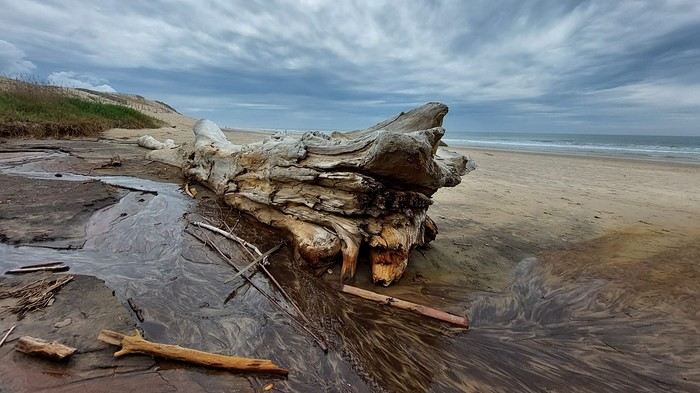
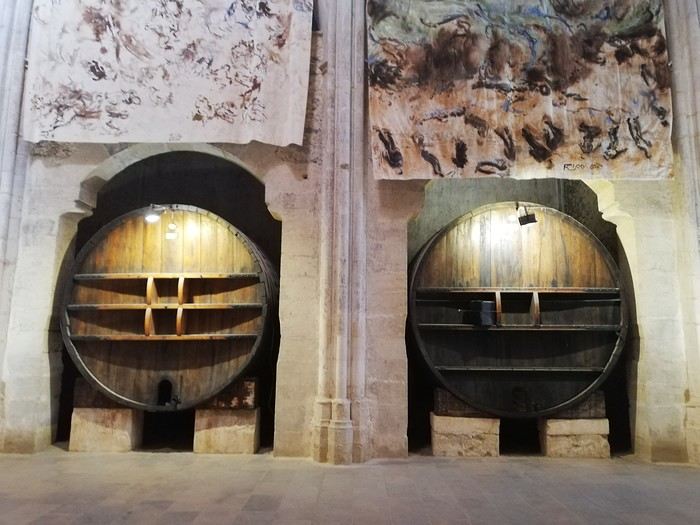
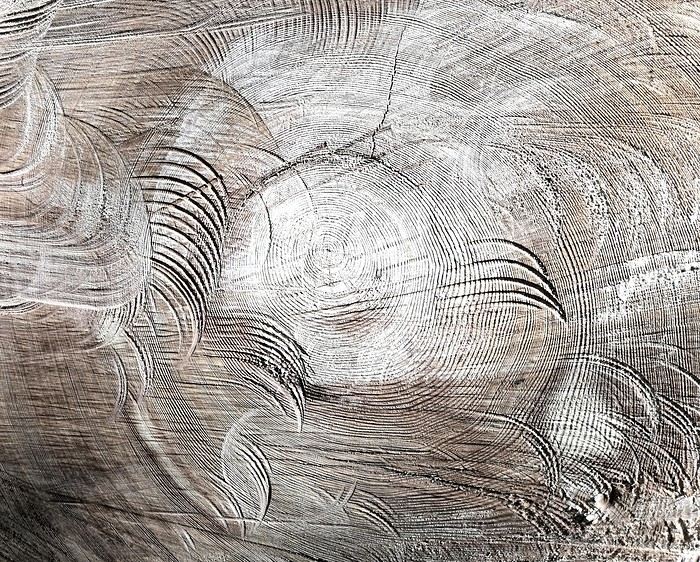
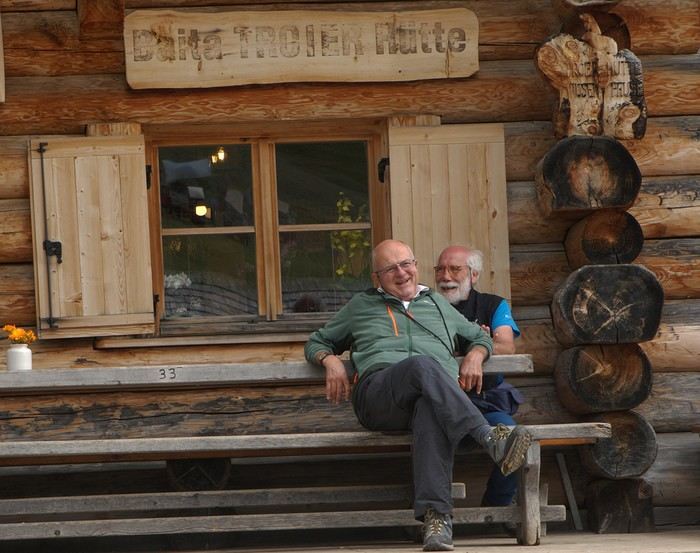
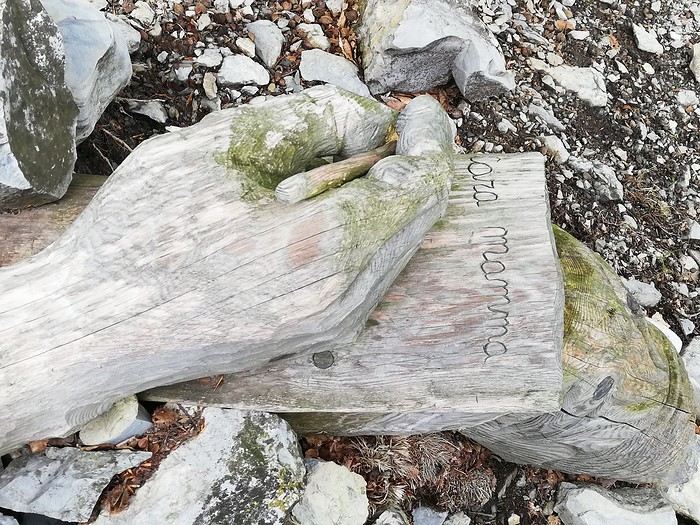

Alright, your turn! 😛
Catherine
This month’s contest theme is WOOD. Wood as a plant material—roots, trunks, branches that make up a tree. Dead or alive, splinters and knots. Sawdust too. Firewood, from the woodshed to the hearth. Wood as a crafting material and all the things it can become: from a spoon to a violin, a boat to a stave church, and so much more—way too long to list! 😉
Technical details:
1. Each of you can post up to 3 photos. One photo per message, numbered 1 to 3. Along with the shot, feel free to share a few written details—location, context, anecdote, or photography technique. Photos can be submitted until Tuesday, July 22 at midnight, Milan time.
2. Voting will take place from Wednesday, July 23 at 00:00 until Tuesday, July 29 at midnight. All forum members can vote for their 3 favorite photos, listing the photographer’s name and the photo number in order of preference: 3 points for first place, 2 for second, and 1 for third.
3. Results will be announced on Wednesday, July 30 during the day. In case of a tie, the number of first-place votes will decide. Photos already featured on a podium are not eligible to compete.
The winner will have the special privilege of organizing August’s contest.
This thread is reserved for contest photos. For other wood-themed photos and general discussions, head here.
Alright, your turn! 😛
Catherine
12 days in Israel, before...
This trip took place in May 2023, a period of calm that later proved precarious.
Day of May 17
Departure from Marseille on El Al (tickets booked by ourselves, while the stay itself was organized by Voyageurs du Monde). Before check-in, six or seven El Al staff members conduct a security check—quite understandable, but they do it in total chaos. They send people to the left, then block them, redirect them to the right, for no apparent reason. Most of the staff don’t speak French, which complicates things. They work at an incomprehensible slow pace, stopping the interview to do something else, then coming back and starting over...
The flight goes smoothly, except for the meal service, which, for a four-hour flight that El Al delayed to lunchtime, is more than basic: a quarter-liter of water and a corned beef sandwich that’s absolutely disgusting and inedible. To get a coffee, you have to queue at the back of the plane. You end up missing Ryanair🙂
Arrival at Ben Gurion goes better than expected—the passport control is fairly quick, as is baggage delivery.
Transfer to the Lily and Bloom hotel, Lilienblaum Street (easy to remember 🙂)
As advised by Voyageurs du Monde, we book a table for the evening at the nearest restaurant, North Abraxas. Good atmosphere and decent food. We get a sense of the price level in Israeli restaurants.
Around us, diners share dishes placed in the middle of the table. Much more convivial than our individual plates!!
Day of May 18
The next morning, we go down for breakfast at 7:30 AM—a late hour, but the setup is slow, with the two servers taking their time. We ask the bartender for a long coffee and a black tea... It must be a complicated order because it takes him over 10 minutes to make it. He serves us with the grace of a dancer. A good breakfast if you’re not in a hurry, followed by a little stroll in the neighborhood, since our meet-up with Patrick Arfi, our guide for the day, isn’t until 10 AM. P. Arfi is a former publishing house director in Paris who has lived in Israel for a long time and has a vast cultural knowledge. After an initial chat, we head toward Jaffa, focusing on the Bauhaus buildings preserved by a clever urban policy that allows high-rise construction while maintaining old architectural ensembles.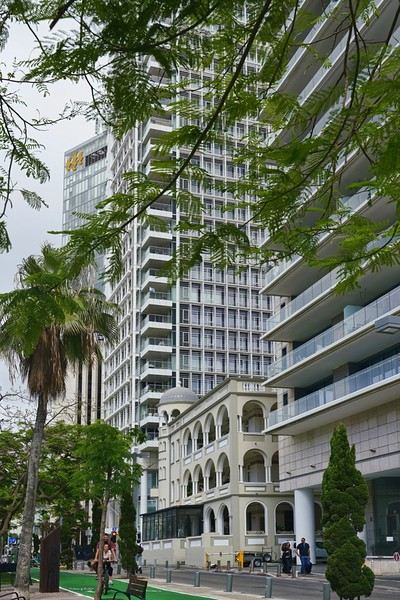
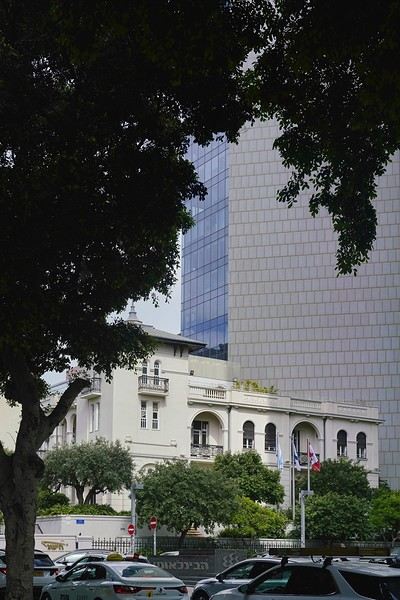
This policy keeps the streets looking more human-scale than the usual high-rise districts in modern cities.
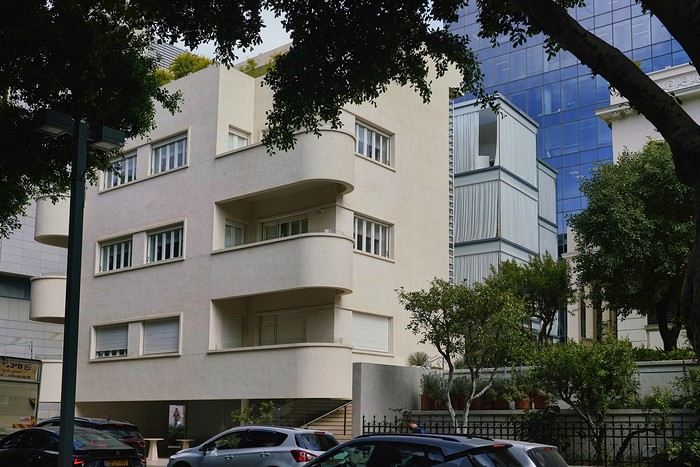 With the visit to Jaffa, Patrick introduces us to a fascinating slice of history, despite the temperature nearing 38°C. Jaffa, once an independent city, is now a neighborhood of Tel Aviv—a predominantly Muslim area. We notice a few buildings in poor condition. They belong to Palestinian families who left Tel Aviv. Otherwise, the city has been very well restored, apart from these few buildings.
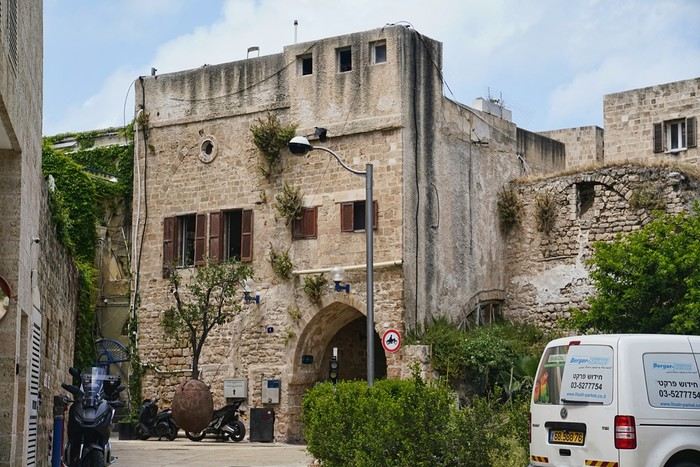
A government agency rents out the ground floors of these buildings, which helps fund part of the security work. They also try to track down the owners and buy back the abandoned properties, but some refuse to sell. The visit is very touristy—most of the people we meet are tourists like us.


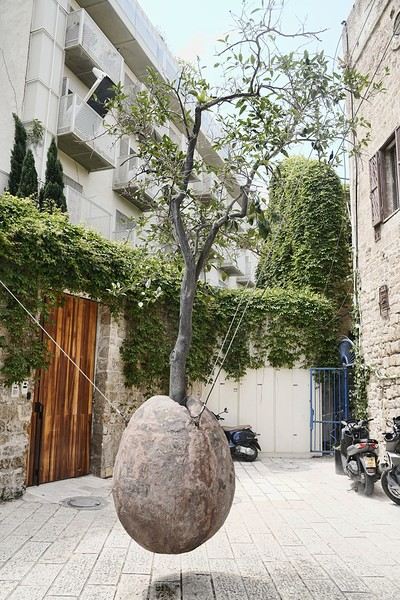
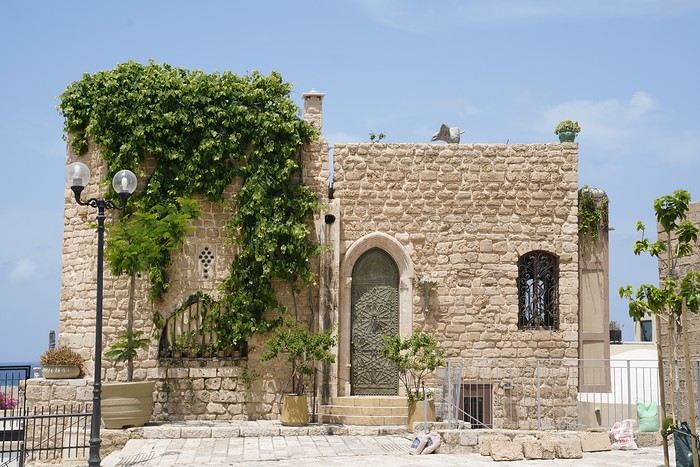
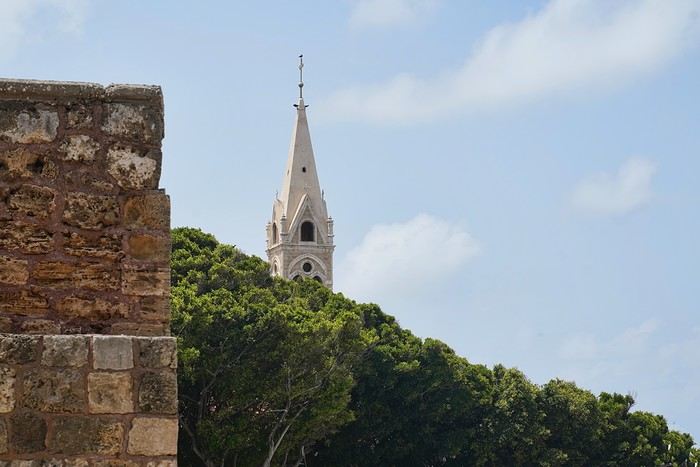
There’s very little local life, except in the lower part of the city. To be continued, as I’ve reached the allowed photo limit.
The next morning, we go down for breakfast at 7:30 AM—a late hour, but the setup is slow, with the two servers taking their time. We ask the bartender for a long coffee and a black tea... It must be a complicated order because it takes him over 10 minutes to make it. He serves us with the grace of a dancer. A good breakfast if you’re not in a hurry, followed by a little stroll in the neighborhood, since our meet-up with Patrick Arfi, our guide for the day, isn’t until 10 AM. P. Arfi is a former publishing house director in Paris who has lived in Israel for a long time and has a vast cultural knowledge. After an initial chat, we head toward Jaffa, focusing on the Bauhaus buildings preserved by a clever urban policy that allows high-rise construction while maintaining old architectural ensembles.
This policy keeps the streets looking more human-scale than the usual high-rise districts in modern cities.
With the visit to Jaffa, Patrick introduces us to a fascinating slice of history, despite the temperature nearing 38°C. Jaffa, once an independent city, is now a neighborhood of Tel Aviv—a predominantly Muslim area. We notice a few buildings in poor condition. They belong to Palestinian families who left Tel Aviv. Otherwise, the city has been very well restored, apart from these few buildings.
A government agency rents out the ground floors of these buildings, which helps fund part of the security work. They also try to track down the owners and buy back the abandoned properties, but some refuse to sell. The visit is very touristy—most of the people we meet are tourists like us.
There’s very little local life, except in the lower part of the city. To be continued, as I’ve reached the allowed photo limit.
Buying a Buddha Statue in Thailand
Hello,
I’m Buddhist by conviction. Even though I don’t practice anymore, I have a Buddhist altar at home that’s becoming increasingly ecumenical—just like in India, it includes Ganesha, the Holy Family, a Virgin of Lourdes, several Shivas, Tara, Avalokiteshvara, and more...
I was hoping to buy a beautiful wooden, stone, or metal Buddha statue in Thailand. On top of that, I wanted to have my statue "blessed." But then I heard it’s forbidden to take any statue or representation of Buddha out of the country... What’s the reality in practice?
Have any of you brought back a Buddha statue or other representation in your luggage? Did you make the mandatory declaration?
Thanks
What is a travel journal?
I thought I knew the definition, but since VF reopened, I’ve been wondering—so if you could help me out, that’d be great! 🙂.
Thanks a lot!
Thanks a lot!
Avez-vous changé votre rapport aux voyages à cause du Covid? English translation pending
Bonsoir à tous,
Etant en train de réfléchir à d'éventuels futurs voyages, je me heurte bien sûr à la situation de la crise sanitaire.
Cela a-t-il affecté votre façon de voyager et prévoir vos voyages ?
Là par ex, je regarde les destinations où le masque n'est pas obligatoire à l'extérieur, où il n'y a pas (trop) de risque de quarantaine, etc.
Mais aussi les conditions d'annulations/report selon les pays.
Je vois qu'Airbnb ne remboursera pas les voyageurs en cas de confinement ou quarantaine. C'est donc la course aux logement flexibles, il y en a peu... pour l'avion cela dépend de la compagnie.
Mon prochain voyage prévu et payé, c'est avec Wizz Air pour la Pologne. Pas de remboursement (sauf si vol annulé bien sûr) mais les prix étant faibles, je prends le risque ! L'hébergement est annulable également.
Ces paramètres influent sur le choix des futurs destinations.
Et vous, comment procédez-vous ?
Etant en train de réfléchir à d'éventuels futurs voyages, je me heurte bien sûr à la situation de la crise sanitaire.
Cela a-t-il affecté votre façon de voyager et prévoir vos voyages ?
Là par ex, je regarde les destinations où le masque n'est pas obligatoire à l'extérieur, où il n'y a pas (trop) de risque de quarantaine, etc.
Mais aussi les conditions d'annulations/report selon les pays.
Je vois qu'Airbnb ne remboursera pas les voyageurs en cas de confinement ou quarantaine. C'est donc la course aux logement flexibles, il y en a peu... pour l'avion cela dépend de la compagnie.
Mon prochain voyage prévu et payé, c'est avec Wizz Air pour la Pologne. Pas de remboursement (sauf si vol annulé bien sûr) mais les prix étant faibles, je prends le risque ! L'hébergement est annulable également.
Ces paramètres influent sur le choix des futurs destinations.
Et vous, comment procédez-vous ?
S'il y a un prochain voyage, comment utiliser ses finances? English translation pending
bonjour les gens qui voyagent
supposons qu on repart à l etranger en 2021 ou 2022. Comment utiliser vos finances ? Vous mettez tout l argent économisé dans un gros voyage genre luxe ou vous ne changez rien ou vous avez trop crainte et ne partirez plus ? je suis curieux de savoir
supposons qu on repart à l etranger en 2021 ou 2022. Comment utiliser vos finances ? Vous mettez tout l argent économisé dans un gros voyage genre luxe ou vous ne changez rien ou vous avez trop crainte et ne partirez plus ? je suis curieux de savoir
Discussion au sujet du concours photo de juin 2020: "Multicolore" English translation pending
Hello,
C'est ici qu'on en parle.
Philippe
C'est ici qu'on en parle.
Philippe
Itinéraire en Colombie: combien de temps rester dans chaque endroit English translation pending
Bonjour à tous,
J'ai une question pour un futur voyage....Au vue de la situation actuelle ce n'est pas pour tout de suite mais ça me laisse du temps pour préparer.
Voici une partie de mon étape mais je n'arrive pas à savoir (mis à part les distances) combien de temps rester dans chaque endroit.
Tous les conseils sont les bienvenus.
merci

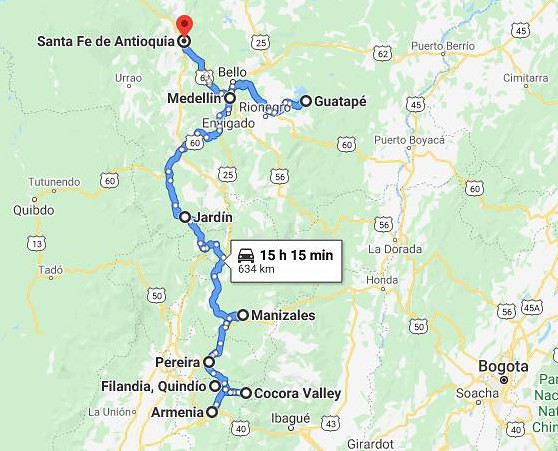
J'ai une question pour un futur voyage....Au vue de la situation actuelle ce n'est pas pour tout de suite mais ça me laisse du temps pour préparer.
Voici une partie de mon étape mais je n'arrive pas à savoir (mis à part les distances) combien de temps rester dans chaque endroit.
Tous les conseils sont les bienvenus.
merci
Notre trip en Afrique du Sud, destination Le Cap English translation pending
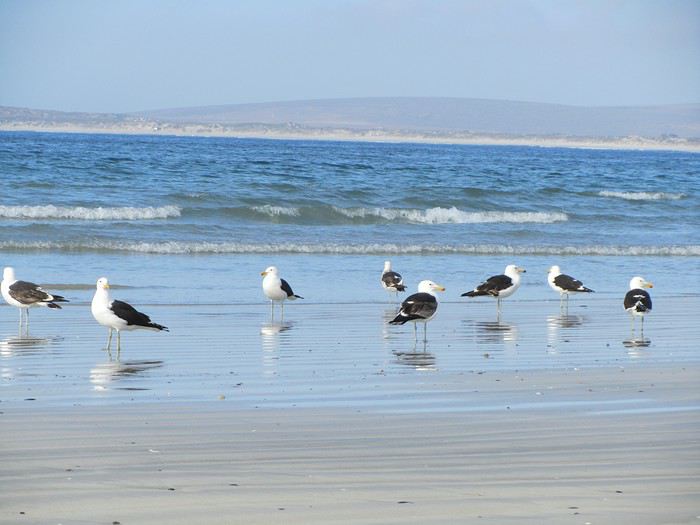
Vendredi 28 nov, 7h, nous sommes réveillés depuis 1h. En attendant le breakfast de 8h, nous partons sur les hauteurs voir le phare et la côte sauvage, elle est magnifique, les vagues sont toutes argentées par les rayons de soleil. Il n'y a que les cris des oiseaux et le clapotis de l'eau.
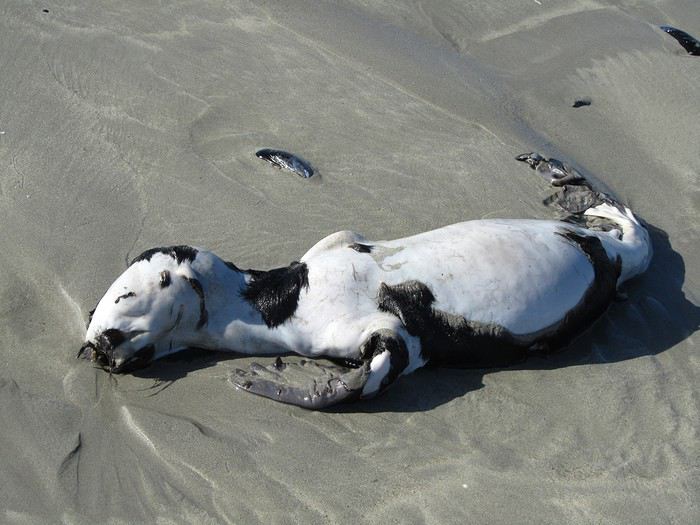
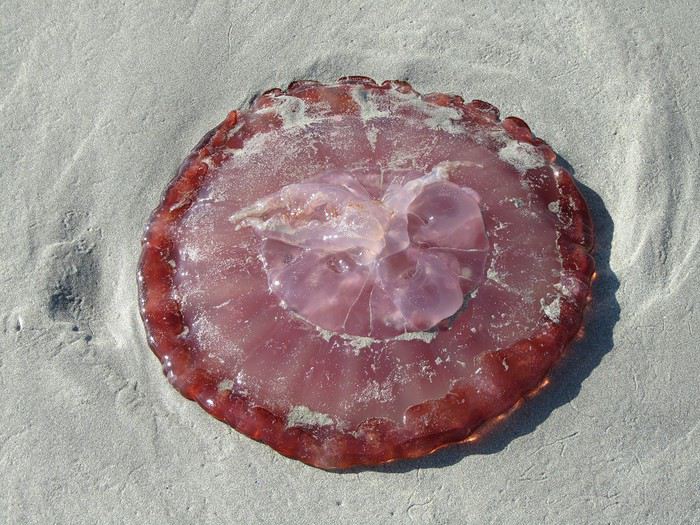
 Nous avons découvert échouée sur le sable une famille de phoques , personne n'a su nous dire ce qui a causer leur mort et une énorme méduse au moins 30 cm de diamètre!


L'air marin a taquiné notre appétit, il fait bon être devant le petit déjeuner. Nous rencontrons un italien qui parle parfaitement le français, c'est un ami de la propriétaire, elle l'a appelé pour qu'il vienne nous faire la causette. Il est en Afrique du Sud depuis 40 ans, il connait bien Toulon, même au bout du monde, nous entendons parler de la France.
Nous les quittons à regrets, nous étions si bien dans ce petit village, mais il nous faut poursuivre notre balade vers Clanwilliam via Velddrif, Eland's Bay, la côte est splendide, pique -nique près de Lambert's Bay, royaume de la langouste, son port de pêche les exporte dans le monde entier; les amateurs de sensations fortes ne seront pas déçus par l'odeur qui y règne!
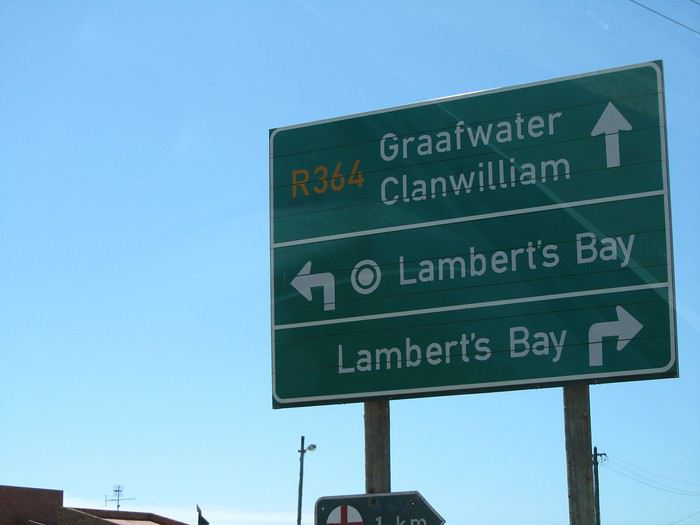
Nous atteignons Clanwillian , typique ambiance de ville d'Afrique. Pôle de la commercialisation du Rooibos, herbe rouge (ça ne se fume pas) le "thé" sud-africain par excellence, une plante locale dont la décoction, pauvre en tanin et exempte de caféine, est supposée avoir des vertus médicinales, est exportée dans le monde.
Tour de ville, recherche d'un B&B. Dans une rue calme et fleurie, bordée d'agréables maisons, nous remarquons "B&B ELEPHANT RIVER", c'est ici qu'il faut dormir!
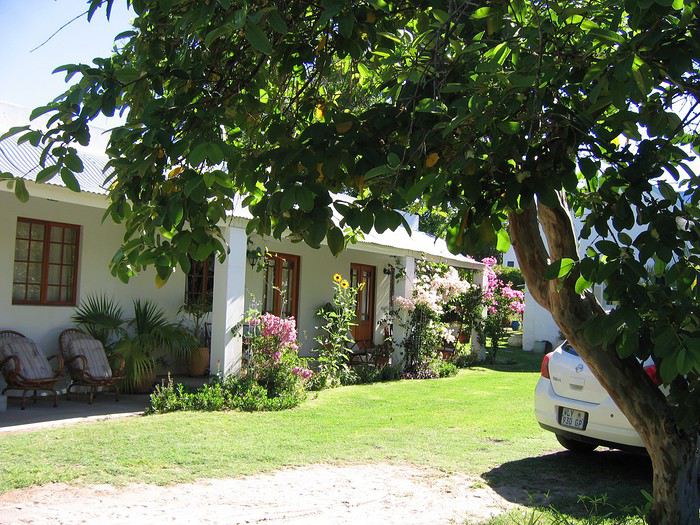
Mais il n'y a personne pour nous recevoir, le portail est fermé et les chiens dans le fond du jardin aboient à qui mieux mieux. Au bout de 10 mn d'attente, un ouvrier jardinier qui passait nous fait signe de rester et reprend son chemin... Quelques minutes plus tard, la propriétaire arrive à notre grand étonnement, ce monsieur était allé la prévenir! Elle nous fait visiter les trois lodges et choisir celui qui nous convient. Tarif défiant tout concurrence 500 rands la nuit. Nous ne rencontrons que des personnes avenantes et sympathiques. Après un douche qui n'était pas superflue, tour du quartier et du centre ville à pied.
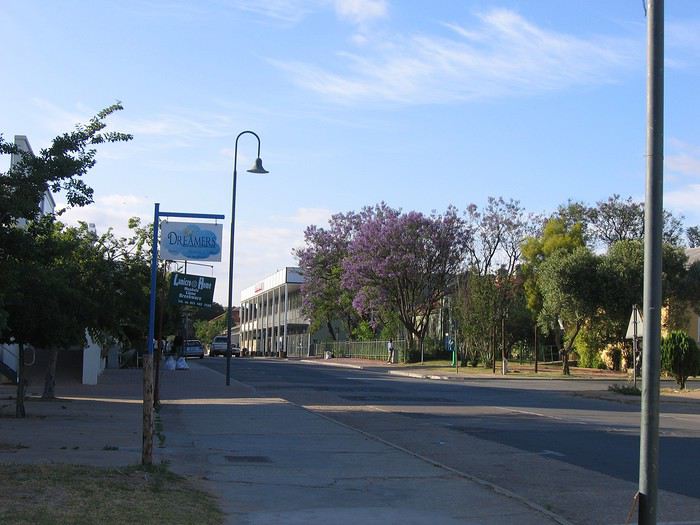 nous rencontrons une manifestation pour le SIDA
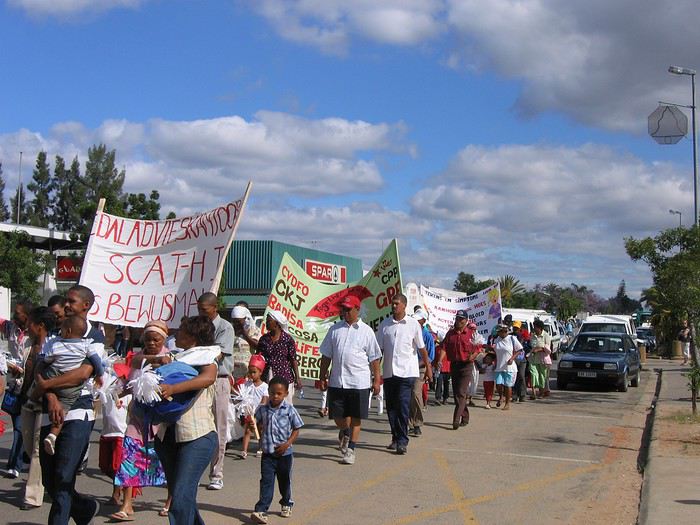
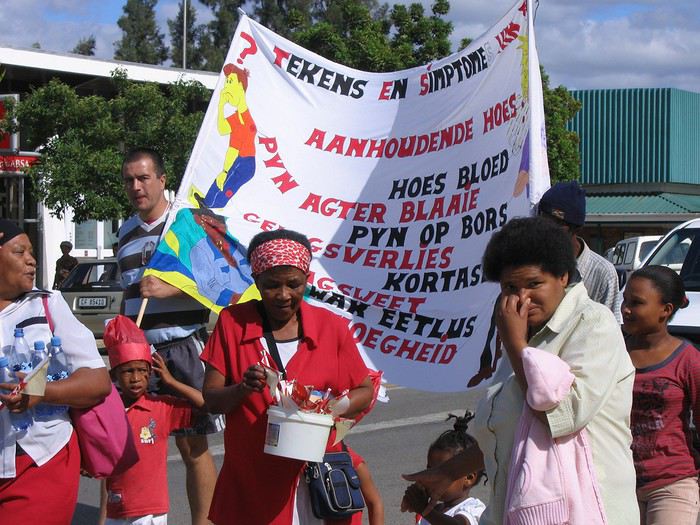
Tout près du lodge, nous avons repéré un resto accueillant et sympathique,
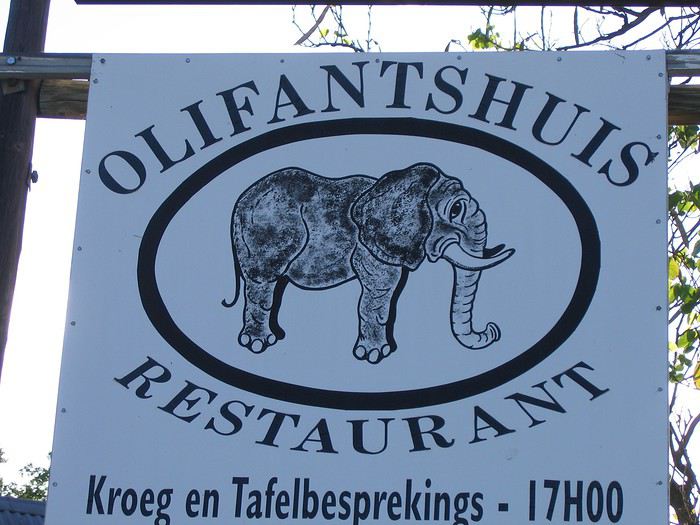 encore une fois les steaks sont énormes 500gr, nous ne le cherchons pas sous les frites, c'est le contraire qui se produit
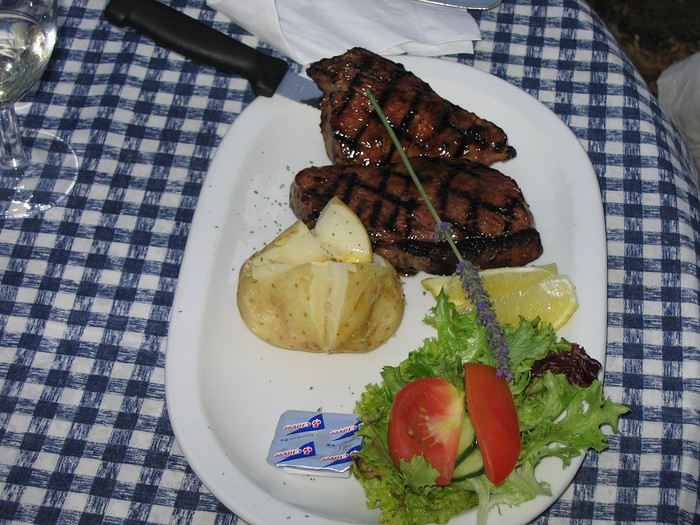 Il est 21h30, le sommeil se fait sentir, il est vrai que nous sommes debout depuis 6h du matin. J'oublie de vous dire que nous avons un lit à baldaquin!!

Demain, une bonne journée nous attend.
Nous avons découvert échouée sur le sable une famille de phoques , personne n'a su nous dire ce qui a causer leur mort et une énorme méduse au moins 30 cm de diamètre!
L'air marin a taquiné notre appétit, il fait bon être devant le petit déjeuner. Nous rencontrons un italien qui parle parfaitement le français, c'est un ami de la propriétaire, elle l'a appelé pour qu'il vienne nous faire la causette. Il est en Afrique du Sud depuis 40 ans, il connait bien Toulon, même au bout du monde, nous entendons parler de la France.
Nous les quittons à regrets, nous étions si bien dans ce petit village, mais il nous faut poursuivre notre balade vers Clanwilliam via Velddrif, Eland's Bay, la côte est splendide, pique -nique près de Lambert's Bay, royaume de la langouste, son port de pêche les exporte dans le monde entier; les amateurs de sensations fortes ne seront pas déçus par l'odeur qui y règne!
Nous atteignons Clanwillian , typique ambiance de ville d'Afrique. Pôle de la commercialisation du Rooibos, herbe rouge (ça ne se fume pas) le "thé" sud-africain par excellence, une plante locale dont la décoction, pauvre en tanin et exempte de caféine, est supposée avoir des vertus médicinales, est exportée dans le monde.
Tour de ville, recherche d'un B&B. Dans une rue calme et fleurie, bordée d'agréables maisons, nous remarquons "B&B ELEPHANT RIVER", c'est ici qu'il faut dormir!
Mais il n'y a personne pour nous recevoir, le portail est fermé et les chiens dans le fond du jardin aboient à qui mieux mieux. Au bout de 10 mn d'attente, un ouvrier jardinier qui passait nous fait signe de rester et reprend son chemin... Quelques minutes plus tard, la propriétaire arrive à notre grand étonnement, ce monsieur était allé la prévenir! Elle nous fait visiter les trois lodges et choisir celui qui nous convient. Tarif défiant tout concurrence 500 rands la nuit. Nous ne rencontrons que des personnes avenantes et sympathiques. Après un douche qui n'était pas superflue, tour du quartier et du centre ville à pied.
nous rencontrons une manifestation pour le SIDA
Tout près du lodge, nous avons repéré un resto accueillant et sympathique,
encore une fois les steaks sont énormes 500gr, nous ne le cherchons pas sous les frites, c'est le contraire qui se produit
Il est 21h30, le sommeil se fait sentir, il est vrai que nous sommes debout depuis 6h du matin. J'oublie de vous dire que nous avons un lit à baldaquin!!
Demain, une bonne journée nous attend.
Compte rendu d'une semaine sur le Costa Smeralda du 11 au 18 janvier 2020 English translation pending
Bonjour,
Nous rentrons d’une semaine de croisière sur le nouveau navire amiral de COSTA, le COSTA SMERALDA.
Cette croisière s’est déroulée du 11 au 18 janvier de Savone à Savone selon l’itinéraire et le planning prévus contrairement aux croisières de la semaine précédente et de la semaine suivante perturbées par le mauvais temps et les grèves françaises.
Pourquoi le SMERALDA et pourquoi à cette période de l’année ?
D’abord pour découvrir ce nouveau bateau mais aussi pour réserver, à bord, nos croisières suivantes pour 2020 chez COSTA.
Ce petit compte-rendu se limitera au bateau et à la vie à bord, les escales de la croisière (Savone, Marseille, Barcelone, Palma, Civitavecchia et La Spezia) étant très connues ne seront pas évoquées
Comme d’habitude lorsque nous embarquons à Savone, nous prenons la navette COSTA à la gare de Nice à 12h00 et nous arrivons à Savone à 14h45 après arrêt « technique » à mi-chemin. L’embarquement a débuté à 13h00 et, à notre arrivée, il n’y a donc aucune file ni attente pour embarquer et nous sommes à bord à 15h00.
La cabine N° 10138 (cabine balcon premium) située à babord au centre du navire nous attend. C’est une belle cabine, de bonne taille, qui s’avèrera confortable et bien insonorisée. Elle ne nous est pas apparue comme étant plus petite que les autres cabines balcon premium des autres COSTA.
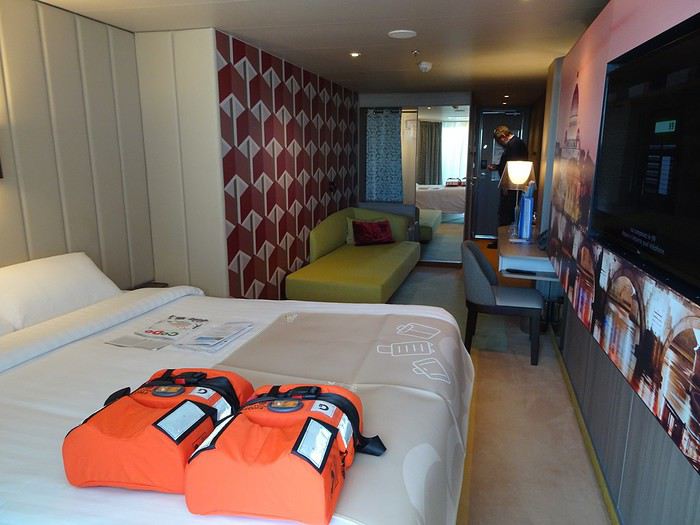
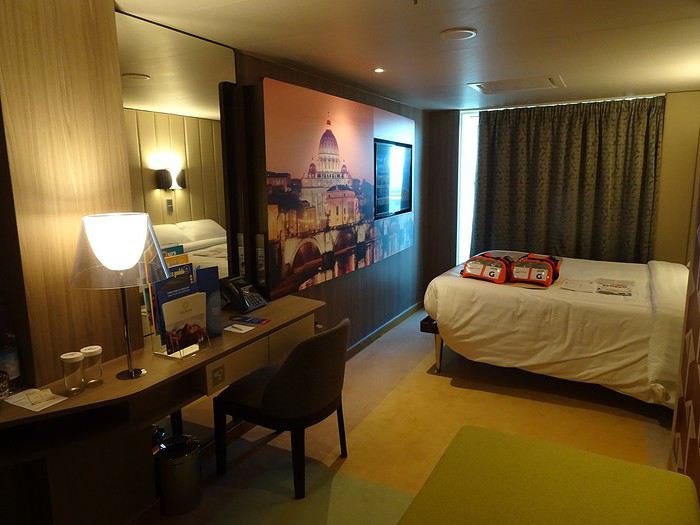
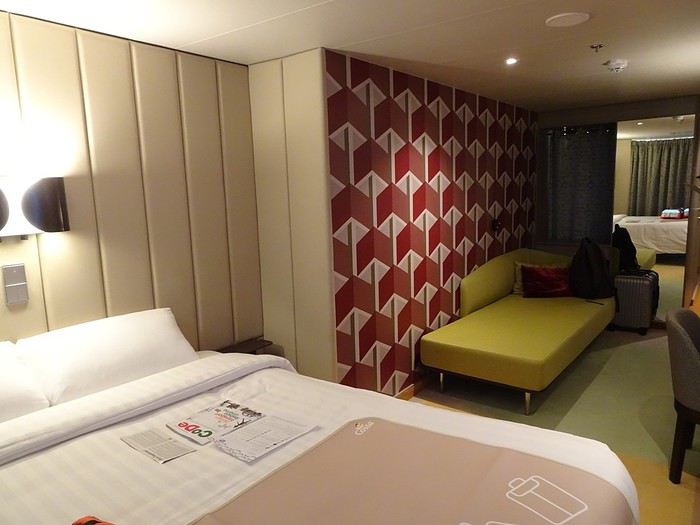
Affirmer que « les cabines sont plus petites » de manière générale est incorrect
L’examen des plans du navire montre que la structure des cabines varie selon l’architecture « tourmentée » du bateau et il est plus que vraisemblable que différentes variantes de la « cabine balcon Premium » plus petites ou plus grandes coexistent.
Quelques remarques au sujet de la cabine
L’ouverture de la cabine se fait, classiquement, avec la carte COSTA (format carte bancaire) à mettre en contact avec le boitier d’ouverture extérieure placé sur l’extérieur de la porte de la cabine. Une fois dans la cabine et tout aussi classiquement, l’éclairage de la cabine est conditionné au placement de la carte dans le récepteur ad hoc. Le but est évidemment de couper tout éclairage et alimentation des prises électriques lorsque la cabine n’est pas occupée.
A ce sujet, une petite astuce; nous emportons toujours avec nous une vielle carte de fidélité en plastique dur d’un grand magasin au format d’une carte de crédit que nous utilisons pour l’éclairage.
Cela évite la permutation des cartes Costa si l’un de nous deux quitte la cabine et doit donc récupérer sa carte et placer celle de l’autre dans le boitier. Cela permet au premier levé de sortir de la cabine avec sa carte sans devoir chercher celle de l’autre dans le noir pour remplacer sa carte dans le boitier et de réveiller le partenaire.
Cela permet aussi de maintenir en charge, l’appareil photo ou un GSM dans la cabine en notre absence.
Le lit est composé de deux lits simples de 2X0.8 m accolés
Le frigo à disparu, ce qui ne nous gêne guère, n’ayant JAMAIS (hors suite) consommé des boissons y comprises.
Il est toutefois dommage que ce frigo n’ait pas été remplacé par une petite armoire.
Les tables de chevet ont également disparu et sont remplacées par deux tablettes murales asymétriques de chaque côté.
Les armoires « classiques » se trouvent dans le couloir contre le bloc sanitaire avec le coffre classique.
Sur la paroi se trouve également le thermostat d’ambiance et le réglage classique de la T° Le bloc de ventilation/climatisation se situe à la hauteur du lit et la ventilation est sensible en position couchée mais pas spécifiquement dérangeante (pour nous).
Deux petits "bureaux" sont présents, l'un avec fauteuil, l'autre devant la vitre de la douche évoquée plus bas équipé d'un petit pouf.
Le bloc sanitaire est novateur, plus particulièrement pour ce qui est de la douche, une vraie douche maintenant qui remplace agréablement le minuscule espace douche habituel où on se colle au rideau plastique blanc, surtout quand on fait 1,93 m.
Ici, c’est une « vraie » douche à l’italienne, de taille réduite bien sûr (0, 7 m X 1 m, me semble t il) mais efficace.
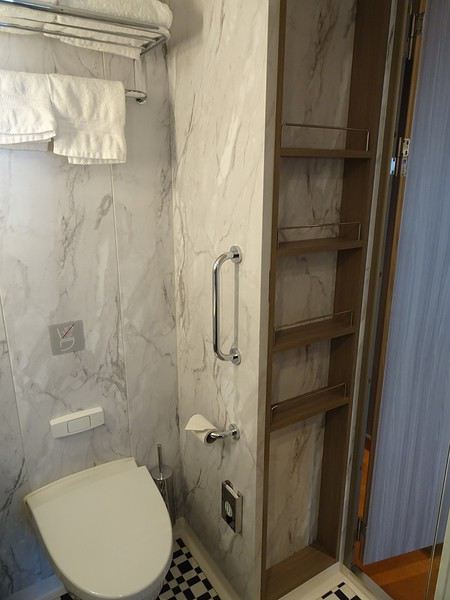

Les grandes parois de la douche sont vitrées et la « grande » vitre fixe (partiellement opaque) donne sur la chambre (bonjour les fantasmes …) mais un rideau doublant cette vitre permet dignement de l’occulter ….
Le balcon est accessible par porte coulissante et de taille assez réduite, munis de deux sièges et SANS cendrier.
La taille des balcons est, comme celle des cabines, impactée par l’emplacement de la cabine dans le rafiot.
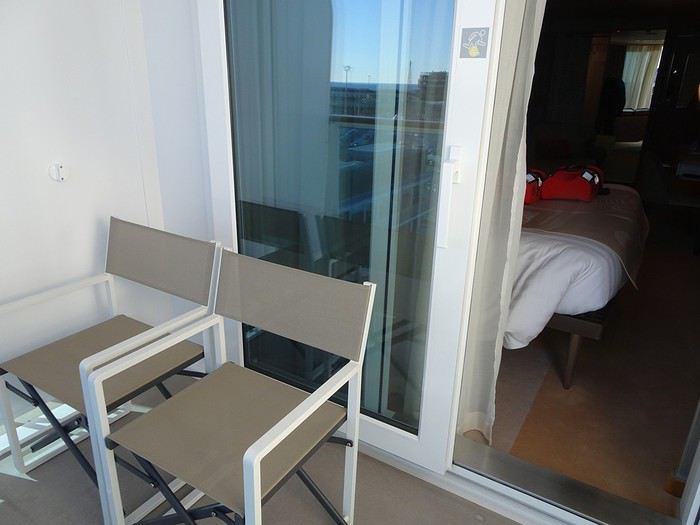
En conclusion une belle et agréable cabine, mais avec espaces de rangement quand même limités
La suite … prochainement
Joseph 😉
Nous rentrons d’une semaine de croisière sur le nouveau navire amiral de COSTA, le COSTA SMERALDA.
Cette croisière s’est déroulée du 11 au 18 janvier de Savone à Savone selon l’itinéraire et le planning prévus contrairement aux croisières de la semaine précédente et de la semaine suivante perturbées par le mauvais temps et les grèves françaises.
Pourquoi le SMERALDA et pourquoi à cette période de l’année ?
D’abord pour découvrir ce nouveau bateau mais aussi pour réserver, à bord, nos croisières suivantes pour 2020 chez COSTA.
Ce petit compte-rendu se limitera au bateau et à la vie à bord, les escales de la croisière (Savone, Marseille, Barcelone, Palma, Civitavecchia et La Spezia) étant très connues ne seront pas évoquées
Comme d’habitude lorsque nous embarquons à Savone, nous prenons la navette COSTA à la gare de Nice à 12h00 et nous arrivons à Savone à 14h45 après arrêt « technique » à mi-chemin. L’embarquement a débuté à 13h00 et, à notre arrivée, il n’y a donc aucune file ni attente pour embarquer et nous sommes à bord à 15h00.
La cabine N° 10138 (cabine balcon premium) située à babord au centre du navire nous attend. C’est une belle cabine, de bonne taille, qui s’avèrera confortable et bien insonorisée. Elle ne nous est pas apparue comme étant plus petite que les autres cabines balcon premium des autres COSTA.
Affirmer que « les cabines sont plus petites » de manière générale est incorrect
L’examen des plans du navire montre que la structure des cabines varie selon l’architecture « tourmentée » du bateau et il est plus que vraisemblable que différentes variantes de la « cabine balcon Premium » plus petites ou plus grandes coexistent.
Quelques remarques au sujet de la cabine
L’ouverture de la cabine se fait, classiquement, avec la carte COSTA (format carte bancaire) à mettre en contact avec le boitier d’ouverture extérieure placé sur l’extérieur de la porte de la cabine. Une fois dans la cabine et tout aussi classiquement, l’éclairage de la cabine est conditionné au placement de la carte dans le récepteur ad hoc. Le but est évidemment de couper tout éclairage et alimentation des prises électriques lorsque la cabine n’est pas occupée.
A ce sujet, une petite astuce; nous emportons toujours avec nous une vielle carte de fidélité en plastique dur d’un grand magasin au format d’une carte de crédit que nous utilisons pour l’éclairage.
Cela évite la permutation des cartes Costa si l’un de nous deux quitte la cabine et doit donc récupérer sa carte et placer celle de l’autre dans le boitier. Cela permet au premier levé de sortir de la cabine avec sa carte sans devoir chercher celle de l’autre dans le noir pour remplacer sa carte dans le boitier et de réveiller le partenaire.
Cela permet aussi de maintenir en charge, l’appareil photo ou un GSM dans la cabine en notre absence.
Le lit est composé de deux lits simples de 2X0.8 m accolés
Le frigo à disparu, ce qui ne nous gêne guère, n’ayant JAMAIS (hors suite) consommé des boissons y comprises.
Il est toutefois dommage que ce frigo n’ait pas été remplacé par une petite armoire.
Les tables de chevet ont également disparu et sont remplacées par deux tablettes murales asymétriques de chaque côté.
Les armoires « classiques » se trouvent dans le couloir contre le bloc sanitaire avec le coffre classique.
Sur la paroi se trouve également le thermostat d’ambiance et le réglage classique de la T° Le bloc de ventilation/climatisation se situe à la hauteur du lit et la ventilation est sensible en position couchée mais pas spécifiquement dérangeante (pour nous).
Deux petits "bureaux" sont présents, l'un avec fauteuil, l'autre devant la vitre de la douche évoquée plus bas équipé d'un petit pouf.
Le bloc sanitaire est novateur, plus particulièrement pour ce qui est de la douche, une vraie douche maintenant qui remplace agréablement le minuscule espace douche habituel où on se colle au rideau plastique blanc, surtout quand on fait 1,93 m.
Ici, c’est une « vraie » douche à l’italienne, de taille réduite bien sûr (0, 7 m X 1 m, me semble t il) mais efficace.
Les grandes parois de la douche sont vitrées et la « grande » vitre fixe (partiellement opaque) donne sur la chambre (bonjour les fantasmes …) mais un rideau doublant cette vitre permet dignement de l’occulter ….
Le balcon est accessible par porte coulissante et de taille assez réduite, munis de deux sièges et SANS cendrier.
La taille des balcons est, comme celle des cabines, impactée par l’emplacement de la cabine dans le rafiot.
En conclusion une belle et agréable cabine, mais avec espaces de rangement quand même limités
La suite … prochainement
Joseph 😉
Israël en décembre English translation pending
Carnet de voyage ou compte-rendu ? Discussion ou partage d'images ?
Les administrateurs (compétents, oui je suis aussi diplomate😎) sauront où placer ce sujet.
Donc, un de mes amis m'informe qu'une compagnie à bas coût ouvre un ligne Marseille/Tel Aviv.
Et il souhait découvrir Jérusalem avec ma modeste personne comme guide.
In petto, il réserve sur R.... et moi sur El Al.
Bref....
Nous avons passé 10 jours à découvrir les vignobles locaux et autres brasseries à base de houblon.
Laissons la place aux images.
Le Marché de Ma'hane Yehuda.

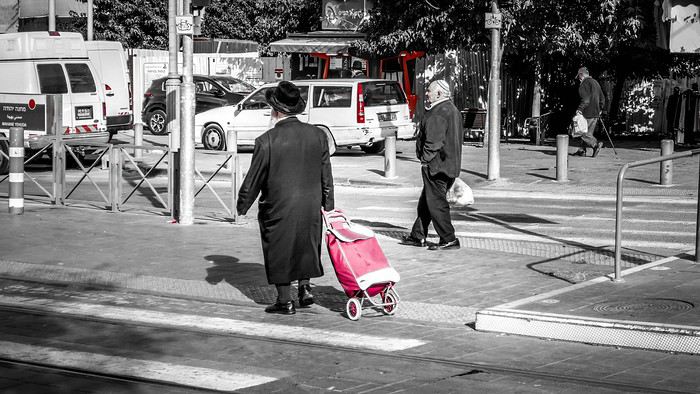


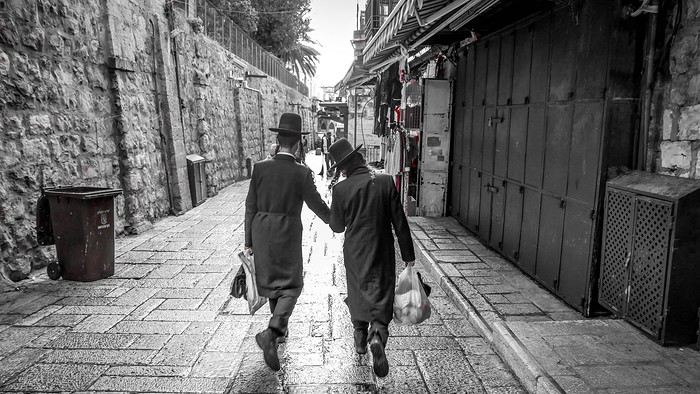
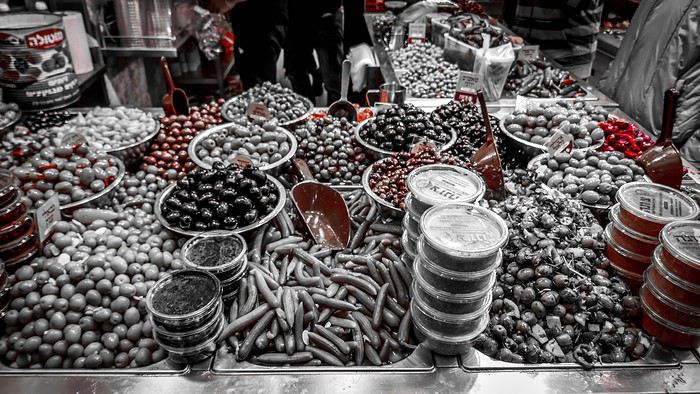

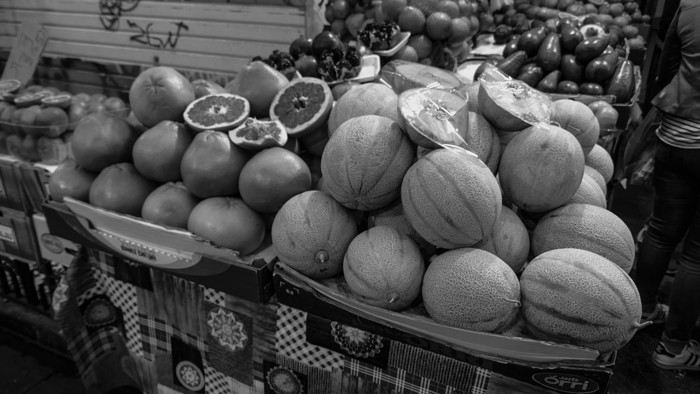

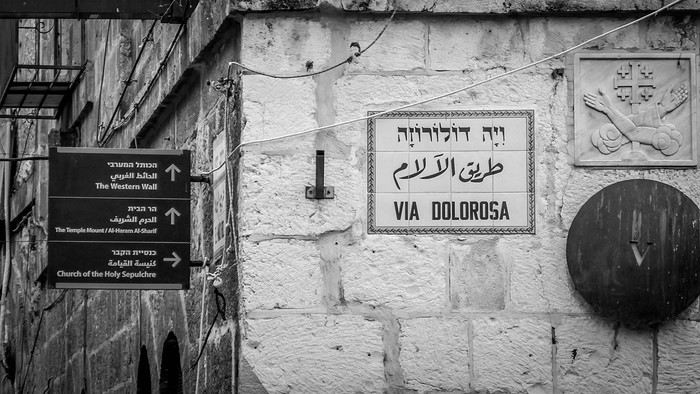
Les administrateurs (compétents, oui je suis aussi diplomate😎) sauront où placer ce sujet.
Donc, un de mes amis m'informe qu'une compagnie à bas coût ouvre un ligne Marseille/Tel Aviv.
Et il souhait découvrir Jérusalem avec ma modeste personne comme guide.
In petto, il réserve sur R.... et moi sur El Al.
Bref....
Nous avons passé 10 jours à découvrir les vignobles locaux et autres brasseries à base de houblon.
Laissons la place aux images.
Le Marché de Ma'hane Yehuda.
Croisière Costa Fortuna au départ de Singapour le 25 février 2020 English translation pending
Bonsoir
Il y a y il des participants sur le forum, à la croisière du 25/02/2020 au départ de Singapour ?
Si oui, on pourrait échanger et partager nos infos😉
Retour d'un mois au Vietnam, des montagnes du nord au delta du Mekong English translation pending
Après 2 premiers carnets de voyage publiés sur VF consacrés à des régions indonésiennes peu touristiques
"La traversée des Célèbes (Sulawesi) en photos"
ou même pas du tout touristique
"Les Moluques: splendeurs (et galères) d'un archipel inconnu des touristes
voici un nouveau récit abondamment illustré sur un voyage au Vietnam.
Même si de nombreux beaux carnets ont déjà été publiés sur le Vietnam, j’espère que ce voyage en images rappellera de bons souvenirs aux uns, fournira des renseignements utiles aux autres pour leur prochain voyage ou plus simplement vous fera passer un bon moment en parcourant ce magnifique pays.
Avant de partir, quelques rapides infos sur le contexte (certaines rubriques seront détaillées plus loin au fil du récit, par ex la météo à cette période) :
- voyage réalisé de mi-septembre à mi-octobre 2019 - onzième voyage en Asie du Sud Est- en couple comme chaque fois, c'est bp plus simple - déplacement en bus, taxi, minibus (limousine) et avion (1 fois) réservés sur place 1 ou 2 jours avant, et en voiture particulière la 1ere semaine - logements : du basique chez l'habitant à un très bel hôtel à Ho Chi Minh, avec une préférence pour les petits hôtels de charme - bp de temps passé sur les forums et les guides avant le départ pour recenser les lieux qui nous intéressent, puis parcours modifié au jour le jour en fc de la météo, des envies, de la fatigue, des rencontres, etc .. Avant le départ, on a une superbe liste de lieux "à voir absolument", et sur place on s'aperçoit que ce magnifique programme est bien trop ambitieux. On supprime alors tel ou tels endroits pour ne pas transformer le voyage en une épuisante course de vitesse. - on aime bien prendre notre temps, s’arrêter qqs jours si un lieu nous plait, sauter des visites "incontournables" si ça nous barbe (fatigue, chaleur, overdose de visites, ...). - à la suite de très bons conseils de forumeurs qui se reconnaitront (un grand merci a eux), on a fait une entorse à notre façon de voyager (aucune réservation avant le départ, excepté l’hôtel le jour de l'arrivée) en réservant 8 jours avec une agence locale pour parcourir les montagnes du nord avec chauffeur et guide francophone. Partir avec une agence était en effet la meilleure solution pour découvrir cette région dépourvue de bus en de nombreux endroits, et le guide est bien utile pour ne pas se perdre en randonnée.
Allez, on y va 🙂
Nos étapes : - Extrême nord (Ha Giang - Meo Vac) vers les ethnies montagnardes et rizières - Baie de Lan Ha "la jumelle de la baie d'Halong" - Hanoi - Tam Coc, "la baie d'Halong terrestre" - Hue - Hoi An - Delta du Mekong - Ho Chi Minh
Episode 1 : A la rencontre des ethnies des montagnes du nord
Pour nous qui voyageons seuls d'habitude, nous apprécions d'être attendu à l'aéroport d'Hanoi à 6h30 par Vinh notre guide Vinh et Near notre chauffeur, direction le nord. Aux 11h de vol, on ajoute donc 5-6h de voiture pour Bac Ha, dont la moité environ sur une belle autoroute déserte.
Bac Ha est une petite ville au milieu des montagnes, avec seulement qqs petits hotels de milieu de gamme et des guesthouse, ce qui fait qu'on y rencontre qqs touristes, mais sans excès. 2h après notre arrivée à Bac Ha, nous voila parti pour une 1ère randonnée au milieu des rizières qui dominent la ville.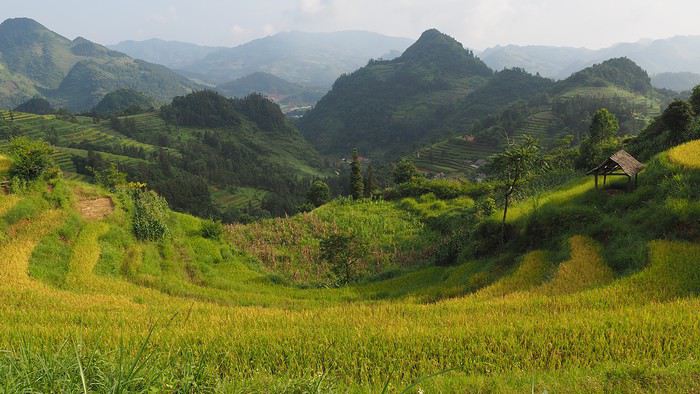
Ce ne sont pas les plus belles de la région, mais on passe un très agréable moment à se dégourdir les jambes après le voyage dans un tel environnement.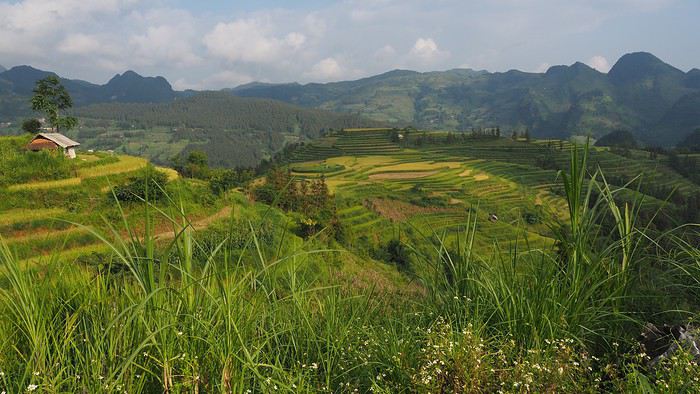 Comme convenu avec l'agence, 2 à 3h de marche entre villages et rizières seront chaque jour au programme : nous découvriront des villages, rencontreront des habitants de plusieurs ethnies au hasard des chemins, et marcherons tout simplement dans de magnifiques paysages de rizières.
Ethnie Hmong bariolé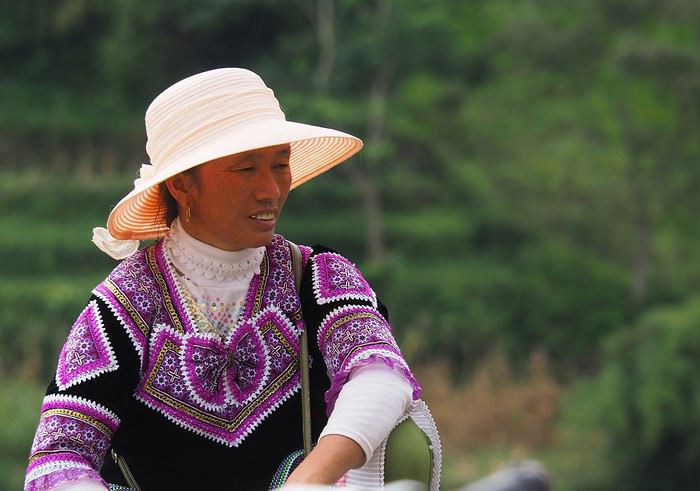
La région de Bac Ha est majoritairement habitée par de Hmong, ici Hmong à fleurs : (par la suite, si des erreurs se sont malheureusement glissées sur les noms d'ethnies, je ne me vexerai pas si les spécialistes rectifient 😉)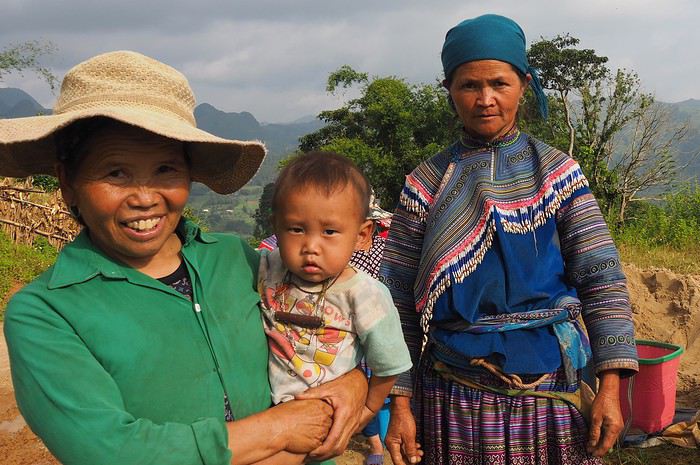
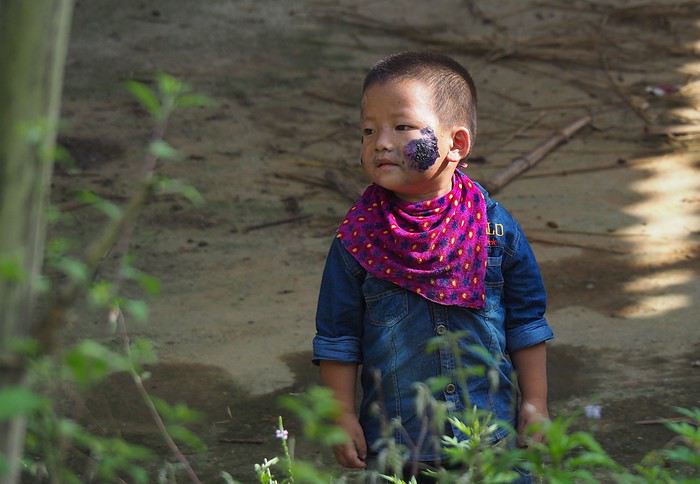
La récolte va bientôt commencer, les rizières commencent à passer du vert vif au jaune, nous les verrons jaune d'or dès le lendemain. Partout des paysans sont au travail : par l'intermédiaire de Vinh, nous échangeront à plusieurs reprises, eux qui sont aussi curieux sur nous que nous sur eux.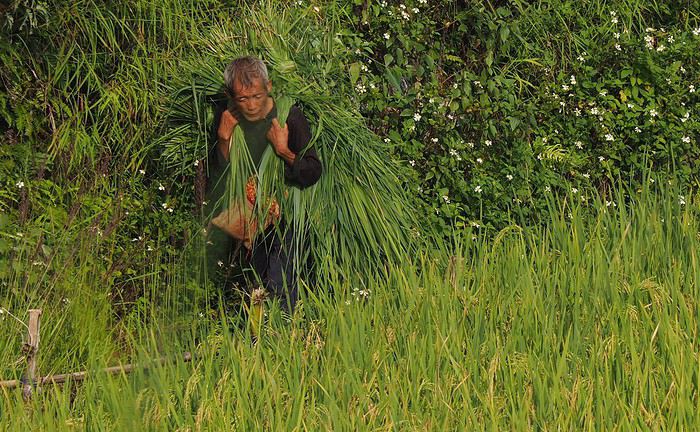
Le lendemain direction le marché de Can Cau a 45 min de Bac Ha (18km) sur une route zigzaguant dans un beau paysage de montagne (ce sera le régime de la semaine a venir).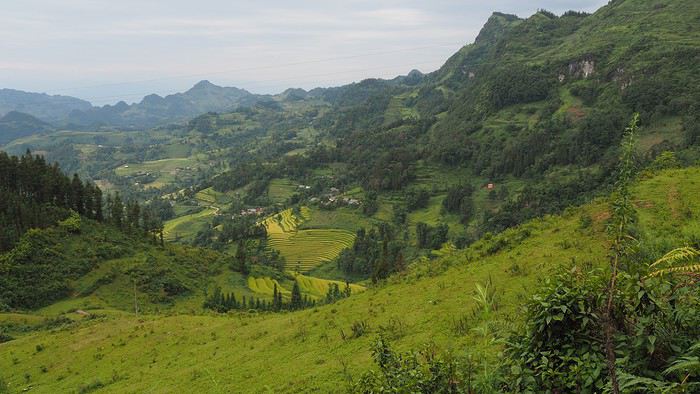
67 ans de présence française ont laissé ces beaux souvenirs le long des routes :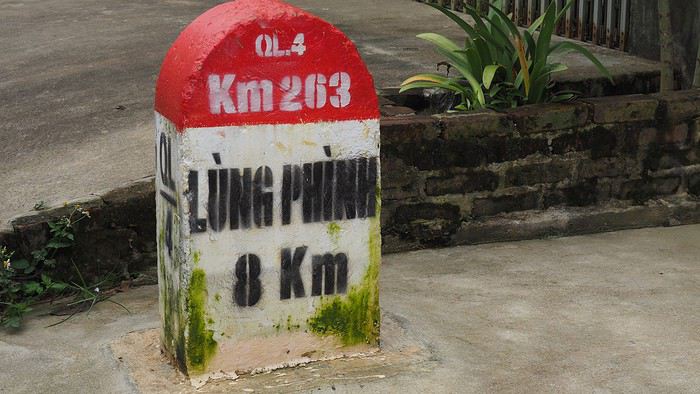
Notre parcours a été étudié avec l'agence pour être sur les marchés de Can Cau le samedi, de Bac Ha le dimanche et de Lun Phin le mercredi suivant Le marché de Can Cau est situé en pleine nature, à flan de montagne.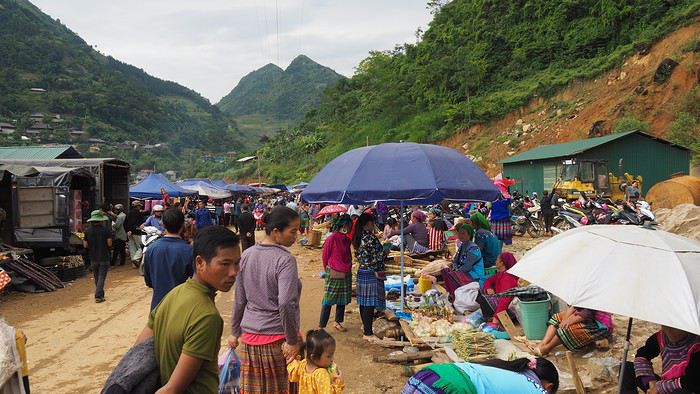
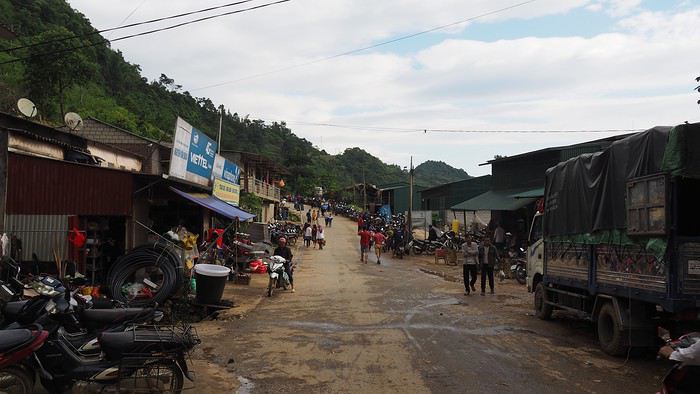
Hmong des alentours viennent y vendre ou acheter toutes sortes de produits, vêtements, nourritures, animaux vivants, oiseaux, etc ... :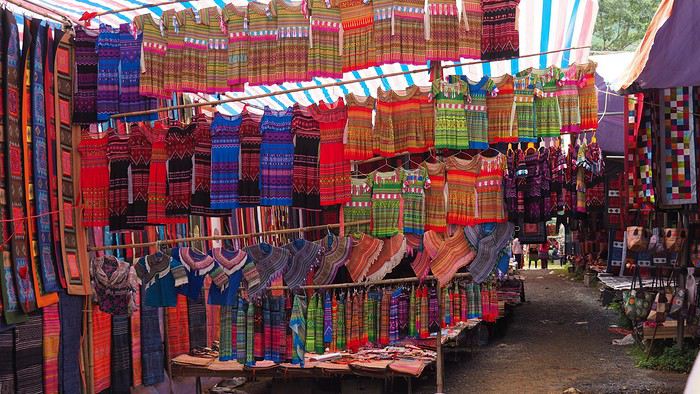
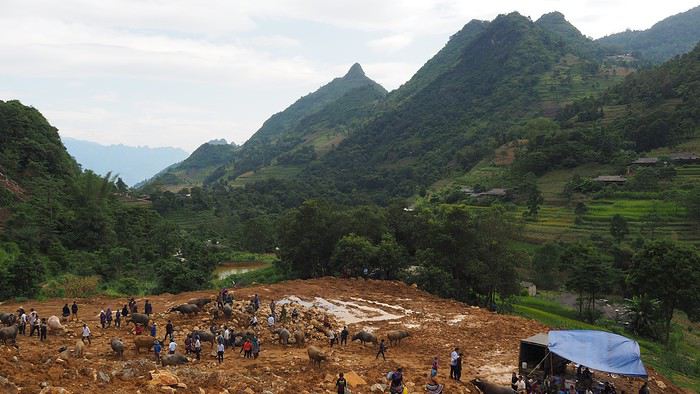
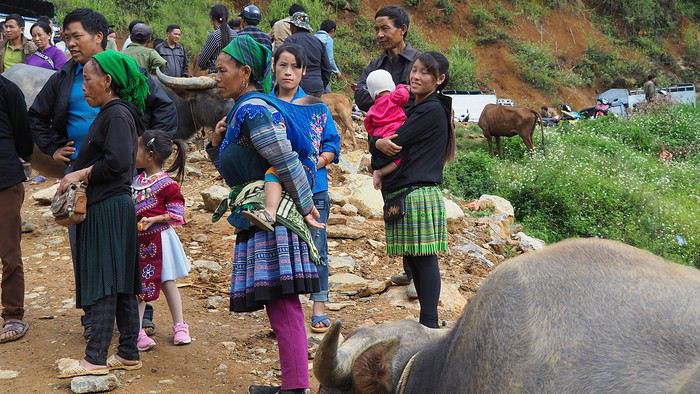
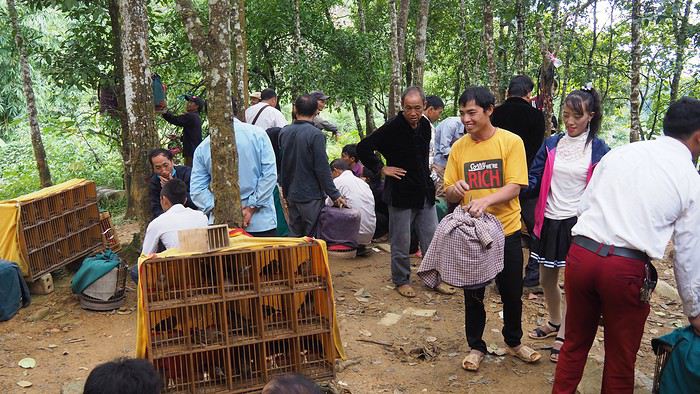
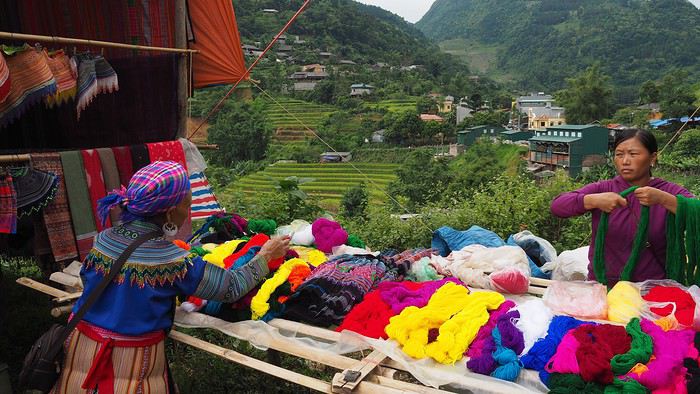 Hmong à fleurs(dessus et dessous)
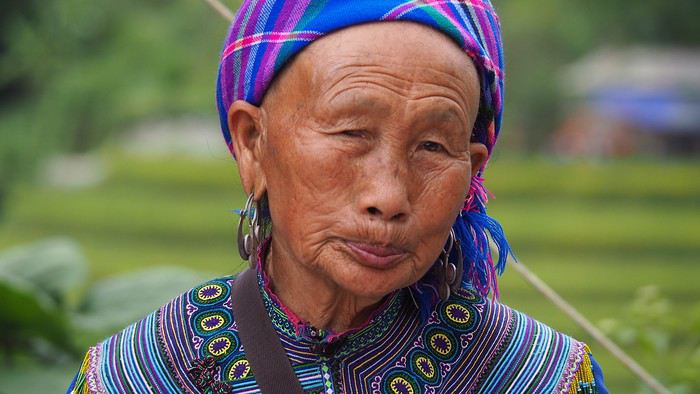
Certains repartent avec des vêtements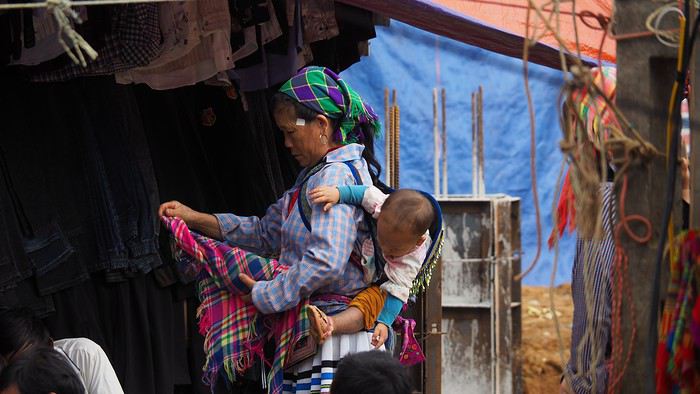
d'autres avec un porc ou une chèvre (pour l'achat de buffle la mobylette n'est pas conseillée)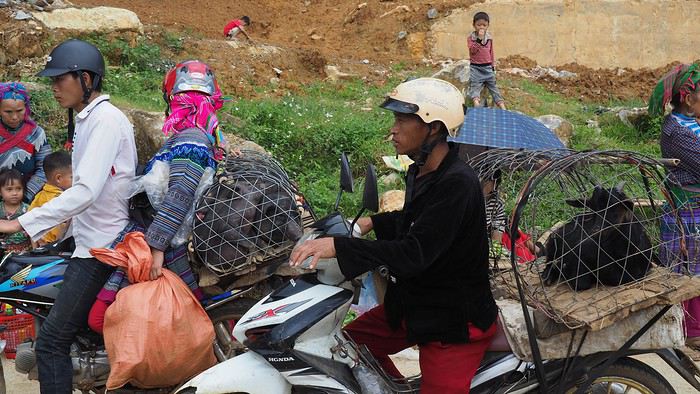
On est les seuls touristes. Le jour du marché est aussi l'occasion pour tous les villageois des alentours de se retrouver autour d'un thang cô (viande et intestins de bœuf dans un bouillon de sang, épices et herbes aromatiques) accompagné d’alcool de riz ou plus surprenant de Red Bull (!!) ... on n'arrête pas le progrès. On n'a pas gouté ce thang cô , le petit déjeuner n'étant pas loin .... excuse minable 😊
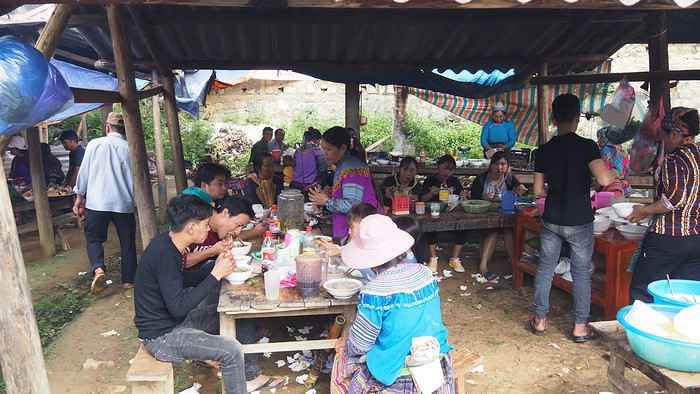
Red Bull et pipe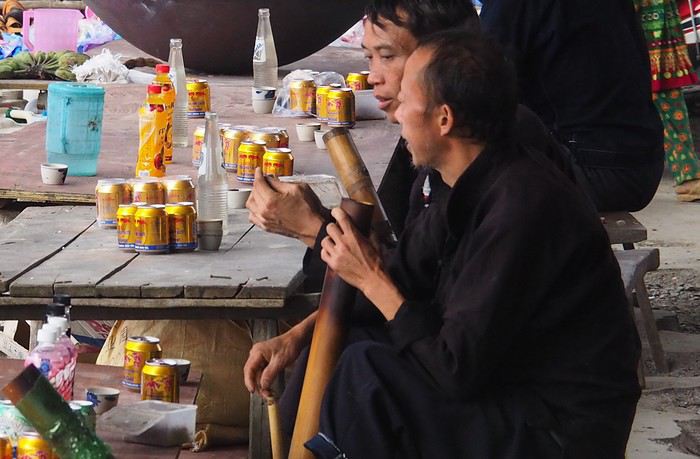
La suite très bientôt
Même si de nombreux beaux carnets ont déjà été publiés sur le Vietnam, j’espère que ce voyage en images rappellera de bons souvenirs aux uns, fournira des renseignements utiles aux autres pour leur prochain voyage ou plus simplement vous fera passer un bon moment en parcourant ce magnifique pays.
Avant de partir, quelques rapides infos sur le contexte (certaines rubriques seront détaillées plus loin au fil du récit, par ex la météo à cette période) :
- voyage réalisé de mi-septembre à mi-octobre 2019 - onzième voyage en Asie du Sud Est- en couple comme chaque fois, c'est bp plus simple - déplacement en bus, taxi, minibus (limousine) et avion (1 fois) réservés sur place 1 ou 2 jours avant, et en voiture particulière la 1ere semaine - logements : du basique chez l'habitant à un très bel hôtel à Ho Chi Minh, avec une préférence pour les petits hôtels de charme - bp de temps passé sur les forums et les guides avant le départ pour recenser les lieux qui nous intéressent, puis parcours modifié au jour le jour en fc de la météo, des envies, de la fatigue, des rencontres, etc .. Avant le départ, on a une superbe liste de lieux "à voir absolument", et sur place on s'aperçoit que ce magnifique programme est bien trop ambitieux. On supprime alors tel ou tels endroits pour ne pas transformer le voyage en une épuisante course de vitesse. - on aime bien prendre notre temps, s’arrêter qqs jours si un lieu nous plait, sauter des visites "incontournables" si ça nous barbe (fatigue, chaleur, overdose de visites, ...). - à la suite de très bons conseils de forumeurs qui se reconnaitront (un grand merci a eux), on a fait une entorse à notre façon de voyager (aucune réservation avant le départ, excepté l’hôtel le jour de l'arrivée) en réservant 8 jours avec une agence locale pour parcourir les montagnes du nord avec chauffeur et guide francophone. Partir avec une agence était en effet la meilleure solution pour découvrir cette région dépourvue de bus en de nombreux endroits, et le guide est bien utile pour ne pas se perdre en randonnée.
Allez, on y va 🙂
Nos étapes : - Extrême nord (Ha Giang - Meo Vac) vers les ethnies montagnardes et rizières - Baie de Lan Ha "la jumelle de la baie d'Halong" - Hanoi - Tam Coc, "la baie d'Halong terrestre" - Hue - Hoi An - Delta du Mekong - Ho Chi Minh
Episode 1 : A la rencontre des ethnies des montagnes du nord
Pour nous qui voyageons seuls d'habitude, nous apprécions d'être attendu à l'aéroport d'Hanoi à 6h30 par Vinh notre guide Vinh et Near notre chauffeur, direction le nord. Aux 11h de vol, on ajoute donc 5-6h de voiture pour Bac Ha, dont la moité environ sur une belle autoroute déserte.
Bac Ha est une petite ville au milieu des montagnes, avec seulement qqs petits hotels de milieu de gamme et des guesthouse, ce qui fait qu'on y rencontre qqs touristes, mais sans excès. 2h après notre arrivée à Bac Ha, nous voila parti pour une 1ère randonnée au milieu des rizières qui dominent la ville.
Ce ne sont pas les plus belles de la région, mais on passe un très agréable moment à se dégourdir les jambes après le voyage dans un tel environnement.
Comme convenu avec l'agence, 2 à 3h de marche entre villages et rizières seront chaque jour au programme : nous découvriront des villages, rencontreront des habitants de plusieurs ethnies au hasard des chemins, et marcherons tout simplement dans de magnifiques paysages de rizières.Ethnie Hmong bariolé
La région de Bac Ha est majoritairement habitée par de Hmong, ici Hmong à fleurs : (par la suite, si des erreurs se sont malheureusement glissées sur les noms d'ethnies, je ne me vexerai pas si les spécialistes rectifient 😉)
La récolte va bientôt commencer, les rizières commencent à passer du vert vif au jaune, nous les verrons jaune d'or dès le lendemain. Partout des paysans sont au travail : par l'intermédiaire de Vinh, nous échangeront à plusieurs reprises, eux qui sont aussi curieux sur nous que nous sur eux.
Le lendemain direction le marché de Can Cau a 45 min de Bac Ha (18km) sur une route zigzaguant dans un beau paysage de montagne (ce sera le régime de la semaine a venir).
67 ans de présence française ont laissé ces beaux souvenirs le long des routes :
Notre parcours a été étudié avec l'agence pour être sur les marchés de Can Cau le samedi, de Bac Ha le dimanche et de Lun Phin le mercredi suivant Le marché de Can Cau est situé en pleine nature, à flan de montagne.
Hmong des alentours viennent y vendre ou acheter toutes sortes de produits, vêtements, nourritures, animaux vivants, oiseaux, etc ... :
Hmong à fleurs(dessus et dessous)
Certains repartent avec des vêtements
d'autres avec un porc ou une chèvre (pour l'achat de buffle la mobylette n'est pas conseillée)
On est les seuls touristes. Le jour du marché est aussi l'occasion pour tous les villageois des alentours de se retrouver autour d'un thang cô (viande et intestins de bœuf dans un bouillon de sang, épices et herbes aromatiques) accompagné d’alcool de riz ou plus surprenant de Red Bull (!!) ... on n'arrête pas le progrès. On n'a pas gouté ce thang cô , le petit déjeuner n'étant pas loin .... excuse minable 😊
Red Bull et pipe
La suite très bientôt
Quelques jours dans le Nord: Rabat, Chefchaouen, Tétouan.... English translation pending
Bonjour,
J'ai effectué un petit périple de 4 jours dans le Nord du Maroc fin juin-début juillet , pour le plaisir de redécouvrir cette région qui est assez rarement mise en avant sur le forum . J'étais accompagné d'une de mes filles de 16 ans . Comme à mon habitude, j'ai pris beaucoup de photos, alors pourquoi ne pas en faire profiter les forumeurs ?
Une des portes du Nord du Maroc , par l'ouest, est la capitale Rabat . Sans faire un sujet sur cette belle cité, je vous propose de m'accompagner pour une ballade à Chellah , un magnifique endroit . Chellah est à la fois une cité romaine ( Sala Colonia ) et une nécropole mérinide . On y voit aussi une mosquée, une madrassa ( école coranique ), des anciens hammams mérinides, etc....
Tous les monuments de Rabat font l'objet de travaux de rénovation et de mise en valeur et Chellah en bénéficie bien sûr . Dès l'arrivée, la vue est superbe : on a du mal a imaginer que nous sommes au cœur de la ville . A gauche, les murailles d'enceinte de la ville et à droite la muraille de Chellah .
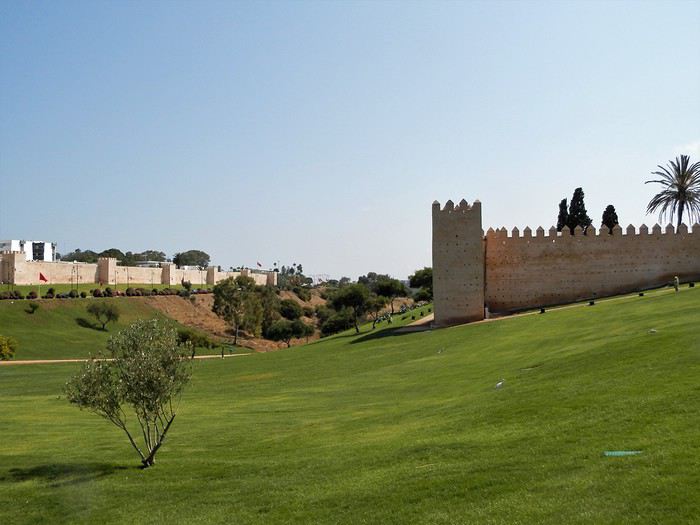
On accède au site par une porte monumentale, une des plus belle du pays .
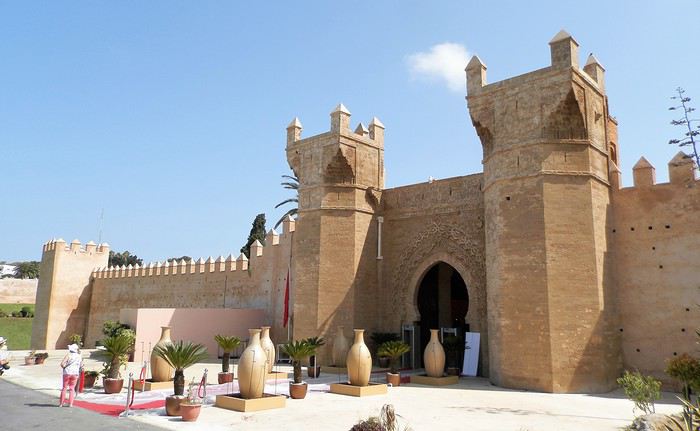
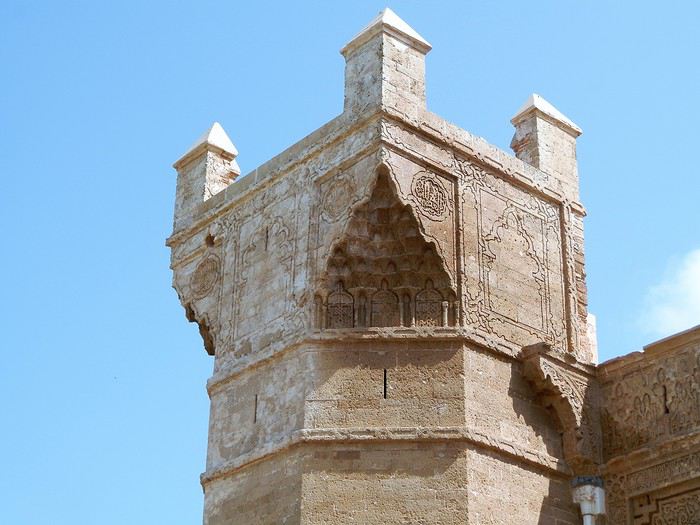
Le site, bien qu'urbain , accueille des colonies imposantes d'aigrettes et de cigognes .
L'entrée au site est désormais de 70 dirhams pour les étrangers . La vue, lorsqu'on descend est très jolie. C'est dit-t-on, le lieu le plus romantique du Maroc .
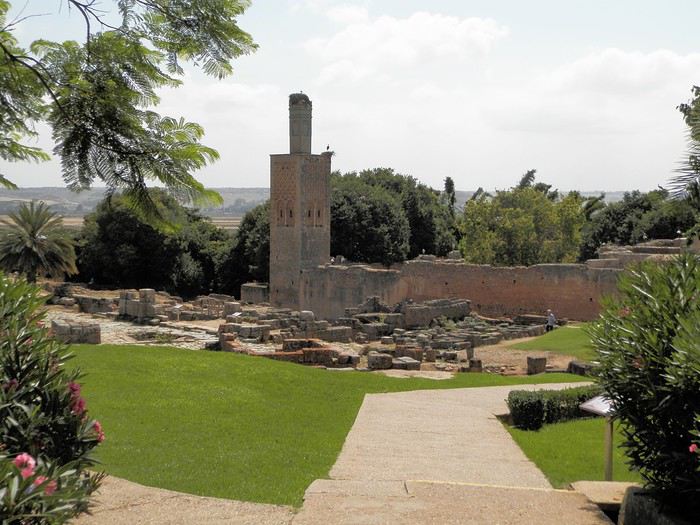
La cité romaine : seule une petite portion de la ville a fait l'objet de fouilles , comme dans la plupart des sites romains du Maroc . Sala était un port, mais la mer n'y vient plus, l'oued Bou Regreg s'étant envasé .
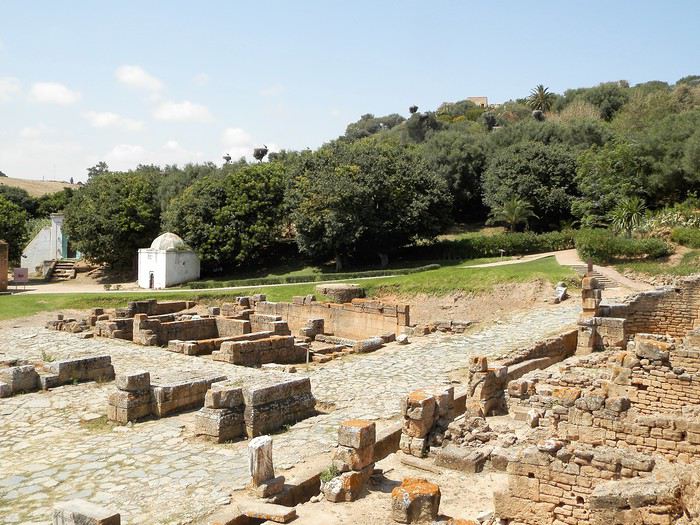
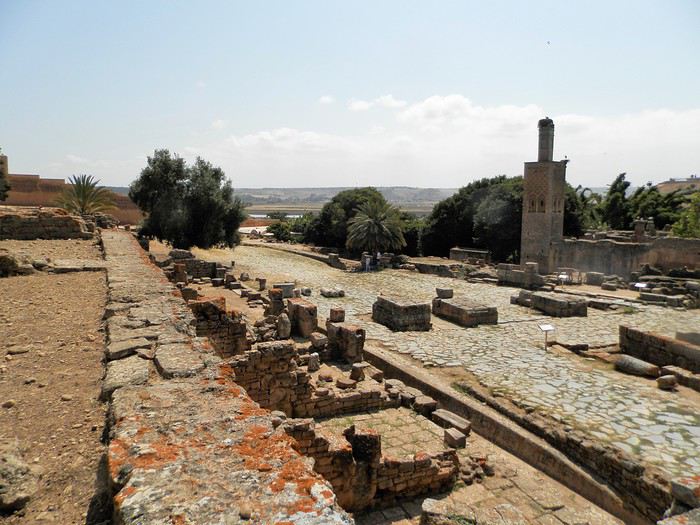
Pour les latinistes....
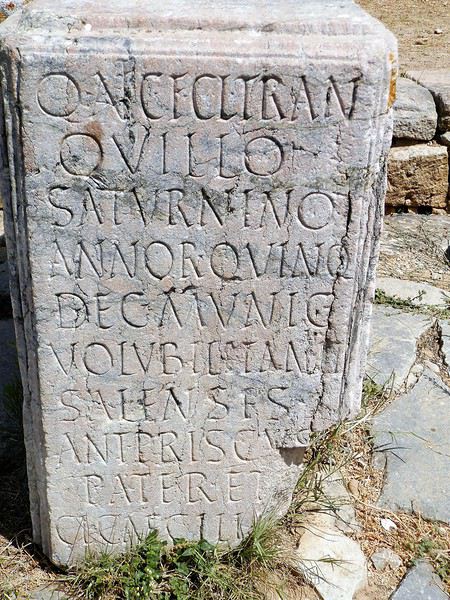
Le site est remarquablement préservé car jamais, où que l'on regarde, on ne voit le moindre bâtiment de la ville qui pourtant l'encercle totalement ..
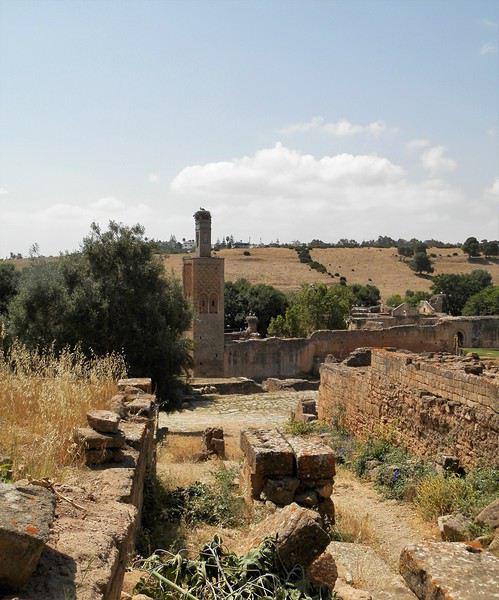
La muraille de la nécropole encercle intégralement le site .
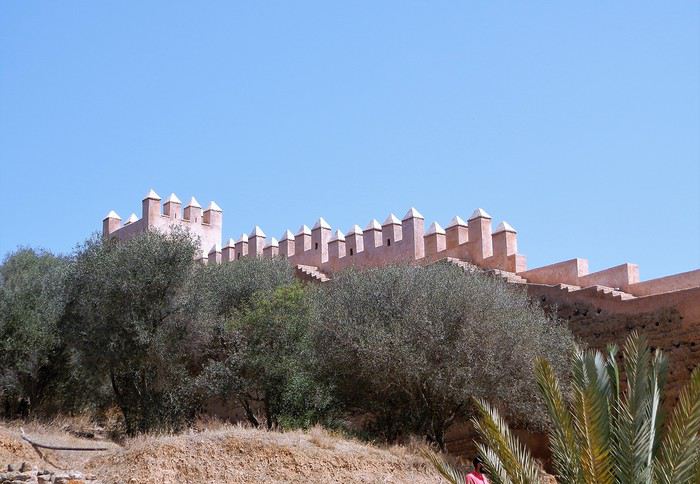
Et un peu partout, des cigognes impassibles ...
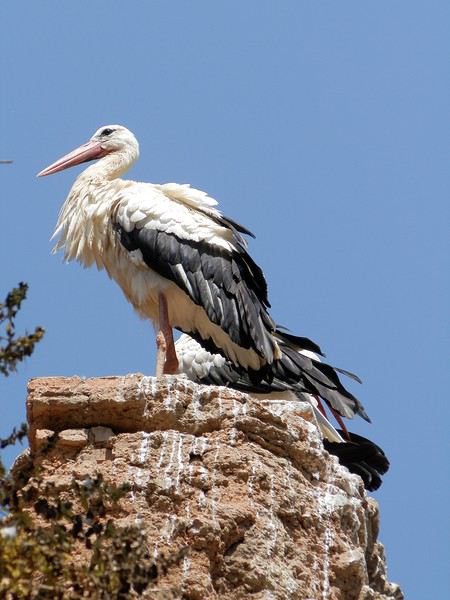
Le tombeau d'un sultan
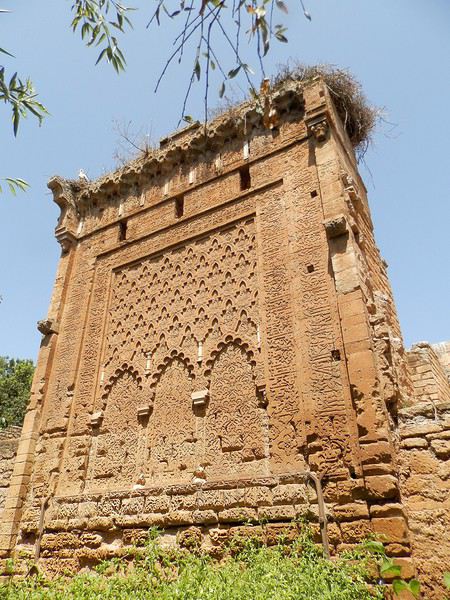
Dans chaque cartouche est écrit, en calligraphie, un des noms de Dieu .
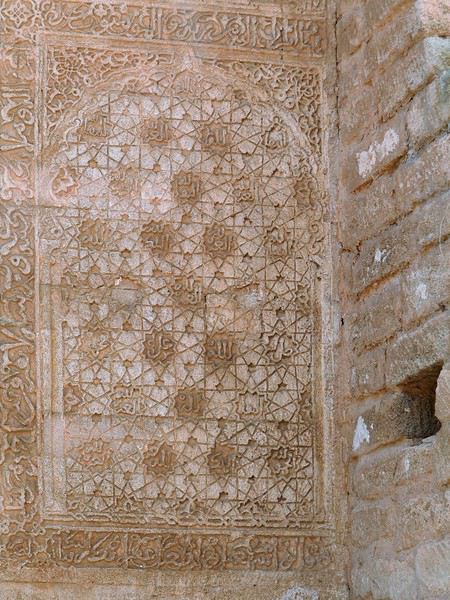
La mosquée est en ruine . On y voit une colonne de marbre romain, en réemploi dans une porte . Accolée à la mosquée se trouve la madrassa ( m��dersa ) .
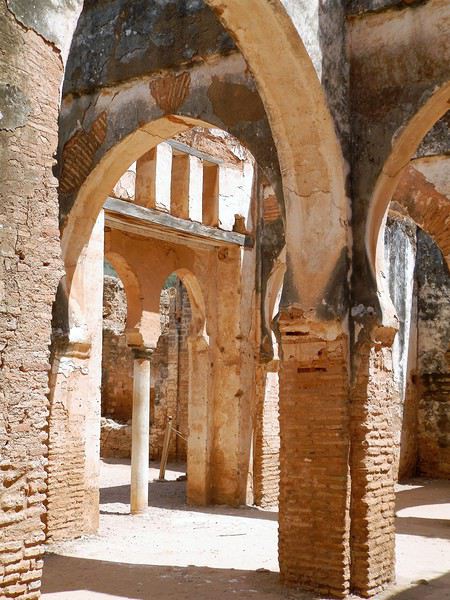
Les tombeaux se cachent dans les bois du site, mais tous ne sont pas accessibles .
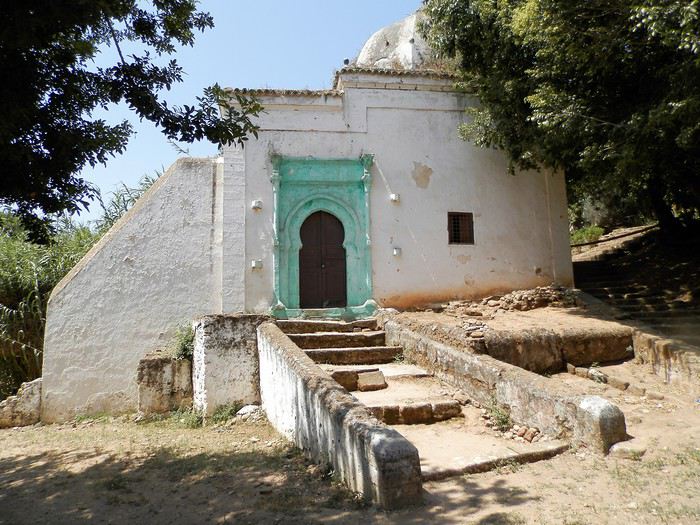
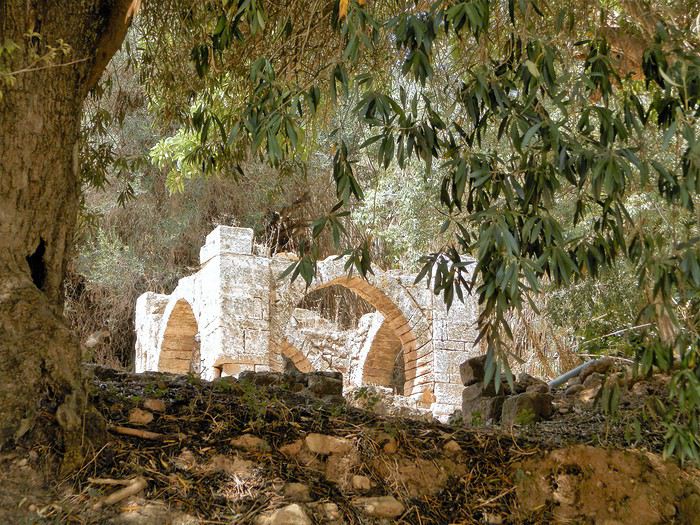
La fontaine aux anguilles : j'ai longtemps pensé que cette fontaine ne contenait rien mais une fois, et une seule en 20 ans, j'ai vu les anguilles sortir de je ne sais où . Ce sont des monstres , leur corps étant plus gros qu'un bras . C'est vraiment impressionnant et quand çà arrive, on s'arrête même de respirer . Il s'agit d'un ancien hammam mérinide noyé par l'effondrement d'un aqueduc souterrain .
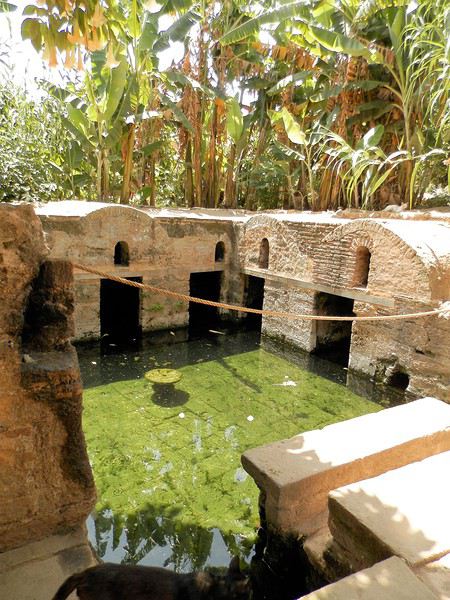
J'affectionne cet endroit car on y trouve le même rituel que chez moi, en Bretagne, où il convient aussi de laisser une offrande dans certaines fontaines . Ici, faite un vœux et jetez la pièce : si elle tombe sur la pierre, votre vœux sera exaucé .
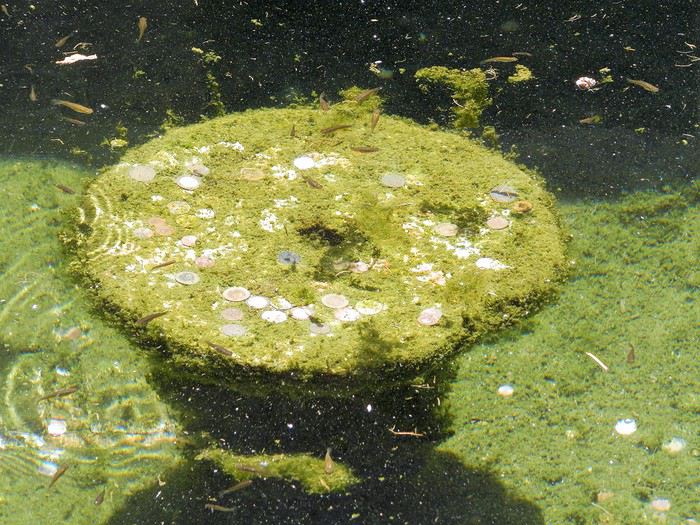
Près du bassin, le tombeau de Sidi Amor El Mesnaoui , qui semble bien être le protecteur des chats . J'y ai toujours vu des dizaines de chats, un peu faméliques . En ce vendredi, à l'heure de la prière, j'ai eu la surprise de voir qu'on leur amenait de grands plats de nourriture , exactement comme on le fait pour les démunis, à la même heure, dans la médina de Rabat .
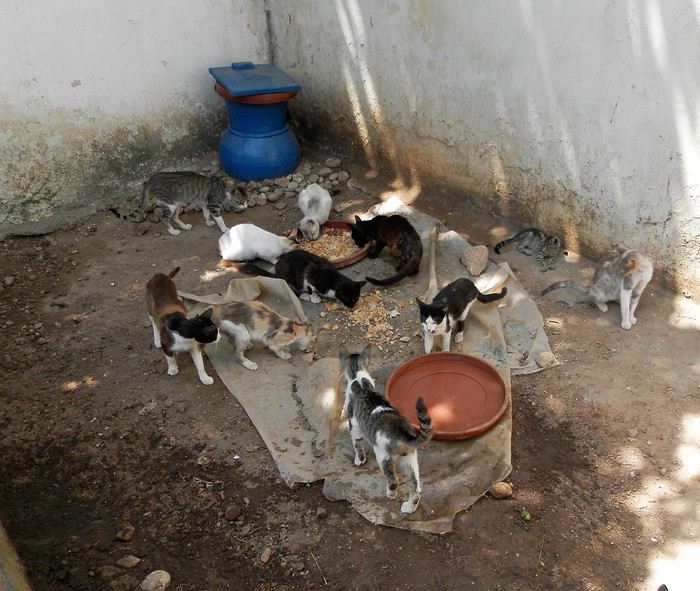
Un dernier regard .....
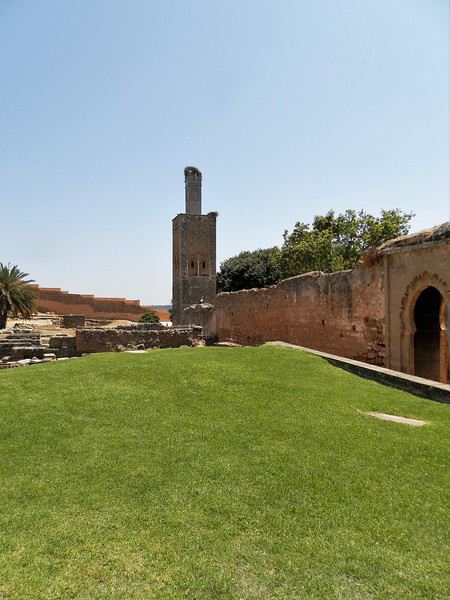
J'ai effectué un petit périple de 4 jours dans le Nord du Maroc fin juin-début juillet , pour le plaisir de redécouvrir cette région qui est assez rarement mise en avant sur le forum . J'étais accompagné d'une de mes filles de 16 ans . Comme à mon habitude, j'ai pris beaucoup de photos, alors pourquoi ne pas en faire profiter les forumeurs ?
Une des portes du Nord du Maroc , par l'ouest, est la capitale Rabat . Sans faire un sujet sur cette belle cité, je vous propose de m'accompagner pour une ballade à Chellah , un magnifique endroit . Chellah est à la fois une cité romaine ( Sala Colonia ) et une nécropole mérinide . On y voit aussi une mosquée, une madrassa ( école coranique ), des anciens hammams mérinides, etc....
Tous les monuments de Rabat font l'objet de travaux de rénovation et de mise en valeur et Chellah en bénéficie bien sûr . Dès l'arrivée, la vue est superbe : on a du mal a imaginer que nous sommes au cœur de la ville . A gauche, les murailles d'enceinte de la ville et à droite la muraille de Chellah .
On accède au site par une porte monumentale, une des plus belle du pays .
Le site, bien qu'urbain , accueille des colonies imposantes d'aigrettes et de cigognes .
L'entrée au site est désormais de 70 dirhams pour les étrangers . La vue, lorsqu'on descend est très jolie. C'est dit-t-on, le lieu le plus romantique du Maroc .
La cité romaine : seule une petite portion de la ville a fait l'objet de fouilles , comme dans la plupart des sites romains du Maroc . Sala était un port, mais la mer n'y vient plus, l'oued Bou Regreg s'étant envasé .
Pour les latinistes....
Le site est remarquablement préservé car jamais, où que l'on regarde, on ne voit le moindre bâtiment de la ville qui pourtant l'encercle totalement ..
La muraille de la nécropole encercle intégralement le site .
Et un peu partout, des cigognes impassibles ...
Le tombeau d'un sultan
Dans chaque cartouche est écrit, en calligraphie, un des noms de Dieu .
La mosquée est en ruine . On y voit une colonne de marbre romain, en réemploi dans une porte . Accolée à la mosquée se trouve la madrassa ( m��dersa ) .
Les tombeaux se cachent dans les bois du site, mais tous ne sont pas accessibles .
La fontaine aux anguilles : j'ai longtemps pensé que cette fontaine ne contenait rien mais une fois, et une seule en 20 ans, j'ai vu les anguilles sortir de je ne sais où . Ce sont des monstres , leur corps étant plus gros qu'un bras . C'est vraiment impressionnant et quand çà arrive, on s'arrête même de respirer . Il s'agit d'un ancien hammam mérinide noyé par l'effondrement d'un aqueduc souterrain .
J'affectionne cet endroit car on y trouve le même rituel que chez moi, en Bretagne, où il convient aussi de laisser une offrande dans certaines fontaines . Ici, faite un vœux et jetez la pièce : si elle tombe sur la pierre, votre vœux sera exaucé .
Près du bassin, le tombeau de Sidi Amor El Mesnaoui , qui semble bien être le protecteur des chats . J'y ai toujours vu des dizaines de chats, un peu faméliques . En ce vendredi, à l'heure de la prière, j'ai eu la surprise de voir qu'on leur amenait de grands plats de nourriture , exactement comme on le fait pour les démunis, à la même heure, dans la médina de Rabat .
Un dernier regard .....