Results for "Cité+interdite+|+112+>+171"
20993 results found.
Fragments de voyage I/II: d'Istanbul à Jakarta par la route English translation pending
J'entreprends un périple de 3 mois et plus jusqu'aux portes de l'Asie. Je vous livrerai en vrac mes impressions sous forme de carnet de bord, d'anecdotes, d'émotions brutes et aussi des informations pratiques. J'essaierai autant que possible d'écrire sur le vif et de vous envoyer quelques photos.
Pour passer directement au chapitre II des fragments de voyage le 21 février 2012 c'est ici : Fragments de voyage II : Istanbul-Téhéran-Lahore-Chengdu-Bangkok-Jakarta par la route
fraternellement Eric mosquée de Soleyman le Magnifique

PARFUMS D'ORIENT ISTANBOULIOTES
19-20-21-22-23-24 octobre Lyon-Strasbourg-Bâle-Istanbul
Des rues bruyantes et bigarrées. Des gens partout qui s'affairent, un ballet continu ponctué de coups de klaxons et des sirenes des bateaux, rythmé par l'appel du Muezzin, répercuté tel un écho dans toutes les mosquées majestueuses de la cité. Quel meilleur endroit pour commencer ce voyage si ce n'est Istanbul, carrefour et porte de l'Orient. C'est ma 4eme fois ici et je m'y sens bien, une ville attachante. Le soleil est de la partie. Je me balade dans le vieil Istanbul. A Eminonu, des gens qui pêchent, le pont de Galata est hérissé de cannes à pêche. Sur des bateaux amarrés le long des quais, des hommes font frire le poisson que l'on peut déguster dans des pains avec des oignons au bord de la Corne d'Or. Je me perds dans les ruelles qui remontent vers le grand bazar. Bain de foule. Des tas de drapeaux turcs pendent aux fenêtres, d'autres recouvrent des pans entiers de murs. Tout cela se passe dans tout le pays. Des manifs se déroulent un peu partout. Hommage aux soldats martyrs tombés au combat dans l'est. A la TV, des images passent en boucle, des généraux revanchards sont propulsés sur le devant de la scene. A qui profite cette inflation de violence ? une chose est sûre, pas à la population kurde de Turquie. Pêcheurs sur les quais d'Eminonu au fond la mosquée de Suleiman le Magnifique
Infos pratiques
Arrivée à l'aéroport Ataturk
prendre le métro (jeton 1, 30 YTL) jusqu'à Aksaray, puis le Tramway (jeton 1, 30 YTL) direction Sultanahmet ou Taksim
Arrivée à l'aéroport de Sabiha Gocken
prendre la navette ( à droite en sortant 3 YTL) E10 jusqu'à l'embarcadère de Kadikoy, puis le ferry (jeton 1, 10 YTL) jusqu'à Eminonu. Ensuite prendre le Tramway, soit direction Taksim (de l'autre coté du pont de Galata) soit direction Aksaray/Sultanahmet
Pour se loger, pléthore d'hôtels bon marché du coté de Sultanahmet derriere la Mosquée Bleue.
Pour manger : Eviter le quartier de Sultanahmet
Pour le change : changer le strict minimum a l'aéroport, taux plus avantageux autour du Grand Bazar
Pour aller au bord de la Mer Noire
Prendre un bus (du coté d'Eminonu) direction Sariyer sur le Bosphore, ensuite prendre un Dolmus direction Kilyos
Pêcheurs sur les quais d'Eminonu au fond la mosquée de Suleiman le Magnifique
Infos pratiques
Arrivée à l'aéroport Ataturk
prendre le métro (jeton 1, 30 YTL) jusqu'à Aksaray, puis le Tramway (jeton 1, 30 YTL) direction Sultanahmet ou Taksim
Arrivée à l'aéroport de Sabiha Gocken
prendre la navette ( à droite en sortant 3 YTL) E10 jusqu'à l'embarcadère de Kadikoy, puis le ferry (jeton 1, 10 YTL) jusqu'à Eminonu. Ensuite prendre le Tramway, soit direction Taksim (de l'autre coté du pont de Galata) soit direction Aksaray/Sultanahmet
Pour se loger, pléthore d'hôtels bon marché du coté de Sultanahmet derriere la Mosquée Bleue.
Pour manger : Eviter le quartier de Sultanahmet
Pour le change : changer le strict minimum a l'aéroport, taux plus avantageux autour du Grand Bazar
Pour aller au bord de la Mer Noire
Prendre un bus (du coté d'Eminonu) direction Sariyer sur le Bosphore, ensuite prendre un Dolmus direction Kilyos
SUR LA ROUTE DE LA SOIE...QUELQUE PART ENTRE SIVAS ET TERCAN
Istanbul-Erzurum 24-25 octobre
Aujourd'hui, je trace sur Erzurum. Il pleut légerement. Je me rend à l'immense otogar au nord d'Istanbul et je prend le bus de 16h. Cela m'arrange car j'ai ma demande de visa iranien à déposer au plus vite et ensuite, sachant qu'il faut 10 jours pour l'obtenir, je compte visiter l'est. Bus de nuit. 1375 kms à parcourir. Mon voisin ne parle pas Anglais, nous communiquons par gestes et par bribes de mots turcs pris dans mon lexique🙂. La TV diffuse le match de foot Besiktas-Liverpool, les Turcs sont fondus de football, ca tombe bien moi aussi.😏 A l'aube, en consultant ma carte, je réalise que nous empruntons la route de la Soie, route mythique pour bien des voyageurs, Nicolas Bouvier et Thierry Vernet étaient passés par ici en 1953. Nous roulons au milieu d'une vallée entourée de puissantes montagnes, la végétation est rare, quelques troupeaux de moutons paissent. Le climat doit être rude en hiver. Et premiere émotion : nous croisons l'Euphrate (en Turc : Firat). Depuis mon enfance, je suis fasciné par les grands fleuves, mon voyage qui s'annonce en sera parsemé. Et hop🙂 une photo pour immortaliser l'instant. Arrivée à Erzurum fin de matinée. Il fait beau, une chance car la température peut descendre très bas en cette période de l'année. Il y a une station de ski pas loin d'ici. Je me rend au consulat en marchant😎. Accueil austere mais correct, j'avais préparé les formulaires mais il n'en veut pas et je dois m'y coller une nouvelle fois. Puis il faut aller courir jusque dans le centre à la banque Oyak pour payer les frais de visa, heureusement un chauffeur de taxi qui m'avait vu poirauter devant le bureau, m'attend et m'amène sans hésiter à la banque puis fait le retour. Apparemment, il a l'habitude de la procédure😉
Passage éclair dans cette ville, je prendrai plus de temps dans 10 jours pour la visiter. Maintenant, je file sur Malatya. Bus de nuit. Jamais bu autant de thé et autant les mains parfumées d'eau de cologne🙂🙂.
Otogar de Malatya à 2h du matin, je décide de finir la nuit ici, il y a des sièges confortables😉. J'irai chercher un hôtel le matin.
Mes 4 premieres nuits
1 à l'aéroport/1 à l'hôtel /1 dans le bus/1 dans l'otogar de Malatya, vive les voyages😎
Arrivée à Erzurum fin de matinée. Il fait beau, une chance car la température peut descendre très bas en cette période de l'année. Il y a une station de ski pas loin d'ici. Je me rend au consulat en marchant😎. Accueil austere mais correct, j'avais préparé les formulaires mais il n'en veut pas et je dois m'y coller une nouvelle fois. Puis il faut aller courir jusque dans le centre à la banque Oyak pour payer les frais de visa, heureusement un chauffeur de taxi qui m'avait vu poirauter devant le bureau, m'attend et m'amène sans hésiter à la banque puis fait le retour. Apparemment, il a l'habitude de la procédure😉
Passage éclair dans cette ville, je prendrai plus de temps dans 10 jours pour la visiter. Maintenant, je file sur Malatya. Bus de nuit. Jamais bu autant de thé et autant les mains parfumées d'eau de cologne🙂🙂.
Otogar de Malatya à 2h du matin, je décide de finir la nuit ici, il y a des sièges confortables😉. J'irai chercher un hôtel le matin.
Mes 4 premieres nuits
1 à l'aéroport/1 à l'hôtel /1 dans le bus/1 dans l'otogar de Malatya, vive les voyages😎
Infos pratiques Trajet Istanbul-Erzurum 55 YTL par la compagnie Esadas Trajet Erzurum-Malatya 40YTL par la compagnie Bingol 1 Bouteille d'eau 1l : 0, 50YTL 1 pide ou galette : 0, 30 YTL Demande de visa iranien : 2 photos/2 formulaires remplis a la main/copies des pages importantes du passeport/60 euros ou 103 YTL payables a la banque Oyak
Pour passer directement au chapitre II des fragments de voyage le 21 février 2012 c'est ici : Fragments de voyage II : Istanbul-Téhéran-Lahore-Chengdu-Bangkok-Jakarta par la route
fraternellement Eric mosquée de Soleyman le Magnifique
PARFUMS D'ORIENT ISTANBOULIOTES
19-20-21-22-23-24 octobre Lyon-Strasbourg-Bâle-Istanbul
Des rues bruyantes et bigarrées. Des gens partout qui s'affairent, un ballet continu ponctué de coups de klaxons et des sirenes des bateaux, rythmé par l'appel du Muezzin, répercuté tel un écho dans toutes les mosquées majestueuses de la cité. Quel meilleur endroit pour commencer ce voyage si ce n'est Istanbul, carrefour et porte de l'Orient. C'est ma 4eme fois ici et je m'y sens bien, une ville attachante. Le soleil est de la partie. Je me balade dans le vieil Istanbul. A Eminonu, des gens qui pêchent, le pont de Galata est hérissé de cannes à pêche. Sur des bateaux amarrés le long des quais, des hommes font frire le poisson que l'on peut déguster dans des pains avec des oignons au bord de la Corne d'Or. Je me perds dans les ruelles qui remontent vers le grand bazar. Bain de foule. Des tas de drapeaux turcs pendent aux fenêtres, d'autres recouvrent des pans entiers de murs. Tout cela se passe dans tout le pays. Des manifs se déroulent un peu partout. Hommage aux soldats martyrs tombés au combat dans l'est. A la TV, des images passent en boucle, des généraux revanchards sont propulsés sur le devant de la scene. A qui profite cette inflation de violence ? une chose est sûre, pas à la population kurde de Turquie.
Pêcheurs sur les quais d'Eminonu au fond la mosquée de Suleiman le Magnifique
Infos pratiques
Arrivée à l'aéroport Ataturk
prendre le métro (jeton 1, 30 YTL) jusqu'à Aksaray, puis le Tramway (jeton 1, 30 YTL) direction Sultanahmet ou Taksim
Arrivée à l'aéroport de Sabiha Gocken
prendre la navette ( à droite en sortant 3 YTL) E10 jusqu'à l'embarcadère de Kadikoy, puis le ferry (jeton 1, 10 YTL) jusqu'à Eminonu. Ensuite prendre le Tramway, soit direction Taksim (de l'autre coté du pont de Galata) soit direction Aksaray/Sultanahmet
Pour se loger, pléthore d'hôtels bon marché du coté de Sultanahmet derriere la Mosquée Bleue.
Pour manger : Eviter le quartier de Sultanahmet
Pour le change : changer le strict minimum a l'aéroport, taux plus avantageux autour du Grand Bazar
Pour aller au bord de la Mer Noire
Prendre un bus (du coté d'Eminonu) direction Sariyer sur le Bosphore, ensuite prendre un Dolmus direction KilyosSUR LA ROUTE DE LA SOIE...QUELQUE PART ENTRE SIVAS ET TERCAN
Istanbul-Erzurum 24-25 octobre
Aujourd'hui, je trace sur Erzurum. Il pleut légerement. Je me rend à l'immense otogar au nord d'Istanbul et je prend le bus de 16h. Cela m'arrange car j'ai ma demande de visa iranien à déposer au plus vite et ensuite, sachant qu'il faut 10 jours pour l'obtenir, je compte visiter l'est. Bus de nuit. 1375 kms à parcourir. Mon voisin ne parle pas Anglais, nous communiquons par gestes et par bribes de mots turcs pris dans mon lexique🙂. La TV diffuse le match de foot Besiktas-Liverpool, les Turcs sont fondus de football, ca tombe bien moi aussi.😏 A l'aube, en consultant ma carte, je réalise que nous empruntons la route de la Soie, route mythique pour bien des voyageurs, Nicolas Bouvier et Thierry Vernet étaient passés par ici en 1953. Nous roulons au milieu d'une vallée entourée de puissantes montagnes, la végétation est rare, quelques troupeaux de moutons paissent. Le climat doit être rude en hiver. Et premiere émotion : nous croisons l'Euphrate (en Turc : Firat). Depuis mon enfance, je suis fasciné par les grands fleuves, mon voyage qui s'annonce en sera parsemé. Et hop🙂 une photo pour immortaliser l'instant.
Arrivée à Erzurum fin de matinée. Il fait beau, une chance car la température peut descendre très bas en cette période de l'année. Il y a une station de ski pas loin d'ici. Je me rend au consulat en marchant😎. Accueil austere mais correct, j'avais préparé les formulaires mais il n'en veut pas et je dois m'y coller une nouvelle fois. Puis il faut aller courir jusque dans le centre à la banque Oyak pour payer les frais de visa, heureusement un chauffeur de taxi qui m'avait vu poirauter devant le bureau, m'attend et m'amène sans hésiter à la banque puis fait le retour. Apparemment, il a l'habitude de la procédure😉
Passage éclair dans cette ville, je prendrai plus de temps dans 10 jours pour la visiter. Maintenant, je file sur Malatya. Bus de nuit. Jamais bu autant de thé et autant les mains parfumées d'eau de cologne🙂🙂.
Otogar de Malatya à 2h du matin, je décide de finir la nuit ici, il y a des sièges confortables😉. J'irai chercher un hôtel le matin.
Mes 4 premieres nuits
1 à l'aéroport/1 à l'hôtel /1 dans le bus/1 dans l'otogar de Malatya, vive les voyages😎Infos pratiques Trajet Istanbul-Erzurum 55 YTL par la compagnie Esadas Trajet Erzurum-Malatya 40YTL par la compagnie Bingol 1 Bouteille d'eau 1l : 0, 50YTL 1 pide ou galette : 0, 30 YTL Demande de visa iranien : 2 photos/2 formulaires remplis a la main/copies des pages importantes du passeport/60 euros ou 103 YTL payables a la banque Oyak
Gros typhon sur le Centre-Vietnam (3 octobre 2007) English translation pending
Un gros Typhon - nom LEKIMA - déferle sur 3 Provinces côtières
du Centre-VIETNAM en ce jour 03 Octobre 2007 - Mercredi.
Près de 400.000 personnes sont évacuées vers le Nord ...
Toutes liaisons routières Nord-Sud sont interrompues ...
Les liaisons sur la voie ferroviaire Trans-Vietnam sont stoppées .
Restez au Sud à NHA TRANG et ne pas remonter vers le Nord .
Ne descendez pas au Sud - de HANOI pour le moment !
Attendez des nouvelles pour la suite ! Restez sur place !
Conseils aux V-fistes en voyage au Vietnam !
--
Ushuaïa Nature au Cambodge English translation pending
J'ai regardé l'émission le 1er août sur TF1, et l'attendais avec impatience, puisque je savais que le tournage avait eu lieu en décembre 2005, quelques semaines avant mon propre séjour là bas. Finalement, je suis très déçu. Certes de très belles images (pas difficile quand on a le site d'Angkor rien que pour soi), mais monsieur Hulot est un peu trop contemplatif, et nous n'apprenons pratiquement rien ! Il semblerait qu'il n'a pas su cette fois s'entourer de bons spécialistes. Il faut dire aussi qu'il a eu une rude concurrence avec de nombreux autres reportages, excellents, sur le sujet ces derniers mois. Qu'en pensez-vous ?
Quartier du Général Chanson à Saïgon English translation pending
Bonjour,
J'ai des amis qui vont venir a Saigon, l'un d'eux a vecu au Vietnam pendant la guerre et il souhaite retrouver les souvenirs d'epoque, quelqu'un parmi vous connaitrait le quartier du General Chanson a Saigon?
Je suis preneuse de toutes les infos le concernant,
Merci bcp
Rose
J'ai des amis qui vont venir a Saigon, l'un d'eux a vecu au Vietnam pendant la guerre et il souhaite retrouver les souvenirs d'epoque, quelqu'un parmi vous connaitrait le quartier du General Chanson a Saigon?
Je suis preneuse de toutes les infos le concernant,
Merci bcp
Rose
Ça chauffe en Afghanistan! English translation pending
vous devez probablement etre au courrant que deja depuis un moment les talibans se sont reveilles et que ca tire pas mal de coups de feu dans le coin.
mais la un pote vient de me dire qu il n est plus possible d avoir de visas pour l afghanistan car pour raisons de securite ils n en delivrent plus.
il est actuellement dans les stans et ce st ce qu on lui a dit aux ambassades et ca lui a ete confirme par un pote a lui en belgique qui est alle se renseigner a l ambassade afghane.
qu en est il vraiment?
est ce seulement de la mauvaise volonte de certaines ambassades ou est ce que reellement c est fini?
je comptais y retourner et donc j aimerais bien savoir, merci d avance pour vos reponses...
Cambodge: l'enfant roi du royaume d'Angkor English translation pending
Après une assez longue journée à déambuler parmi les merveilleux temples du royaume d'Angkor, nous profitons quelques instants de la piscine de l'hôtel sous le regard des Apsara d'Angkor Wat et du roi Jayavarmann VII, représentés ici par de très nombreuses sculptures qui constituent également le signe distinctif de cette chaîne d'hôtels. La nuit tombe très tôt au Cambodge en cette période. Les sculptures s'allument une à une et laissent apparaître une sensation de mystère et de calme, de part l'eau qui ruisselle le long des sculptures et la végétation qui les recouvre. Nous quittons la tranquillité de notre hôtel pour rejoindre le centre ville et essayer de découvrir le petit village de Siem Reap.
Le visage du petit village paisible de Siem Reap, bordé par le royaume d'Angkor, évolue de jour en jour. La tranquillité, et l'authenticité, de Siem Reap, ne se retrouve plus dans les grandes artères du village. Le petit village agricole est devenu une ville faite pour les touristes. Sur ses principales artères, recouvertes d'un bitume étincelant, d'immenses hôtels se construisent. 300 chambres ici, 400 chambres par là. La ville s'organise pour que le touriste s'y sente bien. Ce n'est qu'à l'écart de ces quelques artères que l'on peut retrouver le caractère original de Siem Reap. Les ruelles sombres recouvertes de terre, les trottoirs presque inexistants, les moines qui déambulent, le trafic incessant des mototaxis qui vont vers le centre...
Bien que notre hôtel se trouve proche du centre, les ruelles et petites avenues qui l'entourent sont encore en terre. Ce soir, notre petite route semble particulièrement lisse, un peu comme si un lifting se préparait, elle semble propre et prête à accueillir son manteau de bitume pour une nouvelle vie. La petite rivière qui longe la route, est bordée d'arbre et parsemée de jolis ponts blancs. Les rambardes des ponts sont constituées de sculptures de yakshas portant le corps du nâga à 7 têtes, comme on peut les voir à l'entrée de la cité d'Angkor Thom. Pour rejoindre le centre ville, nous devons traverser cette rivière et prendre la route parallèle à la notre mais de l'autre coté. Après avoir traversé le pont, cette seconde route est vide, déserte, sans vie, sans lumière. Elle dégage l'odeur du bitume chaud qui vient d'être posé. Elle est encore fermée à toute circulation. Le bitume est tellement récent que nous y laisserons nos empruntes de pas en voulant rejoindre le trottoir. Nos chaussures sont marquées à vie par un bout de route de Siem Reap.
L'obscurité de notre route contraste avec la luminosité qui se dégage du centre que l'on aperçoit à quelques centaines de mètres devant nous. Avant d'arriver dans l'une des artères principales de Siem Reap, nous longeons quelques petits restaurants vides tapis dans la pénombre de notre route. Au centre ville, nous remontons l'avenue en prenant quelques renseignements sur les salons de massages, en essayant de trouver un restaurant sympathique et, en regardant les vitrines des magasins d'objets d'art du royaume d'Angkor. De l'autre coté de notre avenue se trouve un petit marché à moitié couvert. Beaucoup plus authentique que les quelques boutiques que nous avons pu voir, il regorge d'objets en tout genre, des sculptures de bouddha, de Jayavarman VII, des pierres semi-précieuses, des livres ou encore des tissus. Nous décidons d'y revenir plus tard dans la soirée, après avoir trouvé un distributeur d'argent et un restaurant pour dîner.
Sur le plan des distributeurs de billet, le Cambodge n'est pas comparable à des destinations plus classiques comme la Thaïlande. Certains guides précisent même qu'aucun distributeur de billet n'est présent dans ce royaume. Nous avons l'occasion d'utiliser l'un des premiers distributeurs de Siem Reap après avoir traversé tout le centre ville. Notre surprise fut grande de constater que la devise distribuée dans ces machines est le dollar et non le riel, la monnaie du Cambodge. Et, c'est également surprenant de voir la place du riel dans les échanges faces au dollar. Le riel n'est devenu qu'une subdivision du dollar. Les menus des restaurants, les boutiques de souvenirs, les marchés, les gens ne parlent qu'en dollar.
A force de marcher dans les rues de Siem Reap, le bitume qui s'est collé sous nos chaussures a perdu sa température qui le rendait souple. Il devient de plus en plus rigide et nos chaussures aussi. Nous décidons de faire une pause pour essayer de l'enlever avec un simple caillou qui traînait sur le sol. Je me retrouve pieds nus accroupi dans l'obscurité de cette rue, avec dans une main une chaussure, et dans l'autre main, un caillou qui me permet de gratter le bitume. La scène ne ressemble pas du tout à deux touristes en vadrouille mais plutôt à une scène préhistorique ayant pour objectif d'allumer un feu de camps. Bien que pouvant être insolite, cette scène n'attire l'attention de personne à l'exception d'un tout petit garçon qui vient à notre rencontre. Il ne doit pas avoir plus de deux ans, il est pied nu et vêtu simplement d'un petit short plus très blanc et d'un tee shirt orange plus très orange. Il est maintenant presque 22h et il semble être tout seul au milieu de Siem Reap.
Il nous regarde, nous sourit, rigole en mettant ses mains à son visage et en faisant de petites rotations avec son bassin. La scène qu'il regarde semble l'amuser beaucoup et probablement le change de son quotidien. Il ne nous parle pas et nous échangeons juste quelques sourires en même temps que je m'occupe de nos chaussures. De temps en temps, il change de place, comme pour mieux contempler la scène, pour avoir une vue différente. Entre deux sourires, son regard laisse percevoir ce que nous interprétons comme de la tristesse, du désarroi et un sentiment de solitude. Tout s'efface au sourire suivant. Pendant ces quelques instants, la seul chose qu'il nous laisse voir est le bonheur qu'il semble prendre à nous regarder, à être avec nous, des instants de bonheur qui ne semble pas faire parti de sa vie. Ces instants de simplicité, aussi court soient-ils, nous semble durer une éternité, nous semble s'être figé dans le temps comme si la vie autour de nous s'était complètement arrêté, comme si l'on avait appuyé sur la touche pause.
Après avoir difficilement réussi à enlever quelques morceaux de bitume de nos chaussures, nous décidons de repartir vers le centre, vers les endroits que nous avions repéré en début de soirée. D'un signe de la main et avec quelques nouveaux échanges de sourires, nous disons au revoir à notre enfant roi du royaume d'Angkor pensant qu'il allait rejoindre sa mère probablement occupé sur un stand du marché d'à coté. Il nous répond de la même manière et, entre deux sourires, laisse transparaître un nouveau sentiment de tristesse. Comme si cette rencontre était trop courte, qu'il avait encore des choses à partager avec nous, encore besoin de notre présence, ce sentiment de vouloir quelques choses mais ne pas pouvoir l'atteindre, ce sentiment de perdre le bonheur que l'on vient de découvrir.
En marchant vers le centre, nous nous retournons, pour dire au revoir une dernière fois à ce petit garçon. Il est resté là bas, à nous regarder nous éloigner de plus en plus. On ne connaît rien de lui, il ne connaît rien de nous, mais je suis convaincu que ces quelques minutes simples resteront gravées dans l'esprit de chacun. Nous retrouvons les boutiques et les restaurants que nous avons déjà vus. Nous arrivons dans l'avenue principale. L'obscurité des rues a été remplacée par un éclairage intense. La route et les trottoirs sont comme neuf. Nous ne somme plus très loin du centre. Il est là. Il nous attend. Il nous sourit. Il nous rejoint. Un peu surpris aux premiers abords, nous faisons un petit bout de chemin ensemble. De temps en temps, on le perd, il nous retrouve et nous marchons tous les trois dans les rues de Siem Reap.
Cela fait bien un quart d’heure maintenant que nous marchons avec notre petit roi et nous commençons à être très éloignés de l'endroit ou nous l'avons rencontré. Il continue à nous suivre comme si rien ni personne ne pouvait l'attendre quelque part. Cette sensation nous met mal à l'aise, il semble être bien dans sa ville, mais pour nous, avec notre vision d'européen, ce n'est ni l'heure ni l'endroit pour un enfant de 2 ans. On essai de discuter, de comprendre, mais le bonheur que portait son visage lors de notre rencontre a été remplacé par cette tristesse qui ne disparaît plus, comme si finalement, il n'y avait vraiment personnes à l'attendre quelque part. Ce petit garçon ne semblant pas pouvoir prononcer un mot, on se résigne et il continue à nous suivre.
Sa présence ne nous est pas désagréable, bien au contraire, mais on s'interroge sur la raison qui le pousse à nous suivre partout sans jamais rien nous demander. Sans doute un reflex de touriste trop habitué à être sollicité à longueur de journée pour quelques pièces de monnaie. On finit par se dire que finalement, c'est peut-être pour ça, mais qu'il ne sait comment nous le demander. Nos poches contiennent quelques pièces de Riel. On se dit que si c'est pour cela qu'il nous suit, au moins, il rentrera chez lui et, qu'il y sera mieux que dans la rue. On reste perplexe sur le montant à lui donner, la valeur de l'argent est tellement différente entre le Cambodge et l'Europe. Les touristes font tellement de ravage en donnant à tout va. Je lui tends quelques pièces dans ma main. Sans même les voir, juste par le cliquetis qu'elles produisent, il fait la moue et nous tourne la tête comme pour signifier son refus. Nous restons sans voix, rassuré de se dire que s'il nous a suivi jusque là ce n'est pas simplement par mendicité mais interrogatif sur le comportement de ce petit roi.
Nous continuons vers le centre à la recherche d'un restaurant. Le petit garçon est toujours avec nous. Bien que cela nous inquiète un peu, lui a l'air très content d'être là et pas spécialement envie que cela change. Au détour d'une rue, nous arrivons devant une boutique qui vend de tout et de rien. Une sorte d'épicerie de quartier sans devanture, juste un étalage comme au marché et des produits qui s'empilent jusqu'au plafond. Ici de la lessive, là des gâteaux... La dame qui s'occupe de cette boutique est assoupie sur une chaise à bascule et porte un chapeau conique sur la tête pour atténuer la lumière de sa boutique. Notre petit roi part devant nous jusqu'à s'arrêter devant cette boutique. Il se retourne vers nous et, en nous regardant, tend son bras vers l'intérieur de la boutique comme pour nous la faire découvrir. L'expression de son visage donne l'impression qu'il a enfin réussi à nous montrer ce qu'il cherchait à nous montrer depuis le début de notre rencontre. Ce n'est plus du bonheur, ce n'est plus de la tristesse, c'est un sentiment qu'il nous est difficile d'imaginer sur le visage d'un enfant de deux ans. Nous avons un peu de mal à comprendre. En s'approchant, il montre du doigt un étalage contenant de la nourriture. Nous comprenons qu'il veut juste manger quelques choses. Stupéfait par cette scène dont l'acteur principal n'a que deux ans, nous ne savons comment réagir, on se regarde et on reste sans voix.
La dame de la boutique n'a pas été réveillée par notre arrivée. La rue est calme, elle est juste éclairée par cette boutique. Tout autour de nous, les magasins sont fermés, les stores sont descendus. Il est tard. En dehors du centre, Siem Reap s'endort. Comprenant, que notre petit roi à faim, et un peu désarmé par cette situation, je me dirige vers les paquets de gâteaux exposés dans la boutique. Tout comme lorsque j'ai voulu lui donner quelques pièces de monnaie, notre petit roi nous fait comprendre que ce n'est pas cela qu'il veut. Nous sommes un peu perdus, déstabilisés. Il sait exactement ce qu'il veut et même si le dialogue a été difficile jusque là, cela ne semble plus être une difficulté maintenant. Il rentre dans la boutique. Balaye l'étalage des yeux. Fixe son regard vers une étagère. La montre du doigt. Se retourne pour me regarder en maintenant son bras en direction de l'étagère. Son visage s'est complètement transformé. Il se rempli d'un sentiment de désespoir qui nous glace. Un peu comme si après un effort énorme, il était à deux doit de renoncer. Notre enfant roi du royaume d'Angkor appelé aussi « le pays du sourire », pointe du doigt une boite de lait lyophilisé pour nouveau né.
Nous sommes stupéfaits et nous demandons si c’est vraiment pour lui, ce qu’il va bien pouvoir faire à son âge avec cette boîte, si ce n’est pas sa famille qui l’oblige à faire ça en s’appuyant sur les sentiments des étrangers. Des milliers d’images toutes faites nous passent par la tête. Ces images forgés par nos médias, par notre culture, parce qu’un jour le monde à tourné le dos au Cambodge. Nous ne savons pas comment réagir face à cette situation. On tourne sur nous même, on se regarde, s’interroge mais ne trouvons aucune solution à cette situation délicate. Nous décidons de poursuivre notre chemin avec ce petit garçon. Notre regard de la ville devient différent. Jusqu’à maintenant nous n’avions pas vraiment porté attention à la pauvreté et à la mendicité dans les rues de Siem Reap et c’est l’image qui nous est apparu en regardant ce petit garçon devant cette boite de lait lyophilisé.
En rejoignant, le restaurant, notre petit roi disparait. Nous n’avions pas fait attention jusque là que dans certaines rues de Siem Reap la mendicité est interdite, ou plutôt non tolérée, et que des barrières surveillées empêchent la population locale d’y entrer. A notre retour à l’hôtel, nous nous endormons avec ces interrogations qui restent encore aujourd’hui dans mon esprit : Quelle était la bonne solution ? Est-ce que la réaction de ce petit garçon était sincère ou forcée ? Qu’est-il devenu ? …
Le visage du petit village paisible de Siem Reap, bordé par le royaume d'Angkor, évolue de jour en jour. La tranquillité, et l'authenticité, de Siem Reap, ne se retrouve plus dans les grandes artères du village. Le petit village agricole est devenu une ville faite pour les touristes. Sur ses principales artères, recouvertes d'un bitume étincelant, d'immenses hôtels se construisent. 300 chambres ici, 400 chambres par là. La ville s'organise pour que le touriste s'y sente bien. Ce n'est qu'à l'écart de ces quelques artères que l'on peut retrouver le caractère original de Siem Reap. Les ruelles sombres recouvertes de terre, les trottoirs presque inexistants, les moines qui déambulent, le trafic incessant des mototaxis qui vont vers le centre...
Bien que notre hôtel se trouve proche du centre, les ruelles et petites avenues qui l'entourent sont encore en terre. Ce soir, notre petite route semble particulièrement lisse, un peu comme si un lifting se préparait, elle semble propre et prête à accueillir son manteau de bitume pour une nouvelle vie. La petite rivière qui longe la route, est bordée d'arbre et parsemée de jolis ponts blancs. Les rambardes des ponts sont constituées de sculptures de yakshas portant le corps du nâga à 7 têtes, comme on peut les voir à l'entrée de la cité d'Angkor Thom. Pour rejoindre le centre ville, nous devons traverser cette rivière et prendre la route parallèle à la notre mais de l'autre coté. Après avoir traversé le pont, cette seconde route est vide, déserte, sans vie, sans lumière. Elle dégage l'odeur du bitume chaud qui vient d'être posé. Elle est encore fermée à toute circulation. Le bitume est tellement récent que nous y laisserons nos empruntes de pas en voulant rejoindre le trottoir. Nos chaussures sont marquées à vie par un bout de route de Siem Reap.
L'obscurité de notre route contraste avec la luminosité qui se dégage du centre que l'on aperçoit à quelques centaines de mètres devant nous. Avant d'arriver dans l'une des artères principales de Siem Reap, nous longeons quelques petits restaurants vides tapis dans la pénombre de notre route. Au centre ville, nous remontons l'avenue en prenant quelques renseignements sur les salons de massages, en essayant de trouver un restaurant sympathique et, en regardant les vitrines des magasins d'objets d'art du royaume d'Angkor. De l'autre coté de notre avenue se trouve un petit marché à moitié couvert. Beaucoup plus authentique que les quelques boutiques que nous avons pu voir, il regorge d'objets en tout genre, des sculptures de bouddha, de Jayavarman VII, des pierres semi-précieuses, des livres ou encore des tissus. Nous décidons d'y revenir plus tard dans la soirée, après avoir trouvé un distributeur d'argent et un restaurant pour dîner.
Sur le plan des distributeurs de billet, le Cambodge n'est pas comparable à des destinations plus classiques comme la Thaïlande. Certains guides précisent même qu'aucun distributeur de billet n'est présent dans ce royaume. Nous avons l'occasion d'utiliser l'un des premiers distributeurs de Siem Reap après avoir traversé tout le centre ville. Notre surprise fut grande de constater que la devise distribuée dans ces machines est le dollar et non le riel, la monnaie du Cambodge. Et, c'est également surprenant de voir la place du riel dans les échanges faces au dollar. Le riel n'est devenu qu'une subdivision du dollar. Les menus des restaurants, les boutiques de souvenirs, les marchés, les gens ne parlent qu'en dollar.
A force de marcher dans les rues de Siem Reap, le bitume qui s'est collé sous nos chaussures a perdu sa température qui le rendait souple. Il devient de plus en plus rigide et nos chaussures aussi. Nous décidons de faire une pause pour essayer de l'enlever avec un simple caillou qui traînait sur le sol. Je me retrouve pieds nus accroupi dans l'obscurité de cette rue, avec dans une main une chaussure, et dans l'autre main, un caillou qui me permet de gratter le bitume. La scène ne ressemble pas du tout à deux touristes en vadrouille mais plutôt à une scène préhistorique ayant pour objectif d'allumer un feu de camps. Bien que pouvant être insolite, cette scène n'attire l'attention de personne à l'exception d'un tout petit garçon qui vient à notre rencontre. Il ne doit pas avoir plus de deux ans, il est pied nu et vêtu simplement d'un petit short plus très blanc et d'un tee shirt orange plus très orange. Il est maintenant presque 22h et il semble être tout seul au milieu de Siem Reap.
Il nous regarde, nous sourit, rigole en mettant ses mains à son visage et en faisant de petites rotations avec son bassin. La scène qu'il regarde semble l'amuser beaucoup et probablement le change de son quotidien. Il ne nous parle pas et nous échangeons juste quelques sourires en même temps que je m'occupe de nos chaussures. De temps en temps, il change de place, comme pour mieux contempler la scène, pour avoir une vue différente. Entre deux sourires, son regard laisse percevoir ce que nous interprétons comme de la tristesse, du désarroi et un sentiment de solitude. Tout s'efface au sourire suivant. Pendant ces quelques instants, la seul chose qu'il nous laisse voir est le bonheur qu'il semble prendre à nous regarder, à être avec nous, des instants de bonheur qui ne semble pas faire parti de sa vie. Ces instants de simplicité, aussi court soient-ils, nous semble durer une éternité, nous semble s'être figé dans le temps comme si la vie autour de nous s'était complètement arrêté, comme si l'on avait appuyé sur la touche pause.
Après avoir difficilement réussi à enlever quelques morceaux de bitume de nos chaussures, nous décidons de repartir vers le centre, vers les endroits que nous avions repéré en début de soirée. D'un signe de la main et avec quelques nouveaux échanges de sourires, nous disons au revoir à notre enfant roi du royaume d'Angkor pensant qu'il allait rejoindre sa mère probablement occupé sur un stand du marché d'à coté. Il nous répond de la même manière et, entre deux sourires, laisse transparaître un nouveau sentiment de tristesse. Comme si cette rencontre était trop courte, qu'il avait encore des choses à partager avec nous, encore besoin de notre présence, ce sentiment de vouloir quelques choses mais ne pas pouvoir l'atteindre, ce sentiment de perdre le bonheur que l'on vient de découvrir.
En marchant vers le centre, nous nous retournons, pour dire au revoir une dernière fois à ce petit garçon. Il est resté là bas, à nous regarder nous éloigner de plus en plus. On ne connaît rien de lui, il ne connaît rien de nous, mais je suis convaincu que ces quelques minutes simples resteront gravées dans l'esprit de chacun. Nous retrouvons les boutiques et les restaurants que nous avons déjà vus. Nous arrivons dans l'avenue principale. L'obscurité des rues a été remplacée par un éclairage intense. La route et les trottoirs sont comme neuf. Nous ne somme plus très loin du centre. Il est là. Il nous attend. Il nous sourit. Il nous rejoint. Un peu surpris aux premiers abords, nous faisons un petit bout de chemin ensemble. De temps en temps, on le perd, il nous retrouve et nous marchons tous les trois dans les rues de Siem Reap.
Cela fait bien un quart d’heure maintenant que nous marchons avec notre petit roi et nous commençons à être très éloignés de l'endroit ou nous l'avons rencontré. Il continue à nous suivre comme si rien ni personne ne pouvait l'attendre quelque part. Cette sensation nous met mal à l'aise, il semble être bien dans sa ville, mais pour nous, avec notre vision d'européen, ce n'est ni l'heure ni l'endroit pour un enfant de 2 ans. On essai de discuter, de comprendre, mais le bonheur que portait son visage lors de notre rencontre a été remplacé par cette tristesse qui ne disparaît plus, comme si finalement, il n'y avait vraiment personnes à l'attendre quelque part. Ce petit garçon ne semblant pas pouvoir prononcer un mot, on se résigne et il continue à nous suivre.
Sa présence ne nous est pas désagréable, bien au contraire, mais on s'interroge sur la raison qui le pousse à nous suivre partout sans jamais rien nous demander. Sans doute un reflex de touriste trop habitué à être sollicité à longueur de journée pour quelques pièces de monnaie. On finit par se dire que finalement, c'est peut-être pour ça, mais qu'il ne sait comment nous le demander. Nos poches contiennent quelques pièces de Riel. On se dit que si c'est pour cela qu'il nous suit, au moins, il rentrera chez lui et, qu'il y sera mieux que dans la rue. On reste perplexe sur le montant à lui donner, la valeur de l'argent est tellement différente entre le Cambodge et l'Europe. Les touristes font tellement de ravage en donnant à tout va. Je lui tends quelques pièces dans ma main. Sans même les voir, juste par le cliquetis qu'elles produisent, il fait la moue et nous tourne la tête comme pour signifier son refus. Nous restons sans voix, rassuré de se dire que s'il nous a suivi jusque là ce n'est pas simplement par mendicité mais interrogatif sur le comportement de ce petit roi.
Nous continuons vers le centre à la recherche d'un restaurant. Le petit garçon est toujours avec nous. Bien que cela nous inquiète un peu, lui a l'air très content d'être là et pas spécialement envie que cela change. Au détour d'une rue, nous arrivons devant une boutique qui vend de tout et de rien. Une sorte d'épicerie de quartier sans devanture, juste un étalage comme au marché et des produits qui s'empilent jusqu'au plafond. Ici de la lessive, là des gâteaux... La dame qui s'occupe de cette boutique est assoupie sur une chaise à bascule et porte un chapeau conique sur la tête pour atténuer la lumière de sa boutique. Notre petit roi part devant nous jusqu'à s'arrêter devant cette boutique. Il se retourne vers nous et, en nous regardant, tend son bras vers l'intérieur de la boutique comme pour nous la faire découvrir. L'expression de son visage donne l'impression qu'il a enfin réussi à nous montrer ce qu'il cherchait à nous montrer depuis le début de notre rencontre. Ce n'est plus du bonheur, ce n'est plus de la tristesse, c'est un sentiment qu'il nous est difficile d'imaginer sur le visage d'un enfant de deux ans. Nous avons un peu de mal à comprendre. En s'approchant, il montre du doigt un étalage contenant de la nourriture. Nous comprenons qu'il veut juste manger quelques choses. Stupéfait par cette scène dont l'acteur principal n'a que deux ans, nous ne savons comment réagir, on se regarde et on reste sans voix.
La dame de la boutique n'a pas été réveillée par notre arrivée. La rue est calme, elle est juste éclairée par cette boutique. Tout autour de nous, les magasins sont fermés, les stores sont descendus. Il est tard. En dehors du centre, Siem Reap s'endort. Comprenant, que notre petit roi à faim, et un peu désarmé par cette situation, je me dirige vers les paquets de gâteaux exposés dans la boutique. Tout comme lorsque j'ai voulu lui donner quelques pièces de monnaie, notre petit roi nous fait comprendre que ce n'est pas cela qu'il veut. Nous sommes un peu perdus, déstabilisés. Il sait exactement ce qu'il veut et même si le dialogue a été difficile jusque là, cela ne semble plus être une difficulté maintenant. Il rentre dans la boutique. Balaye l'étalage des yeux. Fixe son regard vers une étagère. La montre du doigt. Se retourne pour me regarder en maintenant son bras en direction de l'étagère. Son visage s'est complètement transformé. Il se rempli d'un sentiment de désespoir qui nous glace. Un peu comme si après un effort énorme, il était à deux doit de renoncer. Notre enfant roi du royaume d'Angkor appelé aussi « le pays du sourire », pointe du doigt une boite de lait lyophilisé pour nouveau né.
Nous sommes stupéfaits et nous demandons si c’est vraiment pour lui, ce qu’il va bien pouvoir faire à son âge avec cette boîte, si ce n’est pas sa famille qui l’oblige à faire ça en s’appuyant sur les sentiments des étrangers. Des milliers d’images toutes faites nous passent par la tête. Ces images forgés par nos médias, par notre culture, parce qu’un jour le monde à tourné le dos au Cambodge. Nous ne savons pas comment réagir face à cette situation. On tourne sur nous même, on se regarde, s’interroge mais ne trouvons aucune solution à cette situation délicate. Nous décidons de poursuivre notre chemin avec ce petit garçon. Notre regard de la ville devient différent. Jusqu’à maintenant nous n’avions pas vraiment porté attention à la pauvreté et à la mendicité dans les rues de Siem Reap et c’est l’image qui nous est apparu en regardant ce petit garçon devant cette boite de lait lyophilisé.
En rejoignant, le restaurant, notre petit roi disparait. Nous n’avions pas fait attention jusque là que dans certaines rues de Siem Reap la mendicité est interdite, ou plutôt non tolérée, et que des barrières surveillées empêchent la population locale d’y entrer. A notre retour à l’hôtel, nous nous endormons avec ces interrogations qui restent encore aujourd’hui dans mon esprit : Quelle était la bonne solution ? Est-ce que la réaction de ce petit garçon était sincère ou forcée ? Qu’est-il devenu ? …
Prague: les incontournables et insolites English translation pending
Bonjour tout le monde,
je fais appel à vos souvenirs sur Pragues Quels sont les endroits incontournables(chateau, vieille ville............) et surtout les endroits insolites que vous avez découvert à Pragues
merci pour vos réponses
Val
je fais appel à vos souvenirs sur Pragues Quels sont les endroits incontournables(chateau, vieille ville............) et surtout les endroits insolites que vous avez découvert à Pragues
merci pour vos réponses
Val
Route de cauchemar en Thaïlande English translation pending
J'ai pas pu m'empécher de mettre cette photo.
Et c'est pas pour me la péter et je sais qu'il y a plus impressionnant.
Prière de ne pas me lyncher.🏴☠️
Soyez sympas, les voyageur2000, les vieuxpicard et autres edtortue ayez pitié de moi 😠
Donc cette photo à été prise pas loin de PhuChiFa, ChiangRaï, Thaïlande.
Si vous en avez du même style merci de me les faire montrer😛
Voyager rend-il tolérant? L'agressivité est elle occidentale? English translation pending
Bonjour,
Deux questions qui me turlupinent... J'ai toujours pensé que les voyages rendent plus tolérants. Je me disais avant, qu'à force de partir et de m'interresser à tout ce qui touche l'Asie et le Bouddhisme, j'allais me rapprocher d'une certaine sagesse... Mais on a tous des préjugés, des moments sombres, on peut être agressif... Je trouve parfois bien difficile de mettre en pratique ce que l'on apprend de positif là bas...
Puis aussi, trouvez vous que l'agressivité est typiquement occidentale? Je n'ai jamais encore été en Am latine, mais en Asie, je pense qu'ils font plus passer leurs nerfs dans le sport, la méditation ou le boulot que nous, non? En tout cas, en général ils ont plus le sourire que nous. (Les mots suivent pas correctement mes pensées, mais you know what I mean.)
Deux questions qui me turlupinent... J'ai toujours pensé que les voyages rendent plus tolérants. Je me disais avant, qu'à force de partir et de m'interresser à tout ce qui touche l'Asie et le Bouddhisme, j'allais me rapprocher d'une certaine sagesse... Mais on a tous des préjugés, des moments sombres, on peut être agressif... Je trouve parfois bien difficile de mettre en pratique ce que l'on apprend de positif là bas...
Puis aussi, trouvez vous que l'agressivité est typiquement occidentale? Je n'ai jamais encore été en Am latine, mais en Asie, je pense qu'ils font plus passer leurs nerfs dans le sport, la méditation ou le boulot que nous, non? En tout cas, en général ils ont plus le sourire que nous. (Les mots suivent pas correctement mes pensées, mais you know what I mean.)
Séisme au Pakistan English translation pending
Une mauvaise nouvelle de plus dans les catastrophes naturelles ......
ISLAMABAD (Reuters) - La présidence pakistanaise craint que le puissant séisme qui a secoué le sous-continent indien samedi n'ait fait des milliers de morts. "Le bilan des victimes pourrait se chiffrer en plusieurs milliers. Nous ne disposons pas, pour le moment, de bilan exact mais ce chiffre sera massif", a déclaré le général Shaukat Sultan, porte-parole du président Pervez Musharraf. "Les régions les plus touchées sont celles de Mansehra et de Muzaffarabad et les secteurs environnants", a-t-il en faisant allusion à cette région très accidentée du Nord. "Nous avons réalisé des prises de vue aériennes juste après les secousses et lancé les opérations de secours. Les hélicoptères militaires acheminent les blessés et intensifient leurs rotations", a ajouté le porte-parole. Le séisme, d'une magnitude de 7, 6, s'est produit à 09h50 locales (03h50 GMT). Son épicentre était situé dans les montagnes du Cachemire pakistanais proche de la frontière indienne, à une centaine de km au nord-est d'Islamabad, capitale du Pakistan.
Entre parenthéses .... mais que fait le Pakistan dans l'Asie de l'Ouest .... ?
ISLAMABAD (Reuters) - La présidence pakistanaise craint que le puissant séisme qui a secoué le sous-continent indien samedi n'ait fait des milliers de morts. "Le bilan des victimes pourrait se chiffrer en plusieurs milliers. Nous ne disposons pas, pour le moment, de bilan exact mais ce chiffre sera massif", a déclaré le général Shaukat Sultan, porte-parole du président Pervez Musharraf. "Les régions les plus touchées sont celles de Mansehra et de Muzaffarabad et les secteurs environnants", a-t-il en faisant allusion à cette région très accidentée du Nord. "Nous avons réalisé des prises de vue aériennes juste après les secousses et lancé les opérations de secours. Les hélicoptères militaires acheminent les blessés et intensifient leurs rotations", a ajouté le porte-parole. Le séisme, d'une magnitude de 7, 6, s'est produit à 09h50 locales (03h50 GMT). Son épicentre était situé dans les montagnes du Cachemire pakistanais proche de la frontière indienne, à une centaine de km au nord-est d'Islamabad, capitale du Pakistan.
Entre parenthéses .... mais que fait le Pakistan dans l'Asie de l'Ouest .... ?
Le tourisme menace-t-il le berceau Maya? English translation pending
Ami(e)s voyageurs d'Amérique Centrale, voici un article intéressant qui peut faire réfléchir / hésiter sur ce que doit devenir le tourisme dans un pays qui s'ouvre comme le Guatemala... Un nouveau Machu Pichu avec tout ce que cela suppose ou pas ?
Vos réactions ?
Mano
Le tourisme menace le berceau maya
Guatemala : Anne Vigna [28 mars 2005]
Selon Richard Hansen, un complexe touristique permettrait d'assurer des revenus pour restaurer le site, endiguer le pillage archéologique et préserver les ressources naturelles.
Le site du Mirador, l'une des plus importantes cités mayas encore enfouies au Guatemala, est-il menacé par un important projet touristique ? La question ravive les rapports conflictuels qu'entretiennent l'archéologie et le tourisme, et relance dans ce pays la demande des descendants des Indiens à gérer leur patrimoine culturel.
L'histoire, qui divise autant qu'elle passionne les Guatémaltèques, se déroule au Petén, région du Nord qui abrite la plus importante aire protégée d'Amérique centrale, la réserve biosphère maya (RBM) et plusieurs centres mayas d'envergure dont celui de Tikal.
L'archéologue américain Richard Hansen travaille depuis 25 ans sur le site du Mirador qui regroupe 26 cités mayas, datant de la période préclassique et antérieures de 1 000 à 1 800 ans aux autres sites mayas les plus prestigieux tels que ceux de Tikal, Copan (Honduras) et Palenque (Mexique). «Il s'agit des plus hautes pyramides jamais construites en Méso-Amérique, jusqu'à 147 mètres de haut, et encore enfouies. La cité du Mirador peut être considérée comme le berceau de la civilisation maya. Nous avons ici une combinaison unique de forêt tropicale et de sites archéologiques d'une valeur inestimable, qui créent un potentiel touristique énorme», affirme Richard Hansen. Selon l'archéologue, un complexe touristique permettrait d'assurer des revenus pour à la fois restaurer le site, endiguer le pillage archéologique et préserver les ressources naturelles.
Ce projet, qui a reçu l'appui du président Oscar Berger et de son prédécesseur, est âprement combattu par les ONG et les communautés locales : initialement, le projet prévoyait un aéroport et une route pour acheminer les touristes dans une zone de la RBM encore préservée, grâce à sa difficulté d'accès. «Aujourd'hui ces infrastructures ont disparu pour l'idée d'un train et un héliport suite au tollé général. Mais M. Hansen n'a encore fourni aucune étude d'impact ni posé la question de l'eau. Or il sait que cette cité a sûrement été abandonnée par manque d'eau, s'emporte Claudia Sanchez, membre de l'ONG Tropico verde. Pour les fouilles actuelles, l'eau est amenée par voie aérienne. Vous imaginez combien il en faudra pour les touristes !»
L'impact économique du complexe est également contesté : Richard Hansen table sur 120 000 touristes par an, ou encore annonce dans la presse locale des bénéfices de l'ordre de 600 millions de dollars par an à partir de 2010. «Des chiffres fantaisistes. Le site récemment restauré de Yaxha, d'un accès beaucoup plus facile et d'une richesse culturelle comparable, est un échec touristique», explique Véronique Breuil, archéologue rattachée au Cemca et qui travaille depuis douze ans au Guatemala.
«Le problème est que nous ne voulons pas 120 000 touristes. C'est le contraire du développement bien orienté pour lequel nous luttons depuis des années. Et, s'il a lieu, à qui va vraiment profiter cette arrivée ?», demande Fredy Molina de l'organisation Acofop, qui regroupe 22 communautés forestières à l'intérieur de la RBM. Même analyse chez les Mayas Itza, pour qui le projet est vécu comme un affront : «Nous avons appris ce projet par la presse alors que nous avons toujours conservé ce patrimoine bien avant l'arrivée de Richard Hansen. C'est devenu son «bébé» et bientôt un produit commercial», affirme Reginaldo Huex, représentant des Mayas Itza.
La question de la privatisation des sites archéologiques est bien d'actualité au Guatemala où l'Institut d'anthropologie et d'histoire a déjà réalisé plusieurs études sur le sujet. Ce petit pays d'Amérique centrale a sur son territoire plus de 3 000 sites archéologiques répertoriés. Pour donner une autre idée du phénomène, sur les 331 communes, seules trois ne disposent d'aucun site archéologique. Si aujourd'hui le projet du Mirador attire nombre de convoitises privées, il est vu également dans la sphère publique comme un moyen de gérer un patrimoine coûteux. D'après un diagnostic réalisé par Véronique Breuil à Tikal à la demande du Guatemala, «après cinquante ans d'exposition, la pierre devient friable et se pulvérise. En outre, malgré sa renommée, ce site ne s'autofinance toujours pas. Pour le Mirador le dilemme est encore plus complexe puisqu'il s'agit de structures stuquées qu'on ne sait pas conserver».
En dépit de ces difficultés – restauration impérative du site, opposition locale, manque d'eau –, financeurs (Banque interaméricaine de développement) et fondations privées (National Geography Society, Global Heritage Fund, Counterpart International, etc.) ont déjà répondu à l'appel de Richard Hansen et le gouvernement va présenter prochainement le Mirador pour un classement auprès de l'Unesco. Interrogé, le bureau de l'Unesco au Guatemala n'a pas souhaité s'exprimer sur la question du projet touristique. Mais sur son site Internet, l'institution insiste déjà dans ses nouvelles directives concernant le «développement du tourisme pour financer les sites classés Patrimoine de l'Humanité».
Site du projet de Richard Hansen : www.miradorbasin.com Site de l'association opposée : www.acofop.org
Vos réactions ?
Mano
Le tourisme menace le berceau maya
Guatemala : Anne Vigna [28 mars 2005]
Selon Richard Hansen, un complexe touristique permettrait d'assurer des revenus pour restaurer le site, endiguer le pillage archéologique et préserver les ressources naturelles.
Le site du Mirador, l'une des plus importantes cités mayas encore enfouies au Guatemala, est-il menacé par un important projet touristique ? La question ravive les rapports conflictuels qu'entretiennent l'archéologie et le tourisme, et relance dans ce pays la demande des descendants des Indiens à gérer leur patrimoine culturel.
L'histoire, qui divise autant qu'elle passionne les Guatémaltèques, se déroule au Petén, région du Nord qui abrite la plus importante aire protégée d'Amérique centrale, la réserve biosphère maya (RBM) et plusieurs centres mayas d'envergure dont celui de Tikal.
L'archéologue américain Richard Hansen travaille depuis 25 ans sur le site du Mirador qui regroupe 26 cités mayas, datant de la période préclassique et antérieures de 1 000 à 1 800 ans aux autres sites mayas les plus prestigieux tels que ceux de Tikal, Copan (Honduras) et Palenque (Mexique). «Il s'agit des plus hautes pyramides jamais construites en Méso-Amérique, jusqu'à 147 mètres de haut, et encore enfouies. La cité du Mirador peut être considérée comme le berceau de la civilisation maya. Nous avons ici une combinaison unique de forêt tropicale et de sites archéologiques d'une valeur inestimable, qui créent un potentiel touristique énorme», affirme Richard Hansen. Selon l'archéologue, un complexe touristique permettrait d'assurer des revenus pour à la fois restaurer le site, endiguer le pillage archéologique et préserver les ressources naturelles.
Ce projet, qui a reçu l'appui du président Oscar Berger et de son prédécesseur, est âprement combattu par les ONG et les communautés locales : initialement, le projet prévoyait un aéroport et une route pour acheminer les touristes dans une zone de la RBM encore préservée, grâce à sa difficulté d'accès. «Aujourd'hui ces infrastructures ont disparu pour l'idée d'un train et un héliport suite au tollé général. Mais M. Hansen n'a encore fourni aucune étude d'impact ni posé la question de l'eau. Or il sait que cette cité a sûrement été abandonnée par manque d'eau, s'emporte Claudia Sanchez, membre de l'ONG Tropico verde. Pour les fouilles actuelles, l'eau est amenée par voie aérienne. Vous imaginez combien il en faudra pour les touristes !»
L'impact économique du complexe est également contesté : Richard Hansen table sur 120 000 touristes par an, ou encore annonce dans la presse locale des bénéfices de l'ordre de 600 millions de dollars par an à partir de 2010. «Des chiffres fantaisistes. Le site récemment restauré de Yaxha, d'un accès beaucoup plus facile et d'une richesse culturelle comparable, est un échec touristique», explique Véronique Breuil, archéologue rattachée au Cemca et qui travaille depuis douze ans au Guatemala.
«Le problème est que nous ne voulons pas 120 000 touristes. C'est le contraire du développement bien orienté pour lequel nous luttons depuis des années. Et, s'il a lieu, à qui va vraiment profiter cette arrivée ?», demande Fredy Molina de l'organisation Acofop, qui regroupe 22 communautés forestières à l'intérieur de la RBM. Même analyse chez les Mayas Itza, pour qui le projet est vécu comme un affront : «Nous avons appris ce projet par la presse alors que nous avons toujours conservé ce patrimoine bien avant l'arrivée de Richard Hansen. C'est devenu son «bébé» et bientôt un produit commercial», affirme Reginaldo Huex, représentant des Mayas Itza.
La question de la privatisation des sites archéologiques est bien d'actualité au Guatemala où l'Institut d'anthropologie et d'histoire a déjà réalisé plusieurs études sur le sujet. Ce petit pays d'Amérique centrale a sur son territoire plus de 3 000 sites archéologiques répertoriés. Pour donner une autre idée du phénomène, sur les 331 communes, seules trois ne disposent d'aucun site archéologique. Si aujourd'hui le projet du Mirador attire nombre de convoitises privées, il est vu également dans la sphère publique comme un moyen de gérer un patrimoine coûteux. D'après un diagnostic réalisé par Véronique Breuil à Tikal à la demande du Guatemala, «après cinquante ans d'exposition, la pierre devient friable et se pulvérise. En outre, malgré sa renommée, ce site ne s'autofinance toujours pas. Pour le Mirador le dilemme est encore plus complexe puisqu'il s'agit de structures stuquées qu'on ne sait pas conserver».
En dépit de ces difficultés – restauration impérative du site, opposition locale, manque d'eau –, financeurs (Banque interaméricaine de développement) et fondations privées (National Geography Society, Global Heritage Fund, Counterpart International, etc.) ont déjà répondu à l'appel de Richard Hansen et le gouvernement va présenter prochainement le Mirador pour un classement auprès de l'Unesco. Interrogé, le bureau de l'Unesco au Guatemala n'a pas souhaité s'exprimer sur la question du projet touristique. Mais sur son site Internet, l'institution insiste déjà dans ses nouvelles directives concernant le «développement du tourisme pour financer les sites classés Patrimoine de l'Humanité».
Site du projet de Richard Hansen : www.miradorbasin.com Site de l'association opposée : www.acofop.org
Article sur le pseudo humanitaire English translation pending
Bonjour
Ce poste va déranger, j'en suis sûr ... Je ne suis pas le créateur de l'article et je l'ai trouvé sur un autre site internet de voyage (ouais, je sais, j'ai fait une infidélité à VF)...
Un article du journal "La Croix":
"La truelle et le crayon" par Odon Vallet
Avec l’été voici le retour des voyages humanitaires, versions ethnologiques des safaris photos. En un mois, des jeunes croient pouvoir découvrir et secourir des populations inconnues et des civilisations ignorées. Ils vont aider des gens dont ils ne parlent pas la langue et méconnaissent les mœurs. Les résultats sont consternants. Tel groupe d’étudiants construit une école au Vietnam alors que pas un ne sait manier la truelle : les murs ne tiennent pas debout. Tel autre va lutter contre le sida en Afrique avec des affichettes représentant des phallus géants : il scandalise la population. Tel autre encore fait du soutien scolaire au Togo pendant les vacances d’été : les lycéens togolais étant aux champs pour gagner un peu d’argent, les tuteurs français ne soutiennent pas grand monde. Et avec le prix d’un seul billet d’avion aller retour Paris – Lomé, on peut faire vivre quatre élèves africains pendant un an. Certains de ces jeunes amènent du matériel scolaire inutile ou mal adapté qu’il aurait été moins coûteux d’acheter sur place. D’autres offrent des cédéroms à des écoles qui n’ont même pas l’électricité. Voici trente ans, un ministre français voulait sauver l’Afrique en parachutant des ordinateurs dans la brousse. Mais des petits écoliers africains n’ont toujours pas de quoi acheter des cahiers et des crayons au bazar du coin. Les organismes sérieux, comme la Délégation catholique à la coopération, se méfient de cette charité estivale et proposent aux jeunes de vraies missions d’un ou deux ans précédés d’une solide formation. Nombre de congrégations religieuses assaillies de demandes aussi brouillonnes que généreuses, ne savent plus quoi répondre. Il serait dommage de décevoir l’altruisme des jeunes, mais il serait tout aussi regrettable de gaspiller leurs ardeurs par des efforts inutiles et de dilapider leur enthousiasme par des gestes inefficaces. Il faudra donc inventer de nouvelles formes de solidarité conciliant spiritualité, générosité, efficacité. Ce sera long et difficile si l’on en juge par le déclin de la persévérance et la montée de l’éphémère. Il y a cent ans, un missionnaire partait pour sa vie entière dans une contrée où l’attendait sa tombe. Il y a vingt ans, un coopérant partait vers un pays où il enseignait durant deux années scolaires. Aujourd’hui des étudiants partent pour un mois, soit la moitié de leurs vacances. Il faudra renverser la vapeur en se souvenant qu’un mois, c’était la durée d’un Paris – Saigon à l’époque des steamers et d’un Paris – Dakar au temps des marines à voiles."
Inutile de vous dire que je suis d'accord avec l'article ...
Philo
Ce poste va déranger, j'en suis sûr ... Je ne suis pas le créateur de l'article et je l'ai trouvé sur un autre site internet de voyage (ouais, je sais, j'ai fait une infidélité à VF)...
Un article du journal "La Croix":
"La truelle et le crayon" par Odon Vallet
Avec l’été voici le retour des voyages humanitaires, versions ethnologiques des safaris photos. En un mois, des jeunes croient pouvoir découvrir et secourir des populations inconnues et des civilisations ignorées. Ils vont aider des gens dont ils ne parlent pas la langue et méconnaissent les mœurs. Les résultats sont consternants. Tel groupe d’étudiants construit une école au Vietnam alors que pas un ne sait manier la truelle : les murs ne tiennent pas debout. Tel autre va lutter contre le sida en Afrique avec des affichettes représentant des phallus géants : il scandalise la population. Tel autre encore fait du soutien scolaire au Togo pendant les vacances d’été : les lycéens togolais étant aux champs pour gagner un peu d’argent, les tuteurs français ne soutiennent pas grand monde. Et avec le prix d’un seul billet d’avion aller retour Paris – Lomé, on peut faire vivre quatre élèves africains pendant un an. Certains de ces jeunes amènent du matériel scolaire inutile ou mal adapté qu’il aurait été moins coûteux d’acheter sur place. D’autres offrent des cédéroms à des écoles qui n’ont même pas l’électricité. Voici trente ans, un ministre français voulait sauver l’Afrique en parachutant des ordinateurs dans la brousse. Mais des petits écoliers africains n’ont toujours pas de quoi acheter des cahiers et des crayons au bazar du coin. Les organismes sérieux, comme la Délégation catholique à la coopération, se méfient de cette charité estivale et proposent aux jeunes de vraies missions d’un ou deux ans précédés d’une solide formation. Nombre de congrégations religieuses assaillies de demandes aussi brouillonnes que généreuses, ne savent plus quoi répondre. Il serait dommage de décevoir l’altruisme des jeunes, mais il serait tout aussi regrettable de gaspiller leurs ardeurs par des efforts inutiles et de dilapider leur enthousiasme par des gestes inefficaces. Il faudra donc inventer de nouvelles formes de solidarité conciliant spiritualité, générosité, efficacité. Ce sera long et difficile si l’on en juge par le déclin de la persévérance et la montée de l’éphémère. Il y a cent ans, un missionnaire partait pour sa vie entière dans une contrée où l’attendait sa tombe. Il y a vingt ans, un coopérant partait vers un pays où il enseignait durant deux années scolaires. Aujourd’hui des étudiants partent pour un mois, soit la moitié de leurs vacances. Il faudra renverser la vapeur en se souvenant qu’un mois, c’était la durée d’un Paris – Saigon à l’époque des steamers et d’un Paris – Dakar au temps des marines à voiles."
Inutile de vous dire que je suis d'accord avec l'article ...
Philo
Two weeks under the Puglia sun
After a pretty disastrous weather-wise trip to Gran Canaria, we’re hoping this time the sun will shine in Puglia.
It’s not a sure thing, though—the weather’s been awful all over Europe in early May.
For those who’d like to (re)read the story without the digressions, it’s here.
Saturday, May 16: This time we’re flying out of Charleroi (Brussels South): the ticket prices, flight times, and proximity all worked for us. The airport (Ryanair) was recently renovated... but it’s still not very well organized. There are hardly any seats in the boarding areas, and... the restrooms cost money!!! The flight goes smoothly, though, and we land in Bari a little late.
We quickly pick up our rental car, a very local-looking Pandina (even more so than the Fiat 500 in this region), and hit the Italian roads... and their unique driving quirks (like the fact that the countless road signs along the streets and in towns are purely decorative 😏, and that Italian cars don’t have turn signals 😮... except for rental cars).
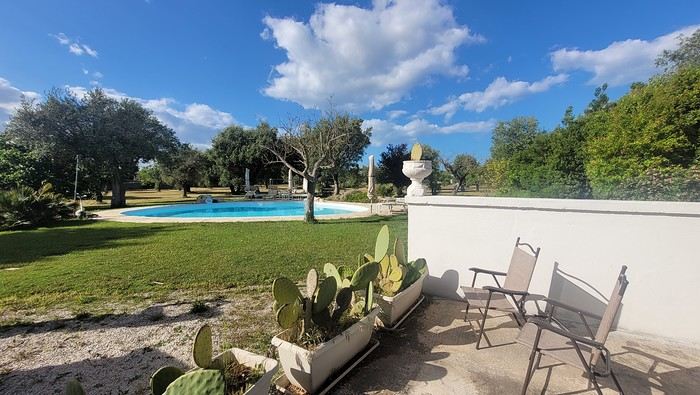
About an hour later, we arrive at our first accommodation, right in the middle of the countryside near Monopoli. The owner isn’t there, but they’ve left us a ton of info via messages and even turned on the space heater, which is a nice touch. We explore the property:
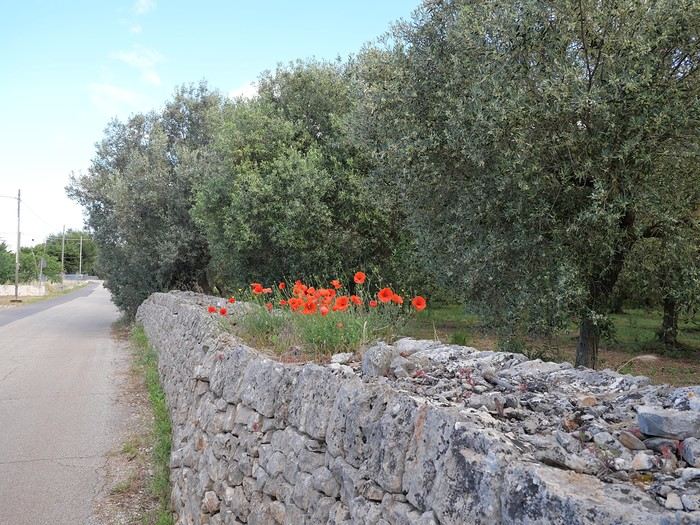
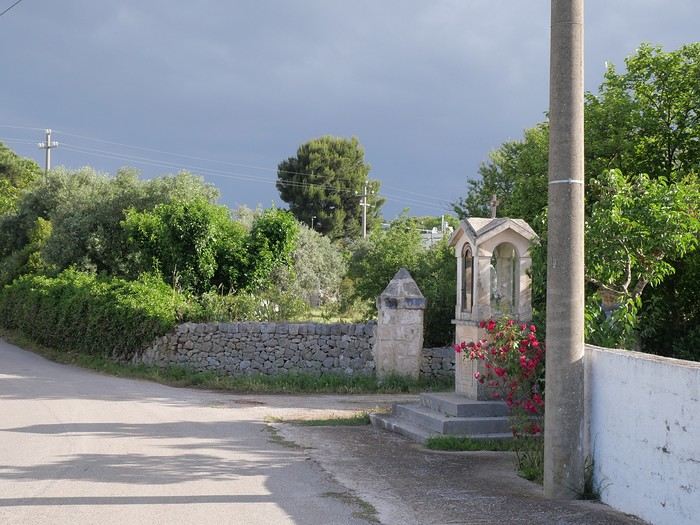
And the next morning before breakfast, its immediate surroundings:
Sunday, May 17: After our "seaside" experience in Gran Canaria last weekend (packed with people and locals), we decide to start inland. After a hearty breakfast,
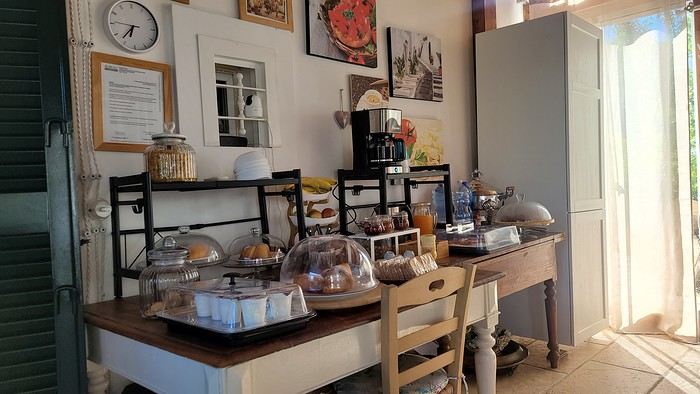
we head toward Alberobello, a super touristy village famous for its trulli—those stone houses with conical roofs. We easily find a free parking spot on a street near the Aia Piccola district, where some trulli are still lived in year-round.
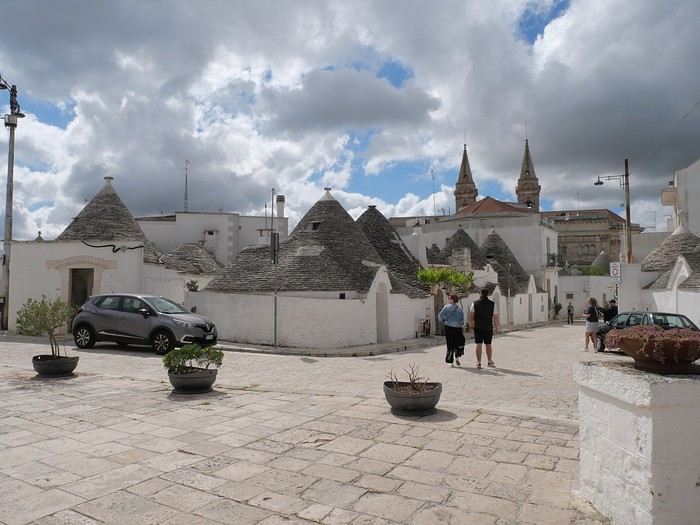
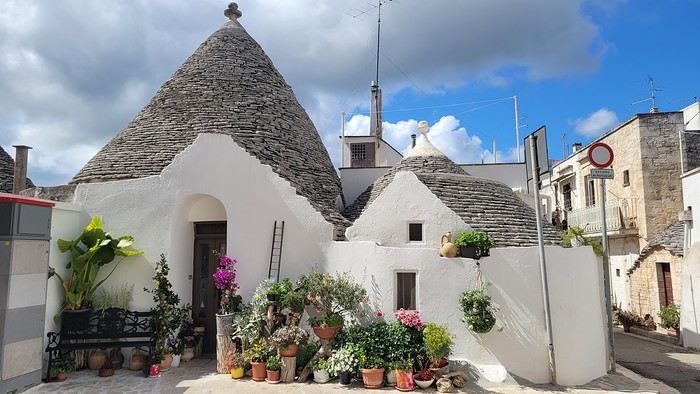
We almost immediately come across the Trullo Sovrano (the only two-story one), which you can visit (but we skip it—it’s opening time, and there’s already a line).
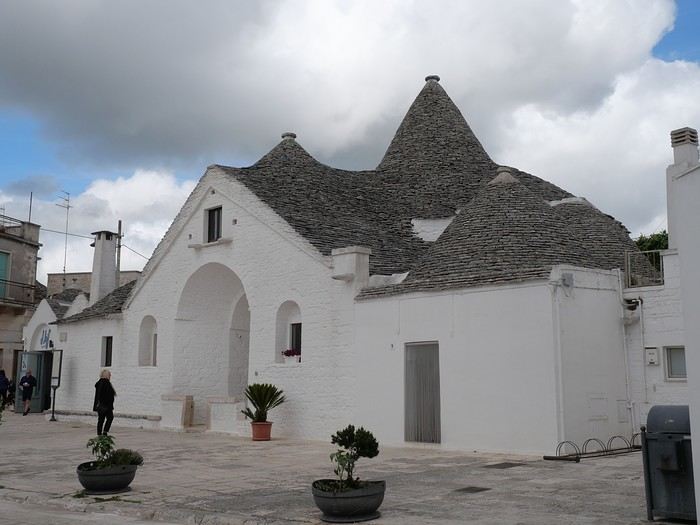
From there, we head down toward the Basilica of Cosma e Damiano... but we don’t go in because there’s a mass.
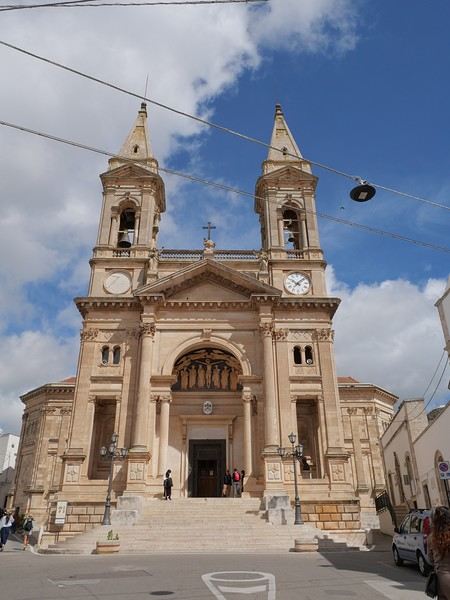
Now we’re on the main Piazza del Popolo, which connects the two districts of Alberobello: Rione Aia Piccola and Rione Monti, the more touristy one.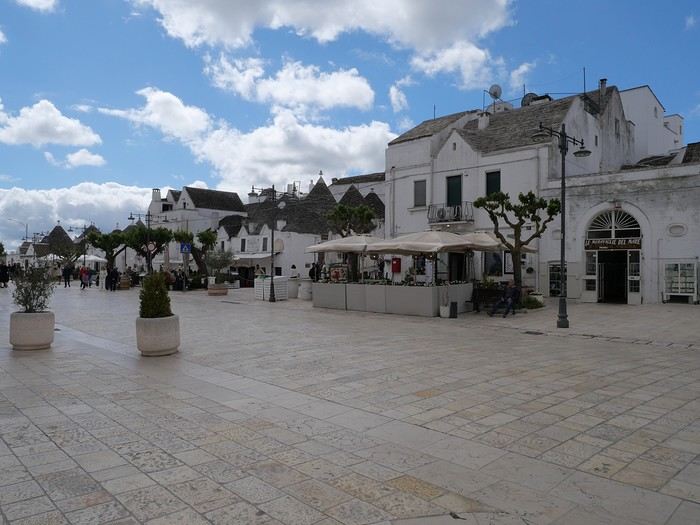
For those who’d like to (re)read the story without the digressions, it’s here.
Saturday, May 16: This time we’re flying out of Charleroi (Brussels South): the ticket prices, flight times, and proximity all worked for us. The airport (Ryanair) was recently renovated... but it’s still not very well organized. There are hardly any seats in the boarding areas, and... the restrooms cost money!!! The flight goes smoothly, though, and we land in Bari a little late.
We quickly pick up our rental car, a very local-looking Pandina (even more so than the Fiat 500 in this region), and hit the Italian roads... and their unique driving quirks (like the fact that the countless road signs along the streets and in towns are purely decorative 😏, and that Italian cars don’t have turn signals 😮... except for rental cars).
About an hour later, we arrive at our first accommodation, right in the middle of the countryside near Monopoli. The owner isn’t there, but they’ve left us a ton of info via messages and even turned on the space heater, which is a nice touch. We explore the property:
And the next morning before breakfast, its immediate surroundings:
Sunday, May 17: After our "seaside" experience in Gran Canaria last weekend (packed with people and locals), we decide to start inland. After a hearty breakfast,
we head toward Alberobello, a super touristy village famous for its trulli—those stone houses with conical roofs. We easily find a free parking spot on a street near the Aia Piccola district, where some trulli are still lived in year-round.
We almost immediately come across the Trullo Sovrano (the only two-story one), which you can visit (but we skip it—it’s opening time, and there’s already a line).
From there, we head down toward the Basilica of Cosma e Damiano... but we don’t go in because there’s a mass.
Now we’re on the main Piazza del Popolo, which connects the two districts of Alberobello: Rione Aia Piccola and Rione Monti, the more touristy one.
A Bold Combo: Southern Peru, Bolivia, and Northern Chile
Hello everyone,
For our latest 3-week family trip (yes, the kids are growing up, and two of them are about to enter the working world), we’re heading to South America! For our first time on this continent, I had planned a classic 3-week loop in Peru.
But since we won’t be returning to this part of the world anytime soon, I thought: why not follow in the footsteps of Franck, aka Bibouns51, who, in 18 days, didn’t just stick to Peru but also added two of the planet’s most stunning landscapes to his itinerary... the Salar de Uyuni in Bolivia and its neighbor, the fabulous Atacama Desert in northern Chile !!
So, I set about the tricky task of limiting the regions we’d visit in Peru to those we considered must-sees, to avoid rushing too much. The visit schedules were optimized, including several comfortable overnight buses that have the huge advantage of letting us hop between regions.
So, we’re off on a somewhat adventurous trip with three domestic flights (two on the first day and one on the last), two overnight buses for quick hops, several car rentals, the services of a few drivers to make the trip more comfortable, and even a tour operator for crossing the Salar...
Our main concern is altitude sickness, and we’re bringing Diamox, aspirin, etc., just in case.
Our second worry before departure was not even getting off the ground... Yes, for once, we’re leaving from France—Marseille, to be exact. The week before our departure, with the surprise air traffic controllers’ strike, I remembered why we usually prefer to leave from abroad, like Turin or Barcelona... In the end, it wasn’t the air traffic controllers who made us nervous but the early July wildfires that paralyzed the airport a few days before our departure. Fortunately, the fires were quickly brought under control, and on the big day, everything was smooth sailing!
Detailed itinerary (which changed on Day 1 due to departure hiccups): Day 0: Flight Marseille - Madrid - Lima PERU Theoretical and abandoned Day 1: Flight Lima - Cuzco and visit Cuzco (Puka Pukara, Tambomachay, Cristo Blanco Observatory, Sacsayhuaman sunset) - Night in Cuzco Day 2: Taxi -> Chinchero - Moray - Maras Salt Mines - Ollantaytambo - Train to Aguas Calientes Day 3: Machu Picchu - Return train to Ollantaytambo Day 4: 2-day taxi -> Pisac - Tipon - Andahuaylillas - Huaro - Night in San Pedro Day 5: Palcoyo - Checacupe - Vinicunca - Return and night in Cuzco Day 6: Day in Cuzco (catch-up on Sacsayhuaman, San Blas district, Temple of the Sun) - Overnight bus to Arequipa Day 7: Rental car -> On the road to Colca Canyon, night in Cabanaconde Day 8: Descent to the bottom of Colca Canyon, night at Oasis Sangalle Day 9: Ascent from the canyon - Maca - Chivay - Return and night in Arequipa Day 10: Visit Arequipa (Santa Catalina Convent, La Recoleta Church and Monastery, La Compañía Church, Cathedral) - Overnight bus to Puno Day 11: Lake Titicaca - Night in Puno BOLIVIA Day 12: Shared taxi -> Road to La Paz, visit downtown La Paz - Night 1 in La Paz Day 13: Moon Valley and Las Animas Valley - Night 2 in La Paz Day 14: Day in La Paz - Night 3 in La Paz Day 15: Flight to Uyuni - Day 1 of Salar de Uyuni tour - Night at the edge of the Salar Day 16: Crossing the Lipez region and lagoons - Night near Laguna Colorada Day 17: Sol de Mañana CHILE Day 17 cont.: Pre-booked transfer to SPDA - 4x4 rental - Pukara de Quitor - Stargazing tour - Night 1 in SPDA Day 18: Death Valley and Moon Valley - Night 2 in SPDA Day 19: Miscanti and Miniques Lagoons, Salar de Aguas Calientes and its Piedra Roja, Tebenquiche Lagoon and Quebrada del Diablo - Night 3 in SPDA Day 20: Rainbow Valley and swim in the Puritama River - Night 4 in SPDA Day 21: Tebenquiche Lagoon - Bus to Calama - Flight to Santiago Day 22: Return Santiago - Madrid - Marseille
Day 0 - 11/07: Destination Lima
Our first flight from Marseille went smoothly to our Iberia layover in Madrid.
In Madrid, just after getting off the plane around 8 PM, and as we were walking through the terminal, we got a rude awakening!!
We saw the word "Cancelled" next to our flight number on the display boards. Thinking it must be a glitch, we checked another screen, but the system was stubborn, and the same dreaded word appeared !
So, we headed to the Iberia counter, where an agent confirmed that our Friday evening flight was canceled and rescheduled for the next morning. The reason? A breakdown and no replacement plane, even though we were in Madrid, Iberia’s home base!
To make matters worse, I remembered our super-tight schedule, planned to the minute, with no buffer day in Lima. Since I’m a bit phobic of megacities and hadn’t found anything appealing in the Peruvian capital in our guidebooks, we’d planned to leave Lima as soon as possible for Cusco, the heart of the Sacred Valley, to spend our first day there.
Bad idea, because we already knew the 4-hour buffer wouldn’t be enough, and we’d miss the domestic flight, which was, of course, non-refundable and non-changeable. So, we had to call LATAM from Madrid to find another flight for Saturday evening and negotiate a rate to recover some of our initial outlay.
After an hour on the phone with customer service, several endless holds, and three failed attempts to dictate our credit card number over the phone to a Spaniard speaking English with a thick accent, we finally managed to confirm the transaction, securing our new flight tickets for a moderate extra cost of just 150 € total.
At first, we were pretty bummed about losing a day and incurring extra fees to reschedule the domestic flight, but then, when we learned from an Iberia customer service rep that we’d receive the max compensation of 600 € per traveler, we even ended up grinning... because 3000 € in refunds for only losing the first day in Cusco? We’d sign up for that 10 times over!!
Iberia then took care of us, putting us up in a hotel where we had dinner before a short 5-hour night and an early morning departure. I took the opportunity to improvise a quick day of sightseeing in Lima, focusing on the Barranco and Miraflores districts.
For our latest 3-week family trip (yes, the kids are growing up, and two of them are about to enter the working world), we’re heading to South America! For our first time on this continent, I had planned a classic 3-week loop in Peru.
But since we won’t be returning to this part of the world anytime soon, I thought: why not follow in the footsteps of Franck, aka Bibouns51, who, in 18 days, didn’t just stick to Peru but also added two of the planet’s most stunning landscapes to his itinerary... the Salar de Uyuni in Bolivia and its neighbor, the fabulous Atacama Desert in northern Chile !!
So, I set about the tricky task of limiting the regions we’d visit in Peru to those we considered must-sees, to avoid rushing too much. The visit schedules were optimized, including several comfortable overnight buses that have the huge advantage of letting us hop between regions.
So, we’re off on a somewhat adventurous trip with three domestic flights (two on the first day and one on the last), two overnight buses for quick hops, several car rentals, the services of a few drivers to make the trip more comfortable, and even a tour operator for crossing the Salar...
Our main concern is altitude sickness, and we’re bringing Diamox, aspirin, etc., just in case.
Our second worry before departure was not even getting off the ground... Yes, for once, we’re leaving from France—Marseille, to be exact. The week before our departure, with the surprise air traffic controllers’ strike, I remembered why we usually prefer to leave from abroad, like Turin or Barcelona... In the end, it wasn’t the air traffic controllers who made us nervous but the early July wildfires that paralyzed the airport a few days before our departure. Fortunately, the fires were quickly brought under control, and on the big day, everything was smooth sailing!
Detailed itinerary (which changed on Day 1 due to departure hiccups): Day 0: Flight Marseille - Madrid - Lima PERU Theoretical and abandoned Day 1: Flight Lima - Cuzco and visit Cuzco (Puka Pukara, Tambomachay, Cristo Blanco Observatory, Sacsayhuaman sunset) - Night in Cuzco Day 2: Taxi -> Chinchero - Moray - Maras Salt Mines - Ollantaytambo - Train to Aguas Calientes Day 3: Machu Picchu - Return train to Ollantaytambo Day 4: 2-day taxi -> Pisac - Tipon - Andahuaylillas - Huaro - Night in San Pedro Day 5: Palcoyo - Checacupe - Vinicunca - Return and night in Cuzco Day 6: Day in Cuzco (catch-up on Sacsayhuaman, San Blas district, Temple of the Sun) - Overnight bus to Arequipa Day 7: Rental car -> On the road to Colca Canyon, night in Cabanaconde Day 8: Descent to the bottom of Colca Canyon, night at Oasis Sangalle Day 9: Ascent from the canyon - Maca - Chivay - Return and night in Arequipa Day 10: Visit Arequipa (Santa Catalina Convent, La Recoleta Church and Monastery, La Compañía Church, Cathedral) - Overnight bus to Puno Day 11: Lake Titicaca - Night in Puno BOLIVIA Day 12: Shared taxi -> Road to La Paz, visit downtown La Paz - Night 1 in La Paz Day 13: Moon Valley and Las Animas Valley - Night 2 in La Paz Day 14: Day in La Paz - Night 3 in La Paz Day 15: Flight to Uyuni - Day 1 of Salar de Uyuni tour - Night at the edge of the Salar Day 16: Crossing the Lipez region and lagoons - Night near Laguna Colorada Day 17: Sol de Mañana CHILE Day 17 cont.: Pre-booked transfer to SPDA - 4x4 rental - Pukara de Quitor - Stargazing tour - Night 1 in SPDA Day 18: Death Valley and Moon Valley - Night 2 in SPDA Day 19: Miscanti and Miniques Lagoons, Salar de Aguas Calientes and its Piedra Roja, Tebenquiche Lagoon and Quebrada del Diablo - Night 3 in SPDA Day 20: Rainbow Valley and swim in the Puritama River - Night 4 in SPDA Day 21: Tebenquiche Lagoon - Bus to Calama - Flight to Santiago Day 22: Return Santiago - Madrid - Marseille
Day 0 - 11/07: Destination Lima
Our first flight from Marseille went smoothly to our Iberia layover in Madrid.
In Madrid, just after getting off the plane around 8 PM, and as we were walking through the terminal, we got a rude awakening!!
We saw the word "Cancelled" next to our flight number on the display boards. Thinking it must be a glitch, we checked another screen, but the system was stubborn, and the same dreaded word appeared !
So, we headed to the Iberia counter, where an agent confirmed that our Friday evening flight was canceled and rescheduled for the next morning. The reason? A breakdown and no replacement plane, even though we were in Madrid, Iberia’s home base!
To make matters worse, I remembered our super-tight schedule, planned to the minute, with no buffer day in Lima. Since I’m a bit phobic of megacities and hadn’t found anything appealing in the Peruvian capital in our guidebooks, we’d planned to leave Lima as soon as possible for Cusco, the heart of the Sacred Valley, to spend our first day there.
Bad idea, because we already knew the 4-hour buffer wouldn’t be enough, and we’d miss the domestic flight, which was, of course, non-refundable and non-changeable. So, we had to call LATAM from Madrid to find another flight for Saturday evening and negotiate a rate to recover some of our initial outlay.
After an hour on the phone with customer service, several endless holds, and three failed attempts to dictate our credit card number over the phone to a Spaniard speaking English with a thick accent, we finally managed to confirm the transaction, securing our new flight tickets for a moderate extra cost of just 150 € total.
At first, we were pretty bummed about losing a day and incurring extra fees to reschedule the domestic flight, but then, when we learned from an Iberia customer service rep that we’d receive the max compensation of 600 € per traveler, we even ended up grinning... because 3000 € in refunds for only losing the first day in Cusco? We’d sign up for that 10 times over!!
Iberia then took care of us, putting us up in a hotel where we had dinner before a short 5-hour night and an early morning departure. I took the opportunity to improvise a quick day of sightseeing in Lima, focusing on the Barranco and Miraflores districts.
Tunisian Impressions (Live)
Hi there,
I arrived in Tunisia this afternoon for a full 14-day stay.
I took a direct Tunisair flight from Nice, which departed about thirty minutes late (that’s nothing compared to the "nightmares" I’ve had on some of my recent trips).
The flight lasts around 1 hour and 20 minutes, and a small snack was served on board (a sort of quiche with chickpea purée, a small bread roll, a portion of cheese like La Vache qui rit, and a small chocolate cake). It’s worth mentioning because it’s becoming increasingly rare on short flights. I was seated between two Tunisian gentlemen who gave me some great tips for my trip, especially about negotiating prices. One of them is a former cameraman for France Télévisions, very cultured and well-traveled—his daughter is a journalist at France Télévisions (I found some of her articles online). In short, the flight was very pleasant and quick.

I’m staying at the Hôtel Royal Victoria. I booked it yesterday afternoon by email without providing my credit card number. The room costs 241 TND (71 €) with breakfast included. It has heating, a small fridge, a safe, a hairdryer, Wi-Fi, and a TV with international channels. There’s a police van permanently parked in the square where the hotel is located.
This hotel is housed in the former British consulate and later embassy. It has a lot of charm with its painted wood ceilings and doors, and its bathroom covered in ceramic tiles. The tiny elevator is from another era. The main advantage of the hotel is its location between the medina and Avenue Bourguiba. Nearby, there’s the Magasin Général, where you can find groceries and some typical products like rose water, geranium water, and tons of halwa (a customer kindly explained how to eat it and which is the best).
After nightfall, I took a short stroll down Avenue Bourguiba. There weren’t many people around—it’s windy and cold.
I’ve already noticed the warm welcome from Tunisians. The supermarket cashier welcomed me to Tunisia, and a gentleman I asked for directions to the Magasin Général (I was about to climb stairs leading to a mosque!) insisted on inviting me for coffee, but I declined.
The rest of my itinerary will depend on the weather. If it doesn’t rain tomorrow, I might visit Carthage since the Bardo Museum is closed on Mondays, as are the museums in Sidi Bou Said.
TO BE CONTINUED...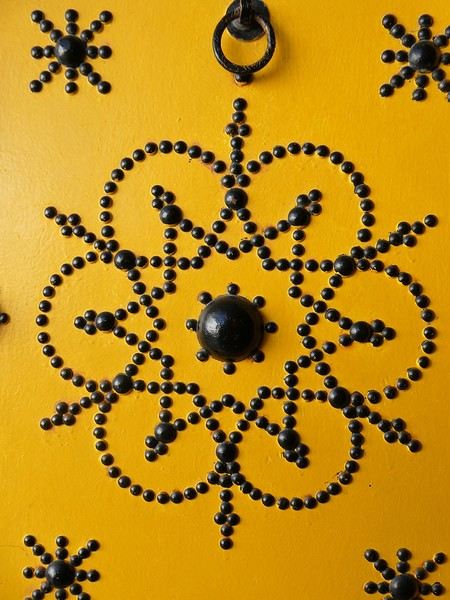


I arrived in Tunisia this afternoon for a full 14-day stay.
I took a direct Tunisair flight from Nice, which departed about thirty minutes late (that’s nothing compared to the "nightmares" I’ve had on some of my recent trips).
The flight lasts around 1 hour and 20 minutes, and a small snack was served on board (a sort of quiche with chickpea purée, a small bread roll, a portion of cheese like La Vache qui rit, and a small chocolate cake). It’s worth mentioning because it’s becoming increasingly rare on short flights. I was seated between two Tunisian gentlemen who gave me some great tips for my trip, especially about negotiating prices. One of them is a former cameraman for France Télévisions, very cultured and well-traveled—his daughter is a journalist at France Télévisions (I found some of her articles online). In short, the flight was very pleasant and quick.
I’m staying at the Hôtel Royal Victoria. I booked it yesterday afternoon by email without providing my credit card number. The room costs 241 TND (71 €) with breakfast included. It has heating, a small fridge, a safe, a hairdryer, Wi-Fi, and a TV with international channels. There’s a police van permanently parked in the square where the hotel is located.
This hotel is housed in the former British consulate and later embassy. It has a lot of charm with its painted wood ceilings and doors, and its bathroom covered in ceramic tiles. The tiny elevator is from another era. The main advantage of the hotel is its location between the medina and Avenue Bourguiba. Nearby, there’s the Magasin Général, where you can find groceries and some typical products like rose water, geranium water, and tons of halwa (a customer kindly explained how to eat it and which is the best).
After nightfall, I took a short stroll down Avenue Bourguiba. There weren’t many people around—it’s windy and cold.
I’ve already noticed the warm welcome from Tunisians. The supermarket cashier welcomed me to Tunisia, and a gentleman I asked for directions to the Magasin Général (I was about to climb stairs leading to a mosque!) insisted on inviting me for coffee, but I declined.
The rest of my itinerary will depend on the weather. If it doesn’t rain tomorrow, I might visit Carthage since the Bardo Museum is closed on Mondays, as are the museums in Sidi Bou Said.
TO BE CONTINUED...
1 month in northern Laos (Oct 23 to Nov 24, 2025)
Northern Laos, Nov 25
Thursday, Oct 23. Left home at 8:25 AM, took the bus from St Cyp to Perpignan, then a BlaBlaBus to Barcelona airport. Last night, a huge storm crossed France, and the bus was an hour late. We finally left at 11 AM. At the Spanish border, we were checked—several Africans were traveling on the bus, and their document verification took quite a while. In the end, everything was in order, and we set off again a good half-hour later. We finally arrived at Barcelona airport after 2 PM, but no stress since my flight was scheduled for 4:30 PM with Saudia. At check-in, the hostess told me there’d be a 1-hour delay due to bad weather in France and Belgium. In the end, the flight didn’t just have a 1-hour delay but a 5-hour one because of a technical issue. The next flight wouldn’t wait for us. When we arrived in Jeddah, they gave us another ticket for the following day—the flight to Bangkok was scheduled for 11:55 AM. The airline assigned us a room, which was good news since I was exhausted. Friday morning, the flight was still scheduled for 11:55 AM, but the gate wasn’t displayed. It was announced with a 1-hour delay, but that stretched to 4 hours. They handed out drinks and a snack—again, the delay was due to technical problems. In Bangkok, I had a connecting flight to Chiang Rai, where I’d also booked a room—I lost everything. We finally arrived in Bangkok on Saturday at 4 AM. I had to buy another ticket for a 7 AM flight. The formalities were quick, and my flight went smoothly. A taxi took me to Bus Terminal 1, where I caught a bus leaving at 10 AM, and we arrived at the Thailand-Laos border. I shared a taxi with other travelers, which took us to Houay Xai. The guesthouse I’d booked was right across from the stop—that was great. I exchanged some money and bought a SIM card at the guesthouse. Despite the fatigue, I needed to stretch my legs, so I walked down the street to the temple.
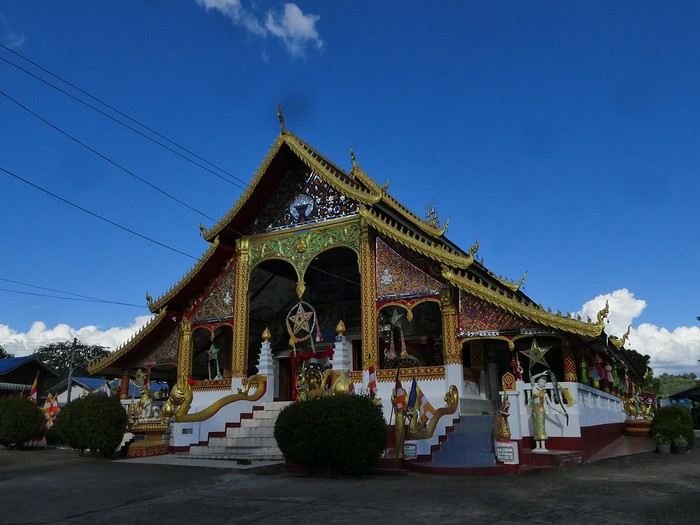
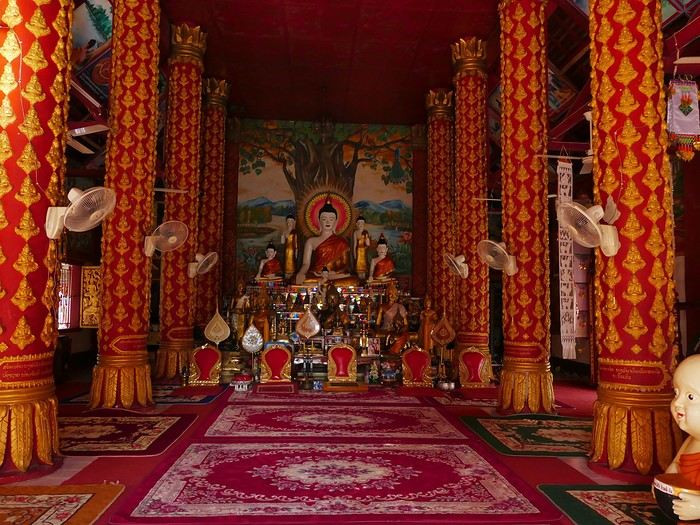
and continued to Fort Carnot, built by the French.
The views of the Mekong are beautiful for a first glimpse of the country.
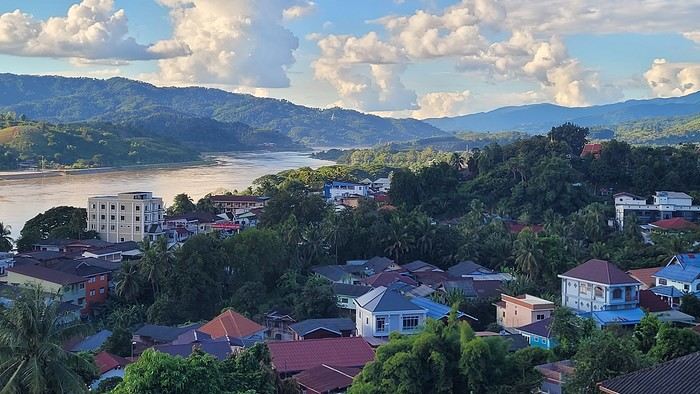
yum-yum, bon appétit!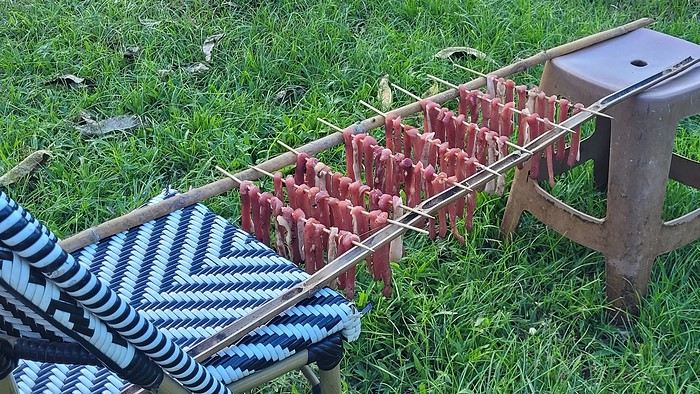
At 6:30 PM, I went to dinner at a restaurant across from the guesthouse—a chicken curry with vegetables.
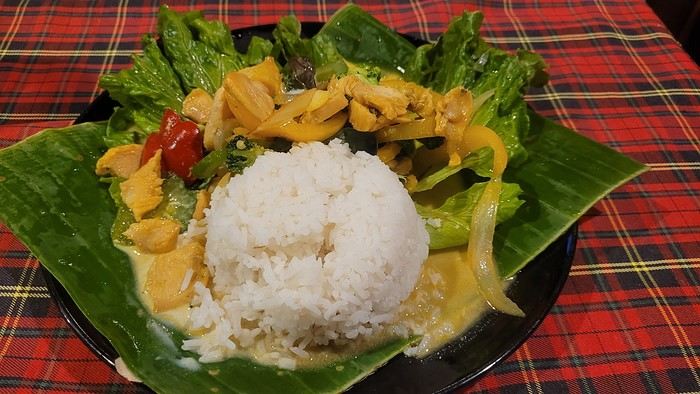
I didn’t linger and went back to bed. I slept well, even if I woke up often.
Thursday, Oct 23. Left home at 8:25 AM, took the bus from St Cyp to Perpignan, then a BlaBlaBus to Barcelona airport. Last night, a huge storm crossed France, and the bus was an hour late. We finally left at 11 AM. At the Spanish border, we were checked—several Africans were traveling on the bus, and their document verification took quite a while. In the end, everything was in order, and we set off again a good half-hour later. We finally arrived at Barcelona airport after 2 PM, but no stress since my flight was scheduled for 4:30 PM with Saudia. At check-in, the hostess told me there’d be a 1-hour delay due to bad weather in France and Belgium. In the end, the flight didn’t just have a 1-hour delay but a 5-hour one because of a technical issue. The next flight wouldn’t wait for us. When we arrived in Jeddah, they gave us another ticket for the following day—the flight to Bangkok was scheduled for 11:55 AM. The airline assigned us a room, which was good news since I was exhausted. Friday morning, the flight was still scheduled for 11:55 AM, but the gate wasn’t displayed. It was announced with a 1-hour delay, but that stretched to 4 hours. They handed out drinks and a snack—again, the delay was due to technical problems. In Bangkok, I had a connecting flight to Chiang Rai, where I’d also booked a room—I lost everything. We finally arrived in Bangkok on Saturday at 4 AM. I had to buy another ticket for a 7 AM flight. The formalities were quick, and my flight went smoothly. A taxi took me to Bus Terminal 1, where I caught a bus leaving at 10 AM, and we arrived at the Thailand-Laos border. I shared a taxi with other travelers, which took us to Houay Xai. The guesthouse I’d booked was right across from the stop—that was great. I exchanged some money and bought a SIM card at the guesthouse. Despite the fatigue, I needed to stretch my legs, so I walked down the street to the temple.
and continued to Fort Carnot, built by the French.
The views of the Mekong are beautiful for a first glimpse of the country.
yum-yum, bon appétit!
At 6:30 PM, I went to dinner at a restaurant across from the guesthouse—a chicken curry with vegetables.
I didn’t linger and went back to bed. I slept well, even if I woke up often.
Trip to Thailand and Laos
Hello! 🙂
January 2026 Here we go again for new adventures and the pleasure of sharing them with you here! First of all, I’d like to thank everyone who helped me with the preparations, even with some last-minute improvisations just days before departure. Thanks to Montagnard74, Jojoone1, Songsam, Attila, Dennis2, NadegerFERM, and the authors whose travel journals about Laos inspired me (Montagnard74, Muriel18, Mavietongs...).
In this story, written by Richard and illustrated by me, we’ll tell you about the journey of four friends: Catherine, Richard, Nathalie, and Bruno. A reinvented but overall successful trip, filled with discoveries and surprises, the scents of spices and frangipani flowers, (too) spicy food, sunsets, and... one big mess.
January 2026 Here we go again for new adventures and the pleasure of sharing them with you here! First of all, I’d like to thank everyone who helped me with the preparations, even with some last-minute improvisations just days before departure. Thanks to Montagnard74, Jojoone1, Songsam, Attila, Dennis2, NadegerFERM, and the authors whose travel journals about Laos inspired me (Montagnard74, Muriel18, Mavietongs...).
In this story, written by Richard and illustrated by me, we’ll tell you about the journey of four friends: Catherine, Richard, Nathalie, and Bruno. A reinvented but overall successful trip, filled with discoveries and surprises, the scents of spices and frangipani flowers, (too) spicy food, sunsets, and... one big mess.
Daily driver rates in Thailand
Hi everyone,
I’m about to head to Thailand with my kids and I’ve been put in touch with a French-speaking driver who’ll be with us for 3–4 days (for a little "tour" around the provinces near Bangkok).
I’d love to know what the "going rates" are for this kind of service so I can make sure I’m not overpaying.
So if any of you have used this kind of service recently and could let me know what you paid, I’d really appreciate it!
Thanks in advance and have a great week! 😉
Amy
I’m about to head to Thailand with my kids and I’ve been put in touch with a French-speaking driver who’ll be with us for 3–4 days (for a little "tour" around the provinces near Bangkok).
I’d love to know what the "going rates" are for this kind of service so I can make sure I’m not overpaying.
So if any of you have used this kind of service recently and could let me know what you paid, I’d really appreciate it!
Thanks in advance and have a great week! 😉
Amy
Slovak travel journal
Hello and welcome aboard this travel journal.
We’re heading to Slovakia together!
 Why this country?
After visiting Hungary, Slovenia, Romania, and Poland in recent years, I’ve fallen in love with Eastern European countries. I adore the Slavic soul, its Austro-Hungarian villages, the gentle landscapes, the Carpathian Mountains, and that slightly mysterious atmosphere.
Slovakia evokes a certain imagination with its deep forests, medieval castles, and cobbled villages.
After seeing photos of the High Tatras—especially Lake Štrbské Pleso and Spiš Castle—I thought, "Let’s do it! We’re going!"
So, will Slovakia live up to what I imagine?
We’ll find out together.
We decided to travel as a group of six (five adults and a six-year-old child), by car (we needed two).
Here’s the day-by-day itinerary for this family trip, which started with a 3-day stay in Vienna (see the dedicated travel journal):
Why this country?
After visiting Hungary, Slovenia, Romania, and Poland in recent years, I’ve fallen in love with Eastern European countries. I adore the Slavic soul, its Austro-Hungarian villages, the gentle landscapes, the Carpathian Mountains, and that slightly mysterious atmosphere.
Slovakia evokes a certain imagination with its deep forests, medieval castles, and cobbled villages.
After seeing photos of the High Tatras—especially Lake Štrbské Pleso and Spiš Castle—I thought, "Let’s do it! We’re going!"
So, will Slovakia live up to what I imagine?
We’ll find out together.
We decided to travel as a group of six (five adults and a six-year-old child), by car (we needed two).
Here’s the day-by-day itinerary for this family trip, which started with a 3-day stay in Vienna (see the dedicated travel journal):
The itinerary: Day 1: Drive from Vienna to Banská Štiavnica and visit the town, then drive to Handlová Day 2: Bojnice Castle, the village of Čičmany, and a walk in the treetops at Bojnice, return to Handlová Day 3: Depart for Orava, visit Orava Castle and the Orava Skansen, drive to Veľký Slavkov Day 4: Visit Slovak Paradise—its gorges, lakes, and ice cave—overnight in Veľký Slavkov Day 5: Visit Bardejov, the "Death Road," wooden churches, and Ľubovňa Castle, overnight in Veľký Slavkov Day 6: Walks and hikes in the High Tatras, Lake Štrbské Pleso, Solisko summit, treetop walk in Ždiar, overnight in Veľký Slavkov Day 7: Drive to Košice, visit Spiš Castle, Tokaj wine route in Veľká Trňa, overnight in Košice Day 8: Visit Košice, overnight in Košice Day 9: Drive to Bratislava, stop at the Aragonite Cave in the Slovak Karst, overnight in Bratislava Day 10: Visit Bratislava, overnight stay Day 11 and 12: Return to France
Budget: I’m giving prices for 2 adults / 1 child. Slovakia is more expensive than it seems, and some expenses shouldn’t be underestimated. Transportation: Tolls and gas from France: 500 € round trip Slovak vignette for one month: 17.10 € Gas is fixed at 1.49 € per liter (E10) Parking at sites (all paid by the day, even in the most remote villages, even if you stay for just an hour). Payment is often required in cash upon arrival: total 63 € We didn’t pay at Spiš (we arrived before the cashier) or Ľubovňa (we arrived after the cashier left). Parking at Orava Village was free. In Košice and Bratislava, we parked for free at our accommodations. Public transport in Bratislava and Košice: 1-1.2 € for a bus ticket. Vending machines are available at some stops; otherwise, buy via SMS (Slovak phones only) or official sales points.
Accommodation: We mostly chose houses so we could cook ourselves and save on food. I’ve rated our satisfaction with these accommodations from 1 to 5 stars. Padua: DC Hotel: 1 night, 77 € ***** Handlová: Chata Remata: 2 nights, 120 € ***** Veľký Slavkov: Aplend: 4 nights, 220 € ** Košice: Luxury Old Town Loft 320m²: 2 nights, 120 € ***** Bratislava: Hotel Viktor: 2 nights, 138 € *** Brescia: Hotel Antica Fonte: 1 night, 82 € ***** Total: 757 €
Food: Groceries at Lidl for 5 meals for 3: 100 € (really cheap) Restaurants: 10-15 € per dish, ice cream 1-2.4 € per scoop, crêpes 8-12 €, a glass of wine 6-10 €... total: 500 €
Visits: There are discounts for seniors and children, which is great. We spent nearly 600 € in total, which is a lot. However, it’s a cultural destination with many castles, museums, caves, wine cellars, and nature activities: cable cars, canopy walks, paid hikes (Slovak Paradise gorges)... In the end, this trip to Slovakia cost nearly 2500 € for 3. We also need to add the Vienna portion to that. Now, here’s the day-by-day account of this beautiful journey.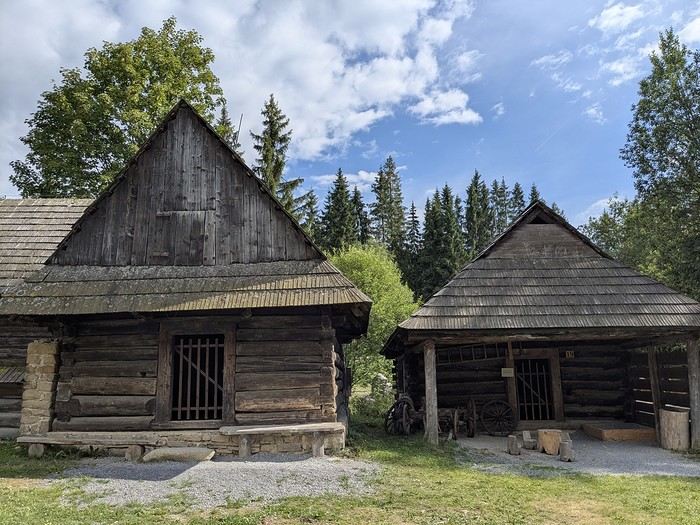
Why this country?
After visiting Hungary, Slovenia, Romania, and Poland in recent years, I’ve fallen in love with Eastern European countries. I adore the Slavic soul, its Austro-Hungarian villages, the gentle landscapes, the Carpathian Mountains, and that slightly mysterious atmosphere.
Slovakia evokes a certain imagination with its deep forests, medieval castles, and cobbled villages.
After seeing photos of the High Tatras—especially Lake Štrbské Pleso and Spiš Castle—I thought, "Let’s do it! We’re going!"
So, will Slovakia live up to what I imagine?
We’ll find out together.
We decided to travel as a group of six (five adults and a six-year-old child), by car (we needed two).
Here’s the day-by-day itinerary for this family trip, which started with a 3-day stay in Vienna (see the dedicated travel journal):
The itinerary: Day 1: Drive from Vienna to Banská Štiavnica and visit the town, then drive to Handlová Day 2: Bojnice Castle, the village of Čičmany, and a walk in the treetops at Bojnice, return to Handlová Day 3: Depart for Orava, visit Orava Castle and the Orava Skansen, drive to Veľký Slavkov Day 4: Visit Slovak Paradise—its gorges, lakes, and ice cave—overnight in Veľký Slavkov Day 5: Visit Bardejov, the "Death Road," wooden churches, and Ľubovňa Castle, overnight in Veľký Slavkov Day 6: Walks and hikes in the High Tatras, Lake Štrbské Pleso, Solisko summit, treetop walk in Ždiar, overnight in Veľký Slavkov Day 7: Drive to Košice, visit Spiš Castle, Tokaj wine route in Veľká Trňa, overnight in Košice Day 8: Visit Košice, overnight in Košice Day 9: Drive to Bratislava, stop at the Aragonite Cave in the Slovak Karst, overnight in Bratislava Day 10: Visit Bratislava, overnight stay Day 11 and 12: Return to France
Budget: I’m giving prices for 2 adults / 1 child. Slovakia is more expensive than it seems, and some expenses shouldn’t be underestimated. Transportation: Tolls and gas from France: 500 € round trip Slovak vignette for one month: 17.10 € Gas is fixed at 1.49 € per liter (E10) Parking at sites (all paid by the day, even in the most remote villages, even if you stay for just an hour). Payment is often required in cash upon arrival: total 63 € We didn’t pay at Spiš (we arrived before the cashier) or Ľubovňa (we arrived after the cashier left). Parking at Orava Village was free. In Košice and Bratislava, we parked for free at our accommodations. Public transport in Bratislava and Košice: 1-1.2 € for a bus ticket. Vending machines are available at some stops; otherwise, buy via SMS (Slovak phones only) or official sales points.
Accommodation: We mostly chose houses so we could cook ourselves and save on food. I’ve rated our satisfaction with these accommodations from 1 to 5 stars. Padua: DC Hotel: 1 night, 77 € ***** Handlová: Chata Remata: 2 nights, 120 € ***** Veľký Slavkov: Aplend: 4 nights, 220 € ** Košice: Luxury Old Town Loft 320m²: 2 nights, 120 € ***** Bratislava: Hotel Viktor: 2 nights, 138 € *** Brescia: Hotel Antica Fonte: 1 night, 82 € ***** Total: 757 €
Food: Groceries at Lidl for 5 meals for 3: 100 € (really cheap) Restaurants: 10-15 € per dish, ice cream 1-2.4 € per scoop, crêpes 8-12 €, a glass of wine 6-10 €... total: 500 €
Visits: There are discounts for seniors and children, which is great. We spent nearly 600 € in total, which is a lot. However, it’s a cultural destination with many castles, museums, caves, wine cellars, and nature activities: cable cars, canopy walks, paid hikes (Slovak Paradise gorges)... In the end, this trip to Slovakia cost nearly 2500 € for 3. We also need to add the Vienna portion to that. Now, here’s the day-by-day account of this beautiful journey.
Croatia, Montenegro – two victims of overtourism?
Mid-June, two Auvergnats on the starting blocks—off we go to the former Yugoslavia!
We’d already explored some nooks and crannies of northern Croatia back in 2019, so we’re keeping the momentum going by planning a trip to the south of the country and then Montenegro.
On the way back, we’ll drift into Bosnia-Herzegovina just to mix things up a bit!
We’re a little unsure about what to expect in terms of tourist crowds.
Dubrovnik has a reputation for being the hardest-hit city by overtourism, and Kotor and the whole Dalmatian coast aren’t exactly empty...
Luckily, most European countries haven’t started school holidays yet, and some measures seem to have been put in place to limit the flow (like restrictions on the number of cruise ships allowed to dock at the same time).
Maybe we’ll manage to escape the promised hell?
For now, we’re slamming the doors of the Scirocco and heading off to our first stop: northern Italy!
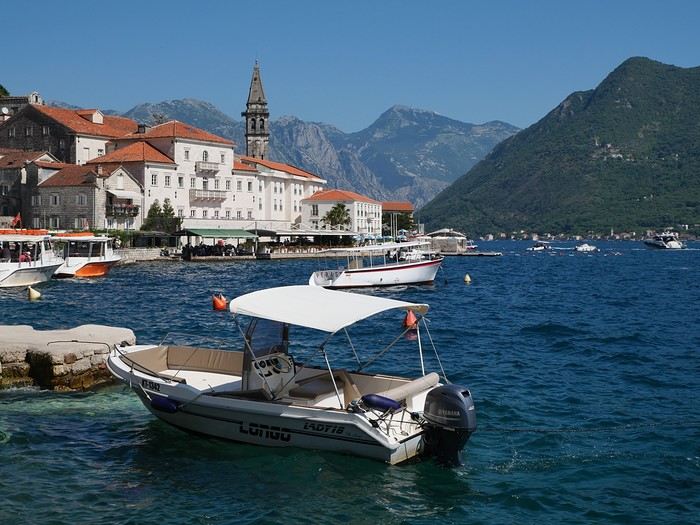
On the way back, we’ll drift into Bosnia-Herzegovina just to mix things up a bit!
We’re a little unsure about what to expect in terms of tourist crowds.
Dubrovnik has a reputation for being the hardest-hit city by overtourism, and Kotor and the whole Dalmatian coast aren’t exactly empty...
Luckily, most European countries haven’t started school holidays yet, and some measures seem to have been put in place to limit the flow (like restrictions on the number of cruise ships allowed to dock at the same time).
Maybe we’ll manage to escape the promised hell?
For now, we’re slamming the doors of the Scirocco and heading off to our first stop: northern Italy!
Australia 2025: Discovering the 5th Continent
Hi everyone.
Because that’s also what sparks the desire in every traveler (well, at least for me) to set foot on Australian soil: discovering a new continent.
Right now, I’ve got some time on my hands—those who follow me know that. A nasty muscle tear (which really doesn’t want to heal) is keeping me grounded for another week, so I’ve decided to open a new travel journal, recounting my recent trip from December 14, 2024, to January 12, 2025, in Australia.
The origins of this trip started last May in Crete, an island I chose for a 10-day break. It’s really lovely, by the way, but that’s not the point… It’s around this time every year that we decide on our next winter destination, and Argentina was at the top of the list—Sydney wasn’t even on the radar… I’d been looking at flights to Buenos Aires for a while, and the prices were shocking… But by the pool one lazy afternoon, scrolling on my iPhone, a promo from Geneva to Sydney caught my eye. The deal ticked two boxes on my traveler’s bucket list: a flight to Australia and a flight with Singapore Airlines, often ranked as the world’s best airline. A quick chat with the missus (well, of course!) and the decision was made: off to the land of kangaroos! Now, once you add luggage and Economy Plus, it still comes to 1600 € per person, but that’s a reasonable price. Either way, we already know what we’re in for—Australia is a budget commitment!

Thanks to 123rf for the image loan 😛
Right now, I’ve got some time on my hands—those who follow me know that. A nasty muscle tear (which really doesn’t want to heal) is keeping me grounded for another week, so I’ve decided to open a new travel journal, recounting my recent trip from December 14, 2024, to January 12, 2025, in Australia.
The origins of this trip started last May in Crete, an island I chose for a 10-day break. It’s really lovely, by the way, but that’s not the point… It’s around this time every year that we decide on our next winter destination, and Argentina was at the top of the list—Sydney wasn’t even on the radar… I’d been looking at flights to Buenos Aires for a while, and the prices were shocking… But by the pool one lazy afternoon, scrolling on my iPhone, a promo from Geneva to Sydney caught my eye. The deal ticked two boxes on my traveler’s bucket list: a flight to Australia and a flight with Singapore Airlines, often ranked as the world’s best airline. A quick chat with the missus (well, of course!) and the decision was made: off to the land of kangaroos! Now, once you add luggage and Economy Plus, it still comes to 1600 € per person, but that’s a reasonable price. Either way, we already know what we’re in for—Australia is a budget commitment!
Thanks to 123rf for the image loan 😛
3 weeks in Colombia (August 2023)
Why Colombia?
It's quite simple. For the past few years, my daughter has been living with a Colombian from Bogotá. The idea was to discover his country, meet his family, and do part of the trip all four of us together.
We’re heading out first as scouts, then they’ll join us to continue the journey.
The itinerary was shared in another post—now it’s time for the impressions.
No photos, as for me, it’s video and nothing more!
Day 1: The big departure What was planned: A flight from Lyon Saint-Exupéry late morning heading to Frankfurt. Two hours of waiting in Frankfurt (just enough time to eat a pretzel!!) and then off to Bogotá for an arrival around 7 PM local time. I hadn’t done the Check-Mig (to be done 72 hours before the flight). I did it on my phone, giving a fake arrival date in Colombia, and the attendant told me there wouldn’t be any issues in Bogotá. Actually, two hours of delay at departure in Lyon because a sick passenger was on the plane—they had to evacuate him, and the ambulance that was supposed to be there didn’t have permission to come near the plane. Ah, French administrative formalities!!!!! Flight to Frankfurt with Lufthansa went smoothly. A sprint through the airport—very well organized. Connection secured, so we boarded the plane, and two hours later than scheduled, we took off for an 11-hour flight! Arrival in Bogotá, and the immigration process took over an hour and a half because of the crowds. However, no issues with the Check-Mig—they barely glanced at it. Our daughter’s father-in-law ended up waiting over 3 hours at the airport because of this!!! Surprise: No luggage. Luckily, we had packed essentials in our carry-ons! Quick administrative paperwork, and Lufthansa informed me our bags would be on the next flight, so no big deal. Off to our hotel in La Candelaria and a good night’s rest.
The plus: We’re in Bogotá! The minus: Flight delays are becoming more and more common.
Day 1: The big departure What was planned: A flight from Lyon Saint-Exupéry late morning heading to Frankfurt. Two hours of waiting in Frankfurt (just enough time to eat a pretzel!!) and then off to Bogotá for an arrival around 7 PM local time. I hadn’t done the Check-Mig (to be done 72 hours before the flight). I did it on my phone, giving a fake arrival date in Colombia, and the attendant told me there wouldn’t be any issues in Bogotá. Actually, two hours of delay at departure in Lyon because a sick passenger was on the plane—they had to evacuate him, and the ambulance that was supposed to be there didn’t have permission to come near the plane. Ah, French administrative formalities!!!!! Flight to Frankfurt with Lufthansa went smoothly. A sprint through the airport—very well organized. Connection secured, so we boarded the plane, and two hours later than scheduled, we took off for an 11-hour flight! Arrival in Bogotá, and the immigration process took over an hour and a half because of the crowds. However, no issues with the Check-Mig—they barely glanced at it. Our daughter’s father-in-law ended up waiting over 3 hours at the airport because of this!!! Surprise: No luggage. Luckily, we had packed essentials in our carry-ons! Quick administrative paperwork, and Lufthansa informed me our bags would be on the next flight, so no big deal. Off to our hotel in La Candelaria and a good night’s rest.
The plus: We’re in Bogotá! The minus: Flight delays are becoming more and more common.
From Bangkok to Krabi, Thailand by Car!
This first trip of 2025 will have the taste of Asia.
More precisely, Thailand!
It’s not my first time—I’ve often traveled across Southeast Asia between 2000 and 2015. (This travel journal, for example...)
But it’ll be my partner’s first steps in this part of the world.
The itinerary we’ve chosen will alternate between familiar sights for me and new discoveries for both of us.
I’ll get to see how the country has changed in 20 years—and what’s stayed the same!
We were torn between the north and the south of the kingdom. Fears of smoke from slash-and-burn farming and a desire to relax on the sand tipped the scales toward the south...
What if we rented a car?
I think driving in sprawling Bangkok would be a bit ambitious, so we’ll only book our vehicle from Hua Hin to return it in Surat Thani.
Other transportation will range from tuk-tuks to overnight trains and ride-hailing services.
And of course, the plane!
I’d love to travel from Auvergne to Bangkok by road, but 15 days wouldn’t be enough...
Plus, the current geopolitical situation isn’t exactly favorable...
So, once again, we’ll be stuck for hours in the less-than-comfortable economy class of Qatar Airways.
The arrival time was on schedule, entry formalities were quick, and all our luggage made it.
We left Lyon in wind and cold—now we’re breathing in the warm, humid air of กรุงเทพมหานคร.
To reach our hotel, we first took the metro, which dropped us off in the city center in about 30 minutes for the incredible price of 1.18 €.
A few taps on the GRAB app, and we booked a ride-hailing service for the last few kilometers.
We waited a while for our driver due to insane traffic in the area, but once in the 4x4, we were at our lodging in no time.
We chose this small hotel for its riverside location, tranquility, and price.
It’ll do the job perfectly—the only downside is the weak breakfast.
The room is inviting, and we collapse onto the bed for a well-deserved short nap.
Wake-up call in an hour for our first visits!
See you soon...
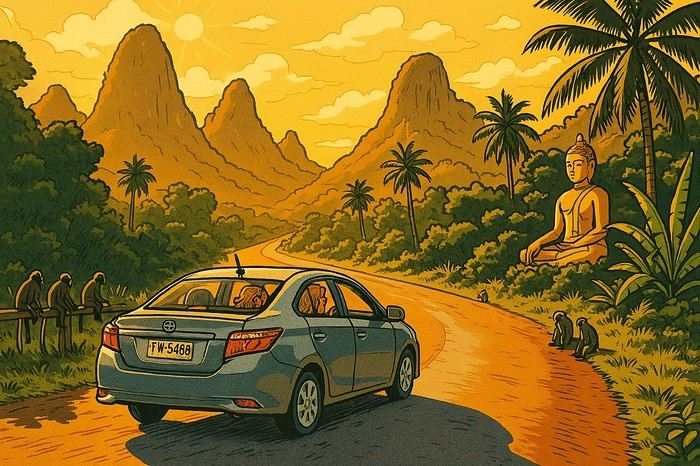
More precisely, Thailand!
It’s not my first time—I’ve often traveled across Southeast Asia between 2000 and 2015. (This travel journal, for example...)
But it’ll be my partner’s first steps in this part of the world.
The itinerary we’ve chosen will alternate between familiar sights for me and new discoveries for both of us.
I’ll get to see how the country has changed in 20 years—and what’s stayed the same!
We were torn between the north and the south of the kingdom. Fears of smoke from slash-and-burn farming and a desire to relax on the sand tipped the scales toward the south...
What if we rented a car?
I think driving in sprawling Bangkok would be a bit ambitious, so we’ll only book our vehicle from Hua Hin to return it in Surat Thani.
Other transportation will range from tuk-tuks to overnight trains and ride-hailing services.
And of course, the plane!
I’d love to travel from Auvergne to Bangkok by road, but 15 days wouldn’t be enough...
Plus, the current geopolitical situation isn’t exactly favorable...
So, once again, we’ll be stuck for hours in the less-than-comfortable economy class of Qatar Airways.
The arrival time was on schedule, entry formalities were quick, and all our luggage made it.
We left Lyon in wind and cold—now we’re breathing in the warm, humid air of กรุงเทพมหานคร.
To reach our hotel, we first took the metro, which dropped us off in the city center in about 30 minutes for the incredible price of 1.18 €.
A few taps on the GRAB app, and we booked a ride-hailing service for the last few kilometers.
We waited a while for our driver due to insane traffic in the area, but once in the 4x4, we were at our lodging in no time.
We chose this small hotel for its riverside location, tranquility, and price.
It’ll do the job perfectly—the only downside is the weak breakfast.
The room is inviting, and we collapse onto the bed for a well-deserved short nap.
Wake-up call in an hour for our first visits!
See you soon...
New Walks from Jodhpur to Narnaul (Feb 24)
I’ve been busy—here’s another travel journal on Rajasthan, with some new discoveries as always.
Thursday, January 25: I left home at 4:30 AM and headed to Barcelona airport. The roads weren’t blocked by farmers yet, so I made the trip without any issues. I arrived at the airport at 7:10 AM, called Parkvia, and someone picked up my car 15 minutes later. All that was left was to check in my luggage. My Etihad flight was at 10:25 AM, which gave me time for breakfast. We landed in Abu Dhabi at 7:30 PM. The flight to Delhi was at 10:15 PM, the transfer went smoothly without any stress, and we arrived in Delhi at 3:00 AM. I couldn’t waste any time upon arrival because I had a flight to Jodhpur at 6:55 AM. I got to customs, and what a nice surprise—the hall was empty. I went through immediately, had my passport and visa checked, and everything was fine. I grabbed my bag quickly and looked for the transfer to T2, which is outside. You have to walk along the taxi parking lot and take the long corridors—it’s well signposted, and the transfer took 10 minutes. At first, I was a little stressed, not knowing how long customs would take, but in the end, I was early for my 6:55 AM flight. I’m even glad I booked this one, as it got me to Jodhpur at 8:20 AM.
When I arrived, I took an auto-rickshaw to Jodhpur Palace GH, which I’d booked on Booking. The welcome was nice, and I was given a room right away. I was hoping to rest a bit, but unfortunately, it was very noisy. I settled in, took a shower, and was ready to go out and explore the city. The owner stopped me as I was leaving and told me I had to change rooms—I had to repack my bag before heading out. He showed me the way to the clock tower, which is about a 15-minute walk away.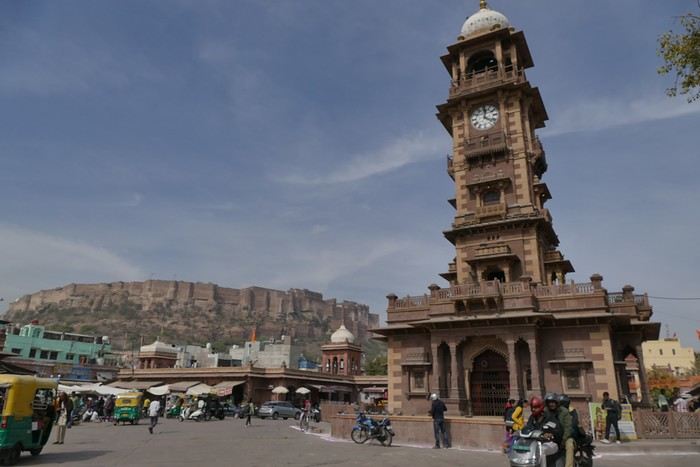
A market lines the street leading to the tower, and the traffic is intense.
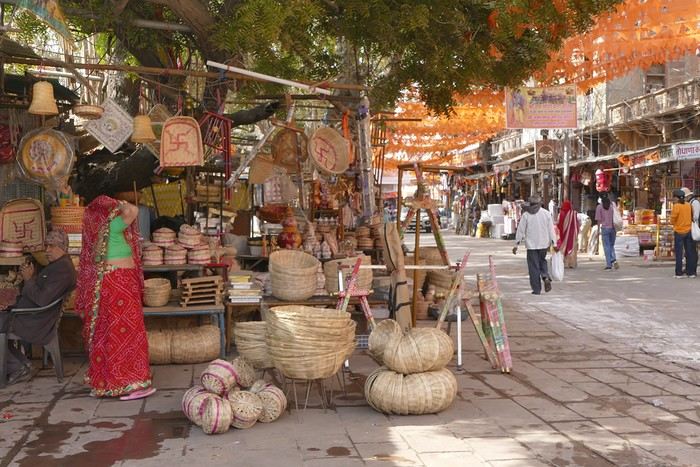
I set off in search of the stepwells and Gulab Sagar, a large basin with three water jets and a great view of Mehrangarh Fort. And yes, more baoris!
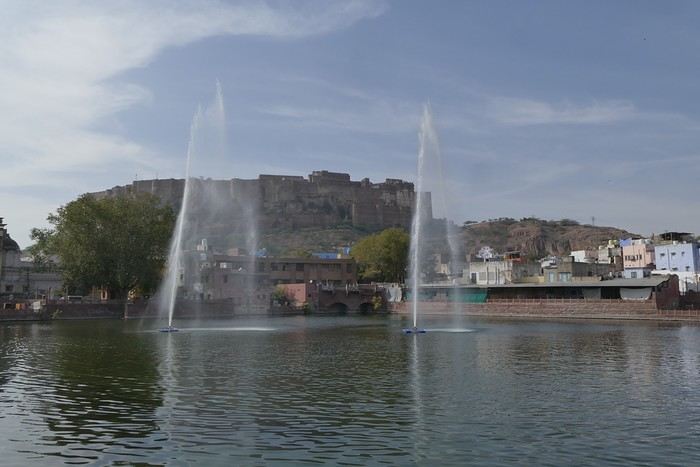
Toorji Ka Jhalra Bawdi isn’t far away. It’s a meet-up spot for tourists, with restaurants and terraces lining the area. The place is nice.
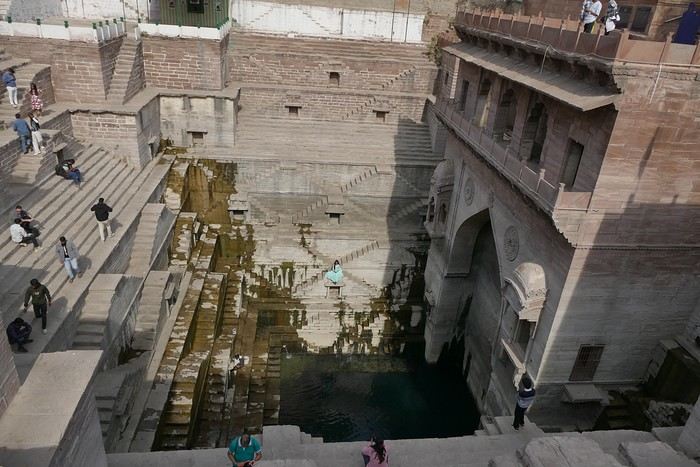
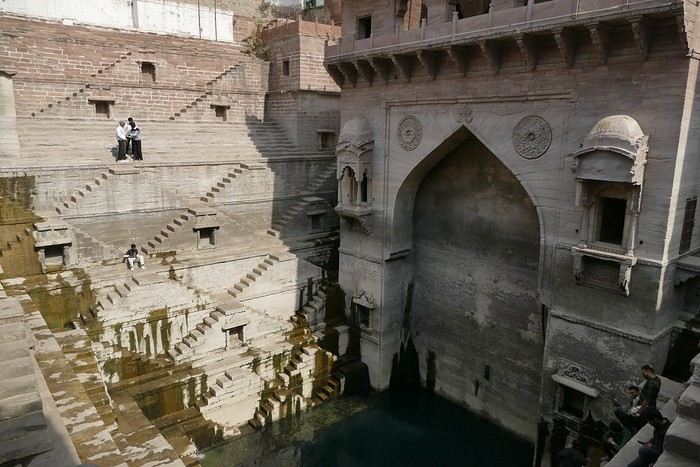
I looked for Mahila Bagh Ka Jhalra, went around in circles a bit, and finally found it right across from Gulab Sagar, where I’d already been. It’s not in good condition—it’s a shame it hasn’t been restored.
I went back through the clock tower area, found a currency exchange with a good rate, and booked my train tickets for the whole trip. The street was lively, with heavy traffic.
I was tired and headed back to the guesthouse. When I got there, I realized my phone wasn’t showing the right time, which gave me a chance to rest before going out for dinner. The Indigo restaurant is nearby and will be perfect.
Thursday, January 25: I left home at 4:30 AM and headed to Barcelona airport. The roads weren’t blocked by farmers yet, so I made the trip without any issues. I arrived at the airport at 7:10 AM, called Parkvia, and someone picked up my car 15 minutes later. All that was left was to check in my luggage. My Etihad flight was at 10:25 AM, which gave me time for breakfast. We landed in Abu Dhabi at 7:30 PM. The flight to Delhi was at 10:15 PM, the transfer went smoothly without any stress, and we arrived in Delhi at 3:00 AM. I couldn’t waste any time upon arrival because I had a flight to Jodhpur at 6:55 AM. I got to customs, and what a nice surprise—the hall was empty. I went through immediately, had my passport and visa checked, and everything was fine. I grabbed my bag quickly and looked for the transfer to T2, which is outside. You have to walk along the taxi parking lot and take the long corridors—it’s well signposted, and the transfer took 10 minutes. At first, I was a little stressed, not knowing how long customs would take, but in the end, I was early for my 6:55 AM flight. I’m even glad I booked this one, as it got me to Jodhpur at 8:20 AM.
When I arrived, I took an auto-rickshaw to Jodhpur Palace GH, which I’d booked on Booking. The welcome was nice, and I was given a room right away. I was hoping to rest a bit, but unfortunately, it was very noisy. I settled in, took a shower, and was ready to go out and explore the city. The owner stopped me as I was leaving and told me I had to change rooms—I had to repack my bag before heading out. He showed me the way to the clock tower, which is about a 15-minute walk away.
A market lines the street leading to the tower, and the traffic is intense.
I set off in search of the stepwells and Gulab Sagar, a large basin with three water jets and a great view of Mehrangarh Fort. And yes, more baoris!
Toorji Ka Jhalra Bawdi isn’t far away. It’s a meet-up spot for tourists, with restaurants and terraces lining the area. The place is nice.
I looked for Mahila Bagh Ka Jhalra, went around in circles a bit, and finally found it right across from Gulab Sagar, where I’d already been. It’s not in good condition—it’s a shame it hasn’t been restored.
I went back through the clock tower area, found a currency exchange with a good rate, and booked my train tickets for the whole trip. The street was lively, with heavy traffic.
I was tired and headed back to the guesthouse. When I got there, I realized my phone wasn’t showing the right time, which gave me a chance to rest before going out for dinner. The Indigo restaurant is nearby and will be perfect.
A lovely wander at the mercy of the wind in this amazing Rajasthan
Hey there, forum friends 😉
Some of you have mentioned missing the activity on this Indian "page," so let’s try to liven things up a bit—with joy and good vibes (mandatory with me 😜). Plus, it’ll make Jojoone happy 😊.
As big lovers of India—we’ve been six times—my co-traveler husband and I decided to explore Rajasthan this time around. The reason we waited so long to come here? We were dreading the tourist crowds in this state. But thanks to the timing (late March to early April 2024, which is starting to get pretty hot) and Aleph’s great tips, we were *very* far from mass tourism.
We spent three weeks getting around on our own for transport: mostly taxis and trains.
And I’ll admit, we had a rather "Arabian Nights" experience, far from the "real" India (Marien, if you’re reading this 😉). So this travel journal makes no claims other than to share what we saw, experienced, and felt—with all our ignorance about this country (which I’m fully aware of).
But fair warning: I go overboard with emojis, and this journal is super casual because it’s the one I share, almost in "live" mode, with our loved ones.
So, if you’re here, consider yourself almost part of the family 😄.
See you soon and....
Some of you have mentioned missing the activity on this Indian "page," so let’s try to liven things up a bit—with joy and good vibes (mandatory with me 😜). Plus, it’ll make Jojoone happy 😊.
As big lovers of India—we’ve been six times—my co-traveler husband and I decided to explore Rajasthan this time around. The reason we waited so long to come here? We were dreading the tourist crowds in this state. But thanks to the timing (late March to early April 2024, which is starting to get pretty hot) and Aleph’s great tips, we were *very* far from mass tourism.
We spent three weeks getting around on our own for transport: mostly taxis and trains.
And I’ll admit, we had a rather "Arabian Nights" experience, far from the "real" India (Marien, if you’re reading this 😉). So this travel journal makes no claims other than to share what we saw, experienced, and felt—with all our ignorance about this country (which I’m fully aware of).
But fair warning: I go overboard with emojis, and this journal is super casual because it’s the one I share, almost in "live" mode, with our loved ones.
So, if you’re here, consider yourself almost part of the family 😄.
See you soon and....
All Over Thailand
You can post your personal photos in the following thread: https://voyageforum.com/forum/quelque-part-en-thailande-d10655574/
This travel journal is therefore intended solely for my photos, to present a consistent style. All the shots were taken with a simple Samsung Galaxy smartphone and with whatever was at hand.
All stays combined, I’ve spent the equivalent of a year at most in Thailand, and I’m no great expert. However, after many trips, lots of reading on VoyageForum and other sites, and conversations with many locals as well as expats, my view of the country is becoming clearer, though it’s constantly evolving. You never stop discovering and learning.
I guess I wanted to deliver a puzzle, mainly for those who want to get an idea of the country here and for those who feel nostalgic about it. I don’t know if this minimalist sharing will interest anyone, but it’ll do me good to put it together. After so many months without traveling and then these other long months with VF closed, there’s plenty of material available.
There’ll be a mix of places, periods, and subjects, but it might well be intentional.
I suspect many Thais have dogs because they make excellent guardians for the home. Nothing better to deter burglars or to signal the presence of a snake. You’ll often see Thais tapping the top of their dog’s head, but don’t be fooled: it’s a sign of affection from them. Judging by the dogs’ reactions, they’re used to it.
Thailand is one of the countries on the planet where rabies is still present, so keep that in mind. It’s not just bites that can be dangerous, so don’t let just any dog lick you. Especially on a wound, of course. Even though dogs often fear humans—this dangerous and unpredictable predator—we still need to stay cautious. Be careful when walking into alleys because the dog will defend its master’s big yard. Be careful at night, and be careful when they’re in packs. It sometimes crosses our minds that Thailand isn’t all that made for walking around, and dogs are one of the reasons. That said, it’s not uncommon to see them chasing bikes or scooters. Cars, though? Much rarer—they’re too big.
It seems Thais prefer to give their dogs freedom by not locking them behind gates. Though sometimes the gate is closed, the little side door is wide open. Oh, and sometimes there’s no gate in front of the property, or it’s been full of holes for years.
You’ll often see dogs sleeping on the roadside, sometimes right on the road. When you approach, they move aside nonchalantly—or not at all. It’s less funny when they suddenly appear from thick vegetation, reminding visitors not to drive too fast. As a result, you’ll notice that dogs with injuries or missing legs aren’t that rare.
Since they believe in reincarnation and respect for all forms of life, they don’t chase dog packs away too much, and they don’t sterilize them enough. When you see a small pack roaming freely in the countryside, you think twice about running into them at the edge of a field. A darker side of this is that euthanasia isn’t often practiced. Twice, we saw dogs at death’s door in temples, enduring terrible suffering with no one to help. The image (and the smell) of one of them, agonizing and exuding the stench of death, still comes back to me sometimes.
Some of you may have seen the YouTube vlog of a French woman living in Phuket who was given a little pig by her Thai friends. The animal, well-fed, quickly became a happy and enormous beast with its own garden. Yet it didn’t take long for it to fall seriously ill and become incurable. In her video, the French woman described how difficult it was to find a vet willing to perform euthanasia.
You’ll often see bowls by the side of the road. Thais leave food and water there for stray cats and dogs. Overall, they have a big heart for animals.
If you ever pop into a shopping mall, you might see people pushing their small dogs in strollers. It’s not just for fun—these strollers are provided for customers to put their pets in, otherwise you can’t bring them inside. It looks a bit odd when you expect to see a baby.
This travel journal is therefore intended solely for my photos, to present a consistent style. All the shots were taken with a simple Samsung Galaxy smartphone and with whatever was at hand.
All stays combined, I’ve spent the equivalent of a year at most in Thailand, and I’m no great expert. However, after many trips, lots of reading on VoyageForum and other sites, and conversations with many locals as well as expats, my view of the country is becoming clearer, though it’s constantly evolving. You never stop discovering and learning.
I guess I wanted to deliver a puzzle, mainly for those who want to get an idea of the country here and for those who feel nostalgic about it. I don’t know if this minimalist sharing will interest anyone, but it’ll do me good to put it together. After so many months without traveling and then these other long months with VF closed, there’s plenty of material available.
There’ll be a mix of places, periods, and subjects, but it might well be intentional.
I suspect many Thais have dogs because they make excellent guardians for the home. Nothing better to deter burglars or to signal the presence of a snake. You’ll often see Thais tapping the top of their dog’s head, but don’t be fooled: it’s a sign of affection from them. Judging by the dogs’ reactions, they’re used to it.
Thailand is one of the countries on the planet where rabies is still present, so keep that in mind. It’s not just bites that can be dangerous, so don’t let just any dog lick you. Especially on a wound, of course. Even though dogs often fear humans—this dangerous and unpredictable predator—we still need to stay cautious. Be careful when walking into alleys because the dog will defend its master’s big yard. Be careful at night, and be careful when they’re in packs. It sometimes crosses our minds that Thailand isn’t all that made for walking around, and dogs are one of the reasons. That said, it’s not uncommon to see them chasing bikes or scooters. Cars, though? Much rarer—they’re too big.
It seems Thais prefer to give their dogs freedom by not locking them behind gates. Though sometimes the gate is closed, the little side door is wide open. Oh, and sometimes there’s no gate in front of the property, or it’s been full of holes for years.
You’ll often see dogs sleeping on the roadside, sometimes right on the road. When you approach, they move aside nonchalantly—or not at all. It’s less funny when they suddenly appear from thick vegetation, reminding visitors not to drive too fast. As a result, you’ll notice that dogs with injuries or missing legs aren’t that rare.
Since they believe in reincarnation and respect for all forms of life, they don’t chase dog packs away too much, and they don’t sterilize them enough. When you see a small pack roaming freely in the countryside, you think twice about running into them at the edge of a field. A darker side of this is that euthanasia isn’t often practiced. Twice, we saw dogs at death’s door in temples, enduring terrible suffering with no one to help. The image (and the smell) of one of them, agonizing and exuding the stench of death, still comes back to me sometimes.
Some of you may have seen the YouTube vlog of a French woman living in Phuket who was given a little pig by her Thai friends. The animal, well-fed, quickly became a happy and enormous beast with its own garden. Yet it didn’t take long for it to fall seriously ill and become incurable. In her video, the French woman described how difficult it was to find a vet willing to perform euthanasia.
You’ll often see bowls by the side of the road. Thais leave food and water there for stray cats and dogs. Overall, they have a big heart for animals.
If you ever pop into a shopping mall, you might see people pushing their small dogs in strollers. It’s not just for fun—these strollers are provided for customers to put their pets in, otherwise you can’t bring them inside. It looks a bit odd when you expect to see a baby.
From Caño Cristales to Tayrona Park
After about 12 hours of flying from Toulouse (via Paris), we landed in Bogotá six years after our first trip to Colombia. This time, our journey will be very different, with only this stop in the Colombian capital in common.
Our travel itinerary
Bogotá / La Macarena (Caño Cristales) / Villa de Leyva / Barichara / San Gil / Girón / Mompox / Ciénaga and the Santa Marta lagoon / Minca / Los Naranjos (Tayrona Park) / Bogotá.
Step 1: Bogotá (and Nemecon)
Bogotá (1/3)
This morning, we had a meet-up with Flora from Aventure Colombia, who helped me organize one of our stops, a few transfers, and tomorrow’s day trip, the program of which I changed at the last minute after deciding to skip the visit to the Salt Cathedral of Zipaquirá. Flora is a kind and lovely person, always available, and she did everything to answer my questions and give me advice.
She’s a local contact I highly recommend. Flora can help you plan your trip, whether you want a fully organized tour or, like us, just need assistance with a specific stop or one or more transfers between cities.
We left Flora after setting a meet-up for our return to Bogotá in a month. As we walked out of her agency, we headed to the wonderful Gold Museum, located just a hundred meters away. I was excited to revisit this amazing museum.
Note: Free entry for those over 60, regardless of nationality. Just show your passport.
Like six years ago, I was amazed by its museography, the beauty of the pieces on display, and that breathtaking shamanic room.
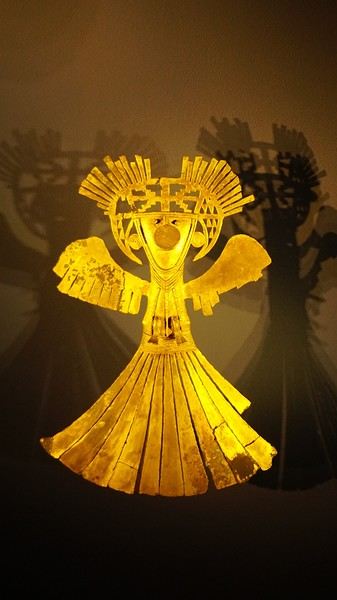
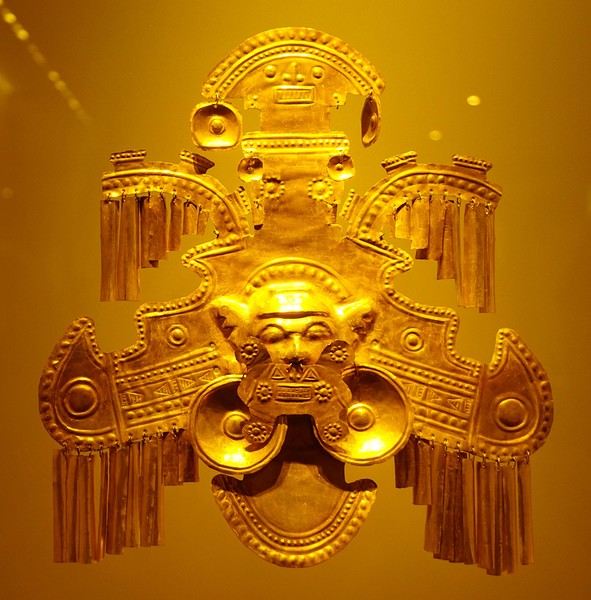
About two hours later, we decided to walk (careful, it’s a climb!) to the Monserrate cable car (3152m). Long wait to buy tickets and board the cable car! Once we arrived, a few raindrops, an impressive panoramic view of Bogotá’s vastness, a quick visit to the basilica (a pilgrimage site for Colombians), a walk through the tourist market, and at the top, plenty of small restaurants where we had our first Colombian meal. After our hearty lunch, we were lucky to see the sun return! No line for the descent. We then headed back to the hotel because Justine wanted to rest and recover from the trip. As for me, I continued my walk. I discovered a really nice craft market recommended by Flora, Pasaje Rivas, returned to Bolívar Square, and wandered through different streets, including the main pedestrian avenue (Calle 7), where there’s always something to see.
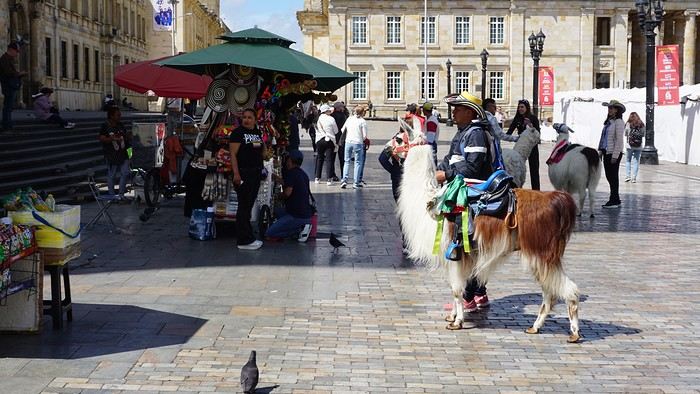
Tomorrow, a change of scenery as we head out for a hike in a small desert (Desierto de Chueca), located about 2 hours from Bogotá in the village of Nemecon. For this outing from Bogotá, with Flora’s help, we booked a car with a driver for the day. Flora also took care of booking the guide (since the site can only be visited with one). Nemecon (2/3) Today, we went to Nemecon to hike about 7.5 km in the ‘Desert of Checua.’ It’s nothing like sandy deserts! Instead, it’s geological formations sculpted by time, wind, and water. After two hours on the road—almost one of them spent navigating traffic jams with cars, trucks, buses, and a continuous flow of motorcycles on either side of our taxi—we reached Nemecon! The village center is really (too?) quiet. We met up with Deisy and headed toward the ‘desert,’ about twenty minutes away on a bumpy dirt road. Once there, a quick briefing, and off we went! Deisy didn’t stop talking (in Spanish) for over 3 hours!!! She told us so much about her region (flower farming, water management, traditions, songs, etc.), the origin of the site, and even mentioned Antonio Banderas, who filmed *The 33* in the village’s salt mine (the story of the survival of 33 Chilean miners after a collapse in their copper and gold mine). One hour of walking to reach the site, one hour to explore it, and one hour to return.
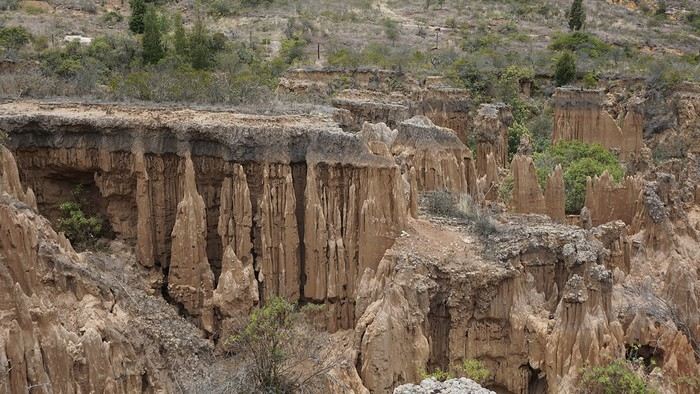
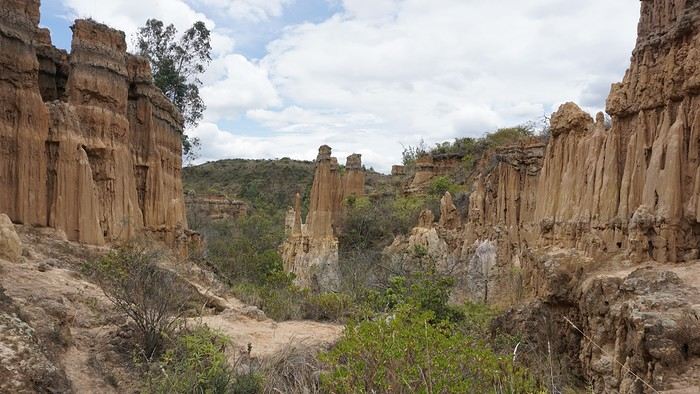
The advantage of this non-stop chatter was that it forced us to brush up on our Spanish at lightning speed. I even wondered if the effort to concentrate wasn’t more exhausting than the physical effort! Especially since on the way back, I got an oral quiz. Deisy wanted to make sure I remembered some of the information she’d given me during the visit: why is this rock white, that one red, and that one black? Back in the village, we had lunch at a restaurant recommended by Deisy before visiting the Nemecon salt mine. Before entering, a guide spent a good half-hour explaining the origin of the salt and the presence of many fossils in the area. Again, concentrating was tough because all the comments were exclusively in Spanish! An hour and a half wandering through the tunnels with a ‘lovely miner’s helmet’ on our heads!
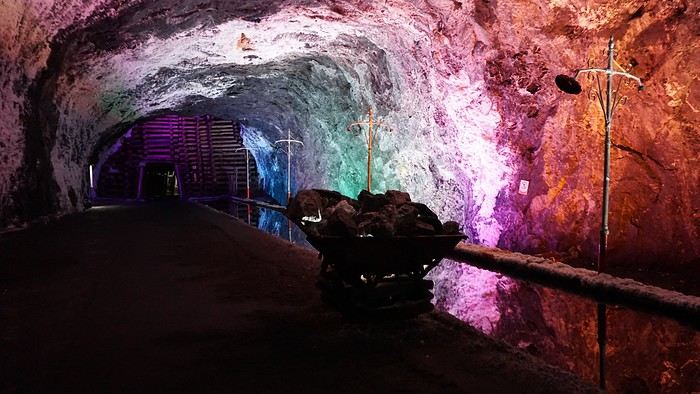
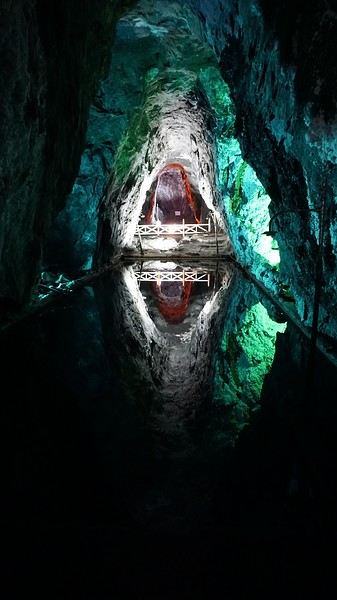
We met our driver at the mine entrance. The return to Bogotá was a bit faster, but traffic in the city center was still heavy! We arrived in front of our hotel between 8:00 and 8:30 PM. It’s been a pretty intense start to the trip! Tonight, our legs are tired. Hopefully, tomorrow will be a bit more relaxed! Bogotá (3/3) We started the day by visiting the Santa Clara Church Museum, located next to the presidential palace. Alejandra (from the local agency ‘Gaia Tours Colombia,’ which organized our stay in Caño Cristales (La Macarena)) had recommended this visit for its rich mural paintings.
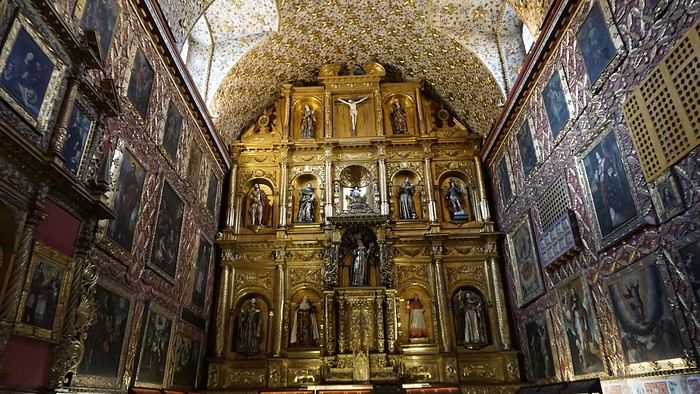
A few hundred meters further, after crossing the Plaza Mayor again, we visited the cultural complex housing the Botero Museum, the Mint Museum, and the Bank of the Republic Art Museum. Note that entry is free for all three museums. Botero Museum: There are fewer works by Botero here than in the Medellín museum, but more paintings and sculptures by other artists, all from Botero’s private collection (donated to Colombia). Mint Museum: We limited ourselves to visiting one room (on Flora’s advice) where three gold and gemstone monstrances and a Christ with a crown of emerald thorns are displayed. Photos are not allowed. Art Museum: We visited two temporary exhibitions. Lunchtime came quickly. We had a good meal at a reasonably priced small restaurant in the La Candelaria micro-district, near the Chorro de Quevedo square. We decided to spend the afternoon wandering the streets and alleys of the historic center to discover local street art.
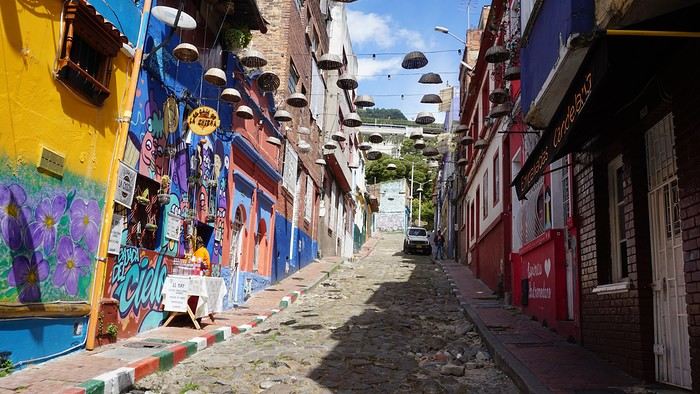
We also passed through very lively pedestrian streets. I also decided to revisit Pasaje Rivas to show Justine all the shops selling more or less artisanal products. Tomorrow morning, we fly to La Macarena at 10:30 AM. Not to dance (you’d be surprised if I told you we were going to take a South American dance class, right?!), but to visit the fabulous Caño Cristales, a river naturally colored by aquatic plants. The planned program includes hiking, horseback riding, canoeing, and swimming among these plants. This site was long inaccessible because the area was controlled by the FARC. Access and tourism development became possible after agreements and amnesty measures between the Colombian government and paramilitary groups. As in other regions, former FARC members have been able to transition into various tourism-related activities.
About two hours later, we decided to walk (careful, it’s a climb!) to the Monserrate cable car (3152m). Long wait to buy tickets and board the cable car! Once we arrived, a few raindrops, an impressive panoramic view of Bogotá’s vastness, a quick visit to the basilica (a pilgrimage site for Colombians), a walk through the tourist market, and at the top, plenty of small restaurants where we had our first Colombian meal. After our hearty lunch, we were lucky to see the sun return! No line for the descent. We then headed back to the hotel because Justine wanted to rest and recover from the trip. As for me, I continued my walk. I discovered a really nice craft market recommended by Flora, Pasaje Rivas, returned to Bolívar Square, and wandered through different streets, including the main pedestrian avenue (Calle 7), where there’s always something to see.
Tomorrow, a change of scenery as we head out for a hike in a small desert (Desierto de Chueca), located about 2 hours from Bogotá in the village of Nemecon. For this outing from Bogotá, with Flora’s help, we booked a car with a driver for the day. Flora also took care of booking the guide (since the site can only be visited with one). Nemecon (2/3) Today, we went to Nemecon to hike about 7.5 km in the ‘Desert of Checua.’ It’s nothing like sandy deserts! Instead, it’s geological formations sculpted by time, wind, and water. After two hours on the road—almost one of them spent navigating traffic jams with cars, trucks, buses, and a continuous flow of motorcycles on either side of our taxi—we reached Nemecon! The village center is really (too?) quiet. We met up with Deisy and headed toward the ‘desert,’ about twenty minutes away on a bumpy dirt road. Once there, a quick briefing, and off we went! Deisy didn’t stop talking (in Spanish) for over 3 hours!!! She told us so much about her region (flower farming, water management, traditions, songs, etc.), the origin of the site, and even mentioned Antonio Banderas, who filmed *The 33* in the village’s salt mine (the story of the survival of 33 Chilean miners after a collapse in their copper and gold mine). One hour of walking to reach the site, one hour to explore it, and one hour to return.
The advantage of this non-stop chatter was that it forced us to brush up on our Spanish at lightning speed. I even wondered if the effort to concentrate wasn’t more exhausting than the physical effort! Especially since on the way back, I got an oral quiz. Deisy wanted to make sure I remembered some of the information she’d given me during the visit: why is this rock white, that one red, and that one black? Back in the village, we had lunch at a restaurant recommended by Deisy before visiting the Nemecon salt mine. Before entering, a guide spent a good half-hour explaining the origin of the salt and the presence of many fossils in the area. Again, concentrating was tough because all the comments were exclusively in Spanish! An hour and a half wandering through the tunnels with a ‘lovely miner’s helmet’ on our heads!
We met our driver at the mine entrance. The return to Bogotá was a bit faster, but traffic in the city center was still heavy! We arrived in front of our hotel between 8:00 and 8:30 PM. It’s been a pretty intense start to the trip! Tonight, our legs are tired. Hopefully, tomorrow will be a bit more relaxed! Bogotá (3/3) We started the day by visiting the Santa Clara Church Museum, located next to the presidential palace. Alejandra (from the local agency ‘Gaia Tours Colombia,’ which organized our stay in Caño Cristales (La Macarena)) had recommended this visit for its rich mural paintings.
A few hundred meters further, after crossing the Plaza Mayor again, we visited the cultural complex housing the Botero Museum, the Mint Museum, and the Bank of the Republic Art Museum. Note that entry is free for all three museums. Botero Museum: There are fewer works by Botero here than in the Medellín museum, but more paintings and sculptures by other artists, all from Botero’s private collection (donated to Colombia). Mint Museum: We limited ourselves to visiting one room (on Flora’s advice) where three gold and gemstone monstrances and a Christ with a crown of emerald thorns are displayed. Photos are not allowed. Art Museum: We visited two temporary exhibitions. Lunchtime came quickly. We had a good meal at a reasonably priced small restaurant in the La Candelaria micro-district, near the Chorro de Quevedo square. We decided to spend the afternoon wandering the streets and alleys of the historic center to discover local street art.
We also passed through very lively pedestrian streets. I also decided to revisit Pasaje Rivas to show Justine all the shops selling more or less artisanal products. Tomorrow morning, we fly to La Macarena at 10:30 AM. Not to dance (you’d be surprised if I told you we were going to take a South American dance class, right?!), but to visit the fabulous Caño Cristales, a river naturally colored by aquatic plants. The planned program includes hiking, horseback riding, canoeing, and swimming among these plants. This site was long inaccessible because the area was controlled by the FARC. Access and tourism development became possible after agreements and amnesty measures between the Colombian government and paramilitary groups. As in other regions, former FARC members have been able to transition into various tourism-related activities.
Kyushu between Fukuoka and Nagasaki in autumn 2024 (Japan)
Fellow travelers,
Don’t they say "never two without three"? It seems so. Here I am again on the forum to share—and let’s be honest, indulge a bit of selfish pleasure—by recounting the story of this third installment in the Land of the Rising Sun.
Where? It’s all in the title. On the island of Kyushu in southern Japan, more precisely in the northwest between Fukuoka and Nagasaki. I hope to take you along with me for 19 nights and 18 full days this autumn of 2024. On the itinerary: gastronomy, crafts, festivals, waterfalls, encounters, and leisurely strolls in all simplicity.
A last-minute flight booked just 7 days before departure, and the route evolved regularly based on whims and accommodation availability, eventually settling on this:
- 5 nights in Fukuoka: Fukuoka city, Ukiha, Itoshima, Dazaifu, Yanagawa - 4 nights in Hasami, Nagasaki Prefecture: Okawachiyama, Arita, Takeo, Kashima, Yobuko, Karatsu, Kabeshima - 6 nights in Nagasaki: Ureshino, Higashi-Sonogi, Nagasaki city, Unzen, Sotome - 4 nights in Fukuoka: Karatsu, Fukuoka city
Most of the trip was done by car for practical reasons—easier access to certain places and freedom of movement—but also for the sheer joy of it. Despite slow traffic at times, driving in rural Japan is a delight.
If the program interests you, see you soon for the start of the journey.
Don’t they say "never two without three"? It seems so. Here I am again on the forum to share—and let’s be honest, indulge a bit of selfish pleasure—by recounting the story of this third installment in the Land of the Rising Sun.
Where? It’s all in the title. On the island of Kyushu in southern Japan, more precisely in the northwest between Fukuoka and Nagasaki. I hope to take you along with me for 19 nights and 18 full days this autumn of 2024. On the itinerary: gastronomy, crafts, festivals, waterfalls, encounters, and leisurely strolls in all simplicity.
A last-minute flight booked just 7 days before departure, and the route evolved regularly based on whims and accommodation availability, eventually settling on this:
- 5 nights in Fukuoka: Fukuoka city, Ukiha, Itoshima, Dazaifu, Yanagawa - 4 nights in Hasami, Nagasaki Prefecture: Okawachiyama, Arita, Takeo, Kashima, Yobuko, Karatsu, Kabeshima - 6 nights in Nagasaki: Ureshino, Higashi-Sonogi, Nagasaki city, Unzen, Sotome - 4 nights in Fukuoka: Karatsu, Fukuoka city
Most of the trip was done by car for practical reasons—easier access to certain places and freedom of movement—but also for the sheer joy of it. Despite slow traffic at times, driving in rural Japan is a delight.
If the program interests you, see you soon for the start of the journey.
Mexico: The Magic of the Yucatán
Hello everyone,
What a pleasure to be back on VF after a few difficult years 😎 So, before diving into the topic, welcome back to VF and above all... keep going!
Well, I’m finally picking up my old habit of posting a new travel journal.
Before heading to Mexico in the summer of 2023 with my family (my partner and our two boys, aged 18 and 16), I had somehow convinced myself—though I can’t even remember why—that the Yucatán was too touristy, too cliché, too expensive, and overrated!
The country didn’t particularly appeal to me, but faced with my wife’s insistence—she’d been there years ago, before we met, and had promised to show our sons this incredible place—my arguments didn’t hold much weight.
And thank goodness, because I have to admit she was absolutely right to take us there! In the end, we encountered far fewer tourists than we’d feared (except at a few sites), and the prices, which we’d been told were geared toward American neighbors (US), turned out to be quite affordable. In short, it was pure joy on both counts. All that was left was for the trip itself to be beautiful and memorable—and it was...
1st stop: Isla Holbox and the whale sharks
Holbox (pronounced “Hol-bosh”) is a stunning island where you can relax in an enchanting setting.
Our main goal in coming to Holbox was to swim with whale sharks. So, the first thing we told our hotel, Los Arcos Holbox, upon arrival was to arrange an excursion with one of the island’s many tour operators: Glendy Tours Holbox. We set off the next morning, bright and early.
The itinerary for this outing is the same for all tour operators (and there are about thirty of them!): roughly two hours by speedboat, then snorkeling with the whale sharks, followed by another boat ride to Cabo Catoche for lunch, then more boating to a fish-filled snorkeling spot before heading back. In total, the excursion can take eight hours—or even longer.
Besides my two sons and me, there were only two other clients on board—a French couple. Our boat was one of the very first to leave, but after ten minutes, the pilot got a radio call. We turned back without any explanation, returning to the departure dock.
There, a young woman who clearly fancied herself a diva was waiting for us. She was Mexican and boarded the boat, snubbing all five of us while flirting with the pilot and guide, who were suddenly all eyes for her. We couldn’t understand how this diva had convinced our tour operator to turn the boat around just to pick her up when she hadn’t even booked and we were already far out. We left 20 minutes late.
The two-hour journey passed surprisingly quickly, and for good reason: we spotted dolphins six times! They were leaping out of the water as they moved. Pure joy. We stopped whenever they were near the boat.
The photo isn’t great—the ultra-wide-angle lens on my GoPro makes the dolphins look smaller—but at least I got a souvenir.
A few flying fish (exocets) also glided a meter or two above the water as we sped along. The false start was forgotten, and the day was off to a fantastic start in this stunning marine environment...
When we reached the area where the whale sharks were supposed to be, the guide explained that we’d now have to scan the sea until we spotted one. It could take five minutes or forty-five, he said, and if we were unlucky, we might not see any at all!
An hour and a half later—still nothing! The captain then headed toward a distant area where about twenty other boats were already gathered.
Sure enough, there was a juvenile whale shark (still a good eight meters long) there, and all the boats were lining up to approach it slowly, one by one, so as not to scare the animal. Each boat got about thirty seconds within a few meters of it, engine idling, before making way for the next. We were allowed to approach three times, but we weren’t permitted to dive in. That’s normal—such a crowd of divers around a single animal would stress it out, and here, whale sharks are protected by regulations: swimming with them is strictly controlled. There was even a coast guard boat with us at all times, monitoring everyone’s behavior.
We were torn between the luck of seeing such a magnificent animal, even from the surface, and the discomfort we felt about the absurd situation. All those boats lined up just to catch a fleeting glimpse of the shark for a few seconds—let’s be honest, it was ridiculous. In short, the whole thing was unpleasant, and probably even more so for the shark than for us, though it did keep gulping down kilos of plankton as if nothing were happening...
When it was our turn to approach, I dipped my GoPro into the water at arm’s length and framed the shot blindly, hoping for a decent image of the shark.
On the third and final approach, the sixth passenger on board—the one we’d had to turn back for ten minutes after departure—quietly spoke to the guide and captain after putting on her flippers (even though, I’ll remind you, no one was allowed to dive). She wanted them to ask the coast guard for permission to dive with the shark—just her! She whispered so we couldn’t hear what she was offering in exchange.
The two lackeys complied and shouted the request to the officials in front of all the other boats, with no shame whatsoever. With so many witnesses, the coast guard had no choice but to refuse. The diva wouldn’t let it go and asked them to insist, which they did, but the refusal was firm and final.
On the nearest boats, everyone had heard and was stunned. They openly mocked this bimbo who clearly had no shame. Hidden behind her star sunglasses, she responded with a dismissive smile. Pathetic.
The encounter with the shark ended, and we set off for Cabo Catoche, a site on Holbox Island where we were to have lunch.
We were a little disappointed not to have had the chance to see the usual school of whale sharks (they’re often dozens swimming together!), but that’s nature’s way, and we knew it.
And then, an unlikely stroke of luck: a boat ahead of us was putting divers in the water with a pair of adult whale sharks. We joined them, and while we were putting on our masks and snorkels, the guide briefed us. He said my sons and I would go first, followed by the French couple and the diva.
But Miss World, clearly unhappy with this order, quietly complained to the guide, who eventually switched the order. It didn’t bother us since we’d only get a minute in the water anyway—what’s a minute more or less?
So the three of them got in the water, and a moment later, they were done. My two sons and I, sitting on the edge of the boat with masks on and snorkels in our mouths, were ready to finally take the plunge. But instead of continuing to follow the shark, the captain was suddenly all eyes for Miss Silicone! He even let go of the wheel for a moment to help her back on board.
One of the two sharks had already left minutes earlier, and the second was swimming farther away. Other boats were arriving, and the captain went to join the queue 100 meters from the shark. Soon, even more boats showed up. There were way too many people, the shark left, and diving was no longer possible.
I was, of course, a little disappointed not to have fulfilled my long-time dream of swimming with a whale shark, even briefly. But I was mostly disgusted for my two boys, who had been so excited about it. I told the guide exactly what I thought and asked for compensation—not for missing out on swimming with the shark (you can never guarantee seeing one, nature isn’t at our beck and call), but for clearly skipping our turn to dive. He promised a refund.
At the end of the day, back on land, he dropped us all off, and as he was about to leave, I reminded him about the refund. He agreed again, calmly got back on board, and sped off as if nothing had happened—just him and the captain, two total cowards. I couldn’t believe it.
Of course, back at our hotel (which had booked this tour operator—Glendy Tours), I explained the situation and asked for my refund again. The receptionist called the manager, who arrived with the guide. Our runaway wasn’t so cocky anymore. Inside, I was fuming, but I kept my cool during the discussion that followed.
Right off the bat, I made a point of looking the so-called guide in the eyes while telling him he’d run off like a coward. I did my best to stay calm, speaking clearly, staring him down the whole time, and repeating several times that he was a coward, in front of the manager, who didn’t say a word. The guide had clearly been told by his boss to keep quiet because he didn’t utter a word during the entire twenty-minute conversation.
Anyway, I’ll spare you the details, but in the end, the manager only offered us another excursion the next day as compensation for the “inconvenience.” It was just snorkeling with fish, not another whale shark trip. He admitted their fault, but since we had to leave early the next morning and had other bookings for the rest of the trip, we couldn’t accept. And he refused to refund us.
On Tripadvisor, Glendy Tours has a mediocre rating (3 out of 5), but more importantly, it ranks 29th out of 36 nautical tour operators rated by customers. I was pretty upset with the hotel for booking such an amateur for us.

If you want to swim with whale sharks in Holbox, you might end up with Glendy Tours. And it might go well—I certainly hope so. But given the price of such an excursion (3,000 pesos per person, about 160 €!), I’d still suggest quickly checking online before you go to see which providers have the best ratings. You’ll have a much better chance of things going smoothly with the top-rated ones than with those as poorly ranked as Glendy Tours.
On the other hand, if you’re a beautiful young woman, you can choose them without worry—you’ll get better treatment than the rest of us...
To wrap up this excursion, I have to mention the “respect for nature” angle that all these tour operators highlight. They tell us they respect the whale sharks: only two or three people can dive at a time, and only for a few minutes, so as not to disturb these gentle giants...
We believed them before we left, but that’s not what we saw. When the sharks are hard to find except for one, everyone rushes it, and only the constant presence of the coast guard prevents the tour operators from putting their clients in the water.
Because for the second shark we saw, when the divers from our boat got out of the water and we left to join the queue while it was our turn to dive, other boats quickly arrived and started swarming the poor shark, which eventually left.
In other words, it’s clear these companies only respect the sharks when they’re being watched.
 Boat reversing a meter away from a pelican
And for the snorkeling near Cabo Catoche, they attract fish daily by feeding them—a practice that’s normally discouraged. Afterward, these fish can’t feed naturally anymore and become dependent on Glendy Tours and its competitors.
A quick note on the rest of the excursion: Cabo Catoche (the site where we had lunch, on Holbox Island) is the northernmost point of the entire Yucatán. The place is paradise.
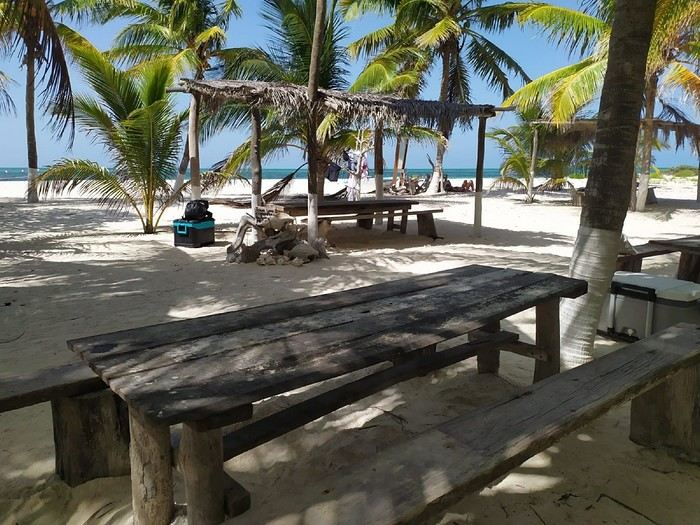
On the way back, we spent half an hour snorkeling at a site that turned out to be fish-filled only because the tour operators had the bad habit of feeding the fish. But this practice, which isn’t respectful of nature, is normally discouraged.
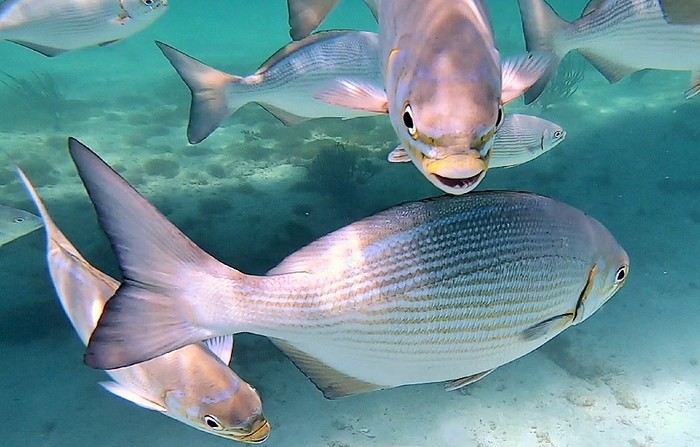
Plus, life jackets—like in many places in the Yucatán—are mandatory!!
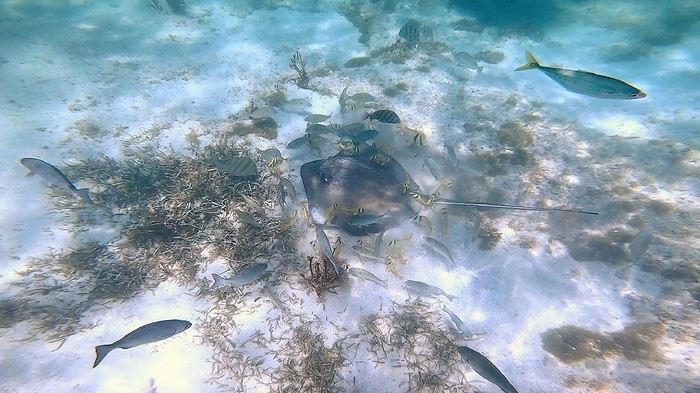
As divers, we didn’t find the site very interesting, but objectively, it should delight those who aren’t used to putting their heads underwater in beautiful dive spots.
We hated feeling trapped in those life jackets, stuck at the surface, and for me, the highlight was swimming next to a pelican that wasn’t too shy—it was paddling right beside me in green water.
Anyway, it seems we can’t post more than 10 photos at once on VF, so I’ll come back with the rest of the journal in another message. Because after these early trip mishaps, the rest of the journey turned out to be magnificent...
What a pleasure to be back on VF after a few difficult years 😎 So, before diving into the topic, welcome back to VF and above all... keep going!
Well, I’m finally picking up my old habit of posting a new travel journal.
Before heading to Mexico in the summer of 2023 with my family (my partner and our two boys, aged 18 and 16), I had somehow convinced myself—though I can’t even remember why—that the Yucatán was too touristy, too cliché, too expensive, and overrated!
The country didn’t particularly appeal to me, but faced with my wife’s insistence—she’d been there years ago, before we met, and had promised to show our sons this incredible place—my arguments didn’t hold much weight.
And thank goodness, because I have to admit she was absolutely right to take us there! In the end, we encountered far fewer tourists than we’d feared (except at a few sites), and the prices, which we’d been told were geared toward American neighbors (US), turned out to be quite affordable. In short, it was pure joy on both counts. All that was left was for the trip itself to be beautiful and memorable—and it was...
1st stop: Isla Holbox and the whale sharks
Holbox (pronounced “Hol-bosh”) is a stunning island where you can relax in an enchanting setting.
Our main goal in coming to Holbox was to swim with whale sharks. So, the first thing we told our hotel, Los Arcos Holbox, upon arrival was to arrange an excursion with one of the island’s many tour operators: Glendy Tours Holbox. We set off the next morning, bright and early.
The itinerary for this outing is the same for all tour operators (and there are about thirty of them!): roughly two hours by speedboat, then snorkeling with the whale sharks, followed by another boat ride to Cabo Catoche for lunch, then more boating to a fish-filled snorkeling spot before heading back. In total, the excursion can take eight hours—or even longer.
Besides my two sons and me, there were only two other clients on board—a French couple. Our boat was one of the very first to leave, but after ten minutes, the pilot got a radio call. We turned back without any explanation, returning to the departure dock.
There, a young woman who clearly fancied herself a diva was waiting for us. She was Mexican and boarded the boat, snubbing all five of us while flirting with the pilot and guide, who were suddenly all eyes for her. We couldn’t understand how this diva had convinced our tour operator to turn the boat around just to pick her up when she hadn’t even booked and we were already far out. We left 20 minutes late.
The two-hour journey passed surprisingly quickly, and for good reason: we spotted dolphins six times! They were leaping out of the water as they moved. Pure joy. We stopped whenever they were near the boat.
The photo isn’t great—the ultra-wide-angle lens on my GoPro makes the dolphins look smaller—but at least I got a souvenir.
A few flying fish (exocets) also glided a meter or two above the water as we sped along. The false start was forgotten, and the day was off to a fantastic start in this stunning marine environment...
When we reached the area where the whale sharks were supposed to be, the guide explained that we’d now have to scan the sea until we spotted one. It could take five minutes or forty-five, he said, and if we were unlucky, we might not see any at all!
An hour and a half later—still nothing! The captain then headed toward a distant area where about twenty other boats were already gathered.
Sure enough, there was a juvenile whale shark (still a good eight meters long) there, and all the boats were lining up to approach it slowly, one by one, so as not to scare the animal. Each boat got about thirty seconds within a few meters of it, engine idling, before making way for the next. We were allowed to approach three times, but we weren’t permitted to dive in. That’s normal—such a crowd of divers around a single animal would stress it out, and here, whale sharks are protected by regulations: swimming with them is strictly controlled. There was even a coast guard boat with us at all times, monitoring everyone’s behavior.
We were torn between the luck of seeing such a magnificent animal, even from the surface, and the discomfort we felt about the absurd situation. All those boats lined up just to catch a fleeting glimpse of the shark for a few seconds—let’s be honest, it was ridiculous. In short, the whole thing was unpleasant, and probably even more so for the shark than for us, though it did keep gulping down kilos of plankton as if nothing were happening...
When it was our turn to approach, I dipped my GoPro into the water at arm’s length and framed the shot blindly, hoping for a decent image of the shark.
On the third and final approach, the sixth passenger on board—the one we’d had to turn back for ten minutes after departure—quietly spoke to the guide and captain after putting on her flippers (even though, I’ll remind you, no one was allowed to dive). She wanted them to ask the coast guard for permission to dive with the shark—just her! She whispered so we couldn’t hear what she was offering in exchange.
The two lackeys complied and shouted the request to the officials in front of all the other boats, with no shame whatsoever. With so many witnesses, the coast guard had no choice but to refuse. The diva wouldn’t let it go and asked them to insist, which they did, but the refusal was firm and final.
On the nearest boats, everyone had heard and was stunned. They openly mocked this bimbo who clearly had no shame. Hidden behind her star sunglasses, she responded with a dismissive smile. Pathetic.
The encounter with the shark ended, and we set off for Cabo Catoche, a site on Holbox Island where we were to have lunch.
We were a little disappointed not to have had the chance to see the usual school of whale sharks (they’re often dozens swimming together!), but that’s nature’s way, and we knew it.
And then, an unlikely stroke of luck: a boat ahead of us was putting divers in the water with a pair of adult whale sharks. We joined them, and while we were putting on our masks and snorkels, the guide briefed us. He said my sons and I would go first, followed by the French couple and the diva.
But Miss World, clearly unhappy with this order, quietly complained to the guide, who eventually switched the order. It didn’t bother us since we’d only get a minute in the water anyway—what’s a minute more or less?
So the three of them got in the water, and a moment later, they were done. My two sons and I, sitting on the edge of the boat with masks on and snorkels in our mouths, were ready to finally take the plunge. But instead of continuing to follow the shark, the captain was suddenly all eyes for Miss Silicone! He even let go of the wheel for a moment to help her back on board.
One of the two sharks had already left minutes earlier, and the second was swimming farther away. Other boats were arriving, and the captain went to join the queue 100 meters from the shark. Soon, even more boats showed up. There were way too many people, the shark left, and diving was no longer possible.
I was, of course, a little disappointed not to have fulfilled my long-time dream of swimming with a whale shark, even briefly. But I was mostly disgusted for my two boys, who had been so excited about it. I told the guide exactly what I thought and asked for compensation—not for missing out on swimming with the shark (you can never guarantee seeing one, nature isn’t at our beck and call), but for clearly skipping our turn to dive. He promised a refund.
At the end of the day, back on land, he dropped us all off, and as he was about to leave, I reminded him about the refund. He agreed again, calmly got back on board, and sped off as if nothing had happened—just him and the captain, two total cowards. I couldn’t believe it.
Of course, back at our hotel (which had booked this tour operator—Glendy Tours), I explained the situation and asked for my refund again. The receptionist called the manager, who arrived with the guide. Our runaway wasn’t so cocky anymore. Inside, I was fuming, but I kept my cool during the discussion that followed.
Right off the bat, I made a point of looking the so-called guide in the eyes while telling him he’d run off like a coward. I did my best to stay calm, speaking clearly, staring him down the whole time, and repeating several times that he was a coward, in front of the manager, who didn’t say a word. The guide had clearly been told by his boss to keep quiet because he didn’t utter a word during the entire twenty-minute conversation.
Anyway, I’ll spare you the details, but in the end, the manager only offered us another excursion the next day as compensation for the “inconvenience.” It was just snorkeling with fish, not another whale shark trip. He admitted their fault, but since we had to leave early the next morning and had other bookings for the rest of the trip, we couldn’t accept. And he refused to refund us.
On Tripadvisor, Glendy Tours has a mediocre rating (3 out of 5), but more importantly, it ranks 29th out of 36 nautical tour operators rated by customers. I was pretty upset with the hotel for booking such an amateur for us.
If you want to swim with whale sharks in Holbox, you might end up with Glendy Tours. And it might go well—I certainly hope so. But given the price of such an excursion (3,000 pesos per person, about 160 €!), I’d still suggest quickly checking online before you go to see which providers have the best ratings. You’ll have a much better chance of things going smoothly with the top-rated ones than with those as poorly ranked as Glendy Tours.
On the other hand, if you’re a beautiful young woman, you can choose them without worry—you’ll get better treatment than the rest of us...
To wrap up this excursion, I have to mention the “respect for nature” angle that all these tour operators highlight. They tell us they respect the whale sharks: only two or three people can dive at a time, and only for a few minutes, so as not to disturb these gentle giants...
We believed them before we left, but that’s not what we saw. When the sharks are hard to find except for one, everyone rushes it, and only the constant presence of the coast guard prevents the tour operators from putting their clients in the water.
Because for the second shark we saw, when the divers from our boat got out of the water and we left to join the queue while it was our turn to dive, other boats quickly arrived and started swarming the poor shark, which eventually left.
In other words, it’s clear these companies only respect the sharks when they’re being watched.
Boat reversing a meter away from a pelicanAnd for the snorkeling near Cabo Catoche, they attract fish daily by feeding them—a practice that’s normally discouraged. Afterward, these fish can’t feed naturally anymore and become dependent on Glendy Tours and its competitors.
A quick note on the rest of the excursion: Cabo Catoche (the site where we had lunch, on Holbox Island) is the northernmost point of the entire Yucatán. The place is paradise.
On the way back, we spent half an hour snorkeling at a site that turned out to be fish-filled only because the tour operators had the bad habit of feeding the fish. But this practice, which isn’t respectful of nature, is normally discouraged.
Plus, life jackets—like in many places in the Yucatán—are mandatory!!
As divers, we didn’t find the site very interesting, but objectively, it should delight those who aren’t used to putting their heads underwater in beautiful dive spots.
We hated feeling trapped in those life jackets, stuck at the surface, and for me, the highlight was swimming next to a pelican that wasn’t too shy—it was paddling right beside me in green water.
Anyway, it seems we can’t post more than 10 photos at once on VF, so I’ll come back with the rest of the journal in another message. Because after these early trip mishaps, the rest of the journey turned out to be magnificent...
A Month in Laos and Cambodia
Hello everyone,
At the start of November, a bit of rest before winter will be perfect to kick off this travel journal. There aren’t many recent journals about this part of the world, so I’ll take the plunge—my way of celebrating the (unexpected) return of this forum, which has been such a big part of my life for over 15 years.
So, back to Asia at the end of 2023. After Myanmar in 2015 and Vietnam in 2018, we’ve chosen Laos this time. And when talking with friends (you know how it is—everyone asks, "So, where are you going this year?"), a couple of friends asked to join us ("You see, my wife dreams of a trip to Asia, and I dream of traveling like you, independently"). We’ve spent a week with them (and other friends) in Portugal, so we know they’re easygoing and flexible. They’ll only be with us after Christmas (due to lots of grandkids), so deal—we’re bringing them along! A new experience for us.
A new experience that’ll start with tweaking the itinerary. Originally, I planned to stay a month in Laos, but what could be more magical for my friend’s wife than discovering Asia by way of Angkor! Plus, our two daughters asked for some beach time at the end of the trip! So, it’ll be Laos and Cambodia—neither of which we’ve visited before, so no complaints there.
The route will be pretty classic, though a bit scattered to fit our dates and wishes. For us, we’ll arrive in Luang Prabang (LP) to take some time to acclimate, then a few days in the northern Laos mountains, Nong Khiaw and Muang Ngoi. Back to LP for a direct flight to Pakse. Yes, I know—so many amazing places we’ll miss along the way, but as you know, choosing means letting go... From Pakse, I’m leaving a few days open (no bookings), but I’m eyeing Champassak and the 4,000 Islands. That’s where Mariel and Naty (our friends!) will join us on December 30th. I’ve tentatively added the Bolaven Plateau loop to the plan (still no bookings). Their Laos adventure will be short—by January 3rd, we’ll cross the border into Cambodia, heading straight to Siem Reap for 5 days. Then, I’ll fulfill my promise with a magical detour to Koh Rong Sanloem via a night bus (a must-do in Asia!). On to Phnom Penh for 2 days—where our trip ends, while Mariel and Naty will stop in Bangkok for 3 days before flying home.
So, fasten your seatbelts, flight attendants at the doors, and sorry for the long intro—here we go on this Asian adventure!
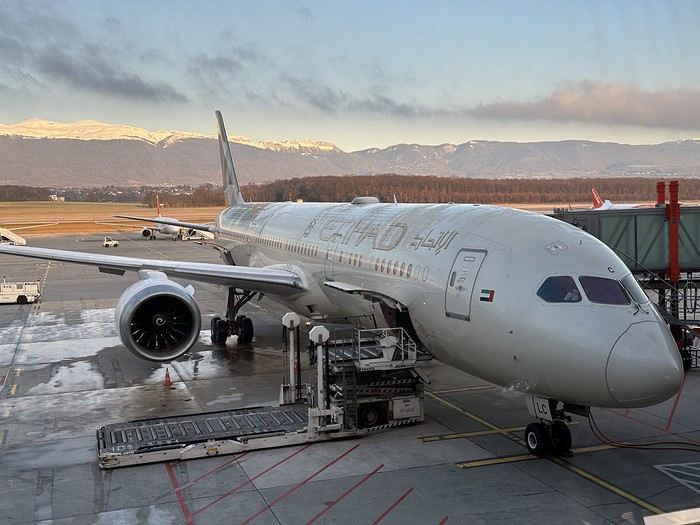
At the start of November, a bit of rest before winter will be perfect to kick off this travel journal. There aren’t many recent journals about this part of the world, so I’ll take the plunge—my way of celebrating the (unexpected) return of this forum, which has been such a big part of my life for over 15 years.
So, back to Asia at the end of 2023. After Myanmar in 2015 and Vietnam in 2018, we’ve chosen Laos this time. And when talking with friends (you know how it is—everyone asks, "So, where are you going this year?"), a couple of friends asked to join us ("You see, my wife dreams of a trip to Asia, and I dream of traveling like you, independently"). We’ve spent a week with them (and other friends) in Portugal, so we know they’re easygoing and flexible. They’ll only be with us after Christmas (due to lots of grandkids), so deal—we’re bringing them along! A new experience for us.
A new experience that’ll start with tweaking the itinerary. Originally, I planned to stay a month in Laos, but what could be more magical for my friend’s wife than discovering Asia by way of Angkor! Plus, our two daughters asked for some beach time at the end of the trip! So, it’ll be Laos and Cambodia—neither of which we’ve visited before, so no complaints there.
The route will be pretty classic, though a bit scattered to fit our dates and wishes. For us, we’ll arrive in Luang Prabang (LP) to take some time to acclimate, then a few days in the northern Laos mountains, Nong Khiaw and Muang Ngoi. Back to LP for a direct flight to Pakse. Yes, I know—so many amazing places we’ll miss along the way, but as you know, choosing means letting go... From Pakse, I’m leaving a few days open (no bookings), but I’m eyeing Champassak and the 4,000 Islands. That’s where Mariel and Naty (our friends!) will join us on December 30th. I’ve tentatively added the Bolaven Plateau loop to the plan (still no bookings). Their Laos adventure will be short—by January 3rd, we’ll cross the border into Cambodia, heading straight to Siem Reap for 5 days. Then, I’ll fulfill my promise with a magical detour to Koh Rong Sanloem via a night bus (a must-do in Asia!). On to Phnom Penh for 2 days—where our trip ends, while Mariel and Naty will stop in Bangkok for 3 days before flying home.
So, fasten your seatbelts, flight attendants at the doors, and sorry for the long intro—here we go on this Asian adventure!