Results for "Hambourg+|+9+>+196"
1296 results found.
Croisière MSC Splendida Dubaï - Gênes du 12 mars 2020 et escale au Pirée English translation pending
Bonjour
Nous allons effectuer la croisière Dubai Génes du 12 au 29 mars 2020 sur le MSC SPLENDIDA
Pour l'escale au Pirée le 26 mars, nous avons réservé le tour d'athènes avec Piraeus express bus (20€), y aurait t-il des membres interéssés par cette visite ou déjà inscrits?
Merci d'avance
Pour l'escale au Pirée le 26 mars, nous avons réservé le tour d'athènes avec Piraeus express bus (20€), y aurait t-il des membres interéssés par cette visite ou déjà inscrits?
Merci d'avance
Un train de nuit Vienne-Bruxelles dès janvier 2020 English translation pending
La société de chemins de fer autrichienne ÖBB prévoit de mettre en service un train de nuit entre Bruxelles et Vienne dès le mois de janvier.
'ÖBB a posté samedi sur Twitter une photo de l'Atomium, sans donner davantage de détails sur la fréquence, l'itinéraire précis et les tarifs de cette nouvelle ligne.
https://www.lalibre.be/economie/entreprises-startup/un-train-de-nuit-entre-bruxelles-et-vienne-des-janvier-5d998c0dd8ad5841fc4f1075
La concurrence sera rude : Lauda Air propose un Vienne-Charleroi en1h50 de vol (de jour) à partir de 9,99 €.
La concurrence sera rude : Lauda Air propose un Vienne-Charleroi en1h50 de vol (de jour) à partir de 9,99 €.
Compte rendu croisière jusqu'aux Spitzberg du 4 au 20 août 2019 English translation pending
Amis du forum, bonjour🙂,
Pour commencer, je précise que nous devions faire un séjour à Helsinki. C’est en voyant une ventre flash sur cette croisière que nous nous sommes décidés pour cette destination qui nous faisait rêver depuis longtemps mais qui nous était jusqu’alors inaccessible (1000 euros/pers en cabine intérieure bella pour 15 j, fallait sauter sur l’occasion !!!) Cette croisière débutait et finissait à Hambourg mais le bateau poursuivait ensuite jusqu’au Havre pour un périple en mer du Nord et il était possible de continuer deux jours de plus la croisière pour descendre au Havre. Ce que nous avons bien sûr fait étant de la région parisienne ! (120 euros de plus par personne dans la même cabine).
Voici donc le résumé de cette croisière dont le Spizberg fut l’apothéose !! :
Comme d’habitude, nous choisissons de partir la veille pour être certain d’être à l’heure sur le bateau. Notre vol étant à 16 h nous profitons de la matinée pour finaliser nos préparatifs puis un ami nous emmène à la gare routière de Cergy prendre le bus qui nous mène jusque Charles de Gaulle en un peu moins d’une heure et qui coûte un ticket de métro !!! Le vol se passe sans encombre et vers 17 h 30 nous arrivons à Hambourg. Bagages récupérés nous prenons le train S1 qui nous emmène à la gare centrale d’Hambourg en 25 mn puis, de là , alors que la Gay Pride se termine, nous marchons jusqu’à notre hôtel IBIS Budget qui se trouve à 10 mn à pied. Nous nous reposons un peu puis, l’heure du repas venue, nous descendons au restaurant de l’hôtel manger un fish and chips. Ensuite nous allons faire un tour dans le quartier histoire de se dégourdir les jambes. Les rues sont très sales, couvertes de déchets et de cannettes, restes de la Gay Pride !
Après une bonne nuit de sommeil, nous prenons le petit déjeuner puis retournons à la gare centrale prendre la navette MSC à 5 euros/pers qui nous mène jusqu’au port Steinwerder vers 11 h. Pas plus de 15 mn après nous sommes dans le bateau MSC Préziosa !!!
J’ai beaucoup aimé la déco de ce bateau. J’avais lu dans VF qu’il était beau et en effet je l’ai trouvé magnifique. Seul, le Jazz bar ne me plaît pas car il est tout vert !!.
Nous filons donc ensuite au restaurant. Là, c’est au choix : soit commande à la carte, soit se servir au buffet soit les deux lol.(ce sera ainsi tous les jours). Après un petit tour de repérage dans le bateau nous nous dirigeons vers la cabine, mon mari met son maillot de bain puis plongeon dans la piscine puis le jacuzzi pas encore très occupés. Les vacances commencent !!! Vers 17 h à lieu l’exercice de sécurité qui se passe très rapidement. Après la douche et s’être changés, nous traînons dans le bateau et dans les bars jusque 20 h 30, heure du repas du 2e service (le 1er service à lieu à 18 h 30). Notre table se trouve près de la fenêtre, c’est super !!! et nous nous retrouvons avec deux autres couples de français avec qui nous nous entendrons très bien du début à la fin !!! (heureusement car sinon, 15 j, c’est long !!!)
La suite dès que possible !
Pour commencer, je précise que nous devions faire un séjour à Helsinki. C’est en voyant une ventre flash sur cette croisière que nous nous sommes décidés pour cette destination qui nous faisait rêver depuis longtemps mais qui nous était jusqu’alors inaccessible (1000 euros/pers en cabine intérieure bella pour 15 j, fallait sauter sur l’occasion !!!) Cette croisière débutait et finissait à Hambourg mais le bateau poursuivait ensuite jusqu’au Havre pour un périple en mer du Nord et il était possible de continuer deux jours de plus la croisière pour descendre au Havre. Ce que nous avons bien sûr fait étant de la région parisienne ! (120 euros de plus par personne dans la même cabine).
Voici donc le résumé de cette croisière dont le Spizberg fut l’apothéose !! :
Comme d’habitude, nous choisissons de partir la veille pour être certain d’être à l’heure sur le bateau. Notre vol étant à 16 h nous profitons de la matinée pour finaliser nos préparatifs puis un ami nous emmène à la gare routière de Cergy prendre le bus qui nous mène jusque Charles de Gaulle en un peu moins d’une heure et qui coûte un ticket de métro !!! Le vol se passe sans encombre et vers 17 h 30 nous arrivons à Hambourg. Bagages récupérés nous prenons le train S1 qui nous emmène à la gare centrale d’Hambourg en 25 mn puis, de là , alors que la Gay Pride se termine, nous marchons jusqu’à notre hôtel IBIS Budget qui se trouve à 10 mn à pied. Nous nous reposons un peu puis, l’heure du repas venue, nous descendons au restaurant de l’hôtel manger un fish and chips. Ensuite nous allons faire un tour dans le quartier histoire de se dégourdir les jambes. Les rues sont très sales, couvertes de déchets et de cannettes, restes de la Gay Pride !
Après une bonne nuit de sommeil, nous prenons le petit déjeuner puis retournons à la gare centrale prendre la navette MSC à 5 euros/pers qui nous mène jusqu’au port Steinwerder vers 11 h. Pas plus de 15 mn après nous sommes dans le bateau MSC Préziosa !!!
J’ai beaucoup aimé la déco de ce bateau. J’avais lu dans VF qu’il était beau et en effet je l’ai trouvé magnifique. Seul, le Jazz bar ne me plaît pas car il est tout vert !!.
Nous filons donc ensuite au restaurant. Là, c’est au choix : soit commande à la carte, soit se servir au buffet soit les deux lol.(ce sera ainsi tous les jours). Après un petit tour de repérage dans le bateau nous nous dirigeons vers la cabine, mon mari met son maillot de bain puis plongeon dans la piscine puis le jacuzzi pas encore très occupés. Les vacances commencent !!! Vers 17 h à lieu l’exercice de sécurité qui se passe très rapidement. Après la douche et s’être changés, nous traînons dans le bateau et dans les bars jusque 20 h 30, heure du repas du 2e service (le 1er service à lieu à 18 h 30). Notre table se trouve près de la fenêtre, c’est super !!! et nous nous retrouvons avec deux autres couples de français avec qui nous nous entendrons très bien du début à la fin !!! (heureusement car sinon, 15 j, c’est long !!!)
La suite dès que possible !
Préparation d'une croisière sur le MSC Meraviglia de Norvège jusqu'au Svalbard English translation pending
Tous d'abord je tiens à remercier tous les participants du forum (notamment claud05 et malapine et Mdr83.…) qui on fait des comptes rendu sur lesquels je m’appuyée pour préparer ma croisière ainsi que les blogs.
Il ne faut pas oublier le guide Michelin, le guide du routard, tripadvisor et le site www.visit norway.com entre autre je suis sûr d’en oublier plein !
Cette préparation sera un récapitulatif de TOUS ce que j’ai pu lire et que je vais essayer d’alimenter au fur et à mesure.
1/ date de la croisière Nous partons du 10 juin au 24juin 2018 Pour moi c’est une grande première de préparer un voyage aussi longtemps à l’avance d’habitude c’est plutôt 6 mois avant. Donc mon mari et mes amis appréhende un peu car ils ont peur que je leur rabâche un peu trop les oreilles, mais c’est un peu les pré-vacances et on commence à rêver.
2/ voici le trajet et les escales
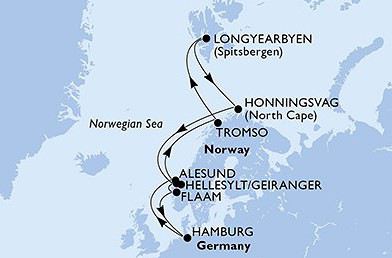
JOUR DATE ESCALE ARRIVÉE DÉPART AGENDA STATUT* 1 dimanche, 10 juin 2018 Hambourg, Allemagne - 20:00 à quai 2 lundi, 11 juin 2018 En mer - - - 3 mardi, 12 juin 2018 Alesund, Norvège 10:00 18:00 à quai 4 mercredi, 13 juin 2018 En mer - - - 5 jeudi, 14 juin 2018 Tromso, Norvège 13:00 21:00 à quai 6 vendredi, 15 juin 2018 En mer - - - 7 samedi, 16 juin 2018 Longyearbyen, Norvege 08:00 22:00 à quai 8 dimanche, 17 juin 2018 En mer - - - 9 lundi, 18 juin 2018 Honningsvag, Norvège 14:00 - en rade 10 mardi, 19 juin 2018 Honningsvag, Norvège - 02:00 en rade 11 mercredi, 20 juin 2018 En mer - - - 12 jeudi, 21 juin 2018 Hellesylt/Geiranger, Norvège 07:00 17:00 en rade 13 vendredi, 22 juin 2018 Flåm, Norvège 08:00 18:00 en rade 14 samedi, 23 juin 2018 En mer - - - 15 dimanche, 24 juin 2018 Hambourg, Allemagne 06:00 - à quai
3/ le préacheminement sur Hambourg Après réflexion et vu les prix aérien d’air France (compagnie que je n’aime pas en plus) Nous avons décidé de faire l’Oise – Hambourg soit 870km en voiture soit environ 9heure de route (ça reste moins que lorsqu’on va voir la famille sur la côte d’azur ou égale à Lausanne). Nous partirions le vendredi 08 juin afin de ce laissé une journée avant pour découvrir cette ville. Donc on va réserver 2 nuits d’hôtel sur place. J’ai pensé au mercure hôtel d’Hambourg city ? J’aime bien le groupe accord et en plus on a la carte, mais si vous avez des suggestions, seul impératif un parking pour titine !
4/ Hambourg Du vendredi 08 juin au dimanche 10 juin 2018 J’ai pratiquement tous listé et mis en gras et italique ce qu’on est sur (oups que je suis sûr de vouloir faire, monsieur me laisse toute latitude dans la préparation de nos voyage, il dit préféré les surprise et voir sur place) - Les arcades de l'Alster : Une image emblématique d'Hambourg. Bâties au bord du canal Alster en face du Rathausmarkt, juste avant le Jungernstieg, elles abritent cafés et boutiques. - le parc d'Altona (Altonaer Volkspark) : Le plus grand parc d'Hambourg - Les entrepôts de la Speicherstadt : Située dans le port de Hambourg (dans le quartier HafenCity), les bâtiments ont été construits entre 1883 et 1927 pour une surface d'environ 370 000 m2. Zone franche à l'origine, elle est l'un des plus vastes complexes d'entrepôts au monde.La zone est notable pour le matériau de construction, la brique, et son architecture de style néogothique. La Speicherstadt est classée monument historique depuis 1991 et classée au patrimoine mondial de l'UNESCO depuis 2015. - Excursion en bateau sur l'Alster (Départ à Jungernstieg / Anleger 3 et 4 / de 10h à18h / A partir de 9€50) Ce magnifique lac au centre de la ville est bordé de parcs et de superbes villas. C'est là qu'habitent les Hambourgeois les plus aisés. La promenade autour de l'Alster constitue une promenade dominicale très appréciée. - Tour en Barkasse dans le port et les canaux : A bord des barkasses, un bar composé d'un casier avec des canettes, un ouvre-bouteille et une corbeille pour la monnaie. Servez-vous vous-même, payez, reprenez votre monnaie. Cette coutume basée sur la confiance est très répandue en Europe du Nord. En ce qui concerne le port proprement dit, vous ferez une très jolie balade sur l'Elbe, le port comme celui de Duisburg, est immense. - Tour en bateau dans le port de l'Elbe - Kapitän Prüsse : Départs de St. Pauli Landungsbrücken - Le marché aux poissons, Fischmarkt : Fonctionne tous les dimanches d'avril à octobre de 5h à 11h du matin et de 7h à 11h de novembre à mars. Fête dans la halle aux poissons : Entrée gratuite mais brunch payant - L'église st Pierre et son panorama à 360° sur la ville (St. Peter’s Church, en allemand: Petrikirche). 544 marches pour monter au sommet du clocher (132 mètres) pour apercevoir : Vers l'Ouest, on peut observer le grand Hôtel de ville tout proche. Vers le Nord, les lacs (Alster) Vers l'Est, les rues commerçantes qui relient l'hôtel de ville à la gare (Haupt-bahnhof) Vers le sud, Speicherstadt, le vieux quartier des entrepôts, puis les anciens docks en reconstruction, Hafencity et en toile de fond l'Elbe et la zone portuaire. -miniature wunderland (acheter les billets avant sur le net) - L’hôtel de ville - Quartier st pauli pour une balade - Le jardin planten und blömen - Quartier krameramtsgame qui serait du 17ème siècle - L’église st michel
Si vous avez des suggestions où des choses qu’il ne faut pas louper absolument où des restaurants sympas pour y diner ou déjeuner je suis preneuse
1/ date de la croisière Nous partons du 10 juin au 24juin 2018 Pour moi c’est une grande première de préparer un voyage aussi longtemps à l’avance d’habitude c’est plutôt 6 mois avant. Donc mon mari et mes amis appréhende un peu car ils ont peur que je leur rabâche un peu trop les oreilles, mais c’est un peu les pré-vacances et on commence à rêver.
2/ voici le trajet et les escales
JOUR DATE ESCALE ARRIVÉE DÉPART AGENDA STATUT* 1 dimanche, 10 juin 2018 Hambourg, Allemagne - 20:00 à quai 2 lundi, 11 juin 2018 En mer - - - 3 mardi, 12 juin 2018 Alesund, Norvège 10:00 18:00 à quai 4 mercredi, 13 juin 2018 En mer - - - 5 jeudi, 14 juin 2018 Tromso, Norvège 13:00 21:00 à quai 6 vendredi, 15 juin 2018 En mer - - - 7 samedi, 16 juin 2018 Longyearbyen, Norvege 08:00 22:00 à quai 8 dimanche, 17 juin 2018 En mer - - - 9 lundi, 18 juin 2018 Honningsvag, Norvège 14:00 - en rade 10 mardi, 19 juin 2018 Honningsvag, Norvège - 02:00 en rade 11 mercredi, 20 juin 2018 En mer - - - 12 jeudi, 21 juin 2018 Hellesylt/Geiranger, Norvège 07:00 17:00 en rade 13 vendredi, 22 juin 2018 Flåm, Norvège 08:00 18:00 en rade 14 samedi, 23 juin 2018 En mer - - - 15 dimanche, 24 juin 2018 Hambourg, Allemagne 06:00 - à quai
3/ le préacheminement sur Hambourg Après réflexion et vu les prix aérien d’air France (compagnie que je n’aime pas en plus) Nous avons décidé de faire l’Oise – Hambourg soit 870km en voiture soit environ 9heure de route (ça reste moins que lorsqu’on va voir la famille sur la côte d’azur ou égale à Lausanne). Nous partirions le vendredi 08 juin afin de ce laissé une journée avant pour découvrir cette ville. Donc on va réserver 2 nuits d’hôtel sur place. J’ai pensé au mercure hôtel d’Hambourg city ? J’aime bien le groupe accord et en plus on a la carte, mais si vous avez des suggestions, seul impératif un parking pour titine !
4/ Hambourg Du vendredi 08 juin au dimanche 10 juin 2018 J’ai pratiquement tous listé et mis en gras et italique ce qu’on est sur (oups que je suis sûr de vouloir faire, monsieur me laisse toute latitude dans la préparation de nos voyage, il dit préféré les surprise et voir sur place) - Les arcades de l'Alster : Une image emblématique d'Hambourg. Bâties au bord du canal Alster en face du Rathausmarkt, juste avant le Jungernstieg, elles abritent cafés et boutiques. - le parc d'Altona (Altonaer Volkspark) : Le plus grand parc d'Hambourg - Les entrepôts de la Speicherstadt : Située dans le port de Hambourg (dans le quartier HafenCity), les bâtiments ont été construits entre 1883 et 1927 pour une surface d'environ 370 000 m2. Zone franche à l'origine, elle est l'un des plus vastes complexes d'entrepôts au monde.La zone est notable pour le matériau de construction, la brique, et son architecture de style néogothique. La Speicherstadt est classée monument historique depuis 1991 et classée au patrimoine mondial de l'UNESCO depuis 2015. - Excursion en bateau sur l'Alster (Départ à Jungernstieg / Anleger 3 et 4 / de 10h à18h / A partir de 9€50) Ce magnifique lac au centre de la ville est bordé de parcs et de superbes villas. C'est là qu'habitent les Hambourgeois les plus aisés. La promenade autour de l'Alster constitue une promenade dominicale très appréciée. - Tour en Barkasse dans le port et les canaux : A bord des barkasses, un bar composé d'un casier avec des canettes, un ouvre-bouteille et une corbeille pour la monnaie. Servez-vous vous-même, payez, reprenez votre monnaie. Cette coutume basée sur la confiance est très répandue en Europe du Nord. En ce qui concerne le port proprement dit, vous ferez une très jolie balade sur l'Elbe, le port comme celui de Duisburg, est immense. - Tour en bateau dans le port de l'Elbe - Kapitän Prüsse : Départs de St. Pauli Landungsbrücken - Le marché aux poissons, Fischmarkt : Fonctionne tous les dimanches d'avril à octobre de 5h à 11h du matin et de 7h à 11h de novembre à mars. Fête dans la halle aux poissons : Entrée gratuite mais brunch payant - L'église st Pierre et son panorama à 360° sur la ville (St. Peter’s Church, en allemand: Petrikirche). 544 marches pour monter au sommet du clocher (132 mètres) pour apercevoir : Vers l'Ouest, on peut observer le grand Hôtel de ville tout proche. Vers le Nord, les lacs (Alster) Vers l'Est, les rues commerçantes qui relient l'hôtel de ville à la gare (Haupt-bahnhof) Vers le sud, Speicherstadt, le vieux quartier des entrepôts, puis les anciens docks en reconstruction, Hafencity et en toile de fond l'Elbe et la zone portuaire. -miniature wunderland (acheter les billets avant sur le net) - L’hôtel de ville - Quartier st pauli pour une balade - Le jardin planten und blömen - Quartier krameramtsgame qui serait du 17ème siècle - L’église st michel
Si vous avez des suggestions où des choses qu’il ne faut pas louper absolument où des restaurants sympas pour y diner ou déjeuner je suis preneuse
Retour de croisière fjords de Norvège avec le MSC Preziosa English translation pending
Bonjour à tous,
j'ai usé et abusé de vos infos pour la préparation de notre croisière dans les fjords, aussi je m'étais promis de faire un compte rendu à mon retour. une forumeuse en avait fait un, avec beaucoup d'humour, donc je ferai le mien un peu plus terre à terre. je rassemble les documents et les photos.... A bientôt ghyslaine
j'ai usé et abusé de vos infos pour la préparation de notre croisière dans les fjords, aussi je m'étais promis de faire un compte rendu à mon retour. une forumeuse en avait fait un, avec beaucoup d'humour, donc je ferai le mien un peu plus terre à terre. je rassemble les documents et les photos.... A bientôt ghyslaine
Compte rendu de notre croisière en Norvège sur le MSC Preziosa English translation pending
Bonjour à tous,
Voici le compte rendu de notre croisière en Norvège sur le MSC PREZIOSA du 18 au 29 mai 2017. Celui-ci est illustré de nombreuses photos. Il faut cliquer dessus pour les agrandir.
Nous souhaitions depuis longtemps visiter la Norvège mais les prix excessifs nous en empêchaient. En consultant le site MSC je découvre avec surprise cette croisière où la nouvelle prestation Wellness avec balcon était pratiquement au même prix que la cabine intérieure !
La prestation Wellness ne nous intéressait absolument pas ! Nous étions uniquement intéressé par la cabine balcon au même prix que la cabine intérieure !
L'itinéraire de 12 jours est le suivant : Hambourg / en mer / Alesund / en mer / Honningsvag / Tromso / en mer / Molde / Geiranger / Bergen / en mer / Hambourg.
Nous en réservons une chez CROISILAND. Quelques jours après notre réservation, le prix de cette cabine a doublé !
Un passager français avec qui nous avons discuté pendant l'une des excursions nous a expliqué que lui aussi avait remarqué cette anomalie d'une cabine balcon Wellness au même prix qu'une cabine intérieure. Il a acheté cette croisière alors qu'il y a quelques jours il faisait quasiment la même chez COSTA !
Il était certain que c'était une erreur de MSC et qu'il fallait saisir tout de suite l'opportunité. Il a également remarqué que le prix de cette cabine a doublé quelques jours seulement après sa réservation !
Je précise que contrairement à ce qui est précisé, nous n'avons jamais reçu de "kit de bienvenue". Nous avions bien l'eau gratuite dans la cabine et au restaurant et nous n'avions pas 1 mais 2 boissons énergisantes par jour dans notre mini-bar. L'une avait un goût citronné et l'autre plus ou moins parfumée à l'orange. Ce n'était pas bon car plein de produits chimiques.
Pour les repas au restaurant, nous avions les mêmes menus que nos voisins de table qui n'étaient pas Wellness. La présentation du menu était différente avec en plus des informations nutritives !
Mêmes remarques au buffet, certains plats sont normalement réservés aux Wellness mais n'importe qui en fait pouvait se servir ! Je ne vois donc pas l'intérêt !
Nous ne sommes pas allés à la salle de sport.
Nous avons découvert que "les activités physiques exclusives lors des escales" sont en fait 3 excursions spéciales qui sont comprises dans la prestation Wellness !
Ces excursions Wellness étaient à l'escale de Honningsvag, Molde et Geiranger. Toutefois, un passager n'ayant pas la prestation Wellness avait la possibilité d'acheter l'excursion au prix de 45 €/personne.
Quand nous avons appris ceci, nous avons demandé à annuler les autres excursions correspondant à ces escales que nous avions acheté des semaines auparavant sur internet puisque il y avait un doublon d'excursions ces jours là.
Pour l'escale de Honningsvag, il y avait la possibilité de faire les 2 excursions : celle de la Wellness en début de journée et celle réservée sur internet ("Transfert au Cap Nord") en fin de journée.
Nous avons pu être remboursé des 2 autres excursions mais cela a été toute une histoire ! Il a fallu que l'on aille plusieurs fois aux bureaux des excursions et que l'on s'énerve pour récupérer notre argent ! Ce fut le point noir de cette croisière !
Concernant le MSC PREZIOSA, le lien ci-dessous le présente. Il y a même une petite vidéo.
https://www.msccroisieres.fr/fr-fr/Decouvrez-MSC/Navires-De-Croisiere/MSC-Preziosa.aspx
Spectacles, repas, prestations, organisation... d'une manière générale, nous en avons été satisfait à quelques exceptions prés que je précise dans ce récit. Il y avait 2 soirées de Gala.
Notre steward s'est permis "une certaine liberté" en me remettant directement une boisson énergisante lorsque nous l'avons croisé dans les couloirs ! Le jour du débarquement, il a commencé à préparer la cabine pour les occupants de la croisière suivante alors qu'elle était encore à notre disposition et qu'il y avait encore nos affaires personnelles !
Voici le compte rendu de notre croisière en Norvège sur le MSC PREZIOSA du 18 au 29 mai 2017. Celui-ci est illustré de nombreuses photos. Il faut cliquer dessus pour les agrandir.
Nous souhaitions depuis longtemps visiter la Norvège mais les prix excessifs nous en empêchaient. En consultant le site MSC je découvre avec surprise cette croisière où la nouvelle prestation Wellness avec balcon était pratiquement au même prix que la cabine intérieure !
La prestation Wellness ne nous intéressait absolument pas ! Nous étions uniquement intéressé par la cabine balcon au même prix que la cabine intérieure !
L'itinéraire de 12 jours est le suivant : Hambourg / en mer / Alesund / en mer / Honningsvag / Tromso / en mer / Molde / Geiranger / Bergen / en mer / Hambourg.
Nous en réservons une chez CROISILAND. Quelques jours après notre réservation, le prix de cette cabine a doublé !
Un passager français avec qui nous avons discuté pendant l'une des excursions nous a expliqué que lui aussi avait remarqué cette anomalie d'une cabine balcon Wellness au même prix qu'une cabine intérieure. Il a acheté cette croisière alors qu'il y a quelques jours il faisait quasiment la même chez COSTA !
Il était certain que c'était une erreur de MSC et qu'il fallait saisir tout de suite l'opportunité. Il a également remarqué que le prix de cette cabine a doublé quelques jours seulement après sa réservation !
Je précise que contrairement à ce qui est précisé, nous n'avons jamais reçu de "kit de bienvenue". Nous avions bien l'eau gratuite dans la cabine et au restaurant et nous n'avions pas 1 mais 2 boissons énergisantes par jour dans notre mini-bar. L'une avait un goût citronné et l'autre plus ou moins parfumée à l'orange. Ce n'était pas bon car plein de produits chimiques.
Pour les repas au restaurant, nous avions les mêmes menus que nos voisins de table qui n'étaient pas Wellness. La présentation du menu était différente avec en plus des informations nutritives !
Mêmes remarques au buffet, certains plats sont normalement réservés aux Wellness mais n'importe qui en fait pouvait se servir ! Je ne vois donc pas l'intérêt !
Nous ne sommes pas allés à la salle de sport.
Nous avons découvert que "les activités physiques exclusives lors des escales" sont en fait 3 excursions spéciales qui sont comprises dans la prestation Wellness !
Ces excursions Wellness étaient à l'escale de Honningsvag, Molde et Geiranger. Toutefois, un passager n'ayant pas la prestation Wellness avait la possibilité d'acheter l'excursion au prix de 45 €/personne.
Quand nous avons appris ceci, nous avons demandé à annuler les autres excursions correspondant à ces escales que nous avions acheté des semaines auparavant sur internet puisque il y avait un doublon d'excursions ces jours là.
Pour l'escale de Honningsvag, il y avait la possibilité de faire les 2 excursions : celle de la Wellness en début de journée et celle réservée sur internet ("Transfert au Cap Nord") en fin de journée.
Nous avons pu être remboursé des 2 autres excursions mais cela a été toute une histoire ! Il a fallu que l'on aille plusieurs fois aux bureaux des excursions et que l'on s'énerve pour récupérer notre argent ! Ce fut le point noir de cette croisière !
Concernant le MSC PREZIOSA, le lien ci-dessous le présente. Il y a même une petite vidéo.
https://www.msccroisieres.fr/fr-fr/Decouvrez-MSC/Navires-De-Croisiere/MSC-Preziosa.aspx
Spectacles, repas, prestations, organisation... d'une manière générale, nous en avons été satisfait à quelques exceptions prés que je précise dans ce récit. Il y avait 2 soirées de Gala.
Notre steward s'est permis "une certaine liberté" en me remettant directement une boisson énergisante lorsque nous l'avons croisé dans les couloirs ! Le jour du débarquement, il a commencé à préparer la cabine pour les occupants de la croisière suivante alors qu'elle était encore à notre disposition et qu'il y avait encore nos affaires personnelles !
Itinéraire en Norvège avec 3 enfants English translation pending
Bonjour à tous,
Tout est dans le titre :-) ! Nous avons choisi de partir en voiture en Norvège en août, mais je m'arrache les chevaux sur la construction de l'itinéraire.... Nous partons de Lille à 5, avec trois enfants de 15, 12 et 9 ans. Je rêve de voir les Lofoten, les fjords de l'Ouest et Bergen. Nous disposons de 3 semaines, éventuellement 4 semaines, avec un départ fin juillet. Voici ma question : vous semble-t-il possible de cumuler les Lofoten et l'Ouest dans ce timing ? Nous avons deux hypothèses : 1/ Aller au plus vite jusqu'à Narvik, ce qui semble-t-il nous ferait passer par la Suède (35h depuis Lille), puis redescendre avec éventuellement la partie Bodo / Floro en Hurtigruten, et revenir par Kristiansand et le Danemark 2/ Prendre un avion intérieur depuis Trondheim par exemple pour aller aux Lofoten en louant une voiture sur place, puis faire une boucle dans le sud en arrivant et partant de Kristiansand. Qu'en pensez-vous ?
Merci mille fois pour votre aide....
Crystel
Tout est dans le titre :-) ! Nous avons choisi de partir en voiture en Norvège en août, mais je m'arrache les chevaux sur la construction de l'itinéraire.... Nous partons de Lille à 5, avec trois enfants de 15, 12 et 9 ans. Je rêve de voir les Lofoten, les fjords de l'Ouest et Bergen. Nous disposons de 3 semaines, éventuellement 4 semaines, avec un départ fin juillet. Voici ma question : vous semble-t-il possible de cumuler les Lofoten et l'Ouest dans ce timing ? Nous avons deux hypothèses : 1/ Aller au plus vite jusqu'à Narvik, ce qui semble-t-il nous ferait passer par la Suède (35h depuis Lille), puis redescendre avec éventuellement la partie Bodo / Floro en Hurtigruten, et revenir par Kristiansand et le Danemark 2/ Prendre un avion intérieur depuis Trondheim par exemple pour aller aux Lofoten en louant une voiture sur place, puis faire une boucle dans le sud en arrivant et partant de Kristiansand. Qu'en pensez-vous ?
Merci mille fois pour votre aide....
Crystel
Retour MSC Magnifica du 30 janvier au 10 février 2017, ambiance Aurea English translation pending
Bonjour
De retour de croisière sur le Magnifica.
Nous étions en suite ambiance Aurea.
Notre parcours était le suivant :
Le 30 Gènes
Le 31 Barcelone
Le 1er en mer
Le 2 Casablanca
Le 3 en mer
Le 4 Santa Cruz de Tenerife
Le 5 Funchal
Le 6 en mer
Le 7 Malaga
Le 8 en mer
Le 9 civitavecchia
Le 10 retour à Gênes
Si vous avez des questions n'hésitez pas.
Si vous avez des questions n'hésitez pas.
Transat: Dubaï - Gênes, MSC Fantasia 25 mars 2017... "tome 2" English translation pending
Bonjour tout le monde,
Pour finir de préparer nos aventures .... cette ouverture du " tome 2 " .
J' évite de présenter en premier post notre Bottin Marin, pour ne pas le retrouver dans les titres généraux.
Je saute au post suivant 😛
Pour finir de préparer nos aventures .... cette ouverture du " tome 2 " .
J' évite de présenter en premier post notre Bottin Marin, pour ne pas le retrouver dans les titres généraux.
Je saute au post suivant 😛
Retour vers le sud sur le neoRomantica, avec quelque imprévus... English translation pending
bonjour me voilà de retour pour faire un compte rendu de ma première fois sur la gamme néo de costa
au mois de janvier je suis revenue fâchée avec costa car j'avais été déçue par plusieurs choses, toutefois on m'a vivement conseillé d'essayer la gamme néo, ..
j'appréhendais un peu, car ce sont de petits bateaux, et j'ai peur de la promiscuité que cela peu induire....mais une vente privé aura raison de mes dernières réticences ...
donc j'ai donc profité d'une offre sur la croisière de repositionnement du néo romantica, 14 jours au départ de Hambourg, avec arrivée à Marseille ..avec à la clés des escales inédites pour nous !
la croisière a aussi été ponctuée par des gros et petits imprévus, comme par exemple un avis de vent fort en atlantique, avec obligation de revoir notre parcours ...
1er jour : Grenoble -Hambourg : comme je n'ai pu avoir que la croisière seule, je me suis débrouillée seule pour les acheminements ... ayant notre 1er vol à 11H35 à lyon, nous partons de la maison à 8h15. j'avais réservé le parking p5 de lyon sur internet, et comme prévu, la barrière s'ouvre automatiquement à la lecture de la plaque d'immatriculation... nous nous enregistrons, passons la douane, et nous prenons notre petit déj en attendant l'heure...l'embarquement doit débuter à 11h .. 11h05, 11h10, personne au comptoir, la pression monte d'un cran, car nous n'avons que 45 min entre les 2 vols ... 15, 20,25 ....30 ...je suis maintenant en mode panique .... 35 l'embarquement commence enfin ...nous montons dans l'avion, et j'entend le commandant dire que nous décollerons dans 30 min !! il ne reste que 15 min pour le changement .... dans le stress, je m'assoie à l'avant, car j'avais pris soin de prendre des places le plus possible à l'avant pour éviter d'attendre pour descendre , comme nous ne pouvions pas avoir de place cote à cote, mon mari s'assoit un peu plus loin derrière ...je me rendrais compte de mon erreur peu après le décollage, quand l'hotesse viendra me proposer le journal, puis une boisson... en me retournant, je m'aperçois que seuls les 1ers rangs sont concernés, et que je me suis assise en classe bisness...je refuserai poliment la salade proposée un peu plus tard, mais je prendrais quand même le chocolat proposé ensuite non sans lancer un sourire narquois à l'homme qui bave et n'a rien droit ...😛
il faut bien ça pour essayer de me calmer, car je me dis que si par miracle on arrive a avoir la correspondance, il est très peu probable que les valises suivent, l'hôtesse me rassure, en me disant que nous pourrons les récupérer le lendemain ... sauf que le lendemain, nous sommes en mer .... bref le commandant de bord est vraiment gentil, car il prendra un raccourci, et nous atterrirons qu'avec 10 minutes de retard.... il nous reste donc 35 min avant le décollage de l'autre vol, nous nous précipitons, annoncé porte A53 sur les billets, ...cool c'est presque en face !! tiens l'enregistrement n'est pas commencé ! ....ah ben non !! A 53 vol pour redjavick 🏴☠️ ce sera porte A 45 on se précipite, et je me demande si les valises ne vont pas passer par l'islande avant de nous être rendues....🤪 l'embarquement se termine, nous montons dans l'avion, et de suite je demande au chef de cabine de vérifier si nos valises ont bien été transférées....bon le monsieur il s'en tape royal, de nos bagages, en plus je suis dans la partie ou les passagers n'ont droit que de regarder les autres manger et boire ....(ben oui j'ai pris le bon siège cette fois ci ...😕) je guette par le hublot tous les chariots à bagages qui passent dans mon champs de vision, et je vois soudain les 2 notres trônant fièrement tout en haut d'une pile, et le chariot s'arrête au bas de l'avion !! ouuuuuuuuuuuuuuuuuuff!! il fait chaud dans l'avion, au fond, un bébé s'époumone ....🏴☠️ finalement, nous décollerons avec 30 min de retard !!!🏴☠️ après un vol tranquille nous arrivons enfin à Hambourg ! comme d'habitude, l'homme a faim, il veut un sandwich, je lui dis de patienter encore 1/2 heure et qu'il mangera sur le bateau....😠 manque de pot, il faudra encore 1/2 pour récupérer nos bagages nous sortons et montons dans un taxi, 30 euros et encore une bonne 1/2 plus tard nous arrivons au pied du bateau ... ah oui quand même il est plus petit que ceux de d'habitude ... aujourd'hui c'est le festival de la croisière, nous décidons de redescendre plus tard l'enregistrement est ultra rapide, car il n'y a que 3 couples en tout, après avoir coché tous les "non" du questionnaire de santé, sous l'œil étonnés des 2 autres couples, qui eux prennaient le temps de lire les questions, je décline poliment la photo, en faisant la sourde oreille à l'insistance du photographe, nous montons enfin à bord !!! il est 16h et je suis comme l'homme ...affamée ... nous trouvons rapidement notre chambre, posons les affaires et ressortant dans l'espoir de trouver quelque chose à manger ... le cabinier nous chope dans le couloir et nous demande de retourner en cabine pour qu'il nous explique ...🏴☠️😠 grrr on n'y arrivera donc pas ?? Je resiste à l'envie de lui montrer la carte gold pearl en lui disant que nous sommes "rodés" et qu'on peut voir ça plus tard, et nous le suivons docilement dans la cabine ... après les explications d'usage, il nous annonce que l'exercice de sauvetage se fera dans ..... 20 min !!!!🏴☠️ nous fonçons maintenant droit sur la cafet, car je sais qu'ils ferment tout pendant l'exercice ..et ça l'homme ne me le pardonnera pas !!! j'opterai pour fromage et dessert, mais l'homme se fait une salade immense et râle quand je lui dis qu'il faudra la manger en 10 min .... il a à peine le temps de finir que l'alarme sonne .. nous retournons en cabine récupérer les gilets et nous redescendons pont 9 notre point de rassemblement se situe au centre du bateau, en fait il n'y a que très peu de coursives extérieures, donc tout les rassemblements se font à l'intérieur, pendant l'exercice qui me semble interminable, je me dis que si nous avons le malheur de devoir évacuer en chaloupes se sera juste ingérable, jamais les personnes iront se rassembler toutes au même pont dans un couloir avec seulement 2 petites portes en chaque bout si le bateau coule ...et en plus nous ne sommes que env 700 à faire l'exercice ....pour un bateau qui peut contenir 1800 passagers ... lorsque nous sommes enfin libéré, nous descendons à terre, avant toutefois nous allons prendre une extension au spa
1er jour : Grenoble -Hambourg : comme je n'ai pu avoir que la croisière seule, je me suis débrouillée seule pour les acheminements ... ayant notre 1er vol à 11H35 à lyon, nous partons de la maison à 8h15. j'avais réservé le parking p5 de lyon sur internet, et comme prévu, la barrière s'ouvre automatiquement à la lecture de la plaque d'immatriculation... nous nous enregistrons, passons la douane, et nous prenons notre petit déj en attendant l'heure...l'embarquement doit débuter à 11h .. 11h05, 11h10, personne au comptoir, la pression monte d'un cran, car nous n'avons que 45 min entre les 2 vols ... 15, 20,25 ....30 ...je suis maintenant en mode panique .... 35 l'embarquement commence enfin ...nous montons dans l'avion, et j'entend le commandant dire que nous décollerons dans 30 min !! il ne reste que 15 min pour le changement .... dans le stress, je m'assoie à l'avant, car j'avais pris soin de prendre des places le plus possible à l'avant pour éviter d'attendre pour descendre , comme nous ne pouvions pas avoir de place cote à cote, mon mari s'assoit un peu plus loin derrière ...je me rendrais compte de mon erreur peu après le décollage, quand l'hotesse viendra me proposer le journal, puis une boisson... en me retournant, je m'aperçois que seuls les 1ers rangs sont concernés, et que je me suis assise en classe bisness...je refuserai poliment la salade proposée un peu plus tard, mais je prendrais quand même le chocolat proposé ensuite non sans lancer un sourire narquois à l'homme qui bave et n'a rien droit ...😛
il faut bien ça pour essayer de me calmer, car je me dis que si par miracle on arrive a avoir la correspondance, il est très peu probable que les valises suivent, l'hôtesse me rassure, en me disant que nous pourrons les récupérer le lendemain ... sauf que le lendemain, nous sommes en mer .... bref le commandant de bord est vraiment gentil, car il prendra un raccourci, et nous atterrirons qu'avec 10 minutes de retard.... il nous reste donc 35 min avant le décollage de l'autre vol, nous nous précipitons, annoncé porte A53 sur les billets, ...cool c'est presque en face !! tiens l'enregistrement n'est pas commencé ! ....ah ben non !! A 53 vol pour redjavick 🏴☠️ ce sera porte A 45 on se précipite, et je me demande si les valises ne vont pas passer par l'islande avant de nous être rendues....🤪 l'embarquement se termine, nous montons dans l'avion, et de suite je demande au chef de cabine de vérifier si nos valises ont bien été transférées....bon le monsieur il s'en tape royal, de nos bagages, en plus je suis dans la partie ou les passagers n'ont droit que de regarder les autres manger et boire ....(ben oui j'ai pris le bon siège cette fois ci ...😕) je guette par le hublot tous les chariots à bagages qui passent dans mon champs de vision, et je vois soudain les 2 notres trônant fièrement tout en haut d'une pile, et le chariot s'arrête au bas de l'avion !! ouuuuuuuuuuuuuuuuuuff!! il fait chaud dans l'avion, au fond, un bébé s'époumone ....🏴☠️ finalement, nous décollerons avec 30 min de retard !!!🏴☠️ après un vol tranquille nous arrivons enfin à Hambourg ! comme d'habitude, l'homme a faim, il veut un sandwich, je lui dis de patienter encore 1/2 heure et qu'il mangera sur le bateau....😠 manque de pot, il faudra encore 1/2 pour récupérer nos bagages nous sortons et montons dans un taxi, 30 euros et encore une bonne 1/2 plus tard nous arrivons au pied du bateau ... ah oui quand même il est plus petit que ceux de d'habitude ... aujourd'hui c'est le festival de la croisière, nous décidons de redescendre plus tard l'enregistrement est ultra rapide, car il n'y a que 3 couples en tout, après avoir coché tous les "non" du questionnaire de santé, sous l'œil étonnés des 2 autres couples, qui eux prennaient le temps de lire les questions, je décline poliment la photo, en faisant la sourde oreille à l'insistance du photographe, nous montons enfin à bord !!! il est 16h et je suis comme l'homme ...affamée ... nous trouvons rapidement notre chambre, posons les affaires et ressortant dans l'espoir de trouver quelque chose à manger ... le cabinier nous chope dans le couloir et nous demande de retourner en cabine pour qu'il nous explique ...🏴☠️😠 grrr on n'y arrivera donc pas ?? Je resiste à l'envie de lui montrer la carte gold pearl en lui disant que nous sommes "rodés" et qu'on peut voir ça plus tard, et nous le suivons docilement dans la cabine ... après les explications d'usage, il nous annonce que l'exercice de sauvetage se fera dans ..... 20 min !!!!🏴☠️ nous fonçons maintenant droit sur la cafet, car je sais qu'ils ferment tout pendant l'exercice ..et ça l'homme ne me le pardonnera pas !!! j'opterai pour fromage et dessert, mais l'homme se fait une salade immense et râle quand je lui dis qu'il faudra la manger en 10 min .... il a à peine le temps de finir que l'alarme sonne .. nous retournons en cabine récupérer les gilets et nous redescendons pont 9 notre point de rassemblement se situe au centre du bateau, en fait il n'y a que très peu de coursives extérieures, donc tout les rassemblements se font à l'intérieur, pendant l'exercice qui me semble interminable, je me dis que si nous avons le malheur de devoir évacuer en chaloupes se sera juste ingérable, jamais les personnes iront se rassembler toutes au même pont dans un couloir avec seulement 2 petites portes en chaque bout si le bateau coule ...et en plus nous ne sommes que env 700 à faire l'exercice ....pour un bateau qui peut contenir 1800 passagers ... lorsque nous sommes enfin libéré, nous descendons à terre, avant toutefois nous allons prendre une extension au spa
Un mois (presque) en Norvège English translation pending
Bonjour
Sans doute un de nos derniers grands voyages vu l'âge ...4 semaines complètes en Norvège, de Bergen à Larvik en passant par Narvik. Je sais que ce n'est pas le plus rapide...
J'ai déja évoqué ce projet "Ferry entre le Danemark et Bergen ", mais je l'ai repris suite à des remarques de Krikri6792.
C'est un pays que nous avons visité il y a 30 ans en caravane vers le cap Nord. Arrivés à Bodo, après avoir été éblouis par le soleil de minuit, on s'est arrété pour folatrer dans le quartier et revenir tranquillement.
Ce coup ci, on focalise au départ sur les fjords de l'Ouest et les Lofoten et on est arrivé à cela:
Caen - Hambourg - Hirstall ( Ferry) On débarque à Bergen le 27 mai Bergen (visite ville) Granvin ( Fjord) - Voss - Sogndal Fjaerland (Glacier ) Skel Briksdalsbreen - Olden (Glacier, randonnées) ) Stryn - Grotli - Geiranger ( "Croisière", randonnées) Valdal Andalness Alesund -Molde - Trondheim ( Visite Ville ?) - Mosjoen Svartisen (Glacier) Bodo ( Ferry ) Lofoten ( Randonnées) Narvik - Kiruna - Jokkmokk ( Musée sami) Arvidsjaur - Ostersund - Roros ( Parc naturel) Ringebu Lillehammer - Oslo ( Visite ville ) Larvik ( Ferry) - Hirstall - Hambourg - Caen ( retour impératif le 25 juin... )
Le ferry entre Hirstall et Bergen c'est "Croisière" pour se reposer, gagner du temps avec 16 h de bateau et pour info 260 € en cabine extérieure. C'est déjà acté et en dehors de cela, aucune étape n'est vraiment établie, sauf les villes soulignées et encore c'est pas sûr... Je me suis basé sur les nombreux récits ( merci à tous) et sur la doc fournie par visitnorway, mais qu'en pensent les spécialistes et amoureux de ces contrées sachant que nous sommes plus nature que monuments (quoique...). Je m'interroge par exemple sur Molde et Alesund. Ces villes sont elles remarquables ? Un vieux "Routard" dit même de les laisser de coté... Et il y a ce long trajet de Kiruna à Roros... ne risque t il pas d'être lassant ? Mais arrivé si haut et ne pas faire un détour en Laponie cela serait dommage...
Merci de me critiquer et de corriger le projet.
Alain
Caen - Hambourg - Hirstall ( Ferry) On débarque à Bergen le 27 mai Bergen (visite ville) Granvin ( Fjord) - Voss - Sogndal Fjaerland (Glacier ) Skel Briksdalsbreen - Olden (Glacier, randonnées) ) Stryn - Grotli - Geiranger ( "Croisière", randonnées) Valdal Andalness Alesund -Molde - Trondheim ( Visite Ville ?) - Mosjoen Svartisen (Glacier) Bodo ( Ferry ) Lofoten ( Randonnées) Narvik - Kiruna - Jokkmokk ( Musée sami) Arvidsjaur - Ostersund - Roros ( Parc naturel) Ringebu Lillehammer - Oslo ( Visite ville ) Larvik ( Ferry) - Hirstall - Hambourg - Caen ( retour impératif le 25 juin... )
Le ferry entre Hirstall et Bergen c'est "Croisière" pour se reposer, gagner du temps avec 16 h de bateau et pour info 260 € en cabine extérieure. C'est déjà acté et en dehors de cela, aucune étape n'est vraiment établie, sauf les villes soulignées et encore c'est pas sûr... Je me suis basé sur les nombreux récits ( merci à tous) et sur la doc fournie par visitnorway, mais qu'en pensent les spécialistes et amoureux de ces contrées sachant que nous sommes plus nature que monuments (quoique...). Je m'interroge par exemple sur Molde et Alesund. Ces villes sont elles remarquables ? Un vieux "Routard" dit même de les laisser de coté... Et il y a ce long trajet de Kiruna à Roros... ne risque t il pas d'être lassant ? Mais arrivé si haut et ne pas faire un détour en Laponie cela serait dommage...
Merci de me critiquer et de corriger le projet.
Alain
Costa Pacifica départ Kiel 3 août 2014 English translation pending
Bonjour,
Je cherche des infos sur la croisière Costa Pacifica départ Kiel 3 aout 2014. Quelles excursions faire et comment faire ?
Merci à vous
Je cherche des infos sur la croisière Costa Pacifica départ Kiel 3 aout 2014. Quelles excursions faire et comment faire ?
Merci à vous
Retour de croisière sur le MSC Magnifica, juillet 2013 English translation pending
Mardi 02/07 : c'est le départ.Nous partons pour Amsterdam en voiture.Je n'aime pas arriver le jour même de l'embarquement et mon mari a une réelle aversion pour l'avion.
Nous avons réservé une chambre au NOVOTEL Airport et notre voiture restera sur place pendant la durée de notre voyage.
Rien d'extraordinaire pour la soirée.Nous sommes dans une banlieu résidentielle.De toute façon nous n'avions pas prévu de visiter Amsterdam.Déjà fait en 2011.
Je profite quand même de la piscine de l'hôtel.
Mercredi 03/07 : empruntons la navette du NOVOTEL pour rejoindre la gare située dans l'aéroport.15 mn nous séparent de la gare centrale d'Amsterdam. Le check in doit commencer vers 11H.Nous avons le temps. A notre sortie de la gare, nous apercevons notre bateau.Les vacances vont commencer. Formalités d'embarquement.Nous sommes à peu près 300.Je cherche encore l'embarquement simplifié et le guichet MSC Club. Nous montons à bord.Accueil de la part du personnel et direction notre cabine.Seuls!! Repas rapide à la cafétéria.L'exercice de sécurité est à 14H. Finissons notre installation. Repas au restaurant entre Français.Nous serons 7 à table. Pas de spectacle.Trop fatigués.
Jeudi 04/07: HAMBOURG. Nous avons décidé de visiter par nos propres moyens.Le centre est à 30 mn de marche du bateau. Ville portuaire qui ne nous a pas vraiment charmés.Il faut voir l'église St Michel, magnifique.Nous nous sommes reposés dans un joli jardin botanique: Planten und Blomen et nous avons découvert le quartier scandaleux Reeperbahn.Rien à envier à Pigalle. Retour au bateau en fin d'après midi. Pas de spectacle car embarquement de près de 2000 passagers ce jour.
Vendredi 05/07 : journée en mer. Farniente sur le pont.Nous avons encore du soleil. Avons opté pour le forfait SPA pour occuper nos journées en mer.Sauna et jacuzzi à volonté. Ce soir Cocktail de Gala avec le commandant. Et repas de gala bien sûr. Tout le monde va se faire "beau".
Samedi 06/07 : BERGEN Avions également décidé de nous débrouiller.Ce n'est pas si grand. Une navette gratuite nous dépose à proximité du port et de son marché aux poissons. Les crabes sont énormes et les sandwiches bien appétissants , mais nous avons déjà ce qu'il nous faut sur le bateau et bien largement. Nous flânons dans les rues de Bryggen le quartier historique de Bergen. Décidons d'emprunter un petit train touristique afin de découvrir les hauteurs de la ville.Le tour dure environ 45 mn et c'est bien agréable. Retour au bateau. Demain c'est le passage du cercle polaire. Dernière nuit à bord car nous aurons maintenant droit au jour permanent.
Dimanche 07/07: journée en mer Aujourd'hui nous passons le cercle polaire arctique. Une fête est organisée par l'équipe d'animation. NEPTUNE va baptiser ses sujets.Tout le monde assiste à l'évènement. Encore un peu de farniente sur le pont, mais la température baisse avec le vent. Craquons pour la photo avec le certificat de passage du cercle. Je décide à la dernière minute de réserver une excursion pour TROMSO faute d'avoir pu obtenir des infos sur les conditions de débarquement.Aucune info sur une quelconque navette et le personnel des excursions a quelques difficultés avec les demandes en français. Nous verrons bien. Spectacle en soirée avec la troupe du Magnifica.Superbe.
Lundi 08/07 : TROMSO Arrivons sous la pluie.Cela promet pour notre visite. Tour panoramqiue du centre ville. Visite du centre Polaria, nous y verrons des phoques.Les seuls de tout le voyage. Le car nous emmènera ensuite dans un élevage de chiens de traineau. Je vous dis pas dans quel état nous étions en rentrant à bord.Ces chiens sont très attachants. Honnêtement excursion bien trop chère. Avions appris lors du repas du soir qu'un service de car était mis en place pour ceux qui ne partaient pas visiter avec MSC.Confirmation sur le Daily.Cela aurait amplement suffit. Mauvais temps sur la mer.Le bateau attendra 3 heures avant de quitter le port. Attention cela va secouer.
Mardi 09/07 : journée en mer. Plus de farniente sur le pont.Il fait mauvais et froid. Donc lecture, visite des salons du bateau et SPA. Heureusement nous pouvons ainsi nous baigner.L'eau de la piscine est glaciale à l'extérieure.
Mercredi 10/07 :LONGYEARBYEN Enfin, nous sommes au SPITZBERG.Arrivons sous quelques flocons de neige.Nous avions mis le réveil pour voir l'arrivée et dans l'espoir de voir des baleines.RAS. La ville n'est pas très jolie.C'est une ville minière.Nous avons l'impression d'un gros LEGO.Débarquons à 9 h et partons visiter à pieds. Visitons un musée sur la vie en arctique et une drôle d'église.Le ciel se découvre. Nous sommes impatients d'^tre à l'après-midi. J'ai en effet réservé par une agence locale une sortie en chiens de traineau.Nous avons RDV à 15H devant le bateau.Pourvu qu'il soit là. A l'heure dite faisons la connaissance de nore guide qui est venu nous chercher avec un 4x4 .Prenons encore 6 autres touristes dans un hôtel et direction le chenil.( merci au forum) Empruntons un semblant de route et arrivons au chenil. Les chiens ont compris qu'ils allaient partir et nous accueillent dans un tonnerre d'aboiements.Les traineaus sont prêts mais il faut constituer l'attelage.Un à un les chiens sont placés dans l'attelage.A sa grande surprise mon mari et un autre homme sont mis à contribution.Moi je ne suis pas assez"wrong" et les autres trop âgés. 23 chiens sont sortis du chenil et nous pouvons partir, sur les chapeaux de roues. Cette sensation est fantastique. Je suis assise et mon mari conduit les chiens.On dirait un gamin le jour de Noël.Par 2 fois nous nous arrêterons pour leur donner à boire.Cette fois c'est moi qui m'y colle.Quel contact et ils sont si affectueux. En chemin croisons des rennes.Nous sommes en pleine nature. Après un peu plus d'1 heure il est l'heure de rentrer.A nouveau il faut ranger les chiens un par un.Mon mari me racontera combien ils sont puissants. Nous quittons à regret cet endroit magique et nos nouveaux amis pour rentrer au bateau fourbus mais heureux. Merci à GREENDOG. Avons fait des envieux à notre table.
Jeudi 11/07: MAGDALENEFJORD Navigation panoramique. Avons une nouvelle fois mis le réveil.Nous avons la chance d'avoir le soleil avec nous.Mais toujours pas de baleine et de morse. Superbe paysage arctique.Les glaciers verts et bleus tombent dans la mer. Nous avons une sensation de plénitude malgré la foule autour de nous. Nous sommes conscients d'être au bout de la Norvège et le plus au Nord de notre voyage. En route maintenant pour le CAP NORD. 2 journées en mer nous attendent. Soirée MSC Club ce soir avec cocktail.
Vendredi 12/07: CAP NORD Arrivée vers 19H.Nous avons réservé un transfert vers le CAP NORD pour 22 h avec un retour à 1 h du matin. C'est le soleil de minuit. Nous ne verrons pas le soleil se coucher. Choc en arrivant nous sommes des centaines pour ne pas dire des milliers sur ce bout de rocher qui surplombe la mer. Le globe est pris d'assaut par tous les apprentis photographes.C'est terrifiant. Faisons une petite ballade sur la lande avant de rentrer. Cortège de bus jusqu'au bateau.Il est presque 2 H du matin et il fait toujours jour.
Samedi 13/07: en mer Lecture, SPA et quizz avec l'équipe d'animation. Les adultes cela va encore mais les enfants commencent à trouver le temps long.
Dimanche 14/07 :FETE NATIONALE en mer. Cocktail organisé par MSC pour les Français.Nous nous retrouvons avec un verre à la main pour chanter la Marseillaise. Nous aurons également droit à un spectacle privé dans l'après midi. Irons de plus voir DRACULA ce soir avant notre dîner. Encore une fois de superbes numéros de cirque.
Lundi 15/07: HELLESYLT GEIRANGER Sommes prêts à 8 h car nous devons partir en randonnée toute la journée. Mais patatras:débarquement en chaloupe annulé à Hellesylt car la mer est trop forte. Toute notre journée est par terre et pas de plan B. La seule alternative proposée par MSC et une excursion que nous avons déjà faite. Visite par nos prpopres moyens sous la pluie.Cela gâche un peu le superbe paysage du fjord.Tentons une randonnée dans la forêt mais les pierres sont trop glissantes et cela devient dangereux. Finalement nous vengerons en achetant 2 pulls norvègiens. Retour en chaloupe. Profitons d'un récital avant le repas. Retrouvons le coucher du soleil.
Mardi 16/07: en mer Dernière journée à bord avec un peu de nostalgie. Ce soir c'est gala et le spectacle est à la hauteur de l'évènement. Encore une fois de beaux numéros d'équilibristes et la troupe au complet du bateau.Magnifique.La salle est debout.Que d'émotions. Au revoir à nos compagnons du soir.
Mercredi 17/07: FIN
Mercredi 03/07 : empruntons la navette du NOVOTEL pour rejoindre la gare située dans l'aéroport.15 mn nous séparent de la gare centrale d'Amsterdam. Le check in doit commencer vers 11H.Nous avons le temps. A notre sortie de la gare, nous apercevons notre bateau.Les vacances vont commencer. Formalités d'embarquement.Nous sommes à peu près 300.Je cherche encore l'embarquement simplifié et le guichet MSC Club. Nous montons à bord.Accueil de la part du personnel et direction notre cabine.Seuls!! Repas rapide à la cafétéria.L'exercice de sécurité est à 14H. Finissons notre installation. Repas au restaurant entre Français.Nous serons 7 à table. Pas de spectacle.Trop fatigués.
Jeudi 04/07: HAMBOURG. Nous avons décidé de visiter par nos propres moyens.Le centre est à 30 mn de marche du bateau. Ville portuaire qui ne nous a pas vraiment charmés.Il faut voir l'église St Michel, magnifique.Nous nous sommes reposés dans un joli jardin botanique: Planten und Blomen et nous avons découvert le quartier scandaleux Reeperbahn.Rien à envier à Pigalle. Retour au bateau en fin d'après midi. Pas de spectacle car embarquement de près de 2000 passagers ce jour.
Vendredi 05/07 : journée en mer. Farniente sur le pont.Nous avons encore du soleil. Avons opté pour le forfait SPA pour occuper nos journées en mer.Sauna et jacuzzi à volonté. Ce soir Cocktail de Gala avec le commandant. Et repas de gala bien sûr. Tout le monde va se faire "beau".
Samedi 06/07 : BERGEN Avions également décidé de nous débrouiller.Ce n'est pas si grand. Une navette gratuite nous dépose à proximité du port et de son marché aux poissons. Les crabes sont énormes et les sandwiches bien appétissants , mais nous avons déjà ce qu'il nous faut sur le bateau et bien largement. Nous flânons dans les rues de Bryggen le quartier historique de Bergen. Décidons d'emprunter un petit train touristique afin de découvrir les hauteurs de la ville.Le tour dure environ 45 mn et c'est bien agréable. Retour au bateau. Demain c'est le passage du cercle polaire. Dernière nuit à bord car nous aurons maintenant droit au jour permanent.
Dimanche 07/07: journée en mer Aujourd'hui nous passons le cercle polaire arctique. Une fête est organisée par l'équipe d'animation. NEPTUNE va baptiser ses sujets.Tout le monde assiste à l'évènement. Encore un peu de farniente sur le pont, mais la température baisse avec le vent. Craquons pour la photo avec le certificat de passage du cercle. Je décide à la dernière minute de réserver une excursion pour TROMSO faute d'avoir pu obtenir des infos sur les conditions de débarquement.Aucune info sur une quelconque navette et le personnel des excursions a quelques difficultés avec les demandes en français. Nous verrons bien. Spectacle en soirée avec la troupe du Magnifica.Superbe.
Lundi 08/07 : TROMSO Arrivons sous la pluie.Cela promet pour notre visite. Tour panoramqiue du centre ville. Visite du centre Polaria, nous y verrons des phoques.Les seuls de tout le voyage. Le car nous emmènera ensuite dans un élevage de chiens de traineau. Je vous dis pas dans quel état nous étions en rentrant à bord.Ces chiens sont très attachants. Honnêtement excursion bien trop chère. Avions appris lors du repas du soir qu'un service de car était mis en place pour ceux qui ne partaient pas visiter avec MSC.Confirmation sur le Daily.Cela aurait amplement suffit. Mauvais temps sur la mer.Le bateau attendra 3 heures avant de quitter le port. Attention cela va secouer.
Mardi 09/07 : journée en mer. Plus de farniente sur le pont.Il fait mauvais et froid. Donc lecture, visite des salons du bateau et SPA. Heureusement nous pouvons ainsi nous baigner.L'eau de la piscine est glaciale à l'extérieure.
Mercredi 10/07 :LONGYEARBYEN Enfin, nous sommes au SPITZBERG.Arrivons sous quelques flocons de neige.Nous avions mis le réveil pour voir l'arrivée et dans l'espoir de voir des baleines.RAS. La ville n'est pas très jolie.C'est une ville minière.Nous avons l'impression d'un gros LEGO.Débarquons à 9 h et partons visiter à pieds. Visitons un musée sur la vie en arctique et une drôle d'église.Le ciel se découvre. Nous sommes impatients d'^tre à l'après-midi. J'ai en effet réservé par une agence locale une sortie en chiens de traineau.Nous avons RDV à 15H devant le bateau.Pourvu qu'il soit là. A l'heure dite faisons la connaissance de nore guide qui est venu nous chercher avec un 4x4 .Prenons encore 6 autres touristes dans un hôtel et direction le chenil.( merci au forum) Empruntons un semblant de route et arrivons au chenil. Les chiens ont compris qu'ils allaient partir et nous accueillent dans un tonnerre d'aboiements.Les traineaus sont prêts mais il faut constituer l'attelage.Un à un les chiens sont placés dans l'attelage.A sa grande surprise mon mari et un autre homme sont mis à contribution.Moi je ne suis pas assez"wrong" et les autres trop âgés. 23 chiens sont sortis du chenil et nous pouvons partir, sur les chapeaux de roues. Cette sensation est fantastique. Je suis assise et mon mari conduit les chiens.On dirait un gamin le jour de Noël.Par 2 fois nous nous arrêterons pour leur donner à boire.Cette fois c'est moi qui m'y colle.Quel contact et ils sont si affectueux. En chemin croisons des rennes.Nous sommes en pleine nature. Après un peu plus d'1 heure il est l'heure de rentrer.A nouveau il faut ranger les chiens un par un.Mon mari me racontera combien ils sont puissants. Nous quittons à regret cet endroit magique et nos nouveaux amis pour rentrer au bateau fourbus mais heureux. Merci à GREENDOG. Avons fait des envieux à notre table.
Jeudi 11/07: MAGDALENEFJORD Navigation panoramique. Avons une nouvelle fois mis le réveil.Nous avons la chance d'avoir le soleil avec nous.Mais toujours pas de baleine et de morse. Superbe paysage arctique.Les glaciers verts et bleus tombent dans la mer. Nous avons une sensation de plénitude malgré la foule autour de nous. Nous sommes conscients d'être au bout de la Norvège et le plus au Nord de notre voyage. En route maintenant pour le CAP NORD. 2 journées en mer nous attendent. Soirée MSC Club ce soir avec cocktail.
Vendredi 12/07: CAP NORD Arrivée vers 19H.Nous avons réservé un transfert vers le CAP NORD pour 22 h avec un retour à 1 h du matin. C'est le soleil de minuit. Nous ne verrons pas le soleil se coucher. Choc en arrivant nous sommes des centaines pour ne pas dire des milliers sur ce bout de rocher qui surplombe la mer. Le globe est pris d'assaut par tous les apprentis photographes.C'est terrifiant. Faisons une petite ballade sur la lande avant de rentrer. Cortège de bus jusqu'au bateau.Il est presque 2 H du matin et il fait toujours jour.
Samedi 13/07: en mer Lecture, SPA et quizz avec l'équipe d'animation. Les adultes cela va encore mais les enfants commencent à trouver le temps long.
Dimanche 14/07 :FETE NATIONALE en mer. Cocktail organisé par MSC pour les Français.Nous nous retrouvons avec un verre à la main pour chanter la Marseillaise. Nous aurons également droit à un spectacle privé dans l'après midi. Irons de plus voir DRACULA ce soir avant notre dîner. Encore une fois de superbes numéros de cirque.
Lundi 15/07: HELLESYLT GEIRANGER Sommes prêts à 8 h car nous devons partir en randonnée toute la journée. Mais patatras:débarquement en chaloupe annulé à Hellesylt car la mer est trop forte. Toute notre journée est par terre et pas de plan B. La seule alternative proposée par MSC et une excursion que nous avons déjà faite. Visite par nos prpopres moyens sous la pluie.Cela gâche un peu le superbe paysage du fjord.Tentons une randonnée dans la forêt mais les pierres sont trop glissantes et cela devient dangereux. Finalement nous vengerons en achetant 2 pulls norvègiens. Retour en chaloupe. Profitons d'un récital avant le repas. Retrouvons le coucher du soleil.
Mardi 16/07: en mer Dernière journée à bord avec un peu de nostalgie. Ce soir c'est gala et le spectacle est à la hauteur de l'évènement. Encore une fois de beaux numéros d'équilibristes et la troupe au complet du bateau.Magnifique.La salle est debout.Que d'émotions. Au revoir à nos compagnons du soir.
Mercredi 17/07: FIN
Préparer une traversée Europe/Amérique du Sud avec camping-car English translation pending
Bonsoir,
Nous avons l'intention de voyager 10 mois avec notre camping car en Amérique du Sud. Nous avons pensé partir de Lisbonne et de trouver une liaison par cargo jusqu'au Brésil ou Argentine.
Quel est le budget estimé pour la traversée aller/retour ?
Quel est le budget estimé pour 10 mois de route (frais de gasoil) ? Est-il possible de se procurer facilement un carburant écolo de type huile en Argentine, au Chili ? qu'en pensez-vous ?
Nous vous remercions de partager votre expérience et de nous adresser quelques sites sur lesquels nous pourrons commencer à projeter sérieusement ce voyage.
Nous vous remercions par avance.
Nolwenn et Filipe.
"Road trip" Norvège août 2010 English translation pending
La Norvege et les autres pays scandinaves nordiques ont toujours été une source d'attrait ! C'est donc a deux, Mickael (narrateur) et Stephan (conducteur unique !) que nous sommes partis chevaucher à dos de nissan micra les contrées Norvégiennes au départ de Paris.
Vous bénéficierez donc des distances parcourues quotidiennement (enfin surtout de l'avancée de notre compteur kilométrique), de nos impressions...et du reste !
Jour 1 : 08/08/2010 : Paris- Bad Oldesloe (km80 =>km970) Ligne droite d’autoroutes, contents d’être partis en vacances donc le voyage passe tout seul. Arrêt à un hôtel au nord de Hambourg pour la nuit.
Jour 2 09/08/2010 : Bad Oldesloe - Kristiansand :(km970 =>km1600) Traversée express du Danemark…même si nous étions sur une autoroute, le décor ne donnait pas spécialement envie… On verra peut-être ce qu’il en est de Copenhague si nous redescendons par le pont qui relie le Danemark à la Suède. Arrivée à Hirtschals 1h en avance pour le ferry. L’accueil est très chaleureux : on nous tend une boite de comprimés notre arrivée en nous disant : « prenez, c’est gratuit, il va y avoir grosse mer » Mickael fait gloups et s’attend au pire, tandis que Stephan ne pense pas qu’un aussi gros bateau puisse prendre cher en mer. Le voyage remettra les choses au clair : 45 minutes de retard, Stephan s’est même levé pour aller aux toilettes et pour croiser des membres de l’équipage qui allaient rendre leurs entrailles. Mickael quant à lui a passé son voyage la tête dans son sac à vomi sans se préoccuper de ce qui se passait autour, en dehors des odeurs de bouffe que les norvégiens allaient chercher abondamment pendant le voyage ! Résultat : une arrivée vers 20h qui laisse Mickael sur le flan avec une nausée bien ancrée et un Stephan avec une belle barre dans le crane. La nuit se finira dans un camping où l’on s’est posé à l’arrache et d’où nous sommes partis sans se poser de questions le matin suivant.
Jour 3 10/08/2010 : Årros - Eigenes(km1600 =>km1730) Le voyage de la veille a laissé des traces : Stephan a toujours un bon mal de crane et Mickael ne se sent pas forcément beaucoup mieux… Résultat, au bout d’une cinquantaine de kilomètres, petite pause au bord d’un lac et balade pour se remettre les esprits au clair. Après être repartis, la décision de s’arrêter très vite pour trouver un camping et se reposer s’impose. Nous faisons quand même un détour par une route assez pittoresque qui nous emmènera dans notre première vallée encaissée paisible du voyage. Notre dévolu se jette sur le premier camping que l’on croise, qui sera d’ailleurs le plus cher (on ne sait toujours pas pourquoi mais bon…). S’ensuit une session repos au bord du lac adjacent avant que la pluie ne se mette de la partie pour le reste de la journée et de la nuit. La journée s’achève donc sous la tente dans un état second en espérant qu’il fasse beau le lendemain.
Jour 4 11/08/2010: Eigenes - Tau (km1730 =>km1965) Départ contents, nous nous sentons mieux, et il fait beau. Nous commençons en fait vraiment notre voyage puisque nous avons droit à nos premiers fjords et vues sublimes qui vont avec. Nous remontons jusqu’à Stavanger où nous déjeunons. Nous profitons d’un magnifique défilé militaire. Nous ne nous attardons pas à Stavanger, la ballade sur le port nous suffira pour cette fois. Nous essayons de rejoindre le Prekestolen pour le lendemain. Nous allons donc vers le Lysefjord. Nous reprenons notre premier Ferry depuis Kristiansand, nettement plus calme (et plus court). Cette journée encore, nous profitons un maximum des vues offertes par les fjords. Nous choisissons de faire le plein sur l’endroit le plus reculé de la Norvège probablement, et ça nous coutera le prix insulaire de l’essence. Malgré tout, nous finissons notre journée dans un camping en bord de fjord, avec un coucher de soleil magnifique. Nous cherchons les français au camping, mais nous ne trouvons qu’un van en piteux état avec un plaque française dont nous ne voyons pas les propriétaires, malgré tout ils ont eu du courage de monter avec cette guimbarde jusqu’en Norvège !! Pour notre plus grand plaisir, la nuit se passe sous la pluie !

Jour 5 12/08/2010: Tau - Odda ((km1965 =>km2197) Cette journée commence par un rangement mouillé de la tente avant de se lancer dans l’ascension du Prekestolen. Du haut de notre entrainement de marathoniens, nous décidons de prendre un rythme soutenu, au milieu de la horde de touriste de toutes nationalités qui nous entoure. Malgré tout, à mi-chemin, l’absence de petit déjeuner se fait sentir chez Mickael, qui se sent « faible ». Malgré tout, l’ascension se termine sans souci sur un panorama a couper le souffle au milieu toujours de la même horde de touristes.
 Après avoir mangé un morceau, bu et s’être reposé, nous repartons pour la descente. Nous redescendons de façon sportive quasiment moitié moins de temps que nous avons mis pour monter.
Randonnée magnifique dont nous ressortons trempés de la tête au pieds et qui ne nous donne envie que de prendre une douche. Pourtant, nous allons faire de la route, et pas n’importe laquelle. Nous passons cette fois des fjords aux paysages montagneux déchirés tout aussi magnifiques. Les routes sont très étroites, en lacet, et Mickael doit faire des efforts pour rester de marbre. Nous suivons pendant une bonne partie de notre trajet 2 motards qui nous ouvrent la voie. Sur les hauteurs, nous passons sur un pont bloqué par un petit troupeau de mouton, nous avançons donc doucement derrière les motards, jusqu’au moment où le reste du troupeau -resté jusqu’ici derrière nous- nous rattrape et saute sur les deux motards par derrière en essayant de passer entre eux. Un bel exemple de panurgeade moutonière.
Après avoir mangé un morceau, bu et s’être reposé, nous repartons pour la descente. Nous redescendons de façon sportive quasiment moitié moins de temps que nous avons mis pour monter.
Randonnée magnifique dont nous ressortons trempés de la tête au pieds et qui ne nous donne envie que de prendre une douche. Pourtant, nous allons faire de la route, et pas n’importe laquelle. Nous passons cette fois des fjords aux paysages montagneux déchirés tout aussi magnifiques. Les routes sont très étroites, en lacet, et Mickael doit faire des efforts pour rester de marbre. Nous suivons pendant une bonne partie de notre trajet 2 motards qui nous ouvrent la voie. Sur les hauteurs, nous passons sur un pont bloqué par un petit troupeau de mouton, nous avançons donc doucement derrière les motards, jusqu’au moment où le reste du troupeau -resté jusqu’ici derrière nous- nous rattrape et saute sur les deux motards par derrière en essayant de passer entre eux. Un bel exemple de panurgeade moutonière.
 Nous finissons cette magnifique journée dans la villé réputée par le Lonely planet « la plus laide de Norvège », ce avec quoi nous ne sommes pas d’accords. Nous nous offrons notre premiere guesthouse et profitons pleinement d’une nuit en intérieur où nous savions qu’il allait pleuvoir. (sans compter les douches).
Jour6 13/08/2010 Odda - Bergen (km2197 =>km2500) Nous commençons la journée par aller vers le nord-est. Le temps est pluvieux et nuageux, nous essayons quand même de nous diriger vers une supposée entrée d’un parc naturel. Une fois arrivé, on nous dit qu’aujourd’hui, la meilleure randonnée à faire, c’est en intérieur qu’il faut la faire… Nous nous dirigeons donc vers une chute d’eau pas trop loin. Chute effectivement sympa, avec un vent à décorner les bœufs et aucune rambarde pour nous empêcher de tomber. Malgré tout, c’est plutôt sympa même si le temps est toujours aussi maussade. Nous repartons vers l’est, puis après réflexion, décidons de nous diriger finalement vers Bergen ( à l’ouest donc) que nous avions auparavant décidé de ne pas visiter. La route vers Bergen est un mix entre des fjords toujours aussi jolis, et des tunnels…parfois interminables. Nous nous arrêtons vers 16h30 pour manger une pizza à mi-chemin. Malgré tout, nous arrivons à Bergen assez tard après nous être tapé un embouteillage mythique dont nous ignorons encore la raison à l’entrée de la ville. Sans réservation, tout ce que nous propose le lonely planet est complet, nous nous rabattons donc vers les camping en bordure de la ville. Avant cela, nous aurons quand même violé une bonne quinzaine de fois le code de la route à Bergen, ville à la circulation compliqué, et où pour une fois le GPS ne nous a pas aidé du tout, et nous a même fait passer à des endroits complètement interdits ( à 50 mètres du commissariat de police). Mais c’est aussi ça qui a fait le charme de notre passage dans cette jolie ville. Nous arrivons donc tant bien que mal dans un camping a 20 km de Bergen, quand on nous signale que vu qu’il a plu toute le journée, le sol est détrempé et que la voiture peut facilement s’embourber. Nous mettons donc encore du temps à trouver un coin d’herbe pas trop détrempé qui ne nous ruinera pas notre rangement de tente du lendemain matin. En prenant notre terrain, nous croisons un compatriote métalleux (cheveux, t-shirt hard rock et compagnie) très sympa, qui nous propose de venir boire un verre. Après avoir galéré à trouver notre spot, nous nous dirigeons donc vers son van, pour se rendre compte qu’il est muni d’une compagne (que nous avions croisé) mais aussi de 2 petites filles fort sympas de 2 et 5 ans. Nous nous incrustons donc dans le repas de famille. La pizza de 16h30 est encore bien présente donc nous mangeons aussi peu que possible et la soirée se passe pour le mieux avec notre nouvel ami qui revenait de Bodo. C’est donc après moults discussions qu’il arrive à nous reconvaincre de finalement reprendre notre objectif initial qui était d’aller à Bodo. Nous allons donc nous coucher ronds comme des barriques (oui, il avait sorti l’attirail biere/vin pour « fêter ça entre français ») et avec une énième mise à jour de notre objectif.
Jour7 14/08/2010 Bergen - Geiranger (km2500 =>km2870) Comme prévu, nous passons la fin de matinée à Bergen pour visiter la vieille ville et nous reposer de la soirée de la veille. LA ville se montre probablement sous son meilleur jour, puisqu’il fait un temps radieux. Le port a son charme et le marché qui bat son plein le rend encore plus vivant. En dehors de la partie « vieille », la beauté architecturale de Bergen n’est pas des plus formidable. Nous repartons vers 14h lestés d’un Mcdo pour une route qui s’annonce longue et belle. Nous enchainons les descentes dans les vallées et dans les fjords toujours sous un soleil radieux. Nous nous arrêtons sur les coups de 18h30 dans une Hytte au pied d’un glacier juste avant le Geirangerfjord.

Jour8 15/08/2010 Geiranger - Trondheim (km2870 => km3260) Nous commençons la journée par descendre vers le Geirangerfjord. Comme prévu par le guide, la route est plein de touristes, en particuliers des cars qui roulent a 30km/h sur les routes de montagne et qui sont indoublables. Nous prenons donc notre mal en patience et descendons doucement derrière les bus… Malgré tout, le panorama est plutôt joli, ça aide. Le Geiranger est en effet très joli mais au final, après 3 jours passés dans tous les fjords du sud, l’effet « exceptionnel » est un peu éventé. Nous ne nous attarderons donc pas plus dans le Geiranger mais la route reste splendide dans la remontée.
 Nous continuons notre route vers le nord et déjeunons en attendant le Ferry entre Vestnes et Molde. Comme nous avons particulièrement bien prévu notre coup, il nous reste 143 KR en tout et pour tout à ce moment là, et nous ne connaissons pas le prix de la traversée… nous demandons donc à notre voisin de queue pour le ferry d‘une soixantaine d‘années, qui nous rassure sur le montant de la traversée. L’attente étant assez longue, ce même norvégien revient vers nous et entame la discussion. Il bouffe les ¾ de ses mots mais nous arrivons tant bien que mal à suivre la discussion. Nous comprenons donc dans un premier temps qu’il est éleveur de saumon dans les montagnes et qu’il n’est pas content car les saumons des fermes d’elevage qui sont en mer ont des parasites qui tuent les jeunes et s’étend vers les saumons sauvages. Nous comprendrons dans la suite de la discussion sur le ferry qu’il n’est pas du tout éleveur de saumon, mais simplement agriculteur, mais qu’il a une rivière a côté de chez lui où habituellement il y a plein de saumons sauvages, et que leur population se réduit à cause de ce parasite… Voila donc un norvégien qui n’est pas ravi du tout que la Norvège nourrisse le monde entier en saumon. Lors de la traversée, il nous expliquera qu’il est né dans les environs mais qu’il a monté sa ferme plus loin a l’intérieur des terres, dans un endroit où 5 mois par an, il ne voit pas le soleil car sa vallée est trop encaissée ! Comme il l’a si bien dit « quand j’étais jeune, je m’en moquais, mais maintenant… »
Nous quittons ce charmant bonhomme à Molde pour poursuivre notre route vers Trondheim.
Nous décidons de passer « la route de l’atlantique » qui se révèlera courte (8km) mais effectivement très jolie. Nous passons donc a Kristiansund en passant par un tunnel très long depuis Bremnes (et tout neuf), c’est moins joli qu’un ferry, mais il n’y a pas d’attente au moins ! La traversée de Kristiansund nous révèle de loin une ville sans grand intérêt.
Notre route -toujours aussi jolie- se poursuit jusqu’à 20km avant Trondheim où nous nous arrêtons pour la nuit dans une hytte au bord de la mer et nus profitons d’un coucher de soleil très très agréable.
Nous continuons notre route vers le nord et déjeunons en attendant le Ferry entre Vestnes et Molde. Comme nous avons particulièrement bien prévu notre coup, il nous reste 143 KR en tout et pour tout à ce moment là, et nous ne connaissons pas le prix de la traversée… nous demandons donc à notre voisin de queue pour le ferry d‘une soixantaine d‘années, qui nous rassure sur le montant de la traversée. L’attente étant assez longue, ce même norvégien revient vers nous et entame la discussion. Il bouffe les ¾ de ses mots mais nous arrivons tant bien que mal à suivre la discussion. Nous comprenons donc dans un premier temps qu’il est éleveur de saumon dans les montagnes et qu’il n’est pas content car les saumons des fermes d’elevage qui sont en mer ont des parasites qui tuent les jeunes et s’étend vers les saumons sauvages. Nous comprendrons dans la suite de la discussion sur le ferry qu’il n’est pas du tout éleveur de saumon, mais simplement agriculteur, mais qu’il a une rivière a côté de chez lui où habituellement il y a plein de saumons sauvages, et que leur population se réduit à cause de ce parasite… Voila donc un norvégien qui n’est pas ravi du tout que la Norvège nourrisse le monde entier en saumon. Lors de la traversée, il nous expliquera qu’il est né dans les environs mais qu’il a monté sa ferme plus loin a l’intérieur des terres, dans un endroit où 5 mois par an, il ne voit pas le soleil car sa vallée est trop encaissée ! Comme il l’a si bien dit « quand j’étais jeune, je m’en moquais, mais maintenant… »
Nous quittons ce charmant bonhomme à Molde pour poursuivre notre route vers Trondheim.
Nous décidons de passer « la route de l’atlantique » qui se révèlera courte (8km) mais effectivement très jolie. Nous passons donc a Kristiansund en passant par un tunnel très long depuis Bremnes (et tout neuf), c’est moins joli qu’un ferry, mais il n’y a pas d’attente au moins ! La traversée de Kristiansund nous révèle de loin une ville sans grand intérêt.
Notre route -toujours aussi jolie- se poursuit jusqu’à 20km avant Trondheim où nous nous arrêtons pour la nuit dans une hytte au bord de la mer et nus profitons d’un coucher de soleil très très agréable.
Jour 9 16/08/2010 Trondheim - Vik (km3260 => km 3646) La journée commence tard, nous nous réveillons vers 11h et partons doucement pour une visite express de Trondheim. La Nidros cathedrale est imposante et plutôt jolie de l’extérieur, nous n’y rentrerons pas. La visite de la ville nous fait réaliser que pour la 3eme plus grande ville de Norvege, bah c’est petit ! Le centre ville est agréable, sans plus. La Norvege n’est pas un pays de villes, clairement. Nous passons au Burger King pour profiter d’internet et voir si l’annulation des billets de retour en ferry est possible. Nous repartons vers 14h en empruntant la Kystrikveien. Le début de cette route ne laisse pas présager de la suite… et nous nous retrouvons assez vite à longer des fjords comme nous aimons, avant de nous retrouver entre fjord et mer. La journée se termine sur un ferry qui nous emmène vers une ile où nous comptons passer la nuit.
Nous choisissons finalement un camping qui nous amène sur une route en terre et nous rapproche du rivage, pour finalement nous laisser découvrir un camping coupé de tout et particulièrement joli. Nous réalisons que ce camping est plutôt fait pour les pecheurs lorsque l’on aperçoit l’atelier de poissonerie et les restes de carcasses de poissons impressionnants que nous voyons accrochés au mur.
 La journée se terminera par un coucher de soleil rougeoyant qui dure entre 20h et 22h30-23h…magnifique ! Nous ressentons de plus en plus notre montée dans le nord et la durée de plus en plus longue des journées, mais c’est un vrai plaisir !

Jour 10 17/08/2010 Vik - Åmnes (km 3646=> km3953) La journée commence encore à 11h, et à nouveau sous un soleil radieux sans aucun nuage à l’horizon…et le propriétaire du camping nous dit que ce temps est censé durer jusqu’à vendredi…nous apprécions la nouvelle à sa juste valeur ! Commence alors pour nous la journée Ferry. La Kystrikveien se termine en effet par une série de Ferry tous plus jolis les uns que les autres. C’est donc sous un soleil radieux et sur une mer d’huile que nous faisons toutes nos étapes de la journée. Vers 16h, nous ratons un ferry d’environ 1 minute : nous arrivons devant l’embarcadère alors que le ferry vient à peine de retirer sa rampe d’accès. Il ne faut pas compter sur la sollicitude du marin dans ces cas là, et nous faisons contre mauvaise fortune…pas très bon cœur. Au final, cet arrêt impromptu d’une heure nous permettra d’utiliser pour la première fois notre réchaud à gaz pour qu'on puisse se faire une magnifique soupe pour le déjeuner. Pendant cette attente, un camping-car allemand vient nous demander des renseignements concernant le ferry, que nous leur donnons. En engageant la conversation avec eux, nous apprenons qu’ils ont passé le début de leurs vacances en Suède et qu’ils n’avaient absolument pas prévu de passer en Norvège, et qu’ils n’ont donc sur eux aucune Kouronne norvégienne. Finalement, le ferry revient et nous embarquons. Nous remarquons cependant que les allemands après avoir parlementé 2 minutes avec le ferryman se postent derrière lui en attente. Effectivement, ils ne prenaient pas les Kouronnes suédoises ni les euros sur le ferry… Nous leur proposons donc un échange pour qu’ils n’aient pas attendu le ferry pour rien, et nous leur payons la traversée contre l’équivalent en euros. Ces allemands avaient visiblement plus l’habitude des voyages en camping car dans le sud de la France que dans les pays nordiques. Nous les quittons à l’arrivée du ferry car -encore plus que nous- ils semblaient improviser leur trajet au jour le jour.
Nous arrivons finalement au « gros » ferry du jour : le ferry qui nous fera passer le cercle polaire.
Vers 16h, nous ratons un ferry d’environ 1 minute : nous arrivons devant l’embarcadère alors que le ferry vient à peine de retirer sa rampe d’accès. Il ne faut pas compter sur la sollicitude du marin dans ces cas là, et nous faisons contre mauvaise fortune…pas très bon cœur. Au final, cet arrêt impromptu d’une heure nous permettra d’utiliser pour la première fois notre réchaud à gaz pour qu'on puisse se faire une magnifique soupe pour le déjeuner. Pendant cette attente, un camping-car allemand vient nous demander des renseignements concernant le ferry, que nous leur donnons. En engageant la conversation avec eux, nous apprenons qu’ils ont passé le début de leurs vacances en Suède et qu’ils n’avaient absolument pas prévu de passer en Norvège, et qu’ils n’ont donc sur eux aucune Kouronne norvégienne. Finalement, le ferry revient et nous embarquons. Nous remarquons cependant que les allemands après avoir parlementé 2 minutes avec le ferryman se postent derrière lui en attente. Effectivement, ils ne prenaient pas les Kouronnes suédoises ni les euros sur le ferry… Nous leur proposons donc un échange pour qu’ils n’aient pas attendu le ferry pour rien, et nous leur payons la traversée contre l’équivalent en euros. Ces allemands avaient visiblement plus l’habitude des voyages en camping car dans le sud de la France que dans les pays nordiques. Nous les quittons à l’arrivée du ferry car -encore plus que nous- ils semblaient improviser leur trajet au jour le jour.
Nous arrivons finalement au « gros » ferry du jour : le ferry qui nous fera passer le cercle polaire.
 En arrivant dans la queue pour le ferry, nous croisons des tête que nous avions déjà vues 2 jours auparavant dans le camping peu avant Trondheim : 2 motards français de mâcon avec qui nous avions un peu discuté. Nous les retrouvons donc sur le pont et nous apercevons qu’ils ont fait rigoureusement le même itinéraire que nous depuis ces 2 derniers jours, avec quelques heures de différence. Ils semblent malgré tout avoir un rythme de roulage plus soutenu que le notre dans la mesure où ils sont motivés pour aller jusqu’à Bodo dès le soir même (arrivée pour 23h40 à notre GPS) et même si possible prendre un ferry pour les Lofotens pendant la nuit ! Nous restons plus raisonnables et décidons de nous arrêter pour la nuit après le dernier Ferry de la Kystrikveien.
 Nous prenons la direction d’un camping un peu en dehors des sentiers battus comme a notre habitude, mais c’était sans compter sur l’approximation des indications de ce camping : le panneau nous menait droit à une maison de particulier… Après 4-5 allers-retours sur les 500 metres suivants, nous décidons finalement de sonner chez ce particulier…qui nous propose tout de suite une hytte tout a fait sympa. Vu l’heure (22h15) et la galère que nous avons eu pour trouver ce que nous cherchions, nous prenons cette petite hytte qui aurait pu être plus économique, mais qui était bien pratique. La journée s’achève donc avec une luminosité de 19h, sauf qu’il est 23h40.
Jour 11 18/08/2010 Åmnes - Å (km3953 => km) Journée qui débute une nouvelle fois assez tard, et nous partons encore une fois sous ciel d’un bleu pur sans aucun nuage à l’horizon. Nous avons 2-3 heures de route jusqu’à Bodo et nous n’avons pas encore décidé ce que nous faisions ensuite. Les routes restent égales à elles-mêmes : dans un état assez déplorable pour la plupart mais toujours aussi superbement entourées par des paysages à couper le souffle. Ayant appris que le temps aux Lofoten devait rester proche du magnifique jusqu’à au moins jeudi, nous décidons de tenter notre chance au plus vite pour la traversée (3h30...sigh !). Avec un peu de chance et vu l’absence totale de nuage la mer nous épargnera peut-être une traversée comme celle du début de séjour… Durant l’attente du ferry, un groupe de jeunes français revenant d’une virée en bateau s’installe près de nous et l’un d’eux, voyant ses camarades se jeter sur un jeu pour enfants où l’on tourne sur soi même, lance à la cantonnade : « vous vous mettez sur un truc comme ça alors qu’on sort d’un bateau où on a tous été plus ou moins malades ». Notre confiance retombe alors quelque peu… et nous nous rappelons douloureusement notre arrivée dans les nobles terres norvégiennes. Nous finissons notre attente avec une avertissement des receveurs du ferry : nous ne sommes pas sûrs de rentrer sur ce ferry, tout dépendra de la place ! Après nos 3h30 d’attente nous regardons le bateau se remplir devant nos yeux, nous comptons les camions, puis la caravanes, qui n’arretent pas de défiler, jusqu’à ce que…les resquilleurs se fassent hameçonné et les trois dernieres caravanes se retrouvent en queue de file, nous passons de justesse et nous garons dans un recoin du ferry où tout les pietons sont obligés de passer avec leurs sacs… Nous arrivons dans le salon du ferry et cherchons une place, très vite nous remarquons un groupe de français. Nous décidons finalement d’aller nous installer à l’extérieur pour profiter du soleil et de la sortie du port. Le temps reste toujours aussi magnifique, mais après une heure de route, une fois la mer réellement prise, le bateau commence a bouger sérieusement et la plateforme supérieure est allégrement arrosée. Stephan, qui avait jusque là profité du soleil à l’arrière du bateau décide de rentrer en intérieur et se pose dans une banquette qui semble vide. Pendant ce temps, Mickael reste à l’avant du pont supérieure gauche, là où le soleil rayonne encore bien haut à 19H mais où les vagues arrosent aussi sévèrement. http://images.voyageforum.com/...a62581310479828.jpeg Le pont se vide peu à peu de tous ses occupants, sauf de Mickael, qui décide de se donner comme objectif de rester à cette place toute la traversée, d’autant plus qu’il n’y a pas le mal de mer…Stephan profitera quant à lui du parfait exemple du français haïssable à l’étranger, bruyants comme il faut au milieu d’un ferry plein de monde. Et comme lors de la première traversée il partagera son voyage avec un malade en face de lui, un italien qui a eu la prétention de s’acheter une bière au bar du bateau mais qui n’y touchera pas du voyage. A l’arrivée, nous nous dirigeons directement vers Å et nous réalisons que nous n’avons rien réservé, et qu’avec le froid qu’il fait, nous n’avons aucune envie de monter la tente. Après quels recherches et un coup de fil, nous finissons par trouver notre bonheur à 15 mètre de la mer en plein Å.
Jour 12 19/08/2010 Å - Eggum Nous partons tard, étonnamment. Nous nous baladons dans Å, village de pêcheurs dont on réalisera seulement plus tard la supériorité par rapport aux autres villages des Lofoten. Nous prenons la route tranquillement sur l’île. Les paysages sont magnifiques et les couleurs bien marquées.
 Il fait un vent assez fort, et la température s’en ressent fortement ! On imagine fort bien ce que peut donner un hiver au Lofoten…
Nous parcourons toutes les routes possibles de la première île, ou presque, et nous finissons dans un petit restau, après avoir cherché à atteindre en vain une pizzéria qui s’est révélé fermée. Voulant faire une lessive, nous cherchons à nous établir en bord de mer côté soleil couchant pour la soirée, et nous finirons à Eggum dans une Hytte que nous transformerons en Sauna lors de la soirée.
Il fait un vent assez fort, et la température s’en ressent fortement ! On imagine fort bien ce que peut donner un hiver au Lofoten…
Nous parcourons toutes les routes possibles de la première île, ou presque, et nous finissons dans un petit restau, après avoir cherché à atteindre en vain une pizzéria qui s’est révélé fermée. Voulant faire une lessive, nous cherchons à nous établir en bord de mer côté soleil couchant pour la soirée, et nous finirons à Eggum dans une Hytte que nous transformerons en Sauna lors de la soirée.
Jour 13 20/08/2010 Eggum - Kiruna Le reveil est tardif, mais c’est voulu, le linge n’a toujours pas fini de sécher après plus de 12h… nous essayons tant bien que mal de faire sécher au plus vite les derniers vêtement mouillés. Nous prenons le temps de regarder ce qui nous attend, et nous faisons une petite revue kilométrique… La mauvaise nouvelle est que nous avons déjà dépassé notre forfait kilométrique (en comptant le retour bien entendu). Forcément, en changeant d’idées toutes les 2 minutes sur notre destination, ça ne nous a pas aidé a prendre des voies rapides; ce que nous ne regrettons d’ailleurs absolument pas. Malgré tout, la nouvelle sème un léger vent d’inquiétude, et nous repartons sur le champs en sachant que nous ne pouvons désormais que suivre la route du retour, que nous définissons pas la Suède. Nous profitons tout de même d’un temps splendide pour parcourir le reste des îles Lofoten, dont on s’apercevra qu’elles ont chacune leurs particularités dans la forme et la végétation. C’est toujours autant un bonheur pour les yeux, d’autant plus que la température est nettement plus clémente que la veille. Nous roulons efficacement et nous retrouvons à Narvik, ville dépourvue d’intérêt à nos yeux, nous n’y passons pas plus de temps qu’il ne faut pour déjeuner/diner. Et nous repartons vers la Suède, dans des paysages encore différents de ceux du matin, et avec un soleil qui descend de plus en plus dans notre dos à partir du moment où nous entrons en Suède. Bien entendu, et parce que nous sommes très bien organisés, nous n’avons aucune couronne suédoise et il nous reste environ 800 couronnes norvégiennes. Finalement, nous aurons de la chance, les personnes qui nous loueront notre hytte pour la nuit acceptent aussi les couronnes norvégiennes, et accepte même de faire l’échange avec nos couronnes restantes avec la monnaie qu’ils ont sur eux (à leur avantage, précisons le tout de même). La nuit se passera moyennement, une pseudo alarme incendie passant la moitié de la nuit à sonner/grésiller (dans notre chambre) avant qu’on trouve la provenance du bruit très désagréable a 5h du matin…
Jour 14 21/08/2010 Kiruna - Sundsvall Réveil sous un ciel gris…quelque peu déprimant. Le départ se fait un peu dans la morosité, le fait de redescendre plus le mauvais temps et la nuit lancent la journée sous le signe du silence. Malgré cela, journée très productive en route, puisque nous parcourrons une bonne distance en Suède, nous arrêtant rapidement à Lulea pour déjeuner. Il faudra attendre 19H20 pour voir pointer un bout de ciel bleu. Nous ne savons pas encore à quel rythme nous allons finir la descente, nous verrons bien…
Vous bénéficierez donc des distances parcourues quotidiennement (enfin surtout de l'avancée de notre compteur kilométrique), de nos impressions...et du reste !
Jour 1 : 08/08/2010 : Paris- Bad Oldesloe (km80 =>km970) Ligne droite d’autoroutes, contents d’être partis en vacances donc le voyage passe tout seul. Arrêt à un hôtel au nord de Hambourg pour la nuit.
Jour 2 09/08/2010 : Bad Oldesloe - Kristiansand :(km970 =>km1600) Traversée express du Danemark…même si nous étions sur une autoroute, le décor ne donnait pas spécialement envie… On verra peut-être ce qu’il en est de Copenhague si nous redescendons par le pont qui relie le Danemark à la Suède. Arrivée à Hirtschals 1h en avance pour le ferry. L’accueil est très chaleureux : on nous tend une boite de comprimés notre arrivée en nous disant : « prenez, c’est gratuit, il va y avoir grosse mer » Mickael fait gloups et s’attend au pire, tandis que Stephan ne pense pas qu’un aussi gros bateau puisse prendre cher en mer. Le voyage remettra les choses au clair : 45 minutes de retard, Stephan s’est même levé pour aller aux toilettes et pour croiser des membres de l’équipage qui allaient rendre leurs entrailles. Mickael quant à lui a passé son voyage la tête dans son sac à vomi sans se préoccuper de ce qui se passait autour, en dehors des odeurs de bouffe que les norvégiens allaient chercher abondamment pendant le voyage ! Résultat : une arrivée vers 20h qui laisse Mickael sur le flan avec une nausée bien ancrée et un Stephan avec une belle barre dans le crane. La nuit se finira dans un camping où l’on s’est posé à l’arrache et d’où nous sommes partis sans se poser de questions le matin suivant.
Jour 3 10/08/2010 : Årros - Eigenes(km1600 =>km1730) Le voyage de la veille a laissé des traces : Stephan a toujours un bon mal de crane et Mickael ne se sent pas forcément beaucoup mieux… Résultat, au bout d’une cinquantaine de kilomètres, petite pause au bord d’un lac et balade pour se remettre les esprits au clair. Après être repartis, la décision de s’arrêter très vite pour trouver un camping et se reposer s’impose. Nous faisons quand même un détour par une route assez pittoresque qui nous emmènera dans notre première vallée encaissée paisible du voyage. Notre dévolu se jette sur le premier camping que l’on croise, qui sera d’ailleurs le plus cher (on ne sait toujours pas pourquoi mais bon…). S’ensuit une session repos au bord du lac adjacent avant que la pluie ne se mette de la partie pour le reste de la journée et de la nuit. La journée s’achève donc sous la tente dans un état second en espérant qu’il fasse beau le lendemain.
Jour 4 11/08/2010: Eigenes - Tau (km1730 =>km1965) Départ contents, nous nous sentons mieux, et il fait beau. Nous commençons en fait vraiment notre voyage puisque nous avons droit à nos premiers fjords et vues sublimes qui vont avec. Nous remontons jusqu’à Stavanger où nous déjeunons. Nous profitons d’un magnifique défilé militaire. Nous ne nous attardons pas à Stavanger, la ballade sur le port nous suffira pour cette fois. Nous essayons de rejoindre le Prekestolen pour le lendemain. Nous allons donc vers le Lysefjord. Nous reprenons notre premier Ferry depuis Kristiansand, nettement plus calme (et plus court). Cette journée encore, nous profitons un maximum des vues offertes par les fjords. Nous choisissons de faire le plein sur l’endroit le plus reculé de la Norvège probablement, et ça nous coutera le prix insulaire de l’essence.
Malgré tout, nous finissons notre journée dans un camping en bord de fjord, avec un coucher de soleil magnifique. Nous cherchons les français au camping, mais nous ne trouvons qu’un van en piteux état avec un plaque française dont nous ne voyons pas les propriétaires, malgré tout ils ont eu du courage de monter avec cette guimbarde jusqu’en Norvège !! Pour notre plus grand plaisir, la nuit se passe sous la pluie !
Jour 5 12/08/2010: Tau - Odda ((km1965 =>km2197) Cette journée commence par un rangement mouillé de la tente avant de se lancer dans l’ascension du Prekestolen. Du haut de notre entrainement de marathoniens, nous décidons de prendre un rythme soutenu, au milieu de la horde de touriste de toutes nationalités qui nous entoure. Malgré tout, à mi-chemin, l’absence de petit déjeuner se fait sentir chez Mickael, qui se sent « faible ». Malgré tout, l’ascension se termine sans souci sur un panorama a couper le souffle au milieu toujours de la même horde de touristes.
Après avoir mangé un morceau, bu et s’être reposé, nous repartons pour la descente. Nous redescendons de façon sportive quasiment moitié moins de temps que nous avons mis pour monter.
Randonnée magnifique dont nous ressortons trempés de la tête au pieds et qui ne nous donne envie que de prendre une douche. Pourtant, nous allons faire de la route, et pas n’importe laquelle. Nous passons cette fois des fjords aux paysages montagneux déchirés tout aussi magnifiques. Les routes sont très étroites, en lacet, et Mickael doit faire des efforts pour rester de marbre. Nous suivons pendant une bonne partie de notre trajet 2 motards qui nous ouvrent la voie. Sur les hauteurs, nous passons sur un pont bloqué par un petit troupeau de mouton, nous avançons donc doucement derrière les motards, jusqu’au moment où le reste du troupeau -resté jusqu’ici derrière nous- nous rattrape et saute sur les deux motards par derrière en essayant de passer entre eux. Un bel exemple de panurgeade moutonière.
Nous finissons cette magnifique journée dans la villé réputée par le Lonely planet « la plus laide de Norvège », ce avec quoi nous ne sommes pas d’accords. Nous nous offrons notre premiere guesthouse et profitons pleinement d’une nuit en intérieur où nous savions qu’il allait pleuvoir. (sans compter les douches).Jour6 13/08/2010 Odda - Bergen (km2197 =>km2500) Nous commençons la journée par aller vers le nord-est. Le temps est pluvieux et nuageux, nous essayons quand même de nous diriger vers une supposée entrée d’un parc naturel. Une fois arrivé, on nous dit qu’aujourd’hui, la meilleure randonnée à faire, c’est en intérieur qu’il faut la faire… Nous nous dirigeons donc vers une chute d’eau pas trop loin. Chute effectivement sympa, avec un vent à décorner les bœufs et aucune rambarde pour nous empêcher de tomber. Malgré tout, c’est plutôt sympa même si le temps est toujours aussi maussade. Nous repartons vers l’est, puis après réflexion, décidons de nous diriger finalement vers Bergen ( à l’ouest donc) que nous avions auparavant décidé de ne pas visiter. La route vers Bergen est un mix entre des fjords toujours aussi jolis, et des tunnels…parfois interminables. Nous nous arrêtons vers 16h30 pour manger une pizza à mi-chemin. Malgré tout, nous arrivons à Bergen assez tard après nous être tapé un embouteillage mythique dont nous ignorons encore la raison à l’entrée de la ville. Sans réservation, tout ce que nous propose le lonely planet est complet, nous nous rabattons donc vers les camping en bordure de la ville. Avant cela, nous aurons quand même violé une bonne quinzaine de fois le code de la route à Bergen, ville à la circulation compliqué, et où pour une fois le GPS ne nous a pas aidé du tout, et nous a même fait passer à des endroits complètement interdits ( à 50 mètres du commissariat de police). Mais c’est aussi ça qui a fait le charme de notre passage dans cette jolie ville. Nous arrivons donc tant bien que mal dans un camping a 20 km de Bergen, quand on nous signale que vu qu’il a plu toute le journée, le sol est détrempé et que la voiture peut facilement s’embourber. Nous mettons donc encore du temps à trouver un coin d’herbe pas trop détrempé qui ne nous ruinera pas notre rangement de tente du lendemain matin. En prenant notre terrain, nous croisons un compatriote métalleux (cheveux, t-shirt hard rock et compagnie) très sympa, qui nous propose de venir boire un verre. Après avoir galéré à trouver notre spot, nous nous dirigeons donc vers son van, pour se rendre compte qu’il est muni d’une compagne (que nous avions croisé) mais aussi de 2 petites filles fort sympas de 2 et 5 ans. Nous nous incrustons donc dans le repas de famille. La pizza de 16h30 est encore bien présente donc nous mangeons aussi peu que possible et la soirée se passe pour le mieux avec notre nouvel ami qui revenait de Bodo. C’est donc après moults discussions qu’il arrive à nous reconvaincre de finalement reprendre notre objectif initial qui était d’aller à Bodo. Nous allons donc nous coucher ronds comme des barriques (oui, il avait sorti l’attirail biere/vin pour « fêter ça entre français ») et avec une énième mise à jour de notre objectif.
Jour7 14/08/2010 Bergen - Geiranger (km2500 =>km2870) Comme prévu, nous passons la fin de matinée à Bergen pour visiter la vieille ville et nous reposer de la soirée de la veille. LA ville se montre probablement sous son meilleur jour, puisqu’il fait un temps radieux. Le port a son charme et le marché qui bat son plein le rend encore plus vivant. En dehors de la partie « vieille », la beauté architecturale de Bergen n’est pas des plus formidable. Nous repartons vers 14h lestés d’un Mcdo pour une route qui s’annonce longue et belle. Nous enchainons les descentes dans les vallées et dans les fjords toujours sous un soleil radieux. Nous nous arrêtons sur les coups de 18h30 dans une Hytte au pied d’un glacier juste avant le Geirangerfjord.
Jour8 15/08/2010 Geiranger - Trondheim (km2870 => km3260) Nous commençons la journée par descendre vers le Geirangerfjord. Comme prévu par le guide, la route est plein de touristes, en particuliers des cars qui roulent a 30km/h sur les routes de montagne et qui sont indoublables. Nous prenons donc notre mal en patience et descendons doucement derrière les bus… Malgré tout, le panorama est plutôt joli, ça aide.
Le Geiranger est en effet très joli mais au final, après 3 jours passés dans tous les fjords du sud, l’effet « exceptionnel » est un peu éventé. Nous ne nous attarderons donc pas plus dans le Geiranger mais la route reste splendide dans la remontée.
Nous continuons notre route vers le nord et déjeunons en attendant le Ferry entre Vestnes et Molde. Comme nous avons particulièrement bien prévu notre coup, il nous reste 143 KR en tout et pour tout à ce moment là, et nous ne connaissons pas le prix de la traversée… nous demandons donc à notre voisin de queue pour le ferry d‘une soixantaine d‘années, qui nous rassure sur le montant de la traversée. L’attente étant assez longue, ce même norvégien revient vers nous et entame la discussion. Il bouffe les ¾ de ses mots mais nous arrivons tant bien que mal à suivre la discussion. Nous comprenons donc dans un premier temps qu’il est éleveur de saumon dans les montagnes et qu’il n’est pas content car les saumons des fermes d’elevage qui sont en mer ont des parasites qui tuent les jeunes et s’étend vers les saumons sauvages. Nous comprendrons dans la suite de la discussion sur le ferry qu’il n’est pas du tout éleveur de saumon, mais simplement agriculteur, mais qu’il a une rivière a côté de chez lui où habituellement il y a plein de saumons sauvages, et que leur population se réduit à cause de ce parasite… Voila donc un norvégien qui n’est pas ravi du tout que la Norvège nourrisse le monde entier en saumon. Lors de la traversée, il nous expliquera qu’il est né dans les environs mais qu’il a monté sa ferme plus loin a l’intérieur des terres, dans un endroit où 5 mois par an, il ne voit pas le soleil car sa vallée est trop encaissée ! Comme il l’a si bien dit « quand j’étais jeune, je m’en moquais, mais maintenant… »
Nous quittons ce charmant bonhomme à Molde pour poursuivre notre route vers Trondheim.
Nous décidons de passer « la route de l’atlantique » qui se révèlera courte (8km) mais effectivement très jolie. Nous passons donc a Kristiansund en passant par un tunnel très long depuis Bremnes (et tout neuf), c’est moins joli qu’un ferry, mais il n’y a pas d’attente au moins ! La traversée de Kristiansund nous révèle de loin une ville sans grand intérêt.
Notre route -toujours aussi jolie- se poursuit jusqu’à 20km avant Trondheim où nous nous arrêtons pour la nuit dans une hytte au bord de la mer et nus profitons d’un coucher de soleil très très agréable.Jour 9 16/08/2010 Trondheim - Vik (km3260 => km 3646) La journée commence tard, nous nous réveillons vers 11h et partons doucement pour une visite express de Trondheim. La Nidros cathedrale est imposante et plutôt jolie de l’extérieur, nous n’y rentrerons pas. La visite de la ville nous fait réaliser que pour la 3eme plus grande ville de Norvege, bah c’est petit ! Le centre ville est agréable, sans plus. La Norvege n’est pas un pays de villes, clairement. Nous passons au Burger King pour profiter d’internet et voir si l’annulation des billets de retour en ferry est possible. Nous repartons vers 14h en empruntant la Kystrikveien. Le début de cette route ne laisse pas présager de la suite… et nous nous retrouvons assez vite à longer des fjords comme nous aimons, avant de nous retrouver entre fjord et mer. La journée se termine sur un ferry qui nous emmène vers une ile où nous comptons passer la nuit.
Nous choisissons finalement un camping qui nous amène sur une route en terre et nous rapproche du rivage, pour finalement nous laisser découvrir un camping coupé de tout et particulièrement joli. Nous réalisons que ce camping est plutôt fait pour les pecheurs lorsque l’on aperçoit l’atelier de poissonerie et les restes de carcasses de poissons impressionnants que nous voyons accrochés au mur.
La journée se terminera par un coucher de soleil rougeoyant qui dure entre 20h et 22h30-23h…magnifique ! Nous ressentons de plus en plus notre montée dans le nord et la durée de plus en plus longue des journées, mais c’est un vrai plaisir !
Jour 10 17/08/2010 Vik - Åmnes (km 3646=> km3953) La journée commence encore à 11h, et à nouveau sous un soleil radieux sans aucun nuage à l’horizon…et le propriétaire du camping nous dit que ce temps est censé durer jusqu’à vendredi…nous apprécions la nouvelle à sa juste valeur ! Commence alors pour nous la journée Ferry. La Kystrikveien se termine en effet par une série de Ferry tous plus jolis les uns que les autres. C’est donc sous un soleil radieux et sur une mer d’huile que nous faisons toutes nos étapes de la journée.
Vers 16h, nous ratons un ferry d’environ 1 minute : nous arrivons devant l’embarcadère alors que le ferry vient à peine de retirer sa rampe d’accès. Il ne faut pas compter sur la sollicitude du marin dans ces cas là, et nous faisons contre mauvaise fortune…pas très bon cœur. Au final, cet arrêt impromptu d’une heure nous permettra d’utiliser pour la première fois notre réchaud à gaz pour qu'on puisse se faire une magnifique soupe pour le déjeuner. Pendant cette attente, un camping-car allemand vient nous demander des renseignements concernant le ferry, que nous leur donnons. En engageant la conversation avec eux, nous apprenons qu’ils ont passé le début de leurs vacances en Suède et qu’ils n’avaient absolument pas prévu de passer en Norvège, et qu’ils n’ont donc sur eux aucune Kouronne norvégienne. Finalement, le ferry revient et nous embarquons. Nous remarquons cependant que les allemands après avoir parlementé 2 minutes avec le ferryman se postent derrière lui en attente. Effectivement, ils ne prenaient pas les Kouronnes suédoises ni les euros sur le ferry… Nous leur proposons donc un échange pour qu’ils n’aient pas attendu le ferry pour rien, et nous leur payons la traversée contre l’équivalent en euros. Ces allemands avaient visiblement plus l’habitude des voyages en camping car dans le sud de la France que dans les pays nordiques. Nous les quittons à l’arrivée du ferry car -encore plus que nous- ils semblaient improviser leur trajet au jour le jour.
Nous arrivons finalement au « gros » ferry du jour : le ferry qui nous fera passer le cercle polaire.
En arrivant dans la queue pour le ferry, nous croisons des tête que nous avions déjà vues 2 jours auparavant dans le camping peu avant Trondheim : 2 motards français de mâcon avec qui nous avions un peu discuté. Nous les retrouvons donc sur le pont et nous apercevons qu’ils ont fait rigoureusement le même itinéraire que nous depuis ces 2 derniers jours, avec quelques heures de différence. Ils semblent malgré tout avoir un rythme de roulage plus soutenu que le notre dans la mesure où ils sont motivés pour aller jusqu’à Bodo dès le soir même (arrivée pour 23h40 à notre GPS) et même si possible prendre un ferry pour les Lofotens pendant la nuit ! Nous restons plus raisonnables et décidons de nous arrêter pour la nuit après le dernier Ferry de la Kystrikveien.
Nous prenons la direction d’un camping un peu en dehors des sentiers battus comme a notre habitude, mais c’était sans compter sur l’approximation des indications de ce camping : le panneau nous menait droit à une maison de particulier… Après 4-5 allers-retours sur les 500 metres suivants, nous décidons finalement de sonner chez ce particulier…qui nous propose tout de suite une hytte tout a fait sympa. Vu l’heure (22h15) et la galère que nous avons eu pour trouver ce que nous cherchions, nous prenons cette petite hytte qui aurait pu être plus économique, mais qui était bien pratique. La journée s’achève donc avec une luminosité de 19h, sauf qu’il est 23h40.Jour 11 18/08/2010 Åmnes - Å (km3953 => km) Journée qui débute une nouvelle fois assez tard, et nous partons encore une fois sous ciel d’un bleu pur sans aucun nuage à l’horizon. Nous avons 2-3 heures de route jusqu’à Bodo et nous n’avons pas encore décidé ce que nous faisions ensuite. Les routes restent égales à elles-mêmes : dans un état assez déplorable pour la plupart mais toujours aussi superbement entourées par des paysages à couper le souffle. Ayant appris que le temps aux Lofoten devait rester proche du magnifique jusqu’à au moins jeudi, nous décidons de tenter notre chance au plus vite pour la traversée (3h30...sigh !). Avec un peu de chance et vu l’absence totale de nuage la mer nous épargnera peut-être une traversée comme celle du début de séjour… Durant l’attente du ferry, un groupe de jeunes français revenant d’une virée en bateau s’installe près de nous et l’un d’eux, voyant ses camarades se jeter sur un jeu pour enfants où l’on tourne sur soi même, lance à la cantonnade : « vous vous mettez sur un truc comme ça alors qu’on sort d’un bateau où on a tous été plus ou moins malades ». Notre confiance retombe alors quelque peu… et nous nous rappelons douloureusement notre arrivée dans les nobles terres norvégiennes. Nous finissons notre attente avec une avertissement des receveurs du ferry : nous ne sommes pas sûrs de rentrer sur ce ferry, tout dépendra de la place ! Après nos 3h30 d’attente nous regardons le bateau se remplir devant nos yeux, nous comptons les camions, puis la caravanes, qui n’arretent pas de défiler, jusqu’à ce que…les resquilleurs se fassent hameçonné et les trois dernieres caravanes se retrouvent en queue de file, nous passons de justesse et nous garons dans un recoin du ferry où tout les pietons sont obligés de passer avec leurs sacs… Nous arrivons dans le salon du ferry et cherchons une place, très vite nous remarquons un groupe de français. Nous décidons finalement d’aller nous installer à l’extérieur pour profiter du soleil et de la sortie du port. Le temps reste toujours aussi magnifique, mais après une heure de route, une fois la mer réellement prise, le bateau commence a bouger sérieusement et la plateforme supérieure est allégrement arrosée. Stephan, qui avait jusque là profité du soleil à l’arrière du bateau décide de rentrer en intérieur et se pose dans une banquette qui semble vide. Pendant ce temps, Mickael reste à l’avant du pont supérieure gauche, là où le soleil rayonne encore bien haut à 19H mais où les vagues arrosent aussi sévèrement. http://images.voyageforum.com/...a62581310479828.jpeg Le pont se vide peu à peu de tous ses occupants, sauf de Mickael, qui décide de se donner comme objectif de rester à cette place toute la traversée, d’autant plus qu’il n’y a pas le mal de mer…Stephan profitera quant à lui du parfait exemple du français haïssable à l’étranger, bruyants comme il faut au milieu d’un ferry plein de monde. Et comme lors de la première traversée il partagera son voyage avec un malade en face de lui, un italien qui a eu la prétention de s’acheter une bière au bar du bateau mais qui n’y touchera pas du voyage. A l’arrivée, nous nous dirigeons directement vers Å et nous réalisons que nous n’avons rien réservé, et qu’avec le froid qu’il fait, nous n’avons aucune envie de monter la tente. Après quels recherches et un coup de fil, nous finissons par trouver notre bonheur à 15 mètre de la mer en plein Å.
Jour 12 19/08/2010 Å - Eggum Nous partons tard, étonnamment. Nous nous baladons dans Å, village de pêcheurs dont on réalisera seulement plus tard la supériorité par rapport aux autres villages des Lofoten.
Nous prenons la route tranquillement sur l’île. Les paysages sont magnifiques et les couleurs bien marquées.
Il fait un vent assez fort, et la température s’en ressent fortement ! On imagine fort bien ce que peut donner un hiver au Lofoten…
Nous parcourons toutes les routes possibles de la première île, ou presque, et nous finissons dans un petit restau, après avoir cherché à atteindre en vain une pizzéria qui s’est révélé fermée. Voulant faire une lessive, nous cherchons à nous établir en bord de mer côté soleil couchant pour la soirée, et nous finirons à Eggum dans une Hytte que nous transformerons en Sauna lors de la soirée.Jour 13 20/08/2010 Eggum - Kiruna Le reveil est tardif, mais c’est voulu, le linge n’a toujours pas fini de sécher après plus de 12h… nous essayons tant bien que mal de faire sécher au plus vite les derniers vêtement mouillés. Nous prenons le temps de regarder ce qui nous attend, et nous faisons une petite revue kilométrique… La mauvaise nouvelle est que nous avons déjà dépassé notre forfait kilométrique (en comptant le retour bien entendu). Forcément, en changeant d’idées toutes les 2 minutes sur notre destination, ça ne nous a pas aidé a prendre des voies rapides; ce que nous ne regrettons d’ailleurs absolument pas. Malgré tout, la nouvelle sème un léger vent d’inquiétude, et nous repartons sur le champs en sachant que nous ne pouvons désormais que suivre la route du retour, que nous définissons pas la Suède. Nous profitons tout de même d’un temps splendide pour parcourir le reste des îles Lofoten, dont on s’apercevra qu’elles ont chacune leurs particularités dans la forme et la végétation. C’est toujours autant un bonheur pour les yeux, d’autant plus que la température est nettement plus clémente que la veille. Nous roulons efficacement et nous retrouvons à Narvik, ville dépourvue d’intérêt à nos yeux, nous n’y passons pas plus de temps qu’il ne faut pour déjeuner/diner. Et nous repartons vers la Suède, dans des paysages encore différents de ceux du matin, et avec un soleil qui descend de plus en plus dans notre dos à partir du moment où nous entrons en Suède. Bien entendu, et parce que nous sommes très bien organisés, nous n’avons aucune couronne suédoise et il nous reste environ 800 couronnes norvégiennes. Finalement, nous aurons de la chance, les personnes qui nous loueront notre hytte pour la nuit acceptent aussi les couronnes norvégiennes, et accepte même de faire l’échange avec nos couronnes restantes avec la monnaie qu’ils ont sur eux (à leur avantage, précisons le tout de même). La nuit se passera moyennement, une pseudo alarme incendie passant la moitié de la nuit à sonner/grésiller (dans notre chambre) avant qu’on trouve la provenance du bruit très désagréable a 5h du matin…
Jour 14 21/08/2010 Kiruna - Sundsvall Réveil sous un ciel gris…quelque peu déprimant. Le départ se fait un peu dans la morosité, le fait de redescendre plus le mauvais temps et la nuit lancent la journée sous le signe du silence. Malgré cela, journée très productive en route, puisque nous parcourrons une bonne distance en Suède, nous arrêtant rapidement à Lulea pour déjeuner. Il faudra attendre 19H20 pour voir pointer un bout de ciel bleu. Nous ne savons pas encore à quel rythme nous allons finir la descente, nous verrons bien…
Suède ou Norvège en train: que faire en quinze jours? English translation pending
Buenas tardes !
Ma copine (18ans) et moi (17ans) aimerions partir en scandinavie 15 jours au mois de Juillet. N'étant pas bien riches, le transport est déjà choisit : Le train, avec un billet Interrail 15 jours. De plus, ça nous permettra de profiter des jolis paysages danois et scandinaves pendant le trajet. Nous sommes donc ensuite à pied, ou en train, mais rien ne nous empêche de prendre le ferry/bateau. On aime bien marcher, mais aussi se poser. Mais la destination exact quant à elle, n'est pas encore bien définie (mais bon, on a le temps). J'ai un peu trainé sur le forum, et j'ai rien trouvé qui donnait réponse à toutes mes questions, alors je m'en réfère à vous, grands manitoux-globe-trotters que vous êtes 😏 !
Nous partons de Chambéry, pour aller à Hambourg. Le voyage nous prend une journée, à décompter sur les 15 jours du voyage. Et là, c'est plusieurs questions qui nous viennes à l'esprit :
Les LOFOTENS, mes questions : 1) Quel est selon vous le chemin le plus court pour rallier les lofotens depuis hambourg ? 2) Combien de temps cela prendrait il ? 3) En 15j, Lyon/Lofoten/Lyon, c'est pas un peu beaucoup ?
L'OUEST, mes questions : Il parait que Bergen est une ville assez sympa, de plus le train longe la côte ouest, ce qui me semble-t-il, est assez sympa à voir... 1) On pourrai ensuite faire un Trek de 5/6 jours aux environ, quelqu'un connait des coins sympa ? J'ai entendu parler de Trondheim...
La LAPONIE, mes questions : Un peu pareil que les lofotens, c'est pas un peu loin ?
Stockholm : Cette ville a l'air vraiment sympa, et je pense que y'a des treks cool à faire dans les îles... quelqu'un a-t-il déjà tenté ?
Voila, c'est pour l'instant l'ébauche de notre voyage.
Si quelqu'un a d'autres coins à me proposer, je suis preneur !
Buena serata🙂
Ma copine (18ans) et moi (17ans) aimerions partir en scandinavie 15 jours au mois de Juillet. N'étant pas bien riches, le transport est déjà choisit : Le train, avec un billet Interrail 15 jours. De plus, ça nous permettra de profiter des jolis paysages danois et scandinaves pendant le trajet. Nous sommes donc ensuite à pied, ou en train, mais rien ne nous empêche de prendre le ferry/bateau. On aime bien marcher, mais aussi se poser. Mais la destination exact quant à elle, n'est pas encore bien définie (mais bon, on a le temps). J'ai un peu trainé sur le forum, et j'ai rien trouvé qui donnait réponse à toutes mes questions, alors je m'en réfère à vous, grands manitoux-globe-trotters que vous êtes 😏 !
Nous partons de Chambéry, pour aller à Hambourg. Le voyage nous prend une journée, à décompter sur les 15 jours du voyage. Et là, c'est plusieurs questions qui nous viennes à l'esprit :
Les LOFOTENS, mes questions : 1) Quel est selon vous le chemin le plus court pour rallier les lofotens depuis hambourg ? 2) Combien de temps cela prendrait il ? 3) En 15j, Lyon/Lofoten/Lyon, c'est pas un peu beaucoup ?
L'OUEST, mes questions : Il parait que Bergen est une ville assez sympa, de plus le train longe la côte ouest, ce qui me semble-t-il, est assez sympa à voir... 1) On pourrai ensuite faire un Trek de 5/6 jours aux environ, quelqu'un connait des coins sympa ? J'ai entendu parler de Trondheim...
La LAPONIE, mes questions : Un peu pareil que les lofotens, c'est pas un peu loin ?
Stockholm : Cette ville a l'air vraiment sympa, et je pense que y'a des treks cool à faire dans les îles... quelqu'un a-t-il déjà tenté ?
Voila, c'est pour l'instant l'ébauche de notre voyage.
Si quelqu'un a d'autres coins à me proposer, je suis preneur !
Buena serata🙂
Neuf jours à Paris: restaurants, sorties? English translation pending
Salut à tous, oui je sais que le sujet à été aborder des milliers de fois.
Mais je cherche les bons coups à Paris pour pas trop cher.
Vous connaissez un bon p'tit resto sympa dans votre coin de la ville, une belle sortie qui en vaut la peine et ou il n'y a pas 3km de touriste qui attendent en ligne?
Je serai à Paris du 6 au 15 Juin et je cherche à me faire un itinéraire pour en voir le plus possible tout en évitant les attrapes-touristes.
Tous vont conseils sont les bienvenus.
Merci d'avance.
Philippe
Mais je cherche les bons coups à Paris pour pas trop cher.
Vous connaissez un bon p'tit resto sympa dans votre coin de la ville, une belle sortie qui en vaut la peine et ou il n'y a pas 3km de touriste qui attendent en ligne?
Je serai à Paris du 6 au 15 Juin et je cherche à me faire un itinéraire pour en voir le plus possible tout en évitant les attrapes-touristes.
Tous vont conseils sont les bienvenus.
Merci d'avance.
Philippe
Galère avec Continental Airlines English translation pending
Bonjour,
nous sommes de retour de 15 jours en Floride, avec Continental Airlines, et je voulais faire part de notre mésaventure avec cette compagnie qui n'a pourtant pas mauvaise réputation.
Aller Bruxelles-Newark-Ft Lauderdale le 6/02 : rien à dire, le vol est parti à l'heure, arrivé avec 45 mn d'avance sur l'heure programmée, l'immigration à Newark est passée en moins de 10 mn. Avions impeccables, personnels charmants et en partie francophone (sur le tronçon BRU-EWR).
Au retour, le 19/02, ça se gâte... Nous devions faire Orlando-Newark (14h-16h54) puis Newark-Bruxelles (18h35-7h50) Au départ d'Orlando, nous embraquons à l'heure prévu, mais l'avion ne part pas... Le pilote nous annonce un problème technique, et qu'il n'a pour le moment pas de délai à nous communiqué sur la durée du retard... Vers 15h on nous fait débarquer de l'avion. Naturellement nous ne sommes pas les seuls à avoir une correspondance pour l'Europe (Bruxelles, Paris, Genève, Zurich, Hambourg, Dublin, Stockolm...), et tout le monde se précipite sur les hotesses au sol pour voir comment vont se régler les choses. Ca prend beaucoup de temps par passager car ils ne proposent pas vraiment de solution si ce n'est d'aller jsuqu'à Newark quand l'avion sera prêt, puis d'attendre le vol du lendemain !! Quant arrive notre tour, on nous annonce que le Newark-Bruxelles du samedi est complet, et que celui du dimanche aussi, et qu'il nous faudra donc attendre le lundi soir pour repartir !! On ne se laisse pas faire, on insiste, et arrivons à avoir des places sur un Newark-Paris le soir même à 20h45 (à ce moment là le retard annoncé n'était que de 2h30, et cette correszpondance était tout à fait réalisable). D'autres passagers se battent pour obtenir des vols rapidement, en vain, continental n'essayant même pas de les replacer sur des vols d'autres compagnies star Alliance. A 16h30, on nous refait monter dans l'avion. Mais dehors, un mécano s'affaire toujours monté sur un escabeau sous le train d'atterrissage, tandis que nos valises, qui doivent être réétiquettées, sont littérallement jetées sur le tarmac depuis la soute de l'avion !! Le commandant nous annonce qu'il ne sait toujours pas quand nous pourrons partir, et cette fois, changement de discours, il annonce qu'un vent violent à Newark est en grande partie responsable de ce retard (faut pas nous prendre pour des c..., depuis quand du vent à l'arrivée, 30 à 40 noeuds pas plus, c'est pas un cyclone, empêche-t-il un avion de décoller ??). pendant ce temps là, les essais d'hydrauliques continuent dans le train d'atterrissage... Et pendant ce temps là, au moins deux autres vols ont décollés pour Newark !! Finalement, il est 18h45 quand nous quittons enfin Orlando, sans assurance d'arriver à bon port... Nous atterissons à Newark à 21h10, soit 25 mn après l'heure prévue pour le départ de notre vol pour Paris. Un steward à bord nous dit que peut être nous serons attendu (nous sommes 10 à bord à reprendre ce vol, tant pis si les bagages ne suivent pas), peut-être pas... A l'arrivée, tous les passagers en correspondance sont envoyés au "Service Center" où l'on doit prendre soin de nous. Facon de parler : un agent très rude nous donne nos tickets pour le vol du lendemain soir pour Paris (donc le nôtre est bien parti), avec des places éparpillées dans tout l'appareil (ce qui signifie laisser seuls notre 3 enfants de 9, 7 et 2 ans !!), deux chambres d'hôtel (pour 7 sans demander si ca nous suffit) et 32 $ de vouchers par personne pour nous alimenter. On essaie de discuter, et il nous envoie promener sans ménagement car il n'y a pas d'autre solution... Je vous passe ensuite l'épisode des bagages où il a fallu que ma femme pique une crise de nerf pour que nous puissions récupérer la valise de notre plus jeune fils, ce qui a pris environ 1h30 de plus. Pour finir, l'hôtel était franchement pas terrible, chambres pas nettes, literie inconfortable, mal insonorisé, pas de lit enfant, voisins bruyants etc... Le lendemain, nous avons fini par obtenir d'une hôtesse au sol d'être regroupés dans l'appareil (bizarre, la veille ca n'était pas possible). Le vol s'est bien passé, et nous sommes donc rentrés 1 jour plus tard que prévu, à Paris plutôt qu'à Bruxelles (mais pour nous ca n'avait pas d'importance). Nous nous estimons chanceux, car certains passagers ont eu moins de chance et ont dû attendre 24h supplémentaires pour repartir ! Avec le temps, on s'en souviendra comme d'une belle anecdote à raconter, et le bon côté des choses, c'est que cette mésaventure nous a permis de faire de belles rencontres...
Une question cependant : ne doit on pas demander un dédommagement ? Car nous avons payé pour rentrer le 20, pas le 21/02.
Aller Bruxelles-Newark-Ft Lauderdale le 6/02 : rien à dire, le vol est parti à l'heure, arrivé avec 45 mn d'avance sur l'heure programmée, l'immigration à Newark est passée en moins de 10 mn. Avions impeccables, personnels charmants et en partie francophone (sur le tronçon BRU-EWR).
Au retour, le 19/02, ça se gâte... Nous devions faire Orlando-Newark (14h-16h54) puis Newark-Bruxelles (18h35-7h50) Au départ d'Orlando, nous embraquons à l'heure prévu, mais l'avion ne part pas... Le pilote nous annonce un problème technique, et qu'il n'a pour le moment pas de délai à nous communiqué sur la durée du retard... Vers 15h on nous fait débarquer de l'avion. Naturellement nous ne sommes pas les seuls à avoir une correspondance pour l'Europe (Bruxelles, Paris, Genève, Zurich, Hambourg, Dublin, Stockolm...), et tout le monde se précipite sur les hotesses au sol pour voir comment vont se régler les choses. Ca prend beaucoup de temps par passager car ils ne proposent pas vraiment de solution si ce n'est d'aller jsuqu'à Newark quand l'avion sera prêt, puis d'attendre le vol du lendemain !! Quant arrive notre tour, on nous annonce que le Newark-Bruxelles du samedi est complet, et que celui du dimanche aussi, et qu'il nous faudra donc attendre le lundi soir pour repartir !! On ne se laisse pas faire, on insiste, et arrivons à avoir des places sur un Newark-Paris le soir même à 20h45 (à ce moment là le retard annoncé n'était que de 2h30, et cette correszpondance était tout à fait réalisable). D'autres passagers se battent pour obtenir des vols rapidement, en vain, continental n'essayant même pas de les replacer sur des vols d'autres compagnies star Alliance. A 16h30, on nous refait monter dans l'avion. Mais dehors, un mécano s'affaire toujours monté sur un escabeau sous le train d'atterrissage, tandis que nos valises, qui doivent être réétiquettées, sont littérallement jetées sur le tarmac depuis la soute de l'avion !! Le commandant nous annonce qu'il ne sait toujours pas quand nous pourrons partir, et cette fois, changement de discours, il annonce qu'un vent violent à Newark est en grande partie responsable de ce retard (faut pas nous prendre pour des c..., depuis quand du vent à l'arrivée, 30 à 40 noeuds pas plus, c'est pas un cyclone, empêche-t-il un avion de décoller ??). pendant ce temps là, les essais d'hydrauliques continuent dans le train d'atterrissage... Et pendant ce temps là, au moins deux autres vols ont décollés pour Newark !! Finalement, il est 18h45 quand nous quittons enfin Orlando, sans assurance d'arriver à bon port... Nous atterissons à Newark à 21h10, soit 25 mn après l'heure prévue pour le départ de notre vol pour Paris. Un steward à bord nous dit que peut être nous serons attendu (nous sommes 10 à bord à reprendre ce vol, tant pis si les bagages ne suivent pas), peut-être pas... A l'arrivée, tous les passagers en correspondance sont envoyés au "Service Center" où l'on doit prendre soin de nous. Facon de parler : un agent très rude nous donne nos tickets pour le vol du lendemain soir pour Paris (donc le nôtre est bien parti), avec des places éparpillées dans tout l'appareil (ce qui signifie laisser seuls notre 3 enfants de 9, 7 et 2 ans !!), deux chambres d'hôtel (pour 7 sans demander si ca nous suffit) et 32 $ de vouchers par personne pour nous alimenter. On essaie de discuter, et il nous envoie promener sans ménagement car il n'y a pas d'autre solution... Je vous passe ensuite l'épisode des bagages où il a fallu que ma femme pique une crise de nerf pour que nous puissions récupérer la valise de notre plus jeune fils, ce qui a pris environ 1h30 de plus. Pour finir, l'hôtel était franchement pas terrible, chambres pas nettes, literie inconfortable, mal insonorisé, pas de lit enfant, voisins bruyants etc... Le lendemain, nous avons fini par obtenir d'une hôtesse au sol d'être regroupés dans l'appareil (bizarre, la veille ca n'était pas possible). Le vol s'est bien passé, et nous sommes donc rentrés 1 jour plus tard que prévu, à Paris plutôt qu'à Bruxelles (mais pour nous ca n'avait pas d'importance). Nous nous estimons chanceux, car certains passagers ont eu moins de chance et ont dû attendre 24h supplémentaires pour repartir ! Avec le temps, on s'en souviendra comme d'une belle anecdote à raconter, et le bon côté des choses, c'est que cette mésaventure nous a permis de faire de belles rencontres...
Une question cependant : ne doit on pas demander un dédommagement ? Car nous avons payé pour rentrer le 20, pas le 21/02.
Premier voyage à vélo: Paris-Copenhague pour l'été 2010 English translation pending
Bonjour à tous,
je suis tenté par un voyage à vélo pour l'été 2010 de Paris à Copenhague.
Je n'ai aucune expérience de ce genre de voyages alors j'avais quelques questions :
- Le couchage ? C'est selon le budget vous me direz, camping auberge de jeunesse, camping "sauvage" ? Est-ce dangereux de camper seul ?
- Je dispose d'un vélo de route, quels types de pneus me conseillez-vous ? (du 23mm "normale" me semble peut adapter pour transporter les sacoches et pour la distance ?
- Je prévois l'itinéraire suivant, qu'en pensez-vous ? Paris - Reims - Bruxelles - REPOS - Venlo - Osnabruck - Breme - REPOS - Hambourg - Travemünde (Bateau pour Malmo) Malmo - Helsingborg - Copenhague
Ce qui fait une moyenne de 130 km par jour, qui me semble atteignable. Avez-vous une idée des conditions météos (bcp de vents / pluies ?), quels vêtements ?
- Avez des conseils (astuces, pièges à éviter...) pour les premières fois ?
Merci pour vos réponses
je suis tenté par un voyage à vélo pour l'été 2010 de Paris à Copenhague.
Je n'ai aucune expérience de ce genre de voyages alors j'avais quelques questions :
- Le couchage ? C'est selon le budget vous me direz, camping auberge de jeunesse, camping "sauvage" ? Est-ce dangereux de camper seul ?
- Je dispose d'un vélo de route, quels types de pneus me conseillez-vous ? (du 23mm "normale" me semble peut adapter pour transporter les sacoches et pour la distance ?
- Je prévois l'itinéraire suivant, qu'en pensez-vous ? Paris - Reims - Bruxelles - REPOS - Venlo - Osnabruck - Breme - REPOS - Hambourg - Travemünde (Bateau pour Malmo) Malmo - Helsingborg - Copenhague
Ce qui fait une moyenne de 130 km par jour, qui me semble atteignable. Avez-vous une idée des conditions météos (bcp de vents / pluies ?), quels vêtements ?
- Avez des conseils (astuces, pièges à éviter...) pour les premières fois ?
Merci pour vos réponses
Voyage cet été à pied: Lyon-Hollande-Allemagne-Lyon English translation pending
BOnjour a toutes et a tous,
Je mappelle Romain j ai 20ans cet ete apres mon BAC je compte partir en voyage a pied... Cela fait plusieurs mois que je prepare mon itineraire et cela fait plusieurs mois que je lis sur le forum diverses choses ma fois tres interessantes... Seulement ca sera mon premier si grand voyage en solitaire donc forcement j aprehende un peu.
Concretement j habite pres de Lyon (69) je compte partir aux Pays-Bas ( Amsterdam Rotterdam ) Puis traverser en Allemagne du Nord sur Hambourg et descendre a l Est sur Berlin Magdeburg Leipzig pour redescendre jusqu a Lyon. Mon itineraisre fait environs 3 000km.
J ai environ 1 000€ je compte y aller a pied avec un minimum de 50km/j je devrait mettre 60jours... J ai une moyenne de marche plus que correcte entre 7 et 9km/h de moyenne sans charge que je peut tenir plusieur heure sur du plat et de la monte ( et de la descente bien evidement ! ) Je pense qu un rythme de 5km/h devrais suffir. Je fait des rendonee en moyenne et haute depuis mes 8ans et regulierement.
J ai seulement un peut peur de me lancer.
Je voulais savoir :
Budjet :1000€ pour 60j est ce suffisant ? Je compte tres peu visiter je vais en Allemagne parce que j ai toujours voulu decouvrir le cote naturel mais aussi pour m impregner du pays afin de mieu resentir les texte de mon groupe prefere Tokio Hotel ( ca sert a rien de crier c est comme ca )
Legalite :Je compte dormir dans une tente ( y a t il des interdictions de dormir en tente ( 1/2heure avant le coucher du soleil et 1/2 heure apres le lever du soleil ) et si oui ou trouver des informations ) en Allemagne et en HollandeAu niveau poid du sac a dos ( je suis fin physiquement 55kg pour 1m77 ( mais resistant ! ) )
Information :J ai fait mon itineraire grace a Google Map. Le site est il fiable en ce qui concerne les itineraire " A Pieds " ?
Echange : Je parle un Anglais correct et je compte prendre un guide de conversation en Allemand ( collection Routard sans doute ) ? Je deteste aller dans un pays sans en connaitre la langue je trouve que ca releve de l irrespect et de l impolitesse c est pour ca que j essaye de faire des effort et de pouvoir parler un minumum...
NOurriture : Je compte acheter la nouriture au jour la jour ( en ayant des reserve d eau 1 litre et de la nourriture ( chocos ou fruit sec... ) )Quelle alimentation me conseillez vous ( nourriture non rapidement perisrable ) ?
VOila j aurais surement plein d autres questions... Je vous remercie de m avoir lu et d avoir repondu
A Tres Vite
Amicalement Romain
Je mappelle Romain j ai 20ans cet ete apres mon BAC je compte partir en voyage a pied... Cela fait plusieurs mois que je prepare mon itineraire et cela fait plusieurs mois que je lis sur le forum diverses choses ma fois tres interessantes... Seulement ca sera mon premier si grand voyage en solitaire donc forcement j aprehende un peu.
Concretement j habite pres de Lyon (69) je compte partir aux Pays-Bas ( Amsterdam Rotterdam ) Puis traverser en Allemagne du Nord sur Hambourg et descendre a l Est sur Berlin Magdeburg Leipzig pour redescendre jusqu a Lyon. Mon itineraisre fait environs 3 000km.
J ai environ 1 000€ je compte y aller a pied avec un minimum de 50km/j je devrait mettre 60jours... J ai une moyenne de marche plus que correcte entre 7 et 9km/h de moyenne sans charge que je peut tenir plusieur heure sur du plat et de la monte ( et de la descente bien evidement ! ) Je pense qu un rythme de 5km/h devrais suffir. Je fait des rendonee en moyenne et haute depuis mes 8ans et regulierement.
J ai seulement un peut peur de me lancer.
Je voulais savoir :
Budjet :1000€ pour 60j est ce suffisant ? Je compte tres peu visiter je vais en Allemagne parce que j ai toujours voulu decouvrir le cote naturel mais aussi pour m impregner du pays afin de mieu resentir les texte de mon groupe prefere Tokio Hotel ( ca sert a rien de crier c est comme ca )
Legalite :Je compte dormir dans une tente ( y a t il des interdictions de dormir en tente ( 1/2heure avant le coucher du soleil et 1/2 heure apres le lever du soleil ) et si oui ou trouver des informations ) en Allemagne et en HollandeAu niveau poid du sac a dos ( je suis fin physiquement 55kg pour 1m77 ( mais resistant ! ) )
Information :J ai fait mon itineraire grace a Google Map. Le site est il fiable en ce qui concerne les itineraire " A Pieds " ?
Echange : Je parle un Anglais correct et je compte prendre un guide de conversation en Allemand ( collection Routard sans doute ) ? Je deteste aller dans un pays sans en connaitre la langue je trouve que ca releve de l irrespect et de l impolitesse c est pour ca que j essaye de faire des effort et de pouvoir parler un minumum...
NOurriture : Je compte acheter la nouriture au jour la jour ( en ayant des reserve d eau 1 litre et de la nourriture ( chocos ou fruit sec... ) )Quelle alimentation me conseillez vous ( nourriture non rapidement perisrable ) ?
VOila j aurais surement plein d autres questions... Je vous remercie de m avoir lu et d avoir repondu
A Tres Vite
Amicalement Romain
Faut-il inscrire les langues régionales dans la constitution? English translation pending
Les russes ont le sentiment d'etre russe, d'appartenir a la "Mere Russie " depuis au moins le 9 ieme siecle, le francais depuis quand a -t-il le sentiment d'etre Francais, d'appartenir a une communaute, de vivre ensemble dans une nation ? "La France s'est faite malgre les francais !" ecrit Eugen Weber dans son incontournable et indispensable "La fin des terroirs". Quand on lit les statistiques officielles de la deuxieme moitie du 19 ieme siecle, on est effarer de voir que la moitie des Francais parlaient...francais ! En 1890, le ministre de l'interieur s'inquietait que les preches dans les eglises continaient a se faire dans les langues vernaculaires, et rappelons que Jules Ferry a rendu l'ecole obligatoire pour inculquer aux enfants la notion de patrie, d'appartenance a une seule communaute, la republique dont la langue est le francais.
Voila-til pas que les socialistes deposent un projet de loi pour inscrire dans la constitution le respect des langues regionales. Je n'en vois pas trop l'interet, et meme aucun...a moins qu'on ne veuille a la longue se debarasser de cette magnifique idee, en fait c'est deja bien en marche, que nous ne sommes ni catholiques, ni juifs, ni musulmans, ni homosexuels, ni heterosexuels, ni blancs, ni noirs, ni jaunes -comme tous veulent s'eriger en communaute, j'arrete la l'enumeration- mais que nous faisons tous partis d'une seule communaute : la republique Francaise !
Mais si voulez apprendre l'auvergnat, le corse, ou le macramer personne ne vous empeche !
Je me souviens qu'il y avait eu une affaire similaire dans les annes 80, ou les socialistes voulait reconnaitre officiellement la langue corse. Pierre Joxe, qui presidait le conseil constitutionnel, a montrer les dangers de cet acte.
Bon, la gauche remet le couvercle, c'est dans l'air du temps, la France c'est devenu un pays qu'on doit gerer comme une entreprise, mais esperons qu'il y aura encore des hommes politiques responsables.
Admettons que cela soit fait. Qui empechera, au bout de quelques annees, ou peut etre plus vite qu'on ne le croit, l'Assemblee Corse erigeait le principe que les debats, les relations administratives se fassent dans la langue corse ? Paris dira non, mais les Corses se tourneront vers Bruxelles, diront que l'etat qui reconnait leur langue refuse qu'ils l'emploient comme ils l'entendent. Et Bruxelles leur donnera raison parce qu'il faut respecter les differences !
Non mais !
( Au fait, rappellez vous le film "l'auberge espagnole". Le personnage jouer par Cecile de France decouvre que l'enseignement a Barcelone se fait...en catalan et non en espagnol ! Veut-on que cela arrive un jour chez nous ?)
( Au fait, rappellez vous le film "l'auberge espagnole". Le personnage jouer par Cecile de France decouvre que l'enseignement a Barcelone se fait...en catalan et non en espagnol ! Veut-on que cela arrive un jour chez nous ?)
Transports pour retour de Norvège par mes propres moyens... English translation pending
Salut tout le monde,
J'ai une question qui me turlupine la tete, le 11juillet je pars en Norvege avec un pote, ( voyage organisé... je sais c'est pas le meilleurs mais bon ...) et donc je pensais, plutot que de rentrer le 18 juillet en france en avion, on m'a donné l'idee d'y rester, et de rentrer jusqu'en france en me debrouillant depuis la bas ( train, moyen de locomotion mis a dispo, ou avec un bon livre du routard...) en visitant les quelques pays que je pourrais traverser un peu, vu qu'il me restera une dizaine de jours de vacances... Seulement mon pote me suivra pas je pense car il pourra pas a cause de sees vacances...
Bref je voulais savoir si c'etait une bonne idée ? Si ca craingné pas trop de faire ca tout seul ?
Et avez vous d'autres suggestions ?
Merci beaucoup
Vincent
J'ai une question qui me turlupine la tete, le 11juillet je pars en Norvege avec un pote, ( voyage organisé... je sais c'est pas le meilleurs mais bon ...) et donc je pensais, plutot que de rentrer le 18 juillet en france en avion, on m'a donné l'idee d'y rester, et de rentrer jusqu'en france en me debrouillant depuis la bas ( train, moyen de locomotion mis a dispo, ou avec un bon livre du routard...) en visitant les quelques pays que je pourrais traverser un peu, vu qu'il me restera une dizaine de jours de vacances... Seulement mon pote me suivra pas je pense car il pourra pas a cause de sees vacances...
Bref je voulais savoir si c'etait une bonne idée ? Si ca craingné pas trop de faire ca tout seul ?
Et avez vous d'autres suggestions ?
Merci beaucoup
Vincent
Cycling from Lille to Nordkapp: advice on my route
Hi there,
I’m planning the route to cycle from Lille to Nordkapp with my partner.
Duration: 3 months, from May 1st to July 31st, 2026.
In the attached details below, I need to add some "non-riding" days (rest days, basically).
So I’m looking to "shorten" the trip by taking ferries or trains for some stretches. Which areas could I skip?
Thanks in advance for your great tips.
Have a good evening.
https://www.komoot.com/fr-fr/collection/4023980/-lille-cap-nord-1er-mai-au-31-juillet-2026?ref=collection
VF Members' Cruise Departure Calendar for 2026
hi there
Here’s the cruise schedule for 2026.
It’s a great way to get ideas and maybe even meet up with other members.
2 essential rules:
1) never "quote" the calendar when replying—this’ll avoid any confusion 2) follow the format below DD/MM - username / SHIP IN CAPS / number of days / cruise title / departure port DON’T FORGET THE SPACES between the / /
REMINDER Despite my requests, few people follow the requested format. Cruises that stray too far from it won’t be listed anymore—sorry!PLEASE respect the templates! COPY AND PASTE THE FORMAT BELOW AND REPLACE WITH YOUR DETAILS IF YOU’RE STRUGGLING DD/MM - username / SHIP IN CAPS / number of days / cruise title / departure port DON’T FORGET THE SPACES between the / / It takes time to fix mistakes, so THANKS TO EVERYONE for your help!
YOUR TURN 😉
NUMBER OF CRUISES 2026: JANUARY FEBRUARY MARCH APRIL MAY JUNE JULY AUGUST SEPTEMBER OCTOBER NOVEMBER DECEMBER
1) never "quote" the calendar when replying—this’ll avoid any confusion 2) follow the format below DD/MM - username / SHIP IN CAPS / number of days / cruise title / departure port DON’T FORGET THE SPACES between the / /
REMINDER Despite my requests, few people follow the requested format. Cruises that stray too far from it won’t be listed anymore—sorry!PLEASE respect the templates! COPY AND PASTE THE FORMAT BELOW AND REPLACE WITH YOUR DETAILS IF YOU’RE STRUGGLING DD/MM - username / SHIP IN CAPS / number of days / cruise title / departure port DON’T FORGET THE SPACES between the / / It takes time to fix mistakes, so THANKS TO EVERYONE for your help!
YOUR TURN 😉
NUMBER OF CRUISES 2026: JANUARY FEBRUARY MARCH APRIL MAY JUNE JULY AUGUST SEPTEMBER OCTOBER NOVEMBER DECEMBER
Namibia Travel Journal: May 2025 - Trip Review
NAMIBIA TRIP 2025: April 24 to May 20: Feel free to comment or ask us any questions about this amazing journey.
>> Find all our photos and videos for each day on our website here: www.montagne-aventure.net
**DAY 1: Thursday, April 24, 2025: Outbound Flights from Lyon to Windhoek via Munich - Visit to Munich:**
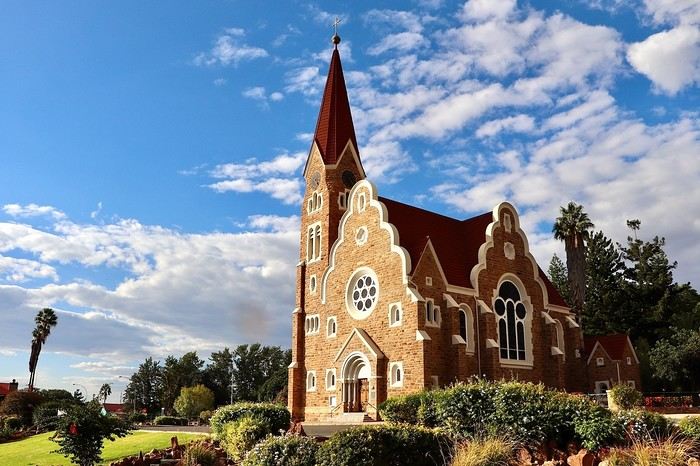
Off we go on a new adventure. The alarm rings at 6:30 AM, the travel bags are packed, and we head to Lyon Airport. We booked our flight tickets with Lufthansa. The first leg to Munich, Germany, is operated by AirBaltic. Departure at 1:05 PM for a 1-hour and 20-minute flight. We arrive at 2:30 PM.
**We now have a 7-hour layover, so we take the opportunity to get some fresh air and explore Munich.** We quickly exit Terminal 2 of the airport and head towards the subway. We buy a group day ticket "Airport-city Day Zone M-5," valid for 2 to 5 people at a price of 30.50 € (instead of 16.30 € per person). We take the S8 line to **Marienplatz** in 35 minutes. **This is the heart of the city.** The weather is overcast, quite cool, but dry. Perfect for a little city trip between two flights while leaving our large luggage in transit at the airport. **Munich is the third-largest German city after Berlin and Hamburg, in the Bavaria region.** **The center has a lot of charm and brings together several religious buildings, easy to explore on foot.** We are impressed by the number of people enjoying these 100% pedestrian streets, which are very pleasant. After Marienplatz, the most famous square with the town hall, we head to the Cathedral of Our Lady, a Gothic church, then continue to **Karlsplatz** and move on to **the food market offering a wide selection of high-end food products in an atmosphere where a certain art of living prevails.** We also visit St. Peter's Church before grabbing a bite to eat. Two good hours were enough for this 10 km city walk. It's time to take the subway back: by 6:30 PM, we are back at the airport. Now, it's time for a bit of waiting and rest. Our second flight is scheduled for 9:35 PM for a 9-hour and 30-minute journey to our final destination in Namibia: **Windhoek.**
> Round-trip flight tickets with Lufthansa from Lyon: 2029 €, or 1,014.50 € per person.
> Lyon Airport parking: 120 €
> Today's expenses: 7 € for 2 pizzas in France / 14 € for the restaurant in Munich / 30.50 € for the daily subway ticket in Munich.
**DAY 2: Friday, April 25, 2024: Arrival in Windhoek, Visit to the Namibian Capital:**
After a 9-hour and 30-minute overnight flight with Discover Airlines, we finally land on Namibian soil just before 7:30 AM. The day is breaking, and the colors are already stunning. We are eager despite the usual fatigue from the flight. The airline was punctual, with friendly staff and good meals, though a bit light. We are the first flight of the day to land, with no more than 15 flights per day here, from 7 AM to 8 PM. We disembark on the tarmac at this airport located in the middle of nowhere, **I finally set foot on African soil for the first time.** We exit among the first from the aircraft to go through the long formalities at the front of the line, as the wait can quickly become endless. Allow at least 5 minutes per person for e-visas. We still wait 45 minutes despite only about twenty people ahead of us. Phew, it's done. We collect our luggage and then withdraw money from an ATM. We make 4 withdrawals of the maximum amount, 2000 NAD $ per withdrawal, for a total of 380 €, or 95.33 € per withdrawal.
Our driver arrives at the same time, perfect timing, we were quick.
We leave the airport at 8:45 AM. By 9:30 AM, we arrive at the **Gracious Whisp vehicle rental agency**, located at the entrance of Windhoek, small and human-sized with a fleet of recent vehicles. More formalities, then a short wait as our vehicle is not yet ready. Time to decompress, catch our breath, and enjoy the very pleasant morning temperature. Not a cloud in sight. Next, a briefing on the vehicle, always with a bit of apprehension due to our approximate English. Allow 45 minutes of explanations, including setting up the roof tent, camping equipment, technical information in case of a flat tire, driving tips in Namibia, and a tour of the 4x4. We have all the necessary equipment for camping: mattresses, sleeping bags, pillows, table, chairs, gas stove, BBQ grill... as well as 2 spare tires, a compressor, a dual tank, and accessories for removing wheels. Off we go, it's time to muster our courage and get behind the wheel. **Heading to SuperSpar Maerua**, fortunately located less than 10 minutes away. We park with the help of a parking attendant; it's very crowded, the space is narrow, but everything goes well despite the cursed right-hand drive. Today's new mission: stock up on groceries. The store is well-stocked with local and imported products, catering to all tastes. We spend 114 € on groceries, from pasta to meat, BBQ lighters to dishwashing products. Two people load our groceries into two carts and transfer them to our vehicle; we feel compelled to leave a tip, 50 NAD $, as we don't have change yet. Now, we head to the hotel, 15 minutes away. Traffic is difficult at a complicated intersection; this will likely be the only traffic jam in Namibia. **We arrive at Kate's Nest Guesthouse & Backpackers around 1:15 PM, quite tired.** We take some well-deserved rest at this recent establishment, quite calm with secure private parking. After a short nap, we enjoy the quiet by the hotel pool. Night falls between 6:30 PM and 7 PM. We eat quietly in our room tonight before starting this long 4x4 road trip in camping mode in the heart of Namibia.
> Today's grocery expenses: 114 € at Super Spar Marua (2395.21 NAD $).
> Round-trip flight tickets with Lufthansa from Lyon: 2029 €, or 1,014.50 € per person.
> Vehicle rental: 4x4 Toyota with roof tent for 24 days: Gracious Whisp Car Rentals: 2,638 € (N$50,640) or **1,319 €** per person - (https://gwcarrentals.com/)
> Distance driven today: 15 km.
> Accommodation: Kate's Nest Guesthouse & Backpackers - 4 Aristotles Street Academia, 9000 Windhoek - 36 € for two for one night.
> Windhoek International Airport website: (https://www.airports.com.na/)
**DAY 3: Saturday, April 26, 2025: Windhoek to Hardap: Mariental Region - Kalahari Desert:**
After a good, restful night, we wake up leisurely around 7 AM. We enjoy the comfort provided by this first and last hotel before 24 nights under the tent.
**We leave Kate's Nest Guesthouse at 8:30 AM to tackle the Namibian roads.** We quickly leave the capital; in just 30 minutes, we find ourselves almost alone in the world. The landscape is dotted with small domes. We leave the **paved B1** quickly to turn left onto the **C15**. **From there, we won't see more than 10 vehicles all day.** After passing through the few houses of **Lekkerwaterpoort**, we tackle our first gravel road. These road sections are limited to 100 km/h, but even at 70 km/h, I find it already challenging. However, I quickly get used to it and gradually pick up speed to reach my cruising speed of around 80 to 90 km/h. **We are on immense straight lines crossing wild expanses as far as the eye can see.** **We come across two baboons, a few ostriches, and numerous cattle and sheep farms.** We pass through the charming village of **Uhlenhorst** with its typical houses and children with broad smiles waving at us. Life here is already very different from Windhoek. **The thermometer rises quickly from 16°C at 8:30 AM to over 28°C in the early afternoon.**
**We arrive at the Hardap Dam reserve at 2 PM.** We stop at the toll booth at the park entrance to pay the entrance fee: 250 NAD $ for 2 people and 1 vehicle. We continue to the dam and then the camp entrance, located a bit further. We had booked in advance, but this place remains little frequented by foreigners.
We take advantage of the hottest hours to rest by the large pool overlooking the immense lake, a very enjoyable moment. Would this be a bit of a vacation?
Around 4:30 PM, we head to the campsite. We overlook this vast water reserve. We arrive first; we will be only 3 vehicles spending the night here. It's time to get to work and set up our equipment for the first time. It takes us a good 20 minutes to set everything up, with a slight apprehension about unfolding the tent. Once this task is done, which we will have to repeat for almost a month, we will become much more efficient over time. Time for rest and contemplation in total silence. The sun gradually sets, and the heat quickly becomes bearable again. Bliss! **This dam is located 20 km northwest of Mariental in an area dotted with conical hills topped with dolerite buttons (Hardap means "hillock" in Nama). It captures the Fish River, which flows south, creating a large lake in the middle of an arid environment. The contrast is striking.** We enjoy our first sunset facing this 360° otherworldly landscape.
Around 7 PM, we start our first BBQ, or "braai" as it's called here. The temperature is perfect. The sun sets, giving way to a star-filled sky of incredible beauty thanks to the absence of any light pollution. The Milky Way will lull us throughout the evening. After some good sausages and potatoes on the BBQ, we head to our roof tent around 9:30 PM with a complete change of scenery in just 24 hours. France already seems so far away...
This campsite has shared showers and toilets, quite clean and functional, as well as a central area with several BBQs and tables. The sites are arranged in a semicircle, each with an electrical outlet. The sites are close to each other but spacious, some slightly shaded. We are only three vehicles tonight, so it's perfectly comfortable and quiet. Not to mention the large pool near the restaurant. Our trip is off to a great start.
> Today's road itinerary: Windhoek > Head south on the B1 to Rehoboth > Turn left onto the C25 then C15 to Stampriet > C20 to Hardap > Full north on the B1 > Then turn left onto the M93 - 5 hours of driving.
> Distance driven today: 354 km.
> Accommodation: Hardap Recreation Resort - 23.3 € for two - Large pool - GR6W+3M2, Hardap Game Reserve, Mariental, Namibia - (http://www.nwr.com.na/resorts/hardap-resort/)
**DAY 4: Sunday, April 27, 2025: Hardap - Brukkaros Volcano - Keetmanshoop - Quivertree Forest Rest Camp**
Our first night under the tent was very pleasant; the little wind quickly calmed down, giving way to absolute silence. The mattress is decent, more comfortable than some nights in Nepal. The length and width give us enough space for maximum comfort, despite my height (1.91 m). We wake up a little before 7 AM as the sun rises, and the lights dazzle us from the start of the day. We pack up the equipment in 30 minutes, quite easily. Then we enjoy the sun, which warms up quickly while we keep our light fleece on.
At 8:30 AM, **we hit the road again, heading south** to our first stop in **Mariental**. We want to do some shopping at SuperSpar, but once we arrive in the parking lot, a young local is fighting with the supermarket security guards and then threatens to throw stones. We don't want to take any risks right at the start, so despite the baton blows he receives, he doesn't stop. We leave empty-handed but fill up with fuel at the Shell station 1 km further. The price per liter is 21.33 NAD $, we fill our 107-liter tank for 107 €. In Namibia, you get served, and they bring the card machine to the window to pay. It's then customary to leave a tip.
We then take the B1 heading due south on a recently renovated road. Around 11:30 AM, we leave it on our right to take **a wild gravel road, the M98**. Just before **Berseba**, we turn right onto a small track, the **D3904 towards Brukkaros Crater up to a camp at 1588 m altitude**. The track then becomes too bumpy. We stop on the counter-slopes where **a wide panorama unfolds over these immense plains as far as the eye can see**. It's 12:15 PM, time for us to eat a rice and tuna salad facing this landscape.
**We are alone in the world until a vehicle arrives and parks next to us.** A bit of apprehension, 4 men head towards us. It turns out to be 4 shepherds looking for a lost foal. The conversation is pleasant, lost in the middle of nowhere. We find ourselves alone again in this absolute silence. **The heat becomes stifling with a good 30°C**. We get back on the road around 1 PM. Back on the B1, **we continue due south to Keetmanshoop**, which we reach around 3 PM. We stop there to do some shopping for 262 NAD $ (12 eggs, a can of tuna, a can of corn, bread, a soda, and a 5-liter water container), or 12.48 €. Two quite insistent children ask us for money or candy at the store exit, yet we give them a small tip, but they continue to cling to the car. Locals parked next to us tell them to leave us alone. Anyway, we finish the trip to **Quivertree Forest**, 15 km away. We will spend the night in this **pleasant farm run by a German**. Upon arrival, as the day before, and as I suppose in the future, we dive straight into the cool pool to relax after all these kilometers. A bliss. Then we take our 4x4 and choose a spot near these famous trees. After the 33°C this afternoon, once 4 PM passed, the temperature drops again and becomes very pleasant. **We are in the middle of the Kokerboom, one of the most interesting and characteristic plants of hot and arid regions. It's not really a tree but a variant of the aloe plant whose botanical name is Aloe Dichotoma. This Kokerboom has a smooth and thick trunk reaching up to 1 m in thickness and 9 m in height. They bloom for the first time at the age of 20 to 30 years.** The flowers are yellow and reach about thirty centimeters during the season between June and July. **They grow mainly in an environment with a high concentration of black rocks absorbing a large amount of heat (38°C). The rocks also serve to anchor the tree with its tentacle-like roots. It also resists frost. Each is between 200 and 300 years old.**
Around 5 PM, we walk to the farm reception to watch the feeding of **two cheetahs**. Magnificent carnivores taking their time to savor their piece of meat. **Then we return near our campsite to enjoy the sunset among these trees. The colors are sublime, as every evening apparently. A magnificent spectacle with colors evolving from yellow to orange then to pink, before giving way once again to a sky filled with thousands of stars.** Our campsite at Quiver Tree Forest Camp is very comfortable; we have a water supply, a stone table, a small lamp, an electrical outlet, a small tree for shade, and a BBQ that we won't use tonight; we'll cook on gas. The sites are far apart, with some shared facilities scattered around, a very beautiful setting. No reservation possible, no need, just show up directly. **The campsite accommodation for 2 people costs 28 €, including the reserve entrance fee of 5 €**. We finish this second bivouac evening around 9:30 PM, time for some reading and sleep in peaceful silence without wind.
> Today's road itinerary: Mariental > B1 heading south to Brukkaros > At Tses turn right towards Berseba via the M98 > Turn right onto the D3904 > 8 km > Brukkaros Volcano (stop at the lower camp as the track is difficult for 1 hour) > Keetmanshoop > Turn left onto the M29 > Quivertree Forest - 4 hours of driving.
> Distance driven today: 371 km.
> Distance walked today: 6 km.
> Today's expenses: Groceries for 12.48 € (262 NAD $) / Fuel for 107 € (1 liter of diesel for 21.33 NAD $).
> Accommodation: Quivertree Forest Rest Camp, P.O. Box 262, Keetmanshoop, Namibia - BBQ, hot showers, toilets, and electricity - No reservation - Pool - 18 €/Person (N$ 340.00 with park entrance) - (http://www.quivertreeforest.com/)
**DAY 5: Monday, April 28, 2025: Quivertree Forest Rest Camp - Giant's Playground - Keetmanshoop - Fish River Canyon - Canyon Roadhouse:**
After an excellent start to the night, we are woken up by the wind shortly before 6 AM, but the sunrise is not far off. We get up at 6:30 AM to enjoy it. The atmosphere is a bit cooler this morning, but the reward is already here.
The adventure continues. At 7:45 AM, we head towards **Giant's Playground**, 4 km away. We take a 3-kilometer walk through this expanse of blocks and igneous rocks.
We continue south at 8:45 AM, passing through Keetmanshoop again where we do some shopping for 25 €, a big stock-up for a good part of the trip: meats, canned goods, pasta, fruits... At 9:30 AM, we take the B4 to Fish River Canyon.
At 11:30 AM, we arrive at the entrance to the NWR park (350 NAD $ entrance for 2 people and 1 vehicle). The track becomes bumpy immediately upon entering the park. After about ten kilometers, we come upon this landscape carved by nature. In the end, it's well worth the detour. We were at the Grand Canyon in the USA exactly (https://www.montagne-aventure.net/2024/04/29/j21-3-juin-2024-grand-canyon-et-lac-powell/) and can thus confirm that this Fish River Canyon is comparable. We make several stops along the southern flank. **Here, nothing is developed; nature is almost in the wild state.** **With 160 km in length, up to 27 km in width, and a depth of 150 m, it is indeed the second-largest canyon in the world.** The history of the canyon is apparent in its different earth layers and stratification: the antiquity of the place is tangible, and the absence of vegetation is surprising. **It consists of two nested canyons, formed at distinct periods. The first distinct layer of schist, sandstone, and eruptive material surrounding the canyon was formed a few two billion years ago, then transformed due to heat and pressure into more solid rock such as gneiss. The inner canyon, carved more recently by the Fish River, has a depth of 270 m.**
We have a picnic once again alone in the world facing this grand panorama at the **Sulphur Spring View Point**. This is where the hiking trail begins, plunging into this narrow canyon, but it is forbidden to venture there alone without a guide. It's 30°C, but a slight wind makes the atmosphere bearable. At 1 PM, we retrace our steps and continue to the **Main View Point** then to the **Hikers View Point**.
In the south of Namibia, the Fish River Canyon, 160 km long, is a true geological wonder: a canyon nested within another canyon, one of the largest in the world. The first sedimentary layers formed two billion years ago; 500 million years ago, a period of tectonic activity caused these layers to crack and tilt, opening a vast canyon in the Earth's crust. The second canyon, with a depth of 270 m, was carved over time by the passage of the Fish River in this new valley.
At 3 PM, we arrive at our very charming camp for the evening, the **Canyon Road House**. We fill up with fuel right away because tomorrow we have a long day of isolated driving: 55 liters for 1240 NAD $. Then we settle into the campsite we had previously reserved in France. We are assigned site 2, very well set up under a tree with its BBQ and stone table just steps from the pool. We quickly set up the tent and jump straight into the pool for the relaxation moment of the day. As usual, the water is quite cool, but it's a real pleasure. Then we stroll around this Canyon Road House, which recreates the atmosphere of the roadside inns of the 1950s with old car wrecks and vintage gas pumps in a bygone era. **Around 5:45 PM, we start a short walk leading us to the top of a hill overlooking the wide plateau where we are to watch the sunset.**
And finally, to end this beautiful day, it's time for the braai, with grilled sausages and white beans on the evening menu.
> Park entrance: 150 DN/person + 50 DN/vehicle (18 € for two). It is possible to enter at two access points: Hobas in the north and Ai-Ais in the south.
> Today's road itinerary: M29 > Keetmanshoop > B1 > B4 > C12 (track) > After Holoog turn right onto the D601 (C37 track) > Accommodation on our right (stop just to check in before 6 PM) > Continue 30 km (30 minutes of track) to the viewpoints after Hobas where you must pay the entrance fee. Sunset View Point to the left > Return before sunset as the park closes (best lights at sunrise). 3 hours.
> Distance driven today: 228 km.
> Distance walked today: 10 km.
> Today's expenses: 25 € for groceries / 17 € for the Fish River Canyon park entrance / 58 € for fuel.
> Accommodation: Canyon Roadhouse, Gondwana Collection Namibia – 34.4 € for two - Pool - Near Hobas - (http://www.gondwana-collection.com/fr/accommodation/canyon-road-campsite)
**DAY 6: Tuesday, April 29, 2025: Canyon Roadhouse - Orange River - South African Border - Vista Trail - Gondwana Sperrgebiet Park - Aus:**
The night was excellent in this very comfortable campsite. **We wake up to the sound of birds** before the alarm at 6:45 AM. Our little morning routine starts as the sun rises. **A big day of driving awaits us to the South African border. This will be the southernmost point of our journey.** We hit the road at 8 AM via the C37, pass through **Hobas**, then turn onto the D207 to **Aussenkehr.** **We cross a mountainous barrier with some high peaks and perfect cones. The rock varies from orange to pink to black.**
We then cross a lunar desert as far as the eye can see on a giant dome; the track winds through nowhere without meeting anyone for hours. The landscapes are surprising. **We spot several ostriches and a gemsbok.** In the middle of this endless expanse, we come to an improbable intersection and continue right onto the D278.
In the middle of these arid lands, we come across a green zone: a vast vineyard. At 10:30 AM, **we come across a "Road closed" sign, fortunately, a local resident waves us to continue; a bit stressed, we proceed.** We start to follow the beautiful Orange River. On the other side of the bank, just a few meters away, South Africa is there. It is the second-longest river in Southern Africa, after the Zambezi. It flows over 2,000 km to the Atlantic. After passing through narrow gorges, we regain altitude before starting the descent, gently heading back north.
**We now cross and follow the Fish River, which joins the Orange River further south** **along this gorge dating back millennia.** At exactly noon, we take a lunch break by the Fish River, still without meeting a soul in this landscape between greenery and aridity. The temperature here is cooler with a pleasant 23°C on the banks, the perfect spot. **We continue on the track to Rosh Pinah**, where we find a paved road again. **The section along the Orange River and the Fish River was officially closed, but we were able to pass without any issues, avoiding a detour of at least 3 hours.** Phew. We now drive at high speed (limited to 120 km/h) through these vast spaces. We come across many ostriches after the **dozens of monkeys along the Fish River**. Around 3 PM, 3 km after the very small town of **Aus**, we reach **our campsite for the evening at Klein Aus Vista**. A new **small peaceful haven very well set up**. As usual, after checking in at reception, we jump straight into the beautiful pool to get our well-deserved dose of coolness, another good thermal shock that our bodies appreciate. Once this moment of relaxation is over, we take our 4x4 to reach the campsite located a bit higher, set apart at the foot of a hill that overlooks us.
After setting up, **around 5 PM, we head to the Vista Trail to climb to the top of a mountain overlooking the vast plain that surrounds us at 360°**. It takes about 30 minutes to climb. The place is just magical, **the perfect viewpoint to admire the sunset**. **We fully savor the moment. We also spot one of the few wild horses in the world capable of living in the desert.** Their numbers have decreased in recent years due to predation and drought (around 100 to 150). At 7 PM, we return to the camp, time for the braai and preparing the meal in this peaceful little camp.
In the south of Namibia, the Fish River Canyon, 160 km long, is a true geological wonder: a canyon nested within another canyon, one of the largest in the world. The first sedimentary layers formed two billion years ago; 500 million years ago, a period of tectonic activity caused these layers to crack and tilt, opening a vast canyon in the Earth's crust. The second canyon, with a depth of 270 m, was carved over time by the passage of the Fish River in this new valley.
> Today's road itinerary: 5 hours of driving: D324 heading south (track) > turn right onto the C10 (track) > D316 heading south > turn right onto the C13 > In Aus turn left onto the B4 > Campsite via a track on the left.
> Fuel station: Solitaire or Aus.
> Distance driven today: 398 km.
> Distance walked today: 7 km.
> Accommodation: Klein-Aus Vista Desert Horse Campsite - Farm Klein-Aus No 8 on the B4 main road to Luederitz Aus 9000, Aus, Namibia - (http://www.klein-aus-vista.com/accommodation/desert-horse-campsite/) 17908 420 DN - Water + Shared shower (hot water). No electricity.
**DAY 7: Wednesday, April 30, 2025: Aus - Kolmanskop - Diaz Point - Luderitz - Kanaan Desert:**
We wake up around 6:45 AM, with partly cloudy weather for once; we feel the ocean's influence gradually. But the sun isn't far off. At 7 AM, we leave the campsite heading west towards Luderitz via the B4. **First stop of the day: Kolmanskop, the ghost town we reach at 8:30 AM**, entry costs 180 NAD $ per person. We discover this **timeless place** in 1.5 hours, moving from building to building amidst violent sand-laden gusts of wind. There's a lot of charm in these different living spaces. **The sand quickly reclaimed the place after this mining town was abandoned.** This was once the headquarters of Consolidated Diamond Mines. It's hard to believe that this former town, where the diamond industry once flourished, had a hospital, a bowling alley, and a theater. The decline in diamond sales after World War II and the discovery of richer deposits put an end to this golden age. By 1956, the town was already completely deserted, and the sand had reclaimed its rights. **These dilapidated buildings swallowed by shifting dunes have something surreal about them.**
At 10:15 AM, we hit the road again **heading to Luderitz, 22 km away**, and first to **Diaz Point** **facing the Atlantic Ocean**. It's a wind-swept peninsula with its characteristic red and white lighthouse. There's a campsite and a coffee shop on site, but the place doesn't inspire rest without shade or shelter from the wind. We return to the city via the D701 track that runs along the ocean, be careful at low tide. We come across **a few fishermen and a fox as well as flamingos.**
We walk through the few streets of the city, much smaller than I imagined, then climb to the **famous little Lutheran church that overlooks the city, the Felsenkirchr.** **The wind blows very strongly here, and the sand is omnipresent, surrounded by the Namib Desert and the southern Atlantic coast.** **A German colonial relic barely touched by the 21st century, Luderitz seems frozen in the past, giving it both a gloomy and a certain charm. In short, it's certainly one of the most incongruous places in Africa.**
At 1:15 PM, just before leaving Luderitz, we do some shopping for 20.50 € and fill up with fuel: 61.50 €, 1290 NAD $ for 61 liters (21.18 $ per liter).
**We return via the B4 to Aus** (paved), **then via rougher tracks**, the C13 then the D707, magnificent as it runs along a mountain range with multiple colors on our right and an endless flat desert on the other side.
To access our campsite for the evening, we must take a **narrow private track for 7 km** on our right to emerge, in this total vastness, at the **isolated Kanaan Desert Retreat on a small hill**. I don't have time today to jump into the pool near the reception; we arrive at 5 PM at 8 small, isolated, and unique sites with a small kitchen, a shower, and a private toilet under a small tarp shelter. **A crazy charm with a unique view...** **This will be my favorite accommodation of this trip. The photos speak for themselves.** We jump into the outdoor shower while savoring the landscape, then prepare our evening braai while enjoying the colors fading, facing this plateau with bushes turning a vivid orange. **A moment that will remain etched for life.** **Savanna atmosphere under a thin emerging moon. Every minute offers different colors. Facing our meal, we have a natural giant screen.**
We end this day contemplating the stars and admire this thin orange moon setting on the horizon (8:42 PM).
**Ghost town just before Luderitz: Kolmanskop** (open from 8 AM to 3 PM - N$ 180 p.p – 9 €). Once, Kolmanskoppe was organized around diamond mining. After finding new, more prolific spots, the town was abandoned and is now a ghost town. The sand and dunes have reclaimed their rights and buried everything humans had built. Houses, train station, bakery, everything has been covered by sand, which passes through the windows, even though they are 1 meter high.
> Today's road itinerary: 5h30: B4 to Luderitz (paved) > Round trip > Kolmanskop on the left > Return via the previous campsite > Then C13 (track) > Turn left D707 (track) > Then track to the right to the campsite.
> Distance driven today: 438 km.
> Distance walked today: 8 km.
> Today's expenses: Groceries at the Spar in Luderitz for 20.50 € / Fuel fill-up in Luderitz for 61.50 €.
> Official Kolmanskop website: (https://kolmanskuppe.com) (open from 8 AM to 1 PM - N$ 180 p.p – 9 €).
> Accommodation: Night at the south of the Namibrand Nature Reserve: Kanaan Desert Retreat – 26.5 € for two - (http://www.kanaannamibia.com/) - Farm 104 Karas 9000 - Sanitary facilities + BBQ + Water + Pool - No electricity - My favorite accommodation of this trip.
**DAY 8: Thursday, May 1, 2025: Kanaan Desert Retreat - Namib Desert - Crossing the Namibrand Nature Reserve – Sesriem Canyon - Elim Dune - Little Sossus Lodge**
After a cooler night than the previous ones with about 10°C, we wake up around 7 AM. We admire, as usual, the sunrise between the desert and the mountains. **The spot from last night was truly perfect, isolated from the world, in total serenity, with a wake-up call to the sound of birds.**
We hit the road a little after 8 AM, heading north via the D707 to Spes Bona, then the gravel road C27 via Betta to Sesriem. **The landscapes roll by and dazzle us.** **We are right in the heart of the Namibrand reserve**, coming across numerous **zebras**, **impalas**, **ruminants that reproduce in large numbers**, and **gemsboks**. At noon, we stop in the shade of a tree to eat. The spot is so romantic facing orange arid mountains and a vast green plateau. **A landscape full of contrasts, timeless and silent.**
**The Namib Desert is the oldest on the planet; its name means "vast arid plain," and it also gave its name to the entire country: Namibia.** The majority of these arid and semi-arid lands dotted with viewpoints are part of the Namib-Naukluft National Park, which covers 23,000 km².
At 1 PM, we enter the Sossusvlei park. We start with the **Sesriem Canyon**, which is 3 km long and 30 m deep. We enter it with a short 1-hour hike into its depths. **It was carved by the Tsauchab River in an agglomerate of sand and pebbles over 15 million years old.** We retrace our steps back to Sesriem, which means "six belts," referring to the number of leather belts (from ox wagons) needed to draw water from the canyon. This remote locality is mainly the gateway to Sossusvlei but offers a gas station and some accommodations. For our part, we sleep 40 km away tonight.
**We then move on to Elim Dune.** It takes about 45 minutes of walking to reach its summit, and the climb is very breath-taking as we progress in the sand where we almost slide back with each step. **A first grand 360° panorama unfolds. The ochre color of the sand contrasts completely with the yellow plain and the brown and black mountains in the distance.**
At 3:15 PM, we start the descent facing Sesriem. We were completely alone once again on this dune. **These Namib dunes are composed of colored quartzite sand, presenting hues ranging from cream to orange and from red to purple. Unlike the ancient dunes of the Kalahari, these move with the wind and adopt distinct, ever-changing shapes.** Star dunes resemble stars seen from above, while transverse dunes, like those on the coast south of Walvis Bay, stand perpendicular to the prevailing southwest wind. The most stable dunes, which thus have the most vegetation, are parabolic dunes, due to the variability of the winds. Longitudinal (seif) dunes measure up to 100 m in height, while barchan dunes, crescent-shaped and predominant at the extreme north of the Skeleton Coast and south of Luderitz, are the most mobile, created by unidirectional winds.
**We get back on the road for 45 minutes to our campsite for the evening, Little Sossus, which we reach at 5 PM**, via C27 then right onto C19. As often upon our arrival, I jump into the cool pool to relax after all this driving, then we proceed to set up the camp. As the day before, the campsite consists of 10 fairly distant sites, with private sanitary facilities and a small roof. We are delighted with this crazy charm. The hot water for our shower is wood-heated: a Namibian lights it every evening around 5 PM.
For a change, or not, the menu features a small BBQ with pork ribs and pasta, facing another sunset, this time with partial cloud cover giving equally splendid colors. Time for a well-deserved rest after long corrugated tracks covered in our 4x4 today.
> Today's road itinerary: 4h45 of driving: Find the D707 and head north (track) > At Spesbona turn left onto the C27 (track) > At Sesriem after entering the park, turn left following View Point Sesriem > Continue 4.5 km to the Sesriem Canyon Parking > Return then head towards Elim Dune > Exit the park then take the D826 > Turn right onto the C19 heading SE > Turn right facing the D854 to the campsite (campsite closes at 7 PM).
> Distance driven today: 272 km.
> Distance walked today: 8 km.
> Today's expenses: Entry to the Sossusvlei Namib-Naukluft Park: 17 € for two (with one car).
> Accommodation: Little Sossus Lodge – 35 € for two - At the junction of the C19 and D854 roads Maltahohe 9000, Maltahohe, Namibia - (http://www.littlesossus.net/) - Pool + Private bathroom + Hot water + Electricity + BBQ + Grocery store (bread to order the day before).
**DAY 9: Friday, May 2, 2025: Little Sossus Lodge - Namib-Naukluft National Park – Sesriem - Sossusvlei - Big Daddy – Deadvlei - Tsauchab River Camp**
Today we start the day early to tackle **the famous dunes of Sossusvlei at first light**. The alarm goes off at 6 AM to leave the camp at 6:45 AM. The wind is blowing quite strongly in gusts this morning, but it only woke us up a quarter of an hour before sunrise. The park opens at 7:15 AM. We start with a small encounter: a friendly **jackal lounging by the roadside.**
We first have to cover the 40 km of track to Sesriem, pay the entrance fee (350 NAD $), and drive 65 km on a paved road this time to reach the **vast salt pan (a lake whose sediments are made of salts) of Sossusvlei**. **It appears amidst the gigantic red dunes that rise on either side. The wind constantly changes the shape of the dunes, as well as their colors, which vary with the light. The setting is breathtaking, giving an impression of immensity and timeless grandeur.**
The paved road ends; the last 4 kilometers become technical and are reserved for 4x4s. Phew, I pass without any problems, though not without stress, switching to L4 mode. **We start the ascent to Big Daddy at 8:45 AM, 325 m of elevation gain in the sand nonetheless.** We climb at an excellent speed despite the strong wind, in exactly 1 hour. At 9:45 AM, we are at the summit of what will remain etched for a long time. The 360° view is simply unimaginable; you have to experience it to believe it. The wind blows violently up there, **it feels like being in the high mountains, on a snow ridge, with a strong transport of sand. The atmosphere is magical.** We start the descent running barefoot in the steep sand.
**We then move on to its neighbor, Deadvlei.** **Here, petrified trees stand in the "vlei" (basin) with their dried branches casting desolate shadows on the white ground. The juxtaposition of the deep blue sky and the towering dunes is captivating.**
We return to the 4x4 parking at 11 AM, the stress rises again for the sandy track passage. We retrace our steps and stop at **Dune 45**.
At noon, we take the opportunity to picnic at the foot of **the beautiful Dune 40**, where there is already no one left. We enjoy the quiet again, well, almost, as the wind remains omnipresent.
At 1 PM, we return to **Sesriem**, where we fill up with fuel (21.15 NAD $ per liter), totaling 1630 for 77 liters (78 €), and do some shopping for 245 NAD $ (two nice pieces of pork, 2 cans, 2 sandwiches for tomorrow, and 1 soda), which is 12.48 €. It's 27°C. We hit the road again, heading to a new destination at 2 PM. We take the C19 back to Little Sossus where we spent the night, then turn left onto the gravel road D854 for about 40 km to **Tsauchab River camp**. Finally, we won't be sleeping here; we are redirected 7 km downstream to **Naukluft View Camp**, which also belongs to Tsauchab River Camp.
We arrive at 4 PM, and thankfully, the fatigue was starting to set in. **Our campsite is located under a small forest, providing some protection from the wind that blew strongly all day. The calm does us a world of good. Once again, a lot of charm**, with very spaced-out sites without any visibility. We can't wait to take our shower. It will be possible from 5 PM with, as the day before, water heated by a wood fire. Time to prepare the campsite for the night. And on the menu, a braai with two superb pieces of pork bought in Sesriem and fries!!!!
**The Namib Desert**
An impressive coastal desert stretching from the Atlantic to a high plateau inland, the narrow Namib Desert runs along the southwest African coast for about 1,300 km. **Considered one of the oldest deserts in the world**, it is bordered to the north by the Kaokoland Desert, which extends into Angola, and to the south by South Africa's Karoo. The narrow Namib is mostly less than 160 km wide. Despite this, it is considered to consist of three sections: the coastal strip influenced by the Atlantic; the Outer Namib, occupying what remains of the western half; and the Inner Namib, comprising the eastern half of the desert. Generally called the Skeleton Coast, the coastal Namib receives almost no rain and depends on regular marine fogs for moisture. From sea level, the terrain rises to 900 m, where the desert meets the base of the Great Escarpment to the east. In the Inner Namib, average annual rainfall is only about 50 mm.
The dryness is such a characteristic of the Namib that it is thought to have been in this arid state for at least 55 million years. It is all the more surprising to learn that animals such as vipers, geckos, zebras, and elephants live in this desert. Some areas of the Namib are also rich in flora, including Welwitschia mirabilis, which grows near the ground with seemingly exhausted leaves, extracting moisture from marine fogs and can live over 1,000 years. In the southern Namib, some dunes are up to 32 km long and 240 m high.
**The frequent fog of the Skeleton Coast:** Driving north along the coast of Namibia, the cold Benguela Current in the Atlantic cools the moist air above the ocean, which, upon meeting the warm desert air, leads to the formation of thick fog banks that drift up to 100 km into the center of the Namib before evaporating under the sun.
> Today's road itinerary: 4 hours of driving: C19 towards Sesriem (track) > D826 (paved) > Foot of Big Daddy via a technical sandy track > Return via the same route > D854 to Tsauchab.
> Gas station: Sesriem.
> Distance driven today: 254 km.
> Distance walked today: 12 km.
> Today's expenses: Park entry at Sesriem for 2 people: 17 € / Fuel fill-up: 78 € / Groceries at Sesriem gas station: 12 € (245 NAD $).
> Accommodation: Tsauchab River Camp - Naukluft View Camp - D054 & D850 GPS: S24 26' 37" E16 10' 11" Sossusvlei 22007, Maltahohe, Namibia - BBQ + Private sanitary facilities + Water - www.tsauchab.com
**DAY 10: Saturday, May 3, 2025: Tsauchab River Camp - Naukluft National Park - Olive Trail Hike (10 km) - Ababis Guest Farm**
We pack up the camp at 8 AM and continue our road trip north via the D854, a bumpy track with many corrugated sections. It's cool this morning, 12°C.
**We enter the Naukluft massif, discovering landscapes with very different terrain than before.** We first need to check in at the campsite, 13 km from the entrance at the end of the track: 350 NAD $ for 2 people and 1 vehicle, then return 4 km back. **On the agenda is the lovely Olive Trail, a 10 km hiking loop that starts 4 km northwest of the park office**, along the D854 that we follow. At 9:45 AM, the hike begins with a fairly steep ascent (about 45 minutes) among the **wild olive trees** from which the trail gets its name. **At the summit, we enjoy a view that embraces the Naukluft Valley.** We then turn east and gradually descend into a deep valley, passing over sometimes slippery rocks. We have a snack around 11:30 AM in these small gorges. **Further on, to cross the wall of a canyon in front of us, some chains are fixed to the rock to help us pass.** We finish this superb loop clockwise at 1:15 PM, taking 3.5 hours including 30 minutes of breaks. We only crossed a small group of 3 people on this wild adventure far from everything. At 1:45 PM, we exit the park and take the **D854 track north to Bullsport**. From there, we turn left and take the C14, which **runs along the bed of the Tsondab River.**
**We arrive at our campsite for the evening, Ababis Guest Farm, at 3 PM.** Quite early for once, allowing us to rest a bit in this peaceful farm where many sheep wander around us. We also enjoy the pool under a magnificent sun, less hot than the previous days, it's 22°C. The camp has only 4 spaced-out sites around shared sanitary facilities. **We are in the middle of a vast plain facing the Naukluft massif mountains.** We will have another beautiful sunset on these mountains. For the first time on this trip, **we will be completely alone at this campsite.** **We haven't encountered many people today**, just 3 during the hike and fewer than 10 vehicles all day.
> Today's road itinerary: Head north on the D854 (track) > Turn left to enter the Naukfluft National Park > Continue on the track then turn right to the Olive Trail hike parking lot (1 hour for 45 km). Return to the D854 and continue north > At Bullsport turn left onto the C14 to Ababis (still a track) > The camp is located on the left facing the D1261 (1 hour for 60 km from Olive Trail). Total: 2 hours of driving for 100 km.
> Gas station: No gas station on the route, except in Solitaire.
> Distance driven today: 115 km.
> Distance walked today: 13 km.
> Accommodation: Ababis Gaestefarm - Night booked by email – payment on site: (https://www.ababis-gaestefarm.de/) - P.O.Box 1004, Maltahöhe - N$ 300.00 per person
**DAY 11: Sunday, May 4, 2025: Ababis Gaestefarm - Namib-Naukluft National Park – Solitaire - Gaub Pass - Kuiseb Canyon - Moon Landscape - Walvis Bay**
The night was, for the first time since the start of this road trip, quite difficult. A strong wind accompanied us all night, making the tent flap constantly. A racket that drove us crazy. We still managed to sleep a few hours. The morning sun brings back our smiles. We hit the road for this new stage a little before 7:45 AM.
We start the day with a first stop less than 15 km away **on the C14 in Solitaire** at 8:15 AM. **This town is lost in the middle of nowhere with its small gas station with a western atmosphere adorned with rusted and sand-covered car wrecks.** After a quick supply stop: 86 NAD $, or 4 € for 1 water container and a box of cookies, we continue north still on the C14, **crossing the Tropic of Capricorn** then devouring this **magnificent track up to Gaub Pass**. **A succession of narrow gorges, turns, climbs, and descents breaking the monotony of the previous long straight lines.** We are right in the heart of no man's land for 200 km. We then start the descent to the **Kuiseb Canyon. It houses the wide bed of the eponymous river, dry almost all year.** Even when it flows for 2 to 3 weeks during the rainy season, it doesn't go beyond Gobabeb and then seeps into the sand. **The drinking water that supplies Walvis Bay is pumped at Rooibank from this underground water table.** **We now cross the Kuiseb Desert where impressive dunes roll down.** We make a short stop at a **natural rock arch** reminding us of our (https://www.montagne-aventure.net/2024/04/29/j19-1-juin-2024-canyonlands-national-park-et-arches-national-park/). Then we gradually descend towards **Walvis Bay** where we will spend the night. At noon, we enter the **Dorob National Park**. The thermometer drops 10°C in 10 minutes as we get closer to the Atlantic Ocean.
At 12:45 PM, much earlier than initially planned, we arrive at the **Moon Landscape** (View Point 4, free) to have a snack, via a very recent surprising dual carriageway in the middle of nowhere, then via the C28. We are again in the hinterlands, the temperature has soared: 30°C without a bit of shade. Even if the colors and the panorama must be exceptional at sunrise or sunset, the detour for this 360° panorama is still worth it. Extreme aridity as far as the eye can see. The place lives up to its name; it really feels like being on the moon. We get back on the road at 1:30 PM via the D1991, C28, then again the A2, which is very new. The latter runs along the beautiful dunes up to the **Dune 7**, where we make another stop.
Then we head towards our final destination of the day, **Walvis Bay. Its port is sheltered by a sand spit, a natural breakwater that protects the city from the powerful assaults of the ocean. Its port was long a strategic place: claimed by the Cape Colony in 1795, it was officially annexed by the British in 1878 to counter Germany's ambitions in the region. A colony of fur seals, pelicans, flamingos, and whale terns have made it their home.**
We do a big grocery shopping at the Spar located in the center for 66 €; it's very easy to park there. Then we fill up with fuel at an Engen station right across for 1117 NAD $ for 54 liters (20.6 NAD $ per liter), which is 54 €. We then **enjoy the seaside in the Lagoon neighborhood**, where it's also easy to park. After kilometers in the desert, **this cool break is more than welcome. The outside temperature is 22°C. In the distance, we can clearly see the clouds lingering over Swakopmund.**
We take the 4x4 one last time to the **Lagoon Chalets where we will spend the night**. The spot is well set up and surprising in the heart of a residential neighborhood. The sites are quite large, separated by fences around very comfortable shared sanitary facilities. BBQ, electricity, and shaded area. We settle in quietly before going out on foot to watch the **sunset over the Pacific Ocean along Lagoon Promenade Road**. We can still see this impressive persistent mist in the distance. The neighborhood is very peaceful, certainly without much charm, but with a very well-developed seafront that inspires relaxation after kilometers without meeting anyone in inhospitable lands. We end the day with our traditional braai: grilled chicken thighs and sautéed potatoes in the coolness of a starry sky.
> Today's road itinerary: 5h30 of driving (or 3h30 of driving for 250 km without the Moon Landscape): Head north on the C14 > Cross the Tropic of Capricorn > Gaub Pass > Kuiseb Canyon on our left in a round trip > Continue to Green Valley and leave the C14 to the right on the D1984 > Turn right on the C28 > Then left D1991 to Moon Landscape D1991 View Point 4 > Return via the same road and stop at Dune 7 for sunset > Walvis Bay.
> Gas station: Solitaire or Walvis Bay.
> Distance driven today: 372 km.
> Distance walked today: 5 km.
> Today's expenses: Fuel fill-up for 54 € + Groceries for 66 € at Spar.
> Accommodation: Walvis Bay: Lagoon Chalets – 36.6 € for two - (http://www.lagoonchaletswb.com/) - 8th Road West, Meersig Meersig 9000, Walvis Bay, Namibia - BBQ – Electricity – Shared sanitary facilities.
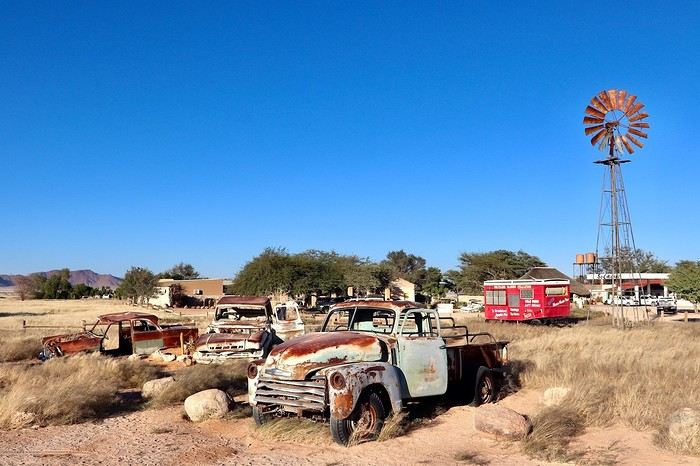
**DAY 12: Monday, May 5, 2025: Walvis Bay - Swakopmund - Round Trip to Cape Cross (seals) - Wreck of the Zeila en route - Henties Bay - Spitzkoppe Tented Camp & Campsite**
After an excellent night, a bit cooler and more humid than usual, we wake up around 7 AM and leave the camp at 7:45 AM to **follow the Atlantic coast heading north**. We thus leave **Walvis Bay**, a very pleasant stopover town, and follow the ocean via the B2. **We enter the mist and Swakopmund** at 8:40 AM, parking **near the lighthouse**. The atmosphere is very quiet, the streets seem dead with large empty parking lots and very little traffic, but the few open shops are filled with expatriates enjoying their breakfasts, French bakeries, cafes, travel agencies... **We are in this Benguela Current, a fast cold ocean current that flows from South Africa, up the coasts of Namibia and Angola, towards the northwest to join a warm equatorial current. Hence the supply of very fish-rich waters and this tenacious mist depending on the seasons. In the northern part of the Namib Desert, fogs are frequent during the southern winter. It's almost the only source of moisture since the city of Swakopmund receives, on average, only 11 liters of water per m² in December and January.**
**Swakopmund is wedged between the dunes and the Atlantic rollers. It is the Namibian capital of adventure activities and has a ghostly colonial remnant. With its German architecture, its seaside promenade, it resembles a seaside town of the North Sea or the Baltic.** It is also a bustling African city. **Nearly two-thirds of Swakopmund's population live in Mondesa, a township created during apartheid, northeast of the city center, a legacy of the South African mandate.** The heart of the city is located in the area of the pier, at the foot of the lighthouse, better known as the Mole. During the South African occupation of Swakopmund, the port took a back seat to Walvis Bay.
Continuing on this C34, sometimes on salt, we come across the famous **wreck of the Zeila, stranded in 2008**, on our left. We can see it through the thick fog, being very close to the beach. It's 10:15 AM. Further on, Henties Bay is a bay that attracts many fishermen; it's teeming with vehicles equipped with fishing rods. Besides its fish-rich waters, it enjoys a relaxed atmosphere and a large beach suitable for walks.
We continue further north, heading to Cape Cross, this time a round trip because we will turn off later here in Henties Bay to reach Spitzkoppe via good gravel roads that are quiet alternatives to the very busy paved B2 further south. **Henties Bay is part of the Dorob National Park, a multi-purpose park protecting coastal ecosystems and hosting the many renowned recreational activities of the region. The part of the coast north of Swakopmund up to the Ugab is particularly popular with fishermen who come in droves to fish for saltwater fish.** The small concrete buildings spaced at regular intervals are actually toilets for fishermen and campers. The coastline is also dotted with world-renowned surf spots.
Even before arriving, we can already smell it before we come across thousands of seals (population in 2021: 1.5 million). **The Cape Cross Seal Reserve, the most renowned on the Namibian coast, is home to the most famous breeding colony of fur seals, which seems to take full advantage of the high concentrations of fish present in the icy waters of the Benguela Current. We are impressed by the sight of these 100,000 pinnipeds lounging on the beach and frolicking in the waves.** We have a picnic a little away from the smells facing the ocean in the sun.
At 12:45 PM, it's time to hit the road again. We retrace our steps back to Henties Bay. We stop there to do another big grocery run before not encountering any big cities for many days. We will only buy fresh items day by day until the end of the trip; we have 23 € worth. **In the space of 30 minutes, we go from 15 to 36°C. The thermal shock with an amplitude of more than 20°C.** At 1:45 PM, we hit the road again via the D1918, then we try a very small track on our left, the D1925. It becomes narrow and rough; I have a bit of apprehension. We arrive at a gate to open in the middle of nowhere, then young children run up to us asking for water or food... We then drive to **Spitzkoppe. The arrival right in front of the mountains is majestic, off the beaten path. This mountain appears in the distance like a mirage above the dusty plains of southern Damaraland.** We come across a second gate held by a guard. We enter the "Community Camp" campsite without realizing it through the west entrance. We are given a small paper, then we go to the reception passing **at the foot of these gigantic, magnificent rocks.** Once at the reception, we are informed that this is not the camp we had booked. Ours is located just a little further, and in the end, it's better because the latter was packed. We were able to cross the park very close to these rocks without paying. We exit through the main entrance; 5 Himba children cling to our doors and trunk asking for bread and food again. We continue despite them staying attached, worried about hurting them. Phew, more fear than harm. We cross the few houses and arrive at the right camp at 4:30 PM, the Spitzkoppe Tented & Campsite. The spot is much quieter and well set up. We have site C12, cozy to perfection with its sink, a private shower and toilet, as well as electricity, under the shade of a tree and facing the mountains. The sunset and sunrise will be perfect. We set up the tent and, without delay, head to the pool for a big dose of coolness. Then it's time to prepare the BBQ and **contemplate the fading lights on the Spitzkoppe massif.**
> Today's road itinerary: 5 hours of driving: Head north on the B2 (paved) along the ocean > Swakopmund > C34 (paved) still heading north > On the left, the wreck of the Zeila before Henties Bay > Cape Cross round trip > Henties Bay > D1916 heading east (track) > Turn left onto D3716 > Turn left to the campsite.
> Gas station: Swakopmund or Henties Bay.
> Distance driven today: 344 km.
> Distance walked today: 6 km.
> Today's expenses: Groceries in Henties Bay: 23 € + Cape Cross park entry: 17 €.
> Accommodation: Spitzkoppe Tented Camp & Campsite - Spitzkoppe River Valley 00000, Spitzkoppe river valley, Namibia - (http://spitzkoppemountaincamp.com/) - 26 € - Pool - BBQ - Shower and toilet.
**DAY 13: Tuesday, May 6, 2025: Spitzkoppe - Rock Pools - Uis**
It's 6:45 AM, **we wake up at the foot of one of the most emblematic landscapes of the country, Spitzkoppe, which towers over the valley at 1,728 m.** **The Spitzkoppe massif, "pointed hat" in Afrikaans, is actually a set of three rock formations: Big Spitzkoppe, the granite domes of the Pontok Mountains that surround it, and Little Spitzkoppe, to the southwest. It was first climbed in 1946 and has never stopped attracting experienced climbers; it remains one of the most challenging ascents in the country. The climate in the region is hot**, so try to visit during the cooler months, as it can quickly reach 36°C in the sun in the afternoon. **Spitzkoppe is particularly striking at dusk, as it was last night, and at dawn this morning when the low light sets the rocks ablaze with red and orange hues. The spectacle is unique.**
We re-enter the park managed by the local community (160 NAD $ per person), then start with the **arch sector**. We quietly enjoy all the viewpoints under perfect orange colors. We leave this magnificent spot, reminding us of (https://www.montagne-aventure.net/2024/04/29/j19-1-juin-2024-canyonlands-national-park-et-arches-national-park/), but with much less crowding here. Around 10 AM, we head closer to these mythical peaks, including the main one nicknamed the Matterhorn of Namibia. Then we finish with the **ascent of the rock above Rock Pool. The 360° view of the park is a must-see. Small natural pools carved into the rock bring a bit of water to this arid and rocky landscape.** The wind blows strongly up there, and during a photo shoot with a tripod, it falls forward right onto the lens glass, cracking it... Frustration and shouts, these will be the last quality photos of this trip, and a new bill to pay when we return to replace it... Disgusted.
We continue to **Bushmans Paradise**, have a lunch break in the shade of a rock before hitting the road again around 12:30 PM after thoroughly exploring the park, feeling weakened and sad about my passion: photography...
We fill up with fuel as soon as we arrive in Uis at the price of 21 NAD $ per liter, a total of 1021 NAD $ for 50 liters (52 € by card). **Uis is a former mining town. Tin mining ceased in the early 1990s, but the high white mountain where the ore was dumped is clearly visible. The region is rich in amethysts, Brandberg crystals, and other semi-precious stones; we come across many vendors on the roadside.**
We then head to our final destination of the day, the **Daureb Isib Restcamp**. We arrive quite early for once at 2:45 PM in the heat, but the camp is just perfectly set up, surely the most upscale we will have during this trip. We are in a fortunately shaded area under palm leaves, with a table, chairs with cushions, a sink, a hot shower, toilets, a beautiful pool, and of course our private BBQ. Perfect for regaining a bit of a smile after the fall of my DSLR camera. **We are facing the Brandberg massif, the "fire mountain" in Afrikaans, dominated by Königstein (2,573 m), the highest peak in Namibia.** **The Brandberg owes its name to the reddish-orange glow that forms on its slopes at dawn and dusk, when the sun's rays awaken its red granite faces studded with crystals. It also hides a real treasure inside, as it contains an exceptional concentration of prehistoric rock art**, mainly paintings and some petroglyphs, including the most famous of them, the **White Lady in the Tsisab Gorge**. There are over 43,000 in total, dating back 2,000 to 4,000 years, scattered in hundreds of crevices around the mountain.
Time for the usual swim, laundry, and evening cooking. On the braai menu, local sausages with cheese pasta and leftovers for a good salad the next day.
> Today's road itinerary: 1h45: Head north on the D3716 > Then D1930 (gravel and sand track) to Uis.
> Gas station: Uis.
> Distance driven today: 113 km.
> Distance walked today: 6 km.
> Today's expenses: Fuel fill-up in Uis for 52 € (1,021 NAD $).
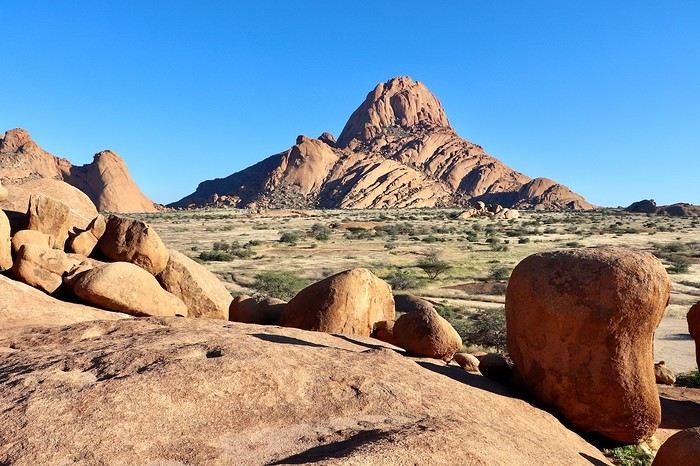
> Accommodation: Daureb Isib Restcamp - Erf 672 C/O 3rd & 4th Avenue Uis 9000, Uis, Namibia - (http://www.daurebisib.com/) – 31 € - Pool. Comfort with private bathroom + electricity + Wi-Fi at the restaurant. Clear sky for a beautiful starry night.
**DAY 14: Wednesday, May 7, 2025: Brandberg (Namibia's Highest Mountain) - Damaraland:**
**The Brandberg massif is an isolated, dome-shaped mountain, an inselberg, that towers over the gravel plains scorched by the sun of the Namib Desert to the northwest. It measures 23 km long and 20 km wide. It is the highest point in Namibia at 2,573 meters.**
This massif formed about 130 million years ago when a gigantic viscous mass of magma from deep within the Earth's crust rose through the surrounding rock layers before solidifying. Later, the granite mass was exposed by the erosion of the surrounding rocks.
**The Brandberg is the highest mountain in Namibia, peaking at an altitude of 2,573 m. The indigenous San people call it the "burning mountain," as it appears to glow with a red light at sunset. With its considerable height and width, this massif influences the local climate, attracting more rain on its slopes than the desert below.** The rain seeps through the springs. Unique animal and plant species thrive in this high-altitude environment, and prehistoric paintings adorn the rock faces hidden in the ravines around the base of the mountain.
The first night was also hot since the start of this trip, the thermometer did not drop below 20°C. We wake up gently around 8 AM, a pleasant sleep-in, the sun is already out. After a quick morning cleanup of the 4x4, we have time today, we hit the road at 9:30 AM, getting lost in the Brandberg massif. We are now in the **Damaraland, which stretches from the majestic rock formations of the Brandberg in the south, where we are today, to the bushy expanses at the foot of the rugged mountains of Sesfontein in the north, where we will be tomorrow. It is the perfect destination for wildlife and flora observation.**
We take the track heading towards the **White Lady**, but we want an alternative to this guided visit only. So, just before arriving, we turn right towards a viewpoint named on Google Maps **Rastplatz**. We come across **small Himba villages, living in extreme poverty with no natural resources; the inhabitants ask for water with every passing vehicle...** A bit further, we encounter about ten **ostriches** in the middle of the track, magnificent, as we get closer to the mountains in the background, and a few meters further, **a herd of Oryx**. Then we approach the **bed of the Ugab River**. We then go back and have a snack in the middle of nowhere, under the shade of our 4x4, facing the mountainous massif. We get back on the road around noon, while the temperature is at its peak in this very hot region, 35°C on the gauge with very dry air. We go up the C35 slightly then turn left onto the small track D2319 until we reach the Ugab bed again. Back to Uis in the mid-afternoon.
We did not book the same campsite as the previous night; today we are at the Brandberg Rest Camp. Unfortunately, the camp is not at the same level as the previous one, which was perfect. But the price is also much lower. The sites are next to each other, separated by small fences behind the main building. But it will do just fine. We have our BBQ and electricity, the shared sanitary facilities are decent. We then lounge in the large pool. We will then buy some water for 10 € at the supermarket located right across.
> Gas station: Uis.
> Distance driven today: 118 km.
> Today's expenses: Groceries in Uis: 10 €.
> Accommodation: Brandberg Rest Camp Uis - No 3 Uis Street Namibia 9000, Damaraland, Namibia - (http://www.brandbergrestcamp.com/) - Large pool – Shower – Electricity
**DAY 15: Thursday, May 8, 2025: Damaraland: Petrified Forest - Ugab Valley - Palmwag**
The night was excellent and slightly cooler than the previous one. We wake up around 7 AM and hit the road just before 7:45 AM heading to a new destination as we continue this Namibian road trip. **We cross Damaraland today from south to north.** First via the C35 to **Khorixas**, then turning left onto the C39. **We come across some villagers walking kilometers under the scorching sun with only a small water container in their hand... What a tough life, light-years away from ours.** About 40 km west of this town, we arrive at the **Petrified Forest National Monument**. It is a vast expanse of veld (open vegetation area), dotted with petrified tree trunks that can reach 34 m in length and 6 m in circumference, estimated to be over 260 million years old. These trees belonged to the Gymnospermae family, conifers among which we find today's cycads and welwitschias. The absence of roots and branches suggests that the trunks were deposited here during a significant flood. The site has about fifty trees, some half-buried in sandstone, others perfectly petrified in silica with their bark and growth rings. A guide is mandatory at the entrance to visit the site.
We then continue on this C39 due west to the junction of the D2612. We make a round trip to the south to **Twyfelfontein, which means "uncertain spring" or "bubbling spring" in Damara**. The site is a UNESCO World Heritage site, located at the entrance of the grassy Aba Huab Valley and houses one of the largest collections of rock art on the continent. More than **2,500 petroglyphs** have been discovered on over 200 stones, as well as some rock paintings. They date back about 6,000 years and others 2,500 years. Many engravings depict species that have since disappeared from the region, such as elephants, rhinoceroses, giraffes, and lions. The presence of a seal attests to the existence of links with the coastline at the time, now over 100 km away. It is here, as well as at Brandberg, that the human history of Namibia began with these testimonies of ritual and economic practices among hunter-gatherer peoples.
We continue a bit further south on the D3214 then D3254 to visit the **Organ Pipes, "organ pipes"**. The entrance is also paid, much to our regret... 500 NAD $ for two. We take a well-marked trail leading to a small gorge containing dolerite (coarse-grained basalt) columns 4 m high and aligned on an astonishing 100 m long wall. We are in a volcanic chain stretching over a dozen kilometers, a pile of scoria that seems to have been exposed to fire, the Burnt Mountain "burnt mountain" stands in a bleak and desolate landscape where almost nothing grows.
We head back north and return to the C39 then the C43 to **Palmwag where we will spend the night**. **This concession, covering an area of 5,500 km², is a region of red hills and plains, remarkable for its rolling landscapes as well as its rich fauna and flora**. The region serves as a **buffer zone between Etosha and the Skeleton Coast**. We have a good chance of encountering black rhinos, desert elephants, and lions, as well as spotted hyenas, giraffes, gemsboks, and other antelopes.
We pass the sanitary control barrier at 4 PM, just before entering Palmwag. In our direction, from south to north, we are simply asked about our future destinations and to present my French driver's license. A few meters further, there is a small gas station, then on our left our final destination of the day: the Palmwag Lodge Campsites. We are happy to arrive after this long journey. The welcome is very pleasant, and the site is very comfortable with a real brick shelter housing our shower and toilet, as well as water and electricity. We always have a BBQ available, but today we unfortunately no longer have meat due to concerns about the sanitary control, but we were not sure if it was rather in the other direction that the transport of fresh meat and dairy products is prohibited. We now cross our fingers to be able to observe some different animals, as the place is renowned for elephants, giraffes, and rhinos. We first take some time to relax in the pool before going for a walk around the reserve, without encountering anything unfortunately this evening, but the wake-up will be up to par... Time for the sunset, which is always one of the highlights of the day.
> Today's road itinerary: 5h30 of driving: C35 heading north > Then turn left onto the C39 > Petrified Forest > Go down on the D3612 in a round trip to Twyfelfontain (rock paintings and Organ Pipes) > Go back up on the C39 then C43 to Palmwag > Round trip on the C40 to Mount Grootberg Pass.
For info on the C43, there is a sanitary control at the entrance and exit (transporting raw meat is prohibited).
Palmwag: black rhinos (guided or free visit? at sunrise or sunset).
> Gas station: Twyfelfontain or Palmwag (07:00 – 19:00) – Tire repair in Palmwag.
> Distance driven today: 349 km.
> Distance walked today: km.
> Accommodation: North of Palmwag Lodge Campsites - GPS Coordinates -19.88556°, 13.93694° - Pool – Water and electricity – 34 € - (https://gondwana-collection.com/accommodation/palmwag-campsite?LodgeName=PALMWAG%20CAMPSITE)
**DAY 16: Friday, May 9, 2025: Palmwag - Sesfontein - Entry into Kaokoland - Opuwo**
This morning, we take our time watching for wildlife. We can finally observe our first **kudus** as the sun begins to illuminate the plain in front of us (see video and time-lapse of the day). A few minutes later, we also spot **a couple of giraffes with their calf**, moving calmly and serenely.
**We leave Palmwag** at 9 AM, heading to the northernmost point of Damaraland via the C43 to Sesfontein.
A few kilometers on the track, and we come across **a herd of zebras**, 11 to be exact, in the middle of green hills. Even further, it's more than twenty that cross right in front of us, a treat for our eyes. Their gait is majestic; they are very sensitive to noise. Some are more curious than others and don't hesitate to stay close if we remain quiet. We then cross numerous rough riverbeds. We must always stay very attentive at the wheel because we can drive at over 80 km/h on straight lines and then suddenly have to brake to cross these small streams, usually already dry at this time of year. Many antelopes are still present by the side of the track; the heat is already rising, and they are often lying on the ground at this hour.
**We arrive in Sesfontein at 11:15 AM**, just as the children are leaving school. Transportation is done by donkey-drawn carts. The villagers spend their time in the shade of the trees and in front of the few small shops. The atmosphere of its streets is dusty with a laid-back pace; this town has the feel of an oasis located **by the Hoanib River**, the town of six springs from which it gets its name. Founded in 1896, it was a military outpost built after a cattle plague epidemic. This page of its history is reflected in Fort Sesfontein, erected in 1905 to fight cattle diseases, arms smuggling, and poaching.
We take a lunch break at the exit of the village around 11:30 AM in the shade of a tree, so peaceful, it's 32°C. We continue further north, away from the usual tourist routes, and **enter the Kunene region, also called Kaokoland**. The track becomes narrower and more winding. **These are now vast solitary spaces largely devoid of roads, simply crossed by sandy tracks opened by the South African army just a few decades ago.** The fauna and flora have managed to adapt to this harsh and dry environment, like the desert elephant, an endangered species whose slender legs are perfectly suited to the long journeys the animal must make to find water, a rare resource. This region is also the territory of the Himba people, emblematic of the country. Its name comes from the Kunene River, which marks a narrow belt of vegetation at the Angolan border.
**We arrive in Opuwo at 3 PM**, **this town is the capital of the Kunene region**. Its name means "the end" in the Herero language, a fitting term for this dusty collection of commercial buildings surrounded by traditional huts with round thatched roofs.
**Opuwo is a strong cultural moment of this trip in Himba territory, this semi-nomadic people traditionally settles in an onganda (small village), moving if necessary to find access to water. Himba women are known for their ochre-colored cream, otjize, a mixture of butterfat and ochre powder, applied to protect and moisturize the skin and hair. Fire and smoke play an important role in their culture.** Smoke, often scented with herbs, is used by women for purification. It can also convey prayers to the supreme being, Muluru. In traditional celebrations, there is always a sacred fire that remains lit between the main hut and the animal enclosure, to maintain ties with the ancestors.
Right upon arrival, we fill up with fuel at the Shell station at the price of 21.48 NAD $ per liter, or 67 liters for 1454 NAD $ (72 €) by card. We then quickly stock up on meat at the Spar **where Himba women with bare breasts mix with us, the only white people shopping in the aisles**. **Since the beginning of this trip, this is where life is most bustling**. There are many people on these dusty streets, after kilometers without seeing anyone, the shock is brutal. There are small markets, poverty but also wealth. The town is quite spread out. There are no white people left, **we finally discover the true, harsh African life.**
We arrive at the **Opuwo Country Lodge at 3:30 PM**, located slightly on the heights. We have site 9 at the end of the property for maximum isolation as we like. Once again, we have private sanitary facilities, a BBQ, and electricity. Once settled, we walk 10 minutes to the reception where the pool is located to cool off. An infinity pool that is just magnificent facing the vast landscape before us. But this contrast between this little comfort and the town below makes us uneasy. The employees walk back down. A guard is present at the entrance of the lodge to ensure security; the park where we are is fenced. We enjoy a good braai, then enjoy the few lights of the town gradually lighting up. The night will be quite noisy for once with very loud music rising from a party below until 2:30 AM... And yet it comes from far away... Maybe a bar? In any case, we rule out what we thought was just a party during our visit here on Friday.
> Today's road itinerary: 4 hours of track: Return via the C43 heading south to Opuwo.
> Gas station: Okangwati or Opuwo
> Distance driven today: 261 km.
> Today's expenses: Fuel fill-up in Opuwo for 72 € + Groceries in Opuwo for 21 €.
> Accommodation: Opuwo Country Hotel - Opuwo Hilltop Opuwo 9000, Opuwo, Namibia - -18.044682 / 13.833861 - (http://www.opuwolodge.com/) - N$600.00 - Pool / Water / Private sanitary facilities / Electricity / BBQ.
**DAY 17: Saturday, May 10, 2025: Opuwo to Epupa Falls:**
We take our time this morning by the **Kunene River**, then we hit the road at 8:45 AM. This is our return trip to Opuwo.
After 4 good hours of driving, **we return to the bustling life of Opuwo**. We refill with fuel at the Shell station (21.48 NAD $ per liter) 820 NAD $ (40 €) for 38 liters and do a quick grocery run at the Spar for 488 NAD $ (24 €). We don't take any meat because we have the **sanitary barrier** to cross tomorrow before entering Etosha Park. We pay for these two expenses in cash for the first time; until now, the credit card was always accepted, so we now have to use the cash we withdrew at the airport. Then we head back to the Opuwo Country Lodge, arriving at the campsite at 2 PM. We are the first to arrive, we rest for a moment before heading to the pool and then end the day around our traditional BBQ with sausages and sautéed potatoes. The full moon accompanies us, perfect for nighttime observations in Etosha starting tomorrow.
The campsite's location should be avoided because we again have infernal music that gets louder from 7 PM to 2:30 AM... And yet it comes from far away... Maybe a bar? In any case, we eliminate what we thought was just a party during our visit here on Friday.
> Today's road itinerary: 4 hours of track: Return via the C43 heading south to Opuwo.
> Gas station: Okangwati or Opuwo
> Distance driven today: 180 km.
> Accommodation: Opuwo Country Hotel - Opuwo Hilltop Opuwo 9000, Opuwo, Namibia - -18.044682 / 13.833861 - (http://www.opuwolodge.com/) - N$600.00 - Pool / Water / Electricity / BBQ
**DAY 18: Sunday, May 11, 2025: Epupa Falls:**
Time for a "vacation" day; we wake up leisurely at 8 AM and take our time this morning. Breakfast and even coffee. The night was good, lulled by the sound of the waterfalls.
In the late morning, we head out on the small path along the banks of the Kunene River, which offers magnificent landscapes. We have a beautiful view of Angola from the opposite bank. The falls extend over about 1.5 km and flow over a series of promontories, the highest of which reaches 37 m.
At noon, we return to our campsite to eat in the shade of the palm trees. On the menu: fried eggs and pasta. We take advantage of this afternoon to rest before the last part of this road trip, with reading, writing, and pool time on the agenda.
In the late afternoon, we return to one of the viewpoints overlooking Epupa Falls to once again enjoy the sunset colors from a different angle. We are over the moon; our thoughts wander in all directions. We discuss future trips, adventures, reminisce about our memories, and think about the world around us... We savor the luck of being here. On the way back, a Himba woman asks if we can give her a ride in our 4x4 to Opuwo tomorrow.
Tonight, we dine on our traditional braai with white beans by the Kunene River. We are lulled by the sound of this powerful river flowing under the song of insects. The coolness sets in, and we fall asleep under the stars.
> Distance driven today: 0 km.
> Distance walked today: 10 km.
> Accommodation: Omarunga Lodge Campsites - 68 € for two nights - Site by the river - (https://gondwana-collection.com/fr/accommodation/omarunga-epupa-falls-campsite?LodgeName=OMARUNGA%20EPUPA-FALLS%20CAMPSITE&hsLang=en)
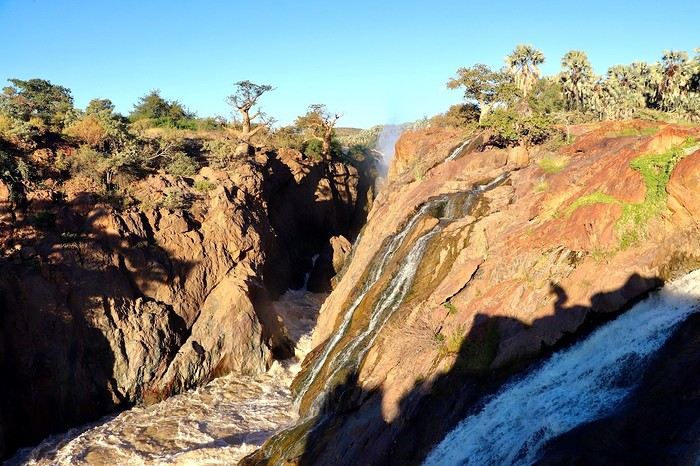
**DAY 19: Monday, May 12, 2025: Epupa to Opuwo**
We enjoy the morning a bit more by the **Kunene River**, then we hit the road at 8:45 AM. This is our return trip to Opuwo.
After 4 good hours on the road, **we return to the bustling life of Opuwo**. We refill with fuel at the Shell station (21.48 NAD $ per liter) for 820 NAD $ (40 €) for 38 liters and do a quick grocery run at the Spar for 488 NAD $ (24 €). We don't take any meat because we have the **sanitary barrier** to cross tomorrow before entering Etosha Park. We pay in cash for these two expenses for the first time; until now, the credit card was always accepted, so we have to use the cash we withdrew at the airport. Then we head back to the Opuwo Country Lodge, arriving at the campsite at 2:30 PM. We are the first to arrive, rest for a moment before heading to the pool, and then end the day with our traditional BBQ: sausages and sautéed potatoes. The full moon accompanies us, perfect for nighttime observations in Etosha starting tomorrow.
The campsite's location should be avoided, as we again have loud music until 2:30 AM... And it comes from far away... Maybe a bar? In any case, we rule out what we thought was just a party during our visit here on Friday.
> Today's road itinerary: 4 hours of track: Return via the C43 heading south to Opuwo.
> Gas station: Okangwati or Opuwo
> Distance driven today: 180 km.
> Accommodation: Opuwo Country Hotel - Opuwo Hilltop Opuwo 9000, Opuwo, Namibia - -18.044682 / 13.833861 - (http://www.opuwolodge.com/) - N$600.00 - Pool / Water / Private sanitary facilities / Electricity / BBQ
**DAY 20: Tuesday, May 13, 2025: Opuwo – Etosha - Olifantsrus**
We wake up before dawn around 6:30 AM. We pack up the camp at 7:15 AM heading to a first waterhole to watch the sunrise and start our day of observations and discoveries. It's 11°C, and as soon as we leave the campsite, we come across numerous zebras, foxes, and springboks with the sun rising on the horizon. Magnificent images.
**At 8:30 AM, we are still alone**, we witness **one of the most beautiful scenes of this trip: 3 lionesses hunting springboks**. It's thanks to the latter, slowing down, that we manage to spot 4 lionesses' heads barely above the tall grass. They hide, stand up, move slowly... We wait without moving. This is their perfect terrain for camouflage. **We are on the lookout and try to be discreet during this hunting scene**. We leave the area to let them finish their remarkable work and continue the track towards the East. The terrain becomes completely flat. It's now been 3 hours since we left the campsite without noticing the time passing, and especially without meeting anyone. Around 10 AM, near a waterhole, we come across a solitary elephant mixed with zebras, buffaloes, and springboks.
Around 11 AM, we take a lunch break; here, it's us who are enclosed in enclosures. Whether in the campsites or the few small equipped areas, we are fenced in by a gate. The animals are free on their territory. The wind has picked up again, just like the sun. We eat alone in absolute calm in the heart of this incredible, unique park; there are no words to describe what nature offers us here, far from any human activity. We start to see some safari vehicles arriving, but the attendance remains much lower than I had imagined. At most, a total of fifteen throughout the day.
Etosha is also a wonderful reserve of vegetation; you can find multiple mopane groves. But also acacias and other trees appreciated by ruminants. The south and east of the park have the most waterholes, which is where most animals gather. In the West, the vegetation is denser, and the wildlife is harder to spot, but it is well present, especially the black-faced impala and Hartmann's mountain zebra, which are found almost nowhere else. The area being less frequented, the bush feeling is more pronounced.
30 minutes of track after eating, **we come across a solitary male lion. The build compared to the females this morning is noticeable from afar**, even though this one is quite far from us unfortunately, unlike this morning when they were right on top of us.
**Etosha is the preferred habitat of lions in Namibia, with about 330 individuals roaming the park's plains, nearly half of the country's wild lions.** The big cats rest under the trees near waterholes, especially the one at Okaukuejo where we arrive today, but it's also a good spot for elephants and rhinos.
We then enter the territory of buffaloes, which we come across by the dozens now. Wow, the encounters keep coming. Then around 2 PM, we follow this immense **Etosha Pan** for the first time, which we will follow for a good part of tomorrow's day.
We arrive at our campsite at 3:30 PM after more than 8 hours of self-safari filled with discoveries. We sleep tonight at the **Olifantsrus Camp**, which we had previously booked in France. We had to wait and click several times for a spot to open up, as the camp has very few sites, and that's a good thing. It is located in one of the wildest areas of Etosha and has a practical observation tower overlooking a waterhole, offering us great opportunities to spot wildlife after nightfall (see photos). **The sunset is once again memorable.** In the guestbook at the reception, where each visitor can note their observations, 3 lions were seen the day before just a few steps from here (1 male, 1 female, and their cub), on a part of the track we didn't cover today; it will be on tomorrow morning's program. We cross our fingers for these predators.
> Today's road itinerary: 6 hours of driving: Leave Opuwo via the C41 (paved road) > Turn right onto the C35 (paved road) to the Galton Gate > Enter Etosha Park.
> Gas station: Opuwo.
> Distance driven today: 369 km.
> Accommodation: Olifantsrus Camping site - 53.4 € for two – Shared sanitary facilities – Electricity – BBQ – No grocery store - (https://www.etoshanationalpark.org/fr/accommodation/olifantsrus-camp)
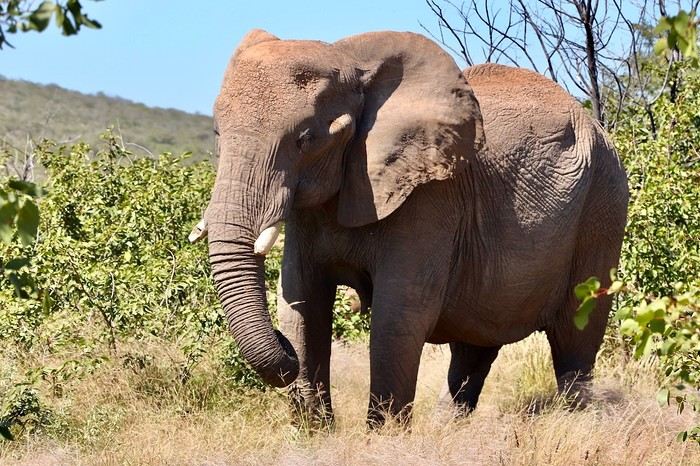
**DAY 21: Wednesday, May 14, 2025: Etosha National Park: From Olifantsrus to Okaukuejo:**
We wake up before dawn around 6:30 AM. We pack up the camp at 7:15 AM as the gates open, heading to a first waterhole to watch the sunrise and start our day of observations. It's 11°C, and just outside the campsite, we come across numerous zebras, foxes, and springboks with the sun rising on the horizon. Magnificent scenes.
**At 8:30 AM, we are still alone**, and we witness **one of the most beautiful moments of this trip: three lionesses hunting springboks**. Thanks to the springboks slowing down, we manage to spot four lionesses' heads barely above the tall grass. They hide, stand up, and move slowly... We wait without moving. This is their perfect terrain for camouflage. **We stay alert and try to be discreet during this hunting scene**. We leave the area to let them finish their remarkable work and continue the track towards the east. The terrain becomes completely flat. It's been 3 hours since we left the campsite without noticing the time, and especially without meeting anyone. Around 10 AM, near a waterhole, we come across a solitary elephant mixed with zebras, buffaloes, and springboks.
Around 11 AM, we take a lunch break; here, it's us who are enclosed in enclosures. Whether in the campsites or the few small equipped areas, we are fenced in by a gate. The animals are free on their territory. The wind has picked up again, just like the sun. We eat alone in absolute calm in the heart of this incredible, unique park; there are no words to describe what nature offers us here, far from any human activity. We start to see some safari vehicles arriving, but the attendance remains much lower than I had imagined. At most, a total of fifteen throughout the day.
Etosha is also a wonderful reserve of vegetation; you can find multiple mopane groves. But also acacias and other trees appreciated by ruminants. The south and east of the park have the most waterholes, which is where most animals gather. In the west, the vegetation is denser, and the wildlife is harder to spot, but it is well present, especially the black-faced impala and Hartmann's mountain zebra, which are found almost nowhere else. The area being less frequented, the bush feeling is more pronounced.
Thirty minutes of track after eating, **we come across a solitary male lion. The build compared to the females this morning is noticeable from afar**, even though this one is quite far from us unfortunately, unlike this morning when they were right on top of us.
**Etosha is the preferred habitat of lions in Namibia, with about 330 individuals roaming the park's plains, nearly half of the country's wild lions.** The big cats rest under the trees near waterholes, especially the one at Okaukuejo where we arrive today, but it's also a good spot for elephants and rhinos.
We then enter the territory of buffaloes, which we come across by the dozens now. Wow, the encounters keep coming. Then around 2 PM, we follow this immense **Etosha Pan** for the first time, which we will follow for a good part of tomorrow's day.
We arrive at our campsite at 3:30 PM after more than 8 hours of self-safari filled with discoveries. We sleep tonight at the **Okaukuejo Resort**. Upon arrival, this impression of a small town in the middle of hundreds of kilometers without infrastructure remains shocking. **The atmosphere is quite different from last night in our small wild campsite**. However, even though the attendance is higher, we are lucky to get a site in a corner (number 46). **The lit waterhole will also be a reward**. After checking in, we take advantage of the small grocery store to buy two meats for our next BBQs in the park, 3 pork chops and sausages, as well as a cold drink for 252 NAD $. This locality also offers a gas station, a restaurant, and a nice pool, but our goal during this park stay remains focused on the wildlife, so I won't give in this time. Time to set up, followed by a short rest, then our toilette before heading to the "waterhole" for the sunset around 6 PM. **A new grand spectacle unfolds before us, a hundred zebras come to hydrate right before our eyes at the water reserve facing the sunset in a cloud of dust. Then a couple of lions approach stealthily without managing to fill their stomachs. A third guest arrives, a second male lion also comes to drink. The waterhole now becomes the territory of the lions... We are speechless facing what nature offers us, we savor for over an hour scrutinizing the smallest details. What an intense day, images that will remain forever etched in our minds.** It's our turn to have our meal with three beautiful pork chops on the BBQ accompanied by curry vegetables.
At 9 PM, we decide to return to the waterhole, a wonderful idea because we find **an elephant and two black rhinos courting in the water. The male has a hard time seducing his sweetheart and eventually leaves, but a third rhino appears out of nowhere to join her. The scenes unfold under the spotlights** accompanied by a sky full of stars. We eventually go to bed. Looking forward to the rest of the story tomorrow.
> Today's road itinerary: Camp Olifantsrus > Camp Okaukuejo.
> Gas station: Okaukuejo camp.
> Distance driven today: 229 km. > Today's expenses: Groceries for 12 €.
> Accommodation: Okaukuejo Camping Site - 48.12 € for two - Pool - Gas station - Lit waterhole - Grocery store - (https://www.etoshanationalpark.org/fr/accommodation/okaukuejo)
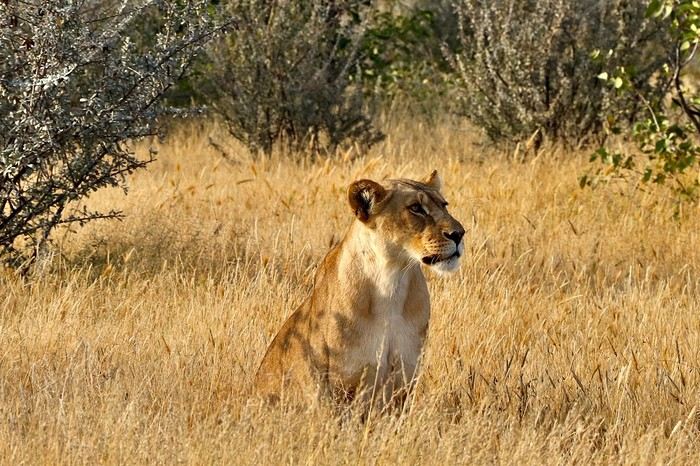
**DAY 22: Thursday, May 15, 2025: Etosha National Park: From Okaukuejo to Halali:**
We wake up around 5:30 AM to a strange noise getting closer, a few thunderclaps, then heavy rain pours down on us! The first since the start of this trip, we had forgotten its sound and smell. We leave the campsite quickly at 7:13 AM as the gates open, the rain stops just in time!
We are right in the heart of the park today. We arrive at the Etosha Pan, an immense flat salt desert that, a few days a year, transforms into a shallow expanse teeming with flamingos and pelicans. At the end of the dry season, everything, from elephants to grasslands, is covered in the white, chalky dust of Etosha.
Around noon, at the Riedfontein waterhole, we spot two male lions in this picturesque savannah. As we've noticed, the females hunt while the males protect the territory. The males and cubs will benefit first.
The day was less emotional than the previous one. We encounter far fewer animals, often at a greater distance. Is it because of the stormy rain we had at dawn this morning, or is it the area? The tracks were also more exhausting, especially the Rhino Drive without meeting a soul. But the view over the immense salt pan as far as the eye can see is worth seeing. Maybe the waterhole at the campsite will surprise us tonight as it did yesterday?
We arrive at 4 PM at the Halali Resort for our last night in the park. We still have a lit waterhole, more intimate than yesterday's, and we can walk around the park thanks to a hiking trail. The sanitary facilities are shared and quite recent, with each site offering its own BBQ and electrical outlet. After setting up and a quick wash, we head on foot to the Halali waterhole for sunset. Tonight's menu features local sausages (beef and pork) with curry pasta.
> Today's road itinerary: Camp Okaukuejo > Camp Halali.
> Gas station: Halali Camp.
> Distance driven today: 242 km.
> Accommodation: Halali Camping Site - 48.12 € for two - Pool - Gas station - Lit waterhole - Grocery store - (https://www.nwr.com.na/resorts/halali-resort/)
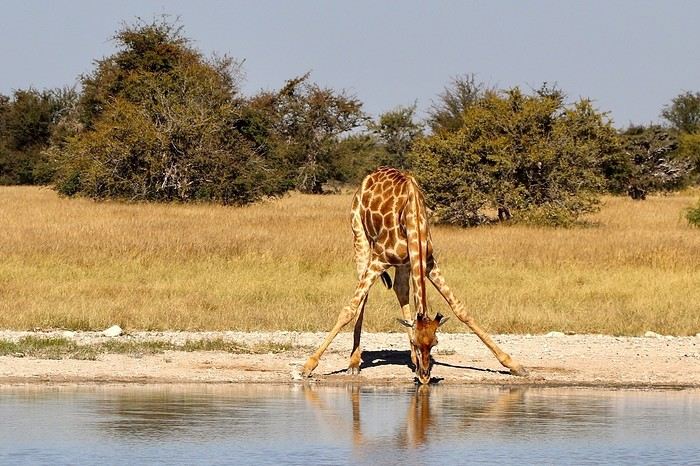
**DAY 23: Friday, May 16, 2025: Etosha National Park: From Halali to Namutoni - Waterberg Park:**
We pack up the camp at 7:15 AM as the gates open. It's 17°C, and the sun is out as usual. **We follow the Etosha Pan, still quite wet at this time of year.** The small track offers different viewpoints under a sun gradually rising higher.
The further east we go, the more we encounter gnus, kudus, and impalas. **We are once again spoiled and delighted by everything we discover this morning.** A majestic **giraffe** appears before our eyes just before arriving at **Namutoni** around 9:45 AM, quickly followed by 4 other companions. From there, we change plans, do the **Fischer's Pan** loop, and then decide to exit through the northern gate, allowing us to cover the entire park. Our last encounters will be with these tallest animals, the giraffes, and what a spectacle to see them spread their legs to hydrate, followed by gnus.
Just before the exit, we take a lunch break at an equipped area at 11:30 AM.
**We leave Etosha National Park with a touch of nostalgia through the King Nehale Iya Mpingana gate** at 12:30 PM. We find the beautiful paved B1 road, which is a great relief. Cows and goats take over; driving at 120 km/h on these single-lane, two-way roads with these animals we brush past requires constant vigilance. We fill up with fuel at 1:30 PM in **Oshivelo** (21.33 $ per liter), 93 liters for 99 € by card. Since we hadn't planned to go so far north out of Etosha, we are surprised to go through a **sanitary check** at the exit of the town, but it turns out to be even quicker than the previous one, a simple glance in the fridge by very smiling women, much more pleasant than the staff at the Etosha entrances and exits.
We pass **near Lake Otjikoto** ("deep hole" in Herero), which is **one of the only two natural lakes in Namibia along with its neighbor Lake Guinas**. In 1851, explorers Charles Andersson and Francis Galton came across this karst lake occupying a limestone cauldron 100 m long, 150 m wide, and 55 m deep. Its steep walls, about 20 m high, are the result of the collapse of the rock roof of the sinkhole under water pressure. This lake is also known for the large quantity of weapons and ammunition found in its depths. Remnants of the region's violent past, they were dumped there in 1915 by the retreating German army, refusing to let South African troops get their hands on them. Unfortunately, it's paid entry, and given the late hour, we continue on our way. To our great surprise, there is a lot of traffic on this B1, including many trucks, the first time we've seen so many people in this country. The landscapes change; we even discover deciduous trees taking on their autumn colors.
We pass through **Tsumeb**, and the road continues to **Otjiwarongo**, which means "pleasant place" in the Herero language, and the town lives up to its name. Prosperous and peaceful, with wide avenues and a relaxed atmosphere, we stop there to do some shopping. We buy some local meat to treat ourselves during these last two remaining camping nights: skewers, pork, and sausages, as well as biscuits, a last water tank, and yogurt for Mimi; 388 NAD $ - 20 €. We get back on the road heading south via the B1 for 15 minutes, then turn left onto the C42, still paved, for 30 minutes and 41 km, then left again onto the D2512, a wavy sandy track for 15 minutes.
**We enter the Waterberg National Park this evening.** The arrival facing this mountainous massif in the middle of the plains under the end-of-day lights of a deep red makes us even more eager to discover it. **Composed of impressive sandstone cliffs, tangles of vines, a canopy teeming with birds, elusive wildlife, and improbable dinosaur footprints. The Waterberg occupies a large sandstone plateau 50 km long and 16 km wide, at an altitude of 150 m above the plain.** It is possible to encounter elands, black wildebeests, roan antelopes, buffaloes, and red hartebeests, and with luck, leopards, as well as 200 identified bird species.
We arrive at the NWR campsite at 6 PM, the first time we arrive so late, just before nightfall. It's from here that various hiking trails start for tomorrow's day, including the **Mountain View Trail** that climbs to the edge of the plateau. We quickly settle into this peaceful camp where calm reigns, no more than 5 vehicles tonight. The place is shaded, with fairly recent shared sanitary facilities, electricity, and a BBQ for each. We savor our second-to-last braai under the stars, hearing our plane that brought us to Frankfurt fly over, every day at the same time over the Waterberg then Etosha. Very rare, as there are very few flights that land or fly over Namibian skies.
> Today's road itinerary: 10 hours of driving: B1 then C42 then D2512.
> Gas station: Exit of Etosha Park, Tsumeb, Otavi, or Waterberg Park.
> Distance driven today: 616 km.
> Accommodation: NWR Waterberg Camping Site - Pool - Water - 45 € for two - (https://www.nwr.com.na/resorts/waterberg-resort/#1577510913112-8f243e49-35a647e7-1997)
**DAY 24: Saturday, May 17, 2025: Waterberg Park - Otjiwa:**
We wake up around 7 AM after a very cool night.
**At sunrise, the cliffs appear even redder, and the cries of baboons echo around us.** We come across about thirty of them. We start the hike around 8:15 AM. **The Mountain View Trail will take us to the Waterberg Plateau.** The temperature is pleasant for walking. **The trail starts in a thick forest where the song of birds resonates.** The path is little frequented, so progress is slow and irregular; we regularly have to duck, step over, and climb rocks. However, in 35 minutes, we reach the top of the plateau. We are once again alone in the world in this Namibian nature. **The 360° panorama extends over a wide plain of green shrubs below, then over these steep red cliffs** giving access to this suspended plateau of the Waterberg. To enter, unfortunately, a special permit is required, and you must be accompanied by a guide. We savor the moment under the already hot sun at 9 AM. After an hour reminiscing about our journey on our rocky promontory, we start the descent at 10 AM, completing a loop back to our starting point. **At 10:30 AM, we pass by the small cemetery of German fighters who died in 1904**, then we hit the road back to the B1. We take a lunch break at noon at one of the tables scattered regularly along the paved roads. We are watched by **baboons** perched in their tree. We then decide to make a **detour through the town of Otjiwarongo**, which we didn't have time to explore properly yesterday. **A quick visit to the train station is a must to see locomotive No. 41, built in 1912 by the German company Henschel. It was transported to Namibia to carry ore between the mines of Tsumeb and the port of Swakopmund before being decommissioned in 1960 when the tracks were modified.**
We return to do some shopping and bring back some souvenirs for 300 NAD $ (14 €). We then take the road south on the B1. I start to feel the end of this immense loop through Namibia. Morale is gradually dropping. But we still have plenty of beautiful things to discover. We arrive at 3 PM at the **Otjiwa Safari Lodge. This will be our last night camping after 22 nights sleeping in the wild to the sound of animals.** The nostalgia is palpable. We enter this high-end private park; we don't really feel at home upon arrival. The reception, the pool, the restaurant, everything is very upscale, unlike anything we've experienced during this road trip. However, the reserve has its charm; we come across our beautiful antelopes again. The 10 sites are very comfortable, spaced apart under some bushes. Each has, of course, its BBQ, electricity, lighting, and sink. Before enjoying our last evening, we need to do a thorough dusting of the 4x4 and a good cleaning and organizing of our belongings. Then it's time for our last perfect braai: chicken and pork skewers, as well as tomato-flavored white beans.
> Today's road itinerary: 1h30 of driving: Waterberg > Otjiwarongo > Okonjima wildlife reserve - D2512 then C22 then B1 then turn right onto a 3 km track.
> Gas station: Waterberg Park.
> Distance driven today: 135 km.
> Distance walked today: 6 km.
> Today's expenses: Souvenirs for 14 €.
> Accommodation: Otjiwa Safari Lodge - B1 main road, west side Otjiwarongo 12001, Otjiwarongo, Namibia - (http://www.otjiwa.com.na/) – 40 € for two – From 3 PM.
**DAY 25: Sunday, May 18, 2025: Otjiwa - Windhoek:**
For this last leg of our Namibian journey, we complete the loop back to our starting point, Windhoek. We leave our last campsite at Otjiwa, later than usual, at 10 AM. We head due south on the B1 in less than 3 hours to the country's capital, not without a touch of nostalgia after all these kilometers traveled through Namibia. The landscapes roll by with a lot of melancholy. We make a stop 60 km north, in Okahandja. We take the opportunity to fill up with fuel (21.10 $ per liter), 500 NAD $ for 23 liters; the card machine wasn't working, so we had to withdraw from an ATM at the next gas station. A local was quite insistent at my window, asking for food or money. Anyway, after 15 minutes, we get back on the road.
From here, we take the new A1, a 2x2 lane highway limited, like the previous roads, to 120 km/h. Then we gradually see some of the country's industries before entering the capital in the blink of an eye. We arrive at 1:45 PM at Chameleon Backpackers. It's a small hostel-style hotel with a central pool, a shared kitchen, secure indoor parking, and a restaurant. They also organize tours (3 Day Express, 3 Day Link, 4 Days Etosha, 7 Day Norbert Adventure), very different from everything we've encountered so far, a kind of atmosphere like in Thailand. There are dormitories, rooms with shared bathrooms, and our little cocoon, the Love Bird, a room located alone on the upper floor with its small balcony, a swing, its bathroom, and its large bed with a thatched roof. A lot of charm while overlooking the pool. We eat before setting off to explore the capital.
Windhoek is a modern and well-maintained city, contrasting completely with the rest of the country. It is heavily influenced by its German colonial heritage, still very present in some streets of the capital. The architecture is colorful and surprising. The skyline is shared between the spires of a neo-baroque cathedral, the unusual silhouette of three castles from the German colonial era, and glass and steel skyscrapers. Office workers head to Zoo Park at lunchtime.
We enjoy the smell of grills at some street corners lined with small single-story houses with zinc roofs.
We first head to Windhoek's emblematic monument, its unofficial symbol: Christuskirche, just a 10-minute walk away. This German Lutheran church rises above the traffic at the center of an intersection. Built in 1907 with local sandstone. The roof and other elements were imported from Europe. The result evokes a gingerbread house.
We then walk along the pedestrian shopping street of **Post Street Mall** to admire African crafts, but on this Sunday, most shops are closed; we'll come back tomorrow. We return via the Wernhil shopping center.
> Today's road itinerary: Return to Windhoek in 3 hours via the B1 then the A1. In the capital, turn left onto Florence Nightingale, then right onto Beethoven Street then C28 then B6, then Bismarck Street. Take Church Street and Trift Street towards Voight Street.
> Gas station: Okahandja or Windhoek.
> Distance driven today: 245 km.
> Accommodation: Chameleon Backpackers & Guesthouse – 49 € for two - 5-7 Voigt St, North Windhoek Central, 9000 Windhoek
**DAY 26: Monday, May 19, 2025: Windhoek, Visit to the Namibian Capital:**
Our last sleep in Namibia... The wake-up is a bit sad; we still enjoy this return to comfort in a real bed. After a hearty breakfast, we check out of our little cocoon at 10 AM. We leave our vehicle in the secure parking lot and return for a walk in the center of Windhoek. On this Monday, the center is immediately livelier while still remaining extremely calm for a capital. The pace of life is slow; employees move slowly without rushing, each task is performed with a slowness that is almost surprising. A few skyscrapers further on, we quickly leave the hyper-center. We retrace our steps to the shopping gallery where we linger for a while. We eat around noon with African music in the background, making us even more nostalgic. Then the trip will gradually come to an end, unfortunately, until the moment when we will have to, not without regret, return our rental vehicle around 3 PM... We stop by the hotel again and then head to the rental agency and then to the airport by shuttle, included in our contract.
At 4:20 PM, we are back at the airport. We see ourselves upon arrival as if it were yesterday... Tears are not far off; we wait, the formalities are much quicker than upon arrival. **We board by walking across the tarmac on foot, escorted by about fifteen Namibians, facing the sunset. It will be there until the end, beautifully drawn on the horizon, to say goodbye to Namibia...**
> Round-trip flight tickets with Lufthansa from Lyon: 2029 €, or **1,014.50 €** per person.
> Vehicle rental: 4x4 Toyota with roof tent for 24 days: Gracious Whisp Car Rentals: 2,638 € (N$50,640) or **1,319 €** per person - (https://gwcarrentals.com/)
**DAY 27: Tuesday, May 20, 2025:** Flight FRA 8:15 AM -> 9:35 AM LYS (Air Dolomite No. 1074)
Total expenses including flight tickets + vehicle rental + visa + Lyon parking + food + fuel:
Cost per person: 3467 € Cost for two: 6935 €
>> All our photos and videos for each day on our website here: (https://www.montagne-aventure.net/voyages-découvertes/namibie-2025/)
>> Find all our photos and videos for each day on our website here: www.montagne-aventure.net
**DAY 1: Thursday, April 24, 2025: Outbound Flights from Lyon to Windhoek via Munich - Visit to Munich:**
Off we go on a new adventure. The alarm rings at 6:30 AM, the travel bags are packed, and we head to Lyon Airport. We booked our flight tickets with Lufthansa. The first leg to Munich, Germany, is operated by AirBaltic. Departure at 1:05 PM for a 1-hour and 20-minute flight. We arrive at 2:30 PM.
**We now have a 7-hour layover, so we take the opportunity to get some fresh air and explore Munich.** We quickly exit Terminal 2 of the airport and head towards the subway. We buy a group day ticket "Airport-city Day Zone M-5," valid for 2 to 5 people at a price of 30.50 € (instead of 16.30 € per person). We take the S8 line to **Marienplatz** in 35 minutes. **This is the heart of the city.** The weather is overcast, quite cool, but dry. Perfect for a little city trip between two flights while leaving our large luggage in transit at the airport. **Munich is the third-largest German city after Berlin and Hamburg, in the Bavaria region.** **The center has a lot of charm and brings together several religious buildings, easy to explore on foot.** We are impressed by the number of people enjoying these 100% pedestrian streets, which are very pleasant. After Marienplatz, the most famous square with the town hall, we head to the Cathedral of Our Lady, a Gothic church, then continue to **Karlsplatz** and move on to **the food market offering a wide selection of high-end food products in an atmosphere where a certain art of living prevails.** We also visit St. Peter's Church before grabbing a bite to eat. Two good hours were enough for this 10 km city walk. It's time to take the subway back: by 6:30 PM, we are back at the airport. Now, it's time for a bit of waiting and rest. Our second flight is scheduled for 9:35 PM for a 9-hour and 30-minute journey to our final destination in Namibia: **Windhoek.**
> Round-trip flight tickets with Lufthansa from Lyon: 2029 €, or 1,014.50 € per person.
> Lyon Airport parking: 120 €
> Today's expenses: 7 € for 2 pizzas in France / 14 € for the restaurant in Munich / 30.50 € for the daily subway ticket in Munich.
**DAY 2: Friday, April 25, 2024: Arrival in Windhoek, Visit to the Namibian Capital:**
After a 9-hour and 30-minute overnight flight with Discover Airlines, we finally land on Namibian soil just before 7:30 AM. The day is breaking, and the colors are already stunning. We are eager despite the usual fatigue from the flight. The airline was punctual, with friendly staff and good meals, though a bit light. We are the first flight of the day to land, with no more than 15 flights per day here, from 7 AM to 8 PM. We disembark on the tarmac at this airport located in the middle of nowhere, **I finally set foot on African soil for the first time.** We exit among the first from the aircraft to go through the long formalities at the front of the line, as the wait can quickly become endless. Allow at least 5 minutes per person for e-visas. We still wait 45 minutes despite only about twenty people ahead of us. Phew, it's done. We collect our luggage and then withdraw money from an ATM. We make 4 withdrawals of the maximum amount, 2000 NAD $ per withdrawal, for a total of 380 €, or 95.33 € per withdrawal.
Our driver arrives at the same time, perfect timing, we were quick.
We leave the airport at 8:45 AM. By 9:30 AM, we arrive at the **Gracious Whisp vehicle rental agency**, located at the entrance of Windhoek, small and human-sized with a fleet of recent vehicles. More formalities, then a short wait as our vehicle is not yet ready. Time to decompress, catch our breath, and enjoy the very pleasant morning temperature. Not a cloud in sight. Next, a briefing on the vehicle, always with a bit of apprehension due to our approximate English. Allow 45 minutes of explanations, including setting up the roof tent, camping equipment, technical information in case of a flat tire, driving tips in Namibia, and a tour of the 4x4. We have all the necessary equipment for camping: mattresses, sleeping bags, pillows, table, chairs, gas stove, BBQ grill... as well as 2 spare tires, a compressor, a dual tank, and accessories for removing wheels. Off we go, it's time to muster our courage and get behind the wheel. **Heading to SuperSpar Maerua**, fortunately located less than 10 minutes away. We park with the help of a parking attendant; it's very crowded, the space is narrow, but everything goes well despite the cursed right-hand drive. Today's new mission: stock up on groceries. The store is well-stocked with local and imported products, catering to all tastes. We spend 114 € on groceries, from pasta to meat, BBQ lighters to dishwashing products. Two people load our groceries into two carts and transfer them to our vehicle; we feel compelled to leave a tip, 50 NAD $, as we don't have change yet. Now, we head to the hotel, 15 minutes away. Traffic is difficult at a complicated intersection; this will likely be the only traffic jam in Namibia. **We arrive at Kate's Nest Guesthouse & Backpackers around 1:15 PM, quite tired.** We take some well-deserved rest at this recent establishment, quite calm with secure private parking. After a short nap, we enjoy the quiet by the hotel pool. Night falls between 6:30 PM and 7 PM. We eat quietly in our room tonight before starting this long 4x4 road trip in camping mode in the heart of Namibia.
> Today's grocery expenses: 114 € at Super Spar Marua (2395.21 NAD $).
> Round-trip flight tickets with Lufthansa from Lyon: 2029 €, or 1,014.50 € per person.
> Vehicle rental: 4x4 Toyota with roof tent for 24 days: Gracious Whisp Car Rentals: 2,638 € (N$50,640) or **1,319 €** per person - (https://gwcarrentals.com/)
> Distance driven today: 15 km.
> Accommodation: Kate's Nest Guesthouse & Backpackers - 4 Aristotles Street Academia, 9000 Windhoek - 36 € for two for one night.
> Windhoek International Airport website: (https://www.airports.com.na/)
**DAY 3: Saturday, April 26, 2025: Windhoek to Hardap: Mariental Region - Kalahari Desert:**
After a good, restful night, we wake up leisurely around 7 AM. We enjoy the comfort provided by this first and last hotel before 24 nights under the tent.
**We leave Kate's Nest Guesthouse at 8:30 AM to tackle the Namibian roads.** We quickly leave the capital; in just 30 minutes, we find ourselves almost alone in the world. The landscape is dotted with small domes. We leave the **paved B1** quickly to turn left onto the **C15**. **From there, we won't see more than 10 vehicles all day.** After passing through the few houses of **Lekkerwaterpoort**, we tackle our first gravel road. These road sections are limited to 100 km/h, but even at 70 km/h, I find it already challenging. However, I quickly get used to it and gradually pick up speed to reach my cruising speed of around 80 to 90 km/h. **We are on immense straight lines crossing wild expanses as far as the eye can see.** **We come across two baboons, a few ostriches, and numerous cattle and sheep farms.** We pass through the charming village of **Uhlenhorst** with its typical houses and children with broad smiles waving at us. Life here is already very different from Windhoek. **The thermometer rises quickly from 16°C at 8:30 AM to over 28°C in the early afternoon.**
**We arrive at the Hardap Dam reserve at 2 PM.** We stop at the toll booth at the park entrance to pay the entrance fee: 250 NAD $ for 2 people and 1 vehicle. We continue to the dam and then the camp entrance, located a bit further. We had booked in advance, but this place remains little frequented by foreigners.
We take advantage of the hottest hours to rest by the large pool overlooking the immense lake, a very enjoyable moment. Would this be a bit of a vacation?
Around 4:30 PM, we head to the campsite. We overlook this vast water reserve. We arrive first; we will be only 3 vehicles spending the night here. It's time to get to work and set up our equipment for the first time. It takes us a good 20 minutes to set everything up, with a slight apprehension about unfolding the tent. Once this task is done, which we will have to repeat for almost a month, we will become much more efficient over time. Time for rest and contemplation in total silence. The sun gradually sets, and the heat quickly becomes bearable again. Bliss! **This dam is located 20 km northwest of Mariental in an area dotted with conical hills topped with dolerite buttons (Hardap means "hillock" in Nama). It captures the Fish River, which flows south, creating a large lake in the middle of an arid environment. The contrast is striking.** We enjoy our first sunset facing this 360° otherworldly landscape.
Around 7 PM, we start our first BBQ, or "braai" as it's called here. The temperature is perfect. The sun sets, giving way to a star-filled sky of incredible beauty thanks to the absence of any light pollution. The Milky Way will lull us throughout the evening. After some good sausages and potatoes on the BBQ, we head to our roof tent around 9:30 PM with a complete change of scenery in just 24 hours. France already seems so far away...
This campsite has shared showers and toilets, quite clean and functional, as well as a central area with several BBQs and tables. The sites are arranged in a semicircle, each with an electrical outlet. The sites are close to each other but spacious, some slightly shaded. We are only three vehicles tonight, so it's perfectly comfortable and quiet. Not to mention the large pool near the restaurant. Our trip is off to a great start.
> Today's road itinerary: Windhoek > Head south on the B1 to Rehoboth > Turn left onto the C25 then C15 to Stampriet > C20 to Hardap > Full north on the B1 > Then turn left onto the M93 - 5 hours of driving.
> Distance driven today: 354 km.
> Accommodation: Hardap Recreation Resort - 23.3 € for two - Large pool - GR6W+3M2, Hardap Game Reserve, Mariental, Namibia - (http://www.nwr.com.na/resorts/hardap-resort/)
**DAY 4: Sunday, April 27, 2025: Hardap - Brukkaros Volcano - Keetmanshoop - Quivertree Forest Rest Camp**
Our first night under the tent was very pleasant; the little wind quickly calmed down, giving way to absolute silence. The mattress is decent, more comfortable than some nights in Nepal. The length and width give us enough space for maximum comfort, despite my height (1.91 m). We wake up a little before 7 AM as the sun rises, and the lights dazzle us from the start of the day. We pack up the equipment in 30 minutes, quite easily. Then we enjoy the sun, which warms up quickly while we keep our light fleece on.
At 8:30 AM, **we hit the road again, heading south** to our first stop in **Mariental**. We want to do some shopping at SuperSpar, but once we arrive in the parking lot, a young local is fighting with the supermarket security guards and then threatens to throw stones. We don't want to take any risks right at the start, so despite the baton blows he receives, he doesn't stop. We leave empty-handed but fill up with fuel at the Shell station 1 km further. The price per liter is 21.33 NAD $, we fill our 107-liter tank for 107 €. In Namibia, you get served, and they bring the card machine to the window to pay. It's then customary to leave a tip.
We then take the B1 heading due south on a recently renovated road. Around 11:30 AM, we leave it on our right to take **a wild gravel road, the M98**. Just before **Berseba**, we turn right onto a small track, the **D3904 towards Brukkaros Crater up to a camp at 1588 m altitude**. The track then becomes too bumpy. We stop on the counter-slopes where **a wide panorama unfolds over these immense plains as far as the eye can see**. It's 12:15 PM, time for us to eat a rice and tuna salad facing this landscape.
**We are alone in the world until a vehicle arrives and parks next to us.** A bit of apprehension, 4 men head towards us. It turns out to be 4 shepherds looking for a lost foal. The conversation is pleasant, lost in the middle of nowhere. We find ourselves alone again in this absolute silence. **The heat becomes stifling with a good 30°C**. We get back on the road around 1 PM. Back on the B1, **we continue due south to Keetmanshoop**, which we reach around 3 PM. We stop there to do some shopping for 262 NAD $ (12 eggs, a can of tuna, a can of corn, bread, a soda, and a 5-liter water container), or 12.48 €. Two quite insistent children ask us for money or candy at the store exit, yet we give them a small tip, but they continue to cling to the car. Locals parked next to us tell them to leave us alone. Anyway, we finish the trip to **Quivertree Forest**, 15 km away. We will spend the night in this **pleasant farm run by a German**. Upon arrival, as the day before, and as I suppose in the future, we dive straight into the cool pool to relax after all these kilometers. A bliss. Then we take our 4x4 and choose a spot near these famous trees. After the 33°C this afternoon, once 4 PM passed, the temperature drops again and becomes very pleasant. **We are in the middle of the Kokerboom, one of the most interesting and characteristic plants of hot and arid regions. It's not really a tree but a variant of the aloe plant whose botanical name is Aloe Dichotoma. This Kokerboom has a smooth and thick trunk reaching up to 1 m in thickness and 9 m in height. They bloom for the first time at the age of 20 to 30 years.** The flowers are yellow and reach about thirty centimeters during the season between June and July. **They grow mainly in an environment with a high concentration of black rocks absorbing a large amount of heat (38°C). The rocks also serve to anchor the tree with its tentacle-like roots. It also resists frost. Each is between 200 and 300 years old.**
Around 5 PM, we walk to the farm reception to watch the feeding of **two cheetahs**. Magnificent carnivores taking their time to savor their piece of meat. **Then we return near our campsite to enjoy the sunset among these trees. The colors are sublime, as every evening apparently. A magnificent spectacle with colors evolving from yellow to orange then to pink, before giving way once again to a sky filled with thousands of stars.** Our campsite at Quiver Tree Forest Camp is very comfortable; we have a water supply, a stone table, a small lamp, an electrical outlet, a small tree for shade, and a BBQ that we won't use tonight; we'll cook on gas. The sites are far apart, with some shared facilities scattered around, a very beautiful setting. No reservation possible, no need, just show up directly. **The campsite accommodation for 2 people costs 28 €, including the reserve entrance fee of 5 €**. We finish this second bivouac evening around 9:30 PM, time for some reading and sleep in peaceful silence without wind.
> Today's road itinerary: Mariental > B1 heading south to Brukkaros > At Tses turn right towards Berseba via the M98 > Turn right onto the D3904 > 8 km > Brukkaros Volcano (stop at the lower camp as the track is difficult for 1 hour) > Keetmanshoop > Turn left onto the M29 > Quivertree Forest - 4 hours of driving.
> Distance driven today: 371 km.
> Distance walked today: 6 km.
> Today's expenses: Groceries for 12.48 € (262 NAD $) / Fuel for 107 € (1 liter of diesel for 21.33 NAD $).
> Accommodation: Quivertree Forest Rest Camp, P.O. Box 262, Keetmanshoop, Namibia - BBQ, hot showers, toilets, and electricity - No reservation - Pool - 18 €/Person (N$ 340.00 with park entrance) - (http://www.quivertreeforest.com/)
**DAY 5: Monday, April 28, 2025: Quivertree Forest Rest Camp - Giant's Playground - Keetmanshoop - Fish River Canyon - Canyon Roadhouse:**
After an excellent start to the night, we are woken up by the wind shortly before 6 AM, but the sunrise is not far off. We get up at 6:30 AM to enjoy it. The atmosphere is a bit cooler this morning, but the reward is already here.
The adventure continues. At 7:45 AM, we head towards **Giant's Playground**, 4 km away. We take a 3-kilometer walk through this expanse of blocks and igneous rocks.
We continue south at 8:45 AM, passing through Keetmanshoop again where we do some shopping for 25 €, a big stock-up for a good part of the trip: meats, canned goods, pasta, fruits... At 9:30 AM, we take the B4 to Fish River Canyon.
At 11:30 AM, we arrive at the entrance to the NWR park (350 NAD $ entrance for 2 people and 1 vehicle). The track becomes bumpy immediately upon entering the park. After about ten kilometers, we come upon this landscape carved by nature. In the end, it's well worth the detour. We were at the Grand Canyon in the USA exactly (https://www.montagne-aventure.net/2024/04/29/j21-3-juin-2024-grand-canyon-et-lac-powell/) and can thus confirm that this Fish River Canyon is comparable. We make several stops along the southern flank. **Here, nothing is developed; nature is almost in the wild state.** **With 160 km in length, up to 27 km in width, and a depth of 150 m, it is indeed the second-largest canyon in the world.** The history of the canyon is apparent in its different earth layers and stratification: the antiquity of the place is tangible, and the absence of vegetation is surprising. **It consists of two nested canyons, formed at distinct periods. The first distinct layer of schist, sandstone, and eruptive material surrounding the canyon was formed a few two billion years ago, then transformed due to heat and pressure into more solid rock such as gneiss. The inner canyon, carved more recently by the Fish River, has a depth of 270 m.**
We have a picnic once again alone in the world facing this grand panorama at the **Sulphur Spring View Point**. This is where the hiking trail begins, plunging into this narrow canyon, but it is forbidden to venture there alone without a guide. It's 30°C, but a slight wind makes the atmosphere bearable. At 1 PM, we retrace our steps and continue to the **Main View Point** then to the **Hikers View Point**.
In the south of Namibia, the Fish River Canyon, 160 km long, is a true geological wonder: a canyon nested within another canyon, one of the largest in the world. The first sedimentary layers formed two billion years ago; 500 million years ago, a period of tectonic activity caused these layers to crack and tilt, opening a vast canyon in the Earth's crust. The second canyon, with a depth of 270 m, was carved over time by the passage of the Fish River in this new valley.
At 3 PM, we arrive at our very charming camp for the evening, the **Canyon Road House**. We fill up with fuel right away because tomorrow we have a long day of isolated driving: 55 liters for 1240 NAD $. Then we settle into the campsite we had previously reserved in France. We are assigned site 2, very well set up under a tree with its BBQ and stone table just steps from the pool. We quickly set up the tent and jump straight into the pool for the relaxation moment of the day. As usual, the water is quite cool, but it's a real pleasure. Then we stroll around this Canyon Road House, which recreates the atmosphere of the roadside inns of the 1950s with old car wrecks and vintage gas pumps in a bygone era. **Around 5:45 PM, we start a short walk leading us to the top of a hill overlooking the wide plateau where we are to watch the sunset.**
And finally, to end this beautiful day, it's time for the braai, with grilled sausages and white beans on the evening menu.
> Park entrance: 150 DN/person + 50 DN/vehicle (18 € for two). It is possible to enter at two access points: Hobas in the north and Ai-Ais in the south.
> Today's road itinerary: M29 > Keetmanshoop > B1 > B4 > C12 (track) > After Holoog turn right onto the D601 (C37 track) > Accommodation on our right (stop just to check in before 6 PM) > Continue 30 km (30 minutes of track) to the viewpoints after Hobas where you must pay the entrance fee. Sunset View Point to the left > Return before sunset as the park closes (best lights at sunrise). 3 hours.
> Distance driven today: 228 km.
> Distance walked today: 10 km.
> Today's expenses: 25 € for groceries / 17 € for the Fish River Canyon park entrance / 58 € for fuel.
> Accommodation: Canyon Roadhouse, Gondwana Collection Namibia – 34.4 € for two - Pool - Near Hobas - (http://www.gondwana-collection.com/fr/accommodation/canyon-road-campsite)
**DAY 6: Tuesday, April 29, 2025: Canyon Roadhouse - Orange River - South African Border - Vista Trail - Gondwana Sperrgebiet Park - Aus:**
The night was excellent in this very comfortable campsite. **We wake up to the sound of birds** before the alarm at 6:45 AM. Our little morning routine starts as the sun rises. **A big day of driving awaits us to the South African border. This will be the southernmost point of our journey.** We hit the road at 8 AM via the C37, pass through **Hobas**, then turn onto the D207 to **Aussenkehr.** **We cross a mountainous barrier with some high peaks and perfect cones. The rock varies from orange to pink to black.**
We then cross a lunar desert as far as the eye can see on a giant dome; the track winds through nowhere without meeting anyone for hours. The landscapes are surprising. **We spot several ostriches and a gemsbok.** In the middle of this endless expanse, we come to an improbable intersection and continue right onto the D278.
In the middle of these arid lands, we come across a green zone: a vast vineyard. At 10:30 AM, **we come across a "Road closed" sign, fortunately, a local resident waves us to continue; a bit stressed, we proceed.** We start to follow the beautiful Orange River. On the other side of the bank, just a few meters away, South Africa is there. It is the second-longest river in Southern Africa, after the Zambezi. It flows over 2,000 km to the Atlantic. After passing through narrow gorges, we regain altitude before starting the descent, gently heading back north.
**We now cross and follow the Fish River, which joins the Orange River further south** **along this gorge dating back millennia.** At exactly noon, we take a lunch break by the Fish River, still without meeting a soul in this landscape between greenery and aridity. The temperature here is cooler with a pleasant 23°C on the banks, the perfect spot. **We continue on the track to Rosh Pinah**, where we find a paved road again. **The section along the Orange River and the Fish River was officially closed, but we were able to pass without any issues, avoiding a detour of at least 3 hours.** Phew. We now drive at high speed (limited to 120 km/h) through these vast spaces. We come across many ostriches after the **dozens of monkeys along the Fish River**. Around 3 PM, 3 km after the very small town of **Aus**, we reach **our campsite for the evening at Klein Aus Vista**. A new **small peaceful haven very well set up**. As usual, after checking in at reception, we jump straight into the beautiful pool to get our well-deserved dose of coolness, another good thermal shock that our bodies appreciate. Once this moment of relaxation is over, we take our 4x4 to reach the campsite located a bit higher, set apart at the foot of a hill that overlooks us.
After setting up, **around 5 PM, we head to the Vista Trail to climb to the top of a mountain overlooking the vast plain that surrounds us at 360°**. It takes about 30 minutes to climb. The place is just magical, **the perfect viewpoint to admire the sunset**. **We fully savor the moment. We also spot one of the few wild horses in the world capable of living in the desert.** Their numbers have decreased in recent years due to predation and drought (around 100 to 150). At 7 PM, we return to the camp, time for the braai and preparing the meal in this peaceful little camp.
In the south of Namibia, the Fish River Canyon, 160 km long, is a true geological wonder: a canyon nested within another canyon, one of the largest in the world. The first sedimentary layers formed two billion years ago; 500 million years ago, a period of tectonic activity caused these layers to crack and tilt, opening a vast canyon in the Earth's crust. The second canyon, with a depth of 270 m, was carved over time by the passage of the Fish River in this new valley.
> Today's road itinerary: 5 hours of driving: D324 heading south (track) > turn right onto the C10 (track) > D316 heading south > turn right onto the C13 > In Aus turn left onto the B4 > Campsite via a track on the left.
> Fuel station: Solitaire or Aus.
> Distance driven today: 398 km.
> Distance walked today: 7 km.
> Accommodation: Klein-Aus Vista Desert Horse Campsite - Farm Klein-Aus No 8 on the B4 main road to Luederitz Aus 9000, Aus, Namibia - (http://www.klein-aus-vista.com/accommodation/desert-horse-campsite/) 17908 420 DN - Water + Shared shower (hot water). No electricity.
**DAY 7: Wednesday, April 30, 2025: Aus - Kolmanskop - Diaz Point - Luderitz - Kanaan Desert:**
We wake up around 6:45 AM, with partly cloudy weather for once; we feel the ocean's influence gradually. But the sun isn't far off. At 7 AM, we leave the campsite heading west towards Luderitz via the B4. **First stop of the day: Kolmanskop, the ghost town we reach at 8:30 AM**, entry costs 180 NAD $ per person. We discover this **timeless place** in 1.5 hours, moving from building to building amidst violent sand-laden gusts of wind. There's a lot of charm in these different living spaces. **The sand quickly reclaimed the place after this mining town was abandoned.** This was once the headquarters of Consolidated Diamond Mines. It's hard to believe that this former town, where the diamond industry once flourished, had a hospital, a bowling alley, and a theater. The decline in diamond sales after World War II and the discovery of richer deposits put an end to this golden age. By 1956, the town was already completely deserted, and the sand had reclaimed its rights. **These dilapidated buildings swallowed by shifting dunes have something surreal about them.**
At 10:15 AM, we hit the road again **heading to Luderitz, 22 km away**, and first to **Diaz Point** **facing the Atlantic Ocean**. It's a wind-swept peninsula with its characteristic red and white lighthouse. There's a campsite and a coffee shop on site, but the place doesn't inspire rest without shade or shelter from the wind. We return to the city via the D701 track that runs along the ocean, be careful at low tide. We come across **a few fishermen and a fox as well as flamingos.**
We walk through the few streets of the city, much smaller than I imagined, then climb to the **famous little Lutheran church that overlooks the city, the Felsenkirchr.** **The wind blows very strongly here, and the sand is omnipresent, surrounded by the Namib Desert and the southern Atlantic coast.** **A German colonial relic barely touched by the 21st century, Luderitz seems frozen in the past, giving it both a gloomy and a certain charm. In short, it's certainly one of the most incongruous places in Africa.**
At 1:15 PM, just before leaving Luderitz, we do some shopping for 20.50 € and fill up with fuel: 61.50 €, 1290 NAD $ for 61 liters (21.18 $ per liter).
**We return via the B4 to Aus** (paved), **then via rougher tracks**, the C13 then the D707, magnificent as it runs along a mountain range with multiple colors on our right and an endless flat desert on the other side.
To access our campsite for the evening, we must take a **narrow private track for 7 km** on our right to emerge, in this total vastness, at the **isolated Kanaan Desert Retreat on a small hill**. I don't have time today to jump into the pool near the reception; we arrive at 5 PM at 8 small, isolated, and unique sites with a small kitchen, a shower, and a private toilet under a small tarp shelter. **A crazy charm with a unique view...** **This will be my favorite accommodation of this trip. The photos speak for themselves.** We jump into the outdoor shower while savoring the landscape, then prepare our evening braai while enjoying the colors fading, facing this plateau with bushes turning a vivid orange. **A moment that will remain etched for life.** **Savanna atmosphere under a thin emerging moon. Every minute offers different colors. Facing our meal, we have a natural giant screen.**
We end this day contemplating the stars and admire this thin orange moon setting on the horizon (8:42 PM).
**Ghost town just before Luderitz: Kolmanskop** (open from 8 AM to 3 PM - N$ 180 p.p – 9 €). Once, Kolmanskoppe was organized around diamond mining. After finding new, more prolific spots, the town was abandoned and is now a ghost town. The sand and dunes have reclaimed their rights and buried everything humans had built. Houses, train station, bakery, everything has been covered by sand, which passes through the windows, even though they are 1 meter high.
> Today's road itinerary: 5h30: B4 to Luderitz (paved) > Round trip > Kolmanskop on the left > Return via the previous campsite > Then C13 (track) > Turn left D707 (track) > Then track to the right to the campsite.
> Distance driven today: 438 km.
> Distance walked today: 8 km.
> Today's expenses: Groceries at the Spar in Luderitz for 20.50 € / Fuel fill-up in Luderitz for 61.50 €.
> Official Kolmanskop website: (https://kolmanskuppe.com) (open from 8 AM to 1 PM - N$ 180 p.p – 9 €).
> Accommodation: Night at the south of the Namibrand Nature Reserve: Kanaan Desert Retreat – 26.5 € for two - (http://www.kanaannamibia.com/) - Farm 104 Karas 9000 - Sanitary facilities + BBQ + Water + Pool - No electricity - My favorite accommodation of this trip.
**DAY 8: Thursday, May 1, 2025: Kanaan Desert Retreat - Namib Desert - Crossing the Namibrand Nature Reserve – Sesriem Canyon - Elim Dune - Little Sossus Lodge**
After a cooler night than the previous ones with about 10°C, we wake up around 7 AM. We admire, as usual, the sunrise between the desert and the mountains. **The spot from last night was truly perfect, isolated from the world, in total serenity, with a wake-up call to the sound of birds.**
We hit the road a little after 8 AM, heading north via the D707 to Spes Bona, then the gravel road C27 via Betta to Sesriem. **The landscapes roll by and dazzle us.** **We are right in the heart of the Namibrand reserve**, coming across numerous **zebras**, **impalas**, **ruminants that reproduce in large numbers**, and **gemsboks**. At noon, we stop in the shade of a tree to eat. The spot is so romantic facing orange arid mountains and a vast green plateau. **A landscape full of contrasts, timeless and silent.**
**The Namib Desert is the oldest on the planet; its name means "vast arid plain," and it also gave its name to the entire country: Namibia.** The majority of these arid and semi-arid lands dotted with viewpoints are part of the Namib-Naukluft National Park, which covers 23,000 km².
At 1 PM, we enter the Sossusvlei park. We start with the **Sesriem Canyon**, which is 3 km long and 30 m deep. We enter it with a short 1-hour hike into its depths. **It was carved by the Tsauchab River in an agglomerate of sand and pebbles over 15 million years old.** We retrace our steps back to Sesriem, which means "six belts," referring to the number of leather belts (from ox wagons) needed to draw water from the canyon. This remote locality is mainly the gateway to Sossusvlei but offers a gas station and some accommodations. For our part, we sleep 40 km away tonight.
**We then move on to Elim Dune.** It takes about 45 minutes of walking to reach its summit, and the climb is very breath-taking as we progress in the sand where we almost slide back with each step. **A first grand 360° panorama unfolds. The ochre color of the sand contrasts completely with the yellow plain and the brown and black mountains in the distance.**
At 3:15 PM, we start the descent facing Sesriem. We were completely alone once again on this dune. **These Namib dunes are composed of colored quartzite sand, presenting hues ranging from cream to orange and from red to purple. Unlike the ancient dunes of the Kalahari, these move with the wind and adopt distinct, ever-changing shapes.** Star dunes resemble stars seen from above, while transverse dunes, like those on the coast south of Walvis Bay, stand perpendicular to the prevailing southwest wind. The most stable dunes, which thus have the most vegetation, are parabolic dunes, due to the variability of the winds. Longitudinal (seif) dunes measure up to 100 m in height, while barchan dunes, crescent-shaped and predominant at the extreme north of the Skeleton Coast and south of Luderitz, are the most mobile, created by unidirectional winds.
**We get back on the road for 45 minutes to our campsite for the evening, Little Sossus, which we reach at 5 PM**, via C27 then right onto C19. As often upon our arrival, I jump into the cool pool to relax after all this driving, then we proceed to set up the camp. As the day before, the campsite consists of 10 fairly distant sites, with private sanitary facilities and a small roof. We are delighted with this crazy charm. The hot water for our shower is wood-heated: a Namibian lights it every evening around 5 PM.
For a change, or not, the menu features a small BBQ with pork ribs and pasta, facing another sunset, this time with partial cloud cover giving equally splendid colors. Time for a well-deserved rest after long corrugated tracks covered in our 4x4 today.
> Today's road itinerary: 4h45 of driving: Find the D707 and head north (track) > At Spesbona turn left onto the C27 (track) > At Sesriem after entering the park, turn left following View Point Sesriem > Continue 4.5 km to the Sesriem Canyon Parking > Return then head towards Elim Dune > Exit the park then take the D826 > Turn right onto the C19 heading SE > Turn right facing the D854 to the campsite (campsite closes at 7 PM).
> Distance driven today: 272 km.
> Distance walked today: 8 km.
> Today's expenses: Entry to the Sossusvlei Namib-Naukluft Park: 17 € for two (with one car).
> Accommodation: Little Sossus Lodge – 35 € for two - At the junction of the C19 and D854 roads Maltahohe 9000, Maltahohe, Namibia - (http://www.littlesossus.net/) - Pool + Private bathroom + Hot water + Electricity + BBQ + Grocery store (bread to order the day before).
**DAY 9: Friday, May 2, 2025: Little Sossus Lodge - Namib-Naukluft National Park – Sesriem - Sossusvlei - Big Daddy – Deadvlei - Tsauchab River Camp**
Today we start the day early to tackle **the famous dunes of Sossusvlei at first light**. The alarm goes off at 6 AM to leave the camp at 6:45 AM. The wind is blowing quite strongly in gusts this morning, but it only woke us up a quarter of an hour before sunrise. The park opens at 7:15 AM. We start with a small encounter: a friendly **jackal lounging by the roadside.**
We first have to cover the 40 km of track to Sesriem, pay the entrance fee (350 NAD $), and drive 65 km on a paved road this time to reach the **vast salt pan (a lake whose sediments are made of salts) of Sossusvlei**. **It appears amidst the gigantic red dunes that rise on either side. The wind constantly changes the shape of the dunes, as well as their colors, which vary with the light. The setting is breathtaking, giving an impression of immensity and timeless grandeur.**
The paved road ends; the last 4 kilometers become technical and are reserved for 4x4s. Phew, I pass without any problems, though not without stress, switching to L4 mode. **We start the ascent to Big Daddy at 8:45 AM, 325 m of elevation gain in the sand nonetheless.** We climb at an excellent speed despite the strong wind, in exactly 1 hour. At 9:45 AM, we are at the summit of what will remain etched for a long time. The 360° view is simply unimaginable; you have to experience it to believe it. The wind blows violently up there, **it feels like being in the high mountains, on a snow ridge, with a strong transport of sand. The atmosphere is magical.** We start the descent running barefoot in the steep sand.
**We then move on to its neighbor, Deadvlei.** **Here, petrified trees stand in the "vlei" (basin) with their dried branches casting desolate shadows on the white ground. The juxtaposition of the deep blue sky and the towering dunes is captivating.**
We return to the 4x4 parking at 11 AM, the stress rises again for the sandy track passage. We retrace our steps and stop at **Dune 45**.
At noon, we take the opportunity to picnic at the foot of **the beautiful Dune 40**, where there is already no one left. We enjoy the quiet again, well, almost, as the wind remains omnipresent.
At 1 PM, we return to **Sesriem**, where we fill up with fuel (21.15 NAD $ per liter), totaling 1630 for 77 liters (78 €), and do some shopping for 245 NAD $ (two nice pieces of pork, 2 cans, 2 sandwiches for tomorrow, and 1 soda), which is 12.48 €. It's 27°C. We hit the road again, heading to a new destination at 2 PM. We take the C19 back to Little Sossus where we spent the night, then turn left onto the gravel road D854 for about 40 km to **Tsauchab River camp**. Finally, we won't be sleeping here; we are redirected 7 km downstream to **Naukluft View Camp**, which also belongs to Tsauchab River Camp.
We arrive at 4 PM, and thankfully, the fatigue was starting to set in. **Our campsite is located under a small forest, providing some protection from the wind that blew strongly all day. The calm does us a world of good. Once again, a lot of charm**, with very spaced-out sites without any visibility. We can't wait to take our shower. It will be possible from 5 PM with, as the day before, water heated by a wood fire. Time to prepare the campsite for the night. And on the menu, a braai with two superb pieces of pork bought in Sesriem and fries!!!!
**The Namib Desert**
An impressive coastal desert stretching from the Atlantic to a high plateau inland, the narrow Namib Desert runs along the southwest African coast for about 1,300 km. **Considered one of the oldest deserts in the world**, it is bordered to the north by the Kaokoland Desert, which extends into Angola, and to the south by South Africa's Karoo. The narrow Namib is mostly less than 160 km wide. Despite this, it is considered to consist of three sections: the coastal strip influenced by the Atlantic; the Outer Namib, occupying what remains of the western half; and the Inner Namib, comprising the eastern half of the desert. Generally called the Skeleton Coast, the coastal Namib receives almost no rain and depends on regular marine fogs for moisture. From sea level, the terrain rises to 900 m, where the desert meets the base of the Great Escarpment to the east. In the Inner Namib, average annual rainfall is only about 50 mm.
The dryness is such a characteristic of the Namib that it is thought to have been in this arid state for at least 55 million years. It is all the more surprising to learn that animals such as vipers, geckos, zebras, and elephants live in this desert. Some areas of the Namib are also rich in flora, including Welwitschia mirabilis, which grows near the ground with seemingly exhausted leaves, extracting moisture from marine fogs and can live over 1,000 years. In the southern Namib, some dunes are up to 32 km long and 240 m high.
**The frequent fog of the Skeleton Coast:** Driving north along the coast of Namibia, the cold Benguela Current in the Atlantic cools the moist air above the ocean, which, upon meeting the warm desert air, leads to the formation of thick fog banks that drift up to 100 km into the center of the Namib before evaporating under the sun.
> Today's road itinerary: 4 hours of driving: C19 towards Sesriem (track) > D826 (paved) > Foot of Big Daddy via a technical sandy track > Return via the same route > D854 to Tsauchab.
> Gas station: Sesriem.
> Distance driven today: 254 km.
> Distance walked today: 12 km.
> Today's expenses: Park entry at Sesriem for 2 people: 17 € / Fuel fill-up: 78 € / Groceries at Sesriem gas station: 12 € (245 NAD $).
> Accommodation: Tsauchab River Camp - Naukluft View Camp - D054 & D850 GPS: S24 26' 37" E16 10' 11" Sossusvlei 22007, Maltahohe, Namibia - BBQ + Private sanitary facilities + Water - www.tsauchab.com
**DAY 10: Saturday, May 3, 2025: Tsauchab River Camp - Naukluft National Park - Olive Trail Hike (10 km) - Ababis Guest Farm**
We pack up the camp at 8 AM and continue our road trip north via the D854, a bumpy track with many corrugated sections. It's cool this morning, 12°C.
**We enter the Naukluft massif, discovering landscapes with very different terrain than before.** We first need to check in at the campsite, 13 km from the entrance at the end of the track: 350 NAD $ for 2 people and 1 vehicle, then return 4 km back. **On the agenda is the lovely Olive Trail, a 10 km hiking loop that starts 4 km northwest of the park office**, along the D854 that we follow. At 9:45 AM, the hike begins with a fairly steep ascent (about 45 minutes) among the **wild olive trees** from which the trail gets its name. **At the summit, we enjoy a view that embraces the Naukluft Valley.** We then turn east and gradually descend into a deep valley, passing over sometimes slippery rocks. We have a snack around 11:30 AM in these small gorges. **Further on, to cross the wall of a canyon in front of us, some chains are fixed to the rock to help us pass.** We finish this superb loop clockwise at 1:15 PM, taking 3.5 hours including 30 minutes of breaks. We only crossed a small group of 3 people on this wild adventure far from everything. At 1:45 PM, we exit the park and take the **D854 track north to Bullsport**. From there, we turn left and take the C14, which **runs along the bed of the Tsondab River.**
**We arrive at our campsite for the evening, Ababis Guest Farm, at 3 PM.** Quite early for once, allowing us to rest a bit in this peaceful farm where many sheep wander around us. We also enjoy the pool under a magnificent sun, less hot than the previous days, it's 22°C. The camp has only 4 spaced-out sites around shared sanitary facilities. **We are in the middle of a vast plain facing the Naukluft massif mountains.** We will have another beautiful sunset on these mountains. For the first time on this trip, **we will be completely alone at this campsite.** **We haven't encountered many people today**, just 3 during the hike and fewer than 10 vehicles all day.
> Today's road itinerary: Head north on the D854 (track) > Turn left to enter the Naukfluft National Park > Continue on the track then turn right to the Olive Trail hike parking lot (1 hour for 45 km). Return to the D854 and continue north > At Bullsport turn left onto the C14 to Ababis (still a track) > The camp is located on the left facing the D1261 (1 hour for 60 km from Olive Trail). Total: 2 hours of driving for 100 km.
> Gas station: No gas station on the route, except in Solitaire.
> Distance driven today: 115 km.
> Distance walked today: 13 km.
> Accommodation: Ababis Gaestefarm - Night booked by email – payment on site: (https://www.ababis-gaestefarm.de/) - P.O.Box 1004, Maltahöhe - N$ 300.00 per person
**DAY 11: Sunday, May 4, 2025: Ababis Gaestefarm - Namib-Naukluft National Park – Solitaire - Gaub Pass - Kuiseb Canyon - Moon Landscape - Walvis Bay**
The night was, for the first time since the start of this road trip, quite difficult. A strong wind accompanied us all night, making the tent flap constantly. A racket that drove us crazy. We still managed to sleep a few hours. The morning sun brings back our smiles. We hit the road for this new stage a little before 7:45 AM.
We start the day with a first stop less than 15 km away **on the C14 in Solitaire** at 8:15 AM. **This town is lost in the middle of nowhere with its small gas station with a western atmosphere adorned with rusted and sand-covered car wrecks.** After a quick supply stop: 86 NAD $, or 4 € for 1 water container and a box of cookies, we continue north still on the C14, **crossing the Tropic of Capricorn** then devouring this **magnificent track up to Gaub Pass**. **A succession of narrow gorges, turns, climbs, and descents breaking the monotony of the previous long straight lines.** We are right in the heart of no man's land for 200 km. We then start the descent to the **Kuiseb Canyon. It houses the wide bed of the eponymous river, dry almost all year.** Even when it flows for 2 to 3 weeks during the rainy season, it doesn't go beyond Gobabeb and then seeps into the sand. **The drinking water that supplies Walvis Bay is pumped at Rooibank from this underground water table.** **We now cross the Kuiseb Desert where impressive dunes roll down.** We make a short stop at a **natural rock arch** reminding us of our (https://www.montagne-aventure.net/2024/04/29/j19-1-juin-2024-canyonlands-national-park-et-arches-national-park/). Then we gradually descend towards **Walvis Bay** where we will spend the night. At noon, we enter the **Dorob National Park**. The thermometer drops 10°C in 10 minutes as we get closer to the Atlantic Ocean.
At 12:45 PM, much earlier than initially planned, we arrive at the **Moon Landscape** (View Point 4, free) to have a snack, via a very recent surprising dual carriageway in the middle of nowhere, then via the C28. We are again in the hinterlands, the temperature has soared: 30°C without a bit of shade. Even if the colors and the panorama must be exceptional at sunrise or sunset, the detour for this 360° panorama is still worth it. Extreme aridity as far as the eye can see. The place lives up to its name; it really feels like being on the moon. We get back on the road at 1:30 PM via the D1991, C28, then again the A2, which is very new. The latter runs along the beautiful dunes up to the **Dune 7**, where we make another stop.
Then we head towards our final destination of the day, **Walvis Bay. Its port is sheltered by a sand spit, a natural breakwater that protects the city from the powerful assaults of the ocean. Its port was long a strategic place: claimed by the Cape Colony in 1795, it was officially annexed by the British in 1878 to counter Germany's ambitions in the region. A colony of fur seals, pelicans, flamingos, and whale terns have made it their home.**
We do a big grocery shopping at the Spar located in the center for 66 €; it's very easy to park there. Then we fill up with fuel at an Engen station right across for 1117 NAD $ for 54 liters (20.6 NAD $ per liter), which is 54 €. We then **enjoy the seaside in the Lagoon neighborhood**, where it's also easy to park. After kilometers in the desert, **this cool break is more than welcome. The outside temperature is 22°C. In the distance, we can clearly see the clouds lingering over Swakopmund.**
We take the 4x4 one last time to the **Lagoon Chalets where we will spend the night**. The spot is well set up and surprising in the heart of a residential neighborhood. The sites are quite large, separated by fences around very comfortable shared sanitary facilities. BBQ, electricity, and shaded area. We settle in quietly before going out on foot to watch the **sunset over the Pacific Ocean along Lagoon Promenade Road**. We can still see this impressive persistent mist in the distance. The neighborhood is very peaceful, certainly without much charm, but with a very well-developed seafront that inspires relaxation after kilometers without meeting anyone in inhospitable lands. We end the day with our traditional braai: grilled chicken thighs and sautéed potatoes in the coolness of a starry sky.
> Today's road itinerary: 5h30 of driving (or 3h30 of driving for 250 km without the Moon Landscape): Head north on the C14 > Cross the Tropic of Capricorn > Gaub Pass > Kuiseb Canyon on our left in a round trip > Continue to Green Valley and leave the C14 to the right on the D1984 > Turn right on the C28 > Then left D1991 to Moon Landscape D1991 View Point 4 > Return via the same road and stop at Dune 7 for sunset > Walvis Bay.
> Gas station: Solitaire or Walvis Bay.
> Distance driven today: 372 km.
> Distance walked today: 5 km.
> Today's expenses: Fuel fill-up for 54 € + Groceries for 66 € at Spar.
> Accommodation: Walvis Bay: Lagoon Chalets – 36.6 € for two - (http://www.lagoonchaletswb.com/) - 8th Road West, Meersig Meersig 9000, Walvis Bay, Namibia - BBQ – Electricity – Shared sanitary facilities.
**DAY 12: Monday, May 5, 2025: Walvis Bay - Swakopmund - Round Trip to Cape Cross (seals) - Wreck of the Zeila en route - Henties Bay - Spitzkoppe Tented Camp & Campsite**
After an excellent night, a bit cooler and more humid than usual, we wake up around 7 AM and leave the camp at 7:45 AM to **follow the Atlantic coast heading north**. We thus leave **Walvis Bay**, a very pleasant stopover town, and follow the ocean via the B2. **We enter the mist and Swakopmund** at 8:40 AM, parking **near the lighthouse**. The atmosphere is very quiet, the streets seem dead with large empty parking lots and very little traffic, but the few open shops are filled with expatriates enjoying their breakfasts, French bakeries, cafes, travel agencies... **We are in this Benguela Current, a fast cold ocean current that flows from South Africa, up the coasts of Namibia and Angola, towards the northwest to join a warm equatorial current. Hence the supply of very fish-rich waters and this tenacious mist depending on the seasons. In the northern part of the Namib Desert, fogs are frequent during the southern winter. It's almost the only source of moisture since the city of Swakopmund receives, on average, only 11 liters of water per m² in December and January.**
**Swakopmund is wedged between the dunes and the Atlantic rollers. It is the Namibian capital of adventure activities and has a ghostly colonial remnant. With its German architecture, its seaside promenade, it resembles a seaside town of the North Sea or the Baltic.** It is also a bustling African city. **Nearly two-thirds of Swakopmund's population live in Mondesa, a township created during apartheid, northeast of the city center, a legacy of the South African mandate.** The heart of the city is located in the area of the pier, at the foot of the lighthouse, better known as the Mole. During the South African occupation of Swakopmund, the port took a back seat to Walvis Bay.
Continuing on this C34, sometimes on salt, we come across the famous **wreck of the Zeila, stranded in 2008**, on our left. We can see it through the thick fog, being very close to the beach. It's 10:15 AM. Further on, Henties Bay is a bay that attracts many fishermen; it's teeming with vehicles equipped with fishing rods. Besides its fish-rich waters, it enjoys a relaxed atmosphere and a large beach suitable for walks.
We continue further north, heading to Cape Cross, this time a round trip because we will turn off later here in Henties Bay to reach Spitzkoppe via good gravel roads that are quiet alternatives to the very busy paved B2 further south. **Henties Bay is part of the Dorob National Park, a multi-purpose park protecting coastal ecosystems and hosting the many renowned recreational activities of the region. The part of the coast north of Swakopmund up to the Ugab is particularly popular with fishermen who come in droves to fish for saltwater fish.** The small concrete buildings spaced at regular intervals are actually toilets for fishermen and campers. The coastline is also dotted with world-renowned surf spots.
Even before arriving, we can already smell it before we come across thousands of seals (population in 2021: 1.5 million). **The Cape Cross Seal Reserve, the most renowned on the Namibian coast, is home to the most famous breeding colony of fur seals, which seems to take full advantage of the high concentrations of fish present in the icy waters of the Benguela Current. We are impressed by the sight of these 100,000 pinnipeds lounging on the beach and frolicking in the waves.** We have a picnic a little away from the smells facing the ocean in the sun.
At 12:45 PM, it's time to hit the road again. We retrace our steps back to Henties Bay. We stop there to do another big grocery run before not encountering any big cities for many days. We will only buy fresh items day by day until the end of the trip; we have 23 € worth. **In the space of 30 minutes, we go from 15 to 36°C. The thermal shock with an amplitude of more than 20°C.** At 1:45 PM, we hit the road again via the D1918, then we try a very small track on our left, the D1925. It becomes narrow and rough; I have a bit of apprehension. We arrive at a gate to open in the middle of nowhere, then young children run up to us asking for water or food... We then drive to **Spitzkoppe. The arrival right in front of the mountains is majestic, off the beaten path. This mountain appears in the distance like a mirage above the dusty plains of southern Damaraland.** We come across a second gate held by a guard. We enter the "Community Camp" campsite without realizing it through the west entrance. We are given a small paper, then we go to the reception passing **at the foot of these gigantic, magnificent rocks.** Once at the reception, we are informed that this is not the camp we had booked. Ours is located just a little further, and in the end, it's better because the latter was packed. We were able to cross the park very close to these rocks without paying. We exit through the main entrance; 5 Himba children cling to our doors and trunk asking for bread and food again. We continue despite them staying attached, worried about hurting them. Phew, more fear than harm. We cross the few houses and arrive at the right camp at 4:30 PM, the Spitzkoppe Tented & Campsite. The spot is much quieter and well set up. We have site C12, cozy to perfection with its sink, a private shower and toilet, as well as electricity, under the shade of a tree and facing the mountains. The sunset and sunrise will be perfect. We set up the tent and, without delay, head to the pool for a big dose of coolness. Then it's time to prepare the BBQ and **contemplate the fading lights on the Spitzkoppe massif.**
> Today's road itinerary: 5 hours of driving: Head north on the B2 (paved) along the ocean > Swakopmund > C34 (paved) still heading north > On the left, the wreck of the Zeila before Henties Bay > Cape Cross round trip > Henties Bay > D1916 heading east (track) > Turn left onto D3716 > Turn left to the campsite.
> Gas station: Swakopmund or Henties Bay.
> Distance driven today: 344 km.
> Distance walked today: 6 km.
> Today's expenses: Groceries in Henties Bay: 23 € + Cape Cross park entry: 17 €.
> Accommodation: Spitzkoppe Tented Camp & Campsite - Spitzkoppe River Valley 00000, Spitzkoppe river valley, Namibia - (http://spitzkoppemountaincamp.com/) - 26 € - Pool - BBQ - Shower and toilet.
**DAY 13: Tuesday, May 6, 2025: Spitzkoppe - Rock Pools - Uis**
It's 6:45 AM, **we wake up at the foot of one of the most emblematic landscapes of the country, Spitzkoppe, which towers over the valley at 1,728 m.** **The Spitzkoppe massif, "pointed hat" in Afrikaans, is actually a set of three rock formations: Big Spitzkoppe, the granite domes of the Pontok Mountains that surround it, and Little Spitzkoppe, to the southwest. It was first climbed in 1946 and has never stopped attracting experienced climbers; it remains one of the most challenging ascents in the country. The climate in the region is hot**, so try to visit during the cooler months, as it can quickly reach 36°C in the sun in the afternoon. **Spitzkoppe is particularly striking at dusk, as it was last night, and at dawn this morning when the low light sets the rocks ablaze with red and orange hues. The spectacle is unique.**
We re-enter the park managed by the local community (160 NAD $ per person), then start with the **arch sector**. We quietly enjoy all the viewpoints under perfect orange colors. We leave this magnificent spot, reminding us of (https://www.montagne-aventure.net/2024/04/29/j19-1-juin-2024-canyonlands-national-park-et-arches-national-park/), but with much less crowding here. Around 10 AM, we head closer to these mythical peaks, including the main one nicknamed the Matterhorn of Namibia. Then we finish with the **ascent of the rock above Rock Pool. The 360° view of the park is a must-see. Small natural pools carved into the rock bring a bit of water to this arid and rocky landscape.** The wind blows strongly up there, and during a photo shoot with a tripod, it falls forward right onto the lens glass, cracking it... Frustration and shouts, these will be the last quality photos of this trip, and a new bill to pay when we return to replace it... Disgusted.
We continue to **Bushmans Paradise**, have a lunch break in the shade of a rock before hitting the road again around 12:30 PM after thoroughly exploring the park, feeling weakened and sad about my passion: photography...
We fill up with fuel as soon as we arrive in Uis at the price of 21 NAD $ per liter, a total of 1021 NAD $ for 50 liters (52 € by card). **Uis is a former mining town. Tin mining ceased in the early 1990s, but the high white mountain where the ore was dumped is clearly visible. The region is rich in amethysts, Brandberg crystals, and other semi-precious stones; we come across many vendors on the roadside.**
We then head to our final destination of the day, the **Daureb Isib Restcamp**. We arrive quite early for once at 2:45 PM in the heat, but the camp is just perfectly set up, surely the most upscale we will have during this trip. We are in a fortunately shaded area under palm leaves, with a table, chairs with cushions, a sink, a hot shower, toilets, a beautiful pool, and of course our private BBQ. Perfect for regaining a bit of a smile after the fall of my DSLR camera. **We are facing the Brandberg massif, the "fire mountain" in Afrikaans, dominated by Königstein (2,573 m), the highest peak in Namibia.** **The Brandberg owes its name to the reddish-orange glow that forms on its slopes at dawn and dusk, when the sun's rays awaken its red granite faces studded with crystals. It also hides a real treasure inside, as it contains an exceptional concentration of prehistoric rock art**, mainly paintings and some petroglyphs, including the most famous of them, the **White Lady in the Tsisab Gorge**. There are over 43,000 in total, dating back 2,000 to 4,000 years, scattered in hundreds of crevices around the mountain.
Time for the usual swim, laundry, and evening cooking. On the braai menu, local sausages with cheese pasta and leftovers for a good salad the next day.
> Today's road itinerary: 1h45: Head north on the D3716 > Then D1930 (gravel and sand track) to Uis.
> Gas station: Uis.
> Distance driven today: 113 km.
> Distance walked today: 6 km.
> Today's expenses: Fuel fill-up in Uis for 52 € (1,021 NAD $).
> Accommodation: Daureb Isib Restcamp - Erf 672 C/O 3rd & 4th Avenue Uis 9000, Uis, Namibia - (http://www.daurebisib.com/) – 31 € - Pool. Comfort with private bathroom + electricity + Wi-Fi at the restaurant. Clear sky for a beautiful starry night.
**DAY 14: Wednesday, May 7, 2025: Brandberg (Namibia's Highest Mountain) - Damaraland:**
**The Brandberg massif is an isolated, dome-shaped mountain, an inselberg, that towers over the gravel plains scorched by the sun of the Namib Desert to the northwest. It measures 23 km long and 20 km wide. It is the highest point in Namibia at 2,573 meters.**
This massif formed about 130 million years ago when a gigantic viscous mass of magma from deep within the Earth's crust rose through the surrounding rock layers before solidifying. Later, the granite mass was exposed by the erosion of the surrounding rocks.
**The Brandberg is the highest mountain in Namibia, peaking at an altitude of 2,573 m. The indigenous San people call it the "burning mountain," as it appears to glow with a red light at sunset. With its considerable height and width, this massif influences the local climate, attracting more rain on its slopes than the desert below.** The rain seeps through the springs. Unique animal and plant species thrive in this high-altitude environment, and prehistoric paintings adorn the rock faces hidden in the ravines around the base of the mountain.
The first night was also hot since the start of this trip, the thermometer did not drop below 20°C. We wake up gently around 8 AM, a pleasant sleep-in, the sun is already out. After a quick morning cleanup of the 4x4, we have time today, we hit the road at 9:30 AM, getting lost in the Brandberg massif. We are now in the **Damaraland, which stretches from the majestic rock formations of the Brandberg in the south, where we are today, to the bushy expanses at the foot of the rugged mountains of Sesfontein in the north, where we will be tomorrow. It is the perfect destination for wildlife and flora observation.**
We take the track heading towards the **White Lady**, but we want an alternative to this guided visit only. So, just before arriving, we turn right towards a viewpoint named on Google Maps **Rastplatz**. We come across **small Himba villages, living in extreme poverty with no natural resources; the inhabitants ask for water with every passing vehicle...** A bit further, we encounter about ten **ostriches** in the middle of the track, magnificent, as we get closer to the mountains in the background, and a few meters further, **a herd of Oryx**. Then we approach the **bed of the Ugab River**. We then go back and have a snack in the middle of nowhere, under the shade of our 4x4, facing the mountainous massif. We get back on the road around noon, while the temperature is at its peak in this very hot region, 35°C on the gauge with very dry air. We go up the C35 slightly then turn left onto the small track D2319 until we reach the Ugab bed again. Back to Uis in the mid-afternoon.
We did not book the same campsite as the previous night; today we are at the Brandberg Rest Camp. Unfortunately, the camp is not at the same level as the previous one, which was perfect. But the price is also much lower. The sites are next to each other, separated by small fences behind the main building. But it will do just fine. We have our BBQ and electricity, the shared sanitary facilities are decent. We then lounge in the large pool. We will then buy some water for 10 € at the supermarket located right across.
> Gas station: Uis.
> Distance driven today: 118 km.
> Today's expenses: Groceries in Uis: 10 €.
> Accommodation: Brandberg Rest Camp Uis - No 3 Uis Street Namibia 9000, Damaraland, Namibia - (http://www.brandbergrestcamp.com/) - Large pool – Shower – Electricity
**DAY 15: Thursday, May 8, 2025: Damaraland: Petrified Forest - Ugab Valley - Palmwag**
The night was excellent and slightly cooler than the previous one. We wake up around 7 AM and hit the road just before 7:45 AM heading to a new destination as we continue this Namibian road trip. **We cross Damaraland today from south to north.** First via the C35 to **Khorixas**, then turning left onto the C39. **We come across some villagers walking kilometers under the scorching sun with only a small water container in their hand... What a tough life, light-years away from ours.** About 40 km west of this town, we arrive at the **Petrified Forest National Monument**. It is a vast expanse of veld (open vegetation area), dotted with petrified tree trunks that can reach 34 m in length and 6 m in circumference, estimated to be over 260 million years old. These trees belonged to the Gymnospermae family, conifers among which we find today's cycads and welwitschias. The absence of roots and branches suggests that the trunks were deposited here during a significant flood. The site has about fifty trees, some half-buried in sandstone, others perfectly petrified in silica with their bark and growth rings. A guide is mandatory at the entrance to visit the site.
We then continue on this C39 due west to the junction of the D2612. We make a round trip to the south to **Twyfelfontein, which means "uncertain spring" or "bubbling spring" in Damara**. The site is a UNESCO World Heritage site, located at the entrance of the grassy Aba Huab Valley and houses one of the largest collections of rock art on the continent. More than **2,500 petroglyphs** have been discovered on over 200 stones, as well as some rock paintings. They date back about 6,000 years and others 2,500 years. Many engravings depict species that have since disappeared from the region, such as elephants, rhinoceroses, giraffes, and lions. The presence of a seal attests to the existence of links with the coastline at the time, now over 100 km away. It is here, as well as at Brandberg, that the human history of Namibia began with these testimonies of ritual and economic practices among hunter-gatherer peoples.
We continue a bit further south on the D3214 then D3254 to visit the **Organ Pipes, "organ pipes"**. The entrance is also paid, much to our regret... 500 NAD $ for two. We take a well-marked trail leading to a small gorge containing dolerite (coarse-grained basalt) columns 4 m high and aligned on an astonishing 100 m long wall. We are in a volcanic chain stretching over a dozen kilometers, a pile of scoria that seems to have been exposed to fire, the Burnt Mountain "burnt mountain" stands in a bleak and desolate landscape where almost nothing grows.
We head back north and return to the C39 then the C43 to **Palmwag where we will spend the night**. **This concession, covering an area of 5,500 km², is a region of red hills and plains, remarkable for its rolling landscapes as well as its rich fauna and flora**. The region serves as a **buffer zone between Etosha and the Skeleton Coast**. We have a good chance of encountering black rhinos, desert elephants, and lions, as well as spotted hyenas, giraffes, gemsboks, and other antelopes.
We pass the sanitary control barrier at 4 PM, just before entering Palmwag. In our direction, from south to north, we are simply asked about our future destinations and to present my French driver's license. A few meters further, there is a small gas station, then on our left our final destination of the day: the Palmwag Lodge Campsites. We are happy to arrive after this long journey. The welcome is very pleasant, and the site is very comfortable with a real brick shelter housing our shower and toilet, as well as water and electricity. We always have a BBQ available, but today we unfortunately no longer have meat due to concerns about the sanitary control, but we were not sure if it was rather in the other direction that the transport of fresh meat and dairy products is prohibited. We now cross our fingers to be able to observe some different animals, as the place is renowned for elephants, giraffes, and rhinos. We first take some time to relax in the pool before going for a walk around the reserve, without encountering anything unfortunately this evening, but the wake-up will be up to par... Time for the sunset, which is always one of the highlights of the day.
> Today's road itinerary: 5h30 of driving: C35 heading north > Then turn left onto the C39 > Petrified Forest > Go down on the D3612 in a round trip to Twyfelfontain (rock paintings and Organ Pipes) > Go back up on the C39 then C43 to Palmwag > Round trip on the C40 to Mount Grootberg Pass.
For info on the C43, there is a sanitary control at the entrance and exit (transporting raw meat is prohibited).
Palmwag: black rhinos (guided or free visit? at sunrise or sunset).
> Gas station: Twyfelfontain or Palmwag (07:00 – 19:00) – Tire repair in Palmwag.
> Distance driven today: 349 km.
> Distance walked today: km.
> Accommodation: North of Palmwag Lodge Campsites - GPS Coordinates -19.88556°, 13.93694° - Pool – Water and electricity – 34 € - (https://gondwana-collection.com/accommodation/palmwag-campsite?LodgeName=PALMWAG%20CAMPSITE)
**DAY 16: Friday, May 9, 2025: Palmwag - Sesfontein - Entry into Kaokoland - Opuwo**
This morning, we take our time watching for wildlife. We can finally observe our first **kudus** as the sun begins to illuminate the plain in front of us (see video and time-lapse of the day). A few minutes later, we also spot **a couple of giraffes with their calf**, moving calmly and serenely.
**We leave Palmwag** at 9 AM, heading to the northernmost point of Damaraland via the C43 to Sesfontein.
A few kilometers on the track, and we come across **a herd of zebras**, 11 to be exact, in the middle of green hills. Even further, it's more than twenty that cross right in front of us, a treat for our eyes. Their gait is majestic; they are very sensitive to noise. Some are more curious than others and don't hesitate to stay close if we remain quiet. We then cross numerous rough riverbeds. We must always stay very attentive at the wheel because we can drive at over 80 km/h on straight lines and then suddenly have to brake to cross these small streams, usually already dry at this time of year. Many antelopes are still present by the side of the track; the heat is already rising, and they are often lying on the ground at this hour.
**We arrive in Sesfontein at 11:15 AM**, just as the children are leaving school. Transportation is done by donkey-drawn carts. The villagers spend their time in the shade of the trees and in front of the few small shops. The atmosphere of its streets is dusty with a laid-back pace; this town has the feel of an oasis located **by the Hoanib River**, the town of six springs from which it gets its name. Founded in 1896, it was a military outpost built after a cattle plague epidemic. This page of its history is reflected in Fort Sesfontein, erected in 1905 to fight cattle diseases, arms smuggling, and poaching.
We take a lunch break at the exit of the village around 11:30 AM in the shade of a tree, so peaceful, it's 32°C. We continue further north, away from the usual tourist routes, and **enter the Kunene region, also called Kaokoland**. The track becomes narrower and more winding. **These are now vast solitary spaces largely devoid of roads, simply crossed by sandy tracks opened by the South African army just a few decades ago.** The fauna and flora have managed to adapt to this harsh and dry environment, like the desert elephant, an endangered species whose slender legs are perfectly suited to the long journeys the animal must make to find water, a rare resource. This region is also the territory of the Himba people, emblematic of the country. Its name comes from the Kunene River, which marks a narrow belt of vegetation at the Angolan border.
**We arrive in Opuwo at 3 PM**, **this town is the capital of the Kunene region**. Its name means "the end" in the Herero language, a fitting term for this dusty collection of commercial buildings surrounded by traditional huts with round thatched roofs.
**Opuwo is a strong cultural moment of this trip in Himba territory, this semi-nomadic people traditionally settles in an onganda (small village), moving if necessary to find access to water. Himba women are known for their ochre-colored cream, otjize, a mixture of butterfat and ochre powder, applied to protect and moisturize the skin and hair. Fire and smoke play an important role in their culture.** Smoke, often scented with herbs, is used by women for purification. It can also convey prayers to the supreme being, Muluru. In traditional celebrations, there is always a sacred fire that remains lit between the main hut and the animal enclosure, to maintain ties with the ancestors.
Right upon arrival, we fill up with fuel at the Shell station at the price of 21.48 NAD $ per liter, or 67 liters for 1454 NAD $ (72 €) by card. We then quickly stock up on meat at the Spar **where Himba women with bare breasts mix with us, the only white people shopping in the aisles**. **Since the beginning of this trip, this is where life is most bustling**. There are many people on these dusty streets, after kilometers without seeing anyone, the shock is brutal. There are small markets, poverty but also wealth. The town is quite spread out. There are no white people left, **we finally discover the true, harsh African life.**
We arrive at the **Opuwo Country Lodge at 3:30 PM**, located slightly on the heights. We have site 9 at the end of the property for maximum isolation as we like. Once again, we have private sanitary facilities, a BBQ, and electricity. Once settled, we walk 10 minutes to the reception where the pool is located to cool off. An infinity pool that is just magnificent facing the vast landscape before us. But this contrast between this little comfort and the town below makes us uneasy. The employees walk back down. A guard is present at the entrance of the lodge to ensure security; the park where we are is fenced. We enjoy a good braai, then enjoy the few lights of the town gradually lighting up. The night will be quite noisy for once with very loud music rising from a party below until 2:30 AM... And yet it comes from far away... Maybe a bar? In any case, we rule out what we thought was just a party during our visit here on Friday.
> Today's road itinerary: 4 hours of track: Return via the C43 heading south to Opuwo.
> Gas station: Okangwati or Opuwo
> Distance driven today: 261 km.
> Today's expenses: Fuel fill-up in Opuwo for 72 € + Groceries in Opuwo for 21 €.
> Accommodation: Opuwo Country Hotel - Opuwo Hilltop Opuwo 9000, Opuwo, Namibia - -18.044682 / 13.833861 - (http://www.opuwolodge.com/) - N$600.00 - Pool / Water / Private sanitary facilities / Electricity / BBQ.
**DAY 17: Saturday, May 10, 2025: Opuwo to Epupa Falls:**
We take our time this morning by the **Kunene River**, then we hit the road at 8:45 AM. This is our return trip to Opuwo.
After 4 good hours of driving, **we return to the bustling life of Opuwo**. We refill with fuel at the Shell station (21.48 NAD $ per liter) 820 NAD $ (40 €) for 38 liters and do a quick grocery run at the Spar for 488 NAD $ (24 €). We don't take any meat because we have the **sanitary barrier** to cross tomorrow before entering Etosha Park. We pay for these two expenses in cash for the first time; until now, the credit card was always accepted, so we now have to use the cash we withdrew at the airport. Then we head back to the Opuwo Country Lodge, arriving at the campsite at 2 PM. We are the first to arrive, we rest for a moment before heading to the pool and then end the day around our traditional BBQ with sausages and sautéed potatoes. The full moon accompanies us, perfect for nighttime observations in Etosha starting tomorrow.
The campsite's location should be avoided because we again have infernal music that gets louder from 7 PM to 2:30 AM... And yet it comes from far away... Maybe a bar? In any case, we eliminate what we thought was just a party during our visit here on Friday.
> Today's road itinerary: 4 hours of track: Return via the C43 heading south to Opuwo.
> Gas station: Okangwati or Opuwo
> Distance driven today: 180 km.
> Accommodation: Opuwo Country Hotel - Opuwo Hilltop Opuwo 9000, Opuwo, Namibia - -18.044682 / 13.833861 - (http://www.opuwolodge.com/) - N$600.00 - Pool / Water / Electricity / BBQ
**DAY 18: Sunday, May 11, 2025: Epupa Falls:**
Time for a "vacation" day; we wake up leisurely at 8 AM and take our time this morning. Breakfast and even coffee. The night was good, lulled by the sound of the waterfalls.
In the late morning, we head out on the small path along the banks of the Kunene River, which offers magnificent landscapes. We have a beautiful view of Angola from the opposite bank. The falls extend over about 1.5 km and flow over a series of promontories, the highest of which reaches 37 m.
At noon, we return to our campsite to eat in the shade of the palm trees. On the menu: fried eggs and pasta. We take advantage of this afternoon to rest before the last part of this road trip, with reading, writing, and pool time on the agenda.
In the late afternoon, we return to one of the viewpoints overlooking Epupa Falls to once again enjoy the sunset colors from a different angle. We are over the moon; our thoughts wander in all directions. We discuss future trips, adventures, reminisce about our memories, and think about the world around us... We savor the luck of being here. On the way back, a Himba woman asks if we can give her a ride in our 4x4 to Opuwo tomorrow.
Tonight, we dine on our traditional braai with white beans by the Kunene River. We are lulled by the sound of this powerful river flowing under the song of insects. The coolness sets in, and we fall asleep under the stars.
> Distance driven today: 0 km.
> Distance walked today: 10 km.
> Accommodation: Omarunga Lodge Campsites - 68 € for two nights - Site by the river - (https://gondwana-collection.com/fr/accommodation/omarunga-epupa-falls-campsite?LodgeName=OMARUNGA%20EPUPA-FALLS%20CAMPSITE&hsLang=en)
**DAY 19: Monday, May 12, 2025: Epupa to Opuwo**
We enjoy the morning a bit more by the **Kunene River**, then we hit the road at 8:45 AM. This is our return trip to Opuwo.
After 4 good hours on the road, **we return to the bustling life of Opuwo**. We refill with fuel at the Shell station (21.48 NAD $ per liter) for 820 NAD $ (40 €) for 38 liters and do a quick grocery run at the Spar for 488 NAD $ (24 €). We don't take any meat because we have the **sanitary barrier** to cross tomorrow before entering Etosha Park. We pay in cash for these two expenses for the first time; until now, the credit card was always accepted, so we have to use the cash we withdrew at the airport. Then we head back to the Opuwo Country Lodge, arriving at the campsite at 2:30 PM. We are the first to arrive, rest for a moment before heading to the pool, and then end the day with our traditional BBQ: sausages and sautéed potatoes. The full moon accompanies us, perfect for nighttime observations in Etosha starting tomorrow.
The campsite's location should be avoided, as we again have loud music until 2:30 AM... And it comes from far away... Maybe a bar? In any case, we rule out what we thought was just a party during our visit here on Friday.
> Today's road itinerary: 4 hours of track: Return via the C43 heading south to Opuwo.
> Gas station: Okangwati or Opuwo
> Distance driven today: 180 km.
> Accommodation: Opuwo Country Hotel - Opuwo Hilltop Opuwo 9000, Opuwo, Namibia - -18.044682 / 13.833861 - (http://www.opuwolodge.com/) - N$600.00 - Pool / Water / Private sanitary facilities / Electricity / BBQ
**DAY 20: Tuesday, May 13, 2025: Opuwo – Etosha - Olifantsrus**
We wake up before dawn around 6:30 AM. We pack up the camp at 7:15 AM heading to a first waterhole to watch the sunrise and start our day of observations and discoveries. It's 11°C, and as soon as we leave the campsite, we come across numerous zebras, foxes, and springboks with the sun rising on the horizon. Magnificent images.
**At 8:30 AM, we are still alone**, we witness **one of the most beautiful scenes of this trip: 3 lionesses hunting springboks**. It's thanks to the latter, slowing down, that we manage to spot 4 lionesses' heads barely above the tall grass. They hide, stand up, move slowly... We wait without moving. This is their perfect terrain for camouflage. **We are on the lookout and try to be discreet during this hunting scene**. We leave the area to let them finish their remarkable work and continue the track towards the East. The terrain becomes completely flat. It's now been 3 hours since we left the campsite without noticing the time passing, and especially without meeting anyone. Around 10 AM, near a waterhole, we come across a solitary elephant mixed with zebras, buffaloes, and springboks.
Around 11 AM, we take a lunch break; here, it's us who are enclosed in enclosures. Whether in the campsites or the few small equipped areas, we are fenced in by a gate. The animals are free on their territory. The wind has picked up again, just like the sun. We eat alone in absolute calm in the heart of this incredible, unique park; there are no words to describe what nature offers us here, far from any human activity. We start to see some safari vehicles arriving, but the attendance remains much lower than I had imagined. At most, a total of fifteen throughout the day.
Etosha is also a wonderful reserve of vegetation; you can find multiple mopane groves. But also acacias and other trees appreciated by ruminants. The south and east of the park have the most waterholes, which is where most animals gather. In the West, the vegetation is denser, and the wildlife is harder to spot, but it is well present, especially the black-faced impala and Hartmann's mountain zebra, which are found almost nowhere else. The area being less frequented, the bush feeling is more pronounced.
30 minutes of track after eating, **we come across a solitary male lion. The build compared to the females this morning is noticeable from afar**, even though this one is quite far from us unfortunately, unlike this morning when they were right on top of us.
**Etosha is the preferred habitat of lions in Namibia, with about 330 individuals roaming the park's plains, nearly half of the country's wild lions.** The big cats rest under the trees near waterholes, especially the one at Okaukuejo where we arrive today, but it's also a good spot for elephants and rhinos.
We then enter the territory of buffaloes, which we come across by the dozens now. Wow, the encounters keep coming. Then around 2 PM, we follow this immense **Etosha Pan** for the first time, which we will follow for a good part of tomorrow's day.
We arrive at our campsite at 3:30 PM after more than 8 hours of self-safari filled with discoveries. We sleep tonight at the **Olifantsrus Camp**, which we had previously booked in France. We had to wait and click several times for a spot to open up, as the camp has very few sites, and that's a good thing. It is located in one of the wildest areas of Etosha and has a practical observation tower overlooking a waterhole, offering us great opportunities to spot wildlife after nightfall (see photos). **The sunset is once again memorable.** In the guestbook at the reception, where each visitor can note their observations, 3 lions were seen the day before just a few steps from here (1 male, 1 female, and their cub), on a part of the track we didn't cover today; it will be on tomorrow morning's program. We cross our fingers for these predators.
> Today's road itinerary: 6 hours of driving: Leave Opuwo via the C41 (paved road) > Turn right onto the C35 (paved road) to the Galton Gate > Enter Etosha Park.
> Gas station: Opuwo.
> Distance driven today: 369 km.
> Accommodation: Olifantsrus Camping site - 53.4 € for two – Shared sanitary facilities – Electricity – BBQ – No grocery store - (https://www.etoshanationalpark.org/fr/accommodation/olifantsrus-camp)
**DAY 21: Wednesday, May 14, 2025: Etosha National Park: From Olifantsrus to Okaukuejo:**
We wake up before dawn around 6:30 AM. We pack up the camp at 7:15 AM as the gates open, heading to a first waterhole to watch the sunrise and start our day of observations. It's 11°C, and just outside the campsite, we come across numerous zebras, foxes, and springboks with the sun rising on the horizon. Magnificent scenes.
**At 8:30 AM, we are still alone**, and we witness **one of the most beautiful moments of this trip: three lionesses hunting springboks**. Thanks to the springboks slowing down, we manage to spot four lionesses' heads barely above the tall grass. They hide, stand up, and move slowly... We wait without moving. This is their perfect terrain for camouflage. **We stay alert and try to be discreet during this hunting scene**. We leave the area to let them finish their remarkable work and continue the track towards the east. The terrain becomes completely flat. It's been 3 hours since we left the campsite without noticing the time, and especially without meeting anyone. Around 10 AM, near a waterhole, we come across a solitary elephant mixed with zebras, buffaloes, and springboks.
Around 11 AM, we take a lunch break; here, it's us who are enclosed in enclosures. Whether in the campsites or the few small equipped areas, we are fenced in by a gate. The animals are free on their territory. The wind has picked up again, just like the sun. We eat alone in absolute calm in the heart of this incredible, unique park; there are no words to describe what nature offers us here, far from any human activity. We start to see some safari vehicles arriving, but the attendance remains much lower than I had imagined. At most, a total of fifteen throughout the day.
Etosha is also a wonderful reserve of vegetation; you can find multiple mopane groves. But also acacias and other trees appreciated by ruminants. The south and east of the park have the most waterholes, which is where most animals gather. In the west, the vegetation is denser, and the wildlife is harder to spot, but it is well present, especially the black-faced impala and Hartmann's mountain zebra, which are found almost nowhere else. The area being less frequented, the bush feeling is more pronounced.
Thirty minutes of track after eating, **we come across a solitary male lion. The build compared to the females this morning is noticeable from afar**, even though this one is quite far from us unfortunately, unlike this morning when they were right on top of us.
**Etosha is the preferred habitat of lions in Namibia, with about 330 individuals roaming the park's plains, nearly half of the country's wild lions.** The big cats rest under the trees near waterholes, especially the one at Okaukuejo where we arrive today, but it's also a good spot for elephants and rhinos.
We then enter the territory of buffaloes, which we come across by the dozens now. Wow, the encounters keep coming. Then around 2 PM, we follow this immense **Etosha Pan** for the first time, which we will follow for a good part of tomorrow's day.
We arrive at our campsite at 3:30 PM after more than 8 hours of self-safari filled with discoveries. We sleep tonight at the **Okaukuejo Resort**. Upon arrival, this impression of a small town in the middle of hundreds of kilometers without infrastructure remains shocking. **The atmosphere is quite different from last night in our small wild campsite**. However, even though the attendance is higher, we are lucky to get a site in a corner (number 46). **The lit waterhole will also be a reward**. After checking in, we take advantage of the small grocery store to buy two meats for our next BBQs in the park, 3 pork chops and sausages, as well as a cold drink for 252 NAD $. This locality also offers a gas station, a restaurant, and a nice pool, but our goal during this park stay remains focused on the wildlife, so I won't give in this time. Time to set up, followed by a short rest, then our toilette before heading to the "waterhole" for the sunset around 6 PM. **A new grand spectacle unfolds before us, a hundred zebras come to hydrate right before our eyes at the water reserve facing the sunset in a cloud of dust. Then a couple of lions approach stealthily without managing to fill their stomachs. A third guest arrives, a second male lion also comes to drink. The waterhole now becomes the territory of the lions... We are speechless facing what nature offers us, we savor for over an hour scrutinizing the smallest details. What an intense day, images that will remain forever etched in our minds.** It's our turn to have our meal with three beautiful pork chops on the BBQ accompanied by curry vegetables.
At 9 PM, we decide to return to the waterhole, a wonderful idea because we find **an elephant and two black rhinos courting in the water. The male has a hard time seducing his sweetheart and eventually leaves, but a third rhino appears out of nowhere to join her. The scenes unfold under the spotlights** accompanied by a sky full of stars. We eventually go to bed. Looking forward to the rest of the story tomorrow.
> Today's road itinerary: Camp Olifantsrus > Camp Okaukuejo.
> Gas station: Okaukuejo camp.
> Distance driven today: 229 km. > Today's expenses: Groceries for 12 €.
> Accommodation: Okaukuejo Camping Site - 48.12 € for two - Pool - Gas station - Lit waterhole - Grocery store - (https://www.etoshanationalpark.org/fr/accommodation/okaukuejo)
**DAY 22: Thursday, May 15, 2025: Etosha National Park: From Okaukuejo to Halali:**
We wake up around 5:30 AM to a strange noise getting closer, a few thunderclaps, then heavy rain pours down on us! The first since the start of this trip, we had forgotten its sound and smell. We leave the campsite quickly at 7:13 AM as the gates open, the rain stops just in time!
We are right in the heart of the park today. We arrive at the Etosha Pan, an immense flat salt desert that, a few days a year, transforms into a shallow expanse teeming with flamingos and pelicans. At the end of the dry season, everything, from elephants to grasslands, is covered in the white, chalky dust of Etosha.
Around noon, at the Riedfontein waterhole, we spot two male lions in this picturesque savannah. As we've noticed, the females hunt while the males protect the territory. The males and cubs will benefit first.
The day was less emotional than the previous one. We encounter far fewer animals, often at a greater distance. Is it because of the stormy rain we had at dawn this morning, or is it the area? The tracks were also more exhausting, especially the Rhino Drive without meeting a soul. But the view over the immense salt pan as far as the eye can see is worth seeing. Maybe the waterhole at the campsite will surprise us tonight as it did yesterday?
We arrive at 4 PM at the Halali Resort for our last night in the park. We still have a lit waterhole, more intimate than yesterday's, and we can walk around the park thanks to a hiking trail. The sanitary facilities are shared and quite recent, with each site offering its own BBQ and electrical outlet. After setting up and a quick wash, we head on foot to the Halali waterhole for sunset. Tonight's menu features local sausages (beef and pork) with curry pasta.
> Today's road itinerary: Camp Okaukuejo > Camp Halali.
> Gas station: Halali Camp.
> Distance driven today: 242 km.
> Accommodation: Halali Camping Site - 48.12 € for two - Pool - Gas station - Lit waterhole - Grocery store - (https://www.nwr.com.na/resorts/halali-resort/)
**DAY 23: Friday, May 16, 2025: Etosha National Park: From Halali to Namutoni - Waterberg Park:**
We pack up the camp at 7:15 AM as the gates open. It's 17°C, and the sun is out as usual. **We follow the Etosha Pan, still quite wet at this time of year.** The small track offers different viewpoints under a sun gradually rising higher.
The further east we go, the more we encounter gnus, kudus, and impalas. **We are once again spoiled and delighted by everything we discover this morning.** A majestic **giraffe** appears before our eyes just before arriving at **Namutoni** around 9:45 AM, quickly followed by 4 other companions. From there, we change plans, do the **Fischer's Pan** loop, and then decide to exit through the northern gate, allowing us to cover the entire park. Our last encounters will be with these tallest animals, the giraffes, and what a spectacle to see them spread their legs to hydrate, followed by gnus.
Just before the exit, we take a lunch break at an equipped area at 11:30 AM.
**We leave Etosha National Park with a touch of nostalgia through the King Nehale Iya Mpingana gate** at 12:30 PM. We find the beautiful paved B1 road, which is a great relief. Cows and goats take over; driving at 120 km/h on these single-lane, two-way roads with these animals we brush past requires constant vigilance. We fill up with fuel at 1:30 PM in **Oshivelo** (21.33 $ per liter), 93 liters for 99 € by card. Since we hadn't planned to go so far north out of Etosha, we are surprised to go through a **sanitary check** at the exit of the town, but it turns out to be even quicker than the previous one, a simple glance in the fridge by very smiling women, much more pleasant than the staff at the Etosha entrances and exits.
We pass **near Lake Otjikoto** ("deep hole" in Herero), which is **one of the only two natural lakes in Namibia along with its neighbor Lake Guinas**. In 1851, explorers Charles Andersson and Francis Galton came across this karst lake occupying a limestone cauldron 100 m long, 150 m wide, and 55 m deep. Its steep walls, about 20 m high, are the result of the collapse of the rock roof of the sinkhole under water pressure. This lake is also known for the large quantity of weapons and ammunition found in its depths. Remnants of the region's violent past, they were dumped there in 1915 by the retreating German army, refusing to let South African troops get their hands on them. Unfortunately, it's paid entry, and given the late hour, we continue on our way. To our great surprise, there is a lot of traffic on this B1, including many trucks, the first time we've seen so many people in this country. The landscapes change; we even discover deciduous trees taking on their autumn colors.
We pass through **Tsumeb**, and the road continues to **Otjiwarongo**, which means "pleasant place" in the Herero language, and the town lives up to its name. Prosperous and peaceful, with wide avenues and a relaxed atmosphere, we stop there to do some shopping. We buy some local meat to treat ourselves during these last two remaining camping nights: skewers, pork, and sausages, as well as biscuits, a last water tank, and yogurt for Mimi; 388 NAD $ - 20 €. We get back on the road heading south via the B1 for 15 minutes, then turn left onto the C42, still paved, for 30 minutes and 41 km, then left again onto the D2512, a wavy sandy track for 15 minutes.
**We enter the Waterberg National Park this evening.** The arrival facing this mountainous massif in the middle of the plains under the end-of-day lights of a deep red makes us even more eager to discover it. **Composed of impressive sandstone cliffs, tangles of vines, a canopy teeming with birds, elusive wildlife, and improbable dinosaur footprints. The Waterberg occupies a large sandstone plateau 50 km long and 16 km wide, at an altitude of 150 m above the plain.** It is possible to encounter elands, black wildebeests, roan antelopes, buffaloes, and red hartebeests, and with luck, leopards, as well as 200 identified bird species.
We arrive at the NWR campsite at 6 PM, the first time we arrive so late, just before nightfall. It's from here that various hiking trails start for tomorrow's day, including the **Mountain View Trail** that climbs to the edge of the plateau. We quickly settle into this peaceful camp where calm reigns, no more than 5 vehicles tonight. The place is shaded, with fairly recent shared sanitary facilities, electricity, and a BBQ for each. We savor our second-to-last braai under the stars, hearing our plane that brought us to Frankfurt fly over, every day at the same time over the Waterberg then Etosha. Very rare, as there are very few flights that land or fly over Namibian skies.
> Today's road itinerary: 10 hours of driving: B1 then C42 then D2512.
> Gas station: Exit of Etosha Park, Tsumeb, Otavi, or Waterberg Park.
> Distance driven today: 616 km.
> Accommodation: NWR Waterberg Camping Site - Pool - Water - 45 € for two - (https://www.nwr.com.na/resorts/waterberg-resort/#1577510913112-8f243e49-35a647e7-1997)
**DAY 24: Saturday, May 17, 2025: Waterberg Park - Otjiwa:**
We wake up around 7 AM after a very cool night.
**At sunrise, the cliffs appear even redder, and the cries of baboons echo around us.** We come across about thirty of them. We start the hike around 8:15 AM. **The Mountain View Trail will take us to the Waterberg Plateau.** The temperature is pleasant for walking. **The trail starts in a thick forest where the song of birds resonates.** The path is little frequented, so progress is slow and irregular; we regularly have to duck, step over, and climb rocks. However, in 35 minutes, we reach the top of the plateau. We are once again alone in the world in this Namibian nature. **The 360° panorama extends over a wide plain of green shrubs below, then over these steep red cliffs** giving access to this suspended plateau of the Waterberg. To enter, unfortunately, a special permit is required, and you must be accompanied by a guide. We savor the moment under the already hot sun at 9 AM. After an hour reminiscing about our journey on our rocky promontory, we start the descent at 10 AM, completing a loop back to our starting point. **At 10:30 AM, we pass by the small cemetery of German fighters who died in 1904**, then we hit the road back to the B1. We take a lunch break at noon at one of the tables scattered regularly along the paved roads. We are watched by **baboons** perched in their tree. We then decide to make a **detour through the town of Otjiwarongo**, which we didn't have time to explore properly yesterday. **A quick visit to the train station is a must to see locomotive No. 41, built in 1912 by the German company Henschel. It was transported to Namibia to carry ore between the mines of Tsumeb and the port of Swakopmund before being decommissioned in 1960 when the tracks were modified.**
We return to do some shopping and bring back some souvenirs for 300 NAD $ (14 €). We then take the road south on the B1. I start to feel the end of this immense loop through Namibia. Morale is gradually dropping. But we still have plenty of beautiful things to discover. We arrive at 3 PM at the **Otjiwa Safari Lodge. This will be our last night camping after 22 nights sleeping in the wild to the sound of animals.** The nostalgia is palpable. We enter this high-end private park; we don't really feel at home upon arrival. The reception, the pool, the restaurant, everything is very upscale, unlike anything we've experienced during this road trip. However, the reserve has its charm; we come across our beautiful antelopes again. The 10 sites are very comfortable, spaced apart under some bushes. Each has, of course, its BBQ, electricity, lighting, and sink. Before enjoying our last evening, we need to do a thorough dusting of the 4x4 and a good cleaning and organizing of our belongings. Then it's time for our last perfect braai: chicken and pork skewers, as well as tomato-flavored white beans.
> Today's road itinerary: 1h30 of driving: Waterberg > Otjiwarongo > Okonjima wildlife reserve - D2512 then C22 then B1 then turn right onto a 3 km track.
> Gas station: Waterberg Park.
> Distance driven today: 135 km.
> Distance walked today: 6 km.
> Today's expenses: Souvenirs for 14 €.
> Accommodation: Otjiwa Safari Lodge - B1 main road, west side Otjiwarongo 12001, Otjiwarongo, Namibia - (http://www.otjiwa.com.na/) – 40 € for two – From 3 PM.
**DAY 25: Sunday, May 18, 2025: Otjiwa - Windhoek:**
For this last leg of our Namibian journey, we complete the loop back to our starting point, Windhoek. We leave our last campsite at Otjiwa, later than usual, at 10 AM. We head due south on the B1 in less than 3 hours to the country's capital, not without a touch of nostalgia after all these kilometers traveled through Namibia. The landscapes roll by with a lot of melancholy. We make a stop 60 km north, in Okahandja. We take the opportunity to fill up with fuel (21.10 $ per liter), 500 NAD $ for 23 liters; the card machine wasn't working, so we had to withdraw from an ATM at the next gas station. A local was quite insistent at my window, asking for food or money. Anyway, after 15 minutes, we get back on the road.
From here, we take the new A1, a 2x2 lane highway limited, like the previous roads, to 120 km/h. Then we gradually see some of the country's industries before entering the capital in the blink of an eye. We arrive at 1:45 PM at Chameleon Backpackers. It's a small hostel-style hotel with a central pool, a shared kitchen, secure indoor parking, and a restaurant. They also organize tours (3 Day Express, 3 Day Link, 4 Days Etosha, 7 Day Norbert Adventure), very different from everything we've encountered so far, a kind of atmosphere like in Thailand. There are dormitories, rooms with shared bathrooms, and our little cocoon, the Love Bird, a room located alone on the upper floor with its small balcony, a swing, its bathroom, and its large bed with a thatched roof. A lot of charm while overlooking the pool. We eat before setting off to explore the capital.
Windhoek is a modern and well-maintained city, contrasting completely with the rest of the country. It is heavily influenced by its German colonial heritage, still very present in some streets of the capital. The architecture is colorful and surprising. The skyline is shared between the spires of a neo-baroque cathedral, the unusual silhouette of three castles from the German colonial era, and glass and steel skyscrapers. Office workers head to Zoo Park at lunchtime.
We enjoy the smell of grills at some street corners lined with small single-story houses with zinc roofs.
We first head to Windhoek's emblematic monument, its unofficial symbol: Christuskirche, just a 10-minute walk away. This German Lutheran church rises above the traffic at the center of an intersection. Built in 1907 with local sandstone. The roof and other elements were imported from Europe. The result evokes a gingerbread house.
We then walk along the pedestrian shopping street of **Post Street Mall** to admire African crafts, but on this Sunday, most shops are closed; we'll come back tomorrow. We return via the Wernhil shopping center.
> Today's road itinerary: Return to Windhoek in 3 hours via the B1 then the A1. In the capital, turn left onto Florence Nightingale, then right onto Beethoven Street then C28 then B6, then Bismarck Street. Take Church Street and Trift Street towards Voight Street.
> Gas station: Okahandja or Windhoek.
> Distance driven today: 245 km.
> Accommodation: Chameleon Backpackers & Guesthouse – 49 € for two - 5-7 Voigt St, North Windhoek Central, 9000 Windhoek
**DAY 26: Monday, May 19, 2025: Windhoek, Visit to the Namibian Capital:**
Our last sleep in Namibia... The wake-up is a bit sad; we still enjoy this return to comfort in a real bed. After a hearty breakfast, we check out of our little cocoon at 10 AM. We leave our vehicle in the secure parking lot and return for a walk in the center of Windhoek. On this Monday, the center is immediately livelier while still remaining extremely calm for a capital. The pace of life is slow; employees move slowly without rushing, each task is performed with a slowness that is almost surprising. A few skyscrapers further on, we quickly leave the hyper-center. We retrace our steps to the shopping gallery where we linger for a while. We eat around noon with African music in the background, making us even more nostalgic. Then the trip will gradually come to an end, unfortunately, until the moment when we will have to, not without regret, return our rental vehicle around 3 PM... We stop by the hotel again and then head to the rental agency and then to the airport by shuttle, included in our contract.
At 4:20 PM, we are back at the airport. We see ourselves upon arrival as if it were yesterday... Tears are not far off; we wait, the formalities are much quicker than upon arrival. **We board by walking across the tarmac on foot, escorted by about fifteen Namibians, facing the sunset. It will be there until the end, beautifully drawn on the horizon, to say goodbye to Namibia...**
> Round-trip flight tickets with Lufthansa from Lyon: 2029 €, or **1,014.50 €** per person.
> Vehicle rental: 4x4 Toyota with roof tent for 24 days: Gracious Whisp Car Rentals: 2,638 € (N$50,640) or **1,319 €** per person - (https://gwcarrentals.com/)
**DAY 27: Tuesday, May 20, 2025:** Flight FRA 8:15 AM -> 9:35 AM LYS (Air Dolomite No. 1074)
Total expenses including flight tickets + vehicle rental + visa + Lyon parking + food + fuel:
Cost per person: 3467 € Cost for two: 6935 €
>> All our photos and videos for each day on our website here: (https://www.montagne-aventure.net/voyages-découvertes/namibie-2025/)
2019, une bonne résolution: pas d'avion! English translation pending
Bonsoir et comme il est d'usage aujourd'hui : bonne année
Cette année je ne prendrai pas d'avion pour mes voyages.
Je pense rester en Europe et y voyager en train (essentiellement) de préférence électrique 😛
C'est pas que j'en ai marre des destinations lointaines (l'Asie plus particulièrement) mais il n'est pas aisé de s'y rendre de manière écologique. Je me vois mal dans le trans-sibérien jusqu'à Pékin.
Car en effet, c'est par souci d'écologie que je me décide à ne plus polluer autant qu'auparavant.
Déjà que je n'ai plus de voiture depuis près de 25 ans.
Mais j'ai hélas pour la planète dépassé largement le quota d'émissions de gaz à effet de serre que la sagesse aurait dû m'imposer. Mon bilan carbone est épouvantable. Je me dois de me repentir 😛
Un premier voyage est déjà programmé la semaine prochaine : 4 jours à Bristol (GB) via Londres.
Quelques destinations envisagées depuis Bruxelles :
- Biarritz : 6h45 de trajet - Nice : 8h30 à 9h00 de trajet - Rennes : 4h00 à 5h00 de trajet - Berlin : 7h00 à 8h00 de trajet - Hambourg : 7h00 de trajet - Genova (It) : 12h00 à 13h00 (un peu long, envisager une étape intermédiaire) de trajet
Première indication : cela prend plus de temps en train mais surtout ... cela coûte beaucoup plus cher que d'utiliser un avion 😮
Et donc polluer davantage permet d'aller plus vite et coûte moins cher 🤪 Cherchez l'erreur 😕
Ceci n'est qu'une réflexion.
Vélosophiquement 😉
à lire Brussels Airport va franchir la barre des 25 millions de passagers ... et surtout la remarque de Marcel Beliveau dans les commentaires
Cette année je ne prendrai pas d'avion pour mes voyages.
Je pense rester en Europe et y voyager en train (essentiellement) de préférence électrique 😛
C'est pas que j'en ai marre des destinations lointaines (l'Asie plus particulièrement) mais il n'est pas aisé de s'y rendre de manière écologique. Je me vois mal dans le trans-sibérien jusqu'à Pékin.
Car en effet, c'est par souci d'écologie que je me décide à ne plus polluer autant qu'auparavant.
Déjà que je n'ai plus de voiture depuis près de 25 ans.
Mais j'ai hélas pour la planète dépassé largement le quota d'émissions de gaz à effet de serre que la sagesse aurait dû m'imposer. Mon bilan carbone est épouvantable. Je me dois de me repentir 😛
Un premier voyage est déjà programmé la semaine prochaine : 4 jours à Bristol (GB) via Londres.
Quelques destinations envisagées depuis Bruxelles :
- Biarritz : 6h45 de trajet - Nice : 8h30 à 9h00 de trajet - Rennes : 4h00 à 5h00 de trajet - Berlin : 7h00 à 8h00 de trajet - Hambourg : 7h00 de trajet - Genova (It) : 12h00 à 13h00 (un peu long, envisager une étape intermédiaire) de trajet
Première indication : cela prend plus de temps en train mais surtout ... cela coûte beaucoup plus cher que d'utiliser un avion 😮
Et donc polluer davantage permet d'aller plus vite et coûte moins cher 🤪 Cherchez l'erreur 😕
Ceci n'est qu'une réflexion.
Vélosophiquement 😉
à lire Brussels Airport va franchir la barre des 25 millions de passagers ... et surtout la remarque de Marcel Beliveau dans les commentaires
Retour de Norvège avec l'express côtier Hurtigruten English translation pending
Bonjour à tous,
Je reviens de ce périple hivernal qui, à bord du Kong Harald m'a mené de Bergen à Kirkenes puis retour à Bergen.
Oui, j'en ai vu des....aurores. Alors si quelqu'un a un questionnement sur ce bateau, ce circuit....et les aurores je suis à disposition.
Bonne journée.
Je reviens de ce périple hivernal qui, à bord du Kong Harald m'a mené de Bergen à Kirkenes puis retour à Bergen.
Oui, j'en ai vu des....aurores. Alors si quelqu'un a un questionnement sur ce bateau, ce circuit....et les aurores je suis à disposition.
Bonne journée.
Danemark puis Pays-Bas: Flâneries en famille dans le nord de l'Europe English translation pending
Mon exercice préféré des vacances (après la préparation) rédiger au jour le jour (ou presque) un carnet de voyage. Une façon de garder une trace, tout en aidant les futurs voyageurs qui voudront bien me lire … et sur cette destination j’espère que cela pourra aider car il n’y a vraiment pas grand-chose !!
Alors la famille c’est moi Steph, la mère, Franck, mon cher et tendre qui vient d’arrêter de fumer comme à chaque départ en voyage (histoire d’être bien cool avec tout le monde) et nos trois démons/princesses Laura 11 ans (qui attaque son adolescence dans toute sa splendeur) et Chloé et Camille 9 ans (qui aimeraient bien en faire autant !!)
Donc cette année pour les vacances c’est cap au Nord …pas le grand Nord mais déjà pour des habitués des destinations ensoleillées comme nous c’est une petite révolution et il faut avouer qu’avec le temps pourri qu’on a eu tout le printemps, on n’était pas forcément motivés au moment de partir !! Alors me direz-vous, pourquoi ce choix ??? En fait , nous pratiquons l’échange de maison depuis maintenant 2 ans , ce qui nous permet à chaque fois de visiter les endroits de façon un peu différente , et de faire en plus des économies non négligeable sur l’hébergement . Nous avons eu dès le début beaucoup de propositions pour le Danemark et la Hollande même quand nous recherchions d’autres destinations , de plus après un voyage aux USA en 2015 , et un autre prévu pour 2017 , il nous fallait réduire le budget voyage de 2016 Donc pas d’avion, et quasiment pas d’hôtel. L’avantage c’est qu’avec le nombre de propositions reçues, nous avions le choix !! Ce qui nous a permis de conclure un échange dans la banlieue de Copenhague, et un autre à Amsterdam, à chaque fois dans des maisons bien situées et avec de belles prestations. Notre luxe, le temps, nous avons décidé de partir 3 semaines ½ afin de proposer à chaque fois 10 jours d’échange.
Le programme : 10 jours à Copenhague d’où nous rayonnerons dans le Sjaelland, puis 4 jours dans le Jutland afin d’aller au Viking Moot (grand rassemblement) et à Legoland, puis 10 jours à Amsterdam d’où nous rayonnerons également.
Lundi 18 Juillet : Cette fois c’est le départ, le début juillet a été encore bien pourri et évidemment aujourd’hui c’est la canicule !! Tout le monde fait la tête …c’est vrai que logiquement on ne va pas vers le soleil !!
Pour le trajet depuis Nantes nous avons décidé d’éviter Paris et ses embouteillages et donc contre l’avis du GPS nous prenons la direction de Rennes, puis Caen, nous traversons le pont de Normandie (magnifique) puis direction la Belgique, jusqu’à Liège où nous faisons étape. C’était une bonne idée, circulation fluide tout du long et une bonne partie d’autoroute gratuite !! Nuit dans un Campanile le long de l’autoroute, correct et bien situé pour une étape à mi-chemin.
Mardi 19 juillet : il fait toujours aussi chaud !! Départ 8h, nous devons traverser l’Allemagne pour prendre le ferry à Puttgarden à 16h15, on a 2h de marge mais je redoute les embouteillages à Hambourg …. Pas mal de travaux sur les autoroutes allemandes mais globalement ça roule bien …dans notre sens, parce que de l’autre côté c’est une autre histoire !! Des files ininterrompues de camions, plusieurs accidents qui provoquent la fermeture de portions d’autoroute, on commence un peu à flipper sur le timing ! Avantage pour moi, monsieur ne veut pas me laisser le volant, histoire de se faire des petites pointes de vitesse !! C’est un peu déroutant, on passe d’une zone limitée à 80km/h à de l’illimité pour revenir à 110 … pas de risque de s’endormir, ça casse la monotonie !!
Plus on monte, plus la température descend … Nous décidons de passer Hambourg avant de pique-niquer au cas où … et en fait rien, on n’a même pas ralenti une seconde !! Du coup on arrive à Puttgarden avec 1h d’avance. On s’engage directement vers les guichets et la fille nous oriente vers les files d’attente pour le prochain départ (alors que j’avais acheté un billet non modifiable …comme quoi pas forcément besoin de payer plus cher ! 69€ pour info) le ciel est de plus en plus gris, et au moment d’embarquer il se met à pleuvoir. Après 1600 km ça met un petit coup au moral de toute la famille !!

On embarque, et on attend ….problème technique !! Du coup départ comme prévu à 16h15 !! ¾ d’heure de traversée un peu brumeuse, et on arrive enfin au Danemark !! il reste 1h1/2 de route jusqu’à Copenhague. Les autoroutes sont immenses, on se croirait aux USA (2x4 voies) sauf que c’est loin d’être saturé !! Enfin, nous voilà à Bronshoj , notre maison pour les 10 prochains jours , avec un beau jardin, une piscine , et une charmante véranda , le tout dans des tons de blanc et bleus au style très nordique . Nous tombons immédiatement sous le charme !! C’est un de nos moments préférés dans les échanges : la découverte de la maison !
On embarque, et on attend ….problème technique !! Du coup départ comme prévu à 16h15 !! ¾ d’heure de traversée un peu brumeuse, et on arrive enfin au Danemark !! il reste 1h1/2 de route jusqu’à Copenhague. Les autoroutes sont immenses, on se croirait aux USA (2x4 voies) sauf que c’est loin d’être saturé !! Enfin, nous voilà à Bronshoj , notre maison pour les 10 prochains jours , avec un beau jardin, une piscine , et une charmante véranda , le tout dans des tons de blanc et bleus au style très nordique . Nous tombons immédiatement sous le charme !! C’est un de nos moments préférés dans les échanges : la découverte de la maison !
Göteborg: bien ou pas? English translation pending
Bonjour,
J'envisage de partir 5-7 j. début septembre à Göteborg et de rayonner vers les îles et la côte.
Concernant cette destination, je trouve peu d'infos sur Internet, les forums.... et j'en viens à me poser cette question idiote : est-ce un bon choix de destination ?
Si vous connaissez cette ville et les alentours, qu'en pensez-vous ? Qu'avez-vous aimé ou pas ?
merci
Si vous connaissez cette ville et les alentours, qu'en pensez-vous ? Qu'avez-vous aimé ou pas ?
merci
Retour de croisière aux îles britaniques du 11 au 22 août 2013 English translation pending
Bonjour à tous et bienvenus à bord pour vous raconter notre belle aventure pendant cette croisiere
je vais commencer par noter les différents postes sur le navire
chaque note sera sur 10 ; 10 points étant le maximum en terme de satisfaction
ok ? alors c'est parti
cuisine à bord (restaurant ) = 10 buffet cafetéria choix et qualité = 9 ménage cabine = 8 propreté bateau général = 9 spectacles = 9 casino= 8 salle de sport = 7 ( manque de rameurs et de tapis de courses ) pas agréable quand il faut faire la queue cabinier de chambre = j ai meme pas retenu son prénom mais y a mieux pas très agréable serveur restaurant = son prénom ARDI et VRAIMENT LE MEILLEUR EN SALLE vu jusqu ici !!!!!!!!un régal ce jeune homme note maximum de 10 !!!!!!!!! spa et auréa = pas utilisé
ASPECT GENERAL ET NOTE GLOBALE de 8 /10
*********************************************************
nous venons d arriver à amsterdam à l heure convenue un peu avant 16H et le trajet m a paru bcq moins long que ce que j avais imaginé je l avais fait en car il y a bien longtemps et ça m avait semblé terriblement long le movenpick se dresse fierement devant nous ; nous sortons de la gare et longeons la riviere ou bien le fleuve c'est là , si vous suivez bien que mes craintes commencent;: alors , arnaque ou pas arnaque. , , ?? j ai reservé une nuit chez olotel pour deux à 128e au movenpick depuis le mois de février !! vu les prix pratiqués depuis, et surtout en pleine saison je me dis soit j ai du bol soit c est l arnaque et je vais me retrouver au sous sol de l hotel
c'est grand et chic à l intérieur je m approche de la reception je tend ma convocation; on appelle cela un voucher puis elle tape sur son clavier et là je me sens nerveuse d un coup puis je l entend me parler en anglais d une taxe de 58 euros pour les frais de service et autres taxe de sejour probablement bon oufffffff de soulagement ça va ; je m en tire pas trop mal quand même je m attendais à un plus de 100e environ on ira diner au fifteen avec la différence nous prenons possession de la chambre !!!! et c est plutot une belle surprise aussi ; ça n a rien du sous sol de l hotel mais nous sommes bien situé juste devant le quai ou accostera demain le magnifica; et cette vue !!!!!!!!! du tonerre et la chambre à tomber !!!!! vraiment superbe ; le personnel est courtois mais sans plus
bernard s allonge pour une sieste, moi je pars directement au fifteen reserver pour ce soir ; ensuite j enfilerai ma tenue de sport pour commencer mon entrainement et pas perdre le fil des kilos perdus un rameur à eau? vous connaissiez ? ben voilà y en a un au movenpick c bizarre et en plus ça fait pas mal de bruit
le fifteen , je m attendais à mieux, c est bon certes mais rien dans les assiettes que de la déco ; le poisson était délicieux mais les désserts très chers ; on s en est sorti pour plus de 70e !!!!!!!!!!!! sans vin puisqu on ne boit pas
nous sommes à 400m de l hotel et dehors il souffle un vent presque glacial nous repérons le terminal de croisiere pour demain mais ça je l avais déjà fait via le net allez vite dodo la journée s achève pour ce premier soir aux pays bas que nous retrouverons 10 J plus tard
les photos à suivre juste après
cuisine à bord (restaurant ) = 10 buffet cafetéria choix et qualité = 9 ménage cabine = 8 propreté bateau général = 9 spectacles = 9 casino= 8 salle de sport = 7 ( manque de rameurs et de tapis de courses ) pas agréable quand il faut faire la queue cabinier de chambre = j ai meme pas retenu son prénom mais y a mieux pas très agréable serveur restaurant = son prénom ARDI et VRAIMENT LE MEILLEUR EN SALLE vu jusqu ici !!!!!!!!un régal ce jeune homme note maximum de 10 !!!!!!!!! spa et auréa = pas utilisé
ASPECT GENERAL ET NOTE GLOBALE de 8 /10
*********************************************************
nous venons d arriver à amsterdam à l heure convenue un peu avant 16H et le trajet m a paru bcq moins long que ce que j avais imaginé je l avais fait en car il y a bien longtemps et ça m avait semblé terriblement long le movenpick se dresse fierement devant nous ; nous sortons de la gare et longeons la riviere ou bien le fleuve c'est là , si vous suivez bien que mes craintes commencent;: alors , arnaque ou pas arnaque. , , ?? j ai reservé une nuit chez olotel pour deux à 128e au movenpick depuis le mois de février !! vu les prix pratiqués depuis, et surtout en pleine saison je me dis soit j ai du bol soit c est l arnaque et je vais me retrouver au sous sol de l hotel
c'est grand et chic à l intérieur je m approche de la reception je tend ma convocation; on appelle cela un voucher puis elle tape sur son clavier et là je me sens nerveuse d un coup puis je l entend me parler en anglais d une taxe de 58 euros pour les frais de service et autres taxe de sejour probablement bon oufffffff de soulagement ça va ; je m en tire pas trop mal quand même je m attendais à un plus de 100e environ on ira diner au fifteen avec la différence nous prenons possession de la chambre !!!! et c est plutot une belle surprise aussi ; ça n a rien du sous sol de l hotel mais nous sommes bien situé juste devant le quai ou accostera demain le magnifica; et cette vue !!!!!!!!! du tonerre et la chambre à tomber !!!!! vraiment superbe ; le personnel est courtois mais sans plus
bernard s allonge pour une sieste, moi je pars directement au fifteen reserver pour ce soir ; ensuite j enfilerai ma tenue de sport pour commencer mon entrainement et pas perdre le fil des kilos perdus un rameur à eau? vous connaissiez ? ben voilà y en a un au movenpick c bizarre et en plus ça fait pas mal de bruit
le fifteen , je m attendais à mieux, c est bon certes mais rien dans les assiettes que de la déco ; le poisson était délicieux mais les désserts très chers ; on s en est sorti pour plus de 70e !!!!!!!!!!!! sans vin puisqu on ne boit pas
nous sommes à 400m de l hotel et dehors il souffle un vent presque glacial nous repérons le terminal de croisiere pour demain mais ça je l avais déjà fait via le net allez vite dodo la journée s achève pour ce premier soir aux pays bas que nous retrouverons 10 J plus tard
les photos à suivre juste après