Results for "Porto+Torres+|+9+>+215"
87166 results found.
Escale de croisière à Livourne (Italie) English translation pending
Bonjour à tous,
je fais escale à Livourne le 6 avril prochain. Je souhaiterais visiter Pise et Lucques par mes propres moyens.
Le train ? où se trouve la gare par rapport au port ? quels tarifs ?
Le bus ? Où peut on les prendre ? quels tarifs ?
Le taxi ? Quels tarifs ?
Savez vous dans quelle dares accoste le bateau car j'ai vu que le port est très grand ?
Merci davance
Merci davance
Parcours sur trois semaines dans l'ouest des États-Unis English translation pending
Eh bien voila, après quelques soirées passées a peaufiner notre voyage dans l'Ouest Americain entre le 29 Aout et le 20 Septembre grâce a tous les avis et autres conseils avises des participants de ce superbe forum, je me lance dans l'exercice : vous soumettre a mon tour ce "bébé" à vos critiques.
Mon interrogation porte sur le fin de ce périple, puisque j'ai préféré "sacrifier" Yosemite plutôt que de le bâcler ou trop galoper avant pour gagner un jour afin d'y passer 2 jours pour profiter pleinement de la nature.
Voici... Et d'avance un grand merci aux grands voyageurs avisés.
29-août V Jour 01>>LA 30-août S Jour 02>LA>visite>LA 31-août D Jour 03>LA>Oatman>Kingman>Seligman>Tusayan>Grand Canyon 01-sept L Jour 04>Grand Canyon (tour en avion le matin, trek l'apres-midi) 02-sept Ma Jour 05>Grand Canyon>Lees Ferry>Page 03-sept Me Jour 06>Page>HorseShoe Bend>Antelope Canyon (11h-13h30)>Monument Valley>Mexican Hat 04-sept J Jour 07>Mexican Hat>Goosenecks>Valley of Gods>Deadhorse>Island in the Sky>Moab 05-sept V Jour 08>Moab>Canyonlands>Arches>Moab 06-sept S Jour 09>Moab>Capitol Reef>Torrey 07-sept D Jour 10>Capitol Reef>Boulder (Anasazai Indian, Burr Trail road)>Escalante (rando)>Kodachrome Basin (Scenic 12)>Bryce 08-sept L Jour 11>Bryce>Mt Carmel>Coral pink dunes state park>The Wave (?)>Kanab 09-sept Ma Jour 12>Kanab>Zion 10-sept Me Jour 13>Zion>Valley of fire (coucher du soleil)>Las Vegas (spectacle) 11-sept J Jour 14>Las Vegas (visite+spectacle) 12-sept V Jour 15>Las Vegas>Death Valley 13-sept S Jour 16>Death Valley>Lake Isabella 14-sept D Jour 17>Sequoia NP 15-sept L Jour 18>Sequoia NP>SF (4 nuits) 16-sept Ma Jour 19>SF> 17-sept Me Jour 20>SF> 18-sept J Jour 21>SF>Route 101>Monterrey>Carmel>Big Sur>San Simeon 19-sept V Jour 22>>San Simeon>San Luis Obispo>Santa Barbara>LA 20-sept S Jour 23>>LA>Bye Bye USA
Mon interrogation porte sur le fin de ce périple, puisque j'ai préféré "sacrifier" Yosemite plutôt que de le bâcler ou trop galoper avant pour gagner un jour afin d'y passer 2 jours pour profiter pleinement de la nature.
Voici... Et d'avance un grand merci aux grands voyageurs avisés.
29-août V Jour 01>>LA 30-août S Jour 02>LA>visite>LA 31-août D Jour 03>LA>Oatman>Kingman>Seligman>Tusayan>Grand Canyon 01-sept L Jour 04>Grand Canyon (tour en avion le matin, trek l'apres-midi) 02-sept Ma Jour 05>Grand Canyon>Lees Ferry>Page 03-sept Me Jour 06>Page>HorseShoe Bend>Antelope Canyon (11h-13h30)>Monument Valley>Mexican Hat 04-sept J Jour 07>Mexican Hat>Goosenecks>Valley of Gods>Deadhorse>Island in the Sky>Moab 05-sept V Jour 08>Moab>Canyonlands>Arches>Moab 06-sept S Jour 09>Moab>Capitol Reef>Torrey 07-sept D Jour 10>Capitol Reef>Boulder (Anasazai Indian, Burr Trail road)>Escalante (rando)>Kodachrome Basin (Scenic 12)>Bryce 08-sept L Jour 11>Bryce>Mt Carmel>Coral pink dunes state park>The Wave (?)>Kanab 09-sept Ma Jour 12>Kanab>Zion 10-sept Me Jour 13>Zion>Valley of fire (coucher du soleil)>Las Vegas (spectacle) 11-sept J Jour 14>Las Vegas (visite+spectacle) 12-sept V Jour 15>Las Vegas>Death Valley 13-sept S Jour 16>Death Valley>Lake Isabella 14-sept D Jour 17>Sequoia NP 15-sept L Jour 18>Sequoia NP>SF (4 nuits) 16-sept Ma Jour 19>SF> 17-sept Me Jour 20>SF> 18-sept J Jour 21>SF>Route 101>Monterrey>Carmel>Big Sur>San Simeon 19-sept V Jour 22>>San Simeon>San Luis Obispo>Santa Barbara>LA 20-sept S Jour 23>>LA>Bye Bye USA
États-Unis: tarif de location d'un 4X4 sur place pour Cathedral Valley et Shafer-Potash? English translation pending
Bonjour à tous,
Nous pensons louer un 4X4 sur place à Torrey et Moab pour faire la piste conduisant à Cathedral Valley et celle de Shafer+Potash à Island in the Sky Certains de vous ont-ils choisi cette option et pouvez-vous me renseigner sur les tarifs? J'attends vos suggestions et réponses avec impatience 😇 salut et à bientôt,
Laurence
Nous pensons louer un 4X4 sur place à Torrey et Moab pour faire la piste conduisant à Cathedral Valley et celle de Shafer+Potash à Island in the Sky Certains de vous ont-ils choisi cette option et pouvez-vous me renseigner sur les tarifs? J'attends vos suggestions et réponses avec impatience 😇 salut et à bientôt,
Laurence
Circuit par route Vancouver - San Diego English translation pending
J'ai besoin de vous pour organiser mon voyage à la fin novembre. J'aimerais savoir ce que vous me suggérez. J'ai déjà visité un peu l'ouest des États Unis, mais plus dans les terres c'est à dire; Le parc du yellowstone, Arches national park, le Grand canyon, Las Vegas. Alors si nous restons sur la cote, qu'est qu'il y a à découvrir ? Quelles sont les villes à s'arrêter? J'attends vos suggestions avec impatience.
Belgique et Pays Bas: de l'eau et du bivouac? English translation pending
Bonjour
Nous allons faire la LF1 de Boulogne sur Mer (FR) à Den Helder (Pays Bas) en suivant la côte Belge et Hollandaise au passage, puis retour probablement plus dans les terres (peut etre même une incursion en allemagne...). Nous sommes adeptes du bivouac (tranquilité, prix, contact avec la nature...) et nous interrogeons donc sur la tolérance propre à chaque pays. En France ça se passe toujours plutôt bien (en tout cas pour nous jusqu'à présent) mais qu'en est-il dans ces autres pays ? Par ailleurs, pour ceux qui connaissent un peu notre trajet, est-il facile de trouver des coins tranquilles où poser sa tente (à l'abri du passage et des regards en gros) ?
Concernant l'eau, en France on trouve de l'eau potable dans tous les cimetières, est-ce le cas aussi dans ces autres pays ? Si non, quelles sont alors les bonnes astuces pour ne jamais risquer d'être à court d'eau ?
Merci par avance
Nous allons faire la LF1 de Boulogne sur Mer (FR) à Den Helder (Pays Bas) en suivant la côte Belge et Hollandaise au passage, puis retour probablement plus dans les terres (peut etre même une incursion en allemagne...). Nous sommes adeptes du bivouac (tranquilité, prix, contact avec la nature...) et nous interrogeons donc sur la tolérance propre à chaque pays. En France ça se passe toujours plutôt bien (en tout cas pour nous jusqu'à présent) mais qu'en est-il dans ces autres pays ? Par ailleurs, pour ceux qui connaissent un peu notre trajet, est-il facile de trouver des coins tranquilles où poser sa tente (à l'abri du passage et des regards en gros) ?
Concernant l'eau, en France on trouve de l'eau potable dans tous les cimetières, est-ce le cas aussi dans ces autres pays ? Si non, quelles sont alors les bonnes astuces pour ne jamais risquer d'être à court d'eau ?
Merci par avance
Hôtels Mundial ou Savoy à Lloret de Mar? English translation pending
salut à tous
j'ai bien lu tous les messages et je n'arrive pas à trouver d'in for sur ces deux hotels à lloret
le mundial--> ?
le savoy--> piscine petite ?
le gran graby semble trop bruyant ? nous sommes à la recherche d'un hotel plutot calme pour pied à terre en bord de mer car visiste des terres en journée....
lequel des deux vous semble le plus approprié ?
merci d'avance
le gran graby semble trop bruyant ? nous sommes à la recherche d'un hotel plutot calme pour pied à terre en bord de mer car visiste des terres en journée....
lequel des deux vous semble le plus approprié ?
merci d'avance
Modalités d'embarquement au Palacrocière de Savone? (Italie) English translation pending
Bonjour à toutes et à tous,
Voilà, j'ai réservé une croisière sur le Costa Serena en novembre 2007 (le 26) : Iles et terres du soleil.
En feuilletant le catalogue Costa, je m'aperçois que pour le même jour de départ (le 26/11/07) figurent différentes croisières, à savoir :
catalogue 2007 (2ème édition) Costa Serena : Iles et terres du soleil, Costa Concordia : Magique Méditerranée, Costa Magica :Transatlantique brésilienne.(internet costa)
catalogue 2008 : Costa Serena : Iles et terres du soleil, Costa Magica : Transatlantique, Costa Marina : Transocéanique d'Afrique. (qui remplace donc le Concordia !!!)
Première question : comment s'y retrouver pour ces départs différents ?
Deuxième question : lors de ma croisière sur le Magica en novembre 2005, Il me semble qu'il n'y avait qu'un seul bateau et l'embarquement prenait du temps. Alors avec trois bateaux, qui a déjà connu cette situation, et comment cela c'est passé.
Merci pour vos réponses
Où acheter sa croisière au meilleur prix? English translation pending
bonjour,
ayant deja fait une croisiere en fevrier/mars 2006 (costa europa "iles et terres du soleil", je me demande ou trouver les meilleurs tarifs pour une prochaine croisiere en 2007. (site français, site allemand, agence en ligne...). quelques exemples de tarifs sont les bienvenus. merci d'avance pour vos infos.
ayant deja fait une croisiere en fevrier/mars 2006 (costa europa "iles et terres du soleil", je me demande ou trouver les meilleurs tarifs pour une prochaine croisiere en 2007. (site français, site allemand, agence en ligne...). quelques exemples de tarifs sont les bienvenus. merci d'avance pour vos infos.
Transport maritime vers le Canada English translation pending
Bonjour,
Nous sommes adhérents d’ABM et envisageons de partir en voyage un an et demi « à la rencontre des Terres et Peuples oubliés d’Amériques » du Nord au Sud.
Nous voyagerons avec notre véhicule – un 4x4 pick-up Mitsubishi L200 équipé d’une cellule aménagée amovible.
Pour amener ce dernier à destination, de la France vers le Canada, nous pensons que la voie maritime est la moins couteuse. Cependant, nous avons des difficultés pour trouver un transporteur et avant cela, pour répondre à un certain nombre de nos questions.
C’est pourquoi nous faisons appel à votre expérience sur les différents sujets abordés ci-dessous.
Nous aimerions voyager dans le même bateau que notre véhicule. Connaissez-vous une compagnie qui l’autorise ? On nous impose un véhicule et une cellule vide pour le transport. Or, nous avons du matériel à transporter depuis la France qui ne tiendra pas dans un sac à dos ! Nous n’arrivons pas à connaître précisément les formalités, démarches et documents nécessaires pour réceptionner notre véhicule au Canada (relations avec les douanes, etc.) ainsi que les coûts correspondants. Avez-vous entendu parler de « l’exportation définitive » (dès lors que l’on ne peut pas justifier d’un retour en France dans les 6 mois), qui entraînerait le paiement d’une taxe à l’arrivée au Canada, équivalente à la TVA en France, et l’immatriculation du véhicule au Canada. En ce qui nous concerne, nous ne pensons pas rester plus de 2 mois au Canada, même si la durée totale de notre voyage est prévue pour 1 an et demi. Savez-vous si le carnet de passage est obligatoire pour réceptionner le véhicule au Canada. Dans l’affirmative, avez-vous fait l’expérience d’une autre solution de caution que celle proposée par l’Automobile Club ? Quel est le coût des traversées que vous avez pu effectuer, dans des conditions comparables ?
Nous avons lu vos divers échanges sur le même thème, mais ces questions restent pour nous en suspens. Nous avons tenté de prendre contact avec 'herve.riot@damcomar.fr' que vous recommandez. Nous sommes en attente de sa réponse.
Nous vous remercions d’avance de votre aide.
Florence et Joachim.
Nous sommes adhérents d’ABM et envisageons de partir en voyage un an et demi « à la rencontre des Terres et Peuples oubliés d’Amériques » du Nord au Sud.
Nous voyagerons avec notre véhicule – un 4x4 pick-up Mitsubishi L200 équipé d’une cellule aménagée amovible.
Pour amener ce dernier à destination, de la France vers le Canada, nous pensons que la voie maritime est la moins couteuse. Cependant, nous avons des difficultés pour trouver un transporteur et avant cela, pour répondre à un certain nombre de nos questions.
C’est pourquoi nous faisons appel à votre expérience sur les différents sujets abordés ci-dessous.
Nous aimerions voyager dans le même bateau que notre véhicule. Connaissez-vous une compagnie qui l’autorise ? On nous impose un véhicule et une cellule vide pour le transport. Or, nous avons du matériel à transporter depuis la France qui ne tiendra pas dans un sac à dos ! Nous n’arrivons pas à connaître précisément les formalités, démarches et documents nécessaires pour réceptionner notre véhicule au Canada (relations avec les douanes, etc.) ainsi que les coûts correspondants. Avez-vous entendu parler de « l’exportation définitive » (dès lors que l’on ne peut pas justifier d’un retour en France dans les 6 mois), qui entraînerait le paiement d’une taxe à l’arrivée au Canada, équivalente à la TVA en France, et l’immatriculation du véhicule au Canada. En ce qui nous concerne, nous ne pensons pas rester plus de 2 mois au Canada, même si la durée totale de notre voyage est prévue pour 1 an et demi. Savez-vous si le carnet de passage est obligatoire pour réceptionner le véhicule au Canada. Dans l’affirmative, avez-vous fait l’expérience d’une autre solution de caution que celle proposée par l’Automobile Club ? Quel est le coût des traversées que vous avez pu effectuer, dans des conditions comparables ?
Nous avons lu vos divers échanges sur le même thème, mais ces questions restent pour nous en suspens. Nous avons tenté de prendre contact avec 'herve.riot@damcomar.fr' que vous recommandez. Nous sommes en attente de sa réponse.
Nous vous remercions d’avance de votre aide.
Florence et Joachim.
Quelle résidence Maeva en France? English translation pending
Salut à tous,
Je viens de gagner une semaine de vacances dans une résidence Maeva en France. Mon choix s'est porté sur la Côte d'Azur que je connais trés peu. J'aurais besoin de vos conseils pour choisir ma destination étant donné que j'ai limité mon choix aux résidences de Hyères, Saint Mandrier et Bandol. Je ne connais ni les résidences du groupe Maeva, ni ces villes. Je recherche en priorité un environnement sympa avec quelques activités.
Merci de vos renseignements. 😉 Bien sûr si vous avez des renseignements sur d'autres résidences dans la France entière (Côte d'Azur, Alpes ou Côte Atlantique, je suis preneur, cela pourrait me donner des idées).
Je viens de gagner une semaine de vacances dans une résidence Maeva en France. Mon choix s'est porté sur la Côte d'Azur que je connais trés peu. J'aurais besoin de vos conseils pour choisir ma destination étant donné que j'ai limité mon choix aux résidences de Hyères, Saint Mandrier et Bandol. Je ne connais ni les résidences du groupe Maeva, ni ces villes. Je recherche en priorité un environnement sympa avec quelques activités.
Merci de vos renseignements. 😉 Bien sûr si vous avez des renseignements sur d'autres résidences dans la France entière (Côte d'Azur, Alpes ou Côte Atlantique, je suis preneur, cela pourrait me donner des idées).
Comment traverser les océans? English translation pending
Bonjour,
Alors voila, je suis parti de France il y a 5 mois, je suis arrivé a Hong Kong par les terres. J aimerais continuer mon périple sans prendre d avion et me diriger vers l Australie, puis la Nouvelle Calédonie, les îles de Paques, et l Amérique du sud, et l Afrique et l Europe. C’est juste une idée mais sans doute difficile a réaliser. D’autant plus que mes économies fondent... mais voila je me renseigne... La je pense partir pour la Thaïlande puis la Malaisie puis l Indonésie puis l Australie, je pense pourvoir trouver des bateaux facilement mais ensuite... Pour se rendre en nouvelle Calédonie… traverser les océans ?!
J aimerais donc avoir tous les renseignement possible, les tuyaux, les bons plans pour traverser les mers et océan. Voilier (mais pas d expérience), cargo, bateau de croisières avec travail a bord…brefs, des bons plan pour traverser et sans dépenser trop d argent. Merci d avance
Adrien
Alors voila, je suis parti de France il y a 5 mois, je suis arrivé a Hong Kong par les terres. J aimerais continuer mon périple sans prendre d avion et me diriger vers l Australie, puis la Nouvelle Calédonie, les îles de Paques, et l Amérique du sud, et l Afrique et l Europe. C’est juste une idée mais sans doute difficile a réaliser. D’autant plus que mes économies fondent... mais voila je me renseigne... La je pense partir pour la Thaïlande puis la Malaisie puis l Indonésie puis l Australie, je pense pourvoir trouver des bateaux facilement mais ensuite... Pour se rendre en nouvelle Calédonie… traverser les océans ?!
J aimerais donc avoir tous les renseignement possible, les tuyaux, les bons plans pour traverser les mers et océan. Voilier (mais pas d expérience), cargo, bateau de croisières avec travail a bord…brefs, des bons plan pour traverser et sans dépenser trop d argent. Merci d avance
Adrien
Visites, coût de la vie, climat et logement en Thaïlande English translation pending
Bonjour,
Je pars en thailande sac au dos dimanche.
Vous pouvez me dire ce qu'il y a de mieux à voir en thailande : les sites, les monuments, les plages et îles, les terres... Je sais que c'est la saison de la mousson. Il pleut tous les jours ? Toute la journée ? On pourra en profiter ? Quels hôtels me recommandriez vous ? La dernière : combien coute par exemple de boire un verre, de prendre le train bangkok/chiang Mai, un paquet de cigarette, un nuit en bingalow sur une île...
Merci
Emmanuelle
Je pars en thailande sac au dos dimanche.
Vous pouvez me dire ce qu'il y a de mieux à voir en thailande : les sites, les monuments, les plages et îles, les terres... Je sais que c'est la saison de la mousson. Il pleut tous les jours ? Toute la journée ? On pourra en profiter ? Quels hôtels me recommandriez vous ? La dernière : combien coute par exemple de boire un verre, de prendre le train bangkok/chiang Mai, un paquet de cigarette, un nuit en bingalow sur une île...
Merci
Emmanuelle
Papas fritas en ballon (Argentine) English translation pending
Qui connaît les pappas fritas en ballon d'Argentine ?
Accommodation, hiking, and solo travel questions for Santo Antão
Hi there, for those who’ve been recently—is it possible to find other solo travelers in March on the island to share transport or room costs? It doesn’t seem easy to travel on a budget.
If you have any recommendations for simple lodgings or places with dorms, I’d love to hear them.
For those who’ve done multi-day treks while moving around: do you need to bring your own sleeping bag? I’d love to hear about itineraries you’ve done without a guide, just with a map and GPS.
Thanks, and have a great day!
Arusha, Tanzania - October 2025
I would wish never to go to bed where I had woken up, to wander my tent from the shores of Egypt to those of the Persian Gulf; to have no goal for the evening other than the evening itself; to traverse on foot, with my eyes and my heart, all these unknown lands, all these races of people so different from my own; to contemplate humanity, God’s finest creation, in all its forms.
Lamartine in Fatalla Sayeghir’s Account (1861)
As soon as it’s about flying, I lose all willpower. Being reasonable and thoughtful, I still lose all my composure at the mere possibility of a flight—especially if it’s piloted by F.—and even more so if that flight can take me to unexplored lands. I’ve long wanted to unravel the mystery of animal tourism, and why not in Tanzania, following up on my trip from four years ago, when I was already questioning the glaring inequalities in Zanzibar: the coastal strip sacrificed to capitalism, and the inland areas, just a hundred meters from the waves, where you find—though a bit more peaceful than elsewhere on the continent—the chaos of Africa.
I’m an adventurer at heart. When it comes to the terrain, though, it’s a whole different story. I see people setting off for months at a time; I know my endurance doesn’t last beyond three days. It’s not that I’m afraid of this unfamiliar environment when it comes to embracing different realities. I’m mostly afraid of myself—of this heightened sensitivity that makes me see things I’d rather not see and understand others that sometimes overwhelm me.
After an absolutely fantastic daytime flight, I land in Zanzibar and have to resign myself—this is the whole point of the trip—to what feels like a real spacewalk. I’m alone. My lucky star, backed up by my phone, will serve as my lifeline. I step out of the airport and breathe in the scent of Africa full-on: a mix of exotic perfumes, baked earth, and poorly refined fuel, inevitably mingled with the smell of wood smoke. So many images come flooding back. So many stories. Another world.
I head to Arusha the very next day. The gateway to the country’s northern national parks, this city of half a million offers one of those rare breath-holding dives that Africa keeps secret. As the only white person walking the streets, I know I’m visible and vulnerable, yet I move forward confidently, barely bothered. But where are all my fellow Westerners? While this city draws countless tourists, I only cross paths with one white couple in nearly three hours of walking. Because you have to hold on tight to wander here. You have to stay alert. The traffic is dense and erratic—don’t even trust the fact that in Tanzania, people drive on the left. That can change from one minute to the next, especially with motorbikes. With barely centimeters between vehicles, I weave my way through the urban jungle, trying not to stumble into the huge ditch on my left or get sideswiped by cars brushing past me on the right. Speakers blare music, ads, or political speeches at will—the explosion of yellow and green tells us we’re on the eve of the presidential election—but they barely compete with the calls to prayer, nearly nonstop on this holy Friday. The vital space is as saturated as the sound. Imagine an unbroken line of shops and stalls of every kind—supermarkets haven’t made it here yet—where you can find just about anything: phones, copper pipes, Chinese-made hardware, shoes, clothes, basins, and professional tools… The luckiest own a big store; others spend their lives trying to survive on the profits from selling toothbrushes one at a time on the streets. But maybe it’s more lucrative than spending the day slumped on the sidewalk, preferably missing a limb, trusting your survival to the mercy of passersby.
I think I’ll escape the street by slipping into the narrow alleys of the central market. Here, I know I won’t run into anyone like me! The vendors’ stalls start at waist height; the sellers, perched higher up, haggle or not while discussing prices. Here, colorful fruits and vegetables; there, huge piles of dried fish. Spices, seeds, roots. Smells. Noises. Africa. Life. Further on, the fresh fish aisle makes a right angle with the butchers’. Everywhere, flies—everywhere, the same gesture from vendors swatting blindly at these relentless pests. Aware that I’ll be eating this same meat within the hour, displayed with total disregard for basic hygiene, I reassure myself that Arusha sits at 1400m altitude. Yes, we can probably do without a fridge.
*
It’s time to leave the city and go wildlife spotting in the surrounding parks. To that end, I’ve negotiated a package deal with a local agency that prides itself on grouping solo travelers into a vehicle meant for seven. We leave behind the imposing masses of Mount Meru and Kilimanjaro, peaking at 4565m and 5895m respectively, and head west to conquer Tarangire and Ngorongoro parks. I’ve been promised a spectacle; I remain cautious. I’ve read rave reviews; I know how to temper my expectations. Above all, I know what I came for—and paradoxically, my hopes are less about animals than strictly anthropological. So I’m sure I won’t go home disappointed.
I’m in the thick of it. Since 2021, tourism has been booming: I’m one of the two million tourists who come here every year seeking thrills. I also contribute, in a small way, to the 20% of the country’s GDP generated by tourism revenue. Around 3 billion € annually… Tanzania has 16 national parks, twice as many reserves; it charges meticulously for every entry, every night, every activity, to the tune of several dozen euros. I calculated that Tarangire Park alone rakes in around 15 million € a year. Mind-boggling. Yet to get there, a dusty, rickety old track is used daily by hundreds of vehicles that literally saturate the surrounding area with white dust and exhaust fumes. At the park entrance, we wait a good hour while the driver pays the entry fees. Then it’s a free-for-all: dozens of 4x4s try to enter at the same time through the single access point, to the left of the building, while the three barriers are stuck due to a computer glitch. It’s pure chaos: no way to buy your ticket in advance—the QR code revolution hasn’t arrived; no smart layout before the barriers; nothing smooth, nothing practical, everything improvised.
So, the animals? Given the time and money involved, I’d be tempted to say it’s not worth the hassle and there’s really no need to break five legs off one of the too-many zebras we pass. Hours and hours of travel to get to Tanzania, specifically Arusha; hours and hours on the road—up to 12 hours a day—to spend barely three in the parks; at least 200 € per day for the most basic option, so 400 € in my case, and up to several thousand for those wealthy couples opting for the luxury package with a private vehicle. Sure, I saw zebras and elephants in their natural habitat, wildebeest, buffalo, and a few hippos, but I didn’t feel the thrill touted in the articles or even by my two-day trip organizer. Would I have been more satisfied if I’d seen the lion, the leopard, and the rhino? Maybe. But the story won’t be rewritten in light of those assumptions.
Yet I’m not disappointed. As I said earlier: I know what I came for. I wanted to see the world as it is with my own eyes. And the safari world fascinates me more for its anthropological aspect than for what it offers. Yes, the fact that people from all over the world come here, juggling hotels and big 4x4s—while notably avoiding the streets of cities and villages—truly fascinates me. Two worlds coexist on either side of a barely porous border. As soon as the tourist sets foot in the airport, they’re whisked away, sight unseen, into a tourist vehicle. Dropped off at the hotel, they rest there, shielded from view, until the 4x4 departs. Then they speed through those same cities and villages they scorn out of fear or disdain, leaving on the roadside the Maasai herding their flocks and all those poignant or mundane scenes that make up daily African life. In the evening, in their lodge, far from the city’s pulse, they fall asleep thinking about the images they’ve collected, those long hours on the road, the wait for the animals. And the days go by… Maybe the term *luxury*, whether for food or accommodation, refers to what we experience as utterly ordinary in the West? Forgetting that you’re there, in Africa, just steps away from poverty and a certain arbitrariness. And at the end of the journey: back to the airport, back to normal life.
Maybe we need to take a broader view. All that money seems invisible, yet it must serve the population at some point, right? The main roads are passable, the power grid seems well-maintained—I can tell by the excellent condition of the high-voltage transmission towers. Is it really too expensive to significantly improve all the infrastructure? I hoped this windfall would truly serve the people’s interests. The driver taking me back to the airport on the last evening dashes my sweet illusions: « All this is bad. Africa is bad. But you have no choice. The hospitals don’t work, the schools don’t work, the roads don’t work (just as he says this, roadworks force us onto a terrible detour for several kilometers—a rutted track, in fact), and if you say anything, if you speak up too much, they come for you and then you disappear. » That’s just one opinion. Nothing empirical. But I don’t need to be a West Point graduate to realize how rampant corruption is in these regions: while the muezzin bellows the greatness of Allah, I consider the dilapidated equipment and the energy expended by the masses just to survive here. But maybe all that money keeps the country afloat by paying civil servants’ salaries? Meanwhile, one thing is certain: regardless of where the profits go, tourism supports millions of people, and I’m in no position to judge this system too harshly. Maybe I’m too much of an aesthete to appreciate the almost exclusive use of corrugated iron at its true value…
*
I’ll give this system credit for one thing: the chance to set foot in spaces impossible to visit otherwise. At one point, in the heart of the Ngorongoro Crater—a vast 20km-wide plain topped by a 600m-high caldera—I was simply happy to be there. Barely bothered by the constant ballet of 4x4s—the space is vast—I contemplate the simple life of the local animals. Buffalo, wildebeest, zebras as numerous as the flamingos patiently standing on one leg, waiting for the day to pass. Over there, you can make out a few hyenas with vultures circling above. Finally, in a large body of water, hippos surface at regular intervals. I’m aware of my luck. I’m especially aware that, unlike all the people I’ve met there, a lot of money and a little resourcefulness greatly favor the luck factor.
I’m heading home. I soak up the last images of this improbable Africa as night falls quickly over the countryside. I’m fascinated by the number of Maasai herding their livestock along the main road. Some pass the time, globalization obliges, on an old phone; others, sometimes as young as my eldest—barely 10 years old—watch us pass, indifferent. We overtake or are overtaken; the two-lane road is the stage for a majestic ballet of semi-trailers, *dalas-dalas*, and other 4x4s, as numerous as the names of their companies: Leopard Tours, Climbing Kilimanjaro, Smiling Zebra, Nomad Life Enhanced, Elephant Roaming, Mountain Warrior, Master of the Ambush… They drop me off at the hotel, where I have an hour to shower and change into clean clothes before my return flight. Already, I’m slipping back into my own world without really seeing it, leaving behind the hotel’s glass window that African life to which nothing truly binds me. Then that chaotic, suffocating nighttime drive to the airport. Check-in; the stupid questions (« Where are you going? »); the slow police officer who, in the end, stamps my passport anywhere; the idiocy of the security agent (my empty 33cl bottle is forbidden); the rather shabby lounge at Kilimanjaro Airport. Then the return to the vessel—to the Air France plane that left Zanzibar an hour earlier—after this 72-hour spacewalk without a real lifeline. I’ve never been so happy to see F. again.
As soon as it’s about flying, I lose all willpower. Being reasonable and thoughtful, I still lose all my composure at the mere possibility of a flight—especially if it’s piloted by F.—and even more so if that flight can take me to unexplored lands. I’ve long wanted to unravel the mystery of animal tourism, and why not in Tanzania, following up on my trip from four years ago, when I was already questioning the glaring inequalities in Zanzibar: the coastal strip sacrificed to capitalism, and the inland areas, just a hundred meters from the waves, where you find—though a bit more peaceful than elsewhere on the continent—the chaos of Africa.
I’m an adventurer at heart. When it comes to the terrain, though, it’s a whole different story. I see people setting off for months at a time; I know my endurance doesn’t last beyond three days. It’s not that I’m afraid of this unfamiliar environment when it comes to embracing different realities. I’m mostly afraid of myself—of this heightened sensitivity that makes me see things I’d rather not see and understand others that sometimes overwhelm me.
After an absolutely fantastic daytime flight, I land in Zanzibar and have to resign myself—this is the whole point of the trip—to what feels like a real spacewalk. I’m alone. My lucky star, backed up by my phone, will serve as my lifeline. I step out of the airport and breathe in the scent of Africa full-on: a mix of exotic perfumes, baked earth, and poorly refined fuel, inevitably mingled with the smell of wood smoke. So many images come flooding back. So many stories. Another world.
I head to Arusha the very next day. The gateway to the country’s northern national parks, this city of half a million offers one of those rare breath-holding dives that Africa keeps secret. As the only white person walking the streets, I know I’m visible and vulnerable, yet I move forward confidently, barely bothered. But where are all my fellow Westerners? While this city draws countless tourists, I only cross paths with one white couple in nearly three hours of walking. Because you have to hold on tight to wander here. You have to stay alert. The traffic is dense and erratic—don’t even trust the fact that in Tanzania, people drive on the left. That can change from one minute to the next, especially with motorbikes. With barely centimeters between vehicles, I weave my way through the urban jungle, trying not to stumble into the huge ditch on my left or get sideswiped by cars brushing past me on the right. Speakers blare music, ads, or political speeches at will—the explosion of yellow and green tells us we’re on the eve of the presidential election—but they barely compete with the calls to prayer, nearly nonstop on this holy Friday. The vital space is as saturated as the sound. Imagine an unbroken line of shops and stalls of every kind—supermarkets haven’t made it here yet—where you can find just about anything: phones, copper pipes, Chinese-made hardware, shoes, clothes, basins, and professional tools… The luckiest own a big store; others spend their lives trying to survive on the profits from selling toothbrushes one at a time on the streets. But maybe it’s more lucrative than spending the day slumped on the sidewalk, preferably missing a limb, trusting your survival to the mercy of passersby.
I think I’ll escape the street by slipping into the narrow alleys of the central market. Here, I know I won’t run into anyone like me! The vendors’ stalls start at waist height; the sellers, perched higher up, haggle or not while discussing prices. Here, colorful fruits and vegetables; there, huge piles of dried fish. Spices, seeds, roots. Smells. Noises. Africa. Life. Further on, the fresh fish aisle makes a right angle with the butchers’. Everywhere, flies—everywhere, the same gesture from vendors swatting blindly at these relentless pests. Aware that I’ll be eating this same meat within the hour, displayed with total disregard for basic hygiene, I reassure myself that Arusha sits at 1400m altitude. Yes, we can probably do without a fridge.
*
It’s time to leave the city and go wildlife spotting in the surrounding parks. To that end, I’ve negotiated a package deal with a local agency that prides itself on grouping solo travelers into a vehicle meant for seven. We leave behind the imposing masses of Mount Meru and Kilimanjaro, peaking at 4565m and 5895m respectively, and head west to conquer Tarangire and Ngorongoro parks. I’ve been promised a spectacle; I remain cautious. I’ve read rave reviews; I know how to temper my expectations. Above all, I know what I came for—and paradoxically, my hopes are less about animals than strictly anthropological. So I’m sure I won’t go home disappointed.
I’m in the thick of it. Since 2021, tourism has been booming: I’m one of the two million tourists who come here every year seeking thrills. I also contribute, in a small way, to the 20% of the country’s GDP generated by tourism revenue. Around 3 billion € annually… Tanzania has 16 national parks, twice as many reserves; it charges meticulously for every entry, every night, every activity, to the tune of several dozen euros. I calculated that Tarangire Park alone rakes in around 15 million € a year. Mind-boggling. Yet to get there, a dusty, rickety old track is used daily by hundreds of vehicles that literally saturate the surrounding area with white dust and exhaust fumes. At the park entrance, we wait a good hour while the driver pays the entry fees. Then it’s a free-for-all: dozens of 4x4s try to enter at the same time through the single access point, to the left of the building, while the three barriers are stuck due to a computer glitch. It’s pure chaos: no way to buy your ticket in advance—the QR code revolution hasn’t arrived; no smart layout before the barriers; nothing smooth, nothing practical, everything improvised.
So, the animals? Given the time and money involved, I’d be tempted to say it’s not worth the hassle and there’s really no need to break five legs off one of the too-many zebras we pass. Hours and hours of travel to get to Tanzania, specifically Arusha; hours and hours on the road—up to 12 hours a day—to spend barely three in the parks; at least 200 € per day for the most basic option, so 400 € in my case, and up to several thousand for those wealthy couples opting for the luxury package with a private vehicle. Sure, I saw zebras and elephants in their natural habitat, wildebeest, buffalo, and a few hippos, but I didn’t feel the thrill touted in the articles or even by my two-day trip organizer. Would I have been more satisfied if I’d seen the lion, the leopard, and the rhino? Maybe. But the story won’t be rewritten in light of those assumptions.
Yet I’m not disappointed. As I said earlier: I know what I came for. I wanted to see the world as it is with my own eyes. And the safari world fascinates me more for its anthropological aspect than for what it offers. Yes, the fact that people from all over the world come here, juggling hotels and big 4x4s—while notably avoiding the streets of cities and villages—truly fascinates me. Two worlds coexist on either side of a barely porous border. As soon as the tourist sets foot in the airport, they’re whisked away, sight unseen, into a tourist vehicle. Dropped off at the hotel, they rest there, shielded from view, until the 4x4 departs. Then they speed through those same cities and villages they scorn out of fear or disdain, leaving on the roadside the Maasai herding their flocks and all those poignant or mundane scenes that make up daily African life. In the evening, in their lodge, far from the city’s pulse, they fall asleep thinking about the images they’ve collected, those long hours on the road, the wait for the animals. And the days go by… Maybe the term *luxury*, whether for food or accommodation, refers to what we experience as utterly ordinary in the West? Forgetting that you’re there, in Africa, just steps away from poverty and a certain arbitrariness. And at the end of the journey: back to the airport, back to normal life.
Maybe we need to take a broader view. All that money seems invisible, yet it must serve the population at some point, right? The main roads are passable, the power grid seems well-maintained—I can tell by the excellent condition of the high-voltage transmission towers. Is it really too expensive to significantly improve all the infrastructure? I hoped this windfall would truly serve the people’s interests. The driver taking me back to the airport on the last evening dashes my sweet illusions: « All this is bad. Africa is bad. But you have no choice. The hospitals don’t work, the schools don’t work, the roads don’t work (just as he says this, roadworks force us onto a terrible detour for several kilometers—a rutted track, in fact), and if you say anything, if you speak up too much, they come for you and then you disappear. » That’s just one opinion. Nothing empirical. But I don’t need to be a West Point graduate to realize how rampant corruption is in these regions: while the muezzin bellows the greatness of Allah, I consider the dilapidated equipment and the energy expended by the masses just to survive here. But maybe all that money keeps the country afloat by paying civil servants’ salaries? Meanwhile, one thing is certain: regardless of where the profits go, tourism supports millions of people, and I’m in no position to judge this system too harshly. Maybe I’m too much of an aesthete to appreciate the almost exclusive use of corrugated iron at its true value…
*
I’ll give this system credit for one thing: the chance to set foot in spaces impossible to visit otherwise. At one point, in the heart of the Ngorongoro Crater—a vast 20km-wide plain topped by a 600m-high caldera—I was simply happy to be there. Barely bothered by the constant ballet of 4x4s—the space is vast—I contemplate the simple life of the local animals. Buffalo, wildebeest, zebras as numerous as the flamingos patiently standing on one leg, waiting for the day to pass. Over there, you can make out a few hyenas with vultures circling above. Finally, in a large body of water, hippos surface at regular intervals. I’m aware of my luck. I’m especially aware that, unlike all the people I’ve met there, a lot of money and a little resourcefulness greatly favor the luck factor.
I’m heading home. I soak up the last images of this improbable Africa as night falls quickly over the countryside. I’m fascinated by the number of Maasai herding their livestock along the main road. Some pass the time, globalization obliges, on an old phone; others, sometimes as young as my eldest—barely 10 years old—watch us pass, indifferent. We overtake or are overtaken; the two-lane road is the stage for a majestic ballet of semi-trailers, *dalas-dalas*, and other 4x4s, as numerous as the names of their companies: Leopard Tours, Climbing Kilimanjaro, Smiling Zebra, Nomad Life Enhanced, Elephant Roaming, Mountain Warrior, Master of the Ambush… They drop me off at the hotel, where I have an hour to shower and change into clean clothes before my return flight. Already, I’m slipping back into my own world without really seeing it, leaving behind the hotel’s glass window that African life to which nothing truly binds me. Then that chaotic, suffocating nighttime drive to the airport. Check-in; the stupid questions (« Where are you going? »); the slow police officer who, in the end, stamps my passport anywhere; the idiocy of the security agent (my empty 33cl bottle is forbidden); the rather shabby lounge at Kilimanjaro Airport. Then the return to the vessel—to the Air France plane that left Zanzibar an hour earlier—after this 72-hour spacewalk without a real lifeline. I’ve never been so happy to see F. again.
Your recommendations for the Eastern Cape
Hello,
We’re planning our second trip to South Africa in July 2026. In 2023, we did a loop from Joburg, Golden Gate, Drakensberg, Hluhluwe, St Lucia, Eswatini, Kruger, Blyde River Canyon, and back to Joburg. This time, we’d like to go to Cape Town and do a road trip to Port Elizabeth, then fly back to Joburg to return to Kruger. At this stage of my planning, here’s what it could look like:
D1 to D4: Cape Town and Cape of Good Hope (Table Mountain, Lion’s Head, Waterfront, Bo-Kaap, Boulders, Cape Point, Chapman’s Peak Drive). I’ve spotted a few places to stay between Camps Bay and Hout Bay (3 nights). D5 and D6: Either Karoo NP or Hermanus and De Hoop. Any opinions to tip the scales? I’ll admit I’m already leaning toward Karoo (the "wild" vibe of the landscapes and wildlife encounters appeal to me much more than the seaside, which feels less exotic). If we go for Karoo, where should we stay? Inside the park or in Beaufort West? I’ve seen good reviews for Ko-ka Tsara Bush Camp, but maybe it’s better to stay in the Sanparks cottages to make the most of the park? (2 nights) Option B is to do Stellenbosch (though vineyards aren’t great in winter) and/or the Whale Route—Betty’s Bay, Hermanus, De Hoop (2 nights near Gansbaai). D7 and D8: Klein Karoo, Oudtshoorn. Staying at De Cango Guest Farm (2 nights). D9 and D10: Knysna, Robberg Nature Reserve, Tsitsikamma (2 nights in Plettenberg Bay and 1 night in PE). D11: Flight from Port Elizabeth to Joburg at 7 AM and drive to Marloth Park.
For Kruger, I’ve booked 2 nights in Marloth Park, 1 night in Skukuza, 2 nights in Satara, and 1 night in Talamati, which we loved. I’ll book the last night in Graskop later since we want to revisit the Blyde Canyon area.
I’d love all the feedback you can give on my itinerary, especially for days 5 and 6. If you have recommendations for accommodations for 4 people, I’d appreciate those too. Thanks! 🙂
We’re planning our second trip to South Africa in July 2026. In 2023, we did a loop from Joburg, Golden Gate, Drakensberg, Hluhluwe, St Lucia, Eswatini, Kruger, Blyde River Canyon, and back to Joburg. This time, we’d like to go to Cape Town and do a road trip to Port Elizabeth, then fly back to Joburg to return to Kruger. At this stage of my planning, here’s what it could look like:
D1 to D4: Cape Town and Cape of Good Hope (Table Mountain, Lion’s Head, Waterfront, Bo-Kaap, Boulders, Cape Point, Chapman’s Peak Drive). I’ve spotted a few places to stay between Camps Bay and Hout Bay (3 nights). D5 and D6: Either Karoo NP or Hermanus and De Hoop. Any opinions to tip the scales? I’ll admit I’m already leaning toward Karoo (the "wild" vibe of the landscapes and wildlife encounters appeal to me much more than the seaside, which feels less exotic). If we go for Karoo, where should we stay? Inside the park or in Beaufort West? I’ve seen good reviews for Ko-ka Tsara Bush Camp, but maybe it’s better to stay in the Sanparks cottages to make the most of the park? (2 nights) Option B is to do Stellenbosch (though vineyards aren’t great in winter) and/or the Whale Route—Betty’s Bay, Hermanus, De Hoop (2 nights near Gansbaai). D7 and D8: Klein Karoo, Oudtshoorn. Staying at De Cango Guest Farm (2 nights). D9 and D10: Knysna, Robberg Nature Reserve, Tsitsikamma (2 nights in Plettenberg Bay and 1 night in PE). D11: Flight from Port Elizabeth to Joburg at 7 AM and drive to Marloth Park.
For Kruger, I’ve booked 2 nights in Marloth Park, 1 night in Skukuza, 2 nights in Satara, and 1 night in Talamati, which we loved. I’ll book the last night in Graskop later since we want to revisit the Blyde Canyon area.
I’d love all the feedback you can give on my itinerary, especially for days 5 and 6. If you have recommendations for accommodations for 4 people, I’d appreciate those too. Thanks! 🙂
Newfoundland - Hikes in the Central Region of the Island
A land of adventure, the central region of Newfoundland is a vast area of dense forests and rugged coastlines.
To the north, between April and June, icebergs from Greenland drift along the famous "Iceberg Alley."
Inland, forests, lakes, and rivers dominate—once precious resources for Indigenous peoples and European settlers.
To the east lies Terra-Nova National Park and its typical habitat, made up of islands, ponds, bogs, and forests.
Finally, the southern coast, dotted with spectacular fjords, is home to several isolated fishing villages as well as the Miawpukek First Nation of Conne River, the province’s only recognized reserve.
Source: https://www.exploretnl.ca/region-centre
Below is a list of the hikes we did in this region. Each hike has a link attached so you can quickly access more information about it.
Videos are embedded throughout the summary. Click on the image to start the video.
King's Point - Alexander Murray Trail Grand Falls-Windsor - Thunder Brook Falls Trail King's Point - Rattling Brook Falls Trail Harbour Breton - Gun Hill Lookout Trail Harbour Breton - Deadman's Cove Trail Harbour Breton - Rocky Point Lighthouse Trail Harbour Breton Community Dildo Run Provincial Park - Black Head Trail Twillingate - Lower Little Harbour Trail Twillingate - Rockcut Twillingate Trails Twillingate - Lower Head Loop Trail Twillingate - Cuckhold's Point Trail Twillingate - Top of Twillingate Trail Terra-Nova National Park - Mill Cove Lookout Trail Eastport - Sandy Cove Lookout Trail
To the north, between April and June, icebergs from Greenland drift along the famous "Iceberg Alley."
Inland, forests, lakes, and rivers dominate—once precious resources for Indigenous peoples and European settlers.
To the east lies Terra-Nova National Park and its typical habitat, made up of islands, ponds, bogs, and forests.
Finally, the southern coast, dotted with spectacular fjords, is home to several isolated fishing villages as well as the Miawpukek First Nation of Conne River, the province’s only recognized reserve.
Source: https://www.exploretnl.ca/region-centre
Below is a list of the hikes we did in this region. Each hike has a link attached so you can quickly access more information about it.
Videos are embedded throughout the summary. Click on the image to start the video.
King's Point - Alexander Murray Trail Grand Falls-Windsor - Thunder Brook Falls Trail King's Point - Rattling Brook Falls Trail Harbour Breton - Gun Hill Lookout Trail Harbour Breton - Deadman's Cove Trail Harbour Breton - Rocky Point Lighthouse Trail Harbour Breton Community Dildo Run Provincial Park - Black Head Trail Twillingate - Lower Little Harbour Trail Twillingate - Rockcut Twillingate Trails Twillingate - Lower Head Loop Trail Twillingate - Cuckhold's Point Trail Twillingate - Top of Twillingate Trail Terra-Nova National Park - Mill Cove Lookout Trail Eastport - Sandy Cove Lookout Trail
Australia 2025: Discovering the 5th Continent
Hi everyone.
Because that’s also what sparks the desire in every traveler (well, at least for me) to set foot on Australian soil: discovering a new continent.
Right now, I’ve got some time on my hands—those who follow me know that. A nasty muscle tear (which really doesn’t want to heal) is keeping me grounded for another week, so I’ve decided to open a new travel journal, recounting my recent trip from December 14, 2024, to January 12, 2025, in Australia.
The origins of this trip started last May in Crete, an island I chose for a 10-day break. It’s really lovely, by the way, but that’s not the point… It’s around this time every year that we decide on our next winter destination, and Argentina was at the top of the list—Sydney wasn’t even on the radar… I’d been looking at flights to Buenos Aires for a while, and the prices were shocking… But by the pool one lazy afternoon, scrolling on my iPhone, a promo from Geneva to Sydney caught my eye. The deal ticked two boxes on my traveler’s bucket list: a flight to Australia and a flight with Singapore Airlines, often ranked as the world’s best airline. A quick chat with the missus (well, of course!) and the decision was made: off to the land of kangaroos! Now, once you add luggage and Economy Plus, it still comes to 1600 € per person, but that’s a reasonable price. Either way, we already know what we’re in for—Australia is a budget commitment!

Thanks to 123rf for the image loan 😛
Right now, I’ve got some time on my hands—those who follow me know that. A nasty muscle tear (which really doesn’t want to heal) is keeping me grounded for another week, so I’ve decided to open a new travel journal, recounting my recent trip from December 14, 2024, to January 12, 2025, in Australia.
The origins of this trip started last May in Crete, an island I chose for a 10-day break. It’s really lovely, by the way, but that’s not the point… It’s around this time every year that we decide on our next winter destination, and Argentina was at the top of the list—Sydney wasn’t even on the radar… I’d been looking at flights to Buenos Aires for a while, and the prices were shocking… But by the pool one lazy afternoon, scrolling on my iPhone, a promo from Geneva to Sydney caught my eye. The deal ticked two boxes on my traveler’s bucket list: a flight to Australia and a flight with Singapore Airlines, often ranked as the world’s best airline. A quick chat with the missus (well, of course!) and the decision was made: off to the land of kangaroos! Now, once you add luggage and Economy Plus, it still comes to 1600 € per person, but that’s a reasonable price. Either way, we already know what we’re in for—Australia is a budget commitment!
Thanks to 123rf for the image loan 😛
Summer trip to South Africa
Hello,
Happy 2025, filled with wonderful travels! 🙂
We’re traveling as a family to South Africa for the first time in July (two parents and our four young adult children). We’ve planned a loop starting from Port Elizabeth for 13 days, followed by another loop from Johannesburg with 2 days at Blyde River Canyon and 5 days in Kruger NP.
We’re wondering about the Port Elizabeth loop. Here’s our initial idea: Day 1: Early arrival in Port Elizabeth, morning walk in Tsitsikamma NP, night at Storm River Rest Camp. Day 2: Continue visiting Tsitsikamma NP early in the morning, then Robberg Nature Reserve, night at Ebb and Flow Rest Camp. Day 3: Visit the Wilderness area, night at Ebb and Flow Rest Camp. Day 4: Drive to Hermanus. Several options: Bontebok NP or The Hoop and Cape Agulhas; night in Hermanus. Day 5: Coastal trail, boat trip (?), night in Cape Town. Day 6: Table Mountain, Bo-Kaap, Waterfront; night in Cape Town. Day 7: Cape Peninsula, night in Cape Town. Day 8: Karoo Desert National Botanical Garden, Matjiesfontein; night in the area. Day 9: AM: Karoo NP; night in Beaufort West. Day 10: Karoo NP; night in Beaufort West. Day 11: AM: Camdeboo NP; night in Graaff-Reinet. Day 12: Morning: Camdeboo NP; drive to Addo Elephant NP; visit depending on arrival time; night at Addo Elephant Rest Camp. Day 13: Addo Elephant NP; night in Port Elizabeth. Day 14: Early flight.
Does this seem balanced and suitable for July? It’s quite packed, but we’ve already had to skip quite a bit. Initially, would it be better to spend 2 nights in Tsitsikamma and just one in Wilderness? Or just one night at each to free up a day for something else?
For the car, is a minivan enough, or should we plan at least an SUV for the parks given the season?
Thanks in advance for your feedback. Have a great evening
Happy 2025, filled with wonderful travels! 🙂
We’re traveling as a family to South Africa for the first time in July (two parents and our four young adult children). We’ve planned a loop starting from Port Elizabeth for 13 days, followed by another loop from Johannesburg with 2 days at Blyde River Canyon and 5 days in Kruger NP.
We’re wondering about the Port Elizabeth loop. Here’s our initial idea: Day 1: Early arrival in Port Elizabeth, morning walk in Tsitsikamma NP, night at Storm River Rest Camp. Day 2: Continue visiting Tsitsikamma NP early in the morning, then Robberg Nature Reserve, night at Ebb and Flow Rest Camp. Day 3: Visit the Wilderness area, night at Ebb and Flow Rest Camp. Day 4: Drive to Hermanus. Several options: Bontebok NP or The Hoop and Cape Agulhas; night in Hermanus. Day 5: Coastal trail, boat trip (?), night in Cape Town. Day 6: Table Mountain, Bo-Kaap, Waterfront; night in Cape Town. Day 7: Cape Peninsula, night in Cape Town. Day 8: Karoo Desert National Botanical Garden, Matjiesfontein; night in the area. Day 9: AM: Karoo NP; night in Beaufort West. Day 10: Karoo NP; night in Beaufort West. Day 11: AM: Camdeboo NP; night in Graaff-Reinet. Day 12: Morning: Camdeboo NP; drive to Addo Elephant NP; visit depending on arrival time; night at Addo Elephant Rest Camp. Day 13: Addo Elephant NP; night in Port Elizabeth. Day 14: Early flight.
Does this seem balanced and suitable for July? It’s quite packed, but we’ve already had to skip quite a bit. Initially, would it be better to spend 2 nights in Tsitsikamma and just one in Wilderness? Or just one night at each to free up a day for something else?
For the car, is a minivan enough, or should we plan at least an SUV for the parks given the season?
Thanks in advance for your feedback. Have a great evening
Cécile découvre le Finistère English translation pending
Après l'ouest américain
https://voyageforum.com/v.f?do=post_view_flat;post=9613741;page=1;search_string=Cecile;sb=post_latest_reply;so=ASC;mh=20;
et New York, https://voyageforum.com/v.f?post=9796574;search_string=Cecile
cet été, Cécile découvre le Finistère....
certes cela peut faire moins rêver, mais bon la Bretagne c est toujours aussi beau ..sans les parisiens et autres touristes covidés !
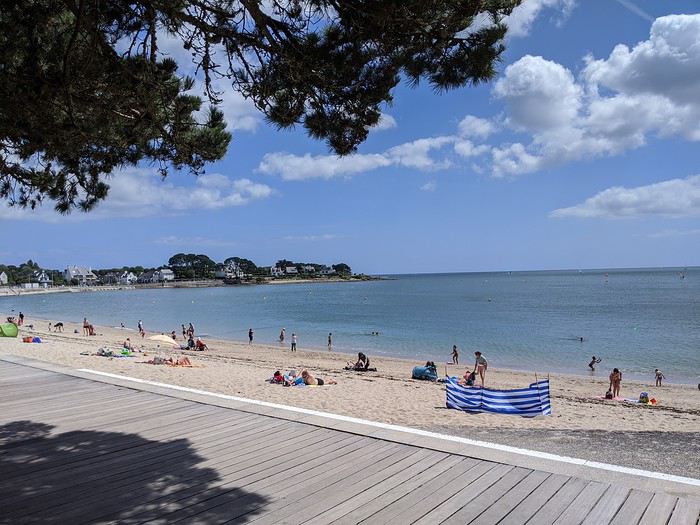
Campement à Bénodet, sa plage, son ciel bleu......
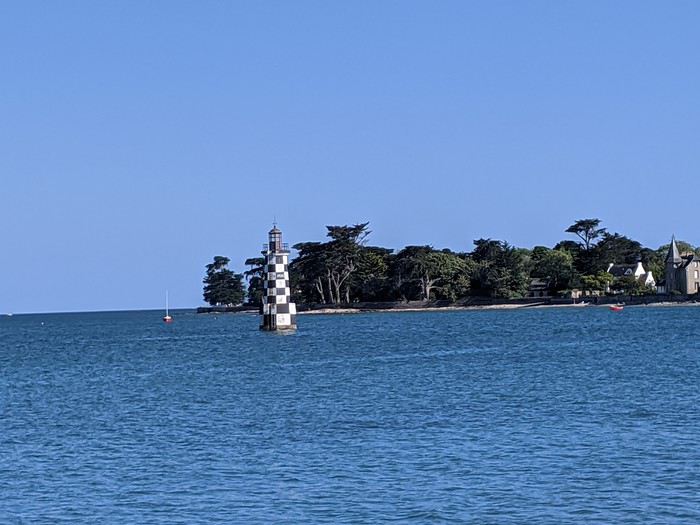
Où boire un coup par cette chaleur ? à l Ile Tudy bien sûr ! situé en face de sa voisine Loctudy,
le bout de ce village se concentre sur son port , ses bistrots, restos.... encore calmes ce lundi
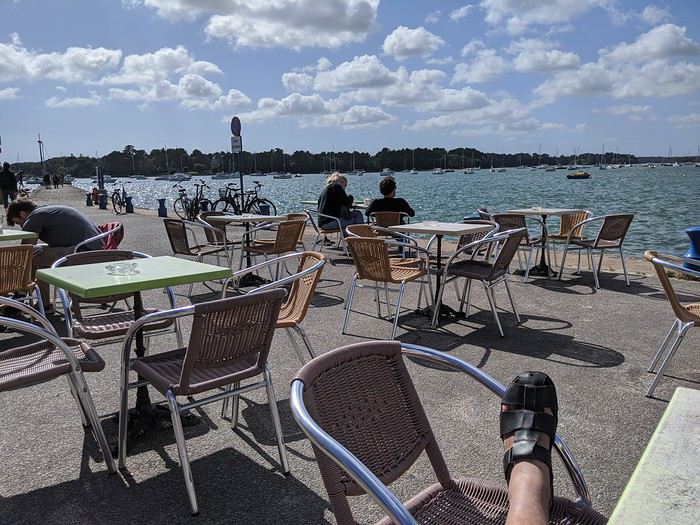
...il faut bien ça pour se remettre des 915 km de la veille
Descente de cervoise ambrée dans un bar connu
aussi pour la sa déco, affiche de concerts, artistes au plafond quant aux toilettes, super tapisserie

bref, on glande en admirant le paysage
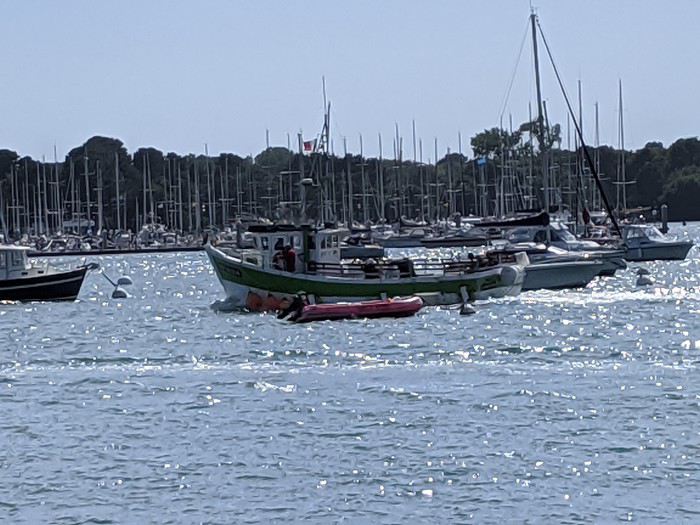
la journée d installation se termine tranquillement.. Cécile se félicite de son bon choix...
et New York, https://voyageforum.com/v.f?post=9796574;search_string=Cecile
cet été, Cécile découvre le Finistère....
certes cela peut faire moins rêver, mais bon la Bretagne c est toujours aussi beau ..sans les parisiens et autres touristes covidés !
Campement à Bénodet, sa plage, son ciel bleu......
Où boire un coup par cette chaleur ? à l Ile Tudy bien sûr ! situé en face de sa voisine Loctudy,
le bout de ce village se concentre sur son port , ses bistrots, restos.... encore calmes ce lundi
...il faut bien ça pour se remettre des 915 km de la veille
Descente de cervoise ambrée dans un bar connu
aussi pour la sa déco, affiche de concerts, artistes au plafond quant aux toilettes, super tapisserie
bref, on glande en admirant le paysage
la journée d installation se termine tranquillement.. Cécile se félicite de son bon choix...
Où aller dans les Landes ou Gironde cet été avec un enfant? English translation pending
Bonjour,
je recherche des conseils sur un point de chute dans les Landes (ou GIronde) cet été.
Idéalement un endroit plutôt dans les terres, qui nous permette de rayonner en voiture pour différentes activités (selon ce qu'il sera possible de faire en août avec la CoVid... 🙁) avec notre enfant qui aura 3 ans et demi : surtout de petites balades en forêt, peut-être une location de vélo avec carriole s'il y a des pistes cyclables ?, visite de jolis villages, bien sûr aller voir la mer mais plutôt des baignades en lac, etc. Et le moins il y aura de monde, le mieux ce sera. 😛
Quel coin conseilleriez-vous ? Merci aux habitués de cette région.
Idéalement un endroit plutôt dans les terres, qui nous permette de rayonner en voiture pour différentes activités (selon ce qu'il sera possible de faire en août avec la CoVid... 🙁) avec notre enfant qui aura 3 ans et demi : surtout de petites balades en forêt, peut-être une location de vélo avec carriole s'il y a des pistes cyclables ?, visite de jolis villages, bien sûr aller voir la mer mais plutôt des baignades en lac, etc. Et le moins il y aura de monde, le mieux ce sera. 😛
Quel coin conseilleriez-vous ? Merci aux habitués de cette région.
Location de minibus avec chauffeur pour visite privée de l'île Maurice English translation pending
Bonjour,
Nous partons à 8 sur l'Ile Maurice du 14/03 au 26/03 et nous souhaiterions visiter l'Ile en louant un minibus avec chauffeur mauricien qui pourra nous servir de guide et être bon conseil.
Nous voulons faire 2 jours de visite et une journée Catamaran.
Nous logeons au RIU CREOLE au Morne.
Merci d'avance pour vos réponse.
Visite du Sud Ouest :
Explorez le Sud-Ouest de l’île Maurice, moins connu des touristes Admirez le paysage pittoresque durant le trajet jusqu’aux chutes de Chamarel Contemplez la terres des sept couleurs et les tortues géantes du parc Dégustez du rhum local à la rhumerie de Chamarel Savourez un délicieux déjeuner gastronomique Visitez le lac sacré de Grand Bassin Admirez la vue à 360 degrés sur l’île depuis Trou-aux-Cerfs Les tortues Géantes
Visite du Nord de l'Ile :
Port Louis et marché central Plages du Nord Cap Malheureux Trou aux biches etc..
Visite du Sud Ouest :
Explorez le Sud-Ouest de l’île Maurice, moins connu des touristes Admirez le paysage pittoresque durant le trajet jusqu’aux chutes de Chamarel Contemplez la terres des sept couleurs et les tortues géantes du parc Dégustez du rhum local à la rhumerie de Chamarel Savourez un délicieux déjeuner gastronomique Visitez le lac sacré de Grand Bassin Admirez la vue à 360 degrés sur l’île depuis Trou-aux-Cerfs Les tortues Géantes
Visite du Nord de l'Ile :
Port Louis et marché central Plages du Nord Cap Malheureux Trou aux biches etc..
Traverser l'Italie du Nord au Sud à vélo en autonomie English translation pending
Bonjour,
Je souhaite partir de Grenoble et traverser l'Italie du nord au sud en suivant si possible le littoral, gènes, Rome , Naples et traverser en Sicile par Messine, puis traverser et remonter la Sardaigne et hop la corse( pour la corse je connais 🙂 et Grenoble. Tout ça en en autonomie partielle, principalement en tente...
Quid du camping sauvage pour la nuit? trouve t on facilement des campings, des gîtes ou auberges???
Je compte réaliser ce périple sur environ 5 à 6 semaines, oui je sais c'est sport, mais c'est un de mes objectifs, à voir???
Merci au cyclo qui peuvent éclairer ma lanternes sur ces différents points ou me faire part de leur expérience...
Sportivement
Itinéraire au Lesotho en voiture classique et logements English translation pending
Bonjour à tous!
Nous partons en famille, avec 3 enfants de 11, 13 et 14 ans, en Afrique du Sud fin du 26 août au 16 sept. 2020.
J'aimerais votre avis sur mon itinéraire au Lesotho. J'ai déjà beaucoup lu vos écrits et ça m'a bien aidé. Mais j'aimerais savoir ce que vous en pensez au niveau timing, et si cet itinéraire est faisable avec une voiture classique et non 4x4?
1 nuit: Johannesburg
2 nuits: Royal Natal park (dormir au Sungubala Eco Camp)
Nous rentrons au Lesotho par Caledon's port.
2 nuits: Maliba Lodge Lesotho 2 nuits: Semokong 3 nuits: Malealea
Sortie par Sephapos Gate
Ensuite direction Port Elizabeth et il nous reste 10 jours pour rejoindre le Cap
Pensez-vous que l'on doit réserver les logements à l'avance ? Que pensez vous de l'itinéraire ?
Merci d'avance pour vos retours!
Aurélie
Nous partons en famille, avec 3 enfants de 11, 13 et 14 ans, en Afrique du Sud fin du 26 août au 16 sept. 2020.
J'aimerais votre avis sur mon itinéraire au Lesotho. J'ai déjà beaucoup lu vos écrits et ça m'a bien aidé. Mais j'aimerais savoir ce que vous en pensez au niveau timing, et si cet itinéraire est faisable avec une voiture classique et non 4x4?
1 nuit: Johannesburg
2 nuits: Royal Natal park (dormir au Sungubala Eco Camp)
Nous rentrons au Lesotho par Caledon's port.
2 nuits: Maliba Lodge Lesotho 2 nuits: Semokong 3 nuits: Malealea
Sortie par Sephapos Gate
Ensuite direction Port Elizabeth et il nous reste 10 jours pour rejoindre le Cap
Pensez-vous que l'on doit réserver les logements à l'avance ? Que pensez vous de l'itinéraire ?
Merci d'avance pour vos retours!
Aurélie
Vos coups de coeur pour une journée en Tasmanie puis à Adélaïde English translation pending
Bonjour,
Quelqu'un peut nous suggérer leur coup de coeur,
un arrêt d'une journée à Hobart, Tasmanie et même demande pour Adelaide
Je sais qu'il y aurait tant à faire, mais.... en une journée, quels seraient vos coups de coeur, faisable en temps limité, évidemment février 2020
vos suggestions seront fort appréciés
un arrêt d'une journée à Hobart, Tasmanie et même demande pour Adelaide
Je sais qu'il y aurait tant à faire, mais.... en une journée, quels seraient vos coups de coeur, faisable en temps limité, évidemment février 2020
vos suggestions seront fort appréciés
Idée de destination pour 4 jours dans le Calvados English translation pending
Bonjour,
Je cherche une idée de destination pour 4 jours de week-end prolongés dans le Calvados en octobre. Nous serons accompagnés de nos 3 bébés (1 mois, 1 mois et 2 ans). Idéalement un endroit qui permette de ne pas reprendre la voiture pendant ces 4 jours (ou pour de courtes distances). Au programme visites, balades, nature. Je suis preneuse également de toute idée de logement (location ou équivalent pierre et vacances). Merci beaucoup!
Je cherche une idée de destination pour 4 jours de week-end prolongés dans le Calvados en octobre. Nous serons accompagnés de nos 3 bébés (1 mois, 1 mois et 2 ans). Idéalement un endroit qui permette de ne pas reprendre la voiture pendant ces 4 jours (ou pour de courtes distances). Au programme visites, balades, nature. Je suis preneuse également de toute idée de logement (location ou équivalent pierre et vacances). Merci beaucoup!
Location voiture à Naples chez Avis English translation pending
Bonjour,
J’aime les risques et je vais louer une voiture à l’aeroport de Naples ....chez Avis / Budget ... oh j’ai regardé sur Google et c’est pareil que chez les autres , le mot arnaque et la phrase « supplément assurance et option sans mon accord » sont récurrents malheureusement. Il n’y a que Sixt qui semble être sérieux mais les tarifs sont environ 5 fois plus cher lors de mon séjour ... ma question porte sur l’offre « AVIS 360° » que l’on trouve sur leur site ou en théorie l’assurance rachat totale de franchise est incluse ... quelqu’un ici a t’il déjà utilisé cette option qui me semble assez récente ? Ou plus généralement , quelqu’un a déjà loué chez AVIS NAPLES sans problème, bien conscient que les avis sur internet sont plus souvent mauvais car les gens vont plus facilement donner un avis négatif que positif . Si vous avez des conseils avant de prendre en charge le véhicule , je suis preneur, le contrat étant apparemment en italien .
Merci pour votre aide . 🙂
J’aime les risques et je vais louer une voiture à l’aeroport de Naples ....chez Avis / Budget ... oh j’ai regardé sur Google et c’est pareil que chez les autres , le mot arnaque et la phrase « supplément assurance et option sans mon accord » sont récurrents malheureusement. Il n’y a que Sixt qui semble être sérieux mais les tarifs sont environ 5 fois plus cher lors de mon séjour ... ma question porte sur l’offre « AVIS 360° » que l’on trouve sur leur site ou en théorie l’assurance rachat totale de franchise est incluse ... quelqu’un ici a t’il déjà utilisé cette option qui me semble assez récente ? Ou plus généralement , quelqu’un a déjà loué chez AVIS NAPLES sans problème, bien conscient que les avis sur internet sont plus souvent mauvais car les gens vont plus facilement donner un avis négatif que positif . Si vous avez des conseils avant de prendre en charge le véhicule , je suis preneur, le contrat étant apparemment en italien .
Merci pour votre aide . 🙂
Voyage pour seniors en Guadeloupe English translation pending
Bonjour
Nous sommes un couple de retraités et comptons aller passer 15 jours en Guadeloupe en novembre prochain.
- est-ce une période agréable dans l'île ?
- où doit-on aller pour éviter les sargasses et profiter de belles plages de sable?
- nous envisageons de rester 2 ou 3 jours dans chaque hôtel ou appartement. Quelles étapes nous conseillez vous que ce soit en bord de mer ou à l'intérieur des terres?
Merci pour tous les conseils que vous pourrez nous donner.
Cordialement
Séjour à Minorque English translation pending
Bonjour,
Je me permets de poster un message car je viens de réserver vol+hôtel pour notre séjour à Minorque en Octobre. J'aurais aimé avoir vos conseils concernant les locations de voiture ainsi que sur tous les lieux à visiter, j entends monuments, villages et plages bien sûr. Nous ne sommes pas du genre à faire du farniente toute la journée mais plutot rando et visite ;-) Nous avons notre hôtel à Cala'n Porter. Je suis même preneuse de vos avis sur restau 😉
Merci beaucoup
Bonne soirée
Je me permets de poster un message car je viens de réserver vol+hôtel pour notre séjour à Minorque en Octobre. J'aurais aimé avoir vos conseils concernant les locations de voiture ainsi que sur tous les lieux à visiter, j entends monuments, villages et plages bien sûr. Nous ne sommes pas du genre à faire du farniente toute la journée mais plutot rando et visite ;-) Nous avons notre hôtel à Cala'n Porter. Je suis même preneuse de vos avis sur restau 😉
Merci beaucoup
Bonne soirée
Découvrir Malte en bus: facile! English translation pending
J'étais à Malte la semaine dernière, et à mon retour je pense utile de partager le fait qu'il est très aisé de découvrir Malte (et Gozo) en bus.
Une carte à 21 € pour 7 jours et hop, accès illimité aux nombreux bus qui sillonnent les deux îles.
Je n'avais aucune envie de louer une voiture, budget, stationnement, conduite à gauche, je roule suffisamment comme ça pour le boulot... Certains messages / forum et avertissements / guides alertaient sur le fait que la fiabilité des bus était assez aléatoire... Advienne que pourra, on a choisi l'option bus et on ne l'a pas regretté. Nombreuses liaisons, horaires affichés et respectés donc on peut prévoir pour ne pas attendre trop longtemps.
Sans compter que ça permet, lorsqu'on souhaite marcher, de ne pas avoir à récupérer la voiture là où on l'a laissée. Pour nous ça a été le cas à Gozo, avec un aller en bus de Victoria aux salines et retour à Victoria par l'intérieur des terres, et la rando sur le sentier côtier entre le port de Mgarr et Xlendi.
Voilà, pour ceux qui hésiteraient !
Je n'avais aucune envie de louer une voiture, budget, stationnement, conduite à gauche, je roule suffisamment comme ça pour le boulot... Certains messages / forum et avertissements / guides alertaient sur le fait que la fiabilité des bus était assez aléatoire... Advienne que pourra, on a choisi l'option bus et on ne l'a pas regretté. Nombreuses liaisons, horaires affichés et respectés donc on peut prévoir pour ne pas attendre trop longtemps.
Sans compter que ça permet, lorsqu'on souhaite marcher, de ne pas avoir à récupérer la voiture là où on l'a laissée. Pour nous ça a été le cas à Gozo, avec un aller en bus de Victoria aux salines et retour à Victoria par l'intérieur des terres, et la rando sur le sentier côtier entre le port de Mgarr et Xlendi.
Voilà, pour ceux qui hésiteraient !