Results for "Sienne+|+9+>+215"
3570 results found.
Voyage de deux semaines en Europe English translation pending
Bonjour
Nous sommes deux couples qui voulons visiter l’Europe. Première chose je dois vous dire que les seul voyage que nous avons fait est voyage à Cuba et Mexique, voyage tout compris nous ne sommes pas sortie du complexe. Alors voyage autonome nous ne connaissons pas beaucoup. Voici la raison pourquoi nous avons besoin de s’évader un peu nous voulons voir du pays, se remplir la tête de belle image, refaire le plein d’énergie. Voici l’itinéraire, Voir Le Portugal, l’Espagne la France et l’Italie, rester près de la Mer Méditerranée.
Qu’est ce que je dois voir ne pas manquer ?
Où dois-je me loger pour pas cher ?
Je sais je sais ! J’ai beaucoup de questions
Merci à l’avance pour vos questions
Nous sommes deux couples qui voulons visiter l’Europe. Première chose je dois vous dire que les seul voyage que nous avons fait est voyage à Cuba et Mexique, voyage tout compris nous ne sommes pas sortie du complexe. Alors voyage autonome nous ne connaissons pas beaucoup. Voici la raison pourquoi nous avons besoin de s’évader un peu nous voulons voir du pays, se remplir la tête de belle image, refaire le plein d’énergie. Voici l’itinéraire, Voir Le Portugal, l’Espagne la France et l’Italie, rester près de la Mer Méditerranée.
Qu’est ce que je dois voir ne pas manquer ?
Où dois-je me loger pour pas cher ?
Je sais je sais ! J’ai beaucoup de questions
Merci à l’avance pour vos questions
Pass pour l'Italie English translation pending
Je m'apprete a voyager en italie pour une sem .Mais j'ai l'intention de prendre le train plusieurs fois car je vais parcourir la moitie nord de l'italie .Y a t-il des trucs pour voyager moins cher ? Ou bien un pass qui fait qu'on ne soit pas oblige d'acheter un billet a chaque fois ? Merci !!!
Portugal, Espagne, France, Suisse et Italie, quoi faire? English translation pending
Bonjour à tous
Je prévoit partir pour l'Europe à la mi-mai pendant 4 à 5 semaines. On veut aller au Porugal, Espagne, France, Suisse et Italie et peut-être Amsterdam.Tout d'abord, notre budget est limité à 4000$ can incluant le billet d'avion. Je me demande si c'est assez et quoi faire pour que notre voyage nous coûte le moins cher possible. En fait, on veut rien de très luxueux. On veut pouvoir en faire le plus avec ce qu'on a.
De plus, je ne sais pas trop par où commencer. J'aimerais bien planifier ce voyage pour ne pas passer à côté de quelque chose qui ne faut surtout pas manquer. On est deux filles de 21 ans et on se demande pour ces pays ce qu'on doit voir à tout prix, autant pour les plages, pour faire la fête que pour visiter des sites historiques, musée, des villes ou des paysages, randonnées activitées...
Je prévoit partir pour l'Europe à la mi-mai pendant 4 à 5 semaines. On veut aller au Porugal, Espagne, France, Suisse et Italie et peut-être Amsterdam.Tout d'abord, notre budget est limité à 4000$ can incluant le billet d'avion. Je me demande si c'est assez et quoi faire pour que notre voyage nous coûte le moins cher possible. En fait, on veut rien de très luxueux. On veut pouvoir en faire le plus avec ce qu'on a.
De plus, je ne sais pas trop par où commencer. J'aimerais bien planifier ce voyage pour ne pas passer à côté de quelque chose qui ne faut surtout pas manquer. On est deux filles de 21 ans et on se demande pour ces pays ce qu'on doit voir à tout prix, autant pour les plages, pour faire la fête que pour visiter des sites historiques, musée, des villes ou des paysages, randonnées activitées...
Idées de week-end Europe English translation pending
Salut tout le monde,
Bien que j'ai fait un voyage superbe en 2004 de trois semaines au Botswana, j'ai décidé cette année de faire plutôt de petites escapades de 3, 4 jours (week-ends prolongés), ce qui me permettra de me 'visiter' un peu plus et de profiter de petites pauses vacances tout au long de l'année.
Je me rends à Londres pour 3 jours dans deux semaines mais j'aimerai également bientôt visiter l'Ecosse ou l'Irlande par exemple et bien d'autres pays du continent européen en priorité.
Si vous connaissez de bons plans pas trop chers et de superbes endroits à voir absolument, toutes les propositions sont les bienvenues, ainsi que les compagnons de voyage.
A bientôt j'espère.
Christelle
Bien que j'ai fait un voyage superbe en 2004 de trois semaines au Botswana, j'ai décidé cette année de faire plutôt de petites escapades de 3, 4 jours (week-ends prolongés), ce qui me permettra de me 'visiter' un peu plus et de profiter de petites pauses vacances tout au long de l'année.
Je me rends à Londres pour 3 jours dans deux semaines mais j'aimerai également bientôt visiter l'Ecosse ou l'Irlande par exemple et bien d'autres pays du continent européen en priorité.
Si vous connaissez de bons plans pas trop chers et de superbes endroits à voir absolument, toutes les propositions sont les bienvenues, ainsi que les compagnons de voyage.
A bientôt j'espère.
Christelle
Nouvel An à Buenos aires! English translation pending
Que faire? Ou allez? Quand ? Comment? bref est ce que quelqu'un a des bons plans?🙂🙂🙂
"L'EMEUTE" - auteur Sashi Tharoor - Points 1235 - English translation pending
Ce livre est une "tranche d'Inde où rien ne manque : Inde admirable, Inde rebutante ; en un mot : Inde incompréhensible. Celui qui effectue ce parcours est un indien, et hindou, qui a formé son esprit au contact de l'Inde traditionnelle et des écoles supérieures inspirées par l'anglaise culture. Il est devenu haut fonctionnaire de l'O.N.U. à New-York.
Il nous raconte les terribles conflits ethniques dont l'Inde est déchirée depuis son indépendance. Il fouille la terre indienne pour mettre à nu les racines de l'affrontement islamo-hindou ; il explore son pays pour constater et déplorer la triste pérennité de cette histoire vieille de plusieurs siècles. Il cherche à décrire tous les facteurs de ce conflit. Ce qui découlait ipso-facto d'une situation historique, ce qui se greffait sur cet état pour en calmer ou en exacerber les effets.
Mais toute cette exploration ethnologique n'est absolument pas un cours abstrait et théorique digne de figurer dans une froide encyclopédie. Sashi Tharoor nous invite à suivre un récit où les "macro-facteurs" sont avantageusement remplacés par des acteurs de la vie quotidienne. On n'oublie pas les sordides ghettos musulmans de Delhi, ni la foule indienne avec ses mendiants, ses vaches sacrées et ses rickshaws. L'histoire se déroule à l'ombre des mosquées et des temples sikhs ou hindous. L'histoire des gens se mêle à l'Histoire des Grands, de Gandhi à Indira Gandhi, en passant par Aurangzeb et Ali-Jinnah. A travers les héros d'un récit qui tient en quelques mois de l'année 1989, toute l'Inde vit et palpite au-delà du temps et de l'espace, même si on ne quitte guère la ville de Zaligarh, dans l'Uttar Pradesh.
Les acteurs du drame sont peu nombreux : Priscilla Hart, américaine engagée dans une O.N.G. qui oeuvre pour le "Birth control" ; ses parents, dont sa mère Katharine et son père Rudyard qui rêve de répandre le Coca-Cola en Inde ; Randi Diggs, journaliste ; le flic-chef sikh Gurinder Singh ; quelques représentants des communautés hindoue et musulmane ; et pour finir, l'homme d'amour de Priscilla, l'administrateur Lucky Lakshman, une sorte de préfet sorti de l'E.N.A. indienne.
L'affaire n'a pas de récitant à la première ou à la troisième personne. Elle tient dans des interviews, lettres, confidences de journal intime, billets doux et poèmes.
Le point fort de ce choix de présentation est de nous offrir un kaléidoscope de points de vue différents, allant souvent jusqu'à l'incompatibilité. Le plus étonnant chez Sashi Tharoor, c'est sa capacité d'allier la proximité à la distance. A travers son présumé alter-ego Lakshman, il garde un contact permanent avec la réalité, la sienne et celle de son entourage, tout en faisant preuve d'une rare capacité à prendre de la distance vis-à-vis de lui-même. Il fait parler des gens qui sont aux antipodes de ce qu'il est, sans les caricaturer. On pourrait croire qu'il exprime chaque fois ses propres convictions. Il faut dire qu'il n'est ni binaire, ni manichéen, ni sectaire. Il sait reconnaître une part de vérité dans tout discours, même fondamentaliste et extrêmiste de tout bord. Cette attitude n'aide pas ceux qui cherchent la frontière entre le "camp du Bien" et le "parti de Satan" à travers le monde d'aujourd'hui et d'hier. Lakshman vit de son corps, de son coeur et de son esprit. On peut supposer que Tharoor fait constamment la part des choses entre les domaines de l'affectif et du rationnel sans jamais laisser l'un "manger dans la gamelle" de l'autre.
Lucky et Priscilla vivent un amour difficile. Priscilla est une "open mind made in U.S.A.", Lucky est un métis culturel d'occident et d'orient. Le cadre de leur rencontre est une source d'incompatibilité profonde. Leur conflit croît en parallèle avec le choc des religions indiennes. Tout ce livre est un constat qui pourrait être un cri désespéré à propos des incompatibilités humaines. Conditionnement des peuples, conditionnement des individus, situations d'incompréhension, limites de la communication, poids terrible des "sur-moi" psychologiques individuels et collectifs : voilà le terrain sur lequel nous nous rencontrons tous, habitants de continents éloignés, ou voisins du même village, et aussi membres de la même famille.
Livre désespéré ? Certes non. Je relis l'interview du professeur Mohammed Sarwar à la page 168 et suivantes. Notons au passage que l'indien occidental au nom hindou Sashi Tharoor a choisi un musulman pour apporter un message d'ouverture. Et pourtant, toute l'Aryannité, de l'Inde à l'Occident, "sait que l'Islam est, par nature, source pléonasmatique de sectarisme intégriste". Joli clin d'oeil de l'auteur. Sans être un pacifiste bêlant, ce Sarwar développe des arguments de coeur et de raison en faveur de la coexistence tolérante. A travers son vibrant exposé, le livre fait exploser les frontières des Indes pour nous faire atterrir, sans les citer, dans tous les coins du monde où sévit l'incompréhension entretenue : Irlande du nord, Palestine, Kurdistan, Chypre, Rwanda, etc...
En conclusion, je pense que cet ouvrage est un hommage à la vérité. L'auteur s'amuse. A la page 209, l'oriental Lakshman semble faire sienne le très peu rationnel "à chacun sa vérité" : "La vérité ! Ce qu'il y a de singulier à propos de la vérité, ma chère, c'est qu'on ne peut en parler qu'au pluriel". Par contre, à la page 224, l'occidental Lakshman se fait cartésien : "La vérité est une, les sages l'habillent de noms différents". On dirait du "Krishnamurti".
J'ai parlé d'hommage à la vérité : oui, car Sashi Tharoor n'est pas de ces menteurs dont nous sommes tous, un jour ou l'autre, et qui mentent en ne disant que des choses vraies car ils ne disent qu'une partie de ce qui est.
(L'auteur de ce compte-rendu est Bernard, le mari de Fabricia).
Il nous raconte les terribles conflits ethniques dont l'Inde est déchirée depuis son indépendance. Il fouille la terre indienne pour mettre à nu les racines de l'affrontement islamo-hindou ; il explore son pays pour constater et déplorer la triste pérennité de cette histoire vieille de plusieurs siècles. Il cherche à décrire tous les facteurs de ce conflit. Ce qui découlait ipso-facto d'une situation historique, ce qui se greffait sur cet état pour en calmer ou en exacerber les effets.
Mais toute cette exploration ethnologique n'est absolument pas un cours abstrait et théorique digne de figurer dans une froide encyclopédie. Sashi Tharoor nous invite à suivre un récit où les "macro-facteurs" sont avantageusement remplacés par des acteurs de la vie quotidienne. On n'oublie pas les sordides ghettos musulmans de Delhi, ni la foule indienne avec ses mendiants, ses vaches sacrées et ses rickshaws. L'histoire se déroule à l'ombre des mosquées et des temples sikhs ou hindous. L'histoire des gens se mêle à l'Histoire des Grands, de Gandhi à Indira Gandhi, en passant par Aurangzeb et Ali-Jinnah. A travers les héros d'un récit qui tient en quelques mois de l'année 1989, toute l'Inde vit et palpite au-delà du temps et de l'espace, même si on ne quitte guère la ville de Zaligarh, dans l'Uttar Pradesh.
Les acteurs du drame sont peu nombreux : Priscilla Hart, américaine engagée dans une O.N.G. qui oeuvre pour le "Birth control" ; ses parents, dont sa mère Katharine et son père Rudyard qui rêve de répandre le Coca-Cola en Inde ; Randi Diggs, journaliste ; le flic-chef sikh Gurinder Singh ; quelques représentants des communautés hindoue et musulmane ; et pour finir, l'homme d'amour de Priscilla, l'administrateur Lucky Lakshman, une sorte de préfet sorti de l'E.N.A. indienne.
L'affaire n'a pas de récitant à la première ou à la troisième personne. Elle tient dans des interviews, lettres, confidences de journal intime, billets doux et poèmes.
Le point fort de ce choix de présentation est de nous offrir un kaléidoscope de points de vue différents, allant souvent jusqu'à l'incompatibilité. Le plus étonnant chez Sashi Tharoor, c'est sa capacité d'allier la proximité à la distance. A travers son présumé alter-ego Lakshman, il garde un contact permanent avec la réalité, la sienne et celle de son entourage, tout en faisant preuve d'une rare capacité à prendre de la distance vis-à-vis de lui-même. Il fait parler des gens qui sont aux antipodes de ce qu'il est, sans les caricaturer. On pourrait croire qu'il exprime chaque fois ses propres convictions. Il faut dire qu'il n'est ni binaire, ni manichéen, ni sectaire. Il sait reconnaître une part de vérité dans tout discours, même fondamentaliste et extrêmiste de tout bord. Cette attitude n'aide pas ceux qui cherchent la frontière entre le "camp du Bien" et le "parti de Satan" à travers le monde d'aujourd'hui et d'hier. Lakshman vit de son corps, de son coeur et de son esprit. On peut supposer que Tharoor fait constamment la part des choses entre les domaines de l'affectif et du rationnel sans jamais laisser l'un "manger dans la gamelle" de l'autre.
Lucky et Priscilla vivent un amour difficile. Priscilla est une "open mind made in U.S.A.", Lucky est un métis culturel d'occident et d'orient. Le cadre de leur rencontre est une source d'incompatibilité profonde. Leur conflit croît en parallèle avec le choc des religions indiennes. Tout ce livre est un constat qui pourrait être un cri désespéré à propos des incompatibilités humaines. Conditionnement des peuples, conditionnement des individus, situations d'incompréhension, limites de la communication, poids terrible des "sur-moi" psychologiques individuels et collectifs : voilà le terrain sur lequel nous nous rencontrons tous, habitants de continents éloignés, ou voisins du même village, et aussi membres de la même famille.
Livre désespéré ? Certes non. Je relis l'interview du professeur Mohammed Sarwar à la page 168 et suivantes. Notons au passage que l'indien occidental au nom hindou Sashi Tharoor a choisi un musulman pour apporter un message d'ouverture. Et pourtant, toute l'Aryannité, de l'Inde à l'Occident, "sait que l'Islam est, par nature, source pléonasmatique de sectarisme intégriste". Joli clin d'oeil de l'auteur. Sans être un pacifiste bêlant, ce Sarwar développe des arguments de coeur et de raison en faveur de la coexistence tolérante. A travers son vibrant exposé, le livre fait exploser les frontières des Indes pour nous faire atterrir, sans les citer, dans tous les coins du monde où sévit l'incompréhension entretenue : Irlande du nord, Palestine, Kurdistan, Chypre, Rwanda, etc...
En conclusion, je pense que cet ouvrage est un hommage à la vérité. L'auteur s'amuse. A la page 209, l'oriental Lakshman semble faire sienne le très peu rationnel "à chacun sa vérité" : "La vérité ! Ce qu'il y a de singulier à propos de la vérité, ma chère, c'est qu'on ne peut en parler qu'au pluriel". Par contre, à la page 224, l'occidental Lakshman se fait cartésien : "La vérité est une, les sages l'habillent de noms différents". On dirait du "Krishnamurti".
J'ai parlé d'hommage à la vérité : oui, car Sashi Tharoor n'est pas de ces menteurs dont nous sommes tous, un jour ou l'autre, et qui mentent en ne disant que des choses vraies car ils ne disent qu'une partie de ce qui est.
(L'auteur de ce compte-rendu est Bernard, le mari de Fabricia).
100 jours/20 villes (régions) en Europe de l'ouest English translation pending
Bonjour,
J'ai 26 ans et je pars pour l'Europe de l'Ouest du 22 aout au 30 novembre avec un Eurail pass qui me permet de voyager à volonté en France, Espagne, Portugal, Italie, Belgique, Allemagne, Hollande, Autriche...
J'aimerais savoir ce que vous visiteriez en 20 coups de coeurs. Soyez diversifiez, c'est surement ma seule chance d'y aller...
MErci
Nancy
J'ai 26 ans et je pars pour l'Europe de l'Ouest du 22 aout au 30 novembre avec un Eurail pass qui me permet de voyager à volonté en France, Espagne, Portugal, Italie, Belgique, Allemagne, Hollande, Autriche...
J'aimerais savoir ce que vous visiteriez en 20 coups de coeurs. Soyez diversifiez, c'est surement ma seule chance d'y aller...
MErci
Nancy
De Rome vers le nord de l'Italie? English translation pending
Bonjour!
J'aurais une petite question! Si quelqu'un pourrait m'aider se serait tres agreable!
Je compte visiter la France pour le mois de juillet et par la suite avec une amie prendre un vol de Paris vers Rome avec une compagnie aerienne comme easyjet.com ou ryanair.com ou l'on pourrait avoir un tres bon prix comme une vingtaine d'euros!
Nous voulons par la suite commencer par visiter Rome et ensuite monter tranquillement vers l'italie du nord et passer par des places comme la Toscane, etc. (les suggestions sont le bienvenus) peut etre meme aboutir vers le lac leman proche de la suisse!
Ma question est: Est qu'il est plus raisonnable d'acheter un passe de train France-italie 340$ canadien/pour 6 jours en 2 mois (soit 200 euros) ou bien payer le vol d'Avion de PAris et ensuite utiliser les transports en commun necessaire sur place, tout dependant! (Autobus, train, etc.)
J'aimerais avoir une idee sur les prix des transports en commun en Italie et savoir si c'est posssible de visiter plusieurs places sans que les transports en commun ne soient trop cher!
Toutes suggestions sont le bienvenues!
Merci de votre aide!
Bonne été a tous!
Hugo24
Montreal, Québec, Canada
J'aurais une petite question! Si quelqu'un pourrait m'aider se serait tres agreable!
Je compte visiter la France pour le mois de juillet et par la suite avec une amie prendre un vol de Paris vers Rome avec une compagnie aerienne comme easyjet.com ou ryanair.com ou l'on pourrait avoir un tres bon prix comme une vingtaine d'euros!
Nous voulons par la suite commencer par visiter Rome et ensuite monter tranquillement vers l'italie du nord et passer par des places comme la Toscane, etc. (les suggestions sont le bienvenus) peut etre meme aboutir vers le lac leman proche de la suisse!
Ma question est: Est qu'il est plus raisonnable d'acheter un passe de train France-italie 340$ canadien/pour 6 jours en 2 mois (soit 200 euros) ou bien payer le vol d'Avion de PAris et ensuite utiliser les transports en commun necessaire sur place, tout dependant! (Autobus, train, etc.)
J'aimerais avoir une idee sur les prix des transports en commun en Italie et savoir si c'est posssible de visiter plusieurs places sans que les transports en commun ne soient trop cher!
Toutes suggestions sont le bienvenues!
Merci de votre aide!
Bonne été a tous!
Hugo24
Montreal, Québec, Canada
Choisir travail ou voyage! English translation pending
Me voilà confrontée à un choix important !
J'ai toujours privilégié l'intérim pour mon boulot cela me permet de partir quand je veux, mais là l'âge avance à grand pas je vais avoir 44 ans et je dois choisir ! (les minettes Ass. de Direct elles sont là)
Mon agence me propose une mission qui doit déboucher sur un cdi, j'ai dit oui...
Il est vrai que j'ai toujours trouvé du boulot car je suis volontaire et travailleuse mais l'âge, à 44 ans dois-je toujours privilégier ce côté d'indépendance qui peut me rendre l'avenir difficile.
Je crois que je suis dans l'obligation d'être raisonnable et prendre ce poste me fera repousser mon départ, mais aussi par la suite je pourrais négocier des dates hors vacances d'été... Enfin, si vous avez été confrontée à ce style de choix quelles sont vos impressions !
Cela me réconforterait de les lire, de toute façon ma décision est prise mais j'avais envie de vous en parler !
Merci de me lire
J'ai toujours privilégié l'intérim pour mon boulot cela me permet de partir quand je veux, mais là l'âge avance à grand pas je vais avoir 44 ans et je dois choisir ! (les minettes Ass. de Direct elles sont là)
Mon agence me propose une mission qui doit déboucher sur un cdi, j'ai dit oui...
Il est vrai que j'ai toujours trouvé du boulot car je suis volontaire et travailleuse mais l'âge, à 44 ans dois-je toujours privilégier ce côté d'indépendance qui peut me rendre l'avenir difficile.
Je crois que je suis dans l'obligation d'être raisonnable et prendre ce poste me fera repousser mon départ, mais aussi par la suite je pourrais négocier des dates hors vacances d'été... Enfin, si vous avez été confrontée à ce style de choix quelles sont vos impressions !
Cela me réconforterait de les lire, de toute façon ma décision est prise mais j'avais envie de vous en parler !
Merci de me lire
Visites de la France et l'Italie English translation pending
Bonjour tout le monde!
Je viens du Québec et j'entreprends un voyage pour l'europe sous peu! (Départ Mai-Juin 2004) J'aimerais visiter entre autres la France, l'Italie et l' Espagne, mais je suis ouvert aussi a d'autres destinations!
Je viens de finir mon BAC, alors j'aimerais voyager un peu avant de commencer a travailler pour de bon!
Pour le moment je partirais tout seul! Mais j'aimerais bien trouver un ou une partenaire de voyage (Meme plusieurs aussi) qui serait peut-etre intéresser a correspondre! On pourrait s'echanger de l'information ou se rencontrer la bas, etc. Ou meme ici avant de partir!
J'ai quelques petites questions:Quel auberge de jeunesse suggérez vous en France? (Coté Prix et emplacement, aussi pour rencontrer d'autres voyageurs, etc)
Quoi visiter en France?
Les moyens de transport et les prix? Comment ca marche?
Ensuite, j'ai les meme petites questions pour l'Italie?
Si vous pouvez m'aider ce serait bien apprécier! J'aimerais aussi correspondre avec les intéressésil y a des intéressés! Réécrivez-moi!
Merci a l'avance!
Hugues
Je viens du Québec et j'entreprends un voyage pour l'europe sous peu! (Départ Mai-Juin 2004) J'aimerais visiter entre autres la France, l'Italie et l' Espagne, mais je suis ouvert aussi a d'autres destinations!
Je viens de finir mon BAC, alors j'aimerais voyager un peu avant de commencer a travailler pour de bon!
Pour le moment je partirais tout seul! Mais j'aimerais bien trouver un ou une partenaire de voyage (Meme plusieurs aussi) qui serait peut-etre intéresser a correspondre! On pourrait s'echanger de l'information ou se rencontrer la bas, etc. Ou meme ici avant de partir!
J'ai quelques petites questions:Quel auberge de jeunesse suggérez vous en France? (Coté Prix et emplacement, aussi pour rencontrer d'autres voyageurs, etc)
Quoi visiter en France?
Les moyens de transport et les prix? Comment ca marche?
Ensuite, j'ai les meme petites questions pour l'Italie?
Si vous pouvez m'aider ce serait bien apprécier! J'aimerais aussi correspondre avec les intéressésil y a des intéressés! Réécrivez-moi!
Merci a l'avance!
Hugues
Viol de culture... Et Tacos al pastor... English translation pending
J'adore la cuisine mexicaine.
Par exemple, les bon tacos al pastor, même si je prefere una torta al pastor.. (chacun ses gouts).
Bon, j'habite dans la ville de Québec (enfin tout près), et oui il y a des restaurants mexicains, mais aucun qui offre de la nourriture complètement typique. Je parle entre autre des Tacos al Pastor, parce que tout ceux qui ont été au Mexique (et encore...) les connaissent.. mais j'inclu aussi la cochinita, la sopa de lima, los panuchos, los salbutes... j'en passe... el relleno negro hmm... bon, on va terminer l'énumération ou je n'en finirai jamais..
Sérieusement, je pense à ramener mon Trompo (pour faire la viande al pastor) la prochaine fois que je reviens du Mexique, mon beau-père (Alvaro) est prêt à m'aider.
Enfin, ce que je veux savoir c'est si vous, peu importe ou que vous soyez, (autre que le mexique 😛), si vous connaissez des restaurants mexicains dans votre pays qui peuvent réellement se faire appeler restaurants mexicains ?
D'un côté, j'aimerais en trouver un, plus par curiosité (donc pas besoin de me donner les adresses complètes, juste me dire si vous en connaissez et me dire votre opinion 😛), j'ai même déjà penser à des projets d'ouvrir un restaurant mexicain... mais c'est là que se pose le conflit.. dans ma tête bien sûr.. le conflit moral ou je ne sais quel nom lui donner.
D'un certain côté, oui ça serait bien de faire profiter à nos voisins d'une nourriture typique, mais à quel prix ?
Je m'explique, je crois qu'il s'agit d'un viol que de rapporter la culture culinaire d'un pays dans le sien... c'est à ce moment que je ne veux plus ouvrir de restaurant mexicain, ni savoir s'ils en existent des "vrais" (enfin oui je veux toujours le savoir par curiosité...)...
On ne peut pas tout ramener d'un voyage, il y a des choses qui doivent rester à leur pays. Qu'en pensez vous ?
Cela dit, je pense quand même à rapporter mi trompo (juste pour moi 😄) pour me régaler au québec entre deux voyages au mexique...
Par exemple, les bon tacos al pastor, même si je prefere una torta al pastor.. (chacun ses gouts).
Bon, j'habite dans la ville de Québec (enfin tout près), et oui il y a des restaurants mexicains, mais aucun qui offre de la nourriture complètement typique. Je parle entre autre des Tacos al Pastor, parce que tout ceux qui ont été au Mexique (et encore...) les connaissent.. mais j'inclu aussi la cochinita, la sopa de lima, los panuchos, los salbutes... j'en passe... el relleno negro hmm... bon, on va terminer l'énumération ou je n'en finirai jamais..
Sérieusement, je pense à ramener mon Trompo (pour faire la viande al pastor) la prochaine fois que je reviens du Mexique, mon beau-père (Alvaro) est prêt à m'aider.
Enfin, ce que je veux savoir c'est si vous, peu importe ou que vous soyez, (autre que le mexique 😛), si vous connaissez des restaurants mexicains dans votre pays qui peuvent réellement se faire appeler restaurants mexicains ?
D'un côté, j'aimerais en trouver un, plus par curiosité (donc pas besoin de me donner les adresses complètes, juste me dire si vous en connaissez et me dire votre opinion 😛), j'ai même déjà penser à des projets d'ouvrir un restaurant mexicain... mais c'est là que se pose le conflit.. dans ma tête bien sûr.. le conflit moral ou je ne sais quel nom lui donner.
D'un certain côté, oui ça serait bien de faire profiter à nos voisins d'une nourriture typique, mais à quel prix ?
Je m'explique, je crois qu'il s'agit d'un viol que de rapporter la culture culinaire d'un pays dans le sien... c'est à ce moment que je ne veux plus ouvrir de restaurant mexicain, ni savoir s'ils en existent des "vrais" (enfin oui je veux toujours le savoir par curiosité...)...
On ne peut pas tout ramener d'un voyage, il y a des choses qui doivent rester à leur pays. Qu'en pensez vous ?
Cela dit, je pense quand même à rapporter mi trompo (juste pour moi 😄) pour me régaler au québec entre deux voyages au mexique...
Conseils pour une semaine en Italie English translation pending
Bonjour,
J'envisage de partir en Italie une semaine en août, mais le prix des circuits est très élevé.
Quelqu'un pourrait-il me faire part de ses bons plans? Les villes et sites, musées, etc, à visiter absolument, un plan de route, les hôtels clean pas chers dans chaque ville visitée, où danser, où bien manger...
Merci d'avance.
Coco
J'envisage de partir en Italie une semaine en août, mais le prix des circuits est très élevé.
Quelqu'un pourrait-il me faire part de ses bons plans? Les villes et sites, musées, etc, à visiter absolument, un plan de route, les hôtels clean pas chers dans chaque ville visitée, où danser, où bien manger...
Merci d'avance.
Coco
Nouvelle-Zélande et Australie English translation pending
🙂Bonjour à tous,
🙂Je quittes le québec dans une semaine, c'est à dire dimanche pour la merveileuse destination qu'est la N-Z . Après 3 mois là, je vais en Australie pour 1 mois donc fin avril et début mai. Ce mot et pour savoir si il y a du monde qui vont être là dans les même moments, je suis très partante pour en rencontrer....à plusieurs, c'est toujours mieux.😎 Alors gênez-vous pas....
à la prochaine peut-être
🙂Je quittes le québec dans une semaine, c'est à dire dimanche pour la merveileuse destination qu'est la N-Z . Après 3 mois là, je vais en Australie pour 1 mois donc fin avril et début mai. Ce mot et pour savoir si il y a du monde qui vont être là dans les même moments, je suis très partante pour en rencontrer....à plusieurs, c'est toujours mieux.😎 Alors gênez-vous pas....
à la prochaine peut-être
Entrée sur le territoire Canadien English translation pending
Bonjour,
Je souhaite entrer au Canada par voie aérienne (aéroport de Montréal), récupérer mon véhicule personnel (une 2CV) au port (arrivée par cargo) et sortir du Canada par voie terrestre (avec ma voiture). Hors, sur certains sites, genre le site gouvernemental des affaires étrangères, il est écrit qu'il est obligatoire d'avoir une billet d'avion aller-retour (ou un aller-simple + un billet vers une autre destination) pour pouvoir entrer sur le territoire canadien. Après interrogation des douanes de Montréal, il semblerait qu'un billet aller-simple soit suffisant si l'on subit un interrogatoire des douaniers, voir d'un agent de l'immigration et que l'on puisse prouver que l'on n'est pas venu pour s'installer au Canada et que l'on va bien en sortir.
Question : quelqu'un a-t-il déjà connu cette situation ? Comment s'est passé le passage de la douane (interrogatoire...) ? Comment prouver que l'on n'est pas venu s'installer sur le teritoire ?
Merci d'avance pour vos réponses !!!
Question : quelqu'un a-t-il déjà connu cette situation ? Comment s'est passé le passage de la douane (interrogatoire...) ? Comment prouver que l'on n'est pas venu s'installer sur le teritoire ?
Merci d'avance pour vos réponses !!!
Itinéraire pour 12 jours en Italie English translation pending
🙂
avec ma petite soeurs, on veut se faire une petite virée en italie,
avec la carte inter rail ( 12 jours). On est a la recherche d'îtinéraires sympas, pas trops stresse et surtout pas cher... biensur !
on partira de la suisse donc du nord de l'italie.
donc, si vous avec quelques idées ..?!!
biz biz😉
Discussion around March 2026's Theme: Metal, Metallic
This is where we share stories (or post extra photos) around March’s theme Metal, Metallic.
Back to the March 2026 contest: HERE
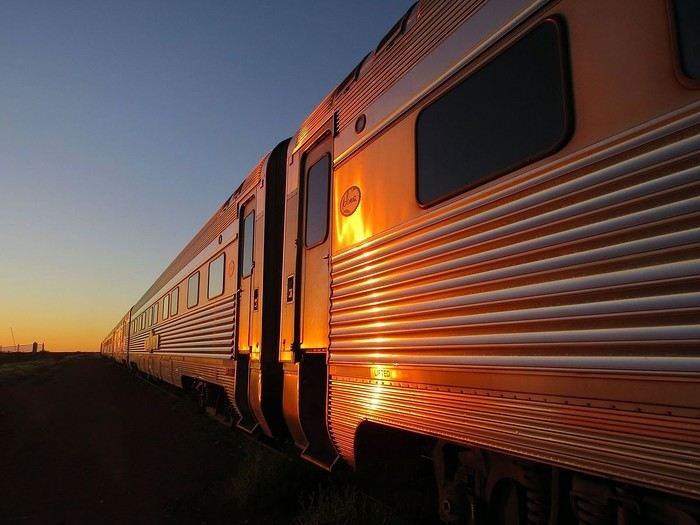
The Ghan (train connecting Adelaide to Darwin), at dawn.
Back to the March 2026 contest: HERE
The Ghan (train connecting Adelaide to Darwin), at dawn.
Hitchhiking in Thailand
Is hitchhiking in Thailand a good idea? A bad one? Safe or not?
Instead of sharing my thoughts on the subject, I’ll tell you about my four short hitchhiking "adventures" over 40 years of traveling there. Hopefully, this will help you form your own opinion.
First, a general rule I always follow in Southeast Asia: whether you're a woman or a man, in the city or the countryside, if you're a foreigner—even in a small group—never let yourself get completely isolated once night falls.
Okay, here we go.
My first time:
This happened in the late 80s in Kanchanaburi province, on route 3272/4088, somewhere between the charming Thong Pha Phum and that spot on the Burmese border where a gas pipeline—owned at the time by a major French company—crosses. I don’t remember why or how I ended up on that remote road, but since I love getting lost, it was fine. Except that it was already mid-afternoon, no songthaew had shown up after an hour of waiting, and I wanted to get back to T.P. Phum before dark. So I started walking, keeping an ear out for any approaching engine to flag down (hand flat, palm down, waving as if saying goodbye). Soon after, a slightly upscale car stopped—a high-end Japanese model. Inside was a couple in their thirties. "You guys headin’ to Thong Pha Phum?" "Sure, no problem, my good farang, hop in." I was saved. We drove for 20-30 kilometers, then the guy pulled over: "Come on, let’s grab a drink..." Later, I’d learn we were near the spot where they were spending a short vacation, south of the reservoir stretching from T.P.P. to Sangkhlaburi—a place (that part of the lake) known for its waterfront resorts for couples, families (next stop...), and other Thais out for a good time (I’d stay there myself a weekend a few years later, in a dorm room with about thirty Thai friends). We had a drink. The woman barely sipped hers. We had a second. She didn’t say anything, but I could read in her eyes what she was thinking (no language barrier for that kind of communication). Then he ordered a third. She shot her husband a disapproving, embarrassed look. As for me, aware I was still far from "home" and that night was falling, I started pretending to drink too. You can guess the rest: the guy kept ordering, got drunker and drunker, and his wife didn’t dare scold him in front of me, but the looks she gave him—and her discomfort around the other people in the roadside joint—spoke volumes.
After a (very) long while, the woman couldn’t take it anymore and finally reminded him, I assume, that they still had to take me to T.P.P. But given his state, it was unanimously decided—by both of us—that there was no way he was driving. I felt stuck, especially since I don’t drive. And her? Oh, she could. I helped the guy as best I could, and the joint’s owner, taking pity on me, lent a hand. We got him into the back seat, where he fell asleep almost immediately. It was around 8 PM when, with her husband still snoring in the back, she dropped me off at the entrance of the guesthouse in Thong Pha Phum, near the market square. I thanked her, feeling a pang of sympathy for the moment she’d have to haul her husband from the car to their room. They drove off. I was hungry. At the far end of the market square was a great restaurant with a direct view of the Mae Nam Khwae. I headed that way.
Instead of sharing my thoughts on the subject, I’ll tell you about my four short hitchhiking "adventures" over 40 years of traveling there. Hopefully, this will help you form your own opinion.
First, a general rule I always follow in Southeast Asia: whether you're a woman or a man, in the city or the countryside, if you're a foreigner—even in a small group—never let yourself get completely isolated once night falls.
Okay, here we go.
My first time:
This happened in the late 80s in Kanchanaburi province, on route 3272/4088, somewhere between the charming Thong Pha Phum and that spot on the Burmese border where a gas pipeline—owned at the time by a major French company—crosses. I don’t remember why or how I ended up on that remote road, but since I love getting lost, it was fine. Except that it was already mid-afternoon, no songthaew had shown up after an hour of waiting, and I wanted to get back to T.P. Phum before dark. So I started walking, keeping an ear out for any approaching engine to flag down (hand flat, palm down, waving as if saying goodbye). Soon after, a slightly upscale car stopped—a high-end Japanese model. Inside was a couple in their thirties. "You guys headin’ to Thong Pha Phum?" "Sure, no problem, my good farang, hop in." I was saved. We drove for 20-30 kilometers, then the guy pulled over: "Come on, let’s grab a drink..." Later, I’d learn we were near the spot where they were spending a short vacation, south of the reservoir stretching from T.P.P. to Sangkhlaburi—a place (that part of the lake) known for its waterfront resorts for couples, families (next stop...), and other Thais out for a good time (I’d stay there myself a weekend a few years later, in a dorm room with about thirty Thai friends). We had a drink. The woman barely sipped hers. We had a second. She didn’t say anything, but I could read in her eyes what she was thinking (no language barrier for that kind of communication). Then he ordered a third. She shot her husband a disapproving, embarrassed look. As for me, aware I was still far from "home" and that night was falling, I started pretending to drink too. You can guess the rest: the guy kept ordering, got drunker and drunker, and his wife didn’t dare scold him in front of me, but the looks she gave him—and her discomfort around the other people in the roadside joint—spoke volumes.
After a (very) long while, the woman couldn’t take it anymore and finally reminded him, I assume, that they still had to take me to T.P.P. But given his state, it was unanimously decided—by both of us—that there was no way he was driving. I felt stuck, especially since I don’t drive. And her? Oh, she could. I helped the guy as best I could, and the joint’s owner, taking pity on me, lent a hand. We got him into the back seat, where he fell asleep almost immediately. It was around 8 PM when, with her husband still snoring in the back, she dropped me off at the entrance of the guesthouse in Thong Pha Phum, near the market square. I thanked her, feeling a pang of sympathy for the moment she’d have to haul her husband from the car to their room. They drove off. I was hungry. At the far end of the market square was a great restaurant with a direct view of the Mae Nam Khwae. I headed that way.
December Photo Contest Discussion: One or Multiple Shots of Towers
This is the place to chat about December’s theme!
I’ll start with a little TOUR of the world’s TOURS.
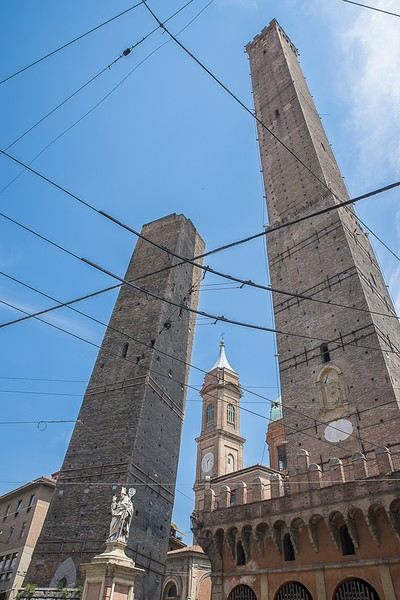
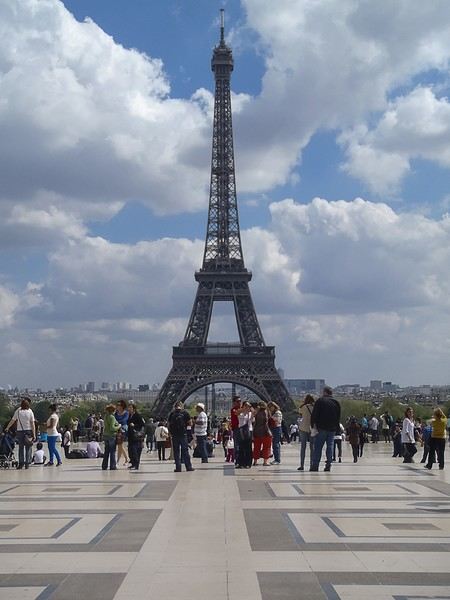
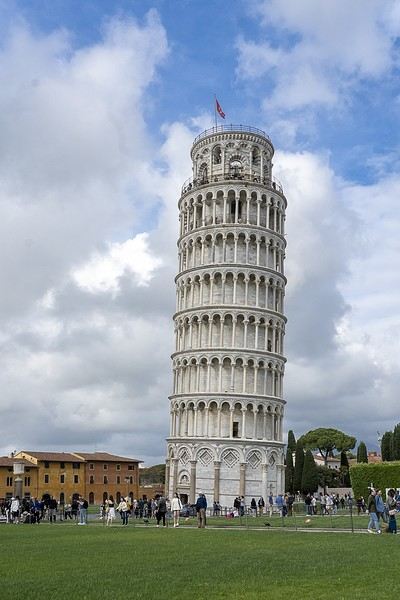
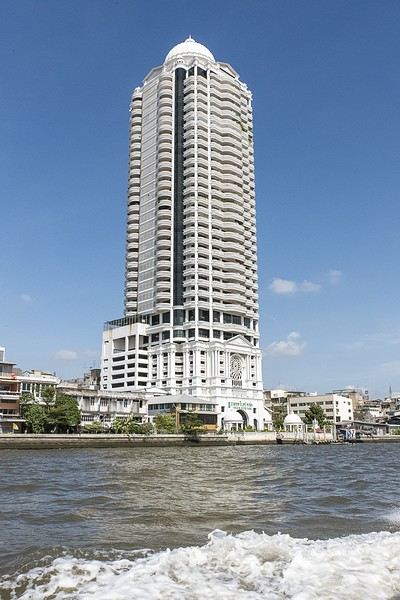
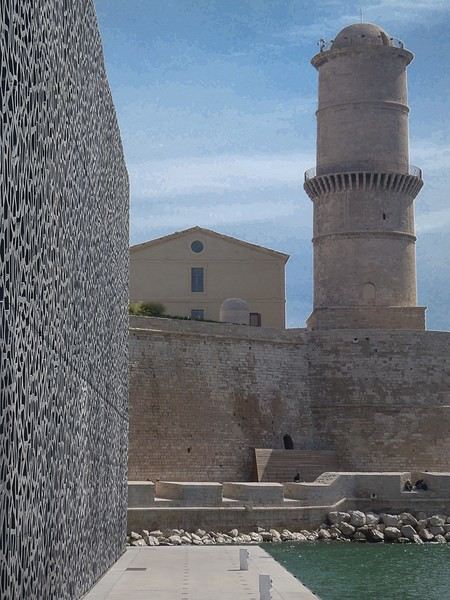
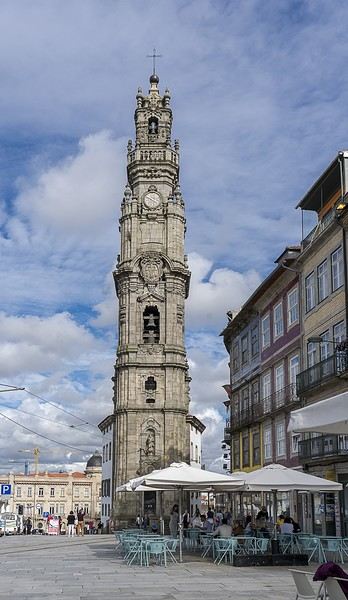
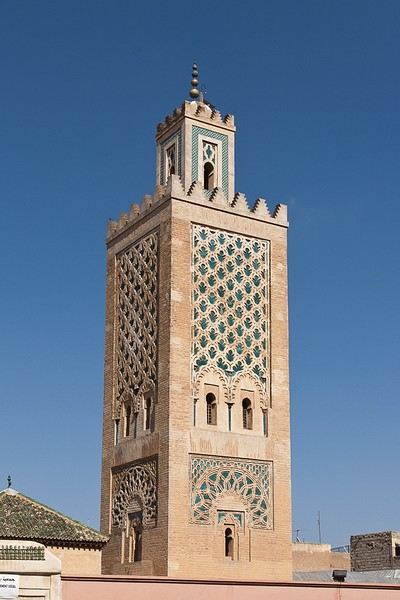
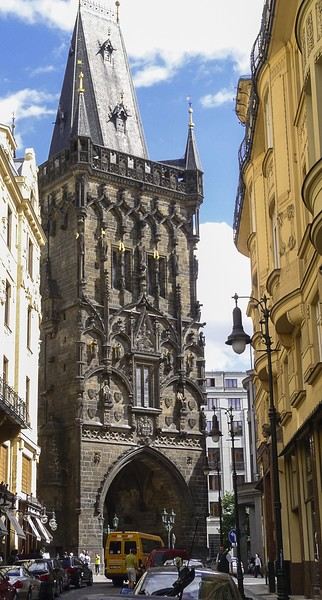
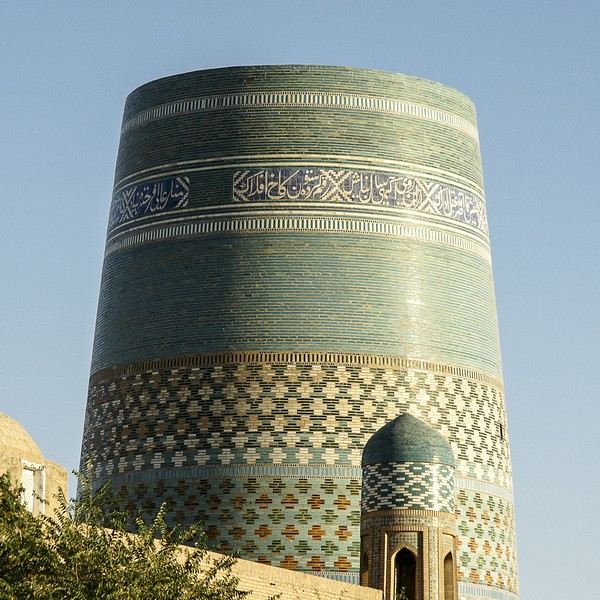
Of course, you can submit multiple photos of the same tower in the contest—it’s the quality of the photo that’ll be judged during voting, not just the subject!
Of course, you can submit multiple photos of the same tower in the contest—it’s the quality of the photo that’ll be judged during voting, not just the subject!
How do you feel about coming back to France?
Hi there, I’ve been traveling for 18 years now, at least 6 months a year, and as the years go by, I actually enjoy coming back to France more and more—a feeling I struggled with at first. I mean, we always think the grass is greener elsewhere.
But in the end, I find meaning in that saying about how there’s no place like home. I still love traveling just as much, but now my trips are shorter, and I enjoy spending more time in our beautiful country, even though I don’t hesitate to criticize it.
How about you? How do you handle coming back from your travels?
Yet Another Travel Journal in this (Too) Familiar Rajasthan, But with Family and Kids
Prologue
This journal recounts a trip to Rajasthan that’s already over a year old and that I’ve only now found the chance to write about. The summer of 2024 marked my return to India—my tenth trip—after six long years away since my last solo wanderings in Tamil Nadu in 2018 (the journal of which is published on this site). That absence was partly (but not only) due to the long COVID and post-COVID period, which saw a complete halt and then a major slowdown in global tourism. To top it off, Voyage Forum announced its closure in an end-of-the-world atmosphere. A sad time for our favorite social activity…
A few weeks after returning from Rajasthan, I tried to motivate myself to start writing a journal to publish on a forum claiming to be VF’s successor, which I’d eventually signed up for out of desperation. But I kept hesitating and putting the project off because, for one, I no longer have the time I used to. For another, the vibe wasn’t really taking off on that forum—it was overrun with ads and not very active, contrary to what its host’s name suggested. Despite its good intentions and commendable role as a stopgap, it also turned out to be very impractical to use, especially when you don’t have much time like me. I’ll admit I’d occasionally check back on VF to see if anything was happening. But all the discussions remained frozen in time, stuck in that fateful year, 2020. Then, rumors swirled online about shady reasons behind its closure, leaving little room for hope.
And then, one fine morning, I got a message at work from Marien informing me that VF had reopened. What a huge surprise! Even though the forum’s “end” had played out in a somewhat apocalyptic atmosphere, the memories of passionate and heated discussions, the frank debates, and the useful exchanges that made this site a traveler’s goldmine and a unique hub of conviviality all came rushing back to me like a breath of fresh air. I finally saw a sign and tried to motivate myself to find the time to publish the journal of this tenth trip to India and fifth to Rajasthan. But in the end, I got bogged down in professional and family obligations and never managed to find the time to get started. That’s now fixed, though, because I had two reasons for wanting to do it: I find that looking back on a trip to tell others about it is a highly beneficial introspective exercise. Also, I thought this journal could be useful to other travelers on a few points.
Because, “do we really need yet another journal about Rajasthan?” you might rightly ask! Especially in a time when so many journals about the “Land of Kings” have been published since VF’s return, not to mention the countless stories you can already find online about this region, one of India’s most touristy. And I’d add, why go back to Rajasthan for a fifth time, where I’ve already dragged my feet more than enough—through its forts, deserts, temples, cities, villages, bumpy roads, train stations, tasty street food stalls, cheap guesthouses, and more? Where some might see just another overhyped tourist destination full of the same old *Arabian Nights* clichés, worn to a thread, that I mentioned earlier, when there’s so much else to see in India? Well, first because it’s a magnificent country I never tire of, where I started an academic study and made so many connections. It’s also packed with places where you won’t find a single tourist (right, Marie-Jo?), even in the heart of well-trodden paths and classic itineraries. And most importantly, as I said earlier, things have changed in recent years. First, after six years without traveling far, the urge to go back to India was getting stronger. But this time, no more solo trips (often) or duo adventures (sometimes)—now it’s a team of four that has to come along! And even if you can argue with that, what better place than Rajasthan to introduce India to people who’ve never seen it? To kids you want to amaze? Plus, traveling with your new little family to your favorite country isn’t the same as going solo in often spartan conditions that only affect you. It’s a different challenge, but ultimately probably much harder. So, is it really reasonable to take two kids to India, including a two-year-old baby? That’s one of the main goals of this journal (but not the only one)—to try to answer that question.
As you can tell, it’s not so much the destination but the slightly unusual setup of this trip that, in my opinion, will make this journal interesting. Despite my experience and expertise (yes, I dare say it) in India, there were plenty of questions before we finalized the plan and said, “Alright, let’s go!” The questions were flying for us parents. Is it wise to travel to India with a two-year-old? What would we do (it happened) if the kids got very sick? Would they be able to handle a road trip on Rajasthan’s bumpy, dusty roads using public transport? Could they handle the shock of such a different world—the dirt, poverty, pollution, noise (…and the smell, as they say), the spicy food, monkeys, mosquitoes, snakes, tigers, leopards, and so on? In short, all the clichés that I usually joke about suddenly became potential realities. Another concern: as a mixed Franco-African family (not me, but my partner and her oldest), wouldn’t we risk not always being well received, given what you sometimes hear about that in India? How would Indians react to seeing a mixed-race family, the ultimate taboo in a country of purity and social segregation, which would undoubtedly raise many questions for them? Of course, not everything went as expected… Because, as you know, with India—and what makes it charming for some—there are always complications: sometimes where you don’t expect them… and sometimes where you do. I’ll go into detail about that in the journal to come (not right away) and in the final review (even later). These experiences could be useful to travelers who find themselves in similar situations and have the same questions we did before embarking on such a journey. And maybe it’ll spark the curiosity of those who aren’t concerned and will read yet another Rajasthan journal, but with its own unique twists.
Despite my unchanged constraints, which mean I have little time to write this, I don’t want to rush the story, so I’ll take my time. There will probably be lulls. I hope that won’t stop people from coming to react, debate, share their impressions, or ask for information.
This journal recounts a trip to Rajasthan that’s already over a year old and that I’ve only now found the chance to write about. The summer of 2024 marked my return to India—my tenth trip—after six long years away since my last solo wanderings in Tamil Nadu in 2018 (the journal of which is published on this site). That absence was partly (but not only) due to the long COVID and post-COVID period, which saw a complete halt and then a major slowdown in global tourism. To top it off, Voyage Forum announced its closure in an end-of-the-world atmosphere. A sad time for our favorite social activity…
A few weeks after returning from Rajasthan, I tried to motivate myself to start writing a journal to publish on a forum claiming to be VF’s successor, which I’d eventually signed up for out of desperation. But I kept hesitating and putting the project off because, for one, I no longer have the time I used to. For another, the vibe wasn’t really taking off on that forum—it was overrun with ads and not very active, contrary to what its host’s name suggested. Despite its good intentions and commendable role as a stopgap, it also turned out to be very impractical to use, especially when you don’t have much time like me. I’ll admit I’d occasionally check back on VF to see if anything was happening. But all the discussions remained frozen in time, stuck in that fateful year, 2020. Then, rumors swirled online about shady reasons behind its closure, leaving little room for hope.
And then, one fine morning, I got a message at work from Marien informing me that VF had reopened. What a huge surprise! Even though the forum’s “end” had played out in a somewhat apocalyptic atmosphere, the memories of passionate and heated discussions, the frank debates, and the useful exchanges that made this site a traveler’s goldmine and a unique hub of conviviality all came rushing back to me like a breath of fresh air. I finally saw a sign and tried to motivate myself to find the time to publish the journal of this tenth trip to India and fifth to Rajasthan. But in the end, I got bogged down in professional and family obligations and never managed to find the time to get started. That’s now fixed, though, because I had two reasons for wanting to do it: I find that looking back on a trip to tell others about it is a highly beneficial introspective exercise. Also, I thought this journal could be useful to other travelers on a few points.
Because, “do we really need yet another journal about Rajasthan?” you might rightly ask! Especially in a time when so many journals about the “Land of Kings” have been published since VF’s return, not to mention the countless stories you can already find online about this region, one of India’s most touristy. And I’d add, why go back to Rajasthan for a fifth time, where I’ve already dragged my feet more than enough—through its forts, deserts, temples, cities, villages, bumpy roads, train stations, tasty street food stalls, cheap guesthouses, and more? Where some might see just another overhyped tourist destination full of the same old *Arabian Nights* clichés, worn to a thread, that I mentioned earlier, when there’s so much else to see in India? Well, first because it’s a magnificent country I never tire of, where I started an academic study and made so many connections. It’s also packed with places where you won’t find a single tourist (right, Marie-Jo?), even in the heart of well-trodden paths and classic itineraries. And most importantly, as I said earlier, things have changed in recent years. First, after six years without traveling far, the urge to go back to India was getting stronger. But this time, no more solo trips (often) or duo adventures (sometimes)—now it’s a team of four that has to come along! And even if you can argue with that, what better place than Rajasthan to introduce India to people who’ve never seen it? To kids you want to amaze? Plus, traveling with your new little family to your favorite country isn’t the same as going solo in often spartan conditions that only affect you. It’s a different challenge, but ultimately probably much harder. So, is it really reasonable to take two kids to India, including a two-year-old baby? That’s one of the main goals of this journal (but not the only one)—to try to answer that question.
As you can tell, it’s not so much the destination but the slightly unusual setup of this trip that, in my opinion, will make this journal interesting. Despite my experience and expertise (yes, I dare say it) in India, there were plenty of questions before we finalized the plan and said, “Alright, let’s go!” The questions were flying for us parents. Is it wise to travel to India with a two-year-old? What would we do (it happened) if the kids got very sick? Would they be able to handle a road trip on Rajasthan’s bumpy, dusty roads using public transport? Could they handle the shock of such a different world—the dirt, poverty, pollution, noise (…and the smell, as they say), the spicy food, monkeys, mosquitoes, snakes, tigers, leopards, and so on? In short, all the clichés that I usually joke about suddenly became potential realities. Another concern: as a mixed Franco-African family (not me, but my partner and her oldest), wouldn’t we risk not always being well received, given what you sometimes hear about that in India? How would Indians react to seeing a mixed-race family, the ultimate taboo in a country of purity and social segregation, which would undoubtedly raise many questions for them? Of course, not everything went as expected… Because, as you know, with India—and what makes it charming for some—there are always complications: sometimes where you don’t expect them… and sometimes where you do. I’ll go into detail about that in the journal to come (not right away) and in the final review (even later). These experiences could be useful to travelers who find themselves in similar situations and have the same questions we did before embarking on such a journey. And maybe it’ll spark the curiosity of those who aren’t concerned and will read yet another Rajasthan journal, but with its own unique twists.
Despite my unchanged constraints, which mean I have little time to write this, I don’t want to rush the story, so I’ll take my time. There will probably be lulls. I hope that won’t stop people from coming to react, debate, share their impressions, or ask for information.
EasyJet in Nice: Fight Over Refusal to Pay Baggage Fee
The couple involved refused to pay the extra fee demanded by the flight coordination company. Things quickly escalated. It got so bad that the man ended up physically fighting with an airport agent, even rolling on the ground.
https://www.nicematin.com/faits-divers/il-refuse-de-payer-un-supplement-bagages-le-litige-se-termine-en-bagarre-a-l-aeroport-de-nice-999711
If you can’t afford to pay for your luggage, don’t travel 😡. What’s next? Are they gonna hit the tour guide in Mykonos because the price of the tour went up without warning 🤪?
A heads-up to all EasyJet travelers: baggage checks are more strict than ever!
https://www.nicematin.com/faits-divers/il-refuse-de-payer-un-supplement-bagages-le-litige-se-termine-en-bagarre-a-l-aeroport-de-nice-999711
If you can’t afford to pay for your luggage, don’t travel 😡. What’s next? Are they gonna hit the tour guide in Mykonos because the price of the tour went up without warning 🤪?
A heads-up to all EasyJet travelers: baggage checks are more strict than ever!
Where to park when visiting Swiss cities?
Hi there,
I’m spending some time in Switzerland this summer. Beyond the landscapes, I’d still like to visit a few cities—especially Bern, Lausanne, Zurich, and Fribourg.
The issue is parking...
For Lausanne, I found a park-and-ride that’s cheaper on Saturdays. But for the others, it gets tricky...
I don’t necessarily plan to park right in the city center, but there don’t seem to be proper park-and-rides...
I see that the Bern–Fribourg railway line is under construction.
I’d really like to avoid paying an arm and a leg for parking over there or relying on a train once an hour.
Same goes for Montreux—it looks pretty complicated...
If you’ve got any tips...
Thanks! !
I’m spending some time in Switzerland this summer. Beyond the landscapes, I’d still like to visit a few cities—especially Bern, Lausanne, Zurich, and Fribourg.
The issue is parking...
For Lausanne, I found a park-and-ride that’s cheaper on Saturdays. But for the others, it gets tricky...
I don’t necessarily plan to park right in the city center, but there don’t seem to be proper park-and-rides...
I see that the Bern–Fribourg railway line is under construction.
I’d really like to avoid paying an arm and a leg for parking over there or relying on a train once an hour.
Same goes for Montreux—it looks pretty complicated...
If you’ve got any tips...
Thanks! !
Croatia, Montenegro – two victims of overtourism?
Mid-June, two Auvergnats on the starting blocks—off we go to the former Yugoslavia!
We’d already explored some nooks and crannies of northern Croatia back in 2019, so we’re keeping the momentum going by planning a trip to the south of the country and then Montenegro.
On the way back, we’ll drift into Bosnia-Herzegovina just to mix things up a bit!
We’re a little unsure about what to expect in terms of tourist crowds.
Dubrovnik has a reputation for being the hardest-hit city by overtourism, and Kotor and the whole Dalmatian coast aren’t exactly empty...
Luckily, most European countries haven’t started school holidays yet, and some measures seem to have been put in place to limit the flow (like restrictions on the number of cruise ships allowed to dock at the same time).
Maybe we’ll manage to escape the promised hell?
For now, we’re slamming the doors of the Scirocco and heading off to our first stop: northern Italy!
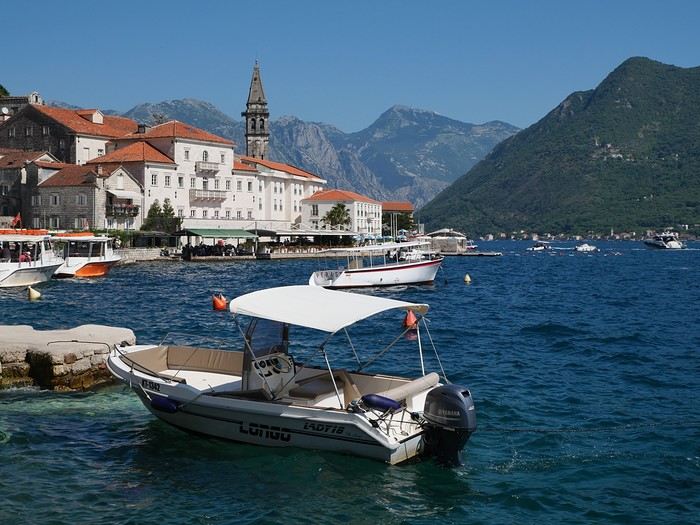
On the way back, we’ll drift into Bosnia-Herzegovina just to mix things up a bit!
We’re a little unsure about what to expect in terms of tourist crowds.
Dubrovnik has a reputation for being the hardest-hit city by overtourism, and Kotor and the whole Dalmatian coast aren’t exactly empty...
Luckily, most European countries haven’t started school holidays yet, and some measures seem to have been put in place to limit the flow (like restrictions on the number of cruise ships allowed to dock at the same time).
Maybe we’ll manage to escape the promised hell?
For now, we’re slamming the doors of the Scirocco and heading off to our first stop: northern Italy!
Skyscrapers, Markets, Ice Cubes, Tourism, and Waterfalls... Thailand's Excesses
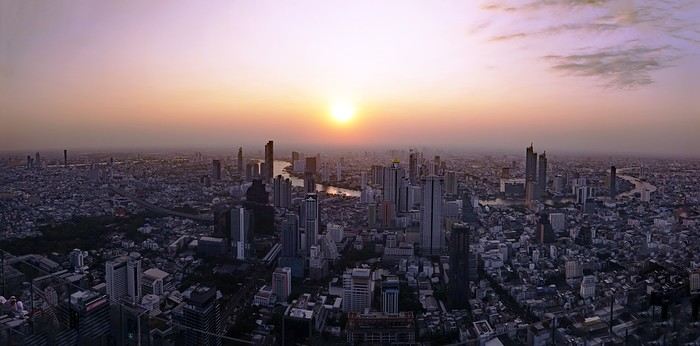
A somewhat lengthy title... I could have simply written: from Bangkok to Chiang Rai, via Chiang Mai, since that was my route. But when poets embellish our travel journals with their verbal flourishes, you’ve got to try not to be too ordinary.
Skyscrapers of excess? You’ll have gathered that from the photo illustrating this journal—though it might change as the trip goes on.
The excess of markets—not so much in their size, though... Chatuchak... But in their sheer number. Day markets, night markets, floating markets, fresh produce markets, fish markets, meat markets, spice markets, fabric markets... and even... amulet markets... For luck, good fortune, protection. Not to mention, sadly, the market for girls—and boys, incidentally. I’ve even heard they’re displayed in windows. I’ve heard about that one, like you have, but I didn’t set foot in it, so I can’t say anything about it. Some even claim there’s a black-market trade in children. Disgusting! It reminded me of the book *The Parcel* by Anosh Irani, which I recommended in another journal. The story is set in India, but I’ve been told it exists in Thailand too. So, the "famous Thai markets" we’re bombarded with in paper and online guides—sure, they amazed me in the first few days, and I don’t regret visiting them. But no matter how big they were, I quickly got my fill since you saw the same things at every stall...
I had a market overdose.
Excess of tourism? I should say *tourists*, since I saw them literally swarming in the streets and those famous markets. I’d forgotten about them. I’d lost the habit, living in an Indian city for so long...
Waterfalls are a bit like markets. At this time of year, they’re not particularly spectacular, but they’re everywhere. There are the ones everyone goes to see. For example, Erawan, which I decided to skip even though it was in my original itinerary—I guessed it’d be a nightmare with the selfie circus. On the other hand, you come across them all over the place, hidden in the mountains and forests, not listed in any guide. Not to mention the ones you can find in temples or even private homes... Yes, really! Thais love waterfalls, so they install them in their gardens—and I even saw one in the middle of the city, right on the street! Sometimes they’re tiny, but very photogenic.
But what do ice cubes have to do with this? Why the excess of ice cubes? Not only are they everywhere by the ton, but they put them in *everything* you drink. You’d think they’d even put them in soup! And it’s not just one or two ice cubes—no! They fill the container to the brim, whatever it is, then pour the liquid on top to fill the gaps. They’ll make you an excellent coffee right in front of you, piping hot, then—bam! An avalanche of ice cubes in the glass. Okay, I’m exaggerating a little. They *do* sometimes ask if you prefer your coffee—or tea—hot. Everything edible, and especially everything drinkable, is refrigerated: vegetables, fruit, hot drinks (I mean, drinks that are *usually* hot), but meat and fish are left out in the open. They just wave a little whisk to shoo away the flies when they get too eager. Mind you, I never put fruit, cheese, eggs, or water in the fridge in France, but I do in India. And I refrigerate meat and fish too... Though sometimes one of those little flies sneaks into the fridge...
You won’t find practical or technical details in this journal, like addresses or prices. Others do that better than me. You also won’t find the names of obscure or unknown places I discovered, or directions to get there.
I don’t really feel like recounting what I saw day by day, following my schedule and route. There might be flashbacks, projections into the future. It’ll depend on my memories, what I felt, what I hated, what comes back to me—and maybe your questions and our exchanges. And for those who’ve never read me before, you’ll have to get used to my parentheses and digressions, maybe on a completely different subject, as my thoughts wander. Stories within stories. There’ll also be long, endless sentences—but still punctuated, so you can follow along. Though I used to curse Proust and his sentences that started on one page and ended on the next, sometimes even further. I’d have to reread them twenty times to follow and understand what he was saying. I hated Proust. But hey, I was 20. Maybe I’d like him now?
See? The digressions are starting already. Forgive me.
You’ll find few photos here. First, the number is limited, and second, photos aren’t the main purpose of either VF or a travel journal. They’re too often used to mask the poverty of the text. And, sorry to say it, but so many of them are just plain ugly! If you really want to see photos, I’ll share some links where you can browse them at your leisure
Uzbek notes
The Afrosiyob races through a premature twilight, lashed by a blizzard of thick snow. In the endless gray, a monumental industrial complex occasionally emerges, ghostly. Here and there, in the middle of nowhere, a human silhouette appears (a soldier?), standing motionless by the tracks. On the screen mounted in the middle of the ceiling, a dashing Bollywood cat in vibrant colors writhes in all directions, throwing smoldering glances at a dancer on the verge of fainting. A server moves down the central aisle, offering crepes for sale—ones I suspect are stuffed with ground beef. I’m in Central Asia, in Uzbekistan, somewhere between Bukhara and Samarkand.
I chose the title "notes"—scattered thoughts, rough drafts. I’m not sure what I’ll write, but one thing’s certain: this won’t be a linear travel journal.
And a photo... there must be a photo, so here:
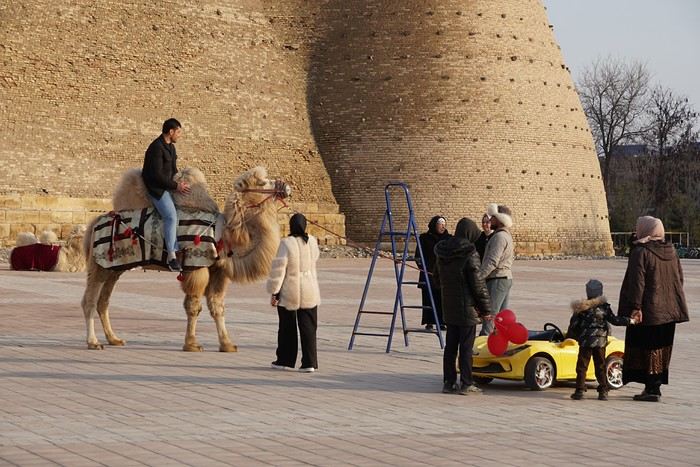
Local tourists between a Bactrian camel and an electric car, in front of ancient walls—it’ll do.
I chose the title "notes"—scattered thoughts, rough drafts. I’m not sure what I’ll write, but one thing’s certain: this won’t be a linear travel journal.
And a photo... there must be a photo, so here:
Local tourists between a Bactrian camel and an electric car, in front of ancient walls—it’ll do.
White as snow, let's chat here!
And nowhere else...😉
So where are they and what are they doing?
This catchy and somewhat mysterious title comes from several questions I’ve been asking myself.
VF has been back open for a reasonable number of weeks and months now. The number of visitors overall matches past averages, but the number of members online in the last 24 hours seems relatively lower than what we used to see.
Yet, to my surprise, I’m seeing fewer travel journals, way fewer messages, and way fewer questions. I don’t see many new registered users online, and I notice a number of members who are logged in but either aren’t participating or have stopped participating.
Something’s not adding up for me because, in my opinion, VF is still appealing, and I don’t see which other sites could really compete.
Was there a real break between pre- and post-Covid? Does it just take more time for some people to discover the site or learn that it’s active again? Do people now prefer quick consumption on sites like FB or others I’m not familiar with? Where have the site’s old-timers gone, and what are they doing with their time now? What’s really going on here?
VF has been back open for a reasonable number of weeks and months now. The number of visitors overall matches past averages, but the number of members online in the last 24 hours seems relatively lower than what we used to see.
Yet, to my surprise, I’m seeing fewer travel journals, way fewer messages, and way fewer questions. I don’t see many new registered users online, and I notice a number of members who are logged in but either aren’t participating or have stopped participating.
Something’s not adding up for me because, in my opinion, VF is still appealing, and I don’t see which other sites could really compete.
Was there a real break between pre- and post-Covid? Does it just take more time for some people to discover the site or learn that it’s active again? Do people now prefer quick consumption on sites like FB or others I’m not familiar with? Where have the site’s old-timers gone, and what are they doing with their time now? What’s really going on here?
From Caño Cristales to Tayrona Park
After about 12 hours of flying from Toulouse (via Paris), we landed in Bogotá six years after our first trip to Colombia. This time, our journey will be very different, with only this stop in the Colombian capital in common.
Our travel itinerary
Bogotá / La Macarena (Caño Cristales) / Villa de Leyva / Barichara / San Gil / Girón / Mompox / Ciénaga and the Santa Marta lagoon / Minca / Los Naranjos (Tayrona Park) / Bogotá.
Step 1: Bogotá (and Nemecon)
Bogotá (1/3)
This morning, we had a meet-up with Flora from Aventure Colombia, who helped me organize one of our stops, a few transfers, and tomorrow’s day trip, the program of which I changed at the last minute after deciding to skip the visit to the Salt Cathedral of Zipaquirá. Flora is a kind and lovely person, always available, and she did everything to answer my questions and give me advice.
She’s a local contact I highly recommend. Flora can help you plan your trip, whether you want a fully organized tour or, like us, just need assistance with a specific stop or one or more transfers between cities.
We left Flora after setting a meet-up for our return to Bogotá in a month. As we walked out of her agency, we headed to the wonderful Gold Museum, located just a hundred meters away. I was excited to revisit this amazing museum.
Note: Free entry for those over 60, regardless of nationality. Just show your passport.
Like six years ago, I was amazed by its museography, the beauty of the pieces on display, and that breathtaking shamanic room.
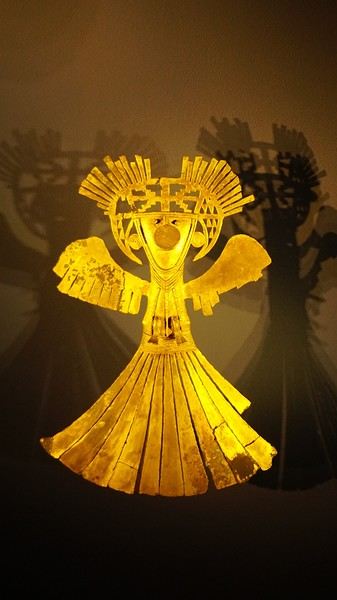
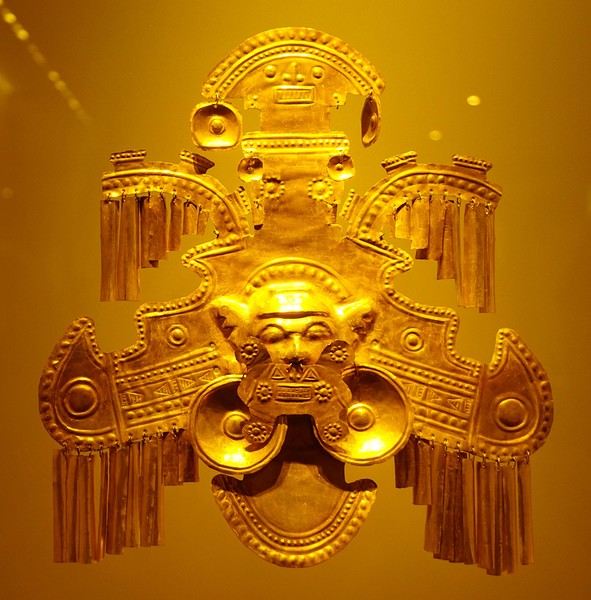
About two hours later, we decided to walk (careful, it’s a climb!) to the Monserrate cable car (3152m). Long wait to buy tickets and board the cable car! Once we arrived, a few raindrops, an impressive panoramic view of Bogotá’s vastness, a quick visit to the basilica (a pilgrimage site for Colombians), a walk through the tourist market, and at the top, plenty of small restaurants where we had our first Colombian meal. After our hearty lunch, we were lucky to see the sun return! No line for the descent. We then headed back to the hotel because Justine wanted to rest and recover from the trip. As for me, I continued my walk. I discovered a really nice craft market recommended by Flora, Pasaje Rivas, returned to Bolívar Square, and wandered through different streets, including the main pedestrian avenue (Calle 7), where there’s always something to see.
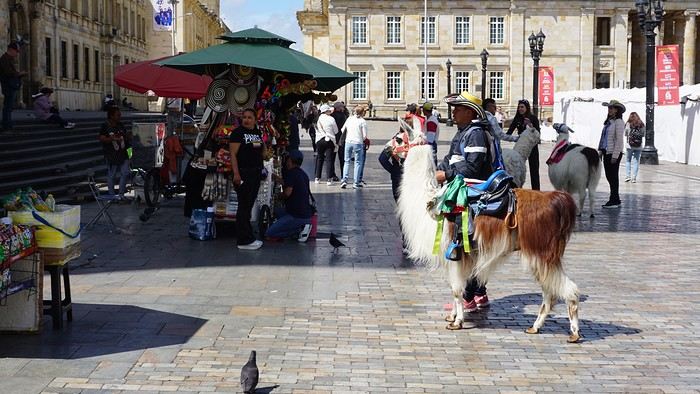
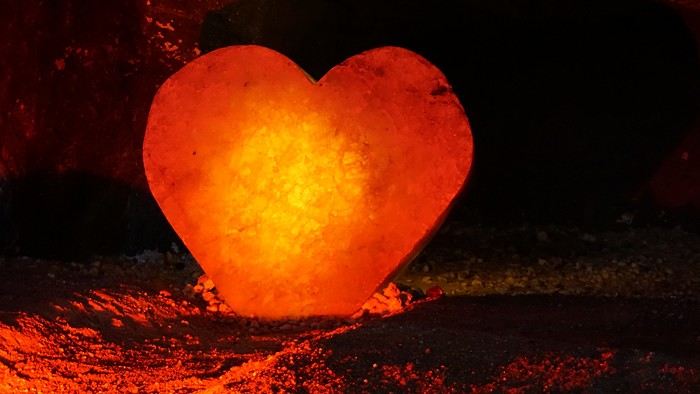
Tomorrow, a change of scenery as we head out for a hike in a small desert (Desierto de Chueca), located about 2 hours from Bogotá in the village of Nemecon. For this outing from Bogotá, with Flora’s help, we booked a car with a driver for the day. Flora also took care of booking the guide (since the site can only be visited with one). Nemecon (2/3) Today, we went to Nemecon to hike about 7.5 km in the ‘Desert of Checua.’ It’s nothing like sandy deserts! Instead, it’s geological formations sculpted by time, wind, and water. After two hours on the road—almost one of them spent navigating traffic jams with cars, trucks, buses, and a continuous flow of motorcycles on either side of our taxi—we reached Nemecon! The village center is really (too?) quiet. We met up with Deisy and headed toward the ‘desert,’ about twenty minutes away on a bumpy dirt road. Once there, a quick briefing, and off we went! Deisy didn’t stop talking (in Spanish) for over 3 hours!!! She told us so much about her region (flower farming, water management, traditions, songs, etc.), the origin of the site, and even mentioned Antonio Banderas, who filmed *The 33* in the village’s salt mine (the story of the survival of 33 Chilean miners after a collapse in their copper and gold mine). One hour of walking to reach the site, one hour to explore it, and one hour to return.
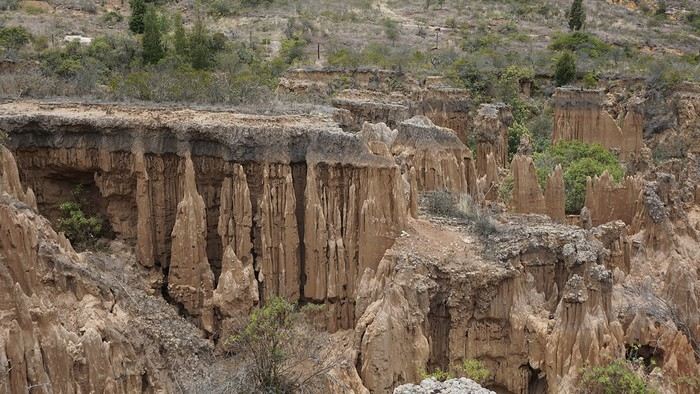
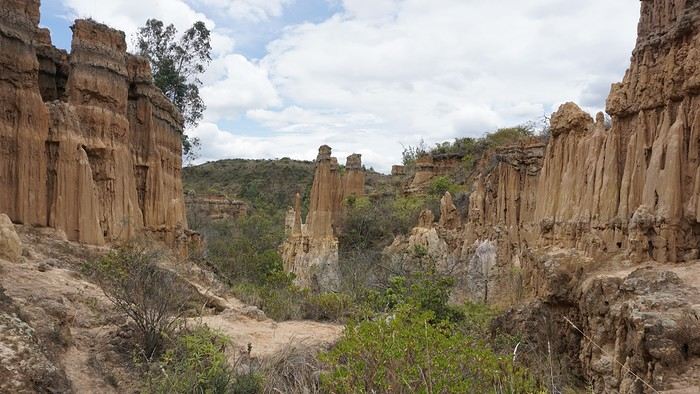
The advantage of this non-stop chatter was that it forced us to brush up on our Spanish at lightning speed. I even wondered if the effort to concentrate wasn’t more exhausting than the physical effort! Especially since on the way back, I got an oral quiz. Deisy wanted to make sure I remembered some of the information she’d given me during the visit: why is this rock white, that one red, and that one black? Back in the village, we had lunch at a restaurant recommended by Deisy before visiting the Nemecon salt mine. Before entering, a guide spent a good half-hour explaining the origin of the salt and the presence of many fossils in the area. Again, concentrating was tough because all the comments were exclusively in Spanish! An hour and a half wandering through the tunnels with a ‘lovely miner’s helmet’ on our heads!
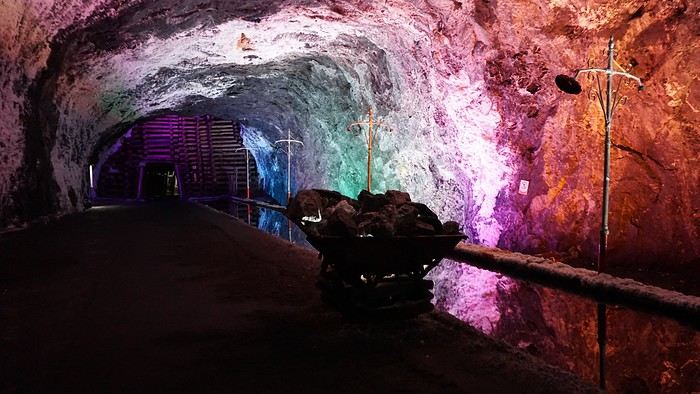
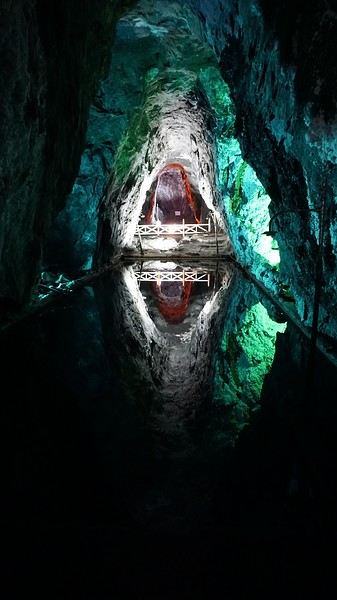
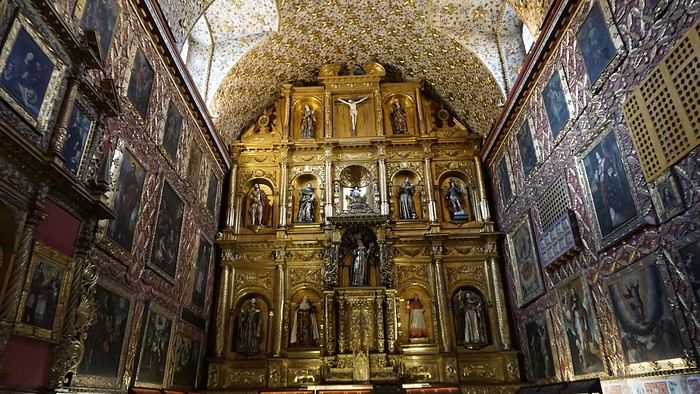
We met our driver at the mine entrance. The return to Bogotá was a bit faster, but traffic in the city center was still heavy! We arrived in front of our hotel between 8:00 and 8:30 PM. It’s been a pretty intense start to the trip! Tonight, our legs are tired. Hopefully, tomorrow will be a bit more relaxed! Bogotá (3/3) We started the day by visiting the Santa Clara Church Museum, located next to the presidential palace. Alejandra (from the local agency ‘Gaia Tours Colombia,’ which organized our stay in Caño Cristales (La Macarena)) had recommended this visit for its rich mural paintings.
A few hundred meters further, after crossing the Plaza Mayor again, we visited the cultural complex housing the Botero Museum, the Mint Museum, and the Bank of the Republic Art Museum. Note that entry is free for all three museums. Botero Museum: There are fewer works by Botero here than in the Medellín museum, but more paintings and sculptures by other artists, all from Botero’s private collection (donated to Colombia). Mint Museum: We limited ourselves to visiting one room (on Flora’s advice) where three gold and gemstone monstrances and a Christ with a crown of emerald thorns are displayed. Photos are not allowed. Art Museum: We visited two temporary exhibitions. Lunchtime came quickly. We had a good meal at a reasonably priced small restaurant in the La Candelaria micro-district, near the Chorro de Quevedo square. We decided to spend the afternoon wandering the streets and alleys of the historic center to discover local street art.
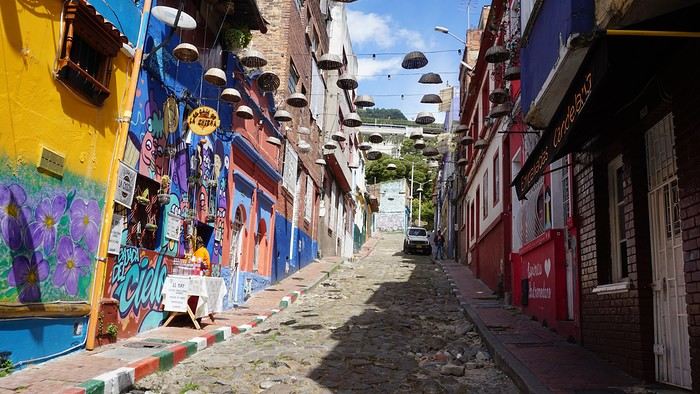
We also passed through very lively pedestrian streets. I also decided to revisit Pasaje Rivas to show Justine all the shops selling more or less artisanal products. Tomorrow morning, we fly to La Macarena at 10:30 AM. Not to dance (you’d be surprised if I told you we were going to take a South American dance class, right?!), but to visit the fabulous Caño Cristales, a river naturally colored by aquatic plants. The planned program includes hiking, horseback riding, canoeing, and swimming among these plants. This site was long inaccessible because the area was controlled by the FARC. Access and tourism development became possible after agreements and amnesty measures between the Colombian government and paramilitary groups. As in other regions, former FARC members have been able to transition into various tourism-related activities.
About two hours later, we decided to walk (careful, it’s a climb!) to the Monserrate cable car (3152m). Long wait to buy tickets and board the cable car! Once we arrived, a few raindrops, an impressive panoramic view of Bogotá’s vastness, a quick visit to the basilica (a pilgrimage site for Colombians), a walk through the tourist market, and at the top, plenty of small restaurants where we had our first Colombian meal. After our hearty lunch, we were lucky to see the sun return! No line for the descent. We then headed back to the hotel because Justine wanted to rest and recover from the trip. As for me, I continued my walk. I discovered a really nice craft market recommended by Flora, Pasaje Rivas, returned to Bolívar Square, and wandered through different streets, including the main pedestrian avenue (Calle 7), where there’s always something to see.
Tomorrow, a change of scenery as we head out for a hike in a small desert (Desierto de Chueca), located about 2 hours from Bogotá in the village of Nemecon. For this outing from Bogotá, with Flora’s help, we booked a car with a driver for the day. Flora also took care of booking the guide (since the site can only be visited with one). Nemecon (2/3) Today, we went to Nemecon to hike about 7.5 km in the ‘Desert of Checua.’ It’s nothing like sandy deserts! Instead, it’s geological formations sculpted by time, wind, and water. After two hours on the road—almost one of them spent navigating traffic jams with cars, trucks, buses, and a continuous flow of motorcycles on either side of our taxi—we reached Nemecon! The village center is really (too?) quiet. We met up with Deisy and headed toward the ‘desert,’ about twenty minutes away on a bumpy dirt road. Once there, a quick briefing, and off we went! Deisy didn’t stop talking (in Spanish) for over 3 hours!!! She told us so much about her region (flower farming, water management, traditions, songs, etc.), the origin of the site, and even mentioned Antonio Banderas, who filmed *The 33* in the village’s salt mine (the story of the survival of 33 Chilean miners after a collapse in their copper and gold mine). One hour of walking to reach the site, one hour to explore it, and one hour to return.
The advantage of this non-stop chatter was that it forced us to brush up on our Spanish at lightning speed. I even wondered if the effort to concentrate wasn’t more exhausting than the physical effort! Especially since on the way back, I got an oral quiz. Deisy wanted to make sure I remembered some of the information she’d given me during the visit: why is this rock white, that one red, and that one black? Back in the village, we had lunch at a restaurant recommended by Deisy before visiting the Nemecon salt mine. Before entering, a guide spent a good half-hour explaining the origin of the salt and the presence of many fossils in the area. Again, concentrating was tough because all the comments were exclusively in Spanish! An hour and a half wandering through the tunnels with a ‘lovely miner’s helmet’ on our heads!
We met our driver at the mine entrance. The return to Bogotá was a bit faster, but traffic in the city center was still heavy! We arrived in front of our hotel between 8:00 and 8:30 PM. It’s been a pretty intense start to the trip! Tonight, our legs are tired. Hopefully, tomorrow will be a bit more relaxed! Bogotá (3/3) We started the day by visiting the Santa Clara Church Museum, located next to the presidential palace. Alejandra (from the local agency ‘Gaia Tours Colombia,’ which organized our stay in Caño Cristales (La Macarena)) had recommended this visit for its rich mural paintings.
A few hundred meters further, after crossing the Plaza Mayor again, we visited the cultural complex housing the Botero Museum, the Mint Museum, and the Bank of the Republic Art Museum. Note that entry is free for all three museums. Botero Museum: There are fewer works by Botero here than in the Medellín museum, but more paintings and sculptures by other artists, all from Botero’s private collection (donated to Colombia). Mint Museum: We limited ourselves to visiting one room (on Flora’s advice) where three gold and gemstone monstrances and a Christ with a crown of emerald thorns are displayed. Photos are not allowed. Art Museum: We visited two temporary exhibitions. Lunchtime came quickly. We had a good meal at a reasonably priced small restaurant in the La Candelaria micro-district, near the Chorro de Quevedo square. We decided to spend the afternoon wandering the streets and alleys of the historic center to discover local street art.
We also passed through very lively pedestrian streets. I also decided to revisit Pasaje Rivas to show Justine all the shops selling more or less artisanal products. Tomorrow morning, we fly to La Macarena at 10:30 AM. Not to dance (you’d be surprised if I told you we were going to take a South American dance class, right?!), but to visit the fabulous Caño Cristales, a river naturally colored by aquatic plants. The planned program includes hiking, horseback riding, canoeing, and swimming among these plants. This site was long inaccessible because the area was controlled by the FARC. Access and tourism development became possible after agreements and amnesty measures between the Colombian government and paramilitary groups. As in other regions, former FARC members have been able to transition into various tourism-related activities.
Northern Chile, Andean impressions.
Alright, this year, we're heading back to South America!
The initial plan was to retrace the route we imagined in the summer of 2020: a trip to northern Argentina starting from Córdoba.
Unfortunately, the flight to Córdoba no longer exists, and airfares to Javier Milei’s country are both outrageously priced and involve multiple layovers.
So, I tweaked Google Flights every which way and finally found a flight within my budget—departing from Clermont-Ferrand!
Not to Argentina, though...
Our transatlantic flight will cross the snow-capped Andes, landing in Santiago, Chile, with a return from Lima!
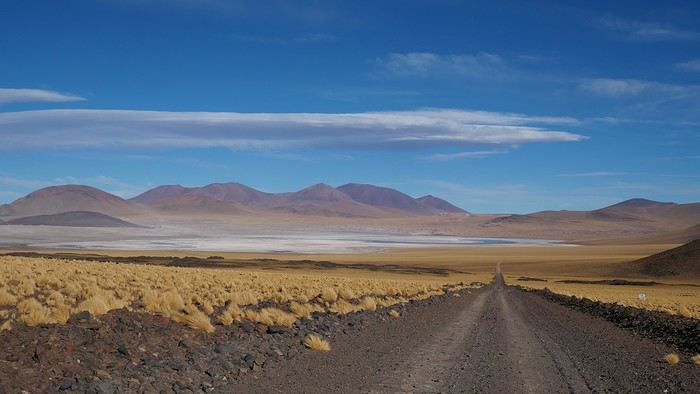
In between, two domestic flights and a big road trip loop starting from the coastal city of Arica to explore the treasures of northern Chile.
Our mode of transport: a pseudo 4x4 that won’t take us through sand dunes or devilish tracks but will let us tackle the entire secondary network, including unpaved main roads, while still being insured.
Is the suitcase packed with all-season clothes?
Are the driver’s license and passport ready?
Bank cards and a few euros too?
Off we go for just over 3 weeks of southern wanderings!
--/--
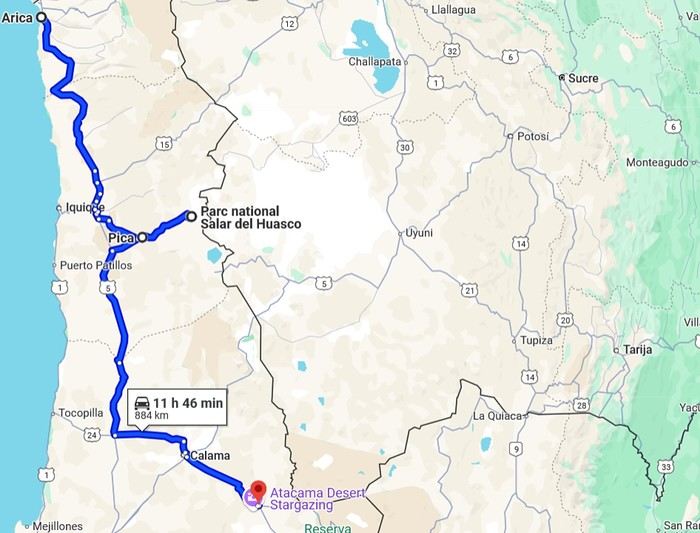
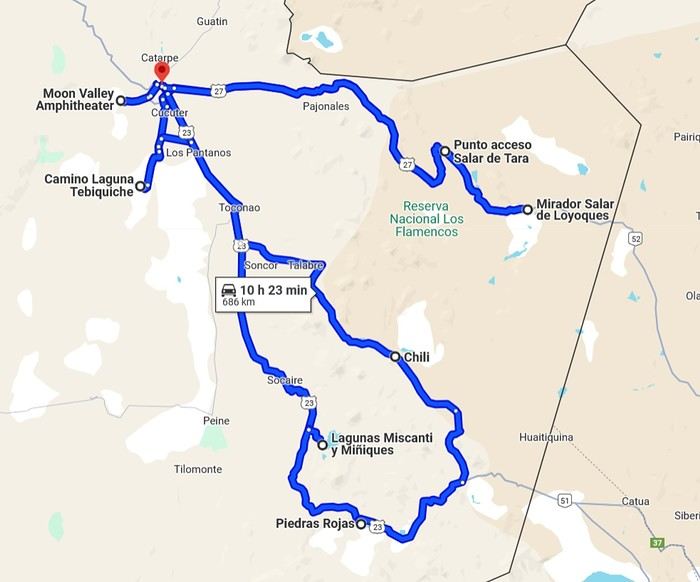
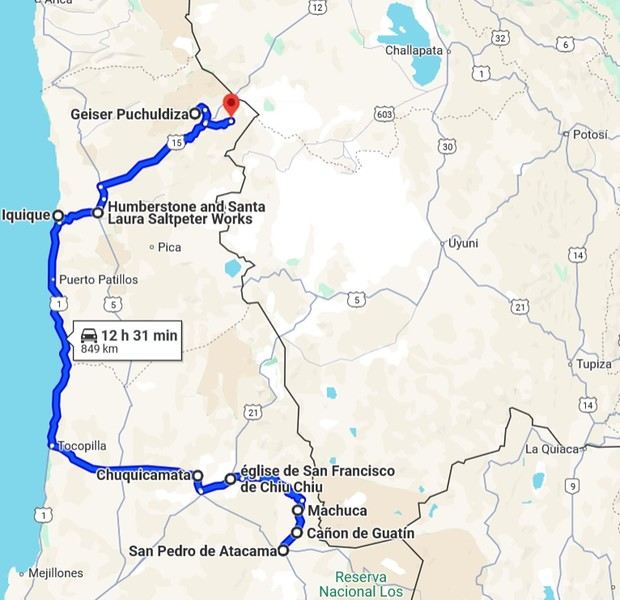
To keep all my esteemed readers on track, here are a few maps outlining the Arica-Arica loop!
1- From Arica to San Pedro de Atacama via Pica and the Salar de Huasco
 2- Around San Pedro
3- From San Pedro to Cariquima
4- From Cariquima to Putre
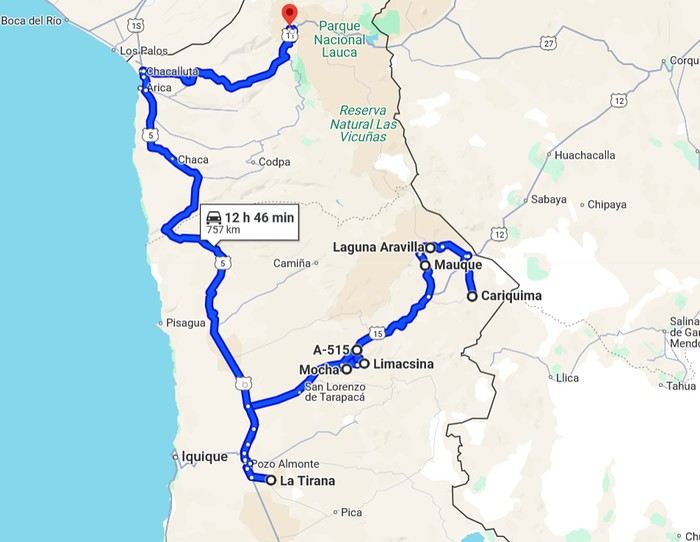
5 - From Putre to Arica
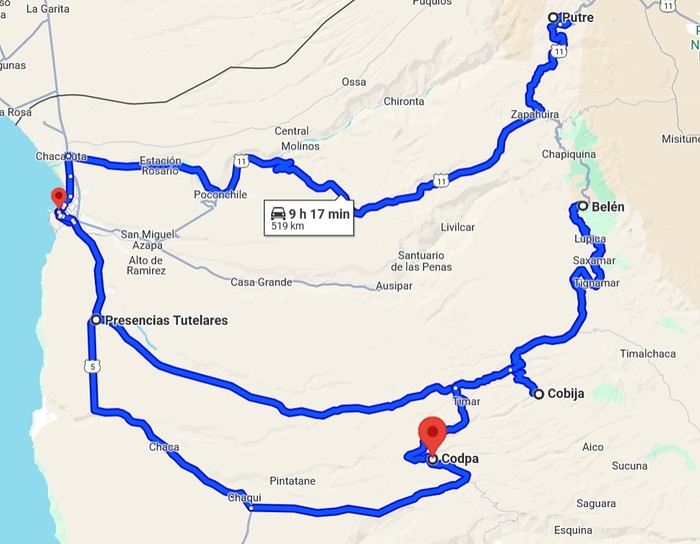
Gas stations in this part of Chile are located in Arica, Iquique, Pozo Almonte, Pica, Calama, and San Pedro de Atacama.
The initial plan was to retrace the route we imagined in the summer of 2020: a trip to northern Argentina starting from Córdoba.
Unfortunately, the flight to Córdoba no longer exists, and airfares to Javier Milei’s country are both outrageously priced and involve multiple layovers.
So, I tweaked Google Flights every which way and finally found a flight within my budget—departing from Clermont-Ferrand!
Not to Argentina, though...
Our transatlantic flight will cross the snow-capped Andes, landing in Santiago, Chile, with a return from Lima!
In between, two domestic flights and a big road trip loop starting from the coastal city of Arica to explore the treasures of northern Chile.
Our mode of transport: a pseudo 4x4 that won’t take us through sand dunes or devilish tracks but will let us tackle the entire secondary network, including unpaved main roads, while still being insured.
Is the suitcase packed with all-season clothes?
Are the driver’s license and passport ready?
Bank cards and a few euros too?
Off we go for just over 3 weeks of southern wanderings!
--/--
To keep all my esteemed readers on track, here are a few maps outlining the Arica-Arica loop!
1- From Arica to San Pedro de Atacama via Pica and the Salar de Huasco
2- Around San Pedro3- From San Pedro to Cariquima
4- From Cariquima to Putre
5 - From Putre to Arica
Gas stations in this part of Chile are located in Arica, Iquique, Pozo Almonte, Pica, Calama, and San Pedro de Atacama.
Bike trip: from Carcans Maubuisson to Plaisir (Yvelines)
Monday, August 21, 2023 - Rochefort - Marans
No journal for the first two days. Day 1 - CARCANS-ROYAN Day 2 - ROYAN - ROCHEFORT Tonight I'm in MARANS in the "dry marsh" according to the campsite manager—it’s the first time I’ve heard of a "dry marsh"?!
Photos from the first two days
 My gear
The Landes region—nothing extraordinary, but the calm and serenity are nice.

Le Verdon
The wild coast
This marsh isn’t dry, though.
Today is the third day of my trip, and I’m writing to you from a campsite in Marans. I’ve set out to bike from Carcans Maubuisson back to Plaisir. Why Carcans? Because we spent a week there as a family—a great week that lets everyone reconnect for a long stretch. Also, on Saturday, we all headed home—some by car, and me by bike. This journey is about 850 km via bike paths and small cycling roads. It’s not a sporting feat, just a nice long ride for fun. As the old Chinese sage says, "The destination doesn’t matter—it’s the journey that counts." But he also told me, "Traveling is great, but what’s the point if you don’t share it?" You see, this old sage has told me a lot of things—he often keeps me company when I’m biking. Of course, he doesn’t pedal, but we travel in harmony. Sure, he can be a bit annoying sometimes, but we still get along. All this to say I’ve created a group to share my story. I’d be happy to share this experience with you—it’s an adventure for me. On Saturday, I wasn’t sure I’d even leave because I’d been dealing with sciatica for days. Luckily, Juliette, a friend of the old Chinese sage, recommended a lifesaving remedy: Alternately stretching your legs with an elastic band under your foot. Obviously, a jam jar rubber band won’t cut it.
From Marans - The mosquitoes are attacking; time to head back to shelter.
The first two legs took me to Royan and then Rochefort. The Sèvre Niortaise flows nearby, and I followed a canal from La Rochelle. You could say the area is as dry as the marsh, judging by the state of the crops.
As I mentioned, it’s the third day, and if Jesus rose again on this day, for me it was more like the crucifixion. The scorching heat—only bearable when you’re moving—combined with rough trail conditions, and the old Chinese sage says, "Terrible roads, slow speed, and watch your limbs." I set out to do 60 km but ended up doing 80, and the last 20 were tough. I kept checking the GPS to see how much farther until the campsite. Today: Rochefort to Marans, sticking to the coast until La Rochelle, then no notable towns after that—just a constant canal. But since the sky isn’t too low, it hasn’t gotten lost. I’ve still got plenty of anecdotes to share, but it’s pitch black out, and the mosquitoes are still around. This morning, I counted ten in my tent, all full of my blood. Yesterday, at the end of the leg to Rochefort, I was really looking forward to crossing the Charente using the transporter bridge, but a sneaky GPS conspiracy led me far from it. I ended up crossing the Charente on a completely ordinary bridge, watching the transporter bridge in the distance with disappointment.
End of the first episode. Until tomorrow, if you’d like!
No journal for the first two days. Day 1 - CARCANS-ROYAN Day 2 - ROYAN - ROCHEFORT Tonight I'm in MARANS in the "dry marsh" according to the campsite manager—it’s the first time I’ve heard of a "dry marsh"?!
Photos from the first two days
My gearThe Landes region—nothing extraordinary, but the calm and serenity are nice.
Le Verdon
The wild coast
This marsh isn’t dry, though.
Today is the third day of my trip, and I’m writing to you from a campsite in Marans. I’ve set out to bike from Carcans Maubuisson back to Plaisir. Why Carcans? Because we spent a week there as a family—a great week that lets everyone reconnect for a long stretch. Also, on Saturday, we all headed home—some by car, and me by bike. This journey is about 850 km via bike paths and small cycling roads. It’s not a sporting feat, just a nice long ride for fun. As the old Chinese sage says, "The destination doesn’t matter—it’s the journey that counts." But he also told me, "Traveling is great, but what’s the point if you don’t share it?" You see, this old sage has told me a lot of things—he often keeps me company when I’m biking. Of course, he doesn’t pedal, but we travel in harmony. Sure, he can be a bit annoying sometimes, but we still get along. All this to say I’ve created a group to share my story. I’d be happy to share this experience with you—it’s an adventure for me. On Saturday, I wasn’t sure I’d even leave because I’d been dealing with sciatica for days. Luckily, Juliette, a friend of the old Chinese sage, recommended a lifesaving remedy: Alternately stretching your legs with an elastic band under your foot. Obviously, a jam jar rubber band won’t cut it.
From Marans - The mosquitoes are attacking; time to head back to shelter.
The first two legs took me to Royan and then Rochefort. The Sèvre Niortaise flows nearby, and I followed a canal from La Rochelle. You could say the area is as dry as the marsh, judging by the state of the crops.
As I mentioned, it’s the third day, and if Jesus rose again on this day, for me it was more like the crucifixion. The scorching heat—only bearable when you’re moving—combined with rough trail conditions, and the old Chinese sage says, "Terrible roads, slow speed, and watch your limbs." I set out to do 60 km but ended up doing 80, and the last 20 were tough. I kept checking the GPS to see how much farther until the campsite. Today: Rochefort to Marans, sticking to the coast until La Rochelle, then no notable towns after that—just a constant canal. But since the sky isn’t too low, it hasn’t gotten lost. I’ve still got plenty of anecdotes to share, but it’s pitch black out, and the mosquitoes are still around. This morning, I counted ten in my tent, all full of my blood. Yesterday, at the end of the leg to Rochefort, I was really looking forward to crossing the Charente using the transporter bridge, but a sneaky GPS conspiracy led me far from it. I ended up crossing the Charente on a completely ordinary bridge, watching the transporter bridge in the distance with disappointment.
End of the first episode. Until tomorrow, if you’d like!