Results for "Pont-Audemer+|+127"
26372 results found.
Unusual Night on a Boat: The New Trend
Looking for a new way to travel that’s both unusual, affordable, and comfortable? Look no further—renting a docked boat is THE trend right now. As accessible as a hotel room, as unique as a treehouse, and with the comfort of a real floating home, this innovative concept is sure to appeal to anyone craving new experiences.
I. Why Spend an Unusual Night on a Boat?
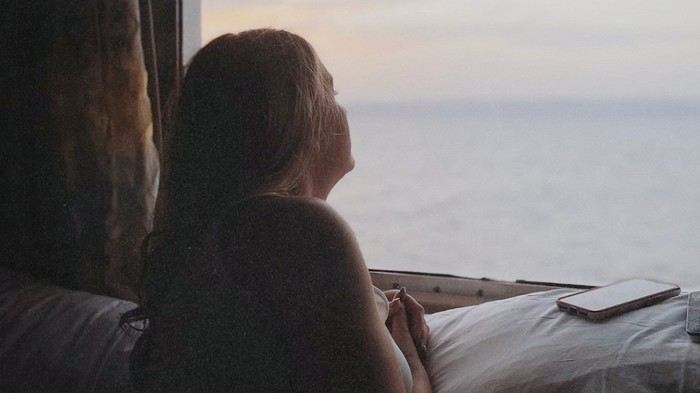
Imagine this: you wake up to the sound of gentle waves, a soft ray of sunlight dancing on the water’s surface as you enjoy breakfast on deck. You’re just steps away from restaurants, shops, and points of interest, since your accommodation is perfectly located in the heart of the harbor. This experience, which few have had the chance to try yet, is within everyone’s reach thanks to docked boat rentals.
Discover why spending an unusual night on a boat is the next big trend. Whether it’s for a romantic weekend, a family vacation, or a getaway with friends, a night on a docked boat offers a one-of-a-kind experience. Unlike a standard hotel room, where walls limit your view, on a boat, it’s the vast expanse of water that surrounds you. It’s a refreshing and calming escape, where simply waking up on the water turns your stay into a memorable moment. Another plus? The variety of boats available.
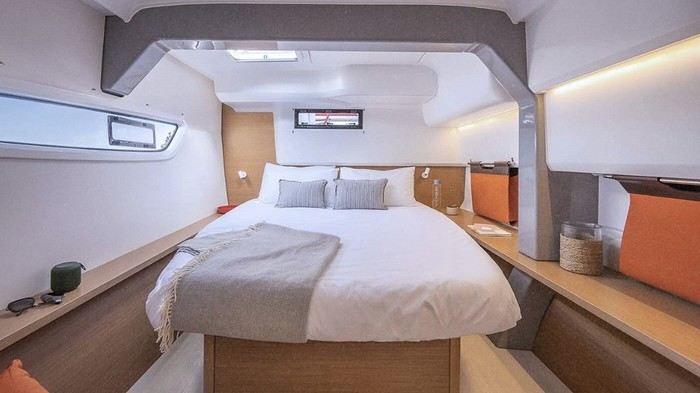
Each type of boat brings its own advantages and a different experience:
Sailboat: Ideal for families or couples looking for an authentic experience. Sailboats offer irresistible nautical charm with their optimized spaces and cozy atmosphere. Catamaran: Spacious and stable, perfect for groups of friends or large families. With its wide outdoor areas, it’s made for socializing. Yacht: Synonymous with luxury and elegance, it’s the perfect choice for marking a special occasion, like a birthday or a marriage proposal. Houseboat: For those who prefer a more nature-focused vibe, houseboats offer a bucolic experience along canals or rivers.
Beyond their unique charm, these boats are often just as affordable as a hotel room. Take, for example, a sailboat in Hendaye priced at 129 € per night for four people. For that price, you’re not just getting an unusual place to stay—you’re getting the equivalent of a floating cottage with a bedroom, bathroom, fully equipped kitchen, and outdoor spaces. It’s the perfect choice for anyone looking to combine comfort, authenticity, and originality.
II. Sleeping on a Boat—Yes, But Where?
Docked boat rentals aren’t limited to just one or two destinations—far from it. With BedBoat, you can explore numerous ports in France and even the Caribbean.
Here’s a look at some top destinations:
Atlantic Coast:
Hendaye: This Basque port offers a picturesque setting between sea and mountains. Perfect for discovering Basque culture and traditions. La Rochelle: With its iconic old port, medieval towers, and cobbled streets, it’s an ideal city for a historic and gastronomic weekend. Arcachon: Known for its oysters and the majestic Dune of Pilat, this destination is a must for nature lovers.
Mediterranean Coast:
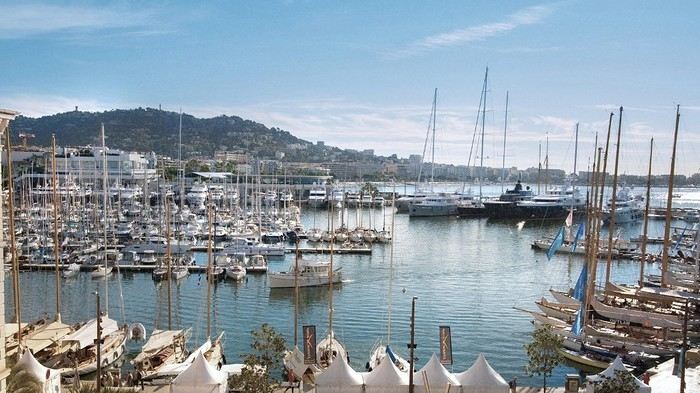
Cannes: Who hasn’t dreamed of spending a night in the port of this legendary city, surrounded by yachts and just steps from the Croisette? Toulon: A dynamic and authentic port, perfect for a getaway between land and sea. Mandelieu-La Napoule: A charming town just a few kilometers from Cannes, known for its peaceful landscapes and seaside château.
The Caribbean:
Martinique and Guadeloupe: Here, the experience takes on a whole new dimension. Picture yourself on a catamaran, lulled by turquoise waters. It’s the ultimate dream for anyone seeking a paradise getaway.
Rivers:
Bordeaux: Docked in the heart of this historic city, your boat lets you explore its vineyards and UNESCO-listed architecture. Lyon: Enjoy the Rhône or Saône rivers for a unique experience in this foodie city. Asnières-sur-Seine: Just a stone’s throw from Paris, discover a surprising stay at the capital’s doorstep. Saint-Florentin: A more rural option for those seeking tranquility and nature.
No matter the destination, spending an unusual night on a boat gives you the luxury of choosing between the buzz of big cities or the peace of more secluded spots. Unlike treehouses, which are often remote, boats let you be right in the heart of the action while still enjoying privacy.
III. BedBoat: An Innovative Startup
Did you know France has over a million boats docked in its ports? Yet, on average, these boats are only used 10 to 15 days a year. Based on this observation, three friends—Félix, Fabian, and Luke—decided to create BedBoat, the first platform dedicated to docked boat rentals.
The idea is simple but brilliant: turn these underused boats into tourist accommodations. This not only helps owners cover their costs but also lets travelers live a unique experience—all without building new infrastructure, making it both an economical and eco-friendly solution. Far from being just a booking platform, BedBoat offers a true immersion into the world of boating. It’s an innovative way to discover France’s and the Caribbean’s most beautiful ports while enjoying all the perks of an unusual stay. For cities, it’s also a great opportunity. Boats allow them to welcome more tourists without overloading the traditional rental market. Everyone wins: owners, travelers, and even locals.
Docked boat rentals are much more than just a trend—they’re a revolution in the world of tourism. Whether you’re looking for a romantic getaway, a family vacation, or a trip with friends, BedBoat opens the door to a whole new world. So, ready to set sail on your next adventure?
I. Why Spend an Unusual Night on a Boat?
Imagine this: you wake up to the sound of gentle waves, a soft ray of sunlight dancing on the water’s surface as you enjoy breakfast on deck. You’re just steps away from restaurants, shops, and points of interest, since your accommodation is perfectly located in the heart of the harbor. This experience, which few have had the chance to try yet, is within everyone’s reach thanks to docked boat rentals.
Discover why spending an unusual night on a boat is the next big trend. Whether it’s for a romantic weekend, a family vacation, or a getaway with friends, a night on a docked boat offers a one-of-a-kind experience. Unlike a standard hotel room, where walls limit your view, on a boat, it’s the vast expanse of water that surrounds you. It’s a refreshing and calming escape, where simply waking up on the water turns your stay into a memorable moment. Another plus? The variety of boats available.
Each type of boat brings its own advantages and a different experience:
Sailboat: Ideal for families or couples looking for an authentic experience. Sailboats offer irresistible nautical charm with their optimized spaces and cozy atmosphere. Catamaran: Spacious and stable, perfect for groups of friends or large families. With its wide outdoor areas, it’s made for socializing. Yacht: Synonymous with luxury and elegance, it’s the perfect choice for marking a special occasion, like a birthday or a marriage proposal. Houseboat: For those who prefer a more nature-focused vibe, houseboats offer a bucolic experience along canals or rivers.
Beyond their unique charm, these boats are often just as affordable as a hotel room. Take, for example, a sailboat in Hendaye priced at 129 € per night for four people. For that price, you’re not just getting an unusual place to stay—you’re getting the equivalent of a floating cottage with a bedroom, bathroom, fully equipped kitchen, and outdoor spaces. It’s the perfect choice for anyone looking to combine comfort, authenticity, and originality.
II. Sleeping on a Boat—Yes, But Where?
Docked boat rentals aren’t limited to just one or two destinations—far from it. With BedBoat, you can explore numerous ports in France and even the Caribbean.
Here’s a look at some top destinations:
Atlantic Coast:
Hendaye: This Basque port offers a picturesque setting between sea and mountains. Perfect for discovering Basque culture and traditions. La Rochelle: With its iconic old port, medieval towers, and cobbled streets, it’s an ideal city for a historic and gastronomic weekend. Arcachon: Known for its oysters and the majestic Dune of Pilat, this destination is a must for nature lovers.
Mediterranean Coast:
Cannes: Who hasn’t dreamed of spending a night in the port of this legendary city, surrounded by yachts and just steps from the Croisette? Toulon: A dynamic and authentic port, perfect for a getaway between land and sea. Mandelieu-La Napoule: A charming town just a few kilometers from Cannes, known for its peaceful landscapes and seaside château.
The Caribbean:
Martinique and Guadeloupe: Here, the experience takes on a whole new dimension. Picture yourself on a catamaran, lulled by turquoise waters. It’s the ultimate dream for anyone seeking a paradise getaway.
Rivers:
Bordeaux: Docked in the heart of this historic city, your boat lets you explore its vineyards and UNESCO-listed architecture. Lyon: Enjoy the Rhône or Saône rivers for a unique experience in this foodie city. Asnières-sur-Seine: Just a stone’s throw from Paris, discover a surprising stay at the capital’s doorstep. Saint-Florentin: A more rural option for those seeking tranquility and nature.
No matter the destination, spending an unusual night on a boat gives you the luxury of choosing between the buzz of big cities or the peace of more secluded spots. Unlike treehouses, which are often remote, boats let you be right in the heart of the action while still enjoying privacy.
III. BedBoat: An Innovative Startup
Did you know France has over a million boats docked in its ports? Yet, on average, these boats are only used 10 to 15 days a year. Based on this observation, three friends—Félix, Fabian, and Luke—decided to create BedBoat, the first platform dedicated to docked boat rentals.
The idea is simple but brilliant: turn these underused boats into tourist accommodations. This not only helps owners cover their costs but also lets travelers live a unique experience—all without building new infrastructure, making it both an economical and eco-friendly solution. Far from being just a booking platform, BedBoat offers a true immersion into the world of boating. It’s an innovative way to discover France’s and the Caribbean’s most beautiful ports while enjoying all the perks of an unusual stay. For cities, it’s also a great opportunity. Boats allow them to welcome more tourists without overloading the traditional rental market. Everyone wins: owners, travelers, and even locals.
Docked boat rentals are much more than just a trend—they’re a revolution in the world of tourism. Whether you’re looking for a romantic getaway, a family vacation, or a trip with friends, BedBoat opens the door to a whole new world. So, ready to set sail on your next adventure?
Road trip: Las Vegas, Texas, and Tennessee
Hi everyone,
After already exploring the West, which was amazing, I’ve got a new plan—I’d like to visit Texas and Tennessee.
I want to start in Las Vegas, revisit Monument Valley, and head toward Dallas, stopping in Albuquerque and other cool spots along the way.
Then, I’ll leave Dallas for Nashville, with several stops in between—any suggestions on where to go?
Do you think 20 days is enough for this trip?
Thanks for your input!
Nothing’s stopping you from going to Ampefy (Madagascar)
During these three big weeks in Madagascar, one week in Sainte Marie, a few days for a little loop in the west/south, and the rest in Tana.
This loop I’m talking about covers an area I’d never taken the time to visit before. A recent road in good condition, the chance to pass through beautiful highland landscapes, and a few free days made it the perfect opportunity. Destination: Ampefy, west of Tana via the RN1, then a turn south onto the recently rehabilitated RN43 to reach Antsirabe before heading back to Tana. Four days planned—perfect, since an extra day wouldn’t have been a problem given all the activities in Ampefy.
First day: a relaxed and fairly late departure for Ampefy. We weren’t in a rush and took our time. Traffic leaving Tana to get back on the RN1 cost us the head start we had on our original schedule. An hour and a half bumper-to-bumper with the *buxis*, inching painfully toward the roundabout and then the bridge that acts as a bottleneck—we dove in like all our fellow sufferers. It’s not our everyday reality, and we were early, so no big deal, but man, it’s long and slow. Once past that obstacle, traffic flowed smoothly, and the road was good (all the way to Ampefy). We moved through highland landscapes, bustling villages full of activity, and countless agricultural supply shops—clear proof, if any were needed, that we were crossing a prime farming region. Around Arivonimamo, we passed through a forest with a Mediterranean vibe: a single-species forest of stout little trees with glossy, elongated light-green leaves—these are *tapia*. An endemic tree in Madagascar, and a pretty unique forest as a result (you can see them elsewhere, like between Antsirabe and Ambositra). There are efforts to protect it from illegal logging because the wood is fire-resistant, which helps shield the forest from wildfires. Beyond its biodiversity value, the *tapia* hosts silkworms, giving it economic and cultural importance.
As we kept going, we started spotting a lake and mountains with the rounded shapes typical of extinct volcanoes worn down by time and the elements. We were approaching Lake Itasy and, by extension, Ampefy. We stopped at a *hotely* for a plate of *tongon’kisoa*—pig’s trotters caramelized by cooking, with thick, flavorful skin—along with the obligatory portion of rice, which we took the time to drizzle with cooking juices to make it a bit more appetizing. Full, we turned left to reach Ampefy and our hotel. The landscape was dotted with collapsed, dormant volcanic cones, and suddenly, the view opened up onto the lake. Shallow and expansive, we followed it, losing sight of it now and then before finding it again in Ampefy itself, which we entered after crossing the Lily, a beautiful river that drains the lake. Lots of hotels and restaurants, with plenty of options at all price points. We chose the *Farihy*, about 5 km past Ampefy. A gorgeous spot by the lake, with a pool and lovely bungalows—some with picture windows overlooking the lake. Really nice. In the evening, a drink and some *sak sak* for aperitif on the terrace. It wasn’t warm, there was a lot of wind, and a storm was brewing. Off to bed quickly to start the next day’s visits.
After buying some lychees—we hadn’t seen many this year, and these were fresh from the field, picked in Ampefy—we headed to the Lily Falls. Well signposted, with a paved road in great condition, we stopped at the kiosk for the entrance fee and parking (1 euro for one *vahiny* and 10 cents for one Malagasy). We set off down the path and quickly reached the first waterfall, then continued for maybe 1 km on a well-marked trail to the second. A guide led us to the third, which is harder to spot and isn’t actually on the Lily itself. Beautiful countryside scenery: fishermen straight out of *Tom Sawyer*, straw hats on their heads, lying down with one foot hooked to a fragile bamboo rod, their line dipping into the calm river. Men preparing rice paddies with their *angady*, women transplanting rice, bent over the water. At some points, we walked along the dikes between paddies almost ready for harvest. It’s peaceful and beautiful when you’re strolling or fishing, but working the paddies is grueling, especially under that beating sun. A really nice walk—2 hours and a bit, going at a leisurely pace. A guide isn’t mandatory; only the entrance fee is. We took one because it provides a bit of work and puts money in the hands of locals, giving them more incentive to protect the site. But you can easily skip it, like most people do. Lots of visitors since it was the weekend—Tananarivians with family or groups of young people, scout groups organized under their chaperones’ direction. Very few foreign tourists, though—that’s a general observation. It’s great to see this growth in domestic tourism, giving Malagasy people the chance to discover their own country and allowing those in the sector to rely less on foreign visitors, who’ve been scarce for years.
Next, we headed to the "geysers" (which aren’t actually geysers, but whatever). We had to go back to the RN1, head toward Tsiroanomandidy, and a few kilometers later, a well-marked sign and a newly paved track led us to a pretty site. Again, lots of people, another kiosk, more fees to pay, and guides available. This time, we skipped the guide. A downpour caught us in front of the "geysers," so we took shelter under a little shop, grabbing an ice cream and some drinks. We didn’t stay long—we weren’t interested in a massage or a dip in the thermal water. The countryside and barren mountain landscapes were stunning on the way back to the hotel. We noticed you could go paragliding right in front of the bungalow, so we booked a session for the next morning. After eating at the *Auberge* in the town center (it was good), we headed back to the hotel to turn in early. Once again, a storm rolled in during the afternoon, and the temperature dropped significantly.
The next morning, around 8 a.m., we walked to the takeoff zone near the hotel. Towed by a small boat, we took off for a flight over the lake and the volcanic domes before landing back at the same spot. Two companies handle this. I’m no expert, but it seemed safe and well-organized.
To be continued...
First day: a relaxed and fairly late departure for Ampefy. We weren’t in a rush and took our time. Traffic leaving Tana to get back on the RN1 cost us the head start we had on our original schedule. An hour and a half bumper-to-bumper with the *buxis*, inching painfully toward the roundabout and then the bridge that acts as a bottleneck—we dove in like all our fellow sufferers. It’s not our everyday reality, and we were early, so no big deal, but man, it’s long and slow. Once past that obstacle, traffic flowed smoothly, and the road was good (all the way to Ampefy). We moved through highland landscapes, bustling villages full of activity, and countless agricultural supply shops—clear proof, if any were needed, that we were crossing a prime farming region. Around Arivonimamo, we passed through a forest with a Mediterranean vibe: a single-species forest of stout little trees with glossy, elongated light-green leaves—these are *tapia*. An endemic tree in Madagascar, and a pretty unique forest as a result (you can see them elsewhere, like between Antsirabe and Ambositra). There are efforts to protect it from illegal logging because the wood is fire-resistant, which helps shield the forest from wildfires. Beyond its biodiversity value, the *tapia* hosts silkworms, giving it economic and cultural importance.
As we kept going, we started spotting a lake and mountains with the rounded shapes typical of extinct volcanoes worn down by time and the elements. We were approaching Lake Itasy and, by extension, Ampefy. We stopped at a *hotely* for a plate of *tongon’kisoa*—pig’s trotters caramelized by cooking, with thick, flavorful skin—along with the obligatory portion of rice, which we took the time to drizzle with cooking juices to make it a bit more appetizing. Full, we turned left to reach Ampefy and our hotel. The landscape was dotted with collapsed, dormant volcanic cones, and suddenly, the view opened up onto the lake. Shallow and expansive, we followed it, losing sight of it now and then before finding it again in Ampefy itself, which we entered after crossing the Lily, a beautiful river that drains the lake. Lots of hotels and restaurants, with plenty of options at all price points. We chose the *Farihy*, about 5 km past Ampefy. A gorgeous spot by the lake, with a pool and lovely bungalows—some with picture windows overlooking the lake. Really nice. In the evening, a drink and some *sak sak* for aperitif on the terrace. It wasn’t warm, there was a lot of wind, and a storm was brewing. Off to bed quickly to start the next day’s visits.
After buying some lychees—we hadn’t seen many this year, and these were fresh from the field, picked in Ampefy—we headed to the Lily Falls. Well signposted, with a paved road in great condition, we stopped at the kiosk for the entrance fee and parking (1 euro for one *vahiny* and 10 cents for one Malagasy). We set off down the path and quickly reached the first waterfall, then continued for maybe 1 km on a well-marked trail to the second. A guide led us to the third, which is harder to spot and isn’t actually on the Lily itself. Beautiful countryside scenery: fishermen straight out of *Tom Sawyer*, straw hats on their heads, lying down with one foot hooked to a fragile bamboo rod, their line dipping into the calm river. Men preparing rice paddies with their *angady*, women transplanting rice, bent over the water. At some points, we walked along the dikes between paddies almost ready for harvest. It’s peaceful and beautiful when you’re strolling or fishing, but working the paddies is grueling, especially under that beating sun. A really nice walk—2 hours and a bit, going at a leisurely pace. A guide isn’t mandatory; only the entrance fee is. We took one because it provides a bit of work and puts money in the hands of locals, giving them more incentive to protect the site. But you can easily skip it, like most people do. Lots of visitors since it was the weekend—Tananarivians with family or groups of young people, scout groups organized under their chaperones’ direction. Very few foreign tourists, though—that’s a general observation. It’s great to see this growth in domestic tourism, giving Malagasy people the chance to discover their own country and allowing those in the sector to rely less on foreign visitors, who’ve been scarce for years.
Next, we headed to the "geysers" (which aren’t actually geysers, but whatever). We had to go back to the RN1, head toward Tsiroanomandidy, and a few kilometers later, a well-marked sign and a newly paved track led us to a pretty site. Again, lots of people, another kiosk, more fees to pay, and guides available. This time, we skipped the guide. A downpour caught us in front of the "geysers," so we took shelter under a little shop, grabbing an ice cream and some drinks. We didn’t stay long—we weren’t interested in a massage or a dip in the thermal water. The countryside and barren mountain landscapes were stunning on the way back to the hotel. We noticed you could go paragliding right in front of the bungalow, so we booked a session for the next morning. After eating at the *Auberge* in the town center (it was good), we headed back to the hotel to turn in early. Once again, a storm rolled in during the afternoon, and the temperature dropped significantly.
The next morning, around 8 a.m., we walked to the takeoff zone near the hotel. Towed by a small boat, we took off for a flight over the lake and the volcanic domes before landing back at the same spot. Two companies handle this. I’m no expert, but it seemed safe and well-organized.
To be continued...
Road from Allougoum to Akka Ighane (Morocco)
Hi, does anyone know the current condition of the track/road P1800 that goes from R111 just past Allougoum to Akka Ighane on P1743?
Google Maps says it's doable, but all the info I’ve gotten advises against it.
From Akka Ighane, at the junction with the road to Auguinane, it was even paved for the 10 km I covered two years ago.
But in Morocco, paved roads can suddenly end without warning 😏.
3 days in the Camargue
3 days in the Camargue... it’s really not enough!
I didn’t know the area before, but the Camargue is packed with "experiences": - Taking the ferry - Walking on the beaches and watching the kitesurfers - Crossing the dike on an electric bike - Horseback riding along the shore - Visiting a *manade* and attending an *abrivade* (cattle roundup) - Exploring Les Saintes-Maries-de-la-Mer, Aigues-Mortes, or Arles - Touring the salt flats of Giraud or Aigues - Photographing birds at the Parc du Pont de Gau - Watching a bull race and cheering on the *razeteurs* (bull-chasers) - Experiencing a Gypsy evening - Hiking "flat" among the reeds - Tasting bull meat - Relaxing in a peaceful haven - Testing mosquito repellent - ...
Needless to say, we didn’t have time to do it all in 3 days. We’ll be back!
A few tips: - For relaxation: a gorgeous guesthouse, *Le Mas de Bouvet* - For *manades*: the one at Baumelles, with a *Guytou* (herdsman) as warm as he is passionate - For tasting bull meat: *Le Chante Clair* in Les Saintes-Maries - And for birds: the Parc du Pont de Gau
If you’re a photographer, the park lets you stay until 6:00 PM, and afterward, you’re free to leave whenever you want. Those are the best hours for observing and photographing birds. But it’s also where you’ll see massive telephoto lenses that’ll make you feel small if all you’ve got is a small hybrid camera (like my Lumix G80) with a 100-300mm lens.
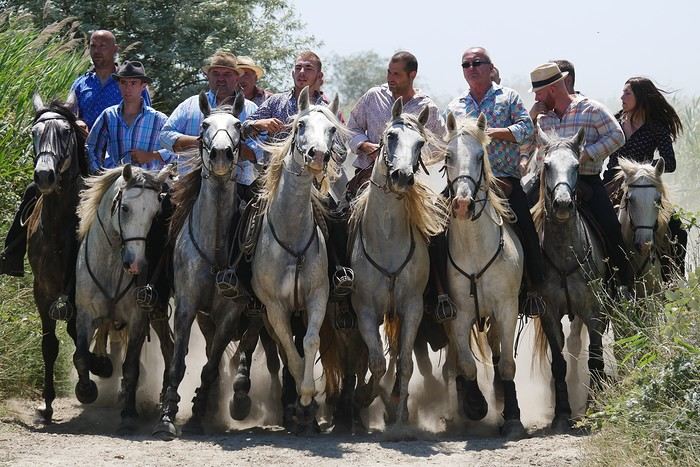
A few photo memories—starting with the *Manade de Baumelles*:
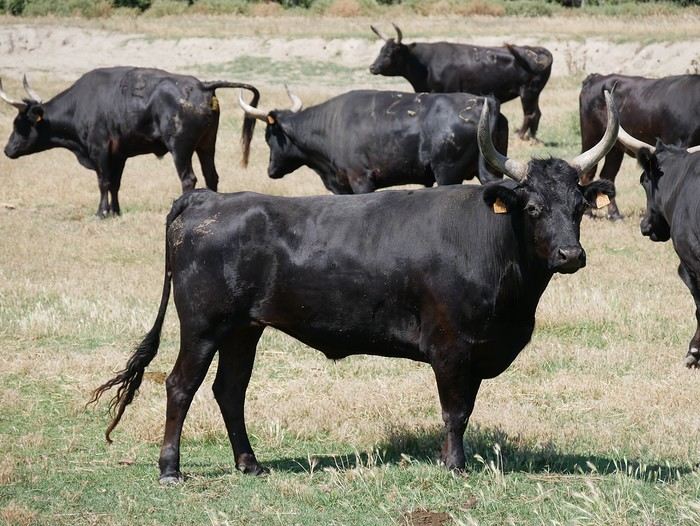
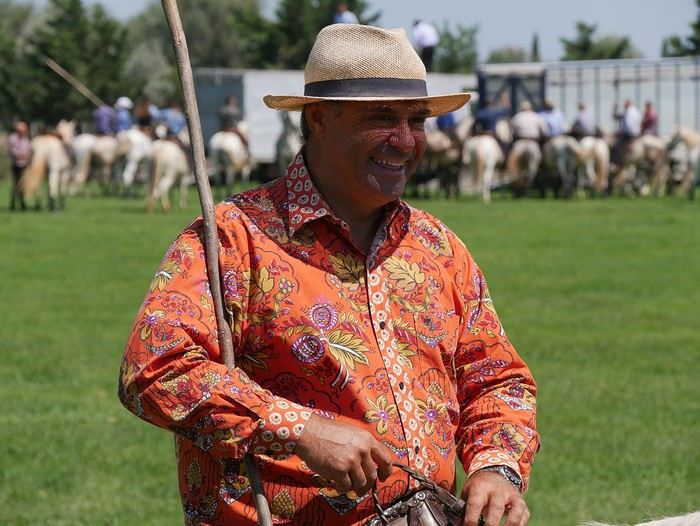
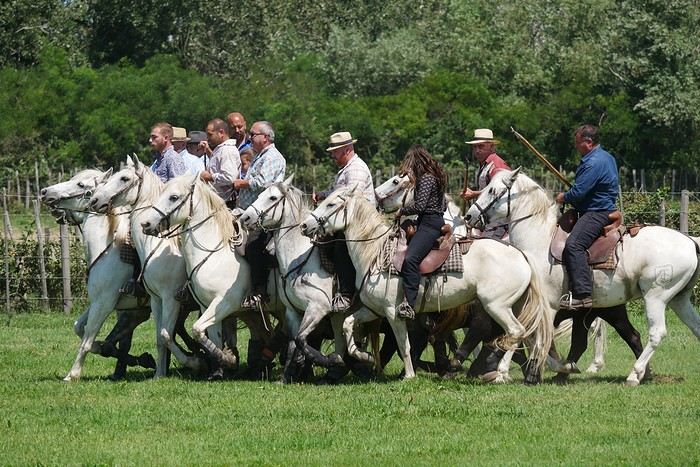
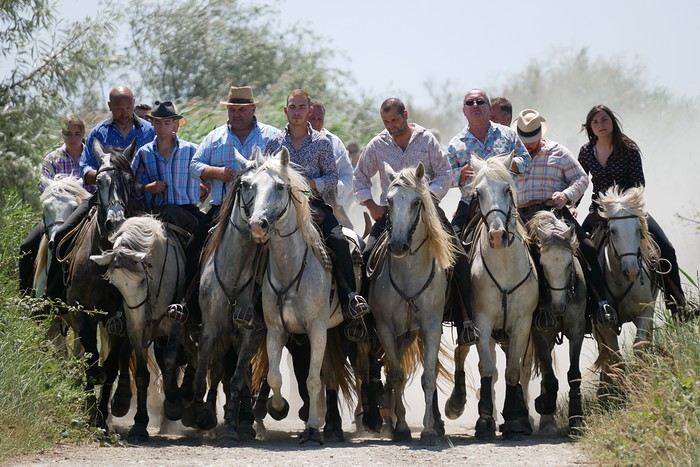
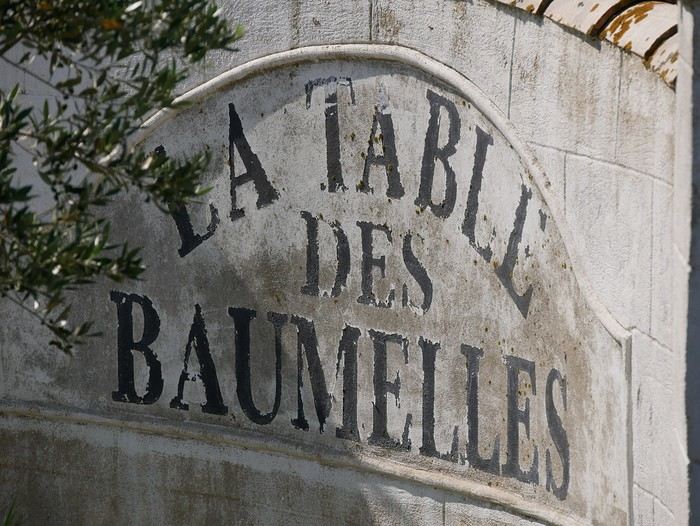
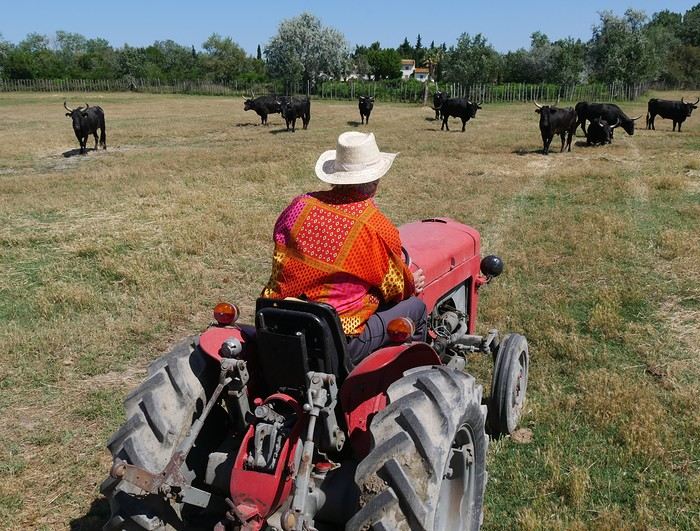
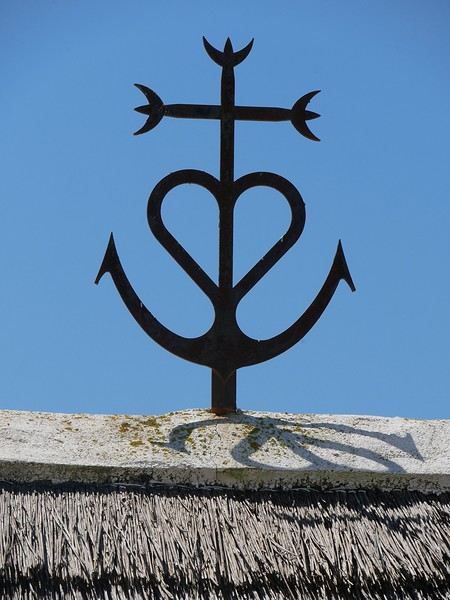
I didn’t know the area before, but the Camargue is packed with "experiences": - Taking the ferry - Walking on the beaches and watching the kitesurfers - Crossing the dike on an electric bike - Horseback riding along the shore - Visiting a *manade* and attending an *abrivade* (cattle roundup) - Exploring Les Saintes-Maries-de-la-Mer, Aigues-Mortes, or Arles - Touring the salt flats of Giraud or Aigues - Photographing birds at the Parc du Pont de Gau - Watching a bull race and cheering on the *razeteurs* (bull-chasers) - Experiencing a Gypsy evening - Hiking "flat" among the reeds - Tasting bull meat - Relaxing in a peaceful haven - Testing mosquito repellent - ...
Needless to say, we didn’t have time to do it all in 3 days. We’ll be back!
A few tips: - For relaxation: a gorgeous guesthouse, *Le Mas de Bouvet* - For *manades*: the one at Baumelles, with a *Guytou* (herdsman) as warm as he is passionate - For tasting bull meat: *Le Chante Clair* in Les Saintes-Maries - And for birds: the Parc du Pont de Gau
If you’re a photographer, the park lets you stay until 6:00 PM, and afterward, you’re free to leave whenever you want. Those are the best hours for observing and photographing birds. But it’s also where you’ll see massive telephoto lenses that’ll make you feel small if all you’ve got is a small hybrid camera (like my Lumix G80) with a 100-300mm lens.
A few photo memories—starting with the *Manade de Baumelles*:
14-Day Trip Report to Milos and Kimolos in September-October 2021
14-Day Trip Report to Milos and Kimolos in September-October 2021
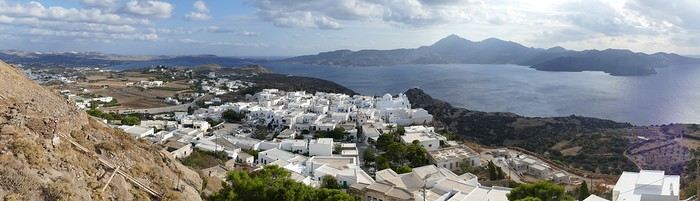
The village of Plaka in Milos
It was with great pleasure that we finally reconnected with our old habits as inveterate travelers! Greece, and more specifically the Greek islands, was the natural choice for us. After having already visited many Greek islands during around 18 trips, we decided to revisit islands we had seen over 40 years ago, like Milos, where our memories were extremely hazy. Our route was well-planned and familiar: a low-cost flight from Basel-Mulhouse to Athens, then a traditional ferry from Piraeus to Milos. Taking a speedboat, which is faster, would have forced us to spend a night in Piraeus. Plus, we felt that the traditional ferry was part of the journey, and with good weather, spending eight hours on deck wasn’t unpleasant at all. Watching the docking maneuvers with the comings and goings of trucks and cars, observing the passengers, reading a book, or admiring the scenery—all of that is part of the travel experience. Milos Island: Accommodation in Adamas We arrived quite late, around 11 PM, in Adamas, the port of Milos. No worries—the friendly couple managing the apartment was waiting for us, and it was just a 10-minute walk from the port. The first two days were spent unwinding, with swimming at the nearby beach, strolling through Adamas, and relaxing.
Discovering Plaka On the third day, we took the path along the small beach west of town toward a French military cemetery! A historical reminder of our presence here during the Crimean War, among others. The path climbs toward a beacon perched on top of a hill before disappearing into the scrubland. We returned to Adamas for lunch on our terrace.
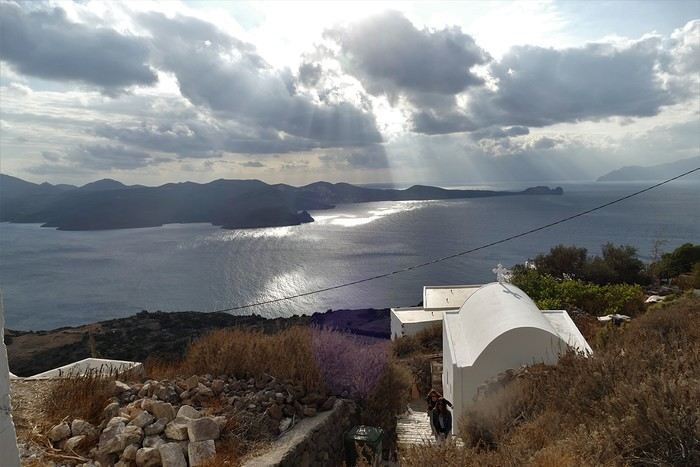
In the afternoon, we visited the hilltop village of Plaka by bus from Adamas. Plaka is the original old town, dominated by a church and, even higher up, the ruins of the Kastro. The view is magnificent. We stopped at a pastry shop in the village to enjoy excellent orange cakes and baklavas. Back in Adamas, we checked out car rental agencies to be more mobile, though the bus network seemed quite extensive. It costs around 40 € per day, plus 8 € if you want to significantly reduce the deductible. Port of Klima.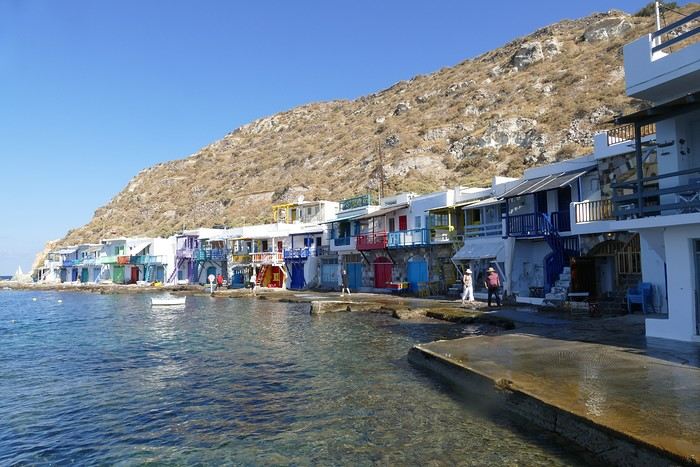
Yesterday’s weather was quite mixed with lots of clouds, but today the sun is shining again. We drove to the small port of Klima, famous for its boat garages called "sirmatas." It’s true that in the morning sun, these boat garages carved into the volcanic tuff are beautifully lit, turning the village into a colorful mosaic. Above the village, a path climbs directly to the magnificent Roman theater overlooking the surroundings and the sea.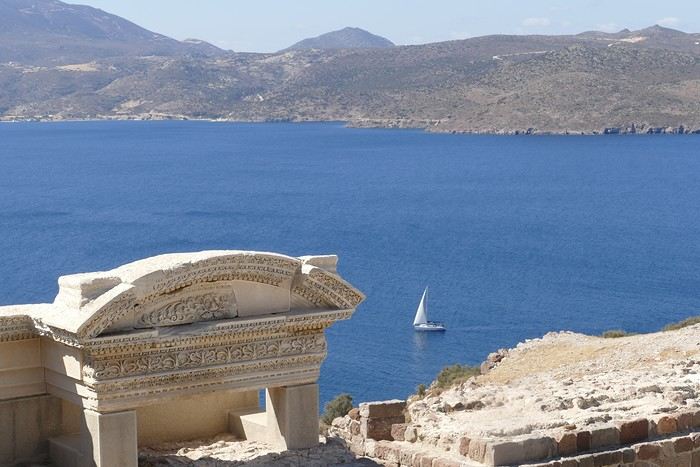 Following the well-marked path, we reached the road leading 200 meters down to the catacombs. It’s an impressive complex of 3rd and 4th-century catacombs, though only a small part is open to visitors—it’s still very moving. In the mid-afternoon, we got back in the car to visit the tiny ports of Firopotamos and Mandraki, which also have their colorful sirmatas. We took the opportunity to swim at the small beach in Mandraki, where the water was warm and calm.
Mandraki Port. We had a decent dinner at a seaside restaurant in Adamas, though you have to be selective—we had a bad experience at Kynigos on the second night!
Moving to Polonia in Eastern Milos, Sarakiniko Site
Following the well-marked path, we reached the road leading 200 meters down to the catacombs. It’s an impressive complex of 3rd and 4th-century catacombs, though only a small part is open to visitors—it’s still very moving. In the mid-afternoon, we got back in the car to visit the tiny ports of Firopotamos and Mandraki, which also have their colorful sirmatas. We took the opportunity to swim at the small beach in Mandraki, where the water was warm and calm.
Mandraki Port. We had a decent dinner at a seaside restaurant in Adamas, though you have to be selective—we had a bad experience at Kynigos on the second night!
Moving to Polonia in Eastern Milos, Sarakiniko Site
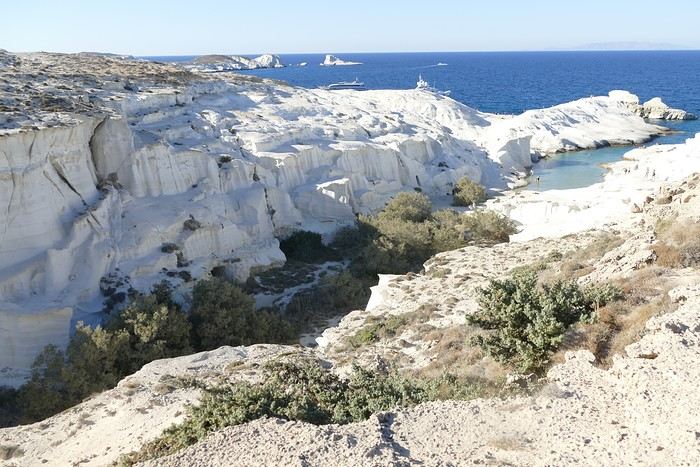
The Sarakiniko site We left Adamas for a second stay on Milos, this time in Polonia. The rental Panda was packed with the four of us and our luggage! Our apartment was in a beautiful house surrounded by a grove, so our lovely terrace was well-shaded. Luckily, there was a small beach nearby, and we went for a swim right away. Apart from us, there were only three other swimmers—definitely the end of the season!
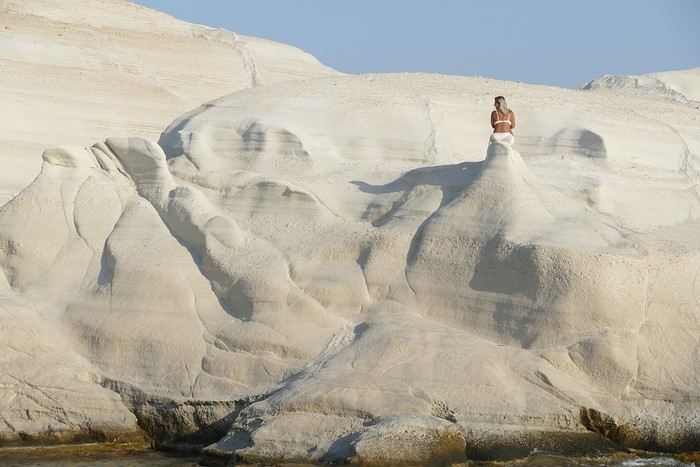
"Fairy chimney"! In the afternoon, we visited the famous Sarakiniko site, Milos’ emblematic spot. Judging by the number of cars in the parking lot, we wouldn’t be alone. As we approached, we heard an indefinable rock/punk/metal music: some young people had brought a sound system and a foghorn and were having fun diving off a fairly high cliff to impress the crowd. It definitely spoiled the visit. Most spots were taken by couples busy taking selfies, so getting photos of the site without tourists was impossible. Still, the site is magnificent, with its white cliffs looking like they’re covered in whipped cream! The sun was still very bright, reflecting strongly off the cliffs, making photography difficult due to the excessive brightness. We had a fish dinner in Polonia at the Enalion restaurant: while the octopus and squid were good, the fish soup tasted more like vegetable soup with a few fish crumbs—too bad.
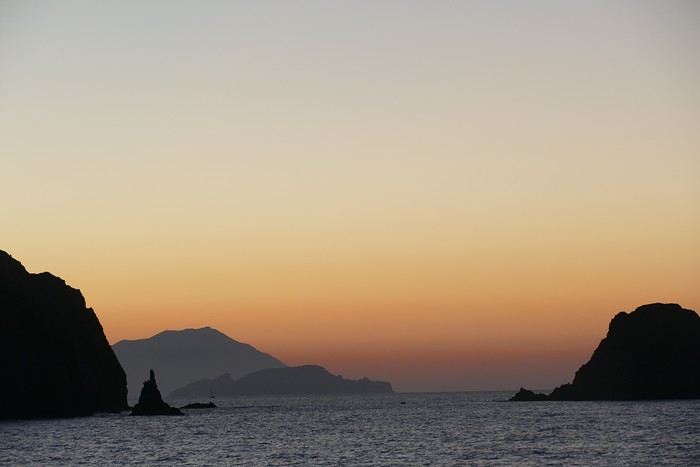
Sunset in Polonia
Ports of Papafranga and Mytikos We continued our exploration of Milos with the Papafranga gorge, a narrow and deep gorge that opens to the sea, where the water is a stunning color. Access via an unstable and dangerous path is prohibited, but that didn’t stop a couple of tourists in flip-flops from venturing in!!! We then swam in the tiny, calm, and sheltered cove of the small port of Mytikos. We returned to Polonia for lunch at Alkis: excellent moussaka. In the late afternoon, Pat and I went out to take some photos just before sunset near the Agios Nikolaos chapel, the beacon, and the new Petakoudia neighborhood next to Polonia to the north.
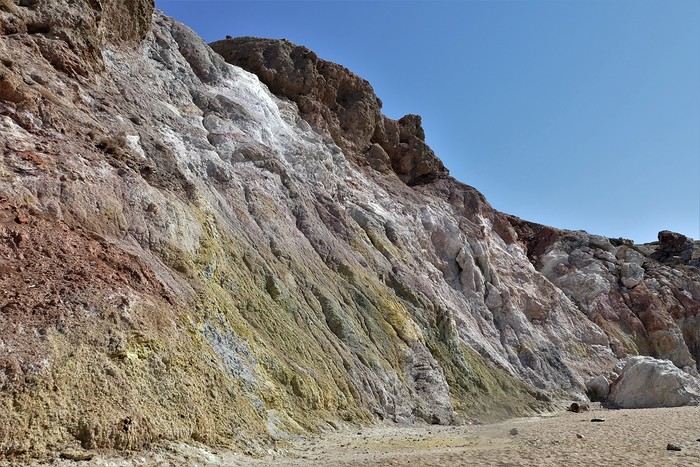
Paleochori Beach
Toward the Multicolored Beach of Paleochori Another sunny day: we still had to discover Paleochori Beach in the south of the island. It was 10:30 AM, and the beach was almost deserted! The water was pleasant, though a bit chilly when we first entered. The beach is bordered by a cliff that, in some places, displays a beautiful multicolored palette. We returned to Polonia in the late afternoon, and Pat and I headed toward Vouddhia Beach south of Polonia—bad choice. The beach is surrounded by a huge mining site served by a dusty road where lines of trucks loaded with ore cross paths. It’s the other side of the coin, and Greece still has progress to make in this area. Dinner at Alki’s was just as good as always. Return to the Sarakiniko Site Early this morning, Pat and I went back to the Sarakiniko site, hoping to take photos in better conditions. While there were fewer people, the parking lot was still full because sunrise is a must in Milos. Still, the conditions were good, and the sunrise spectators left quickly once the sun had risen above the horizon. During the day, an increasingly strong wind cooled the atmosphere, making swimming less enjoyable. Departure for Kimolos Island We changed islands and left Milos for Kimolos, a nearby island—just a 30-minute trip from Polonia’s port. Our apartment was at the entrance of the hilltop village. It’s a village with typical Cycladic architecture, featuring the remains of an old kastro, a few old churches, and windmill towers perched on the hill. We dined in a tiny tavern where the small outdoor tables were squeezed against the walls to let passersby through! As soon as the sun disappeared, it got cold, especially because of the wind. Ports of Kara and Goupa This morning, we explored the small hamlets of Kara and Goupa by Rema Beach, east of the main port. There, we found the sirmatas again—those boat garages partly carved into the volcanic tuff. The path winds between several sirmatas before climbing back up to the Praça road to return to the apartment.
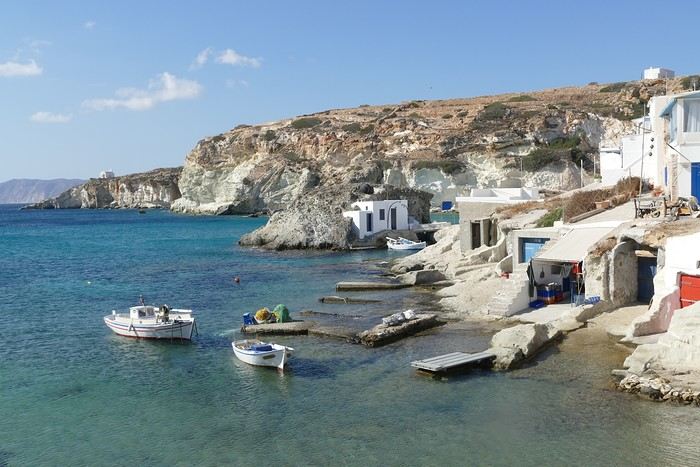
Ports of Kara and Goupa
In the afternoon, we strolled through town, and Pat and I climbed the hill overlooking the village to get a closer look at the few more or less ruined windmills dotting the ridge. Only one mill still had its complete mechanism in place under the roof; the others were empty. The view over the village, port, and sea was beautiful. That evening, we tried another restaurant in the village center, Kali Kardia Bohoris, which was well-frequented by locals, and we didn’t regret it: delicious food, efficient and friendly service, and reasonable prices.
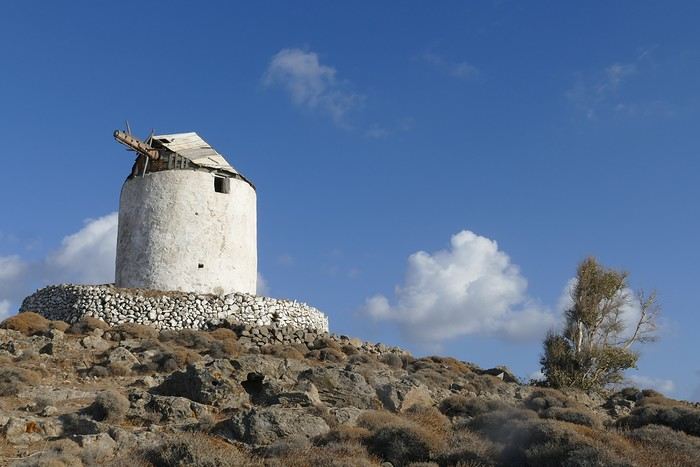
The Kastro Mill
Toward Aliki Beach We walked to Aliki Beach, west of the main village. It’s a large sandy beach shaded by tamarisk trees, but the strong wind prevented us from enjoying it. In the afternoon, I set off on a hike toward the fairy chimney at Skiadi (1.5 hours one way). The paths were very well-marked with signs indicating the trail number and the time to reach the destination. The countryside was beautiful but very dry at this time of year, and as always in Greece, many white chapels dotted the landscape. The numerous dry stone walls testify to the immense labor done by the island’s inhabitants over the centuries! For our last day in Kimolos, we decided to visit the beautiful Praça Beach, one of the most beautiful according to the guides! To get there, we took a path through the interior before joining the paved road near a large dump overflowing with various waste. It’s the flip side of the scenery, and Greece still has progress to make in this area. In the end, Praça Beach left us underwhelmed. The environment, marred by mining operations, detracts from the charm of the beautiful sandy beach. End of the Trip, Return to Piraeus and France And that’s it—we took the Zanteferries ferry back to Piraeus, arriving after a calm and sunny 10-hour journey. We had dinner at Souvlaki Street on the port and spent a good night at the Faros I Hotel in Piraeus—a great spot, close to the port, very clean, and reasonably priced. We flew from Athens to Basel-Mulhouse EuroAirport without any issues. N.B. Budget: around 1850 € all included for 14 days per couple The photo album is available by clicking this link: https://photos.app.goo.gl/wRpxRipg4erpzGj99
The village of Plaka in Milos
It was with great pleasure that we finally reconnected with our old habits as inveterate travelers! Greece, and more specifically the Greek islands, was the natural choice for us. After having already visited many Greek islands during around 18 trips, we decided to revisit islands we had seen over 40 years ago, like Milos, where our memories were extremely hazy. Our route was well-planned and familiar: a low-cost flight from Basel-Mulhouse to Athens, then a traditional ferry from Piraeus to Milos. Taking a speedboat, which is faster, would have forced us to spend a night in Piraeus. Plus, we felt that the traditional ferry was part of the journey, and with good weather, spending eight hours on deck wasn’t unpleasant at all. Watching the docking maneuvers with the comings and goings of trucks and cars, observing the passengers, reading a book, or admiring the scenery—all of that is part of the travel experience. Milos Island: Accommodation in Adamas We arrived quite late, around 11 PM, in Adamas, the port of Milos. No worries—the friendly couple managing the apartment was waiting for us, and it was just a 10-minute walk from the port. The first two days were spent unwinding, with swimming at the nearby beach, strolling through Adamas, and relaxing.
Discovering Plaka On the third day, we took the path along the small beach west of town toward a French military cemetery! A historical reminder of our presence here during the Crimean War, among others. The path climbs toward a beacon perched on top of a hill before disappearing into the scrubland. We returned to Adamas for lunch on our terrace.
In the afternoon, we visited the hilltop village of Plaka by bus from Adamas. Plaka is the original old town, dominated by a church and, even higher up, the ruins of the Kastro. The view is magnificent. We stopped at a pastry shop in the village to enjoy excellent orange cakes and baklavas. Back in Adamas, we checked out car rental agencies to be more mobile, though the bus network seemed quite extensive. It costs around 40 € per day, plus 8 € if you want to significantly reduce the deductible. Port of Klima.
Yesterday’s weather was quite mixed with lots of clouds, but today the sun is shining again. We drove to the small port of Klima, famous for its boat garages called "sirmatas." It’s true that in the morning sun, these boat garages carved into the volcanic tuff are beautifully lit, turning the village into a colorful mosaic. Above the village, a path climbs directly to the magnificent Roman theater overlooking the surroundings and the sea.
Following the well-marked path, we reached the road leading 200 meters down to the catacombs. It’s an impressive complex of 3rd and 4th-century catacombs, though only a small part is open to visitors—it’s still very moving. In the mid-afternoon, we got back in the car to visit the tiny ports of Firopotamos and Mandraki, which also have their colorful sirmatas. We took the opportunity to swim at the small beach in Mandraki, where the water was warm and calm.
Mandraki Port. We had a decent dinner at a seaside restaurant in Adamas, though you have to be selective—we had a bad experience at Kynigos on the second night!
Moving to Polonia in Eastern Milos, Sarakiniko SiteThe Sarakiniko site We left Adamas for a second stay on Milos, this time in Polonia. The rental Panda was packed with the four of us and our luggage! Our apartment was in a beautiful house surrounded by a grove, so our lovely terrace was well-shaded. Luckily, there was a small beach nearby, and we went for a swim right away. Apart from us, there were only three other swimmers—definitely the end of the season!
"Fairy chimney"! In the afternoon, we visited the famous Sarakiniko site, Milos’ emblematic spot. Judging by the number of cars in the parking lot, we wouldn’t be alone. As we approached, we heard an indefinable rock/punk/metal music: some young people had brought a sound system and a foghorn and were having fun diving off a fairly high cliff to impress the crowd. It definitely spoiled the visit. Most spots were taken by couples busy taking selfies, so getting photos of the site without tourists was impossible. Still, the site is magnificent, with its white cliffs looking like they’re covered in whipped cream! The sun was still very bright, reflecting strongly off the cliffs, making photography difficult due to the excessive brightness. We had a fish dinner in Polonia at the Enalion restaurant: while the octopus and squid were good, the fish soup tasted more like vegetable soup with a few fish crumbs—too bad.
Sunset in Polonia
Ports of Papafranga and Mytikos We continued our exploration of Milos with the Papafranga gorge, a narrow and deep gorge that opens to the sea, where the water is a stunning color. Access via an unstable and dangerous path is prohibited, but that didn’t stop a couple of tourists in flip-flops from venturing in!!! We then swam in the tiny, calm, and sheltered cove of the small port of Mytikos. We returned to Polonia for lunch at Alkis: excellent moussaka. In the late afternoon, Pat and I went out to take some photos just before sunset near the Agios Nikolaos chapel, the beacon, and the new Petakoudia neighborhood next to Polonia to the north.
Paleochori Beach
Toward the Multicolored Beach of Paleochori Another sunny day: we still had to discover Paleochori Beach in the south of the island. It was 10:30 AM, and the beach was almost deserted! The water was pleasant, though a bit chilly when we first entered. The beach is bordered by a cliff that, in some places, displays a beautiful multicolored palette. We returned to Polonia in the late afternoon, and Pat and I headed toward Vouddhia Beach south of Polonia—bad choice. The beach is surrounded by a huge mining site served by a dusty road where lines of trucks loaded with ore cross paths. It’s the other side of the coin, and Greece still has progress to make in this area. Dinner at Alki’s was just as good as always. Return to the Sarakiniko Site Early this morning, Pat and I went back to the Sarakiniko site, hoping to take photos in better conditions. While there were fewer people, the parking lot was still full because sunrise is a must in Milos. Still, the conditions were good, and the sunrise spectators left quickly once the sun had risen above the horizon. During the day, an increasingly strong wind cooled the atmosphere, making swimming less enjoyable. Departure for Kimolos Island We changed islands and left Milos for Kimolos, a nearby island—just a 30-minute trip from Polonia’s port. Our apartment was at the entrance of the hilltop village. It’s a village with typical Cycladic architecture, featuring the remains of an old kastro, a few old churches, and windmill towers perched on the hill. We dined in a tiny tavern where the small outdoor tables were squeezed against the walls to let passersby through! As soon as the sun disappeared, it got cold, especially because of the wind. Ports of Kara and Goupa This morning, we explored the small hamlets of Kara and Goupa by Rema Beach, east of the main port. There, we found the sirmatas again—those boat garages partly carved into the volcanic tuff. The path winds between several sirmatas before climbing back up to the Praça road to return to the apartment.
Ports of Kara and Goupa
In the afternoon, we strolled through town, and Pat and I climbed the hill overlooking the village to get a closer look at the few more or less ruined windmills dotting the ridge. Only one mill still had its complete mechanism in place under the roof; the others were empty. The view over the village, port, and sea was beautiful. That evening, we tried another restaurant in the village center, Kali Kardia Bohoris, which was well-frequented by locals, and we didn’t regret it: delicious food, efficient and friendly service, and reasonable prices.
The Kastro Mill
Toward Aliki Beach We walked to Aliki Beach, west of the main village. It’s a large sandy beach shaded by tamarisk trees, but the strong wind prevented us from enjoying it. In the afternoon, I set off on a hike toward the fairy chimney at Skiadi (1.5 hours one way). The paths were very well-marked with signs indicating the trail number and the time to reach the destination. The countryside was beautiful but very dry at this time of year, and as always in Greece, many white chapels dotted the landscape. The numerous dry stone walls testify to the immense labor done by the island’s inhabitants over the centuries! For our last day in Kimolos, we decided to visit the beautiful Praça Beach, one of the most beautiful according to the guides! To get there, we took a path through the interior before joining the paved road near a large dump overflowing with various waste. It’s the flip side of the scenery, and Greece still has progress to make in this area. In the end, Praça Beach left us underwhelmed. The environment, marred by mining operations, detracts from the charm of the beautiful sandy beach. End of the Trip, Return to Piraeus and France And that’s it—we took the Zanteferries ferry back to Piraeus, arriving after a calm and sunny 10-hour journey. We had dinner at Souvlaki Street on the port and spent a good night at the Faros I Hotel in Piraeus—a great spot, close to the port, very clean, and reasonably priced. We flew from Athens to Basel-Mulhouse EuroAirport without any issues. N.B. Budget: around 1850 € all included for 14 days per couple The photo album is available by clicking this link: https://photos.app.goo.gl/wRpxRipg4erpzGj99
The Etrembières footbridge to Annemasse
claudio didn’t get its purpose: no secure bike access and it leads to a sketchy path through a grim commercial zone that’s really tough to ride on at the exit. Anyone have an explanation?
http://cbandiera.free.fr/vlsrt/bld-z.php?N=6359
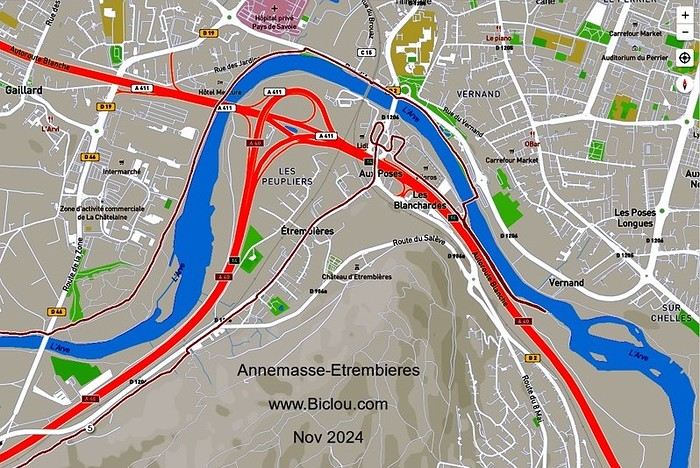
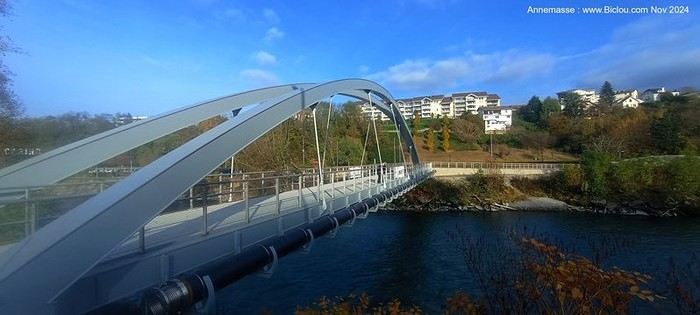
http://cbandiera.free.fr/vlsrt/bld-z.php?N=6359
Review of cabin 9201 on the Costa Favolosa
Hello,
We had booked a sea-view cabin through a Costa advisor in October 2023 for a departure on 13/10/24 on the Costa Favolosa, with a cruise lasting until 22/10/24. When we saw the cabin, what a disappointment: only one stool, no armchair or sofa like we were used to with Costa. The sea view wasn’t great because of a film on the porthole, and the cabin faced the crew promenade. The space between the wall and the edge of the bed was about 30 cm... not easy for getting into bed. We immediately asked to change cabins. After two days, the answer was that no cabins were available. We spent our days in the lounges because there wasn’t enough room for two people to sit—one had to sit on the stool and the other on the bed... Two days before disembarking in Marseille, reception offered us a sea-view cabin on deck 2. We asked to see it: what a difference—space, a sofa, an armchair, a stool, and a real sea view. Unfortunately, with only two days left before disembarking, it was difficult for us "seniors (85 and 73 years old)" to pack our suitcases and bags, unpack them in the new cabin, deal with the walker, and then repack two days later for disembarkation. We filed a complaint with Costa’s customer service, which responded quickly: "You found the cabin small. Please note that our cabins meet standards and are allocated accordingly. It is indeed possible to change cabins if the ship’s occupancy allows it. We offered you this change, which you later declined." In the end, they offered a "commercial discount as an exceptional gesture for booking a future cruise." This cabin 9201 is for one person, not two. The onboard staff were always as friendly and smiling as ever. There were long lines to access the buffets, so it was better to go to the restaurant at lunchtime when we didn’t have excursions. The shows were varied, and the indoor pool was very chilly. We won’t be sailing with Costa again. We’ve booked with MSC for 2025, but after reading some reviews... Mum49
We had booked a sea-view cabin through a Costa advisor in October 2023 for a departure on 13/10/24 on the Costa Favolosa, with a cruise lasting until 22/10/24. When we saw the cabin, what a disappointment: only one stool, no armchair or sofa like we were used to with Costa. The sea view wasn’t great because of a film on the porthole, and the cabin faced the crew promenade. The space between the wall and the edge of the bed was about 30 cm... not easy for getting into bed. We immediately asked to change cabins. After two days, the answer was that no cabins were available. We spent our days in the lounges because there wasn’t enough room for two people to sit—one had to sit on the stool and the other on the bed... Two days before disembarking in Marseille, reception offered us a sea-view cabin on deck 2. We asked to see it: what a difference—space, a sofa, an armchair, a stool, and a real sea view. Unfortunately, with only two days left before disembarking, it was difficult for us "seniors (85 and 73 years old)" to pack our suitcases and bags, unpack them in the new cabin, deal with the walker, and then repack two days later for disembarkation. We filed a complaint with Costa’s customer service, which responded quickly: "You found the cabin small. Please note that our cabins meet standards and are allocated accordingly. It is indeed possible to change cabins if the ship’s occupancy allows it. We offered you this change, which you later declined." In the end, they offered a "commercial discount as an exceptional gesture for booking a future cruise." This cabin 9201 is for one person, not two. The onboard staff were always as friendly and smiling as ever. There were long lines to access the buffets, so it was better to go to the restaurant at lunchtime when we didn’t have excursions. The shows were varied, and the indoor pool was very chilly. We won’t be sailing with Costa again. We’ve booked with MSC for 2025, but after reading some reviews... Mum49
Costa Favolosa departing from Marseille on May 3, 2025
The destination is Le Havre....
Are there any members?
Easy trek in Nepal for two older gentlemen
Hello,
A few years ago, I visited Nepal. I have wonderful memories of it. My friend (77) and I (73) would like to go back. We’re still in good shape! But let’s not exaggerate either. So, we’re looking for a relaxed trek in the mid-mountains, in touch with the local people, passing near monasteries, and with beautiful views of the peaks. And no agencies!
Can you give us some tips?
Thanks a million
Request for information on CFC cruises
Hello everyone,
I’m so happy to be back on Voyage Forum Cruises. I’ve missed this forum for planning my cruises over the past few years.
Even though we came back very sick with Covid (diagnosed on disembarkation day) and at first we didn’t want to go on another cruise, the call is too strong, and we’re thinking of going again at the end of the year… 😎
After a big disappointment with COSTA (we were on the DIANANT) that couldn’t be resolved, we switched to MSC in Yacht Club and recently with our kids and grandkids in an Auréa Balcony cabin. But I have to admit, MSC’s dining options don’t suit me as well as COSTA’s.
For the end of the year, I’m torn between Costa Toscana and CFC. Could someone give me info on the latter when traveling in a suite? Apart from the cabin size, no details are provided (dedicated restaurant, for example?).
See you soon on the forum.
Dream Islands: Greece, French Polynesia, Mauritius...
Hello,
Who among us hasn’t dreamed of having a ticket to Tahiti, Bora Bora, or the Marquesas in their pocket—preferably a one-way ticket to “paradise”?
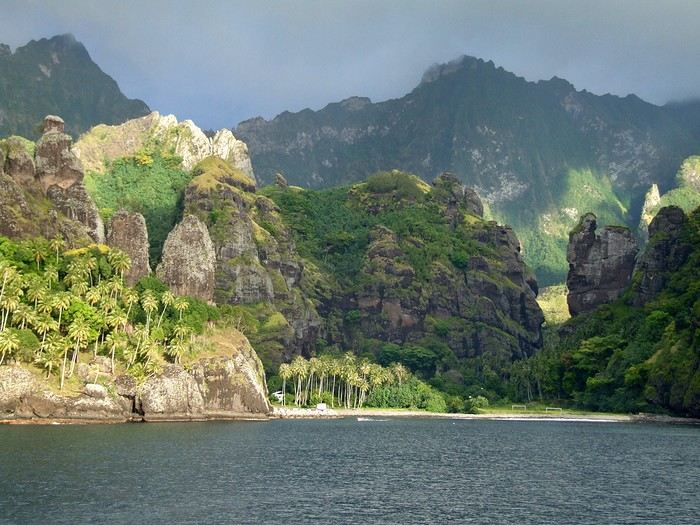 Idyllic landscape of a dream island, but difficult to access: the Bay of Virgins in Fatu Hiva, Marquesas Islands
Among the values conveyed by literature, tourism, and advertising is the quest for “elsewhere,” for a change of scenery, in the truest sense of the word—that is, the need to leave one’s country. This need for otherness, for difference, is projected onto dreamlike, idealized, even mythicized places. In our imaginary world, the island is often that place.
Yet we forget that islands have also been ideal prisons. The examples are numerous: Elba and Saint Helena, Alcatraz and Poulo Condor, If and Yeu, the Devil’s Islands and Leros. The latter, located in Greece in the Dodecanese, hosted a sinister forced labor camp during the colonels’ dictatorship as well as a psychiatric hospital. Despite the beauty of its bay, tourism has remained marginal there due to its bad reputation, unlike the neighboring island of Patmos.
I’d like to share a selection of about a dozen islands from across the world’s seas and oceans. For dreaming...
°°°°°°°°°°°°°°°
SANTORINI
July 27, 1967
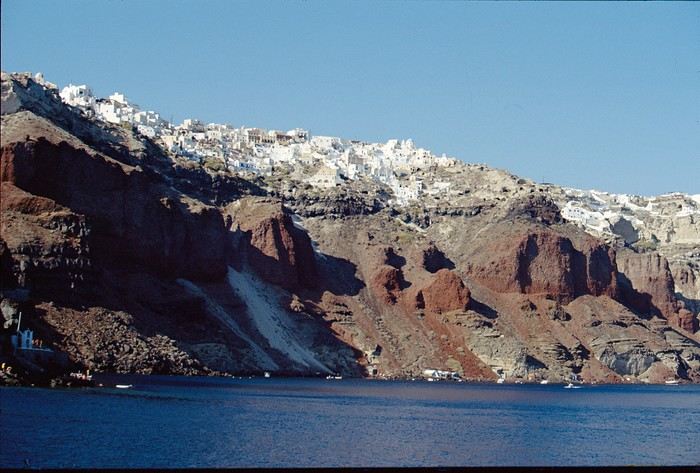
At dawn, the ferry from Agios Nikolaos (Crete) enters the immense caldera of Santorini. From the ship’s deck, Rainer, my travel companion, and I are left in awe by the sight of these towering, multicolored cliffs looming over us. We disembark and begin the steep climb on foot via the winding mule path up to the village of Fira, the capital perched above the cliff. Though it’s still very early, we head to the youth hostel. There wasn’t a soul in the alleys that morning—or rather, there were only cats! I have a fond memory of that encounter with Santorini: a sensory shock, a breathtaking volcanic site, a harmony of blue, ochre-red, and white. A welcoming island, as it was traditional to welcome the xénou, an island that hadn’t yet fully recovered from the terrible 1956 earthquake, a Cycladic architectural marvel where local life was still preserved.
It’s easy to see why, in antiquity, the island was named Kallisté (καλλίστη), “the most beautiful,” as it’s nearly impossible to resist gazing at this landscape shaped by tectonic forces. Indeed, a massive volcanic cataclysm—the Minoan eruption—shaped this scenery in the 17th century BCE, creating a caldera that was quickly filled by the sea. The enormous tsunamis that followed reached Crete, leading to the disappearance of the Minoan civilization.
A cliffside path along the caldera leads us to the peaceful village of Oia, at the northern tip of the island. Blue-domed churches and flower-filled villages with whitewashed houses line the way. This walk is a continuous marvel, offering splendid views of the caldera and the neighboring islands formed by the breakup of the ancient volcano (Thirissa, Nea Kameni). Oia is a large, picturesque village, like Fira perched on the cliff’s edge, which was severely damaged by the 1956 earthquake, and its scars are still visible. Its cave-like houses with vaulted roofs haven’t yet been turned into luxury hotels or shops. Absolute tranquility reigns here.
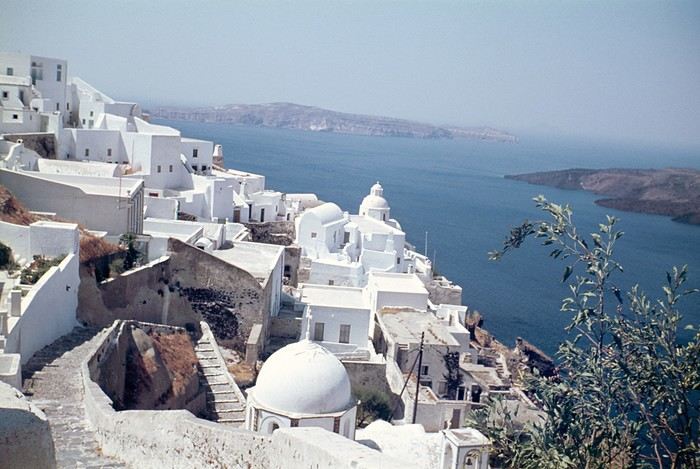 Oia in 1967—a peaceful village overlooking the caldera. But where are the pools and trendy bars?
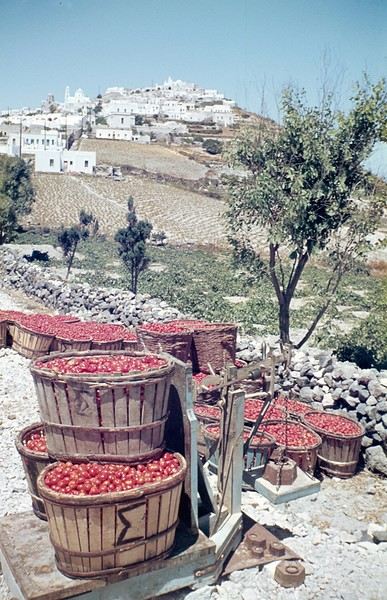
A lush countryside covered in olive trees and vineyards welcomes us for a pleasant hike, interrupted by the kindness of a friendly islander who gives us a lift in his truck for a few kilometers. He’s off to harvest his tomatoes, which he grows at the foot of Pyrgos Hill. The delicious little cherry tomato of Santorini earned an EU Protected Designation of Origin (PDO) in 2013. We climb up to the village of Pyrgos, perched on a hill and dominated by the elegant bell tower of its church. Finally, we reach the black sand beach of Kamari on the island’s eastern coast to enjoy a swim.
{...} To be continued

°°°°°°°°°°°°°°°°°
RAIVAVAE (French Polynesia)
November 15, 2007
Éléonore from Pension Tama welcomes us with traditional flower leis, as if she’d been waiting for old friends she hadn’t seen in ages. The small airport terminal is lively, the atmosphere warm—people hugging, rejoicing in reunions, all under kilos of flowers. Then, just as quickly, the place empties until the next flight... in a few days.
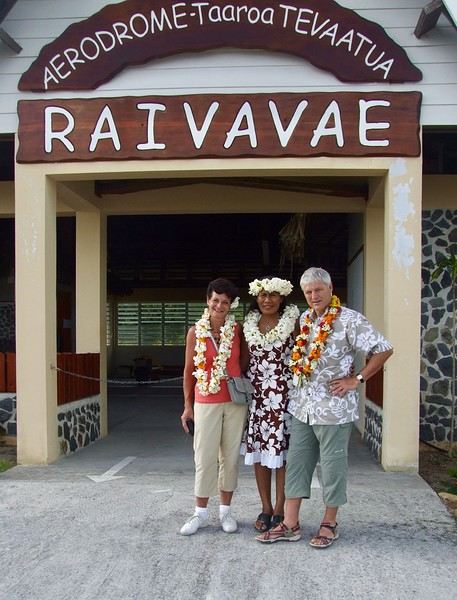
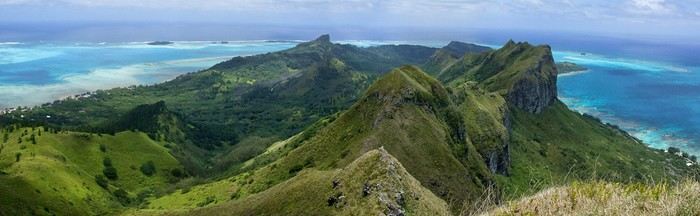
In the Austral Islands, a ninety-minute flight from Tahiti, Raivavae is a world away from the frenetic pace of Papeete or the tourist crowds of the Leeward Islands. The true paradise of the South Seas can still be savored here—it’s a bit like Bora Bora half a century ago. Our first feeling upon arriving on this island is wonder, with smiles that could melt even the gloomiest among us, landscapes so stunning they take your breath away, and above all, a sense of disorientation and fulfillment. Picture a mountainous island, about ten kilometers by three and a half, encircled by a coral reef and wild motu, cradling a lagoon with shades of blue that would make Bora Bora green with envy.
The roughly one thousand inhabitants of Raivavae are spread across four villages around the island. Children are everywhere, as is typical in Polynesia, and they greet you with open, genuine smiles. Here, ancestral values have survived progress. The predominantly Protestant population is very devout, as evidenced by the several temples built across the island. Religious fervor sets the rhythm of daily life. Sundays are reserved for worship and Sunday school (catechism). Work is forbidden on that day, and tourist activities are suspended. These rules are strict and respected.
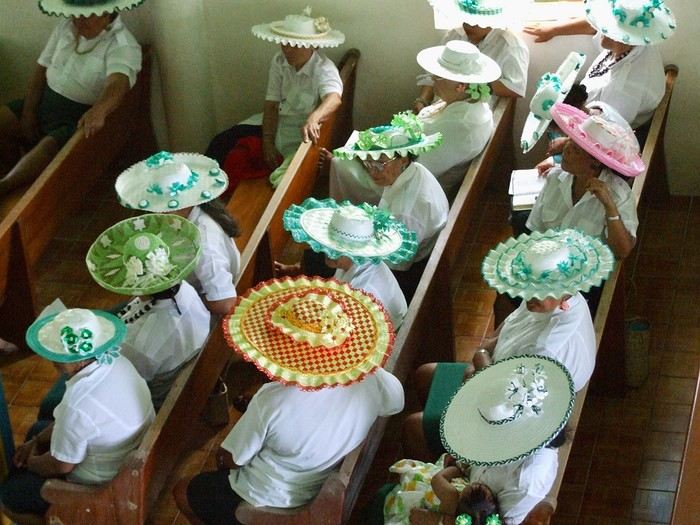 Hat contest for the worship celebration
Yet a sense of resignation is ever-present. The people of Raivavae know they are—and will remain—isolated. Despite the construction of an airstrip in 2004 and a few weekly flights to Tahiti and its nearest neighbor, Tubuai (200 km away), the island remains on the fringes of the world. One painful aspect is the separation of children from their parents when they leave for middle school in Tubuai starting in fifth grade. Television brings daily images of a world the islanders will likely never know, but one they often aspire to.
We are privileged. We have the pristine white-sand beaches of the motu and some of the most beautiful bays in Polynesia all to ourselves. The jewel in the crown, the island’s emblematic spot, is the “motu-pool,” about twenty minutes by boat. A natural, exquisite basin with crystal-clear water, gradients of blue, and white sand. And best of all, there’s almost no one there. In fact, lounging on the beach is frowned upon, especially for young women. Religion looks very unfavorably on sunbathing and lazing around. And yet, everything here leans toward that philosophy of life.
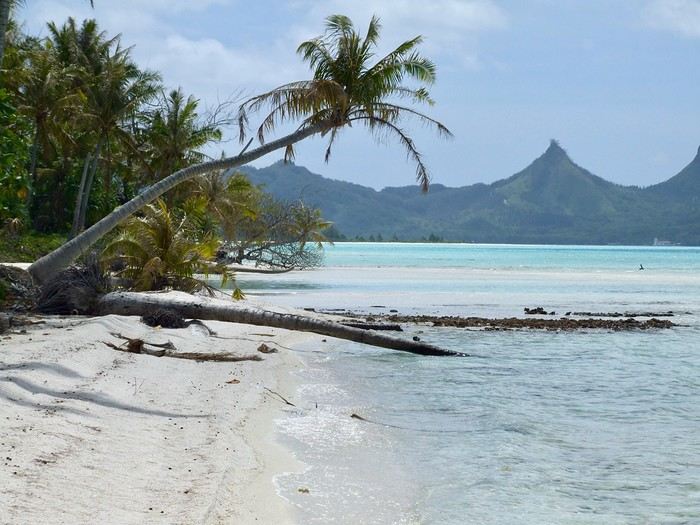
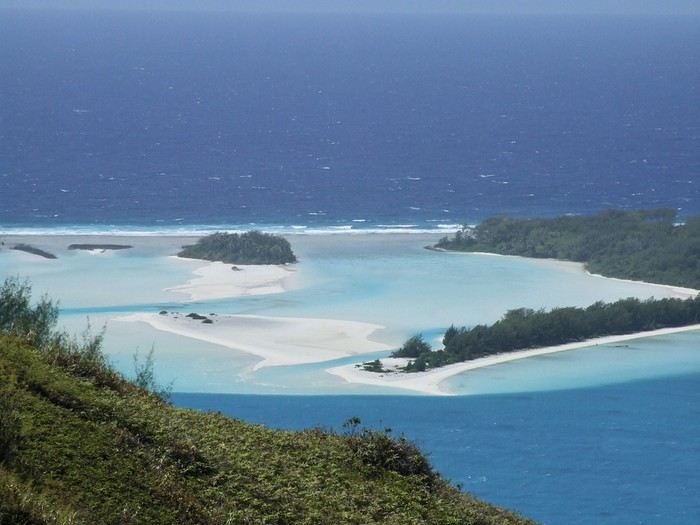 The "motu-pool"
{...} To be continued
Who among us hasn’t dreamed of having a ticket to Tahiti, Bora Bora, or the Marquesas in their pocket—preferably a one-way ticket to “paradise”?
Idyllic landscape of a dream island, but difficult to access: the Bay of Virgins in Fatu Hiva, Marquesas IslandsAmong the values conveyed by literature, tourism, and advertising is the quest for “elsewhere,” for a change of scenery, in the truest sense of the word—that is, the need to leave one’s country. This need for otherness, for difference, is projected onto dreamlike, idealized, even mythicized places. In our imaginary world, the island is often that place.
Yet we forget that islands have also been ideal prisons. The examples are numerous: Elba and Saint Helena, Alcatraz and Poulo Condor, If and Yeu, the Devil’s Islands and Leros. The latter, located in Greece in the Dodecanese, hosted a sinister forced labor camp during the colonels’ dictatorship as well as a psychiatric hospital. Despite the beauty of its bay, tourism has remained marginal there due to its bad reputation, unlike the neighboring island of Patmos.
I’d like to share a selection of about a dozen islands from across the world’s seas and oceans. For dreaming...
°°°°°°°°°°°°°°°
SANTORINI
July 27, 1967
At dawn, the ferry from Agios Nikolaos (Crete) enters the immense caldera of Santorini. From the ship’s deck, Rainer, my travel companion, and I are left in awe by the sight of these towering, multicolored cliffs looming over us. We disembark and begin the steep climb on foot via the winding mule path up to the village of Fira, the capital perched above the cliff. Though it’s still very early, we head to the youth hostel. There wasn’t a soul in the alleys that morning—or rather, there were only cats! I have a fond memory of that encounter with Santorini: a sensory shock, a breathtaking volcanic site, a harmony of blue, ochre-red, and white. A welcoming island, as it was traditional to welcome the xénou, an island that hadn’t yet fully recovered from the terrible 1956 earthquake, a Cycladic architectural marvel where local life was still preserved.
It’s easy to see why, in antiquity, the island was named Kallisté (καλλίστη), “the most beautiful,” as it’s nearly impossible to resist gazing at this landscape shaped by tectonic forces. Indeed, a massive volcanic cataclysm—the Minoan eruption—shaped this scenery in the 17th century BCE, creating a caldera that was quickly filled by the sea. The enormous tsunamis that followed reached Crete, leading to the disappearance of the Minoan civilization.
A cliffside path along the caldera leads us to the peaceful village of Oia, at the northern tip of the island. Blue-domed churches and flower-filled villages with whitewashed houses line the way. This walk is a continuous marvel, offering splendid views of the caldera and the neighboring islands formed by the breakup of the ancient volcano (Thirissa, Nea Kameni). Oia is a large, picturesque village, like Fira perched on the cliff’s edge, which was severely damaged by the 1956 earthquake, and its scars are still visible. Its cave-like houses with vaulted roofs haven’t yet been turned into luxury hotels or shops. Absolute tranquility reigns here.
Oia in 1967—a peaceful village overlooking the caldera. But where are the pools and trendy bars?A lush countryside covered in olive trees and vineyards welcomes us for a pleasant hike, interrupted by the kindness of a friendly islander who gives us a lift in his truck for a few kilometers. He’s off to harvest his tomatoes, which he grows at the foot of Pyrgos Hill. The delicious little cherry tomato of Santorini earned an EU Protected Designation of Origin (PDO) in 2013. We climb up to the village of Pyrgos, perched on a hill and dominated by the elegant bell tower of its church. Finally, we reach the black sand beach of Kamari on the island’s eastern coast to enjoy a swim.
{...} To be continued
°°°°°°°°°°°°°°°°°
RAIVAVAE (French Polynesia)
November 15, 2007
Éléonore from Pension Tama welcomes us with traditional flower leis, as if she’d been waiting for old friends she hadn’t seen in ages. The small airport terminal is lively, the atmosphere warm—people hugging, rejoicing in reunions, all under kilos of flowers. Then, just as quickly, the place empties until the next flight... in a few days.
In the Austral Islands, a ninety-minute flight from Tahiti, Raivavae is a world away from the frenetic pace of Papeete or the tourist crowds of the Leeward Islands. The true paradise of the South Seas can still be savored here—it’s a bit like Bora Bora half a century ago. Our first feeling upon arriving on this island is wonder, with smiles that could melt even the gloomiest among us, landscapes so stunning they take your breath away, and above all, a sense of disorientation and fulfillment. Picture a mountainous island, about ten kilometers by three and a half, encircled by a coral reef and wild motu, cradling a lagoon with shades of blue that would make Bora Bora green with envy.
The roughly one thousand inhabitants of Raivavae are spread across four villages around the island. Children are everywhere, as is typical in Polynesia, and they greet you with open, genuine smiles. Here, ancestral values have survived progress. The predominantly Protestant population is very devout, as evidenced by the several temples built across the island. Religious fervor sets the rhythm of daily life. Sundays are reserved for worship and Sunday school (catechism). Work is forbidden on that day, and tourist activities are suspended. These rules are strict and respected.
Hat contest for the worship celebrationYet a sense of resignation is ever-present. The people of Raivavae know they are—and will remain—isolated. Despite the construction of an airstrip in 2004 and a few weekly flights to Tahiti and its nearest neighbor, Tubuai (200 km away), the island remains on the fringes of the world. One painful aspect is the separation of children from their parents when they leave for middle school in Tubuai starting in fifth grade. Television brings daily images of a world the islanders will likely never know, but one they often aspire to.
We are privileged. We have the pristine white-sand beaches of the motu and some of the most beautiful bays in Polynesia all to ourselves. The jewel in the crown, the island’s emblematic spot, is the “motu-pool,” about twenty minutes by boat. A natural, exquisite basin with crystal-clear water, gradients of blue, and white sand. And best of all, there’s almost no one there. In fact, lounging on the beach is frowned upon, especially for young women. Religion looks very unfavorably on sunbathing and lazing around. And yet, everything here leans toward that philosophy of life.
The "motu-pool"{...} To be continued
Our one-month family itinerary in Thailand
Hi there,
We’re planning a little month-long trip to Thailand in July-August with our family (2 adults and 2 kids aged 12 and 15). Below is our tentative itinerary with our main activities—I’d love to hear your thoughts or feedback if there’s a major issue I’ve missed!
Bangkok: 6 nights to "acclimate" and explore the city and Ayutthaya Transfer to Kanchanaburi: 3 nights to discover the area (Bridge, Death Railway, Erawan, and Huai Mae Khamin) Transfer to Kaeng Krachan National Park: 3 nights, full-day visit to the park Transfer to San Roi Yot: 5 nights (Park, Kui Buri, beach) Back to Bangkok, then flight to Chiang Rai: 3 nights (city and surroundings) Transfer to Chiang Mai: 5 nights (city and nearby parks) Return to Bangkok: 2 nights before our flight home
Happy to provide any details!
We’re planning a little month-long trip to Thailand in July-August with our family (2 adults and 2 kids aged 12 and 15). Below is our tentative itinerary with our main activities—I’d love to hear your thoughts or feedback if there’s a major issue I’ve missed!
Bangkok: 6 nights to "acclimate" and explore the city and Ayutthaya Transfer to Kanchanaburi: 3 nights to discover the area (Bridge, Death Railway, Erawan, and Huai Mae Khamin) Transfer to Kaeng Krachan National Park: 3 nights, full-day visit to the park Transfer to San Roi Yot: 5 nights (Park, Kui Buri, beach) Back to Bangkok, then flight to Chiang Rai: 3 nights (city and surroundings) Transfer to Chiang Mai: 5 nights (city and nearby parks) Return to Bangkok: 2 nights before our flight home
Happy to provide any details!
Which transport should I take from Drancy to the Grévin Museum (Paris)?
Hi, I need your advice.
I’m heading to Drancy in the Paris region this Friday, on Auguste Blanqui Street—apparently it’s next to a police station.
I’d like to get from there to the Grévin Museum, but I’m not sure how: should I take the bus, RER, tram, or metro? If a kind soul could point me in the right direction and explain what type of transport ticket I need, that’d be great. I’m new to getting around Paris—I’m from the north and not used to it.
Thanks in advance!
What if we start with Mont Saint-Michel?
Hello everyone,
Here’s the account of the start of our 5/7-day trip in Normandy (then off to the neighbors in... Brittany):
Day 01 from Valenciennes to Mont Saint-Michel: Sunday, September 6, 2020.
After a detour through the south of Lille (picking up our son), we head southwest around 10:00 AM, taking the highways via Amiens, the Pont de Normandie, and Avranches to arrive at "the Mount" around 4:00 PM after 515 km. Parking P3 (14.20 € for 24 hours) for residents and hotels, located 50 meters from the start of the free round-trip shuttle included in the parking price (not too many tourists at this "late" Sunday hour), and we arrive at the hotel around 4:30 PM. Triple room with a view of the bay at Hôtel Du Guesclin for 1 night. From 5:15 PM to 6:30 PM, we tackle the complete tour of the ramparts counterclockwise from the Porte de l’Avancée, via the Tour du Nord (near the abbey entrance), passing in front of the abbey to reach the Tour Gabriel, and back to the start: stunning, not crowded, great weather, and amazing views. Dinner in the beautiful panoramic restaurant of the hotel, with a bay view at a "window" table (such a nice touch!). Of course, the day isn’t over, and we can then wander through a deserted main street and its unique atmosphere (photos below labeled "night" even though it’s only 9:15/9:30 PM). What a privilege!
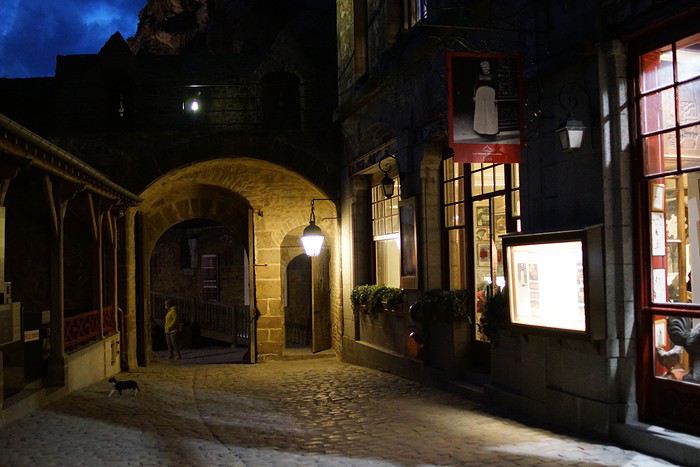
Day 02 from Mont Saint-Michel to Saint-Cast: Monday, September 7, 2020.
After a memorable sunrise over the bay and a sit-down breakfast, we climb the steps to the Abbey for our online-reserved time slot (9:30 AM, 11 € per person). The "masked group" is quite large, though within normal limits, and the one-way Covid-marked route (with a small brochure) prevents crowds. No need to rush, and 1 hour 15 minutes later, we’re done. Sure, it doesn’t have the charm of a guided tour, but we’re not complaining about being there! We pick up our bags at the hotel, take the shuttle back, grab the car at Parking P3, and head "south" to Dol-de-Bretagne, 26 km/25 minutes away. Around noon, the small town is very quiet, and parking in front of the Saint-Samson Cathedral** is free. Across the street, the tourist office is generous with info and gives us a great walking map/circuit: Cathedral, a stroll near the ramparts, the historic center** with its typical shopping streets and half-timbered houses, all covered at a leisurely pace in 45 minutes. Then a picnic on-site. It’s another 50 km/50 minutes to Saint-Cast-le-Guildo and the Armor Conseil agency for the apartment keys (Résidence du Casino, 72 m², 5th floor, 2 bedrooms, beach 20 meters away, insane morning and evening views, bed linen rental at Ohier 50 meters away, Carrefour City supermarket, and a bakery 200 meters away, plus a town center that hasn’t changed much in 25/30 years. Really, really nice. After settling in, a short walk is a must up to the heights of the Isle neighborhood behind the seaside residence... memories. Strangely, the well-known Crêperie Bretan’Or seems to be closed, as does the venerable Hôtel du Centre et des Plages (formerly "des Voyageurs")?? And for this reunion evening with the resort, a great crêpe/galette dinner at La Régal’ette, just 100 meters away. Day’s total: 12 km of walking for sightseeing.
A few photos at the bottom of the page...
* Read the rest on the blog: https://blogs.crespel.me/bretagne/
Here’s the account of the start of our 5/7-day trip in Normandy (then off to the neighbors in... Brittany):
Day 01 from Valenciennes to Mont Saint-Michel: Sunday, September 6, 2020.
After a detour through the south of Lille (picking up our son), we head southwest around 10:00 AM, taking the highways via Amiens, the Pont de Normandie, and Avranches to arrive at "the Mount" around 4:00 PM after 515 km. Parking P3 (14.20 € for 24 hours) for residents and hotels, located 50 meters from the start of the free round-trip shuttle included in the parking price (not too many tourists at this "late" Sunday hour), and we arrive at the hotel around 4:30 PM. Triple room with a view of the bay at Hôtel Du Guesclin for 1 night. From 5:15 PM to 6:30 PM, we tackle the complete tour of the ramparts counterclockwise from the Porte de l’Avancée, via the Tour du Nord (near the abbey entrance), passing in front of the abbey to reach the Tour Gabriel, and back to the start: stunning, not crowded, great weather, and amazing views. Dinner in the beautiful panoramic restaurant of the hotel, with a bay view at a "window" table (such a nice touch!). Of course, the day isn’t over, and we can then wander through a deserted main street and its unique atmosphere (photos below labeled "night" even though it’s only 9:15/9:30 PM). What a privilege!
Day 02 from Mont Saint-Michel to Saint-Cast: Monday, September 7, 2020.
After a memorable sunrise over the bay and a sit-down breakfast, we climb the steps to the Abbey for our online-reserved time slot (9:30 AM, 11 € per person). The "masked group" is quite large, though within normal limits, and the one-way Covid-marked route (with a small brochure) prevents crowds. No need to rush, and 1 hour 15 minutes later, we’re done. Sure, it doesn’t have the charm of a guided tour, but we’re not complaining about being there! We pick up our bags at the hotel, take the shuttle back, grab the car at Parking P3, and head "south" to Dol-de-Bretagne, 26 km/25 minutes away. Around noon, the small town is very quiet, and parking in front of the Saint-Samson Cathedral** is free. Across the street, the tourist office is generous with info and gives us a great walking map/circuit: Cathedral, a stroll near the ramparts, the historic center** with its typical shopping streets and half-timbered houses, all covered at a leisurely pace in 45 minutes. Then a picnic on-site. It’s another 50 km/50 minutes to Saint-Cast-le-Guildo and the Armor Conseil agency for the apartment keys (Résidence du Casino, 72 m², 5th floor, 2 bedrooms, beach 20 meters away, insane morning and evening views, bed linen rental at Ohier 50 meters away, Carrefour City supermarket, and a bakery 200 meters away, plus a town center that hasn’t changed much in 25/30 years. Really, really nice. After settling in, a short walk is a must up to the heights of the Isle neighborhood behind the seaside residence... memories. Strangely, the well-known Crêperie Bretan’Or seems to be closed, as does the venerable Hôtel du Centre et des Plages (formerly "des Voyageurs")?? And for this reunion evening with the resort, a great crêpe/galette dinner at La Régal’ette, just 100 meters away. Day’s total: 12 km of walking for sightseeing.
A few photos at the bottom of the page...
* Read the rest on the blog: https://blogs.crespel.me/bretagne/
Africa Mia English translation pending
C'est l'histoire d'un groupe de jeunes musiciens du Mali qui, en 1964, fut envoyé à Cuba pour faire partie d'une formation musicale qui donnera des représentations un peu partout sur l'île. Ce groupe s'appelle Las Maravillas de Mali , et à l'époque il connait un certain succès en Afrique.
Plusieurs années plus tard de l'eau a passé sous le pont, mais un réalisateur qui voyageait au Mali fait la connaissance de Dramane qui lui raconte l'aventure des Maravillas de Mali ... Maintenant l'histoire est en film ! Y a plus qu'aller le voir 😎
https://www.fip.fr/emissions/certains-l-aiment-fip/africa-mia-la-fabuleuse-histoire-de-las-maravillas-de-mali
Bande-annonce :
https://www.youtube.com/watch?v=Gmxv9-L3Uvo
Plusieurs années plus tard de l'eau a passé sous le pont, mais un réalisateur qui voyageait au Mali fait la connaissance de Dramane qui lui raconte l'aventure des Maravillas de Mali ... Maintenant l'histoire est en film ! Y a plus qu'aller le voir 😎
https://www.fip.fr/emissions/certains-l-aiment-fip/africa-mia-la-fabuleuse-histoire-de-las-maravillas-de-mali
Bande-annonce :
https://www.youtube.com/watch?v=Gmxv9-L3Uvo
Quel restaurant pour cabine Aurea sur le MSC Fantasia? English translation pending
bonjour
nous partons en janvier sur msc fantasia en catégorie aurea et j aimerais savoir a quel restaurant on ai rattache avec cette catégorie et avoir vos impression sur ce bateau car cette anée ce ne sera pas le msc seawiew
nous avons déjà fait 3 croisière dont 2 avec msc
nous partons en janvier sur msc fantasia en catégorie aurea et j aimerais savoir a quel restaurant on ai rattache avec cette catégorie et avoir vos impression sur ce bateau car cette anée ce ne sera pas le msc seawiew
nous avons déjà fait 3 croisière dont 2 avec msc
Petites randonnées en Corse juin 2020 English translation pending
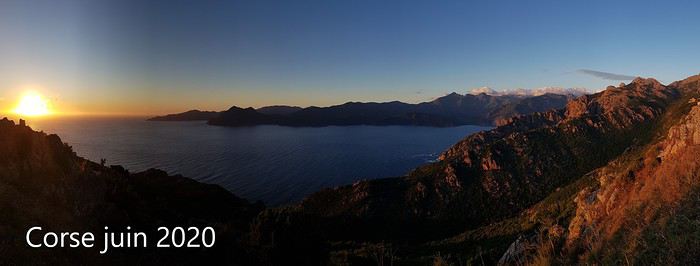 Bonjour à tous,
Encore un p'tit carnet sur la Corse, où nous sommes allés mi-juin dans des conditions qui ne se reproduiront sans doute jamais : météo parfaite et pas un chat!
Pour une fois, je ne donne pas beaucoup de détails pratiques (mais tout de même les traces wikiloc) très faciles à trouver en quelques clics.
Le but premier du voyage était d'apporter quelques affaires à notre fille Marion mais sevrés de voyages depuis l'irruption d'un certain virus nous en avons profité pour randonner un peu.
Le récit en images est là : clic!
Bonne lecture! Marie
Texte seul :
Corse Juin 2020 Petite virée en Corse, où vit désormais notre fille Marion. Voyage reporté 2 fois en raison de la Covid 19…
Finalement nous partons en fourgon car nous avons pas mal de fourbi en plus des chiens. Mi-juin, la limitation des 100 km est enfin levée et après avoir une traversée très tranquille au départ de Toulon, nous débarquons de bonne heure à Ajaccio : au programme, bricolage et randonnées !
Les chiens nous accompagnent, Corsica Ferries propose des cabines « spéciales chiens » sans moquette. Plein de chiens sur ce bateau, tous très pacifiques…Malheureusement le pont supérieur où un espace leur serait réservé est fermé. Environ 14h de voyage (en comptant les temps d’embarquement/débarquement), les vessies ont tenu le choc ! Tous les passagers sont masqués et ravis de retrouver un peu de liberté !
DI 14/06/20 Arrivée en Corse L’air est doux, le ciel est pur (gros orage et grosses inondations quelques jours avant notre arrivée), la météo s’annonce idéale pour la semaine à venir. Je craignais la chaleur en Juin, mais finalement nous n’aurons jamais plus de 24°C en bord de mer, supportable donc… Retrouvailles et bricolage, puis nous faisons une petite balade vespérale vers l’anse de Minaccia. Pas la foule pour un dimanche…
LU 15/06/20 Lac de Melo Marion et Yoan se sont libérés pour nous accompagner et leur aide sera indispensable pour pousser/hisser/tirer les chiens (30 et 40 kg) qui eurent bien du mal à franchir 2 ressauts équipés d’échelles verticales (le 1er se franchit facilement par la droite et le 2ème par la gauche, c’est plus scabreux). Tout est très vert, très fleuri, on se régale. On bulle un long moment près du lac (les chiens plus tout jeunes sont crevés tellement ils ont été crispés par ce franchissement) tandis que les jeunes grimpent plus haut dans la montagne. Nous redescendons en rive droite de la cascade (sans échelle !) Jolie balade, pour moi un peu gâchée par la peine qu’ont eue mes chiens chéris… https://fr.wikiloc.com/itineraires-randonnee/lac-de-melo-15-juin-51095645
MA 16/06/20 Bergeries des Pozzi Départ avec Marion de la station de Val D’Eze : on longe d’abord un tire-fesse (pas glop) puis la balade devient magnifique ! Quelques vaches et chevaux nous accueillent en haut de la grimpette. Vue sur le village de Bastelica et au fond sur la baie d’Ajaccio. On longe une très jolie crête et au bout de celle-ci on découvre d’un coup le vallon et ses pozzines. On adore ce type de paysage, les chiens aussi ! On passe ensuite à proximité de la bergerie avant de traverser une grande forêt de hêtres tortueux sillonnée de quelques ruisseaux : parfait pour les chiens ! On a adoré cette balade ! https://fr.wikiloc.com/itineraires-randonnee/pozzis-depuis-val-d-ese-pozzi-5002592
Marion rentre sur Ajaccio (elle travaille demain) tandis que nous allons au départ de la rando prévue demain, au-dessus de Soccia.
ME 17/06/20 Lac de Creno Nous avons dormi sur le parking (désert) en dessous du petit resto situé au départ de cette randonnée. Itoo a encore trouvé quelques forces pour jouer avec le p’tit chien du coin. Nous partons de bonne heure (fraicheur, belle lumière, personne) sur un joli sentier fleuri. C’est tellement vert qu’on se croirait en Ecosse ! Nous voici au seul lac boisé de Corse, certains pins sont énormes ! Très belle vue sur les montagnes qui cernent le lac de Melo où nous étions avant-hier. On monte ensuite vers la Chapelle San’t Eliseu dans un sous-bois profondément labouré par les sangliers (le mieux est de monter par la crête qui commence juste derrière la maison forestière, il n’y a pas vraiment de sentier…ou nous ne l’avons pas trouvé) Vue à 360° magnifiée par les nuages ! Nous descendons ensuite par une crête si joliment fleurie qu’on se croirait dans un jardin. Le sentier est assez mal tracé, il faut être attentif. https://fr.wikiloc.com/itineraires-randonnee/lac-de-creno-et-chapelle-sant-eliseu-17-juin-56206520
Déjeuner au resto du parking, quasi désert : les locaux se lamentent, nous compatissons mais jubilons intérieurement d’avoir les chemins de randonnée presque pour nous tous seuls. Autre avantage, service rapide et très aimable : nous qui n’allons que très rarement au restaurant en vacances car nous n’aimons pas attendre des plombes le bon vouloir d’un service débordé allons changer nos habitudes. Au moins pendant qq jours !
Gorges de Spelunca Nous reprenons la route vers les Gorges de Spelunca, qui m’ont un peu déçue. La route d’approche par l’est est très belle mais les gorges m’ont semblé assez banales. Nous longeons la rivière (que l’on voit finalement assez peu du fait de la végétation) en aller-retour jusqu’au vieux pont. Peu de possibilité de baignade pour les chiens… https://fr.wikiloc.com/itineraires-randonnee/gorges-de-spelunca-56206499
Fin de journée au départ de la rando du lendemain, près des calanques de Piana et du Capo Rosso.
JE 18/06/20 Capo Rosso On démarre de bonne heure car je crains la chaleur au niveau de la mer. Belle vue vers la côte et ses tours génoises. On aperçoit le parking. Plus on descend, plus il fait chaud et plus je pense à la remontée…je m’inquiète pour les chiens qui tirent déjà la langue. Arrivés à cette jolie cabane en pierre, nous abandonnons Fred qui monte en vitesse jusqu’à la tour et faisons tranquillement demi-tour : retour facile finalement. https://fr.wikiloc.com/itineraires-randonnee/capu-rossu-en-boucle-41682629
Calanches de Piana On enchaîne avec une petite balade dans les Calanches de Piana, sur le Chemin du Château Fort : la lumière est dure et blanche, il est midi… https://fr.wikiloc.com/itineraires-randonnee/piana-18-juin-56206514 Pause resto sur la plage de Busaglia, où nous sommes encore une fois les seuls clients : service attentionné, les chiens ont eu chacun une gamelle d’eau !
Vallée du Fango On décide ensuite de pousser jusqu’à la vallée du Fango, pour les rafraichir un peu. Très joli coin, qui doit être habituellement bondé à en juger par les panneaux d’interdiction de stationner et la taille des parkings : on a vu en tout 4 personnes ! Après cette baignade les chiens sont définitivement épuisés par ces quelques jours de rando ! https://fr.wikiloc.com/itineraires-randonnee/vallee-du-fango-56206546 Demain, croisière… Retour vers Porto et nuit près de la plage de Gradelle.
VE 19/06/20 Scandola Départ de Porto à 10h, le bateau de Via Mare est plein à 10%, c’est cool ! (pour nous…) J’avais d’abord contacté le Passe Partout qui nous avait gentiment conseillé de prendre un bateau plus grand pour le confort des chiens car il y a un peu de houle : sympa ! (Marion et Yoan ont fait le tour avec eux qq jours plus tard et ça leur a bien plu) Il fonce vers la réserve de Scandola, puis navigue pendant quelques dizaines de minutes en rasant les roches volcaniques : 2 nids de balbuzards ( ?) vides, très peu d’oiseaux. Mais de jolies couleurs et des commentaires intéressants. Petite pause au retour au village de Girolata (pas d’accès routier) avec une petite baignade pour les chiens -à bonne distance des vaches ! Tour sympa et reposant ! Retour sur Porto en milieu de journée puis sur Ajaccio.
SA 20/06/20 Pointe de la Parata Nous reprenons le ferry ce soir. Petite balade de l’Anse de Minaccia jusqu’à la pointe de la Parata, personne sur cette rando non plus (on est à 20 mn d’Ajaccio un samedi !) https://fr.wikiloc.com/itineraires-randonnee/la-parata-20-juin-56206489 Parking immense quasi vide. Quelques personnes tout de même près de la pointe, il faut dire que la vue sur les îles Sanguinaires est magnifique ! Bon déjeuner à la brasserie de la pointe (à nous 4 on double l’effectif des clients !) Appareillage vers 20h00, alors que le soleil descend sur l’horizon… Quel plaisir de naviguer de nuit et d’arriver frais et dispo le lendemain matin !
Balcon extérieur dans les appartements Samsara (croisière Diadema) English translation pending
Bonjour, il m'est proposé un appartement Samsara sur le Diadema qui a l'air vraiment superbe. Mais j'ai la nette impression en regardant les films qu'il n'y a pas de balcon EXTERIEUR. Je vois certes un jacuzzi donnant sur la mer, mais il a l'air fermé. Quelqu'un peut-il m'indiquer s'il existe bien AUSSI un balcon extérieur dans ces appartements ? Si tel est le cas, il faudrait prendre la précaution de bien le montrer !
Se rendre en bus à Gyeongju depuis Busan (Corée du Sud) English translation pending
Bonjour,
Je voulais savoir comme ce rendre dans cette ville depuis Busan, j'ai lu quand bus il n'y a aucune soucis. Sur place est-ce qu'il y a des bus pour faire les sites important de ce site.
Merci
Je voulais savoir comme ce rendre dans cette ville depuis Busan, j'ai lu quand bus il n'y a aucune soucis. Sur place est-ce qu'il y a des bus pour faire les sites important de ce site.
Merci
Croisière Hurtigruten en Norvège "La magie des aurores boréales" English translation pending
bonjour,
je suis très tentée par une croisière Hurtigruten 13 j en février 2021 intitulée " la magie des aurores boréales" sur le MS Trollfjord Bergen-Cap Nord-Bergen. j'hésite avec une autre de 13j également qui s'appelle : "à la recherche des aurores boréales" Bergen-Kirkernes-Bergen. Quelqu'un peut -il m'aider a faire mon choix.
Au niveau des cabines comment choisir pas trop cher mais avec une vue dégagée ?
Merci pour vos conseils.
Croisière Ponant Marseille-Corse English translation pending
Bonsoir,
nous avons effectué cette croisière du 25 juillet au 1er aout. C'est vraiment une croisière dédiée aux randonneurs (il y a d'autres activités mais en minorités).
Donc comme c'est pas notre passion, on a été déçu. De très jolies paysages, de chouette visites guidées (trop peu) mais une majorité de randonnées.
C'est le première fois qu'on faisait Ponant, on était dans le bateau L'Austral, étions environ 60 croisiéristes avec quelques employés français (deux ou trois au bar, 4-5 au restaurant, et d'autres à la réception. Pour le reste, une majorité de Philippins pour les cabines bien sur, restaurant, bars, etc... (toujours aussi aimables, souriants, bravo à eux).
On trouve un petit théâtre avec 5 danseurs (qui ne se produisent pas tous les soirs, mais qui sont très doués), 2 chanteuses et un chanteur qui se produisent dans les bars en fonction des heures (que si on applaudit pas, personne n'applaudit.....bien triste tout cela). Et vers 23h00 il y a peu ou plus rien.
Dés l'embarquement, on nous change de numéro de cabine, durant la semaine 3 jours où wc hs le matin, on a eu aussi des drôles de réflexions de certains guides d'excursion..., et pas de chance, un moteur de la navette en pleine mer qui lâche. Le conducteur Philippin, bravo à lui nous a amené à quai avec un seul moteur.
Nous étions au pont 3, cabine avec balcon au départ 319, mais en fin compte on nous met au 317. On a pas eu d'explications, on sait juste qu'ils ont mis un guide des excursions à la cabine qui nous était attribué au départ...
Invités d'honneurs : Docteur Simes avec sa femme ou son amie, et un autre couple. Ponant a sorti le tapis rouge😄. Ils ont fait trois conférences, des excursions et semblent n'avoir eu aucun problème de wc 😏.
On ne connaissait pas Ponant, et bien pour nous on s'est trompé de croisière. Ils auraient du expliquer à la réservation qu'il y avait beaucoup de randonnées... Même un couple belge, ralaient un peu car ils n'avaient que leurs baskets (ce qui est suffisant selon les guides) mais ils auraient préféré leurs chaussures de randonnée.
Les visites guidée étaient très bien surtout à Calvi. Il y avait du canoé aussi mais on nous a dit qu'il fallait des choix.. On a pas pu en faire car le lundi complet, le mardi uniquement réservé aux familles, le mercredi on pouvait pas car visite guidée (notre choix) à Calvi, le jeudi il n'y en avait pas... et le vendredi visite guidée d'un jardin (notre choix aussi). Il pouvait y en avoir le vendredi après-midi, et bien non.
Enfin bref, on a pu sortir car Costa pour le moment est en croix, mais on ne devrait pas y revenir.
Cependant, pour les randonneurs c'est une superbe croisière. Mais attention en Corse et dans le Sud de la France le soleil tape fort, même si vous partez à 08h00. Certains ont souffert de la chaleur.
C'était une croisière avec beaucoup de croisiéristes très aisés, certains sympathiques, d'autres peu respectueux du personnel....(quelle honte quand même).
Le commandant de bord aimable, mais qui va souvent discuter avec les mêmes personnes. A part un bonjour, nous n'avons eu aucune discussion avec lui. Pourtant avec 60 croisiéristes à bord sur 180 je crois, il a le temps..... On le voyait tous les jours au restaurant, bars etc.. c'est pas lui qui était à la barre du bateau !!!
Donc, ben bien pour la sortie mais des déceptions, parfois grandes.
Croisière fluviale sur la Saône et le Rhône du 22 au 29 juillet English translation pending
Bonjour,
Les croisières maritimes de masse ne sont toujours pas reparties, sauf pour faire des ronds dans l’eau sans escales en Europe du nord. Aux dernières informations il est assez peu probable que ça redémarre avant septembre en Europe du sud. Les compagnies américaines quant à elles reportent les unes après les autres, la dernière en date étant NCL qui prévoit novembre 2020.
Nous souvenant du proverbe disant : « fautes de grives on mange des merles », nous nous sommes rabattus sur une fluviale. Avant de revenir sur les escales, je vais parler de l’embarquement et du bateau, Notre décision de partir en dernière minute a été prise en fonction de 3 éléments : les précautions sanitaires indiquées avec en gage le sérieux allemand, la climatisation individuelle des cabines et un prix défiant toute concurrence.
Le Bijou du Rhône de la compagnie Nicko est un bateau de 115 m de long, 11,4 de large et 1,5 de tirant d’eau. Jusqu’à présent cette marque n’était pas commercialisée en France, mais Covid oblige, il fallait trouver des clients et nous avons été les 20 premiers français à bord sur 80 passagers ce total représentant 55 % de sa capacité. Il y a 3 catégories de cabines. Celles du pont inférieur sont petites et mal pratiques. Celles du pont intermédiaire et du pont supérieur sont identiques, seule la taille de la fenêtre (pas de balcon) change. Leur équipement est très proche de ce dont nous avons l’habitude en mer quoi que plus petites, avec beaucoup de rangements.
Il était dit que la compagnie travaille sur l’organisation d’un test rapide à l’embarquement, avec 3 hypothèses selon les résultats. Raté, ils n’ont pas pu finir leur « travail » à temps, personne parmi les français n’a été testé. Les allemands arrivés en bus peut-être au départ, je n’ai pas pensé à poser la question. Il y avait tout de même un questionnaire médical à remplir, mais, bon…. Par prudence, j’avais apporté un résultat de test sanguin, mais datant de 15 jours. Nous avons eu droit à une prise de température c’est tout ! Sur ce coup, le sérieux germanique a été pris en défaut, zéro pointé !! Les masques étaient obligatoires dans les espaces communs (bien respecté), mais pas sur le pont supérieur où le problème n’était pas de trouver une table ou une chaise longue, mais plutôt de savoir laquelle choisir ! Une réunion d’accueil en allemand et une en français ont eu lieu.
Prochaine publication : la vie à bord.
https://photos.app.goo.gl/9w5XjX3mcxoRj8Yi9
Les croisières maritimes de masse ne sont toujours pas reparties, sauf pour faire des ronds dans l’eau sans escales en Europe du nord. Aux dernières informations il est assez peu probable que ça redémarre avant septembre en Europe du sud. Les compagnies américaines quant à elles reportent les unes après les autres, la dernière en date étant NCL qui prévoit novembre 2020.
Nous souvenant du proverbe disant : « fautes de grives on mange des merles », nous nous sommes rabattus sur une fluviale. Avant de revenir sur les escales, je vais parler de l’embarquement et du bateau, Notre décision de partir en dernière minute a été prise en fonction de 3 éléments : les précautions sanitaires indiquées avec en gage le sérieux allemand, la climatisation individuelle des cabines et un prix défiant toute concurrence.
Le Bijou du Rhône de la compagnie Nicko est un bateau de 115 m de long, 11,4 de large et 1,5 de tirant d’eau. Jusqu’à présent cette marque n’était pas commercialisée en France, mais Covid oblige, il fallait trouver des clients et nous avons été les 20 premiers français à bord sur 80 passagers ce total représentant 55 % de sa capacité. Il y a 3 catégories de cabines. Celles du pont inférieur sont petites et mal pratiques. Celles du pont intermédiaire et du pont supérieur sont identiques, seule la taille de la fenêtre (pas de balcon) change. Leur équipement est très proche de ce dont nous avons l’habitude en mer quoi que plus petites, avec beaucoup de rangements.
Il était dit que la compagnie travaille sur l’organisation d’un test rapide à l’embarquement, avec 3 hypothèses selon les résultats. Raté, ils n’ont pas pu finir leur « travail » à temps, personne parmi les français n’a été testé. Les allemands arrivés en bus peut-être au départ, je n’ai pas pensé à poser la question. Il y avait tout de même un questionnaire médical à remplir, mais, bon…. Par prudence, j’avais apporté un résultat de test sanguin, mais datant de 15 jours. Nous avons eu droit à une prise de température c’est tout ! Sur ce coup, le sérieux germanique a été pris en défaut, zéro pointé !! Les masques étaient obligatoires dans les espaces communs (bien respecté), mais pas sur le pont supérieur où le problème n’était pas de trouver une table ou une chaise longue, mais plutôt de savoir laquelle choisir ! Une réunion d’accueil en allemand et une en français ont eu lieu.
Prochaine publication : la vie à bord.
https://photos.app.goo.gl/9w5XjX3mcxoRj8Yi9
Le jardin à l'iranienne English translation pending
Dans la série documentaire "Jardins d'ici et d'ailleurs" (2016), ARTE rediffuse ce jeudi 23/07/20 à 17h45 l'épisode "Bagh-e Fin" (26', ARTE 2016).
Déjà disponible jusqu'au 18/09/20 sur https://www.arte.tv/fr/videos/066315-007-A/jardins-d-ici-et-d-ailleurs/.
Vendredi 24/07/20, sera diffusé à 17h45 l'épisode "Avenue Chahar Bagh" (26', ARTE 2016), sur le grand axe central d'Ispahan. Inclus le palais Chehel Sotun et le Pont Si-o Se Pol.
Déjà disponible sur https://www.arte.tv/fr/videos/066315-008-A/jardins-d-ici-et-d-ailleurs/, jusqu'au 21/09/20.
Pour les non-initiés, c'est l'occasion de découvrir ou approfondir le jardin à l'iranienne.
Une version sous-titrée en anglais est aussi disponible pour vos amis iraniens. A ce jour, elles sont accessibles sur la version anglophone d'ARTE+7, mais aussi sur YouTube in https://www.youtube.com/watch?v=0WuGNmBrv_A pour Bagh-e Fin, in https://www.youtube.com/watch?v=v6r22b1YsV4&t=7s pour l'avenue Chahar Bagh.
Dommage que le commentaire français ignore tant la prononciation correcte des noms iraniens. Ainsi le chahar qui doit se prononcer "tchahar" pour un francophone. Ou le "gh" qui correspond à un type de "r" roulé (et non un simple "g").
Il aurait pu être judicieux d'indiquer une fois au moins que le jardin iranien existait déjà sous les Achéménides, on en a même retrouvé des traces à Pasargades. Un espace entouré d'un mur, qui est à l'origine du pairi-daeza.
L'article francophone de wikipedia (https://fr.wikipedia.org/wiki/Jardin_persan) permet d'approfondir la compréhension du jardin iranien.
Notez que le Jardin Persan est inscrit depuis 2012 par l'UNESCO au Patrimoine de l'Humanité, avec comme exemples les vestiges du jardin de Pasargades, Bagh-e Shahzadeh à Mahan, Bagh-e Eram à Chiraz, Bagh-e Fin près de Kashan, le jardin du palais de Chehel Sotun à Ispahan, les jardins Dolatabad à Yazd, Abbasabad près de Behshar, Akbarieh à Birjand, et Pahlevanpour à Mehriz.
Fabrice
Déjà disponible jusqu'au 18/09/20 sur https://www.arte.tv/fr/videos/066315-007-A/jardins-d-ici-et-d-ailleurs/.
Vendredi 24/07/20, sera diffusé à 17h45 l'épisode "Avenue Chahar Bagh" (26', ARTE 2016), sur le grand axe central d'Ispahan. Inclus le palais Chehel Sotun et le Pont Si-o Se Pol.
Déjà disponible sur https://www.arte.tv/fr/videos/066315-008-A/jardins-d-ici-et-d-ailleurs/, jusqu'au 21/09/20.
Pour les non-initiés, c'est l'occasion de découvrir ou approfondir le jardin à l'iranienne.
Une version sous-titrée en anglais est aussi disponible pour vos amis iraniens. A ce jour, elles sont accessibles sur la version anglophone d'ARTE+7, mais aussi sur YouTube in https://www.youtube.com/watch?v=0WuGNmBrv_A pour Bagh-e Fin, in https://www.youtube.com/watch?v=v6r22b1YsV4&t=7s pour l'avenue Chahar Bagh.
Dommage que le commentaire français ignore tant la prononciation correcte des noms iraniens. Ainsi le chahar qui doit se prononcer "tchahar" pour un francophone. Ou le "gh" qui correspond à un type de "r" roulé (et non un simple "g").
Il aurait pu être judicieux d'indiquer une fois au moins que le jardin iranien existait déjà sous les Achéménides, on en a même retrouvé des traces à Pasargades. Un espace entouré d'un mur, qui est à l'origine du pairi-daeza.
L'article francophone de wikipedia (https://fr.wikipedia.org/wiki/Jardin_persan) permet d'approfondir la compréhension du jardin iranien.
Notez que le Jardin Persan est inscrit depuis 2012 par l'UNESCO au Patrimoine de l'Humanité, avec comme exemples les vestiges du jardin de Pasargades, Bagh-e Shahzadeh à Mahan, Bagh-e Eram à Chiraz, Bagh-e Fin près de Kashan, le jardin du palais de Chehel Sotun à Ispahan, les jardins Dolatabad à Yazd, Abbasabad près de Behshar, Akbarieh à Birjand, et Pahlevanpour à Mehriz.
Fabrice
Cécile découvre le Finistère English translation pending
Après l'ouest américain
https://voyageforum.com/v.f?do=post_view_flat;post=9613741;page=1;search_string=Cecile;sb=post_latest_reply;so=ASC;mh=20;
et New York, https://voyageforum.com/v.f?post=9796574;search_string=Cecile
cet été, Cécile découvre le Finistère....
certes cela peut faire moins rêver, mais bon la Bretagne c est toujours aussi beau ..sans les parisiens et autres touristes covidés !
Campement à Bénodet, sa plage, son ciel bleu......
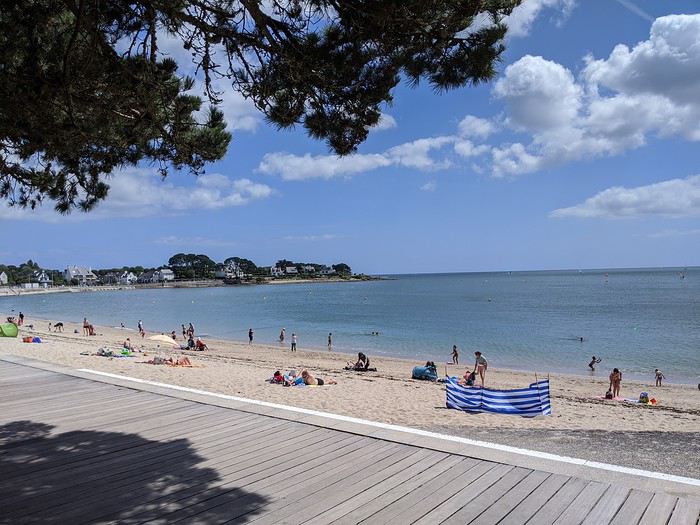
Où boire un coup par cette chaleur ? à l Ile Tudy bien sûr ! situé en face de sa voisine Loctudy,
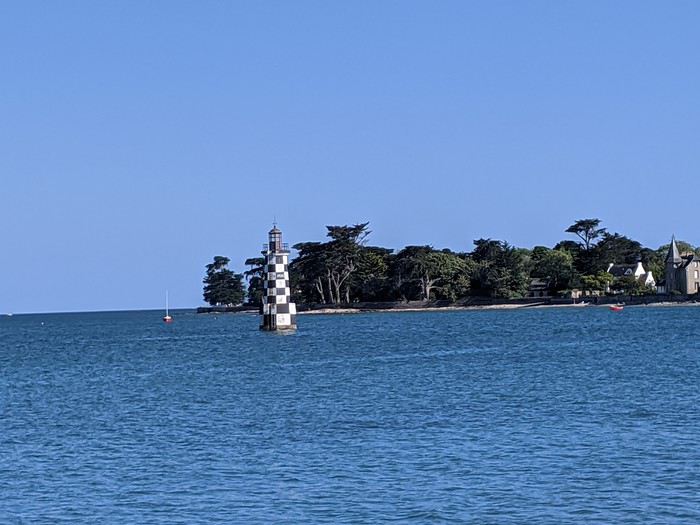
le bout de ce village se concentre sur son port , ses bistrots, restos.... encore calmes ce lundi
...il faut bien ça pour se remettre des 915 km de la veille
Descente de cervoise ambrée dans un bar connu
aussi pour la sa déco, affiche de concerts, artistes au plafond quant aux toilettes, super tapisserie

bref, on glande en admirant le paysage
la journée d installation se termine tranquillement.. Cécile se félicite de son bon choix...
et New York, https://voyageforum.com/v.f?post=9796574;search_string=Cecile
cet été, Cécile découvre le Finistère....
certes cela peut faire moins rêver, mais bon la Bretagne c est toujours aussi beau ..sans les parisiens et autres touristes covidés !
Campement à Bénodet, sa plage, son ciel bleu......
Où boire un coup par cette chaleur ? à l Ile Tudy bien sûr ! situé en face de sa voisine Loctudy,
le bout de ce village se concentre sur son port , ses bistrots, restos.... encore calmes ce lundi
...il faut bien ça pour se remettre des 915 km de la veille
Descente de cervoise ambrée dans un bar connu
aussi pour la sa déco, affiche de concerts, artistes au plafond quant aux toilettes, super tapisserie
bref, on glande en admirant le paysage
la journée d installation se termine tranquillement.. Cécile se félicite de son bon choix...
La Loire de Angers à Nantes à vélo English translation pending
J'envisage de partir faire un petit bout de la Loire en vélo de Angers à Nantes
Qui peut me renseigner sur cette distance ?
Avis sur le Costa Luminosa English translation pending
Bonjour
Je regarde une croisière pour mai 2021, que pensez-vous de ce navire ?
Âge, entretien, ambiance, installations, cabine ( balcon), restaurant etc...?
Merci d.avance aux connaisseurs
Mlt2a
Vélo à l'île d'Orléans avec mon garçon de 6 ans English translation pending
Bonjour,
Je compte passer 2 ou 3 jours à Québec avec mon garçon de 6 ans et j'ai pensé aller faire un tour à l'île d'Orléans.
J'ai pensé louer des vélos et faire un des circuits, mais est-ce qu'il y en a un qui serait adapté pour un jeune enfant? Je ne suis pas très chaud à l'idée de faire di vélo sur l'accotement des routes avec un enfant de 6 ans.
Je suis aussi preneur pour toutes les idées de trucs à faire ou voir avec mon p'tit bonhomme! :)
Merci!
Je compte passer 2 ou 3 jours à Québec avec mon garçon de 6 ans et j'ai pensé aller faire un tour à l'île d'Orléans.
J'ai pensé louer des vélos et faire un des circuits, mais est-ce qu'il y en a un qui serait adapté pour un jeune enfant? Je ne suis pas très chaud à l'idée de faire di vélo sur l'accotement des routes avec un enfant de 6 ans.
Je suis aussi preneur pour toutes les idées de trucs à faire ou voir avec mon p'tit bonhomme! :)
Merci!
Vacances en France en R1200 GS English translation pending
Bonjour
Durant nos prochaines vacances en juillet nous envisageons de traverser la France de BREST à CANNES en passant par le massif central et un retour par les alpes
Je suis à la recherche de bonnes adresse ( camping ; chambre d'hôtes et de coins sympas à visité dans le massif central )
Merci d'avance
Cordialement
Xavier
Cordialement
Xavier
Activités Haute-Savoie et Suisse avec enfants en bas âges English translation pending
Bonjour à tous
Nous allons partir 2 semaine en pension complète a Morzine du 1er au 15 Août avec ma femme et mes enfants de 1 ans et demi et de 4 ans'
Je cherche donc des activités proches de Morzine a faire avec ma famille.
J'ai déjà noté quelques activités proches de notre destination.
Lac de mondriont Le village des chevres Le lac d'annecy (vieille ville) Parc de merlet Gorges du pont du diable
Je cherche des randonnées poussettes si il y en a par la bas ainsi que d'autres activités / visites
Que pouvez vous me conseiller dans la region ?
Merci d'avance
Nous allons partir 2 semaine en pension complète a Morzine du 1er au 15 Août avec ma femme et mes enfants de 1 ans et demi et de 4 ans'
Je cherche donc des activités proches de Morzine a faire avec ma famille.
J'ai déjà noté quelques activités proches de notre destination.
Lac de mondriont Le village des chevres Le lac d'annecy (vieille ville) Parc de merlet Gorges du pont du diable
Je cherche des randonnées poussettes si il y en a par la bas ainsi que d'autres activités / visites
Que pouvez vous me conseiller dans la region ?
Merci d'avance