Results for "Cachi+|+4+>+124"
9302 results found.
Mapungubwe
Continuing the journey!
Waterberg to Mapungubwe.
The roads in this area aren’t great. I should’ve taken the N1 and gone via Musina... A massive storm on the road... 60 km away, hazard lights on...
Mapungubwe isn’t new to me, but I’d decided to try the western part, at Limpopo Tented Camp.
Upon arrival... “Sorry, a tree fell on one of the chalets...” “We’ll put you up for the first night at Leokwe, in the eastern part.” From what they said, it happened yesterday... but on-site, we saw it had actually been several months!
Sanparks’ management is still very much “outside usual standards.” There’s constantly work being done “haphazardly,” shoddily, poorly... And the welcome from staff really depends on the person and the day.
Oh well, no big deal—we’ll spend a night at Leokwe!
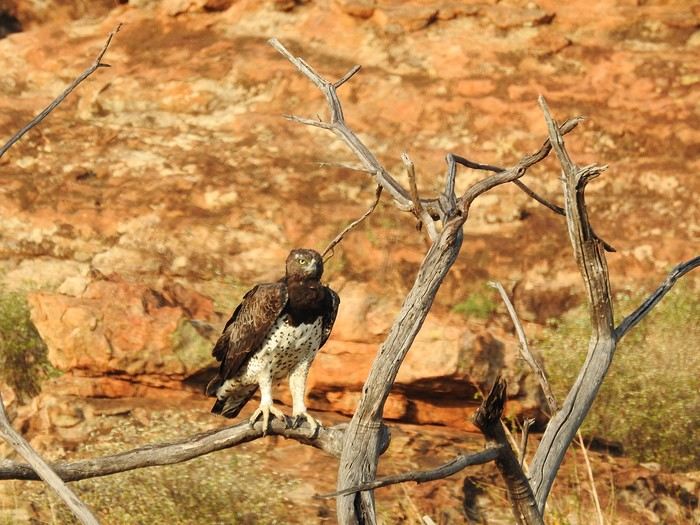
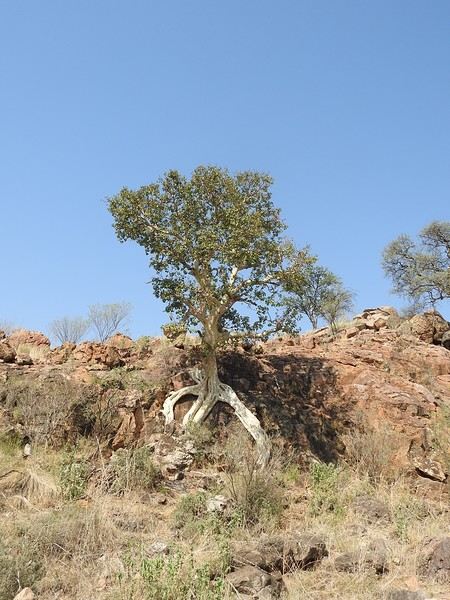
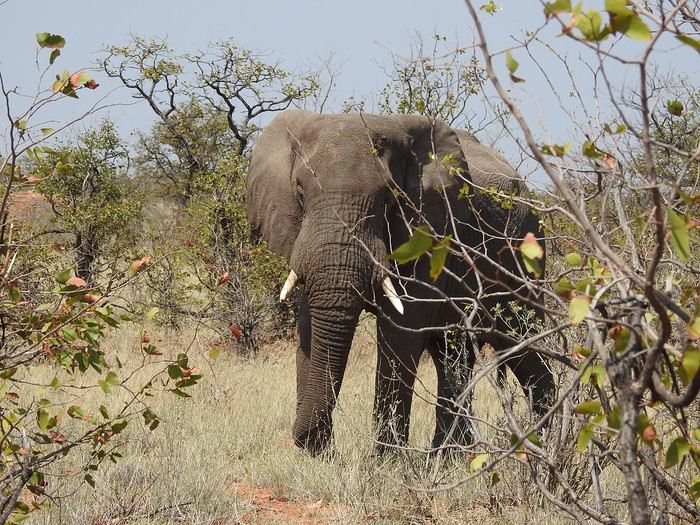
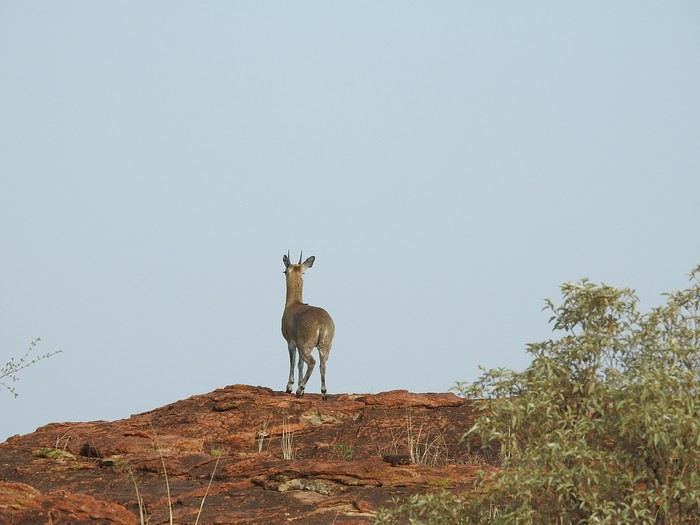
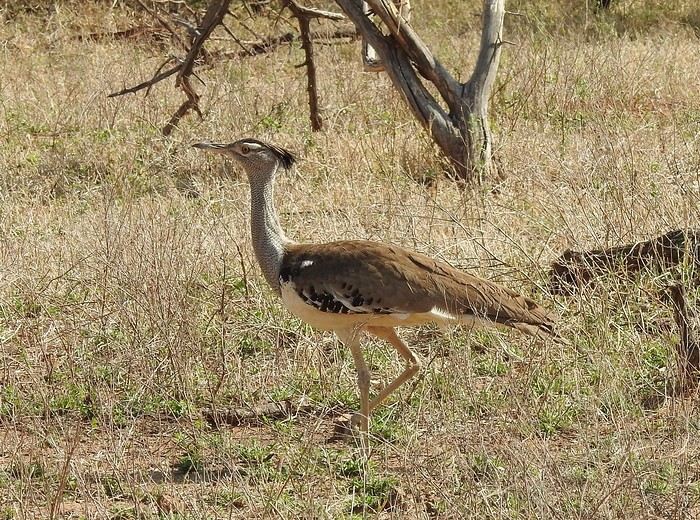
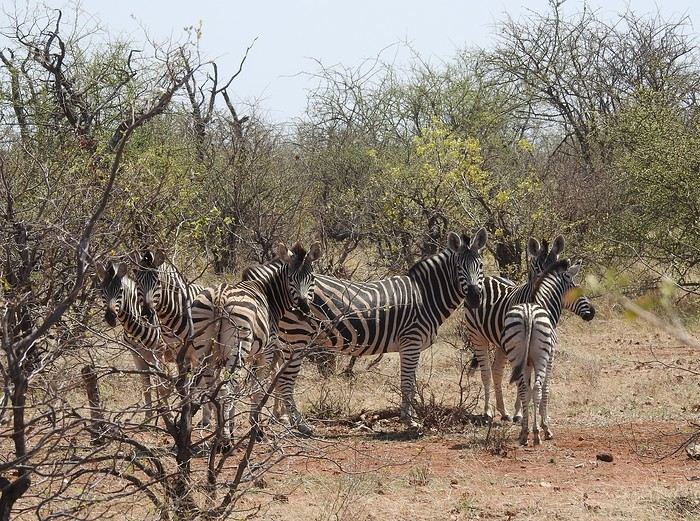
The eastern part “normally” doesn’t have lions... there are several spots where you can get out of the car... We saw general game, buffaloes, elephants... leopards (yes, see another travel journal), and now possibly cheetahs in the far eastern section. Our friend Montagnard had asked me (following another discussion) if I knew any truly ethical associations... I’d pointed him to a cheetah conservation group. I can confirm—they’re the ones who released several cheetahs into this part of Mapungubwe. Leokwe is stunning, unfenced... with a pretty high chance of seeing elephants in the camp, drinking from the pool or brushing past the chalet terraces. This area is still a fantastic spot for spectacular wildlife sightings and insane landscapes!
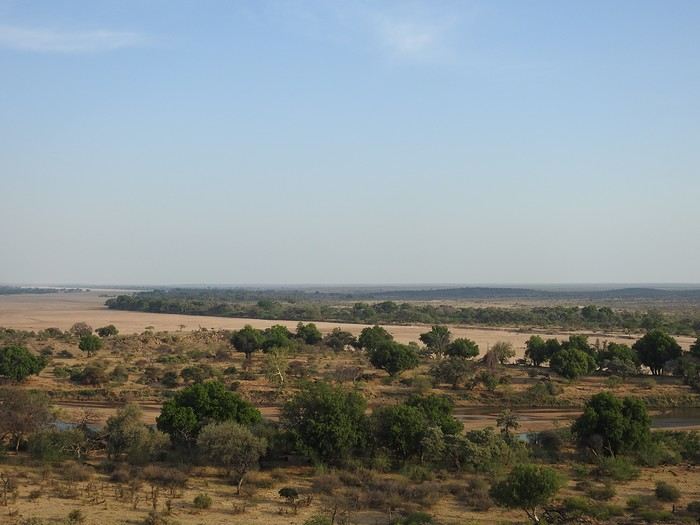
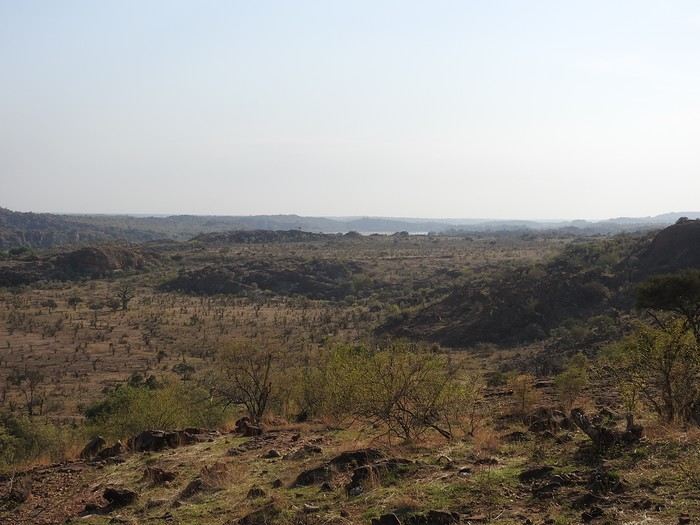
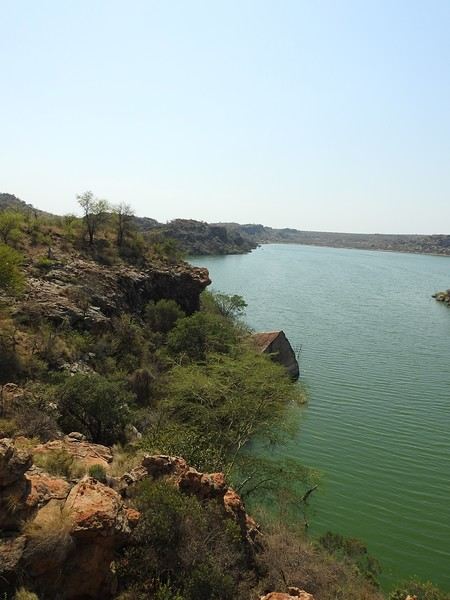
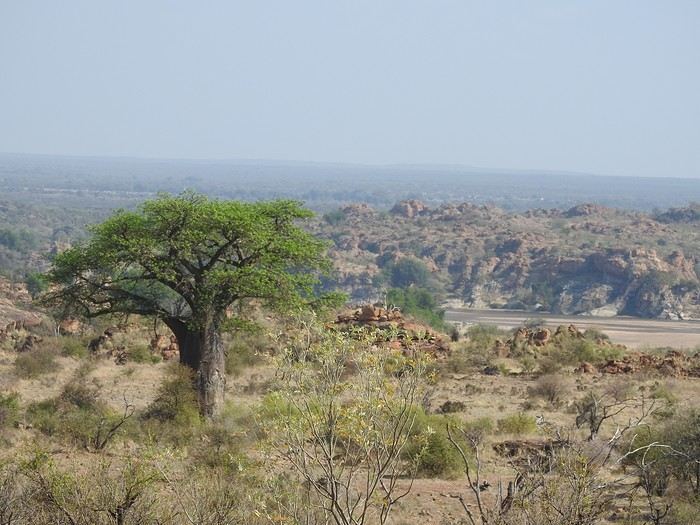
Waterberg to Mapungubwe.
The roads in this area aren’t great. I should’ve taken the N1 and gone via Musina... A massive storm on the road... 60 km away, hazard lights on...
Mapungubwe isn’t new to me, but I’d decided to try the western part, at Limpopo Tented Camp.
Upon arrival... “Sorry, a tree fell on one of the chalets...” “We’ll put you up for the first night at Leokwe, in the eastern part.” From what they said, it happened yesterday... but on-site, we saw it had actually been several months!
Sanparks’ management is still very much “outside usual standards.” There’s constantly work being done “haphazardly,” shoddily, poorly... And the welcome from staff really depends on the person and the day.
Oh well, no big deal—we’ll spend a night at Leokwe!
The eastern part “normally” doesn’t have lions... there are several spots where you can get out of the car... We saw general game, buffaloes, elephants... leopards (yes, see another travel journal), and now possibly cheetahs in the far eastern section. Our friend Montagnard had asked me (following another discussion) if I knew any truly ethical associations... I’d pointed him to a cheetah conservation group. I can confirm—they’re the ones who released several cheetahs into this part of Mapungubwe. Leokwe is stunning, unfenced... with a pretty high chance of seeing elephants in the camp, drinking from the pool or brushing past the chalet terraces. This area is still a fantastic spot for spectacular wildlife sightings and insane landscapes!
Quick feedback on Marakele NP
Hi there,
My month in South Africa went really well. The itinerary revisits some places I’ve already seen—even a few times over...
Joburg – Marakele – Waterberg – Mapungubwe – Northern Kruger – Panorama Route – Southern Kruger – Eswatini (Hlane) – Maputaland (Sodwana Bay) – St Lucia – Joburg via Richards Bay.
I’ll skip some spots and focus on others.
Today’s topic: Marakele.
Back in 2009, I spent a day there, and since then... I’ve tried several times to go back.
The park isn’t very big—nowhere near as lush as Kruger—but it has a lot going for it. Even back then, there was a split between the western section, where you wouldn’t find any “dangerous” animals like elephants or buffalo (though rhinos were around), and the eastern section, the Big Five zone. Nowadays, the western part is open to mountain biking, and the campsite is completely unfenced, which pretty much confirms that the big animals aren’t there—no rhinos either (I didn’t see a single dung pile). The western section didn’t seem all that interesting to me... with vervet monkeys everywhere in the campsite. In the eastern part, there’s the Topli tented camp, right by a dam. It’s small but charming, with a great view and a loosely fenced perimeter (there are now lions and wild dogs in this area). No facilities—no restaurant, no pool (except at the campsite), no shop, no fuel, nothing...
View from the “chalet” terrace... nice and relaxed...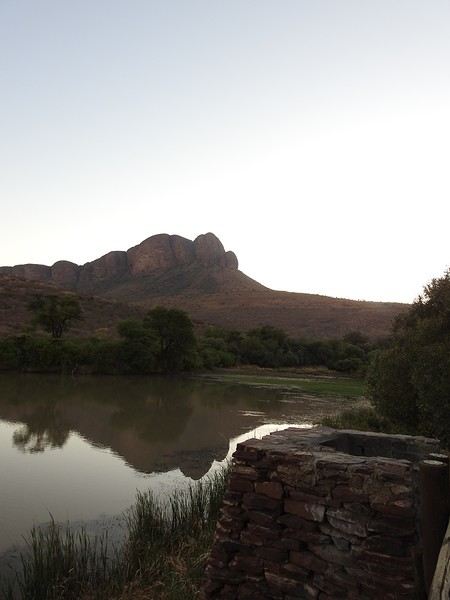

So, a terrace with a view for the lucky ones...
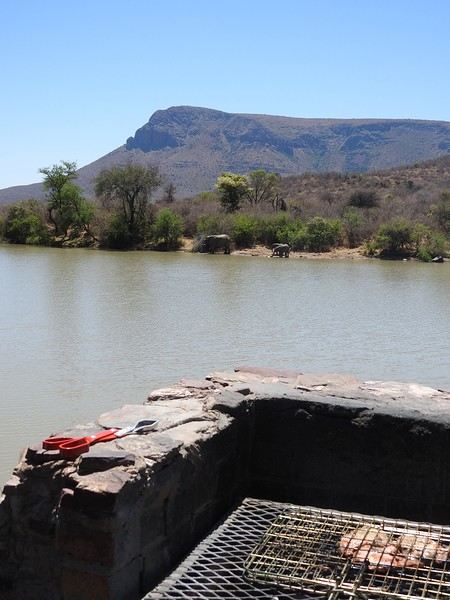
Bedroom and bathroom, separate and equipped kitchen. It can get windy. It must be cold in winter... but it’s hot this October.
Some lovely little roads... though some sections are 4x4-friendly.


A viewpoint at the top—you’re supposed to see the vulture colony from there... still haven’t seen it, as far as I’m concerned.

The animals?
My month in South Africa went really well. The itinerary revisits some places I’ve already seen—even a few times over...
Joburg – Marakele – Waterberg – Mapungubwe – Northern Kruger – Panorama Route – Southern Kruger – Eswatini (Hlane) – Maputaland (Sodwana Bay) – St Lucia – Joburg via Richards Bay.
I’ll skip some spots and focus on others.
Today’s topic: Marakele.
Back in 2009, I spent a day there, and since then... I’ve tried several times to go back.
The park isn’t very big—nowhere near as lush as Kruger—but it has a lot going for it. Even back then, there was a split between the western section, where you wouldn’t find any “dangerous” animals like elephants or buffalo (though rhinos were around), and the eastern section, the Big Five zone. Nowadays, the western part is open to mountain biking, and the campsite is completely unfenced, which pretty much confirms that the big animals aren’t there—no rhinos either (I didn’t see a single dung pile). The western section didn’t seem all that interesting to me... with vervet monkeys everywhere in the campsite. In the eastern part, there’s the Topli tented camp, right by a dam. It’s small but charming, with a great view and a loosely fenced perimeter (there are now lions and wild dogs in this area). No facilities—no restaurant, no pool (except at the campsite), no shop, no fuel, nothing...
View from the “chalet” terrace... nice and relaxed...
So, a terrace with a view for the lucky ones...
Bedroom and bathroom, separate and equipped kitchen. It can get windy. It must be cold in winter... but it’s hot this October.
Some lovely little roads... though some sections are 4x4-friendly.
A viewpoint at the top—you’re supposed to see the vulture colony from there... still haven’t seen it, as far as I’m concerned.
The animals?
Backpacking itinerary in Tunisia
Hi there,
I'm urgently planning a trip to Tunisia in November, backpacker-style (no agency, no guide or taxi, public transport, youth hostels or small hotels, local restaurants). I'm not interested in the beach, and I like to take my time at archaeological sites and museums (twice as long as the average visitor). I'm aiming for about two weeks, give or take.
First, I'm trying to roughly outline a route/schedule so I can book my flight as soon as possible (no desert in the south this time—I went there years ago and want to stay independent). I’ve sketched out the following itinerary, knowing that apparently, there are quite a few towns without budget-friendly hotels (even on Airbnb), which means I’ll be staying longer where they’re available. Three questions: 1. Does this seem reasonable overall (time spent in each city)? 2. Should I add other cities, maybe in the northwest? 3. For hotels, in November, is it better to scout options on booking sites first, then book on the spot for cheaper rates (no site commission + possible negotiation)? Also, are hotels not listed online and found randomly on-site much cheaper?
ROUGH ITINERARY (order to be confirmed)
TUNIS 5 days (cheap accommodations: 13 or 19 €) 2 days: Medina, souks, Bardo Museum, Royal Mausoleum of Tourbet El Bey, Zitouna Mosque (exterior) 1 day: Sidi Bou Said 1 day: Carthage 1 day: A-R Dougga (bus to Tebersouk 2h + taxi) – pack a picnic + option: hike to Zaghouan (750m+, 10km round trip) – worth it? Doable alone?
KAIROUAN 2 days (very expensive room: 40-50 €!) Great Mosque, Medina, Three Doors Mosque, medieval cemetery, Sidi Sahbi Mosque...
SOUSSE 3 days (room 15 €) 2 days: Medina, archaeological museum, Port El Kantaoui, the Ribat (fortress), Contemporary Art Museum Dar Am Taïeb, Dar Essid (17th-century traditional house) 1 day: A-R El Jem (60km away) + option: 1 day A-R Monastir? Worth it? + option: 1 day A-R Mahdia (or 2 days sleeping there)?
OPTIONS -> Gabes to mix things up? But is it easy to find cheap lodging and get around/visit alone? -> Other sights or stops to sleep: Sfax, El Kef, others? -> Kerkenna Islands (easy accommodation?)
Thanks for your thoughts and opinions on these options. Once I’ve adjusted the duration, I’ll book my tickets for early November! (By the way, do you think I should arrive and depart from two different airports?)
I'm urgently planning a trip to Tunisia in November, backpacker-style (no agency, no guide or taxi, public transport, youth hostels or small hotels, local restaurants). I'm not interested in the beach, and I like to take my time at archaeological sites and museums (twice as long as the average visitor). I'm aiming for about two weeks, give or take.
First, I'm trying to roughly outline a route/schedule so I can book my flight as soon as possible (no desert in the south this time—I went there years ago and want to stay independent). I’ve sketched out the following itinerary, knowing that apparently, there are quite a few towns without budget-friendly hotels (even on Airbnb), which means I’ll be staying longer where they’re available. Three questions: 1. Does this seem reasonable overall (time spent in each city)? 2. Should I add other cities, maybe in the northwest? 3. For hotels, in November, is it better to scout options on booking sites first, then book on the spot for cheaper rates (no site commission + possible negotiation)? Also, are hotels not listed online and found randomly on-site much cheaper?
ROUGH ITINERARY (order to be confirmed)
TUNIS 5 days (cheap accommodations: 13 or 19 €) 2 days: Medina, souks, Bardo Museum, Royal Mausoleum of Tourbet El Bey, Zitouna Mosque (exterior) 1 day: Sidi Bou Said 1 day: Carthage 1 day: A-R Dougga (bus to Tebersouk 2h + taxi) – pack a picnic + option: hike to Zaghouan (750m+, 10km round trip) – worth it? Doable alone?
KAIROUAN 2 days (very expensive room: 40-50 €!) Great Mosque, Medina, Three Doors Mosque, medieval cemetery, Sidi Sahbi Mosque...
SOUSSE 3 days (room 15 €) 2 days: Medina, archaeological museum, Port El Kantaoui, the Ribat (fortress), Contemporary Art Museum Dar Am Taïeb, Dar Essid (17th-century traditional house) 1 day: A-R El Jem (60km away) + option: 1 day A-R Monastir? Worth it? + option: 1 day A-R Mahdia (or 2 days sleeping there)?
OPTIONS -> Gabes to mix things up? But is it easy to find cheap lodging and get around/visit alone? -> Other sights or stops to sleep: Sfax, El Kef, others? -> Kerkenna Islands (easy accommodation?)
Thanks for your thoughts and opinions on these options. Once I’ve adjusted the duration, I’ll book my tickets for early November! (By the way, do you think I should arrive and depart from two different airports?)
The era of travel advice: between AI, free forums, and local expertise
The end of a golden age
For years, travel forums embodied the spirit of mutual aid on the web. Travelers generously shared their experiences, tips, and secret spots. This collective generosity seemed endless. But behind this altruistic facade lay a more complex reality.
The silent infiltration of forums Free travel forums have gradually become marketing hunting grounds. Under the guise of "experienced travelers," professionals in tourism, affiliates seeking commissions, or aspiring influencers testing monetization strategies now lurk.
These fake profiles master the community’s codes. They build credibility by answering dozens of basic questions before subtly slipping in their paid recommendations. A "favorite" hotel mentioned insistently, an "essential" guidebook systematically cited, an "extraordinary" local agency that keeps coming up in conversations.
New travelers can no longer tell the difference between selfless advice and disguised promotion. This informational pollution has gradually eroded the trust that gave these platforms their value.
The rise of paid Travel Planners Faced with this decline, a new profession has emerged: the independent Travel Planner. These professionals fully embrace their commercial status and charge for personalized advice.
The model is transparent: you pay for real expertise, tailor-made itineraries, and guaranteed availability. Some offer packages for 150-300 € to plan a two-week trip entirely. Others charge by the hour.
This professionalization marks a turning point. Travel advice is leaving the realm of volunteerism and entering the world of paid services. Paradoxically, this acknowledged monetization can restore a form of trust: you know what you’re paying for.
The irruption of artificial intelligence But now, a third option is emerging: generative AI. ChatGPT, Claude, Gemini, and others can now generate travel itineraries in seconds, for free, with no commercial agenda.
AI promises neutral, synthetic, endlessly customizable information. It compiles thousands of sources in real time, suggests alternatives, and adapts recommendations to your budget and time constraints. It doesn’t sell anything, earns no commissions, and has no hotels to promote.
But this apparent neutrality hides its own limitations. AI feeds on existing data, often from the same polluted forums or marketing content. It can invent restaurants that don’t exist, mix up tourist seasons, or ignore recent local realities. It has never walked a city’s streets, negotiated with a tuk-tuk driver, or felt the atmosphere of a neighborhood at nightfall.
The forgotten alternative: authentic local experts In this landscape saturated with dubious information, imperfect AI, and monetized services, one often-overlooked option remains: consulting real local professionals.
Not the agencies at the top of Google’s first page—often the most expensive and generic. But small local businesses, independent guides established for years, still-free municipal tourism offices, and cultural associations organizing themed tours.
These players offer what neither AI nor forums can: embodied, up-to-date, contextualized knowledge of the area. They know the newly opened restaurant, the museum temporarily closed for renovations, the impromptu weekend festival, or the alternative route to avoid construction.
Finding them takes extra effort. You have to search in the local language, look beyond the first page of results, check regional institutional websites, and join community Facebook groups. But this approach is often rewarded with free or low-cost advice of unmatched precision.
Toward an ecology of travel advice The future of travel advice likely won’t be binary but hybrid. AI can rough out itineraries, propose logistical options, and compare alternatives. Travel Planners can refine, personalize, and reassure anxious travelers. Local experts can enrich, correct, and ground advice in on-the-ground reality.
But for this ecosystem to work, we’ll need to develop new discernment. Learn to spot fake profiles on forums. Systematically verify AI suggestions. Assess the real value of a Travel Planner before paying. And, above all, rediscover the habit of contacting those who live there directly.
Travel has always been a school of discernment. It teaches us to distinguish the authentic from the fake, sincere advice from commercial manipulation. In the digital age, this skill becomes more crucial than ever.
Because ultimately, the real question isn’t which information source to prioritize, but how to cultivate our own ability to evaluate, cross-check, and ultimately make informed choices. The best travel guide may still be our critical thinking.
Photo credit: Arakis Travel
The silent infiltration of forums Free travel forums have gradually become marketing hunting grounds. Under the guise of "experienced travelers," professionals in tourism, affiliates seeking commissions, or aspiring influencers testing monetization strategies now lurk.
These fake profiles master the community’s codes. They build credibility by answering dozens of basic questions before subtly slipping in their paid recommendations. A "favorite" hotel mentioned insistently, an "essential" guidebook systematically cited, an "extraordinary" local agency that keeps coming up in conversations.
New travelers can no longer tell the difference between selfless advice and disguised promotion. This informational pollution has gradually eroded the trust that gave these platforms their value.
The rise of paid Travel Planners Faced with this decline, a new profession has emerged: the independent Travel Planner. These professionals fully embrace their commercial status and charge for personalized advice.
The model is transparent: you pay for real expertise, tailor-made itineraries, and guaranteed availability. Some offer packages for 150-300 € to plan a two-week trip entirely. Others charge by the hour.
This professionalization marks a turning point. Travel advice is leaving the realm of volunteerism and entering the world of paid services. Paradoxically, this acknowledged monetization can restore a form of trust: you know what you’re paying for.
The irruption of artificial intelligence But now, a third option is emerging: generative AI. ChatGPT, Claude, Gemini, and others can now generate travel itineraries in seconds, for free, with no commercial agenda.
AI promises neutral, synthetic, endlessly customizable information. It compiles thousands of sources in real time, suggests alternatives, and adapts recommendations to your budget and time constraints. It doesn’t sell anything, earns no commissions, and has no hotels to promote.
But this apparent neutrality hides its own limitations. AI feeds on existing data, often from the same polluted forums or marketing content. It can invent restaurants that don’t exist, mix up tourist seasons, or ignore recent local realities. It has never walked a city’s streets, negotiated with a tuk-tuk driver, or felt the atmosphere of a neighborhood at nightfall.
The forgotten alternative: authentic local experts In this landscape saturated with dubious information, imperfect AI, and monetized services, one often-overlooked option remains: consulting real local professionals.
Not the agencies at the top of Google’s first page—often the most expensive and generic. But small local businesses, independent guides established for years, still-free municipal tourism offices, and cultural associations organizing themed tours.
These players offer what neither AI nor forums can: embodied, up-to-date, contextualized knowledge of the area. They know the newly opened restaurant, the museum temporarily closed for renovations, the impromptu weekend festival, or the alternative route to avoid construction.
Finding them takes extra effort. You have to search in the local language, look beyond the first page of results, check regional institutional websites, and join community Facebook groups. But this approach is often rewarded with free or low-cost advice of unmatched precision.
Toward an ecology of travel advice The future of travel advice likely won’t be binary but hybrid. AI can rough out itineraries, propose logistical options, and compare alternatives. Travel Planners can refine, personalize, and reassure anxious travelers. Local experts can enrich, correct, and ground advice in on-the-ground reality.
But for this ecosystem to work, we’ll need to develop new discernment. Learn to spot fake profiles on forums. Systematically verify AI suggestions. Assess the real value of a Travel Planner before paying. And, above all, rediscover the habit of contacting those who live there directly.
Travel has always been a school of discernment. It teaches us to distinguish the authentic from the fake, sincere advice from commercial manipulation. In the digital age, this skill becomes more crucial than ever.
Because ultimately, the real question isn’t which information source to prioritize, but how to cultivate our own ability to evaluate, cross-check, and ultimately make informed choices. The best travel guide may still be our critical thinking.
Photo credit: Arakis Travel
Traveling to Southeast Asia in "peak season": what about prices and advance bookings?
Hello,
I’ve been to Thailand three times a long time ago, and I’d love to visit neighboring countries too: Laos, Vietnam, Cambodia (while returning to Thailand 😛).
The catch is that I’d like to go at the beginning of the year, but I’ve heard that’s peak tourist season for these countries. Ideally, I’d prefer to avoid peak season to save money (I’m not exactly rolling in it) and to be able to travel without reservations—without being forced to take a room in the local "palace" that still has availability because of its exorbitant prices.
From my distant memories of Thailand, I usually paid around the equivalent of 20 € per night (with a hearty breakfast) for a hotel room with a mini-bar.
What are the average prices for this type of accommodation in Thailand and its neighbors during "peak" season these days? Do prices fluctuate a lot depending on the season, or is tourist demand not that different from one season to another, keeping prices relatively stable? Are the chances of finding a "budget" room without a reservation still high, no matter the season, in this part of the world? 😇
From my distant memories of Thailand, I usually paid around the equivalent of 20 € per night (with a hearty breakfast) for a hotel room with a mini-bar.
What are the average prices for this type of accommodation in Thailand and its neighbors during "peak" season these days? Do prices fluctuate a lot depending on the season, or is tourist demand not that different from one season to another, keeping prices relatively stable? Are the chances of finding a "budget" room without a reservation still high, no matter the season, in this part of the world? 😇
Solo road trip in Algeria
Hello, I’m preparing for a Tunisia-Algeria road trip.
I need to know if we can cross the Sahara to reach Djanet and Tamanrasset by road freely,
After that, obviously off-road in the desert with a guide.
What do the authorities say?
My trip: northern and southern Tunisia, a stroll in the desert.
Crossing the Tunisia-Algeria border via the Taleb Larbi customs.
I’ve already done this route through an agency, but this time we want to do it on our own.
Then heading down to Djanet for eight to fifteen days in the desert with Mouloud, a local guide.
Direction Tamanrasset: road and tracks, the mountains of the Assekrem, the Hermitage of Père de Foucauld.
Return via the Trans-Saharan Highway.
Visit to northern Algeria, then back by boat from Oran to Spain.
Dates: late December to mid-February.
We’ve got plenty of time.
If another crew is interested, we’re already two vehicles.
Looking forward to your replies.
Hidden gems: should we preserve them or share them?
I’ve kept quiet about them... to preserve them.
Those are the words of a passionate traveler who recently wrote to us.
For years, he’s been discovering rare, authentic places... and chooses to say nothing.
Out of respect. Out of fear of destruction. Out of love for secrecy.
What would you do?
You stumble upon a magical spot, still untouched by mass tourism.
Do you keep it to yourself... or do you open the door, gently, to other travelers?
At DIRECTRAVEL, we’re asking ourselves these questions.
Can sharing be an act of passing something on?
Or is it always the beginning of the end for these preserved places?
Read the article here.
Photo credit: Frédéric Soltan
Photo credit: Frédéric Soltan
World's Felines: August 2025 Photo Contest
Hi everyone,
Here’s the theme for August... the world’s felines.
Yep, wildlife photography! 😺
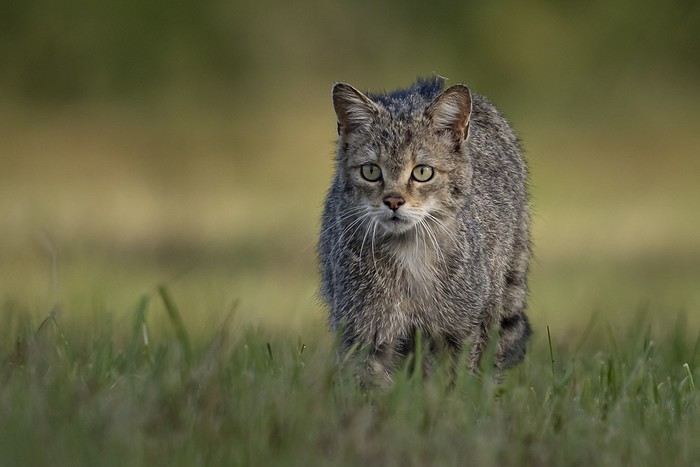 Forest cat
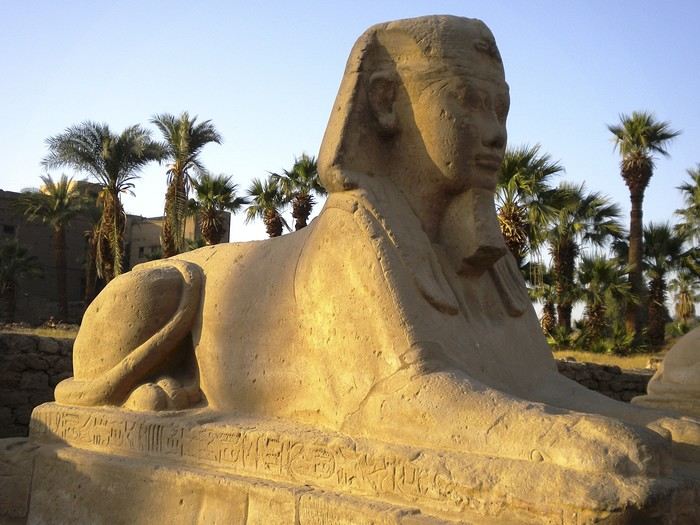
So, this theme isn’t exactly a "travel invitation," but coming up with a new one is quite a puzzle 😅. During February’s “white” theme discussion, we had pages of cats, so you should be inspired 😸. I won’t be restrictive—wild felines, domestic cats, and even those in zoos (though I’m not a fan) will be accepted. Plus, engravings, paintings, statues, or any other representations of felines fit the theme. The Sphinx is also welcome ;).
Practical details:
Participation: Each VF member can submit up to 3 photos, until Monday, August 25th at 11:59 PM Paris time. Each photo must be posted in a separate message, with its number (1, 2, or 3). Don’t forget to add a little explanation (comment, location, etc.).
Voting: Each VF member can vote for the 3 photos they consider the best, based on their own criteria and the theme.
Voting will take place from Tuesday, August 26th to Saturday, August 30th at 11:59 PM Paris time.
Selected photos will be ranked in order of preference: - 1st photo: 3 points - 2nd photo: 2 points - 3rd photo: 1 point
The winner is the photographer with the most points.
Results will be published on August 31st. In case of a tie, the number of first-place votes will decide. The winner will have the honor of organizing September 2025’s contest.
Photos that have already been nominated (1st, 2nd, or 3rd place) in another contest are not eligible for this one.
This thread is exclusively for contest submissions. Any discussions or comments should be posted here.
Forest catSo, this theme isn’t exactly a "travel invitation," but coming up with a new one is quite a puzzle 😅. During February’s “white” theme discussion, we had pages of cats, so you should be inspired 😸. I won’t be restrictive—wild felines, domestic cats, and even those in zoos (though I’m not a fan) will be accepted. Plus, engravings, paintings, statues, or any other representations of felines fit the theme. The Sphinx is also welcome ;).
Practical details:
Participation: Each VF member can submit up to 3 photos, until Monday, August 25th at 11:59 PM Paris time. Each photo must be posted in a separate message, with its number (1, 2, or 3). Don’t forget to add a little explanation (comment, location, etc.).
Voting: Each VF member can vote for the 3 photos they consider the best, based on their own criteria and the theme.
Voting will take place from Tuesday, August 26th to Saturday, August 30th at 11:59 PM Paris time.
Selected photos will be ranked in order of preference: - 1st photo: 3 points - 2nd photo: 2 points - 3rd photo: 1 point
The winner is the photographer with the most points.
Results will be published on August 31st. In case of a tie, the number of first-place votes will decide. The winner will have the honor of organizing September 2025’s contest.
Photos that have already been nominated (1st, 2nd, or 3rd place) in another contest are not eligible for this one.
This thread is exclusively for contest submissions. Any discussions or comments should be posted here.
Paris in 2 days on foot: itinerary and feedback on my route
Hi everyone,
I’d love to get your thoughts on these two routes I’ve planned to see the highlights of Paris in two days.
I don’t want to take any transportation.
I’ll arrive at the hotel by car on Saturday around noon and won’t pick it up again until the next evening to leave.
**First day:** I’m thinking of starting from the hotel, then heading to the Eiffel Tower - Trocadéro - Galeries Lafayette - Élysée Palace - Tuileries Garden - the Louvre (outside only) and finishing at Les Invalides.
12 km
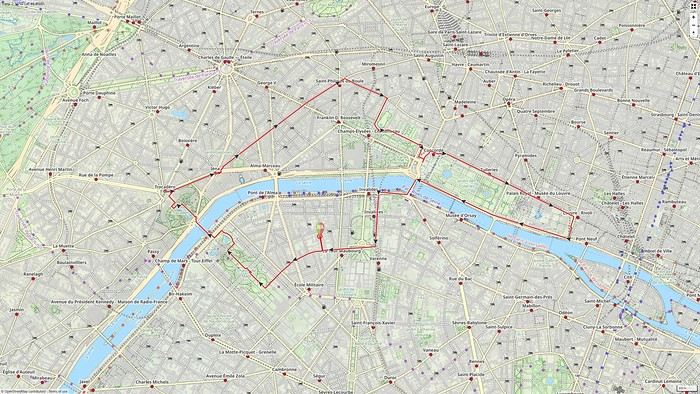
(The route on the map is just for reference to show the places we’ll visit—it might vary by a hundred meters or so.)
**Second day:** Starting from the hotel, we’ll go to Montmartre - Sacré-Cœur Basilica - Pigalle - Notre-Dame Cathedral - Panthéon - Luxembourg Garden.
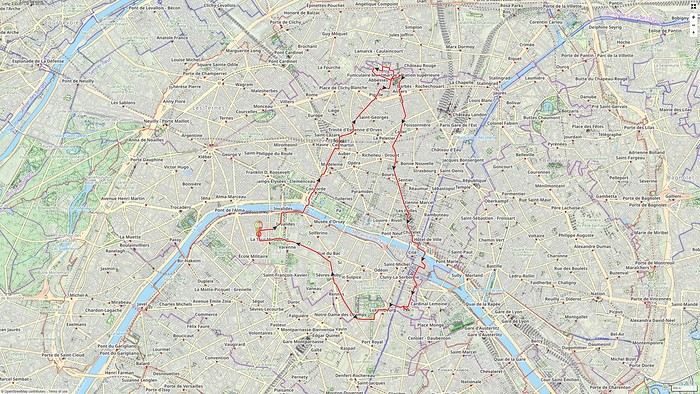
What do you think? Am I missing out on anything great with this route?
Since I’m traveling with two kids, do you see any spots on these routes that might be a bit risky safety-wise? 🏴☠️
We’re not big museum fans, so we’re not planning to visit any—unless it rains, of course! 😄
One last little question: are there any protests planned in Paris on the weekend of August 16-17? 🙂 Thanks for reading! 😎
I’d love to get your thoughts on these two routes I’ve planned to see the highlights of Paris in two days.
I don’t want to take any transportation.
I’ll arrive at the hotel by car on Saturday around noon and won’t pick it up again until the next evening to leave.
**First day:** I’m thinking of starting from the hotel, then heading to the Eiffel Tower - Trocadéro - Galeries Lafayette - Élysée Palace - Tuileries Garden - the Louvre (outside only) and finishing at Les Invalides.
12 km
(The route on the map is just for reference to show the places we’ll visit—it might vary by a hundred meters or so.)
**Second day:** Starting from the hotel, we’ll go to Montmartre - Sacré-Cœur Basilica - Pigalle - Notre-Dame Cathedral - Panthéon - Luxembourg Garden.
What do you think? Am I missing out on anything great with this route?
Since I’m traveling with two kids, do you see any spots on these routes that might be a bit risky safety-wise? 🏴☠️
We’re not big museum fans, so we’re not planning to visit any—unless it rains, of course! 😄
One last little question: are there any protests planned in Paris on the weekend of August 16-17? 🙂 Thanks for reading! 😎
Wood in all its forms – July 2025 photography contest
Hi everyone,
This month’s contest theme is WOOD. Wood as a plant material—roots, trunks, branches that make up a tree. Dead or alive, splinters and knots. Sawdust too. Firewood, from the woodshed to the hearth. Wood as a crafting material and all the things it can become: from a spoon to a violin, a boat to a stave church, and so much more—way too long to list! 😉
Technical details:
1. Each of you can post up to 3 photos. One photo per message, numbered 1 to 3. Along with the shot, feel free to share a few written details—location, context, anecdote, or photography technique. Photos can be submitted until Tuesday, July 22 at midnight, Milan time.
2. Voting will take place from Wednesday, July 23 at 00:00 until Tuesday, July 29 at midnight. All forum members can vote for their 3 favorite photos, listing the photographer’s name and the photo number in order of preference: 3 points for first place, 2 for second, and 1 for third.
3. Results will be announced on Wednesday, July 30 during the day. In case of a tie, the number of first-place votes will decide. Photos already featured on a podium are not eligible to compete.
The winner will have the special privilege of organizing August’s contest.
This thread is reserved for contest photos. For other wood-themed photos and general discussions, head here.
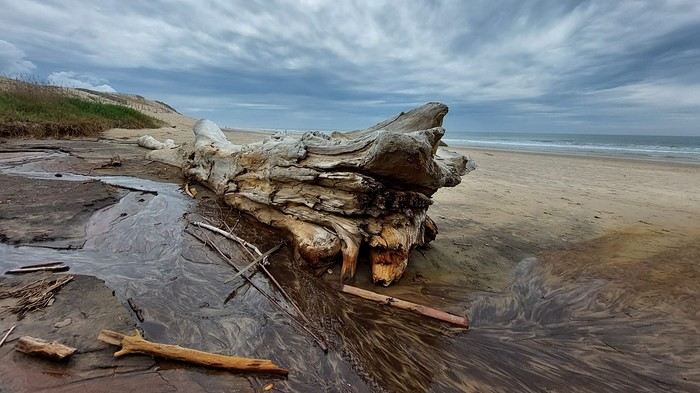
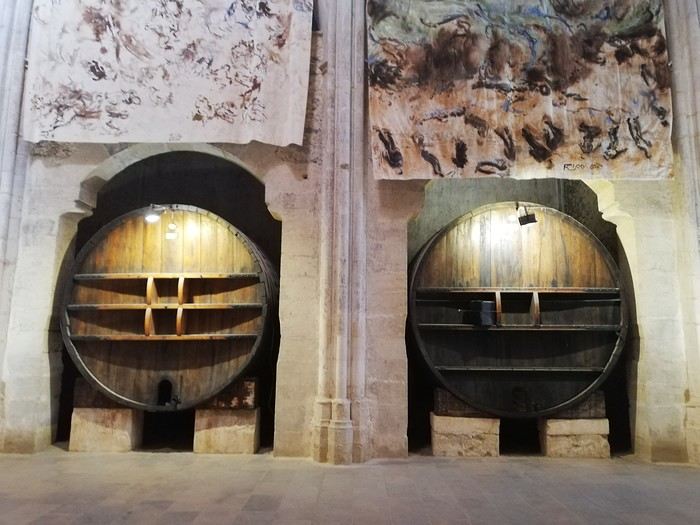
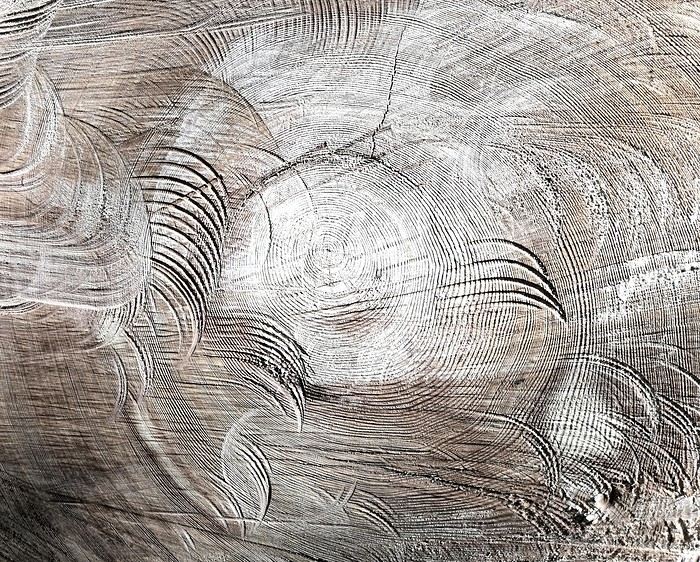
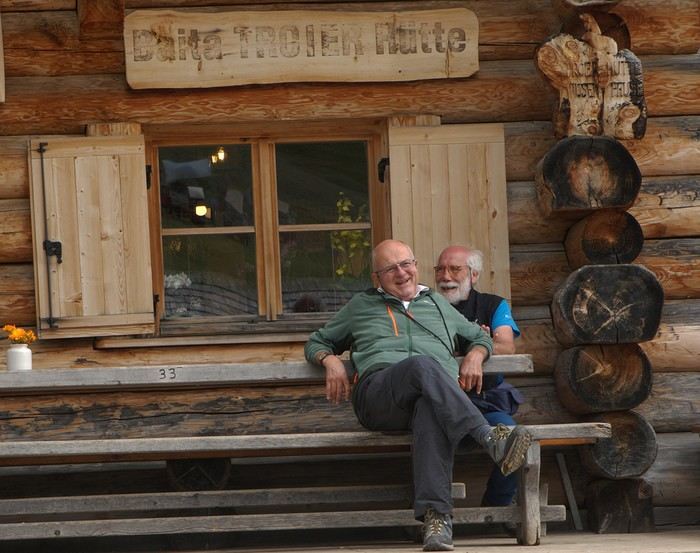
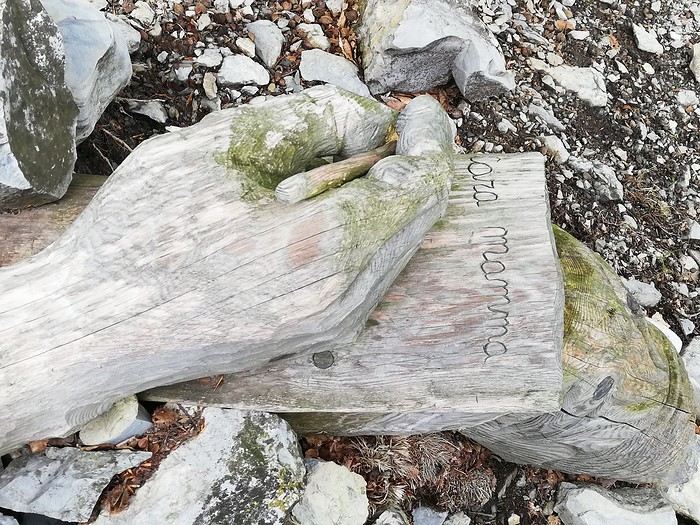

Alright, your turn! 😛
Catherine
This month’s contest theme is WOOD. Wood as a plant material—roots, trunks, branches that make up a tree. Dead or alive, splinters and knots. Sawdust too. Firewood, from the woodshed to the hearth. Wood as a crafting material and all the things it can become: from a spoon to a violin, a boat to a stave church, and so much more—way too long to list! 😉
Technical details:
1. Each of you can post up to 3 photos. One photo per message, numbered 1 to 3. Along with the shot, feel free to share a few written details—location, context, anecdote, or photography technique. Photos can be submitted until Tuesday, July 22 at midnight, Milan time.
2. Voting will take place from Wednesday, July 23 at 00:00 until Tuesday, July 29 at midnight. All forum members can vote for their 3 favorite photos, listing the photographer’s name and the photo number in order of preference: 3 points for first place, 2 for second, and 1 for third.
3. Results will be announced on Wednesday, July 30 during the day. In case of a tie, the number of first-place votes will decide. Photos already featured on a podium are not eligible to compete.
The winner will have the special privilege of organizing August’s contest.
This thread is reserved for contest photos. For other wood-themed photos and general discussions, head here.
Alright, your turn! 😛
Catherine
Discussion on the April 2025 photo contest theme "Fish"
To chat about the side topics of the theme "Fish," this is the place!
Back to the contest theme: Fish: April 2025 Photo Contest Theme
Back to the contest theme: Fish: April 2025 Photo Contest Theme
Beaches on the southeast coast of Thailand (from Hua Hin to Surat Thani)
Hi there,
I’ve been visiting Thailand for about twenty years now. We’ve been there around 5-6 times, always spending 2-3 days in BKK and then heading to Koh Samui.
This year, we wanted to explore the southeast coast of Thailand for a change—from Hua Hin down to Surat Thani. We were strongly advised against going any further south.
However, we noticed that the beaches in Hua Hin aren’t exactly stunning, and the further south you go, the more beautiful they get—white, fine sand like in Samui. Do you have any recommendations for gorgeous beaches along this coast? Thanks!
However, we noticed that the beaches in Hua Hin aren’t exactly stunning, and the further south you go, the more beautiful they get—white, fine sand like in Samui. Do you have any recommendations for gorgeous beaches along this coast? Thanks!
Mediterranean Bike Tour: Crossing Algeria, Egypt, and Libya
Hi everyone,
I’m planning to bike around the Mediterranean. I’m supposed to go through North Africa, but it seems a bit complicated. Visas and travel in Algeria and Egypt only work if you book a hotel (no nights spent outside?). Libya is generally very unclear, and it seems you can only travel there with a local guide (which doesn’t exist for bike trips). If necessary, I’d skip Libya, but neither a bus ride nor a boat detour seems possible to enter Egypt.
Does anyone have tips on how to get around these issues and secure a visa?
Thanks for any advice!
I’m planning to bike around the Mediterranean. I’m supposed to go through North Africa, but it seems a bit complicated. Visas and travel in Algeria and Egypt only work if you book a hotel (no nights spent outside?). Libya is generally very unclear, and it seems you can only travel there with a local guide (which doesn’t exist for bike trips). If necessary, I’d skip Libya, but neither a bus ride nor a boat detour seems possible to enter Egypt.
Does anyone have tips on how to get around these issues and secure a visa?
Thanks for any advice!
Review Request - 19-Day Quebec Road Trip
We’ve got our tickets—we’re leaving from August 5th to the 24th!
We’ve got a few hesitations about our itinerary, so we’re here to ask for tips and feedback. This forum has been a huge help for other trips.
Here’s our draft plan:
3 days - Montreal 2 or 3 days in Mauricie 3 days in Quebec City, including one day for Jacques-Cartier Park 2 days in Charlevoix 3 days in Saguenay Fjord 2 days in Tadoussac 2 days in Bas-Saint-Laurent 1 day to return to Montreal—our flight leaves at 11 PM
Maybe we’re being too ambitious? Should we cut some stops? We’d still like to avoid driving too much in one go this year. Thanks for your suggestions! Artlou
3 days - Montreal 2 or 3 days in Mauricie 3 days in Quebec City, including one day for Jacques-Cartier Park 2 days in Charlevoix 3 days in Saguenay Fjord 2 days in Tadoussac 2 days in Bas-Saint-Laurent 1 day to return to Montreal—our flight leaves at 11 PM
Maybe we’re being too ambitious? Should we cut some stops? We’d still like to avoid driving too much in one go this year. Thanks for your suggestions! Artlou
Slow Travel or the Illusion of Authenticity
“Slow travel” is a concept that some tout as a philosophical revolution in travel. But on closer inspection, it’s nothing more than a marketing repackaging of an age-old practice.
This term is wrapped in an aura of intellectualism. It promises to reinvent the experience of travel by valuing slowness, contemplation, and cultural immersion.
The term “slow travel” claims to bring depth to travel, but it often relies on clichés.
Taking your time, meeting locals, avoiding quick visits—these practices have always existed and are nothing revolutionary.
Before the era of airplanes, high-speed trains, and express stays, traveling necessarily meant taking your time. Pilgrims, merchants, and explorers already practiced a form of “slow travel,” without hashtags or self-proclaimed spiritual guides.
Crossing lands on foot or by horse required total immersion in the landscapes, cultures, and unpredictability of the journey. Yet, no one attributed philosophical intentions to them: it was a necessity.
Slow travel, in its current version, may be less a philosophy than a reflection of the contradictions of an affluent class searching for meaning in a world they help overload.
So-called “slow” travel is presented as a privileged way to understand a culture, but this claim is debatable. A region never represents an entire country.
Immersing yourself in a community doesn’t guarantee a complete or more authentic understanding than any other way of traveling.
Slowness in itself doesn’t guarantee depth or ethics. You can immerse yourself in a place over a weekend, just as you can spend months in a country without grasping its subtleties.
By positioning itself as an antidote to “fast” tourism, slow travel fetishizes a temporality that only makes sense if it’s accompanied by real openness and an effort to integrate.
But this over-intellectualization often masks a desire to belong to a trend or a need to stand out socially.
Behind this posture sometimes lies a whim: the urge to reinvent one’s life elsewhere in an idealized form. But this quest for elsewhere remains fundamentally a way to escape or respond to unease, rather than a true commitment to the cultures visited.
When we talk about “encounters” while traveling, we often forget that these exchanges are facilitated by biased contexts. As a traveler, you’re seen as a temporary visitor, unattached, and that changes the dynamic.
Locals, whether curious or used to tourists, adopt a different stance than they would with a neighbor they see daily.
This interaction is also tinged with asymmetry: the traveler has the luxury of time and availability, while in daily life, personal concerns often take precedence over the desire to connect.
The flip side is that the openness displayed while traveling is often a facade. We boast about chatting with a fisherman or sharing a meal with a local family, but how many of these encounters lead to a real understanding of cultural differences or sincere reflection?
Once home, these moments become anecdotes, social trophies to show off, without fundamentally changing our relationship with others in our daily lives.
By imposing a definition, we push people to adapt their practices to fit an idealized model. This can lead to a paradoxical standardization: “slow travel” becomes a checklist of behaviors (meetings, immersion, slowness).
The “bobos” (bourgeois-bohemians), often in search of meaning in a world saturated with options, believe that giving a name to a practice grants it legitimacy or moral value. But this obsession with framing and theorizing travel only drains it of its spontaneity.
Someone who grew up at the crossroads of multiple cultures, on the other hand, doesn’t feel this need. For them, traveling isn’t a philosophical project but an intrinsic part of their life.
The very concept of “slow travel” can seem absurd: why glorify what’s simply natural?
Why try to turn into an ideology what should be a personal, intimate experience, free from semantic constraints?
Ultimately, this need for labeling, this frantic quest to name every gesture, reveals a society craving simplicity.
Travel, in its purest form, doesn’t need justification or slogans. It doesn’t need slowness or speed: it’s simply lived.
Perhaps the real challenge is to unlearn this Western habit of conceptualizing everything that should simply be felt.
For many, travel is a parenthesis, a temporary break from daily life. But if we reject this distinction between “home” and “elsewhere,” every human life becomes a continuous journey through varied environments.
From this perspective, “slow travel” loses all meaning, because living somewhere—whether for a week or five years—is part of the same experience of adaptation.
So, we ask the fans of marketing slogans: is travel a parenthesis or a journey?
“Slow travel” is often driven by a Western eco-bobo ideology, tinged with post-colonial guilt. This discourse promotes a supposedly virtuous way of traveling while forgetting that these practices remain a privilege.
Far from deconstructing power dynamics, it sometimes reinforces them by glorifying a different kind of consumption, still centered on comfort.
There’s also a condescending side to this rhetoric. By idealizing slowness, slow travel advocates imply that those who travel quickly or on a budget are less “authentic” in their approach.
Yet, isn’t that a form of contempt? Do those who leave for a well-deserved week after months of hard work deserve less consideration?
Concepts like “slow travel” or “sustainable tourism” seem hollow when reduced to marketing slogans or standardized behaviors. They confine travel to preconceived frameworks, stripping it of its spontaneous and unpredictable dimension.
Instead of categorizing, it would be more relevant to recognize the plurality of human experiences without trying to define them.
Slow travel doesn’t invent anything. It simply puts into words—and often slogans—what travel has always been for those who practice it with intention.
Maybe we should stop trying to theorize every movement and simply rediscover travel for what it is: a human experience, sometimes slow, sometimes fast, but always personal.
More info on our site
This term is wrapped in an aura of intellectualism. It promises to reinvent the experience of travel by valuing slowness, contemplation, and cultural immersion.
The term “slow travel” claims to bring depth to travel, but it often relies on clichés.
Taking your time, meeting locals, avoiding quick visits—these practices have always existed and are nothing revolutionary.
Before the era of airplanes, high-speed trains, and express stays, traveling necessarily meant taking your time. Pilgrims, merchants, and explorers already practiced a form of “slow travel,” without hashtags or self-proclaimed spiritual guides.
Crossing lands on foot or by horse required total immersion in the landscapes, cultures, and unpredictability of the journey. Yet, no one attributed philosophical intentions to them: it was a necessity.
Slow travel, in its current version, may be less a philosophy than a reflection of the contradictions of an affluent class searching for meaning in a world they help overload.
So-called “slow” travel is presented as a privileged way to understand a culture, but this claim is debatable. A region never represents an entire country.
Immersing yourself in a community doesn’t guarantee a complete or more authentic understanding than any other way of traveling.
Slowness in itself doesn’t guarantee depth or ethics. You can immerse yourself in a place over a weekend, just as you can spend months in a country without grasping its subtleties.
By positioning itself as an antidote to “fast” tourism, slow travel fetishizes a temporality that only makes sense if it’s accompanied by real openness and an effort to integrate.
But this over-intellectualization often masks a desire to belong to a trend or a need to stand out socially.
Behind this posture sometimes lies a whim: the urge to reinvent one’s life elsewhere in an idealized form. But this quest for elsewhere remains fundamentally a way to escape or respond to unease, rather than a true commitment to the cultures visited.
When we talk about “encounters” while traveling, we often forget that these exchanges are facilitated by biased contexts. As a traveler, you’re seen as a temporary visitor, unattached, and that changes the dynamic.
Locals, whether curious or used to tourists, adopt a different stance than they would with a neighbor they see daily.
This interaction is also tinged with asymmetry: the traveler has the luxury of time and availability, while in daily life, personal concerns often take precedence over the desire to connect.
The flip side is that the openness displayed while traveling is often a facade. We boast about chatting with a fisherman or sharing a meal with a local family, but how many of these encounters lead to a real understanding of cultural differences or sincere reflection?
Once home, these moments become anecdotes, social trophies to show off, without fundamentally changing our relationship with others in our daily lives.
By imposing a definition, we push people to adapt their practices to fit an idealized model. This can lead to a paradoxical standardization: “slow travel” becomes a checklist of behaviors (meetings, immersion, slowness).
The “bobos” (bourgeois-bohemians), often in search of meaning in a world saturated with options, believe that giving a name to a practice grants it legitimacy or moral value. But this obsession with framing and theorizing travel only drains it of its spontaneity.
Someone who grew up at the crossroads of multiple cultures, on the other hand, doesn’t feel this need. For them, traveling isn’t a philosophical project but an intrinsic part of their life.
The very concept of “slow travel” can seem absurd: why glorify what’s simply natural?
Why try to turn into an ideology what should be a personal, intimate experience, free from semantic constraints?
Ultimately, this need for labeling, this frantic quest to name every gesture, reveals a society craving simplicity.
Travel, in its purest form, doesn’t need justification or slogans. It doesn’t need slowness or speed: it’s simply lived.
Perhaps the real challenge is to unlearn this Western habit of conceptualizing everything that should simply be felt.
For many, travel is a parenthesis, a temporary break from daily life. But if we reject this distinction between “home” and “elsewhere,” every human life becomes a continuous journey through varied environments.
From this perspective, “slow travel” loses all meaning, because living somewhere—whether for a week or five years—is part of the same experience of adaptation.
So, we ask the fans of marketing slogans: is travel a parenthesis or a journey?
“Slow travel” is often driven by a Western eco-bobo ideology, tinged with post-colonial guilt. This discourse promotes a supposedly virtuous way of traveling while forgetting that these practices remain a privilege.
Far from deconstructing power dynamics, it sometimes reinforces them by glorifying a different kind of consumption, still centered on comfort.
There’s also a condescending side to this rhetoric. By idealizing slowness, slow travel advocates imply that those who travel quickly or on a budget are less “authentic” in their approach.
Yet, isn’t that a form of contempt? Do those who leave for a well-deserved week after months of hard work deserve less consideration?
Concepts like “slow travel” or “sustainable tourism” seem hollow when reduced to marketing slogans or standardized behaviors. They confine travel to preconceived frameworks, stripping it of its spontaneous and unpredictable dimension.
Instead of categorizing, it would be more relevant to recognize the plurality of human experiences without trying to define them.
Slow travel doesn’t invent anything. It simply puts into words—and often slogans—what travel has always been for those who practice it with intention.
Maybe we should stop trying to theorize every movement and simply rediscover travel for what it is: a human experience, sometimes slow, sometimes fast, but always personal.
More info on our site
Short city trip - Stockholm February 2024
Hello everyone,
I’m trying to take the time to share one or two travel journals I wrote elsewhere (the forum wasn’t accessible when I was writing them...).
My partner and I went to Stockholm from February 27th to March 1st, 2024.
It was a pretty short trip, shaped by the usual factors: time, budget, and the kids.
We live not far from Luxembourg City (about an hour away), and when we can, we fly with Luxair. It’s a quality airline, but it’s a bit pricey.
This trip was originally planned for 2022, but it was canceled by the airline a few weeks before departure. Since the flight was on a De Havilland Q-400 with a max of 76 passengers, I think there just weren’t enough people booked.
So, we booked a flight with checked baggage and seat selection (2 + 2 seating) for around 400 € round trip.
For the hotel, I chose the **Radisson Blu Waterfront** through Booking.com for just under 600 €, including breakfast.
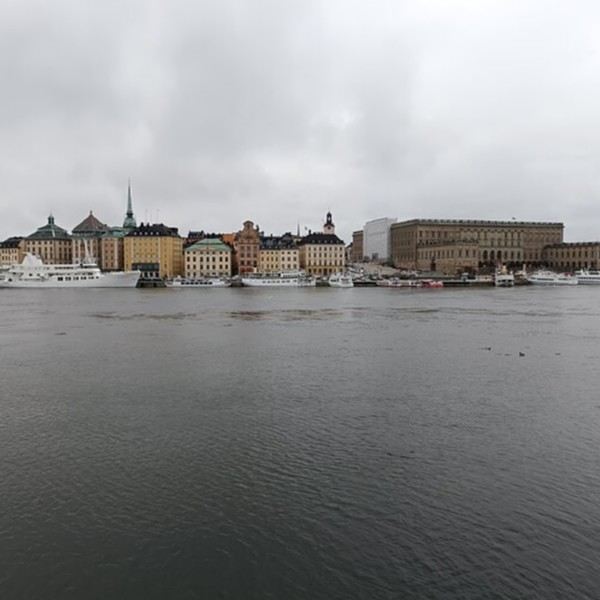
PS: I had to grab photos from the web and adjust their resolution, so they’re not amazing—sorry about that!
I’m trying to take the time to share one or two travel journals I wrote elsewhere (the forum wasn’t accessible when I was writing them...).
My partner and I went to Stockholm from February 27th to March 1st, 2024.
It was a pretty short trip, shaped by the usual factors: time, budget, and the kids.
We live not far from Luxembourg City (about an hour away), and when we can, we fly with Luxair. It’s a quality airline, but it’s a bit pricey.
This trip was originally planned for 2022, but it was canceled by the airline a few weeks before departure. Since the flight was on a De Havilland Q-400 with a max of 76 passengers, I think there just weren’t enough people booked.
So, we booked a flight with checked baggage and seat selection (2 + 2 seating) for around 400 € round trip.
For the hotel, I chose the **Radisson Blu Waterfront** through Booking.com for just under 600 €, including breakfast.
PS: I had to grab photos from the web and adjust their resolution, so they’re not amazing—sorry about that!
Exploring Quebec
I love barns. The ones with bright, cheerful colors, the ones whose wood is so old it’s turned completely gray, the ones that are restored, the ones that are run-down… You come across a thousand and one no matter which road you take, and every single one of them has one thing in common: they lean! Is it the weight of the years, the weight of the snow, or the wind that makes them so wobbly? Whatever the reason, it gives them a charm that utterly enchants me.
I love lighthouses. They’re small, often all curves and colors. Do they really serve as landmarks for sailors? I think they’re more useful to seals or whales—and even more so to birds, which make them their favorite meet-up spots. Either way, they have a wonderfully easygoing look that I love.
I love houses. Not just any houses: the ones decked out like Christmas trees all year round. Usually, they’re spruced up, looking just as cheerful under snow as they do covered in flowers and little figurines on the lawn, always decorated with those strings of lights wrapped around them. Is it true they help lost travelers find their way during a snowstorm? And in summer? Is it just for looks? Either way, they have a totally kitschy vibe that delights me.
I love roads. The ones that hide in endless forests, the ones that play hide-and-seek with rivers, the ones so straight you can see forever, the ones that go up and down like a rollercoaster, the ones that burst with autumn colors, that sparkle under the snow, that vanish into the fog, the ones that cross villages, that cross meadows, that run along the shores of the St. Lawrence. I love lonely roads, peaceful roads, the ones where you drive while listening to Janis Joplin and Tom Waits… What if we just kept going? Always farther, never stopping…
But I also love the people! The people with big smiles and laughing eyes. The people who come up to us as soon as they hear our accent. And who talk—sometimes so fast and with words we don’t know that it takes a while to understand. And then there’s that kindness in a café or a shop: “Hello there, sweetheart, what can I get you?” “Welcome, if you need help, just call me,” and so on… I love it, yes, I love it. I struggle *so* much with the Québécois accent (laugh), but I figured out a trick: you have to open your mouth wide and twist your lips a little, and it works pretty well! Laugh again… I love you, my Québécois friends…
I love lighthouses. They’re small, often all curves and colors. Do they really serve as landmarks for sailors? I think they’re more useful to seals or whales—and even more so to birds, which make them their favorite meet-up spots. Either way, they have a wonderfully easygoing look that I love.
I love houses. Not just any houses: the ones decked out like Christmas trees all year round. Usually, they’re spruced up, looking just as cheerful under snow as they do covered in flowers and little figurines on the lawn, always decorated with those strings of lights wrapped around them. Is it true they help lost travelers find their way during a snowstorm? And in summer? Is it just for looks? Either way, they have a totally kitschy vibe that delights me.
I love roads. The ones that hide in endless forests, the ones that play hide-and-seek with rivers, the ones so straight you can see forever, the ones that go up and down like a rollercoaster, the ones that burst with autumn colors, that sparkle under the snow, that vanish into the fog, the ones that cross villages, that cross meadows, that run along the shores of the St. Lawrence. I love lonely roads, peaceful roads, the ones where you drive while listening to Janis Joplin and Tom Waits… What if we just kept going? Always farther, never stopping…
But I also love the people! The people with big smiles and laughing eyes. The people who come up to us as soon as they hear our accent. And who talk—sometimes so fast and with words we don’t know that it takes a while to understand. And then there’s that kindness in a café or a shop: “Hello there, sweetheart, what can I get you?” “Welcome, if you need help, just call me,” and so on… I love it, yes, I love it. I struggle *so* much with the Québécois accent (laugh), but I figured out a trick: you have to open your mouth wide and twist your lips a little, and it works pretty well! Laugh again… I love you, my Québécois friends…
Renseignements pour effectuer mon road-trip de 3 mois aux États-Unis English translation pending
bonjour, j'ai une petite question pour mon road trip de l'année prochaine. nous partons 3 mois de sept à nov. début du trip Detroit où j'ai ma famille puis ensuite direction l'ouest. mais lorsque je vais sur bing carte je ne peux rentrer que 26 villes . avez vous un autre procédé pour rajouter d'autres points ? MERCI BEAUCOUP .
Cécile découvre Amsterdam, les Pays-Bas et... Metz English translation pending
et hop ! une nouvelle capitale européenne et ses alentours pour Cécile ....
Brel et Béart ont chanté cette charmante ville qui lui tardait de découvrir.. grâce à un CE généreux qui rend accessibles les Adagio Hôtel d'Europe...
11h de route ce dimanche de de retour de vacances... arrivée tardive et nocturne sur place donc dodo le 1er soir
La météo est mouvant mais que rien ne nous arrête... direction Utrecht..
1er choc: des vélos partout !!!! donc vitesse réduite ce qui permet de découvrir des bâtiments insolites

Utrecht centre ses canaux, l'Oudegracht

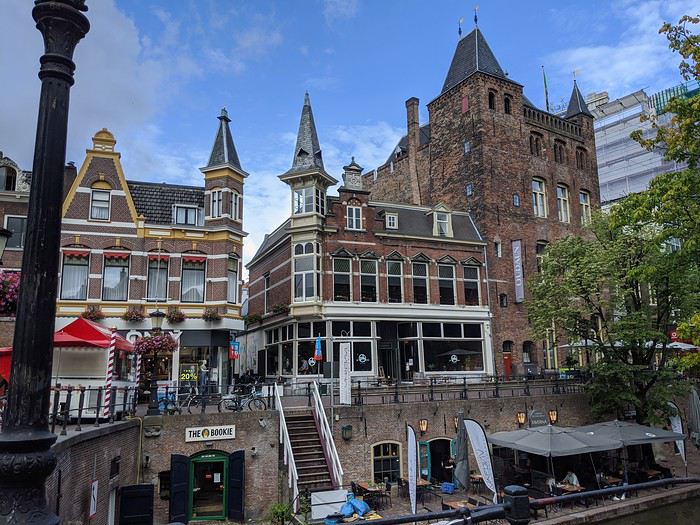
les touristes n ont pas encore envahi les bars des quais
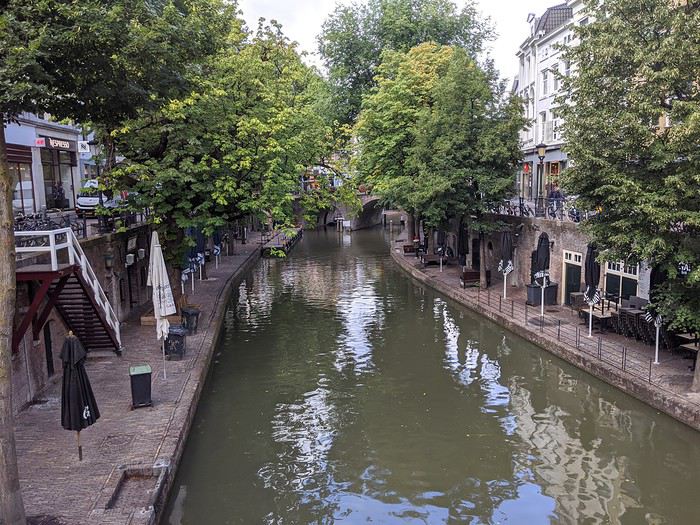
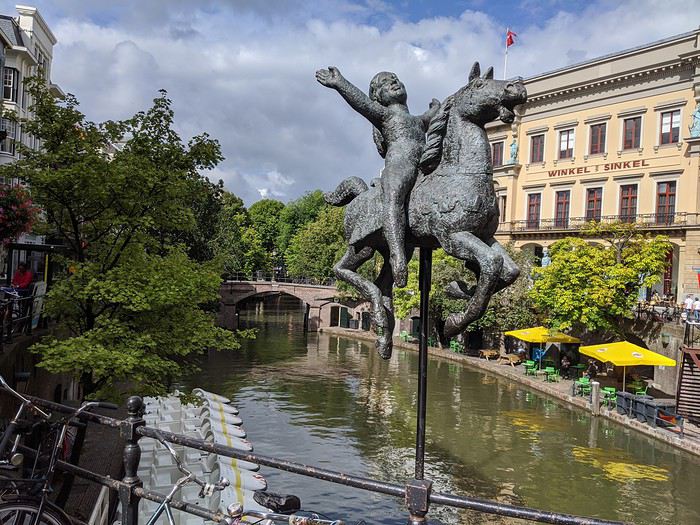
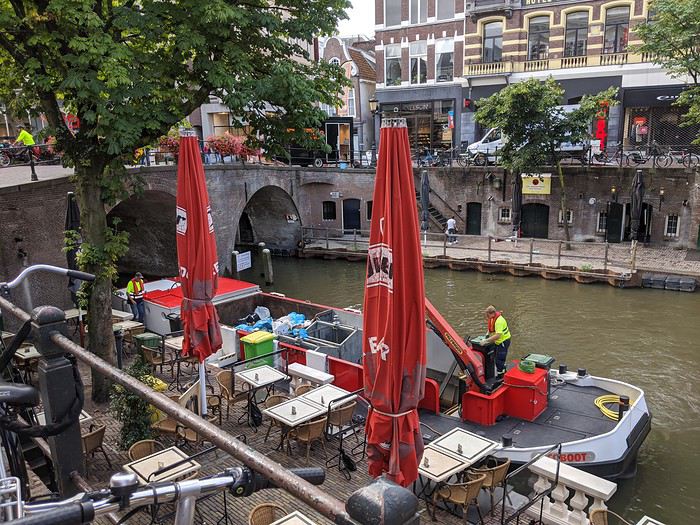
Même le ramassage des poubelles se fait par péniche!
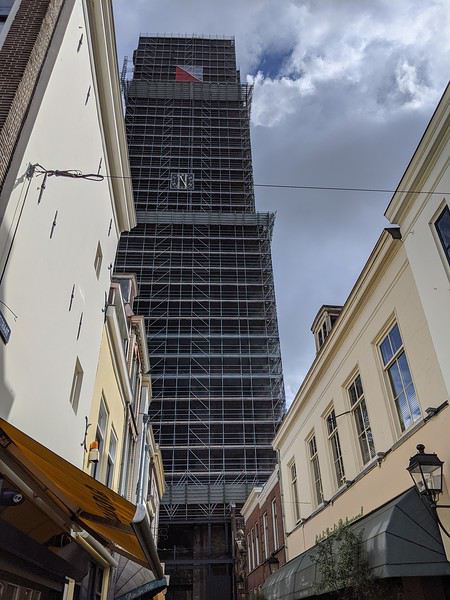
Pas de chance les 465 marches du Dom sont impossibles d accès
Brel et Béart ont chanté cette charmante ville qui lui tardait de découvrir.. grâce à un CE généreux qui rend accessibles les Adagio Hôtel d'Europe...
11h de route ce dimanche de de retour de vacances... arrivée tardive et nocturne sur place donc dodo le 1er soir
La météo est mouvant mais que rien ne nous arrête... direction Utrecht..
1er choc: des vélos partout !!!! donc vitesse réduite ce qui permet de découvrir des bâtiments insolites
Utrecht centre ses canaux, l'Oudegracht
les touristes n ont pas encore envahi les bars des quais
Même le ramassage des poubelles se fait par péniche!
Pas de chance les 465 marches du Dom sont impossibles d accès
Disparition de France Ô English translation pending
J'ai réalisé aujourd'hui que la chaine France O allait s'arrêter.
J'en suis extrêmement triste et en colère contre les gens qui ont pris cette décision.
C'était la seule chaîne de France Télévision que j'aimais regarder, la seule qui montrait une culture riche dans ce pays de nos jours (la musique, la littérature).
Il parait qu'on ne va rien perdre et qu'elle va enrichir les autres chaines du service public.
Je pense au contraire que ses sujets seront dilués à dose homéopatique et qu'il ne sera plus possible de s'en imprégner.
Changer des euros en Suisse English translation pending
Bonsoir,
Je cherche une opinion avisée : est-ce que changer des euros en Suisse est commode, et est-ce que c'est acceptable quant aux commissions et frais ? Où trouver des bureaux de change ? Dans les gares ? Dans les banques ? Quel taux appliquent-ils globalement ?
Autrement, ce sera la carte en devise étrangères...
Michel
Je cherche une opinion avisée : est-ce que changer des euros en Suisse est commode, et est-ce que c'est acceptable quant aux commissions et frais ? Où trouver des bureaux de change ? Dans les gares ? Dans les banques ? Quel taux appliquent-ils globalement ?
Autrement, ce sera la carte en devise étrangères...
Michel
Silex entre Niort, Royan et Bayonne English translation pending
Bonjour, je pars avec un vélo de course avec des tous de 700 par 25, pouvez-vous me dire si sur ce trajet il y a une présence de silex ?, Merci Hervé
Le début de la fin pour Corsair? English translation pending
Bonjour à tous,
La compagnie Corsair est mise en vente par ses propriétaires. Le banquier Lazard est chargé de l’opération. C’est sûr que par les temps qui courent, n’avoir que des 747 à faire voler, c’est pas top. Prudence donc dans l’achat de vols vers les Antilles ou la Réunion.
La compagnie Corsair est mise en vente par ses propriétaires. Le banquier Lazard est chargé de l’opération. C’est sûr que par les temps qui courent, n’avoir que des 747 à faire voler, c’est pas top. Prudence donc dans l’achat de vols vers les Antilles ou la Réunion.
Une semaine à Split en septembre 2020 English translation pending
Bonsoir la communauté !
Je pars une semaine à Split début septembre 2020.
Ne connaissant pas du tout la Croatie, j'aimerai avoir quelques conseils pratiques pour le séjour sur place (quartier où loger, nécessité de louer une voiture, itinéraire conseillé, incontournables, petits resto sympas et typiques, etc).
Je pars avec mes parents et nous aimons beaucoup le bateau. Connaissez-vous des compagnies fiables pour la location d'un bateau à moteur à la journée ? Le permis bateau français suffit-il? Existe-t-il éventuellement des excursions intéressantes ?
Je suis preneuse de tout autre conseil utile 😉
Dans l'attente de vos retours !
Agréable soirée,
Alexandra
Je pars une semaine à Split début septembre 2020.
Ne connaissant pas du tout la Croatie, j'aimerai avoir quelques conseils pratiques pour le séjour sur place (quartier où loger, nécessité de louer une voiture, itinéraire conseillé, incontournables, petits resto sympas et typiques, etc).
Je pars avec mes parents et nous aimons beaucoup le bateau. Connaissez-vous des compagnies fiables pour la location d'un bateau à moteur à la journée ? Le permis bateau français suffit-il? Existe-t-il éventuellement des excursions intéressantes ?
Je suis preneuse de tout autre conseil utile 😉
Dans l'attente de vos retours !
Agréable soirée,
Alexandra
L'industrie de la musique à l'arrêt mardi contre les violences policières English translation pending
Qui pourra aller en Grèce cet été? English translation pending
https://www.lesoir.be/303972/article/2020-05-29/les-belges-ne-pourront-pas-se-rendre-en-grece-contrairement-dautres
Les touristes et voyageurs en provenance de 29 pays seulement pourront à nouveau se rendre en Grèce à partir du 15 juin sans devoir subir de quarantaine, a indiqué vendredi le ministre grec du Tourisme. Ni la Belgique ni la France n’en font partie. Athènes réexaminera le 1er juillet la situation et étendra éventuellement sa liste à d’autres pays.
Les 29 pays concernés par l’absence de quarantaine sont l’Allemagne, l’Autriche, la Suisse, l’Albanie, l’Australie, la Macédoine du Nord, la Bulgarie, le Danemark, l’Estonie, le Japon, Israël, la Chine, la Croatie, Chypre, la Lettonie, le Liban, la Lituanie, Malte, le Monténégro, la Nouvelle-Zélande, la Norvège, la Corée du Sud, la Hongrie, la Roumanie, la Serbie, la Slovaquie, la Slovénie, la République Tchèque et la Finlande.
Les touristes et voyageurs en provenance de 29 pays seulement pourront à nouveau se rendre en Grèce à partir du 15 juin sans devoir subir de quarantaine, a indiqué vendredi le ministre grec du Tourisme. Ni la Belgique ni la France n’en font partie. Athènes réexaminera le 1er juillet la situation et étendra éventuellement sa liste à d’autres pays.
Les 29 pays concernés par l’absence de quarantaine sont l’Allemagne, l’Autriche, la Suisse, l’Albanie, l’Australie, la Macédoine du Nord, la Bulgarie, le Danemark, l’Estonie, le Japon, Israël, la Chine, la Croatie, Chypre, la Lettonie, le Liban, la Lituanie, Malte, le Monténégro, la Nouvelle-Zélande, la Norvège, la Corée du Sud, la Hongrie, la Roumanie, la Serbie, la Slovaquie, la Slovénie, la République Tchèque et la Finlande.
Le Nord Pas-de-Calais à vélo avec bivouacs en 2017 English translation pending
Bonjour à toutes et tous. L’année dernière, les dés ont désigné le département du Nord. Et oui, si vous avez lu nos précédentes aventures, vous savez que le choix de la destination est décidé par le hasard des dés. Donc nous voilà une nouvelle fois réunis pour pédaler quelques jours, Mathieu et moi.
Notre matériel est le même a peu de chose prêt, et nous avons la chance de laisser la voiture chez le frère de Mathieu, qui habite Lille. Bon, Mathieu n’a pas été inspiré pour préparer l’itinéraire, donc, nous allons faire au jour le jour. Ce qui explique le double département.
Attention aux âmes sensibles, il se peut qu’il y ait des images contenant des petits feu durant nos bivouacs. Aux personnes facilement influençables et souhaitant reproduire ces ambiances qui semblent joyeuses, sachez qu’elles ne l’étaient pas du tout, et je ne peux que vous déconseiller de faire comme nous. À bons entendeurs, je vous laisse lire nos précédents voyages que vous trouverez sur mon profile, pour comprendre le bien-fondé de cette remarque.
Voici notre voyage en quelques chiffres.
Durée : 4 jours (oui, c’est court, la faute m’incombe)
Distance : ~ 310 km
Dénivelé : ~ 1700m D+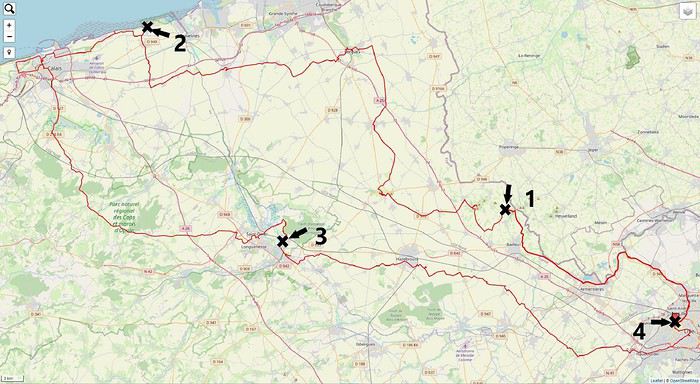
Notre matériel est le même a peu de chose prêt, et nous avons la chance de laisser la voiture chez le frère de Mathieu, qui habite Lille. Bon, Mathieu n’a pas été inspiré pour préparer l’itinéraire, donc, nous allons faire au jour le jour. Ce qui explique le double département.
Attention aux âmes sensibles, il se peut qu’il y ait des images contenant des petits feu durant nos bivouacs. Aux personnes facilement influençables et souhaitant reproduire ces ambiances qui semblent joyeuses, sachez qu’elles ne l’étaient pas du tout, et je ne peux que vous déconseiller de faire comme nous. À bons entendeurs, je vous laisse lire nos précédents voyages que vous trouverez sur mon profile, pour comprendre le bien-fondé de cette remarque.
Voici notre voyage en quelques chiffres.
Durée : 4 jours (oui, c’est court, la faute m’incombe)
Distance : ~ 310 km
Dénivelé : ~ 1700m D+
Expatriation d'une Belge vers Perpignan English translation pending
Bonjour, je suis belge, seule, je me suis expatriée 5 ans en Andalousie, puis rentrée en Belgique, je ne supportais plus la différence de langue. Le soleil et la mer me manquent, et les belges sont d'un acceuil très froid. Je me demandais donc si la région de Perpignan pourrait me convenir.
Comment les belges expatriés sont ils accueillis? Comment organisent ils leur déménagement? Trouve t on facilement un logement? Est il possible de débarquer sur place sans rien et de se débrouiller assez rapidement?
Merci de vos infos et, évidemment, s'il y en a d'autres, je les prends avec plaisir.
Comment les belges expatriés sont ils accueillis? Comment organisent ils leur déménagement? Trouve t on facilement un logement? Est il possible de débarquer sur place sans rien et de se débrouiller assez rapidement?
Merci de vos infos et, évidemment, s'il y en a d'autres, je les prends avec plaisir.
40 ans de randonnées: quelques expériences marquantes English translation pending
La plus haute altitude: Mont Kanamo, Inde, 2011
24/9/2011 Je me trouve à Kibber, au Spiti, 4270 mètres. Je randonne déjà au Ladakh, puis au Spiti depuis un mois. Je suis complètement accoutumé à la haute altitude. Il fait très beau, pas trop froid, j'ai passé la nuit dans une guest house à Kibber, un village authentique dans un cirque plutôt sec, brun. Après le petit déjeuner chapatis omelette, je pars à 8 heures. En fait, je projette une traversée vers les villages de Langza et Komik mais je ne possède pas de carte détaillée. Je coupe dans les champs déjà récoltés, en cote, pour rejoindre la mauvaise piste vers le hameau de Gete, quelques maisons éparpillées, je vois un groupe de bharals (aussi appelés moutons bleus, abondants dans l'Himalaya indien), je me détourne au sommet des falaises pour la vue sur la vallée principale et le monastère de Kyi juste en contrebas. Je reprends la piste qui tourne vers un petit col puis redescend un peu vers un autre hameau en contrebas, mais je prends à gauche sur une piste en construction, plus tard je rencontre 6 ouvriers, ils ne se fatiguent pas trop. Vers le Sud, juste en face, je vois les vastes alpages de Langza ... pas loin, mais au milieu il y a la profonde entaille des gorges de la Shila. 3 heures 30 de marche déjà, je monte sur une petite butte pour voir l'itinéraire mais non, les gorges sont infranchissables ici, et en amont aussi. J'en profite pour manger le casse croute, pain confiture. Je ne regrette pas, très beau panorama avec le Chau Chau Kang Nilda, 6300 mètres, je décide de continuer un circuit pour revenir à Kibber par un col sur la crête plus à l'Est. La piste se termine, à un campement d'été avec des canaux d'irrigation, déserté fin septembre. Un sentier maintenant monte franchement vers le col, je suis en forme. En arrivant à un petit replat, je tombe sur 3 loups, pour le première fois dans l'Himalaya, je n'en ai vu que dans le parc national Denali en Alaska ! Ils sont aussi surpris que moi et ils s'enfuient. J'atteins le col à 4800 ou 4900 mètres et là, le mont Kanamo, 5975 mètres est proche, semble facile, c'est trop tentant. Je fais face quand même à une difficulté, le manque d'eau. Je dois trouver un camp qui en dispose sans trop redescendre. Je longe plus ou moins la crête vers l'Est vers un deuxième col, puis dans les éboulis vers un troisième col. Enfin la chance me souris, je vois un ruisseau plus bas dans la petite vallée vers le Sud . C'est un excellent camp, même un peu d'herbe, les yaks broutent ici en été. Le temps devient froid et nuageux, je mets mes vêtements chauds. Je cuisine du spaghetti au fromage sous le double toit, je lis un peu, avant 7 heures je suis couché.
25/9 Je ne dors pas très bien, j'ai plutôt trop chaud dans le sac de couchage. Lever à 5 heures 50. La tente est couverte de givre, il y a de la glace dans les gourdes mais le ruisseau coule. Pain confiture et grande tasse de Nescafe. Je pars à 6 heures 45, 35 minutes au col et je cache le gros de mes affaires sous des pierres. Je monte des éboulis raides sur une vague trace en 45 minutes jusqu'à une crête plus facile. Je me sens très bien, l'altitude ne me gêne pas. Je ne fais aucun arrêt. Je monte dans des éboulis très raides, mais stables, sur un épaulement, un peu de neige sur le haut, sans difficultes. En 2 heures 15 depuis le col, je rejoins l'extrémité de l'arrête sommitale du mont Kanamo, à environ 5900 mètres, avec un cairn et des drapeaux à prière, j'ai battu mon record d'altitude. J'ai bien mérité quelques biscuits. Mais le vrai sommet reste inaccessible pour moi, il faut longer la crête étroite et glacée, des crampons seraient nécessaires. En plus, un vent glacé souffle très fort, je ne peux pas rester. Je profite juste un peu de la vue des sommets dechiquetes et du glacier à l'arrière, avec une corniche. La descente ne présente aucune difficulté, même hors sentier, je passe par un petit lac bleu, je ne rencontre personne avant Kibber, bien un renard. Je peux me reposer au Norling Homestay, pas d'eau chaude mais à part cela confortable. Je reçois du the avec des biscuits, et le soir un dal bhat abondant. Je sors un peu dans le village, il semble n'y avoir qu'un seul autre touriste
26/9 À 8 heures 30 je prends le bus local pour Kaza.
A SUIVRE Prochain épisode: mon plus haut camp, au Pakistan. Merci de m'avoir lu.
24/9/2011 Je me trouve à Kibber, au Spiti, 4270 mètres. Je randonne déjà au Ladakh, puis au Spiti depuis un mois. Je suis complètement accoutumé à la haute altitude. Il fait très beau, pas trop froid, j'ai passé la nuit dans une guest house à Kibber, un village authentique dans un cirque plutôt sec, brun. Après le petit déjeuner chapatis omelette, je pars à 8 heures. En fait, je projette une traversée vers les villages de Langza et Komik mais je ne possède pas de carte détaillée. Je coupe dans les champs déjà récoltés, en cote, pour rejoindre la mauvaise piste vers le hameau de Gete, quelques maisons éparpillées, je vois un groupe de bharals (aussi appelés moutons bleus, abondants dans l'Himalaya indien), je me détourne au sommet des falaises pour la vue sur la vallée principale et le monastère de Kyi juste en contrebas. Je reprends la piste qui tourne vers un petit col puis redescend un peu vers un autre hameau en contrebas, mais je prends à gauche sur une piste en construction, plus tard je rencontre 6 ouvriers, ils ne se fatiguent pas trop. Vers le Sud, juste en face, je vois les vastes alpages de Langza ... pas loin, mais au milieu il y a la profonde entaille des gorges de la Shila. 3 heures 30 de marche déjà, je monte sur une petite butte pour voir l'itinéraire mais non, les gorges sont infranchissables ici, et en amont aussi. J'en profite pour manger le casse croute, pain confiture. Je ne regrette pas, très beau panorama avec le Chau Chau Kang Nilda, 6300 mètres, je décide de continuer un circuit pour revenir à Kibber par un col sur la crête plus à l'Est. La piste se termine, à un campement d'été avec des canaux d'irrigation, déserté fin septembre. Un sentier maintenant monte franchement vers le col, je suis en forme. En arrivant à un petit replat, je tombe sur 3 loups, pour le première fois dans l'Himalaya, je n'en ai vu que dans le parc national Denali en Alaska ! Ils sont aussi surpris que moi et ils s'enfuient. J'atteins le col à 4800 ou 4900 mètres et là, le mont Kanamo, 5975 mètres est proche, semble facile, c'est trop tentant. Je fais face quand même à une difficulté, le manque d'eau. Je dois trouver un camp qui en dispose sans trop redescendre. Je longe plus ou moins la crête vers l'Est vers un deuxième col, puis dans les éboulis vers un troisième col. Enfin la chance me souris, je vois un ruisseau plus bas dans la petite vallée vers le Sud . C'est un excellent camp, même un peu d'herbe, les yaks broutent ici en été. Le temps devient froid et nuageux, je mets mes vêtements chauds. Je cuisine du spaghetti au fromage sous le double toit, je lis un peu, avant 7 heures je suis couché.
25/9 Je ne dors pas très bien, j'ai plutôt trop chaud dans le sac de couchage. Lever à 5 heures 50. La tente est couverte de givre, il y a de la glace dans les gourdes mais le ruisseau coule. Pain confiture et grande tasse de Nescafe. Je pars à 6 heures 45, 35 minutes au col et je cache le gros de mes affaires sous des pierres. Je monte des éboulis raides sur une vague trace en 45 minutes jusqu'à une crête plus facile. Je me sens très bien, l'altitude ne me gêne pas. Je ne fais aucun arrêt. Je monte dans des éboulis très raides, mais stables, sur un épaulement, un peu de neige sur le haut, sans difficultes. En 2 heures 15 depuis le col, je rejoins l'extrémité de l'arrête sommitale du mont Kanamo, à environ 5900 mètres, avec un cairn et des drapeaux à prière, j'ai battu mon record d'altitude. J'ai bien mérité quelques biscuits. Mais le vrai sommet reste inaccessible pour moi, il faut longer la crête étroite et glacée, des crampons seraient nécessaires. En plus, un vent glacé souffle très fort, je ne peux pas rester. Je profite juste un peu de la vue des sommets dechiquetes et du glacier à l'arrière, avec une corniche. La descente ne présente aucune difficulté, même hors sentier, je passe par un petit lac bleu, je ne rencontre personne avant Kibber, bien un renard. Je peux me reposer au Norling Homestay, pas d'eau chaude mais à part cela confortable. Je reçois du the avec des biscuits, et le soir un dal bhat abondant. Je sors un peu dans le village, il semble n'y avoir qu'un seul autre touriste
26/9 À 8 heures 30 je prends le bus local pour Kaza.
A SUIVRE Prochain épisode: mon plus haut camp, au Pakistan. Merci de m'avoir lu.
Été 1985 : un voyage de noces hors du commun dans la Chine pop English translation pending
Deuxième séjour à Pékin en 2018, je discute à l'auberge avec une voyageuse :
"Pékin ! Ici on vit vraiment dans un autre monde."
"Peut-être, mais alors que dire du Pékin des années 80. Une autre planète !"
Ceux qui découvrent cette Chine du 21° siècle ne retrouveront guère que des fragments de celle que je vais raconter ici, comme j'ai pu le constater par moi-même. (Voir mes carnets sur la route de la soie.)
Ce sera donc un carnet "impressions de Chine", ce qui m'est resté de plus marquant. Les quelques photos jaunies que j'ai pu sauver sont scannées et de mauvaise qualité. Merci à Jacqueline et Jean-Pierre pour leur contribution photographique, entièrement d'époque elle aussi.
AU MENU
Préambule - le contexte politique et économique du pays Chapitre 1 - Un voyage qui s'annonce pas très romantique, c'était prévu... Chapitre 2 - Pékin : le trafic de monnaie. Illégal mais indispensable. Chapitre 3 - Pékin 1985-2018 : du Moyen-Age à la révolution technologique. Immersion comparative. Chapitre 4 - Pékin : un billet de train pour Xi'an ? Pas si simple que ça. Chapitre 5 - Le "qi feng shui". Le soigneur se fait soigner. Chapitre 6 - Xi'an : «mei yo», la réponse favorite des fonctionnaires. Chapitre 7 - Vol au-dessus de la jungle. Le coucou arrivera-t-il à bon port ? Chapitre 8 - Chongqing : le bal, ou la vie sexuelle des jeunes chinois. Chapitre 9 - Croisière pop sur le Yangtse. Chapitre 10 - L'hôtel à rats. C'est à Wuhan, comme par hasard. Chapitre 11 - Canton : à la recherche de xiao Wu. Chapitre 12 - Canton : un train sous haute surveillance. Chapitre 13 - Hong Kong : dur retour à la civilisation. Albums : les photos d'époque signées Jacqueline et Jean-Pierre. A partir de la page 5 Témoignages et photos d'époque. Merci aux différents contributeurs. A partir de la page 6. Ne manquez pas le Tibet et le Xinjiang !
PREAMBULE : le contexte politique et économique Comment voyager dans ce pays encore très fermé, obscur, énigmatique, dont en Europe on ne connaît guère la mentalité, les règles de fonctionnement, dont on ne perçoit à l'étranger que quelques images soigneusement filtrées par la censure. Comment se déplacer, se loger, se nourrir, sans moyen de communication, sans réservation d'hôtel ou de train, sans connaître la langue , sans aide, sans guide, sans assistance, sans carte bleue...
1984, date clé pour le voyageur Après trente années de communisme à marche forcée, de campagnes idéologiques calamiteuses pour les populations, de luttes intestines pour le pouvoir, le pays n'arrive pas à décoller économiquement. L'écart grandit avec les nations développées. Mais avec le rétablissement des relations diplomatiques avec les Etats Unis en 1979, le nouveau président, Deng Xiaoping, tient enfin sa revanche et entame sa longue marche vers le progrès. Les fossiles maoïstes de la "longue marche", des "cent fleurs", du "grand bond en avant", les criminels de la "grande révolution culturelle prolétarienne", représentés par la "bande des quatre", tous ceux qui l'avaient évincé du pouvoir et condamné à l'oubli au fin fond d'une province, le sont à leur tour.
Le "révisionniste", comme l'a appelé la veuve Mao, lance ses réformes de libéralisation et d'ouverture de l'économie : « Peu importe qu'un chat soit blanc ou noir, l'essentiel est qu'il attrape les souris ! » Parole du maître.
Parmi ces réformes : l'ouverture au tourisme. Jusqu'à présent, pour visiter le pays, il fallait obligatoirement, soit passer par un tour opérateur avec guide et circuit programmé, soit demander des autorisations de voyage pour un nombre limité de destinations. Très peu pour moi. Mais en 1984, monsieur Deng supprime le permis de circuler et ouvre quasiment tout le pays aux visiteurs. L'info provoque un déclic : - C'est l'occasion ou jamais. L'année prochaine, ce sera la Chine. Et en sac à dos! Et ce sera aussi notre voyage de noces...
Nous aurons le privilège d'être parmi les premiers voyageurs occidentaux à tenter l'aventure. Je pourrai enfin mettre en pratique ce que j'ai appris de chinois à la fac et réaliser un vieux rêve. A nous la Chine, à nous la découverte de ce pays mystérieux et fascinant. Quelle réalité se cache derrière ces images édulcorées de bonheur populaire que nous distillent les images officielles ? Comment vit-on réellement dans ce pays ? Quel accueil réserve-t-on aux impérialistes occidentaux ?

Wuhan, 1985 : slogans révolutionnaires pour mini gardes rouges
CHAPITRE 1 : un voyage qui s'annonce pas très romantique, c'était prévu... Eh oui, juste mariés, il y a peut-être plus glamour comme destination. Bon, Venise, on connaît déjà. Quoi de mieux qu'une telle aventure pour forger un couple ? Pendant toute l'année, je peaufine le projet : itinéraire, transports, hébergements... Les guides de voyage sur la Chine ne sont pas nombreux, il n'en existe d'ailleurs qu'un en français. Pour ce qui est de l'itinéraire, c'est à peu près établi, pour le reste, ce sera au coup par coup, improvisation et opportunités. L'aventure quoi. Juste qu'on dispose d'un mois entre l'atterrissage et le retour à Hong-Kong. Pour l'itinéraire, ce sera donc Pékin - Hong Kong, mais par où et comment ? C'est le grand mystère, même si certains incontournables sont au programme : la Grande Muraille, Xi'an et son armée en terre cuite, la croisière sur le Yang Tse Kiang...
Août 1985 : Hong Kong, premiers pas en extrême-orient Munis d'un joli visa sur notre passeport et d'un billet d'avion Hong Kong - Pékin acheté en agence en France, nous débarquons à Hong Kong pour y passer une nuit avant de repartir pour Pékin le lendemain, L'atterrissage au-dessus de la ville est spectaculaire, l'avion louvoie entre les immeubles pour plonger vers la piste au raz de l'océan, un véritable tour de manège à sensations. Pas trop le temps d'explorer la ville, mais le dépaysement est déjà total. Et pourtant, ce n'est rien à côté de ce qui nous attend...
Ca commence plutôt mal Aéroport de Hong Kong, le lendemain. Nos billets sont valables, pas de problème, seulement : - Désolé, mais vous n'avez pas confirmé votre vol, l'avion est complet. Il va falloir attendre deux ou trois jours... Eh oui, en 1985, il faut confirmer son vol la veille par téléphone. Dans l'excitation et l'émotion, nous avions complètement oublié la consigne. Zut alors, deux ou trois jours de perdus sur le projet, c'est beaucoup trop. - Attendez ici, peut-être il y aura des places si des voyageurs ne se présentent pas. Longue attente plutôt anxieuse, et quelques minutes avant le décollage, petit signe de l'employé : - C'est bon, il reste deux places, vous pouvez partir.
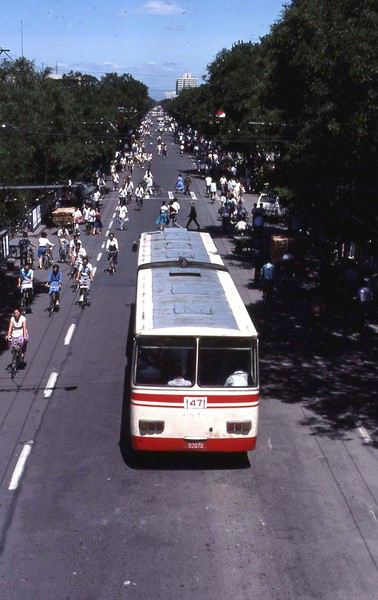
Pékin : avenue Xidan. Photo : Jacqueline et Jean-Pierre
Dès l'aéroport, j'ai senti le choc... Une simple piste en béton, pas d'avion en attente, un trafic aérien quasi nul, un bâtiment à la chinoise, usé et vieillot à souhait, des gardes en uniforme. L'aéroport est encore une base militaire, accessoirement civile pour quelques rares liaisons vers l'URSS et les pays d'Asie. Il n'y a rien dans ce qui fait office de hall d'accueil, une pièce de quelques dizaines de mètres carré tout au plus.
Contrôles minutieux, file d'attente, les militaires ne sont pas très souriants, et le comité d'accueil pas très... accueillant. On n'est pas là pour rigoler, surtout avec ces étrangers qui débarquent de Hong Kong, la zone capitaliste. Eh oui, Hong Kong chinois, ce sera dans une dizaine d'années. D'ici là...
Des billets de Monopoly ?! Un simple bureau dans un recoin fait office de banque. Vite, changer nos travelers chèques en dollars. Ben oui, la carte bleue, ça n'existe pas encore. Derrière son boulier, l'employé fait ses calculs à une vitesse incroyable et me rend le change. Surprise : j'ai une liasse de jolis billets tout neufs dans la main, mais ils n'ont rien à voir avec la monnaie locale. La preuve, il n'y a pas le portrait du grand timonier, mais des jolis dessins de monuments et paysages ! Ca ressemble davantage à des billets de Monopoly.
C'est quoi ce truc ?
Une bonne affaire, mais un gros risque En fait, c'est une monnaie spéciale réservée aux étrangers. Nous allons vite apprendre deux choses. - Un, cette monnaie n'est pas utilisée (et même interdite) par les chinois dans leur vie quotidienne. Elle est réservée aux étrangers et ils doivent payer avec. - Deux, elle est très recherchée par quelques autochtones, car c'est la seule monnaie ayant un équivalent dollar. A l'époque, le yuan chinois ne vaut absolument rien, il n'est pas convertible dans une autre monnaie. Pire que le kopeck. Du coup, notre monnaie "spécial étrangers" fait l'objet d'un trafic formellement interdit et sévèrement réprimé par les autorités.
Mais comment faire si tu veux voyager en dehors des circuits touristiques et des grands hôtels, juste prendre le bus par exemple ou manger dans une gargote. Ca, les autorités n'en ont cure. Un étranger, ça dort dans les hôtels de luxe, ça prend l'avion ou le train en première classe, ça mange dans les grands restaurants. Mieux encore, ça voyage en groupe avec un guide.
Pas d'autre solution, il faudra changer au black Dans la rue, avec les petits trafiquants locaux. Il y a même un cours « officiel » du change : un yuan de Monopoly contre trois yuans de monnaie populaire. A l'époque, un yuan, c'est à peu près un franc. Une sacrée bonne affaire ! Le tout, c'est de ne pas se faire pincer. Les rumeurs les plus folles courent sur les peines encourues pour les trafiquants, mais aussi pour les étrangers qui se font pincer. C'est d'ailleurs marqué sur certains documents. Si les peines de prison ferme ont de quoi dissuader le voyageur, il faudra quand même prendre le risque, pas le choix. Une des nombreuses absurdités du système.
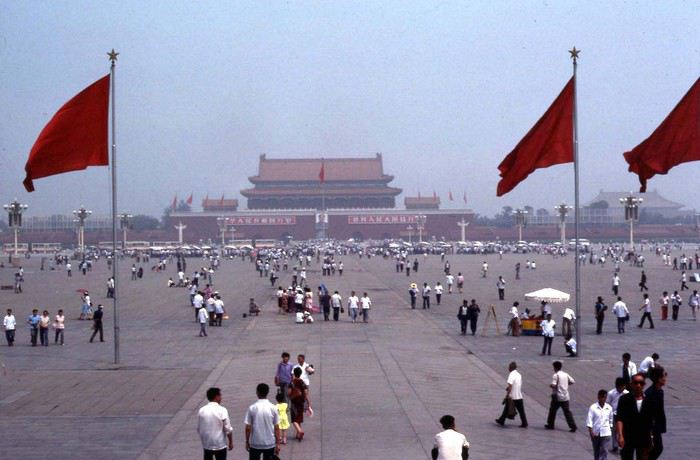
Pékin : place Tian An Men. Photo : Jacqueline et Jean-Pierre
Mise à l'épreuve 1 : trouver un hébergement... Sortie de l'aéroport, c'est l'après-midi. Quelques taxis attendent, réservés aux privilégiés du régime et aux étrangers. Mais nous ne savons même pas où nous allons, juste en ville, et on verra après. Donc ce sera le bus, celui-ci prend la monnaie de Monopoly. C'est notre premier transport en commun, direction le centre ville, à une vingtaine de kilomètres. Très bien, mais où aller, à qui demander un tuyau, un renseignement, une bonne adresse ?
L'aéroport étant en rase campagne, la route bordée d'arbres qui conduit à Pékin centre ressemble à une de nos départementales. De part et d'autres, c'est le défilé des paysans, le plus souvent à pied, tirant des charrettes à bras, quelques fois à bicyclette ou en tracteur. Pour nous occidentaux déjà rodés aux autoroutes, c'est un choc. Ici, pas de voiture individuelle : les véhicules à moteur, c'est juste des camions, quelques bus et de rares taxi, c'est tout .
La carte de Pékin n'indique rien d'autre que le nom des rues, impossible de savoir où se trouve tel service, hôtel, restaurant... Il faut se débrouiller. Les quelques éléments écrits et oraux de chinois que je possède, je vais vite devoir les mettre à l'épreuve. L'anglais ici, on connaît pas.
Juste à côté de nous est assise une jeune femme, bien de sa personne, sans doute un cadre du parti ou d'une grande entreprise. Elle semble plus amène que les autres voyageurs, plus disposée à rendre service. J'entame la conversation comme je peux. Après les échanges d'usage : - Nous sommes français, c'est notre premier voyage en Chine. Connaissez-vous un hôtel sur le trajet du bus qui nous accepterait ? Coup de chance, la femme nous en indique un non loin d'un arrêt, elle nous dira quand il faudra descendre.
Mise à l'épreuve 2 : et qui accepte les étrangers... L'hôtel n'est pas facile à trouver, tout se ressemble ici et rien ne permet de discerner au premier coup d'oeil la fonction d'un bâtiment. Ce n'est même pas écrit « hôtel » à l'entrée. Finalement nous poussons la porte de ce qui semble être ce que nous cherchons. Un étroit couloir sombre, un guichet, une sorte de réception, on dirait un peu un hôtel. Le type de l'accueil est très surpris de nous voir ici, mais oui, c'est bien un hôtel, sauf que : - C'est interdit aux étrangers, vous ne devez pas rester ici ! - Mais comment faire alors ? Le type décroche son téléphone, puis, au bout d'un moment : - Prenez le bus et descendez à cet arrêt, vous y trouverez un hôtel pour vous.
C'est ainsi que nous découvrons que nous ne pourrons pas loger comme on veut dans le pays. La plupart des hôtels sont interdits aux étrangers, il faut toujours aller à l'hôtel spécial « wai guo ren». Oui, mais ce n'est pas forcément indiqué. Quant à dormir chez l'habitant, ce n'est même pas la peine d'y songer, c'est interdit. De plus, quand on voit dans quoi vivent les gens en ville, le peu d'espace dont ils disposent, ça ne donne pas vraiment envie de se faire inviter.
Je ne me souviens plus comment nous avons fait pour trouver le bon bus et le bon arrêt, juste que ça n'a pas été facile du tout. La contrôleuse du bus a tiré une drôle de tronche quand je lui ai tendu le billet de Monoploy, mais elle n'avait pas le choix. Un mao le ticket, dix centimes de franc. Premier aperçu du coup de la vie : trois fois rien. Dans le bus, tous les regards sont fixés sur nous...
Pas de doute, il faut absolument trouver de la monnaie locale, et le plus vite possible. On ne va rien pouvoir faire avec cette monnaie de m... Et quand par hasard ils sont acceptés, on y perd sacrément au change, car ils nous rendent l'argent en monnaie locale. C'est une arnaque gouvernementale bien calculée !
Prochain épisode : le trafic de monnaie
Ce sera donc un carnet "impressions de Chine", ce qui m'est resté de plus marquant. Les quelques photos jaunies que j'ai pu sauver sont scannées et de mauvaise qualité. Merci à Jacqueline et Jean-Pierre pour leur contribution photographique, entièrement d'époque elle aussi.
AU MENU
Préambule - le contexte politique et économique du pays Chapitre 1 - Un voyage qui s'annonce pas très romantique, c'était prévu... Chapitre 2 - Pékin : le trafic de monnaie. Illégal mais indispensable. Chapitre 3 - Pékin 1985-2018 : du Moyen-Age à la révolution technologique. Immersion comparative. Chapitre 4 - Pékin : un billet de train pour Xi'an ? Pas si simple que ça. Chapitre 5 - Le "qi feng shui". Le soigneur se fait soigner. Chapitre 6 - Xi'an : «mei yo», la réponse favorite des fonctionnaires. Chapitre 7 - Vol au-dessus de la jungle. Le coucou arrivera-t-il à bon port ? Chapitre 8 - Chongqing : le bal, ou la vie sexuelle des jeunes chinois. Chapitre 9 - Croisière pop sur le Yangtse. Chapitre 10 - L'hôtel à rats. C'est à Wuhan, comme par hasard. Chapitre 11 - Canton : à la recherche de xiao Wu. Chapitre 12 - Canton : un train sous haute surveillance. Chapitre 13 - Hong Kong : dur retour à la civilisation. Albums : les photos d'époque signées Jacqueline et Jean-Pierre. A partir de la page 5 Témoignages et photos d'époque. Merci aux différents contributeurs. A partir de la page 6. Ne manquez pas le Tibet et le Xinjiang !
PREAMBULE : le contexte politique et économique Comment voyager dans ce pays encore très fermé, obscur, énigmatique, dont en Europe on ne connaît guère la mentalité, les règles de fonctionnement, dont on ne perçoit à l'étranger que quelques images soigneusement filtrées par la censure. Comment se déplacer, se loger, se nourrir, sans moyen de communication, sans réservation d'hôtel ou de train, sans connaître la langue , sans aide, sans guide, sans assistance, sans carte bleue...
1984, date clé pour le voyageur Après trente années de communisme à marche forcée, de campagnes idéologiques calamiteuses pour les populations, de luttes intestines pour le pouvoir, le pays n'arrive pas à décoller économiquement. L'écart grandit avec les nations développées. Mais avec le rétablissement des relations diplomatiques avec les Etats Unis en 1979, le nouveau président, Deng Xiaoping, tient enfin sa revanche et entame sa longue marche vers le progrès. Les fossiles maoïstes de la "longue marche", des "cent fleurs", du "grand bond en avant", les criminels de la "grande révolution culturelle prolétarienne", représentés par la "bande des quatre", tous ceux qui l'avaient évincé du pouvoir et condamné à l'oubli au fin fond d'une province, le sont à leur tour.
Le "révisionniste", comme l'a appelé la veuve Mao, lance ses réformes de libéralisation et d'ouverture de l'économie : « Peu importe qu'un chat soit blanc ou noir, l'essentiel est qu'il attrape les souris ! » Parole du maître.
Parmi ces réformes : l'ouverture au tourisme. Jusqu'à présent, pour visiter le pays, il fallait obligatoirement, soit passer par un tour opérateur avec guide et circuit programmé, soit demander des autorisations de voyage pour un nombre limité de destinations. Très peu pour moi. Mais en 1984, monsieur Deng supprime le permis de circuler et ouvre quasiment tout le pays aux visiteurs. L'info provoque un déclic : - C'est l'occasion ou jamais. L'année prochaine, ce sera la Chine. Et en sac à dos! Et ce sera aussi notre voyage de noces...
Nous aurons le privilège d'être parmi les premiers voyageurs occidentaux à tenter l'aventure. Je pourrai enfin mettre en pratique ce que j'ai appris de chinois à la fac et réaliser un vieux rêve. A nous la Chine, à nous la découverte de ce pays mystérieux et fascinant. Quelle réalité se cache derrière ces images édulcorées de bonheur populaire que nous distillent les images officielles ? Comment vit-on réellement dans ce pays ? Quel accueil réserve-t-on aux impérialistes occidentaux ?
Wuhan, 1985 : slogans révolutionnaires pour mini gardes rouges
CHAPITRE 1 : un voyage qui s'annonce pas très romantique, c'était prévu... Eh oui, juste mariés, il y a peut-être plus glamour comme destination. Bon, Venise, on connaît déjà. Quoi de mieux qu'une telle aventure pour forger un couple ? Pendant toute l'année, je peaufine le projet : itinéraire, transports, hébergements... Les guides de voyage sur la Chine ne sont pas nombreux, il n'en existe d'ailleurs qu'un en français. Pour ce qui est de l'itinéraire, c'est à peu près établi, pour le reste, ce sera au coup par coup, improvisation et opportunités. L'aventure quoi. Juste qu'on dispose d'un mois entre l'atterrissage et le retour à Hong-Kong. Pour l'itinéraire, ce sera donc Pékin - Hong Kong, mais par où et comment ? C'est le grand mystère, même si certains incontournables sont au programme : la Grande Muraille, Xi'an et son armée en terre cuite, la croisière sur le Yang Tse Kiang...
Août 1985 : Hong Kong, premiers pas en extrême-orient Munis d'un joli visa sur notre passeport et d'un billet d'avion Hong Kong - Pékin acheté en agence en France, nous débarquons à Hong Kong pour y passer une nuit avant de repartir pour Pékin le lendemain, L'atterrissage au-dessus de la ville est spectaculaire, l'avion louvoie entre les immeubles pour plonger vers la piste au raz de l'océan, un véritable tour de manège à sensations. Pas trop le temps d'explorer la ville, mais le dépaysement est déjà total. Et pourtant, ce n'est rien à côté de ce qui nous attend...
Ca commence plutôt mal Aéroport de Hong Kong, le lendemain. Nos billets sont valables, pas de problème, seulement : - Désolé, mais vous n'avez pas confirmé votre vol, l'avion est complet. Il va falloir attendre deux ou trois jours... Eh oui, en 1985, il faut confirmer son vol la veille par téléphone. Dans l'excitation et l'émotion, nous avions complètement oublié la consigne. Zut alors, deux ou trois jours de perdus sur le projet, c'est beaucoup trop. - Attendez ici, peut-être il y aura des places si des voyageurs ne se présentent pas. Longue attente plutôt anxieuse, et quelques minutes avant le décollage, petit signe de l'employé : - C'est bon, il reste deux places, vous pouvez partir.
Pékin : avenue Xidan. Photo : Jacqueline et Jean-Pierre
Dès l'aéroport, j'ai senti le choc... Une simple piste en béton, pas d'avion en attente, un trafic aérien quasi nul, un bâtiment à la chinoise, usé et vieillot à souhait, des gardes en uniforme. L'aéroport est encore une base militaire, accessoirement civile pour quelques rares liaisons vers l'URSS et les pays d'Asie. Il n'y a rien dans ce qui fait office de hall d'accueil, une pièce de quelques dizaines de mètres carré tout au plus.
Contrôles minutieux, file d'attente, les militaires ne sont pas très souriants, et le comité d'accueil pas très... accueillant. On n'est pas là pour rigoler, surtout avec ces étrangers qui débarquent de Hong Kong, la zone capitaliste. Eh oui, Hong Kong chinois, ce sera dans une dizaine d'années. D'ici là...
Des billets de Monopoly ?! Un simple bureau dans un recoin fait office de banque. Vite, changer nos travelers chèques en dollars. Ben oui, la carte bleue, ça n'existe pas encore. Derrière son boulier, l'employé fait ses calculs à une vitesse incroyable et me rend le change. Surprise : j'ai une liasse de jolis billets tout neufs dans la main, mais ils n'ont rien à voir avec la monnaie locale. La preuve, il n'y a pas le portrait du grand timonier, mais des jolis dessins de monuments et paysages ! Ca ressemble davantage à des billets de Monopoly.
C'est quoi ce truc ?
Une bonne affaire, mais un gros risque En fait, c'est une monnaie spéciale réservée aux étrangers. Nous allons vite apprendre deux choses. - Un, cette monnaie n'est pas utilisée (et même interdite) par les chinois dans leur vie quotidienne. Elle est réservée aux étrangers et ils doivent payer avec. - Deux, elle est très recherchée par quelques autochtones, car c'est la seule monnaie ayant un équivalent dollar. A l'époque, le yuan chinois ne vaut absolument rien, il n'est pas convertible dans une autre monnaie. Pire que le kopeck. Du coup, notre monnaie "spécial étrangers" fait l'objet d'un trafic formellement interdit et sévèrement réprimé par les autorités.
Mais comment faire si tu veux voyager en dehors des circuits touristiques et des grands hôtels, juste prendre le bus par exemple ou manger dans une gargote. Ca, les autorités n'en ont cure. Un étranger, ça dort dans les hôtels de luxe, ça prend l'avion ou le train en première classe, ça mange dans les grands restaurants. Mieux encore, ça voyage en groupe avec un guide.
Pas d'autre solution, il faudra changer au black Dans la rue, avec les petits trafiquants locaux. Il y a même un cours « officiel » du change : un yuan de Monopoly contre trois yuans de monnaie populaire. A l'époque, un yuan, c'est à peu près un franc. Une sacrée bonne affaire ! Le tout, c'est de ne pas se faire pincer. Les rumeurs les plus folles courent sur les peines encourues pour les trafiquants, mais aussi pour les étrangers qui se font pincer. C'est d'ailleurs marqué sur certains documents. Si les peines de prison ferme ont de quoi dissuader le voyageur, il faudra quand même prendre le risque, pas le choix. Une des nombreuses absurdités du système.
Pékin : place Tian An Men. Photo : Jacqueline et Jean-Pierre
Mise à l'épreuve 1 : trouver un hébergement... Sortie de l'aéroport, c'est l'après-midi. Quelques taxis attendent, réservés aux privilégiés du régime et aux étrangers. Mais nous ne savons même pas où nous allons, juste en ville, et on verra après. Donc ce sera le bus, celui-ci prend la monnaie de Monopoly. C'est notre premier transport en commun, direction le centre ville, à une vingtaine de kilomètres. Très bien, mais où aller, à qui demander un tuyau, un renseignement, une bonne adresse ?
L'aéroport étant en rase campagne, la route bordée d'arbres qui conduit à Pékin centre ressemble à une de nos départementales. De part et d'autres, c'est le défilé des paysans, le plus souvent à pied, tirant des charrettes à bras, quelques fois à bicyclette ou en tracteur. Pour nous occidentaux déjà rodés aux autoroutes, c'est un choc. Ici, pas de voiture individuelle : les véhicules à moteur, c'est juste des camions, quelques bus et de rares taxi, c'est tout .
La carte de Pékin n'indique rien d'autre que le nom des rues, impossible de savoir où se trouve tel service, hôtel, restaurant... Il faut se débrouiller. Les quelques éléments écrits et oraux de chinois que je possède, je vais vite devoir les mettre à l'épreuve. L'anglais ici, on connaît pas.
Juste à côté de nous est assise une jeune femme, bien de sa personne, sans doute un cadre du parti ou d'une grande entreprise. Elle semble plus amène que les autres voyageurs, plus disposée à rendre service. J'entame la conversation comme je peux. Après les échanges d'usage : - Nous sommes français, c'est notre premier voyage en Chine. Connaissez-vous un hôtel sur le trajet du bus qui nous accepterait ? Coup de chance, la femme nous en indique un non loin d'un arrêt, elle nous dira quand il faudra descendre.
Mise à l'épreuve 2 : et qui accepte les étrangers... L'hôtel n'est pas facile à trouver, tout se ressemble ici et rien ne permet de discerner au premier coup d'oeil la fonction d'un bâtiment. Ce n'est même pas écrit « hôtel » à l'entrée. Finalement nous poussons la porte de ce qui semble être ce que nous cherchons. Un étroit couloir sombre, un guichet, une sorte de réception, on dirait un peu un hôtel. Le type de l'accueil est très surpris de nous voir ici, mais oui, c'est bien un hôtel, sauf que : - C'est interdit aux étrangers, vous ne devez pas rester ici ! - Mais comment faire alors ? Le type décroche son téléphone, puis, au bout d'un moment : - Prenez le bus et descendez à cet arrêt, vous y trouverez un hôtel pour vous.
C'est ainsi que nous découvrons que nous ne pourrons pas loger comme on veut dans le pays. La plupart des hôtels sont interdits aux étrangers, il faut toujours aller à l'hôtel spécial « wai guo ren». Oui, mais ce n'est pas forcément indiqué. Quant à dormir chez l'habitant, ce n'est même pas la peine d'y songer, c'est interdit. De plus, quand on voit dans quoi vivent les gens en ville, le peu d'espace dont ils disposent, ça ne donne pas vraiment envie de se faire inviter.
Je ne me souviens plus comment nous avons fait pour trouver le bon bus et le bon arrêt, juste que ça n'a pas été facile du tout. La contrôleuse du bus a tiré une drôle de tronche quand je lui ai tendu le billet de Monoploy, mais elle n'avait pas le choix. Un mao le ticket, dix centimes de franc. Premier aperçu du coup de la vie : trois fois rien. Dans le bus, tous les regards sont fixés sur nous...
Pas de doute, il faut absolument trouver de la monnaie locale, et le plus vite possible. On ne va rien pouvoir faire avec cette monnaie de m... Et quand par hasard ils sont acceptés, on y perd sacrément au change, car ils nous rendent l'argent en monnaie locale. C'est une arnaque gouvernementale bien calculée !
Prochain épisode : le trafic de monnaie