Results for "Tropicana+|+3+>+99"
12195 results found.
Looking for a travel companion this autumn for China
Hi there,
I’m planning to go to China this autumn and I’d love to find travel partners who’ve already been to the country at least once—people who already know how things work in China.
Even though I’ve traveled a lot, I don’t feel ready to go on an adventure for my first trip to China without some company.
If you’re interested, feel free to get in touch.
Miscellaneous info for a few days in Brazil
hi,
We’re planning to spend a few days in Brazil and would love some tips. What are the easiest transfer options between Rio airport and our hotel? Where’s the best area to stay in Rio for 3 days? Has anyone used the domestic air pass, and how does it work? How do you visit the waterfalls, and which hotel is best there? And what’s worth seeing around Salvador de Bahia? Thanks in advance for your replies. Best,
We’re planning to spend a few days in Brazil and would love some tips. What are the easiest transfer options between Rio airport and our hotel? Where’s the best area to stay in Rio for 3 days? Has anyone used the domestic air pass, and how does it work? How do you visit the waterfalls, and which hotel is best there? And what’s worth seeing around Salvador de Bahia? Thanks in advance for your replies. Best,
Beach climate in Brazil in July
Hello,
I’m planning a trip to Brazil in July/August. The thing is, I don’t know where I could find a beach with high temperatures (24 °C / 27 °C) and a favorable climate (not too much rain) during that time. I’d like to enjoy the beach and maybe spot some marine wildlife. I don’t surf.
Any ideas or personal experiences you can share?
Traffic fine in Brazil
Hello,
I got a traffic fine for an offense in the state of SP, but I don’t remember why…
The receipt says: EST.VEI.NOS ACOST
I have no idea what that means—anyone know?
Thanks
I got a traffic fine for an offense in the state of SP, but I don’t remember why…
The receipt says: EST.VEI.NOS ACOST
I have no idea what that means—anyone know?
Thanks
Solo traveler: Discovering Argentina differently
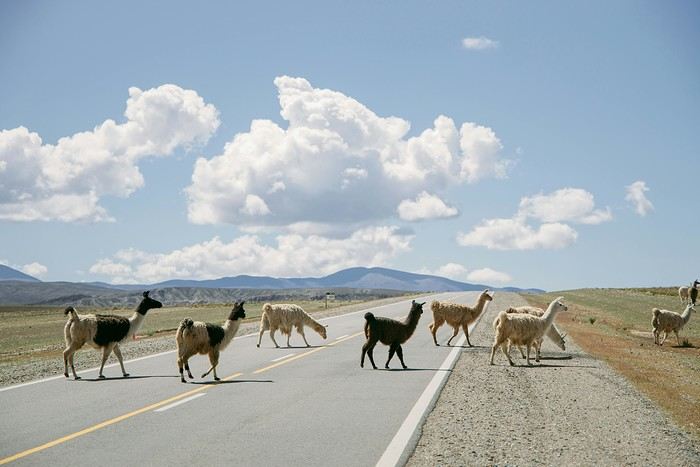
If you dream of an extraordinary adventure, you’ve come to the right place! Argentina, this land at the end of the world, offers a unique change of scenery and the perfect opportunity to travel solo. With its spectacular landscapes, stretching from the ends of Tierra del Fuego to the high Andean plateaus, this vast country captivates both nature lovers and those passionate about authentic encounters. Here, the notions of borders and distance fade away: the glaciers of Patagonia, the Iguazu Falls in the heart of the tropical forest, wild steppes, and Andean villages nestled in colorful valleys. In Argentina, you quickly forget the passing of time, as the human experience and the beauty of the places leave their mark on every moment.
The perfect place to escape mass tourism
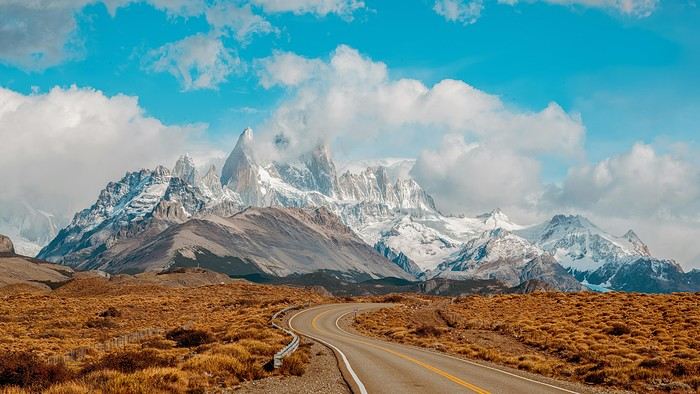
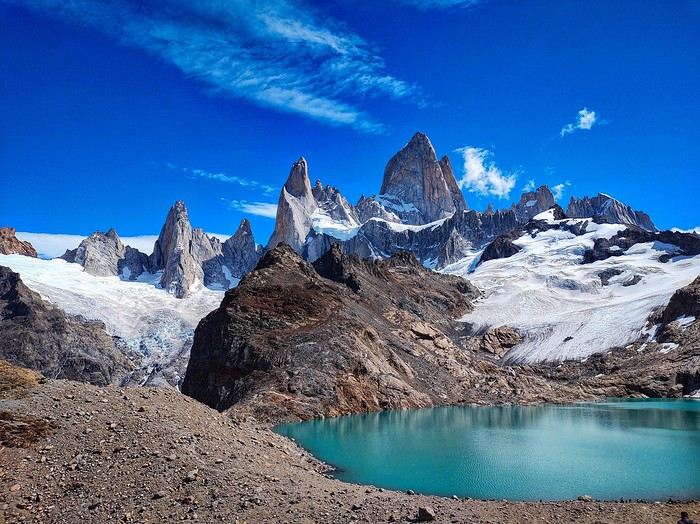
When traveling solo, there’s nothing like Argentina to get off the beaten path and avoid the crowds. Of course, some iconic spots like the Perito Moreno Glacier in El Calafate or Tierra del Fuego National Park in Ushuaia attract travelers from all over the world. However, the country’s vastness offers plenty of opportunities to find yourself almost alone in nature. A sunrise over the Andes, an afternoon riding with gauchos in the pampa, or a hike deep in Patagonia—these suspended moments happen far from the crowds.
A country ideal for connecting with local communities
One of Argentina’s strengths is the warmth of its people. Deeply attached to their traditions and genuinely curious about visitors, Argentinians have a knack for breaking down barriers, whether linguistic or cultural. You might find yourself chatting in Spanish over a mate (the local herbal tea), joining an impromptu barbecue, or even trying a few tango steps in a milonga. Simply showing interest in their culture and history is often enough to start a conversation. With Argentinians’ innate sense of hospitality, you never feel alone, even as a solo traveler.
Meeting local communities: a unique human adventure
Traveling solo in Argentina also means encountering its diverse communities. Staying with a local family or in an estancia (an Argentine ranch) lets you dive into the daily lives of families who often live self-sufficiently. In the Northwest, for example, you can share the life of an Andean community and learn to cook delicious local specialties. In Bariloche, some stays even include discovering a Mapuche community, offering a chance to better understand their relationship with the land and the importance of their ancestral traditions.
Diverse experiences for an unforgettable trip
Argentina is a true playground for outdoor enthusiasts: hikes in the steppes, sailing on the Beagle Channel in Tierra del Fuego, whale watching in Puerto Madryn (from June to December), or exploring the Iguazu jungle to encounter its wildlife and flora. And just when you think you’ve seen it all, Argentina still has surprises in store. In the Salta region, the Quebrada de Humahuaca reveals mountains with seven colors that tell the geological history of the Andes. It’s a feast for the eyes!
Why not join a small group with Tierra Latina?
Traveling alone doesn’t mean you can’t share parts of your journey with other enthusiasts. That’s what Tierra Latina offers: small-group tours (between 2 and 12 people), designed to balance the freedom of traveling in a small group with the camaraderie of exchanges between travelers. Each itinerary is crafted to alternate highlights (like visiting must-sees: Buenos Aires, Ushuaia, Perito Moreno…) with more intimate moments, far from mass tourism.
The focus is on authentic encounters and respect for local communities—that’s Tierra Latina’s signature. For example, in northwestern Argentina, Tierra Latina offers the chance to spend time in an Andean community to learn about traditional dish preparation during a cooking workshop. It’s an opportunity to exchange recipes and knowledge passed down through generations. The goal: to go beyond simple sightseeing and experience true moments of sharing.
In a small group, you quickly feel like part of a family of travelers, all united by the beauty of the landscapes. You also benefit from French-speaking guides who share their tips and anecdotes while leaving plenty of free time to explore at your own pace. Whether you’re traveling solo, as a couple, or with friends, you’ll find the perfect balance between independence and the comfort of being surrounded.
Human connections at the heart of the journey
At Tierra Latina, the goal is to put people at the center of the experience. Accommodations are chosen for their authentic character, often tested and approved by the team itself. Whether you’re staying with an Andean family in a small village in the Quebrada de Humahuaca or in an estancia in the heart of the Patagonian steppe, you’ll take part in local life and contribute to the economy of these sometimes isolated regions.
This responsible approach to travel helps minimize environmental impact while maintaining a privileged connection with those who make Argentina so rich: its people. You’ll leave with intense memories, marked by moments of sharing that are hard to replicate elsewhere. So, ready to pack your bags? Follow the guide and fly off to this fascinating country—you’ll only want one thing: to come back!
The perfect place to escape mass tourism
When traveling solo, there’s nothing like Argentina to get off the beaten path and avoid the crowds. Of course, some iconic spots like the Perito Moreno Glacier in El Calafate or Tierra del Fuego National Park in Ushuaia attract travelers from all over the world. However, the country’s vastness offers plenty of opportunities to find yourself almost alone in nature. A sunrise over the Andes, an afternoon riding with gauchos in the pampa, or a hike deep in Patagonia—these suspended moments happen far from the crowds.
A country ideal for connecting with local communities
One of Argentina’s strengths is the warmth of its people. Deeply attached to their traditions and genuinely curious about visitors, Argentinians have a knack for breaking down barriers, whether linguistic or cultural. You might find yourself chatting in Spanish over a mate (the local herbal tea), joining an impromptu barbecue, or even trying a few tango steps in a milonga. Simply showing interest in their culture and history is often enough to start a conversation. With Argentinians’ innate sense of hospitality, you never feel alone, even as a solo traveler.
Meeting local communities: a unique human adventure
Traveling solo in Argentina also means encountering its diverse communities. Staying with a local family or in an estancia (an Argentine ranch) lets you dive into the daily lives of families who often live self-sufficiently. In the Northwest, for example, you can share the life of an Andean community and learn to cook delicious local specialties. In Bariloche, some stays even include discovering a Mapuche community, offering a chance to better understand their relationship with the land and the importance of their ancestral traditions.
Diverse experiences for an unforgettable trip
Argentina is a true playground for outdoor enthusiasts: hikes in the steppes, sailing on the Beagle Channel in Tierra del Fuego, whale watching in Puerto Madryn (from June to December), or exploring the Iguazu jungle to encounter its wildlife and flora. And just when you think you’ve seen it all, Argentina still has surprises in store. In the Salta region, the Quebrada de Humahuaca reveals mountains with seven colors that tell the geological history of the Andes. It’s a feast for the eyes!
Why not join a small group with Tierra Latina?
Traveling alone doesn’t mean you can’t share parts of your journey with other enthusiasts. That’s what Tierra Latina offers: small-group tours (between 2 and 12 people), designed to balance the freedom of traveling in a small group with the camaraderie of exchanges between travelers. Each itinerary is crafted to alternate highlights (like visiting must-sees: Buenos Aires, Ushuaia, Perito Moreno…) with more intimate moments, far from mass tourism.
The focus is on authentic encounters and respect for local communities—that’s Tierra Latina’s signature. For example, in northwestern Argentina, Tierra Latina offers the chance to spend time in an Andean community to learn about traditional dish preparation during a cooking workshop. It’s an opportunity to exchange recipes and knowledge passed down through generations. The goal: to go beyond simple sightseeing and experience true moments of sharing.
In a small group, you quickly feel like part of a family of travelers, all united by the beauty of the landscapes. You also benefit from French-speaking guides who share their tips and anecdotes while leaving plenty of free time to explore at your own pace. Whether you’re traveling solo, as a couple, or with friends, you’ll find the perfect balance between independence and the comfort of being surrounded.
Human connections at the heart of the journey
At Tierra Latina, the goal is to put people at the center of the experience. Accommodations are chosen for their authentic character, often tested and approved by the team itself. Whether you’re staying with an Andean family in a small village in the Quebrada de Humahuaca or in an estancia in the heart of the Patagonian steppe, you’ll take part in local life and contribute to the economy of these sometimes isolated regions.
This responsible approach to travel helps minimize environmental impact while maintaining a privileged connection with those who make Argentina so rich: its people. You’ll leave with intense memories, marked by moments of sharing that are hard to replicate elsewhere. So, ready to pack your bags? Follow the guide and fly off to this fascinating country—you’ll only want one thing: to come back!
MSC evening dress code
Hi everyone,
It’s been 6 years since we last went on a cruise...
We’re heading back to sea on April 26th on the Lirica (MSC).
For those who’ve recently sailed with MSC, could you let me know if there are still dress codes for the evenings and, if so, what they are?
Thanks in advance.
Have a great day
Have you considered Reunion Island as a destination?
Reunion Island, a French island located in the Indian Ocean, is characterized by remarkable geographical and cultural diversity. This island offers an immersive experience that harmoniously blends wild nature and human heritage, between active volcanoes, mountainous cirques, impressive waterfalls, and charming villages. This report explores the must-see spots, from the lunar landscapes of Piton de la Fournaise to the mountainous trails of the Mafate cirque, not forgetting the natural pools and tropical gardens. Each section highlights a distinct aspect of this vibrant island, supported by geological and historical information, as well as accounts from those who have visited.
Piton de la Fournaise, which reaches a height of 2,632 meters, is one of the most active volcanoes on our planet. Its frequent eruptions constantly shape the landscape, offering a natural spectacle where burning lava meets the ocean. The trail leading to the Dolomieu crater, though difficult to access, is open to hikers and rewards them with a panorama of vast expanses of solidified lava and volcanic gas emissions. It’s usually best to visit at this time of day to avoid clouds and enjoy the low light that enhances the lunar reliefs.
Volcanic activity has also given rise to unique structures, such as the lava tunnels of Grand Brûlé, where tourists can walk along cooled lava flows. For geology enthusiasts, the site of Cassé de la Rivière de l'Est reveals incredible basaltic organ pipes, testifying to ancient eruptions.
Despite its inactivity, Piton des Neiges (3,071 m) remains the island’s highest peak. Its ascent, via the GR R2 trail, passes through virgin forests before reaching rocky landscapes where sunrise offers a 360° panoramic view of the three cirques. This extinct volcano symbolizes Reunion Island’s geological history, characterized by successive collapses that gave birth to the surrounding cirques.
A UNESCO World Heritage site, the Salazie cirque charms with its lush greenery and hamlets clinging to cliffs. Hell-Bourg, listed among France’s most beautiful villages, delights with its brightly colored Creole houses and picturesque cobblestone streets. The trek to Voile de la Mariée, a famous waterfall, winds through bamboo groves and natural pools perfect for a swim.
Mafate, a preserved haven of tranquility, is accessible only on foot or by helicopter. Places like La Nouvelle or Marla, small villages called "îlets," offer a glimpse into traditional life on Reunion Island. The GR R1 trail, which circles Piton des Neiges, immerses hikers in breathtaking landscapes, alternating between rocky ridges and narrow valleys.
Known for its lentils and wines, Cilaos combines culinary delights with stunning scenery. The healing properties of the thermal springs at Bras-Rouge are highlighted by the trails leading to them, which also offer panoramas like the Col du Taïbit, a privileged access point to Mafate.
This unique spot features pebble beaches, waterfalls by the sea, and a palm forest. Picnickers enjoy its peaceful atmosphere, while local fishermen maintain ancient traditions. Nearby, the Garden of Perfumes and Spices cultivates vanilla, cloves, and turmeric, offering an olfactory experience at the heart of Reunionese agriculture.
Bassin Boeuf, famous for its turquoise waters, is a popular swimming spot, framed by volcanic formations. Further south, the Langevin River creates a series of waterfalls and natural pools, including the famous Trou de Fer, a 300-meter-deep canyon where water cascades in a shimmering curtain.
The island’s capital blends colonial heritage with modernity. The Léon Dierx Museum showcases modern art, while the Grand Marché draws visitors with its spices and local crafts. The Barachois promenade, along the sea, evokes the city’s maritime past with its 18th-century cannons.
The Domaine de Villèle, once a colonial plantation, now houses a museum dedicated to the history of slavery and a geranium distillery. The Chapelle Pointue, with its neo-Gothic style, offers a striking contrast to the brightly colored Tamil temples surrounding it.
The GR R1 and R2 trails are popular with experienced hikers, but more accessible routes like the Piton Maido (2,200 m) are suitable for beginners. The latter offers an unparalleled view of the Mafate cirque at dawn.
The coast of Saint-Gilles offers activities like diving, surfing, and paddleboarding, while ULM flights provide an impressive aerial view of Piton de la Fournaise.
Reunion Island presents itself as a microcosm where every landscape tells a story—geological, cultural, or human. Between the fury of volcanoes and the calm of cirques, between the bustle of markets and the tranquility of natural pools, this destination offers a diverse experience. Travelers are encouraged to mix their activities: morning hikes, cultural visits during the day, and moments of relaxation at dusk. Preserving these wonders relies on responsible tourism, respectful of fragile ecosystems and local communities.
Piton de la Fournaise, which reaches a height of 2,632 meters, is one of the most active volcanoes on our planet. Its frequent eruptions constantly shape the landscape, offering a natural spectacle where burning lava meets the ocean. The trail leading to the Dolomieu crater, though difficult to access, is open to hikers and rewards them with a panorama of vast expanses of solidified lava and volcanic gas emissions. It’s usually best to visit at this time of day to avoid clouds and enjoy the low light that enhances the lunar reliefs.
Volcanic activity has also given rise to unique structures, such as the lava tunnels of Grand Brûlé, where tourists can walk along cooled lava flows. For geology enthusiasts, the site of Cassé de la Rivière de l'Est reveals incredible basaltic organ pipes, testifying to ancient eruptions.
Despite its inactivity, Piton des Neiges (3,071 m) remains the island’s highest peak. Its ascent, via the GR R2 trail, passes through virgin forests before reaching rocky landscapes where sunrise offers a 360° panoramic view of the three cirques. This extinct volcano symbolizes Reunion Island’s geological history, characterized by successive collapses that gave birth to the surrounding cirques.
A UNESCO World Heritage site, the Salazie cirque charms with its lush greenery and hamlets clinging to cliffs. Hell-Bourg, listed among France’s most beautiful villages, delights with its brightly colored Creole houses and picturesque cobblestone streets. The trek to Voile de la Mariée, a famous waterfall, winds through bamboo groves and natural pools perfect for a swim.
Mafate, a preserved haven of tranquility, is accessible only on foot or by helicopter. Places like La Nouvelle or Marla, small villages called "îlets," offer a glimpse into traditional life on Reunion Island. The GR R1 trail, which circles Piton des Neiges, immerses hikers in breathtaking landscapes, alternating between rocky ridges and narrow valleys.
Known for its lentils and wines, Cilaos combines culinary delights with stunning scenery. The healing properties of the thermal springs at Bras-Rouge are highlighted by the trails leading to them, which also offer panoramas like the Col du Taïbit, a privileged access point to Mafate.
This unique spot features pebble beaches, waterfalls by the sea, and a palm forest. Picnickers enjoy its peaceful atmosphere, while local fishermen maintain ancient traditions. Nearby, the Garden of Perfumes and Spices cultivates vanilla, cloves, and turmeric, offering an olfactory experience at the heart of Reunionese agriculture.
Bassin Boeuf, famous for its turquoise waters, is a popular swimming spot, framed by volcanic formations. Further south, the Langevin River creates a series of waterfalls and natural pools, including the famous Trou de Fer, a 300-meter-deep canyon where water cascades in a shimmering curtain.
The island’s capital blends colonial heritage with modernity. The Léon Dierx Museum showcases modern art, while the Grand Marché draws visitors with its spices and local crafts. The Barachois promenade, along the sea, evokes the city’s maritime past with its 18th-century cannons.
The Domaine de Villèle, once a colonial plantation, now houses a museum dedicated to the history of slavery and a geranium distillery. The Chapelle Pointue, with its neo-Gothic style, offers a striking contrast to the brightly colored Tamil temples surrounding it.
The GR R1 and R2 trails are popular with experienced hikers, but more accessible routes like the Piton Maido (2,200 m) are suitable for beginners. The latter offers an unparalleled view of the Mafate cirque at dawn.
The coast of Saint-Gilles offers activities like diving, surfing, and paddleboarding, while ULM flights provide an impressive aerial view of Piton de la Fournaise.
Reunion Island presents itself as a microcosm where every landscape tells a story—geological, cultural, or human. Between the fury of volcanoes and the calm of cirques, between the bustle of markets and the tranquility of natural pools, this destination offers a diverse experience. Travelers are encouraged to mix their activities: morning hikes, cultural visits during the day, and moments of relaxation at dusk. Preserving these wonders relies on responsible tourism, respectful of fragile ecosystems and local communities.
Thailand or Vietnam for a first solo trip?
Hi,
I’m planning to travel from April 12 to 24, 2025, for my first solo trip.
I’m torn between two destinations: Thailand or Vietnam. Which one would you recommend? Thanks so much for your advice!
Visit to Madeira in late March
Hi everyone, we’re thinking of spending the last week of March in Madeira. What do you think? Is the weather nice? Isn’t it too cloudy? Are there already flowers? We’re mainly going to explore the island and do some hikes. We don’t plan on swimming. Thanks for your suggestions!!
Flooding in Costa Rica
Hi,
My partner and I are arriving in Costa Rica the day after tomorrow, and it seems the country is flooded in several places. We haven’t planned anything except a few days in San Jose... Are these flood stories real, and is it affecting your travels for those who are currently there? Thanks
Est-ce que juillet est une bonne période pour Cuba? English translation pending
Bonjour à tous,
Est-ce la bonne période en juillet pour partir à Cuba?
Est-ce la bonne période en juillet pour partir à Cuba?
République Dominicaine: au fil de la route... et autres souvenirs English translation pending
Ce sont mes derniers souvenirs de voyage à l'étranger, c'était avant … avant que la pandémie de la Covid-19 ne s'abatte sur notre planète et contrarie (en autre !) nos désirs de voyages loin de chez nous. Un récit à propos d'une dernière escale dans les Caraïbes, elle date du début mars et c'était donc en République Dominicaine. Ce carnet aborde principalement le souvenir d'une échappée le long d'une « route » hors des sentiers battus, dans le nord de l'île. Une région bien moins fréquentée et donc moins connue que les très courus sites balnéaires de cette grande île tropicale. Un récit qui est également l'occasion pour moi de partager dans une seconde partie quelques autres souvenirs de voyage en Rep. Dom. Ils sont un peu plus anciens et concernent quelques uns des incontournables sites à visiter de la destination.
--
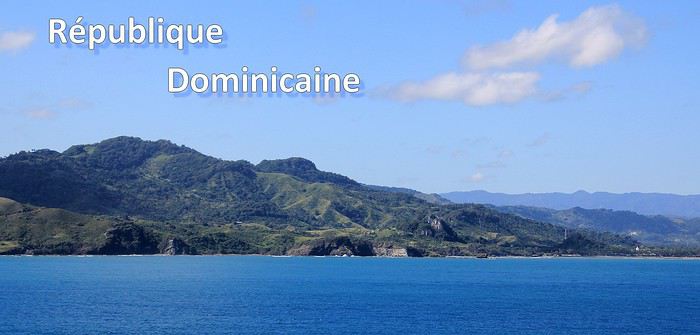
L'escale approche. Peu à peu, la côte se fait plus nette, le soleil a fait disparaître la nébulosité et la plage d'Amber Cove apparaît dans toute sa beauté.
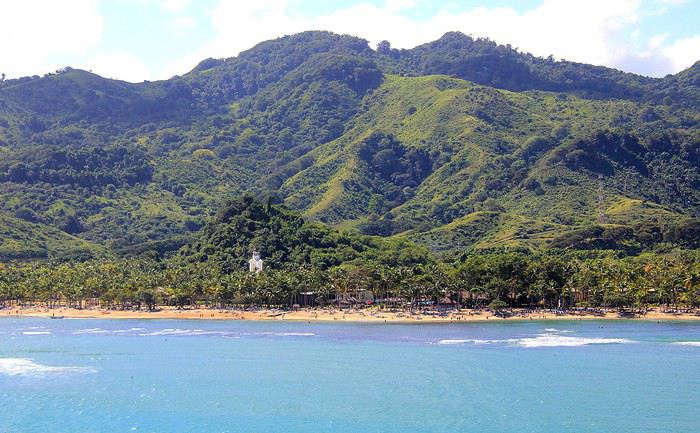
Le trio qui fait le charme des îles tropicales est bien présent sous nos yeux : des eaux bleues, du sable clair bordé d'une palmeraie et un versant verdoyant qui en impose en surplomb du rivage. Un coquet clocher aux tonalités jaune et rose bonbon émerge au-dessus de cette étendue de palmes. Pour afficher la nationalité de l'île, les couleurs sont hissées haut. On reconnaît les carrés rouge et bleu séparés d'une croix blanche du drapeau de la République Dominicaine.
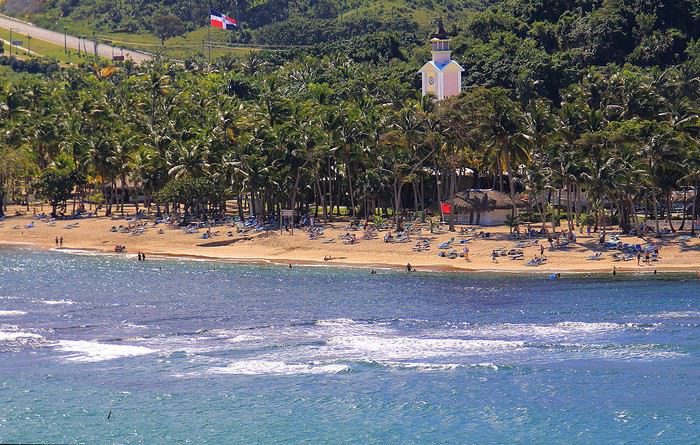
Nous sommes précisément sur la côte nord de l'île, dans la région de l'ancienne ville coloniale espagnole de Puerto Plata.
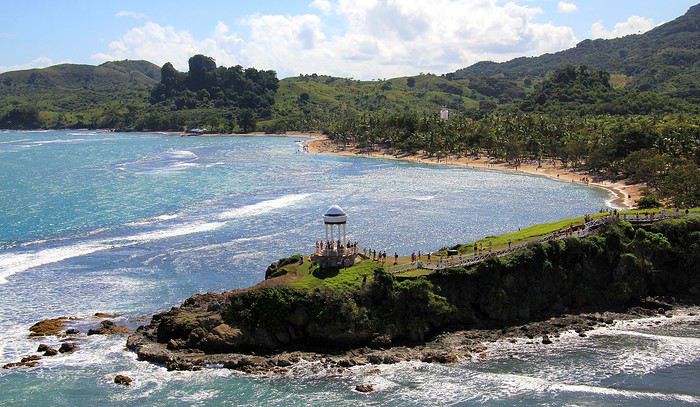
Un dernier coup d’œil sur la jolie baie encadrée de promontoires rocheux en fond de décor et bordée d'une langue de terre au vert lumineux qui défile juste sous nos yeux.
A peine débarqués du navire, on embarque à nouveau … mais sur un tout autre moyen de transport, finie la navigation, on prend place maintenant sur un drôle de véhicule hybride. Un genre de machine à grosses roues, dans un style intermédiaire entre camion et bus d'aventures tout-terrain. De simples banquettes font offices de sièges, quant aux dossiers et aux montants métalliques, ils sont tous rembourrés et capitonnés … On le comprend vite, la route, enfin la piste qui s'annonce pour cette virée risque d'être chaotique. Pas de doute, il ne doit pas s'agir d'un long ruban de bitume très tranquille !
Pour l'instant nous traversons la paisible petite ville de Maimon. Une agglomération sans grand intérêt si ce n'est d'avoir un aperçu de la vie quotidienne locale. Des enfants bruyants jouent dans la cour de l'école et quelques habitantes font leurs achats dans les boutiques, la plupart sont de simples maisons/cases comme d'ailleurs beaucoup d'habitations. En voici deux exemples assez représentatifs du style de l'habitat local. Une simple maison recouverte de tôles ondulées mais dont les murs extérieurs sont agrémentés d'une teinte bleutée. C'est un aspect des plus courants dans la petite cité.
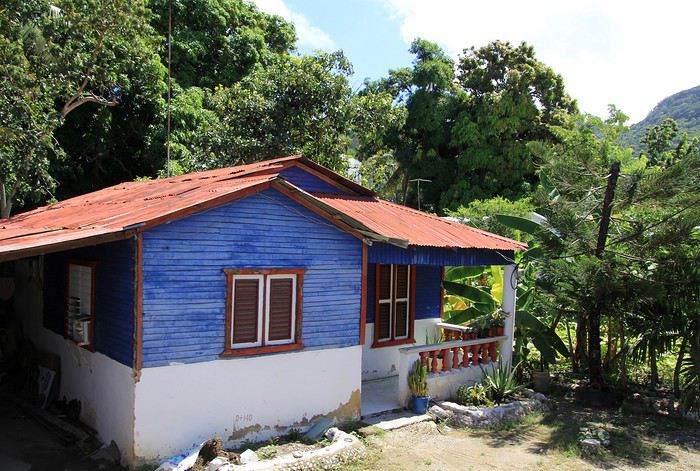
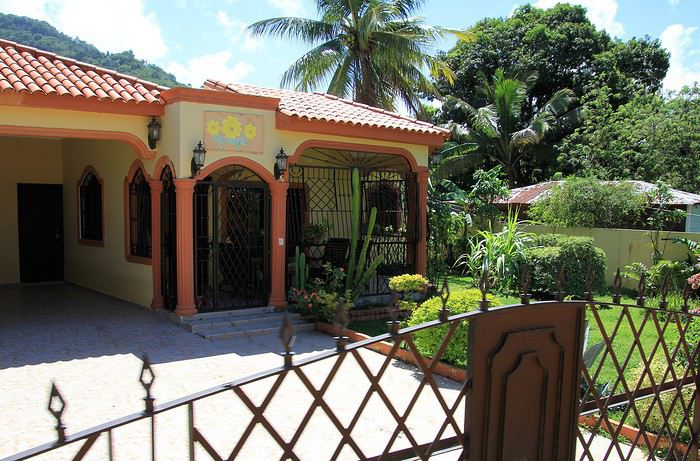
Plus loin, nous passons devant une maison un peu plus cossue : un propret jardinet et des grilles ouvragées entourent cette demeure plus élaborée et dont on imagine le meilleur confort intérieur.
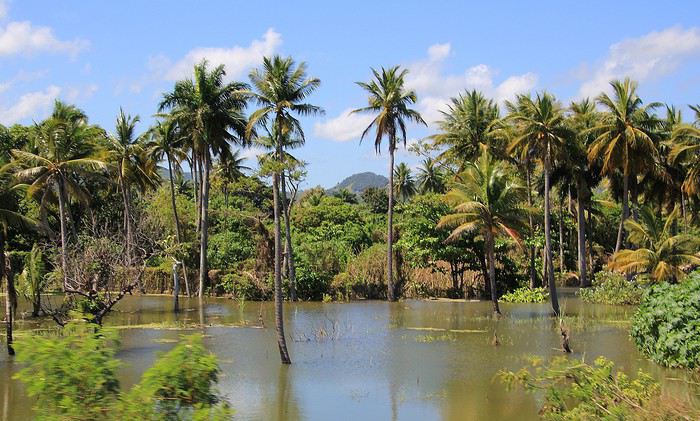
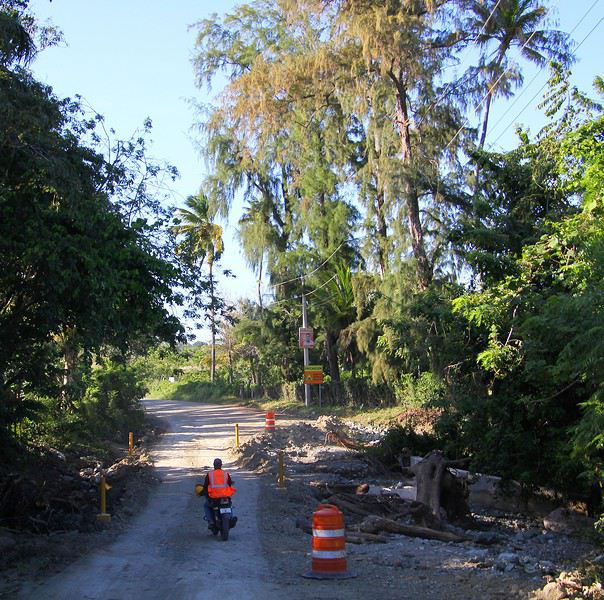
Passons la périphérie urbaine, place à la campagne. On le constate dès le début du trajet, les terrains aux abords de la voie sont détrempés voire inondés. Le chauffeur, sympa, nous informe que de récentes et fortes intempéries ont quelque peu endommagé la piste que nous devons emprunter … Au fond de cette baie, le courant et les torrents ont charrié des quantités de branchages, certains sont encore là, amassés au bord du rivage bordé de mangrove.
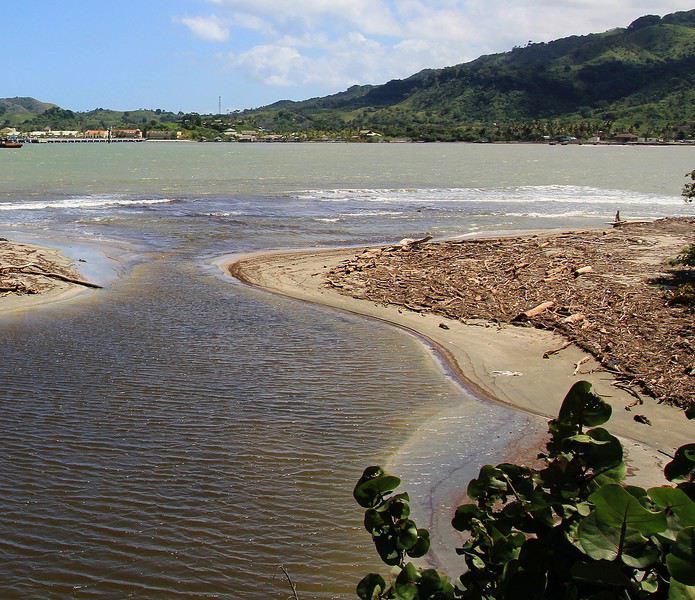
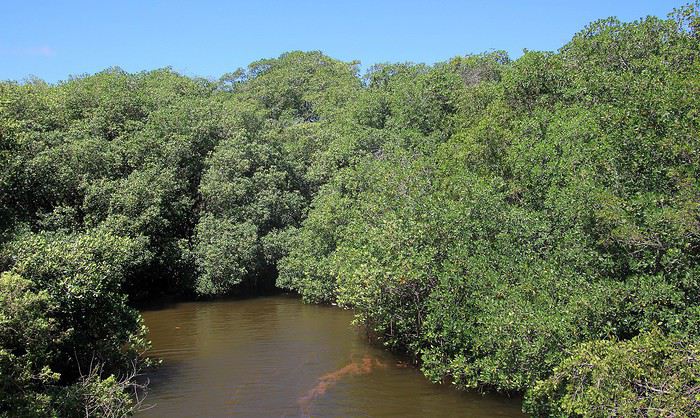
Sur ce tronçon, un torrent a emporté une partie de la route, le passage se fait désormais sur une seule voie constituée de terre battue.
To the Top West End
In this time of general travel-journal scarcity, I’m stepping up to tell you about a far-too-short getaway to the Top West End, a local term for the very northern part of Western Australia, right on the border ( ;) ) with the Northern Territory.
As usual, I didn’t manage to keep it short, but this time I’ve got photos to go with it!
August 2020. Since the opportunities to explore the world are extremely limited right now, all we (R&X) can do is explore our own island! Well, just a part of it, because with the state borders still closed, we’re stuck in Western Australia (WA).
Luckily, we’re pretty fortunate because this state is huge: over 2.5 million km² (that’s more than four times the size of France or 1.5 times Quebec). What’s more, stretching over 20 degrees of latitude between the Antarctic Ocean and the Timor Sea, you’ll find climates ranging from Mediterranean to arid to tropical. That’s actually why we decided to head as far north as possible. Sick of the endless rainy winter in Perth, bring on the heat of the Kimberley... way up Nooorth!
Friday. At the airport, the main terminal was closed (not enough flights), so we ended up in the annex (where flights to the various mines usually depart from). There was no crowd at the gate, and in this huge, single departure lounge, empty seats were plentiful. Only three flights were listed on the screens for the rest of the morning: the first to Coondewanna (?), the second to Darwin, and ours to Kununurra (code KNX).
A cool breeze swept through the half-open corridors along the runways. At the top of the walkway leading to the Fokker 100 (the Airbuses and Boeings are now parked!), a flight attendant greeted us with a basket full of sanitary masks. We were actually the only masked passengers (the staff weren’t wearing them either). With zero Covid-19 cases in WA at the time, the only rule was to maintain social distancing—something pretty hard to do on a full plane!
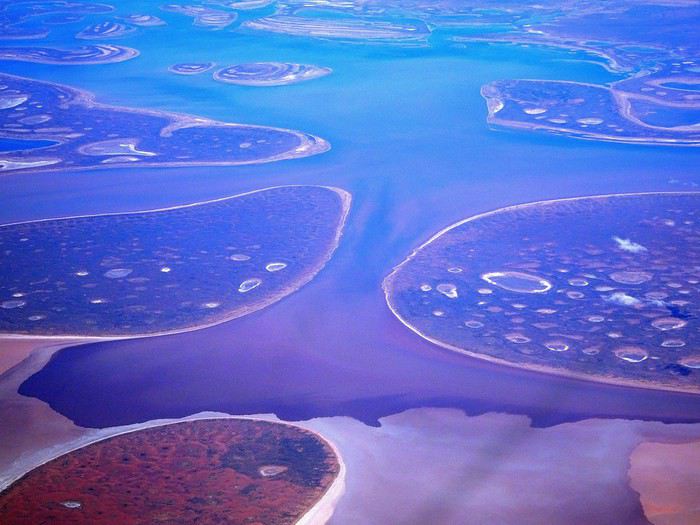
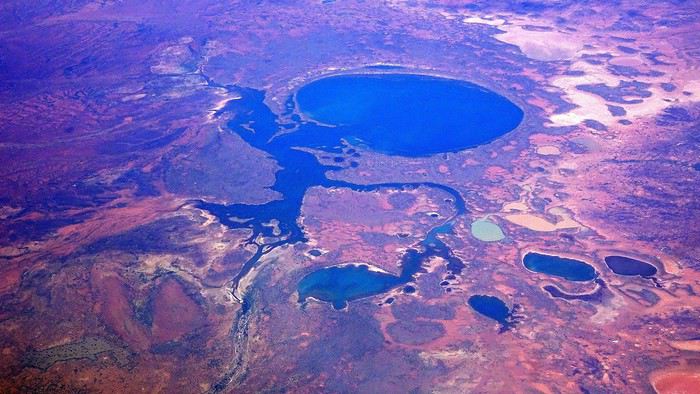
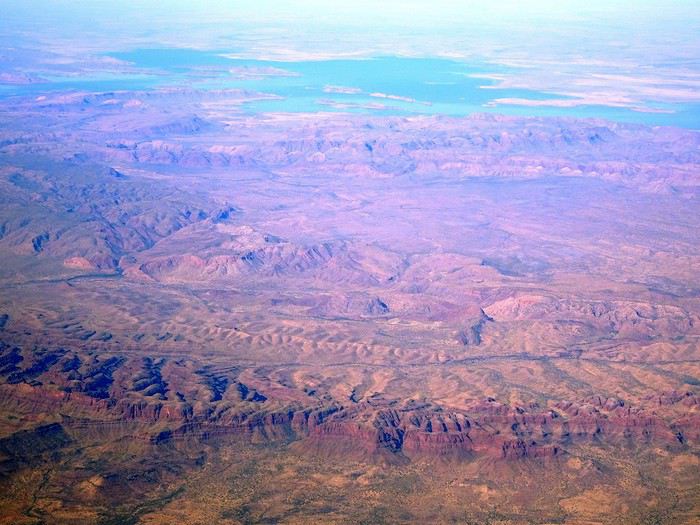
It was also my first time wearing a mask—it felt weird, pretty uncomfortable, and after a while, painful behind the ears. I really feel for those who have to wear one all day, every day. The flight lasted three long hours, but luckily, I had a good book. From the window, I watched an endless expanse of salt lakes in all shapes and sizes—round, elongated, gray, white, sometimes blue and green—and an infinity of winding, capricious meanders, along with long straight lines that led nowhere. The last half-hour got more interesting as rocky, swollen formations and long, sloping plateaus appeared. Against the vast ochre landscape, green patches became more frequent.
Just before landing, rows of green fields briefly appeared, along with an surprisingly wide river—but we were already rolling down the tarmac. A few hangars, a myriad of small, stationary planes, and a tiny terminal topped with a sign: “Welcome to Kununurra.”
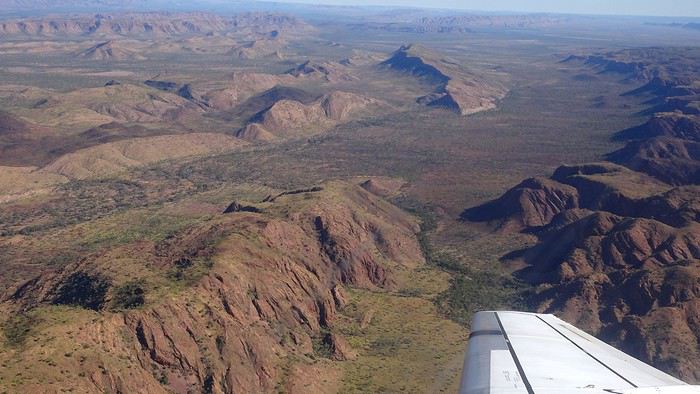
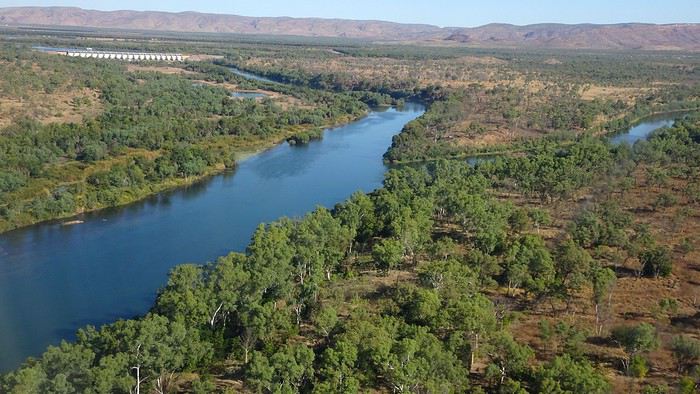
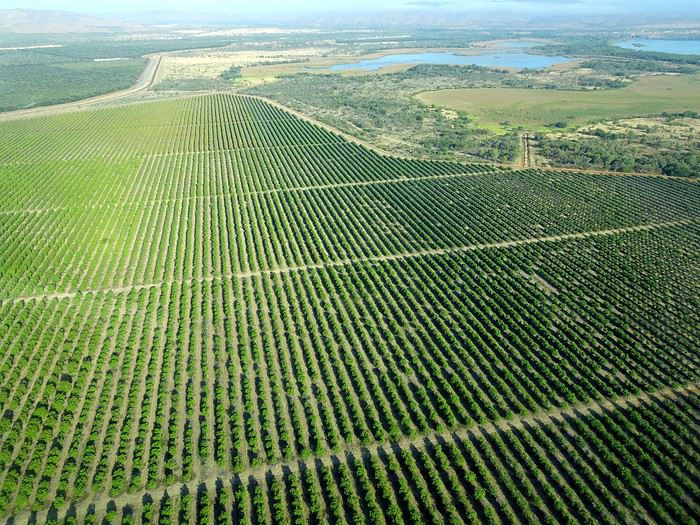
We wanted heat, and here it was—34°C the moment we stepped off the plane! We felt alive again and totally ridiculous in our jeans and sweaters. We quickly grabbed our suitcase and picked up the 4x4 we’d rented—more out of necessity, since only that type of vehicle can access the national parks we planned to visit.
Just four kilometers separated us from Kununurra, a town of 5,000 people founded in 1961 during the construction of the Lake Argyle Dam and the development of the Ord River Irrigation Area Scheme (more on that later). On the horizon, mountain ranges (a bit of an exaggeration, since we know Mt. Meharry, WA’s highest ‘mountain,’ doesn’t even reach 1,250 meters!) and closer to the road, a few irrigation canals cutting through stretches of bush, then a huge park overlooking a small lake lined with reeds.
A row of baobabs (yes, there are baobabs in Australia too!), a series of motels with immaculate lawns, a gas station, and there’s the main street leading to the town center—that is, the parking lots of the two supermarkets, the bottleshop, the pub, the Town Hall, the municipal pool, and the Tourist Office (already closed!), and at the next roundabout, another park, the Presbyterian church, and a few other shops. In short, two or three green blocks that you can explore in no time.
One road leads to the small industrial area and one of the town’s three or four campgrounds, while another heads toward the residential neighborhoods, which look just like the typical suburbs you find in any Australian city—except with tropical vegetation. We stocked up at Coles, an identical copy of the one near our place, and—surprise—the prices were practically the same.
We checked into one of the motels. The receptionist listed the town’s three or four restaurants, insisting that it’s always better to book a table. She recommended the Pump House, a bit outside town on the lake’s edge. “Best spot to watch the sunset, but hurry up.” she told us. It was only 5:00 PM!
When we got there half an hour later, the place was packed, and the sun had already disappeared behind a row of trees! Sure enough, we’d see a few days later that the sunset can be a stunning spectacle—if you wait a bit for the sky (especially if it’s cloudy) to blaze and reflect in the lake’s calm waters. A little disappointed, we headed back into town, where we easily found the other lively spot in town: the pub (nothing like an old English pub). Above the long L-shaped bar, several giant screens (thankfully muted) were broadcasting live footy, rugby league, etc. In one corner, players circled the pool table, while in another, customers were digging into plates of the day’s special. Instead of rooms, there were various patios where groups of friends and coworkers (easily recognizable by the fluoro vests they were still wearing) were gathered. We found a table under a mango tree—unfortunately, a little too close to the guitarist strumming his entire Country Music repertoire, complete with Keith Urban-style tremolos. Guaranteed culture shock!
Since it’s the custom here, we called the Country Club to book a table before the kitchen closed! The CC is the town’s—and even the region’s—fancy spot. Dark decor, modern furniture, dim lighting, and the air conditioning blasting. The twenty or so customers had taken refuge on the vast terrace, lit by torches. The view of the tall eucalyptus trees, illuminated by spotlights shifting from red to blue, was breathtaking.
The menu was minimal, but the grilled salmon was excellent, and the Pavlova (the meringue dessert Kiwis and Aussies have been arguing over since 1906) with melon and watermelon was absolutely divine.
It wasn’t even 9:00 PM, and we were already in bed. Had we already adopted the Top West End’s chicken schedule?!
To be continued... Journal dedicated to Attila
As usual, I didn’t manage to keep it short, but this time I’ve got photos to go with it!
August 2020. Since the opportunities to explore the world are extremely limited right now, all we (R&X) can do is explore our own island! Well, just a part of it, because with the state borders still closed, we’re stuck in Western Australia (WA).
Luckily, we’re pretty fortunate because this state is huge: over 2.5 million km² (that’s more than four times the size of France or 1.5 times Quebec). What’s more, stretching over 20 degrees of latitude between the Antarctic Ocean and the Timor Sea, you’ll find climates ranging from Mediterranean to arid to tropical. That’s actually why we decided to head as far north as possible. Sick of the endless rainy winter in Perth, bring on the heat of the Kimberley... way up Nooorth!
Friday. At the airport, the main terminal was closed (not enough flights), so we ended up in the annex (where flights to the various mines usually depart from). There was no crowd at the gate, and in this huge, single departure lounge, empty seats were plentiful. Only three flights were listed on the screens for the rest of the morning: the first to Coondewanna (?), the second to Darwin, and ours to Kununurra (code KNX).
A cool breeze swept through the half-open corridors along the runways. At the top of the walkway leading to the Fokker 100 (the Airbuses and Boeings are now parked!), a flight attendant greeted us with a basket full of sanitary masks. We were actually the only masked passengers (the staff weren’t wearing them either). With zero Covid-19 cases in WA at the time, the only rule was to maintain social distancing—something pretty hard to do on a full plane!
It was also my first time wearing a mask—it felt weird, pretty uncomfortable, and after a while, painful behind the ears. I really feel for those who have to wear one all day, every day. The flight lasted three long hours, but luckily, I had a good book. From the window, I watched an endless expanse of salt lakes in all shapes and sizes—round, elongated, gray, white, sometimes blue and green—and an infinity of winding, capricious meanders, along with long straight lines that led nowhere. The last half-hour got more interesting as rocky, swollen formations and long, sloping plateaus appeared. Against the vast ochre landscape, green patches became more frequent.
Just before landing, rows of green fields briefly appeared, along with an surprisingly wide river—but we were already rolling down the tarmac. A few hangars, a myriad of small, stationary planes, and a tiny terminal topped with a sign: “Welcome to Kununurra.”
We wanted heat, and here it was—34°C the moment we stepped off the plane! We felt alive again and totally ridiculous in our jeans and sweaters. We quickly grabbed our suitcase and picked up the 4x4 we’d rented—more out of necessity, since only that type of vehicle can access the national parks we planned to visit.
Just four kilometers separated us from Kununurra, a town of 5,000 people founded in 1961 during the construction of the Lake Argyle Dam and the development of the Ord River Irrigation Area Scheme (more on that later). On the horizon, mountain ranges (a bit of an exaggeration, since we know Mt. Meharry, WA’s highest ‘mountain,’ doesn’t even reach 1,250 meters!) and closer to the road, a few irrigation canals cutting through stretches of bush, then a huge park overlooking a small lake lined with reeds.
A row of baobabs (yes, there are baobabs in Australia too!), a series of motels with immaculate lawns, a gas station, and there’s the main street leading to the town center—that is, the parking lots of the two supermarkets, the bottleshop, the pub, the Town Hall, the municipal pool, and the Tourist Office (already closed!), and at the next roundabout, another park, the Presbyterian church, and a few other shops. In short, two or three green blocks that you can explore in no time.
One road leads to the small industrial area and one of the town’s three or four campgrounds, while another heads toward the residential neighborhoods, which look just like the typical suburbs you find in any Australian city—except with tropical vegetation. We stocked up at Coles, an identical copy of the one near our place, and—surprise—the prices were practically the same.
We checked into one of the motels. The receptionist listed the town’s three or four restaurants, insisting that it’s always better to book a table. She recommended the Pump House, a bit outside town on the lake’s edge. “Best spot to watch the sunset, but hurry up.” she told us. It was only 5:00 PM!
When we got there half an hour later, the place was packed, and the sun had already disappeared behind a row of trees! Sure enough, we’d see a few days later that the sunset can be a stunning spectacle—if you wait a bit for the sky (especially if it’s cloudy) to blaze and reflect in the lake’s calm waters. A little disappointed, we headed back into town, where we easily found the other lively spot in town: the pub (nothing like an old English pub). Above the long L-shaped bar, several giant screens (thankfully muted) were broadcasting live footy, rugby league, etc. In one corner, players circled the pool table, while in another, customers were digging into plates of the day’s special. Instead of rooms, there were various patios where groups of friends and coworkers (easily recognizable by the fluoro vests they were still wearing) were gathered. We found a table under a mango tree—unfortunately, a little too close to the guitarist strumming his entire Country Music repertoire, complete with Keith Urban-style tremolos. Guaranteed culture shock!
Since it’s the custom here, we called the Country Club to book a table before the kitchen closed! The CC is the town’s—and even the region’s—fancy spot. Dark decor, modern furniture, dim lighting, and the air conditioning blasting. The twenty or so customers had taken refuge on the vast terrace, lit by torches. The view of the tall eucalyptus trees, illuminated by spotlights shifting from red to blue, was breathtaking.
The menu was minimal, but the grilled salmon was excellent, and the Pavlova (the meringue dessert Kiwis and Aussies have been arguing over since 1906) with melon and watermelon was absolutely divine.
It wasn’t even 9:00 PM, and we were already in bed. Had we already adopted the Top West End’s chicken schedule?!
To be continued... Journal dedicated to Attila
Chapada Diamantina National Park to gradually reopen (Brazil)
Chapada Diamantina National Park (also known as Brazil’s Grand Canyon) will begin reopening gradually, in phases and by village.
Mucugê, for example, will be fully accessible starting August 31st.
The only restrictions still to be clarified are events with more than 10 people and schools.
I’ll post updates on the other villages in the park as soon as they’re available.
Warm tropical greetings from Salvador da Bahia,
Ivan Bahia Guide
Voyagerez-vous avec appréhension? English translation pending
un gros avion est fait pour voler tout le temps. Ca pose tout un tas de problemes de maintenance pour le garder en état. Ne risque t'il pas d'y avoir des soucis sur les premiers vols commerciaux ?
une fois sur place reste les stigmates de la pandemie et il se peut que les autochtones regardent d un mauvais oeil. et qui sait, une rencontre avec une chauve souris ou un animal tropical un peu malade.
donc vous risquerez vous à voyager des que ca sera possible ou laisserez vous passer du temps afin de courir moins de risques et de subir moins d inconvenients ?
une fois sur place reste les stigmates de la pandemie et il se peut que les autochtones regardent d un mauvais oeil. et qui sait, une rencontre avec une chauve souris ou un animal tropical un peu malade.
donc vous risquerez vous à voyager des que ca sera possible ou laisserez vous passer du temps afin de courir moins de risques et de subir moins d inconvenients ?
Bateau de Baku (Azerbaïdjan) à Bandar-e Anzali (Iran) English translation pending
Bonsoir,
Sait-on jamais....
Je lisais sur la Toile qu'il n'existe pas de liaison ferry, même irrégulière, entre Baku et l'Iran. Mais qu'il n'était pas impossible d'embarquer sur un cargo.
Quelqu'un aurait-il déjà tenté l'expérience ?
Catherine
Sait-on jamais....
Je lisais sur la Toile qu'il n'existe pas de liaison ferry, même irrégulière, entre Baku et l'Iran. Mais qu'il n'était pas impossible d'embarquer sur un cargo.
Quelqu'un aurait-il déjà tenté l'expérience ?
Catherine
Sortie en goelette à Salvador de Bahia vers les îles d'Itaparica et de Frades English translation pending
Bonjour à tous
Nous serons à Salvador fin avril et nous aimerions faire une sortie en mer à bord d'une goélette vers les iles d' Itaparica et de Frades. Auriez-vous une société à nous suggérer ? Pensez vous qu'il faille réserver à l'avance ou arriver assez tôt le jour même peut suffir ? Nous ne ferions cette journée dans les iles que si la météo était favorable sinon ce sera musées...
D'avance merci 🙂
Nous serons à Salvador fin avril et nous aimerions faire une sortie en mer à bord d'une goélette vers les iles d' Itaparica et de Frades. Auriez-vous une société à nous suggérer ? Pensez vous qu'il faille réserver à l'avance ou arriver assez tôt le jour même peut suffir ? Nous ne ferions cette journée dans les iles que si la météo était favorable sinon ce sera musées...
D'avance merci 🙂
Bonne période en rapport avec le climat pour partir au Brésil? English translation pending
Bonsoir tout le monde,
J'aimerai avoir votre avis pour un séjour au brésil du 13 septembre au 4 octobre.
En effet, je souhaiterai si la période est propice pour visiter le Brésil.
Sur internet, je vois des avis pour et contre donc difficile de trancher.
Merci pour votre aide en tout cas.
J'aimerai avoir votre avis pour un séjour au brésil du 13 septembre au 4 octobre.
En effet, je souhaiterai si la période est propice pour visiter le Brésil.
Sur internet, je vois des avis pour et contre donc difficile de trancher.
Merci pour votre aide en tout cas.
Météo aux Seychelles en novembre (pluie - soleil - visibilité) English translation pending
Bonjour
Nous envisageons de faire une croisière « plongée » aux Seychelles du 18 au 28 novembre 2020. Est-ce une bonne période : pluie - soleil - visibilité ?
Merci pour le partage de votre vécu
Itinéraire autour de Salvador da Bahia avec nos 3 enfants English translation pending
Bonjour
Nous partons dans moins d'une semaine pour salvador de bahia avec nos 3 enfants.
Est-ce que cet itinéraire vous semble censé et interessant ou trop ambitieux:
15 arrivée
16 depart pour Morro de sao jusqu'au 19
19 -22 BOIPEDA
22-25 BARRA GRANDE
25-27 SALVADOR CARNAVAL
27-29 PRAIO DO FORTE
29 SOIR DEPART
Qu'en pensez-vous? Merci de vos avis
Qu'en pensez-vous? Merci de vos avis
Voyage de 20 jours au Brésil en mai English translation pending
bonjour pour Mai prochain ce voyage m intéresse c est 20 jours
Rio de Janeiro & Salvador de Bahia Le Pantanal et ses richesses naturelles Dunes & lagunes de Lençóis Maranhenses Les plages de Jericoacoara et Praia do Forte
https://www.viventura.fr/circuit/bresil/xbra
Rio de Janeiro & Salvador de Bahia Le Pantanal et ses richesses naturelles Dunes & lagunes de Lençóis Maranhenses Les plages de Jericoacoara et Praia do Forte
https://www.viventura.fr/circuit/bresil/xbra
Voyage en voiture autour de Salvador de Bahia et météo en mars English translation pending
Bonjour à tous,
Je prepare un voyage autour de salvador au mois de mars je voudrais savoir s'il y a de l'insécurité, peut on louer une voiture à l'aéroport et partir tranquille sa avoir de problème et comment est la météo au mois de mars ? Merci pour vos réponses à bientôt Jean-Pierre.
Je prepare un voyage autour de salvador au mois de mars je voudrais savoir s'il y a de l'insécurité, peut on louer une voiture à l'aéroport et partir tranquille sa avoir de problème et comment est la météo au mois de mars ? Merci pour vos réponses à bientôt Jean-Pierre.
Séjour balnéaire à Nha Trang (Vietnam) English translation pending
Bonjour
Je souhaite terminer mon voyage par un séjour balneaire d'une semaine à Nha Trang
Ceux qui ont séjournés sue cette plage à cette période peuvent-ils me dire si cette période est idéale pour la baignade sur 3 points : température de l'eau, vagues, vent Merci
Road trip 3 semaines en Patagonie en février-mars English translation pending
Hola les sud-américanos,
Ma fiancée et moi même avons fraichement débarqués sur le continent, en Guyane, il y a 2 mois. Initialement nous avions prévu, pour début 2020, de se faire un road-trip rando et faune au Costa Rica mais avec notre déménagement surprise à Cayenne on s'est finalement dit que ça risquait d’être un petit peu redondant avec la Guyane (Foret tropicale, jaguar, perroquets tout ça tout ça...). D'où l'Argentine ! 😉 Enfin plus précisément la Patagonie.
Nous projetons donc de partir 3 semaines en Argentine entre Février et mi-Mars.
L'idée serait de faire un road-trip de 2 semaines et demi en Patagonie, en van si possible, et de finir par un aller-retour de 2-3 jours aux chute d’Iguaçu.
Le mieux semble d'arriver à El Calafate, d'y louer un van et faire une boucle avec El Chalten, si possible Torres del paine, puis descendre sur la terre de feu et Ushuaïa.
Je voulais rapidement voir avec ceux qui ont déjà visité cette région, si ça semble réalisable ? Est-ce que vous avez des loueurs de vans à conseiller ou autres conseils en tout genre ?
Je suis en train de lire les carnets... 😉
Merci pour votre aide ! 🙂
Ma fiancée et moi même avons fraichement débarqués sur le continent, en Guyane, il y a 2 mois. Initialement nous avions prévu, pour début 2020, de se faire un road-trip rando et faune au Costa Rica mais avec notre déménagement surprise à Cayenne on s'est finalement dit que ça risquait d’être un petit peu redondant avec la Guyane (Foret tropicale, jaguar, perroquets tout ça tout ça...). D'où l'Argentine ! 😉 Enfin plus précisément la Patagonie.
Nous projetons donc de partir 3 semaines en Argentine entre Février et mi-Mars.
L'idée serait de faire un road-trip de 2 semaines et demi en Patagonie, en van si possible, et de finir par un aller-retour de 2-3 jours aux chute d’Iguaçu.
Le mieux semble d'arriver à El Calafate, d'y louer un van et faire une boucle avec El Chalten, si possible Torres del paine, puis descendre sur la terre de feu et Ushuaïa.
Je voulais rapidement voir avec ceux qui ont déjà visité cette région, si ça semble réalisable ? Est-ce que vous avez des loueurs de vans à conseiller ou autres conseils en tout genre ?
Je suis en train de lire les carnets... 😉
Merci pour votre aide ! 🙂
Météo du moment sur les îles Philippines English translation pending
Bonjour,
une petite question avant mon imminent départ.
j'ai réservé un vol pour Cebu mercredi, mais en regardant la météo, je me tâte à rester sur l'ile principale et zapper le vol du coup, avec regret.
Je suis là pour 1 mois sans planning pré-établi à part ce vol, et j'avais tréééééés envie de m'allonger sur le sable chaud.
Du coup ma question... Vous qui êtes sur place, il pleut vraiment continuellement, sans répit, comme indiqué sur les sites de météo? c'est de la grosse pluie ou ça pleuviote?
Merci par avance
Vaccination fièvre jaune nécessaire pour le Brésil? English translation pending
Bonjour
Nous partons pour un périple amérique du sud :Pérou, Bolivie, Chili, Argentine , Bresil (gorges Iguazu)pour reprendre notre vol de retour à SAO PAULO
Devons nous nous faire vacciner contre la fièvre jaune pour rentrer au Bresil?
Je vous remercie de vos reponses
Voyage Sumatra et/ou Flores et météo en janvier English translation pending
Bonjour à toutes et tous,
J'ai très envie d'aller en Indonesie en janvier ( j'ai 4 semaines ) . Mon choix s'est d'abord fixé sur Sumatra, puis je suis tombée sur Flores. Je ne sais que penser de la météo à cette période. J'ai lu quelques carnets d voyages , certains ont eu des pluies diluviennes à Flores en aout ( alors qu'il s'agit de la saison sèche en principe). Pleut-il notablement plus en janvier ? Bref est-ce envisageable au niveau dans ces 2 iles ? Sinon, plutôt Sumatra ou Flores ou un peu des 2 ?
Je suis déjà allée en Indonésie il y a TRES longtemps, Sumatra, Java, bali, sulawesi, Irian jaya, puis plusieurs séjours à Bali uniquement. Sumatra je connais déjà (lac Toba, Padang et le pays Minakabau, mais ma mémoire s'est émoussée..) J'habite la Reunion, et la plage et le snorkelling ne sont pas ma priorité! Plutôt les paysages, le dépaysement, les rencontres, un peu de rando..... J'attends vos informations et conseils.
J'ai très envie d'aller en Indonesie en janvier ( j'ai 4 semaines ) . Mon choix s'est d'abord fixé sur Sumatra, puis je suis tombée sur Flores. Je ne sais que penser de la météo à cette période. J'ai lu quelques carnets d voyages , certains ont eu des pluies diluviennes à Flores en aout ( alors qu'il s'agit de la saison sèche en principe). Pleut-il notablement plus en janvier ? Bref est-ce envisageable au niveau dans ces 2 iles ? Sinon, plutôt Sumatra ou Flores ou un peu des 2 ?
Je suis déjà allée en Indonésie il y a TRES longtemps, Sumatra, Java, bali, sulawesi, Irian jaya, puis plusieurs séjours à Bali uniquement. Sumatra je connais déjà (lac Toba, Padang et le pays Minakabau, mais ma mémoire s'est émoussée..) J'habite la Reunion, et la plage et le snorkelling ne sont pas ma priorité! Plutôt les paysages, le dépaysement, les rencontres, un peu de rando..... J'attends vos informations et conseils.
Visiter la ville et les quartiers de Hong Kong en février? English translation pending
Bonsoir,
J'ai quelques questions :
- Pensez vous qu'en une semaine on peut tout visiter ? - Ou dormir à Hong Kong ? Dans quels quartier ? - Janvier c'est la bon mois pour visiter la ville ?
Bonne soirée
J'ai quelques questions :
- Pensez vous qu'en une semaine on peut tout visiter ? - Ou dormir à Hong Kong ? Dans quels quartier ? - Janvier c'est la bon mois pour visiter la ville ?
Bonne soirée
Nouvelle liaison directe Salvador - Marau par catamaran English translation pending
Ceux qui aiment visiter les plages, les mangroves, les sentiers et les piscines naturelles de Barra Grande, district de Maraú dans le sud de Bahia, auront une nouvelle option de transport pour se rendre sur place : une liaison catamaran via l'océan Atlantique à partir de mi-décembre.
L'itinéraire devrait durer environ quatre heures au total, ce qui réduira de deux heures le temps de trajet actuel entre Salvador et Barra Grande. Le prix du passage devrait être un peu plus de R$ 220.
Les horaires sont également fixés. Le catamaran doit quitter Barra Grande tous les jours à 7h et arriver à Salvador à 11h. Le retour a lieu à 13h et l'arrivée à 17h.
Un petit observation quand mème, les passages océaniques en catamaran tels que nous les connaissons comme la liaison Salvador - Morro de São Paulo sont réputés être de temps en temps assez rudes, donc soyez prêts pour le mal de mer.
Le bonjour tropical de Salvador da Bahia
Ivan Bahia Guide
L'itinéraire devrait durer environ quatre heures au total, ce qui réduira de deux heures le temps de trajet actuel entre Salvador et Barra Grande. Le prix du passage devrait être un peu plus de R$ 220.
Les horaires sont également fixés. Le catamaran doit quitter Barra Grande tous les jours à 7h et arriver à Salvador à 11h. Le retour a lieu à 13h et l'arrivée à 17h.
Un petit observation quand mème, les passages océaniques en catamaran tels que nous les connaissons comme la liaison Salvador - Morro de São Paulo sont réputés être de temps en temps assez rudes, donc soyez prêts pour le mal de mer.
Le bonjour tropical de Salvador da Bahia
Ivan Bahia Guide
Se faire vacciner contre la fièvre jaune et l'hépatite A à Cusco English translation pending
Bonjour, actuellement à Pisac au Pérou je souhaite me faite vacciner contre la fièvre jaune et l'hépatite A à Cusco pour un éventuel passage dan la jungle dans quelques semaines et ensuite en Équateur et en Colombie. Où puis-je le faire gratuitement (ou peu cher)?
Merci de votre aide.
Arnaud
Arnaud