Results for "Lagon+ou+Lagoon+|+9+>+214"
9097 results found.
Ile Maurice: Belle Mare, Ambre, Victoria, Preskil Beach resort? English translation pending
🙂 Bonjour à tous, j'hésite entre ces 4 hôtels.
Je recherche la qualité (dans l'ordre de priorité):
1- du site (SUPERBE plage de sable blanc avec parasols, sans algues🤪, eaux transparentes, poissons)
2- du logement (tb belles chambres, grandes, classes, surtout pas vieillotes, vue sur mer)
3- des infrastructures (mega piscine, parties communes non defraichies)
4- choix d'activités
5- calme (sans trop d'enfants, bonne isolation des murs...😏)
Alors: Belle mare, Ambre, Victoria, Preskil Beach resort??? Je suis perdue! 😕
Merci d'avance pour vos conseils 😉
Lidwine
Je recherche la qualité (dans l'ordre de priorité):
1- du site (SUPERBE plage de sable blanc avec parasols, sans algues🤪, eaux transparentes, poissons)
2- du logement (tb belles chambres, grandes, classes, surtout pas vieillotes, vue sur mer)
3- des infrastructures (mega piscine, parties communes non defraichies)
4- choix d'activités
5- calme (sans trop d'enfants, bonne isolation des murs...😏)
Alors: Belle mare, Ambre, Victoria, Preskil Beach resort??? Je suis perdue! 😕
Merci d'avance pour vos conseils 😉
Lidwine
Club med Faru aux Maldives English translation pending
Séjour en amoureux envisagé dans ce club en juin04.Pouvez-vous me donner votre avis concernant ce choix et différentes infos:ambiance, cout des conso, plongées, plage, chambres et aussi climat.Merci à tous
Hôtel Copacabana Riviera Maya English translation pending
Bonjour À Tous,
Nous partons pour les vacances de Noel à l'hotel Copacabana de la Riviera Maya....
Si vous connaissez cet hotel, j'aimerais bien avoir le plus d'info possible avant de partir....Plage, Bouffe, personnel, excursions, etc.....Un gros Merci a l'avance, Bye Bye !!!!!
Channy!!!!
Nous partons pour les vacances de Noel à l'hotel Copacabana de la Riviera Maya....
Si vous connaissez cet hotel, j'aimerais bien avoir le plus d'info possible avant de partir....Plage, Bouffe, personnel, excursions, etc.....Un gros Merci a l'avance, Bye Bye !!!!!
Channy!!!!
What do you think of Dominican Bay in Boca Chica?
Tell me what you think about this hotel because I’ve been there five times now and I still love it..............
Vos commentaires sur le Capella Hôtel English translation pending
Bonjour,
Je lis avec stupéfaction les mauvaises critiques sur Swich("Partir pas cher") alors que cela fait 2 Noel que je pars avec eux en RepDom.. donc mon dernier voyage fut déc.2002 pour Punta Cana au "Grand Paradis"... et vraiment ce fut le Paradis pour moi et mes 2 grandes Ados. Ce Noël on repart et ce sera le Capella Hotel, qui me semble être le seul et meilleur choix puisque le Grand Paradis n'est plus sur la liste de Switch ! J'apprécierai donc de recevoir très vite vos commentaires (a) sur le Capella Hotel (confort, site, bouffe..) et surtout sa plage (car photo imprécise, y a-t-il des algues ou est-ce vraiment un lagoon de r$eve ?) et (b) sur le fonctionnement actuel de Switch.. y aurait-il erreur à les ré-utiliser ? 1000 merci d'avance (NB-urgent car j'ai déjà versé un accompte (!!)
Je lis avec stupéfaction les mauvaises critiques sur Swich("Partir pas cher") alors que cela fait 2 Noel que je pars avec eux en RepDom.. donc mon dernier voyage fut déc.2002 pour Punta Cana au "Grand Paradis"... et vraiment ce fut le Paradis pour moi et mes 2 grandes Ados. Ce Noël on repart et ce sera le Capella Hotel, qui me semble être le seul et meilleur choix puisque le Grand Paradis n'est plus sur la liste de Switch ! J'apprécierai donc de recevoir très vite vos commentaires (a) sur le Capella Hotel (confort, site, bouffe..) et surtout sa plage (car photo imprécise, y a-t-il des algues ou est-ce vraiment un lagoon de r$eve ?) et (b) sur le fonctionnement actuel de Switch.. y aurait-il erreur à les ré-utiliser ? 1000 merci d'avance (NB-urgent car j'ai déjà versé un accompte (!!)
Travailler en Océanie avec les animaux English translation pending
😉 Bonjour,
Je viens de terminer mes études en environnement (Bac +5) et je souhaiterais partir quelques temps dans une réserve ou un grand parc pour m'occuper d'animaux ou participer à leur observation. Passioné par tout ce qui concerne les animaux ainsi que leurs environnements, j'ai acquis de nombreuses connaissances tout au long de mes études mais aussi par moi-même.
Pouvez-vous me donner des contacts dans des ONG ou des parcs et reserves? Quelqu'un a t-il vécu une experience similaire? Ou encore quelqu'un a t-il une mission à me proposer?
Merci.
Je viens de terminer mes études en environnement (Bac +5) et je souhaiterais partir quelques temps dans une réserve ou un grand parc pour m'occuper d'animaux ou participer à leur observation. Passioné par tout ce qui concerne les animaux ainsi que leurs environnements, j'ai acquis de nombreuses connaissances tout au long de mes études mais aussi par moi-même.
Pouvez-vous me donner des contacts dans des ONG ou des parcs et reserves? Quelqu'un a t-il vécu une experience similaire? Ou encore quelqu'un a t-il une mission à me proposer?
Merci.
Ouragan Isabelle sur le Québec English translation pending
Bonjour à tous & toutes,
Nous devons partir demain de Paris pour un séjour de 15 jours au Québec (en Gaspésie + exactement) et notre heure d'arrivée est fixée vers 15h55 mn... quelles sont les nouvelles annoncées concernant cet ouragan qui, de France, nous effraie déja... 😮 ?
Merci de nous tenir au courant ds les plus brefs délais sachant que pour vous il est de très bonne heure...
A bientôt !
Nous devons partir demain de Paris pour un séjour de 15 jours au Québec (en Gaspésie + exactement) et notre heure d'arrivée est fixée vers 15h55 mn... quelles sont les nouvelles annoncées concernant cet ouragan qui, de France, nous effraie déja... 😮 ?
Merci de nous tenir au courant ds les plus brefs délais sachant que pour vous il est de très bonne heure...
A bientôt !
Météo Punta cana début octobre English translation pending
pourrait on me donner un apercu du temps à punta cana début octobre, est ce qu'il pleut ou pas ?
siham0013@caramail.com.Merci à tous
L'île Maurice... y'a pas que la plage! English translation pending
Voici mes "impressions"de l'île Maurice, si vous désirez voir des photos, allez à l'adresse suivante http://www.mysterra.org/reportage/ile-maurice.html (plus de 900 photos de Maurice vous attendent!).--
Maurice est un paradis! Ce leitmotiv revient sans cesse depuis que Mark Twain se permit d’écrire: “Dieu s’est inspiré de Maurice pour créer le Jardin d’Eden”. Je l’admets, ce n’est pas qu’un cliché! Bercé par le vent, mon hamac entame un langoureux va-et-vient, j’observe les nombreux oiseaux multicolores qui s’ébattent dans les filaos. J’entends la mer, le bruit indolent des vagues qui se brisent au loin sur la barrière de corail et s'écroulent, anéanties, dans le lagon pour achever leur course sur le sable fin d’une plage idyllique. Une immense quiétude m’envahit...
Convaincu par la beauté des plages mauriciennes et de ses lagons aux bienfaits relaxants, il est temps de découvrir l’envers de ce décor paradisiaque: les terres, les gens, la vie réelle, sans les artifices proposés par les hôtels luxueux. Pour cela, il me faut quitter les zones touristiques où le légendaire accueil mauricien empreint d’une extrême gentillesse est guidé par l’appât du gain, dénaturé, voire agressif... rien que de bien normal face aux richesses qui s’exposent sans vergogne!
Dès lors, j’éviterai les régions de Flic en Flac, du Morne Brabant, de Belle Mare et du Nord-Ouest (Trou-aux-Biches, Grand Baie, Péreybère) et rejoindrai les terres et les petits villages oubliés du tourisme aux doux noms si chantant: Mamzelle Jeanne, Bois Mangue, Bois des Amourettes, Petit Gamin, Grande Rosalie, Petite Julie, Poudre d'Or, Sans Souci, Pomponette, Bel Ombre, Beau Champ, Bon Air...
Petits coins si différents et dépaysants, merveilleux villages aux cachets étonnants, amalgame de cultures et de traditions, nature rebelle aux charmes envoûtants, montagnes magiques étrangement sculptées, falaises qui surplombent une mer déchaînée si inhabituelle dans cette île au lagon omniprésent, plage sauvage et déserte à laisser rêveur les âmes romantiques. L’île est déconcertante. Je roule à gauche, la signalisation est en anglais mais tout le monde me parle en français. Dans une rue, un marchand ambulant vend des beignets et des dholl puri (sorte de crêpes), une senteur de curry parfume l’air, des femmes en sari aux couleurs chatoyantes flânent, des bâtons d’encens brûlent dans un petit temple de Shiva, je m’imagine en Inde... Puis soudain, l’appel du muezzin me sort brusquement de mes songes, une mosquée, des femmes voilées, des petites échoppes encombrées, tout évoque l’Orient. Plus loin, une épicerie déborde de marchandises, me voici “chez le Chinois” où le commerce bat son plein! Au fond d’une allée, des palissades de tôles ondulées cachent aux regards de modestes cases d’où proviennent un séga tonitruant. Une rangée de bougainvillées et des flamboyants à la florescence majestueuse ajoutent une touche de gaieté dans ce quartier créole un peu triste. Quel dépaysement d’observer dans un même village autant de cultures et de traditions si différentes!
Toutes ces communautés vivent ensemble et acceptent leurs différences sans trop de heurts. A l’égard de l’étranger que je suis, les Mauriciens font preuve de la même tolérance. Ils sont d’un contact facile et engagent souvent le dialogue pour me parler de leur vie, des coutumes de Maurice, mais aussi pour me connaître. S’ensuit un bombardement de questions, d’où viens-tu? que fais-tu comme travail? es-tu marié? Il y a une curiosité naturelle chez le Mauricien, une envie de découvrir l’autre. Maintes fois j’ai eu l’occasion de m’entretenir avec eux et chaque fois leur disponibilité et leur gentillesse m’ont surpris. Que ce soit pour m’indiquer un chemin, me conseiller de visiter un lieu, m'inviter à un mariage, me faire découvrir leur culture, m’aider spontanément à pousser ma voiture qui ne voulait plus démarrer ou simplement pour échanger quelques mots. Pourquoi font-ils cela? Pour rien! Juste pour le plaisir de discuter un bref instant. C’est dans ces moment-là que je me suis rendu compte à quel point, nous, occidentaux pressés et soucieux de productivité, avons perdu le sens de la gratuité et du partage. Fiers de leur île, les gens me demandent souvent si j’aime l’île Maurice et sont ravis de constater que je m’intéresse à leur pays et à leurs traditions. Ici, je réapprends à m’ouvrir aux autres, j’ai l’impression fort agréable que je suis le bienvenu! A Maurice l’hospitalité n’est pas un vain mot.
Au gré de mes pérégrinations, l’évidence m’a sauté aux yeux: le rapide développement économique de l’île, si envié de ses proches voisins africains, n’a pas supprimé les inégalités. Pour de nombreux Mauriciens la vie est dure. Tous les moyens sont bons pour survivre, on cultive un petit lopin de terre, on élève quelques poules et des chèvres, on fait pousser quelques arbres fruitiers, on pêche... Compte tenu des petits salaires, il est pratiquement impossible d’habiter seul. C’est certainement en partie pour cela que les Mauriciens ont développé un sens profond de la famille, tous les membres s’aident fidèlement et apportent les deniers nécessaires au bon fonctionnement de la vie familiale. Soudé, le clan se réunit le dimanche pour faire la fête sur une plage publique. Oncles, tantes, cousins, cousines, amis... chacun est le bienvenu et tout le monde se regroupe dans la bonne humeur, savourant le moment présent sans se préoccuper du lendemain qui ne sera peut-être pas rose. En dépit des épreuves par lesquelles ils ont passé, je n’entends pas une plainte, seul l’enthousiasme prédomine et un goût profond pour la vie. Un agriculteur, chanteur de séga à ses heures perdues, m’a dit dans un créole mélodieux: “Ena cass, péna cass, pas faire nan-nyé! L’importance profite la vie, dansé, chanté, bien manzé, boire et amizé quand nou tou ensemble! (Riche ou pauvre, cela n’a pas d’importance, l’essentiel est de profiter de la vie, de danser, de chanter, de bien manger, de boire et de s’amuser quand on est tous ensemble). Une belle leçon de vie!
Mais, si il y a un endroit où l’on ne rigole pas c’est sur la route! Bien que le Mauricien soit d’une nature plutôt calme et courtoise, ces qualités s’effacent subitement lorsqu’il se retrouve sur le bitume. Tel un pilote de Formule 1, la route lui appartient: il klaxonne à qui mieux mieux, coupe les virages, ne respecte pas les priorités, pulvérise allègrement les limitations de vitesse, dépasse sans visibilité, se rabat à l’ultime moment et, bien entendu, fait une queue de poisson! Comme le disait très justement un chauffeur de taxi: à Maurice on ne roule pas à gauche... ni à droite... mais au milieu! Ces perpétuels dangers ne semblent pas particulièrement affecter les Mauriciens, je n’ai que rarement observé un conducteur insulter ou menacer d’un geste rageur le fautif. Le côté “zen”, typiquement mauricien, reprend le dessus et c’est tant mieux ainsi!
Pour calmer mes émotions rien de mieux que de se prélasser dans le magnifique jardin botanique de Pamplemousse, tranquillité garantie. Je redoute en général les attractions touristiques, mais cette fois, il convient d’admettre que j’ai été agréablement surpris. Je découvre derrière un splendide portail en fer forgé un véritable “musée du végétal”, d’une richesse incomparable. A travers les allées de palmiers qui m’emmènent jusqu’au bassin des lotus, puis des nénuphars géants, je me laisse envahir par un agréable sentiment de sérénité. Au détour des chemins, je découvre des arbres séculaires jusqu’à présent totalement inconnus. Les sens en éveil, j’aperçois de jolies libellules, écoute les ébats aquatiques d’un héron cendré, hume une effluve de cannelle, touche l’écorce rugueuse d'un acajou et goûte à la saveur sucrée et si rafraîchissante d’une mangue-pomme. Flâner à travers cette oasis de verdure serait un bonheur parfait si les nombreux visiteurs respectaient ces lieux et n’y abandonnaient pas les vestiges de leur pique-nique aux quatre coins du jardin...
Il est temps de quitter cet éden tropical et de rejoindre ma belle plage délaissée depuis quelques jours. C’est dans mon hamac face à la mer, tel un vrai touriste, que je pourrai repenser aux magnifiques trésors dont regorge Maurice... non je ne pense pas à son littoral idyllique envahi d’hôtels luxueux mais bien à ses terres qui abritent une population modeste mais si riche en spontanéité et en gentillesse!
Maurice est un paradis! Ce leitmotiv revient sans cesse depuis que Mark Twain se permit d’écrire: “Dieu s’est inspiré de Maurice pour créer le Jardin d’Eden”. Je l’admets, ce n’est pas qu’un cliché! Bercé par le vent, mon hamac entame un langoureux va-et-vient, j’observe les nombreux oiseaux multicolores qui s’ébattent dans les filaos. J’entends la mer, le bruit indolent des vagues qui se brisent au loin sur la barrière de corail et s'écroulent, anéanties, dans le lagon pour achever leur course sur le sable fin d’une plage idyllique. Une immense quiétude m’envahit...
Convaincu par la beauté des plages mauriciennes et de ses lagons aux bienfaits relaxants, il est temps de découvrir l’envers de ce décor paradisiaque: les terres, les gens, la vie réelle, sans les artifices proposés par les hôtels luxueux. Pour cela, il me faut quitter les zones touristiques où le légendaire accueil mauricien empreint d’une extrême gentillesse est guidé par l’appât du gain, dénaturé, voire agressif... rien que de bien normal face aux richesses qui s’exposent sans vergogne!
Dès lors, j’éviterai les régions de Flic en Flac, du Morne Brabant, de Belle Mare et du Nord-Ouest (Trou-aux-Biches, Grand Baie, Péreybère) et rejoindrai les terres et les petits villages oubliés du tourisme aux doux noms si chantant: Mamzelle Jeanne, Bois Mangue, Bois des Amourettes, Petit Gamin, Grande Rosalie, Petite Julie, Poudre d'Or, Sans Souci, Pomponette, Bel Ombre, Beau Champ, Bon Air...
Petits coins si différents et dépaysants, merveilleux villages aux cachets étonnants, amalgame de cultures et de traditions, nature rebelle aux charmes envoûtants, montagnes magiques étrangement sculptées, falaises qui surplombent une mer déchaînée si inhabituelle dans cette île au lagon omniprésent, plage sauvage et déserte à laisser rêveur les âmes romantiques. L’île est déconcertante. Je roule à gauche, la signalisation est en anglais mais tout le monde me parle en français. Dans une rue, un marchand ambulant vend des beignets et des dholl puri (sorte de crêpes), une senteur de curry parfume l’air, des femmes en sari aux couleurs chatoyantes flânent, des bâtons d’encens brûlent dans un petit temple de Shiva, je m’imagine en Inde... Puis soudain, l’appel du muezzin me sort brusquement de mes songes, une mosquée, des femmes voilées, des petites échoppes encombrées, tout évoque l’Orient. Plus loin, une épicerie déborde de marchandises, me voici “chez le Chinois” où le commerce bat son plein! Au fond d’une allée, des palissades de tôles ondulées cachent aux regards de modestes cases d’où proviennent un séga tonitruant. Une rangée de bougainvillées et des flamboyants à la florescence majestueuse ajoutent une touche de gaieté dans ce quartier créole un peu triste. Quel dépaysement d’observer dans un même village autant de cultures et de traditions si différentes!
Toutes ces communautés vivent ensemble et acceptent leurs différences sans trop de heurts. A l’égard de l’étranger que je suis, les Mauriciens font preuve de la même tolérance. Ils sont d’un contact facile et engagent souvent le dialogue pour me parler de leur vie, des coutumes de Maurice, mais aussi pour me connaître. S’ensuit un bombardement de questions, d’où viens-tu? que fais-tu comme travail? es-tu marié? Il y a une curiosité naturelle chez le Mauricien, une envie de découvrir l’autre. Maintes fois j’ai eu l’occasion de m’entretenir avec eux et chaque fois leur disponibilité et leur gentillesse m’ont surpris. Que ce soit pour m’indiquer un chemin, me conseiller de visiter un lieu, m'inviter à un mariage, me faire découvrir leur culture, m’aider spontanément à pousser ma voiture qui ne voulait plus démarrer ou simplement pour échanger quelques mots. Pourquoi font-ils cela? Pour rien! Juste pour le plaisir de discuter un bref instant. C’est dans ces moment-là que je me suis rendu compte à quel point, nous, occidentaux pressés et soucieux de productivité, avons perdu le sens de la gratuité et du partage. Fiers de leur île, les gens me demandent souvent si j’aime l’île Maurice et sont ravis de constater que je m’intéresse à leur pays et à leurs traditions. Ici, je réapprends à m’ouvrir aux autres, j’ai l’impression fort agréable que je suis le bienvenu! A Maurice l’hospitalité n’est pas un vain mot.
Au gré de mes pérégrinations, l’évidence m’a sauté aux yeux: le rapide développement économique de l’île, si envié de ses proches voisins africains, n’a pas supprimé les inégalités. Pour de nombreux Mauriciens la vie est dure. Tous les moyens sont bons pour survivre, on cultive un petit lopin de terre, on élève quelques poules et des chèvres, on fait pousser quelques arbres fruitiers, on pêche... Compte tenu des petits salaires, il est pratiquement impossible d’habiter seul. C’est certainement en partie pour cela que les Mauriciens ont développé un sens profond de la famille, tous les membres s’aident fidèlement et apportent les deniers nécessaires au bon fonctionnement de la vie familiale. Soudé, le clan se réunit le dimanche pour faire la fête sur une plage publique. Oncles, tantes, cousins, cousines, amis... chacun est le bienvenu et tout le monde se regroupe dans la bonne humeur, savourant le moment présent sans se préoccuper du lendemain qui ne sera peut-être pas rose. En dépit des épreuves par lesquelles ils ont passé, je n’entends pas une plainte, seul l’enthousiasme prédomine et un goût profond pour la vie. Un agriculteur, chanteur de séga à ses heures perdues, m’a dit dans un créole mélodieux: “Ena cass, péna cass, pas faire nan-nyé! L’importance profite la vie, dansé, chanté, bien manzé, boire et amizé quand nou tou ensemble! (Riche ou pauvre, cela n’a pas d’importance, l’essentiel est de profiter de la vie, de danser, de chanter, de bien manger, de boire et de s’amuser quand on est tous ensemble). Une belle leçon de vie!
Mais, si il y a un endroit où l’on ne rigole pas c’est sur la route! Bien que le Mauricien soit d’une nature plutôt calme et courtoise, ces qualités s’effacent subitement lorsqu’il se retrouve sur le bitume. Tel un pilote de Formule 1, la route lui appartient: il klaxonne à qui mieux mieux, coupe les virages, ne respecte pas les priorités, pulvérise allègrement les limitations de vitesse, dépasse sans visibilité, se rabat à l’ultime moment et, bien entendu, fait une queue de poisson! Comme le disait très justement un chauffeur de taxi: à Maurice on ne roule pas à gauche... ni à droite... mais au milieu! Ces perpétuels dangers ne semblent pas particulièrement affecter les Mauriciens, je n’ai que rarement observé un conducteur insulter ou menacer d’un geste rageur le fautif. Le côté “zen”, typiquement mauricien, reprend le dessus et c’est tant mieux ainsi!
Pour calmer mes émotions rien de mieux que de se prélasser dans le magnifique jardin botanique de Pamplemousse, tranquillité garantie. Je redoute en général les attractions touristiques, mais cette fois, il convient d’admettre que j’ai été agréablement surpris. Je découvre derrière un splendide portail en fer forgé un véritable “musée du végétal”, d’une richesse incomparable. A travers les allées de palmiers qui m’emmènent jusqu’au bassin des lotus, puis des nénuphars géants, je me laisse envahir par un agréable sentiment de sérénité. Au détour des chemins, je découvre des arbres séculaires jusqu’à présent totalement inconnus. Les sens en éveil, j’aperçois de jolies libellules, écoute les ébats aquatiques d’un héron cendré, hume une effluve de cannelle, touche l’écorce rugueuse d'un acajou et goûte à la saveur sucrée et si rafraîchissante d’une mangue-pomme. Flâner à travers cette oasis de verdure serait un bonheur parfait si les nombreux visiteurs respectaient ces lieux et n’y abandonnaient pas les vestiges de leur pique-nique aux quatre coins du jardin...
Il est temps de quitter cet éden tropical et de rejoindre ma belle plage délaissée depuis quelques jours. C’est dans mon hamac face à la mer, tel un vrai touriste, que je pourrai repenser aux magnifiques trésors dont regorge Maurice... non je ne pense pas à son littoral idyllique envahi d’hôtels luxueux mais bien à ses terres qui abritent une population modeste mais si riche en spontanéité et en gentillesse!
Les révélations qu'on peut avoir lors d'un voyage English translation pending
J'ouvre un nouveau sujet:
on a tous connu des moments plus ou moins marquants lors de nos voyages. Certains instants étaient même si forts qu'ils ont contribué à une révélation. Par exemple untel a compris que le plus important, finalement, était de rester en vie, un autre qu'il devait se mettre à tel instrument, un autre enfin qu'en Occident, on était quand même gâtés, par rapport à plein d'autres endroits. Il peut s'agir d'une prise de conscience sur soi, ou sur le monde, ou les deux...
Je vous invite donc à nous faire part de vos récits de "révélations". Racontez l'évènement vécu, et le déclic qu'il a produit en vous. Ces moments de forte émotions passionneront, j'en suis sûr, beaucoup de personnes du forum. Voire, les interpelleront parce qu'elles auront senti les choses d'une façon similaire.
on a tous connu des moments plus ou moins marquants lors de nos voyages. Certains instants étaient même si forts qu'ils ont contribué à une révélation. Par exemple untel a compris que le plus important, finalement, était de rester en vie, un autre qu'il devait se mettre à tel instrument, un autre enfin qu'en Occident, on était quand même gâtés, par rapport à plein d'autres endroits. Il peut s'agir d'une prise de conscience sur soi, ou sur le monde, ou les deux...
Je vous invite donc à nous faire part de vos récits de "révélations". Racontez l'évènement vécu, et le déclic qu'il a produit en vous. Ces moments de forte émotions passionneront, j'en suis sûr, beaucoup de personnes du forum. Voire, les interpelleront parce qu'elles auront senti les choses d'une façon similaire.
NCL Cruise to Iceland
Hello!
After a lot of hesitation between different cruise lines (Explora, Oceania, YC, HAL, NCL) and several destinations like Norway, Ireland, and Iceland,
I finally chose NCL’s Star for Iceland. I had already looked at this itinerary when I went to Scotland in April with CFC, but it was really expensive. You should know that CFC often offers last-minute deals 45 days before departure (the point when you can no longer cancel or modify). So, I got a great opportunity and grabbed it. Departure is on August 23rd.
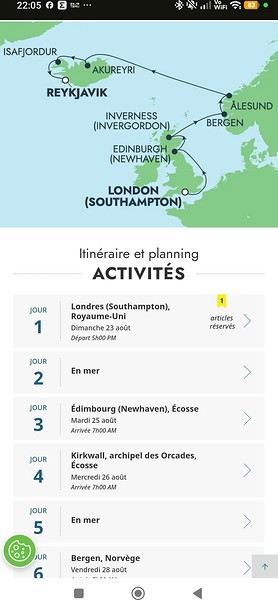
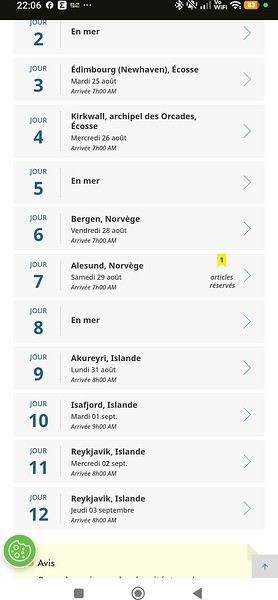
I finally chose NCL’s Star for Iceland. I had already looked at this itinerary when I went to Scotland in April with CFC, but it was really expensive. You should know that CFC often offers last-minute deals 45 days before departure (the point when you can no longer cancel or modify). So, I got a great opportunity and grabbed it. Departure is on August 23rd.
Hikes around Cape Town
Hi everyone!
My trip to South Africa is getting closer (still 2 months to go 😏), and I’m diving back into my itinerary: from Saturday to the following Sunday around Cape Town, then from Sunday to the following Saturday in Kruger.
For Cape Town, the plan was to avoid changing accommodation every day (we’ll do enough of that in the second part) but still see different landscapes. I know, I’m missing out on a lot, but you’ve got to make choices, and after all this time, I know what I like—and especially what I don’t (or like less) 😉
Here’s the breakdown:
Arrival Saturday at 11 AM: heading to Hermanus (2 nights). The idea is to stroll along the cliff path in the afternoon, and possibly drive to the Klein River Lagoon. Sunday: Stony Point, then depending on time and weather, a hike in Kogelberg Nature Reserve or Fernkloof Nature Reserve (which seems less scenic but has shorter walks). Monday: drive to Franschhoek (1 night). If everything lines up, a hike in Jonkershoek NR and a visit to a wine estate. Tuesday: drive to Mountceder Lodge in the Cederberg (2 nights). I’m thinking of visiting the Stadsaal Caves and the elephant paintings, and maybe one of the hikes listed on the lodge’s site or Maltese Cross. Thursday: heading to Hout Bay for 3 nights. In no particular order: a classic day trip around the peninsula, half a day at Kirstenbosch Gardens, and half a day at Lion’s Head. Sunday: flight to Johannesburg.
My questions are mostly about (short) hikes: Has anyone here done hikes in Kogelberg, Fernkloof, or Jonkershoek? At Mountceder Lodge (Michel, if you’re reading this… 😉), has anyone tried the hikes (guided or not) offered by the lodge? There’s still half a day to fill when we’re in Hout Bay—any ideas (not necessarily hikes)?
Lastly, regarding safety: the French foreign ministry (always alarmist, but still) recommends hiking in groups. Is it really risky in broad daylight? (I’m not sure a group of two women counts as a "group"…)
Thanks in advance for your answers, ideas, and comments!
My trip to South Africa is getting closer (still 2 months to go 😏), and I’m diving back into my itinerary: from Saturday to the following Sunday around Cape Town, then from Sunday to the following Saturday in Kruger.
For Cape Town, the plan was to avoid changing accommodation every day (we’ll do enough of that in the second part) but still see different landscapes. I know, I’m missing out on a lot, but you’ve got to make choices, and after all this time, I know what I like—and especially what I don’t (or like less) 😉
Here’s the breakdown:
Arrival Saturday at 11 AM: heading to Hermanus (2 nights). The idea is to stroll along the cliff path in the afternoon, and possibly drive to the Klein River Lagoon. Sunday: Stony Point, then depending on time and weather, a hike in Kogelberg Nature Reserve or Fernkloof Nature Reserve (which seems less scenic but has shorter walks). Monday: drive to Franschhoek (1 night). If everything lines up, a hike in Jonkershoek NR and a visit to a wine estate. Tuesday: drive to Mountceder Lodge in the Cederberg (2 nights). I’m thinking of visiting the Stadsaal Caves and the elephant paintings, and maybe one of the hikes listed on the lodge’s site or Maltese Cross. Thursday: heading to Hout Bay for 3 nights. In no particular order: a classic day trip around the peninsula, half a day at Kirstenbosch Gardens, and half a day at Lion’s Head. Sunday: flight to Johannesburg.
My questions are mostly about (short) hikes: Has anyone here done hikes in Kogelberg, Fernkloof, or Jonkershoek? At Mountceder Lodge (Michel, if you’re reading this… 😉), has anyone tried the hikes (guided or not) offered by the lodge? There’s still half a day to fill when we’re in Hout Bay—any ideas (not necessarily hikes)?
Lastly, regarding safety: the French foreign ministry (always alarmist, but still) recommends hiking in groups. Is it really risky in broad daylight? (I’m not sure a group of two women counts as a "group"…)
Thanks in advance for your answers, ideas, and comments!
Combined trip to the two islands: Mauritius and Réunion
Hi everyone, we’re planning a trip to Réunion for 6 nights and Mauritius for 7 nights in March 2027. I’m starting to look into it now. We’re not hikers, so I’d love to hear your thoughts!
Should we book flights and small hotels separately, or go for a flight-and-stay package? We don’t want to blow our budget (around 2800 € per person). Thanks! Gigi
Should we book flights and small hotels separately, or go for a flight-and-stay package? We don’t want to blow our budget (around 2800 € per person). Thanks! Gigi
Visiting Fam and Rufas Islands from Gam and Mansuar
hi there
I’m planning a trip focused mainly on snorkeling and diving in Raja Ampat, covering two islands: Gam and Mansuar.
I’d also like to spend a few days on Fam and Rufas Islands. Is it cheaper to depart from Gam or Mansuar? Do you have any info on the budget I should expect?
If you’ve got any great tips, I’d love to hear them!
Thanks in advance
Madagascar - June 2025
Five years of an unintended break... The closure of VF, COVID... What a joy to rediscover the pleasure of sharing!
I’ve stayed true to my habits: the following account is a collection of practical tips rather than a travel journal...
Madagascar is as big as France and Belgium combined. In three weeks, choices have to be made! It was the Great Tsingy that inspired our trip. We decided to focus on the southwest and the RN7. We skipped the Deep South and the North. Oh well...
OUR ITINERARY IN 3 WEEKS:
Fri 6 June – Direct AF flight to Tana – Flight arrives at 10:30 PM – Tana Sat – Antsirabe Sun – Miandrivazo Mon – Drive to the Masiakampy pier – Descent of the Tsiribihina River by pirogue - Bivouac Tue – Descent of the Tsiribihina River by pirogue - Bivouac Wed – Descent of the Tsiribihina River by pirogue – Bekopaka Thu – Pirogue on the Manambolo River and Small Tsingy of Bemaraha – Bekopaka Fri – Great Tsingy of Bemaraha – Bekopaka Sat – Avenue of the Baobabs – Morondava Sun – Belo sur Mer Mon – Free day – Belo sur Mer Tue – Manja Wed – Andavadoaka Thu – Free day – Andavadoaka Fri – Salary Lagoon – Mangily Sat – Ranohira Sun – Isalo National Park - Ranohira Mon – Anja Reserve - Ambalavao - Fianarantsoa Tue – FCE train canceled – Visit to a Tanala village - Manakara Wed – Pirogue on the Pangalanes Canal – Ranomafana Thu – Ranomafana NP – Ranomafana Fri – Ambositra – Antsirabe Sat 28 June – AF flight to Paris – Flight departs at 11:55 PM
TRIP ORGANIZATION: I prepared my trip using the usual guides (LP and Rough Guide), the internet, and the Freytag & Berndt map (1:1,000,000). I’m old-school—I still love visualizing my route on a paper map, even though in Madagascar, it’s misleading because some National Roads are only national in name!...
The agency: Since we couldn’t deal directly with a driver-guide (we lacked reliable info to take the plunge), we went through an agency to organize the logistics of our trip. We didn’t feel like using bush taxis (not enough time) or driving a 4x4 ourselves (neither the skills nor the boldness). The French agency connected us with a local agency, to whom I sent my detailed itinerary by email. A few exchanges via email and WhatsApp calls allowed us to finalize everything quickly after some adjustments. As you’ve gathered... we multiplied the commissions, which inflated the budget. That said, in the end, we were thrilled with our decision and our choice. Our trip was booked by the end of 2024, and reservations were made immediately. No bad surprises: the bookings in the planned hotels were honored, often with one of the best rooms. On our last day in Tana, before departure, we were lucky enough to meet the director I’d been communicating with, who helped build and validate our circuit. A very warm debriefing.
The driver-guide: The agency assigned us Faly, 33, a driver-guide for over 10 years. He stayed with us from start to finish: he picked us up at the airport on arrival and dropped us off 23 days later. A very experienced driver (which is important here), an open and cultured guide, reliable, punctual, and a great companion. And a provider of good advice throughout the trip. We made the most of the long stretches on dirt roads or highways to listen to him talk about daily life, rituals, wildlife, and flora... No time wasted! With a great playlist in the background, we combined business with pleasure! Faly’s accommodation and meals were included (quite often, hotels offer free lodging and meals to driver-guides who bring clients), as was the fuel. That didn’t stop us from inviting Faly to share a beer or our evening meal sometimes. He didn’t always accept, wanting to let us "enjoy our romantic evenings," as he put it. Present without being intrusive! Faly is fully capable of organizing a tailor-made trip directly. I recommend him without any hesitation—we were delighted with his service. I’ll gladly share his contact details via PM to anyone who asks.
Local guides: It’s the national guide’s prerogative to choose the local guides (mandatory in the parks). Thanks to his experience, Faly always booked us amazing, competent, and interesting local guides.
Hotels: I told the agency I wanted charming, comfortable accommodations, without falling into flashy luxury. We loved all the hotels (except the Hôtel Kanto in Manja). The rooms, mostly bungalows, were always spacious and clean. Unfortunately, I can’t give the prices—I didn’t get the details. Breakfast is always included, usually fresh and hearty. Very often, a small bottle of water is provided in the room.
Tana Hôtel Les 3 Métis Power cuts are common (!) in Tana. Bring a headlamp.
Antsirabe Ecolodge – Les chambres du voyageur Maybe our favorite! A few bungalows, beautifully arranged in a splendid tropical garden. The dog Kodak welcomes us warmly.
Miandrivazo Hôtel Princesse Tsiribihina Magnificent view of the valley.
Bekopaka Hôtel Orchidée du Bemaraha 2 (yes, 2) beautiful pools, a large open common room.
Morondava Hôtel Baobab Café Brand new or at least, according to Faly, just renovated. Very comfortable but without much charm (international style).
Belo sur Mer Ecolodge du Menabe The bungalows, all made of wood, bamboo, and thatch, are set on the beach. Very spacious and fully equipped! Large open-air restaurant by the sea. No hot water from the tap—it’s available in plastic bottles heated by the sun in front of each bungalow. Actually, we never used it... Another very, very beautiful spot.
Manja Hôtel Kanto The only hotel on this leg of the journey, so no choice. The owner knows it and, as a result, doesn’t bother. It’s a real dive! Tiny, dark room, a sordid bathroom with only a trickle of water—we skipped the shower! Clean sheets, though. Obviously, no Wi-Fi. The only place where I didn’t leave a tip. We were well warned about the discomfort of this stop, both by the agency and Faly. We weren’t surprised, and it even became a running joke during the trip. On the other hand, we found a nice little market in town.
Andavadoaka Manga Lodge What bliss! Especially after the horrible Hôtel Kanto. A paradise-like spot, overlooking three beautiful deserted white-sand beaches. Meals are served on the terrace facing the sea. Stunning sunset. We loved spending a day lounging here! We were the only guests and were pampered.
Mangily (Ifaty) Mangily is the "suburb" of Ifaty. Hôtel Vovo Telo A large beachfront bungalow complex. More touristy but pleasant—we spent a lovely evening there with our feet in the sand.
Ranohira Le Relais de la Reine A splendid resort built by a Frenchman, at the foot of the rocks, very well integrated into the environment. Beautiful marked trail starting from the garden.
Fianarantsoa Villa Sylvestre Contrary to what its name suggests, it’s a hotel right in the city center. Quite decent, though.
Manakara Parthenay Club Pretty bungalows in a large garden by the sea, but swimming isn’t safe—the water is too dangerous and rough.
Ranomafana Hôtel Thermal Very spacious rooms.
Meals: Not all our meals were included. It’s really not expensive. 1 meat or fish dish: around 35,000 Ar 1 full menu (starter, main, dessert): around 70,000 Ar 1 large THB beer (65 cl): between 8,000 and 12,000 Ar 1 piña colada: 15,000 Ar 1 flavored rum: 6,000 Ar (sometimes free) 1 glass of baobab juice (!): 5,000 Ar
We always ate very well. Rice is everywhere, served in large quantities. Zebu meat is quite good if not overcooked. Personally, I prefer fish, and I feasted: grouper, captain, crab, small lobsters...
We happily discovered baobab juice (especially in Belo, on the west coast). And of course, flavored rums!
We bought 2 packs of 6 bottles of mineral water at Carrefour (!) (about 5,000 Ar per large bottle) at the start of our trip. That was enough, especially since we often got water in the bungalows.
We had a few picnics included in our trip. Instead of picking up the hotel’s lunchbox, Faly prepared delicious, fresh, and varied picnics for us: tuna pasta salad, fried rice with eggs, grilled vegetables, and avocado...
An exceptional address not to miss: Mad Zébu – Belo sur Tsiribihina A highly reputed restaurant, a favorite of LP and Rough Guide, and rightly so! Gourmet cuisine, refined and elegant. Barely more expensive than elsewhere, and it’s worth it. We stopped there on our way up to Bekopaka and the Tsingy NP. Fully booked! So Faly reserved for our return, three days later. We’re still thanking him! What a treat!
THE BUDGET: Ariary exchange rate: 5,000 Ar = 1 €
Pre-trip expenses: Direct Air France flights: 930 € per person round trip Cost of the circuit with the agency: 2,880 € per person
The visa: Issued on arrival, very quickly. 35 € per person for a stay under 30 days. Super simple. Super fast.
On-site expenses: As soon as we arrived at the airport (it was nearly midnight), Faly advised us to exchange our euros for all our needs. There are few opportunities on our route to find an ATM or an open bank with a good rate. To be more comfortable, he took us to a small office under military protection just outside the airport. I exchanged 1,200 € (I had asked the agency for advice on the amount to bring) at a rate of 4,750 Ar and became a millionaire. Faly recounted all the stacks. That covered all our expenses (meals, drinks, tips) without ever feeling deprived. Personal purchases were made at the end of the trip. Convenient—it served as an adjustment variable. We spent our last million (200 €) on marquetry and vanilla. Tip: We asked for 200,000 Ar in 5,000 Ar bills for tips. That wasn’t too much—I even ran short of small bills in the last two days.
Tips: Madagascar is a poor country where every service deserves a small reward. While not mandatory, it’s customary. But no one ever demanded or expected it openly. On the contrary, I sometimes had to remind a porter to give them my small bill. We never carried our luggage—porters were always present when the car arrived or waiting at our door to watch for our departure. I gave each of them 5,000 Ar. In restaurants, I rounded up to the nearest ten and left the change. Local guides also expect a tip: I gave around 20,000 Ar per day for the two of us. Finally, the national guide also expects a gratuity. I had read online to budget 5 € per day per person. I added more since we were so happy with his services. The tip was given at the end of the trip, in euros, outside the budget.
Total budget all included (excluding personal purchases): 8,690 € Clearly, Madagascar is a country where life isn’t expensive, but travel costs add up quickly due to the need to rent a 4x4 with a driver.
HIGHLIGHTS:
· The dirt roads Yes, I’m listing them among the highlights! We loved those long hours spent driving at 20 km/h on rocky, muddy, white, red, or gray sand tracks... surrounded by tropical vegetation, palm trees, pandanus, mango trees... The experiences were sometimes thrilling: crossing a river on a ferry (just planks of wood fixed on two motorized pirogues side by side) or crossing a river without a ferry, with just a kid running ahead of the 4x4 to show the way; soft sand where the 4x4 easily gets stuck... The tracks are quite narrow, and crossing paths with a bush taxi, a zebu cart, or a herd of goats is always epic. So many beautiful images, so many beautiful photos! Much more beautiful than on asphalt. So yes, we loved those long stretches on dirt roads. For us, it was clearly part of the journey. Faly was particularly careful, and the 4x4 was comfortable. No injuries, no fatigue, even after 7 or 8 hours on rough tracks. The national roads (including the famous RN7) are badly damaged by cyclones, huge trucks, and lack of maintenance. Potholes have turned into ostrich nests, and we didn’t drive much faster than on the dirt roads.
· The landscapes, villages, encounters... We crossed a variety of stunning landscapes: mountains with slopes covered in terraced crops, rice fields from apple green to emerald green, sugarcane fields, then tropical forests, baobab forests (they deserve a special paragraph below), traveler’s tree forests. And then coastlines with white sand dunes against a backdrop of blue hues!... Magical! We also passed through many villages with houses whose architecture varied by region. The Betsileo houses display beautiful decorative brick reliefs. On the west coast, the houses are more precarious, made of bamboo with palm-thatched roofs. In the Highlands region, we found solid houses with pastel plaster. Each region has its own landscape, crops, habitat, and clothing. Zebu carts are often the only means of transport in remote villages. We saw them very frequently. Again, the cart’s decoration depends on the region. And then, we met many villagers coming out of the bush and walking to the next market, carrying their crops on their heads or shoulders. More beautiful photos!
· The descent of the Tsiribihina River We boarded around 9 AM in a long pirogue with Gana, the local guide, and two pirogue men. So, five of us. The pirogue is long but narrow, about 65 cm wide. We sat one behind the other at the front on seats padded with what would become our mattresses during the bivouacs. We only took the bare essentials for two nights. A little goodbye to Faly, whom we’d see again in three days! Don’t forget us! The river is silty—meaning orange, opaque but clean. We glided along silently. Gana showed us the trees, birds, crocodiles (we saw five—apparently, we were lucky). The pirogue men rowed to get us as close as possible to these crocs sunbathing on the roots of big trees. Yeah, right!... as soon as we got too close, *splash*, they disappeared into the water. We marveled at the mini rice fields lining the river. Every tiny plot, no matter how small, is cultivated. Above them, banana fields. And on the water, a whole life of fishermen and villagers living with and from the river. Gana warned us we’d eat on the pirogue because the journey was long. So, I expected chips... But no—fried rice and zebu steak, cooked right in the pirogue!! Incredible! In the middle of the afternoon, we reached a small beach where we disembarked. Gana led us about a hundred meters to a sublime waterfall. We were alone there. We had time to swim. We’d brought our swimsuits and a towel (bought at the Carrefour in Antsirabe on Faly’s wise advice!). This swim in this paradise-like spot remains one of our best memories. We found our pirogue again and set off until our first bivouac. We’d sailed for 7 hours today. The tents were set up on a wide beach, without a single tree. A moment of solitude... Uh, where can we go to the bathroom?... Especially since it was a full moon, so we felt like we were in the spotlight. Anyway... we did as everyone else—walked away, dug a hole, and the others turned their backs. A hearty meal on the beach before a comfortable and silent night. The next day, same program, with slightly different landscapes. The gorges widened, the trees were different. But still many colorful birds. Again, we ate on the pirogue: grilled chicken and vegetables. 9 hours of sailing. A similar bivouac. This time, we got it. On the third day, we finished the descent with 5 hours of sailing. So, 7 hours, 9 hours, 5 hours... doing nothing. It might sound boring... but it wasn’t. Like the dirt roads, these were contemplative moments. It glides, it’s calm, relaxing, and there’s a lot of life on this river, animal and human. Contemplation. Suspended time. On arrival, we disembarked at a sort of joyful, bustling river port. Of course, Faly was already there to pick us up.
· The Tsingy de Bemaraha NP (Small and Great) I have vertigo. During my research, several agencies advised me against visiting the Great Tsingy. "Stick to the Small ones," they said. Grrr, no, not what I wanted—we’ve dreamed of this for years! The agency we chose also warned me but didn’t discourage me. So we started with the Small Tsingy, quite close to Bekopaka, guided by Alisha. This forest of sharp limestone rocks is impressive. No vertigo issues here. The day was completed with a short pirogue ride on the Manambolo River and a visit to two caves with pretty formations. The next day, Faly and Alisha drove us to the Great Tsingy (a good hour on a terrible track). Arriving at the park entrance, Alisha equipped us with harnesses, carabiners, and gave us some safety instructions. Faly was also equipped. Wait? He’s coming with us? I quickly understood he was there for me—if I got stuck, he could go back with me, and Philippe could continue with Alisha. A wise precaution that delighted and reassured me. In the end, it was unnecessary since the famous bridge crossing was fully secured by the harness and carabiners. 18 meters on planks, one by one, it didn’t sway too much—I walked looking straight ahead, not a glance down. I even managed to smile in the middle of the crossing—I have a photo to prove it! I was overjoyed! The circuit in the Great Tsingy is a loop, so we didn’t have to cross the bridge again. We climbed to viewpoints offering breathtaking panoramic views. It’s extraordinary, unique, incredible. All this to say that if you have vertigo, don’t hesitate! It’s doable! It’s completely safe and really worth pushing your limits a bit! For those who’ve done treetop adventure courses, it’s similar. Also, no need to be a great athlete—just a bit of agility to climb a few ladders and high steps. Don’t censor yourself! I even had a small regret—the loop was a bit short (about 2 hours). I would’ve liked to continue or even redo it, with less apprehension. Tip: Do the Small Tsingy before the Great ones, or not at all. And if you can only do one, do the Great ones without hesitation.
· Canoeing in the Belo mangrove The Belo sur Mer ecolodge lends small individual canoes for free to go to the mangrove. We left at high tide, paddled for about twenty minutes to reach a fairly sparse forest where we could easily venture in. Very shallow water, crystal clear—we could see the roots of all these trees, schools of tiny fish... It was quite surprising. Until then, I only knew impenetrable, tangled mangroves. Here, nothing like that—we walked through an aquatic forest. We loved this adventure so much we left a bit late. The tide had gone out, and we had to carry our canoes for the last few meters... Of course, the staff came to help (probably laughing silently!). The lodge owners gave all the necessary explanations and lent a waterproof bag for the phone (because yes, it’s worth taking photos!). A very useful precaution—the canoes are small, low in the water, and paddling quickly soaks you. Again, this isn’t just for Tony Estanguet! It didn’t cause us any problems, not even sore muscles the next day. A great experience. It’ll take about 2 hours.
· Isalo NP Big surprise when we saw this huge rocky massif appear on the RN7! A massif of colored sandstone, carved with crevasses giving it a ruined look. Le Relais de la Reine is a little gem cleverly nestled in the heart of these rocks. A small marked trail starts from the garden. We picked up the description at reception and set off. Without a guide, alone following the markers, it took us 2 hours to complete this magnificent little trail, giving us a first glimpse of the massif before the hike the next day. And we enjoyed being completely alone for this walk. It’s free, easy, and well-signposted. Don’t miss it. In the evening, Faly took us to the so-called Isalo Window site—a hole in a wall through which we could see the sunset. We met all the tourists in the area here. We weren’t blown away by the show... The next day, we left early to reach the start of the hike. We met Zozoly at the guides’ office in the small town of Ranohira. During this hike, we climbed through the rocks to a viewpoint offering stunning 360° views of the massif. Then we reached a site called the "natural pool," breathtakingly beautiful, especially since we were alone again. A sort of oasis, a cascading waterfall, palm trees and tree ferns, fine sand, all nestled at the bottom of a small canyon. Paradise-like. We resisted swimming, but it was really tempting. A long walk on the plateaus then led us to a well-equipped picnic site where a local team prepared grills. Concrete tables were tiered in a spacious, shady clearing where a whole family of ring-tailed lemurs frolicked. They knew the tourists’ habits and tried to snatch food. Playful and not very shy, they amused us with their antics! We had to resist not luring them with a piece of banana!! Thousands of photos!! After the meal, we set off again with Zozoly for another landscape. This time, we were by a small river at the bottom of a canyon with high walls covered in vegetation. The trail was narrow and slippery, on a ledge of the wall. We progressed carefully. No danger, though. We first reached the Blue Pool, which only turns blue in photos (surprise!), then the Black Pool fed by a shower of waterfalls. Two magnificent spots that showed us a completely different aspect of the massif.
· Anja Reserve This ficus forest is home to many groups of lemurs. Used to humans, whom they don’t fear, they move around us, ignoring us completely. It’s almost annoying... The best place on our trip to see lemurs.
· The FCE train To the great regret of Manakara’s inhabitants, the FCE train hasn’t reached here for over a year and a half. As a result, there are far fewer tourists—the train was part of the experience. We drove there and didn’t regret coming to this port on the east coast.
· Visit to a Tanala village This visit wasn’t part of our program—it was added by the agency to compensate for the train not running. Which was the case. Not big fans of this kind of visit, where we feel like we’re at a zoo, voyeuristic, lacking authenticity, we followed the local guide with some skepticism and exchanged dubious looks. And yet... the guide’s explanations about village life and the warm, smiling welcome from the villagers charmed us and dispelled all our concerns. We learned a lot, met smiling families, and were able to enter these beautiful bamboo houses. A very pleasant surprise, rich in lessons.
· The Pangalanes Canal Arriving in Manakara, we crossed a bridge overlooking the Pangalanes Canal. A cry of surprise: the water is turquoise! We took a short pirogue ride with a team of three pirogue men and Joël, a local guide who explained the drama caused by the train’s halt. We stopped in a fishing village where Joël bought fish for the barbecue. We ended up on a beach where the team prepared the meal while we went to watch the fishermen return on the nearby beach. We admired the fishermen’s dexterity in untangling their nets, sorting their fish, cleaning their gear. On our return, we found a small table set up on the beach, in the shade of palm trees and casuarinas. Lobsters, captain fish, grilled vegetables, sautéed potatoes. A real feast (included in the trip cost).
· Ranomafana NP A 4-5 hour hike (some climbing) in a dense secondary forest to look for lemurs. As usual, we were accompanied by a local guide who, while waiting to find our furry friends, gave us lots of info on the vegetation, birds, and Tanala ethnic rituals. In the forest, we met 4 or 5 trackers, armed with radios to alert guides of their findings. In the end, we saw several lemurs of different types. Quite far, quite high... A nice complement to our lemur encounters in Isalo. Here, it rains 200 days a year. We started the hike in thick fog, but the forest’s density protected us from the humidity. Be careful—it can be a bit frustrating to see the lemurs so far away, so high. Nothing like the Anja Reserve or Isalo NP. Here, what’s fun is the hunt.
· The baobabs We were captivated by these kings of the forest, noble, imposing, majestic. We spotted them from very far away, towering over the rest of the vegetation. Alone, in small groups, or in forests, our trip allowed us to see hundreds of them! Mainly on the west coast. All different—bald, hairy, shaggy, short and stout, tall and thin, like Laurel and Hardy. Philippe took to naming them. Respectfully!
OUR FAVORITES: · The variety of landscapes. · The Tsingy NP.
OUR DISAPPOINTMENTS: · The Avenue of the Baobabs, very overrated and the only place where we saw crowds. We saw many other "forests" of baobabs that were much more impressive. · It’s hard to approach the population calmly as swarms of children run up as soon as we arrive, asking for sweets. Without any aggression, their smiles and laughter quickly made us forget this small inconvenience. We never gave out candy, clothes, or money. We left pens at a school and clothes with Faly.
IF WE WERE TO DO IT AGAIN: · Same period, same duration, same pace, same itinerary, but if we were to do it again today, I’d go through Faly directly! · Maybe we should’ve stayed in Ambalavao instead of Fianarantsoa. · Plan a longer loop in the Great Tsingy—it felt a bit too short.
MISCELLANEOUS: The welcome: ‘Samala Vazaha,’ there are many, many kids, sometimes overwhelming, never aggressive. We were impressed by the villagers’ smiles and good humor, towards us or even among themselves—laughter was everywhere. Safety: No problems. Out of (excessive?) caution, we spread all our money across several bags that we padlocked whenever we left the hotel. Bribes: We were stopped several times on the road by police or gendarmes. They checked our papers, sometimes our passports. Faly was perfectly in order. No discussion, no bribes, a cordial greeting from the officers. However, several times we found ourselves at small "tolls" on the tracks for villagers who had leveled the road or filled a hole, or for the young guy who ran through the river to show the way... Faly complied without discussion: every service deserves a small bill. Language: French is still widely spoken. Credit card: Unused. Cash: You need it! The climate at this time: Ideal—blue skies, sunshine, and mild temperatures (20-25°C) throughout our trip. Temperatures started to drop by our departure—winter was setting in. Clothing: T-shirt or polo and a vest sometimes in the evening, sandals on our feet, hiking shoes for all the hikes. Tip: We left a bag in the car (completely safe) with things we didn’t need daily and dirty laundry. The two bags to take out at each stop were much lighter. Before leaving, we left several polos and T-shirts with Faly, which, once washed, will make a few people happy. Tourist crowds at this time: Low—we were sometimes the only guests at the hotel. Faly explained that at the Isalo picnic site, in high season, you have to queue for a table, whereas we had our pick. Photos: Lots! Too many! That’s the problem with digital—we take so many! Health issues: Nothing serious, just the usual mild traveler’s diarrhea. Mosquitoes: They’re voracious. We took anti-malaria treatment. I’m still not sure if it was the right thing to do... I’m always very skeptical about such precautions. Internet: Free Wi-Fi at the lodges’ reception (except at Hôtel Kanto!), sometimes (rarely) in the bungalows. Phone: We didn’t try to get a local SIM card—the evening Wi-Fi was enough for us to make calls and send messages via WhatsApp. Make sure to turn off mobile data and switch to airplane mode (I activated it a bit late—received calls, spam ones at that, were charged...). Electricity: French plugs. Personal purchases: Beautiful wooden objects (sculptures and marquetry) or zebu horn items in Ambositra. 1 kg of vanilla (400,000 Ar – 80 € per kg) in Tana.
IN CONCLUSION: A trip of contemplation. A pause for admiration, as our local guide in Isalo NP said. Nothing else to do but walk, look, and enjoy. Here, there are no old stones, no museums—it’s a trip where nature reigns supreme. And what nature!
I’ve stayed true to my habits: the following account is a collection of practical tips rather than a travel journal...
Madagascar is as big as France and Belgium combined. In three weeks, choices have to be made! It was the Great Tsingy that inspired our trip. We decided to focus on the southwest and the RN7. We skipped the Deep South and the North. Oh well...
OUR ITINERARY IN 3 WEEKS:
Fri 6 June – Direct AF flight to Tana – Flight arrives at 10:30 PM – Tana Sat – Antsirabe Sun – Miandrivazo Mon – Drive to the Masiakampy pier – Descent of the Tsiribihina River by pirogue - Bivouac Tue – Descent of the Tsiribihina River by pirogue - Bivouac Wed – Descent of the Tsiribihina River by pirogue – Bekopaka Thu – Pirogue on the Manambolo River and Small Tsingy of Bemaraha – Bekopaka Fri – Great Tsingy of Bemaraha – Bekopaka Sat – Avenue of the Baobabs – Morondava Sun – Belo sur Mer Mon – Free day – Belo sur Mer Tue – Manja Wed – Andavadoaka Thu – Free day – Andavadoaka Fri – Salary Lagoon – Mangily Sat – Ranohira Sun – Isalo National Park - Ranohira Mon – Anja Reserve - Ambalavao - Fianarantsoa Tue – FCE train canceled – Visit to a Tanala village - Manakara Wed – Pirogue on the Pangalanes Canal – Ranomafana Thu – Ranomafana NP – Ranomafana Fri – Ambositra – Antsirabe Sat 28 June – AF flight to Paris – Flight departs at 11:55 PM
TRIP ORGANIZATION: I prepared my trip using the usual guides (LP and Rough Guide), the internet, and the Freytag & Berndt map (1:1,000,000). I’m old-school—I still love visualizing my route on a paper map, even though in Madagascar, it’s misleading because some National Roads are only national in name!...
The agency: Since we couldn’t deal directly with a driver-guide (we lacked reliable info to take the plunge), we went through an agency to organize the logistics of our trip. We didn’t feel like using bush taxis (not enough time) or driving a 4x4 ourselves (neither the skills nor the boldness). The French agency connected us with a local agency, to whom I sent my detailed itinerary by email. A few exchanges via email and WhatsApp calls allowed us to finalize everything quickly after some adjustments. As you’ve gathered... we multiplied the commissions, which inflated the budget. That said, in the end, we were thrilled with our decision and our choice. Our trip was booked by the end of 2024, and reservations were made immediately. No bad surprises: the bookings in the planned hotels were honored, often with one of the best rooms. On our last day in Tana, before departure, we were lucky enough to meet the director I’d been communicating with, who helped build and validate our circuit. A very warm debriefing.
The driver-guide: The agency assigned us Faly, 33, a driver-guide for over 10 years. He stayed with us from start to finish: he picked us up at the airport on arrival and dropped us off 23 days later. A very experienced driver (which is important here), an open and cultured guide, reliable, punctual, and a great companion. And a provider of good advice throughout the trip. We made the most of the long stretches on dirt roads or highways to listen to him talk about daily life, rituals, wildlife, and flora... No time wasted! With a great playlist in the background, we combined business with pleasure! Faly’s accommodation and meals were included (quite often, hotels offer free lodging and meals to driver-guides who bring clients), as was the fuel. That didn’t stop us from inviting Faly to share a beer or our evening meal sometimes. He didn’t always accept, wanting to let us "enjoy our romantic evenings," as he put it. Present without being intrusive! Faly is fully capable of organizing a tailor-made trip directly. I recommend him without any hesitation—we were delighted with his service. I’ll gladly share his contact details via PM to anyone who asks.
Local guides: It’s the national guide’s prerogative to choose the local guides (mandatory in the parks). Thanks to his experience, Faly always booked us amazing, competent, and interesting local guides.
Hotels: I told the agency I wanted charming, comfortable accommodations, without falling into flashy luxury. We loved all the hotels (except the Hôtel Kanto in Manja). The rooms, mostly bungalows, were always spacious and clean. Unfortunately, I can’t give the prices—I didn’t get the details. Breakfast is always included, usually fresh and hearty. Very often, a small bottle of water is provided in the room.
Tana Hôtel Les 3 Métis Power cuts are common (!) in Tana. Bring a headlamp.
Antsirabe Ecolodge – Les chambres du voyageur Maybe our favorite! A few bungalows, beautifully arranged in a splendid tropical garden. The dog Kodak welcomes us warmly.
Miandrivazo Hôtel Princesse Tsiribihina Magnificent view of the valley.
Bekopaka Hôtel Orchidée du Bemaraha 2 (yes, 2) beautiful pools, a large open common room.
Morondava Hôtel Baobab Café Brand new or at least, according to Faly, just renovated. Very comfortable but without much charm (international style).
Belo sur Mer Ecolodge du Menabe The bungalows, all made of wood, bamboo, and thatch, are set on the beach. Very spacious and fully equipped! Large open-air restaurant by the sea. No hot water from the tap—it’s available in plastic bottles heated by the sun in front of each bungalow. Actually, we never used it... Another very, very beautiful spot.
Manja Hôtel Kanto The only hotel on this leg of the journey, so no choice. The owner knows it and, as a result, doesn’t bother. It’s a real dive! Tiny, dark room, a sordid bathroom with only a trickle of water—we skipped the shower! Clean sheets, though. Obviously, no Wi-Fi. The only place where I didn’t leave a tip. We were well warned about the discomfort of this stop, both by the agency and Faly. We weren’t surprised, and it even became a running joke during the trip. On the other hand, we found a nice little market in town.
Andavadoaka Manga Lodge What bliss! Especially after the horrible Hôtel Kanto. A paradise-like spot, overlooking three beautiful deserted white-sand beaches. Meals are served on the terrace facing the sea. Stunning sunset. We loved spending a day lounging here! We were the only guests and were pampered.
Mangily (Ifaty) Mangily is the "suburb" of Ifaty. Hôtel Vovo Telo A large beachfront bungalow complex. More touristy but pleasant—we spent a lovely evening there with our feet in the sand.
Ranohira Le Relais de la Reine A splendid resort built by a Frenchman, at the foot of the rocks, very well integrated into the environment. Beautiful marked trail starting from the garden.
Fianarantsoa Villa Sylvestre Contrary to what its name suggests, it’s a hotel right in the city center. Quite decent, though.
Manakara Parthenay Club Pretty bungalows in a large garden by the sea, but swimming isn’t safe—the water is too dangerous and rough.
Ranomafana Hôtel Thermal Very spacious rooms.
Meals: Not all our meals were included. It’s really not expensive. 1 meat or fish dish: around 35,000 Ar 1 full menu (starter, main, dessert): around 70,000 Ar 1 large THB beer (65 cl): between 8,000 and 12,000 Ar 1 piña colada: 15,000 Ar 1 flavored rum: 6,000 Ar (sometimes free) 1 glass of baobab juice (!): 5,000 Ar
We always ate very well. Rice is everywhere, served in large quantities. Zebu meat is quite good if not overcooked. Personally, I prefer fish, and I feasted: grouper, captain, crab, small lobsters...
We happily discovered baobab juice (especially in Belo, on the west coast). And of course, flavored rums!
We bought 2 packs of 6 bottles of mineral water at Carrefour (!) (about 5,000 Ar per large bottle) at the start of our trip. That was enough, especially since we often got water in the bungalows.
We had a few picnics included in our trip. Instead of picking up the hotel’s lunchbox, Faly prepared delicious, fresh, and varied picnics for us: tuna pasta salad, fried rice with eggs, grilled vegetables, and avocado...
An exceptional address not to miss: Mad Zébu – Belo sur Tsiribihina A highly reputed restaurant, a favorite of LP and Rough Guide, and rightly so! Gourmet cuisine, refined and elegant. Barely more expensive than elsewhere, and it’s worth it. We stopped there on our way up to Bekopaka and the Tsingy NP. Fully booked! So Faly reserved for our return, three days later. We’re still thanking him! What a treat!
THE BUDGET: Ariary exchange rate: 5,000 Ar = 1 €
Pre-trip expenses: Direct Air France flights: 930 € per person round trip Cost of the circuit with the agency: 2,880 € per person
The visa: Issued on arrival, very quickly. 35 € per person for a stay under 30 days. Super simple. Super fast.
On-site expenses: As soon as we arrived at the airport (it was nearly midnight), Faly advised us to exchange our euros for all our needs. There are few opportunities on our route to find an ATM or an open bank with a good rate. To be more comfortable, he took us to a small office under military protection just outside the airport. I exchanged 1,200 € (I had asked the agency for advice on the amount to bring) at a rate of 4,750 Ar and became a millionaire. Faly recounted all the stacks. That covered all our expenses (meals, drinks, tips) without ever feeling deprived. Personal purchases were made at the end of the trip. Convenient—it served as an adjustment variable. We spent our last million (200 €) on marquetry and vanilla. Tip: We asked for 200,000 Ar in 5,000 Ar bills for tips. That wasn’t too much—I even ran short of small bills in the last two days.
Tips: Madagascar is a poor country where every service deserves a small reward. While not mandatory, it’s customary. But no one ever demanded or expected it openly. On the contrary, I sometimes had to remind a porter to give them my small bill. We never carried our luggage—porters were always present when the car arrived or waiting at our door to watch for our departure. I gave each of them 5,000 Ar. In restaurants, I rounded up to the nearest ten and left the change. Local guides also expect a tip: I gave around 20,000 Ar per day for the two of us. Finally, the national guide also expects a gratuity. I had read online to budget 5 € per day per person. I added more since we were so happy with his services. The tip was given at the end of the trip, in euros, outside the budget.
Total budget all included (excluding personal purchases): 8,690 € Clearly, Madagascar is a country where life isn’t expensive, but travel costs add up quickly due to the need to rent a 4x4 with a driver.
HIGHLIGHTS:
· The dirt roads Yes, I’m listing them among the highlights! We loved those long hours spent driving at 20 km/h on rocky, muddy, white, red, or gray sand tracks... surrounded by tropical vegetation, palm trees, pandanus, mango trees... The experiences were sometimes thrilling: crossing a river on a ferry (just planks of wood fixed on two motorized pirogues side by side) or crossing a river without a ferry, with just a kid running ahead of the 4x4 to show the way; soft sand where the 4x4 easily gets stuck... The tracks are quite narrow, and crossing paths with a bush taxi, a zebu cart, or a herd of goats is always epic. So many beautiful images, so many beautiful photos! Much more beautiful than on asphalt. So yes, we loved those long stretches on dirt roads. For us, it was clearly part of the journey. Faly was particularly careful, and the 4x4 was comfortable. No injuries, no fatigue, even after 7 or 8 hours on rough tracks. The national roads (including the famous RN7) are badly damaged by cyclones, huge trucks, and lack of maintenance. Potholes have turned into ostrich nests, and we didn’t drive much faster than on the dirt roads.
· The landscapes, villages, encounters... We crossed a variety of stunning landscapes: mountains with slopes covered in terraced crops, rice fields from apple green to emerald green, sugarcane fields, then tropical forests, baobab forests (they deserve a special paragraph below), traveler’s tree forests. And then coastlines with white sand dunes against a backdrop of blue hues!... Magical! We also passed through many villages with houses whose architecture varied by region. The Betsileo houses display beautiful decorative brick reliefs. On the west coast, the houses are more precarious, made of bamboo with palm-thatched roofs. In the Highlands region, we found solid houses with pastel plaster. Each region has its own landscape, crops, habitat, and clothing. Zebu carts are often the only means of transport in remote villages. We saw them very frequently. Again, the cart’s decoration depends on the region. And then, we met many villagers coming out of the bush and walking to the next market, carrying their crops on their heads or shoulders. More beautiful photos!
· The descent of the Tsiribihina River We boarded around 9 AM in a long pirogue with Gana, the local guide, and two pirogue men. So, five of us. The pirogue is long but narrow, about 65 cm wide. We sat one behind the other at the front on seats padded with what would become our mattresses during the bivouacs. We only took the bare essentials for two nights. A little goodbye to Faly, whom we’d see again in three days! Don’t forget us! The river is silty—meaning orange, opaque but clean. We glided along silently. Gana showed us the trees, birds, crocodiles (we saw five—apparently, we were lucky). The pirogue men rowed to get us as close as possible to these crocs sunbathing on the roots of big trees. Yeah, right!... as soon as we got too close, *splash*, they disappeared into the water. We marveled at the mini rice fields lining the river. Every tiny plot, no matter how small, is cultivated. Above them, banana fields. And on the water, a whole life of fishermen and villagers living with and from the river. Gana warned us we’d eat on the pirogue because the journey was long. So, I expected chips... But no—fried rice and zebu steak, cooked right in the pirogue!! Incredible! In the middle of the afternoon, we reached a small beach where we disembarked. Gana led us about a hundred meters to a sublime waterfall. We were alone there. We had time to swim. We’d brought our swimsuits and a towel (bought at the Carrefour in Antsirabe on Faly’s wise advice!). This swim in this paradise-like spot remains one of our best memories. We found our pirogue again and set off until our first bivouac. We’d sailed for 7 hours today. The tents were set up on a wide beach, without a single tree. A moment of solitude... Uh, where can we go to the bathroom?... Especially since it was a full moon, so we felt like we were in the spotlight. Anyway... we did as everyone else—walked away, dug a hole, and the others turned their backs. A hearty meal on the beach before a comfortable and silent night. The next day, same program, with slightly different landscapes. The gorges widened, the trees were different. But still many colorful birds. Again, we ate on the pirogue: grilled chicken and vegetables. 9 hours of sailing. A similar bivouac. This time, we got it. On the third day, we finished the descent with 5 hours of sailing. So, 7 hours, 9 hours, 5 hours... doing nothing. It might sound boring... but it wasn’t. Like the dirt roads, these were contemplative moments. It glides, it’s calm, relaxing, and there’s a lot of life on this river, animal and human. Contemplation. Suspended time. On arrival, we disembarked at a sort of joyful, bustling river port. Of course, Faly was already there to pick us up.
· The Tsingy de Bemaraha NP (Small and Great) I have vertigo. During my research, several agencies advised me against visiting the Great Tsingy. "Stick to the Small ones," they said. Grrr, no, not what I wanted—we’ve dreamed of this for years! The agency we chose also warned me but didn’t discourage me. So we started with the Small Tsingy, quite close to Bekopaka, guided by Alisha. This forest of sharp limestone rocks is impressive. No vertigo issues here. The day was completed with a short pirogue ride on the Manambolo River and a visit to two caves with pretty formations. The next day, Faly and Alisha drove us to the Great Tsingy (a good hour on a terrible track). Arriving at the park entrance, Alisha equipped us with harnesses, carabiners, and gave us some safety instructions. Faly was also equipped. Wait? He’s coming with us? I quickly understood he was there for me—if I got stuck, he could go back with me, and Philippe could continue with Alisha. A wise precaution that delighted and reassured me. In the end, it was unnecessary since the famous bridge crossing was fully secured by the harness and carabiners. 18 meters on planks, one by one, it didn’t sway too much—I walked looking straight ahead, not a glance down. I even managed to smile in the middle of the crossing—I have a photo to prove it! I was overjoyed! The circuit in the Great Tsingy is a loop, so we didn’t have to cross the bridge again. We climbed to viewpoints offering breathtaking panoramic views. It’s extraordinary, unique, incredible. All this to say that if you have vertigo, don’t hesitate! It’s doable! It’s completely safe and really worth pushing your limits a bit! For those who’ve done treetop adventure courses, it’s similar. Also, no need to be a great athlete—just a bit of agility to climb a few ladders and high steps. Don’t censor yourself! I even had a small regret—the loop was a bit short (about 2 hours). I would’ve liked to continue or even redo it, with less apprehension. Tip: Do the Small Tsingy before the Great ones, or not at all. And if you can only do one, do the Great ones without hesitation.
· Canoeing in the Belo mangrove The Belo sur Mer ecolodge lends small individual canoes for free to go to the mangrove. We left at high tide, paddled for about twenty minutes to reach a fairly sparse forest where we could easily venture in. Very shallow water, crystal clear—we could see the roots of all these trees, schools of tiny fish... It was quite surprising. Until then, I only knew impenetrable, tangled mangroves. Here, nothing like that—we walked through an aquatic forest. We loved this adventure so much we left a bit late. The tide had gone out, and we had to carry our canoes for the last few meters... Of course, the staff came to help (probably laughing silently!). The lodge owners gave all the necessary explanations and lent a waterproof bag for the phone (because yes, it’s worth taking photos!). A very useful precaution—the canoes are small, low in the water, and paddling quickly soaks you. Again, this isn’t just for Tony Estanguet! It didn’t cause us any problems, not even sore muscles the next day. A great experience. It’ll take about 2 hours.
· Isalo NP Big surprise when we saw this huge rocky massif appear on the RN7! A massif of colored sandstone, carved with crevasses giving it a ruined look. Le Relais de la Reine is a little gem cleverly nestled in the heart of these rocks. A small marked trail starts from the garden. We picked up the description at reception and set off. Without a guide, alone following the markers, it took us 2 hours to complete this magnificent little trail, giving us a first glimpse of the massif before the hike the next day. And we enjoyed being completely alone for this walk. It’s free, easy, and well-signposted. Don’t miss it. In the evening, Faly took us to the so-called Isalo Window site—a hole in a wall through which we could see the sunset. We met all the tourists in the area here. We weren’t blown away by the show... The next day, we left early to reach the start of the hike. We met Zozoly at the guides’ office in the small town of Ranohira. During this hike, we climbed through the rocks to a viewpoint offering stunning 360° views of the massif. Then we reached a site called the "natural pool," breathtakingly beautiful, especially since we were alone again. A sort of oasis, a cascading waterfall, palm trees and tree ferns, fine sand, all nestled at the bottom of a small canyon. Paradise-like. We resisted swimming, but it was really tempting. A long walk on the plateaus then led us to a well-equipped picnic site where a local team prepared grills. Concrete tables were tiered in a spacious, shady clearing where a whole family of ring-tailed lemurs frolicked. They knew the tourists’ habits and tried to snatch food. Playful and not very shy, they amused us with their antics! We had to resist not luring them with a piece of banana!! Thousands of photos!! After the meal, we set off again with Zozoly for another landscape. This time, we were by a small river at the bottom of a canyon with high walls covered in vegetation. The trail was narrow and slippery, on a ledge of the wall. We progressed carefully. No danger, though. We first reached the Blue Pool, which only turns blue in photos (surprise!), then the Black Pool fed by a shower of waterfalls. Two magnificent spots that showed us a completely different aspect of the massif.
· Anja Reserve This ficus forest is home to many groups of lemurs. Used to humans, whom they don’t fear, they move around us, ignoring us completely. It’s almost annoying... The best place on our trip to see lemurs.
· The FCE train To the great regret of Manakara’s inhabitants, the FCE train hasn’t reached here for over a year and a half. As a result, there are far fewer tourists—the train was part of the experience. We drove there and didn’t regret coming to this port on the east coast.
· Visit to a Tanala village This visit wasn’t part of our program—it was added by the agency to compensate for the train not running. Which was the case. Not big fans of this kind of visit, where we feel like we’re at a zoo, voyeuristic, lacking authenticity, we followed the local guide with some skepticism and exchanged dubious looks. And yet... the guide’s explanations about village life and the warm, smiling welcome from the villagers charmed us and dispelled all our concerns. We learned a lot, met smiling families, and were able to enter these beautiful bamboo houses. A very pleasant surprise, rich in lessons.
· The Pangalanes Canal Arriving in Manakara, we crossed a bridge overlooking the Pangalanes Canal. A cry of surprise: the water is turquoise! We took a short pirogue ride with a team of three pirogue men and Joël, a local guide who explained the drama caused by the train’s halt. We stopped in a fishing village where Joël bought fish for the barbecue. We ended up on a beach where the team prepared the meal while we went to watch the fishermen return on the nearby beach. We admired the fishermen’s dexterity in untangling their nets, sorting their fish, cleaning their gear. On our return, we found a small table set up on the beach, in the shade of palm trees and casuarinas. Lobsters, captain fish, grilled vegetables, sautéed potatoes. A real feast (included in the trip cost).
· Ranomafana NP A 4-5 hour hike (some climbing) in a dense secondary forest to look for lemurs. As usual, we were accompanied by a local guide who, while waiting to find our furry friends, gave us lots of info on the vegetation, birds, and Tanala ethnic rituals. In the forest, we met 4 or 5 trackers, armed with radios to alert guides of their findings. In the end, we saw several lemurs of different types. Quite far, quite high... A nice complement to our lemur encounters in Isalo. Here, it rains 200 days a year. We started the hike in thick fog, but the forest’s density protected us from the humidity. Be careful—it can be a bit frustrating to see the lemurs so far away, so high. Nothing like the Anja Reserve or Isalo NP. Here, what’s fun is the hunt.
· The baobabs We were captivated by these kings of the forest, noble, imposing, majestic. We spotted them from very far away, towering over the rest of the vegetation. Alone, in small groups, or in forests, our trip allowed us to see hundreds of them! Mainly on the west coast. All different—bald, hairy, shaggy, short and stout, tall and thin, like Laurel and Hardy. Philippe took to naming them. Respectfully!
OUR FAVORITES: · The variety of landscapes. · The Tsingy NP.
OUR DISAPPOINTMENTS: · The Avenue of the Baobabs, very overrated and the only place where we saw crowds. We saw many other "forests" of baobabs that were much more impressive. · It’s hard to approach the population calmly as swarms of children run up as soon as we arrive, asking for sweets. Without any aggression, their smiles and laughter quickly made us forget this small inconvenience. We never gave out candy, clothes, or money. We left pens at a school and clothes with Faly.
IF WE WERE TO DO IT AGAIN: · Same period, same duration, same pace, same itinerary, but if we were to do it again today, I’d go through Faly directly! · Maybe we should’ve stayed in Ambalavao instead of Fianarantsoa. · Plan a longer loop in the Great Tsingy—it felt a bit too short.
MISCELLANEOUS: The welcome: ‘Samala Vazaha,’ there are many, many kids, sometimes overwhelming, never aggressive. We were impressed by the villagers’ smiles and good humor, towards us or even among themselves—laughter was everywhere. Safety: No problems. Out of (excessive?) caution, we spread all our money across several bags that we padlocked whenever we left the hotel. Bribes: We were stopped several times on the road by police or gendarmes. They checked our papers, sometimes our passports. Faly was perfectly in order. No discussion, no bribes, a cordial greeting from the officers. However, several times we found ourselves at small "tolls" on the tracks for villagers who had leveled the road or filled a hole, or for the young guy who ran through the river to show the way... Faly complied without discussion: every service deserves a small bill. Language: French is still widely spoken. Credit card: Unused. Cash: You need it! The climate at this time: Ideal—blue skies, sunshine, and mild temperatures (20-25°C) throughout our trip. Temperatures started to drop by our departure—winter was setting in. Clothing: T-shirt or polo and a vest sometimes in the evening, sandals on our feet, hiking shoes for all the hikes. Tip: We left a bag in the car (completely safe) with things we didn’t need daily and dirty laundry. The two bags to take out at each stop were much lighter. Before leaving, we left several polos and T-shirts with Faly, which, once washed, will make a few people happy. Tourist crowds at this time: Low—we were sometimes the only guests at the hotel. Faly explained that at the Isalo picnic site, in high season, you have to queue for a table, whereas we had our pick. Photos: Lots! Too many! That’s the problem with digital—we take so many! Health issues: Nothing serious, just the usual mild traveler’s diarrhea. Mosquitoes: They’re voracious. We took anti-malaria treatment. I’m still not sure if it was the right thing to do... I’m always very skeptical about such precautions. Internet: Free Wi-Fi at the lodges’ reception (except at Hôtel Kanto!), sometimes (rarely) in the bungalows. Phone: We didn’t try to get a local SIM card—the evening Wi-Fi was enough for us to make calls and send messages via WhatsApp. Make sure to turn off mobile data and switch to airplane mode (I activated it a bit late—received calls, spam ones at that, were charged...). Electricity: French plugs. Personal purchases: Beautiful wooden objects (sculptures and marquetry) or zebu horn items in Ambositra. 1 kg of vanilla (400,000 Ar – 80 € per kg) in Tana.
IN CONCLUSION: A trip of contemplation. A pause for admiration, as our local guide in Isalo NP said. Nothing else to do but walk, look, and enjoy. Here, there are no old stones, no museums—it’s a trip where nature reigns supreme. And what nature!
One-month trip to Nicaragua – feedback
Hi everyone,
There’s not much info out there on Nicaragua in general, which is why I posted my questions here on the forum... but didn’t get many answers since it’s tough to find any anyway.
It’s a stunning country, but my experience was mixed.
There are areas with very few tourists (which is exactly what we were looking for), but as a result, there’s almost no way to get around (unless you walk, and even that’s not easy or always possible) and no real tourist infrastructure.
Finding info is nearly impossible—there’s practically nothing, so it’s hard to know what you’ll find in a given place, whether it’s worth taking a 12-hour bus ride across the country, only to turn around 48 hours later.
The easy and pleasant spots: Granada, Ometepe, San Juan del Sur and the Pacific beaches, León, and the Corn Islands. These are the places mentioned in guidebooks (the rest is jungle to the east, not many roads south of the lake, and no boats on the lake either—except for the Rivas-Ometepe connection). Venturing off the beaten path is really tough.
The Caribbean coast: aside from the Corn Islands (which are very touristy but not easy to reach by ferry from Bluefields), or if you want to take a flight with La Costeña, book in advance—there are often very few seats! The rest isn’t particularly satisfying, especially Pearl Lagoon, where swimming isn’t possible due to unsafe water. Don’t expect a postcard-perfect setting. But everything’s worth it if you have the time...
Buses: there are plenty, and they’re super cheap—but be warned, they stop everywhere, take forever, and are loud (though kind of charming in a vintage way). Too many buses can ruin a trip.
Lodges: affordable on a small budget, except in Managua and along the entire Caribbean coast! For example, beaches like El Tránsito (which is gorgeous) charge at least $50 or $60 per night for a basic room. Good to know.
In Matagalpa, we tried to rent a motorcycle to get around—impossible. I asked everywhere, but there was no way. So we cut our stay short because once you’ve explored Selva Negra, there’s not much else to do (an 8-hour bus ride to see a waterfall? No thanks). These might seem like small details, but they really matter when you want to enjoy where you are and discover nice spots—you end up stuck.
Bring plenty of mosquito spray + oral antihistamines: mosquitoes and bites are a *serious* nuisance. (I got over 200 bites in one go during a trip to a humid tropical forest, even though I was covered and protected.)
All in all, it’s an adventurous, exploratory trip. The people are great, and we never felt unsafe (even though some travelers have had *really* bad experiences). I thought there’d be a carnival since it was the right time of year—nothing. No dancing, not festive at all (compared to Brazil, for example, it’s the complete opposite).
We saw animals, but no toucans, for example!
For a beautiful, pristine, and well-organized trip, everyone agrees—go to Costa Rica, but be prepared to pay a lot more. Nicaragua is something else entirely. For surfers, though, it’s amazing! Personally, I love watching fish in clear, calm waters, hiking in nature, and swimming—I think I picked the wrong destination, but I’m glad I got to experience this totally wild side of Central America! :-)
Around Cape Town in 15 days in May
Hi there,
I’ve got a bit of time to share my latest Cape Town – Cape Town trip... A fairly short itinerary, but it was just before heading to Kruger for an extension. In May... Honestly, I’d usually recommend a different time to visit CT—I’ve been there in August, September, and October before. But as they say, "Do as I say, not as I do" or "Only fools never change their minds." Why? Whale season peaks from August to October... and seeing whales right by the shore or breaching out of the water is absolutely spectacular. The end-of-year holiday period—take this year, for example—can get absolutely packed, with beaches closed due to overcrowding, etc. June and July are freezing (for me)... early August isn’t always great either. That said, 2024 saw a September-October with rain, cold, and fog like never before. The Postberg section of West Coast National Park (WCNP) is only open in August and September. Flower season is roughly from mid-August to mid-September.
So, May... The weather? Gorgeous (lucky me!). The route... Not super original (I’ve done it before, though it’s been a while). I didn’t go too far from CT because I prefer slow travel. Cape Town – Langebaan (for WCNP, again) – Cederberg (at Mountain Ceder, again) – Bontebok NP (new to me, and on the way) – De Hoop NR (at De Hoop) – Agulhas NP – Boulders (for Boulders Beach and the peninsula, again and again).
The trip started off badly due to storms in Frankfurt... My overnight flight was delayed until the next day, but via Amsterdam, so a daytime flight instead. A bit stressful, but Lufthansa and KLM handled it well. Now it was my turn to sort things out... "Well, I need you to keep the car for me... I’m arriving tonight!" (aroundaboutcars, a Chinese Haval, blue and 4x4—though I didn’t actually need the 4x4... which waited for me).
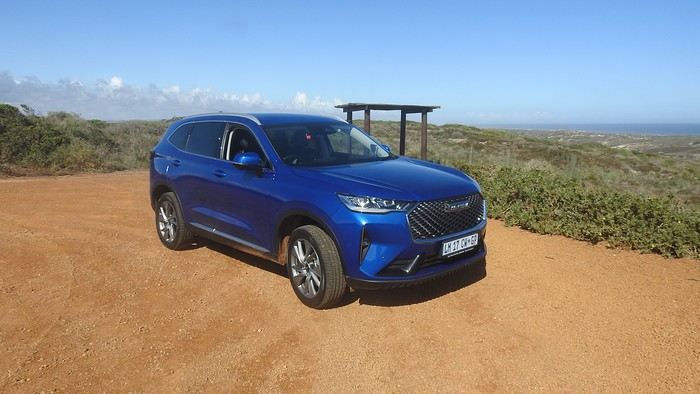
"Well, I need you to keep my room for me... I’m arriving *very* late tonight." A hotel perfectly located by the lagoon, right by the gates of WCNP, but still close to Langebaan and its restaurants. I spotted it myself and booked it during Black Friday...
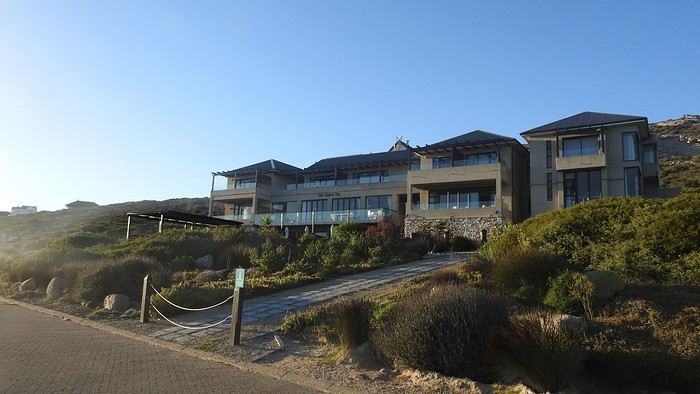
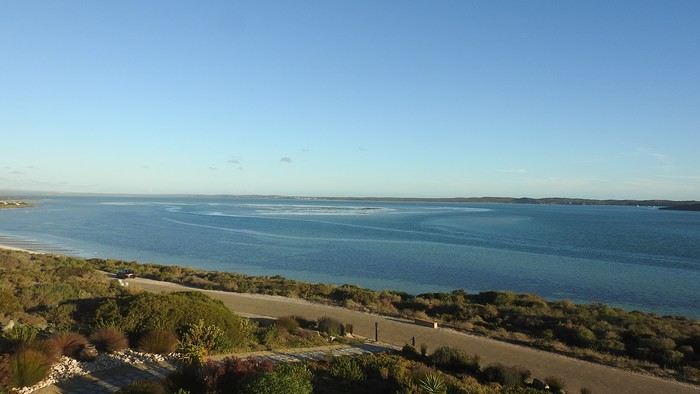
Yep, what was normally a short 1.5-hour drive *in daylight* from the Mother City to Langebaan... was now *at night*. And here I am, usually the one telling people, "Don’t drive at night, folks!" Well, I know the route, and Google won’t let me get lost... until Langebaan, that is. The last few kilometers were rough—"Don’t they put up signs? Don’t they have streetlights?"
Alright, it’s late, the day’s been long—time for bed! !
I’ve got a bit of time to share my latest Cape Town – Cape Town trip... A fairly short itinerary, but it was just before heading to Kruger for an extension. In May... Honestly, I’d usually recommend a different time to visit CT—I’ve been there in August, September, and October before. But as they say, "Do as I say, not as I do" or "Only fools never change their minds." Why? Whale season peaks from August to October... and seeing whales right by the shore or breaching out of the water is absolutely spectacular. The end-of-year holiday period—take this year, for example—can get absolutely packed, with beaches closed due to overcrowding, etc. June and July are freezing (for me)... early August isn’t always great either. That said, 2024 saw a September-October with rain, cold, and fog like never before. The Postberg section of West Coast National Park (WCNP) is only open in August and September. Flower season is roughly from mid-August to mid-September.
So, May... The weather? Gorgeous (lucky me!). The route... Not super original (I’ve done it before, though it’s been a while). I didn’t go too far from CT because I prefer slow travel. Cape Town – Langebaan (for WCNP, again) – Cederberg (at Mountain Ceder, again) – Bontebok NP (new to me, and on the way) – De Hoop NR (at De Hoop) – Agulhas NP – Boulders (for Boulders Beach and the peninsula, again and again).
The trip started off badly due to storms in Frankfurt... My overnight flight was delayed until the next day, but via Amsterdam, so a daytime flight instead. A bit stressful, but Lufthansa and KLM handled it well. Now it was my turn to sort things out... "Well, I need you to keep the car for me... I’m arriving tonight!" (aroundaboutcars, a Chinese Haval, blue and 4x4—though I didn’t actually need the 4x4... which waited for me).
"Well, I need you to keep my room for me... I’m arriving *very* late tonight." A hotel perfectly located by the lagoon, right by the gates of WCNP, but still close to Langebaan and its restaurants. I spotted it myself and booked it during Black Friday...
Yep, what was normally a short 1.5-hour drive *in daylight* from the Mother City to Langebaan... was now *at night*. And here I am, usually the one telling people, "Don’t drive at night, folks!" Well, I know the route, and Google won’t let me get lost... until Langebaan, that is. The last few kilometers were rough—"Don’t they put up signs? Don’t they have streetlights?"
Alright, it’s late, the day’s been long—time for bed! !
Back from a trip to Sumba (Indonesia)
Hello!
So glad to see the forum back up and running!
We just got back from a trip to Sumba in early November—spent a little over a week exploring this lesser-known island from east to west.
It’s the perfect destination for anyone looking to escape overtourism.
Feel free to ask any questions—everything’s still fresh in my mind, so I’d be happy to help if I can.
My itinerary: - Arrival in Tambolaka - The lagoon, beaches, villages, and stunning waterfalls…
Happy to share more! Check out my photos on my Flickr
My itinerary: - Arrival in Tambolaka - The lagoon, beaches, villages, and stunning waterfalls…
Happy to share more! Check out my photos on my Flickr
Atoll de Fakarava (Polynésie Française) English translation pending
Bonjour,
Je n'arrête pas de changer d'avis mais comme je veux rester 3 semaines au même endroit, il faut que je vise juste.
J'étais restée sur le choix de Hiva Oa mais ce qui m'embête c'est d'une part le prix du vol Papeeti-Hiva Oa et le fait que cette île n'est pas propice à la baignade. Or, aller dans ces sublimes lagons sans pouvoir se baigner.... J'en serais frustrée. Je ne pratique pas la plongée.
Deux d'entre vous qui avez échangé m'ont poussée à retourner voir dans mes guides. Il s'agit de Fakarava. Là bas, ça semble l'idéal pour nager. Plages plages et plages....
Une pension me fait de l'oeil, vaiama village. Si certains d'entre vous y sont allés quelques jours, j'aimerais bien avoir un retour. Je suis allée sur trip advisor. A priori, les critiques sont très bonnes.
Y a t-il des randos à faire à Fakarava ?
Vous remerciant de votre patience.
Nathalie
Je n'arrête pas de changer d'avis mais comme je veux rester 3 semaines au même endroit, il faut que je vise juste.
J'étais restée sur le choix de Hiva Oa mais ce qui m'embête c'est d'une part le prix du vol Papeeti-Hiva Oa et le fait que cette île n'est pas propice à la baignade. Or, aller dans ces sublimes lagons sans pouvoir se baigner.... J'en serais frustrée. Je ne pratique pas la plongée.
Deux d'entre vous qui avez échangé m'ont poussée à retourner voir dans mes guides. Il s'agit de Fakarava. Là bas, ça semble l'idéal pour nager. Plages plages et plages....
Une pension me fait de l'oeil, vaiama village. Si certains d'entre vous y sont allés quelques jours, j'aimerais bien avoir un retour. Je suis allée sur trip advisor. A priori, les critiques sont très bonnes.
Y a t-il des randos à faire à Fakarava ?
Vous remerciant de votre patience.
Nathalie
Séjour 8 nuits / 9 jours en voiture en Nouvelle-Calédonie (île des Pins - Nouméa) English translation pending
Bonjour
Je suis en train de planifier un voyage en Nouvelle Calédonie pour le mois de mai.
Nous aurons 8 jours plein sur place - c'est 9 jours en réalité mais je ne compte pas le 1er jour dans la mesure ou nous arriverons a Tontouta a 23h juste a temps pour prendre une voiture de location et nous rendre a notre hôtel. Je compte cependant le dernier jour puisque nous prendrons l'avion tard dans la nuit (après minuit).
Nous pensons louer une voiture pour explorer Grande Terre et on nous a recommandé de passer quelques jours sur l'Ile des Pins. Nous sommes généralement très actifs (rando, plongée, visites) mais voulons aussi nous reposer au bord de la plage etc.
Je me pose plein de questions et je me demandais si vous auriez la gentillesse de bien vouloir m'aider svp: - combien de temps passer sur l'Ile des Pins? Quand y aller (début ou fin de séjour)? - sera-t-il possible de laisser des bagages a Nouméa vue les limitations de bagages imposées par Air Calédonie (12kg) ? - combien de temps passer a visiter Nouméa? 1 journée pleine est-elle suffisante? - quels itinéraire pour notre visite de Grande Terre excl. Nouméa?
Nous avons tendance a vouloir trop en faire pendant les vacances et je voudrais éviter de repartir de la Nouvelle Calédonie avec l'impression d'avoir tout fait a 100 a l'heure ;)
Merci d'avance!
Je suis en train de planifier un voyage en Nouvelle Calédonie pour le mois de mai.
Nous aurons 8 jours plein sur place - c'est 9 jours en réalité mais je ne compte pas le 1er jour dans la mesure ou nous arriverons a Tontouta a 23h juste a temps pour prendre une voiture de location et nous rendre a notre hôtel. Je compte cependant le dernier jour puisque nous prendrons l'avion tard dans la nuit (après minuit).
Nous pensons louer une voiture pour explorer Grande Terre et on nous a recommandé de passer quelques jours sur l'Ile des Pins. Nous sommes généralement très actifs (rando, plongée, visites) mais voulons aussi nous reposer au bord de la plage etc.
Je me pose plein de questions et je me demandais si vous auriez la gentillesse de bien vouloir m'aider svp: - combien de temps passer sur l'Ile des Pins? Quand y aller (début ou fin de séjour)? - sera-t-il possible de laisser des bagages a Nouméa vue les limitations de bagages imposées par Air Calédonie (12kg) ? - combien de temps passer a visiter Nouméa? 1 journée pleine est-elle suffisante? - quels itinéraire pour notre visite de Grande Terre excl. Nouméa?
Nous avons tendance a vouloir trop en faire pendant les vacances et je voudrais éviter de repartir de la Nouvelle Calédonie avec l'impression d'avoir tout fait a 100 a l'heure ;)
Merci d'avance!
Avis sur itinéraire 9 jours en Guadeloupe fin mars English translation pending
Bonjour,
Je vous soumets mon projet d'itinéraire pour un séjour de 9 jours en Guadeloupe fin mars. On est plutôt randos nature donc le gros du séjour se passera sur basse terre, mais on aime aussi les belles plages! Je remercie par avance les lecteurs avisés pour leurs conseils et avis (faisabilité, immanquables oubliés, …) : J1 : arrivée 15h00, prise de voiture de loc, route jusqu'à Sainte Rose, course alimentaires J2 : Visite de la mangrove (des avis sur des excursions? blue lagoon par exemple) + saut des trois cornes J3 : Route de la traversée : randonnées, visite cascades et plage à deshaies pour finir la journée J4 : Saut d'acomat, réserve cousteau (îlet pigeon, kayak de préférence) J5 : Rando la soufrière, bains jaunes J6 : chute du cabret, bassin paradis, bassin bleu, bains de dolé J7 : excursion à la journée aux Saintes J8 : Nord de grande terre : plage du souffleur, pointe de la grande vigie, anse laborde… (des avis sur des randos dans le secteur?) J9 : on termine le séjour par les plages de Sainte-Anne, du gosier, îlet gosier si ça vaut le cout d'y aller, et le mémorial acte dont on m'a dit du bien. J10 : retour en métropole.
nota : on a volontairement évité la pointe des châteaux, dont les paysages ont l'air de ressembler à notre chère Bretagne nota 2 : je sais que les secrets ne se partagent pas, mais trouver une petite source/cascade chaude isolée dans la forêt humide de basse terre serait un vrai plus 🙂 (en MP)
merci pour vos retours!
Je vous soumets mon projet d'itinéraire pour un séjour de 9 jours en Guadeloupe fin mars. On est plutôt randos nature donc le gros du séjour se passera sur basse terre, mais on aime aussi les belles plages! Je remercie par avance les lecteurs avisés pour leurs conseils et avis (faisabilité, immanquables oubliés, …) : J1 : arrivée 15h00, prise de voiture de loc, route jusqu'à Sainte Rose, course alimentaires J2 : Visite de la mangrove (des avis sur des excursions? blue lagoon par exemple) + saut des trois cornes J3 : Route de la traversée : randonnées, visite cascades et plage à deshaies pour finir la journée J4 : Saut d'acomat, réserve cousteau (îlet pigeon, kayak de préférence) J5 : Rando la soufrière, bains jaunes J6 : chute du cabret, bassin paradis, bassin bleu, bains de dolé J7 : excursion à la journée aux Saintes J8 : Nord de grande terre : plage du souffleur, pointe de la grande vigie, anse laborde… (des avis sur des randos dans le secteur?) J9 : on termine le séjour par les plages de Sainte-Anne, du gosier, îlet gosier si ça vaut le cout d'y aller, et le mémorial acte dont on m'a dit du bien. J10 : retour en métropole.
nota : on a volontairement évité la pointe des châteaux, dont les paysages ont l'air de ressembler à notre chère Bretagne nota 2 : je sais que les secrets ne se partagent pas, mais trouver une petite source/cascade chaude isolée dans la forêt humide de basse terre serait un vrai plus 🙂 (en MP)
merci pour vos retours!
Hébergement type homestay à Rameswaran (Inde) English translation pending
Bonjour ,
J'ai envie de retourner à Rameswaran en mars.
J'ai un peu cherché et n'ai trouvé que des hôtels. Je préfère les homestays.
Quelqu'un y serait allé récemment ( ou pas ) et aurait des conseils à me donner ? Merci
Discussion du concours photo du mois de janvier 2020: Allons à la pêche! English translation pending
Voici le lieu idéal et recommandé pour parler de photo, de pêche, de photos de pêche !
🙂
🙂
La boucle de Thakhek SANS moto (Laos) English translation pending
Bonjour,
Nombreux sont ceux qui comme nous se demandent comment parcourir la boucle de Thakhek sans moto.
Voici donc notre retour d'expérience avec les transports locaux.
Bien sûr c'est impossible de voir toutes les grottes, mais de toute façon les "looper" avec qui nous avons discuté ne visitaient qu'un ou 2 sites par jour en général. Il faut donc faire des choix 😜
On n'était pas pressés donc on a passé plus de temps que la majorité ; ce qui aide quand on n'a pas de moyen propre de locomotion.
J1: Thakhek- Thallang Nous avons pris un songthaew à la gare routière du km2 (en ville) Départ 8h (8h30 en réalité) arrivée un peu avant 11h, après avoir fait le plein de poissons en route. 50 000 kip/p Nous avons logé au Phosy Gh. Ils ne proposaient pas de tour en bateau. Un peu plus loin nous avons assisté à un beau coucher de soleil.
J3: Thallang- cool pool Vers 11h un songthaew nous a amené à Lak Sao (25kK/p) De Lak Sao un autre songthaew vers Nahin nous a laissé à l'embranchement de Ban Napavan pour 15kK/p. Nous avons marché environ 4km pour aller à cool pool. Endroit vraiment très agréable. Entrée 20kk/p Nous avons dormi en homestay à ban Napavan (60kK/p nuit repas dej)
J4: Napavan- Kong Lor Bus jusqu'à Nahin 20kk/p (vers 9h) Songthaew jusqu'à Kong Lor 25kk/p Nous avons dormi au Kong Lor cave gh pour 70kk.
A Kong Lor il y a des balades sympa à faire. Il y a un topo guide au bureau touristique près de l'embarcadère, mais les distances annoncées sont complètement fausses. Baignades dans la rivière sympa à proximité de la grotte. Il y a possibilité de louer des vtt. Nous avons marché 5km pour aller jusqu'au Spring river resort car on voulait faire du kayak, mais le "lagoon" dont ils se targuent ne nous a pas charmé et les prix étaient assez élevés pour notre budget (50kk/p juste devant l'hôtel et 20$ sur la rivière...)
De Kong Lor il est possible de rejoindre directement thakaek.
J6 Kong Lor- Natan Bateau 65kk/p Homestay Natan 50kk/p (nuit, repas, petit-déjeuner) Il y a des locations de vtt au débarcadère de Natan. Possibilité de faire un parcours balisé dans les villages alentours.
Autre option pour dormir, il y a une autre homestay à Phoun kham (direction natone) 50kk/p, environ 1,5 km du débarcadère.
J7 Natan- Nakaī Depart 8h 50kk/p attention la poussière !
Possibilité de correspondance pour Thakhek 35kk/p Nous avons passé la nuit à Nakaī dans l'espoir de profiter du lac ou d'atteindre l'orchid path. Au nakai resort ils ne proposaient rien de tout ça actuellement 😕 Au sunset resort ils proposaient un tour en bateau pour 400kk, mais ils ne parlaient pas bien anglais et on n'a pas compris à quoi ça correspondait.
Depuis Thakhek possibilité de louer un vtt pour aller à Bouddha cave par exemple.
C'est pas toujours aisé de se déplacer mais on était quand même contents d'avoir fait le tour à notre sauce.
J1: Thakhek- Thallang Nous avons pris un songthaew à la gare routière du km2 (en ville) Départ 8h (8h30 en réalité) arrivée un peu avant 11h, après avoir fait le plein de poissons en route. 50 000 kip/p Nous avons logé au Phosy Gh. Ils ne proposaient pas de tour en bateau. Un peu plus loin nous avons assisté à un beau coucher de soleil.
J3: Thallang- cool pool Vers 11h un songthaew nous a amené à Lak Sao (25kK/p) De Lak Sao un autre songthaew vers Nahin nous a laissé à l'embranchement de Ban Napavan pour 15kK/p. Nous avons marché environ 4km pour aller à cool pool. Endroit vraiment très agréable. Entrée 20kk/p Nous avons dormi en homestay à ban Napavan (60kK/p nuit repas dej)
J4: Napavan- Kong Lor Bus jusqu'à Nahin 20kk/p (vers 9h) Songthaew jusqu'à Kong Lor 25kk/p Nous avons dormi au Kong Lor cave gh pour 70kk.
A Kong Lor il y a des balades sympa à faire. Il y a un topo guide au bureau touristique près de l'embarcadère, mais les distances annoncées sont complètement fausses. Baignades dans la rivière sympa à proximité de la grotte. Il y a possibilité de louer des vtt. Nous avons marché 5km pour aller jusqu'au Spring river resort car on voulait faire du kayak, mais le "lagoon" dont ils se targuent ne nous a pas charmé et les prix étaient assez élevés pour notre budget (50kk/p juste devant l'hôtel et 20$ sur la rivière...)
De Kong Lor il est possible de rejoindre directement thakaek.
J6 Kong Lor- Natan Bateau 65kk/p Homestay Natan 50kk/p (nuit, repas, petit-déjeuner) Il y a des locations de vtt au débarcadère de Natan. Possibilité de faire un parcours balisé dans les villages alentours.
Autre option pour dormir, il y a une autre homestay à Phoun kham (direction natone) 50kk/p, environ 1,5 km du débarcadère.
J7 Natan- Nakaī Depart 8h 50kk/p attention la poussière !
Possibilité de correspondance pour Thakhek 35kk/p Nous avons passé la nuit à Nakaī dans l'espoir de profiter du lac ou d'atteindre l'orchid path. Au nakai resort ils ne proposaient rien de tout ça actuellement 😕 Au sunset resort ils proposaient un tour en bateau pour 400kk, mais ils ne parlaient pas bien anglais et on n'a pas compris à quoi ça correspondait.
Depuis Thakhek possibilité de louer un vtt pour aller à Bouddha cave par exemple.
C'est pas toujours aisé de se déplacer mais on était quand même contents d'avoir fait le tour à notre sauce.
Projet de circuit en Nouvelle-Calédonie pour un couple "non aventurier" en novembre English translation pending
Bonjour à toutes et tous.
A la lecture de vos commentaires, j'avais le sentiment de voyager avant l'heure...mais pour le moment, le temps est à la réflexion autour d'un projet sur 20 jours en novembre 2020 pour notre couple de 56 et 59 ans. Pourquoi novembre ? Parce que nous recherchons un peu de chaleur pour profiter des baignades (je suis frileux), mais pas trop de pluie pour pouvoir visiter. Que pensez-vous de ce choix ? Est-ce judicieux ?
Nous souhaitons limiter au maximum le temps d'avion...ainsi nous optons pour la liaison proposée par Air France en 24h environ...de plus, cela permet d'arriver le soir, et de passer une nuit complète à l'hôtel afin d'attaquer les visites dans les meilleures conditions. Qu'en pensez-vous ?
Voici mon projet d'itinéraire que je soumets à vos remarques et appréciations :
- Jour 1 : Vol PARIS/NOUMEA départ CDG 13h15 - Jour 2 : Vol PARIS/NOUMEA arrivée 22h55, nuit hötel Le Lagon. - Jour 3 : Le parc de la Rivière Bleue , nuit hötel Le Lagon. - Jour 4 : Prise en charge d'un véhicule, Centre-ville, Marché de Moselle, anse vata, baie des citrons, Centre Culturel Jean-Marie Tjibaou, nuit hötel Le Lagon. - Jour 5 : direction BOURAIL, voir le Bonhomme de Bourail, le sentier des 3 baies (roche percée, baie des tortues et baie des amoureux) + baignade dans le lagon, nuit hötel Betikure. - Jour 6 : Idem et éventuellement rencontre tribu - Jour 7 : direction KONE, installation à l'hôtel Hibiscus - Jour 8 : Survol en ULM du Cœur de Voh et du lagon, et direction POUM hôtel Malabou Beach pour 2 nuits. - Jour 9 : Visite du coin, baignade..., nuit hôtel Malabou Beach - Jour 10 : Départ pour HIENGHENE, cascades de TAO et de COLNETT, Poule couveuse, nuit à l'hôtel Ka Waboama - Jour 11 : Visite de l'île de Hiengha et direction POINDIMIE hôtel Tieti pour 2 nuits. - Jour 12 : Excursion à la journée sur l'île Tibarama - Jour 13 : départ pour NOUMEA, restitution de l'auto et envol pour l'île Des Pins, hôtel Ouré Téra pour 4 nuits. - Jour 14, 15, et 16 : Pic N’ga, baie de Kuto, baie de Kanuméra, Baie d’Upi en pirogue, baie d’Opo, piscine naturelle, vanilleraie en face de la baie de Gadji Plage Saint Maurice, atoll nokanhui - Jour 17 : Retour à NOUMEA dans l'après-midi, nuit à l'hôtel Le Lagon. - Jour 18 : Achats souvenirs... - Jour 19 : Vol NOUMEA/PARIS départ 0h20 - Jour 20 : Vol NOUMEA/PARIS arrivée 15h05
Dans ce projet, nous souhaitions marier des moments de baignade, de découverte de paysages, d'enrichissements culturels, sans précipitation. La journée 18 nous sert aussi de sécurité en cas de problèmes au retour de l'Ile des Pins (retard important nous empêchant de reprendre l'avion au départ de Nouméa).
N'hésitez pas à donner votre avis, aussi bien sur le timing, que les lieux visités, et les hôtels retenus !
Autre questionnement, je me pose la question de passer par une agence pour sécuriser ce périple en cas de soucis, fermeture inopinée d'hôtel, devant réserver le plus tôt possible pour obtenir un prix acceptable chez Air France...qu'en pensez-vous ? et connaissez-vous une agence au top pour ce genre de projet ?
Merci par avance de vos remarques !
Gérard.
A la lecture de vos commentaires, j'avais le sentiment de voyager avant l'heure...mais pour le moment, le temps est à la réflexion autour d'un projet sur 20 jours en novembre 2020 pour notre couple de 56 et 59 ans. Pourquoi novembre ? Parce que nous recherchons un peu de chaleur pour profiter des baignades (je suis frileux), mais pas trop de pluie pour pouvoir visiter. Que pensez-vous de ce choix ? Est-ce judicieux ?
Nous souhaitons limiter au maximum le temps d'avion...ainsi nous optons pour la liaison proposée par Air France en 24h environ...de plus, cela permet d'arriver le soir, et de passer une nuit complète à l'hôtel afin d'attaquer les visites dans les meilleures conditions. Qu'en pensez-vous ?
Voici mon projet d'itinéraire que je soumets à vos remarques et appréciations :
- Jour 1 : Vol PARIS/NOUMEA départ CDG 13h15 - Jour 2 : Vol PARIS/NOUMEA arrivée 22h55, nuit hötel Le Lagon. - Jour 3 : Le parc de la Rivière Bleue , nuit hötel Le Lagon. - Jour 4 : Prise en charge d'un véhicule, Centre-ville, Marché de Moselle, anse vata, baie des citrons, Centre Culturel Jean-Marie Tjibaou, nuit hötel Le Lagon. - Jour 5 : direction BOURAIL, voir le Bonhomme de Bourail, le sentier des 3 baies (roche percée, baie des tortues et baie des amoureux) + baignade dans le lagon, nuit hötel Betikure. - Jour 6 : Idem et éventuellement rencontre tribu - Jour 7 : direction KONE, installation à l'hôtel Hibiscus - Jour 8 : Survol en ULM du Cœur de Voh et du lagon, et direction POUM hôtel Malabou Beach pour 2 nuits. - Jour 9 : Visite du coin, baignade..., nuit hôtel Malabou Beach - Jour 10 : Départ pour HIENGHENE, cascades de TAO et de COLNETT, Poule couveuse, nuit à l'hôtel Ka Waboama - Jour 11 : Visite de l'île de Hiengha et direction POINDIMIE hôtel Tieti pour 2 nuits. - Jour 12 : Excursion à la journée sur l'île Tibarama - Jour 13 : départ pour NOUMEA, restitution de l'auto et envol pour l'île Des Pins, hôtel Ouré Téra pour 4 nuits. - Jour 14, 15, et 16 : Pic N’ga, baie de Kuto, baie de Kanuméra, Baie d’Upi en pirogue, baie d’Opo, piscine naturelle, vanilleraie en face de la baie de Gadji Plage Saint Maurice, atoll nokanhui - Jour 17 : Retour à NOUMEA dans l'après-midi, nuit à l'hôtel Le Lagon. - Jour 18 : Achats souvenirs... - Jour 19 : Vol NOUMEA/PARIS départ 0h20 - Jour 20 : Vol NOUMEA/PARIS arrivée 15h05
Dans ce projet, nous souhaitions marier des moments de baignade, de découverte de paysages, d'enrichissements culturels, sans précipitation. La journée 18 nous sert aussi de sécurité en cas de problèmes au retour de l'Ile des Pins (retard important nous empêchant de reprendre l'avion au départ de Nouméa).
N'hésitez pas à donner votre avis, aussi bien sur le timing, que les lieux visités, et les hôtels retenus !
Autre questionnement, je me pose la question de passer par une agence pour sécuriser ce périple en cas de soucis, fermeture inopinée d'hôtel, devant réserver le plus tôt possible pour obtenir un prix acceptable chez Air France...qu'en pensez-vous ? et connaissez-vous une agence au top pour ce genre de projet ?
Merci par avance de vos remarques !
Gérard.
Must-see sights in Bali
hi
I’m heading to Bali next month with my partner for 12 days. Could you share some must-see sites to visit in Bali, and maybe some tips to make the most of my trip?
thanks
Circuit en Afrique du Sud en juillet et hébergements English translation pending
Bonjour à tous,
avez-vous de commentaires, suggestions, plaintes et autres arguments pour le circuit suivant à 4 personnes (ma petite famille) en juillet? On sera en 4x4 et no camping au programme.
1-Réunion-JHB-Le Cap 2- Tulbagh 3- 4 Karoo NP 5- Graaf Reinet 6- Mountain Zebra 7- Addo 8-9 Knysna 10- De Hoop 11- Hermanus ou pas loin 12- Franschhoek 13-14 Cape Town 15: CT-JHB-Run
Là dedans, je ne connais pas: Karoo NP, Mountain Zebra et de Hoop. Je ne pense pas visiter Camdeboo sauf si on a suffisamment de temps sur place. Pour les hébergements, au vu des prix, on passera probablement la première nuit du Karoo à l'extérieur du parc, voir même les 2 nuits. Pour Mountain Zebra et Addo, j'hésite encore à dormir soit à l'intérieur des parcs ou respectivement à Cradock que j'ai bien aimé et à l'extérieur d'Addo Park. Un hébergement à me proposer à De Hoop?
V'la donc, j'ai cassé les tirelires, vidé les comptes épargne, rançonner la belle-mère et hypothéquer mes vélos pour arriver à ce résultat. Ca en vaut la peine?😛
1-Réunion-JHB-Le Cap 2- Tulbagh 3- 4 Karoo NP 5- Graaf Reinet 6- Mountain Zebra 7- Addo 8-9 Knysna 10- De Hoop 11- Hermanus ou pas loin 12- Franschhoek 13-14 Cape Town 15: CT-JHB-Run
Là dedans, je ne connais pas: Karoo NP, Mountain Zebra et de Hoop. Je ne pense pas visiter Camdeboo sauf si on a suffisamment de temps sur place. Pour les hébergements, au vu des prix, on passera probablement la première nuit du Karoo à l'extérieur du parc, voir même les 2 nuits. Pour Mountain Zebra et Addo, j'hésite encore à dormir soit à l'intérieur des parcs ou respectivement à Cradock que j'ai bien aimé et à l'extérieur d'Addo Park. Un hébergement à me proposer à De Hoop?
V'la donc, j'ai cassé les tirelires, vidé les comptes épargne, rançonner la belle-mère et hypothéquer mes vélos pour arriver à ce résultat. Ca en vaut la peine?😛
Boucler un voyage en Islande (avec enfants) English translation pending
Bonjour,
Nous partons en famille cet été en Islande, 12 jours en camping car pour faire le tour de l’île. J’ai essayé de préparer un programme le plus complet possible et compatible avec 2 enfants de 4 et 7 ans. J’ai néanmoins encore quelques petites questions et doute :
- Dans la zone de Skaftafellsjökull ou du glacier Svinafell, existe-t-il des mini promenades / excursions pour enfants sur le glacier ? J’ai vu que les excursions étaient généralement possibles à partir de 8-9 ans, je voulais savoir si des alternatives, même courtes étaient possibles pour des enfants plus jeunes ? ou alors ailleurs en Islande, proche de la route 1.
- La route menant au camping de Thagkil est-il bien accessible en camping car? - Je recherche une petite ferme pour enfants où l’on pourrait voir chevaux & animaux de la ferme. Sachant qu’ils ne monteront peut–être pas à cheval, je privilégie avant tout le cadre et l’ambiance conviviale. J’ai repéré la farm zoo d’Holmur près d’Höfn, le Petting Zoo Daladýrð près d’Akureyri et enfin la Ferme équestre Hestaleigan Stóra Ásgeirsá un peu plus à l’ouest. Vous recommanderiez l’un de ces lieux ? - Une préference entre les campings de Skaftafell ou de Svinafell - La boucle du champ de lave Berserkjahraun est-elle bien praticable (lentement) en camping car ? - Le Perlan Museum vaut-il le coup le dernier jour ?(pour info, j’aurais déjà fait le viking world muséum au début du séjour) - Enfin, sur mon J-1, après récupération du camping-car à 9h00 (donc départ réel vers 11h00 j’imagine), j’envisage le programme (classique) suivant : Thingvellir, Geysir / Strokkur, Gulfoss, Secret Lagoon, Cascade Selfoss. N’est-ce pas un peu trop ambitieux (245 km environ). J’aurais plutôt tendance à zapper Thingvellir malgré son intérêt historique. Qu’en pensez vous ?
Merci énormément d’avance pour vos réponses !
Sylvain
Nous partons en famille cet été en Islande, 12 jours en camping car pour faire le tour de l’île. J’ai essayé de préparer un programme le plus complet possible et compatible avec 2 enfants de 4 et 7 ans. J’ai néanmoins encore quelques petites questions et doute :
- Dans la zone de Skaftafellsjökull ou du glacier Svinafell, existe-t-il des mini promenades / excursions pour enfants sur le glacier ? J’ai vu que les excursions étaient généralement possibles à partir de 8-9 ans, je voulais savoir si des alternatives, même courtes étaient possibles pour des enfants plus jeunes ? ou alors ailleurs en Islande, proche de la route 1.
- La route menant au camping de Thagkil est-il bien accessible en camping car? - Je recherche une petite ferme pour enfants où l’on pourrait voir chevaux & animaux de la ferme. Sachant qu’ils ne monteront peut–être pas à cheval, je privilégie avant tout le cadre et l’ambiance conviviale. J’ai repéré la farm zoo d’Holmur près d’Höfn, le Petting Zoo Daladýrð près d’Akureyri et enfin la Ferme équestre Hestaleigan Stóra Ásgeirsá un peu plus à l’ouest. Vous recommanderiez l’un de ces lieux ? - Une préference entre les campings de Skaftafell ou de Svinafell - La boucle du champ de lave Berserkjahraun est-elle bien praticable (lentement) en camping car ? - Le Perlan Museum vaut-il le coup le dernier jour ?(pour info, j’aurais déjà fait le viking world muséum au début du séjour) - Enfin, sur mon J-1, après récupération du camping-car à 9h00 (donc départ réel vers 11h00 j’imagine), j’envisage le programme (classique) suivant : Thingvellir, Geysir / Strokkur, Gulfoss, Secret Lagoon, Cascade Selfoss. N’est-ce pas un peu trop ambitieux (245 km environ). J’aurais plutôt tendance à zapper Thingvellir malgré son intérêt historique. Qu’en pensez vous ?
Merci énormément d’avance pour vos réponses !
Sylvain
Route pour la plage de Balos en Crète English translation pending
Bonjour à tous😊 dans 4 jours nous partons avec ma petite famille faire un itinéraire ouest/Crète...j ai hâte!...tout est ficelé... 1 seul petit doute m habite encore!: dans les guides les opinions divergent : peut on réellement aller jusqu'à la plage de Balos en voiture??!! Ou franchement c est trop/galère / long/ risqué ?? Et donc le bateau serait une meilleure idée? Merci d avance à ceux qui auront fait l expérience et qui prendront le temps de me dire!😉
Récit de 4 semaines aux Philippines en mode routard (février 2019) English translation pending
Vol “Cathay Pacific” Roissy 20h15 - Cebu 18h55(+1J) via Hong Kong ( escale 1h)
1ere partie :Les Visayas
J1 Arrivée Cebu à 19h
J2 Ferry Cebu - Bohol (Tagbilaran) 8h30 ou 10h30 durée 2h
J3, J4 Bohol (Tagbilaran)
Visites en scotter :Chocolate Hills (à Carmen), Tarsiers (à Corela), papillons (à Bilar)
Les tarsiers sont endormis et visibles grace aux guides, les papillons c'est nul..
Visite de Panglao : plages Alona Beach et ses nombreuses bangkas J5 Rejoignons Baclayon puis bangka pour Pamilacan island (durée 1h). J6, J7 Pamilacan island Sortie en bangka sur son spot de dauphins, plages,
snorkelling sur le sanctuaire et devant l’hotel : beaux coraux, tortue le dimanche combats de coqs au village. ile très agréable, un de nos coups de coeur
J8 Retour en Bangka à Baclayon, puis rejoignons le port de Tagbilaran (tricycle) et ferry pour Larena (tous les jours à 10h20, durée 1h45) et van de l’hotel pour finir : arrivée au Kiwi beach resort vers 10h30 J9,10,11 Siquijor island Découverte de l’ile en scooter : la petite ville de Lazi, les cascades de Cambugahay, la plage de Salangdong payante (sans interet), les belles plages de San Juan avec ses cocotiers.. Snorkelling au sanctuaire de Tulapias : difficile mais magnifique banc de barracudas (guide obligeatoire); un top!!
un soir invitation à partager un repas pour anniversaire d’un défunt. J12 Transfert pour relier Apo Island : van depuis l’hotel vers le port à 4h45 ferry Larena-Dumaguete à 6h durée 1h (un seul ferry par jour) ; puis tricycle pour rejoindre Malatapay (en face Apo) et bangka pour Apo vers 9h (durée 1h30) J13,14,15 Apo island balade à pied, snorkelling : tortues et beaux fonds marins. Un top pour le snorkelling J16 Bangka pour retour à Malatapay, tricycle pour Dumaguette, puis bus/ferry pour TanAwan : Cie Ceres : Dumaguette –Tan Awan : 14h15 – 16h30 Tan Awan, à une dizaine de kms au sud d’Oslob J17 Tan Awan (Oslob) Sortie en bangka pour voir les fameux requins-baleine tôt le matin (6h) . En fait, ns avions pris un hotel à la descente du bus; il se trouve être juste devant le spot des requins baleines L'apres midi: Visite des cascades en tricycle : Aguinid et Binalayan en tricycle et motos Le lendemain matin Visite de Tumalog falls >70m J18 Retour en bus à Cebu : départ 9h TanAwan – Cebu. (bus ttes les 1/2h) De Cebu, nous avions réservé un vol pour Palawan.
Fin de la premiere partie
Visite de Panglao : plages Alona Beach et ses nombreuses bangkas J5 Rejoignons Baclayon puis bangka pour Pamilacan island (durée 1h). J6, J7 Pamilacan island Sortie en bangka sur son spot de dauphins, plages,
snorkelling sur le sanctuaire et devant l’hotel : beaux coraux, tortue le dimanche combats de coqs au village. ile très agréable, un de nos coups de coeur
J8 Retour en Bangka à Baclayon, puis rejoignons le port de Tagbilaran (tricycle) et ferry pour Larena (tous les jours à 10h20, durée 1h45) et van de l’hotel pour finir : arrivée au Kiwi beach resort vers 10h30 J9,10,11 Siquijor island Découverte de l’ile en scooter : la petite ville de Lazi, les cascades de Cambugahay, la plage de Salangdong payante (sans interet), les belles plages de San Juan avec ses cocotiers.. Snorkelling au sanctuaire de Tulapias : difficile mais magnifique banc de barracudas (guide obligeatoire); un top!!
un soir invitation à partager un repas pour anniversaire d’un défunt. J12 Transfert pour relier Apo Island : van depuis l’hotel vers le port à 4h45 ferry Larena-Dumaguete à 6h durée 1h (un seul ferry par jour) ; puis tricycle pour rejoindre Malatapay (en face Apo) et bangka pour Apo vers 9h (durée 1h30) J13,14,15 Apo island balade à pied, snorkelling : tortues et beaux fonds marins. Un top pour le snorkelling J16 Bangka pour retour à Malatapay, tricycle pour Dumaguette, puis bus/ferry pour TanAwan : Cie Ceres : Dumaguette –Tan Awan : 14h15 – 16h30 Tan Awan, à une dizaine de kms au sud d’Oslob J17 Tan Awan (Oslob) Sortie en bangka pour voir les fameux requins-baleine tôt le matin (6h) . En fait, ns avions pris un hotel à la descente du bus; il se trouve être juste devant le spot des requins baleines L'apres midi: Visite des cascades en tricycle : Aguinid et Binalayan en tricycle et motos Le lendemain matin Visite de Tumalog falls >70m J18 Retour en bus à Cebu : départ 9h TanAwan – Cebu. (bus ttes les 1/2h) De Cebu, nous avions réservé un vol pour Palawan.
Fin de la premiere partie