Results for "Campo+Grande+|+4+>+126"
21085 results found.
Des enfants en Amérique du Nord? English translation pending
Pourriez vous me donner l'envie de faire découvrir ce continent à mes 3 enfants pour l'été prochain.
Merci à tous
Merci à tous
Quel trek choisir au Népal? English translation pending
Bonjour à tous !
Pour débuter un périple de plusieurs mois en Asie du Sud / Sud-Est, je compte faire un Trek au Népal. Sachant que je ne suis pas un habitué de ce genre d'effort (mais, bon, je ne suis pas un molusque quand même 😉...), quel est le parcours qui m'en fera voir le plus : paysages variés, montagnes, villages, re-montagnes, ... J'ai lu pas mal de choses sur le trek de "Jomsom", qui me semble pas mal, mais qu'en est-il du trek "camps de base Annapurna" ? et "Langtang-Gosainkund-Helambu" qui me semble un peu plus intéressant, mais plus long et plus difficile ?
Y-a-t'il une agence particulière que vous conseilleriez (francophone, si possible...) ?
Pleazzz, aidez-moi à choisir, il faut que j'organise ça relativement rapidement !
Merci pour vos réponses !
Pour débuter un périple de plusieurs mois en Asie du Sud / Sud-Est, je compte faire un Trek au Népal. Sachant que je ne suis pas un habitué de ce genre d'effort (mais, bon, je ne suis pas un molusque quand même 😉...), quel est le parcours qui m'en fera voir le plus : paysages variés, montagnes, villages, re-montagnes, ... J'ai lu pas mal de choses sur le trek de "Jomsom", qui me semble pas mal, mais qu'en est-il du trek "camps de base Annapurna" ? et "Langtang-Gosainkund-Helambu" qui me semble un peu plus intéressant, mais plus long et plus difficile ?
Y-a-t'il une agence particulière que vous conseilleriez (francophone, si possible...) ?
Pleazzz, aidez-moi à choisir, il faut que j'organise ça relativement rapidement !
Merci pour vos réponses !
Bénévolat dans le monde English translation pending
Bonjour, j'ai 20 ans, je suis francaise et je cherche à faire du bénévolat dans n'importe quelle partie du monde ;... si vous avez des adresses qui cherchent du monde ... écrivez moi
merci
merci
Which city to visit on a layover between Paris and Sydney + where to rent a van on the West Coast?
Hello,
Our daughter has gone to Sydney, and we’d love to spend the end-of-year holidays with her. The plan is to leave from Paris or Brussels and break up the trip with a 3- or 4-day layover to "split" the journey in two. Then head back to Sydney, explore the East Coast in a van, celebrate Christmas and New Year’s in Sydney, and finally return to France with another layover.
My questions: Which city should we choose for the layover (we’ve already visited Kuala Lumpur and Singapore and would like to see a different city)? Both on the way there and back? Which agency should we rent a van from? What sites should we visit on the East Coast?
If you’ve done this kind of trip before and have any tips or advice, I’d love to hear them.
Thanks
Our daughter has gone to Sydney, and we’d love to spend the end-of-year holidays with her. The plan is to leave from Paris or Brussels and break up the trip with a 3- or 4-day layover to "split" the journey in two. Then head back to Sydney, explore the East Coast in a van, celebrate Christmas and New Year’s in Sydney, and finally return to France with another layover.
My questions: Which city should we choose for the layover (we’ve already visited Kuala Lumpur and Singapore and would like to see a different city)? Both on the way there and back? Which agency should we rent a van from? What sites should we visit on the East Coast?
If you’ve done this kind of trip before and have any tips or advice, I’d love to hear them.
Thanks
One-month road trip in Namibia
Here we go—finally, the big day has arrived! A trip the whole family (my two kids, my husband, and me) had been looking forward to for so long.
To keep it short, we left from Nice, arrived in Namibia on June 25, 2025, and left again on the 21st—four weeks later.
We used an agency for all the camping reservations, activities, and the car rental. At least that side of things was taken care of. Michaël was our contact throughout the planning and the trip itself.
We spent our first night at Londiningi BB. A bit out of the city center but very quiet. The rooms were spacious and clean, and we could eat on-site that evening. Perfect for recovering from the flight.
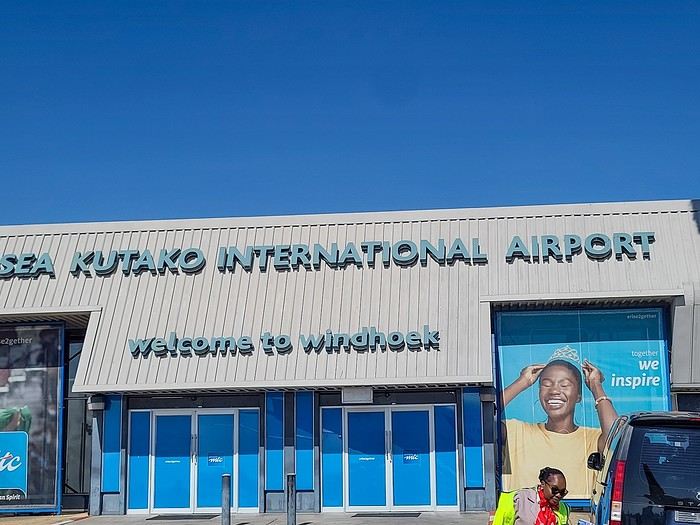
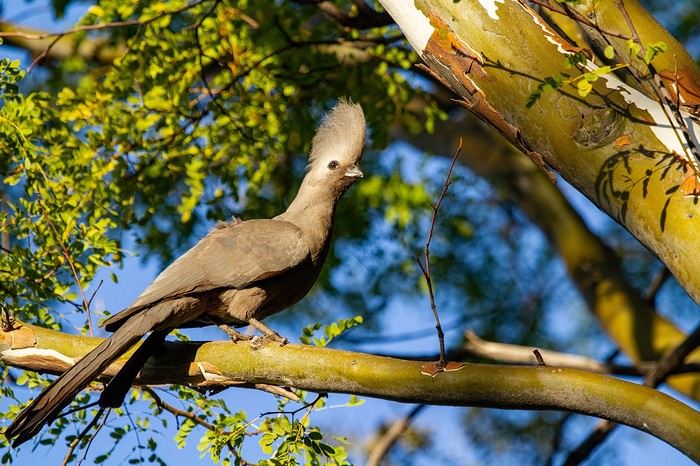
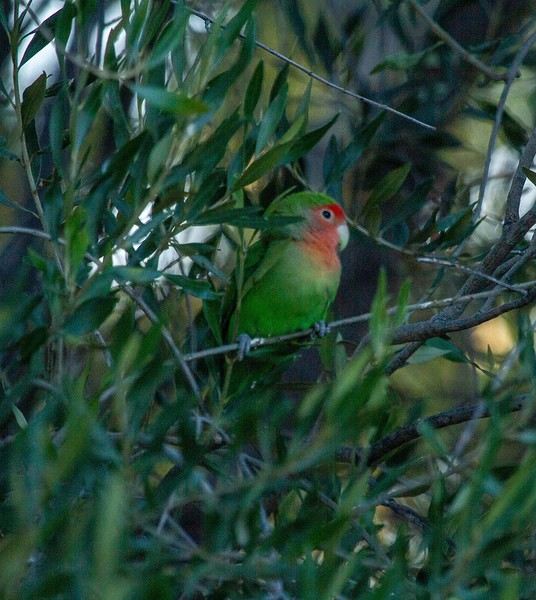
We spent our first night at Londiningi BB. A bit out of the city center but very quiet. The rooms were spacious and clean, and we could eat on-site that evening. Perfect for recovering from the flight.
From Avignon to Casamance Without Flying
Hi there,
Last February, I made a trip using "public transport" from France to southern Senegal via Spain, Morocco, Western Sahara, and Mauritania.
It’s a journey of about 5,000 km, where I took trains (as far as Marrakech), ferries (to cross Gibraltar and then to reach Casamance from Dakar), and mostly buses on the long desert straightaways. I hadn’t planned any stops in advance or booked any hotels, except for the very first train to Spain, which left plenty of room for the unexpected. Why travel by land and sea? In recent years, flight-free travel has been gaining popularity. On social media, posts explaining how to cross Europe by train as quickly as possible go viral. Traveling without flying—and making sure people know about it—has become a great way to earn a badge of eco-responsibility: an essential totem for anyone wanting to prove both their dedication to the ecological cause and the wisdom of slow travel. I haven’t flown in years, and this journey to West Africa could easily be filed under "responsible travel." But it wouldn’t be honest to say that: in reality, it wasn’t really my aversion to flying that motivated this long trek. I see overland travel primarily as a way to experience the world’s geography at a grounded, earthly pace—the pace of the locals. Besides, I’ll be flying back, which disqualifies any claim to being a model of sustainability. So no eco-badge, and no adventurer’s badge either: you won’t find any heroic tales of camel rides in lost lands or mineral train wagons in this account (popular with influencers, the Mauritania iron ore train now attracts tourists from all over the world, turning "the experience" into something you "have to do at least once in your life"). This five-part story, written on the road, has no other ambition than to recount a journey through places and people, and to share the thoughts they inspire in me. As simply and, I hope, as humbly as possible.
I’m posting the episodes here, which you can also find on my blog (with more photos) at the following links:
Episode 1: Spain, from Avignon to Algeciras
Episode 2: Morocco, from Tangier to Tarfaya
Episode 3: Western Sahara, from Tarfaya to Guerguerat
Episode 4: Mauritania, from Guerguerat to Nouakchott
Episode 5: Senegal, from Rosso to Saloulou
To help those who might want to make the same trip, I’ve also put together a summary of the route with recommendations—you can read it at the end of the story and on the blog: From France to Senegal Without Flying: Route and Itinerary Recommendations
Happy reading, and safe travels!
Last February, I made a trip using "public transport" from France to southern Senegal via Spain, Morocco, Western Sahara, and Mauritania.
It’s a journey of about 5,000 km, where I took trains (as far as Marrakech), ferries (to cross Gibraltar and then to reach Casamance from Dakar), and mostly buses on the long desert straightaways. I hadn’t planned any stops in advance or booked any hotels, except for the very first train to Spain, which left plenty of room for the unexpected. Why travel by land and sea? In recent years, flight-free travel has been gaining popularity. On social media, posts explaining how to cross Europe by train as quickly as possible go viral. Traveling without flying—and making sure people know about it—has become a great way to earn a badge of eco-responsibility: an essential totem for anyone wanting to prove both their dedication to the ecological cause and the wisdom of slow travel. I haven’t flown in years, and this journey to West Africa could easily be filed under "responsible travel." But it wouldn’t be honest to say that: in reality, it wasn’t really my aversion to flying that motivated this long trek. I see overland travel primarily as a way to experience the world’s geography at a grounded, earthly pace—the pace of the locals. Besides, I’ll be flying back, which disqualifies any claim to being a model of sustainability. So no eco-badge, and no adventurer’s badge either: you won’t find any heroic tales of camel rides in lost lands or mineral train wagons in this account (popular with influencers, the Mauritania iron ore train now attracts tourists from all over the world, turning "the experience" into something you "have to do at least once in your life"). This five-part story, written on the road, has no other ambition than to recount a journey through places and people, and to share the thoughts they inspire in me. As simply and, I hope, as humbly as possible.
I’m posting the episodes here, which you can also find on my blog (with more photos) at the following links:
Episode 1: Spain, from Avignon to Algeciras
Episode 2: Morocco, from Tangier to Tarfaya
Episode 3: Western Sahara, from Tarfaya to Guerguerat
Episode 4: Mauritania, from Guerguerat to Nouakchott
Episode 5: Senegal, from Rosso to Saloulou
To help those who might want to make the same trip, I’ve also put together a summary of the route with recommendations—you can read it at the end of the story and on the blog: From France to Senegal Without Flying: Route and Itinerary Recommendations
Happy reading, and safe travels!
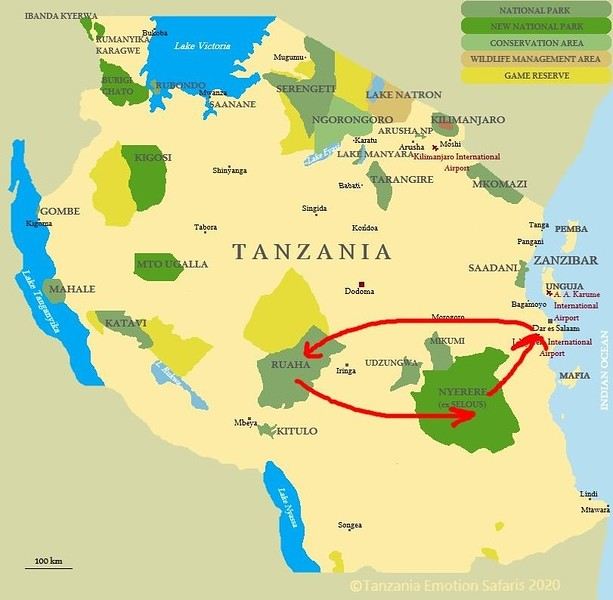
Tanzania: Discovering Ruaha and Nyerere (formerly Selous)
Hello,
We got back from Tanzania a month ago, on March 5th. I’ve started this trip report at the link the moderator asked me to use:
https://voyageforum.com/forum/decouverte-ruaha-nyerere-ex-selous-en-fevrier-mars-2026-d11466010/
You’ll find a video of our trip on my YouTube channel there.
Now I’ll tell you about our 10-night trip in Tanzania, with 8 nights spent in two parks we didn’t know. Tanzania isn’t new to us—it was even our first African safari destination back in 2012. https://www.youtube.com/@lolodetoul54 Since then, we’ve visited several East and Southern African countries: Kenya, South Africa, Namibia, Botswana, some of them multiple times. We usually travel in September during the dry season. We tried March 2024 for nine nights in the Okavango and loved it, except everything was dry, which wasn’t normal for the rainy season.
So for this second March trip during the wet season, we really got what we asked for… rain. But before that, we had to fight just to get to Tanzania.
Saturday, February 21, 2026:
It’s D-Day—the departure. What a hassle to organize flights to and within Tanzania! I’ll tell you all about it in another post: https://voyageforum.com/forum/toutes-compagnies-aeriennes-tanzaniennes-interdites-d10758360/ On top of that, Rwandair canceled our outbound flight a month before departure. They offered to reschedule us 3-4 days later—ridiculous for a 10-night trip we’d already booked. We had to cancel our tickets and buy new ones with Kenya Airways. We’re still waiting for our refund from Rwandair!!!!!!! So on Saturday, February 1st, our bags were packed. We headed to the Lorraine TGV station, about 30 km from home.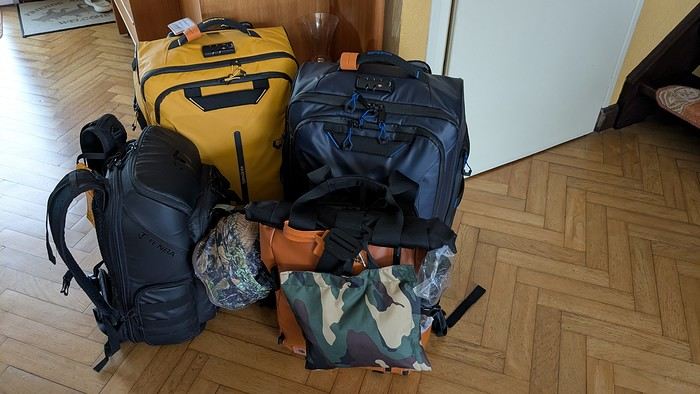 Direct train to Roissy—just 1h15. Quick and efficient.
All that was left was to wait for our overnight flight. We took off on time, just before 11 PM. Smooth flight, nothing unusual. Arrived in Nairobi around 9 AM. A few hours’ wait, then a flight to Dar es Salaam, landing at our first destination around 12:45 PM.
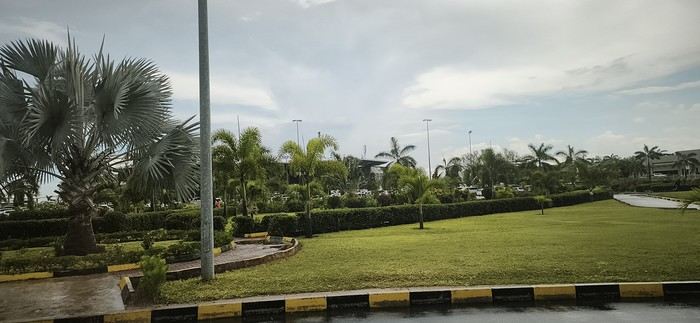
Our local contact, Anne from Asanterra agency, picked us up at the airport. It was hot and humid—it was raining.
Direct train to Roissy—just 1h15. Quick and efficient.
All that was left was to wait for our overnight flight. We took off on time, just before 11 PM. Smooth flight, nothing unusual. Arrived in Nairobi around 9 AM. A few hours’ wait, then a flight to Dar es Salaam, landing at our first destination around 12:45 PM.
Our local contact, Anne from Asanterra agency, picked us up at the airport. It was hot and humid—it was raining.
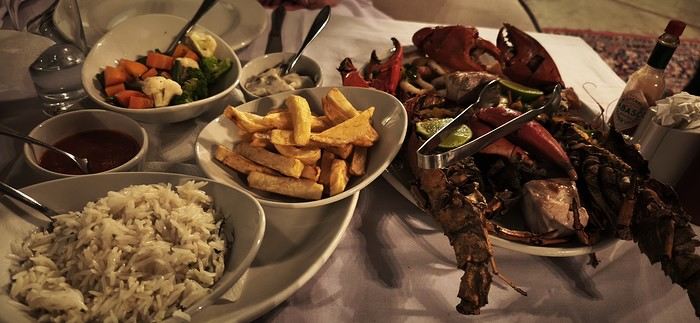
Our first night was at the Alexander Hotel. That evening, we treated ourselves to fish and shellfish at the hotel restaurant:
Sunday, February 22, 2026:
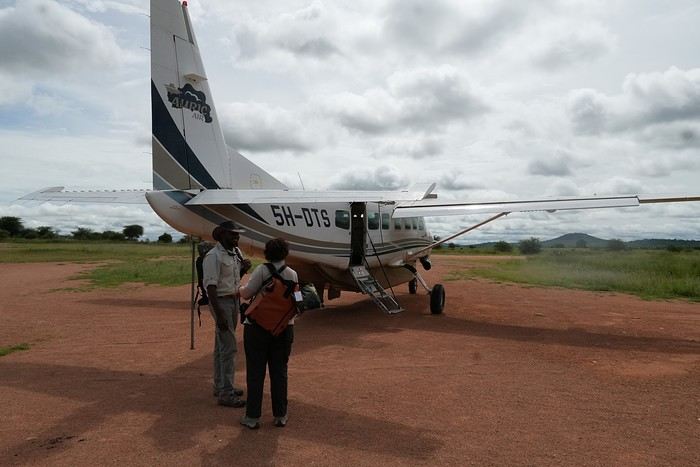
A driver picked us up at dawn to take us to the domestic airport so we could finally head to our first destination: Ruaha National Park. We flew with Auric.air for a 2-hour flight with two stops (Nyerere and Zkima airstrips).
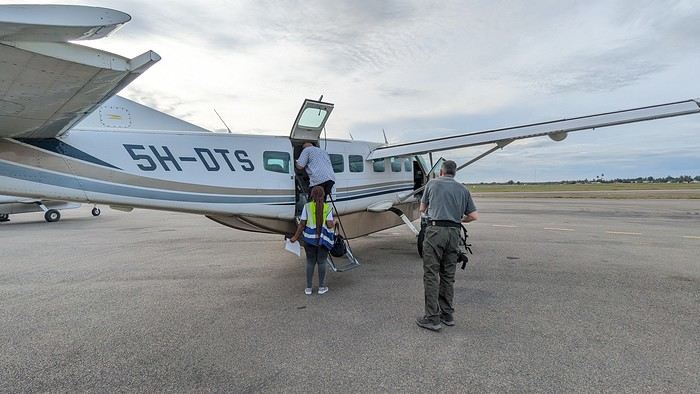
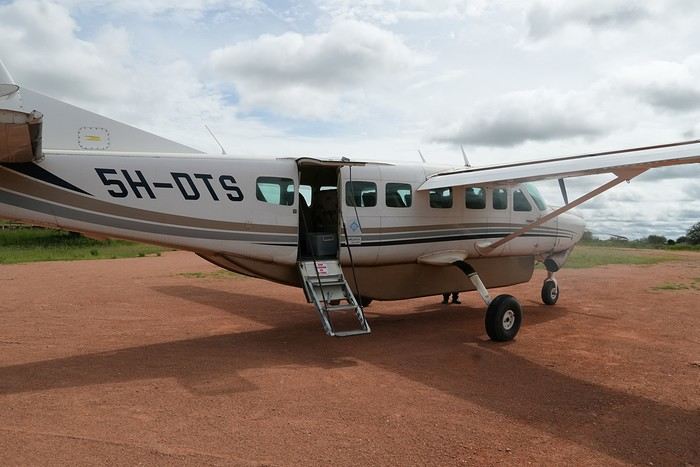
I’m always amazed at how easily these Cessnas take off and land on dirt runways—especially when they’re wet:
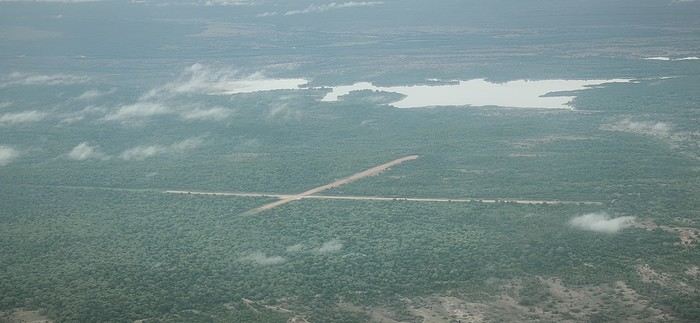
Aerial view of Zkima airstrip, where we’d landed just minutes earlier:
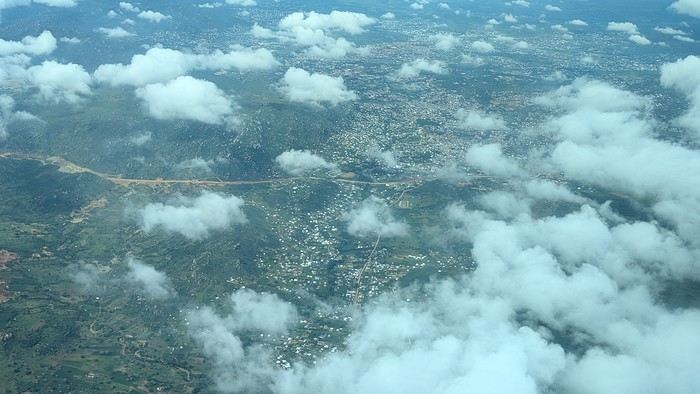
Flyover of Iringa, a "big" city in the country near Ruaha National Park:
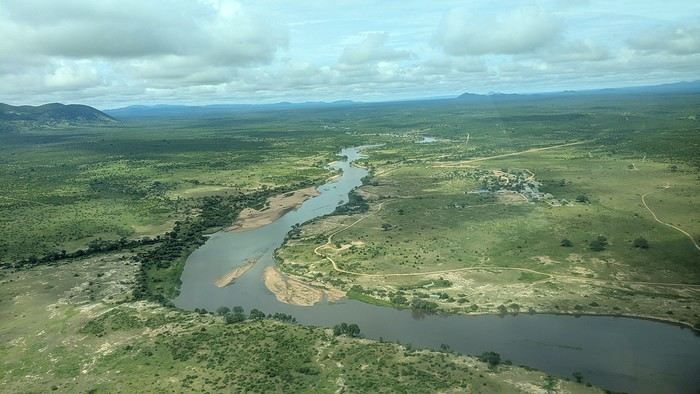
We’re getting close. The plane descends and flies over the Ruaha River, which gave the park its name:
We land for the third and final time that day, reaching our destination: Msembe airstrip, the gateway to Ruaha.
We got back from Tanzania a month ago, on March 5th. I’ve started this trip report at the link the moderator asked me to use:
https://voyageforum.com/forum/decouverte-ruaha-nyerere-ex-selous-en-fevrier-mars-2026-d11466010/
You’ll find a video of our trip on my YouTube channel there.
Now I’ll tell you about our 10-night trip in Tanzania, with 8 nights spent in two parks we didn’t know. Tanzania isn’t new to us—it was even our first African safari destination back in 2012. https://www.youtube.com/@lolodetoul54 Since then, we’ve visited several East and Southern African countries: Kenya, South Africa, Namibia, Botswana, some of them multiple times. We usually travel in September during the dry season. We tried March 2024 for nine nights in the Okavango and loved it, except everything was dry, which wasn’t normal for the rainy season.
So for this second March trip during the wet season, we really got what we asked for… rain. But before that, we had to fight just to get to Tanzania.
Saturday, February 21, 2026:
It’s D-Day—the departure. What a hassle to organize flights to and within Tanzania! I’ll tell you all about it in another post: https://voyageforum.com/forum/toutes-compagnies-aeriennes-tanzaniennes-interdites-d10758360/ On top of that, Rwandair canceled our outbound flight a month before departure. They offered to reschedule us 3-4 days later—ridiculous for a 10-night trip we’d already booked. We had to cancel our tickets and buy new ones with Kenya Airways. We’re still waiting for our refund from Rwandair!!!!!!! So on Saturday, February 1st, our bags were packed. We headed to the Lorraine TGV station, about 30 km from home.
Direct train to Roissy—just 1h15. Quick and efficient.
All that was left was to wait for our overnight flight. We took off on time, just before 11 PM. Smooth flight, nothing unusual. Arrived in Nairobi around 9 AM. A few hours’ wait, then a flight to Dar es Salaam, landing at our first destination around 12:45 PM.
Our local contact, Anne from Asanterra agency, picked us up at the airport. It was hot and humid—it was raining.Our first night was at the Alexander Hotel. That evening, we treated ourselves to fish and shellfish at the hotel restaurant:
Sunday, February 22, 2026:
A driver picked us up at dawn to take us to the domestic airport so we could finally head to our first destination: Ruaha National Park. We flew with Auric.air for a 2-hour flight with two stops (Nyerere and Zkima airstrips).
I’m always amazed at how easily these Cessnas take off and land on dirt runways—especially when they’re wet:
Aerial view of Zkima airstrip, where we’d landed just minutes earlier:
Flyover of Iringa, a "big" city in the country near Ruaha National Park:
We’re getting close. The plane descends and flies over the Ruaha River, which gave the park its name:
We land for the third and final time that day, reaching our destination: Msembe airstrip, the gateway to Ruaha.
Tips and travel experiences by bus in Colombia
I visited Colombia in January 2016 and I’m heading back from August 6th to 17th with the same airline to see how things have changed. Starting August 18th, I’ll continue with independent exploration. I prefer slow travel and enjoying places at my own pace.
Any tips—especially for getting around or must-see spots—are welcome!
Thu Aug 06. Fly Montreal to Bogotá 20:55-04:05+1 Air Canada Fri Aug 07. Bogotá Sat Aug 08. Bogotá Sun Aug 09. Bogotá Mon Aug 10. Fly Bogotá to Medellín Tue Aug 11. Medellín - Explore Guatapé Wed Aug 12. Comuna 8 & Hill of Values - PM Fly to Pereira Thu Aug 13. Montenegro Fri Aug 14. Salento - Cocora Valley Sat Aug 15. Fly to Cartagena Sun Aug 16. Explore Cartagena Mon Aug 17. Explore Cartagena Tue Aug 18. Fly Cartagena to Cali 12:20-14:55 Latam Wed Aug 19. Cali Thu Aug 20. Cali Fri Aug 21. Cali Sat Aug 22. Bus Cali to Popayán 09:00-13:00 Sun Aug 23. Popayán Mon Aug 24. Popayán Tue Aug 25. Popayán - Day trip to Silvia (Market Day) Wed Aug 26. Overland Popayán to Tierradentro by public transportation 4h, 100km Thu Aug 27. Tierradentro Fri Aug 28. Tierradentro Sat Aug 29. Overland Tierradentro to Garzón via La Plata Sun Aug 30. Bus Garzón to San Agustín 10:30-13:00 Mon Aug 31. San Agustín Tue Sep 01. San Agustín Wed Sep 02. San Agustín Thu Sep 03. San Agustín Fri Sep 04. Overland San Agustín to Tatacoa Desert via Neiva Sat Sep 05. Tatacoa Desert Sun Sep 06. Fly to Bogotá via Neiva 16:00-17:00 Latam Mon Sep 07. Bogotá Tue Sep 08. Fly Bogotá to Montreal 09:00-16:30 Air Canada
Thu Aug 06. Fly Montreal to Bogotá 20:55-04:05+1 Air Canada Fri Aug 07. Bogotá Sat Aug 08. Bogotá Sun Aug 09. Bogotá Mon Aug 10. Fly Bogotá to Medellín Tue Aug 11. Medellín - Explore Guatapé Wed Aug 12. Comuna 8 & Hill of Values - PM Fly to Pereira Thu Aug 13. Montenegro Fri Aug 14. Salento - Cocora Valley Sat Aug 15. Fly to Cartagena Sun Aug 16. Explore Cartagena Mon Aug 17. Explore Cartagena Tue Aug 18. Fly Cartagena to Cali 12:20-14:55 Latam Wed Aug 19. Cali Thu Aug 20. Cali Fri Aug 21. Cali Sat Aug 22. Bus Cali to Popayán 09:00-13:00 Sun Aug 23. Popayán Mon Aug 24. Popayán Tue Aug 25. Popayán - Day trip to Silvia (Market Day) Wed Aug 26. Overland Popayán to Tierradentro by public transportation 4h, 100km Thu Aug 27. Tierradentro Fri Aug 28. Tierradentro Sat Aug 29. Overland Tierradentro to Garzón via La Plata Sun Aug 30. Bus Garzón to San Agustín 10:30-13:00 Mon Aug 31. San Agustín Tue Sep 01. San Agustín Wed Sep 02. San Agustín Thu Sep 03. San Agustín Fri Sep 04. Overland San Agustín to Tatacoa Desert via Neiva Sat Sep 05. Tatacoa Desert Sun Sep 06. Fly to Bogotá via Neiva 16:00-17:00 Latam Mon Sep 07. Bogotá Tue Sep 08. Fly Bogotá to Montreal 09:00-16:30 Air Canada
Back to RUAHA and SELOUS (Southern Tanzania).
...
" We’re ALL different, and so are our expectations when it comes to travel or leisure ". There are—without a doubt—as many ways to experience a trip as there are travelers!! For the two of us, it’s only our love of wild nature that guides us to East Africa. The stated goal of this trip was purely wildlife-focused, and NOT about discovering the country or its people.
...
Hello everyone,
Previously, I shared the account of a trip/safari in southern Tanzania in June 2024, in the Mikumi and Selous reserves.
This time, still in southern Tanzania, I invite you to join us in Ruaha National Park. (Then, depending on the number of images allowed in my quota, at the end of my story, we’ll return to Selous for the second part of the same trip.)
- This trip/safari took place in November 2022. - Our flight started in Marseille, heading to Addis Ababa, then Dar es Salaam (via Ethiopian Airlines). In Dar, we spent one night at a hotel near the airfield.
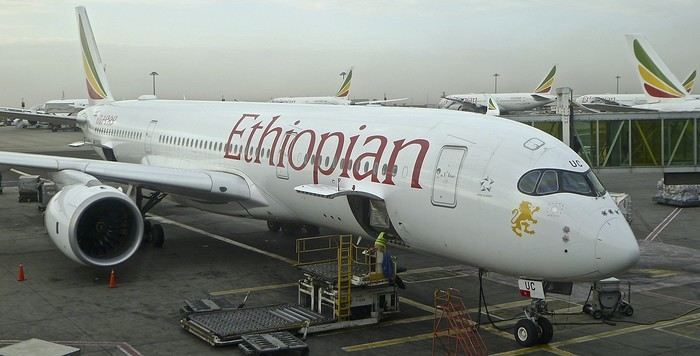
-1- During the layover in Addis Ababa. The Airbus A-350 in the early morning mist.
Reminder: Click on each image to enlarge it, if needed. .
From Dar es Salaam, if you want to go by road to Ruaha, it’ll take a very long and tiring day. 🤪
On previous trips, we’ve always taken a bush plane for this route. In this case, it took just over an hour and a half, with two short intermediate stops to drop off passengers at other bush airstrips.
Since I’m also passionate about aviation, I love these flights where you can admire the landscapes from low altitude while sitting right behind the pilot 🙂.
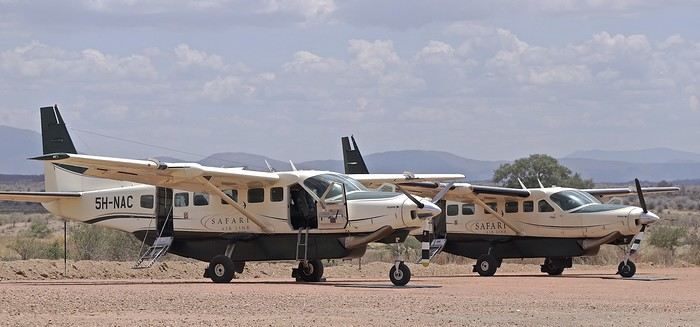
-2- These routes mainly use Cessna 208 Caravans.
At the Msembe airstrip, we’re greeted around 1:30 PM by a guide and a driver from our chosen lodge. They brought a picnic basket, which we enjoy at a nearby picnic area. We’re by the Ruaha River, completely dry—it’s scorching hot.
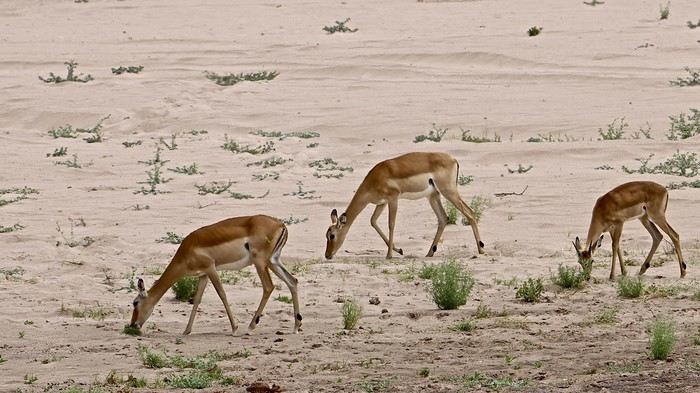
-3- The first mammals we encounter are a pair of female impalas, accompanied by a young male.
Reminder: Click on the image to view it in larger size. 😉
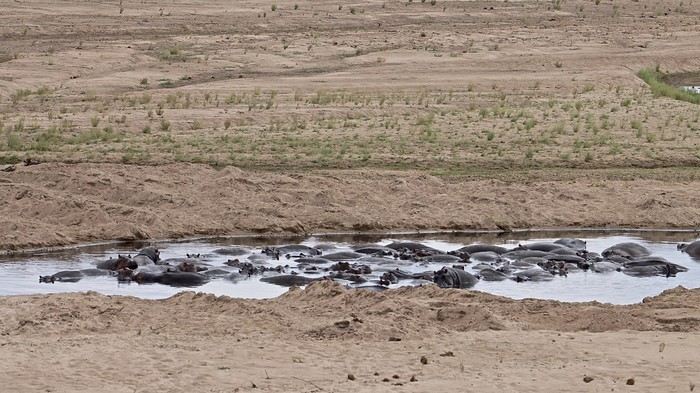
-4- To save the hippopotamus populations from certain death, rangers had to dig holes in the sand with bulldozers. Fortunately, water is present beneath the sand layer.
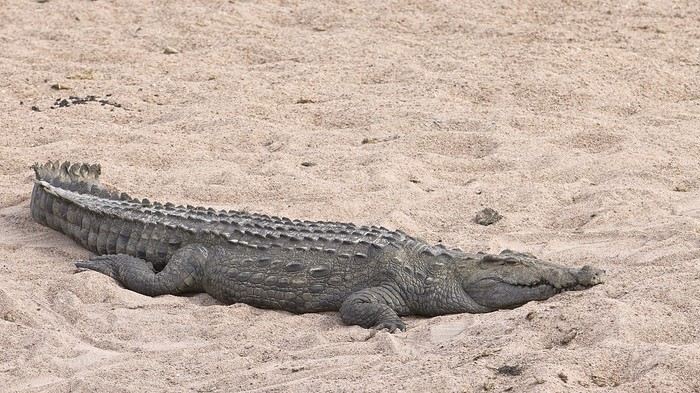
-5- This crocodile doesn’t seem to have been accepted as a swimming neighbor by the hippos...
We’ll explore along the river for 2-3 hours before crossing it at a ford toward the southern part of the reserve.
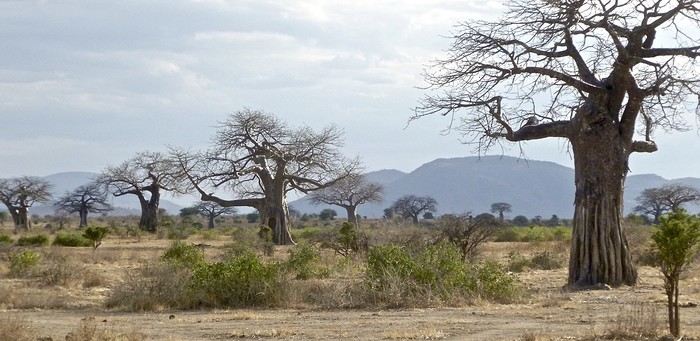
-6- The typical landscape of Ruaha, with its many baobabs.
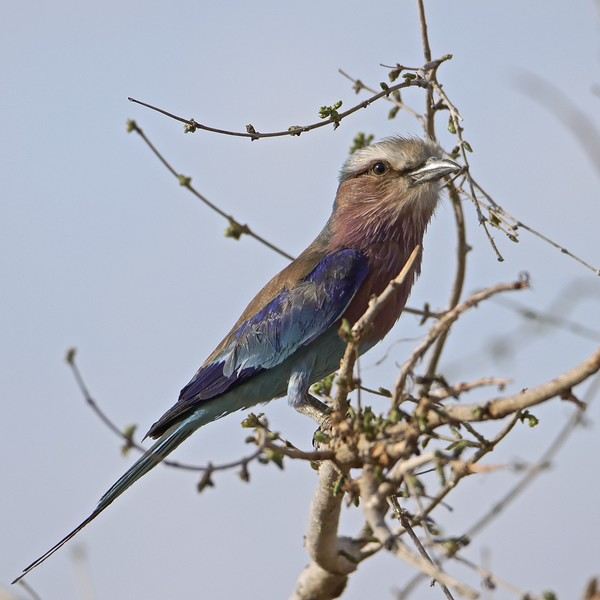
-7- My buddy the R.L.B. is also here to welcome me.... 🙂 🙂
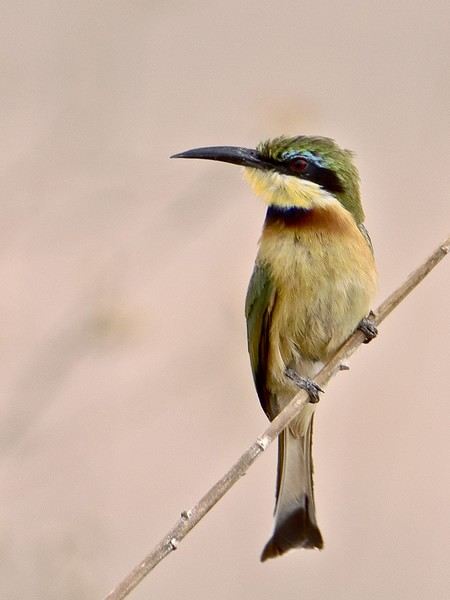
-8- As well as this little bee-eater... 😎
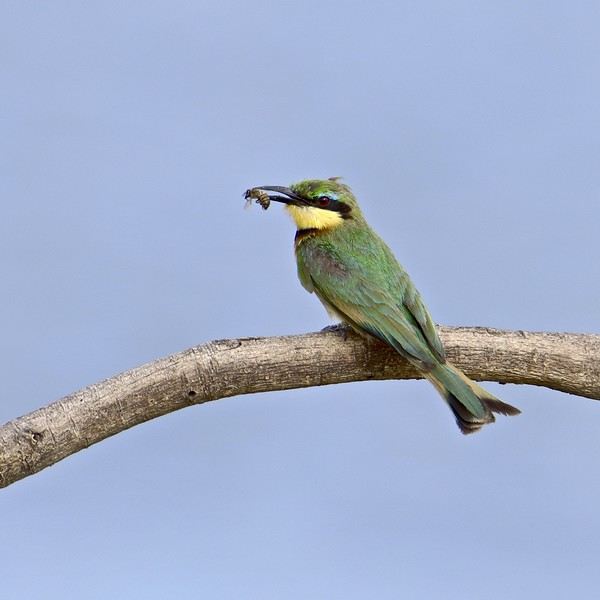
-9- ...which reminds us of the origin of its name...!
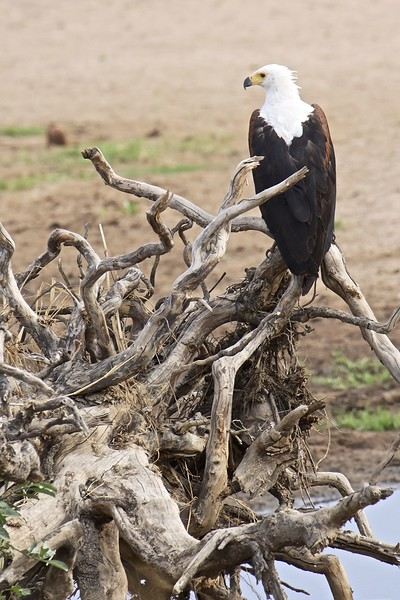
-10- Above a rare waterhole, a fish eagle keeps watch for fish...
...
*** Please wait until the end of the story for any questions or to share your own experiences in Ruaha. (Or via PM.) Thanks in advance for keeping this account smooth and enjoyable. 😉
...
*** I’m not an ornithologist, but birds are an important and unavoidable part of safari discoveries. You’ll find quite a few in the images of my story. 😎
...
" We’re ALL different, and so are our expectations when it comes to travel or leisure ". There are—without a doubt—as many ways to experience a trip as there are travelers!! For the two of us, it’s only our love of wild nature that guides us to East Africa. The stated goal of this trip was purely wildlife-focused, and NOT about discovering the country or its people.
...
Hello everyone,
Previously, I shared the account of a trip/safari in southern Tanzania in June 2024, in the Mikumi and Selous reserves.
This time, still in southern Tanzania, I invite you to join us in Ruaha National Park. (Then, depending on the number of images allowed in my quota, at the end of my story, we’ll return to Selous for the second part of the same trip.)
- This trip/safari took place in November 2022. - Our flight started in Marseille, heading to Addis Ababa, then Dar es Salaam (via Ethiopian Airlines). In Dar, we spent one night at a hotel near the airfield.
-1- During the layover in Addis Ababa. The Airbus A-350 in the early morning mist.
Reminder: Click on each image to enlarge it, if needed. .
From Dar es Salaam, if you want to go by road to Ruaha, it’ll take a very long and tiring day. 🤪
On previous trips, we’ve always taken a bush plane for this route. In this case, it took just over an hour and a half, with two short intermediate stops to drop off passengers at other bush airstrips.
Since I’m also passionate about aviation, I love these flights where you can admire the landscapes from low altitude while sitting right behind the pilot 🙂.
-2- These routes mainly use Cessna 208 Caravans.
At the Msembe airstrip, we’re greeted around 1:30 PM by a guide and a driver from our chosen lodge. They brought a picnic basket, which we enjoy at a nearby picnic area. We’re by the Ruaha River, completely dry—it’s scorching hot.
-3- The first mammals we encounter are a pair of female impalas, accompanied by a young male.
Reminder: Click on the image to view it in larger size. 😉
-4- To save the hippopotamus populations from certain death, rangers had to dig holes in the sand with bulldozers. Fortunately, water is present beneath the sand layer.
-5- This crocodile doesn’t seem to have been accepted as a swimming neighbor by the hippos...
We’ll explore along the river for 2-3 hours before crossing it at a ford toward the southern part of the reserve.
-6- The typical landscape of Ruaha, with its many baobabs.
-7- My buddy the R.L.B. is also here to welcome me.... 🙂 🙂
-8- As well as this little bee-eater... 😎
-9- ...which reminds us of the origin of its name...!
-10- Above a rare waterhole, a fish eagle keeps watch for fish...
...
*** Please wait until the end of the story for any questions or to share your own experiences in Ruaha. (Or via PM.) Thanks in advance for keeping this account smooth and enjoyable. 😉
...
*** I’m not an ornithologist, but birds are an important and unavoidable part of safari discoveries. You’ll find quite a few in the images of my story. 😎
...
What routes for Kruger?
Hi everyone again 🙂
I was thinking of continuing the questions from my first post, but since the title was changed... I’m starting a new thread
The plane should land on Saturday around 11 AM. After collecting luggage and the car, I think we’ll leave the airport between 1 and 2 PM. Question #1: Where should we stop along the way, allowing some buffer time so we don’t end up driving at night if the flight is delayed? (The idea isn’t to sightsee but just to take a break while making progress toward Kruger.)
We’ll spend part of Sunday, Monday, Tuesday, Wednesday, and Thursday (a little over 4 days) in Kruger. Questions #2 and beyond: What route should we take? I’ve considered two options: either enter from the south (Malelane Gate?) and head north up to the Olifants area to exit at Orpen Gate. How many accommodations should we book in this case, and where? Or enter at Orpen Gate and exit near Hazyview (or the other way around, and near Hazyview, should it be Paul Kruger Gate or Phabeni?). In this case, it would allow us to spend 2 nights in one place and 2 in another, but we’d skip the south (or is it possible to visit it in a day?) Well, for accommodations (accessible by sedan), all suggestions are welcome… but I’ve checked October availability, and there aren’t many left 😕 I plan to spend Thursday in the park and exit before it closes to sleep outside, which would save time the next day for the drive to the airport. I was thinking of Hazyview (again, no sightseeing since we already visited the area in 2009), but do you have another/better idea?
For clarity, here’s a summary of the Kruger part: Day 1: Arrival in Johannesburg and drive to ? Day 2: Enter Kruger (likely late morning or early afternoon) Days 3, 4, and 5: Kruger with exit at the end of Day 5 Day 6: Drive to the airport for the Cape Town and surrounds portion
Regarding Kruger bookings, it seems (I lost my old notes when my hard drive crashed—I backed up work documents but not vacation ones, what a mess!) that you can monitor reservations, and if a preferred accommodation becomes available, you can book it and cancel the old one. Is that still the case? (And is it easy to do?)
Thanks in advance for your answers. I’m off to reread travel journals about Cape Town and will probably be back with more questions (the accommodation availability issue seems less urgent there, so less of a priority).
I was thinking of continuing the questions from my first post, but since the title was changed... I’m starting a new thread
The plane should land on Saturday around 11 AM. After collecting luggage and the car, I think we’ll leave the airport between 1 and 2 PM. Question #1: Where should we stop along the way, allowing some buffer time so we don’t end up driving at night if the flight is delayed? (The idea isn’t to sightsee but just to take a break while making progress toward Kruger.)
We’ll spend part of Sunday, Monday, Tuesday, Wednesday, and Thursday (a little over 4 days) in Kruger. Questions #2 and beyond: What route should we take? I’ve considered two options: either enter from the south (Malelane Gate?) and head north up to the Olifants area to exit at Orpen Gate. How many accommodations should we book in this case, and where? Or enter at Orpen Gate and exit near Hazyview (or the other way around, and near Hazyview, should it be Paul Kruger Gate or Phabeni?). In this case, it would allow us to spend 2 nights in one place and 2 in another, but we’d skip the south (or is it possible to visit it in a day?) Well, for accommodations (accessible by sedan), all suggestions are welcome… but I’ve checked October availability, and there aren’t many left 😕 I plan to spend Thursday in the park and exit before it closes to sleep outside, which would save time the next day for the drive to the airport. I was thinking of Hazyview (again, no sightseeing since we already visited the area in 2009), but do you have another/better idea?
For clarity, here’s a summary of the Kruger part: Day 1: Arrival in Johannesburg and drive to ? Day 2: Enter Kruger (likely late morning or early afternoon) Days 3, 4, and 5: Kruger with exit at the end of Day 5 Day 6: Drive to the airport for the Cape Town and surrounds portion
Regarding Kruger bookings, it seems (I lost my old notes when my hard drive crashed—I backed up work documents but not vacation ones, what a mess!) that you can monitor reservations, and if a preferred accommodation becomes available, you can book it and cancel the old one. Is that still the case? (And is it easy to do?)
Thanks in advance for your answers. I’m off to reread travel journals about Cape Town and will probably be back with more questions (the accommodation availability issue seems less urgent there, so less of a priority).
Kruger-Cape Town combo: which way to do the circuit?
Alright, this time it's definite—I'm heading to South Africa next October! 😎
Two weeks for a Kruger-Cape Town combo is short... but better than nothing 😉 Before booking the flight tickets, two quick preliminary questions (more will definitely follow): Is there a preferred direction (Kruger first or Cape Town first)? Is it better to go during the first half of October, the second half (or the middle 😏), or does the current unpredictable weather make it all pretty much the same in the end?
Two weeks for a Kruger-Cape Town combo is short... but better than nothing 😉 Before booking the flight tickets, two quick preliminary questions (more will definitely follow): Is there a preferred direction (Kruger first or Cape Town first)? Is it better to go during the first half of October, the second half (or the middle 😏), or does the current unpredictable weather make it all pretty much the same in the end?
Martine from DD in Arizona and New Mexico
Good evening everyone! 🙂
We’re back from our September 2025 road trip, this time to explore Arizona and New Mexico, and it’s time for me to start my travel journal—especially since everything’s already booked for another trip in September 2026 (to California), and I need to get started on the planning.
I was a little worried this new visit to Uncle Sam’s country might not be as "wow" as the others, but we still discovered some incredible places.
For those who don’t know us, we’re a couple in our seventies who speak very little English, but that didn’t stop us from fully enjoying our stay.
For this 6th road trip in the U.S., we spent 21 nights there, drove 4,160 km by car, and walked nearly 160 km in a loop starting from Phoenix.
We’d been to Arizona before (but not this side) and never to New Mexico. This whole road trip was a huge discovery for us.
In the prices mentioned (some in euros, others in dollars), bank fees and exchange charges are included. The flights, car rental, and parking were all paid for in December 2024 when we booked.
We’d downloaded the MPC (Mobile Passport Control) app, but there wasn’t a dedicated line at Phoenix Airport. Still, we got through quickly with friendly, smiling agents.
I don’t drive at all (I hate it), so the stops were chosen based on activities but also, for some, to limit daily mileage for the sole driver. The kilometers listed in the itinerary are the daily distances.
We traveled from September 9th to 22nd, unfortunately once again without our dear friends Mimi and Maumau.
The itinerary
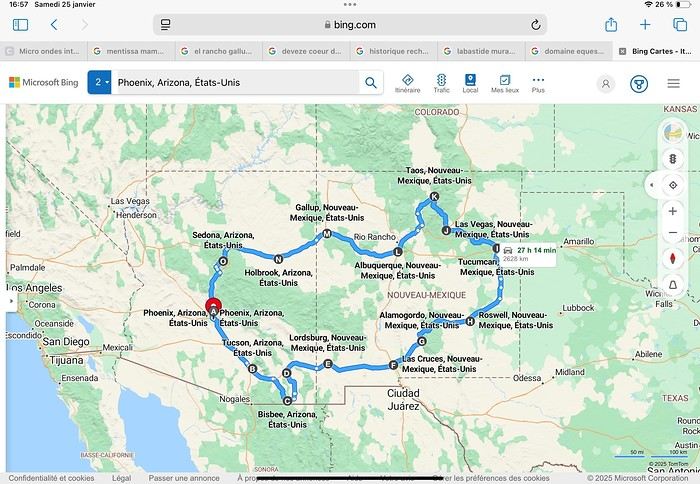
Day 1: Flight Marseille-Paris-Phoenix, then Gold Canyon (133 km) Day 2: Tucson (271 km) Lost Dutchman State Park Day 3: Tucson (155 km) Day 4: Tucson (34 km) Day 5: Bisbee (182 km) Day 6: Lordsburg (345 km) Day 7: Las Cruces (253 km) Day 8: Alamogordo (162 km) Day 9: Roswell (264 km) Day 10: Tucumcari (369 km) Day 11: Las Vegas (281 km) – the one in New Mexico Day 12: Taos (213 km) Day 13: Santa Fe (224 km) Day 14: Albuquerque (123 km) Day 15: Gallup (246 km) Day 16: Holbrook (224 km) Day 17: Flagstaff (179 km) Day 18: Sedona (118 km) Day 19: Sedona (48 km) Day 20: Sedona (41 km) Day 21: Phoenix (256 km) Day 22: Phoenix Airport (35 km)
📊 **Budget**: A little over 7,500 € for both of us, all included. The exchange rate was in our favor (1.17 dollars to 1 €). 📊 **Flights**: Marseille-Paris Charles de Gaulle-Phoenix: 1,787 € for two, with one checked bag each (Air France) 📊 **ESTA**: $42 📊 **America the Beautiful Pass**: $80 📊 **Parking**: 134 € (super eco at Marseille) 📊 **Car rental (Hertz)**: 865 €. Since there were no SUVs left in the reserved category (Nissan Rogue), we got an upgrade (4x4 Ford Explorer). We booked through Air France (15% discount). We’d originally reserved it in December for 1,140 €, but since prices dropped in March, we canceled and rebooked for 865 €. Hertz offers a free Hertz Gold Plus Rewards program, which gives you priority counter service when picking up the car. 📊 **Accommodation**: 2,400 € We stayed in hotels and motels of varying standards (from 60 to 203 € per night, depending on the city), all booked through Booking.com or Hotels.com. Out of 21 nights, only two didn’t include breakfast in the price. Booking.com sometimes offers slightly cheaper rates if you book by phone using the mobile app, and our Genius 3 status on the site also got us some preferential rates. 📊 **Supplementary insurance**: AVA 200 € for medical care if needed 📊 **Cash**: $2,078. We left with 1,000 € exchanged before departure and made two withdrawals of $500. This cash covered: - Evening restaurants and tips - Midday picnics - Gas: $298 for 4,160 km - Museum and private park entries (per person): - Lost Dutchman: $10 - Arizona-Sonora Desert Museum: $28 - Bird Cage Theater: $16 - Tombstone Shootout: $8 - New Mexico Farm & Ranch Museum: $12 - Roswell International UFO Museum: $5 - Billy the Kid Museum: $7 - Rancho de Taos: $22 - West Fork Oak Creek Trail entry: $15 We got a few discounts thanks to our senior age (+65). - Souvenirs and little treats
Like on our previous road trips, we didn’t rent a GPS. We got around using offline GPS apps Here WeGo and Organic Maps, with maps of the states we visited downloaded before we left (on our phones).
❤️❤️❤️ **Highlights** (there are so many!) 📍 Goldfield Ghost Town (even if it’s a reconstruction) 📍 The standing army of Saguaro cacti at Saguaro National Park West 📍 Diving into the cowboy universe of Tombstone 📍 The welcome from Rick and Henry at our guesthouse in Bisbee (Garden at Mile High Ranch) 📍 The tangled rocks of Chiricahua National Monument 📍 The flavored pistachios from Dwayne’s Fresh Jerky and Mac Ginnis Pistachioland 📍 Restaurants: La Posta (Las Cruces), Diner 66 (Albuquerque), and the Haunted Hamburger (Jerome) 📍 The old plazas of New Mexico 📍 The solitude and beauty of the white dunes at White Sands National Park 📍 Stepping back in time at the Billy the Kid Museum (Fort Stanton) 📍 Sections of historic Route 66 and the old motels of Tucumcari, especially at night when all the neon lights are on 📍 Taos Pueblo and diving into Native American culture 📍 After the Rio Grande Bridge, the descent via NM 567 to the very bottom of the Rio Grande Gorge, then the road along the riverbanks to Taos 📍 The tranquility of the Chimayo Sanctuary 📍 Discovering the ingenious native dwellings at Bandelier National Monument and Walnut Canyon National Park 📍 The small towns along the Turquoise Trail 📍 The red rocks of Red Rock Park and the Painted Desert 📍 The extraordinary colors of the petrified trees at Petrified Forest National Park 📍 Sedona, its red rocks, and the reward of the viewpoints at the end of hikes (Devil’s Bridge, The Subway, and West Fork Oak Creek) 📍 The immersion in Mexico when visiting Tlaquepaque 📍 The almost-ghost town of Jerome and its terraced streets 📍 The incredible kindness of Americans, always ready to help and up for a chat ❤️
☹️☹️☹️ **Flops** (there are very few) 📍 Several museums and churches being closed, so we couldn’t visit them 📍 Some museums and visitor centers opening late (10 AM) and closing early (4 PM) 📍 A 64 € phone roaming charge because we got near the Mexican border and picked up their cell tower 📍 The outrageous price ($5.99) for a gallon of gas at the Shell near Phoenix Airport
I hope this helps! Anyway, thanks for reading my long post. Don’t hesitate to reach out, even via PM, if you see I haven’t replied and you’d like more details. Have a great evening, everyone! 🙂
We’re back from our September 2025 road trip, this time to explore Arizona and New Mexico, and it’s time for me to start my travel journal—especially since everything’s already booked for another trip in September 2026 (to California), and I need to get started on the planning.
I was a little worried this new visit to Uncle Sam’s country might not be as "wow" as the others, but we still discovered some incredible places.
For those who don’t know us, we’re a couple in our seventies who speak very little English, but that didn’t stop us from fully enjoying our stay.
For this 6th road trip in the U.S., we spent 21 nights there, drove 4,160 km by car, and walked nearly 160 km in a loop starting from Phoenix.
We’d been to Arizona before (but not this side) and never to New Mexico. This whole road trip was a huge discovery for us.
In the prices mentioned (some in euros, others in dollars), bank fees and exchange charges are included. The flights, car rental, and parking were all paid for in December 2024 when we booked.
We’d downloaded the MPC (Mobile Passport Control) app, but there wasn’t a dedicated line at Phoenix Airport. Still, we got through quickly with friendly, smiling agents.
I don’t drive at all (I hate it), so the stops were chosen based on activities but also, for some, to limit daily mileage for the sole driver. The kilometers listed in the itinerary are the daily distances.
We traveled from September 9th to 22nd, unfortunately once again without our dear friends Mimi and Maumau.
The itinerary
Day 1: Flight Marseille-Paris-Phoenix, then Gold Canyon (133 km) Day 2: Tucson (271 km) Lost Dutchman State Park Day 3: Tucson (155 km) Day 4: Tucson (34 km) Day 5: Bisbee (182 km) Day 6: Lordsburg (345 km) Day 7: Las Cruces (253 km) Day 8: Alamogordo (162 km) Day 9: Roswell (264 km) Day 10: Tucumcari (369 km) Day 11: Las Vegas (281 km) – the one in New Mexico Day 12: Taos (213 km) Day 13: Santa Fe (224 km) Day 14: Albuquerque (123 km) Day 15: Gallup (246 km) Day 16: Holbrook (224 km) Day 17: Flagstaff (179 km) Day 18: Sedona (118 km) Day 19: Sedona (48 km) Day 20: Sedona (41 km) Day 21: Phoenix (256 km) Day 22: Phoenix Airport (35 km)
📊 **Budget**: A little over 7,500 € for both of us, all included. The exchange rate was in our favor (1.17 dollars to 1 €). 📊 **Flights**: Marseille-Paris Charles de Gaulle-Phoenix: 1,787 € for two, with one checked bag each (Air France) 📊 **ESTA**: $42 📊 **America the Beautiful Pass**: $80 📊 **Parking**: 134 € (super eco at Marseille) 📊 **Car rental (Hertz)**: 865 €. Since there were no SUVs left in the reserved category (Nissan Rogue), we got an upgrade (4x4 Ford Explorer). We booked through Air France (15% discount). We’d originally reserved it in December for 1,140 €, but since prices dropped in March, we canceled and rebooked for 865 €. Hertz offers a free Hertz Gold Plus Rewards program, which gives you priority counter service when picking up the car. 📊 **Accommodation**: 2,400 € We stayed in hotels and motels of varying standards (from 60 to 203 € per night, depending on the city), all booked through Booking.com or Hotels.com. Out of 21 nights, only two didn’t include breakfast in the price. Booking.com sometimes offers slightly cheaper rates if you book by phone using the mobile app, and our Genius 3 status on the site also got us some preferential rates. 📊 **Supplementary insurance**: AVA 200 € for medical care if needed 📊 **Cash**: $2,078. We left with 1,000 € exchanged before departure and made two withdrawals of $500. This cash covered: - Evening restaurants and tips - Midday picnics - Gas: $298 for 4,160 km - Museum and private park entries (per person): - Lost Dutchman: $10 - Arizona-Sonora Desert Museum: $28 - Bird Cage Theater: $16 - Tombstone Shootout: $8 - New Mexico Farm & Ranch Museum: $12 - Roswell International UFO Museum: $5 - Billy the Kid Museum: $7 - Rancho de Taos: $22 - West Fork Oak Creek Trail entry: $15 We got a few discounts thanks to our senior age (+65). - Souvenirs and little treats
Like on our previous road trips, we didn’t rent a GPS. We got around using offline GPS apps Here WeGo and Organic Maps, with maps of the states we visited downloaded before we left (on our phones).
❤️❤️❤️ **Highlights** (there are so many!) 📍 Goldfield Ghost Town (even if it’s a reconstruction) 📍 The standing army of Saguaro cacti at Saguaro National Park West 📍 Diving into the cowboy universe of Tombstone 📍 The welcome from Rick and Henry at our guesthouse in Bisbee (Garden at Mile High Ranch) 📍 The tangled rocks of Chiricahua National Monument 📍 The flavored pistachios from Dwayne’s Fresh Jerky and Mac Ginnis Pistachioland 📍 Restaurants: La Posta (Las Cruces), Diner 66 (Albuquerque), and the Haunted Hamburger (Jerome) 📍 The old plazas of New Mexico 📍 The solitude and beauty of the white dunes at White Sands National Park 📍 Stepping back in time at the Billy the Kid Museum (Fort Stanton) 📍 Sections of historic Route 66 and the old motels of Tucumcari, especially at night when all the neon lights are on 📍 Taos Pueblo and diving into Native American culture 📍 After the Rio Grande Bridge, the descent via NM 567 to the very bottom of the Rio Grande Gorge, then the road along the riverbanks to Taos 📍 The tranquility of the Chimayo Sanctuary 📍 Discovering the ingenious native dwellings at Bandelier National Monument and Walnut Canyon National Park 📍 The small towns along the Turquoise Trail 📍 The red rocks of Red Rock Park and the Painted Desert 📍 The extraordinary colors of the petrified trees at Petrified Forest National Park 📍 Sedona, its red rocks, and the reward of the viewpoints at the end of hikes (Devil’s Bridge, The Subway, and West Fork Oak Creek) 📍 The immersion in Mexico when visiting Tlaquepaque 📍 The almost-ghost town of Jerome and its terraced streets 📍 The incredible kindness of Americans, always ready to help and up for a chat ❤️
☹️☹️☹️ **Flops** (there are very few) 📍 Several museums and churches being closed, so we couldn’t visit them 📍 Some museums and visitor centers opening late (10 AM) and closing early (4 PM) 📍 A 64 € phone roaming charge because we got near the Mexican border and picked up their cell tower 📍 The outrageous price ($5.99) for a gallon of gas at the Shell near Phoenix Airport
I hope this helps! Anyway, thanks for reading my long post. Don’t hesitate to reach out, even via PM, if you see I haven’t replied and you’d like more details. Have a great evening, everyone! 🙂
Tips and addresses for backpackers traveling from Tanzania to South Africa
Since Voyage Forum is restarting after a few years of hiatus, I couldn’t find any recent info about my trip between late November 2024 and January 20, 2025, going from DAR ES SALAAM to the Cape Town area via ZAMBIA and BOTSWANA.
I’m really happy the site is back up, but I’ve noticed more and more people planning their trips down to the day, mentioning what they’ve scheduled and asking for technical advice for their 4x4 routes.
That’s not how I travel at all—I prefer to leave a lot to the unexpected, like public transport (and the weather) and the people you meet along the way.
The tips I’m sharing below come from the current situation, the randomness that makes unplanned trips special, and the strong connections you can make when you take your time without knowing what tomorrow will bring.
😏 TANZANIA: I had booked a TAZARA train ticket via WhatsApp before leaving to go from DAR ES SALAAM to MBEYA near the Zambian border. I’d contacted the station manager in Dar at +255 713 413 141, who kindly confirmed my reservation. Unfortunately, the train was out of service for an indefinite period, so I had to take the bus from the new Mwenge bus station on the city’s outskirts (allow extra time to get there—traffic is heavy). There’s no longer a direct train to ZAMBIA. You have to get off at MBEYA, then take a bus to the TUNDUMA border (2 hours to the bus station, then a 2 km taxi ride to the border). Crossing is easy—visa is free, no no-man’s-land, and you arrive directly in NAKONDE, Zambia. Exchange money on the Zambian side, but don’t change with the first person you see—check the rate first. I preferred to stop for the night in IRINGA since I took the bus at 4 PM. I arrived at 2 AM at Georges’ place, who picked me up directly from the bus station (several km from town). I’d booked the accommodation via Booking under Travellers Backpackers and Free City Tours. Georges and his employee were extremely helpful—they organized my bus trip to MBEYA the next day (bought the ticket and dropped me off, no commission). The place is decent, clean, and comfortable (10 € per night). Georges also organizes tours and safaris in the area (+255 679 529 700 direct). In MBEYA, I stayed at Karibuni Center Hotel (a quiet evangelical convent, very friendly and open to everyone, 13 € per night with breakfast). You can eat at a restaurant across the street. The rooms are clean and quiet (contact +255 754 510 174). To head to Lake MALAWI or the tea fields in TUKUYU, it’s best to take a moto-taxi from MBEYA to the Uyole junction. From there, you’ll find minibuses heading south frequently—change buses in TUKUYU (the tea fields are 4-5 km away).
😏 ZAMBIA: In NAKONDE, I highly recommend Izukanji Lodge—very quiet and clean, 2 km from the station (take a moto-taxi). The main building’s rooms are pricier than the annex across the street (where the restaurant and pool are). The rooms are just as clean and quiet but only 10 €, breakfast included. Contact the manager directly on WhatsApp at +260 979 649 452. If it’s full, try Divine Guest House (+260 973 127 816). The train isn’t always on time—if you catch it on the scheduled day, consider yourself lucky. The stationmaster, Mr. Chulu, is lovely. Contact him on WhatsApp at +260 777 550 302 for real-time updates. First-class berths are great (4 per compartment), 15 € one-way to KAPIRI MPOSHI. There always seems to be space. Book two berths if you want extra comfort. No need to bring food—the dining car serves decent meals, and there’s a bar. In KAPIRI MPOSHI, I stayed at Kapiri Council Lodge, 2 km from the train station. It’s okay, but there are often power outages in the evening, which means no water either. You’ll have to wait until 8 PM. Breakfast is very basic. For LUSAKA, there are plenty of buses in the morning from the downtown bus station (2-3 hours). The best companies are Power Tools (yellow buses) or UBZ if you can find it (the best in Zambia—Western comfort). In LUSAKA, use Yango taxis (download the app—it’s like Uber in Zambia, very affordable). I stayed at Natwange (Hostelworld chain), reachable at +260 966 303 816. It’s a beautiful, quiet place 3-4 km from downtown, very shady, with a pool. The rooms are clean and comfortable, and the food is excellent (great salads). The staff is super friendly, as they are everywhere in the country. There’s also a mini-supermarket nearby with everything, including takeout meals. Book your bus ticket to LIVINGSTONE at least the day before (UBZ). The trip is pleasant. In LIVINGSTONE, many backpackers stay at Jolly Boys—it’s a nice place to relax by the pool with a beer at the end of the day, but it’s mostly a party hostel for young people doing rafting or canyoning on the Zambezi (pricier than elsewhere). For those who prefer peace and quiet, I highly recommend Likute Guest House on the same street, right near Jolly Boys. The rooms are decent for 10 €, breakfast included (same price as a dorm at JB). You can order dinner in advance. The staff is friendly. Great value at Da Canton restaurant on the main road (pizza, pasta, meat, salads, etc.). The Livingstone Museum is worth a visit if you have time. At the bottom of Kapondo Street, you can take a shared taxi to Victoria Falls or even to KAZUNGULA at the Botswana border (cheap—the taxi leaves when full). People short on time often compare the views of Victoria Falls from the Zambian side (20 $) and the Zimbabwean side (30 $). Honestly, they’re very different, and it’s worth seeing the falls from Zimbabwe even if it’s pricier (visa required, easy to get at the border—everything is done on foot). Cross the bridge where you can bungee jump. Take your time at the falls—it’s truly stunning. You can visit Zimbabwe for half a day and stay in Zambia (cheaper, since everything in Zimbabwe is paid in dollars). There’s more water on the Zimbabwean side, but the Zambian side is beautiful too.
😏 BOTSWANA: Crossing the border at KAZUNGULA from Zambia is quick and easy (brand-new bridge over the Zambezi). Visa is free. Don’t exchange money at the border. There’s a shopping center 1 km away (Choppies store) with an ATM (no commission). I hitched a ride with tourists to the bank since they had a car. In the shopping center parking lot, you can easily find a shared taxi to KASANE. In the area, you can get around easily by shared taxi (just give the name of your guesthouse, and the drivers will tell you which vehicle to take). The fare is fixed (0.50 €). I stayed at Elephant Trail GH and Backpackers—a great spot where you can stay in a 4-bed dorm for 10 €. There are also huts for two in the garden (clean and comfortable) with a pool. You can order dinner (great food) or cook your own meals. The place is quiet and friendly (they organize safaris with early-morning pickups for Chobe and evening boat trips in the Kwando marshes to see animals). I preferred flying (Air Botswana) with a friend to MAUN (55 €) instead of taking an 8-10 hour bus (tickets can be bought directly at the airport). In MAUN, I stayed at Jayla Homestay with Mapula (+267 71 658 737)—a wonderful, kind woman always ready to help. The homestay is in a beautiful family home 3-4 km from downtown, past the Kwanokeng gas station. It’s easy to get there by shared taxi from the downtown taxi stand near Shoprite. Mapula cooks refined, varied meals on request. She also organizes safaris in the OKAVANGO with morning pickups from the guesthouse (picnic included) at a great price. Her rooms are comfortable and very clean (microwave, coffee/tea, and kettle available). The day trip by canoe in the OKAVANGO marshes is a must. However, we saw very few animals because the rainy season had started (zebras, giraffes, buffaloes, hippos). The atmosphere, serenity, and changing light throughout the day were remarkable. Direct flight from MAUN to CAPE TOWN with Airlink for 280 € on December 24.
😏 SOUTH AFRICA: In Cape Town, I stayed at Sunflower Stop Backpackers in the Green Point neighborhood—very quiet and safe. This hostel is perfect for meeting travelers of all ages. Everything is nearby (supermarkets, bars, restaurants, the sea, the park, tourist areas, the stadium, Sea Point, and the Waterfront). I spent 13 days in Cape Town and always found something to do—this city is so pleasant to live in, welcoming, and packed with sports and cultural activities. Don’t miss the Minstrel Carnival in early January if you’re in the area. Kalk Bay beach (with its colorful beach huts) is worth the detour on the way to SIMON’S TOWN and Boulders Beach. Stop for lunch at Salt in FISH HOEK—the homemade ravioli and fish are amazing. Everything is excellent there. At Boulders Beach, when you arrive at the main beach after the entrance gate, don’t hesitate to wade into the water up to your waist if the tide is high and head straight past the northern end of the beach—the penguins are farther out. Beautiful beach and sunset at Scarborough Beach. I took the 8-day Bazbus pass (134 €) for the Garden Route and stopped in STELLENBOSCH on the last day of my loop back to Cape Town. This lets you extend the trip to 10 days if you stay 2 nights in STELLENBOSCH, since it’s easy and cheap to get back to Cape Town with an Uber. I really liked this Bazbus option—it’s convenient because they drop you off and pick you up directly at your chosen hostel or hotel. I loved HERMANUS, even though I didn’t see any whales. The atmosphere is very British and classy. The coastline is beautiful and rugged. Don’t miss the walk to Mosselberg, which overlooks the entire bay. MOSSEL BAY is more working-class and run-down—nothing particularly interesting, in my opinion. In WILDERNESS, try to stay at Beach House Backpackers Lodge. The sea view is stunning, even from the dorm. In KNYSNA, Thesen Island is overrated—it’s full of soulless new buildings. Prefer Leisure Island, which is just as busy with wealthy owners but nice for walks and swimming. Head to The Heads to wander the coastal trails with incredible views of the bay. Don’t hesitate to explore the heart of the artistic Concordia neighborhood (Rastafarian) to Judah Square on your own. The locals are warm and laid-back. No need to go through a tour operator. Anchorage restaurant is excellent for refined dishes and a great variety of food. In STELLENBOSCH, I stayed at Just a Bed (booked for one person on Booking). Don’t hesitate to contact the owner—she has several rooms in her guesthouse. The place is cozy and charming. The town is pleasant but feels disconnected from the surrounding population. You can walk to the Lanzerac vineyard, but don’t miss Boschendal a few kilometers away on the way to FRANSCHHOEK. People talk a lot about safety in South Africa, but as long as you respect the local norms, everything goes smoothly—the people are really welcoming, no matter their social background.
😏 TANZANIA: I had booked a TAZARA train ticket via WhatsApp before leaving to go from DAR ES SALAAM to MBEYA near the Zambian border. I’d contacted the station manager in Dar at +255 713 413 141, who kindly confirmed my reservation. Unfortunately, the train was out of service for an indefinite period, so I had to take the bus from the new Mwenge bus station on the city’s outskirts (allow extra time to get there—traffic is heavy). There’s no longer a direct train to ZAMBIA. You have to get off at MBEYA, then take a bus to the TUNDUMA border (2 hours to the bus station, then a 2 km taxi ride to the border). Crossing is easy—visa is free, no no-man’s-land, and you arrive directly in NAKONDE, Zambia. Exchange money on the Zambian side, but don’t change with the first person you see—check the rate first. I preferred to stop for the night in IRINGA since I took the bus at 4 PM. I arrived at 2 AM at Georges’ place, who picked me up directly from the bus station (several km from town). I’d booked the accommodation via Booking under Travellers Backpackers and Free City Tours. Georges and his employee were extremely helpful—they organized my bus trip to MBEYA the next day (bought the ticket and dropped me off, no commission). The place is decent, clean, and comfortable (10 € per night). Georges also organizes tours and safaris in the area (+255 679 529 700 direct). In MBEYA, I stayed at Karibuni Center Hotel (a quiet evangelical convent, very friendly and open to everyone, 13 € per night with breakfast). You can eat at a restaurant across the street. The rooms are clean and quiet (contact +255 754 510 174). To head to Lake MALAWI or the tea fields in TUKUYU, it’s best to take a moto-taxi from MBEYA to the Uyole junction. From there, you’ll find minibuses heading south frequently—change buses in TUKUYU (the tea fields are 4-5 km away).
😏 ZAMBIA: In NAKONDE, I highly recommend Izukanji Lodge—very quiet and clean, 2 km from the station (take a moto-taxi). The main building’s rooms are pricier than the annex across the street (where the restaurant and pool are). The rooms are just as clean and quiet but only 10 €, breakfast included. Contact the manager directly on WhatsApp at +260 979 649 452. If it’s full, try Divine Guest House (+260 973 127 816). The train isn’t always on time—if you catch it on the scheduled day, consider yourself lucky. The stationmaster, Mr. Chulu, is lovely. Contact him on WhatsApp at +260 777 550 302 for real-time updates. First-class berths are great (4 per compartment), 15 € one-way to KAPIRI MPOSHI. There always seems to be space. Book two berths if you want extra comfort. No need to bring food—the dining car serves decent meals, and there’s a bar. In KAPIRI MPOSHI, I stayed at Kapiri Council Lodge, 2 km from the train station. It’s okay, but there are often power outages in the evening, which means no water either. You’ll have to wait until 8 PM. Breakfast is very basic. For LUSAKA, there are plenty of buses in the morning from the downtown bus station (2-3 hours). The best companies are Power Tools (yellow buses) or UBZ if you can find it (the best in Zambia—Western comfort). In LUSAKA, use Yango taxis (download the app—it’s like Uber in Zambia, very affordable). I stayed at Natwange (Hostelworld chain), reachable at +260 966 303 816. It’s a beautiful, quiet place 3-4 km from downtown, very shady, with a pool. The rooms are clean and comfortable, and the food is excellent (great salads). The staff is super friendly, as they are everywhere in the country. There’s also a mini-supermarket nearby with everything, including takeout meals. Book your bus ticket to LIVINGSTONE at least the day before (UBZ). The trip is pleasant. In LIVINGSTONE, many backpackers stay at Jolly Boys—it’s a nice place to relax by the pool with a beer at the end of the day, but it’s mostly a party hostel for young people doing rafting or canyoning on the Zambezi (pricier than elsewhere). For those who prefer peace and quiet, I highly recommend Likute Guest House on the same street, right near Jolly Boys. The rooms are decent for 10 €, breakfast included (same price as a dorm at JB). You can order dinner in advance. The staff is friendly. Great value at Da Canton restaurant on the main road (pizza, pasta, meat, salads, etc.). The Livingstone Museum is worth a visit if you have time. At the bottom of Kapondo Street, you can take a shared taxi to Victoria Falls or even to KAZUNGULA at the Botswana border (cheap—the taxi leaves when full). People short on time often compare the views of Victoria Falls from the Zambian side (20 $) and the Zimbabwean side (30 $). Honestly, they’re very different, and it’s worth seeing the falls from Zimbabwe even if it’s pricier (visa required, easy to get at the border—everything is done on foot). Cross the bridge where you can bungee jump. Take your time at the falls—it’s truly stunning. You can visit Zimbabwe for half a day and stay in Zambia (cheaper, since everything in Zimbabwe is paid in dollars). There’s more water on the Zimbabwean side, but the Zambian side is beautiful too.
😏 BOTSWANA: Crossing the border at KAZUNGULA from Zambia is quick and easy (brand-new bridge over the Zambezi). Visa is free. Don’t exchange money at the border. There’s a shopping center 1 km away (Choppies store) with an ATM (no commission). I hitched a ride with tourists to the bank since they had a car. In the shopping center parking lot, you can easily find a shared taxi to KASANE. In the area, you can get around easily by shared taxi (just give the name of your guesthouse, and the drivers will tell you which vehicle to take). The fare is fixed (0.50 €). I stayed at Elephant Trail GH and Backpackers—a great spot where you can stay in a 4-bed dorm for 10 €. There are also huts for two in the garden (clean and comfortable) with a pool. You can order dinner (great food) or cook your own meals. The place is quiet and friendly (they organize safaris with early-morning pickups for Chobe and evening boat trips in the Kwando marshes to see animals). I preferred flying (Air Botswana) with a friend to MAUN (55 €) instead of taking an 8-10 hour bus (tickets can be bought directly at the airport). In MAUN, I stayed at Jayla Homestay with Mapula (+267 71 658 737)—a wonderful, kind woman always ready to help. The homestay is in a beautiful family home 3-4 km from downtown, past the Kwanokeng gas station. It’s easy to get there by shared taxi from the downtown taxi stand near Shoprite. Mapula cooks refined, varied meals on request. She also organizes safaris in the OKAVANGO with morning pickups from the guesthouse (picnic included) at a great price. Her rooms are comfortable and very clean (microwave, coffee/tea, and kettle available). The day trip by canoe in the OKAVANGO marshes is a must. However, we saw very few animals because the rainy season had started (zebras, giraffes, buffaloes, hippos). The atmosphere, serenity, and changing light throughout the day were remarkable. Direct flight from MAUN to CAPE TOWN with Airlink for 280 € on December 24.
😏 SOUTH AFRICA: In Cape Town, I stayed at Sunflower Stop Backpackers in the Green Point neighborhood—very quiet and safe. This hostel is perfect for meeting travelers of all ages. Everything is nearby (supermarkets, bars, restaurants, the sea, the park, tourist areas, the stadium, Sea Point, and the Waterfront). I spent 13 days in Cape Town and always found something to do—this city is so pleasant to live in, welcoming, and packed with sports and cultural activities. Don’t miss the Minstrel Carnival in early January if you’re in the area. Kalk Bay beach (with its colorful beach huts) is worth the detour on the way to SIMON’S TOWN and Boulders Beach. Stop for lunch at Salt in FISH HOEK—the homemade ravioli and fish are amazing. Everything is excellent there. At Boulders Beach, when you arrive at the main beach after the entrance gate, don’t hesitate to wade into the water up to your waist if the tide is high and head straight past the northern end of the beach—the penguins are farther out. Beautiful beach and sunset at Scarborough Beach. I took the 8-day Bazbus pass (134 €) for the Garden Route and stopped in STELLENBOSCH on the last day of my loop back to Cape Town. This lets you extend the trip to 10 days if you stay 2 nights in STELLENBOSCH, since it’s easy and cheap to get back to Cape Town with an Uber. I really liked this Bazbus option—it’s convenient because they drop you off and pick you up directly at your chosen hostel or hotel. I loved HERMANUS, even though I didn’t see any whales. The atmosphere is very British and classy. The coastline is beautiful and rugged. Don’t miss the walk to Mosselberg, which overlooks the entire bay. MOSSEL BAY is more working-class and run-down—nothing particularly interesting, in my opinion. In WILDERNESS, try to stay at Beach House Backpackers Lodge. The sea view is stunning, even from the dorm. In KNYSNA, Thesen Island is overrated—it’s full of soulless new buildings. Prefer Leisure Island, which is just as busy with wealthy owners but nice for walks and swimming. Head to The Heads to wander the coastal trails with incredible views of the bay. Don’t hesitate to explore the heart of the artistic Concordia neighborhood (Rastafarian) to Judah Square on your own. The locals are warm and laid-back. No need to go through a tour operator. Anchorage restaurant is excellent for refined dishes and a great variety of food. In STELLENBOSCH, I stayed at Just a Bed (booked for one person on Booking). Don’t hesitate to contact the owner—she has several rooms in her guesthouse. The place is cozy and charming. The town is pleasant but feels disconnected from the surrounding population. You can walk to the Lanzerac vineyard, but don’t miss Boschendal a few kilometers away on the way to FRANSCHHOEK. People talk a lot about safety in South Africa, but as long as you respect the local norms, everything goes smoothly—the people are really welcoming, no matter their social background.
Group for Nepal Trek - Annapurna and Manaslu
Hello.
I’m a 56-year-old man who’s done several treks in Nepal and elsewhere. Also passionate about photography. I’m looking for one or more people to form a group for a trek in Nepal. The trek is the Annapurna and Manaslu circuit (24 days), including a stop at Tilicho Lake. I’ve got a great itinerary and the local company seems solid. The price is around $1600. I’ll be in Nepal from April 5 to May 12, 2026, so the trek would need to happen within those dates.
Daniel, Québec, Canada
I’m a 56-year-old man who’s done several treks in Nepal and elsewhere. Also passionate about photography. I’m looking for one or more people to form a group for a trek in Nepal. The trek is the Annapurna and Manaslu circuit (24 days), including a stop at Tilicho Lake. I’ve got a great itinerary and the local company seems solid. The price is around $1600. I’ll be in Nepal from April 5 to May 12, 2026, so the trek would need to happen within those dates.
Daniel, Québec, Canada
What about crossing the Lofoten Islands on foot?
While planning a trip to the LOFOTEN for summer 2023 using the excellent guide *Hiking in the Lofoten*, we discovered this trek.
Sure, it’s rated as difficult, but it lets you cross the LOFOTEN on foot from north to south in 11 stages, covering 160 km and 9,193 m of elevation gain (or the reverse, of course).
So, it’s a multi-day hike, with wild camping, and no need to rent a car. Perfect...
What’s making us hesitate a bit are the island transfers (okay, I’ll admit, the difficulty is also a factor for me). These transfers require taking public transport and/or hitchhiking. But the stages are designed with this in mind, and the transfers are well explained. Plus, water isn’t an issue, and you can resupply several times, which helps keep the pack weight down.
For Jean Marie, my partner, this will be his first multi-day trek, but he’s an experienced and hardy hiker. As for me, even though I’m not as tough, I’ve already done some multi-day hikes. So, we should complement each other well.
So, are we going for it? Sold!!
Here’s the trek map: HERE
03/08 – Day 1 - Delp – Sandsletta 04/08 - Day 2 – Sandsletta – Svolvaer 05/08 - Day 3 – Svolvaer – Kleppstad + transfer to the start of Day 4 06/08 – Day 4 – Vikjorda hamlet – Store Lake 07/08 – Day 5 – Store Lake – Leknes - Transfer to Napp on Flakstadøya Island 08/08 – Day 6 – Napp – Nusfjord 09/08 – Day 7 – Nusfjord – Ramberg 10/08 – Day 8 – Ramberg – Selfjord Bay (Moskenesøya Island) 11/08 – Day 9 - Selfjord – Bunes Beach 12/08 – Day 10 - Bunes Beach - Krokvatnet Lake 13/08 – Day 11 - Krokvatnet Lake – Moskenes (campsite) and round trip to Å by bus 14/08 – Day 12 – Hike up Reinebringen – Reine – Tour of Agvatnet Lake 15/08 – Return to Bodø - flight back to France on 16/08 And here’s the inevitable recap
Sure, it’s rated as difficult, but it lets you cross the LOFOTEN on foot from north to south in 11 stages, covering 160 km and 9,193 m of elevation gain (or the reverse, of course).
So, it’s a multi-day hike, with wild camping, and no need to rent a car. Perfect...
What’s making us hesitate a bit are the island transfers (okay, I’ll admit, the difficulty is also a factor for me). These transfers require taking public transport and/or hitchhiking. But the stages are designed with this in mind, and the transfers are well explained. Plus, water isn’t an issue, and you can resupply several times, which helps keep the pack weight down.
For Jean Marie, my partner, this will be his first multi-day trek, but he’s an experienced and hardy hiker. As for me, even though I’m not as tough, I’ve already done some multi-day hikes. So, we should complement each other well.
So, are we going for it? Sold!!
Here’s the trek map: HERE
03/08 – Day 1 - Delp – Sandsletta 04/08 - Day 2 – Sandsletta – Svolvaer 05/08 - Day 3 – Svolvaer – Kleppstad + transfer to the start of Day 4 06/08 – Day 4 – Vikjorda hamlet – Store Lake 07/08 – Day 5 – Store Lake – Leknes - Transfer to Napp on Flakstadøya Island 08/08 – Day 6 – Napp – Nusfjord 09/08 – Day 7 – Nusfjord – Ramberg 10/08 – Day 8 – Ramberg – Selfjord Bay (Moskenesøya Island) 11/08 – Day 9 - Selfjord – Bunes Beach 12/08 – Day 10 - Bunes Beach - Krokvatnet Lake 13/08 – Day 11 - Krokvatnet Lake – Moskenes (campsite) and round trip to Å by bus 14/08 – Day 12 – Hike up Reinebringen – Reine – Tour of Agvatnet Lake 15/08 – Return to Bodø - flight back to France on 16/08 And here’s the inevitable recap
Namibia or Botswana?
Hi everyone,
We’re seriously considering a two-week trip in August 2026 with our kids, who’ll be 11 and 10 years old.
That’s where we’re torn on the destination. For those who’ve been to both, could you share the main differences? I get the impression that in Botswana, the landscapes are a bit samey everywhere, while Namibia offers more diversity? We’re looking for an "off-the-beaten-path" adventure: safaris, meeting local communities, etc., and not too many touristy spots. Thanks for your help!
Olivia
11 unforgettable days in Oman
We visited the northern/northeast part of Oman, the most touristy area, last February over 11 days there. It’s a great time to go because the temperatures are pleasant and there aren’t too many tourists, even though the country is only just starting to develop its image. 11 days was enough for us to see the essentials, but you can always extend your stay depending on what you want.
2 days in Muscat, 2 days in the desert—we would’ve happily stayed longer—2 days in the mountains, 3 days in the wadis, and the rest for the cities, villages, and the coast.
Oman offers stunning landscapes and a genuinely warm welcome. We always felt safe, never experienced any malicious looks or gestures.
As usual for our trips, we chose to organize everything ourselves but with a guide to better explore and soak up the local culture.
The point of my post isn’t to recount our journey but to encourage and reassure anyone considering this destination.
If I can be of help, I’m happy to answer your questions based on what I know.
2 days in Muscat, 2 days in the desert—we would’ve happily stayed longer—2 days in the mountains, 3 days in the wadis, and the rest for the cities, villages, and the coast.
Oman offers stunning landscapes and a genuinely warm welcome. We always felt safe, never experienced any malicious looks or gestures.
As usual for our trips, we chose to organize everything ourselves but with a guide to better explore and soak up the local culture.
The point of my post isn’t to recount our journey but to encourage and reassure anyone considering this destination.
If I can be of help, I’m happy to answer your questions based on what I know.
In MIKUMI and SELOUS, Southern Tanzania (June 2024)
Hi everyone,
I’m a newbie to this forum, passionate about wildlife, the landscapes of East Africa, and Tanzania in particular. This June 2024 trip/safari is our 7th visit to Tanzania and our 5th in the south, which has drawn us more than the north ever since we discovered it in 2015.
In 2024, the entrance fees for the reserves and services have gone up again since our last visit. I chose to return first to Mikumi Reserve, which was the very first one we visited in the south. Then, we’ll head to Selous (J. Nyerere N. P.) as usual. Initially, we wanted to spend 2/3 days on Mafia Island at the end of the trip, but it made the total cost too high, so we gave up... We usually go to Ruaha and Selous, but I wanted to mix it up a bit—also to save some money...
As for the timing, June is a new experience for us. I thought it might be interesting to come just after the lodges reopen... hoping for some great wildlife encounters??
The trip starts in Marseille with our first flight on Ethiopian Airlines to Addis Ababa, then continues to Dar es Salaam, where we’ll finally set foot on Tanzanian soil again.
In Addis... "our" A-350.
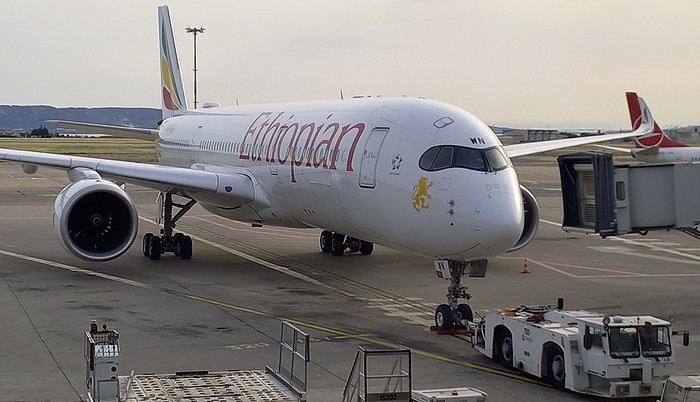
.....
After arriving in Dar, we spent one night at a hotel near the airport. The next morning, we headed to the domestic flights terminal, which hasn’t changed in years.
By mid-morning, we boarded a Cessna 208B Caravan with Safari Air Link, heading to the Kikoboga bush airstrip in Mikumi, which we reached 45 minutes later. Fun fact: the pilot was the same one as on our return flight two years ago.
Welcome on board:
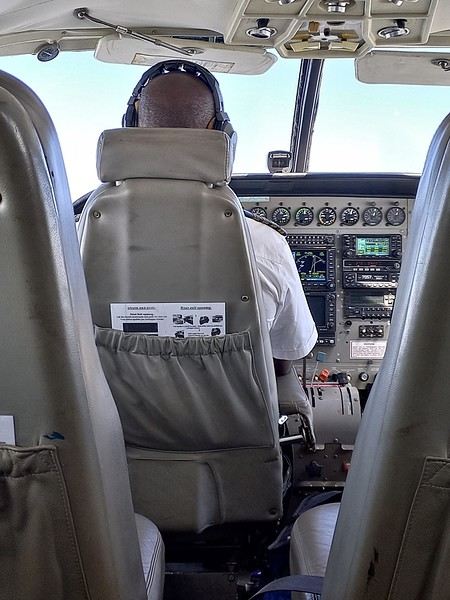
Of course, a driver/guide team from our chosen lodge was waiting for us upon arrival:
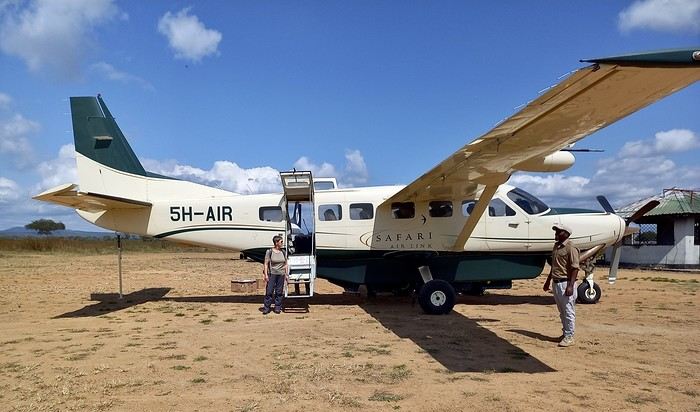
I was surprised to see so many aircraft parked there... even twin-engine Embraer Brasilias?? As a fan of vintage planes, I loved it...
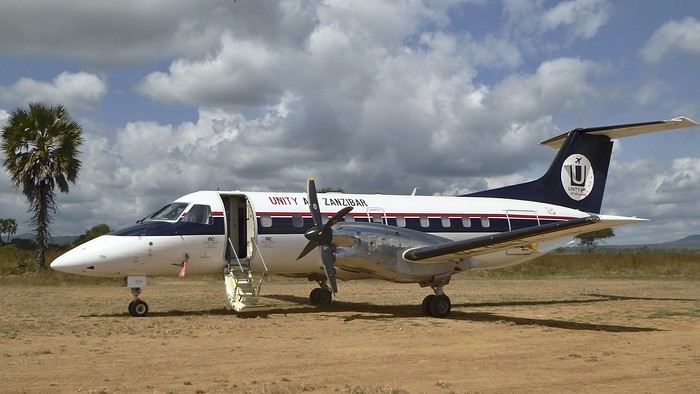
On the other hand, the light was incredibly harsh.....!! Our guides only speak English. We knew that in advance. In the south, it’s very rare to find someone who speaks French. This’ll force us to dig into our high school English memories... from 60 years ago... at least.
It’s noon, and we head toward the lodge. Near the airstrip, next to the Mikumi rangers’ base, there are quite a few herbivores. They find a bit more peace here—the big cats don’t venture this way...
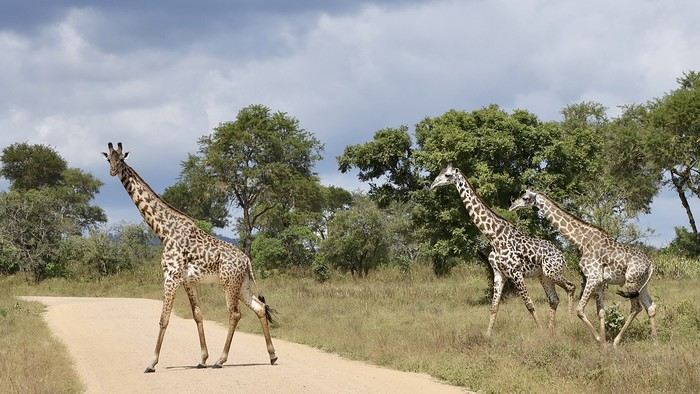
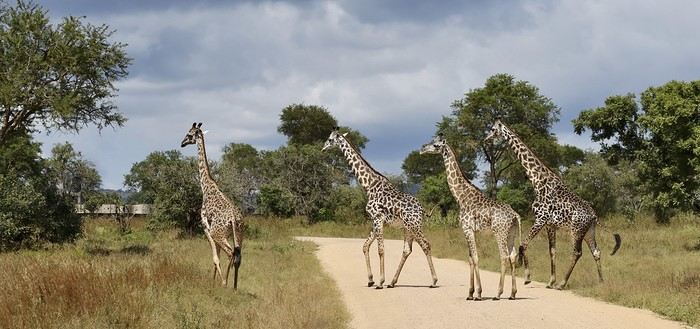
Our first encounter was a group of Masai giraffes.
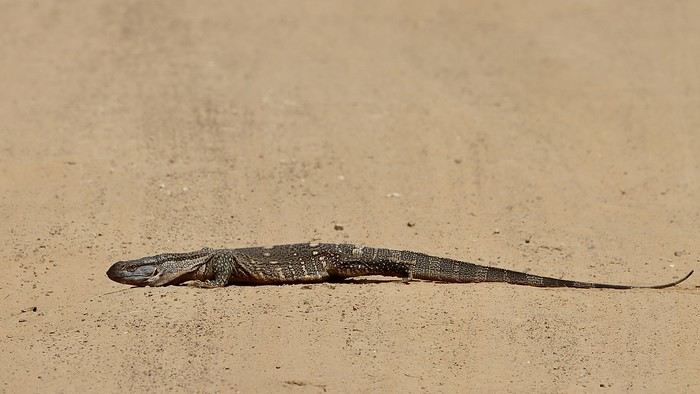
Rarer (for us), a savanna monitor lizard basking in the sun right in the middle of the track...??
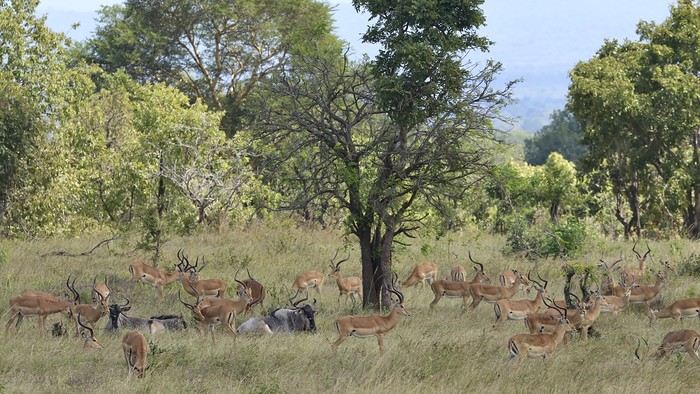
A large gathering of impalas (mostly males) along with a few blue wildebeest:

Also unusual: a African crowned hornbill taking a dust bath in the middle of the track...!!
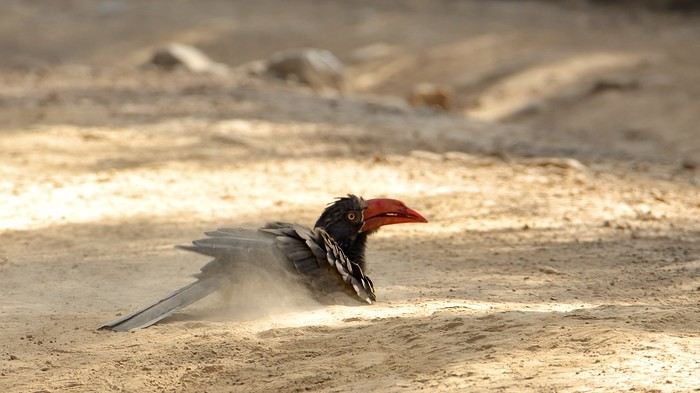
When it comes to identifying mammals or birds, I don’t know everything... so I might make mistakes. Please forgive me. I’m counting on my friend Blesl’s active participation... 😉
...
I’m a newbie to this forum, passionate about wildlife, the landscapes of East Africa, and Tanzania in particular. This June 2024 trip/safari is our 7th visit to Tanzania and our 5th in the south, which has drawn us more than the north ever since we discovered it in 2015.
In 2024, the entrance fees for the reserves and services have gone up again since our last visit. I chose to return first to Mikumi Reserve, which was the very first one we visited in the south. Then, we’ll head to Selous (J. Nyerere N. P.) as usual. Initially, we wanted to spend 2/3 days on Mafia Island at the end of the trip, but it made the total cost too high, so we gave up... We usually go to Ruaha and Selous, but I wanted to mix it up a bit—also to save some money...
As for the timing, June is a new experience for us. I thought it might be interesting to come just after the lodges reopen... hoping for some great wildlife encounters??
The trip starts in Marseille with our first flight on Ethiopian Airlines to Addis Ababa, then continues to Dar es Salaam, where we’ll finally set foot on Tanzanian soil again.
In Addis... "our" A-350.
.....
After arriving in Dar, we spent one night at a hotel near the airport. The next morning, we headed to the domestic flights terminal, which hasn’t changed in years.
By mid-morning, we boarded a Cessna 208B Caravan with Safari Air Link, heading to the Kikoboga bush airstrip in Mikumi, which we reached 45 minutes later. Fun fact: the pilot was the same one as on our return flight two years ago.
Welcome on board:
Of course, a driver/guide team from our chosen lodge was waiting for us upon arrival:
I was surprised to see so many aircraft parked there... even twin-engine Embraer Brasilias?? As a fan of vintage planes, I loved it...
On the other hand, the light was incredibly harsh.....!! Our guides only speak English. We knew that in advance. In the south, it’s very rare to find someone who speaks French. This’ll force us to dig into our high school English memories... from 60 years ago... at least.
It’s noon, and we head toward the lodge. Near the airstrip, next to the Mikumi rangers’ base, there are quite a few herbivores. They find a bit more peace here—the big cats don’t venture this way...
Our first encounter was a group of Masai giraffes.
Rarer (for us), a savanna monitor lizard basking in the sun right in the middle of the track...??
A large gathering of impalas (mostly males) along with a few blue wildebeest:
Also unusual: a African crowned hornbill taking a dust bath in the middle of the track...!!
When it comes to identifying mammals or birds, I don’t know everything... so I might make mistakes. Please forgive me. I’m counting on my friend Blesl’s active participation... 😉
...
Driver for independent northern Thailand itinerary
Hello everyone,
Not long ago, I used to travel as a couple, but my husband has since passed away, and I’ve decided to set off again. The trip I took to Cambodia in January 2025 did me a world of good.
I’m now considering Thailand, a destination we never included in our plans because even 15 years ago, people said it was too touristy. Still, I’m thinking about the itinerary below, but I don’t feel up to arranging buses, trains, or guides on my own while I’m there. I’m looking for one or more drivers and have been in touch with an agency, but their offers are just copy-paste group tours that I don’t want.
So, if you have any contacts, experiences, or advice, I’d be so grateful if you’d share them with me. Here’s my rough plan:
Arrival in Bangkok
Ayutthaya (2 nights)
Kanchanaburi (2 or 3 nights)
Sangkhlaburi/Sai Yok (3 nights)
Sukhothai (2 nights)
Lampang (I’ve planned 3 nights, but that might be a bit much—it depends on what time I arrive in the city)
Chiang Mai
Chiang Dao
Pai
Chiang Rai
I was thinking about the Mae Hong Son loop—thoughts?
What do you think about staying overnight at the Golden Triangle?
When I look online, of course, I can find agencies that organize tours to national parks, etc.
I’m retired but in great physical shape. I’d rather go hiking than sit in hot springs with crowds of tourists who’ve all arranged meet-ups. I don’t want to spend a day at an elephant camp, and I don’t want to visit Karen villages.
I’d love to hear your advice.
Thank you all,
Itinerary choices: Jeonju, Hahoe, Gyeongju, Suncheon Bay Nature Reserve, Boseong...
Hi everyone,
I’m planning a 3-week solo trip to South Korea in April/May 2025. Here’s my current wishlist on the map—I need to check how realistic it is.
Questions: The DMZ: I haven’t planned to go, and I’m struggling to see the appeal. What do you think? Jeju: I’m on the fence about Jeju. It seems like the *place to be*, but I’m not sure what makes it so charming or what’s really a must-do there?
On my map, I’m hesitating about Hahoe. I’m definitely going to Jeonju because there are several sites in that area. For Hahoe, I’m unsure because I’d need to stop overnight and arrange transfers between Andong and Hahoe. Is Hahoe the same as Jeonju? (Hanok village)—if so, I’ll skip Hahoe.
Last question: In the south, there are lots of sites that interest me, but I’m wondering about transportation. Can I stay in one place for several days and do day trips to each site? Is that possible with buses?
Anyway, thanks in advance for your tips! Sabrina
I’m planning a 3-week solo trip to South Korea in April/May 2025. Here’s my current wishlist on the map—I need to check how realistic it is.
Questions: The DMZ: I haven’t planned to go, and I’m struggling to see the appeal. What do you think? Jeju: I’m on the fence about Jeju. It seems like the *place to be*, but I’m not sure what makes it so charming or what’s really a must-do there?
On my map, I’m hesitating about Hahoe. I’m definitely going to Jeonju because there are several sites in that area. For Hahoe, I’m unsure because I’d need to stop overnight and arrange transfers between Andong and Hahoe. Is Hahoe the same as Jeonju? (Hanok village)—if so, I’ll skip Hahoe.
Last question: In the south, there are lots of sites that interest me, but I’m wondering about transportation. Can I stay in one place for several days and do day trips to each site? Is that possible with buses?
Anyway, thanks in advance for your tips! Sabrina
What to see and do in Quebec for a first trip?
Hello,
I’m planning a trip for mid-September. 4 adults. Retirees—what should we do in Quebec for 3 weeks? Starting from Montreal. First-timers for planning. With car rentals. Thanks for your help!
St. Lucia and iSimangaliso: Stories from Different Trips
Hello there,

As mentioned in the title, this is a travel journal focused on St. Lucia and iSimangaliso ("this place is miraculous" in Zulu) over various trips spanning about twenty years.
The Elephant Coast stretches from Hluhluwe Umfolozi, through St. Lucia and iSimangaliso, all the way to the Mozambique border near Kosi Bay and Tembe. This region was conquered by the Zulus (for context, in the 19th century, the Zulus were just one Bantu group among many—it was a local Napoleon, Shaka, who was both cruel and inventive, conquering and subjugating all other groups to form the Zulu nation). The Tonga were the big losers in this area, and a certain "animosity" is still very noticeable... With our two guides (one Zulu and the other Tonga), we ran into some Tonga folks—definitely not a warm atmosphere. The Tonga were pushed back into the marshes. Fish traps are their main source of wealth. (iSimangaliso is a lagoon and marshland area with several interconnected lakes—it used to be called Vetland Park, and for good reason.) So, lakes, fishing with fish traps...
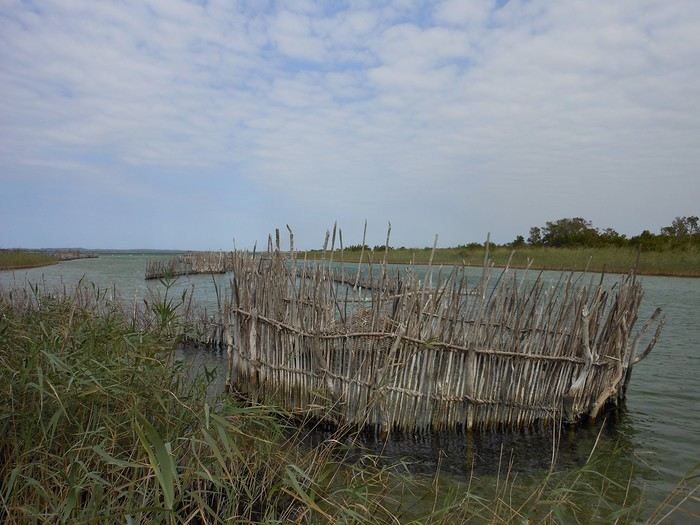
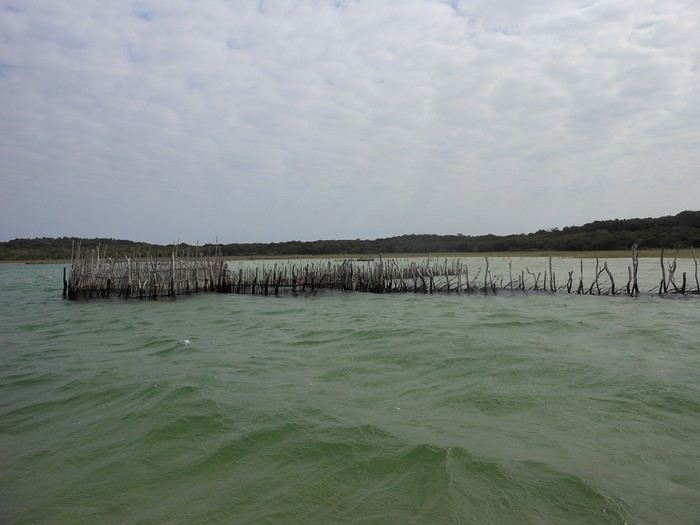
Traditionally done with raffia boats
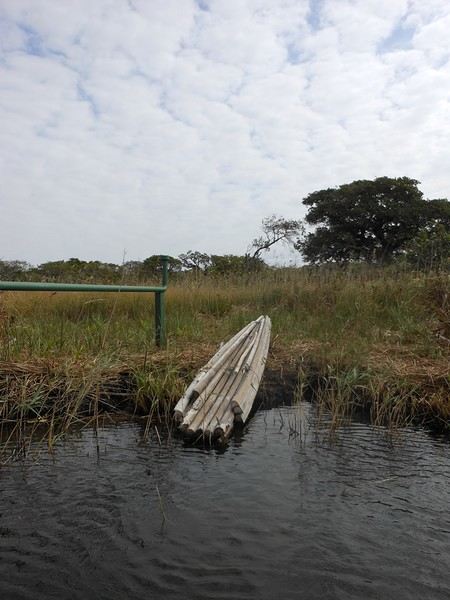
Made from forest raffia
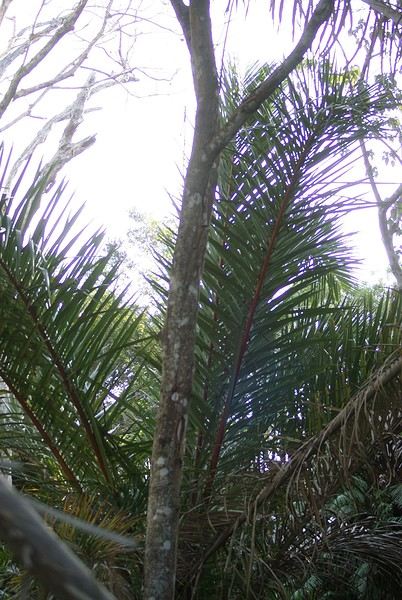
Where we spotted a particularly rare and endemic bird (whose name I can’t remember... and I can’t be bothered to dig through my notes)
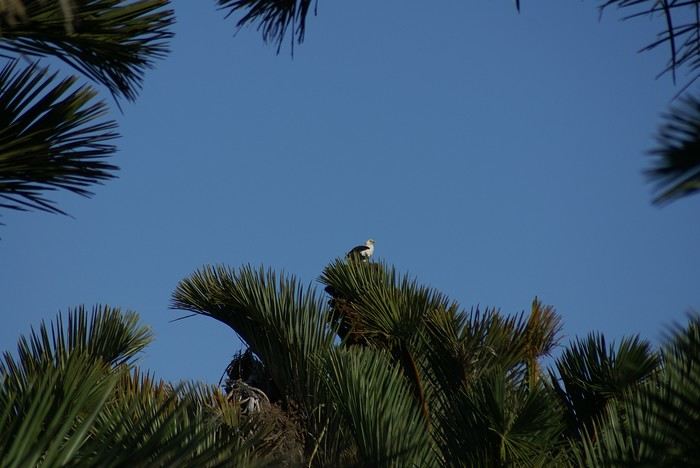 Here, those are eagles
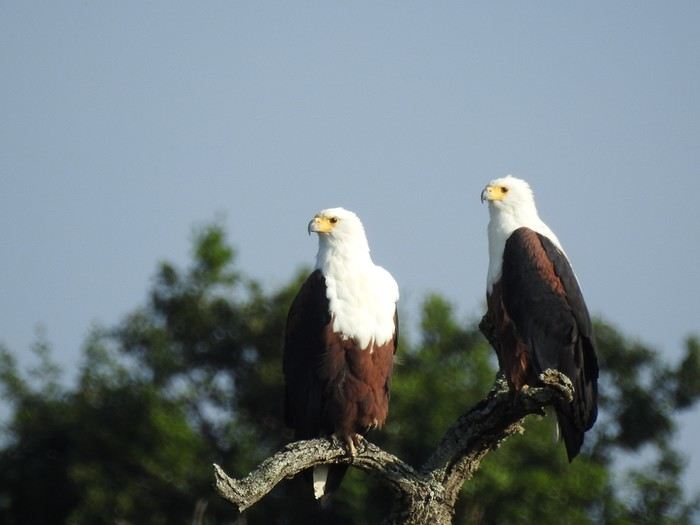
And they’re pretty brave because... they’re not far away...
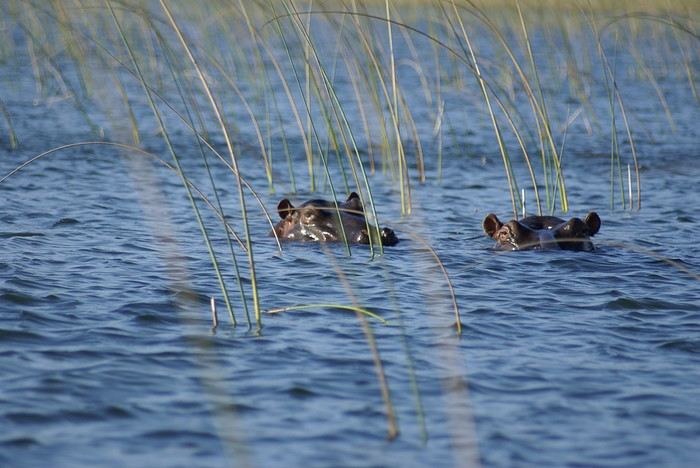
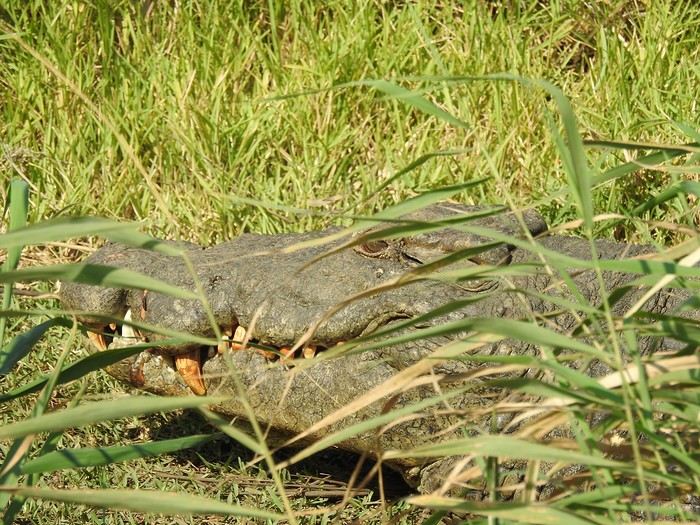
Yet we still swim there... with supervision...
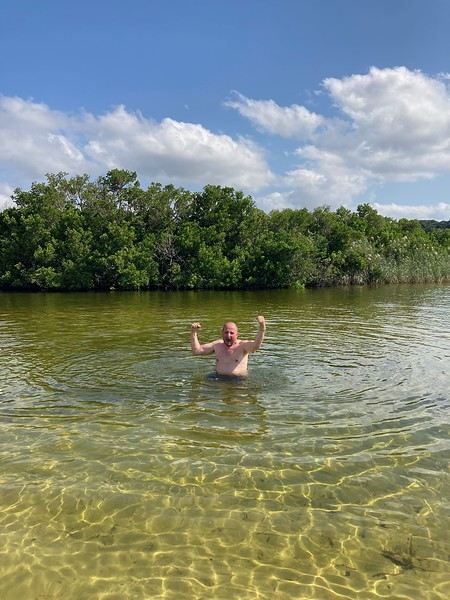
So, between St. Lucia and Mozambique, you’ll find marshes, lagoons, lakes, and coastline, with our Tonga friends, Zulu friends, and—just a bit further up—the Tembe... and their king. (I’m showing off a bit because I got to see a king up close, ate in the same room as him, and even talked to him!)
Originally, the Boers tried to farm there... including sugarcane...
But... between the hippos, snakes, crocs, and malaria-carrying mosquitoes... They lost count of the deaths and disappearances.
The story goes that when Madiba (Mandela) came to power, he passed through the area and convinced them to turn it into a natural space that would attract tourists—and that’s when the big change happened.
And it’s pretty incredible to see how this place has evolved, going from extreme poverty to a certain level of gentrification... How this once "chaotic" area saw shops, roads, and housing spring up (I’m mainly talking about Mtubatuba, the nearby Black town). In fact, in St. Lucia now, the homes that aren’t tourist accommodations can be counted on one hand.
St. Lucia has become a "seaside resort"... very busy during school holidays and certain weekends, increasingly cosmopolitan (20 years ago, speaking French was exotic—now it’s completely ordinary).
As mentioned in the title, this is a travel journal focused on St. Lucia and iSimangaliso ("this place is miraculous" in Zulu) over various trips spanning about twenty years.
The Elephant Coast stretches from Hluhluwe Umfolozi, through St. Lucia and iSimangaliso, all the way to the Mozambique border near Kosi Bay and Tembe. This region was conquered by the Zulus (for context, in the 19th century, the Zulus were just one Bantu group among many—it was a local Napoleon, Shaka, who was both cruel and inventive, conquering and subjugating all other groups to form the Zulu nation). The Tonga were the big losers in this area, and a certain "animosity" is still very noticeable... With our two guides (one Zulu and the other Tonga), we ran into some Tonga folks—definitely not a warm atmosphere. The Tonga were pushed back into the marshes. Fish traps are their main source of wealth. (iSimangaliso is a lagoon and marshland area with several interconnected lakes—it used to be called Vetland Park, and for good reason.) So, lakes, fishing with fish traps...
Traditionally done with raffia boats
Made from forest raffia
Where we spotted a particularly rare and endemic bird (whose name I can’t remember... and I can’t be bothered to dig through my notes)
Here, those are eagles
And they’re pretty brave because... they’re not far away...
Yet we still swim there... with supervision...
So, between St. Lucia and Mozambique, you’ll find marshes, lagoons, lakes, and coastline, with our Tonga friends, Zulu friends, and—just a bit further up—the Tembe... and their king. (I’m showing off a bit because I got to see a king up close, ate in the same room as him, and even talked to him!)
Originally, the Boers tried to farm there... including sugarcane...
But... between the hippos, snakes, crocs, and malaria-carrying mosquitoes... They lost count of the deaths and disappearances.
The story goes that when Madiba (Mandela) came to power, he passed through the area and convinced them to turn it into a natural space that would attract tourists—and that’s when the big change happened.
And it’s pretty incredible to see how this place has evolved, going from extreme poverty to a certain level of gentrification... How this once "chaotic" area saw shops, roads, and housing spring up (I’m mainly talking about Mtubatuba, the nearby Black town). In fact, in St. Lucia now, the homes that aren’t tourist accommodations can be counted on one hand.
St. Lucia has become a "seaside resort"... very busy during school holidays and certain weekends, increasingly cosmopolitan (20 years ago, speaking French was exotic—now it’s completely ordinary).
Oman for backpackers: trip report
So happy to be back with you all that I’m rushing to share my trip report!
We chose to stay exactly 14 days to avoid paying for a visa. As a result, we didn’t have time to explore the south—we’ll be back because Oman is a great destination in January. Temperatures were a perfect 25–27°C during the day. No rain for us, but it can happen.
We bought the *Évasion Oman* guidebook. We started with the Jebels (the mountains), abandoned villages, then the desert, wadis along the coast, and finished in the capital. For us, it was easier to go from cold (2,000 meters, after all) to hot before returning to our freezing Normandy in January.
The people were incredibly welcoming and lovely. We camped in natural camping areas where you can make a fire (free, no facilities or water). Easy to find—just search "camping" on Google Maps (an essential app). We traveled as a group of five and rented a 4x4 seven-seater from Europcar before leaving (price included our insurance): 800 euros for 14 days. Essential for getting everywhere, as there are lots of dirt tracks. We brought our camping gear from France since the baggage allowance is 30 kg. Oh, and also two liters of rum and a box of white wine—also essential.
Food was tricky if you don’t like spicy dishes or just chicken. You have to eat at international restaurants, which cost about the same as back home. We’d packed vacuum-sealed meat for the first three days and a few cans. For beaches, stick to the ones marked on Google for swimming—otherwise, they can be dirty and full of oil.
We arrived at 6:30 AM, bought a SIM card (make sure to remove yours before arriving and tape it to the back of your phone), exchanged money (not great rates at the airport—better in malls or souks; no exchanges in banks), and picked up the car. Then we headed to a Carrefour supermarket, but it was closed. We drove to Jebel Al Akhdar, the Sayq Plateau, where we found markets along the way. There are also bazaar shops where you can get gas bottles—they’re everywhere in mid-sized towns. There are even hypermarkets.
We hiked the well-marked old Sayq trail (red and white markings). Our return was improvised. We camped on the plateau and got cold—bring 0°C sleeping bags! The next day, we visited the abandoned villages of Wadi Bani Habib: juniper forests, canyon viewpoints. Then Birkat Al Maws on the way down—a beautiful palm grove. Next, Nizwa Hotel. The beds were really hard there—ask to see the rooms and test the beds before booking. There’s always availability, with prices starting at 35 euros for two.
On the third day, we went to Jebel Shams. Hiked along the canyon starting from Ghul, then descended. Camped on the road to Balha Fortress, which we visited the next morning (stunning!). Then we explored Nizwa before heading to the Wahiba Desert. Camped along the way, then drove to our accommodation: two days in the desert. We found the Thousand Nights Camp 40% cheaper a month before. Note: you have to leave by 1 PM in a convoy to reach the hotel.
On the sixth day, we hiked in the desert on our own because the activity prices were outrageous.
On the seventh day, we headed to a wadi, Bani Khalid, then to Sur, a seaside hotel. We booked just one room for five of us—hotel apartments are huge, and since we had our camping mattresses, it wasn’t a problem to set up in the living room. There’s even a kitchen. In cities, camping spots are poorly located—near intersections, etc.
Beach time and sightseeing on the eighth day, then we drove to the white sand beach in Fins, where we stayed for two nights (we left the tents set up but empty). This was our favorite campsite—go all the way to the end of the road, there’s a small cove and a stunning spot.
On the ninth day, we visited Wadi Shab and the Salma Plateau to find the tombs. The hike up from Fins was way too long—probably better to take the route suggested in the guidebook for a round trip. Meh, no one really enjoyed it.
On the tenth day, we went to Wadi Al Arbiyyin and drove to Seeb Al Mouj to book a diving trip. Stayed at Al Ferdous Hotel Apartments until the end—well-located for visiting Muscat and a great value. Just make sure to check the room first, as some beds are very hard and others aren’t.
Eleventh day: diving and beach time.
Twelfth day: visited the Grand Mosque (unlucky—first day it became paid, and not just a little: 8 OMR). Then explored the old city.
Thirteenth day: the Grand Opera and beach at The Village, where we found a great pizzeria: pizzawifi.com.
Fourteenth day: And that’s it—back home, thrilled to have discovered this magical country. We’ll be back!
We bought the *Évasion Oman* guidebook. We started with the Jebels (the mountains), abandoned villages, then the desert, wadis along the coast, and finished in the capital. For us, it was easier to go from cold (2,000 meters, after all) to hot before returning to our freezing Normandy in January.
The people were incredibly welcoming and lovely. We camped in natural camping areas where you can make a fire (free, no facilities or water). Easy to find—just search "camping" on Google Maps (an essential app). We traveled as a group of five and rented a 4x4 seven-seater from Europcar before leaving (price included our insurance): 800 euros for 14 days. Essential for getting everywhere, as there are lots of dirt tracks. We brought our camping gear from France since the baggage allowance is 30 kg. Oh, and also two liters of rum and a box of white wine—also essential.
Food was tricky if you don’t like spicy dishes or just chicken. You have to eat at international restaurants, which cost about the same as back home. We’d packed vacuum-sealed meat for the first three days and a few cans. For beaches, stick to the ones marked on Google for swimming—otherwise, they can be dirty and full of oil.
We arrived at 6:30 AM, bought a SIM card (make sure to remove yours before arriving and tape it to the back of your phone), exchanged money (not great rates at the airport—better in malls or souks; no exchanges in banks), and picked up the car. Then we headed to a Carrefour supermarket, but it was closed. We drove to Jebel Al Akhdar, the Sayq Plateau, where we found markets along the way. There are also bazaar shops where you can get gas bottles—they’re everywhere in mid-sized towns. There are even hypermarkets.
We hiked the well-marked old Sayq trail (red and white markings). Our return was improvised. We camped on the plateau and got cold—bring 0°C sleeping bags! The next day, we visited the abandoned villages of Wadi Bani Habib: juniper forests, canyon viewpoints. Then Birkat Al Maws on the way down—a beautiful palm grove. Next, Nizwa Hotel. The beds were really hard there—ask to see the rooms and test the beds before booking. There’s always availability, with prices starting at 35 euros for two.
On the third day, we went to Jebel Shams. Hiked along the canyon starting from Ghul, then descended. Camped on the road to Balha Fortress, which we visited the next morning (stunning!). Then we explored Nizwa before heading to the Wahiba Desert. Camped along the way, then drove to our accommodation: two days in the desert. We found the Thousand Nights Camp 40% cheaper a month before. Note: you have to leave by 1 PM in a convoy to reach the hotel.
On the sixth day, we hiked in the desert on our own because the activity prices were outrageous.
On the seventh day, we headed to a wadi, Bani Khalid, then to Sur, a seaside hotel. We booked just one room for five of us—hotel apartments are huge, and since we had our camping mattresses, it wasn’t a problem to set up in the living room. There’s even a kitchen. In cities, camping spots are poorly located—near intersections, etc.
Beach time and sightseeing on the eighth day, then we drove to the white sand beach in Fins, where we stayed for two nights (we left the tents set up but empty). This was our favorite campsite—go all the way to the end of the road, there’s a small cove and a stunning spot.
On the ninth day, we visited Wadi Shab and the Salma Plateau to find the tombs. The hike up from Fins was way too long—probably better to take the route suggested in the guidebook for a round trip. Meh, no one really enjoyed it.
On the tenth day, we went to Wadi Al Arbiyyin and drove to Seeb Al Mouj to book a diving trip. Stayed at Al Ferdous Hotel Apartments until the end—well-located for visiting Muscat and a great value. Just make sure to check the room first, as some beds are very hard and others aren’t.
Eleventh day: diving and beach time.
Twelfth day: visited the Grand Mosque (unlucky—first day it became paid, and not just a little: 8 OMR). Then explored the old city.
Thirteenth day: the Grand Opera and beach at The Village, where we found a great pizzeria: pizzawifi.com.
Fourteenth day: And that’s it—back home, thrilled to have discovered this magical country. We’ll be back!
Tanzania 2019 - Polé Polé
KARIBUUU
Over 5 years later, I’m finally getting around to writing the travel journal for our first trip to East Africa: Tanzania. *Polé Polé*, as they say! 😎
A trip I’d started planning just 6 years ago, in February 2019, for my post-internship exam vacation. After returning to South Africa in July 2019 with my family, this trip, planned for September 2019, would be all about discovery and a few firsts: first trip with friends, first trek, first time in East Africa. I really wanted to attempt the Kilimanjaro ascent, try to still see some of its "eternal" ice, and Alison wanted to do as much safari as possible. Unlike with the Zulus, Himbas, or San, visiting a Maasai village wasn’t on the agenda. Thanks to the Kessy Brothers agency, who were super responsive, Sandy from VF, and other members who helped prepare our trip, we settled on the following itinerary:
Day -1 (8/30): Departure from Pointe-à-Pitre Day 0 (8/31): Departure from Paris Day 1 (9/01): Arrival at Kilimanjaro Airport / Ameg Lodge (Moshi) DAY 2 (9/02): Machame gate / Machame camp DAY 3 (9/03): Shira / Shira camp DAY 4 (9/04): Baranco / Baranco camp DAY 5 (9/05): Barafu / Barafu camp DAY 6 (9/06): Barafu + Summit at midnight / Mweka camp DAY 7 (9/07): Mweka gate / Sal Salnero Hotel (Moshi) DAY 8 (9/08): Arusha National Park / Kanga camp DAY 9 (9/09): Tarangire National Park / Kanga camp DAY 10 (9/10): Tarangire National Park / Twiga Lodge DAY 11 (9/11): Lake Manyara / Twiga Lodge DAY 12 (9/12): Ngorongoro Crater / Simba campsite DAY 13 (9/13): Serengeti National Park / Seronera campsite DAY 14 (9/14): Serengeti National Park - Uoga Kuria Camp DAY 15 (9/15): Serengeti National Park / Waso campsite DAY 16 (9/16): Lake Natron / Maasai Giraffe Ecolodge DAY 17 (9/17): Kilimanjaro Airport Day 18 (9/18): Zanzibar Day 19 (9/19): Zanzibar Day 20 (9/20): Zanzibar Day 21 (9/21): Zanzibar
As I mentioned in my first travel journal about our South Africa trip, I’ve had a special connection to Tanzania for a long time. Growing up in the Indian Ocean without ever visiting Africa, those wildlife documentaries on TV when I skipped my pharmacy classes... I imagined and dreamed about this land and country so much.
The original plan was to go just the two of us with Alison, but somehow—though I don’t quite remember how—we ended up organizing the trip with our friends Mélissa and Doriane, who joined us in Arusha after our Kilimanjaro trek for the last two weeks and their very first safari. I think it was Melissa who had the idea to crash our trip, and she was right to do so! 😉 Flights: Pointe-à-Pitre-Grand Case and Grand Case-Paris with Air Caraïbes. Flights: Paris-JRO and ZNZ-Paris with Kenya Airways (layover in Nairobi). Flight: JRO-ZNZ with Air Tanzania.
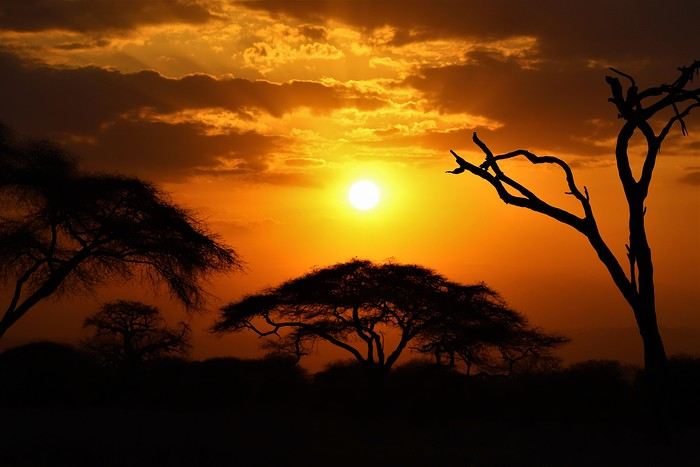
Safe travels! !
Over 5 years later, I’m finally getting around to writing the travel journal for our first trip to East Africa: Tanzania. *Polé Polé*, as they say! 😎
A trip I’d started planning just 6 years ago, in February 2019, for my post-internship exam vacation. After returning to South Africa in July 2019 with my family, this trip, planned for September 2019, would be all about discovery and a few firsts: first trip with friends, first trek, first time in East Africa. I really wanted to attempt the Kilimanjaro ascent, try to still see some of its "eternal" ice, and Alison wanted to do as much safari as possible. Unlike with the Zulus, Himbas, or San, visiting a Maasai village wasn’t on the agenda. Thanks to the Kessy Brothers agency, who were super responsive, Sandy from VF, and other members who helped prepare our trip, we settled on the following itinerary:
Day -1 (8/30): Departure from Pointe-à-Pitre Day 0 (8/31): Departure from Paris Day 1 (9/01): Arrival at Kilimanjaro Airport / Ameg Lodge (Moshi) DAY 2 (9/02): Machame gate / Machame camp DAY 3 (9/03): Shira / Shira camp DAY 4 (9/04): Baranco / Baranco camp DAY 5 (9/05): Barafu / Barafu camp DAY 6 (9/06): Barafu + Summit at midnight / Mweka camp DAY 7 (9/07): Mweka gate / Sal Salnero Hotel (Moshi) DAY 8 (9/08): Arusha National Park / Kanga camp DAY 9 (9/09): Tarangire National Park / Kanga camp DAY 10 (9/10): Tarangire National Park / Twiga Lodge DAY 11 (9/11): Lake Manyara / Twiga Lodge DAY 12 (9/12): Ngorongoro Crater / Simba campsite DAY 13 (9/13): Serengeti National Park / Seronera campsite DAY 14 (9/14): Serengeti National Park - Uoga Kuria Camp DAY 15 (9/15): Serengeti National Park / Waso campsite DAY 16 (9/16): Lake Natron / Maasai Giraffe Ecolodge DAY 17 (9/17): Kilimanjaro Airport Day 18 (9/18): Zanzibar Day 19 (9/19): Zanzibar Day 20 (9/20): Zanzibar Day 21 (9/21): Zanzibar
As I mentioned in my first travel journal about our South Africa trip, I’ve had a special connection to Tanzania for a long time. Growing up in the Indian Ocean without ever visiting Africa, those wildlife documentaries on TV when I skipped my pharmacy classes... I imagined and dreamed about this land and country so much.
The original plan was to go just the two of us with Alison, but somehow—though I don’t quite remember how—we ended up organizing the trip with our friends Mélissa and Doriane, who joined us in Arusha after our Kilimanjaro trek for the last two weeks and their very first safari. I think it was Melissa who had the idea to crash our trip, and she was right to do so! 😉 Flights: Pointe-à-Pitre-Grand Case and Grand Case-Paris with Air Caraïbes. Flights: Paris-JRO and ZNZ-Paris with Kenya Airways (layover in Nairobi). Flight: JRO-ZNZ with Air Tanzania.
Safe travels! !
3 months in Southeast Asia with family
Hey everyone, so happy the site is back!
After traveling solo across Iran and the Stan countries from one end to the other,
this time I’m heading to Southeast Asia with my wife and our 3-year-old.
I went to the Philippines almost 10 years ago and actually met some forum members there. It was love at first sight.
I’ve booked tickets from January 10 to March 31 for Bangkok (amazing price from Milan). I was thinking of spending: 3 weeks in Thailand 3 weeks in Vietnam 1 month in the Philippines.
Don’t worry, I won’t spam the forum with a thousand messages asking how to get from point A to point B :)))
I’m reaching out to the experts or regulars here for suggestions and ideas!
For Thailand, Obviously, some beautiful beaches wouldn’t hurt for a bit of relaxation. I was thinking of Koh Phayam or Koh Kood (or Koh Chang). If anyone knows a nice spot, even if it’s not on an island, I’m all ears. It’s tricky to ask this for Thailand, but I’m looking for a bit of tranquility (so I’ll probably avoid Phuket, Koh Samui, etc.). (Though I know sometimes you just need to get off the beaten path to find some peace, but I’m not sure if that’s the case in Thailand.)
Vietnam—I have no idea!! A friend mentioned Danang, which could be a good base to explore the countryside/inland areas.
And the Philippines—I had a huge crush on the country (Bantayan, Dumaguete, Sipalay, Siquijor) and really want to go back, maybe to new places/islands.
I have one constraint: We’ll stay in the same place each time. With a kid, it’s tough to move every 2 days (unlike when I’m solo), and I hope this will let us connect with locals by staying put for 3 weeks at a time. (Plus, my budget is pretty tight, so the idea is to negotiate a good price for 3 weeks in the same accommodation.) (My rough budget is 1000 € per month for the three of us: 450 € for lodging, 450 € for food, and 100 € for a scooter. This doesn’t include boat, bus, etc. transfers.)
If you have any ideas, tips, or experiences to share, I’m all ears! I’m totally open to shortening or extending our stays in each country, even if it means skipping one of the three.
After traveling solo across Iran and the Stan countries from one end to the other,
this time I’m heading to Southeast Asia with my wife and our 3-year-old.
I went to the Philippines almost 10 years ago and actually met some forum members there. It was love at first sight.
I’ve booked tickets from January 10 to March 31 for Bangkok (amazing price from Milan). I was thinking of spending: 3 weeks in Thailand 3 weeks in Vietnam 1 month in the Philippines.
Don’t worry, I won’t spam the forum with a thousand messages asking how to get from point A to point B :)))
I’m reaching out to the experts or regulars here for suggestions and ideas!
For Thailand, Obviously, some beautiful beaches wouldn’t hurt for a bit of relaxation. I was thinking of Koh Phayam or Koh Kood (or Koh Chang). If anyone knows a nice spot, even if it’s not on an island, I’m all ears. It’s tricky to ask this for Thailand, but I’m looking for a bit of tranquility (so I’ll probably avoid Phuket, Koh Samui, etc.). (Though I know sometimes you just need to get off the beaten path to find some peace, but I’m not sure if that’s the case in Thailand.)
Vietnam—I have no idea!! A friend mentioned Danang, which could be a good base to explore the countryside/inland areas.
And the Philippines—I had a huge crush on the country (Bantayan, Dumaguete, Sipalay, Siquijor) and really want to go back, maybe to new places/islands.
I have one constraint: We’ll stay in the same place each time. With a kid, it’s tough to move every 2 days (unlike when I’m solo), and I hope this will let us connect with locals by staying put for 3 weeks at a time. (Plus, my budget is pretty tight, so the idea is to negotiate a good price for 3 weeks in the same accommodation.) (My rough budget is 1000 € per month for the three of us: 450 € for lodging, 450 € for food, and 100 € for a scooter. This doesn’t include boat, bus, etc. transfers.)
If you have any ideas, tips, or experiences to share, I’m all ears! I’m totally open to shortening or extending our stays in each country, even if it means skipping one of the three.
One-month itinerary in Central Asia
Hello! I’m so excited to be back on this forum—it’s helped me so much in the past! I need your expert advice for our next trip, which will take us to Central Asia: Uzbekistan, Tajikistan, Kyrgyzstan, and Kazakhstan.
We have a month, and here’s the itinerary I have in mind: Arrival in Tashkent – 2 days Bukhara – 2 days Samarkand – 3 days Panjakent – 1 day The Seven Lakes + Iskanderkul – 3 days Khujand – 2 days Fergana Valley – 3 days Song Kol Lake – 2 days Issyk-Kul Lake – 3 days Charyn Canyon – 1 day Kaindy Lake – 1 day Altyn Emel Park – 1 day Almaty – 1 day and departure
I know the travel times, especially in the mountains, can be long, but I’ve tried to optimize it so we can rest after the long drives. Our family includes three kids aged 5, 13, and 17. We’re used to backpacking. But I have *so* many questions: -Will it be extremely hot in Uzbekistan, but manageable in the other regions on my itinerary? -I’ve read conflicting things about trains in Uzbekistan: is it possible to book train tickets in advance from France? -For the Seven Lakes and Iskanderkul, do I need to hire a driver? Is it easy to find one? Since there are five of us, we’d need a large car… or is it possible to rent a car in Panjakent and drop it off in Khujand? -What’s worth visiting in the Fergana Valley? -I’d prefer to avoid domestic flights, so I planned to break up the Osh-Issyk-Kul Lake route by stopping at Song Kol Lake and taking a horseback ride. Is that realistic? Again, do I need to find a driver, or can we do it independently? -Where’s the best base for Issyk-Kul Lake? The main goal is to relax and swim (is it acceptable for women to wear swimsuits in these regions?) -For the last part of the trip—Charyn Canyon and Kaindy Lake from Issyk-Kul—is it doable, or do I need a driver once more? -Is Altyn Emel Park doable in the summer, or is it too hot? The idea is to see the views and do a short 3-hour hike.
Thanks so much for any firsthand tips or experiences you can share!
We have a month, and here’s the itinerary I have in mind: Arrival in Tashkent – 2 days Bukhara – 2 days Samarkand – 3 days Panjakent – 1 day The Seven Lakes + Iskanderkul – 3 days Khujand – 2 days Fergana Valley – 3 days Song Kol Lake – 2 days Issyk-Kul Lake – 3 days Charyn Canyon – 1 day Kaindy Lake – 1 day Altyn Emel Park – 1 day Almaty – 1 day and departure
I know the travel times, especially in the mountains, can be long, but I’ve tried to optimize it so we can rest after the long drives. Our family includes three kids aged 5, 13, and 17. We’re used to backpacking. But I have *so* many questions: -Will it be extremely hot in Uzbekistan, but manageable in the other regions on my itinerary? -I’ve read conflicting things about trains in Uzbekistan: is it possible to book train tickets in advance from France? -For the Seven Lakes and Iskanderkul, do I need to hire a driver? Is it easy to find one? Since there are five of us, we’d need a large car… or is it possible to rent a car in Panjakent and drop it off in Khujand? -What’s worth visiting in the Fergana Valley? -I’d prefer to avoid domestic flights, so I planned to break up the Osh-Issyk-Kul Lake route by stopping at Song Kol Lake and taking a horseback ride. Is that realistic? Again, do I need to find a driver, or can we do it independently? -Where’s the best base for Issyk-Kul Lake? The main goal is to relax and swim (is it acceptable for women to wear swimsuits in these regions?) -For the last part of the trip—Charyn Canyon and Kaindy Lake from Issyk-Kul—is it doable, or do I need a driver once more? -Is Altyn Emel Park doable in the summer, or is it too hot? The idea is to see the views and do a short 3-hour hike.
Thanks so much for any firsthand tips or experiences you can share!
Southwest Part 2: 55 Days in Colorado, New Mexico, Arizona, Nevada, and Utah
This travel journal is the second part of the trip whose first part you can find here: 1st part...
Sunday, August 7: the day we discover a magical place... Edmaier's Secret...
We got up at 8:00 AM, had breakfast on the terrace of our tiny house, and then set off again toward yesterday’s trail. This time, we stopped after 4.5 miles on House Rock Valley Road at the Buckskin Gulch Trail parking lot. We weren’t interested in that trail today—the slot canyon is muddy anyway after the recent storms...
Instead, we explored a lesser-known area that became our playground. And what a playground it was, folks—an out-of-this-world spot, THE highlight of our trip!!! 😏
Just imagine being in the middle of these landscapes, and the cherry on top... no one else around!!!!! Well, we did meet a couple who were coming back—it was 9:30 AM 😮. Did they camp there? Did they turn back? 🙁
After paying the entry permit online, we set off with plenty of water (6L for the four of us) plus a gallon we hid along the way for the return trip. 😉 After a one-hour approach hike along a wash, we reached the sea of sand.
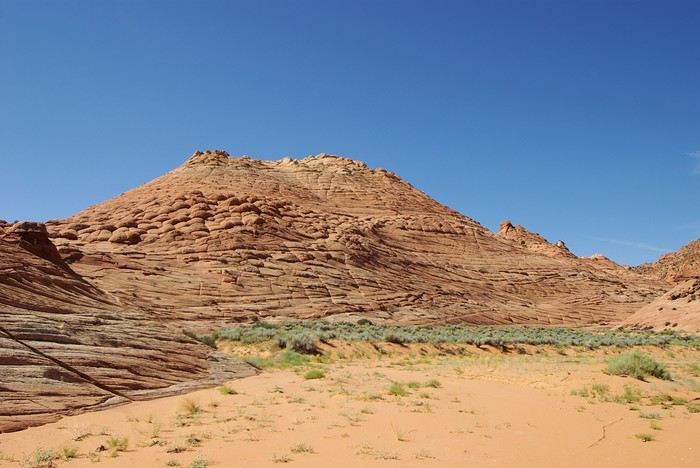
We had to cross it to reach our goal: a strip about 2 km long and 1 km wide that you can explore freely since there’s no marked trail... We entered a few GPS points into our Garmin Etrex, and off we went!!! 😎 It was... magical, enchanting, a true love-at-first-sight moment!
Brain Rock, waves, fine and brittle rock, colors—it goes up, it goes down.
Just thinking about it gives me chills... I remember sitting still for two minutes, taking in these wonders with such emotion that I teared up...
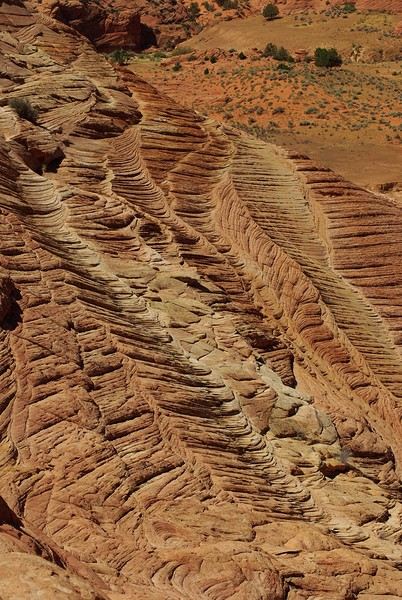
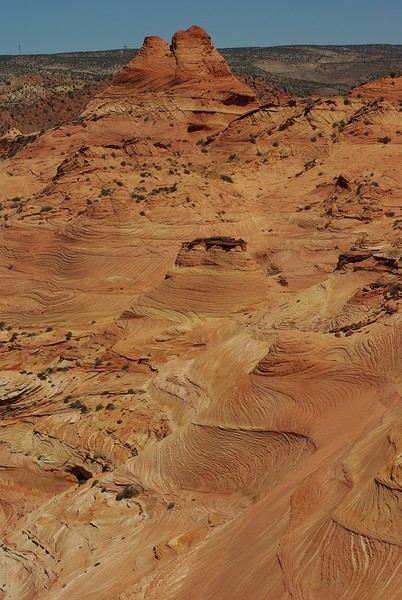
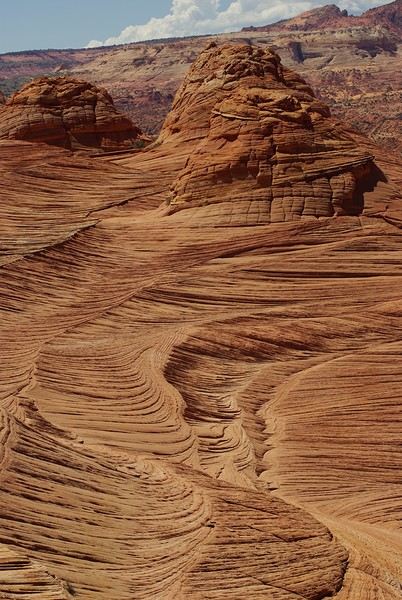
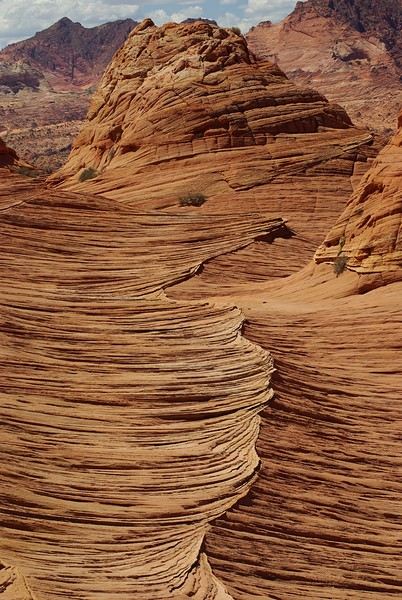
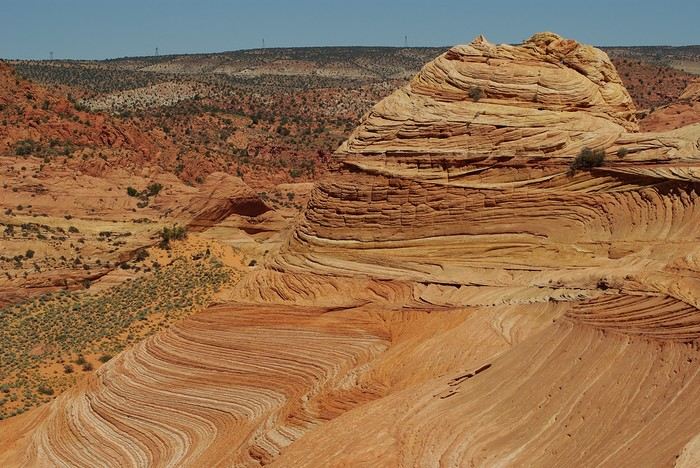
Sunday, August 7: the day we discover a magical place... Edmaier's Secret...
We got up at 8:00 AM, had breakfast on the terrace of our tiny house, and then set off again toward yesterday’s trail. This time, we stopped after 4.5 miles on House Rock Valley Road at the Buckskin Gulch Trail parking lot. We weren’t interested in that trail today—the slot canyon is muddy anyway after the recent storms...
Instead, we explored a lesser-known area that became our playground. And what a playground it was, folks—an out-of-this-world spot, THE highlight of our trip!!! 😏
Just imagine being in the middle of these landscapes, and the cherry on top... no one else around!!!!! Well, we did meet a couple who were coming back—it was 9:30 AM 😮. Did they camp there? Did they turn back? 🙁
After paying the entry permit online, we set off with plenty of water (6L for the four of us) plus a gallon we hid along the way for the return trip. 😉 After a one-hour approach hike along a wash, we reached the sea of sand.
We had to cross it to reach our goal: a strip about 2 km long and 1 km wide that you can explore freely since there’s no marked trail... We entered a few GPS points into our Garmin Etrex, and off we went!!! 😎 It was... magical, enchanting, a true love-at-first-sight moment!
Brain Rock, waves, fine and brittle rock, colors—it goes up, it goes down.
Just thinking about it gives me chills... I remember sitting still for two minutes, taking in these wonders with such emotion that I teared up...
Northern Chile, Andean impressions.
Alright, this year, we're heading back to South America!
The initial plan was to retrace the route we imagined in the summer of 2020: a trip to northern Argentina starting from Córdoba.
Unfortunately, the flight to Córdoba no longer exists, and airfares to Javier Milei’s country are both outrageously priced and involve multiple layovers.
So, I tweaked Google Flights every which way and finally found a flight within my budget—departing from Clermont-Ferrand!
Not to Argentina, though...
Our transatlantic flight will cross the snow-capped Andes, landing in Santiago, Chile, with a return from Lima!
In between, two domestic flights and a big road trip loop starting from the coastal city of Arica to explore the treasures of northern Chile.
Our mode of transport: a pseudo 4x4 that won’t take us through sand dunes or devilish tracks but will let us tackle the entire secondary network, including unpaved main roads, while still being insured.
Is the suitcase packed with all-season clothes?
Are the driver’s license and passport ready?
Bank cards and a few euros too?
Off we go for just over 3 weeks of southern wanderings!
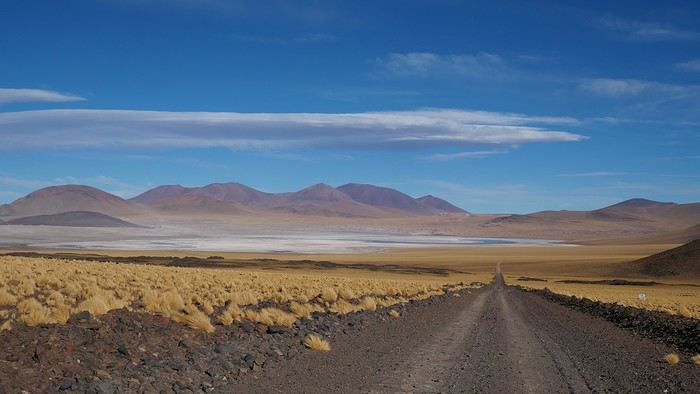
--/--
To keep all my esteemed readers on track, here are a few maps outlining the Arica-Arica loop!
1- From Arica to San Pedro de Atacama via Pica and the Salar de Huasco
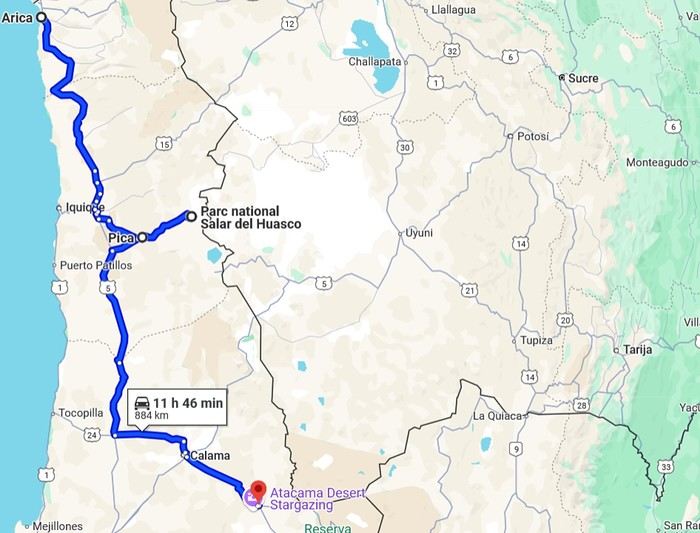 2- Around San Pedro
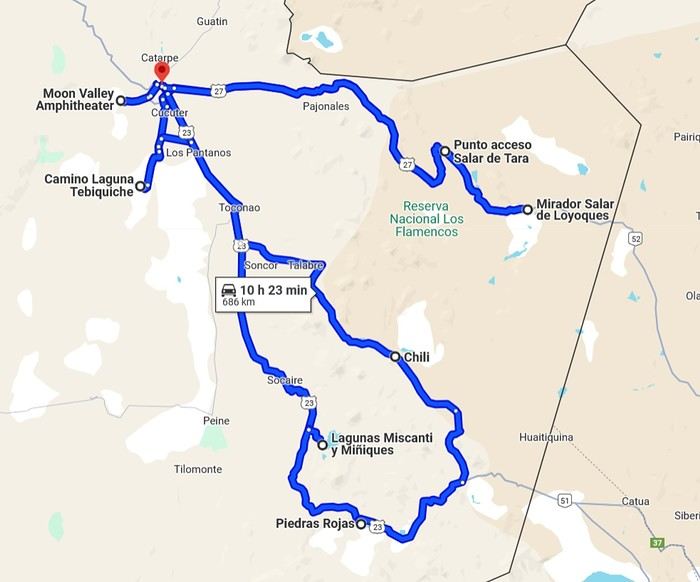
3- From San Pedro to Cariquima
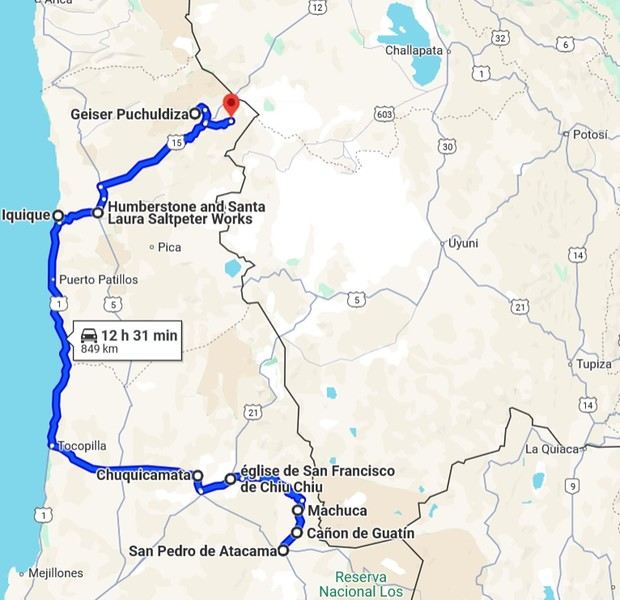
4- From Cariquima to Putre
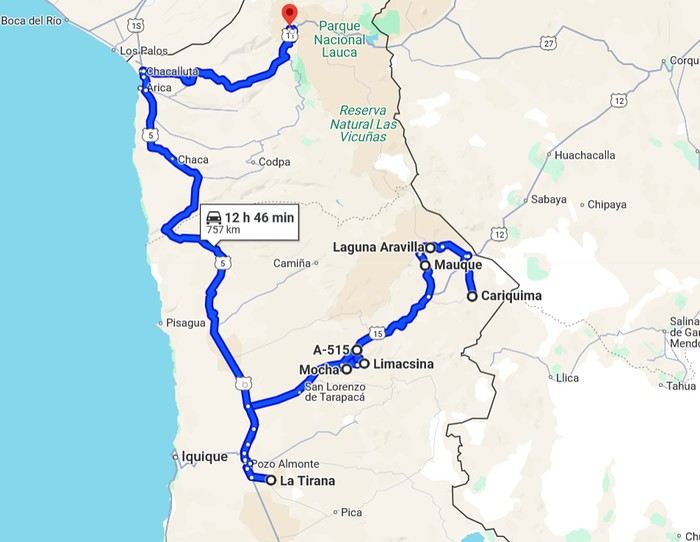
5 - From Putre to Arica
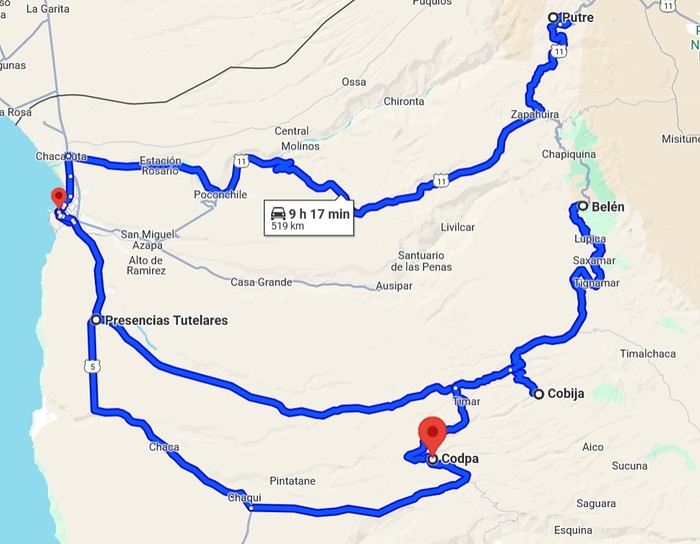
Gas stations in this part of Chile are located in Arica, Iquique, Pozo Almonte, Pica, Calama, and San Pedro de Atacama.
The initial plan was to retrace the route we imagined in the summer of 2020: a trip to northern Argentina starting from Córdoba.
Unfortunately, the flight to Córdoba no longer exists, and airfares to Javier Milei’s country are both outrageously priced and involve multiple layovers.
So, I tweaked Google Flights every which way and finally found a flight within my budget—departing from Clermont-Ferrand!
Not to Argentina, though...
Our transatlantic flight will cross the snow-capped Andes, landing in Santiago, Chile, with a return from Lima!
In between, two domestic flights and a big road trip loop starting from the coastal city of Arica to explore the treasures of northern Chile.
Our mode of transport: a pseudo 4x4 that won’t take us through sand dunes or devilish tracks but will let us tackle the entire secondary network, including unpaved main roads, while still being insured.
Is the suitcase packed with all-season clothes?
Are the driver’s license and passport ready?
Bank cards and a few euros too?
Off we go for just over 3 weeks of southern wanderings!
--/--
To keep all my esteemed readers on track, here are a few maps outlining the Arica-Arica loop!
1- From Arica to San Pedro de Atacama via Pica and the Salar de Huasco
2- Around San Pedro3- From San Pedro to Cariquima
4- From Cariquima to Putre
5 - From Putre to Arica
Gas stations in this part of Chile are located in Arica, Iquique, Pozo Almonte, Pica, Calama, and San Pedro de Atacama.
Van itinerary on the Carretera Austral: feasibility and ferry reservations?
Hey everyone!
I’m planning a van trip along the Carretera Austral from February 9th to March 1st, 2025.
My main questions are about timing and the must-see spots.
Here’s what I’m thinking, but I’m not sure if it’s realistic (ferries, road conditions, weather, etc.).
I’d love all your tips and suggestions! 🙂
Sun 2/9: Pick up van in Puerto Montt, explore the area, hot springs (which ones?) 2/10: Drive to Chaitén (too short?) – road + 7-hour ferry according to maps 2/11: Drive from Chaitén to Queulat – 200 km, 3 hours (still according to maps) 2/12: Queulat + hike to see the hanging glacier, then drive to Coyhaique – 3 hours, 200 km 2/13: Coyhaique to Cerro Castillo Park – 100 km, how long is the drive on this stretch? 2/14: Drive to Puerto Río Tranquilo – how long is the drive? 2/15: Exploradores Valley + is a day hike doable? 2/16: San Rafael Lagoon 2/17: Mármol Chapels 2/18: Drive to Puerto Yungay to catch the ferry to Puerto Natales around 7–8 PM with the van.
For the short ferry crossings, how far in advance should I book?
All your advice is welcome! Thanks so much!!
Sun 2/9: Pick up van in Puerto Montt, explore the area, hot springs (which ones?) 2/10: Drive to Chaitén (too short?) – road + 7-hour ferry according to maps 2/11: Drive from Chaitén to Queulat – 200 km, 3 hours (still according to maps) 2/12: Queulat + hike to see the hanging glacier, then drive to Coyhaique – 3 hours, 200 km 2/13: Coyhaique to Cerro Castillo Park – 100 km, how long is the drive on this stretch? 2/14: Drive to Puerto Río Tranquilo – how long is the drive? 2/15: Exploradores Valley + is a day hike doable? 2/16: San Rafael Lagoon 2/17: Mármol Chapels 2/18: Drive to Puerto Yungay to catch the ferry to Puerto Natales around 7–8 PM with the van.
For the short ferry crossings, how far in advance should I book?
All your advice is welcome! Thanks so much!!
Getting around Zambia and choosing wildlife parks
Hello,
We’re planning a trip to Zambia in 2 years. This will be our 4th trip to Southern Africa—the last one this year was Moremi, Boteti, KCGR, and KTP as a self-drive with campsites and no guide, just my wife and me. For this year’s trip, we prepared 2 years in advance—bookings are really complicated. We were lucky to get a spot at Bitterpan in KTP (there are only 4 chalets).
We’d like to know if it’s easy to get around Zambia, especially when it comes to restocking supplies. Should we rent a 4x4 in Zambia, Namibia, or South Africa? Botswana is very expensive. Which parks are the most interesting? We’re into wildlife photography.
Looking forward to hearing from you. Thanks in advance! Best regards, Jean-Marc
We’d like to know if it’s easy to get around Zambia, especially when it comes to restocking supplies. Should we rent a 4x4 in Zambia, Namibia, or South Africa? Botswana is very expensive. Which parks are the most interesting? We’re into wildlife photography.
Looking forward to hearing from you. Thanks in advance! Best regards, Jean-Marc