Results for "Plages+Panne+|+9+>+199"
146225 results found.
Review of the CFC "Pearls of the Baltic" cruise June 2026
Hello,
We’re back from this cruise.
Boarding in Dunkirk: The doors opened around 12 PM. Since we were a bit early, I asked if my husband, who uses a walker, could wait inside instead of outside. I left him with the two suitcases and our two backpacks in the small hall while I parked the car in the reserved CFC parking lot for 10 € per day.
The shuttle that was supposed to take people from the parking lot to the model pavilion was supposed to arrive in 5 minutes, but after 15 minutes, nothing. After waiting 15 minutes, I saw a man walking and asked if I could follow him. In 15 minutes, we arrived, and still no sign of the shuttle—it must have passed us. Arrived at the model pavilion.
My husband had already checked in the suitcases with the help of a CFC staff member. The remaining formalities were completed quickly. We were on board by 12:15 PM. Headed to the buffet on deck 11 and waited in a lounge to access our cabin.
At 2 PM, we discovered our balcony cabin on deck 9 at the rear: spacious with a large balcony compared to MSC/COSTA.
Since we were at the rear, cabin 9202, there was always an issue with elevator number 4: "priority."
Elevator number 2 stops at deck 10... and elevator number 3 was often out of order, leaving only number 1 for those with mobility issues to reach the buffet, especially for people who struggle with stairs. Note: only one child on board and lots of "gray hair."
DAY 2: At sea. Lots of activities offered.
Day 3: GOTHENBURG (Sweden). Sunny, 19°C at 11 AM.
Excursion booked with CFC: Gothenburg and Haga for all.
Interesting visit with a great guide. The HAGA district, in our opinion, is full of cobblestones and nothing special, not suitable for people using a cane or wheelchair. Elevator number 3 was out of order again.
Day 4: Copenhagen. 15°C in the morning, showers in the afternoon.
We didn’t book an excursion since we’d already stopped here with CFC in 2025, and based on advice from this forum, we took the hop-on/hop-off bus right in front of the ship. I still went to see the Little Mermaid again.
No TV, but the elevator was fixed.
DAY 5: At sea. Still no TV.
DAY 6: GDANSK (Poland). 15°C, rain all day.
There’s a shuttle to get to the city center.
We took the excursion: Panorama of Gdansk.
The guide left us at the entrance of the city center for 45 minutes, telling us what to visit. Meet-up for the rest of the tour at 3 PM. The bus left at 3:15 PM to cover 10 km to see St. Mary’s Cathedral. We arrived at 4:16 PM... The guide said there are often traffic jams in that direction. We had 10 minutes on site before heading to see the lighthouse and the Westerplatte monument, where we also had 10 minutes.
Many of us wondered why we didn’t do the tour in the opposite direction since they knew there would be traffic...
I went to reception to complain about the organization. The staff member read me the program: we were supposed to start with the lighthouse, then go to the cathedral and stay for 30 minutes before heading to the center of Gdansk for a short guided walk with some free time to buy souvenirs, etc.
The guide did the complete opposite of what was planned and didn’t even give us a guided tour—just dropped us off in the city...
DAY 7: Bornholm Island (Denmark). 14°C, a few sunny spells.
We saw in the excursions that there was a walking tour of RØNNE. So, like many others, we explored on our own. There was a small orchestra welcoming us at the port and two people with city maps. We took the shuttle to leave the port—it ran every 15 minutes. The tourist office was next to the "shuttle bus." A pleasant visit at our own pace.
DAY 8: KIEL (Germany). 18–23°C, nice weather.
We took the "Kiel for all" excursion. Great guide and interesting visits.
The port is in the city, and in 10 minutes, we were in the city center by following a blue line on the ground from the port. Elevator 3 was stuck again... and the TV was back.
DAY 9: At sea. Elevator 3 works.
DAY 10: At sea. Elevator 3 is out of order again...
DAY 11: Disembarkation in Dunkirk.
Cabins had to be vacated by 7:30 AM. Buffet open until 9 AM.
Elevator number 1 was "reserved," leaving only number 2, which doesn’t go up to deck 11... a problem for people with mobility issues who had to cross the entire deck 11 and try to use one of the four working elevators at the front, which were crowded.
My opinion: Interesting stops.
The onboard staff were always welcoming, smiling, and mostly French-speaking.
Evening shows were better than in March/April 2025—better singers, dancers, and presenters, and the costumes were improved.
I liked the "magician" shows less.
There were three onboard lectures by a very cultured person, but they went off-topic and were too historical for my taste. I didn’t attend the other two; my husband went to the second but not the third.
For this cruise, there was a bridge theme, but we’re not players or interested.
We didn’t take a drink package on board—water, coffee, tea, and herbal teas were available.
We had a water leak in our cabin the night before disembarkation. We reported it, and after the technical staff came (with a translator who didn’t speak English), we were asked to leave the cabin for a while for repairs. We went to a lounge, and after 1.5 hours, I checked in at reception. The repair took longer than expected... we had to change cabins... not ideal the night before disembarkation. No balcony cabins were available, so we got an ocean-view cabin, 6075, with a bathtub (impossible for both of us to use). We packed our suitcases, took a shower in our cabin, and moved to the new one. Noise from chairs until 12:30 AM because the cabin was under a lounge, and constant ventilation noise in the hallway... sleep was hard to come by. Disembarkation: Well organized. We were helped with transporting the two suitcases and bags to the waiting room while I took the shuttle to get the car. Guylène
We had a water leak in our cabin the night before disembarkation. We reported it, and after the technical staff came (with a translator who didn’t speak English), we were asked to leave the cabin for a while for repairs. We went to a lounge, and after 1.5 hours, I checked in at reception. The repair took longer than expected... we had to change cabins... not ideal the night before disembarkation. No balcony cabins were available, so we got an ocean-view cabin, 6075, with a bathtub (impossible for both of us to use). We packed our suitcases, took a shower in our cabin, and moved to the new one. Noise from chairs until 12:30 AM because the cabin was under a lounge, and constant ventilation noise in the hallway... sleep was hard to come by. Disembarkation: Well organized. We were helped with transporting the two suitcases and bags to the waiting room while I took the shuttle to get the car. Guylène
Review of the CFC RENAISSANCE's 'EN VOGUE' experience
😉Hi there,
A few months ago, CFC put the EN VOGUE experience on sale, departing from Dunkirk.
I booked this package to test the boat and onboard services for myself.
I’d read a lot of reviews mentioning numerous issues on board, so I wanted to see for myself what it was really like…
Okay, I’ll stop rambling… The package included boarding at 6 PM on Friday, dinner, a show, an overnight stay, and breakfast. We chose an interior cabin for this experience—since the boat wasn’t leaving the dock, we didn’t see the point in paying more… All in all, it cost 130 € per person. My mom joined us; she got the same cabin for 130 € with no single occupancy supplement.
We’d checked in online to board faster. We took the train to DUNKIRK, then a taxi to the shuttle pavilion—7 € for the ride. When we arrived at the pavilion, we were told to wait because there was a connection issue with check-in. Great start… After about ten minutes, we were finally allowed to proceed. At the counter, they said they didn’t have our cabin cards and no record of our check-in… Very odd. With no solution, they put us on the bus and said we’d sort it out at reception. Perfect. We went through security, and they confiscated our water bottles—never seen that before! Then they said my mom had a corkscrew in her bag, so they searched it… but there was no corkscrew. Total amateur hour… They eventually dropped it.
We got on the bus for a ten-minute ride… We boarded the ship with a crew member and headed to reception. Turns out, we weren’t the only ones in this situation. The nightmare began… Only two staff members were handling all the issues, and everything seemed complicated. They told my mom her cabin had been given to someone else 😲. That was the last straw…
It took forever—they had to redo the entire check-in. Finally, they told my mom her cabin was good to go; they’d mixed her up with someone else… After a solid half-hour, we could finally head to our cabin.
I’m determined to test everything: the pool, jacuzzi, show, restaurant, spa, etc… TO BE CONTINUED
Okay, I’ll stop rambling… The package included boarding at 6 PM on Friday, dinner, a show, an overnight stay, and breakfast. We chose an interior cabin for this experience—since the boat wasn’t leaving the dock, we didn’t see the point in paying more… All in all, it cost 130 € per person. My mom joined us; she got the same cabin for 130 € with no single occupancy supplement.
We’d checked in online to board faster. We took the train to DUNKIRK, then a taxi to the shuttle pavilion—7 € for the ride. When we arrived at the pavilion, we were told to wait because there was a connection issue with check-in. Great start… After about ten minutes, we were finally allowed to proceed. At the counter, they said they didn’t have our cabin cards and no record of our check-in… Very odd. With no solution, they put us on the bus and said we’d sort it out at reception. Perfect. We went through security, and they confiscated our water bottles—never seen that before! Then they said my mom had a corkscrew in her bag, so they searched it… but there was no corkscrew. Total amateur hour… They eventually dropped it.
We got on the bus for a ten-minute ride… We boarded the ship with a crew member and headed to reception. Turns out, we weren’t the only ones in this situation. The nightmare began… Only two staff members were handling all the issues, and everything seemed complicated. They told my mom her cabin had been given to someone else 😲. That was the last straw…
It took forever—they had to redo the entire check-in. Finally, they told my mom her cabin was good to go; they’d mixed her up with someone else… After a solid half-hour, we could finally head to our cabin.
I’m determined to test everything: the pool, jacuzzi, show, restaurant, spa, etc… TO BE CONTINUED
A Bold Combo: Southern Peru, Bolivia, and Northern Chile
Hello everyone,
For our latest 3-week family trip (yes, the kids are growing up, and two of them are about to enter the working world), we’re heading to South America! For our first time on this continent, I had planned a classic 3-week loop in Peru.
But since we won’t be returning to this part of the world anytime soon, I thought: why not follow in the footsteps of Franck, aka Bibouns51, who, in 18 days, didn’t just stick to Peru but also added two of the planet’s most stunning landscapes to his itinerary... the Salar de Uyuni in Bolivia and its neighbor, the fabulous Atacama Desert in northern Chile !!
So, I set about the tricky task of limiting the regions we’d visit in Peru to those we considered must-sees, to avoid rushing too much. The visit schedules were optimized, including several comfortable overnight buses that have the huge advantage of letting us hop between regions.
So, we’re off on a somewhat adventurous trip with three domestic flights (two on the first day and one on the last), two overnight buses for quick hops, several car rentals, the services of a few drivers to make the trip more comfortable, and even a tour operator for crossing the Salar...
Our main concern is altitude sickness, and we’re bringing Diamox, aspirin, etc., just in case.
Our second worry before departure was not even getting off the ground... Yes, for once, we’re leaving from France—Marseille, to be exact. The week before our departure, with the surprise air traffic controllers’ strike, I remembered why we usually prefer to leave from abroad, like Turin or Barcelona... In the end, it wasn’t the air traffic controllers who made us nervous but the early July wildfires that paralyzed the airport a few days before our departure. Fortunately, the fires were quickly brought under control, and on the big day, everything was smooth sailing!
Detailed itinerary (which changed on Day 1 due to departure hiccups): Day 0: Flight Marseille - Madrid - Lima PERU Theoretical and abandoned Day 1: Flight Lima - Cuzco and visit Cuzco (Puka Pukara, Tambomachay, Cristo Blanco Observatory, Sacsayhuaman sunset) - Night in Cuzco Day 2: Taxi -> Chinchero - Moray - Maras Salt Mines - Ollantaytambo - Train to Aguas Calientes Day 3: Machu Picchu - Return train to Ollantaytambo Day 4: 2-day taxi -> Pisac - Tipon - Andahuaylillas - Huaro - Night in San Pedro Day 5: Palcoyo - Checacupe - Vinicunca - Return and night in Cuzco Day 6: Day in Cuzco (catch-up on Sacsayhuaman, San Blas district, Temple of the Sun) - Overnight bus to Arequipa Day 7: Rental car -> On the road to Colca Canyon, night in Cabanaconde Day 8: Descent to the bottom of Colca Canyon, night at Oasis Sangalle Day 9: Ascent from the canyon - Maca - Chivay - Return and night in Arequipa Day 10: Visit Arequipa (Santa Catalina Convent, La Recoleta Church and Monastery, La Compañía Church, Cathedral) - Overnight bus to Puno Day 11: Lake Titicaca - Night in Puno BOLIVIA Day 12: Shared taxi -> Road to La Paz, visit downtown La Paz - Night 1 in La Paz Day 13: Moon Valley and Las Animas Valley - Night 2 in La Paz Day 14: Day in La Paz - Night 3 in La Paz Day 15: Flight to Uyuni - Day 1 of Salar de Uyuni tour - Night at the edge of the Salar Day 16: Crossing the Lipez region and lagoons - Night near Laguna Colorada Day 17: Sol de Mañana CHILE Day 17 cont.: Pre-booked transfer to SPDA - 4x4 rental - Pukara de Quitor - Stargazing tour - Night 1 in SPDA Day 18: Death Valley and Moon Valley - Night 2 in SPDA Day 19: Miscanti and Miniques Lagoons, Salar de Aguas Calientes and its Piedra Roja, Tebenquiche Lagoon and Quebrada del Diablo - Night 3 in SPDA Day 20: Rainbow Valley and swim in the Puritama River - Night 4 in SPDA Day 21: Tebenquiche Lagoon - Bus to Calama - Flight to Santiago Day 22: Return Santiago - Madrid - Marseille
Day 0 - 11/07: Destination Lima
Our first flight from Marseille went smoothly to our Iberia layover in Madrid.
In Madrid, just after getting off the plane around 8 PM, and as we were walking through the terminal, we got a rude awakening!!
We saw the word "Cancelled" next to our flight number on the display boards. Thinking it must be a glitch, we checked another screen, but the system was stubborn, and the same dreaded word appeared !
So, we headed to the Iberia counter, where an agent confirmed that our Friday evening flight was canceled and rescheduled for the next morning. The reason? A breakdown and no replacement plane, even though we were in Madrid, Iberia’s home base!
To make matters worse, I remembered our super-tight schedule, planned to the minute, with no buffer day in Lima. Since I’m a bit phobic of megacities and hadn’t found anything appealing in the Peruvian capital in our guidebooks, we’d planned to leave Lima as soon as possible for Cusco, the heart of the Sacred Valley, to spend our first day there.
Bad idea, because we already knew the 4-hour buffer wouldn’t be enough, and we’d miss the domestic flight, which was, of course, non-refundable and non-changeable. So, we had to call LATAM from Madrid to find another flight for Saturday evening and negotiate a rate to recover some of our initial outlay.
After an hour on the phone with customer service, several endless holds, and three failed attempts to dictate our credit card number over the phone to a Spaniard speaking English with a thick accent, we finally managed to confirm the transaction, securing our new flight tickets for a moderate extra cost of just 150 € total.
At first, we were pretty bummed about losing a day and incurring extra fees to reschedule the domestic flight, but then, when we learned from an Iberia customer service rep that we’d receive the max compensation of 600 € per traveler, we even ended up grinning... because 3000 € in refunds for only losing the first day in Cusco? We’d sign up for that 10 times over!!
Iberia then took care of us, putting us up in a hotel where we had dinner before a short 5-hour night and an early morning departure. I took the opportunity to improvise a quick day of sightseeing in Lima, focusing on the Barranco and Miraflores districts.
For our latest 3-week family trip (yes, the kids are growing up, and two of them are about to enter the working world), we’re heading to South America! For our first time on this continent, I had planned a classic 3-week loop in Peru.
But since we won’t be returning to this part of the world anytime soon, I thought: why not follow in the footsteps of Franck, aka Bibouns51, who, in 18 days, didn’t just stick to Peru but also added two of the planet’s most stunning landscapes to his itinerary... the Salar de Uyuni in Bolivia and its neighbor, the fabulous Atacama Desert in northern Chile !!
So, I set about the tricky task of limiting the regions we’d visit in Peru to those we considered must-sees, to avoid rushing too much. The visit schedules were optimized, including several comfortable overnight buses that have the huge advantage of letting us hop between regions.
So, we’re off on a somewhat adventurous trip with three domestic flights (two on the first day and one on the last), two overnight buses for quick hops, several car rentals, the services of a few drivers to make the trip more comfortable, and even a tour operator for crossing the Salar...
Our main concern is altitude sickness, and we’re bringing Diamox, aspirin, etc., just in case.
Our second worry before departure was not even getting off the ground... Yes, for once, we’re leaving from France—Marseille, to be exact. The week before our departure, with the surprise air traffic controllers’ strike, I remembered why we usually prefer to leave from abroad, like Turin or Barcelona... In the end, it wasn’t the air traffic controllers who made us nervous but the early July wildfires that paralyzed the airport a few days before our departure. Fortunately, the fires were quickly brought under control, and on the big day, everything was smooth sailing!
Detailed itinerary (which changed on Day 1 due to departure hiccups): Day 0: Flight Marseille - Madrid - Lima PERU Theoretical and abandoned Day 1: Flight Lima - Cuzco and visit Cuzco (Puka Pukara, Tambomachay, Cristo Blanco Observatory, Sacsayhuaman sunset) - Night in Cuzco Day 2: Taxi -> Chinchero - Moray - Maras Salt Mines - Ollantaytambo - Train to Aguas Calientes Day 3: Machu Picchu - Return train to Ollantaytambo Day 4: 2-day taxi -> Pisac - Tipon - Andahuaylillas - Huaro - Night in San Pedro Day 5: Palcoyo - Checacupe - Vinicunca - Return and night in Cuzco Day 6: Day in Cuzco (catch-up on Sacsayhuaman, San Blas district, Temple of the Sun) - Overnight bus to Arequipa Day 7: Rental car -> On the road to Colca Canyon, night in Cabanaconde Day 8: Descent to the bottom of Colca Canyon, night at Oasis Sangalle Day 9: Ascent from the canyon - Maca - Chivay - Return and night in Arequipa Day 10: Visit Arequipa (Santa Catalina Convent, La Recoleta Church and Monastery, La Compañía Church, Cathedral) - Overnight bus to Puno Day 11: Lake Titicaca - Night in Puno BOLIVIA Day 12: Shared taxi -> Road to La Paz, visit downtown La Paz - Night 1 in La Paz Day 13: Moon Valley and Las Animas Valley - Night 2 in La Paz Day 14: Day in La Paz - Night 3 in La Paz Day 15: Flight to Uyuni - Day 1 of Salar de Uyuni tour - Night at the edge of the Salar Day 16: Crossing the Lipez region and lagoons - Night near Laguna Colorada Day 17: Sol de Mañana CHILE Day 17 cont.: Pre-booked transfer to SPDA - 4x4 rental - Pukara de Quitor - Stargazing tour - Night 1 in SPDA Day 18: Death Valley and Moon Valley - Night 2 in SPDA Day 19: Miscanti and Miniques Lagoons, Salar de Aguas Calientes and its Piedra Roja, Tebenquiche Lagoon and Quebrada del Diablo - Night 3 in SPDA Day 20: Rainbow Valley and swim in the Puritama River - Night 4 in SPDA Day 21: Tebenquiche Lagoon - Bus to Calama - Flight to Santiago Day 22: Return Santiago - Madrid - Marseille
Day 0 - 11/07: Destination Lima
Our first flight from Marseille went smoothly to our Iberia layover in Madrid.
In Madrid, just after getting off the plane around 8 PM, and as we were walking through the terminal, we got a rude awakening!!
We saw the word "Cancelled" next to our flight number on the display boards. Thinking it must be a glitch, we checked another screen, but the system was stubborn, and the same dreaded word appeared !
So, we headed to the Iberia counter, where an agent confirmed that our Friday evening flight was canceled and rescheduled for the next morning. The reason? A breakdown and no replacement plane, even though we were in Madrid, Iberia’s home base!
To make matters worse, I remembered our super-tight schedule, planned to the minute, with no buffer day in Lima. Since I’m a bit phobic of megacities and hadn’t found anything appealing in the Peruvian capital in our guidebooks, we’d planned to leave Lima as soon as possible for Cusco, the heart of the Sacred Valley, to spend our first day there.
Bad idea, because we already knew the 4-hour buffer wouldn’t be enough, and we’d miss the domestic flight, which was, of course, non-refundable and non-changeable. So, we had to call LATAM from Madrid to find another flight for Saturday evening and negotiate a rate to recover some of our initial outlay.
After an hour on the phone with customer service, several endless holds, and three failed attempts to dictate our credit card number over the phone to a Spaniard speaking English with a thick accent, we finally managed to confirm the transaction, securing our new flight tickets for a moderate extra cost of just 150 € total.
At first, we were pretty bummed about losing a day and incurring extra fees to reschedule the domestic flight, but then, when we learned from an Iberia customer service rep that we’d receive the max compensation of 600 € per traveler, we even ended up grinning... because 3000 € in refunds for only losing the first day in Cusco? We’d sign up for that 10 times over!!
Iberia then took care of us, putting us up in a hotel where we had dinner before a short 5-hour night and an early morning departure. I took the opportunity to improvise a quick day of sightseeing in Lima, focusing on the Barranco and Miraflores districts.
Planning visits and stops for 18 days in Cambodia
Hi everyone!
I’ve booked flights to Phnom Penh for August 26 (no layover in the Emirates as a precaution...). We arrive on Sunday, August 2 in the morning and leave on August 19 around 9 PM (also from Phnom Penh). We’re a couple traveling with three kids aged 9 to 16.
Among the many questions I have about our itinerary, a few are standing out:
If we arrive in Phnom Penh exhausted, I imagine we’ll need to stay one night there before heading to Siem Reap... but how much time should we spend there to enjoy Angkor in good conditions? Then, Mondulkiri or Battambang? (Because I don’t want it to be a total rush, changing accommodation every two days and praying that bus transfers or private drivers go as planned...). Where does Tonlé Sap Lake fit into all this? And if we end with a beach stay: is Koh Rong a must, or is there another spot? Also, what about the return logistics: should we spend the night before our flight in Phnom Penh to be safe... or do we do everything on August 19... like taking a boat and then the road from Sihanoukville to Phnom Penh, risking missing our flight if anything goes wrong?
Anyway, a huge thank you in advance for your valuable tips and feedback!
Currency on Île aux Nattes
Hi everyone, I’m heading to Île aux Nattes in a few weeks and I’d like to know if euros are accepted in the island’s restaurants.
At the hotel where I’ll be staying, they take card payments, but for activities, I can’t find any reliable info.
Could anyone tell me the approximate cost in euros and/or ariary for a week (food outside the hotel) on the island for two people?
Also, has anyone ever exchanged money at the Paris Magenta exchange bureau? Thanks!
Also, has anyone ever exchanged money at the Paris Magenta exchange bureau? Thanks!
Cruise around the islands of Komodo
5-day cruise around Komodo
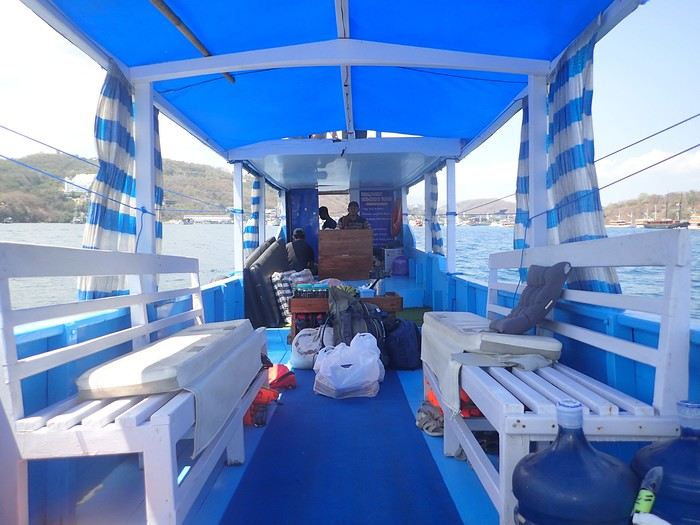 Not usually a fan of organized trips, during my stay in Labuan Bajo on Flores in May 2024, I started looking for a fisherman who could show me the islands around Komodo. At the port, I met Ari, a former freediver who knows the islands well, especially the best spots for fish and coral.
At the Bohême guest house, I proposed this outing, and one of the activity leaders was happy to join. We headed to Angel Island, where Ari took us snorkeling around the island. During this beautiful day, we appreciated his professionalism, and I suggested coming back the following year for a 5-day cruise. We had to agree on a budget and the period to consider.
Over the next year, we kept in touch via WhatsApp.
However, a month before departure, Ari told me he had lent his boat to a friend, who ran it aground on a rock, causing it to sink. No boat, no cruise! Since we had an agreement, I asked him to find another solution. His searches in the port, where everyone knows each other, turned out to be fruitful.
A certain "Captain" Kambar agreed to take us. He sometimes charters his boat for local travel agencies and could free up the requested period.
Not usually a fan of organized trips, during my stay in Labuan Bajo on Flores in May 2024, I started looking for a fisherman who could show me the islands around Komodo. At the port, I met Ari, a former freediver who knows the islands well, especially the best spots for fish and coral.
At the Bohême guest house, I proposed this outing, and one of the activity leaders was happy to join. We headed to Angel Island, where Ari took us snorkeling around the island. During this beautiful day, we appreciated his professionalism, and I suggested coming back the following year for a 5-day cruise. We had to agree on a budget and the period to consider.
Over the next year, we kept in touch via WhatsApp.
However, a month before departure, Ari told me he had lent his boat to a friend, who ran it aground on a rock, causing it to sink. No boat, no cruise! Since we had an agreement, I asked him to find another solution. His searches in the port, where everyone knows each other, turned out to be fruitful.
A certain "Captain" Kambar agreed to take us. He sometimes charters his boat for local travel agencies and could free up the requested period.
There will be six of us on board, as in the meantime, my daughter’s friend, Amandine, could join us for the cruise. Ari will act as a guide, and a mechanic will also be present. To reserve the boat for September 4th, Ari asked me to transfer a deposit of 5 million IDR to his account. After some hesitation, I decided to trust him and made the transfer. A few days later, he confirmed receipt of the amount.
In early September, we arrived in Labuan Bajo. Our first mission was to check the boat’s condition, the presence of life jackets, what we would eat, and if there were any restrictions on drinks. Everything was in order and met our expectations.
The day before departure, we met a 26-year-old Czech woman traveling alone after a stay in New Zealand. The description of our cruise excited her, and she got Ari’s number. That evening, at the restaurant, while we discussed the final preparations, Thérèsa joined us and asked if she could come along for the five-day cruise. Since she seemed like good company, I gladly accepted. However, following Indonesian custom, I negotiated firmly with Ari for a discount, and he agreed to lower the price by 2 million.
On September 4th, we set sail to explore the islands of Komodo and, above all, the seabeds, equipped with fins, masks, and snorkels. We had brought a board game for the trips between islands or for the evenings. In the end, it wasn’t used: the crossings rarely lasted more than an hour, except for two two-hour trips, and the conditions on board weren’t suitable for playing.
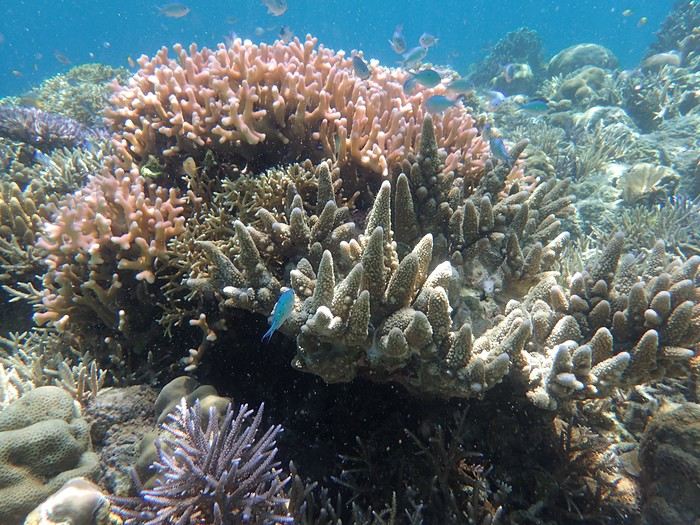
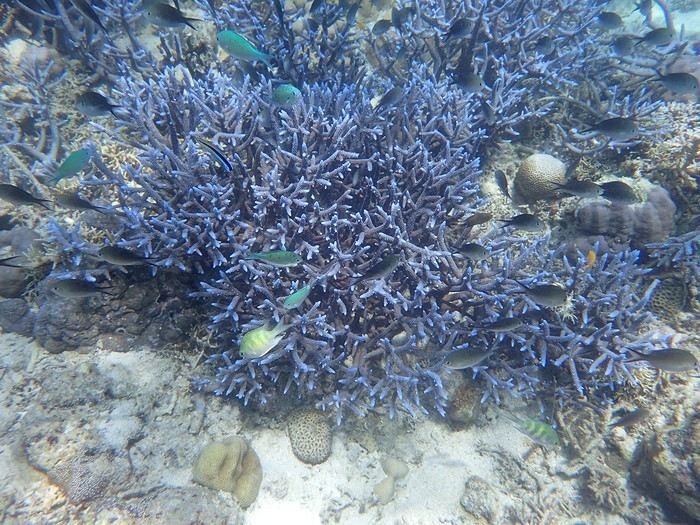 The first island we visited is north of Labuan Bajo: Seraya Small.
We didn’t disembark but anchored a short distance away. The coral reef, between 5 and 10 meters deep, offered visibility of 8 to 10 meters. We started with a few dives from the boat, as the water was so inviting. As with most of the upcoming sites, we were the only ones enjoying this little paradise.
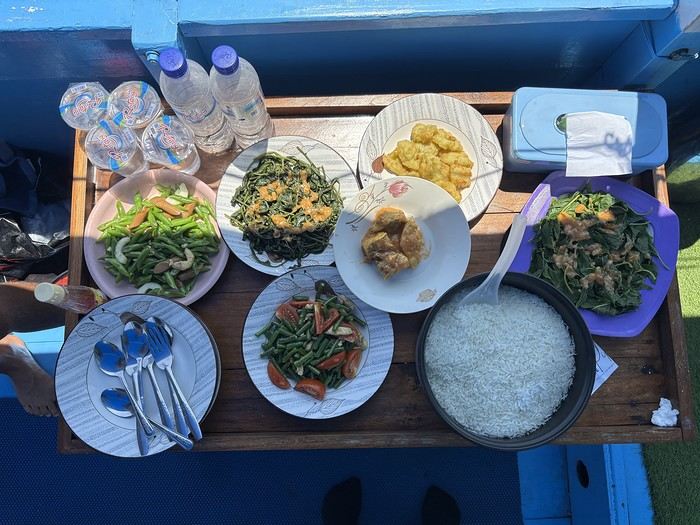
Over about a kilometer along the drop-off, colorful corals and fish abound. As long as you don’t go past the rocky point on the right, the currents remain very weak, and the spot is accessible to beginners. After enjoying the sea enough, we returned to the boat, where Ari had prepared a good meal of rice, chicken, and vegetables. It was simple but excellent after all that effort.
The first island we visited is north of Labuan Bajo: Seraya Small.
We didn’t disembark but anchored a short distance away. The coral reef, between 5 and 10 meters deep, offered visibility of 8 to 10 meters. We started with a few dives from the boat, as the water was so inviting. As with most of the upcoming sites, we were the only ones enjoying this little paradise.
Over about a kilometer along the drop-off, colorful corals and fish abound. As long as you don’t go past the rocky point on the right, the currents remain very weak, and the spot is accessible to beginners. After enjoying the sea enough, we returned to the boat, where Ari had prepared a good meal of rice, chicken, and vegetables. It was simple but excellent after all that effort.
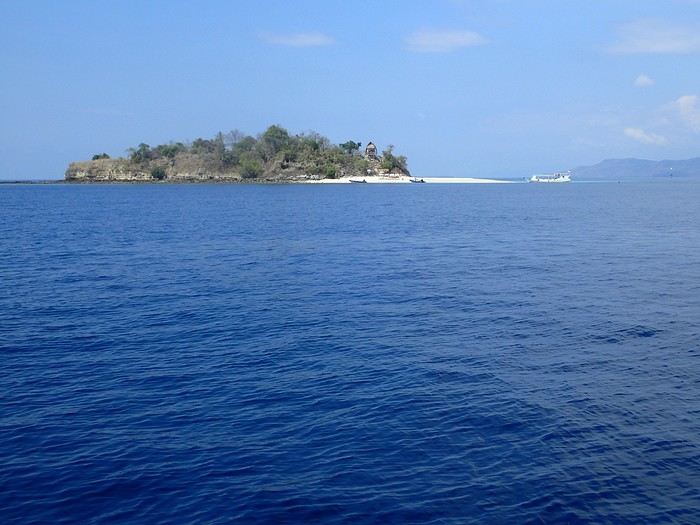 In the afternoon, we discovered Bero Island, where it was very hot. There were fewer fish and corals than at Seraya, but the corals were on white sand, allowing for beautiful, bright photos.
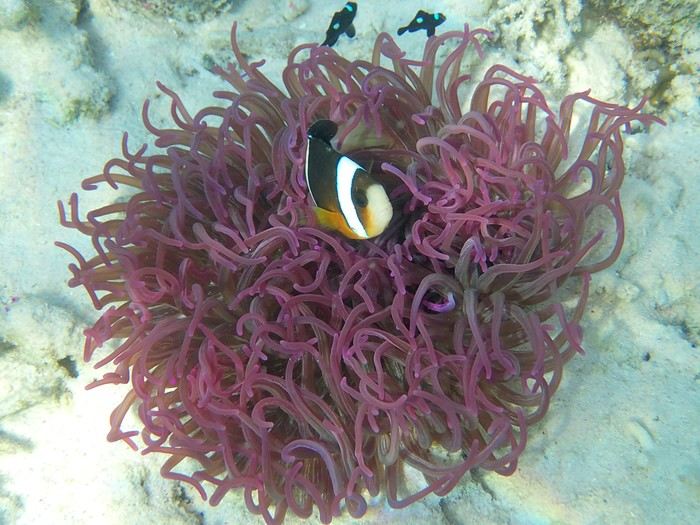 In the evening, we visited Hatamin, a fishing village. The population is very young and curious about our visit. At our request, we could have watched a local dance, but it would have taken some time to organize, and we didn’t plan to return. Ari asked if we wanted to take a shower, as on the boat, we could only rinse off with a little water from a basin.
On the second day, snorkeling near Hatamin, a small paradise island with white sand like in a travel brochure. A small temple is located in the middle of the island. In the water, we saw our first small reef sharks, some clownfish, and a sergeant major fish that followed us throughout our swim. The most beautiful part to explore is opposite the beach. Many corals and fish of all colors. A sailboat was anchored a short distance away, but we didn’t see anyone except an old man who apparently lived in the temple above.
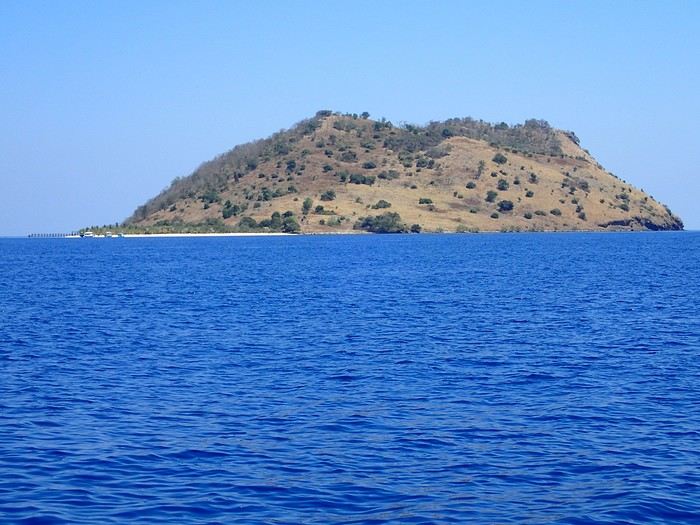
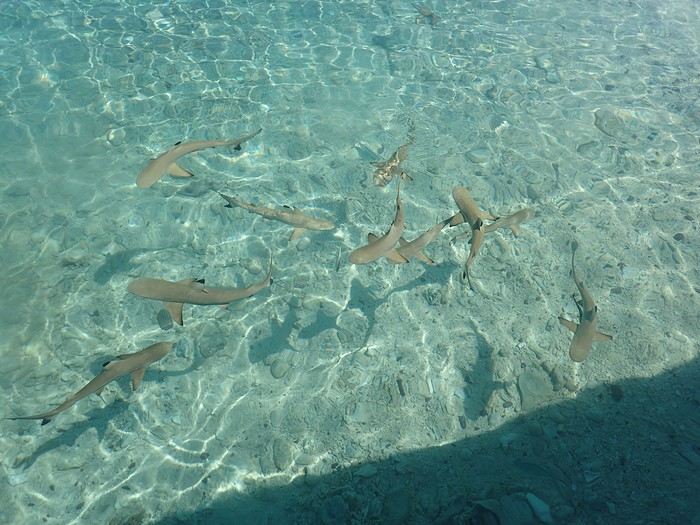
In the afternoon, we headed to the nearby island of Sabolong Besar. It’s a pretty little island with a harmonious resort made up of luxury huts that don’t spoil the landscape. In some places, the water is very clear with good visibility, and some schools of very young blacktip reef sharks swirl near the boat. There are beautiful corals on the left side of the resort and a bit of current when you approach the drop-off. Since the area to explore wasn’t very large, we had time to head to Sabolong Kecil. Then we went to the fishing village of Messah, where a Muslim celebration was taking place. There were people everywhere with many food offerings—what activity! It was like an anthill.
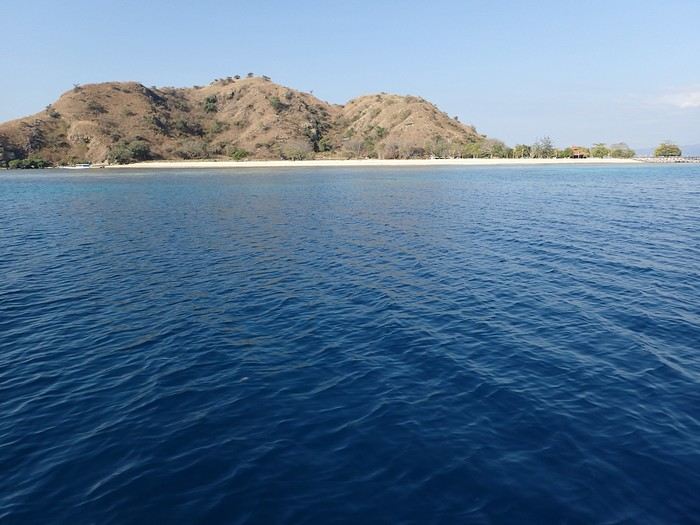
And at the end of the day, we anchored near Kanawa with a beautiful sunset.
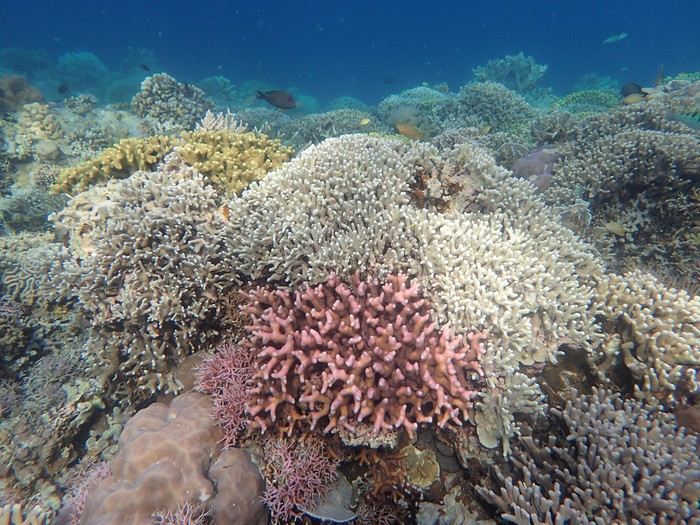 On the third day, we discovered Kanawa and some hawksbill turtles. There were many colorful corals, but we didn’t stay long. During this day, the stops were close together, making it intense with four visits.
Then we arrived at Sebayur Besar with a different snorkeling approach: Ari dropped us in the current, and we drifted for over a kilometer before he came to pick us up. At first, it seemed a bit worrying to see the boat move away while we were offshore, but we were quickly carried by the current and passed almost too quickly by so many corals and fish to see. What a pleasure to drift and freedive with little effort.
On the third day, we discovered Kanawa and some hawksbill turtles. There were many colorful corals, but we didn’t stay long. During this day, the stops were close together, making it intense with four visits.
Then we arrived at Sebayur Besar with a different snorkeling approach: Ari dropped us in the current, and we drifted for over a kilometer before he came to pick us up. At first, it seemed a bit worrying to see the boat move away while we were offshore, but we were quickly carried by the current and passed almost too quickly by so many corals and fish to see. What a pleasure to drift and freedive with little effort.
The drift lasted a good hour, and we reached Siaba Island, where the water was colder. There were many boats, and we had quickly lost the habit of seeing other tourists. Visibility was average—it was a nice spot, but after the drift at Sebayur, we liked it less. Around 1 p.m., we anchored with other boats because Ari met up with some friends, and we ate heartily since the cool water had whetted our appetites.
In the afternoon, we were at Manta Point. The water was cool, and there was a lot of excitement trying to follow the giant manta rays. We managed to dive down and get close to them, but it took a lot of effort and breath because, despite their leisurely appearance, they move quite fast for us little swimmers. Here, they come to feed and then return to the depths, and it’s not always certain you’ll encounter them. We ended the day at Makassar with a two-hour sail. There was a lot of wind and swell, the boat rocked, and we hoped there wouldn’t be an engine breakdown. We had to take down the tent on the boat’s roof, which had also been used for sleeping. Makassar’s beach is pink, caused by microorganisms called foraminifera. There are many beach huts along the shore, and we were alone, though it must get busy here during the day. On the fourth day, we visited Padar Island for its viewpoint amid hordes of tourists, then headed to Rinca and its Komodo dragons. Rinca is much less crowded than Komodo, which is why we chose this visit. We saw a few and took the usual photos. In the late afternoon, we snorkeled at Pempend Island, where the sea was choppy and the water a bit murky. And on the last day, we visited Strawberry Rock, named after the reddish rock overlooking the sea. There were many corals, but the water was rough with reduced visibility, and then we went to Kelor with its tourist "bars" and the pretty viewpoint.
In conclusion, we shared amazing moments and managed to complete our program. Luckily, the weather was very kind, and not a drop of rain fell in early September, except just upon returning to the port. It’s worth noting that after five intense days in the water from morning to night, we were glad to return to dry land because we were exhausted.
My daughter and her friend were so thrilled that, in return, they developed a website for Ari to help him get known, and I can share the link if you’d like. I visit Voyage Forum from time to time, so if you have any questions, don’t hesitate—I’ll answer them.
Not usually a fan of organized trips, during my stay in Labuan Bajo on Flores in May 2024, I started looking for a fisherman who could show me the islands around Komodo. At the port, I met Ari, a former freediver who knows the islands well, especially the best spots for fish and coral.
At the Bohême guest house, I proposed this outing, and one of the activity leaders was happy to join. We headed to Angel Island, where Ari took us snorkeling around the island. During this beautiful day, we appreciated his professionalism, and I suggested coming back the following year for a 5-day cruise. We had to agree on a budget and the period to consider.
Over the next year, we kept in touch via WhatsApp.
However, a month before departure, Ari told me he had lent his boat to a friend, who ran it aground on a rock, causing it to sink. No boat, no cruise! Since we had an agreement, I asked him to find another solution. His searches in the port, where everyone knows each other, turned out to be fruitful.
A certain "Captain" Kambar agreed to take us. He sometimes charters his boat for local travel agencies and could free up the requested period.There will be six of us on board, as in the meantime, my daughter’s friend, Amandine, could join us for the cruise. Ari will act as a guide, and a mechanic will also be present. To reserve the boat for September 4th, Ari asked me to transfer a deposit of 5 million IDR to his account. After some hesitation, I decided to trust him and made the transfer. A few days later, he confirmed receipt of the amount.
In early September, we arrived in Labuan Bajo. Our first mission was to check the boat’s condition, the presence of life jackets, what we would eat, and if there were any restrictions on drinks. Everything was in order and met our expectations.
The day before departure, we met a 26-year-old Czech woman traveling alone after a stay in New Zealand. The description of our cruise excited her, and she got Ari’s number. That evening, at the restaurant, while we discussed the final preparations, Thérèsa joined us and asked if she could come along for the five-day cruise. Since she seemed like good company, I gladly accepted. However, following Indonesian custom, I negotiated firmly with Ari for a discount, and he agreed to lower the price by 2 million.
On September 4th, we set sail to explore the islands of Komodo and, above all, the seabeds, equipped with fins, masks, and snorkels. We had brought a board game for the trips between islands or for the evenings. In the end, it wasn’t used: the crossings rarely lasted more than an hour, except for two two-hour trips, and the conditions on board weren’t suitable for playing.
The first island we visited is north of Labuan Bajo: Seraya Small.
We didn’t disembark but anchored a short distance away. The coral reef, between 5 and 10 meters deep, offered visibility of 8 to 10 meters. We started with a few dives from the boat, as the water was so inviting. As with most of the upcoming sites, we were the only ones enjoying this little paradise.
Over about a kilometer along the drop-off, colorful corals and fish abound. As long as you don’t go past the rocky point on the right, the currents remain very weak, and the spot is accessible to beginners. After enjoying the sea enough, we returned to the boat, where Ari had prepared a good meal of rice, chicken, and vegetables. It was simple but excellent after all that effort.
In the afternoon, we discovered Bero Island, where it was very hot. There were fewer fish and corals than at Seraya, but the corals were on white sand, allowing for beautiful, bright photos.
In the evening, we visited Hatamin, a fishing village. The population is very young and curious about our visit. At our request, we could have watched a local dance, but it would have taken some time to organize, and we didn’t plan to return. Ari asked if we wanted to take a shower, as on the boat, we could only rinse off with a little water from a basin.On the second day, snorkeling near Hatamin, a small paradise island with white sand like in a travel brochure. A small temple is located in the middle of the island. In the water, we saw our first small reef sharks, some clownfish, and a sergeant major fish that followed us throughout our swim. The most beautiful part to explore is opposite the beach. Many corals and fish of all colors. A sailboat was anchored a short distance away, but we didn’t see anyone except an old man who apparently lived in the temple above.
In the afternoon, we headed to the nearby island of Sabolong Besar. It’s a pretty little island with a harmonious resort made up of luxury huts that don’t spoil the landscape. In some places, the water is very clear with good visibility, and some schools of very young blacktip reef sharks swirl near the boat. There are beautiful corals on the left side of the resort and a bit of current when you approach the drop-off. Since the area to explore wasn’t very large, we had time to head to Sabolong Kecil. Then we went to the fishing village of Messah, where a Muslim celebration was taking place. There were people everywhere with many food offerings—what activity! It was like an anthill.
And at the end of the day, we anchored near Kanawa with a beautiful sunset.
On the third day, we discovered Kanawa and some hawksbill turtles. There were many colorful corals, but we didn’t stay long. During this day, the stops were close together, making it intense with four visits.
Then we arrived at Sebayur Besar with a different snorkeling approach: Ari dropped us in the current, and we drifted for over a kilometer before he came to pick us up. At first, it seemed a bit worrying to see the boat move away while we were offshore, but we were quickly carried by the current and passed almost too quickly by so many corals and fish to see. What a pleasure to drift and freedive with little effort.The drift lasted a good hour, and we reached Siaba Island, where the water was colder. There were many boats, and we had quickly lost the habit of seeing other tourists. Visibility was average—it was a nice spot, but after the drift at Sebayur, we liked it less. Around 1 p.m., we anchored with other boats because Ari met up with some friends, and we ate heartily since the cool water had whetted our appetites.
In the afternoon, we were at Manta Point. The water was cool, and there was a lot of excitement trying to follow the giant manta rays. We managed to dive down and get close to them, but it took a lot of effort and breath because, despite their leisurely appearance, they move quite fast for us little swimmers. Here, they come to feed and then return to the depths, and it’s not always certain you’ll encounter them. We ended the day at Makassar with a two-hour sail. There was a lot of wind and swell, the boat rocked, and we hoped there wouldn’t be an engine breakdown. We had to take down the tent on the boat’s roof, which had also been used for sleeping. Makassar’s beach is pink, caused by microorganisms called foraminifera. There are many beach huts along the shore, and we were alone, though it must get busy here during the day. On the fourth day, we visited Padar Island for its viewpoint amid hordes of tourists, then headed to Rinca and its Komodo dragons. Rinca is much less crowded than Komodo, which is why we chose this visit. We saw a few and took the usual photos. In the late afternoon, we snorkeled at Pempend Island, where the sea was choppy and the water a bit murky. And on the last day, we visited Strawberry Rock, named after the reddish rock overlooking the sea. There were many corals, but the water was rough with reduced visibility, and then we went to Kelor with its tourist "bars" and the pretty viewpoint.
In conclusion, we shared amazing moments and managed to complete our program. Luckily, the weather was very kind, and not a drop of rain fell in early September, except just upon returning to the port. It’s worth noting that after five intense days in the water from morning to night, we were glad to return to dry land because we were exhausted.
My daughter and her friend were so thrilled that, in return, they developed a website for Ari to help him get known, and I can share the link if you’d like. I visit Voyage Forum from time to time, so if you have any questions, don’t hesitate—I’ll answer them.
In the land... of Senegambia
Hey fellow travelers!
So, a new year has begun. It’s time to reconnect with the VF buddies and wish you all my best for 2026—a year I hope is obviously full of travel, since, as I just made up: "If travel’s good, everything’s good" 😄.
To celebrate, I’m inviting you into my new "travel journal," the one from our latest trip in November 2025, a little two-week adventure.
This time, we headed to The Gambia, a tiny country tucked right in the middle of Senegal, before making our way to Casamance.
The Gambia is English-speaking, Senegal is French-speaking, but the locals? They couldn’t care less—because in this part of the world, they mostly speak Wolof, Fula, Jola, or Mandinka. Hence the title: Senegambia 😉.
As usual, I’m sharing the live updates I sent to friends and family—super casual, of course.
I know this isn’t the kind of destination that draws crowds, but if you love adventure, laughter, and emotion, it might just be your thing 😊.
Hugs 😘
So, a new year has begun. It’s time to reconnect with the VF buddies and wish you all my best for 2026—a year I hope is obviously full of travel, since, as I just made up: "If travel’s good, everything’s good" 😄.
To celebrate, I’m inviting you into my new "travel journal," the one from our latest trip in November 2025, a little two-week adventure.
This time, we headed to The Gambia, a tiny country tucked right in the middle of Senegal, before making our way to Casamance.
The Gambia is English-speaking, Senegal is French-speaking, but the locals? They couldn’t care less—because in this part of the world, they mostly speak Wolof, Fula, Jola, or Mandinka. Hence the title: Senegambia 😉.
As usual, I’m sharing the live updates I sent to friends and family—super casual, of course.
I know this isn’t the kind of destination that draws crowds, but if you love adventure, laughter, and emotion, it might just be your thing 😊.
Hugs 😘
Nisyros: Greece’s most beautiful island?
Hi everyone,
I hesitated for a long time before publishing this travel journal since it’s been 8 months now since I left Nisyros. But in the end, I found it too beautiful to keep quiet about. So here we go—I finally got around to writing it. Nisyros is a stunning little Greek island, and luckily, it’s well hidden. Located a good twenty hours by boat from Athens, its distance from the Greek mainland deters most tourists from visiting. That’s what makes it an off-the-beaten-path destination. So much for the general info.
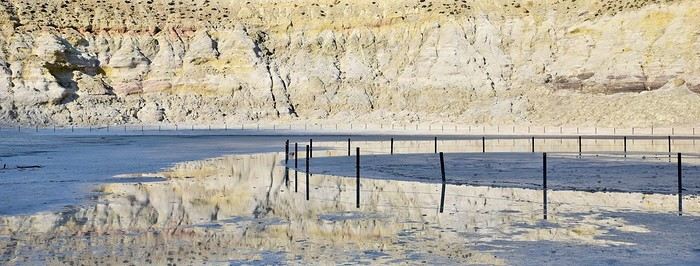
Before diving into the details, I should mention that I visited by bike (despite its severe and constant volcanic elevation) as part of a solo trip from France to Turkey. Why this detail? Because out of the ten countries I crossed and the dozens of sites I saw, Nisyros is one of my top three favorites (along with Pag Island, off-season, in Croatia, and Albania for its overall beauty—stunning natural landscapes and the incredible hospitality of its people). Anyway, welcome to this travel journal dedicated to the lovely little volcanic island of Nisyros…
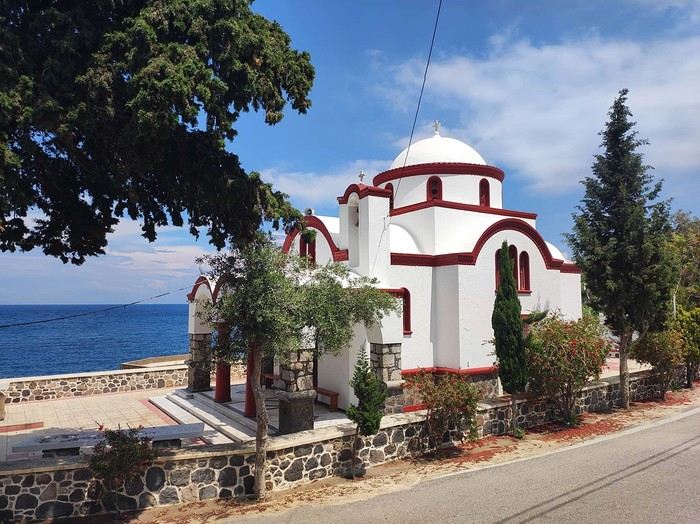
I arrived one beautiful morning in Mandraki, the island’s main port. The twenty-hour boat ride from Athens went by like a breeze. I slept on the deck for three or four hours, sprawled on a bench that was more or less sheltered from the wind. At this time of year (it’s May 2nd), tourists aren’t exactly flocking here, so the boat was far from full. My first glimpse of Nisyros is classic Greek island scenery: blazing sun, an azure sky, and an even deeper blue sea. The trip is off to a great start. I quickly found a small, out-of-the-way hotel (I’m one of those people who avoids crowds as much as possible when traveling, which is getting harder and harder to do). While everyone else from the boat turned right out of the port toward the center of Mandraki, I went left! My nice little hotel was just a hundred meters away, facing a pretty little Orthodox church whose red color contrasted beautifully with the deep blue sea.
I dropped off my panniers in my room so I could ride light for once, then headed toward the next village: Pali. It’s a small fishing village that apparently comes to life a bit in the summer with a few tourists.
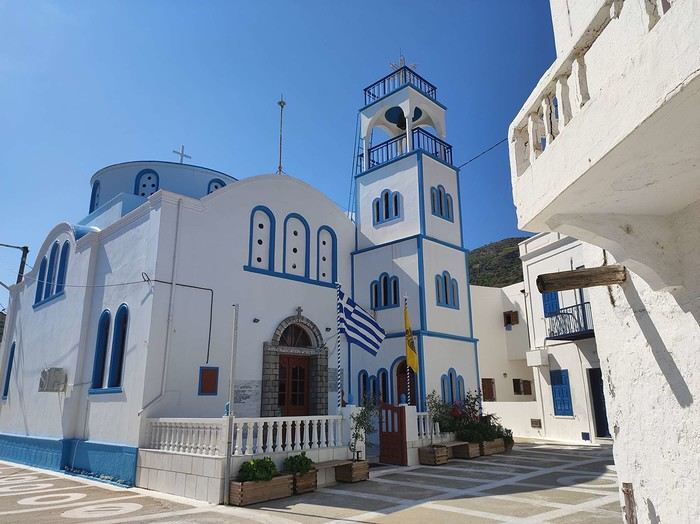
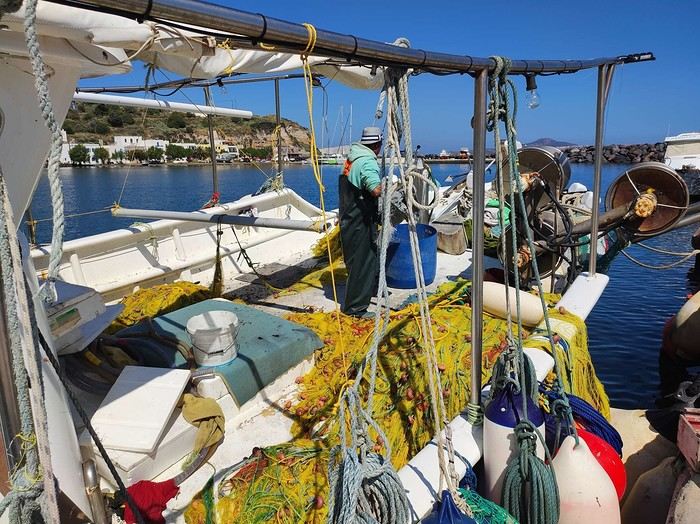
As I pedaled along the dock, I passed right by a guy sitting in a chair in full sun. Unfazed despite the sweat pouring down his forehead, he untangled his fishing net with a precision that commanded respect. I gave him the obligatory kalimera (good morning), but he reacted like a deaf-mute—no response at all. On the other hand, his employee answered me kindly from the trawler docked right next to him. Standing on deck, he was also untangling a mess of nets and invited me aboard to chat. That’s Mohamed.
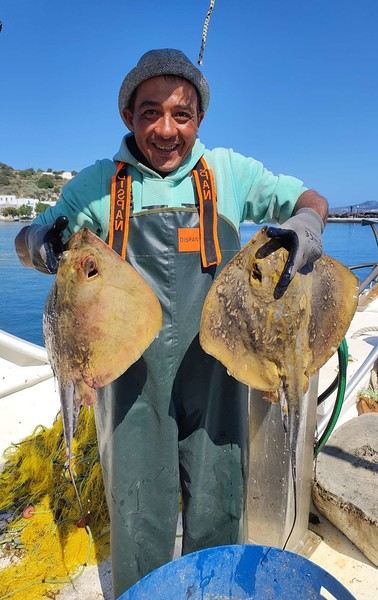
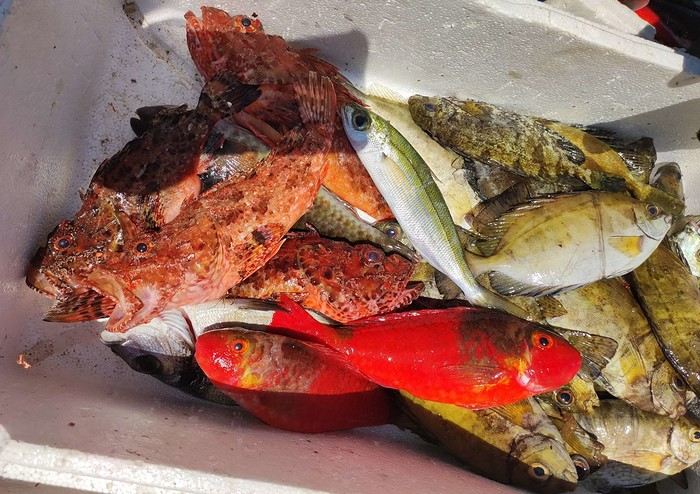
Communication wasn’t easy since he only spoke Greek and I didn’t, but he was cheerful, and his joy was contagious. He proudly showed off their catch of the day: two beautiful rays and a few brightly colored fish. We chatted like that for about fifteen minutes.
When it was time to hit the road again, I said goodbye to Mohamed, who smiled back. But this time, his boss—still dripping sweat in his chair under the scorching sun—greeted me too. Turns out he wasn’t deaf or mute after all.
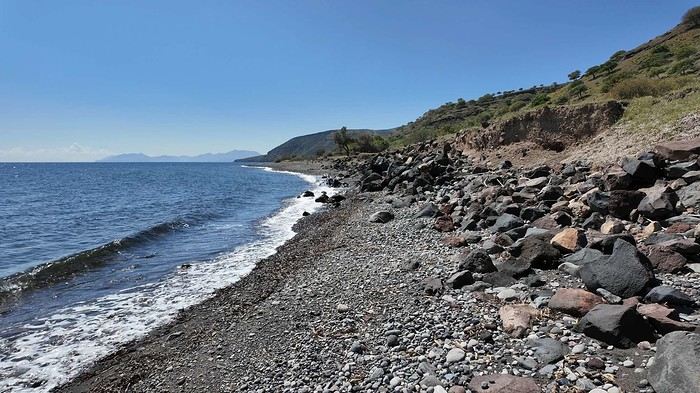
I continued along the coast since that’s where most of Nisyros’ beaches are. They start lining up just outside Pali. These are black sand beaches, which can’t hide their volcanic origins.
Yesterday afternoon in Athens, I met Peter and Michelle, a Dutch-French couple, while we were waiting for the ferry to depart. The Greek sailors were on strike, so we ended up waiting about twelve hours before setting off. Anyway, we had plenty of time to chat, and Peter, who’s lived on Tilos—a small island near Nisyros—for about twenty years, told me that many migrants pass through these two islands. Most come from Afghanistan and Syria, fleeing authoritarian regimes and the massacres that come with them. They’re looking for *anywhere* else where the future can’t possibly be worse. Peter explained that you often find their belongings on the local beaches. And sure enough, I didn’t have to look far to spot some—clothes, life jackets…
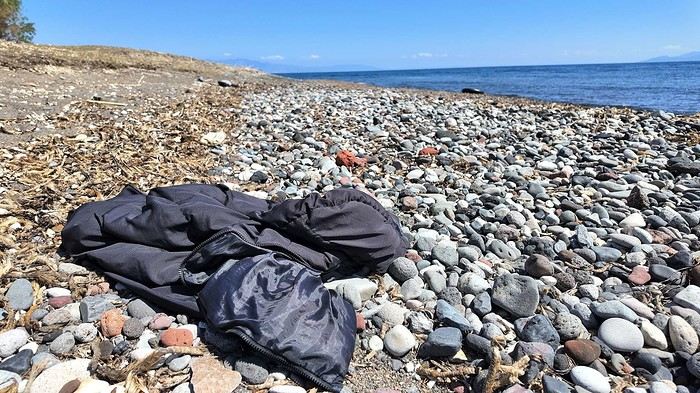
I glanced around, hoping to see one of them to maybe exchange a few words, but no—no one. I was completely alone.
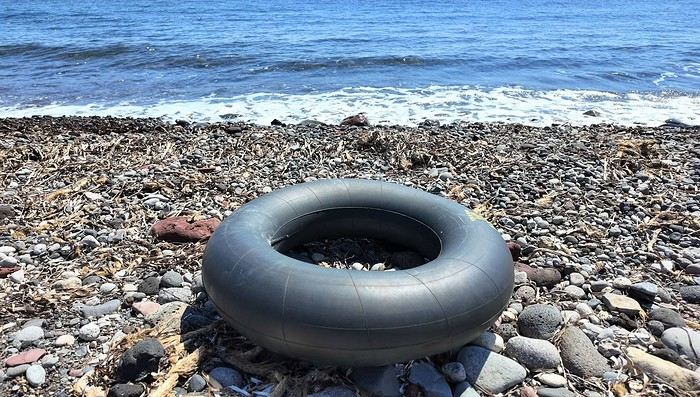
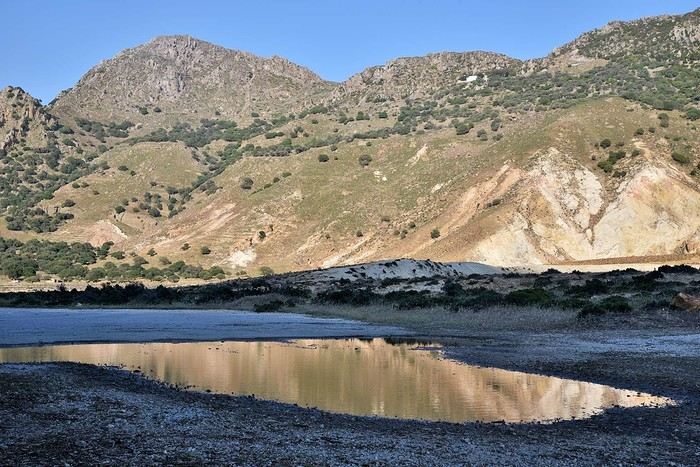
I got back on my bike and spent the rest of the day wandering aimlessly, just exploring this beautiful part of Nisyros. I also picked up some supplies because tomorrow, I’d be heading inland for two days, deep into its four-kilometer-wide caldera to explore the volcano. I’d be sleeping in a tent, so I needed to stock up on food. After a restful night in a real bed—something rare on this bike trip (and I won’t even mention the shower…)—I finally set off for the volcano (I’ll share details about that charming little hotel with the amazing breakfasts at the end of the journal). To reach Stefanos (the name of the main crater), I had to climb to the top of the caldera. It was hot, and some of the slopes were between 10 and 15%, which is steep, especially with a 54 kg bike. But who cares? I was admiring the scenery, and I have to say, I was surprised by how green it was. The higher I climbed, the more beautiful the vegetation became. It stood out against the blue of the sea, and the landscapes inside the island were truly stunning. So, I stopped every five minutes to take photos. Every now and then, I’d come across cows in the middle of the road—or goats in the trees! They climbed with the agility of monkeys to munch on the leaves. I couldn’t get a photo of them because they’d all scatter before I got close. It was actually the noise they made climbing down that tipped me off to their presence. Two villages sit at the top of the caldera: Emporios and Nikia. I passed the first one without climbing up to it, then continued to the second. And let me tell you, Nikia was love at first sight! I found myself pedaling through tiny streets, some barely wider than my bike with its panniers. The walls were white, and the doors were painted in all sorts of colors—green, blue, red… The streets were empty, and silence reigned. But it wasn’t a dead silence. It was more like the kind you find in small, secret, peaceful places. The village exuded tranquility, calm, and well-being. I leaned my bike—with all its gear—against a wall without locking it. It was the first time on this trip that I’d done that. Sure, its weight made it more like a tank than a bike, so you’d have to be *really* motivated to steal it, but here, for some reason, I felt completely at ease. Maybe it wasn’t the smartest move, but I go a lot by instinct, and here, it felt right. So I left my bike there and went to eat a little farther away, at a small restaurant on the village’s main square. It’s famous all over Greece for the beautiful mosaic that covers and decorates the floor. Once I’d eaten and drunk my fill, I hopped back on my bike, which had waited patiently without running off. And the best part? After riding uphill all morning to reach the top of the caldera, all I had to do now was coast downhill to the volcano. Pure bliss in such breathtaking scenery.
I hesitated for a long time before publishing this travel journal since it’s been 8 months now since I left Nisyros. But in the end, I found it too beautiful to keep quiet about. So here we go—I finally got around to writing it. Nisyros is a stunning little Greek island, and luckily, it’s well hidden. Located a good twenty hours by boat from Athens, its distance from the Greek mainland deters most tourists from visiting. That’s what makes it an off-the-beaten-path destination. So much for the general info.
Before diving into the details, I should mention that I visited by bike (despite its severe and constant volcanic elevation) as part of a solo trip from France to Turkey. Why this detail? Because out of the ten countries I crossed and the dozens of sites I saw, Nisyros is one of my top three favorites (along with Pag Island, off-season, in Croatia, and Albania for its overall beauty—stunning natural landscapes and the incredible hospitality of its people). Anyway, welcome to this travel journal dedicated to the lovely little volcanic island of Nisyros…
I arrived one beautiful morning in Mandraki, the island’s main port. The twenty-hour boat ride from Athens went by like a breeze. I slept on the deck for three or four hours, sprawled on a bench that was more or less sheltered from the wind. At this time of year (it’s May 2nd), tourists aren’t exactly flocking here, so the boat was far from full. My first glimpse of Nisyros is classic Greek island scenery: blazing sun, an azure sky, and an even deeper blue sea. The trip is off to a great start. I quickly found a small, out-of-the-way hotel (I’m one of those people who avoids crowds as much as possible when traveling, which is getting harder and harder to do). While everyone else from the boat turned right out of the port toward the center of Mandraki, I went left! My nice little hotel was just a hundred meters away, facing a pretty little Orthodox church whose red color contrasted beautifully with the deep blue sea.
I dropped off my panniers in my room so I could ride light for once, then headed toward the next village: Pali. It’s a small fishing village that apparently comes to life a bit in the summer with a few tourists.
As I pedaled along the dock, I passed right by a guy sitting in a chair in full sun. Unfazed despite the sweat pouring down his forehead, he untangled his fishing net with a precision that commanded respect. I gave him the obligatory kalimera (good morning), but he reacted like a deaf-mute—no response at all. On the other hand, his employee answered me kindly from the trawler docked right next to him. Standing on deck, he was also untangling a mess of nets and invited me aboard to chat. That’s Mohamed.
Communication wasn’t easy since he only spoke Greek and I didn’t, but he was cheerful, and his joy was contagious. He proudly showed off their catch of the day: two beautiful rays and a few brightly colored fish. We chatted like that for about fifteen minutes.
When it was time to hit the road again, I said goodbye to Mohamed, who smiled back. But this time, his boss—still dripping sweat in his chair under the scorching sun—greeted me too. Turns out he wasn’t deaf or mute after all.
I continued along the coast since that’s where most of Nisyros’ beaches are. They start lining up just outside Pali. These are black sand beaches, which can’t hide their volcanic origins.
Yesterday afternoon in Athens, I met Peter and Michelle, a Dutch-French couple, while we were waiting for the ferry to depart. The Greek sailors were on strike, so we ended up waiting about twelve hours before setting off. Anyway, we had plenty of time to chat, and Peter, who’s lived on Tilos—a small island near Nisyros—for about twenty years, told me that many migrants pass through these two islands. Most come from Afghanistan and Syria, fleeing authoritarian regimes and the massacres that come with them. They’re looking for *anywhere* else where the future can’t possibly be worse. Peter explained that you often find their belongings on the local beaches. And sure enough, I didn’t have to look far to spot some—clothes, life jackets…
I glanced around, hoping to see one of them to maybe exchange a few words, but no—no one. I was completely alone.
I got back on my bike and spent the rest of the day wandering aimlessly, just exploring this beautiful part of Nisyros. I also picked up some supplies because tomorrow, I’d be heading inland for two days, deep into its four-kilometer-wide caldera to explore the volcano. I’d be sleeping in a tent, so I needed to stock up on food. After a restful night in a real bed—something rare on this bike trip (and I won’t even mention the shower…)—I finally set off for the volcano (I’ll share details about that charming little hotel with the amazing breakfasts at the end of the journal). To reach Stefanos (the name of the main crater), I had to climb to the top of the caldera. It was hot, and some of the slopes were between 10 and 15%, which is steep, especially with a 54 kg bike. But who cares? I was admiring the scenery, and I have to say, I was surprised by how green it was. The higher I climbed, the more beautiful the vegetation became. It stood out against the blue of the sea, and the landscapes inside the island were truly stunning. So, I stopped every five minutes to take photos. Every now and then, I’d come across cows in the middle of the road—or goats in the trees! They climbed with the agility of monkeys to munch on the leaves. I couldn’t get a photo of them because they’d all scatter before I got close. It was actually the noise they made climbing down that tipped me off to their presence. Two villages sit at the top of the caldera: Emporios and Nikia. I passed the first one without climbing up to it, then continued to the second. And let me tell you, Nikia was love at first sight! I found myself pedaling through tiny streets, some barely wider than my bike with its panniers. The walls were white, and the doors were painted in all sorts of colors—green, blue, red… The streets were empty, and silence reigned. But it wasn’t a dead silence. It was more like the kind you find in small, secret, peaceful places. The village exuded tranquility, calm, and well-being. I leaned my bike—with all its gear—against a wall without locking it. It was the first time on this trip that I’d done that. Sure, its weight made it more like a tank than a bike, so you’d have to be *really* motivated to steal it, but here, for some reason, I felt completely at ease. Maybe it wasn’t the smartest move, but I go a lot by instinct, and here, it felt right. So I left my bike there and went to eat a little farther away, at a small restaurant on the village’s main square. It’s famous all over Greece for the beautiful mosaic that covers and decorates the floor. Once I’d eaten and drunk my fill, I hopped back on my bike, which had waited patiently without running off. And the best part? After riding uphill all morning to reach the top of the caldera, all I had to do now was coast downhill to the volcano. Pure bliss in such breathtaking scenery.
Hiking, camping, and snorkeling on Madagascar's east coast
Hello,
I’m continuing the Antalaha–Maroantsetra discussion but for some info in the other direction, specifically about hiking from Maroantsetra to Antalaha.
In mid-December, I plan to take it easy from Tamatave to Antalaha. I’m thinking of making a few stops, like Nosy Atafana—has anyone snorkeled there? Is it nice? Can you find bush taxis on the Soniera–Ivongo / Maroantsetra stretch?
After that, I’m considering walking from Maroantsetra to Antalaha and figuring things out as I go, since the path seems well-used, so I’m not planning on a guide. Good idea or totally foolish? Should I bring a tent and some camping gear, or, as I’ve read multiple times, are there several villages with lodging and food options along the way? Any spots worth stopping at or nothing special to see?
In Antalaha, I saw the recommendation for Villa Malaza in the previous discussion, so I’m keeping that in mind. If there’s space, I’ll plan to stay there. In Antalaha itself, are there any places to visit, things to see, or activities you’d recommend?
Thanks in advance to everyone for any tips—they’ll be really helpful!
In mid-December, I plan to take it easy from Tamatave to Antalaha. I’m thinking of making a few stops, like Nosy Atafana—has anyone snorkeled there? Is it nice? Can you find bush taxis on the Soniera–Ivongo / Maroantsetra stretch?
After that, I’m considering walking from Maroantsetra to Antalaha and figuring things out as I go, since the path seems well-used, so I’m not planning on a guide. Good idea or totally foolish? Should I bring a tent and some camping gear, or, as I’ve read multiple times, are there several villages with lodging and food options along the way? Any spots worth stopping at or nothing special to see?
In Antalaha, I saw the recommendation for Villa Malaza in the previous discussion, so I’m keeping that in mind. If there’s space, I’ll plan to stay there. In Antalaha itself, are there any places to visit, things to see, or activities you’d recommend?
Thanks in advance to everyone for any tips—they’ll be really helpful!
My Cuba trip experience
Hi everyone.
Here’s my personal account (just my own opinion, of course):
My trip lasted 2 months (January to March 2025). Backpacking, solo, and on a very tight budget (15 € per day on average). I traveled from Havana to: Viñales, Santa Marta/Varadero, Cienfuegos, Trinidad, Sancti Spíritus, Camagüey, Bayamo, Santiago de Cuba, Guantánamo, Baracoa, Moa, Holguín, Santa Clara, Cienfuegos, and back to Havana.
In Cuba, if you stay in *casas particulares*, you’ll have plenty of options. They’re everywhere. When I did door-to-door, I negotiated prices based on my small budget. Not always accepted, but I still managed to find families willing to host me. The island has fewer and fewer tourists each year, so many now prefer to rent a room at a low price rather than leave it empty. Inflation is insane, and Cubans struggle to get by day to day.
Door-to-door works really well (look for the blue logo of a roof on the house, which means it’s licensed to rent to foreigners)—you’ll see them everywhere. If it makes you feel more secure, you can also book through Airb’n’b, but you won’t be able to negotiate there. Important: make sure to get a VPN subscription on your phone, otherwise you won’t be able to book anything (since Airbnb is a U.S. site).
Now, for the West:
- Viñales: very pretty but *super* touristy! So, food prices are a bit high… but it’s the cheapest place to stay I found in the whole country (3 €-4 per night!!!), because there’s so much competition with *casas* (you’ll find them on every street!).
- Cienfuegos: a human-scale city, I really liked it because it’s so peaceful. Waterfront, pretty square, good prices, wide and well-lit streets—very pleasant…
- Trinidad: very expensive and very touristy. Pretty (cobblestone streets, historic center, natural surroundings), but packed with people…
- Havana: easy to find cheap accommodation if you look in Chinatown. However, you shouldn’t mind the noise and street prostitution (getting approached every 10 meters)… Central Havana is the only well-maintained and upscale part of the city (so very expensive, for tourists with money). Outside of that, everything is run-down, in ruins, or very poor (and cheap as a result).
- Varadero: no interest at all. Very expensive, superficial, and ultra-touristy. Absolutely nothing Cuban about the place. If you still want to go, stay 3 km before in Santa Marta—it’s cheaper, and you can easily walk there.
- Santa Clara: a very pretty small city with its central square. Hard to find a good place to eat with electricity—if you can afford it, go to *El Sol* restaurant, no hesitation! Great welcome and a charming spot to enjoy a meal. For accommodation, I recommend a wonderful person, Juan Carlos. *Casa San Lorenzo* on Calle Martí! Always attentive, a great spirit, and good advice…
For the Center:
- Sancti Spíritus: nothing special… just a stopover city.
- Camagüey: a nice city with welcoming people (like everywhere else), but nothing particularly noteworthy.
For the Southeast:
- Bayamo: very small, nothing special.
- Santiago de Cuba: I loved it! It felt like San Francisco with its hilly layout! Lots of street life, musicians, affordable *casas*, easy to make friendly connections, quiet spots by the water, and lively areas downtown (despite the downside of being approached every 2 minutes). And always, a warm welcome from locals (shoutout to the adorable Erika, Souleydis, and her partner—I’m giving a shoutout to *Casa San Pedro* on Calle Princesa!).
- Guantánamo: no interest. Hard to find accommodation or even food. Nothing special and not very pretty either…
- Baracoa: very pretty, though! Kept in its own juice, very typical, authentic, a peaceful waterfront, and stunning natural surroundings… Easy to find cheap accommodation.
- Moa: the only small town where I stayed 3 days and couldn’t find bottled water… Not much interest, except to rest before hitting the road again.
- Holguín: one of the cities I loved! I stayed over 10 days. Human-scale, lots of places to stay and sleep. No one bothers you in the street (except money changers). It’s a great place to live, and the people are very friendly.
Overall positives: no need to worry—Cuba is ultra-safe, no aggression, no risks. Cubans are very welcoming, smiling, and always ready to help. Public transport everywhere—buses, trucks, *collectivos*, *taxi wha-wha*… The ice cream is to die for (just watch out for power outages and freezers). Great breakfasts in *casas*—hearty and delicious… Movie theaters are practically free (in Cuban pesos), so cheap it’d be a shame to skip them (they’re often empty, by the way). Chess clubs in every city, open to everyone and free (they’re really good!). The general vibe is warm and joyful despite the hardships…
Overall negatives: lots of scams, theft, and prostitution. Except in Havana, the rest of the island has no electricity for most of the day. Hard to find good cheap food (without going to big restaurants or hotels). Often mediocre: pasta or pizza usually have no taste. Paranoia among many people who fear crime, even though the country is very safe… Inflation is so bad that many Cubans struggle to eat or get healthcare (medicine is rare and expensive).
That’s a lot to say, but that’s the gist of it… 😊
Here’s my personal account (just my own opinion, of course):
My trip lasted 2 months (January to March 2025). Backpacking, solo, and on a very tight budget (15 € per day on average). I traveled from Havana to: Viñales, Santa Marta/Varadero, Cienfuegos, Trinidad, Sancti Spíritus, Camagüey, Bayamo, Santiago de Cuba, Guantánamo, Baracoa, Moa, Holguín, Santa Clara, Cienfuegos, and back to Havana.
In Cuba, if you stay in *casas particulares*, you’ll have plenty of options. They’re everywhere. When I did door-to-door, I negotiated prices based on my small budget. Not always accepted, but I still managed to find families willing to host me. The island has fewer and fewer tourists each year, so many now prefer to rent a room at a low price rather than leave it empty. Inflation is insane, and Cubans struggle to get by day to day.
Door-to-door works really well (look for the blue logo of a roof on the house, which means it’s licensed to rent to foreigners)—you’ll see them everywhere. If it makes you feel more secure, you can also book through Airb’n’b, but you won’t be able to negotiate there. Important: make sure to get a VPN subscription on your phone, otherwise you won’t be able to book anything (since Airbnb is a U.S. site).
Now, for the West:
- Viñales: very pretty but *super* touristy! So, food prices are a bit high… but it’s the cheapest place to stay I found in the whole country (3 €-4 per night!!!), because there’s so much competition with *casas* (you’ll find them on every street!).
- Cienfuegos: a human-scale city, I really liked it because it’s so peaceful. Waterfront, pretty square, good prices, wide and well-lit streets—very pleasant…
- Trinidad: very expensive and very touristy. Pretty (cobblestone streets, historic center, natural surroundings), but packed with people…
- Havana: easy to find cheap accommodation if you look in Chinatown. However, you shouldn’t mind the noise and street prostitution (getting approached every 10 meters)… Central Havana is the only well-maintained and upscale part of the city (so very expensive, for tourists with money). Outside of that, everything is run-down, in ruins, or very poor (and cheap as a result).
- Varadero: no interest at all. Very expensive, superficial, and ultra-touristy. Absolutely nothing Cuban about the place. If you still want to go, stay 3 km before in Santa Marta—it’s cheaper, and you can easily walk there.
- Santa Clara: a very pretty small city with its central square. Hard to find a good place to eat with electricity—if you can afford it, go to *El Sol* restaurant, no hesitation! Great welcome and a charming spot to enjoy a meal. For accommodation, I recommend a wonderful person, Juan Carlos. *Casa San Lorenzo* on Calle Martí! Always attentive, a great spirit, and good advice…
For the Center:
- Sancti Spíritus: nothing special… just a stopover city.
- Camagüey: a nice city with welcoming people (like everywhere else), but nothing particularly noteworthy.
For the Southeast:
- Bayamo: very small, nothing special.
- Santiago de Cuba: I loved it! It felt like San Francisco with its hilly layout! Lots of street life, musicians, affordable *casas*, easy to make friendly connections, quiet spots by the water, and lively areas downtown (despite the downside of being approached every 2 minutes). And always, a warm welcome from locals (shoutout to the adorable Erika, Souleydis, and her partner—I’m giving a shoutout to *Casa San Pedro* on Calle Princesa!).
- Guantánamo: no interest. Hard to find accommodation or even food. Nothing special and not very pretty either…
- Baracoa: very pretty, though! Kept in its own juice, very typical, authentic, a peaceful waterfront, and stunning natural surroundings… Easy to find cheap accommodation.
- Moa: the only small town where I stayed 3 days and couldn’t find bottled water… Not much interest, except to rest before hitting the road again.
- Holguín: one of the cities I loved! I stayed over 10 days. Human-scale, lots of places to stay and sleep. No one bothers you in the street (except money changers). It’s a great place to live, and the people are very friendly.
Overall positives: no need to worry—Cuba is ultra-safe, no aggression, no risks. Cubans are very welcoming, smiling, and always ready to help. Public transport everywhere—buses, trucks, *collectivos*, *taxi wha-wha*… The ice cream is to die for (just watch out for power outages and freezers). Great breakfasts in *casas*—hearty and delicious… Movie theaters are practically free (in Cuban pesos), so cheap it’d be a shame to skip them (they’re often empty, by the way). Chess clubs in every city, open to everyone and free (they’re really good!). The general vibe is warm and joyful despite the hardships…
Overall negatives: lots of scams, theft, and prostitution. Except in Havana, the rest of the island has no electricity for most of the day. Hard to find good cheap food (without going to big restaurants or hotels). Often mediocre: pasta or pizza usually have no taste. Paranoia among many people who fear crime, even though the country is very safe… Inflation is so bad that many Cubans struggle to eat or get healthcare (medicine is rare and expensive).
That’s a lot to say, but that’s the gist of it… 😊
One-Day Visit on the Renaissance in May 2025 – CFC Cruise
Hi everyone,
We were offered a visit to the Renaissance by the new CFC cruise line through Croisiland. After reading all the reviews—some very harsh, others glowing—I wanted to form my own opinion without having to book a full cruise to test it out. This visit to the ship at the port of Le Havre for 49 € per person came at the perfect time, even if I’m a bit put off by having to pay for a ship tour. That’s not how it usually works with other cruise lines, as far as I know.
The Renaissance is a former Holland America Line ship, built in 1993 and renovated in 2023. We’re familiar with this style of ship since we took a long cruise in Polynesia in 2014 on one of its sister ships, the MS Statendam. We remember it as a charming small ship with a lovely pool terrace at the very back.
Off we went this morning for a relaxing day on a ship—always a nice change!
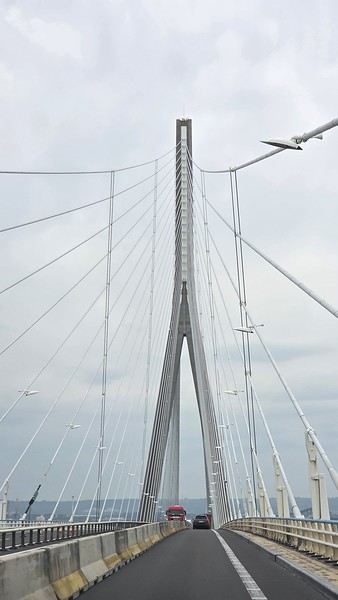
The Pont de Normandie is the last elegant structure you see before entering the vast and rather smelly port area of Le Havre.
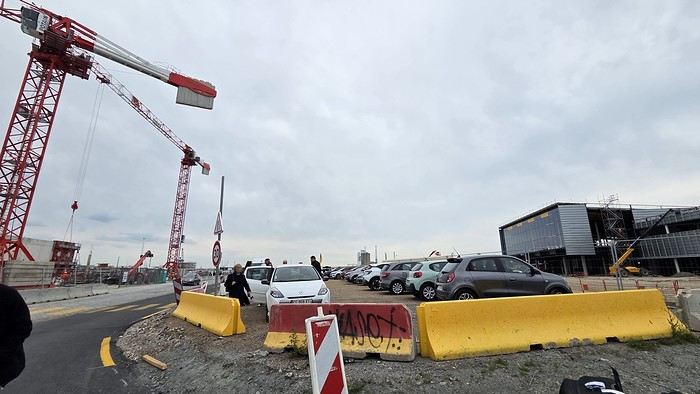
The area around the port where the Renaissance is docked is total chaos—cars everywhere and only a handful of taxis. We were supposed to have a reserved parking spot in front of the terminal (we’d even given them our car model and license plate), but we were denied entry. There’s no paved public parking, so we left the car on a vacant lot.
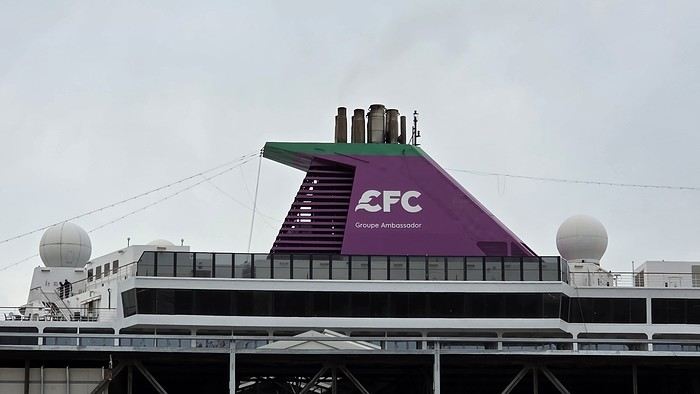
CFC was officially acquired by the British cruise line Ambassador Cruise Line in January 2025. Ambassador Cruise Line, launched in 2010, already owns two ships of the same type and age. They wasted no time repainting the funnel in their new colors.
The line of passengers disembarking and waiting for taxis is endless... and taxis are trickling in. Is this the aftermath of yesterday’s strike, or is this the norm in this port? Either way, I feel bad for the poor travelers waiting—it’s going to be a long haul. Many are leaving on foot, dragging their suitcases. Compared to the port of Marseille, this is pretty dismal.
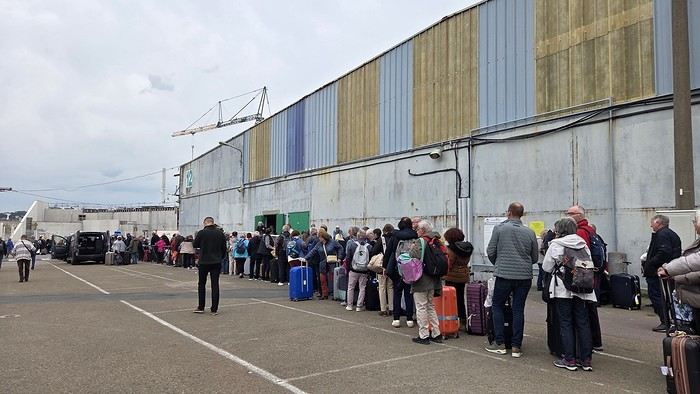
Forty spots were available for this visit organized by Croisiland, but we ran into a good hundred people at the meet-up. A group from the AVF (Accueil des Villes Françaises) of Le Havre will be joining us. Our Croisiland group consists of twelve people, if I counted right.
Security clearance is done alphabetically, and we quickly board the ship. Now we’re getting to the heart of the matter.
To be continued...
We were offered a visit to the Renaissance by the new CFC cruise line through Croisiland. After reading all the reviews—some very harsh, others glowing—I wanted to form my own opinion without having to book a full cruise to test it out. This visit to the ship at the port of Le Havre for 49 € per person came at the perfect time, even if I’m a bit put off by having to pay for a ship tour. That’s not how it usually works with other cruise lines, as far as I know.
The Renaissance is a former Holland America Line ship, built in 1993 and renovated in 2023. We’re familiar with this style of ship since we took a long cruise in Polynesia in 2014 on one of its sister ships, the MS Statendam. We remember it as a charming small ship with a lovely pool terrace at the very back.
Off we went this morning for a relaxing day on a ship—always a nice change!
The Pont de Normandie is the last elegant structure you see before entering the vast and rather smelly port area of Le Havre.
The area around the port where the Renaissance is docked is total chaos—cars everywhere and only a handful of taxis. We were supposed to have a reserved parking spot in front of the terminal (we’d even given them our car model and license plate), but we were denied entry. There’s no paved public parking, so we left the car on a vacant lot.
CFC was officially acquired by the British cruise line Ambassador Cruise Line in January 2025. Ambassador Cruise Line, launched in 2010, already owns two ships of the same type and age. They wasted no time repainting the funnel in their new colors.
The line of passengers disembarking and waiting for taxis is endless... and taxis are trickling in. Is this the aftermath of yesterday’s strike, or is this the norm in this port? Either way, I feel bad for the poor travelers waiting—it’s going to be a long haul. Many are leaving on foot, dragging their suitcases. Compared to the port of Marseille, this is pretty dismal.
Forty spots were available for this visit organized by Croisiland, but we ran into a good hundred people at the meet-up. A group from the AVF (Accueil des Villes Françaises) of Le Havre will be joining us. Our Croisiland group consists of twelve people, if I counted right.
Security clearance is done alphabetically, and we quickly board the ship. Now we’re getting to the heart of the matter.
To be continued...
3 weeks in Colombia (August 2023)
Why Colombia?
It's quite simple. For the past few years, my daughter has been living with a Colombian from Bogotá. The idea was to discover his country, meet his family, and do part of the trip all four of us together.
We’re heading out first as scouts, then they’ll join us to continue the journey.
The itinerary was shared in another post—now it’s time for the impressions.
No photos, as for me, it’s video and nothing more!
Day 1: The big departure What was planned: A flight from Lyon Saint-Exupéry late morning heading to Frankfurt. Two hours of waiting in Frankfurt (just enough time to eat a pretzel!!) and then off to Bogotá for an arrival around 7 PM local time. I hadn’t done the Check-Mig (to be done 72 hours before the flight). I did it on my phone, giving a fake arrival date in Colombia, and the attendant told me there wouldn’t be any issues in Bogotá. Actually, two hours of delay at departure in Lyon because a sick passenger was on the plane—they had to evacuate him, and the ambulance that was supposed to be there didn’t have permission to come near the plane. Ah, French administrative formalities!!!!! Flight to Frankfurt with Lufthansa went smoothly. A sprint through the airport—very well organized. Connection secured, so we boarded the plane, and two hours later than scheduled, we took off for an 11-hour flight! Arrival in Bogotá, and the immigration process took over an hour and a half because of the crowds. However, no issues with the Check-Mig—they barely glanced at it. Our daughter’s father-in-law ended up waiting over 3 hours at the airport because of this!!! Surprise: No luggage. Luckily, we had packed essentials in our carry-ons! Quick administrative paperwork, and Lufthansa informed me our bags would be on the next flight, so no big deal. Off to our hotel in La Candelaria and a good night’s rest.
The plus: We’re in Bogotá! The minus: Flight delays are becoming more and more common.
Day 1: The big departure What was planned: A flight from Lyon Saint-Exupéry late morning heading to Frankfurt. Two hours of waiting in Frankfurt (just enough time to eat a pretzel!!) and then off to Bogotá for an arrival around 7 PM local time. I hadn’t done the Check-Mig (to be done 72 hours before the flight). I did it on my phone, giving a fake arrival date in Colombia, and the attendant told me there wouldn’t be any issues in Bogotá. Actually, two hours of delay at departure in Lyon because a sick passenger was on the plane—they had to evacuate him, and the ambulance that was supposed to be there didn’t have permission to come near the plane. Ah, French administrative formalities!!!!! Flight to Frankfurt with Lufthansa went smoothly. A sprint through the airport—very well organized. Connection secured, so we boarded the plane, and two hours later than scheduled, we took off for an 11-hour flight! Arrival in Bogotá, and the immigration process took over an hour and a half because of the crowds. However, no issues with the Check-Mig—they barely glanced at it. Our daughter’s father-in-law ended up waiting over 3 hours at the airport because of this!!! Surprise: No luggage. Luckily, we had packed essentials in our carry-ons! Quick administrative paperwork, and Lufthansa informed me our bags would be on the next flight, so no big deal. Off to our hotel in La Candelaria and a good night’s rest.
The plus: We’re in Bogotá! The minus: Flight delays are becoming more and more common.
The North Cape by 4x4 in the Snow
Our trip lasted a month, from March 10 to April 10, 2024, and was done aboard our Land Rover Defender 110. For those interested, our 4x4 is equipped with mountain-approved 3PMFSF all-terrain tires (non-studded), a removable electric winch that can be attached to either the front or rear of the vehicle, two sand recovery boards, and we bring two pairs of snow chains. We sleep in our Land Rover, which is equipped with a diesel-powered independent heater, a small fridge, and has a layout that allows the dinette to be converted into a bed.
Starting from the Paris region, we crossed Belgium and Germany, took the ferry from Travemünde in northern Germany to Helsinki, followed the Russian border up to northern Finland, then headed into Norway all the way to the North Cape before returning via Norway, taking the ferry from Larvik in Norway to Hirtshals in Denmark, then passing through Germany and Belgium on our way back to France.
Tonight, March 10, 2024, we’ll be sleeping at our daughter’s place in the North.
Tuesday, March 11, we’ll cross Belgium and then enter Germany, where we’ll camp in Bremen.
Wednesday, March 12, we’ll have a quick visit to Bremen in the morning. We had planned to visit Lübeck, but some electrical issues with the car delayed us, so we head straight to the German port of Travemünde, where we’re set to embark at 11:30 PM to cross the Baltic Sea and arrive in Helsinki after 31 hours of sailing (one-way cabin ticket cost: 850 €—quite expensive since we booked last minute).
On the ferry, there are mostly semi-trucks and only a few campervans and passenger cars. The boat is quiet, and the Baltic Sea is calm.
About two hours before arriving in Helsinki, we hear noise along the hull. Surprise—looking out the porthole, we realize we’re sailing on frozen sea ice!
Thursday, March 14, we arrive at the port of Helsinki at 9:30 AM. Disembarking takes a while. As soon as we’re out, we head straight to Rastila Camping (cost: 27 €), about ten kilometers east of Helsinki. Then we go to a Land Rover garage to fix our headlight switch, which stopped working (a real hassle in Finland since you have to drive with low beams on at all times).
After the repair, we visit the stunning Temppeliaukio Church, which is built underground.
On our way back to the campsite, we stop at the supermarket for supplies. Prices are similar to France, except for imported products.
We settle into our snowy campsite spot.
Starting from the Paris region, we crossed Belgium and Germany, took the ferry from Travemünde in northern Germany to Helsinki, followed the Russian border up to northern Finland, then headed into Norway all the way to the North Cape before returning via Norway, taking the ferry from Larvik in Norway to Hirtshals in Denmark, then passing through Germany and Belgium on our way back to France.
Tonight, March 10, 2024, we’ll be sleeping at our daughter’s place in the North.
Tuesday, March 11, we’ll cross Belgium and then enter Germany, where we’ll camp in Bremen.
Wednesday, March 12, we’ll have a quick visit to Bremen in the morning. We had planned to visit Lübeck, but some electrical issues with the car delayed us, so we head straight to the German port of Travemünde, where we’re set to embark at 11:30 PM to cross the Baltic Sea and arrive in Helsinki after 31 hours of sailing (one-way cabin ticket cost: 850 €—quite expensive since we booked last minute).
On the ferry, there are mostly semi-trucks and only a few campervans and passenger cars. The boat is quiet, and the Baltic Sea is calm.
About two hours before arriving in Helsinki, we hear noise along the hull. Surprise—looking out the porthole, we realize we’re sailing on frozen sea ice!
Thursday, March 14, we arrive at the port of Helsinki at 9:30 AM. Disembarking takes a while. As soon as we’re out, we head straight to Rastila Camping (cost: 27 €), about ten kilometers east of Helsinki. Then we go to a Land Rover garage to fix our headlight switch, which stopped working (a real hassle in Finland since you have to drive with low beams on at all times).
After the repair, we visit the stunning Temppeliaukio Church, which is built underground.
On our way back to the campsite, we stop at the supermarket for supplies. Prices are similar to France, except for imported products.
We settle into our snowy campsite spot.
8-day road trip starting from Agadir
Hi everyone!
I’m heading to Morocco for a full 8 days in early November—it’s my first time visiting. I’m traveling solo and arrive in Agadir on Sunday at 10 PM.
I plan to rent a car to get around.
I’m reaching out to get your advice so I can plan my trip as well as possible...
Here are my questions:
1 - Given my late arrival, is it better to stay overnight in Agadir for the first night? If so, do you have any hotel recommendations, and is transportation easy to arrange at that hour?
2 - Do you have any trusted rental car companies to recommend in Agadir?
3 - For 7 days, here’s the route I’ve planned: Agadir → Taroudant → Taliouine → Tafraoute → Tiznit → Agadir. Does this route seem good (not too short, not too long, any spots worth adding?), considering I enjoy driving?
4 - Should I book my accommodations in advance?
Thanks in advance for your recommendations! I hope these questions aren’t too repetitive compared to what’s already been asked on the forum.
Sébastien
La Bolivie, un voyage riche en émotions! English translation pending
Bonjour à tous,
Ce carnet, je ne pensais pas le rédiger, à mon retour de Bolivie. Certains d’entre vous le savent d’ailleurs. Trop amère, trop choquée.
Et puis heureusement, le temps fait son affaire et estompe les mauvais souvenirs pour laisser principalement les bons. Rédiger ce carnet m’aide aussi je pense à tourner la page sur certains (très) mauvais moments, quand bien même ils datent déjà de huit mois. Certains épisodes auront été riches en émotions….
La Bolivie, j’en rêvais depuis plusieurs années. Envie de grands espaces, de nature, de kaléidoscope coloré. Envie de voir des lamas, des viscaches, des vigognes, des condors. Envie de voir les lagunes, LE salar, les couleurs du désert de Dali. Envie de découvrir l’Amérique du Sud et ce pays encore peu prisé des touristes. Envie de réaliser ce voyage tel que nous le pouvons sans nos enfants : peu de réservations d’hôtels, du camping sauvage et un itinéraire décidé pour les grandes étapes mais ajusté au jour le jour selon nos coups de cœur.
Les carnets lus au fil des mois confirmaient que le Sud Lipez reste accessible en individuel et autonome, même s’il est évidemment préférable de voyager à deux voitures. Mes beaux-parents acceptant de venir garder nos fils quelques jours avant le début des vacances scolaires de la Toussaint, je commence à organiser dès le mois de mai un périple de 16 jours entiers sur place. Depuis plusieurs mois, je m’étais forgé un début d’itinéraire selon ces différents critères :
J’exclus La Paz. Nous visiterons la capitale lors d’un futur voyage au Pérou où nous ajouterons quelques étapes nord-boliviennes. Je choisis d’atterrir à Santa Cruz de la Sierra avant de reprendre dans la foulée un avion pour Sucre. En effet, notre loueur de voiture, Biz Rent a Car, est situé à Sucre et a bonne réputation sur forum, notamment grâce à l’une des employées, Alejandra et sa maîtrise du français. Je prévois la majorité de notre temps dans le Sud Lipez afin de pouvoir admirer notamment les lagunes et le salar. Le carnet d’AirOne me donne envie de découvrir Tajira, région viticole et par conséquent plus verdoyante que le Sud Lipez désertique. Je réserve auprès de Vicente deux nuits dans sa ferme-auberge à Rosillas et un trek d’une journée permettant d’observer les condors Difficultés d’acclimatation liées à l’altitude : ne pas atterrir à La Paz permet déjà d’éviter une mise dans le bain d’entrée à 3600 mètres. Il sera plus aisé d’atterrir à Santa Cruz (416 mètres) et même Sucre (2750 mètres), d’autant que nous prévoyons de partir rapidement sur la région de Tajira (1900 mètres).
L’Amérique du Sud offrant plusieurs pays nous attirant depuis quelques années, mon mari a commencé à apprendre l’espagnol deux ans auparavant. Heureusement, car nous n’avons rencontré que très peu de Boliviens parlant (un peu) l’anglais. Comme beaucoup de voyageurs, nous avions téléchargé des cartes sous Maps.me qui une fois stockées sur les téléphones permettent de circuler sans accès au réseau.
J’apprends dans le courant de l’été 2019 que les élections présidentielles auront lieu pendant notre séjour. Soit ! Ce ne sera pas notre premier voyage en pleine campagne présidentielle. Au départ, je n’y prête pas tellement attention. Et puis fin août, Carmen (Ticapi) m’apprend qu’il sera interdit de circuler lors du premier tour des élections, le dimanche 20 octobre. Après consultation de mon ébauche d’itinéraire, nous avions justement prévu de repartir ce jour-là de Rosillas pour rejoindre Tupiza avant d’enchaîner sur le Sud Lipez. Avec seize jours sur place, nous n’avions pas envie de « perdre » une journée à Rosillas et reporter notre départ d’une journée. Il était également difficile de prévoir le trek le dimanche 20 car Vincent nous a précisé qu’en raison des élections, les villageois ne seraient pas disponibles pour faire office de guide dans la montagne. Il nous fallait trouver un endroit où nous pourrions passer la journée entière sans utiliser la voiture. Pas si simple. Alors finalement, plutôt qu’entamer notre séjour par Rosillas, cette étape sera la dernière de notre voyage. Nous devons atterrir à Sucre le matin du mercredi 17 et je prévois d’y séjourner deux jours. Direction ensuite Tupiza puis Guadalupe et enfin la laguna Celeste où nous resterons la fameuse journée des élections présidentielles à randonner dans les environs. Ça, c’était le programme initial. Ça ne s’est pas tout à fait déroulé ainsi !
Allez, quelques photos pour, peut-être, vous donner envie de poursuivre la lecture de ce carnet 🙂
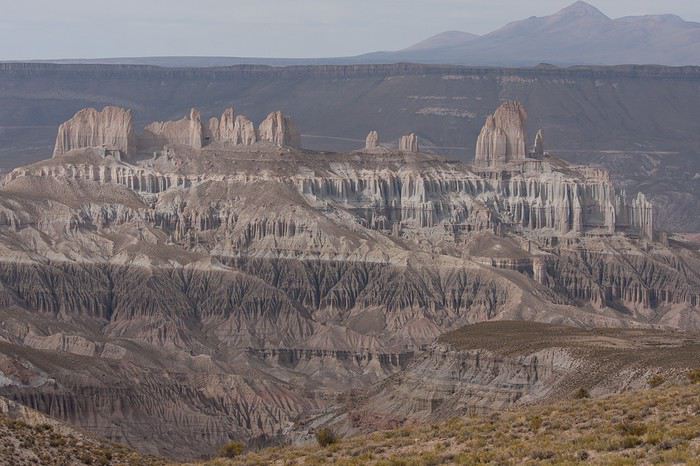
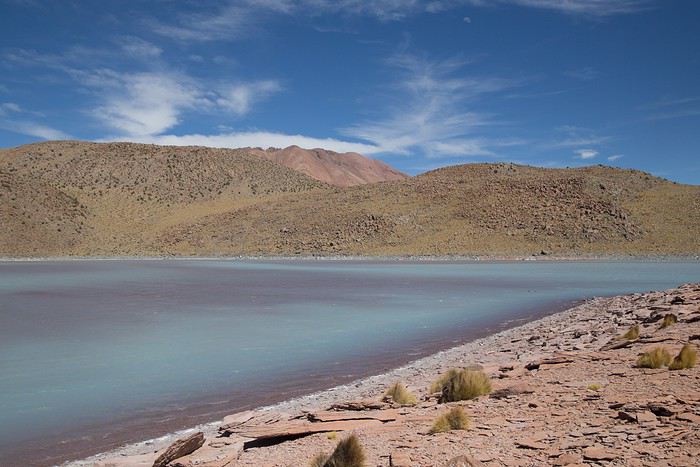
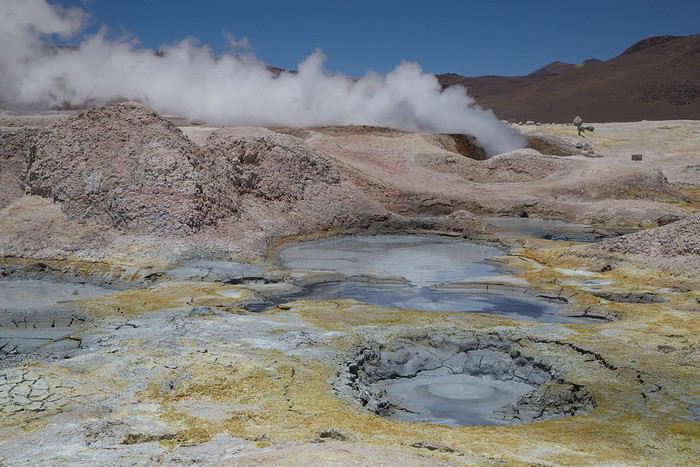
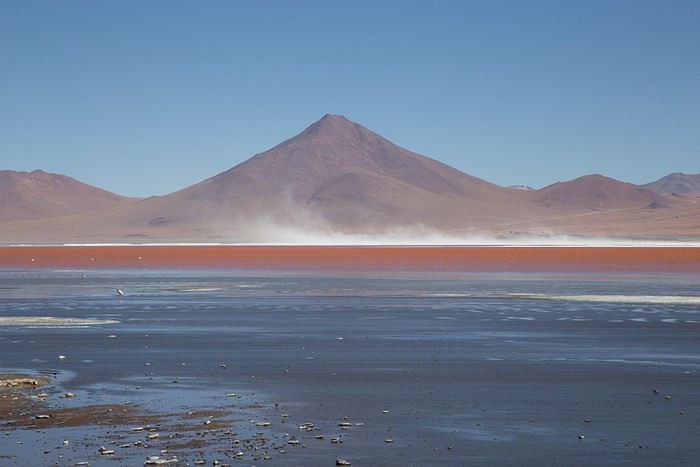
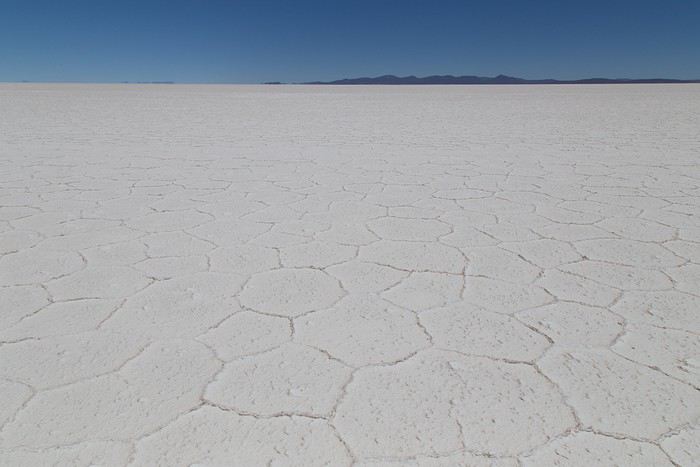
Et puis heureusement, le temps fait son affaire et estompe les mauvais souvenirs pour laisser principalement les bons. Rédiger ce carnet m’aide aussi je pense à tourner la page sur certains (très) mauvais moments, quand bien même ils datent déjà de huit mois. Certains épisodes auront été riches en émotions….
La Bolivie, j’en rêvais depuis plusieurs années. Envie de grands espaces, de nature, de kaléidoscope coloré. Envie de voir des lamas, des viscaches, des vigognes, des condors. Envie de voir les lagunes, LE salar, les couleurs du désert de Dali. Envie de découvrir l’Amérique du Sud et ce pays encore peu prisé des touristes. Envie de réaliser ce voyage tel que nous le pouvons sans nos enfants : peu de réservations d’hôtels, du camping sauvage et un itinéraire décidé pour les grandes étapes mais ajusté au jour le jour selon nos coups de cœur.
Les carnets lus au fil des mois confirmaient que le Sud Lipez reste accessible en individuel et autonome, même s’il est évidemment préférable de voyager à deux voitures. Mes beaux-parents acceptant de venir garder nos fils quelques jours avant le début des vacances scolaires de la Toussaint, je commence à organiser dès le mois de mai un périple de 16 jours entiers sur place. Depuis plusieurs mois, je m’étais forgé un début d’itinéraire selon ces différents critères :
J’exclus La Paz. Nous visiterons la capitale lors d’un futur voyage au Pérou où nous ajouterons quelques étapes nord-boliviennes. Je choisis d’atterrir à Santa Cruz de la Sierra avant de reprendre dans la foulée un avion pour Sucre. En effet, notre loueur de voiture, Biz Rent a Car, est situé à Sucre et a bonne réputation sur forum, notamment grâce à l’une des employées, Alejandra et sa maîtrise du français. Je prévois la majorité de notre temps dans le Sud Lipez afin de pouvoir admirer notamment les lagunes et le salar. Le carnet d’AirOne me donne envie de découvrir Tajira, région viticole et par conséquent plus verdoyante que le Sud Lipez désertique. Je réserve auprès de Vicente deux nuits dans sa ferme-auberge à Rosillas et un trek d’une journée permettant d’observer les condors Difficultés d’acclimatation liées à l’altitude : ne pas atterrir à La Paz permet déjà d’éviter une mise dans le bain d’entrée à 3600 mètres. Il sera plus aisé d’atterrir à Santa Cruz (416 mètres) et même Sucre (2750 mètres), d’autant que nous prévoyons de partir rapidement sur la région de Tajira (1900 mètres).
L’Amérique du Sud offrant plusieurs pays nous attirant depuis quelques années, mon mari a commencé à apprendre l’espagnol deux ans auparavant. Heureusement, car nous n’avons rencontré que très peu de Boliviens parlant (un peu) l’anglais. Comme beaucoup de voyageurs, nous avions téléchargé des cartes sous Maps.me qui une fois stockées sur les téléphones permettent de circuler sans accès au réseau.
J’apprends dans le courant de l’été 2019 que les élections présidentielles auront lieu pendant notre séjour. Soit ! Ce ne sera pas notre premier voyage en pleine campagne présidentielle. Au départ, je n’y prête pas tellement attention. Et puis fin août, Carmen (Ticapi) m’apprend qu’il sera interdit de circuler lors du premier tour des élections, le dimanche 20 octobre. Après consultation de mon ébauche d’itinéraire, nous avions justement prévu de repartir ce jour-là de Rosillas pour rejoindre Tupiza avant d’enchaîner sur le Sud Lipez. Avec seize jours sur place, nous n’avions pas envie de « perdre » une journée à Rosillas et reporter notre départ d’une journée. Il était également difficile de prévoir le trek le dimanche 20 car Vincent nous a précisé qu’en raison des élections, les villageois ne seraient pas disponibles pour faire office de guide dans la montagne. Il nous fallait trouver un endroit où nous pourrions passer la journée entière sans utiliser la voiture. Pas si simple. Alors finalement, plutôt qu’entamer notre séjour par Rosillas, cette étape sera la dernière de notre voyage. Nous devons atterrir à Sucre le matin du mercredi 17 et je prévois d’y séjourner deux jours. Direction ensuite Tupiza puis Guadalupe et enfin la laguna Celeste où nous resterons la fameuse journée des élections présidentielles à randonner dans les environs. Ça, c’était le programme initial. Ça ne s’est pas tout à fait déroulé ainsi !
Allez, quelques photos pour, peut-être, vous donner envie de poursuivre la lecture de ce carnet 🙂
La SNCF aime-t-elle le vélo? English translation pending
Bonjour à tous
Cyclo de fraîche date, j'ai pour ambition d'amener mon vélo de Paris à Nice fin août et de démarrer mon voyage là-bas. Je pensais qu'il serait assez simple de trouver une place dans un train (quitte à payer un supplément). Comme j'étais naïf !! Je découvre qu'il n'y a absolument rien. L'alternative serait de démonter mon vélo et de le mettre dans une housse, sauf que la SNCF ne prête pas de housse. Or, sachant que je repartirai de Nice à vélo, je n'ai aucune intention de me trimballer une housse.
Bref, quelle solution voyez-vous ? Enchaîner les TER et mettre 2 jours pour aller de Paris à Nice ? Prendre l'avion, et tant pis pour la planète ?
Je suis à l'écoute de vos idées, mais vraiment je tombe de haut.
Merci !
Cyclo de fraîche date, j'ai pour ambition d'amener mon vélo de Paris à Nice fin août et de démarrer mon voyage là-bas. Je pensais qu'il serait assez simple de trouver une place dans un train (quitte à payer un supplément). Comme j'étais naïf !! Je découvre qu'il n'y a absolument rien. L'alternative serait de démonter mon vélo et de le mettre dans une housse, sauf que la SNCF ne prête pas de housse. Or, sachant que je repartirai de Nice à vélo, je n'ai aucune intention de me trimballer une housse.
Bref, quelle solution voyez-vous ? Enchaîner les TER et mettre 2 jours pour aller de Paris à Nice ? Prendre l'avion, et tant pis pour la planète ?
Je suis à l'écoute de vos idées, mais vraiment je tombe de haut.
Merci !
Flower power (Golfe du Morbihan) English translation pending
D'abord nous avons pensé que nous serions épargnés. La fabrique du monde aurait poursuivi sa besogne paisiblement, élaborant, jours intenses après nuits remplies, le devenir de l'humanité.
La montée en puissance s'est faite progressivement, un seul lit réservé au début, plus d'un tiers du service ensuite. Sans plus de personnel. Sans plus de matériel.
Envoyée spéciale dans une ville dépeuplée de ses habitants, immense privilège ou épée de Damoclès ? Immense privilège !
J'ai aimé aller et revenir dans un Paris fantomatique. Les trains étaient toujours à l'heure. Les affiches du métro parlaient d'un monde qui n'existait plus, présentaient des spectacles qui ne se tiendraient pas… et des pubs inutiles avant même d'avoir été essentielles. Coronavirus avait remplacé pickpocket dans les annonces sonores.
 Moments irréels qui désapprennent toutes les certitudes, lieux familiers devenus méconnaissables qui lavent le regard et parfois l'émerveillent lorsque la rue offre des cadeaux inattendus : une minuscule boite rouge en forme de cœur qui détonne sur le trottoir gris. La foule qui ne se pressait pas ne l'avait pas piétinée.

Près de 3 mois ont passé embarqués dans un bateau qui tanguait sans savoir si et quand il arriverait au port… Près de 3 mois immergés dans l'inquiétude, l'incertitude, à chercher vainement le capitaine... mais trop de mains se pressaient sur la barre du gouvernail.
Cette folie qui a mis le monde à l'arrêt et la tête de certain.e.s à l'envers a imprimé dans ma mémoire une écœurante odeur d'alcool. La gueule de bois sans l'ivresse préalable.
... / ...
Alors, il faudra...
... Il faudra l'eau froide de l'Atlantique, des marches légères, l'odeur des genêts, le goût du large et des vues à perte de vue là où le ciel tombe dans la mer. Il faudra des chemins poudreux, parfois si étroits que les branches basses griffent les mollets et que les papillons s'emmêlent dans les cheveux. Un bout de GR, des sous bois aux racines saillantes avec l’océan à portée de main.
Un temps qui hésite entre soleil et pluie, des ciels de peintre en aplats de bleu soulignés de blanc et de gris fumé… des orages soudains.
Il faudra la force du granit, des villages ramassés autour de leurs églises bordées d'hortensias, les pavés inégaux des ruelles du centre ville, un passeur qui file vers une île… ce sera l'île d’Arz.
Et puis il faudra des fleurs ! Des fleurs sauvages ou cultivées, des empotées, des exubérantes, des rustiques. Des fleurs de toutes les couleurs, des tape à l'œil ou des petites fleurs de rien.
Des parterres odorants, bouquet de senteurs délicates ou d'odeurs fétides, des fleurs fanées, des justes écloses ou des déflorées. Des fleurs urbaines nichées dans les interstices du macadam, des belles des champs échevelées. Des mauvaises herbes. Des fleurs du mal. Un camaïeu de nuances pastels ou flamboyantes, un feu d'artifice d'arc en ciel.
Des fleurs soyeuses en couleurs comme des mots en couleurs… pour oublier, le temps d'une échappée belle, les fleurs de bitume, petits cercles blancs à deux ou trois pétales, pointillés rageurs, qui ont poussé en une nuit sur les trottoirs de Paris et les quais du métro.
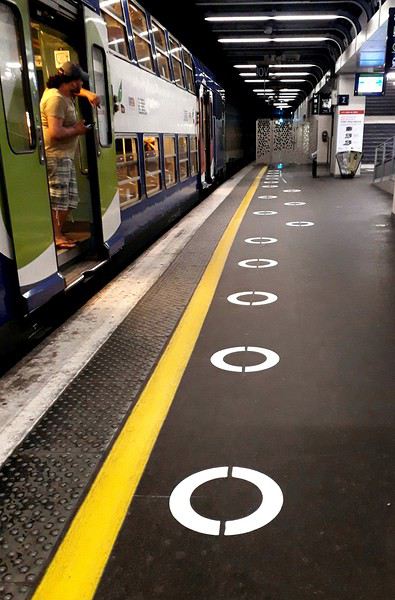
Alors ce sera 8 jours dans le golfe du Morbihan aux alentours de Vannes et des marais de Séné.

Pari sur l'avenir, le train fut réservé alors que la limite des 100km était toujours en vigueur… elle sera supprimée 2 jours avant. (100km, c'est trop court pour ceux qui ... comme nous d'un aussi grand...)
Ici comme ailleurs la vie arrêtée a repris son cours avec des absurdités, des incohérences, du cynisme parfois... "Mesdames, messieurs, veuillez respecter la distance d'un mètre cinquante pour monter et descendre du train, mais une fois à bord vous aurez un voisin de siège puisque la promesse des 50% de places vendues a aussi été supprimée 2 jours avant !"
Envoyée spéciale dans une ville dépeuplée de ses habitants, immense privilège ou épée de Damoclès ? Immense privilège !
J'ai aimé aller et revenir dans un Paris fantomatique. Les trains étaient toujours à l'heure. Les affiches du métro parlaient d'un monde qui n'existait plus, présentaient des spectacles qui ne se tiendraient pas… et des pubs inutiles avant même d'avoir été essentielles. Coronavirus avait remplacé pickpocket dans les annonces sonores.
Moments irréels qui désapprennent toutes les certitudes, lieux familiers devenus méconnaissables qui lavent le regard et parfois l'émerveillent lorsque la rue offre des cadeaux inattendus : une minuscule boite rouge en forme de cœur qui détonne sur le trottoir gris. La foule qui ne se pressait pas ne l'avait pas piétinée.
Près de 3 mois ont passé embarqués dans un bateau qui tanguait sans savoir si et quand il arriverait au port… Près de 3 mois immergés dans l'inquiétude, l'incertitude, à chercher vainement le capitaine... mais trop de mains se pressaient sur la barre du gouvernail.
Cette folie qui a mis le monde à l'arrêt et la tête de certain.e.s à l'envers a imprimé dans ma mémoire une écœurante odeur d'alcool. La gueule de bois sans l'ivresse préalable.
... / ...
Alors, il faudra...
... Il faudra l'eau froide de l'Atlantique, des marches légères, l'odeur des genêts, le goût du large et des vues à perte de vue là où le ciel tombe dans la mer. Il faudra des chemins poudreux, parfois si étroits que les branches basses griffent les mollets et que les papillons s'emmêlent dans les cheveux. Un bout de GR, des sous bois aux racines saillantes avec l’océan à portée de main.
Un temps qui hésite entre soleil et pluie, des ciels de peintre en aplats de bleu soulignés de blanc et de gris fumé… des orages soudains.
Il faudra la force du granit, des villages ramassés autour de leurs églises bordées d'hortensias, les pavés inégaux des ruelles du centre ville, un passeur qui file vers une île… ce sera l'île d’Arz.
Et puis il faudra des fleurs ! Des fleurs sauvages ou cultivées, des empotées, des exubérantes, des rustiques. Des fleurs de toutes les couleurs, des tape à l'œil ou des petites fleurs de rien.
Des parterres odorants, bouquet de senteurs délicates ou d'odeurs fétides, des fleurs fanées, des justes écloses ou des déflorées. Des fleurs urbaines nichées dans les interstices du macadam, des belles des champs échevelées. Des mauvaises herbes. Des fleurs du mal. Un camaïeu de nuances pastels ou flamboyantes, un feu d'artifice d'arc en ciel.
Des fleurs soyeuses en couleurs comme des mots en couleurs… pour oublier, le temps d'une échappée belle, les fleurs de bitume, petits cercles blancs à deux ou trois pétales, pointillés rageurs, qui ont poussé en une nuit sur les trottoirs de Paris et les quais du métro.
Alors ce sera 8 jours dans le golfe du Morbihan aux alentours de Vannes et des marais de Séné.
Pari sur l'avenir, le train fut réservé alors que la limite des 100km était toujours en vigueur… elle sera supprimée 2 jours avant. (100km, c'est trop court pour ceux qui ... comme nous d'un aussi grand...)
Ici comme ailleurs la vie arrêtée a repris son cours avec des absurdités, des incohérences, du cynisme parfois... "Mesdames, messieurs, veuillez respecter la distance d'un mètre cinquante pour monter et descendre du train, mais une fois à bord vous aurez un voisin de siège puisque la promesse des 50% de places vendues a aussi été supprimée 2 jours avant !"
Kenya February 2020: From Tsavo to Samburu via Meru National Park
Good evening everyone,
I hope you're all doing well despite this very unusual time…
Here’s a new travel journal to get you back on the Kenyan trails.
It was a really great idea to buy those flight tickets to Nairobi back in December. When Benoit suggested this new safari in February, I hesitated a little (very little): it was the season with particularly high temperatures, and the short rainy season in November/December had been very heavy, raising concerns about the state of the tracks… Given the current situation, no regrets, of course… We quickly organized the safari with our usual guide, and we booked the accommodations ourselves directly. (If we’d waited just a few more weeks, we might’ve regretted it…)
For once, we were able to leave from the airport near where we live (Lorient - Lann Bihoué), which is really convenient: no driving, no parking… We left home at 2 PM on Tuesday, February 18th, and arrived in Nairobi at 6 AM the next morning—perfect. (With a layover in CDG, of course 😉) Upon arrival, after a forehead temperature check by airport staff, we got our visas very quickly (forms filled out before departure). The customs agents congratulated us on our passports full of Kenyan stamps… but we still had to pay the 40 € for the visa.
All that was left was to collect our luggage, and we’d be ready to leave the airport shortly after landing. But there was a small issue: the baggage conveyor belt was broken… Eventually, the suitcases and bags were brought out by hand… Hakuna Matata, as they say here—no problem, as long as they’re all there. Benoit sent a message to Félix, our guide, to come meet us in the airport parking lot. After catching up with our respective families, we set off toward the Mombasa road, heading to Voi.
Traffic in Nairobi is still as heavy as ever, and the pollution is very noticeable (cars, but also cement factories…). The current lockdown has changed things. On social media, Mount Kenya and Kilimanjaro seem visible from Nairobi now!…
The first stop on this safari was a place we hadn’t visited before: the LUMO Community Wildlife Conservancy lumoconservancy.com/. It’s a small reserve located west of Tsavo West and near the Taita Hills. The reserve is managed by the local community, and entry fees are lower than in Tsavo’s national parks. We had initially planned to spend three days in Tsavo East, but since the accommodation wasn’t available for that long, we ended up choosing this option, which turned out to be a great discovery. Since the reserve is small, I think it’s hard to spend more than two days there. The advantage is that, since it’s not a national park, activities like walks or night safaris can be offered.
Alright, here are a few images to set the mood.
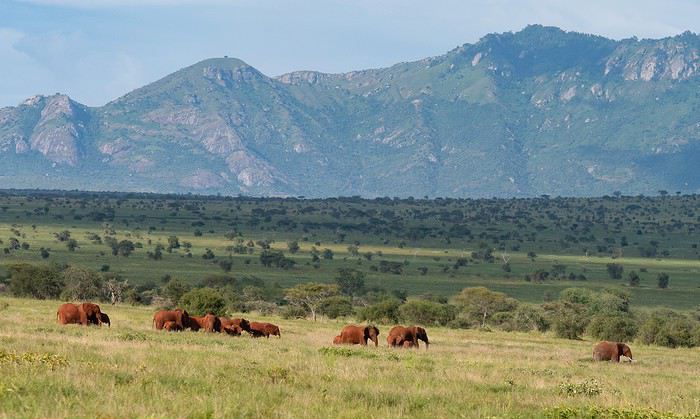
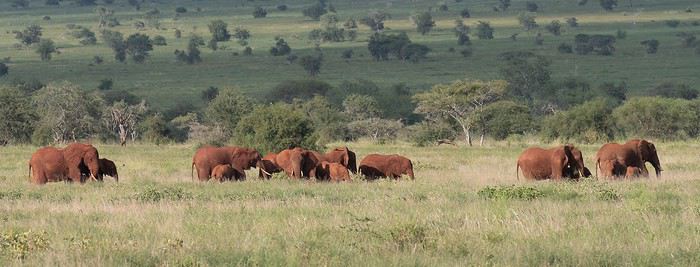
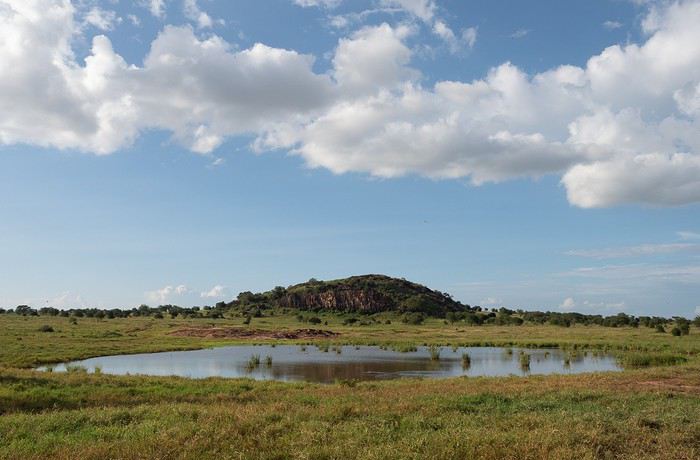
Elephants, but also hartebeests and lots of giraffes in a light we really liked.
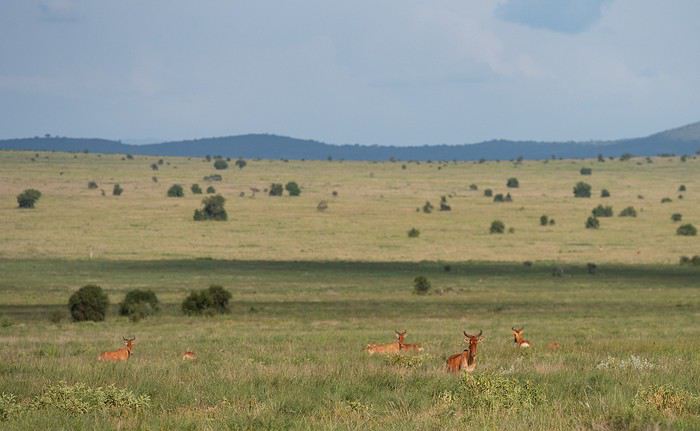
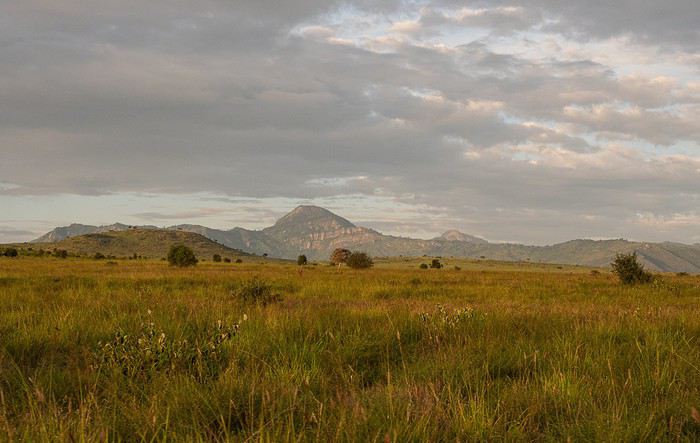
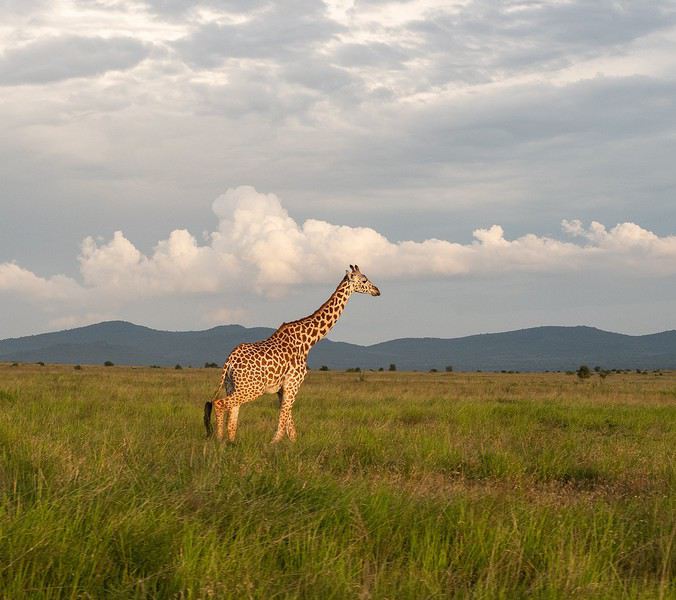
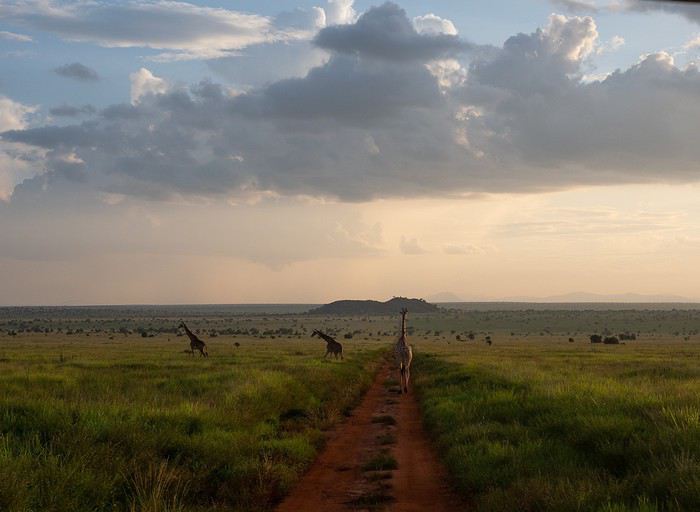
It was a really great idea to buy those flight tickets to Nairobi back in December. When Benoit suggested this new safari in February, I hesitated a little (very little): it was the season with particularly high temperatures, and the short rainy season in November/December had been very heavy, raising concerns about the state of the tracks… Given the current situation, no regrets, of course… We quickly organized the safari with our usual guide, and we booked the accommodations ourselves directly. (If we’d waited just a few more weeks, we might’ve regretted it…)
For once, we were able to leave from the airport near where we live (Lorient - Lann Bihoué), which is really convenient: no driving, no parking… We left home at 2 PM on Tuesday, February 18th, and arrived in Nairobi at 6 AM the next morning—perfect. (With a layover in CDG, of course 😉) Upon arrival, after a forehead temperature check by airport staff, we got our visas very quickly (forms filled out before departure). The customs agents congratulated us on our passports full of Kenyan stamps… but we still had to pay the 40 € for the visa.
All that was left was to collect our luggage, and we’d be ready to leave the airport shortly after landing. But there was a small issue: the baggage conveyor belt was broken… Eventually, the suitcases and bags were brought out by hand… Hakuna Matata, as they say here—no problem, as long as they’re all there. Benoit sent a message to Félix, our guide, to come meet us in the airport parking lot. After catching up with our respective families, we set off toward the Mombasa road, heading to Voi.
Traffic in Nairobi is still as heavy as ever, and the pollution is very noticeable (cars, but also cement factories…). The current lockdown has changed things. On social media, Mount Kenya and Kilimanjaro seem visible from Nairobi now!…
The first stop on this safari was a place we hadn’t visited before: the LUMO Community Wildlife Conservancy lumoconservancy.com/. It’s a small reserve located west of Tsavo West and near the Taita Hills. The reserve is managed by the local community, and entry fees are lower than in Tsavo’s national parks. We had initially planned to spend three days in Tsavo East, but since the accommodation wasn’t available for that long, we ended up choosing this option, which turned out to be a great discovery. Since the reserve is small, I think it’s hard to spend more than two days there. The advantage is that, since it’s not a national park, activities like walks or night safaris can be offered.
Alright, here are a few images to set the mood.
Elephants, but also hartebeests and lots of giraffes in a light we really liked.
Croisière MSC Preziosa, départ le 4 juin et solde à payer maintenant English translation pending
Bonjour
J'avais réservé 2 croisières successives sur le MSC Preziosa, dans 2 agences différentes. La première, départ le 24 mai, réservée en Allemagne, est annulée. J'attends les nouvelles de l'agence pour connaitre les modalités.
La seconde, départ de Hambourg le 4 juin autour de l'écosse et de l'Islande est toujours en vente. Réservée auprès de croisiland en France, il est prévu que je paye le solde le 20 avril. Pour le moment, je ne bouge pas, j'attends de voir si Croisiland me relance ou me propose de reporter. Je ne pense pas que MSC maintienne ses croisières en juin... quoique l'Islande ne se soit pas fermée au tourisme. Actuellement, la frontière allemande est toujours fermée pour les français sauf ceux qui y travaillent.
Si je ne paye pas le solde en avril, est-ce annulé de mon fait ? Lorsque je réserve directement via MSC, le solde est payable 30 jours avant le départ, donc début mai. Croisiland peut-il exiger le solde maintenant, comme prévu ?
Dans tous les cas, nous ne la ferons pas, trop risqué à 68 et 70 ans, avec les trajets en train, les nuits à Hambourg etc...
J'avais réservé 2 croisières successives sur le MSC Preziosa, dans 2 agences différentes. La première, départ le 24 mai, réservée en Allemagne, est annulée. J'attends les nouvelles de l'agence pour connaitre les modalités.
La seconde, départ de Hambourg le 4 juin autour de l'écosse et de l'Islande est toujours en vente. Réservée auprès de croisiland en France, il est prévu que je paye le solde le 20 avril. Pour le moment, je ne bouge pas, j'attends de voir si Croisiland me relance ou me propose de reporter. Je ne pense pas que MSC maintienne ses croisières en juin... quoique l'Islande ne se soit pas fermée au tourisme. Actuellement, la frontière allemande est toujours fermée pour les français sauf ceux qui y travaillent.
Si je ne paye pas le solde en avril, est-ce annulé de mon fait ? Lorsque je réserve directement via MSC, le solde est payable 30 jours avant le départ, donc début mai. Croisiland peut-il exiger le solde maintenant, comme prévu ?
Dans tous les cas, nous ne la ferons pas, trop risqué à 68 et 70 ans, avec les trajets en train, les nuits à Hambourg etc...
L'hiver au pays des merveilles (Maroc) English translation pending
Bonjour,
Je crains que le forum ne soit morose dans les mois à venir , alors pourquoi ne pas faire un nouveau carnet de voyage . J'ai eu la chance de rentrer du Maroc 2 jours avant la suspension des vols et me retrouve donc, comme vous sans doute , en mode confinement total, chez moi, en Basse-Bretagne , avec quelques centaines de photos de mon dernier séjour à sélectionner, recadrer, retravailler .... On s'occupe comme on peut, alors pourquoi ne pas en faire profiter les Forumeurs ?
Je suis resté au Maroc un mois et j'avais organisé un circuit de 10 nuits / 11 jours pour ma plus jeune fille ( 17 ans ) , mon épouse et la grand- mère, ma chère belle-mère, Mina . Ça correspond aux vacances de février en France .
J'avais donc prévu un voyage " simple" sur le papier, mais qui chaque jour et comme toujours allait nous réserver son lot de découvertes, d'émerveillements, de rencontres, de surprises ....
Au programme :
- Départ de Rabat - 2 nuits à Ouarzazate - 2 nuits à N'kob - 2 nuits à Foum Zguid, avec une longue journée 4X4 au plus profond du désert - 4 nuits à Icht / Borj Biramane et retour sur Rabat
Je vais donc essayer d'éviter des redites avec mes précédents carnets, mais le Maroc a tant de richesses à montrer.....
Rabat est une de mes balades urbaines préférées au Maroc . Je découvre toujours de nouveaux endroits, de jolis détails, des points de vue .... Je vais donc m'y balader avec toujours un plaisir renouvelé
Ma première surprise se passe en médina où je découvre avec étonnement que les autorités ont fait le ménage . Tout ce qui encombrait les rues ( déballages sauvages, marchands de tortues et autres lézards, empiétements sur les trottoirs, la rue , etc.... ) a disparu . Plus rien . Même les commerces " en dur " sont "rentrés dans leurs murs" : plus rien sur la voie publique, pas même une chaise.... Une première au Maroc ?
Si le résultat est plutôt agréable dans la rue des consuls ( rue de l'artisanat ) et la rue Souika ( commerces vestimentaires surtout ) , le boulevard Mohamed V, où régnaient les petits restaurants et gargotes , est désormais mort . Ils ont perdu la quasi-totalité de leur ancienne surface commerciale et ne peuvent plus accueillir que quelques clients à la fois . La rue est tuée et il ne me reste plus qu'à chercher un autre endroit où casser la croûte dans la ville . Ce qui est bénéfique dans une rue ( on peut enfin flâner tranquillement ) est catastrophique dans l'autre ( le commerce est mort et le charme est parti ) . A suivre ....
Bon. C'est comme çà . Ici, dans la rue Souika ( à l'heure de la prière ) . Il y a même des poubelles en plastique positionnées dans la rue !
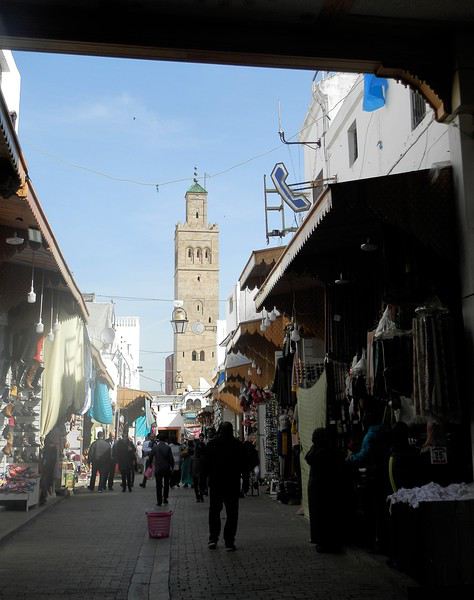
Une autre artère de la médina est la rue Sidi Fatah . Elle donne sur la rue Souika . Une magnifique mosquée y a été restaurée . Si j'en crois mon plan, il s'agit de la mosquée Moulay El Mekki . La porte principale est couverte et on trouve sur chacun des côtés 2 très belles portes ( 4 au total ) . Le minaret octogonal est remarquable . L'ensemble est complété par plusieurs marabout et un peu plus loin se trouve une importante zaouia . C'est vraiment très joli .
L'entrée principale est somptueuse . Le grand art de la peinture sur bois.
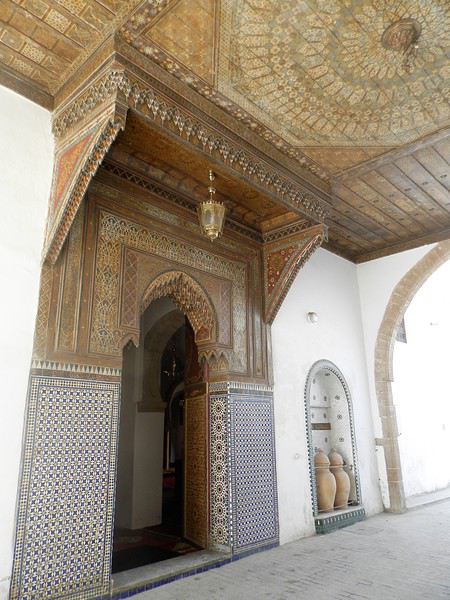
Quelques portes latérales
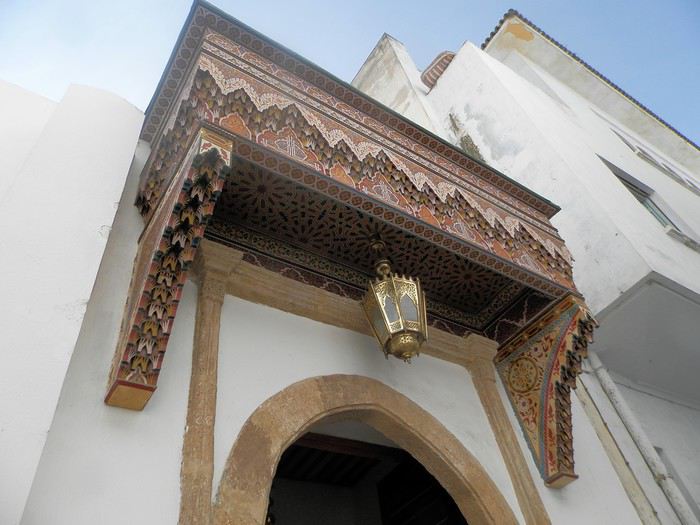
C'est vraiment très agréable de se balader sur la côte atlantique en cette saison ( mi-février ) . Il fait entre 18 et 22 degrés . Temps lumineux . Je n'aurai d'ailleurs pas de pluie pendant un mois ( après avoir eu de la pluie à peu près tous les jours les 5 derniers mois ) : que du bonheur donc ....
Le minaret octogonal
et la rue Sidi Fatah
La rénovation des monuments de la médina est presque terminée . La rue des consuls reprend vie, même si les nombreux fondouks de cette rue sont toujours en travaux . J'ai hâte de les revoir . Je déambule dans les ruelles tranquilles , toujours à l’affût de ces détails qui en font le charme .
Une belle oeuvre de street-art accroche mon œil ....
et cette fenêtre a un charme fou .
Cette fois , mes pas me portent vers les quais ( on pourrait presque dire le port ) de Rabat . Je quitte la médina par un jolie porte : l'ensemble , également restauré, est charmant . J'arrive directement sur l'Oued Bou Regreg .
Au cœur de la capitale subsiste un coin " pêche " . Un petit navire est devenu un restaurant-Lounge , plutôt luxueux ( menu à 790 dirhams pour 2 en cette Saint Valentin ) .
Rabat se donne des airs de petite Essaouira avec ses mouettes, ses bateaux, sa médina au fond, ses filets de pêche .... Le même site à l'horizontale .
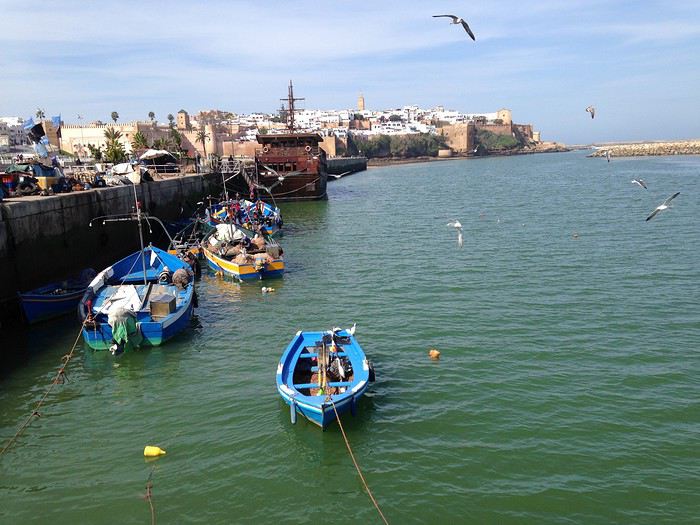
Au fond, Les Oudayas
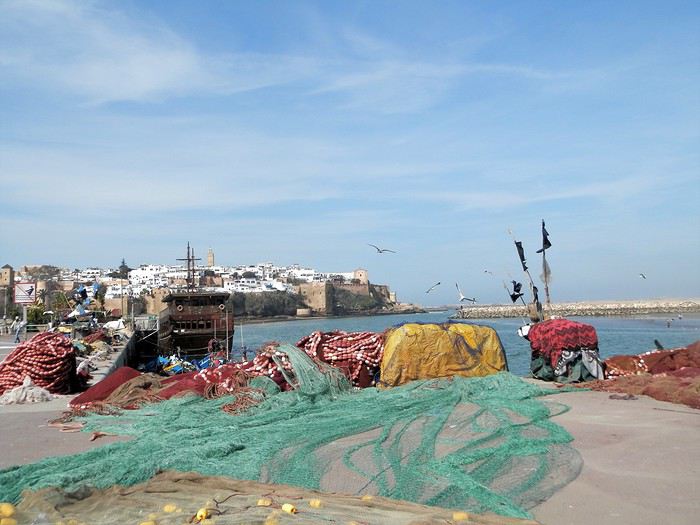
Un " pêche promenade ", me passe sous le nez . C'est mignon . On a envie de le faire la prochaine fois . Il y avait une activité de passeurs entre Rabat et Salé . Mais avec les ponts, le tramway, ..... Certains se sont adaptés , même si çà se fait toujours, plutôt en été ( la plage de Salé est toute proche ) .
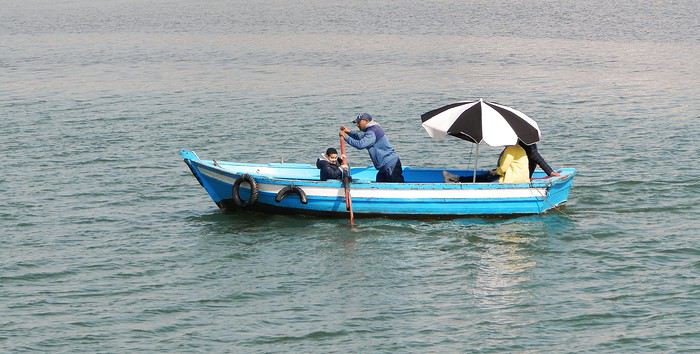
Quelques barques rentrent , les unes après les autres et s'amarrent au ponton, côté Salé . Surement les lointains descendants des redoutables corsaires de Salé . Leur univers a été " explosé" ces dernières années avec l'immense projet d'aménagement de l'oued Bou Regreg . Il leur reste un petit ponton , ..... et juste après, on a construit une grande marina pour accueillir les nouveaux jouets de l'aristocratie locale .
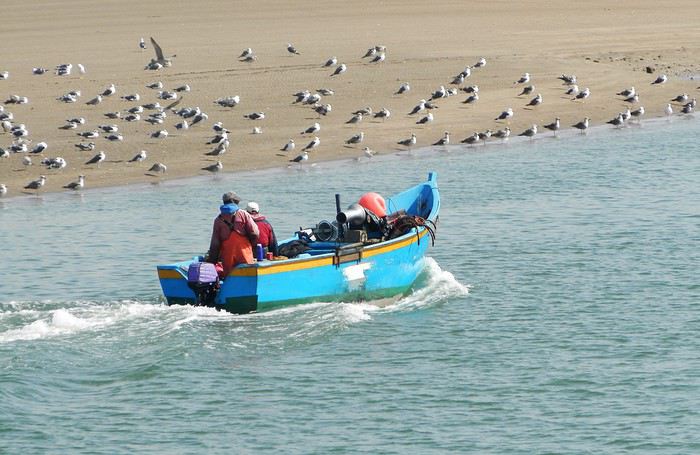
et une autre
Tout ceci fait un curieux mélange entre une architecture ancestrale et la plus grande modernité ....
Ci-après, à gauche, le médina sur sa falaise, au fond le toit blanc du nouveau " Grand Théâtre de Rabat ), à côté duquel commence à sortir la future tour Mohamed VI qui sera la plus haute d' Afrique , et à droite la marina côté Salé .
Mais la Kasbah veille toujours sur la capitale
Un dernier regard ...
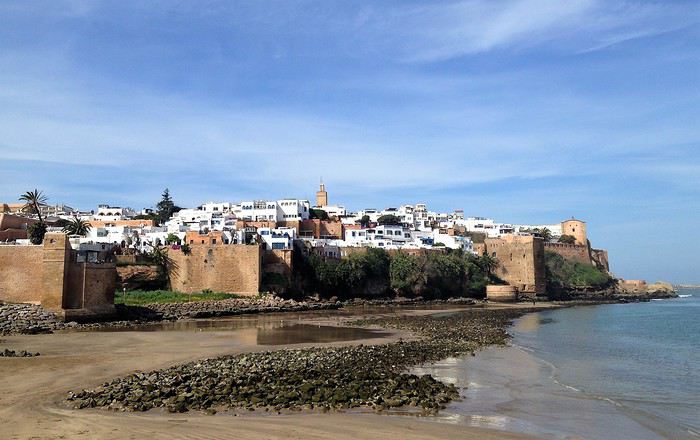
Voila pour ce nouveau coup de projecteur sur la capitale . Faites le détour et surprenez- vous
Demain, j'enfourche ma bonne Dacia Sandero et nous partons à l'assaut de l'Atlas .
Je crains que le forum ne soit morose dans les mois à venir , alors pourquoi ne pas faire un nouveau carnet de voyage . J'ai eu la chance de rentrer du Maroc 2 jours avant la suspension des vols et me retrouve donc, comme vous sans doute , en mode confinement total, chez moi, en Basse-Bretagne , avec quelques centaines de photos de mon dernier séjour à sélectionner, recadrer, retravailler .... On s'occupe comme on peut, alors pourquoi ne pas en faire profiter les Forumeurs ?
Je suis resté au Maroc un mois et j'avais organisé un circuit de 10 nuits / 11 jours pour ma plus jeune fille ( 17 ans ) , mon épouse et la grand- mère, ma chère belle-mère, Mina . Ça correspond aux vacances de février en France .
J'avais donc prévu un voyage " simple" sur le papier, mais qui chaque jour et comme toujours allait nous réserver son lot de découvertes, d'émerveillements, de rencontres, de surprises ....
Au programme :
- Départ de Rabat - 2 nuits à Ouarzazate - 2 nuits à N'kob - 2 nuits à Foum Zguid, avec une longue journée 4X4 au plus profond du désert - 4 nuits à Icht / Borj Biramane et retour sur Rabat
Je vais donc essayer d'éviter des redites avec mes précédents carnets, mais le Maroc a tant de richesses à montrer.....
Rabat est une de mes balades urbaines préférées au Maroc . Je découvre toujours de nouveaux endroits, de jolis détails, des points de vue .... Je vais donc m'y balader avec toujours un plaisir renouvelé
Ma première surprise se passe en médina où je découvre avec étonnement que les autorités ont fait le ménage . Tout ce qui encombrait les rues ( déballages sauvages, marchands de tortues et autres lézards, empiétements sur les trottoirs, la rue , etc.... ) a disparu . Plus rien . Même les commerces " en dur " sont "rentrés dans leurs murs" : plus rien sur la voie publique, pas même une chaise.... Une première au Maroc ?
Si le résultat est plutôt agréable dans la rue des consuls ( rue de l'artisanat ) et la rue Souika ( commerces vestimentaires surtout ) , le boulevard Mohamed V, où régnaient les petits restaurants et gargotes , est désormais mort . Ils ont perdu la quasi-totalité de leur ancienne surface commerciale et ne peuvent plus accueillir que quelques clients à la fois . La rue est tuée et il ne me reste plus qu'à chercher un autre endroit où casser la croûte dans la ville . Ce qui est bénéfique dans une rue ( on peut enfin flâner tranquillement ) est catastrophique dans l'autre ( le commerce est mort et le charme est parti ) . A suivre ....
Bon. C'est comme çà . Ici, dans la rue Souika ( à l'heure de la prière ) . Il y a même des poubelles en plastique positionnées dans la rue !
Une autre artère de la médina est la rue Sidi Fatah . Elle donne sur la rue Souika . Une magnifique mosquée y a été restaurée . Si j'en crois mon plan, il s'agit de la mosquée Moulay El Mekki . La porte principale est couverte et on trouve sur chacun des côtés 2 très belles portes ( 4 au total ) . Le minaret octogonal est remarquable . L'ensemble est complété par plusieurs marabout et un peu plus loin se trouve une importante zaouia . C'est vraiment très joli .
L'entrée principale est somptueuse . Le grand art de la peinture sur bois.
Quelques portes latérales
C'est vraiment très agréable de se balader sur la côte atlantique en cette saison ( mi-février ) . Il fait entre 18 et 22 degrés . Temps lumineux . Je n'aurai d'ailleurs pas de pluie pendant un mois ( après avoir eu de la pluie à peu près tous les jours les 5 derniers mois ) : que du bonheur donc ....
Le minaret octogonal
et la rue Sidi Fatah
La rénovation des monuments de la médina est presque terminée . La rue des consuls reprend vie, même si les nombreux fondouks de cette rue sont toujours en travaux . J'ai hâte de les revoir . Je déambule dans les ruelles tranquilles , toujours à l’affût de ces détails qui en font le charme .
Une belle oeuvre de street-art accroche mon œil ....
et cette fenêtre a un charme fou .
Cette fois , mes pas me portent vers les quais ( on pourrait presque dire le port ) de Rabat . Je quitte la médina par un jolie porte : l'ensemble , également restauré, est charmant . J'arrive directement sur l'Oued Bou Regreg .
Au cœur de la capitale subsiste un coin " pêche " . Un petit navire est devenu un restaurant-Lounge , plutôt luxueux ( menu à 790 dirhams pour 2 en cette Saint Valentin ) .
Rabat se donne des airs de petite Essaouira avec ses mouettes, ses bateaux, sa médina au fond, ses filets de pêche .... Le même site à l'horizontale .
Au fond, Les Oudayas
Un " pêche promenade ", me passe sous le nez . C'est mignon . On a envie de le faire la prochaine fois . Il y avait une activité de passeurs entre Rabat et Salé . Mais avec les ponts, le tramway, ..... Certains se sont adaptés , même si çà se fait toujours, plutôt en été ( la plage de Salé est toute proche ) .
Quelques barques rentrent , les unes après les autres et s'amarrent au ponton, côté Salé . Surement les lointains descendants des redoutables corsaires de Salé . Leur univers a été " explosé" ces dernières années avec l'immense projet d'aménagement de l'oued Bou Regreg . Il leur reste un petit ponton , ..... et juste après, on a construit une grande marina pour accueillir les nouveaux jouets de l'aristocratie locale .
et une autre
Tout ceci fait un curieux mélange entre une architecture ancestrale et la plus grande modernité ....
Ci-après, à gauche, le médina sur sa falaise, au fond le toit blanc du nouveau " Grand Théâtre de Rabat ), à côté duquel commence à sortir la future tour Mohamed VI qui sera la plus haute d' Afrique , et à droite la marina côté Salé .
Mais la Kasbah veille toujours sur la capitale
Un dernier regard ...
Voila pour ce nouveau coup de projecteur sur la capitale . Faites le détour et surprenez- vous
Demain, j'enfourche ma bonne Dacia Sandero et nous partons à l'assaut de l'Atlas .
Du nord au sud de l'archipel philippin avec un détour par Singapour English translation pending
Bonjour,
Ce carnet qu'en principe je n'aurais pas du faire, il m'a été soufflé par certains membres de VF et en ces temps troublés de Covid-19, nous en avons justement du temps, quoi que pour certains pour une fois ils croulent sous le travail (il se reconnaîtra 😇)
Je vais vous conter (un bien grand mot pour moi, vu que je ne suis pas très à l'aise avec les mots) ce périple vous amènera à Banaue et ses magnifiques rizière en terrasses, au sud sur l'île de Siargao et au centre à sur l'île de Panglao
Il n'y aura pas d'animaux pétrifiés, de rochers à perte de vue et de champignons hallucinogènes (elle se reconnaitra)
Il a commencé par un vol à destination de Manilles via Doha,
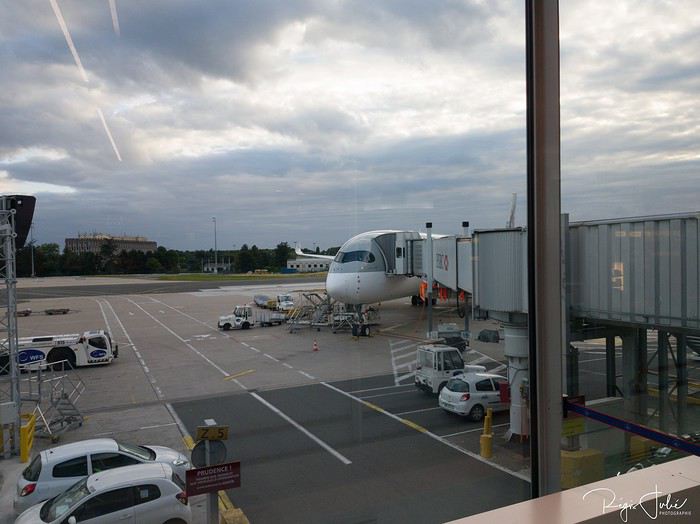
Une photo qui aurait eu sa place sur sans problème sur passenger shaming, ils nous a fait une très grande prestation jusqu'à Doha
On se retrouve bientôt à Manille 🙂
Ce carnet qu'en principe je n'aurais pas du faire, il m'a été soufflé par certains membres de VF et en ces temps troublés de Covid-19, nous en avons justement du temps, quoi que pour certains pour une fois ils croulent sous le travail (il se reconnaîtra 😇)
Je vais vous conter (un bien grand mot pour moi, vu que je ne suis pas très à l'aise avec les mots) ce périple vous amènera à Banaue et ses magnifiques rizière en terrasses, au sud sur l'île de Siargao et au centre à sur l'île de Panglao
Il n'y aura pas d'animaux pétrifiés, de rochers à perte de vue et de champignons hallucinogènes (elle se reconnaitra)
Il a commencé par un vol à destination de Manilles via Doha,
Une photo qui aurait eu sa place sur sans problème sur passenger shaming, ils nous a fait une très grande prestation jusqu'à Doha
On se retrouve bientôt à Manille 🙂
Escale d'une heure vingt-cinq minutes à Montréal pour un vol vers les États-Unis English translation pending
Bonjour,
Je viens de recevoir une notification de Air Canada m'informant d'une modification dans mon itinéraire. Il s'agit d'un vol Bordeaux - Orlando avec escale à Montréal qui aura lieu au mois d'aout. Mon escale à Montréal n'est plus que de 1h25. Air Canada me donne le choix entre conserver l'itinéraire tel quel ou changer de vol. Si je choisis le vol suivant pour Orlando, ça me fait une escale de 5h55. Je ne sais pas quoi faire. Garder l'escale de 1h25 et espérer que ça passe ou qu'il y ait toujours de la place dans le vol suivant si ça ne passait pas? Ne prendre aucun risque et choisir le vol suivant? Je précise que nous sommes 3 dont une enfant de 3 ans.
J'ai lu qu'il y avait eu des modifications dans le parcours à effectuer pour une correspondance vers les États-Unis pour faciliter cette correspondance. Quelqu'un l'a t-il déjà testé?
Merci d'avance pour votre aide.
Je viens de recevoir une notification de Air Canada m'informant d'une modification dans mon itinéraire. Il s'agit d'un vol Bordeaux - Orlando avec escale à Montréal qui aura lieu au mois d'aout. Mon escale à Montréal n'est plus que de 1h25. Air Canada me donne le choix entre conserver l'itinéraire tel quel ou changer de vol. Si je choisis le vol suivant pour Orlando, ça me fait une escale de 5h55. Je ne sais pas quoi faire. Garder l'escale de 1h25 et espérer que ça passe ou qu'il y ait toujours de la place dans le vol suivant si ça ne passait pas? Ne prendre aucun risque et choisir le vol suivant? Je précise que nous sommes 3 dont une enfant de 3 ans.
J'ai lu qu'il y avait eu des modifications dans le parcours à effectuer pour une correspondance vers les États-Unis pour faciliter cette correspondance. Quelqu'un l'a t-il déjà testé?
Merci d'avance pour votre aide.
Incredible Ouest américain English translation pending
USA 2019 – Californie – Arizona – Nouveau Mexique - Utah – Nevada
11 septembre /10 octobre
Nous ne devions pas retourner aux USA en 2019, nous voulions, après être venus quatre années consécutives aux États-Unis changer de destination, mais quand nous avons vu des vol AR Paris – LA à 307€ par personne, nous n'avons pas réfléchi bien longtemps ! Une fois le vol en poche, nous souhaitions retourner en Utah qui nous avait emballé l'année dernière et avions envie de prendre notre temps.
Voici différents sites visités pendant notre voyage :
Mojave National Preserve Route 66 (Needles – Kingman - Winslow) Homolovi State Park Bisties Badlands Hovenweep N.S.P Upper Butler Wash & Mule Canyon Lower Butler Wash
Alstrom Point (Lac Powell) Lee's Ferry - Glen Canyon NRA Lower Antilope Canyon Wahweap Hoodoos Cottonwood Road -Red Top Edmaier's Secret White Pocket Coral Pink Dunes SP Snow Canyon Yant Flat The Vortex Cedar Break NP Cathedral Gorge SP Highway 375 Extraterrestrial Highway Death Valley NP
11 septembre : Long Beach Départ pour Los Angeles avec Air France le 11 septembre, le décollage est prévu à 13h25, nous ne décollerons qu'à 15h10, à cause d'un problème de fermeture électrique d'une porte de soute, il aura fallu la fermer manuellement, soit 6000 tours de manivelle ! Arrivée à 5 p.m à LA, passage aux douanes plutôt rapide, récupération des bagages OK, et en route pour aller chercher notre voiture chez Alamo, dans notre catégorie nous trouvons une Nissan Rogue AWD, ce n'est pas ce qu'il y a de mieux, mais elle devrait faire l'affaire pour les pistes prévues. Arrivée à l'hôtel 8 p.m à Long Beach, dîner dans la chambre et dodo 10h30 p.m.
12 septembre : Palm Springs Lever assez tôt 6h30, en route pour un breakfast downtown, mauvaise surprise en arrivant à la voiture, une amende de 60$ sur le pare brise, tout ça parce que il y a un nettoyage dans la rue de 6 a.m à 8 a.m, dur, dur … Petit dej' en terrasse au soleil (œuf, bacon, pommes de terre...) hum !!! Courses chez Walmart notamment pour acheter une glacière, Whole Foods pour nos pique-niques et dîners, balade sur la plage, visite de l'aquarium de Long Beach, et en route pour Palm Springs, ça bouchonne un max, nous mettrons 3h15 pour y arriver, heureusement l'hôtel, le Movie Colony Hotel est super bien, dans le style Bauhaus, dîner sur notre grande terrasse privative, il fait encore très chaud, dodo à minuit.
3 septembre : Needles Après un un bon breakfast dans le patio, petit tour en ville et nous partons faire le Design Tour, pour admirer les splendides constructions avant-gardistes du début et milieu du XX° siècle, notamment celle de l'architecte Albert Frey disciple de Le Corbusier, ce sont des maisons magnifiques avec des jardins luxuriants, top classe ! Sous une T° de 40° nous partons en ce milieu d'après-midi pour Needles, arrêt à une station essence / restaurant où nous nous étions arrêtés en 1995, qui est désormais complètement abandonnée... Arrivée à notre hôtel BW vers 7.15 p.m tous à la piscine pour l'apéro sous 40° !!
14 septembre : Mojave National Preserve Breakfast au resto d'en face (compris) et départ pour Mojave National Preserve, visite du Kelso Depot Visitor Center qui servait de station de ravitaillement pour la voie de chemin de fer en eau, petit musée intéressant à découvrir. Il fait déjà 37° à 10 am. Nous prenons un pique nique au départ du Rock Spring Loop Trail petite boucle dans le désert, facile. Une deuxième petite randonnée : Ring Loop Trail, une autre petite boucle qui se termine par une petite escalade par des anneaux en métal pour aider à se hisser à travers une faille, facile et ludique . Courses au Walmart (rien d'autre dans les alentours) retour à l'hôtel de Needles, il refait 41° à 7 p.m avec un vent qui souffle en rafales, piscine, dîner, dodo.
11 septembre /10 octobre
Nous ne devions pas retourner aux USA en 2019, nous voulions, après être venus quatre années consécutives aux États-Unis changer de destination, mais quand nous avons vu des vol AR Paris – LA à 307€ par personne, nous n'avons pas réfléchi bien longtemps ! Une fois le vol en poche, nous souhaitions retourner en Utah qui nous avait emballé l'année dernière et avions envie de prendre notre temps.
Voici différents sites visités pendant notre voyage :
Mojave National Preserve Route 66 (Needles – Kingman - Winslow) Homolovi State Park Bisties Badlands Hovenweep N.S.P Upper Butler Wash & Mule Canyon Lower Butler Wash
Alstrom Point (Lac Powell) Lee's Ferry - Glen Canyon NRA Lower Antilope Canyon Wahweap Hoodoos Cottonwood Road -Red Top Edmaier's Secret White Pocket Coral Pink Dunes SP Snow Canyon Yant Flat The Vortex Cedar Break NP Cathedral Gorge SP Highway 375 Extraterrestrial Highway Death Valley NP
11 septembre : Long Beach Départ pour Los Angeles avec Air France le 11 septembre, le décollage est prévu à 13h25, nous ne décollerons qu'à 15h10, à cause d'un problème de fermeture électrique d'une porte de soute, il aura fallu la fermer manuellement, soit 6000 tours de manivelle ! Arrivée à 5 p.m à LA, passage aux douanes plutôt rapide, récupération des bagages OK, et en route pour aller chercher notre voiture chez Alamo, dans notre catégorie nous trouvons une Nissan Rogue AWD, ce n'est pas ce qu'il y a de mieux, mais elle devrait faire l'affaire pour les pistes prévues. Arrivée à l'hôtel 8 p.m à Long Beach, dîner dans la chambre et dodo 10h30 p.m.
12 septembre : Palm Springs Lever assez tôt 6h30, en route pour un breakfast downtown, mauvaise surprise en arrivant à la voiture, une amende de 60$ sur le pare brise, tout ça parce que il y a un nettoyage dans la rue de 6 a.m à 8 a.m, dur, dur … Petit dej' en terrasse au soleil (œuf, bacon, pommes de terre...) hum !!! Courses chez Walmart notamment pour acheter une glacière, Whole Foods pour nos pique-niques et dîners, balade sur la plage, visite de l'aquarium de Long Beach, et en route pour Palm Springs, ça bouchonne un max, nous mettrons 3h15 pour y arriver, heureusement l'hôtel, le Movie Colony Hotel est super bien, dans le style Bauhaus, dîner sur notre grande terrasse privative, il fait encore très chaud, dodo à minuit.
3 septembre : Needles Après un un bon breakfast dans le patio, petit tour en ville et nous partons faire le Design Tour, pour admirer les splendides constructions avant-gardistes du début et milieu du XX° siècle, notamment celle de l'architecte Albert Frey disciple de Le Corbusier, ce sont des maisons magnifiques avec des jardins luxuriants, top classe ! Sous une T° de 40° nous partons en ce milieu d'après-midi pour Needles, arrêt à une station essence / restaurant où nous nous étions arrêtés en 1995, qui est désormais complètement abandonnée... Arrivée à notre hôtel BW vers 7.15 p.m tous à la piscine pour l'apéro sous 40° !!
14 septembre : Mojave National Preserve Breakfast au resto d'en face (compris) et départ pour Mojave National Preserve, visite du Kelso Depot Visitor Center qui servait de station de ravitaillement pour la voie de chemin de fer en eau, petit musée intéressant à découvrir. Il fait déjà 37° à 10 am. Nous prenons un pique nique au départ du Rock Spring Loop Trail petite boucle dans le désert, facile. Une deuxième petite randonnée : Ring Loop Trail, une autre petite boucle qui se termine par une petite escalade par des anneaux en métal pour aider à se hisser à travers une faille, facile et ludique . Courses au Walmart (rien d'autre dans les alentours) retour à l'hôtel de Needles, il refait 41° à 7 p.m avec un vent qui souffle en rafales, piscine, dîner, dodo.
Retour du trek du Mardi Himal Base Camp (MHBC pour les initiés) English translation pending
Bonjour, un petit retour en forme de guide de voyage sur le trek du camp de base du Mardi Himal effectué du 15 au 21 novembre. Il vous faudra une petite semaine pour monter à 4500m d’altitude en partant de Pokhara et y revenir.
Jour 1 : De Pokhara lake side, direction Baglung bus station (400rps en taxi ou 1h30 de marche ou bus local). Demandez le bus pour Phedi, c’est le départ du trek. 1h de bus, 100rps. Vous pouvez avec le même bus continuer 1 heure de plus pour aller à Kande (départ alternatif du trek). Si vous voulez alléger un peu l’énorme liasse de roupies qui constitue votre budget pour une semaine de trek, vous pouvez prendre un taxi jusqu’à Phedi pour 1200 roupies (à peu près, cela dépendra de votre aptitude à la négociation tarifaire).
Phedi (1130m) – (upper)Dampus (1650). C’est court mais intense. Vous descendez du bus, traversez la route et commencez directement à monter des marches d’escalier. Courage, cela prendra 1h30 pour venir à bout des 3650 marches restantes. Je vais vous épargner les détails, mais je m’arrête à Dampus une semaine. D’abord car je vais chez des amis et puis la vue est pas mal du tout ! Libre à vous de continuer vers Pothana (1 petite heure), voir Deurali (encore 1 heure supplémentaire).
Jour 2 : Dampus – Pothana – Deurali (2100) – Forest Camp (2540) En sortant de Dampus, il faut stopper au bureau de l’ACAP pour présenter ses papiers en règle, à savoir le TIMS et le droit d’entrée ACAP. Attention, le droit d’entrée ACAP se paie 2000 roupies à Katmandu ou Pokhara. Ici, c’est 6000 rps…véritable insulte aux têtes de linotte et autres procrastinateurs. En sortant de ce bureau, digne truchement de la corruption ambiante de ce beau pays montagneux, ne manquez pas l’occasion de vous procurer dans le dernier magasin de Dampus, un magnifique bâton de marche taillé dans du véritable bois d’arbre, pour la modique somme de 100 roupies. Ensuite, entamez votre montée vers Pothana, charmant village aux doux airs alpins puis suivez la crête encore 1 heure en montant vers Deurali, à 2100m. C’est un ensemble de 3 ou 4 guest house qui constitue une halte agréable avec une superbe vue sur les collines invitant à la méditation. A la sortie de Deurali, le sentier à gauche descend vers Landruk et le trek de l’abc. Si vous n’avez pas changé d’avis sur votre choix de trek, il serait judicieux d’emprunter le sentier sur votre droite. Vous allez alors pénétrer dans une forêt dense pour y passer les 4 prochaines heures. Oubliez les récits de touristes esseulés croqués par des léopards, et autres bûcherons solitaires morcelés par des ours, et continuez d’avancer sur ce sentier peu emprunté. Vous allez penser que l’investissement de 100 roupies pour acheter un bâton n’était décidément pas une fantaisie. Vous serez toutefois seul face à vous-même jusqu’au moment d’apercevoir entre les arbres et les fougères une modeste bâche qui abrite un autochtone entretenant un feu et ravi de vous proposer une tasse de café. Puis les arbres s’espacent enfin et laissent passer la lumière crue du jour qui illumine le panneau « Welcome to Forest Camp ». C’est un ensemble de 4 ou 5 guest house. Après un rapide tour d’horizon, Je sélectionne le « Jungle embassy Hotel » qui affiche fièrement ses 5 étoiles au-dessus de l’entrée du dining hall. Le jeune propriétaire de l’hôtel étale son ambition en proposant 2 salles de bain commune. C’est du jamais vu dans le secteur. Et en plus, il y a de l’eau chaude. La literie est neuve et confortable. Le cuistot me prépare des succulents spaghettis. L’endroit mérite décidément ses 5 étoiles.
Sympa la vue de Dampus? Je vous l'avais dit...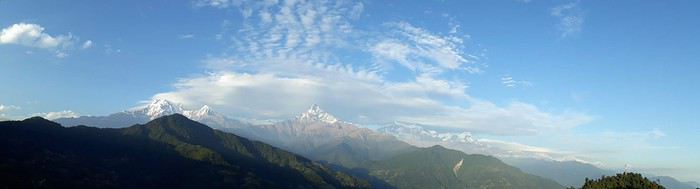
Pothana, un ptit air de ricolaaaa!!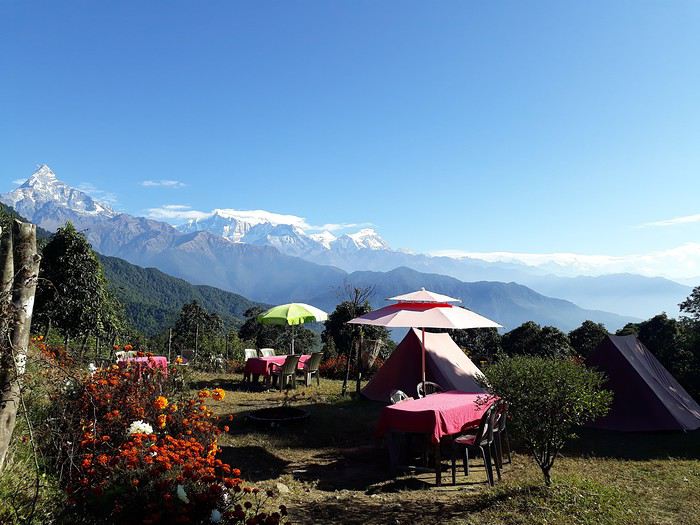
Merci Bim pour les spaghettis, tu gères !
A suivre
Jour 1 : De Pokhara lake side, direction Baglung bus station (400rps en taxi ou 1h30 de marche ou bus local). Demandez le bus pour Phedi, c’est le départ du trek. 1h de bus, 100rps. Vous pouvez avec le même bus continuer 1 heure de plus pour aller à Kande (départ alternatif du trek). Si vous voulez alléger un peu l’énorme liasse de roupies qui constitue votre budget pour une semaine de trek, vous pouvez prendre un taxi jusqu’à Phedi pour 1200 roupies (à peu près, cela dépendra de votre aptitude à la négociation tarifaire).
Phedi (1130m) – (upper)Dampus (1650). C’est court mais intense. Vous descendez du bus, traversez la route et commencez directement à monter des marches d’escalier. Courage, cela prendra 1h30 pour venir à bout des 3650 marches restantes. Je vais vous épargner les détails, mais je m’arrête à Dampus une semaine. D’abord car je vais chez des amis et puis la vue est pas mal du tout ! Libre à vous de continuer vers Pothana (1 petite heure), voir Deurali (encore 1 heure supplémentaire).
Jour 2 : Dampus – Pothana – Deurali (2100) – Forest Camp (2540) En sortant de Dampus, il faut stopper au bureau de l’ACAP pour présenter ses papiers en règle, à savoir le TIMS et le droit d’entrée ACAP. Attention, le droit d’entrée ACAP se paie 2000 roupies à Katmandu ou Pokhara. Ici, c’est 6000 rps…véritable insulte aux têtes de linotte et autres procrastinateurs. En sortant de ce bureau, digne truchement de la corruption ambiante de ce beau pays montagneux, ne manquez pas l’occasion de vous procurer dans le dernier magasin de Dampus, un magnifique bâton de marche taillé dans du véritable bois d’arbre, pour la modique somme de 100 roupies. Ensuite, entamez votre montée vers Pothana, charmant village aux doux airs alpins puis suivez la crête encore 1 heure en montant vers Deurali, à 2100m. C’est un ensemble de 3 ou 4 guest house qui constitue une halte agréable avec une superbe vue sur les collines invitant à la méditation. A la sortie de Deurali, le sentier à gauche descend vers Landruk et le trek de l’abc. Si vous n’avez pas changé d’avis sur votre choix de trek, il serait judicieux d’emprunter le sentier sur votre droite. Vous allez alors pénétrer dans une forêt dense pour y passer les 4 prochaines heures. Oubliez les récits de touristes esseulés croqués par des léopards, et autres bûcherons solitaires morcelés par des ours, et continuez d’avancer sur ce sentier peu emprunté. Vous allez penser que l’investissement de 100 roupies pour acheter un bâton n’était décidément pas une fantaisie. Vous serez toutefois seul face à vous-même jusqu’au moment d’apercevoir entre les arbres et les fougères une modeste bâche qui abrite un autochtone entretenant un feu et ravi de vous proposer une tasse de café. Puis les arbres s’espacent enfin et laissent passer la lumière crue du jour qui illumine le panneau « Welcome to Forest Camp ». C’est un ensemble de 4 ou 5 guest house. Après un rapide tour d’horizon, Je sélectionne le « Jungle embassy Hotel » qui affiche fièrement ses 5 étoiles au-dessus de l’entrée du dining hall. Le jeune propriétaire de l’hôtel étale son ambition en proposant 2 salles de bain commune. C’est du jamais vu dans le secteur. Et en plus, il y a de l’eau chaude. La literie est neuve et confortable. Le cuistot me prépare des succulents spaghettis. L’endroit mérite décidément ses 5 étoiles.
Sympa la vue de Dampus? Je vous l'avais dit...
Pothana, un ptit air de ricolaaaa!!
Merci Bim pour les spaghettis, tu gères !
A suivre
GPS (Garmin Edge Explore ou Etrex32x) pour voyager à vélo English translation pending
Bonjour,
Je sollicite vos conseils afin d'éclaircir mes connaissances sur les GPS (Garmin). Je projète de m'équiper d'un GPS et je suis particulièrement intéréssé par le Edge Explore de chez Garmin. Il semble etre polyvalent, c'est à dire qu'il semble pouvoir se rendre utile autant dans un voyage à vélo que sur une sortie à la journée.
Ma question concerne une fonctionnalité précise des GPS. Cela me permettra de comparer le Explore avec le Etrex32x. Une des fonctionnalité du Explore est qu'il est routable, il suffit donc de rentrer une adresse ou de choisir un point précis (sur le GPS) pour qu'il propose un itinéraire automatiquement (si j'ai bien compris). Est-il possible de générer ce genre d'itinéraire avec le etrex sous condition que je télécharge un fond de carte OSM sur l'appareil. L'objectif étant de générer une itinéraire en voyage sans avoir à emporter un ordinateur.
Merci à vous.
Je sollicite vos conseils afin d'éclaircir mes connaissances sur les GPS (Garmin). Je projète de m'équiper d'un GPS et je suis particulièrement intéréssé par le Edge Explore de chez Garmin. Il semble etre polyvalent, c'est à dire qu'il semble pouvoir se rendre utile autant dans un voyage à vélo que sur une sortie à la journée.
Ma question concerne une fonctionnalité précise des GPS. Cela me permettra de comparer le Explore avec le Etrex32x. Une des fonctionnalité du Explore est qu'il est routable, il suffit donc de rentrer une adresse ou de choisir un point précis (sur le GPS) pour qu'il propose un itinéraire automatiquement (si j'ai bien compris). Est-il possible de générer ce genre d'itinéraire avec le etrex sous condition que je télécharge un fond de carte OSM sur l'appareil. L'objectif étant de générer une itinéraire en voyage sans avoir à emporter un ordinateur.
Merci à vous.
12 jours au Botswana en self-drive en 2019: une année faste! English translation pending
Bonjour,
Voici un petit retour de notre dernier séjour au Botswana en self-drive sous la forme d’un carnet de voyage (mon premier, donc je compte sur votre indulgence !).
Adeptes du self-drive, nous arpentons les pistes d’Afrique australe de manière assidue depuis 2013 que ce soit en famille (avec nos deux filles de 16 et 18 ans maintenant) ou en duo. En 2016, nous avons fait l’acquisition d’un Land Rover Defender qui est stationné à Johannesburg (chez KlipKop) et qui nous permet d’assouvir notre passion pour cette partie du monde.
Après avoir effectué un Cap Town-Johannesburg (en passant par le Lesotho) en avril avec les filles et une boucle de 10 jours Blyde-Krüger NP avec un couple d’amis au mois de mai, nous voilà de retour à Johannesburg le 31 août 2019 (vol parfait avec Air France).
Nous récupérons notre voiture chez Bushlore qui a procédé à une réparation sur celle-ci. Après quelques échanges cordiaux avec Mark (le patron ) et Dieter (qui s’occupe de toute la paperasse pour nous), Rochelle (qui s’est chargée d’une bonne partie de nos réservations) nous remet nos vouchers pour Lekhubu, Ihaha, Savuti, Khwai et Xakanaka (réservations faites une année à l’avance).
L’itinéraire prévu est le suivant :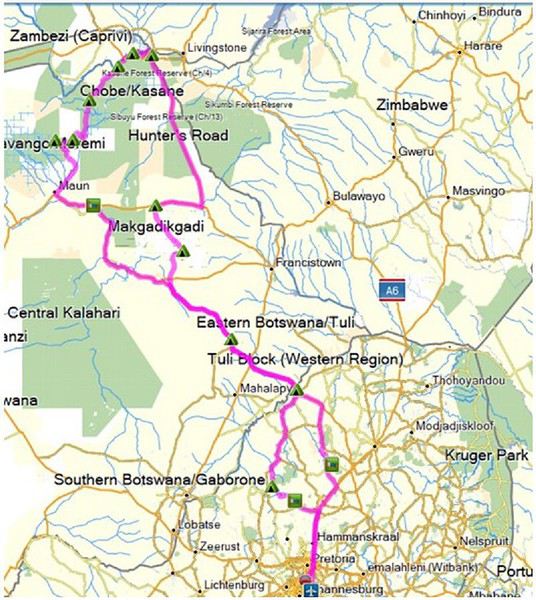
Afrique du Sud : · Entabeni Safari Conservancy – Lakeside Lodge · Moriti Bush Camp (à 3 km de Martin’s Drift Border Post)
Botswana : · Makgadikgadi NP - Lekhubu Island · Gweta - Planet Baobab · Kasane - Senyati · Chobe - Ihaha · Chobe - Mwandi View · Chobe - Savuti · Moremi - Khwai · Moremi - Xakanaka · Motopi - Leopard Plains · Serowe - Khama Rhino
Afrique du Sud : · Marakele NP – Bontle Camp · Mabula Game Reserve – Mabula Game Lodge
31.08.19 / Johannesburg- Entabeni Safari Conservancy
Nous arrivons sans encombre vers 15h00 à l’entrée d’Entabeni (réserve que nous ne connaissons pas encore mais qui nous a été recommandée par des Danois croisés l’année dernière au Pilanesberg). Les paysages sont de toute beauté ….et dire qu’il y a 24 heures nous étions encore en Suisse ! Quel contraste saisissant ! Le lodge est très joli et la vue sur le lac est magnifique.
Nous prenons possession de notre bungalow et sautons dans la voiture de safari qui nous attend (comme nous sommes arrivés un peu tard, les autres clients sont déjà partis et nous avons droit à un safari privé). Les cheveux au vent, nous profitons de sublimes paysages et ne tardons pas à voir deux rhinos blancs. Zèbres, gnous, kudus, bubales et hippos viendront compléter cette affiche.
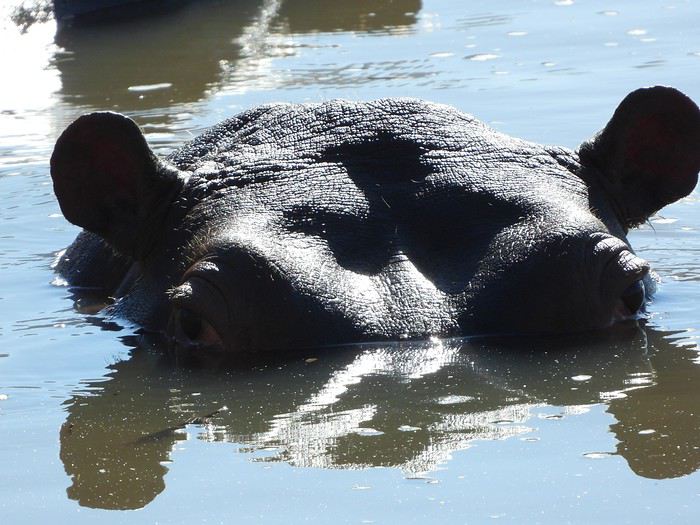
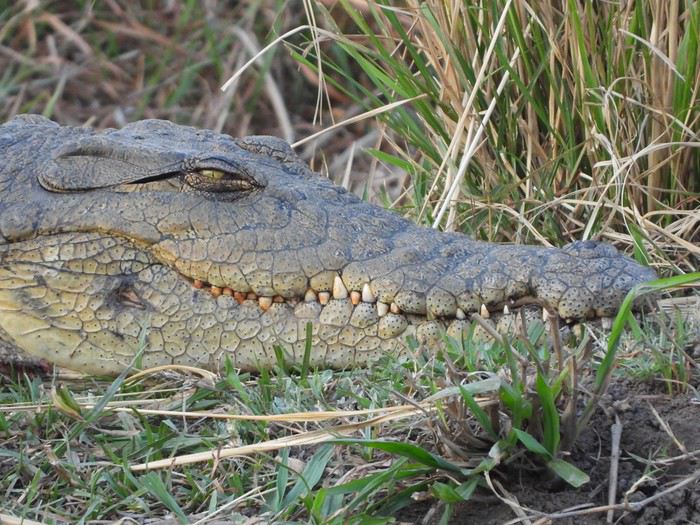
A la nuit tombée, nous assisterons à une tentative de chasse de la part d’une lionne sur un gnou bleu…que demander de mieux comme entrée en matière ? La fatigue du voyage commence à se faire sentir et après un agréable repas, nous nous couchons en appréciant particulièrement la couverture chauffante de notre lit bien douillet.
01.09.19 / Entabeni Safari Conservancy- Moriti Bush Camp (Nyala) Après une bonne nuit de sommeil, un nouveau safari matinal et un solide petit-déjeuner, nous reprenons la route, direction la frontière avec le Botswana. Nous avons prévu de nous arrêter juste avant la frontière avec dans l’idée de la passer à la première heure le lendemain. Nous empruntons la R516 entre Marken et Baltimore, l’une des pires routes qu’il nous ait été donné de pratiquer jusque-là….c’est une route asphaltée mais il y a plus de nids de poule que d’asphalte….il faut faire preuve de dextérité et d’imagination pour zigzaguer entre les « potholes » à une vitesse très très réduite. Heureusement, nous ne croisons que peu de voitures. Une fois cette redoutable épreuve franchie, nous faisons quelques courses pour le braai du soir et arrivons au Moriti Bush Camp vers 14h00. La propriétaire, Adéle, nous accueille chaleureusement. Notre emplacement au bord de la rivière Limpopo est juste splendide ! Il s’agit d’un endroit super bien aménagé et intime qui comprend un bloc sanitaire/cuisine privatif. L’endroit est vraiment top.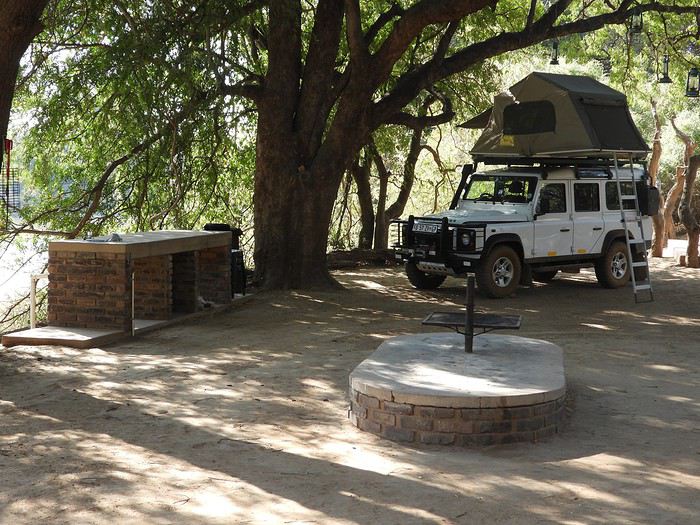
Nous montons notre tente de toit sous le grand arbre et procédons à quelques aménagements au niveau de notre véhicule nécessaires avant d’entreprendre la suite de notre périple. Nous installons notre table et nos chaises sur un petit promontoire duquel nous avons une belle vue dégagée sur la rivière et savourons notre premier braai en admirant quelques antilopes et un crocodile solitaire qui monte et redescend la rivière.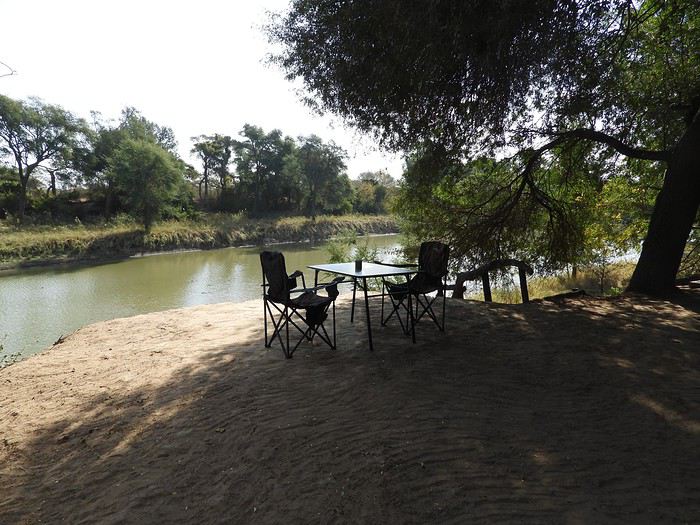
L’endroit est paisible, une étape parfaite avant d’entrer au Botswana.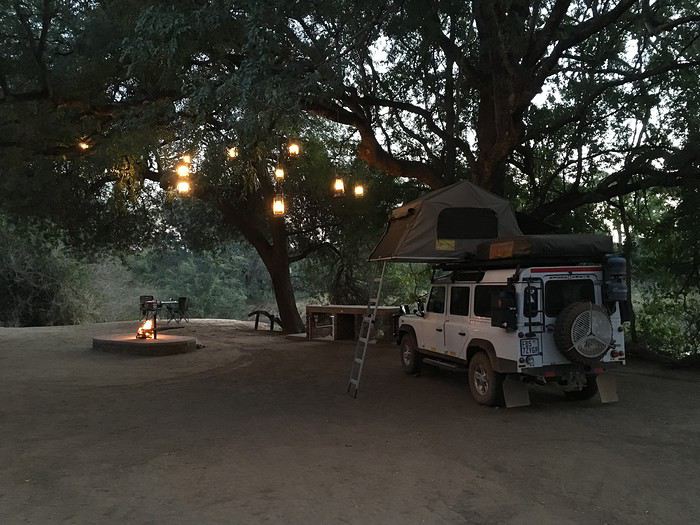
02.09.19 / Moriti Bush Camp-Lekhubu Island (Kubu) Nous nous levons aux aurores pour passer la douane. De nombreuses personnes font déjà la queue, certaines enveloppées dans des couvertures.
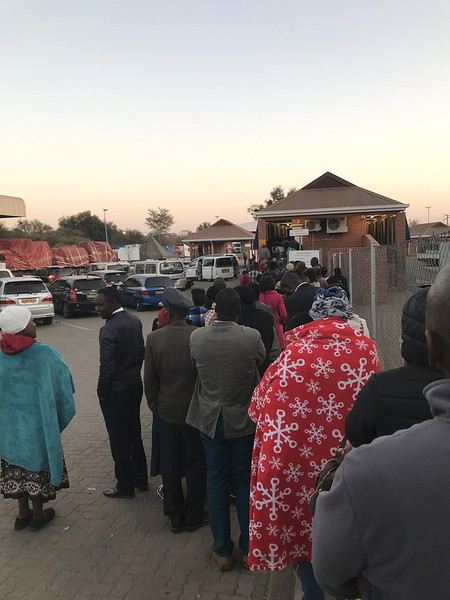
Il nous faudra environ 1 heure pour passer la frontière. Nous faisons le plein d’essence à la première station que nous rencontrons (l’année dernière nous avions frôlé la panne sèche sur le tronçon entre la frontière et Khama Rhino, cela nous a servi de leçon). Nous avons plus de 500 km à parcourir aujourd’hui, nous devons aussi faire quelques courses, trouver du bois et retirer des pulas. Nous nous arrêtons à Lethlakane avant de prendre la direction des pans. Comme l’année dernière, nous sommes émerveillés par la beauté des paysages qui s’offrent à nous. Nous ne nous lassons pas de traverser ces étendues infinies quasiment lunaires. Nous nous arrêtons au milieu du pan pour faire quelques photos.
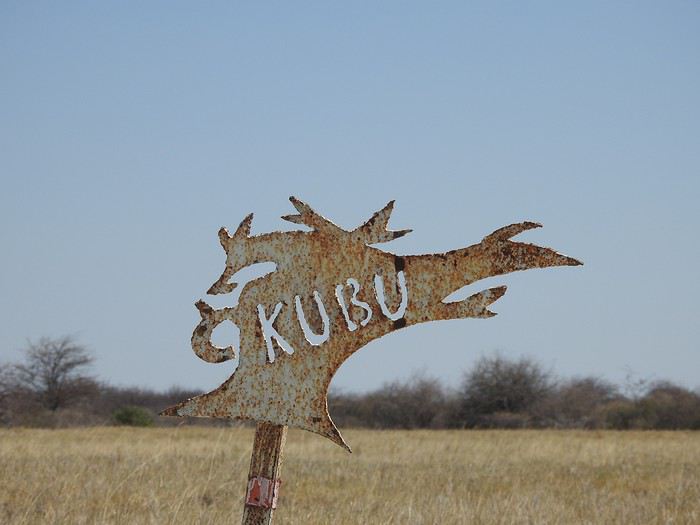
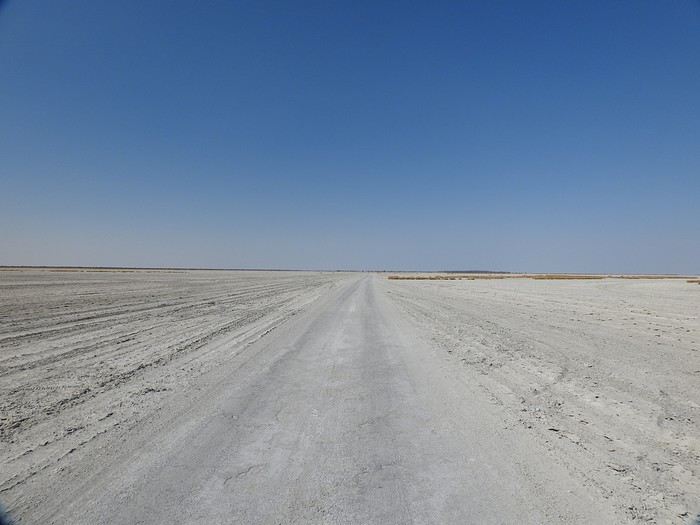
Nous verrons quelques impalas dont on se demande comment ils font pour survivre tant la terre est aride et l’environnement hostile.
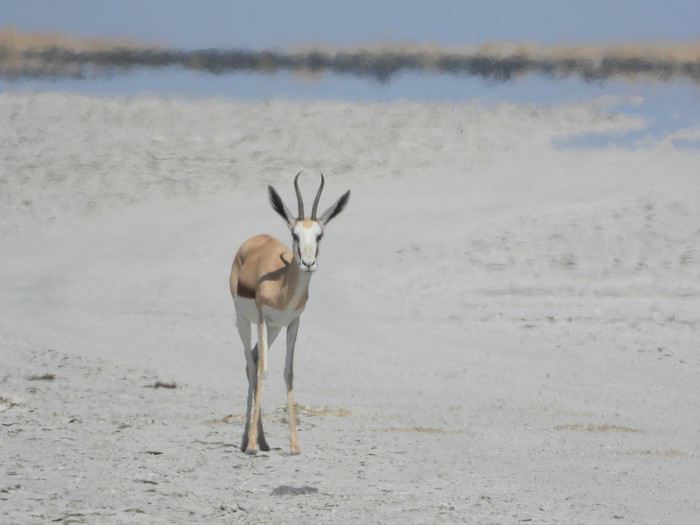
Nous atteignons Lekhubu et allons nous annoncer à la réception du camping. L’accueil est super chaleureux, nous sommes invités à nous installer à l’emplacement de notre choix. Les meilleurs sites sont déjà occupés et nous portons finalement notre dévolu sur le no 12 (que nous connaissons déjà). Il se trouve au bord du pan et la vue y est bien dégagée : la promesse d’un beau coucher de soleil ! Avant de nous y installer pour la soirée, nous partons faire un tour de l’île afin de faire quelques photos des majestueux baobabs qui s’y dressent entre les rochers. Ce paysage est vraiment unique, il s’en dégage une atmosphère presque mystique !
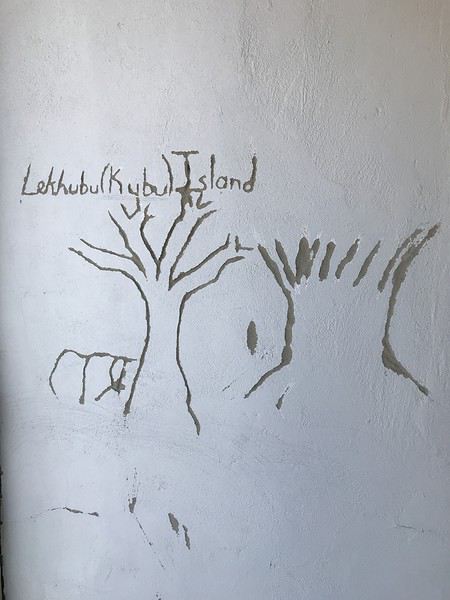
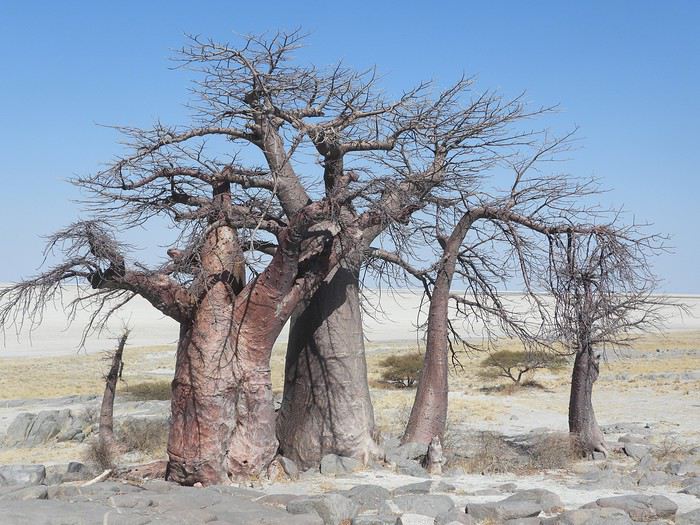
De retour à notre emplacement, nous nous installons pour prendre l’apéritif en profitant du spectacle qui s’offre à nous.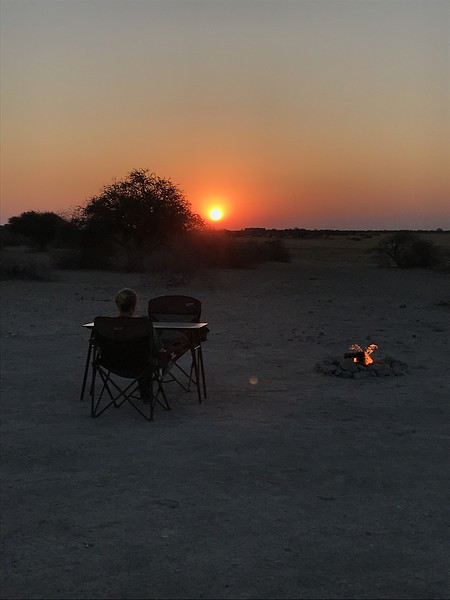
Enchantés, nous poursuivons la soirée autour du feu en dégustant une délicieuse viande grillée accompagnée d’un très bon vin sud-africain. Nous allons nous coucher sous un ciel étoilé, tellement heureux et émus d’être de retour sur ces terres africaines qui nous bouleversent tant !
Voici un petit retour de notre dernier séjour au Botswana en self-drive sous la forme d’un carnet de voyage (mon premier, donc je compte sur votre indulgence !).
Adeptes du self-drive, nous arpentons les pistes d’Afrique australe de manière assidue depuis 2013 que ce soit en famille (avec nos deux filles de 16 et 18 ans maintenant) ou en duo. En 2016, nous avons fait l’acquisition d’un Land Rover Defender qui est stationné à Johannesburg (chez KlipKop) et qui nous permet d’assouvir notre passion pour cette partie du monde.
Après avoir effectué un Cap Town-Johannesburg (en passant par le Lesotho) en avril avec les filles et une boucle de 10 jours Blyde-Krüger NP avec un couple d’amis au mois de mai, nous voilà de retour à Johannesburg le 31 août 2019 (vol parfait avec Air France).
Nous récupérons notre voiture chez Bushlore qui a procédé à une réparation sur celle-ci. Après quelques échanges cordiaux avec Mark (le patron ) et Dieter (qui s’occupe de toute la paperasse pour nous), Rochelle (qui s’est chargée d’une bonne partie de nos réservations) nous remet nos vouchers pour Lekhubu, Ihaha, Savuti, Khwai et Xakanaka (réservations faites une année à l’avance).
L’itinéraire prévu est le suivant :
Afrique du Sud : · Entabeni Safari Conservancy – Lakeside Lodge · Moriti Bush Camp (à 3 km de Martin’s Drift Border Post)
Botswana : · Makgadikgadi NP - Lekhubu Island · Gweta - Planet Baobab · Kasane - Senyati · Chobe - Ihaha · Chobe - Mwandi View · Chobe - Savuti · Moremi - Khwai · Moremi - Xakanaka · Motopi - Leopard Plains · Serowe - Khama Rhino
Afrique du Sud : · Marakele NP – Bontle Camp · Mabula Game Reserve – Mabula Game Lodge
31.08.19 / Johannesburg- Entabeni Safari Conservancy
Nous arrivons sans encombre vers 15h00 à l’entrée d’Entabeni (réserve que nous ne connaissons pas encore mais qui nous a été recommandée par des Danois croisés l’année dernière au Pilanesberg). Les paysages sont de toute beauté ….et dire qu’il y a 24 heures nous étions encore en Suisse ! Quel contraste saisissant !
Le lodge est très joli et la vue sur le lac est magnifique.Nous prenons possession de notre bungalow et sautons dans la voiture de safari qui nous attend (comme nous sommes arrivés un peu tard, les autres clients sont déjà partis et nous avons droit à un safari privé). Les cheveux au vent, nous profitons de sublimes paysages et ne tardons pas à voir deux rhinos blancs. Zèbres, gnous, kudus, bubales et hippos viendront compléter cette affiche.
A la nuit tombée, nous assisterons à une tentative de chasse de la part d’une lionne sur un gnou bleu…que demander de mieux comme entrée en matière ? La fatigue du voyage commence à se faire sentir et après un agréable repas, nous nous couchons en appréciant particulièrement la couverture chauffante de notre lit bien douillet.
01.09.19 / Entabeni Safari Conservancy- Moriti Bush Camp (Nyala) Après une bonne nuit de sommeil, un nouveau safari matinal et un solide petit-déjeuner, nous reprenons la route, direction la frontière avec le Botswana. Nous avons prévu de nous arrêter juste avant la frontière avec dans l’idée de la passer à la première heure le lendemain. Nous empruntons la R516 entre Marken et Baltimore, l’une des pires routes qu’il nous ait été donné de pratiquer jusque-là….c’est une route asphaltée mais il y a plus de nids de poule que d’asphalte….il faut faire preuve de dextérité et d’imagination pour zigzaguer entre les « potholes » à une vitesse très très réduite. Heureusement, nous ne croisons que peu de voitures. Une fois cette redoutable épreuve franchie, nous faisons quelques courses pour le braai du soir et arrivons au Moriti Bush Camp vers 14h00. La propriétaire, Adéle, nous accueille chaleureusement. Notre emplacement au bord de la rivière Limpopo est juste splendide ! Il s’agit d’un endroit super bien aménagé et intime qui comprend un bloc sanitaire/cuisine privatif. L’endroit est vraiment top.
Nous montons notre tente de toit sous le grand arbre et procédons à quelques aménagements au niveau de notre véhicule nécessaires avant d’entreprendre la suite de notre périple. Nous installons notre table et nos chaises sur un petit promontoire duquel nous avons une belle vue dégagée sur la rivière et savourons notre premier braai en admirant quelques antilopes et un crocodile solitaire qui monte et redescend la rivière.
L’endroit est paisible, une étape parfaite avant d’entrer au Botswana.
02.09.19 / Moriti Bush Camp-Lekhubu Island (Kubu) Nous nous levons aux aurores pour passer la douane. De nombreuses personnes font déjà la queue, certaines enveloppées dans des couvertures.
Il nous faudra environ 1 heure pour passer la frontière. Nous faisons le plein d’essence à la première station que nous rencontrons (l’année dernière nous avions frôlé la panne sèche sur le tronçon entre la frontière et Khama Rhino, cela nous a servi de leçon). Nous avons plus de 500 km à parcourir aujourd’hui, nous devons aussi faire quelques courses, trouver du bois et retirer des pulas. Nous nous arrêtons à Lethlakane avant de prendre la direction des pans. Comme l’année dernière, nous sommes émerveillés par la beauté des paysages qui s’offrent à nous. Nous ne nous lassons pas de traverser ces étendues infinies quasiment lunaires. Nous nous arrêtons au milieu du pan pour faire quelques photos.
Nous verrons quelques impalas dont on se demande comment ils font pour survivre tant la terre est aride et l’environnement hostile.
Nous atteignons Lekhubu et allons nous annoncer à la réception du camping. L’accueil est super chaleureux, nous sommes invités à nous installer à l’emplacement de notre choix. Les meilleurs sites sont déjà occupés et nous portons finalement notre dévolu sur le no 12 (que nous connaissons déjà). Il se trouve au bord du pan et la vue y est bien dégagée : la promesse d’un beau coucher de soleil ! Avant de nous y installer pour la soirée, nous partons faire un tour de l’île afin de faire quelques photos des majestueux baobabs qui s’y dressent entre les rochers. Ce paysage est vraiment unique, il s’en dégage une atmosphère presque mystique !
De retour à notre emplacement, nous nous installons pour prendre l’apéritif en profitant du spectacle qui s’offre à nous.
Enchantés, nous poursuivons la soirée autour du feu en dégustant une délicieuse viande grillée accompagnée d’un très bon vin sud-africain. Nous allons nous coucher sous un ciel étoilé, tellement heureux et émus d’être de retour sur ces terres africaines qui nous bouleversent tant !
In the Land of the Tswana (Botswana)
We’ve been back for a month now, so it’s high time I posted the story of our adventures! 😉 I’d also like to thank everyone who shared their own experiences on this forum (or elsewhere) and gave us tips—it really helped us plan our trip.
14/09/2019: Johannesburg - Vryburg After months of waiting and reading other travelers’ journals, it’s finally our turn! We arrived in Johannesburg from Nantes and Paris in the morning. We looked for the Bushlore rep—we’d rented our 4x4 from them—but there was no sign with our name! « Bushlore? She’s a woman, I saw her a few minutes ago, » someone told us. A minute later, the Bushlore employee showed up: a man! 🤪 He sped onto the highway, and just 30 minutes later, we arrived at the rental place. It’s a big operation with good organization and lots of vehicles—pretty reassuring. Our 4x4 was there, a classic Toyota Hilux fully equipped for safari: rooftop tent, dual diesel tanks, 60-liter water reserve, two batteries, two spare tires, all the camping gear, plus everything needed for *désensablement* (getting unstuck from sand). Speaking of which, is it "désensablage" or "désensablement"? Best to just avoid getting stuck in the first place! 😏 Good news… or not: the vehicle was brand new, with barely 100 kilometers on the odometer. On one hand, we figured we wouldn’t have mechanical issues or a fridge breakdown, but on the other, we knew it wouldn’t be easy to return it without a single scratch. Either way, it was our first time renting a 4x4, and we were impressed.
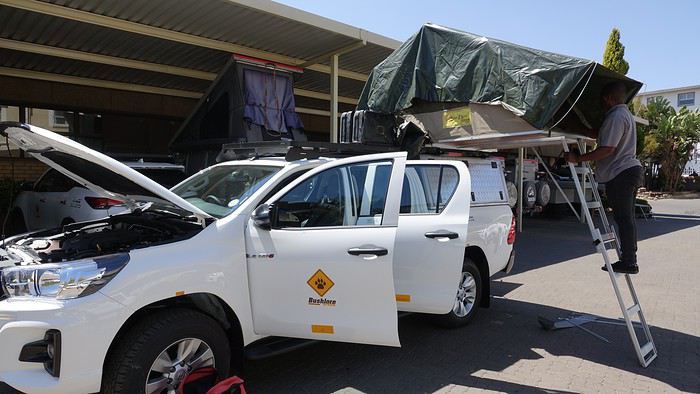
We set off toward Kgalagadi Transfrontier Park—it’s not exactly around the corner! In 1994 (when Mandela had just become President) and 2007, during our two previous trips to South Africa, we loved this park, so we couldn’t imagine going to Botswana without returning. The road was pretty monotonous, with not much to see except a few ostriches.
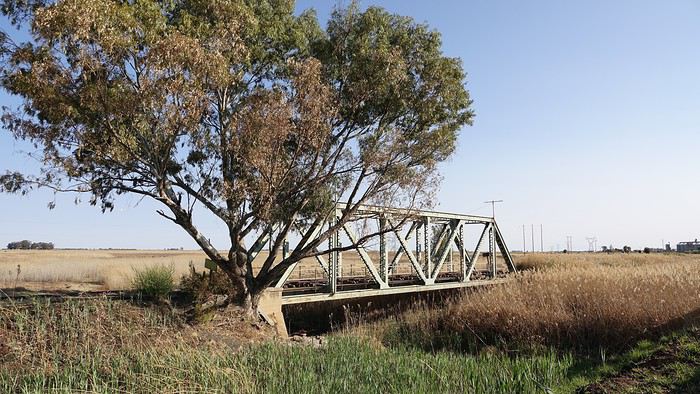
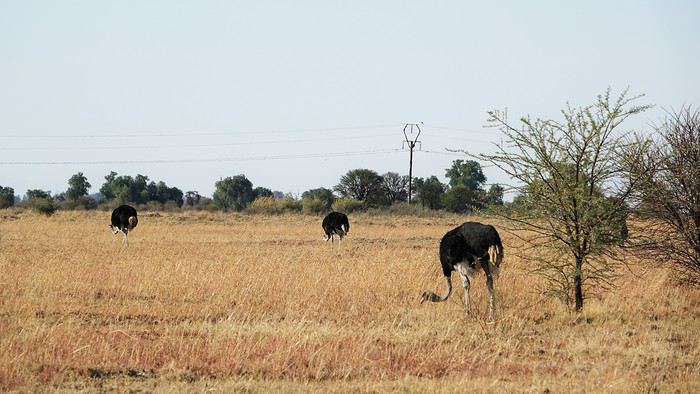
We stopped for the night in Vryburg at the Kameelboom Lodge campsite. It was a bit noisy since it’s close to the road, and the facilities weren’t great, but it was fine for one night.
14/09/2019: Johannesburg - Vryburg After months of waiting and reading other travelers’ journals, it’s finally our turn! We arrived in Johannesburg from Nantes and Paris in the morning. We looked for the Bushlore rep—we’d rented our 4x4 from them—but there was no sign with our name! « Bushlore? She’s a woman, I saw her a few minutes ago, » someone told us. A minute later, the Bushlore employee showed up: a man! 🤪 He sped onto the highway, and just 30 minutes later, we arrived at the rental place. It’s a big operation with good organization and lots of vehicles—pretty reassuring. Our 4x4 was there, a classic Toyota Hilux fully equipped for safari: rooftop tent, dual diesel tanks, 60-liter water reserve, two batteries, two spare tires, all the camping gear, plus everything needed for *désensablement* (getting unstuck from sand). Speaking of which, is it "désensablage" or "désensablement"? Best to just avoid getting stuck in the first place! 😏 Good news… or not: the vehicle was brand new, with barely 100 kilometers on the odometer. On one hand, we figured we wouldn’t have mechanical issues or a fridge breakdown, but on the other, we knew it wouldn’t be easy to return it without a single scratch. Either way, it was our first time renting a 4x4, and we were impressed.
We set off toward Kgalagadi Transfrontier Park—it’s not exactly around the corner! In 1994 (when Mandela had just become President) and 2007, during our two previous trips to South Africa, we loved this park, so we couldn’t imagine going to Botswana without returning. The road was pretty monotonous, with not much to see except a few ostriches.
We stopped for the night in Vryburg at the Kameelboom Lodge campsite. It was a bit noisy since it’s close to the road, and the facilities weren’t great, but it was fine for one night.
Itinéraire dans les îles de la Polynésie English translation pending
Bonjour à tous !
Pour fêter nos 50 ans, un coup de folie nous a pris.... Nous partons (à 2) en Polynésie !!! 😎
Nos billets Paris/Papeete sont déjà achetés. 1300€ le billet avec ATN, j'ai trouvé ça raisonnable par rapport à ce que j'avais pu lire un peu à droite à gauche. Donc je me suis lancée. 3 semaines en août/sept prochain. Que l'année à venir va nous sembler longue...
Notre casse tête maintenant est d'établir notre circuit et c'est là que nous aurions besoin des précieux conseils des connaisseurs.
Nous souhaitons à la fois profiter pleinement de chaque endroit donc prendre notre temps et à la fois en voir un maximum bien sure. Nous sommes donc partis dans l'idée de rester 4 jours sur chaque île.
Est-ce trop pour certaines ? pas assez pour d'autres ?
Voici les îles que nous avons relevées : - Moorea - Raiatea ou Huahine - Bora bora - Maupiti - Rangiroa - Fakarava
Nous ne pensons pas faire Tahiti malheureusement. Il y a tellement d'autres îles qui nous semblent tellement plus belles et plus intéressantes. Nous arriverons donc le soir vers 22h et repartirons au plus tôt dès le lendemain matin.
L'ennui c'est que malgré tout, 4 jours sur 6 îles, ça ne rentre pas dans nos 20 jours....
Devons-nous supprimer une île un peu similaire à une autre (Bora bora/Maupiti ou Rangiroa/Fakarava) ou réduire le temps sur l'une des 6 îles pour les caser toutes mais sans pour autant avoir l'impression de courir avec les temps de transfert ? Car Bora bora & Maupiti ou Rangiroa & Fakarava nous font tellement envie !!!
Si vous avez aussi quelques recommandations quant à l'ordre d'enchaînement des îles, je suis également preneuse... j'ai commencé à regarder les jours & horaires des vols intérieurs et je sais que la tâche va être rude 😠
A noter que nous ne sommes pas des plongeurs, nous n'avons pas nos niveaux, mais adorons le snorkeling bien entendu.
Voilà pour nos premières interrogations 🤪
Je vous remercie par avance pour toutes vos précieuses réponses.
Pour fêter nos 50 ans, un coup de folie nous a pris.... Nous partons (à 2) en Polynésie !!! 😎
Nos billets Paris/Papeete sont déjà achetés. 1300€ le billet avec ATN, j'ai trouvé ça raisonnable par rapport à ce que j'avais pu lire un peu à droite à gauche. Donc je me suis lancée. 3 semaines en août/sept prochain. Que l'année à venir va nous sembler longue...
Notre casse tête maintenant est d'établir notre circuit et c'est là que nous aurions besoin des précieux conseils des connaisseurs.
Nous souhaitons à la fois profiter pleinement de chaque endroit donc prendre notre temps et à la fois en voir un maximum bien sure. Nous sommes donc partis dans l'idée de rester 4 jours sur chaque île.
Est-ce trop pour certaines ? pas assez pour d'autres ?
Voici les îles que nous avons relevées : - Moorea - Raiatea ou Huahine - Bora bora - Maupiti - Rangiroa - Fakarava
Nous ne pensons pas faire Tahiti malheureusement. Il y a tellement d'autres îles qui nous semblent tellement plus belles et plus intéressantes. Nous arriverons donc le soir vers 22h et repartirons au plus tôt dès le lendemain matin.
L'ennui c'est que malgré tout, 4 jours sur 6 îles, ça ne rentre pas dans nos 20 jours....
Devons-nous supprimer une île un peu similaire à une autre (Bora bora/Maupiti ou Rangiroa/Fakarava) ou réduire le temps sur l'une des 6 îles pour les caser toutes mais sans pour autant avoir l'impression de courir avec les temps de transfert ? Car Bora bora & Maupiti ou Rangiroa & Fakarava nous font tellement envie !!!
Si vous avez aussi quelques recommandations quant à l'ordre d'enchaînement des îles, je suis également preneuse... j'ai commencé à regarder les jours & horaires des vols intérieurs et je sais que la tâche va être rude 😠
A noter que nous ne sommes pas des plongeurs, nous n'avons pas nos niveaux, mais adorons le snorkeling bien entendu.
Voilà pour nos premières interrogations 🤪
Je vous remercie par avance pour toutes vos précieuses réponses.
Quinze jours en Mauritanie au départ de Marrakech avec guide English translation pending
Bonjour
Mon épouse et moi avons une place dans un SUV au départ de Marrakech.
15 jours au départ de Marrakech A/R au mois de février.
Road trip en compagnie d'un guide marocain.
A bientot
Retirer de l'argent une fois sur place aux Philippines English translation pending
Bonjour
Pour mon voyage de 15 jours autour de Manille, et pour avoir des pessos, quel est la meilleur façon de faire
1. Retirer au distributeur ? Je crois me souvenir que c'est 10 000 PHP a la fois et 200 PHP de taxe, et ma banque prends des frais 2. Aller aux philippines avec des EUROS et faire du change ? 3. Transférer de l'argent par WU ou autres moyen vers Cebuana, LBC .... et le recouper dans l'agence.
Retirer dans un distributeur parait le plus simple mais j'ai l'impression pas le moins cher.
Comment procédez vous ?
Merci Chris
Pour mon voyage de 15 jours autour de Manille, et pour avoir des pessos, quel est la meilleur façon de faire
1. Retirer au distributeur ? Je crois me souvenir que c'est 10 000 PHP a la fois et 200 PHP de taxe, et ma banque prends des frais 2. Aller aux philippines avec des EUROS et faire du change ? 3. Transférer de l'argent par WU ou autres moyen vers Cebuana, LBC .... et le recouper dans l'agence.
Retirer dans un distributeur parait le plus simple mais j'ai l'impression pas le moins cher.
Comment procédez vous ?
Merci Chris