Results for "Richard+Coeur+Lion+|+127"
3004 results found.
Bons plans pour fille seule en Thaïlande English translation pending
Boujour,
Je sais que ma question est tres large, mais je ne sais pas du tout ou aller en Thailande...et je pars en mars...j'ai une copine a Bangkok avec qui je passerai mes premiers jours, mais apres, ou aller...le sud, le nord, les iles...au secours
Excursions au départ de Bayahibe? English translation pending
Nous allon en RD au mois de janvier et nous aimerions savoir quelles sont les excursions les plus intéressantes depuis Bayahibe
Merci
Francis
Merci
Francis
Torture de milliers d'ours en Chine English translation pending
🙁Prenez quelques minutes SVP pour lire ce message de la plus grande importance.
Des ours sont sous torture dans 247 « fermes » mises en place par le gouvernement chinois depuis 20 ans pour extraire 7 000 litres de leur bile par an. La bile d’ours est utilisée dans des remèdes, du vin, des shampooings et des aphrodisiaques. Pourtant, il existe des produits de substitution. Plus de 100 000 litres de bile de synthèse sont commercialisés chaque année.
Une preuve de la grande détresse des ours dans ces fermes est le comportement des mères ourses qui vont jusqu’à tuer leurs bébés dès la naissance. Cette mortalité n’empêche pas les fermiers de continuer leur commerce ignoble avec des oursons capturés dans la nature.
😕Les braconniers profitent de l’absence de la mère, partie en quête de nourriture, pour enlever les oursons âgés de quelques jours. Parfois la mère est tuée et un grand nombre de bébés meurent de ce traumatisme
Les survivants sont parqués dans un enclos pour les habituer à leur futur enfermement dans une cage étroite. Puis, à l’âge de 3 ans, ils subissent une opération qui les mutile à vie. Les fermiers implantent un cathéter dans la vésicule biliaire pour drainer leur bile. Ce tube reste en permanence, et laisse une plaie à vif qui s’infecte et n’est jamais soignée. Quatre ours sur cinq meurent pendant ou après l’opération d’implantation.
🙁Les ours qui survivent sont transférés dans des cages si petites qu’ils ne peuvent ni bouger, ni même se coucher. Pour exprimer leur angoisse et leur souffrance, ils n’ont pas d’autres choix que de se cogner la tête contre les barreaux et de se mordre les pattes jusqu’au sang. Ces gestes de grande détresse entraînent de graves infections.Comprimés dans les cages, parfois jusqu’à l’écrasement de leurs organes, les ours subissent deux fois par jour la torture de l’extraction. Elle est effectuée pendant qu’ils sont nourris et abreuvés, pour stimuler la bile. Les ours gémissent, hurlent et se tordent de douleur, en se tenant l’estomac.
Pour voyager intelligement et ne pas etre le complice d'une torture immonde, prenez quelques minutes pour visiter ce site :
http://www.onevoice-ear.org/
Merci beaucoup. Mon seul but est de vous informer.
David😐
Des ours sont sous torture dans 247 « fermes » mises en place par le gouvernement chinois depuis 20 ans pour extraire 7 000 litres de leur bile par an. La bile d’ours est utilisée dans des remèdes, du vin, des shampooings et des aphrodisiaques. Pourtant, il existe des produits de substitution. Plus de 100 000 litres de bile de synthèse sont commercialisés chaque année.
Une preuve de la grande détresse des ours dans ces fermes est le comportement des mères ourses qui vont jusqu’à tuer leurs bébés dès la naissance. Cette mortalité n’empêche pas les fermiers de continuer leur commerce ignoble avec des oursons capturés dans la nature.
😕Les braconniers profitent de l’absence de la mère, partie en quête de nourriture, pour enlever les oursons âgés de quelques jours. Parfois la mère est tuée et un grand nombre de bébés meurent de ce traumatisme
Les survivants sont parqués dans un enclos pour les habituer à leur futur enfermement dans une cage étroite. Puis, à l’âge de 3 ans, ils subissent une opération qui les mutile à vie. Les fermiers implantent un cathéter dans la vésicule biliaire pour drainer leur bile. Ce tube reste en permanence, et laisse une plaie à vif qui s’infecte et n’est jamais soignée.
Quatre ours sur cinq meurent pendant ou après l’opération d’implantation.🙁Les ours qui survivent sont transférés dans des cages si petites qu’ils ne peuvent ni bouger, ni même se coucher. Pour exprimer leur angoisse et leur souffrance, ils n’ont pas d’autres choix que de se cogner la tête contre les barreaux et de se mordre les pattes jusqu’au sang. Ces gestes de grande détresse entraînent de graves infections.
Comprimés dans les cages, parfois jusqu’à l’écrasement de leurs organes, les ours subissent deux fois par jour la torture de l’extraction. Elle est effectuée pendant qu’ils sont nourris et abreuvés, pour stimuler la bile. Les ours gémissent, hurlent et se tordent de douleur, en se tenant l’estomac.Pour voyager intelligement et ne pas etre le complice d'une torture immonde, prenez quelques minutes pour visiter ce site :
http://www.onevoice-ear.org/
Merci beaucoup. Mon seul but est de vous informer.
David😐
Page by Page on the Assisi Way – 1,200 km on Foot
Preamble
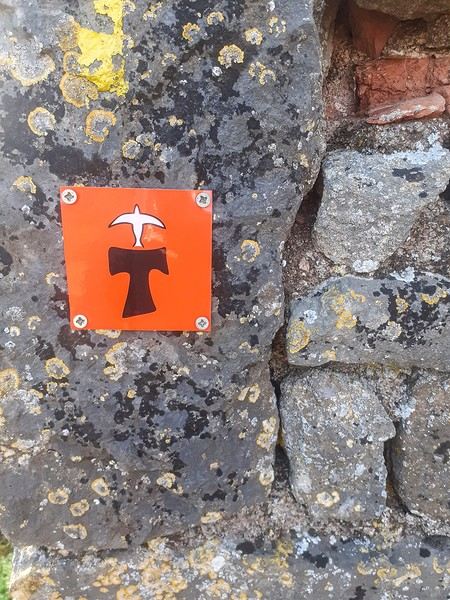
June 2024. While hiking with my brother on the GR 36 Tour du Morvan, I catch sight now and then of strange rectangular markers fixed to tree trunks. Against a bright orange background, a deep black Greek tau topped with a white dove. My first encounter with the Assisi Way. The Way of St. Francis: a pilgrimage route linking Vézelay in Burgundy to Assisi in Italy, covering nearly 1,800 km. It felt like an obvious next step—I immediately knew I’d take it on, attempt the adventure solo.
In the months that followed, I talked about my project to everyone—family, friends, my partner. An avalanche of comments, more or less the same but varying depending on each person’s character and life experiences. But deep down, it all boiled down to one legitimate question: why?
And the answers? Hesitant, awkward, partial, even confused. I quickly realized they weren’t so easy to find. It was as if my project seemed more like a whim, a kind of intimate caprice, rather than a well-thought-out plan. Of course, I knew the reasons that pushed me to leave—you always have to give some. Loved ones need to understand to feel reassured, and that’s understandable. But I fear that when I list them, they’ll sound like the same old checklist anyone embarking on this kind of journey might give. Of all the reasons I could mention, I’ll highlight just one here: the call of the road, the solo adventure that brings a powerful sense of freedom. A bit like Monsieur Seguin’s goat, who from her comfortable pen gazes longingly at the unconstrained horizon of the mountain. But if I’m being honest, I think I didn’t really know what I was looking for—or, more importantly, what I’d find. Deep down, when I reflect on it, one word keeps coming up that explains nothing and everything at once: desire.
Now well past sixty, I know that when I ask myself who I am or where I’m going, two things bring me fully back to myself: hiking and writing. And my intention was also to anchor this adventure through words, day by day. Writing down my feelings, emotions, discoveries, and reflections each evening. The famous travel journal that grounds the daily experience in reality. When I discovered the app "Polarstep," which was initially just meant to keep my loved ones updated and reassured, inform them of my progress, and maintain a connection, I found an opportunity to do it a little differently than usual. No retrospective notes polished up after returning, but spontaneous writing—recounting everything that crossed my mind during the day and publishing it immediately. A journey lived in real time.
This text is the exact transcription of my daily writings. Rereading them, I didn’t change a thing—just corrected a few mistakes and tweaked some awkward phrasing here and there. Short texts, fitting the format imposed by this kind of app. Writing as if addressing others.
Now, all that was left was to walk. April 18, 2026 – Vézelay.
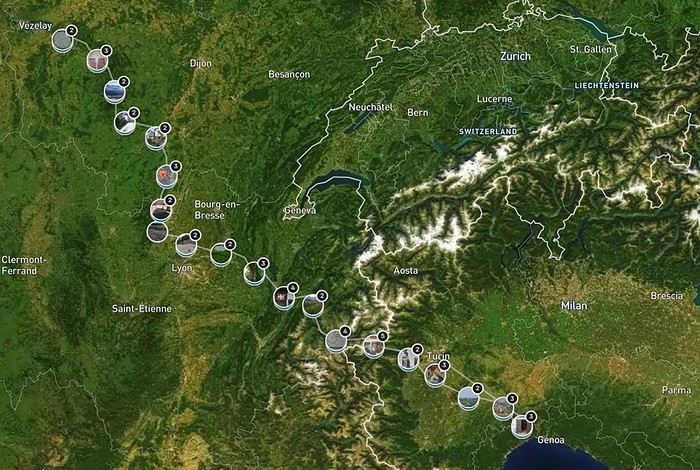
June 2024. While hiking with my brother on the GR 36 Tour du Morvan, I catch sight now and then of strange rectangular markers fixed to tree trunks. Against a bright orange background, a deep black Greek tau topped with a white dove. My first encounter with the Assisi Way. The Way of St. Francis: a pilgrimage route linking Vézelay in Burgundy to Assisi in Italy, covering nearly 1,800 km. It felt like an obvious next step—I immediately knew I’d take it on, attempt the adventure solo.
In the months that followed, I talked about my project to everyone—family, friends, my partner. An avalanche of comments, more or less the same but varying depending on each person’s character and life experiences. But deep down, it all boiled down to one legitimate question: why?
And the answers? Hesitant, awkward, partial, even confused. I quickly realized they weren’t so easy to find. It was as if my project seemed more like a whim, a kind of intimate caprice, rather than a well-thought-out plan. Of course, I knew the reasons that pushed me to leave—you always have to give some. Loved ones need to understand to feel reassured, and that’s understandable. But I fear that when I list them, they’ll sound like the same old checklist anyone embarking on this kind of journey might give. Of all the reasons I could mention, I’ll highlight just one here: the call of the road, the solo adventure that brings a powerful sense of freedom. A bit like Monsieur Seguin’s goat, who from her comfortable pen gazes longingly at the unconstrained horizon of the mountain. But if I’m being honest, I think I didn’t really know what I was looking for—or, more importantly, what I’d find. Deep down, when I reflect on it, one word keeps coming up that explains nothing and everything at once: desire.
Now well past sixty, I know that when I ask myself who I am or where I’m going, two things bring me fully back to myself: hiking and writing. And my intention was also to anchor this adventure through words, day by day. Writing down my feelings, emotions, discoveries, and reflections each evening. The famous travel journal that grounds the daily experience in reality. When I discovered the app "Polarstep," which was initially just meant to keep my loved ones updated and reassured, inform them of my progress, and maintain a connection, I found an opportunity to do it a little differently than usual. No retrospective notes polished up after returning, but spontaneous writing—recounting everything that crossed my mind during the day and publishing it immediately. A journey lived in real time.
This text is the exact transcription of my daily writings. Rereading them, I didn’t change a thing—just corrected a few mistakes and tweaked some awkward phrasing here and there. Short texts, fitting the format imposed by this kind of app. Writing as if addressing others.
Now, all that was left was to walk. April 18, 2026 – Vézelay.
Peru: A Childhood Dream Finally Fulfilled
Preamble
I could have titled my travel journal like Carmen: "Some trips are born twice." Indeed, we had considered this destination back in February 2020. However, an honest tour operator advised us against traveling at that time due to the climate. So, we gave up and opted for Guatemala instead (see "On the Mayan Lands" on this site).
So, why this title? When I was in primary school, over 65 years ago, the illustrations in my history books (Machu Picchu) and geography books (Lake Titicaca) made me dream, and those images stayed in my mind. It took until 2026 to finally make this dream come true!
We prepared our trip with Tout Pérou, a French-speaking "agency." Everything was handled via email and WhatsApp exchanges with our contact: Laurent, who was both competent, friendly, and full of good advice. For 200 €, Tout Pérou provided us with drivers and guides whenever we wanted, helped us buy our domestic flights (cheaper when purchased in Peru), booked shuttles between airports and hotels, and got us a discount on the train ride to Aguas Calientes, as well as on the buses between Chivay and Puno and between Puno and Cusco. In short, Laurent took care of all the logistics and the Machu Picchu tickets. It was up to us to book our hotels. Tout Pérou provided a list, but we weren’t obliged to follow it. Another advantage of the package: we didn’t have to pay in advance; we paid the service providers directly day by day.
We didn’t meet Laurent in person because he was on vacation in Europe. Before his departure, he gave us a briefing, provided a summary table with the entire program, the service providers, their phone numbers, their fees, the schedules, and gave us plenty of advice (money, exchange, safety, etc.). After returning at the end of our stay, he kept checking in on us.
Lastly, we had also gathered information from Arnaud Lagadec, who runs a hotel in Cusco and offers tours of the region. He gave us a lot of useful information. Another contact: Thomas Montaigne, very friendly, who runs an agency in Arequipa (Agence Pérou Exclusif).
Day 1 – Paris to Lima
Foreword I’ll share our trip without any pretension—I don’t have the talent of some contributors on this forum—and I’ll illustrate it with a few photos (taken with an ordinary smartphone). My comments are personal and only reflect my own views. So, please be kind! Feel free to comment on my story as you like, but let’s avoid pointless debates.
Even though we live in the south of the Paris region, true to our habits when the flight is in the morning, we chose to spend the night before our departure in a hotel near CDG and parked our car in a parking lot in Garches. This way, we avoid the stress that often comes with traveling around Paris (accidents, roadworks, traffic jams, etc.).
Check-in and border control went smoothly on that Sunday morning. Our Air France flight was uneventful. In Lima, border control took a particularly long time, and for the first time, we didn’t get an entry visa stamped in our passports.
As planned, a driver took us to the Miraflores district, where our hotel was located. We were surprised by the numerous signs about possible tsunamis, having forgotten that Peru is prone to such events and regularly experiences earthquakes. We’d see the consequences of these during our journey.
Exhausted from the early wake-up, the 13-hour flight, and the 7-hour time difference, we had dinner at the hotel before a restful night.
Note that this day was Peru’s presidential election day. As a result, we weren’t served beer—the sale of alcohol was banned that Sunday.
I could have titled my travel journal like Carmen: "Some trips are born twice." Indeed, we had considered this destination back in February 2020. However, an honest tour operator advised us against traveling at that time due to the climate. So, we gave up and opted for Guatemala instead (see "On the Mayan Lands" on this site).
So, why this title? When I was in primary school, over 65 years ago, the illustrations in my history books (Machu Picchu) and geography books (Lake Titicaca) made me dream, and those images stayed in my mind. It took until 2026 to finally make this dream come true!
We prepared our trip with Tout Pérou, a French-speaking "agency." Everything was handled via email and WhatsApp exchanges with our contact: Laurent, who was both competent, friendly, and full of good advice. For 200 €, Tout Pérou provided us with drivers and guides whenever we wanted, helped us buy our domestic flights (cheaper when purchased in Peru), booked shuttles between airports and hotels, and got us a discount on the train ride to Aguas Calientes, as well as on the buses between Chivay and Puno and between Puno and Cusco. In short, Laurent took care of all the logistics and the Machu Picchu tickets. It was up to us to book our hotels. Tout Pérou provided a list, but we weren’t obliged to follow it. Another advantage of the package: we didn’t have to pay in advance; we paid the service providers directly day by day.
We didn’t meet Laurent in person because he was on vacation in Europe. Before his departure, he gave us a briefing, provided a summary table with the entire program, the service providers, their phone numbers, their fees, the schedules, and gave us plenty of advice (money, exchange, safety, etc.). After returning at the end of our stay, he kept checking in on us.
Lastly, we had also gathered information from Arnaud Lagadec, who runs a hotel in Cusco and offers tours of the region. He gave us a lot of useful information. Another contact: Thomas Montaigne, very friendly, who runs an agency in Arequipa (Agence Pérou Exclusif).
Day 1 – Paris to Lima
Foreword I’ll share our trip without any pretension—I don’t have the talent of some contributors on this forum—and I’ll illustrate it with a few photos (taken with an ordinary smartphone). My comments are personal and only reflect my own views. So, please be kind! Feel free to comment on my story as you like, but let’s avoid pointless debates.
Even though we live in the south of the Paris region, true to our habits when the flight is in the morning, we chose to spend the night before our departure in a hotel near CDG and parked our car in a parking lot in Garches. This way, we avoid the stress that often comes with traveling around Paris (accidents, roadworks, traffic jams, etc.).
Check-in and border control went smoothly on that Sunday morning. Our Air France flight was uneventful. In Lima, border control took a particularly long time, and for the first time, we didn’t get an entry visa stamped in our passports.
As planned, a driver took us to the Miraflores district, where our hotel was located. We were surprised by the numerous signs about possible tsunamis, having forgotten that Peru is prone to such events and regularly experiences earthquakes. We’d see the consequences of these during our journey.
Exhausted from the early wake-up, the 13-hour flight, and the 7-hour time difference, we had dinner at the hotel before a restful night.
Note that this day was Peru’s presidential election day. As a result, we weren’t served beer—the sale of alcohol was banned that Sunday.
16 days with family in La Gomera (Canary Islands)
Preamble: Why La Gomera?
When we started looking for a summer destination a few months ago, our first criterion was to avoid extreme heat and heatwaves. We had already been to Norway two years ago and are considering going back in the future for other occasions. So, we had some fun asking ChatGPT which destinations enjoyed a mild climate during the summer without going too far. Among the list provided by the AI were the Canary Islands... The idea of a place we wouldn’t have thought of first, both not too far away and exotic enough, appealed to us: “Hmm, why not?”
This destination had never really attracted me, though Magali was a bit more interested. Five years earlier, COVID had caused a short break in my professional activity, and I had planned a trip because the flight price was attractive, and I was looking for a destination different from what usually appeals to me, more than out of deep interest. From a distance and with a social judgment I acknowledge (it’s not great, but it’s not completely wrong), I had the image of a destination for party-goers enjoying the sun without the slightest interest in local culture, with concrete coastlines and denatured landscapes—everything I detest the most. Still, I had done some quick research on the different islands and spotted Lanzarote for its beautiful volcanic landscapes, hiking trails, beaches, and the impression of a good balance between activity and fewer crowds than Tenerife or Gran Canaria. Then I dropped the idea of going, without ever reconsidering traveling to the Canaries...
Until now! Because we started researching the different islands of the archipelago to see which ones might appeal to us the most. It was La Gomera, the third smallest island of the archipelago, more praised for its hiking trails and preserved nature than for its beaches, away from mass tourism (fifty times fewer tourists than Tenerife) but still a bit more developed than its wild neighbor El Hierro, that caught our attention. Contrary to what might be suggested later, I’m not at all addicted to AI, but I use it from time to time to synthesize quick research or simply for experimentation. Since ChatGPT had started anticipating my tastes lately as if it had become my buddy (often successfully, sometimes off the mark), I asked which Canary Island would suit me best for a trip with my family. The tool answered first with... La Gomera. So, I tested it and teased it a bit to see if this suggestion was well-founded, as the method sometimes makes it contradict itself. But no luck: “You’d appreciate the wild nature of El Hierro, but with family, you’ll find little activity for the kids. You won’t like the touristy vibe of the big islands like Tenerife, Gran Canaria, Lanzarote, and Fuerteventura. You could consider La Palma, but it’s really La Gomera that will suit you best, based on your interests and the criteria given.” So, we dug deeper into our research and were convinced without a shadow of a doubt that this island was the one waiting for us.
Without knowing it, we had Canarians in our circle who revealed their origins when they heard about our travel plans. One from Tenerife insisted we’d be better off choosing Tenerife (obviously...) because it also has preserved spots and that La Gomera, “you can explore it in two or three days, you’ll get bored quickly...” The other, a colleague from Gran Canaria who had never visited La Gomera, still recommended it without hesitation because it turned out her parents had just gone there on vacation: they loved it and had encountered few tourists. She also tended to think this destination was usually the subject of short stays, but according to what her parents told her, taking your time there was also a great idea. However, in our research, the idea that La Gomera is an island you can explore in three or four days max kept coming up. So, we considered combining its visit with La Palma or El Hierro, the other two that caught our eye. But hopping between islands by ferry represents a significant budget for non-Canarians, even more so for a family of four. Then, scrutinizing Google Maps, it seemed obvious that two weeks were too short to discover two islands as they deserve, and that there seemed to be plenty to see in La Gomera, given its very unique culture. After all, we read that some people spend several months a year there, others never even leave... Finally, these landscapes and this atmosphere, which seemed to us a mix of Europe, North Africa, and Latin America, tempted us. So, it would be two weeks in La Gomera, deal!
La Gomera is therefore the second... well, the third smallest island of the Canaries since La Graciosa was recently recognized as a fully inhabited island. It has the shape of a rough circle about 20 to 25 kilometers in diameter and has just over 20,000 inhabitants, half of them in its capital, San Sebastián de la Gomera, the only real town. Like its Canarian sisters, La Gomera is a volcanic formation that rose about 10 million years ago. The island is very mountainous and rugged, covered with red and black rocky landscapes. Geological activity has shaped, between the sprawling massifs that end in steep cliffs in the ocean, six coastal valleys with tropical vegetation that have favored human settlement. They divide the island like slices of a cake; from the north clockwise: the agricultural Vallehermoso, the rustic Agulo, the green, humid, and fertile Hermigua, the sunny capital San Sebastián de la Gomera, the southern and isolated Alajeró-Santiago, and the seaside Valle Gran Rey. They constitute the six municipalities (more like cantons to our French understanding) of the territory.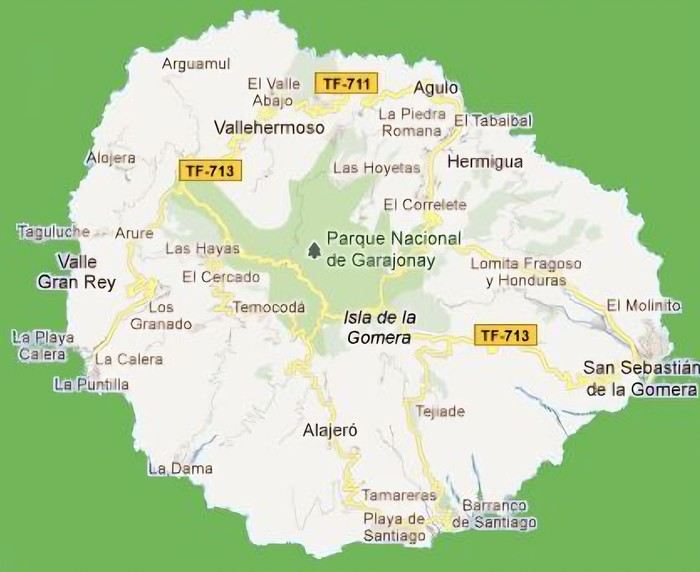 The large solidified magma massifs that shape the heart of the island have created a large depression more protected from the sun at its center, allowing the growth of a vast laurel forest, today grouped within the Garajonay National Park, La Gomera’s green lung, which has earned it the status of a World Biosphere Reserve. Its completely European appearance contrasts sharply with the rocky and tropical landscapes of the rest of the island. Thus, the climate varies greatly from one point to another on the island: in summer, you can quickly go from a dry and sunny valley at 35°C to a humid forest area at altitude at 18°C.
La Gomera was populated late. As with the rest of the Canaries, human presence is thought to have begun about 2,000 years ago. Groups of animist Berbers, probably fleeing persecution, gradually populated the archipelago, especially the western islands and La Gomera, becoming its small aboriginal population: the Guanches (or later Gomeros). The animist and pastoral civilization of the Guanches thrived until the Spanish takeover in the 15th century, which, after a short period of harmony and mixing with the indigenous people, suddenly ended in bloodshed... La Gomera later became the “Columbus Island” after Christopher Columbus’s stopover, increasing the blending of populations. In the 20th century, many Gomeros emigrated to Cuba and other Latin American countries in search of a better life, bringing back a mix of cultures and traits quite palpable in today’s Gomeran culture. It is, however, in La Gomera that the vestiges of Guanche culture seem to have left the most traces, in the language, gastronomy, social practices... Moreover, most Gomeros, especially in remote villages, have a particular identifiable type and proudly claim their ancestral roots, even making La Gomera a bit exotic in the eyes of other Canarians.
Perhaps that’s why it has never really wanted to develop its tourist infrastructure too much. If we set aside the tourists who visit for the day by bus or boat from Tenerife on a marked itinerary (and whom we ultimately rarely encounter), La Gomera has remained a hidden gem, a destination focused on nature discovery that attracts hikers, nature-loving divers, and scientists for its fauna and flora, and to a lesser extent, beachgoers who don’t seek overly developed coastlines. Tourist activity is therefore limited. Roughly speaking, you’ll find a majority of Spaniards, including a substantial number of residents from other Canary Islands, many Germans who have a particular fondness for La Gomera and spend long stays there or own second homes, to the point that the German cultural footprint is clearly noticeable in some places (it’s said to be Angela Merkel’s favorite holiday spot), and still quite a few French. The presence of other nationalities seemed negligible to us. Most travelers come mainly for hiking, but it’s also a prime spot for whale watching. Additionally, the seaside resorts of La Gomera—San Sebastián, Santiago, and especially Valle Gran Rey—are well-known destinations for hippies, especially German ones, ranging from chic boho hippies to old-school hippies who’ve been there for decades, quite similar to those you’d meet in India in Goa, Rishikesh, or Paharganj. Thus, practices like naturism, vegetarianism, and local organic production are quite well established in some areas.
Some practical info: - The round-trip flight from Paris to Tenerife cost us 365 € per person (outbound with Transavia, return with EasyJet), including checked luggage and three seats reserved side by side. - We chose two bases to explore the island: one week in Valle Gran Rey, reputed to be the most pleasant of the three seaside resorts, and one week in Hermigua, more mountainous and close to the natural park. We booked two houses with balconies and views: the first at 120 € per night, the second at 99 €. - The round-trip ferry between Tenerife and La Gomera cost us 270 € with the company Baleària Canarias, including discounts for children aged 4 and 12, but I don’t have the exact details. It was a bit cheaper than with the other company, Fred Olsen. - Finally, we rented a car through the agency Cicar for 360 € for 16 days, which comes to 22.50 € per day. - Apart from that, we didn’t plan anything and decided the day before or even the morning of what we wanted to do. We didn’t invest in any paper guide on the Canaries, as information on La Gomera was scarce, but we used the very comprehensive site La Gomera Travel, a travel guide published by the Canary Islands Tourism Council, a real goldmine of almost exhaustive information on the island.
Alright, off we go for 16 days of adventure discovering La Gomera!
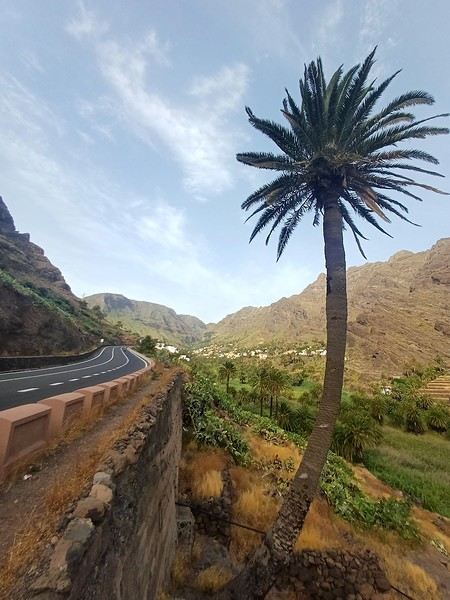
And we start the trip with music!
We start the trip with music!
When we started looking for a summer destination a few months ago, our first criterion was to avoid extreme heat and heatwaves. We had already been to Norway two years ago and are considering going back in the future for other occasions. So, we had some fun asking ChatGPT which destinations enjoyed a mild climate during the summer without going too far. Among the list provided by the AI were the Canary Islands... The idea of a place we wouldn’t have thought of first, both not too far away and exotic enough, appealed to us: “Hmm, why not?”
This destination had never really attracted me, though Magali was a bit more interested. Five years earlier, COVID had caused a short break in my professional activity, and I had planned a trip because the flight price was attractive, and I was looking for a destination different from what usually appeals to me, more than out of deep interest. From a distance and with a social judgment I acknowledge (it’s not great, but it’s not completely wrong), I had the image of a destination for party-goers enjoying the sun without the slightest interest in local culture, with concrete coastlines and denatured landscapes—everything I detest the most. Still, I had done some quick research on the different islands and spotted Lanzarote for its beautiful volcanic landscapes, hiking trails, beaches, and the impression of a good balance between activity and fewer crowds than Tenerife or Gran Canaria. Then I dropped the idea of going, without ever reconsidering traveling to the Canaries...
Until now! Because we started researching the different islands of the archipelago to see which ones might appeal to us the most. It was La Gomera, the third smallest island of the archipelago, more praised for its hiking trails and preserved nature than for its beaches, away from mass tourism (fifty times fewer tourists than Tenerife) but still a bit more developed than its wild neighbor El Hierro, that caught our attention. Contrary to what might be suggested later, I’m not at all addicted to AI, but I use it from time to time to synthesize quick research or simply for experimentation. Since ChatGPT had started anticipating my tastes lately as if it had become my buddy (often successfully, sometimes off the mark), I asked which Canary Island would suit me best for a trip with my family. The tool answered first with... La Gomera. So, I tested it and teased it a bit to see if this suggestion was well-founded, as the method sometimes makes it contradict itself. But no luck: “You’d appreciate the wild nature of El Hierro, but with family, you’ll find little activity for the kids. You won’t like the touristy vibe of the big islands like Tenerife, Gran Canaria, Lanzarote, and Fuerteventura. You could consider La Palma, but it’s really La Gomera that will suit you best, based on your interests and the criteria given.” So, we dug deeper into our research and were convinced without a shadow of a doubt that this island was the one waiting for us.
Without knowing it, we had Canarians in our circle who revealed their origins when they heard about our travel plans. One from Tenerife insisted we’d be better off choosing Tenerife (obviously...) because it also has preserved spots and that La Gomera, “you can explore it in two or three days, you’ll get bored quickly...” The other, a colleague from Gran Canaria who had never visited La Gomera, still recommended it without hesitation because it turned out her parents had just gone there on vacation: they loved it and had encountered few tourists. She also tended to think this destination was usually the subject of short stays, but according to what her parents told her, taking your time there was also a great idea. However, in our research, the idea that La Gomera is an island you can explore in three or four days max kept coming up. So, we considered combining its visit with La Palma or El Hierro, the other two that caught our eye. But hopping between islands by ferry represents a significant budget for non-Canarians, even more so for a family of four. Then, scrutinizing Google Maps, it seemed obvious that two weeks were too short to discover two islands as they deserve, and that there seemed to be plenty to see in La Gomera, given its very unique culture. After all, we read that some people spend several months a year there, others never even leave... Finally, these landscapes and this atmosphere, which seemed to us a mix of Europe, North Africa, and Latin America, tempted us. So, it would be two weeks in La Gomera, deal!
La Gomera is therefore the second... well, the third smallest island of the Canaries since La Graciosa was recently recognized as a fully inhabited island. It has the shape of a rough circle about 20 to 25 kilometers in diameter and has just over 20,000 inhabitants, half of them in its capital, San Sebastián de la Gomera, the only real town. Like its Canarian sisters, La Gomera is a volcanic formation that rose about 10 million years ago. The island is very mountainous and rugged, covered with red and black rocky landscapes. Geological activity has shaped, between the sprawling massifs that end in steep cliffs in the ocean, six coastal valleys with tropical vegetation that have favored human settlement. They divide the island like slices of a cake; from the north clockwise: the agricultural Vallehermoso, the rustic Agulo, the green, humid, and fertile Hermigua, the sunny capital San Sebastián de la Gomera, the southern and isolated Alajeró-Santiago, and the seaside Valle Gran Rey. They constitute the six municipalities (more like cantons to our French understanding) of the territory.
The large solidified magma massifs that shape the heart of the island have created a large depression more protected from the sun at its center, allowing the growth of a vast laurel forest, today grouped within the Garajonay National Park, La Gomera’s green lung, which has earned it the status of a World Biosphere Reserve. Its completely European appearance contrasts sharply with the rocky and tropical landscapes of the rest of the island. Thus, the climate varies greatly from one point to another on the island: in summer, you can quickly go from a dry and sunny valley at 35°C to a humid forest area at altitude at 18°C.La Gomera was populated late. As with the rest of the Canaries, human presence is thought to have begun about 2,000 years ago. Groups of animist Berbers, probably fleeing persecution, gradually populated the archipelago, especially the western islands and La Gomera, becoming its small aboriginal population: the Guanches (or later Gomeros). The animist and pastoral civilization of the Guanches thrived until the Spanish takeover in the 15th century, which, after a short period of harmony and mixing with the indigenous people, suddenly ended in bloodshed... La Gomera later became the “Columbus Island” after Christopher Columbus’s stopover, increasing the blending of populations. In the 20th century, many Gomeros emigrated to Cuba and other Latin American countries in search of a better life, bringing back a mix of cultures and traits quite palpable in today’s Gomeran culture. It is, however, in La Gomera that the vestiges of Guanche culture seem to have left the most traces, in the language, gastronomy, social practices... Moreover, most Gomeros, especially in remote villages, have a particular identifiable type and proudly claim their ancestral roots, even making La Gomera a bit exotic in the eyes of other Canarians.
Perhaps that’s why it has never really wanted to develop its tourist infrastructure too much. If we set aside the tourists who visit for the day by bus or boat from Tenerife on a marked itinerary (and whom we ultimately rarely encounter), La Gomera has remained a hidden gem, a destination focused on nature discovery that attracts hikers, nature-loving divers, and scientists for its fauna and flora, and to a lesser extent, beachgoers who don’t seek overly developed coastlines. Tourist activity is therefore limited. Roughly speaking, you’ll find a majority of Spaniards, including a substantial number of residents from other Canary Islands, many Germans who have a particular fondness for La Gomera and spend long stays there or own second homes, to the point that the German cultural footprint is clearly noticeable in some places (it’s said to be Angela Merkel’s favorite holiday spot), and still quite a few French. The presence of other nationalities seemed negligible to us. Most travelers come mainly for hiking, but it’s also a prime spot for whale watching. Additionally, the seaside resorts of La Gomera—San Sebastián, Santiago, and especially Valle Gran Rey—are well-known destinations for hippies, especially German ones, ranging from chic boho hippies to old-school hippies who’ve been there for decades, quite similar to those you’d meet in India in Goa, Rishikesh, or Paharganj. Thus, practices like naturism, vegetarianism, and local organic production are quite well established in some areas.
Some practical info: - The round-trip flight from Paris to Tenerife cost us 365 € per person (outbound with Transavia, return with EasyJet), including checked luggage and three seats reserved side by side. - We chose two bases to explore the island: one week in Valle Gran Rey, reputed to be the most pleasant of the three seaside resorts, and one week in Hermigua, more mountainous and close to the natural park. We booked two houses with balconies and views: the first at 120 € per night, the second at 99 €. - The round-trip ferry between Tenerife and La Gomera cost us 270 € with the company Baleària Canarias, including discounts for children aged 4 and 12, but I don’t have the exact details. It was a bit cheaper than with the other company, Fred Olsen. - Finally, we rented a car through the agency Cicar for 360 € for 16 days, which comes to 22.50 € per day. - Apart from that, we didn’t plan anything and decided the day before or even the morning of what we wanted to do. We didn’t invest in any paper guide on the Canaries, as information on La Gomera was scarce, but we used the very comprehensive site La Gomera Travel, a travel guide published by the Canary Islands Tourism Council, a real goldmine of almost exhaustive information on the island.
Alright, off we go for 16 days of adventure discovering La Gomera!
And we start the trip with music!
We start the trip with music!
Ricard en Thaïlande English translation pending
Bonjour
est il facile de trouver du ricard et du martini rouge en thailande?
si oui
Transport pour aller de Richards Bay à St Lucia en Afrique du Sud? English translation pending
bonjour, je cherche a aller de richards bay a st lucia en afrique du sud, je n'ai pas de permis et depends donc des transports en commun existe t'il un bus quotidien? merci
Trouve-t-on du Ricard (pastis de Marseille) en Martinique? English translation pending
Bonjour à tous,
Je pars en vacances en Martinique en janvier avec un monsieur qui a une caractéristique: il est marseillais.... Et comme tout marseillais qui se respecte, il aime le pastis... Ce n'est pas un problème me direz vous... effectivement, moi aussi je l'aime et je ne suis pourtant pas marseillais... Et il a un soucis: trouve t-on du Ricard dans les îles... je lui ai dis qu'il devrait se mettre au rhum, mais que voulez-vous, c'est un puriste: un ricard, un vrai, sinon RIEN.... Donc: S'il commande un ricard à la terrasse d'un café, va t-on le lui servir ? Et mieux encore: est-il possible d'en trouver en superette ? A quel prix ? (ben oui, faut faire le budget lol) Au risque de passer pour un ivrogne, j'ai osé poser la question ;-)
Attention: il n'aime que le RICARD (pas du 51 ;-) )
Merci pour vos réponses.... hips ;-)
Je pars en vacances en Martinique en janvier avec un monsieur qui a une caractéristique: il est marseillais.... Et comme tout marseillais qui se respecte, il aime le pastis... Ce n'est pas un problème me direz vous... effectivement, moi aussi je l'aime et je ne suis pourtant pas marseillais... Et il a un soucis: trouve t-on du Ricard dans les îles... je lui ai dis qu'il devrait se mettre au rhum, mais que voulez-vous, c'est un puriste: un ricard, un vrai, sinon RIEN.... Donc: S'il commande un ricard à la terrasse d'un café, va t-on le lui servir ? Et mieux encore: est-il possible d'en trouver en superette ? A quel prix ? (ben oui, faut faire le budget lol) Au risque de passer pour un ivrogne, j'ai osé poser la question ;-)
Attention: il n'aime que le RICARD (pas du 51 ;-) )
Merci pour vos réponses.... hips ;-)
Livre: Matthieu Ricard et le combat du Tibet: " «Un mandala pour la paix» English translation pending
Pour info,
Matthieu Ricard, (moine du Bouddhisme Tibétain, traducteur de S.S. le Dalaï Lama) invité de l'émission de Laurent Ruquier "On est pas couché" ce soir, samedi 26 avril à 23h10 sur France 2, pour présenter son dernier livre : «Un mandala pour la paix», aux éditions de La Martinière. (NB: l'émission a été enregistrée jeudi dernier...)
(Suivi d'un documentaire La prisonnière de Lhassasur Ngawang Sangdrol cf. autre topik)
Et à lire également dans le dossier consacré au Tibet de L'Express de cette semaine (N.2964) Le combat du TIBET.
Tashi Delek et bonne soirée à tous Isabelle
Matthieu Ricard, (moine du Bouddhisme Tibétain, traducteur de S.S. le Dalaï Lama) invité de l'émission de Laurent Ruquier "On est pas couché" ce soir, samedi 26 avril à 23h10 sur France 2, pour présenter son dernier livre : «Un mandala pour la paix», aux éditions de La Martinière. (NB: l'émission a été enregistrée jeudi dernier...)
(Suivi d'un documentaire La prisonnière de Lhassasur Ngawang Sangdrol cf. autre topik)
Et à lire également dans le dossier consacré au Tibet de L'Express de cette semaine (N.2964) Le combat du TIBET.
Tashi Delek et bonne soirée à tous Isabelle
Séjour de 2 semaines Kruger - Richards Bay - Drakensberg - Cape Town English translation pending
Bonjour à tous,
De manière très peu originale, je sollicite la sagesse collaborative du forum pour avoir votre avis sur une idée de séjour en Afrique du Sud fin octobre - début novembre pendant 2 grosses semaines.
Les grandes idées derrière l'itinéraire : - Incontournable : voir des animaux :), ce sera le 1er safari pour nous - Envie de faire Cape Town et sa région - Le SE autour de Richards Bay / Sainte Lucie a l'air top : crocos, hippos, snorkeling, etc - Nous sommes aussi amateurs de rando, du coup le Drakensberg a l'air assez sympa - Pas envie de perdre trop de temps sur la route, du coup j'ai parfois privilégié l'avion sur la voiture, et parfois éliminé certaines destinations un peu compliquées pour s'y rendre (le budget n'est pas forcément la contrainte n°1)
Du coup ça donne quelque chose comme ça : J1 : arrivée à Johannesburg et vol dans la foulée pour Hoedspruit + location de voiture J2 : Journée excursion à Blyde Canyon J3 : Entrée dans le Kruger - 1ère journée J4 : 2ème journée Kruger J5 : 3ème journée Kruger (les 3 nuits dans 2-3 camps différents) J6 : Abandon voiture loc à Hoedspruit et vol pour Richards Bay + location de voiture J7 : Journée excursion parc Isimangaliso J8 : 2ème journée autour de Sainte Lucie (boat cruise Lake St Lucia snorkeling @ Cape Vidal, observation baleines, ...) OU parc Hluhluwe-Umfolozi ? J9 : Route vers Drakensberg J10 : Journée excursion Drakensberg J11 : Journée excursion Drakensberg J12 : Route vers Durban, abandon voiture de loc + vol pour Cape Town & location voiture J13-14-15-16 : Cape Town & environs (plages, cap de Bonne Espérance, vignobles, ville Cape Town, observation baleines, cage requins blancs, ...) J17 : retour Paris !
Qu'en pensez-vous ? Est-ce qu'on passe trop vite dans certains coins ? Est-ce que ça vaut le coup de supprimer carrément une étape (ex : Drakensberg) pour passer plus de temps quelque part (ex : autour de Sainte Lucie) ? Est-ce qu'il y a des astuces logistiques que je n'aurais pas vu pour être plus efficace dans les déplacements ?
Merci d'avance pour vos retours précieux :) !
Matthieu.
De manière très peu originale, je sollicite la sagesse collaborative du forum pour avoir votre avis sur une idée de séjour en Afrique du Sud fin octobre - début novembre pendant 2 grosses semaines.
Les grandes idées derrière l'itinéraire : - Incontournable : voir des animaux :), ce sera le 1er safari pour nous - Envie de faire Cape Town et sa région - Le SE autour de Richards Bay / Sainte Lucie a l'air top : crocos, hippos, snorkeling, etc - Nous sommes aussi amateurs de rando, du coup le Drakensberg a l'air assez sympa - Pas envie de perdre trop de temps sur la route, du coup j'ai parfois privilégié l'avion sur la voiture, et parfois éliminé certaines destinations un peu compliquées pour s'y rendre (le budget n'est pas forcément la contrainte n°1)
Du coup ça donne quelque chose comme ça : J1 : arrivée à Johannesburg et vol dans la foulée pour Hoedspruit + location de voiture J2 : Journée excursion à Blyde Canyon J3 : Entrée dans le Kruger - 1ère journée J4 : 2ème journée Kruger J5 : 3ème journée Kruger (les 3 nuits dans 2-3 camps différents) J6 : Abandon voiture loc à Hoedspruit et vol pour Richards Bay + location de voiture J7 : Journée excursion parc Isimangaliso J8 : 2ème journée autour de Sainte Lucie (boat cruise Lake St Lucia snorkeling @ Cape Vidal, observation baleines, ...) OU parc Hluhluwe-Umfolozi ? J9 : Route vers Drakensberg J10 : Journée excursion Drakensberg J11 : Journée excursion Drakensberg J12 : Route vers Durban, abandon voiture de loc + vol pour Cape Town & location voiture J13-14-15-16 : Cape Town & environs (plages, cap de Bonne Espérance, vignobles, ville Cape Town, observation baleines, cage requins blancs, ...) J17 : retour Paris !
Qu'en pensez-vous ? Est-ce qu'on passe trop vite dans certains coins ? Est-ce que ça vaut le coup de supprimer carrément une étape (ex : Drakensberg) pour passer plus de temps quelque part (ex : autour de Sainte Lucie) ? Est-ce qu'il y a des astuces logistiques que je n'aurais pas vu pour être plus efficace dans les déplacements ?
Merci d'avance pour vos retours précieux :) !
Matthieu.
Prix d'une bouteille de Ricard et de Martini au Cambodge English translation pending
Bonjour
quelqu'un connait il a peut prêt le prix d'une bouteille de martini et de ricard au CAMBODGE juste pour info.merci beaucoup.
Voyages spirituels au Népal ou autres pays d'Asie English translation pending
je sais que matthieu ricard reside au monastere de shechen au nepal, mais j'aimerais savoir si il existe des voyagistes specialises dans les sejours spirituels au nepal ou d'autres pays d'asie pour rencontrer les moines dont matthieu ricard etant donne qu'il est francais.
merci.
Alcool au duty free de Dubaï English translation pending
Bonjour,
Peut on acheter une bouteille d'alcool type Ricard au duty free de Dubaï en arrivant ou vaut il mieux l'acheter au départ de France et surtout est ce permis d'amener sa bouteille (ben oui l'apéro en vacances, c'est sacré !😉)
Merci de me renseigner.
Peut on acheter une bouteille d'alcool type Ricard au duty free de Dubaï en arrivant ou vaut il mieux l'acheter au départ de France et surtout est ce permis d'amener sa bouteille (ben oui l'apéro en vacances, c'est sacré !😉)
Merci de me renseigner.
Vos chapeaux de voyage English translation pending
Bonjour à tous,
Qu'il fasse froid, qu'il fasse chaud, qu'on se prenne pour Indiana Jones ou pour Bob Ricard, en voyage, on a souvent envie de porter quelque chose sur la tête, du beau Panama au mouchoir noué aux 4 coins à la Haddock (in Le crabe aux pinces d'or).
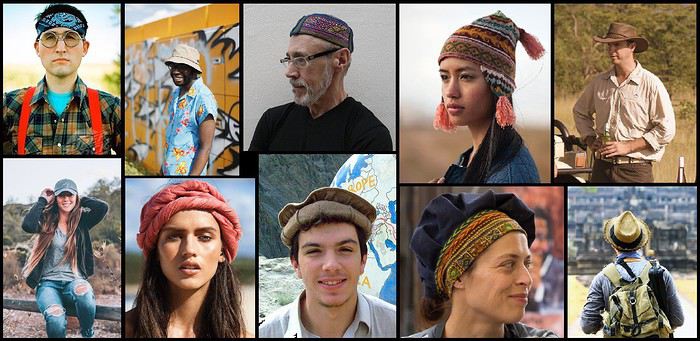 Ma question est celle-ci : quels sont vos chapeaux ? Ou peut-être n'en portez-vous pas ? En changez-vous souvent ? Représentent-ils pour vous quelque chose de l'ordre du personnel ou au contraire ne sont-ils que fonctionnels ? Qu'en faites-vous à la fin du voyage ? Y-a-t-il des petites histoires liées à l'un d'entre eux ? D'autres digressions sur ce thème seront les bienvenues...
Au plaisir de vous lire...
Qu'il fasse froid, qu'il fasse chaud, qu'on se prenne pour Indiana Jones ou pour Bob Ricard, en voyage, on a souvent envie de porter quelque chose sur la tête, du beau Panama au mouchoir noué aux 4 coins à la Haddock (in Le crabe aux pinces d'or).
Ma question est celle-ci : quels sont vos chapeaux ? Ou peut-être n'en portez-vous pas ? En changez-vous souvent ? Représentent-ils pour vous quelque chose de l'ordre du personnel ou au contraire ne sont-ils que fonctionnels ? Qu'en faites-vous à la fin du voyage ? Y-a-t-il des petites histoires liées à l'un d'entre eux ? D'autres digressions sur ce thème seront les bienvenues...Au plaisir de vous lire...
Pastis au Yacht Club? English translation pending
Bonjour,
Est-ce quelqu'un s'est rendu très récemment au Yacht Club (cet été) et peut me dire si le Pastis/Ricard est compris gratuitement ? Je sais qu'il y a quelques années il ne l'était pas, d'où ma question sur une éventuelle évolution :) Merci
Est-ce quelqu'un s'est rendu très récemment au Yacht Club (cet été) et peut me dire si le Pastis/Ricard est compris gratuitement ? Je sais qu'il y a quelques années il ne l'était pas, d'où ma question sur une éventuelle évolution :) Merci
Aéroport Doha- Achat en duty free English translation pending
Bonjour,
Nous allons au Vietnam avec Qatar et faisons une escale à Doha Nous voulons acheter 2 bouteilles de RICARD au duty free de Doha
Est ce que quelqu'un sait s'il y en a?
Merci
Nous allons au Vietnam avec Qatar et faisons une escale à Doha Nous voulons acheter 2 bouteilles de RICARD au duty free de Doha
Est ce que quelqu'un sait s'il y en a?
Merci
Entrer de l'alcool sur le territoire indien English translation pending
Bonjour
Je pars en Inde au mois de mai chez des amis français qui veulent de l'alcool (Ricard notamment) Combien de bouteilles ou de litres puis je entrer sur le territoire indien sachant que je souhaite acheter l'alcool à l'aéroport de Dubaï lors de mon escale
Meri de votre aide
Je pars en Inde au mois de mai chez des amis français qui veulent de l'alcool (Ricard notamment) Combien de bouteilles ou de litres puis je entrer sur le territoire indien sachant que je souhaite acheter l'alcool à l'aéroport de Dubaï lors de mon escale
Meri de votre aide
Ouvrir un bar à thème au Québec? English translation pending
j'aimerai savoir si vous connaissez un boisson national en France j'ai nommé tout les francais la connaissent 😎 LE RICARD 😎 cette boisson a base d'anis
j'aimerai savoir aussi si vous aimez cette boisson et avec quoi vous le buvez merci de repondre
merci d'avance a tout les cousins d'outre atlantique et gros bisou du vieux continent
«L'Himalaya bouddhiste» (livre) English translation pending
Bonjour,
Une suggestion de livre pour ceux qui s'intéressent au Tibet et à sa culture: Himalaya bouddhiste de Matthieu Ricard, Olivier Föllmi et Danielle Föllmi. Il s'agit d'un magnifique et immense livre de photos superbes et de textes sur le bouddhisme tibétain. Je vous le recommande fortement!
Texte à l'arrière du livre:
«Himalaya bouddhiste invite à un voyage à la fois extérieur et intérieur. La beauté des paysages majestueux, des visages - maîtres spirituels ou humbles bergers -, des lieux et édifices sacrés, est naturellement reliée au regard intérieur qui révèle l'essence du bouddhisme et l'âme de l'Himalaya.
Olivier et Danielle Föllmi ont partagé la vie des villageois et des nomades pendant plus de vingt-cinq ans, souvent dans l'isolement des hivers rigoureux. Matthieu Ricard vit depuis trente ans aux côtés de remarquables maîtres spirituels. L'intimité et la complicité des photographes avec les peuples de l'Himalaya transparaissent de façon unique dans leurs images. Les perspectives complémentaires du photographe-voyageur et du moine-photographe offrent une harmonieuse mosaïque de la richesse inégalable de la civilisation du Toit du Monde.
Leur présentation est magnifiée par les contributions d'éminents spécialistes et par les réflexions des plus grandes personnalités politiques et spirituelles de l'Himalaya bouddhiste. Chacun des vingt et un auteurs s'est impliqué dans la compréhension du monde himalayen. Cette somme de connaissances réunies fait de cet ouvrage la référence de l'Himalaya bouddhiste au XXIe siècle.
Le livre comporte quatre sections: Naissance, Vie, Mort et Renaissance, qui reflètent non seulement le cycle de nos existences, mais aussi l'histoire de l'Himalaya. »
Bonne lecture! 🙂
François
Une suggestion de livre pour ceux qui s'intéressent au Tibet et à sa culture: Himalaya bouddhiste de Matthieu Ricard, Olivier Föllmi et Danielle Föllmi. Il s'agit d'un magnifique et immense livre de photos superbes et de textes sur le bouddhisme tibétain. Je vous le recommande fortement!
Texte à l'arrière du livre:
«Himalaya bouddhiste invite à un voyage à la fois extérieur et intérieur. La beauté des paysages majestueux, des visages - maîtres spirituels ou humbles bergers -, des lieux et édifices sacrés, est naturellement reliée au regard intérieur qui révèle l'essence du bouddhisme et l'âme de l'Himalaya.
Olivier et Danielle Föllmi ont partagé la vie des villageois et des nomades pendant plus de vingt-cinq ans, souvent dans l'isolement des hivers rigoureux. Matthieu Ricard vit depuis trente ans aux côtés de remarquables maîtres spirituels. L'intimité et la complicité des photographes avec les peuples de l'Himalaya transparaissent de façon unique dans leurs images. Les perspectives complémentaires du photographe-voyageur et du moine-photographe offrent une harmonieuse mosaïque de la richesse inégalable de la civilisation du Toit du Monde.
Leur présentation est magnifiée par les contributions d'éminents spécialistes et par les réflexions des plus grandes personnalités politiques et spirituelles de l'Himalaya bouddhiste. Chacun des vingt et un auteurs s'est impliqué dans la compréhension du monde himalayen. Cette somme de connaissances réunies fait de cet ouvrage la référence de l'Himalaya bouddhiste au XXIe siècle.
Le livre comporte quatre sections: Naissance, Vie, Mort et Renaissance, qui reflètent non seulement le cycle de nos existences, mais aussi l'histoire de l'Himalaya. »
Bonne lecture! 🙂
François
Quick feedback on Marakele NP
Hi there,
My month in South Africa went really well. The itinerary revisits some places I’ve already seen—even a few times over...
Joburg – Marakele – Waterberg – Mapungubwe – Northern Kruger – Panorama Route – Southern Kruger – Eswatini (Hlane) – Maputaland (Sodwana Bay) – St Lucia – Joburg via Richards Bay.
I’ll skip some spots and focus on others.
Today’s topic: Marakele.
Back in 2009, I spent a day there, and since then... I’ve tried several times to go back.
The park isn’t very big—nowhere near as lush as Kruger—but it has a lot going for it. Even back then, there was a split between the western section, where you wouldn’t find any “dangerous” animals like elephants or buffalo (though rhinos were around), and the eastern section, the Big Five zone. Nowadays, the western part is open to mountain biking, and the campsite is completely unfenced, which pretty much confirms that the big animals aren’t there—no rhinos either (I didn’t see a single dung pile). The western section didn’t seem all that interesting to me... with vervet monkeys everywhere in the campsite. In the eastern part, there’s the Topli tented camp, right by a dam. It’s small but charming, with a great view and a loosely fenced perimeter (there are now lions and wild dogs in this area). No facilities—no restaurant, no pool (except at the campsite), no shop, no fuel, nothing...
View from the “chalet” terrace... nice and relaxed...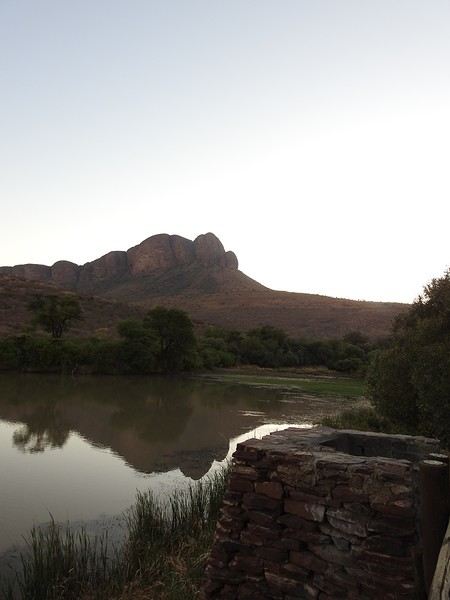

So, a terrace with a view for the lucky ones...
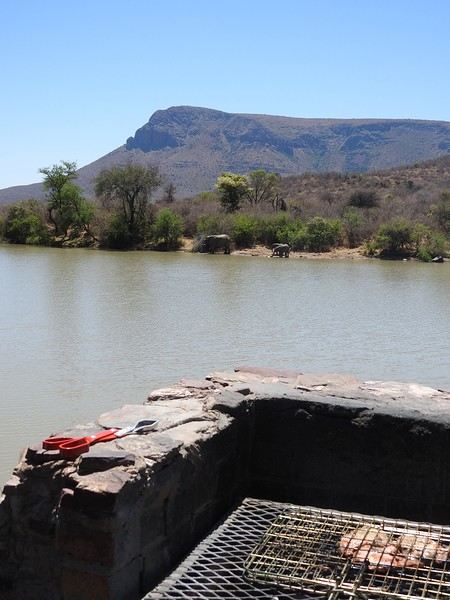
Bedroom and bathroom, separate and equipped kitchen. It can get windy. It must be cold in winter... but it’s hot this October.
Some lovely little roads... though some sections are 4x4-friendly.


A viewpoint at the top—you’re supposed to see the vulture colony from there... still haven’t seen it, as far as I’m concerned.

The animals?
My month in South Africa went really well. The itinerary revisits some places I’ve already seen—even a few times over...
Joburg – Marakele – Waterberg – Mapungubwe – Northern Kruger – Panorama Route – Southern Kruger – Eswatini (Hlane) – Maputaland (Sodwana Bay) – St Lucia – Joburg via Richards Bay.
I’ll skip some spots and focus on others.
Today’s topic: Marakele.
Back in 2009, I spent a day there, and since then... I’ve tried several times to go back.
The park isn’t very big—nowhere near as lush as Kruger—but it has a lot going for it. Even back then, there was a split between the western section, where you wouldn’t find any “dangerous” animals like elephants or buffalo (though rhinos were around), and the eastern section, the Big Five zone. Nowadays, the western part is open to mountain biking, and the campsite is completely unfenced, which pretty much confirms that the big animals aren’t there—no rhinos either (I didn’t see a single dung pile). The western section didn’t seem all that interesting to me... with vervet monkeys everywhere in the campsite. In the eastern part, there’s the Topli tented camp, right by a dam. It’s small but charming, with a great view and a loosely fenced perimeter (there are now lions and wild dogs in this area). No facilities—no restaurant, no pool (except at the campsite), no shop, no fuel, nothing...
View from the “chalet” terrace... nice and relaxed...
So, a terrace with a view for the lucky ones...
Bedroom and bathroom, separate and equipped kitchen. It can get windy. It must be cold in winter... but it’s hot this October.
Some lovely little roads... though some sections are 4x4-friendly.
A viewpoint at the top—you’re supposed to see the vulture colony from there... still haven’t seen it, as far as I’m concerned.
The animals?
Apéritifs en Thaïlande English translation pending
Bonjours..... a tous ceux qui prenne l'apéritif avant le repas....🙂
Je recherche pour me confectionner un " Perroquet " une marque de menthe thaïe ou équivalente a la notre ....Ainsi qu' un endroits/magasin ou grande surface dans la province de Chaiyaphum ou je peux acheter du Ricard ou du Pastis....😛
Je recherche pour me confectionner un " Perroquet " une marque de menthe thaïe ou équivalente a la notre ....Ainsi qu' un endroits/magasin ou grande surface dans la province de Chaiyaphum ou je peux acheter du Ricard ou du Pastis....😛
Plages surveillées sur la côte est de l'Afrique du Sud English translation pending
Bonjour,
Étant en pleine préparation de notre roadtrip pour Avril 2018, nous nous posons les question suivantes :
Existe t-il une "surveillance" des requins de la part de maître nageurs (ou autre), sur les plages de Richards Bay, Sainte-Lucie et Cap Vidal? Des filets anti-requins sont ils en place dans l'eau ? Est-il possible de profiter de la plage et de l'océan avec des enfants de 10 et 13 ans? Y a-t’il d'autres risques "animalier" sur la plage (croco, hippo, singe, moustique, etc....) ou humain ?
Notre but étant que passer quelques jours de farniente après notre périple de 3 semaines. Nous savons que nous ne serons pas aux Maldives, mais un peu de repos dans l'océan indien fait envie ...
Merci d'avance pour votre aide
Étant en pleine préparation de notre roadtrip pour Avril 2018, nous nous posons les question suivantes :
Existe t-il une "surveillance" des requins de la part de maître nageurs (ou autre), sur les plages de Richards Bay, Sainte-Lucie et Cap Vidal? Des filets anti-requins sont ils en place dans l'eau ? Est-il possible de profiter de la plage et de l'océan avec des enfants de 10 et 13 ans? Y a-t’il d'autres risques "animalier" sur la plage (croco, hippo, singe, moustique, etc....) ou humain ?
Notre but étant que passer quelques jours de farniente après notre périple de 3 semaines. Nous savons que nous ne serons pas aux Maldives, mais un peu de repos dans l'océan indien fait envie ...
Merci d'avance pour votre aide
Importer nourriture et alcool en Namibie depuis la France English translation pending
Bonjour à tous,
je vais rejoindre mes parents en Namibie d'en un mois. Du fait qu'ils sont partis de France depuis 1 an, j'aimerais leur apporter quelques bons produits de france comme:
- Saucissons - Foie Gras - Fromage sec - Vin rouge et rosé - Ricard
J'aimerais savoir s'il y a des conditions douanières dans ce pays envers ces produits là?
Merci d'avance,
Cdlt,
Cyril
je vais rejoindre mes parents en Namibie d'en un mois. Du fait qu'ils sont partis de France depuis 1 an, j'aimerais leur apporter quelques bons produits de france comme:
- Saucissons - Foie Gras - Fromage sec - Vin rouge et rosé - Ricard
J'aimerais savoir s'il y a des conditions douanières dans ce pays envers ces produits là?
Merci d'avance,
Cdlt,
Cyril
Itinéraire pour trois semaines en Afrique du Sud (du côté est) English translation pending
Bonjour,
je pars en Afrique du sud au mois d'aout 2013, du 22 juillet au 5 aout je vais faire de l'écovolontariat au Tembe elephant park et ensuite 3 semaines de visite au départ de Richards bay.
Je m'interroge sur le circuit à faire, sachant que j'aimerai faire de la plongée sur la côté du côté de richards bay, visiter le Kruger et passer par le Swaziland. Je ne connais pas du tout l'Afrique du Sud donc je ne sais pas trop quels sont les indispensables dans cette région (autre que le Kruger). Est-ce que ça vaut le coup de passer par Johannesburg ? Durban ? d'autres réserves ou fermes incontournables ?
Le choix de l'itinéraire va conditionner l'achat du billet d'avion : soit je repars de richards bay (j'aurai fait une boucle) soit je repars de Johanesburg.
Auriez-vous un itinéraire à me conseiller ?
Merci !
je pars en Afrique du sud au mois d'aout 2013, du 22 juillet au 5 aout je vais faire de l'écovolontariat au Tembe elephant park et ensuite 3 semaines de visite au départ de Richards bay.
Je m'interroge sur le circuit à faire, sachant que j'aimerai faire de la plongée sur la côté du côté de richards bay, visiter le Kruger et passer par le Swaziland. Je ne connais pas du tout l'Afrique du Sud donc je ne sais pas trop quels sont les indispensables dans cette région (autre que le Kruger). Est-ce que ça vaut le coup de passer par Johannesburg ? Durban ? d'autres réserves ou fermes incontournables ?
Le choix de l'itinéraire va conditionner l'achat du billet d'avion : soit je repars de richards bay (j'aurai fait une boucle) soit je repars de Johanesburg.
Auriez-vous un itinéraire à me conseiller ?
Merci !
Amener de la nouriture et de l'alcool en Thaïlande English translation pending
Bonjour nous partons dans quelques jours en thailande via dubai avec emirates airlines et je compte amener de france 2 fromages 2 sauscissons 1 petit pot de foie gras et 2 bouteilles de ricard et 2 bouteilles de martini (pour les fetes de fin d'annee)...en cas de controle a la douane ses bon je n'aurais pas de probleme a ce que j'ai pu lire sur le forum ses bons a part pour l'alcool ses 1 litre par personne?mais les posts sont un peu vieux j'attends vos reponses.bonne journee.
Coût de l'aéroport de Bangkok à Khao San Road en ski train? English translation pending
Bonjour je voudrais savoir comment faire pour se rendre de l'aeroport de Bangkok a kao san road par le ski train et combien cela coute .
Merci d'avance pour vos reponses
Merci d'avance pour vos reponses
Trouver des bouteilles de pastis et de Martini en Thaïlande? English translation pending
Bonjour
trouve t'on des bouteilles de pastis et de martini (ou cinzano) a puket a kanchanaburi et a koh lanta si oui ou et a quels tarifs?
Merci d avance pour vos réponses.
Prix de l'alcool en Espagne? English translation pending
bonjour,
Je souhaite descendre au perthus pour faire le pleins de cigarettes et d'alcool il parait que les tarifs aussi la bas on augmenter. Habitants le centre de la france je me demande si cela vaut le cp!!!! Donc je me tourne vers vous pour avoir un peu les prix des alcools whisky ricard vodka et cigarette luky malboro.
Merci pour vos reponses
L"abus d'alcool est dangereux a la santé!!!!!!!!!
😊
Je souhaite descendre au perthus pour faire le pleins de cigarettes et d'alcool il parait que les tarifs aussi la bas on augmenter. Habitants le centre de la france je me demande si cela vaut le cp!!!! Donc je me tourne vers vous pour avoir un peu les prix des alcools whisky ricard vodka et cigarette luky malboro.
Merci pour vos reponses
L"abus d'alcool est dangereux a la santé!!!!!!!!!
😊
Premier festival des cultures équitables: "Saint-Maur en toute(s) liberté(s)" du 26 au 29 novembre 2009 English translation pending
Oyez, oyez,
1er Festival des cultures et des droits de l'homme à Saint-Maur-des-Fossés au profit de la fondation de Matthieu Ricard, du 26 au 29 novembre 2009
Au programme: conférences, expositions de photos, concert et plein d'autres choses...
Bon festival!