Results for "Sainte-Rose+|+122+>+74"
56137 results found.
Débarquement à Dakar English translation pending
Bonjour à tous.
Je vais, d’ici quelques temps, débarquer à Dakar en soirée (22 heures). Compte tenu de l’heure, je pense peut être réserver un hôtel pour la nuit.
Ma question est donc la suivante : avez-vous des adresses d’hôtels à me conseiller (hôtel sympa, dans un quartier sympa, pour un prix sympa évidemment !!!). J’imagine qu’on peut réserver depuis la France, non ? Et pendant qu’on y est, quel est le meilleur moyen de s’y rendre depuis l’aéroport (bus, taxi) ?
OK, j’ai menti, ça fait trois questions …
Je vais, d’ici quelques temps, débarquer à Dakar en soirée (22 heures). Compte tenu de l’heure, je pense peut être réserver un hôtel pour la nuit.
Ma question est donc la suivante : avez-vous des adresses d’hôtels à me conseiller (hôtel sympa, dans un quartier sympa, pour un prix sympa évidemment !!!). J’imagine qu’on peut réserver depuis la France, non ? Et pendant qu’on y est, quel est le meilleur moyen de s’y rendre depuis l’aéroport (bus, taxi) ?
OK, j’ai menti, ça fait trois questions …
Retour du Palladium Bavaro - Commentaires English translation pending
Tout d’abord, bonjour à tous et heureux de vous retrouver 😉 !
Je suis rentré dimanche soir et je m’empresse de vous faire part de mes commentaires sur ces 12 jours trop vites passés…
1/ les vols : Nous devions avoir la chance (?) d’étrenner le nouveau 767-300 de TUI Airlines ; il n’en fut rien car il semble que l’appareil ne soit pas encore opérationnel pour cause de problèmes techniques (voir infos dans la partie « compagnies aériennes » du forum). Les vols ont donc été assurés par la compagnie portugaise Euro Atlantic. Mis à part les retards inhérents aux vols charters (2h à l’aller, 3h au retour), nous avons eu des conditions de vol tout à fait satisfaisantes. A l’aller, vol direct Bruxelles - Punta Cana en 9h sur un vieux Tristar usé jusqu’à la corde. Nous étions en classe « VIP », donc nous n’avons pas eu à nous plaindre. Il n’en est pas de même de ceux qui étaient en classe « éco » : pas de film, 1 wc fonctionnel sur les 4 avec bain de pieds assuré à chaque visite, fils électriques dénudés courant à travers la cabine, etc… Au retour, escale à Puerto Plata, puis 9h20 de vol jusqu’à Bruxelles sur un 767-300. Comme à l’aller classe « VIP » avec à nouveau repas correct, champagne pour les amateurs, personnel aux petits soins et film (Le Terminal). Rien à redire.
2/ l’hôtel : Le resort est IMMENSE. Il comporte depuis peu 5 hôtels : le Palladium Bavaro, le Beach, le Lookéa, le Palladium Palace et maintenant le Royal Suites. L’ensemble est desservi par un petit train bien pratique pour rallier un point à l’autre, vu la grandeur de l’ensemble. Il serait fastidieux de vous faire un descriptif du tout ; je me limiterais donc ici au Bavaro.
Lobby et réception : coin agréable où il fait bon prendre un verre au frais lorsqu’il fait trop chaud. Un petit orchestre jour chaque soir de 18h à 24h. Le bar du lobby est le meilleur de l’hôtel (il y en d’autres à la plage et la piscine) ; le personnel charmant. Cuba Libre, Caipiriha, Coco Loco, Chichi, Pina Colada et naturellement la fameuse Presidente nous ont accompagné tout au long de notre séjour. A noter : il y a TOUJOURS quelqu’un à la réception qui parle couramment le français, y compris aux relations publiques (pour les réservations des restaurants à la carte). Le reste du personnel parle essentiellement espagnol et un peu anglais. Le lobby donne directement accès au restaurant principal, et indirectement à trois des cinq restaurants à la carte du resort. Il donne aussi accès sur quelques commerces et autres services de l’hôtel : coiffeur, service photo, bar (avec billards) et cyber café. Les prix dans les boutiques sont relativement élevés, il vaut mieux négocier à l’extérieur de l’hôtel. Idem pour le change à la réception, moins avantageux bien sûr que dans les banques situées à l’extérieur. Piscine : au cœur de l’hôtel, relativement vaste avec comme il se doit le bar au milieu (accès dans l’eau ou en terrasse). Transats un peu vieillots (élastiques détendus, on sent les barres dans les reins !). Nombre de parasols suffisant vu que l’hôtel était à peu près à 50 % de remplissage. Quant il est plein, ce doit être du sport pour trouver de la place ! Personnellement, je préfère celle du Palace, plus grande et plus calme, avec un resto-grill et la plage à proximité immédiate. Restaurants : 10 jours sur place ne nous ont pas permis d’en faire le tour. Le resto principal propose un thème différent chaque jour. Beaucoup de choix, on y mange très bien et il faudrait être très difficile pour ne pas apprécier la qualité de ce qui y est proposé. A noter : c’est le seul endroit où vous trouverez des jus de fruits frais (pas dans les bars…). Il y a moyen de manger « à la carte » mexicain, asiatique, italien, espagnol et méditerranéen. Ceux que nous avons essayé étaient très bien. Cependant, il y a trois services sur la soirée : 17h30, 19h et 20h30, et le temps qui vous est imparti est limité. Le service est donc trop rapide à mon sens, et vous n’avez pas encore fini votre plat que le serveur est déjà là avec le suivant… C’est la seule critique que je puisse formuler, outre le fait que la fameuse langouste locale était aux abonnés absents (ce qui n’était le cas auparavant) ! A oui, j’oubliais, mais ce n’est un secret pour personne : le vin, qu’il soit blanc, rosé ou rouge, est affreux. Pas grave, on ne vient pas spécialement pour ça ! Dernière chose : le port du pantalon est souhaité le soir pour les messieurs (un jean’s suffit), et vous ne rentrerez pas en maillot au restaurant de la plage. Sports et plage : à mon avis l’une des plus belles plage de Bavaro, avec celle du Riu. Vaste et bien ombragée avec ses cocotiers : le cadre est magnifique. A l’extrémité des suites royales (à droite en regardant la mer), se trouve le petit village d’El Cortecito. Activités possibles sur la plage : volley-ball, planche à voile, catamaran, kayak, etc… Un centre de fitness est à proximité pour les amateurs, ainsi qu’un sauna et une salle de massage. Pas loin non plus terrains de tennis, de pétanque, de badmington, tir à l’arc. En construction derrière le Lookéa : terrains de mini foot et de basket. Il y a de quoi s’occuper. Les chambres : j’avais demandé tôt par mail (auquel je n’ai pas eu de réponse) une chambre calme avec vue sur mer, avec lit kingsize ; souhait exaucé. Nous étions dans le bloc 28 en bordure de plage. En un mot : simple et parfait. Salle de bain avec jaccuzzi, chambre avec coffre-fort (gratuit), frigo (approvisionné en boissons non alcoolisées tous les deux jour), télé satellite (TV5) avec jeux Nitendo pour les (grands ?) enfants, planche et fer à repasser, terrasse. A noter : pas besoin d’emmener un adaptateur dans cet hôtel : les prises de courant acceptent indifféremment les fiches nord américaines et européennes. Pratique. Les chambres sont dans chaque pavillon au nombre de huit : deux au rez-de-chaussée, deux à l’étage. Le nombre de pavillons semble effrayant (il y en a plus de 60 !), mais ils savamment répartis dans un immense jardin très bien aménagé. On a jamais l’impression d’être les uns sur les autres. Seul inconvénient : quant on est près de la plage, il faut dix bonnes minutes de marche pour aller au lobby et au restaurant principal. Le petit train trouve alors toute son utilité. Il y en a un toutes les 30 minutes. Le soir, un second est mis en service, réduisant le temps d’attente à 15 minutes. Discothèque et casino : il en existe deux à l’entrée du Bavaro et du Palace. Nous n’y avons pas mis les pieds. Animation et spectacles : c’est le point faible de l’hôtel. Les spectacles sont relativement moyens avec selon les jours, de la danse (très bons danseurs mais costumes bof), des concours et jeux style club (on apprécie ou pas). A ne pas manquer : le spectacle de magie, non pas pour les tours mais pour l’humour. Vous passerez assurément un bon moment de rigolade. Quant à l’équipe d’animation, elle est sympa (sans plus), mais ne parle pas un mot de français. Pour les amateurs, il suffit donc d’aller au Lookéa. Etat de l’hôtel en général : il est à noter aussi que pratiquement toutes les traces du passage de l’ouragan de septembre sont à présent effacées. Cependant, on y travaille encore actuellement. Les dégâts ont vraiment du être importants car beaucoup de nouvelles plantations ont du être faites. On s’emploie d’ailleurs encore à refaire des toits (au Lookéa), et la zone où il subsiste encore des traces se situe à la limite du Beach et du Palace (évitez donc ces chambres si possible).
3/ excursions : Nous n’avons fait aucune excursion via Jetair. La représentante locale (Katrien) qui n’était d’ailleurs pas des plus sympathiques, n’était d’ailleurs là que pour vendre sa soupe avec insistance. Nous sommes donc passés par RH Tours, et comme ma femme découvrait le pays pour la première fois avons fait les suivantes :
Saona Exclusive : à faire absolument ! Départ hôtel à 7h10. Bus jusqu’à Bayahibe, puis vedette rapide (à éviter pour les très jeunes enfants) jusqu’à la piscine naturelle pour une première baignade avec les étoiles de mer géantes, le tout accompagné de Merengue et de vitaminas. Comme nous étions partis tôt, nous étions les premiers sur le site. Ensuite on s’est tiré la bourre avec deux autres vedettes jusqu’à une plage où seuls les 20 personnes du bateau ont débarqué : paradisiaque ! Une heure après, c’était l’heure de l’apéro et quelques collations nous furent offertes. Départ ensuite et visite d’un des deux villages de pêcheurs de l’île, puis arrêt pour le repas de midi en compagnies des autres bateaux. Repas correct, puis détente (pour moi l’occasion d’avoir une discussion très intéressante avec José notre guide du jour). Certains profitaient de la plage pendant que d’autres dansaient le Merengue. Il fut temps alors de prendre le catamaran pour le retour vers Bayahibe. Mer d’huile, soleil à gogo : le piège pour cramer ! N’oubliez surtout chapeau et protection solaire ! De nouveau Merengue et vitaminas (ils ne nous lâchent pas !). Enfin, retour en bus vers Punta Cana où nous sommes revenus pour 18h. Gens et Pays : découverte de l’intérieur du pays et de la population. Notre guide Miguel nous fait visiter Higuey et sa cathédrale, ses rues, ses commerces (ah les boucheries !) et son marché très coloré. Un peu de shopping (les prix sont plus intéressants qu’à Bavaro), puis départ pour la découverte de petits villages et de leurs écoles, et arrêt à Alto de Chavon, superbe petit village tout en pierres de corail. Magnifique. La ballade sur le Rio Chavon ne se fait plus, le bateau à fond plat a été détruit suite à l’ouragan (tout comme le restaurant sur la berge d’ailleurs). Départ pour la Romana et visite d’une petite fabrique de cigares. Nous repartons ensuite à travers les champs de canne à sucre vers les environs d’Higuey où un ranch nous accueille pour un bon repas. Vient ensuite une (petite) ballade à cheval, et retour à l’hôtel pour 18h30. Jurassic Safari : de nouveau l’intérieur du pays, mais cette fois ci à bord d’un petit camion 4x4 qui va nous mener à travers les petits chemins vers le bas de la cordillère. Direction Miches et là on découvre ce qu’est une route dominicaine ! Visites de plantations de bananes, de café, de canne à sucre, d’une ferme et d’habitations locales. Démonstration de combat de coqs. On part ensuite vers les hauteurs à travers la jungle et les rivières pour arriver à l’endroit où l’on va manger. Repas toujours très bien (comme les deux premiers), puis petite ballade pour digérer et découvrir iguanes, crocodiles, perroquets. Descente vers la rivière que l’on traverse sur un pont de singes, et repos au bord de l’eau. Nous reprenons ensuite la route vers le ranch visité lors de l’excursion précédente (re-ballade à cheval), puis direction vers une plage sauvage (pour le moment) à l’ouest de Bavaro pour une baignade rafraîchissante. 19h : nous sommes de retour à l’hôtel. Le guide du jour était Roberto, aussi sympa que ses deux collègues précédents.
Voilà, il y a encore beaucoup à découvrir, mais ça fera l’objet du prochain voyage. Nous avons exclus la visite de Saint Domingue car il y a 3h de car aller, plus 3h de car retour. Cette excursion est plutôt à faire à partir de Bayahibe. Katrien nous a proposé d’aller voir les baleines à Samana (coût plus de 200 $ !) en nous assurant qu’elles étaient là. Autre version chez RH Tours qui nous a affirmé qu’ils n’avaient pas encore vu de baleine à Samana et qu’il valait mieux attendre un peu ! Cherchez l’erreur… A noter : RH Tours vous fera un prix si vous prenez plusieurs excursions (nous avons eu un rabais total de 18 $ pour les trois excursions précitées).
4/ shopping : un conseil, fuyez El Cortecito ! Les vendeurs se foutent du monde de par les prix annoncés. Ils sont hyper agressifs et leurs produits altérés du fait de l’air marin. Allez plutôt du côté du Plazza Bavaro, c’est plus cool et il y plus de choix. N’ayez pas peur de marchander et de diviser le prix initial par trois pour commencer, afin de conclure avec une ristourne de 40 à 50 % minimum (et encore, je suis sûr qu’on peut faire largement mieux !). De toute façon, si le prix n’est pas décent, ils ne vendent pas ! Evitez aussi le supermercado : les prix, s’ils sont fixes, sont généralement plus chers qu’à l’hôtel, c’est dire ! Les meilleurs prix, nous les avons trouvé à Higuey, mais si vous allez à Saint Domingue, c’est encore moins cher.
5/ météo : nous sommes arrivés le mercredi soir sous la pluie, mais le temps était radieux dès le jeudi matin. Température moyenne (à l’ombre) : 25-27°. Le soir : 20°. Deux-trois jours nuageux durant la semaine suivante, un gris, et pluie durant 2h une après-midi. Pas de quoi s’affoler, il fait toujours agréable là-bas, sauf quant il pleut.
6/ Nous avions nos valises pleines de cadeaux à l’aller (la place des souvenirs au retour) : cosmétiques, vêtements, jouets et fournitures scolaires pour les enfants. Les vêtements furent donnés à notre femme de ménage, et visiblement, ça ne lui a pas fait plus plaisir que cela… Le pourboire laissé (5 $ le premier jour, 2 $ les suivants) sur l’oreiller semblait plus l’intéresser. Réservez donc vos présents pour les gens des villages, et là vous verrez leur sourire radieux et reconnaissant !
Voilà, je pense avoir fait le tour de la question, mais je suis certain d’avoir aussi oublié plein de choses. Alors n’hésitez pas à m’envoyer vos demandes, j’y répondrai avec plaisir.
😉
Je suis rentré dimanche soir et je m’empresse de vous faire part de mes commentaires sur ces 12 jours trop vites passés…
1/ les vols : Nous devions avoir la chance (?) d’étrenner le nouveau 767-300 de TUI Airlines ; il n’en fut rien car il semble que l’appareil ne soit pas encore opérationnel pour cause de problèmes techniques (voir infos dans la partie « compagnies aériennes » du forum). Les vols ont donc été assurés par la compagnie portugaise Euro Atlantic. Mis à part les retards inhérents aux vols charters (2h à l’aller, 3h au retour), nous avons eu des conditions de vol tout à fait satisfaisantes. A l’aller, vol direct Bruxelles - Punta Cana en 9h sur un vieux Tristar usé jusqu’à la corde. Nous étions en classe « VIP », donc nous n’avons pas eu à nous plaindre. Il n’en est pas de même de ceux qui étaient en classe « éco » : pas de film, 1 wc fonctionnel sur les 4 avec bain de pieds assuré à chaque visite, fils électriques dénudés courant à travers la cabine, etc… Au retour, escale à Puerto Plata, puis 9h20 de vol jusqu’à Bruxelles sur un 767-300. Comme à l’aller classe « VIP » avec à nouveau repas correct, champagne pour les amateurs, personnel aux petits soins et film (Le Terminal). Rien à redire.
2/ l’hôtel : Le resort est IMMENSE. Il comporte depuis peu 5 hôtels : le Palladium Bavaro, le Beach, le Lookéa, le Palladium Palace et maintenant le Royal Suites. L’ensemble est desservi par un petit train bien pratique pour rallier un point à l’autre, vu la grandeur de l’ensemble. Il serait fastidieux de vous faire un descriptif du tout ; je me limiterais donc ici au Bavaro.
Lobby et réception : coin agréable où il fait bon prendre un verre au frais lorsqu’il fait trop chaud. Un petit orchestre jour chaque soir de 18h à 24h. Le bar du lobby est le meilleur de l’hôtel (il y en d’autres à la plage et la piscine) ; le personnel charmant. Cuba Libre, Caipiriha, Coco Loco, Chichi, Pina Colada et naturellement la fameuse Presidente nous ont accompagné tout au long de notre séjour. A noter : il y a TOUJOURS quelqu’un à la réception qui parle couramment le français, y compris aux relations publiques (pour les réservations des restaurants à la carte). Le reste du personnel parle essentiellement espagnol et un peu anglais. Le lobby donne directement accès au restaurant principal, et indirectement à trois des cinq restaurants à la carte du resort. Il donne aussi accès sur quelques commerces et autres services de l’hôtel : coiffeur, service photo, bar (avec billards) et cyber café. Les prix dans les boutiques sont relativement élevés, il vaut mieux négocier à l’extérieur de l’hôtel. Idem pour le change à la réception, moins avantageux bien sûr que dans les banques situées à l’extérieur. Piscine : au cœur de l’hôtel, relativement vaste avec comme il se doit le bar au milieu (accès dans l’eau ou en terrasse). Transats un peu vieillots (élastiques détendus, on sent les barres dans les reins !). Nombre de parasols suffisant vu que l’hôtel était à peu près à 50 % de remplissage. Quant il est plein, ce doit être du sport pour trouver de la place ! Personnellement, je préfère celle du Palace, plus grande et plus calme, avec un resto-grill et la plage à proximité immédiate. Restaurants : 10 jours sur place ne nous ont pas permis d’en faire le tour. Le resto principal propose un thème différent chaque jour. Beaucoup de choix, on y mange très bien et il faudrait être très difficile pour ne pas apprécier la qualité de ce qui y est proposé. A noter : c’est le seul endroit où vous trouverez des jus de fruits frais (pas dans les bars…). Il y a moyen de manger « à la carte » mexicain, asiatique, italien, espagnol et méditerranéen. Ceux que nous avons essayé étaient très bien. Cependant, il y a trois services sur la soirée : 17h30, 19h et 20h30, et le temps qui vous est imparti est limité. Le service est donc trop rapide à mon sens, et vous n’avez pas encore fini votre plat que le serveur est déjà là avec le suivant… C’est la seule critique que je puisse formuler, outre le fait que la fameuse langouste locale était aux abonnés absents (ce qui n’était le cas auparavant) ! A oui, j’oubliais, mais ce n’est un secret pour personne : le vin, qu’il soit blanc, rosé ou rouge, est affreux. Pas grave, on ne vient pas spécialement pour ça ! Dernière chose : le port du pantalon est souhaité le soir pour les messieurs (un jean’s suffit), et vous ne rentrerez pas en maillot au restaurant de la plage. Sports et plage : à mon avis l’une des plus belles plage de Bavaro, avec celle du Riu. Vaste et bien ombragée avec ses cocotiers : le cadre est magnifique. A l’extrémité des suites royales (à droite en regardant la mer), se trouve le petit village d’El Cortecito. Activités possibles sur la plage : volley-ball, planche à voile, catamaran, kayak, etc… Un centre de fitness est à proximité pour les amateurs, ainsi qu’un sauna et une salle de massage. Pas loin non plus terrains de tennis, de pétanque, de badmington, tir à l’arc. En construction derrière le Lookéa : terrains de mini foot et de basket. Il y a de quoi s’occuper. Les chambres : j’avais demandé tôt par mail (auquel je n’ai pas eu de réponse) une chambre calme avec vue sur mer, avec lit kingsize ; souhait exaucé. Nous étions dans le bloc 28 en bordure de plage. En un mot : simple et parfait. Salle de bain avec jaccuzzi, chambre avec coffre-fort (gratuit), frigo (approvisionné en boissons non alcoolisées tous les deux jour), télé satellite (TV5) avec jeux Nitendo pour les (grands ?) enfants, planche et fer à repasser, terrasse. A noter : pas besoin d’emmener un adaptateur dans cet hôtel : les prises de courant acceptent indifféremment les fiches nord américaines et européennes. Pratique. Les chambres sont dans chaque pavillon au nombre de huit : deux au rez-de-chaussée, deux à l’étage. Le nombre de pavillons semble effrayant (il y en a plus de 60 !), mais ils savamment répartis dans un immense jardin très bien aménagé. On a jamais l’impression d’être les uns sur les autres. Seul inconvénient : quant on est près de la plage, il faut dix bonnes minutes de marche pour aller au lobby et au restaurant principal. Le petit train trouve alors toute son utilité. Il y en a un toutes les 30 minutes. Le soir, un second est mis en service, réduisant le temps d’attente à 15 minutes. Discothèque et casino : il en existe deux à l’entrée du Bavaro et du Palace. Nous n’y avons pas mis les pieds. Animation et spectacles : c’est le point faible de l’hôtel. Les spectacles sont relativement moyens avec selon les jours, de la danse (très bons danseurs mais costumes bof), des concours et jeux style club (on apprécie ou pas). A ne pas manquer : le spectacle de magie, non pas pour les tours mais pour l’humour. Vous passerez assurément un bon moment de rigolade. Quant à l’équipe d’animation, elle est sympa (sans plus), mais ne parle pas un mot de français. Pour les amateurs, il suffit donc d’aller au Lookéa. Etat de l’hôtel en général : il est à noter aussi que pratiquement toutes les traces du passage de l’ouragan de septembre sont à présent effacées. Cependant, on y travaille encore actuellement. Les dégâts ont vraiment du être importants car beaucoup de nouvelles plantations ont du être faites. On s’emploie d’ailleurs encore à refaire des toits (au Lookéa), et la zone où il subsiste encore des traces se situe à la limite du Beach et du Palace (évitez donc ces chambres si possible).
3/ excursions : Nous n’avons fait aucune excursion via Jetair. La représentante locale (Katrien) qui n’était d’ailleurs pas des plus sympathiques, n’était d’ailleurs là que pour vendre sa soupe avec insistance. Nous sommes donc passés par RH Tours, et comme ma femme découvrait le pays pour la première fois avons fait les suivantes :
Saona Exclusive : à faire absolument ! Départ hôtel à 7h10. Bus jusqu’à Bayahibe, puis vedette rapide (à éviter pour les très jeunes enfants) jusqu’à la piscine naturelle pour une première baignade avec les étoiles de mer géantes, le tout accompagné de Merengue et de vitaminas. Comme nous étions partis tôt, nous étions les premiers sur le site. Ensuite on s’est tiré la bourre avec deux autres vedettes jusqu’à une plage où seuls les 20 personnes du bateau ont débarqué : paradisiaque ! Une heure après, c’était l’heure de l’apéro et quelques collations nous furent offertes. Départ ensuite et visite d’un des deux villages de pêcheurs de l’île, puis arrêt pour le repas de midi en compagnies des autres bateaux. Repas correct, puis détente (pour moi l’occasion d’avoir une discussion très intéressante avec José notre guide du jour). Certains profitaient de la plage pendant que d’autres dansaient le Merengue. Il fut temps alors de prendre le catamaran pour le retour vers Bayahibe. Mer d’huile, soleil à gogo : le piège pour cramer ! N’oubliez surtout chapeau et protection solaire ! De nouveau Merengue et vitaminas (ils ne nous lâchent pas !). Enfin, retour en bus vers Punta Cana où nous sommes revenus pour 18h. Gens et Pays : découverte de l’intérieur du pays et de la population. Notre guide Miguel nous fait visiter Higuey et sa cathédrale, ses rues, ses commerces (ah les boucheries !) et son marché très coloré. Un peu de shopping (les prix sont plus intéressants qu’à Bavaro), puis départ pour la découverte de petits villages et de leurs écoles, et arrêt à Alto de Chavon, superbe petit village tout en pierres de corail. Magnifique. La ballade sur le Rio Chavon ne se fait plus, le bateau à fond plat a été détruit suite à l’ouragan (tout comme le restaurant sur la berge d’ailleurs). Départ pour la Romana et visite d’une petite fabrique de cigares. Nous repartons ensuite à travers les champs de canne à sucre vers les environs d’Higuey où un ranch nous accueille pour un bon repas. Vient ensuite une (petite) ballade à cheval, et retour à l’hôtel pour 18h30. Jurassic Safari : de nouveau l’intérieur du pays, mais cette fois ci à bord d’un petit camion 4x4 qui va nous mener à travers les petits chemins vers le bas de la cordillère. Direction Miches et là on découvre ce qu’est une route dominicaine ! Visites de plantations de bananes, de café, de canne à sucre, d’une ferme et d’habitations locales. Démonstration de combat de coqs. On part ensuite vers les hauteurs à travers la jungle et les rivières pour arriver à l’endroit où l’on va manger. Repas toujours très bien (comme les deux premiers), puis petite ballade pour digérer et découvrir iguanes, crocodiles, perroquets. Descente vers la rivière que l’on traverse sur un pont de singes, et repos au bord de l’eau. Nous reprenons ensuite la route vers le ranch visité lors de l’excursion précédente (re-ballade à cheval), puis direction vers une plage sauvage (pour le moment) à l’ouest de Bavaro pour une baignade rafraîchissante. 19h : nous sommes de retour à l’hôtel. Le guide du jour était Roberto, aussi sympa que ses deux collègues précédents.
Voilà, il y a encore beaucoup à découvrir, mais ça fera l’objet du prochain voyage. Nous avons exclus la visite de Saint Domingue car il y a 3h de car aller, plus 3h de car retour. Cette excursion est plutôt à faire à partir de Bayahibe. Katrien nous a proposé d’aller voir les baleines à Samana (coût plus de 200 $ !) en nous assurant qu’elles étaient là. Autre version chez RH Tours qui nous a affirmé qu’ils n’avaient pas encore vu de baleine à Samana et qu’il valait mieux attendre un peu ! Cherchez l’erreur… A noter : RH Tours vous fera un prix si vous prenez plusieurs excursions (nous avons eu un rabais total de 18 $ pour les trois excursions précitées).
4/ shopping : un conseil, fuyez El Cortecito ! Les vendeurs se foutent du monde de par les prix annoncés. Ils sont hyper agressifs et leurs produits altérés du fait de l’air marin. Allez plutôt du côté du Plazza Bavaro, c’est plus cool et il y plus de choix. N’ayez pas peur de marchander et de diviser le prix initial par trois pour commencer, afin de conclure avec une ristourne de 40 à 50 % minimum (et encore, je suis sûr qu’on peut faire largement mieux !). De toute façon, si le prix n’est pas décent, ils ne vendent pas ! Evitez aussi le supermercado : les prix, s’ils sont fixes, sont généralement plus chers qu’à l’hôtel, c’est dire ! Les meilleurs prix, nous les avons trouvé à Higuey, mais si vous allez à Saint Domingue, c’est encore moins cher.
5/ météo : nous sommes arrivés le mercredi soir sous la pluie, mais le temps était radieux dès le jeudi matin. Température moyenne (à l’ombre) : 25-27°. Le soir : 20°. Deux-trois jours nuageux durant la semaine suivante, un gris, et pluie durant 2h une après-midi. Pas de quoi s’affoler, il fait toujours agréable là-bas, sauf quant il pleut.
6/ Nous avions nos valises pleines de cadeaux à l’aller (la place des souvenirs au retour) : cosmétiques, vêtements, jouets et fournitures scolaires pour les enfants. Les vêtements furent donnés à notre femme de ménage, et visiblement, ça ne lui a pas fait plus plaisir que cela… Le pourboire laissé (5 $ le premier jour, 2 $ les suivants) sur l’oreiller semblait plus l’intéresser. Réservez donc vos présents pour les gens des villages, et là vous verrez leur sourire radieux et reconnaissant !
Voilà, je pense avoir fait le tour de la question, mais je suis certain d’avoir aussi oublié plein de choses. Alors n’hésitez pas à m’envoyer vos demandes, j’y répondrai avec plaisir.
😉
3 semaines en Inde du sud English translation pending
Bonjour tout le monde
Beaucoup de gens me disent : "si je part en Inde, c'est pour 3 mois minimum". Moi j'ai l'occasion de partir dans le sud pour 3 semaines (fin janvier)...n'est-ce pas un peu trop court ? j'ai peur de devoir quitter le pays en commençant seulement à m'y adapter, à profiter, à comprendre cette société. Est-ce que pendant ces 3 semaines, il n'y en aura pas une durant laquelle je serai d'office malade ? ça me trotte...
C'est sûr que je ne compte pas faire tout le sud, je ciblerai bien mon voyage, la région de Mysore par exemple...
merci d'avance pour vos réactions !
Beaucoup de gens me disent : "si je part en Inde, c'est pour 3 mois minimum". Moi j'ai l'occasion de partir dans le sud pour 3 semaines (fin janvier)...n'est-ce pas un peu trop court ? j'ai peur de devoir quitter le pays en commençant seulement à m'y adapter, à profiter, à comprendre cette société. Est-ce que pendant ces 3 semaines, il n'y en aura pas une durant laquelle je serai d'office malade ? ça me trotte...
C'est sûr que je ne compte pas faire tout le sud, je ciblerai bien mon voyage, la région de Mysore par exemple...
merci d'avance pour vos réactions !
Retour Bayahibe Sunscape Casa del Mar English translation pending
salut,
retour hier du sunscape casa del mar, on ne peux manquer de rien, cet hotel est vraiment formidable.
l'acceuil, la chambre, les restos, les sourires des divers personnels (de la femme de chambre en passant par les cuisiniers et meme l'equipe de direction), une animation extra toute la journée, et personne ne te force (comme au club med).
une plage magnifique, dont la couleur de l'eau change avec la luminosite, surtout partir avec masque et tuba, au dela des bouées, avec un morceau de pain tu te regaleras.
bayahibe, par la plage en un quart d'heure, il ya differents vendeurs, tableaux, cigars, rhum.
pour les achats de souvenirs, on peut allez a dominicus en taxi au depart de l'hotel (300 pesos) et la bas il y a un petit supermarche, ou les dominicains font leur achats (donc des tarifs tres interessants sans avoir a marchander), rhum, cafe, tableaux, cigars, bijoux etc....
pour les excursions j'ai des petits tuyaux....
c'est vraiment un endroit magnifique🙂
retour hier du sunscape casa del mar, on ne peux manquer de rien, cet hotel est vraiment formidable.
l'acceuil, la chambre, les restos, les sourires des divers personnels (de la femme de chambre en passant par les cuisiniers et meme l'equipe de direction), une animation extra toute la journée, et personne ne te force (comme au club med).
une plage magnifique, dont la couleur de l'eau change avec la luminosite, surtout partir avec masque et tuba, au dela des bouées, avec un morceau de pain tu te regaleras.
bayahibe, par la plage en un quart d'heure, il ya differents vendeurs, tableaux, cigars, rhum.
pour les achats de souvenirs, on peut allez a dominicus en taxi au depart de l'hotel (300 pesos) et la bas il y a un petit supermarche, ou les dominicains font leur achats (donc des tarifs tres interessants sans avoir a marchander), rhum, cafe, tableaux, cigars, bijoux etc....
pour les excursions j'ai des petits tuyaux....
c'est vraiment un endroit magnifique🙂
Nostalgie indochinoise- Vietnam et Cambodge - 1 English translation pending
Paris-Saïgon (Ho Chi Minh-Ville)
Sous l'immense verrière de l'aéroport Charles de Gaulle, à Roissy, une énorme explosion retentit, faisant trembler sols et vitres... Un bagage abandonné vient d'être proprement pulvérisé par les services de sécurité. Incident ordinaire en ces lieux sensibles où le moindre sac oublié par son propriétaire n'a qu'une très courte durée de vie.
Nous meublons l'attente du vol Air-France pour Saïgon en allant déjeuner à la Brasserie Flo du terminal F. Agréable manière de passer les quelques heures en savourant une choucroute bien française, avant l'aventure indochinoise que nous avons choisie en cet automne de l'an 2000.
Déception lorsqu'on nous délivre nos cartes d'embarquement : rangée de sièges n° 43 ! Tout à l'arrière du gros Boeing 777-200... Les passagers sont comprimés dans l'énorme zinc comme sardines en boîte. Une jeune femme très enceinte est assise près de nous, sans égard particulier pour son état : c'est la zone de l'avion la plus exposée aux turbulences. Et turbulences il y a, tout au long de l'interminable vol sans escale jusqu'à Singapour. Nous traversons des tempêtes qui brassent le Jumbo-jet comme un fétu de paille. Le personnel de bord ne brille pas par sa courtoisie. Le steward daigne nous servir, du haut de sa grandeur, quelques plateaux-repas sans le moindre sourire. Il faut insister longuement pour obtenir un verre d'eau. "Vous devriez louer un avion privé" nous dit ce malappris à qui nous marquons notre mécontentement d'être si mal accueillis.
Courte escale à Singapour, dans l'aéroport éclaboussant de luxe, le plus beau d'Asie, où nous dégustons un succulent café dans la zone-transit. Au lever du soleil, voici la terre indochinoise noyée sous les flots du Mékong qui ont envahi la plaine qui miroite comme un lac immense. Comprimés pendant des heures dans l'espace étriqué de la classe Canigou, les passagers posent enfin le pied sur la terre ferme. Derrière le guichet d'accueil, les préposés à la vérification des passeports et visas ont tous une mine sévère et peu engageante... Ils scrutent attentivement chaque étranger et tamponnent comme à regret les documents dont il ne faudra se séparer à aucun prix : cette demande de visa qu'il a fallu remplir pour l'obtenir, et qu'il faudra présenter à nouveau au moment du retour en France...
Un taxi nous dépose à l'hôtel Saïgon-Prince, établissement touristique de belle allure sur le boulevard Nguyen-Hue, quartier des affaires de cette ville cosmopolite que tous les français continuent de nommer Saïgon, malgré le vilain nom "Ho-Chi-Minh-Ville" de la réunification... L'arrivée sur le sol vietnamien n'est pas dépaysant : il règne dans ce pays une atmosphère de France d'autrefois qui a laissé une profonde empreinte sur ses habitants. Dans le hall imposant du palace, on remarque surtout des clients japonais.
Confortable et silencieuse, la vaste chambre donne sur une cour intérieure, à l'écart des bruits de la circulation très dense sur le boulevard.
L'Agence Vietnam-Tourist nous a été fermement recommandée pour organiser notre séjour. C'est un organisme d'état (le pays est sous le régime "communiste-libéral") et son directeur francophone établit un plan de visites selon nos désirs, qui suivent de près ses conseils appuyés. Cette ville active, grouillante et surpeuplée est consacrée en premier lieu aux affaires et au commerce tout azimut. Malgré trente années de guerre meurtrière, le Vietnam se relève du cauchemar à une vitesse vertigineuse, grâce au courage et au dynamisme exceptionnel de la population. A maintes reprises, nous allons voir des preuves tangibles de la grande force de vie qui s'exprime à travers le pays.
Parfum de cuisine française, au "Bistro Augustin", le patron est vietnamien, mais il a séjourné en Bretagne de longues années. A nous le filet de porc à la moutarde, le bar grillé et la crème brûlée ! Tout est délicieux, servi par une mignonne jeune fille au fin minois de porcelaine. C'est sûr : on va revenir souvent chez Augustin pour d'autres agapes.
On marche avec plaisir sur les larges trottoirs des avenues dont certaines portent l'ancien nom colonial avec la nouvelle dénomination. L'ex-rue Catinat a été rebaptisée Dong Khol. Seules trois rues gardent encore leur nom d'origine: rue Pasteur, rue Calmette et rue Yersin. A noter que ce sont trois scientifiques-bienfaiteurs de l'humanité ayant inventé des vaccins contre des maladies redoutables.
Les monuments officiels de Saïgon sont des vestiges intacts construits par les français entre 1900 et 1908. L'Hôtel de Ville, pâtisserie de stuc rose et blanc, colonnettes et frises rococo, ferme la perspective de l'avenue Nguyen-Hue. Il faut braver le joyeux désordre des innombrables engins à deux roues qui sillonnent en rangs serrés les grandes artères. Le directeur de l'agence nous a donné ce conseil : "Vous traversez, sans courir ni vous arrêter, les conducteurs vous évitent et vous ne risquez rien !"... Facile à dire, mais il faut garder tout son sang-froid pour se lancer dans ce magma en mouvement perpétuel environné de vapeurs d'essence.
Nous pouvons témoigner de l'efficacité de la méthode, puisque nous reviendrons sains et saufs d'un audacieux périple de 30 jours. Autre recommandation : se méfier des nombreux pickpockets qui sévissent autour de l'hôtel. Et pas plus tard que ce premier soir, quand nous allons à pied au restaurant, de l'autre côté de l'avenue, mon compagnon est abordé et serré de près par deux gus, dans l'intention manifeste de lui piquer sa sacoche. Mais l'homme a déjà été piégé, à Istanbul, par de semblables individus, et il repousse l'assaut en gueulant si fort que les gars s'enfuient sans insister ! Que dit-on ? "Seul le fou tombe deux fois dans le même piège..."
Demain, destination : le delta du Mékong, le fleuve jaune dont nous avons aperçu de l'avion les méandres débordant sur la campagne inondée...
Sous l'immense verrière de l'aéroport Charles de Gaulle, à Roissy, une énorme explosion retentit, faisant trembler sols et vitres... Un bagage abandonné vient d'être proprement pulvérisé par les services de sécurité. Incident ordinaire en ces lieux sensibles où le moindre sac oublié par son propriétaire n'a qu'une très courte durée de vie.
Nous meublons l'attente du vol Air-France pour Saïgon en allant déjeuner à la Brasserie Flo du terminal F. Agréable manière de passer les quelques heures en savourant une choucroute bien française, avant l'aventure indochinoise que nous avons choisie en cet automne de l'an 2000.
Déception lorsqu'on nous délivre nos cartes d'embarquement : rangée de sièges n° 43 ! Tout à l'arrière du gros Boeing 777-200... Les passagers sont comprimés dans l'énorme zinc comme sardines en boîte. Une jeune femme très enceinte est assise près de nous, sans égard particulier pour son état : c'est la zone de l'avion la plus exposée aux turbulences. Et turbulences il y a, tout au long de l'interminable vol sans escale jusqu'à Singapour. Nous traversons des tempêtes qui brassent le Jumbo-jet comme un fétu de paille. Le personnel de bord ne brille pas par sa courtoisie. Le steward daigne nous servir, du haut de sa grandeur, quelques plateaux-repas sans le moindre sourire. Il faut insister longuement pour obtenir un verre d'eau. "Vous devriez louer un avion privé" nous dit ce malappris à qui nous marquons notre mécontentement d'être si mal accueillis.
Courte escale à Singapour, dans l'aéroport éclaboussant de luxe, le plus beau d'Asie, où nous dégustons un succulent café dans la zone-transit. Au lever du soleil, voici la terre indochinoise noyée sous les flots du Mékong qui ont envahi la plaine qui miroite comme un lac immense. Comprimés pendant des heures dans l'espace étriqué de la classe Canigou, les passagers posent enfin le pied sur la terre ferme. Derrière le guichet d'accueil, les préposés à la vérification des passeports et visas ont tous une mine sévère et peu engageante... Ils scrutent attentivement chaque étranger et tamponnent comme à regret les documents dont il ne faudra se séparer à aucun prix : cette demande de visa qu'il a fallu remplir pour l'obtenir, et qu'il faudra présenter à nouveau au moment du retour en France...
Un taxi nous dépose à l'hôtel Saïgon-Prince, établissement touristique de belle allure sur le boulevard Nguyen-Hue, quartier des affaires de cette ville cosmopolite que tous les français continuent de nommer Saïgon, malgré le vilain nom "Ho-Chi-Minh-Ville" de la réunification... L'arrivée sur le sol vietnamien n'est pas dépaysant : il règne dans ce pays une atmosphère de France d'autrefois qui a laissé une profonde empreinte sur ses habitants. Dans le hall imposant du palace, on remarque surtout des clients japonais.
Confortable et silencieuse, la vaste chambre donne sur une cour intérieure, à l'écart des bruits de la circulation très dense sur le boulevard.
L'Agence Vietnam-Tourist nous a été fermement recommandée pour organiser notre séjour. C'est un organisme d'état (le pays est sous le régime "communiste-libéral") et son directeur francophone établit un plan de visites selon nos désirs, qui suivent de près ses conseils appuyés. Cette ville active, grouillante et surpeuplée est consacrée en premier lieu aux affaires et au commerce tout azimut. Malgré trente années de guerre meurtrière, le Vietnam se relève du cauchemar à une vitesse vertigineuse, grâce au courage et au dynamisme exceptionnel de la population. A maintes reprises, nous allons voir des preuves tangibles de la grande force de vie qui s'exprime à travers le pays.
Parfum de cuisine française, au "Bistro Augustin", le patron est vietnamien, mais il a séjourné en Bretagne de longues années. A nous le filet de porc à la moutarde, le bar grillé et la crème brûlée ! Tout est délicieux, servi par une mignonne jeune fille au fin minois de porcelaine. C'est sûr : on va revenir souvent chez Augustin pour d'autres agapes.
On marche avec plaisir sur les larges trottoirs des avenues dont certaines portent l'ancien nom colonial avec la nouvelle dénomination. L'ex-rue Catinat a été rebaptisée Dong Khol. Seules trois rues gardent encore leur nom d'origine: rue Pasteur, rue Calmette et rue Yersin. A noter que ce sont trois scientifiques-bienfaiteurs de l'humanité ayant inventé des vaccins contre des maladies redoutables.
Les monuments officiels de Saïgon sont des vestiges intacts construits par les français entre 1900 et 1908. L'Hôtel de Ville, pâtisserie de stuc rose et blanc, colonnettes et frises rococo, ferme la perspective de l'avenue Nguyen-Hue. Il faut braver le joyeux désordre des innombrables engins à deux roues qui sillonnent en rangs serrés les grandes artères. Le directeur de l'agence nous a donné ce conseil : "Vous traversez, sans courir ni vous arrêter, les conducteurs vous évitent et vous ne risquez rien !"... Facile à dire, mais il faut garder tout son sang-froid pour se lancer dans ce magma en mouvement perpétuel environné de vapeurs d'essence.
Nous pouvons témoigner de l'efficacité de la méthode, puisque nous reviendrons sains et saufs d'un audacieux périple de 30 jours. Autre recommandation : se méfier des nombreux pickpockets qui sévissent autour de l'hôtel. Et pas plus tard que ce premier soir, quand nous allons à pied au restaurant, de l'autre côté de l'avenue, mon compagnon est abordé et serré de près par deux gus, dans l'intention manifeste de lui piquer sa sacoche. Mais l'homme a déjà été piégé, à Istanbul, par de semblables individus, et il repousse l'assaut en gueulant si fort que les gars s'enfuient sans insister ! Que dit-on ? "Seul le fou tombe deux fois dans le même piège..."
Demain, destination : le delta du Mékong, le fleuve jaune dont nous avons aperçu de l'avion les méandres débordant sur la campagne inondée...
Seule en Colombie en décembre English translation pending
Coucou!
Est-ce que quelqu'un connaît la Colombie?
Je compte y partir en décembre pour un mois mais je n'ai que peu de renseignements sur ce pays, mis à part la certitude que c'est une destination fabuleuse (et peut-être pas encore envahie par les touristes). Est-ce dangereux pour une fille en sac-à-dos? Connaissez-vous des itinéraires sympas? J'aimerais aussi éventuellement redescendre sur l'Equateur, est-ce possible et facile d'accès? Passionnée de salsa, où faut-il aller pour vivre cette danse intensément?
Toute autre info sur ce pays sera vraiment la bienvenue...
Merci!
Est-ce que quelqu'un connaît la Colombie?
Je compte y partir en décembre pour un mois mais je n'ai que peu de renseignements sur ce pays, mis à part la certitude que c'est une destination fabuleuse (et peut-être pas encore envahie par les touristes). Est-ce dangereux pour une fille en sac-à-dos? Connaissez-vous des itinéraires sympas? J'aimerais aussi éventuellement redescendre sur l'Equateur, est-ce possible et facile d'accès? Passionnée de salsa, où faut-il aller pour vivre cette danse intensément?
Toute autre info sur ce pays sera vraiment la bienvenue...
Merci!
Inde, enfin! et Katmandou English translation pending
1er voyage sur le sol indien -
Quelques mois n'ont pas été de trop pour préparer l'aventure... Des amis, jeunes ou moins jeunes, nous ont tellement parlé de l'Inde, ajoutant leurs récits à mes nombreuses lectures consacrées à l'histoire du sous-continent.
Un jeune couple d'amis, grands voyageurs, nous ont encouragés à partir seuls, en organisant par nous-mêmes tous nos déplacements avec la bible des routards et le Lonely Planet, indispensable. En quatre semaines, nous avions eu la prétention de voir le nord... et le sud ! C'est là que les copains éclatent de rire devant ce programme irréaliste : il faut revoir notre copie, trancher et alléger les étapes... On va se "limiter" au nord, plus une incursion à Katmandou, à ne pas manquer.
Départ prévu : octobre 1994... Quelques jours avant, une bombe éclate dans tous les médias : "Epidémie de peste en Inde du nord", déjà des centaines de morts dans le Gujarat (ouest), médecins "sans frontière" réquisitionnés pour porter secours aux toubibs indiens débordés par les ravages de la terrible maladie. Qu'allez vous faire? demandent nos proches... Nous partons, bien sûr ! Inch Allah ! Vol Nice-Londres, puis Boeing British Airways Londres-Delhi. Nous sommes encastrés dans cette énorme boîte à sardines, entre un sujet de Sa Majesté E. II et un bedonnant citoyen indien. Durant tout le voyage, une série de films débiles va faire la joie des passagers, qui poussent des rugissements de plaisir à la vue des comics diffusés en boucle. Aucun répit : l'équipage, indifférent, se replie dans le fond de l'avion...
Le cauchemar prend fin à l'atterrissage sur le sol de Delhi : le hall de l'aéroport grouille d'une foule bigarrée, colorée, odorante : parfums inconnus, mélange bizarre d'épices et de poussière. Un digne personnage coiffé d'un turban (un Sikh barbu de haute taille) émet un énorme rot sans avoir l'air le moins du monde confus... On s'extrait non sans peine des dizaines de chauffeurs de taxi qui veulent tous nous emmener vers leurs hôtels, plus extraordinaires et cheap que celui qu'on a déjà retenu... Mais nous avons choisi la formule "prepaid", et l'élu embarque nos bagages en toisant ses collègues déçus.
Une petite folie : l'hôtel "Imperial" dont le Routard disait, cette année-là, -confort d'un 5 étoiles pour un prix très raisonnable-... Le taxi quitte la grande avenue pour entrer dans le parc boisé et fleuri, une allée privée qui conduit au palace tout blanc : un superbe portier revêtu de lin blanc ouvre royalement la portière et nous souhaite la bienvenue : "Welcome, Sir" (et moi, je n'existe pas ?)...
Ce n'est pas une chambre, mais une suite, que l'agence Nouvelles Frontières nous a réservée (400 Frs pour 2 la nuit): meublée d'acajou, immense, une climatisation bourdonne et nous berce pendant quelques heures d'une sieste délicieuse.
Un calme étrange règne dans cet immense hall, lorsque nous redescendons dîner : deux serveurs se précipitent vers nous, une carte de plats exotiques inconnus... avec un lexique à l'usage des nouveaux venus.. L'arrivée bruyante d'un groupe de clients vient distraire le personnel : c'est une équipe de "médecins sans frontière" qui vient se refaire une santé dans l'espace paradisiaque de l'Imperial-Garden coffee-shop.
Quatre touristes français sortent de table en drapant un masque de tissu sur le nez et la bouche avant de quitter l'hôtel... "Because of the plague (la peste...)" !!! Ah bon ? On verra bien, demain est un autre jour...
Nuit exquise, petit déjeuner copieux dans les jardins, sous les parasols, pelouses d'épais gazon vert arrosées par des jardiniers appliqués. Il fait déjà chaud, le ciel est uniformément bleu, de grands oiseaux survolent nos têtes en surveillant nos assiettes. Soudain, un des "aigles" fonce en piqué sur une tartine qu'il emporte à grands coups d'ailes vers les toits des immeubles environnants. Les indiens aiment les animaux, tous les animaux : ils vivent en harmonie avec la nature, même en plein centre de cette mégapole.
Repus, harnachés de nos besaces, nous sortons de notre paradis pour découvrir la ville et ses habitants.. Argh !! Une nuée humaine fonce sur nous pour de multiples propositions : "Taxi, Sir ?" - "Come, please and see my shop" - "I am a good guide, I am studiant" - "Give me some coins for my collection" - "Roupies, roupies"..........Bain de foule, et quelle foule ! Nous sommes les deux seuls étrangers sur ce trottoir, les autres sont restés peureusement dans leur pays, peste oblige...Harcelés de tous côtés, sur cette longue avenue dont les pavements sont encombrés de motos, vélos, charrettes, mendiants, marchands, flâneurs, taxis et rickshaws. Ces étranges scooters à trois roues, noir et jaune, surmontés d'une caisse recouverte d'une capote, zigzaguent comme des auto-tamponneuses dans un magma de véhicules pétaradants, crachant d'âcres fumées bleues. Sous la capote, une banquette de moleskine crevée où peuvent prendre place deux ou trois clients, voire davantage. Pourquoi pas un rickshaw ? Emotion garantie : nous n'avons peur de rien, en avant pour le Red Fort dans le quartier Old-Delhi, notre premier rendez-vous avec l'Inde des Grands Moghols...
Quelques mois n'ont pas été de trop pour préparer l'aventure... Des amis, jeunes ou moins jeunes, nous ont tellement parlé de l'Inde, ajoutant leurs récits à mes nombreuses lectures consacrées à l'histoire du sous-continent.
Un jeune couple d'amis, grands voyageurs, nous ont encouragés à partir seuls, en organisant par nous-mêmes tous nos déplacements avec la bible des routards et le Lonely Planet, indispensable. En quatre semaines, nous avions eu la prétention de voir le nord... et le sud ! C'est là que les copains éclatent de rire devant ce programme irréaliste : il faut revoir notre copie, trancher et alléger les étapes... On va se "limiter" au nord, plus une incursion à Katmandou, à ne pas manquer.
Départ prévu : octobre 1994... Quelques jours avant, une bombe éclate dans tous les médias : "Epidémie de peste en Inde du nord", déjà des centaines de morts dans le Gujarat (ouest), médecins "sans frontière" réquisitionnés pour porter secours aux toubibs indiens débordés par les ravages de la terrible maladie. Qu'allez vous faire? demandent nos proches... Nous partons, bien sûr ! Inch Allah ! Vol Nice-Londres, puis Boeing British Airways Londres-Delhi. Nous sommes encastrés dans cette énorme boîte à sardines, entre un sujet de Sa Majesté E. II et un bedonnant citoyen indien. Durant tout le voyage, une série de films débiles va faire la joie des passagers, qui poussent des rugissements de plaisir à la vue des comics diffusés en boucle. Aucun répit : l'équipage, indifférent, se replie dans le fond de l'avion...
Le cauchemar prend fin à l'atterrissage sur le sol de Delhi : le hall de l'aéroport grouille d'une foule bigarrée, colorée, odorante : parfums inconnus, mélange bizarre d'épices et de poussière. Un digne personnage coiffé d'un turban (un Sikh barbu de haute taille) émet un énorme rot sans avoir l'air le moins du monde confus... On s'extrait non sans peine des dizaines de chauffeurs de taxi qui veulent tous nous emmener vers leurs hôtels, plus extraordinaires et cheap que celui qu'on a déjà retenu... Mais nous avons choisi la formule "prepaid", et l'élu embarque nos bagages en toisant ses collègues déçus.
Une petite folie : l'hôtel "Imperial" dont le Routard disait, cette année-là, -confort d'un 5 étoiles pour un prix très raisonnable-... Le taxi quitte la grande avenue pour entrer dans le parc boisé et fleuri, une allée privée qui conduit au palace tout blanc : un superbe portier revêtu de lin blanc ouvre royalement la portière et nous souhaite la bienvenue : "Welcome, Sir" (et moi, je n'existe pas ?)...
Ce n'est pas une chambre, mais une suite, que l'agence Nouvelles Frontières nous a réservée (400 Frs pour 2 la nuit): meublée d'acajou, immense, une climatisation bourdonne et nous berce pendant quelques heures d'une sieste délicieuse.
Un calme étrange règne dans cet immense hall, lorsque nous redescendons dîner : deux serveurs se précipitent vers nous, une carte de plats exotiques inconnus... avec un lexique à l'usage des nouveaux venus.. L'arrivée bruyante d'un groupe de clients vient distraire le personnel : c'est une équipe de "médecins sans frontière" qui vient se refaire une santé dans l'espace paradisiaque de l'Imperial-Garden coffee-shop.
Quatre touristes français sortent de table en drapant un masque de tissu sur le nez et la bouche avant de quitter l'hôtel... "Because of the plague (la peste...)" !!! Ah bon ? On verra bien, demain est un autre jour...
Nuit exquise, petit déjeuner copieux dans les jardins, sous les parasols, pelouses d'épais gazon vert arrosées par des jardiniers appliqués. Il fait déjà chaud, le ciel est uniformément bleu, de grands oiseaux survolent nos têtes en surveillant nos assiettes. Soudain, un des "aigles" fonce en piqué sur une tartine qu'il emporte à grands coups d'ailes vers les toits des immeubles environnants. Les indiens aiment les animaux, tous les animaux : ils vivent en harmonie avec la nature, même en plein centre de cette mégapole.
Repus, harnachés de nos besaces, nous sortons de notre paradis pour découvrir la ville et ses habitants.. Argh !! Une nuée humaine fonce sur nous pour de multiples propositions : "Taxi, Sir ?" - "Come, please and see my shop" - "I am a good guide, I am studiant" - "Give me some coins for my collection" - "Roupies, roupies"..........Bain de foule, et quelle foule ! Nous sommes les deux seuls étrangers sur ce trottoir, les autres sont restés peureusement dans leur pays, peste oblige...Harcelés de tous côtés, sur cette longue avenue dont les pavements sont encombrés de motos, vélos, charrettes, mendiants, marchands, flâneurs, taxis et rickshaws. Ces étranges scooters à trois roues, noir et jaune, surmontés d'une caisse recouverte d'une capote, zigzaguent comme des auto-tamponneuses dans un magma de véhicules pétaradants, crachant d'âcres fumées bleues. Sous la capote, une banquette de moleskine crevée où peuvent prendre place deux ou trois clients, voire davantage. Pourquoi pas un rickshaw ? Emotion garantie : nous n'avons peur de rien, en avant pour le Red Fort dans le quartier Old-Delhi, notre premier rendez-vous avec l'Inde des Grands Moghols...
Iberostar Hacienda Dominicus English translation pending
Bonjour,
ma copine et moi souhaitons partir nous evadez en republique dominicaine en septembre notre choix s'est arreté sur cette hotel (pas trop cher et de tres bonne qualité) j'ai en fait deux questions :
1. septembre est ce la bonne periode ?
2. si quelqu'un a des photos de la plage je serais tres interressé car nous cherchons la plage avec sable blanc et eaux translucide
merci d'avance a tous
see ya :)
ma copine et moi souhaitons partir nous evadez en republique dominicaine en septembre notre choix s'est arreté sur cette hotel (pas trop cher et de tres bonne qualité) j'ai en fait deux questions :
1. septembre est ce la bonne periode ?
2. si quelqu'un a des photos de la plage je serais tres interressé car nous cherchons la plage avec sable blanc et eaux translucide
merci d'avance a tous
see ya :)
Questions légales: mariage avec un Cubain English translation pending
😕j'ai un problème et j'espère que quelqu'un peu m'aider! Celè fait un ans que j'ai rencontrer mon ami de coeur, c'est un cubain et il vit à cuba maintenant nous prochetons de nous marié mais je ne sais pas ou m'adresser ici pour avoir les info dont j'ai besoin! Par où je commence ???? J'ai entendue parler d'une lettre d'invitation mais je ne sais qu'est-ce que sais! Qu'est-ce que j'ai comme papier pour le mariage les cout? Je suis totalement perdus!
Citations sur les voyages English translation pending
... En ce 1er jour de l'an 2004 😉...
Voici trois jolies citations sur les voyages ... certains d'entre vous, s'y retrouveront peut-être ?
"Le véritable voyage de découverte ne consiste pas à chercher de nouveaux paysages mais d'avoir de nouveaux yeux" - M. Proust.
"Il n' y a d'homme plus complet que celui qui a beaucoup voyagé, qui a changé vingt fois la forme de sa pensée et de sa vie" A. De Lamartine.
"Tant il est vrai qu'on est persuadé que les voyages forment le jugement et perfectionnent l'homme, qu'on prétend être comme ces plantes qui ne peuvent porter de bons fruits qu'après avoir été transplantées" F.Deseine.
Et pour finir ...un proverbe chinois ... Puisque nous entamons une nouvelle année 🙂 ...
"Il faut rajouter de la vie aux années et non des années à la vie"
Bonne année 2004 à tous ... remplie de fabuleux voyages et de profondes découvertes.
Gene
Voici trois jolies citations sur les voyages ... certains d'entre vous, s'y retrouveront peut-être ?
"Le véritable voyage de découverte ne consiste pas à chercher de nouveaux paysages mais d'avoir de nouveaux yeux" - M. Proust.
"Il n' y a d'homme plus complet que celui qui a beaucoup voyagé, qui a changé vingt fois la forme de sa pensée et de sa vie" A. De Lamartine.
"Tant il est vrai qu'on est persuadé que les voyages forment le jugement et perfectionnent l'homme, qu'on prétend être comme ces plantes qui ne peuvent porter de bons fruits qu'après avoir été transplantées" F.Deseine.
Et pour finir ...un proverbe chinois ... Puisque nous entamons une nouvelle année 🙂 ...
"Il faut rajouter de la vie aux années et non des années à la vie"
Bonne année 2004 à tous ... remplie de fabuleux voyages et de profondes découvertes.
Gene
Pourquoi voyager?! English translation pending
Bonjour a tous et toutes!!!!
Amoureux du voyage? Amoureux de le bourlingue, amoureux de la terre, amoureux d'ailleurs...
Une question m'est venu en répondant a un autre poste. Je pense que jamais elle n'a été posé ici.
Pourquoi voyager vous?
La réponse est facile me direz-vous: pour DECOUVRIR.
Mais ma question va plus loin que ca, qu'est ce qui vous pousse a repartir encore et encore, pourquoi toujours partir plus loin, plus souvent, plus longtemps?
Pourquoi ce couper de ses etres qui nous aiment et nous chérissent pour aller se perdre au fin fond de la jungle et manger des trucs a l'odeur, couleur et gout bizarre? en revenir le coeur a l'envers, la tete ailleur avec l'impression que personne nous comprend et repartir pour trouver des gens qui nous comprennent?
Est ce que vous voyagez pour fuir quelque chose? Pour trouver quelque chose? Pour oublier?
A vos plumes les amis, et bonne chance .....😉
Amoureux du voyage? Amoureux de le bourlingue, amoureux de la terre, amoureux d'ailleurs...
Une question m'est venu en répondant a un autre poste. Je pense que jamais elle n'a été posé ici.
Pourquoi voyager vous?
La réponse est facile me direz-vous: pour DECOUVRIR.
Mais ma question va plus loin que ca, qu'est ce qui vous pousse a repartir encore et encore, pourquoi toujours partir plus loin, plus souvent, plus longtemps?
Pourquoi ce couper de ses etres qui nous aiment et nous chérissent pour aller se perdre au fin fond de la jungle et manger des trucs a l'odeur, couleur et gout bizarre? en revenir le coeur a l'envers, la tete ailleur avec l'impression que personne nous comprend et repartir pour trouver des gens qui nous comprennent?
Est ce que vous voyagez pour fuir quelque chose? Pour trouver quelque chose? Pour oublier?
A vos plumes les amis, et bonne chance .....😉
Que visiter au Québec? English translation pending
Qui pourrai me donner des infos sur une agence canadienne amerikaventure? Je projéte de me rendre au Québec cette été et suis trés intéressée par leur circuit. Si vous l'avez déjà fait comment est-ce? Merci.
New adventures from Perpignan to Ranchi (Jharkhand)
March 2nd — Departure by bus from Latour at 6:50 AM. The journey isn’t direct: we pass through Elne then Corneilla. In Perpignan, I switch to a BlablaBus heading to Barcelona’s northern bus station. Before reaching Le Perthus, French police stop us to check IDs. Several people aren’t in order, but after about fifteen minutes, we’re on our way again. We’re checked again at La Jonquera: this time, the wait lasts almost forty-five minutes while police identify those in violation and wait for a vehicle to pick them up. The driver then tries to make up for lost time; we finally arrive at our destination half an hour late.
I quickly head to the Arc de Triomphe metro station, located 200 meters away: you have to cross the bridge along the bus parking lot, then walk through a large garden; the station is on the right before the garden entrance. The trip to the airport isn’t direct: I have to change at Tomasso and take the line to the airport, where I arrive at 1 PM.
At the Emirates counter, I learn my flight was just canceled due to the war in Iran; they offer me another flight for the next day. I have to wait at the airport until 7 PM before being taken to a hotel; the next morning, I’ll take a flight to Vienna (with an 8-hour layover), then an Air India flight to Delhi, and finally a flight to Kolkata. I agree: I don’t know Vienna, so it’ll be an unexpected discovery.
At 7 PM, a small group is taken to the hotel, 35 minutes from the airport, where we’re served a light dinner upon arrival.
March 3rd — A taxi picks me up at 6:30 AM; the flight to Vienna takes off at 9:30 AM and arrives at noon. I’m free until 7 PM; the metro is direct to the city center. The weather is pleasant and not too cold, luckily, since my clothes are light.
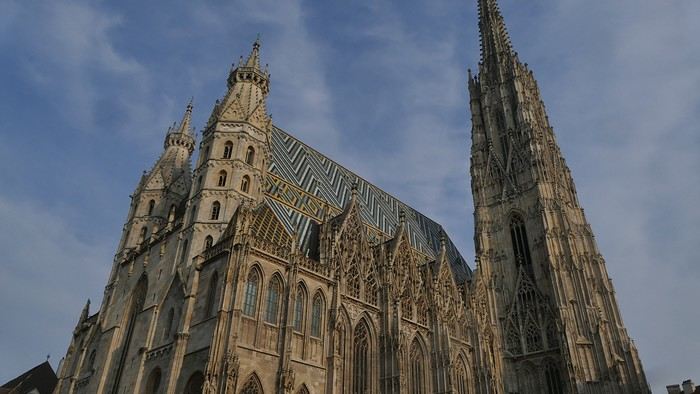
When I exit the metro, I spot the St. Stephen’s Cathedral tower in the distance and approach it: the roof, made of glazed tiles, is remarkable.
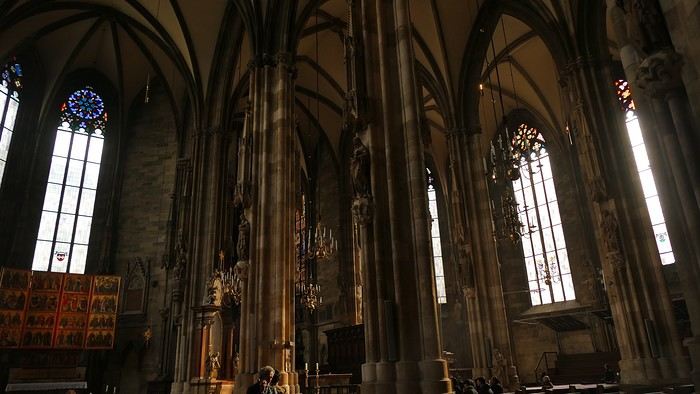
Entry is free, and the interior, a mix of Gothic and Baroque styles in the center, is stunning.
Not far from there is St. Anne’s Church
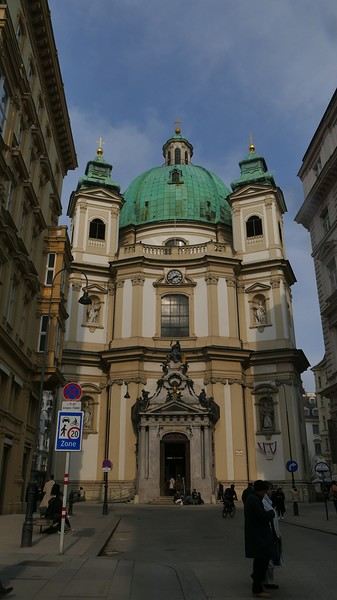
, also Baroque, adorned with beautiful frescoes
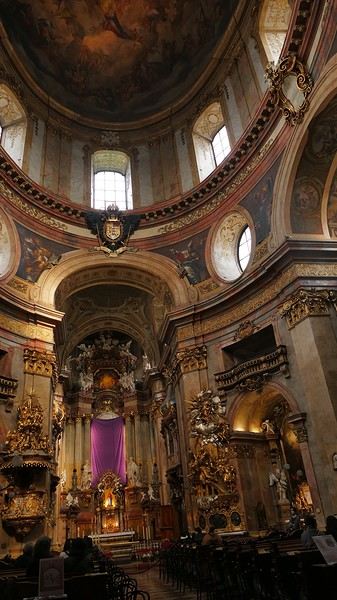
—a music concert adds an enchanting atmosphere to the visit. I continue my walk at random through the pedestrian streets lined with magnificent buildings: I’m charmed by the city.
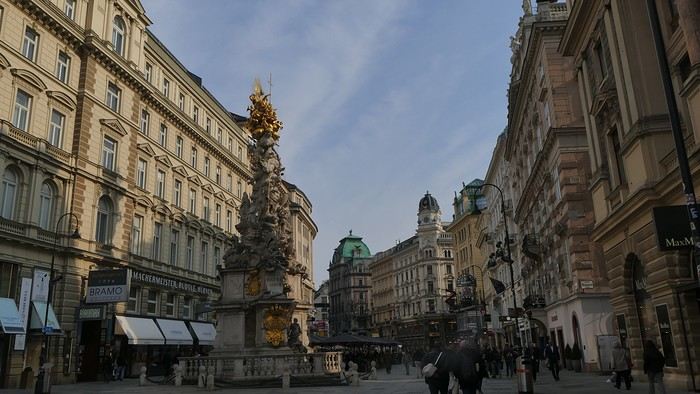
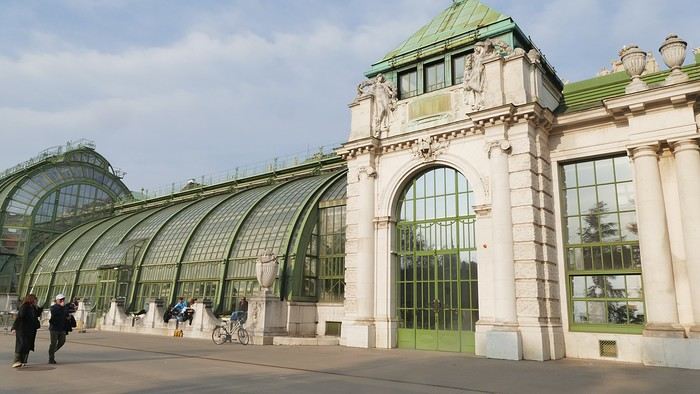
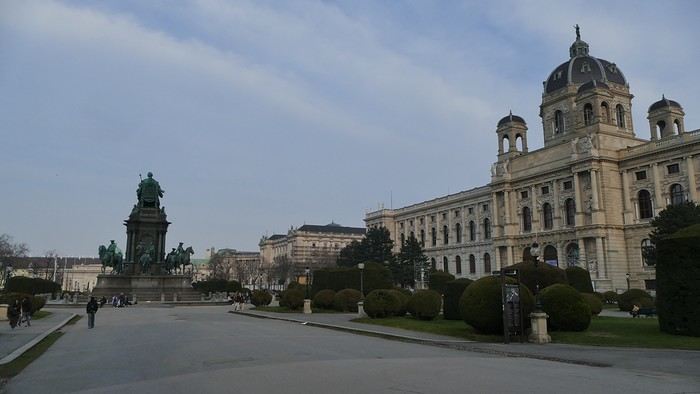
Before heading back to the airport, I stop at a lovely tea salon. My flight will eventually leave with a delay.
Wednesday, March 4th — Delhi and a little luggage scare We arrive in Delhi shortly after noon. Immigration is quick, and good news: my bag was checked through from Barcelona to Kolkata. I head to the connecting terminal and arrive half an hour before boarding: the flight goes smoothly. Upon arrival, the luggage comes out quickly… except mine. After filing a report, I’m told my bag is in Delhi—I have to retrieve it before taking another flight. I didn’t know (or had forgotten): with the delays, I wouldn’t have had time to pick it up and make the connection.
I take a taxi to the Ichamati Hotel. The welcome is warm, and the room is clean but very small. Without my bag, I feel a bit lost—I have nothing to change into.
Tonight, I’m dining with Raja and his friends at a beautiful restaurant, an old colonial house turned into a hotel.
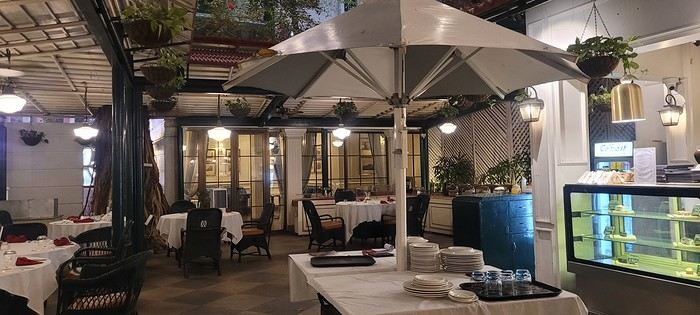
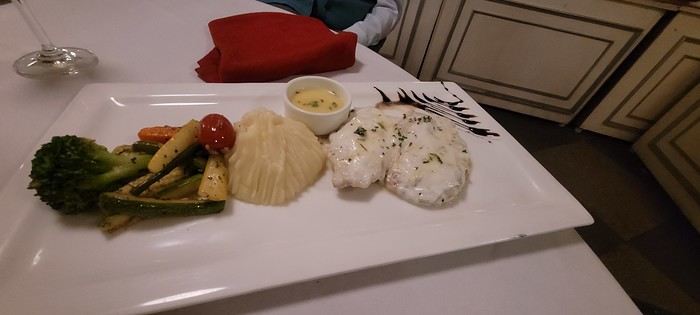
We’re happy to see each other and have a comforting evening together.
I quickly head to the Arc de Triomphe metro station, located 200 meters away: you have to cross the bridge along the bus parking lot, then walk through a large garden; the station is on the right before the garden entrance. The trip to the airport isn’t direct: I have to change at Tomasso and take the line to the airport, where I arrive at 1 PM.
At the Emirates counter, I learn my flight was just canceled due to the war in Iran; they offer me another flight for the next day. I have to wait at the airport until 7 PM before being taken to a hotel; the next morning, I’ll take a flight to Vienna (with an 8-hour layover), then an Air India flight to Delhi, and finally a flight to Kolkata. I agree: I don’t know Vienna, so it’ll be an unexpected discovery.
At 7 PM, a small group is taken to the hotel, 35 minutes from the airport, where we’re served a light dinner upon arrival.
March 3rd — A taxi picks me up at 6:30 AM; the flight to Vienna takes off at 9:30 AM and arrives at noon. I’m free until 7 PM; the metro is direct to the city center. The weather is pleasant and not too cold, luckily, since my clothes are light.
When I exit the metro, I spot the St. Stephen’s Cathedral tower in the distance and approach it: the roof, made of glazed tiles, is remarkable.
Entry is free, and the interior, a mix of Gothic and Baroque styles in the center, is stunning.
Not far from there is St. Anne’s Church
, also Baroque, adorned with beautiful frescoes
—a music concert adds an enchanting atmosphere to the visit. I continue my walk at random through the pedestrian streets lined with magnificent buildings: I’m charmed by the city.
Before heading back to the airport, I stop at a lovely tea salon. My flight will eventually leave with a delay.
Wednesday, March 4th — Delhi and a little luggage scare We arrive in Delhi shortly after noon. Immigration is quick, and good news: my bag was checked through from Barcelona to Kolkata. I head to the connecting terminal and arrive half an hour before boarding: the flight goes smoothly. Upon arrival, the luggage comes out quickly… except mine. After filing a report, I’m told my bag is in Delhi—I have to retrieve it before taking another flight. I didn’t know (or had forgotten): with the delays, I wouldn’t have had time to pick it up and make the connection.
I take a taxi to the Ichamati Hotel. The welcome is warm, and the room is clean but very small. Without my bag, I feel a bit lost—I have nothing to change into.
Tonight, I’m dining with Raja and his friends at a beautiful restaurant, an old colonial house turned into a hotel.
We’re happy to see each other and have a comforting evening together.
Second trip to Curaçao Island
Returning to Curaçao is a bit like reopening a book whose pages still smell of sun and salt.
As soon as the plane descends toward the island, the familiar colors reappear: the dazzling turquoise of the sea, the pastel facades of Willemstad, and that unique light that seems to soften everything.
For this second trip, we no longer arrive as hesitant explorers, but as confirmed lovers of this warm island.
We already know that the warm wind will welcome us as soon as we step out of the airport, that the beaches will once again offer their infinite shades of blue, and that each day will have that unhurried pace that makes you forget the rest of the world.
Yet, despite this sense of déjà vu, Curaçao always manages to surprise. A new cove to discover, a different sunset, a smile shared with a local...
The island has that rare talent for reinventing itself without ever betraying what makes it so endearing.
This second trip isn’t a repetition, then, but a reunion: a chance to rediscover Curaçao with more attentive, more connected, and perhaps even more amazed eyes.
I invite you to keep reading this travel journal and watch the videos that will help you learn a little more about the island’s different attractions.
Just click on the video image to start watching.
To go to a specific post, here are the appropriate links:
Exploring Willemstad’s colorful neighborhoods The Most Beautiful Beaches in Curaçao Hike at Boka Sint Michiel | Flamingos & panoramic views Climbing Christoffel Mountain Den Dunki & Flamingos of Jan Thiel Must-see spots in Curaçao Snorkeling at Playa Kenepa Chiki: Turquoise Water & Tropical Fish Snorkeling at Porto Mari: One of Curaçao’s Best Spots Snorkeling at Mambo Beach, the Perfect Spot Snorkeling at Daaibooi Beach, a diverse marine world
As soon as the plane descends toward the island, the familiar colors reappear: the dazzling turquoise of the sea, the pastel facades of Willemstad, and that unique light that seems to soften everything.
For this second trip, we no longer arrive as hesitant explorers, but as confirmed lovers of this warm island.
We already know that the warm wind will welcome us as soon as we step out of the airport, that the beaches will once again offer their infinite shades of blue, and that each day will have that unhurried pace that makes you forget the rest of the world.
Yet, despite this sense of déjà vu, Curaçao always manages to surprise. A new cove to discover, a different sunset, a smile shared with a local...
The island has that rare talent for reinventing itself without ever betraying what makes it so endearing.
This second trip isn’t a repetition, then, but a reunion: a chance to rediscover Curaçao with more attentive, more connected, and perhaps even more amazed eyes.
I invite you to keep reading this travel journal and watch the videos that will help you learn a little more about the island’s different attractions.
Just click on the video image to start watching.
To go to a specific post, here are the appropriate links:
Exploring Willemstad’s colorful neighborhoods The Most Beautiful Beaches in Curaçao Hike at Boka Sint Michiel | Flamingos & panoramic views Climbing Christoffel Mountain Den Dunki & Flamingos of Jan Thiel Must-see spots in Curaçao Snorkeling at Playa Kenepa Chiki: Turquoise Water & Tropical Fish Snorkeling at Porto Mari: One of Curaçao’s Best Spots Snorkeling at Mambo Beach, the Perfect Spot Snorkeling at Daaibooi Beach, a diverse marine world
USA Road Trip - November 2023
After staying in Aruba in November 2023, we picked up our camper van, which we had left in a hotel parking lot in Miami, Florida.
This isn’t our first road trip across the United States. Since we’re retired, we took the opportunity to travel along the American West Coast, starting with the Everglades in Florida to visit a few parks where we could spot alligators.
We also made a few stops in Mississippi and Texas to explore the most important cities in those states.
Did you know that Austin is home to the world’s largest urban bat colony? It’s truly impressive to see thousands of them take flight at dusk.
I invite you to keep reading this travel journal and watch the videos that’ll give you a little more insight into these different destinations.
Videos are embedded throughout the summary. Just click on the image to start the video.
To jump to a specific post, here are the relevant links:
FLORIDA:
Big Cypress National Preserve - Ochopee Captain Mitch's Everglades Airboat Tours Marco Island
MISSISSIPPI:
Exploring Biloxi
TEXAS:
Downtown Houston Corpus Christi San Antonio Attractions McNutt Sculpture Garden - San Antonio Mission San José - San Antonio Austin Attractions The World’s Largest Urban Bat Colony - Austin Downtown Fort Worth Attractions Downtown Dallas
This isn’t our first road trip across the United States. Since we’re retired, we took the opportunity to travel along the American West Coast, starting with the Everglades in Florida to visit a few parks where we could spot alligators.
We also made a few stops in Mississippi and Texas to explore the most important cities in those states.
Did you know that Austin is home to the world’s largest urban bat colony? It’s truly impressive to see thousands of them take flight at dusk.
I invite you to keep reading this travel journal and watch the videos that’ll give you a little more insight into these different destinations.
Videos are embedded throughout the summary. Just click on the image to start the video.
To jump to a specific post, here are the relevant links:
FLORIDA:
Big Cypress National Preserve - Ochopee Captain Mitch's Everglades Airboat Tours Marco Island
MISSISSIPPI:
Exploring Biloxi
TEXAS:
Downtown Houston Corpus Christi San Antonio Attractions McNutt Sculpture Garden - San Antonio Mission San José - San Antonio Austin Attractions The World’s Largest Urban Bat Colony - Austin Downtown Fort Worth Attractions Downtown Dallas
A Bold Combo: Southern Peru, Bolivia, and Northern Chile
Hello everyone,
For our latest 3-week family trip (yes, the kids are growing up, and two of them are about to enter the working world), we’re heading to South America! For our first time on this continent, I had planned a classic 3-week loop in Peru.
But since we won’t be returning to this part of the world anytime soon, I thought: why not follow in the footsteps of Franck, aka Bibouns51, who, in 18 days, didn’t just stick to Peru but also added two of the planet’s most stunning landscapes to his itinerary... the Salar de Uyuni in Bolivia and its neighbor, the fabulous Atacama Desert in northern Chile !!
So, I set about the tricky task of limiting the regions we’d visit in Peru to those we considered must-sees, to avoid rushing too much. The visit schedules were optimized, including several comfortable overnight buses that have the huge advantage of letting us hop between regions.
So, we’re off on a somewhat adventurous trip with three domestic flights (two on the first day and one on the last), two overnight buses for quick hops, several car rentals, the services of a few drivers to make the trip more comfortable, and even a tour operator for crossing the Salar...
Our main concern is altitude sickness, and we’re bringing Diamox, aspirin, etc., just in case.
Our second worry before departure was not even getting off the ground... Yes, for once, we’re leaving from France—Marseille, to be exact. The week before our departure, with the surprise air traffic controllers’ strike, I remembered why we usually prefer to leave from abroad, like Turin or Barcelona... In the end, it wasn’t the air traffic controllers who made us nervous but the early July wildfires that paralyzed the airport a few days before our departure. Fortunately, the fires were quickly brought under control, and on the big day, everything was smooth sailing!
Detailed itinerary (which changed on Day 1 due to departure hiccups): Day 0: Flight Marseille - Madrid - Lima PERU Theoretical and abandoned Day 1: Flight Lima - Cuzco and visit Cuzco (Puka Pukara, Tambomachay, Cristo Blanco Observatory, Sacsayhuaman sunset) - Night in Cuzco Day 2: Taxi -> Chinchero - Moray - Maras Salt Mines - Ollantaytambo - Train to Aguas Calientes Day 3: Machu Picchu - Return train to Ollantaytambo Day 4: 2-day taxi -> Pisac - Tipon - Andahuaylillas - Huaro - Night in San Pedro Day 5: Palcoyo - Checacupe - Vinicunca - Return and night in Cuzco Day 6: Day in Cuzco (catch-up on Sacsayhuaman, San Blas district, Temple of the Sun) - Overnight bus to Arequipa Day 7: Rental car -> On the road to Colca Canyon, night in Cabanaconde Day 8: Descent to the bottom of Colca Canyon, night at Oasis Sangalle Day 9: Ascent from the canyon - Maca - Chivay - Return and night in Arequipa Day 10: Visit Arequipa (Santa Catalina Convent, La Recoleta Church and Monastery, La Compañía Church, Cathedral) - Overnight bus to Puno Day 11: Lake Titicaca - Night in Puno BOLIVIA Day 12: Shared taxi -> Road to La Paz, visit downtown La Paz - Night 1 in La Paz Day 13: Moon Valley and Las Animas Valley - Night 2 in La Paz Day 14: Day in La Paz - Night 3 in La Paz Day 15: Flight to Uyuni - Day 1 of Salar de Uyuni tour - Night at the edge of the Salar Day 16: Crossing the Lipez region and lagoons - Night near Laguna Colorada Day 17: Sol de Mañana CHILE Day 17 cont.: Pre-booked transfer to SPDA - 4x4 rental - Pukara de Quitor - Stargazing tour - Night 1 in SPDA Day 18: Death Valley and Moon Valley - Night 2 in SPDA Day 19: Miscanti and Miniques Lagoons, Salar de Aguas Calientes and its Piedra Roja, Tebenquiche Lagoon and Quebrada del Diablo - Night 3 in SPDA Day 20: Rainbow Valley and swim in the Puritama River - Night 4 in SPDA Day 21: Tebenquiche Lagoon - Bus to Calama - Flight to Santiago Day 22: Return Santiago - Madrid - Marseille
Day 0 - 11/07: Destination Lima
Our first flight from Marseille went smoothly to our Iberia layover in Madrid.
In Madrid, just after getting off the plane around 8 PM, and as we were walking through the terminal, we got a rude awakening!!
We saw the word "Cancelled" next to our flight number on the display boards. Thinking it must be a glitch, we checked another screen, but the system was stubborn, and the same dreaded word appeared !
So, we headed to the Iberia counter, where an agent confirmed that our Friday evening flight was canceled and rescheduled for the next morning. The reason? A breakdown and no replacement plane, even though we were in Madrid, Iberia’s home base!
To make matters worse, I remembered our super-tight schedule, planned to the minute, with no buffer day in Lima. Since I’m a bit phobic of megacities and hadn’t found anything appealing in the Peruvian capital in our guidebooks, we’d planned to leave Lima as soon as possible for Cusco, the heart of the Sacred Valley, to spend our first day there.
Bad idea, because we already knew the 4-hour buffer wouldn’t be enough, and we’d miss the domestic flight, which was, of course, non-refundable and non-changeable. So, we had to call LATAM from Madrid to find another flight for Saturday evening and negotiate a rate to recover some of our initial outlay.
After an hour on the phone with customer service, several endless holds, and three failed attempts to dictate our credit card number over the phone to a Spaniard speaking English with a thick accent, we finally managed to confirm the transaction, securing our new flight tickets for a moderate extra cost of just 150 € total.
At first, we were pretty bummed about losing a day and incurring extra fees to reschedule the domestic flight, but then, when we learned from an Iberia customer service rep that we’d receive the max compensation of 600 € per traveler, we even ended up grinning... because 3000 € in refunds for only losing the first day in Cusco? We’d sign up for that 10 times over!!
Iberia then took care of us, putting us up in a hotel where we had dinner before a short 5-hour night and an early morning departure. I took the opportunity to improvise a quick day of sightseeing in Lima, focusing on the Barranco and Miraflores districts.
For our latest 3-week family trip (yes, the kids are growing up, and two of them are about to enter the working world), we’re heading to South America! For our first time on this continent, I had planned a classic 3-week loop in Peru.
But since we won’t be returning to this part of the world anytime soon, I thought: why not follow in the footsteps of Franck, aka Bibouns51, who, in 18 days, didn’t just stick to Peru but also added two of the planet’s most stunning landscapes to his itinerary... the Salar de Uyuni in Bolivia and its neighbor, the fabulous Atacama Desert in northern Chile !!
So, I set about the tricky task of limiting the regions we’d visit in Peru to those we considered must-sees, to avoid rushing too much. The visit schedules were optimized, including several comfortable overnight buses that have the huge advantage of letting us hop between regions.
So, we’re off on a somewhat adventurous trip with three domestic flights (two on the first day and one on the last), two overnight buses for quick hops, several car rentals, the services of a few drivers to make the trip more comfortable, and even a tour operator for crossing the Salar...
Our main concern is altitude sickness, and we’re bringing Diamox, aspirin, etc., just in case.
Our second worry before departure was not even getting off the ground... Yes, for once, we’re leaving from France—Marseille, to be exact. The week before our departure, with the surprise air traffic controllers’ strike, I remembered why we usually prefer to leave from abroad, like Turin or Barcelona... In the end, it wasn’t the air traffic controllers who made us nervous but the early July wildfires that paralyzed the airport a few days before our departure. Fortunately, the fires were quickly brought under control, and on the big day, everything was smooth sailing!
Detailed itinerary (which changed on Day 1 due to departure hiccups): Day 0: Flight Marseille - Madrid - Lima PERU Theoretical and abandoned Day 1: Flight Lima - Cuzco and visit Cuzco (Puka Pukara, Tambomachay, Cristo Blanco Observatory, Sacsayhuaman sunset) - Night in Cuzco Day 2: Taxi -> Chinchero - Moray - Maras Salt Mines - Ollantaytambo - Train to Aguas Calientes Day 3: Machu Picchu - Return train to Ollantaytambo Day 4: 2-day taxi -> Pisac - Tipon - Andahuaylillas - Huaro - Night in San Pedro Day 5: Palcoyo - Checacupe - Vinicunca - Return and night in Cuzco Day 6: Day in Cuzco (catch-up on Sacsayhuaman, San Blas district, Temple of the Sun) - Overnight bus to Arequipa Day 7: Rental car -> On the road to Colca Canyon, night in Cabanaconde Day 8: Descent to the bottom of Colca Canyon, night at Oasis Sangalle Day 9: Ascent from the canyon - Maca - Chivay - Return and night in Arequipa Day 10: Visit Arequipa (Santa Catalina Convent, La Recoleta Church and Monastery, La Compañía Church, Cathedral) - Overnight bus to Puno Day 11: Lake Titicaca - Night in Puno BOLIVIA Day 12: Shared taxi -> Road to La Paz, visit downtown La Paz - Night 1 in La Paz Day 13: Moon Valley and Las Animas Valley - Night 2 in La Paz Day 14: Day in La Paz - Night 3 in La Paz Day 15: Flight to Uyuni - Day 1 of Salar de Uyuni tour - Night at the edge of the Salar Day 16: Crossing the Lipez region and lagoons - Night near Laguna Colorada Day 17: Sol de Mañana CHILE Day 17 cont.: Pre-booked transfer to SPDA - 4x4 rental - Pukara de Quitor - Stargazing tour - Night 1 in SPDA Day 18: Death Valley and Moon Valley - Night 2 in SPDA Day 19: Miscanti and Miniques Lagoons, Salar de Aguas Calientes and its Piedra Roja, Tebenquiche Lagoon and Quebrada del Diablo - Night 3 in SPDA Day 20: Rainbow Valley and swim in the Puritama River - Night 4 in SPDA Day 21: Tebenquiche Lagoon - Bus to Calama - Flight to Santiago Day 22: Return Santiago - Madrid - Marseille
Day 0 - 11/07: Destination Lima
Our first flight from Marseille went smoothly to our Iberia layover in Madrid.
In Madrid, just after getting off the plane around 8 PM, and as we were walking through the terminal, we got a rude awakening!!
We saw the word "Cancelled" next to our flight number on the display boards. Thinking it must be a glitch, we checked another screen, but the system was stubborn, and the same dreaded word appeared !
So, we headed to the Iberia counter, where an agent confirmed that our Friday evening flight was canceled and rescheduled for the next morning. The reason? A breakdown and no replacement plane, even though we were in Madrid, Iberia’s home base!
To make matters worse, I remembered our super-tight schedule, planned to the minute, with no buffer day in Lima. Since I’m a bit phobic of megacities and hadn’t found anything appealing in the Peruvian capital in our guidebooks, we’d planned to leave Lima as soon as possible for Cusco, the heart of the Sacred Valley, to spend our first day there.
Bad idea, because we already knew the 4-hour buffer wouldn’t be enough, and we’d miss the domestic flight, which was, of course, non-refundable and non-changeable. So, we had to call LATAM from Madrid to find another flight for Saturday evening and negotiate a rate to recover some of our initial outlay.
After an hour on the phone with customer service, several endless holds, and three failed attempts to dictate our credit card number over the phone to a Spaniard speaking English with a thick accent, we finally managed to confirm the transaction, securing our new flight tickets for a moderate extra cost of just 150 € total.
At first, we were pretty bummed about losing a day and incurring extra fees to reschedule the domestic flight, but then, when we learned from an Iberia customer service rep that we’d receive the max compensation of 600 € per traveler, we even ended up grinning... because 3000 € in refunds for only losing the first day in Cusco? We’d sign up for that 10 times over!!
Iberia then took care of us, putting us up in a hotel where we had dinner before a short 5-hour night and an early morning departure. I took the opportunity to improvise a quick day of sightseeing in Lima, focusing on the Barranco and Miraflores districts.
Four days in Doha in January 2026
Hi everyone,
This short stay in Doha is part of a longer trip. It lets us break up a flight to the Seychelles.
Friday, January 16, The Corniche
Despite the adventures we had the day before (read about it here), we just can’t get up later than 8 a.m. Our minds are a bit clearer and a bit more positive after some sleep.
View of the Corniche from the 12th floor.
Breakfast is sumptuous—it really lifts our spirits.
On this Friday morning, almost everything is closed, so we head out to explore the Corniche, which is just a few hundred meters from our hotel in Old Doha.
A marathon is happening today on the Corniche, so the road is closed and empty, making it easy to cross. The palm-shaped streetlights are gorgeous when they’re lit up at night.
A little reminder of Qatar’s once-thriving pearl trade.
A memory of a much more recent past.
The sun is shining, but it’s not very warm—just 19°C at the hottest part of the day. Tough luck, last week it was 24°C.
The walk along the crescent-shaped Corniche is pretty long. From the old town to the modern center, where massive Dubai-style towers rise, it’s a 6 km promenade along the waterfront.
Many dhows are docked, waiting for tourists to take a little cruise in the bay, but visitors are scarce.
The skyscrapers are so stunning, you can’t help but admire them.
to be continued...
This short stay in Doha is part of a longer trip. It lets us break up a flight to the Seychelles.
Friday, January 16, The Corniche
Despite the adventures we had the day before (read about it here), we just can’t get up later than 8 a.m. Our minds are a bit clearer and a bit more positive after some sleep.
View of the Corniche from the 12th floor.
Breakfast is sumptuous—it really lifts our spirits.
On this Friday morning, almost everything is closed, so we head out to explore the Corniche, which is just a few hundred meters from our hotel in Old Doha.
A marathon is happening today on the Corniche, so the road is closed and empty, making it easy to cross. The palm-shaped streetlights are gorgeous when they’re lit up at night.
A little reminder of Qatar’s once-thriving pearl trade.
A memory of a much more recent past.
The sun is shining, but it’s not very warm—just 19°C at the hottest part of the day. Tough luck, last week it was 24°C.
The walk along the crescent-shaped Corniche is pretty long. From the old town to the modern center, where massive Dubai-style towers rise, it’s a 6 km promenade along the waterfront.
Many dhows are docked, waiting for tourists to take a little cruise in the bay, but visitors are scarce.
The skyscrapers are so stunning, you can’t help but admire them.
to be continued...
Trip to Thailand and Laos
Hello! 🙂
January 2026 Here we go again for new adventures and the pleasure of sharing them with you here! First of all, I’d like to thank everyone who helped me with the preparations, even with some last-minute improvisations just days before departure. Thanks to Montagnard74, Jojoone1, Songsam, Attila, Dennis2, NadegerFERM, and the authors whose travel journals about Laos inspired me (Montagnard74, Muriel18, Mavietongs...).
In this story, written by Richard and illustrated by me, we’ll tell you about the journey of four friends: Catherine, Richard, Nathalie, and Bruno. A reinvented but overall successful trip, filled with discoveries and surprises, the scents of spices and frangipani flowers, (too) spicy food, sunsets, and... one big mess.
January 2026 Here we go again for new adventures and the pleasure of sharing them with you here! First of all, I’d like to thank everyone who helped me with the preparations, even with some last-minute improvisations just days before departure. Thanks to Montagnard74, Jojoone1, Songsam, Attila, Dennis2, NadegerFERM, and the authors whose travel journals about Laos inspired me (Montagnard74, Muriel18, Mavietongs...).
In this story, written by Richard and illustrated by me, we’ll tell you about the journey of four friends: Catherine, Richard, Nathalie, and Bruno. A reinvented but overall successful trip, filled with discoveries and surprises, the scents of spices and frangipani flowers, (too) spicy food, sunsets, and... one big mess.
7 weeks and 150 years between us on a southern Morocco road trip
We arrive in the evening in Marrakesh, and a taxi arranged by our friendly Riad is waiting for us. The driver takes us to the door, where we’re briefly greeted by our hosts. The room is heated—phew—because it’s really cold on this January 17th for our arrival. Riad Alisma, where we’re staying for 2 nights. The next morning, it’s pouring rain when we wake up, but after a good breakfast, the rain has calmed down. Off we go to the medersa, which allows for a relatively sheltered visit. We’d visited this palace 15 years ago—it’s been renovated since then.
From there, without the rain, we wander aimlessly and eventually end up near the tanneries, but it’s Sunday, and there’s very little activity. Of course, we get hassled by a tout.
Here, the hides after being treated with lime—I love the colors.
We part ways a bit annoyed. He gets a little revenge by giving us bad directions, and we end up outside the city walls. We decide to take a taxi to the new modern art museum—60 dirhams for the 5 km, which is nothing when you think about it. That tout, who we didn’t ask for anything and made it clear we weren’t buying anything, dragged us into a shop supposedly only open that day and demanded 50 dirhams for his "services"! Let’s forget that bad moment and enjoy the exhibition at the MACAL.
The taxi on the way back drops us off at Place des Ferblantiers, not far from our Riad. We’re a little peckish—it’s worth mentioning that at lunchtime, we only ate a plate of beans from a street vendor. So, we buy a bunch of little sweets, each more delicious than the last, at Ajar. We snack while sipping mint tea and watching life go by around us. A final visit to the Museum of Moroccan Cuisine on our way back helps us dodge a few more showers. Then it’s back to the Riad. The atmosphere in the city is heating up—it’s the AFCON final tonight. The temperatures, though? Not so much. We ordered a meal at the Riad, and it was a good call—not only was it really tasty, but the rain also picked up again. Our day in Marrakesh ends under the covers with a good book and some photo sorting. Still, we managed 10,750 steps. View of our Riad
Tomorrow, we’ll pick up our rental car from Medloc and head to Essaouira.
From there, without the rain, we wander aimlessly and eventually end up near the tanneries, but it’s Sunday, and there’s very little activity. Of course, we get hassled by a tout.
Here, the hides after being treated with lime—I love the colors.
We part ways a bit annoyed. He gets a little revenge by giving us bad directions, and we end up outside the city walls. We decide to take a taxi to the new modern art museum—60 dirhams for the 5 km, which is nothing when you think about it. That tout, who we didn’t ask for anything and made it clear we weren’t buying anything, dragged us into a shop supposedly only open that day and demanded 50 dirhams for his "services"! Let’s forget that bad moment and enjoy the exhibition at the MACAL.
The taxi on the way back drops us off at Place des Ferblantiers, not far from our Riad. We’re a little peckish—it’s worth mentioning that at lunchtime, we only ate a plate of beans from a street vendor. So, we buy a bunch of little sweets, each more delicious than the last, at Ajar. We snack while sipping mint tea and watching life go by around us. A final visit to the Museum of Moroccan Cuisine on our way back helps us dodge a few more showers. Then it’s back to the Riad. The atmosphere in the city is heating up—it’s the AFCON final tonight. The temperatures, though? Not so much. We ordered a meal at the Riad, and it was a good call—not only was it really tasty, but the rain also picked up again. Our day in Marrakesh ends under the covers with a good book and some photo sorting. Still, we managed 10,750 steps. View of our Riad
Tomorrow, we’ll pick up our rental car from Medloc and head to Essaouira.
In the midst of Kenya's wildlife, October 2025
Hello everyone,
After sharing some safari photos from southern Tanzania, I’d like to show you those from our latest safari in Kenya in October 2025.
First, I’d like to thank Sylvie56, whose previous travel journals about this country inspired our trip choices. Thanks also for the info you sent us via PM. THANK YOU!
The following account is from a simple wildlife enthusiast. You won’t find anything here but images of landscapes, mammals, and birds. The stated purpose of this trip was purely and solely wildlife-focused. (It was in no way a discovery of the country or its people).
This stay/safari began (and ended) in Nairobi, with flights between France and Kenya operated by Qatar Airways departing from Nice.
Over two weeks, we first visited the reserves of Tsavo West and Tsavo East, then after a long road trip, the two reserves of Buffalo Springs and Samburu.
= Please wait until the end of the journal to ask any specific questions (or send them via PM) to keep the story flowing without interruptions or off-topic comments.
Thanks for your understanding.
...
Previous Kenya safari trip in 2017, here:
http://www.image-nature.com/forum/viewtopic.php?f=162&t=61119
...
After sharing some safari photos from southern Tanzania, I’d like to show you those from our latest safari in Kenya in October 2025.
First, I’d like to thank Sylvie56, whose previous travel journals about this country inspired our trip choices. Thanks also for the info you sent us via PM. THANK YOU!
The following account is from a simple wildlife enthusiast. You won’t find anything here but images of landscapes, mammals, and birds. The stated purpose of this trip was purely and solely wildlife-focused. (It was in no way a discovery of the country or its people).
This stay/safari began (and ended) in Nairobi, with flights between France and Kenya operated by Qatar Airways departing from Nice.
Over two weeks, we first visited the reserves of Tsavo West and Tsavo East, then after a long road trip, the two reserves of Buffalo Springs and Samburu.
= Please wait until the end of the journal to ask any specific questions (or send them via PM) to keep the story flowing without interruptions or off-topic comments.
Thanks for your understanding.
...
Previous Kenya safari trip in 2017, here:
http://www.image-nature.com/forum/viewtopic.php?f=162&t=61119
...
Martine from DD in Arizona and New Mexico
Good evening everyone! 🙂
We’re back from our September 2025 road trip, this time to explore Arizona and New Mexico, and it’s time for me to start my travel journal—especially since everything’s already booked for another trip in September 2026 (to California), and I need to get started on the planning.
I was a little worried this new visit to Uncle Sam’s country might not be as "wow" as the others, but we still discovered some incredible places.
For those who don’t know us, we’re a couple in our seventies who speak very little English, but that didn’t stop us from fully enjoying our stay.
For this 6th road trip in the U.S., we spent 21 nights there, drove 4,160 km by car, and walked nearly 160 km in a loop starting from Phoenix.
We’d been to Arizona before (but not this side) and never to New Mexico. This whole road trip was a huge discovery for us.
In the prices mentioned (some in euros, others in dollars), bank fees and exchange charges are included. The flights, car rental, and parking were all paid for in December 2024 when we booked.
We’d downloaded the MPC (Mobile Passport Control) app, but there wasn’t a dedicated line at Phoenix Airport. Still, we got through quickly with friendly, smiling agents.
I don’t drive at all (I hate it), so the stops were chosen based on activities but also, for some, to limit daily mileage for the sole driver. The kilometers listed in the itinerary are the daily distances.
We traveled from September 9th to 22nd, unfortunately once again without our dear friends Mimi and Maumau.
The itinerary
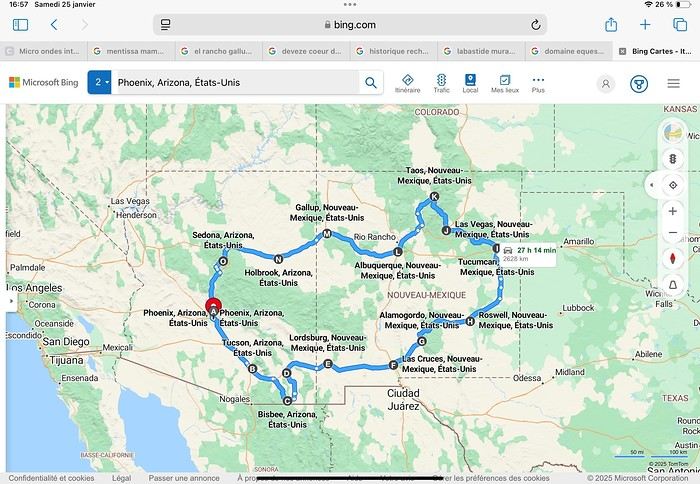
Day 1: Flight Marseille-Paris-Phoenix, then Gold Canyon (133 km) Day 2: Tucson (271 km) Lost Dutchman State Park Day 3: Tucson (155 km) Day 4: Tucson (34 km) Day 5: Bisbee (182 km) Day 6: Lordsburg (345 km) Day 7: Las Cruces (253 km) Day 8: Alamogordo (162 km) Day 9: Roswell (264 km) Day 10: Tucumcari (369 km) Day 11: Las Vegas (281 km) – the one in New Mexico Day 12: Taos (213 km) Day 13: Santa Fe (224 km) Day 14: Albuquerque (123 km) Day 15: Gallup (246 km) Day 16: Holbrook (224 km) Day 17: Flagstaff (179 km) Day 18: Sedona (118 km) Day 19: Sedona (48 km) Day 20: Sedona (41 km) Day 21: Phoenix (256 km) Day 22: Phoenix Airport (35 km)
📊 **Budget**: A little over 7,500 € for both of us, all included. The exchange rate was in our favor (1.17 dollars to 1 €). 📊 **Flights**: Marseille-Paris Charles de Gaulle-Phoenix: 1,787 € for two, with one checked bag each (Air France) 📊 **ESTA**: $42 📊 **America the Beautiful Pass**: $80 📊 **Parking**: 134 € (super eco at Marseille) 📊 **Car rental (Hertz)**: 865 €. Since there were no SUVs left in the reserved category (Nissan Rogue), we got an upgrade (4x4 Ford Explorer). We booked through Air France (15% discount). We’d originally reserved it in December for 1,140 €, but since prices dropped in March, we canceled and rebooked for 865 €. Hertz offers a free Hertz Gold Plus Rewards program, which gives you priority counter service when picking up the car. 📊 **Accommodation**: 2,400 € We stayed in hotels and motels of varying standards (from 60 to 203 € per night, depending on the city), all booked through Booking.com or Hotels.com. Out of 21 nights, only two didn’t include breakfast in the price. Booking.com sometimes offers slightly cheaper rates if you book by phone using the mobile app, and our Genius 3 status on the site also got us some preferential rates. 📊 **Supplementary insurance**: AVA 200 € for medical care if needed 📊 **Cash**: $2,078. We left with 1,000 € exchanged before departure and made two withdrawals of $500. This cash covered: - Evening restaurants and tips - Midday picnics - Gas: $298 for 4,160 km - Museum and private park entries (per person): - Lost Dutchman: $10 - Arizona-Sonora Desert Museum: $28 - Bird Cage Theater: $16 - Tombstone Shootout: $8 - New Mexico Farm & Ranch Museum: $12 - Roswell International UFO Museum: $5 - Billy the Kid Museum: $7 - Rancho de Taos: $22 - West Fork Oak Creek Trail entry: $15 We got a few discounts thanks to our senior age (+65). - Souvenirs and little treats
Like on our previous road trips, we didn’t rent a GPS. We got around using offline GPS apps Here WeGo and Organic Maps, with maps of the states we visited downloaded before we left (on our phones).
❤️❤️❤️ **Highlights** (there are so many!) 📍 Goldfield Ghost Town (even if it’s a reconstruction) 📍 The standing army of Saguaro cacti at Saguaro National Park West 📍 Diving into the cowboy universe of Tombstone 📍 The welcome from Rick and Henry at our guesthouse in Bisbee (Garden at Mile High Ranch) 📍 The tangled rocks of Chiricahua National Monument 📍 The flavored pistachios from Dwayne’s Fresh Jerky and Mac Ginnis Pistachioland 📍 Restaurants: La Posta (Las Cruces), Diner 66 (Albuquerque), and the Haunted Hamburger (Jerome) 📍 The old plazas of New Mexico 📍 The solitude and beauty of the white dunes at White Sands National Park 📍 Stepping back in time at the Billy the Kid Museum (Fort Stanton) 📍 Sections of historic Route 66 and the old motels of Tucumcari, especially at night when all the neon lights are on 📍 Taos Pueblo and diving into Native American culture 📍 After the Rio Grande Bridge, the descent via NM 567 to the very bottom of the Rio Grande Gorge, then the road along the riverbanks to Taos 📍 The tranquility of the Chimayo Sanctuary 📍 Discovering the ingenious native dwellings at Bandelier National Monument and Walnut Canyon National Park 📍 The small towns along the Turquoise Trail 📍 The red rocks of Red Rock Park and the Painted Desert 📍 The extraordinary colors of the petrified trees at Petrified Forest National Park 📍 Sedona, its red rocks, and the reward of the viewpoints at the end of hikes (Devil’s Bridge, The Subway, and West Fork Oak Creek) 📍 The immersion in Mexico when visiting Tlaquepaque 📍 The almost-ghost town of Jerome and its terraced streets 📍 The incredible kindness of Americans, always ready to help and up for a chat ❤️
☹️☹️☹️ **Flops** (there are very few) 📍 Several museums and churches being closed, so we couldn’t visit them 📍 Some museums and visitor centers opening late (10 AM) and closing early (4 PM) 📍 A 64 € phone roaming charge because we got near the Mexican border and picked up their cell tower 📍 The outrageous price ($5.99) for a gallon of gas at the Shell near Phoenix Airport
I hope this helps! Anyway, thanks for reading my long post. Don’t hesitate to reach out, even via PM, if you see I haven’t replied and you’d like more details. Have a great evening, everyone! 🙂
We’re back from our September 2025 road trip, this time to explore Arizona and New Mexico, and it’s time for me to start my travel journal—especially since everything’s already booked for another trip in September 2026 (to California), and I need to get started on the planning.
I was a little worried this new visit to Uncle Sam’s country might not be as "wow" as the others, but we still discovered some incredible places.
For those who don’t know us, we’re a couple in our seventies who speak very little English, but that didn’t stop us from fully enjoying our stay.
For this 6th road trip in the U.S., we spent 21 nights there, drove 4,160 km by car, and walked nearly 160 km in a loop starting from Phoenix.
We’d been to Arizona before (but not this side) and never to New Mexico. This whole road trip was a huge discovery for us.
In the prices mentioned (some in euros, others in dollars), bank fees and exchange charges are included. The flights, car rental, and parking were all paid for in December 2024 when we booked.
We’d downloaded the MPC (Mobile Passport Control) app, but there wasn’t a dedicated line at Phoenix Airport. Still, we got through quickly with friendly, smiling agents.
I don’t drive at all (I hate it), so the stops were chosen based on activities but also, for some, to limit daily mileage for the sole driver. The kilometers listed in the itinerary are the daily distances.
We traveled from September 9th to 22nd, unfortunately once again without our dear friends Mimi and Maumau.
The itinerary
Day 1: Flight Marseille-Paris-Phoenix, then Gold Canyon (133 km) Day 2: Tucson (271 km) Lost Dutchman State Park Day 3: Tucson (155 km) Day 4: Tucson (34 km) Day 5: Bisbee (182 km) Day 6: Lordsburg (345 km) Day 7: Las Cruces (253 km) Day 8: Alamogordo (162 km) Day 9: Roswell (264 km) Day 10: Tucumcari (369 km) Day 11: Las Vegas (281 km) – the one in New Mexico Day 12: Taos (213 km) Day 13: Santa Fe (224 km) Day 14: Albuquerque (123 km) Day 15: Gallup (246 km) Day 16: Holbrook (224 km) Day 17: Flagstaff (179 km) Day 18: Sedona (118 km) Day 19: Sedona (48 km) Day 20: Sedona (41 km) Day 21: Phoenix (256 km) Day 22: Phoenix Airport (35 km)
📊 **Budget**: A little over 7,500 € for both of us, all included. The exchange rate was in our favor (1.17 dollars to 1 €). 📊 **Flights**: Marseille-Paris Charles de Gaulle-Phoenix: 1,787 € for two, with one checked bag each (Air France) 📊 **ESTA**: $42 📊 **America the Beautiful Pass**: $80 📊 **Parking**: 134 € (super eco at Marseille) 📊 **Car rental (Hertz)**: 865 €. Since there were no SUVs left in the reserved category (Nissan Rogue), we got an upgrade (4x4 Ford Explorer). We booked through Air France (15% discount). We’d originally reserved it in December for 1,140 €, but since prices dropped in March, we canceled and rebooked for 865 €. Hertz offers a free Hertz Gold Plus Rewards program, which gives you priority counter service when picking up the car. 📊 **Accommodation**: 2,400 € We stayed in hotels and motels of varying standards (from 60 to 203 € per night, depending on the city), all booked through Booking.com or Hotels.com. Out of 21 nights, only two didn’t include breakfast in the price. Booking.com sometimes offers slightly cheaper rates if you book by phone using the mobile app, and our Genius 3 status on the site also got us some preferential rates. 📊 **Supplementary insurance**: AVA 200 € for medical care if needed 📊 **Cash**: $2,078. We left with 1,000 € exchanged before departure and made two withdrawals of $500. This cash covered: - Evening restaurants and tips - Midday picnics - Gas: $298 for 4,160 km - Museum and private park entries (per person): - Lost Dutchman: $10 - Arizona-Sonora Desert Museum: $28 - Bird Cage Theater: $16 - Tombstone Shootout: $8 - New Mexico Farm & Ranch Museum: $12 - Roswell International UFO Museum: $5 - Billy the Kid Museum: $7 - Rancho de Taos: $22 - West Fork Oak Creek Trail entry: $15 We got a few discounts thanks to our senior age (+65). - Souvenirs and little treats
Like on our previous road trips, we didn’t rent a GPS. We got around using offline GPS apps Here WeGo and Organic Maps, with maps of the states we visited downloaded before we left (on our phones).
❤️❤️❤️ **Highlights** (there are so many!) 📍 Goldfield Ghost Town (even if it’s a reconstruction) 📍 The standing army of Saguaro cacti at Saguaro National Park West 📍 Diving into the cowboy universe of Tombstone 📍 The welcome from Rick and Henry at our guesthouse in Bisbee (Garden at Mile High Ranch) 📍 The tangled rocks of Chiricahua National Monument 📍 The flavored pistachios from Dwayne’s Fresh Jerky and Mac Ginnis Pistachioland 📍 Restaurants: La Posta (Las Cruces), Diner 66 (Albuquerque), and the Haunted Hamburger (Jerome) 📍 The old plazas of New Mexico 📍 The solitude and beauty of the white dunes at White Sands National Park 📍 Stepping back in time at the Billy the Kid Museum (Fort Stanton) 📍 Sections of historic Route 66 and the old motels of Tucumcari, especially at night when all the neon lights are on 📍 Taos Pueblo and diving into Native American culture 📍 After the Rio Grande Bridge, the descent via NM 567 to the very bottom of the Rio Grande Gorge, then the road along the riverbanks to Taos 📍 The tranquility of the Chimayo Sanctuary 📍 Discovering the ingenious native dwellings at Bandelier National Monument and Walnut Canyon National Park 📍 The small towns along the Turquoise Trail 📍 The red rocks of Red Rock Park and the Painted Desert 📍 The extraordinary colors of the petrified trees at Petrified Forest National Park 📍 Sedona, its red rocks, and the reward of the viewpoints at the end of hikes (Devil’s Bridge, The Subway, and West Fork Oak Creek) 📍 The immersion in Mexico when visiting Tlaquepaque 📍 The almost-ghost town of Jerome and its terraced streets 📍 The incredible kindness of Americans, always ready to help and up for a chat ❤️
☹️☹️☹️ **Flops** (there are very few) 📍 Several museums and churches being closed, so we couldn’t visit them 📍 Some museums and visitor centers opening late (10 AM) and closing early (4 PM) 📍 A 64 € phone roaming charge because we got near the Mexican border and picked up their cell tower 📍 The outrageous price ($5.99) for a gallon of gas at the Shell near Phoenix Airport
I hope this helps! Anyway, thanks for reading my long post. Don’t hesitate to reach out, even via PM, if you see I haven’t replied and you’d like more details. Have a great evening, everyone! 🙂
Three weeks in Yunnan in October 2025
We just spent three weeks in Yunnan.
I’ve started writing up a travel journal about the trip.
Review of Renaissance Cruise (Iberian Flavors) from October 18 to 29, 2025
Hi there,
Here’s a little review of our cruise on the Renaissance from October 18 to 29, 2025 (11 nights). It was our first experience with CFC.
Some other forum members were on board too, so we can probably compare notes and correct me if I’m wrong!
The stops were as follows: 10/18 departure from Marseille 10/19 at sea 10/20 Cartagena 10/21 Almería 10/22 Gibraltar 10/23 Cádiz 10/24 at sea 10/25 Leixões (Porto) 10/26 Vigo 10/27 at sea 10/28 at sea 10/29 Dunkirk
First, a quick intro. We’re a family of four with two kids, ages 8 and 11. We booked this cruise in January 2025, right when it went on sale. At the time, it was priced at 763 € per adult (+ 99 € in tips) and 114.45 € per child (under 12, no tips to pay) for an ocean-view cabin (all ocean-view categories were the same price). Since there was also a single-parent offer (meaning one paying adult in the cabin was enough to get the child rate for the accompanying kid), I asked if we could take advantage of this offer to get two double cabins at the same price as one quadruple cabin (to have more space), and yes, it was possible. So we booked two premium ocean-view double cabins side by side. It was the same price as a quadruple. We booked directly through CFC because my husband had a promotional code from his works council. In total, for the four of us, we paid 1830 €, tips included. It’s true we booked early, but the rate was good, and we had the constraint of traveling as a family of four, so cabin choices were more limited. It’s also worth noting that the single-parent offer is limited.
Now, about embarkation: 10/18 Marseille Coming from the north, we took the direct TGV that morning at 7:22 AM, scheduled to arrive in Marseille at 12:24 PM. The trip went smoothly, great weather, and we arrived just one minute late. I had planned to get to the port using the free 35T shuttle from Joliette. To get to the bus stop, there were two options: the metro or walking. Since the weather was beautiful and the kids needed to stretch their legs, we opted for the second option. The route is all downhill, so it was pretty easy even with the suitcases. But I wouldn’t do it the other way around! We arrived at Joliette around 12:50 PM, just in time for the 1:00 PM shuttle, which arrived a few minutes late. Other cruisers got on board too. That day, there were two Costa ships and one MSC ship at the port as well. Traffic was heavy, and the shuttle arrived at the port entrance at 1:30 PM. We were scheduled for 2:30 PM. We were lucky to be at the closest embarkation terminal. So we were among those who had the least walking to do. We dropped off our suitcases and headed to the check-in counter. There were plenty of desks and almost no passengers. So we quickly completed the embarkation formalities—in just a few minutes—and when we boarded, it wasn’t even 2:00 PM yet. We headed to the buffet, where there weren’t many people. As we finished lunch, it was around 3:00 PM when they announced the cabins were ready. We went down to drop off our luggage in the cabins and then went up to the top deck to take some photos. The ship’s daily program said the safety drill would be at 4:00 PM. So we went to deck 6 at the scheduled time. But later, they announced it would actually be at 4:30 PM! In short, we waited 30 minutes for nothing because of a difference between the scheduled and actual time! The drill itself was long. Gathering everyone took about 20 minutes, I think. Just as we finished, they announced the departure, originally scheduled for 5:00 PM, was delayed until 9:00 PM due to latecomers. We went to check out the library, which had tons of board games and books—more than we’d ever seen. What stood out on this first day was that, for the first time, we had a French-speaking embarkation, announcements only in French (except for the safety drill), French-speaking servers, a paper daily program in French, books in French (which we’d never find on another ship), and menus in French. To wrap up the day, we had dinner at Vatel. I had requested the first seating (6:30 PM) and a table for four, and we got it. We were seated upstairs near the window—a very pleasant table that we’d occupy every evening. What was a little surprising, but we got used to it, was that you had to order everything you wanted at once. The portions weren’t big, but you could choose what you wanted. The cheese was French and excellent.
To be continued...
The stops were as follows: 10/18 departure from Marseille 10/19 at sea 10/20 Cartagena 10/21 Almería 10/22 Gibraltar 10/23 Cádiz 10/24 at sea 10/25 Leixões (Porto) 10/26 Vigo 10/27 at sea 10/28 at sea 10/29 Dunkirk
First, a quick intro. We’re a family of four with two kids, ages 8 and 11. We booked this cruise in January 2025, right when it went on sale. At the time, it was priced at 763 € per adult (+ 99 € in tips) and 114.45 € per child (under 12, no tips to pay) for an ocean-view cabin (all ocean-view categories were the same price). Since there was also a single-parent offer (meaning one paying adult in the cabin was enough to get the child rate for the accompanying kid), I asked if we could take advantage of this offer to get two double cabins at the same price as one quadruple cabin (to have more space), and yes, it was possible. So we booked two premium ocean-view double cabins side by side. It was the same price as a quadruple. We booked directly through CFC because my husband had a promotional code from his works council. In total, for the four of us, we paid 1830 €, tips included. It’s true we booked early, but the rate was good, and we had the constraint of traveling as a family of four, so cabin choices were more limited. It’s also worth noting that the single-parent offer is limited.
Now, about embarkation: 10/18 Marseille Coming from the north, we took the direct TGV that morning at 7:22 AM, scheduled to arrive in Marseille at 12:24 PM. The trip went smoothly, great weather, and we arrived just one minute late. I had planned to get to the port using the free 35T shuttle from Joliette. To get to the bus stop, there were two options: the metro or walking. Since the weather was beautiful and the kids needed to stretch their legs, we opted for the second option. The route is all downhill, so it was pretty easy even with the suitcases. But I wouldn’t do it the other way around! We arrived at Joliette around 12:50 PM, just in time for the 1:00 PM shuttle, which arrived a few minutes late. Other cruisers got on board too. That day, there were two Costa ships and one MSC ship at the port as well. Traffic was heavy, and the shuttle arrived at the port entrance at 1:30 PM. We were scheduled for 2:30 PM. We were lucky to be at the closest embarkation terminal. So we were among those who had the least walking to do. We dropped off our suitcases and headed to the check-in counter. There were plenty of desks and almost no passengers. So we quickly completed the embarkation formalities—in just a few minutes—and when we boarded, it wasn’t even 2:00 PM yet. We headed to the buffet, where there weren’t many people. As we finished lunch, it was around 3:00 PM when they announced the cabins were ready. We went down to drop off our luggage in the cabins and then went up to the top deck to take some photos. The ship’s daily program said the safety drill would be at 4:00 PM. So we went to deck 6 at the scheduled time. But later, they announced it would actually be at 4:30 PM! In short, we waited 30 minutes for nothing because of a difference between the scheduled and actual time! The drill itself was long. Gathering everyone took about 20 minutes, I think. Just as we finished, they announced the departure, originally scheduled for 5:00 PM, was delayed until 9:00 PM due to latecomers. We went to check out the library, which had tons of board games and books—more than we’d ever seen. What stood out on this first day was that, for the first time, we had a French-speaking embarkation, announcements only in French (except for the safety drill), French-speaking servers, a paper daily program in French, books in French (which we’d never find on another ship), and menus in French. To wrap up the day, we had dinner at Vatel. I had requested the first seating (6:30 PM) and a table for four, and we got it. We were seated upstairs near the window—a very pleasant table that we’d occupy every evening. What was a little surprising, but we got used to it, was that you had to order everything you wanted at once. The portions weren’t big, but you could choose what you wanted. The cheese was French and excellent.
To be continued...
Langtang – Trekking in the Rain
We did the Langtang trek (hike) from September 10th to 17th, with the first and last days being the trip from Kathmandu and back—so 6 days of actual walking. It’s a fairly well-known trek but certainly not as famous or crowded as those in the Annapurna or Everest regions, which is why we chose it.
In theory, it’s mandatory to have a guide for this trek. In reality, it seems there are ways to bypass the regulations: we met at least two people hiking without a guide—a South Korean, a New Zealander, and possibly also a couple of English women and an American couple, though we’re not sure if they had a guide.
The agency we booked with had told us it was an affordable trek for relatively older people in good shape—which is our case (I’m 72 myself). I have to say upfront that we found it quite challenging, maybe because we didn’t have good weather—it was the end of the monsoon season. To be clear, no matter your fitness level, I’d say doing this trek in the middle of the monsoon season would be suicidal.
Day 1 – Journey from Kathmandu to Syapru Besi
On Monday, September 8th, there had been violent protests in Kathmandu against the government, which had, among other things, blocked access to social media and been accused of nepotism and corruption. There were 19 deaths. The situation was very tense on the day of our departure, Wednesday the 10th. The agency warned us that public transport was very unreliable. So, we decided to take a jeep, at an additional cost of $100 ($160 minus what was already budgeted for the bus).
We left a little before 7 a.m. and it took us a good hour just to reach the outskirts of Kathmandu. Along the way, we saw several houses and vehicles set on fire by protesters.
The road to Syapru Besi is only 120 km, but it’s frankly awful. It’s always narrow, winds through endless mountains, and the shoulders range from bad to confusing to nonexistent. Several sections are just dirt tracks. We didn’t regret opting for the jeep, as we could stop several times at our convenience—if only to let Y (my Thai partner) throw up everything she had. She’d taken her usual motion sickness medication, but the constant turns, accelerations, and braking eventually made her terribly carsick.
In Nuwakot, we stopped for breakfast at a nice little restaurant, Jimbu. It was around 8:30 a.m., and we’d barely covered 60 km. The restaurant has a lovely garden overlooking the Trishuli Ganga, the river flowing down from Syapru Besi. First photo: the river in the bottom right corner, mist and clouds over the mountain on the other side.
An hour later, my second photo: the hills along the Trishuli Ganga. You can see the different crops—lush green rice paddies in the lower right and corn, already yellowed and likely harvested, in the foreground on the left. And of course, the mist and clouds through which you can glimpse the mountain on the other side of the river.
In theory, it’s mandatory to have a guide for this trek. In reality, it seems there are ways to bypass the regulations: we met at least two people hiking without a guide—a South Korean, a New Zealander, and possibly also a couple of English women and an American couple, though we’re not sure if they had a guide.
The agency we booked with had told us it was an affordable trek for relatively older people in good shape—which is our case (I’m 72 myself). I have to say upfront that we found it quite challenging, maybe because we didn’t have good weather—it was the end of the monsoon season. To be clear, no matter your fitness level, I’d say doing this trek in the middle of the monsoon season would be suicidal.
Day 1 – Journey from Kathmandu to Syapru Besi
On Monday, September 8th, there had been violent protests in Kathmandu against the government, which had, among other things, blocked access to social media and been accused of nepotism and corruption. There were 19 deaths. The situation was very tense on the day of our departure, Wednesday the 10th. The agency warned us that public transport was very unreliable. So, we decided to take a jeep, at an additional cost of $100 ($160 minus what was already budgeted for the bus).
We left a little before 7 a.m. and it took us a good hour just to reach the outskirts of Kathmandu. Along the way, we saw several houses and vehicles set on fire by protesters.
The road to Syapru Besi is only 120 km, but it’s frankly awful. It’s always narrow, winds through endless mountains, and the shoulders range from bad to confusing to nonexistent. Several sections are just dirt tracks. We didn’t regret opting for the jeep, as we could stop several times at our convenience—if only to let Y (my Thai partner) throw up everything she had. She’d taken her usual motion sickness medication, but the constant turns, accelerations, and braking eventually made her terribly carsick.
In Nuwakot, we stopped for breakfast at a nice little restaurant, Jimbu. It was around 8:30 a.m., and we’d barely covered 60 km. The restaurant has a lovely garden overlooking the Trishuli Ganga, the river flowing down from Syapru Besi. First photo: the river in the bottom right corner, mist and clouds over the mountain on the other side.
An hour later, my second photo: the hills along the Trishuli Ganga. You can see the different crops—lush green rice paddies in the lower right and corn, already yellowed and likely harvested, in the foreground on the left. And of course, the mist and clouds through which you can glimpse the mountain on the other side of the river.
Review of a Norway cruise on the Emerald Princess in June 2025 (1)
Hello everyone,
I’ve wanted to take this Norway cruise for a very long time. The first time I booked it was in July 2020 with Azamara. Unfortunately, it was canceled, as everyone remembers. When I tried to book it again, the prices (already a bit high with Azamara) had simply doubled. So, since then, I’ve been keeping an eye out every year for any opportunities...
The last time we sailed with Princess was eleven years ago, and things didn’t go very well. I came back pretty unhappy with their service and quite disappointed. Despite the $600 they gave me as credit for a future cruise, I’d never set foot on one of their ships again.
But this time, the opportunity arose—a fantastic itinerary with lots of stops, a reasonable price for 16 nights (I’ll share the details in the conclusion), and a ship that’s not too big, so to speak, with only 3,000 passengers. I’m not expecting much from the cruise line this time and am boarding the ship with low expectations beyond the itinerary.
Princess has introduced an app to download before the cruise. It’s essential because online check-in is no longer available, and the agency doesn’t send a travel journal. Everything is done through the app. After completing the check-in on the app, we only know that we’ll need to pick up our key, the Medallion, at embarkation by following the blue line in the terminal and presenting our passport.
Up until our departure, the weather forecast for the coming week in Norway is disastrous—rain, rain, and more rain. It was pretty much the same two years ago before our Iceland cruise, and in the end, the weather turned out fine.
If you’re ready to embark on the Emerald Princess to discover this beautiful cruise and the stunning landscapes of Norway, let’s go!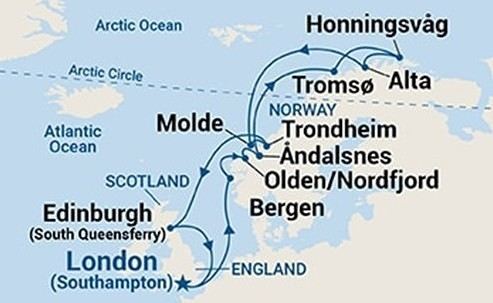
Southampton - Sea day - Bergen - Olden - Åndalsnes - Sea day - Tromsø - Honningsvåg (North Cape) - Alta - Sea day - Molde - Trondheim - Two sea days - Edinburgh - Sea day - Southampton
I’ve wanted to take this Norway cruise for a very long time. The first time I booked it was in July 2020 with Azamara. Unfortunately, it was canceled, as everyone remembers. When I tried to book it again, the prices (already a bit high with Azamara) had simply doubled. So, since then, I’ve been keeping an eye out every year for any opportunities...
The last time we sailed with Princess was eleven years ago, and things didn’t go very well. I came back pretty unhappy with their service and quite disappointed. Despite the $600 they gave me as credit for a future cruise, I’d never set foot on one of their ships again.
But this time, the opportunity arose—a fantastic itinerary with lots of stops, a reasonable price for 16 nights (I’ll share the details in the conclusion), and a ship that’s not too big, so to speak, with only 3,000 passengers. I’m not expecting much from the cruise line this time and am boarding the ship with low expectations beyond the itinerary.
Princess has introduced an app to download before the cruise. It’s essential because online check-in is no longer available, and the agency doesn’t send a travel journal. Everything is done through the app. After completing the check-in on the app, we only know that we’ll need to pick up our key, the Medallion, at embarkation by following the blue line in the terminal and presenting our passport.
Up until our departure, the weather forecast for the coming week in Norway is disastrous—rain, rain, and more rain. It was pretty much the same two years ago before our Iceland cruise, and in the end, the weather turned out fine.
If you’re ready to embark on the Emerald Princess to discover this beautiful cruise and the stunning landscapes of Norway, let’s go!
Southampton - Sea day - Bergen - Olden - Åndalsnes - Sea day - Tromsø - Honningsvåg (North Cape) - Alta - Sea day - Molde - Trondheim - Two sea days - Edinburgh - Sea day - Southampton
USA Road Trip 2023 - Part 1
In January 2023, we started our second road trip across the United States. We stayed from January to mid-March, which gave us plenty of time to visit several cities, attractions, and parks in multiple states.
This travel journal will be split into two parts due to the considerable number of places we visited.
This first journal covers the following states: Ohio, Indiana, Missouri, Oklahoma, Texas, New Mexico, Arizona, Nevada, and California, and takes you through the outbound leg of our road trip.
The second journal will showcase the attractions we visited on the return trip, which mainly follows the famous Highway 1 along the Pacific coast.
So, I invite you to keep reading this first journal, which serves as a long recap to help you discover the various attractions we explored throughout this road trip.
Videos are included throughout the recap. Please click on the image to start the video.
Here are the links to jump to a specific post:
OHIO:
WinterLand - Christmas Lights at Cleveland Public Square Lake View Cemetery - Cleveland - Part 1 Lake View Cemetery - Cleveland - Part 2 Stroll through Columbus Upper Falls to Lower Falls via Buckeye Trail - Hocking Hills State Park – Logan Cedar Falls & Whispering Falls Hiking Trail - Hocking Hills State Park – Logan Ash Cave Hiking Trail - Hocking Hills State Park – Logan Exploring Cincinnati
INDIANA:
Visiting Indianapolis
MISSOURI:
Exploring St. Louis
OKLAHOMA:
Catoosa Blue Whale Discovering Tulsa Exploring Oklahoma City
TEXAS:
Exploring Shamrock Discovering McLean Exploring Amarillo
NEW MEXICO:
Ancestral Sites Trail - Pecos National Historical Park Discovering Santa Fe The Santuario de Chimayó Stroll through Los Cerrillos Walk through the village of Madrid San Francisco de Asis Catholic Church & The Bottle House - Golden Albuquerque Murals 66 Diner - Albuquerque Stroll through Old Town (Albuquerque) Rinconada Canyon Trail - Petroglyph National Monument Mesa Point Trail - Boca Negra Canyon - Petroglyph National Monument Macaw Trail - Boca Negra Canyon - Petroglyph National Monument Cliff Base Trail - Boca Negra Canyon - Petroglyph National Monument Piedras Marcadas Canyon - Petroglyph National Monument Sandstone Bluffs & Ventana Natural Arch - El Malpais National Monument
ARIZONA:
Stewart's Petrified Wood Shop – Holbrook Stroll through Holbrook Discovering Joseph City Exploring Winslow Grand Falls (The "Chocolate Falls") – Leupp Island Trail - Walnut Canyon National Monument Rim Trail - Walnut Canyon National Monument Wukoki Pueblo Trail – Wupatki National Monument Wupatki Pueblo Trail – Wupatki National Monument Doney Mountain Trail – Wupatki National Monument Citadel & Nalakihu Pueblos Trail – Wupatki National Monument Lomaki & Box Canyon Pueblos Trail – Wupatki National Monument Discovering Flagstaff On the way to Sedona Slide Rock State Park – Sedona Midgley Bridge Trail – Wilson Canyon – Sedona Tlaquepaque Arts & Shopping Village Walking Tour - Sedona Chapel of the Holy Cross - Sedona Hiking at Cathedral Rock - Sedona Hiking the Bell Rock Trail - Sedona Hiking the Airport Loop Trail - Sedona Amitabha Stupa and Peace Park - Sedona Hiking the Boynton Canyon Vortex Trail - Sedona Hiking the Devil's Bridge Trail - Sedona Hiking the Birthing Cave Trail - Sedona Bell Rock Inn - Sedona On the roads of Sedona - Part 1 On the roads of Sedona - Part 2 Keyhole Sink Hiking Trail - Kaibab National Forest Discovering Williams Exploring Ash Fork Discovering Kingman Ramada by Wyndham Kingman Davis Camp Park - Bullhead City Discovering Yucca Lake Havasu Boardwalk Tour A duck catches a lobster – Lake Havasu Boardwalk
CALIFORNIA:
Exploring Needles Discovering Goffs Discovering Amboy Visiting the famous Bagdad Cafe - Newberry Springs Exploring Barstow Vehicles from Hell (Mad Max Cars) - Barstow Peggy Sue's 50's Diner - Yermo Liberty Sculpture Park - Yermo Lake Dolores Water Park - Newberry Springs ZZYZX Road - Mojave National Preserve Alien Fresh Jerky - Baker Kelso Dunes Trail - Mojave National Preserve Hole-in-the-Wall Rings Trail - Mojave National Preserve Visiting Mitchell Caverns - Mojave National Preserve Dante's View - Death Valley National Park Zabriskie Point - Death Valley National Park Golden Canyon - Death Valley National Park Artists Drive & Artists Palette - Death Valley National Park Devil's Golf Course - Death Valley National Park Natural Bridge Trail - Death Valley National Park Badwater Basin - Death Valley National Park Harmony Borax Works - Death Valley National Park Devil's Cornfield - Death Valley National Park Mesquite Flat Sand Dunes - Death Valley National Park Mosaic Canyon Trail - Death Valley National Park On the road - Death Valley National Park
NEVADA:
Cleveland Clinic Lou Ruvo Center for Brain Health - Las Vegas Exploring Downtown Las Vegas SlotZilla Zipline - Fremont Street Experience – Downtown Las Vegas Viva Vision Light Show 1 - Fremont Street Experience - Downtown Las Vegas Viva Vision Light Show 2 - Fremont Street Experience - Downtown Las Vegas Viva Vision Light Show 3 - Fremont Street Experience - Downtown Las Vegas Viva Vision Light Show 4 - Fremont Street Experience - Downtown Las Vegas Free Live Music – Fremont Street Experience - Downtown Las Vegas Chucky – Fremont Street Experience - Downtown Las Vegas Las Vegas Strip - Part 1 Las Vegas Strip - Part 2 Las Vegas Strip - Part 3 Las Vegas Strip - Part 4 Las Vegas Strip - Part 5 Tom Devlin's Monster Museum - Boulder City Hoover Dam Lake Mead - Lakeview Overlook - Boulder City Nelson Ghost Town - Searchlight
CALIFORNIA:
Scenic Route through Joshua Tree National Park via the North Entrance Hidden Valley Trail - Joshua Tree National Park Barker Dam Trail - Joshua Tree National Park Cap Rock Trail - Joshua Tree National Park Keys View Trail - Joshua Tree National Park Hall of Horrors Trail - Joshua Tree National Park Skull Rock Trail - Joshua Tree National Park Arch Rock Trail - Joshua Tree National Park Cholla Cactus Garden Trail - Joshua Tree National Park Lone Pine - Owens Valley Miss Alabama & Shark Fin - Alabama Hills - Owens Valley Lone Ranger Canyon - Alabama Hills - Owens Valley Mobius Arch Loop Trail (Heart Arch & Lathe Arch) - Alabama Hills - Owens Valley Eye of the Alabama Hills Arch - Alabama Hills - Owens Valley Boot & Cyclops Arches - Alabama Hills - Owens Valley One Mile Arch, Bowling Ball and Pins & Gunga Din Area - Alabama Hills - Owens Valley Whitney Portal Arch Trailhead - Alabama Hills - Owens Valley Fish Rocks & Trona Pinnacles - Mojave Desert Red Cliffs Trail - Red Rock Canyon State Park Hagen Canyon Nature Trail - Red Rock Canyon State Park Tour of Historic Downtown Tehachapi View of the Tehachapi Loop – Monolith César E. Chávez National Monument – Keene Discovering Bakersfield Kern County Museum – Bakersfield Bravo Farms, Tree House & Petting Zoo - Traver Walking Tour of Kingsburg Exploring Fresno Simonian Farms & Soul Consoling Japanese Internment Tower - Fresno Duncan Ceramic Products (iLoveToCreate) - Fresno Walking Tour of Modesto Wat Dhammararam Buddhist Temple - Stockton Walking Tour of Stockton Discovering Stockton University of the Pacific - Stockton Visiting Lodi Sutter's Fort State Historic Park - Sacramento California State Capitol - Sacramento Walking Tour - Sacramento Walking Tour - Winters Walking Tour - Napa The Chandelier Tree In Drive-Thru Tree Park - Leggett One Log House - Garberville Grandfather Tree - Piercy The Living Chimney Tree - Avenue of the Giants Stephens Grove Loop Trail - Avenue of the Giants Gould Grove Nature Loop Trail - Avenue of the Giants Fleishmann Grove Trail - Avenue of the Giants Mahan Plaque Trail - Avenue of the Giants Founders Grove Nature Loop Trail - Avenue of the Giants Eternal Tree House & Immortal Tree - Avenue of the Giants Drury-Chaney Loop Trail - Avenue of the Giants Walking Tour - Redcrest
COMING UP NEXT:
USA Road Trip 2023 - Part 2
This travel journal will be split into two parts due to the considerable number of places we visited.
This first journal covers the following states: Ohio, Indiana, Missouri, Oklahoma, Texas, New Mexico, Arizona, Nevada, and California, and takes you through the outbound leg of our road trip.
The second journal will showcase the attractions we visited on the return trip, which mainly follows the famous Highway 1 along the Pacific coast.
So, I invite you to keep reading this first journal, which serves as a long recap to help you discover the various attractions we explored throughout this road trip.
Videos are included throughout the recap. Please click on the image to start the video.
Here are the links to jump to a specific post:
OHIO:
WinterLand - Christmas Lights at Cleveland Public Square Lake View Cemetery - Cleveland - Part 1 Lake View Cemetery - Cleveland - Part 2 Stroll through Columbus Upper Falls to Lower Falls via Buckeye Trail - Hocking Hills State Park – Logan Cedar Falls & Whispering Falls Hiking Trail - Hocking Hills State Park – Logan Ash Cave Hiking Trail - Hocking Hills State Park – Logan Exploring Cincinnati
INDIANA:
Visiting Indianapolis
MISSOURI:
Exploring St. Louis
OKLAHOMA:
Catoosa Blue Whale Discovering Tulsa Exploring Oklahoma City
TEXAS:
Exploring Shamrock Discovering McLean Exploring Amarillo
NEW MEXICO:
Ancestral Sites Trail - Pecos National Historical Park Discovering Santa Fe The Santuario de Chimayó Stroll through Los Cerrillos Walk through the village of Madrid San Francisco de Asis Catholic Church & The Bottle House - Golden Albuquerque Murals 66 Diner - Albuquerque Stroll through Old Town (Albuquerque) Rinconada Canyon Trail - Petroglyph National Monument Mesa Point Trail - Boca Negra Canyon - Petroglyph National Monument Macaw Trail - Boca Negra Canyon - Petroglyph National Monument Cliff Base Trail - Boca Negra Canyon - Petroglyph National Monument Piedras Marcadas Canyon - Petroglyph National Monument Sandstone Bluffs & Ventana Natural Arch - El Malpais National Monument
ARIZONA:
Stewart's Petrified Wood Shop – Holbrook Stroll through Holbrook Discovering Joseph City Exploring Winslow Grand Falls (The "Chocolate Falls") – Leupp Island Trail - Walnut Canyon National Monument Rim Trail - Walnut Canyon National Monument Wukoki Pueblo Trail – Wupatki National Monument Wupatki Pueblo Trail – Wupatki National Monument Doney Mountain Trail – Wupatki National Monument Citadel & Nalakihu Pueblos Trail – Wupatki National Monument Lomaki & Box Canyon Pueblos Trail – Wupatki National Monument Discovering Flagstaff On the way to Sedona Slide Rock State Park – Sedona Midgley Bridge Trail – Wilson Canyon – Sedona Tlaquepaque Arts & Shopping Village Walking Tour - Sedona Chapel of the Holy Cross - Sedona Hiking at Cathedral Rock - Sedona Hiking the Bell Rock Trail - Sedona Hiking the Airport Loop Trail - Sedona Amitabha Stupa and Peace Park - Sedona Hiking the Boynton Canyon Vortex Trail - Sedona Hiking the Devil's Bridge Trail - Sedona Hiking the Birthing Cave Trail - Sedona Bell Rock Inn - Sedona On the roads of Sedona - Part 1 On the roads of Sedona - Part 2 Keyhole Sink Hiking Trail - Kaibab National Forest Discovering Williams Exploring Ash Fork Discovering Kingman Ramada by Wyndham Kingman Davis Camp Park - Bullhead City Discovering Yucca Lake Havasu Boardwalk Tour A duck catches a lobster – Lake Havasu Boardwalk
CALIFORNIA:
Exploring Needles Discovering Goffs Discovering Amboy Visiting the famous Bagdad Cafe - Newberry Springs Exploring Barstow Vehicles from Hell (Mad Max Cars) - Barstow Peggy Sue's 50's Diner - Yermo Liberty Sculpture Park - Yermo Lake Dolores Water Park - Newberry Springs ZZYZX Road - Mojave National Preserve Alien Fresh Jerky - Baker Kelso Dunes Trail - Mojave National Preserve Hole-in-the-Wall Rings Trail - Mojave National Preserve Visiting Mitchell Caverns - Mojave National Preserve Dante's View - Death Valley National Park Zabriskie Point - Death Valley National Park Golden Canyon - Death Valley National Park Artists Drive & Artists Palette - Death Valley National Park Devil's Golf Course - Death Valley National Park Natural Bridge Trail - Death Valley National Park Badwater Basin - Death Valley National Park Harmony Borax Works - Death Valley National Park Devil's Cornfield - Death Valley National Park Mesquite Flat Sand Dunes - Death Valley National Park Mosaic Canyon Trail - Death Valley National Park On the road - Death Valley National Park
NEVADA:
Cleveland Clinic Lou Ruvo Center for Brain Health - Las Vegas Exploring Downtown Las Vegas SlotZilla Zipline - Fremont Street Experience – Downtown Las Vegas Viva Vision Light Show 1 - Fremont Street Experience - Downtown Las Vegas Viva Vision Light Show 2 - Fremont Street Experience - Downtown Las Vegas Viva Vision Light Show 3 - Fremont Street Experience - Downtown Las Vegas Viva Vision Light Show 4 - Fremont Street Experience - Downtown Las Vegas Free Live Music – Fremont Street Experience - Downtown Las Vegas Chucky – Fremont Street Experience - Downtown Las Vegas Las Vegas Strip - Part 1 Las Vegas Strip - Part 2 Las Vegas Strip - Part 3 Las Vegas Strip - Part 4 Las Vegas Strip - Part 5 Tom Devlin's Monster Museum - Boulder City Hoover Dam Lake Mead - Lakeview Overlook - Boulder City Nelson Ghost Town - Searchlight
CALIFORNIA:
Scenic Route through Joshua Tree National Park via the North Entrance Hidden Valley Trail - Joshua Tree National Park Barker Dam Trail - Joshua Tree National Park Cap Rock Trail - Joshua Tree National Park Keys View Trail - Joshua Tree National Park Hall of Horrors Trail - Joshua Tree National Park Skull Rock Trail - Joshua Tree National Park Arch Rock Trail - Joshua Tree National Park Cholla Cactus Garden Trail - Joshua Tree National Park Lone Pine - Owens Valley Miss Alabama & Shark Fin - Alabama Hills - Owens Valley Lone Ranger Canyon - Alabama Hills - Owens Valley Mobius Arch Loop Trail (Heart Arch & Lathe Arch) - Alabama Hills - Owens Valley Eye of the Alabama Hills Arch - Alabama Hills - Owens Valley Boot & Cyclops Arches - Alabama Hills - Owens Valley One Mile Arch, Bowling Ball and Pins & Gunga Din Area - Alabama Hills - Owens Valley Whitney Portal Arch Trailhead - Alabama Hills - Owens Valley Fish Rocks & Trona Pinnacles - Mojave Desert Red Cliffs Trail - Red Rock Canyon State Park Hagen Canyon Nature Trail - Red Rock Canyon State Park Tour of Historic Downtown Tehachapi View of the Tehachapi Loop – Monolith César E. Chávez National Monument – Keene Discovering Bakersfield Kern County Museum – Bakersfield Bravo Farms, Tree House & Petting Zoo - Traver Walking Tour of Kingsburg Exploring Fresno Simonian Farms & Soul Consoling Japanese Internment Tower - Fresno Duncan Ceramic Products (iLoveToCreate) - Fresno Walking Tour of Modesto Wat Dhammararam Buddhist Temple - Stockton Walking Tour of Stockton Discovering Stockton University of the Pacific - Stockton Visiting Lodi Sutter's Fort State Historic Park - Sacramento California State Capitol - Sacramento Walking Tour - Sacramento Walking Tour - Winters Walking Tour - Napa The Chandelier Tree In Drive-Thru Tree Park - Leggett One Log House - Garberville Grandfather Tree - Piercy The Living Chimney Tree - Avenue of the Giants Stephens Grove Loop Trail - Avenue of the Giants Gould Grove Nature Loop Trail - Avenue of the Giants Fleishmann Grove Trail - Avenue of the Giants Mahan Plaque Trail - Avenue of the Giants Founders Grove Nature Loop Trail - Avenue of the Giants Eternal Tree House & Immortal Tree - Avenue of the Giants Drury-Chaney Loop Trail - Avenue of the Giants Walking Tour - Redcrest
COMING UP NEXT:
USA Road Trip 2023 - Part 2
Madagascar - June 2025
Five years of an unintended break... The closure of VF, COVID... What a joy to rediscover the pleasure of sharing!
I’ve stayed true to my habits: the following account is a collection of practical tips rather than a travel journal...
Madagascar is as big as France and Belgium combined. In three weeks, choices have to be made! It was the Great Tsingy that inspired our trip. We decided to focus on the southwest and the RN7. We skipped the Deep South and the North. Oh well...
OUR ITINERARY IN 3 WEEKS:
Fri 6 June – Direct AF flight to Tana – Flight arrives at 10:30 PM – Tana Sat – Antsirabe Sun – Miandrivazo Mon – Drive to the Masiakampy pier – Descent of the Tsiribihina River by pirogue - Bivouac Tue – Descent of the Tsiribihina River by pirogue - Bivouac Wed – Descent of the Tsiribihina River by pirogue – Bekopaka Thu – Pirogue on the Manambolo River and Small Tsingy of Bemaraha – Bekopaka Fri – Great Tsingy of Bemaraha – Bekopaka Sat – Avenue of the Baobabs – Morondava Sun – Belo sur Mer Mon – Free day – Belo sur Mer Tue – Manja Wed – Andavadoaka Thu – Free day – Andavadoaka Fri – Salary Lagoon – Mangily Sat – Ranohira Sun – Isalo National Park - Ranohira Mon – Anja Reserve - Ambalavao - Fianarantsoa Tue – FCE train canceled – Visit to a Tanala village - Manakara Wed – Pirogue on the Pangalanes Canal – Ranomafana Thu – Ranomafana NP – Ranomafana Fri – Ambositra – Antsirabe Sat 28 June – AF flight to Paris – Flight departs at 11:55 PM
TRIP ORGANIZATION: I prepared my trip using the usual guides (LP and Rough Guide), the internet, and the Freytag & Berndt map (1:1,000,000). I’m old-school—I still love visualizing my route on a paper map, even though in Madagascar, it’s misleading because some National Roads are only national in name!...
The agency: Since we couldn’t deal directly with a driver-guide (we lacked reliable info to take the plunge), we went through an agency to organize the logistics of our trip. We didn’t feel like using bush taxis (not enough time) or driving a 4x4 ourselves (neither the skills nor the boldness). The French agency connected us with a local agency, to whom I sent my detailed itinerary by email. A few exchanges via email and WhatsApp calls allowed us to finalize everything quickly after some adjustments. As you’ve gathered... we multiplied the commissions, which inflated the budget. That said, in the end, we were thrilled with our decision and our choice. Our trip was booked by the end of 2024, and reservations were made immediately. No bad surprises: the bookings in the planned hotels were honored, often with one of the best rooms. On our last day in Tana, before departure, we were lucky enough to meet the director I’d been communicating with, who helped build and validate our circuit. A very warm debriefing.
The driver-guide: The agency assigned us Faly, 33, a driver-guide for over 10 years. He stayed with us from start to finish: he picked us up at the airport on arrival and dropped us off 23 days later. A very experienced driver (which is important here), an open and cultured guide, reliable, punctual, and a great companion. And a provider of good advice throughout the trip. We made the most of the long stretches on dirt roads or highways to listen to him talk about daily life, rituals, wildlife, and flora... No time wasted! With a great playlist in the background, we combined business with pleasure! Faly’s accommodation and meals were included (quite often, hotels offer free lodging and meals to driver-guides who bring clients), as was the fuel. That didn’t stop us from inviting Faly to share a beer or our evening meal sometimes. He didn’t always accept, wanting to let us "enjoy our romantic evenings," as he put it. Present without being intrusive! Faly is fully capable of organizing a tailor-made trip directly. I recommend him without any hesitation—we were delighted with his service. I’ll gladly share his contact details via PM to anyone who asks.
Local guides: It’s the national guide’s prerogative to choose the local guides (mandatory in the parks). Thanks to his experience, Faly always booked us amazing, competent, and interesting local guides.
Hotels: I told the agency I wanted charming, comfortable accommodations, without falling into flashy luxury. We loved all the hotels (except the Hôtel Kanto in Manja). The rooms, mostly bungalows, were always spacious and clean. Unfortunately, I can’t give the prices—I didn’t get the details. Breakfast is always included, usually fresh and hearty. Very often, a small bottle of water is provided in the room.
Tana Hôtel Les 3 Métis Power cuts are common (!) in Tana. Bring a headlamp.
Antsirabe Ecolodge – Les chambres du voyageur Maybe our favorite! A few bungalows, beautifully arranged in a splendid tropical garden. The dog Kodak welcomes us warmly.
Miandrivazo Hôtel Princesse Tsiribihina Magnificent view of the valley.
Bekopaka Hôtel Orchidée du Bemaraha 2 (yes, 2) beautiful pools, a large open common room.
Morondava Hôtel Baobab Café Brand new or at least, according to Faly, just renovated. Very comfortable but without much charm (international style).
Belo sur Mer Ecolodge du Menabe The bungalows, all made of wood, bamboo, and thatch, are set on the beach. Very spacious and fully equipped! Large open-air restaurant by the sea. No hot water from the tap—it’s available in plastic bottles heated by the sun in front of each bungalow. Actually, we never used it... Another very, very beautiful spot.
Manja Hôtel Kanto The only hotel on this leg of the journey, so no choice. The owner knows it and, as a result, doesn’t bother. It’s a real dive! Tiny, dark room, a sordid bathroom with only a trickle of water—we skipped the shower! Clean sheets, though. Obviously, no Wi-Fi. The only place where I didn’t leave a tip. We were well warned about the discomfort of this stop, both by the agency and Faly. We weren’t surprised, and it even became a running joke during the trip. On the other hand, we found a nice little market in town.
Andavadoaka Manga Lodge What bliss! Especially after the horrible Hôtel Kanto. A paradise-like spot, overlooking three beautiful deserted white-sand beaches. Meals are served on the terrace facing the sea. Stunning sunset. We loved spending a day lounging here! We were the only guests and were pampered.
Mangily (Ifaty) Mangily is the "suburb" of Ifaty. Hôtel Vovo Telo A large beachfront bungalow complex. More touristy but pleasant—we spent a lovely evening there with our feet in the sand.
Ranohira Le Relais de la Reine A splendid resort built by a Frenchman, at the foot of the rocks, very well integrated into the environment. Beautiful marked trail starting from the garden.
Fianarantsoa Villa Sylvestre Contrary to what its name suggests, it’s a hotel right in the city center. Quite decent, though.
Manakara Parthenay Club Pretty bungalows in a large garden by the sea, but swimming isn’t safe—the water is too dangerous and rough.
Ranomafana Hôtel Thermal Very spacious rooms.
Meals: Not all our meals were included. It’s really not expensive. 1 meat or fish dish: around 35,000 Ar 1 full menu (starter, main, dessert): around 70,000 Ar 1 large THB beer (65 cl): between 8,000 and 12,000 Ar 1 piña colada: 15,000 Ar 1 flavored rum: 6,000 Ar (sometimes free) 1 glass of baobab juice (!): 5,000 Ar
We always ate very well. Rice is everywhere, served in large quantities. Zebu meat is quite good if not overcooked. Personally, I prefer fish, and I feasted: grouper, captain, crab, small lobsters...
We happily discovered baobab juice (especially in Belo, on the west coast). And of course, flavored rums!
We bought 2 packs of 6 bottles of mineral water at Carrefour (!) (about 5,000 Ar per large bottle) at the start of our trip. That was enough, especially since we often got water in the bungalows.
We had a few picnics included in our trip. Instead of picking up the hotel’s lunchbox, Faly prepared delicious, fresh, and varied picnics for us: tuna pasta salad, fried rice with eggs, grilled vegetables, and avocado...
An exceptional address not to miss: Mad Zébu – Belo sur Tsiribihina A highly reputed restaurant, a favorite of LP and Rough Guide, and rightly so! Gourmet cuisine, refined and elegant. Barely more expensive than elsewhere, and it’s worth it. We stopped there on our way up to Bekopaka and the Tsingy NP. Fully booked! So Faly reserved for our return, three days later. We’re still thanking him! What a treat!
THE BUDGET: Ariary exchange rate: 5,000 Ar = 1 €
Pre-trip expenses: Direct Air France flights: 930 € per person round trip Cost of the circuit with the agency: 2,880 € per person
The visa: Issued on arrival, very quickly. 35 € per person for a stay under 30 days. Super simple. Super fast.
On-site expenses: As soon as we arrived at the airport (it was nearly midnight), Faly advised us to exchange our euros for all our needs. There are few opportunities on our route to find an ATM or an open bank with a good rate. To be more comfortable, he took us to a small office under military protection just outside the airport. I exchanged 1,200 € (I had asked the agency for advice on the amount to bring) at a rate of 4,750 Ar and became a millionaire. Faly recounted all the stacks. That covered all our expenses (meals, drinks, tips) without ever feeling deprived. Personal purchases were made at the end of the trip. Convenient—it served as an adjustment variable. We spent our last million (200 €) on marquetry and vanilla. Tip: We asked for 200,000 Ar in 5,000 Ar bills for tips. That wasn’t too much—I even ran short of small bills in the last two days.
Tips: Madagascar is a poor country where every service deserves a small reward. While not mandatory, it’s customary. But no one ever demanded or expected it openly. On the contrary, I sometimes had to remind a porter to give them my small bill. We never carried our luggage—porters were always present when the car arrived or waiting at our door to watch for our departure. I gave each of them 5,000 Ar. In restaurants, I rounded up to the nearest ten and left the change. Local guides also expect a tip: I gave around 20,000 Ar per day for the two of us. Finally, the national guide also expects a gratuity. I had read online to budget 5 € per day per person. I added more since we were so happy with his services. The tip was given at the end of the trip, in euros, outside the budget.
Total budget all included (excluding personal purchases): 8,690 € Clearly, Madagascar is a country where life isn’t expensive, but travel costs add up quickly due to the need to rent a 4x4 with a driver.
HIGHLIGHTS:
· The dirt roads Yes, I’m listing them among the highlights! We loved those long hours spent driving at 20 km/h on rocky, muddy, white, red, or gray sand tracks... surrounded by tropical vegetation, palm trees, pandanus, mango trees... The experiences were sometimes thrilling: crossing a river on a ferry (just planks of wood fixed on two motorized pirogues side by side) or crossing a river without a ferry, with just a kid running ahead of the 4x4 to show the way; soft sand where the 4x4 easily gets stuck... The tracks are quite narrow, and crossing paths with a bush taxi, a zebu cart, or a herd of goats is always epic. So many beautiful images, so many beautiful photos! Much more beautiful than on asphalt. So yes, we loved those long stretches on dirt roads. For us, it was clearly part of the journey. Faly was particularly careful, and the 4x4 was comfortable. No injuries, no fatigue, even after 7 or 8 hours on rough tracks. The national roads (including the famous RN7) are badly damaged by cyclones, huge trucks, and lack of maintenance. Potholes have turned into ostrich nests, and we didn’t drive much faster than on the dirt roads.
· The landscapes, villages, encounters... We crossed a variety of stunning landscapes: mountains with slopes covered in terraced crops, rice fields from apple green to emerald green, sugarcane fields, then tropical forests, baobab forests (they deserve a special paragraph below), traveler’s tree forests. And then coastlines with white sand dunes against a backdrop of blue hues!... Magical! We also passed through many villages with houses whose architecture varied by region. The Betsileo houses display beautiful decorative brick reliefs. On the west coast, the houses are more precarious, made of bamboo with palm-thatched roofs. In the Highlands region, we found solid houses with pastel plaster. Each region has its own landscape, crops, habitat, and clothing. Zebu carts are often the only means of transport in remote villages. We saw them very frequently. Again, the cart’s decoration depends on the region. And then, we met many villagers coming out of the bush and walking to the next market, carrying their crops on their heads or shoulders. More beautiful photos!
· The descent of the Tsiribihina River We boarded around 9 AM in a long pirogue with Gana, the local guide, and two pirogue men. So, five of us. The pirogue is long but narrow, about 65 cm wide. We sat one behind the other at the front on seats padded with what would become our mattresses during the bivouacs. We only took the bare essentials for two nights. A little goodbye to Faly, whom we’d see again in three days! Don’t forget us! The river is silty—meaning orange, opaque but clean. We glided along silently. Gana showed us the trees, birds, crocodiles (we saw five—apparently, we were lucky). The pirogue men rowed to get us as close as possible to these crocs sunbathing on the roots of big trees. Yeah, right!... as soon as we got too close, *splash*, they disappeared into the water. We marveled at the mini rice fields lining the river. Every tiny plot, no matter how small, is cultivated. Above them, banana fields. And on the water, a whole life of fishermen and villagers living with and from the river. Gana warned us we’d eat on the pirogue because the journey was long. So, I expected chips... But no—fried rice and zebu steak, cooked right in the pirogue!! Incredible! In the middle of the afternoon, we reached a small beach where we disembarked. Gana led us about a hundred meters to a sublime waterfall. We were alone there. We had time to swim. We’d brought our swimsuits and a towel (bought at the Carrefour in Antsirabe on Faly’s wise advice!). This swim in this paradise-like spot remains one of our best memories. We found our pirogue again and set off until our first bivouac. We’d sailed for 7 hours today. The tents were set up on a wide beach, without a single tree. A moment of solitude... Uh, where can we go to the bathroom?... Especially since it was a full moon, so we felt like we were in the spotlight. Anyway... we did as everyone else—walked away, dug a hole, and the others turned their backs. A hearty meal on the beach before a comfortable and silent night. The next day, same program, with slightly different landscapes. The gorges widened, the trees were different. But still many colorful birds. Again, we ate on the pirogue: grilled chicken and vegetables. 9 hours of sailing. A similar bivouac. This time, we got it. On the third day, we finished the descent with 5 hours of sailing. So, 7 hours, 9 hours, 5 hours... doing nothing. It might sound boring... but it wasn’t. Like the dirt roads, these were contemplative moments. It glides, it’s calm, relaxing, and there’s a lot of life on this river, animal and human. Contemplation. Suspended time. On arrival, we disembarked at a sort of joyful, bustling river port. Of course, Faly was already there to pick us up.
· The Tsingy de Bemaraha NP (Small and Great) I have vertigo. During my research, several agencies advised me against visiting the Great Tsingy. "Stick to the Small ones," they said. Grrr, no, not what I wanted—we’ve dreamed of this for years! The agency we chose also warned me but didn’t discourage me. So we started with the Small Tsingy, quite close to Bekopaka, guided by Alisha. This forest of sharp limestone rocks is impressive. No vertigo issues here. The day was completed with a short pirogue ride on the Manambolo River and a visit to two caves with pretty formations. The next day, Faly and Alisha drove us to the Great Tsingy (a good hour on a terrible track). Arriving at the park entrance, Alisha equipped us with harnesses, carabiners, and gave us some safety instructions. Faly was also equipped. Wait? He’s coming with us? I quickly understood he was there for me—if I got stuck, he could go back with me, and Philippe could continue with Alisha. A wise precaution that delighted and reassured me. In the end, it was unnecessary since the famous bridge crossing was fully secured by the harness and carabiners. 18 meters on planks, one by one, it didn’t sway too much—I walked looking straight ahead, not a glance down. I even managed to smile in the middle of the crossing—I have a photo to prove it! I was overjoyed! The circuit in the Great Tsingy is a loop, so we didn’t have to cross the bridge again. We climbed to viewpoints offering breathtaking panoramic views. It’s extraordinary, unique, incredible. All this to say that if you have vertigo, don’t hesitate! It’s doable! It’s completely safe and really worth pushing your limits a bit! For those who’ve done treetop adventure courses, it’s similar. Also, no need to be a great athlete—just a bit of agility to climb a few ladders and high steps. Don’t censor yourself! I even had a small regret—the loop was a bit short (about 2 hours). I would’ve liked to continue or even redo it, with less apprehension. Tip: Do the Small Tsingy before the Great ones, or not at all. And if you can only do one, do the Great ones without hesitation.
· Canoeing in the Belo mangrove The Belo sur Mer ecolodge lends small individual canoes for free to go to the mangrove. We left at high tide, paddled for about twenty minutes to reach a fairly sparse forest where we could easily venture in. Very shallow water, crystal clear—we could see the roots of all these trees, schools of tiny fish... It was quite surprising. Until then, I only knew impenetrable, tangled mangroves. Here, nothing like that—we walked through an aquatic forest. We loved this adventure so much we left a bit late. The tide had gone out, and we had to carry our canoes for the last few meters... Of course, the staff came to help (probably laughing silently!). The lodge owners gave all the necessary explanations and lent a waterproof bag for the phone (because yes, it’s worth taking photos!). A very useful precaution—the canoes are small, low in the water, and paddling quickly soaks you. Again, this isn’t just for Tony Estanguet! It didn’t cause us any problems, not even sore muscles the next day. A great experience. It’ll take about 2 hours.
· Isalo NP Big surprise when we saw this huge rocky massif appear on the RN7! A massif of colored sandstone, carved with crevasses giving it a ruined look. Le Relais de la Reine is a little gem cleverly nestled in the heart of these rocks. A small marked trail starts from the garden. We picked up the description at reception and set off. Without a guide, alone following the markers, it took us 2 hours to complete this magnificent little trail, giving us a first glimpse of the massif before the hike the next day. And we enjoyed being completely alone for this walk. It’s free, easy, and well-signposted. Don’t miss it. In the evening, Faly took us to the so-called Isalo Window site—a hole in a wall through which we could see the sunset. We met all the tourists in the area here. We weren’t blown away by the show... The next day, we left early to reach the start of the hike. We met Zozoly at the guides’ office in the small town of Ranohira. During this hike, we climbed through the rocks to a viewpoint offering stunning 360° views of the massif. Then we reached a site called the "natural pool," breathtakingly beautiful, especially since we were alone again. A sort of oasis, a cascading waterfall, palm trees and tree ferns, fine sand, all nestled at the bottom of a small canyon. Paradise-like. We resisted swimming, but it was really tempting. A long walk on the plateaus then led us to a well-equipped picnic site where a local team prepared grills. Concrete tables were tiered in a spacious, shady clearing where a whole family of ring-tailed lemurs frolicked. They knew the tourists’ habits and tried to snatch food. Playful and not very shy, they amused us with their antics! We had to resist not luring them with a piece of banana!! Thousands of photos!! After the meal, we set off again with Zozoly for another landscape. This time, we were by a small river at the bottom of a canyon with high walls covered in vegetation. The trail was narrow and slippery, on a ledge of the wall. We progressed carefully. No danger, though. We first reached the Blue Pool, which only turns blue in photos (surprise!), then the Black Pool fed by a shower of waterfalls. Two magnificent spots that showed us a completely different aspect of the massif.
· Anja Reserve This ficus forest is home to many groups of lemurs. Used to humans, whom they don’t fear, they move around us, ignoring us completely. It’s almost annoying... The best place on our trip to see lemurs.
· The FCE train To the great regret of Manakara’s inhabitants, the FCE train hasn’t reached here for over a year and a half. As a result, there are far fewer tourists—the train was part of the experience. We drove there and didn’t regret coming to this port on the east coast.
· Visit to a Tanala village This visit wasn’t part of our program—it was added by the agency to compensate for the train not running. Which was the case. Not big fans of this kind of visit, where we feel like we’re at a zoo, voyeuristic, lacking authenticity, we followed the local guide with some skepticism and exchanged dubious looks. And yet... the guide’s explanations about village life and the warm, smiling welcome from the villagers charmed us and dispelled all our concerns. We learned a lot, met smiling families, and were able to enter these beautiful bamboo houses. A very pleasant surprise, rich in lessons.
· The Pangalanes Canal Arriving in Manakara, we crossed a bridge overlooking the Pangalanes Canal. A cry of surprise: the water is turquoise! We took a short pirogue ride with a team of three pirogue men and Joël, a local guide who explained the drama caused by the train’s halt. We stopped in a fishing village where Joël bought fish for the barbecue. We ended up on a beach where the team prepared the meal while we went to watch the fishermen return on the nearby beach. We admired the fishermen’s dexterity in untangling their nets, sorting their fish, cleaning their gear. On our return, we found a small table set up on the beach, in the shade of palm trees and casuarinas. Lobsters, captain fish, grilled vegetables, sautéed potatoes. A real feast (included in the trip cost).
· Ranomafana NP A 4-5 hour hike (some climbing) in a dense secondary forest to look for lemurs. As usual, we were accompanied by a local guide who, while waiting to find our furry friends, gave us lots of info on the vegetation, birds, and Tanala ethnic rituals. In the forest, we met 4 or 5 trackers, armed with radios to alert guides of their findings. In the end, we saw several lemurs of different types. Quite far, quite high... A nice complement to our lemur encounters in Isalo. Here, it rains 200 days a year. We started the hike in thick fog, but the forest’s density protected us from the humidity. Be careful—it can be a bit frustrating to see the lemurs so far away, so high. Nothing like the Anja Reserve or Isalo NP. Here, what’s fun is the hunt.
· The baobabs We were captivated by these kings of the forest, noble, imposing, majestic. We spotted them from very far away, towering over the rest of the vegetation. Alone, in small groups, or in forests, our trip allowed us to see hundreds of them! Mainly on the west coast. All different—bald, hairy, shaggy, short and stout, tall and thin, like Laurel and Hardy. Philippe took to naming them. Respectfully!
OUR FAVORITES: · The variety of landscapes. · The Tsingy NP.
OUR DISAPPOINTMENTS: · The Avenue of the Baobabs, very overrated and the only place where we saw crowds. We saw many other "forests" of baobabs that were much more impressive. · It’s hard to approach the population calmly as swarms of children run up as soon as we arrive, asking for sweets. Without any aggression, their smiles and laughter quickly made us forget this small inconvenience. We never gave out candy, clothes, or money. We left pens at a school and clothes with Faly.
IF WE WERE TO DO IT AGAIN: · Same period, same duration, same pace, same itinerary, but if we were to do it again today, I’d go through Faly directly! · Maybe we should’ve stayed in Ambalavao instead of Fianarantsoa. · Plan a longer loop in the Great Tsingy—it felt a bit too short.
MISCELLANEOUS: The welcome: ‘Samala Vazaha,’ there are many, many kids, sometimes overwhelming, never aggressive. We were impressed by the villagers’ smiles and good humor, towards us or even among themselves—laughter was everywhere. Safety: No problems. Out of (excessive?) caution, we spread all our money across several bags that we padlocked whenever we left the hotel. Bribes: We were stopped several times on the road by police or gendarmes. They checked our papers, sometimes our passports. Faly was perfectly in order. No discussion, no bribes, a cordial greeting from the officers. However, several times we found ourselves at small "tolls" on the tracks for villagers who had leveled the road or filled a hole, or for the young guy who ran through the river to show the way... Faly complied without discussion: every service deserves a small bill. Language: French is still widely spoken. Credit card: Unused. Cash: You need it! The climate at this time: Ideal—blue skies, sunshine, and mild temperatures (20-25°C) throughout our trip. Temperatures started to drop by our departure—winter was setting in. Clothing: T-shirt or polo and a vest sometimes in the evening, sandals on our feet, hiking shoes for all the hikes. Tip: We left a bag in the car (completely safe) with things we didn’t need daily and dirty laundry. The two bags to take out at each stop were much lighter. Before leaving, we left several polos and T-shirts with Faly, which, once washed, will make a few people happy. Tourist crowds at this time: Low—we were sometimes the only guests at the hotel. Faly explained that at the Isalo picnic site, in high season, you have to queue for a table, whereas we had our pick. Photos: Lots! Too many! That’s the problem with digital—we take so many! Health issues: Nothing serious, just the usual mild traveler’s diarrhea. Mosquitoes: They’re voracious. We took anti-malaria treatment. I’m still not sure if it was the right thing to do... I’m always very skeptical about such precautions. Internet: Free Wi-Fi at the lodges’ reception (except at Hôtel Kanto!), sometimes (rarely) in the bungalows. Phone: We didn’t try to get a local SIM card—the evening Wi-Fi was enough for us to make calls and send messages via WhatsApp. Make sure to turn off mobile data and switch to airplane mode (I activated it a bit late—received calls, spam ones at that, were charged...). Electricity: French plugs. Personal purchases: Beautiful wooden objects (sculptures and marquetry) or zebu horn items in Ambositra. 1 kg of vanilla (400,000 Ar – 80 € per kg) in Tana.
IN CONCLUSION: A trip of contemplation. A pause for admiration, as our local guide in Isalo NP said. Nothing else to do but walk, look, and enjoy. Here, there are no old stones, no museums—it’s a trip where nature reigns supreme. And what nature!
I’ve stayed true to my habits: the following account is a collection of practical tips rather than a travel journal...
Madagascar is as big as France and Belgium combined. In three weeks, choices have to be made! It was the Great Tsingy that inspired our trip. We decided to focus on the southwest and the RN7. We skipped the Deep South and the North. Oh well...
OUR ITINERARY IN 3 WEEKS:
Fri 6 June – Direct AF flight to Tana – Flight arrives at 10:30 PM – Tana Sat – Antsirabe Sun – Miandrivazo Mon – Drive to the Masiakampy pier – Descent of the Tsiribihina River by pirogue - Bivouac Tue – Descent of the Tsiribihina River by pirogue - Bivouac Wed – Descent of the Tsiribihina River by pirogue – Bekopaka Thu – Pirogue on the Manambolo River and Small Tsingy of Bemaraha – Bekopaka Fri – Great Tsingy of Bemaraha – Bekopaka Sat – Avenue of the Baobabs – Morondava Sun – Belo sur Mer Mon – Free day – Belo sur Mer Tue – Manja Wed – Andavadoaka Thu – Free day – Andavadoaka Fri – Salary Lagoon – Mangily Sat – Ranohira Sun – Isalo National Park - Ranohira Mon – Anja Reserve - Ambalavao - Fianarantsoa Tue – FCE train canceled – Visit to a Tanala village - Manakara Wed – Pirogue on the Pangalanes Canal – Ranomafana Thu – Ranomafana NP – Ranomafana Fri – Ambositra – Antsirabe Sat 28 June – AF flight to Paris – Flight departs at 11:55 PM
TRIP ORGANIZATION: I prepared my trip using the usual guides (LP and Rough Guide), the internet, and the Freytag & Berndt map (1:1,000,000). I’m old-school—I still love visualizing my route on a paper map, even though in Madagascar, it’s misleading because some National Roads are only national in name!...
The agency: Since we couldn’t deal directly with a driver-guide (we lacked reliable info to take the plunge), we went through an agency to organize the logistics of our trip. We didn’t feel like using bush taxis (not enough time) or driving a 4x4 ourselves (neither the skills nor the boldness). The French agency connected us with a local agency, to whom I sent my detailed itinerary by email. A few exchanges via email and WhatsApp calls allowed us to finalize everything quickly after some adjustments. As you’ve gathered... we multiplied the commissions, which inflated the budget. That said, in the end, we were thrilled with our decision and our choice. Our trip was booked by the end of 2024, and reservations were made immediately. No bad surprises: the bookings in the planned hotels were honored, often with one of the best rooms. On our last day in Tana, before departure, we were lucky enough to meet the director I’d been communicating with, who helped build and validate our circuit. A very warm debriefing.
The driver-guide: The agency assigned us Faly, 33, a driver-guide for over 10 years. He stayed with us from start to finish: he picked us up at the airport on arrival and dropped us off 23 days later. A very experienced driver (which is important here), an open and cultured guide, reliable, punctual, and a great companion. And a provider of good advice throughout the trip. We made the most of the long stretches on dirt roads or highways to listen to him talk about daily life, rituals, wildlife, and flora... No time wasted! With a great playlist in the background, we combined business with pleasure! Faly’s accommodation and meals were included (quite often, hotels offer free lodging and meals to driver-guides who bring clients), as was the fuel. That didn’t stop us from inviting Faly to share a beer or our evening meal sometimes. He didn’t always accept, wanting to let us "enjoy our romantic evenings," as he put it. Present without being intrusive! Faly is fully capable of organizing a tailor-made trip directly. I recommend him without any hesitation—we were delighted with his service. I’ll gladly share his contact details via PM to anyone who asks.
Local guides: It’s the national guide’s prerogative to choose the local guides (mandatory in the parks). Thanks to his experience, Faly always booked us amazing, competent, and interesting local guides.
Hotels: I told the agency I wanted charming, comfortable accommodations, without falling into flashy luxury. We loved all the hotels (except the Hôtel Kanto in Manja). The rooms, mostly bungalows, were always spacious and clean. Unfortunately, I can’t give the prices—I didn’t get the details. Breakfast is always included, usually fresh and hearty. Very often, a small bottle of water is provided in the room.
Tana Hôtel Les 3 Métis Power cuts are common (!) in Tana. Bring a headlamp.
Antsirabe Ecolodge – Les chambres du voyageur Maybe our favorite! A few bungalows, beautifully arranged in a splendid tropical garden. The dog Kodak welcomes us warmly.
Miandrivazo Hôtel Princesse Tsiribihina Magnificent view of the valley.
Bekopaka Hôtel Orchidée du Bemaraha 2 (yes, 2) beautiful pools, a large open common room.
Morondava Hôtel Baobab Café Brand new or at least, according to Faly, just renovated. Very comfortable but without much charm (international style).
Belo sur Mer Ecolodge du Menabe The bungalows, all made of wood, bamboo, and thatch, are set on the beach. Very spacious and fully equipped! Large open-air restaurant by the sea. No hot water from the tap—it’s available in plastic bottles heated by the sun in front of each bungalow. Actually, we never used it... Another very, very beautiful spot.
Manja Hôtel Kanto The only hotel on this leg of the journey, so no choice. The owner knows it and, as a result, doesn’t bother. It’s a real dive! Tiny, dark room, a sordid bathroom with only a trickle of water—we skipped the shower! Clean sheets, though. Obviously, no Wi-Fi. The only place where I didn’t leave a tip. We were well warned about the discomfort of this stop, both by the agency and Faly. We weren’t surprised, and it even became a running joke during the trip. On the other hand, we found a nice little market in town.
Andavadoaka Manga Lodge What bliss! Especially after the horrible Hôtel Kanto. A paradise-like spot, overlooking three beautiful deserted white-sand beaches. Meals are served on the terrace facing the sea. Stunning sunset. We loved spending a day lounging here! We were the only guests and were pampered.
Mangily (Ifaty) Mangily is the "suburb" of Ifaty. Hôtel Vovo Telo A large beachfront bungalow complex. More touristy but pleasant—we spent a lovely evening there with our feet in the sand.
Ranohira Le Relais de la Reine A splendid resort built by a Frenchman, at the foot of the rocks, very well integrated into the environment. Beautiful marked trail starting from the garden.
Fianarantsoa Villa Sylvestre Contrary to what its name suggests, it’s a hotel right in the city center. Quite decent, though.
Manakara Parthenay Club Pretty bungalows in a large garden by the sea, but swimming isn’t safe—the water is too dangerous and rough.
Ranomafana Hôtel Thermal Very spacious rooms.
Meals: Not all our meals were included. It’s really not expensive. 1 meat or fish dish: around 35,000 Ar 1 full menu (starter, main, dessert): around 70,000 Ar 1 large THB beer (65 cl): between 8,000 and 12,000 Ar 1 piña colada: 15,000 Ar 1 flavored rum: 6,000 Ar (sometimes free) 1 glass of baobab juice (!): 5,000 Ar
We always ate very well. Rice is everywhere, served in large quantities. Zebu meat is quite good if not overcooked. Personally, I prefer fish, and I feasted: grouper, captain, crab, small lobsters...
We happily discovered baobab juice (especially in Belo, on the west coast). And of course, flavored rums!
We bought 2 packs of 6 bottles of mineral water at Carrefour (!) (about 5,000 Ar per large bottle) at the start of our trip. That was enough, especially since we often got water in the bungalows.
We had a few picnics included in our trip. Instead of picking up the hotel’s lunchbox, Faly prepared delicious, fresh, and varied picnics for us: tuna pasta salad, fried rice with eggs, grilled vegetables, and avocado...
An exceptional address not to miss: Mad Zébu – Belo sur Tsiribihina A highly reputed restaurant, a favorite of LP and Rough Guide, and rightly so! Gourmet cuisine, refined and elegant. Barely more expensive than elsewhere, and it’s worth it. We stopped there on our way up to Bekopaka and the Tsingy NP. Fully booked! So Faly reserved for our return, three days later. We’re still thanking him! What a treat!
THE BUDGET: Ariary exchange rate: 5,000 Ar = 1 €
Pre-trip expenses: Direct Air France flights: 930 € per person round trip Cost of the circuit with the agency: 2,880 € per person
The visa: Issued on arrival, very quickly. 35 € per person for a stay under 30 days. Super simple. Super fast.
On-site expenses: As soon as we arrived at the airport (it was nearly midnight), Faly advised us to exchange our euros for all our needs. There are few opportunities on our route to find an ATM or an open bank with a good rate. To be more comfortable, he took us to a small office under military protection just outside the airport. I exchanged 1,200 € (I had asked the agency for advice on the amount to bring) at a rate of 4,750 Ar and became a millionaire. Faly recounted all the stacks. That covered all our expenses (meals, drinks, tips) without ever feeling deprived. Personal purchases were made at the end of the trip. Convenient—it served as an adjustment variable. We spent our last million (200 €) on marquetry and vanilla. Tip: We asked for 200,000 Ar in 5,000 Ar bills for tips. That wasn’t too much—I even ran short of small bills in the last two days.
Tips: Madagascar is a poor country where every service deserves a small reward. While not mandatory, it’s customary. But no one ever demanded or expected it openly. On the contrary, I sometimes had to remind a porter to give them my small bill. We never carried our luggage—porters were always present when the car arrived or waiting at our door to watch for our departure. I gave each of them 5,000 Ar. In restaurants, I rounded up to the nearest ten and left the change. Local guides also expect a tip: I gave around 20,000 Ar per day for the two of us. Finally, the national guide also expects a gratuity. I had read online to budget 5 € per day per person. I added more since we were so happy with his services. The tip was given at the end of the trip, in euros, outside the budget.
Total budget all included (excluding personal purchases): 8,690 € Clearly, Madagascar is a country where life isn’t expensive, but travel costs add up quickly due to the need to rent a 4x4 with a driver.
HIGHLIGHTS:
· The dirt roads Yes, I’m listing them among the highlights! We loved those long hours spent driving at 20 km/h on rocky, muddy, white, red, or gray sand tracks... surrounded by tropical vegetation, palm trees, pandanus, mango trees... The experiences were sometimes thrilling: crossing a river on a ferry (just planks of wood fixed on two motorized pirogues side by side) or crossing a river without a ferry, with just a kid running ahead of the 4x4 to show the way; soft sand where the 4x4 easily gets stuck... The tracks are quite narrow, and crossing paths with a bush taxi, a zebu cart, or a herd of goats is always epic. So many beautiful images, so many beautiful photos! Much more beautiful than on asphalt. So yes, we loved those long stretches on dirt roads. For us, it was clearly part of the journey. Faly was particularly careful, and the 4x4 was comfortable. No injuries, no fatigue, even after 7 or 8 hours on rough tracks. The national roads (including the famous RN7) are badly damaged by cyclones, huge trucks, and lack of maintenance. Potholes have turned into ostrich nests, and we didn’t drive much faster than on the dirt roads.
· The landscapes, villages, encounters... We crossed a variety of stunning landscapes: mountains with slopes covered in terraced crops, rice fields from apple green to emerald green, sugarcane fields, then tropical forests, baobab forests (they deserve a special paragraph below), traveler’s tree forests. And then coastlines with white sand dunes against a backdrop of blue hues!... Magical! We also passed through many villages with houses whose architecture varied by region. The Betsileo houses display beautiful decorative brick reliefs. On the west coast, the houses are more precarious, made of bamboo with palm-thatched roofs. In the Highlands region, we found solid houses with pastel plaster. Each region has its own landscape, crops, habitat, and clothing. Zebu carts are often the only means of transport in remote villages. We saw them very frequently. Again, the cart’s decoration depends on the region. And then, we met many villagers coming out of the bush and walking to the next market, carrying their crops on their heads or shoulders. More beautiful photos!
· The descent of the Tsiribihina River We boarded around 9 AM in a long pirogue with Gana, the local guide, and two pirogue men. So, five of us. The pirogue is long but narrow, about 65 cm wide. We sat one behind the other at the front on seats padded with what would become our mattresses during the bivouacs. We only took the bare essentials for two nights. A little goodbye to Faly, whom we’d see again in three days! Don’t forget us! The river is silty—meaning orange, opaque but clean. We glided along silently. Gana showed us the trees, birds, crocodiles (we saw five—apparently, we were lucky). The pirogue men rowed to get us as close as possible to these crocs sunbathing on the roots of big trees. Yeah, right!... as soon as we got too close, *splash*, they disappeared into the water. We marveled at the mini rice fields lining the river. Every tiny plot, no matter how small, is cultivated. Above them, banana fields. And on the water, a whole life of fishermen and villagers living with and from the river. Gana warned us we’d eat on the pirogue because the journey was long. So, I expected chips... But no—fried rice and zebu steak, cooked right in the pirogue!! Incredible! In the middle of the afternoon, we reached a small beach where we disembarked. Gana led us about a hundred meters to a sublime waterfall. We were alone there. We had time to swim. We’d brought our swimsuits and a towel (bought at the Carrefour in Antsirabe on Faly’s wise advice!). This swim in this paradise-like spot remains one of our best memories. We found our pirogue again and set off until our first bivouac. We’d sailed for 7 hours today. The tents were set up on a wide beach, without a single tree. A moment of solitude... Uh, where can we go to the bathroom?... Especially since it was a full moon, so we felt like we were in the spotlight. Anyway... we did as everyone else—walked away, dug a hole, and the others turned their backs. A hearty meal on the beach before a comfortable and silent night. The next day, same program, with slightly different landscapes. The gorges widened, the trees were different. But still many colorful birds. Again, we ate on the pirogue: grilled chicken and vegetables. 9 hours of sailing. A similar bivouac. This time, we got it. On the third day, we finished the descent with 5 hours of sailing. So, 7 hours, 9 hours, 5 hours... doing nothing. It might sound boring... but it wasn’t. Like the dirt roads, these were contemplative moments. It glides, it’s calm, relaxing, and there’s a lot of life on this river, animal and human. Contemplation. Suspended time. On arrival, we disembarked at a sort of joyful, bustling river port. Of course, Faly was already there to pick us up.
· The Tsingy de Bemaraha NP (Small and Great) I have vertigo. During my research, several agencies advised me against visiting the Great Tsingy. "Stick to the Small ones," they said. Grrr, no, not what I wanted—we’ve dreamed of this for years! The agency we chose also warned me but didn’t discourage me. So we started with the Small Tsingy, quite close to Bekopaka, guided by Alisha. This forest of sharp limestone rocks is impressive. No vertigo issues here. The day was completed with a short pirogue ride on the Manambolo River and a visit to two caves with pretty formations. The next day, Faly and Alisha drove us to the Great Tsingy (a good hour on a terrible track). Arriving at the park entrance, Alisha equipped us with harnesses, carabiners, and gave us some safety instructions. Faly was also equipped. Wait? He’s coming with us? I quickly understood he was there for me—if I got stuck, he could go back with me, and Philippe could continue with Alisha. A wise precaution that delighted and reassured me. In the end, it was unnecessary since the famous bridge crossing was fully secured by the harness and carabiners. 18 meters on planks, one by one, it didn’t sway too much—I walked looking straight ahead, not a glance down. I even managed to smile in the middle of the crossing—I have a photo to prove it! I was overjoyed! The circuit in the Great Tsingy is a loop, so we didn’t have to cross the bridge again. We climbed to viewpoints offering breathtaking panoramic views. It’s extraordinary, unique, incredible. All this to say that if you have vertigo, don’t hesitate! It’s doable! It’s completely safe and really worth pushing your limits a bit! For those who’ve done treetop adventure courses, it’s similar. Also, no need to be a great athlete—just a bit of agility to climb a few ladders and high steps. Don’t censor yourself! I even had a small regret—the loop was a bit short (about 2 hours). I would’ve liked to continue or even redo it, with less apprehension. Tip: Do the Small Tsingy before the Great ones, or not at all. And if you can only do one, do the Great ones without hesitation.
· Canoeing in the Belo mangrove The Belo sur Mer ecolodge lends small individual canoes for free to go to the mangrove. We left at high tide, paddled for about twenty minutes to reach a fairly sparse forest where we could easily venture in. Very shallow water, crystal clear—we could see the roots of all these trees, schools of tiny fish... It was quite surprising. Until then, I only knew impenetrable, tangled mangroves. Here, nothing like that—we walked through an aquatic forest. We loved this adventure so much we left a bit late. The tide had gone out, and we had to carry our canoes for the last few meters... Of course, the staff came to help (probably laughing silently!). The lodge owners gave all the necessary explanations and lent a waterproof bag for the phone (because yes, it’s worth taking photos!). A very useful precaution—the canoes are small, low in the water, and paddling quickly soaks you. Again, this isn’t just for Tony Estanguet! It didn’t cause us any problems, not even sore muscles the next day. A great experience. It’ll take about 2 hours.
· Isalo NP Big surprise when we saw this huge rocky massif appear on the RN7! A massif of colored sandstone, carved with crevasses giving it a ruined look. Le Relais de la Reine is a little gem cleverly nestled in the heart of these rocks. A small marked trail starts from the garden. We picked up the description at reception and set off. Without a guide, alone following the markers, it took us 2 hours to complete this magnificent little trail, giving us a first glimpse of the massif before the hike the next day. And we enjoyed being completely alone for this walk. It’s free, easy, and well-signposted. Don’t miss it. In the evening, Faly took us to the so-called Isalo Window site—a hole in a wall through which we could see the sunset. We met all the tourists in the area here. We weren’t blown away by the show... The next day, we left early to reach the start of the hike. We met Zozoly at the guides’ office in the small town of Ranohira. During this hike, we climbed through the rocks to a viewpoint offering stunning 360° views of the massif. Then we reached a site called the "natural pool," breathtakingly beautiful, especially since we were alone again. A sort of oasis, a cascading waterfall, palm trees and tree ferns, fine sand, all nestled at the bottom of a small canyon. Paradise-like. We resisted swimming, but it was really tempting. A long walk on the plateaus then led us to a well-equipped picnic site where a local team prepared grills. Concrete tables were tiered in a spacious, shady clearing where a whole family of ring-tailed lemurs frolicked. They knew the tourists’ habits and tried to snatch food. Playful and not very shy, they amused us with their antics! We had to resist not luring them with a piece of banana!! Thousands of photos!! After the meal, we set off again with Zozoly for another landscape. This time, we were by a small river at the bottom of a canyon with high walls covered in vegetation. The trail was narrow and slippery, on a ledge of the wall. We progressed carefully. No danger, though. We first reached the Blue Pool, which only turns blue in photos (surprise!), then the Black Pool fed by a shower of waterfalls. Two magnificent spots that showed us a completely different aspect of the massif.
· Anja Reserve This ficus forest is home to many groups of lemurs. Used to humans, whom they don’t fear, they move around us, ignoring us completely. It’s almost annoying... The best place on our trip to see lemurs.
· The FCE train To the great regret of Manakara’s inhabitants, the FCE train hasn’t reached here for over a year and a half. As a result, there are far fewer tourists—the train was part of the experience. We drove there and didn’t regret coming to this port on the east coast.
· Visit to a Tanala village This visit wasn’t part of our program—it was added by the agency to compensate for the train not running. Which was the case. Not big fans of this kind of visit, where we feel like we’re at a zoo, voyeuristic, lacking authenticity, we followed the local guide with some skepticism and exchanged dubious looks. And yet... the guide’s explanations about village life and the warm, smiling welcome from the villagers charmed us and dispelled all our concerns. We learned a lot, met smiling families, and were able to enter these beautiful bamboo houses. A very pleasant surprise, rich in lessons.
· The Pangalanes Canal Arriving in Manakara, we crossed a bridge overlooking the Pangalanes Canal. A cry of surprise: the water is turquoise! We took a short pirogue ride with a team of three pirogue men and Joël, a local guide who explained the drama caused by the train’s halt. We stopped in a fishing village where Joël bought fish for the barbecue. We ended up on a beach where the team prepared the meal while we went to watch the fishermen return on the nearby beach. We admired the fishermen’s dexterity in untangling their nets, sorting their fish, cleaning their gear. On our return, we found a small table set up on the beach, in the shade of palm trees and casuarinas. Lobsters, captain fish, grilled vegetables, sautéed potatoes. A real feast (included in the trip cost).
· Ranomafana NP A 4-5 hour hike (some climbing) in a dense secondary forest to look for lemurs. As usual, we were accompanied by a local guide who, while waiting to find our furry friends, gave us lots of info on the vegetation, birds, and Tanala ethnic rituals. In the forest, we met 4 or 5 trackers, armed with radios to alert guides of their findings. In the end, we saw several lemurs of different types. Quite far, quite high... A nice complement to our lemur encounters in Isalo. Here, it rains 200 days a year. We started the hike in thick fog, but the forest’s density protected us from the humidity. Be careful—it can be a bit frustrating to see the lemurs so far away, so high. Nothing like the Anja Reserve or Isalo NP. Here, what’s fun is the hunt.
· The baobabs We were captivated by these kings of the forest, noble, imposing, majestic. We spotted them from very far away, towering over the rest of the vegetation. Alone, in small groups, or in forests, our trip allowed us to see hundreds of them! Mainly on the west coast. All different—bald, hairy, shaggy, short and stout, tall and thin, like Laurel and Hardy. Philippe took to naming them. Respectfully!
OUR FAVORITES: · The variety of landscapes. · The Tsingy NP.
OUR DISAPPOINTMENTS: · The Avenue of the Baobabs, very overrated and the only place where we saw crowds. We saw many other "forests" of baobabs that were much more impressive. · It’s hard to approach the population calmly as swarms of children run up as soon as we arrive, asking for sweets. Without any aggression, their smiles and laughter quickly made us forget this small inconvenience. We never gave out candy, clothes, or money. We left pens at a school and clothes with Faly.
IF WE WERE TO DO IT AGAIN: · Same period, same duration, same pace, same itinerary, but if we were to do it again today, I’d go through Faly directly! · Maybe we should’ve stayed in Ambalavao instead of Fianarantsoa. · Plan a longer loop in the Great Tsingy—it felt a bit too short.
MISCELLANEOUS: The welcome: ‘Samala Vazaha,’ there are many, many kids, sometimes overwhelming, never aggressive. We were impressed by the villagers’ smiles and good humor, towards us or even among themselves—laughter was everywhere. Safety: No problems. Out of (excessive?) caution, we spread all our money across several bags that we padlocked whenever we left the hotel. Bribes: We were stopped several times on the road by police or gendarmes. They checked our papers, sometimes our passports. Faly was perfectly in order. No discussion, no bribes, a cordial greeting from the officers. However, several times we found ourselves at small "tolls" on the tracks for villagers who had leveled the road or filled a hole, or for the young guy who ran through the river to show the way... Faly complied without discussion: every service deserves a small bill. Language: French is still widely spoken. Credit card: Unused. Cash: You need it! The climate at this time: Ideal—blue skies, sunshine, and mild temperatures (20-25°C) throughout our trip. Temperatures started to drop by our departure—winter was setting in. Clothing: T-shirt or polo and a vest sometimes in the evening, sandals on our feet, hiking shoes for all the hikes. Tip: We left a bag in the car (completely safe) with things we didn’t need daily and dirty laundry. The two bags to take out at each stop were much lighter. Before leaving, we left several polos and T-shirts with Faly, which, once washed, will make a few people happy. Tourist crowds at this time: Low—we were sometimes the only guests at the hotel. Faly explained that at the Isalo picnic site, in high season, you have to queue for a table, whereas we had our pick. Photos: Lots! Too many! That’s the problem with digital—we take so many! Health issues: Nothing serious, just the usual mild traveler’s diarrhea. Mosquitoes: They’re voracious. We took anti-malaria treatment. I’m still not sure if it was the right thing to do... I’m always very skeptical about such precautions. Internet: Free Wi-Fi at the lodges’ reception (except at Hôtel Kanto!), sometimes (rarely) in the bungalows. Phone: We didn’t try to get a local SIM card—the evening Wi-Fi was enough for us to make calls and send messages via WhatsApp. Make sure to turn off mobile data and switch to airplane mode (I activated it a bit late—received calls, spam ones at that, were charged...). Electricity: French plugs. Personal purchases: Beautiful wooden objects (sculptures and marquetry) or zebu horn items in Ambositra. 1 kg of vanilla (400,000 Ar – 80 € per kg) in Tana.
IN CONCLUSION: A trip of contemplation. A pause for admiration, as our local guide in Isalo NP said. Nothing else to do but walk, look, and enjoy. Here, there are no old stones, no museums—it’s a trip where nature reigns supreme. And what nature!
From Bangkok to Krabi, Thailand by Car!
This first trip of 2025 will have the taste of Asia.
More precisely, Thailand!
It’s not my first time—I’ve often traveled across Southeast Asia between 2000 and 2015. (This travel journal, for example...)
But it’ll be my partner’s first steps in this part of the world.
The itinerary we’ve chosen will alternate between familiar sights for me and new discoveries for both of us.
I’ll get to see how the country has changed in 20 years—and what’s stayed the same!
We were torn between the north and the south of the kingdom. Fears of smoke from slash-and-burn farming and a desire to relax on the sand tipped the scales toward the south...
What if we rented a car?
I think driving in sprawling Bangkok would be a bit ambitious, so we’ll only book our vehicle from Hua Hin to return it in Surat Thani.
Other transportation will range from tuk-tuks to overnight trains and ride-hailing services.
And of course, the plane!
I’d love to travel from Auvergne to Bangkok by road, but 15 days wouldn’t be enough...
Plus, the current geopolitical situation isn’t exactly favorable...
So, once again, we’ll be stuck for hours in the less-than-comfortable economy class of Qatar Airways.
The arrival time was on schedule, entry formalities were quick, and all our luggage made it.
We left Lyon in wind and cold—now we’re breathing in the warm, humid air of กรุงเทพมหานคร.
To reach our hotel, we first took the metro, which dropped us off in the city center in about 30 minutes for the incredible price of 1.18 €.
A few taps on the GRAB app, and we booked a ride-hailing service for the last few kilometers.
We waited a while for our driver due to insane traffic in the area, but once in the 4x4, we were at our lodging in no time.
We chose this small hotel for its riverside location, tranquility, and price.
It’ll do the job perfectly—the only downside is the weak breakfast.
The room is inviting, and we collapse onto the bed for a well-deserved short nap.
Wake-up call in an hour for our first visits!
See you soon...
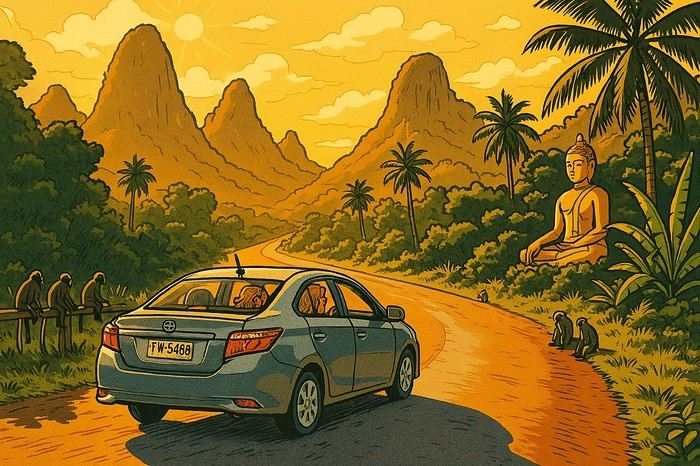
More precisely, Thailand!
It’s not my first time—I’ve often traveled across Southeast Asia between 2000 and 2015. (This travel journal, for example...)
But it’ll be my partner’s first steps in this part of the world.
The itinerary we’ve chosen will alternate between familiar sights for me and new discoveries for both of us.
I’ll get to see how the country has changed in 20 years—and what’s stayed the same!
We were torn between the north and the south of the kingdom. Fears of smoke from slash-and-burn farming and a desire to relax on the sand tipped the scales toward the south...
What if we rented a car?
I think driving in sprawling Bangkok would be a bit ambitious, so we’ll only book our vehicle from Hua Hin to return it in Surat Thani.
Other transportation will range from tuk-tuks to overnight trains and ride-hailing services.
And of course, the plane!
I’d love to travel from Auvergne to Bangkok by road, but 15 days wouldn’t be enough...
Plus, the current geopolitical situation isn’t exactly favorable...
So, once again, we’ll be stuck for hours in the less-than-comfortable economy class of Qatar Airways.
The arrival time was on schedule, entry formalities were quick, and all our luggage made it.
We left Lyon in wind and cold—now we’re breathing in the warm, humid air of กรุงเทพมหานคร.
To reach our hotel, we first took the metro, which dropped us off in the city center in about 30 minutes for the incredible price of 1.18 €.
A few taps on the GRAB app, and we booked a ride-hailing service for the last few kilometers.
We waited a while for our driver due to insane traffic in the area, but once in the 4x4, we were at our lodging in no time.
We chose this small hotel for its riverside location, tranquility, and price.
It’ll do the job perfectly—the only downside is the weak breakfast.
The room is inviting, and we collapse onto the bed for a well-deserved short nap.
Wake-up call in an hour for our first visits!
See you soon...
Unusual trip to Rajasthan November 2022
Friday, November 4
My flight Barcelona - Abu Dhabi - Delhi went smoothly, it’s on time, and here I am back in India after 3 long years.
As I step off the plane, we head toward customs. It’s 3 AM, I’m tired but happy. The huge customs hall is below ground level and buzzing with people who’ve just arrived. In the end, they’re well organized—Indians to the left, foreigners to the right, and all along the hall, the customs officers’ posts, who remain very zen despite the crowd. It took me less than 2 hours to get out of the airport, which was pretty quick.
For this return trip, I got in touch with a driver from the "Lovers of India" group who was supposed to take me from the airport to Udaipur, passing through non-touristy villages like I love. This French-speaking driver had convinced me to travel by car, which was supposed to make moving from village to village easier. Two or three days before departure, I receive a message from the driver saying he was sick with a cold and sending another driver, his very kind brother who knows Rajasthan well but doesn’t speak French. I’m a bit disappointed by this message and doubtful about the driver’s sincerity, but I don’t have time to find another driver, so I stick to my plans, though I’m not at ease.
At the exit, the driver hasn’t arrived, and I wait half an hour before seeing him show up with a big smile, "Namaste." We don’t waste time and head to the car, which is clean and new.
We get to know each other in the car and hit the road toward Alwar. Along the way, we stop for lunch and to taste my first masala chai, which wakes up my taste buds.
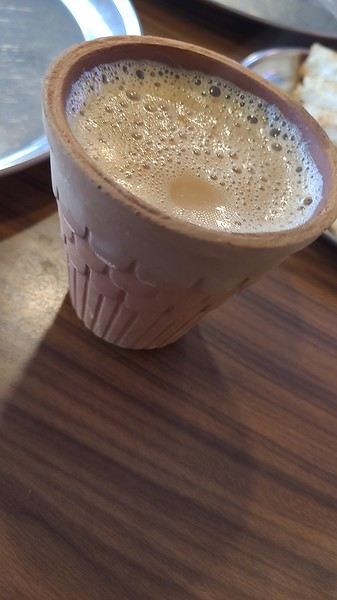
I doze off during the drive, and we arrive at the Atlantic Hotel in Alwar at 10:30 AM. My room is on the ground floor, and I settle in quickly. The Wi-Fi isn’t working, but the staff do everything they can to fix it. At noon, Gajender, the driver, suggests visiting the Qila Fort, which is on the heights of Alwar. The fort is closed for restoration, but safari tours are offered—jeep, guide, driver, and visit for 1600 Rs.
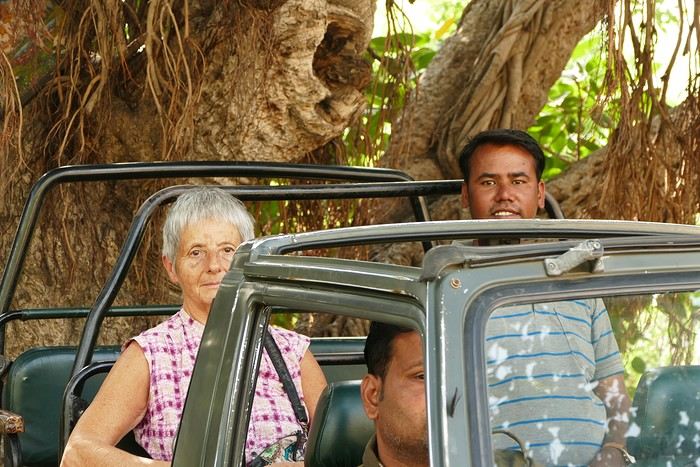
We follow the great wall, which is impressive—the second largest in India and the third in the world.
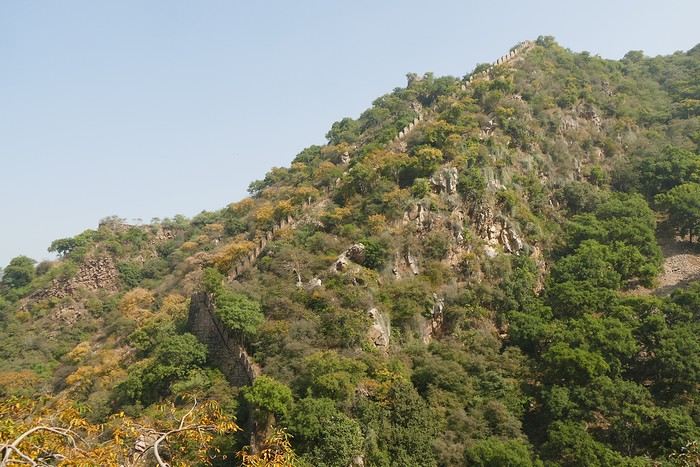
We spot peacocks and monkeys.
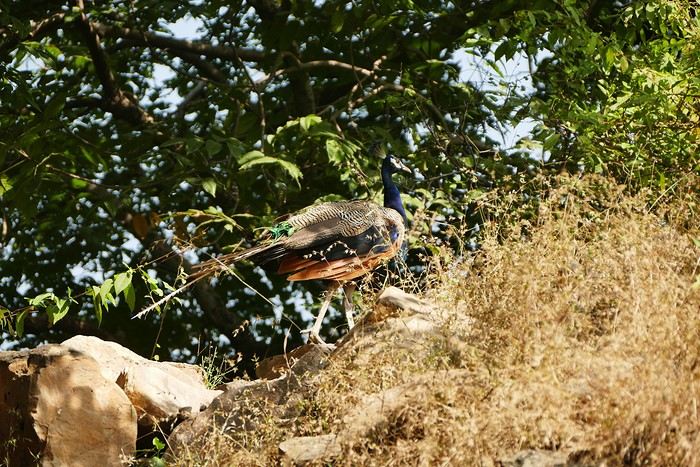
The guide shows me an old stepwell lost in nature. It’s always my thing to check out these baoris, which can be stunning, but this one isn’t anything special. We arrive at the palace overlooking the city.
We walk around the palace, and I discover another stepwell that’s not worth lingering over.
The tour is over, and I had a great time despite the fatigue. We head back down to Alwar, near the City Palace, which has been turned into administrative offices. Gaju (the driver’s nickname) finds a parking spot near a dhaba where we have lunch (paneer masala, chapatis, chai)—it’s delicious. With my energy restored, we head to the palace. On the top floor is a museum that I visit.
At the exit of the museum, we have to go back down and walk around the palace to get to the Moosi Maharani Chhatri. I’ve been here once before and really liked it, and the place is still the same—calm and relaxing.
"This monument is the most artistic in Alwar and also the most royal, filled with fascinating history. Maharaja Vinay Singh of Alwar built this two-story cenotaph in 1815 in memory of his father, Maharaja Bakhtawar Singh. It’s also known as Moosi Maharani ki Chhatri, named after the king’s mistress, who performed sati upon his death. After the sati, she was accepted as the king’s wife. It’s an elegant monument, shaped like a flower and built with a mix of brown sandstone and white marble. The first floor is made of sandstone, while the upper floor and the chhatris (cenotaphs) are in white marble. Its sculpted pavilion has dome-shaped arches with intricate lace-like and exquisite floral patterns. There are complex motifs that shine brightly in the sunlight. The colorful circular ceiling is an important part of Moosi Maharani Ki Chhatri and is adorned with faded gold-leaf paintings of mythological figures and scenes. The footprints of Maharaja and Moosi Rani are engraved in marble inside the cenotaph, and locals pay their respects to them."
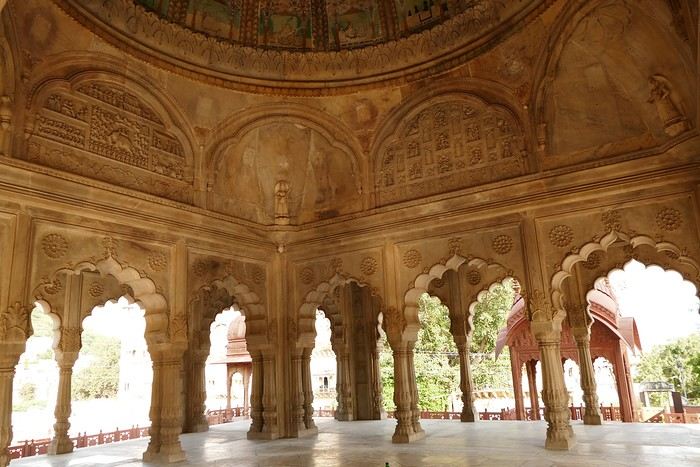
Near the chhatri, there’s a large water reservoir with a magnificent view. The place is peaceful and relaxing, and I stay here for a while, contemplating and daydreaming before heading back to the hotel for some well-deserved rest. The Wi-Fi is working now. I’m the only foreign guest, and since my room is near the entrance, I’ll be well taken care of throughout my stay.
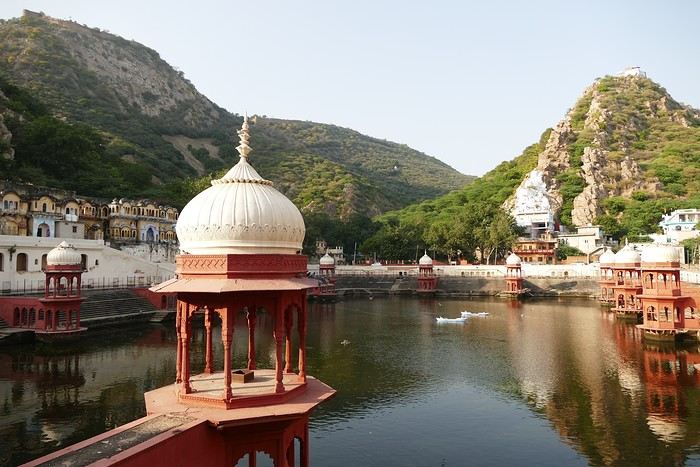
I doze off during the drive, and we arrive at the Atlantic Hotel in Alwar at 10:30 AM. My room is on the ground floor, and I settle in quickly. The Wi-Fi isn’t working, but the staff do everything they can to fix it. At noon, Gajender, the driver, suggests visiting the Qila Fort, which is on the heights of Alwar. The fort is closed for restoration, but safari tours are offered—jeep, guide, driver, and visit for 1600 Rs.
We follow the great wall, which is impressive—the second largest in India and the third in the world.
We spot peacocks and monkeys.
The guide shows me an old stepwell lost in nature. It’s always my thing to check out these baoris, which can be stunning, but this one isn’t anything special. We arrive at the palace overlooking the city.
We walk around the palace, and I discover another stepwell that’s not worth lingering over.
The tour is over, and I had a great time despite the fatigue. We head back down to Alwar, near the City Palace, which has been turned into administrative offices. Gaju (the driver’s nickname) finds a parking spot near a dhaba where we have lunch (paneer masala, chapatis, chai)—it’s delicious. With my energy restored, we head to the palace. On the top floor is a museum that I visit.
At the exit of the museum, we have to go back down and walk around the palace to get to the Moosi Maharani Chhatri. I’ve been here once before and really liked it, and the place is still the same—calm and relaxing.
"This monument is the most artistic in Alwar and also the most royal, filled with fascinating history. Maharaja Vinay Singh of Alwar built this two-story cenotaph in 1815 in memory of his father, Maharaja Bakhtawar Singh. It’s also known as Moosi Maharani ki Chhatri, named after the king’s mistress, who performed sati upon his death. After the sati, she was accepted as the king’s wife. It’s an elegant monument, shaped like a flower and built with a mix of brown sandstone and white marble. The first floor is made of sandstone, while the upper floor and the chhatris (cenotaphs) are in white marble. Its sculpted pavilion has dome-shaped arches with intricate lace-like and exquisite floral patterns. There are complex motifs that shine brightly in the sunlight. The colorful circular ceiling is an important part of Moosi Maharani Ki Chhatri and is adorned with faded gold-leaf paintings of mythological figures and scenes. The footprints of Maharaja and Moosi Rani are engraved in marble inside the cenotaph, and locals pay their respects to them."
Near the chhatri, there’s a large water reservoir with a magnificent view. The place is peaceful and relaxing, and I stay here for a while, contemplating and daydreaming before heading back to the hotel for some well-deserved rest. The Wi-Fi is working now. I’m the only foreign guest, and since my room is near the entrance, I’ll be well taken care of throughout my stay.
Biking and Beer in Belgium
"The Most Refreshing Way to Travel Around Belgium"
This is the title of the guide published by Pierre Pauquay at Éditions HELVETIQ Sàrl, Lausanne, Switzerland, 2023.
I set off for Belgium with my camper van and my electric-assist bike, eager to deepen both my theoretical and practical knowledge of this country’s emblematic beverage while exploring the land. This guide became my trusted companion throughout the journey, which took place from June 4 to July 4, 2024.
Out of the 40 routes presented, I chose 21, covering a broad swath of Belgium—both Wallonia (14 routes) and Flanders (6 routes), plus one route around the Brussels-Capital region with a visit to the famous Grimbergen brewery.
Every route included a stop at a brewery, whether lesser-known or famous, artisanal or industrial, family-run or Trappist.
In total, I logged 1,111.2 km of biking over 58 hours and 42 minutes of pedaling, averaging 3 hours of cycling per ride of 55.6 km. I visited 21 breweries, toured a few, and had just one flat tire (I didn’t count the number of beers, but I tasted them all...).
I wasn’t always able to park my camper van near the brewery planned for that day’s route, but I made sure to enjoy the famous nectar only after completing the physical exercise required by the loops.
Traveling by camper van, I needed routes that formed a loop, starting and ending in the same place. Except in Brussels, I never had to rely on campsites for a safe night’s stay. I always found a welcoming public or private parking spot, secure enough to prepare for the next day’s ride.
I discovered Belgium from top to bottom, through hills (not very high) and valleys (very flat and often windy), at my own pace. I stopped whenever a photo caught my eye, grabbed a bite or a drink in the villages I passed through, and often felt like I was truly part of the landscape, in sync with the country’s rhythm and curious to see how people lived...
More to come, with photos in a future post...
Thanks for reading...