Results for "Plaine+des+Palmistes+|+122+>+74"
53018 results found.
Scandinavie en vélo English translation pending
Salut,
je compte me rendre cette été en Scandinavie avec mon vélo,
Donc si vous avez des suggestions d itinéraires à me proposer, n hésitez pas merci.
Je sais en plus qu'en Norvège certains tunnel sont interdits au vélos.
A plus
Chrichri
je compte me rendre cette été en Scandinavie avec mon vélo,
Donc si vous avez des suggestions d itinéraires à me proposer, n hésitez pas merci.
Je sais en plus qu'en Norvège certains tunnel sont interdits au vélos.
A plus
Chrichri
Breathtaking Kyrgyzstan!
This trip had been on my mind for about fifteen years.
But the discomfort of overnight stays, the difficulty of communication, and the prices of the few car rental options kept making me postpone the project.
And then, everything suddenly fell into place—I told myself, it’s time!
The preparations took longer than usual; the destination is still far from mainstream.
A bit of Kazakhstan? Not in the end.
The south or not the south? Yes, in the end.
Pre-book or go with the flow? Only two stops were a leap into the unknown.
To help me find the ideal route, I made great use of this forum (thanks to everyone for patiently answering my questions!), pored over travel journals and blogs (Christian, Jeff), zoomed in on Google Maps and Yandex, and bought the guide published by OunTravela about this destination (the guide has been updated since).
---/---
You’ve got your passport, international driver’s license, bank cards, and euros?
Off we go to Lyon—just one night left before our early morning flight.
Tomorrow night, we’ll be sleeping in Bishkek! (Steak for my partner’s mischievous nephews...)
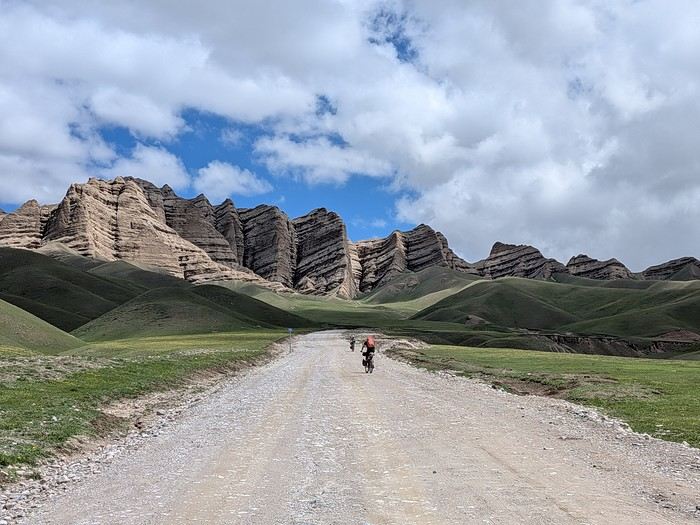
You’ll find here a post with some practical information.
And here, the version of the travel journal without comments.
---/---
As a supplement, the route track. Not necessarily ultra-accurate since Google has serious gaps for this destination...
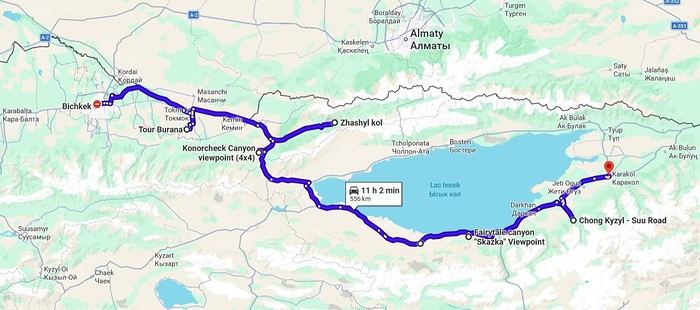
From Bishkek to Karakol:
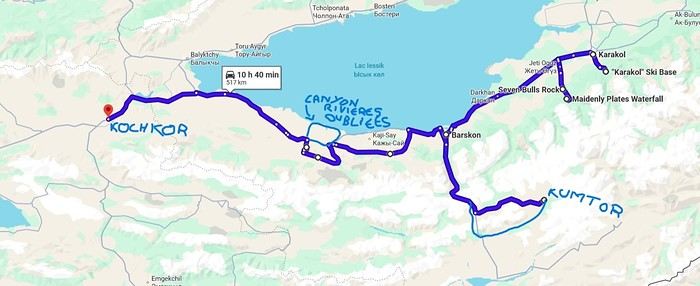
From Karakol to Kochkor:
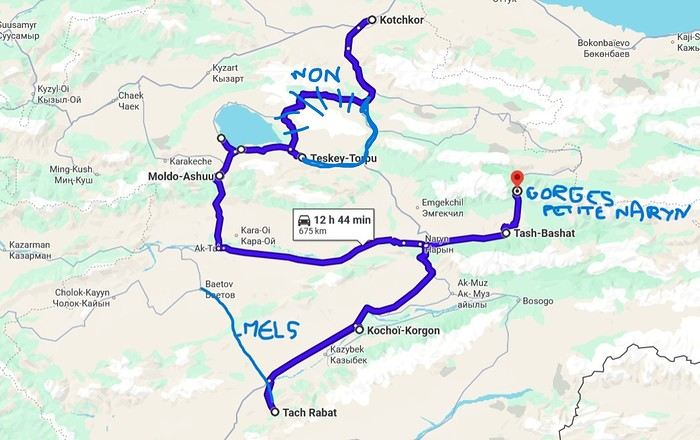
From Kochkor to Baetov:
From Baetov to Kara-Köl:
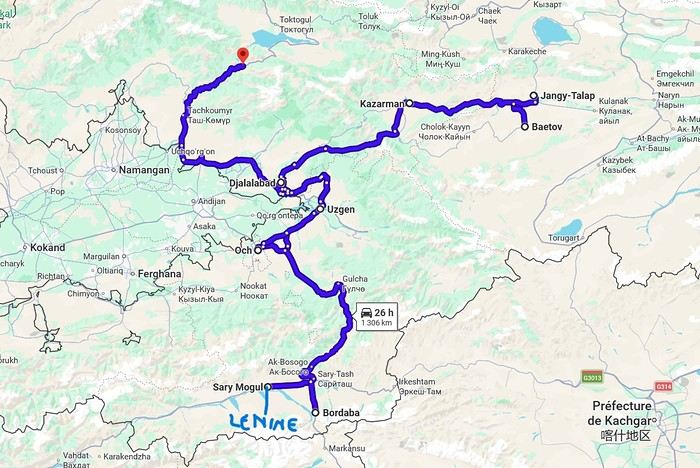
From Kara-Köl to Bishkek:
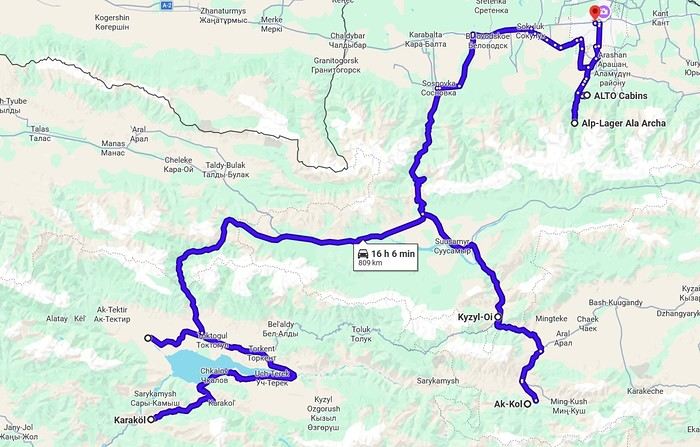

But the discomfort of overnight stays, the difficulty of communication, and the prices of the few car rental options kept making me postpone the project.
And then, everything suddenly fell into place—I told myself, it’s time!
The preparations took longer than usual; the destination is still far from mainstream.
A bit of Kazakhstan? Not in the end.
The south or not the south? Yes, in the end.
Pre-book or go with the flow? Only two stops were a leap into the unknown.
To help me find the ideal route, I made great use of this forum (thanks to everyone for patiently answering my questions!), pored over travel journals and blogs (Christian, Jeff), zoomed in on Google Maps and Yandex, and bought the guide published by OunTravela about this destination (the guide has been updated since).
---/---
You’ve got your passport, international driver’s license, bank cards, and euros?
Off we go to Lyon—just one night left before our early morning flight.
Tomorrow night, we’ll be sleeping in Bishkek! (Steak for my partner’s mischievous nephews...)
You’ll find here a post with some practical information.
And here, the version of the travel journal without comments.
---/---
As a supplement, the route track. Not necessarily ultra-accurate since Google has serious gaps for this destination...
From Bishkek to Karakol:
From Karakol to Kochkor:
From Kochkor to Baetov:
From Baetov to Kara-Köl:
From Kara-Köl to Bishkek:
How to get to Georgia from the Turkish border?
Hi there,
This year we want to go to Georgia. We have a ticket to Istanbul and would prefer to avoid an Istanbul/Tbilisi flight to see a bit of Turkey, which I love.
I found a train from Ankara to Kars (25h): why not?
But how do we cross the border: which town? Is it easy (or not)?
I’m leaning toward Batumi, but I’m not sure about anything—thanks for your tips!
Thanks for your insights
Peru: A Childhood Dream Finally Fulfilled
Preamble
I could have titled my travel journal like Carmen: "Some trips are born twice." Indeed, we had considered this destination back in February 2020. However, an honest tour operator advised us against traveling at that time due to the climate. So, we gave up and opted for Guatemala instead (see "On the Mayan Lands" on this site).
So, why this title? When I was in primary school, over 65 years ago, the illustrations in my history books (Machu Picchu) and geography books (Lake Titicaca) made me dream, and those images stayed in my mind. It took until 2026 to finally make this dream come true!
We prepared our trip with Tout Pérou, a French-speaking "agency." Everything was handled via email and WhatsApp exchanges with our contact: Laurent, who was both competent, friendly, and full of good advice. For 200 €, Tout Pérou provided us with drivers and guides whenever we wanted, helped us buy our domestic flights (cheaper when purchased in Peru), booked shuttles between airports and hotels, and got us a discount on the train ride to Aguas Calientes, as well as on the buses between Chivay and Puno and between Puno and Cusco. In short, Laurent took care of all the logistics and the Machu Picchu tickets. It was up to us to book our hotels. Tout Pérou provided a list, but we weren’t obliged to follow it. Another advantage of the package: we didn’t have to pay in advance; we paid the service providers directly day by day.
We didn’t meet Laurent in person because he was on vacation in Europe. Before his departure, he gave us a briefing, provided a summary table with the entire program, the service providers, their phone numbers, their fees, the schedules, and gave us plenty of advice (money, exchange, safety, etc.). After returning at the end of our stay, he kept checking in on us.
Lastly, we had also gathered information from Arnaud Lagadec, who runs a hotel in Cusco and offers tours of the region. He gave us a lot of useful information. Another contact: Thomas Montaigne, very friendly, who runs an agency in Arequipa (Agence Pérou Exclusif).
Day 1 – Paris to Lima
Foreword I’ll share our trip without any pretension—I don’t have the talent of some contributors on this forum—and I’ll illustrate it with a few photos (taken with an ordinary smartphone). My comments are personal and only reflect my own views. So, please be kind! Feel free to comment on my story as you like, but let’s avoid pointless debates.
Even though we live in the south of the Paris region, true to our habits when the flight is in the morning, we chose to spend the night before our departure in a hotel near CDG and parked our car in a parking lot in Garches. This way, we avoid the stress that often comes with traveling around Paris (accidents, roadworks, traffic jams, etc.).
Check-in and border control went smoothly on that Sunday morning. Our Air France flight was uneventful. In Lima, border control took a particularly long time, and for the first time, we didn’t get an entry visa stamped in our passports.
As planned, a driver took us to the Miraflores district, where our hotel was located. We were surprised by the numerous signs about possible tsunamis, having forgotten that Peru is prone to such events and regularly experiences earthquakes. We’d see the consequences of these during our journey.
Exhausted from the early wake-up, the 13-hour flight, and the 7-hour time difference, we had dinner at the hotel before a restful night.
Note that this day was Peru’s presidential election day. As a result, we weren’t served beer—the sale of alcohol was banned that Sunday.
I could have titled my travel journal like Carmen: "Some trips are born twice." Indeed, we had considered this destination back in February 2020. However, an honest tour operator advised us against traveling at that time due to the climate. So, we gave up and opted for Guatemala instead (see "On the Mayan Lands" on this site).
So, why this title? When I was in primary school, over 65 years ago, the illustrations in my history books (Machu Picchu) and geography books (Lake Titicaca) made me dream, and those images stayed in my mind. It took until 2026 to finally make this dream come true!
We prepared our trip with Tout Pérou, a French-speaking "agency." Everything was handled via email and WhatsApp exchanges with our contact: Laurent, who was both competent, friendly, and full of good advice. For 200 €, Tout Pérou provided us with drivers and guides whenever we wanted, helped us buy our domestic flights (cheaper when purchased in Peru), booked shuttles between airports and hotels, and got us a discount on the train ride to Aguas Calientes, as well as on the buses between Chivay and Puno and between Puno and Cusco. In short, Laurent took care of all the logistics and the Machu Picchu tickets. It was up to us to book our hotels. Tout Pérou provided a list, but we weren’t obliged to follow it. Another advantage of the package: we didn’t have to pay in advance; we paid the service providers directly day by day.
We didn’t meet Laurent in person because he was on vacation in Europe. Before his departure, he gave us a briefing, provided a summary table with the entire program, the service providers, their phone numbers, their fees, the schedules, and gave us plenty of advice (money, exchange, safety, etc.). After returning at the end of our stay, he kept checking in on us.
Lastly, we had also gathered information from Arnaud Lagadec, who runs a hotel in Cusco and offers tours of the region. He gave us a lot of useful information. Another contact: Thomas Montaigne, very friendly, who runs an agency in Arequipa (Agence Pérou Exclusif).
Day 1 – Paris to Lima
Foreword I’ll share our trip without any pretension—I don’t have the talent of some contributors on this forum—and I’ll illustrate it with a few photos (taken with an ordinary smartphone). My comments are personal and only reflect my own views. So, please be kind! Feel free to comment on my story as you like, but let’s avoid pointless debates.
Even though we live in the south of the Paris region, true to our habits when the flight is in the morning, we chose to spend the night before our departure in a hotel near CDG and parked our car in a parking lot in Garches. This way, we avoid the stress that often comes with traveling around Paris (accidents, roadworks, traffic jams, etc.).
Check-in and border control went smoothly on that Sunday morning. Our Air France flight was uneventful. In Lima, border control took a particularly long time, and for the first time, we didn’t get an entry visa stamped in our passports.
As planned, a driver took us to the Miraflores district, where our hotel was located. We were surprised by the numerous signs about possible tsunamis, having forgotten that Peru is prone to such events and regularly experiences earthquakes. We’d see the consequences of these during our journey.
Exhausted from the early wake-up, the 13-hour flight, and the 7-hour time difference, we had dinner at the hotel before a restful night.
Note that this day was Peru’s presidential election day. As a result, we weren’t served beer—the sale of alcohol was banned that Sunday.
Storm in the Canary Islands
15 days across Gran Canaria, El Hierro, and a dash of Tenerife under the storm Thérèse!
The planned itinerary will be slightly disrupted...
(The version without discussions is here)
The planned itinerary will be slightly disrupted...
(The version without discussions is here)
From Avignon to Casamance Without Flying
Hi there,
Last February, I made a trip using "public transport" from France to southern Senegal via Spain, Morocco, Western Sahara, and Mauritania.
It’s a journey of about 5,000 km, where I took trains (as far as Marrakech), ferries (to cross Gibraltar and then to reach Casamance from Dakar), and mostly buses on the long desert straightaways. I hadn’t planned any stops in advance or booked any hotels, except for the very first train to Spain, which left plenty of room for the unexpected. Why travel by land and sea? In recent years, flight-free travel has been gaining popularity. On social media, posts explaining how to cross Europe by train as quickly as possible go viral. Traveling without flying—and making sure people know about it—has become a great way to earn a badge of eco-responsibility: an essential totem for anyone wanting to prove both their dedication to the ecological cause and the wisdom of slow travel. I haven’t flown in years, and this journey to West Africa could easily be filed under "responsible travel." But it wouldn’t be honest to say that: in reality, it wasn’t really my aversion to flying that motivated this long trek. I see overland travel primarily as a way to experience the world’s geography at a grounded, earthly pace—the pace of the locals. Besides, I’ll be flying back, which disqualifies any claim to being a model of sustainability. So no eco-badge, and no adventurer’s badge either: you won’t find any heroic tales of camel rides in lost lands or mineral train wagons in this account (popular with influencers, the Mauritania iron ore train now attracts tourists from all over the world, turning "the experience" into something you "have to do at least once in your life"). This five-part story, written on the road, has no other ambition than to recount a journey through places and people, and to share the thoughts they inspire in me. As simply and, I hope, as humbly as possible.
I’m posting the episodes here, which you can also find on my blog (with more photos) at the following links:
Episode 1: Spain, from Avignon to Algeciras
Episode 2: Morocco, from Tangier to Tarfaya
Episode 3: Western Sahara, from Tarfaya to Guerguerat
Episode 4: Mauritania, from Guerguerat to Nouakchott
Episode 5: Senegal, from Rosso to Saloulou
To help those who might want to make the same trip, I’ve also put together a summary of the route with recommendations—you can read it at the end of the story and on the blog: From France to Senegal Without Flying: Route and Itinerary Recommendations
Happy reading, and safe travels!
Last February, I made a trip using "public transport" from France to southern Senegal via Spain, Morocco, Western Sahara, and Mauritania.
It’s a journey of about 5,000 km, where I took trains (as far as Marrakech), ferries (to cross Gibraltar and then to reach Casamance from Dakar), and mostly buses on the long desert straightaways. I hadn’t planned any stops in advance or booked any hotels, except for the very first train to Spain, which left plenty of room for the unexpected. Why travel by land and sea? In recent years, flight-free travel has been gaining popularity. On social media, posts explaining how to cross Europe by train as quickly as possible go viral. Traveling without flying—and making sure people know about it—has become a great way to earn a badge of eco-responsibility: an essential totem for anyone wanting to prove both their dedication to the ecological cause and the wisdom of slow travel. I haven’t flown in years, and this journey to West Africa could easily be filed under "responsible travel." But it wouldn’t be honest to say that: in reality, it wasn’t really my aversion to flying that motivated this long trek. I see overland travel primarily as a way to experience the world’s geography at a grounded, earthly pace—the pace of the locals. Besides, I’ll be flying back, which disqualifies any claim to being a model of sustainability. So no eco-badge, and no adventurer’s badge either: you won’t find any heroic tales of camel rides in lost lands or mineral train wagons in this account (popular with influencers, the Mauritania iron ore train now attracts tourists from all over the world, turning "the experience" into something you "have to do at least once in your life"). This five-part story, written on the road, has no other ambition than to recount a journey through places and people, and to share the thoughts they inspire in me. As simply and, I hope, as humbly as possible.
I’m posting the episodes here, which you can also find on my blog (with more photos) at the following links:
Episode 1: Spain, from Avignon to Algeciras
Episode 2: Morocco, from Tangier to Tarfaya
Episode 3: Western Sahara, from Tarfaya to Guerguerat
Episode 4: Mauritania, from Guerguerat to Nouakchott
Episode 5: Senegal, from Rosso to Saloulou
To help those who might want to make the same trip, I’ve also put together a summary of the route with recommendations—you can read it at the end of the story and on the blog: From France to Senegal Without Flying: Route and Itinerary Recommendations
Happy reading, and safe travels!
Discussion: Waterways Around the World - January 2026 Photo Contest
To chat about waterways, this is the place.
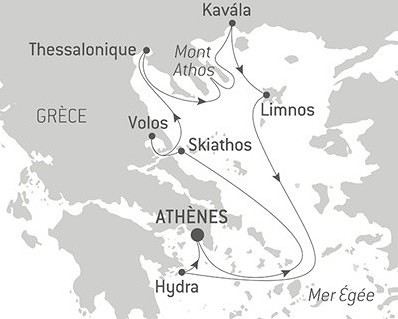
Review of an Aegean Sea cruise on Ponant's Bougainville from November 1-8, 2025
Hello everyone,
If you'd like, I invite you to join me for a week-long cruise to northern Greece, visiting ports that are often less crowded with cruise ships.
Itinerary: Athens, Skiathos, Volos, Thessaloniki, Kavala, Limnos, Hydra, Athens
If you'd like, I invite you to join me for a week-long cruise to northern Greece, visiting ports that are often less crowded with cruise ships.
Itinerary: Athens, Skiathos, Volos, Thessaloniki, Kavala, Limnos, Hydra, Athens
A summer in the sun in... Iceland!!
Ah, Iceland and us—it’s quite the story, or rather, a long wait... The first time we considered going was already 7-8 years ago, after reading travel journals describing breathtaking landscapes, countless active and dormant volcanoes, glaciers, and waterfalls with extraordinary flows. In short, this island, made of fire and ice, right at Europe’s doorstep with its own unique culture, had nothing but advantages, and it was urgent to visit without delay 😇
My *Routard* guidebook is actually from 2016. So why did Iceland make us wait so long before we finally gave in to its charms? Yes, why indeed?
Simply because reading other travel journals revealed the cost of living there—and especially the harsh climate, even in the middle of July 🤪! Some journals described entire weeks of rain and foggy weather, making it tricky to explore the island. The budget wasn’t spared either, because in the most touristy areas, especially in the south and around Myvatn, accommodation prices are downright indecent—even outright robbery. 😕
Plus, in the Highlands, there’s literally no permanent lodging, and the only way to spend several nights there is to camp. And camping in winter conditions wasn’t exactly part of our plans... 😄
So, year after year, this trip kept getting postponed...
until August 2023, when prices for Southern Africa, North or South America, or even Asia were all way too high for summer 2024!
That’s when I turned my attention back to the Land of Fire and Ice and scoured all the comparison sites for the best accommodation deals across the country. Planning for 20 nights, I found 13 nights in "proper" lodging for 5 people at an average cost of under 200 €! A miracle, considering that in the southern glacier region, around Vik or Myvatn, prices range from 300 to 1000 € per night 😮 😮!
Still, that means we’ll have to camp for 7 nights, mostly in the Highlands, near Askja or Landmannalaugar. 😎
For once, I built the daily itinerary entirely around the decently priced lodgings I found 11 months in advance! The shortage of places to stay in some areas forced me to plan a few long transition days and make some tough choices. No big deal, though—there’s so much to do on this island 🙂!
Once the main itinerary was set, everyone agreed to the plan: 2/3 in proper lodging and 1/3 camping, even the most camping-averse among us! *Follow my gaze...*
By the time we bought the flight tickets, I had to tweak the itinerary a bit because one or two places were already booked! Plus, it was impossible to wait for a more refined plan to adjust reservations, since almost all bookings are non-refundable!! The harsh law of supply and demand...
For the car rental, we booked a Hyundai Tucson, approved for the Highlands, from Lava Car Rental—a company I’d read good reviews about in a Facebook group—for a cool 2500 € with full insurance. A real 4x4, like a Defender, would’ve been more than double...! Welcome to Iceland 😕...
Activities and excursions also required some tough choices. We had two must-dos: whale watching in Húsavík (60 € pp on Getyourguide) and a Glacier and Summer Treasure Glacier Walk with BlueIceland (165 € pp with discount codes on Getyourguide).
For the baths, we skipped the Blue Lagoon—too expensive—in favor of the Secret Lagoon and the Myvatn Baths, the Blue Lagoon’s equivalent but half the price.
Two baths for the price of one... and even more, since I spotted several free hot-water swimming spots.
Itinerary: Day 1: Arrival in Reykjavik - Hraunfossar Waterfall - Surtshellir Cave Day 2: Grábrók Crater - Snæfellsnes Peninsula Day 3: Stykkishólmur - Sturlungalaug Hot Springs Day 4: Northwest Coast - Akureyri - Goðafoss Day 5: Myvatn Day 6: Myvatn - Dettifoss - Selfoss - Rauðhólar Day 7: Húsavík Whale Watching - Dettifoss - Selfoss Day 8: Stuðlagil Canyon - Seyðisfjörður Day 9: Puffin colony - Störurð Hike Day 10: Hengifoss - East Fjords, Mjóifjörður Day 11: Viking Village - Jökulsárlón - Fjallsárlón Day 12: Glacier Excursion - Svartifoss Day 13: Fjaðrárgljúfur Canyon - Vík Day 14: Þakgil - Lava Show Vík Day 15: Southern Waterfalls Day Day 16: Landmannalaugar - Skalli Hike Day 17: Landmannalaugar - Bláhnjúkur - Brennisteinsalda Day 18: Secret Lagoon, Kerlingarfjöll, and Gullfoss Day 19: Geysir - Reykjavik Day 20: Bruarfoss - Þingvellir - Kerid Crater - Krýsuvík Geothermal Area Day 21: Reykjanes Peninsula
Friday, July 5, 2024, is our last workday before driving up to Alsace overnight to leave the cockers at Grandpa’s for boarding. Then, at 1:30 AM, we’ll head to Frankfurt, where a direct flight to Iceland awaits.
We arrive at 4 AM. Since we leave at 7 AM, the "night" will only last the equivalent of a 30-minute nap 🤪... just enough to get us in the road-trip mood 😏!!
My *Routard* guidebook is actually from 2016. So why did Iceland make us wait so long before we finally gave in to its charms? Yes, why indeed?
Simply because reading other travel journals revealed the cost of living there—and especially the harsh climate, even in the middle of July 🤪! Some journals described entire weeks of rain and foggy weather, making it tricky to explore the island. The budget wasn’t spared either, because in the most touristy areas, especially in the south and around Myvatn, accommodation prices are downright indecent—even outright robbery. 😕
Plus, in the Highlands, there’s literally no permanent lodging, and the only way to spend several nights there is to camp. And camping in winter conditions wasn’t exactly part of our plans... 😄
So, year after year, this trip kept getting postponed...
until August 2023, when prices for Southern Africa, North or South America, or even Asia were all way too high for summer 2024!
That’s when I turned my attention back to the Land of Fire and Ice and scoured all the comparison sites for the best accommodation deals across the country. Planning for 20 nights, I found 13 nights in "proper" lodging for 5 people at an average cost of under 200 €! A miracle, considering that in the southern glacier region, around Vik or Myvatn, prices range from 300 to 1000 € per night 😮 😮!
Still, that means we’ll have to camp for 7 nights, mostly in the Highlands, near Askja or Landmannalaugar. 😎
For once, I built the daily itinerary entirely around the decently priced lodgings I found 11 months in advance! The shortage of places to stay in some areas forced me to plan a few long transition days and make some tough choices. No big deal, though—there’s so much to do on this island 🙂!
Once the main itinerary was set, everyone agreed to the plan: 2/3 in proper lodging and 1/3 camping, even the most camping-averse among us! *Follow my gaze...*
By the time we bought the flight tickets, I had to tweak the itinerary a bit because one or two places were already booked! Plus, it was impossible to wait for a more refined plan to adjust reservations, since almost all bookings are non-refundable!! The harsh law of supply and demand...
For the car rental, we booked a Hyundai Tucson, approved for the Highlands, from Lava Car Rental—a company I’d read good reviews about in a Facebook group—for a cool 2500 € with full insurance. A real 4x4, like a Defender, would’ve been more than double...! Welcome to Iceland 😕...
Activities and excursions also required some tough choices. We had two must-dos: whale watching in Húsavík (60 € pp on Getyourguide) and a Glacier and Summer Treasure Glacier Walk with BlueIceland (165 € pp with discount codes on Getyourguide).
For the baths, we skipped the Blue Lagoon—too expensive—in favor of the Secret Lagoon and the Myvatn Baths, the Blue Lagoon’s equivalent but half the price.
Two baths for the price of one... and even more, since I spotted several free hot-water swimming spots.
Itinerary: Day 1: Arrival in Reykjavik - Hraunfossar Waterfall - Surtshellir Cave Day 2: Grábrók Crater - Snæfellsnes Peninsula Day 3: Stykkishólmur - Sturlungalaug Hot Springs Day 4: Northwest Coast - Akureyri - Goðafoss Day 5: Myvatn Day 6: Myvatn - Dettifoss - Selfoss - Rauðhólar Day 7: Húsavík Whale Watching - Dettifoss - Selfoss Day 8: Stuðlagil Canyon - Seyðisfjörður Day 9: Puffin colony - Störurð Hike Day 10: Hengifoss - East Fjords, Mjóifjörður Day 11: Viking Village - Jökulsárlón - Fjallsárlón Day 12: Glacier Excursion - Svartifoss Day 13: Fjaðrárgljúfur Canyon - Vík Day 14: Þakgil - Lava Show Vík Day 15: Southern Waterfalls Day Day 16: Landmannalaugar - Skalli Hike Day 17: Landmannalaugar - Bláhnjúkur - Brennisteinsalda Day 18: Secret Lagoon, Kerlingarfjöll, and Gullfoss Day 19: Geysir - Reykjavik Day 20: Bruarfoss - Þingvellir - Kerid Crater - Krýsuvík Geothermal Area Day 21: Reykjanes Peninsula
Friday, July 5, 2024, is our last workday before driving up to Alsace overnight to leave the cockers at Grandpa’s for boarding. Then, at 1:30 AM, we’ll head to Frankfurt, where a direct flight to Iceland awaits.
We arrive at 4 AM. Since we leave at 7 AM, the "night" will only last the equivalent of a 30-minute nap 🤪... just enough to get us in the road-trip mood 😏!!
Namibia: What itineraries for a second trip?
Hello everyone,
We came back enchanted from our first trip to Namibia and we're already thinking of going back. We did the classics: Etosha, Twyfelfontein, Sossusvlei, Deadvlei...
Our guide suggests doing the Caprivi Strip over 10 days, alternating 2 nights in a lodge and 2 nights in a tent. Given that we love landscapes but especially wildlife observation, I wonder if after spending 4 nights in Etosha and having visited Botswana twice, Caprivi offers different animals to see and if the wildlife is generally abundant.
The videos I've seen online don't really captivate me. It seems quite similar to the Okavango Delta.
What do you think?
Are there other circuits we should prioritize?
Both in our seventies, we prefer staying mainly in lodges.
Thanks in advance to those who can give us advice
My TOP 3 countries visited
Hi everyone,
I feel like I’ve been lucky enough over the past few years to travel—a lot of that’s thanks to retirement... (see my profile!)
So, aside from my beautiful country, France, here’s my totally subjective top 3:
1 – Antarctica
2 – Greenland
3 – Yellowstone Park
Of course, this is just my opinion—human, architectural, cultural, and gastronomic treasures are everywhere on our unique planet, Earth. Have a great day, everyone!
Of course, this is just my opinion—human, architectural, cultural, and gastronomic treasures are everywhere on our unique planet, Earth. Have a great day, everyone!
That's Kenya too...
Hey fellow travelers,
I'm back in the "travel journal" section to share our 15-day adventure in Kenya in November 2024. It was pretty much our first time in East Africa (since Zanzibar doesn’t really count 😜).
As usual, I’m sharing the journal I made for our loved ones—still as casual and cheerful as ever, just to give them a little break from their tough workdays 😄.
We organized the whole trip ourselves, and to be original here LOL, we took some *very* well-trodden paths: Naivasha, Tsavo, and Diani. But what I loved about this country is that it’s so easy to go off the beaten track—even on the "tourist highways" 😉.
So, if you're a safari fanatic or after stunning wildlife photos, you might be disappointed. But if you want to discover other sides of Kenya, you might just find what you're looking for 😉.
Looking forward to sharing this fun journey with you all 😊.
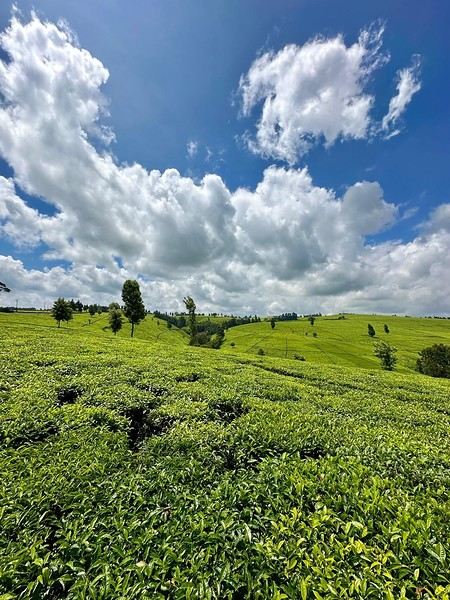
I'm back in the "travel journal" section to share our 15-day adventure in Kenya in November 2024. It was pretty much our first time in East Africa (since Zanzibar doesn’t really count 😜).
As usual, I’m sharing the journal I made for our loved ones—still as casual and cheerful as ever, just to give them a little break from their tough workdays 😄.
We organized the whole trip ourselves, and to be original here LOL, we took some *very* well-trodden paths: Naivasha, Tsavo, and Diani. But what I loved about this country is that it’s so easy to go off the beaten track—even on the "tourist highways" 😉.
So, if you're a safari fanatic or after stunning wildlife photos, you might be disappointed. But if you want to discover other sides of Kenya, you might just find what you're looking for 😉.
Looking forward to sharing this fun journey with you all 😊.
The Cedar Forest and the Carpentras Canal
Good evening everyone,
Since the forum came back, it's been a bit quiet—no one's sharing their adventures yet. I know it's the start of the season, so let's hope it picks up!
Last Saturday, my buddy Jean Paul (who’ll be 84 next month) and I rode through the cedar forest between Cavaillon and Bonnieux—I highly recommend it! I already knew the area. We started from Pont Royal: me on my latest women’s FUN RIDE SOLO mountain bike (kept it as simple as possible), and him on a road bike with gravel tires. The road starting near Cheval Blanc, called the Vidauque route, is paved but completely wrecked—full of potholes, abandoned for ages, and technically off-limits to cars (though 4x4s still use it). The views over the Cavaillon plain are stunning, but we had to push our bikes a few times. After that, we did 10 km through the gorgeous cedar forest, followed by all downhill and flat terrain through the Lourmarin valley, then Cadenet, before heading toward La Roque-d'Anthéron. From there, we tackled the dirt paths of Provence by bike—beautiful trails—and made our way back to Mallemort and Pont Royal. A great loop: 81.51 km with 908 m of elevation gain. And Jean Paul? Fresh as a daisy at the finish—what an impressive guy!
Now, the real reason for this post: At the start, we followed the Carpentras Canal, which runs from Mallemort to Travaillan (69 km total). I’ve seen some photos on Komoot, and it looks amazing—apparently, there’s always a towpath.
**HAS ANYONE DONE THIS BY BIKE BEFORE? COULD YOU SHARE YOUR EXPERIENCE? THANKS IN ADVANCE!** Serge
Since the forum came back, it's been a bit quiet—no one's sharing their adventures yet. I know it's the start of the season, so let's hope it picks up!
Last Saturday, my buddy Jean Paul (who’ll be 84 next month) and I rode through the cedar forest between Cavaillon and Bonnieux—I highly recommend it! I already knew the area. We started from Pont Royal: me on my latest women’s FUN RIDE SOLO mountain bike (kept it as simple as possible), and him on a road bike with gravel tires. The road starting near Cheval Blanc, called the Vidauque route, is paved but completely wrecked—full of potholes, abandoned for ages, and technically off-limits to cars (though 4x4s still use it). The views over the Cavaillon plain are stunning, but we had to push our bikes a few times. After that, we did 10 km through the gorgeous cedar forest, followed by all downhill and flat terrain through the Lourmarin valley, then Cadenet, before heading toward La Roque-d'Anthéron. From there, we tackled the dirt paths of Provence by bike—beautiful trails—and made our way back to Mallemort and Pont Royal. A great loop: 81.51 km with 908 m of elevation gain. And Jean Paul? Fresh as a daisy at the finish—what an impressive guy!
Now, the real reason for this post: At the start, we followed the Carpentras Canal, which runs from Mallemort to Travaillan (69 km total). I’ve seen some photos on Komoot, and it looks amazing—apparently, there’s always a towpath.
**HAS ANYONE DONE THIS BY BIKE BEFORE? COULD YOU SHARE YOUR EXPERIENCE? THANKS IN ADVANCE!** Serge
Uzbek notes
The Afrosiyob races through a premature twilight, lashed by a blizzard of thick snow. In the endless gray, a monumental industrial complex occasionally emerges, ghostly. Here and there, in the middle of nowhere, a human silhouette appears (a soldier?), standing motionless by the tracks. On the screen mounted in the middle of the ceiling, a dashing Bollywood cat in vibrant colors writhes in all directions, throwing smoldering glances at a dancer on the verge of fainting. A server moves down the central aisle, offering crepes for sale—ones I suspect are stuffed with ground beef. I’m in Central Asia, in Uzbekistan, somewhere between Bukhara and Samarkand.
I chose the title "notes"—scattered thoughts, rough drafts. I’m not sure what I’ll write, but one thing’s certain: this won’t be a linear travel journal.
And a photo... there must be a photo, so here:
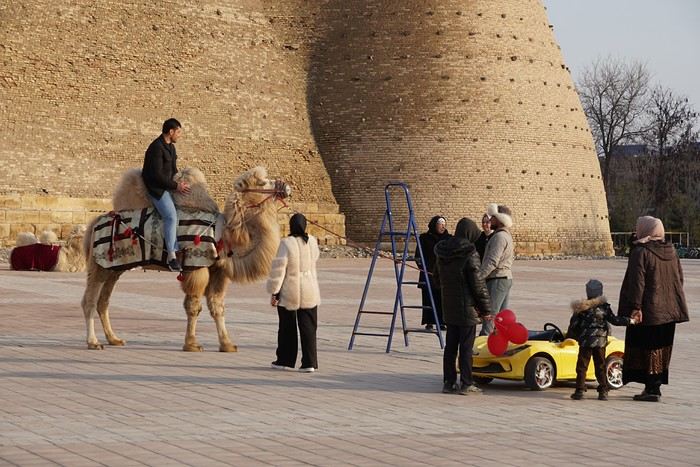
Local tourists between a Bactrian camel and an electric car, in front of ancient walls—it’ll do.
I chose the title "notes"—scattered thoughts, rough drafts. I’m not sure what I’ll write, but one thing’s certain: this won’t be a linear travel journal.
And a photo... there must be a photo, so here:
Local tourists between a Bactrian camel and an electric car, in front of ancient walls—it’ll do.
Feasibility of 15-day Bulgaria-Istanbul family itinerary
Hi everyone,
This summer, our family (dad, mom, a 17-year-old teen, and an 11-year-old pre-teen) wants to explore Bulgaria and include 4 days in Istanbul during our trip. I’ve got a rough plan, but I’m not sure if it’s doable—here’s what I’m thinking:
Arrival on August 12th in Sofia at 2:00 PM → pick up rental car, visit Sofia. 13th: Sofia → Rila → Sofia 14th: Sofia to Plovdiv, overnight in Plovdiv 15th: Plovdiv to Nessebar (or Sozopol—which is better?) 16th/17th/18th: Exploring the Black Sea coast, based in Sozopol/Nessebar 19th: Bus from Burgas to Istanbul (7-hour trip) 20th-21st-22nd-23rd: Istanbul 24th: Return bus from Istanbul to Burgas. Overnight in Burgas 25th: Burgas → Veliko Tarnovo (Bojentsi) 26th: Veliko Tarnovo to Sofia via Koprivshtitsa 27th: Early flight home
→ In this itinerary, I’ve planned 4 full days in Istanbul. I could reduce it to 3 (since we’ll also spend the evening of the 19th there) and add an extra day to the return trip from Burgas to Sofia, around Veliko Tarnovo/Koprivshtitsa.
My questions: -My 17-year-old son and I are passionate about music, especially klezmer, Romani, and jazz. Any good spots in Sofia, Istanbul, or elsewhere? -Things to do with an 11-year-old kid? -Experiences with the Burgas-Istanbul bus?
Thanks for your feedback!
This summer, our family (dad, mom, a 17-year-old teen, and an 11-year-old pre-teen) wants to explore Bulgaria and include 4 days in Istanbul during our trip. I’ve got a rough plan, but I’m not sure if it’s doable—here’s what I’m thinking:
Arrival on August 12th in Sofia at 2:00 PM → pick up rental car, visit Sofia. 13th: Sofia → Rila → Sofia 14th: Sofia to Plovdiv, overnight in Plovdiv 15th: Plovdiv to Nessebar (or Sozopol—which is better?) 16th/17th/18th: Exploring the Black Sea coast, based in Sozopol/Nessebar 19th: Bus from Burgas to Istanbul (7-hour trip) 20th-21st-22nd-23rd: Istanbul 24th: Return bus from Istanbul to Burgas. Overnight in Burgas 25th: Burgas → Veliko Tarnovo (Bojentsi) 26th: Veliko Tarnovo to Sofia via Koprivshtitsa 27th: Early flight home
→ In this itinerary, I’ve planned 4 full days in Istanbul. I could reduce it to 3 (since we’ll also spend the evening of the 19th there) and add an extra day to the return trip from Burgas to Sofia, around Veliko Tarnovo/Koprivshtitsa.
My questions: -My 17-year-old son and I are passionate about music, especially klezmer, Romani, and jazz. Any good spots in Sofia, Istanbul, or elsewhere? -Things to do with an 11-year-old kid? -Experiences with the Burgas-Istanbul bus?
Thanks for your feedback!
Photo Safaris in Kenya
Back on the forum, I’m starting to write up two 3-week trips to Kenya in August 2021 and 2023.
In 2021, Quynh and I traveled with Régis (Rjulie95 on VF). Our son joined us in Baringo for the second half of the trip.
In 2023, we went with two friends who’d been dreaming of seeing wild animals ever since we got back from Kenya. We didn’t need much convincing to go with them!
The two itineraries are almost identical (well, when you love something...) but we did make a few tweaks.
- The first part of the trip was with a local driver/guide, Félix, who was recommended by Sylvie56. Sylvie and her husband Ben are Kenya enthusiasts—they’ve been there countless times, always with Félix... and for good reason! He’s fantastic!
- The second part was with Melting Pot Safari, an agency that adapted to our photography needs. Tony Crocetta, the co-founder (along with his Kenyan friend Simon Chebon), is a wildlife photographer himself.
Here are the itineraries for both trips, including accommodations:
In 2021: Day 0: Paris / Nairobi - 67 Airport Hotel Day 1: Nairobi / Amboseli - Simba Cottage Day 2: Amboseli - Simba Cottage Day 3: Amboseli / Aberdares - Fishing Lodge Day 4: Aberdares - Fishing Lodge Day 5: Aberdares - Fishing Lodge Day 6: Aberdares / Samburu - Riverside Camp Day 7: Samburu - Riverside Camp Day 8: Samburu - Riverside Camp Day 9: Samburu / Nakuru - Merica Hotel Day 10: Nakuru / Baringo - Tumbili Cliff Lodge Day 11: Baringo - Tumbili Cliff Lodge Day 12: Baringo - Tumbili Cliff Lodge Day 13: Baringo / Maasai Mara – Meltingpot Bush Camp Day 14 to 18: Maasai Mara – Meltingpot Bush Camp Day 19: Maasai Mara / Nairobi – Roussel Guest House Day 20: Nairobi / Paris
In 2023: Day 0: Lyon / Paris / Nairobi - 67 Airport Hotel Day 1: Nairobi / Meru - Ikweta Camp Day 2: Meru - Ikweta Camp Day 3: Meru - Ikweta Camp Day 4: Meru / Samburu - Riverside Camp Day 5: Samburu – Riverside Camp Day 6: Samburu / Buffalo Springs – Samburu Simba Day 7: Buffalo Springs / Ol Pejeta – Sweetwater Camp Day 8: Ol Pejeta / Amboseli - Simba Cottage Day 9: Amboseli - Simba Cottage Day 10: Amboseli - Simba Cottage Day 11: Amboseli / Nakuru – Lake Nakuru Lodge Day 12: Nakuru / Baringo - Tumbili Cliff Lodge Day 13: Baringo - Tumbili Cliff Lodge Day 14: Baringo - Tumbili Cliff Lodge Day 15: Baringo / Maasai Mara – Meltingpot Bush Camp Day 16 to 20: Maasai Mara – Meltingpot Bush Camp Day 21: Maasai Mara / Nairobi / Paris
Here’s an itinerary—it’s not exactly what we did, but a combination of both.
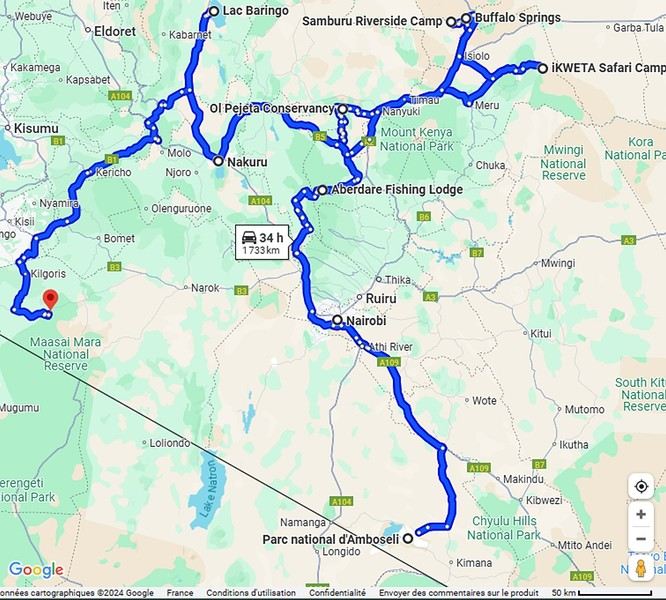
Ready to join us on safari to see some wild animals?
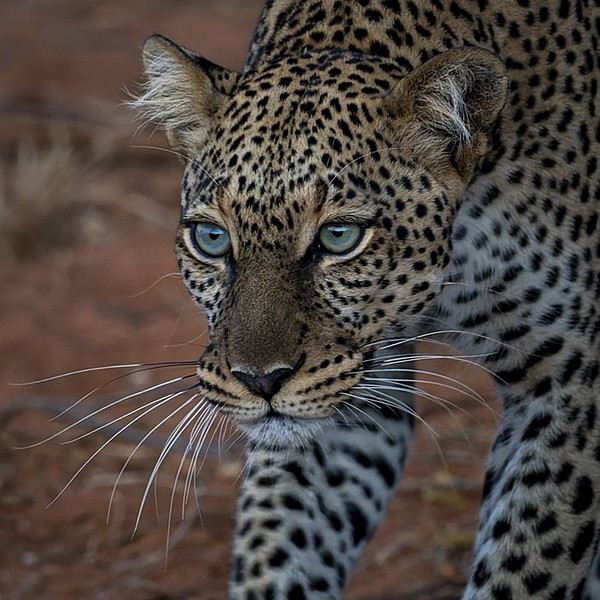
The two itineraries are almost identical (well, when you love something...) but we did make a few tweaks.
- The first part of the trip was with a local driver/guide, Félix, who was recommended by Sylvie56. Sylvie and her husband Ben are Kenya enthusiasts—they’ve been there countless times, always with Félix... and for good reason! He’s fantastic!
- The second part was with Melting Pot Safari, an agency that adapted to our photography needs. Tony Crocetta, the co-founder (along with his Kenyan friend Simon Chebon), is a wildlife photographer himself.
Here are the itineraries for both trips, including accommodations:
In 2021: Day 0: Paris / Nairobi - 67 Airport Hotel Day 1: Nairobi / Amboseli - Simba Cottage Day 2: Amboseli - Simba Cottage Day 3: Amboseli / Aberdares - Fishing Lodge Day 4: Aberdares - Fishing Lodge Day 5: Aberdares - Fishing Lodge Day 6: Aberdares / Samburu - Riverside Camp Day 7: Samburu - Riverside Camp Day 8: Samburu - Riverside Camp Day 9: Samburu / Nakuru - Merica Hotel Day 10: Nakuru / Baringo - Tumbili Cliff Lodge Day 11: Baringo - Tumbili Cliff Lodge Day 12: Baringo - Tumbili Cliff Lodge Day 13: Baringo / Maasai Mara – Meltingpot Bush Camp Day 14 to 18: Maasai Mara – Meltingpot Bush Camp Day 19: Maasai Mara / Nairobi – Roussel Guest House Day 20: Nairobi / Paris
In 2023: Day 0: Lyon / Paris / Nairobi - 67 Airport Hotel Day 1: Nairobi / Meru - Ikweta Camp Day 2: Meru - Ikweta Camp Day 3: Meru - Ikweta Camp Day 4: Meru / Samburu - Riverside Camp Day 5: Samburu – Riverside Camp Day 6: Samburu / Buffalo Springs – Samburu Simba Day 7: Buffalo Springs / Ol Pejeta – Sweetwater Camp Day 8: Ol Pejeta / Amboseli - Simba Cottage Day 9: Amboseli - Simba Cottage Day 10: Amboseli - Simba Cottage Day 11: Amboseli / Nakuru – Lake Nakuru Lodge Day 12: Nakuru / Baringo - Tumbili Cliff Lodge Day 13: Baringo - Tumbili Cliff Lodge Day 14: Baringo - Tumbili Cliff Lodge Day 15: Baringo / Maasai Mara – Meltingpot Bush Camp Day 16 to 20: Maasai Mara – Meltingpot Bush Camp Day 21: Maasai Mara / Nairobi / Paris
Here’s an itinerary—it’s not exactly what we did, but a combination of both.
Ready to join us on safari to see some wild animals?
Embracing Dawn: December 2024 Photo Contest
Hi everyone,
After my narrow victory over Herodotos (just one point ahead—I had a close call, even in December in the northern hemisphere!), I’m now honored to organize the next contest, the one for the closing year, whose results will be announced on the first day of the coming year. Out of affection for the poet with wind in his soles, who dreamed of ivory and setting sail, again and again, even in his final hours, I borrow the theme from the first line of a poem dear to me: I embraced the summer dawn.
So, as the year draws to a close, the theme will be: embracing dawn.
The verb here is just as important as the noun. More than just a subject about sunrises or that magical half-hour of pink light before the sun appears (a photographer’s nightmare: either I crank up the ISO and deal with noise, or I lug around a tripod, and say goodbye to spontaneity like a beggar on marble quays), this is about those happy little mornings—the thrill of joy in the soft light of the first hours, whether it’s a landscape, a person, an animal, a plant, architecture, or whatever else. What’s certain is that it makes you want to smile at the day breaking. Even if you go back to bed afterward.
Technical details (shamelessly borrowed from Ragamuffin, thanks!):
Participation Each VF member can submit up to 3 photos, until Wednesday, 12/25 at 11:59 PM, Milan time. Each photo must be posted in a separate message, with its number (1, 2, or 3). Don’t forget to add a little explanation (comment, location, etc.).
Voting: Each VF member can vote for the 3 photos they consider the best, based on their own criteria and the theme.
Voting will take place from Thursday, 12/26 to Tuesday, 12/31 at 11:59 PM, Milan time.
Selected photos will be ranked in order of preference: - 1st photo: 3 points - 2nd photo: 2 points - 3rd photo: 1 point
The winner is the author of the photo with the most points.
Results will be published on 01/01 (if I’m in any state to do so). In case of a tie, the number of first-place votes will decide. The winner will have the honor of organizing December’s contest.
For discussion, it’s here.
That’s all! Let’s welcome Dawn with rosy fingers, dressed in saffron...
Catherine
After my narrow victory over Herodotos (just one point ahead—I had a close call, even in December in the northern hemisphere!), I’m now honored to organize the next contest, the one for the closing year, whose results will be announced on the first day of the coming year. Out of affection for the poet with wind in his soles, who dreamed of ivory and setting sail, again and again, even in his final hours, I borrow the theme from the first line of a poem dear to me: I embraced the summer dawn.
So, as the year draws to a close, the theme will be: embracing dawn.
The verb here is just as important as the noun. More than just a subject about sunrises or that magical half-hour of pink light before the sun appears (a photographer’s nightmare: either I crank up the ISO and deal with noise, or I lug around a tripod, and say goodbye to spontaneity like a beggar on marble quays), this is about those happy little mornings—the thrill of joy in the soft light of the first hours, whether it’s a landscape, a person, an animal, a plant, architecture, or whatever else. What’s certain is that it makes you want to smile at the day breaking. Even if you go back to bed afterward.
Technical details (shamelessly borrowed from Ragamuffin, thanks!):
Participation Each VF member can submit up to 3 photos, until Wednesday, 12/25 at 11:59 PM, Milan time. Each photo must be posted in a separate message, with its number (1, 2, or 3). Don’t forget to add a little explanation (comment, location, etc.).
Voting: Each VF member can vote for the 3 photos they consider the best, based on their own criteria and the theme.
Voting will take place from Thursday, 12/26 to Tuesday, 12/31 at 11:59 PM, Milan time.
Selected photos will be ranked in order of preference: - 1st photo: 3 points - 2nd photo: 2 points - 3rd photo: 1 point
The winner is the author of the photo with the most points.
Results will be published on 01/01 (if I’m in any state to do so). In case of a tie, the number of first-place votes will decide. The winner will have the honor of organizing December’s contest.
For discussion, it’s here.
That’s all! Let’s welcome Dawn with rosy fingers, dressed in saffron...
Catherine
Eastern Crete in September 2024
Travel journal in Eastern Crete from September 8th to 29th, 2024
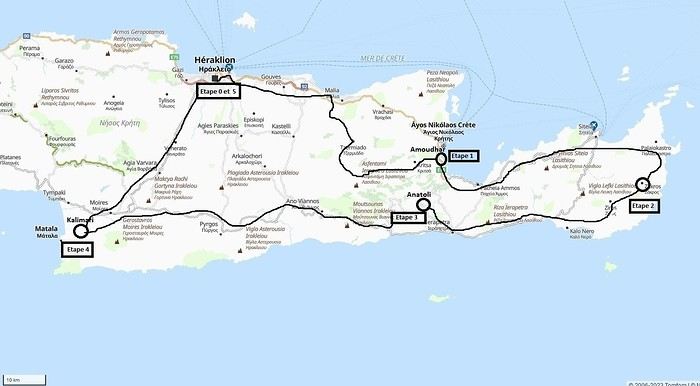 Our 21-day itinerary
Sunday, 08/09: Once again—and this is the eighth time—we’re setting off, the four of us: Patrick, Michelle, Jacques, and Monique, for the Greek islands. This time, we’ve chosen Crete. No need to wake up at 3 or 4 a.m. to reach Basel-Mulhouse Airport at dawn to catch the first flight to Greece at 6 a.m.! Given the prohibitive prices charged by EasyJet, we found flights that were half the price from Zurich Airport, which is accessible in 3 hours by train from Colmar. Pierre-Paul drives all four of us to Colmar train station, where we take the train to Basel and then, 20 minutes later, the direct train to Zurich Airport. After wandering around the airport, we go for a coffee at 6 € each! We’re in Switzerland, after all. The other dining areas all have vending machines for selecting and paying for meals—soon, there won’t be anyone left to serve you! After a short wait, we take off at 7:45 p.m. (20 minutes late) in an Aegean Airbus A321. Free in-flight meal service isn’t bad either! We land in Heraklion around 11:15 p.m. We pick up our rental car (a red Seat Ibiza) at the airport and head straight to our apartment, located 2 km from the city center. Thanks to the GPS, we find it quickly. It’s a beautiful, fully renovated apartment with all the comforts and well-equipped. On the table, there’s wine, bottles of water, jam, coffee, etc. Given the late hour, we won’t stay up long.
Monday, 09/09: To enhance our breakfast, Michelle and Monique set off to find a bakery nearby. They return with croissants and donuts—yum... Then we head to the west coast. The highway follows the coastline, but we prefer taking the old road to Malia, our first stop. We visit the major archaeological site of this Minoan city under the hot sun. The site covers a vast area, but the ruins aren’t very evocative except for a few beautiful amphorae scattered around. The explanations in a small house at the entrance are interesting and help us better understand the organization of the ancient city with its different districts. From there, we head toward the nearby mountains to see the thousand-year-old plane tree in the village of Krasi. We take the opportunity to enjoy an excellent lunch of moussaka and delicious gemista at the Krassopsychia taverna in the village center. Pleasant surprise: the prices are still reasonable, with a bill of 70 € for four, including wine and water. The friendly tradition of complimentary dessert and glasses of raki continues—great! We’ve set the bar high right away! Let’s hope the rest lives up to it! On the way back toward the Lassithi Plateau, we stop at the Kardiotisa Monastery perched high on the mountain to enjoy a magnificent view of the entire region. Just a little further, we arrive at the Lassithi Plateau: the presence of small windmills used to pump water from the ground is the typical feature of this plateau. We complete a full loop around the plateau, passing by numerous orchards and vegetable gardens that occupy the entire space. At the end of the plateau, we once again cross mountain passes via winding roads that bring us near Agios Nikolaos. Our apartment is located about ten kilometers further south in Amoudhara. The owner, who was notified, waits for us and shows us her superb apartment, whose large terrace overlooks the entire Mirabello Bay. She then gives us valuable information about the different beaches in the area. Dinner will be frugal, given our hearty lunch in Krasi!
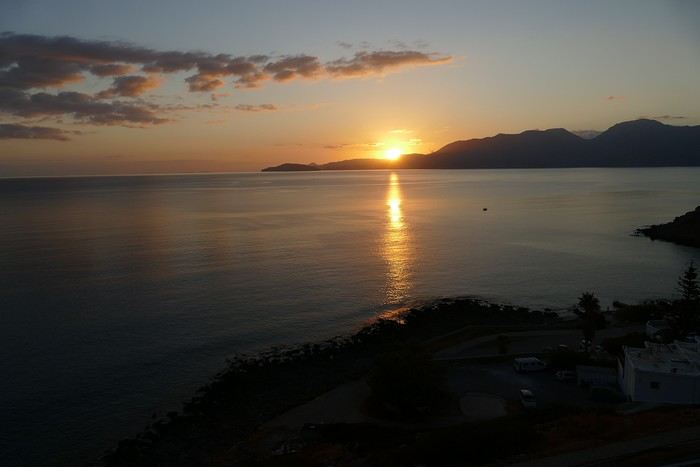 Sunset over Mirabello Bay
Tuesday, 10/09: A bit of a gray sky when we wake up around 8 a.m., but the sun will soon triumph over the scattered clouds. For our first swim, we opt for Voulisma Beach, even though our host warned us it was a bit “crowdy.” That’s understandable given the beautiful emerald color of the sea and the lovely curve of the beach. To avoid the big crowds, we move toward the eastern part of the beach, accessible via a steep staircase. The water is very warm, and this first dip is very pleasant. Before returning to the apartment, we stop at the bakery to buy spinach pies, essential ingredients to accompany our Greek salad for lunch. Of course, everything will be washed down with ouzo, which will remain our favorite drink for the next three weeks—but in moderation!!! A nap is in order after all that effort. In the late afternoon, we drive to Agios Nikolaos, the main seaside resort in Crete. We’re not too enthusiastic about visiting this mass-tourism resort, but the center of Agios, concentrated around the small inner harbor, is pleasant to see despite the plethora of shops and restaurants. We dine a little outside the harbor in the shaded courtyard of the Avli taverna: the oven-baked lamb, squid with spinach, and cuttlefish ink orzo pasta are all highly appreciated. We still stay under a 75 € bill for four.
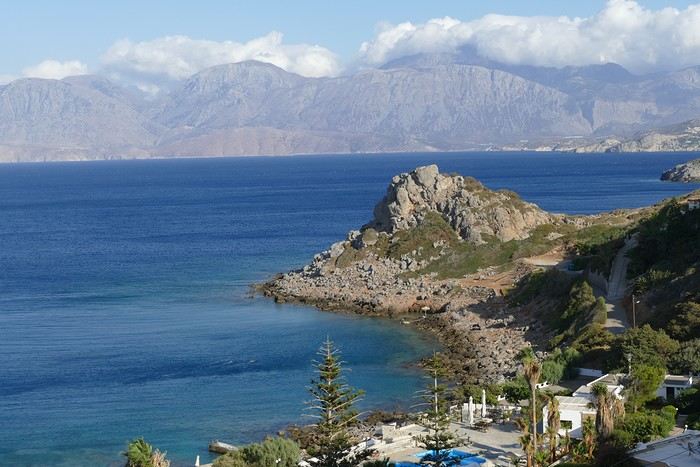 Mirabello Bay seen from our terrace
Wednesday, 11/09: At 8 a.m., the terrace is already bathed in sunlight, and it’s already quite hot. The small parasol barely gives us enough shade, but we’re not complaining! For our second swim, we head to a tiny beach recommended by our host, just 3 minutes by car from our place. The path leading to it is very discreet, and we don’t find it right away! It’s a small sandy cove with a few welcome tamarisk trees for shade. When we arrive, there are two swimmers, and there won’t be more than five or six in the morning. After lunch and a nap, we head to the beautiful village of Kritsa, just a few kilometers away. It’s too late to visit the beautiful church of Kera Panagia, which is already closed. We settle for the exterior, which is worth a look. The weather is clouding over, and big clouds are gathering. Upon arriving in Kritsa, a heavy shower forces us to take shelter in the Platanos taverna in the village center, and since it’s nearly 7 p.m., we decide to stay and dine there. Good choice—excellent meze: croquettes and stuffed zucchini flowers, gigantes beans, grilled tomatoes and feta, and pancetta as the main dish. The rain stops just as we decide to head back.
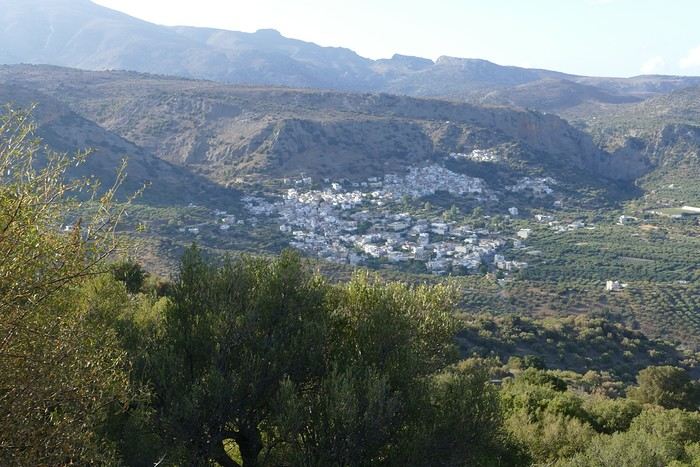 Village of Kritsa
Thursday, 12/09: Our terrace faces east, so we get to watch the sunrise around 7 a.m.—it’s truly a beautiful sight we never tire of. Around 9 a.m., we head to the village of Plaka, where boats depart for the island of Spinalonga, located north of Agios Nikolaos. We board the first boat, which sets sail at 10 a.m., and we’re not alone—the boat is practically full. After 10 minutes, we land on the island at the same time as several other boats from Elounda or Agios. Needless to say, there are already quite a few people walking through the streets of the leper village. The visit remains interesting and moving as we read the explanatory panels recounting the island’s history under Byzantine and then Turkish rule, followed by its transformation into a leper colony. As soon as we climb toward the top of the island via more or less maintained paths, there’s almost no one left. The 360° view from up there is stunning.
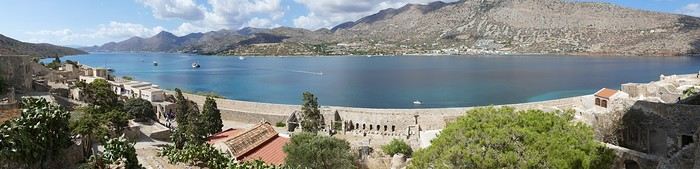
Spinalonga Island
The heat is now unbearable, and we can’t wait to get back home to have lunch on our terrace and rest. In the late afternoon, we go grocery shopping at the AB supermarket at the entrance of Agios. We had spotted another nice restaurant in our guide, but unfortunately, there’s a different one at the indicated location that doesn’t inspire us. So, we return to the Avli taverna for another dinner just as good as the first.
Friday, 13/09: We repeat yesterday’s successful program: a swim in our little cove, lunch on the terrace, a nap, and then, in the late afternoon, we discover another nearby village, Kroustas, nestled in the olive groves near Kritsa. Much less touristy than Kritsa, it’s mostly inhabited by locals, especially the elderly who are enjoying the cool air on their chairs—if you can call it cool given the still-high temperatures in the late afternoon! We then return to visit Kritsa, which we hadn’t been able to explore due to the rain. Dinner at a taverna in the village center at a very reasonable price.
Saturday, 14/09: Today, we move to our new base further east. We start with a high viewpoint at the Faneromeni Monastery, which overlooks Mirabello Bay. The monastery itself is of little interest as it’s under renovation with excessive concrete work. We continue to the village of Kavoussi to see another exceptional tree after a few kilometers on a dusty, bumpy track. It’s an olive tree said to be about 3,200 years old—impressive, and the countryside is very beautiful. It’s time to find a place for lunch. We find one in the charming little port of Mohlos, where a few tavernas surround a very nice small beach. Our choice falls on the Bogazzi taverna, where we enjoy fried fish. To reach our new base in Zakros, we still have to drive through the mountains before reaching Sitia, Paleokastro, and finally Zakros. The region is beautiful, with olive groves and rows of wind turbines taking advantage of the strong wind near the northern tip of the island. In Zakros, we’re greeted by our very friendly host. Here too, we have all the comforts and a beautiful terrace overlooking the village. The apartment has reversible air conditioners, but the overly simple instructions leave us puzzled. Thinking we’ve set it correctly, we realize a little too late that it’s blowing hot air over 30°C! After numerous attempts and testing several confusing programs, we finally succeed! Dinner on our new terrace.
Sunday, 15/09: This morning, we get up early to hike in the “Gorge of the Dead” while it’s still cool. The sky is blue as usual! We park in the nearest parking lot and start our descent via a beautiful path winding through the olive groves. A little further on, the landscape opens up, and the path, now a stony trail, begins the descent to the dry riverbed. On either side of the riverbed rise beautiful reddish cliffs.
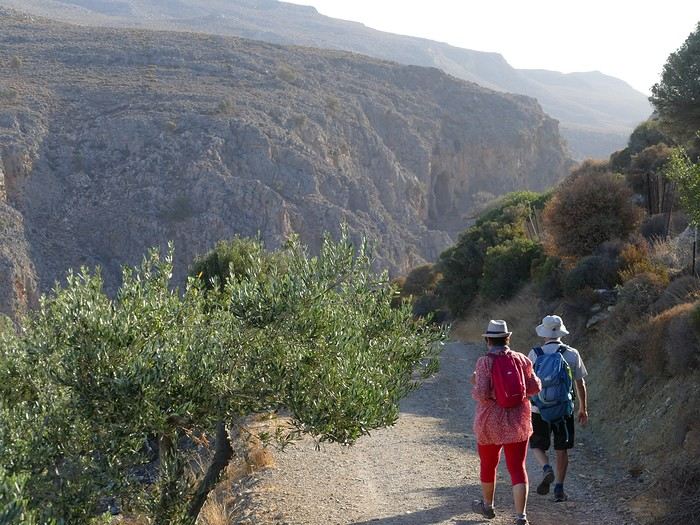
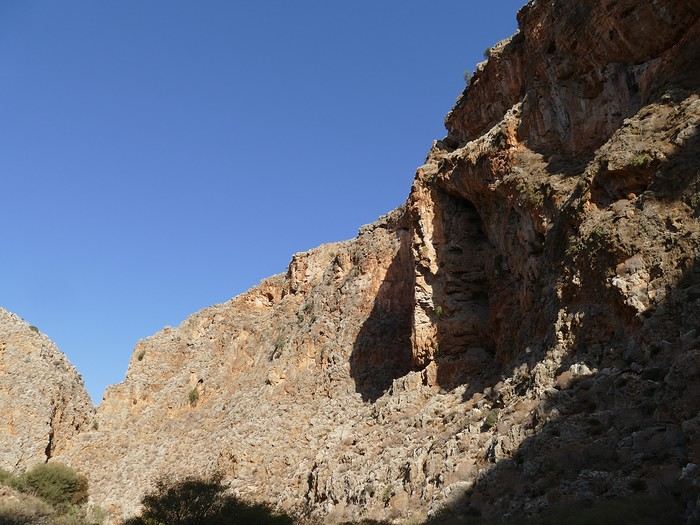
Gorge of the Dead
The trail winds its way through this narrow gorge with difficulty. It was in the many caves visible halfway up the slope that the Minoans buried their dead, hence the name “Gorge of the Dead.” The gorge opens onto a beautiful small pebble beach. A swim is welcome after this hike that made us sweat. The hike took us 1 hour and 25 minutes, and a little less on the way back. Meanwhile, Monique did some shopping and prepared an excellent lunch. In the late afternoon, we go down to dine at Platanakis, a taverna in the small village of Kato Zakros.
Monday, 16/09: This morning, we explore the northern part of the east coast near Palekastro. We start with a dip at the beautiful Hionia Beach near Palekastro. The water is still just as nice, but a light breeze is blowing—not enough to spoil our fun! Seeing all the wind turbines lining the ridges, it’s no surprise.
 Grocery shopping in Palekastro and return to Zakros. A little rain in the late afternoon and an excellent dinner at Iannis Mitsakakis’ Taverna in Adravastis. These are the kind of small tavernas we love—unpretentious, a few tables on a terrace, a warm welcome, a short menu guaranteeing freshness, tasty dishes prepared by the server’s mom, and a light bill. What more could you ask for!
Tuesday, 17/09: We head back toward Palekastro to do some shopping, but it’s also the road to the Toplou Monastery. There, we see a collection of magnificent icons dating from the 15th to the 20th century. We can also admire drawings of Orthodox religious architecture. We continue toward the Mavros Akrotiri headland to enjoy the view of the sea and rocky capes. On the way back to our place, we make a small detour to see the famous Vai palm grove. Meh... As for Vai Beach, it’s filled with paid umbrellas and sunbeds, and there are so many people that we flee. Plus, having to pay for parking is another reason to snub this trendy beach. We prefer our Hionia Beach, which we already appreciated the other day. In the late afternoon, Pat and I start the trail that begins at Kato Zakros Beach heading south. The poorly marked path crosses a plateau of sharp limestone. The paint and cairn markings are no longer very visible, and with dusk approaching, we turn back toward Kato Zakros. Dinner at the Platanakis taverna—less good than last time.
Wednesday, 18/09: To avoid the scorching sun, Pat, Mimi, and I get up earlier than usual to hike the Hohlakies Gorge. At this early hour, the sky is quite cloudy, and it’s drizzling. When we arrive in the village of Hohlakies, we park in front of a small chapel, the start of the hike. The sky is now completely clear. The trail starts among the olive groves, then after passing through a gate, we descend into the gorge filled with large rocks. We’re alone in the world, and the landscape is magnificent. A few wild goats clinging to the cliff watch us from above. After 1 hour and 15 minutes, we emerge onto the wonderful Karoumès Beach. A pleasant swim, then back to civilization! A walk in the late afternoon in Zakros to discover the beautiful springs route. Dinner in Adravastis.
Thursday, 19/09: Another move: Before heading to our next stop, we make a detour to see the beautiful Keratokampos Beach and can’t resist a swim in the still-warm, clear water. We continue our journey via Ziros, then reach the south coast and have lunch at the Stephi taverna in Ferma—excellent meal! The south coast is quite urbanized and has much less charm than the east coast we’ve just left! The numerous plastic greenhouses are partly to blame. We stop for groceries in Ierapetra. Around 3 p.m., we arrive at our destination in the small perched village of Anatoli. Our lodging is at the top of the village, and from the path leading to it, we have a magnificent view of the coastal plain, unfortunately overloaded with plastic greenhouses. It reminds us of the landscapes of El Ejido in Andalusia.
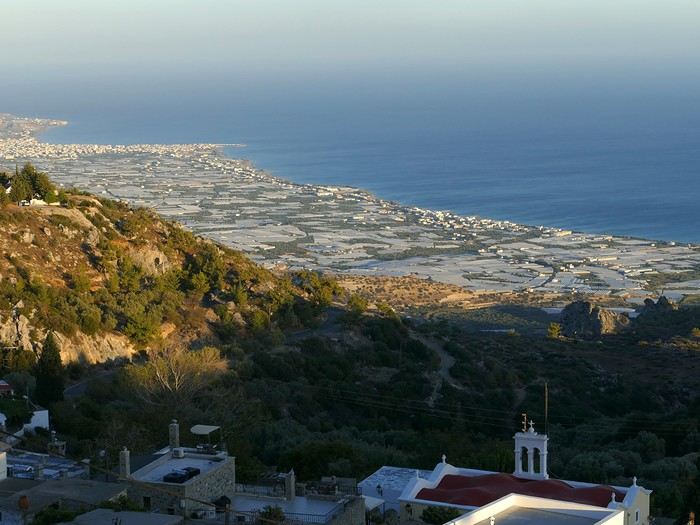 View of the Ierapetra coast from Anatoli
Friday, 20/09: A walk and discovery of the hamlet of Anatoli. There are few services—a tiny grocery store, a taverna, and that’s it. Fortunately, the traveling baker arrives and honks. We take the opportunity to buy fresh bread. Leaving the village, we take a path that should lead us to the hamlet of Drygies. The landscape is beautiful. We walk through a lovely pine forest before arriving at the hamlet. The path continues to a taverna that’s closed today, with a superb terrace overlooking the coast. Luckily, the owner arrives and informs us that the taverna will be open next Sunday and that we can enjoy barbecued meat. Noted! We head back to Anatoli via the small paved road with, fortunately, very limited traffic. Lunch on our terrace, then a dip in our private pool! The water is noticeably cooler than at the beach. Dinner at the village taverna: there’s only one menu—meze starters, souvlaki, water, wine, and bread—all for 35 €! We think we’re dreaming—was there a mistake? No.
Saturday, 21/09: We discover the beach of the village of Myrtos, a small seaside resort that’s quite touristy but on a human scale. We swim in the western part of the beach, and once again, we’re alone in the water. The best part: warm water and tamarisk trees for welcome shade. There’s even a shower to rinse off! In the late afternoon, Pat and I decide to go for a hike in the Selakano pine forest. To get there, we take a narrow, winding, and poorly paved road after the village of Christos. Plus, at this altitude, we encounter clouds clinging to the mountain, so it’s drizzling, and visibility is reduced. We decide to turn back and return to Anatoli. As compensation, we take the path that passes in front of the lodging and leads us to the Timios Stavros chapel, which crowns the summit of the nearby mountain. We arrive at the summit just in time for the sunset at 7 p.m. Breathtaking 360° panorama and magnificent colors!
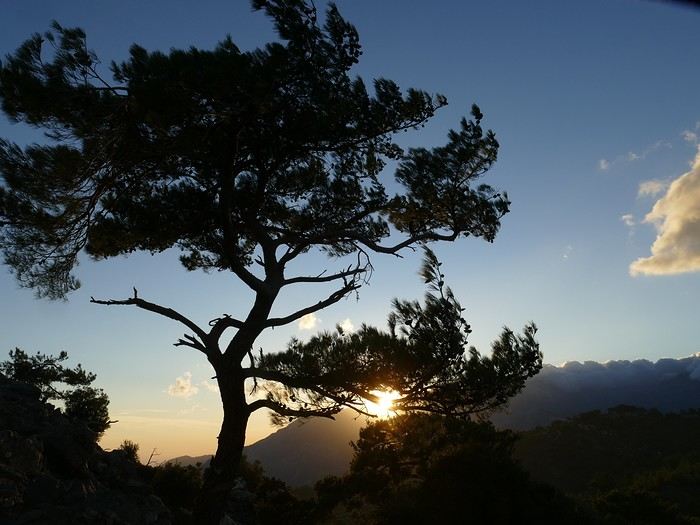 Sunset from Anatoli
Sunday, 22/09: This morning, Pat, Mimi, and I go for a hike in the Sarakina Gorge, located about 12 km from Anatoli via a beautiful road winding through irrigated olive groves. We park in the small parking lot before the trail. At the start, the path follows a levada (small irrigation canal) and quickly enters a very narrow gorge flanked by high cliffs. The riverbed is cluttered with huge rocks blocking the passage. No matter—in the technical sections, ropes or ladders allow us to overcome these obstacles with a bit of skill. You can imagine how quickly the riverbed must rise during a storm, given the narrowness of the gorge!
We progress slowly through this magnificent and impressive rocky chaos. At the exit of the gorge, we take another return path that partly follows the paved road. Back in Anatoli, we go to lunch at the Drygies taverna. We sit at the edge of the terrace under a huge tree that covers almost the entire terrace and order grilled lamb dishes prepared according to the ancient “antikristo” method.
Monday, 23/09: Departure for our last stop before Heraklion. We thought about swimming at Tertsa Beach, but it turns out to be less pleasant than expected, with pebbles and an uneven rocky plateau. So, we return to Myrtos Beach, which we know well and suits us perfectly. We head west, leaving the coast a bit. Around 3:30 p.m., we arrive at our destination in the village of Kamilari, near the famous Matala spot. We’ve rented a beautiful, modern, well-equipped apartment with a lovely shaded terrace. The owner is very friendly and explains everything necessary for a good stay. We explore the quite touristy village with its few tavernas, all full of tourists, mostly Germans.
Tuesday, 24/09: Visit to the village of Sivas, well restored thanks to the Germans, who have invested a lot here. We take the opportunity to scout out “friendly” tavernas, then go for a swim at Kalamaki Beach. Apart from a small sandy access, you have to enter the water via a chaotic limestone plateau—proof of this is that Monique trips slightly when entering the water. A group of very unfriendly German women blocks the sandy passage and doesn’t hesitate to push swimmers they deem too close. Back home, lunch, and a nap. In the late afternoon, we drive to visit the nearby Phaistos site. We benefit from very beautiful lighting. From the elevated site, we overlook the Messara Plain with a beautiful view of the olive grove checkerboards highlighted by the late afternoon sun. The site itself is quite vast, but to appreciate it, it’s better to read the explanatory panels placed throughout the different quarters. At this hour, the site is almost empty, and the beautiful light adds charm to the visit.
Wednesday, 25/09: Departure for the village of Matala, which doesn’t interest us in itself, having been there during the “hippie” era in 1976. However, going to Red Beach, only accessible by taking a path overlooking this area, appeals to us much more. We park in the large parking lot just outside the village and start our climb, which brings us to a pass from where we can admire this beautiful red-sand beach framed by beautiful cliffs plunging into the sea. The weather is magnificent, and at this early hour, there aren’t many people yet. We swim in the free part located near the cliff on the right when arriving at the beach. The sea is like glass, warm, and without a single ripple—a real treat! After half an hour, we turn back, and now there are many people rushing on this path, not at all made for feet in sandals or flip-flops, yet many vacationers venture out like this! Matala lives up to its image—a trendy place, full of shops, bars, and restaurants. You could be in any seaside resort with a standard global urbanism, lacking particular charm. Back home. In the late afternoon, a walk through the olive groves surrounding Kamilari, then dinner at Evangelina’s, who runs the Minoan Parassies taverna in the middle of the olive groves. Evangelina is quite a character: we came to reserve a table for 8 p.m. when it was only 7 p.m., but since we lingered near her restaurant, she prepares a table for us and urges us to sit down! And there she takes our order, and a little later, the meze arrive, followed by the main dishes. We finish this good dinner with several generous glasses of raki, accompanied by Evangelina’s encouragements, repeating “poya poya bravo bravo” in a loop. We’re in great shape too, by the way! We return in the middle of the night, on foot, fortunately, with the path vaguely lit by our phones...
Thursday, 26/09: This morning, we discover a new beach, Kommos Beach, not far from Kamilari either. It’s a long sandy beach, a small part of which is dedicated to paid umbrellas and sunbeds, and the rest is free. We spot a tamarisk tree to take shelter from the still-hot sun, and once again, we enjoy clear, warm water. The few swimmers spread out easily over nearly 500 meters of beach. In the late afternoon, Pat and I go to admire the sunset from the hill near our lodging. The hill, covered with olive trees, is threatened by a planned housing development of large cubic villas—trends dictate. Concrete never stops...
Friday, 27/09: We thought about leaving the car at the Odiyitria Monastery, the end of the paved road, but since the track descending to the cave remains drivable, we park 3 km further at the junction of the track leading to Kali Limenes Beach. We still have to walk for half an hour on a less drivable track, and then we’re at the entrance of the Farango Gorge. It’s a beautiful, easy hike since we follow the dry pebble riverbed. Before arriving at the beach, there’s a very beautiful small chapel sheltered under a large cliff, beautifully lit at this early hour.
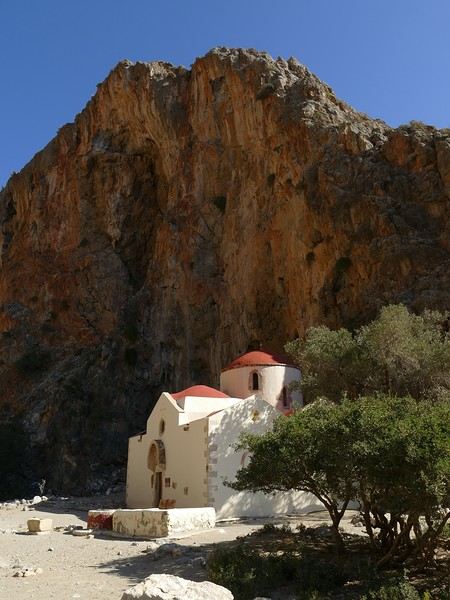
Agio Farango Chapel
A few climbers are scaling the cliff, and about ten swimmers are enjoying the sea. Return to the car under the hot sun. In the late afternoon, we all return to visit the interesting Odiyitria Monastery. Last swim at Kommos Beach and an excellent dinner at the Sigelakis taverna in Sivas.
Saturday, 28/09: There’s an end-of-vacation atmosphere... We pack our bags and head north. A short stop to see the village of Vorri, and a little over an hour later, we arrive in the big city of Heraklion. Since it’s too early to check into the apartment, we park in the city center to visit the famous archaeological museum. It’s indeed a must-see highlight of our stay in Crete. All four of us are amazed by the quantity and quality of the objects presented from the Minoan civilization. After more than 2 hours, we come out without having seen everything, but we’re a bit overwhelmed by all these wonders. Lunch at a nice little taverna very close to the Titus Church. We go to take possession of our apartment—the same as on the way there, still just as satisfying. In the late afternoon, I go alone for a walk in the historic district of the city, passing by the Morosini Fountain, which is bustling with people—some seated at café terraces, others standing and chatting. There’s a lively atmosphere here. A little further on are the Venetian loggia and the Agios Titos Church. I walk down to the old Venetian port to stroll along the jetty and admire the fortifications under beautiful late-afternoon lighting, then return to the apartment. Dinner near our place at Kiriakis, a “chic” restaurant but with very reasonable prices and excellent cuisine.
Sunday, 29/09: Wake-up at 3:30 a.m., quick coffee, and drive to the nearby airport. We leave the car in the parking lot. Already a lot of people at this early hour. Since we don’t have checked luggage, we go straight to security, which goes fairly quickly, then it’s waiting time and takeoff on time in an Airbus A321 for a 45-minute flight to Athens. We take off again in another Airbus A321 with a 50-minute delay to arrive in Zurich at 11:10 a.m. local time. Then we have to take the train to Basel and then the one to Colmar. With fewer Sunday services, we won’t arrive in Colmar until around 4 p.m.
Conclusion All four of us returned very satisfied with this stay in Crete for several reasons: - We found superb beaches with clear, warm water and often very few vacationers. - The few hikes we did were magnificent, especially those where the trails went through gorges leading to deserted beaches. - We greatly appreciated Cretan gastronomy—there were so few disappointments that we can count them on one hand. - All the accommodations we booked turned out to be superb, with the icing on the cake being the very friendly welcome from our hosts. - Generally, contacts with Cretans were always very warm despite the language barrier—we speak a little Greek. - We also appreciated the diversity of landscapes in this eastern part of Crete, with plateaus and mountains with splendid rugged reliefs.
Note: The photo album is available by clicking on this link: https://photos.app.goo.gl/hfdjQndA5eXkL5k7 Captions are only visible per photo by clicking on the circled “i” in the top right. Budget: approximately 3,300 € per couple for 21 days, including train and flights Budget details per couple: - Flight Zurich-Heraklion: 440 € - Trains Colmar-Basel-Zurich round trip for 4: 442.40 € (221 € per couple) - Accommodation: 2,431 € / 21 = 115.80 € per night for 4 (1,216 € per couple) - Car rental for 21 days: 684 € + 145 € fuel (1,150 km) (414 € per couple) - Restaurants, food, etc.: 1,009 €
Our 21-day itinerarySunday, 08/09: Once again—and this is the eighth time—we’re setting off, the four of us: Patrick, Michelle, Jacques, and Monique, for the Greek islands. This time, we’ve chosen Crete. No need to wake up at 3 or 4 a.m. to reach Basel-Mulhouse Airport at dawn to catch the first flight to Greece at 6 a.m.! Given the prohibitive prices charged by EasyJet, we found flights that were half the price from Zurich Airport, which is accessible in 3 hours by train from Colmar. Pierre-Paul drives all four of us to Colmar train station, where we take the train to Basel and then, 20 minutes later, the direct train to Zurich Airport. After wandering around the airport, we go for a coffee at 6 € each! We’re in Switzerland, after all. The other dining areas all have vending machines for selecting and paying for meals—soon, there won’t be anyone left to serve you! After a short wait, we take off at 7:45 p.m. (20 minutes late) in an Aegean Airbus A321. Free in-flight meal service isn’t bad either! We land in Heraklion around 11:15 p.m. We pick up our rental car (a red Seat Ibiza) at the airport and head straight to our apartment, located 2 km from the city center. Thanks to the GPS, we find it quickly. It’s a beautiful, fully renovated apartment with all the comforts and well-equipped. On the table, there’s wine, bottles of water, jam, coffee, etc. Given the late hour, we won’t stay up long.
Monday, 09/09: To enhance our breakfast, Michelle and Monique set off to find a bakery nearby. They return with croissants and donuts—yum... Then we head to the west coast. The highway follows the coastline, but we prefer taking the old road to Malia, our first stop. We visit the major archaeological site of this Minoan city under the hot sun. The site covers a vast area, but the ruins aren’t very evocative except for a few beautiful amphorae scattered around. The explanations in a small house at the entrance are interesting and help us better understand the organization of the ancient city with its different districts. From there, we head toward the nearby mountains to see the thousand-year-old plane tree in the village of Krasi. We take the opportunity to enjoy an excellent lunch of moussaka and delicious gemista at the Krassopsychia taverna in the village center. Pleasant surprise: the prices are still reasonable, with a bill of 70 € for four, including wine and water. The friendly tradition of complimentary dessert and glasses of raki continues—great! We’ve set the bar high right away! Let’s hope the rest lives up to it! On the way back toward the Lassithi Plateau, we stop at the Kardiotisa Monastery perched high on the mountain to enjoy a magnificent view of the entire region. Just a little further, we arrive at the Lassithi Plateau: the presence of small windmills used to pump water from the ground is the typical feature of this plateau. We complete a full loop around the plateau, passing by numerous orchards and vegetable gardens that occupy the entire space. At the end of the plateau, we once again cross mountain passes via winding roads that bring us near Agios Nikolaos. Our apartment is located about ten kilometers further south in Amoudhara. The owner, who was notified, waits for us and shows us her superb apartment, whose large terrace overlooks the entire Mirabello Bay. She then gives us valuable information about the different beaches in the area. Dinner will be frugal, given our hearty lunch in Krasi!
Sunset over Mirabello BayTuesday, 10/09: A bit of a gray sky when we wake up around 8 a.m., but the sun will soon triumph over the scattered clouds. For our first swim, we opt for Voulisma Beach, even though our host warned us it was a bit “crowdy.” That’s understandable given the beautiful emerald color of the sea and the lovely curve of the beach. To avoid the big crowds, we move toward the eastern part of the beach, accessible via a steep staircase. The water is very warm, and this first dip is very pleasant. Before returning to the apartment, we stop at the bakery to buy spinach pies, essential ingredients to accompany our Greek salad for lunch. Of course, everything will be washed down with ouzo, which will remain our favorite drink for the next three weeks—but in moderation!!! A nap is in order after all that effort. In the late afternoon, we drive to Agios Nikolaos, the main seaside resort in Crete. We’re not too enthusiastic about visiting this mass-tourism resort, but the center of Agios, concentrated around the small inner harbor, is pleasant to see despite the plethora of shops and restaurants. We dine a little outside the harbor in the shaded courtyard of the Avli taverna: the oven-baked lamb, squid with spinach, and cuttlefish ink orzo pasta are all highly appreciated. We still stay under a 75 € bill for four.
Mirabello Bay seen from our terraceWednesday, 11/09: At 8 a.m., the terrace is already bathed in sunlight, and it’s already quite hot. The small parasol barely gives us enough shade, but we’re not complaining! For our second swim, we head to a tiny beach recommended by our host, just 3 minutes by car from our place. The path leading to it is very discreet, and we don’t find it right away! It’s a small sandy cove with a few welcome tamarisk trees for shade. When we arrive, there are two swimmers, and there won’t be more than five or six in the morning. After lunch and a nap, we head to the beautiful village of Kritsa, just a few kilometers away. It’s too late to visit the beautiful church of Kera Panagia, which is already closed. We settle for the exterior, which is worth a look. The weather is clouding over, and big clouds are gathering. Upon arriving in Kritsa, a heavy shower forces us to take shelter in the Platanos taverna in the village center, and since it’s nearly 7 p.m., we decide to stay and dine there. Good choice—excellent meze: croquettes and stuffed zucchini flowers, gigantes beans, grilled tomatoes and feta, and pancetta as the main dish. The rain stops just as we decide to head back.
Village of KritsaThursday, 12/09: Our terrace faces east, so we get to watch the sunrise around 7 a.m.—it’s truly a beautiful sight we never tire of. Around 9 a.m., we head to the village of Plaka, where boats depart for the island of Spinalonga, located north of Agios Nikolaos. We board the first boat, which sets sail at 10 a.m., and we’re not alone—the boat is practically full. After 10 minutes, we land on the island at the same time as several other boats from Elounda or Agios. Needless to say, there are already quite a few people walking through the streets of the leper village. The visit remains interesting and moving as we read the explanatory panels recounting the island’s history under Byzantine and then Turkish rule, followed by its transformation into a leper colony. As soon as we climb toward the top of the island via more or less maintained paths, there’s almost no one left. The 360° view from up there is stunning.
Spinalonga Island
The heat is now unbearable, and we can’t wait to get back home to have lunch on our terrace and rest. In the late afternoon, we go grocery shopping at the AB supermarket at the entrance of Agios. We had spotted another nice restaurant in our guide, but unfortunately, there’s a different one at the indicated location that doesn’t inspire us. So, we return to the Avli taverna for another dinner just as good as the first.
Friday, 13/09: We repeat yesterday’s successful program: a swim in our little cove, lunch on the terrace, a nap, and then, in the late afternoon, we discover another nearby village, Kroustas, nestled in the olive groves near Kritsa. Much less touristy than Kritsa, it’s mostly inhabited by locals, especially the elderly who are enjoying the cool air on their chairs—if you can call it cool given the still-high temperatures in the late afternoon! We then return to visit Kritsa, which we hadn’t been able to explore due to the rain. Dinner at a taverna in the village center at a very reasonable price.
Saturday, 14/09: Today, we move to our new base further east. We start with a high viewpoint at the Faneromeni Monastery, which overlooks Mirabello Bay. The monastery itself is of little interest as it’s under renovation with excessive concrete work. We continue to the village of Kavoussi to see another exceptional tree after a few kilometers on a dusty, bumpy track. It’s an olive tree said to be about 3,200 years old—impressive, and the countryside is very beautiful. It’s time to find a place for lunch. We find one in the charming little port of Mohlos, where a few tavernas surround a very nice small beach. Our choice falls on the Bogazzi taverna, where we enjoy fried fish. To reach our new base in Zakros, we still have to drive through the mountains before reaching Sitia, Paleokastro, and finally Zakros. The region is beautiful, with olive groves and rows of wind turbines taking advantage of the strong wind near the northern tip of the island. In Zakros, we’re greeted by our very friendly host. Here too, we have all the comforts and a beautiful terrace overlooking the village. The apartment has reversible air conditioners, but the overly simple instructions leave us puzzled. Thinking we’ve set it correctly, we realize a little too late that it’s blowing hot air over 30°C! After numerous attempts and testing several confusing programs, we finally succeed! Dinner on our new terrace.
Sunday, 15/09: This morning, we get up early to hike in the “Gorge of the Dead” while it’s still cool. The sky is blue as usual! We park in the nearest parking lot and start our descent via a beautiful path winding through the olive groves. A little further on, the landscape opens up, and the path, now a stony trail, begins the descent to the dry riverbed. On either side of the riverbed rise beautiful reddish cliffs.
Gorge of the Dead
The trail winds its way through this narrow gorge with difficulty. It was in the many caves visible halfway up the slope that the Minoans buried their dead, hence the name “Gorge of the Dead.” The gorge opens onto a beautiful small pebble beach. A swim is welcome after this hike that made us sweat. The hike took us 1 hour and 25 minutes, and a little less on the way back. Meanwhile, Monique did some shopping and prepared an excellent lunch. In the late afternoon, we go down to dine at Platanakis, a taverna in the small village of Kato Zakros.
Monday, 16/09: This morning, we explore the northern part of the east coast near Palekastro. We start with a dip at the beautiful Hionia Beach near Palekastro. The water is still just as nice, but a light breeze is blowing—not enough to spoil our fun! Seeing all the wind turbines lining the ridges, it’s no surprise.
Grocery shopping in Palekastro and return to Zakros. A little rain in the late afternoon and an excellent dinner at Iannis Mitsakakis’ Taverna in Adravastis. These are the kind of small tavernas we love—unpretentious, a few tables on a terrace, a warm welcome, a short menu guaranteeing freshness, tasty dishes prepared by the server’s mom, and a light bill. What more could you ask for!Tuesday, 17/09: We head back toward Palekastro to do some shopping, but it’s also the road to the Toplou Monastery. There, we see a collection of magnificent icons dating from the 15th to the 20th century. We can also admire drawings of Orthodox religious architecture. We continue toward the Mavros Akrotiri headland to enjoy the view of the sea and rocky capes. On the way back to our place, we make a small detour to see the famous Vai palm grove. Meh... As for Vai Beach, it’s filled with paid umbrellas and sunbeds, and there are so many people that we flee. Plus, having to pay for parking is another reason to snub this trendy beach. We prefer our Hionia Beach, which we already appreciated the other day. In the late afternoon, Pat and I start the trail that begins at Kato Zakros Beach heading south. The poorly marked path crosses a plateau of sharp limestone. The paint and cairn markings are no longer very visible, and with dusk approaching, we turn back toward Kato Zakros. Dinner at the Platanakis taverna—less good than last time.
Wednesday, 18/09: To avoid the scorching sun, Pat, Mimi, and I get up earlier than usual to hike the Hohlakies Gorge. At this early hour, the sky is quite cloudy, and it’s drizzling. When we arrive in the village of Hohlakies, we park in front of a small chapel, the start of the hike. The sky is now completely clear. The trail starts among the olive groves, then after passing through a gate, we descend into the gorge filled with large rocks. We’re alone in the world, and the landscape is magnificent. A few wild goats clinging to the cliff watch us from above. After 1 hour and 15 minutes, we emerge onto the wonderful Karoumès Beach. A pleasant swim, then back to civilization! A walk in the late afternoon in Zakros to discover the beautiful springs route. Dinner in Adravastis.
Thursday, 19/09: Another move: Before heading to our next stop, we make a detour to see the beautiful Keratokampos Beach and can’t resist a swim in the still-warm, clear water. We continue our journey via Ziros, then reach the south coast and have lunch at the Stephi taverna in Ferma—excellent meal! The south coast is quite urbanized and has much less charm than the east coast we’ve just left! The numerous plastic greenhouses are partly to blame. We stop for groceries in Ierapetra. Around 3 p.m., we arrive at our destination in the small perched village of Anatoli. Our lodging is at the top of the village, and from the path leading to it, we have a magnificent view of the coastal plain, unfortunately overloaded with plastic greenhouses. It reminds us of the landscapes of El Ejido in Andalusia.
View of the Ierapetra coast from AnatoliFriday, 20/09: A walk and discovery of the hamlet of Anatoli. There are few services—a tiny grocery store, a taverna, and that’s it. Fortunately, the traveling baker arrives and honks. We take the opportunity to buy fresh bread. Leaving the village, we take a path that should lead us to the hamlet of Drygies. The landscape is beautiful. We walk through a lovely pine forest before arriving at the hamlet. The path continues to a taverna that’s closed today, with a superb terrace overlooking the coast. Luckily, the owner arrives and informs us that the taverna will be open next Sunday and that we can enjoy barbecued meat. Noted! We head back to Anatoli via the small paved road with, fortunately, very limited traffic. Lunch on our terrace, then a dip in our private pool! The water is noticeably cooler than at the beach. Dinner at the village taverna: there’s only one menu—meze starters, souvlaki, water, wine, and bread—all for 35 €! We think we’re dreaming—was there a mistake? No.
Saturday, 21/09: We discover the beach of the village of Myrtos, a small seaside resort that’s quite touristy but on a human scale. We swim in the western part of the beach, and once again, we’re alone in the water. The best part: warm water and tamarisk trees for welcome shade. There’s even a shower to rinse off! In the late afternoon, Pat and I decide to go for a hike in the Selakano pine forest. To get there, we take a narrow, winding, and poorly paved road after the village of Christos. Plus, at this altitude, we encounter clouds clinging to the mountain, so it’s drizzling, and visibility is reduced. We decide to turn back and return to Anatoli. As compensation, we take the path that passes in front of the lodging and leads us to the Timios Stavros chapel, which crowns the summit of the nearby mountain. We arrive at the summit just in time for the sunset at 7 p.m. Breathtaking 360° panorama and magnificent colors!
Sunset from AnatoliSunday, 22/09: This morning, Pat, Mimi, and I go for a hike in the Sarakina Gorge, located about 12 km from Anatoli via a beautiful road winding through irrigated olive groves. We park in the small parking lot before the trail. At the start, the path follows a levada (small irrigation canal) and quickly enters a very narrow gorge flanked by high cliffs. The riverbed is cluttered with huge rocks blocking the passage. No matter—in the technical sections, ropes or ladders allow us to overcome these obstacles with a bit of skill. You can imagine how quickly the riverbed must rise during a storm, given the narrowness of the gorge!
We progress slowly through this magnificent and impressive rocky chaos. At the exit of the gorge, we take another return path that partly follows the paved road. Back in Anatoli, we go to lunch at the Drygies taverna. We sit at the edge of the terrace under a huge tree that covers almost the entire terrace and order grilled lamb dishes prepared according to the ancient “antikristo” method.
Monday, 23/09: Departure for our last stop before Heraklion. We thought about swimming at Tertsa Beach, but it turns out to be less pleasant than expected, with pebbles and an uneven rocky plateau. So, we return to Myrtos Beach, which we know well and suits us perfectly. We head west, leaving the coast a bit. Around 3:30 p.m., we arrive at our destination in the village of Kamilari, near the famous Matala spot. We’ve rented a beautiful, modern, well-equipped apartment with a lovely shaded terrace. The owner is very friendly and explains everything necessary for a good stay. We explore the quite touristy village with its few tavernas, all full of tourists, mostly Germans.
Tuesday, 24/09: Visit to the village of Sivas, well restored thanks to the Germans, who have invested a lot here. We take the opportunity to scout out “friendly” tavernas, then go for a swim at Kalamaki Beach. Apart from a small sandy access, you have to enter the water via a chaotic limestone plateau—proof of this is that Monique trips slightly when entering the water. A group of very unfriendly German women blocks the sandy passage and doesn’t hesitate to push swimmers they deem too close. Back home, lunch, and a nap. In the late afternoon, we drive to visit the nearby Phaistos site. We benefit from very beautiful lighting. From the elevated site, we overlook the Messara Plain with a beautiful view of the olive grove checkerboards highlighted by the late afternoon sun. The site itself is quite vast, but to appreciate it, it’s better to read the explanatory panels placed throughout the different quarters. At this hour, the site is almost empty, and the beautiful light adds charm to the visit.
Wednesday, 25/09: Departure for the village of Matala, which doesn’t interest us in itself, having been there during the “hippie” era in 1976. However, going to Red Beach, only accessible by taking a path overlooking this area, appeals to us much more. We park in the large parking lot just outside the village and start our climb, which brings us to a pass from where we can admire this beautiful red-sand beach framed by beautiful cliffs plunging into the sea. The weather is magnificent, and at this early hour, there aren’t many people yet. We swim in the free part located near the cliff on the right when arriving at the beach. The sea is like glass, warm, and without a single ripple—a real treat! After half an hour, we turn back, and now there are many people rushing on this path, not at all made for feet in sandals or flip-flops, yet many vacationers venture out like this! Matala lives up to its image—a trendy place, full of shops, bars, and restaurants. You could be in any seaside resort with a standard global urbanism, lacking particular charm. Back home. In the late afternoon, a walk through the olive groves surrounding Kamilari, then dinner at Evangelina’s, who runs the Minoan Parassies taverna in the middle of the olive groves. Evangelina is quite a character: we came to reserve a table for 8 p.m. when it was only 7 p.m., but since we lingered near her restaurant, she prepares a table for us and urges us to sit down! And there she takes our order, and a little later, the meze arrive, followed by the main dishes. We finish this good dinner with several generous glasses of raki, accompanied by Evangelina’s encouragements, repeating “poya poya bravo bravo” in a loop. We’re in great shape too, by the way! We return in the middle of the night, on foot, fortunately, with the path vaguely lit by our phones...
Thursday, 26/09: This morning, we discover a new beach, Kommos Beach, not far from Kamilari either. It’s a long sandy beach, a small part of which is dedicated to paid umbrellas and sunbeds, and the rest is free. We spot a tamarisk tree to take shelter from the still-hot sun, and once again, we enjoy clear, warm water. The few swimmers spread out easily over nearly 500 meters of beach. In the late afternoon, Pat and I go to admire the sunset from the hill near our lodging. The hill, covered with olive trees, is threatened by a planned housing development of large cubic villas—trends dictate. Concrete never stops...
Friday, 27/09: We thought about leaving the car at the Odiyitria Monastery, the end of the paved road, but since the track descending to the cave remains drivable, we park 3 km further at the junction of the track leading to Kali Limenes Beach. We still have to walk for half an hour on a less drivable track, and then we’re at the entrance of the Farango Gorge. It’s a beautiful, easy hike since we follow the dry pebble riverbed. Before arriving at the beach, there’s a very beautiful small chapel sheltered under a large cliff, beautifully lit at this early hour.
Agio Farango Chapel
A few climbers are scaling the cliff, and about ten swimmers are enjoying the sea. Return to the car under the hot sun. In the late afternoon, we all return to visit the interesting Odiyitria Monastery. Last swim at Kommos Beach and an excellent dinner at the Sigelakis taverna in Sivas.
Saturday, 28/09: There’s an end-of-vacation atmosphere... We pack our bags and head north. A short stop to see the village of Vorri, and a little over an hour later, we arrive in the big city of Heraklion. Since it’s too early to check into the apartment, we park in the city center to visit the famous archaeological museum. It’s indeed a must-see highlight of our stay in Crete. All four of us are amazed by the quantity and quality of the objects presented from the Minoan civilization. After more than 2 hours, we come out without having seen everything, but we’re a bit overwhelmed by all these wonders. Lunch at a nice little taverna very close to the Titus Church. We go to take possession of our apartment—the same as on the way there, still just as satisfying. In the late afternoon, I go alone for a walk in the historic district of the city, passing by the Morosini Fountain, which is bustling with people—some seated at café terraces, others standing and chatting. There’s a lively atmosphere here. A little further on are the Venetian loggia and the Agios Titos Church. I walk down to the old Venetian port to stroll along the jetty and admire the fortifications under beautiful late-afternoon lighting, then return to the apartment. Dinner near our place at Kiriakis, a “chic” restaurant but with very reasonable prices and excellent cuisine.
Sunday, 29/09: Wake-up at 3:30 a.m., quick coffee, and drive to the nearby airport. We leave the car in the parking lot. Already a lot of people at this early hour. Since we don’t have checked luggage, we go straight to security, which goes fairly quickly, then it’s waiting time and takeoff on time in an Airbus A321 for a 45-minute flight to Athens. We take off again in another Airbus A321 with a 50-minute delay to arrive in Zurich at 11:10 a.m. local time. Then we have to take the train to Basel and then the one to Colmar. With fewer Sunday services, we won’t arrive in Colmar until around 4 p.m.
Conclusion All four of us returned very satisfied with this stay in Crete for several reasons: - We found superb beaches with clear, warm water and often very few vacationers. - The few hikes we did were magnificent, especially those where the trails went through gorges leading to deserted beaches. - We greatly appreciated Cretan gastronomy—there were so few disappointments that we can count them on one hand. - All the accommodations we booked turned out to be superb, with the icing on the cake being the very friendly welcome from our hosts. - Generally, contacts with Cretans were always very warm despite the language barrier—we speak a little Greek. - We also appreciated the diversity of landscapes in this eastern part of Crete, with plateaus and mountains with splendid rugged reliefs.
Note: The photo album is available by clicking on this link: https://photos.app.goo.gl/hfdjQndA5eXkL5k7 Captions are only visible per photo by clicking on the circled “i” in the top right. Budget: approximately 3,300 € per couple for 21 days, including train and flights Budget details per couple: - Flight Zurich-Heraklion: 440 € - Trains Colmar-Basel-Zurich round trip for 4: 442.40 € (221 € per couple) - Accommodation: 2,431 € / 21 = 115.80 € per night for 4 (1,216 € per couple) - Car rental for 21 days: 684 € + 145 € fuel (1,150 km) (414 € per couple) - Restaurants, food, etc.: 1,009 €
15-day itinerary in southern Morocco
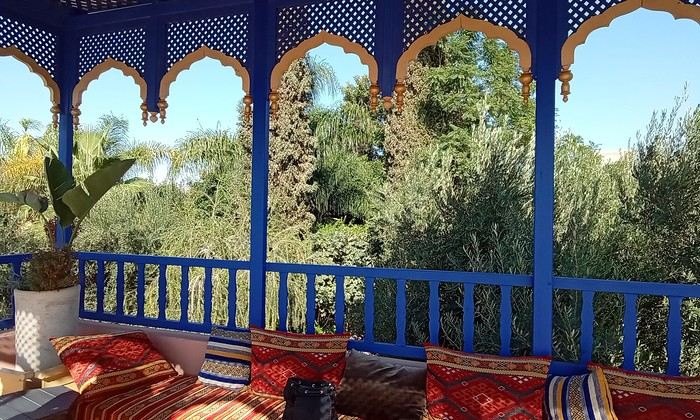 Last October, we landed in Marrakech to spend a few days with family exploring Morocco’s roads.
Transport: a rented Dacia.
Accommodations: small guesthouses.
Last October, we landed in Marrakech to spend a few days with family exploring Morocco’s roads.
Transport: a rented Dacia.
Accommodations: small guesthouses.Our first stop was just a few kilometers from Marrakech, at a lovely house perfect for relaxing and recharging before continuing. It’s called Bleu House, a little paradise on the outskirts of Marrakech. The welcome was very warm, with a beautiful pool and a lovely garden.
Next, we headed toward the Tichka Pass. The road has really improved in recent years—it’s much easier to drive now. No more getting stuck behind trucks, and today, the construction is practically finished.
Morocco has turned green after the recent rains. It’s a joy for the herds and shepherds.
The Island of Pelops
October 7, 2023, is a sunny day in Milan. Since morning, in this light, I’m WhatsApping with Afrooz in Tehran, and I decide to call her. A lively, joyful conversation—French with that Farsi accent becomes a wonderful language. Suddenly, everything feels possible. Isfahan, Shiraz, Damavand, Yazd, Yazd, Yazd—a delicious word savored endlessly—become within reach. Iran, so longed for, is finally here. Pure joy, absolute enthusiasm. Six months to plan and relish a trip before living it.
Then I open *Le Monde*.
Aaaaaaaaaaaaaaaaaaaaaaaaaaaaaaaaaaaaaaaaaaaaaaaaaaaaaaaaaaaaaaaaaaaaaaaa
Frozen. Empty. No. We decide to wait, not to give up right away, pretending to believe—just a little, just to keep from collapsing—that with this wretched human race, the worst isn’t necessarily certain. It is.
So... meh, Madeira? The Azores? Uzbekistan (a pale substitute)? New Zealand? Greece. Again, always. Nestling into the only European promise we’ve been given. Indulging in illusions, for the pleasure of it.
So, train from Milan to Ancona (9 AM–12 PM), a typically Marchigiano lunch (Italy is paradise for food lovers), a stroll through the city, then at 4 PM boarding the *Olympic Champion*. Arrival in Patras the next afternoon, car rental, and off to Lepanto—Nafpaktos today—to reminisce about glorious victories and pay tribute to Cervantes, who lost a hand there before writing.
That’s the plan, anyway. The train is unusually on time. The ferry, replaced in the meantime by the *Hellenic Spirit* (why not? Even if it’s less suited to the season), is 3 hours late, then 4, no 5, then finally 6—oh wait, 7. And on top of that, it’s pouring rain in Ancona, and the port waiting room closes at 6 PM. Great...
At 11 PM, the ferry’s lights emerge in the pitch-black night. We jostle through the downpour, board, and sleep well in a cozy cabin with the white noise of the engines. Then:
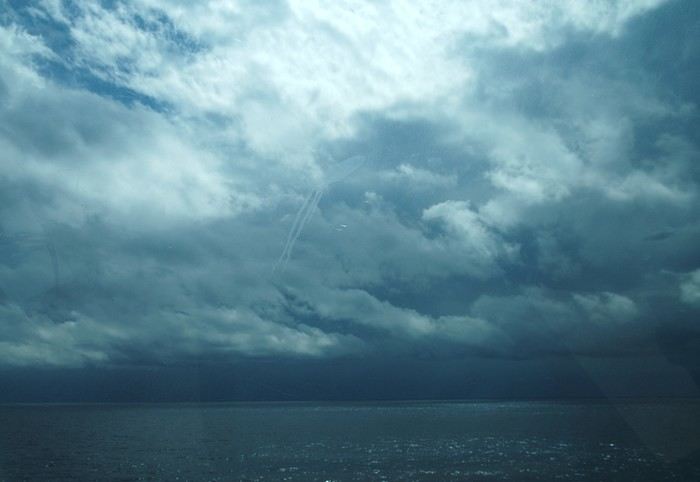 23 hours of rest. Of forgetting.
Then I open *Le Monde*.
Aaaaaaaaaaaaaaaaaaaaaaaaaaaaaaaaaaaaaaaaaaaaaaaaaaaaaaaaaaaaaaaaaaaaaaaa
Frozen. Empty. No. We decide to wait, not to give up right away, pretending to believe—just a little, just to keep from collapsing—that with this wretched human race, the worst isn’t necessarily certain. It is.
So... meh, Madeira? The Azores? Uzbekistan (a pale substitute)? New Zealand? Greece. Again, always. Nestling into the only European promise we’ve been given. Indulging in illusions, for the pleasure of it.
So, train from Milan to Ancona (9 AM–12 PM), a typically Marchigiano lunch (Italy is paradise for food lovers), a stroll through the city, then at 4 PM boarding the *Olympic Champion*. Arrival in Patras the next afternoon, car rental, and off to Lepanto—Nafpaktos today—to reminisce about glorious victories and pay tribute to Cervantes, who lost a hand there before writing.
That’s the plan, anyway. The train is unusually on time. The ferry, replaced in the meantime by the *Hellenic Spirit* (why not? Even if it’s less suited to the season), is 3 hours late, then 4, no 5, then finally 6—oh wait, 7. And on top of that, it’s pouring rain in Ancona, and the port waiting room closes at 6 PM. Great...
At 11 PM, the ferry’s lights emerge in the pitch-black night. We jostle through the downpour, board, and sleep well in a cozy cabin with the white noise of the engines. Then:
23 hours of rest. Of forgetting.
Selfie à Auschwitz English translation pending
Bonjour à tous,
Le hasard total de mes "promenades " sur le net m'ont amené à un article du Huffington post qui explique que le centre mémorial d'Auschwitz a été contraint de faire un " rappel à l'ordre " devant la recrudescence des visiteurs ( comme si on visitait en ce lieu ! ) faisant des selfies devant la porte, devant les bâtiments, devant des photos de prisonniers décharnés, sur les rails....
J'ai eu peine à le croire et en regardant sur G images en tapant selfie Auschwitz, j'ai pu constater le summum de la honte ! Déjà, cette mode des selfies m'agace un peu, mais alors là, cela dépasse mon entendement et le respect qui doit prévaloir en ce lieu.
C'était mon " coup de gueule de ce soir,
Respect à vous toutes et tous et bonne soirée.
Le hasard total de mes "promenades " sur le net m'ont amené à un article du Huffington post qui explique que le centre mémorial d'Auschwitz a été contraint de faire un " rappel à l'ordre " devant la recrudescence des visiteurs ( comme si on visitait en ce lieu ! ) faisant des selfies devant la porte, devant les bâtiments, devant des photos de prisonniers décharnés, sur les rails....
J'ai eu peine à le croire et en regardant sur G images en tapant selfie Auschwitz, j'ai pu constater le summum de la honte ! Déjà, cette mode des selfies m'agace un peu, mais alors là, cela dépasse mon entendement et le respect qui doit prévaloir en ce lieu.
C'était mon " coup de gueule de ce soir,
Respect à vous toutes et tous et bonne soirée.
Discussion au sujet du concours photo de juin 2020: "Multicolore" English translation pending
Hello,
C'est ici qu'on en parle.
Philippe
C'est ici qu'on en parle.
Philippe
Les plus beaux endroits et itinéraires du Vercors English translation pending
Bonjour, je souhaite passer 5 à 7 jours en autonomie dans le Vercors et j'aurais voulu savoir quels sont les plus beaux itinéraires dans la région, dans le sens nord sud ou inversement, je serai en autonomie complète, merci d'avance si vous avez des pistes.
Quinze jours au Soudan en février 2020 English translation pending
Bonjour 😏
Le temps du confinement me permet de me mettre à jour dans mes carnets de voyage.
Une nouvelle aventure. Je pars avec Justine, une ancienne élève qui a 28 ans. Son premier voyage à part des hôtels club..
La location de voiture sans chauffeur est impossible au Soudan. J’ai décidé de louer une voiture avec chauffeur. Je suis donc passé par une agence, 90 euros par jour pour voiture, pétrole, chauffeur (son logement et sa nourriture comprise). Aucune autre prestation.
Je ne voulais pas me contenter du Nord et des sites archéologiques, circuit classique que font les quelques touristes qui vont au Soudan et mais partir vers le sud, dans le Kordofan pour aller dans les nubas mountains. Dans cette partie du soudan, il y a eu pendant des années, une guerre intense avec le gouvernement central. Le mouvement de rébellion existe toujours, le SPLM. L’armée de ce mouvement est toujours en place. Elle réclame un égal développement pour cette partie du territoire dans lequel il n’y a aucun investissement. Dans cette région, le peuple Nuba comprend une mosaïque de tribus. Je voulais aller dans cette région et avait construit un itinéraire que l’agence avait accepté. Hélas, je n’ai pas pu faire tout ce que je voulais car il fallait des autorisations du SPLM que nous n’avons pas eu. 10 jours avant de partir, toujours pas de certitude de pouvoir faire la boucle prévue. Alors que j’avais dit que je ne voulais pas de guide, l’agence m’a parlé d’un gars, dit guide, natif de cette région. Je l’ai contacté directement et nous nous sommes mis d’accord sur sa prestation ! Sur la route, pour les arrêts dans les villages, il n’était pas indispensable, car je n’ai aucun souci pour aller à la rencontre de la population. C’est souvent moi qui disais, on s’arrête là et là… Mais il avait pris des contacts avec les autorités locales. Cela nous a permis de vivre dans un village, impossible sans lui.
1èr partie du voyage : LE KORDOFAN ET LE PAYS NUBAS, au sud de Khartoum
Cela a été le must de notre voyage pour les contacts avec la population. Je voyage beaucoup mais je n’avais pas vécu cela depuis longtemps. Partout l’accueil a été extraordinaire et jamais on ne nous a demandé quoique ce soit.
1er jour KHARTOUN/DILLING
Longue route puisque nous sommes partis à 7 h et arrivés à 17 h 30, mais avec plusieurs arrêts ! En voici quelques uns.
Marché des chameaux "El molih camel market". Le grand marché est le samedi, nous y passons un lundi… Pas beaucoup d’effervescence mais pour notre premier marché de chameaux, on apprécie !
Arrêt dans un village de la tribu Ahamada. Excellent accueil. Nous sommes accueillis dans 3 maisons. Une des familles était très chaleureuse. Nous étions au début du voyage, je ne maîtrisais pas la suite de la journée. Mais à refaire, j’aurais accepté leur invitation de partager un moment ensemble.
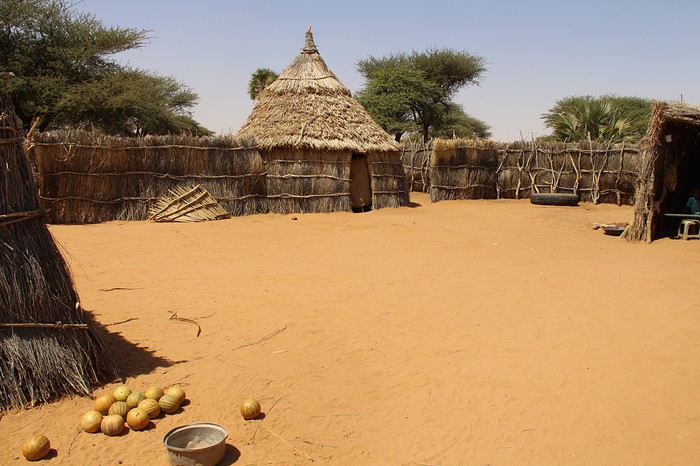
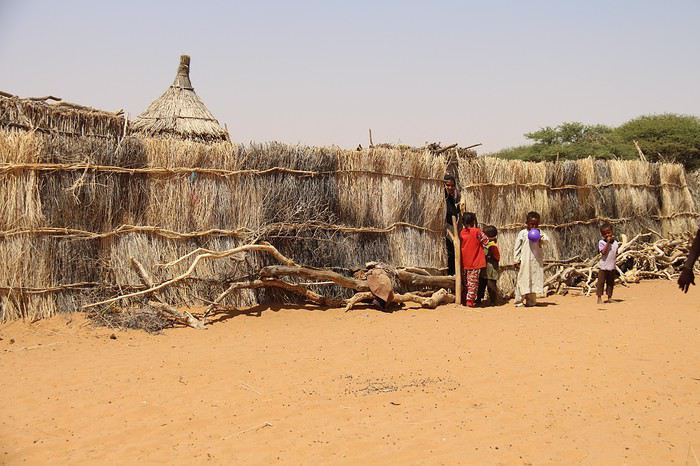
Arrêt à ville de Barra. Nous sommes en début d’après-midi. Notre premier marché. Le souk est animé. Les gens sont étonnés de voir des « blancs » et nous regardaient avec de grands yeux.
Puis arrêt dans un autre village. A nouveau un très bon accueil.
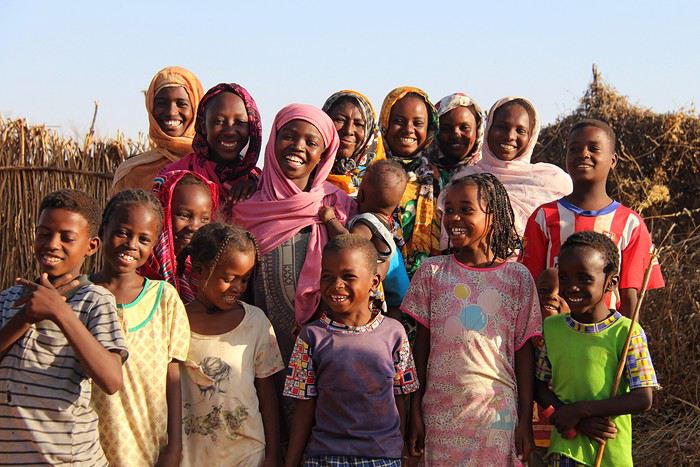
Bien sûr, il faut prendre son temps pour créer le contact
Ce qui m’a passionné sur cette route macadamisée, en très bon état, un peu monotone car les paysages sont plats, pas vraiment jolis, ce sont les camions, avec leur hauteur de marchandises. C’est vraiment très impressionnant. Je vous livre quelques spécimens.
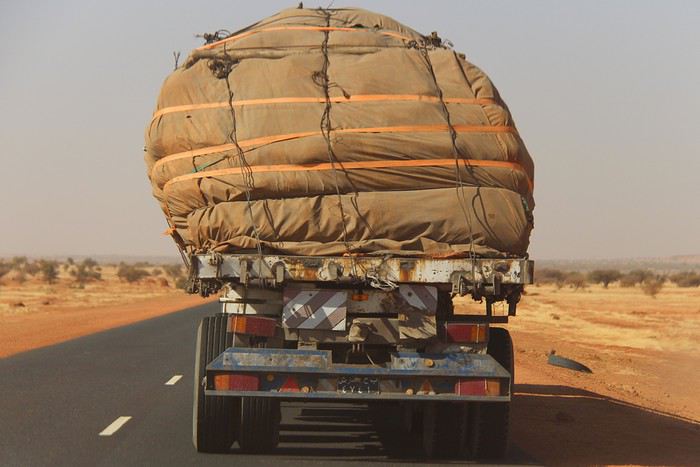
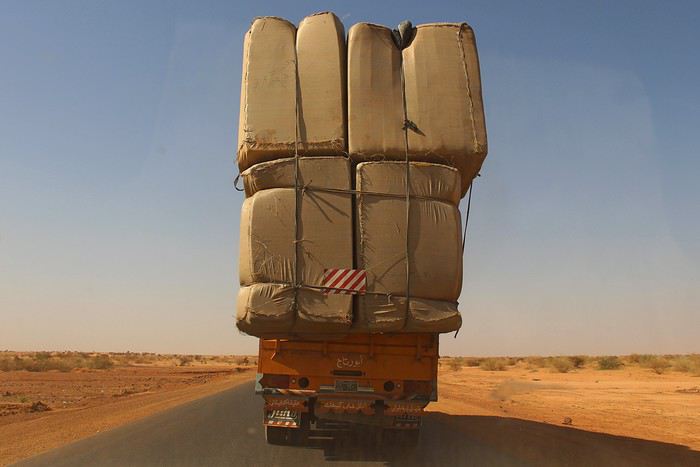
Le temps du confinement me permet de me mettre à jour dans mes carnets de voyage.
Une nouvelle aventure. Je pars avec Justine, une ancienne élève qui a 28 ans. Son premier voyage à part des hôtels club..
La location de voiture sans chauffeur est impossible au Soudan. J’ai décidé de louer une voiture avec chauffeur. Je suis donc passé par une agence, 90 euros par jour pour voiture, pétrole, chauffeur (son logement et sa nourriture comprise). Aucune autre prestation.
Je ne voulais pas me contenter du Nord et des sites archéologiques, circuit classique que font les quelques touristes qui vont au Soudan et mais partir vers le sud, dans le Kordofan pour aller dans les nubas mountains. Dans cette partie du soudan, il y a eu pendant des années, une guerre intense avec le gouvernement central. Le mouvement de rébellion existe toujours, le SPLM. L’armée de ce mouvement est toujours en place. Elle réclame un égal développement pour cette partie du territoire dans lequel il n’y a aucun investissement. Dans cette région, le peuple Nuba comprend une mosaïque de tribus. Je voulais aller dans cette région et avait construit un itinéraire que l’agence avait accepté. Hélas, je n’ai pas pu faire tout ce que je voulais car il fallait des autorisations du SPLM que nous n’avons pas eu. 10 jours avant de partir, toujours pas de certitude de pouvoir faire la boucle prévue. Alors que j’avais dit que je ne voulais pas de guide, l’agence m’a parlé d’un gars, dit guide, natif de cette région. Je l’ai contacté directement et nous nous sommes mis d’accord sur sa prestation ! Sur la route, pour les arrêts dans les villages, il n’était pas indispensable, car je n’ai aucun souci pour aller à la rencontre de la population. C’est souvent moi qui disais, on s’arrête là et là… Mais il avait pris des contacts avec les autorités locales. Cela nous a permis de vivre dans un village, impossible sans lui.
1èr partie du voyage : LE KORDOFAN ET LE PAYS NUBAS, au sud de Khartoum
Cela a été le must de notre voyage pour les contacts avec la population. Je voyage beaucoup mais je n’avais pas vécu cela depuis longtemps. Partout l’accueil a été extraordinaire et jamais on ne nous a demandé quoique ce soit.
1er jour KHARTOUN/DILLING
Longue route puisque nous sommes partis à 7 h et arrivés à 17 h 30, mais avec plusieurs arrêts ! En voici quelques uns.
Marché des chameaux "El molih camel market". Le grand marché est le samedi, nous y passons un lundi… Pas beaucoup d’effervescence mais pour notre premier marché de chameaux, on apprécie !
Arrêt dans un village de la tribu Ahamada. Excellent accueil. Nous sommes accueillis dans 3 maisons. Une des familles était très chaleureuse. Nous étions au début du voyage, je ne maîtrisais pas la suite de la journée. Mais à refaire, j’aurais accepté leur invitation de partager un moment ensemble.
Arrêt à ville de Barra. Nous sommes en début d’après-midi. Notre premier marché. Le souk est animé. Les gens sont étonnés de voir des « blancs » et nous regardaient avec de grands yeux.
Puis arrêt dans un autre village. A nouveau un très bon accueil.
Bien sûr, il faut prendre son temps pour créer le contact
Ce qui m’a passionné sur cette route macadamisée, en très bon état, un peu monotone car les paysages sont plats, pas vraiment jolis, ce sont les camions, avec leur hauteur de marchandises. C’est vraiment très impressionnant. Je vous livre quelques spécimens.
Quatre mois dans les Balkans à vélo Venise - Istanbul English translation pending
Film résumé en 3m30 https://youtu.be/IpjdmmXR9Lo
Italie & Slovénie : Venise - Cortina - Ljubjana 800 km / 18200 md+
Arriver en bus à Venise (vélos en soute)... et mieux repartir plein nord dans le coeur des Dolomites (vélos sur le bitume). Impossible de parcourir les ruelles pavées ou naviguer sur une gondole, le but est de rejoindre Cortina d'Ampezzo avec 3 cols à plus de 2000 mètres. Aussi mythiques que sublimes : Monte Grappa, passo Rolle, Valles et di Giau (2236 m). Certains font le Giro, d'autres du cyclotourisme : dur de tenir la roue d'un vélo de route quand les sacoches sont remplies à ras bord de bonnes choses à manger... Au fil des grimpettes, le soleil nous quitte pour rester en bord de mer : le temps n'est franchement pas au rendez-vous ! Il pleut quand il ne neige pas, il fait surtout froid et humide. A Cortina (#3), la météo annonce 15 jours de mauvais, il faut avancer coûte que coûte. Très vite, on s'habitue à l'effort, au dénivelé et aux conditions hivernales d'un mois de mai : le col pour Sella Ciampigotto et Sauris est fermé : obligés de slalomer entre les congères et les blocs de pierre éparpillés sur la route. Peu à peu, le bitume laisse place aux pistes forestières, l'aventure peut commencer...
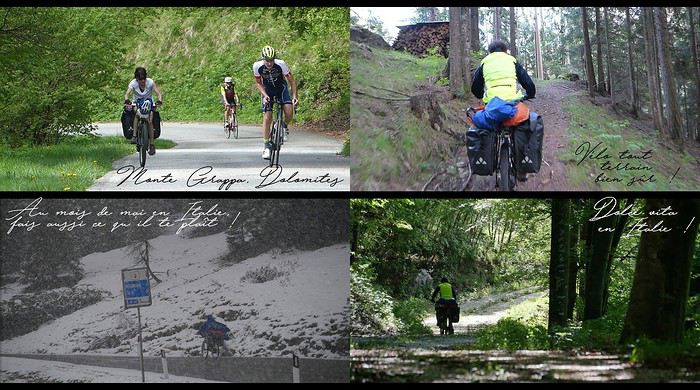
A Bovec, en Slovénie, l'ambiance devient plus minérale. La route qui entaille les Alpes Juliennes est chargée d'histoire : 25 km et 50 virages construits par des prisonniers russes. L'enfer au paradis... Le soleil fait briller les eaux cristallines de la Soca jusqu'au col de Vršic (1611 m), l'endroit est irréel. Après un court passage à Bled, le parc calcaire du Triglav donne une pause autour du lac de Bohinj (Bohinjsko jezero), rien de telle qu'une randonnée pour dégourdir les jambes. Ici, les vallées sont paisibles et les huttes traditionnelles en bois donnent du charme au pédalage. La météo redevient capricieuse, pas un jour ne passe sans pluie jusqu'à Ljubljana. La fin de l'arc alpin s'achève en douceur : quelle satisfaction personnelle, ce voyage a commencé il y a 4 ans... Genève-Nice ! La vie rêvée d'un cyclovoyageur...
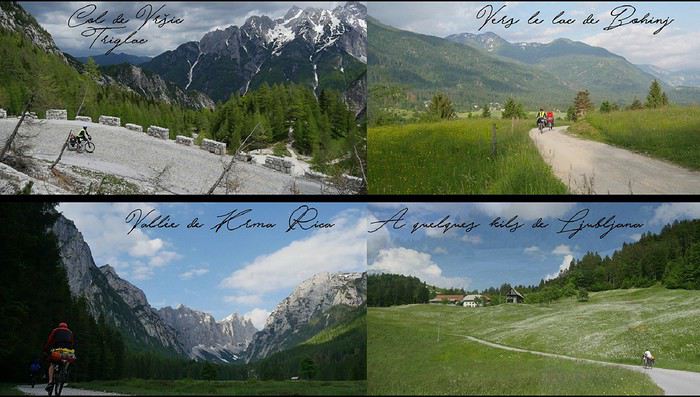
Après une journée de repos dans la capitale slovène (visite à 2 roues bien entendu), le cap est enfin mis sur le sud pour ouvrir la porte des Balkans. Les paysages deviennent plus vallonnés et les villages pittoresques : peu de touristes dans cette belle campagne de moyenne montagne. Croatie et Bosnie Herzégovine : Cabar - Delnice - Otocac - Senj - Makarska - Mostar 920 km / 13050 md+
La Croatie est l'étape détente et touristique de la traversée des Balkans : 300 km de route côtière de Senj à Makarska, que du bitume, peu de grimpettes... quoique ! Le soleil tape fort dès le matin, les journées commencent à 5 heures pour profiter de la fraîcheur et du peu de trafic. Mer bleue turquoise, papillons multicolores, villes historiques (Starigrad, Zadar, Sibenik, Togir, Split), longues pauses à l'ombre : tout y est pour des vacances paradisiaques ! Au nord, les parcs nationaux rythment l'itinéraire. Risnjak se fait au pas de course, la tête sous le pancho. Pas le temps d'apercevoir un lynx ou un ours : la forêt est peu engageante. Plitvice (Plitvicka jezera) accorde un peu de répit avec une belle rando entre lacs et cascades. Le parc du Velebit nord (Sjeverni Velebit) est une révélation karstique : la blancheur du calcaire tranche avec l'Adriatique. Les cabanes en bois amènent un peu de chaleur et de confort, au chaud près du poêle et dans un lit douillet. Plus au sud, Paklenica révèle un magnifique site d'escalade coincé dans un canyon étroit. Souvent, les vestiges de l'éclatement de la Yougoslavie sont toujours visibles 30 ans après la guerre : maisons éventrées et mines antipersonnelles signalées au bord du chemin. Impressionnant ! L'accueil en Bosnie est plus que chaleureux. Il n'y a que très peu de touristes, alors l'arrivée de deux cyclos est un véritable évènement. A Mostar, le vélo saute sur les pavés du Stari most, ce fameux pont médiéval détruit par les Serbes et reconstruit en 2003. Les mosquées et leurs minarets replacent soudainement les églises... le voyage à vélo permet de se plonger au coeur des religions et de l'histoire de ce petit bout d'Europe. Les routes sont étrangement désertes et les montées en plein cagnard sont étouffantes. Pas d'ombre ! Les gorges verdoyantes de la rivière Zalomka donnent accès au plateau de Gacko, à plus de 1000 mètres d'altitude. Les montagnes du Monténégro pointent leur nez, le pays est à cinq kilomètres à vol d'oiseau, mais à bien regarder la carte, le poste frontière rallonge par le nord d'au moins 150 km... Un chemin existe bel et bien, il coupe à travers les champs et quelques baraques en bois déglinguées. La frontière est marquée par un simple panneau, pas de barrière ni de garde. Facile de pénétrer illégalement dans le pays... en sera-t-il de même pour sortir ?
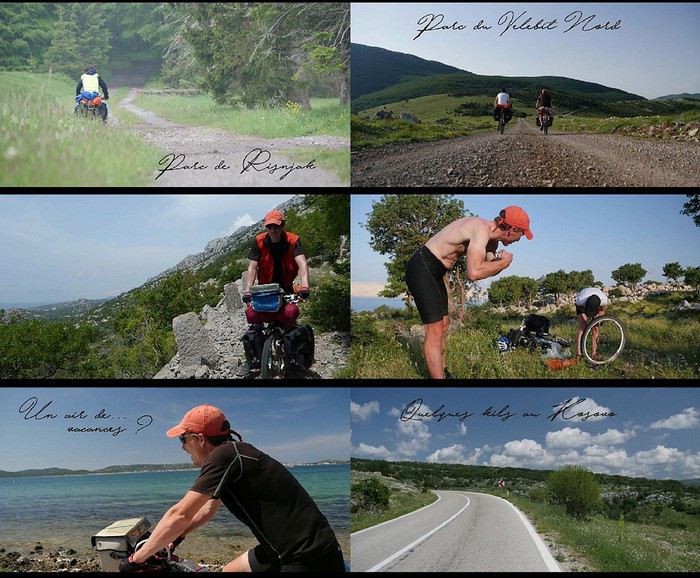
Monténégro, Albanie (1) & Kosovo : Pluzine - Zabljak - Savnik - Nikšic - Ostrog - Danilovgrad - Cetinje - Kotor - Podgorica - Plav - Rozaje - Pejë Le Monténégro est le royaume du vélo, surtout que le pays développe des circuits VTT de toute beauté. L'arrivée par le parc du Durmitor et le canyon de la Tara est une explosion de bonheur : l'endroit sauvage et préservé vaut à lui seul le détour. Peu de cyclos doivent prendre notre itinéraire, ça monte très fort tous les jours sur des chemins qui ne sont mêmes pas indiqués sur les cartes touristiques. L'expérience est géniale ! Parfois il faut pousser le vélo, souvent il faut mettre le poncho... ici, les orages sont violents et rapides. On échappe de peu à la grêle dans une étable providentielle : le paysage devient blanc en quelques minutes. On aura moins de chance sur un chemin transformé en torrent par des eaux en furie : l'expression "être rincé" prend tout son sens. Moments véritablement incroyables ! Voyager à vélo, c'est accepter cette incertitude, cet inconfort relatif et ce sentiment d'être livré à soi-même. Le contraste des couleurs est saisissant avec les montagnes environnantes : le Bobotov Kuk, point culminant à 2523 mètres, apparaît enneigé entre deux nuages. La baie de Kotor (Boka Kotorska) à 6 heures du matin est resplendissante, surtout avec 1200 m de dénivelé négatif effectués à la fraîche... le bonheur à portée de pédale ! Ce fjord de 30 km déchire d'un bleu profond un massif abrupt et tourmenté la route autour des deux péninsules (Luštica et Vrmac) permet de souffler un peu dans une ambiance méditerranéenne entre les oliviers et les grillons. Les villages traditionnels avec leur port de pêche et leur église alternent avec les pépites touristiques et autres stations balnéaires bétonnées : on roule ainsi de la très branchée Budva à la carte postale Sveti Stefan...
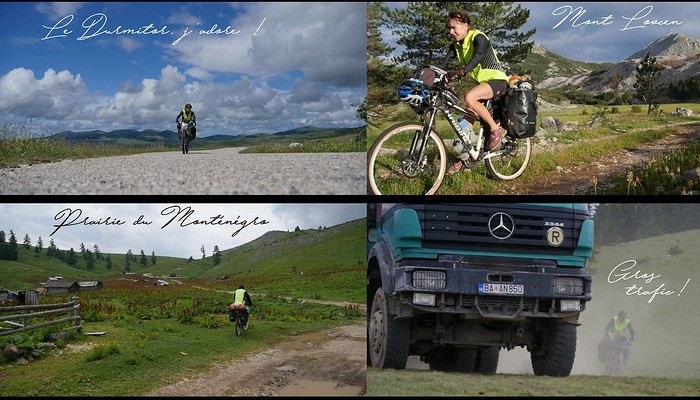
Après une journée de repos à Bar, les étapes de montagne ramènent en 3 jours dans le nord-est du pays par le lac de Skadar (Shkodër) et la magnifique vallée alpine de Kelmend en Albanie. De nouveaux panoramas entre 1000 et 1800 m défilent : les prairies (Katun). Quelques baraques ont été construites au milieu de nulle part et résistent au temps, tout comme ces bergers et ces bûcherons qui (sur)vivent loin de toute modernité. Pas de route, d'électricité, encore moins de touriste. La rencontre à vélo est exceptionnelle : il faut juste prendre le temps de s'arrêter. Au loin, le Kosovo apparaît comme creusé entre les montagnes, le pays est étonnamment plat. L'accueil est comme toujours chaleureux, d'autant plus que la pluie est au rendez-vous. Les spécialités culinaires comme les brochettes kefta ou les feuilletés byrek nécessitent un prochain voyage.
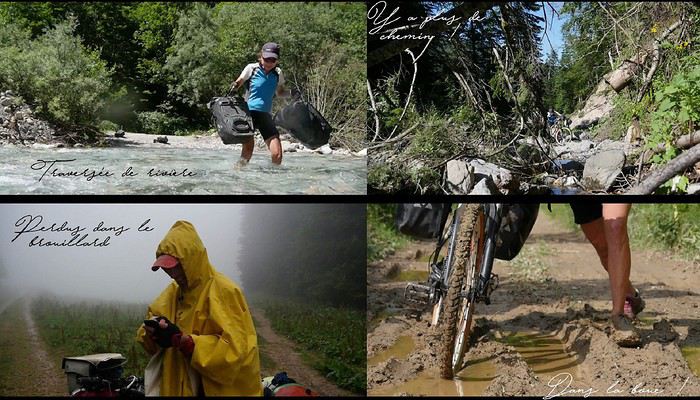
Albanie (2) : Bajram Curri - Fierzë - Fushë-Arrëz - Burrel - Divjakë - Fier - Vlora - Orikum - Saranda 640 km / 15000 md+ L'Albanie est un coup de coeur et une véritable surprise pour celui qui ne se limitera pas à la côte adriatique, la riviera albanaise. Les chemins de montagne exigeants et réservés aux aventuriers permettent de traverser le pays du nord au sud sans toucher le bitume. La vallée de la Valbona met directement dans l'ambiance : l'idée initiale était de passer le col de Valbonës à 1795 m pour rejoindre la vallée de Theth... c'est à pied finalement que l'on grimpera en aller-retour : le sentier est inroulable à VTT ! L'itinéraire s'adapte au jour le jour au gré du relief, du temps et des rencontres. La communication est plutôt bonne malgré un vocabulaire très limité... "rüga problem" est essentiel : les routes départementales qui coupent le pays est/ouest sont des pistes défoncées. Tous les Albanais se plaignent des politiques et de la corruption : le sentiment de misère et d'abandon revient sans cesse dans les conversations. En parlant de la France, certains yeux brillent avec l'espoir de changer de vie, les autres pleurent en souvenir d'un séjour à Calais ! Les bergers du parc de Lura (Parku Kombëtar Lurë) vivent dans des cabanes ouvertes au vent, constituées de 4 poteaux et d'une bâche en plastique en guise de toit. Leur quotidien est rythmé par la traite de leurs chèvres : le lait est transporté dans la vallée à dos d'âne. La vie est à la fois belle et tellement dure, moment terriblement émouvant !
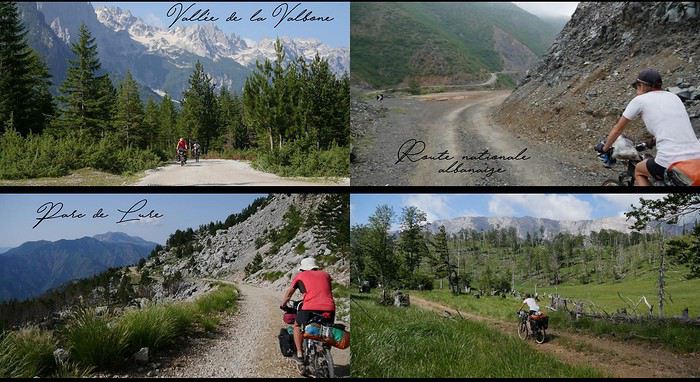
A l'est, le parc de Qafë-Shtamë évite les embouteillages de Tirana et rejoint la ville d'Elbasan. La piste déglinguée met à mal les bras et le matériel : l'essieu de la roue arrière casse net. La réparation tient au miracle car aucune pièce n'est en stock pour un VTT "récent" ! A deux reprises, le chemin n'existe plus... emporté par des glissements de terrain. Contourner un obstacle se paie par de gros efforts mais la providence amène un bivouac de luxe sous les étoiles ou une rencontre inoubliable : on n'est jamais à l'abri d'une invitation, d'un café albanais (surtout pas turc) et d'un verre de raki... voire les deux à la fois, même à 7 heures du matin. Au sud du pays, les pistes de sable au bord de la mer fatiguent plus que les cols : on roule même sur la plage... la chaîne du vélo s'en souvient encore. A Saranda, il est temps de prendre un ferry pour rejoindre la Grèce, Corfu : que les vacances commencent !
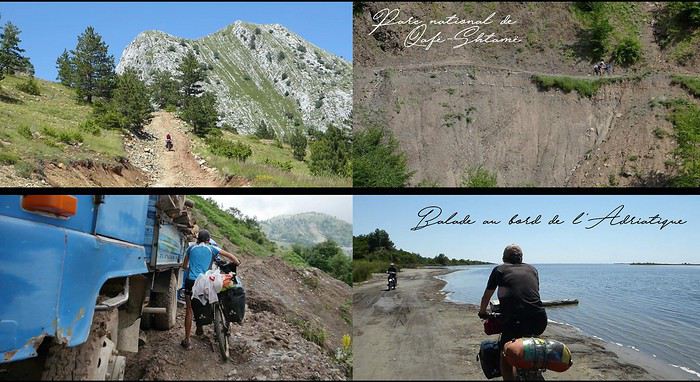
Grèce, Albanie (3) et Macédoine du Nord : Corfu - Igoumenítsa - Trikala - Metsovo - Konitsa - Kastoria - Presta - Bitola - Demir Kapija 1100 km / 24775 md+ Le tour de Corfu est un moment de détente au bord de mer ; l'ascension du grand Pantokrator (900 m) est l'unique étape de montagne de l'île. Les bivouacs sont posés face à l'Adriatique sous les oliviers, dans les herbes sauvages et les odeurs d'été, la plage n'est jamais très loin... le paradis ! La végétation est brûlée par le soleil, à 11 heures il fait déjà très chaud même à l'ombre des chapelles orthodoxes. Le retour sur le continent est rude : la chaleur étouffante rend les montées épuisantes. Dur de remonter sur selle avant 16 heures... les grimpettes se font à la fraîche. L'étape de Pramanta est difficile mais grandiose : chaque tour de roue est une victoire sur la caillasse, les virages s'enchaînent dans la douleur jusqu'au col à 1800 mètres. Il en va ainsi jusqu'à Kalambaka ; les chemins chaotiques se succèdent à un rythme d'enfer ! Aux Météores, la quiétude des monastères suspendus dans le ciel disparaît sous le flot des touristes déversés par bus entiers. L'endroit reste féerique et chargé de légendes mystérieuses. Ces poudingues géants semblent sortir de l'imagination des Dieux de la mythologie grecque... Istanbul se trouve à l'est, pourtant le cap est mis à l'ouest pour rejoindre les parcs Pindus et Tymphe, soit plus de 100 km à rouler dans la direction opposée, à ne plus rien comprendre... surtout que la pluie revient ! Après Kastoria, l'Albanie ouvre à nouveau ses frontières pour 50 km. Les bergers sont toujours là pour un coup de main : un fil de fer rouillé de clôture fixera mon porte-bagages jusqu'à l'arrivée. Merci les artistes ! Au lac de Prespa, la Macédoine se révèle être un véritable condensé des Balkans : les locaux parlent avec fierté de leur pays et leur vie : présence ottomane, religions, première guerre mondiale, migration, éclatement de la Yougoslavie, tout y est. J'oublie la traversée sans poste frontière au sommet du Mont Varos (2524 m), la situation est très tendue avec les Grecs : obligé d'improviser un circuit jusqu'à la frontière bulgare. Quelques âmes vivent dans des villages perdus, le temps s'est figé ! Il n'y a pas de bitume et les chemins sont difficilement praticables, peu empruntés... surtout gorgés d'eau !
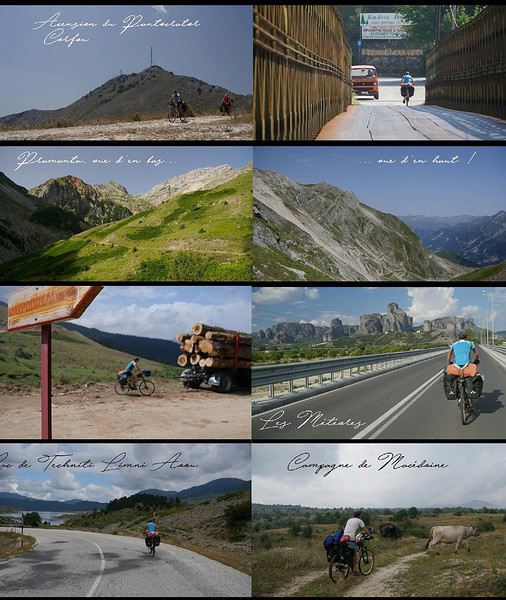
Bulgarie et Grèce (2) : Pétritch - Melnik - Bansko - Pamporovo - Plovdiv - Velingrad - Smoljan - Rudozem - Dzhebel - Komotini - Alexandroúpoli 850 km / 22375 md+ / 21900 md- Le parcours bulgare est intense et extrêmement varié. Curiosité géologique due l'érosion, Melnik est un village typique entouré de montagnes sablonneuses. Alors traverser un tunnel creusé dans du sable qui s'effrite au passage de la main, c'est comment dire... pas rassurant ! La piste remonte plein nord le long du parc du Pirin ; les locaux expliquent qu'il est impossible de rejoindre Bansko... alors le GPS aide à se repérer dans un dédalle de cul-de-sac et d'indications en cyrillique. L'entrée dans le massif des Rhodopes est magique : l'endroit est franchement beau même si les glaciers posés à plus de 2900 mètres font pâle figure ! C'est la saison des champignons : les chanterelles et les girolles cuisinées dans la popote donnent une saveur particulière aux pâtes 3 minutes. Les sources sont omniprésentes, quel bonheur de se ravitailler en eau fraîche plusieurs fois par jour. Mais l'atout principal des Rhodopes est la présence de cabanes plus ou moins luxueuses. On trouvera au minimum un toit, des bancs et des tables, un barbecue. Certains sont de véritables bijoux d'architecture en bois, on peut même y cuisiner ou passer la nuit... A partir de Dospat, une belle boucle en 8 se prépare : les cols et les vallées se succèdent. Il faut se perdre sur les sentiers pour visiter les monastères et les villages inaccessibles. Le vélo est posé pour découvrir les gorges de Trigrad, de la Trigradska et l'arche naturelle de Cudnite, merveilles de roches érodées. Les lacs de Batak et de Chiroka permettent de partager les vacances des Bulgares, caravaning, bbq, pêche, musique techno... la vie en toute simplicité ! L'essieu (cassé et réparé à grands coups de marteau en Albanie) fait trembler à nouveau le vélo, la roue sera changée à Pamporovo dans l'unique magasin de sports de la région, et par chance... le proprio est un ancien champion de VTT de descente ! Au sud du col de Rozen, l'influence turque redevient visible avec ses mosquées et minarets pointant vers le ciel. Après 60 km de route sinueuse le long de la rivière Arda, le bivouac est posé près du pont du Diable construit au XVIè siècle... la nuit y est douce contredisant les légendes d'antan ! De retour en Grèce, la mer Egée illumine nos journées alors les épines percent les chambres à air : quand il n'y a plus de rustine, il y a toujours un cyclo qui passe ! Les coups de pédale dans la forêt de Dadia Lefkimi amène une dernière teinte de verdure au voyage ; le fleuve de la péninsule balkanique, la Maritza marque net l'entrée dans une plaine aride... la Turquie.
Turquie : Ipsala - Gelibolu - Lapseki - Bandirma - Istanbul 590 km / 8225 md+ / 8825 md- Le passage de la frontière turque donne l'ambiance : c'est chaud ! Le soleil tape fort sur les premiers kilomètres, où les voitures chargées à ras bord attendent avec plus ou moins d'impatience devant des militaires, 4 par 4 et armés jusqu'aux dents. La poussière des pistes s'envole sous les roues : pas de bitume, pas d'air, pas d'ombre... sauf à la terrasse des cafés où les hommes s'agglutinent. La quiétude des villages s'arrête un court instant à notre passage : les mains se lèvent et les conversations fusent. Impossible de repartir sans une bouteille d'eau fraîche ou un sac de légumes, quel accueil ! Les canaux d'irrigation arrosent de grands champs déserts... personne n'ose s'y aventurer aux heures les plus chaudes de la journée. Jusqu'à Gelibolu, le bord de mer est moins monotone et plus montagneux, l'ambiance est plus festive. Pour éviter le trafic infernal d'Istanbul et 100 km d'urbanisation, la rive sud de la mer de Marmara semble être plus "agréable". La route asiatique permet de pédaler vite et bien sur une voie rapide... à quelques mètres des bolides ! Peu de variantes sont possibles jusqu'à Bandirma, où le ferry mène au coeur d'Istanbul sans effort.
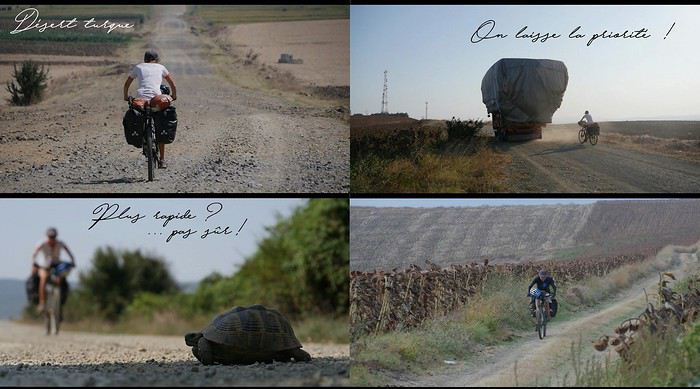
Constantinople est évidemment merveilleuse, l'histoire du monde se joue devant nos yeux. Les vélo sont posés avec soulagement : dur de retrouver le rythme de la marche à pied car la fatigue se fait ressentir après 4 mois acharnés sur la selle. Ca fait mal de partout. Les visites sont riches et infinies, Grande Sophie, mosquée Bleue, palais de Topkapi, tour de Galata, grand Bazar, citerne basilique, quartier d’Ortaköy, pont sur le Bosphore, etc. Istanbul est une porte grande ouverte sur l'Asie... à bientôt !
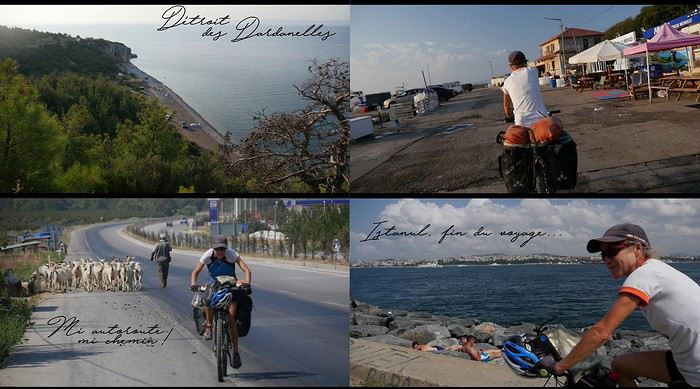
A Bovec, en Slovénie, l'ambiance devient plus minérale. La route qui entaille les Alpes Juliennes est chargée d'histoire : 25 km et 50 virages construits par des prisonniers russes. L'enfer au paradis... Le soleil fait briller les eaux cristallines de la Soca jusqu'au col de Vršic (1611 m), l'endroit est irréel. Après un court passage à Bled, le parc calcaire du Triglav donne une pause autour du lac de Bohinj (Bohinjsko jezero), rien de telle qu'une randonnée pour dégourdir les jambes. Ici, les vallées sont paisibles et les huttes traditionnelles en bois donnent du charme au pédalage. La météo redevient capricieuse, pas un jour ne passe sans pluie jusqu'à Ljubljana. La fin de l'arc alpin s'achève en douceur : quelle satisfaction personnelle, ce voyage a commencé il y a 4 ans... Genève-Nice ! La vie rêvée d'un cyclovoyageur...
Après une journée de repos dans la capitale slovène (visite à 2 roues bien entendu), le cap est enfin mis sur le sud pour ouvrir la porte des Balkans. Les paysages deviennent plus vallonnés et les villages pittoresques : peu de touristes dans cette belle campagne de moyenne montagne. Croatie et Bosnie Herzégovine : Cabar - Delnice - Otocac - Senj - Makarska - Mostar 920 km / 13050 md+
La Croatie est l'étape détente et touristique de la traversée des Balkans : 300 km de route côtière de Senj à Makarska, que du bitume, peu de grimpettes... quoique ! Le soleil tape fort dès le matin, les journées commencent à 5 heures pour profiter de la fraîcheur et du peu de trafic. Mer bleue turquoise, papillons multicolores, villes historiques (Starigrad, Zadar, Sibenik, Togir, Split), longues pauses à l'ombre : tout y est pour des vacances paradisiaques ! Au nord, les parcs nationaux rythment l'itinéraire. Risnjak se fait au pas de course, la tête sous le pancho. Pas le temps d'apercevoir un lynx ou un ours : la forêt est peu engageante. Plitvice (Plitvicka jezera) accorde un peu de répit avec une belle rando entre lacs et cascades. Le parc du Velebit nord (Sjeverni Velebit) est une révélation karstique : la blancheur du calcaire tranche avec l'Adriatique. Les cabanes en bois amènent un peu de chaleur et de confort, au chaud près du poêle et dans un lit douillet. Plus au sud, Paklenica révèle un magnifique site d'escalade coincé dans un canyon étroit. Souvent, les vestiges de l'éclatement de la Yougoslavie sont toujours visibles 30 ans après la guerre : maisons éventrées et mines antipersonnelles signalées au bord du chemin. Impressionnant ! L'accueil en Bosnie est plus que chaleureux. Il n'y a que très peu de touristes, alors l'arrivée de deux cyclos est un véritable évènement. A Mostar, le vélo saute sur les pavés du Stari most, ce fameux pont médiéval détruit par les Serbes et reconstruit en 2003. Les mosquées et leurs minarets replacent soudainement les églises... le voyage à vélo permet de se plonger au coeur des religions et de l'histoire de ce petit bout d'Europe. Les routes sont étrangement désertes et les montées en plein cagnard sont étouffantes. Pas d'ombre ! Les gorges verdoyantes de la rivière Zalomka donnent accès au plateau de Gacko, à plus de 1000 mètres d'altitude. Les montagnes du Monténégro pointent leur nez, le pays est à cinq kilomètres à vol d'oiseau, mais à bien regarder la carte, le poste frontière rallonge par le nord d'au moins 150 km... Un chemin existe bel et bien, il coupe à travers les champs et quelques baraques en bois déglinguées. La frontière est marquée par un simple panneau, pas de barrière ni de garde. Facile de pénétrer illégalement dans le pays... en sera-t-il de même pour sortir ?
Monténégro, Albanie (1) & Kosovo : Pluzine - Zabljak - Savnik - Nikšic - Ostrog - Danilovgrad - Cetinje - Kotor - Podgorica - Plav - Rozaje - Pejë Le Monténégro est le royaume du vélo, surtout que le pays développe des circuits VTT de toute beauté. L'arrivée par le parc du Durmitor et le canyon de la Tara est une explosion de bonheur : l'endroit sauvage et préservé vaut à lui seul le détour. Peu de cyclos doivent prendre notre itinéraire, ça monte très fort tous les jours sur des chemins qui ne sont mêmes pas indiqués sur les cartes touristiques. L'expérience est géniale ! Parfois il faut pousser le vélo, souvent il faut mettre le poncho... ici, les orages sont violents et rapides. On échappe de peu à la grêle dans une étable providentielle : le paysage devient blanc en quelques minutes. On aura moins de chance sur un chemin transformé en torrent par des eaux en furie : l'expression "être rincé" prend tout son sens. Moments véritablement incroyables ! Voyager à vélo, c'est accepter cette incertitude, cet inconfort relatif et ce sentiment d'être livré à soi-même. Le contraste des couleurs est saisissant avec les montagnes environnantes : le Bobotov Kuk, point culminant à 2523 mètres, apparaît enneigé entre deux nuages. La baie de Kotor (Boka Kotorska) à 6 heures du matin est resplendissante, surtout avec 1200 m de dénivelé négatif effectués à la fraîche... le bonheur à portée de pédale ! Ce fjord de 30 km déchire d'un bleu profond un massif abrupt et tourmenté la route autour des deux péninsules (Luštica et Vrmac) permet de souffler un peu dans une ambiance méditerranéenne entre les oliviers et les grillons. Les villages traditionnels avec leur port de pêche et leur église alternent avec les pépites touristiques et autres stations balnéaires bétonnées : on roule ainsi de la très branchée Budva à la carte postale Sveti Stefan...
Après une journée de repos à Bar, les étapes de montagne ramènent en 3 jours dans le nord-est du pays par le lac de Skadar (Shkodër) et la magnifique vallée alpine de Kelmend en Albanie. De nouveaux panoramas entre 1000 et 1800 m défilent : les prairies (Katun). Quelques baraques ont été construites au milieu de nulle part et résistent au temps, tout comme ces bergers et ces bûcherons qui (sur)vivent loin de toute modernité. Pas de route, d'électricité, encore moins de touriste. La rencontre à vélo est exceptionnelle : il faut juste prendre le temps de s'arrêter. Au loin, le Kosovo apparaît comme creusé entre les montagnes, le pays est étonnamment plat. L'accueil est comme toujours chaleureux, d'autant plus que la pluie est au rendez-vous. Les spécialités culinaires comme les brochettes kefta ou les feuilletés byrek nécessitent un prochain voyage.
Albanie (2) : Bajram Curri - Fierzë - Fushë-Arrëz - Burrel - Divjakë - Fier - Vlora - Orikum - Saranda 640 km / 15000 md+ L'Albanie est un coup de coeur et une véritable surprise pour celui qui ne se limitera pas à la côte adriatique, la riviera albanaise. Les chemins de montagne exigeants et réservés aux aventuriers permettent de traverser le pays du nord au sud sans toucher le bitume. La vallée de la Valbona met directement dans l'ambiance : l'idée initiale était de passer le col de Valbonës à 1795 m pour rejoindre la vallée de Theth... c'est à pied finalement que l'on grimpera en aller-retour : le sentier est inroulable à VTT ! L'itinéraire s'adapte au jour le jour au gré du relief, du temps et des rencontres. La communication est plutôt bonne malgré un vocabulaire très limité... "rüga problem" est essentiel : les routes départementales qui coupent le pays est/ouest sont des pistes défoncées. Tous les Albanais se plaignent des politiques et de la corruption : le sentiment de misère et d'abandon revient sans cesse dans les conversations. En parlant de la France, certains yeux brillent avec l'espoir de changer de vie, les autres pleurent en souvenir d'un séjour à Calais ! Les bergers du parc de Lura (Parku Kombëtar Lurë) vivent dans des cabanes ouvertes au vent, constituées de 4 poteaux et d'une bâche en plastique en guise de toit. Leur quotidien est rythmé par la traite de leurs chèvres : le lait est transporté dans la vallée à dos d'âne. La vie est à la fois belle et tellement dure, moment terriblement émouvant !
A l'est, le parc de Qafë-Shtamë évite les embouteillages de Tirana et rejoint la ville d'Elbasan. La piste déglinguée met à mal les bras et le matériel : l'essieu de la roue arrière casse net. La réparation tient au miracle car aucune pièce n'est en stock pour un VTT "récent" ! A deux reprises, le chemin n'existe plus... emporté par des glissements de terrain. Contourner un obstacle se paie par de gros efforts mais la providence amène un bivouac de luxe sous les étoiles ou une rencontre inoubliable : on n'est jamais à l'abri d'une invitation, d'un café albanais (surtout pas turc) et d'un verre de raki... voire les deux à la fois, même à 7 heures du matin. Au sud du pays, les pistes de sable au bord de la mer fatiguent plus que les cols : on roule même sur la plage... la chaîne du vélo s'en souvient encore. A Saranda, il est temps de prendre un ferry pour rejoindre la Grèce, Corfu : que les vacances commencent !
Grèce, Albanie (3) et Macédoine du Nord : Corfu - Igoumenítsa - Trikala - Metsovo - Konitsa - Kastoria - Presta - Bitola - Demir Kapija 1100 km / 24775 md+ Le tour de Corfu est un moment de détente au bord de mer ; l'ascension du grand Pantokrator (900 m) est l'unique étape de montagne de l'île. Les bivouacs sont posés face à l'Adriatique sous les oliviers, dans les herbes sauvages et les odeurs d'été, la plage n'est jamais très loin... le paradis ! La végétation est brûlée par le soleil, à 11 heures il fait déjà très chaud même à l'ombre des chapelles orthodoxes. Le retour sur le continent est rude : la chaleur étouffante rend les montées épuisantes. Dur de remonter sur selle avant 16 heures... les grimpettes se font à la fraîche. L'étape de Pramanta est difficile mais grandiose : chaque tour de roue est une victoire sur la caillasse, les virages s'enchaînent dans la douleur jusqu'au col à 1800 mètres. Il en va ainsi jusqu'à Kalambaka ; les chemins chaotiques se succèdent à un rythme d'enfer ! Aux Météores, la quiétude des monastères suspendus dans le ciel disparaît sous le flot des touristes déversés par bus entiers. L'endroit reste féerique et chargé de légendes mystérieuses. Ces poudingues géants semblent sortir de l'imagination des Dieux de la mythologie grecque... Istanbul se trouve à l'est, pourtant le cap est mis à l'ouest pour rejoindre les parcs Pindus et Tymphe, soit plus de 100 km à rouler dans la direction opposée, à ne plus rien comprendre... surtout que la pluie revient ! Après Kastoria, l'Albanie ouvre à nouveau ses frontières pour 50 km. Les bergers sont toujours là pour un coup de main : un fil de fer rouillé de clôture fixera mon porte-bagages jusqu'à l'arrivée. Merci les artistes ! Au lac de Prespa, la Macédoine se révèle être un véritable condensé des Balkans : les locaux parlent avec fierté de leur pays et leur vie : présence ottomane, religions, première guerre mondiale, migration, éclatement de la Yougoslavie, tout y est. J'oublie la traversée sans poste frontière au sommet du Mont Varos (2524 m), la situation est très tendue avec les Grecs : obligé d'improviser un circuit jusqu'à la frontière bulgare. Quelques âmes vivent dans des villages perdus, le temps s'est figé ! Il n'y a pas de bitume et les chemins sont difficilement praticables, peu empruntés... surtout gorgés d'eau !
Bulgarie et Grèce (2) : Pétritch - Melnik - Bansko - Pamporovo - Plovdiv - Velingrad - Smoljan - Rudozem - Dzhebel - Komotini - Alexandroúpoli 850 km / 22375 md+ / 21900 md- Le parcours bulgare est intense et extrêmement varié. Curiosité géologique due l'érosion, Melnik est un village typique entouré de montagnes sablonneuses. Alors traverser un tunnel creusé dans du sable qui s'effrite au passage de la main, c'est comment dire... pas rassurant ! La piste remonte plein nord le long du parc du Pirin ; les locaux expliquent qu'il est impossible de rejoindre Bansko... alors le GPS aide à se repérer dans un dédalle de cul-de-sac et d'indications en cyrillique. L'entrée dans le massif des Rhodopes est magique : l'endroit est franchement beau même si les glaciers posés à plus de 2900 mètres font pâle figure ! C'est la saison des champignons : les chanterelles et les girolles cuisinées dans la popote donnent une saveur particulière aux pâtes 3 minutes. Les sources sont omniprésentes, quel bonheur de se ravitailler en eau fraîche plusieurs fois par jour. Mais l'atout principal des Rhodopes est la présence de cabanes plus ou moins luxueuses. On trouvera au minimum un toit, des bancs et des tables, un barbecue. Certains sont de véritables bijoux d'architecture en bois, on peut même y cuisiner ou passer la nuit... A partir de Dospat, une belle boucle en 8 se prépare : les cols et les vallées se succèdent. Il faut se perdre sur les sentiers pour visiter les monastères et les villages inaccessibles. Le vélo est posé pour découvrir les gorges de Trigrad, de la Trigradska et l'arche naturelle de Cudnite, merveilles de roches érodées. Les lacs de Batak et de Chiroka permettent de partager les vacances des Bulgares, caravaning, bbq, pêche, musique techno... la vie en toute simplicité ! L'essieu (cassé et réparé à grands coups de marteau en Albanie) fait trembler à nouveau le vélo, la roue sera changée à Pamporovo dans l'unique magasin de sports de la région, et par chance... le proprio est un ancien champion de VTT de descente ! Au sud du col de Rozen, l'influence turque redevient visible avec ses mosquées et minarets pointant vers le ciel. Après 60 km de route sinueuse le long de la rivière Arda, le bivouac est posé près du pont du Diable construit au XVIè siècle... la nuit y est douce contredisant les légendes d'antan ! De retour en Grèce, la mer Egée illumine nos journées alors les épines percent les chambres à air : quand il n'y a plus de rustine, il y a toujours un cyclo qui passe ! Les coups de pédale dans la forêt de Dadia Lefkimi amène une dernière teinte de verdure au voyage ; le fleuve de la péninsule balkanique, la Maritza marque net l'entrée dans une plaine aride... la Turquie.
Turquie : Ipsala - Gelibolu - Lapseki - Bandirma - Istanbul 590 km / 8225 md+ / 8825 md- Le passage de la frontière turque donne l'ambiance : c'est chaud ! Le soleil tape fort sur les premiers kilomètres, où les voitures chargées à ras bord attendent avec plus ou moins d'impatience devant des militaires, 4 par 4 et armés jusqu'aux dents. La poussière des pistes s'envole sous les roues : pas de bitume, pas d'air, pas d'ombre... sauf à la terrasse des cafés où les hommes s'agglutinent. La quiétude des villages s'arrête un court instant à notre passage : les mains se lèvent et les conversations fusent. Impossible de repartir sans une bouteille d'eau fraîche ou un sac de légumes, quel accueil ! Les canaux d'irrigation arrosent de grands champs déserts... personne n'ose s'y aventurer aux heures les plus chaudes de la journée. Jusqu'à Gelibolu, le bord de mer est moins monotone et plus montagneux, l'ambiance est plus festive. Pour éviter le trafic infernal d'Istanbul et 100 km d'urbanisation, la rive sud de la mer de Marmara semble être plus "agréable". La route asiatique permet de pédaler vite et bien sur une voie rapide... à quelques mètres des bolides ! Peu de variantes sont possibles jusqu'à Bandirma, où le ferry mène au coeur d'Istanbul sans effort.
Constantinople est évidemment merveilleuse, l'histoire du monde se joue devant nos yeux. Les vélo sont posés avec soulagement : dur de retrouver le rythme de la marche à pied car la fatigue se fait ressentir après 4 mois acharnés sur la selle. Ca fait mal de partout. Les visites sont riches et infinies, Grande Sophie, mosquée Bleue, palais de Topkapi, tour de Galata, grand Bazar, citerne basilique, quartier d’Ortaköy, pont sur le Bosphore, etc. Istanbul est une porte grande ouverte sur l'Asie... à bientôt !
Namibie, quand tu nous tiens! English translation pending
Bonjour à tous.
Depuis quelques années les aleas de la vie professionnelle font qu'il ne nous est plus possible d'organiser nos voyages longtemps à l'avance et encore une fois cela s'est vérifié!. Un trou entre 2 contrats de travail c'est l'occasion à saisir pour changer d'air! Faire le tour des possibles entre ce qui nous fait vibrer, la saison, les difficultés d'organisation, les coûts et surgit une évidence: ce sera en Namibie que nous retournerons! En plus Claude, mon épouse, voulait découvrir le Richtersveld et sa flore si particulière et incroyable et le récit de Ticapi (merci à elle et à son magnifique carnet)nous avait tellement séduit que nous avons dit banco c'est jouable!
On achète donc les billets d'avion le mardi pour un vol le jeudi, on trouve une voiture avec sa tente de toit et le tour est joué!
On se retrouve donc le Vendredi 7 Février au Lodge "Auas safari lodge" pour 3 semaines de balade. Nous apprécions beaucoup ce lodge car il est perdu au milieu de la nature, l'accueil y est sympa, il est proche de Windhoek et de l'aéroport, et que l'on est de suite dans le bain car on peut y photographier pas mal d'oiseaux au bord de la petite mare.
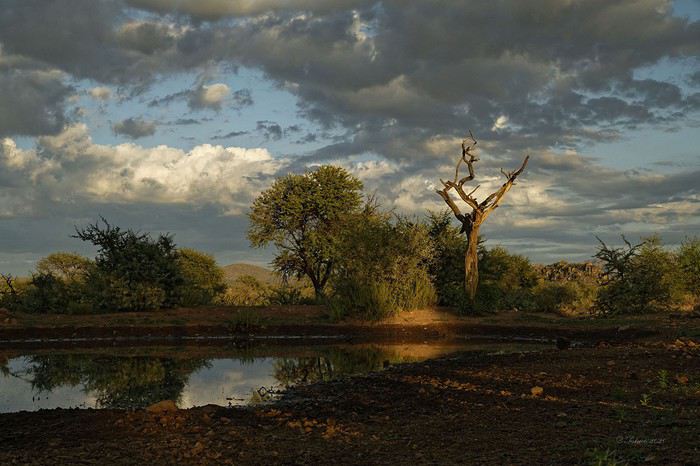
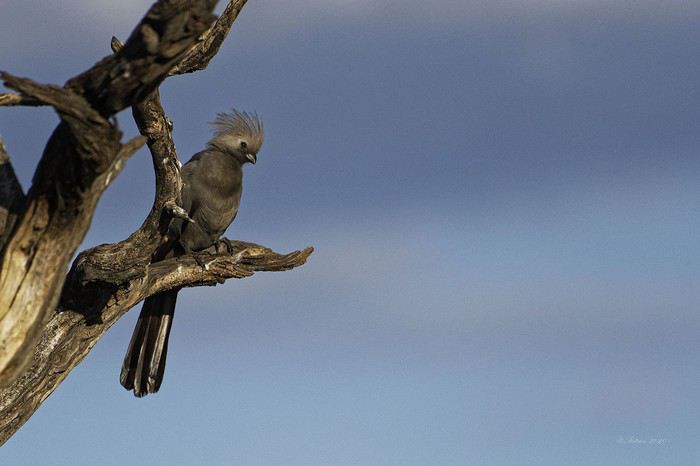
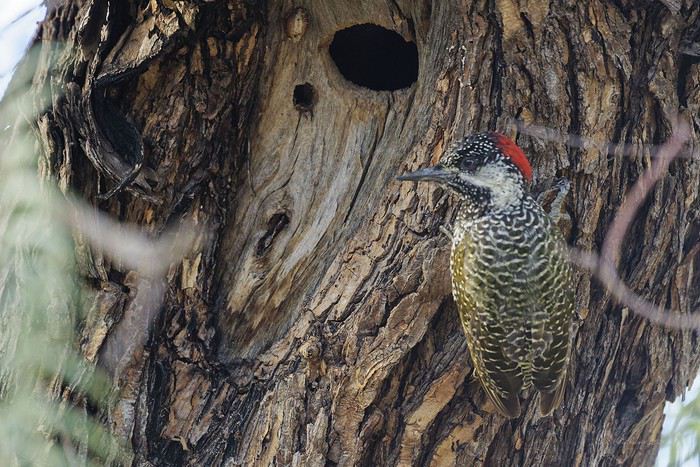
Ceci est important pour nous qui apprécions beaucoup l'image et la transmission d'une émotion, d'une certaine esthétique au travers de la photo, moteur de notre motivation à voyager. Pour notre virée nous avons hérité d'un Toyota à boîte automatique vieux d'un an avec un coffre tente sur le toit. Et, dès la 1ère nuit d'utilisation on verra que ce n'est pas le top. 2 photos pour montrer la différence: 2017: tente traditionnelle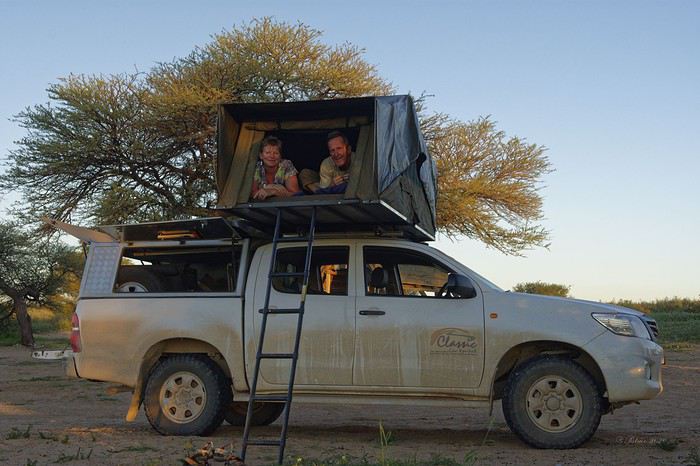
2020 tente coffre
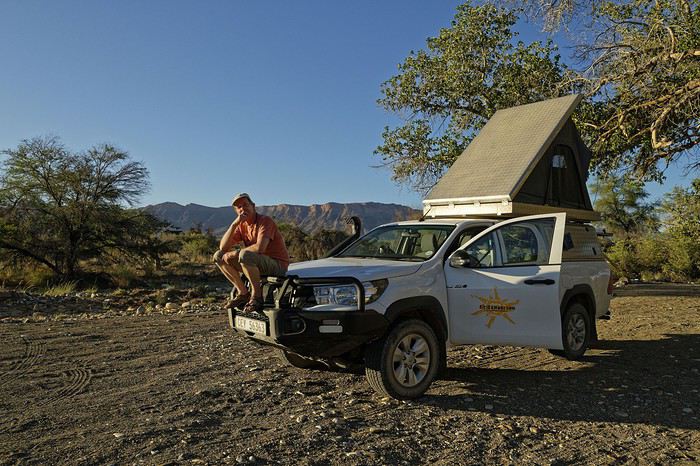
Le coffre métallique est plus facile a ouvrir et a fermer qu'une tente traditionnelle, mais beaucoup moins confortable car on dort dans le sens de la longueur et donc c'est moins large (les 2 oreillers se chevauchent et quand il fait chaud cela devient vite inconfortable… Par contre nous avons gagné un vrai réservoir d'eau de 50L équipé d'une pompe électrique et d'une douchette, ainsi que des lumières à leds dans la tente et dans la malle arrière ce qui est pratique. Pas oublier non plus tout le necessaire de camping, le frigo, le compresseur, les plaques de desensablement, les 2 roues de secours, les sangles de remorquage, les cables electiques, la mallette a outils de base, et 2 reservoirs de gasoil capacité totale 150L: Paré donc pour aller au bout du monde!!!
Nous n'irons que jusqu'au P.N. du Richtersveld, avant de poursuivre vers les chutes d'Augrabies et remonter par le P.N. Kgalagadi. Voyager dans ces contrées en Février c'est assurément avoir chaud, très chaud, c'est aussi risquer la pluie, les orages (hyper localisés, parfois très violents, très spectaculaires ) ou alors rien du tout; mais c'est aussi l'assurance d'avoir des ambiances, des lumières de folies…
Nous entamons notre descente ar le Parc du Naukluftet sa chaîne de montagne spectaculaire, parc connu pour ses trails riche en découvertes, sportifs, ses piscines d'eau claire perdues dans la montagne.

Notre camp de base
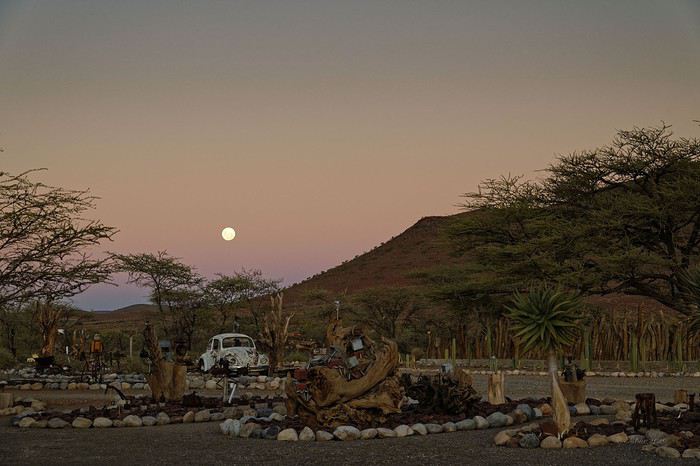
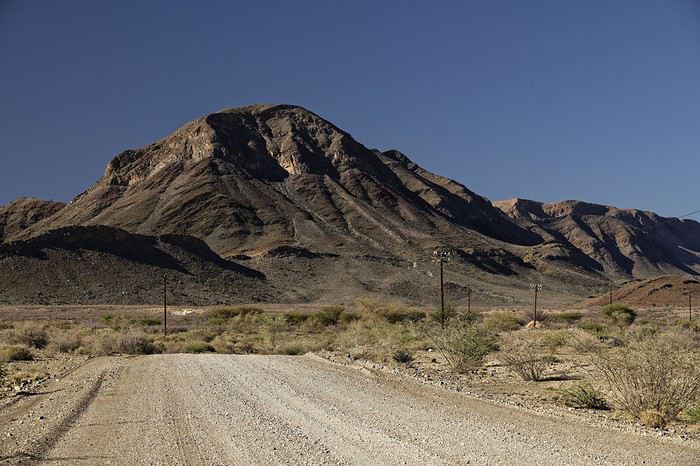
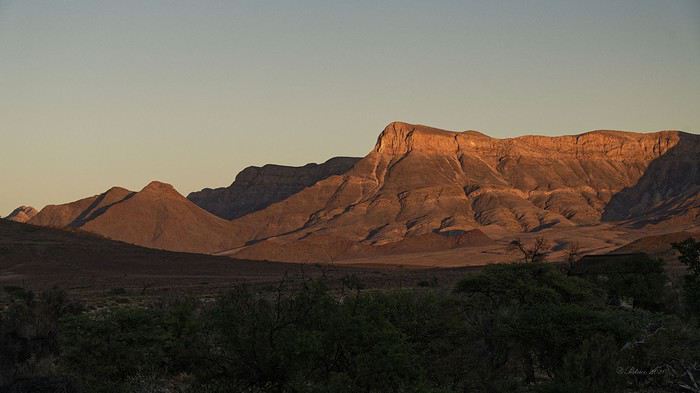
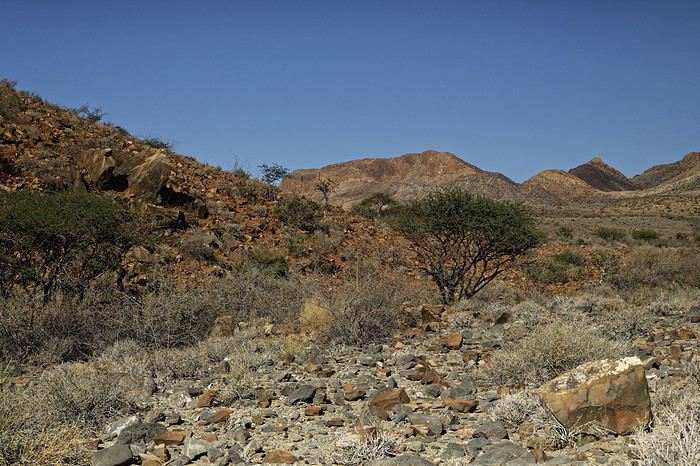
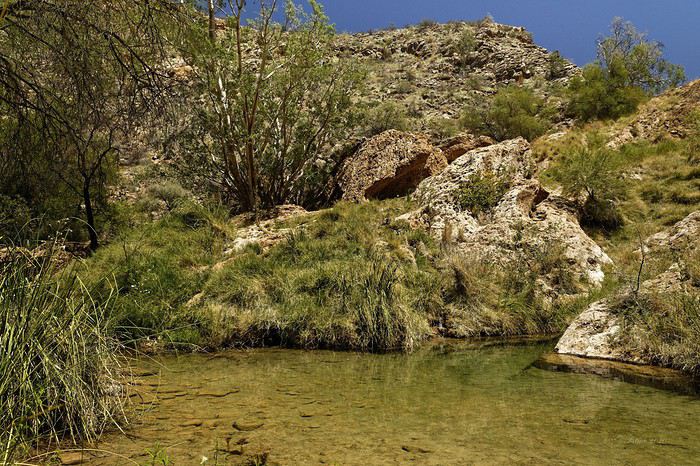
Nous découvrirons que même les Kokkerbaum peuvent souffrir de la sécheresse jusqu'à en mourir!
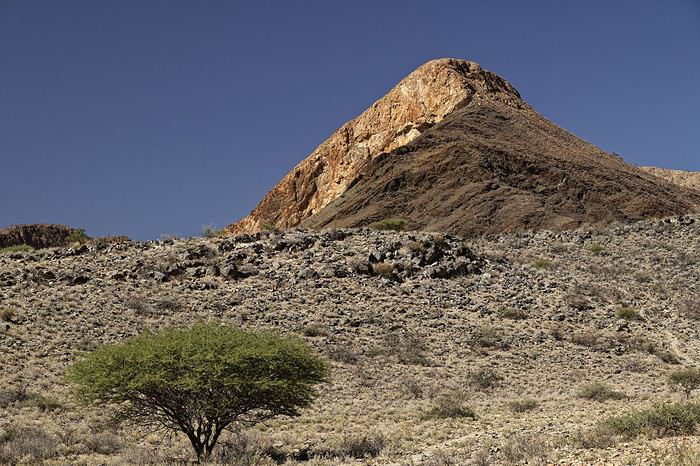
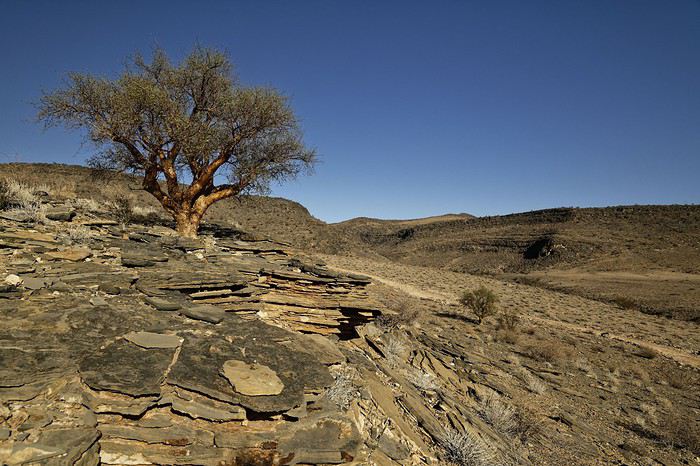
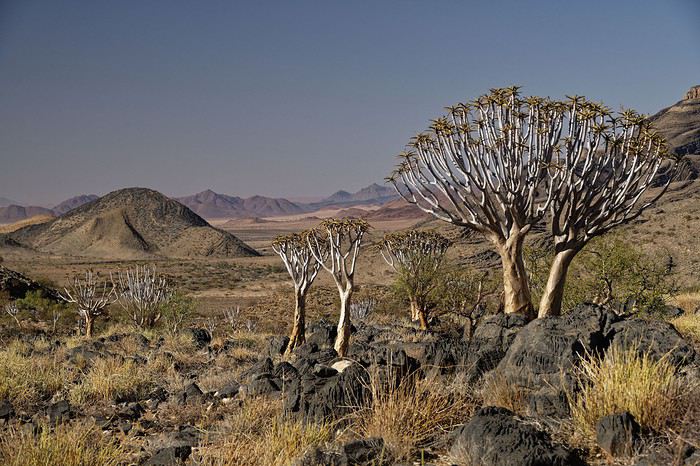
Bien sur un stop à Sesriem est inévitable, d'autant qu'il n'y a pas foule et que l'on peut profiter des paysages dans de belles conditions. Par contre nous ne verrons pas la faune traditionnelle des lieux: ni springboks, ni oryx.
Depuis quelques années les aleas de la vie professionnelle font qu'il ne nous est plus possible d'organiser nos voyages longtemps à l'avance et encore une fois cela s'est vérifié!. Un trou entre 2 contrats de travail c'est l'occasion à saisir pour changer d'air! Faire le tour des possibles entre ce qui nous fait vibrer, la saison, les difficultés d'organisation, les coûts et surgit une évidence: ce sera en Namibie que nous retournerons! En plus Claude, mon épouse, voulait découvrir le Richtersveld et sa flore si particulière et incroyable et le récit de Ticapi (merci à elle et à son magnifique carnet)nous avait tellement séduit que nous avons dit banco c'est jouable!
On achète donc les billets d'avion le mardi pour un vol le jeudi, on trouve une voiture avec sa tente de toit et le tour est joué!
On se retrouve donc le Vendredi 7 Février au Lodge "Auas safari lodge" pour 3 semaines de balade. Nous apprécions beaucoup ce lodge car il est perdu au milieu de la nature, l'accueil y est sympa, il est proche de Windhoek et de l'aéroport, et que l'on est de suite dans le bain car on peut y photographier pas mal d'oiseaux au bord de la petite mare.
Ceci est important pour nous qui apprécions beaucoup l'image et la transmission d'une émotion, d'une certaine esthétique au travers de la photo, moteur de notre motivation à voyager. Pour notre virée nous avons hérité d'un Toyota à boîte automatique vieux d'un an avec un coffre tente sur le toit. Et, dès la 1ère nuit d'utilisation on verra que ce n'est pas le top. 2 photos pour montrer la différence: 2017: tente traditionnelle
2020 tente coffre
Le coffre métallique est plus facile a ouvrir et a fermer qu'une tente traditionnelle, mais beaucoup moins confortable car on dort dans le sens de la longueur et donc c'est moins large (les 2 oreillers se chevauchent et quand il fait chaud cela devient vite inconfortable… Par contre nous avons gagné un vrai réservoir d'eau de 50L équipé d'une pompe électrique et d'une douchette, ainsi que des lumières à leds dans la tente et dans la malle arrière ce qui est pratique. Pas oublier non plus tout le necessaire de camping, le frigo, le compresseur, les plaques de desensablement, les 2 roues de secours, les sangles de remorquage, les cables electiques, la mallette a outils de base, et 2 reservoirs de gasoil capacité totale 150L: Paré donc pour aller au bout du monde!!!
Nous n'irons que jusqu'au P.N. du Richtersveld, avant de poursuivre vers les chutes d'Augrabies et remonter par le P.N. Kgalagadi. Voyager dans ces contrées en Février c'est assurément avoir chaud, très chaud, c'est aussi risquer la pluie, les orages (hyper localisés, parfois très violents, très spectaculaires ) ou alors rien du tout; mais c'est aussi l'assurance d'avoir des ambiances, des lumières de folies…
Nous entamons notre descente ar le Parc du Naukluftet sa chaîne de montagne spectaculaire, parc connu pour ses trails riche en découvertes, sportifs, ses piscines d'eau claire perdues dans la montagne.
Notre camp de base
Nous découvrirons que même les Kokkerbaum peuvent souffrir de la sécheresse jusqu'à en mourir!
Bien sur un stop à Sesriem est inévitable, d'autant qu'il n'y a pas foule et que l'on peut profiter des paysages dans de belles conditions. Par contre nous ne verrons pas la faune traditionnelle des lieux: ni springboks, ni oryx.
Afrique du Sud 2019: retour en terres africaines et premier road-trip en famille English translation pending
Heureux de retrouver le forum d’Afrique australe pour me replonger dans notre voyage de l’été dernier et le partager avec vous.
Bien que ce fut déjà mon 4ème voyage en Afrique du Sud celui-ci eut, dès la préparation, une saveur toute particulière puisque ça allait être notre premier voyage en famille depuis une éternité, et cette fois-ci les rôles étaient inversés puisque c’est moi qui allais faire découvrir à mes parents ma destination de cœur, l’Afrique. 🙂
La concordance des temps dans cette dernière phrase m’a achevé… Ce carnet s’annonce compliqué. 😄
C’est un voyage que nous avons donc réalisé à 5, mes parents, mes 2 jeunes frères et moi-même. Ma sœur n’ayant pas pu se joindre à nous et Alison, ma copine, ayant gardé ses congés pour notre voyage de Septembre en Tanzanie.
C’est un rêve qui, enfin, se réalisait puisque cela faisait plusieurs années que j’essayais d’organiser quelque chose en famille et c’est en rentrant d’Alaksa en Aout 2018 que mes parents se sont motivés pour visiter l’Afrique du Sud. J’ai donc eu quasiment 1an pour préparer ce magnifique voyage en parallèle de celui en Tanzanie avec Alison.
Le circuit se voulait tant classique que magnifique. 24 jours à travers l’Afrique du Sud, à mes yeux le plus beau pays du monde, de Joburg à Capetown.
J0 (06/07/19) : Paris -> Madrid -> Johannesburg J1 (07/07/19) : OR Tambo Int Airport -> Forever Blyde Canyon J2 (08/07/19) : Blyde River Canyon J3 (09/07/19) : Forever Blyde Canyon –> Kruger National Park J4 (10/07/19) : Kruger National Park J5 (11/07/19) : Kruger National Park J6 (12/07/19) : Kruger National Park J7 (13/07/19) : Kruger National Park J8 (14/07/19) : Kruger National Park -> Santa Lucia J9 (15/07/19) : Isimangaliso wetland Park J10 (16/07/19) : Hluhluwe-iMfolozi J11 (17/07/19) : Hluhluwe-iMfolozi J12 (18/07/19) : Hluhluwe-iMfolozi -> Golden Gate NP J13 (19/07/19) : Golden Gate NP J14 (20/07/19) : Golden Gate NP -> Mountain Zebra NP J15 (21/07/19) : Mountain Zebra NP J16 (22/07/19) : Mountain Zebra NP J17 (23/07/19) : Mountain Zebra NP ->Cambedoo NP J18 (24/07/19) : Cambedoo NP -> Addo Elephant NP J19 (25/07/19) : Addo Elephant NP -> De Hoop NR J20 (26/07/19) : De Hoop NR J21 (27/07/19) : De Hoop NR - Capetown J22 (28/07/19) : Capetown J23 (29/07/19) : Capetown J24 (30/07/19) : Capetown - Johannesburg J25 (31/07/19) : Soweto – Départ
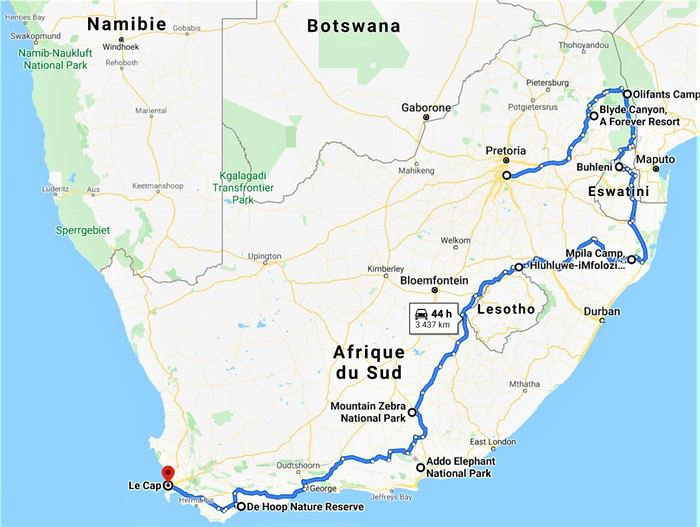
Étant 5 grands gabarits la question du véhicule était délicate puisque c’est dans ce véhicule que nous allions passer le plus de temps, en safari ou sur la route. Nous avons finalement opté pour la location d’un Hyundai H1 chez Budget, option la plus économique et la plus confortable avec 7 places et une plus haute garde au sol pour mieux voir les animaux et le paysage.
Après 11 mois d’attente, début des vacances scolaires et départ de Guadeloupe le vendredi 5 Juillet, pour mes parents et mes frères que je rejoindrai sur Paris le lendemain avant de décoller pour Madrid puis Joburg, tous ensemble, le samedi 6 au soir.
See you in the bush ! (Bilan conseils et budget en fin de carnet.)
Bien que ce fut déjà mon 4ème voyage en Afrique du Sud celui-ci eut, dès la préparation, une saveur toute particulière puisque ça allait être notre premier voyage en famille depuis une éternité, et cette fois-ci les rôles étaient inversés puisque c’est moi qui allais faire découvrir à mes parents ma destination de cœur, l’Afrique. 🙂
La concordance des temps dans cette dernière phrase m’a achevé… Ce carnet s’annonce compliqué. 😄
C’est un voyage que nous avons donc réalisé à 5, mes parents, mes 2 jeunes frères et moi-même. Ma sœur n’ayant pas pu se joindre à nous et Alison, ma copine, ayant gardé ses congés pour notre voyage de Septembre en Tanzanie.
C’est un rêve qui, enfin, se réalisait puisque cela faisait plusieurs années que j’essayais d’organiser quelque chose en famille et c’est en rentrant d’Alaksa en Aout 2018 que mes parents se sont motivés pour visiter l’Afrique du Sud. J’ai donc eu quasiment 1an pour préparer ce magnifique voyage en parallèle de celui en Tanzanie avec Alison.
Le circuit se voulait tant classique que magnifique. 24 jours à travers l’Afrique du Sud, à mes yeux le plus beau pays du monde, de Joburg à Capetown.
J0 (06/07/19) : Paris -> Madrid -> Johannesburg J1 (07/07/19) : OR Tambo Int Airport -> Forever Blyde Canyon J2 (08/07/19) : Blyde River Canyon J3 (09/07/19) : Forever Blyde Canyon –> Kruger National Park J4 (10/07/19) : Kruger National Park J5 (11/07/19) : Kruger National Park J6 (12/07/19) : Kruger National Park J7 (13/07/19) : Kruger National Park J8 (14/07/19) : Kruger National Park -> Santa Lucia J9 (15/07/19) : Isimangaliso wetland Park J10 (16/07/19) : Hluhluwe-iMfolozi J11 (17/07/19) : Hluhluwe-iMfolozi J12 (18/07/19) : Hluhluwe-iMfolozi -> Golden Gate NP J13 (19/07/19) : Golden Gate NP J14 (20/07/19) : Golden Gate NP -> Mountain Zebra NP J15 (21/07/19) : Mountain Zebra NP J16 (22/07/19) : Mountain Zebra NP J17 (23/07/19) : Mountain Zebra NP ->Cambedoo NP J18 (24/07/19) : Cambedoo NP -> Addo Elephant NP J19 (25/07/19) : Addo Elephant NP -> De Hoop NR J20 (26/07/19) : De Hoop NR J21 (27/07/19) : De Hoop NR - Capetown J22 (28/07/19) : Capetown J23 (29/07/19) : Capetown J24 (30/07/19) : Capetown - Johannesburg J25 (31/07/19) : Soweto – Départ
Étant 5 grands gabarits la question du véhicule était délicate puisque c’est dans ce véhicule que nous allions passer le plus de temps, en safari ou sur la route. Nous avons finalement opté pour la location d’un Hyundai H1 chez Budget, option la plus économique et la plus confortable avec 7 places et une plus haute garde au sol pour mieux voir les animaux et le paysage.
Après 11 mois d’attente, début des vacances scolaires et départ de Guadeloupe le vendredi 5 Juillet, pour mes parents et mes frères que je rejoindrai sur Paris le lendemain avant de décoller pour Madrid puis Joburg, tous ensemble, le samedi 6 au soir.
See you in the bush ! (Bilan conseils et budget en fin de carnet.)
Aide au choix d'un voyage de 6 semaines en Asie du Sud-est English translation pending
Bonjour à tous
Nous sommes un couple de 75 et 76 ans en bonne forme.
Nous avons l'habitude d'organiser nous meme nos voyage avec l'aide de ce forum.
Nous avons une bonne connaissance de l'Afrique du Nord, mais sur les conseils d'amis nous souhaitons nous "lancer" en Asie du Sud Est.
Nous projetons de partir 6 à 7 semaines à partir du 28 octobre 2020.
Nos poles d'interets sont
-visites
-petits trecs
-vivre au milieu des habitants.
-calme
Il faudrait que le circuit tienne compte des conditions climatiques, surtout" pas trop chaud"
On aime bien se déplacer en bus ou train .
Gros problème....par quel pays débuter?Quel circuit peut-on envisager?
Je suis certain que "ce maudit confinement"permettra un échange fructueux
Je vous en remercie à l'avance.
Région du Ladakh à partir de New Delhi à vélo English translation pending
Bonjour a tous
suis preneur de toutes infos sur cette région
je compte partir de New Delhi a vélo ou en grande partie d ici 1 an mai_ juin 2021
parcours déjà effectué par certains et certaines vers leh
merci
suis preneur de toutes infos sur cette région
je compte partir de New Delhi a vélo ou en grande partie d ici 1 an mai_ juin 2021
parcours déjà effectué par certains et certaines vers leh
merci
Roadtrip famille en Namibie English translation pending
Juillet 2019 le moment du départ pour la Namibie arrive enfin!
Voici presque 2 ans que nous attendons ce moment.
Nous avions envisagé de partir en Namibie en juillet 2018. Nous avons commencé à faire les "démarches" ( location de 4X4 et réservation des campings dans les parcs) en decembre 2017. Seulement voilà, on s'y était pris bien trop tard. plus de vehicule dispo et pas de place ni dans ni à proximité de certaines réserves notamment Etosha. La tentative a échoué même en passant par une agence. Alors on a commencé à reserver un an à l'avance , ce qui ne nous arrive jamais et on a attendu, ... attendu, ....attendu......Mais ça en valait la peine.
Par flemme dans l'organisation on est passé par Tourmaline pour gérer les réservations. Ils ont été parfait… Aucune anicroche.
J0 sam 13 juillet 2019 Paris 12h15 --> Francfort 13h45 AIR France Francfort 20h10 --> Windhoek 6h30 Air Namibia
J1 dim 14 juillet
C'est bien de prévoir un vol qui arrive le matin car il y a pas mal de chose à faire
- arrivée chez le loueur ( ASCO car Hire) 2h après atterrissage
- Prise en main du véhicule chez le loueur avec vérification complète du matériel de camping tentes montage et démontage inventaire matériel de cuisine… 2h00 minimum Etat du véhicule nickel ( propreté , état des pneus...) .Vu la poussiere ambiante et l'état de retour des véhicules, on peut même se demander comment ils reussissent à obtenir un tel résultat Nous avons opté pour un 4X4 équipé car nous allons dans le Kaokaland jusqu'à Purros en autonomie ( mais nous y reviendrons)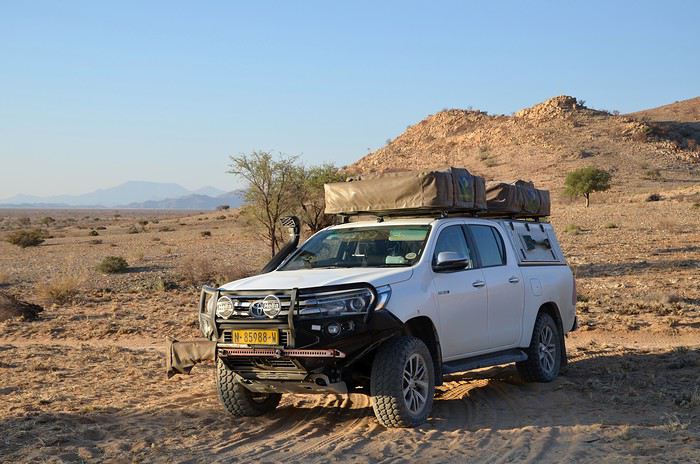
- Briefing avec l'agent de tourmaline 1h30 ( secu routiere++)
- Courses alimentaires
Nuit au Londiningi BB guest house accueil sympathique , cuisine excellente , chambres familliales irreprochables J2 lundi 15 juillet Windhoek à Sesriem 330 km 5/6h Pour accéder à Sesriem deux possibilités soit via la Pass Spreetghoote (Piste C24 puis 1261 et 1275) et ensuite Solitaire, itinéraire le plus spectaculaire .Pass réputée dangereuse, le dénivelé est important et risques si fortes pluies de passagesdans des cuvettes. itinéraire interdit aux véhicules avec remorque. C'est cet itiniraire que nous avons pris sans regret. c'est splendide. et Solitaire (qui porte bien son nom) trés pittoresque. En plus on y trouve des tartes aux pommes délicieuses (le classique du coin)
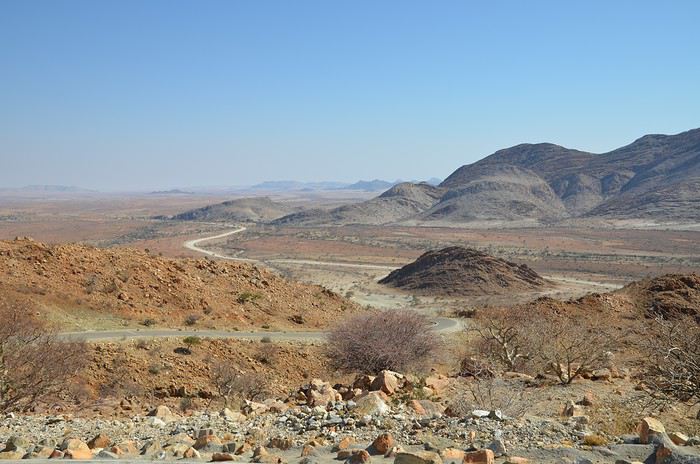
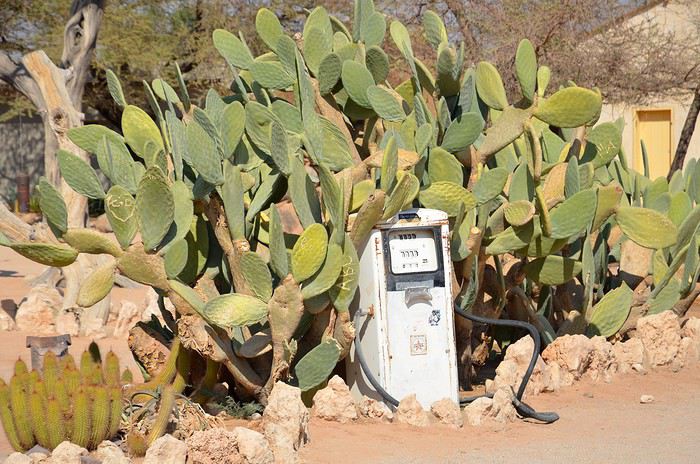
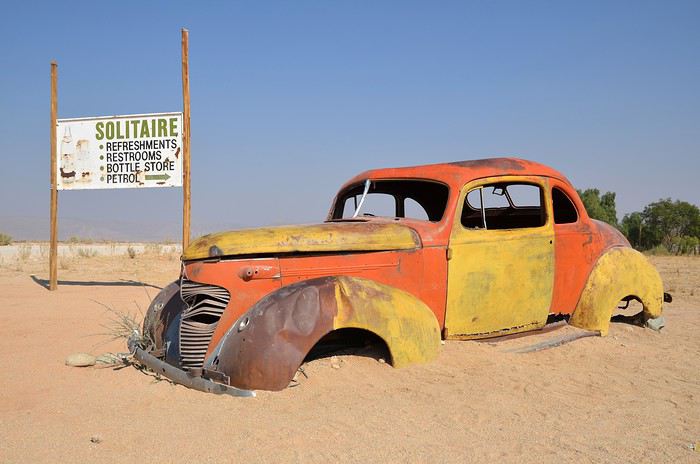
L’autre itinéraire plus facile se fait via Bullsport (Pistes C24, M47 puis 1206 et ensuite D854). Nuit à Seriem camp site Ce camp est situé dans l'enceinte du Parc national du Namib Naukluft ce qui permet l'accès au Parc 1h00 avant le lever du soleil. C'est un camp très fréquenté et relativement bruyant, sans charme mais c'est le point de départ idéal pour partir à Sossusvlei tôt le matin.
Par flemme dans l'organisation on est passé par Tourmaline pour gérer les réservations. Ils ont été parfait… Aucune anicroche.
J0 sam 13 juillet 2019 Paris 12h15 --> Francfort 13h45 AIR France Francfort 20h10 --> Windhoek 6h30 Air Namibia
J1 dim 14 juillet
C'est bien de prévoir un vol qui arrive le matin car il y a pas mal de chose à faire
- arrivée chez le loueur ( ASCO car Hire) 2h après atterrissage
- Prise en main du véhicule chez le loueur avec vérification complète du matériel de camping tentes montage et démontage inventaire matériel de cuisine… 2h00 minimum Etat du véhicule nickel ( propreté , état des pneus...) .Vu la poussiere ambiante et l'état de retour des véhicules, on peut même se demander comment ils reussissent à obtenir un tel résultat Nous avons opté pour un 4X4 équipé car nous allons dans le Kaokaland jusqu'à Purros en autonomie ( mais nous y reviendrons)
- Briefing avec l'agent de tourmaline 1h30 ( secu routiere++)
- Courses alimentaires
Nuit au Londiningi BB guest house accueil sympathique , cuisine excellente , chambres familliales irreprochables J2 lundi 15 juillet Windhoek à Sesriem 330 km 5/6h Pour accéder à Sesriem deux possibilités soit via la Pass Spreetghoote (Piste C24 puis 1261 et 1275) et ensuite Solitaire, itinéraire le plus spectaculaire .Pass réputée dangereuse, le dénivelé est important et risques si fortes pluies de passagesdans des cuvettes. itinéraire interdit aux véhicules avec remorque. C'est cet itiniraire que nous avons pris sans regret. c'est splendide. et Solitaire (qui porte bien son nom) trés pittoresque. En plus on y trouve des tartes aux pommes délicieuses (le classique du coin)
L’autre itinéraire plus facile se fait via Bullsport (Pistes C24, M47 puis 1206 et ensuite D854). Nuit à Seriem camp site Ce camp est situé dans l'enceinte du Parc national du Namib Naukluft ce qui permet l'accès au Parc 1h00 avant le lever du soleil. C'est un camp très fréquenté et relativement bruyant, sans charme mais c'est le point de départ idéal pour partir à Sossusvlei tôt le matin.