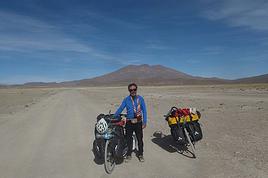
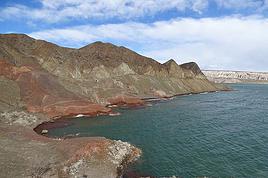
Hi there,
I’ve got my flight ticket sorted—departing in mid-November and returning in mid-March. I’ll arrive in Santiago and leave from Buenos Aires.
I’ve already been to southern Argentina, specifically Torres del Paine National Park, and I’d love to go back to do the full W trek (I only did the shorter version last time).
I also want to do some hiking and maybe even tackle a summit. I climb and occasionally do some mountaineering, so I’ll definitely be going with a guide.
I plan to start around Temuco in Chile, with the idea of heading toward the lakes, then taking the Carretera Austral.
I’m not sure if I’ll go all the way to Ushuaia—it’s supposed to not be *that* worth it, except for the bragging rights of saying you’ve been to the end of the world.
I saw there are lakes in Argentina too.
I don’t have a precise itinerary, but what I’d love is, once I reach the southernmost point of my trip, to take a mini-cruise to see some wildlife. Any tips for that?
What kind of sleeping bag did you take? Is a 0°C (32°F) one enough?
And one last question: white gas stove or can I get by with my gas stove?
Nath
South America · Argentine
Argentine, Bolivie, Brésil, Chili, Colombie, Équateur, Guyana, Guyane, Paraguay, Pérou, Surinam, Uruguay, Vénézuela...
Showing 1–30 of 6,715 discussions.

This travel journal summarizes a trip I took in March to Argentine and Chilean Patagonia. It starts in El Calafate and ends in Ushuaia. During my planning, I considered looking into the Australis cruise from Punta Arenas to Ushuaia, as well as the W trek in Torres del Paine National Park. In both cases, I was put off by the prices. Instead of the cruise, I found two interesting wildlife excursions from Punta Arenas: whale watching in the Strait of Magellan and observing king penguins in Tierra del Fuego. The journey to Ushuaia was by bus. For Torres del Paine, things were a bit confusing, so I reached out to two agencies. In the end, I went with a rental car option, overnight stays on-site, and day hikes. I shared my full itinerary with the agency and ended up being taken care of by a local Argentine agency and a Chilean one.
So, here we go...

Hi there,
Three years after exploring northern Argentina and Chile, my two travel buddies and I want to discover the southern part of these two countries. We’re traveling on a budget, backpacker-style, favoring public transport and modest accommodations, but we don’t hesitate to splurge a little when it’s worth it. The classic spots that have been fueling our dreams: Bariloche, the lakes, Chiloé, El Chaltén, Torres del Paine, Perito Moreno, El Calafate, Fitz Roy, Ushuaia and Tierra del Fuego, and wrapping up in Valparaíso. We’ll take a round-trip flight to Santiago, then I’m thinking of a one-way flight from Santiago to Punta Arenas. From there, we’ll explore and do several day hikes in the south, including Ushuaia and, if possible, Tierra del Fuego. Then we’ll head back north by bus to Bariloche and the lakes, followed by Chiloé, then a bus to Santiago and Valparaíso. Based on your experience, could you help me figure out the best way to structure this trip and maybe suggest some ideas? Thanks in advance. Didier
Three years after exploring northern Argentina and Chile, my two travel buddies and I want to discover the southern part of these two countries. We’re traveling on a budget, backpacker-style, favoring public transport and modest accommodations, but we don’t hesitate to splurge a little when it’s worth it. The classic spots that have been fueling our dreams: Bariloche, the lakes, Chiloé, El Chaltén, Torres del Paine, Perito Moreno, El Calafate, Fitz Roy, Ushuaia and Tierra del Fuego, and wrapping up in Valparaíso. We’ll take a round-trip flight to Santiago, then I’m thinking of a one-way flight from Santiago to Punta Arenas. From there, we’ll explore and do several day hikes in the south, including Ushuaia and, if possible, Tierra del Fuego. Then we’ll head back north by bus to Bariloche and the lakes, followed by Chiloé, then a bus to Santiago and Valparaíso. Based on your experience, could you help me figure out the best way to structure this trip and maybe suggest some ideas? Thanks in advance. Didier
Hi,
We’re heading to Buenos Aires for 3 days in November and would like to do a guided tour of a few neighborhoods. There are "free" tours, but none in French. Does anyone have a guide to recommend so we can really get to know the city beyond just the architecture?
Thanks
Hi there,
I’m planning a sidecar trip to South America for 4 or 5 months at the end of this year.
I’m looking for info on shipping my vehicle by sea—possibly to Uruguay or another destination, as I haven’t finalized anything yet.
How do you get visas for the countries I’ll be crossing: Uruguay, Argentina, Bolivia, Peru, and Chile? Are they e-Visas, obtained at the border, or through embassies?
Where can I get vehicle insurance?
Lastly, if any bikers want to join us (my partner and me), we’re open to that possibility too.
Patrick
hi,
I was planning to go to Réunion and stay in half-board accommodation with non-professionals, but it seems that’s not really the custom there—or maybe my budget isn’t big enough.
So, since I’ve already traveled around Ecuador and Peru, I’m now looking at Argentina, especially for its mountains (like the ones in Réunion that tempted me, even though—frustratingly—I could only admire them from below).
I plan to get around by bus and don’t know in advance where I’ll sleep, so I won’t book ahead. If I like a place, I might stay for several days.
I know that in Chile, it’s easy to find half-board accommodation, but what about in Argentina?
I’d like to stay with locals in half-board without it being a professional setup. I’m not sure if this is common practice there. It’s up to me to find someone willing to host me. What do you think? What would be a fair price (keeping in mind that 40 to 50 € is the max I can spend on accommodation, breakfast, and dinner)?
Looking forward to your feedback.
Best regards,
I was planning to go to Réunion and stay in half-board accommodation with non-professionals, but it seems that’s not really the custom there—or maybe my budget isn’t big enough.
So, since I’ve already traveled around Ecuador and Peru, I’m now looking at Argentina, especially for its mountains (like the ones in Réunion that tempted me, even though—frustratingly—I could only admire them from below).
I plan to get around by bus and don’t know in advance where I’ll sleep, so I won’t book ahead. If I like a place, I might stay for several days.
I know that in Chile, it’s easy to find half-board accommodation, but what about in Argentina?
I’d like to stay with locals in half-board without it being a professional setup. I’m not sure if this is common practice there. It’s up to me to find someone willing to host me. What do you think? What would be a fair price (keeping in mind that 40 to 50 € is the max I can spend on accommodation, breakfast, and dinner)?
Looking forward to your feedback.
Best regards,
Hi there,
I’m spending a few days in San Pedro de Atacama (Chile) and would like to cross the Argentine border to make a loop toward Salta and then return to Chile to drop off the rental car.
I’ve heard that crossing the border can be tricky!
Is it possible with a rental company’s authorization? Which company, and at what cost?
Thanks for sharing your experiences!
Best regards,
Arnale

Hi,
we’re planning a round trip from San Pedro de Atacama, Chile, to Salta, Argentina, in two months. On the way there, we’ll take the northern route via Susques, Route 27, then 52. But for the return, we were thinking of taking the southern route via San Antonio de los Cobres, Route 51, then 23. Is it similar to the northern route in terms of road surface? How busy is it, and are there gas stations? Basically, should we be worried about doing it in an SUV that’s supposedly 4x4 but has regular road tires and no second spare wheel, obviously...
I’ve seen that we can stop over in San Antonio de los Cobres.
Thanks for your feedback.
Raf.

Everything You Need to Know About Argentina’s Currency Exchange Maze (2026 Edition)
Hi fellow travelers,
Packing your bags for Buenos Aires? Watch out—here, money is a science almost as complex as the dance steps in a tango!
As of March 2026, the situation has shifted dramatically: the "Blue" (parallel) rate is now neck-and-neck with the official rate. To save you from losing your hard-earned euros in bureaucratic mazes or "disastrous" exchange rates, I’ve laced up my reporter boots and hit the famous Calle Florida for you.
In my latest video (and the accompanying article), I take you behind the scenes of currency exchange:
Arbolitos and Cuevas: Who are they, and can you still trust them? The Rate Showdown: Why Banco Nación is currently the worst place for your savings. Western Union: Why it’s often your best ally right now. Cash or Card? The little secret to getting an instant 10–15% discount at restaurants or hotels. The Bill Trap: Why your 500 € notes or stained dollars might stay in your wallet.
Argentina changes fast—*very* fast (by the end of March, today’s advice might already be old news!). So don’t leave without checking the market’s pulse.
Check out all my tips in the video here: https://www.youtube.com/watch?v=KKmKFux4fpQ
And remember: in Argentina, don’t exchange money on weekends—unless you want your cash to melt like snow in the sun!
Safe travels, and see you on the road! Hergé
Packing your bags for Buenos Aires? Watch out—here, money is a science almost as complex as the dance steps in a tango!
As of March 2026, the situation has shifted dramatically: the "Blue" (parallel) rate is now neck-and-neck with the official rate. To save you from losing your hard-earned euros in bureaucratic mazes or "disastrous" exchange rates, I’ve laced up my reporter boots and hit the famous Calle Florida for you.
In my latest video (and the accompanying article), I take you behind the scenes of currency exchange:
Arbolitos and Cuevas: Who are they, and can you still trust them? The Rate Showdown: Why Banco Nación is currently the worst place for your savings. Western Union: Why it’s often your best ally right now. Cash or Card? The little secret to getting an instant 10–15% discount at restaurants or hotels. The Bill Trap: Why your 500 € notes or stained dollars might stay in your wallet.
Argentina changes fast—*very* fast (by the end of March, today’s advice might already be old news!). So don’t leave without checking the market’s pulse.
Check out all my tips in the video here: https://www.youtube.com/watch?v=KKmKFux4fpQ
And remember: in Argentina, don’t exchange money on weekends—unless you want your cash to melt like snow in the sun!
Safe travels, and see you on the road! Hergé
Hi,
we’re planning to travel through Patagonia (Chile and Argentina) in February and March 2027.
From a seasonal and weather perspective, at that time of year and with hiking as our main activity, is it better to explore Patagonia from south to north or the other way around?
Thanks in advance.
Anne Marie
Hi there,
I’m about to fulfill a dream that includes a trip to Patagonia between October and December 2026. I’ll be traveling solo.
My plan: - Take a boat from Puerto Montt to Puerto Natales (4-5 days) - Torres del Paine National Park (2-3 days) - Bus from Puerto Natales to Ushuaïa (1-2 days) - Exploring around Ushuaïa (3-4 days) - Cruise from Ushuaïa to Punta Arenas (Oct 31 - Nov 4) - Rent a vehicle and head back up to Puerto Montt by around December 10, which is about 35 days total, via Los Glaciares, El Chaltén, Patagonia NP, Caleta Tortel, Villa O’Higgins, Puerto Río Tranquilo, Bahía Exploradores, Cerro Castillo NP, Coyhaique, Queulat NP, Chaitén, Pumalín NP, and Hornopirén NP.
My goal is to enjoy nature and do some hiking.
I’ll be in Torres del Paine around October 20—is the weather manageable for day hikes at that time?
30-35 days from Punta Arenas to Puerto Montt? That’s about 3,600 km. Is this timeframe doable to enjoy the scenery without rushing? If I arrive in the north earlier, it’s no big deal—I’ll just explore more spots above Puerto Montt.
Now, about the vehicle... I’m torn between a car + tent (regular car with a tent on top) and a small van. Is this enough for the Carretera Austral or unpaved roads? Or would a 4x4 be better? I’m not an experienced 4x4 driver—I’ve only driven occasionally to give the main driver a break on easy sections. A van is tempting for the comfort. Are there any rental options for slightly modified cars or ones where you can sleep, like a Kangoo?
Thanks in advance for your thoughts on my itinerary and advice on the vehicle!
I’m about to fulfill a dream that includes a trip to Patagonia between October and December 2026. I’ll be traveling solo.
My plan: - Take a boat from Puerto Montt to Puerto Natales (4-5 days) - Torres del Paine National Park (2-3 days) - Bus from Puerto Natales to Ushuaïa (1-2 days) - Exploring around Ushuaïa (3-4 days) - Cruise from Ushuaïa to Punta Arenas (Oct 31 - Nov 4) - Rent a vehicle and head back up to Puerto Montt by around December 10, which is about 35 days total, via Los Glaciares, El Chaltén, Patagonia NP, Caleta Tortel, Villa O’Higgins, Puerto Río Tranquilo, Bahía Exploradores, Cerro Castillo NP, Coyhaique, Queulat NP, Chaitén, Pumalín NP, and Hornopirén NP.
My goal is to enjoy nature and do some hiking.
I’ll be in Torres del Paine around October 20—is the weather manageable for day hikes at that time?
30-35 days from Punta Arenas to Puerto Montt? That’s about 3,600 km. Is this timeframe doable to enjoy the scenery without rushing? If I arrive in the north earlier, it’s no big deal—I’ll just explore more spots above Puerto Montt.
Now, about the vehicle... I’m torn between a car + tent (regular car with a tent on top) and a small van. Is this enough for the Carretera Austral or unpaved roads? Or would a 4x4 be better? I’m not an experienced 4x4 driver—I’ve only driven occasionally to give the main driver a break on easy sections. A van is tempting for the comfort. Are there any rental options for slightly modified cars or ones where you can sleep, like a Kangoo?
Thanks in advance for your thoughts on my itinerary and advice on the vehicle!
Hi,
We’d like to visit South America (among other places) with a vehicle, and I have a question about Chile and Argentina.
A lot of "spots" are right on the border between these two countries, and I was wondering how to visit them since we’re not in a rush. Should we cross the borders without stopping so we don’t have to backtrack later, or should we explore the Chilean side first, for example, and then the Argentine side afterward?
Thanks for your thoughts and advice! :)
Hi there,
I’m planning to explore Argentine and Chilean Patagonia for a month in December 2019.
I’m looking for a rental company (or several) that offers single-cab 4x4 pick-ups with a fitted camper cell for two people. I’m specifically after a vehicle with an indoor shower for extra comfort ;) So, no vans—at least not from the rental companies I’ve seen so far.
While browsing the forum, I came across the Chilean rental company Holiday Rent. But do you have any recommendations for Argentine rentals? Because, if I can’t return the vehicle in the same city as pickup, I’d prefer—and it’d likely be cheaper—to at least return it in the same country.
I’m planning to explore Argentine and Chilean Patagonia for a month in December 2019.
I’m looking for a rental company (or several) that offers single-cab 4x4 pick-ups with a fitted camper cell for two people. I’m specifically after a vehicle with an indoor shower for extra comfort ;) So, no vans—at least not from the rental companies I’ve seen so far.
While browsing the forum, I came across the Chilean rental company Holiday Rent. But do you have any recommendations for Argentine rentals? Because, if I can’t return the vehicle in the same city as pickup, I’d prefer—and it’d likely be cheaper—to at least return it in the same country.
Hello,
I’m traveling through Argentina and Chile (as well as Paraguay and Uruguay) with a 2019 Toyota Hilux Euro 6. Could anyone tell me if the local diesel is suitable for its engine, or if I need to take any special precautions (like adding an additive, for example) for these countries? I’d also like to know if driving at high altitudes is possible, and up to what elevation—or if I should worry about the vehicle going into limp mode? If that happens, what should I do?
Thanks in advance
I’m traveling through Argentina and Chile (as well as Paraguay and Uruguay) with a 2019 Toyota Hilux Euro 6. Could anyone tell me if the local diesel is suitable for its engine, or if I need to take any special precautions (like adding an additive, for example) for these countries? I’d also like to know if driving at high altitudes is possible, and up to what elevation—or if I should worry about the vehicle going into limp mode? If that happens, what should I do?
Thanks in advance
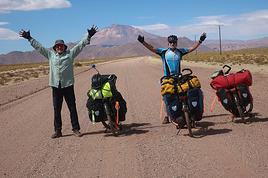
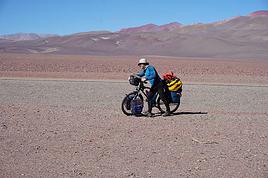
I’m planning a journey of about 2500 km starting from San Pedro de Atacama (duration: max. 2 months). This trip, almost entirely on remote trails, promises to be an extraordinary adventure.
Highlights of the trip - Crossing the Florido Desert (during the blooming season: October 15–30) - Hiking ascents of legendary volcanoes: - Ojos del Salado (6879 m) - Llullaillaco (6739 m) - Uturuncu (6008 m, with 5820 m reachable by mountain bike!) - A 300 km stage through the heart of the desert, with no resupply or habitation: the ultimate experience of solitude and self-transcendence.
Practical details - Daily distance: max. 100 km and 1000 m elevation gain per day - Average altitude: 4000 m (between 3500 and 5000 m) - Temperatures: ~15 °C during the day, down to -25 °C at night (in a tent) - Accommodation: ~50% in villages (with locals or small hostels), ~50% camping
Estimated budget - 1400 € for the flight ticket (including bike supplement) - 1000 € for on-the-ground expenses
Required equipment - Fatbike (essential for deep sand) - -25 °C comfort sleeping bag - Single-wheel trailer (indispensable for these tough terrains)
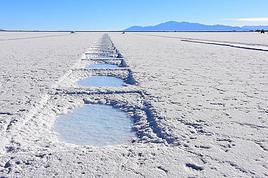
My experience In 2022, I completed a similar 1200 km trip north of San Pedro de Atacama: - Full crossing of the Salar de Uyuni (170 km) - Ascents of the Ollague (5868 m) and Aucanquilcha (6176 m) volcanoes - Two 200 km stages with no resupply or human presence Videos available for a glimpse of the adventure: - Atacama Crossing 2022 - Part 1 - Atacama Crossing 2022 - Part 2
Next steps If this adventure interests you, I suggest: 1. A first phone call to get to know each other 2. A meet-up over a drink or a test ride in the Bardenas Reales (similar terrain, and I live 100 km away)
Don’t hesitate to contact me for more info or to discuss the details!
Highlights of the trip - Crossing the Florido Desert (during the blooming season: October 15–30) - Hiking ascents of legendary volcanoes: - Ojos del Salado (6879 m) - Llullaillaco (6739 m) - Uturuncu (6008 m, with 5820 m reachable by mountain bike!) - A 300 km stage through the heart of the desert, with no resupply or habitation: the ultimate experience of solitude and self-transcendence.
Practical details - Daily distance: max. 100 km and 1000 m elevation gain per day - Average altitude: 4000 m (between 3500 and 5000 m) - Temperatures: ~15 °C during the day, down to -25 °C at night (in a tent) - Accommodation: ~50% in villages (with locals or small hostels), ~50% camping
Estimated budget - 1400 € for the flight ticket (including bike supplement) - 1000 € for on-the-ground expenses
Required equipment - Fatbike (essential for deep sand) - -25 °C comfort sleeping bag - Single-wheel trailer (indispensable for these tough terrains)
My experience In 2022, I completed a similar 1200 km trip north of San Pedro de Atacama: - Full crossing of the Salar de Uyuni (170 km) - Ascents of the Ollague (5868 m) and Aucanquilcha (6176 m) volcanoes - Two 200 km stages with no resupply or human presence Videos available for a glimpse of the adventure: - Atacama Crossing 2022 - Part 1 - Atacama Crossing 2022 - Part 2
Next steps If this adventure interests you, I suggest: 1. A first phone call to get to know each other 2. A meet-up over a drink or a test ride in the Bardenas Reales (similar terrain, and I live 100 km away)
Don’t hesitate to contact me for more info or to discuss the details!
Hi there,
We’re a couple traveling with our 2.5-year-old baby. We’re heading to Patagonia in March or April 2026. We don’t have exact dates yet because this will be the start of a long trip around Latin America. We’ll be traveling by public transport, with our backpacks and a baby carrier for support. We’ll take a domestic flight from Buenos Aires to Ushuaia, and the rest will be by bus.
Here’s the itinerary we’ve planned: - Buenos Aires (5 days) - Ushuaia (5 days or more) - El Calafate (3 days) - El Chaltén (5 days) - Los Antiguos + border crossing at Chile Chico - Puerto Río Tranquilo (Chile) (5 days) - Coyhaique (Chile) (3 days) - Chiloé Island (Chile) (10 days) - Puerto Varas (Chile) (3 days) - Bariloche (5 days) - San Martín de los Andes (3 days) - Mendoza (5 days)
After that, we’re thinking of spending a few days in Córdoba, then a month in Salta. We plan to head back down to Santiago (Chile) and then head north along the Chilean side toward Peru.
What do you think of this itinerary (especially the Patagonia part)? Is it doable with a young child just over 2.5 years old? I’d also love to include Esquel and El Bolsón in Argentina, but I’m not sure how to fit them in or if they’re really worth it. The durations are approximate, depending on what there is to do in each place... Do you have any suggestions for improving it or any tips?
We want to do some easy hikes or half-day walks since we won’t be able to carry him all day. That’s why we’ve intentionally left out Torres del Paine National Park (very expensive and not very baby-friendly, I think). Do you know of any hikes that are accessible with a little one?
Thanks in advance! !
We’re a couple traveling with our 2.5-year-old baby. We’re heading to Patagonia in March or April 2026. We don’t have exact dates yet because this will be the start of a long trip around Latin America. We’ll be traveling by public transport, with our backpacks and a baby carrier for support. We’ll take a domestic flight from Buenos Aires to Ushuaia, and the rest will be by bus.
Here’s the itinerary we’ve planned: - Buenos Aires (5 days) - Ushuaia (5 days or more) - El Calafate (3 days) - El Chaltén (5 days) - Los Antiguos + border crossing at Chile Chico - Puerto Río Tranquilo (Chile) (5 days) - Coyhaique (Chile) (3 days) - Chiloé Island (Chile) (10 days) - Puerto Varas (Chile) (3 days) - Bariloche (5 days) - San Martín de los Andes (3 days) - Mendoza (5 days)
After that, we’re thinking of spending a few days in Córdoba, then a month in Salta. We plan to head back down to Santiago (Chile) and then head north along the Chilean side toward Peru.
What do you think of this itinerary (especially the Patagonia part)? Is it doable with a young child just over 2.5 years old? I’d also love to include Esquel and El Bolsón in Argentina, but I’m not sure how to fit them in or if they’re really worth it. The durations are approximate, depending on what there is to do in each place... Do you have any suggestions for improving it or any tips?
We want to do some easy hikes or half-day walks since we won’t be able to carry him all day. That’s why we’ve intentionally left out Torres del Paine National Park (very expensive and not very baby-friendly, I think). Do you know of any hikes that are accessible with a little one?
Thanks in advance! !
Hi everyone,
I’m planning a trip to Argentina in February. I’ll be starting from Buenos Aires and want to do a loop that goes through Salta and Mendoza before returning to Buenos Aires. I’m still undecided on the direction: • Buenos Aires → Mendoza → Salta → Buenos Aires or • Buenos Aires → Salta → Mendoza → Buenos Aires.
I plan to explore each region, alternating between buses and a rental car.
In your opinion, which direction makes more sense for this itinerary (climate, roads, logistics, etc.)?
Thanks in advance for your tips! !
I’m planning a trip to Argentina in February. I’ll be starting from Buenos Aires and want to do a loop that goes through Salta and Mendoza before returning to Buenos Aires. I’m still undecided on the direction: • Buenos Aires → Mendoza → Salta → Buenos Aires or • Buenos Aires → Salta → Mendoza → Buenos Aires.
I plan to explore each region, alternating between buses and a rental car.
In your opinion, which direction makes more sense for this itinerary (climate, roads, logistics, etc.)?
Thanks in advance for your tips! !
Hello,
We’re planning a trip to Patagonia for November–December 2026.
After reading forums, blogs, and guidebooks, we’ve sketched out a rough itinerary and would love to hear from experts.
We initially wanted to rent a camper van, but it’s hard to find options and we have no idea about prices.
We’ve settled on starting in Bariloche, crossing into Chile for the Carretera Austral, then back into Argentina before crossing into Chile again for Punta Arenas, and finally ending in El Calafate to drop off the car. We don’t want to make any advance reservations so we can stay flexible based on weather and road conditions.
Do you think this route is reasonably doable?
And if you have any idea about the cost of renting a car for 17 days with a different drop-off location and the paperwork needed for border crossings…
Thanks a million in advance for your replies!
Céline
Day 1: Flight – 24 hours of travel, overnight on the plane Day 2: Arrival in Buenos Aires, overnight in BA Day 3: BA, overnight in BA Day 4: BA, overnight in BA Day 5: Flight to Bariloche, overnight in Bariloche Day 6–7: Seven Lakes route, overnight in Bariloche Day 8: Drive to La Junta, overnight stop Day 9: Drive to Puerto Tranquilo, overnight in Puerto Tranquilo Day 10: Catedral de Mármol, overnight in Puerto Tranquilo Day 11: Drive to El Chaltén, overnight stop Day 12: Arrival in El Chaltén, overnight in El Chaltén Day 13: El Chaltén, overnight in El Chaltén Day 14: El Chaltén, overnight in El Chaltén Day 15: Drive to Punta Arenas, overnight in Punta Arenas Day 16: Punta Arenas, overnight in Punta Arenas Day 17: Punta Arenas, overnight in Punta Arenas Day 18: Drive to Torres del Paine, overnight in Torres Day 19: Torres del Paine, overnight in Torres Day 20: Torres del Paine, overnight in Torres Day 21: Drive to El Calafate, overnight in El Calafate Day 22: El Calafate, overnight in El Calafate Day 23: Flight to BA, overnight in BA Day 24: Flight to Paris
Day 1: Flight – 24 hours of travel, overnight on the plane Day 2: Arrival in Buenos Aires, overnight in BA Day 3: BA, overnight in BA Day 4: BA, overnight in BA Day 5: Flight to Bariloche, overnight in Bariloche Day 6–7: Seven Lakes route, overnight in Bariloche Day 8: Drive to La Junta, overnight stop Day 9: Drive to Puerto Tranquilo, overnight in Puerto Tranquilo Day 10: Catedral de Mármol, overnight in Puerto Tranquilo Day 11: Drive to El Chaltén, overnight stop Day 12: Arrival in El Chaltén, overnight in El Chaltén Day 13: El Chaltén, overnight in El Chaltén Day 14: El Chaltén, overnight in El Chaltén Day 15: Drive to Punta Arenas, overnight in Punta Arenas Day 16: Punta Arenas, overnight in Punta Arenas Day 17: Punta Arenas, overnight in Punta Arenas Day 18: Drive to Torres del Paine, overnight in Torres Day 19: Torres del Paine, overnight in Torres Day 20: Torres del Paine, overnight in Torres Day 21: Drive to El Calafate, overnight in El Calafate Day 22: El Calafate, overnight in El Calafate Day 23: Flight to BA, overnight in BA Day 24: Flight to Paris
Hi there, we're heading to Antarctica in February for the trip of a lifetime!
After spending 3 weeks on the boat, we'd love some advice on how to extend our trip.
We were thinking of staying in Buenos Aires, which we’ll have visited on the way there.
So we’re considering exploring the areas around the capital. Any ideas for a week of discoveries?
Thanks so much for your input!

Hi there,
I’m planning a trip to Argentina where I’ll be arriving at Buenos Aires EZE airport. I’ve seen that there are buses to the city center, but you need a card to board them. Does anyone know the name of the card, and if so, where can I buy it? Thanks, and have a great day!
I’m planning a trip to Argentina where I’ll be arriving at Buenos Aires EZE airport. I’ve seen that there are buses to the city center, but you need a card to board them. Does anyone know the name of the card, and if so, where can I buy it? Thanks, and have a great day!
Need your advice—this is a bit urgent! 😅
I’m leaving in 1 month for 7 months in South America (mainly Argentina, with a quick stop in Chile and Bolivia). I still haven’t decided on: 👉 Travel insurance. 👉 The best bank card for abroad.
I’m a bit behind schedule and would really love your feedback: 👉 Which insurance do you recommend (reliability in case of trouble)? 👉 Which bank do you use while traveling to avoid fees (mainly in Argentina)? Boursorama? 👉 Any idea about fees with Western Union?
For now, I’m planning to bring as much cash as possible to avoid fees and exchange money locally. My bank (La Poste) gave me a Visa Premier for insurance/repatriation, but after reading the terms, I see it’s limited to 180 consecutive days—so 6 months, not 7.
Thanks in advance for your tips—it’ll help me make a decision quickly! :)
I’m leaving in 1 month for 7 months in South America (mainly Argentina, with a quick stop in Chile and Bolivia). I still haven’t decided on: 👉 Travel insurance. 👉 The best bank card for abroad.
I’m a bit behind schedule and would really love your feedback: 👉 Which insurance do you recommend (reliability in case of trouble)? 👉 Which bank do you use while traveling to avoid fees (mainly in Argentina)? Boursorama? 👉 Any idea about fees with Western Union?
For now, I’m planning to bring as much cash as possible to avoid fees and exchange money locally. My bank (La Poste) gave me a Visa Premier for insurance/repatriation, but after reading the terms, I see it’s limited to 180 consecutive days—so 6 months, not 7.
Thanks in advance for your tips—it’ll help me make a decision quickly! :)
Hi there,
We’ll be staying in Salta in September and plan to take the "Tren a las Nubes."
Should we book from France, or will it be possible to buy our tickets on the day of departure? Will the price be different?
We’re hesitating between the bus-train option from Salta (long trip) or just taking the train from San Antonio de los Cobres, which would mean renting a car to get there.
What do you recommend?
Thanks for your great tips!
I’m taking a month-long trip to northern Argentina throughout September. Buenos Aires, Iguazu, Salta, Humahuaca, Cafayate, and if time allows, La Rioja. I’m unsure about what clothes to pack. What are the temperatures like in September?
Thanks for your great tips!
Dominerja
Hi everyone,
I’m heading to Chile this coming November and I’d love to spend a few days cycling from Santiago (Chile) to Mendoza (Argentina).
Has anyone done this route before? If so, do you have any tips (stages, gear, accommodation spots, etc.)?
Also, to avoid carrying too much stuff, I’d like to rent a bike in Santiago. Any recommendations for a good rental shop?
Thanks so much in advance for your help :)
Clément
I’m heading to Chile this coming November and I’d love to spend a few days cycling from Santiago (Chile) to Mendoza (Argentina).
Has anyone done this route before? If so, do you have any tips (stages, gear, accommodation spots, etc.)?
Also, to avoid carrying too much stuff, I’d like to rent a bike in Santiago. Any recommendations for a good rental shop?
Thanks so much in advance for your help :)
Clément
I’m heading to Argentina for a month in September. Any tips on exchanging money? Can you still exchange currency on the street like before the political events?
Thanks for your great tips
Hi there,
We’ll be in Argentina for 24 days starting mid-September 2025. I’m not sure where to go for this time of year—is Patagonia doable? Iguazu without a doubt, Salta, Peninsula Valdes to see the wildlife? Can we see penguins at that time? We love hiking, thanks for your tips!

My buddy Christian and I (Patrick) are off for 28 days in Argentina in March.
We’ve already shared several trips as a duo (Bolivia Peru, Namibia, Laos, Costa Rica).
Since we’re starting from the idea that at our age (65) we won’t be coming back here—there are just too many other corners of the world to discover—we did the "grand tour" of Argentina, with 6 domestic flights to make the most of our 28 days.
Here are our stops:
1) Departure from Brussels to Buenos Aires via Madrid
2) Arrival and first contact with Buenos Aires
3) Early morning flight to Ushuaia. Boat trip on the Beagle Channel
4) Ushuaia: hikes in Tierra del Fuego National Park
5) Ushuaia: last hike and flight to El Calafate
6) El Calafate to El Chaltén by bus. First hike
7) El Chaltén: hike
8) El Chaltén: hike
9) El Chaltén: hike and bus back to El Calafate
10) El Calafate: Perito Moreno Glacier
11) Flight to Bariloche. Car rental and surrounding areas
12) Seven Lakes Region
13) Nahuel Huapi National Park region
14) Flight to Salta. Car rental
15) To Tilcara
16) To Humahuaca
17) To Purmamarca
18) To Jujuy via the salt flats
19) To Cafayate
20) Around Cafayate
21) To Cachi
22) Back to Salta
23) Flight to Iguazu
24) Waterfalls on the Argentine side
25) Waterfalls on the Brazilian side and flight to Buenos Aires
26) Buenos Aires
27) Return flight
28) Morning arrival
Happy reading!..
Hello everyone!
July 5, 2025: Argentina Update
As I do every month, here’s an overview of the situation in Argentina—useful if you’re planning to visit in the coming weeks!
Vibe, economy, general situation, tips for tourists, and more...
Latest news for anyone thinking of visiting Argentina this year:
- Mixed outlook
- Current economic and social situation in Argentina
- Our friend Cristina
- What’s new for tourists?
What’s new? The parallel exchange rate and the official BNA rate are almost the same—just 2% higher for the parallel rate, which won’t really change your trip! Pay as much as possible in cash—discounts are still common at bars, restaurants, and even hotels. Even if it’s not advertised, always ask! You can still withdraw cash via Western Union, as before. Paying with a Visa or other card is still possible, and the CCL rate is even above the parallel rate today, meaning +3% compared to the official rate. However, you won’t get discounts when paying by card.
As always, **do not** withdraw money from ATMs—the fees in Argentina are still outrageous. Also, don’t forget that winter break in Argentina starts today, Friday, July 4, in 10 provinces for two weeks, until Sunday, July 20. On Friday, July 11, it begins in 9 more provinces until Sunday, July 27, and finally, in the last 4 provinces (including Buenos Aires and the city of Buenos Aires—the most populated), it runs from Friday, July 18, until Sunday, August 3. In short: 3 zones, each with two weeks off, stretching over 4 weeks total.
In previous years, I’d have warned you: “Be careful if you’re traveling, as buses, flights, and often accommodations are at high occupancy.” But this year, poorer and middle-class Argentines aren’t traveling because “No hay plata,” and those who can afford it are heading to Brazil, Chile, or even Miami for cheaper parties and shopping—Brazil can be twice as affordable! So, in Argentina, the top destinations for these staggered winter breaks are Bariloche (first place), followed by Ushuaia, San Martín de los Andes, and Villa La Angostura. Mendoza comes in fifth, then El Calafate, and finally Salta and Córdoba. As you can see, wealthy Argentines travel in winter to see snow—it’s chic to be cold and go skiing! Bariloche is the most expensive, while Córdoba is the cheapest. Same services, for example, a flight plus 7 days plus a hotel in the same category: Bariloche is 2.5 to 3 times pricier than Córdoba or even the sierras of Córdoba. Yet, there’s plenty of availability. Most people don’t have the money (and you might say Patagonian winter destinations aren’t exactly middle-class friendly either), but with fewer Brazilians or Chileans taking advantage of “cheap” Argentina, space is freed up. Brazilians alone used to make up 50% of Argentina’s international tourism—so there are suddenly fewer people on flights and in hotels! For these destinations, hoteliers are hoping for (at best) a 70% occupancy rate, though 50% would already make them happy. Why? 1- Lack of foreign tourists, 2- The middle class preferring to visit the old aunt in Posadas (to show family loyalty and spend as little as possible),
3- The wealthy opting for Bariloche, Punta Cana, Búzios, or Miami, which drastically lowers domestic occupancy rates and increases the outflow of USD abroad. +66% of Argentine tourists traveled abroad in the first five months of 2025. Six million Argentines vacationed abroad between January 1 and May 1, 2025.
To read the full article, check it out here: https://www.petitherge.com/2025/07/05-juillet-2025-situation-de-l-argentine.html
What’s new? The parallel exchange rate and the official BNA rate are almost the same—just 2% higher for the parallel rate, which won’t really change your trip! Pay as much as possible in cash—discounts are still common at bars, restaurants, and even hotels. Even if it’s not advertised, always ask! You can still withdraw cash via Western Union, as before. Paying with a Visa or other card is still possible, and the CCL rate is even above the parallel rate today, meaning +3% compared to the official rate. However, you won’t get discounts when paying by card.
As always, **do not** withdraw money from ATMs—the fees in Argentina are still outrageous. Also, don’t forget that winter break in Argentina starts today, Friday, July 4, in 10 provinces for two weeks, until Sunday, July 20. On Friday, July 11, it begins in 9 more provinces until Sunday, July 27, and finally, in the last 4 provinces (including Buenos Aires and the city of Buenos Aires—the most populated), it runs from Friday, July 18, until Sunday, August 3. In short: 3 zones, each with two weeks off, stretching over 4 weeks total.
In previous years, I’d have warned you: “Be careful if you’re traveling, as buses, flights, and often accommodations are at high occupancy.” But this year, poorer and middle-class Argentines aren’t traveling because “No hay plata,” and those who can afford it are heading to Brazil, Chile, or even Miami for cheaper parties and shopping—Brazil can be twice as affordable! So, in Argentina, the top destinations for these staggered winter breaks are Bariloche (first place), followed by Ushuaia, San Martín de los Andes, and Villa La Angostura. Mendoza comes in fifth, then El Calafate, and finally Salta and Córdoba. As you can see, wealthy Argentines travel in winter to see snow—it’s chic to be cold and go skiing! Bariloche is the most expensive, while Córdoba is the cheapest. Same services, for example, a flight plus 7 days plus a hotel in the same category: Bariloche is 2.5 to 3 times pricier than Córdoba or even the sierras of Córdoba. Yet, there’s plenty of availability. Most people don’t have the money (and you might say Patagonian winter destinations aren’t exactly middle-class friendly either), but with fewer Brazilians or Chileans taking advantage of “cheap” Argentina, space is freed up. Brazilians alone used to make up 50% of Argentina’s international tourism—so there are suddenly fewer people on flights and in hotels! For these destinations, hoteliers are hoping for (at best) a 70% occupancy rate, though 50% would already make them happy. Why? 1- Lack of foreign tourists, 2- The middle class preferring to visit the old aunt in Posadas (to show family loyalty and spend as little as possible),
3- The wealthy opting for Bariloche, Punta Cana, Búzios, or Miami, which drastically lowers domestic occupancy rates and increases the outflow of USD abroad. +66% of Argentine tourists traveled abroad in the first five months of 2025. Six million Argentines vacationed abroad between January 1 and May 1, 2025.
To read the full article, check it out here: https://www.petitherge.com/2025/07/05-juillet-2025-situation-de-l-argentine.html
hi everyone,
anyone have any info on Route 40 in Argentina?
We’re planning this trip and looking for tips (accommodations, sights along the way, etc.).
Looking forward to hearing from you!
Patrick
Hello,
How good it feels to be back on this forum!!!!
Today, we started looking into traveling in April 2026, either to Chile or Argentina. It’s our first trip to South America. I’ve only been to French Guiana once, about ten years ago, for the space center. In recent years, we’ve usually gone to Asia during the spring holidays.
Based on the flight tickets I’ve found, two arrival and departure options are available: - Arriving in Buenos Aires and departing from Salvador de Bahia. - Arriving in Santiago, Chile, and still departing from Salvador de Bahia.
We’re considering flying business class on the outbound flight so we arrive a bit more rested. The travel class might influence our choice between itinerary A or B.
We’d like to spend two days at Iguazu Falls (both the Argentine and Brazilian sides), which explains the departure from Brazil.
Initially, we thought about arriving in Buenos Aires and staying in Argentina before heading to Iguazu. However, the itinerary forces us to go back through Buenos Aires.
We love nature. The El Calafate region seems to offer beautiful, easily accessible landscapes. Maybe there’s another area we should prioritize.
Here are two itineraries—what do you think? I know it’s short, but we can’t add any more days. We’ll have to make it work.
Option A: D1(Sat): Flight from France to Buenos Aires – arrival at 9:55 PM. D2(Sun): Visit Buenos Aires D3(Mon): Visit Buenos Aires. D4(Tue): Flight from Buenos Aires to El Calafate – 3.5-hour flight – arrival around midday. D4(Tue) – until D11(Tue) – visit the El Calafate region: El Calafate / 121km / El Chaltén / 12km / Mount Fitz Roy / 4km / Cerro Torre Mountain / 132km / Perito Moreno Glacier / 57km / El Calafate. D11(Tue): Flight to Buenos Aires D12(Wed): Morning flight to Iguazu (Argentine side) – flight at 6:40 AM or 8:10 AM – 2-hour flight. D13(Thu): Half-day on the Brazilian side – flight around 7:00 PM to Salvador de Bahia. D14(Fri): Visit Salvador de Bahia (downtown) D15(Sat): Morning visit + midday departure for the airport – flight at 5:45 PM from Salvador de Bahia D16(Sun): Arrival in France.
This itinerary forces us to pass through Buenos Aires twice.
Option B: D0(Fri): Flight from France to Santiago, Chile – departure at 11:20 PM from CDG. D1(Sat): Arrival at 7:45 AM in Santiago, Chile – hotel + city visit. D2(Sun): Visit Santiago, Chile D3(Mon): Departure for Puerto Natales, Punta Arenas, or El Calafate – to be decided. There’s about a 3-hour flight. We need to check the drop-off fees if we pick up the car in Chile and return it in Argentina – see ADEL RENT A CAR. D3(Mon) – until D10(Mon) – visit the El Calafate region: El Calafate / 121km / El Chaltén / 12km / Mount Fitz Roy / 4km / Cerro Torre Mountain / 132km / Perito Moreno Glacier / 57km / El Calafate. D10(Mon): 3.5-hour flight + visit Buenos Aires. D11(Tue): Visit Buenos Aires D12(Wed): Morning flight to Iguazu (Argentine side) – flight at 6:40 AM or 8:10 AM – 2-hour flight. D13(Thu): Half-day on the Brazilian side – flight around 7:00 PM to Salvador de Bahia. D14(Fri): Visit Salvador de Bahia (downtown) D15(Sat): Morning visit + midday departure for the airport – flight at 5:45 PM from Salvador de Bahia D16(Sun): Arrival in France.
The end of the itinerary is the same. This option avoids passing through Buenos Aires twice. Thanks for your feedback.
Today, we started looking into traveling in April 2026, either to Chile or Argentina. It’s our first trip to South America. I’ve only been to French Guiana once, about ten years ago, for the space center. In recent years, we’ve usually gone to Asia during the spring holidays.
Based on the flight tickets I’ve found, two arrival and departure options are available: - Arriving in Buenos Aires and departing from Salvador de Bahia. - Arriving in Santiago, Chile, and still departing from Salvador de Bahia.
We’re considering flying business class on the outbound flight so we arrive a bit more rested. The travel class might influence our choice between itinerary A or B.
We’d like to spend two days at Iguazu Falls (both the Argentine and Brazilian sides), which explains the departure from Brazil.
Initially, we thought about arriving in Buenos Aires and staying in Argentina before heading to Iguazu. However, the itinerary forces us to go back through Buenos Aires.
We love nature. The El Calafate region seems to offer beautiful, easily accessible landscapes. Maybe there’s another area we should prioritize.
Here are two itineraries—what do you think? I know it’s short, but we can’t add any more days. We’ll have to make it work.
Option A: D1(Sat): Flight from France to Buenos Aires – arrival at 9:55 PM. D2(Sun): Visit Buenos Aires D3(Mon): Visit Buenos Aires. D4(Tue): Flight from Buenos Aires to El Calafate – 3.5-hour flight – arrival around midday. D4(Tue) – until D11(Tue) – visit the El Calafate region: El Calafate / 121km / El Chaltén / 12km / Mount Fitz Roy / 4km / Cerro Torre Mountain / 132km / Perito Moreno Glacier / 57km / El Calafate. D11(Tue): Flight to Buenos Aires D12(Wed): Morning flight to Iguazu (Argentine side) – flight at 6:40 AM or 8:10 AM – 2-hour flight. D13(Thu): Half-day on the Brazilian side – flight around 7:00 PM to Salvador de Bahia. D14(Fri): Visit Salvador de Bahia (downtown) D15(Sat): Morning visit + midday departure for the airport – flight at 5:45 PM from Salvador de Bahia D16(Sun): Arrival in France.
This itinerary forces us to pass through Buenos Aires twice.
Option B: D0(Fri): Flight from France to Santiago, Chile – departure at 11:20 PM from CDG. D1(Sat): Arrival at 7:45 AM in Santiago, Chile – hotel + city visit. D2(Sun): Visit Santiago, Chile D3(Mon): Departure for Puerto Natales, Punta Arenas, or El Calafate – to be decided. There’s about a 3-hour flight. We need to check the drop-off fees if we pick up the car in Chile and return it in Argentina – see ADEL RENT A CAR. D3(Mon) – until D10(Mon) – visit the El Calafate region: El Calafate / 121km / El Chaltén / 12km / Mount Fitz Roy / 4km / Cerro Torre Mountain / 132km / Perito Moreno Glacier / 57km / El Calafate. D10(Mon): 3.5-hour flight + visit Buenos Aires. D11(Tue): Visit Buenos Aires D12(Wed): Morning flight to Iguazu (Argentine side) – flight at 6:40 AM or 8:10 AM – 2-hour flight. D13(Thu): Half-day on the Brazilian side – flight around 7:00 PM to Salvador de Bahia. D14(Fri): Visit Salvador de Bahia (downtown) D15(Sat): Morning visit + midday departure for the airport – flight at 5:45 PM from Salvador de Bahia D16(Sun): Arrival in France.
The end of the itinerary is the same. This option avoids passing through Buenos Aires twice. Thanks for your feedback.