Bonjours a tous, j'ai regarde attentivement les discussions sur les voyages en bolivie mais j'ai encore besoin de quelques conseils et precisions de la part de personnes avisees.
Voici l'itineraire prevu, c'est evidemment tres expeditif mais nous ne disposons que de quelques jours de conges.. Dites moi ce que vous en pensez:
depart lima vers La paz, arrivee vendredi vers 15h.
* samedi, route de la mort de 8h a 16h.
Bus de nuit vers Uyuni a 23h, arrive dimanche matin vers 6h
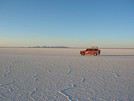
* dimanche depart pour le salar et le sud lipez pendant 3 jours.
* retour le mardi soir a uyuni. bus de nuit vers La Paz arrive mercredi matin.
* retour a Lima le mercredi midi.
Sinon, combien coute la route de la mort, le bus pour aller a Uyuni et l'excursion dans le salar ? Comment se deroule l'excursion dans le salar, fait on necessairement une boucle d' Uyuni jusqu'au sud lipez ou faut il negocier les endroits que l'on desire voir ? De plus nous sommes 6 faudra t il louer 2 4x4? Est il possible de dormir dans des tentes dans le salar ?
Voila voila beaucoup de questions donc.. MERCI !
(desole pour la ponctuation j'ai un clavier espagnol)
En juillet 2008, le tour de 3 jours Salar + sud lipez coutait entre 80 et 100 USD par personne (nous avons réussi à la négocier à 75 USD pour 7 personnes)
6 c'est en générale le nombre maxi de personne par 4x4, donc c'est parfait vous serez entre vous dans un 4x4
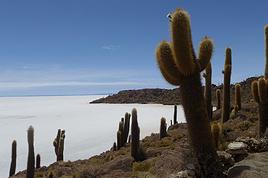
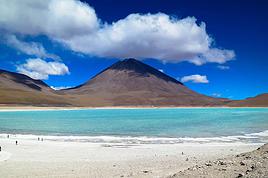
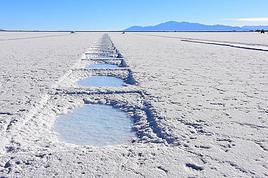
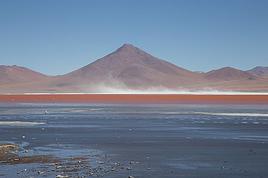
Les tours sont à peu près tous pareil dans les différentes agences: en 3 jours, 1er jour dédié au salar + isla del pescado au mileu du salar et nuit dans une auberge dans un blaid (en dehors du salar), 2ème et 3 jours dédié au sud lipez avec l'arbol de piedra, les eaux thermales, les geysers, la laguna colorada, etc..et retour à Uyuni le soir du 3ème jour.
A ma connaissance on ne dort pas dans des tentes dans le salar.
(desole pour la ponctuation j'ai un clavier espagnol)
Nous avons fait le circuit du desert d'Uyuni + sud lipez avec ascension di Licancabur en novembre dernier sur 5 jours. Nous étions parti de Tupiza. Dans le 4x4 nous étions 4 mais il y a possibilité d'etre 5. Attention toutes les agences ne sont pas sérieuses et ce ne sont pas forcément les + grosses les meilleurs. Ne pas hésitez à en voir plusieurs. Se renseigner sur l'état des vehicules.
Je ne pense pas qu'il soit possible de camper.
En tous cas, tu ne regretteras pas: c'est magnifique.
Bon voyage
Matt
Le voyage c'est l'imprévu de la prochaine escale, c'est le désir jamais comblé de connaitre sans cesse autre chose.
Pas d'idée de prix, mais, la route de la mort relie grosso modo le col de la Cumbre ( à une vingtaine de kms de La Paz) à Coroico dans les Yungas. Cette route dans le sens de la descente n'est pratiquement plus utilisée que par les VTT.
Je l'ai faite en 4X4 avec un chauffeur expérimenté en 2004, dans les 2 sens.
C'est vrai que c'était frayeur garantie pendant plus d'une heure, portion dangereuse d'environ 30 kms, ceci uniquement dans la descente, puisque le véhicule montant était prioritaire et que le descendant devait se garer côté précipice. Comme la route faisait moins de 3 m de large, 2 véhicules ne pouvaient se croiser. Il y avait de temps en temps des accotements à bord de précipice pour le véhicule descendant. Si ce dernier avait la chance d'apercevoir le camion qui montait, ça allait à peu prés, mais quand on le voyait au dernier moment, c'était la marche arrière et la frousse.
Dans le sens de la montée, le seul problème, c'était de suivre un véhicule lent.
Je l'ai refait en 2007 dans le sens de la montée, en trajet privé, et, du fait qu'il n'y avait presque plus de véhicules qui l'utilisaient, les VTT s'en donnaient à coeur joie en pensant qu'il ny avait personne qui montait, donc danger pour les VTT.
Bon circuit.
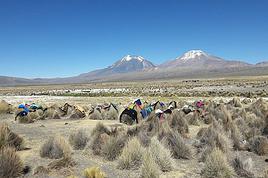
Au dessus de 4000 m, on couche chez l'habitant ou dans des refuges, indispensable d'avoir un bon sac de couchage, température intérieure entre 5 et - 5°.
Les couvertures ne suffisent pas, de plus, elles sont lourdes et gênent la respiration, difficile à cette altitude.
Pas d'idée de prix, mais, la route de la mort relie grosso modo le col de la Cumbre ( à une vingtaine de kms de La Paz) à Coroico dans les Yungas. Cette route dans le sens de la descente n'est pratiquement plus utilisée que par les VTT.
Je l'ai faite en 4X4 avec un chauffeur expérimenté en 2004, dans les 2 sens.
C'est vrai que c'était frayeur garantie pendant plus d'une heure, portion dangereuse d'environ 30 kms, ceci uniquement dans la descente, puisque le véhicule montant était prioritaire et que le descendant devait se garer côté précipice. Comme la route faisait moins de 3 m de large, 2 véhicules ne pouvaient se croiser. Il y avait de temps en temps des accotements à bord de précipice pour le véhicule descendant. Si ce dernier avait la chance d'apercevoir le camion qui montait, ça allait à peu prés, mais quand on le voyait au dernier moment, c'était la marche arrière et la frousse.
Dans le sens de la montée, le seul problème, c'était de suivre un véhicule lent.
Je l'ai refait en 2007 dans le sens de la montée, en trajet privé, et, du fait qu'il n'y avait presque plus de véhicules qui l'utilisaient, les VTT s'en donnaient à coeur joie en pensant qu'il ny avait personne qui montait, donc danger pour les VTT.
Bon circuit.
Au dessus de 4000 m, on couche chez l'habitant ou dans des refuges, indispensable d'avoir un bon sac de couchage, température intérieure entre 5 et - 5°.
Les couvertures ne suffisent pas, de plus, elles sont lourdes et gênent la respiration, difficile à cette altitude.
Bonjour papachri. Concernant cette route, à ta connaissance, peut on la prendre que dans le sens montée et redescendre par un autre itinéraire ? Les camions la prennent ils dans le sens descente aussi ? ( Marc, en camion 12T et en famille.... ;) ). Merci.
Bonjour Marcomali,
Pour aller de La Paz à Coroico dans les Yungas, on passe de 3800m à 5000 m, puis on redescend à 1700. Il existe depuis 5 ou 6 ans ou un peu plus une nouvelle route, un peu plus longue qui le permet et qui évite la route de la mort, jugée trop dangereuse ( 1 mort par jour en moyenne) .
En 2004, n'étant pas au courant de tout ça, j'espérai la prendre, mais Gladys, la responsable d'agence a refusé que son chauffeur l'utilise. Mais par chance ( je le dis maintenant !) la route nouvelle était barrée....donc route de la mort.... et circulation dans les 2 sens, Gros camions chargés de bananes compris.
En 2007, le chauffeur l'a repris à la montée pour faire plaisir à mon épouse qui n'était pas présente en 2004.
Par contre je ne sais pas s'il faut des autorisations.Personnellement, même si c'est possible, je ne conseille pas de le faire en camion, ni dans un sens ni dans l'autre.
A la montée ça présente aucun intérêt et à la descente trop dangereux.
Il reste le VTT ou une partie à pied pour se rendre compte.
A ta dispo
salut tous,
Cette route, je l'ai faite en bus (env. un 30 places théorique).
Je suis prêt à la refaire ...
Mais ds mon message précédent je répondais par rapport à qq'un avec un poids lourds + famille. ça n'a rien d'une promenade de santé.
les chauffeurs qui font cette route A/R tous les jours ont une expérience. celui qui s'aventure avec son poid lourd + famille, ce n'est pas le cas, même s'il a roulé sa "bosse" ds le monde entier, mais n'a pas d'expérience sur CETTE route.
Mon amis pacénien fait l'A/R toutes les semaines depuis des années en bus.
Responsabilité, reflexion & surtout ....Prudence.... prudence ......
Il vaut mieux perdre une minute dans le vie que la vie en une minute.
(vu ds un taxi bolivien)
C'est un triple marathon que tu veux faire en une 1/2 heure .... ?
Es-tu pu vérifier que les horaires que tu prévoient concordent avec les départs de bus ?
Tu n'auras pas le temps de négocier un prix auprès des agences à Uyuni, ni choisir des coéquipier, ni surtout vérifier le sérieux de l'agence que tu prendras ou qui te prendras si tu n'as pas le choix.
Vous ... voyager à combien ?
Je peux te conseiller à Uyuni : Oasis tours, sur la Plaza Arce qui est juste en face de la Gare. Sur le côté Droit de la place, juste avant le Kiosque à musique central à cette place, en venant de la gare.
Ils sont +++, te gardent les bagages & louent des sacs de couchage en très bon état.
Bye !
Il vaut mieux perdre une minute dans le vie que la vie en une minute.
(vu ds un taxi bolivien)
L'intérêt est de passer des Andes aux Yungas avec une végétation tropicale en très peu de temps, donc l'évolution est visible.
Mais maintenant que la nouvelle route existe, il vaut mieux l'éviter pour se rendre à Coroico...C'est ce que j'ai fait, mais nous avons continué la route jusqu'à Rurrenabaque, et là, pas le choix. Pendant pas mal de kilomètres, la route continue de la même manière: conduite à gauche afin que le conducteur puisse passer la tête pour voir les roues à côté du ravin en cas de croisement, impossible de se croiser sauf quand il y a les terres-pleins étroits prévus pour ça...
Bref, sauf si ton objectif est de continuer et que tu n'as pas le choix, évite...
Bien, on tiendra compte de vos conseils. Avec le land, même pas on se serait posé la question mais en camion... Puis on aura le temps donc pour la végétation, no problem :)
Juste pour ajouter, pour les départs de Uyuni les prix sont de 500 à 650Bls pour les trois jours deux nuits incluant l'hébergement et la nourriture, il ne manque que 45Bls de prix d'entrée dans les parcs. Les agences annoncent toute le tour pratiquement indentique (sauf certaines qui offre une nuit dans un hotel de sel) Tu peux passer au Chili le 3e jours. Les prix sont sur la base de 6 personnes et la cuisinières est sur place et non dans le jeep. On voit les geysers de nuit (6h00am) donc on ne les voit pas bien sauf le grand geysers artificiel.
Départ de Tupiza ils s'entendent tous pour +- 1, 000 Bls pour 5 personnes car ils prennnent avec eux une cuisinière. Tour de 4 jours 3 nuits et on termine soit à Uyuni ou retour à Tupiza (meme prix). Premiere journée dans les Quebradas. ON voit les geysers l'apres midi donc moins impressionnant
Pour les autres sites, ca se vaut. Et le ranking n'existe plus à Uyuni. Nous y avons été la semaine dernière et nous avons eu -15 durant la nuit mais ils fournissent assez de couvertures. Nous avons choisi Estrella del Sur et tout c'est assez bien déroulé sauf une petite engueulade pour le temps resté au Geysers, on nous avait promis de rester jusqu'au levé du soleil.
Mais tous les tours se suivent et ce valent presque, mais certains de d'autres tours ( entre outre Oasis tour) avait acheté le tour avec une nuit dans un hotel de sel et ne l'ont pas eu.
Sinon à Tupiza tout le monde a eu l'air d'apprécier leur tour avec Tupiza Tour mais ca dépend du chauffeur que tu as!
bonjour,
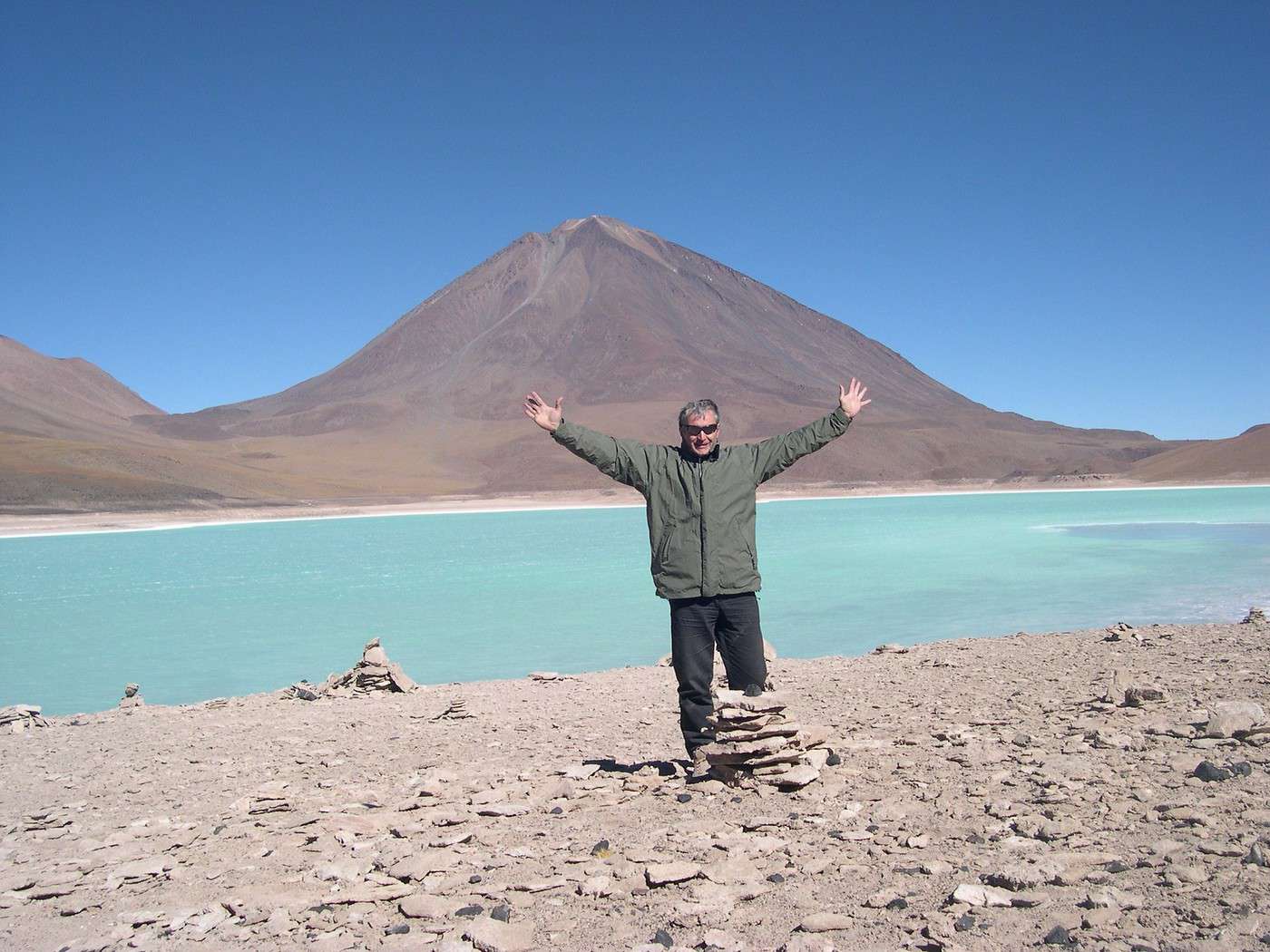
je peux vous donner la cie avec laquelle j'ai fait le salar pendant trois jours (1000 km) et dormi dans un hôtel en sel pour 300 boliviens par personne, repas inclus et l'hôtel de sel, dans un 4x4 où nous étions 6 personnes + le chauffeur ( cuisinier et guide en même temps)
Notre tours à été organisé par le directeur de l'hôtel où nous étions " le MOSOJ" un grand carré bleu sur la place central d'Uyuni propre avec salle de bain privée et de l'eau chaude (merveilleu) pour 60 boliviens pour 2 pers = 10€
Notre linge a été lavé par le même hôtel pour 25 boliviens
Vous avez un autre hôtel LE PALACE HOTEL à droite du campanile pour 25 boliviens
A la fin de notre tout, nous avons donné 50 bol chacun à notre chauffeur, tellement nous étions contents.
Voilà ce que je peux vous donner comme indications,
bon voyage, vous allez voir, c'est une merveille que vous n'oublierez jamais
Les prix sont indicatifs mais pas certains car nous avez fait ce tour au mois de novembre qui est la basse saison, donc les prix peuvent varier à la hausse pendant la saison touristique qui est de juin à septembre!
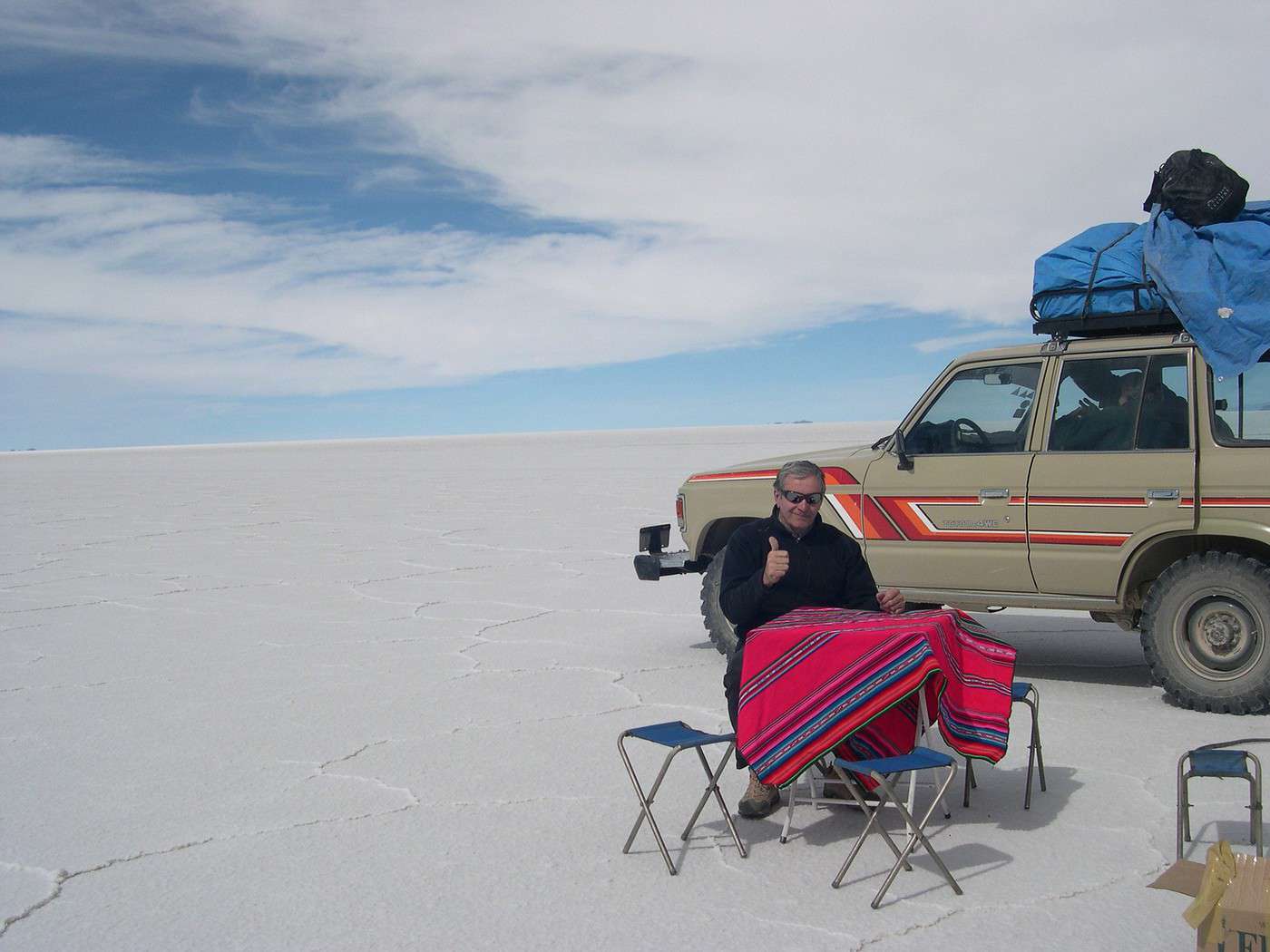
La photo est pendant notre déjeuner en bas de l'ile du "pescado" au milieu du salar sur des sièges en sel ainsi que la table!!!
Merci pour ces infos precises sur les prix, donc en gros cela revient a 50 euros par personne pour faire 3 jours de salar.. Ca reste raisonnable pour une telle experience.
Beaucoup de choses sont dites sur cette route de la mort. Nous l'avons faite en descente (sens la paz coroico) et en montée avec notre camping car adriatik sur fiat ducato traction 2 roues motrices et en famille avec 2 enfants de 3 et 5 ans. Cela ne présente pas de danger particulier si vous le faites de jour, avec de bonnes conditions météo, un véhicule en bon état et en roulant tranquile. Il y a beaucoup de mort sur cette route car le précipice est partout et sans protection bien sur. Cela veut dire pas droit à l'erreur. Les morts sont souvent la nuit, sous l'emprise de l'alcool, fatigue, véhicules en très mauvais état et surchargés, vitesse excessive... Pour ma part je craindrai plus de le faire en VTT car le tout droit pour crevaison frain qui lache ou autre peut etre fatal. Avec son propre véhicule en y allant tranquille pas de probleme. Surtout maintenant que le trafic doit etre réduit avec la nouvelle route qui n'était pas ouverte en 2006 quand nous l'avons faite.
Dire que en 2006 ça ne présentait pas de risque particulier dans le sens de la descente, surtout avec 2 enfants me parait totalement inconscient. Je l'ai faite en 2004 dans les 2 sens et en 2007 à la montée, les 2 fois avec un chauffeur local expérimenté. De jour, si la circulation n'est pas alternée, et même avec de bonnes conditions, il faut laisser la priorité au camion montant et se garer dans des accotements instables côté précipice.
Si on a la chance d'apercevoir un véhicule monter, on peut se garer en marche avant, c'est déjà assez dangereux, mais le pire c'est quand il faut faire une marche arrière de plusieurs centaine de mètres pour accéder à ces accotements.
pour les VTT qui descendent, en plus des risques décrits, du fait qu'il y a peu de traffic , il se méfient peu des vééhicules montants.
J'ajouterai qu'il ne faut pas se fier aux infos de circulations alternèes, ça peut changer d'un jour à l'autre.
Je persiste à dire que nous n'avons pas pris de risque démesuré et certainement moins qu'une circulation dans le brouillard sur lautoroute A1. Avec un véhicule ne bon état, des bonnes conditions et du temps aucun souci. Il suffit d'anticiper et de se garersur les passages élargis dès que l'on aperçoit un camion montant. Ma femme était terrorisé à l'idée de faire cette route et finalement nous n'avons pas jugé cela comme un exploit mais comme une route sympa et mythique.
J'ajoute que je connais plusieurs familles qui l'ont fait avec leur véhicule.
Je suis d'accord avec vous sur le VTT cela me parait beaucoup plus dangeureux.
Nous avons fait la route de la mort en VTT il y a une semaine. Le but n'etant pas de se faire peur, mais comme l'on souligne certains de passer des cols enneiges a la jungle en un jour (quoique sur le VTT, pas beaucoup le temps de rever en admirant le paysage).
La premiere partie depuis le col de la Cumbre est asphaltee et il y a du traffic, dont pas mal de camions. Il y a aussi beaucoup de cyclistes. A partir d'un certain point, il faut remonter dans la camionette de l'agence car la route a ete interdite au cycliste par la police depuis un accident qui aurait implique cinq cyclistes. Commence ensuite le camino de la muerte proprement dit, une piste de terre et de caillasse. Le traffic se fait rare sur ce troncon depuis que ce chemin a ete double par une route plus moderne. Hormis, les "camions balais des agences" nous n'y avons croise qu'une voiture en trois heures.
Avec un bon velo, le risque peut paraitre mesure. Le risque zero n'existant evidemment pas pour ce genre d'activites. En revanche, le choix d'une agence peut s'averer vitale. Sur nos huit velos, quatre se sont averes defecteux ! Et, mon compagnon s'est retrouve sans freins dans la descente !!! Nous deconseillons donc ABSOLUMENT l'agence El Solario de La PAZ. 😠 Notre guide nous a raconte qu'en 2001 une touriste a trouve la mort apres que son cadre aie casse en plein virage. Donc, une bonne agence, ca ne vaut pas la peine de pinailler sur le prix.
Pour la remontee, nous avons emprunte la nouvelle route (4h en camionette jusqu'a La Paz).
Maintenant a moi de poser une question. Nous seront bientot a Uyuni et on voudrait se concocter un circuit en dehors des sentiers battus. En revanche, on est pas forcement attires par le sud Lipez car nous avons deja bien explore la partie chilienne du desert d'Atacame.
Des idees ?
Merci d'avance
Je prépare un voyage de 5 semaines en Amérique du Sud au mois de juillet. Au début je voulais combiner le Pérou et la Bolivie, mais l'aérien m'as tué. J'ai…
Nous partons à 2 pour un voyage de 7 semaines dans le Nord Ouest Argentin et surtout en Bolivie (de fin juin à mi-aout). J'ai bien travaillé l'itinéraire que…
Je vous sollicite pour un voyage que je projette de faire avec une amie qui me rejoint a Lima le 2 Juillet. Il s'agit de se concentrer sur quelques villes du…
Nous sommes 2 amies et nous projetons un voyage au Chili fin octobre / novembre, nous avons décidé de nous concentrer sur le nord du pays. Avant de réserver…
Hi everyone,
We're planning a trip to southern Chile in November. Here's our tentative itinerary:
Day 1: Arrival in Santiago, then a flight the next day to Balmaceda where we'll pick up a rental car to reach Coyhaique.
Day 3: Walk in the Coyhaique National Reserve, then continue to Puerto Chacabuco. Return to Coyhaique for the second night.
Day 4: Drive to Villa Cerro Castillo for a hike in the national park. Continue to Puerto Tranquilo and stay there for 3 nights.
Day 5: Boat tour on Laguna San Rafael.
Day 6: Day trip to Monte San Valentin Glacier.
Day 7: Excursion to the Marble Chapels, then drive to Puerto Guadal. We'll stay there for 3 nights.
Day 8: Walk along Lago Carrera and return to Puerto Guadal.
Day 9: Rio Baker Valley and, if possible, a glacier excursion.
Day 10: Drive to Cochrane and hike in Tamango National Reserve. We'll stay 2 nights in Cochrane.
Day 11: Walk in the Chacabuco Valley.
Day 12: Drive to Caleta Tortel. We'll stay there for 2 nights.
Day 13: Cruise in the Rio Baker delta.
Day 14: Return to Cochrane.
Day 15: Return to Balmaceda in two stages.
Day 16: Continue the return journey.
Day 17: Return the rental car and head back to Santiago.
After this, we're also planning to explore northern Santiago. I'll post about that part once I have a clearer idea of the route.
What do you think of this itinerary? Is it doable in 17 days?
Thanks in advance for your tips and recommendations.
martine
Hi everyone! So happy to be back on this forum—it’s packed with such useful info! 🙂 My husband and I are planning a 2.5-week self-drive trip to Colombia at the end of the year, including some domestic flights. My first question is: is it possible, easy, and safe to do a road trip in Colombia?
Below is our draft itinerary (with questions at each stop):
29/11: France → Colombia. Overnight in Bogotá.
30/11: Exploring Bogotá: La Candelaria and Montserrate.
01/12: Gold Museum (closed on Mondays). Drive to Zipaquirá (1.5 hrs) to visit the Salt Cathedral. Then drive to Villa de Leyva (3 hrs). Explore the town. Overnight in Villa de Leyva.
02/12: Return to Bogotá via Laguna de Guatavita (5 hrs). Is it worth the detour? Overnight in Bogotá.
03/12: Flight to Pereira. Drive to Salento. Overnight in Salento.
04/12: Cocora Valley (hike among the wax palms) followed by a drive around the area. Are there any waterfalls or other sights nearby?
05/12: Visit a coffee finca—any recommendations? Then explore the surroundings: Filandia, Manizales, waterfalls? Hot springs? Which ones?
06/12: Flight to Medellín.
07/12: Exploring Medellín: Centro, Plaza Botero, Comuna 13. How do you visit Comuna 13? Is it easy to get around Medellín? Metro? Buses?
08/12: Drive to Guatapé (2 hrs). Visit the town, stroll around the lake, then El Peñol. Overnight in Guatapé.
09/12: Return to Medellín.
10/12: Flight to Santa Marta. Drive to a hotel near Tayrona Park.
11/12: Tayrona—El Zaino entrance.
12/12: Tayrona—Palangana entrance, then Bahia Concha and Santa Marta. What do you think?
13/12: Drive to Minca (45 mins). Can we reach the village by car? Pozo Azul and Marinka waterfalls. Overnight in Minca (or back in Tayrona?).
14/12: Drive to Puerto Nao (5 hrs). Stop in Ciénaga on the way + boat tour in Nueva Venecia and/or Buena Vista? Not enough time? Overnight in Puerto Nao.
15/12: Exploring Cartagena: Centro, Getsemaní, the walls + La Boquilla if we have time.
16/12: La Boquilla (is it really worth it?) if we didn’t have time yesterday, then back to the beach.
17/12: Return to France.
So, what do you think? Is this doable, or should we tweak it? Thanks in advance for your invaluable feedback and tips! 🙂
Hi there, I’ll be in Brazil from December 10th to the end of February.
I’ve sketched out a rough itinerary but I’m not sure how to arrange it—considering the climate, year-end holidays, and Carnival.
Basically, I’m thinking of the Amazon, the Northeast coast with Lençóis Maranhenses National Park (but skipping Chapada Diamantina),
Ouro Preto, Paraty, and Ilha Grande—but no Rio visit.
Is this doable in 3 months?
Which direction should I take for this itinerary?
Thanks in advance!
Hi everyone, does anyone know the agency Ventura Travel Agency (not ventura travel)? After lots of research and quotes, it’s the only one offering Uyuni at a reasonable price while meeting all the criteria: transfer to the border, private-room accommodation, and a very fair rate. Other agencies or guides either offer shared rooms, no border transfer, or prices that are way too high. But I’d love to hear some reviews about this agency. Thanks in advance!
Hi everyone,
We're planning a trip to Chile to visit the Atacama Desert and then head toward Putre, Lauca, Salar de Surire, etc.
Which would be the better time to go, April or November?
Is an SUV enough?
Looking forward to your tips!
Hi everyone, French travelers in Chile—what credit cards do you use for your various car rentals in the country? I’m traveling in September and was planning to switch my regular debit card (a VISA PREMIER in deferred debit mode) for the deposit guarantee.
My rentals are with Figal in Punta Arenas, Econautos in Arica, and Chilean Rent a Car in Temuco, and all of them want the deposit on a credit card. For me, deferred debit *should* work, but I’ve read comments saying the opposite.
How’s it actually working on the ground with these rental companies right now? Will a deferred debit card work, or not at all?
In France, banks don’t issue credit cards, right—or am I mistaken?
Hi everyone, is it still possible to travel in Ecuador outside the Amazon region? If so, do you have a reliable agency to recommend? All your recent experiences from the past few months would be greatly appreciated. Thanks so much
Hi,
We’re heading to Buenos Aires for 3 days in November and would like to do a guided tour of a few neighborhoods. There are "free" tours, but none in French. Does anyone have a guide to recommend so we can really get to know the city beyond just the architecture?
Thanks
Hi there,
I’m desperately looking for info on the schedules and routes of (shared) boats to visit the islands of Lake Titicaca.
From what I’ve found, there’s a *combi* (bus) that leaves from Puno to go to Llachon. Where do you catch it? What are the schedules and frequency? Does it take about 1 hour?
Then in Llachon, you can take a boat to Amantani (45 min). Same question—where do you check for frequency and schedule?
After that, from Amantani, boats go to Taquile and then Uros. Do you have enough time to visit the islands between two boats? Frequency and schedule?
The goal is to do this tour independently (no agency) over 2 days. Thanks for any tips you might have!
I just got back from a trip to Bolivia and wow—what a wake-up call. It’s not the easiest country, but it’s absolutely stunning.
I started with Isla del Sol, perfect for easing into the altitude at a relaxed pace. Try to stay in the northern part of the island—it’s quieter and the views are insane. And the trout there? Unreal. Quick tip: bring cash in small bills; they almost never have change, and cards are rarely accepted.
Next up, La Paz. The city’s pretty wild, built in every direction. I did a few hikes in the area, including the famous Charquini Lagoon (the blue lake) at over 5,000 m—let’s just say I struggled 😅 but it was so beautiful it was totally worth it.
After that, I headed to Sajama. It’s cool, especially for the hot springs, and I stayed in Tomarapi. But honestly, if you’re short on time, you can skip it without too many regrets.
The highlight of the trip: the Salar. I did it starting from Tupiza, and I *highly* recommend going Tupiza → Uyuni. Way less crowded at the start and the landscapes are super varied. For the tour, I used SplitYourGuide to find a group, and it worked out great. Super handy for splitting costs and meeting people.
I wrapped up in Sucre—this city is gorgeous, all white, with such a chill vibe. And the salteñas + ice cream? Next level 😋
Bottom line: Bolivia’s a bit rough around the edges, sometimes exhausting (shoutout to the altitude), but it’s 1000% worth it.
If you’ve got questions or need tips, I’m happy to help!
Martin
I was planning to go to Réunion and stay in half-board accommodation with non-professionals, but it seems that’s not really the custom there—or maybe my budget isn’t big enough.
So, since I’ve already traveled around Ecuador and Peru, I’m now looking at Argentina, especially for its mountains (like the ones in Réunion that tempted me, even though—frustratingly—I could only admire them from below).
I plan to get around by bus and don’t know in advance where I’ll sleep, so I won’t book ahead. If I like a place, I might stay for several days.
I know that in Chile, it’s easy to find half-board accommodation, but what about in Argentina?
I’d like to stay with locals in half-board without it being a professional setup. I’m not sure if this is common practice there. It’s up to me to find someone willing to host me.
What do you think?
What would be a fair price (keeping in mind that 40 to 50 € is the max I can spend on accommodation, breakfast, and dinner)?
Hi everyone,
We’re heading to Patagonia for three weeks in November, starting from Coyhaique in Chile.
We won’t have a car, and I’m struggling to find information about transportation options for a few parts of the itinerary we’d like to do:
1) From Perito Moreno (the town, near Los Antiguos), we’d like to travel down Ruta 40 to visit Perito Moreno National Park and then cross into Chile via the Paso Roballos (at the latitude of Bajo Caracoles) to reach the road to Cochrane. Without a car, it seems we’ll need to use private agencies to get to the national park—do you have any recommendations or suggestions? Also, does anyone know if it’s possible to cross into Chile via Paso Roballos (from Bajo Caracoles) without a rental car? That is, without having to go all the way down to El Chaltén or back up toward Perito Moreno/Los Antiguos, etc.?
2) The second stretch that seems a bit tricky (though still easier, in theory) is from Caleta Tortel to Villa O’Higgins on the Chilean side. Do we have to go back through Cochrane, or are there ways to get directly from Tortel to Villa O’Higgins?
3) Finally, we’d like to hike into Argentina (El Chaltén) from O’Higgins. Any recommendations for this? Do we need to go through an agency? What’s the estimated duration of the trek?
As you’ve probably gathered, we want to visit some off-the-beaten-path spots but don’t have a car, so we’re looking for the best possible compromises.
Thanks so much in advance for all your suggestions!
Thomas
Hi,
we’re planning a round trip from San Pedro de Atacama, Chile, to Salta, Argentina, in two months. On the way there, we’ll take the northern route via Susques, Route 27, then 52. But for the return, we were thinking of taking the southern route via San Antonio de los Cobres, Route 51, then 23. Is it similar to the northern route in terms of road surface? How busy is it, and are there gas stations? Basically, should we be worried about doing it in an SUV that’s supposedly 4x4 but has regular road tires and no second spare wheel, obviously...
I’ve seen that we can stop over in San Antonio de los Cobres.
Thanks for your feedback.
Raf.
Hi,
we’ll be in Calama at the end of March 2026, and I’m looking for a reliable car rental there for a 7-day road trip to Salta, Argentina. But I’m struggling with the car rental agencies in Calama because the reviews can be scary. I saw Gyg, which has great ratings, but I’m a bit wary (5/5 from 59 reviews—either the guy’s amazing or it’s fake...), but I can’t find any recent reviews on VF in general.
For Punta Arenas, I booked with Dachelet and didn’t have any issues with email exchanges.
Thanks in advance.
Raf.
I’m planning the trip of my dreams for next November—Chile!
I’d love to get your thoughts on my potential itinerary. I know it’s a big investment in terms of both time and money, so every bit of feedback, suggestion, or info helps immensely. Thank you in advance!!
1-Flight to Santiago
2-Explore Santiago
3-Explore Santiago
4-Bus from STG to Valpo (2h) + visit Valparaíso + night in Viña
5-Visit Valparaíso + bus back to STG (2h)
6-Flight to Calama + bus to San Pedro + explore and acclimate in San Pedro + car rental in the afternoon (+Chaxa?)
7-(Very early) Valle del Arcoíris + Laguna Cejar + Valle de la Luna
Good evening,
We’d love to go in November to enjoy some beautiful beaches for about two weeks, preferably around Bahia, as November/December seems like a great time.
We’ve already traveled to Brazil several times and know the south of Rio as well as the region between São Luís and Fortaleza, and Chapada Diamantina...
What advice would you give us: the south with Itaparica, Morro de São Paulo, Boipeba, Barra Grande—or all four? Or maybe the north?
Thanks in advance for your help
Hi everyone, it’s been a while since I last posted!
First time in South America for me, my wife, and our 7-year-old son. I’ve put together this itinerary and would love to hear your thoughts:
Bogotá 28/07 – 30/07: Arrival. Which neighborhood and outings would you recommend?
Flight to
2 Filandia 30/07 – 03/08: (255 €). Waterfalls and horseback riding,
Cocora Valley,
Hiking,
Nearby villages.
Flight to
3 Tayrona 03/08 – 07/08: Hotel La Casablanca
Hike with Tierra Nevada and the Kogui village (any feedback?). Return by inner tube for the little one.
Short night hike.
Second hike to La Piscina, etc., return by 🐎.
4 Cartagena 07/08 – 10/08: Air-conditioned bus.
Staying in Getsemaní? Mangroves & the Castle, exploring the city.
5 Bogotá 10/08 – 12/08
Feel free to share your feedback!
Have a great day!
Hi,
During an upcoming trip to Peru, we’ll have one day to explore around Arequipa (excluding Colca Canyon) with a car and driver.
We’ve got a few options:
- Toro Muerto petroglyphs and dinosaur footprints at Querulpa
- Ruta del Sillar and Quebrada de Culebrillas
We’re a group of 6 friends with an average age of 70, all mobile, and we’re planning a trip to Peru in September/October 2026. Below is an idea of what we’re looking for: a French-speaking guide, accommodation in 3-star hotels or homestays with comfort.
Duration: 16 to 20 days on-site.
Visit the main sites with immersion in the culture and way of life.
Which francophone agency in Peru would you recommend? Thanks
Hi there!
I’m putting together my itinerary for Brazil, looking for beautiful natural spots with wildlife, flora, and great hikes...
I’ve come across the Cananeia / Super Agui / Ilha do Mel region and the PETAR / Intervales / Alto Ribeira area.
Has anyone here been to these places? If so, do you have any recommendations for accommodations and activities?
Thanks in advance!
Best,
Olivier 🌍
I’ll be in ARICA in northern Chile at the end of May 2026 and want to get to TACNA.
Are there taxis, buses, or collectivos that run the border crossing route?
After that, bus to AREQUIPA (Peru): any bus company you’d recommend?
Hi there,
We’re spending 3 weeks in Brazil, arriving in São Paulo—a couple plus a teen—and we’ll have a rental car.
We especially love nature: hiking, wildlife watching, birds, etc.
We’re planning to wrap up with a week around Paraty and Ilha Grande.
We’re not really into visiting big cities like São Paulo or Rio unless you think we’d be missing out big time.
So we’ve got 2 weeks to explore the south/southwest region of São Paulo.
What do you recommend?
National parks? Off-the-beaten-path nature spots? Iguazu Falls?
Hi there,
Do you have any recommendations for comfortable accommodation in Leyva and Barichara? We're also looking for a guide to explore the areas around these two towns (parks, waterfalls, etc.).
Thanks for your tips!
I visited Colombia in January 2016 and I’m heading back from August 6th to 17th with the same airline to see how things have changed. Starting August 18th, I’ll continue with independent exploration. I prefer slow travel and enjoying places at my own pace.
Any tips—especially for getting around or must-see spots—are welcome!
Thu Aug 06. Fly Montreal to Bogotá 20:55-04:05+1 Air Canada
Fri Aug 07. Bogotá
Sat Aug 08. Bogotá
Sun Aug 09. Bogotá
Mon Aug 10. Fly Bogotá to Medellín
Tue Aug 11. Medellín - Explore Guatapé
Wed Aug 12. Comuna 8 & Hill of Values - PM Fly to Pereira
Thu Aug 13. Montenegro
Fri Aug 14. Salento - Cocora Valley
Sat Aug 15. Fly to Cartagena
Sun Aug 16. Explore Cartagena
Mon Aug 17. Explore Cartagena
Tue Aug 18. Fly Cartagena to Cali 12:20-14:55 Latam
Wed Aug 19. Cali
Thu Aug 20. Cali
Fri Aug 21. Cali
Sat Aug 22. Bus Cali to Popayán 09:00-13:00
Sun Aug 23. Popayán
Mon Aug 24. Popayán
Tue Aug 25. Popayán - Day trip to Silvia (Market Day)
Wed Aug 26. Overland Popayán to Tierradentro by public transportation 4h, 100km
Thu Aug 27. Tierradentro
Fri Aug 28. Tierradentro
Sat Aug 29. Overland Tierradentro to Garzón via La Plata
Sun Aug 30. Bus Garzón to San Agustín 10:30-13:00
Mon Aug 31. San Agustín
Tue Sep 01. San Agustín
Wed Sep 02. San Agustín
Thu Sep 03. San Agustín
Fri Sep 04. Overland San Agustín to Tatacoa Desert via Neiva
Sat Sep 05. Tatacoa Desert
Sun Sep 06. Fly to Bogotá via Neiva 16:00-17:00 Latam
Mon Sep 07. Bogotá
Tue Sep 08. Fly Bogotá to Montreal 09:00-16:30 Air Canada
Hi there,
Three years ago during a trip to Java (no, I didn’t post in the wrong forum!), I came across the address of former miners who had switched to “tourism” and organized nighttime ascents of the Kawah Ijen volcano and descents into the crater.
So I was thinking—maybe there are miners on the salt flats too, either former or still active, who do the same thing. If you’ve had an experience like this, I’d love any tips you can share.
Thanks in advance.
Hi there, since there isn’t much recent info on how to get to MP, I’d love to know if there have been any improvements to the "route" to Hydroelectrica. Is it feasible to drive there in February? And is it still possible to walk all the way to Aguas Calientes? I think I read somewhere that it’s no longer allowed??
Do you think I can buy Machu Picchu entrance tickets last-minute at that time of year, given the weather?
A group of friends and I are heading to Brazil in March 2019 and we’d love to attend the Carnival parade. I could really use your help because I’m struggling to find reviews for online ticket sellers for Carnival.
I came across rio-carnival—is this a reliable agency?
Do you have other agencies to recommend or experiences to share?
Any advice is welcome.
Everything You Need to Know About Argentina’s Currency Exchange Maze (2026 Edition)
Hi fellow travelers,
Packing your bags for Buenos Aires? Watch out—here, money is a science almost as complex as the dance steps in a tango!
As of March 2026, the situation has shifted dramatically: the "Blue" (parallel) rate is now neck-and-neck with the official rate. To save you from losing your hard-earned euros in bureaucratic mazes or "disastrous" exchange rates, I’ve laced up my reporter boots and hit the famous Calle Florida for you.
In my latest video (and the accompanying article), I take you behind the scenes of currency exchange:
Arbolitos and Cuevas: Who are they, and can you still trust them?
The Rate Showdown: Why Banco Nación is currently the worst place for your savings.
Western Union: Why it’s often your best ally right now.
Cash or Card? The little secret to getting an instant 10–15% discount at restaurants or hotels.
The Bill Trap: Why your 500 € notes or stained dollars might stay in your wallet.
Argentina changes fast—*very* fast (by the end of March, today’s advice might already be old news!). So don’t leave without checking the market’s pulse.



 bonjour,
je peux vous donner la cie avec laquelle j'ai fait le salar pendant trois jours (1000 km) et dormi dans un hôtel en sel pour 300 boliviens par personne, repas inclus et l'hôtel de sel, dans un 4x4 où nous étions 6 personnes + le chauffeur ( cuisinier et guide en même temps)
Notre tours à été organisé par le directeur de l'hôtel où nous étions " le MOSOJ" un grand carré bleu sur la place central d'Uyuni propre avec salle de bain privée et de l'eau chaude (merveilleu) pour 60 boliviens pour 2 pers = 10€
Notre linge a été lavé par le même hôtel pour 25 boliviens
Vous avez un autre hôtel LE PALACE HOTEL à droite du campanile pour 25 boliviens
A la fin de notre tout, nous avons donné 50 bol chacun à notre chauffeur, tellement nous étions contents.
Voilà ce que je peux vous donner comme indications,
bon voyage, vous allez voir, c'est une merveille que vous n'oublierez jamais
Les prix sont indicatifs mais pas certains car nous avez fait ce tour au mois de novembre qui est la basse saison, donc les prix peuvent varier à la hausse pendant la saison touristique qui est de juin à septembre!
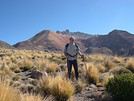
La photo est pendant notre déjeuner en bas de l'ile du "pescado" au milieu du salar sur des sièges en sel ainsi que la table!!!
bonjour,
je peux vous donner la cie avec laquelle j'ai fait le salar pendant trois jours (1000 km) et dormi dans un hôtel en sel pour 300 boliviens par personne, repas inclus et l'hôtel de sel, dans un 4x4 où nous étions 6 personnes + le chauffeur ( cuisinier et guide en même temps)
Notre tours à été organisé par le directeur de l'hôtel où nous étions " le MOSOJ" un grand carré bleu sur la place central d'Uyuni propre avec salle de bain privée et de l'eau chaude (merveilleu) pour 60 boliviens pour 2 pers = 10€
Notre linge a été lavé par le même hôtel pour 25 boliviens
Vous avez un autre hôtel LE PALACE HOTEL à droite du campanile pour 25 boliviens
A la fin de notre tout, nous avons donné 50 bol chacun à notre chauffeur, tellement nous étions contents.
Voilà ce que je peux vous donner comme indications,
bon voyage, vous allez voir, c'est une merveille que vous n'oublierez jamais
Les prix sont indicatifs mais pas certains car nous avez fait ce tour au mois de novembre qui est la basse saison, donc les prix peuvent varier à la hausse pendant la saison touristique qui est de juin à septembre!
La photo est pendant notre déjeuner en bas de l'ile du "pescado" au milieu du salar sur des sièges en sel ainsi que la table!!!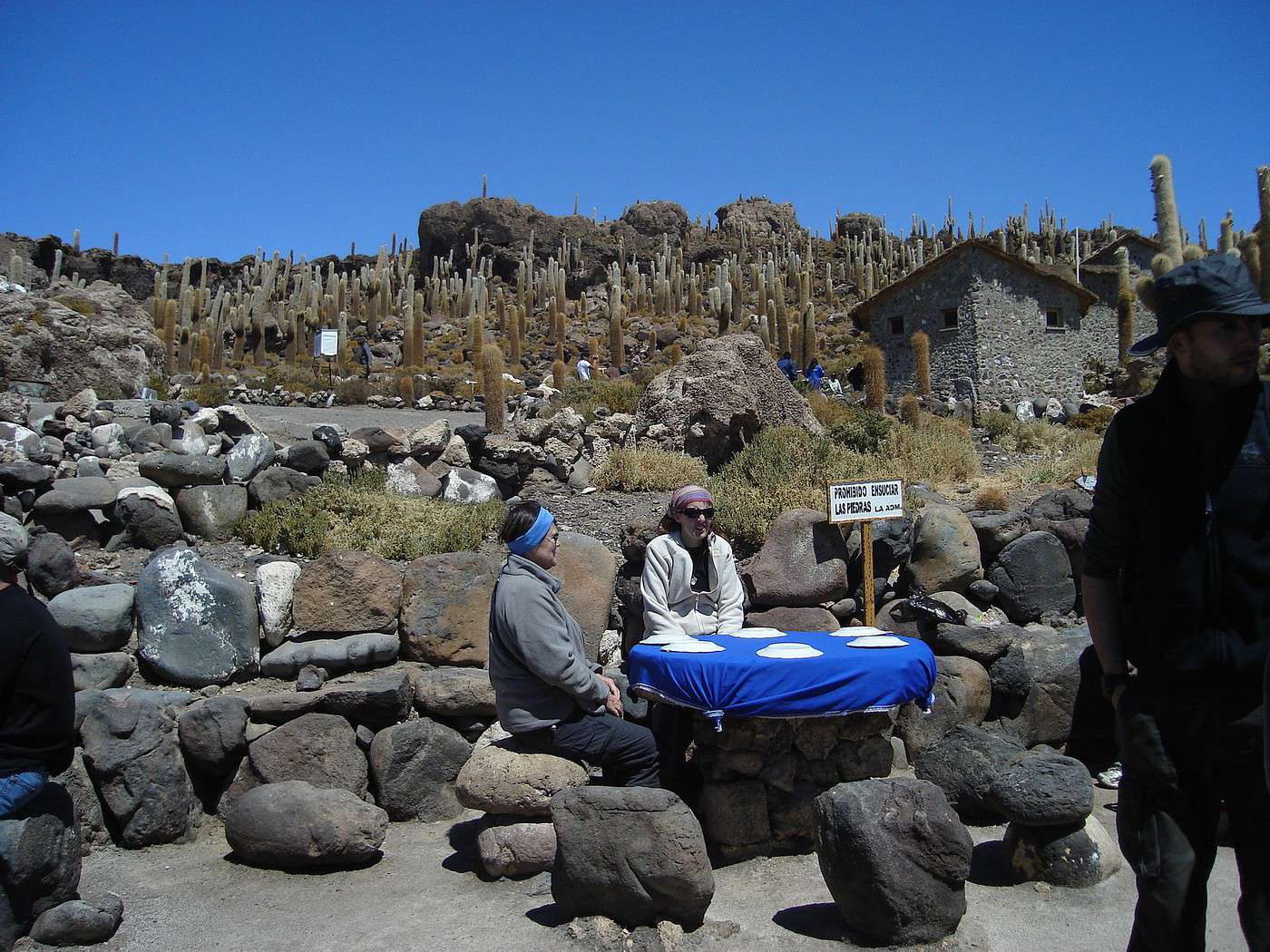
 ça vaut mille fois la peine!!!!