Se baigner dans le Gange
by Olivier76
This discussion is in French, the community’s main language.
Original post
bonjour,
j'ai une envie, un reve...me baigner dans le gange
je serai a varanasi d'ici 15j et je voudrais connaitre votre expérience, vos conseils
est ce envisageable ou opération gastro hospital assurée???
j'attends vos avis
merci
take care et have fun
j'ai une envie, un reve...me baigner dans le gange
Un peu comme "voir Rome et mourir" ? 😉 Remarque, tu peux toujours essayer une fois sur place, mais par contre un conseil : bois pas la tasse !
Berk non c'est vraiment vraiment dégoûtant. Renseigne toi sur l'état du Gange a proximité de Varanasi, ça va t'ôter toute envie ! Même certains hindous ne se risqueraient pas à s'y baigner !
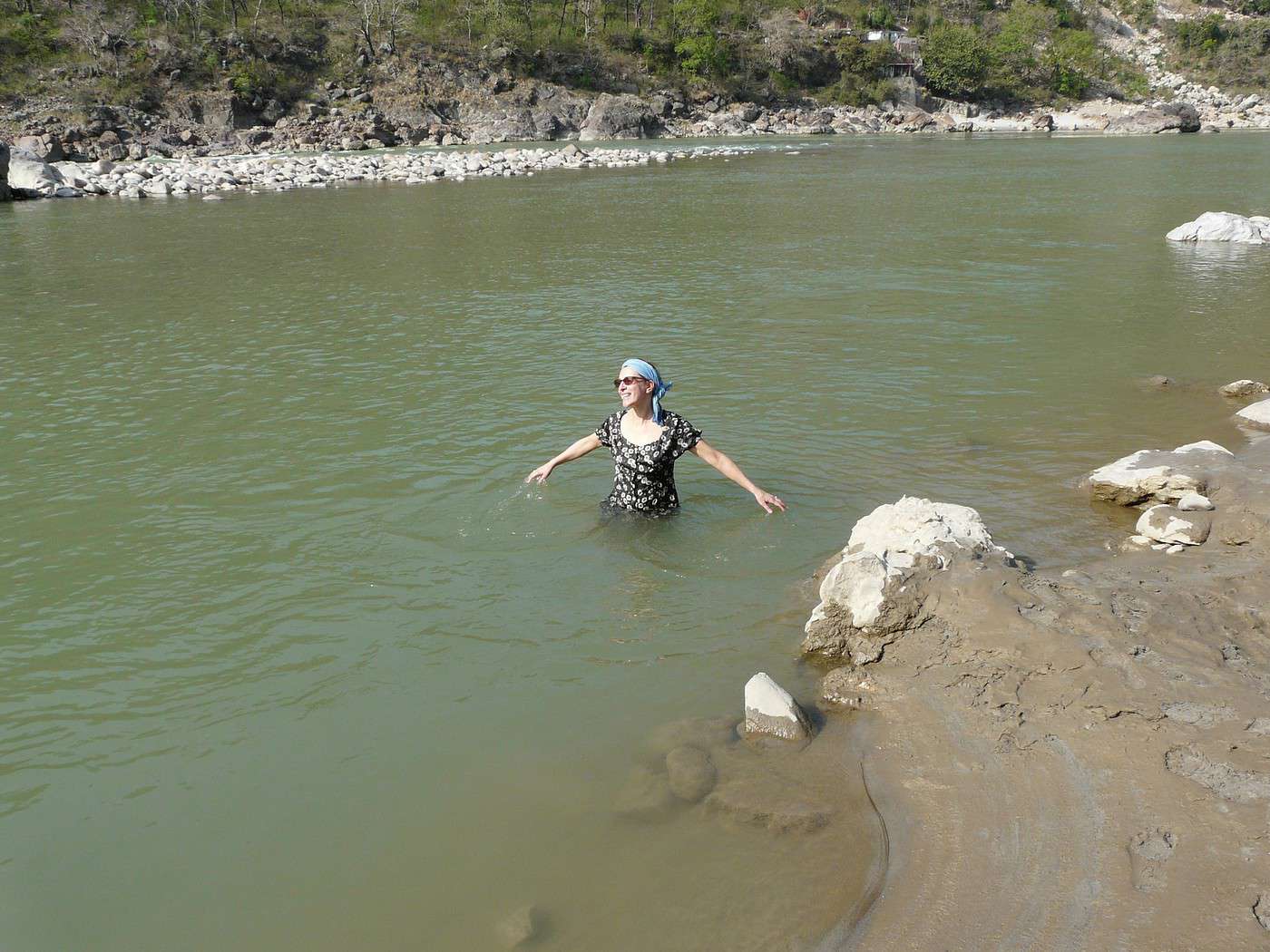
Si tu veux te baigner dans le Gange, fais le vers Rishikesh qui se situe presque à sa source, du coup eau plutôt propre ! En plus le site est magnifique et Rishikesh est un coin sympa. Mais c'est vrai que se baigner dans le Gange ça vend du rêve... Je n'en reviens toujours pas de l'avoir fait !
@Daoulamm --> AHA c'est un peu ça ouais. Rajoute aussi des bouts de corps pas tout à fait calcinés (certaines familles n'ayant pas assez d'argent pour acheter assez de bois (ça coûte SUPER cher) pour que les corps de leurs défunts soient parfaitement calcinés) et ça donne un truc bien toxique !
Un blog pour bien profiter de son séjour à l'étranger : http://www.venividivoyage.com
Le Gange est un fleuve sacre donc….si tu as la foi, plonge .Ca doit etre mechamment kifant de se baigner au milieu des cadavres a moitie brules et de la merde. Personnellement a Varanasi, je m’equiperai d’un scaphandre et d’une combinaison de plongee integrale.Pour realiser ton reve sans risquer un cancer de la peau ou autre, vas a Deoprayag, ou les deux rivieres se rejoignent et forment le Gange. La, c’est nickel, l’eau est claire….. comme de l’eau de roche.🙂
Faut beaucoup d'amour, d'espièglerie.C'est le pays de Gandhi.
(Mc Solaar)
Je me suis baignée à plusieurs reprises dans le Gange non loin de Rishikesh. C'était vraiment très agréable ! L'eau y est presque verte et bien fraiche. Et puis, il y a plein d'endroits tranquilles, perdus dans une nature généreuse. Par contre, attention aux courants.
En ce qui concerne Varanasi, autant j'adore réellement cette ville, j'aurais d'ailleurs envie de dire 'Voir Varanasi et mourir...", autant franchement... yuk yuk yuk 🏴☠️ Tout a été dit !
Réponse peu étonnante venant d'eau claire 😉
garde ton rêve, pour qu'il ne tourne pas au cauchemar....
Namaskar
"Même une bactérie ne s' aventurerait pas dans ses eaux (du Gange).Ce n' est pas de moi mais de Michelet....
Bon ouikende....
Susheela
L'important n'est pas forcément d'arriver mais de partir.
wahouuuu, alors là sacré trip garçon! j'ai trop adoré cette ville mais....si tu vas t'y baigner...je dis respect mon colonel😮
Pour vérifier si ton corps peut supporter ce petit supplice que tu veux lui faire subir, je te conseillerais d'aller te baigner chez nous dans les égoux...je ne trouve pas la comparaison abusé vu ce que j'y ai vu dans le fleuve..
.mais si vraiment c'est ton trip, boit pas la tasse surtout, proteges toi bien le zgué ( si si crois moi une infection sur cet endroit se chope hyper facilement dans des eaux aussi pollué) si tu as une écorchure, n y penses même pas ( lave toi le corps avec un gant et de l'alcool à 90 tu le sauras si tu peux ou pas) et surtout lache l'idée de le faire à varanasi si tu n'es pas un baroudeur qui en as dèjà faire baver à ton corps...
si tu cherche le côté mystique, va plutôt vers rishikesh ou haridwar..j'ai fais trempette ( juste les pieds pas plus) à deoprayag 2 heures plus loin, cela me parraissait plus propre mais sans plus de confiance que ça alors à benares...brrrr
bon courage à toi quand même si tu le fais..
ps : si on ne risquait qu'une gastro se serait super mais🏴☠️
Pour vérifier si ton corps peut supporter ce petit supplice que tu veux lui faire subir, je te conseillerais d'aller te baigner chez nous dans les égoux...je ne trouve pas la comparaison abusé vu ce que j'y ai vu dans le fleuve..
.mais si vraiment c'est ton trip, boit pas la tasse surtout, proteges toi bien le zgué ( si si crois moi une infection sur cet endroit se chope hyper facilement dans des eaux aussi pollué) si tu as une écorchure, n y penses même pas ( lave toi le corps avec un gant et de l'alcool à 90 tu le sauras si tu peux ou pas) et surtout lache l'idée de le faire à varanasi si tu n'es pas un baroudeur qui en as dèjà faire baver à ton corps...
si tu cherche le côté mystique, va plutôt vers rishikesh ou haridwar..j'ai fais trempette ( juste les pieds pas plus) à deoprayag 2 heures plus loin, cela me parraissait plus propre mais sans plus de confiance que ça alors à benares...brrrr
bon courage à toi quand même si tu le fais..
ps : si on ne risquait qu'une gastro se serait super mais🏴☠️
un grand merci pour tous vos conseils....
c'est bon la coupe est pleine....et j'aurais bien rigolé en lisant tous vos messages.
j'envisage in fine une combinaison intégrale...avec pmt et bouteille de nitrox... promis je prendrai une photo. plus sérieusement je me poserai..fermerai les yeux ..et m'imaginerai sous les eaux du gange!!et si ca ne marche pas..je prendrai une bonne douche pour m'en remettre. bonnes fetes à tous... dernière petite question connaissez vous un petit restau qui assurerait pour une veillée de noel sur delhi?? merci olivier
take care et have fun
Bonjour, peut-être que ces photos sauront te décourager (âmes sensibles s'abstenir, mais c'est ça aussi l'Inde) :
..
..
âmes sensibles s'abstenir
🤪 ouch ! dur ....Même "âmes pas trop sensibles s'abstenir" ...😕
merci kliff...
insoutenable...à retirer au plus vite du site stp...
j'aime l'inde, si la pauvreté et la saleté font partis du quotidien, je voudrais que ceux qui découvriront ce merveilleux continent ne soient pas choqués par ...je l'espère ...ces images ....inhabituelles de varanasi.
take care et have fun
D'accord, c'est peut-être mieux de retirer le lien, en effet...
est ce envisageable ou opération gastro hospital assurée???
Ce lien aura au moins répondu à tes questions ... Se baigner dans le Gange : pourquoi pas... A Vanarasi : "interdit" !
Moi aussi, j'ai eu cette envie et je me suis baignée à Rishikesh....Le Gange descend de Gangotri, avec énergie....Lorsque tu traverses le pont suspendu, tu remontes à gauche et là, les bords du Gange ont des allures de plages....
namasté
pour info j'ai vu des dauphins d'eau douce dans le gange à bénares, mais cétait en 99...., mais aussi vu les milliards d'asticots qui se trouvent sous la vase, les cadavres humains et de chiens, mélangés aux bouses de buffles qui se rafraichissent dans l'eau, donc oui tu peux te baigner dans le gange à bénares, après tu pourras toujours t'en vouloir de l'avoir fait, une x que tu seras dans un lit d'hôpital, lors de ta convalescence....
toto😄
pour info j'ai vu des dauphins d'eau douce dans le gange à bénares, mais cétait en 99...., mais aussi vu les milliards d'asticots qui se trouvent sous la vase, les cadavres humains et de chiens, mélangés aux bouses de buffles qui se rafraichissent dans l'eau, donc oui tu peux te baigner dans le gange à bénares, après tu pourras toujours t'en vouloir de l'avoir fait, une x que tu seras dans un lit d'hôpital, lors de ta convalescence....
toto😄
toto
Tu as trop de chance Toto !! J'ai passé des heures à essayer d'apercevoir un de ces Platanista gangetica mais no luck 🙁
J'ai juste vu tout le reste cité...😕 hi hi !
Je me suis déjà dit qu'il ne faut pas beaucoup réfléchir pour se baigner dans le Gange , j'y étais l'an dernier et j'ai vu des jeunes s'y tremper à Varanasi .
Il faut dire qu'avant de quitter l'Amérique pour l'Inde , un ami médecin habitué au pays , m'a décrit avec précision les résultats d'une baignade dans
cet égout dégueulasse d'un patient à l'hôpital . Il avait un trou béant à la place du nez , dans lequel trou sortaient des vers qui rongeaient l'intérieur .
Il n'y a pas de médicaments connus jusqu'à maintenant pour irradier ces vers , rien n'y fait . Les parasites par millions se chargeront de l'éducation
des insouciants qui trouvent " CHIC " de s'y baigner .Dommage que la société doive en payer la note par le biais des impôts , celui qui s'y aventure devrait en payer la
facture en totalité .
Je vous souhaite d'autres rêves , plus intelligent , que de vous baigner dans des égoûts .
Il faut dire qu'avant de quitter l'Amérique pour l'Inde , un ami médecin habitué au pays , m'a décrit avec précision les résultats d'une baignade dans
cet égout dégueulasse d'un patient à l'hôpital . Il avait un trou béant à la place du nez , dans lequel trou sortaient des vers qui rongeaient l'intérieur .
Il n'y a pas de médicaments connus jusqu'à maintenant pour irradier ces vers , rien n'y fait . Les parasites par millions se chargeront de l'éducation
des insouciants qui trouvent " CHIC " de s'y baigner .Dommage que la société doive en payer la note par le biais des impôts , celui qui s'y aventure devrait en payer la
facture en totalité .
Je vous souhaite d'autres rêves , plus intelligent , que de vous baigner dans des égoûts .
CANASIANO
D'eau Claire, j'ai tiré l'image du film amateur "Ananda", que j'ai réalisé y a quelques années :
http://www.dailymotion.com/video/xbxvbj_ananda_travel
a+ toto😏
http://www.dailymotion.com/video/xbxvbj_ananda_travel
a+ toto😏
toto
bonjour,
je voudrais connaitre votre expérience, vos conseils
salut ,
bon je sais plus quoi ecrire apres tout ces messages 🤪 , vais essayer quand meme !!
je me suis baigné dans la betwa (orchaa) dans la narmada dans le gange a rishikesh et oui aussi a varanasi, et puis plein de cascade ou petite rivieres ou lac,
je savais tres bien que l'eau etait pollué a varanasi mais pas au stade a voir des vers sortir par le nez 😎, en fait j'ai tout juste penser a me baigner avant les ghat des crémations , en meme temps depuis gangotri , des cadavres brule , les indiens jettent tous ce qu'il peuvent dans le fleuve , alors pour moi rishikesh ou varanasi c'est pareil !!
vas y baigne toi (pas la tete) , il fait chaud et en plus dans une ville mystique avec un fleuve mystique,
desolé d'aller dans un autre sens que tous les messages...
et n'oublié pas , no spicy , et pas glace dans le jus de fruit !!! 😕 (humour)
bon voyage
salut ,
bon je sais plus quoi ecrire apres tout ces messages 🤪 , vais essayer quand meme !!
je me suis baigné dans la betwa (orchaa) dans la narmada dans le gange a rishikesh et oui aussi a varanasi, et puis plein de cascade ou petite rivieres ou lac,
je savais tres bien que l'eau etait pollué a varanasi mais pas au stade a voir des vers sortir par le nez 😎, en fait j'ai tout juste penser a me baigner avant les ghat des crémations , en meme temps depuis gangotri , des cadavres brule , les indiens jettent tous ce qu'il peuvent dans le fleuve , alors pour moi rishikesh ou varanasi c'est pareil !!
vas y baigne toi (pas la tete) , il fait chaud et en plus dans une ville mystique avec un fleuve mystique,
desolé d'aller dans un autre sens que tous les messages...
et n'oublié pas , no spicy , et pas glace dans le jus de fruit !!! 😕 (humour)
bon voyage
namasté!
on ne se baigne pas dans le gange, on se purifie!
c'est ce que te dira un indien si tu lui dit que tu as envie de te baigner dans le gahge
je l'ai fait pour l'expérience en compagnie d'un indien exactement comme lui avec immersion, gargarisme etc...
certes je ne devais pas avoir la meme foi
mais avec une certaine concentration, je me suis dis que si les indiens le font sans probleme!
je pouvais le faire aussi.
il n'y a eu aucune conséquence à cette expérience, mais je ne l'ai pas renouvelée à vanarasi.
le gange est vraiment plus agréable vers sa souce jusque rishikesh.
bon voyage
yoyo
Malheureusement, ces images sont bien réelles et malheureusement pas inhabituelles (je te conseille de faire une recherche sur Internet et de lire les articles traitant de la crémation à Varanasi). Je ne vois par pourquoi, les gens demandent de censurer ces photos qui reflète une réalité
Comme je suis contre toute les formes de censure, je trouve cela désolant. Quelle sera la prochaine étape ? Peut être afin de protéger les touristes et de leur cacher une autre réalité, on ne publiera plus également des photos qui montre des villes et des plages bien propres !
Alain
Je ne vois par pourquoi, les gens demandent de censurer ces photos qui reflète une réalité
Comme je suis contre toute les formes de censure, je trouve cela désolant.
C'est "olivier76" l'auteur de ce post qui à demandé à "kliff" d'enlever ces photos qui m'ont soulevé le coeur, c'est son droit. Ce n'ait pas parce que c'est une réalité qu'il faut montrer ce genre d'images très, très "gores"... On peut parler de la situation sans montrer des cadavres à moitié décomposés en gros plan... Pour ma part, ce que je trouve de désolant, c'est que des touristes puissent prendrent ce genre de photos...
Pour ma part, ce que je trouve de désolant, c'est que des touristes puissent prendrent ce genre de photos...
en effet, cela me rappel certaines images voyeuristes que l'on voit dans les journaux télévisés. Malheureusement c'est ce que beaucoup de gens (en manque de sensations fortes?) veulent voire.
y'a pas que de l'eau qu'il faut faire attention !!! 😎
http://inde.aujourdhuilemonde.com/...t-37-blesses-benares
Se baigner a Varanasi?...il n'y a que sur place que tu pourras te repondre ...pour moi c'etait un rêve d'ado un peut bidon, lors de mon premier voyage en inde j'etais partit avec l'idée que jamais je ne tremperais un doigt de pied dans ce fleuve sacrée malgrés tous ce que j'avais pu dire, penser et rêver...l'age de raison peut-être...mais une fois sur place....l'appel du gange a fait son oeuvre...j'y ai pris plusieur bains et j'en reprendrais surement plusieurs au cours de ma vie j'espere...ont a tous vu la realitée de benares la pollution, les cadavres humains , les carcasses flottantes de vaches sacrée et j'en passe....Le matin du jour ou j'ai pris mon premier bain nous avons vu avec ma femme lors d'une promenade en barque le corps d'un enfant intact sauf le visage devorée par les corbeaux et completement nettoyé de tous de morceaux de chair...un crane d'un blanc immaculé....la vie, la mort...Benares....
Je ne suis pas un fana de religion mais la culture indienne m'a toujours attirées et pousser a l'introspection et peut-être a la betise comme en aout dernier ou lors d'un "festival" en l'honneur de Shiva ou les villageois participant s'inflige des mortifications j'ai marcher sur un tapis de cendre et de charbons ardent...j'ai recoltés de belles cloques sous mon pied gauche et j'aurais pu gacher mon voyage...je le savais mais je l'ai fait...un de ses pulsions imbecile qui peut faire des degats...A ma femme qui etait deçu de mon comportement un peut idiot et inconsient j'ai repondu que shiva nous porterais chance...le lendemain de notre retour en france mon jeune frére de 24 s'endort sur la route en rentrant du travail et meurt sur le coup. la vie, la mort...et nous...ce que j'ai vu et appris en inde m'aide beaucoup et me fait tenir le coup....
Fait ce que tu veux mais ne t'impose rien...laisse faire les choses...et pour un premier bain fait toi conduire sur la rive opposer au ghats nettement plus "clean" et plus intime pas besoin des rites hindous, une bonne brasse et ton esprit fera le reste...et fait gaffe au courant....om namah shivaya!
Je ne suis pas un fana de religion mais la culture indienne m'a toujours attirées et pousser a l'introspection et peut-être a la betise comme en aout dernier ou lors d'un "festival" en l'honneur de Shiva ou les villageois participant s'inflige des mortifications j'ai marcher sur un tapis de cendre et de charbons ardent...j'ai recoltés de belles cloques sous mon pied gauche et j'aurais pu gacher mon voyage...je le savais mais je l'ai fait...un de ses pulsions imbecile qui peut faire des degats...A ma femme qui etait deçu de mon comportement un peut idiot et inconsient j'ai repondu que shiva nous porterais chance...le lendemain de notre retour en france mon jeune frére de 24 s'endort sur la route en rentrant du travail et meurt sur le coup. la vie, la mort...et nous...ce que j'ai vu et appris en inde m'aide beaucoup et me fait tenir le coup....
Fait ce que tu veux mais ne t'impose rien...laisse faire les choses...et pour un premier bain fait toi conduire sur la rive opposer au ghats nettement plus "clean" et plus intime pas besoin des rites hindous, une bonne brasse et ton esprit fera le reste...et fait gaffe au courant....om namah shivaya!
namaste
c'est exactement ce que j'ai ressenti et aujourd'hui, je vis instinctivement, ne faisant les choses que comme je les sens. que le gange soit sale ou pas c'est une question de ferveur, les indiens se purifie dans l'eau du gange comme ils purifient leur maison avec de la bouse de vache. les occidentaux vont trouver ça crado. mais prendre un bain collectif au milieu des indiens qui, eux, le font avec la certitude de se purifier est étrange et, je dirais contagieux. le bain n'a plus le meme sens.j'aimerais rendre un peu à l'inde de tout ce qu'elle m'a donné. il y a un an je débutais un voyage de 4 mois en inde, aujourd'hui je soigne un cancer apres une lourde opération, je suis faible, diminué mais j'ai la foi (malgré mon athéisme) et j'ai hate d'aller m'immerger dans le gange, la yamunna ou la narmada!
bon voyage
yoyo
Ne donnez pas ce genre de conseils, se tremper a Varanasi n’est pas anodin et peut etre lourd de consequences surtout pour des metabolismes aseptises comme les notres. Je suis mariee depuis 10 ans a un Indien, hindou et pratiquant, mais medecin ! « The Mother Ganga » a Benares, est source de cancers de la peau, hepatites, typhoides etc, sur des corps beaucoup plus resistants que les notres et ce, « grace » aux rejets chimiques deverses directement dans le fleuve….. Que la foi donne des ailes, j’en conviens, mais les ablutions purificatrices a Varanasi sont, pour des non hindous, une totale follie. Le Gange est long et il purifie aussi a sa source, donc pourquoi ne pas les faire la ou c’est moins risque ? Libre a vous de raconter vos propres experiences et de singer les Indiens mais ne conseillez pas l'inconseillable en mettant en peril la sante d'autrui!
Faut beaucoup d'amour, d'espièglerie.C'est le pays de Gandhi.
(Mc Solaar)
namasté
je ne pense pas que l'on puisse contracter un cancer en se baignant dans le gange une fois par an. l'indian culture est est delà de ça.
le betel fait bien plus de dégats, la maltrunition, la pauvreté, l'ignorance, et le manque d'hygienne
marcher pied nu le ventre vide dans la boue pour aller à l'école va sans doute générer plus de cancer qu'une ablution dans le gange.
bon voyage
yoyo
Bien que je partage pas ton enthousiasme pour me baigner dans le Gange - et à Varanasi en particulier -, je partage parfaitement ton opinion lorsque tu déclares que "le betel fait bien plus de dégâts. La maltrunition, la pauvreté, l'ignorance, et le manque d'hygiène ainsi que de marcher pied nu, le ventre vide, dans la boue pour aller à l'école va sans doute générer plus de cancer qu'une ablution dans le Gange".
Je ne dis pas que se baigner dans le Gange n'est pas sans danger, mais comment voulez vous convaincre les indiens de ne pas faire ses ablutions et ses prières dans ce fleuve sacré qu'est le Gange ? Quel que soit le milieu (ou la caste), pour les Hindous, les ablutions dans le Gange purifient le corps. Alain
namasté
et de ceux qui font leur ablution dans le gange à vanarasi, beaucoup sont des pélerins et ne viennent qu'une seule fois dans leur vie. le gange n'est certainement pas la cause principale de cancer. et je défie à quiconque d'essayer de convaincre un indien de renoncer à la puja, il préfererait mourir, et meme d'un cancer. certes mettre le pied dans la grotte à lourdes est moins risqué.
yoyo
Voila le genre de reponse que j’ai du mal a comprendre. Nous parlions des risques encourus en se trempant dans le Gange a Varanasi, que viennent faire la malnutrition, l’ignorance et la pauvrete la-dedans ????
Ou avez-vous lu que l’on tentait de convaincre un Hindou (et non un Indien car il y a des Indiens musulmans et chretiens) a ne pas faire d’ablutions dans son fleuve sacre ? Que je sache, l’auteur du post est francais et apparement non hindou.
Les « je ne pense pas que » sont une bien faible preuve par rapport aux recherches scientifiques (qui vont de la « trempette » occasionnelle aux ablutions quotidiennes) sur les maladies liees a l’eau a Varanasi.
Chacun voit midi a sa porte, et apparemment, on est plusieurs a avoir la meme heure!
Ou avez-vous lu que l’on tentait de convaincre un Hindou (et non un Indien car il y a des Indiens musulmans et chretiens) a ne pas faire d’ablutions dans son fleuve sacre ? Que je sache, l’auteur du post est francais et apparement non hindou.
Les « je ne pense pas que » sont une bien faible preuve par rapport aux recherches scientifiques (qui vont de la « trempette » occasionnelle aux ablutions quotidiennes) sur les maladies liees a l’eau a Varanasi.
Chacun voit midi a sa porte, et apparemment, on est plusieurs a avoir la meme heure!
Faut beaucoup d'amour, d'espièglerie.C'est le pays de Gandhi.
(Mc Solaar)
A quand un post d'indiens sur la qualité de l'eau de la seine à Paris ?..... (chirac avait promis qu'a al fin de son mandat il s'y baignerait, j'attends toujours) 😉
toto
Hors sujet schmilblickien
toto
Hors sujet schmilblickien
toto
Bonjour,
Chacun ses rêves et ses fantasmes, ses croyances, son histoire bien sûr, mais je suis toujours un peu effarée quand je lis certains témoignages d'Occidentaux, amoureux de l'Inde................🤪 Je comprends qu'on puisse être attirés par un pays, par une philosophie, je comprends qu'on veuille essayer de se rapprocher d'une culture, mais certains comportements me dépassent ! C'est bien beau de vouloir faire comme les indiens (et Hindous), par amour de ce pays, parce que le Gange est mythique, par conviction ou ferveur, parce qu'on a envie de cette expérience, par défi.......(?) Tout le monde ne tombera pas malade en se baigant à Varanasi, heureusement. Mais les risques sont bien réels.
Pour ceux qui se poseraient encore la question, voici un extrait de ce site. http://gange.canalblog.com/tag/Gange
"Maintenant passons aux maladies. Le taux de bactéries coliformes, provenant des excréments humains, avoisine les 1.5 millions par 100 ml d'eau à Varanasi. Selon Organisation Mondiale de la Santé (OMS), ce chiffre ne devrait pas dépasser les 500 pour la baignade et pour être bue, l'eau ne devrait en contenir aucune. Cette bactérie cause précisément les maladies du choléra, de l'hépatite et des diarrhées. Une étude récente estime que 66% des habitants de la ville de Varanasi qui ont un contact quotidien avec le fleuve souffrent de gastro-entérite aïgue, de dysenterie, de typhoïde, d'hépatite A."
Chacun ses rêves et ses fantasmes, ses croyances, son histoire bien sûr, mais je suis toujours un peu effarée quand je lis certains témoignages d'Occidentaux, amoureux de l'Inde................🤪 Je comprends qu'on puisse être attirés par un pays, par une philosophie, je comprends qu'on veuille essayer de se rapprocher d'une culture, mais certains comportements me dépassent ! C'est bien beau de vouloir faire comme les indiens (et Hindous), par amour de ce pays, parce que le Gange est mythique, par conviction ou ferveur, parce qu'on a envie de cette expérience, par défi.......(?) Tout le monde ne tombera pas malade en se baigant à Varanasi, heureusement. Mais les risques sont bien réels.
Pour ceux qui se poseraient encore la question, voici un extrait de ce site. http://gange.canalblog.com/tag/Gange
"Maintenant passons aux maladies. Le taux de bactéries coliformes, provenant des excréments humains, avoisine les 1.5 millions par 100 ml d'eau à Varanasi. Selon Organisation Mondiale de la Santé (OMS), ce chiffre ne devrait pas dépasser les 500 pour la baignade et pour être bue, l'eau ne devrait en contenir aucune. Cette bactérie cause précisément les maladies du choléra, de l'hépatite et des diarrhées. Une étude récente estime que 66% des habitants de la ville de Varanasi qui ont un contact quotidien avec le fleuve souffrent de gastro-entérite aïgue, de dysenterie, de typhoïde, d'hépatite A."
Bonjour,
tiens, cela me rappelle une anecdote : j'ai toujours été curieux de savoir comment les indiens perçoivent les touristes. L'un deux un soir m'a bien fait rire. Il se moquait gentiment de ces occidentaux arrivant en Inde et qui troquent leurs habits pour des tuniques babas en arborant un point rouge sur leur front et ne se rappelant plus quel jour on est...
Libre à celui qui veut adopter les rites de cette religion, comme certains western saddhus croisés en chemin (chez nous on les appelerait des clodos), mais pour rappel, on "nait" hindou, il n'est pas possible de se convertir.
tiens, cela me rappelle une anecdote : j'ai toujours été curieux de savoir comment les indiens perçoivent les touristes. L'un deux un soir m'a bien fait rire. Il se moquait gentiment de ces occidentaux arrivant en Inde et qui troquent leurs habits pour des tuniques babas en arborant un point rouge sur leur front et ne se rappelant plus quel jour on est...
Libre à celui qui veut adopter les rites de cette religion, comme certains western saddhus croisés en chemin (chez nous on les appelerait des clodos), mais pour rappel, on "nait" hindou, il n'est pas possible de se convertir.
Je ne pense pas que ce soit une question d'intelligence.........😊
Un peu de bon sens peut-être, et un peu moins de mysticisme que certains.......
Observer les indiens qui font leurs ablutions, ressentir cette ferveur, me suffit.
Malgré l'extrême pollution du Gange à Varanasi, il est vrai que rien ni personne n'empêchera les indiens à pratiquer leurs rites, à se baigner, à faire leur toilette, leur lessive, etc. Mais ce n'est pas une raison pour faire comme eux.....! En ce qui concerne certains occidentaux babacool, ils me font sourire...(Tant qu'ils ne mettent pas leur santé en danger.) Combien ont réellement envie de se purifier, tout cela ne fait-il pas partie du "folklore", pour dire ensuite: "Je l'ai fait" ? (Je ne remets pas en cause les convictions de Yoyo ou Dam)
hello, alors ton ami comment va t-il aujourd'huis?
klarinetta
Voila le genre de reponse que j’ai du mal a comprendre. Nous parlions des risques encourus en se trempant dans le Gange a Varanasi, que viennent faire la malnutrition, l’ignorance et la pauvrete la-dedans ????
Ou avez-vous lu que l’on tentait de convaincre un Hindou (et non un Indien car il y a des Indiens musulmans et chretiens) a ne pas faire d’ablutions dans son fleuve sacre ? Que je sache, l’auteur du post est francais et apparement non hindou.
Les « je ne pense pas que » sont une bien faible preuve par rapport aux recherches scientifiques (qui vont de la « trempette » occasionnelle aux ablutions quotidiennes) sur les maladies liees a l’eau a Varanasi.
Chacun voit midi a sa porte, et apparemment, on est plusieurs a avoir la meme heure!
Tout depend de ta foi et de ce que tu apportes a cette baignade, certes les scientifiques ont une partie de la verité, les spiritualistes en ont une autre que les scientifiques n'ont toujours pas découvert...
Ou avez-vous lu que l’on tentait de convaincre un Hindou (et non un Indien car il y a des Indiens musulmans et chretiens) a ne pas faire d’ablutions dans son fleuve sacre ? Que je sache, l’auteur du post est francais et apparement non hindou.
Les « je ne pense pas que » sont une bien faible preuve par rapport aux recherches scientifiques (qui vont de la « trempette » occasionnelle aux ablutions quotidiennes) sur les maladies liees a l’eau a Varanasi.
Chacun voit midi a sa porte, et apparemment, on est plusieurs a avoir la meme heure!
Tout depend de ta foi et de ce que tu apportes a cette baignade, certes les scientifiques ont une partie de la verité, les spiritualistes en ont une autre que les scientifiques n'ont toujours pas découvert...
JAI HO!
Tout depend de ta foi et de ce que tu apportes a cette baignade, certes les scientifiques ont une partie de la verité, les spiritualistes en ont une autre que les scientifiques n'ont toujours pas découvert...
Tu oublies la part de vérité non négligeable détenue par les microbes et les bactéries.
Om Shanti Om
Que dire de plus que le panel d'absurdités ou de choses censées qui ici ont été pondu. Peut être simplement d'agir selon ton feeling propre, selon ta foi propre, selon tes convictions propres. Il est certain que si ta motivation est juste une forme d'ego de paraître, de narcissisme cela craint.
Ceci étant dit, mettons certaines petites choses en perspectives. En premier lieu peut être l'arrogance et le non respect de la culture des autres version occidentales.
http://andamanneil.free.fr/...aranasitourist01.htm
J'aimerais bien un jour voir un car de touriste débarquer lors d'une communion ou d'un enterrement avec zom et autres trépieds.
Que le Gange soit cradingue quel scoop !!!! Mais dites moi ou en est la Seine, le Rhone, la Loire, et autres, et juste pour rire, qui dans la Méditéranée ce pose ce genre de questions ? Pourtant hormis bien moins d’éléments organiques donc fertilisants, nos fleuves et notre méditérané n'ont pas grand chose à envier au Gange. Produits chimiques, pesticide, insecticides, acides et même cerise sur le gâteau huiles solaires et autres crèmes pour débiles profonds toutes mixées avec X merdes. Petit clin d'oeil aux cancers de la peaux, il semblerait que l'exposition trop longue aux rayons solaires soit bien plus source de cancer que le plouf dans Ganga Ma.
Alors si je peux me permettre les aseptisés de la bactéries mais surtout de la réflexion, camembert, surtout si du poissons vous mangez encore. Combien de crevettes, mollusques et autres saumons pour vos réveillons avenirs ??? Que croyez vous donc qu'ils mangent ces engins la ??????
Pour clore un petit mot pour les sadhous western que de clodos vous affublez. Un swami est a la base une personne qui quitte tout bien matériel pour à Shiva ce consacrer, donc si il n'a que son louguy sur les fesses je ne vois pas bien ou est le blême. Par ailleurs notre civilisation occidentale repose presque entièrement sur un swami qui a un autre dieu sa vie aura consacré. Un pére pour tous parait il........
Bon retour en Inde à ceux qui ont compris que tout n'est qu'illusions et que quoi que l'on face on finira comme les corps qui semblent t'ils ont choqués les prudes qui pensent qu'ils sont ether et pas amalgames de carbones, de viande, et de liquides. Nous ne sommes rien d'autre que de la matière organiques qui retournera fertiliser la terre. Quoi que avec toutes les merdes que l'on mange on risque de la polluer maintenant cette terre. Triste monde
Are Om !
Que dire de plus que le panel d'absurdités ou de choses censées qui ici ont été pondu. Peut être simplement d'agir selon ton feeling propre, selon ta foi propre, selon tes convictions propres. Il est certain que si ta motivation est juste une forme d'ego de paraître, de narcissisme cela craint.
Ceci étant dit, mettons certaines petites choses en perspectives. En premier lieu peut être l'arrogance et le non respect de la culture des autres version occidentales.
http://andamanneil.free.fr/...aranasitourist01.htm
J'aimerais bien un jour voir un car de touriste débarquer lors d'une communion ou d'un enterrement avec zom et autres trépieds.
Que le Gange soit cradingue quel scoop !!!! Mais dites moi ou en est la Seine, le Rhone, la Loire, et autres, et juste pour rire, qui dans la Méditéranée ce pose ce genre de questions ? Pourtant hormis bien moins d’éléments organiques donc fertilisants, nos fleuves et notre méditérané n'ont pas grand chose à envier au Gange. Produits chimiques, pesticide, insecticides, acides et même cerise sur le gâteau huiles solaires et autres crèmes pour débiles profonds toutes mixées avec X merdes. Petit clin d'oeil aux cancers de la peaux, il semblerait que l'exposition trop longue aux rayons solaires soit bien plus source de cancer que le plouf dans Ganga Ma.
Alors si je peux me permettre les aseptisés de la bactéries mais surtout de la réflexion, camembert, surtout si du poissons vous mangez encore. Combien de crevettes, mollusques et autres saumons pour vos réveillons avenirs ??? Que croyez vous donc qu'ils mangent ces engins la ??????
Pour clore un petit mot pour les sadhous western que de clodos vous affublez. Un swami est a la base une personne qui quitte tout bien matériel pour à Shiva ce consacrer, donc si il n'a que son louguy sur les fesses je ne vois pas bien ou est le blême. Par ailleurs notre civilisation occidentale repose presque entièrement sur un swami qui a un autre dieu sa vie aura consacré. Un pére pour tous parait il........
Bon retour en Inde à ceux qui ont compris que tout n'est qu'illusions et que quoi que l'on face on finira comme les corps qui semblent t'ils ont choqués les prudes qui pensent qu'ils sont ether et pas amalgames de carbones, de viande, et de liquides. Nous ne sommes rien d'autre que de la matière organiques qui retournera fertiliser la terre. Quoi que avec toutes les merdes que l'on mange on risque de la polluer maintenant cette terre. Triste monde
Are Om !
Ram Ram ji,
Pour plagier votre, « que dire du panel d’absurdites ? »
Vu que je parlais des cancers de la peau en Inde, votre affirmation que les Indiens souffrent plus de cancers de peau du a l’exposition prolongee au soleil, qu’aux « plouf-plouf » dans le Gange, m’a laissee bouche bee !!! Vous en avez vu beaucoup vous d’Indiens ou d’Indiennes en maillot de bain qui se dorent la pillule sur les rives du Gange, de la Yamuna ou de la Narmada ? Moi, en 6570 jours de presence ininterrompue dans ce pays, jamais ! Jolie petite « perle » qui va bien avec celle que j’ai lue plus haut « le betel provoque plus de cancer (de la peau) que…. »😕
Pour le cote « religieux », un Swami n’est pas un Saddhu ou un Saddhu n’est pas un Swami !Vu que vous semblez l’ignorer, je vous donne la difference :
Un Saddhu est un « sage » qui s’est deconnecte de la societe, n’a plus aucun rapport avec elle, en renoncant, comme vous l’avez justement ecrit, a tout bien materiel.Il vit seul (en hermite) ou en communaute avec d’autres Saddhus, loin, tres loin, des gens « communs ». Ses seuls contacts avec la societe sont lors des Mela.
Un Swami est un « Maitre », qui vit toujours en societe, vu qu’il enseigne .Le plus connu, pour les Occidentaux, est Swami Sai Baba (incroyable Guru d’ailleurs !). Vous semble-t-il que Sai Baba est renonce a tout ? Il voyage en jet prive.
Quand aux mantras, sauf erreur de ma part, entre les deux Om, on repete 3 fois Shanti , autrement, on se refere au film « Om Shanti Om » avec Shahrukh Khan, ce n’est pas exactement le meme registre.
OM ASATOMA SADGAMAYA TAMASOMA JYOTHIRGAMAYA MRITHYORMA AMRUTANGAMAYA OM SHANTI, SHANTI, SHANTI
OM SAHANA VAVATU SAHANA BHUNATTU SAHA VIRYAM KARAWAVAHAI TEJASVINAVADITAMASTU MA VIDVISHAVAHAI OM SHANTI, SHANTI, SHANTI OM
Aux vues de tout ce que j’ai pu lire, laissez moi vous demander ceci : En 18 ans de vie ici dont 10 en « full immersion » en tant qu’epouse et mere de deux enfants et bien que j’aine ce pays passionnement, je persiste a dire que je n’ai pas tout compris tant sa culture a d’infimes subtilites, tant sa religion est d’une complexite incroyable, tant la societe, elle-même, est sujette a incomprehensions, comment faites-vous, vous touristes (meme si vous vous affublez du titre de « voyageur » ou « routard », vous n’etes que des « pardesi », « gore » ou « videhsi » dans ce pays) a avoir cette certitude d’avoir tout pige pour vous permettre de traiter les autres « d’aseptises de la reflexion », de dire ce qu’un Hindou prefererait ou ce qu’un Indien pense? Est-ce le chai wallah d’Almora, de Goa ou de Main Bazaar, qui vous a tout enseigne ?
Pour citer le Mahatma Gandhi, “It is unwise to be too sure of one's own wisdom.It is healthy to be reminded that the strongest might weaken and the wisest might err."( Il est imprudent d’etre trop sur de sa sagesse, Il est sain de se rappeler que les plus forts peuvent faiblir et les plus sages peuvent se tromper) 😉
Aapka din shubh ho ( bonne journee en hindi)
Pour plagier votre, « que dire du panel d’absurdites ? »
Vu que je parlais des cancers de la peau en Inde, votre affirmation que les Indiens souffrent plus de cancers de peau du a l’exposition prolongee au soleil, qu’aux « plouf-plouf » dans le Gange, m’a laissee bouche bee !!! Vous en avez vu beaucoup vous d’Indiens ou d’Indiennes en maillot de bain qui se dorent la pillule sur les rives du Gange, de la Yamuna ou de la Narmada ? Moi, en 6570 jours de presence ininterrompue dans ce pays, jamais ! Jolie petite « perle » qui va bien avec celle que j’ai lue plus haut « le betel provoque plus de cancer (de la peau) que…. »😕
Pour le cote « religieux », un Swami n’est pas un Saddhu ou un Saddhu n’est pas un Swami !Vu que vous semblez l’ignorer, je vous donne la difference :
Un Saddhu est un « sage » qui s’est deconnecte de la societe, n’a plus aucun rapport avec elle, en renoncant, comme vous l’avez justement ecrit, a tout bien materiel.Il vit seul (en hermite) ou en communaute avec d’autres Saddhus, loin, tres loin, des gens « communs ». Ses seuls contacts avec la societe sont lors des Mela.
Un Swami est un « Maitre », qui vit toujours en societe, vu qu’il enseigne .Le plus connu, pour les Occidentaux, est Swami Sai Baba (incroyable Guru d’ailleurs !). Vous semble-t-il que Sai Baba est renonce a tout ? Il voyage en jet prive.
Quand aux mantras, sauf erreur de ma part, entre les deux Om, on repete 3 fois Shanti , autrement, on se refere au film « Om Shanti Om » avec Shahrukh Khan, ce n’est pas exactement le meme registre.
OM ASATOMA SADGAMAYA TAMASOMA JYOTHIRGAMAYA MRITHYORMA AMRUTANGAMAYA OM SHANTI, SHANTI, SHANTI
OM SAHANA VAVATU SAHANA BHUNATTU SAHA VIRYAM KARAWAVAHAI TEJASVINAVADITAMASTU MA VIDVISHAVAHAI OM SHANTI, SHANTI, SHANTI OM
Aux vues de tout ce que j’ai pu lire, laissez moi vous demander ceci : En 18 ans de vie ici dont 10 en « full immersion » en tant qu’epouse et mere de deux enfants et bien que j’aine ce pays passionnement, je persiste a dire que je n’ai pas tout compris tant sa culture a d’infimes subtilites, tant sa religion est d’une complexite incroyable, tant la societe, elle-même, est sujette a incomprehensions, comment faites-vous, vous touristes (meme si vous vous affublez du titre de « voyageur » ou « routard », vous n’etes que des « pardesi », « gore » ou « videhsi » dans ce pays) a avoir cette certitude d’avoir tout pige pour vous permettre de traiter les autres « d’aseptises de la reflexion », de dire ce qu’un Hindou prefererait ou ce qu’un Indien pense? Est-ce le chai wallah d’Almora, de Goa ou de Main Bazaar, qui vous a tout enseigne ?
Pour citer le Mahatma Gandhi, “It is unwise to be too sure of one's own wisdom.It is healthy to be reminded that the strongest might weaken and the wisest might err."( Il est imprudent d’etre trop sur de sa sagesse, Il est sain de se rappeler que les plus forts peuvent faiblir et les plus sages peuvent se tromper) 😉
Aapka din shubh ho ( bonne journee en hindi)
Faut beaucoup d'amour, d'espièglerie.C'est le pays de Gandhi.
(Mc Solaar)
Faut parfois apprendre à lire. Au départ de vos propos, je pensais à un quiproquo, mais au final il n'agit que de narcissisme et d'ego blessé. Pour quelqu'un qui compte le nombre de jours passé en inde cela donne une belle image de l’imprégnation de la culture indienne !!!!!
D'une pour les cancers de la peaux, je parlais de ces stupides moutons bien frenchi voir européen qui en juillet et Aout sur les plage de la méditéranée viennent leur Cancer cultiver, et barboter dans une eau pas si propre que l'on veut nous le faire croire. Buisness oblige ! En aucun cas d'indiennes, bien que ces dernières années la culture des enfants de la nouvelle classe moyenne indienne prend exactement la même stupide dérive sur certaines plages indiennes.
Pour le cours de mantras et autres mots hindous, je ne vois même pas ce qu'ici ils viennent faire. Om Shanti Om me plais, je l'utilise à toutes les sauces, tel un simple message de paix d'harmonie ou de ce que l'on voudra. Je ne suis pas Hindou, je suis polythéiste ou athée au choix et je peux passer de Are Om a Allah Akbar, à Aumanepadmeaum sans sourciller. Je ne suis l'esclave d'aucune doctrine, d'aucune religion, je suis un simple quidam qui ce promène.
Alors swami, sadhu, curton, moine, cloche, ou autres tant que c'est des personnes qui tentent quel que soit le lieu, la culture, la religion, de vivre en harmonie avec Gaia, avec le grand tout, je trouve que cela est intéressant, et mérite autre chose que votre mépris stupide.
L'une des magie de l'inde est la tolérance, et certainement pas cette arrogance odieuse qui malheureusement aujourd'hui contamine cette stupide nouvelle classe indienne dont apparemment vous faites partie, et qui ce contente d'un vulgaire copy/paste de la sauce de l'oncle Sam sur plus de 2500ans d'histoire et de recherche en harmonie.
Par contre un grand merci pour exprimer ici la manière dont un nouvel indien perçoit un occidental. Cela mettra peu être un peu de retenue dans l'illusion que ce font les occidentaux de l'indien..... Mais ne croyez en aucun moment m'apprendre quelque chose.
Triste monde !
D'une pour les cancers de la peaux, je parlais de ces stupides moutons bien frenchi voir européen qui en juillet et Aout sur les plage de la méditéranée viennent leur Cancer cultiver, et barboter dans une eau pas si propre que l'on veut nous le faire croire. Buisness oblige ! En aucun cas d'indiennes, bien que ces dernières années la culture des enfants de la nouvelle classe moyenne indienne prend exactement la même stupide dérive sur certaines plages indiennes.
Pour le cours de mantras et autres mots hindous, je ne vois même pas ce qu'ici ils viennent faire. Om Shanti Om me plais, je l'utilise à toutes les sauces, tel un simple message de paix d'harmonie ou de ce que l'on voudra. Je ne suis pas Hindou, je suis polythéiste ou athée au choix et je peux passer de Are Om a Allah Akbar, à Aumanepadmeaum sans sourciller. Je ne suis l'esclave d'aucune doctrine, d'aucune religion, je suis un simple quidam qui ce promène.
Alors swami, sadhu, curton, moine, cloche, ou autres tant que c'est des personnes qui tentent quel que soit le lieu, la culture, la religion, de vivre en harmonie avec Gaia, avec le grand tout, je trouve que cela est intéressant, et mérite autre chose que votre mépris stupide.
L'une des magie de l'inde est la tolérance, et certainement pas cette arrogance odieuse qui malheureusement aujourd'hui contamine cette stupide nouvelle classe indienne dont apparemment vous faites partie, et qui ce contente d'un vulgaire copy/paste de la sauce de l'oncle Sam sur plus de 2500ans d'histoire et de recherche en harmonie.
Par contre un grand merci pour exprimer ici la manière dont un nouvel indien perçoit un occidental. Cela mettra peu être un peu de retenue dans l'illusion que ce font les occidentaux de l'indien..... Mais ne croyez en aucun moment m'apprendre quelque chose.
Triste monde !
Qu’il y est des malentendus, ou des hors sujets sur les reponses, soit ! Mais, vous etes arrive dans cette discussion tel un precheur a la messe du dimanche. Si je partage votre point de vue sur le voyeurisme des occidentaux a Varanasi (d’ailleurs, vous auriez pu rajouter a la communion et a l’ enterrement, la salle de bain), la ou je ne vous suis plus est que du haut de votre chaire, vous nous parlez de tolerance (une des magies de l’Inde) , mais va-t-elle vraiment de paire avec des phrases telles que « panel d'absurdités ou de choses censées qui ici ont été pondu », « Alors si je peux me permettre les aseptisés de la bactéries mais surtout de la réflexion » ? Je passe volontairement sur les « stupides frenchi, voire europeens » et « stupide nouvelle classe indienne » (et allez! il y en a pour tout le monde), vous nous les avez pondus (pour reprendre votre expression) aujourd’hui. Bah merde, si ca c’est de la tolerance……
Vous vous gargarisez de mantra (prieres) errones, ca peut arriver de la part d'un non Hindou, mais ayez au moins la modestie d'admettre votre erreur, ne serait-ce qu'en signe de respect pour la religion d'autrui. Ce que vous faites n'est pas de passer d'une religion a une autre comme vous l'affirmez, vous etes en train de mettre le « je vous salue Marie » a la sauce masala ou sauce kebab (bien evidemment, c'est une image). Je ne suis ni Hindoue, ni une puriste, mais ca m'horripile.
« Pour clore un petit mot pour les sadhous western que de clodos vous affublez. Un swami est a la base une personne qui quitte tout bien matériel pour à Shiva se consacrer, … » Quand on lit ce genre de fausses affirmations, il est evident que l’on doit vous corriger, toutes proportions gardees, c’est confondre un moine avec un archeveque ! Vous ignorez les differences? Alors, n'ecrivez rien, c'est une preuve d'intelligence.
NB que j’ai ecrit que Sai Baba est un excellent Guru, ou est le mepris de ma part ?
Je n’ai pas bien compris ce que viennent faire mon eventuel narcissisme et mon ego blesse quand je vous reprends sur les rayons solaires, mais peu importe.
Pour conclure la parenthese de vos elucubrations, que les Francais se dorent au soleil pres d'une mer pourrie, que la nouvelle generation d’Indiens se la joue a l’americaine et que vous ne mangiez plus que des « merdes », quel est le rapport avec le sujet de la discussion, la « trempette » dans le Gange a Benares ? AUCUN !
Vous vous gargarisez de mantra (prieres) errones, ca peut arriver de la part d'un non Hindou, mais ayez au moins la modestie d'admettre votre erreur, ne serait-ce qu'en signe de respect pour la religion d'autrui. Ce que vous faites n'est pas de passer d'une religion a une autre comme vous l'affirmez, vous etes en train de mettre le « je vous salue Marie » a la sauce masala ou sauce kebab (bien evidemment, c'est une image). Je ne suis ni Hindoue, ni une puriste, mais ca m'horripile.
« Pour clore un petit mot pour les sadhous western que de clodos vous affublez. Un swami est a la base une personne qui quitte tout bien matériel pour à Shiva se consacrer, … » Quand on lit ce genre de fausses affirmations, il est evident que l’on doit vous corriger, toutes proportions gardees, c’est confondre un moine avec un archeveque ! Vous ignorez les differences? Alors, n'ecrivez rien, c'est une preuve d'intelligence.
NB que j’ai ecrit que Sai Baba est un excellent Guru, ou est le mepris de ma part ?
Je n’ai pas bien compris ce que viennent faire mon eventuel narcissisme et mon ego blesse quand je vous reprends sur les rayons solaires, mais peu importe.
Pour conclure la parenthese de vos elucubrations, que les Francais se dorent au soleil pres d'une mer pourrie, que la nouvelle generation d’Indiens se la joue a l’americaine et que vous ne mangiez plus que des « merdes », quel est le rapport avec le sujet de la discussion, la « trempette » dans le Gange a Benares ? AUCUN !
Faut beaucoup d'amour, d'espièglerie.C'est le pays de Gandhi.
(Mc Solaar)
le monsieur qui a crée ce sujet a demander des recits "d'experience " , je voit que trois personne ce sont réellement baigner dans le gange a varanasi , sinon tout le monde est venu avec sa morale , comme toujours des que sa parle de bouffe , baignade ou eau a boire !!
tout le monde sait qu'il y a des microbes dans le gange , tous le monde sais tres bien aussi que l'ont ne sera pas hindou en se baignant dans ce fleuve . oui la communauté scientifique dit que le gange est infecté , mais ils disent aussi que les fruits et legumes du sous continent sont contaminé de pesticide , 750 fois la norme,
de plus certains sont interdit depuis des années en europe ou aux state et eux continue toujours a les utilisé , c'est pas pour sa qu'on va manger des cailloux !!!
le coton transgenique signé monsanto qui met dans la galere des milliers de gents a cause du prix des graines , plus personne va acheter de coton alors ???
donc oui le gange est pollué , oui il y a des microbes et oui on se baigne a varanasi , on a qu'une vie , qu'on se fasse plaisir !!
,
tout le monde sait qu'il y a des microbes dans le gange , tous le monde sais tres bien aussi que l'ont ne sera pas hindou en se baignant dans ce fleuve . oui la communauté scientifique dit que le gange est infecté , mais ils disent aussi que les fruits et legumes du sous continent sont contaminé de pesticide , 750 fois la norme,
de plus certains sont interdit depuis des années en europe ou aux state et eux continue toujours a les utilisé , c'est pas pour sa qu'on va manger des cailloux !!!
le coton transgenique signé monsanto qui met dans la galere des milliers de gents a cause du prix des graines , plus personne va acheter de coton alors ???
donc oui le gange est pollué , oui il y a des microbes et oui on se baigne a varanasi , on a qu'une vie , qu'on se fasse plaisir !!
,
Log in first, then come back to this page.
You might also like
More discussions
Bonjour,
Après un faux départ en mars 2026 dû à l'annulation de mes vols Qatar, je reprogramme un voyage au Kerala en novembre. Pour mars, j'avais réservé et payé le trek de 2 jours/une nuit : Tiger trail dans le parc Periyar. Puis j'ai lu des avis horribles sur le parc. Sur VF, les avis sont anciens, et ne parlent pas du Tiger Trail. Aussi, avant de réserver à nouveau (j'ai le temps), quelqu'un l'a-t-il fait récemment et peut partager son expérience et ressenti. Je parle bien du Tiger Trail, pas des activités jeep/bateau du parc en lui-même, qui semblent plus relever du parc d'attractions. Merci
Bonjour à toutes et tous
Je vais faire un séjour en Assam et j'aimerais savoir quel type d'adaptateur électrique il faut c'est à dite M ou D ou les deux ?
Merci
Hello,
I’m heading to Sri Lanka for 3 weeks in July with my two 11-year-old kids, and I’m wondering about how to organize the trip. We’re used to traveling on the go, staying 1 to 2 or 3 nights per place depending on how we feel.
Do you recommend planning the itinerary and booking accommodations in advance to save time once we’re there? Or is it pretty easy to organize everything as we go without any issues?
Same question for activities: Should we book safaris and tours ahead of time, or can we arrange them easily on the spot? Is there a risk of not getting a spot, for example, to visit a park since we’ll be there in July?
We’ll be using local transport (train, VTC via PickMe, tuk-tuk) to get from one place to another.
In short: Are there any must-book things we should reserve now? So far, I only have the flight tickets!
Thanks in advance for your help! 😊
I’m heading to Sri Lanka for 3 weeks in July with my two 11-year-old kids, and I’m wondering about how to organize the trip. We’re used to traveling on the go, staying 1 to 2 or 3 nights per place depending on how we feel.
Do you recommend planning the itinerary and booking accommodations in advance to save time once we’re there? Or is it pretty easy to organize everything as we go without any issues?
Same question for activities: Should we book safaris and tours ahead of time, or can we arrange them easily on the spot? Is there a risk of not getting a spot, for example, to visit a park since we’ll be there in July?
We’ll be using local transport (train, VTC via PickMe, tuk-tuk) to get from one place to another.
In short: Are there any must-book things we should reserve now? So far, I only have the flight tickets!
Thanks in advance for your help! 😊
Hi there, I think you're on the right track—you plan the itinerary and book the rooms in advance, and that’s it.
Not only do you save time, but you also know where you’ll be staying each night. Choosing well on Booking (or elsewhere) is actually a pleasure!
For safaris, given the number of jeeps with drivers available, it’s unlikely you’ll be turned away... the real issue is more about the concentration of jeeps around the animals.
I travel like you do—train, bus, tuk-tuk, and sometimes taxi. Ride-hailing apps like PickMe and other VTCs are mostly in big cities.
For the mountain train, due to severe flooding, service was interrupted on the line between Kandy and Ella. Check ahead, because reservations for this train are very complicated, if not impossible.
For the Colombo/Kandy train, you reserve your seats by buying the ticket before boarding. In the south, no need to book in advance for trains.
In Sri Lanka, there’s always a solution for getting around—just ask your hosts. They have trusted contacts at their fingertips. But still, compare prices—😏 smart move!
I stick to booking my nights and keep pre-planned activities to a minimum.
For reservations you can’t skip, it’s the beach stays you’ll want to secure.
Hi there,
I’m trying to find out if it’s still possible to travel from Mumbai to Goa by ferry or any other sea route. My search results aren’t very clear, and if it *is* possible, I can’t figure out where to book... If anyone has any info, I’d really appreciate it—thanks in advance!
Have a great day,
Virginie
I’m trying to find out if it’s still possible to travel from Mumbai to Goa by ferry or any other sea route. My search results aren’t very clear, and if it *is* possible, I can’t figure out where to book... If anyone has any info, I’d really appreciate it—thanks in advance!
Have a great day,
Virginie
It seems there’s a ferry from Nagapattinam to Jaffna in India. Has anyone here taken this ferry before? My main question is how to get to Nagapattinam—by train, bus? And from which town further south, of course.
Thanks, friends!
Gaston
Gaston
Hi there.
We’re spending a month in Sri Lanka in March, and we’ll have one week left after leaving Polonnaruwa.
We’re torn between spending it in the Jaffna region or on the east coast between Batticaloa and Trincomalee.
We’re divers, so the east coast appeals to us for snorkeling, beaches, and lagoons—but it seems like late March might not be the best time for that coast. What do you think?
As for Jaffna, the culture of the region, its more authentic feel since it’s less touristy, and the offshore islands all appeal to us too—but it seems far from the rest of the country and harder to access.
We have to choose because we won’t be able to visit both sides, and I’d love to hear your thoughts.
Thanks, Marie
Hi there,
We just got back from a 2-week trip to Sri Lanka as a couple, and while planning the trip, we found plenty of info on the itinerary, places to see, and transportation, but much fewer clear reports on the actual budget to expect once there. Yet, that was an important point for us because we like to plan ahead a little before traveling.
So, we took the time to break down our complete budget after the trip. In our case, we spent around **930 € per person** for 2 weeks, being careful without depriving ourselves, mixing guesthouses, more comfortable hotels, quite a few activities, and even a private driver for part of the stay.
What we found interesting when crunching the numbers is that in Sri Lanka, it’s not necessarily meals or short trips that blow the budget, but rather flights, certain accommodations, cultural activities, and all those little expenses we sometimes forget, like tips.
If this can help other travelers get a better idea, we’ve put everything together on our blog with our experience, a detailed breakdown of expenses, and practical info on money while there, withdrawals, and tipping:
https://aventures-sans-mesaventure.com/budget-sri-lanka-pour-un-voyage-de-2-semaines/
Happy travels and enjoy your adventure! !
Hi everyone,
We’re a group of 5 heading to the Everest Base Camp trek in early April. We won’t have a porter or guide—we’re used to hiking independently and have already done the Langtang trek and the Annapurna Circuit (back in 2003!).
I’d love to know if it’s necessary to book lodges in advance or if we’ll easily find availability during this busy season. Also, will we find lodges all along the route between the main stopover villages, or only in those villages? I remember there were plenty everywhere on the Annapurna Circuit. We want to stay as flexible as possible.
Thanks for your feedback!
We’re a group of 5 heading to the Everest Base Camp trek in early April. We won’t have a porter or guide—we’re used to hiking independently and have already done the Langtang trek and the Annapurna Circuit (back in 2003!).
I’d love to know if it’s necessary to book lodges in advance or if we’ll easily find availability during this busy season. Also, will we find lodges all along the route between the main stopover villages, or only in those villages? I remember there were plenty everywhere on the Annapurna Circuit. We want to stay as flexible as possible.
Thanks for your feedback!
Hi there,
We’re heading to India in March 2026 and had planned to visit the parts of the Meenakshi Temple that are open to non-Hindus. However, the temple is currently undergoing major renovations—with all the towers covered in scaffolding—which might really take away from the experience and our stop in Madurai.
After some frustrating and vague online searches, and before we reshuffle our itinerary, I’d love to know—if possible—the most accurate expected completion date for the renovation work.
Thanks in advance.
We’re heading to India in March 2026 and had planned to visit the parts of the Meenakshi Temple that are open to non-Hindus. However, the temple is currently undergoing major renovations—with all the towers covered in scaffolding—which might really take away from the experience and our stop in Madurai.
After some frustrating and vague online searches, and before we reshuffle our itinerary, I’d love to know—if possible—the most accurate expected completion date for the renovation work.
Thanks in advance.
Hi there,
We’re planning a trip to Nepal and would love to do a helicopter tour to Everest with Namche Heli Service. Has anyone here used this agency? I can’t seem to find any reviews online. Thanks in advance!
Kloki
We’re planning a trip to Nepal and would love to do a helicopter tour to Everest with Namche Heli Service. Has anyone here used this agency? I can’t seem to find any reviews online. Thanks in advance!
Kloki
Hey fellow travelers,
I’m spending two weeks studying Hindi in the mornings in Delhi, in the Hauz Khas neighborhood. What spots should I check out in this area? Any cafés to chill at? How do I get to other parts of Delhi? By rickshaw? Is it easy to negotiate the price upfront?
Thanks in advance. 😊 Marlène
I’m spending two weeks studying Hindi in the mornings in Delhi, in the Hauz Khas neighborhood. What spots should I check out in this area? Any cafés to chill at? How do I get to other parts of Delhi? By rickshaw? Is it easy to negotiate the price upfront?
Thanks in advance. 😊 Marlène
Hi,
I’m leaving this Saturday for Northern India from 15/02 to 27/02. I’m planning to visit New Delhi, Agra, Chand Baori, Jaipur, Ranthambore, Bundi, Udaipur, and Jodhpur.
What’s the best way to get around? I was thinking of doing everything by train. Maybe taking the bus for some stretches?
As for renting a car with a driver, it seems expensive, so I’ve pretty much ruled that out. Unless someone’s got space for the same dates?
Thanks for your insights!
What’s the best way to get around? I was thinking of doing everything by train. Maybe taking the bus for some stretches?
As for renting a car with a driver, it seems expensive, so I’ve pretty much ruled that out. Unless someone’s got space for the same dates?
Thanks for your insights!
Hi everyone,
We’re heading out in March for this trek. We’re used to hiking and long-distance treks, but this’ll be our first time in Nepal.
QUESTION: People from Nepal are telling us it’s MANDATORY to have guides! Is this true, or is it just agencies trying to get work for their staff?
The Lonely Planet says: "In April 2023, the government announced that every trekker would need to hire the services of a porter or a licensed guide to obtain the TIMS permit. The law isn’t enforced, and by 2025, there were no longer any obligations for teahouse treks."
What do you think? What’s your experience? Thanks for your feedback.
We’re heading out in March for this trek. We’re used to hiking and long-distance treks, but this’ll be our first time in Nepal.
QUESTION: People from Nepal are telling us it’s MANDATORY to have guides! Is this true, or is it just agencies trying to get work for their staff?
The Lonely Planet says: "In April 2023, the government announced that every trekker would need to hire the services of a porter or a licensed guide to obtain the TIMS permit. The law isn’t enforced, and by 2025, there were no longer any obligations for teahouse treks."
What do you think? What’s your experience? Thanks for your feedback.
Hi,
I’d like to arrive in India at New Delhi Airport with some cash. I was wondering if the exchange rates at the airport are any good or if it’s best to avoid them (and exchange in the city instead?).
Thanks for your help.
NAMASTE NEPAL! PRACTICAL INFO AND EXPERIENCE FEEDBACK
Stay from March 25 to April 16, 2025
· Flight tickets Air India (via Delhi) (via Skyscanner) = 1130 € per person · Planned budget (and respected without too many restrictions and while buying a few small gifts) = 2000 € for the stay for two. Buses, taxis, and entrance fees to various sites represent a budget to consider. Meals are cheap. Drinks like beer/Coke, however, are not cheap and cost the equivalent of a meal. · Exchange rate of the rupee during our stay = 0.0064 € (the exchange rate is almost identical everywhere, including at the airport). · At the airport, purchase of two SIM cards (phone) = 1000 NPR x 2 for 28 days. · Kathmandu: we had booked the hotel upon arrival: Kathmandu Boutique Hotel (+977 015 357 446 – email: booking@kathmanduboutiquehotel.com), very well located in a quiet alley off the street, south of Thamel, a 10-minute walk from Durbar Square. A hotel like Nepal knows how to do, where tall people will have to duck. Night + breakfast = 18 € for two. Very warm welcome, great location, excellent value for money. · Bhaktapur: we had also booked a hotel for the end of our stay because the chance of the year 2025 made the Nepali New Year and Bisket Jatra particularly festive in Bhaktapur: Manju Baha Hotel School (+977 976 7234014 – email: manjubahahotel@gmail.com) located in an old monastery. "A social enterprise transforming an old monastery into a charming hotel, offering professional hospitality training to underprivileged Nepali youth." Night + breakfast = 32 € for two. Beautifully decorated room. Very warm welcome. Don’t miss the Changunarayan site (near Bhaktapur), it’s amazing. And if you’re lucky enough to be in Bhaktapur in mid-April for 3 days, there’s the Bisket Jatra festivities (Newari festival), joyful, noisy, fun, and wild… · Pokhara (hotel recommended by the Kathmandu hotel): Hotel Green Tara, Lakeside, 10th street, set back, quiet (Tel. +977 61 462698 – email: greentara_67@hotmail.com) · Trek permit (Lower Mustang, no need for an agency or guide, permits checked at Ghasa and Jomsom) = 2000 NPR per person (2 ID photos) · Bus Kathmandu/Pokhara and return = 2000 NPR per person · Bus Pokhara/Jomsom, 2 one-way tickets = 2800 NPR. · Taxi: negotiation with a driver we recommend, Vicky (+977 984 075 599). You explain what you want, negotiate the price, and he waits for you during the visit. Very charming, we used him several times. For example: departure from our hotel at 10 AM -> Boudhanath/Pashupatinath/Patan return at 5 PM to the hotel = 6500 NPR – Swayambhunath (round trip) = 1200 NPR · Site prices: https://ntb.gov.np/plan-your-trip/before-you-come/heritage-site-entry-fees o Visitor Pass for Kathmandu Durbar Square (for the duration of the stay, show your visa) = 1000 NPR per person (1 ID photo) o Bhaktapur Durbar Square (old town) = 1800 NPR per person o Patan = 1000 NPR per person o Swayambhu Stupa = 200 NPR per person o Boudha Stupa = 200 NPR per person o Pashupatinath Temple = 1000 NPR per person (interesting to take a guide) o Changunarayan Temple (6 km north of Bhaktapur) = 400 NPR per person o Mountain Museum in Pokhara = 750 NPR per person · E-cigarettes: e-cigarettes are banned in India and confiscated whether they’re in carry-on or checked luggage. On the way there, we had kept them in our carry-on, they were confiscated in Delhi. On the way back, learning from our previous experience, we put them in our checked luggage. Someone came to get us to take them out of our bags and confiscate them… You can find e-cigarettes and products in Kathmandu.
* * *
I’m 74 years old. I went to Nepal in 1982, 1983, and the last time in 1986. I wanted to introduce this beautiful and endearing country to my husband, and it was… now or never. So we decided it was now.
I knew the trek starting from Pokhara: Naudanda/Birethanti/Ghorepani/Tatopani/Kalopani. There was no way I was going to do that trek, especially the 1000-meter staircase to reach Ghorepani… You have to stay humble with age.
Back then, the road didn’t exist. I didn’t consider, with the construction of this road (NH48) along the western bank of the Kali Gandaki, doing a trek along a windy and dusty road. Was there an alternative hiking trail on the eastern bank? No one answered my question on VoyageForum, so I did my research online. And I found this site: "Andrées de Ruiter and Prem Rai - Trekking the Annapurna Circuit, including the new NATT trails that avoid the road - A guide to one of the most beautiful trekking regions in Nepal and the world (2011) - NATT = New Annapurna Trekking Trail".
Phew! A solution was emerging. This circuit from 2011 wasn’t fully marked. The idea was to go from Jomsom to Tatopani, so we needed to make sure the path was well-marked all the way, which we did, and the path exists, marked in red and white!
So, with the walking times information, we built our 8-day circuit:
· Jomsom/Thinigaon · Thinigaon/Chimang · Chimang/Saura · Saura/Kokhetanti · Rest day or, if in good shape: loop to Sekong Lake · Kokhetanti/Jhipra Deurali · Jhipra Deurali/Kopchepani · Kopchepani/Tatopani
It’s a senior trek, after all. So the walking times noted on the sites indicated 3 hours or even 4 hours for the two longest stages. That pace suited us fine.
On March 29, we left Kathmandu (1400m), after visiting the must-see sites, by bus to Pokhara: 200 km and 8.5 hours on a chaotic road under construction. I had a memory of Pokhara where it was the first city where you could see the Himalayan range, especially Machhapuchhare. But the pollution is such, the dust raised by traffic and construction, that no horizon is visible except the first hills around Pokhara.
We stayed 24 hours in Pokhara (820m), and on March 31, we left our luggage at the hotel and set off with our lightest backpacks: change of clothes, toiletries, first aid kit, anti-chafing cream, water bottle, sleeping bag liner, and light shoes for the stages.
We took the bus to Jomsom: 160 km/7.5 hours including stops for bathroom breaks, tea, and lunch. The road is nothing but a chaos of potholes, landslides, construction, dust, rebuilding, and mudslides. In Ghasa, the bus stops, and we’re told we’re at a checkpoint and that the two foreigners in the bus, my husband and I, need to have our permits checked, which takes a few minutes. The driving is rock-and-roll, surprising, and courteous. The drivers have their codes, and on these improbable roads, they’re virtuosos.
We could have chosen the plane, but several reasons dissuaded us: if there’s too much wind, the planes don’t take off; personally, I wasn’t reassured about landing in Jomsom, and this transport has a cost.
We arrived around 2 PM in Jomsom (2720m), and despite the early wake-up, the nearly 8 hours on the bus, and the altitude, we decided to head straight to Thinigaon (2840m). At the Jomsom checkpoint, they told us it was a 30-minute walk. Great! Except we took an hour and a half on an uphill road, bent over to fight a strong wind. But the Himalayan range is there! The Dhaulagiri, the Nilgiri, the Annapurnas as a reward.
In Thinigaon, we found a room at the "Nilgiri View Hotel" run by a didi (big sister in Nepali). From the lodge’s roof, she proudly showed us the different peaks surrounding the village and told us, worried, that it hadn’t snowed here for 3 years. She said there are very few tourists, that the season is rather in September/October/November. It seems there’s not a soul in this village, yet mules pass through the narrow street paved with large flat stones, their bells ringing. We dine at 6 PM and go to bed… Room = 1200 NPR and dinner, breakfast, and drinks = 2560 NPR.
On April 1, we set off at 9 AM, not for Chimang as planned but for Marpha! The didi from the Thinigaon lodge had said it was a 3-hour walk. The first part of this stage is attractive, the mountains are magnificent and imposing, the landscape is superb, there’s no one around, a feeling of being "alone in the world." We follow Dhumbra Tal, this small green lake. The path is a rocky track that climbs steeply. Then, around a hill, we start the big descent that joins the Kali Gandaki. We face the wind head-on, and the violent gusts take our breath away, throw us off balance, and envelop us in dust. We see the road on the other side of the Kali Gandaki. We arrive in the village of Chhairo at 2 PM, completely exhausted and with blistered feet, after 5 hours of walking instead of the planned 3.5 hours.
We’re welcomed by the village nurse, who tells us there’s a lodge in the village. Chhairo is a Tibetan village, a 20-minute walk from Marpha (according to the locals, multiply by 2 or even 3 for us…). We’re going to revise our trek plan and, first of all, spend the night in Chhairo.
The lodge is quite pleasant, and Karma, the hostess, is very friendly. She asks about our plans and suggests we stay in Chhairo the next day, from where we can visit Marpha and also Chimang, a 1-hour walk away, in light mode, meaning without backpacks. She invites us to participate in a village ceremony the next evening.
We immediately accept the proposal, as our feet need rest and the welcome is so warm… Dinner and bed!
We reworked our trek plan, which was too ambitious for our untrained bodies and, let’s face it… no longer in our first youth. In the initial plan, we thought there wouldn’t be too much elevation gain following the Kali Gandaki, but checking the map, we realize there might be significant elevation changes between Sauru and Sirkung. So we plan:
· Tomorrow: visit Marpha (2670m) and Chimang (2744m) · April 3: bus from Chhairo (2700m) to Kalopani (2530m) and continue on foot to Ghasa (2010m) · April 4: Ghasa/Pairataplo (1940m) · April 5: Pairatapla/Gadpar (1580m) · April 6: Gadpar/Narchyang (1510m) · April 7: Narchyang/Tatopani (1190m) · April 8: return to Pokhara.
Normally, it’s all downhill…
April 2, a rest day then… We set off in the morning to explore Marpha. We have to take a temporary bridge because the suspension bridge is closed due to road construction. We join the road and arrive in Marpha, a village famous for its apple orchards, brandy, cider, and apple juice production. This village is magnificent with its stone houses and monastery clinging to the hillside. The road construction spared it. There are people, but very few Western tourists.
We have lunch in Marpha and go back through Chhairo to take the path to Chimang. We cross a fragrant pine forest and find the rocky path; the landscape is splendid. We walk quietly, passing peaceful buffaloes and cows, and arrive at the foot of a stone staircase… 275 steps (which we counted on the way back) leading us to the village of Chimang. Chimang is an isolated Newari village that seems a bit desolate. Despite the slopes, there are crops on every little bit of land. Thankfully, we changed our initial program because there’s no lodge in this village, contrary to what we saw on a map… We wander through the village, which seems very deserted, have coffee in a house from another world, and then head back to Chhairo.
A rest day? = 5 hours of walking!!
Dinner and village ceremony. From what we understand, this ceremony is in honor of the Dalai Lama. Men, women, and children in traditional costumes gather twice a month; they dance, make, and offer small sweet cakes with Tibetan tea (made from tea, yak butter—often rancid—water, and salt). Surprising for first-timers…
Around 10 PM, we leave the ceremony; tomorrow morning, we need to be on the roadside by 7 AM to catch the bus to Kalopani…
This village of Chhairo is very pleasant and welcoming, no tourists, just two motorcyclists who arrived in the evening, one of whom participated in the ceremony and discreetly poured his Tibetan tea outside.
Lodge: "Norsang Tibetan Guesthouse and Restaurant". Total bill for 2 nights, 2 dinners, 2 breakfasts, and drinks = 8000 NPR.
April 3: bus from Chhairo to Kalopani, about 1.5 hours for the 20 km (200 NPR per person). We descend on the right bank of the Kali Gandaki. We find the red and white markings to resume the trek toward Ghasa. We’re in a fragrant pine forest, the Dhaulagiri on one side and the Annapurnas on the other, magnificent, and the path is pleasant and easy. We get a bit lost in this forest, always looking for the markings. Near Lete, two trekkers pass us, and we meet them again a little further on with two very young children, to whom we give the 2 hard-boiled eggs I didn’t eat this morning. They accepted them without hesitation.
We arrive in a village and ask for directions to Ghasa. The young girls point the way. But we come across a forest being logged, trees cut in all directions. We turn back and ask for confirmation. They confirm… But the two young girls catch up with us and clear the way. We have to step over, go around, and cross the felled trees, with no indication at all. Through this pick-up sticks of felled trees, the girls lead us to the top of a stone staircase, indicating that was the path. It’s the only place where we saw rhododendrons in bloom.
We descend the staircase. At the bottom, to the left, there’s a bridge to go toward Choyo, and to the right, a path to Ghasa. We take the right path and join the road. We should normally find the red and white markings, but we don’t… So we continue on the western bank road of the Kali Gandaki.
A little before the village of Misi, we see fumaroles on the opposite bank that seem to come from the ground. We don’t understand. We stopped to eat in the village of Misi (noodle soup = 600 NPR), but it’s hard to communicate with the elderly people running the guesthouse.
We continued on the road, not finding the marked path parallel to the road. Landslides, both on the left and right banks, seem to have taken over the marked routes. It’s a place where the Kali Gandaki gorge narrows, and on the opposite bank, the mountain smokes more and more, and we now hear the crackling of fire. Across from us, the mountain is burning… Our initial plan had us passing on that burning bank right now…
We arrive in Ghasa at 3:30 PM, a 6.5-hour stage but with a 1-hour stop at noon. We’re at the "Florida Guesthouse and Restaurant." From our room, we see the mountain smoking on the other side of the river, and at night, we see the flames. In this village, posters show Himalayan eagles and vultures that seem to be protected species. Indeed, we saw (and heard) 3 eagles circling today.
April 4 – Today, heading to Pairothapla or Kopchepani depending on our feet, accommodation options, and simply our desires.
No more smoke on the mountain this morning. It’s chilly, 7:45 AM, the sky is clear, just a smell of smoke outside.
Price of the lodge = 1000 NPR for the night + 3580 NPR for meals.
We cross Ghasa, which stretches over more than a kilometer. We have a drink at the last guesthouse in the village, and the didi, when she learns our destination, tells us to be careful because the villages we’re going to aren’t safe. Should we distribute our rupees in different pockets? Nah, we kept going.
At the exit of Ghasa, we find the red and white markings and take the suspension bridge to cross the boiling waters of the Kali Gandaki. The passage is impressive because the river is tumultuous. Lots of climbs and even more descents. We’re back on the eastern bank. It’s hot! On the narrow path, we meet a group of buffaloes. Who has the right of way? We decide to stick as close as possible to the rock wall and move forward calmly. The buffaloes look at us, chewing placidly, with no intention of jumping on us. Phew!
After a 5-hour stage (including stops), we arrive in Pairothapla, with hot feet and firm thighs, and decide we won’t go any further. It’s a good thing because there’s a lodge, the most basic so far, but with a great welcome. We have a meal and a short nap. The buffaloes we met on the way belong to this house. They come to drink at the fountain by the path.
Our host, very pleasant, doesn’t know what to do to please us and is very attentive. He wants to chat. He has two children, a 4-year-old girl and a 7-year-old boy. Where do they go to school? Do they go? He tells us that the fires in the mountain are caused by people, but for what reason? We won’t find out, but it’s illegal. From here, we can still see smoke rising in the distance. The wife is a bit less friendly. Corn kernels dry on a woven straw mat on the ground, and the mom sorts them.
From where we are, we overlook the valley and see the road under construction winding along the mountainside on the other bank.
Dinner on the terrace of the house overlooking the path, windbreaker and fleece on: dal bhat chicken for me and chicken curry for my husband: "organic" products, at least local production. There are small vegetable gardens everywhere with all sorts of vegetables.
April 5 – While we’re having breakfast on the terrace of our lodge, 5 porters, straps on their foreheads, heavily loaded, pass by on the path. A few minutes later, a group of 9 people appears. It must be said that since the beginning of our journey, we’ve met very few hikers. Two backpackers in Chhairo, the two hikers near Lete, two female hikers passed us before Pairothapla, a solo female hiker passed us…
The lodge in Pairothapla is called "Bimala Lodge & Thakali Kitchen" – Price for night + 4 meals + 2 breakfasts = 3000 NPR.
The descent toward the Kali Gandaki involves climbs whose steps we didn’t count. Clearly, the landslides on the mountain cause changes to the official ACAP trek marked in red and white, and the marking updates can’t keep up with the pace of these landslides. It’s almost always by chance that we find the markings. Fortunately, we can follow the power line that guides us somewhat.
Drink stop in Kopchepani, the legs are fine, but the feet don’t like being tightly enclosed. A group of trekkers with porters passes on the path. We met buffaloes that we kindly let pass; the path was wide enough, but it was a staircase going up, and we didn’t want to take any risks.
Across, a view of the magnificent Rupse Waterfall on the other bank of the Kali Gandaki, at the bottom, lots of vehicles and people.
Arrival in Gadpar after crossing a rather unwelcoming small village and cultivated gardens between dry stone walls, each better built than the last.
First lodge spotted, first lodge adopted to answer the call of our feet, and a very warm welcome from the owner. Since we hadn’t eaten at noon, we had Tibetan bread/jam. 6-hour stage including 1 hour of stops. Night + dinner + breakfast + drinks = 5060 NPR
April 6 – Today, heading to Narchyang.
For several days, we’ve seen banana trees with their bunches of fruit and even a prickly pear with large fruits ripening.
This stage is quite peaceful and pleasant. We take a suspension bridge to cross a tributary of the Kali Gandaki. While we’re resting for a moment before crossing the bridge, a couple of porters, a man and a woman, arrive and start across the bridge with their wood load in a basket held by a strap on their forehead, making them bend. We set off too… lighter than them.
On the other side of the bridge… a stone staircase, and it climbs steeply. The porter couple didn’t take this staircase; they went right on the path.
At the top of the staircase, we arrive in Narchyang after a 4-hour stage. A magnificent waterfall overlooks the village. We get lost in this fairly large village looking for a lodge. After wandering around for a while, we ask for directions, and an 84-year-old man takes us through the whole village and accompanies us to a very nice lodge run by a woman.
We chat with our hostess, who asks where we’re from and where we’re going. We explain that we want to reach Tatopani the next day and then return to Pokhara. She tells us there are 4x4s going directly to Pokhara and that it would probably be easier than taking a bus that might be full in Tatopani. After a quick consultation, we decide to return to Pokhara the next day by 4x4. She finds us a 4x4 with 2 seats left, departure at 8 AM – 5 hours on the road and 1500 NPR per person. A charming didi who does everything to be pleasant and helpful.
Narchyang community lodge = night + snacks + dinner + breakfast = 3000 NPR.
There you go, our trek ends tomorrow. Many necessary changes and adaptations to our initial trek, but no regrets, it was superb and a great experience that, for my part, I won’t be able to repeat. Always this encounter with the endearing, welcoming, curious, and very kind Nepali people. It was now or never, and we did it!
* * *
In conclusion, 3 full weeks in Nepal is a duration that allows visiting Kathmandu, Patan, and Bhaktapur, enjoying the various sites, and soaking in the atmosphere and urban Nepali life.
The trek, even revised and corrected, allowed us to get close to the impressive Annapurna and Dhaulagiri peaks. One or two acclimatization days might be necessary to get the body in tune with this magical and extraordinary land.
Stay from March 25 to April 16, 2025
· Flight tickets Air India (via Delhi) (via Skyscanner) = 1130 € per person · Planned budget (and respected without too many restrictions and while buying a few small gifts) = 2000 € for the stay for two. Buses, taxis, and entrance fees to various sites represent a budget to consider. Meals are cheap. Drinks like beer/Coke, however, are not cheap and cost the equivalent of a meal. · Exchange rate of the rupee during our stay = 0.0064 € (the exchange rate is almost identical everywhere, including at the airport). · At the airport, purchase of two SIM cards (phone) = 1000 NPR x 2 for 28 days. · Kathmandu: we had booked the hotel upon arrival: Kathmandu Boutique Hotel (+977 015 357 446 – email: booking@kathmanduboutiquehotel.com), very well located in a quiet alley off the street, south of Thamel, a 10-minute walk from Durbar Square. A hotel like Nepal knows how to do, where tall people will have to duck. Night + breakfast = 18 € for two. Very warm welcome, great location, excellent value for money. · Bhaktapur: we had also booked a hotel for the end of our stay because the chance of the year 2025 made the Nepali New Year and Bisket Jatra particularly festive in Bhaktapur: Manju Baha Hotel School (+977 976 7234014 – email: manjubahahotel@gmail.com) located in an old monastery. "A social enterprise transforming an old monastery into a charming hotel, offering professional hospitality training to underprivileged Nepali youth." Night + breakfast = 32 € for two. Beautifully decorated room. Very warm welcome. Don’t miss the Changunarayan site (near Bhaktapur), it’s amazing. And if you’re lucky enough to be in Bhaktapur in mid-April for 3 days, there’s the Bisket Jatra festivities (Newari festival), joyful, noisy, fun, and wild… · Pokhara (hotel recommended by the Kathmandu hotel): Hotel Green Tara, Lakeside, 10th street, set back, quiet (Tel. +977 61 462698 – email: greentara_67@hotmail.com) · Trek permit (Lower Mustang, no need for an agency or guide, permits checked at Ghasa and Jomsom) = 2000 NPR per person (2 ID photos) · Bus Kathmandu/Pokhara and return = 2000 NPR per person · Bus Pokhara/Jomsom, 2 one-way tickets = 2800 NPR. · Taxi: negotiation with a driver we recommend, Vicky (+977 984 075 599). You explain what you want, negotiate the price, and he waits for you during the visit. Very charming, we used him several times. For example: departure from our hotel at 10 AM -> Boudhanath/Pashupatinath/Patan return at 5 PM to the hotel = 6500 NPR – Swayambhunath (round trip) = 1200 NPR · Site prices: https://ntb.gov.np/plan-your-trip/before-you-come/heritage-site-entry-fees o Visitor Pass for Kathmandu Durbar Square (for the duration of the stay, show your visa) = 1000 NPR per person (1 ID photo) o Bhaktapur Durbar Square (old town) = 1800 NPR per person o Patan = 1000 NPR per person o Swayambhu Stupa = 200 NPR per person o Boudha Stupa = 200 NPR per person o Pashupatinath Temple = 1000 NPR per person (interesting to take a guide) o Changunarayan Temple (6 km north of Bhaktapur) = 400 NPR per person o Mountain Museum in Pokhara = 750 NPR per person · E-cigarettes: e-cigarettes are banned in India and confiscated whether they’re in carry-on or checked luggage. On the way there, we had kept them in our carry-on, they were confiscated in Delhi. On the way back, learning from our previous experience, we put them in our checked luggage. Someone came to get us to take them out of our bags and confiscate them… You can find e-cigarettes and products in Kathmandu.
* * *
I’m 74 years old. I went to Nepal in 1982, 1983, and the last time in 1986. I wanted to introduce this beautiful and endearing country to my husband, and it was… now or never. So we decided it was now.
I knew the trek starting from Pokhara: Naudanda/Birethanti/Ghorepani/Tatopani/Kalopani. There was no way I was going to do that trek, especially the 1000-meter staircase to reach Ghorepani… You have to stay humble with age.
Back then, the road didn’t exist. I didn’t consider, with the construction of this road (NH48) along the western bank of the Kali Gandaki, doing a trek along a windy and dusty road. Was there an alternative hiking trail on the eastern bank? No one answered my question on VoyageForum, so I did my research online. And I found this site: "Andrées de Ruiter and Prem Rai - Trekking the Annapurna Circuit, including the new NATT trails that avoid the road - A guide to one of the most beautiful trekking regions in Nepal and the world (2011) - NATT = New Annapurna Trekking Trail".
Phew! A solution was emerging. This circuit from 2011 wasn’t fully marked. The idea was to go from Jomsom to Tatopani, so we needed to make sure the path was well-marked all the way, which we did, and the path exists, marked in red and white!
So, with the walking times information, we built our 8-day circuit:
· Jomsom/Thinigaon · Thinigaon/Chimang · Chimang/Saura · Saura/Kokhetanti · Rest day or, if in good shape: loop to Sekong Lake · Kokhetanti/Jhipra Deurali · Jhipra Deurali/Kopchepani · Kopchepani/Tatopani
It’s a senior trek, after all. So the walking times noted on the sites indicated 3 hours or even 4 hours for the two longest stages. That pace suited us fine.
On March 29, we left Kathmandu (1400m), after visiting the must-see sites, by bus to Pokhara: 200 km and 8.5 hours on a chaotic road under construction. I had a memory of Pokhara where it was the first city where you could see the Himalayan range, especially Machhapuchhare. But the pollution is such, the dust raised by traffic and construction, that no horizon is visible except the first hills around Pokhara.
We stayed 24 hours in Pokhara (820m), and on March 31, we left our luggage at the hotel and set off with our lightest backpacks: change of clothes, toiletries, first aid kit, anti-chafing cream, water bottle, sleeping bag liner, and light shoes for the stages.
We took the bus to Jomsom: 160 km/7.5 hours including stops for bathroom breaks, tea, and lunch. The road is nothing but a chaos of potholes, landslides, construction, dust, rebuilding, and mudslides. In Ghasa, the bus stops, and we’re told we’re at a checkpoint and that the two foreigners in the bus, my husband and I, need to have our permits checked, which takes a few minutes. The driving is rock-and-roll, surprising, and courteous. The drivers have their codes, and on these improbable roads, they’re virtuosos.
We could have chosen the plane, but several reasons dissuaded us: if there’s too much wind, the planes don’t take off; personally, I wasn’t reassured about landing in Jomsom, and this transport has a cost.
We arrived around 2 PM in Jomsom (2720m), and despite the early wake-up, the nearly 8 hours on the bus, and the altitude, we decided to head straight to Thinigaon (2840m). At the Jomsom checkpoint, they told us it was a 30-minute walk. Great! Except we took an hour and a half on an uphill road, bent over to fight a strong wind. But the Himalayan range is there! The Dhaulagiri, the Nilgiri, the Annapurnas as a reward.
In Thinigaon, we found a room at the "Nilgiri View Hotel" run by a didi (big sister in Nepali). From the lodge’s roof, she proudly showed us the different peaks surrounding the village and told us, worried, that it hadn’t snowed here for 3 years. She said there are very few tourists, that the season is rather in September/October/November. It seems there’s not a soul in this village, yet mules pass through the narrow street paved with large flat stones, their bells ringing. We dine at 6 PM and go to bed… Room = 1200 NPR and dinner, breakfast, and drinks = 2560 NPR.
On April 1, we set off at 9 AM, not for Chimang as planned but for Marpha! The didi from the Thinigaon lodge had said it was a 3-hour walk. The first part of this stage is attractive, the mountains are magnificent and imposing, the landscape is superb, there’s no one around, a feeling of being "alone in the world." We follow Dhumbra Tal, this small green lake. The path is a rocky track that climbs steeply. Then, around a hill, we start the big descent that joins the Kali Gandaki. We face the wind head-on, and the violent gusts take our breath away, throw us off balance, and envelop us in dust. We see the road on the other side of the Kali Gandaki. We arrive in the village of Chhairo at 2 PM, completely exhausted and with blistered feet, after 5 hours of walking instead of the planned 3.5 hours.
We’re welcomed by the village nurse, who tells us there’s a lodge in the village. Chhairo is a Tibetan village, a 20-minute walk from Marpha (according to the locals, multiply by 2 or even 3 for us…). We’re going to revise our trek plan and, first of all, spend the night in Chhairo.
The lodge is quite pleasant, and Karma, the hostess, is very friendly. She asks about our plans and suggests we stay in Chhairo the next day, from where we can visit Marpha and also Chimang, a 1-hour walk away, in light mode, meaning without backpacks. She invites us to participate in a village ceremony the next evening.
We immediately accept the proposal, as our feet need rest and the welcome is so warm… Dinner and bed!
We reworked our trek plan, which was too ambitious for our untrained bodies and, let’s face it… no longer in our first youth. In the initial plan, we thought there wouldn’t be too much elevation gain following the Kali Gandaki, but checking the map, we realize there might be significant elevation changes between Sauru and Sirkung. So we plan:
· Tomorrow: visit Marpha (2670m) and Chimang (2744m) · April 3: bus from Chhairo (2700m) to Kalopani (2530m) and continue on foot to Ghasa (2010m) · April 4: Ghasa/Pairataplo (1940m) · April 5: Pairatapla/Gadpar (1580m) · April 6: Gadpar/Narchyang (1510m) · April 7: Narchyang/Tatopani (1190m) · April 8: return to Pokhara.
Normally, it’s all downhill…
April 2, a rest day then… We set off in the morning to explore Marpha. We have to take a temporary bridge because the suspension bridge is closed due to road construction. We join the road and arrive in Marpha, a village famous for its apple orchards, brandy, cider, and apple juice production. This village is magnificent with its stone houses and monastery clinging to the hillside. The road construction spared it. There are people, but very few Western tourists.
We have lunch in Marpha and go back through Chhairo to take the path to Chimang. We cross a fragrant pine forest and find the rocky path; the landscape is splendid. We walk quietly, passing peaceful buffaloes and cows, and arrive at the foot of a stone staircase… 275 steps (which we counted on the way back) leading us to the village of Chimang. Chimang is an isolated Newari village that seems a bit desolate. Despite the slopes, there are crops on every little bit of land. Thankfully, we changed our initial program because there’s no lodge in this village, contrary to what we saw on a map… We wander through the village, which seems very deserted, have coffee in a house from another world, and then head back to Chhairo.
A rest day? = 5 hours of walking!!
Dinner and village ceremony. From what we understand, this ceremony is in honor of the Dalai Lama. Men, women, and children in traditional costumes gather twice a month; they dance, make, and offer small sweet cakes with Tibetan tea (made from tea, yak butter—often rancid—water, and salt). Surprising for first-timers…
Around 10 PM, we leave the ceremony; tomorrow morning, we need to be on the roadside by 7 AM to catch the bus to Kalopani…
This village of Chhairo is very pleasant and welcoming, no tourists, just two motorcyclists who arrived in the evening, one of whom participated in the ceremony and discreetly poured his Tibetan tea outside.
Lodge: "Norsang Tibetan Guesthouse and Restaurant". Total bill for 2 nights, 2 dinners, 2 breakfasts, and drinks = 8000 NPR.
April 3: bus from Chhairo to Kalopani, about 1.5 hours for the 20 km (200 NPR per person). We descend on the right bank of the Kali Gandaki. We find the red and white markings to resume the trek toward Ghasa. We’re in a fragrant pine forest, the Dhaulagiri on one side and the Annapurnas on the other, magnificent, and the path is pleasant and easy. We get a bit lost in this forest, always looking for the markings. Near Lete, two trekkers pass us, and we meet them again a little further on with two very young children, to whom we give the 2 hard-boiled eggs I didn’t eat this morning. They accepted them without hesitation.
We arrive in a village and ask for directions to Ghasa. The young girls point the way. But we come across a forest being logged, trees cut in all directions. We turn back and ask for confirmation. They confirm… But the two young girls catch up with us and clear the way. We have to step over, go around, and cross the felled trees, with no indication at all. Through this pick-up sticks of felled trees, the girls lead us to the top of a stone staircase, indicating that was the path. It’s the only place where we saw rhododendrons in bloom.
We descend the staircase. At the bottom, to the left, there’s a bridge to go toward Choyo, and to the right, a path to Ghasa. We take the right path and join the road. We should normally find the red and white markings, but we don’t… So we continue on the western bank road of the Kali Gandaki.
A little before the village of Misi, we see fumaroles on the opposite bank that seem to come from the ground. We don’t understand. We stopped to eat in the village of Misi (noodle soup = 600 NPR), but it’s hard to communicate with the elderly people running the guesthouse.
We continued on the road, not finding the marked path parallel to the road. Landslides, both on the left and right banks, seem to have taken over the marked routes. It’s a place where the Kali Gandaki gorge narrows, and on the opposite bank, the mountain smokes more and more, and we now hear the crackling of fire. Across from us, the mountain is burning… Our initial plan had us passing on that burning bank right now…
We arrive in Ghasa at 3:30 PM, a 6.5-hour stage but with a 1-hour stop at noon. We’re at the "Florida Guesthouse and Restaurant." From our room, we see the mountain smoking on the other side of the river, and at night, we see the flames. In this village, posters show Himalayan eagles and vultures that seem to be protected species. Indeed, we saw (and heard) 3 eagles circling today.
April 4 – Today, heading to Pairothapla or Kopchepani depending on our feet, accommodation options, and simply our desires.
No more smoke on the mountain this morning. It’s chilly, 7:45 AM, the sky is clear, just a smell of smoke outside.
Price of the lodge = 1000 NPR for the night + 3580 NPR for meals.
We cross Ghasa, which stretches over more than a kilometer. We have a drink at the last guesthouse in the village, and the didi, when she learns our destination, tells us to be careful because the villages we’re going to aren’t safe. Should we distribute our rupees in different pockets? Nah, we kept going.
At the exit of Ghasa, we find the red and white markings and take the suspension bridge to cross the boiling waters of the Kali Gandaki. The passage is impressive because the river is tumultuous. Lots of climbs and even more descents. We’re back on the eastern bank. It’s hot! On the narrow path, we meet a group of buffaloes. Who has the right of way? We decide to stick as close as possible to the rock wall and move forward calmly. The buffaloes look at us, chewing placidly, with no intention of jumping on us. Phew!
After a 5-hour stage (including stops), we arrive in Pairothapla, with hot feet and firm thighs, and decide we won’t go any further. It’s a good thing because there’s a lodge, the most basic so far, but with a great welcome. We have a meal and a short nap. The buffaloes we met on the way belong to this house. They come to drink at the fountain by the path.
Our host, very pleasant, doesn’t know what to do to please us and is very attentive. He wants to chat. He has two children, a 4-year-old girl and a 7-year-old boy. Where do they go to school? Do they go? He tells us that the fires in the mountain are caused by people, but for what reason? We won’t find out, but it’s illegal. From here, we can still see smoke rising in the distance. The wife is a bit less friendly. Corn kernels dry on a woven straw mat on the ground, and the mom sorts them.
From where we are, we overlook the valley and see the road under construction winding along the mountainside on the other bank.
Dinner on the terrace of the house overlooking the path, windbreaker and fleece on: dal bhat chicken for me and chicken curry for my husband: "organic" products, at least local production. There are small vegetable gardens everywhere with all sorts of vegetables.
April 5 – While we’re having breakfast on the terrace of our lodge, 5 porters, straps on their foreheads, heavily loaded, pass by on the path. A few minutes later, a group of 9 people appears. It must be said that since the beginning of our journey, we’ve met very few hikers. Two backpackers in Chhairo, the two hikers near Lete, two female hikers passed us before Pairothapla, a solo female hiker passed us…
The lodge in Pairothapla is called "Bimala Lodge & Thakali Kitchen" – Price for night + 4 meals + 2 breakfasts = 3000 NPR.
The descent toward the Kali Gandaki involves climbs whose steps we didn’t count. Clearly, the landslides on the mountain cause changes to the official ACAP trek marked in red and white, and the marking updates can’t keep up with the pace of these landslides. It’s almost always by chance that we find the markings. Fortunately, we can follow the power line that guides us somewhat.
Drink stop in Kopchepani, the legs are fine, but the feet don’t like being tightly enclosed. A group of trekkers with porters passes on the path. We met buffaloes that we kindly let pass; the path was wide enough, but it was a staircase going up, and we didn’t want to take any risks.
Across, a view of the magnificent Rupse Waterfall on the other bank of the Kali Gandaki, at the bottom, lots of vehicles and people.
Arrival in Gadpar after crossing a rather unwelcoming small village and cultivated gardens between dry stone walls, each better built than the last.
First lodge spotted, first lodge adopted to answer the call of our feet, and a very warm welcome from the owner. Since we hadn’t eaten at noon, we had Tibetan bread/jam. 6-hour stage including 1 hour of stops. Night + dinner + breakfast + drinks = 5060 NPR
April 6 – Today, heading to Narchyang.
For several days, we’ve seen banana trees with their bunches of fruit and even a prickly pear with large fruits ripening.
This stage is quite peaceful and pleasant. We take a suspension bridge to cross a tributary of the Kali Gandaki. While we’re resting for a moment before crossing the bridge, a couple of porters, a man and a woman, arrive and start across the bridge with their wood load in a basket held by a strap on their forehead, making them bend. We set off too… lighter than them.
On the other side of the bridge… a stone staircase, and it climbs steeply. The porter couple didn’t take this staircase; they went right on the path.
At the top of the staircase, we arrive in Narchyang after a 4-hour stage. A magnificent waterfall overlooks the village. We get lost in this fairly large village looking for a lodge. After wandering around for a while, we ask for directions, and an 84-year-old man takes us through the whole village and accompanies us to a very nice lodge run by a woman.
We chat with our hostess, who asks where we’re from and where we’re going. We explain that we want to reach Tatopani the next day and then return to Pokhara. She tells us there are 4x4s going directly to Pokhara and that it would probably be easier than taking a bus that might be full in Tatopani. After a quick consultation, we decide to return to Pokhara the next day by 4x4. She finds us a 4x4 with 2 seats left, departure at 8 AM – 5 hours on the road and 1500 NPR per person. A charming didi who does everything to be pleasant and helpful.
Narchyang community lodge = night + snacks + dinner + breakfast = 3000 NPR.
There you go, our trek ends tomorrow. Many necessary changes and adaptations to our initial trek, but no regrets, it was superb and a great experience that, for my part, I won’t be able to repeat. Always this encounter with the endearing, welcoming, curious, and very kind Nepali people. It was now or never, and we did it!
* * *
In conclusion, 3 full weeks in Nepal is a duration that allows visiting Kathmandu, Patan, and Bhaktapur, enjoying the various sites, and soaking in the atmosphere and urban Nepali life.
The trek, even revised and corrected, allowed us to get close to the impressive Annapurna and Dhaulagiri peaks. One or two acclimatization days might be necessary to get the body in tune with this magical and extraordinary land.

Hi there,
My partner and I are heading to Nepal for 15 days in March—she’s a schoolteacher. We’ll be trekking to Everest Base Camp and then doing the loop via the Gokyo Lakes.
We’d love to set up a fundraiser to donate to a school in Namche, along with visiting the school. It’s something that really matters to us. But it’s been tough to get in touch with a school—any ideas on how to go about this? Thanks!
My partner and I are heading to Nepal for 15 days in March—she’s a schoolteacher. We’ll be trekking to Everest Base Camp and then doing the loop via the Gokyo Lakes.
We’d love to set up a fundraiser to donate to a school in Namche, along with visiting the school. It’s something that really matters to us. But it’s been tough to get in touch with a school—any ideas on how to go about this? Thanks!
Hello my fellow globetrotters, could anyone tell me how to find the French colonial cemetery in Pondicherry? It seems tricky to locate.
Thanks so much for your help! Take care, pace yourselves, and travel far.
Cheers, Régine
Thanks so much for your help! Take care, pace yourselves, and travel far.
Cheers, Régine
I'm looking for a small, not-too-touristy restaurant in Fort Kochi. Do you know one not too far from Jacob Road?
Thanks
Bonjour,
Nous nous apprêtons ma femme et moi pour ce circuit du 27 mars au 8 avril.
J'aimerai savoir si quelqu'un est déjà parti avec l'agence Salaun Holidays? combien de personnes en moyenne par groupe ? combien en liquidités ?
Nous avons des doutes sur les vêtements à prendre.....+ draps et taies ?
Et si vous avez des petits tuyaux pour ne pas être trop ennuyé par les mendiants et démarcheurs.
Vos remarques seront toujours bonnes à prendre.
Merci à l'avance.
Bonjour,
je voudrais faire un voyage au Rajasthan et la vallée du Gange: c'est la première fois que je ferais un voyage lointain et pense le faire avec l'agence BTtours à partir de la Belgique (ou Salaün en France). Quelqu'un a-t-il déjà voyagé avec cette agence et peut-il me donner son avis? Je pensais partir vers le mois de novembre, mais certains me disent que, même là, il ferait relativement froid (8°C) est-ce possible?
D'autre part, quelle est le meilleur moyen pour se procurer de l'argent? Peut-on entrer en Inde avec de l'argent liquide sur soi?
Merci pour les réponses.
bonjour à tous,
Je prépare un voyage en Inde du Nord (Rajasthan, vallée du Gange avec Varanasi (Benares)).
Mon agence de voyage me propose deux TO, Asia avec le circuit "Saris et Saddhus" et Salaun avec le circuit "l'inde du nord et la vallée du Gange". J'ai déjà voyagé au Sri Lanka et en Inde du Sud avec Asia. Les voyages se sont très bien passés.
Je ne connais pas Salaun Holidays. Leur circuit semble plus complet avec une journée de détente (16 jours sur place) . Voyage avec Air France.
Est ce qu'un de membre de ce forum a fait le circuit "l'inde du Nord et la vallée du Gange" avec Salaun? Puis je avoir votre avis sur le TO Salaun Holidays?
Merci beaucoup
Je prépare un voyage en Inde du Nord (Rajasthan, vallée du Gange avec Varanasi (Benares)).
Mon agence de voyage me propose deux TO, Asia avec le circuit "Saris et Saddhus" et Salaun avec le circuit "l'inde du nord et la vallée du Gange". J'ai déjà voyagé au Sri Lanka et en Inde du Sud avec Asia. Les voyages se sont très bien passés.
Je ne connais pas Salaun Holidays. Leur circuit semble plus complet avec une journée de détente (16 jours sur place) . Voyage avec Air France.
Est ce qu'un de membre de ce forum a fait le circuit "l'inde du Nord et la vallée du Gange" avec Salaun? Puis je avoir votre avis sur le TO Salaun Holidays?
Merci beaucoup
Hi there.
We’re heading to India at the end of December for a month.
I planned an itinerary: Delhi, Nawalgarh, Sikar, Jodhpur, Udaipur, Chittaurgarh, Bundi, Jaipur, Bharatpur, and back to Delhi.
Our driver told us it’s not possible because there are no roads.
He’s suggesting the usual tourist circuit, which we don’t want to do.
What do you think of my route?
Any tips?
Thanks, community!
Hello,
We’re a group of 4 looking for a driver and car for our stay in Kerala from November 22 to December 12, 2025. We’ve already planned an itinerary starting from Cochin.
We’ve traveled with a driver before during our trip to Rajasthan.
Thanks for your replies!
Yves
Hi everyone,
we’re heading to Tamil Nadu and Kerala at the start of the year for 30 days. We did Rajasthan 12 years ago, but things change fast.
I’ve read that to get a SIM card, you have to buy it at a shop and then go to the operator to get a number; you’d also need an Indian mobile number. Has anyone here had recent experience with this?
For buses and trains, do you need to book them well in advance?
Any tips are welcome—thanks in advance!
Happy holidays to all,
Philippe
Hi everyone! 🙂
My partner (who’s a teacher—hence the summer holidays) and I are heading to Eastern India for 23 days in July. This is my 5th trip to India, but her first.
We fly into Delhi on July 7th and leave from Delhi on the 23rd (since our flight to Kolkata arrived late at night, and I wanted to show Agra and Varanasi to my partner).
We love getting off the beaten track and meeting people, so we’ll mostly be taking the train.
Here’s what we’re planning:
- **DELHI**: 1 night on the way (short because the plane is supposed to land at 01:55), then we take the train at 13:00 - **GWALIOR**: 3 nights, including a day trip to **AGRA** by train to see the Taj Mahal and the Red Fort (I find Agra too touristy to stay overnight). Otherwise, in Gwalior, the Fort, the temples, the Man Mandir Palace, and the Jai Vilas Palace if we have time. - **ORCHHA**: 2 nights... *maybe skip this to spend more time in VARANASI?* - **VARANASI**: overnight train + 3 nights, the Ghats, temples... maybe a day trip to **SARNATH**. - **KOLKATA**: overnight train + 3 nights. Maybe a countryside excursion to the ashram in Channa. *- Here we’re hesitating over 2 nights: either 2 nights in **SHANTINIKETAN** with a visit to **CHANNA** on the way, or a 2-day excursion to the **SUNDARBAN** nature park. But is it worth it in July during the monsoon?* - **PURI**: overnight train + 4 nights. *We’re planning to do everything from Puri, as it seems nicer than staying in BHUBANESWAR. What do you think?* Visit **KONARK** and **CHILIKA LAKE**. *Is it worth visiting Chilika Lake this season? Another question: can you swim in Puri, or is it too dangerous (waves)?* - Train to **BHUBANESWAR**, then a flight from BHUBANESWAR to **DELHI**, - 2 nights in **DELHI**, visiting Jama Masjid, and *either Humayun’s Tomb, Safdarjung’s Tomb, or Qutb Minar.*
Back to Paris. Total: 23 nights.
What do you think of these choices? What about the options we’re still unsure about *(in bold/italics)*? Thanks so much! 🙂
We fly into Delhi on July 7th and leave from Delhi on the 23rd (since our flight to Kolkata arrived late at night, and I wanted to show Agra and Varanasi to my partner).
We love getting off the beaten track and meeting people, so we’ll mostly be taking the train.
Here’s what we’re planning:
- **DELHI**: 1 night on the way (short because the plane is supposed to land at 01:55), then we take the train at 13:00 - **GWALIOR**: 3 nights, including a day trip to **AGRA** by train to see the Taj Mahal and the Red Fort (I find Agra too touristy to stay overnight). Otherwise, in Gwalior, the Fort, the temples, the Man Mandir Palace, and the Jai Vilas Palace if we have time. - **ORCHHA**: 2 nights... *maybe skip this to spend more time in VARANASI?* - **VARANASI**: overnight train + 3 nights, the Ghats, temples... maybe a day trip to **SARNATH**. - **KOLKATA**: overnight train + 3 nights. Maybe a countryside excursion to the ashram in Channa. *- Here we’re hesitating over 2 nights: either 2 nights in **SHANTINIKETAN** with a visit to **CHANNA** on the way, or a 2-day excursion to the **SUNDARBAN** nature park. But is it worth it in July during the monsoon?* - **PURI**: overnight train + 4 nights. *We’re planning to do everything from Puri, as it seems nicer than staying in BHUBANESWAR. What do you think?* Visit **KONARK** and **CHILIKA LAKE**. *Is it worth visiting Chilika Lake this season? Another question: can you swim in Puri, or is it too dangerous (waves)?* - Train to **BHUBANESWAR**, then a flight from BHUBANESWAR to **DELHI**, - 2 nights in **DELHI**, visiting Jama Masjid, and *either Humayun’s Tomb, Safdarjung’s Tomb, or Qutb Minar.*
Back to Paris. Total: 23 nights.
What do you think of these choices? What about the options we’re still unsure about *(in bold/italics)*? Thanks so much! 🙂
hi everyone, I’m putting together an itinerary for Sri Lanka in September 2026, so I’m focusing on the east side of the island because of the monsoon on the west coast:
Day 1 Kandy: botanical garden, fruit and vegetable market, traditional dance show
Day 2 Kandy-Ella train
Day 3-4 Kumana NP or Lunugamvehera Block 6+5
Day 5-6 Komari / Pottuvi lagoon safari
Day 7 head up the east coast along the beaches to reach Wasgamuwa NP
Day 8 Wasgamuwa NP early morning safari, then Polonnaruwa (temple and palace)
Day 9-10 Sigiriya Lion’s Rock and Dambulla, cave temple
Day 11-12 Wilpattu NP early morning safari, then late afternoon
Day 13-14 Kalpitiya, snorkeling and chilling
Day 15 return to Colombo
Thanks for sharing your thoughts on whether this route is doable—we’ll be traveling with a driver-guide.
Feel free to mention any great tips or good homestay experiences you’ve had, since we prefer those.
Hi everyone, Kerala experts (especially Marien!)
In January, I’m planning another trip to Kerala. We’ll arrive in Kochi and travel up the coast by train to Gokarna.
So I’m reaching out to ask if it’s worth stopping for a few days in any of the following spots (not all, of course—just one or two that are really worth it...). From what I’ve seen, few Western tourists stop along this coast, given how little info there is about it:
Mahe, Thalassery, Taliparamba, Nileshwar, Bekal, Kasaragod
I’m not mentioning Kannur because we’ve already been there, specifically Thottada Beach, and we’re familiar with the southern destinations (Trivandrum, Kovalam, etc.).
Thanks for your replies!
Anne
Hello,
My husband and I usually spend a month in January/February in southern India. We end our trip in Gokarna and fly back from Vasco de Gama Airport in Dabolim. So, it might make sense to spend a few days in a nice, quiet spot in southern Goa. Do you have any recommendations?
Thanks
Hi there,
I’d like to head to Upper Dolpo in September/October 2026.
Does anyone know the current state of the roads in the area?
Specifically for getting from Saldang to Dho Tarap.
Also, what do you think about the weather between September 20th and October 20th?
Any tips would be much appreciated.
I’ve already checked out the info on Martinpierre’s site—it’s super detailed about the region, but the details are a bit outdated.
Thanks in advance for your advice.
Thierry