J' aimerais beaucoup partir en Chine dans un an ou deux. Je voyagerai seul, et mon anglais est des plus sommaire. Pensez-vous qu'il soit possible d'effectuer un circuit de 3 semaines à travers ce pays en voyageant par le train ? Je précise que je suis un homme de 60 ans en pleine forme.
Merci de vos réponses
PS : je tiens à préciser qu'une de mes filles ayant été en Chine me dissuade de partir en me disant que c'est un pays ou il est très compliqué de voyager à cause de la barrière de la langue.
Votre fille n'a pas complètement tort, c'est vrai que c'est compliqué. Parfois on peut croiser quelqu'un qui parle anglais, et c'est un vrai soulagement que de simplement pouvoir échanger, mais si en plus votre anglais est rudimentaire, il vous faudra espérer croiser un francophone pour avoir une simple discussion. Honnêtement, c'est pas gagné ! Au-delà de l'aspect logistique (train, hôtel, resto, musée, etc.), qui se résout toujours, la barrière de la langue est surtout un problème pour échanger avec les gens. Or c'est aussi pour cela qu'on voyage non ? Avec juste le français, vous n'allez pas beaucoup en profiter. Mais bon, moi je ne vous dissuaderai pas d'y aller. Il faut juste que vous soyez conscient du relatif isolement qui risque d'être le vôtre en Chine.
Je ne peux m'empêcher d'intervenir pour vous encourager à faire ce voyage.
Si vous avez un peu l'esprit d'aventure, vous n'aurez aucun problème à voyager en Chine.
Lors de mon premier voyage en 1989, je ne parlais pas un mot de chinois et les chinois parlaient très peu l'anglais. Dans certains hôtels, les réceptionnistes bredouillaient quelques mots d'anglais et je n'ai jamais eu de soucis pour me loger. Dans les gares, les stations de bus et les aéroports, les gargotes ou les postes, personne ne parlait anglais et je suis toujours parvenue à acheter les billets de transport dont j'avais besoin et à manger à ma faim, même si j'ai parfois eu quelques surprises ( aventure oblige). Je suis parvenue à suivre l'itinéraire que je m'étais fixé sans anicroches. Le tourisme était très peu développé dans ces années là. Je n'ai rencontré qu'une poignée de routards en trois semaines, mais cela n'a jamais affecté mon humeur ou l'extrême plaisir que j'ai eu à découvrir ce pays.
Si vous êtes ouvert d'esprit, vous trouverez toujours un moyen pour communiquer avec les gens. Les chinois sont en général des gens gentils qui feront toujours leur possible pour vous aider.
Aujourd'hui, bien plus de gens parlent anglais, notamment dans les lieux touristiques. Si votre anglais est basique, peut-être suffira t-il malgré tout à vous faire comprendre. Si vous comptez ne partir que dans un ou deux ans, vous avez le temps de vous plonger dans quelques manuels de base et d'apprendre les mots utiles, les tournures de phrases de base. Et puis aujourd'hui, vous pouvez télécharger des traducteurs sur un smartphone ou une petite tablette. Cela permet au moins de faire comprendre le minimum de ce que vous désirez.
Dans les aéroports, de gros progrès ont été faits. Tout est écrit en chinois et en anglais.
Dans les villes, le nom des rues sont très souvent en chinois et en pinying ce qui vous permet de vous repérer facilement.
Je pense que les français se privent trop souvent de fabuleux voyages et d'expériences géniales à cause de la "barrière de la langue" qu'ils considèrent comme un obstacle insurmontable. Sur le terrain, on s'aperçoit très souvent qu'il n'en est rien. Tout est beaucoup plus facile qu'on pouvait l'imaginer. Démystifier cette appréhension et sautez le pas. Si votre envie de découvrir ce pays est forte, elle doit l'être plus encore que vos craintes, et puis je vous assure que vous ne le regretterez pas. C'est un pays magnifique, qui vous offrira une expérience inoubliable.
Je ne peux que vous encourager à tenter l'aventure !
Je reviens moi-même d'un tout premier voyage en solitaire en Chine le mois dernier. J'ai passé 3 semaines seul dans le Yunnan avant d'être rejoint par mon père pour trois autres semaines. Bon, je me débrouille bien en anglais, mais c'est surtout utile pour parler avec les autres voyageurs. Parce que les chinois parlent pratiquement tous juste chinois...donc ce sont les gestes, les dessins et le sourire qui aident, bien plus que l'anglais.
Honnêtement, j'avais la trouille avant de partir. Déjà, je devais être avec un ami, mais il m'a planté, du coup j'y suis allé seul. Et maintenant je sais que mes prochains voyages, je vais les faire seul : les contacts sont plus faciles avec la population lorsqu'on est seul.
Si vous le souhaitez, vous pouvez lire l'ensemble de mon voyage, raconté jour par jour, pour vous donner une idée des rencontres et des choses que j'ai pu faire. Mon journal de voyage est à cette adresse : http://untourenchine.fr
(C'est mieux de lire les articles dans l'ordre quand même ;)). Il vous donnera peut-être des idées pour l'itinéraire notamment.
Autre conseil qui peut vraiment sortir de la galère, acheter un guide de conversation comme celui-là : Guide de conversation Berlitz. J'ai comparé plusieurs guides, et celui-ci me semble le mieux car il présente les phrases en français, en pinyin et en caractères chinois. Il aborde tous les sujets dont on peut avoir besoin en voyage.
En tout cas, bons préparatifs !
Journal de mes voyages (Chine, Islande, Asie, Bénin, Egypte, Maroc, Pérou, Ecosse...) : https://untourdumonde.fr
La langue n'est pas un si grand problème. Quand on voyage à l'étranger, il faut s'adapter et pas juste en Chine.
En fait la plupart des chinois parlent plusieurs langues et un très grand nombre parle anglais. Cependant le français est assez peu parlé. Il faut comprendre que comme touriste, on fait affaire surtout avec des commis qui vendent des billets et des chauffeurs de taxis qui sont généralement des gens moins éduqués qui ne parlent probablement que deux langues: leur langue maternelle et le mandarin. Il y a eu un gros effort vers les langues étrangères dans les 10 dernières années. J'ai une amie du début de la vingtaine qui parle non seulement un anglais impeccable mais qui parle aussi le Bulgare couramment.
La plupart des endroits que vous risquez de visiter reçoivent des tonnes de touriste et l'affichage sera très clair. Les transports en commun sont faciles à utiliser.
99% des touristes étrangers en Chine ne parlent pas le mandarin (au-delà de quelques politesses) et profitent quand même d'un excellent voyage.
vous avez déjà eu un grand nombre d'encouragements. J'ajoute ma petite couche.
L'essentiel, me semble-t-il est que vous ayez la volonté d'y aller (et d'y aller seul).
Pour le reste, personne ne peut vous dire que vous rencontrerez peu ou beaucoup d'anglophones durant votre voyage puisqu'à part "...en voyageant par le train...", vous n'indiquez pas quels coins vous comptez visiter : villes ultra-touristiques ou campagne - plus ou moins - reculée (avec au moins 1 gare😛) ni à quelle époque (si vous vous retrouvez dans des périodes de vacances étudiantes et dans des coins qu'ils aiment visiter, vous pourriez en rencontrer beaucoup et ils sont très nombreux à parler (plus ou moins bien) anglais et à vouloir le pratiquer avec des étrangers.
Une constante : les chinois sont pour la plupart très accueillants et très serviables. Si vous n'hésitez pas à les aborder, ils essaieront de vous aider.
4 conseils
- apprenez 2, 3 mots avant de partir, par exemple, bonjour/Ni hao (prononcez Ni Rao) et merci/Xièxiè (Prononcez chié chié), ce sont de véritables passeports pour
obtenir un 1er sourire, faire connaissance et vous faire aider pour la suite
- essayer d'apprendre d'autres mots ou expressions sur place (avec la pratique ça vient vite)
- partez avec un petit guide de poche contenant des mots et expressions classiques et surtout avec la traduction en caractères chinois. Si vous n'arrivez pas à vous faire comprendre, faites lire le mot ou l'expression
- pour votre itinéraire, imprimez et gardez avec vous tous les lieux ou vous désirez aller (et monter ou descendre de train) écrits en caractères chinois. Ce sera également utile si vous achetez vous même vos tickets dans une gare.
PS :
je tiens à préciser qu'une de mes filles ayant été en Chine me dissuade de partir en me disant que c'est un pays ou il est très compliqué de voyager à cause de la barrière de la langue.
Votre fille vous connaît mieux que nous (du moins je pense). Demandez-lui quels sont ses véritables arguments (elle est peut-être seulement inquiète de vous voir partir là-bas)
Thierry
On dit souvent "Fermez la porte, il fait froid dehors !" Mais une fois la porte fermée, il fait toujours aussi froid dehors.
Allez, je viens moi aussi rajouter une petite couche... 😉
Franchement ne vous laisser surtout pas décourager par la langue!!! Votre anglais est basique? Ne vous inquiétez pas celui des chinois aussi, et je suis convaincue qu'en moins de 3 jours vous aurez acquis le vocabulaire "utile au quotidien" en anglais...
Effectivement les chinois ne parlent pas franchement l'anglais hormis dans les sites touristiques (et encore), mais une excellente solution peut être de s'adresser aux enfants... Ca parait bête, mais l'anglais est devenu une matière obligatoire il y a peu, et ça nous est arrivé souvent qu'un enfant de 10-12 ans nous file un coup de main!!! En plus, lorsqu'ils l'aprennent à l'école ils sont toujours ravis de venir discuter un peu avec vous pour pratiquer! J'ai un souvenir mémorable d'un groupe de jeunes enfants qui s'est mis à nous aider à acheter nos billets de train à la gare de Xi'an! Les parents des enfants étaient au guichet à notre place et les enfants traduisaient... Au final on a eu nos tickets, et nue bonne dose de fous-rires!
Sinon un truc qui peut être utile c'est un petit livre d'image! Une amie m'en avait offert un avant notre départ. J'avais trouvé le cadeau rigolo mais je ne pensais pas franchement m'en servir... Eh bien en Chine je l'ai utilisé presque quotidiennement! Que ce soit au resto pour montrer la photo d'un poulet ou dans la rue pour trouver un bus ou un distributeur de billet, montrer une image c'est international et passe partout! Et souvent ça fait bien marrer les gens aussi quand au resto on commence à leur montrer des légumes en photos. Notre livre s'appelait "Point it", je le trouvais bien fait! Mais je sais qu'il existe aussi plein d'applications pour mobiles qui font la meme chose... mais perso je préconise le format papier, c'est plus évident à tendre à un inconnu dans la rue suivant ou on se trouve...
Pour le voyage en train cela me parait vraiment faisable, le système des trains fonctionne très bien en Chine. Si ca vous intéresse nous avions écrit un article sur les transports en Chine ici cela devrait vous aider à vous faire une idée!
Par contre 3 semaines c'est beaucoup et extrêmement peu à la fois pour un pays comme la Chine, je vous conseille vraiment de ne pas vouloir trop en faire, car les distances sont vraiment énormes, même en prenant des trains de nuit... Je vous conseillerai peut-être de vous limiter à une ou deux région (par exemple le Yunnan ou encore le Sichuan ou par exemple Pékin, la muraille et Xi'an).
Salutations,
Fabienne
Voyage autour du monde en cours... en couple autour du monde pour 18 mois! http://www.novo-monde.com
Tout d'abord merci d'avoir pris le temps de me répondre. Naturellement je remercie les autres personnes aussi. Votre message est rassurant, car il est vrai que pour bien des personnes la Chine reste un pays "lointain" que ce soit au niveau de l'immensité de ce pays et du choc culturel pour un voyageur lambda qui s'y rend pour la première fois.
Je tiens à préciser que sans être un globe-trotter, je suis allé 2 fois dans l'ouest américain; Arizona, Montana, Utah seul en voiture de location. Je me doute bien qu'il doit être un peu plus compliqué de voyager en Chine.
Je vais suivre vos conseils à tous, apprendre quelques mots basiques, réviser un peu (beaucoup !) l'anglais. De même que j'ai bien conscience qu'il faudra se cantonner à un circuit "raisonnable" en terme de distance vu la grandeur du pays. Par contre j'aimerais fuir les grandes métropoles et plutôt découvrir la chine profonde (j'espère qu'elle existe encore...). De toute façon, je reviendrais fréquemment sur ce forum, soit pour poser des questions, ou pour consulter des compte rendu de voyage ou autre témoignages.
En outre, ma fille m'aideras bien à me "fabriquer" un circuit à ma mesure.
Encore merci à tous et à bientôt
Je ne suis pas celui qui a le plus d'expérience ici puisque je n'y ai passé que 6 semaines, mais ce que j'ai trouvé de plus "traditionnel" et "authentique", c'était dans la province du Yunnan. Certes, quelques endroits sont touristiques, mais en se débrouillant on peut éviter le côté "négatif".
Par exemple Lijiang, qui est certainement la ville la plus touristique de la province, j'y suis arrivé le soir et je me suis levé le matin de bonne heure pour visiter la vieille ville avant que les échoppes ne soient ouvertes et que les touristes n'arrivent. Et bien au final, j'ai pu en profiter et prendre des photos sans personne. (Tu peux en voir quelques unes ici).
Et certains coins sont clairement comme on imagine la Chine ancienne. Shaxi par exemple est un petit village qui a gardé tout son charme. Je regrette de ne pas y être resté plus longtemps pour explorer les villages d'à côté, mais bon... (Des photos ici).
Bref, attends tout de même les conseils de ceux qui ont pu faire plus de provinces que moi, et surtout plus en profondeur, mais dans l'ensemble, beaucoup de personnes sur ce forum ont apprécié le Yunnan. Et tu peux y circuler sans le moindre soucis, les gens savent où aiment aller les occidentaux et t'aideront toujours.
Journal de mes voyages (Chine, Islande, Asie, Bénin, Egypte, Maroc, Pérou, Ecosse...) : https://untourdumonde.fr
Asie du Nord-Est › Chine / Népal / Inde · 12 replies
En novembre 2017 J aimerais me faire un grand trip en Asie et J aimerais donc si possible voir un max d info pour m aider à créer mon programme je vous…
Je compte partir 3-4 semaines au mois de juin en Chine, dans le nord du Yunnan et dans le Kham (Sichuan, frontière tibétaine). Bien que j'aie l'habitude de…
Voila; je désire partir un mois (+/-) en Chine du 15 avril au 15 mai, en solo, comme c'est peu pour tout faire, je réduirais à Pekin-Shanghai, les deux villes…
Je suis actuellement à harbin pour plusieurs mois dans le cadre de mon travail, cela fait maintenant 2 semaines que je suis la, et j'avou que je m'ennui pas…
Voilà 5 jours que le frère d'une amie est à Pékin. Il a 18 ans et est seul en voyage. Ils viennent de recevoir de ces nouvelles disant qu'une fille se disant…
I’m starting to look at neighborhoods in Seoul, and I’m leaning toward staying in a hotel in Insa-Dong—I’ve spotted one really close to Unhyeongung.
Is this a good area—nice and convenient for exploring the city?
Otherwise, I’ve also found another hotel in Yongsan-Gu, right near the station of the same name. Is that station useful for getting around Seoul?
Since I’ll be in South Korea for nearly two months, I plan to spend at least a week in Seoul to recover from jet lag (it takes me a while to adjust...). So, I’d love a neighborhood that’s pleasant and a hotel not too far from a subway station.
Hi,
My departure is coming up soon—two months backpacking in Taiwan, so much to discover! I’d love to hear about your travel experiences.
My main interests are meeting people, understanding how things work, hiking, and nature in general. I’ve also done a lot of reading about Taiwan’s complex situation.
I do stone sculpture.
I also want to visit Orchid Island for its history.
Marie
We’re back from a one-month trip to China and wanted to share our itinerary. Hopefully, this can give future travelers some ideas for exploring this beautiful country.
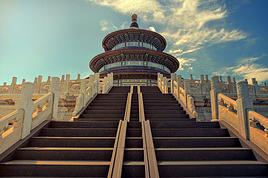
Beijing → Temple of Heaven / Forbidden City
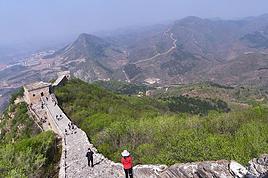
Jinshanling → Great Wall
Zhangjiajie → Tianmen Mountain and Heaven’s Gate
Wulingyuan → Avatar Mountains / sandstone pillars
Fenghuang → riverside houses
Ping’an → terraced rice fields
Tiantouzhai → village / rice terraces
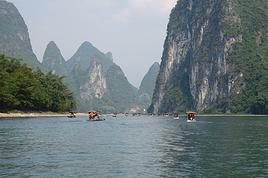
Yangshuo → Li River / karst mountains
Shanghai → skyline with the Oriental Pearl Tower
Our travel journal is available on our travel journal, written day by day. You’ll find lots of photos and some travel tips there.
I could really use your help to finalize our trip to Japan.
We’re heading there for three weeks with my partner, starting November 10th. Our plan was to visit Tokyo, Kyoto, and a few stops in between (nothing too original so far…).
However, we’re more into nature and hiking, so even though we do want to explore Tokyo and Kyoto, we’d like to maximize nature stops between the two. Initially, we’d considered places like Kamikochi, but I understand it’s not accessible this late in the season.
Hi there,
I’d like to do this cycling route over 2 or 3 days. I’m struggling to figure out and find a (good) bike rental that lets me start in Onomichi and drop off in Imabari. Can anyone help with great tips for rentals and accommodations along the route? How do I get back to Onomichi afterward?
Next year, we’re celebrating 20 years of marriage (and travel 🙂), and we’re looking for something new, pretty legendary, and something the teens will enjoy too.
The family council has settled on Japan for now. And it’d have to be a summer trip—no choice there.
The catch: I keep reading that August isn’t the right season for southern Japan. It’s hot, humid, and there’s a risk of typhoons… Okay, but what does that *actually* mean in practice? Are there any travelers who’ve been there during this time? Is it *that* unbearable?
We’re pretty familiar with Southeast Asia—last year, we dealt with scorching heat in Vietnam and insane humidity, plus a typhoon we experienced from a distance, and visiting Angkor in the blazing sun. Is it worse than that?
I’m back with my detailed itinerary for 20 days in South Korea—it’s my first trip to the country. Our idea is to experience a more rural and cultural Korea. Here’s the rough plan: Seoul for 4 nights at the start and 1 night at the end, Gurye for 4 nights, Suncheon for 4 nights, Namhae for 4 nights, and Gyeongju for 2 nights. The goal is to pick a base and explore the surrounding areas. What do you think of this itinerary? Anything you’d change?
thanks
hi everyone, we're heading out for a 12-day trek in the Japanese Alps. We're bringing freeze-dried meals like we always do. We just found out that importing meat is banned, even freeze-dried. Is that true? We already bought them. They're commercially made freeze-dried meals. Online, it's not specified that they have to be "commercially made" because you can make your own freeze-dried food. And since we've heard they're really strict in Japan, can anyone confirm this for us? thanks
I haven’t found what I’m looking for despite my searches!
For a 15-day trip next spring, I’d like to buy a card (preferably an eSIM, but a physical SIM is fine too) that also lets me make calls in the country (to contact a hotel, a tourist spot, etc.).
You can easily find options just for data, but I haven’t come across any that include calls, texts, or even MMS.
Could you recommend something?
hi there
I’m planning a trip in September—here’s my rough itinerary. What do you think? Is it easy to rent a car to get around between my stops? Thanks so much!
Philippe
StopNightsFull daysSeoul44Gurye (Jirisan)43Suncheon43Namhae43Gyeongju21Seoul1—
Hi,
July 2026: I’m writing to you from Dali.
First, I got scammed on Booking—AI-retouched photos. No tourists at this hotel (Yishanju Designer Hotel), and the reality was horrible: dirty, with a disgusting breakfast. It’s better to use Trip.com here.
Next, the old town was an infernal cacophony, packed with tourists who shoved past without a care. Some vendors harassed you to buy things. All the stalls sold the same cheap plastic junk or other uninteresting stuff. The beautiful scenery was ruined by vendors lining 100% of the alleys. Impossible to walk, crushing heat, nothing good to eat except fresh fruit. Horrible experience.
Day 2: We went to Cangshan Mountain by cable car—the ride was short and nothing spectacular. We were at 2,600 m.
My plan was to see Erhai Lake. Unfortunately, I followed the advice of an AI chatbot: take the boat at Langkan Dock. The Didi dropped us off in the nearest area, which was full of charming little alleys but packed with Chinese tourists. The three-wheeled yellow cabs zoomed through the narrow streets, forcing you to hug the walls, on top of the scooters and other pedestrians to deal with. Crossing the neighborhood was hellish and suffocating. Once out, we hit the "corniche," which was also packed with Chinese tourists. The lake’s edge was all pebbles, and everyone was standing around taking photos. I was with my 5-year-old son. I would’ve liked to sit down and let him play with stones by the water, but it was clear we didn’t belong. They were even shoving each other for a shot! There were no boats in sight. In short, we’d had enough, and there was nothing interesting there either.
On the way back, we had to cross that maze again under the scorching sun. My son was braver than me—I even had a little dizzy spell from all the chaos. Add to that Dali’s altitude (2,200 m), so altitude insomnia, fatigue, and vulnerability during the day...
The restaurants weren’t inviting—the staff served sticky rice in a little bucket. The dishes were wrapped, and you had to figure it out yourself. After that, they ignored you completely, even if you were the only tourist.
On the 3rd day, it was time to leave for Shaxi. I hope to see beautiful villages. But honestly, I’m exhausted by this atmosphere where everything is complicated, communication is never smooth, noise is everywhere, and the behavior of some Chinese people is abusive...
Silver lining: not a drop of rain in 4 days and blue skies.
I couldn’t visit the villages in southern Yunnan because of rain and storms there...
But I was expecting to see a few more tourists.
We’re planning a 17-day trip to South Korea in October 2026 with my husband and our daughters, who’ll be 9 years old.
I’d love to get your thoughts on our draft itinerary.
First, some key details:
1/ Jeju Island is a must for us. I’ve personally dreamed of going there for years after reading a novel about it.
2/ Our girls are used to road-trip style travel since they were born, so this kind of trip won’t be an issue for them.
3/ We plan to travel by train, except on Jeju where we’ll rent a car (we already have an international driver’s permit).
Itinerary:
Seoul: 1 arrival day at 10 AM + 4 full days
Gyeongju: 2 days
Busan: 3 days
Jeju: 4 days
Seoul: 2 days
Hi there,
My girlfriend (23) and I (24) are heading to Japan for the first time from October 20th to November 6th. Here’s our itinerary:
6 nights in Tokyo
1 night in Hakone (ryokan already booked)
4 nights in Kyoto (hotel already booked)
2 nights in Osaka
4 nights back in Tokyo
I’d like to book hotels for Tokyo (both stays) and Osaka, but I’ve gotten so many different recommendations.
I’ve read that Shinjuku is the place to be for its huge hub, accessibility, and things to do, but I’ve also heard about Shibuya, Asakusa, and Ueno.
I’ve looked at hotels, and first off, I’m surprised by the prices compared to what I’ve seen on forums (I guess inflation’s hit here too… and maybe I’m late to the booking game?). I’m feeling a bit overwhelmed with all the options.
For our first stay in Tokyo, I’d prefer a hotel (not a residence or Airbnb) since we’ll be arriving at night, and it’s our first time in Japan. It’d be great to have a place with a reception, staff who speak at least a little English, and can give us some guidance. For the second stay, we could consider other options if it’s better.
Budget-wise, we can go up to 150–180 € per night, but if we can save some money to spend elsewhere, that’d be amazing!
I’m open to all recommendations, hotel suggestions, or any other tips for Tokyo (first stay), Osaka, and Tokyo (second stay).
Hi there,
I’m getting ready for a classic tourist trip to China in May 2026.
The "Terres Lointaines" itinerary looks good to me, and the price is interesting.
Has anyone traveled with them before? Any feedback?
Is there a better option?
Thanks so much for sharing your experiences on this!
Michel
I just booked my hotel in Seoul—it’ll be near Unhyeongung, on Samil-Daero 30-Gil—and I’m wondering if there’s public transport from the airport to this address (bus or subway)? If not, what’s the taxi fare? I read it’s around 50 or 60 €.
I’m traveling to Japan with a young adult with autism (ASD) from July 28 to August 8, following a pretty classic route: Osaka, Hiroshima, Kyoto, and Tokyo. I’m looking for a schedule of the most spectacular fireworks displays during that time. So far, the dates for the major *hanabi* events aren’t available online yet. If anyone has them, I’d really appreciate it if you could share!
We’ll be doing a self-drive trip using public transport in May 2026.
On Day 6, we’ll arrive in Hakone by train from Tokyo in late morning. We’ll spend the night in Hakone before heading to Kyoto.
The main goal of this stop is clearly the view (no hiking) of Mount Fuji, not so much exploring Hakone, where the sights seem limited.
I’ve read on the forum that the view is great from Gotemba, but it also takes a good hour by bus to get there. And, apart from that view, there’s nothing else to see in Gotemba!
So, I’m not sure what to choose. Any thoughts? Or alternatives to suggest?
Maybe some spots in Hakone or Gotemba for a great view?
Hi everyone, I’m Julien!
This summer, from late June to late July, I’m planning a one-month solo trip to Japan—my first time!
I’d love to hear your thoughts and advice on the itinerary I’ve put together to explore this amazing country.
Here are the routes I’m considering:
**Option 1: More mountain and nature-focused**
Tokyo: 8 nights, with day trips to Nikko and maybe the Izu Peninsula
Kawaguchiko (Lake Kawaguchi/Mt. Fuji): 1 night. The place looks stunning, but I’m worried Mt. Fuji might not be visible due to the weather
Kyoto: 6–7 nights (including a trip to Nara)
Osaka: 1–2 nights, where I’d like to drop off my things to make the Kumano Kodo easier
Kumano Kodo: 3 nights—an experience I haven’t seen much elsewhere, but I thought it sounded really interesting
Hiroshima: 2 nights
Miyajima: 1 night
Takayama: 3 days
Kanazawa: 3 days (From what I understand, the Osaka–Takayama–Kanazawa–Tokyo route is convenient for transport)
Tokyo: 1 night (return)
**Option 2: More varied but a bit vague in parts**
Tokyo: 8 nights
Kyoto: 7 nights (+ Nara)
Osaka: 2 nights
Kobe + Himeji: just passing through—I’m not sure if it’s worth a night
Naoshima: 1 night—still pretty unclear for me
Takamatsu: 2 nights. An interesting city, but I’m not sure how long to stay
Shimanami Kaido: biking from Imabari to Onomichi, then heading to Hiroshima
Hiroshima: 2 nights
Miyajima: 1 night
Kyushu road trip (Aso + onsens + Fukuoka): 5 nights (also pretty vague—I could fly from Fukuoka back to Tokyo)
Tokyo: 1 night
**Option 3: More balanced/simplified**
Tokyo: 8 nights
Kawaguchiko: 1 night
Kyoto: 7 nights (+ Nara)
Osaka: 2 nights
Koya-san: 1 night
Kumano Kodo: 3 nights
Takayama: 3 nights
Kanazawa: 3 nights
Tokyo: 1 night
A few key points:
I haven’t made any reservations yet, except for the flight tickets.
I know my plans are too packed and will need to be adjusted.
I’m specifically looking for advice on which stops to cut or shorten.
Hello everyone,
Like Cedric13600, I’ve booked a flight ticket for 30 days / 29 nights in September 2026, from Beijing to Shanghai. We’re a couple in our sixties who love independent road trips.
I’d like to draw inspiration from the following private itinerary suggested by a travel agency:
Day 1: Arrival in Beijing
Day 2 to 4: Beijing
Day 5: Datong
Day 6 & 7: Pingyao
Day 8 to 10: Xi'an
Day 11: Luoyang
Day 12: Dengfeng
flight
Day 13 & 14: Chongqing
flight
Day 15 & 16: Lijiang
Day 17: Dali
Day 18: Kunming
Day 19: Jianshui
Day 20 & 21: Yuanyang
Day 22: Travel via Guilin
Day 23 & 24: Yangshuo
Day 25: Guilin
Day 26 & 27: Zhangjiajie
flight
Day 28 & 29: Shanghai
Day 30: Departure from Shanghai
But to do this itinerary independently:
1. This schedule seems very ambitious to me—what do you think?
2. If it’s too packed, what would you remove as a priority?
Thanks so much in advance for your help.
I’m planning a 5-week trip between Yunnan and Sichuan from mid-October to the end of November 2026:
Arriving in Kunming, I’ll do a loop in the far south of Yunnan via Thonghai, Jhiansu, Zhemi, Yuanyang, Nafa, Jinping, Mengzi, and Shilin (visiting markets, villages, and hiking), then head to northern Yunnan/southern Sichuan on the same theme (passing through Kunming again) via Dongchuan, Huize, Qiaojia, Puge, Xichang, Lanba, Butuo, Huolie, Dimo, Riha, Niuniuba, Meigu, Mabian, and Leshan, before arriving in Chengdu (where I’ll take my return flight to Paris).
This would be a trip with a strong ethnic/rural focus. Since I’ve never traveled in China, I’d love to hear your thoughts on doing this solo. Are there public transport options in the region? What tips do you have for traveling through this area as smoothly and enjoyably as possible? I’ve done quite a bit of backpacking in the mountains of northern Vietnam and really enjoyed using local motorbike drivers. Is something like that available in this region (through local tourist agencies or hotels)?
What should I be cautious about? Are local tourist agencies (or hotels) offering tours and guides reliable? If you know of any specialized sites sharing tips or experiences, or names of local agencies, hotels, etc., please don’t hesitate to share them! :)
In short, all your advice (on any topic that comes to mind!) is very welcome.
Thanks so much!
While researching South Korea, I came across the term "templestay," which refers to a Korean program that lets you stay in a traditional temple to discover Buddhism and Korean culture by living like the temple residents and doing activities like making lanterns.
A templestay isn’t just for foreign tourists—on the booking site, I saw that some temples are more geared toward foreigners, with English-speaking monks.
I was wondering if it’s still worth it, especially in temples where the monks don’t speak English?
I'm 69 years old and heading to China, where most tourist sites are free or discounted for me. However, trip.com either refuses to let me book because the sites are free or doesn’t apply the discount. Does WeChat apply this discount if I book through them? How can I just reserve without paying and pay on-site? Is that possible?
I’d love to get some feedback on our 30-day / 29-night itinerary in China. We’ll be there in September as a family with two kids (6 and 10 years old).
Do you think I should cut a few nights between Wulingyuan (Avatar Mountain) and Yangshuo? I’ve planned 15 nights total there.
We’ll be on a round-the-world trip starting May 2026 and will need to do schoolwork with the kids. Hoping to fit it in during train rides!!
Ever since I started planning this China itinerary, I’ve been discovering completely mind-blowing places I’d never heard of before—30 days feels way too short for China!!!
Here’s our itinerary:
Beijing - 4 nights
Forbidden City
Great Wall of China
Temple of Heaven
Xi’an - 3 nights
Terracotta Army
Muslim Quarter & Great Mosque
Chengdu - 3 nights
Zoo - Research Base of Giant Panda Breeding
Wenshu Yuan Temple
Hi there,
We just got back from a 2-week trip to China as a couple, and before we left, the budget was the hardest thing to picture concretely. We found plenty of info on visas, apps, transport, and itineraries, but way fewer detailed breakdowns of what you *actually* spend on the ground.
So, we took the time to share our real budget for 14 days. In our case, we spent around 1,800 € per person, with a big chunk of that going toward round-trip flights at about 600 € per person. We were also pretty surprised by how affordable China can be once you’re there—transport is often cheap, and a lot of everyday expenses stay reasonable.
The trickiest part, in the end, was figuring out how to pay while you’re there, since it’s not always obvious if you’re not prepared. But once everything’s set up and you get the hang of it, it’s really smooth.
If this can help other travelers get a better idea before they go, we’ve broken it all down here:
https://aventures-sans-mesaventure.com/budget-2-semaines-de-voyage-en-chine/
Hi everyone,
I’ve been planning several itineraries for a trip to Japan with my wife but would love your insights before we start booking!
In short, we want to go during Golden Week, see late-blooming cherry trees, and have the freedom to get around with a rental car.
Here’s the plan:
18-day itinerary in Japan (April 25 → May 12)
Goal: freedom, late cherry blossoms, culture & nature
---
Days 1–3: Tokyo (April 25–27)
Arrival and adjustment (no car needed yet).
Neighborhoods to visit: Shinjuku, Asakusa, Meiji Jingu, Shibuya, Odaiba.
Suggested activities: Ghibli Museum, Sumida River cruise, izakaya meals.
Late cherry blossoms (yaezakura) possible at Shinjuku Gyoen.
Pick up the rental car on the morning of April 27.
---
Days 4–5: Mount Fuji & Hakone (April 27–28)
Route: Tokyo → Kawaguchiko/Hakone (~2 h).
Activities:
Lake Kawaguchi, Chureito Pagoda (Fuji views + late cherry blossoms)
Onsen baths, Hakone Open-Air Museum.
Stay: ryokan with onsen and views of Mount Fuji.
Activities:
Preserved old town, sake breweries, UNESCO village of Shirakawa-go.
Stay: traditional minshuku (thatched-roof house).
Cherry blossoms are finishing at this altitude — beautiful mountain/nature contrasts.
---
Days 8–10: Kyoto & Nara (May 1–3)
Route: Takayama → Kyoto (~4 h 30).
Activities in Kyoto:
Fushimi Inari (red torii gates), Golden Pavilion, Arashiyama, Gion (geisha district).
Day trip to Nara:
Free-roaming deer in Nara Park, Todai-ji Temple, Kasuga Taisha Shrine.
Stay: Kyoto (3 nights).
---
Day 11: Osaka or Himeji (May 4)
Route: Kyoto → Osaka (~1 h) or Himeji (~1 h 30).
Option 1: Osaka → modern vibe, street food, castle.
Option 2: Himeji → stunning UNESCO-listed castle.
Stay: Osaka.
---
Days 12–13: Kanazawa (May 5–6)
Route: Osaka → Kanazawa (~4 h 30).
hi! Is it easy to use for paying for all the small purchases at the markets? INSTALLATION AND USE WITHOUT ISSUES—do you also need a VPN for China?
Secondly, for using phone and internet, I have Orange—is it reliable, or should I go with Airalo instead?