De retour d’un premier séjour au Ladakh…je me décide enfin à écrire quelques lignes.
En effet le voyage date déjà de quelques mois, l’été 2019. Mieux vaut tard que jamais…
Beaucoup de montagnards chevronnés sur cette destination (il y a peut être une certaine logique à cela), je dois avouer que je n’entre pas dans cette catégorie… ce qui ne m’empêche pas d’apprécier de grandioses paysages de montagne !! Mes motivations premières pour cette destination étaient donc : la découverte de la région et des ses habitants, bien entendu ; l’Himalaya bien sûr, mais sans forcément penser à faire de grandes marches / de grands escalades ; les monastères bouddhistes, cela va sans dire ; et les routes mythiques, en particulier la route ralliant Leh à Manali qui est bien haut dans ma wish-list depuis un certain nombre d’années…
Avant de rentrer dans le vif du sujet, un grand merci à tous ceux qui ont répondu à mes messages et m’ont aidé à dans ma préparation. Et des very special thanks au grand spécialiste de la destination, Djullé84, qui, m’a grandement aidé dans mon itinéraire, et qui a aussi influé sur le contenu de mon voyage. On en reparlera !
Donc, les grandes lignes de ce voyage ont été :
- Leh (inévitablement) et les monastères de la vallée de l’Indus
- Le festival de Lamayuru
- Le trek de la Markha
- Une virée dans la vallée de la Nubra
- Le trajet de retour en bus de Leh à Delhi.
Pour les déplacements, les transports publics sont privilégiés, autant que possible.
Durée / période : ~3 semaines, fin juin / mi-juillet
Le voyage jusqu'à Leh : vol jusqu’à Delhi sur Lufthansa via Munich (Lufthansa est très concurrentiel vers les destinations asiatiques depuis ma province). Arrivée Delhi peu avant minuit, passage à l’immigration sans problème pour valider mon visa à entrées multiples sur un an obtenu sur internet.
Je traîne quelques heures dans l’aéroport puis je m’aperçois qu’il me faut changer de terminal pour prendre mon vol SpiceJet du petit matin. Le terminal 1D est loin, la navette en bus est gratuite en montrant sa carte d’embarquement du vol précédent et sa réservation du vol suivant (à prendre près du pilier 10 accessible par la sortie 4, le monsieur dans la cabane donne le ticket).
Heureusement, j’avais été attentif lors de ma réservation et je n’avais pas acheté mon billet avec une CB virtuelle : il faut effectivement montrer la CB avec laquelle on a fait l’achat pour obtenir sa boarding card…(Spicejet)
Vol sans histoire, mais… le ciel très couvert ne permet aucun spectacle, c’est une déception car ça aurait pu être pire : le vol n’a pas été annulé…
Avion jusqu'à Leh, donc : d'une part en juin, c'est encore tôt dans la saison pour prendre la route ; et d'autre part, la route Delhi-Manali-Leh me paraît très haute pour l'emprunter sans aucune acclimatation, je la réserve pour le retour...
Et l'autre possibilité par Amritsar et Srinagar était très tentante, mais d'une part elle exigeait beaucoup de temps, et d'autre part cet itinéraire fait emprunter des trajets qui se situent dans la zone rouge du ministère des affaires étrangères...
Depuis l'aéroport, le taxi pour le centre de Leh coûte 450 Rs (flat price), installation à la GH, réservée sur booking, dans le vieux Leh, entre le terrain de polo et la rue principale.
La 1ère journée se passe au ralenti, sous un ciel couvert, il me faut récupérer du voyage et de la nuit dans l’aéroport de Delhi, et m’acclimater à l’altitude. Premières découvertes de Leh qui au premier abord et sous le ciel gris, n’est pas vraiment enthousiasmante (ça me rassure un peu d’avoir lu quelque part (n’est ce pas, Djullé84) que « chaque journée passée à Leh est une journée de moins passée au Ladakh »…). Ah tous ces toutous en train de roupiller…
La première nuit est un peu difficile, mal de tête avec l’altitude… Et les chiens donnent un concert dès le coucher du soleil. Je comprends pourquoi les chiens dormaient dans la journée : à Leh, le chien est un animal nocturne, qui dort le jour et qui passe ses nuits à aboyer…
Ah, il y a le chant du muezzin aussi…
Temps pluvieux le matin (et j’apprends qu’il n’y a aucun vol depuis/vers Leh aujourd’hui…), il me faut récupérer des infos pratiques pour organiser la suite du voyage (les jours et heures des bus, en particulier …). Le temps s’arrange, location de scooter l’après midi, je parviens à en obtenir un bien que je n’aie pas pu avoir mon permis de conduire international en temps et en heure. Je vais aller jusqu’à Phyang. Une fois sorti des embouteillages et du bazar de Leh, la ballade permet les premières vues spectaculaires sur les montagnes himalayennes et sur l’Indus. Et les premiers convois militaires à croiser aussi, ils seront omniprésents sur les routes…Et la possibilité de voir de près le 1er monastère ! (mais pas de le visiter à l’heure de mon arrivée)
Côté organisation, j’ai pu planifier les choses : dans les prochains jours, ce sera une virée Alchi – Likir – Lamayuru et retour sur Leh : le lendemain je prendrai un premier bus pour Alchi ; mon périple continuera en prenant le bus qui repart pour Leh ; en descendant à la bifurcation pour Likir, je pourrai ensuite monter à pied pour la fin d’après-midi et la nuit à Likir. Le jour suivant je redescendrai à pied à la highway prendre le bus pour Lamayuru, où je resterai deux jours et demi (dont une pleine journée de festival) avant de rentrer en bus pour Leh. J’en repartirai le lendemain pour la vallée de la Markha.
Leh sera donc ma plaque tournante, ce qui me permet de m’alléger en demandant à la GH de garder une partie de mes affaires lors de chacune de mes escapades.
(à suivre)
L'hôtel où je me trouve (à Mahabalipuram) vient de refuser le paiement de notre dîner (nous sommes 8) avec des billets de 500 et de 1000 roupies, car nous dit-il, le gouvernement indien vient subitement de décider qu'il faut aller les changer à la banque pour d'autres billets. Les ATM seront fermés pendant 1 ou 2 jours, demain les banques indiennes sont fermées. Bref on ne pourra plus payer momentanément qu'avec des billets de 100 roupies et moins (et avec sa carte bleue). Quant aux billets de 500 et de 1000 roupies on a un délai pour les changer à la banque (je ne sais plus quel est la date limite). Cette information aussi énorme qu'inattendue vient d'être confirmée par mes amis indiens. Motivation du gouvernement : faire sortir des bas de laine le "black money". Information confirmée dans la presse indienne
www.ndtv.com/...ight-at-8-pm-1622948
Les trois géants américains de la carte bancaire n'ont pas pu se conformer à temps à la nouvelle législation indienne sur la souveraineté des données.
Entrée en vigueur ce lundi 15 octobre à minuit, la très stricte réglementation indienne sur la souveraineté des données produit déjà ses premiers effets : à chaque transaction opérée avec l'une de leurs cartes bancaires sur le territoire indien, Visa, Mastercard et American Express sont désormais dans l'illégalité.
Voté en avril, le texte impose aux acteurs financiers de stocker toute information liée à une transaction impliquant un Indien à l'intérieur des frontières indiennes, et ce de façon exclusive.
Malgré un lobbying intensif pour retarder l'entrée en vigueur de la nouvelle réglementation, les trois géants, bien implantés en Inde où le paiement dématérialisé monte en puissance, se sont heurtés à la fermeté de la Reserve Bank of India (RBI).Eventuelles amendes Celle-ci, peu prolixe sur les motifs qui justifient le stockage des données à l'intérieur du territoire, invoquait en avril dans sa notification le besoin « d'assurer une meilleure surveillance », pour laquelle il est « important d'avoir un accès illimité aux data stockées par les fournisseurs », et laissait six mois aux acteurs du marché pour se mettre en conformité.
Un délai trop court selon Visa, Mastercard et American Express, dont les systèmes de traitement des données, notamment celui destiné à la détection des fraudes, sont basés à l'étranger. Selon le « New York Times » , la RBI a averti les dirigeants des différents groupes qu'une non-mise en conformité dans les temps entraînerait des sanctions, dont d'éventuelles amendes.Favoriser l'émergence de start-up locales Sous l'impulsion de l'aile droite du Bharatiya Janata Party, le parti dont est issu le Premier ministre Narendra Modi, le gouvernement travaille sur des mesures protectionnistes destinées à entraver la collecte, le stockage et la revente de données des 1,3 milliard de citoyens indiens (dont environ 500 millions d'internautes) par les géants américains et favoriser l'émergence de start-up locales.
Alors qu'un prochain texte portant sur l'industrie du e-commerce est en préparation (et menace notamment Amazon et Walmart, qui a pris le contrôle du groupe indien Flipkart pour 16 milliards de dollars), c'est donc le secteur financier qui connaît les premiers soubresauts du souverainisme indien appliqué aux données. En témoigne l'émergence de RuPay, une société de paiement lancée conjointement par plusieurs banques indiennes et largement supportée par le gouvernement, qui revendique une croissance de 135 % en 2017. « Si nous utilisons d'autres cartes, les profits qui seront générés iront à l'étranger, mais dans le cas de RuPay, ils restent en Inde », déclarait en juin Narendra Modi à la presse pour mieux convaincre la population de sauter le pas.
source : https://www.lesechos.fr/finance-marches/banque-assurances/0302419845627-en-inde-visa-mastercard-et-american-express-sont-desormais-hors-la-loi-2214106.php
https://www.nytimes.com/2018/10/15/technology/visa-mastercard-amex-india-data-law.html
on ne s'ennuye jamais avec eux ...
Malgré un lobbying intensif pour retarder l'entrée en vigueur de la nouvelle réglementation, les trois géants, bien implantés en Inde où le paiement dématérialisé monte en puissance, se sont heurtés à la fermeté de la Reserve Bank of India (RBI).Eventuelles amendes Celle-ci, peu prolixe sur les motifs qui justifient le stockage des données à l'intérieur du territoire, invoquait en avril dans sa notification le besoin « d'assurer une meilleure surveillance », pour laquelle il est « important d'avoir un accès illimité aux data stockées par les fournisseurs », et laissait six mois aux acteurs du marché pour se mettre en conformité.
Un délai trop court selon Visa, Mastercard et American Express, dont les systèmes de traitement des données, notamment celui destiné à la détection des fraudes, sont basés à l'étranger. Selon le « New York Times » , la RBI a averti les dirigeants des différents groupes qu'une non-mise en conformité dans les temps entraînerait des sanctions, dont d'éventuelles amendes.Favoriser l'émergence de start-up locales Sous l'impulsion de l'aile droite du Bharatiya Janata Party, le parti dont est issu le Premier ministre Narendra Modi, le gouvernement travaille sur des mesures protectionnistes destinées à entraver la collecte, le stockage et la revente de données des 1,3 milliard de citoyens indiens (dont environ 500 millions d'internautes) par les géants américains et favoriser l'émergence de start-up locales.
Alors qu'un prochain texte portant sur l'industrie du e-commerce est en préparation (et menace notamment Amazon et Walmart, qui a pris le contrôle du groupe indien Flipkart pour 16 milliards de dollars), c'est donc le secteur financier qui connaît les premiers soubresauts du souverainisme indien appliqué aux données. En témoigne l'émergence de RuPay, une société de paiement lancée conjointement par plusieurs banques indiennes et largement supportée par le gouvernement, qui revendique une croissance de 135 % en 2017. « Si nous utilisons d'autres cartes, les profits qui seront générés iront à l'étranger, mais dans le cas de RuPay, ils restent en Inde », déclarait en juin Narendra Modi à la presse pour mieux convaincre la population de sauter le pas.
source : https://www.lesechos.fr/finance-marches/banque-assurances/0302419845627-en-inde-visa-mastercard-et-american-express-sont-desormais-hors-la-loi-2214106.php
https://www.nytimes.com/2018/10/15/technology/visa-mastercard-amex-india-data-law.html
on ne s'ennuye jamais avec eux ...
bonjour
cette année notre choix de voyage se porte sur l'Inde du Sud-Ouest (Cochin) mais c'est notre 1er séjour là-bas et je suis inquiète pour la sécurité, les guest houses, la monnaie, bref, l'échange avec les habitants et commerçants. Nous avons l'habitude de voyager avec sac à dos au Laos, Cambodge et Thaïlande. Qu'en sera-t-il en Inde ???? Nous sommes deux adultes.
Combien faut-il apporter d'argent pour 20 jours (repas et couchage) environ.
Merci pour vos réponses, vous qui aimez découvrir le monde.
C'est un évènement que l'on m'avait annoncé en 1995 lors de mon premier voyage vers l'Inde, c'est officialisé...l'année qui vient, 2018, verra l'Inde dépasser la France...Vous qui voyagez constamment depuis des années, quels sont vos vécus, vos impressions, vos regards sur cette évolution des niveaux de vie " sur le terrain"??
Namasté,
Bien sûr il a des milliers de morts dans le monde liés au COVD 19, bien sûr il y a bien plus de désastres dans les familles touchées par l’infection, mais je voulais juste avoir une pensée pour les Népalais qui subissent la double peine de cette pandémie.
J’ai des relations avec un responsable d’agence de treks à KTM, avec deux accompagnateurs de moyenne ( ?!) montagne et un guide de haute montagne. Pour eux l’avenir est très sombre et leur situation à court terme par le manque de touristes étrangers est quasi dramatique, mais je pense aussi à toutes ces personnes qui en vivent : porteurs, guesthouses, commerces etc etc..
Fait chier !
A++ Le Belu
Bien sûr il a des milliers de morts dans le monde liés au COVD 19, bien sûr il y a bien plus de désastres dans les familles touchées par l’infection, mais je voulais juste avoir une pensée pour les Népalais qui subissent la double peine de cette pandémie.
J’ai des relations avec un responsable d’agence de treks à KTM, avec deux accompagnateurs de moyenne ( ?!) montagne et un guide de haute montagne. Pour eux l’avenir est très sombre et leur situation à court terme par le manque de touristes étrangers est quasi dramatique, mais je pense aussi à toutes ces personnes qui en vivent : porteurs, guesthouses, commerces etc etc..
Fait chier !
A++ Le Belu
Bonjour,
Dans le cadre d'un prochain séjour en Inde, pour y retrouver des amis de longue date, je suis à la recherche d'idée de cadeaux à leur apporter.
Qu'est ce qui est rare ? Chocolat ? Chocolat ? Ou chocolat ? 😛
Merci aux habitués des indiens.
NAMASTE NEPAL! PRACTICAL INFO AND EXPERIENCE FEEDBACK
Stay from March 25 to April 16, 2025
· Flight tickets Air India (via Delhi) (via Skyscanner) = 1130 € per person · Planned budget (and respected without too many restrictions and while buying a few small gifts) = 2000 € for the stay for two. Buses, taxis, and entrance fees to various sites represent a budget to consider. Meals are cheap. Drinks like beer/Coke, however, are not cheap and cost the equivalent of a meal. · Exchange rate of the rupee during our stay = 0.0064 € (the exchange rate is almost identical everywhere, including at the airport). · At the airport, purchase of two SIM cards (phone) = 1000 NPR x 2 for 28 days. · Kathmandu: we had booked the hotel upon arrival: Kathmandu Boutique Hotel (+977 015 357 446 – email: booking@kathmanduboutiquehotel.com), very well located in a quiet alley off the street, south of Thamel, a 10-minute walk from Durbar Square. A hotel like Nepal knows how to do, where tall people will have to duck. Night + breakfast = 18 € for two. Very warm welcome, great location, excellent value for money. · Bhaktapur: we had also booked a hotel for the end of our stay because the chance of the year 2025 made the Nepali New Year and Bisket Jatra particularly festive in Bhaktapur: Manju Baha Hotel School (+977 976 7234014 – email: manjubahahotel@gmail.com) located in an old monastery. "A social enterprise transforming an old monastery into a charming hotel, offering professional hospitality training to underprivileged Nepali youth." Night + breakfast = 32 € for two. Beautifully decorated room. Very warm welcome. Don’t miss the Changunarayan site (near Bhaktapur), it’s amazing. And if you’re lucky enough to be in Bhaktapur in mid-April for 3 days, there’s the Bisket Jatra festivities (Newari festival), joyful, noisy, fun, and wild… · Pokhara (hotel recommended by the Kathmandu hotel): Hotel Green Tara, Lakeside, 10th street, set back, quiet (Tel. +977 61 462698 – email: greentara_67@hotmail.com) · Trek permit (Lower Mustang, no need for an agency or guide, permits checked at Ghasa and Jomsom) = 2000 NPR per person (2 ID photos) · Bus Kathmandu/Pokhara and return = 2000 NPR per person · Bus Pokhara/Jomsom, 2 one-way tickets = 2800 NPR. · Taxi: negotiation with a driver we recommend, Vicky (+977 984 075 599). You explain what you want, negotiate the price, and he waits for you during the visit. Very charming, we used him several times. For example: departure from our hotel at 10 AM -> Boudhanath/Pashupatinath/Patan return at 5 PM to the hotel = 6500 NPR – Swayambhunath (round trip) = 1200 NPR · Site prices: https://ntb.gov.np/plan-your-trip/before-you-come/heritage-site-entry-fees o Visitor Pass for Kathmandu Durbar Square (for the duration of the stay, show your visa) = 1000 NPR per person (1 ID photo) o Bhaktapur Durbar Square (old town) = 1800 NPR per person o Patan = 1000 NPR per person o Swayambhu Stupa = 200 NPR per person o Boudha Stupa = 200 NPR per person o Pashupatinath Temple = 1000 NPR per person (interesting to take a guide) o Changunarayan Temple (6 km north of Bhaktapur) = 400 NPR per person o Mountain Museum in Pokhara = 750 NPR per person · E-cigarettes: e-cigarettes are banned in India and confiscated whether they’re in carry-on or checked luggage. On the way there, we had kept them in our carry-on, they were confiscated in Delhi. On the way back, learning from our previous experience, we put them in our checked luggage. Someone came to get us to take them out of our bags and confiscate them… You can find e-cigarettes and products in Kathmandu.
* * *
I’m 74 years old. I went to Nepal in 1982, 1983, and the last time in 1986. I wanted to introduce this beautiful and endearing country to my husband, and it was… now or never. So we decided it was now.
I knew the trek starting from Pokhara: Naudanda/Birethanti/Ghorepani/Tatopani/Kalopani. There was no way I was going to do that trek, especially the 1000-meter staircase to reach Ghorepani… You have to stay humble with age.
Back then, the road didn’t exist. I didn’t consider, with the construction of this road (NH48) along the western bank of the Kali Gandaki, doing a trek along a windy and dusty road. Was there an alternative hiking trail on the eastern bank? No one answered my question on VoyageForum, so I did my research online. And I found this site: "Andrées de Ruiter and Prem Rai - Trekking the Annapurna Circuit, including the new NATT trails that avoid the road - A guide to one of the most beautiful trekking regions in Nepal and the world (2011) - NATT = New Annapurna Trekking Trail".
Phew! A solution was emerging. This circuit from 2011 wasn’t fully marked. The idea was to go from Jomsom to Tatopani, so we needed to make sure the path was well-marked all the way, which we did, and the path exists, marked in red and white!
So, with the walking times information, we built our 8-day circuit:
· Jomsom/Thinigaon · Thinigaon/Chimang · Chimang/Saura · Saura/Kokhetanti · Rest day or, if in good shape: loop to Sekong Lake · Kokhetanti/Jhipra Deurali · Jhipra Deurali/Kopchepani · Kopchepani/Tatopani
It’s a senior trek, after all. So the walking times noted on the sites indicated 3 hours or even 4 hours for the two longest stages. That pace suited us fine.
On March 29, we left Kathmandu (1400m), after visiting the must-see sites, by bus to Pokhara: 200 km and 8.5 hours on a chaotic road under construction. I had a memory of Pokhara where it was the first city where you could see the Himalayan range, especially Machhapuchhare. But the pollution is such, the dust raised by traffic and construction, that no horizon is visible except the first hills around Pokhara.
We stayed 24 hours in Pokhara (820m), and on March 31, we left our luggage at the hotel and set off with our lightest backpacks: change of clothes, toiletries, first aid kit, anti-chafing cream, water bottle, sleeping bag liner, and light shoes for the stages.
We took the bus to Jomsom: 160 km/7.5 hours including stops for bathroom breaks, tea, and lunch. The road is nothing but a chaos of potholes, landslides, construction, dust, rebuilding, and mudslides. In Ghasa, the bus stops, and we’re told we’re at a checkpoint and that the two foreigners in the bus, my husband and I, need to have our permits checked, which takes a few minutes. The driving is rock-and-roll, surprising, and courteous. The drivers have their codes, and on these improbable roads, they’re virtuosos.
We could have chosen the plane, but several reasons dissuaded us: if there’s too much wind, the planes don’t take off; personally, I wasn’t reassured about landing in Jomsom, and this transport has a cost.
We arrived around 2 PM in Jomsom (2720m), and despite the early wake-up, the nearly 8 hours on the bus, and the altitude, we decided to head straight to Thinigaon (2840m). At the Jomsom checkpoint, they told us it was a 30-minute walk. Great! Except we took an hour and a half on an uphill road, bent over to fight a strong wind. But the Himalayan range is there! The Dhaulagiri, the Nilgiri, the Annapurnas as a reward.
In Thinigaon, we found a room at the "Nilgiri View Hotel" run by a didi (big sister in Nepali). From the lodge’s roof, she proudly showed us the different peaks surrounding the village and told us, worried, that it hadn’t snowed here for 3 years. She said there are very few tourists, that the season is rather in September/October/November. It seems there’s not a soul in this village, yet mules pass through the narrow street paved with large flat stones, their bells ringing. We dine at 6 PM and go to bed… Room = 1200 NPR and dinner, breakfast, and drinks = 2560 NPR.
On April 1, we set off at 9 AM, not for Chimang as planned but for Marpha! The didi from the Thinigaon lodge had said it was a 3-hour walk. The first part of this stage is attractive, the mountains are magnificent and imposing, the landscape is superb, there’s no one around, a feeling of being "alone in the world." We follow Dhumbra Tal, this small green lake. The path is a rocky track that climbs steeply. Then, around a hill, we start the big descent that joins the Kali Gandaki. We face the wind head-on, and the violent gusts take our breath away, throw us off balance, and envelop us in dust. We see the road on the other side of the Kali Gandaki. We arrive in the village of Chhairo at 2 PM, completely exhausted and with blistered feet, after 5 hours of walking instead of the planned 3.5 hours.
We’re welcomed by the village nurse, who tells us there’s a lodge in the village. Chhairo is a Tibetan village, a 20-minute walk from Marpha (according to the locals, multiply by 2 or even 3 for us…). We’re going to revise our trek plan and, first of all, spend the night in Chhairo.
The lodge is quite pleasant, and Karma, the hostess, is very friendly. She asks about our plans and suggests we stay in Chhairo the next day, from where we can visit Marpha and also Chimang, a 1-hour walk away, in light mode, meaning without backpacks. She invites us to participate in a village ceremony the next evening.
We immediately accept the proposal, as our feet need rest and the welcome is so warm… Dinner and bed!
We reworked our trek plan, which was too ambitious for our untrained bodies and, let’s face it… no longer in our first youth. In the initial plan, we thought there wouldn’t be too much elevation gain following the Kali Gandaki, but checking the map, we realize there might be significant elevation changes between Sauru and Sirkung. So we plan:
· Tomorrow: visit Marpha (2670m) and Chimang (2744m) · April 3: bus from Chhairo (2700m) to Kalopani (2530m) and continue on foot to Ghasa (2010m) · April 4: Ghasa/Pairataplo (1940m) · April 5: Pairatapla/Gadpar (1580m) · April 6: Gadpar/Narchyang (1510m) · April 7: Narchyang/Tatopani (1190m) · April 8: return to Pokhara.
Normally, it’s all downhill…
April 2, a rest day then… We set off in the morning to explore Marpha. We have to take a temporary bridge because the suspension bridge is closed due to road construction. We join the road and arrive in Marpha, a village famous for its apple orchards, brandy, cider, and apple juice production. This village is magnificent with its stone houses and monastery clinging to the hillside. The road construction spared it. There are people, but very few Western tourists.
We have lunch in Marpha and go back through Chhairo to take the path to Chimang. We cross a fragrant pine forest and find the rocky path; the landscape is splendid. We walk quietly, passing peaceful buffaloes and cows, and arrive at the foot of a stone staircase… 275 steps (which we counted on the way back) leading us to the village of Chimang. Chimang is an isolated Newari village that seems a bit desolate. Despite the slopes, there are crops on every little bit of land. Thankfully, we changed our initial program because there’s no lodge in this village, contrary to what we saw on a map… We wander through the village, which seems very deserted, have coffee in a house from another world, and then head back to Chhairo.
A rest day? = 5 hours of walking!!
Dinner and village ceremony. From what we understand, this ceremony is in honor of the Dalai Lama. Men, women, and children in traditional costumes gather twice a month; they dance, make, and offer small sweet cakes with Tibetan tea (made from tea, yak butter—often rancid—water, and salt). Surprising for first-timers…
Around 10 PM, we leave the ceremony; tomorrow morning, we need to be on the roadside by 7 AM to catch the bus to Kalopani…
This village of Chhairo is very pleasant and welcoming, no tourists, just two motorcyclists who arrived in the evening, one of whom participated in the ceremony and discreetly poured his Tibetan tea outside.
Lodge: "Norsang Tibetan Guesthouse and Restaurant". Total bill for 2 nights, 2 dinners, 2 breakfasts, and drinks = 8000 NPR.
April 3: bus from Chhairo to Kalopani, about 1.5 hours for the 20 km (200 NPR per person). We descend on the right bank of the Kali Gandaki. We find the red and white markings to resume the trek toward Ghasa. We’re in a fragrant pine forest, the Dhaulagiri on one side and the Annapurnas on the other, magnificent, and the path is pleasant and easy. We get a bit lost in this forest, always looking for the markings. Near Lete, two trekkers pass us, and we meet them again a little further on with two very young children, to whom we give the 2 hard-boiled eggs I didn’t eat this morning. They accepted them without hesitation.
We arrive in a village and ask for directions to Ghasa. The young girls point the way. But we come across a forest being logged, trees cut in all directions. We turn back and ask for confirmation. They confirm… But the two young girls catch up with us and clear the way. We have to step over, go around, and cross the felled trees, with no indication at all. Through this pick-up sticks of felled trees, the girls lead us to the top of a stone staircase, indicating that was the path. It’s the only place where we saw rhododendrons in bloom.
We descend the staircase. At the bottom, to the left, there’s a bridge to go toward Choyo, and to the right, a path to Ghasa. We take the right path and join the road. We should normally find the red and white markings, but we don’t… So we continue on the western bank road of the Kali Gandaki.
A little before the village of Misi, we see fumaroles on the opposite bank that seem to come from the ground. We don’t understand. We stopped to eat in the village of Misi (noodle soup = 600 NPR), but it’s hard to communicate with the elderly people running the guesthouse.
We continued on the road, not finding the marked path parallel to the road. Landslides, both on the left and right banks, seem to have taken over the marked routes. It’s a place where the Kali Gandaki gorge narrows, and on the opposite bank, the mountain smokes more and more, and we now hear the crackling of fire. Across from us, the mountain is burning… Our initial plan had us passing on that burning bank right now…
We arrive in Ghasa at 3:30 PM, a 6.5-hour stage but with a 1-hour stop at noon. We’re at the "Florida Guesthouse and Restaurant." From our room, we see the mountain smoking on the other side of the river, and at night, we see the flames. In this village, posters show Himalayan eagles and vultures that seem to be protected species. Indeed, we saw (and heard) 3 eagles circling today.
April 4 – Today, heading to Pairothapla or Kopchepani depending on our feet, accommodation options, and simply our desires.
No more smoke on the mountain this morning. It’s chilly, 7:45 AM, the sky is clear, just a smell of smoke outside.
Price of the lodge = 1000 NPR for the night + 3580 NPR for meals.
We cross Ghasa, which stretches over more than a kilometer. We have a drink at the last guesthouse in the village, and the didi, when she learns our destination, tells us to be careful because the villages we’re going to aren’t safe. Should we distribute our rupees in different pockets? Nah, we kept going.
At the exit of Ghasa, we find the red and white markings and take the suspension bridge to cross the boiling waters of the Kali Gandaki. The passage is impressive because the river is tumultuous. Lots of climbs and even more descents. We’re back on the eastern bank. It’s hot! On the narrow path, we meet a group of buffaloes. Who has the right of way? We decide to stick as close as possible to the rock wall and move forward calmly. The buffaloes look at us, chewing placidly, with no intention of jumping on us. Phew!
After a 5-hour stage (including stops), we arrive in Pairothapla, with hot feet and firm thighs, and decide we won’t go any further. It’s a good thing because there’s a lodge, the most basic so far, but with a great welcome. We have a meal and a short nap. The buffaloes we met on the way belong to this house. They come to drink at the fountain by the path.
Our host, very pleasant, doesn’t know what to do to please us and is very attentive. He wants to chat. He has two children, a 4-year-old girl and a 7-year-old boy. Where do they go to school? Do they go? He tells us that the fires in the mountain are caused by people, but for what reason? We won’t find out, but it’s illegal. From here, we can still see smoke rising in the distance. The wife is a bit less friendly. Corn kernels dry on a woven straw mat on the ground, and the mom sorts them.
From where we are, we overlook the valley and see the road under construction winding along the mountainside on the other bank.
Dinner on the terrace of the house overlooking the path, windbreaker and fleece on: dal bhat chicken for me and chicken curry for my husband: "organic" products, at least local production. There are small vegetable gardens everywhere with all sorts of vegetables.
April 5 – While we’re having breakfast on the terrace of our lodge, 5 porters, straps on their foreheads, heavily loaded, pass by on the path. A few minutes later, a group of 9 people appears. It must be said that since the beginning of our journey, we’ve met very few hikers. Two backpackers in Chhairo, the two hikers near Lete, two female hikers passed us before Pairothapla, a solo female hiker passed us…
The lodge in Pairothapla is called "Bimala Lodge & Thakali Kitchen" – Price for night + 4 meals + 2 breakfasts = 3000 NPR.
The descent toward the Kali Gandaki involves climbs whose steps we didn’t count. Clearly, the landslides on the mountain cause changes to the official ACAP trek marked in red and white, and the marking updates can’t keep up with the pace of these landslides. It’s almost always by chance that we find the markings. Fortunately, we can follow the power line that guides us somewhat.
Drink stop in Kopchepani, the legs are fine, but the feet don’t like being tightly enclosed. A group of trekkers with porters passes on the path. We met buffaloes that we kindly let pass; the path was wide enough, but it was a staircase going up, and we didn’t want to take any risks.
Across, a view of the magnificent Rupse Waterfall on the other bank of the Kali Gandaki, at the bottom, lots of vehicles and people.
Arrival in Gadpar after crossing a rather unwelcoming small village and cultivated gardens between dry stone walls, each better built than the last.
First lodge spotted, first lodge adopted to answer the call of our feet, and a very warm welcome from the owner. Since we hadn’t eaten at noon, we had Tibetan bread/jam. 6-hour stage including 1 hour of stops. Night + dinner + breakfast + drinks = 5060 NPR
April 6 – Today, heading to Narchyang.
For several days, we’ve seen banana trees with their bunches of fruit and even a prickly pear with large fruits ripening.
This stage is quite peaceful and pleasant. We take a suspension bridge to cross a tributary of the Kali Gandaki. While we’re resting for a moment before crossing the bridge, a couple of porters, a man and a woman, arrive and start across the bridge with their wood load in a basket held by a strap on their forehead, making them bend. We set off too… lighter than them.
On the other side of the bridge… a stone staircase, and it climbs steeply. The porter couple didn’t take this staircase; they went right on the path.
At the top of the staircase, we arrive in Narchyang after a 4-hour stage. A magnificent waterfall overlooks the village. We get lost in this fairly large village looking for a lodge. After wandering around for a while, we ask for directions, and an 84-year-old man takes us through the whole village and accompanies us to a very nice lodge run by a woman.
We chat with our hostess, who asks where we’re from and where we’re going. We explain that we want to reach Tatopani the next day and then return to Pokhara. She tells us there are 4x4s going directly to Pokhara and that it would probably be easier than taking a bus that might be full in Tatopani. After a quick consultation, we decide to return to Pokhara the next day by 4x4. She finds us a 4x4 with 2 seats left, departure at 8 AM – 5 hours on the road and 1500 NPR per person. A charming didi who does everything to be pleasant and helpful.
Narchyang community lodge = night + snacks + dinner + breakfast = 3000 NPR.
There you go, our trek ends tomorrow. Many necessary changes and adaptations to our initial trek, but no regrets, it was superb and a great experience that, for my part, I won’t be able to repeat. Always this encounter with the endearing, welcoming, curious, and very kind Nepali people. It was now or never, and we did it!
* * *
In conclusion, 3 full weeks in Nepal is a duration that allows visiting Kathmandu, Patan, and Bhaktapur, enjoying the various sites, and soaking in the atmosphere and urban Nepali life.
The trek, even revised and corrected, allowed us to get close to the impressive Annapurna and Dhaulagiri peaks. One or two acclimatization days might be necessary to get the body in tune with this magical and extraordinary land.
Stay from March 25 to April 16, 2025
· Flight tickets Air India (via Delhi) (via Skyscanner) = 1130 € per person · Planned budget (and respected without too many restrictions and while buying a few small gifts) = 2000 € for the stay for two. Buses, taxis, and entrance fees to various sites represent a budget to consider. Meals are cheap. Drinks like beer/Coke, however, are not cheap and cost the equivalent of a meal. · Exchange rate of the rupee during our stay = 0.0064 € (the exchange rate is almost identical everywhere, including at the airport). · At the airport, purchase of two SIM cards (phone) = 1000 NPR x 2 for 28 days. · Kathmandu: we had booked the hotel upon arrival: Kathmandu Boutique Hotel (+977 015 357 446 – email: booking@kathmanduboutiquehotel.com), very well located in a quiet alley off the street, south of Thamel, a 10-minute walk from Durbar Square. A hotel like Nepal knows how to do, where tall people will have to duck. Night + breakfast = 18 € for two. Very warm welcome, great location, excellent value for money. · Bhaktapur: we had also booked a hotel for the end of our stay because the chance of the year 2025 made the Nepali New Year and Bisket Jatra particularly festive in Bhaktapur: Manju Baha Hotel School (+977 976 7234014 – email: manjubahahotel@gmail.com) located in an old monastery. "A social enterprise transforming an old monastery into a charming hotel, offering professional hospitality training to underprivileged Nepali youth." Night + breakfast = 32 € for two. Beautifully decorated room. Very warm welcome. Don’t miss the Changunarayan site (near Bhaktapur), it’s amazing. And if you’re lucky enough to be in Bhaktapur in mid-April for 3 days, there’s the Bisket Jatra festivities (Newari festival), joyful, noisy, fun, and wild… · Pokhara (hotel recommended by the Kathmandu hotel): Hotel Green Tara, Lakeside, 10th street, set back, quiet (Tel. +977 61 462698 – email: greentara_67@hotmail.com) · Trek permit (Lower Mustang, no need for an agency or guide, permits checked at Ghasa and Jomsom) = 2000 NPR per person (2 ID photos) · Bus Kathmandu/Pokhara and return = 2000 NPR per person · Bus Pokhara/Jomsom, 2 one-way tickets = 2800 NPR. · Taxi: negotiation with a driver we recommend, Vicky (+977 984 075 599). You explain what you want, negotiate the price, and he waits for you during the visit. Very charming, we used him several times. For example: departure from our hotel at 10 AM -> Boudhanath/Pashupatinath/Patan return at 5 PM to the hotel = 6500 NPR – Swayambhunath (round trip) = 1200 NPR · Site prices: https://ntb.gov.np/plan-your-trip/before-you-come/heritage-site-entry-fees o Visitor Pass for Kathmandu Durbar Square (for the duration of the stay, show your visa) = 1000 NPR per person (1 ID photo) o Bhaktapur Durbar Square (old town) = 1800 NPR per person o Patan = 1000 NPR per person o Swayambhu Stupa = 200 NPR per person o Boudha Stupa = 200 NPR per person o Pashupatinath Temple = 1000 NPR per person (interesting to take a guide) o Changunarayan Temple (6 km north of Bhaktapur) = 400 NPR per person o Mountain Museum in Pokhara = 750 NPR per person · E-cigarettes: e-cigarettes are banned in India and confiscated whether they’re in carry-on or checked luggage. On the way there, we had kept them in our carry-on, they were confiscated in Delhi. On the way back, learning from our previous experience, we put them in our checked luggage. Someone came to get us to take them out of our bags and confiscate them… You can find e-cigarettes and products in Kathmandu.
* * *
I’m 74 years old. I went to Nepal in 1982, 1983, and the last time in 1986. I wanted to introduce this beautiful and endearing country to my husband, and it was… now or never. So we decided it was now.
I knew the trek starting from Pokhara: Naudanda/Birethanti/Ghorepani/Tatopani/Kalopani. There was no way I was going to do that trek, especially the 1000-meter staircase to reach Ghorepani… You have to stay humble with age.
Back then, the road didn’t exist. I didn’t consider, with the construction of this road (NH48) along the western bank of the Kali Gandaki, doing a trek along a windy and dusty road. Was there an alternative hiking trail on the eastern bank? No one answered my question on VoyageForum, so I did my research online. And I found this site: "Andrées de Ruiter and Prem Rai - Trekking the Annapurna Circuit, including the new NATT trails that avoid the road - A guide to one of the most beautiful trekking regions in Nepal and the world (2011) - NATT = New Annapurna Trekking Trail".
Phew! A solution was emerging. This circuit from 2011 wasn’t fully marked. The idea was to go from Jomsom to Tatopani, so we needed to make sure the path was well-marked all the way, which we did, and the path exists, marked in red and white!
So, with the walking times information, we built our 8-day circuit:
· Jomsom/Thinigaon · Thinigaon/Chimang · Chimang/Saura · Saura/Kokhetanti · Rest day or, if in good shape: loop to Sekong Lake · Kokhetanti/Jhipra Deurali · Jhipra Deurali/Kopchepani · Kopchepani/Tatopani
It’s a senior trek, after all. So the walking times noted on the sites indicated 3 hours or even 4 hours for the two longest stages. That pace suited us fine.
On March 29, we left Kathmandu (1400m), after visiting the must-see sites, by bus to Pokhara: 200 km and 8.5 hours on a chaotic road under construction. I had a memory of Pokhara where it was the first city where you could see the Himalayan range, especially Machhapuchhare. But the pollution is such, the dust raised by traffic and construction, that no horizon is visible except the first hills around Pokhara.
We stayed 24 hours in Pokhara (820m), and on March 31, we left our luggage at the hotel and set off with our lightest backpacks: change of clothes, toiletries, first aid kit, anti-chafing cream, water bottle, sleeping bag liner, and light shoes for the stages.
We took the bus to Jomsom: 160 km/7.5 hours including stops for bathroom breaks, tea, and lunch. The road is nothing but a chaos of potholes, landslides, construction, dust, rebuilding, and mudslides. In Ghasa, the bus stops, and we’re told we’re at a checkpoint and that the two foreigners in the bus, my husband and I, need to have our permits checked, which takes a few minutes. The driving is rock-and-roll, surprising, and courteous. The drivers have their codes, and on these improbable roads, they’re virtuosos.
We could have chosen the plane, but several reasons dissuaded us: if there’s too much wind, the planes don’t take off; personally, I wasn’t reassured about landing in Jomsom, and this transport has a cost.
We arrived around 2 PM in Jomsom (2720m), and despite the early wake-up, the nearly 8 hours on the bus, and the altitude, we decided to head straight to Thinigaon (2840m). At the Jomsom checkpoint, they told us it was a 30-minute walk. Great! Except we took an hour and a half on an uphill road, bent over to fight a strong wind. But the Himalayan range is there! The Dhaulagiri, the Nilgiri, the Annapurnas as a reward.
In Thinigaon, we found a room at the "Nilgiri View Hotel" run by a didi (big sister in Nepali). From the lodge’s roof, she proudly showed us the different peaks surrounding the village and told us, worried, that it hadn’t snowed here for 3 years. She said there are very few tourists, that the season is rather in September/October/November. It seems there’s not a soul in this village, yet mules pass through the narrow street paved with large flat stones, their bells ringing. We dine at 6 PM and go to bed… Room = 1200 NPR and dinner, breakfast, and drinks = 2560 NPR.
On April 1, we set off at 9 AM, not for Chimang as planned but for Marpha! The didi from the Thinigaon lodge had said it was a 3-hour walk. The first part of this stage is attractive, the mountains are magnificent and imposing, the landscape is superb, there’s no one around, a feeling of being "alone in the world." We follow Dhumbra Tal, this small green lake. The path is a rocky track that climbs steeply. Then, around a hill, we start the big descent that joins the Kali Gandaki. We face the wind head-on, and the violent gusts take our breath away, throw us off balance, and envelop us in dust. We see the road on the other side of the Kali Gandaki. We arrive in the village of Chhairo at 2 PM, completely exhausted and with blistered feet, after 5 hours of walking instead of the planned 3.5 hours.
We’re welcomed by the village nurse, who tells us there’s a lodge in the village. Chhairo is a Tibetan village, a 20-minute walk from Marpha (according to the locals, multiply by 2 or even 3 for us…). We’re going to revise our trek plan and, first of all, spend the night in Chhairo.
The lodge is quite pleasant, and Karma, the hostess, is very friendly. She asks about our plans and suggests we stay in Chhairo the next day, from where we can visit Marpha and also Chimang, a 1-hour walk away, in light mode, meaning without backpacks. She invites us to participate in a village ceremony the next evening.
We immediately accept the proposal, as our feet need rest and the welcome is so warm… Dinner and bed!
We reworked our trek plan, which was too ambitious for our untrained bodies and, let’s face it… no longer in our first youth. In the initial plan, we thought there wouldn’t be too much elevation gain following the Kali Gandaki, but checking the map, we realize there might be significant elevation changes between Sauru and Sirkung. So we plan:
· Tomorrow: visit Marpha (2670m) and Chimang (2744m) · April 3: bus from Chhairo (2700m) to Kalopani (2530m) and continue on foot to Ghasa (2010m) · April 4: Ghasa/Pairataplo (1940m) · April 5: Pairatapla/Gadpar (1580m) · April 6: Gadpar/Narchyang (1510m) · April 7: Narchyang/Tatopani (1190m) · April 8: return to Pokhara.
Normally, it’s all downhill…
April 2, a rest day then… We set off in the morning to explore Marpha. We have to take a temporary bridge because the suspension bridge is closed due to road construction. We join the road and arrive in Marpha, a village famous for its apple orchards, brandy, cider, and apple juice production. This village is magnificent with its stone houses and monastery clinging to the hillside. The road construction spared it. There are people, but very few Western tourists.
We have lunch in Marpha and go back through Chhairo to take the path to Chimang. We cross a fragrant pine forest and find the rocky path; the landscape is splendid. We walk quietly, passing peaceful buffaloes and cows, and arrive at the foot of a stone staircase… 275 steps (which we counted on the way back) leading us to the village of Chimang. Chimang is an isolated Newari village that seems a bit desolate. Despite the slopes, there are crops on every little bit of land. Thankfully, we changed our initial program because there’s no lodge in this village, contrary to what we saw on a map… We wander through the village, which seems very deserted, have coffee in a house from another world, and then head back to Chhairo.
A rest day? = 5 hours of walking!!
Dinner and village ceremony. From what we understand, this ceremony is in honor of the Dalai Lama. Men, women, and children in traditional costumes gather twice a month; they dance, make, and offer small sweet cakes with Tibetan tea (made from tea, yak butter—often rancid—water, and salt). Surprising for first-timers…
Around 10 PM, we leave the ceremony; tomorrow morning, we need to be on the roadside by 7 AM to catch the bus to Kalopani…
This village of Chhairo is very pleasant and welcoming, no tourists, just two motorcyclists who arrived in the evening, one of whom participated in the ceremony and discreetly poured his Tibetan tea outside.
Lodge: "Norsang Tibetan Guesthouse and Restaurant". Total bill for 2 nights, 2 dinners, 2 breakfasts, and drinks = 8000 NPR.
April 3: bus from Chhairo to Kalopani, about 1.5 hours for the 20 km (200 NPR per person). We descend on the right bank of the Kali Gandaki. We find the red and white markings to resume the trek toward Ghasa. We’re in a fragrant pine forest, the Dhaulagiri on one side and the Annapurnas on the other, magnificent, and the path is pleasant and easy. We get a bit lost in this forest, always looking for the markings. Near Lete, two trekkers pass us, and we meet them again a little further on with two very young children, to whom we give the 2 hard-boiled eggs I didn’t eat this morning. They accepted them without hesitation.
We arrive in a village and ask for directions to Ghasa. The young girls point the way. But we come across a forest being logged, trees cut in all directions. We turn back and ask for confirmation. They confirm… But the two young girls catch up with us and clear the way. We have to step over, go around, and cross the felled trees, with no indication at all. Through this pick-up sticks of felled trees, the girls lead us to the top of a stone staircase, indicating that was the path. It’s the only place where we saw rhododendrons in bloom.
We descend the staircase. At the bottom, to the left, there’s a bridge to go toward Choyo, and to the right, a path to Ghasa. We take the right path and join the road. We should normally find the red and white markings, but we don’t… So we continue on the western bank road of the Kali Gandaki.
A little before the village of Misi, we see fumaroles on the opposite bank that seem to come from the ground. We don’t understand. We stopped to eat in the village of Misi (noodle soup = 600 NPR), but it’s hard to communicate with the elderly people running the guesthouse.
We continued on the road, not finding the marked path parallel to the road. Landslides, both on the left and right banks, seem to have taken over the marked routes. It’s a place where the Kali Gandaki gorge narrows, and on the opposite bank, the mountain smokes more and more, and we now hear the crackling of fire. Across from us, the mountain is burning… Our initial plan had us passing on that burning bank right now…
We arrive in Ghasa at 3:30 PM, a 6.5-hour stage but with a 1-hour stop at noon. We’re at the "Florida Guesthouse and Restaurant." From our room, we see the mountain smoking on the other side of the river, and at night, we see the flames. In this village, posters show Himalayan eagles and vultures that seem to be protected species. Indeed, we saw (and heard) 3 eagles circling today.
April 4 – Today, heading to Pairothapla or Kopchepani depending on our feet, accommodation options, and simply our desires.
No more smoke on the mountain this morning. It’s chilly, 7:45 AM, the sky is clear, just a smell of smoke outside.
Price of the lodge = 1000 NPR for the night + 3580 NPR for meals.
We cross Ghasa, which stretches over more than a kilometer. We have a drink at the last guesthouse in the village, and the didi, when she learns our destination, tells us to be careful because the villages we’re going to aren’t safe. Should we distribute our rupees in different pockets? Nah, we kept going.
At the exit of Ghasa, we find the red and white markings and take the suspension bridge to cross the boiling waters of the Kali Gandaki. The passage is impressive because the river is tumultuous. Lots of climbs and even more descents. We’re back on the eastern bank. It’s hot! On the narrow path, we meet a group of buffaloes. Who has the right of way? We decide to stick as close as possible to the rock wall and move forward calmly. The buffaloes look at us, chewing placidly, with no intention of jumping on us. Phew!
After a 5-hour stage (including stops), we arrive in Pairothapla, with hot feet and firm thighs, and decide we won’t go any further. It’s a good thing because there’s a lodge, the most basic so far, but with a great welcome. We have a meal and a short nap. The buffaloes we met on the way belong to this house. They come to drink at the fountain by the path.
Our host, very pleasant, doesn’t know what to do to please us and is very attentive. He wants to chat. He has two children, a 4-year-old girl and a 7-year-old boy. Where do they go to school? Do they go? He tells us that the fires in the mountain are caused by people, but for what reason? We won’t find out, but it’s illegal. From here, we can still see smoke rising in the distance. The wife is a bit less friendly. Corn kernels dry on a woven straw mat on the ground, and the mom sorts them.
From where we are, we overlook the valley and see the road under construction winding along the mountainside on the other bank.
Dinner on the terrace of the house overlooking the path, windbreaker and fleece on: dal bhat chicken for me and chicken curry for my husband: "organic" products, at least local production. There are small vegetable gardens everywhere with all sorts of vegetables.
April 5 – While we’re having breakfast on the terrace of our lodge, 5 porters, straps on their foreheads, heavily loaded, pass by on the path. A few minutes later, a group of 9 people appears. It must be said that since the beginning of our journey, we’ve met very few hikers. Two backpackers in Chhairo, the two hikers near Lete, two female hikers passed us before Pairothapla, a solo female hiker passed us…
The lodge in Pairothapla is called "Bimala Lodge & Thakali Kitchen" – Price for night + 4 meals + 2 breakfasts = 3000 NPR.
The descent toward the Kali Gandaki involves climbs whose steps we didn’t count. Clearly, the landslides on the mountain cause changes to the official ACAP trek marked in red and white, and the marking updates can’t keep up with the pace of these landslides. It’s almost always by chance that we find the markings. Fortunately, we can follow the power line that guides us somewhat.
Drink stop in Kopchepani, the legs are fine, but the feet don’t like being tightly enclosed. A group of trekkers with porters passes on the path. We met buffaloes that we kindly let pass; the path was wide enough, but it was a staircase going up, and we didn’t want to take any risks.
Across, a view of the magnificent Rupse Waterfall on the other bank of the Kali Gandaki, at the bottom, lots of vehicles and people.
Arrival in Gadpar after crossing a rather unwelcoming small village and cultivated gardens between dry stone walls, each better built than the last.
First lodge spotted, first lodge adopted to answer the call of our feet, and a very warm welcome from the owner. Since we hadn’t eaten at noon, we had Tibetan bread/jam. 6-hour stage including 1 hour of stops. Night + dinner + breakfast + drinks = 5060 NPR
April 6 – Today, heading to Narchyang.
For several days, we’ve seen banana trees with their bunches of fruit and even a prickly pear with large fruits ripening.
This stage is quite peaceful and pleasant. We take a suspension bridge to cross a tributary of the Kali Gandaki. While we’re resting for a moment before crossing the bridge, a couple of porters, a man and a woman, arrive and start across the bridge with their wood load in a basket held by a strap on their forehead, making them bend. We set off too… lighter than them.
On the other side of the bridge… a stone staircase, and it climbs steeply. The porter couple didn’t take this staircase; they went right on the path.
At the top of the staircase, we arrive in Narchyang after a 4-hour stage. A magnificent waterfall overlooks the village. We get lost in this fairly large village looking for a lodge. After wandering around for a while, we ask for directions, and an 84-year-old man takes us through the whole village and accompanies us to a very nice lodge run by a woman.
We chat with our hostess, who asks where we’re from and where we’re going. We explain that we want to reach Tatopani the next day and then return to Pokhara. She tells us there are 4x4s going directly to Pokhara and that it would probably be easier than taking a bus that might be full in Tatopani. After a quick consultation, we decide to return to Pokhara the next day by 4x4. She finds us a 4x4 with 2 seats left, departure at 8 AM – 5 hours on the road and 1500 NPR per person. A charming didi who does everything to be pleasant and helpful.
Narchyang community lodge = night + snacks + dinner + breakfast = 3000 NPR.
There you go, our trek ends tomorrow. Many necessary changes and adaptations to our initial trek, but no regrets, it was superb and a great experience that, for my part, I won’t be able to repeat. Always this encounter with the endearing, welcoming, curious, and very kind Nepali people. It was now or never, and we did it!
* * *
In conclusion, 3 full weeks in Nepal is a duration that allows visiting Kathmandu, Patan, and Bhaktapur, enjoying the various sites, and soaking in the atmosphere and urban Nepali life.
The trek, even revised and corrected, allowed us to get close to the impressive Annapurna and Dhaulagiri peaks. One or two acclimatization days might be necessary to get the body in tune with this magical and extraordinary land.
J'ai pris une carte sim à 500 rs avant de sortir de l'aéroport de Kochi chez Airtel.
Après un coup de fil à passer 1/2 h plus tard la carte marchait 1/4 h plus tard.
Ils m'ont juste pris une photo avec leur téléphone, photo de mon passeport et de la carte de visite de la hs que j'avais gardé...à la limite si on est déjà allé en Inde une carte de visite de n'importent quel lieu devrait faire.
Bonjour, je suis à Jaipur pour une journée, et je cherche à acheter des pierres semi précieuses, pas précieuses, en vrac. Pouvez-vous me donner quelques bonnes adresses où en trouver à bon prix ? Merci de votre aide
Bonjour tout le monde,
Je suis créatrice de bijoux et j'envisage de sourcer mes pierres à l'étranger début 2020.
Je voudrais commencer à plancher sur mon projet car j'aimerais partir à Jaipur ou la Thailande au 1er Trimestre 2020.
Auriez-vous des conseils ou des contacts sur place ?
Je suis preneuse de toutes vos expériences.
Merci beaucoup
Je suis créatrice de bijoux et j'envisage de sourcer mes pierres à l'étranger début 2020.
Je voudrais commencer à plancher sur mon projet car j'aimerais partir à Jaipur ou la Thailande au 1er Trimestre 2020.
Auriez-vous des conseils ou des contacts sur place ?
Je suis preneuse de toutes vos expériences.
Merci beaucoup
Bonjour,
Je suis en Inde depuis trois mois maintenant, et je compte me diriger pour les deux derniers mois dans le Rajasthan. Je voudrais trouver une bonne adresse pour acheter des bijoux en argent. Après pas mal de recherche j'en ai déduit que le meilleur endroit était Pushkar. J'aimerai donc quelques conseils ou adresses (à Pushkar ou autre) si vous avez.
Merci bien, Justine
Merci bien, Justine
bonjour à tous
achat de carte sim à l'arrivée : ça marche pour tous les téléphone?
merci
anne
Nous avons fait deux trips dans le Rajasthan ( 2015 et 2016) en préparant nous même l'itinéraire et l'achat des hôtels sur Booking
Ayant besoin d'un chauffeur j'avais trouvé sur ce forum son agence http://rajasthan2.com/accueil.html
Avec eux il y a toujours une solution aux imprévus et la possibilité de sortir des itinéraires standards proposés par d'autres agences bien plus connues. Un petit post pour confirmer que Ranjeet Sing et ses chauffeurs sont fiables, courtois et efficaces.
Avec eux il y a toujours une solution aux imprévus et la possibilité de sortir des itinéraires standards proposés par d'autres agences bien plus connues. Un petit post pour confirmer que Ranjeet Sing et ses chauffeurs sont fiables, courtois et efficaces.
bonjour
je suis commerçant, et j'aimerais me rendre dans ces 2 pays
je suis spécialisé dans le textile (prêt à porter) et je ne vous cache pas que je ne connais pas grand chose, et quelles villes visités pour de l'achat de gros ! d'ailleurs comment connaitre les villes en questions ?
pourquoi avoir choisi ses destinations ? parce que j'ai beaucoup entendu dire que les tarifs sont intéressant, et je projette de lancer une marque, et donc fabriquer en masse
pouvez vous me donner quelques conseils svp ?
en étant Français, doit on faire des démarches avant notre voyage ? ou les visas s'obtiennent à l'arrivé ?
je vous remercie d'avance pour vos retour :)
je suis commerçant, et j'aimerais me rendre dans ces 2 pays
je suis spécialisé dans le textile (prêt à porter) et je ne vous cache pas que je ne connais pas grand chose, et quelles villes visités pour de l'achat de gros ! d'ailleurs comment connaitre les villes en questions ?
pourquoi avoir choisi ses destinations ? parce que j'ai beaucoup entendu dire que les tarifs sont intéressant, et je projette de lancer une marque, et donc fabriquer en masse
pouvez vous me donner quelques conseils svp ?
en étant Français, doit on faire des démarches avant notre voyage ? ou les visas s'obtiennent à l'arrivé ?
je vous remercie d'avance pour vos retour :)
Bonjour,
Quelqu'un aurait-il déjà voyagé en Inde à des dates et ports d'entrée et sortie différents de ceux inscrits sur le formulaire d'obtention du E-Visa ?
En fait je vais partir environ 6 mois, mais n'ai pas de certitude quant à mes villes d'arrivée et de sortie. Je n'ai pas encore mes billets. Pour la date je sais à deux/trois jours près. Je préfère faire la demande du e-visa avant l'achat du billet.
Merci
Quelqu'un aurait-il déjà voyagé en Inde à des dates et ports d'entrée et sortie différents de ceux inscrits sur le formulaire d'obtention du E-Visa ?
En fait je vais partir environ 6 mois, mais n'ai pas de certitude quant à mes villes d'arrivée et de sortie. Je n'ai pas encore mes billets. Pour la date je sais à deux/trois jours près. Je préfère faire la demande du e-visa avant l'achat du billet.
Merci
Bonjour Bonjour,
Quelqu'un a t'il participé aux célébrations de DIWALI ?? Dans l'une des villes suivantes : AGRA, VARANASI, HARIDWAR, RISHIKESH ??
Des infos particulières ??
Enfin, pour se déplacer en Inde (bus, train, taxi...), y a t'il des sites de réservation online??
D'avance, Merci !!!
Quelqu'un a t'il participé aux célébrations de DIWALI ?? Dans l'une des villes suivantes : AGRA, VARANASI, HARIDWAR, RISHIKESH ??
Des infos particulières ??
Enfin, pour se déplacer en Inde (bus, train, taxi...), y a t'il des sites de réservation online??
D'avance, Merci !!!
bonjour a tous
qques questions pour la prepa peut t on aller indifferement de port blair a havelock ou neil, ou y a t il un ordre d iles imposes par les ferrys? faut il prevoir 1/2 jours pour avoir une place/bateau au depart de p.blair? grosse question, faut il reserver ces hebergements, ou on trouve sur place.(nous ne sommes pas trop difficiles) l ile principale peut elle ce faire en scooter et merite elle quelques jour? des suggestions sur les temps passes sur chaques iles pour me faire une idee? je pense rester 15 jours sur place debut mars, mais ca peut evoluer dans les deux sens merci a vous
qques questions pour la prepa peut t on aller indifferement de port blair a havelock ou neil, ou y a t il un ordre d iles imposes par les ferrys? faut il prevoir 1/2 jours pour avoir une place/bateau au depart de p.blair? grosse question, faut il reserver ces hebergements, ou on trouve sur place.(nous ne sommes pas trop difficiles) l ile principale peut elle ce faire en scooter et merite elle quelques jour? des suggestions sur les temps passes sur chaques iles pour me faire une idee? je pense rester 15 jours sur place debut mars, mais ca peut evoluer dans les deux sens merci a vous
Bonsoir, je me suis décidée hier à retourner en Inde cet été après un inoubliable voyage dans le Sud l'année dernière.
Cette fois-ci, ce sera le Nord au mois d'août. Je me demande si je dois acheter mon billet très rapidement ou attendre le dernier moment... Quelqu'un a-t-il une expérience à partager ?
Merci d'avance.
Bonjour!
Je dois me rendre le 29 de Mumbai a Udaipur!
Et plus aucune place dans les trains!
J'ai donc pensé au bus:
Quelqu'un a t'il deja essayer ce site?
https://www.goibibo.com/bus/mumbai-to-udaipur-bus-tickets/
Est ce fiable?
Hi,
I’d like to arrive in India at New Delhi Airport with some cash. I was wondering if the exchange rates at the airport are any good or if it’s best to avoid them (and exchange in the city instead?).
Thanks for your help.
Thanks for your help.
Bonjour, je suis tenté par un voyage dans un parc national Indien. mon avis ne s'est pas encore clairement arrêté, mais je serais tenté par les Sunderbans. Mais je suis mitigé. d'un côté l'idée de voir ces gros chats dans leur forêt est emballante. mais en même temps je me dis que si j'étais un tigre, et que je doive me farcir des centaines, voire des millions de touristes lancés à mes trousses, quand bien même ce ne serait qu'avec un appareil photo, ça me prendrait surement la tête.
Qu'en pensez-vous
Bonjour,
Pardon d'avance pour la question tres bete mais je me demande. Les enfants souvent demandent de stylos ("pen! pen!"). Est-ce que je comprends mal et ils demandent autre chose? sinon pourquoi particulierement des stylos?..
J'hesite a en acheter un paquet de 100 en arrivant pour pouvoir les distribuer ;)
Pardon d'avance pour la question tres bete mais je me demande. Les enfants souvent demandent de stylos ("pen! pen!"). Est-ce que je comprends mal et ils demandent autre chose? sinon pourquoi particulierement des stylos?..
J'hesite a en acheter un paquet de 100 en arrivant pour pouvoir les distribuer ;)
Bonjour,
J’essaye désespérément de réserver et d’acheter 2 places de bus sur le site de RedBus, sur celui de MakeMyTrip et même directement à la compagnie KTC et impossible car je n’ai pas de numéro de téléphone indien puisque je suis en France. Habituellement je l’achete en arrivant à Delhi mais j’y reste plusieurs jours, cette fois j’atterris le matin et je repartirais le soir même en bus de nuit et à la dernière minute c’est souvent complet. J’ai bien essayé de leur envoyer un mail mais ils demandent aussi le numéro de téléphone, et donc le mail ne part pas, quelqu’un a t’il une solution ? Merci d’avance
Bonjour les voyageurs,
Je compte me rendre en Inde prochainement et je me pose la question de la connectivité internet en itinérance par tablette ou téléphone portable, outre le fait de se procurer un accès téléphonique par chip indien. Savez-vous comment ça se passe? J'ai un forfait orange et je vais maybe me renseigner auprès d'eux mais je pense ça coûte un max. Comment vous réglez ce besoin?
Merci
Bonjour,
Je pars pour l'Inde (Rajasthan) dans 4 jours (8 janvier). J'aimerais savoir quelle est la situation concernant les Roupies depuis le 30 décembre.
Dois-je changer de l'argent le plus possible à l'aéroport? et à l'aéroport préférer les bureaux de change ou ATM?
Est-ce qu'il y a toujours beaucoup d'attente aux ATM du Rajasthan?
Tout détail sur la situation actuelle est le bienvenue!
Merci de vos commentaires et conseils!
Je pars pour l'Inde (Rajasthan) dans 4 jours (8 janvier). J'aimerais savoir quelle est la situation concernant les Roupies depuis le 30 décembre.
Dois-je changer de l'argent le plus possible à l'aéroport? et à l'aéroport préférer les bureaux de change ou ATM?
Est-ce qu'il y a toujours beaucoup d'attente aux ATM du Rajasthan?
Tout détail sur la situation actuelle est le bienvenue!
Merci de vos commentaires et conseils!
Bonjour à tous,
Cela fait longtemps que je lorgne du côté de l'Inde mais je ne me suis jamais senti prêt ... mais là ce serait peut-être le moment.😊 Après avoir hésité entre le Radjastan et l'Inde du Sud c'est finalement le centre qui a retenu mon attention. Je l'imagine moins touristique et je suis tombé sur des photos d'Ellora qui m'ont énormément plu 🙂.
En cherchant j'ai trouvé un axe, une logique: faire Mumbay - Delhi, avec de multiples arrêts.
Voici ce que cela donnerait, j'ai mis en gras les lieux qui m'inspirent le plus. Mumbay Ellora Ajanta Mandleshwar mandu Sanchi Khajuraho Panna NP pour faire un safari ... avec l'espoir de croiser un tigre Orchhad Gwalior Agra New Delhi (plus pour rejoindre un aéroport international)
Qu'en pensez-vous ? Je dispose de 13/14 jours max. J'aurais bien aimé glisser quelques trajets en train, entre quelles étapes est-ce possible? intéressant ?
Au niveau climat: Octobre, février ou Avril selon vous ?
Comme je ne connais pas du tout, tout autre conseil, renseignement sera le bienvenu
Merci d'avance Max
Cela fait longtemps que je lorgne du côté de l'Inde mais je ne me suis jamais senti prêt ... mais là ce serait peut-être le moment.😊 Après avoir hésité entre le Radjastan et l'Inde du Sud c'est finalement le centre qui a retenu mon attention. Je l'imagine moins touristique et je suis tombé sur des photos d'Ellora qui m'ont énormément plu 🙂.
En cherchant j'ai trouvé un axe, une logique: faire Mumbay - Delhi, avec de multiples arrêts.
Voici ce que cela donnerait, j'ai mis en gras les lieux qui m'inspirent le plus. Mumbay Ellora Ajanta Mandleshwar mandu Sanchi Khajuraho Panna NP pour faire un safari ... avec l'espoir de croiser un tigre Orchhad Gwalior Agra New Delhi (plus pour rejoindre un aéroport international)
Qu'en pensez-vous ? Je dispose de 13/14 jours max. J'aurais bien aimé glisser quelques trajets en train, entre quelles étapes est-ce possible? intéressant ?
Au niveau climat: Octobre, février ou Avril selon vous ?
Comme je ne connais pas du tout, tout autre conseil, renseignement sera le bienvenu
Merci d'avance Max
Comme promis voici le retour des 10 jours passés dans le Telangana et l'Andhra Pradesh.
Hyderabad 1er jour. Partis de Mysore à 14h50 , nous arrivons à Hyderabad à 5h50 . Comme tous les trains que nous aurons pris celui a été à l'heure à 20 minutes près. J'ai hâte de découvrir cette région. La gare est très propre et bien sûr très animée. On cherche le comptoir des autoricshaws prepaid, qui se trouve à gauche en sortant de la gare. Des chauffeurs nous proposent la course a 50 r quel que soit l'hôtel, un autre 20 r si on va dans le sien. Non, on veut le prepaid. On nous indique le comptoir, fermé à cette heure ci. Je ne sais pas à quelle heure il ouvre. Un jeune homme demande si on a besoin d'aide. Il cherche notre hôtel, le Geetanjani, quartier Habid, sur son portable et traduit a un chauffeur l'adresse exacte. Merci. J'avais lu que les gens sont particulièrement sympas et aidants à Hyderabad. J'ai bien une carte SIm indienne dans mon portable mais pas de connexion internet. En plus Je n'arrive pas à l'utiliser ici. Elle m'a été donnée à Pondicherry. Habids road est immense. Notre hôtel est dans une impasse donnant sur une rue perpendiculaire. Nous serons plus au calme. Enfin c'est ce que nous croyons jusqu'à ce qu'on voit la chambre qui donne sur une carrière. Nous pensons nous accommoder du bruit des burins, nous regardons les gars tailler les pierres, encore une fois les conditions de travail nous effarent. Zéro protection dans ces nuages de poussières, les projections des éclats de pierre. Quand les machines outils se mettent en marche nous demandons à changer de chambre. De celle d'en face nous n'entendons plus rien.
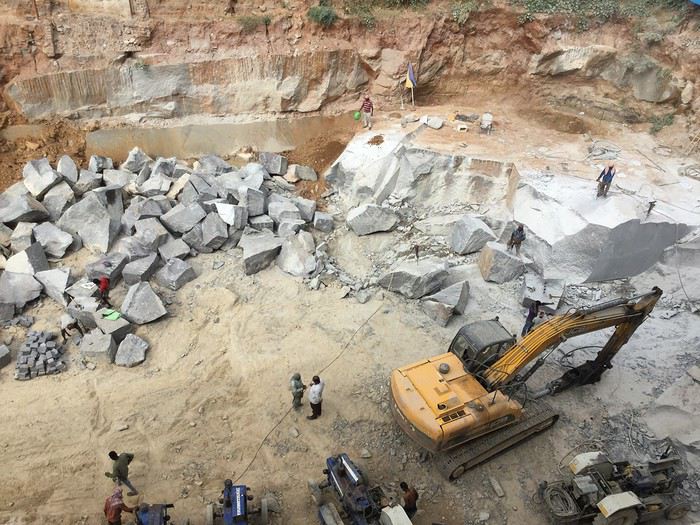
Chambre a 1000 r la nuit. Très confortable et propre. Literie super. Pas de supplément pour le early check in nous marmonne le gars bougon de l'accueil mal réveillé. J'ai rdv dans la matinée avec une jeune expat qui travaille avec des associations locales. Nous passons la journée ensemble et rencontrons des gens formidables. Le midi elle nous emmène dans un resto goûter le fameux Hyderabad biryani. Il paraît que ce sont les meilleurs de toute l'Inde. Mon ami se régale, moi qui ne supporte pas les épices, je ne prends qu'un aloo paratha. Le traffic est intense le matin entre 9h et 11h, et l'a.midi à partir de 16h. Nous rentrons dans les embouteillages, ce qui nous donne tout le temps de bien observer la vie dans les rues, et de laisser décanter toutes les émotions de cette journée, de ces rencontres. Cette ville nous plait, bien qu'elle soit fatigante. Je trouve que ça klaxonne un peu moins qu'ailleurs.Je ressens un peu la même chose qu'à ma première arrivée à Ahmedabad. Le contact avec les gens est facile, agréable, ils sont particulièrement aidants, nous ne sommes pas sollicités, sauf par les chauffeurs et encore, ils insistent peu. Demain nous visitons Fort Golgonde.
Hyderabad 1er jour. Partis de Mysore à 14h50 , nous arrivons à Hyderabad à 5h50 . Comme tous les trains que nous aurons pris celui a été à l'heure à 20 minutes près. J'ai hâte de découvrir cette région. La gare est très propre et bien sûr très animée. On cherche le comptoir des autoricshaws prepaid, qui se trouve à gauche en sortant de la gare. Des chauffeurs nous proposent la course a 50 r quel que soit l'hôtel, un autre 20 r si on va dans le sien. Non, on veut le prepaid. On nous indique le comptoir, fermé à cette heure ci. Je ne sais pas à quelle heure il ouvre. Un jeune homme demande si on a besoin d'aide. Il cherche notre hôtel, le Geetanjani, quartier Habid, sur son portable et traduit a un chauffeur l'adresse exacte. Merci. J'avais lu que les gens sont particulièrement sympas et aidants à Hyderabad. J'ai bien une carte SIm indienne dans mon portable mais pas de connexion internet. En plus Je n'arrive pas à l'utiliser ici. Elle m'a été donnée à Pondicherry. Habids road est immense. Notre hôtel est dans une impasse donnant sur une rue perpendiculaire. Nous serons plus au calme. Enfin c'est ce que nous croyons jusqu'à ce qu'on voit la chambre qui donne sur une carrière. Nous pensons nous accommoder du bruit des burins, nous regardons les gars tailler les pierres, encore une fois les conditions de travail nous effarent. Zéro protection dans ces nuages de poussières, les projections des éclats de pierre. Quand les machines outils se mettent en marche nous demandons à changer de chambre. De celle d'en face nous n'entendons plus rien.
Chambre a 1000 r la nuit. Très confortable et propre. Literie super. Pas de supplément pour le early check in nous marmonne le gars bougon de l'accueil mal réveillé. J'ai rdv dans la matinée avec une jeune expat qui travaille avec des associations locales. Nous passons la journée ensemble et rencontrons des gens formidables. Le midi elle nous emmène dans un resto goûter le fameux Hyderabad biryani. Il paraît que ce sont les meilleurs de toute l'Inde. Mon ami se régale, moi qui ne supporte pas les épices, je ne prends qu'un aloo paratha. Le traffic est intense le matin entre 9h et 11h, et l'a.midi à partir de 16h. Nous rentrons dans les embouteillages, ce qui nous donne tout le temps de bien observer la vie dans les rues, et de laisser décanter toutes les émotions de cette journée, de ces rencontres. Cette ville nous plait, bien qu'elle soit fatigante. Je trouve que ça klaxonne un peu moins qu'ailleurs.Je ressens un peu la même chose qu'à ma première arrivée à Ahmedabad. Le contact avec les gens est facile, agréable, ils sont particulièrement aidants, nous ne sommes pas sollicités, sauf par les chauffeurs et encore, ils insistent peu. Demain nous visitons Fort Golgonde.
" Et si je venais avec toi ?" Quand ma mère a prononcé cette phrase j'ai cru à une plaisanterie elle qui hormis une croisière en Egypte il y a 15 ans ne voyageait pas par crainte de tout...J'ai jaugé la situation : quid de mon programme routarde avec bus et hôtels modestes où l'on fait de si jolies rencontres...J'ai donc tout revu grâce à la lecture des compte rendu de Penelou, Yan55 et Pagaljavab et constitué un programme le plus facile possible pour que ma mère ne soit ni choquée ( je dors facilement n'importe où !) ni fatiguée avec 3h de marche maxi par jour.
Billets achetés sur le site Emirates en décembre : 634 euros par personne pour Paris/Chennai via Dubai, puis le 15 avril Chennai-Dubai et le 23 avril Dubai-Paris.
Planning serré au niveau vol pour le départ mais faisable :
Décollage le 4 avril Paris 15h30 arrivée Dubai 00h20, là on prend un bus pour se rendre à un autre terminal pour un redécollage à 2h45. Arrivée Chennai 8h25, nous avons attendu 15mn : ma mère au comptoir "visa on arrival" moi à côté puisque j'avais un visa fait à VSF Paris. Récupération rapide des valises et nous sortons du terminal international pour sauter dans une voiturette gratuite qui nous conduit 500m plus loin au terminal domestique pour un vol Air India payé 40 euros Chennai-Madurai : 11h30 - 12h35.
A Madurai , kiosque pour taxi pré paid (400rps) et c'est quand même soulagées que nous intégrons notre chambre respective au Madurai Residency (40 euros par single avec excellents petits déjeuners buffet). Je voulais un hôtel confortable et bien situé pour commencer ! Nous ressortons à 16h30 et là je sens qu'il fait trés chaud ! Nous commençons par aller faire du change dans une boutique-change-agence de voyages à un bon taux dans la grande rue qui mène au temple et qui est bien signalé : Dass win forex. Nous changeons 1600 euros pour ne plus avoir à chercher par la suite de bureau de change. Direction le grand temple dont nous faisons le tour mais nous sommes fatiguées et je m'arrête pour déguster mon premier jigarthanda debout dans la rue. Quand je me retourne ma mère en sueur me regarde effarée "mais comment tu peux manger dans la rue là au milieu de cette pollution et des klaxons un truc tu ne sais même pas comment s'est fait"...Ah bon...alors nous rentrons dans notre hôtel aseptisé pour homme d'affaire et dodo jusqu'au lendemain que j'espère plus joyeux...Je met son humeur et son refus d'avaler quoi que ce soit sur le compte de la fatigue !!! Le buffet du petit déjeuner est principalement indien et est vraiment bon (même le café) il y a même du chai ! Départ pour la visite du temple de Meenakshi où l'on doit laisser portable, appareil photo et chaussures à l'entrée (bon d'accord gardes tes chaussettes maman mais je t'assure on n'attrape pas de champignons ici). Nous rentrons par la porte Est afin d'être en face de Pudhu Mandapa (souk intégré dans un reste de temple) en sortant. La visite nous enchante c'est magique et chaque espace recèlent de beautés chacune dans son genre. La ferveur est intense et le peu de monde à 9h nous permet d'observer le rituel de chacun. Dommage que les photos soient interdites mais je comprend aussi : les indiens adorent les selfies et cela "polluerait" le lieu et enlèverait de la sérénité si c'était autorisé !!
Balade dans le marché puis à pied nous rejoignons le palais Nayak. Entier il devait être superbe, les salles sont imposantes. En tuk tuk nous rejoignons le musée Gandhi dans son beau bâtiment : la documentation et les photos sont interessantes mais ma mère reste sous les ventilateurs elle a chaud et sommeil ! J'abrège et en sortant me délecte d'un citron soda sous une paire d'yeux réprobateurs... "et si on allait manger à l'hôtel"...Bon c'est au bout de la ville et autour de nous des boui boui déversent leurs senteurs épicées mais d'accord😕....Nous nous arrêtons en chemin au marché pour acheter des petits citrons juteux et du gingembre dont j'aime me faire un jus chaque matin Seules dans la salle climatisée nous avons bien déjeuné face aux tours du temple. Après midi glandouille car le lendemain nous allions rentrer dans le coeur du sujet : le chetinad !
En réservant à Karaikudi par mail à l'hôtel Meyyappaa, le propriétaire, Mr Murali m'avait proposé les services de son taxi.
J'avais accepté par confort le transfert Madurai-Karaikudi
2 heures (2500 rps), et 2 journées avec voiture + chauffeur à 1800 rps ce qui fut bien pratique.
Dimanche 7 avril à 10h, nous avons fait la connaissance de Vicky, venu nous chercher, jeune homme trés bon conducteur et discret de 22 ans qui nous conduira selon un programme précis. Le Meyyappaa est bien situé en ville, au carrefour de 2 longues artères et derrière un supermarché. Chambres simples mais modernes et très propres avec douche à pommeau pour 900 rps par chambre sans petit déjeuner. Celui ci est servi à partir de 8h15 mais nous partions à 8h. Dimanche après midi : pour 500 rps un tuk tuk nous a conduit à Kundrakudi au Murugan Temple où un éléphant sacré peut vous bénir avec sa trompe si vous lui glissez une offrande ...la vue sur la campagne environnante est jolie et le temple curieux...contrairement au temple Silvan Kovil quelques kilomètres plus loin en revenant sur Karaikudi qui lui est superbe...Le tuk tuk vous conduit devant le bassin où se baignent des hommes et quand vous rentrez dans le temple vous restez bouche bée...Il se dégage quelque chose de magique...Y aller en fin d'après midi sachant que les temples en général sont ouverts de 5h à 12h30 et 16h à 21h.
Lundi 8 avril : Karaikudi : nous sommes allés en tuk tuk au marché hebdomadaire et coup de chance c'est la saison des mangues alfonso : un régal ! Nous en faisons une provision puis tour dans la rue des antiquaires et j'avais réservé pour déjeuner à l'hôtel Bangala. Une bonne expérience pour goûter à la cuisine du chetinad dans un trés joli hôtel typique (14 euros/personne avec eau+thé ou café). Balade dans les ruelles pour voir les vieilles maisons.
Pour les 2 jours de visites en voiture je voulais alterner les temples et les visites des maisons somptueuses qui font la réputation de cette région. Voici notre programme :
mardi 9 avril : départ 8h pour le temple Irani Kovil (temple clan) avec ses magnifiques peintures au plafond (NB: d'avoir voulu visiter ce temple a fait rajouter 700rps au forfait journée car il est éloigné). Fort Thirumarpan (ouvre à 9h , y aller avant la chaleur), Pudukottai : temple de Baragathamba (à voir car trés original dans sa conception), musée et déjeuner dans l'excellent Palaniappa Mess (non veg). A 14h visite du fameux site ayyanar de Namunasamudiran. J'avais hâte de visiter ce lieu et fébriles nous sommes sortis de la voiture sous une chaleur de plomb (40°) avons fait 50m et là le chauffeur a dit "à partir de là c'est sacré il faut se déchausser"...En posant les pieds sur le chemin de sable brûlant j'ai dû retenir mes larmes de douleur...Le seul moyen d'avancer était de longer les chevaux d'argile et de marcher dans les ronces en évitant qu'une épine se plante..." Tu vois que c'est bien des chaussettes " m'a lancé ma mère goguenarde depuis l'allée centrale sablonneuse, en me devançant largement , les pieds protégés, sur un sentier dont j'avais tant rêvé...Donc n'oubliez pas vos chaussettes....car j'eu beau me prosterner devant Ayyanar le dieu des villageois j'ai eu des brûlures terribles sous la plantes des pieds 🤪. En repartant nous sommes passés à Kothamangalam et au Saratha Vila nous avons pris un verre dans cette maison remarquablement refaite et aménagée en hôtel puis passage devant le temple Shiva West où ce petit temple se reflétant dans le lac avec la campagne en fond est superbe.
Retour à Karaikudi à 16h. Nous n'avons pas regretté de rester 4 nuits dans cette ville car elle est vivante et permet de sortir et voir la vie indienne , les environs du grand temple est agréable le soir avec ses quartiers commerçants piétonniers et ses étals de fleurs à acheter pour faire des offrandes. Nous avons acheté du trés beau tissus local en coton tissé main avec de belles couleurs ou des motifs à carreaux (madras).
mercredi 10 avril : départ hôtel 8h pour visiter : Mathur Kovil (temple clan), Kottayur (vieilles maisons), Pallathur, Kanadukatan, Athangudi (maisons+fabrique carreaux ciment) et Pillayarpatti (grand temple joyeux et coloré). Déjeuner tardif au Bangala.
Le soir tour en ville et j'ai sauté en l'air lorsque ma mère m'a dit : "bon je me demande pourquoi tu m'as dit de prendre de
l 'immodium et tout ça...ce soir c'est épinard lentilles et si ça continue demain je dois prendre des pruneaux que j'ai apporté"...Tous les voyageurs se demandent comment ne pas attraper la tourista ou comment l'arrêter d'urgence et maman avait un soucis inverse....J'ai compris que si le riz m'allait bien chez elle c'était le contraire...Nous avons dîné légumes+lentilles+épinards...mais toujours rien pour elle : j'étais vraiment inquiète...
Jeudi 11 : départ à 6h 30 avec Vicky pour Pondicherry via une étape d'une heure à Tranquebar pour 9000 rps. Voyage tout confort en voiture et l'escale à Tranquebar a été agréable car nous avons pris un verre au Bungalow beach et marché dans la rue qui regroupe le plus de bâtiment coloniaux (King Street) de cet ancien comptoir danois. Arrivée à Pondicherry à 15h nous avons eu une bonne surprise en découvrant la maison d'hôte Hibiscus superbe avec ses meubles en bois de style colonial : 2 chambres en haut et 2 en bas : nous avions ainsi le rez de chaussée pour nous avec son petit salon et ses portes ouvrant sur le jardinet aux multiples plantes vertes. 2750 rps en single avec petit dej copieux et un excellent accueil de Mr et Mme Bascarane, indiens parfaitement francophones. Possibilité de faire laver son linge en 24h . Balade à pied l'après midi en étant parti du Indian Coffee où nous avons mangé idli et masala dosa. Vendredi tranquille avec marché Goubert et ses étals de fleurs pour commencer puis parcours dans la ville indienne puis coloniale ( achat de supers savons à 30rps à la boutique d'auroville)...Je ne voulais plus que nous mangions je craignais pour ma mère qui n'allait pas fort, fatiguée en plus par la châleur...L'après midi, balade dans le joli quartier musulman avec ses maisons et inscriptions particulières. Les gens y sont trés châleureux. Le soir nous voulions prendre un verre et grignoter dans un bel endroit. nous sommes donc allés sur la terrasse de l'hôtel De Petit...Quelle déception !!!! Belle vue mais nourriture fadasse, tiède nous n'avons pas fini les plats c'était immangeable et plutôt cher ! Le serveur a senti notre trouble et s'en est excusé...Vraiment déçues par rapport au cadre. nous sommes allées nous consoler en mangeant une bonne glace sur la balade en front de mer !
Samedi 13, 10h30 : nous quittons Pondicherry et un taxi nous conduit à Mamallapuram pour 2300rps (commandé par l hôtel).
Installation au Mahabs, 2325 rps avec petit déjeuner, chambre simple mais agréable avec petite terrasse donnant sur une piscine de taille respectable. Visite en tuktuk pour 600rps (2h) des principaux points culturels de la ville, je sens ma mère épuisée...La vétusté des chambres la rend de mauvaise humeur et les insectes du jardin lui font craindre une nuit à chasser les moustiques...Le lendemain le sujet de son courrou sera : "...mais que les indiens sont bruyants même la nuit à faire comme s'ils étaient chez eux".
Petit déj sans plus mais j'admire les jolies fresques indiennes sur les murs de l'hôtel et trouve le cadre avec ses différents types de palmiers vraiment joli et agréable. je serais bien resté une nuit de plus...
A 10h (nous avions réservé la veille à la station de taxi en face de l'hôtel) un véhicule va nous conduire pour 2300rps à Chennai. C'est jour férié : nouvel an tamoul, mais la plupart des gens et commerces sont ouverts. En arrivant, trés bonne surprise : l'hôtel Vistana (2016 rps/chambre) à Pondi Bazar est neuf, propre, accueil super, maman se détend elle craignait un dernier hôtel comme le précédent ! Installation puis balade il est 13h.
Nous marchons et nous arrêtons devant une enseigne. "Barbeque Nation" un restaurant intégré dans un hôtel. nous montons pour voir et là : une très grande salle remplie de familles middle class attablées devant de gigantesques buffets et mini barbecues...ça sent bon, on ne peut pas résister et pour une formule non veg à 800rps par personne on se régale.....
Sieste à l'hôtel en regardant TV5 Monde avant de ressortir à 18h quand la nuit tombe...Nous nous baladons dans cette artère commerçante qu'est Pondi Bazar, achetons un peu de tissus encore et allons nous reposer : le vol pour Dubai est à 4h nous partirons de l'hôtel à 1h du mat avec un taxi commandé par l'hôtel (20mn : 300 rps). Il nous restait 670 euros en roupies que j'avais mis dans ma valise pour les changer en dirham à Dubai...
Conclusion : Il faisait chaud en cette période et anormalement cette année nous a t on dit : environ 38 degrés ! Avec la recul ma mère m'a dit avoir adoré mais souffert de la châleur en journée...Sur place elle avait les yeux constamment écarquillés de surprise je pensais qu'elle n'appréciait pas mais elle m'a dit être allée de surprise en bonne surprise. Sur place elle n'a jamais ni bu ni mangé dans la rue alors que je consommais citron soda et chai à gogo. Avoir la tourista n'est donc pas une fatalité !!! Avec un budget routard, j'ai l'habitude des transports en commun et je trouve ça chouette mais c'est vrai qu'avoir un véhicule avec chauffeur évite attentes et permet d'aller où l'on veut. J'ai découvert une autre manière de voyager en Inde et le fait de partager ces instants avec un être cher n'a pas de prix même si on se mange des petites réflexions plus piquantes que certains plats. C'est une expérience que je vous souhaite en tout cas ! Programme simple et léger même pour les personnes n'ayant pas l'habitude de voyager. Indiens sympas voir chaleureux et bienveillants : la région est idéale pour initier aux voyages ceux qui n'auraient pas l'habitude ! Choisissez une saison moins chaude cependant ! Belles campagnes, superbes temples et maisons à tomber ! Quelle belle région !
et enfin : nous avons fait faire à Dubai chez un super tailleur 3 chemises, 3 foulards et 2 paréos pour 50 euros ! Je reste à votre disposition si vous voulez l'adresse ! Merci de votre attention et bons voyages, Laurence
Conclusion : Il faisait chaud en cette période et anormalement cette année nous a t on dit : environ 38 degrés ! Avec la recul ma mère m'a dit avoir adoré mais souffert de la châleur en journée...Sur place elle avait les yeux constamment écarquillés de surprise je pensais qu'elle n'appréciait pas mais elle m'a dit être allée de surprise en bonne surprise. Sur place elle n'a jamais ni bu ni mangé dans la rue alors que je consommais citron soda et chai à gogo. Avoir la tourista n'est donc pas une fatalité !!! Avec un budget routard, j'ai l'habitude des transports en commun et je trouve ça chouette mais c'est vrai qu'avoir un véhicule avec chauffeur évite attentes et permet d'aller où l'on veut. J'ai découvert une autre manière de voyager en Inde et le fait de partager ces instants avec un être cher n'a pas de prix même si on se mange des petites réflexions plus piquantes que certains plats. C'est une expérience que je vous souhaite en tout cas ! Programme simple et léger même pour les personnes n'ayant pas l'habitude de voyager. Indiens sympas voir chaleureux et bienveillants : la région est idéale pour initier aux voyages ceux qui n'auraient pas l'habitude ! Choisissez une saison moins chaude cependant ! Belles campagnes, superbes temples et maisons à tomber ! Quelle belle région !
et enfin : nous avons fait faire à Dubai chez un super tailleur 3 chemises, 3 foulards et 2 paréos pour 50 euros ! Je reste à votre disposition si vous voulez l'adresse ! Merci de votre attention et bons voyages, Laurence
Bonjour à tous
Comme après chaque voyage, voila un petit compte rendu d'un séjour en Inde du sud, de 3 semaines, et cette fois-ci en solo, durant le mois de janvier 2018.
Des infos qui pourront servir à d'autres voyageurs.
Donc les prix indiqués sont pour une personne seule, mais souvent, les prix varient peu pour une chambre en simple ou double. Durant cette période, l'euro valait en moyenne 75 roupies et 100 rps équivalent à environ 1,30€
Une fois de plus, il ne s'agit que de mon ressenti et impressions sur ce que j'ai vécu. Mon trajet a été le suivant : Bombay/Aurangabad (Ellora et Ajanta)/ Hampi /Goa/ Bombay du 8 janvier au 29 janvier
vol direct Paris Bombay avec Air france pour un vol à 500 euros (promo après vacances scolaires). Arrivée à Bombay à minuit et ce fut un peu la course pour arriver dans les premiers au guichet des e-visa car plusieurs vols sont arrivés en même temps et beaucoup d'attente. (les machines pour les prises d'empreinte ne marchaient pas très bien...). Du coup, une heure et demie de queue.
Taxi prepaid à 800 rps, à la sortie, pour rejoindre le quartier de Colaba. Taux de change déplorable à l'aéroport (70rps pour un euro, plus la commission). Donc faire le change juste ce qu'il faut pour démarrer Grosse tentative d'arnaque pour obtenir une carte sim 3G indienne au guichet d'Airtel à la sortie de l'aéroport (proposition d'une carte pour 2000rp..). J'ai obtenu une carte sim 3G (ou 4G) à Aurangabad, chez Airtel, pour 350rp avec 2G par jour... (proposition à 250 rps pour 1G) pour une durée de 28 jours.
Hotel à Bombay pour la 1ere nuit : Hotel Elphiston (près de crawford market) 34 euros : hotel très propre mais chambre très petite. Le logement à Bombay reste très cher. Ce sera ma nuit la plus chère du voyage... le lendemain, j'ai prisun train pour Aurangabad dans l'après midi (à14h) qui partait de Dadar Station pour arriver à Aurangabad à 20h 30.
Aurangabad : très bon hotel en face de la gare : le Holiday Era (9€ la simple, 12 € la double) : propre, mais la single est vraiment très petite (sans fenêtre). La double est très correcte. Petit dèj à 100 rps. Les responsables sont très sympas et arrangeants. Rencontre avec un conducteur de Rickhaw vraiment exceptionnel qui m'a baladé sur les sites à visiter, bien sûr, mais d'une grande gentillesse et m'a rendu de nombreux services. Il est très arrangeant et ses prix sont très corrects : ballade de 4 heures dans la ville pour visiter différents sites : 600 rps. Journée à Ellora :800 rps, journée en voiture à Ajanta : 1900 rps. Voilà ses coordonnées car il le mérite : SHAIKH Irfan tel : 9970928246
2 bons restos à Aurangabad: Le Hotel Bharti pure vegetable restaurant : situé en face l'hotel Era sur la grande rue. Très bon thali à 180 rps le Tandoor Restaurant (plus connu) :à 15 minutes de marche depuis l'hotel. Cadre sympa, et bon tandoori et tika
Ellora : site à 25 kms d' Aurangabad, avec de nombreuses grottes temples tous différents les uns les autres et le temple de Kailasha qui est extraordinaire par cette énorme structure monolithique. C'est impressionnant. Venir tôt sur le site car, après il y a pas mal de monde. J'étais sur le site à 9h (environ 45 minutes de rickhaw pour y arriver). Ajanta : site à 100 kms d'Aurangabad. Trajet en voiture. La plupart des chauffeurs vous dépose au pied du site, au niveau du bas de la falaise et des grottes. Un conseil :Demander au chauffeur de vous déposer au « view point » situé sur les hauteurs, de l'autre coté, en face de la falaise où il y a les grottes, où la vue à 180 ° est magnifique. Après il est très facile de descendre (environ 20 minutes) par de nombreuses marches et petit dénivelé pour rejoindre le bas de la gorge, et traverser ensuite par un pont pour se retrouver au niveau des grottes (grotte N°10 je crois) et commencer sa visite. Des panneaux indiquent qu'il est déconseillé de faire cette descente durant la mousson en raison du sol glissant. Ambiance encore différente de celle d'Ellora et le site en lui même m'a beaucoup marqué.
Mon projet était de rejoindre Hampi en train, car lors de mes précédents voyages en Inde, j'ai eu quelques soucis avec les bus.... 2 trains ont été nécessaires avec un stop à Heyderabad: réservation des billets 2 jours avant à l'agence (travel Agency écrit en gros)en face l'hotel. Départ d'Aurangabad à 14 h pour arriver à Heyderabad à 23h (Seat 2 A/C : 1000rps)
Heyderabad logement à Heyderabad : très belle chambre à 5 minutes de la gare : hotel Sri Siram Park : 1500 rps (petit dèj compris) pour une très grande chambre très propre et belle salle de bain. Très bon rapport qualité prix. Possibilité de rester quelques heures après le Chek out moyennant un tout petit supplément qui permet de faire la différence quand on a un train dans la soirée. Visite de la vieille ville et de cette grosse métropole où ça grouille de partout... Train de nuit Heyderabad/Hospet (hampi) 2 A/C sleeper 900 rps. départ 21 h arrivée 6h. nuit correcte et assez confortable (4 lit par « compartiment »)
Hospet/ Hampi en rickshaw pour 200 ou 300 rps (20 à 25 minutes de trajet) Hampi :Le gouvernement indien ayant décidé de détruire toutes les guest houses situées sur le quartier de Hampi Bazar en décembre 2017, plus aucun logement n'est possible à cet endroit. Donc, il ne reste plus que les GH de l'autre coté de la rivière ou sinon à plusieurs kilomètres du site. Loger de l'autre coté de la rivière nécessite de prendre obligatoirement les petits bateaux qui font les aller retour. Ils arrêtent leur trajet vers 17h/17h 30. donc fini les coucher de soleil sur le site d'Hampi ou les balades en fin d'après midi sur les rochers par derrière. Logement à Virupapur Gaddi (c a d de l'autre coté de la rivière) : Hotel à déconseiller : leRavitéja Hguest House, au tout début du chemin, en haut, en arrivant de l'embarcadère. 1200 rps la nuit mais la chambre est sordide, sombre, sale, les wc étaient bouchés... et un filet d'eau coulait à la douche. Le jardin est sympa, le restau aussi, avec une belle vue sur la rivière et les gaths d'en face. J'ai visité une dizaine de Gh le long de cette rue chemin, en face des rizières, et beaucoup étaient à environ 1000 rps mais toujours très sombres et avec une propreté très limite (draps, mur, salle d'eau). Le Uma Shankar Home Stay sortait un peu du lot à 1500 rps la nuit : chambre assez grande, propre, carrelage au sol...fenêtre. Le resto en bas est bon mais sombre (un peu fermé), donc bien pour le soir, mais dommage pour le midi ou le peti dèj. L'ambiance de cette « rue », alignée de Gh et resto est assez particulière, il y a beaucoup de voyageurs de tous genre, beaucoup de « baba » ou qui se donnent ce genre là....avec la tenue qui va avec...et c'est parfois amusant ou pathétique... Heureusement, on peut très vite sortir de là et aller se perdre au milieu des rizières et retrouver le silence et la merveille du lieux. Car Hampi et ses environs sont quand même magiques, il s'y dégage une atmosphère si particulière qui vous imprègne... par ses temples, statues vestiges et ces rochers ocres arrondis qui complètent le décor. Aller faire des balades au milieu de ces rochers, tout seul, et la magie opère... J'ai loué une moto pour 300rps pour visiter les environs pour aller au village d'Anegondi, très paisible, et d'autres temples situés souvent tout en haut d'une colline et ses 700 marches... J'ai fini en fin d'après midi par un très beau lac, très paisible situé en dehors de la route principale. Pour y alle, il faut tourner à gauche quand on rejoint la route goudronnée, en sortant du chemin de terre des GH. Ne pas manquer non plus « l’ascension » de Mantaga Hill en fin de journée où la vue est magnifique. On y monte par un coté et on redescend par l'autre. J'ai rejoins Goa par un bus de nuit, car pas de train pour le jour que je désirai. 900 Rps en couchette. Bus très correct, ainsi que les couchettes, mais par la route ça secoue bien quand même... Arrivée à Palolem à 6 h du mat'.
Goa : Palolem :Hotel très sympa, pas sur la plage, de l'autre coté de la route mais à 4 minutes par un petit chemin : Pritams Cottage : 1200 Rps la 1ere nuit et 1000 la 2em. Chambre propre, grande, salle d'eau correct, calme et pourtant tout près de la rue principale. Le patron n'est pas bavard mais d'une grande gentillesse et très serviable. La plage de Palolem est très grande et large, mais surchargée d'Hotels, restos ou bars. Il n'y a qu'à l’extrême droite, avant le ruisseau (en regardant la mer) que c'est un peu plus calme.
Agonda : Plage plus tranquille que Palolem, logement:Ramson Resort 1500 Rps la nuit : petit bungalow en bois à proximité de la plage (40 m..) chambre moyennement grande, assez propre, avec une grande salle d'eau à ciel ouvert avec comme toit, les cocotiers... petite terrasse devant le bungalow. Reposant Un resto bon et pas trop cher de l'autre coté de la route : Fatima Bar and restaurant. Fish Tika 300 rps, half chiken tandoori 200 rps. Ambiance cool La plage d'Agonda est aussi très grande mais un peu plus sauvage que Palolem, surtout du coté gauche en regardant la mer où il y a de belles balades au milieu des rochers. Train pour rejoindre Bombay : Madgaon (à 1 heure de taxi d'Agonda)/ Bombay : 1300 rps 3 A/C Sleeper « compartiment » de 6 et sans rideaux pour séparer.
Bombay : logement dans le quartier de Colaba A déconseiller :Hotel Janata : 2600 rps : chambre très petite, aucune table pour poser le sac ou autre (pas la place …), assez propre, clim, soucis pour la salle d'eau : pas de lavabo, et il faut se servir du robinet de douche pour se laver les mains...et bien écarter les jambes...et bien sûr, ça éclabousse de partout.... accueil moyen. Hotel Broadway : 2500 rps, bien situé, propre, chambre plus grande, calme, clim et salle d'eau correct. A conseiller. Tout près du Léopold Café. Bombay est une ville trépidente, et avec une architecture assez particulière qui mérite le coup d'oeil et quelques visites. Crawford market et ses alentours..... Null Bazar et Chor Bazar où la pauvreté et la saleté sont assez présentes... Mani Bhavan, la maison de Gandhi à bombay où règne une ambiance assez particulière... Balbunath temple avec cette ferveur religieuse, le jaïn temple (Walkeschwar Mandir) ainsi qu'un autre temple Jaïn près de Balbunath temple où règnent une ambiance bien différente des autres temples. Les Dhobi Ghat, le quartier des blanchisseurs, très impressionnant. Pour 200 rps, un « guide » vous ballade au milieu de ces lavoirs et de ces milliers de vêtements. Toutes ces visites peuvent se faire en individuel en prenant les taxis qui ne sont pas cher.
Voila donc quelques bons plans à partager, en sachant qu'un voyage est unique et que l'inde reste toujours un pays toujours aussi magnifique, souvent déroutant, insaisissable et reste un pays à part des autres pays que j'ai visités, mais tellement fascinant........ Bonne préparation et si vous avez besoin de compléments d'info, n'hésitez pas!! Guy
Donc les prix indiqués sont pour une personne seule, mais souvent, les prix varient peu pour une chambre en simple ou double. Durant cette période, l'euro valait en moyenne 75 roupies et 100 rps équivalent à environ 1,30€
Une fois de plus, il ne s'agit que de mon ressenti et impressions sur ce que j'ai vécu. Mon trajet a été le suivant : Bombay/Aurangabad (Ellora et Ajanta)/ Hampi /Goa/ Bombay du 8 janvier au 29 janvier
vol direct Paris Bombay avec Air france pour un vol à 500 euros (promo après vacances scolaires). Arrivée à Bombay à minuit et ce fut un peu la course pour arriver dans les premiers au guichet des e-visa car plusieurs vols sont arrivés en même temps et beaucoup d'attente. (les machines pour les prises d'empreinte ne marchaient pas très bien...). Du coup, une heure et demie de queue.
Taxi prepaid à 800 rps, à la sortie, pour rejoindre le quartier de Colaba. Taux de change déplorable à l'aéroport (70rps pour un euro, plus la commission). Donc faire le change juste ce qu'il faut pour démarrer Grosse tentative d'arnaque pour obtenir une carte sim 3G indienne au guichet d'Airtel à la sortie de l'aéroport (proposition d'une carte pour 2000rp..). J'ai obtenu une carte sim 3G (ou 4G) à Aurangabad, chez Airtel, pour 350rp avec 2G par jour... (proposition à 250 rps pour 1G) pour une durée de 28 jours.
Hotel à Bombay pour la 1ere nuit : Hotel Elphiston (près de crawford market) 34 euros : hotel très propre mais chambre très petite. Le logement à Bombay reste très cher. Ce sera ma nuit la plus chère du voyage... le lendemain, j'ai prisun train pour Aurangabad dans l'après midi (à14h) qui partait de Dadar Station pour arriver à Aurangabad à 20h 30.
Aurangabad : très bon hotel en face de la gare : le Holiday Era (9€ la simple, 12 € la double) : propre, mais la single est vraiment très petite (sans fenêtre). La double est très correcte. Petit dèj à 100 rps. Les responsables sont très sympas et arrangeants. Rencontre avec un conducteur de Rickhaw vraiment exceptionnel qui m'a baladé sur les sites à visiter, bien sûr, mais d'une grande gentillesse et m'a rendu de nombreux services. Il est très arrangeant et ses prix sont très corrects : ballade de 4 heures dans la ville pour visiter différents sites : 600 rps. Journée à Ellora :800 rps, journée en voiture à Ajanta : 1900 rps. Voilà ses coordonnées car il le mérite : SHAIKH Irfan tel : 9970928246
2 bons restos à Aurangabad: Le Hotel Bharti pure vegetable restaurant : situé en face l'hotel Era sur la grande rue. Très bon thali à 180 rps le Tandoor Restaurant (plus connu) :à 15 minutes de marche depuis l'hotel. Cadre sympa, et bon tandoori et tika
Ellora : site à 25 kms d' Aurangabad, avec de nombreuses grottes temples tous différents les uns les autres et le temple de Kailasha qui est extraordinaire par cette énorme structure monolithique. C'est impressionnant. Venir tôt sur le site car, après il y a pas mal de monde. J'étais sur le site à 9h (environ 45 minutes de rickhaw pour y arriver). Ajanta : site à 100 kms d'Aurangabad. Trajet en voiture. La plupart des chauffeurs vous dépose au pied du site, au niveau du bas de la falaise et des grottes. Un conseil :Demander au chauffeur de vous déposer au « view point » situé sur les hauteurs, de l'autre coté, en face de la falaise où il y a les grottes, où la vue à 180 ° est magnifique. Après il est très facile de descendre (environ 20 minutes) par de nombreuses marches et petit dénivelé pour rejoindre le bas de la gorge, et traverser ensuite par un pont pour se retrouver au niveau des grottes (grotte N°10 je crois) et commencer sa visite. Des panneaux indiquent qu'il est déconseillé de faire cette descente durant la mousson en raison du sol glissant. Ambiance encore différente de celle d'Ellora et le site en lui même m'a beaucoup marqué.
Mon projet était de rejoindre Hampi en train, car lors de mes précédents voyages en Inde, j'ai eu quelques soucis avec les bus.... 2 trains ont été nécessaires avec un stop à Heyderabad: réservation des billets 2 jours avant à l'agence (travel Agency écrit en gros)en face l'hotel. Départ d'Aurangabad à 14 h pour arriver à Heyderabad à 23h (Seat 2 A/C : 1000rps)
Heyderabad logement à Heyderabad : très belle chambre à 5 minutes de la gare : hotel Sri Siram Park : 1500 rps (petit dèj compris) pour une très grande chambre très propre et belle salle de bain. Très bon rapport qualité prix. Possibilité de rester quelques heures après le Chek out moyennant un tout petit supplément qui permet de faire la différence quand on a un train dans la soirée. Visite de la vieille ville et de cette grosse métropole où ça grouille de partout... Train de nuit Heyderabad/Hospet (hampi) 2 A/C sleeper 900 rps. départ 21 h arrivée 6h. nuit correcte et assez confortable (4 lit par « compartiment »)
Hospet/ Hampi en rickshaw pour 200 ou 300 rps (20 à 25 minutes de trajet) Hampi :Le gouvernement indien ayant décidé de détruire toutes les guest houses situées sur le quartier de Hampi Bazar en décembre 2017, plus aucun logement n'est possible à cet endroit. Donc, il ne reste plus que les GH de l'autre coté de la rivière ou sinon à plusieurs kilomètres du site. Loger de l'autre coté de la rivière nécessite de prendre obligatoirement les petits bateaux qui font les aller retour. Ils arrêtent leur trajet vers 17h/17h 30. donc fini les coucher de soleil sur le site d'Hampi ou les balades en fin d'après midi sur les rochers par derrière. Logement à Virupapur Gaddi (c a d de l'autre coté de la rivière) : Hotel à déconseiller : leRavitéja Hguest House, au tout début du chemin, en haut, en arrivant de l'embarcadère. 1200 rps la nuit mais la chambre est sordide, sombre, sale, les wc étaient bouchés... et un filet d'eau coulait à la douche. Le jardin est sympa, le restau aussi, avec une belle vue sur la rivière et les gaths d'en face. J'ai visité une dizaine de Gh le long de cette rue chemin, en face des rizières, et beaucoup étaient à environ 1000 rps mais toujours très sombres et avec une propreté très limite (draps, mur, salle d'eau). Le Uma Shankar Home Stay sortait un peu du lot à 1500 rps la nuit : chambre assez grande, propre, carrelage au sol...fenêtre. Le resto en bas est bon mais sombre (un peu fermé), donc bien pour le soir, mais dommage pour le midi ou le peti dèj. L'ambiance de cette « rue », alignée de Gh et resto est assez particulière, il y a beaucoup de voyageurs de tous genre, beaucoup de « baba » ou qui se donnent ce genre là....avec la tenue qui va avec...et c'est parfois amusant ou pathétique... Heureusement, on peut très vite sortir de là et aller se perdre au milieu des rizières et retrouver le silence et la merveille du lieux. Car Hampi et ses environs sont quand même magiques, il s'y dégage une atmosphère si particulière qui vous imprègne... par ses temples, statues vestiges et ces rochers ocres arrondis qui complètent le décor. Aller faire des balades au milieu de ces rochers, tout seul, et la magie opère... J'ai loué une moto pour 300rps pour visiter les environs pour aller au village d'Anegondi, très paisible, et d'autres temples situés souvent tout en haut d'une colline et ses 700 marches... J'ai fini en fin d'après midi par un très beau lac, très paisible situé en dehors de la route principale. Pour y alle, il faut tourner à gauche quand on rejoint la route goudronnée, en sortant du chemin de terre des GH. Ne pas manquer non plus « l’ascension » de Mantaga Hill en fin de journée où la vue est magnifique. On y monte par un coté et on redescend par l'autre. J'ai rejoins Goa par un bus de nuit, car pas de train pour le jour que je désirai. 900 Rps en couchette. Bus très correct, ainsi que les couchettes, mais par la route ça secoue bien quand même... Arrivée à Palolem à 6 h du mat'.
Goa : Palolem :Hotel très sympa, pas sur la plage, de l'autre coté de la route mais à 4 minutes par un petit chemin : Pritams Cottage : 1200 Rps la 1ere nuit et 1000 la 2em. Chambre propre, grande, salle d'eau correct, calme et pourtant tout près de la rue principale. Le patron n'est pas bavard mais d'une grande gentillesse et très serviable. La plage de Palolem est très grande et large, mais surchargée d'Hotels, restos ou bars. Il n'y a qu'à l’extrême droite, avant le ruisseau (en regardant la mer) que c'est un peu plus calme.
Agonda : Plage plus tranquille que Palolem, logement:Ramson Resort 1500 Rps la nuit : petit bungalow en bois à proximité de la plage (40 m..) chambre moyennement grande, assez propre, avec une grande salle d'eau à ciel ouvert avec comme toit, les cocotiers... petite terrasse devant le bungalow. Reposant Un resto bon et pas trop cher de l'autre coté de la route : Fatima Bar and restaurant. Fish Tika 300 rps, half chiken tandoori 200 rps. Ambiance cool La plage d'Agonda est aussi très grande mais un peu plus sauvage que Palolem, surtout du coté gauche en regardant la mer où il y a de belles balades au milieu des rochers. Train pour rejoindre Bombay : Madgaon (à 1 heure de taxi d'Agonda)/ Bombay : 1300 rps 3 A/C Sleeper « compartiment » de 6 et sans rideaux pour séparer.
Bombay : logement dans le quartier de Colaba A déconseiller :Hotel Janata : 2600 rps : chambre très petite, aucune table pour poser le sac ou autre (pas la place …), assez propre, clim, soucis pour la salle d'eau : pas de lavabo, et il faut se servir du robinet de douche pour se laver les mains...et bien écarter les jambes...et bien sûr, ça éclabousse de partout.... accueil moyen. Hotel Broadway : 2500 rps, bien situé, propre, chambre plus grande, calme, clim et salle d'eau correct. A conseiller. Tout près du Léopold Café. Bombay est une ville trépidente, et avec une architecture assez particulière qui mérite le coup d'oeil et quelques visites. Crawford market et ses alentours..... Null Bazar et Chor Bazar où la pauvreté et la saleté sont assez présentes... Mani Bhavan, la maison de Gandhi à bombay où règne une ambiance assez particulière... Balbunath temple avec cette ferveur religieuse, le jaïn temple (Walkeschwar Mandir) ainsi qu'un autre temple Jaïn près de Balbunath temple où règnent une ambiance bien différente des autres temples. Les Dhobi Ghat, le quartier des blanchisseurs, très impressionnant. Pour 200 rps, un « guide » vous ballade au milieu de ces lavoirs et de ces milliers de vêtements. Toutes ces visites peuvent se faire en individuel en prenant les taxis qui ne sont pas cher.
Voila donc quelques bons plans à partager, en sachant qu'un voyage est unique et que l'inde reste toujours un pays toujours aussi magnifique, souvent déroutant, insaisissable et reste un pays à part des autres pays que j'ai visités, mais tellement fascinant........ Bonne préparation et si vous avez besoin de compléments d'info, n'hésitez pas!! Guy